EP3189850A1 - Liver targeting of cyclic pres-derived peptides of hbv - Google Patents
Liver targeting of cyclic pres-derived peptides of hbv Download PDFInfo
- Publication number
- EP3189850A1 EP3189850A1 EP15200568.2A EP15200568A EP3189850A1 EP 3189850 A1 EP3189850 A1 EP 3189850A1 EP 15200568 A EP15200568 A EP 15200568A EP 3189850 A1 EP3189850 A1 EP 3189850A1
- Authority
- EP
- European Patent Office
- Prior art keywords
- seq
- cyclo
- cys
- liver
- myr
- Prior art date
- Legal status (The legal status is an assumption and is not a legal conclusion. Google has not performed a legal analysis and makes no representation as to the accuracy of the status listed.)
- Withdrawn
Links
- 108090000765 processed proteins & peptides Proteins 0.000 title claims abstract description 105
- 210000004185 liver Anatomy 0.000 title claims abstract description 92
- 102000004196 processed proteins & peptides Human genes 0.000 title claims abstract description 29
- 125000004122 cyclic group Chemical group 0.000 title claims abstract description 12
- 230000008685 targeting Effects 0.000 title claims description 16
- 108010069514 Cyclic Peptides Proteins 0.000 claims abstract description 125
- 102000001189 Cyclic Peptides Human genes 0.000 claims abstract description 125
- 150000001875 compounds Chemical class 0.000 claims abstract description 58
- 239000008194 pharmaceutical composition Substances 0.000 claims abstract description 41
- 238000000034 method Methods 0.000 claims abstract description 37
- 208000019423 liver disease Diseases 0.000 claims abstract description 32
- 210000003494 hepatocyte Anatomy 0.000 claims abstract description 29
- 230000002265 prevention Effects 0.000 claims abstract description 24
- 238000003745 diagnosis Methods 0.000 claims abstract description 23
- 208000024172 Cardiovascular disease Diseases 0.000 claims abstract description 19
- 235000001014 amino acid Nutrition 0.000 claims description 82
- 150000001413 amino acids Chemical class 0.000 claims description 77
- HVYWMOMLDIMFJA-DPAQBDIFSA-N cholesterol Chemical compound C1C=C2C[C@@H](O)CC[C@]2(C)[C@@H]2[C@@H]1[C@@H]1CC[C@H]([C@H](C)CCCC(C)C)[C@@]1(C)CC2 HVYWMOMLDIMFJA-DPAQBDIFSA-N 0.000 claims description 74
- 125000003275 alpha amino acid group Chemical group 0.000 claims description 51
- 230000015572 biosynthetic process Effects 0.000 claims description 39
- 238000007363 ring formation reaction Methods 0.000 claims description 35
- 230000002209 hydrophobic effect Effects 0.000 claims description 34
- 239000003814 drug Substances 0.000 claims description 29
- 108091006611 SLC10A1 Proteins 0.000 claims description 27
- 102100021988 Sodium/bile acid cotransporter Human genes 0.000 claims description 27
- 235000018417 cysteine Nutrition 0.000 claims description 26
- 229940079593 drug Drugs 0.000 claims description 26
- 239000003613 bile acid Substances 0.000 claims description 24
- 235000012000 cholesterol Nutrition 0.000 claims description 22
- 230000004048 modification Effects 0.000 claims description 21
- 238000012986 modification Methods 0.000 claims description 21
- 210000004899 c-terminal region Anatomy 0.000 claims description 20
- 150000003573 thiols Chemical class 0.000 claims description 20
- 125000000539 amino acid group Chemical group 0.000 claims description 15
- 241000700605 Viruses Species 0.000 claims description 14
- 206010008635 Cholestasis Diseases 0.000 claims description 13
- 230000001404 mediated effect Effects 0.000 claims description 13
- 230000003647 oxidation Effects 0.000 claims description 13
- 238000007254 oxidation reaction Methods 0.000 claims description 13
- -1 C22 fatty acids Chemical class 0.000 claims description 12
- 208000031226 Hyperlipidaemia Diseases 0.000 claims description 12
- 239000003833 bile salt Substances 0.000 claims description 12
- 150000001945 cysteines Chemical class 0.000 claims description 12
- 238000009825 accumulation Methods 0.000 claims description 11
- 208000037265 diseases, disorders, signs and symptoms Diseases 0.000 claims description 11
- 208000008338 non-alcoholic fatty liver disease Diseases 0.000 claims description 11
- 201000010099 disease Diseases 0.000 claims description 10
- 208000006454 hepatitis Diseases 0.000 claims description 10
- 231100000283 hepatitis Toxicity 0.000 claims description 10
- 125000001419 myristoyl group Chemical group O=C([*])C([H])([H])C([H])([H])C([H])([H])C([H])([H])C([H])([H])C([H])([H])C([H])([H])C([H])([H])C([H])([H])C([H])([H])C([H])([H])C([H])([H])C([H])([H])[H] 0.000 claims description 10
- 125000002924 primary amino group Chemical group [H]N([H])* 0.000 claims description 10
- 230000032258 transport Effects 0.000 claims description 10
- 208000001145 Metabolic Syndrome Diseases 0.000 claims description 9
- 239000003112 inhibitor Substances 0.000 claims description 9
- 201000004792 malaria Diseases 0.000 claims description 9
- 239000003053 toxin Substances 0.000 claims description 9
- 231100000765 toxin Toxicity 0.000 claims description 9
- 108700012359 toxins Proteins 0.000 claims description 9
- 230000010933 acylation Effects 0.000 claims description 8
- 238000005917 acylation reaction Methods 0.000 claims description 8
- 231100000844 hepatocellular carcinoma Toxicity 0.000 claims description 8
- 206010073071 hepatocellular carcinoma Diseases 0.000 claims description 8
- 229920001184 polypeptide Polymers 0.000 claims description 8
- 201000000690 abdominal obesity-metabolic syndrome Diseases 0.000 claims description 7
- 230000007870 cholestasis Effects 0.000 claims description 7
- 231100000359 cholestasis Toxicity 0.000 claims description 7
- 239000003937 drug carrier Substances 0.000 claims description 7
- 231100000304 hepatotoxicity Toxicity 0.000 claims description 7
- 208000030159 metabolic disease Diseases 0.000 claims description 7
- 239000000546 pharmaceutical excipient Substances 0.000 claims description 7
- 108010003524 sodium-bile acid cotransporter Proteins 0.000 claims description 7
- 150000003431 steroids Chemical class 0.000 claims description 7
- 238000002054 transplantation Methods 0.000 claims description 7
- 206010019851 Hepatotoxicity Diseases 0.000 claims description 6
- 230000002378 acidificating effect Effects 0.000 claims description 6
- 230000000903 blocking effect Effects 0.000 claims description 6
- 239000007850 fluorescent dye Substances 0.000 claims description 6
- 230000006870 function Effects 0.000 claims description 6
- 230000007686 hepatotoxicity Effects 0.000 claims description 6
- 230000037361 pathway Effects 0.000 claims description 6
- 150000003839 salts Chemical class 0.000 claims description 6
- WBWWGRHZICKQGZ-HZAMXZRMSA-N taurocholic acid Chemical group C([C@H]1C[C@H]2O)[C@H](O)CC[C@]1(C)[C@@H]1[C@@H]2[C@@H]2CC[C@H]([C@@H](CCC(=O)NCCS(O)(=O)=O)C)[C@@]2(C)[C@@H](O)C1 WBWWGRHZICKQGZ-HZAMXZRMSA-N 0.000 claims description 6
- OUCUOMVLTQBZCY-BYPYZUCNSA-N (2s)-1-azaniumylpyrrolidine-2-carboxylate Chemical compound NN1CCC[C@H]1C(O)=O OUCUOMVLTQBZCY-BYPYZUCNSA-N 0.000 claims description 5
- RYGMFSIKBFXOCR-UHFFFAOYSA-N Copper Chemical compound [Cu] RYGMFSIKBFXOCR-UHFFFAOYSA-N 0.000 claims description 5
- 206010016654 Fibrosis Diseases 0.000 claims description 5
- 150000001412 amines Chemical class 0.000 claims description 5
- 230000037396 body weight Effects 0.000 claims description 5
- 230000007882 cirrhosis Effects 0.000 claims description 5
- 208000019425 cirrhosis of liver Diseases 0.000 claims description 5
- 229910052802 copper Inorganic materials 0.000 claims description 5
- 239000010949 copper Substances 0.000 claims description 5
- 230000003247 decreasing effect Effects 0.000 claims description 5
- 208000002672 hepatitis B Diseases 0.000 claims description 5
- 208000001024 intrahepatic cholestasis Diseases 0.000 claims description 5
- 230000007872 intrahepatic cholestasis Effects 0.000 claims description 5
- 150000003904 phospholipids Chemical class 0.000 claims description 5
- 231100000572 poisoning Toxicity 0.000 claims description 5
- 230000000607 poisoning effect Effects 0.000 claims description 5
- 229940002612 prodrug Drugs 0.000 claims description 5
- 239000000651 prodrug Substances 0.000 claims description 5
- 201000004409 schistosomiasis Diseases 0.000 claims description 5
- 125000003696 stearoyl group Chemical group O=C([*])C([H])([H])C([H])([H])C([H])([H])C([H])([H])C([H])([H])C([H])([H])C([H])([H])C([H])([H])C([H])([H])C([H])([H])C([H])([H])C([H])([H])C([H])([H])C([H])([H])C([H])([H])C([H])([H])C([H])([H])[H] 0.000 claims description 5
- IJGRMHOSHXDMSA-UHFFFAOYSA-N Atomic nitrogen Chemical compound N#N IJGRMHOSHXDMSA-UHFFFAOYSA-N 0.000 claims description 4
- 229930186217 Glycolipid Natural products 0.000 claims description 4
- 208000018565 Hemochromatosis Diseases 0.000 claims description 4
- RRHGJUQNOFWUDK-UHFFFAOYSA-N Isoprene Chemical class CC(=C)C=C RRHGJUQNOFWUDK-UHFFFAOYSA-N 0.000 claims description 4
- 150000001408 amides Chemical class 0.000 claims description 4
- 150000001841 cholesterols Chemical class 0.000 claims description 4
- 238000009833 condensation Methods 0.000 claims description 4
- 230000005494 condensation Effects 0.000 claims description 4
- 239000002872 contrast media Substances 0.000 claims description 4
- 235000014113 dietary fatty acids Nutrition 0.000 claims description 4
- 208000016097 disease of metabolism Diseases 0.000 claims description 4
- 229930195729 fatty acid Natural products 0.000 claims description 4
- 239000000194 fatty acid Substances 0.000 claims description 4
- 150000002314 glycerols Chemical class 0.000 claims description 4
- 150000003951 lactams Chemical class 0.000 claims description 4
- 208000014018 liver neoplasm Diseases 0.000 claims description 4
- 125000001312 palmitoyl group Chemical group O=C([*])C([H])([H])C([H])([H])C([H])([H])C([H])([H])C([H])([H])C([H])([H])C([H])([H])C([H])([H])C([H])([H])C([H])([H])C([H])([H])C([H])([H])C([H])([H])C([H])([H])C([H])([H])[H] 0.000 claims description 4
- 150000003568 thioethers Chemical class 0.000 claims description 4
- 208000037972 tropical disease Diseases 0.000 claims description 4
- 244000052613 viral pathogen Species 0.000 claims description 4
- IVRMZWNICZWHMI-UHFFFAOYSA-N Azide Chemical compound [N-]=[N+]=[N-] IVRMZWNICZWHMI-UHFFFAOYSA-N 0.000 claims description 3
- 206010019695 Hepatic neoplasm Diseases 0.000 claims description 3
- 208000005176 Hepatitis C Diseases 0.000 claims description 3
- 208000005331 Hepatitis D Diseases 0.000 claims description 3
- 206010019771 Hepatitis F Diseases 0.000 claims description 3
- 206010019773 Hepatitis G Diseases 0.000 claims description 3
- 206010019776 Hepatitis H Diseases 0.000 claims description 3
- 208000004554 Leishmaniasis Diseases 0.000 claims description 3
- 208000007345 glycogen storage disease Diseases 0.000 claims description 3
- 208000005252 hepatitis A Diseases 0.000 claims description 3
- 201000010284 hepatitis E Diseases 0.000 claims description 3
- 125000002887 hydroxy group Chemical group [H]O* 0.000 claims description 3
- 238000007918 intramuscular administration Methods 0.000 claims description 3
- 238000001990 intravenous administration Methods 0.000 claims description 3
- 239000002243 precursor Substances 0.000 claims description 3
- 238000007920 subcutaneous administration Methods 0.000 claims description 3
- 239000000829 suppository Substances 0.000 claims description 3
- 239000005495 thyroid hormone Substances 0.000 claims description 3
- 229940036555 thyroid hormone Drugs 0.000 claims description 3
- 238000006443 Buchwald-Hartwig cross coupling reaction Methods 0.000 claims description 2
- 150000001345 alkine derivatives Chemical class 0.000 claims description 2
- 230000029936 alkylation Effects 0.000 claims description 2
- 238000005804 alkylation reaction Methods 0.000 claims description 2
- 238000005576 amination reaction Methods 0.000 claims description 2
- 150000001540 azides Chemical class 0.000 claims description 2
- 238000006664 bond formation reaction Methods 0.000 claims description 2
- 229940124765 capsid inhibitor Drugs 0.000 claims description 2
- 238000012650 click reaction Methods 0.000 claims description 2
- 238000006880 cross-coupling reaction Methods 0.000 claims description 2
- 230000032050 esterification Effects 0.000 claims description 2
- 238000005886 esterification reaction Methods 0.000 claims description 2
- 125000000524 functional group Chemical group 0.000 claims description 2
- 229940088597 hormone Drugs 0.000 claims description 2
- 239000005556 hormone Substances 0.000 claims description 2
- 229910052739 hydrogen Inorganic materials 0.000 claims description 2
- 239000001257 hydrogen Substances 0.000 claims description 2
- 230000002163 immunogen Effects 0.000 claims description 2
- 230000011987 methylation Effects 0.000 claims description 2
- 238000007069 methylation reaction Methods 0.000 claims description 2
- 229910052757 nitrogen Inorganic materials 0.000 claims description 2
- 150000003147 proline derivatives Chemical class 0.000 claims description 2
- 238000005932 reductive alkylation reaction Methods 0.000 claims description 2
- 238000006798 ring closing metathesis reaction Methods 0.000 claims description 2
- 125000006850 spacer group Chemical group 0.000 claims description 2
- 150000003536 tetrazoles Chemical class 0.000 claims description 2
- 150000003852 triazoles Chemical class 0.000 claims description 2
- 125000002485 formyl group Chemical group [H]C(*)=O 0.000 claims 2
- XFXPMWWXUTWYJX-UHFFFAOYSA-N Cyanide Chemical group N#[C-] XFXPMWWXUTWYJX-UHFFFAOYSA-N 0.000 claims 1
- 238000005865 alkene metathesis reaction Methods 0.000 claims 1
- 238000000338 in vitro Methods 0.000 abstract description 5
- 238000001727 in vivo Methods 0.000 abstract description 5
- 229940024606 amino acid Drugs 0.000 description 66
- 241000700721 Hepatitis B virus Species 0.000 description 31
- XUJNEKJLAYXESH-UHFFFAOYSA-N cysteine Natural products SCC(N)C(O)=O XUJNEKJLAYXESH-UHFFFAOYSA-N 0.000 description 14
- HSINOMROUCMIEA-FGVHQWLLSA-N (2s,4r)-4-[(3r,5s,6r,7r,8s,9s,10s,13r,14s,17r)-6-ethyl-3,7-dihydroxy-10,13-dimethyl-2,3,4,5,6,7,8,9,11,12,14,15,16,17-tetradecahydro-1h-cyclopenta[a]phenanthren-17-yl]-2-methylpentanoic acid Chemical compound C([C@@]12C)C[C@@H](O)C[C@H]1[C@@H](CC)[C@@H](O)[C@@H]1[C@@H]2CC[C@]2(C)[C@@H]([C@H](C)C[C@H](C)C(O)=O)CC[C@H]21 HSINOMROUCMIEA-FGVHQWLLSA-N 0.000 description 12
- 239000011347 resin Substances 0.000 description 12
- 229920005989 resin Polymers 0.000 description 12
- 210000004027 cell Anatomy 0.000 description 11
- 238000003786 synthesis reaction Methods 0.000 description 11
- 239000003981 vehicle Substances 0.000 description 10
- YMWUJEATGCHHMB-UHFFFAOYSA-N Dichloromethane Chemical compound ClCCl YMWUJEATGCHHMB-UHFFFAOYSA-N 0.000 description 9
- 108010093662 Member 11 Subfamily B ATP Binding Cassette Transporter Proteins 0.000 description 9
- WDLRUFUQRNWCPK-UHFFFAOYSA-N Tetraxetan Chemical compound OC(=O)CN1CCN(CC(O)=O)CCN(CC(O)=O)CCN(CC(O)=O)CC1 WDLRUFUQRNWCPK-UHFFFAOYSA-N 0.000 description 9
- 125000000151 cysteine group Chemical group N[C@@H](CS)C(=O)* 0.000 description 9
- 102000011339 Bile salt export pump Human genes 0.000 description 8
- 125000002849 D-tyrosine group Chemical group [H]N([H])[C@@]([H])(C(=O)[*])C([H])([H])C1=C([H])C([H])=C(O[H])C([H])=C1[H] 0.000 description 8
- KDXKERNSBIXSRK-UHFFFAOYSA-N Lysine Natural products NCCCCC(N)C(O)=O KDXKERNSBIXSRK-UHFFFAOYSA-N 0.000 description 8
- 239000004472 Lysine Substances 0.000 description 8
- JGFZNNIVVJXRND-UHFFFAOYSA-N N,N-Diisopropylethylamine (DIPEA) Chemical compound CCN(C(C)C)C(C)C JGFZNNIVVJXRND-UHFFFAOYSA-N 0.000 description 8
- 239000000243 solution Substances 0.000 description 8
- 208000037262 Hepatitis delta Diseases 0.000 description 7
- 241000724709 Hepatitis delta virus Species 0.000 description 7
- 208000015181 infectious disease Diseases 0.000 description 7
- 210000005229 liver cell Anatomy 0.000 description 7
- 244000045947 parasite Species 0.000 description 7
- 108090000623 proteins and genes Proteins 0.000 description 7
- 239000007790 solid phase Substances 0.000 description 7
- XLYOFNOQVPJJNP-UHFFFAOYSA-N water Substances O XLYOFNOQVPJJNP-UHFFFAOYSA-N 0.000 description 7
- RTZKZFJDLAIYFH-UHFFFAOYSA-N Diethyl ether Chemical compound CCOCC RTZKZFJDLAIYFH-UHFFFAOYSA-N 0.000 description 6
- IAZDPXIOMUYVGZ-UHFFFAOYSA-N Dimethylsulphoxide Chemical compound CS(C)=O IAZDPXIOMUYVGZ-UHFFFAOYSA-N 0.000 description 6
- 238000010647 peptide synthesis reaction Methods 0.000 description 6
- QTBSBXVTEAMEQO-UHFFFAOYSA-N Acetic acid Chemical compound CC(O)=O QTBSBXVTEAMEQO-UHFFFAOYSA-N 0.000 description 5
- 125000001433 C-terminal amino-acid group Chemical group 0.000 description 5
- 101001065501 Escherichia phage MS2 Lysis protein Proteins 0.000 description 5
- 210000004369 blood Anatomy 0.000 description 5
- 239000008280 blood Substances 0.000 description 5
- 230000008878 coupling Effects 0.000 description 5
- 238000010168 coupling process Methods 0.000 description 5
- 238000005859 coupling reaction Methods 0.000 description 5
- 238000004128 high performance liquid chromatography Methods 0.000 description 5
- 230000005764 inhibitory process Effects 0.000 description 5
- 230000004060 metabolic process Effects 0.000 description 5
- 108020003175 receptors Proteins 0.000 description 5
- 102000005962 receptors Human genes 0.000 description 5
- 239000000126 substance Substances 0.000 description 5
- FKBFDTRILNZGAI-IMJSIDKUSA-N Asp-Cys Chemical group OC(=O)C[C@H](N)C(=O)N[C@@H](CS)C(O)=O FKBFDTRILNZGAI-IMJSIDKUSA-N 0.000 description 4
- ZSRSLWKGWFFVCM-WDSKDSINSA-N Cys-Pro Chemical group SC[C@H](N)C(=O)N1CCC[C@H]1C(O)=O ZSRSLWKGWFFVCM-WDSKDSINSA-N 0.000 description 4
- LFQSCWFLJHTTHZ-UHFFFAOYSA-N Ethanol Chemical compound CCO LFQSCWFLJHTTHZ-UHFFFAOYSA-N 0.000 description 4
- CKLJMWTZIZZHCS-REOHCLBHSA-N L-aspartic acid Chemical compound OC(=O)[C@@H](N)CC(O)=O CKLJMWTZIZZHCS-REOHCLBHSA-N 0.000 description 4
- 241001465754 Metazoa Species 0.000 description 4
- 208000005374 Poisoning Diseases 0.000 description 4
- DTQVDTLACAAQTR-UHFFFAOYSA-N Trifluoroacetic acid Chemical compound OC(=O)C(F)(F)F DTQVDTLACAAQTR-UHFFFAOYSA-N 0.000 description 4
- 125000003277 amino group Chemical group 0.000 description 4
- 210000000941 bile Anatomy 0.000 description 4
- 150000001732 carboxylic acid derivatives Chemical class 0.000 description 4
- 239000003795 chemical substances by application Substances 0.000 description 4
- 108010060199 cysteinylproline Proteins 0.000 description 4
- 230000029142 excretion Effects 0.000 description 4
- 150000002632 lipids Chemical class 0.000 description 4
- 239000000203 mixture Substances 0.000 description 4
- 239000002953 phosphate buffered saline Substances 0.000 description 4
- 210000001519 tissue Anatomy 0.000 description 4
- 231100000331 toxic Toxicity 0.000 description 4
- 230000002588 toxic effect Effects 0.000 description 4
- 230000010415 tropism Effects 0.000 description 4
- 108010078791 Carrier Proteins Proteins 0.000 description 3
- 150000008574 D-amino acids Chemical group 0.000 description 3
- DHMQDGOQFOQNFH-UHFFFAOYSA-N Glycine Natural products NCC(O)=O DHMQDGOQFOQNFH-UHFFFAOYSA-N 0.000 description 3
- 239000007821 HATU Substances 0.000 description 3
- 208000035150 Hypercholesterolemia Diseases 0.000 description 3
- 208000026350 Inborn Genetic disease Diseases 0.000 description 3
- XEEYBQQBJWHFJM-UHFFFAOYSA-N Iron Chemical compound [Fe] XEEYBQQBJWHFJM-UHFFFAOYSA-N 0.000 description 3
- 108090001030 Lipoproteins Proteins 0.000 description 3
- 102000004895 Lipoproteins Human genes 0.000 description 3
- 241000124008 Mammalia Species 0.000 description 3
- OKKJLVBELUTLKV-UHFFFAOYSA-N Methanol Chemical compound OC OKKJLVBELUTLKV-UHFFFAOYSA-N 0.000 description 3
- 241000699670 Mus sp. Species 0.000 description 3
- HEMHJVSKTPXQMS-UHFFFAOYSA-M Sodium hydroxide Chemical compound [OH-].[Na+] HEMHJVSKTPXQMS-UHFFFAOYSA-M 0.000 description 3
- GPDHNZNLPKYHCN-DZOOLQPHSA-N [[(z)-(1-cyano-2-ethoxy-2-oxoethylidene)amino]oxy-morpholin-4-ylmethylidene]-dimethylazanium;hexafluorophosphate Chemical compound F[P-](F)(F)(F)(F)F.CCOC(=O)C(\C#N)=N/OC(=[N+](C)C)N1CCOCC1 GPDHNZNLPKYHCN-DZOOLQPHSA-N 0.000 description 3
- 239000002253 acid Substances 0.000 description 3
- 235000003704 aspartic acid Nutrition 0.000 description 3
- OQFSQFPPLPISGP-UHFFFAOYSA-N beta-carboxyaspartic acid Natural products OC(=O)C(N)C(C(O)=O)C(O)=O OQFSQFPPLPISGP-UHFFFAOYSA-N 0.000 description 3
- 210000000013 bile duct Anatomy 0.000 description 3
- 230000027455 binding Effects 0.000 description 3
- 230000033228 biological regulation Effects 0.000 description 3
- 125000003178 carboxy group Chemical group [H]OC(*)=O 0.000 description 3
- 238000006243 chemical reaction Methods 0.000 description 3
- 230000001419 dependent effect Effects 0.000 description 3
- 238000010511 deprotection reaction Methods 0.000 description 3
- 206010012601 diabetes mellitus Diseases 0.000 description 3
- 238000004895 liquid chromatography mass spectrometry Methods 0.000 description 3
- 239000012071 phase Substances 0.000 description 3
- 235000018102 proteins Nutrition 0.000 description 3
- 102000004169 proteins and genes Human genes 0.000 description 3
- 241000894007 species Species 0.000 description 3
- 239000013598 vector Substances 0.000 description 3
- 230000003612 virological effect Effects 0.000 description 3
- 125000003088 (fluoren-9-ylmethoxy)carbonyl group Chemical group 0.000 description 2
- BHNHHSOHWZKFOX-UHFFFAOYSA-N 2-methyl-1H-indole Chemical compound C1=CC=C2NC(C)=CC2=C1 BHNHHSOHWZKFOX-UHFFFAOYSA-N 0.000 description 2
- ZCYVEMRRCGMTRW-UHFFFAOYSA-N 7553-56-2 Chemical compound [I] ZCYVEMRRCGMTRW-UHFFFAOYSA-N 0.000 description 2
- 102000007698 Alcohol dehydrogenase Human genes 0.000 description 2
- 108010021809 Alcohol dehydrogenase Proteins 0.000 description 2
- CIWBSHSKHKDKBQ-JLAZNSOCSA-N Ascorbic acid Chemical compound OC[C@H](O)[C@H]1OC(=O)C(O)=C1O CIWBSHSKHKDKBQ-JLAZNSOCSA-N 0.000 description 2
- CMCIMCAQIULNDJ-CIUDSAMLSA-N Asp-His-Cys Chemical group C1=C(NC=N1)C[C@@H](C(=O)N[C@@H](CS)C(=O)O)NC(=O)[C@H](CC(=O)O)N CMCIMCAQIULNDJ-CIUDSAMLSA-N 0.000 description 2
- 201000001320 Atherosclerosis Diseases 0.000 description 2
- BPYKTIZUTYGOLE-IFADSCNNSA-N Bilirubin Chemical compound N1C(=O)C(C)=C(C=C)\C1=C\C1=C(C)C(CCC(O)=O)=C(CC2=C(C(C)=C(\C=C/3C(=C(C=C)C(=O)N\3)C)N2)CCC(O)=O)N1 BPYKTIZUTYGOLE-IFADSCNNSA-N 0.000 description 2
- 101710132601 Capsid protein Proteins 0.000 description 2
- 108091035707 Consensus sequence Proteins 0.000 description 2
- 229930105110 Cyclosporin A Natural products 0.000 description 2
- PMATZTZNYRCHOR-CGLBZJNRSA-N Cyclosporin A Chemical compound CC[C@@H]1NC(=O)[C@H]([C@H](O)[C@H](C)C\C=C\C)N(C)C(=O)[C@H](C(C)C)N(C)C(=O)[C@H](CC(C)C)N(C)C(=O)[C@H](CC(C)C)N(C)C(=O)[C@@H](C)NC(=O)[C@H](C)NC(=O)[C@H](CC(C)C)N(C)C(=O)[C@H](C(C)C)NC(=O)[C@H](CC(C)C)N(C)C(=O)CN(C)C1=O PMATZTZNYRCHOR-CGLBZJNRSA-N 0.000 description 2
- 108010036949 Cyclosporine Proteins 0.000 description 2
- OUYCCCASQSFEME-MRVPVSSYSA-N D-tyrosine Chemical compound OC(=O)[C@H](N)CC1=CC=C(O)C=C1 OUYCCCASQSFEME-MRVPVSSYSA-N 0.000 description 2
- 241000255925 Diptera Species 0.000 description 2
- 102000004190 Enzymes Human genes 0.000 description 2
- 108090000790 Enzymes Proteins 0.000 description 2
- 229940124226 Farnesyltransferase inhibitor Drugs 0.000 description 2
- 239000004471 Glycine Substances 0.000 description 2
- 229920002527 Glycogen Polymers 0.000 description 2
- 241000282575 Gorilla Species 0.000 description 2
- 208000028782 Hereditary disease Diseases 0.000 description 2
- QQQHYJFKDLDUNK-CIUDSAMLSA-N His-Asp-Cys Chemical group C1=C(NC=N1)C[C@@H](C(=O)N[C@@H](CC(=O)O)C(=O)N[C@@H](CS)C(=O)O)N QQQHYJFKDLDUNK-CIUDSAMLSA-N 0.000 description 2
- 241000282412 Homo Species 0.000 description 2
- MHAJPDPJQMAIIY-UHFFFAOYSA-N Hydrogen peroxide Chemical compound OO MHAJPDPJQMAIIY-UHFFFAOYSA-N 0.000 description 2
- 241000282675 Lagothrix Species 0.000 description 2
- 108010028921 Lipopeptides Proteins 0.000 description 2
- 208000024556 Mendelian disease Diseases 0.000 description 2
- PVNIIMVLHYAWGP-UHFFFAOYSA-N Niacin Chemical compound OC(=O)C1=CC=CN=C1 PVNIIMVLHYAWGP-UHFFFAOYSA-N 0.000 description 2
- 241000282577 Pan troglodytes Species 0.000 description 2
- 241000224016 Plasmodium Species 0.000 description 2
- 241000242594 Platyhelminthes Species 0.000 description 2
- FAPWRFPIFSIZLT-UHFFFAOYSA-M Sodium chloride Chemical compound [Na+].[Cl-] FAPWRFPIFSIZLT-UHFFFAOYSA-M 0.000 description 2
- 238000010521 absorption reaction Methods 0.000 description 2
- 229960000583 acetic acid Drugs 0.000 description 2
- 230000004913 activation Effects 0.000 description 2
- 150000001299 aldehydes Chemical group 0.000 description 2
- 229940093761 bile salts Drugs 0.000 description 2
- 210000000170 cell membrane Anatomy 0.000 description 2
- 238000002591 computed tomography Methods 0.000 description 2
- 210000004351 coronary vessel Anatomy 0.000 description 2
- 230000034994 death Effects 0.000 description 2
- 230000008021 deposition Effects 0.000 description 2
- 238000001784 detoxification Methods 0.000 description 2
- 239000000975 dye Substances 0.000 description 2
- 230000000694 effects Effects 0.000 description 2
- 210000003743 erythrocyte Anatomy 0.000 description 2
- 150000002148 esters Chemical class 0.000 description 2
- 229940096919 glycogen Drugs 0.000 description 2
- 229910052740 iodine Inorganic materials 0.000 description 2
- 239000011630 iodine Substances 0.000 description 2
- 230000000670 limiting effect Effects 0.000 description 2
- 239000002502 liposome Substances 0.000 description 2
- 239000007788 liquid Substances 0.000 description 2
- 239000000463 material Substances 0.000 description 2
- 230000007246 mechanism Effects 0.000 description 2
- 239000012528 membrane Substances 0.000 description 2
- 230000007498 myristoylation Effects 0.000 description 2
- 206010053219 non-alcoholic steatohepatitis Diseases 0.000 description 2
- NFHFRUOZVGFOOS-UHFFFAOYSA-N palladium;triphenylphosphane Chemical compound [Pd].C1=CC=CC=C1P(C=1C=CC=CC=1)C1=CC=CC=C1.C1=CC=CC=C1P(C=1C=CC=CC=1)C1=CC=CC=C1.C1=CC=CC=C1P(C=1C=CC=CC=1)C1=CC=CC=C1.C1=CC=CC=C1P(C=1C=CC=CC=1)C1=CC=CC=C1 NFHFRUOZVGFOOS-UHFFFAOYSA-N 0.000 description 2
- 239000002245 particle Substances 0.000 description 2
- 125000006239 protecting group Chemical group 0.000 description 2
- 239000003528 protein farnesyltransferase inhibitor Substances 0.000 description 2
- 238000000746 purification Methods 0.000 description 2
- 150000003958 selenols Chemical class 0.000 description 2
- 239000007787 solid Substances 0.000 description 2
- 231100000240 steatosis hepatitis Toxicity 0.000 description 2
- 238000006467 substitution reaction Methods 0.000 description 2
- 208000011580 syndromic disease Diseases 0.000 description 2
- 230000001225 therapeutic effect Effects 0.000 description 2
- 238000002560 therapeutic procedure Methods 0.000 description 2
- 238000002255 vaccination Methods 0.000 description 2
- 238000005406 washing Methods 0.000 description 2
- LRBARFFNYOKIAX-FQEVSTJZSA-N (2s)-2-(9h-fluoren-9-ylmethoxycarbonylamino)-5-oxo-5-prop-2-enoxypentanoic acid Chemical compound C1=CC=C2C(COC(=O)N[C@@H](CCC(=O)OCC=C)C(=O)O)C3=CC=CC=C3C2=C1 LRBARFFNYOKIAX-FQEVSTJZSA-N 0.000 description 1
- DSGCPQRUOSTFEF-BTYIYWSLSA-N (2s,4s)-1-(9h-fluoren-9-ylmethoxycarbonyl)-4-(prop-2-enoxycarbonylamino)pyrrolidine-2-carboxylic acid Chemical compound OC(=O)[C@@H]1C[C@H](NC(=O)OCC=C)CN1C(=O)OCC1C2=CC=CC=C2C2=CC=CC=C21 DSGCPQRUOSTFEF-BTYIYWSLSA-N 0.000 description 1
- DHBXNPKRAUYBTH-UHFFFAOYSA-N 1,1-ethanedithiol Chemical compound CC(S)S DHBXNPKRAUYBTH-UHFFFAOYSA-N 0.000 description 1
- JFLSOKIMYBSASW-UHFFFAOYSA-N 1-chloro-2-[chloro(diphenyl)methyl]benzene Chemical compound ClC1=CC=CC=C1C(Cl)(C=1C=CC=CC=1)C1=CC=CC=C1 JFLSOKIMYBSASW-UHFFFAOYSA-N 0.000 description 1
- TWJNQYPJQDRXPH-UHFFFAOYSA-N 2-cyanobenzohydrazide Chemical compound NNC(=O)C1=CC=CC=C1C#N TWJNQYPJQDRXPH-UHFFFAOYSA-N 0.000 description 1
- JMTMSDXUXJISAY-UHFFFAOYSA-N 2H-benzotriazol-4-ol Chemical compound OC1=CC=CC2=C1N=NN2 JMTMSDXUXJISAY-UHFFFAOYSA-N 0.000 description 1
- 208000004611 Abdominal Obesity Diseases 0.000 description 1
- WEVYAHXRMPXWCK-UHFFFAOYSA-N Acetonitrile Chemical compound CC#N WEVYAHXRMPXWCK-UHFFFAOYSA-N 0.000 description 1
- 201000011374 Alagille syndrome Diseases 0.000 description 1
- 208000007848 Alcoholism Diseases 0.000 description 1
- 241000256186 Anopheles <genus> Species 0.000 description 1
- DCXYFEDJOCDNAF-UHFFFAOYSA-N Asparagine Natural products OC(=O)C(N)CC(N)=O DCXYFEDJOCDNAF-UHFFFAOYSA-N 0.000 description 1
- 208000023275 Autoimmune disease Diseases 0.000 description 1
- 241000323799 Bat Hepatitis B virus Species 0.000 description 1
- 102100028282 Bile salt export pump Human genes 0.000 description 1
- 208000008439 Biliary Liver Cirrhosis Diseases 0.000 description 1
- 208000033222 Biliary cirrhosis primary Diseases 0.000 description 1
- 108010017384 Blood Proteins Proteins 0.000 description 1
- 102000004506 Blood Proteins Human genes 0.000 description 1
- 239000005996 Blood meal Substances 0.000 description 1
- 108091003079 Bovine Serum Albumin Proteins 0.000 description 1
- 208000007257 Budd-Chiari syndrome Diseases 0.000 description 1
- KXDHJXZQYSOELW-UHFFFAOYSA-M Carbamate Chemical compound NC([O-])=O KXDHJXZQYSOELW-UHFFFAOYSA-M 0.000 description 1
- 241000238008 Cerithidea rhizophorarum Species 0.000 description 1
- VEXZGXHMUGYJMC-UHFFFAOYSA-M Chloride anion Chemical compound [Cl-] VEXZGXHMUGYJMC-UHFFFAOYSA-M 0.000 description 1
- 206010008609 Cholangitis sclerosing Diseases 0.000 description 1
- 108090000943 Cholesterol 7-alpha-monooxygenases Proteins 0.000 description 1
- 102000004410 Cholesterol 7-alpha-monooxygenases Human genes 0.000 description 1
- 208000017667 Chronic Disease Diseases 0.000 description 1
- 208000035473 Communicable disease Diseases 0.000 description 1
- 206010010317 Congenital absence of bile ducts Diseases 0.000 description 1
- 108010015742 Cytochrome P-450 Enzyme System Proteins 0.000 description 1
- 102000003849 Cytochrome P450 Human genes 0.000 description 1
- 102100038637 Cytochrome P450 7A1 Human genes 0.000 description 1
- 229930195709 D-tyrosine Natural products 0.000 description 1
- 241000450599 DNA viruses Species 0.000 description 1
- QOSSAOTZNIDXMA-UHFFFAOYSA-N Dicylcohexylcarbodiimide Chemical compound C1CCCCC1N=C=NC1CCCCC1 QOSSAOTZNIDXMA-UHFFFAOYSA-N 0.000 description 1
- 208000032928 Dyslipidaemia Diseases 0.000 description 1
- 206010014486 Elevated triglycerides Diseases 0.000 description 1
- 101710142246 External core antigen Proteins 0.000 description 1
- 208000004930 Fatty Liver Diseases 0.000 description 1
- 229910052688 Gadolinium Inorganic materials 0.000 description 1
- GYHNNYVSQQEPJS-UHFFFAOYSA-N Gallium Chemical compound [Ga] GYHNNYVSQQEPJS-UHFFFAOYSA-N 0.000 description 1
- 208000009139 Gilbert Disease Diseases 0.000 description 1
- 208000022412 Gilbert syndrome Diseases 0.000 description 1
- WQZGKKKJIJFFOK-GASJEMHNSA-N Glucose Natural products OC[C@H]1OC(O)[C@H](O)[C@@H](O)[C@@H]1O WQZGKKKJIJFFOK-GASJEMHNSA-N 0.000 description 1
- 208000032007 Glycogen storage disease due to acid maltase deficiency Diseases 0.000 description 1
- 206010053185 Glycogen storage disease type II Diseases 0.000 description 1
- 229940121710 HMGCoA reductase inhibitor Drugs 0.000 description 1
- 206010019280 Heart failures Diseases 0.000 description 1
- 206010019708 Hepatic steatosis Diseases 0.000 description 1
- 206010019799 Hepatitis viral Diseases 0.000 description 1
- 208000002972 Hepatolenticular Degeneration Diseases 0.000 description 1
- 238000003692 Hiyama coupling reaction Methods 0.000 description 1
- 101000957672 Homo sapiens Cytochrome P450 7A1 Proteins 0.000 description 1
- 206010020772 Hypertension Diseases 0.000 description 1
- 206010061218 Inflammation Diseases 0.000 description 1
- 206010022489 Insulin Resistance Diseases 0.000 description 1
- 208000031773 Insulin resistance syndrome Diseases 0.000 description 1
- 102000014150 Interferons Human genes 0.000 description 1
- 108010050904 Interferons Proteins 0.000 description 1
- 150000008575 L-amino acids Chemical group 0.000 description 1
- 150000000996 L-ascorbic acids Chemical class 0.000 description 1
- QIVBCDIJIAJPQS-VIFPVBQESA-N L-tryptophane Chemical compound C1=CC=C2C(C[C@H](N)C(O)=O)=CNC2=C1 QIVBCDIJIAJPQS-VIFPVBQESA-N 0.000 description 1
- 238000008214 LDL Cholesterol Methods 0.000 description 1
- 208000017170 Lipid metabolism disease Diseases 0.000 description 1
- 206010067125 Liver injury Diseases 0.000 description 1
- 208000010428 Muscle Weakness Diseases 0.000 description 1
- 208000021642 Muscular disease Diseases 0.000 description 1
- 206010028372 Muscular weakness Diseases 0.000 description 1
- 201000009623 Myopathy Diseases 0.000 description 1
- 235000021360 Myristic acid Nutrition 0.000 description 1
- TUNFSRHWOTWDNC-UHFFFAOYSA-N Myristic acid Natural products CCCCCCCCCCCCCC(O)=O TUNFSRHWOTWDNC-UHFFFAOYSA-N 0.000 description 1
- NQTADLQHYWFPDB-UHFFFAOYSA-N N-Hydroxysuccinimide Chemical compound ON1C(=O)CCC1=O NQTADLQHYWFPDB-UHFFFAOYSA-N 0.000 description 1
- 125000001429 N-terminal alpha-amino-acid group Chemical group 0.000 description 1
- 238000011785 NMRI mouse Methods 0.000 description 1
- 108090001074 Nucleocapsid Proteins Proteins 0.000 description 1
- 208000008589 Obesity Diseases 0.000 description 1
- 238000012879 PET imaging Methods 0.000 description 1
- 229930040373 Paraformaldehyde Natural products 0.000 description 1
- 208000030852 Parasitic disease Diseases 0.000 description 1
- 102000007079 Peptide Fragments Human genes 0.000 description 1
- 108010033276 Peptide Fragments Proteins 0.000 description 1
- 241000577979 Peromyscus spicilegus Species 0.000 description 1
- 241000009328 Perro Species 0.000 description 1
- 241000223960 Plasmodium falciparum Species 0.000 description 1
- 241000223801 Plasmodium knowlesi Species 0.000 description 1
- 241000223821 Plasmodium malariae Species 0.000 description 1
- 241001505293 Plasmodium ovale Species 0.000 description 1
- 241000223810 Plasmodium vivax Species 0.000 description 1
- 239000004793 Polystyrene Substances 0.000 description 1
- 241000282405 Pongo abelii Species 0.000 description 1
- 208000012654 Primary biliary cholangitis Diseases 0.000 description 1
- 201000002150 Progressive familial intrahepatic cholestasis Diseases 0.000 description 1
- ONIBWKKTOPOVIA-UHFFFAOYSA-N Proline Natural products OC(=O)C1CCCN1 ONIBWKKTOPOVIA-UHFFFAOYSA-N 0.000 description 1
- 229940124158 Protease/peptidase inhibitor Drugs 0.000 description 1
- 229940123690 Raf kinase inhibitor Drugs 0.000 description 1
- 241000700159 Rattus Species 0.000 description 1
- HJYYPODYNSCCOU-ZDHWWVNNSA-N Rifamycin SV Natural products COC1C=COC2(C)Oc3c(C)c(O)c4c(O)c(NC(=O)C(=C/C=C/C(C)C(O)C(C)C(O)C(C)C(OC(=O)C)C1C)C)cc(O)c4c3C2=O HJYYPODYNSCCOU-ZDHWWVNNSA-N 0.000 description 1
- 241000242678 Schistosoma Species 0.000 description 1
- MTCFGRXMJLQNBG-UHFFFAOYSA-N Serine Natural products OCC(N)C(O)=O MTCFGRXMJLQNBG-UHFFFAOYSA-N 0.000 description 1
- 108020004459 Small interfering RNA Proteins 0.000 description 1
- VMHLLURERBWHNL-UHFFFAOYSA-M Sodium acetate Chemical compound [Na+].CC([O-])=O VMHLLURERBWHNL-UHFFFAOYSA-M 0.000 description 1
- 208000006011 Stroke Diseases 0.000 description 1
- QIVBCDIJIAJPQS-UHFFFAOYSA-N Tryptophan Natural products C1=CC=C2C(CC(N)C(O)=O)=CNC2=C1 QIVBCDIJIAJPQS-UHFFFAOYSA-N 0.000 description 1
- 241000251539 Vertebrata <Metazoa> Species 0.000 description 1
- 229940122423 Viral RNA polymerase inhibitor Drugs 0.000 description 1
- 208000018839 Wilson disease Diseases 0.000 description 1
- SORGEQQSQGNZFI-UHFFFAOYSA-N [azido(phenoxy)phosphoryl]oxybenzene Chemical compound C=1C=CC=CC=1OP(=O)(N=[N+]=[N-])OC1=CC=CC=C1 SORGEQQSQGNZFI-UHFFFAOYSA-N 0.000 description 1
- 210000001015 abdomen Anatomy 0.000 description 1
- 230000003187 abdominal effect Effects 0.000 description 1
- 201000010390 abdominal obesity-metabolic syndrome 1 Diseases 0.000 description 1
- 230000002159 abnormal effect Effects 0.000 description 1
- 230000005856 abnormality Effects 0.000 description 1
- 230000009471 action Effects 0.000 description 1
- 230000003213 activating effect Effects 0.000 description 1
- 239000012190 activator Substances 0.000 description 1
- 201000007930 alcohol dependence Diseases 0.000 description 1
- WNNNWFKQCKFSDK-UHFFFAOYSA-N allylglycine Chemical group OC(=O)C(N)CC=C WNNNWFKQCKFSDK-UHFFFAOYSA-N 0.000 description 1
- 208000006682 alpha 1-Antitrypsin Deficiency Diseases 0.000 description 1
- 238000010976 amide bond formation reaction Methods 0.000 description 1
- RDOXTESZEPMUJZ-UHFFFAOYSA-N anisole Chemical compound COC1=CC=CC=C1 RDOXTESZEPMUJZ-UHFFFAOYSA-N 0.000 description 1
- 239000000427 antigen Substances 0.000 description 1
- 108091007433 antigens Proteins 0.000 description 1
- 102000036639 antigens Human genes 0.000 description 1
- 238000013459 approach Methods 0.000 description 1
- 210000001367 artery Anatomy 0.000 description 1
- 229960005070 ascorbic acid Drugs 0.000 description 1
- 235000010323 ascorbic acid Nutrition 0.000 description 1
- 239000011668 ascorbic acid Substances 0.000 description 1
- 229960001230 asparagine Drugs 0.000 description 1
- 235000009582 asparagine Nutrition 0.000 description 1
- 125000000613 asparagine group Chemical group N[C@@H](CC(N)=O)C(=O)* 0.000 description 1
- 229940009098 aspartate Drugs 0.000 description 1
- 238000003556 assay Methods 0.000 description 1
- 230000001363 autoimmune Effects 0.000 description 1
- 230000005784 autoimmunity Effects 0.000 description 1
- 201000005271 biliary atresia Diseases 0.000 description 1
- 210000003445 biliary tract Anatomy 0.000 description 1
- 238000005842 biochemical reaction Methods 0.000 description 1
- 230000003115 biocidal effect Effects 0.000 description 1
- 210000000601 blood cell Anatomy 0.000 description 1
- 230000036772 blood pressure Effects 0.000 description 1
- RJTANRZEWTUVMA-UHFFFAOYSA-N boron;n-methylmethanamine Chemical compound [B].CNC RJTANRZEWTUVMA-UHFFFAOYSA-N 0.000 description 1
- GJPICJJJRGTNOD-UHFFFAOYSA-N bosentan Chemical compound COC1=CC=CC=C1OC(C(=NC(=N1)C=2N=CC=CN=2)OCCO)=C1NS(=O)(=O)C1=CC=C(C(C)(C)C)C=C1 GJPICJJJRGTNOD-UHFFFAOYSA-N 0.000 description 1
- 229960003065 bosentan Drugs 0.000 description 1
- 229940098773 bovine serum albumin Drugs 0.000 description 1
- 150000001720 carbohydrates Chemical class 0.000 description 1
- 235000014633 carbohydrates Nutrition 0.000 description 1
- 239000002327 cardiovascular agent Substances 0.000 description 1
- 229940125692 cardiovascular agent Drugs 0.000 description 1
- 239000000969 carrier Substances 0.000 description 1
- 230000015556 catabolic process Effects 0.000 description 1
- 230000003197 catalytic effect Effects 0.000 description 1
- 239000006143 cell culture medium Substances 0.000 description 1
- 239000013592 cell lysate Substances 0.000 description 1
- 238000005119 centrifugation Methods 0.000 description 1
- JQXXHWHPUNPDRT-YOPQJBRCSA-N chembl1332716 Chemical compound O([C@](C1=O)(C)O\C=C/[C@@H]([C@H]([C@@H](OC(C)=O)[C@H](C)[C@H](O)[C@H](C)[C@@H](O)[C@@H](C)/C=C\C=C(C)/C(=O)NC=2C(O)=C3C(O)=C4C)C)OC)C4=C1C3=C(O)C=2\C=N\N1CCN(C)CC1 JQXXHWHPUNPDRT-YOPQJBRCSA-N 0.000 description 1
- 239000007795 chemical reaction product Substances 0.000 description 1
- 239000003153 chemical reaction reagent Substances 0.000 description 1
- 208000006990 cholangiocarcinoma Diseases 0.000 description 1
- 230000001906 cholesterol absorption Effects 0.000 description 1
- 230000031154 cholesterol homeostasis Effects 0.000 description 1
- 229960001265 ciclosporin Drugs 0.000 description 1
- 238000003776 cleavage reaction Methods 0.000 description 1
- 238000010668 complexation reaction Methods 0.000 description 1
- 239000000470 constituent Substances 0.000 description 1
- 230000001086 cytosolic effect Effects 0.000 description 1
- 230000006378 damage Effects 0.000 description 1
- DEZRYPDIMOWBDS-UHFFFAOYSA-N dcm dichloromethane Chemical compound ClCCl.ClCCl DEZRYPDIMOWBDS-UHFFFAOYSA-N 0.000 description 1
- 238000000354 decomposition reaction Methods 0.000 description 1
- 230000007812 deficiency Effects 0.000 description 1
- 238000013461 design Methods 0.000 description 1
- 238000011161 development Methods 0.000 description 1
- 230000018109 developmental process Effects 0.000 description 1
- 235000018823 dietary intake Nutrition 0.000 description 1
- 230000004069 differentiation Effects 0.000 description 1
- 230000029087 digestion Effects 0.000 description 1
- 239000003085 diluting agent Substances 0.000 description 1
- UXGNZZKBCMGWAZ-UHFFFAOYSA-N dimethylformamide dmf Chemical compound CN(C)C=O.CN(C)C=O UXGNZZKBCMGWAZ-UHFFFAOYSA-N 0.000 description 1
- MKRTXPORKIRPDG-UHFFFAOYSA-N diphenylphosphoryl azide Chemical compound C=1C=CC=CC=1P(=O)(N=[N+]=[N-])C1=CC=CC=C1 MKRTXPORKIRPDG-UHFFFAOYSA-N 0.000 description 1
- LOKCTEFSRHRXRJ-UHFFFAOYSA-I dipotassium trisodium dihydrogen phosphate hydrogen phosphate dichloride Chemical compound P(=O)(O)(O)[O-].[K+].P(=O)(O)([O-])[O-].[Na+].[Na+].[Cl-].[K+].[Cl-].[Na+] LOKCTEFSRHRXRJ-UHFFFAOYSA-I 0.000 description 1
- 208000035475 disorder Diseases 0.000 description 1
- 230000000857 drug effect Effects 0.000 description 1
- 210000001198 duodenum Anatomy 0.000 description 1
- 238000004945 emulsification Methods 0.000 description 1
- AWMFUEJKWXESNL-JZBHMOKNSA-N erythromycin estolate Chemical compound CCCCCCCCCCCCOS(O)(=O)=O.O([C@@H]1[C@@H](C)C(=O)O[C@@H]([C@@]([C@H](O)[C@@H](C)C(=O)[C@H](C)C[C@@](C)(O)[C@H](O[C@H]2[C@@H]([C@H](C[C@@H](C)O2)N(C)C)OC(=O)CC)[C@H]1C)(C)O)CC)[C@H]1C[C@@](C)(OC)[C@@H](O)[C@H](C)O1 AWMFUEJKWXESNL-JZBHMOKNSA-N 0.000 description 1
- 229960003203 erythromycin estolate Drugs 0.000 description 1
- 238000001704 evaporation Methods 0.000 description 1
- 230000008020 evaporation Effects 0.000 description 1
- 238000002474 experimental method Methods 0.000 description 1
- OLNTVTPDXPETLC-XPWALMASSA-N ezetimibe Chemical compound N1([C@@H]([C@H](C1=O)CC[C@H](O)C=1C=CC(F)=CC=1)C=1C=CC(O)=CC=1)C1=CC=C(F)C=C1 OLNTVTPDXPETLC-XPWALMASSA-N 0.000 description 1
- 230000006126 farnesylation Effects 0.000 description 1
- 208000010706 fatty liver disease Diseases 0.000 description 1
- 229940125753 fibrate Drugs 0.000 description 1
- 238000001914 filtration Methods 0.000 description 1
- IRXSLJNXXZKURP-UHFFFAOYSA-N fluorenylmethyloxycarbonyl chloride Chemical compound C1=CC=C2C(COC(=O)Cl)C3=CC=CC=C3C2=C1 IRXSLJNXXZKURP-UHFFFAOYSA-N 0.000 description 1
- GNBHRKFJIUUOQI-UHFFFAOYSA-N fluorescein Chemical compound O1C(=O)C2=CC=CC=C2C21C1=CC=C(O)C=C1OC1=CC(O)=CC=C21 GNBHRKFJIUUOQI-UHFFFAOYSA-N 0.000 description 1
- 239000012634 fragment Substances 0.000 description 1
- 239000013505 freshwater Substances 0.000 description 1
- UIWYJDYFSGRHKR-UHFFFAOYSA-N gadolinium atom Chemical compound [Gd] UIWYJDYFSGRHKR-UHFFFAOYSA-N 0.000 description 1
- 229910052733 gallium Inorganic materials 0.000 description 1
- 210000001035 gastrointestinal tract Anatomy 0.000 description 1
- 238000001415 gene therapy Methods 0.000 description 1
- 208000016361 genetic disease Diseases 0.000 description 1
- 230000002068 genetic effect Effects 0.000 description 1
- 239000012362 glacial acetic acid Substances 0.000 description 1
- 210000004907 gland Anatomy 0.000 description 1
- 229960004580 glibenclamide Drugs 0.000 description 1
- 239000008103 glucose Substances 0.000 description 1
- ZNNLBTZKUZBEKO-UHFFFAOYSA-N glyburide Chemical compound COC1=CC=C(Cl)C=C1C(=O)NCCC1=CC=C(S(=O)(=O)NC(=O)NC2CCCCC2)C=C1 ZNNLBTZKUZBEKO-UHFFFAOYSA-N 0.000 description 1
- 201000004502 glycogen storage disease II Diseases 0.000 description 1
- 125000003630 glycyl group Chemical group [H]N([H])C([H])([H])C(*)=O 0.000 description 1
- PCHJSUWPFVWCPO-UHFFFAOYSA-N gold Chemical compound [Au] PCHJSUWPFVWCPO-UHFFFAOYSA-N 0.000 description 1
- 229910052737 gold Inorganic materials 0.000 description 1
- 239000010931 gold Substances 0.000 description 1
- 230000012010 growth Effects 0.000 description 1
- 239000001963 growth medium Substances 0.000 description 1
- 210000002216 heart Anatomy 0.000 description 1
- 238000010438 heat treatment Methods 0.000 description 1
- 231100000234 hepatic damage Toxicity 0.000 description 1
- 230000002440 hepatic effect Effects 0.000 description 1
- 230000010224 hepatic metabolism Effects 0.000 description 1
- 210000002989 hepatic vein Anatomy 0.000 description 1
- 230000001553 hepatotropic effect Effects 0.000 description 1
- NPZTUJOABDZTLV-UHFFFAOYSA-N hydroxybenzotriazole Substances O=C1C=CC=C2NNN=C12 NPZTUJOABDZTLV-UHFFFAOYSA-N 0.000 description 1
- 230000033444 hydroxylation Effects 0.000 description 1
- 238000005805 hydroxylation reaction Methods 0.000 description 1
- 239000002471 hydroxymethylglutaryl coenzyme A reductase inhibitor Substances 0.000 description 1
- 208000020346 hyperlipoproteinemia Diseases 0.000 description 1
- 238000003384 imaging method Methods 0.000 description 1
- 230000037451 immune surveillance Effects 0.000 description 1
- 210000000987 immune system Anatomy 0.000 description 1
- 230000002458 infectious effect Effects 0.000 description 1
- 208000027866 inflammatory disease Diseases 0.000 description 1
- 230000004054 inflammatory process Effects 0.000 description 1
- 230000002401 inhibitory effect Effects 0.000 description 1
- 229940079322 interferon Drugs 0.000 description 1
- 230000000968 intestinal effect Effects 0.000 description 1
- 210000000936 intestine Anatomy 0.000 description 1
- 230000003834 intracellular effect Effects 0.000 description 1
- 229910052742 iron Inorganic materials 0.000 description 1
- 229940043355 kinase inhibitor Drugs 0.000 description 1
- 238000002372 labelling Methods 0.000 description 1
- 239000003446 ligand Substances 0.000 description 1
- 230000008818 liver damage Effects 0.000 description 1
- 230000005976 liver dysfunction Effects 0.000 description 1
- 230000003908 liver function Effects 0.000 description 1
- 238000007726 management method Methods 0.000 description 1
- 210000003936 merozoite Anatomy 0.000 description 1
- 208000011661 metabolic syndrome X Diseases 0.000 description 1
- 208000037819 metastatic cancer Diseases 0.000 description 1
- 208000011575 metastatic malignant neoplasm Diseases 0.000 description 1
- 238000005649 metathesis reaction Methods 0.000 description 1
- 210000003470 mitochondria Anatomy 0.000 description 1
- 230000035772 mutation Effects 0.000 description 1
- 208000010125 myocardial infarction Diseases 0.000 description 1
- WOOWBQQQJXZGIE-UHFFFAOYSA-N n-ethyl-n-propan-2-ylpropan-2-amine Chemical compound CCN(C(C)C)C(C)C.CCN(C(C)C)C(C)C WOOWBQQQJXZGIE-UHFFFAOYSA-N 0.000 description 1
- 239000007922 nasal spray Substances 0.000 description 1
- 229940097496 nasal spray Drugs 0.000 description 1
- 210000000653 nervous system Anatomy 0.000 description 1
- 235000001968 nicotinic acid Nutrition 0.000 description 1
- 229960003512 nicotinic acid Drugs 0.000 description 1
- 239000011664 nicotinic acid Substances 0.000 description 1
- 150000002825 nitriles Chemical group 0.000 description 1
- VWBWQOUWDOULQN-UHFFFAOYSA-N nmp n-methylpyrrolidone Chemical compound CN1CCCC1=O.CN1CCCC1=O VWBWQOUWDOULQN-UHFFFAOYSA-N 0.000 description 1
- 238000002414 normal-phase solid-phase extraction Methods 0.000 description 1
- 229940127073 nucleoside analogue Drugs 0.000 description 1
- 235000020824 obesity Nutrition 0.000 description 1
- 210000000056 organ Anatomy 0.000 description 1
- 230000036542 oxidative stress Effects 0.000 description 1
- 238000004806 packaging method and process Methods 0.000 description 1
- 229920002866 paraformaldehyde Polymers 0.000 description 1
- 230000003071 parasitic effect Effects 0.000 description 1
- 244000052769 pathogen Species 0.000 description 1
- 239000000137 peptide hydrolase inhibitor Substances 0.000 description 1
- 239000008363 phosphate buffer Substances 0.000 description 1
- 108700021017 phosphatidylethanolamine binding protein Proteins 0.000 description 1
- 102000051624 phosphatidylethanolamine binding protein Human genes 0.000 description 1
- 239000003757 phosphotransferase inhibitor Substances 0.000 description 1
- 230000004962 physiological condition Effects 0.000 description 1
- 229940118768 plasmodium malariae Drugs 0.000 description 1
- 231100000614 poison Toxicity 0.000 description 1
- 239000002574 poison Substances 0.000 description 1
- 229920002223 polystyrene Polymers 0.000 description 1
- 238000002600 positron emission tomography Methods 0.000 description 1
- 238000002360 preparation method Methods 0.000 description 1
- 238000002953 preparative HPLC Methods 0.000 description 1
- INDBQLZJXZLFIT-UHFFFAOYSA-N primaquine Chemical compound N1=CC=CC2=CC(OC)=CC(NC(C)CCCN)=C21 INDBQLZJXZLFIT-UHFFFAOYSA-N 0.000 description 1
- 229960005179 primaquine Drugs 0.000 description 1
- 201000000742 primary sclerosing cholangitis Diseases 0.000 description 1
- 230000008569 process Effects 0.000 description 1
- 239000000047 product Substances 0.000 description 1
- 230000000750 progressive effect Effects 0.000 description 1
- 238000001243 protein synthesis Methods 0.000 description 1
- 244000000040 protozoan parasite Species 0.000 description 1
- 230000005180 public health Effects 0.000 description 1
- 230000002829 reductive effect Effects 0.000 description 1
- PYWVYCXTNDRMGF-UHFFFAOYSA-N rhodamine B Chemical class [Cl-].C=12C=CC(=[N+](CC)CC)C=C2OC2=CC(N(CC)CC)=CC=C2C=1C1=CC=CC=C1C(O)=O PYWVYCXTNDRMGF-UHFFFAOYSA-N 0.000 description 1
- 229960001225 rifampicin Drugs 0.000 description 1
- HJYYPODYNSCCOU-ODRIEIDWSA-N rifamycin SV Chemical compound OC1=C(C(O)=C2C)C3=C(O)C=C1NC(=O)\C(C)=C/C=C/[C@H](C)[C@H](O)[C@@H](C)[C@@H](O)[C@@H](C)[C@H](OC(C)=O)[C@H](C)[C@@H](OC)\C=C\O[C@@]1(C)OC2=C3C1=O HJYYPODYNSCCOU-ODRIEIDWSA-N 0.000 description 1
- 229940109171 rifamycin sv Drugs 0.000 description 1
- 239000003419 rna directed dna polymerase inhibitor Substances 0.000 description 1
- 210000003296 saliva Anatomy 0.000 description 1
- 239000004576 sand Substances 0.000 description 1
- 239000012047 saturated solution Substances 0.000 description 1
- 230000007017 scission Effects 0.000 description 1
- 208000010157 sclerosing cholangitis Diseases 0.000 description 1
- 230000028327 secretion Effects 0.000 description 1
- 210000002966 serum Anatomy 0.000 description 1
- DFEYYRMXOJXZRJ-UHFFFAOYSA-N sevoflurane Chemical compound FCOC(C(F)(F)F)C(F)(F)F DFEYYRMXOJXZRJ-UHFFFAOYSA-N 0.000 description 1
- 229960002078 sevoflurane Drugs 0.000 description 1
- 210000002027 skeletal muscle Anatomy 0.000 description 1
- 239000001632 sodium acetate Substances 0.000 description 1
- 235000017281 sodium acetate Nutrition 0.000 description 1
- 239000011780 sodium chloride Substances 0.000 description 1
- 239000002904 solvent Substances 0.000 description 1
- 230000009870 specific binding Effects 0.000 description 1
- 210000003046 sporozoite Anatomy 0.000 description 1
- 230000007863 steatosis Effects 0.000 description 1
- 238000003756 stirring Methods 0.000 description 1
- 239000000758 substrate Substances 0.000 description 1
- 238000010863 targeted diagnosis Methods 0.000 description 1
- WROMPOXWARCANT-UHFFFAOYSA-N tfa trifluoroacetic acid Chemical compound OC(=O)C(F)(F)F.OC(=O)C(F)(F)F WROMPOXWARCANT-UHFFFAOYSA-N 0.000 description 1
- 125000003396 thiol group Chemical group [H]S* 0.000 description 1
- 210000000115 thoracic cavity Anatomy 0.000 description 1
- 239000003440 toxic substance Substances 0.000 description 1
- 230000001988 toxicity Effects 0.000 description 1
- 231100000419 toxicity Toxicity 0.000 description 1
- 230000009466 transformation Effects 0.000 description 1
- 230000014616 translation Effects 0.000 description 1
- 108091005703 transmembrane proteins Proteins 0.000 description 1
- 102000035160 transmembrane proteins Human genes 0.000 description 1
- ZGYICYBLPGRURT-UHFFFAOYSA-N tri(propan-2-yl)silicon Chemical compound CC(C)[Si](C(C)C)C(C)C ZGYICYBLPGRURT-UHFFFAOYSA-N 0.000 description 1
- 150000003626 triacylglycerols Chemical class 0.000 description 1
- GXPHKUHSUJUWKP-UHFFFAOYSA-N troglitazone Chemical compound C1CC=2C(C)=C(O)C(C)=C(C)C=2OC1(C)COC(C=C1)=CC=C1CC1SC(=O)NC1=O GXPHKUHSUJUWKP-UHFFFAOYSA-N 0.000 description 1
- 229960001641 troglitazone Drugs 0.000 description 1
- GXPHKUHSUJUWKP-NTKDMRAZSA-N troglitazone Natural products C([C@@]1(OC=2C(C)=C(C(=C(C)C=2CC1)O)C)C)OC(C=C1)=CC=C1C[C@H]1SC(=O)NC1=O GXPHKUHSUJUWKP-NTKDMRAZSA-N 0.000 description 1
- 208000001072 type 2 diabetes mellitus Diseases 0.000 description 1
- 229960005486 vaccine Drugs 0.000 description 1
- 201000001862 viral hepatitis Diseases 0.000 description 1
- 210000002845 virion Anatomy 0.000 description 1
Images




Classifications
-
- C—CHEMISTRY; METALLURGY
- C07—ORGANIC CHEMISTRY
- C07K—PEPTIDES
- C07K14/00—Peptides having more than 20 amino acids; Gastrins; Somatostatins; Melanotropins; Derivatives thereof
- C07K14/005—Peptides having more than 20 amino acids; Gastrins; Somatostatins; Melanotropins; Derivatives thereof from viruses
-
- A—HUMAN NECESSITIES
- A61—MEDICAL OR VETERINARY SCIENCE; HYGIENE
- A61K—PREPARATIONS FOR MEDICAL, DENTAL OR TOILETRY PURPOSES
- A61K47/00—Medicinal preparations characterised by the non-active ingredients used, e.g. carriers or inert additives; Targeting or modifying agents chemically bound to the active ingredient
- A61K47/50—Medicinal preparations characterised by the non-active ingredients used, e.g. carriers or inert additives; Targeting or modifying agents chemically bound to the active ingredient the non-active ingredient being chemically bound to the active ingredient, e.g. polymer-drug conjugates
- A61K47/51—Medicinal preparations characterised by the non-active ingredients used, e.g. carriers or inert additives; Targeting or modifying agents chemically bound to the active ingredient the non-active ingredient being chemically bound to the active ingredient, e.g. polymer-drug conjugates the non-active ingredient being a modifying agent
- A61K47/62—Medicinal preparations characterised by the non-active ingredients used, e.g. carriers or inert additives; Targeting or modifying agents chemically bound to the active ingredient the non-active ingredient being chemically bound to the active ingredient, e.g. polymer-drug conjugates the non-active ingredient being a modifying agent the modifying agent being a protein, peptide or polyamino acid
- A61K47/64—Drug-peptide, drug-protein or drug-polyamino acid conjugates, i.e. the modifying agent being a peptide, protein or polyamino acid which is covalently bonded or complexed to a therapeutically active agent
-
- A—HUMAN NECESSITIES
- A61—MEDICAL OR VETERINARY SCIENCE; HYGIENE
- A61K—PREPARATIONS FOR MEDICAL, DENTAL OR TOILETRY PURPOSES
- A61K49/00—Preparations for testing in vivo
- A61K49/001—Preparation for luminescence or biological staining
- A61K49/0013—Luminescence
- A61K49/0017—Fluorescence in vivo
- A61K49/005—Fluorescence in vivo characterised by the carrier molecule carrying the fluorescent agent
- A61K49/0056—Peptides, proteins, polyamino acids
-
- A—HUMAN NECESSITIES
- A61—MEDICAL OR VETERINARY SCIENCE; HYGIENE
- A61K—PREPARATIONS FOR MEDICAL, DENTAL OR TOILETRY PURPOSES
- A61K51/00—Preparations containing radioactive substances for use in therapy or testing in vivo
- A61K51/02—Preparations containing radioactive substances for use in therapy or testing in vivo characterised by the carrier, i.e. characterised by the agent or material covalently linked or complexing the radioactive nucleus
- A61K51/04—Organic compounds
- A61K51/08—Peptides, e.g. proteins, carriers being peptides, polyamino acids, proteins
-
- C—CHEMISTRY; METALLURGY
- C07—ORGANIC CHEMISTRY
- C07K—PEPTIDES
- C07K7/00—Peptides having 5 to 20 amino acids in a fully defined sequence; Derivatives thereof
- C07K7/50—Cyclic peptides containing at least one abnormal peptide link
-
- C—CHEMISTRY; METALLURGY
- C07—ORGANIC CHEMISTRY
- C07K—PEPTIDES
- C07K7/00—Peptides having 5 to 20 amino acids in a fully defined sequence; Derivatives thereof
- C07K7/64—Cyclic peptides containing only normal peptide links
-
- C—CHEMISTRY; METALLURGY
- C12—BIOCHEMISTRY; BEER; SPIRITS; WINE; VINEGAR; MICROBIOLOGY; ENZYMOLOGY; MUTATION OR GENETIC ENGINEERING
- C12N—MICROORGANISMS OR ENZYMES; COMPOSITIONS THEREOF; PROPAGATING, PRESERVING, OR MAINTAINING MICROORGANISMS; MUTATION OR GENETIC ENGINEERING; CULTURE MEDIA
- C12N2730/00—Reverse transcribing DNA viruses
- C12N2730/00011—Details
- C12N2730/10011—Hepadnaviridae
- C12N2730/10111—Orthohepadnavirus, e.g. hepatitis B virus
- C12N2730/10122—New viral proteins or individual genes, new structural or functional aspects of known viral proteins or genes
Definitions
- the present invention relates to cyclic preS-derived peptides of HBV which are versatile vehicles for the targeted delivery of compounds to the liver, preferably to hepatocytes, in vitro as well as in vivo.
- the present invention further relates to conformationally constrained cyclic preS-derived peptides of HBV which are versatile vehicles for the targeted delivery of compounds to the liver, preferably to hepatocytes, in vitro as well as in vivo.
- the present invention further relates to pharmaceutical compositions comprising at least one cyclic peptide.
- the present invention further relates to medical uses of said cyclic peptides and the pharmaceutical compositions, such as in the diagnosis, prevention and/or treatment of a liver disease or condition.
- the present invention further relates to methods for the specific delivery of compound(s) to the liver, methods for the diagnosis, prevention and/or treatment of a liver disease or condition and/or methods for the diagnosis, prevention and/or treatment of a cardiovascular disease.
- the liver an organ which is present in vertebrates and other animals, plays a major role in the metabolism and has a number of functions in the body, including glycogen storage, decomposition of red blood cells, synthesis of plasma proteins, and detoxification.
- the liver also is the largest gland in the human body. It lies below the diaphragm in the thoracic region of the abdomen. It produces bile, an alkaline compound which aids in digestion, via the emulsification of lipids. It also performs and regulates a wide variety of high-volume biochemical reactions requiring specialized tissues.
- Hepatocytes make up 70 to 80% of the cytoplasmic mass of the liver. Hepatocytes are involved in protein synthesis, protein storage and transformation of carbohydrates, synthesis of cholesterol, bile salts and phospholipids, and detoxification, modification and excretion of exogenous and endogenous substances. The hepatocyte also initiates the formation and secretion of bile.
- liver hematoma liver hematoma, liver hematoma, liver hematoma, liver hematoma, liver hematoma, liver hematoma, liver hematoma, liver hematoma, liver hematoma, liver hematoma, liver hematoma, liver hematoma, liver hematoma, liver hematoma, liver hematoma, liver hematoma, liver hematoma, liver hematoma, liver hematoma, liver hematoma, liver hematoma, liver hematoma, liver hematoma, liver hematoma, liver hematoma, liver hematoma, liver hematoma, liver hematoma, liver hematoma, liver hematoma, liver hematoma, liver hematoma, liver hematoma, liver hematoma, liver hematoma, liver hematoma, liver hematoma, liver hematoma, liver hematoma, liver hematoma, liver hematoma, liver
- liver diseases such as biliary atresia, alpha-1-antitrypsin deficiency, alagille syndrome, and progressive familial intrahepatic cholestasis; as well as metabolic diseases.
- Malaria which is one of the most common infectious diseases and an enormous public-health problem. Malaria is caused by protozoan parasites of the genus Plasmodium. The most serious forms of the disease are caused by Plasmodium falciparum and Plasmodium vivax, but other related species ( Plasmodium ovale, Plasmodium malariae, and sometimes Plasmodium knowlesi ) can also infect humans. This group of human-pathogenic Plasmodium species is usually referred to as malaria parasites. Malaria parasites are transmitted by female Anopheles mosquitoes. Malaria in humans develops via two phases: an exoerythrocytic (hepatic phase or "liver stage") and an erythrocytic phase.
- the parasite is relatively protected from attack by the body's immune system because for most of its human life cycle it resides within the liver and blood cells and is relatively invisible to immune surveillance.
- drugs that specifically address the liver specific stages of malaria parasites (e.g. primaquin) in order to obviate the development of blood stages.
- schistosomiasis or bilharziosis, which is a parasitic disease caused by several species of flatworm. Although it has a low mortality rate, schistosomiasis can be very debilitating. It is an often chronic illness that results from infection of the blood with a parasitic flatworm (schistosome). It causes debilitation and causes liver and intestinal damage. It is most commonly found in Asia, Africa, and South America, especially in areas with water that is contaminated with fresh water snails, which contain the parasite.
- Hepatitis B virus the cause for hepatitis B, is the prototype of a family of small, enveloped DNA viruses of mammals and birds (Seeger and Mason, 2000).
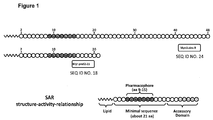
- the HBV envelope encloses three proteins termed L-(large), M-(middle) and S-(small). They share the C-terminal S-domain with four transmembrane regions.
- the M- and L-protein carry additional N-terminal extensions of 55 and, genotype-dependent, 107 or 118 aa (preS2- and preS1).
- the stoichiometric ratio of L, M and S is about 1:1:4, while the more abundantly secreted non-infectious subviral particles (SVPs) contain almost exclusively Sand only traces of L-protein (Nassal, 1996).
- SVPs non-infectious subviral particles
- the preS1-domain of L is myristoylated and at some point of the HBV life cycle translocated through the ER-derived membrane. This modification is essential for infectivity (Gripon et al., 1995; Le Seyec et al., 1999).
- HBV as well as the other hepatotropic viruses have a liver tropism, i.e. the liver is the tissue which specifically supports the growth of HBV.
- HBV vectors derived from hepatitis B virus (HBV), which can be used for gene therapy, such as the delivery of therapeutic genes to liver cells and the expression of heterologous genes in liver cells.
- HBV vectors have a limited capacity for packaging genes.
- the present invention aims to provide improved means and methods for the effective, specific targeted diagnosis, prevention and/or treatment of liver diseases and the regulation of the liver function.
- this object is solved by using the cyclic peptides of the present invention having the general formula I as vehicle or shuttle for the specific delivery of compound(s) to the liver.
- this object is solved by providing the cyclic peptide of the present invention or the pharmaceutical composition of the present invention (of the general formula I) for use in the diagnosis, prevention and/or treatment of a liver disease or condition.
- this object is solved by providing the cyclic peptide of the present invention (of the general formula I) or the pharmaceutical composition of the present invention for use in the diagnosis, prevention and/or treatment of a cardiovascular disease (CVD).
- CVD cardiovascular disease
- this object is solved by a method for the specific delivery of compound(s) to the liver, comprising the administration of a therapeutically effective amount of a cyclic peptide of the present invention (of the general formula I) or a pharmaceutical composition of the present invention.
- this object is solved by a method for the diagnosis, prevention and/or treatment of a liver disease or condition, comprising the administration of a therapeutically effective amount of a cyclic peptide of the present invention (of the general formula I) or a pharmaceutical composition of the present invention.
- this object is solved by a method for the diagnosis, prevention and/or treatment of a cardiovascular disease (CVD), comprising the administration of a therapeutically effective amount of a cyclic peptide of the present invention (of the general formula I) or a pharmaceutical composition of the present invention.
- CVD cardiovascular disease
- this object is solved by providing the cyclic peptide of the present invention (of the general formula II) or the pharmaceutical composition of the present invention for use in medicine.
- this object is solved by providing a cyclic peptide having the general formula II for use in liver targeting, such as for the specific delivery of compound(s) to the liver.
- this object is solved by using the cyclic peptides of the present invention having the general formula II as vehicle or shuttle for the specific delivery of compound(s) to the liver.
- this object is solved by providing the cyclic peptide of the present invention (of the general formula II) or the pharmaceutical composition of the present invention for use in the diagnosis, prevention and/or treatment of a liver disease or condition.
- this object is solved by providing the cyclic peptide of the present invention (of the general formula II) or the pharmaceutical composition of the present invention for use in the diagnosis, prevention and/or treatment of a cardiovascular disease (CVD).
- CVD cardiovascular disease
- this object is solved by a method for the specific delivery of compound(s) to the liver, comprising the administration of a therapeutically effective amount of a cyclic peptide of the present invention (of the general formula II) or a pharmaceutical composition of the present invention.
- this object is solved by a method for the diagnosis, prevention and/or treatment of a liver disease or condition, comprising the administration of a therapeutically effective amount of a cyclic peptide of the present invention or a pharmaceutical composition of the present invention.
- this object is solved by a method for the diagnosis, prevention and/or treatment of a cardiovascular disease (CVD), comprising the administration of a therapeutically effective amount of a cyclic peptide of the present invention (of the general formula II) or a pharmaceutical composition of the present invention.
- CVD cardiovascular disease
- the present invention provides cyclic peptides for use in liver targeting.
- the cyclic peptides of the present invention are subject of the parallel European patent application No. 15200494.1 filed December 16,2015 .
- Said cyclic peptides are preS-derived peptides of hepatitis B virus (HBV).
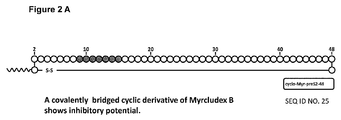
- a cyclic peptide of the present invention has the general formula I (X) m - P-(Y) n (I) wherein
- cyclic peptides of the present invention can be cyclized in different ways, preferably
- the P sequence can be cyclized via head-to-tail cyclization.
- the peptide is cyclized via head-to-tail cyclization via the N-terminus, i.e. the amino group of the N-terminal asparagine (N) and the C-terminus, i.e. carboxyl group of the C-terminal amino acid proline (P).
- the peptide can be cyclized via thiol oxidation (disulfide bridge formation) of the two cysteines (C).
- the peptide can be cyclized via thiol oxidation (disulfide bridge formation) of the two cysteines (C).
- the peptide can be cyclized via thiol oxidation (disulfide bridge formation) of the two cysteines (C).
- the peptide can be cyclized via thiol oxidation (disulfide bridge formation) of the two cysteines (C).
- the peptide can be cyclized via thiol oxidation (disulfide bridge formation) of the two cysteines (C).
- the peptide can be cyclized via head-to-tail cyclization via the N-terminus, i.e. the amino group of the N-terminal glycine (G) and the C-terminus, i.e. carboxyl group of the C-terminal amino acid glycine (G).
- the peptide can be cyclized via thiol oxidation (disulfide bridge formation) of the two cysteines (C).
- the cyclic peptide of the present invention is hydrophobically modified, i.e. it carries at least one covalently attached hydrophobic modification.
- the position of the hydrophobic modification(s) can vary within the peptide sequence.
- the hydrophobic modification(s) is/are at amino acid side chain(s) of X and/or Y.
- the hydrophobic modification(s) is/are at amino acid side chain(s) of P.
- the hydrophobic modification is an acylation and/or addition of hydrophobic moieties, more preferably an acylation with C8 to C22 fatty acids ,
- the cyclic peptides of the invention can carry more than one hydrophobic modification, such as two, three, four or more, which can be the same or different.
- a cyclic peptide of the invention carries one myristoyl group (C 14) and one stearoyl (C18) group.
- the cyclic peptides of the invention carry one or two hydrophobic modification(s).
- a cyclic peptide of the present invention has the general formula Ia cyclo[(X) m - P-(Y) n ] (Ia) and carries at least one hydrophobic modification at amino acid side chain(s) of X and/or P.
- the cyclic peptide with general formula Ia can be obtained via head-to-tail cyclization, such as
- a cyclic peptide with general formula Ia can be: H - cyclo[(X) m -P-(Y) n ] such as wherein H is the hydrophobic modification, preferably myristoyl (C 14).
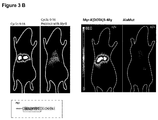
- the cyclic peptides of the present invention are used for liver targeting, such as the specific delivery of compound(s) to the liver.
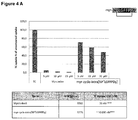
- the cyclic peptides of the present invention are suitable for liver targeting, because they either target NTCP (gene name SLC10A1), the sodium taurocholate cotransporter polypeptide (in particular the cyclic peptides that are not cyclized within P) or use an unknown mechanism to enrich in the liver.
- the human sodium taurocholate cotransporter polypeptide NTCP/SLC10A1 is a HBV preS1-specific receptor which plays a key role in Hepatitis B virus (HBV) and/or Hepatitis D virus (HDV) infection, as it was recently identified by the inventors (see e.g. WO 2014/072526 , WO 2014/072524 and WO 2015/014830 ). See also WO 2013/159243 A1 .
- Expression of this receptor or of certain non-human counterparts allows to transform cells that were previously unable to specifically bind HBV and/or HDV and/or non-susceptible to HBV and/or HDV infection into cells that are HBV and/or HDV binding-competent and/or susceptible to HBV and/or HDV infection.
- Cells that became susceptible to HBV and/or HDV infection after differentiation show a significantly increased susceptibility upon expression ofNTCP.
- NTCP is an integral transmembrane protein, not expressed in HepG2, HuH7, induced in HepaRG cells after DMSO treatment (Kotani et al., 2012) and down-modulated in primary hepatocytes during de-differentiation (Doring et al., 2012).
- targeting NTCP refers to the specific binding of the cyclic peptides of the present invention to the NTCP receptor on respective liver cells/hepatocytes, preferably within a host (subject or patient) but also in some animals that express a binding competent NTCP although they do not support infection (e.g. mouse, rat, dog).
- ligands e.g. Cyclosporin A
- substrates e.g. bile salts, ezetimibe
- these substances are known to also address other bile salt transporters from the SLC family and are therefore not considered specific (Urban et al., 2014).
- the cyclic peptide of the present invention comprises or consists of an amino acid sequence selected from the group of (wherein P, SEQ ID NO. 1 is underlined)
- Examples of preferred cyclic peptides of the present invention are:
- the above comprise a C-terminal D-amino acid, such as D-tyrosine, e.g.
- cyclic peptides of the present invention with an N-terminal hydrophobic modification (e.g. myristoylation) are:
- the present invention provides a cyclic peptide having the general formula II R p -(X) m -P'-(Y) n -(Z) o -R q (II) wherein
- the cyclic peptides having the general formula II are conformationally constrained.
- the hydrophobic moiety R p and/or the hydrophobic moiety R q of the cyclic peptides having the general formula II is an acylation and/or addition of hydrophobic moieties, preferably an acylation with C8 to C22 fatty acids (such as myristoyl (C 14), palmitoyl (C16) or stearoyl (C18), more preferably myristoyl (C14)), or the hydrophobic moiety or moieties is selected from cholesterol, cholesterol derivatives, phospholipids, glycolipids, glycerol esters, steroids, ceramids, isoprene derivatives.
- C8 to C22 fatty acids such as myristoyl (C 14), palmitoyl (C16) or stearoyl (C18), more preferably myristoyl (C14)
- the hydrophobic moiety or moieties is selected from cholesterol, cholesterol derivatives, phospholipids, glycolipids, glycerol esters, steroids, cer
- cyclic peptides of the present invention having the general formula II can be cyclized in different ways, preferably
- the cyclic peptides of the present invention having the general formula II do not comprise peptides which are cyclized within the amino acid sequence of P' (i.e. within the pharmacophore of 7 amino acids, of SEQ ID NO. 34, i.e. via amino acid side chains of P'.
- the P' sequence can be cyclized via head-to-tail cyclization.
- the cyclic peptides of the present invention having the general formula II comprise peptides which are cyclized within the amino acid sequence of P' (i.e. within the pharmacophore of 7 amino acids, of SEQ ID NO. 34, i.e. via amino acid side chains of P'.
- the cyclic peptides of the present invention having the general formula II further comprise depsipeptide bond(s) or functional group alkylations, such as backbone nitrogen methylations.
- the cyclic peptide of the present invention having the general formula II comprises or consists of an amino acid sequence selected from the group of
- a cyclic peptide of the present invention having the general formula I or II comprises compound(s).
- Such compound or compounds can be any compound or compounds. Such compound or compounds can be any compound or compounds.
- Such compound(s) are to be delivered to the liver.
- Such compound(s) are preferably covalently attached, such as via a linker, spacer and/or anchor group(s), e.g. a cleavable linker.
- Preferred radioisotopes are 131 I, 125 I, 99m Tc, 18 F, 68 Ga, 111 In, 90 Y, 177 LU.
- amino acid residue lysine can be attached/coupled to DOTA[ 68 Ga] (i.e. K(DOTA[ 68 Ga]) .
- Preferred fluorescent dyes are Alexa dyes, derivatives of rhodamine and fluorescein, Cy-dyes.
- amino acid residue lysine can be attached/coupled to the fluorescent dye Atto 488 (i.e. K(Atto 488 ).
- Preferred contrast agents are Gadolinium (Gd) complexes, supramagnetic iron (Fe) complexes and particles, compounds containing atoms of high atomic number, i.e. iodine for computer tomography (CT), microbubbles and carriers such as liposomes that contain these contrast agents.
- the compound is selected from a drug, preferably
- the drug is in form of a prodrug.
- HBV The envelope of HBV encloses three proteins termed L (large), M (middle) and S (small). They share the C-terminal S-domain with four transmembrane regions.
- L large
- M large
- S small
- the M- and L-protein carry additional N-terminal extensions of 55 and, genotype-dependent, 107 or 118 amino acids (preS2- and preS1).
- preS-derived peptide of HBV refers to a peptide with an amino acid sequence that corresponds to the N-terminal extensions of the L-protein of HBV, preS1, preferably to a consensus sequence of the species and genotypes A to H as well as of woolly monkey (WMHBV), chimpanzee and gorilla hepatitis B viruses, but it also refers to variants thereof, such as N-terminally and/or C-terminally truncated variants, amino acid substitution variants.
- a peptide or amino acid sequence (a) preferably refers to a peptide with an amino acid sequence that corresponds to or is based on the N-terminal extensions of the L-protein of HBV, preS1, preferably of genotypes A to H as well as of woolly monkey (WMHBV), orangutan, chimpanzee and gorilla hepatitis B viruses and the recently described bat hepatitis B virus, but it also refers to variants thereof, preferably C-terminally truncated variants, amino acid substitution variants.
- the peptides are based on the following sequences (amino acids in single letter code; essential domain or pharmacophore underlined).
- NPLGFXP (wherein X or Xaa is an arbitrary amino acid, preferably F or L, more preferably F)
- HBV preS consensus sequence for amino acid positions (-11) to 48) (SEQ ID NO: 51):
- the peptide or amino acid sequences are preferably L-amino acid sequences, but can also comprise D-amino acids or are D-amino acid sequences.
- peptide or amino acid sequences can also comprise unnatural amino acids, which are preferably used for cyclization.
- the cyclic peptides of the present invention with general formula I (X) m -P-(Y) n comprise or consist of at least the 7 amino acids having the sequence of SEQ ID NO: 1 (P).
- a cyclic peptide of the present invention with general formula I can comprise or consist of 7, 8, 9, 10, 11, 12, 13, 14, 15, 16, 17, 18, 19, 20, 21, 22, 23, 24, 25, 26, 27, 28, 29, 30, 31, 32, 33, 34, 35, 36, 37, 38, 39, 40, 41, 42, 43, 44, 45, 46, 47, 48, 49 amino acids.
- the cyclic peptides of the present invention with general formula II R p -(X) m -P'-(Y) n -(Z) o -R q comprise or consist of at least the 8 amino acids having the sequence of SEQ ID NO: 34 (P').
- a cyclic peptide of the present invention with general formula II can comprise or consist of 8, 9, 10, 11, 12, 13, 14 amino acids.
- peptides of this invention can be prepared by a variety of procedures readily known to those skilled in the art, in general by synthetic chemical procedures.
- Synthetic chemical procedures include more particularly the solid phase sequential and block synthesis (Erickson & Merrifield, 1976).
- the solid phase sequential procedure can be performed using established automated methods such as by use of an automated peptide synthesizer.
- an ⁇ -amino protected amino acid is bound to a resin support.
- the resin support employed can be any suitable resin conventionally employed in the art for the solid phase preparation of (poly)peptides, preferably polystyrene which has been copolymerized with polyoxyethylen to provide sites for ester formation with the initially introduced o-amino protected amino acid.
- This optimized method applied by the inventors, has been explicitly described (see e.g. Gausepohl et al., 1989).
- the amino acids are introduced one by one (step-wise). Each synthesis cycle corresponding to the introduction of one amino acid includes a deprotection step, successive washing steps, a coupling step with activation of the amino acid, and subsequent washing steps. Each of these steps is followed by a filtration.
- the reactive agents for coupling are the classical reactive agents for (poly)peptide synthesis such as dicyclohexylcarbodiimide, hydroxybenzotriazole, benzotriazil-1-yl-oxytris (dimethylamino) phosphonium hexafluorophosphate, and diphenylphosphorylazide.
- the polypeptide is separated from the resin by a treatment with a strong acid such as trifluoroacetic acid in the presence of anisol, ethanedithiol or 2-methylindole.
- a strong acid such as trifluoroacetic acid in the presence of anisol, ethanedithiol or 2-methylindole.
- the compound is then purified by the classical techniques of purification, in particular by means of HPLC.
- the peptides of the present invention may also be obtained by coupling (poly)peptide fragments that are selectively protected, this coupling being effected e.g. in a solution.
- covalent peptide cyclisation can be achieved by the formation of any chemical bond.
- the main strategies followed are cyclisation by the formation of disulfide bonds or amide bonds.
- the general aspects of peptide cyclization have been comprehensively reviewed by White and Yudin (2011).
- peptide cyclisation For peptide cyclisation, first the linear peptide is synthesized (in most cases by solid-phase peptide synthesis (SPPS)). As described by White and Yudin (2011) amide bond formation - the head to tail cyclization requires the availability of a carboxylic acid moiety with an appropriate convergent protecting group, i.e. a carbamate linked to an allylic ester (an Alloc group). The cyclisation is achieved either on the solid support or in solution using activation agents such as HBTU. In case of peptides linked by disulfide bonds, the cyclization requires the availability of two thiol groups with an appropriate convergent protecting groups such as Trityl- protecting groups. The cyclisation is achieved by oxidation using agents such as hydrogen peroxide or milder conditions as available by air oxidation.
- SPPS solid-phase peptide synthesis
- the present invention provides a pharmaceutical composition.
- compositions according to the present invention comprise
- compositions according to the present invention are very well suited for all the uses and methods described herein.
- a “pharmaceutically acceptable carrier or excipient” refers to any vehicle wherein or with which the pharmaceutical or vaccine compositions according to the invention may be formulated. It includes a saline solution such as phosphate buffer saline. In general, a diluent or carrier is selected on the basis of the mode and route of administration, and standard pharmaceutical practice.
- compositions according to the present invention are formulated for oral administration and, thus, comprise suitable pharmaceutically acceptable carrier(s) and/or excipient(s) for oral administration.
- Examples for pharmaceutically acceptable carrier(s) and/or excipient(s) are also liposomes.
- the present invention provides the cyclic peptides of general formula I and II as vehicle or shuttle for the specific delivery of compound(s) to the liver.
- “Vehicle” or “shuttle” for the specific delivery of a compound or compounds to the liver according to the present invention refers to the liver tropism or hepatotropism of the cyclic peptides of the present invention as found by the inventors and described herein, i.e. to their capacity to selectively accumulate in the liver, preferably to selectively accumulate at the plasma membrane of hepatocytes as well as to selectively enter into hepatocytes.
- the invention is based on the finding of a highly specific liver accumulation and on the identification of the determinants of the liver tropism of HBV in the preS1 sequence of HBV by the inventors.
- the invention uses the knowledge about the determinants of the liver tropism for the design of universal vehicles or shuttles for specific liver targeting or delivery, respectively.
- the cyclic peptides of the present invention are versatile vehicles or shuttles for specifically delivering compound(s) to the liver.
- the specific delivery of a compound to the liver is the specific delivery of the compound to hepatocytes.
- the compound can specifically be delivered to hepatocytes in vitro as well as in vivo.
- the compound is preferably specifically delivered to the liver of an animal, preferably mammal or human, or a bird.
- the present invention provides the cyclic peptide of the present invention having general formula II or the pharmaceutical composition of the present invention for use in medicine.
- cyclic peptide(s) of the present invention or the pharmaceutical composition(s) according to the invention are suitable and, thus, provided for the diagnosis, prevention and/or treatment of diseases.
- the present invention provides the cyclic peptide of the present invention having general formula I as well as the cyclic peptide of the present invention having general formula II and the respective pharmaceutical compositions for use in liver targeting, such as for the specific delivery of compound(s) to the liver.
- the present invention provides the cyclic peptide of the present invention having general formula I as well as the cyclic peptide of the present invention having general formula II and the respective pharmaceutical compositions for use in the diagnosis, prevention and/or treatment of a liver disease or condition.
- the liver disease or condition is selected from hepatitis, cirrhosis, haemochromatosis, preferably hepatitis caused by hepatitis A, B, C, D, E, F, G and H virus or concomitant hepatitis caused by viruses.
- the liver disease or disorder is a disease which involves a liver stadium of a virus or a non-viral pathogen, such as a tropical disease, malaria, schistosomiasis, leishmaniasis, Morbus Wilson.
- the liver disease or disorder is a liver tumor, preferably hepatocellular carcinoma (HCC).
- HCC hepatocellular carcinoma
- the liver disease or disorder is a post-transplantation complication after liver transplantation related to bile salt accumulation within the biliary pathway / a post-transplantation-related liver dysfunction.
- the liver disease or condition is related to sodium taurocholate cotransporter polypeptide (NTCP)-mediated transport of compounds into hepatocytes, or necessitates a delivery of a compound, such as a drug or label, to the site or location of the disease or condition, and preferably is a liver involved metabolic disease selected from
- the compounds which are transported into hepatocytes via NTCP are preferably bile acids, steroids, conjugated and non-conjugated thyroid hormones, liver toxins, compounds that are covalently bound to taurocholate, bromosulphophthalein, drugs.
- liver diseases or conditions such as liver diseases or conditions that are related to NTCP-mediated transport of compounds (such as bile acids etc.) into hepatocytes, preferably liver involved metabolic diseases (e.g. intrahepatic cholestasis, poisoning of the liver (by liver toxins) / hepatotoxicity, drug-induced cholestatic liver disease, hyperlipidemia, etc.) and cardiovascular diseases.
- NTCP sodium taurocholate cotransporter polypeptide
- liver involved metabolic disease when used herein refers to metabolic disorders including visceral obesity, diabetes mellitus and dyslipidemia which are influenced by the liver metabolism of lipids and bile acids.
- cholestasis is a condition where bile constituents cannot be secreted from hepatocytes into the biliary tree or where bile cannot flow from the liver to the duodenum, resulting in hepatocyte bile acid accumulation within hepatocytes.
- Cholestasis or “intrahepatic cholestasis” when used herein refers to intrahepatic toxic effects of hepatocyte bile acid accumulation related to an insufficient expression and/or activity of bile salt pumps (like BSEP or MRP) in the canalicular membrane.
- BSEP bile salt pumps
- Posthepatic cholestasis when used herein refers to a cholestatic liver disease due to obstruction of the large bile ducts.
- “Poisoning of the liver” or “hepatotoxicity” or “toxic liver disease” when used herein refer to toxic effects of drugs independent of bile acid accumulation. These drugs penetrate the hepatocytes via the NTCP-mediated transport and cause several direct toxic effects, by damaging the mitochondria or by activating enzymes in the cytochrome P-450 system leading to oxidative stress.
- Drug-induced cholestatic liver disease when used herein refers to inhibition of the export of bile acids from hepatocytes due to drug effects on bile salt export pump (BSEP).
- Drug-induced cholestasis may be caused by several drugs which inhibit BSEP, such as rifampicin, cyclosporine A, rifamycin SV, bosentan, troglitazone, erythromycin estolate, and glibenclamide (Fattinger et al., 2001; Funk et al., 2001; Funk et al., 2001; Stieger et al., 2000; Dawson et al., 2012; Morgan et al., 2010; Ogimura et al., 2011).
- BSEP is a member of the ATP-binding cassette (ABC) family of transporters (BSEP is also identified as ABCB11) and it is involved in the process of exporting bile acids out of hepatocytes, thus reducing their toxicity to these cells.
- ABC ATP-binding cassette
- the above mentioned drugs cause the toxic effects of excess bile acid accumulation because the excretion of bile acid via BSEP is disabled.
- Inhibition of NTCP-mediated bile acid uptake via the lipopeptide-based compound (such as MyrB) and NTCP counterbalances BSEP inhibition, and thereby prevents hepatotoxicity or is suitable for treatment and/or diagnosis.
- “Hyperlipidemia” (or hyperlipoproteinemia, or hyperlipidemia) involves abnormally elevated levels of any or all lipids and/or lipoproteins in the blood.
- Hyperlipidemias are divided in primary and secondary subtypes.
- Primary hyperlipidemia is usually due to genetic causes (such as a mutation in a receptor protein), while secondary hyperlipidemia arises due to other underlying causes such as diabetes.
- Lipid and lipoprotein abnormalities are common in the general population, and are regarded as a modifiable risk factor for cardiovascular disease due to their influence on atherosclerosis.
- “Hypercholesterolemia” (or hypercholesterolaemia) is the presence of high levels of cholesterol in the blood. It is a form of "hyperlipidemia”.
- “Hyperlipidemia” when used herein preferably refers to hypercholesterolemia which includes elevated LDL cholesterol, reduced HDL cholesterol, elevated triglycerides, clogged arteries leading to high blood pressure, cardiovascular disease (CVD), heart attacks and strokes.
- CVD cardiovascular disease
- Metabolic syndrome refers to a disorder of energy utilization and storage, diagnosed by a co-occurrence of three out of five of the following medical conditions: abdominal (central) obesity, elevated blood pressure, elevated fasting plasma glucose, high serum triglycerides, and low high-density cholesterol (HDL) levels. Metabolic syndrome increases the risk of developing cardiovascular disease, particularly heart failure, and diabetes. Metabolic syndrome is also known as metabolic syndrome X, cardiometabolic syndrome, syndrome X, insulin resistance syndrome, Reaven's syndrome, and CHAOS.
- Non-alcoholic fatty liver disease refers to one cause of a fatty liver, occurring when fat is deposited (steatosis) in the liver not due to excessive alcohol use. It is related to insulin resistance and the metabolic syndrome.
- Non-alcoholic steatohepatitis is the most extreme form of NAFLD, and is regarded as a major cause of cirrhosis of the liver of unknown cause.
- the present invention provides the cyclic peptide of the present invention having general formula I as well as the cyclic peptide of the present invention having general formula II and the respective pharmaceutical compositions for use in the diagnosis, prevention and/or treatment of a cardiovascular disease (CVD).
- CVD cardiovascular disease
- the cardiovascular disease comprises the control or modification of the cholesterol level or cholesterol uptake, wherein the cholesterol level or uptake is preferably controlled or modified by decreasing or blocking the NCTP-mediated bile salt transport (by the cyclic peptide).
- the cholesterol level or uptake is controlled or modified by decreasing or blocking the NCTP-mediated bile salt transport by the cyclic peptide of the present invention.
- Said uses comprises the control or modification of the cholesterol level or cholesterol uptake, wherein the cholesterol level or uptake is controlled or modified by decreasing or blocking the NCTP-mediated bile salt transport by the cyclic peptide of the present invention.
- Cardiovascular diseases are the major cause of morbidity and death in the western world. High levels of cholesterol have been associated with CVD as one of the antibiotic factors. Of particular importance clinically is the abnormal deposition of cholesterol and cholesterol-rich lipoproteins in the coronary arteries. Such deposition, eventually leading to atherosclerosis, is the leading contributory factor in diseases of the coronary arteries. In this case the management of CVD is critical dependent on lipid-lowering therapies. Different classes of drugs are available for this purpose, such as statins, cholesterol absorption inhibitors, bile acid resins, fibrates and nicotinic acid that act by reducing the levels of cholesterol by distinct pathways (Schmitz & Langmann, 2006). These drugs have several side effects and depend on the relative levels of the metabolizing enzymes and transporters that act on cardiovascular drugs.
- the main control of cholesterol metabolism is caused by bile acid as an important regulator of cholesterol homeostasis.
- the levels of bile acid and cholesterol are linked by the regulation of cholesterol metabolism and absorption.
- the synthesis of the bile acids is the major pathway of cholesterol catabolism in mammals, because the end products of cholesterol utilization are the bile acids.
- the major pathway for the synthesis of the bile acids is initiated via hydroxylation of cholesterol at the 7 position via the action of cholesterol 7 ⁇ -hydroxylase (CYP7A1). That means that the synthesis of bile acids is one of the predominant mechanisms for the excretion of excess cholesterol. Under physiological conditions this regulation is insufficient to compensate for an excess intake of cholesterol.
- bile acid uptake into hepatocytes is blocked, the excretion of cholesterol in the form of bile acids will be sufficient to compensate for an excess dietary intake of cholesterol.
- Blocking bile acid uptake via the lipopeptide-based compound according to the invention and NTCP leads to intracellular deficiency of bile acid which is compensated by increased cholesterol metabolism and absorption.
- the cyclic peptides of the present invention are suitable for lipid-lowering therapies to prevent CVD.
- the route of administration of cyclic peptides or pharmaceutical compositions of the present invention is selected from oral, subcutaneous, intravenous, nasal, intramuscular, transdermal, inhalative, by suppository.
- a preferred route of administration or application is orally.
- a preferred embodiment for nasal administration or application is a nasal spray.
- cyclic peptides or the pharmaceutical compositions of the invention are provided such that they comprise a therapeutically effective amount of said cyclic peptide(s) or of said pharmaceutical composition(s).
- a “therapeutically effective amount” of a cyclic peptide or a pharmaceutical composition of this invention refers to the amount that is sufficient to inhibit NTCP receptor function. Furthermore, said “therapeutically effective amount” depends on the respective application and desired outcome of inhibition, treatment or vaccination.
- a preferred therapeutically effective amount is in the range of 10 ⁇ g to 1 mg per kg body weight, preferably 10 ⁇ g to 100 ⁇ g.
- the therapeutically effective amount is in the range of from about 0.01 mg to about 50 mg per patient and per day, preferably from about 1 mg to about 20 mg per patient per day or is applied to a patient in a dose ranging from 100 nmol per kg to 2 ⁇ mol per kg per day / or is applied to a patient in a dose ranging from 10 pmol per kg to 20 ⁇ mol per kg body weight.
- a preferred therapeutically effective amount is about 100 ⁇ g per kg body weight or in the range of 1 to 5 mg per patient.
- the preferred therapeutically effective amount in the range of 1 to 5 mg per patient can be administered once a day or in other embodiments only once every 2-3 days.
- the present invention provides a method for the specific delivery of compound(s) to the liver.
- Said method comprises the administration of (a therapeutically effective amount of)
- cyclic peptides of the present invention having the general formula I and/or II preferably carry
- the present invention provides a method for the diagnosis, prevention and/or treatment of a liver disease or condition.
- the liver disease or condition is selected from hepatitis, cirrhosis, haemochromatosis, preferably hepatitis caused by hepatitis A, B, C, D, E, F, G and H virus or concomitant hepatitis caused by viruses.
- the liver disease or disorder is a disease which involves a liver stadium of a virus or a non-viral pathogen, such as a tropical disease, malaria, schistosomiasis, leishmaniasis, Morbus Wilson.
- the liver disease or disorder is a liver tumor, preferably hepatocellular carcinoma (HCC).
- HCC hepatocellular carcinoma
- the liver disease or disorder is a post-transplantation complication after liver transplantation related to bile salt accumulation within the biliary pathway.
- the liver disease or condition is related to sodium taurocholate cotransporter polypeptide (NTCP)-mediated transport of compounds into hepatocytes, or necessitates a delivery of a compound, such as a drug or label, to the site or location of the disease or condition, and preferably is a liver involved metabolic disease selected from
- the present invention provides a method for the diagnosis, prevention and/or treatment of a cardiovascular disease (CVD).
- CVD cardiovascular disease
- Said method preferably comprises the control or modification of the cholesterol level or cholesterol uptake, wherein the cholesterol level or uptake is preferably controlled or modified by decreasing or blocking the NCTP-mediated bile salt transport (by the cyclic peptide).
- the "therapeutically effective amount” depends on the respective application and desired outcome of inhibition, treatment or vaccination, as discussed above.
- the therapeutically effective amount is preferably in the range of from about 0.01 mg to about 50 mg per patient, preferably from about 1 mg to about 20 mg per patient, or wherein the cyclic peptide is preferably applied to a patient in a dose ranging from 10 pmol per kg to 20 ⁇ mol per kg body weight.
- the route of administration is preferably selected from oral, subcutaneous, intravenous, nasal, intramuscular, transdermal, inhalative, by suppository.
- the peptide myr-cyclo-intra[NP * LGFFPDy] accumulates rapidly in the liver and is eliminated via the intestine within the first 2 hours.
- Peptides were synthesized on solid phase (Tentagel R RAM resin, capacity 0.22 mmol/g, Rapp Polymere, Tubingen, Germany) using Fmoc/tBu chemistry in peptide synthesizer (Applied Biosystems 443A, Foster City, CA, USA). Before beginning peptide synthesis the resin (0.05 mmol) was preswollen in DCM. Fmoc-protected amino acids were used in a 10-fold excess (0.5mmol) and activated with HBTU/ DIPEA in NMP. See also Schieck et al., 2010.
- Peptide on the solid support was swollen in DCM and washed with NMP.
- Myristic acid (4 eq.) and HATU or COMU (4 eq.) were dissolved in NMP and 10 eq. DIPEA were added.
- the mixture was added to the resin and was incubated for 30 min. Afterwards the resin was washed three times with NMP, three times with DCM and dried.
- the peptide was cleaved and deprotected with TFA/TIS/H 2 O (95:2.5:2.5).
- the deprotected peptide was precipitated with diethyl ether, pelleted by centrifugation (3000 rpm, 5 min) and washed twice with fresh diethyl ether.
- the peptide was dried.
- Solid phase cyclization was achieved by 110 mg (86 mL; 0.4 mmol) DPPA and 77 mg (102 ⁇ L; 0.6 mmol) in 2 mL NMP after linear assembly as well as catalytic allyl-deprotection with 5 mg tetrakis(triphenylphosphine)palladium(0) and 30 mg borane dimethylamine complex.
- the cyclic peptide was cleaved and deprotected by 95:2.5:2.5 TFA/water/TIS and purified by HPLC; occasionally a portion of the raw peptide was modified with DOTA or fluorescent dye active esters prior to purification
- mice were anesthetized with 1% sevoflurane (Abbott, Wiesbaden, Germany) and images were recorded using an Inveon small animal positron emission tomographic (PET) scanner (Siemens, Knoxville, TN) up to 60 minutes postinjection.
- PET Inveon small animal positron emission tomographic
- HepG2 NTCP cells seeded in a 24 well format were preincubated with the indicated peptide for 30 min at 37°C in culture medium.
- 150 ⁇ M taurocholate (containing 450 cpm/fmol 3 H taurocholate) were added to each well and the cells were incubated an additional 15 minutes at 37°C. Uptake was stopped by removal of the cell culture medium and addition of ice cold PBS. The cells were washed three times with cold PBS and lysed (0.2 M NaOH, 0.05% SDS). Cell lysates were mixed with Ultima Gold liquid scintillation solution (Perkin Elmer, Rodgau, Germany) and the radioactivity measured in a liquid scintillation counter (Packard Instruments, Frankfurt, Germany).
Landscapes
- Health & Medical Sciences (AREA)
- Life Sciences & Earth Sciences (AREA)
- Chemical & Material Sciences (AREA)
- Proteomics, Peptides & Aminoacids (AREA)
- General Health & Medical Sciences (AREA)
- Organic Chemistry (AREA)
- Medicinal Chemistry (AREA)
- Molecular Biology (AREA)
- Genetics & Genomics (AREA)
- Biophysics (AREA)
- Epidemiology (AREA)
- Public Health (AREA)
- Veterinary Medicine (AREA)
- Engineering & Computer Science (AREA)
- Animal Behavior & Ethology (AREA)
- Biochemistry (AREA)
- Pharmacology & Pharmacy (AREA)
- Bioinformatics & Cheminformatics (AREA)
- Optics & Photonics (AREA)
- Physics & Mathematics (AREA)
- Biomedical Technology (AREA)
- Virology (AREA)
- Gastroenterology & Hepatology (AREA)
- Peptides Or Proteins (AREA)
- Medicines That Contain Protein Lipid Enzymes And Other Medicines (AREA)
Abstract
Description
- The present invention relates to cyclic preS-derived peptides of HBV which are versatile vehicles for the targeted delivery of compounds to the liver, preferably to hepatocytes, in vitro as well as in vivo. The present invention further relates to conformationally constrained cyclic preS-derived peptides of HBV which are versatile vehicles for the targeted delivery of compounds to the liver, preferably to hepatocytes, in vitro as well as in vivo.
- The present invention further relates to pharmaceutical compositions comprising at least one cyclic peptide. The present invention further relates to medical uses of said cyclic peptides and the pharmaceutical compositions, such as in the diagnosis, prevention and/or treatment of a liver disease or condition. The present invention further relates to methods for the specific delivery of compound(s) to the liver, methods for the diagnosis, prevention and/or treatment of a liver disease or condition and/or methods for the diagnosis, prevention and/or treatment of a cardiovascular disease.
- The liver, an organ which is present in vertebrates and other animals, plays a major role in the metabolism and has a number of functions in the body, including glycogen storage, decomposition of red blood cells, synthesis of plasma proteins, and detoxification. The liver also is the largest gland in the human body. It lies below the diaphragm in the thoracic region of the abdomen. It produces bile, an alkaline compound which aids in digestion, via the emulsification of lipids. It also performs and regulates a wide variety of high-volume biochemical reactions requiring specialized tissues.
- Hepatocytes make up 70 to 80% of the cytoplasmic mass of the liver. Hepatocytes are involved in protein synthesis, protein storage and transformation of carbohydrates, synthesis of cholesterol, bile salts and phospholipids, and detoxification, modification and excretion of exogenous and endogenous substances. The hepatocyte also initiates the formation and secretion of bile.
- There is a wide number of known liver diseases, such as:
- Hepatitis: inflammation of the liver, caused mainly by various viruses but also by certain poisons, autoimmunity or hereditary conditions;
- Cirrhosis: the formation of fibrous tissue in the liver, replacing dead liver cells. The death of the liver cells can for example be caused by viral hepatitis, alcoholism or contact with other liver-toxic chemicals;
- Haemochromatosis: a hereditary disease causing the accumulation of iron in the body, eventually leading to liver damage;
- Cancer of the liver: primary hepatocellular carcinoma (HCC) or cholangiocarcinoma and metastatic cancers, usually from other parts of the gastrointestinal tract;
- Wilson's disease: a hereditary disease which causes the body to retain copper;
- Primary sclerosing cholangitis: an inflammatory disease of the bile duct, autoimmune in nature;
- Primary biliary cirrhosis: autoimmune disease of small bile ducts;
- Budd-Chiari syndrome: obstruction of the hepatic vein;
- Gilbert's syndrome: a genetic disorder of bilirubin metabolism, found in about 5% of the population;
- Glycogen storage disease type II: the build-up of glycogen causes progressive muscle weakness (myopathy) throughout the body and affects various body tissues, particularly in the heart, skeletal muscles, liver and nervous system.
- There are also many pediatric liver diseases, such as biliary atresia, alpha-1-antitrypsin deficiency, alagille syndrome, and progressive familial intrahepatic cholestasis; as well as metabolic diseases.
- Furthermore, several pathogens and parasites, especially of tropical diseases, have a liver stage during their life cycle.
- For instance malaria, which is one of the most common infectious diseases and an enormous public-health problem. Malaria is caused by protozoan parasites of the genus Plasmodium. The most serious forms of the disease are caused by Plasmodium falciparum and Plasmodium vivax, but other related species (Plasmodium ovale, Plasmodium malariae, and sometimes Plasmodium knowlesi) can also infect humans. This group of human-pathogenic Plasmodium species is usually referred to as malaria parasites. Malaria parasites are transmitted by female Anopheles mosquitoes. Malaria in humans develops via two phases: an exoerythrocytic (hepatic phase or "liver stage") and an erythrocytic phase. When an infected mosquito pierces a person's skin to take a blood meal, sporozoites in the mosquito's saliva enter the bloodstream and migrate to the liver. Within about 30 minutes of being introduced into the human host, they infect hepatocytes, multiplying asexually and asymptomatically for a period of 6-15 days. Once in the liver these organisms differentiate to yield thousands of merozoites which, following rupture of their host cells, escape into the blood and infect red blood cells, thus beginning the erythrocytic stage of the life cycle. The parasite escapes from the liver undetected by wrapping itself in the cell membrane of the infected host liver cell. The parasite is relatively protected from attack by the body's immune system because for most of its human life cycle it resides within the liver and blood cells and is relatively invisible to immune surveillance. There is increasing interest in developing drugs that specifically address the liver specific stages of malaria parasites (e.g. primaquin) in order to obviate the development of blood stages.
- Another example is schistosomiasis or bilharziosis, which is a parasitic disease caused by several species of flatworm. Although it has a low mortality rate, schistosomiasis can be very debilitating. It is an often chronic illness that results from infection of the blood with a parasitic flatworm (schistosome). It causes debilitation and causes liver and intestinal damage. It is most commonly found in Asia, Africa, and South America, especially in areas with water that is contaminated with fresh water snails, which contain the parasite.
- Hepatitis B virus (HBV), the cause for hepatitis B, is the prototype of a family of small, enveloped DNA viruses of mammals and birds (Seeger and Mason, 2000). The HBV envelope encloses three proteins termed L-(large), M-(middle) and S-(small). They share the C-terminal S-domain with four transmembrane regions. The M- and L-protein carry additional N-terminal extensions of 55 and, genotype-dependent, 107 or 118 aa (preS2- and preS1). In virions the stoichiometric ratio of L, M and S is about 1:1:4, while the more abundantly secreted non-infectious subviral particles (SVPs) contain almost exclusively Sand only traces of L-protein (Nassal, 1996). During synthesis, the preS1-domain of L is myristoylated and at some point of the HBV life cycle translocated through the ER-derived membrane. This modification is essential for infectivity (Gripon et al., 1995; Le Seyec et al., 1999). HBV as well as the other hepatotropic viruses have a liver tropism, i.e. the liver is the tissue which specifically supports the growth of HBV.
-
US 7,001,760 B2 disclose recombinant vectors derived from hepatitis B virus (HBV), which can be used for gene therapy, such as the delivery of therapeutic genes to liver cells and the expression of heterologous genes in liver cells. However, HBV vectors have a limited capacity for packaging genes. - In
WO 2009/092612 andWO 2012/107579 , whose contents are incorporated herewith by reference in its entirety, the inventors describe hydrophobic modified preS-derived peptides of HBV and their use as vehicles for the specific delivery of compounds to the liver. - There is a need for universal diagnostic, therapeutic and/or preventative approaches that in a subject specifically target the organ liver and specifically deliver a desired compound or drug to the liver
- The present invention, thus, aims to provide improved means and methods for the effective, specific targeted diagnosis, prevention and/or treatment of liver diseases and the regulation of the liver function.
- According to the present invention this object is solved by providing a cyclic peptide of the general formula I
(X)m -P-(Y)n (I)
wherein - P is the amino acid sequence NPLGFXaaP (SEQ. ID NO: 1), with Xaa being F or L,
- X is an amino acid sequence having a length of m amino acids, s
- wherein m is 0 or at least 1;
- Y is an amino sequence having a length of n amino acids,
- wherein n is 0 or at least 1;
- and wherein m + n is 0 or at least 1;
- According to the present invention this object is solved by using the cyclic peptides of the present invention having the general formula I as vehicle or shuttle for the specific delivery of compound(s) to the liver.
- According to the present invention this object is solved by providing a pharmaceutical composition comprising
- (i) at least one cyclic peptide of the present invention (of the general formula I),
- (ii) optionally, a pharmaceutically acceptable carrier and/or excipient.
- According to the present invention this object is solved by providing the cyclic peptide of the present invention or the pharmaceutical composition of the present invention (of the general formula I) for use in the diagnosis, prevention and/or treatment of a liver disease or condition.
- According to the present invention this object is solved by providing the cyclic peptide of the present invention (of the general formula I) or the pharmaceutical composition of the present invention for use in the diagnosis, prevention and/or treatment of a cardiovascular disease (CVD).
- According to the present invention this object is solved by a method for the specific delivery of compound(s) to the liver, comprising the administration of a therapeutically effective amount of a cyclic peptide of the present invention (of the general formula I) or a pharmaceutical composition of the present invention.
- According to the present invention this object is solved by a method for the diagnosis, prevention and/or treatment of a liver disease or condition, comprising the administration of a therapeutically effective amount of a cyclic peptide of the present invention (of the general formula I) or a pharmaceutical composition of the present invention.
- According to the present invention this object is solved by a method for the diagnosis, prevention and/or treatment of a cardiovascular disease (CVD), comprising the administration of a therapeutically effective amount of a cyclic peptide of the present invention (of the general formula I) or a pharmaceutical composition of the present invention.
- According to the present invention this object is solved by providing a cyclic peptide having the general formula II
Rp -(X)m -P'-(Y)n-(Z)0 -Rq (II)
wherein - P' is the amino acid sequence NPLGFxaxbP (SEQ. ID NO: 34),
- xa is F or L or a natural or artificial amino acid with comparable
- physicochemical side chain properties,
- xb is an amino acid with an acidic side chain, preferably D or E,
- X is an amino acid sequence having a length of m amino acids,
- wherein m is 0 or 1;
- Y is an amino sequence having a length of n amino acids,
- wherein n is 0, 1, 2 or at most 3;
- and wherein m + n ≥ 0;
- Z is an amino acid sequence of o amino acids,
- wherein o is 0 or 1,
- and which comprises a reactive side chain, e.g. amine, thiol, acidic side chain, hydroxyl, azid,
- such as aminoproline,
- Rp is a hydrophobic moiety
- p is 0 or at least 1,
- Rq is a hydrophobic moiety
- q is 0 or at least 1,
- and wherein p + q ≥ 1;
- According to the present invention this object is solved by providing a pharmaceutical composition comprising
- (i) at least one cyclic peptide of the present invention (of the general formula II),
- (ii) optionally, a pharmaceutically acceptable carrier and/or excipient.
- According to the present invention this object is solved by providing the cyclic peptide of the present invention (of the general formula II) or the pharmaceutical composition of the present invention for use in medicine.
- According to the present invention this object is solved by providing a cyclic peptide having the general formula II for use in liver targeting, such as for the specific delivery of compound(s) to the liver.
- According to the present invention this object is solved by using the cyclic peptides of the present invention having the general formula II as vehicle or shuttle for the specific delivery of compound(s) to the liver.
- According to the present invention this object is solved by providing the cyclic peptide of the present invention (of the general formula II) or the pharmaceutical composition of the present invention for use in the diagnosis, prevention and/or treatment of a liver disease or condition.
- According to the present invention this object is solved by providing the cyclic peptide of the present invention (of the general formula II) or the pharmaceutical composition of the present invention for use in the diagnosis, prevention and/or treatment of a cardiovascular disease (CVD).
- According to the present invention this object is solved by a method for the specific delivery of compound(s) to the liver, comprising the administration of a therapeutically effective amount of a cyclic peptide of the present invention (of the general formula II) or a pharmaceutical composition of the present invention.
- According to the present invention this object is solved by a method for the diagnosis, prevention and/or treatment of a liver disease or condition, comprising the administration of a therapeutically effective amount of a cyclic peptide of the present invention or a pharmaceutical composition of the present invention.
- According to the present invention this object is solved by a method for the diagnosis, prevention and/or treatment of a cardiovascular disease (CVD), comprising the administration of a therapeutically effective amount of a cyclic peptide of the present invention (of the general formula II) or a pharmaceutical composition of the present invention.
- Before the present invention is described in more detail below, it is to be understood that this invention is not limited to the particular methodology, protocols and reagents described herein as these may vary. It is also to be understood that the terminology used herein is for the purpose of describing particular embodiments only, and is not intended to limit the scope of the present invention which will be limited only by the appended claims. Unless defined otherwise, all technical and scientific terms used herein have the same meanings as commonly understood by one of ordinary skill in the art. For the purpose of the present invention, all references cited herein are incorporated by reference in their entireties.
- Concentrations, amounts, and other numerical data may be expressed or presented herein in a range format. It is to be understood that such a range format is used merely for convenience and brevity and thus should be interpreted flexibly to include not only the numerical values explicitly recited as the limits of the range, but also to include all the individual numerical values or sub-ranges encompassed within that range as if each numerical value and sub-range is explicitly recited. As an illustration, a numerical range of "7 to 49" should be interpreted to include not only the explicitly recited values of 4 to 19, but also include individual values and sub-ranges within the indicated range. Thus, included in this numerical range are individual values such as 7, 8, 9, 10, 11, 12, 13, 14, 15, 16 ... 37, 38, 39, 40, 41, 42, 43, 44, 45, 46, 47, 48, 49, and sub-ranges such as from 7 to 10, from 10 to 15, from 15 to 25, from 28 to 39, from 35 to 47, from 35 to 49 etc. This same principle applies to ranges reciting only one numerical value, such as "at least 1 or "at least one amino acid". Furthermore, such an interpretation should apply regardless of the breadth of the range or the characteristics being described.
- As outlined above, the present invention provides cyclic peptides for use in liver targeting.
- The cyclic peptides of the present invention are subject of the parallel European patent application No.
15200494.1 filed December 16,2015 - Said cyclic peptides are preS-derived peptides of hepatitis B virus (HBV).
- A cyclic peptide of the present invention has the general formula I
(X)m -P-(Y)n (I)
wherein - P is the amino acid sequence NPLGFXaaP (SEQ. ID NO: 1), with Xaa being F or L,
- X is an amino acid sequence having a length of m amino acids,
- wherein m is 0 or at least 1;
- Y is an amino sequence having a length of n amino acids,
- wherein n is 0 or at least 1;
- and wherein m + n is 0 or at least 1;
- Preferably, m + n is 0 to 42,
and/or wherein m = 0 to 8 and/or n = 0 to 34, provided that m + n is 0 or at least 1. - In an embodiment with
- m + n = 0, the peptide has a length of / contains 7 amino acids (namely P);
- m + n = 1, the peptide has a length of / contains 8 amino acids;
- m + n = 2, the peptide has a length of / contains 9 amino acids;
- m + n = 3, the peptide has a length of / contains 10 amino acids;
- m + n = 4, the peptide has a length of / contains 11 amino acids;
- m + n = 5, the peptide has a length of / contains 12 amino acids;
- m + n = 6, the peptide has a length of / contains 13 amino acids;
- m + n = 7, the peptide has a length of / contains 14 amino acids;
- m + n = 8, the peptide has a length of / contains 15 amino acids;
- m + n = 15, the peptide has a length of / contains 22 amino acids;
- m + n = 40, the peptide has a length of / contains 47 amino acids;
- m + n = 42, the peptide has a length of / contains 49 amino acids.
- The cyclic peptides of the present invention can be cyclized in different ways, preferably
- (a) via thiol oxidation (disulfide bridge formation) of two cysteines (C) comprised in the peptide,
such as via a C at or near the N-terminus and a C at or near the C-terminus (of the peptide sequence before cyclization); - (b) amide condensation of two amino acid side chains (lactam),
such as via a lysine (K) side chain and an aspartic acid (D) side chain,- such as
- via a K side chain at or near the N-terminus and a D side chain at or near the C-terminus (of the peptide sequence before cyclization);
- (c) via head-to-tail cyclization,
- such as
- via a lysine (K) at the N-terminus and the C-terminus (of the peptide sequence before cyclization),
- via the N-terminus, i.e. the amino group of the N-terminal amino acid and the C-terminus, i.e. carboxyl group of the C-terminal amino acid (of the peptide sequence before cyclization),
- (d) via backbone cyclization,
- (e) via thioether formation,
and/or - (f) via hydrogen bond formation and/or bond-forming derivatives of amino acids,
- such as amino acids forming a tryptophan zipper.
- In one embodiment, the cyclic peptides of the present invention do not comprise peptides which are cyclized within the amino acid sequence of P (i.e. within the pharmacophore of 7 amino acids, of SEQ ID NO. 1 (NPLGFXaaP with Xaa = F or L)). i.e. via amino acid side chains of P.
- However, the P sequence can be cyclized via head-to-tail cyclization.
- For example, in one embodiment, the cyclic peptide comprises P NPLGFXaaP with Xaa = F, i.e. NPLGFFP (SEQ. ID NO: 2), and m and n are each 0. The peptide is cyclized via head-to-tail cyclization via the N-terminus, i.e. the amino group of the N-terminal asparagine (N) and the C-terminus, i.e. carboxyl group of the C-terminal amino acid proline (P).
- In one embodiment the cyclic peptide comprises P NPLGFXaaP with Xaa = F, i.e. NPLGFFP (SEQ. ID NO: 2), and X = Cys and Y = Cys, m and n are each 1. The peptide can be cyclized via thiol oxidation (disulfide bridge formation) of the two cysteines (C).
- In one embodiment the cyclic peptide comprises P NPLGFXaaP with Xaa = F, i.e. NPLGFFP (SEQ. ID NO: 2), and X = Cys and Y = Asp-Cys, m = 1 and n = 2. The peptide can be cyclized via thiol oxidation (disulfide bridge formation) of the two cysteines (C).
- In one embodiment the cyclic peptide comprises P NPLGFXaaP with Xaa = F, i.e. NPLGFFP (SEQ. ID NO: 2), and X = Cys and Y = His-Asp-Cys, m = 1 and n = 3. The peptide can be cyclized via thiol oxidation (disulfide bridge formation) of the two cysteines (C).
- In one embodiment the cyclic peptide comprises P NPLGFXaaP with Xaa = F, i.e. NPLGFFP (SEQ. ID NO: 2), and X = Cys-Pro and Y = Asp-Cys, m = 2 and n = 2. The peptide can be cyclized via thiol oxidation (disulfide bridge formation) of the two cysteines (C).
- In one embodiment the cyclic peptide comprises P NPLGFXaaP with Xaa = F, i.e. NPLGFFP (SEQ. ID NO: 2), and X = Cys-Pro and Y = His-Asp-Cys, m = 2 and n = 3. The peptide can be cyclized via thiol oxidation (disulfide bridge formation) of the two cysteines (C).
- In one embodiment the cyclic peptide comprises the Myrcludex B sequence with P NPLGFXaaP with Xaa = F, i.e. NPLGFFP (SEQ. ID NO: 2), and m = 7 and n = 33. The peptide can be cyclized via head-to-tail cyclization via the N-terminus, i.e. the amino group of the N-terminal glycine (G) and the C-terminus, i.e. carboxyl group of the C-terminal amino acid glycine (G).
- In one embodiment the cyclic peptide comprises the Myrcludex B sequence with P NPLGFXaaP with Xaa = F, i.e. NPLGFFP (SEQ. ID NO: 2), and two additional cysteines, such that m = 8 and n = 34. The peptide can be cyclized via thiol oxidation (disulfide bridge formation) of the two cysteines (C).
- In other embodiments, the cyclic peptides comprise P NPLGFXaaP with Xaa = L, i.e. NPLGFLP (SEQ. ID NO: 3), respectively, as well as optionally the further additional amino acids, as described above.
- In one embodiment, the cyclic peptides of the present invention comprise peptides which are cyclized within the amino acid sequence of P (i.e. within the pharmacophore of 7 amino acids, of SEQ ID NO. 1 (NPLGFXaaP with Xaa = F or L)). i.e. via amino acid side chains of P.
- In a preferred embodiment, the cyclic peptide of the present invention is hydrophobically modified, i.e. it carries at least one covalently attached hydrophobic modification.
- The position of the hydrophobic modification(s) can vary within the peptide sequence. Preferably, the hydrophobic modification(s) is/are at amino acid side chain(s) of X and/or Y.
- In one embodiment, the hydrophobic modification(s) is/are at amino acid side chain(s) of P.
- Preferably, the hydrophobic modification is an acylation and/or addition of hydrophobic moieties,
more preferably an acylation with C8 to C22 fatty acids , - such as myristoyl (C 14), palmitoyl (C16) or stearoyl (C18),
- even more preferably myristoyl (C 14),
- The cyclic peptides of the invention can carry more than one hydrophobic modification, such as two, three, four or more, which can be the same or different.
For example, a cyclic peptide of the invention carries one myristoyl group (C 14) and one stearoyl (C18) group. - Preferably, the cyclic peptides of the invention carry one or two hydrophobic modification(s).
- In one embodiment, a cyclic peptide of the present invention has the general formula Ia
cyclo[(X)m -P-(Y)n] (Ia)
and carries at least one hydrophobic modification at amino acid side chain(s) of X and/or P. - General formula Ia can also be shown as

- The cyclic peptide with general formula Ia can be obtained via head-to-tail cyclization, such as
- via thiol oxidation (disulfide bridge formation) of two cysteines (C) comprised in the peptide ,
namely a cysteine at the N-terminus and a cysteine at or near the C-terminus (of the peptide sequence before cyclization) - via a lysine (K) at the N-terminus or the N-terminus itself and the C-terminus (of the peptide sequence before cyclization).
- For example, a cyclic peptide with general formula Ia can be:
H-cyclo[(X)m-P-(Y)n]
such as

- For example
myr-cyclo[(X)m-P-(Y)n]
- The cyclic peptides of the present invention are used for liver targeting, such as the specific delivery of compound(s) to the liver.
- The cyclic peptides of the present invention are suitable for liver targeting, because they either target NTCP (gene name SLC10A1), the sodium taurocholate cotransporter polypeptide (in particular the cyclic peptides that are not cyclized within P) or use an unknown mechanism to enrich in the liver.
- The human sodium taurocholate cotransporter polypeptide NTCP/SLC10A1 is a HBV preS1-specific receptor which plays a key role in Hepatitis B virus (HBV) and/or Hepatitis D virus (HDV) infection, as it was recently identified by the inventors (see e.g.
WO 2014/072526 ,WO 2014/072524 andWO 2015/014830 ). See alsoWO 2013/159243 A1 . Expression of this receptor or of certain non-human counterparts allows to transform cells that were previously unable to specifically bind HBV and/or HDV and/or non-susceptible to HBV and/or HDV infection into cells that are HBV and/or HDV binding-competent and/or susceptible to HBV and/or HDV infection. Cells that became susceptible to HBV and/or HDV infection after differentiation (HepaRG cells) show a significantly increased susceptibility upon expression ofNTCP. - NTCP is an integral transmembrane protein, not expressed in HepG2, HuH7, induced in HepaRG cells after DMSO treatment (Kotani et al., 2012) and down-modulated in primary hepatocytes during de-differentiation (Doring et al., 2012).
- As used herein, "targeting NTCP" or "NTCP targeting" refers to the specific binding of the cyclic peptides of the present invention to the NTCP receptor on respective liver cells/hepatocytes, preferably within a host (subject or patient) but also in some animals that express a binding competent NTCP although they do not support infection (e.g. mouse, rat, dog). Several ligands (e.g. Cyclosporin A) and substrates (e.g. bile salts, ezetimibe) have been characterized so far, which might serve a similar function like the peptides described here. However, these substances are known to also address other bile salt transporters from the SLC family and are therefore not considered specific (Urban et al., 2014).
- Preferably, the cyclic peptide of the present invention comprises or consists of an amino acid sequence selected from the group of
(wherein P, SEQ ID NO. 1 is underlined) -
amino acid residues 9 to 15 (SEQ. ID NO: 2) HBVpreS9-15 NPLGFFP
and e.g. additional amino acids,- such as comprising a N-terminal and a C-terminal cysteine (in the peptide sequence before cyclization)
- X = Cys, Y = Cys, m = 1 and n =1 1
Cys-preS9-15-Cys C-NPLGFFP-C (SEQ. ID NO: 4) - such as a C-terminal D-Tyr
Cys-HBVpreS9-15-Cys-D-Tyr C-NPLGFFP-C-y (SEQ. ID NO: 5)
-
amino acid residues 9 to 16
HBVpreS9-16 NPLGFFPD (SEQ. ID NO: 6)
and e.g. additional amino acids,- such as comprising a N-terminal and a C-terminal cysteine (in the peptide sequence before cyclization)
- X = Cys, Y = Asp-Cys, m = 1 and n =2
- Cys-HBVpreS9-16-Cys C-NPLGFFPD-C (SEQ. ID NO: 7)
such as a C-terminal D-Tyr - Cys-HBVpreS9-16-Cys C-NPLGFFPD-C-y (SEQ. ID NO: 8)
-
amino acid residues 8 to 16- HBVpreS8-16 PNPLGFFPD (SEQ. ID NO: 9)
and e.g. additional amino acids,
such as comprising a N-terminal and a C-terminal cysteine (in the peptide sequence before cyclization)
X = Cys-Pro, Y = Asp-Cys, m = 2 and n =2 - Cys-HBVpreS8-16-Cys C-PNPLGFFPD-C (SEQ. ID NO: 10)
such as a C-terminal D-Tyr - Cys-HBVpreS8-16-Cys-D-Tyr C-PNPLGFFPD-C-y (SEQ. ID NO: 11)
- HBVpreS8-16 PNPLGFFPD (SEQ. ID NO: 9)
-
amino acid residues 9 to 17- HBVpreS9-17 NPLGFFPDH (SEQ. ID NO: 12)
and e.g. additional amino acids,
such as comprising a N-terminal and a C-terminal cysteine (in the peptide sequence before cyclization)
X = Cys, Y = Asp-His-Cys, m = 1 and n =3 - Cys-HBVpreS9-17-Cys C-NPLGFFPDH-C (SEQ. ID NO: 13)
such as a C-terminal D-Tyr - Cys-HBVpreS9-17-Cys-D-Tyr C-NPLGFFPDH-C-y (SEQ. ID NO: 14)
- HBVpreS9-17 NPLGFFPDH (SEQ. ID NO: 12)
-
amino acid residues 8 to 17- HBVpreS8-17 PNPLGFFPDH (SEQ.ID NO:15)
and e.g. additional amino acids,- such as comprising a N-terminal and a C-terminal cysteine (in the peptide sequence before cyclization)
- X = Cys-Pro, Y = Asp-His-Cys, m = 2 and n =3
Cys-HBVpreS8-17-Cys C-PNPLGFFPDH-C (SEQ. ID NO: 16) - such as a C-terminal D-Tyr
Cys-HBVpreS8-17-Cys-D-Tyr C-PNPLGFFPDH-C-y (SEQ. ID NO: 17)
- HBVpreS8-17 PNPLGFFPDH (SEQ.ID NO:15)
-
amino acid residues 2 to 21
HBVpreS2-21 GTNLSVPNPLGFFPDHQLDP (SEQ. ID NO: 18)
and e.g. additional amino acids,- such as comprising a N-terminal and a C-terminal cysteine (in the peptide sequence before cyclization)
- X = CGTNLSVP, Y = DHQLDPC, m = 8 and n =7
Cys-HBVpreS2-21-CyS C-GTNLSVPNPLGFFPDHQLDP-C (SEQ. ID NO: 19) - such as a C-terminal D-Tyr
Cys-HBVpreS2-21-Cys-D-Tyr C-GTNLSVPNPLGFFPDHQLDP-C-y (SEQ. ID NO: 2O)
-
amino acid residues 2 to 48 of genotype C
HBVpreS2-48 GTNLSVPNPLGFFPDHQLDPAFGANSNNPDWDFNPNKDHWPEANQVG (SEQ. ID NO: 21)
and e.g. additional amino acids,- such as comprising a N-terminal and a C-terminal cysteine (in the peptide sequence before cyclization)
- X = CGTNLSVP, Y = DHQLDPAFGANSNNPDWDFNPNKDHWPEANQVGC,
- m = 8 and n =34
Cys-HBVpreS2-48-Cys C-GTNLSVPNPLGFFPDHQLDPAFGANSNNPDWDFNPNKDHWPEANQVG-C (SEQ. ID NO: 22) - such as a C-terminal D-Tyr
Cys-HBVpreS2-48-Cys-D-Tyr
C-GTNLSVPNPLGFFPDHQLDPAFGANSNNPDWDFNPNKDHWPEANQVG-C-y (SEQ. ID NO: 23)
- amino acid residues of Myrcludex B
GTNLSVPNPLGFFPDHQLDPAFGANSNNPDWDFNPNKDHWPEANKVG (SEQ. ID NO: 24)
and e.g. additional amino acids,- such as comprising a N-terminal and a C-terminal cysteine (in the peptide sequence before cyclization)
- X = CGTNLSVP, Y = DHQLDPAFGANSNNPDWDFNPNKDHWPEANKVGC,
- m = 8 and n =34
Cys-Myrcludex B-Cys C-GTNLSVPNPLGFFPDHQLDPAFGANSNNPDWDFNPNKDHWPEANKVG-C (SEQ. ID NO: 25) - such as a C-terminal D-Tyr
Cys- Myrcludex B-Cys-D-Tyr
C-GTNLSVPNPLGFFP DHQLDPAFGANSNNPDWDFNPNKDHWPEANKVG-C-y (SEQ. ID NO: 26)
- Examples of preferred cyclic peptides of the present invention are:
- cyclo [NPLGFFP] (SEQ. ID NO: 2)
- cyclo [NPLGFFPD] (SEQ. ID NO: 6)
- cyclo [PNPLGFFPD] (SEQ. ID NO: 9)
- cyclo [NPLGFFPDH] (SEQ. ID NO: 12)
- cyclo[PNPLGFFPDH] (SEQ. ID NO: 15)
- cyclo [GTNLSVPNPLGFFPDHQLDP] (SEQ. ID NO: 18)
- cyclo [GTNLSVPNPLGFFPDHQLDPAFGANSNNPDWDFNPNKDHWPEANQVG] (SEQ. ID NO:21)
- cyclo [GTNLSVPNPLGFFPDHQLDPAFGANSNNPDWDFNPNKDHWPEANKVG] (SEQ. ID NO:24)
- Preferably the above comprise a C-terminal D-amino acid, such as D-tyrosine, e.g.




- Examples of preferred cyclic peptides of the present invention, with an N-terminal hydrophobic modification (e.g. myristoylation) are:
- Myr-cyclo [HBVpreS9-15] (SEQ. ID NO: 2) myr-cyclo [NPLGFFP]
- Myr-cyclo [HBVpreS9-16] (SEQ. ID NO: 6) myr-cyclo [NPLGFFPD]
- Myr-cyclo [HBVpreS8-16] (SEQ. ID NO: 9) myr-cyclo [PNPLGFFPD]
- Myr-cyclo [HBVpreS9-17] (SEQ. ID NO: 12) myr-cyclo [NPLGFFPDH]
- Myr-cyclo [HBVpreS8-17] (SEQ. ID NO: 15) myr-cyclo [PNPLGFFPDH]
- Myr-cyclo-[HBVpreS2-21] (SEQ. ID NO: 18) myr-cyclo [GTNLSVPNPLGFFPDHQLDP]
- Myr-cyclo-[HBVpreS2-48] (SEQ. ID NO: 21) myr-cyclo [GTNLSVPNPLGFFPDHQLDPAFGANSNNPDWDFNPNKDHWPEANQVG]
- Myr-cyclo-[HBVpreS2-48] = cyclic Myrcludex B (SEQ. ID NO: 24) myr-cyclo [GTNLSVPNPLGFFPDHQLDPAFGANSNNPDWDFNPNKDHWPEANKVG]
- In other embodiments, the cyclic peptides comprise P NPLGFXaaP with Xaa = L, i.e. NPLGFLP (SEQ ID NO. 3).
- Respective examples of preferred cyclic peptides of the present invention are:
- cyclo [NPLGFLP] (SEQ ID NO. 3)
- cyclo [NPLGFLPD] (SEQ ID NO. 27)
- cyclo [PNPLGFLPD] (SEQ ID NO. 28)
- cyclo [NPLGFLPDH] (SEQ ID NO. 29)
- cyclo[PNPLGFLPDH] (SEQ ID NO. 30)
- cyclo[GTNLSVPNPLGFLPDHQLDP] (SEQ ID NO. 31)
- cyclo [GTNLSVPNPLGFLPDHQLDPAFGANSNNPDWDFNPNKDHWPEANQVG] (SEQ ID NO. 32)
- cyclo [GTNLSVPNPLGFLPDHQLDPAFGANSNNPDWDFNPNKDHWPEANKVG] (SEQ ID NO. 33).
- As discussed above, the present invention provides a cyclic peptide having the general formula II
Rp-(X)m-P'-(Y)n-(Z)o-Rq (II)
wherein - P' is the amino acid sequence NPLGFxaPxb (SEQ. ID NO: 34),
- xa is F or L or a natural or artificial amino acid with comparable physicochemical side chain properties,
- xb is an amino acid with an acidic side chain, preferably D or E,
- X is an amino acid sequence having a length of m amino acids,
- wherein m is 0 or 1;
- Y is an amino sequence having a length of n amino acids,
- wherein n is 0, 1, 2 or at most 3;
- and wherein m + n ≥ 0;
- Z is an amino acid sequence of o amino acids,
- wherein o is 0 or 1,
- and which comprises a reactive side chain, e.g. amine, thiol, acidic side chain, hydroxyl, azid,
- such as aminoproline,
- Rp is a hydrophobic moiety
- p is 0 or at least 1,
- Rq is a hydrophobic moiety
- q is 0 or at least 1,
- and wherein p + q ≥ 1;
- The cyclic peptides having the general formula II are conformationally constrained.
- In one embodiment, the hydrophobic moiety Rp and/or the hydrophobic moiety Rq of the cyclic peptides having the general formula II is an acylation and/or addition of hydrophobic moieties,
preferably an acylation with C8 to C22 fatty acids (such as myristoyl (C 14), palmitoyl (C16) or stearoyl (C18), more preferably myristoyl (C14)),
or the hydrophobic moiety or moieties is selected from cholesterol, cholesterol derivatives, phospholipids, glycolipids, glycerol esters, steroids, ceramids, isoprene derivatives. - The cyclic peptides of the present invention having the general formula II can be cyclized in different ways, preferably
- (a) via head-to-tail cyclization,
- from the N-terminus to the C-terminus and vice versa,
- preferably via an amino modified carboxylic acid with variable distance between carboxylic and amino function,
- such as omega-aminohexadecanoic acid
- such as via a lysine (K) at the N-terminus and the C-terminus (of the peptide sequence before cyclization),
- preferably via an amino modified carboxylic acid with variable distance between carboxylic and amino function,
- from the N-terminus to the C-terminus and vice versa,
- (b) via a proline derivative,
- such as by using aminoproline at or near the N-terminus and a carboxylic acid containing side chain with or without a suitable linker at or near the C-terminus and vice versa (of the peptide sequence before cyclization),
- (c) amide condensation of one amino acid side chain with another amino acid side chain or C-terminus or N-terminus (lactam),
- such as via amine containing side chain and a carboxylic acid side chain, for example a lysine (K) side chain at or near the N-terminus and an aspartic acid (D) side chain at or near the C-terminus and vice versa (of the peptide sequence before cyclization),
- (d) macrolactonisation (e.g. Mukaiyama esterification),
- such as a serine (S) side chain with the acid side chain of aspartic acid (D),
- (e) via thiol oxidation (disulfide bridge formation) of two thiol containing amino acids or artificial derivatives thereof comprised in the peptide,
- such as a cysteine (C) at or near the N-terminus and a cysteine (C) at or near the C-terminus (of the peptide sequence before cyclization),
- (f) by formation of a diselenite or thioselenite,
- of either two selenol containing amino acids or one selenol containing amino acid and a thiol containing amino acid,
- (g) via thioether formation,
- by reaction of a thiol containing amino acid with an amino acid comprising a suitable leaving group such as chloride,
- (h) macrothiolactonisation of a suitable precursor,
- such as an aspartate beta-thioester with a lysine (K) attached 3-thiopropionate,
- (i) ring closure olefm metathesis,
- such as of two allylglycine residues,
- (j) thiazolin formation of suitable thiol and amine functions with an aldehyde moiety,
- (k) triazole or tetrazole formation of an azide with an alkyne or cyanide moiety by copper mediated or copper free "click reactions",
- (l) amination reactions e.g. reductive alkylation of an aldehyde with an amino function embedded in the peptide or Buchwald-Hartwig amination,
- (m) C-C cross coupling reactions of suitable amino acid building blocks
- such as Prins, Heck or Hiyama coupling.
- In one embodiment, the cyclic peptides of the present invention having the general formula II do not comprise peptides which are cyclized within the amino acid sequence of P' (i.e. within the pharmacophore of 7 amino acids, of SEQ ID NO. 34, i.e. via amino acid side chains of P'.
- However, the P' sequence can be cyclized via head-to-tail cyclization.
- In one embodiment, the cyclic peptides of the present invention having the general formula II comprise peptides which are cyclized within the amino acid sequence of P' (i.e. within the pharmacophore of 7 amino acids, of SEQ ID NO. 34, i.e. via amino acid side chains of P'.
- In one embodiment, the cyclic peptides of the present invention having the general formula II further comprise depsipeptide bond(s) or functional group alkylations, such as backbone nitrogen methylations.
- In a preferred embodiment m + n + o is 0 to 6,
and/or m = 0, 1 or 2 and/or n = 0 to 3, and/or o= 0 to 1. - In one embodiment, the cyclic peptide of the present invention having the general formula II comprises or consists of an amino acid sequence selected from the group of
- cyclo-intra[NP*LGFFPD]
having the linear amino acid sequence NPLGFFPD of SEQ ID NO. 6 and is cyclized between the second amino acid residue P ("P*"), which is preferably an aminoproline, and the side chain of the C-terminal amino acid D
- cyclo-intra[NCLGFFCD]y
having the linear amino acid sequence NCLGFFCDy (SEQ ID NO. 35) and is cyclized between the two cysteines (i.e. the second amino acid residue, which is a cysteine, and a second cysteine)
- cyclo[NPLGFFPDK]
having the amino acid sequence NPLGFFPD-K (SEQ ID NO. 36) (which is preS9-16-Lys) - cyclo[CNPLGFFPDCK]
having the amino acid sequence C-NPLGFFPD-C-K (SEQ ID NO. 37) (which is Cys-preS9-16-Cys-Lys)
and is cyclized between the two cysteines - cyclo[KNPLGFFPDy]
having the amino acid sequence K-NPLGFFPD-y (SEQ ID NO. 38) (which is Lys-preS9-16-(D-Tyr))
and is preferably cyclized between the side chain of K and the C-terminal amino acid D-Tyr
- Compounds to be delivered
- In one embodiment, a cyclic peptide of the present invention having the general formula I or II comprises compound(s).
- Such compound or compounds can be
- drug(s) or their respective prodrug(s);
- tag(s);
- label(s),
- such as fluorescent dye(s), radioisotope(s) and contrast agent(s);
- recombinant virus(s) or derivative(s) thereof;
- carrier or depot(s) for drug(s), prodrug(s) or label(s);
- immunogenic epitope(s);
- hormones;
- inhibitor(s), such as HBV capsid inhibitor;
- toxins
- or combinations thereof.
- Such compound(s) are to be delivered to the liver.
- Such compound(s) are preferably covalently attached, such as via a linker, spacer and/or anchor group(s),
e.g. a cleavable linker. - Preferred radioisotopes are 131I, 125I, 99mTc, 18F, 68Ga, 111In, 90Y, 177LU.
- In one embodiment, amino acid residue lysine can be attached/coupled to DOTA[68Ga] (i.e. K(DOTA[68Ga]).
- Preferred fluorescent dyes are Alexa dyes, derivatives of rhodamine and fluorescein, Cy-dyes.
- In one embodiment, amino acid residue lysine can be attached/coupled to the fluorescent dye Atto 488 (i.e. K(Atto488).

- Preferred contrast agents are Gadolinium (Gd) complexes, supramagnetic iron (Fe) complexes and particles, compounds containing atoms of high atomic number, i.e. iodine for computer tomography (CT), microbubbles and carriers such as liposomes that contain these contrast agents.
- In one embodiment, the compound is selected from a drug, preferably
- interferon, such as IFNα;
- viral reverse transcriptase inhibitor;
- viral RNA polymerase inhibitor
- viral core assembly inhibitor or viral nucleocapsid inhibitor;
- kinase inhibitor, such as a Raf kinase inhibitor;
- nucleoside analogue;
- protease inhibitor;
- proteasom inhibitor;
- antibody or fragment thereof;
- siRNA or precursor thereof;
- farnesylation inhibitor; such as farnesyl transferase inhibitor (FTI);
- alcohol dehydrogenase (ADH) or activator thereof;
- cholesterol biosynthesis inhibitor;
- inhibitor of the liver stage of a virus or a non-viral pathogen;
- antibiotic.
- In one embodiment, the drug is in form of a prodrug.
- The envelope of HBV encloses three proteins termed L (large), M (middle) and S (small). They share the C-terminal S-domain with four transmembrane regions. The M- and L-protein carry additional N-terminal extensions of 55 and, genotype-dependent, 107 or 118 amino acids (preS2- and preS1).
- Thus, the expression "preS-derived" peptide of HBV according to the present invention refers to a peptide with an amino acid sequence that corresponds to the N-terminal extensions of the L-protein of HBV, preS1, preferably to a consensus sequence of the species and genotypes A to H as well as of woolly monkey (WMHBV), chimpanzee and gorilla hepatitis B viruses, but it also refers to variants thereof, such as N-terminally and/or C-terminally truncated variants, amino acid substitution variants.
- A peptide or amino acid sequence (a) preferably refers to a peptide with an amino acid sequence that corresponds to or is based on the N-terminal extensions of the L-protein of HBV, preS1, preferably of genotypes A to H as well as of woolly monkey (WMHBV), orangutan, chimpanzee and gorilla hepatitis B viruses and the recently described bat hepatitis B virus, but it also refers to variants thereof, preferably C-terminally truncated variants, amino acid substitution variants.
- As an indispensible or essential sequence, the amino acid residues being important for the binding of the cyclic peptides of the present invention, as set out in P = SEQ ID NO: 1 (NPLGFXaaP) are present in the peptide/amino acid sequence of the cyclic peptides of the invention.
- In particular, the peptides are based on the following sequences (amino acids in single letter code; essential domain or pharmacophore underlined).
- Essential domain / pharmacopohore (SEQ ID NO: 1):
NPLGFXP (wherein X or Xaa is an arbitrary amino acid, preferably F or L, more preferably F) - preS HBV-A (ID: M57663; SEQ ID NO: 39):

- preS HBV-B (ID: D00329, SEQ ID NO: 40)

- preS HBV-C (ID: AB048704, SEQ ID NO: 41)

- preS HBV-Chimpanzee (ID: AB032432, SEQ ID NO: 42)

- preS HBV-D (ID: AB048702, SEQ ID NO: 43)

- preS HBV-E (ID: X65657, SEQ ID NO: 44)

- preS HBV-F (ID: X69798@8, SEQ ID NO: 45)

- preS HBV-G (ID: AF160501, SEQ ID NO: 46)

- HBV Gibbon (ID: AJ131572, SEQ ID NO: 47)

- HBV-H (ID: Q8JMY6, SEQ ID NO: 48)

- HBV Orangutan (ID: AF 193864, SEQ ID NO: 49)

- HBV Woolly Monkey (ID: NC 001896, SEQ ID NO: 50)

- There also exists a HBV preS consensus sequence (for amino acid positions (-11) to 48) (SEQ ID NO: 51):

- Furthermore, the peptide or amino acid sequences are preferably L-amino acid sequences, but can also comprise D-amino acids or are D-amino acid sequences.
- Furthermore, the peptide or amino acid sequences can also comprise unnatural amino acids, which are preferably used for cyclization.
- According to the invention, the cyclic peptides of the present invention with general formula I
(X)m-P-(Y)n
comprise or consist of at least the 7 amino acids having the sequence of SEQ ID NO: 1 (P). - Furthermore and discussed above, preferably, m + n is 0 to 42, and/or m = 0 to 8 and/or n = 0 to 34, provided that m + n is 0 or at least 1.
- A cyclic peptide of the present invention with general formula I can comprise or consist of 7, 8, 9, 10, 11, 12, 13, 14, 15, 16, 17, 18, 19, 20, 21, 22, 23, 24, 25, 26, 27, 28, 29, 30, 31, 32, 33, 34, 35, 36, 37, 38, 39, 40, 41, 42, 43, 44, 45, 46, 47, 48, 49 amino acids.
- According to the invention, the cyclic peptides of the present invention with general formula II
Rp-(X)m-P'-(Y)n-(Z)o-Rq
comprise or consist of at least the 8 amino acids having the sequence of SEQ ID NO: 34 (P'). - Furthermore and discussed above, preferably, m + n + o is 0 to 6,
and/or m = 0, 1 or 2 and/or n = 0 to 3, and/or o is 0 to 1. - A cyclic peptide of the present invention with general formula II can comprise or consist of 8, 9, 10, 11, 12, 13, 14 amino acids.
- The peptides of this invention can be prepared by a variety of procedures readily known to those skilled in the art, in general by synthetic chemical procedures.
- Synthetic chemical procedures include more particularly the solid phase sequential and block synthesis (Erickson & Merrifield, 1976). The solid phase sequential procedure can be performed using established automated methods such as by use of an automated peptide synthesizer. In this procedure an α-amino protected amino acid is bound to a resin support. The resin support employed can be any suitable resin conventionally employed in the art for the solid phase preparation of (poly)peptides, preferably polystyrene which has been copolymerized with polyoxyethylen to provide sites for ester formation with the initially introduced o-amino protected amino acid. This optimized method, applied by the inventors, has been explicitly described (see e.g. Gausepohl et al., 1989). The amino acids are introduced one by one (step-wise). Each synthesis cycle corresponding to the introduction of one amino acid includes a deprotection step, successive washing steps, a coupling step with activation of the amino acid, and subsequent washing steps. Each of these steps is followed by a filtration. The reactive agents for coupling are the classical reactive agents for (poly)peptide synthesis such as dicyclohexylcarbodiimide, hydroxybenzotriazole, benzotriazil-1-yl-oxytris (dimethylamino) phosphonium hexafluorophosphate, and diphenylphosphorylazide. After synthesis of the polypeptide on the resin, the polypeptide is separated from the resin by a treatment with a strong acid such as trifluoroacetic acid in the presence of anisol, ethanedithiol or 2-methylindole. The compound is then purified by the classical techniques of purification, in particular by means of HPLC.
- The peptides of the present invention may also be obtained by coupling (poly)peptide fragments that are selectively protected, this coupling being effected e.g. in a solution.
- For synthesis of Myrcludex B, see also Schieck et al., 2010.
- Generally, covalent peptide cyclisation can be achieved by the formation of any chemical bond. The main strategies followed are cyclisation by the formation of disulfide bonds or amide bonds. The general aspects of peptide cyclization have been comprehensively reviewed by White and Yudin (2011).
- For peptide cyclisation, first the linear peptide is synthesized (in most cases by solid-phase peptide synthesis (SPPS)).
As described by White and Yudin (2011) amide bond formation - the head to tail cyclization requires the availability of a carboxylic acid moiety with an appropriate convergent protecting group, i.e. a carbamate linked to an allylic ester (an Alloc group). The cyclisation is achieved either on the solid support or in solution using activation agents such as HBTU. In case of peptides linked by disulfide bonds, the cyclization requires the availability of two thiol groups with an appropriate convergent protecting groups such as Trityl- protecting groups. The cyclisation is achieved by oxidation using agents such as hydrogen peroxide or milder conditions as available by air oxidation. - As discussed above, the present invention provides a pharmaceutical composition.
- The pharmaceutical compositions according to the present invention comprise
- (i) at least one cyclic peptide of the present invention having general formula I and/or general formula II,
- (ii) optionally, a pharmaceutically acceptable carrier and/or excipient.
- The pharmaceutical compositions according to the present invention are very well suited for all the uses and methods described herein.
- A "pharmaceutically acceptable carrier or excipient" refers to any vehicle wherein or with which the pharmaceutical or vaccine compositions according to the invention may be formulated. It includes a saline solution such as phosphate buffer saline. In general, a diluent or carrier is selected on the basis of the mode and route of administration, and standard pharmaceutical practice.
- In a preferred embodiment, the pharmaceutical compositions according to the present invention are formulated for oral administration and, thus, comprise suitable pharmaceutically acceptable carrier(s) and/or excipient(s) for oral administration.
- Examples for pharmaceutically acceptable carrier(s) and/or excipient(s) are also liposomes.
- As outlined above, the present invention provides the cyclic peptides of general formula I and II as vehicle or shuttle for the specific delivery of compound(s) to the liver.
- "Vehicle" or "shuttle" for the specific delivery of a compound or compounds to the liver according to the present invention refers to the liver tropism or hepatotropism of the cyclic peptides of the present invention as found by the inventors and described herein, i.e. to their capacity to selectively accumulate in the liver, preferably to selectively accumulate at the plasma membrane of hepatocytes as well as to selectively enter into hepatocytes.
- The invention is based on the finding of a highly specific liver accumulation and on the identification of the determinants of the liver tropism of HBV in the preS1 sequence of HBV by the inventors. Thus, the invention uses the knowledge about the determinants of the liver tropism for the design of universal vehicles or shuttles for specific liver targeting or delivery, respectively.
- The cyclic peptides of the present invention are versatile vehicles or shuttles for specifically delivering compound(s) to the liver.
- Preferably, the specific delivery of a compound to the liver is the specific delivery of the compound to hepatocytes.
- Furthermore, the compound can specifically be delivered to hepatocytes in vitro as well as in vivo.
- The compound is preferably specifically delivered to the liver of an animal, preferably mammal or human, or a bird.
- As discussed above, the present invention provides the cyclic peptide of the present invention having general formula II or the pharmaceutical composition of the present invention for use in medicine.
- Thus, the cyclic peptide(s) of the present invention or the pharmaceutical composition(s) according to the invention are suitable and, thus, provided for the diagnosis, prevention and/or treatment of diseases.
- As discussed above, the present invention provides the cyclic peptide of the present invention having general formula I as well as the cyclic peptide of the present invention having general formula II and the respective pharmaceutical compositions for use in liver targeting, such as for the specific delivery of compound(s) to the liver.
- As discussed above, the present invention provides the cyclic peptide of the present invention having general formula I as well as the cyclic peptide of the present invention having general formula II and the respective pharmaceutical compositions for use in the diagnosis, prevention and/or treatment of a liver disease or condition.
- In one embodiment, the liver disease or condition is selected from hepatitis, cirrhosis, haemochromatosis, preferably hepatitis caused by hepatitis A, B, C, D, E, F, G and H virus or concomitant hepatitis caused by viruses.
- In one embodiment, the liver disease or disorder is a disease which involves a liver stadium of a virus or a non-viral pathogen, such as a tropical disease, malaria, schistosomiasis, leishmaniasis, Morbus Wilson.
- In one embodiment, the liver disease or disorder is a liver tumor, preferably hepatocellular carcinoma (HCC).
- In one embodiment, the liver disease or disorder is a post-transplantation complication after liver transplantation related to bile salt accumulation within the biliary pathway / a post-transplantation-related liver dysfunction.
- In one embodiment, the liver disease or condition is related to sodium taurocholate cotransporter polypeptide (NTCP)-mediated transport of compounds into hepatocytes, or necessitates a delivery of a compound, such as a drug or label, to the site or location of the disease or condition,
and preferably is a liver involved metabolic disease selected from - intrahepatic cholestasis,
- poisoning of the liver (by liver toxins) / hepatotoxicity,
- drug-induced cholestatic liver disease,
- hyperlipidemia,
- posthepatic cholestasis,
- metabolic syndrome,
- non-alcoholic fatty liver disease (NAFLD),
- glycogen storage diseases.
- Preferably, the compounds which are transported into hepatocytes via NTCP are preferably bile acids, steroids, conjugated and non-conjugated thyroid hormones, liver toxins, compounds that are covalently bound to taurocholate, bromosulphophthalein, drugs.
- The inventors have identified and described the sodium taurocholate cotransporter polypeptide (NTCP) as target and for use in the prevention and/or treatment of certain liver diseases or conditions, such as liver diseases or conditions that are related to NTCP-mediated transport of compounds (such as bile acids etc.) into hepatocytes, preferably liver involved metabolic diseases (e.g. intrahepatic cholestasis, poisoning of the liver (by liver toxins) / hepatotoxicity, drug-induced cholestatic liver disease, hyperlipidemia, etc.) and cardiovascular diseases. See
WO 2014/072524 andPCT/EP2014/066262 - A "liver involved metabolic disease" when used herein refers to metabolic disorders including visceral obesity, diabetes mellitus and dyslipidemia which are influenced by the liver metabolism of lipids and bile acids.
- In general, "cholestasis" is a condition where bile constituents cannot be secreted from hepatocytes into the biliary tree or where bile cannot flow from the liver to the duodenum, resulting in hepatocyte bile acid accumulation within hepatocytes.
- "Cholestasis" or "intrahepatic cholestasis" when used herein refers to intrahepatic toxic effects of hepatocyte bile acid accumulation related to an insufficient expression and/or activity of bile salt pumps (like BSEP or MRP) in the canalicular membrane.
- "Posthepatic cholestasis" when used herein refers to a cholestatic liver disease due to obstruction of the large bile ducts.
- "Poisoning of the liver" or "hepatotoxicity" or "toxic liver disease" when used herein refer to toxic effects of drugs independent of bile acid accumulation. These drugs penetrate the hepatocytes via the NTCP-mediated transport and cause several direct toxic effects, by damaging the mitochondria or by activating enzymes in the cytochrome P-450 system leading to oxidative stress.
- "Drug-induced cholestatic liver disease" when used herein refers to inhibition of the export of bile acids from hepatocytes due to drug effects on bile salt export pump (BSEP).
Drug-induced cholestasis may be caused by several drugs which inhibit BSEP, such as rifampicin, cyclosporine A, rifamycin SV, bosentan, troglitazone, erythromycin estolate, and glibenclamide (Fattinger et al., 2001; Funk et al., 2001; Funk et al., 2001; Stieger et al., 2000; Dawson et al., 2012; Morgan et al., 2010; Ogimura et al., 2011). BSEP is a member of the ATP-binding cassette (ABC) family of transporters (BSEP is also identified as ABCB11) and it is involved in the process of exporting bile acids out of hepatocytes, thus reducing their toxicity to these cells. The above mentioned drugs cause the toxic effects of excess bile acid accumulation because the excretion of bile acid via BSEP is disabled. Inhibition of NTCP-mediated bile acid uptake via the lipopeptide-based compound (such as MyrB) and NTCP counterbalances BSEP inhibition, and thereby prevents hepatotoxicity or is suitable for treatment and/or diagnosis. - "Hyperlipidemia" (or hyperlipoproteinemia, or hyperlipidemia) involves abnormally elevated levels of any or all lipids and/or lipoproteins in the blood.
- Hyperlipidemias are divided in primary and secondary subtypes. Primary hyperlipidemia is usually due to genetic causes (such as a mutation in a receptor protein), while secondary hyperlipidemia arises due to other underlying causes such as diabetes. Lipid and lipoprotein abnormalities are common in the general population, and are regarded as a modifiable risk factor for cardiovascular disease due to their influence on atherosclerosis.
- "Hypercholesterolemia" (or hypercholesterolaemia) is the presence of high levels of cholesterol in the blood. It is a form of "hyperlipidemia".
- "Hyperlipidemia" when used herein preferably refers to hypercholesterolemia which includes elevated LDL cholesterol, reduced HDL cholesterol, elevated triglycerides, clogged arteries leading to high blood pressure, cardiovascular disease (CVD), heart attacks and strokes.
- "Metabolic syndrome" refers to a disorder of energy utilization and storage, diagnosed by a co-occurrence of three out of five of the following medical conditions: abdominal (central) obesity, elevated blood pressure, elevated fasting plasma glucose, high serum triglycerides, and low high-density cholesterol (HDL) levels. Metabolic syndrome increases the risk of developing cardiovascular disease, particularly heart failure, and diabetes. Metabolic syndrome is also known as metabolic syndrome X, cardiometabolic syndrome, syndrome X, insulin resistance syndrome, Reaven's syndrome, and CHAOS.
- "Non-alcoholic fatty liver disease" (NAFLD) refers to one cause of a fatty liver, occurring when fat is deposited (steatosis) in the liver not due to excessive alcohol use. It is related to insulin resistance and the metabolic syndrome. Non-alcoholic steatohepatitis (NASH) is the most extreme form of NAFLD, and is regarded as a major cause of cirrhosis of the liver of unknown cause.
- As discussed above, the present invention provides the cyclic peptide of the present invention having general formula I as well as the cyclic peptide of the present invention having general formula II and the respective pharmaceutical compositions for use in the diagnosis, prevention and/or treatment of a cardiovascular disease (CVD).
- Preferably the cardiovascular disease comprises the control or modification of the cholesterol level or cholesterol uptake,
wherein the cholesterol level or uptake is preferably controlled or modified by decreasing or blocking the NCTP-mediated bile salt transport (by the cyclic peptide). - The cholesterol level or uptake is controlled or modified by decreasing or blocking the NCTP-mediated bile salt transport by the cyclic peptide of the present invention.
- Said uses comprises the control or modification of the cholesterol level or cholesterol uptake, wherein the cholesterol level or uptake is controlled or modified by decreasing or blocking the NCTP-mediated bile salt transport by the cyclic peptide of the present invention.
- Cardiovascular diseases (CVD) are the major cause of morbidity and death in the western world. High levels of cholesterol have been associated with CVD as one of the risc factors. Of particular importance clinically is the abnormal deposition of cholesterol and cholesterol-rich lipoproteins in the coronary arteries. Such deposition, eventually leading to atherosclerosis, is the leading contributory factor in diseases of the coronary arteries. In this case the management of CVD is critical dependent on lipid-lowering therapies. Different classes of drugs are available for this purpose, such as statins, cholesterol absorption inhibitors, bile acid resins, fibrates and nicotinic acid that act by reducing the levels of cholesterol by distinct pathways (Schmitz & Langmann, 2006). These drugs have several side effects and depend on the relative levels of the metabolizing enzymes and transporters that act on cardiovascular drugs.
- The main control of cholesterol metabolism is caused by bile acid as an important regulator of cholesterol homeostasis. The levels of bile acid and cholesterol are linked by the regulation of cholesterol metabolism and absorption. The synthesis of the bile acids is the major pathway of cholesterol catabolism in mammals, because the end products of cholesterol utilization are the bile acids. The major pathway for the synthesis of the bile acids is initiated via hydroxylation of cholesterol at the 7 position via the action of cholesterol 7α-hydroxylase (CYP7A1).
That means that the synthesis of bile acids is one of the predominant mechanisms for the excretion of excess cholesterol. Under physiological conditions this regulation is insufficient to compensate for an excess intake of cholesterol. However, if bile acid uptake into hepatocytes is blocked, the excretion of cholesterol in the form of bile acids will be sufficient to compensate for an excess dietary intake of cholesterol. Blocking bile acid uptake via the lipopeptide-based compound according to the invention and NTCP leads to intracellular deficiency of bile acid which is compensated by increased cholesterol metabolism and absorption. - Thus, according to the invention, the cyclic peptides of the present invention are suitable for lipid-lowering therapies to prevent CVD.
- Preferably, the route of administration of cyclic peptides or pharmaceutical compositions of the present invention is selected from oral, subcutaneous, intravenous, nasal, intramuscular, transdermal, inhalative, by suppository.
- A preferred route of administration or application is orally.
- A preferred embodiment for nasal administration or application is a nasal spray.
- The cyclic peptides or the pharmaceutical compositions of the invention are provided such that they comprise a therapeutically effective amount of said cyclic peptide(s) or of said pharmaceutical composition(s).
- A "therapeutically effective amount" of a cyclic peptide or a pharmaceutical composition of this invention refers to the amount that is sufficient to inhibit NTCP receptor function. Furthermore, said "therapeutically effective amount" depends on the respective application and desired outcome of inhibition, treatment or vaccination.
- A preferred therapeutically effective amount is in the range of 10 µg to 1 mg per kg body weight, preferably 10 µg to 100 µg.
- Preferably, the therapeutically effective amount is in the range of from about 0.01 mg to about 50 mg per patient and per day, preferably from about 1 mg to about 20 mg per patient per day or is applied to a patient in a dose ranging from 100 nmol per kg to 2µmol per kg per day / or is applied to a patient in a dose ranging from 10 pmol per kg to 20µmol per kg body weight.
- In case of an IC50 value of the cyclic peptide used of about 10 nM, a preferred therapeutically effective amount is about 100 µg per kg body weight or in the range of 1 to 5 mg per patient. The preferred therapeutically effective amount in the range of 1 to 5 mg per patient can be administered once a day or in other embodiments only once every 2-3 days.
- The skilled artisan will be able to determine suitable therapeutically effective amounts.
- As discussed above, the present invention provides a method for the specific delivery of compound(s) to the liver.
- Said method comprises the administration of (a therapeutically effective amount of)
- a cyclic peptide of the present invention having the general formula I, or
- a cyclic peptide of the present invention having the general formula II, or
- a pharmaceutical composition of the present invention.
- The cyclic peptides of the present invention having the general formula I and/or II preferably carry
- As discussed above, the present invention provides a method for the diagnosis, prevention and/or treatment of a liver disease or condition.
- Said method comprises the administration of a therapeutically effective amount of
- a cyclic peptide of the present invention having the general formula I, or
- a cyclic peptide of the present invention having the general formula II, or
- a pharmaceutical composition of the present invention.
- In one embodiment, the liver disease or condition is selected from hepatitis, cirrhosis, haemochromatosis, preferably hepatitis caused by hepatitis A, B, C, D, E, F, G and H virus or concomitant hepatitis caused by viruses.
- In one embodiment, the liver disease or disorder is a disease which involves a liver stadium of a virus or a non-viral pathogen, such as a tropical disease, malaria, schistosomiasis, leishmaniasis, Morbus Wilson.
- In one embodiment, the liver disease or disorder is a liver tumor, preferably hepatocellular carcinoma (HCC).
- In one embodiment, the liver disease or disorder is a post-transplantation complication after liver transplantation related to bile salt accumulation within the biliary pathway.
- In one embodiment, the liver disease or condition is related to sodium taurocholate cotransporter polypeptide (NTCP)-mediated transport of compounds into hepatocytes,
or necessitates a delivery of a compound, such as a drug or label, to the site or location of the disease or condition,
and preferably is a liver involved metabolic disease selected from - intrahepatic cholestasis,
- poisoning of the liver (by liver toxins) / hepatotoxicity,
- drug-induced cholestatic liver disease,
- hyperlipidemia,
- posthepatic cholestasis,
- metabolic syndrome,
- non-alcoholic fatty liver disease (NAFLD),
- glycogen storage diseases,
- As discussed above, the present invention provides a method for the diagnosis, prevention and/or treatment of a cardiovascular disease (CVD).
- Said method comprises the administration of a therapeutically effective amount of
- a cyclic peptide of the present invention having the general formula I, or
- a cyclic peptide of the present invention having the general formula II, or
- a pharmaceutical composition of the present invention.
- Said method preferably comprises the control or modification of the cholesterol level or cholesterol uptake,
wherein the cholesterol level or uptake is preferably controlled or modified by decreasing or blocking the NCTP-mediated bile salt transport (by the cyclic peptide). - In the methods of the present invention, and as discussed above, the "therapeutically effective amount" depends on the respective application and desired outcome of inhibition, treatment or vaccination, as discussed above.
- In one embodiment, and as discussed above, the therapeutically effective amount is preferably in the range of from about 0.01 mg to about 50 mg per patient, preferably from about 1 mg to about 20 mg per patient,
or wherein the cyclic peptide is preferably applied to a patient in a dose ranging from 10 pmol per kg to 20µmol per kg body weight. - In the methods of the present invention, and as discussed above, the route of administration is preferably selected from oral, subcutaneous, intravenous, nasal, intramuscular, transdermal, inhalative, by suppository.
- The following examples and drawings illustrate the present invention without, however, limiting the same thereto.
- The following examples and drawings illustrate the present invention without, however, limiting the same thereto.
-
-
Figure 1 Myrcludex B and derivatives -
Figure 2 Cyclic derivatives of Myrcludex B.- (A) The sequence and structure of the covalently bridged cyclic derivative of Myrcludex B (Myr-2-48 Cyc).
- (B) Further cyclic Myrcludex B derivates
-
Figure 3 NTCP specific accumulation in the liver of cyclo[9-16]myr;- (A) Scintigraphic imaging of the distribution of the 125I-labelled peptide myr-cyclo[CNPLGFFPDC]y and myr-NPLGFFPDy and the inhibitory effect of excess of Myrcludex B in healthy mice at 20 and 120 min p.i.
- (B) MicroPET of the 68Ga-labeled cyclic DOTA conjugate "cyclic-9-16" and the 68Ga-labeled DOTA conjugate "Myr-K(DOTA)3-48y" in healthy mice. The first two images show a comparison of the labeled "cyclic-9-16" with and without the addition of an excess of Myrcludex B. The third and the fourth image show the liver accumulation of the 68Ga-labeled conjugate "Myr-K(DOTA)3-48y", a derivative without significant affinity to NTCP.
-
Figure 4 Liver targeting of the myr-cyclo-intra[NP*GFFPDy] peptide- (A) TC uptake in differentiated HepaRG NTCP cells.
- (B) Biodistribution of the myr-cyclo-intra[NP*LGFFPDy] in NMRI mice in comparison to the linear peptides preS2-21myr and 2-48myr.
- (C) y-camera with 125I-labeled myr-cyclo-intra[NP*LGFFPDy].
- The peptide myr-cyclo-intra[NP*LGFFPDy] accumulates rapidly in the liver and is eliminated via the intestine within the first 2 hours.
-
- COMU
- (1-Cyano-2-ethoxy-2-oxoethylidenaminooxy)dimethylamino-morpholinocarbenium-hexafluorophosphate
- DCM
- Dichloromethane
- DIPEA
- N,N-diisopropylethylamine
- DMF
- Dimethylformamide
- DOTA
- 1,4,7,10-tetraazacyclododecane-1,4,7,10-tetraacetic acid
- Fmoc
- Fluorenylmethyloxycarbonyl chloride
- Ga
- Gallium
- HATU
- 1-[Bis(dimethylamino)methylene]-1H-1,2,3-triazolo[4,5-b]pyridinium 3-oxid hexafluorophosphate
- HBeAg
- Hepatitis B Virus Early Antigen
- HBcAg
- Hepatitis B Core Antigen
- HBTU
- 2-(1H-benzotriazol-1-yl)-1,1,3,3-tetramethyluronium hexafluorophosphate
- HBV
- Hepatitis B Virus
- HPLC
- High performance liquid chromatography
- LC/MS
- Liquid chromatography-mass spectrometry
- NHS
- N-Hydroxysuccinimide
- NMP
- N-Methyl-2-pyrrolidone
- NTCP
- Sodium taurocholate cotransporting polypeptide
- PBS
- Phosphate buffered saline
- PET
- Positron emission tomography
- PFA
- Paraformaldehyde
- TC
- Taurocholate
- TFA
- Trifluoro acetic acid
- TIS
- Triisopropylsilane
- Peptides were synthesized on solid phase (Tentagel R RAM resin, capacity 0.22 mmol/g, Rapp Polymere, Tubingen, Germany) using Fmoc/tBu chemistry in peptide synthesizer (Applied Biosystems 443A, Foster City, CA, USA). Before beginning peptide synthesis the resin (0.05 mmol) was preswollen in DCM. Fmoc-protected amino acids were used in a 10-fold excess (0.5mmol) and activated with HBTU/ DIPEA in NMP.
See also Schieck et al., 2010. - Peptide on the solid support was swollen in DCM and washed with NMP. Myristic acid (4 eq.) and HATU or COMU (4 eq.) were dissolved in NMP and 10 eq. DIPEA were added. The mixture was added to the resin and was incubated for 30 min. Afterwards the resin was washed three times with NMP, three times with DCM and dried.
- The peptide was cleaved and deprotected with TFA/TIS/H2O (95:2.5:2.5). The deprotected peptide was precipitated with diethyl ether, pelleted by centrifugation (3000 rpm, 5 min) and washed twice with fresh diethyl ether. The peptide was dried.
- MyrB:
- Myr- GTNLSVPNPLGFFPDHQLDPAFGANSNNPDWDFNPNKDHWPEANKVG-amide [SEQ ID NO. 24]
- 5 mg of raw peptide were dissolved in 5 ml 80% acetic acid. 1mg of iodine in glacial acetic acid was slowly dropped into the peptide solution. 10 µl of saturated ascorbic acid solution were added. The solvent was evaporated and the peptide redissolved in 1:1 acetonitril: H2O and purified with preparative HPLC. The success of the reaction was confirmed by LC/MS.
- Peptides were dissolved in DMF and reacted with NHS-ester-activated compounds (2 eq.) and DIPEA (10 eq.). The reaction was controlled with HPLC.
- 200 mg (0.32 mmol) 2-Chlorotrityl chloride resin was charged with 41 mg (0.1 mmol) Fmoc-Glu(OAll)-OH and 52 mg (68 µL; 0.4 mmol) DIPEA in 2 mL Dichloromethane. After capping with methanol the resin was subjected to automated peptide synthesis (ABI 433A). 109 mg (0.25 mmol) Fmoc-L-Pro(4-NH-Alloc)-OH (2S,4S) were coupled at the desired amino acid position by COMU-activation. Solid phase cyclization was achieved by 110 mg (86 mL; 0.4 mmol) DPPA and 77 mg (102 µL; 0.6 mmol) in 2 mL NMP after linear assembly as well as catalytic allyl-deprotection with 5 mg tetrakis(triphenylphosphine)palladium(0) and 30 mg borane dimethylamine complex. The cyclic peptide was cleaved and deprotected by 95:2.5:2.5 TFA/water/TIS and purified by HPLC; occasionally a portion of the raw peptide was modified with DOTA or fluorescent dye active esters prior to purification
- Ca. 1 mL of [68Ga]Ga3+ eluate (ca. 600-800 MBq) was added to a mixture of 20 µL of a 1mM solution of compound xy in DMSO and 10 µL of saturated solution of ascorbic acid in water. The pH of the resulting mixture was adjusted to 3.5-4.0 by careful addition of a 2.5 M sodium acetate solution in water. Complexation was achieved by heating to over 95°C for 5-10 minutes under constant stirring. The product was isolated by solid phase extraction with ethanol followed by evaporation. The residue was taken up in 1% bovine serum albumin solution and an appropriate amount (ca. 20-50 MBq) was used for the individual experiment in a volume not exceeding 100 µl. Mice were anesthetized with 1% sevoflurane (Abbott, Wiesbaden, Germany) and images were recorded using an Inveon small animal positron emission tomographic (PET) scanner (Siemens, Knoxville, TN) up to 60 minutes postinjection.
- HepG2 NTCP cells seeded in a 24 well format were preincubated with the indicated peptide for 30 min at 37°C in culture medium. 150 µM taurocholate (containing 450 cpm/fmol 3H taurocholate) were added to each well and the cells were incubated an additional 15 minutes at 37°C. Uptake was stopped by removal of the cell culture medium and addition of ice cold PBS. The cells were washed three times with cold PBS and lysed (0.2 M NaOH, 0.05% SDS). Cell lysates were mixed with Ultima Gold liquid scintillation solution (Perkin Elmer, Rodgau, Germany) and the radioactivity measured in a liquid scintillation counter (Packard Instruments, Frankfurt, Germany).
- The features disclosed in the foregoing description, in the claims and/or in the accompanying drawings may, both separately and in any combination thereof, be material for realizing the invention in diverse forms thereof.
-
- Dawson S, et al. (2012) In vitro inhibition of the bile salt export pump correlates with risk of cholestatic drug-induced liver injury in humans. Drug Metab Dispos 40: 130-138.
- Doring B, Lutteke T, Geyer J, Petzinger E. The SLC10 carrier family: transport functions and molecular structure. Curr Top Membr 2012;70:105-168.
- Fattinger K, Funk C, Pantze M, et al. The endothelin antagonist bosentan inhibits the canalicular bile salt export pump: a potential mechanism for hepatic adverse reactions. Clin Pharmacol Ther. 2001; 69:223-31.
- Funk C, Pantze M, Jehle L, et al. Troglitazone-induced intrahepatic cholestasis by an interference with the hepatobiliary export of bile acids in male and female rats. Correlation with the gender difference in troglitazone sulfate formation and the inhibition of the canalicular bile salt export pump (Bsep) by troglitazone and troglitazone sulfate. Toxicology. 2001; 167:83-98.
- Funk C, Ponelle C, Scheuermann G, et al. Cholestatic potential of troglitazone as a possible factor contributing to troglitazone-induced hepatotoxicity: in vivo and in vitro interaction at the canalicular bile salt export pump (Bsep) in the rat. Mol Pharmacol. 2001; 59:627-35.
- Gausepohl, H. et al. Int. J. Prot. Pept. Res. 34, 287-294 (1989).
- Gripon P, Cannie I, Urban S. Efficient inhibition of hepatitis B virus infection by acylated peptides derived from the large viral surface protein. J Virol 2005;79:1613-1622.
- Gripon, P., Le Seyec, J., Rumin, S. & Guguen-Guillouzo, C. Myristylation of the hepatitis B virus large surface protein is essential for viral infectivity. Virology 213, 292-299 (1995).
- Kotani N, Maeda K, Debori Y, Camus S, Li R, Chesne C, Sugiyama Y. Expression and Transport Function of Drug Uptake Transporters in Differentiated HepaRG Cells. Mol Pharm 2012;9(12):3434-41.
- Lempp FA, Urban S. Inhibitors of hepatitis B virus attachment and entry. Intervirology 2014;57:151-157.
- Le Seyec, J., Chouteau, P., Cannie, I., Guguen-Guillouzo, C. & Gripon, P. Infection process of the hepatitis B virus depends on the presence of a defined sequence in the pre-S1 domain. J Virol 73, 2052-2057 (1999).
- Meier A, Mehrle S, Weiss TS, Mier W, Urban S. The myristoylated preS1-domain of the Hepatitis B Virus L-protein mediates specific binding to differentiated hepatocytes. Hepatology 2012; 58:31-42.
- Mitchell AR, Erickson BW, Ryabtsev MN, Hodges RS, and Merrifield RB, Tert-butoxycarbonylaminoacyl-4-(oxymethyl)-phenylacetamidomethyl-resin, a more acid-resistant support for solid-phase peptide synthesis. J Am Chem Soc. 1976;98(23):7357-62.
- Morgan RE, et al. (2010) Interference with bile salt export pump function is a susceptibility factor for human liver injury in drug development. Toxicol Sci 118: 485-500.
- Müller T, Mehrle S, Schieck A, Haberkorn U, Urban S, Mier W. Liver imaging with a novel hepatitis B surface protein derived SPECT-tracer. Mol Pharm. 2013;10(6):2230-6.
- Nassal, M. Hepatitis B virus morphogenesis. Curr Top Microbiol Immunol 214, 297-337 (1996).
- Ni Y, Lempp FA, Mehrle S, Nkongolo S, Kaufman C, Falth M, Stindt J, et al. Hepatitis B and D Viruses Exploit Sodium Taurocholate Co-transporting Polypeptide for Species-Specific Entry into Hepatocytes. Gastroenterology 2014;146:1070-1083.
- Ogimura E, et al. (2011) Bile salt export pump inhibitors are associated with bile acid-dependent drug-induced toxicity in sandwich-cultured hepatocytes. Biochem Biophys Res Commun 416: 313-317.
- Schieck A, Müller T, Schulze A, Haberkorn U, Urban S and Mier W. Solid-Phase Synthesis of the Lipopeptide Myr-HBVpreS/2-78, a Hepatitis B Virus Entry Inhibitor. Molecules 2010, 15(7), 4773-4783.
- Schieck A, Schulze A, Gahler C, Muller T, Haberkorn U, Alexandrov A, Urban S, Mier W. Hepatitis B virus hepatotropism is mediated by specific receptor recognition in the liver and not restricted to susceptible hosts. Hepatology 2013; 58(1): 43-53. [Epub ahead of print: 2013. Jan 4.]
- Schulze A, Schieck A, Ni Y, Mier W, Urban S. Fine mapping of pre-S sequence requirements for hepatitis B virus large envelope protein-mediated receptor interaction. J Virol 2010;84:1989-2000.
- Seeger, C. & Mason, W.S. Hepatitis B virus biology. Microbiol Mol Biol Rev 64, 51-68 (2000).
- Slijepcevic, D., Kaufman, C., Wichers, C.G.K., Gilglioni, E.H., Lempp, F.A., Duijst, S., de Waart, D.R., Oude Elferink, R.P.J., Mier, W., Stieger, B., Beuers, U., Urban, S., van de Graaf, S.F.J., 2015. Impaired uptake of conjugated bile acids and hepatitis b virus pres1-binding in na+-taurocholate cotransporting polypeptide knockout mice. Hepatology 62, 207-219
- Stieger B, Fattinger K, Madon J, et al. Drug- and estrogen-induced cholestasis through inhibition of the hepatocellular bile salt export pump (Bsep) of rat liver. Gastroenterology. 2000; 118:422- 30.
- Urban S, Future Virol. 2008, 3(3), 253-264.
- Urban S, Bartenschlager R, Kubitz R, Zoulim F. Strategies to Inhibit Entry of HBV and HDV into Hepatocytes. Gastroenterology 2014;147(1):48-64.
- White CJ and Yudin AK. Contemporary strategies for peptide macrocyclization, Nature Chemistry 2011; 3, 509-524.
- Yan H, Zhong G, Xu G, He W, Jing Z, Gao Z, Huang Y, et al. Sodium taurocholate cotransporting polypeptide is a functional receptor for human hepatitis B and D virus. elife. 2012;1:e00049.
for use in liver targeting.


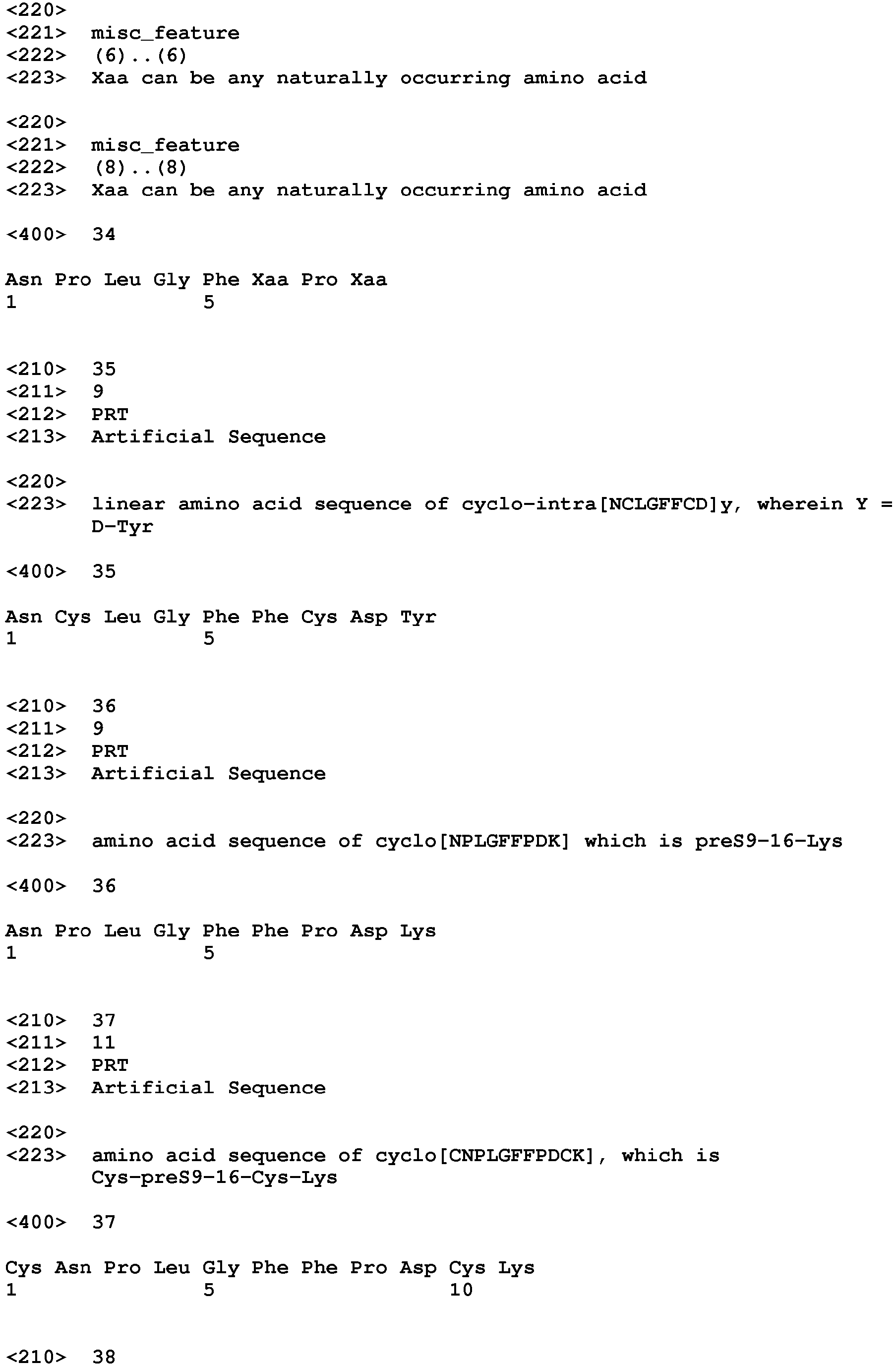


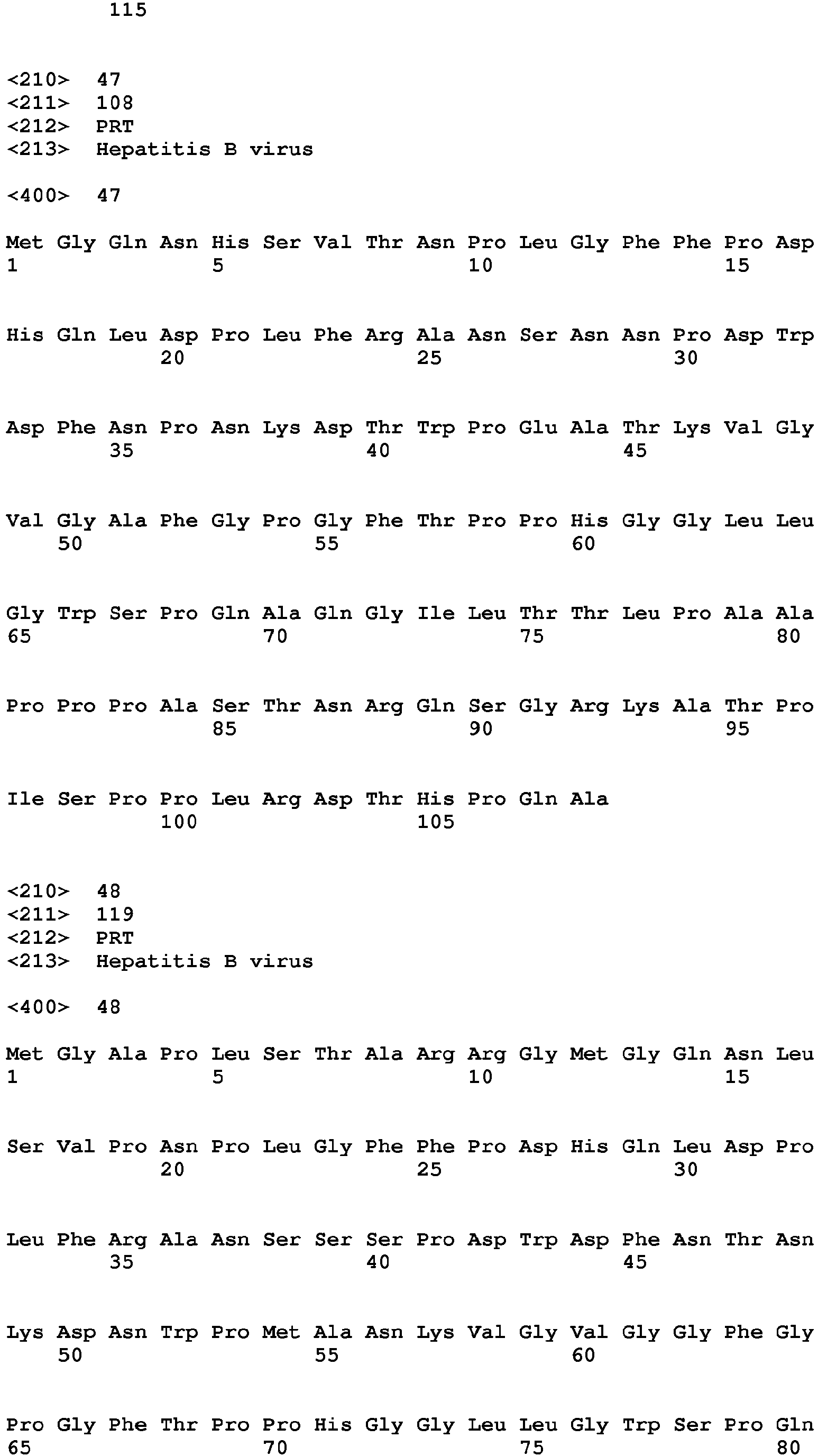


Claims (16)
- A cyclic peptide of the general formula I
(X)m-P-(Y)n (I)
whereinP is the amino acid sequence NPLGFXaaP (SEQ. ID NO: 1), with Xaa being F or L,X is an amino acid sequence having a length of m amino acids,wherein m is 0 or at least 1;Y is an amino sequence having a length of n amino acids,or a pharmaceutically acceptable salt thereof,wherein n is 0 or at least 1;and wherein m + n is 0 or at least 1;
for use in liver targeting. - The cyclic peptide for use according to claim 1, which is hydrophobically modified, wherein the hydrophobic modification(s) is/are preferably at amino acid side chain(s) of X and/or Y,
wherein the hydrophobic modification is preferably an acylation and/or addition of hydrophobic moieties,
more preferably an acylation with C8 to C22 fatty acids (such as myristoyl (C14), palmitoyl (C16) or stearoyl (C18), more preferably myristoyl (C14)),
or the hydrophobic moiety or moieties is preferably selected from cholesterol, cholesterol derivatives, phospholipids, glycolipids, glycerol esters, steroids, ceramids, isoprene derivatives. - The cyclic peptide for use according to claim 1 or 2, wherein the peptide is cyclized(a) via thiol oxidation (disulfide bridge formation) of two cysteines (C) comprised in the peptide,(b) amide condensation of two amino acid side chains (lactam),(c) via head-to-tail cyclization,(d) via backbone cyclization,(e) via thioether formation,and/or(f) via hydrogen bond formation and/or bond-forming derivatives of amino acids.
- The cyclic peptide for use according to any one of the preceding claims, wherein m + n is 0 to 42,
and/or wherein m = 0 to 8 and/or n = 0 to 34, provided that m + n is at least 1,
and/or having the general formula Ia
cyclo[(X)m-P-(Y)n] (Ia)
and carrying at least one hydrophobic modification at amino acid side chain(s) of X and/or P, such as
H-cyclo[(X)m-P-(Y)n]
wherein H is the hydrophobic modification. - The cyclic peptide for use according to any one of the preceding claims, wherein the peptide comprises or consists of an amino acid sequence selected from the group of
HBVpreS9-15 NPLGFFP (SEQ ID NO. 2) Cys-HBVpreS9-15-Cys C-NPLGFFP-C (SEQ ID NO. 4) Cys-HBVpreS9-15-Cys-D-Tyr C-NPLGFFP-C-y (SEQ ID NO. 5) HBVpreS9-16 NPLGFFPD (SEQ ID NO. 6) Cys-HBVpreS9-16-Cys C-NPLGFFPD-C (SEQ ID NO. 7) Cys-HBVpreS9-16-Cys-D-Tyr C-NPLGFFPD-C-y (SEQ ID NO. 8) HBVpreS8-16 PNPLGFFPD (SEQ ID NO. 9) Cys-HBVpreS8-16-Cys C-PNPLGFFPD-C (SEQ ID NO. 10) Cys-HBVpreS8-16-Cys-D-Tyr C-PNPLGFFPD-C-y (SEQ ID NO. 11) HBVpreS9-17 NPLGFFPDH (SEQ ID NO. 12) Cys-HBVpreS9-17-Cys C-NPLGFFPDH-C (SEQ ID NO. 13) Cys-HBVpreS9-17-Cys-D-Tyr C-NPLGFFPDH-C-y (SEQ ID NO. 14) HBVpreS8-17 PNPLGFFPDH (SEQ ID NO. 15) Cys-HBVpreS8-17-Cys C-PNPLGFFPDH-C (SEQ ID NO. 16) Cys-HBVpreS8-17-Cys-D- Tyr C-PNPLGFFPDH-C-y (SEQ ID NO. 17) HBVpreS2-21 GTNLSVPNPLGFFPDHQLDP (SEQ ID NO. 18) Cys-HBVpreS2-21-Cys C-GTNLSVPNPLGFFPDHQLDP-C (SEQ ID NO. 19) Cys-HBVpreS2-21-Cys-D-Tyr C-GTNLSVPNPLGFFPDHQLDP-C-y (SEQ ID NO. 20) HBVpreS2-48 GTNLSVPNPL GFFPDHQLDPAFGANSNNPDWDFNPNKDHWPEANQVG (SEQ ID NO. 21) Cys-HBVpreS2-48-Cys (SEQ ID NO. 22) C-GTNLSVPNPLGFFPDHQLDPAFGANSNNPDWDFNPNKDHWPEANQVG-C Cys-HBVpreS2-48-Cys-D-Tyr (SEQ ID NO. 23) C-GTNLSVPNPLGFFPDHQLDPAFGANSNNPDWDFNPNKDHWPEANQVG-C-y Myrcludex B GTNLSVPNPLGFFPDHQLDPAFGANSNNPDWDFNPNKDHWPEANKVG (SEQ ID NO. 24) Cys- Myrcludex B-Cys (SEQ ID NO. 25) C-GTNLSVPNPLGFFPDHQLDPAFGANSNNPDWDFNPNKDHWPEANKVG-C Cys- Myrcludex B-Cys-D-Tyr (SEQ ID NO. 26) C-GTNLSVPNPLGFFPDHQLDPAFGANSNNPDWDFNPNKDHWPEANKVG-C-y cyclo [NPLGFFP] (SEQ. ID NO: 2)cyclo [NPLGFFPD] (SEQ. ID NO: 6)cyclo [PNPLGFFPD] (SEQ. ID NO: 9)cyclo [NPLGFFPDH] (SEQ. ID NO: 12)cyclo [PNPLGFFPDH] (SEQ. ID NO: 15)cyclo [GTNLSVPNPLGFFPDHQLDP] (SEQ. ID NO: 18)cyclo [GTNLSVPNPLGFFPDHQLDPAFGANSNNPDWDFNPNKDHWPEANQVG] (SEQ. ID NO:21)cyclo [GTNLSVPNPLGFFPDHQLDPAFGANSNNPDWDFNPNKDHWPEANKVG] (SEQ. ID NO: 24)cyclo [NPLGFLP] (SEQ ID NO. 3)cyclo [NPLGFLPD] (SEQ ID NO. 27)cyclo [PNPLGFLPD] (SEQ ID NO. 28)cyclo [NPLGFLPDH] (SEQ ID NO. 29)cyclo [PNPLGFLPDH] (SEQ ID NO. 30)cyclo [GTNLSVPNPLGFLPDHQLDP] (SEQ ID NO. 31)cyclo[GTNLSVPNPLGFLPDHQLDPAFGANSNNPDWDFNPNKDHWPEANQVG] (SEQ ID NO. 32)cyclo [GTNLSVPNPLGFLPDHQLDPAFGANSNNPDWDFNPNKDHWPEANKVG] (SEQ ID NO. 33).e.g.Myr-cyclo [HBVpreS9-15] (SEQ. ID NO: 2) myr-cyclo [NPLGFFP]Myr-cyclo [HBVpreS9-16] (SEQ. ID NO: 6) myr-cyclo [NPLGFFPD]Myr-cyclo [HBVpreS8-16] (SEQ. ID NO: 9) myr-cyclo [PNPLGFFPD]Myr-cyclo [HBVpreS9-17] (SEQ. ID NO: 12) myr-cyclo [NPLGFFPDH]Myr-cyclo [HBVpreS8-17] (SEQ. ID NO: 15) myr-cyclo [PNPLGFFPDH]Myr-cyclo-[HBVpreS2-21] (SEQ. ID NO: 18) myr-cyclo [GTNLSVPNPLGFFPDHQLDP]Myr-cyclo-[HBVpreS2-48] (SEQ. ID NO: 21) myr-cyclo [GTNLSVPNPLGFFPDHQLDPAFGANSNNPDWDFNPNKDHWPEANQVG]Myr-cyclo-[HBVpreS2-48] = cyclic Myrcludex B (SEQ. ID NO: 24) myr-cyclo [GTNLSVPNPLGFFPDHQLDPAFGANSNNPDWDFNPNKDHWPEANKVG]e.g.myr-cyclo [NPLGFLP]myr-cyclo [NPLGFLPD]myr-cyclo [PNPLGFLPD]myr-cyclo [NPLGFLPDH]myr-cyclo [PNPLGFLPDH]myr-cyclo [GTNLSVPNPLGFLPDHQLDP]myr-cyclo [GTNLSVPNPLGFLPDHQLDPAFGANSNNPDWDFNPNKDHWPEANQVG]myr-cyclo [GTNLSVPNPLGFLPDHQLDPAFGANSNNPDWDFNPNKDHWPEANKVG]. - A cyclic peptide having the general formula II
Rp-(X)m-P'-(Y)n -(Z)o-Rq (II)
whereinP' is the amino acid sequence NPLGFxaPxb (SEQ. ID NO: 34),xa is F or L or a natural or artificial amino acid with comparable physicochemical side chain properties,xb is an amino acid with an acidic side chain, preferably D or E,X is an amino acid sequence having a length of m amino acids,wherein m is 0 or 1;Y is an amino sequence having a length of n amino acids,wherein n is 0, 1, 2 or at most 3;and wherein m + n ≥ 0;Z is an amino acid sequence of o amino acids,wherein o is 0 or 1,and which comprises a reactive side chain, e.g. amine, thiol, acidic side chain, hydroxyl, azid,such as aminoproline,Rp is a hydrophobic moietyp is 0 or at least 1,Rq is a hydrophobic moietyor a pharmaceutically acceptable salt thereof.q is 0 or at least 1,and wherein p + q ≥ 1; - The cyclic peptide of claim 6, wherein the hydrophobic moiety Rp and/or the hydrophobic moiety Rq is an acylation and/or addition of hydrophobic moieties,
preferably an acylation with C8 to C22 fatty acids (such as myristoyl (C14), palmitoyl (C16) or stearoyl (C18), more preferably myristoyl (C14)),
or the hydrophobic moiety or moieties is selected from cholesterol, cholesterol derivatives, phospholipids, glycolipids, glycerol esters, steroids, ceramids, isoprene derivatives,
and/or wherein the peptide is cyclized(a) via head-to-tail cyclization,(b) via a proline derivative,(c) amide condensation of one amino acid side chain with another amino acid side chain or C-terminus or N-terminus (lactam),(d) macrolactonisation (e.g. Mukaiyama esterification),(e) via thiol oxidation (disulfide bridge formation) of two thiol containing amino acids or artificial derivatives thereof comprised in the peptide,(f) by formation of a diselenite or thioselenite,(g) via thioether formation,(h) macrothiolactonisation of a suitable precursor,(i) ring closure olefin metathesis,(j) thiazolin formation of suitable thiol and amine functions with an aldehyde moiety,(k) triazole or tetrazole formation of an azide with an alkyne or cyanide moiety by copper mediated or copper free "click reactions",(l) amination reactions e.g. reductive alkylation of an aldehyde with an amino function embedded in the peptide or Buchwald-Hartwig amination,(m) C-C cross coupling reactions of suitable amino acid building blocks,and/or further comprising depsipeptide bond(s) or functional group alkylations, such as backbone nitrogen methylations,
and/or wherein, preferably, m + n + o is 0 to 6,
and/or wherein m = 0, 1 or 2 and/or n = 0 to 3, and/or o= 0 to 1. - The cyclic peptide for use according to any one of claims 1 to 5 or the cyclic peptide of claim 6 or 7, which is cyclized within the amino acid sequence of P or P', i.e. via amino acid side chains of the amino acid residues of P or P',
such as cyclo-intra[NP*GFFPD] (having the linear amino acid sequence of SEQ ID NO. 6 being cyclized between the second amino acid residue P and the side chain of C-terminal D). - The cyclic peptide for use according to any one of claims 1 to 5 or 8, or the cyclic peptide of any one of claims 6 to 8, comprising compound(s),
such as
drug(s) or their respective prodrug(s);
tag(s);
label(s), such as fluorescent dye(s), radioisotope(s) and contrast agent(s); recombinant virus(s) or derivative(s) thereof;
carrier or depot(s) for drug(s), prodrug(s) or label(s);
immunogenic epitope(s);
hormones,
inhibitor(s); such as a HBV capsid inhibitor,
toxins,
or combinations thereof.
preferably covalently attached, such as via a linker, spacer and/or anchor group(s), e.g. a cleavable linker. - Pharmaceutical composition comprising(i) at least one cyclic peptide as defined in any of claims 1 to 5 and 8, and/or at least one one cyclic peptide of any one of claims 6 to 8,(ii) optionally, a pharmaceutically acceptable carrier and/or excipient.
- The cyclic peptide of any one of claims 6 to 8 or the pharmaceutical composition of claim 10 for use in medicine,
preferably for use in liver targeting,
such as for the specific delivery of compound(s) to the liver. - The cyclic peptide for use according to any one of claims 1 to 5 and 8 or the cyclic peptide or pharmaceutical composition for use according to claim 11, for use in the diagnosis, prevention and/or treatment of a liver disease or condition,
wherein preferably the liver disease or condition is selected from hepatitis, cirrhosis, haemochromatosis, preferably hepatitis caused by hepatitis A, B, C, D, E, F, G and H virus or concomitant hepatitis caused by viruses,
and/or wherein preferably the liver disease or disorder is a disease which involves a liver stadium of a virus or a non-viral pathogen, such as a tropical disease, malaria, schistosomiasis, leishmaniasis, Morbus Wilson,
and/or wherein preferably the liver disease or disorder is a liver tumor, preferably hepatocellular carcinoma (HCC),
and/or wherein preferably the liver disease or disorder is a post-transplantation complication after liver transplantation related to bile salt accumulation within the biliary pathway,
and/or wherein preferably the liver disease or condition is related to sodium taurocholate cotransporter polypeptide (NTCP)-mediated transport of compounds into hepatocytes,
or necessitates a delivery of a compound, such as a drug or label, to the site or location of the disease or condition,
and preferably is a liver involved metabolic disease selected fromintrahepatic cholestasis,poisoning of the liver (by liver toxins) / hepatotoxicity,drug-induced cholestatic liver disease,hyperlipidemia,posthepatic cholestasis,metabolic syndrome,non-alcoholic fatty liver disease (NAFLD),glycogen storage diseases,and wherein the compounds which are transported into hepatocytes via NTCP are preferably bile acids, steroids, conjugated and non-conjugated thyroid hormones, liver toxins, compounds that are covalently bound to taurocholate, bromosulphophthalein, drugs. - The cyclic peptide for use according to any one of claims 1 to 5 and 8 or the cyclic peptide of any one of claims 6 to 8 or the pharmaceutical composition of claim 10 for use in the diagnosis, prevention and/or treatment of a cardiovascular disease (CVD), preferably comprising the control or modification of the cholesterol level or cholesterol uptake,
wherein the cholesterol level or uptake is preferably controlled or modified by decreasing or blocking the NCTP-mediated bile salt transport (by the cyclic peptide). - The cyclic peptide or pharmaceutical composition for use according to any one of claims 11 to 13, wherein the cyclic peptide is administered in a therapeutically effective amount, preferably in the range of from about 0.01 mg to about 50 mg per patient, preferably from about 1 mg to about 20 mg per patient,
or is applied to a patient in a dose ranging from 10 pmol per kg to 20µmol per kg body weight. - The cyclic peptide or pharmaceutical composition for use according to any one of claims 11 to 14, wherein the route of administration is selected from oral, subcutaneous, intravenous, nasal, intramuscular, transdermal, inhalative, by suppository.
- A method for the specific delivery of compound(s) to the liver,
comprising
the administration of (a therapeutically effective amount of) a cyclic peptide as defined in any one of claims 1 to 5 or 8 or a cyclic peptide of any one of claims 6 to 8 or a pharmaceutical composition of claim 10.
Priority Applications (2)
| Application Number | Priority Date | Filing Date | Title |
|---|---|---|---|
| EP15200568.2A EP3189850A1 (en) | 2015-12-16 | 2015-12-16 | Liver targeting of cyclic pres-derived peptides of hbv |
| PCT/EP2016/081555 WO2017103190A1 (en) | 2015-12-16 | 2016-12-16 | Liver targeting of cyclic pres-derived peptides of hbv |
Applications Claiming Priority (1)
| Application Number | Priority Date | Filing Date | Title |
|---|---|---|---|
| EP15200568.2A EP3189850A1 (en) | 2015-12-16 | 2015-12-16 | Liver targeting of cyclic pres-derived peptides of hbv |
Publications (1)
| Publication Number | Publication Date |
|---|---|
| EP3189850A1 true EP3189850A1 (en) | 2017-07-12 |
Family
ID=55129404
Family Applications (1)
| Application Number | Title | Priority Date | Filing Date |
|---|---|---|---|
| EP15200568.2A Withdrawn EP3189850A1 (en) | 2015-12-16 | 2015-12-16 | Liver targeting of cyclic pres-derived peptides of hbv |
Country Status (2)
| Country | Link |
|---|---|
| EP (1) | EP3189850A1 (en) |
| WO (1) | WO2017103190A1 (en) |
Cited By (2)
| Publication number | Priority date | Publication date | Assignee | Title |
|---|---|---|---|---|
| WO2017206898A1 (en) | 2016-05-30 | 2017-12-07 | Shanghai Hep Pharmaceutical Co., Ltd. | Compositions and methods for treating metabolic diseases |
| WO2019216603A1 (en) * | 2018-05-09 | 2019-11-14 | 서울대학교산학협력단 | Hepatitis b virus-derived polypeptide and anti-viral use thereof |
Citations (7)
| Publication number | Priority date | Publication date | Assignee | Title |
|---|---|---|---|---|
| US7001760B2 (en) | 2000-04-20 | 2006-02-21 | Wang-Schick Ryu | Hepatitis B virus vectors for gene therapy |
| WO2009092612A1 (en) | 2008-01-25 | 2009-07-30 | Universitätsklinikum Heidelberg | Hydrophobic modified pres-derived peptides of hepatitis b virus (hbv) and their use as vehicles for the specific delivery of compounds to the liver |
| WO2012107579A1 (en) | 2011-02-10 | 2012-08-16 | Ruprecht-Karls-Universität Heidelberg | Hydrophobic modified peptides and their use for liver specific targeting |
| WO2013159243A1 (en) | 2012-04-25 | 2013-10-31 | National Institute Of Biological Sciences, Beijing | Compositions and uses of functional receptor for hbv/hdv virus |
| WO2014072524A1 (en) | 2012-11-12 | 2014-05-15 | Ruprecht-Karls-Universität Heidelberg | Lipopetides for use in treating liver diseases and cardiovascular diseases |
| WO2014072526A1 (en) | 2012-11-12 | 2014-05-15 | Ruprecht-Karls-Universität Heidelberg | Development of hbv- and/or hdv-susceptible cells, cell lines and non-human animals |
| WO2015014830A1 (en) | 2013-07-29 | 2015-02-05 | Rupprecht-Karls-Universität Heidelberg | Lipopetides for use in treating liver diseases and cardiovascular diseases |
-
2015
- 2015-12-16 EP EP15200568.2A patent/EP3189850A1/en not_active Withdrawn
-
2016
- 2016-12-16 WO PCT/EP2016/081555 patent/WO2017103190A1/en not_active Ceased
Patent Citations (7)
| Publication number | Priority date | Publication date | Assignee | Title |
|---|---|---|---|---|
| US7001760B2 (en) | 2000-04-20 | 2006-02-21 | Wang-Schick Ryu | Hepatitis B virus vectors for gene therapy |
| WO2009092612A1 (en) | 2008-01-25 | 2009-07-30 | Universitätsklinikum Heidelberg | Hydrophobic modified pres-derived peptides of hepatitis b virus (hbv) and their use as vehicles for the specific delivery of compounds to the liver |
| WO2012107579A1 (en) | 2011-02-10 | 2012-08-16 | Ruprecht-Karls-Universität Heidelberg | Hydrophobic modified peptides and their use for liver specific targeting |
| WO2013159243A1 (en) | 2012-04-25 | 2013-10-31 | National Institute Of Biological Sciences, Beijing | Compositions and uses of functional receptor for hbv/hdv virus |
| WO2014072524A1 (en) | 2012-11-12 | 2014-05-15 | Ruprecht-Karls-Universität Heidelberg | Lipopetides for use in treating liver diseases and cardiovascular diseases |
| WO2014072526A1 (en) | 2012-11-12 | 2014-05-15 | Ruprecht-Karls-Universität Heidelberg | Development of hbv- and/or hdv-susceptible cells, cell lines and non-human animals |
| WO2015014830A1 (en) | 2013-07-29 | 2015-02-05 | Rupprecht-Karls-Universität Heidelberg | Lipopetides for use in treating liver diseases and cardiovascular diseases |
Non-Patent Citations (33)
| Title |
|---|
| BROWN S E ET AL: "Determination of the affinity of antibodies to hepatitis B surface antigen in human sera", JOURNAL OF IMMUNOLOGICAL METHODS, ELSEVIER SCIENCE PUBLISHERS B.V.,AMSTERDAM, NL, vol. 72, no. 1, 3 August 1984 (1984-08-03), pages 41 - 48, XP025425108, ISSN: 0022-1759, [retrieved on 19840803], DOI: 10.1016/0022-1759(84)90431-9 * |
| DANIELLE A GUARRACINO: "Wheel of Fortune - Cyclic Peptides Hit the Mimetic Jackpot: Current Syntheses, Uses and Roles for Cyclic Peptide Mimetics", CURRENT CHEMICAL BIOLOGY, vol. 9, no. 1, 1 April 2015 (2015-04-01), pages 36 - 52, XP055252227, DOI: 10.2174/2212796809666150911201950 * |
| DAWSON S ET AL.: "In vitro inhibition of the bile salt export pump correlates with risk of cholestatic drug-induced liver injury in humans", DRUG METAB DISPOS, vol. 40, 2012, pages 130 - 138 |
| DORING B; LUTTEKE T; GEYER J; PETZINGER E.: "The SLC10 carrier family: transport functions and molecular structure", CURR TOP MEMBR, vol. 70, 2012, pages 105 - 168 |
| FATTINGER K; FUNK C; PANTZE M ET AL.: "The endothelin antagonist bosentan inhibits the canalicular bile salt export pump: a potential mechanism for hepatic adverse reactions", CLIN PHARMACOL THER., vol. 69, 2001, pages 223 - 231 |
| FUNK C; PANTZE M; JEHLE L ET AL.: "Troglitazone-induced intrahepatic cholestasis by an interference with the hepatobiliary export of bile acids in male and female rats.", TOXICOLOGY, vol. 167, 2001, pages 83 - 98 |
| FUNK C; PONELLE C; SCHEUERMANN G ET AL.: "Cholestatic potential of troglitazone as a possible factor contributing to troglitazone-induced hepatotoxicity: in vivo and in vitro interaction at the canalicular bile salt export pump (Bsep) in the rat", MOL PHARMACOL., vol. 59, 2001, pages 627 - 635 |
| GAUSEPOHL, H. ET AL., INT. J. PROT. PEPT. RES., vol. 34, 1989, pages 287 - 294 |
| GRIPON P; CANNIE I; URBAN S: "Efficient inhibition of hepatitis B virus infection by acylated peptides derived from the large viral surface protein", J VIROL, vol. 79, 2005, pages 1613 - 1622, XP002494027, DOI: doi:10.1128/JVI.79.3.1613-1622.2005 |
| GRIPON, P.; LE SEYEC, J.; RUMIN, S.; GUGUEN-GUILLOUZO, C: "Myristylation of the hepatitis B virus large surface protein is essential for viral infectivity", VIROLOGY, vol. 213, 1995, pages 292 - 299, XP004828618, DOI: doi:10.1006/viro.1995.0002 |
| KOTANI N; MAEDA K; DEBORI Y; CAMUS S; LI R; CHESNE C: "Sugiyama Y. Expression and Transport Function of Drug Uptake Transporters in Differentiated HepaRG Cells", MOL PHARM, vol. 9, no. 12, 2012, pages 3434 - 3441 |
| LE SEYEC, J.; CHOUTEAU, P.; CANNIE, I.; GUGUEN-GUILLOUZO, C.; GRIPON, P.: "Infection process of the hepatitis B virus depends on the presence of a defined sequence in the pre-S 1 domain", J VIROL, vol. 73, 1999, pages 2052 - 2057, XP002177120 |
| LEMPP FA; URBAN S: "Inhibitors of hepatitis B virus attachment and entry", INTERVIROLOGY, vol. 57, 2014, pages 151 - 157, XP009183110, DOI: doi:10.1159/000360948 |
| LEVENGOOD M R ET AL: "Use of lantibiotic synthetases for the preparation of bioactive constrained peptides", BIOORGANIC & MEDICINAL CHEMISTRY LETTERS, PERGAMON, AMSTERDAM, NL, vol. 18, no. 10, 15 May 2008 (2008-05-15), pages 3025 - 3028, XP022669491, ISSN: 0960-894X, [retrieved on 20080119], DOI: 10.1016/J.BMCL.2008.01.062 * |
| MEIER A; MEHRLE S; WEISS TS; MIER W; URBAN S: "The myristoylated preSl-domain of the Hepatitis B Virus L-protein mediates specific binding to differentiated hepatocytes", HEPATOLOGY, vol. 58, 2012, pages 31 - 42 |
| MICHELLE A CAMERINO ET AL: "Computer-assisted design of cyclic peptides and peptidomimetics", CHIMICA OGGI., vol. 26, no. 5, 1 September 2008 (2008-09-01), IT, pages 46 - 51, XP055252262, ISSN: 0392-839X, DOI: https://www.researchgate.net/publication/232716656_Computer-assisted_design_of_cyclic_peptides_and_peptidomimetics * |
| MITCHELL AR; ERICKSON BW; RYABTSEV MN; HODGES RS; MERRIFIELD RB: "Tert-butoxycarbonylaminoacyl-4-(oxymethyl)-phenylacetamidomethyl-resin, a more acid-resistant support for solid-phase peptide synthesis", JAM CHEM SOC, vol. 98, no. 23, 1976, pages 7357 - 7362 |
| MORGAN RE ET AL.: "Interference with bile salt export pump function is a susceptibility factor for human liver injury in drug development", TOXICOL SCI, vol. 118, 2010, pages 485 - 500 |
| MULLER T; MEHRLE S; SCHIECK A; HABERKORN U; URBAN S; MIER W: "Liver imaging with a novel hepatitis B surface protein derived SPECT-tracer", MOL PHARM., vol. 10, no. 6, 2013, pages 2230 - 2236 |
| NASSAL, M: "Hepatitis B virus morphogenesis", CURR TOP MICROBIOL IMMUNOL, vol. 214, 1996, pages 297 - 337 |
| NI Y; LEMPP FA; MEHRLE S; NKONGOLO S; KAUFMAN C; FAITH M; STINDT J ET AL.: "Hepatitis B and D Viruses Exploit Sodium Taurocholate Co-transporting Polypeptide for Species-Specific Entry into Hepatocytes", GASTROENTEROLOGY, vol. 146, 2014, pages 1070 - 1083 |
| OGIMURA E ET AL.: "Bile salt export pump inhibitors are associated with bile acid-dependent drug-induced toxicity in sandwich-cultured hepatocytes", BIOCHEM BIOPHYS RES COMMUN, vol. 416, 2011, pages 313 - 317, XP028342317, DOI: doi:10.1016/j.bbrc.2011.11.032 |
| SCHIECK A; MIILLER T; SCHULZE A; HABERKORN U; URBAN S; MIER W: "Solid-Phase Synthesis of the Lipopeptide Myr-HBVpreS/2-78, a Hepatitis B Virus Entry Inhibitor", MOLECULES, vol. 15, no. 7, 2010, pages 4773 - 4783 |
| SCHIECK A; SCHULZE A; GAHLER C; MULLER T; HABERKORN U; ALEXANDROV A; URBAN S; MIER W.: "Hepatitis B virus hepatotropism is mediated by specific receptor recognition in the liver and not restricted to susceptible hosts", HEPATOLOGY, vol. 58, no. 1, 4 January 2013 (2013-01-04), pages 43 - 53, XP055175142, DOI: doi:10.1002/hep.26211 |
| SCHULZE A; SCHIECK A; NI Y; MIER W; URBAN S: "Fine mapping of pre-S sequence requirements for hepatitis B virus large envelope protein-mediated receptor interaction", J VIROL, vol. 84, 2010, pages 1989 - 2000, XP055252335, DOI: doi:10.1128/JVI.01902-09 |
| SEEGER, C.; MASON, W.S: "Hepatitis B virus biology", MICROBIOL MOL BIOL REV, vol. 64, 2000, pages 51 - 68 |
| SLIJEPCEVIC, D.; KAUFMAN, C.; WICHERS, C.G.K.; GILGLIONI, E.H.; LEMPP, F.A.; DUIJST, S.; DE WAART, D.R.; OUDE ELFERINK, R.P.J.; MI: "Impaired uptake of conjugated bile acids and hepatitis b virus presl-binding in na+-taurocholate cotransporting polypeptide knockout mice", HEPATOLOGY, vol. 62, 2015, pages 207 - 219 |
| STEPHAN URBAN ET AL: "Strategies to Inhibit Entry of HBV and HDV Into Hepatocytes", GASTROENTEROLOGY, vol. 147, no. 1, 1 July 2014 (2014-07-01) - 25 April 2014 (2014-04-25), pages 48 - 64, XP055175233, ISSN: 0016-5085, DOI: 10.1053/j.gastro.2014.04.030 * |
| STIEGER B; FATTINGER K; MADON J ET AL.: "Drug- and estrogen-induced cholestasis through inhibition of the hepatocellular bile salt export pump (Bsep) of rat liver", GASTROENTEROLOGY, vol. 118, 2000, pages 422 - 430, XP005178633, DOI: doi:10.1016/S0016-5085(00)70224-1 |
| URBAN S, FUTURE VIROL., vol. 3, no. 3, 2008, pages 253 - 264 |
| URBAN S; BARTENSCHLAGER R; KUBITZ R; ZOULIM F: "Strategies to Inhibit Entry of HBV and HDV into Hepatocytes", GASTROENTEROLOGY, vol. 147, no. 1, 2014, pages 48 - 64, XP055175233, DOI: doi:10.1053/j.gastro.2014.04.030 |
| WHITE CJ; YUDIN AK: "Contemporary strategies for peptide macrocyclization", NATURE CHEMISTRY, vol. 3, 2011, pages 509 - 524, XP009154822, DOI: doi:doi:10.1038/nchem.1062 |
| YAN H; ZHONG G; XU G; HE W; JING Z; GAO Z; HUANG Y ET AL.: "Sodium taurocholate cotransporting polypeptide is a functional receptor for human hepatitis B and D virus", ELIFE, vol. 1, 2012, pages E00049 |
Cited By (5)
| Publication number | Priority date | Publication date | Assignee | Title |
|---|---|---|---|---|
| WO2017206898A1 (en) | 2016-05-30 | 2017-12-07 | Shanghai Hep Pharmaceutical Co., Ltd. | Compositions and methods for treating metabolic diseases |
| EP3463422A4 (en) * | 2016-05-30 | 2020-02-26 | Shanghai Hep Pharmaceutical Co., Ltd. | COMPOSITIONS AND METHODS FOR TREATING METABOLIC DISEASES |
| US11633454B2 (en) | 2016-05-30 | 2023-04-25 | Shanghai Hep Pharmaceutical Co., Ltd. | Compositions and methods for treating metabolic diseases |
| WO2019216603A1 (en) * | 2018-05-09 | 2019-11-14 | 서울대학교산학협력단 | Hepatitis b virus-derived polypeptide and anti-viral use thereof |
| US11692011B2 (en) | 2018-05-09 | 2023-07-04 | Seoul National University R&Db Foundation | Hepatitis B virus-derived polypeptide and anti-viral use thereof |
Also Published As
| Publication number | Publication date |
|---|---|
| WO2017103190A1 (en) | 2017-06-22 |
Similar Documents
| Publication | Publication Date | Title |
|---|---|---|
| JP7362142B2 (en) | Cyclic NTCP targeting peptides and their use as entry inhibitors | |
| US9868768B2 (en) | Hydrophobic modified pres-derived peptides of hepatitis B virus (HBV) and their use as vehicles for the specific delivery of compounds to the liver | |
| US9562076B2 (en) | Hydrophobic modified pres-derived peptides of hepatitis B virus (HBV) and their use as HBV and HDV entry inhibitors | |
| EP2673004B1 (en) | Hydrophobic modified peptides and their use for liver specific targeting | |
| CN111499722B (en) | Lipopeptides for the treatment of liver and cardiovascular diseases | |
| JP7752868B2 (en) | Conjugate compounds for preventing and/or treating HBV and/or HDV infection, liver disease, and targeting NTCP | |
| WO2017103190A1 (en) | Liver targeting of cyclic pres-derived peptides of hbv | |
| RU2843902C1 (en) | Conjugate compounds for preventing and/or treating hepatitis b virus and/or hepatitis d virus, liver diseases and for treatment of ntcp | |
| HK40033649B (en) | Lipopetides for use in treating liver diseases and cardiovascular diseases | |
| HK40033649A (en) | Lipopetides for use in treating liver diseases and cardiovascular diseases | |
| HK1150168B (en) | Hydrophobic modified pres-derived peptides of hepatitis b virus (hbv) and their use as hbv and hdv entry inhibitors |
Legal Events
| Date | Code | Title | Description |
|---|---|---|---|
| PUAI | Public reference made under article 153(3) epc to a published international application that has entered the european phase |
Free format text: ORIGINAL CODE: 0009012 |
|
| AK | Designated contracting states |
Kind code of ref document: A1 Designated state(s): AL AT BE BG CH CY CZ DE DK EE ES FI FR GB GR HR HU IE IS IT LI LT LU LV MC MK MT NL NO PL PT RO RS SE SI SK SM TR |
|
| AX | Request for extension of the european patent |
Extension state: BA ME |
|
| 17P | Request for examination filed |
Effective date: 20180110 |
|
| RBV | Designated contracting states (corrected) |
Designated state(s): AL AT BE BG CH CY CZ DE DK EE ES FI FR GB GR HR HU IE IS IT LI LT LU LV MC MK MT NL NO PL PT RO RS SE SI SK SM TR |
|
| 17Q | First examination report despatched |
Effective date: 20180322 |
|
| STAA | Information on the status of an ep patent application or granted ep patent |
Free format text: STATUS: THE APPLICATION IS DEEMED TO BE WITHDRAWN |
|
| 18D | Application deemed to be withdrawn |
Effective date: 20181002 |