EP3188555B1 - Methods for estimating reference signal received power of cellular communication signals - Google Patents
Methods for estimating reference signal received power of cellular communication signals Download PDFInfo
- Publication number
- EP3188555B1 EP3188555B1 EP16206625.2A EP16206625A EP3188555B1 EP 3188555 B1 EP3188555 B1 EP 3188555B1 EP 16206625 A EP16206625 A EP 16206625A EP 3188555 B1 EP3188555 B1 EP 3188555B1
- Authority
- EP
- European Patent Office
- Prior art keywords
- determining
- cell
- bias
- target cell
- cellular communication
- Prior art date
- Legal status (The legal status is an assumption and is not a legal conclusion. Google has not performed a legal analysis and makes no representation as to the accuracy of the status listed.)
- Active
Links
Images

Classifications
-
- H—ELECTRICITY
- H04—ELECTRIC COMMUNICATION TECHNIQUE
- H04L—TRANSMISSION OF DIGITAL INFORMATION, e.g. TELEGRAPHIC COMMUNICATION
- H04L5/00—Arrangements affording multiple use of the transmission path
- H04L5/003—Arrangements for allocating sub-channels of the transmission path
- H04L5/0058—Allocation criteria
- H04L5/006—Quality of the received signal, e.g. BER, SNR, water filling
-
- H—ELECTRICITY
- H04—ELECTRIC COMMUNICATION TECHNIQUE
- H04W—WIRELESS COMMUNICATION NETWORKS
- H04W24/00—Supervisory, monitoring or testing arrangements
- H04W24/10—Scheduling measurement reports ; Arrangements for measurement reports
-
- H—ELECTRICITY
- H04—ELECTRIC COMMUNICATION TECHNIQUE
- H04B—TRANSMISSION
- H04B17/00—Monitoring; Testing
- H04B17/30—Monitoring; Testing of propagation channels
- H04B17/309—Measuring or estimating channel quality parameters
- H04B17/318—Received signal strength
- H04B17/327—Received signal code power [RSCP]
-
- H—ELECTRICITY
- H04—ELECTRIC COMMUNICATION TECHNIQUE
- H04B—TRANSMISSION
- H04B17/00—Monitoring; Testing
- H04B17/30—Monitoring; Testing of propagation channels
- H04B17/309—Measuring or estimating channel quality parameters
- H04B17/318—Received signal strength
- H04B17/328—Reference signal received power [RSRP]; Reference signal received quality [RSRQ]
-
- H—ELECTRICITY
- H04—ELECTRIC COMMUNICATION TECHNIQUE
- H04L—TRANSMISSION OF DIGITAL INFORMATION, e.g. TELEGRAPHIC COMMUNICATION
- H04L5/00—Arrangements affording multiple use of the transmission path
- H04L5/0001—Arrangements for dividing the transmission path
- H04L5/0003—Two-dimensional division
- H04L5/0005—Time-frequency
- H04L5/0007—Time-frequency the frequencies being orthogonal, e.g. OFDM(A) or DMT
-
- H—ELECTRICITY
- H04—ELECTRIC COMMUNICATION TECHNIQUE
- H04L—TRANSMISSION OF DIGITAL INFORMATION, e.g. TELEGRAPHIC COMMUNICATION
- H04L5/00—Arrangements affording multiple use of the transmission path
- H04L5/003—Arrangements for allocating sub-channels of the transmission path
- H04L5/0048—Allocation of pilot signals, i.e. of signals known to the receiver
-
- H—ELECTRICITY
- H04—ELECTRIC COMMUNICATION TECHNIQUE
- H04W—WIRELESS COMMUNICATION NETWORKS
- H04W52/00—Power management, e.g. Transmission Power Control [TPC] or power classes
- H04W52/04—Transmission power control [TPC]
- H04W52/18—TPC being performed according to specific parameters
- H04W52/24—TPC being performed according to specific parameters using SIR [Signal to Interference Ratio] or other wireless path parameters
- H04W52/243—TPC being performed according to specific parameters using SIR [Signal to Interference Ratio] or other wireless path parameters taking into account interferences
- H04W52/244—Interferences in heterogeneous networks, e.g. among macro and femto or pico cells or other sector / system interference [OSI]
-
- H—ELECTRICITY
- H04—ELECTRIC COMMUNICATION TECHNIQUE
- H04W—WIRELESS COMMUNICATION NETWORKS
- H04W72/00—Local resource management
- H04W72/50—Allocation or scheduling criteria for wireless resources
- H04W72/54—Allocation or scheduling criteria for wireless resources based on quality criteria
- H04W72/542—Allocation or scheduling criteria for wireless resources based on quality criteria using measured or perceived quality
-
- H—ELECTRICITY
- H04—ELECTRIC COMMUNICATION TECHNIQUE
- H04B—TRANSMISSION
- H04B17/00—Monitoring; Testing
- H04B17/30—Monitoring; Testing of propagation channels
- H04B17/309—Measuring or estimating channel quality parameters
- H04B17/345—Interference values
-
- H—ELECTRICITY
- H04—ELECTRIC COMMUNICATION TECHNIQUE
- H04J—MULTIPLEX COMMUNICATION
- H04J11/00—Orthogonal multiplex systems, e.g. using WALSH codes
- H04J11/0023—Interference mitigation or co-ordination
- H04J11/005—Interference mitigation or co-ordination of intercell interference
-
- H—ELECTRICITY
- H04—ELECTRIC COMMUNICATION TECHNIQUE
- H04L—TRANSMISSION OF DIGITAL INFORMATION, e.g. TELEGRAPHIC COMMUNICATION
- H04L25/00—Baseband systems
- H04L25/02—Details ; arrangements for supplying electrical power along data transmission lines
- H04L25/0202—Channel estimation
- H04L25/0204—Channel estimation of multiple channels
-
- H—ELECTRICITY
- H04—ELECTRIC COMMUNICATION TECHNIQUE
- H04W—WIRELESS COMMUNICATION NETWORKS
- H04W52/00—Power management, e.g. Transmission Power Control [TPC] or power classes
- H04W52/04—Transmission power control [TPC]
- H04W52/38—TPC being performed in particular situations
- H04W52/40—TPC being performed in particular situations during macro-diversity or soft handoff
Definitions
- the invention relates generally wireless communications systems.
- the invention relates to estimating a Reference Signal Received Power (RSRP) of a target cell in a Long Term Evolution (LTE) network by estimating and removing bias.
- RSRP Reference Signal Received Power
- UMTS Universal Mobile Telecommunications Systems
- UMTS Universal Mobile Telecommunications Systems
- broadband applications internet access, telephone access services, televisions service access and/or mobile telephone services.
- Radio spectrum which is a medium that is shared between multiple technologies. In some instances, these technologies can be interfering. Standards were developed to, for example, ensure interoperability between equipment from multiple vendors and aims to ensure that the allocated spectrum is used efficiently.
- 3GPP 3 rd Generation Partnership Project
- LTE Long-Term Evolution
- Release 11 one of which is the LTE standards Release 11 (e.g., Rel-11).
- a user equipment for example, a mobile handset
- UE user equipment
- a mobile handset can be required to measure base station power and signal quality of neighboring base stations and report those measurements to its serving base station.
- These measurements can be used by networks to, for example, manage cell handover. These measurements can have a direct impact on the overall network capacity.
- the UE can report two parameters: Reference Signal Received Power (RSRP) and Reference Signal Received Quality (RSRQ). These two parameters can be measured using sequence of pilots that are typically unique per cell. The sequence of pilots is typically known as Cell specific Reference Signal (CRS).
- RSRP Reference Signal Received Power
- RSRQ Reference Signal Received Quality
- Rel-11 of the LTE standards attempts to improve accuracy of measuring RSRP and RSRQ by requiring interference cancellation of CRS from neighboring cells.
- One current method for interference cancellation of CRS from neighboring cells includes performing a joint estimation of a target cell's (e.g., the cell to be measured) channel response and an interfering cell's channel response, followed by averaging of the target cell channel energy over a measurement period.
- One difficulty with this current method is that it can require a high computational power, due to, for example, filter coefficients used to estimate the channel response being dependent on a cross correlation of the target cell's and interfering cell's CRS patterns.
- the cross correlation can vary between orthogonal frequency-division multiplexing (OFDM) symbols and sub-frames, resulting in a matrix inversion calculation for every OFDM symbol.
- OFDM orthogonal frequency-division multiplexing
- serial interference cancellation Another current method of interference cancellation is serial interference cancellation.
- serial cancellation a dominant interfering cell channel is estimated, reconstructed, and subtracted from a received signal. After the serial interference cancellation, the RSRP of the target cell can be estimated.
- One difficulty with serial interference cancellation is that it can lead to an underestimation of the RSRP of the target cell due to, for example, failure of the dominant interfering cell channel estimation to account for a contribution of the target cell in the received communication signal. Without accounting for the target cell, some of the energy of the target cell (e.g., the projection of the serving cell on the interference cell) is attributed to the interfering cell.
- Lack of accounting for the target cell can result in a power of the interfering cell being overestimated (e.g., due to a bias primarily caused by the contribution of the target cell in the interfering cell channel estimation), and thus underestimation of the target cell.
- US Patent Application Publication No. 20150109944 teaches a mobile station including a calculation unit, an adjustment unit, an estimation unit, and a measurement unit.
- the calculation unit calculates a weighting matrix for use in channel estimation of an interfering cell.
- the adjustment unit adjusts values of respective components of the weighting matrix calculated by the calculation unit so that out of the respective components, diagonal components are smaller than components other than the diagonal components.
- the estimation unit suppresses a noise component included in a value of the channel estimation by using the weighting matrix whose respective component values were adjusted by the adjustment unit so as to perform the channel estimation of the interfering cell.
- the measurement unit cancels a signal of the interfering cell from a received signal based on a result of the channel estimation and measures a reception quality of a measurement target cell with respect to the received signal.
- One advantage of the invention is that it allows for interference cancellation when estimating RSRP with a low computation power. Another advantage of the invention is that it accounts for interference cancellation bias when estimating RSRP.
- the invention involves a method for Reference Signal Received Power (RSRP) estimation of a target cell in Long Term Evolution (LTE) network.
- the method involves receiving a cellular communication signal transmitted over the LTE network.
- the method also involves determining a first channel estimation of an interference cell of the LTE network based on the cellular communication signal.
- the method also involves performing an interference cancellation based on the cellular communication signal and the first channel estimation.
- the method also involves determining a second channel estimation of the target cell based on the cellular communication signal after interference cancellation.
- the method also involves determining a bias based on the second channel estimation.
- the bias is a bias matrix and determining the bias further comprises determining an expectation value of the bias matrix. In some embodiments, the bias is a bias matrix and determining the bias further comprises using a Neumann series approximation. In some embodiments, the method involves determining the bias further comprises retrieving the bias from a computer memory.
- the method involves determining the bias further comprises modifying the retrieved bias. In some embodiments, the method involves determining the RSRP estimation is further based on a noise factor. In some embodiments, the method involves retrieving the noise factor from a computer memory. In some embodiments, the method involves modifying the retrieved noise factor.
- the pilot symbols of the target cell and pilot symbols of the interfering cell overlap.
- the target cell and the interfering cell have an overlapping area of cellular coverage.
- the cellular communication signal is an orthogonal frequency-division multiplexing (OFDM) signal.
- Some embodiments of the invention may comprise a computer readable medium comprising instructions which, when implemented on a processor in a computing system, cause the system to perform any of the methods described herein.
- a user equipment receives a cellular communications signal from a target cell (e.g., first base station) and an interference cell (e.g., a second base station) of a cellular communications Long Term Evolution (LTE) network.
- the UE determines a first channel estimation of the interference cell based on the cellular communications signal.
- the UE performs an interference cancellation based on the cellular communication signal and the first channel estimation.
- the UE determines a second channel estimation of the target cell based on the cellular communication signal after interference cancellation.
- the UE determines a bias from the second channel estimation (e.g., the bias caused by contribution of the target cell in the interfering cell channel estimation).
- the UE determines an RSRP estimate of the target cell based on the second channel estimation and the bias.
- FIG. 1 is a diagram of an exemplary cellular communications system 100, according to an illustrative embodiment of the invention.
- the cellular communications system 100 includes base stations 110a, 110b, 110c,...,110n, generally base stations 110 and a user equipment (UE) 120.
- Each base station, 110a, 110b, 110c, 110n has a corresponding coverage area shown in FIG. 1 as cellular coverage area 125a, 125b, 125c,...,125n, respectively, generally cellular coverage areas 125.
- the cellular coverage areas 125 can overlap.
- the base stations 110 can transmit cellular communications signals to the UE 120.
- the UE can transmit cellular communication signals to the base stations 110.
- the UE 120 is configured to receive cellular communication signals from one or more of the base stations 110 when the UE 120 is within a respective cellular coverage area 125.
- the UE 120 is configured to report a Reference Signal Received Power (RSRP) of one or more of the base stations 125.
- RSRP Reference Signal Received Power
- the UE 120 can be configured according to LTE standards.
- the UE 120 can be configured in accordance with any cellular communication standards as is known in the art.
- the cellular communications system 100 can be a UMTS operating with the Rel-11 LTE standards.
- the UE 120 can be a smart phone, a tablet device, a car phone, a computer, or any device capable of receiving communication signals over a UMTS network.
- the base stations 125 and their corresponding cellular coverage areas 125 are not to scale and are illustrative only.
- the UE 120 receives a request for an RSRP from one of the base stations 110, for example, base station 110a.
- Base station 110a can be denoted as the target cell.
- the UE 120 is also within the cellular coverage areas 125b, 125c, and 125n, covered by base stations 110b, 110c, and 110n, respectively.
- Cellular communication signals received by the UE 120 in this overlapping coverage area can have contributions not only from the target cell (e.g., base station 110a), but also from base stations 110b, 110c, and 110n (e.g., interfering cells).
- One of the interfering cells can be a dominate interfering cell (e.g., base station 110b), and thus its contribution to the cellular communication signals received by the UE 120 can be cancelled from the cellular communications signal received by the UE 120.
- One dominant interfering cell or multiple interfering cells can be provided to the UE 120 by the network.
- the UE 120 can perform an approximate estimate of their power by, for example, using a correlation as is known in the art. Based on the correlation, the UE 120 can determine which of the received interfering cells is dominant.
- Ignoring the contribution of interference from the other interfering cells can cause an unwanted bias in the RSRP after cancelling the interference from the dominate interfering cell 110a.
- the bias can cause the RSRP estimation of the target cell to be erroneous.
- the RSRP estimation performed by the UE 120 can take into account the bias to provide an accurate RSRP measurement, despite the interference contribution of the other interference cells 110c and 110n.
- FIG. 1 is exemplary only and that there are many configurations in a cellular network that can cause a UE 120 to receive cellular communications signals with interference.
- the cellular communication systems 100 can include any number of base stations and any number of UE's as is known in the art. Size of the cell coverage area can vary based on properties of the base station.
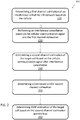
- FIG. 2 a flow diagram 200 illustrating a method for a Reference Signal Received Power (RSRP) estimate of a target cell (e.g., base station 110a) in Long Term Evolution (LTE) networks, according to an illustrative embodiment of the invention.
- RSRP Reference Signal Received Power
- the method involves receiving (e.g., receiving by the UE 120, as described above in FIG. 1 ) a cellular communication signal transmitted over the LTE network (e.g., cellular communications network 110, as described above in FIG. 1 ).
- OFDM orthogonal frequency-division multiplexing
- CRS Cell specific Reference Signal
- the method involves determining a first channel estimation h ⁇ 1, i of an interference cell (e.g., interference cell 110b, as described above in FIG.1 ) of the LTE network based on the cellular communication signal (Step 220).
- the method also involves performing an interference cancellation Ic based on the cellular communication signal y i and the first channel estimation h ⁇ 1, i (Step 230).
- the method also involves determining a second channel estimation h ⁇ 0, i of the target cell based on the cellular communication signal after interference cancellation (Step 240).
- the method also involves determining a bias based on the second channel estimation (Step 250).
- the bias can be a matrix.
- FIG. 2 a flow diagram 200 illustrating a method for a Reference Signal Received Power (RSRP) estimate of a target cell (e.g., base station 110a) in Long Term Evolution (LTE) networks, according to an illustrative embodiment of the invention.
- RSRP Reference Signal Received Power
- the method involves receiving (e.g., receiving by the UE 120, as described above in FIG. 1 ) a cellular communication signal transmitted over the LTE network (e.g., cellular communications network 100, as described above in FIG. 1 ).
- OFDM orthogonal frequency-division multiplexing
- CRS Cell specific Reference Signal
- the expectation found in EQN. 15 is the expectation over the CRS patterns cross correction for the case where there is an independent identical distribution of the CRS.
- the RSRP can be determined based on an expectation of a contribution of bias to the RSRP. In this manner, a contribution of bias to the computation complexity of the RSRP determination can be negligible, in comparison to a typical computation complexity for determining RSRP that does not account for bias.
- F 0 H F 0 + 2 R e B ⁇ H F 0 H F 0 of EQN. 16 is determined off-line.
- a value for F 0 H F 0 + 2 R e B ⁇ H F 0 H F 0 is stored in computer memory and retrieved during the RSRP determination.
- a value for F 0 H F 0 + 2 R e B ⁇ H F 0 H F 0 is stored in a lookup table.
- the value for F 0 H F 0 + 2 R e B ⁇ H F 0 H F 0 of EQN. 16 is further modified upon retrieval from memory. In some embodiments, the value for F 0 H F 0 + 2 R e B ⁇ H F 0 H F 0 of EQN. 16 is modified in according to corresponding channel tap positions and/or according to a delay spread of the channel. In some embodiments, the value for F 0 + 2 R e B ⁇ H F 0 H F 0 of EQN. 16 is modified with a low rate.
- expectation value of the filtered noise term can be determined based on an expectation of a contribution of bias to filtered noise. In this manner, a contribution of bias to the computation complexity of the filtered noise (and thus to the RSRP) determination can be negligible, in comparison to a typical computation complexity for determining the filtered noise (and thus the RSRP) without accounting for bias.
- the filtered noise can be determined by applying the expectation value in EQN. 15 to EQN.
- the determination of EQN. 24 and 24 is determined off-line.
- the value for EQN. 23 is stored in computer memory and retrieved during the RSRP determination.
- a value for EQN. 23 is stored in a lookup table.
- the value for EQN. 24 is further modified upon retrieval from memory. In some embodiments, the value for EQN. 24 is modified based upon channel tap positions, in accordance with a delay spread of the channel, or any combination thereof. In some embodiments, the value for EQN. 24 is modified in low rate.
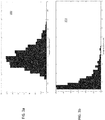
- FIG. 3a is a graph 300 illustrating an RSRP measurement histogram, in accordance with the prior art.
- FIGS. 3b is a graph 350 illustrating an RSRP measurement histogram, in accordance with an illustrative embodiment of the invention.
- an absolute error value of the RSRP is presented over 602 cell identity combinations.
- the target and interfering cells have colliding CRS, the interfering cell timing is delayed by 3 micro second compared to the target cell, and the channel estimation filters uses 12 taps per estimated sub-carrier.
- a single CRS port is transmitted by each cell, signals propagate through 2 AWGN channels and are received with 2 RX antennas at the UE.
- Estimated RSRP values from 10 sub-frames, 2 RX antennas and 4 OFDM symbols per measured sub-frame are non-coherently averaged to calculate RSRP for a measurement period of 200 ms.
- Relative powers of the interfering cell, target cell and AWGN are 0dB,-4dB,-6dB, respectively.
- FIG. 3a the absolute error value of the RSRP are shown where the RSRP is determined without accounting for bias.
- the error values in FIG. 3a range from approximately 0.5dB to approximately 3.5dB with an average of approximately 1.9dB.
- FIG. 3b the absolute error value of the RSRP are shown where the RSRP is determined accounting for bias, for example, using the method described in FIG. 2 above.
- the error values in FIG. 3b range from approximately 0.2dB to 2.0dB with an average error of 0.6dB.
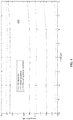
- FIG. 4 is a graph illustrating average RSRP error versus Signal to Noise Ratio, in accordance with illustrative embodiments of the invention.
- FIG. 4 shows the RSRP measurement error for a RSRP measurement where interference cancellation is not performed, a RSRP measurement where interference cancellation is performed but the RSRP determination does not account for bias, and a RSRP measurement where interference cancellation is performed and the RSRP determination does account for bias (e.g., the RSRP as determined above in accordance with FIG. 2 ), for two different target/interference cell combinations.
- bias e.g., the RSRP as determined above in accordance with FIG. 2
- Method steps can be performed by one or more programmable processors (e.g., on a mobile device) executing a computer program to perform functions of the invention by operating on input data and generating output. Method steps can also be performed by an apparatus and can be implemented as special purpose logic circuitry.
- the circuitry can, for example, be a FPGA (field programmable gate array) and/or an ASIC (application-specific integrated circuit). Modules, subroutines, and software agents can refer to portions of the computer program, the processor, the special circuitry, software, and/or hardware that implement that functionality.
- the User Equipment can include any computing device, for example, a computer, a computer with a browser device, an IP phone, a mobile device (e.g., cellular phone, personal digital assistant (PDA) device, laptop computer, electronic mail device), and/or other communication devices.
- the computing device can be, for example, one or more computer servers.
- the computer servers can be, for example, part of a server farm.
- the computer storage can be, for example, a random access memory (RAM) module, a read only memory (ROM) module, a computer hard drive, a memory card (e.g., universal serial bus (USB) flash drive, a secure digital (SD) flash card), a floppy disk, and/or any other data storage device.
- RAM random access memory
- ROM read only memory
- computer hard drive e.g., a hard drive
- memory card e.g., universal serial bus (USB) flash drive, a secure digital (SD) flash card
- SD secure digital
- Information stored on a storage module can be maintained, for example, in a database (e.g., relational database system, flat database system) and/or any other logical information storage mechanism.
- Packet-based networks can include, for example, the Internet, a carrier internet protocol (IP) network (e.g., local area network (LAN), wide area network (WAN), campus area network (CAN), metropolitan area network (MAN), home area network (HAN), a private IP network, an IP private branch exchange (IPBX), a wireless network (e.g., radio access network (RAN), 802.11 network, 802.16 network, general packet radio service (GPRS) network, HiperLAN), and/or other packet-based networks.
- IP carrier internet protocol
- LAN local area network
- WAN wide area network
- CAN campus area network
- MAN metropolitan area network
- HAN home area network
- IP network IP private branch exchange
- wireless network e.g., radio access network (RAN), 802.11 network, 802.16 network, general packet radio service (GPRS) network, HiperLAN
- Circuit-based networks can include, for example, the public switched telephone network (PSTN), a private branch exchange (PBX), a wireless network (e.g., RAN, Bluetooth®, code-division multiple access (CDMA) network, time division multiple access (TDMA) network, global system for mobile communications (GSM) network), and/or other circuit-based networks.
- PSTN public switched telephone network
- PBX private branch exchange
- CDMA code-division multiple access
- TDMA time division multiple access
- GSM global system for mobile communications
- Comprise, include, and/or plural forms of each are open ended and include the listed parts and can include additional parts that are not listed. And/or is open ended and includes one or more of the listed parts and combinations of the listed parts.
Landscapes
- Engineering & Computer Science (AREA)
- Signal Processing (AREA)
- Computer Networks & Wireless Communication (AREA)
- Quality & Reliability (AREA)
- Physics & Mathematics (AREA)
- Electromagnetism (AREA)
- Mobile Radio Communication Systems (AREA)
Description
- The invention relates generally wireless communications systems. In particular, the invention relates to estimating a Reference Signal Received Power (RSRP) of a target cell in a Long Term Evolution (LTE) network by estimating and removing bias.
- In general, current cellular communications systems allow for cellular devices to connect to high-speed data networks using radio waves as the transmission medium. For example, Universal Mobile Telecommunications Systems (UMTS) can provide broadband applications, internet access, telephone access services, televisions service access and/or mobile telephone services.
- Communication over UMTS requires transmission over a radio spectrum, which is a medium that is shared between multiple technologies. In some instances, these technologies can be interfering. Standards were developed to, for example, ensure interoperability between equipment from multiple vendors and aims to ensure that the allocated spectrum is used efficiently.
- One such widely adopted standard is the 3rd Generation Partnership Project (3GPP) standard. The 3GPP standard has had many revisions, including an evolution into the Long-Term Evolution (LTE) standards. The LTE standards also continue to evolve, such that there are multiple releases, one of which is the LTE standards Release 11 (e.g., Rel-11).
- In cellular communication, a user equipment (UE), for example, a mobile handset, can be required to measure base station power and signal quality of neighboring base stations and report those measurements to its serving base station. These measurements can be used by networks to, for example, manage cell handover. These measurements can have a direct impact on the overall network capacity.
- In LTE the UE can report two parameters: Reference Signal Received Power (RSRP) and Reference Signal Received Quality (RSRQ). These two parameters can be measured using sequence of pilots that are typically unique per cell. The sequence of pilots is typically known as Cell specific Reference Signal (CRS).
- Currently, cellular communications systems environments are dense and cell coverage areas are small, as demand for cellular service grows. Denser cellular environments and smaller cells can reduce the accuracy of measuring RSRP and RSRQ, due to, for example increased interference.
- Rel-11 of the LTE standards attempts to improve accuracy of measuring RSRP and RSRQ by requiring interference cancellation of CRS from neighboring cells. One current method for interference cancellation of CRS from neighboring cells includes performing a joint estimation of a target cell's (e.g., the cell to be measured) channel response and an interfering cell's channel response, followed by averaging of the target cell channel energy over a measurement period.
- One difficulty with this current method is that it can require a high computational power, due to, for example, filter coefficients used to estimate the channel response being dependent on a cross correlation of the target cell's and interfering cell's CRS patterns. The cross correlation can vary between orthogonal frequency-division multiplexing (OFDM) symbols and sub-frames, resulting in a matrix inversion calculation for every OFDM symbol. The increase in computation power necessary for joint estimation scan cause a UE to completely fail to function, cause a slowdown of other functions by the UE, the UE to need a bigger processing chip and/or quicker power loss.
- Another current method of interference cancellation is serial interference cancellation. In serial cancellation a dominant interfering cell channel is estimated, reconstructed, and subtracted from a received signal. After the serial interference cancellation, the RSRP of the target cell can be estimated. One difficulty with serial interference cancellation is that it can lead to an underestimation of the RSRP of the target cell due to, for example, failure of the dominant interfering cell channel estimation to account for a contribution of the target cell in the received communication signal. Without accounting for the target cell, some of the energy of the target cell (e.g., the projection of the serving cell on the interference cell) is attributed to the interfering cell. Lack of accounting for the target cell can result in a power of the interfering cell being overestimated (e.g., due to a bias primarily caused by the contribution of the target cell in the interfering cell channel estimation), and thus underestimation of the target cell.
- Therefore, it is desirable to perform interference cancellation when estimating RSRP with a low computation power. It is also desirable to account for interference cancellation bias in the RSRP estimation.
-
US Patent Application Publication No. 20150109944 teaches a mobile station including a calculation unit, an adjustment unit, an estimation unit, and a measurement unit. The calculation unit calculates a weighting matrix for use in channel estimation of an interfering cell. The adjustment unit adjusts values of respective components of the weighting matrix calculated by the calculation unit so that out of the respective components, diagonal components are smaller than components other than the diagonal components. The estimation unit suppresses a noise component included in a value of the channel estimation by using the weighting matrix whose respective component values were adjusted by the adjustment unit so as to perform the channel estimation of the interfering cell. The measurement unit cancels a signal of the interfering cell from a received signal based on a result of the channel estimation and measures a reception quality of a measurement target cell with respect to the received signal. - One advantage of the invention is that it allows for interference cancellation when estimating RSRP with a low computation power. Another advantage of the invention is that it accounts for interference cancellation bias when estimating RSRP.
- In one aspect, the invention involves a method for Reference Signal Received Power (RSRP) estimation of a target cell in Long Term Evolution (LTE) network. The method involves receiving a cellular communication signal transmitted over the LTE network. The method also involves determining a first channel estimation of an interference cell of the LTE network based on the cellular communication signal. The method also involves performing an interference cancellation based on the cellular communication signal and the first channel estimation. The method also involves determining a second channel estimation of the target cell based on the cellular communication signal after interference cancellation. The method also involves determining a bias based on the second channel estimation. The method also involves determining a RSRP estimation of the target cell based on the second channel estimation and the bias wherein receiving the cellular communication signal comprises receiving a cellular communication signal yi, wherein yi = [y0,i, ..., yN-1,i ]T , N is a size of an observation vector of the cellular communication signal, i is the i-th orthogonal frequency-division multiplexing, OFDM, symbol, wherein the received cellular communication signal after the Fast Fourier Transform, FFT, in the i-th orthogonal frequency-division multiplexing, OFDM symbol, is applied is defined by yi = C 0,i-F 0 h 0,i + C1,i F 1 h 1,i + n i,, wherein C 0,i is a Cell specific Reference Signal for the target cell, F 0 is a modified version of the FFT for the target cell, and h 0,i is a channel domain impulse response sampled at a bandwidth sample rate of the cellular communications signal for the target cell, C 1,i is a Cell specific Reference Signal for an interference cell of the LTE network, F 1 is a modified version of the FFT for the interference cell, and h 1,i is a channel domain impulse response sampled at the bandwidth sample rate of the cellular communications signal for the interference cell; determining a first channel estimation h̃ 1,i of the interference cell, wherein


- In some embodiments, the bias is a bias matrix and determining the bias further comprises determining an expectation value of the bias matrix. In some embodiments, the bias is a bias matrix and determining the bias further comprises using a Neumann series approximation. In some embodiments, the method involves determining the bias further comprises retrieving the bias from a computer memory.
- In some embodiments, the method involves determining the bias further comprises modifying the retrieved bias. In some embodiments, the method involves determining the RSRP estimation is further based on a noise factor. In some embodiments, the method involves retrieving the noise factor from a computer memory. In some embodiments, the method involves modifying the retrieved noise factor.
- In some embodiments, the pilot symbols of the target cell and pilot symbols of the interfering cell overlap. In some embodiments, the target cell and the interfering cell have an overlapping area of cellular coverage. In some embodiments, the cellular communication signal is an orthogonal frequency-division multiplexing (OFDM) signal.
- Some embodiments of the invention may comprise a computer readable medium comprising instructions which, when implemented on a processor in a computing system, cause the system to perform any of the methods described herein.
- The foregoing and other objects, features, and advantages of the present invention, as well as the invention itself, will be more fully understood from the following description of various embodiments, when read together with the accompanying drawings.
-
FIG. 1 is a diagram of an exemplary cellular communications system, according to an illustrative embodiment of the invention. -
FIG. 2 is a flow diagram illustrating a method for a Reference Signal Received Power (RSRP) estimate of a target cell in Long Term Evolution (LTE) networks, according to an illustrative embodiment of the invention. -
FIG. 3a is a graph illustrating an RSRP measurement histogram, in accordance with the prior art. -
FIG. 3b is a graph illustrating an RSRP measurement histogram, in accordance with an illustrative embodiment of the invention. -
FIG. 4 is a graph illustrating average RSRP error versus Signal to Noise Ratio, in accordance with illustrative embodiments of the invention. - Generally, a user equipment (UE) receives a cellular communications signal from a target cell (e.g., first base station) and an interference cell (e.g., a second base station) of a cellular communications Long Term Evolution (LTE) network. The UE determines a first channel estimation of the interference cell based on the cellular communications signal. The UE performs an interference cancellation based on the cellular communication signal and the first channel estimation. The UE determines a second channel estimation of the target cell based on the cellular communication signal after interference cancellation. The UE determines a bias from the second channel estimation (e.g., the bias caused by contribution of the target cell in the interfering cell channel estimation). The UE determines an RSRP estimate of the target cell based on the second channel estimation and the bias.
-
FIG. 1 is a diagram of an exemplarycellular communications system 100, according to an illustrative embodiment of the invention. Thecellular communications system 100 includesbase stations FIG. 1 ascellular coverage area - The cellular coverage areas 125 can overlap. The base stations 110 can transmit cellular communications signals to the
UE 120. The UE can transmit cellular communication signals to the base stations 110. - The
UE 120 is configured to receive cellular communication signals from one or more of the base stations 110 when theUE 120 is within a respective cellular coverage area 125. TheUE 120 is configured to report a Reference Signal Received Power (RSRP) of one or more of the base stations 125. TheUE 120 can be configured according to LTE standards. TheUE 120 can be configured in accordance with any cellular communication standards as is known in the art. - The
cellular communications system 100 can be a UMTS operating with the Rel-11 LTE standards. TheUE 120 can be a smart phone, a tablet device, a car phone, a computer, or any device capable of receiving communication signals over a UMTS network. - As is apparent to one of ordinary skill in the art, the base stations 125 and their corresponding cellular coverage areas 125 are not to scale and are illustrative only.
- During operation, the
UE 120 receives a request for an RSRP from one of the base stations 110, for example,base station 110a.Base station 110a can be denoted as the target cell. In addition to being within thecellular coverage area 125a covered by the target cell (e.g.,base station 110a) theUE 120 is also within thecellular coverage areas base stations UE 120 in this overlapping coverage area can have contributions not only from the target cell (e.g.,base station 110a), but also frombase stations - One of the interfering cells (e.g.,
base stations base station 110b), and thus its contribution to the cellular communication signals received by theUE 120 can be cancelled from the cellular communications signal received by theUE 120. One dominant interfering cell or multiple interfering cells can be provided to theUE 120 by the network. Upon receipt of multiple interference cells, theUE 120 can perform an approximate estimate of their power by, for example, using a correlation as is known in the art. Based on the correlation, theUE 120 can determine which of the received interfering cells is dominant. - Ignoring the contribution of interference from the other interfering cells (e.g. 110c, and 110n) can cause an unwanted bias in the RSRP after cancelling the interference from the dominate interfering
cell 110a. The bias can cause the RSRP estimation of the target cell to be erroneous. - The RSRP estimation performed by the
UE 120 can take into account the bias to provide an accurate RSRP measurement, despite the interference contribution of theother interference cells - As is apparent to one of ordinary skill in the art that
FIG. 1 is exemplary only and that there are many configurations in a cellular network that can cause aUE 120 to receive cellular communications signals with interference. For example, thecellular communication systems 100 can include any number of base stations and any number of UE's as is known in the art. Size of the cell coverage area can vary based on properties of the base station. -
FIG. 2 a flow diagram 200 illustrating a method for a Reference Signal Received Power (RSRP) estimate of a target cell (e.g.,base station 110a) in Long Term Evolution (LTE) networks, according to an illustrative embodiment of the invention. - The method involves receiving (e.g., receiving by the
UE 120, as described above inFIG. 1 ) a cellular communication signal transmitted over the LTE network (e.g., cellular communications network 110, as described above inFIG. 1 ). The cellular communication signal yi can be determined as follows:
- A Fast Fourier Transform (FFT) of the received cellular communication signal yi in the i-th orthogonal frequency-division multiplexing (OFDM) can be follows:

- The method involves determining a first channel estimation h̃ 1,i of an interference cell (e.g.,
interference cell 110b, as described above inFIG.1 ) of the LTE network based on the cellular communication signal (Step 220). The first channel estimation h̃ 1,i can be determined as follows:


- The method also involves performing an interference cancellation Ic based on the cellular communication signal yi and the first channel estimation h̃ 1,i (Step 230). The interference cancellation Ic can be determined as follows:

- The method also involves determining a second channel estimation h̃ 0,i of the target cell based on the cellular communication signal after interference cancellation (Step 240). The second channel estimation h̃ 0,i can be determined as follows:

- The method also involves determining a bias based on the second channel estimation (Step 250). The bias can be a matrix. The bias matrix Bi can be determined as follows:

-
FIG. 2 a flow diagram 200 illustrating a method for a Reference Signal Received Power (RSRP) estimate of a target cell (e.g.,base station 110a) in Long Term Evolution (LTE) networks, according to an illustrative embodiment of the invention. - The method involves receiving (e.g., receiving by the
UE 120, as described above inFIG. 1 ) a cellular communication signal transmitted over the LTE network (e.g.,cellular communications network 100, as described above inFIG. 1 ). The cellular communication signal yi can be determined as follows:
- A Fast Fourier Transform (FFT) of the received cellular communication signal yi in the i-th orthogonal frequency-division multiplexing (OFDM) can be follows:

- In some embodiments, the RSRP can be determined applying EQN. 13 to EQN. 11, such that the RSRP can be determined as follows:



- In some embodiments, Bi is determined based on its expectation, as follows:

- In some embodiments, the RSRP can be determined based on an expectation of a contribution of bias to the RSRP. In this manner, a contribution of bias to the computation complexity of the RSRP determination can be negligible, in comparison to a typical computation complexity for determining RSRP that does not account for bias. In some embodiments, the RSRP can be determined by applying the expectation value in EQN. 15 to EQN. 13, such that the RSRP can be determined as follows:


- In some embodiments,


- In some embodiments, the value for


- In some embodiments, the expectation value of the filtered noise term ṅ i is determined as follows:



- In some embodiments, expectation value of the filtered noise term can be determined based on an expectation of a contribution of bias to filtered noise. In this manner, a contribution of bias to the computation complexity of the filtered noise (and thus to the RSRP) determination can be negligible, in comparison to a typical computation complexity for determining the filtered noise (and thus the RSRP) without accounting for bias. In some embodiments, the filtered noise can be determined by applying the expectation value in EQN. 15 to EQN. 12, such that the filtered noise can be determined as follows:


- In some embodiments, the determination of EQN. 24 and 24 is determined off-line. In some embodiments, the value for EQN. 23 is stored in computer memory and retrieved during the RSRP determination. In some embodiments, a value for EQN. 23 is stored in a lookup table.
- In some embodiments, the value for EQN. 24 is further modified upon retrieval from memory. In some embodiments, the value for EQN. 24 is modified based upon channel tap positions, in accordance with a delay spread of the channel, or any combination thereof. In some embodiments, the value for EQN. 24 is modified in low rate.
-
FIG. 3a is agraph 300 illustrating an RSRP measurement histogram, in accordance with the prior art.FIGS. 3b is agraph 350 illustrating an RSRP measurement histogram, in accordance with an illustrative embodiment of the invention. InFIG. 3a and FIG. 3b , an absolute error value of the RSRP is presented over 602 cell identity combinations. For the examples ofFIG. 3a and FIG. 3b , the target and interfering cells have colliding CRS, the interfering cell timing is delayed by 3 micro second compared to the target cell, and the channel estimation filters uses 12 taps per estimated sub-carrier. In addition, a single CRS port is transmitted by each cell, signals propagate through 2 AWGN channels and are received with 2 RX antennas at the UE. Estimated RSRP values from 10 sub-frames, 2 RX antennas and 4 OFDM symbols per measured sub-frame are non-coherently averaged to calculate RSRP for a measurement period of 200 ms. Relative powers of the interfering cell, target cell and AWGN are 0dB,-4dB,-6dB, respectively. - In
FIG. 3a the absolute error value of the RSRP are shown where the RSRP is determined without accounting for bias. The error values inFIG. 3a range from approximately 0.5dB to approximately 3.5dB with an average of approximately 1.9dB. InFIG. 3b the absolute error value of the RSRP are shown where the RSRP is determined accounting for bias, for example, using the method described inFIG. 2 above. The error values inFIG. 3b range from approximately 0.2dB to 2.0dB with an average error of 0.6dB. -
FIG. 4 is a graph illustrating average RSRP error versus Signal to Noise Ratio, in accordance with illustrative embodiments of the invention. In particular,FIG. 4 shows the RSRP measurement error for a RSRP measurement where interference cancellation is not performed, a RSRP measurement where interference cancellation is performed but the RSRP determination does not account for bias, and a RSRP measurement where interference cancellation is performed and the RSRP determination does account for bias (e.g., the RSRP as determined above in accordance withFIG. 2 ), for two different target/interference cell combinations. As can be seen inFIG. 4 , for both of the target/interference cell combinations, the average RSRP error is significantly improved when interference cancellation is performed and the RSRP determination takes the bias into account. - Method steps can be performed by one or more programmable processors (e.g., on a mobile device) executing a computer program to perform functions of the invention by operating on input data and generating output. Method steps can also be performed by an apparatus and can be implemented as special purpose logic circuitry. The circuitry can, for example, be a FPGA (field programmable gate array) and/or an ASIC (application-specific integrated circuit). Modules, subroutines, and software agents can refer to portions of the computer program, the processor, the special circuitry, software, and/or hardware that implement that functionality.
- The User Equipment can include any computing device, for example, a computer, a computer with a browser device, an IP phone, a mobile device (e.g., cellular phone, personal digital assistant (PDA) device, laptop computer, electronic mail device), and/or other communication devices. The computing device can be, for example, one or more computer servers. The computer servers can be, for example, part of a server farm.
- The computer storage can be, for example, a random access memory (RAM) module, a read only memory (ROM) module, a computer hard drive, a memory card (e.g., universal serial bus (USB) flash drive, a secure digital (SD) flash card), a floppy disk, and/or any other data storage device. Information stored on a storage module can be maintained, for example, in a database (e.g., relational database system, flat database system) and/or any other logical information storage mechanism.
- The above described networks can be implemented in a packet-based network, a circuit-based network, and/or a combination of a packet-based network and a circuit-based network. Packet-based networks can include, for example, the Internet, a carrier internet protocol (IP) network (e.g., local area network (LAN), wide area network (WAN), campus area network (CAN), metropolitan area network (MAN), home area network (HAN), a private IP network, an IP private branch exchange (IPBX), a wireless network (e.g., radio access network (RAN), 802.11 network, 802.16 network, general packet radio service (GPRS) network, HiperLAN), and/or other packet-based networks. Circuit-based networks can include, for example, the public switched telephone network (PSTN), a private branch exchange (PBX), a wireless network (e.g., RAN, Bluetooth®, code-division multiple access (CDMA) network, time division multiple access (TDMA) network, global system for mobile communications (GSM) network), and/or other circuit-based networks.
- Comprise, include, and/or plural forms of each are open ended and include the listed parts and can include additional parts that are not listed. And/or is open ended and includes one or more of the listed parts and combinations of the listed parts.
Claims (15)
- A method for Reference Signal Received Power, RSRP, estimation of a target cell (110a) by a user equipment (120) in Long Term Evolution, LTE network (100), the method comprising:receiving a cellular communication signal transmitted over the LTE network (100);determining a first channel estimation of an interference cell (110b) of the LTE network (100) based on the cellular communication signal;performing an interference cancellation based on the cellular communication signal and the first channel estimation;determining a second channel estimation of the target cell (110a) based on the cellular communication signal after interference cancellation;determining a bias based on the second channel estimation; anddetermining RSRP estimation of the target cell (110a) based on the secondchannel estimation and the bias, whereinreceiving the cellular communication signal comprises receiving a cellular communication signal yi,wherein yi=[y0,i ,..., y N-1,i ]T, N is a size of an observation vector of the cellular communication signal, i is the i-th orthogonal frequency-division multiplexing, OFDM, symbol,wherein the received cellular communication signal after the Fast Fourier Transform, FFT, in the i-th orthogonal frequency-division multiplexing, OFDM symbol, is applied is defined by yi = C 0,i F 0 h 0,i + C 1,i F 1 h 1,i + n i,,wherein C 0,i is a Cell specific Reference Signal for the target cell (1 10a), F 0 is a modified version of the FFT for the target cell (110a), and h 0,i is a channel domain impulse response sampled at a bandwidth sample rate of the cellular communications signal for the target cell (110a), C 1,i is a Cell specific Reference Signal for an interference cell (110b) of the LTE network (100), F 1 is a modified version of the FFT for the interference cell (1 10b), and h 1,i is a channel domain impulse response sampled at the bandwidth sample rate of the cellular communications signal for the interference cell (110b);determining a first channel estimation h̃ 1,i of the interference cell (110b),performing an interference cancellationIc ,
wherein


wherein Ic = yi - C 1,i F 1 h̃ 1, i;
determining a second channel estimation h̃ 0,i of the target cell (110b), wherein
determining a bias matrix Bi ,
wherein
wherein F 0 † is the F 0 † = (F 0 HF 0)-1 F 0 H ,
wherein
wherein ĥ 0,i can be expressed as, ĥ 0, i = (I - Bi )-1 h̃ 0,i = h 0,i + (I - Bi )-1 ṅ i ;
determining the RSRP of the target cell (110a),
wherein
wherein M is a predefined number of OFDM symbols in the cellular communication signal, g is an expectation value of the filtered noise term n i̇ , σ2 is noise power,
wherein RSRP can be expressed as
- The method of claim 1 wherein the bias is a bias matrix and determining the bias further comprises determining an expectation value of the bias matrix.
- The method of claim 1 or claim 2 wherein the bias is a bias matrix and determining the bias further comprises using a Neumann series approximation.
- The method of claim 1, 2 or 3, wherein determining the bias further comprises retrieving the bias from a computer memory.
- The method of claim 4 wherein determining the bias further comprises modifying the retrieved bias.
- The method of any preceding claim wherein determining the RSRP estimation is further based on a noise factor.
- The method of claim 6 further comprising retrieving the noise factor from a computer memory.
- The method of claim 7 further comprising modifying the retrieved noise factor.
- The method of any preceding claim wherein pilot symbols of the target cell (110a) and pilot symbols of the interference cell (110b) overlap.
- The method of any preceding claim wherein the target cell (110a) and the interference cell (110b) have an overlapping area of cellular coverage.
- The method of any preceding claim wherein the cellular communication signal is an orthogonal frequency-division multiplexing, OFDM, signal.
- The method of claim 1 further comprising:
approximating (I-Bi )-H to (I + Bi ) H based on a first and second element of a Neumann series approximation of Bi.. - The method of claim 12 wherein determining the RSRP further comprises:
determining an expectation value of Bi
whereinB = E(Bi ) = F 0 † diag(F 1 F 1 †)F 0 ; and
replacing Bi with the expectation value such that,
- The method of claim 1, 12 or 13 wherein determining the expectation value of the filtered noise term further comprises:


- A computer readable medium comprising instructions which, when implemented on a processor in a computing system, canse the system to perform a method as claimed in any preceding claim.
Applications Claiming Priority (1)
| Application Number | Priority Date | Filing Date | Title |
|---|---|---|---|
| US14/982,526 US10122517B2 (en) | 2015-12-29 | 2015-12-29 | Methods for estimating reference signal received power of cellular communication signals |
Publications (2)
| Publication Number | Publication Date |
|---|---|
| EP3188555A1 EP3188555A1 (en) | 2017-07-05 |
| EP3188555B1 true EP3188555B1 (en) | 2018-09-05 |
Family
ID=57777435
Family Applications (1)
| Application Number | Title | Priority Date | Filing Date |
|---|---|---|---|
| EP16206625.2A Active EP3188555B1 (en) | 2015-12-29 | 2016-12-23 | Methods for estimating reference signal received power of cellular communication signals |
Country Status (2)
| Country | Link |
|---|---|
| US (1) | US10122517B2 (en) |
| EP (1) | EP3188555B1 (en) |
Families Citing this family (6)
| Publication number | Priority date | Publication date | Assignee | Title |
|---|---|---|---|---|
| US9699226B1 (en) * | 2015-12-17 | 2017-07-04 | 8X8, Inc. | Display dependent analytics |
| CN112668427B (en) * | 2020-12-21 | 2024-08-16 | 南京熊猫电子股份有限公司 | Face recognition similarity improving method based on mobile phone IMSI and RSRP |
| CN114189900B (en) * | 2021-12-10 | 2024-01-30 | 哲库科技(北京)有限公司 | Cell measurement method, device, terminal and storage medium |
| CN114553338B (en) * | 2022-02-25 | 2024-07-16 | 哲库科技(北京)有限公司 | Method and device for determining interference signal, electronic equipment and readable storage medium |
| CN114665994B (en) * | 2022-03-17 | 2023-07-14 | Oppo广东移动通信有限公司 | Method, device, device and readable storage medium for estimating received power |
| US20240380424A1 (en) * | 2023-05-12 | 2024-11-14 | T-Mobile Usa, Inc. | Ue-based interference cancellation in 5g networks |
Family Cites Families (13)
| Publication number | Priority date | Publication date | Assignee | Title |
|---|---|---|---|---|
| KR101291683B1 (en) * | 2006-12-07 | 2013-08-01 | 삼성전자주식회사 | Method of equalization for TDS-OFDM receiver and apparatus thereof |
| US8867999B2 (en) | 2009-01-26 | 2014-10-21 | Qualcomm Incorporated | Downlink interference cancellation methods |
| US8965294B2 (en) * | 2010-03-24 | 2015-02-24 | Lg Electronics Inc. | Method and apparatus for reducing inter-cell interference in radio communication system |
| US9609536B2 (en) | 2010-04-13 | 2017-03-28 | Qualcomm Incorporated | Measurement of received power and received quality in a wireless communication network |
| US9642021B2 (en) | 2010-10-04 | 2017-05-02 | Telefonaktiebolaget Lm Ericsson (Publ) | Acquisition of cell information for enhancing network operation in heterogeneous environment |
| US20120113961A1 (en) | 2010-11-08 | 2012-05-10 | Motorola Mobility, Inc. | Interference Measurements in Enhanced Inter-Cell Interference Coordination Capable Wireless Terminals |
| PL2688338T3 (en) | 2012-07-17 | 2015-08-31 | Alcatel Lucent | DEVICES, METHODS AND COMPUTER PROGRAMS FOR PORTABLE RELAY AND BASE STATION RELAY |
| US9509426B2 (en) | 2013-10-07 | 2016-11-29 | Nokia Solutions And Networks Oy | Interference estimation resource definition and usage for enhanced receivers |
| JP6213137B2 (en) | 2013-10-17 | 2017-10-18 | 富士通株式会社 | Mobile station and reception quality measuring method |
| KR102199693B1 (en) * | 2013-11-01 | 2021-01-07 | 후아웨이 테크놀러지 컴퍼니 리미티드 | Apparatus and Method for Cancelling Inter-cell Interference in Wireless Communication System |
| US9160383B2 (en) * | 2013-11-12 | 2015-10-13 | Huawei Technologies Co., Ltd. | Method for estimating covariance matrices and use thereof |
| US10250343B2 (en) | 2014-02-25 | 2019-04-02 | Telefonaktiebolaget Lm Ericsson (Publ) | Technique for measuring reference signal received power |
| WO2015131393A1 (en) * | 2014-03-07 | 2015-09-11 | Telefonaktiebolaget L M Ericsson (Publ) | Method and device for calculating reference signal received power |
-
2015
- 2015-12-29 US US14/982,526 patent/US10122517B2/en active Active
-
2016
- 2016-12-23 EP EP16206625.2A patent/EP3188555B1/en active Active
Also Published As
| Publication number | Publication date |
|---|---|
| US10122517B2 (en) | 2018-11-06 |
| US20170187500A1 (en) | 2017-06-29 |
| EP3188555A1 (en) | 2017-07-05 |
Similar Documents
| Publication | Publication Date | Title |
|---|---|---|
| EP3188555A1 (en) | Methods for estimating reference signal received power of cellular communication signals | |
| CN103026782B (en) | Base station calibration | |
| US10219238B2 (en) | OTDOA in LTE networks | |
| EP2579533B1 (en) | Robust and Low-Complexity Combined Signal Power Estimation for OFDM | |
| EP4373176A1 (en) | Positioning method and apparatus for terminal device, and storage medium | |
| US10070447B1 (en) | Method and apparatus for enhanced reference (RSTD) measurement for long term evolution (LTE) positioning | |
| CN102783062A (en) | Receiver and signal received power estimation method | |
| CN109672635B (en) | Time domain correlation estimation method, device and equipment | |
| US20180234281A1 (en) | System and method for providing time offset and frequency offset estimation for vehicle to everything communication system | |
| US20130195166A1 (en) | Robust Frequency-Domain Equalization in Communications Receivers | |
| US8891591B2 (en) | Receiver circuit and method | |
| CN118715796A (en) | Position determination method, device, equipment, medium, chip, product and program | |
| US9369970B2 (en) | Method and device for denoising in channel estimation, and corresponding computer program and computer readable storage medium | |
| WO2021164642A1 (en) | Interference source positioning method and related device | |
| US20080253487A1 (en) | Adaptive pilot and data symbol estimation | |
| CN106063163A (en) | Technique for measuring reference signal received power | |
| CN107171981A (en) | channel correcting method and device | |
| US20100278047A1 (en) | System and Method for Parameter Estimation with Interference Suppression in a Telecommunications Network | |
| WO2015149709A1 (en) | Noise power estimation method and network side device | |
| US8094760B2 (en) | Channel estimation | |
| CN104717163B (en) | A kind of noise estimation method and user equipment | |
| CN104601311B (en) | The suppressing method and device of a kind of co-channel interference | |
| EP1875632B1 (en) | Antenna array calibration for wireless communication systems | |
| CN111294917A (en) | Method, apparatus, storage medium and user equipment for estimating timing offset based on PDCCH | |
| CN117176275A (en) | Signal-to-noise ratio measurement method, device, equipment and storage medium |
Legal Events
| Date | Code | Title | Description |
|---|---|---|---|
| PUAI | Public reference made under article 153(3) epc to a published international application that has entered the european phase |
Free format text: ORIGINAL CODE: 0009012 |
|
| STAA | Information on the status of an ep patent application or granted ep patent |
Free format text: STATUS: THE APPLICATION HAS BEEN PUBLISHED |
|
| AK | Designated contracting states |
Kind code of ref document: A1 Designated state(s): AL AT BE BG CH CY CZ DE DK EE ES FI FR GB GR HR HU IE IS IT LI LT LU LV MC MK MT NL NO PL PT RO RS SE SI SK SM TR |
|
| AX | Request for extension of the european patent |
Extension state: BA ME |
|
| STAA | Information on the status of an ep patent application or granted ep patent |
Free format text: STATUS: REQUEST FOR EXAMINATION WAS MADE |
|
| GRAP | Despatch of communication of intention to grant a patent |
Free format text: ORIGINAL CODE: EPIDOSNIGR1 |
|
| STAA | Information on the status of an ep patent application or granted ep patent |
Free format text: STATUS: GRANT OF PATENT IS INTENDED |
|
| 17P | Request for examination filed |
Effective date: 20170901 |
|
| RBV | Designated contracting states (corrected) |
Designated state(s): AL AT BE BG CH CY CZ DE DK EE ES FI FR GB GR HR HU IE IS IT LI LT LU LV MC MK MT NL NO PL PT RO RS SE SI SK SM TR |
|
| INTG | Intention to grant announced |
Effective date: 20171004 |
|
| GRAJ | Information related to disapproval of communication of intention to grant by the applicant or resumption of examination proceedings by the epo deleted |
Free format text: ORIGINAL CODE: EPIDOSDIGR1 |
|
| GRAL | Information related to payment of fee for publishing/printing deleted |
Free format text: ORIGINAL CODE: EPIDOSDIGR3 |
|
| GRAS | Grant fee paid |
Free format text: ORIGINAL CODE: EPIDOSNIGR3 |
|
| STAA | Information on the status of an ep patent application or granted ep patent |
Free format text: STATUS: REQUEST FOR EXAMINATION WAS MADE |
|
| GRAP | Despatch of communication of intention to grant a patent |
Free format text: ORIGINAL CODE: EPIDOSNIGR1 |
|
| STAA | Information on the status of an ep patent application or granted ep patent |
Free format text: STATUS: GRANT OF PATENT IS INTENDED |
|
| INTC | Intention to grant announced (deleted) | ||
| INTG | Intention to grant announced |
Effective date: 20180302 |
|
| GRAA | (expected) grant |
Free format text: ORIGINAL CODE: 0009210 |
|
| STAA | Information on the status of an ep patent application or granted ep patent |
Free format text: STATUS: THE PATENT HAS BEEN GRANTED |
|
| AK | Designated contracting states |
Kind code of ref document: B1 Designated state(s): AL AT BE BG CH CY CZ DE DK EE ES FI FR GB GR HR HU IE IS IT LI LT LU LV MC MK MT NL NO PL PT RO RS SE SI SK SM TR |
|
| REG | Reference to a national code |
Ref country code: GB Ref legal event code: FG4D |
|
| REG | Reference to a national code |
Ref country code: CH Ref legal event code: EP |
|
| REG | Reference to a national code |
Ref country code: AT Ref legal event code: REF Ref document number: 1039407 Country of ref document: AT Kind code of ref document: T Effective date: 20180915 |
|
| REG | Reference to a national code |
Ref country code: IE Ref legal event code: FG4D |
|
| REG | Reference to a national code |
Ref country code: DE Ref legal event code: R096 Ref document number: 602016005360 Country of ref document: DE |
|
| REG | Reference to a national code |
Ref country code: SE Ref legal event code: TRGR |
|
| REG | Reference to a national code |
Ref country code: NL Ref legal event code: MP Effective date: 20180905 |
|
| REG | Reference to a national code |
Ref country code: LT Ref legal event code: MG4D |
|
| PG25 | Lapsed in a contracting state [announced via postgrant information from national office to epo] |
Ref country code: RS Free format text: LAPSE BECAUSE OF FAILURE TO SUBMIT A TRANSLATION OF THE DESCRIPTION OR TO PAY THE FEE WITHIN THE PRESCRIBED TIME-LIMIT Effective date: 20180905 Ref country code: GR Free format text: LAPSE BECAUSE OF FAILURE TO SUBMIT A TRANSLATION OF THE DESCRIPTION OR TO PAY THE FEE WITHIN THE PRESCRIBED TIME-LIMIT Effective date: 20181206 Ref country code: NO Free format text: LAPSE BECAUSE OF FAILURE TO SUBMIT A TRANSLATION OF THE DESCRIPTION OR TO PAY THE FEE WITHIN THE PRESCRIBED TIME-LIMIT Effective date: 20181205 Ref country code: LT Free format text: LAPSE BECAUSE OF FAILURE TO SUBMIT A TRANSLATION OF THE DESCRIPTION OR TO PAY THE FEE WITHIN THE PRESCRIBED TIME-LIMIT Effective date: 20180905 Ref country code: BG Free format text: LAPSE BECAUSE OF FAILURE TO SUBMIT A TRANSLATION OF THE DESCRIPTION OR TO PAY THE FEE WITHIN THE PRESCRIBED TIME-LIMIT Effective date: 20181205 |
|
| REG | Reference to a national code |
Ref country code: AT Ref legal event code: MK05 Ref document number: 1039407 Country of ref document: AT Kind code of ref document: T Effective date: 20180905 |
|
| PG25 | Lapsed in a contracting state [announced via postgrant information from national office to epo] |
Ref country code: HR Free format text: LAPSE BECAUSE OF FAILURE TO SUBMIT A TRANSLATION OF THE DESCRIPTION OR TO PAY THE FEE WITHIN THE PRESCRIBED TIME-LIMIT Effective date: 20180905 Ref country code: LV Free format text: LAPSE BECAUSE OF FAILURE TO SUBMIT A TRANSLATION OF THE DESCRIPTION OR TO PAY THE FEE WITHIN THE PRESCRIBED TIME-LIMIT Effective date: 20180905 Ref country code: AL Free format text: LAPSE BECAUSE OF FAILURE TO SUBMIT A TRANSLATION OF THE DESCRIPTION OR TO PAY THE FEE WITHIN THE PRESCRIBED TIME-LIMIT Effective date: 20180905 |
|
| PG25 | Lapsed in a contracting state [announced via postgrant information from national office to epo] |
Ref country code: ES Free format text: LAPSE BECAUSE OF FAILURE TO SUBMIT A TRANSLATION OF THE DESCRIPTION OR TO PAY THE FEE WITHIN THE PRESCRIBED TIME-LIMIT Effective date: 20180905 Ref country code: IS Free format text: LAPSE BECAUSE OF FAILURE TO SUBMIT A TRANSLATION OF THE DESCRIPTION OR TO PAY THE FEE WITHIN THE PRESCRIBED TIME-LIMIT Effective date: 20190105 Ref country code: AT Free format text: LAPSE BECAUSE OF FAILURE TO SUBMIT A TRANSLATION OF THE DESCRIPTION OR TO PAY THE FEE WITHIN THE PRESCRIBED TIME-LIMIT Effective date: 20180905 Ref country code: CZ Free format text: LAPSE BECAUSE OF FAILURE TO SUBMIT A TRANSLATION OF THE DESCRIPTION OR TO PAY THE FEE WITHIN THE PRESCRIBED TIME-LIMIT Effective date: 20180905 Ref country code: NL Free format text: LAPSE BECAUSE OF FAILURE TO SUBMIT A TRANSLATION OF THE DESCRIPTION OR TO PAY THE FEE WITHIN THE PRESCRIBED TIME-LIMIT Effective date: 20180905 Ref country code: RO Free format text: LAPSE BECAUSE OF FAILURE TO SUBMIT A TRANSLATION OF THE DESCRIPTION OR TO PAY THE FEE WITHIN THE PRESCRIBED TIME-LIMIT Effective date: 20180905 Ref country code: EE Free format text: LAPSE BECAUSE OF FAILURE TO SUBMIT A TRANSLATION OF THE DESCRIPTION OR TO PAY THE FEE WITHIN THE PRESCRIBED TIME-LIMIT Effective date: 20180905 Ref country code: IT Free format text: LAPSE BECAUSE OF FAILURE TO SUBMIT A TRANSLATION OF THE DESCRIPTION OR TO PAY THE FEE WITHIN THE PRESCRIBED TIME-LIMIT Effective date: 20180905 Ref country code: PL Free format text: LAPSE BECAUSE OF FAILURE TO SUBMIT A TRANSLATION OF THE DESCRIPTION OR TO PAY THE FEE WITHIN THE PRESCRIBED TIME-LIMIT Effective date: 20180905 |
|
| PG25 | Lapsed in a contracting state [announced via postgrant information from national office to epo] |
Ref country code: SM Free format text: LAPSE BECAUSE OF FAILURE TO SUBMIT A TRANSLATION OF THE DESCRIPTION OR TO PAY THE FEE WITHIN THE PRESCRIBED TIME-LIMIT Effective date: 20180905 Ref country code: PT Free format text: LAPSE BECAUSE OF FAILURE TO SUBMIT A TRANSLATION OF THE DESCRIPTION OR TO PAY THE FEE WITHIN THE PRESCRIBED TIME-LIMIT Effective date: 20190105 Ref country code: SK Free format text: LAPSE BECAUSE OF FAILURE TO SUBMIT A TRANSLATION OF THE DESCRIPTION OR TO PAY THE FEE WITHIN THE PRESCRIBED TIME-LIMIT Effective date: 20180905 |
|
| REG | Reference to a national code |
Ref country code: DE Ref legal event code: R097 Ref document number: 602016005360 Country of ref document: DE |
|
| PLBE | No opposition filed within time limit |
Free format text: ORIGINAL CODE: 0009261 |
|
| STAA | Information on the status of an ep patent application or granted ep patent |
Free format text: STATUS: NO OPPOSITION FILED WITHIN TIME LIMIT |
|
| PG25 | Lapsed in a contracting state [announced via postgrant information from national office to epo] |
Ref country code: DK Free format text: LAPSE BECAUSE OF FAILURE TO SUBMIT A TRANSLATION OF THE DESCRIPTION OR TO PAY THE FEE WITHIN THE PRESCRIBED TIME-LIMIT Effective date: 20180905 |
|
| 26N | No opposition filed |
Effective date: 20190606 |
|
| PG25 | Lapsed in a contracting state [announced via postgrant information from national office to epo] |
Ref country code: SI Free format text: LAPSE BECAUSE OF FAILURE TO SUBMIT A TRANSLATION OF THE DESCRIPTION OR TO PAY THE FEE WITHIN THE PRESCRIBED TIME-LIMIT Effective date: 20180905 Ref country code: MC Free format text: LAPSE BECAUSE OF FAILURE TO SUBMIT A TRANSLATION OF THE DESCRIPTION OR TO PAY THE FEE WITHIN THE PRESCRIBED TIME-LIMIT Effective date: 20180905 Ref country code: LU Free format text: LAPSE BECAUSE OF NON-PAYMENT OF DUE FEES Effective date: 20181223 |
|
| REG | Reference to a national code |
Ref country code: IE Ref legal event code: MM4A |
|
| REG | Reference to a national code |
Ref country code: BE Ref legal event code: MM Effective date: 20181231 |
|
| PG25 | Lapsed in a contracting state [announced via postgrant information from national office to epo] |
Ref country code: IE Free format text: LAPSE BECAUSE OF NON-PAYMENT OF DUE FEES Effective date: 20181223 |
|
| PG25 | Lapsed in a contracting state [announced via postgrant information from national office to epo] |
Ref country code: BE Free format text: LAPSE BECAUSE OF NON-PAYMENT OF DUE FEES Effective date: 20181231 |
|
| PG25 | Lapsed in a contracting state [announced via postgrant information from national office to epo] |
Ref country code: MT Free format text: LAPSE BECAUSE OF NON-PAYMENT OF DUE FEES Effective date: 20181223 |
|
| PG25 | Lapsed in a contracting state [announced via postgrant information from national office to epo] |
Ref country code: TR Free format text: LAPSE BECAUSE OF FAILURE TO SUBMIT A TRANSLATION OF THE DESCRIPTION OR TO PAY THE FEE WITHIN THE PRESCRIBED TIME-LIMIT Effective date: 20180905 |
|
| PG25 | Lapsed in a contracting state [announced via postgrant information from national office to epo] |
Ref country code: MK Free format text: LAPSE BECAUSE OF NON-PAYMENT OF DUE FEES Effective date: 20180905 Ref country code: CY Free format text: LAPSE BECAUSE OF FAILURE TO SUBMIT A TRANSLATION OF THE DESCRIPTION OR TO PAY THE FEE WITHIN THE PRESCRIBED TIME-LIMIT Effective date: 20180905 Ref country code: HU Free format text: LAPSE BECAUSE OF FAILURE TO SUBMIT A TRANSLATION OF THE DESCRIPTION OR TO PAY THE FEE WITHIN THE PRESCRIBED TIME-LIMIT; INVALID AB INITIO Effective date: 20161223 |
|
| REG | Reference to a national code |
Ref country code: CH Ref legal event code: PL |
|
| PG25 | Lapsed in a contracting state [announced via postgrant information from national office to epo] |
Ref country code: CH Free format text: LAPSE BECAUSE OF NON-PAYMENT OF DUE FEES Effective date: 20191231 Ref country code: LI Free format text: LAPSE BECAUSE OF NON-PAYMENT OF DUE FEES Effective date: 20191231 |
|
| PGFP | Annual fee paid to national office [announced via postgrant information from national office to epo] |
Ref country code: DE Payment date: 20251211 Year of fee payment: 10 |
|
| PGFP | Annual fee paid to national office [announced via postgrant information from national office to epo] |
Ref country code: GB Payment date: 20251219 Year of fee payment: 10 |
|
| PGFP | Annual fee paid to national office [announced via postgrant information from national office to epo] |
Ref country code: FI Payment date: 20251223 Year of fee payment: 10 |
|
| PGFP | Annual fee paid to national office [announced via postgrant information from national office to epo] |
Ref country code: FR Payment date: 20251223 Year of fee payment: 10 |
|
| PGFP | Annual fee paid to national office [announced via postgrant information from national office to epo] |
Ref country code: SE Payment date: 20251219 Year of fee payment: 10 |