EP3188520A1 - Method and device for enabling virtual subscriber identity module card - Google Patents
Method and device for enabling virtual subscriber identity module card Download PDFInfo
- Publication number
- EP3188520A1 EP3188520A1 EP16202814.6A EP16202814A EP3188520A1 EP 3188520 A1 EP3188520 A1 EP 3188520A1 EP 16202814 A EP16202814 A EP 16202814A EP 3188520 A1 EP3188520 A1 EP 3188520A1
- Authority
- EP
- European Patent Office
- Prior art keywords
- mode
- card
- talk mode
- terminal
- sim card
- Prior art date
- Legal status (The legal status is an assumption and is not a legal conclusion. Google has not performed a legal analysis and makes no representation as to the accuracy of the status listed.)
- Ceased
Links
Images






Classifications
-
- H—ELECTRICITY
- H04—ELECTRIC COMMUNICATION TECHNIQUE
- H04L—TRANSMISSION OF DIGITAL INFORMATION, e.g. TELEGRAPHIC COMMUNICATION
- H04L63/00—Network architectures or network communication protocols for network security
- H04L63/08—Network architectures or network communication protocols for network security for authentication of entities
- H04L63/0853—Network architectures or network communication protocols for network security for authentication of entities using an additional device, e.g. smartcard, SIM or a different communication terminal
-
- H—ELECTRICITY
- H04—ELECTRIC COMMUNICATION TECHNIQUE
- H04M—TELEPHONIC COMMUNICATION
- H04M1/00—Substation equipment, e.g. for use by subscribers
- H04M1/72—Mobile telephones; Cordless telephones, i.e. devices for establishing wireless links to base stations without route selection
- H04M1/724—User interfaces specially adapted for cordless or mobile telephones
-
- H—ELECTRICITY
- H04—ELECTRIC COMMUNICATION TECHNIQUE
- H04W—WIRELESS COMMUNICATION NETWORKS
- H04W8/00—Network data management
- H04W8/18—Processing of user or subscriber data, e.g. subscribed services, user preferences or user profiles; Transfer of user or subscriber data
- H04W8/183—Processing at user equipment or user record carrier
-
- H—ELECTRICITY
- H04—ELECTRIC COMMUNICATION TECHNIQUE
- H04L—TRANSMISSION OF DIGITAL INFORMATION, e.g. TELEGRAPHIC COMMUNICATION
- H04L2101/00—Indexing scheme associated with group H04L61/00
- H04L2101/60—Types of network addresses
- H04L2101/618—Details of network addresses
- H04L2101/654—International mobile subscriber identity [IMSI] numbers
-
- H—ELECTRICITY
- H04—ELECTRIC COMMUNICATION TECHNIQUE
- H04W—WIRELESS COMMUNICATION NETWORKS
- H04W88/00—Devices specially adapted for wireless communication networks, e.g. terminals, base stations or access point devices
- H04W88/02—Terminal devices
-
- H—ELECTRICITY
- H04—ELECTRIC COMMUNICATION TECHNIQUE
- H04W—WIRELESS COMMUNICATION NETWORKS
- H04W88/00—Devices specially adapted for wireless communication networks, e.g. terminals, base stations or access point devices
- H04W88/02—Terminal devices
- H04W88/06—Terminal devices adapted for operation in multiple networks or having at least two operational modes, e.g. multi-mode terminals
Definitions
- the present invention relates to a technical field of communication, and more particularly, to a method and device for enabling a virtual Subscriber Identity Module (SIM) card.
- SIM Subscriber Identity Module
- SIM Subscriber Identity Module
- the virtual SIM card brings a lot of convenience to users, as compared with a physical SIM card.
- the virtual SIM card enables a terminal (such as, a cell phone) to be switched freely between networks of different operators.
- a terminal such as, a cell phone
- a virtual SIM card used by a terminal need not be changed, when a user switches the terminal from a network of operator A to another network of operator B.
- a user may use a virtual SIM card on a terminal with a talk mode of a single card.
- the terminal may configure International Mobile Subscriber Identification Number (IMSI) resource information of the virtual SIM card on a preset physical card slot according to an initiation instruction triggered by the user, and may then perform an accessing operation for allowing the virtual SIM card to access a network based on the IMSI resource information.
- IMSI International Mobile Subscriber Identification Number
- the invention relates to a method for enabling a virtual Subscriber Identity Module (SIM) card.
- the method may comprise: receiving an initiation instruction for initiating the virtual SIM card; detecting a current talk mode of a terminal based on the initiation instruction, the current talk mode including a single-card mode; and installing a target talk mode corresponding to the current talk mode according to the current talk mode, the target talk mode including a dual-card mode.
- SIM Subscriber Identity Module
- the current talk mode of the terminal is detected after the initiation instruction for initiating the virtual SIM card is received.
- the target talk mode corresponding to the current talk mode is installed when the current talk mode is the single-card mode, such that the single-card mode may be changed into the dual-card mode.
- IMSI International Mobile Subscriber Identification Number
- the dual-card mode corresponding to the single-card mode may be installed, when the current talk mode of the terminal is the single-card mode, such that the single-card mode may be changed into the dual-card mode.
- the step of installing the target talk mode corresponding to the current talk mode according to the current talk mode may comprise: displaying a prompt message for switching, when the current talk mode of the terminal is the single-card mode, the prompt message for switching being used to prompt a user of the terminal whether to perform a mode switch; receiving a switch instruction triggered, according to the prompt message for switching, by the user; and installing the target talk mode corresponding to the current talk mode according to the switch instruction.
- the prompt message for switching may be displayed when the current talk mode of the terminal is the single-card mode.
- the target talk mode corresponding to the current talk mode may be installed based on the switch instruction triggered by the user.
- the prompt message for switching may be a voice prompt message or a text prompt message.
- the voice prompt message or text prompt message may be displayed to the user, in order to prompt the user whether to perform a mode switch.
- the step of detecting the current talk mode of a terminal based on the initiation instruction may comprise: querying a mode attribute parameter of the terminal based on the initiation instruction; and determining the current talk mode indicated by the mode attribute parameter.
- the current talk mode of the terminal may be determined by querying the mode attribute parameter of the terminal.
- the invention in a second aspect, relates to a device for enabling a virtual Subscriber Identity Module (SIM).
- SIM Subscriber Identity Module
- the device may comprise: a receiving module configured to receive an initiation instruction for initiating the virtual SIM card; a detecting module configured to detect a current talk mode of a terminal based on the initiation instruction, the current talk mode including a single-card mode; and an installing module configured to install a target talk mode corresponding to the current talk mode according to the current talk mode, the target talk mode including a dual-card mode.
- SIM Subscriber Identity Module
- the current talk mode of the terminal is detected after the initiation instruction for initiating the virtual SIM card is received.
- the target talk mode corresponding to the current talk mode is installed when the current talk mode is the single-card mode, such that the single-card mode may be changed into the dual-card mode.
- the target talk mode corresponding to the current talk mode is the dual-card mode, when the current talk mode of the terminal is the single-card mode.
- the installing module may comprise a configuring sub-module configured to configure International Mobile Subscriber Identification Number (IMSI) resource information of the virtual SIM card on a virtual card slot; and a performing sub-module configured to perform an accessing operation for allowing the virtual SIM card to access a network based on the IMSI resource information.
- IMSI International Mobile Subscriber Identification Number
- the dual-card mode corresponding to the single-card mode may be installed, when the current talk mode of the terminal is the single-card mode, such that the single-card mode may be changed into the dual-card mode.
- the installing module may comprise: a displaying sub-module configured to display a prompt message for switching, when the current talk mode of the terminal is the single-card mode, the prompt message for switching is used to prompt a user of the terminal whether to perform a mode switch; a receiving sub-module configured to receive a switch instruction triggered, according to the prompt message for switching, by the user; and an installing sub-module configured to install the target talk mode corresponding to the current talk mode according to the switch instruction.
- the prompt message for switching may be displayed when the current talk mode of the terminal is the single-card mode.
- the target talk mode corresponding to the current talk mode may be installed based on the switch instruction triggered by the user.
- the prompt message for switching may be a voice prompt message or a text prompt message.
- the voice prompt message or text prompt message may be displayed to the user, in order to prompt the user whether to perform a mode switch.
- the detecting module may comprise: a querying sub-module configured to query a mode attribute parameter of the terminal based on the initiation instruction; and a determining sub-module configured to determine the current talk mode indicated by the mode attribute parameter.
- the current talk mode of the terminal may be determined by querying the mode attribute parameter of the terminal.
- the invention relates to a device for enabling a virtual Subscriber Identity Module (SIM) card.
- the device may comprise: a processor; and a memory for storing instructions executable by the processor.
- the processor is configured to: receive an initiation instruction for initiating the virtual SIM card; detect a current talk mode of a terminal based on the initiation instruction, the current talk mode including a single-card mode; and install a target talk mode corresponding to the current talk mode according to the current talk mode, the target talk mode including a dual-card mode.
- the current talk mode of the terminal is detected after the initiation instruction for initiating the virtual SIM card is received.
- the target talk mode corresponding to the current talk mode is installed when the current talk mode is the single-card mode, such that the single-card mode may be changed into the dual-card mode.
- the steps of the method for enabling a virtual SIM card are determined by computer program instructions.
- the invention is also directed to a computer program for executing the steps of a method for enabling a virtual SIM card as described above when this program is executed by a computer.
- This program can use any programming language and take the form of source code, object code or a code intermediate between source code and object code, such as a partially compiled form, or any other desirable form.
- the invention is also directed to a computer-readable information medium containing instructions of a computer program as described above.
- the information medium can be any entity or device capable of storing the program.
- the support can include storage means such as a ROM, for example a CD ROM or a microelectronic circuit ROM, or magnetic storage means, for example a diskette (floppy disk) or a hard disk.
- the information medium can be an integrated circuit in which the program is incorporated, the circuit being adapted to execute the method in question or to be used in its execution.
- Embodiments of the present invention may provide at least some of the following beneficial effects.
- the method and device for enabling a virtual SIM card provided by the present invention may detect the current talk mode of the terminal after the initiation instruction for initiating the virtual SIM card is received; and may install the target talk mode corresponding to the current talk mode when the current talk mode is the single-card mode, in order to change the single-card mode into the dual-card mode.
- the method and device for enabling a virtual SIM card provided by the present invention may achieve an effect that a virtual SIM card and a physical SIM card may coexist in a single-card mode terminal.
- Fig. 1 is a flow diagram illustrating a method for enabling a virtual Subscriber Identity Module (SIM) card according to an exemplary embodiment.
- the method for enabling a virtual SIM card may be performed by a terminal and may include following steps.
- step 101 an initiation instruction for initiating the virtual SIM card is received.
- a current talk mode of the terminal is detected based on the initiation instruction.
- the current talk mode may include a single-card mode.
- a target talk mode corresponding to the current talk mode is installed according to the current talk mode.
- the target talk mode may include a dual-card mode.
- the method for enabling a virtual SIM card may detect the current talk mode of the terminal after the initiation instruction for initiating the virtual SIM card is received; and may install the target talk mode corresponding to the current talk mode when the current talk mode is the single-card mode, in order to change the single-card mode into the dual-card mode.
- the method for enabling a virtual SIM card may achieve an effect that a virtual SIM card and a physical SIM card may coexist in a single-card mode terminal.
- Fig. 2a is a flow diagram illustrating a method for enabling a virtual Subscriber Identity Module (SIM) card according to an exemplary embodiment.
- the method for enabling a virtual SIM card may be performed by a terminal and may include following steps.
- step 201 an initiation instruction for initiating the virtual SIM card is received.
- a user When a user wants to use the virtual SIM card on the terminal, the user may initiate the virtual SIM card via a SIM card management interface on the terminal. At the same time, the initiation instruction for initiating the virtual SIM card may be generated.
- the terminal may receive the initiation instruction for initiating the virtual SIM card.
- the terminal may receive the initiation instruction for initiating the virtual SIM card by an application processor (AP).
- AP application processor
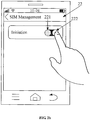
- FIG. 2b shows a schematic diagram of a SIM card management interface 22 when the user is initiating the virtual SIM card.
- a toggle button is positioned at a position identified as 221, when the virtual SIM card is not initiated.
- the toggle button is positioned at a position identified as 222, when the virtual SIM card is initiated.
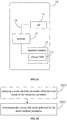
- Fig. 2c shows a structural schematic diagram of a terminal 10.
- the terminal 10 may include an AP 11, a modem 12, and an internal memory (i.e., a memory) 13.
- the terminal 10 may be a cell phone, a tablet, a laptop and so on.
- a communication interface 14 may be configured between the AP 11 and modem 12, which is used to transmit messages between the AP 11 and modem 12.
- the internal memory 13 is configured with a virtual SIM card 15.
- step 202 a current talk mode of the terminal is detected based on the initiation instruction.
- the current talk mode may include a single-card mode.
- step 202 may include following sub-steps, as shown in Fig. 2d .
- a mode attribute parameter of the terminal is queried based on the initiation instruction.
- the mode attribute parameter is persist.radio.multisim.config.
- a terminal may query the mode attribute parameter of itself based on the initiation instruction, and may determine whether it is a single-card mode terminal or a dual-card mode terminal based on the mode attribute parameter.
- the current talk mode indicated by the mode attribute parameter is determined.
- the target talk mode corresponding to the current talk mode is the dual-card mode, when the current talk mode is the single-card mode.
- the terminal may include a physical card slot and a virtual card slot. Operations (such as, authentication for network access) corresponding to the virtual SIM card may be performed on the virtual card slot.
- Table 1 shows the current talk mode of the terminal and a correspondence between the current talk mode and corresponding target talk mode.
- the target talk mode corresponding to the current talk mode is the dual-card module, which may include dual-card single-pass mode.
- the terminal may install the target talk mode corresponding to the current talk mode according to the current talk mode, after the current talk mode is determined based on the initiation instruction.
- the target talk mode corresponding to the current talk mode may be the dual-card module, when the current talk mode is the single-card mode.
- the process of installing the target talk mode corresponding to the current talk mode according to the current talk mode may include steps 203 and 204.
- step 203 International Mobile Subscriber Identification Number (IMSI) resource information of the virtual SIM card is configured on a virtual card slot. The process then proceeds to step 204.
- IMSI International Mobile Subscriber Identification Number
- the terminal When the terminal detects that the current talk mode is the single-card mode after receiving the initiation instruction for initiating the virtual SIM card, the terminal may configure the IMSI resource information of the virtual SIM card on the virtual card slot by the AP.
- step 204 an accessing operation for allowing the virtual SIM card to access a network is performed based on the IMSI resource information.
- the terminal may perform the accessing operation for allowing the virtual SIM card to access a network based on the IMSI resource information by the modem, after the terminal configures the IMSI resource information of the virtual SIM card on the virtual card slot by the AP.
- the process of installing the target talk mode corresponding to the current talk mode according to the current talk mode may include following steps.
- step 205 a prompt message for switching is displayed, when the current talk mode of the terminal is the single-card mode.
- the prompt message for switching is used to prompt a user of the terminal whether to perform a mode switch.
- the prompt message for switching may be a voice prompt message or a text prompt message.
- the terminal may display the prompt message to a user, in order to prompt the user whether to switch the single-card mode to the dual-card mode.
- Fig. 2f shows an interface displaying a prompt message 24.
- the user may click on a "YES" button 241, such that the terminal may be switched from the single-card mode to the dual-card mode.
- the user may click on a "NO" button 242 to exit from the switch process.
- step 206 a switch instruction triggered, according to the prompt message for switching, by the user is received.
- a switch instruction may be generated when the user click on the "YES" button 241.
- the terminal may then receive the switch instruction.
- step 207 the target talk mode corresponding to the current talk mode is installed according to the switch instruction.
- the switch instruction may be generated when the user click on the "YES" button 241.
- the terminal may then install the target talk mode corresponding to the current talk mode according to the switch instruction.
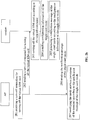
- the process wherein the terminal installs the dual-card mode corresponding to the single-card mode may include following steps.
- the mode attribute parameter of the terminal may be modified by the AP
- the mode attribute parameter is persist.radio.multisim.config.
- sub-step 252 the AP sends a pre-initiation instruction for initiating the virtual SIM card to the modem according to the modified mode attribute parameter.
- the AP may modify the mode attribute parameter of a single-card mode terminal, and send the pre-initiation instruction for initiating the virtual SIM card to the modem, so as to notify the modem of this operation. Then AP may send the pre-initiation instruction for initiating the virtual SIM card to the modem via the communication interface 14 as shown in Fig. 2c or by other means. Embodiments of the invention are not limited herein.
- the modem installs configuration information of the dual-card mode according to the pre-initiation instruction.
- the modem may install configuration information of the dual-card mode and configure the dual-card mode according to the pre-initiation instruction, after receiving the pre-initiation instruction for initiating the virtual SIM card sent from the AP. Please refer to prior arts for specific content of the configuration information, which will not be repeated herein.
- the modem In sub-step 254, the modem generates a notification message of the dual-card mode according to the pre-initiation instruction and the configuration information of the dual-card mode.
- the notification message of the dual-card mode may be used to indicate that the modem supports the virtual SIM card.
- the modem may notify the AP that the current modem supports the virtual SIM card, after installing the configuration information of the dual-card mode.
- the modem sends the notification message of the dual-card mode to the AP.
- the modem may be rebooted after installing the configuration information of the dual-card mode according to the pre-initiation instruction. After rebooted, the modem may send the notification message of the dual-card mode to the AP, in order to notify the AP that the installation of the configuration information of the dual-card mode has been completed.
- the AP configures the IMSI resource information of the virtual SIM card on a virtual card slot according to the notification message of the dual-card mode.
- IMSI International Mobile Subscriber Identification Number
- the AP may configure the IMSI resource information of the virtual SIM card on a virtual card slot of a single-card mode terminal, such that the virtual SIM card does not affect normal use of a physical SIM card. Therefore, the virtual SIM card may coexist with the physical SIM card in a single-card mode terminal.
- sub-step 257 the AP sends an authentication command for the virtual SIM card to the modem according to the IMSI resource information.
- the AP may send the authentication command for the virtual SIM card to the modem, after it configures the IMSI resource information of the virtual SIM card on the virtual card slot according to the notification message of the dual-card mode.
- the authentication is used to protect the network from illegal access.
- the authentication may prevent network intrusion from a fake user, and may thus guarantee network access of a valid user.
- the modem performs an accessing operation for allowing the virtual SIM card to access a network according to the authentication command.
- the modem may perform the accessing operation for allowing the virtual SIM card to access a network, and enable the virtual SIM card.
- Prior arts may be referenced for particular process of the accessing operation for allowing the virtual SIM card to access a network.
- the terminal completes the installation of the dual-card mode corresponding to the single-card mode.
- the virtual SIM card does not affect the normal use of a physical SIM card, since the virtual SIM card and the physical SIM card are installed on different card slots. Therefore, the virtual SIM card may coexist with the physical SIM card in a single-card mode terminal.
- the dual-card mode may include a dual-card dual-pass mode and a dual-card single-pass mode.
- the dual-card single-pass mode means that a virtual SIM card and a physical SIM card may not be normally used at the same time, i.e., only one SIM card can be used at a time. For example, when a user is making a telephone call using the virtual SIM card, the physical SIM card is shut down; and when the user is making a telephone call using the physical SIM card, the virtual SIM card is shut down. That is to say, a virtual SIM card and a physical SIM card in a dual-card single-pass mode terminal may not be used to make a call simultaneously.
- the dual-card dual-pass mode means that a virtual SIM card and a physical SIM card may be normally used at the same time. For example, when a user is making a telephone call using the virtual SIM card, there will be a prompt if another telephone call is coming in on the physical SIM card. And the user may determine whether to answer the other telephone call. Therefore, after a terminal is changed from the single-card mode to the dual-card mode, the dual-card single-pass mode may be switched to the dual-card dual-pass mode based on user's demands.
- the dual-card dual-pass mode may be implemented on the basis of the dual-card single-pass mode and utilizing time division multiplexing (TDM) technology.
- TDM time division multiplexing
- the dual-card dual-pass mode may be implemented by changing hardware structure of a terminal, for example, adding a transceiver module (such as, an antenna) for receiving and transmitting a radio electromagnetic wave signal to the terminal.
- a transceiver module such as, an antenna
- an effect that the virtual SIM card and the physical SIM card may be normally used at the same time may be achieved.
- prior arts for the particular process of the TDM technology and the addition of an antenna, which will not be repeated herein.
- the user may turn off the virtual SIM card by a SIM card management interface on the terminal.
- a turn-off instruction for turning off the virtual SIM card may be generated.
- the terminal may receive the turn-off instruction for turning off the virtual SIM card, and may turn off the virtual SIM card according to the turn-off instruction.
- the process that the terminal turns off the virtual SIM card may include following steps.
- sub-step 281 the AP receives a turn-off instruction for turning off the virtual SIM card.
- a turn-off instruction for turning off the virtual SIM card may be generated when a user turns off the virtual SIM card by a SIM card management interface on the terminal.
- the AP may receive the turn-off instruction for turning off the virtual SIM card.
- sub-step 282 the AP sends a turn-off command for turning off the virtual SIM card to the modem.
- AP may send the turn-off command for turning off the virtual SIM card to the modem to the modem via the communication interface 14 as shown in Fig. 2c or by other means.
- Embodiments of the invention are not limited herein.
- the modem turns off the virtual SIM card according to the turn-off command.
- the modem may turn off the virtual SIM card according to the turn-off command for turning off the virtual SIM card sent from the AP.
- the modem installs configuration information of the single-card mode.
- the modem In sub-step 285, the modem generates a notification message of the single -card mode according to the configuration information of the single-card mode.
- the notification message of the single-card mode may be used to indicate that the modem supports the single-card mode.
- the modem may notify the AP that the current modem supports the single-card mode, after installing the configuration information of the single-card mode.
- the modem sends the notification message of the single-card mode to the AP.
- the AP modifies the mode attribute parameter of the terminal according to the notification message of the single-card mode.
- the AP may further modify the mode attribute parameter after receiving the notification message of the single-card mode, such that the value of persist.radio.multisim.config is modified into none.
- the method for enabling a virtual SIM card may perform an accessing operation for allowing the virtual SIM card to access a network on a virtual card slot, without affecting normal use of a physical SIM card.
- the single-card mode terminal becomes into a dual-card mode terminal in which the virtual SIM card and the physical SIM card may coexist, after the virtual SIM card is enabled.
- the dual-card mode terminal becomes into a single-card mode terminal again after the virtual SIM card is turned off, without affecting normal use of the user.
- the method for enabling a virtual SIM card brings great convenience to users. The method achieves an effect that the virtual SIM card and the physical SIM card may coexist in the same terminal and implements a switch between the single-card mode and the double-card mode without affecting the user's habit of using the terminal.
- the method for enabling a virtual SIM card may detect the current talk mode of the terminal after the initiation instruction for initiating the virtual SIM card is received; and may install the target talk mode corresponding to the current talk mode when the current talk mode is the single-card mode, in order to change the single-card mode into the dual-card mode.
- the method for enabling a virtual SIM card may achieve an effect that a virtual SIM card and a physical SIM card may coexist in a single-card mode terminal.
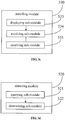
- Fig. 3a is a block diagram illustrating a device for enabling a virtual Subscriber Identity Module (SIM) card according to an exemplary embodiment.
- SIM Subscriber Identity Module
- the device for enabling a virtual SIM card may be incorporated in a terminal and may include following modules.
- a receiving module 510 may be configured to receive an initiation instruction for initiating the virtual SIM card.
- a detecting module 520 may be configured to detect a current talk mode of a terminal based on the initiation instruction received by the receiving module 510.
- the current talk mode may include a single-card mode.
- An installing module 530 may be configured to install a target talk mode corresponding to the current talk mode detected by the detecting module 520, according to the current talk mode.
- the target talk mode may include a dual-card mode.
- the device for enabling a virtual SIM card may detect the current talk mode of the terminal after the initiation instruction for initiating the virtual SIM card is received; and may install the target talk mode corresponding to the current talk mode when the current talk mode is the single-card mode, in order to change the single-card mode into the dual-card mode.
- the device for enabling a virtual SIM card may achieve an effect that a virtual SIM card and a physical SIM card may coexist in a single-card mode terminal.
- the target talk mode corresponding to the current talk mode may be the dual-card mode, when the current talk mode is the single-card mode.
- Fig. 3b is a block diagram illustrating one installing module 530 of the device for enabling a virtual SIM card shown in Fig. 3a .
- the installing module 530 may include a configuring sub-module 531 and a performing sub-module 532.
- the configuring sub-module 531 may be configured to configure International Mobile Subscriber Identification Number (IMSI) resource information of the virtual SIM card on a virtual card slot.
- IMSI International Mobile Subscriber Identification Number
- the performing sub-module 532 may be configured to perform an accessing operation for allowing the virtual SIM card to access a network based on the IMSI resource information configured by the configuring sub-module 531.
- Fig. 3c is a block diagram illustrating another installing module 530 of the device for enabling a virtual SIM card shown in Fig. 3a .
- the installing module 530 may include a displaying sub-module 533, a receiving sub-module 534 and an installing sub-module 535.
- the displaying sub-module 533 may be configured to display a prompt message for switching, when the current talk mode of the terminal is the single-card mode.
- the prompt message for switching is used to prompt a user of the terminal whether to perform a mode switch.
- the prompt message for switching may be a prompt message of voice or a prompt message of text.
- the receiving sub-module 534 may be configured to receive a switch instruction triggered by the user according to the prompt message for switching displayed by the displaying sub-module 533.
- the installing sub-module 535 may be configured to install the target talk mode corresponding to the current talk mode according to the switch instruction received by the receiving sub-module 534.
- Fig. 3d is a block diagram illustrating the detecting module 520 of the device for enabling a virtual SIM card shown in Fig. 3a .
- the detecting module 520 may include a querying sub-module 521 and a determining sub-module 522.
- the querying sub-module 521 may be configured to query a mode attribute parameter of the terminal based on the initiation instruction received by the receiving module 510.
- the determining sub-module 522 may be configured to determine the current talk mode indicated by the mode attribute parameter queried by the querying sub-module 521.
- the device for enabling a virtual SIM card may detect the current talk mode of the terminal after the initiation instruction for initiating the virtual SIM card is received; and may install the target talk mode corresponding to the current talk mode when the current talk mode is the single-card mode, in order to change the single-card mode into the dual-card mode.
- the device for enabling a virtual SIM card may achieve an effect that a virtual SIM card and a physical SIM card may coexist in a single-card mode terminal.
- the device for enabling a virtual SIM card as shown in Fig. 3a may be used to perform the flowchart of method as shown in Fig. 2a .
- the installing module as shown in Fig. 3b may be used to perform the flowchart of method as shown in Fig. 2a .
- the installing module as shown in Fig. 3c may be used to perform the flowchart of method as shown in Fig. 2e .
- the detecting module as shown in Fig. 3d may be used to perform the flowchart of method as shown in Fig. 2d .
- Fig. 4 is a block diagram of an device 700 for enabling a virtual SIM card according to an exemplary embodiment.
- the device 700 may be a mobile phone, a computer, a digital broadcast terminal, a messaging device, a gaming console, a tablet, a medical device, an exercise equipment, a personal digital assistant, and the like.
- the device 700 may include one or more of the following components: a processing component 702, a memory 704, a power component 706, a multimedia component 708, an audio component 710, an input/output (I/O) interface 712, a sensor component 714, and a communication component 716.
- a processing component 702 a memory 704
- a power component 706 a multimedia component 708, an audio component 710, an input/output (I/O) interface 712, a sensor component 714, and a communication component 716.
- I/O input/output
- the processing component 702 typically controls overall operations of the device 700, such as the operations associated with display, telephone calls, data communications, camera operations, and recording operations.
- the processing component 702 may include one or more processors 720 to execute instructions to perform all or part of the steps in the above described methods.
- the processing component 702 may include one or more modules which facilitate the interaction between the processing component 702 and other components.
- the processing component 702 may include a multimedia module to facilitate the interaction between the multimedia component 708 and the processing component 702.
- the memory 704 is configured to store various types of data to support the operation of the device 700. Examples of such data include instructions for any applications or methods operated on the device 700, contact data, phonebook data, messages, pictures, video, etc.
- the memory 704 may be implemented using any type of volatile or non-volatile memory devices, or a combination thereof, such as a static random access memory (SRAM), an electrically erasable programmable read-only memory (EEPROM), an erasable programmable read-only memory (EPROM), a programmable read-only memory (PROM), a read-only memory (ROM), a magnetic memory, a flash memory, a magnetic or optical disk.
- SRAM static random access memory
- EEPROM electrically erasable programmable read-only memory
- EPROM erasable programmable read-only memory
- PROM programmable read-only memory
- ROM read-only memory
- magnetic memory a magnetic memory
- flash memory a flash memory
- magnetic or optical disk a magnetic or optical
- the power component 706 provides power to various components of the device 700.
- the power component 706 may include a power management system, one or more power sources, and any other components associated with the generation, management, and distribution of power for the device 700.
- the multimedia component 708 includes a screen providing an output interface between the device 700 and the user.
- the screen may include a liquid crystal display (LCD) and a touch panel (TP). If the screen includes the touch panel, the screen may be implemented as a touch screen to receive input signals from the user.
- the touch panel includes one or more touch sensors to sense touches, swipes, and gestures on the touch panel. The touch sensors may not only sense a boundary of a touch or swipe action, but also sense a period of time and a pressure associated with the touch or swipe action.
- the multimedia component 708 includes a front camera and/or a rear camera.
- the front camera and the rear camera may receive an external multimedia datum while the device 700 is in an operation mode, such as a photographing mode or a video mode.
- an operation mode such as a photographing mode or a video mode.
- Each of the front camera and the rear camera may be a fixed optical lens system or have optical focusing and zooming capability.
- the audio component 710 is configured to output and/or input audio signals.
- the audio component 710 includes a microphone (MIC) configured to receive an external audio signal when the device 700 is in an operation mode, such as a call mode, a recording mode, and a voice recognition mode.
- the received audio signal may be further stored in the memory 704 or transmitted via the communication component 716.
- the audio component 710 further includes a speaker to output audio signals.
- the I/O interface 712 provides an interface between the processing component 702 and peripheral interface modules, the peripheral interface modules being, for example, a keyboard, a click wheel, buttons, and the like.
- the buttons may include, but are not limited to, a home button, a volume button, a starting button, and a locking button.
- the sensor component 714 includes one or more sensors to provide status assessments of various aspects of the device 700. For instance, the sensor component 714 may detect an open/closed status of the device 700, relative positioning of components (e.g., the display and the keypad, of the device 700), a change in position of the device 700 or a component of the device 700, a presence or absence of user contact with the device 700, an orientation or an acceleration/deceleration of the device 700, and a change in temperature of the device 700.
- the sensor component 714 may include a proximity sensor configured to detect the presence of a nearby object without any physical contact.
- the sensor component 714 may also include a light sensor, such as a CMOS or CCD image sensor, for use in imaging applications.
- the sensor component 714 may also include an accelerometer sensor, a gyroscope sensor, a magnetic sensor, a pressure sensor, or a temperature sensor.
- the communication component 716 is configured to facilitate communication, wired or wirelessly, between the device 700 and other devices.
- the device 700 can access a wireless network based on a communication standard, such as WiFi, 2G, or 3G, or a combination thereof.
- the communication component 716 receives a broadcast signal or broadcast associated information from an external broadcast management system via a broadcast channel.
- the communication component 716 further includes a near field communication (NFC) module to facilitate short-range communications.
- the NFC module may be implemented based on a radio frequency identification (RFID) technology, an infrared data association (IrDA) technology, an ultra-wideband (UWB) technology, a Bluetooth (BT) technology, and other technologies.
- RFID radio frequency identification
- IrDA infrared data association
- UWB ultra-wideband
- BT Bluetooth
- the device 700 may be implemented with one or more application specific integrated circuits (ASICs), digital signal processors (DSPs), digital signal processing devices (DSPDs), programmable logic devices (PLDs), field programmable gate arrays (FPGAs), controllers, micro-controllers, microprocessors, or other electronic components, for performing the above described methods.
- ASICs application specific integrated circuits
- DSPs digital signal processors
- DSPDs digital signal processing devices
- PLDs programmable logic devices
- FPGAs field programmable gate arrays
- controllers micro-controllers, microprocessors, or other electronic components, for performing the above described methods.
- non-transitory computer-readable storage medium including instructions, such as included in the memory 704, executable by the processor 720 in the device 700, for performing the above-described methods.
- the non-transitory computer-readable storage medium may be a ROM, a RAM, a CD-ROM, a magnetic tape, a floppy disc, an optical data storage device, and the like.
- the disclsoure further provides a non-transitory computer readable storage medium having stored therein instructions that, when executed by the device 700, cause the device 700 to perform the method for enabling a virtual SIM card provided in various embodiments of the invention.
- the method may include: receiving an initiation instruction for initiating the virtual SIM card; detecting a current talk mode of a terminal based on the initiation instruction, the current talk mode including a single-card mode; and installing a target talk mode corresponding to the current talk mode according to the current talk mode, the target talk mode including a dual-card mode.
Landscapes
- Engineering & Computer Science (AREA)
- Computer Networks & Wireless Communication (AREA)
- Signal Processing (AREA)
- Databases & Information Systems (AREA)
- Human Computer Interaction (AREA)
- Computer Hardware Design (AREA)
- Computer Security & Cryptography (AREA)
- Computing Systems (AREA)
- General Engineering & Computer Science (AREA)
- Telephone Function (AREA)
- Telephonic Communication Services (AREA)
- Mobile Radio Communication Systems (AREA)
Abstract
Description
- The present invention relates to a technical field of communication, and more particularly, to a method and device for enabling a virtual Subscriber Identity Module (SIM) card.
- With a rapid development of technology, more and more users choose to use a virtual Subscriber Identity Module (SIM) card. The virtual SIM card brings a lot of convenience to users, as compared with a physical SIM card. The virtual SIM card enables a terminal (such as, a cell phone) to be switched freely between networks of different operators. For example, unlike a physical SIM card, a virtual SIM card used by a terminal need not be changed, when a user switches the terminal from a network of operator A to another network of operator B.
- In prior arts, a user may use a virtual SIM card on a terminal with a talk mode of a single card. When a user enables a virtual SIM card on a terminal, the terminal may configure International Mobile Subscriber Identification Number (IMSI) resource information of the virtual SIM card on a preset physical card slot according to an initiation instruction triggered by the user, and may then perform an accessing operation for allowing the virtual SIM card to access a network based on the IMSI resource information.
- In view of the fact in prior arts, a method and device for enabling a virtual SIM card are provided by the present invention. The technical solutions are set forth as follows.
- According to a first aspect, the invention relates to a method for enabling a virtual Subscriber Identity Module (SIM) card. The method may comprise: receiving an initiation instruction for initiating the virtual SIM card; detecting a current talk mode of a terminal based on the initiation instruction, the current talk mode including a single-card mode; and installing a target talk mode corresponding to the current talk mode according to the current talk mode, the target talk mode including a dual-card mode.
- According to the first aspect of the present invention, the current talk mode of the terminal is detected after the initiation instruction for initiating the virtual SIM card is received. The target talk mode corresponding to the current talk mode is installed when the current talk mode is the single-card mode, such that the single-card mode may be changed into the dual-card mode. An effect that a virtual SIM card and a physical SIM card may coexist in a single-card mode terminal is achieved.
- In an embodiment, the target talk mode corresponding to the current talk mode is the dual-card mode, when the current talk mode of the terminal is the single-card mode; the step of installing the target talk mode corresponding to the current talk mode according to the current talk mode may comprise: configuring International Mobile Subscriber Identification Number (IMSI) resource information of the virtual SIM card on a virtual card slot; and performing an accessing operation for allowing the virtual SIM card to access a network based on the IMSI resource information.
- According to the above embodiment, the dual-card mode corresponding to the single-card mode may be installed, when the current talk mode of the terminal is the single-card mode, such that the single-card mode may be changed into the dual-card mode. An effect that a virtual SIM card and a physical SIM card may coexist in a single-card mode terminal is achieved.
- In an embodiment, the step of installing the target talk mode corresponding to the current talk mode according to the current talk mode may comprise: displaying a prompt message for switching, when the current talk mode of the terminal is the single-card mode, the prompt message for switching being used to prompt a user of the terminal whether to perform a mode switch; receiving a switch instruction triggered, according to the prompt message for switching, by the user; and installing the target talk mode corresponding to the current talk mode according to the switch instruction.
- According to the above embodiment, the prompt message for switching may be displayed when the current talk mode of the terminal is the single-card mode. The target talk mode corresponding to the current talk mode may be installed based on the switch instruction triggered by the user.
- In an embodiment, the prompt message for switching may be a voice prompt message or a text prompt message.
- According to the above embodiment, the voice prompt message or text prompt message may be displayed to the user, in order to prompt the user whether to perform a mode switch.
- In an embodiment, the step of detecting the current talk mode of a terminal based on the initiation instruction may comprise: querying a mode attribute parameter of the terminal based on the initiation instruction; and determining the current talk mode indicated by the mode attribute parameter.
- According to the above embodiment, the current talk mode of the terminal may be determined by querying the mode attribute parameter of the terminal.
- In a second aspect, the invention relates to a device for enabling a virtual Subscriber Identity Module (SIM). The device may comprise: a receiving module configured to receive an initiation instruction for initiating the virtual SIM card; a detecting module configured to detect a current talk mode of a terminal based on the initiation instruction, the current talk mode including a single-card mode; and an installing module configured to install a target talk mode corresponding to the current talk mode according to the current talk mode, the target talk mode including a dual-card mode.
- According to the second aspect of the present invention, the current talk mode of the terminal is detected after the initiation instruction for initiating the virtual SIM card is received. The target talk mode corresponding to the current talk mode is installed when the current talk mode is the single-card mode, such that the single-card mode may be changed into the dual-card mode. An effect that a virtual SIM card and a physical SIM card may coexist in a single-card mode terminal is achieved.
- In an embodiment, the target talk mode corresponding to the current talk mode is the dual-card mode, when the current talk mode of the terminal is the single-card mode. The installing module may comprise a configuring sub-module configured to configure International Mobile Subscriber Identification Number (IMSI) resource information of the virtual SIM card on a virtual card slot; and a performing sub-module configured to perform an accessing operation for allowing the virtual SIM card to access a network based on the IMSI resource information.
- In the above embodiment, the dual-card mode corresponding to the single-card mode may be installed, when the current talk mode of the terminal is the single-card mode, such that the single-card mode may be changed into the dual-card mode. An effect that a virtual SIM card and a physical SIM card may coexist in a single-card mode terminal is achieved.
- In an embodiment, the installing module may comprise: a displaying sub-module configured to display a prompt message for switching, when the current talk mode of the terminal is the single-card mode, the prompt message for switching is used to prompt a user of the terminal whether to perform a mode switch; a receiving sub-module configured to receive a switch instruction triggered, according to the prompt message for switching, by the user; and an installing sub-module configured to install the target talk mode corresponding to the current talk mode according to the switch instruction.
- In the above embodiment, the prompt message for switching may be displayed when the current talk mode of the terminal is the single-card mode. The target talk mode corresponding to the current talk mode may be installed based on the switch instruction triggered by the user.
- In an embodiment, the prompt message for switching may be a voice prompt message or a text prompt message.
- In the above embodiment, the voice prompt message or text prompt message may be displayed to the user, in order to prompt the user whether to perform a mode switch.
- In an embodiment, the detecting module may comprise: a querying sub-module configured to query a mode attribute parameter of the terminal based on the initiation instruction; and a determining sub-module configured to determine the current talk mode indicated by the mode attribute parameter.
- In the above embodiment, the current talk mode of the terminal may be determined by querying the mode attribute parameter of the terminal.
- In a third aspect, the invention relates to a device for enabling a virtual Subscriber Identity Module (SIM) card is provided. The device may comprise: a processor; and a memory for storing instructions executable by the processor. The processor is configured to: receive an initiation instruction for initiating the virtual SIM card; detect a current talk mode of a terminal based on the initiation instruction, the current talk mode including a single-card mode; and install a target talk mode corresponding to the current talk mode according to the current talk mode, the target talk mode including a dual-card mode.
- According to the third aspect of the present invention, the current talk mode of the terminal is detected after the initiation instruction for initiating the virtual SIM card is received. The target talk mode corresponding to the current talk mode is installed when the current talk mode is the single-card mode, such that the single-card mode may be changed into the dual-card mode. An effect that a virtual SIM card and a physical SIM card may coexist in a single-card mode terminal is achieved.
- In one particular embodiment, the steps of the method for enabling a virtual SIM card are determined by computer program instructions.
- Consequently, according to a fourth aspect, the invention is also directed to a computer program for executing the steps of a method for enabling a virtual SIM card as described above when this program is executed by a computer.
- This program can use any programming language and take the form of source code, object code or a code intermediate between source code and object code, such as a partially compiled form, or any other desirable form.
- The invention is also directed to a computer-readable information medium containing instructions of a computer program as described above.
- The information medium can be any entity or device capable of storing the program. For example, the support can include storage means such as a ROM, for example a CD ROM or a microelectronic circuit ROM, or magnetic storage means, for example a diskette (floppy disk) or a hard disk.
- Alternatively, the information medium can be an integrated circuit in which the program is incorporated, the circuit being adapted to execute the method in question or to be used in its execution.
- Embodiments of the present invention may provide at least some of the following beneficial effects.
- The method and device for enabling a virtual SIM card provided by the present invention may detect the current talk mode of the terminal after the initiation instruction for initiating the virtual SIM card is received; and may install the target talk mode corresponding to the current talk mode when the current talk mode is the single-card mode, in order to change the single-card mode into the dual-card mode. The method and device for enabling a virtual SIM card provided by the present invention may achieve an effect that a virtual SIM card and a physical SIM card may coexist in a single-card mode terminal.
- It is to be understood that both the forgoing general description and the following detailed description are exemplary and explanatory only, and are not restrictive of the present invention.
- The accompanying drawings, which are incorporated in and constitute a part of this specification, illustrate embodiments consistent with the invention and, together with the description, serve to explain the principles of the invention.
-
Fig. 1 is a flow diagram illustrating a method for enabling a virtual Subscriber Identity Module (SIM) card according to an exemplary embodiment; -
Fig. 2a is a flow diagram illustrating a method for enabling a virtual Subscriber Identity Module (SIM) card according to an exemplary embodiment; -
Fig. 2b is a schematic diagram of an interface when a user is initiating the virtual SIM card in the method for enabling a virtual SIM card shown inFig. 2a ; -
Fig. 2c is a structural schematic diagram of a terminal used in the method for enabling a virtual SIM card shown inFig. 2a ; -
Fig. 2d is a flow diagram for detecting a current talk mode of the terminal in the method for enabling a virtual SIM card shown inFig. 2a ; -
Fig. 2e is a flow diagram for installing a target talk mode corresponding to the current talk mode in the method for enabling a virtual SIM card shown inFig. 2a ; -
Fig. 2f is a diagram of an interface displaying a prompt message in the method for enabling a virtual SIM card shown inFig. 2a ; -
Fig. 2g is a flow diagram for installing a dual-card mode corresponding to a single-card mode in the method for enabling a virtual SIM card shown inFig. 2a ; -
Fig. 2h is a flow diagram for turning off the virtual SIM card in the method for enabling a virtual SIM card shown inFig. 2a ; -
Fig. 3a is a block diagram illustrating a device for enabling a virtual Subscriber Identity Module (SIM) card according to an exemplary embodiment; -
Fig. 3b is a block diagram illustrating an installing module of the device for enabling a virtual SIM card shown inFig. 3a ; -
Fig. 3c is a block diagram illustrating another installing module of the device for enabling a virtual SIM card shown inFig. 3a ; -
Fig. 3d is a block diagram illustrating a detecting module of the device for enabling a virtual SIM card shown inFig. 3a ; and -
Fig. 4 is a block diagram illustrating a device for enabling a virtual Subscriber Identity Module (SIM) card according to an exemplary embodiment. - Explicit embodiments of the present invention are illustrated in the accompanying drawings, which will be described in further details below. The accompanying drawings and texts are only for showing the conception of the invention to those skilled in the art by reference to particular embodiments, and are not meant to limit the idea of the invention in any way.
- Reference will now be made in detail to exemplary embodiments, examples of which are illustrated in the accompanying drawings. The following description refers to the accompanying drawings in which same reference numbers in different drawings represent same or similar elements unless otherwise described. The implementations set forth in the following description of exemplary embodiments do not represent all implementations consistent with the invention. Instead, they are merely examples of devices and methods consistent with aspects related to the invention as recited in the appended claims.
-
Fig. 1 is a flow diagram illustrating a method for enabling a virtual Subscriber Identity Module (SIM) card according to an exemplary embodiment. The method for enabling a virtual SIM card may be performed by a terminal and may include following steps. - In
step 101, an initiation instruction for initiating the virtual SIM card is received. - In
step 102, a current talk mode of the terminal is detected based on the initiation instruction. The current talk mode may include a single-card mode. - In
step 103, a target talk mode corresponding to the current talk mode is installed according to the current talk mode. The target talk mode may include a dual-card mode. - In conclusion, the method for enabling a virtual SIM card provided by the embodiment of the invention may detect the current talk mode of the terminal after the initiation instruction for initiating the virtual SIM card is received; and may install the target talk mode corresponding to the current talk mode when the current talk mode is the single-card mode, in order to change the single-card mode into the dual-card mode. The method for enabling a virtual SIM card may achieve an effect that a virtual SIM card and a physical SIM card may coexist in a single-card mode terminal.
-
Fig. 2a is a flow diagram illustrating a method for enabling a virtual Subscriber Identity Module (SIM) card according to an exemplary embodiment. The method for enabling a virtual SIM card may be performed by a terminal and may include following steps. - In
step 201, an initiation instruction for initiating the virtual SIM card is received. - When a user wants to use the virtual SIM card on the terminal, the user may initiate the virtual SIM card via a SIM card management interface on the terminal. At the same time, the initiation instruction for initiating the virtual SIM card may be generated. The terminal may receive the initiation instruction for initiating the virtual SIM card. The terminal may receive the initiation instruction for initiating the virtual SIM card by an application processor (AP).
Fig. 2b shows a schematic diagram of a SIMcard management interface 22 when the user is initiating the virtual SIM card. A toggle button is positioned at a position identified as 221, when the virtual SIM card is not initiated. The toggle button is positioned at a position identified as 222, when the virtual SIM card is initiated. -
Fig. 2c shows a structural schematic diagram of a terminal 10. The terminal 10 may include anAP 11, amodem 12, and an internal memory (i.e., a memory) 13. The terminal 10 may be a cell phone, a tablet, a laptop and so on. Acommunication interface 14 may be configured between theAP 11 andmodem 12, which is used to transmit messages between theAP 11 andmodem 12. Theinternal memory 13 is configured with avirtual SIM card 15. - In
step 202, a current talk mode of the terminal is detected based on the initiation instruction. - The current talk mode may include a single-card mode.
- Optionally,
step 202 may include following sub-steps, as shown inFig. 2d . - In sub-step 2021, a mode attribute parameter of the terminal is queried based on the initiation instruction.
- There is a mode attribute parameter in a terminal's configuration file identifying the talk mode of the terminal. The mode attribute parameter is persist.radio.multisim.config.
- In a single-card mode terminal, persist.radio.multisim.config=none. In a dual-card mode terminal, persist.radio.multisim.config=dsds. Prior arts may be referenced for details of the mode attribute parameter. Therefore, a terminal may query the mode attribute parameter of itself based on the initiation instruction, and may determine whether it is a single-card mode terminal or a dual-card mode terminal based on the mode attribute parameter.
- In sub-step 2022, the current talk mode indicated by the mode attribute parameter is determined.
- For example, the terminal may determine that the current talk mode is the single-card mode when persist.radio.multisim.config=none.
- The target talk mode corresponding to the current talk mode is the dual-card mode, when the current talk mode is the single-card mode. The terminal may include a physical card slot and a virtual card slot. Operations (such as, authentication for network access) corresponding to the virtual SIM card may be performed on the virtual card slot. Table 1 shows the current talk mode of the terminal and a correspondence between the current talk mode and corresponding target talk mode. As shown in Table 1, the target talk mode corresponding to the current talk mode is the dual-card module, which may include dual-card single-pass mode.
Table 1 current talk mode of the terminal target talk mode corresponding to the current talk mode single-card mode dual-card module - According to step 202, the terminal may install the target talk mode corresponding to the current talk mode according to the current talk mode, after the current talk mode is determined based on the initiation instruction. The target talk mode corresponding to the current talk mode may be the dual-card module, when the current talk mode is the single-card mode. Alternatively, the process of installing the target talk mode corresponding to the current talk mode according to the current talk mode may include
steps - In
step 203, International Mobile Subscriber Identification Number (IMSI) resource information of the virtual SIM card is configured on a virtual card slot. The process then proceeds to step 204. - When the terminal detects that the current talk mode is the single-card mode after receiving the initiation instruction for initiating the virtual SIM card, the terminal may configure the IMSI resource information of the virtual SIM card on the virtual card slot by the AP.
- In
step 204, an accessing operation for allowing the virtual SIM card to access a network is performed based on the IMSI resource information. - The terminal may perform the accessing operation for allowing the virtual SIM card to access a network based on the IMSI resource information by the modem, after the terminal configures the IMSI resource information of the virtual SIM card on the virtual card slot by the AP.
- Optionally, as shown in
Fig. 2e , the process of installing the target talk mode corresponding to the current talk mode according to the current talk mode may include following steps. - In
step 205, a prompt message for switching is displayed, when the current talk mode of the terminal is the single-card mode. - The prompt message for switching is used to prompt a user of the terminal whether to perform a mode switch. Optionally, the prompt message for switching may be a voice prompt message or a text prompt message.
- When the terminal detects that the current talk mode is the single-card mode after receiving the initiation instruction for initiating the virtual SIM card, the terminal may display the prompt message to a user, in order to prompt the user whether to switch the single-card mode to the dual-card mode. For example,
Fig. 2f shows an interface displaying aprompt message 24. The user may click on a "YES"button 241, such that the terminal may be switched from the single-card mode to the dual-card mode. Alternatively, the user may click on a "NO"button 242 to exit from the switch process. - In
step 206, a switch instruction triggered, according to the prompt message for switching, by the user is received. - For example, as shown in
Fig. 2f , a switch instruction may be generated when the user click on the "YES"button 241. The terminal may then receive the switch instruction. - In
step 207, the target talk mode corresponding to the current talk mode is installed according to the switch instruction. - For example, as shown in
Fig. 2f , the switch instruction may be generated when the user click on the "YES"button 241. The terminal may then install the target talk mode corresponding to the current talk mode according to the switch instruction. - Further, referring to
Fig. 2c , as shown inFig. 2g , the process wherein the terminal installs the dual-card mode corresponding to the single-card mode may include following steps. - In
sub-step 251, the mode attribute parameter of the terminal may be modified by the AP - There is a mode attribute parameter in a terminal's configuration file identifying the talk mode of the terminal. The mode attribute parameter is persist.radio.multisim.config. The AP may dynamically modify the mode attribute parameter and notify the modem of the result of the modification. Since the current talk mode is the single-card mode, persist.radio.multisim.config=none. After the mode attribute parameter of the terminal is amended by its AP, persist.radio.multisim.config=dsds.
- In
sub-step 252, the AP sends a pre-initiation instruction for initiating the virtual SIM card to the modem according to the modified mode attribute parameter. - The AP may modify the mode attribute parameter of a single-card mode terminal, and send the pre-initiation instruction for initiating the virtual SIM card to the modem, so as to notify the modem of this operation. Then AP may send the pre-initiation instruction for initiating the virtual SIM card to the modem via the
communication interface 14 as shown inFig. 2c or by other means. Embodiments of the invention are not limited herein. - In sub-step 253, the modem installs configuration information of the dual-card mode according to the pre-initiation instruction.
- The modem may install configuration information of the dual-card mode and configure the dual-card mode according to the pre-initiation instruction, after receiving the pre-initiation instruction for initiating the virtual SIM card sent from the AP. Please refer to prior arts for specific content of the configuration information, which will not be repeated herein.
- In sub-step 254, the modem generates a notification message of the dual-card mode according to the pre-initiation instruction and the configuration information of the dual-card mode.
- The notification message of the dual-card mode may be used to indicate that the modem supports the virtual SIM card. The modem may notify the AP that the current modem supports the virtual SIM card, after installing the configuration information of the dual-card mode.
- In sub-step 255, the modem sends the notification message of the dual-card mode to the AP.
- The modem may be rebooted after installing the configuration information of the dual-card mode according to the pre-initiation instruction. After rebooted, the modem may send the notification message of the dual-card mode to the AP, in order to notify the AP that the installation of the configuration information of the dual-card mode has been completed.
- In sub-step 256, the AP configures the IMSI resource information of the virtual SIM card on a virtual card slot according to the notification message of the dual-card mode.
- International Mobile Subscriber Identification Number (IMSI) is an identifier for distinguishing mobile subscribers. The IMSI may be used to distinguish valid information of mobile subscribers. The AP may configure the IMSI resource information of the virtual SIM card on a virtual card slot of a single-card mode terminal, such that the virtual SIM card does not affect normal use of a physical SIM card. Therefore, the virtual SIM card may coexist with the physical SIM card in a single-card mode terminal.
- In sub-step 257, the AP sends an authentication command for the virtual SIM card to the modem according to the IMSI resource information.
- The AP may send the authentication command for the virtual SIM card to the modem, after it configures the IMSI resource information of the virtual SIM card on the virtual card slot according to the notification message of the dual-card mode. The authentication is used to protect the network from illegal access. The authentication may prevent network intrusion from a fake user, and may thus guarantee network access of a valid user.
- In
sub-step 258, the modem performs an accessing operation for allowing the virtual SIM card to access a network according to the authentication command. - According to the authentication command sent from the AP, the modem may perform the accessing operation for allowing the virtual SIM card to access a network, and enable the virtual SIM card. Prior arts may be referenced for particular process of the accessing operation for allowing the virtual SIM card to access a network. With this, the terminal completes the installation of the dual-card mode corresponding to the single-card mode. The virtual SIM card does not affect the normal use of a physical SIM card, since the virtual SIM card and the physical SIM card are installed on different card slots. Therefore, the virtual SIM card may coexist with the physical SIM card in a single-card mode terminal.
- Moreover, the dual-card mode may include a dual-card dual-pass mode and a dual-card single-pass mode. The dual-card single-pass mode means that a virtual SIM card and a physical SIM card may not be normally used at the same time, i.e., only one SIM card can be used at a time. For example, when a user is making a telephone call using the virtual SIM card, the physical SIM card is shut down; and when the user is making a telephone call using the physical SIM card, the virtual SIM card is shut down. That is to say, a virtual SIM card and a physical SIM card in a dual-card single-pass mode terminal may not be used to make a call simultaneously.
- The dual-card dual-pass mode means that a virtual SIM card and a physical SIM card may be normally used at the same time. For example, when a user is making a telephone call using the virtual SIM card, there will be a prompt if another telephone call is coming in on the physical SIM card. And the user may determine whether to answer the other telephone call. Therefore, after a terminal is changed from the single-card mode to the dual-card mode, the dual-card single-pass mode may be switched to the dual-card dual-pass mode based on user's demands. Optionally, the dual-card dual-pass mode may be implemented on the basis of the dual-card single-pass mode and utilizing time division multiplexing (TDM) technology. Alternatively, the dual-card dual-pass mode may be implemented by changing hardware structure of a terminal, for example, adding a transceiver module (such as, an antenna) for receiving and transmitting a radio electromagnetic wave signal to the terminal. As such, an effect that the virtual SIM card and the physical SIM card may be normally used at the same time may be achieved. Please refer to prior arts for the particular process of the TDM technology and the addition of an antenna, which will not be repeated herein.
- If a user feels unaccustomed with a dual-card mode terminal and wants to turn off a virtual SIM card on the terminal, the user may turn off the virtual SIM card by a SIM card management interface on the terminal. At the same time, a turn-off instruction for turning off the virtual SIM card may be generated. The terminal may receive the turn-off instruction for turning off the virtual SIM card, and may turn off the virtual SIM card according to the turn-off instruction. Optionally, referring to
Fig. 2c , as shown inFig. 2h , the process that the terminal turns off the virtual SIM card may include following steps. - In
sub-step 281, the AP receives a turn-off instruction for turning off the virtual SIM card. - A turn-off instruction for turning off the virtual SIM card may be generated when a user turns off the virtual SIM card by a SIM card management interface on the terminal. The AP may receive the turn-off instruction for turning off the virtual SIM card.
- In
sub-step 282, the AP sends a turn-off command for turning off the virtual SIM card to the modem. - Then AP may send the turn-off command for turning off the virtual SIM card to the modem to the modem via the
communication interface 14 as shown inFig. 2c or by other means. Embodiments of the invention are not limited herein. - In
sub-step 283, the modem turns off the virtual SIM card according to the turn-off command. - The modem may turn off the virtual SIM card according to the turn-off command for turning off the virtual SIM card sent from the AP.
- In sub-step 284, the modem installs configuration information of the single-card mode.
- In sub-step 285, the modem generates a notification message of the single -card mode according to the configuration information of the single-card mode.
- The notification message of the single-card mode may be used to indicate that the modem supports the single-card mode. The modem may notify the AP that the current modem supports the single-card mode, after installing the configuration information of the single-card mode.
- In
sub-step 286, the modem sends the notification message of the single-card mode to the AP. - In
sub-step 287, the AP modifies the mode attribute parameter of the terminal according to the notification message of the single-card mode. - The AP modifies the mode attribute parameter into persist.radio.multisim.config=dsds in
step 251. The AP may further modify the mode attribute parameter after receiving the notification message of the single-card mode, such that the value of persist.radio.multisim.config is modified into none. - What needs to be supplemented is that, in prior arts, for a single-card mode terminal, when a user enables a virtual SIM card, the virtual SIM card will occupy the original physical card slot on the terminal. As a result, a physical SIM card may not be used, since no card slot is available. Therefore, the virtual SIM card and the physical card cannot coexist in the same terminal. The talk mode of the terminal is always the single-card mode. Thereby, for a single-card mode terminal, a problem needs to be solved is how to make the virtual SIM card and the physical card cannot coexist in the same terminal. For a single-card mode terminal with a single physical card slot, the method for enabling a virtual SIM card provided in embodiments of the invention may perform an accessing operation for allowing the virtual SIM card to access a network on a virtual card slot, without affecting normal use of a physical SIM card. The single-card mode terminal becomes into a dual-card mode terminal in which the virtual SIM card and the physical SIM card may coexist, after the virtual SIM card is enabled. The dual-card mode terminal becomes into a single-card mode terminal again after the virtual SIM card is turned off, without affecting normal use of the user. The method for enabling a virtual SIM card brings great convenience to users. The method achieves an effect that the virtual SIM card and the physical SIM card may coexist in the same terminal and implements a switch between the single-card mode and the double-card mode without affecting the user's habit of using the terminal.
- In conclusion, the method for enabling a virtual SIM card provided in embodiments of the invention may detect the current talk mode of the terminal after the initiation instruction for initiating the virtual SIM card is received; and may install the target talk mode corresponding to the current talk mode when the current talk mode is the single-card mode, in order to change the single-card mode into the dual-card mode. The method for enabling a virtual SIM card may achieve an effect that a virtual SIM card and a physical SIM card may coexist in a single-card mode terminal.
- Device embodiments of the invention are provided below, which may be used to perform the method embodiments of the invention. For details which are not disclosed in the device embodiments, please see the method embodiments.
-
Fig. 3a is a block diagram illustrating a device for enabling a virtual Subscriber Identity Module (SIM) card according to an exemplary embodiment. The device for enabling a virtual SIM card may be incorporated in a terminal and may include following modules. - A receiving
module 510 may be configured to receive an initiation instruction for initiating the virtual SIM card. - A detecting
module 520 may be configured to detect a current talk mode of a terminal based on the initiation instruction received by the receivingmodule 510. The current talk mode may include a single-card mode. - An
installing module 530 may be configured to install a target talk mode corresponding to the current talk mode detected by the detectingmodule 520, according to the current talk mode. The target talk mode may include a dual-card mode. - In conclusion, the device for enabling a virtual SIM card provided in embodiments of the invention may detect the current talk mode of the terminal after the initiation instruction for initiating the virtual SIM card is received; and may install the target talk mode corresponding to the current talk mode when the current talk mode is the single-card mode, in order to change the single-card mode into the dual-card mode. The device for enabling a virtual SIM card may achieve an effect that a virtual SIM card and a physical SIM card may coexist in a single-card mode terminal.
- The target talk mode corresponding to the current talk mode may be the dual-card mode, when the current talk mode is the single-card mode.
-
Fig. 3b is a block diagram illustrating oneinstalling module 530 of the device for enabling a virtual SIM card shown inFig. 3a . - Optionally, the installing
module 530 may include a configuring sub-module 531 and a performingsub-module 532. - The configuring sub-module 531 may be configured to configure International Mobile Subscriber Identification Number (IMSI) resource information of the virtual SIM card on a virtual card slot.
- The performing sub-module 532 may be configured to perform an accessing operation for allowing the virtual SIM card to access a network based on the IMSI resource information configured by the configuring
sub-module 531. -
Fig. 3c is a block diagram illustrating anotherinstalling module 530 of the device for enabling a virtual SIM card shown inFig. 3a . - Optionally, the installing
module 530 may include a displaying sub-module 533, a receiving sub-module 534 and an installingsub-module 535. - The displaying sub-module 533 may be configured to display a prompt message for switching, when the current talk mode of the terminal is the single-card mode. The prompt message for switching is used to prompt a user of the terminal whether to perform a mode switch.
- Optionally, the prompt message for switching may be a prompt message of voice or a prompt message of text.
- The receiving sub-module 534 may be configured to receive a switch instruction triggered by the user according to the prompt message for switching displayed by the displaying
sub-module 533. - The installing sub-module 535 may be configured to install the target talk mode corresponding to the current talk mode according to the switch instruction received by the receiving
sub-module 534. -
Fig. 3d is a block diagram illustrating the detectingmodule 520 of the device for enabling a virtual SIM card shown inFig. 3a . - Optionally, the detecting
module 520 may include a querying sub-module 521 and a determiningsub-module 522. - The querying sub-module 521 may be configured to query a mode attribute parameter of the terminal based on the initiation instruction received by the receiving
module 510. - The determining sub-module 522 may be configured to determine the current talk mode indicated by the mode attribute parameter queried by the querying
sub-module 521. - In conclusion, the device for enabling a virtual SIM card provided in embodiments of the invention may detect the current talk mode of the terminal after the initiation instruction for initiating the virtual SIM card is received; and may install the target talk mode corresponding to the current talk mode when the current talk mode is the single-card mode, in order to change the single-card mode into the dual-card mode. The device for enabling a virtual SIM card may achieve an effect that a virtual SIM card and a physical SIM card may coexist in a single-card mode terminal.
- The device for enabling a virtual SIM card as shown in
Fig. 3a may be used to perform the flowchart of method as shown inFig. 2a . - The installing module as shown in
Fig. 3b may be used to perform the flowchart of method as shown inFig. 2a . - The installing module as shown in
Fig. 3c may be used to perform the flowchart of method as shown inFig. 2e . - The detecting module as shown in
Fig. 3d may be used to perform the flowchart of method as shown inFig. 2d . -
Fig. 4 is a block diagram of andevice 700 for enabling a virtual SIM card according to an exemplary embodiment. For example, thedevice 700 may be a mobile phone, a computer, a digital broadcast terminal, a messaging device, a gaming console, a tablet, a medical device, an exercise equipment, a personal digital assistant, and the like. - Referring to
Fig. 4 , thedevice 700 may include one or more of the following components: aprocessing component 702, amemory 704, apower component 706, amultimedia component 708, anaudio component 710, an input/output (I/O)interface 712, asensor component 714, and acommunication component 716. - The
processing component 702 typically controls overall operations of thedevice 700, such as the operations associated with display, telephone calls, data communications, camera operations, and recording operations. Theprocessing component 702 may include one ormore processors 720 to execute instructions to perform all or part of the steps in the above described methods. Moreover, theprocessing component 702 may include one or more modules which facilitate the interaction between theprocessing component 702 and other components. For instance, theprocessing component 702 may include a multimedia module to facilitate the interaction between themultimedia component 708 and theprocessing component 702. - The
memory 704 is configured to store various types of data to support the operation of thedevice 700. Examples of such data include instructions for any applications or methods operated on thedevice 700, contact data, phonebook data, messages, pictures, video, etc. Thememory 704 may be implemented using any type of volatile or non-volatile memory devices, or a combination thereof, such as a static random access memory (SRAM), an electrically erasable programmable read-only memory (EEPROM), an erasable programmable read-only memory (EPROM), a programmable read-only memory (PROM), a read-only memory (ROM), a magnetic memory, a flash memory, a magnetic or optical disk. - The
power component 706 provides power to various components of thedevice 700. Thepower component 706 may include a power management system, one or more power sources, and any other components associated with the generation, management, and distribution of power for thedevice 700. - The
multimedia component 708 includes a screen providing an output interface between thedevice 700 and the user. In some embodiments, the screen may include a liquid crystal display (LCD) and a touch panel (TP). If the screen includes the touch panel, the screen may be implemented as a touch screen to receive input signals from the user. The touch panel includes one or more touch sensors to sense touches, swipes, and gestures on the touch panel. The touch sensors may not only sense a boundary of a touch or swipe action, but also sense a period of time and a pressure associated with the touch or swipe action. In some embodiments, themultimedia component 708 includes a front camera and/or a rear camera. The front camera and the rear camera may receive an external multimedia datum while thedevice 700 is in an operation mode, such as a photographing mode or a video mode. Each of the front camera and the rear camera may be a fixed optical lens system or have optical focusing and zooming capability. - The
audio component 710 is configured to output and/or input audio signals. For example, theaudio component 710 includes a microphone (MIC) configured to receive an external audio signal when thedevice 700 is in an operation mode, such as a call mode, a recording mode, and a voice recognition mode. The received audio signal may be further stored in thememory 704 or transmitted via thecommunication component 716. In some embodiments, theaudio component 710 further includes a speaker to output audio signals. - The I/
O interface 712 provides an interface between theprocessing component 702 and peripheral interface modules, the peripheral interface modules being, for example, a keyboard, a click wheel, buttons, and the like. The buttons may include, but are not limited to, a home button, a volume button, a starting button, and a locking button. - The
sensor component 714 includes one or more sensors to provide status assessments of various aspects of thedevice 700. For instance, thesensor component 714 may detect an open/closed status of thedevice 700, relative positioning of components (e.g., the display and the keypad, of the device 700), a change in position of thedevice 700 or a component of thedevice 700, a presence or absence of user contact with thedevice 700, an orientation or an acceleration/deceleration of thedevice 700, and a change in temperature of thedevice 700. Thesensor component 714 may include a proximity sensor configured to detect the presence of a nearby object without any physical contact. Thesensor component 714 may also include a light sensor, such as a CMOS or CCD image sensor, for use in imaging applications. In some embodiments, thesensor component 714 may also include an accelerometer sensor, a gyroscope sensor, a magnetic sensor, a pressure sensor, or a temperature sensor. - The
communication component 716 is configured to facilitate communication, wired or wirelessly, between thedevice 700 and other devices. Thedevice 700 can access a wireless network based on a communication standard, such as WiFi, 2G, or 3G, or a combination thereof. In an exemplary embodiment, thecommunication component 716 receives a broadcast signal or broadcast associated information from an external broadcast management system via a broadcast channel. In an exemplary embodiment, thecommunication component 716 further includes a near field communication (NFC) module to facilitate short-range communications. For example, the NFC module may be implemented based on a radio frequency identification (RFID) technology, an infrared data association (IrDA) technology, an ultra-wideband (UWB) technology, a Bluetooth (BT) technology, and other technologies. - In exemplary embodiments, the
device 700 may be implemented with one or more application specific integrated circuits (ASICs), digital signal processors (DSPs), digital signal processing devices (DSPDs), programmable logic devices (PLDs), field programmable gate arrays (FPGAs), controllers, micro-controllers, microprocessors, or other electronic components, for performing the above described methods. - In exemplary embodiments, there is also provided a non-transitory computer-readable storage medium including instructions, such as included in the
memory 704, executable by theprocessor 720 in thedevice 700, for performing the above-described methods. For example, the non-transitory computer-readable storage medium may be a ROM, a RAM, a CD-ROM, a magnetic tape, a floppy disc, an optical data storage device, and the like. - The disclsoure further provides a non-transitory computer readable storage medium having stored therein instructions that, when executed by the
device 700, cause thedevice 700 to perform the method for enabling a virtual SIM card provided in various embodiments of the invention. The method may include: receiving an initiation instruction for initiating the virtual SIM card; detecting a current talk mode of a terminal based on the initiation instruction, the current talk mode including a single-card mode; and installing a target talk mode corresponding to the current talk mode according to the current talk mode, the target talk mode including a dual-card mode. - Other embodiments of the invention will be apparent to those skilled in the art from consideration of the specification and practice of the inventions herein. This application is intended to cover any variations, uses, or adaptations of the invention following the general principles thereof and including such departures from the present invention as come within known or customary practice in the art. It is intended that the specification and examples be considered as exemplary only, with a true scope of the invention being indicated by the following claims.
- It will be appreciated that the invention is not limited to the exact construction that has been described above and illustrated in the accompanying drawings, and that various modifications and changes can be made without departing from the scope thereof. It is intended that the scope of the invention only be limited by the appended claims.
Claims (12)
- A method for enabling a virtual Subscriber Identity Module (SIM) card, characterized in that it comprises:receiving (101, 201) an initiation instruction for initiating the virtual SIM card;detecting (102, 202) a current talk mode of a terminal based on the initiation instruction, the current talk mode including a single-card mode; andinstalling (103) a target talk mode corresponding to the current talk mode according to the current talk mode, the target talk mode including a dual-card mode.
- The method according to claim 1, wherein:the target talk mode corresponding to the current talk mode is the dual-card mode, when the current talk mode of the terminal is the single-card mode;the step (103) of installing the target talk mode corresponding to the current talk mode according to the current talk mode comprises:configuring (203) International Mobile Subscriber Identification Number (IMSI) resource information of the virtual SIM card on a virtual card slot; andperforming (204) an accessing operation for allowing the virtual SIM card to access a network based on the IMSI resource information.
- The method according to claim 1, wherein the step (103) of installing the target talk mode corresponding to the current talk mode according to the current talk mode comprises:displaying (205) a prompt message for switching (24), when the current talk mode of the terminal is the single-card mode, the prompt message for switching (24) being used to prompt a user of the terminal whether to perform a mode switch;receiving (206) a switch instruction triggered, according to the prompt message for switching (24), by the user; andinstalling (207) the target talk mode corresponding to the current talk mode according to the switch instruction.
- The method according to claim 3, wherein the prompt message for switching (24) is a voice prompt message or a text prompt message.
- The method according to any one of claims 1 to 4, wherein the step (202) of detecting the current talk mode of a terminal based on the initiation instruction comprises:querying (2021) a mode attribute parameter of the terminal based on the initiation instruction; anddetermining (2022) the current talk mode indicated by the mode attribute parameter.
- A device for enabling a virtual Subscriber Identity Module (SIM) card, characterized in that it comprises:a receiving module (510) configured to receive an initiation instruction for initiating the virtual SIM card;a detecting module (520) configured to detect a current talk mode of a terminal based on the initiation instruction, the current talk mode including a single-card mode; andan installing module (530) configured to install a target talk mode corresponding to the current talk mode according to the current talk mode, the target talk mode including a dual-card mode.
- The device according to claim 6, wherein:the target talk mode corresponding to the current talk mode is the dual-card mode, when the current talk mode of the terminal is the single-card mode;the installing module (530) comprises:a configuring sub-module (531) configured to configure International Mobile Subscriber Identification Number (IMSI) resource information of the virtual SIM card on a virtual card slot; anda performing sub-module (532) configured to perform an accessing operation for allowing the virtual SIM card to access a network based on the IMSI resource information.
- The device according to claim 6, wherein the installing module (530) comprises:a displaying sub-module (533) configured to display a prompt message for switching (24), when the current talk mode of the terminal is the single-card mode, the prompt message for switching (24) is used to prompt a user of the terminal whether to perform a mode switch;a receiving sub-module (534) configured to receive a switch instruction triggered, according to the prompt message for switching (24), by the user; andan installing sub-module (535) configured to install the target talk mode corresponding to the current talk mode according to the switch instruction.
- The device according to claim 8, wherein the prompt message (24) for switching is a voice prompt message or a text prompt message.
- The device of any one of claims 6-9, wherein the detecting module (520) comprises:a querying sub-module (521) configured to query a mode attribute parameter of the terminal based on the initiation instruction; anda determining sub-module (522) configured to determine the current talk mode indicated by the mode attribute parameter.
- A computer program including instructions for executing the steps of a method for enabling a virtual Subscriber Identity Module (SIM) card according to any one of claims 1 to 5 when said program is executed by a computer.
- A recording medium readable by a computer and having recorded thereon a computer program including instructions for executing the steps of a method for enabling a virtual Subscriber Identity Module (SIM) card according to any one of claims 1 to 5.
Applications Claiming Priority (1)
| Application Number | Priority Date | Filing Date | Title |
|---|---|---|---|
| CN201511027819.8A CN105516508A (en) | 2015-12-30 | 2015-12-30 | Method and device for activating virtual SIM card |
Publications (1)
| Publication Number | Publication Date |
|---|---|
| EP3188520A1 true EP3188520A1 (en) | 2017-07-05 |
Family
ID=55724127
Family Applications (1)
| Application Number | Title | Priority Date | Filing Date |
|---|---|---|---|
| EP16202814.6A Ceased EP3188520A1 (en) | 2015-12-30 | 2016-12-08 | Method and device for enabling virtual subscriber identity module card |
Country Status (7)
| Country | Link |
|---|---|
| US (1) | US9756045B2 (en) |
| EP (1) | EP3188520A1 (en) |
| JP (1) | JP2018509006A (en) |
| KR (1) | KR20170084985A (en) |
| CN (1) | CN105516508A (en) |
| RU (1) | RU2645735C1 (en) |
| WO (1) | WO2017113662A1 (en) |
Cited By (2)
| Publication number | Priority date | Publication date | Assignee | Title |
|---|---|---|---|---|
| CN110856161A (en) * | 2019-10-28 | 2020-02-28 | 深圳传音控股股份有限公司 | A SIM card setting method, terminal and computer storage medium |
| CN111770440A (en) * | 2020-06-28 | 2020-10-13 | 维沃移动通信有限公司 | Communication method and device |
Families Citing this family (17)
| Publication number | Priority date | Publication date | Assignee | Title |
|---|---|---|---|---|
| EP3324660A4 (en) * | 2015-08-21 | 2018-07-04 | Huawei Technologies Co., Ltd. | Communication control method and apparatus, terminal, and network platform |
| CN105516508A (en) | 2015-12-30 | 2016-04-20 | 小米科技有限责任公司 | Method and device for activating virtual SIM card |
| CN107182050B (en) * | 2016-03-09 | 2021-09-03 | 中兴通讯股份有限公司 | Verification method, device and terminal |
| DK3477867T3 (en) * | 2016-07-20 | 2021-02-01 | Guangdong Oppo Mobile Telecommunications Corp Ltd | METHOD, DEVICE AND SYSTEM FOR IMPLEMENTING VIRTUAL SIM CARD, AND MOBILE TERMINAL |
| WO2018082105A1 (en) * | 2016-11-07 | 2018-05-11 | 华为技术有限公司 | Method and device for switching on-vehicle service using external sim card |
| CN108430057A (en) * | 2017-02-15 | 2018-08-21 | 深圳市联智能物联网有限公司 | The realization device of virtual SIM card |
| CN107690135A (en) * | 2017-09-30 | 2018-02-13 | 联想(北京)有限公司 | A kind of intelligent card control method and electronic equipment |
| CN107734495B (en) * | 2017-09-30 | 2021-05-11 | Oppo广东移动通信有限公司 | Information processing method, device, storage medium and terminal |
| CN107734492B (en) * | 2017-09-30 | 2021-05-11 | Oppo广东移动通信有限公司 | Information processing method, device, mobile terminal, and computer-readable storage medium |
| CN107635220A (en) * | 2017-09-30 | 2018-01-26 | 广东欧珀移动通信有限公司 | Network communication processing method, device, storage medium and terminal |
| US12082143B2 (en) * | 2019-05-14 | 2024-09-03 | Beijing Xiaomi Mobile Software Co., Ltd. | Network registration method, apparatus, system, and storage medium |
| CN110602686B (en) * | 2019-08-01 | 2021-09-07 | 华为技术有限公司 | A method and electronic device for using a remote SIM module |
| CN112586845A (en) * | 2019-09-16 | 2021-04-02 | Oppo广东移动通信有限公司 | Wearable electronic equipment |
| CN111221584A (en) * | 2020-01-06 | 2020-06-02 | 上海闻泰电子科技有限公司 | Terminal single-card and double-card adapting method and device, computer equipment and storage medium |
| CN112114820B (en) * | 2020-08-18 | 2022-08-09 | 南京南瑞信息通信科技有限公司 | SIM card burning bottom plate and burning method |
| US12501267B2 (en) | 2022-07-08 | 2025-12-16 | T-Mobile Usa, Inc. | Secure messaging framework for preventing SIM swap fraud |
| US12402100B2 (en) | 2022-11-03 | 2025-08-26 | T-Mobile Usa, Inc. | Notifications on a managing device |
Citations (6)
| Publication number | Priority date | Publication date | Assignee | Title |
|---|---|---|---|---|
| US20140220952A1 (en) * | 2011-08-22 | 2014-08-07 | Nokia Corporation | Multi-SIM Enabling Application and Use of EUICC in Legacy Terminals |
| CN104185171A (en) * | 2014-08-29 | 2014-12-03 | 广东欧珀移动通信有限公司 | Virtual SIM card realizing method and device |
| EP2903389A1 (en) * | 2012-09-27 | 2015-08-05 | Huawei Technologies Co., Ltd. | Method for keeping subscriber identity module cards on standby and terminal equipment |
| CN105101480A (en) * | 2015-07-13 | 2015-11-25 | 宇龙计算机通信科技(深圳)有限公司 | Network mode switching method and network mode switching device of double smart cards |
| CN105516508A (en) * | 2015-12-30 | 2016-04-20 | 小米科技有限责任公司 | Method and device for activating virtual SIM card |
| CN106028305A (en) * | 2016-05-03 | 2016-10-12 | 惠州Tcl移动通信有限公司 | Method and system for implementing virtual SIM (Subscriber Identity Module) card and intelligent terminal |
Family Cites Families (24)
| Publication number | Priority date | Publication date | Assignee | Title |
|---|---|---|---|---|
| JP2007208656A (en) * | 2006-02-01 | 2007-08-16 | Nec Saitama Ltd | Portable terminal and information reading-out program |
| US8107953B2 (en) * | 2007-08-31 | 2012-01-31 | Tracfone Wireless, Inc. | System and method for activating services on a wireless device |
| DE102008025792A1 (en) * | 2008-05-29 | 2009-12-17 | T-Mobile International Ag | Personalization of a SIM using a unique, personalized MasterSIM |
| US8275415B2 (en) * | 2009-02-13 | 2012-09-25 | At&T Intellectual Property I, Lp | Systems and methods for multi-device wireless SIM management |
| US8811969B2 (en) * | 2009-06-08 | 2014-08-19 | Qualcomm Incorporated | Virtual SIM card for mobile handsets |
| US8676180B2 (en) | 2009-07-29 | 2014-03-18 | Qualcomm Incorporated | Virtual SIM monitoring mode for mobile handsets |
| US8725139B2 (en) * | 2009-09-08 | 2014-05-13 | Movirtu Limited | Method and system to enable multiple virtual numbers across different mobile networks |
| KR20110040073A (en) * | 2009-10-13 | 2011-04-20 | 삼성전자주식회사 | Operation method and device of mobile terminal |
| US8924715B2 (en) * | 2010-10-28 | 2014-12-30 | Stephan V. Schell | Methods and apparatus for storage and execution of access control clients |
| US8532706B2 (en) * | 2010-10-30 | 2013-09-10 | Palm, Inc. | Techniques to manage a subscriber identity module for a mobile wireless device |
| DE102012102217B4 (en) * | 2012-03-16 | 2016-02-11 | Media Tek Inc. | METHOD FOR CHECKING CHANNEL ACTIVITIES ASSOCIATING A VARIETY OF WIRELESS COMMUNICATION TECHNOLOGIES SHARING A COMMON FUNCTIONAL RESOURCE AND DEVICES USING IT |
| EP2859760A1 (en) * | 2012-06-12 | 2015-04-15 | Qualcomm Incorporated | Dynamic multi operator selection in a multiple-sims ue |
| US20140057600A1 (en) * | 2012-08-22 | 2014-02-27 | Viet Phu Payment Services Support Corporation | Virtual SIM |
| CN104641669B (en) * | 2012-09-21 | 2019-03-01 | 苹果公司 | Apparatus and method for control switching of electronic access clients without requiring network access |
| CN102917339B (en) * | 2012-10-11 | 2014-06-11 | 华为技术有限公司 | Methods, device and system for realization and communication of virtual subscriber identity module |
| WO2014101094A1 (en) * | 2012-12-28 | 2014-07-03 | Intel Corporation | Virtualized subscriber identification module (sim) |
| US20150189024A1 (en) * | 2013-05-08 | 2015-07-02 | Vringo Infrastructure Inc. | Implementations of collaborative bandwidth sharing |
| US9544937B2 (en) * | 2014-03-27 | 2017-01-10 | Apple Inc. | Performing data communication using a first RAT while performing a voice call using a second RAT |
| WO2015157933A1 (en) * | 2014-04-16 | 2015-10-22 | Qualcomm Incorporated | System and methods for dynamic sim provisioning on a dual-sim wireless communication device |
| CN104394522A (en) | 2014-10-30 | 2015-03-04 | 北京神州泰岳软件股份有限公司 | Establishment method and establishment device of communication links |
| CN104243707A (en) | 2014-09-18 | 2014-12-24 | 深圳市中兴移动通信有限公司 | Mobile terminal control method, mobile terminal and system |
| US9768815B2 (en) * | 2014-11-13 | 2017-09-19 | Blackberry Limited | System and method for providing service license aggregation across multiple physical and virtual SIM cards |
| US9794418B2 (en) * | 2015-05-29 | 2017-10-17 | Blackberry Limited | Method and system for dynamic cellular networking activation for virtual SIM service |
| US9917609B2 (en) * | 2015-07-31 | 2018-03-13 | Blackberry Limited | System and method for automatic detection and enablement of a virtual SIM on a mobile device |
-
2015
- 2015-12-30 CN CN201511027819.8A patent/CN105516508A/en active Pending
-
2016
- 2016-06-28 WO PCT/CN2016/087521 patent/WO2017113662A1/en not_active Ceased
- 2016-06-28 JP JP2016553839A patent/JP2018509006A/en active Pending
- 2016-06-28 KR KR1020167023140A patent/KR20170084985A/en not_active Ceased
- 2016-06-28 RU RU2016139152A patent/RU2645735C1/en active
- 2016-12-08 EP EP16202814.6A patent/EP3188520A1/en not_active Ceased
- 2016-12-15 US US15/380,469 patent/US9756045B2/en active Active
Patent Citations (6)
| Publication number | Priority date | Publication date | Assignee | Title |
|---|---|---|---|---|
| US20140220952A1 (en) * | 2011-08-22 | 2014-08-07 | Nokia Corporation | Multi-SIM Enabling Application and Use of EUICC in Legacy Terminals |
| EP2903389A1 (en) * | 2012-09-27 | 2015-08-05 | Huawei Technologies Co., Ltd. | Method for keeping subscriber identity module cards on standby and terminal equipment |
| CN104185171A (en) * | 2014-08-29 | 2014-12-03 | 广东欧珀移动通信有限公司 | Virtual SIM card realizing method and device |
| CN105101480A (en) * | 2015-07-13 | 2015-11-25 | 宇龙计算机通信科技(深圳)有限公司 | Network mode switching method and network mode switching device of double smart cards |
| CN105516508A (en) * | 2015-12-30 | 2016-04-20 | 小米科技有限责任公司 | Method and device for activating virtual SIM card |
| CN106028305A (en) * | 2016-05-03 | 2016-10-12 | 惠州Tcl移动通信有限公司 | Method and system for implementing virtual SIM (Subscriber Identity Module) card and intelligent terminal |
Non-Patent Citations (2)
| Title |
|---|
| SHUBHANG RATHORE: "MultiSIM Toggle", 22 May 2014 (2014-05-22), Retrieved from the Internet <URL:https://blog.shubhangrathore.com/multisim-toggle/> [retrieved on 20191111] * |
| WIKIPEDIA: "Dual SIM - Wikipedia, the free encyclopedia", 15 December 2015 (2015-12-15), XP055647956, Retrieved from the Internet <URL:https://web.archive.org/web/20151215154201/https://en.wikipedia.org/wiki/Dual_SIM> [retrieved on 20191129] * |
Cited By (3)
| Publication number | Priority date | Publication date | Assignee | Title |
|---|---|---|---|---|
| CN110856161A (en) * | 2019-10-28 | 2020-02-28 | 深圳传音控股股份有限公司 | A SIM card setting method, terminal and computer storage medium |
| CN111770440A (en) * | 2020-06-28 | 2020-10-13 | 维沃移动通信有限公司 | Communication method and device |
| CN111770440B (en) * | 2020-06-28 | 2023-02-03 | 维沃移动通信有限公司 | Communication method and device |
Also Published As
| Publication number | Publication date |
|---|---|
| CN105516508A (en) | 2016-04-20 |
| JP2018509006A (en) | 2018-03-29 |
| RU2645735C1 (en) | 2018-02-28 |
| US9756045B2 (en) | 2017-09-05 |
| KR20170084985A (en) | 2017-07-21 |
| WO2017113662A1 (en) | 2017-07-06 |
| US20170195321A1 (en) | 2017-07-06 |
Similar Documents
| Publication | Publication Date | Title |
|---|---|---|
| US9756045B2 (en) | Method, device and computer-readable medium for enabling virtual subscriber identity module card | |
| EP3136793B1 (en) | Method and apparatus for awakening electronic device | |
| EP2991275B1 (en) | Making router management application compatible with router firmware | |
| EP3016443B1 (en) | Communication method and terminal | |
| EP3229423B1 (en) | Method and device for displaying setting interface of router | |
| CN105554884A (en) | Method and device for paging response | |
| EP3076745B1 (en) | Methods and apparatuses for controlling wireless access point | |
| KR20170126389A (en) | Method and apparatus for accessing wireless access point | |
| CN105704766B (en) | Control method and device for dual-card mobile terminal | |
| EP3322227B1 (en) | Methods and apparatuses for controlling wireless connection, computer program and recording medium | |
| CN106376043A (en) | SIM card automatic switching method and device | |
| CN105163290B (en) | roaming prompting method and device | |
| US20170019482A1 (en) | Method and apparatus for downloading control program | |
| US9723639B2 (en) | Communication method and terminal | |
| CN105100135A (en) | Network sharing setting method and device | |
| CN106095702A (en) | Mobile terminal, and method and device for sharing data among multiple systems | |
| KR101748384B1 (en) | Method, apparatus, program and computer-readable recording medium of controlling the access of smart devices | |
| JP2020519142A (en) | Method and apparatus for accessing a base station | |
| CN108718450B (en) | Telephone card control method, device, storage medium and mobile terminal | |
| US10129141B2 (en) | Method, mobile terminal, and apparatus for managing routing device | |
| US12207355B2 (en) | Random access method and apparatus, and computer readable storage medium | |
| US11789750B2 (en) | Data processing method, apparatus, and medium | |
| CN107396332A (en) | Mobile phone card enables method and apparatus | |
| US20240349036A1 (en) | Gap request method and apparatus, request receiving method and apparatus, and communication apparatus and storage medium | |
| CN105592417B (en) | The method and device of inter-terminal communication |
Legal Events
| Date | Code | Title | Description |
|---|---|---|---|
| PUAI | Public reference made under article 153(3) epc to a published international application that has entered the european phase |
Free format text: ORIGINAL CODE: 0009012 |
|
| STAA | Information on the status of an ep patent application or granted ep patent |
Free format text: STATUS: THE APPLICATION HAS BEEN PUBLISHED |
|
| AK | Designated contracting states |
Kind code of ref document: A1 Designated state(s): AL AT BE BG CH CY CZ DE DK EE ES FI FR GB GR HR HU IE IS IT LI LT LU LV MC MK MT NL NO PL PT RO RS SE SI SK SM TR |
|
| AX | Request for extension of the european patent |
Extension state: BA ME |
|
| STAA | Information on the status of an ep patent application or granted ep patent |
Free format text: STATUS: REQUEST FOR EXAMINATION WAS MADE |
|
| 17P | Request for examination filed |
Effective date: 20180105 |
|
| RBV | Designated contracting states (corrected) |
Designated state(s): AL AT BE BG CH CY CZ DE DK EE ES FI FR GB GR HR HU IE IS IT LI LT LU LV MC MK MT NL NO PL PT RO RS SE SI SK SM TR |
|
| STAA | Information on the status of an ep patent application or granted ep patent |
Free format text: STATUS: EXAMINATION IS IN PROGRESS |
|
| 17Q | First examination report despatched |
Effective date: 20180423 |
|
| STAA | Information on the status of an ep patent application or granted ep patent |
Free format text: STATUS: THE APPLICATION HAS BEEN REFUSED |
|
| 18R | Application refused |
Effective date: 20191205 |