EP3187640A1 - Suspender disengagement detection apparatus for washing machine and safe operation method for washing machine - Google Patents
Suspender disengagement detection apparatus for washing machine and safe operation method for washing machine Download PDFInfo
- Publication number
- EP3187640A1 EP3187640A1 EP14900515.9A EP14900515A EP3187640A1 EP 3187640 A1 EP3187640 A1 EP 3187640A1 EP 14900515 A EP14900515 A EP 14900515A EP 3187640 A1 EP3187640 A1 EP 3187640A1
- Authority
- EP
- European Patent Office
- Prior art keywords
- suspender
- washing machine
- pressure
- joint
- controller
- Prior art date
- Legal status (The legal status is an assumption and is not a legal conclusion. Google has not performed a legal analysis and makes no representation as to the accuracy of the status listed.)
- Granted
Links
- 238000005406 washing Methods 0.000 title claims abstract description 138
- 238000001514 detection method Methods 0.000 title claims abstract description 71
- 238000000034 method Methods 0.000 title claims abstract description 28
- 230000003247 decreasing effect Effects 0.000 description 4
- 230000000694 effects Effects 0.000 description 1
Images
Classifications
-
- D—TEXTILES; PAPER
- D06—TREATMENT OF TEXTILES OR THE LIKE; LAUNDERING; FLEXIBLE MATERIALS NOT OTHERWISE PROVIDED FOR
- D06F—LAUNDERING, DRYING, IRONING, PRESSING OR FOLDING TEXTILE ARTICLES
- D06F34/00—Details of control systems for washing machines, washer-dryers or laundry dryers
- D06F34/14—Arrangements for detecting or measuring specific parameters
- D06F34/20—Parameters relating to constructional components, e.g. door sensors
-
- D—TEXTILES; PAPER
- D06—TREATMENT OF TEXTILES OR THE LIKE; LAUNDERING; FLEXIBLE MATERIALS NOT OTHERWISE PROVIDED FOR
- D06F—LAUNDERING, DRYING, IRONING, PRESSING OR FOLDING TEXTILE ARTICLES
- D06F33/00—Control of operations performed in washing machines or washer-dryers
- D06F33/30—Control of washing machines characterised by the purpose or target of the control
- D06F33/47—Responding to irregular working conditions, e.g. malfunctioning of pumps
-
- G—PHYSICS
- G01—MEASURING; TESTING
- G01L—MEASURING FORCE, STRESS, TORQUE, WORK, MECHANICAL POWER, MECHANICAL EFFICIENCY, OR FLUID PRESSURE
- G01L23/00—Devices or apparatus for measuring or indicating or recording rapid changes, such as oscillations, in the pressure of steam, gas, or liquid; Indicators for determining work or energy of steam, internal-combustion, or other fluid-pressure engines from the condition of the working fluid
- G01L23/02—Devices or apparatus for measuring or indicating or recording rapid changes, such as oscillations, in the pressure of steam, gas, or liquid; Indicators for determining work or energy of steam, internal-combustion, or other fluid-pressure engines from the condition of the working fluid mechanically indicating or recording and involving loaded or return springs
-
- G—PHYSICS
- G01—MEASURING; TESTING
- G01R—MEASURING ELECTRIC VARIABLES; MEASURING MAGNETIC VARIABLES
- G01R31/00—Arrangements for testing electric properties; Arrangements for locating electric faults; Arrangements for electrical testing characterised by what is being tested not provided for elsewhere
- G01R31/34—Testing dynamo-electric machines
- G01R31/343—Testing dynamo-electric machines in operation
-
- D—TEXTILES; PAPER
- D06—TREATMENT OF TEXTILES OR THE LIKE; LAUNDERING; FLEXIBLE MATERIALS NOT OTHERWISE PROVIDED FOR
- D06F—LAUNDERING, DRYING, IRONING, PRESSING OR FOLDING TEXTILE ARTICLES
- D06F2103/00—Parameters monitored or detected for the control of domestic laundry washing machines, washer-dryers or laundry dryers
-
- D—TEXTILES; PAPER
- D06—TREATMENT OF TEXTILES OR THE LIKE; LAUNDERING; FLEXIBLE MATERIALS NOT OTHERWISE PROVIDED FOR
- D06F—LAUNDERING, DRYING, IRONING, PRESSING OR FOLDING TEXTILE ARTICLES
- D06F2105/00—Systems or parameters controlled or affected by the control systems of washing machines, washer-dryers or laundry dryers
- D06F2105/46—Drum speed; Actuation of motors, e.g. starting or interrupting
-
- D—TEXTILES; PAPER
- D06—TREATMENT OF TEXTILES OR THE LIKE; LAUNDERING; FLEXIBLE MATERIALS NOT OTHERWISE PROVIDED FOR
- D06F—LAUNDERING, DRYING, IRONING, PRESSING OR FOLDING TEXTILE ARTICLES
- D06F2105/00—Systems or parameters controlled or affected by the control systems of washing machines, washer-dryers or laundry dryers
- D06F2105/58—Indications or alarms to the control system or to the user
-
- D—TEXTILES; PAPER
- D06—TREATMENT OF TEXTILES OR THE LIKE; LAUNDERING; FLEXIBLE MATERIALS NOT OTHERWISE PROVIDED FOR
- D06F—LAUNDERING, DRYING, IRONING, PRESSING OR FOLDING TEXTILE ARTICLES
- D06F37/00—Details specific to washing machines covered by groups D06F21/00 - D06F25/00
- D06F37/26—Casings; Tubs
- D06F37/267—Tubs specially adapted for mounting thereto components or devices not provided for in preceding subgroups
- D06F37/268—Tubs specially adapted for mounting thereto components or devices not provided for in preceding subgroups for suspension devices
Definitions
- the present disclosure relates to a detection apparatus and a detection method, particularly to a suspender disengagement detection apparatus and a detection method for a washing machine, which belongs to a field of detection apparatus and detection method for a washing machine.
- An innter tub of a washing machine is arranged inside an outer tub, the inner tub and the outer tub are both arranged inside a housing and the outer tub is hung by a plurality of suspenders inside the housing, that is, one end of each suspender is connected to the housing and the other end is connected to the outer tub.
- the inner tub and the outer tub will vibrate due to the rotation of the inner tub during the working period of the washing machine. So the suspenders have a possibility to disengage with the housing or the outer tub, but the users may not aware the disengagement of the suspender in time, it will casue further damage to the washing machine as the washing machine continuing working.
- the technical problem need to be solved in the present disclosure is to overcome the shortcomings of the prior art, and provides a suspender disengagement detection apparatus and a detection method for a washing machine which can detect the suspender disengagement in time and make the washing machine stop working. It prevents further damage to the washing machine.
- joint of the suspenders and the housing of the washing machine and/or the joint of the suspenders and the suspender bases of the outer tub of the washing machine are all provided with pressure sensors.
- the outer tub is hung in the housing through four suspenders that are evenly distributed around the outer tub inside the housing of the washing machine.
- Pressure sensor is arranged at the joint of one of the suspenders and the housing of the washing machine and/or the joint of the suspender and the suspender base of the outer tub of the washing machine.
- washing machine further comprises an alarm, and the alarm is electrically connected with the controller.
- a safe operation method for a washing machine of the present disclosure comprises, during the working process of the washing machine, performing a pressure detection by providing with a pressure sensor at the joint of at least one suspender and the housing of the washing machine and/or the joint of the suspender and the suspender base of the outer tub of the washing machine, and feeding a test result back to the controller.
- the controller determines whether the suspender is disengaged or not according to the feedback information, which further controls the drive motor to change its working state.
- a pressure detection is run before the drive motor operates every time and a detection value is M.
- a pressure value is detected several times in succession and the detected value is compared with M. If the detected value is within a setting range, it is determined that the suspender is normal. If the detected value is beyond the setting range, it is determined that the suspender is disengaged and the controller controls the drive motor of the washing machine to stop working.
- a pressure detection is run and the detection value is N. After a setting time, another pressure detection is run, the detection value is N1. Comparing two consecutive detection values, if a ratio is within a setting range, it is determined that the suspender is normal. If the ratio is beyond the setting range, it is determined that the suspender is disengaged and the controller controls the drive motor of the washing machine to stop working. Comparing a last detection value with a present detection value using a setting time as a detection period, it is determined whether the suspender is disengaged or not by determining the ratio is within the setting range or not.
- the pressure sensor is arranged at the joint of one suspender and the housing of the washing machine and/or the joint of the suspender and the suspender base of the outer tub of the washing machine are respectively. And if the pressure value detected at any one pressure sensor or at all pressure sensors is beyond a normal pressure range, the controller determines that the suspender is disengaged and further controls the drive motor of the washing machine to stop working.
- the joint of the suspenders and the housing of the washing machine and/or the joint of the suspenders and the suspender bases of the outer tub of the washing machine are all provided with pressure sensors. And if the pressure value detected by any one pressure sensor or the pressure values detected by any two or several pressure sensors are all beyond the normal pressure range, the controller determines that the suspender is disengaged and further controls the drive motor of the washing machine to stop working.
- the controller determines the suspender to be disengaged, it notices users through an alarm.
- the present discloure has the following advantageous effects as compared with the prior art.
- a suspender disengagement detection apparatus for a washing machine of the present disclosure comprises a pressure sensor and a controller. At least one of two joints, which are a joint of at least one of a plurality of suspenders and a housing of the washing machine, and a joint of the suspender and a suspender base of the housing of the washing machine, is provided with the pressure sensor.
- the pressure sensor is electrically connected with the controller. The pressure sensor detects a corresponding pressure, the controller determines whether the suspender is disengaged or not according to a detection result and further controls a drive motor of the washing machine to change its working state.
- the pressure detection is performed by providing with pressure sensor at the joint of at least one suspender and the housing of the washing machine and/or the joint of the suspender and the suspender base of the outer tub of the washing machine and feeds a test result back to the controller.
- the controller determines whether the suspender is disengaged or not according to the feedback information, which further to determine whether or not to send a signal of stopping working to the drive motor of the washing machine. It can effectively detect the suspender disengagement in the washing machine and stop working and alarm when the suspender disengagement is detected.
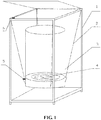
- Fig. 1 is a mounting schematic view of a suspender disengagement detection apparatus for a washing machine in the washing machine of the present disclosure.
- a suspender disengagement detection apparatus for a washing machine of the present disclosure comprises a pressure sensor and a controller. At least one of two joints, which are respectively a joint of at least one of a plurality of suspenders and a housing of the washing machine, and a joint of the suspender and a suspender base of an outer tub of the washing machine, is provided with the pressure sensor.
- the pressure sensor is electrically connected with the controller, the controller electrically connected with a drive motor.
- the joint of the suspenders and the housing of the washing machine and/or the joint of the suspenders and the suspender bases of the outer tub of the washing machine are all provided with pressure sensors.
- the pressure sensor is electrically connected with the controller, the controller electrically connected with the drive motor.
- the outer tub 3 is hung in the housing 1 through four suspenders 2 that are evenly distributed around the outer tub and inside the housing 1 of the washing machine.
- a pressure sensor 6 is arranged at the joint of one of the suspenders and the housing of the washing machine.
- a pressure sensor 5 is arranged at the joint of the suspender and the suspender base of the outer tub of the washing machine.
- the pressure sensors 5, 6 are both electrically connected with the controller, and the controller is electrically connected with the drive motor of the washing machine.
- the pressure sensors 5, 6 detect the corresponding pressures and feed the detection results back to the controller.
- the controller determines whether the suspender is disengaged or not according to the detection results and further controls the work and stop of the drive motor of the washing machine.
- a pressure detection is performed before the motor operates every time and the detection value is M.
- a pressure value is detected several times in succession and the detected value is compared with M. If the detected value is within the range (0.9M-1.1M), it is determined that the suspender is normal. If the detected value is beyond the range (0.9M-1.1M), it is determined that the suspender is disengaged and the controller controls the drive motor of the washing machine to stop working.
- the detection frequency is a range from 100Hz to 1000Hz. The range (0.9M-1.1M) is not fixed which is different according to different washing method.
- comparing a last detection value with a present detection value using a setting time as a detection period it is determined whether the suspender is disengaged or not by determining a ratio is within the setting range or not. Specifically, first a pressure detection is run and the detection value is N. After a setting time, such from 1 to 5s, another pressure detection is run, the detection value is N1. Comparing the two consecutive detection values N1/N, if a ratio ⁇ is within a setting range from 0.9 to 1, it is determined that the suspender is normal. If the ratio is beyond the setting range, it is determined that the suspender is disengaged and the controller controls the drive motor of the washing machine to stop working. The range (0.9-1) is not fixed and the setting range is different according to different clothes and different dewatering rotational speed.
- a pressure sensor is arranged at least one of positions which are respectively the joint of one suspender and the housing of the washing machine, the joint of the suspender and the outer tub of the washing machine, and the footing of the housing of the washing machine corresponding to the suspender. Then the suspender is expressed as the suspender with pressure sensor, otherwise, the suspender is expressed as the suspender without pressure sensor.
- the outer tub 3 is provided with an inner tub, a pulsator 4 in the inner tub is driven to rotate by the drive motor, and the outer tub and the inner tub vibrate, so the pressure value on the pressure sensor is within a normal range. But once a suspender is disengaged, then the pressure on any one of the pressure sensor change. And the pressure value is not in the normal range.
- the normal range of the pressure value refers to the normal range of the pressure value detected by the pressure sensor when the suspender is connected with both the housing of the washing machine and the suspender base of the outer tub of the washing machine.
- the pressure sensor transmits the detection result to the controller, and the controller determines whether the suspender is disengaged or not according to the feedback information, thereby sends a signal to the drive motor of the washing machine to stop working.
- Determining whether the suspender is disengaged or not according to the pressure on the pressure sensor is mainly realized based on the following situations.
- any one of the pressures detected by the pressure sensors mentioned above is beyond the normal pressure value range, it can be determined that there is a suspender disengaged.
- the upper and lower ends of the same suspender are respectively provided with a pressure sensor. It can also arrange only one pressure sensor at the joint of the upper end of the suspender and the housing of the washing machine or the joint of the lower end of the suspender and the suspender base of the outer tub of the washing machine.
- the suspender disengagement detection apparatus for the washing machine is also comprises an alarm, and the alarm is electrically connected with the controller. The alarm notices users when the controller determines the suspender to be disengaged.
- a safe operation method for a washing machine comprises, during the working process of the washing machine, performing the pressure detection by providing with a pressure sensor at any one of positions which are the joint of the suspender and the housing of the washing machine, and the joint of the suspender and the suspender base of the outer tub of the washing machine and feeding a test result back to the controller.
- the controller determines whether the suspender is disengaged or not according to the feedback information, which further control the drive motor to change its working states.
- a pressure detection is performed before the motor operates every time and the detection value is M.
- a pressure value is detected several times in succession and the detected value is compared with M. If the detected value is within the range (0.9M-1.1M), it is determined that the suspender is normal. If the detected value is beyond the range (0.9M-1.1M), it is determined that the suspender is disengaged and the controller controls the drive motor of the washing machine to stop working.
- the detection frequency is from 100Hz to 1000Hz.
- the range (0.9M-1.1M) is not fixed which is different according to different washing method.
- comparing a last detection value with a present detection value using a setting time as a detection period it is determined whether the suspender is disengaged or not by determining the ratio is within the setting range or not. Specifically, first a pressure detection is run and the detection value is N. After a setting time, such as 1 to 5s, another pressure detection is run, the detection value is N1. Comparing the two consecutive detection values N1/N, if a ratio ⁇ is within a setting range from 0.9 to 1, it is determined that the suspender is normal. If the ratio is beyond the setting range, it is determined that the suspender is disengaged and the controller controls the drive motor of the washing machine to stop working. The range (0.9-1) is not fixed and the setting range is different according to different clothes and different dewatering rotational speed.
- the outer tub is hung though a plurality of suspenders in the housing.
- the outer tub is usually hung through four suspenders which are evenly distributed around the periphery of the outer tub.
- a pressure sensor is arranged at the joint of the upper end of the suspender and the housing of the washing machine, and the suspender acts a pressure on the joint and transmits to the pressure sensor.
- the lower end of the suspender is connected to the outer tub, the joint of the end of the suspender and the suspender base of the outer tub of the washing machine is provided with the pressure sensor, the suspender acts a pressure to the joint and transmits to the pressure sensor.
- the outer tub and the inner tub vibrate, so the pressure values on the three pressure sensors mentioned above are within a normal range. But once a suspender is disengaged, then the pressure on any one of the pressure sensor changes, so the pressure value is not in the normal range.
- the pressure sensor sends the detection result to the controller, and the controller determines whether the suspender is disengaged or not according to the feedback information, thereby sends a signal to the drive motor of the washing machine to stop working.
- Determining whether the suspender is disengaged or not according to the pressure on the pressure sensor is mainly realized based on the following situations.
- any one of the pressures detected by the pressure sensors mentioned above is beyond the normal pressure value range, it can be determined that there is a suspender disengaged. In other embodiments, in order to determine more accurately, it can be determined that there is a suspender disengaged when pressures detected by the two pressure sensors are all beyond the normal pressure value range.
- it can arrange pressure sensors at the joints of all four suspenders and the housing of the washing machine and/or the joints of the suspenders and the suspender bases of the outer tub of the washing machine, and the pressure sensors are electrically connected with the controller, which can make the detection result more accurate. Also, based on the demand of accuracy of the determination, when the pressure value detected by the pressure sensor at any place is beyond the normal pressure value range, or the pressure values detected by any two or several pressure sensors are all beyond the normal pressure value range, the controller determines that the suspender is disengaged and further controls the drive motor of the washing machine to stop working.
- a safe operation method for a washing machine of the present disclosure can effectively detect the suspender disengagement in the washing machine and let the drive motor of the washing machine stop and alarm when the suspender is disengaged.
Landscapes
- Engineering & Computer Science (AREA)
- Textile Engineering (AREA)
- Physics & Mathematics (AREA)
- General Physics & Mathematics (AREA)
- Chemical & Material Sciences (AREA)
- Combustion & Propulsion (AREA)
- Control Of Washing Machine And Dryer (AREA)
- Main Body Construction Of Washing Machines And Laundry Dryers (AREA)
- Cleaning Or Drying Semiconductors (AREA)
- Cleaning By Liquid Or Steam (AREA)
- Electric Vacuum Cleaner (AREA)
Abstract
Description
- The present disclosure relates to a detection apparatus and a detection method, particularly to a suspender disengagement detection apparatus and a detection method for a washing machine, which belongs to a field of detection apparatus and detection method for a washing machine.
- An innter tub of a washing machine is arranged inside an outer tub, the inner tub and the outer tub are both arranged inside a housing and the outer tub is hung by a plurality of suspenders inside the housing, that is, one end of each suspender is connected to the housing and the other end is connected to the outer tub. However, the inner tub and the outer tub will vibrate due to the rotation of the inner tub during the working period of the washing machine. So the suspenders have a possibility to disengage with the housing or the outer tub, but the users may not aware the disengagement of the suspender in time, it will casue further damage to the washing machine as the washing machine continuing working.
- In view of the foregoing, the present disclosure is proposed.
- The technical problem need to be solved in the present disclosure is to overcome the shortcomings of the prior art, and provides a suspender disengagement detection apparatus and a detection method for a washing machine which can detect the suspender disengagement in time and make the washing machine stop working. It prevents further damage to the washing machine.
- In order to solve the above described problem, the basic idea of the technical scheme adopted by the present disclosure is:
- A suspender disengagement detection apparatus for a washing machine of which an outer tub is connected to a housing of the washing machine through a plurality of suspenders, the suspender disengagement detection apparatus comprises a controller and at least one pressure sensor, the pressure sensor is arranged at a joint of at least one suspender and the housing of the washing machine and/or a joint of the suspender and a suspender base of the outer tub of the washing machine. The pressure sensor is electrically connected with the controller, and the controller is electrically connected to a driving motor of the washing machine.
- Further, the joint of the suspenders and the housing of the washing machine and/or the joint of the suspenders and the suspender bases of the outer tub of the washing machine are all provided with pressure sensors.
- Or, the outer tub is hung in the housing through four suspenders that are evenly distributed around the outer tub inside the housing of the washing machine. Pressure sensor is arranged at the joint of one of the suspenders and the housing of the washing machine and/or the joint of the suspender and the suspender base of the outer tub of the washing machine.
- Further, the washing machine further comprises an alarm, and the alarm is electrically connected with the controller.
- A safe operation method for a washing machine of the present disclosure comprises, during the working process of the washing machine, performing a pressure detection by providing with a pressure sensor at the joint of at least one suspender and the housing of the washing machine and/or the joint of the suspender and the suspender base of the outer tub of the washing machine, and feeding a test result back to the controller. The controller determines whether the suspender is disengaged or not according to the feedback information, which further controls the drive motor to change its working state.
- It is determined whether the suspender is disengaged or not through analyzing whether a pressure value that the pressure sensor holds is beyond its normal pressure range or not.
- During a washing and rinsing process, a pressure detection is run before the drive motor operates every time and a detection value is M. During the motor operation, a pressure value is detected several times in succession and the detected value is compared with M. If the detected value is within a setting range, it is determined that the suspender is normal. If the detected value is beyond the setting range, it is determined that the suspender is disengaged and the controller controls the drive motor of the washing machine to stop working.
- During a dewatering process, first a pressure detection is run and the detection value is N. After a setting time, another pressure detection is run, the detection value is N1. Comparing two consecutive detection values, if a ratio is within a setting range, it is determined that the suspender is normal. If the ratio is beyond the setting range, it is determined that the suspender is disengaged and the controller controls the drive motor of the washing machine to stop working. Comparing a last detection value with a present detection value using a setting time as a detection period, it is determined whether the suspender is disengaged or not by determining the ratio is within the setting range or not.
- The pressure sensor is arranged at the joint of one suspender and the housing of the washing machine and/or the joint of the suspender and the suspender base of the outer tub of the washing machine are respectively. And if the pressure value detected at any one pressure sensor or at all pressure sensors is beyond a normal pressure range, the controller determines that the suspender is disengaged and further controls the drive motor of the washing machine to stop working.
- The joint of the suspenders and the housing of the washing machine and/or the joint of the suspenders and the suspender bases of the outer tub of the washing machine are all provided with pressure sensors. And if the pressure value detected by any one pressure sensor or the pressure values detected by any two or several pressure sensors are all beyond the normal pressure range, the controller determines that the suspender is disengaged and further controls the drive motor of the washing machine to stop working.
- When the controller determines the suspender to be disengaged, it notices users through an alarm.
- By adopting the techincal scheme mentioned above, the present discloure has the following advantageous effects as compared with the prior art.
- A suspender disengagement detection apparatus for a washing machine of the present disclosure comprises a pressure sensor and a controller. At least one of two joints, which are a joint of at least one of a plurality of suspenders and a housing of the washing machine, and a joint of the suspender and a suspender base of the housing of the washing machine, is provided with the pressure sensor. The pressure sensor is electrically connected with the controller. The pressure sensor detects a corresponding pressure, the controller determines whether the suspender is disengaged or not according to a detection result and further controls a drive motor of the washing machine to change its working state.
- In the safe operation method for the washing machine of the present disclosure, during a working process of the washing machine, the pressure detection is performed by providing with pressure sensor at the joint of at least one suspender and the housing of the washing machine and/or the joint of the suspender and the suspender base of the outer tub of the washing machine and feeds a test result back to the controller. The controller determines whether the suspender is disengaged or not according to the feedback information, which further to determine whether or not to send a signal of stopping working to the drive motor of the washing machine. It can effectively detect the suspender disengagement in the washing machine and stop working and alarm when the suspender disengagement is detected.
- The following is further described in details with embodiments of the present disclosure.
-
Fig. 1 is a mounting schematic view of a suspender disengagement detection apparatus for a washing machine in the washing machine of the present disclosure. - 1.
Housing 2. Suspender 3.Outer tub 4.Pulsator 5.Pressure sensor 6. Pressure sensor - A suspender disengagement detection apparatus for a washing machine of the present disclosure comprises a pressure sensor and a controller. At least one of two joints, which are respectively a joint of at least one of a plurality of suspenders and a housing of the washing machine, and a joint of the suspender and a suspender base of an outer tub of the washing machine, is provided with the pressure sensor. The pressure sensor is electrically connected with the controller, the controller electrically connected with a drive motor.
- In other embodiments, the joint of the suspenders and the housing of the washing machine and/or the joint of the suspenders and the suspender bases of the outer tub of the washing machine are all provided with pressure sensors. The pressure sensor is electrically connected with the controller, the controller electrically connected with the drive motor.
- As shown in
Fig. 1 , in the present embodiment, theouter tub 3 is hung in thehousing 1 through foursuspenders 2 that are evenly distributed around the outer tub and inside thehousing 1 of the washing machine. Apressure sensor 6 is arranged at the joint of one of the suspenders and the housing of the washing machine. Apressure sensor 5 is arranged at the joint of the suspender and the suspender base of the outer tub of the washing machine. Thepressure sensors pressure sensors - During the washing and rinsing process, a pressure detection is performed before the motor operates every time and the detection value is M. During the motor operation, a pressure value is detected several times in succession and the detected value is compared with M. If the detected value is within the range (0.9M-1.1M), it is determined that the suspender is normal. If the detected value is beyond the range (0.9M-1.1M), it is determined that the suspender is disengaged and the controller controls the drive motor of the washing machine to stop working. The detection frequency is a range from 100Hz to 1000Hz. The range (0.9M-1.1M) is not fixed which is different according to different washing method.
- During the dewatering process, comparing a last detection value with a present detection value using a setting time as a detection period, it is determined whether the suspender is disengaged or not by determining a ratio is within the setting range or not. Specifically, first a pressure detection is run and the detection value is N. After a setting time, such from 1 to 5s, another pressure detection is run, the detection value is N1. Comparing the two consecutive detection values N1/N, if a ratio α is within a setting range from 0.9 to 1, it is determined that the suspender is normal. If the ratio is beyond the setting range, it is determined that the suspender is disengaged and the controller controls the drive motor of the washing machine to stop working. The range (0.9-1) is not fixed and the setting range is different according to different clothes and different dewatering rotational speed.
- For the convenience of expression, if a pressure sensor is arranged at least one of positions which are respectively the joint of one suspender and the housing of the washing machine, the joint of the suspender and the outer tub of the washing machine, and the footing of the housing of the washing machine corresponding to the suspender. Then the suspender is expressed as the suspender with pressure sensor, otherwise, the suspender is expressed as the suspender without pressure sensor.
- During the proper functioning of the washing machine, the
outer tub 3 is provided with an inner tub, apulsator 4 in the inner tub is driven to rotate by the drive motor, and the outer tub and the inner tub vibrate, so the pressure value on the pressure sensor is within a normal range. But once a suspender is disengaged, then the pressure on any one of the pressure sensor change. And the pressure value is not in the normal range. The normal range of the pressure value refers to the normal range of the pressure value detected by the pressure sensor when the suspender is connected with both the housing of the washing machine and the suspender base of the outer tub of the washing machine. The pressure sensor transmits the detection result to the controller, and the controller determines whether the suspender is disengaged or not according to the feedback information, thereby sends a signal to the drive motor of the washing machine to stop working. - Determining whether the suspender is disengaged or not according to the pressure on the pressure sensor is mainly realized based on the following situations.
- When any one of the suspenders is disengaged, the outer tub and the inner tub are imbalanced due to lack one suspender to hang. So force taken by the left three suspenders is increased.
- 1. If the suspender disengaged is the suspender without pressure sensor, the pressure detected by the
pressure sensor 6 which is arranged at the joint of an upper end of the other suspender and the housing of the washing machine is increased. And so the pressure detected by thepressure sensor 5 which is arranged at the joint of a lower end of the other suspender and the suspender base of the outer tub of the washing machine is increased.
If any one of the pressures detected by the pressure sensors mentioned above is beyond the normal pressure value range, it can be determined that there is a suspender disengaged. In other embodiments, in order to determine more accurately, it can be determined that there is a suspender disengaged when pressures detected by the two pressure sensors are beyond the normal pressure value range. - 2. If the suspender disengaged is the suspender with pressure sensor, the pressure detected by the
pressure sensor 6 which is arranged at the joint of an upper end of the suspender and the housing of the washing machine is decreased to near zero. And so the pressure detected by thepressure sensor 5 which is arranged at the joint of a lower end of the suspender and the suspender base of the outer tub of the washing machine is also decreased to near zero. - If any one of the pressures detected by the pressure sensors mentioned above is beyond the normal pressure value range, it can be determined that there is a suspender disengaged. In other embodiments, in order to determine more accurately, it can be determined that there is a suspender disengaged when pressures detected by the two pressure sensors are all beyond the normal pressure value range. In the present embodiment, the upper and lower ends of the same suspender are respectively provided with a pressure sensor. It can also arrange only one pressure sensor at the joint of the upper end of the suspender and the housing of the washing machine or the joint of the lower end of the suspender and the suspender base of the outer tub of the washing machine.
- Further, the suspender disengagement detection apparatus for the washing machine is also comprises an alarm, and the alarm is electrically connected with the controller. The alarm notices users when the controller determines the suspender to be disengaged.
- A safe operation method for a washing machine comprises, during the working process of the washing machine, performing the pressure detection by providing with a pressure sensor at any one of positions which are the joint of the suspender and the housing of the washing machine, and the joint of the suspender and the suspender base of the outer tub of the washing machine and feeding a test result back to the controller. The controller determines whether the suspender is disengaged or not according to the feedback information, which further control the drive motor to change its working states.
- During the washing and rinsing process, a pressure detection is performed before the motor operates every time and the detection value is M. During the motor operation, a pressure value is detected several times in succession and the detected value is compared with M. If the detected value is within the range (0.9M-1.1M), it is determined that the suspender is normal. If the detected value is beyond the range (0.9M-1.1M), it is determined that the suspender is disengaged and the controller controls the drive motor of the washing machine to stop working. The detection frequency is from 100Hz to 1000Hz. The range (0.9M-1.1M) is not fixed which is different according to different washing method.
- During the dewatering process, comparing a last detection value with a present detection value using a setting time as a detection period, it is determined whether the suspender is disengaged or not by determining the ratio is within the setting range or not. Specifically, first a pressure detection is run and the detection value is N. After a setting time, such as 1 to 5s, another pressure detection is run, the detection value is N1. Comparing the two consecutive detection values N1/N, if a ratio α is within a setting range from 0.9 to 1, it is determined that the suspender is normal. If the ratio is beyond the setting range, it is determined that the suspender is disengaged and the controller controls the drive motor of the washing machine to stop working. The range (0.9-1) is not fixed and the setting range is different according to different clothes and different dewatering rotational speed.
- The outer tub is hung though a plurality of suspenders in the housing. The outer tub is usually hung through four suspenders which are evenly distributed around the periphery of the outer tub. A pressure sensor is arranged at the joint of the upper end of the suspender and the housing of the washing machine, and the suspender acts a pressure on the joint and transmits to the pressure sensor.
- The lower end of the suspender is connected to the outer tub, the joint of the end of the suspender and the suspender base of the outer tub of the washing machine is provided with the pressure sensor, the suspender acts a pressure to the joint and transmits to the pressure sensor.
- During the proper functioning of the washing machine, the outer tub and the inner tub vibrate, so the pressure values on the three pressure sensors mentioned above are within a normal range. But once a suspender is disengaged, then the pressure on any one of the pressure sensor changes, so the pressure value is not in the normal range. The pressure sensor sends the detection result to the controller, and the controller determines whether the suspender is disengaged or not according to the feedback information, thereby sends a signal to the drive motor of the washing machine to stop working.
- Determining whether the suspender is disengaged or not according to the pressure on the pressure sensor is mainly realized based on the following situations.
- When any one of the suspenders is disengaged, the outer tub and the inner tub are imbalanced due to lack one suspender to hang. So force taken by the left three suspenders is increased.
- 1. If the suspender disengaged is the suspender without pressure sensor, the pressure detected by the pressure sensor which is arranged at the joint of an upper end of the other suspender and the housing of the washing machine is increased. And so the pressure detected by the pressure sensor which is arranged at the joint of a lower end of the other suspender and the suspender base of the outer tub of the washing machine is increased.
If any one of the pressures detected by the pressure sensors mentioned above is beyond the normal pressure value range, it can be determined that there is a suspender disengaged. In other embodiments, in order to determine more accurately, it can be determined that there is a suspender disengaged when pressures detected by the two pressure sensors are all beyond the normal pressure value range. - 2. If the suspender disengaged is the suspender with pressure sensor, the pressure detected by the pressure sensor which is arranged at the joint of an upper end of the suspender and the housing of the washing machine is decreased to near zero. And so the pressure detected by the pressure sensor which is arranged at the joint of a lower end of the suspender and the suspender base of the outer tub of the washing machine is also decreased to near zero.
- If any one of the pressures detected by the pressure sensors mentioned above is beyond the normal pressure value range, it can be determined that there is a suspender disengaged. In other embodiments, in order to determine more accurately, it can be determined that there is a suspender disengaged when pressures detected by the two pressure sensors are all beyond the normal pressure value range.
- In other embodiments, it can arrange pressure sensors at the joints of all four suspenders and the housing of the washing machine and/or the joints of the suspenders and the suspender bases of the outer tub of the washing machine, and the pressure sensors are electrically connected with the controller, which can make the detection result more accurate. Also, based on the demand of accuracy of the determination, when the pressure value detected by the pressure sensor at any place is beyond the normal pressure value range, or the pressure values detected by any two or several pressure sensors are all beyond the normal pressure value range, the controller determines that the suspender is disengaged and further controls the drive motor of the washing machine to stop working.
- A safe operation method for a washing machine of the present disclosure, can effectively detect the suspender disengagement in the washing machine and let the drive motor of the washing machine stop and alarm when the suspender is disengaged.
- The implementation solutions in the above embodiments can be further combined or replaced, and the embodiments merely describe preferred embodiments of the present invention, instead of limiting the concept and the scope of the present invention; without departing from the design concept of the present invention, various variations and improvements made to the technical solutions of the present invention by persons skilled in the art all belong to the protection scope of the present invention.
Claims (11)
- A suspender disengagement detection apparatus for a washing machine of which an outer tub is connected to a housing of the washing machine through a plurality of suspenders,
wherein the suspender disengagement detection apparatus comprises a controller and at least one pressure sensor, the pressure sensor is arranged at a joint of at least one suspender and the housing of the washing machine and/or a joint of the suspender and a suspender base of the outer tub of the washing machine,
the pressure sensor is electrically connected with the controller, and the controller is electrically connected to a driving motor of the washing machine. - The suspender disengagement detection apparatus for the washing machine according to claim 1, wherein the joint of the suspenders and the housing of the washing machine and/or the joint of the suspenders and the suspender bases of the outer tub of the washing machine are all provided with pressure sensors.
- The suspender disengagement detection apparatus for the washing machine according to claim 1, wherein the outer tub is hung in the housing through four suspenders that are evenly distributed around the outer tub inside the housing of the washing machine,
pressure sensor is arranged at the joint of one of the suspenders and the housing of the washing machine and/or the joint of the suspender and the suspender base of the outer tub of the washing machine. - The suspender disengagement detection apparatus for the washing machine according to claim 1, further comprises an alarm, and the alarm is electrically connected with the controller.
- A safe operation method for a washing machine, comprising, during a working process of the washing machine, performing a pressure detection by providing with a pressure sensor at a joint of at least one suspender and a housing of the washing machine and/or a joint of the suspender and a suspender base of an outer tub of the washing machine, and feeding a test result back to a controller,
wherein the controller determines whether the suspender is disengaged or not according to a feedback information, and further controls a drive motor to change its working state. - The safe operation method for the washing machine according to claim 5, wherein it is determined whether the suspender is disengaged or not through analyzing whether a pressure value that the pressure sensor holds is beyond a normal pressure range or not.
- The safe operation method for the washing machine according to claim 6, wherein during a washing and rinsing process, a pressure detection is run before the drive motor operates every time and a detection value is M,
during a motor operation, a pressure value is detected several times in succession and a detected value is compared with M,
if the detected value is within a setting range, it is determined that the suspender is normal,
if the detected value is beyond the setting range, it is determined that the suspender is disengaged and the controller controls the drive motor of the washing machine to stop working. - The safe operation method for the washing machine according to claim 6 or 7, wherein
during a dewatering process, first a pressure detection is run and a detection value is N, after a setting time, another pressure detection is run, the detection value is N1, comparing two consecutive detection values, if a ratio is within a setting range, it is determined that the suspender is normal,
if the ratio is beyond the setting range, it is determined that the suspender is disengaged and the controller controls the drive motor of the washing machine to stop working. - The safe operation method for the washing machine according to claim 5 or 6, wherein the pressure sensor is arranged at the joint of one suspender and the housing of the washing machine and/or the joint of the suspender and the suspender base of the outer tub of the washing machine are respectively,
and if the pressure value detected at any one pressure sensor or at all pressure sensors is beyond a normal pressure range, the controller determines that the suspender is disengaged and further controls the drive motor of the washing machine to stop working. - The safe operation method for the washing machine according to claim 5 or 6, wherein the joint of the suspenders and the housing of the washing machine and/or the joint of the suspenders and the suspender bases of the outer tub of the washing machine are all provided with pressure sensors,
and if the pressure value detected by any one pressure sensor or the pressure values detected by any two or several pressure sensors are all beyond the normal pressure range, the controller determines that the suspender is disengaged and further controls the drive motor of the washing machine to stop working. - The safe operation method for the washing machine according to any one of claims from 5 to 8, wherein when the controller determines the suspender to be disengaged, it notices users through an alarm.
Applications Claiming Priority (2)
| Application Number | Priority Date | Filing Date | Title |
|---|---|---|---|
| CN201410437986.9A CN105463776B (en) | 2014-08-29 | 2014-08-29 | A kind of washing machine sunpender falls off detection device and washing machine method for safe operation |
| PCT/CN2014/091141 WO2016029559A1 (en) | 2014-08-29 | 2014-11-14 | Suspender disengagement detection apparatus for washing machine and safe operation method for washing machine |
Publications (3)
| Publication Number | Publication Date |
|---|---|
| EP3187640A1 true EP3187640A1 (en) | 2017-07-05 |
| EP3187640A4 EP3187640A4 (en) | 2018-04-11 |
| EP3187640B1 EP3187640B1 (en) | 2020-01-08 |
Family
ID=55398703
Family Applications (1)
| Application Number | Title | Priority Date | Filing Date |
|---|---|---|---|
| EP14900515.9A Active EP3187640B1 (en) | 2014-08-29 | 2014-11-14 | Suspender disengagement detection apparatus for washing machine and safe operation method for washing machine |
Country Status (6)
| Country | Link |
|---|---|
| US (1) | US10323348B2 (en) |
| EP (1) | EP3187640B1 (en) |
| JP (1) | JP6471944B2 (en) |
| KR (1) | KR20170044735A (en) |
| CN (1) | CN105463776B (en) |
| WO (1) | WO2016029559A1 (en) |
Families Citing this family (3)
| Publication number | Priority date | Publication date | Assignee | Title |
|---|---|---|---|---|
| CN108457048A (en) * | 2018-01-31 | 2018-08-28 | 惠而浦(中国)股份有限公司 | A kind of detection roller washing machine hangs the system and method for spring-drop |
| CN113417106B (en) * | 2021-06-28 | 2023-11-28 | 青岛海尔科技有限公司 | Method and device for smooth operation of washing machine based on pressure sensor |
| CN114668206B (en) * | 2022-05-30 | 2022-08-19 | 南通杰祥服饰有限公司 | Assembly line for clothing production based on Internet of things |
Family Cites Families (20)
| Publication number | Priority date | Publication date | Assignee | Title |
|---|---|---|---|---|
| US5375437A (en) * | 1993-09-20 | 1994-12-27 | General Electric Company | Out-of-balance condition detecting system with lid actuated switching assembly |
| TW415981B (en) * | 1998-07-16 | 2000-12-21 | Samsung Electronics Co Ltd | Washing machine having a hybrid sensor and a control method thereof |
| JP2000342886A (en) * | 1999-03-29 | 2000-12-12 | Sanyo Electric Co Ltd | Washing machine |
| TW465609U (en) * | 1999-03-29 | 2001-11-21 | Sanyo Electric Co | Washing machine and apparatus with vessel to be rotated |
| US6460381B1 (en) * | 1999-03-29 | 2002-10-08 | Sanyo Electric Co., Ltd. | Washing machine or an apparatus having a rotatable container |
| JP3433135B2 (en) * | 1999-04-28 | 2003-08-04 | 三洋電機株式会社 | Washing machine |
| JP2000345886A (en) * | 1999-05-31 | 2000-12-12 | Isuzu Motors Ltd | Fuel injection control device for diesel engine |
| US6983657B1 (en) * | 1999-09-02 | 2006-01-10 | Sanyo Electric Co., Ltd. | Load detecting system and automatic washing machine equipped with a system for detecting the magnitude of the load acting on a magnetostrictive element |
| JP2002119790A (en) * | 2000-10-13 | 2002-04-23 | Sanyo Electric Co Ltd | Washing machine |
| JP2003156382A (en) * | 2001-11-21 | 2003-05-30 | Sanyo Electric Co Ltd | Weight sensor and washing machine using weight sensor |
| JP2004242735A (en) * | 2003-02-12 | 2004-09-02 | Sanyo Electric Co Ltd | Washing machine |
| CN2680704Y (en) * | 2003-09-30 | 2005-02-23 | 海尔集团公司 | Washing machine using suspender weight sensor to detect quantity of clothes and water inflow |
| JP5309631B2 (en) * | 2008-03-14 | 2013-10-09 | 澁谷工業株式会社 | Classification device |
| WO2012036422A2 (en) * | 2010-09-14 | 2012-03-22 | Lg Electronics Inc. | Washing machine and method of controlling washing machine |
| JP2013034605A (en) * | 2011-08-05 | 2013-02-21 | Daikin Industries Ltd | Pressure detecting device and body movement detecting device |
| CN202671889U (en) * | 2012-06-26 | 2013-01-16 | 无锡小天鹅股份有限公司 | Unbalance detection device of washing machine |
| CN102733142A (en) * | 2012-06-26 | 2012-10-17 | 无锡小天鹅股份有限公司 | Device and method for detecting unbalance of washing machine |
| KR101980854B1 (en) * | 2012-10-31 | 2019-05-22 | 삼성전자주식회사 | Washing machine and control method thereof |
| CN103628277A (en) * | 2013-09-23 | 2014-03-12 | 无锡小天鹅股份有限公司 | Washing machine |
| DE102014205368A1 (en) * | 2014-03-21 | 2015-09-24 | Emz-Hanauer Gmbh & Co. Kgaa | Washing machine |
-
2014
- 2014-08-29 CN CN201410437986.9A patent/CN105463776B/en active Active
- 2014-11-14 WO PCT/CN2014/091141 patent/WO2016029559A1/en not_active Ceased
- 2014-11-14 EP EP14900515.9A patent/EP3187640B1/en active Active
- 2014-11-14 JP JP2017508661A patent/JP6471944B2/en active Active
- 2014-11-14 KR KR1020177008372A patent/KR20170044735A/en not_active Ceased
- 2014-11-14 US US15/507,058 patent/US10323348B2/en active Active
Also Published As
| Publication number | Publication date |
|---|---|
| US10323348B2 (en) | 2019-06-18 |
| EP3187640B1 (en) | 2020-01-08 |
| EP3187640A4 (en) | 2018-04-11 |
| JP2017536140A (en) | 2017-12-07 |
| CN105463776B (en) | 2019-04-05 |
| WO2016029559A1 (en) | 2016-03-03 |
| KR20170044735A (en) | 2017-04-25 |
| CN105463776A (en) | 2016-04-06 |
| US20170284006A1 (en) | 2017-10-05 |
| JP6471944B2 (en) | 2019-02-20 |
Similar Documents
| Publication | Publication Date | Title |
|---|---|---|
| US10323348B2 (en) | Suspender disengagement detection apparatus for washing machine and safe operation method for washing machine | |
| EP2009169A3 (en) | Washing machine | |
| RU2010154433A (en) | DEVICES AND METHODS FOR INITIATING FUNCTIONS BASED ON MOVEMENT CHARACTERISTICS REGARDING THE REPORTING POSITION | |
| CN104532514A (en) | Impeller washing machine unbalance detection method and system | |
| JP2017531453A (en) | Washing machine imbalance detection method and washing machine | |
| CN104665740A (en) | Dish washing machine and washing heating control method and washing heating control device thereof | |
| EP3354789A1 (en) | Washing machine and method for controlling same | |
| CN103255600B (en) | A kind of eccentric cognitive method of roller washing machine | |
| CN108866931A (en) | The dehydration controlling method and system of washing machine and washing machine including the system | |
| CN110100054A (en) | washing machine | |
| CN104342877B (en) | Laundry machine | |
| CN103386769A (en) | Working state detection device and method of oil press and oil press | |
| CN106120173A (en) | A kind of sewing device presser feet position detecting system | |
| JP2017001799A5 (en) | ||
| EP2988104A3 (en) | Detecting rotor anomalies during transient speed operations | |
| EP1760182A3 (en) | Unbalance detection method and washing machine using the same | |
| MX2020006692A (en) | Malfunction determination method and malfunction-determining device. | |
| CN102677433A (en) | Washing machine inflow judging method and washing machine applying same | |
| CN111337059A (en) | Method and system for detecting looseness of belt pulley of lower-hanging motor of sewing machine | |
| CN110114524A (en) | Tumbling-box washing machine | |
| EP2103382A3 (en) | Detecting device for abnormal workpiece rotation in non-circular workpiece grinding machine | |
| CN106245269A (en) | Laundry facilities and control method thereof | |
| JP2016535713A5 (en) | ||
| CN107881708A (en) | Clothes processing system and its unbalance detection | |
| CN204803574U (en) | Washing machine's stifled transfering from one department to another that prevent is united |
Legal Events
| Date | Code | Title | Description |
|---|---|---|---|
| STAA | Information on the status of an ep patent application or granted ep patent |
Free format text: STATUS: THE INTERNATIONAL PUBLICATION HAS BEEN MADE |
|
| PUAI | Public reference made under article 153(3) epc to a published international application that has entered the european phase |
Free format text: ORIGINAL CODE: 0009012 |
|
| STAA | Information on the status of an ep patent application or granted ep patent |
Free format text: STATUS: REQUEST FOR EXAMINATION WAS MADE |
|
| 17P | Request for examination filed |
Effective date: 20170317 |
|
| AK | Designated contracting states |
Kind code of ref document: A1 Designated state(s): AL AT BE BG CH CY CZ DE DK EE ES FI FR GB GR HR HU IE IS IT LI LT LU LV MC MK MT NL NO PL PT RO RS SE SI SK SM TR |
|
| AX | Request for extension of the european patent |
Extension state: BA ME |
|
| DAX | Request for extension of the european patent (deleted) | ||
| A4 | Supplementary search report drawn up and despatched |
Effective date: 20180308 |
|
| RIC1 | Information provided on ipc code assigned before grant |
Ipc: D06F 37/26 20060101ALI20180303BHEP Ipc: D06F 35/00 20060101AFI20180303BHEP Ipc: D06F 33/02 20060101ALI20180303BHEP |
|
| GRAP | Despatch of communication of intention to grant a patent |
Free format text: ORIGINAL CODE: EPIDOSNIGR1 |
|
| STAA | Information on the status of an ep patent application or granted ep patent |
Free format text: STATUS: GRANT OF PATENT IS INTENDED |
|
| INTG | Intention to grant announced |
Effective date: 20190607 |
|
| RAP1 | Party data changed (applicant data changed or rights of an application transferred) |
Owner name: QINGDAO HAIER WASHING MACHINE CO., LTD. |
|
| GRAS | Grant fee paid |
Free format text: ORIGINAL CODE: EPIDOSNIGR3 |
|
| GRAA | (expected) grant |
Free format text: ORIGINAL CODE: 0009210 |
|
| STAA | Information on the status of an ep patent application or granted ep patent |
Free format text: STATUS: THE PATENT HAS BEEN GRANTED |
|
| AK | Designated contracting states |
Kind code of ref document: B1 Designated state(s): AL AT BE BG CH CY CZ DE DK EE ES FI FR GB GR HR HU IE IS IT LI LT LU LV MC MK MT NL NO PL PT RO RS SE SI SK SM TR |
|
| REG | Reference to a national code |
Ref country code: GB Ref legal event code: FG4D |
|
| REG | Reference to a national code |
Ref country code: CH Ref legal event code: EP |
|
| REG | Reference to a national code |
Ref country code: DE Ref legal event code: R096 Ref document number: 602014059921 Country of ref document: DE |
|
| REG | Reference to a national code |
Ref country code: IE Ref legal event code: FG4D |
|
| REG | Reference to a national code |
Ref country code: AT Ref legal event code: REF Ref document number: 1222836 Country of ref document: AT Kind code of ref document: T Effective date: 20200215 |
|
| REG | Reference to a national code |
Ref country code: NL Ref legal event code: MP Effective date: 20200108 |
|
| REG | Reference to a national code |
Ref country code: LT Ref legal event code: MG4D |
|
| PG25 | Lapsed in a contracting state [announced via postgrant information from national office to epo] |
Ref country code: PT Free format text: LAPSE BECAUSE OF FAILURE TO SUBMIT A TRANSLATION OF THE DESCRIPTION OR TO PAY THE FEE WITHIN THE PRESCRIBED TIME-LIMIT Effective date: 20200531 Ref country code: FI Free format text: LAPSE BECAUSE OF FAILURE TO SUBMIT A TRANSLATION OF THE DESCRIPTION OR TO PAY THE FEE WITHIN THE PRESCRIBED TIME-LIMIT Effective date: 20200108 Ref country code: NO Free format text: LAPSE BECAUSE OF FAILURE TO SUBMIT A TRANSLATION OF THE DESCRIPTION OR TO PAY THE FEE WITHIN THE PRESCRIBED TIME-LIMIT Effective date: 20200408 Ref country code: LT Free format text: LAPSE BECAUSE OF FAILURE TO SUBMIT A TRANSLATION OF THE DESCRIPTION OR TO PAY THE FEE WITHIN THE PRESCRIBED TIME-LIMIT Effective date: 20200108 Ref country code: RS Free format text: LAPSE BECAUSE OF FAILURE TO SUBMIT A TRANSLATION OF THE DESCRIPTION OR TO PAY THE FEE WITHIN THE PRESCRIBED TIME-LIMIT Effective date: 20200108 Ref country code: NL Free format text: LAPSE BECAUSE OF FAILURE TO SUBMIT A TRANSLATION OF THE DESCRIPTION OR TO PAY THE FEE WITHIN THE PRESCRIBED TIME-LIMIT Effective date: 20200108 |
|
| PG25 | Lapsed in a contracting state [announced via postgrant information from national office to epo] |
Ref country code: BG Free format text: LAPSE BECAUSE OF FAILURE TO SUBMIT A TRANSLATION OF THE DESCRIPTION OR TO PAY THE FEE WITHIN THE PRESCRIBED TIME-LIMIT Effective date: 20200408 Ref country code: GR Free format text: LAPSE BECAUSE OF FAILURE TO SUBMIT A TRANSLATION OF THE DESCRIPTION OR TO PAY THE FEE WITHIN THE PRESCRIBED TIME-LIMIT Effective date: 20200409 Ref country code: LV Free format text: LAPSE BECAUSE OF FAILURE TO SUBMIT A TRANSLATION OF THE DESCRIPTION OR TO PAY THE FEE WITHIN THE PRESCRIBED TIME-LIMIT Effective date: 20200108 Ref country code: SE Free format text: LAPSE BECAUSE OF FAILURE TO SUBMIT A TRANSLATION OF THE DESCRIPTION OR TO PAY THE FEE WITHIN THE PRESCRIBED TIME-LIMIT Effective date: 20200108 Ref country code: IS Free format text: LAPSE BECAUSE OF FAILURE TO SUBMIT A TRANSLATION OF THE DESCRIPTION OR TO PAY THE FEE WITHIN THE PRESCRIBED TIME-LIMIT Effective date: 20200508 Ref country code: HR Free format text: LAPSE BECAUSE OF FAILURE TO SUBMIT A TRANSLATION OF THE DESCRIPTION OR TO PAY THE FEE WITHIN THE PRESCRIBED TIME-LIMIT Effective date: 20200108 |
|
| REG | Reference to a national code |
Ref country code: DE Ref legal event code: R097 Ref document number: 602014059921 Country of ref document: DE |
|
| PG25 | Lapsed in a contracting state [announced via postgrant information from national office to epo] |
Ref country code: DK Free format text: LAPSE BECAUSE OF FAILURE TO SUBMIT A TRANSLATION OF THE DESCRIPTION OR TO PAY THE FEE WITHIN THE PRESCRIBED TIME-LIMIT Effective date: 20200108 Ref country code: ES Free format text: LAPSE BECAUSE OF FAILURE TO SUBMIT A TRANSLATION OF THE DESCRIPTION OR TO PAY THE FEE WITHIN THE PRESCRIBED TIME-LIMIT Effective date: 20200108 Ref country code: SK Free format text: LAPSE BECAUSE OF FAILURE TO SUBMIT A TRANSLATION OF THE DESCRIPTION OR TO PAY THE FEE WITHIN THE PRESCRIBED TIME-LIMIT Effective date: 20200108 Ref country code: RO Free format text: LAPSE BECAUSE OF FAILURE TO SUBMIT A TRANSLATION OF THE DESCRIPTION OR TO PAY THE FEE WITHIN THE PRESCRIBED TIME-LIMIT Effective date: 20200108 Ref country code: CZ Free format text: LAPSE BECAUSE OF FAILURE TO SUBMIT A TRANSLATION OF THE DESCRIPTION OR TO PAY THE FEE WITHIN THE PRESCRIBED TIME-LIMIT Effective date: 20200108 Ref country code: EE Free format text: LAPSE BECAUSE OF FAILURE TO SUBMIT A TRANSLATION OF THE DESCRIPTION OR TO PAY THE FEE WITHIN THE PRESCRIBED TIME-LIMIT Effective date: 20200108 Ref country code: SM Free format text: LAPSE BECAUSE OF FAILURE TO SUBMIT A TRANSLATION OF THE DESCRIPTION OR TO PAY THE FEE WITHIN THE PRESCRIBED TIME-LIMIT Effective date: 20200108 |
|
| PLBE | No opposition filed within time limit |
Free format text: ORIGINAL CODE: 0009261 |
|
| STAA | Information on the status of an ep patent application or granted ep patent |
Free format text: STATUS: NO OPPOSITION FILED WITHIN TIME LIMIT |
|
| REG | Reference to a national code |
Ref country code: AT Ref legal event code: MK05 Ref document number: 1222836 Country of ref document: AT Kind code of ref document: T Effective date: 20200108 |
|
| 26N | No opposition filed |
Effective date: 20201009 |
|
| PG25 | Lapsed in a contracting state [announced via postgrant information from national office to epo] |
Ref country code: IT Free format text: LAPSE BECAUSE OF FAILURE TO SUBMIT A TRANSLATION OF THE DESCRIPTION OR TO PAY THE FEE WITHIN THE PRESCRIBED TIME-LIMIT Effective date: 20200108 Ref country code: AT Free format text: LAPSE BECAUSE OF FAILURE TO SUBMIT A TRANSLATION OF THE DESCRIPTION OR TO PAY THE FEE WITHIN THE PRESCRIBED TIME-LIMIT Effective date: 20200108 |
|
| PGFP | Annual fee paid to national office [announced via postgrant information from national office to epo] |
Ref country code: FR Payment date: 20201120 Year of fee payment: 7 Ref country code: GB Payment date: 20201123 Year of fee payment: 7 Ref country code: DE Payment date: 20201130 Year of fee payment: 7 |
|
| PG25 | Lapsed in a contracting state [announced via postgrant information from national office to epo] |
Ref country code: SI Free format text: LAPSE BECAUSE OF FAILURE TO SUBMIT A TRANSLATION OF THE DESCRIPTION OR TO PAY THE FEE WITHIN THE PRESCRIBED TIME-LIMIT Effective date: 20200108 Ref country code: PL Free format text: LAPSE BECAUSE OF FAILURE TO SUBMIT A TRANSLATION OF THE DESCRIPTION OR TO PAY THE FEE WITHIN THE PRESCRIBED TIME-LIMIT Effective date: 20200108 |
|
| PG25 | Lapsed in a contracting state [announced via postgrant information from national office to epo] |
Ref country code: MC Free format text: LAPSE BECAUSE OF FAILURE TO SUBMIT A TRANSLATION OF THE DESCRIPTION OR TO PAY THE FEE WITHIN THE PRESCRIBED TIME-LIMIT Effective date: 20200108 |
|
| REG | Reference to a national code |
Ref country code: CH Ref legal event code: PL |
|
| PG25 | Lapsed in a contracting state [announced via postgrant information from national office to epo] |
Ref country code: LU Free format text: LAPSE BECAUSE OF NON-PAYMENT OF DUE FEES Effective date: 20201114 |
|
| REG | Reference to a national code |
Ref country code: BE Ref legal event code: MM Effective date: 20201130 |
|
| PG25 | Lapsed in a contracting state [announced via postgrant information from national office to epo] |
Ref country code: LI Free format text: LAPSE BECAUSE OF NON-PAYMENT OF DUE FEES Effective date: 20201130 Ref country code: CH Free format text: LAPSE BECAUSE OF NON-PAYMENT OF DUE FEES Effective date: 20201130 |
|
| PG25 | Lapsed in a contracting state [announced via postgrant information from national office to epo] |
Ref country code: IE Free format text: LAPSE BECAUSE OF NON-PAYMENT OF DUE FEES Effective date: 20201114 |
|
| PG25 | Lapsed in a contracting state [announced via postgrant information from national office to epo] |
Ref country code: TR Free format text: LAPSE BECAUSE OF FAILURE TO SUBMIT A TRANSLATION OF THE DESCRIPTION OR TO PAY THE FEE WITHIN THE PRESCRIBED TIME-LIMIT Effective date: 20200108 Ref country code: MT Free format text: LAPSE BECAUSE OF FAILURE TO SUBMIT A TRANSLATION OF THE DESCRIPTION OR TO PAY THE FEE WITHIN THE PRESCRIBED TIME-LIMIT Effective date: 20200108 Ref country code: CY Free format text: LAPSE BECAUSE OF FAILURE TO SUBMIT A TRANSLATION OF THE DESCRIPTION OR TO PAY THE FEE WITHIN THE PRESCRIBED TIME-LIMIT Effective date: 20200108 |
|
| REG | Reference to a national code |
Ref country code: DE Ref legal event code: R119 Ref document number: 602014059921 Country of ref document: DE |
|
| PG25 | Lapsed in a contracting state [announced via postgrant information from national office to epo] |
Ref country code: MK Free format text: LAPSE BECAUSE OF FAILURE TO SUBMIT A TRANSLATION OF THE DESCRIPTION OR TO PAY THE FEE WITHIN THE PRESCRIBED TIME-LIMIT Effective date: 20200108 Ref country code: AL Free format text: LAPSE BECAUSE OF FAILURE TO SUBMIT A TRANSLATION OF THE DESCRIPTION OR TO PAY THE FEE WITHIN THE PRESCRIBED TIME-LIMIT Effective date: 20200108 |
|
| GBPC | Gb: european patent ceased through non-payment of renewal fee |
Effective date: 20211114 |
|
| PG25 | Lapsed in a contracting state [announced via postgrant information from national office to epo] |
Ref country code: BE Free format text: LAPSE BECAUSE OF NON-PAYMENT OF DUE FEES Effective date: 20201130 |
|
| PG25 | Lapsed in a contracting state [announced via postgrant information from national office to epo] |
Ref country code: GB Free format text: LAPSE BECAUSE OF NON-PAYMENT OF DUE FEES Effective date: 20211114 Ref country code: DE Free format text: LAPSE BECAUSE OF NON-PAYMENT OF DUE FEES Effective date: 20220601 |
|
| PG25 | Lapsed in a contracting state [announced via postgrant information from national office to epo] |
Ref country code: FR Free format text: LAPSE BECAUSE OF NON-PAYMENT OF DUE FEES Effective date: 20211130 |