EP3186268B1 - Esters of steroidal lactam and bis(2-chloroethyl) aminophenoxy propanoic acid derivatives - Google Patents
Esters of steroidal lactam and bis(2-chloroethyl) aminophenoxy propanoic acid derivatives Download PDFInfo
- Publication number
- EP3186268B1 EP3186268B1 EP16739424.6A EP16739424A EP3186268B1 EP 3186268 B1 EP3186268 B1 EP 3186268B1 EP 16739424 A EP16739424 A EP 16739424A EP 3186268 B1 EP3186268 B1 EP 3186268B1
- Authority
- EP
- European Patent Office
- Prior art keywords
- lactam
- mmol
- steroidal
- bis
- mixture
- Prior art date
- Legal status (The legal status is an assumption and is not a legal conclusion. Google has not performed a legal analysis and makes no representation as to the accuracy of the status listed.)
- Active
Links
- 0 C[C@@](CC[C@@](C1)O*)([C@@](CC[C@@](C)([C@@]2CC3)NC3=O)[C@@]2N2)C1=CC2=O Chemical compound C[C@@](CC[C@@](C1)O*)([C@@](CC[C@@](C)([C@@]2CC3)NC3=O)[C@@]2N2)C1=CC2=O 0.000 description 12
- YLAISXXGXKYKKL-MIAFDFDYSA-N CC(C)CCCC(C)[C@@H](CC1)[C@@](C)(CC[C@@]([C@H]2N3)([C@@](C)(CC[C@@H](C4)OC)C4=CC3=O)[N]#C)[C@@]12[N]#C Chemical compound CC(C)CCCC(C)[C@@H](CC1)[C@@](C)(CC[C@@]([C@H]2N3)([C@@](C)(CC[C@@H](C4)OC)C4=CC3=O)[N]#C)[C@@]12[N]#C YLAISXXGXKYKKL-MIAFDFDYSA-N 0.000 description 1
- FXSQMNFWLCFQRZ-XTHFAPAOSA-N C[C@H](C(C)OCCC(O[C@@H](CC1)C[C@@H]1C(C)(C)CC/C(/C)=C/C(NC)=O)=O)N(CCCl)CCCl Chemical compound C[C@H](C(C)OCCC(O[C@@H](CC1)C[C@@H]1C(C)(C)CC/C(/C)=C/C(NC)=O)=O)N(CCCl)CCCl FXSQMNFWLCFQRZ-XTHFAPAOSA-N 0.000 description 1
- ALLDSDHTLQXYJL-UBZAJHSUSA-N C[C@](C1)([C@@H](CC2)[C@H](CCC([C@]3(C)C=CN4)=CC4=O)[C@@H]3C1=O)[C@H]2OI Chemical compound C[C@](C1)([C@@H](CC2)[C@H](CCC([C@]3(C)C=CN4)=CC4=O)[C@@H]3C1=O)[C@H]2OI ALLDSDHTLQXYJL-UBZAJHSUSA-N 0.000 description 1
- DGABYWWITDCRPI-UBZAJHSUSA-N C[C@](C1)([C@@H](CC2)[C@H](CCC([C@]3(C)CCN4)=CC4=O)[C@@H]3C1=O)[C@H]2O[I]=[IH] Chemical compound C[C@](C1)([C@@H](CC2)[C@H](CCC([C@]3(C)CCN4)=CC4=O)[C@@H]3C1=O)[C@H]2O[I]=[IH] DGABYWWITDCRPI-UBZAJHSUSA-N 0.000 description 1
- YJQREAPROXSBKS-USOAJAOKSA-N C[C@](CC1)([C@@H](CC2)[C@H](CC3)[C@H]1[C@@](C)(CCN1)C3=CC1=O)[C@H]2OI Chemical compound C[C@](CC1)([C@@H](CC2)[C@H](CC3)[C@H]1[C@@](C)(CCN1)C3=CC1=O)[C@H]2OI YJQREAPROXSBKS-USOAJAOKSA-N 0.000 description 1
- SLDONEUIMHTCIK-VXNCWWDNSA-N C[C@](CC1)([C@@H](CC2)[C@H](CCc3c4)[C@H]1c3ccc4OC)NC2=O Chemical compound C[C@](CC1)([C@@H](CC2)[C@H](CCc3c4)[C@H]1c3ccc4OC)NC2=O SLDONEUIMHTCIK-VXNCWWDNSA-N 0.000 description 1
- CZUJBPAIRLVWGV-MCHXDPIISA-N C[C@](CC1)([C@@H](CC2)[C@](C)(CC3)[C@H]1[C@@](C)(CCN1)C3=CC1=O)[C@H]2O Chemical compound C[C@](CC1)([C@@H](CC2)[C@](C)(CC3)[C@H]1[C@@](C)(CCN1)C3=CC1=O)[C@H]2O CZUJBPAIRLVWGV-MCHXDPIISA-N 0.000 description 1
- CFSMEEGIXKJCAL-BJYRRAHNSA-N C[C@](CC=C(C1)[C@]2(C)CC[C@@H]1OCI)([C@H](CC1)[C@](C)(CC3)NC1=O)[C@@]23[N]#C Chemical compound C[C@](CC=C(C1)[C@]2(C)CC[C@@H]1OCI)([C@H](CC1)[C@](C)(CC3)NC1=O)[C@@]23[N]#C CFSMEEGIXKJCAL-BJYRRAHNSA-N 0.000 description 1
- JLEXETSQBRIJOR-XFKPDKBWSA-N C[C@](CC[C@@H]1[C@@](C)(CC[C@@H](C2)OC[IH]C)C2=C2)([C@@H](CC3)[C@@H]1NC2=O)C3=O Chemical compound C[C@](CC[C@@H]1[C@@](C)(CC[C@@H](C2)OC[IH]C)C2=C2)([C@@H](CC3)[C@@H]1NC2=O)C3=O JLEXETSQBRIJOR-XFKPDKBWSA-N 0.000 description 1
- AAVIPUSYYJOCPI-UHFFFAOYSA-N OC(CCOc(cc1)ccc1N(CCCl)CCCl)=O Chemical compound OC(CCOc(cc1)ccc1N(CCCl)CCCl)=O AAVIPUSYYJOCPI-UHFFFAOYSA-N 0.000 description 1
Classifications
-
- A—HUMAN NECESSITIES
- A61—MEDICAL OR VETERINARY SCIENCE; HYGIENE
- A61K—PREPARATIONS FOR MEDICAL, DENTAL OR TOILETRY PURPOSES
- A61K31/00—Medicinal preparations containing organic active ingredients
- A61K31/56—Compounds containing cyclopenta[a]hydrophenanthrene ring systems; Derivatives thereof, e.g. steroids
- A61K31/58—Compounds containing cyclopenta[a]hydrophenanthrene ring systems; Derivatives thereof, e.g. steroids containing heterocyclic rings, e.g. danazol, stanozolol, pancuronium or digitogenin
-
- A—HUMAN NECESSITIES
- A61—MEDICAL OR VETERINARY SCIENCE; HYGIENE
- A61P—SPECIFIC THERAPEUTIC ACTIVITY OF CHEMICAL COMPOUNDS OR MEDICINAL PREPARATIONS
- A61P35/00—Antineoplastic agents
-
- A—HUMAN NECESSITIES
- A61—MEDICAL OR VETERINARY SCIENCE; HYGIENE
- A61P—SPECIFIC THERAPEUTIC ACTIVITY OF CHEMICAL COMPOUNDS OR MEDICINAL PREPARATIONS
- A61P35/00—Antineoplastic agents
- A61P35/02—Antineoplastic agents specific for leukemia
-
- C—CHEMISTRY; METALLURGY
- C07—ORGANIC CHEMISTRY
- C07J—STEROIDS
- C07J73/00—Steroids in which the cyclopenta[a]hydrophenanthrene skeleton has been modified by substitution of one or two carbon atoms by hetero atoms
- C07J73/001—Steroids in which the cyclopenta[a]hydrophenanthrene skeleton has been modified by substitution of one or two carbon atoms by hetero atoms by one hetero atom
- C07J73/005—Steroids in which the cyclopenta[a]hydrophenanthrene skeleton has been modified by substitution of one or two carbon atoms by hetero atoms by one hetero atom by nitrogen as hetero atom
Definitions
- the present invention relates to novel homo-aza-steroidal esters with alkylating mustards, derivatives of aniline, such as bis(2-chloroethyl)aminophenoxy propanoic acid and substituted derivatives.
- alkylating anticancer agents as nitrogen mustards, still remain an effective class of antitumor drugs in current clinical practice, whose therapeutic effects derive from their ability to attach alkyl groups to cellular DNA and to produce significant DNA damage ( Hurley LH, Nature Rev Cancer, 2002, 2:188-200 ; Brendel M and Ruhland A, Mutat Res, 1984; 133:51-85 ).
- Steroidal conjugates have been previously used as carriers of cytotoxic alkylating agents because they reduce systemic toxicity and improve efficacy of cancer therapy ( Wall ME et al, J Med Chem, 1969, 12:810-8 ; Catane R, Cancer Treat Rep, 1978; 62:1264-5 ).
- Steroidal alkylating agents as Estramustine (ester of estradiol and mechlorethamine) and Prednimustine (ester prednisolone and chlorambucil) are currently applied in cancer therapy on the treatment of prostate cancer and lymphoproliferative malignancies respectively ( Catane R, Cancer Treat Rep, 1978, 62:1264-5 ; Matsumoto K et al, Med Oncol, 2013, 30:717 ; IARC Monogr Eval Carcinog Risks Hum, 1990, 50:115-22 ; Hiddemann W, Eur J Cancer, 1995, 31A(13-14):2141-5 ).
- Efthimiou M et al., Mutation Res, 2010, 689:1-11 discloses steroidal lactam analogues of p-N,N-bis(2-chloroethyl)aminophenylacetic acid and their activity in cell proliferation.
- Catsoulacos P et al., J Heterocyclic Chem, 1995, 32:1063-1066 discloses estrone-lactam esters of N,N-bis(2-chloroethyl)aminocinnamic acid and N,N-bis(2-chloroethyl)aminophenylbutyric acid, their toxicity and their activity against leukemia.
- Papaconstantinou IC et al., Anti-Cancer Drugs, 2013, 24(1):52-65 discloses steroidal lactam esters of 2-[4-N,N-bis(2-chloroethyl)aminophenyl]butanoic acid, their in-vivo toxicity and their antileukemic activity.
- Papageorgiou A et al., Anti-Cancer Drugs, 2005, 16(10):1075-1082 discloses steroidal lactam esters of 4-N,N-bis(2-chloroethyl)amino phenylacetic acid, their toxicity and their antileukemic activity.
- Kapou A et al., J Chem Inf Model, 2008, 48:2254-2264 discloses steroid lactam esters of p-N,N-bis(2-chloroethyl)aminophenylacetic acid, p-methyl-m-N,N-bis(2-chloroethyl)aminobenzoic acid and p-N,N-bis(2-chloroethyl)aminophenylbutyric acid, their toxicity and their antileukemic activity.
- Lactam steroid alkylating esters showed that they generate significantly decreased acute toxicity in vivo, whereas they demonstrated enhanced and very promising antitumor activity in vitro and in vivo, while the respective unmodified (non-lactam) steroidal alkylators produced significantly lower or little anticancer activity against the respective experimental tumor systems. Except of the production of cellular DNA damage, the molecular pharmacological mechanisms that significantly improved anticancer effect of the lactam steroid alkylating esters take action are still uncharted. Moreover, the biological importance of the position that one or more lactam groups are incorporated into the steroidal structure is also unknown.
- the alkylating agent that conjugated via esteric bond on the lactamic steroid plays significant role and modulates the proportion of acute toxicity and antitumor activity, and consequently the extent of therapeutic ratio that a lactam steroidal alkylator generates.
- several active lactam steroidal alkylators have been synthesized and tested but those which showed higher antitumor activity were more toxic and those which demonstrated lower toxicity were less active.
- ASE represented the "golden” standard for developing new molecules of the same class of agents and testing them for therapeutic efficacy in comparison to that of ASE.
- the present invention provides novel esters of steroidal lactams and alkylating agents. More specifically, the compounds of the present invention are esters of steroidal lactams with derivatives of bis(2-chloroethyl)aminophenoxypropanoic acid. These compounds exhibit higher antitumor activity and lower acute toxicity in comparison with lactam steroid alkylating esters of the prior art and are useful as antineoplastic agents and cancer therapeutics.
- R 1 is selected from the group consisting of
- R 1 is selected from the group consisting of
- R 3 is H or NH 2 .
- the hydroxyl group of the bis(2-chloroethyl)aminophenol moiety of the compounds of formula (I) can be in the ortho-, meta-, or para- position in relation to the amino group of the phenyl ring.
- the compounds of formula (I) contain at least one asymmetric center. Where the stereochemistry of an asymmetric center is not specified, the structure is intended to encompass all individual stereoisomers as well as their mixtures.
- the compounds of formula (I) contain at least one basic functional group and are capable therefore for forming pharmaceutically acceptable salts by treatment with a suitable acid.
- suitable acids include pharmaceutically acceptable inorganic and pharmaceutically acceptable organic acids.
- pharmaceutically acceptable salts include hydrochloride, hydrobromide, sulfate, phosphate, nitrate, acetate, propionate, butyrate, maleate, fumarate, tartrate, citrate, lactate, oxalate, succinate, and benzoate.
- the compounds of formula (I) or their pharmaceutically acceptable salts can be used for the treatment of a wide range of cancers. Preferably, they are used for the treatment of ovarian, breast, prostate cancer or leukemia.
- the compounds of formula (I) or their pharmaceutically acceptable salts exhibit higher antitumor activity and lower acute toxicity in comparison with lactam steroid alkylating esters of the prior art and are useful as antineoplastic agents and cancer therapeutics.
- the preclinical testing for biological activity disclosed in the examples hereinafter incorporates in comparison and in order to show the superiority of the new alkylating lactam steroidal esters on cancer therapeutic efficacy two positive controls, the alkylating agent (3-(4-(bis(2-chloroethyl) amino)phenoxy)propanoic acid, pBCEAPOPA) alone, and the "golden" standard of the described class of experimental lactam steroidal alkylators, ASE (NSC-290205).
- compositions comprising a compound of formula (I) or a pharmaceutically acceptable salt thereof.
- a pharmaceutical composition may be formulated for administration by any appropriate route such as oral, nasal, topical or parenteral route.
- a pharmaceutical composition may be formulated as tablet, capsule, powder, solution, suspension, cream or gel.
- Such a composition generally contains, in addition to a compound of formula (I) or a pharmaceutically acceptable salt thereof, a pharmaceutically acceptable carrier.
- a carrier comprises excipients well known in the art, such as diluents, binders, fillers, disintegrants, lubricants, solvents, suspending agents, thickening agents, buffers, preservatives. These compositions may be prepared following methods well known in the art.
- the present invention provides also processes for the preparation of a compound of formula (I) or a pharmaceutically acceptable salt thereof.
- the steroidal lactams (aza-homo steroids) in the compounds of formula (I) carry one or more amide functionalities at the rings of the basic steroidal framework. It is known that such steroidal lactams can be synthesized from a ketosteroid via the corresponding oximes and Beckman rearrangement ( Koutsourea Al et al, Steroids, 2003, 68(7-8):659-66 ; Mazur RH, J Org Chem, 1963, 28(1):248-250 ; Morzycki JW et al, Bioorg Med Chem, 1996, 4(8): 1209-15 ; Camoutsis C and Catsoulacos P, J Heterocycl Chem, 1983, 20(4):1093-4 ; Huang Y et al, Molecules, 2013, 18(7):7436-47 ).
- the oximes (1 mmol) were dissolved in 17.5 mL of dry dioxane. The mixture was cooled to 0 °C and thionyl chloride (1.9 mL) was added dropwise. The mixture was allowed to reach room temperature and stirred for 24 h. The reaction was quenched with NaHCO 3 and the mixture was extracted with ethyl acetate (3 x 20 mL). The organic layers were dried (Na 2 SO 4 ) and concentrated under reduced pressure to afford the crude product that was further purified by chromatography on SiO 2 .
- the bis(2-chloroethyl)aminophenoxy propanoic acid derivatives of the compounds of the present invention can be prepared as follows:
- the steroidal lactams containing a OH group react with the DNA alkylating agent.
- a steroidal lactam reacts with the 3-(4-(bis(2-chloroethyl)amino)phenoxy)propanoic acid with DCC, DMAP or with 3-(4-(bis(2-chloroethyl)amino)phenoxy)propanoyl chloride or with a mixed anhydride of 3-(4-(bis(2-chloroethyl)amino)phenoxy)propanoic acid to produce the corresponding esters.
- Any steroidal mono- or bis-lactam can be derivatized using the present method.
- Lactam 17 was synthesized according to Koutsourea et al (Steroids, 2003, 68(7-8):659-66 ).
- Lactam 19 was synthesized according to Koutsourea et al (Steroids, 2003, 68(7-8):659-66 ).
- Lactam 21 was synthesized according to Koutsourea et al (Steroids, 2003, 68(7-8):659-66 ).
- the cells were plated in 96-well plate at a density of -3 x10 4 cells/ml per well and maintained for 72 h at 37°C in a 5% CO2 incubator and grown as monolayers or suspensions. After 24 hours, cells were treated with 0.1-100 ⁇ mol/l of the compounds for 48 h.
- the viability of cultured cells was estimated MTT (Sigma, St Louis, Missouri, USA) metabolic assay as described previously. Absorbance of the converted dye was measured at a wavelength of 540nm on an ELISA reader (Versamax, La, USA).
- the percentage growth inhibition was calculated according to National Cancer Institute (NCI) as: [(Tt72x)-(Ct24) / (Ct72)-(Ct24)] x 100 for concentrations for which Tt72x>Ct24 and [(Tt72x)-(Ct24)/Ct24] x 100 for concentrations for which Tt72x ⁇ Ct24;
- DMSO dimethylsulfoxide
- mice C57BI/6 female mice were used for toxicity studies. Mice obtained from experimental section of the Hellenic Pasteur Institute.
- the toxicity of the tested compounds was assessed from lethality in C57BI/6 mice.
- the LD50 and LD10 values were estimated graphically, where the percentage of deaths due to the toxicity of each dose was shown in the ordinate, while the administered doses were indicated on the abscissa (table 5).
- mice were used for antitumor evaluation. These animals carry the severe combined immune deficiency mutation (scid) on the BALB/c background, and obtained from NCSR "Demokritos", Institute of Biology. Mice were kept under conditions of constant temperature and humidity, in sterile cages, with water and food. Six mice were included in each group of treatment and eight in the control group.
- mice BALB/c scid female mice were used for the in vivo antitumor evaluation of the tested compounds against the human ovarian cancer SCOV-3.
- Tumor volumes or weights were calculated as 0.52 ⁇ a 2 ⁇ b, where a and b are the minor and major tumor axes and data plotted on a semi-logarithmic graph as mean tumor volumes ⁇ standard error of the mean ( ⁇ SEM) versus time after treatment.
- ⁇ SEM standard error of the mean
- TI tumor inhibition
- the new lactam steroidal alkylators induce significant inhibition effect on poly(ADP-ribose) polymerase (PARP1/2) activity showing half maximal inhibitory concentrations (IC50) less than 1.7 ⁇ M, better than the well-known PARP1/2 inhibitor the 3-aminobenzamide (3-AB). Moreover, the new lactam steroidal alkylators produce significant changes on the transcription and mRNA expression of PARP1 and PARP2 in a dose and time depended manner, in vitro and in vivo.
- PARP1/2 poly(ADP-ribose) polymerase
- the new lactam steroidal alkylators produce significant DNA damage comparable with that induced by their alkylating component alone, as was assessed in vitro by Sister Chromatid Exchanges (SCE's) assay and in vivo by producing 8-hydroxy-2' -deoxyguanosine (8-OHdG) adducts in serum or urine, while they generate significantly higher antitumor activity.
- SCE's Sister Chromatid Exchanges
- the new lactam steroidal alkylators inhibit significantly (>60%) the phosphorylation of ERK1/2 and AKT1/2, and consequently the activation of the PI3K and MAPK molecular signaling pathways.
- the molecular pharmacological effects of the lactam steroidal alkylators were investigated in depth.
Landscapes
- Health & Medical Sciences (AREA)
- Chemical & Material Sciences (AREA)
- Organic Chemistry (AREA)
- General Health & Medical Sciences (AREA)
- Animal Behavior & Ethology (AREA)
- Veterinary Medicine (AREA)
- Medicinal Chemistry (AREA)
- Public Health (AREA)
- Pharmacology & Pharmacy (AREA)
- Life Sciences & Earth Sciences (AREA)
- General Chemical & Material Sciences (AREA)
- Nuclear Medicine, Radiotherapy & Molecular Imaging (AREA)
- Chemical Kinetics & Catalysis (AREA)
- Hematology (AREA)
- Oncology (AREA)
- Epidemiology (AREA)
- Steroid Compounds (AREA)
- Pharmaceuticals Containing Other Organic And Inorganic Compounds (AREA)
- Acyclic And Carbocyclic Compounds In Medicinal Compositions (AREA)
- Medicinal Preparation (AREA)
- Organic Low-Molecular-Weight Compounds And Preparation Thereof (AREA)
Description
- The present invention relates to novel homo-aza-steroidal esters with alkylating mustards, derivatives of aniline, such as bis(2-chloroethyl)aminophenoxy propanoic acid and substituted derivatives.
- Nowadays, alkylating anticancer agents, as nitrogen mustards, still remain an effective class of antitumor drugs in current clinical practice, whose therapeutic effects derive from their ability to attach alkyl groups to cellular DNA and to produce significant DNA damage (Hurley LH, Nature Rev Cancer, 2002, 2:188-200; Brendel M and Ruhland A, Mutat Res, 1984; 133:51-85).
- Steroidal conjugates have been previously used as carriers of cytotoxic alkylating agents because they reduce systemic toxicity and improve efficacy of cancer therapy (Wall ME et al, J Med Chem, 1969, 12:810-8; Catane R, Cancer Treat Rep, 1978; 62:1264-5). Steroidal alkylating agents as Estramustine (ester of estradiol and mechlorethamine) and Prednimustine (ester prednisolone and chlorambucil) are currently applied in cancer therapy on the treatment of prostate cancer and lymphoproliferative malignancies respectively (Catane R, Cancer Treat Rep, 1978, 62:1264-5; Matsumoto K et al, Med Oncol, 2013, 30:717; IARC Monogr Eval Carcinog Risks Hum, 1990, 50:115-22; Hiddemann W, Eur J Cancer, 1995, 31A(13-14):2141-5).


- Whereas these drugs produce diminished acute and systemic toxicity contrary to the much higher toxicity that their alkylating components produced alone, their anticancer activity is not so much improved as well as specificity to targeting cancer cells rather be short despite the initial evaluations. However, even if the main molecular pharmacological mechanisms that estramustine and prednimustine exert anticancer activity are rather different than specific action on the steroid receptors, in general they showed good and improved therapeutic efficacy in clinical practice.
- Several homo-aza- or lactam steroidal esters (steroids that contain lactam group - NHC=O- into steroid ring/s conjugated with alkylating agents) have been previously synthesized and tested for toxicity and anticancer activity in preclinical settings, in vitro and in vivo (Wampler GL and Catsoulacos P, Cancer Treat Rep, 1977, 61:37-41; Catsoulacos P and Catsoulacos D, Anticancer Res, 1991, 11:1773-7; Catsoulacos P and Catsoulacos D, Anticancer Res, 1993, 13(4): 1203-8; Catsoulacos P et al, Oncology, 1994, 51:74-8; Catsoulacos P and Catsoulacos D, Anticancer Res, 1994, 14(6B):2525-8; Camoutsis C and Trafalis DT, Invest New Drugs, 2003, 21:47-54; Koutsourea Al et al, Bioorg Med Chem, 2008, 16:5207-15). Efthimiou M et al., Mutation Res, 2010, 689:1-11 discloses steroidal lactam analogues of p-N,N-bis(2-chloroethyl)aminophenylacetic acid and their activity in cell proliferation. Catsoulacos P et al., J Heterocyclic Chem, 1995, 32:1063-1066 discloses estrone-lactam esters of N,N-bis(2-chloroethyl)aminocinnamic acid and N,N-bis(2-chloroethyl)aminophenylbutyric acid, their toxicity and their activity against leukemia. Papaconstantinou IC et al., Anti-Cancer Drugs, 2013, 24(1):52-65 discloses steroidal lactam esters of 2-[4-N,N-bis(2-chloroethyl)aminophenyl]butanoic acid, their in-vivo toxicity and their antileukemic activity. Papageorgiou A et al., Anti-Cancer Drugs, 2005, 16(10):1075-1082 discloses steroidal lactam esters of 4-N,N-bis(2-chloroethyl)amino phenylacetic acid, their toxicity and their antileukemic activity. Kapou A et al., J Chem Inf Model, 2008, 48:2254-2264 discloses steroid lactam esters of p-N,N-bis(2-chloroethyl)aminophenylacetic acid, p-methyl-m-N,N-bis(2-chloroethyl)aminobenzoic acid and p-N,N-bis(2-chloroethyl)aminophenylbutyric acid, their toxicity and their antileukemic activity.
- Lactam steroid alkylating esters showed that they generate significantly decreased acute toxicity in vivo, whereas they demonstrated enhanced and very promising antitumor activity in vitro and in vivo, while the respective unmodified (non-lactam) steroidal alkylators produced significantly lower or little anticancer activity against the respective experimental tumor systems. Except of the production of cellular DNA damage, the molecular pharmacological mechanisms that significantly improved anticancer effect of the lactam steroid alkylating esters take action are still uncharted. Moreover, the biological importance of the position that one or more lactam groups are incorporated into the steroidal structure is also unknown. Furthermore, the alkylating agent that conjugated via esteric bond on the lactamic steroid plays significant role and modulates the proportion of acute toxicity and antitumor activity, and consequently the extent of therapeutic ratio that a lactam steroidal alkylator generates. Up to now, several active lactam steroidal alkylators have been synthesized and tested but those which showed higher antitumor activity were more toxic and those which demonstrated lower toxicity were less active. These observations indicate that there is a clear need to develop and produce novel active lactam steroidal alkylating conjugates that generate optimal the lower toxicity and higher anticancer activity and therefore the optimum therapeutic index.
- Previous studies on lactam steroidal alkylating esters of nitrogen mustard derivatives showed that 3beta-hydroxy-13alpha-amino-13,17-seco-5alpha-androstan-17-oic-13,17-lactam -[p-[bis (2-chloroethyl)amino]phenyl]acetate (ASE, NSC-290205) produced very well balanced effects in preclinical testing on acute toxicity in vivo and antitumor activity in vitro and in vivo, holding a significantly high therapeutic index.

- Therefore ASE represented the "golden" standard for developing new molecules of the same class of agents and testing them for therapeutic efficacy in comparison to that of ASE.
- The present invention provides novel esters of steroidal lactams and alkylating agents. More specifically, the compounds of the present invention are esters of steroidal lactams with derivatives of bis(2-chloroethyl)aminophenoxypropanoic acid. These compounds exhibit higher antitumor activity and lower acute toxicity in comparison with lactam steroid alkylating esters of the prior art and are useful as antineoplastic agents and cancer therapeutics.
- The present invention provides a compound of formula (I) or a pharmaceutically acceptable salt thereof

R1 is selected from the group consisting of


- Preferably, R1 is selected from the group consisting of
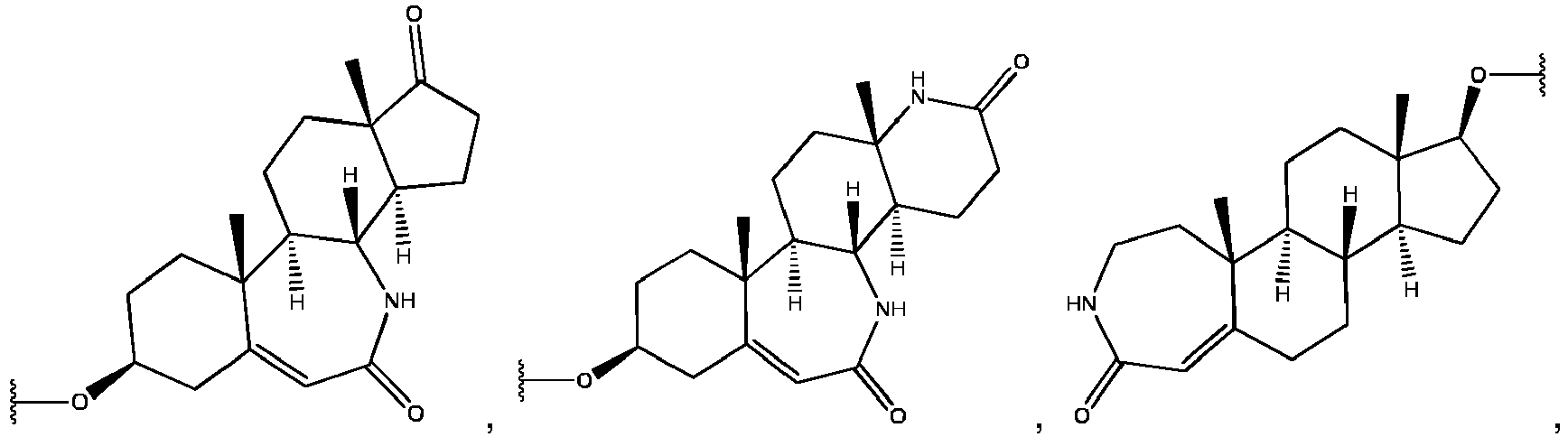


- More preferably, R1 is selected from the group consisting of
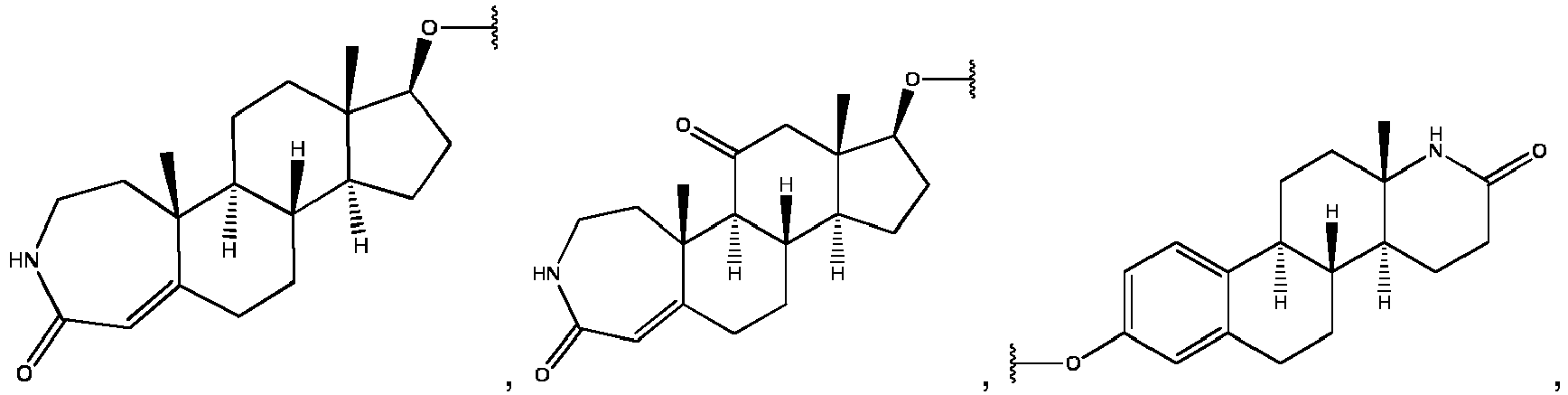

- Preferably, R2 is selected from the group consisting of H, -CH3, -CH=CH2, -CH2-CH3, -CH2CH2CH3. More preferably, R2 is H.
- Preferably, R3 is H or NH2.
- The hydroxyl group of the bis(2-chloroethyl)aminophenol moiety of the compounds of formula (I) can be in the ortho-, meta-, or para- position in relation to the amino group of the phenyl ring.
- The compounds of formula (I) contain at least one asymmetric center. Where the stereochemistry of an asymmetric center is not specified, the structure is intended to encompass all individual stereoisomers as well as their mixtures.
- The compounds of formula (I) contain at least one basic functional group and are capable therefore for forming pharmaceutically acceptable salts by treatment with a suitable acid. Suitable acids include pharmaceutically acceptable inorganic and pharmaceutically acceptable organic acids. Examples of pharmaceutically acceptable salts include hydrochloride, hydrobromide, sulfate, phosphate, nitrate, acetate, propionate, butyrate, maleate, fumarate, tartrate, citrate, lactate, oxalate, succinate, and benzoate.
- The compounds of formula (I) or their pharmaceutically acceptable salts can be used for the treatment of a wide range of cancers. Preferably, they are used for the treatment of ovarian, breast, prostate cancer or leukemia.
- The compounds of formula (I) or their pharmaceutically acceptable salts exhibit higher antitumor activity and lower acute toxicity in comparison with lactam steroid alkylating esters of the prior art and are useful as antineoplastic agents and cancer therapeutics. The preclinical testing for biological activity disclosed in the examples hereinafter incorporates in comparison and in order to show the superiority of the new alkylating lactam steroidal esters on cancer therapeutic efficacy two positive controls, the alkylating agent (3-(4-(bis(2-chloroethyl) amino)phenoxy)propanoic acid, pBCEAPOPA) alone, and the "golden" standard of the described class of experimental lactam steroidal alkylators, ASE (NSC-290205).
- The present invention provides also pharmaceutical compositions comprising a compound of formula (I) or a pharmaceutically acceptable salt thereof. Such a pharmaceutical composition may be formulated for administration by any appropriate route such as oral, nasal, topical or parenteral route. For example, a pharmaceutical composition may be formulated as tablet, capsule, powder, solution, suspension, cream or gel. Such a composition generally contains, in addition to a compound of formula (I) or a pharmaceutically acceptable salt thereof, a pharmaceutically acceptable carrier. Such a carrier comprises excipients well known in the art, such as diluents, binders, fillers, disintegrants, lubricants, solvents, suspending agents, thickening agents, buffers, preservatives. These compositions may be prepared following methods well known in the art.
- The present invention provides also processes for the preparation of a compound of formula (I) or a pharmaceutically acceptable salt thereof.
- The steroidal lactams (aza-homo steroids) in the compounds of formula (I) carry one or more amide functionalities at the rings of the basic steroidal framework. It is known that such steroidal lactams can be synthesized from a ketosteroid via the corresponding oximes and Beckman rearrangement (Koutsourea Al et al, Steroids, 2003, 68(7-8):659-66; Mazur RH, J Org Chem, 1963, 28(1):248-250; Morzycki JW et al, Bioorg Med Chem, 1996, 4(8): 1209-15; Camoutsis C and Catsoulacos P, J Heterocycl Chem, 1983, 20(4):1093-4; Huang Y et al, Molecules, 2013, 18(7):7436-47).
- The oximes (1 mmol) were dissolved in 17.5 mL of dry dioxane. The mixture was cooled to 0 °C and thionyl chloride (1.9 mL) was added dropwise. The mixture was allowed to reach room temperature and stirred for 24 h. The reaction was quenched with NaHCO3 and the mixture was extracted with ethyl acetate (3 x 20 mL). The organic layers were dried (Na2SO4) and concentrated under reduced pressure to afford the crude product that was further purified by chromatography on SiO2.
- The bis(2-chloroethyl)aminophenoxy propanoic acid derivatives of the compounds of the present invention can be prepared as follows:

- Substituted 3-(4-(bis(2-chloroethyl)amino)phenoxy)propanoic acids were synthesized starting from 4-nitrophenol. Alkylation of 4-nitrophenol with different 3-chloropropanoic acids gave the 3-(4-nitrophenoxy)propanoic acids, which were further reduced to amino derivatives by using H2 and Pd/C as catalyst. Next, the amino group was bis-alkylated with oxirane in CH3COOH, THF following a known procedure (Valu et al, J Med Chem, 1990, 33 (11): 3014-19). Finally, the alcohol groups were transformed to the corresponding chlorides by using POCl3 in benzene and heating, affording the corresponding 3-(4-(bis(2-chloroethyl)amino) phenoxy)propanoic acids. In some cases, when amino or hydroxyl groups are present, extra steps for the protection and the deprotection reactions are necessary. For example when R3 is NH2 or OH group the Boc or Acetyl protecting groups are used respectively (Valu KK et al, J Med Chem, 1990, 33(11):3014-9). Following the same process, and starting from 2-nitrophenol or 3-nitrophenol, derivatives of formula (I) in which the hydroxyl group is in ortho- or meta- position in relation to the amino group can be synthesised.
- For the production of the steroidal lactam esters with alkylating agents the steroidal lactams containing a OH group react with the DNA alkylating agent. For example a steroidal lactam reacts with the 3-(4-(bis(2-chloroethyl)amino)phenoxy)propanoic acid with DCC, DMAP or with 3-(4-(bis(2-chloroethyl)amino)phenoxy)propanoyl chloride or with a mixed anhydride of 3-(4-(bis(2-chloroethyl)amino)phenoxy)propanoic acid to produce the corresponding esters. Any steroidal mono- or bis-lactam can be derivatized using the present method.
- Alcohol (1 mmol) was dissolved in 28 mL of dry dichloromethane. Then, acid (2 mmol), DCC (2 mmol) and a catalytic amount of DMAP (3 mol%) were added. After the resulting solution was stirred at room temperature for 24 h the solvent was evaporated and the residue was purified by flash column chromatography on silica gel.
- In a round-bottom flask, 1 mmol of the acid were diluted in 3.3 mL of dry benzene. 2,4,6-Trichlorobenzoyl chloride (1.2 mmol) and triethylamine (2.4 mmol) were added and the mixture refluxed under Ar for 1 h. To this mixture a solution of the steroidal alcohol 50 mg (1 mmol) in 3.3 mL dry benzene and a catalytic amount of 4-dimethylaminopyridine were added. The reflux was continued for 3 h. The benzene was totally removed by evaporation in vacuum and the remaining residue was diluted with CH2Cl2. The resulting mixture was extracted with a 5% HCI aqueous solution, the organic layer was washed with a 7% NaHCO3 aqueous solution and finally with water, dried over Na2SO4 and the solvent was removed under reduced pressure. The residue was chromatographed by flash column chromatography on silica gel.
- A mixture of alcohol (1 mmol), Et3N (1.3 mmol) and a catalytic amount of DMAP was dissolved in CH2Cl2 (5 mL) followed by the addition of benzoyl chloride (0.12 mL, 1.1 mmol). The reaction was monitored by TLC and stirred at room temperature for 24 h then taken up with CH2Cl2 and quenched with saturated aq NH4Cl. The organic layer was dried and the crude product was purified by flash column chromatography on silica gel.
- The following examples are illustrative of the invention.
-

- 1: 3-Aza-17β-hydroxy-A-homo-4α-androsten-4-one was synthesized by modification (Camoutsis C and Catsoulacos P, J Heterocycl Chem, 1983, 20(4):1093-4) procedure in three steps from testosterone 17-β-acetate. Testosterone 17-β-acetate (914 mg, 2.77mmol) was dissolved in 10 ml of dry pyridine. Hydroxylamine hydrochloride (461 mg, 6.64 mmol) was added and the solution was stirred under reflux for 6 h. The solution was poured into water, and the mixture was extracted with ethyl acetate (3 x 30 mL). The organic layers were dried (Na2SO4) and concentrated under reduced pressure to afford the crude product that was further purified by chromatography on SiO2 (eluent; hexane-ethyl acetate= 4/1) to afford 675 mg of the syn- and anti-oximes (74%) as white solids.
- 2: Syn- and anti-testosterone-17-acetate oximes (100 mg, 0.145 mmol) were dissolved in 3.5 mL of dry dioxane. The mixture was cooled to 0 °C and thionyl chloride (0.6 mL) was added dropwise. The mixture was allowed to reach room temperature and stirred for 3h. The reaction was quenched with NaHCO3 and the mixture was extracted with ethyl acetate (3 x 20 mL). The organic layers were dried (Na2SO4) and concentrated under reduced pressure to afford the crude product that was further purified by chromatography on SiO2 (ethyl acetate) to afford 63 mg of 3-aza-17β-acetoxy-A-homo-4α-androsten-4-one (63%) as white solid.
3-Aza-17β-acetoxy-A-homo-4α-androsten-4-one, 1 was dissolved in 4.9 mL MeOH and LiOH (1N, 2 mL) were added dropwise. The mixture was stirred at room temperature for 2 h. The reaction was quenched with NH4Cl and the mixture was extracted with dichloromethane (3 x 10 mL). The organic layers were dried (Na2SO4) and concentrated under reduced pressure to afford 87 mg of 3-aza-17β-hydroxy-A-homo-4α-androsten-4-one 2 in 74% yield. - 3: 3-Aza-17β-hydroxy-A-homo-4α-androsten-4-one 2 was dissolved in 28 mL of dry dichloromethane. Then, 3-(4-(bis(2-chloroethyl)amino)phenoxy)propanoic acid (106 mg, 0.573 mmol), DCC (119 mg, 0.574 mmol) and a catalytic amount of DMAP were added. After the resulting solution was stirred at room temperature for 24 h the solvent was evaporated and the residue was purified by flash column chromatography on silica gel (eluent; hexane-ethyl acetate= 1/2) to give conjugate 3 (191 mg, 99%). 3: mp=53-56 °C; [α]D 23 +10.5 (c= 0.91 CHCl3); 1H NMR (500 MHz, cdcl3) δ 6.92 (s, 1H), 6.83 (d, J = 8.8 Hz, 2H), 6.66 (d, J = 8.6 Hz, 2H), 5.72 (s, 1H), 4.66 (t, J = 8.4 Hz, 1H), 4.17 (t, J = 6.0 Hz, 2H), 3.63 (m, 4H), 3.59 (m, 4H), 3.32 - 3.04 (m, 2H), 2.75 (t, J = 6.1 Hz, 2H), 2.48 (m, 1H), 2.27 (m, 1H), 2.15 (m, 2H), 1.50-1.98 (m, 10H), 1.33 (m, 2H), 1.14 (s, 3H), 1.05 (m, 1H), 0.80 (s, 3H); 13C NMR (126 MHz, cdcl3) δ 171.0, 170.4, 161.3, 151.3, 140.8, 118.8, 116.3, 114.4, 82.7, 64.4, 54.2, 53.2, 50.2, 44.5, 42.7, 41.9, 40.7, 36.7, 36.2, 35.3, 33.8, 33.1, 27.5, 25.6, 24.9, 23.4, 21.3, 12.1; FT-IR: 3450, 2925, 1731, 1651, 1607, 1512, 1469, 1353, 1238, 1181, 1041, 869, 813.
-

- 4: Estrone oxime was synthesized according to previously described procedure (Ivanenko TI et al, Pharm Chem J, 1982, 16(10):751-6). To a solution of estrone (100 mg, 0.37mmol) in 2.2 mL absolute ethanol was added hydroxylamine hydrochloride (62 mg, 0.88 mmol) and pyridine (1.2 mL). The mixture was refluxed for 6 hours. Then water was added and the mixture was extracted with ethyl acetate (3 x 10 mL). The organic layers were dried (Na2SO4) and concentrated under reduced pressure to afford the crude product that was further purified by chromatography on SiO2 (eluent; hexane: ethyl acetate= 3:1) to afford 105 mg of estrone oxime (100 %) as white solid.
- 5: Lactam 5 was synthesized according to previously described procedure (Regan BM and Newton Hayes F, J Am Chem Soc, 1956, 78(3): 639-43). Estrone oxime (108 mg, 0.376 mmol) were dissolved in 6.3 mL of dry dioxane. The mixture was cooled to 0 °C and thionyl chloride (0.7 mL) was added dropwise. The mixture was allowed to reach room temperature and stirred for 24 h. The reaction was quenched with NaHCO3 and the mixture was extracted with dichloromethane (3 x 20 mL). The organic layers were dried (Na2SO4) and concentrated under reduced pressure to afford the crude product that was further purified by chromatography on SiO2 (eluent; hexane: ethyl acetate= 2:1) to afford 42 mg of lactam 5 (56% based on recovered starting material) accompanied by recovered starting material [32 mg of starting material (0.112 mmol)].
- 6: Lactam 5 was dissolved in 14 mL of dry DMF. Then, 3-(4-(bis(2-chloroethyl)amino) phenoxy)propanoic acid (90 mg, 0.293 mmol), DCC (61 mg, 0.293 mmol) and a catalytic amount of DMAP were added. After the resulting solution was stirred at room temperature for 24 h the solvent was evaporated and the residue was purified by flash column chromatography on silica gel (eluent; dichloromethane/acetone= 2/1) to give conjugate 6 (56 mg, 68%). Conjugate 6: [α]D 23 + 73.5 (c = 0.90 CHCl3); 1H NMR (500 MHz, CDCl3) δ 7.25 (d, J = 6.0 Hz, 1H), 6.89 (d, J = 8.8 Hz, 2H), 6.82 (s, 1H), 6.68 (d, J = 8.8 Hz, 2H), 6.31 (s, 1H), 4.30 (t, J = 6.1 Hz, 2H), 3.62 (dt, J = 29.2, 6.6 Hz, 8H), 2.97 (dd, J = 15.1, 9.0 Hz, 2H), 2.88 (m, 2H), 2.58 - 2.36 (m, 4H), 2.23 - 2.00 (m, 2H), 1.92 - 1.66 (m, 3H), 1.60 - 1.29 (m, 4H), 1.19 (s, 3H); 13C NMR (126 MHz, CDCl3) δ 171.7, 169.8, 151.3, 148.5, 141.0, 137.8, 137.2, 126.1, 121.3, 118.7, 116.5, 114.5, 64.4, 54.4, 54.2, 46.6, 43.4, 40.7, 39.9, 38.9, 34.9, 30.5, 29.5, 26.5, 25.9, 22.1, 19.8; FTIR: 3329, 2927, 2850, 1757, 1626, 1577, 1512, 1437, 1311, 1244, 1157, 1088, 1045, 892.
-

- 7: 17-Hydroxyandrost-4-ene-3,11-dione (484 mg, 1.59 mmol) was dissolved in 2.2 mL acetic anhydride. Then, 4 mg (0.037 mmol) of DMAP and 0.25 mL of dry pyridine were added. The mixture was stirred at room temperature for 24 h. The reaction was quenched with water and the mixture was extracted with ethyl acetate (3 x 30 mL). The organic layers were dried (Na2SO4) and concentrated under reduced pressure to afford the crude product that was further purified by chromatography on SiO2 (eluent; hexane: ethyl acetate= 6:1) to afford 472 mg of 17-acetoxyandrost-4-ene-3,11-dione in 86% yield. 7: mp=162-164 °C [α]D 23 + 148.0 (c 1.68 CHCl3); 1H NMR (500 MHz, cdcl3) δ 5.69 (s, 1H), 4.76 (t, J = 8.6 Hz, 1H), 2.83 - 2.69 (m, 1H), 2.54 - 2.20 (m, 6H), 2.01 (d, J = 1.2 Hz, 3H), 1.92 (m, 3H), 1.85 - 1.55 (m, 4H), 1.51 - 1.41 (m, 1H), 1.44 - 1.34 (m, 3H), 1.32 - 1.10 (m, 2H), 0.85 - 0.69 (m, 3H); 13C NMR (126 MHz, cdcl3) δ 208.3, 199.5, 170.8, 168.3, 124.6, 80.2, 62.6, 54.8, 49.4, 46.2, 38.2, 37.0, 34.7, 33.7, 32.1, 31.7, 27.6, 22.9, 20.9, 17.2, 12.8; FT-IR: 3443, 2958, 2935, 2850, 1732,1702, 1677, 1618, 1426, 1373, 1360, 1343, 1271, 1238, 1224, 1045, 1027
- 8: To a solution of 17-acetoxyandrost-4-ene-3,11-dione (465 mg, 1.35 mmol) in 7 mL absolute ethanol was added hydroxylamine hydrochloride (100 mg, 1.44 mmol) and dry pyridine (4.2 mL). The mixture was stirred at room temperature for 24 hours. Then, water was added and the mixture was extracted with ethyl acetate (3 x 40 mL). The organic layers were dried (Na2SO4) and concentrated under reduced pressure to afford the crude product that was further purified by chromatography on SiO2 (eluent; dichloromethane: ethyl acetate= 20:1) to afford 461 mg of the oximes 8 (95 %).
- 9: Oxime 8 (264 mg, 0.74 mmol) were dissolved in 13 mL of dry dioxane. The mixture was cooled to 0 °C and thionyl chloride (1.4 mL) was added dropwise. The mixture was allowed to reach room temperature and stirred for 24 h. The reaction was quenched with NaHCO3 and the mixture was extracted with ethyl acetate (3 x 20 mL). The organic layers were dried (Na2SO4) and concentrated under reduced pressure to afford the crude product that was further purified by chromatography on SiO2 (eluent; ethyl acetate: methanol = 1: 0.03) to afford 163 mg of lactam 9 in 62 % yield. 9: 1H NMR (500 MHz, cdcl3) δ 6.39 (s, 1H), 5.75 (s, 1H), 4.78 (t, J = 8.6 Hz, 1H), 3.35 - 3.18 (m, 1H), 3.09 (dt, J = 14.7, 7.2 Hz, 1H), 2.67 (dd, J = 14.9, 8.2 Hz, 1H), 2.48 (td, J = 13.6, 3.9 Hz, 1H), 2.34 - 2.20 (m, 3H), 2.14 (dd, J = 9.3, 6.5 Hz, 1H), 2.03 (s, 3H), 2.01 - 1.86 (m, 2H), 1.83 - 1.53 (m, 5H), 1.48 - 1.37 (m, 1H), 1.38 (s, 3H), 1.28 - 1.08 (m, 1H), 0.76 (s, 3H); 13C NMR (126 MHz, cdcl3) δ 209.0, 170.8, 169.5, 158.4, 120.1, 80.1, 62.4, 55.1, 49.9, 46.7, 43.6, 40.4, 36.8, 36.8, 35.5, 33.2, 27.6, 22.8, 21.1, 20.9, 12.8; FT-IR: 3428, 2971, 2920, 2878, 2364, 2341, 1736, 1701, 1664, 1639, 1599, 1444, 1375, 1339, 1245, 1127, 1089, 1046.
- 10: Lactam 9 76 mg (0.21 mmol) was dissolved in 3 mL MeOH and LiOH (1N, 1.2 mL) were added dropwise. The mixture was stirred at room temperature for 1 h. The reaction was quenched with NH4Cl and the mixture was extracted with dichloromethane (3 x 5 mL). The organic layers were dried (Na2SO4) and concentrated under reduced pressure to afford 67 mg of lactam 10. 10: 1H NMR (500 MHz, dmso) δ 7.72 (s, 1H), 5.51 (s, 1H), 4.66 (d, J = 4.7 Hz, 1H), 3.66 (dd, J = 13.4, 8.4 Hz, 1H), 3.08 - 2.90 (m, 2H), 2.47 - 2.32 (m, 2H), 2.29 (d, J = 11.5 Hz, 1H), 2.21 (d, J = 11.2 Hz, 1H), 2.14 - 2.01 (m, 2H), 2.01 - 1.78 (m, 3H), 1.74 - 1.50 (m, 3H), 1.40 (m, 1H), 1.28 (s, 3H), 1.23 (s, 1H), 1.15 - 1.02 (m, 1H), 0.55 (s, 3H); 13C NMR (126 MHz, dmso) δ 210.2, 167.8, 157.3, 120.3, 78.1, 61.0, 54.5, 48.8, 47.1, 43.1, 40.4, 36.8, 35.5, 34.9, 33.1, 29.9, 22.3, 20.9, 11.8; FT-IR: 3423, 3262, 2952, 2923, 2853, 1693, 1647, 1609, 1458, 1407, 1375, 1353, 1261, 1062.
- 11: Lactam 10 was dissolved in 8.2 mL of dry DCM. Then, 3-(4-(bis(2-chloroethyl)amino)phenoxy)propanoic acid (51 mg, 0.17 mmol), DCC (51 mg, 0.25 mmol) and a catalytic amount of DMAP were added. After the resulting solution was stirred at room temperature for 24 h the solvent was evaporated and the residue was purified by flash column chromatography on silica gel (eluent; ethyl acetate) to give conjugate 11 (48.5 mg, 96%). Conjugate 11: 1H NMR (500 MHz, cdcl3) δ 6.83 (d, J = 9.0 Hz, 2H), 6.67 (d, J = 9.0 Hz, 2H), 6.11 (s, 1H), 5.76 (s, 1H), 4.86 (t, J = 8.6 Hz, 1H), 4.17 (t, J = 6.2 Hz, 2H), 3.61 (m, 8H), 3.25 (m, 1H), 3.18 - 3.01 (m, 1H), 2.84 - 2.59 (m, 2H), 2.59 - 2.38 (m, 1H), 2.37 - 2.25 (m, 3H), 2.16 (m, 1H), 2.10 - 1.89 (m, 3H), 1.87 - 1.55 (m, 4H), 1.39 (s, 3H), 1.26 (m, 2H), 1.12 (m, 1H), 0.76 (s, 3H); 13C NMR (126 MHz, cdcl3) δ 208.9, 170.9, 169.5, 158.7, 151.3, 140.9, 119.9, 116.2, 114.5, 80.4, 64.2, 62.4, 55.1, 54.3, 49.9, 46.8, 43.6, 40.7, 36.8, 35.5, 34.9, 33.9, 27.6, 25.6, 24.9, 22.8, 21.2, 12.8; FT-IR: 3432, 3328, 2927, 2850, 1733, 1701, 1664, 1626, 1599, 1513, 1444, 1389, 1369, 1310, 1273, 1243, 1179, 1087, 1041, 999.
-

- 13: To a solution of 12 (100 mg, 0.28 mmol) in 1.5 mL absolute ethanol in a sealed tube was added hydroxylamine hydrochloride (21 mg, 0.31 mmol) and dry pyridine (0.9 mL). The mixture was heated at 140 °C for 7 days. Then, water was added and the mixture was extracted with ethyl acetate (3 x 5 mL). The organic layers were dried (Na2SO4) and concentrated under reduced pressure to afford a crude product, which was used to the next step without further purification.
- 14: The crude oximes 13 described above (0.28 mmol) were dissolved in 4.9 mL of dry dioxane. The mixture was cooled to 0 °C and thionyl chloride (0.54 mL) was added dropwise. The mixture was allowed to reach room temperature and stirred for 24 h. The reaction was quenched with NaHCO3 and the mixture was extracted with ethyl acetate (3 x 20 mL). The organic layers were dried (Na2SO4) and concentrated under reduced pressure to afford the crude product that was further purified by chromatography on SiO2 (eluent; ethyl acetate: methanol = 1: 0.1) to afford 52 mg of lactam in 50 % yield. 14: 1H NMR (500 MHz, cdcl3) δ 7.00 (s, 1H), 5.77 (s, 1H), 5. 59 (s, 1H), 4.61 (t, J = 8.3 Hz, 1H), 3.20 (m, 2H), 3.02 (dd, J = 9.6, 5.0 Hz, 1H), 2.48 - 2.40 (m, 2H), 2.31 (d, J = 13.7 Hz, 1H), 2.16 (m, 2H), 2.09 -2.0- 1.97 (m, 5H), 1.74-1.84 (m, 2H), 1.51 - 1.40 (m, 2H), 1.35- 1.30 (m, 1H), 1.24 (s, 3H), 1.23 (m, 1H), 1.08 (m, 1H), 0.95 (s, 3H); 13C NMR (126 MHz, cdcl3) δ 175.1, 170.9, 169.4, 156.3, 120.4, 80.1, 64.2, 55.5, 45.2, 44.6, 41.0, 40.8, 38.0, 36.3, 34.4, 31.0, 25.4, 25.2, 21.9, 21.0, 11.7.
- 15: Lactam 14 28 mg (0.084 mmol) was dissolved in 1.2 mL MeOH and LiOH (1N, 0.5 mL) were added dropwise. The mixture was stirred at room temperature for 1 h. The reaction was quenched with NH4Cl and the mixture was extracted with ethylacetate (3 x 5 mL). The organic layers were dried (Na2SO4) and concentrated under reduced pressure. The crude product that was further purified by chromatography on SiO2 (eluent; ethyl acetate: methanol = 1: 0.1) to afford 28 mg of lactam 15 in 100 % yield. 15: 1H NMR (500 MHz, dmso) δ 7.75 (s, 1H), 6.13 (d, J = 3.9 Hz, 1H), 5.53 (s, 1H), 4.66 (d, J = 5.3 Hz, 1H), 3.40 (m, 2H), 3.11 - 2.93 (m, 2H), 2.44 - 2.34 (m, 1H), 2.29 (s, 2H), 2.04 - 1.72 (m, 5H), 1.65 (m, 2H), 1.24 (m, 3H), 1.20 (s, 3H), 0.89 (m, 1H), 0.66 (s, 3H); 13C NMR (126 MHz, dmso) δ 174.6, 167.7, 156.1, 120.1, 78.1, 69.8, 63.4, 44.9, 44.2, 41.2, 40.4, 37.7, 35.3, 33.7, 31.3, 27.7, 24.4, 20.9, 10.7.
- 16: Lactam 15 (30 mg, 0.09 mmol) was dissolved in 9 mL of dry DCM. Then, 3-(4-(bis(2-chloroethyl)amino)phenoxy)propanoic acid (67 mg, 0.22 mmol), DCC (60 mg, 0.29 mmol) and a catalytic amount of DMAP were added. After the resulting solution was stirred at room temperature for 24 h the solvent was evaporated and the residue was purified by flash column chromatography on silica gel (eluent; ethyl acetate/MeOH=10/1) to give conjugate 16 (39 mg, 70%). 1H NMR (500 MHz, cdcl3) δ 6.85 (d, J = 9.0 Hz, 2H), 6.76 (s, 1H), 6.65 (d, J = 9.0 Hz, 2H), 5.79 (s, 1H), 5.46 (s, 1H), 4.68 (t, J = 8.3 Hz, 1H), 4.17 (t, J = 6.2 Hz, 2H), 3.60 (m, 4H), 3.51 - 3.42 (m, 1H), 3.18 (m, 2H), 3.02 (dd, J = 9.5, 5.0 Hz, 1H), 2.85 - 2.67 (m, 2H), 2.51 (d, J = 13.8 Hz, 1H), 2.44 (dd, J = 13.6, 10.1 Hz, 1H), 2.33 (d, J = 13.8 Hz, 1H), 2.25 - 2.06 (m, 2H), 2.07 - 1.73 (m, 5H), 1.73 - 1.28 (m, 5H), 1.25 (s, 3H), 1.17 - 1.03 (m, 2H), 0.96 (s, 3H); 13C NMR (126 MHz, cdcl3) δ 174.7, 170.9, 169.1, 155.6, 151.3, 140.9, 120.7, 116.3, 114.4, 80.5, 64.2, 64.1, 55.5, 54.2, 45.3, 44.5, 41.1, 40.7, 38.1, 36.3, 34.8, 34.4, 33.9, 31.0, 25.6, 25.5, 25.2, 24.9, 21.9, 11.8. FT-IR: 3410, 3330, 2926, 2850, 1734, 1654, 1627, 1577, 1513, 1445, 1349, 1273, 1243, 1180, 1133, 1110, 1087, 1044, 890.
-

- Lactam 17 was synthesized according to Koutsourea et al (Steroids, 2003, 68(7-8):659-66).
- 18: In a round-bottom flask 48 mg (0.157 mmol) of the acid were diluted in 0.5 ml of dry benzene. 2,4,6-Trichlorobenzoyl chloride (30 µl, 0.189 mmol) and triethylamine (53 µl, 0.378 mmol) were added and the mixture refluxed under Ar for 1 h. To this mixture a solution of the steroidal alcohol 50 mg (0.157 mmol) in 0.5 ml dry benzene and a catalytic amount of 4-dimethylaminopyridine were added. The reflux was continued for 3 h. The benzene was totally removed by evaporation in vacuum and the remaining residue was diluted with CH2Cl2. The resulting mixture was extracted with a 5% HCI aqueous solution, the organic layer was washed with a 7% NaHCO3 aqueous solution and finally with water, dried over Na2SO4 and the solvent removed under reduced pressure. The residue was chromatographed on a silica gel column (eluent; ethyl acetate/MeOH= 100/1) to give 46 mg of conjugate 18 in 48% yield. Conjugate 18: 1H NMR (500 MHz, cdcl3) δ 6.84 (d, J = 8.5 Hz, 2H), 6.67 (d, J = 8.5 Hz, 2H), 5.90 (s, 1H), 5.86 (s, 1H), 4.78 (m, 1H), 4.19 (m, 2H), 3.58-3.59 (m, 8H), 3.48 (m, 1H), 2.61-1.25 (18H), 1.29 (s, 3H), 0.88 (s, 3H); [M+H]+=605.
-

- Lactam 19 was synthesized according to Koutsourea et al (Steroids, 2003, 68(7-8):659-66).
- 20: In a round-bottom flask 46 mg, (0.15 mmol) of the acid were diluted in 0.5 ml of dry benzene. 2,4,6-Trichlorobenzoyl chloride (28 µl, 0.18 mmol) and triethylamine (50 µl, 0.36 mmol) were added and the mixture refluxed under Ar for 1 h. To this mixture a solution of the steroidal alcohol 50 mg (0.150 mmol) in 0.5 ml dry benzene and a catalytic amount of 4-dimethylaminopyridine were added. The reflux was continued for 3 h. The benzene was totally removed by evaporation in vacuum and the remaining residue was diluted with CH2Cl2. The resulting mixture was extracted with a 5% HCI aqueous solution, the organic layer was washed with a 7% NaHCO3 aqueous solution and finally with water, dried over Na2SO4 and the solvent removed under reduced pressure. The residue was chromatographed on a silica gel column (eluent; ethyl acetate/MeOH= 100/2) to give 19 mg of conjugate 20 in 20% yield. 20: 1H NMR (500 MHz, cdcl3) δ 7.18 (s, 1H), 6.84 (d, J = 8.5 Hz, 2H), 6.65 (d, J = 8.5 Hz, 2H), 6.60 (s, 1H), 5.82 (s, 1H), 4.80 (1H, m), 4.21 (2H, m), 3.50 (m, 8H), 3.20 (1H, m), 2.80-1.30 (19H), 1.20 (s, 3H), 0.9 (s, 3H); [M+H]+=621.
-

- Lactam 21 was synthesized according to Koutsourea et al (Steroids, 2003, 68(7-8):659-66).
- 22: In a round-bottom flask 37 mg, (0.12 mmol) of the acid were diluted in 0.4 ml of dry benzene. 2,4,6-Trichlorobenzoyl chloride (22 µl, 0.144 mmol) and triethylamine (40 µl, 0.288 mmol) were added and the mixture refluxed under Ar for 1 h. To this mixture a solution of the steroidal alcohol 50 mg (0.120 mmol) in 0.4 ml dry benzene and a catalytic amount of 4-dimethylaminopyridine were added. The reflux was continued for 3 h. The benzene was totally removed by evaporation in vacuum and the remaining residue was diluted with CH2Cl2. The resulting mixture was extracted with a 5% HCI aqueous solution, the organic layer was washed with a 7% NaHCO3 aqueous solution and finally with water, dried over Na2SO4 and the solvent removed under reduced pressure. The residue was chromatographed on a silica gel column (eluent; ethyl acetate) to give 34 mg of conjugate 22 in 40% yield.22: 1H NMR (500 MHz, cdcl3) δ 6.84 (d, J = 8.5 Hz, 2H), 6.60 (d, J = 8.5 Hz, 2H), 5.90 (s, 1H), 5.79 (s, 1H), 4.80 (m 1H), 4.15 (m, 2H), 3.5 (m, 8H), 3.25 (m, 1H), 2.8- 0.8 (22H); [M+H]+=605.
- Nine well established human cancer cell lines (table 1) were treated for testing cytostatic and cytotoxic activity produced by the newly synthesized compounds. The cell lines were obtained from the American Type Culture Collection (ATCC) and were grown in different culture medium according to the instructions. The MTT ((3-(4, 5-imethylthiazol-2-yl)-2, 5-diphenyltetrazolium bromide) assay is a well-established and standard method for evaluating the cytostatic and cytotoxic activity of drugs and chemicals (Trafalis DT et al, J BUON, 2003, 8:333-9; Trafalis DT et al, J BUON, 2004, 9(3):275-82; Trafalis DT et al, J BUON, 2005; 10:227-34; Trafalis DT et al, Breast Cancer Res Treat, 2006, 97:17-31). Briefly, the cells were plated in 96-well plate at a density of -3 x10⁴cells/ml per well and maintained for 72 h at 37°C in a 5% CO2 incubator and grown as monolayers or suspensions. After 24 hours, cells were treated with 0.1-100 µmol/l of the compounds for 48 h. The viability of cultured cells was estimated MTT (Sigma, St Louis, Missouri, USA) metabolic assay as described previously. Absorbance of the converted dye was measured at a wavelength of 540nm on an ELISA reader (Versamax, Orleans, USA). The mean concentrations of each drug that generated 50% or total (100%) growth inhibition (GI50 and TGI, respectively) as well as the drug concentrations that produced cytotoxicity against 50% of the cultured cells [(half maximal cytotoxic concentration (IC50)] were calculated using the linear regression method. Using seven absorbance measurements [time 24 h (Ct24), control growth 72 h (Ct72), and test growth in the presence of drug at five concentration levels (Tt72x)], the percentage of growth was calculated at each level of the drug concentrations. The percentage growth inhibition was calculated according to National Cancer Institute (NCI) as: [(Tt72x)-(Ct24) / (Ct72)-(Ct24)] x 100 for concentrations for which Tt72x>Ct24 and [(Tt72x)-(Ct24)/Ct24] x 100 for concentrations for which Tt72x<Ct24; GI50 was calculated from [(Tt72x)-(Ct24)/(Ct72)-(Ct24)] x 100=50,TGI from [(Tt72x)-(Ct24)/(Ct72)-(Ct24)] x 100=0, and IC50 from [(Tt72x)-(Ct24)/Ct24] x 100= 50. All the experiments were carried out in triplicate.
Table 1 Cancer Type Human Cell line designation Oncogenes Special Characteristics Ovarian Adenocarcinoma SK-OV-3 (SKOV-3) Tumor Necrosis Factor; Diphtheria Toxin; Cis-platinum and Adriamycin resistant Epithelial Ovarian Adenocarcinoma NIH:OVCAR-3 Androgen/Estrogen/Progesteron e receptor positive; Adriamycin, Melphalan and Cisplatin resistant Ovarian Carcinoma UWB1.289 p53 + BRCA1 - (mutated) Estrogen/Progesterone receptor negative Ovarian Carcinoma UWB1.289+BRCA 1 p53 + BRCA1+ Estrogen/Progesterone receptor negative Epithelial Breast Adenocarcinoma MCF7 WNT7B+ Estrogen receptor positive Insulin-like growth factor binding proteins (IGFBP) BP-2; BP-4; BP-5 Epithelial Breast Adenocarcinoma T-47D WNT7B+ calcitonin; androgen receptor, positive; progesterone receptor, positive; glucocorticoid; prolactin; estrogen receptor, positive Prostate Adenocarcinoma PC-3 Hormone resistant Acute T-lymphoblastic leukemia MOLT-4 Terminal deoxynucleotidyl transferase (TdT) expressed Chronic myelogenous leukemia K-562 - The results of in vitro cytostatic (GI50, TGI) and cytotoxic (IC50) effects induced by the tested compounds against human cancer cell lines are presented on Tables 2, 3,4.
Table 2 Compounds HUMAN CANCER CELL LINES pBCEAPOPA ASE 22 GI50 TGI IC50 GI50 TGI IC50 GI50 TGI IC50 UWB1.289 20 76 >100 16 30 54 80 >100 >100 UWB1.289+BRC A1 >100 >100 >100 80 >100 >100 >100 >100 >100 OVCAR-3 56 92 >100 36 52 64 >100 >100 >100 SKOV-3 50 >100 >100 45 92 >100 >100 >100 >100 MCF-7 >100 >100 >100 29 57 96 >100 >100 >100 T-47D 95 >100 >100 22 47 92 85 >100 >100 PC-3 89 >100 >100 34 49 89 90 >100 >100 MOLT-4 31 75 >100 8 56 93 22 63 >100 K-562 46 91 >100 9 78 >100 36 94 >100 Table 3 Compounds HUMAN CANCER CELL LINES 18 20 6 GI50 TGI IC50 GI50 TGI IC50 GI50 TGI IC50 UWB1.289 13 42 70 9 36 76 6 20 44 UWB1.289+BRCA1 20 38 69 30 76 >100 18 66 88 OVCAR-3 20 47 70 54 82 >100 30 40 56 SKOV-3 24 46 68 42 78 >100 12 76 >100 MCF-7 21 46 79 25 68 >100 15 36 65 T-47D 14 32 72 26 59 98 10 30 55 PC-3 23 36 70 29 44 68 16 29 51 MOLT-4 5 38 76 11 46 85 5 28 50 K-562 6 38 87 13 49 90 5 30 50 Table 4 Compounds HUMAN CANCER CELL LINES 3 11 16 GI50 TGI IC50 GI50 TGI IC50 GI50 TGI IC50 UWB1.289 3 8 20 6 20 25 3 28 40 UWB1.289+BRCA1 12 25 40 22 31 42 12 32 50 OVCAR-3 21 32 42 8 18 22 9 20 35 SKOV-3 18 52 76 20 32 44 20 46 70 MCF-7 17 38 70 25 68 >100 15 36 65 T-47D 10 25 66 26 59 98 10 30 55 PC-3 22 30 56 29 44 68 16 29 51 MOLT-4 3 27 65 1,5 20 45 4 36 56 K-562 3 30 71 2 35 55 7 47 65 - For intraperitoneal (i.p.) treatment, stock solutions of the tested compounds were prepared immediately before use. They were suspended in corn oil in the desired concentration following initial dissolution in 10% dimethylsulfoxide (DMSO). This concentration by itself produced no observable toxic effect.
- C57BI/6 female mice were used for toxicity studies. Mice obtained from experimental section of the Hellenic Pasteur Institute.
- Briefly, the acute toxicity induced by the tested compounds was determined, as previously had very well described (Catsoulacos P et al, Cancer Chemother Pharmacol, 1979, 3(1):67-70; Catsoulacos P et al, J Pharm Sci, 1978, 67(9):1342-3; Catsoulacos P et al, Anticancer Res, 1995; 15:827-30) following a single intraperitoneal (i.p.) injection into groups of ten (10) C57BI/6 mice at four different dosages; the mice were observed for 30 days and the therapeutic dose of the compounds, which is usually defined as LD10 (lethal dose for 10% of animals) as well as LD50 (lethal dose for 50% of animals) were determined after graphical estimation (30-day curves). The toxicity of the tested compounds was assessed from lethality in C57BI/6 mice. The LD50 and LD10 values were estimated graphically, where the percentage of deaths due to the toxicity of each dose was shown in the ordinate, while the administered doses were indicated on the abscissa (table 5).
- Experiment was initiated on day 0 by implanting intraperitoneally (i.p.) 106 ascites cells of P388 lymphocytic leukemia according to the protocol of National Cancer Institute (NCI), USA. For i.p. treatment, stock solutions of the tested compounds were prepared immediately before use. The antitumor activity was assessed from the oncostatic parameter T/C%, which means median survival time (MST) of drug-treated animals (T) to saline treated controls (C). According to the NCI (USA), the minimum criterion of activity is T/C higher than 125 %. Moreover, the antitumor activity was estimated from the number of long-term survivors (cures: defined as mice alive for 90 days after tumor inoculation) (Golidim A et al, Nat Cancer Inst Monogr, 1980, 55: 25-26; NCI Monograph, NIH publication 1986, 55:80-193). BALB/c scid female mice were used for antitumor evaluation. These animals carry the severe combined immune deficiency mutation (scid) on the BALB/c background, and obtained from NCSR "Demokritos", Institute of Biology. Mice were kept under conditions of constant temperature and humidity, in sterile cages, with water and food. Six mice were included in each group of treatment and eight in the control group.
- The tested therapeutic dose of the compounds was defined at the respective LD10 (mg/kgr).
Table 5. Acute toxicity of the compounds in C57BI/6. LD50 and LD10 = lethal doses for 50 % and 10% of the population of the treated mice. COMPOUNDS LD50 (mg/kg) LD10 (mg/kg) pBCEAPOPA 20 15 ASE 50 30 3 150 130 6 100 80 18 110 85 20 135 110 22 - >300 11 130 100 16 165 140 Table 6. Antileukemic activity of the tested compounds against murine P388 lymphocytic leukemia in vivo. Compoun ds Treatmen t schedule Dose (LD10) (mg/kg) MST ± SD (days) T/C % Cures pBCEAPO PA Day 1 15 (ip) 19 211* 0/6 ASE Day 1 30 (ip) 24 267* 0/6 3 Day 1 130 (ip) 39 433* 0/6 6 Day 1 80 (ip) 36 400* 0/6 18 Day 1 85 (ip) 34 378* 0/6 20 Day 1 110 (ip) 32 356* 0/6 11 Day 1 100 (ip) 56 622* 1/6 16 Day 1 140 (ip) 44 489* 0/6 Controls Day 1 Saline 9 ± 1,5 100 0/8 *p<0,001 - BALB/c scid female mice were used for the in vivo antitumor evaluation of the tested compounds against the human ovarian cancer SCOV-3. Suspensions of 3x10⁶ SCOV-3 cancer cells / 0.2 ml / mouse were inoculated subcutaneously in the right or left flank of each animal. Mice were kept under conditions of constant temperature and humidity, in sterile cages, with water and food. Ten mice were included in each group of treatment and control. Testing was carried out according to well-established laboratory protocols. The efficacy of the drugs was determined by the mean change of tumor volume of treated animals (T) over the control (C) (T/C%=TI, Tumor Inhibition) and by the increase of median survival time, according to tumor cell kinetics and biological properties. Tumor volumes or weights were calculated as 0.52×a2×b, where a and b are the minor and major tumor axes and data plotted on a semi-logarithmic graph as mean tumor volumes ± standard error of the mean (±SEM) versus time after treatment. When tumors reached at a volume of 0.085-0.1 mm3 mice were divided into control and drug treatment groups (10 mice/group), with similar average tumor volumes in each group. The tested compounds were administered i.p. at doses of LD10/4 respectively on days 1, 5 and 9.
- For evaluation of antitumor effect, (a) the weekly mean tumor weight or mean tumor volume change was determined and tumor inhibition (TI) was calculated by the formula: TI(%)= [1)(TWT)TWZ)/(TWC)TWZ)]x100, where TWT is determined as the tumor weight (mg) or tumor volume (mm3) in treated animals at the time of evaluation, TWZ is determined as the tumor weight (mg) or tumor volume (mm3) at the time of initiation of treatment (zero time or day 1), TWC is determined as the tumor weight (mg) or tumor volume (mm3) in untreated animals (controls) at the time of evaluation, (b) the percentage of survivors (OS%)at Day-70, (c) the percentage of tumor progression free survivors (PFS%) at the day-70. The results are demonstrated on Table 7.
Table 7. Antitumor activity of the tested compounds against SCOV-3 human ovarian cancer in vivo. Compoun ds Treatmen t schedule Dose (LD10/4) (mg/kg) TI% at Day-35 OS% on Day-70 PFS% on Day-70 pBCEAPO PA Days 1,5,9 4 (ip) 17 40 0 ASE Days 1,5,9 8 (ip) 34 80 40 3 Days 1,5,9 32 (ip) 62 100 100 6 Days 1,5,9 20 (ip) 56 100 100 18 Days 1,5,9 21 (ip) 44 100 80 20 Days 1,5,9 28 (ip) 41 100 70 11 Days 1,5,9 25 (ip) 73 100 100 16 Days 1,5,9 37 (ip) 55 100 100 Controls Days 1,5,9 Saline 0 0 0 All differences on TI%, OS%, PFS% are significant at levels of p<0.05-0,001 - The new lactam steroidal alkylators induce significant inhibition effect on poly(ADP-ribose) polymerase (PARP1/2) activity showing half maximal inhibitory concentrations (IC50) less than 1.7 µM, better than the well-known PARP1/2 inhibitor the 3-aminobenzamide (3-AB). Moreover, the new lactam steroidal alkylators produce significant changes on the transcription and mRNA expression of PARP1 and PARP2 in a dose and time depended manner, in vitro and in vivo. At first or in lower doses they can induce an increase of the PARP1 and PARP2 mRNA expression which reaches 5-400 folds higher than control values, generating changes on intracellular NAD+ concentrations and cellular ATP depletion, and later or in higher doses they induce a decrease of PARP1 and PARP2 mRNA expression which can reach near to 100%. The new lactam steroidal alkylators produce significant DNA damage comparable with that induced by their alkylating component alone, as was assessed in vitro by Sister Chromatid Exchanges (SCE's) assay and in vivo by producing 8-hydroxy-2' -deoxyguanosine (8-OHdG) adducts in serum or urine, while they generate significantly higher antitumor activity. Furthermore, the new lactam steroidal alkylators inhibit significantly (>60%) the phosphorylation of ERK1/2 and AKT1/2, and consequently the activation of the PI3K and MAPK molecular signaling pathways. For the first time the molecular pharmacological effects of the lactam steroidal alkylators were investigated in depth.
Claims (12)
- A compound of formula (I) or a pharmaceutically acceptable salt thereof

R1 is selected from the group consisting of
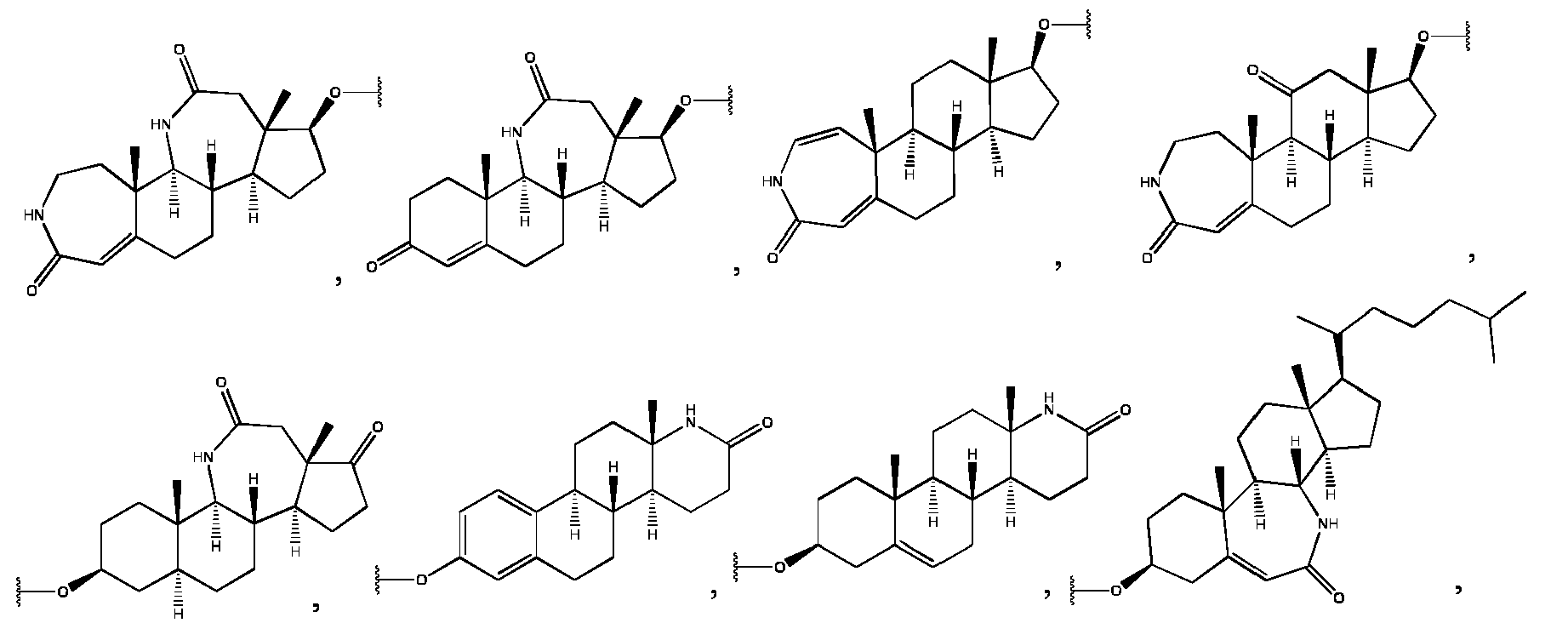


- A compound according to claim 1, or a pharmaceutically acceptable salt thereof, wherein R1 is selected from the group consisting of


- A compound according to claim 2 or a pharmaceutically acceptable salt thereof, wherein R1 is selected from the group consisting of


- A compound according to claim 2 or a pharmaceutically acceptable salt thereof, wherein R1 is selected from the group consisting of

- A compound according to any one of claims 1-4 or a pharmaceutically acceptable salt thereof, wherein R2 is selected from the group consisting of H, -CH3, -CH=CH2, - CH2-CH3, -CH2CH2CH3.
- A compound according to claim 5 or a pharmaceutically acceptable salt thereof, wherein R2 is H.
- A compound according to any one of claims 1-6 or a pharmaceutically acceptable salt thereof, wherein R3 is H.
- A compound according to any one of claims 1-6 or a pharmaceutically acceptable salt thereof, wherein R3 is -NH2.
- A compound according to any one of claims 1-8 or a pharmaceutically acceptable salt thereof for use in medicine.
- A compound according to any one of claims 1-8 or a pharmaceutically acceptable salt thereof for use in the treatment of cancer.
- A compound according to any one of claims 1-8 or a pharmaceutically acceptable salt thereof for use in the treatment of ovarian cancer, breast cancer, prostate cancer or leukemia.
- A pharmaceutical composition comprising a compound according to any one of claims 1-8 or a pharmaceutically acceptable salt thereof and a pharmaceutically acceptable carrier.
Priority Applications (4)
| Application Number | Priority Date | Filing Date | Title |
|---|---|---|---|
| PL16739424T PL3186268T3 (en) | 2015-06-29 | 2016-06-28 | Esters of steroidal lactam and bis(2-chloroethyl) aminophenoxy propanoic acid derivatives |
| HRP20190327TT HRP20190327T1 (en) | 2015-06-29 | 2016-06-28 | STEROID LACTAME ESTERS AND BIS (2-CHLOROethyl) AMINOPHENOXES OF PROPANIC ACID |
| RS20190229A RS58630B1 (en) | 2015-06-29 | 2016-06-28 | Esters of steroidal lactam and bis(2-chloroethyl) aminophenoxy propanoic acid derivatives |
| SI201630188T SI3186268T1 (en) | 2015-06-29 | 2016-06-28 | Esters of steroidal lactam and bis(2-chloroethyl) aminophenoxy propanoic acid derivatives |
Applications Claiming Priority (2)
| Application Number | Priority Date | Filing Date | Title |
|---|---|---|---|
| EP15386022 | 2015-06-29 | ||
| PCT/EP2016/065071 WO2017001439A1 (en) | 2015-06-29 | 2016-06-28 | Esters of steroidal lactam and bis(2-chloroethyl) aminophenoxy propanoic acid derivatives |
Publications (2)
| Publication Number | Publication Date |
|---|---|
| EP3186268A1 EP3186268A1 (en) | 2017-07-05 |
| EP3186268B1 true EP3186268B1 (en) | 2018-11-28 |
Family
ID=53716416
Family Applications (1)
| Application Number | Title | Priority Date | Filing Date |
|---|---|---|---|
| EP16739424.6A Active EP3186268B1 (en) | 2015-06-29 | 2016-06-28 | Esters of steroidal lactam and bis(2-chloroethyl) aminophenoxy propanoic acid derivatives |
Country Status (24)
| Country | Link |
|---|---|
| US (1) | US10208083B2 (en) |
| EP (1) | EP3186268B1 (en) |
| JP (1) | JP6708670B2 (en) |
| KR (1) | KR102647748B1 (en) |
| CN (1) | CN107835817B (en) |
| AU (1) | AU2016286205B8 (en) |
| BR (1) | BR112017027850B1 (en) |
| CA (1) | CA2990307C (en) |
| CY (1) | CY1121264T1 (en) |
| DK (1) | DK3186268T3 (en) |
| ES (1) | ES2712429T3 (en) |
| HK (1) | HK1248241A1 (en) |
| HR (1) | HRP20190327T1 (en) |
| HU (1) | HUE043468T2 (en) |
| IL (1) | IL256456B (en) |
| LT (1) | LT3186268T (en) |
| MX (1) | MX369930B (en) |
| PL (1) | PL3186268T3 (en) |
| PT (1) | PT3186268T (en) |
| RS (1) | RS58630B1 (en) |
| RU (1) | RU2719457C2 (en) |
| SI (1) | SI3186268T1 (en) |
| TR (1) | TR201902369T4 (en) |
| WO (1) | WO2017001439A1 (en) |
Family Cites Families (3)
| Publication number | Priority date | Publication date | Assignee | Title |
|---|---|---|---|---|
| GB1527161A (en) * | 1976-02-19 | 1978-10-04 | Leo A | Enol esters of steroids |
| SU1361152A1 (en) * | 1983-07-08 | 1987-12-23 | Всесоюзный онкологический научный центр АМН СССР | Monoesters of 5alpha-androstandiole-3beta,17beta,showing antitumoral and hormonal activity |
| US10081592B2 (en) * | 2012-03-23 | 2018-09-25 | The Board Of Trustees Of The University Of Illinois | Complex and structurally diverse compounds |
-
2016
- 2016-06-28 ES ES16739424T patent/ES2712429T3/en active Active
- 2016-06-28 CA CA2990307A patent/CA2990307C/en active Active
- 2016-06-28 KR KR1020187002060A patent/KR102647748B1/en active Active
- 2016-06-28 PT PT16739424T patent/PT3186268T/en unknown
- 2016-06-28 RS RS20190229A patent/RS58630B1/en unknown
- 2016-06-28 EP EP16739424.6A patent/EP3186268B1/en active Active
- 2016-06-28 DK DK16739424.6T patent/DK3186268T3/en active
- 2016-06-28 PL PL16739424T patent/PL3186268T3/en unknown
- 2016-06-28 TR TR2019/02369T patent/TR201902369T4/en unknown
- 2016-06-28 HK HK18105389.8A patent/HK1248241A1/en unknown
- 2016-06-28 AU AU2016286205A patent/AU2016286205B8/en active Active
- 2016-06-28 BR BR112017027850-2A patent/BR112017027850B1/en active IP Right Grant
- 2016-06-28 JP JP2017567610A patent/JP6708670B2/en active Active
- 2016-06-28 SI SI201630188T patent/SI3186268T1/en unknown
- 2016-06-28 HU HUE16739424A patent/HUE043468T2/en unknown
- 2016-06-28 WO PCT/EP2016/065071 patent/WO2017001439A1/en not_active Ceased
- 2016-06-28 LT LTEP16739424.6T patent/LT3186268T/en unknown
- 2016-06-28 HR HRP20190327TT patent/HRP20190327T1/en unknown
- 2016-06-28 US US15/738,328 patent/US10208083B2/en active Active
- 2016-06-28 RU RU2018103071A patent/RU2719457C2/en active
- 2016-06-28 CN CN201680038078.XA patent/CN107835817B/en active Active
- 2016-06-28 MX MX2017016679A patent/MX369930B/en active IP Right Grant
-
2017
- 2017-12-20 IL IL25645617A patent/IL256456B/en active IP Right Grant
-
2019
- 2019-02-13 CY CY20191100191T patent/CY1121264T1/en unknown
Non-Patent Citations (1)
| Title |
|---|
| None * |
Also Published As
Similar Documents
| Publication | Publication Date | Title |
|---|---|---|
| CN102532235B (en) | Bufogenin derivative and preparation method thereof, composition containing bufogenin derivative and applications thereof | |
| TWI630212B (en) | C17-alkanediyl and enediyl derivatives of OLEANOLIC ACID and methods of use thereof | |
| CN103570792B (en) | Toadpoison Medicine derivant, its preparation method, pharmaceutical composition and purposes | |
| NZ515779A (en) | 3alpha-hydroxy-3beta methoxymethyl-21-heterocycle substituted steroids with anesthetic activity | |
| WO1989008453A1 (en) | New, water soluble, antineoplastic derivatives of taxol | |
| HK1225383A1 (en) | Diazepane derivatives and uses thereof | |
| US8716329B2 (en) | Use of parthenolide derivatives as antileukemic and cytotoxic agents | |
| CN104306332B (en) | Camptothecin phospholipid compound, and medicinal composition and application thereof | |
| CN114989182A (en) | Lipid compounds, compositions containing the same, and uses | |
| Zhou et al. | Structural optimization and biological evaluation for novel artemisinin derivatives against liver and ovarian cancers | |
| CN117024503A (en) | Bufotalin phosphate derivative, and pharmaceutical composition, preparation and application thereof | |
| CN114736214B (en) | Sesquiterpene derivative, pharmaceutical composition thereof, and preparation method and application thereof | |
| CN101845075B (en) | 6-substituted-4-azepine-A-homo-3-oxosteroid compound and application thereof to preparing anti-tumor medicine | |
| AU2016286205B2 (en) | Esters of steroidal lactam and bis(2-chloroethyl) aminophenoxy propanoic acid derivatives | |
| CZ301158B6 (en) | Triterpenoid derivatives for treating tumor diseases and pharmaceutical composition in which the derivatives are comprised | |
| KR20160066773A (en) | Cationic Chlorin and Purpurinimide Derivatives, and Its Chlorin- and Purpurinimide-Polyoxometalate Complexes as Photosensitizer in Photodynamic Therapy | |
| KR20150143842A (en) | ESTER DERIVATIVES OF 7-α-[9-(4,4,5,5,5-PENTAFLUOROPENTYLSULFINYL)NONYL]-ESTRA-1,3,5(10)-TRIENE-3,17β-DIOL HAVING ANTICANCER ACTIVITY AND PREPARATION METHOD THEREOF | |
| CN114751901B (en) | 9-N-Aminoalkyl-13-alkyl (-8,9-cyclized) berberine derivatives and preparation methods and uses thereof | |
| JP5863846B2 (en) | Method for producing irinotecan | |
| CN101973987B (en) | Epothilone analogue, preparation method as well as medicine composition and application thereof | |
| KR102150418B1 (en) | Sitosterol-doxorubicin derivatives for radiotherapy amplification, and composition for preventing or treating cancer diseases comprising the same | |
| WO2024107075A1 (en) | Hybrid compounds of sclareol and doxorubicin, their synthesis and application | |
| CN102633852A (en) | Imine stigmasterol derivative and application thereof in anti-cancer drug | |
| CN112778393A (en) | Oleandrin derivatives, and preparation method, pharmaceutical composition and application thereof |
Legal Events
| Date | Code | Title | Description |
|---|---|---|---|
| STAA | Information on the status of an ep patent application or granted ep patent |
Free format text: STATUS: THE INTERNATIONAL PUBLICATION HAS BEEN MADE |
|
| PUAI | Public reference made under article 153(3) epc to a published international application that has entered the european phase |
Free format text: ORIGINAL CODE: 0009012 |
|
| STAA | Information on the status of an ep patent application or granted ep patent |
Free format text: STATUS: REQUEST FOR EXAMINATION WAS MADE |
|
| 17P | Request for examination filed |
Effective date: 20170331 |
|
| AK | Designated contracting states |
Kind code of ref document: A1 Designated state(s): AL AT BE BG CH CY CZ DE DK EE ES FI FR GB GR HR HU IE IS IT LI LT LU LV MC MK MT NL NO PL PT RO RS SE SI SK SM TR |
|
| AX | Request for extension of the european patent |
Extension state: BA ME |
|
| STAA | Information on the status of an ep patent application or granted ep patent |
Free format text: STATUS: EXAMINATION IS IN PROGRESS |
|
| 17Q | First examination report despatched |
Effective date: 20171031 |
|
| GRAP | Despatch of communication of intention to grant a patent |
Free format text: ORIGINAL CODE: EPIDOSNIGR1 |
|
| STAA | Information on the status of an ep patent application or granted ep patent |
Free format text: STATUS: GRANT OF PATENT IS INTENDED |
|
| INTG | Intention to grant announced |
Effective date: 20180605 |
|
| GRAS | Grant fee paid |
Free format text: ORIGINAL CODE: EPIDOSNIGR3 |
|
| GRAA | (expected) grant |
Free format text: ORIGINAL CODE: 0009210 |
|
| STAA | Information on the status of an ep patent application or granted ep patent |
Free format text: STATUS: THE PATENT HAS BEEN GRANTED |
|
| AK | Designated contracting states |
Kind code of ref document: B1 Designated state(s): AL AT BE BG CH CY CZ DE DK EE ES FI FR GB GR HR HU IE IS IT LI LT LU LV MC MK MT NL NO PL PT RO RS SE SI SK SM TR |
|
| AX | Request for extension of the european patent |
Extension state: BA ME |
|
| REG | Reference to a national code |
Ref country code: CH Ref legal event code: EP |
|
| REG | Reference to a national code |
Ref country code: AT Ref legal event code: REF Ref document number: 1070093 Country of ref document: AT Kind code of ref document: T Effective date: 20181215 |
|
| REG | Reference to a national code |
Ref country code: DE Ref legal event code: R096 Ref document number: 602016007651 Country of ref document: DE |
|
| REG | Reference to a national code |
Ref country code: IE Ref legal event code: FG4D |
|
| REG | Reference to a national code |
Ref country code: RO Ref legal event code: EPE |
|
| REG | Reference to a national code |
Ref country code: HR Ref legal event code: TUEP Ref document number: P20190327 Country of ref document: HR |
|
| REG | Reference to a national code |
Ref country code: PT Ref legal event code: SC4A Ref document number: 3186268 Country of ref document: PT Date of ref document: 20190227 Kind code of ref document: T Free format text: AVAILABILITY OF NATIONAL TRANSLATION Effective date: 20190221 |
|
| REG | Reference to a national code |
Ref country code: CH Ref legal event code: NV Representative=s name: VALIPAT S.A. GEVERS SA, CH |
|
| REG | Reference to a national code |
Ref country code: DK Ref legal event code: T3 Effective date: 20190311 |
|
| REG | Reference to a national code |
Ref country code: SE Ref legal event code: TRGR |
|
| REG | Reference to a national code |
Ref country code: CH Ref legal event code: PCAR Free format text: NEW ADDRESS: RUE DES NOYERS 11, 2000 NEUCHATEL (CH) |
|
| REG | Reference to a national code |
Ref country code: NL Ref legal event code: FP |
|
| REG | Reference to a national code |
Ref country code: EE Ref legal event code: FG4A Ref document number: E016974 Country of ref document: EE Effective date: 20190214 |
|
| REG | Reference to a national code |
Ref country code: HR Ref legal event code: T1PR Ref document number: P20190327 Country of ref document: HR |
|
| REG | Reference to a national code |
Ref country code: NO Ref legal event code: T2 Effective date: 20181128 |
|
| REG | Reference to a national code |
Ref country code: ES Ref legal event code: FG2A Ref document number: 2712429 Country of ref document: ES Kind code of ref document: T3 Effective date: 20190513 |
|
| PG25 | Lapsed in a contracting state [announced via postgrant information from national office to epo] |
Ref country code: AL Free format text: LAPSE BECAUSE OF FAILURE TO SUBMIT A TRANSLATION OF THE DESCRIPTION OR TO PAY THE FEE WITHIN THE PRESCRIBED TIME-LIMIT Effective date: 20181128 |
|
| REG | Reference to a national code |
Ref country code: SK Ref legal event code: T3 Ref document number: E 30167 Country of ref document: SK |
|
| REG | Reference to a national code |
Ref country code: GR Ref legal event code: EP Ref document number: 20190400676 Country of ref document: GR Effective date: 20190509 |
|
| REG | Reference to a national code |
Ref country code: HR Ref legal event code: ODRP Ref document number: P20190327 Country of ref document: HR Payment date: 20190624 Year of fee payment: 4 |
|
| VS25 | Lapsed in a validation state [announced via postgrant information from nat. office to epo] |
Ref country code: MD Free format text: LAPSE BECAUSE OF FAILURE TO SUBMIT A TRANSLATION OF THE DESCRIPTION OR TO PAY THE FEE WITHIN THE PRESCRIBED TIME-LIMIT Effective date: 20181128 |
|
| REG | Reference to a national code |
Ref country code: HU Ref legal event code: AG4A Ref document number: E043468 Country of ref document: HU |
|
| REG | Reference to a national code |
Ref country code: DE Ref legal event code: R097 Ref document number: 602016007651 Country of ref document: DE |
|
| PG25 | Lapsed in a contracting state [announced via postgrant information from national office to epo] |
Ref country code: SM Free format text: LAPSE BECAUSE OF FAILURE TO SUBMIT A TRANSLATION OF THE DESCRIPTION OR TO PAY THE FEE WITHIN THE PRESCRIBED TIME-LIMIT Effective date: 20181128 |
|
| PLBE | No opposition filed within time limit |
Free format text: ORIGINAL CODE: 0009261 |
|
| STAA | Information on the status of an ep patent application or granted ep patent |
Free format text: STATUS: NO OPPOSITION FILED WITHIN TIME LIMIT |
|
| 26N | No opposition filed |
Effective date: 20190829 |
|
| PG25 | Lapsed in a contracting state [announced via postgrant information from national office to epo] |
Ref country code: MC Free format text: LAPSE BECAUSE OF FAILURE TO SUBMIT A TRANSLATION OF THE DESCRIPTION OR TO PAY THE FEE WITHIN THE PRESCRIBED TIME-LIMIT Effective date: 20181128 |
|
| VS25 | Lapsed in a validation state [announced via postgrant information from nat. office to epo] |
Ref country code: MA Free format text: LAPSE BECAUSE OF FAILURE TO SUBMIT A TRANSLATION OF THE DESCRIPTION OR TO PAY THE FEE WITHIN THE PRESCRIBED TIME-LIMIT Effective date: 20181128 |
|
| REG | Reference to a national code |
Ref country code: HR Ref legal event code: ODRP Ref document number: P20190327 Country of ref document: HR Payment date: 20200617 Year of fee payment: 5 |
|
| REG | Reference to a national code |
Ref country code: AT Ref legal event code: UEP Ref document number: 1070093 Country of ref document: AT Kind code of ref document: T Effective date: 20181128 |
|
| REG | Reference to a national code |
Ref country code: HR Ref legal event code: ODRP Ref document number: P20190327 Country of ref document: HR Payment date: 20210621 Year of fee payment: 6 |
|
| PG25 | Lapsed in a contracting state [announced via postgrant information from national office to epo] |
Ref country code: MK Free format text: LAPSE BECAUSE OF FAILURE TO SUBMIT A TRANSLATION OF THE DESCRIPTION OR TO PAY THE FEE WITHIN THE PRESCRIBED TIME-LIMIT Effective date: 20181128 |
|
| REG | Reference to a national code |
Ref country code: HR Ref legal event code: ODRP Ref document number: P20190327 Country of ref document: HR Payment date: 20220621 Year of fee payment: 7 |
|
| REG | Reference to a national code |
Ref country code: HR Ref legal event code: ODRP Ref document number: P20190327 Country of ref document: HR Payment date: 20230620 Year of fee payment: 8 |
|
| REG | Reference to a national code |
Ref country code: HR Ref legal event code: ODRP Ref document number: P20190327 Country of ref document: HR Payment date: 20240620 Year of fee payment: 9 |
|
| REG | Reference to a national code |
Ref country code: HR Ref legal event code: ODRP Ref document number: P20190327 Country of ref document: HR Payment date: 20250624 Year of fee payment: 10 |
|
| PGFP | Annual fee paid to national office [announced via postgrant information from national office to epo] |
Ref country code: HU Payment date: 20250625 Year of fee payment: 10 |
|
| PGFP | Annual fee paid to national office [announced via postgrant information from national office to epo] |
Ref country code: SE Payment date: 20250626 Year of fee payment: 10 |
|
| PGFP | Annual fee paid to national office [announced via postgrant information from national office to epo] |
Ref country code: ES Payment date: 20250718 Year of fee payment: 10 |
|
| PGFP | Annual fee paid to national office [announced via postgrant information from national office to epo] |
Ref country code: IT Payment date: 20250620 Year of fee payment: 10 |
|
| PGFP | Annual fee paid to national office [announced via postgrant information from national office to epo] |
Ref country code: CH Payment date: 20250701 Year of fee payment: 10 |
|
| PGFP | Annual fee paid to national office [announced via postgrant information from national office to epo] |
Ref country code: CY Payment date: 20250613 Year of fee payment: 10 |
|
| REG | Reference to a national code |
Ref country code: CH Ref legal event code: U11 Free format text: ST27 STATUS EVENT CODE: U-0-0-U10-U11 (AS PROVIDED BY THE NATIONAL OFFICE) Effective date: 20260701 |
|
| PGFP | Annual fee paid to national office [announced via postgrant information from national office to epo] |
Ref country code: PL Payment date: 20260617 Year of fee payment: 11 Ref country code: GB Payment date: 20260623 Year of fee payment: 11 Ref country code: RS Payment date: 20260617 Year of fee payment: 11 Ref country code: DK Payment date: 20260622 Year of fee payment: 11 |
|
| PGFP | Annual fee paid to national office [announced via postgrant information from national office to epo] |
Ref country code: GR Payment date: 20260618 Year of fee payment: 11 |
|
| PGFP | Annual fee paid to national office [announced via postgrant information from national office to epo] |
Ref country code: DE Payment date: 20260623 Year of fee payment: 11 Ref country code: LT Payment date: 20260615 Year of fee payment: 11 |
|
| PGFP | Annual fee paid to national office [announced via postgrant information from national office to epo] |
Ref country code: NO Payment date: 20260619 Year of fee payment: 11 |
|
| PGFP | Annual fee paid to national office [announced via postgrant information from national office to epo] |
Ref country code: AT Payment date: 20260618 Year of fee payment: 11 Ref country code: FI Payment date: 20260622 Year of fee payment: 11 |
|
| PGFP | Annual fee paid to national office [announced via postgrant information from national office to epo] |
Ref country code: RO Payment date: 20260618 Year of fee payment: 11 Ref country code: LU Payment date: 20260622 Year of fee payment: 11 Ref country code: IE Payment date: 20260629 Year of fee payment: 11 Ref country code: BE Payment date: 20260622 Year of fee payment: 11 |
|
| PGFP | Annual fee paid to national office [announced via postgrant information from national office to epo] |
Ref country code: EE Payment date: 20260625 Year of fee payment: 11 Ref country code: HR Payment date: 20260618 Year of fee payment: 11 |
|
| REG | Reference to a national code |
Ref country code: HR Ref legal event code: ODRP Ref document number: P20190327 Country of ref document: HR Payment date: 20260618 Year of fee payment: 11 |
|
| PGFP | Annual fee paid to national office [announced via postgrant information from national office to epo] |
Ref country code: IS Payment date: 20260626 Year of fee payment: 11 Ref country code: PT Payment date: 20260616 Year of fee payment: 11 |
|
| PGFP | Annual fee paid to national office [announced via postgrant information from national office to epo] |
Ref country code: CZ Payment date: 20260617 Year of fee payment: 11 Ref country code: NL Payment date: 20260622 Year of fee payment: 11 Ref country code: TR Payment date: 20260624 Year of fee payment: 11 |
|
| PGFP | Annual fee paid to national office [announced via postgrant information from national office to epo] |
Ref country code: FR Payment date: 20260622 Year of fee payment: 11 |
|
| PGFP | Annual fee paid to national office [announced via postgrant information from national office to epo] |
Ref country code: LV Payment date: 20260618 Year of fee payment: 11 |
|
| PGFP | Annual fee paid to national office [announced via postgrant information from national office to epo] |
Ref country code: SK Payment date: 20260622 Year of fee payment: 11 |
|
| PGFP | Annual fee paid to national office [announced via postgrant information from national office to epo] |
Ref country code: BG Payment date: 20260617 Year of fee payment: 11 |
|
| PGFP | Annual fee paid to national office [announced via postgrant information from national office to epo] |
Ref country code: MT Payment date: 20260622 Year of fee payment: 11 |
|
| PGFP | Annual fee paid to national office [announced via postgrant information from national office to epo] |
Ref country code: SI Payment date: 20260622 Year of fee payment: 11 |