EP3185433A1 - Radio frequency control method and device for multipath wireless modem - Google Patents
Radio frequency control method and device for multipath wireless modem Download PDFInfo
- Publication number
- EP3185433A1 EP3185433A1 EP16739009.5A EP16739009A EP3185433A1 EP 3185433 A1 EP3185433 A1 EP 3185433A1 EP 16739009 A EP16739009 A EP 16739009A EP 3185433 A1 EP3185433 A1 EP 3185433A1
- Authority
- EP
- European Patent Office
- Prior art keywords
- frequency
- wireless modem
- registration
- interference
- wireless
- Prior art date
- Legal status (The legal status is an assumption and is not a legal conclusion. Google has not performed a legal analysis and makes no representation as to the accuracy of the status listed.)
- Withdrawn
Links
Images


Classifications
-
- H—ELECTRICITY
- H04—ELECTRIC COMMUNICATION TECHNIQUE
- H04L—TRANSMISSION OF DIGITAL INFORMATION, e.g. TELEGRAPHIC COMMUNICATION
- H04L25/00—Baseband systems
- H04L25/38—Synchronous or start-stop systems, e.g. for Baudot code
- H04L25/40—Transmitting circuits; Receiving circuits
- H04L25/49—Transmitting circuits; Receiving circuits using code conversion at the transmitter; using predistortion; using insertion of idle bits for obtaining a desired frequency spectrum; using three or more amplitude levels ; Baseband coding techniques specific to data transmission systems
- H04L25/4917—Transmitting circuits; Receiving circuits using code conversion at the transmitter; using predistortion; using insertion of idle bits for obtaining a desired frequency spectrum; using three or more amplitude levels ; Baseband coding techniques specific to data transmission systems using multilevel codes
-
- H—ELECTRICITY
- H04—ELECTRIC COMMUNICATION TECHNIQUE
- H04B—TRANSMISSION
- H04B1/00—Details of transmission systems, not covered by a single one of groups H04B3/00 - H04B13/00; Details of transmission systems not characterised by the medium used for transmission
- H04B1/005—Details of transmission systems, not covered by a single one of groups H04B3/00 - H04B13/00; Details of transmission systems not characterised by the medium used for transmission adapting radio receivers, transmitters andtransceivers for operation on two or more bands, i.e. frequency ranges
- H04B1/0064—Details of transmission systems, not covered by a single one of groups H04B3/00 - H04B13/00; Details of transmission systems not characterised by the medium used for transmission adapting radio receivers, transmitters andtransceivers for operation on two or more bands, i.e. frequency ranges with separate antennas for the more than one band
-
- H—ELECTRICITY
- H04—ELECTRIC COMMUNICATION TECHNIQUE
- H04B—TRANSMISSION
- H04B15/00—Suppression or limitation of noise or interference
-
- H—ELECTRICITY
- H04—ELECTRIC COMMUNICATION TECHNIQUE
- H04B—TRANSMISSION
- H04B15/00—Suppression or limitation of noise or interference
- H04B15/02—Reducing interference from electric apparatus by means located at or near the interfering apparatus
-
- H—ELECTRICITY
- H04—ELECTRIC COMMUNICATION TECHNIQUE
- H04W—WIRELESS COMMUNICATION NETWORKS
- H04W16/00—Network planning, e.g. coverage or traffic planning tools; Network deployment, e.g. resource partitioning or cells structures
- H04W16/14—Spectrum sharing arrangements between different networks
Definitions
- Multiple modems in a multi-channel wireless modem product operate simultaneously, to improve an upload/download rate.
- Frequency bands allocated to domestic operators currently are adjacent, and frequencies of the frequency bands are close.
- antennas of the multiple modems interfere with each other when the modems operate simultaneously since that the antennas are close, thereby seriously interfering with sensitivity of a receiver and being unable to realize the objective to improve a transmission rate. Since that multiple modems may operate simultaneously, interference of a transmitter of a modem with a receiver of another modem is unavoidable. Signals in adjacent frequencies are received by the receiver according to a radio-frequency interference principle, thereby having an influence on quality of a signal to be received. In another aspect, multiple harmonics also has an influence on the reception.
- a radio-frequency control method for a multi-channel wireless modem the multi-channel wireless modem includes N wireless modems, the radio-frequency control method for multi-channel wireless modem includes:
Landscapes
- Engineering & Computer Science (AREA)
- Computer Networks & Wireless Communication (AREA)
- Signal Processing (AREA)
- Physics & Mathematics (AREA)
- Spectroscopy & Molecular Physics (AREA)
- Mobile Radio Communication Systems (AREA)
- Noise Elimination (AREA)
- Telephonic Communication Services (AREA)
Abstract
Description
- This application is based upon and claims priority to Chinese Patent Application NO.
201510755492.X - The disclosure relates to the field of communication technology, and particularly to a radio-frequency control method and device for multi-channel wireless modem.
- Multiple modems in a multi-channel wireless modem product operate simultaneously, to improve an upload/download rate. Frequency bands allocated to domestic operators currently are adjacent, and frequencies of the frequency bands are close. Under limitation of a physical dimension of the product, antennas of the multiple modems interfere with each other when the modems operate simultaneously since that the antennas are close, thereby seriously interfering with sensitivity of a receiver and being unable to realize the objective to improve a transmission rate. Since that multiple modems may operate simultaneously, interference of a transmitter of a modem with a receiver of another modem is unavoidable. Signals in adjacent frequencies are received by the receiver according to a radio-frequency interference principle, thereby having an influence on quality of a signal to be received. In another aspect, multiple harmonics also has an influence on the reception.
- In view of aforesaid problems, the disclosure is put forward to provide a radio-frequency control method and device for a multi-channel wireless modem to overcome aforesaid problems or at least partly solve aforesaid problems.
- According to one aspect of the disclosure, it is provided a radio-frequency control method for a multi-channel wireless modem, the multi-channel wireless modem includes N wireless modems, the radio-frequency control method for multi-channel wireless modem includes:
- ranking the N wireless modems;
- acquiring a registration frequency of a first wireless modem; and
- for each n within 2≤n≤N, calculating an interference frequency of a n-th wireless modem based on the registration frequencies of the first wireless modem to a (n-1)-th wireless modem, and registering based on a frequency retrieved by the n-th wireless modem to obtain a registration frequency of the n-th wireless modem, where the registration frequency does not fall within a frequency range of the interference frequency.
- Optionally, the calculating the interference frequency of the n-th wireless modem based on the registration frequencies of the first wireless modem to the (n-1)-th wireless modem further includes:
- calculating the interference frequency of the n-th wireless modem based on the registration frequencies of the first wireless modem to the (n-1)-th wireless modem according to a calculation formula for the interference frequency F=a 1 f 1 ± a 2 f 2 ± a 3 f 3 ...± a n-1f n-1 , where a 1 + a 2 + a 3 ... + a n-1 ≤ 5, a1, a2, a3... an-1 are natural numbers, and f 1, f 2, f 3...f n-1 are the registration frequencies of the first wireless modem to the (n-1)-th wireless modem respectively.
- Optionally, the radio-frequency control method for multi-channel wireless modem further includes:
- querying whether the interference frequency F calculated according to the calculation formula for the interference frequency F=a 1 f 1 ± a 2 f 2 ± a 3 f 3 ...± a n-1 f n-1 is negative, where a 1 + a 2 + a 3 ... + a n-1 ≤ 5, a1, a2, a3... an-1 are natural numbers, and f 1, f 2, f 3...f n-1 are the registration frequencies of the first wireless modem to the (n-1)-th wireless modem respectively; deleting a negative interference frequency F in a case that the interference frequency F is negative, and serving remaining interference frequencies F as interference frequencies of the n-th wireless modem.
- Optionally, registration frequency not falling within the frequency range of the interference frequency further includes: the registration frequency not falling within a frequency band range having a preset threshold in which the interference frequency is a center frequency.
- Optionally, the ranking the N wireless modems further includes:
- ranking the N wireless modems based on a preset priority rule.
- It is provided a radio-frequency control device for a multi-channel wireless modem according to another aspect of the disclosure, the multi-channel wireless modem includes N wireless modems, the radio-frequency control device for multi-channel wireless modem includes:
- a ranking module configured to rank the N wireless modems;
- an acquiring module configured to acquire a registration frequency of a first wireless modem; and
- a calculating module configured to, for each n within 2≤n≤N, calculate an interference frequency of a n-th wireless modem based on the registration frequencies of the first wireless modem to a (n-1)-th wireless modem; and
- a registering module configured to, for each n within 2≤n≤N, register based on a frequency retrieved by the n-th wireless modem to obtain a registration frequency of the n-th wireless modem, where the registration frequency does not fall within a frequency range of the interference frequency.
- Optionally, the calculating module is further configured to, for each n within 2≤n≤N, calculate the interference frequency of the n-th wireless modem based on the registration frequencies of the first wireless modem to the (n-1)-th wireless modem according to a calculation formula for the interference frequency F=a 1 f 1 ± a 2 f 2 ± a 3 f 3... ± a n-1 f n-1, where a 1 + a 2 + a 3... + a n-1 ≤ 5, a1, a2, a3... an-1 are natural numbers, and f 1, f 2, f 3... f n-1 are the registration frequencies of the first wireless modem to the (n-1)-th wireless modem respectively.
- Optionally, the radio-frequency control device for multi-channel wireless modem further includes:
- a querying module configured to query whether the interference frequency F calculated according to the calculation formula for the interference frequency F=a 1 f 1 ± a 2 f 2 ± a 3 f 3... ± a n-1 f n-1 is negative, where a 1 + a 2 + a 3... + a n-1 ≤ 5, a1, a2, a3... an-1 are natural numbers, and f 1 , f 2, f 3...f n-1 are the registration frequencies of the first wireless modem to the (n-1)-th wireless modem respectively; and
- a deleting module configured to, in a case that the interference frequency F is negative, delete a negative interference frequency F and serve remaining interference frequencies F as interference frequencies of the n-th wireless modem.
- Optionally, the registration frequency not falling within the frequency range of the interference frequency further includes: the registration frequency not falling within a frequency band range having a preset threshold in which the interference frequency is served as a center frequency.
- Optionally, the ranking module is further configured to rank the N wireless modems based on a preset priority rule.
- In the solution according to the disclosure, the N wireless modems are ranked, the registration frequency of the first wireless modem is acquired, for each n within 2≤n≤N, the interference frequency of the n-th wireless modem is calculated based on the registration frequencies of the first wireless modem to the (n-1)-th wireless modem, and registration is performed based on a frequency retrieved by the n-th wireless modem to obtain the registration frequency of the n-th wireless modem, where the registration frequency does not fall within the frequency range of the interference frequency. In this way, registration frequencies of the N wireless modems are different from each other, thereby avoiding co-channel interference and frequency doubling interference and improving sensitivity and a transmission rate of the multi-channel wireless modem.
- Above description is only a summary of the technical scheme of the disclosure. In order to know the technical means of the disclosure more clearly so that it can be put into effect according to the content of the description, and to make aforesaid and other purpose, features and advantages of the disclosure clearer, the embodiments of the disclosure are listed below.
- By reading the detailed description of the preferably selected embodiments below, various other advantages and benefits become clear for a person of ordinary skill in the art. The drawings are only used for showing the purpose of the preferred embodiments and are not intended to limit the present invention. And in the whole drawings, same drawing reference signs are used for representing same components. In the drawings:
-
Figure 1 shows a flow diagram of a radio-frequency control method for a multi-channel wireless modem according to an embodiment of the disclosure; -
Figure 2 shows a flow diagram of a radio-frequency control method for a multi-channel wireless modem according to another embodiment of the disclosure; -
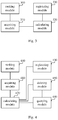
Figure 3 shows a structural block diagram of a radio-frequency control device for a multi-channel wireless modem according to an embodiment of the disclosure; -
Figure 4 shows a structural block diagram of a radio-frequency control device for a multi-channel wireless modem according to an embodiment of the disclosure; -
Figure 5 shows a block diagram of a computer device for executing a radio-frequency control method for a multi-channel wireless modem according to an embodiment of the disclosure; -
Figure 6 shows a storage unit for storing or carrying a program code for implementing a radio-frequency control method for a multi-channel wireless modem according to an embodiment of the disclosure. - The exemplary embodiments of the disclosure are described in further detail with reference to the drawings below. Although the exemplary embodiments of the disclosure are shown in the drawings, it should be understood that the disclosure can be implemented in various ways and is not limited by the embodiments described here. On the contrary, the embodiments are provided to understand the disclosure more clearly, and convey the scope of the disclosure to those skilled in the art completely.
-
Figure 1 shows a flow diagram of a radio-frequency control method for a multi-channel wireless modem according to an embodiment of the disclosure. As shown inFigure 1 , the radio-frequency control method includes step S100 to step S102. - In step S100, N wireless modems are ranked.
- Normally, the multi-channel wireless modem includes N wireless modems. In order to obtain a registration frequency of each of the N wireless modems, the N wireless modems are ranked from a first wireless modem to a N-th wireless modem in the embodiment. The N wireless modems are registered in the ranking order.
- In step S101, a registration frequency of the first wireless modem is acquired.
- After the N wireless modems are ranked in step S100, the first wireless modem retrieves a frequency to be registered when performing network registration, and the frequency is allocated to the first wireless modem, to acquire the registration frequency of the first wireless modem.
- In step S102, an interference frequency of the n-th wireless modem is calculated based on the registration frequencies of the first wireless modem to the (n-1)-th wireless modem. Registration is performed based on a frequency retrieved by the n-th wireless modem, to obtain a registration frequency of the n-th wireless modem. The registration frequency does not fall within a frequency range of the interference frequency. The step S102 is performed for each n within 2≤n≤N.
- The interference frequency refers to a frequency of an undesired signal interfering with a receiver for a desired signal. In order to avoid mutual interference among the N wireless modems, the interference frequencies of the N wireless modems are calculated. The interference frequency is not selected when the network registration is performed.
- Specifically, after the registration frequency of the first wireless modem is acquired, an interference frequency of a second wireless modem is calculated based on the registration frequency of the first wireless modem. A frequency range which is able to be registered is retrieved before the second wireless modem performs network registration, the frequency range which is able to be registered retrieved by the second wireless modem may include the calculated interference frequency of the second wireless modem. The second wireless modem will avoid registering a frequency within the frequency range of the interference frequency when the second wireless modem performs the network registration.
- Step S102 is performed repeatedly until the registration frequency of the n-th wireless modem is acquired. Registration frequencies of the N wireless modems are different from each other in the embodiment, thereby avoiding co-channel interference and frequency doubling interference.
- In the radio-frequency control method according to the embodiment of the disclosure described above, the N wireless modems are ranked, and the registration frequency of the first wireless modem is acquired, the interference frequency of the n-th wireless modem is calculated based on the registration frequencies of the first wireless modem to the (n-1)-th wireless modem, registration is performed based on the frequency retrieved by the n-th wireless modem for each n within 2≤n≤N, to obtain the registration frequency of the n-th wireless modem, the registration frequency does not fall within the frequency range of the interference frequency. In this way, the registration frequencies of the N wireless modems are different from each other, thereby avoiding co-channel interference and frequency doubling interference and improving sensitivity and a transmission rate of the multi-channel wireless modem.
-
Figure 2 shows a flow diagram of a radio-frequency control method for a multi-channel wireless modem according to another embodiment of the disclosure. As shown inFigure 2 , the radio-frequency control method includes step S200 to step S204. - In step S200, N wireless modems are ranked according to a preset priority rule.
- Specifically, the preset priority rule means that, in a case that the wireless modems are classified according to a function, a priority order is set according to a function classification, and the N wireless modems are ranked according to the function classification.
- In step S201, a registration frequency of a first wireless modem is acquired.
- The N wireless modems are ranked in step S200. The first wireless modem retrieves a frequency that can be registered when performing network registration, and the frequency is allocated to the first wireless modem, to acquire the registration frequency of the first wireless modem. For example, the acquired registration frequency of the first wireless modem is 100.
- In step S202, an interference frequency of a n-th wireless modem is calculated based on the registration frequencies of the first wireless modem to the (n-1)-th wireless modem according to a calculation formula for the interference frequency as follow:

where a 1 + a 2 + a 3... + a n-1 ≤ 5, a1, a2, a3... an-1 are natural numbers, and f 1, f 2, f 3... f n-1 are the registration frequencies of the first wireless modem to the (n-1)-th wireless modem respectively. - Specifically, an interference frequency of the second wireless modem is calculated based on the registration frequency of the first wireless modem. In the formula described above, a 2,a 3...a n-1, = 0 , F=a 1 f 1, a 1 ≤ 5, and a1 is a natural number, since that the frequency can not be equal to 0, five interference frequencies are obtained in a case that a1 is equal to 1, 2, 3, 4 and 5. The interference frequency of the second wireless modem is equal to 100, 200, 300, 400 and 500 respectively by taking a case that the registration frequency of the first wireless modem is equal to 100 in step S201 as an example.
- An interference frequency of a third wireless modem is calculated based on the registration frequency of the first wireless modem and a registration frequency of the second wireless modem. In the formula described above, a 3,...a n-1 = 0, F=a 1 f 1 ± a 2 f 2, a 1 + a 2 ≤ 5, and a1 and a2 are natural numbers, the interference frequency of the third wireless modem is calculated.
- Interference frequencies of the N wireless modems are calculated respectively according to the formula described above.
- In step S203, whether the interference frequency F calculated according to the calculation formula for the interference frequency F=a 1 f 1 ± a 2 f 2 ± a 3 f 3 ... ± a n-1 f n-1 is negative is queried, a negative interference frequency is deleted in a case that the interference frequency is negative, and remaining interference frequencies F are served as interference frequencies of the n-th wireless modem.
where a 1 + a 2 + a 3...+ a n-1 ≤ 5, a1, a2, a3... an-1 are natural numbers, and f 1, f 2, f 3...f n-1 are the registration frequencies of the first wireless modem to the (n-1)-th wireless modem respectively. - The interference frequency F calculated in step S202 may be negative. However, in an actual application, a frequency of the wireless modem can not be negative. Thus, the negative interference frequency calculated in step S202 is deleted, to avoid a case that the wireless modem can not operate in a case that the registration frequency allocated upon network registration is negative.
- For example, the interference frequency of the third wireless modem is calculated according to the formula F=a 1 f 1 -a 2 f 2 . The interference frequency of the third wireless modem is equal to -160 in a case that the registration frequency f 1 of the first wireless modem is equal to 100, the registration frequency of the second wireless modem is equal to 260 and both a 1 and a 2 are equal to 1. Since that the interference frequency of the third wireless modem is negative, which can not be suitable for the actual application, the interference frequency is deleted.
- In step S204, registration is performed based on a frequency retrieved by the n-th wireless modem, to obtain a registration frequency of the n-th wireless modem. The registration frequency does not fall within a frequency band range having a preset threshold in which the interference frequency is served as a center frequency.
- Specifically, the n-th wireless modem retrieves a frequency that can be registered. The interference frequency of the n-th wireless modem is obtained in step S203, and the registration frequency of the n-th wireless modem does not fall within the frequency range of the interference frequency, thereby avoiding registering the interference frequency.
- In a case that the registration frequencies of the wireless modems are close to each other, mutual interference may occur. The interference frequency calculated in step S203 may be equal to the registration frequency of the wireless modem. Although it avoids the wireless modem from registering a frequency within the range of the interference frequency, the wireless modem can register a frequency close to the registration frequency of other wireless modem, and thus interfere with the other wireless modem. Therefore, the registration frequency should not fall within the frequency band range having the preset threshold in which the interference frequency is served as the center frequency. For example, the interference frequency is equal to 200, the registration frequency should not fall within a frequency band range from 190 to 210, thereby avoiding the wireless modem from registering a frequency within the frequency band range. Also, the frequency-band range having the preset threshold may be set according to actual application, and is not limited here.
- In the radio-frequency control method according to the embodiment of the disclosure described above, the registration frequency of the n-th wireless modem is calculated according to the calculation formula for the interference frequency F=a 1 f 1 ± a 2 f 2 ± a 3 f 3 ... ± a n-1 f n-1 , where a 1 + a 2 + a 3... + a n-1 ≤ 5, a1, a2, a3... an-1 are natural numbers, and f 1, f 2, f 3...f n-1 are the registration frequencies of the first wireless modem to the (n-1)-th wireless modem respectively, whether the interference frequency is negative is queried, the negative interference frequency is deleted, and the remaining interference frequencies F are served as the interference frequencies of the n-th wireless modem, thereby avoiding a case that the wireless modem can not operate in a case that the registration frequency allocated upon network registration is negative. Registration is performed based on the frequency retrieved by the n-th wireless modem, to obtain the registration frequency of the n-th wireless modem, wherein the registration frequency does not fall within the frequency-band range having the preset threshold in which the interference frequency is served as the center frequency, thereby avoiding mutual interference in a case that other wireless modem registers a frequency close to a frequency of a certain wireless modem, and realizing that the registration frequencies of the N wireless modems are different from each other, and avoiding co-channel interference and frequency doubling interference and improving sensitivity and a transmission rate of the multi-channel wireless modem.
-
Figure 3 shows a structural block diagram of a radio-frequency control device for a multi-channel wireless modem according to an embodiment of the disclosure. The multi-channel wireless modem includes N wireless modems. As shown inFigure 3 , the radio-frequency control device includes aranking module 300, an acquiringmodel 310, a calculatingmodule 320 and aregistering module 330. - The
ranking module 300 is configured to rank the N wireless modems. - The acquiring
module 310 is configured to acquire a registration frequency of a first wireless modem. - The calculating
module 320 is configured to calculate an interference frequency of a n-th wireless modem based on the registration frequencies of the first wireless modem to the (n-1)-th wireless modem. - The registering
module 330 is configured to, for each n within 2≤n≤N, register based on a frequency retrieved by the n-th wireless modem, to obtain a registration frequency of the n-th wireless modem, where the registration frequency does not fall within a frequency range of the interference frequency. - In the radio-frequency control device according to the embodiment of the disclosure described above, the N wireless modems are ranked, and the registration frequency of the first wireless modem is acquired, for each n within 2≤n≤N, the interference frequency of the n-th wireless modem is calculated based on the registration frequencies of the first wireless modem to the (n-1)-th wireless modem, registration is performed based on the frequency retrieved by the n-th wireless modem, to obtain the registration frequency of the n-th wireless modem, and the registration frequency does not fall within the frequency range of the interference frequency. In this way, the registration frequencies of the N wireless modems are different from each other, thereby avoiding co-channel interference and frequency doubling interference and improving sensitivity and a transmission rate of the multi-channel wireless modem.
-
Figure 4 shows a structural block diagram of a radio-frequency control device for a multi-channel wireless modem according to an embodiment of the disclosure. As shown inFigure 4 , the radio-frequency control device includes aranking module 400, an acquiringmodule 410, a calculatingmodule 420 and aregistering module 430. - The
ranking module 400 is configured to rank N wireless modems, - The acquiring
module 410 is configured to acquire a registration frequency of a first wireless modem. - The calculating
module 420 is configured to calculate an interference frequency of a n-th wireless modem based on the registration frequencies of the first wireless modem to the (n-1)-th wireless modem. - Optionally, the calculating module is further configured to calculate the interference frequency of the n-th wireless modem based on the registration frequencies of the first wireless modem to the (n-1)-th wireless modem according to a calculation formula for the interference frequency:

- The registering
module 430 is configured to, for each n within 2≤n≤N, register based on a frequency retrieved by the n-th wireless modem, to obtain a registration frequency of the n-th wireless modem, where the registration frequency does not fall within a frequency range of the interference frequency. - Optionally, the registration frequency does not fall within a frequency band range having a preset threshold in which the interference frequency is served as a center frequency.
- Optionally, the radio-frequency control device further includes a
querying module 440 and a deletingmodule 450. Thequerying module 440 is configured to query whether the interference frequency F calculated according to the calculation formula for the interference frequency F=a 1 f 1 ± a 2 f 2 ± a 3 f 3...± a n-1 f n-1 is negative, where a 1 + a 2 + a 3... + a n-1 ≤ 5, a1, a2, a3 ... an-1 are natural numbers, and f 1, f 2, f 3...f n-1 are the registration frequencies of the first wireless modem to the (n-1)-th wireless modem respectively. - The deleting
module 450 is configured to delete the negative interference frequency in a case that the interference frequency F is negative, and serve remaining interference frequencies F as interference frequencies of the n-th wireless modem. - Optionally, the
ranking module 400 is further configured to rank the N wireless modems based on a preset priority rule. - In the radio-frequency control device according to the embodiment of the disclosure described above, the registration frequency of the n-th wireless modem is calculated according to the calculation formula for the interference frequency F=a 1 f 1 ± a 2 f 2 ± a 3 f 3... ± a n-1 f n-1 , where a 1 + a 2 + a 3...+ a n-1 ≤ 5, a1, a2, a3... an-1 are natural numbers, and f 1, f 2, f 3...f n-1 are the registration frequencies of the first wireless modem to the (n-1)-th wireless modem respectively, whether the interference frequency is negative is queried, and the negative interference frequency is deleted, and the remaining interference frequencies are served as the interference frequency of the n-th wireless modem, thereby avoiding a case that the wireless modem can not operate in a case that the registration frequency allocated upon network registration is negative. Registration is performed based on the frequency retrieved by the n-th wireless modem, to obtain the registration frequency of the n-th wireless modem. The registration frequency does not fall within the frequency-band range having the preset threshold in which the interference frequency is served as the center frequency, thereby avoiding mutual interference in a case that other wireless modem registers a frequency close to a frequency of a certain wireless modem, realizing that the registration frequencies of the N wireless modems are different from each other, and avoiding co-channel interference and frequency doubling interference and improving sensitivity and a transmission rate of the multi-channel wireless modem.
- The algorithm and display provided here have no inherent relation with any specific computer, virtual system or other devices. Various general-purpose systems can be used together with the teaching based on this. According to the description above, the structure required to construct this kind of system is obvious. Besides, the disclosure is not directed at any specific programming language. It should be understood that various programming language can be used for achieving the content of the disclosure described here, and above description of specific language is for disclosing the optimum embodiment of the disclosure.
- The description provided here explains plenty of details. However, it can be understood that the embodiments of the disclosure can be implemented without these specific details. The known methods, structure and technology are not shown in detail in some embodiments, so as not to obscure the understanding of the description.
- Similarly, it should be understood that in order to simplify the present disclosure and help to understand one or more of the various aspects of the disclosure, the various features of the disclosure are sometimes grouped into a single embodiment, drawing, or description thereof. However, the method disclosed should not be explained as reflecting the following intention: that is, the disclosure sought for protection claims more features than the features clearly recorded in every claim. To be more precise, as is reflected in the following claims, the aspects of the disclosure are less than all the features of a single embodiment disclosed before. Therefore, the claims complying with a specific embodiment are explicitly incorporated into the specific embodiment thereby, wherein every claim itself as an independent embodiment of the disclosure.
- Those skilled in the art can understand that adaptive changes can be made to the modules of the devices in the embodiment and the modules can be installed in one or more devices different from the embodiment. The modules or units or elements in the embodiment can be combined into one module or unit or element, and furthermore, they can be separated into more sub-modules or sub-units or sub-elements. Except such features and/or process or that at least some in the unit are mutually exclusive, any combinations can be adopted to combine all the features disclosed by the description (including the attached claims, abstract and figures) and any method or all process of the device or unit disclosed as such. Unless there is otherwise explicit statement, every feature disclosed by the present description (including the attached claims, abstract and figures) can be replaced by substitute feature providing the same, equivalent or similar purpose.
- In addition, a person skilled in the art can understand that although some embodiments described here comprise some features instead of other features included in other embodiments, the combination of features of different embodiments means falling into the scope of the disclosure and forming different embodiments. For example, in the following claims, any one of the embodiments sought for protection can be used in various combination modes.
- The various components embodiments of the disclosure can be realized by hardware, or realized by software modules running on one or more processors, or realized by combination thereof. A person skilled in the art should understand that microprocessor or digital signal processor (DSP) can be used for realizing some or all functions of some or all components of the devices according to the embodiments in the disclosure in practice. The disclosure can also realize one part of or all devices or programs (for example, computer programs and computer program products) used for carrying out the method described here. Such programs for realizing the disclosure can be stored in computer readable medium, or can possess one or more forms of signal. Such signals can be downloaded from the Internet website or be provided at signal carriers, or be provided in any other forms.
- For example,
Figure 5 shows a computing device for executing the radio-frequency control method for the multi-channel wireless modem according to the disclosure. The computing device traditionally includes aprocessor 510 and a computer program product in the form ofstorage 520 or a computer readable medium. Thestorage 520 can be electronic storage such as flash memory, EEPROM (Electrically Erasable Programmable Read -Only Memory), EPROM, hard disk or ROM, and the like.Storage 520 possessesstorage space 530 for carrying outprocedure code 531 of any steps of aforesaid method. For example,storage space 530 for procedure code can comprisevarious procedure codes 531 used for realizing any steps of aforesaid method. These procedure codes can be read out from one or more computer program products or write in one or more computer program products. The computer program products comprise procedure code carriers such as hard disk, Compact Disc (CD), memory card or floppy disk and the like. These computer program products usually are portable or fixed storage cell as said inFigure 6 . The storage cell can possess memory paragraph, storage space like thestorage 520 in the computing device inFigure 5 . The procedure code can be compressed in, for example, a proper form. Generally, the storage cell includes computer readable code 531' i.e. the code can be read by processors such as 510 and the like for executing the steps in the method according to the disclosure. When the codes run on a computer device, the computer device will carry out various steps of the method described above. - It should be noticed that the embodiments are intended to illustrate the disclosure and not limit this disclosure, and a person skilled in the art can design substitute embodiments without departing from the scope of the appended claims. In the claims, any reference marks between brackets should not be constructed as limit for the claims. The word "comprise" does not exclude elements or steps that are not listed in the claims. The word "a" or "one" before the elements does not exclude that more such elements exist. The disclosure can be realized by means of hardware comprising several different elements and by means of properly programmed computer. In the unit claims in which several devices are listed, several of the devices can be embodied by a same hardware item. The use of words first, second and third does not mean any sequence. These words can be explained as name.
Claims (10)
- A radio-frequency control method for a multi-channel wireless modem, wherein the multi-channel wireless modem comprises N wireless modems, the radio-frequency control method comprises:ranking the N wireless modems;acquiring a registration frequency of a first wireless modem; andfor each n within 2≤n≤N, calculating an interference frequency of a n-th wireless modem based on the registration frequencies of the first wireless modem to a (n-1)-th wireless modem, and registering based on a frequency retrieved by the n-th wireless modem to obtain a registration frequency of the n-th wireless modem, wherein the registration frequency does not fall within a frequency range of the interference frequency.
- The radio-frequency control method according to claim 1, wherein the calculating the interference frequency of the n-th wireless modem based on the registration frequencies of the first wireless modem to the (n-1)-th wireless modem further comprises:calculating the interference frequency of the n-th wireless modem based on the registration frequencies of the first wireless modem to the (n-1)-th wireless modem according to a calculation formula for the interference frequency F=a 1 f 1 ± a 2 f 2 ± a 3 f 3... ± a n-1 f n-1, where a 1 + a 2 + a 3... + a n-1 ≤ 5, a 1, a 2, a 3 ... a n-1 are natural numbers, and f 1 , f 2, f 3...f n-1 are the registration frequencies of the first wireless modem to the (n-1)-th wireless modem respectively.
- The radio-frequency control method according to claim 2, further comprising:querying whether the interference frequency F calculated according to the calculation formula for the interference frequency F=a 1 f 1 ± a 2 f 2 ± a 3 f 3... ± a n-1 f n-1 is negative, where a 1 + a 2 + a 3 ... + a n-1 ≤ 5, a 1, a 2, a 3 ... a n-1 are natural numbers, and f 1 , f 2, f 3... f n-1 are the registration frequencies of the first wireless modem to the (n-1)-th wireless modem respectively; deleting a negative interference frequency F in a case that the interference frequency F is negative, and serving remaining interference frequencies F as interference frequencies of the n-th wireless modem.
- The radio-frequency control method according to any one of claims 1 to 3, wherein registration frequency not falling within the frequency range of the interference frequency further comprises: the registration frequency not falling within a frequency band range having a preset threshold in which the interference frequency is a center frequency.
- The radio-frequency control method according to any one of claims 1 to 4, wherein the ranking the N wireless modems further comprises:ranking the N wireless modems based on a preset priority rule.
- A radio-frequency control device for a multi-channel wireless modem, wherein the multi-channel wireless modem comprises N wireless modems, the radio-frequency control device comprises:a ranking module configured to rank the N wireless modems;an acquiring module configured to acquire a registration frequency of a first wireless modem; anda calculating module configured to, for each n within 2≤n≤N, calculate an interference frequency of a n-th wireless modem based on the registration frequencies of the first wireless modem to a (n-1)-th wireless modem; anda registering module configured to, for each n within 2≤n≤N, register based on a frequency retrieved by the n-th wireless modem to obtain a registration frequency of the n-th wireless modem, wherein the registration frequency does not fall within a frequency range of the interference frequency.
- The radio-frequency control device according to claim 6, wherein the calculating module is further configured to, for each n within 2≤n≤N, calculate the interference frequency of the n-th wireless modem based on the registration frequencies of the first wireless modem to the (n-1)-th wireless modem according to a calculation formula for the interference frequency F=a 1 f 1 ± a 2 f 2 ± a 3 f 3 ... ± a n-1 f n-1, where a 1 + a 2 + a 3 ... + a n-1 ≤ 5, a1, a2, a3 ... an-1 are natural numbers, and f 1, f 2, f 3... f n-1 are the registration frequencies of the first wireless modem to the (n-1)-th wireless modem respectively.
- The radio-frequency device according to claim 7, further comprising:a querying module configured to query whether the interference frequency F calculated according to the calculation formula for the interference frequency F=a 1 f 1 ± a 2 f 2 ± a 3 f 3 ... ± a n-1 f n-1 is negative, where a 1 + a 2 + a 3 ... + a n-1 ≤ 5, a1, a2, a3 ...an-1 are natural numbers, and f 1, f 2, f 3... f n-1 are the registration frequencies of the first wireless modem to the (n-1)-th wireless modem respectively; anda deleting module configured to, in a case that the interference frequency F is negative, delete a negative interference frequency F and serve remaining interference frequencies F as interference frequencies of the n-th wireless modem.
- The radio-frequency control device according to any one of claims 6 to 8, wherein registration frequency not falling within the frequency range of the interference frequency further comprises: the registration frequency not falling within a frequency band range having a preset threshold in which the interference frequency is served as a center frequency.
- The radio-frequency control device according to any one of claims 6 to 9, wherein the ranking module is further configured to rank the N wireless modems based on a preset priority rule.
Applications Claiming Priority (2)
| Application Number | Priority Date | Filing Date | Title |
|---|---|---|---|
| CN201510755492.XA CN105656571A (en) | 2015-11-09 | 2015-11-09 | Radio frequency control method and device for multipath wireless modem |
| PCT/CN2016/082850 WO2017080162A1 (en) | 2015-11-09 | 2016-05-20 | Radio frequency control method and device for multipath wireless modem |
Publications (2)
| Publication Number | Publication Date |
|---|---|
| EP3185433A1 true EP3185433A1 (en) | 2017-06-28 |
| EP3185433A4 EP3185433A4 (en) | 2017-06-28 |
Family
ID=56482163
Family Applications (1)
| Application Number | Title | Priority Date | Filing Date |
|---|---|---|---|
| EP16739009.5A Withdrawn EP3185433A4 (en) | 2015-11-09 | 2016-05-20 | Radio frequency control method and device for multipath wireless modem |
Country Status (5)
| Country | Link |
|---|---|
| US (1) | US20170134195A1 (en) |
| EP (1) | EP3185433A4 (en) |
| CN (1) | CN105656571A (en) |
| RU (1) | RU2016135428A (en) |
| WO (1) | WO2017080162A1 (en) |
Families Citing this family (1)
| Publication number | Priority date | Publication date | Assignee | Title |
|---|---|---|---|---|
| CN109167745B (en) * | 2018-08-29 | 2021-05-28 | 维沃移动通信有限公司 | A data transmission method, data reception method and terminal |
Family Cites Families (10)
| Publication number | Priority date | Publication date | Assignee | Title |
|---|---|---|---|---|
| US7117008B2 (en) * | 2002-01-03 | 2006-10-03 | Intel Corporation | Mitigating interference among multiple radio device types |
| JP4451236B2 (en) * | 2004-07-16 | 2010-04-14 | 三菱電機株式会社 | Pulse modulation circuit |
| CN100399849C (en) * | 2005-03-31 | 2008-07-02 | 联想(北京)有限公司 | Multi-mode coexistence method for multi-mode communication equipment |
| US7647023B2 (en) * | 2005-06-10 | 2010-01-12 | Broadcom Corporation | Frequency separation for multiple bluetooth devices residing on a single platform |
| JP2007243805A (en) * | 2006-03-10 | 2007-09-20 | Sanyo Electric Co Ltd | Reception circuit |
| CN101056094B (en) * | 2007-04-06 | 2010-04-21 | 鞍山吉兆电子有限公司 | Coaxial high-power low-pass filtering-impedance converter |
| GB2490347B (en) * | 2011-04-27 | 2013-05-01 | Renesas Mobile Corp | Method and apparatus for avoiding in-device interference |
| CN102438248B (en) * | 2011-09-29 | 2014-06-18 | 上海交通大学 | Method for solving radio frequency mutual interference of multi-mode multi-connected user equipment |
| CN102684799B (en) * | 2012-04-26 | 2014-07-23 | 西安电子科技大学 | Spectrum data evaluation method for same-vehicle multi-machine communication system |
| CN104104453B (en) * | 2013-04-02 | 2016-08-10 | 国基电子(上海)有限公司 | The system that can reduce Radio frequency interference and the method reducing Radio frequency interference thereof |
-
2015
- 2015-11-09 CN CN201510755492.XA patent/CN105656571A/en active Pending
- 2015-12-22 US US14/978,221 patent/US20170134195A1/en not_active Abandoned
-
2016
- 2016-05-20 WO PCT/CN2016/082850 patent/WO2017080162A1/en not_active Ceased
- 2016-05-20 RU RU2016135428A patent/RU2016135428A/en not_active Application Discontinuation
- 2016-05-20 EP EP16739009.5A patent/EP3185433A4/en not_active Withdrawn
Also Published As
| Publication number | Publication date |
|---|---|
| WO2017080162A1 (en) | 2017-05-18 |
| CN105656571A (en) | 2016-06-08 |
| EP3185433A4 (en) | 2017-06-28 |
| US20170134195A1 (en) | 2017-05-11 |
| RU2016135428A (en) | 2018-03-05 |
| RU2016135428A3 (en) | 2018-03-05 |
Similar Documents
| Publication | Publication Date | Title |
|---|---|---|
| US20250374066A1 (en) | System, method, and apparatus for providing dynamic, prioritized spectrum management and utilization | |
| US20150088495A1 (en) | Encoding apparatus and method for encoding sound code, decoding apparatus and methdo for decoding the sound code | |
| RU2734779C1 (en) | Data transmission method and device | |
| CN109068348B (en) | Method, device, equipment and storage medium for eliminating coexistence interference | |
| RU2018139089A (en) | SYSTEMS AND METHODS FOR SIGNALIZING THE FORMAT OF A PHYSICAL JOINT APPLICABLE CHANNEL FOR TRANSMISSION OF DATA ON THE UPRISING COMMUNICATION LINE (PUSCH) AND COMPETITIVE ACCESS | |
| KR20170098401A (en) | Electronic device including antenna | |
| US10333610B2 (en) | MCS index determination method and base station equipment | |
| CN106804059A (en) | Terminal difference removing method in indoor positioning technologies based on signal intensity | |
| CN102802119B (en) | Positioning method, device and system | |
| CN108090142B (en) | Card sorting method, device, server and storage medium | |
| CN109600522A (en) | A kind of outgoing call control method and device | |
| US20200213029A1 (en) | Electronic warfare system device with non-real-time threat signal analysis and electronic attack function | |
| Kaniewski et al. | Spectrum awareness for cognitive radios supported by radio environment maps: Zonal approach | |
| RU2017123047A (en) | DEVICE FOR TRACKING THE POSITION OF AIRCRAFT | |
| US20130344881A1 (en) | Method and device for sounding signal allocation and sounding assisted beamforming | |
| CN108235255A (en) | A kind of localization method of intelligent terminal, device and server | |
| KR102303289B1 (en) | Method and apparatus for improving phase measurement accuracy | |
| EP3185433A1 (en) | Radio frequency control method and device for multipath wireless modem | |
| CN105338605B (en) | A kind of power regulating method and electronic equipment | |
| US20220330305A1 (en) | Transmission resource adjustment method and device | |
| Mathivannan et al. | A dynamic weighted trilateration algorithm for indoor localization using dual-band WiFi | |
| CN113498080B (en) | Control channel detection method, device, terminal, base station and storage medium | |
| WO2005031563A3 (en) | Accessing configuration registers by automatically changing an index | |
| CN104735751A (en) | Method for network accessing of terminal in private network system | |
| US9826507B2 (en) | Method for setting a filter coefficient for a communication system |
Legal Events
| Date | Code | Title | Description |
|---|---|---|---|
| PUAI | Public reference made under article 153(3) epc to a published international application that has entered the european phase |
Free format text: ORIGINAL CODE: 0009012 |
|
| 17P | Request for examination filed |
Effective date: 20160727 |
|
| A4 | Supplementary search report drawn up and despatched |
Effective date: 20170515 |
|
| AK | Designated contracting states |
Kind code of ref document: A1 Designated state(s): AL AT BE BG CH CY CZ DE DK EE ES FI FR GB GR HR HU IE IS IT LI LT LU LV MC MK MT NL NO PL PT RO RS SE SI SK SM TR |
|
| AX | Request for extension of the european patent |
Extension state: BA ME |
|
| RIC1 | Information provided on ipc code assigned before grant |
Ipc: H04B 7/005 20060101AFI20170530BHEP |
|
| STAA | Information on the status of an ep patent application or granted ep patent |
Free format text: STATUS: THE APPLICATION IS DEEMED TO BE WITHDRAWN |
|
| 18D | Application deemed to be withdrawn |
Effective date: 20171212 |