EP3184281A1 - Fiber reinforced thermoplastic sheets for thermoforming - Google Patents
Fiber reinforced thermoplastic sheets for thermoforming Download PDFInfo
- Publication number
- EP3184281A1 EP3184281A1 EP16203571.1A EP16203571A EP3184281A1 EP 3184281 A1 EP3184281 A1 EP 3184281A1 EP 16203571 A EP16203571 A EP 16203571A EP 3184281 A1 EP3184281 A1 EP 3184281A1
- Authority
- EP
- European Patent Office
- Prior art keywords
- fibers
- manufacturing
- stacking
- sheets
- infusing
- Prior art date
- Legal status (The legal status is an assumption and is not a legal conclusion. Google has not performed a legal analysis and makes no representation as to the accuracy of the status listed.)
- Granted
Links
Images


Classifications
-
- B—PERFORMING OPERATIONS; TRANSPORTING
- B29—WORKING OF PLASTICS; WORKING OF SUBSTANCES IN A PLASTIC STATE IN GENERAL
- B29C—SHAPING OR JOINING OF PLASTICS; SHAPING OF MATERIAL IN A PLASTIC STATE, NOT OTHERWISE PROVIDED FOR; AFTER-TREATMENT OF THE SHAPED PRODUCTS, e.g. REPAIRING
- B29C51/00—Shaping by thermoforming, i.e. shaping sheets or sheet like preforms after heating, e.g. shaping sheets in matched moulds or by deep-drawing; Apparatus therefor
- B29C51/26—Component parts, details or accessories; Auxiliary operations
- B29C51/264—Auxiliary operations prior to the thermoforming operation, e.g. cutting
-
- B—PERFORMING OPERATIONS; TRANSPORTING
- B29—WORKING OF PLASTICS; WORKING OF SUBSTANCES IN A PLASTIC STATE IN GENERAL
- B29C—SHAPING OR JOINING OF PLASTICS; SHAPING OF MATERIAL IN A PLASTIC STATE, NOT OTHERWISE PROVIDED FOR; AFTER-TREATMENT OF THE SHAPED PRODUCTS, e.g. REPAIRING
- B29C70/00—Shaping composites, i.e. plastics material comprising reinforcements, fillers or preformed parts, e.g. inserts
- B29C70/04—Shaping composites, i.e. plastics material comprising reinforcements, fillers or preformed parts, e.g. inserts comprising reinforcements only, e.g. self-reinforcing plastics
- B29C70/28—Shaping operations therefor
- B29C70/54—Component parts, details or accessories; Auxiliary operations, e.g. feeding or storage of prepregs or SMC after impregnation or during ageing
- B29C70/545—Perforating, cutting or machining during or after moulding
-
- B—PERFORMING OPERATIONS; TRANSPORTING
- B29—WORKING OF PLASTICS; WORKING OF SUBSTANCES IN A PLASTIC STATE IN GENERAL
- B29C—SHAPING OR JOINING OF PLASTICS; SHAPING OF MATERIAL IN A PLASTIC STATE, NOT OTHERWISE PROVIDED FOR; AFTER-TREATMENT OF THE SHAPED PRODUCTS, e.g. REPAIRING
- B29C43/00—Compression moulding, i.e. applying external pressure to flow the moulding material; Apparatus therefor
- B29C43/02—Compression moulding, i.e. applying external pressure to flow the moulding material; Apparatus therefor of articles of definite length, i.e. discrete articles
-
- B—PERFORMING OPERATIONS; TRANSPORTING
- B29—WORKING OF PLASTICS; WORKING OF SUBSTANCES IN A PLASTIC STATE IN GENERAL
- B29C—SHAPING OR JOINING OF PLASTICS; SHAPING OF MATERIAL IN A PLASTIC STATE, NOT OTHERWISE PROVIDED FOR; AFTER-TREATMENT OF THE SHAPED PRODUCTS, e.g. REPAIRING
- B29C51/00—Shaping by thermoforming, i.e. shaping sheets or sheet like preforms after heating, e.g. shaping sheets in matched moulds or by deep-drawing; Apparatus therefor
- B29C51/14—Shaping by thermoforming, i.e. shaping sheets or sheet like preforms after heating, e.g. shaping sheets in matched moulds or by deep-drawing; Apparatus therefor using multilayered preforms or sheets
- B29C51/145—Shaping by thermoforming, i.e. shaping sheets or sheet like preforms after heating, e.g. shaping sheets in matched moulds or by deep-drawing; Apparatus therefor using multilayered preforms or sheets having at least one layer of textile or fibrous material combined with at least one plastics layer
-
- B—PERFORMING OPERATIONS; TRANSPORTING
- B29—WORKING OF PLASTICS; WORKING OF SUBSTANCES IN A PLASTIC STATE IN GENERAL
- B29C—SHAPING OR JOINING OF PLASTICS; SHAPING OF MATERIAL IN A PLASTIC STATE, NOT OTHERWISE PROVIDED FOR; AFTER-TREATMENT OF THE SHAPED PRODUCTS, e.g. REPAIRING
- B29C70/00—Shaping composites, i.e. plastics material comprising reinforcements, fillers or preformed parts, e.g. inserts
- B29C70/04—Shaping composites, i.e. plastics material comprising reinforcements, fillers or preformed parts, e.g. inserts comprising reinforcements only, e.g. self-reinforcing plastics
- B29C70/28—Shaping operations therefor
-
- B—PERFORMING OPERATIONS; TRANSPORTING
- B29—WORKING OF PLASTICS; WORKING OF SUBSTANCES IN A PLASTIC STATE IN GENERAL
- B29C—SHAPING OR JOINING OF PLASTICS; SHAPING OF MATERIAL IN A PLASTIC STATE, NOT OTHERWISE PROVIDED FOR; AFTER-TREATMENT OF THE SHAPED PRODUCTS, e.g. REPAIRING
- B29C2793/00—Shaping techniques involving a cutting or machining operation
- B29C2793/0081—Shaping techniques involving a cutting or machining operation before shaping
-
- B—PERFORMING OPERATIONS; TRANSPORTING
- B29—WORKING OF PLASTICS; WORKING OF SUBSTANCES IN A PLASTIC STATE IN GENERAL
- B29K—INDEXING SCHEME ASSOCIATED WITH SUBCLASSES B29B, B29C OR B29D, RELATING TO MOULDING MATERIALS OR TO MATERIALS FOR MOULDS, REINFORCEMENTS, FILLERS OR PREFORMED PARTS, e.g. INSERTS
- B29K2101/00—Use of unspecified macromolecular compounds as moulding material
- B29K2101/12—Thermoplastic materials
-
- B—PERFORMING OPERATIONS; TRANSPORTING
- B29—WORKING OF PLASTICS; WORKING OF SUBSTANCES IN A PLASTIC STATE IN GENERAL
- B29K—INDEXING SCHEME ASSOCIATED WITH SUBCLASSES B29B, B29C OR B29D, RELATING TO MOULDING MATERIALS OR TO MATERIALS FOR MOULDS, REINFORCEMENTS, FILLERS OR PREFORMED PARTS, e.g. INSERTS
- B29K2307/00—Use of elements other than metals as reinforcement
- B29K2307/04—Carbon
-
- B—PERFORMING OPERATIONS; TRANSPORTING
- B29—WORKING OF PLASTICS; WORKING OF SUBSTANCES IN A PLASTIC STATE IN GENERAL
- B29L—INDEXING SCHEME ASSOCIATED WITH SUBCLASS B29C, RELATING TO PARTICULAR ARTICLES
- B29L2031/00—Other particular articles
Definitions
- thermoforming more particularly to thermoforming with reinforced thermoplastic sheets.
- Thermoforming provides a rapid, efficient, and inexpensive method to make complicated parts from thermoplastics.
- the mechanical properties of thermoplastic polymers makes them unsuitable for more demanding applications, such as in the automotive and aerospace industries. These industries use heavier and more expensive materials like steel and aluminum for their stamping and forming processes.
- Thermoplastics are lighter and more efficient and would be good replacements for these materials, if not for their poor mechanical performance.
- thermoforming of the thermoplastics needs to fit into the existing manufacturing processes to ensure that speed and efficiencies are maintained. Any materials introduced into those processes must have comparable flexibility, machinability and manufacturability, and good joining characteristics with other materials and thermoformed parts.
- One embodiment is a method of manufacturing a fiber reinforced thermoplastic part includes placing fibers, fixing the fibers in place, cutting the fibers, infusing the fibers with a thermoplastic polymer, stacking multiple sheets of the fibers, and molding the multiple sheets together.
- One embodiment is a method of manufacturing a part which includes placing original fibers, fixing the fibers in place, cutting the fibers, infusing the fibers with a thermoplastic polymer, stacking multiple sheets of the fibers, molding the multiple sheets together to form a moldable sheet, and applying a mold to the moldable sheet.
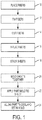
- Figure 1 shows a flow chart of a method of manufacturing a fiber reinforced thermoplastic sheet.
- the method shown here provides one order of the processes involved in manufacturing a fiber reinforced thermoplastic. As will be discussed in more detail further, the order of some of the processes may vary. Initially, the process places long fibers at 12, typically using an automated fiber placement machine but can be placed in any manner. The placement of the fibers may occur in accordance with a pre-determined two-dimensional pattern, where the two-dimensional pattern is determined from a final three-dimensional desired shape. Figure 2 shows an example of such a pattern 30.
- the placed fibers are then fixed into place at 12, such as with a spray on binder or other means to set the fibers in place.
- the long fibers after being fixed into place, typically run in one direction and cannot bend significantly in the other directions, especially when surrounded by a high density of the fibers. They have the advantage of being very strong, but with their inherent inflexibility may not work for many applications. Specifically, it would be impossible to mold the fibers into a three dimensional shape without breaking the fibers or causing them to be catastrophically pulled from their specified location.
- the process nicks the long fibers at 14 to form short fibers.
- the laser ablation forms the nicks to cut the long fibers.
- the nicks are positioned to ensure necessary compliance before molding into the desired shape.
- Figure 3 shows an example of nicked fibers 32, having strategically placed cuts 34.
- the fibers could be cut, then fixed or bound. In another, the fibers could be fixed and then cut.
- the fibers are infused with a polymer at 16 after being cut.
- Figure 4 shows an example of a sheet such as 32 being infused with a polymer through a deposition or infusion head 36. Again, this order is dependent upon the application.
- the process could also have the cut fibers pressed together and then infused, if the fibers are temporarily held in place prior to cutting.
- the fibers must be fixed or temporarily held in place before infusion with polymer. The temporary holding in place can be accomplished by applying pressure using two flat plates as done during a typical infusion as shown in Figure 5 .
- the infused sheets are stacked together at 18 in Figure 1 and then fused together.
- Figure 5 shows an example of the sheets undergoing pressing to mold them together at 20 in Figure 1 to form a new moldable sheet.
- This sheet now consists of a fiber reinforced thermoplastic sheet that has flexibility in multiple directions, and sufficient strength to allow it to replace metal parts.
- the stacking of the sheets may occur with a particular order to arrange the fibers and cuts according to a desired shape.
- the molding may occur under pressure.
- Figure 5 shows an example of a fixture 36 in which the nicked fibers 32 that can press the fibers together.
- the fiber-reinforced polymer sheets are now suitable for many different applications, including forming of parts that would otherwise be formed from stamping of metals.
- heat is applied to the thermoplastic sheet to cause the polymers to flow, then the part mold is applied to the moldable sheet at 22 and the sheet allowed to cool to form the part 24.
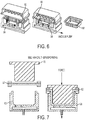
- Figures 6 and 7 show this in more detail.
- the mold 60 is applied to the sheet 62.
- Heaters 66 cause the sheet to drop in viscosity and flow into the mold which forms it into the desired shape of the part 64.
- a vacuum pump may pull out any fluids released by the heating process and removes any air that may be trapped in the sheet as it is heated and set. It also creates a vacuum which pulls the molten polymer down into the mold.
- the resulting part 64 consists of a fiber-reinforced, thermoplastic polymer having the fibers oriented according to a particular pattern determined by the shape of the desired parts. This creates a part with high fiber alignment and density wherein the fibers are preferentially oriented to optimally accommodate the stresses in the part.
Landscapes
- Engineering & Computer Science (AREA)
- Mechanical Engineering (AREA)
- Chemical & Material Sciences (AREA)
- Composite Materials (AREA)
- Textile Engineering (AREA)
- Reinforced Plastic Materials (AREA)
- Processing And Handling Of Plastics And Other Materials For Molding In General (AREA)
- Casting Or Compression Moulding Of Plastics Or The Like (AREA)
- Blow-Moulding Or Thermoforming Of Plastics Or The Like (AREA)
Abstract
Description
- This disclosure relates to thermoforming, more particularly to thermoforming with reinforced thermoplastic sheets.
- Thermoforming provides a rapid, efficient, and inexpensive method to make complicated parts from thermoplastics. However, the mechanical properties of thermoplastic polymers makes them unsuitable for more demanding applications, such as in the automotive and aerospace industries. These industries use heavier and more expensive materials like steel and aluminum for their stamping and forming processes. Thermoplastics are lighter and more efficient and would be good replacements for these materials, if not for their poor mechanical performance.
- Adding reinforcement would improve the mechanical performance of thermoplastics. Currently, no acceptable method exists to introduce reinforcement in a manner that controls the orientation and alignment into a thermoplastic sheet that can then undergo thermoforming. In addition to the mechanical performance requirements, thermoforming of the thermoplastics needs to fit into the existing manufacturing processes to ensure that speed and efficiencies are maintained. Any materials introduced into those processes must have comparable flexibility, machinability and manufacturability, and good joining characteristics with other materials and thermoformed parts.
- One embodiment is a method of manufacturing a fiber reinforced thermoplastic part includes placing fibers, fixing the fibers in place, cutting the fibers, infusing the fibers with a thermoplastic polymer, stacking multiple sheets of the fibers, and molding the multiple sheets together.
- One embodiment is a method of manufacturing a part which includes placing original fibers, fixing the fibers in place, cutting the fibers, infusing the fibers with a thermoplastic polymer, stacking multiple sheets of the fibers, molding the multiple sheets together to form a moldable sheet, and applying a mold to the moldable sheet.
-
-
Figure 1 shows a flowchart of one embodiment of a method to manufacture a fiber reinforced thermoplastic sheet. -
Figure 2 shows an embodiment of a two-dimensional preform having long fixed fibers. -
Figure 3 shows an embodiment of cut bundles of fibers. -
Figure 4 shows an embodiment of forming a moldable sheet. -
Figure 5 shows an embodiment of infusing the sheet with a polymer. -
Figure 6 shows an embodiment of molding a thermoplastic sheet. -
Figure 7 shows an embodiment of molding a part from a thermoplastic sheet. -
Figure 1 shows a flow chart of a method of manufacturing a fiber reinforced thermoplastic sheet. One should note that the method shown here provides one order of the processes involved in manufacturing a fiber reinforced thermoplastic. As will be discussed in more detail further, the order of some of the processes may vary. Initially, the process places long fibers at 12, typically using an automated fiber placement machine but can be placed in any manner. The placement of the fibers may occur in accordance with a pre-determined two-dimensional pattern, where the two-dimensional pattern is determined from a final three-dimensional desired shape.Figure 2 shows an example of such apattern 30. - In the embodiment of
Figure 1 , the placed fibers are then fixed into place at 12, such as with a spray on binder or other means to set the fibers in place. The long fibers, after being fixed into place, typically run in one direction and cannot bend significantly in the other directions, especially when surrounded by a high density of the fibers. They have the advantage of being very strong, but with their inherent inflexibility may not work for many applications. Specifically, it would be impossible to mold the fibers into a three dimensional shape without breaking the fibers or causing them to be catastrophically pulled from their specified location. In order to overcome this, the process nicks the long fibers at 14 to form short fibers. In one embodiment, the laser ablation forms the nicks to cut the long fibers. The nicks are positioned to ensure necessary compliance before molding into the desired shape.Figure 3 shows an example of nickedfibers 32, having strategically placedcuts 34. - As mentioned above, the order of many of these steps may change depending upon the application. In one embodiment, the fibers could be cut, then fixed or bound. In another, the fibers could be fixed and then cut. In the embodiment of
Figure 1 , the fibers are infused with a polymer at 16 after being cut.Figure 4 shows an example of a sheet such as 32 being infused with a polymer through a deposition or infusion head 36. Again, this order is dependent upon the application. The process could also have the cut fibers pressed together and then infused, if the fibers are temporarily held in place prior to cutting. The fibers must be fixed or temporarily held in place before infusion with polymer. The temporary holding in place can be accomplished by applying pressure using two flat plates as done during a typical infusion as shown inFigure 5 . - After infusion, in this embodiment, the infused sheets are stacked together at 18 in
Figure 1 and then fused together.Figure 5 shows an example of the sheets undergoing pressing to mold them together at 20 inFigure 1 to form a new moldable sheet. This sheet now consists of a fiber reinforced thermoplastic sheet that has flexibility in multiple directions, and sufficient strength to allow it to replace metal parts. The stacking of the sheets may occur with a particular order to arrange the fibers and cuts according to a desired shape. The molding may occur under pressure.Figure 5 shows an example of a fixture 36 in which thenicked fibers 32 that can press the fibers together. - At this point, the fiber-reinforced polymer sheets are now suitable for many different applications, including forming of parts that would otherwise be formed from stamping of metals. In
Figure 1 , heat is applied to the thermoplastic sheet to cause the polymers to flow, then the part mold is applied to the moldable sheet at 22 and the sheet allowed to cool to form thepart 24.Figures 6 and 7 show this in more detail. - In
Figure 6 , themold 60 is applied to thesheet 62.Heaters 66 cause the sheet to drop in viscosity and flow into the mold which forms it into the desired shape of thepart 64. A vacuum pump may pull out any fluids released by the heating process and removes any air that may be trapped in the sheet as it is heated and set. It also creates a vacuum which pulls the molten polymer down into the mold. The resultingpart 64 consists of a fiber-reinforced, thermoplastic polymer having the fibers oriented according to a particular pattern determined by the shape of the desired parts. This creates a part with high fiber alignment and density wherein the fibers are preferentially oriented to optimally accommodate the stresses in the part. - It will be appreciated that variants of the above-disclosed and other features and functions, or alternatives thereof, may be combined into many other different systems or applications. Various presently unforeseen or unanticipated alternatives, modifications, variations, or improvements therein may be subsequently made by those skilled in the art which are also intended to be encompassed by the following claims.
Claims (10)
- A method of manufacturing a fiber reinforced thermoplastic part, comprising:placing fibers;fixing the fibers in place;cutting the fibers;infusing the fibers with a thermoplastic polymer;stacking multiple sheets of the thermoplastic infused fibers; andmolding the multiple sheets together.
- The method of manufacturing of claim 1, wherein fixing the original fibers comprises spraying the original fibers with a binder.
- The method of manufacturing of claim 1, wherein cutting the fixed fibers into multiple small fibers comprises using at least one laser to cut the fixed fibers.
- The method of manufacturing of claim 1, wherein infusing the multiple smaller fibers comprises one of slot coating or infusion molding.
- The method of manufacturing of claim 1, wherein stacking the multiple sheets comprises stacking the sheets according to a predetermined arrangement of the cuts.
- A method of manufacturing a part, comprising:placing original fibers;fixing the fibers in place;cutting the fibers;infusing the fibers with a thermoplastic polymer;stacking multiple sheets of the thermoplastic infused fibers;molding the multiple sheets together to form a moldable sheet; andapplying a mold to the moldable sheet.
- The method of manufacturing of claim 6, wherein fixing the original fibers comprises spraying the original fibers with a binder.
- The method of manufacturing of claim 6, wherein cutting the fixed fibers into multiple small fibers comprises using at least one laser to cut the fixed fibers.
- The method of manufacturing of claim 6, wherein infusing the multiple smaller fibers comprises one of slot coating or infusion molding.
- The method of manufacturing of claim 6, wherein stacking the multiple sheets comprises stacking the sheets according to a predetermined arrangement of the cuts.
Applications Claiming Priority (1)
| Application Number | Priority Date | Filing Date | Title |
|---|---|---|---|
| US14/976,169 US10259157B2 (en) | 2015-12-21 | 2015-12-21 | Fiber reinforced thermoplastic sheets for thermoforming |
Publications (2)
| Publication Number | Publication Date |
|---|---|
| EP3184281A1 true EP3184281A1 (en) | 2017-06-28 |
| EP3184281B1 EP3184281B1 (en) | 2019-03-27 |
Family
ID=57749658
Family Applications (1)
| Application Number | Title | Priority Date | Filing Date |
|---|---|---|---|
| EP16203571.1A Not-in-force EP3184281B1 (en) | 2015-12-21 | 2016-12-12 | Manufacture of fiber reinforced thermoplastic sheets for thermoforming |
Country Status (3)
| Country | Link |
|---|---|
| US (1) | US10259157B2 (en) |
| EP (1) | EP3184281B1 (en) |
| JP (1) | JP6822831B2 (en) |
Families Citing this family (2)
| Publication number | Priority date | Publication date | Assignee | Title |
|---|---|---|---|---|
| CN109016556B (en) * | 2018-06-08 | 2020-10-23 | 广州金发碳纤维新材料发展有限公司 | Chopped fiber reinforced thermoplastic resin sheet and preparation method thereof |
| JP7507890B2 (en) * | 2020-12-28 | 2024-06-28 | 三菱重工業株式会社 | Fiber-reinforced sheet laminate, method for producing fiber-reinforced sheet laminate, and method for producing structure |
Citations (5)
| Publication number | Priority date | Publication date | Assignee | Title |
|---|---|---|---|---|
| JPH02115236A (en) * | 1988-10-25 | 1990-04-27 | Sumitomo Chem Co Ltd | Fiber-reinforced resin sheet for molding, its production and production of fiber-reinforced resin molding |
| US4990207A (en) * | 1987-04-02 | 1991-02-05 | Mitsui Toatsu Chemicals, Inc. | Process for preparing fiber-reinforced thermoplastic molded articles |
| WO1996001177A1 (en) * | 1994-07-04 | 1996-01-18 | Roger Anthony Ford | Improved composite materials and method for making them |
| EP2127840A1 (en) * | 2007-02-02 | 2009-12-02 | Toray Industries, Inc. | Prepreg base material, layered base material, fiber-reinforced plastic, process for producing prepreg base material, and process for producing fiber-reinforced plastic |
| DE102011084655A1 (en) * | 2010-10-15 | 2012-04-19 | Sgl Carbon Se | Process for producing a semi-finished textile product, semifinished textile product, method for producing a fiber composite material and fiber composite material |
Family Cites Families (14)
| Publication number | Priority date | Publication date | Assignee | Title |
|---|---|---|---|---|
| DE1635472A1 (en) * | 1966-05-27 | 1972-02-24 | Breveteam Sa | Process for the production of a textile surface structure consisting of at least one top layer and a base layer by needling the layers as well as textile surface structure produced by the method |
| US3328227A (en) * | 1966-09-30 | 1967-06-27 | Du Pont | Highly tear-resistant polyolefin biaxially oriented sheet |
| CH511315A (en) * | 1968-03-26 | 1971-03-31 | Breveteam Sa | Process for the production of a textile fabric, product produced by this process and application of the process |
| US3806390A (en) * | 1972-03-31 | 1974-04-23 | Reifenhaeuser Kg | Method of making a synthetic resin-fiber mat |
| JPS62129180A (en) * | 1985-11-28 | 1987-06-11 | Nordson Kk | Method and apparatus for applying or scattering particulate material |
| JPH01289837A (en) * | 1988-05-17 | 1989-11-21 | Mitsui Toatsu Chem Inc | Production of fiber-reinforced theromoplastic resin by using slit continuous fiber prepreg |
| US5177039A (en) * | 1990-12-06 | 1993-01-05 | Corning Incorporated | Method for making ceramic matrix composites |
| GB0028341D0 (en) * | 2000-11-21 | 2001-01-03 | Cytec Tech Corp | Thermally stable resin binder composition and method for binding fibres |
| GB2438715B (en) * | 2006-05-22 | 2011-07-20 | Advanced Composites Group Ltd | Moulding materials |
| DE102008012255B4 (en) * | 2007-03-13 | 2017-03-16 | Airbus Defence and Space GmbH | Process for producing a semifinished textile product with fiber filaments running in accordance with power flow for a fiber composite structure suitable for flow |
| JP2010046956A (en) * | 2008-08-22 | 2010-03-04 | Toyota Industries Corp | Fiber structure, fiber reinforced composite material, production process of fiber structure, and production process of fiber reinforced composite material |
| TWI602671B (en) * | 2013-01-28 | 2017-10-21 | 東邦特耐克絲歐洲股份有限公司 | Impregnated reinforcing fiber yarn and its use in producing composite materials |
| WO2015072373A1 (en) * | 2013-11-18 | 2015-05-21 | 三菱エンジニアリングプラスチックス株式会社 | Method for producing resin molded article |
| EP3196238B1 (en) * | 2014-09-19 | 2019-07-03 | Toray Industries, Inc. | Notched pre-preg and notched pre-preg sheet |
-
2015
- 2015-12-21 US US14/976,169 patent/US10259157B2/en active Active
-
2016
- 2016-12-05 JP JP2016236264A patent/JP6822831B2/en active Active
- 2016-12-12 EP EP16203571.1A patent/EP3184281B1/en not_active Not-in-force
Patent Citations (5)
| Publication number | Priority date | Publication date | Assignee | Title |
|---|---|---|---|---|
| US4990207A (en) * | 1987-04-02 | 1991-02-05 | Mitsui Toatsu Chemicals, Inc. | Process for preparing fiber-reinforced thermoplastic molded articles |
| JPH02115236A (en) * | 1988-10-25 | 1990-04-27 | Sumitomo Chem Co Ltd | Fiber-reinforced resin sheet for molding, its production and production of fiber-reinforced resin molding |
| WO1996001177A1 (en) * | 1994-07-04 | 1996-01-18 | Roger Anthony Ford | Improved composite materials and method for making them |
| EP2127840A1 (en) * | 2007-02-02 | 2009-12-02 | Toray Industries, Inc. | Prepreg base material, layered base material, fiber-reinforced plastic, process for producing prepreg base material, and process for producing fiber-reinforced plastic |
| DE102011084655A1 (en) * | 2010-10-15 | 2012-04-19 | Sgl Carbon Se | Process for producing a semi-finished textile product, semifinished textile product, method for producing a fiber composite material and fiber composite material |
Also Published As
| Publication number | Publication date |
|---|---|
| EP3184281B1 (en) | 2019-03-27 |
| US20170173826A1 (en) | 2017-06-22 |
| JP6822831B2 (en) | 2021-01-27 |
| JP2017114116A (en) | 2017-06-29 |
| US10259157B2 (en) | 2019-04-16 |
Similar Documents
| Publication | Publication Date | Title |
|---|---|---|
| KR101643114B1 (en) | Layered substrate and method for manufacturing same | |
| US10604633B2 (en) | Thermoplastic prepreg and laminate | |
| US10016931B2 (en) | Method of forming a composite thermoplastic material with continuous fiber reinforcement by stamping | |
| JP6543791B2 (en) | Method of manufacturing resin molded body and press molding apparatus | |
| JP6432689B2 (en) | Composite material manufacturing method, composite material manufacturing apparatus, composite material preform and composite material | |
| EP2939820B1 (en) | Method and device for manufacturing a composite part of an aircraft | |
| US10974469B2 (en) | Method for manufacturing a semifinished product or a part made of metal and fiber composite | |
| RU2671346C1 (en) | Method for production composite material and composite material producing device | |
| CN112996653B (en) | FRP forming system and method | |
| JP2014198838A (en) | Method for producing fiber-reinforced thermoplastic resin molded plate | |
| EP3184281B1 (en) | Manufacture of fiber reinforced thermoplastic sheets for thermoforming | |
| EP2889126B1 (en) | Method for producing composite material mold for composite material long member | |
| JP2014189722A (en) | Laminated base material of fiber-reinforced plastic and method for producing the same | |
| RU2715662C1 (en) | Method and device for production of composite material | |
| CN110901104B (en) | Preform shaping method and composite material molding method | |
| WO2018019682A1 (en) | Impregnated tape-shaped prepreg comprising reinforcing fibers and method and apparatus for making it | |
| JP2013099817A (en) | Method for processing fiber-reinforced composite material | |
| JPWO2018230432A1 (en) | Method of producing composite laminate, method of producing fiber reinforced composite material molded article, and fiber reinforced composite material molded article | |
| EP3390020B1 (en) | Impregnated veils | |
| EP2815864A1 (en) | Method for manufacturing fiber-reinforced resin | |
| JP2016179598A (en) | Molding method of molded body made of fiber reinforced thermoplastic resin | |
| JP2016221884A (en) | Fiber-reinforced resin structure manufacturing process | |
| JP6972539B2 (en) | Fiber-reinforced thermoplastic resin molded product and its manufacturing method | |
| US12617162B2 (en) | Forming thermoplastic structure stamping blank using automated fiber placement device | |
| EP4108431A1 (en) | A method for producing a thermoplastic composite component |
Legal Events
| Date | Code | Title | Description |
|---|---|---|---|
| PUAI | Public reference made under article 153(3) epc to a published international application that has entered the european phase |
Free format text: ORIGINAL CODE: 0009012 |
|
| STAA | Information on the status of an ep patent application or granted ep patent |
Free format text: STATUS: THE APPLICATION HAS BEEN PUBLISHED |
|
| AK | Designated contracting states |
Kind code of ref document: A1 Designated state(s): AL AT BE BG CH CY CZ DE DK EE ES FI FR GB GR HR HU IE IS IT LI LT LU LV MC MK MT NL NO PL PT RO RS SE SI SK SM TR |
|
| AX | Request for extension of the european patent |
Extension state: BA ME |
|
| STAA | Information on the status of an ep patent application or granted ep patent |
Free format text: STATUS: REQUEST FOR EXAMINATION WAS MADE |
|
| 17P | Request for examination filed |
Effective date: 20180102 |
|
| RAP1 | Party data changed (applicant data changed or rights of an application transferred) |
Owner name: PALO ALTO RESEARCH CENTER INCORPORATED |
|
| RBV | Designated contracting states (corrected) |
Designated state(s): AL AT BE BG CH CY CZ DE DK EE ES FI FR GB GR HR HU IE IS IT LI LT LU LV MC MK MT NL NO PL PT RO RS SE SI SK SM TR |
|
| GRAP | Despatch of communication of intention to grant a patent |
Free format text: ORIGINAL CODE: EPIDOSNIGR1 |
|
| STAA | Information on the status of an ep patent application or granted ep patent |
Free format text: STATUS: GRANT OF PATENT IS INTENDED |
|
| INTG | Intention to grant announced |
Effective date: 20181022 |
|
| GRAS | Grant fee paid |
Free format text: ORIGINAL CODE: EPIDOSNIGR3 |
|
| GRAA | (expected) grant |
Free format text: ORIGINAL CODE: 0009210 |
|
| STAA | Information on the status of an ep patent application or granted ep patent |
Free format text: STATUS: THE PATENT HAS BEEN GRANTED |
|
| AK | Designated contracting states |
Kind code of ref document: B1 Designated state(s): AL AT BE BG CH CY CZ DE DK EE ES FI FR GB GR HR HU IE IS IT LI LT LU LV MC MK MT NL NO PL PT RO RS SE SI SK SM TR |
|
| REG | Reference to a national code |
Ref country code: GB Ref legal event code: FG4D |
|
| REG | Reference to a national code |
Ref country code: CH Ref legal event code: EP |
|
| REG | Reference to a national code |
Ref country code: AT Ref legal event code: REF Ref document number: 1112545 Country of ref document: AT Kind code of ref document: T Effective date: 20190415 |
|
| REG | Reference to a national code |
Ref country code: IE Ref legal event code: FG4D |
|
| REG | Reference to a national code |
Ref country code: DE Ref legal event code: R096 Ref document number: 602016011532 Country of ref document: DE |
|
| PG25 | Lapsed in a contracting state [announced via postgrant information from national office to epo] |
Ref country code: NO Free format text: LAPSE BECAUSE OF FAILURE TO SUBMIT A TRANSLATION OF THE DESCRIPTION OR TO PAY THE FEE WITHIN THE PRESCRIBED TIME-LIMIT Effective date: 20190627 Ref country code: LT Free format text: LAPSE BECAUSE OF FAILURE TO SUBMIT A TRANSLATION OF THE DESCRIPTION OR TO PAY THE FEE WITHIN THE PRESCRIBED TIME-LIMIT Effective date: 20190327 Ref country code: SE Free format text: LAPSE BECAUSE OF FAILURE TO SUBMIT A TRANSLATION OF THE DESCRIPTION OR TO PAY THE FEE WITHIN THE PRESCRIBED TIME-LIMIT Effective date: 20190327 Ref country code: FI Free format text: LAPSE BECAUSE OF FAILURE TO SUBMIT A TRANSLATION OF THE DESCRIPTION OR TO PAY THE FEE WITHIN THE PRESCRIBED TIME-LIMIT Effective date: 20190327 |
|
| REG | Reference to a national code |
Ref country code: NL Ref legal event code: MP Effective date: 20190327 |
|
| PG25 | Lapsed in a contracting state [announced via postgrant information from national office to epo] |
Ref country code: NL Free format text: LAPSE BECAUSE OF FAILURE TO SUBMIT A TRANSLATION OF THE DESCRIPTION OR TO PAY THE FEE WITHIN THE PRESCRIBED TIME-LIMIT Effective date: 20190327 Ref country code: HR Free format text: LAPSE BECAUSE OF FAILURE TO SUBMIT A TRANSLATION OF THE DESCRIPTION OR TO PAY THE FEE WITHIN THE PRESCRIBED TIME-LIMIT Effective date: 20190327 Ref country code: LV Free format text: LAPSE BECAUSE OF FAILURE TO SUBMIT A TRANSLATION OF THE DESCRIPTION OR TO PAY THE FEE WITHIN THE PRESCRIBED TIME-LIMIT Effective date: 20190327 Ref country code: BG Free format text: LAPSE BECAUSE OF FAILURE TO SUBMIT A TRANSLATION OF THE DESCRIPTION OR TO PAY THE FEE WITHIN THE PRESCRIBED TIME-LIMIT Effective date: 20190627 Ref country code: RS Free format text: LAPSE BECAUSE OF FAILURE TO SUBMIT A TRANSLATION OF THE DESCRIPTION OR TO PAY THE FEE WITHIN THE PRESCRIBED TIME-LIMIT Effective date: 20190327 Ref country code: GR Free format text: LAPSE BECAUSE OF FAILURE TO SUBMIT A TRANSLATION OF THE DESCRIPTION OR TO PAY THE FEE WITHIN THE PRESCRIBED TIME-LIMIT Effective date: 20190628 |
|
| REG | Reference to a national code |
Ref country code: AT Ref legal event code: MK05 Ref document number: 1112545 Country of ref document: AT Kind code of ref document: T Effective date: 20190327 |
|
| PG25 | Lapsed in a contracting state [announced via postgrant information from national office to epo] |
Ref country code: EE Free format text: LAPSE BECAUSE OF FAILURE TO SUBMIT A TRANSLATION OF THE DESCRIPTION OR TO PAY THE FEE WITHIN THE PRESCRIBED TIME-LIMIT Effective date: 20190327 Ref country code: SK Free format text: LAPSE BECAUSE OF FAILURE TO SUBMIT A TRANSLATION OF THE DESCRIPTION OR TO PAY THE FEE WITHIN THE PRESCRIBED TIME-LIMIT Effective date: 20190327 Ref country code: PT Free format text: LAPSE BECAUSE OF FAILURE TO SUBMIT A TRANSLATION OF THE DESCRIPTION OR TO PAY THE FEE WITHIN THE PRESCRIBED TIME-LIMIT Effective date: 20190727 Ref country code: AL Free format text: LAPSE BECAUSE OF FAILURE TO SUBMIT A TRANSLATION OF THE DESCRIPTION OR TO PAY THE FEE WITHIN THE PRESCRIBED TIME-LIMIT Effective date: 20190327 Ref country code: CZ Free format text: LAPSE BECAUSE OF FAILURE TO SUBMIT A TRANSLATION OF THE DESCRIPTION OR TO PAY THE FEE WITHIN THE PRESCRIBED TIME-LIMIT Effective date: 20190327 Ref country code: ES Free format text: LAPSE BECAUSE OF FAILURE TO SUBMIT A TRANSLATION OF THE DESCRIPTION OR TO PAY THE FEE WITHIN THE PRESCRIBED TIME-LIMIT Effective date: 20190327 Ref country code: IT Free format text: LAPSE BECAUSE OF FAILURE TO SUBMIT A TRANSLATION OF THE DESCRIPTION OR TO PAY THE FEE WITHIN THE PRESCRIBED TIME-LIMIT Effective date: 20190327 Ref country code: RO Free format text: LAPSE BECAUSE OF FAILURE TO SUBMIT A TRANSLATION OF THE DESCRIPTION OR TO PAY THE FEE WITHIN THE PRESCRIBED TIME-LIMIT Effective date: 20190327 |
|
| PG25 | Lapsed in a contracting state [announced via postgrant information from national office to epo] |
Ref country code: SM Free format text: LAPSE BECAUSE OF FAILURE TO SUBMIT A TRANSLATION OF THE DESCRIPTION OR TO PAY THE FEE WITHIN THE PRESCRIBED TIME-LIMIT Effective date: 20190327 Ref country code: PL Free format text: LAPSE BECAUSE OF FAILURE TO SUBMIT A TRANSLATION OF THE DESCRIPTION OR TO PAY THE FEE WITHIN THE PRESCRIBED TIME-LIMIT Effective date: 20190327 |
|
| PG25 | Lapsed in a contracting state [announced via postgrant information from national office to epo] |
Ref country code: IS Free format text: LAPSE BECAUSE OF FAILURE TO SUBMIT A TRANSLATION OF THE DESCRIPTION OR TO PAY THE FEE WITHIN THE PRESCRIBED TIME-LIMIT Effective date: 20190727 Ref country code: AT Free format text: LAPSE BECAUSE OF FAILURE TO SUBMIT A TRANSLATION OF THE DESCRIPTION OR TO PAY THE FEE WITHIN THE PRESCRIBED TIME-LIMIT Effective date: 20190327 |
|
| REG | Reference to a national code |
Ref country code: DE Ref legal event code: R097 Ref document number: 602016011532 Country of ref document: DE |
|
| PG25 | Lapsed in a contracting state [announced via postgrant information from national office to epo] |
Ref country code: DK Free format text: LAPSE BECAUSE OF FAILURE TO SUBMIT A TRANSLATION OF THE DESCRIPTION OR TO PAY THE FEE WITHIN THE PRESCRIBED TIME-LIMIT Effective date: 20190327 |
|
| PLBE | No opposition filed within time limit |
Free format text: ORIGINAL CODE: 0009261 |
|
| STAA | Information on the status of an ep patent application or granted ep patent |
Free format text: STATUS: NO OPPOSITION FILED WITHIN TIME LIMIT |
|
| PG25 | Lapsed in a contracting state [announced via postgrant information from national office to epo] |
Ref country code: SI Free format text: LAPSE BECAUSE OF FAILURE TO SUBMIT A TRANSLATION OF THE DESCRIPTION OR TO PAY THE FEE WITHIN THE PRESCRIBED TIME-LIMIT Effective date: 20190327 |
|
| 26N | No opposition filed |
Effective date: 20200103 |
|
| PG25 | Lapsed in a contracting state [announced via postgrant information from national office to epo] |
Ref country code: TR Free format text: LAPSE BECAUSE OF FAILURE TO SUBMIT A TRANSLATION OF THE DESCRIPTION OR TO PAY THE FEE WITHIN THE PRESCRIBED TIME-LIMIT Effective date: 20190327 |
|
| REG | Reference to a national code |
Ref country code: CH Ref legal event code: PL |
|
| REG | Reference to a national code |
Ref country code: BE Ref legal event code: MM Effective date: 20191231 |
|
| PG25 | Lapsed in a contracting state [announced via postgrant information from national office to epo] |
Ref country code: MC Free format text: LAPSE BECAUSE OF FAILURE TO SUBMIT A TRANSLATION OF THE DESCRIPTION OR TO PAY THE FEE WITHIN THE PRESCRIBED TIME-LIMIT Effective date: 20190327 |
|
| PG25 | Lapsed in a contracting state [announced via postgrant information from national office to epo] |
Ref country code: LU Free format text: LAPSE BECAUSE OF NON-PAYMENT OF DUE FEES Effective date: 20191212 Ref country code: IE Free format text: LAPSE BECAUSE OF NON-PAYMENT OF DUE FEES Effective date: 20191212 |
|
| PG25 | Lapsed in a contracting state [announced via postgrant information from national office to epo] |
Ref country code: BE Free format text: LAPSE BECAUSE OF NON-PAYMENT OF DUE FEES Effective date: 20191231 Ref country code: LI Free format text: LAPSE BECAUSE OF NON-PAYMENT OF DUE FEES Effective date: 20191231 Ref country code: CH Free format text: LAPSE BECAUSE OF NON-PAYMENT OF DUE FEES Effective date: 20191231 |
|
| PGFP | Annual fee paid to national office [announced via postgrant information from national office to epo] |
Ref country code: GB Payment date: 20201123 Year of fee payment: 5 |
|
| PG25 | Lapsed in a contracting state [announced via postgrant information from national office to epo] |
Ref country code: CY Free format text: LAPSE BECAUSE OF FAILURE TO SUBMIT A TRANSLATION OF THE DESCRIPTION OR TO PAY THE FEE WITHIN THE PRESCRIBED TIME-LIMIT Effective date: 20190327 |
|
| PG25 | Lapsed in a contracting state [announced via postgrant information from national office to epo] |
Ref country code: HU Free format text: LAPSE BECAUSE OF FAILURE TO SUBMIT A TRANSLATION OF THE DESCRIPTION OR TO PAY THE FEE WITHIN THE PRESCRIBED TIME-LIMIT; INVALID AB INITIO Effective date: 20161212 Ref country code: MT Free format text: LAPSE BECAUSE OF FAILURE TO SUBMIT A TRANSLATION OF THE DESCRIPTION OR TO PAY THE FEE WITHIN THE PRESCRIBED TIME-LIMIT Effective date: 20190327 |
|
| PG25 | Lapsed in a contracting state [announced via postgrant information from national office to epo] |
Ref country code: MK Free format text: LAPSE BECAUSE OF FAILURE TO SUBMIT A TRANSLATION OF THE DESCRIPTION OR TO PAY THE FEE WITHIN THE PRESCRIBED TIME-LIMIT Effective date: 20190327 |
|
| GBPC | Gb: european patent ceased through non-payment of renewal fee |
Effective date: 20211212 |
|
| PG25 | Lapsed in a contracting state [announced via postgrant information from national office to epo] |
Ref country code: GB Free format text: LAPSE BECAUSE OF NON-PAYMENT OF DUE FEES Effective date: 20211212 |
|
| PGFP | Annual fee paid to national office [announced via postgrant information from national office to epo] |
Ref country code: DE Payment date: 20221122 Year of fee payment: 7 |
|
| PGFP | Annual fee paid to national office [announced via postgrant information from national office to epo] |
Ref country code: FR Payment date: 20231122 Year of fee payment: 8 |
|
| REG | Reference to a national code |
Ref country code: DE Ref legal event code: R119 Ref document number: 602016011532 Country of ref document: DE |
|
| PG25 | Lapsed in a contracting state [announced via postgrant information from national office to epo] |
Ref country code: DE Free format text: LAPSE BECAUSE OF NON-PAYMENT OF DUE FEES Effective date: 20240702 |
|
| PG25 | Lapsed in a contracting state [announced via postgrant information from national office to epo] |
Ref country code: DE Free format text: LAPSE BECAUSE OF NON-PAYMENT OF DUE FEES Effective date: 20240702 |
|
| PG25 | Lapsed in a contracting state [announced via postgrant information from national office to epo] |
Ref country code: FR Free format text: LAPSE BECAUSE OF NON-PAYMENT OF DUE FEES Effective date: 20241231 |