EP3184123B1 - High-yield method for rapidly conjugating ribonucleic acid (rna) to diethylenetriamine pentaacetic acid (dtpa) - Google Patents
High-yield method for rapidly conjugating ribonucleic acid (rna) to diethylenetriamine pentaacetic acid (dtpa) Download PDFInfo
- Publication number
- EP3184123B1 EP3184123B1 EP16178202.4A EP16178202A EP3184123B1 EP 3184123 B1 EP3184123 B1 EP 3184123B1 EP 16178202 A EP16178202 A EP 16178202A EP 3184123 B1 EP3184123 B1 EP 3184123B1
- Authority
- EP
- European Patent Office
- Prior art keywords
- dtpa
- rna
- acid
- dna
- scn
- Prior art date
- Legal status (The legal status is an assumption and is not a legal conclusion. Google has not performed a legal analysis and makes no representation as to the accuracy of the status listed.)
- Active
Links
Images



Classifications
-
- A—HUMAN NECESSITIES
- A61—MEDICAL OR VETERINARY SCIENCE; HYGIENE
- A61K—PREPARATIONS FOR MEDICAL, DENTAL OR TOILETRY PURPOSES
- A61K51/00—Preparations containing radioactive substances for use in therapy or testing in vivo
- A61K51/02—Preparations containing radioactive substances for use in therapy or testing in vivo characterised by the carrier, i.e. characterised by the agent or material covalently linked or complexing the radioactive nucleus
- A61K51/04—Organic compounds
- A61K51/0497—Organic compounds conjugates with a carrier being an organic compounds
-
- C—CHEMISTRY; METALLURGY
- C12—BIOCHEMISTRY; BEER; SPIRITS; WINE; VINEGAR; MICROBIOLOGY; ENZYMOLOGY; MUTATION OR GENETIC ENGINEERING
- C12N—MICROORGANISMS OR ENZYMES; COMPOSITIONS THEREOF; PROPAGATING, PRESERVING, OR MAINTAINING MICROORGANISMS; MUTATION OR GENETIC ENGINEERING; CULTURE MEDIA
- C12N15/00—Mutation or genetic engineering; DNA or RNA concerning genetic engineering, vectors, e.g. plasmids, or their isolation, preparation or purification; Use of hosts therefor
- C12N15/09—Recombinant DNA-technology
- C12N15/11—DNA or RNA fragments; Modified forms thereof; Non-coding nucleic acids having a biological activity
- C12N15/113—Non-coding nucleic acids modulating the expression of genes, e.g. antisense oligonucleotides; Antisense DNA or RNA; Triplex- forming oligonucleotides; Catalytic nucleic acids, e.g. ribozymes; Nucleic acids used in co-suppression or gene silencing
-
- A—HUMAN NECESSITIES
- A61—MEDICAL OR VETERINARY SCIENCE; HYGIENE
- A61K—PREPARATIONS FOR MEDICAL, DENTAL OR TOILETRY PURPOSES
- A61K51/00—Preparations containing radioactive substances for use in therapy or testing in vivo
- A61K51/02—Preparations containing radioactive substances for use in therapy or testing in vivo characterised by the carrier, i.e. characterised by the agent or material covalently linked or complexing the radioactive nucleus
- A61K51/04—Organic compounds
- A61K51/0491—Sugars, nucleosides, nucleotides, oligonucleotides, nucleic acids, e.g. DNA, RNA, nucleic acid aptamers
-
- C—CHEMISTRY; METALLURGY
- C07—ORGANIC CHEMISTRY
- C07H—SUGARS; DERIVATIVES THEREOF; NUCLEOSIDES; NUCLEOTIDES; NUCLEIC ACIDS
- C07H1/00—Processes for the preparation of sugar derivatives
-
- C—CHEMISTRY; METALLURGY
- C07—ORGANIC CHEMISTRY
- C07H—SUGARS; DERIVATIVES THEREOF; NUCLEOSIDES; NUCLEOTIDES; NUCLEIC ACIDS
- C07H21/00—Compounds containing two or more mononucleotide units having separate phosphate or polyphosphate groups linked by saccharide radicals of nucleoside groups, e.g. nucleic acids
- C07H21/02—Compounds containing two or more mononucleotide units having separate phosphate or polyphosphate groups linked by saccharide radicals of nucleoside groups, e.g. nucleic acids with ribosyl as saccharide radical
Definitions
- the present disclosure relates to a method for preparing a ribonucleic acid (RNA)-diethylenetriamine pentaacetic acid (DTPA) conjugate, and more particularly to a method for preparing a precursor useful in imaging of a RNA molecule.
- RNA ribonucleic acid
- DTPA diethylenetriamine pentaacetic acid
- miRNAs are endogenous small RNAs (having about 22 nucleotides in sequence), which may specifically bind to genes of particular sequences to regulate the gene expression.
- control or inhibition of miRNA may provide a strategy for disease treatment. Due to its low toxicity, there have been many treatment strategies with miRNA targeting anti-sense oligonucleotides under clinical trial.
- the miRNA targeting treatment strategy includes blocking the function of miRNA with some chemically modified anti-sense oligonucleotides, in which the modification is mainly carried out at carbon No. 2 of ribose, for example, replacing the hydroxyl group at carbon No.
- the anti-sense oligonucleotide miravirsen (anti-miR122) for treating hepatitis C is a 2'-LNA having 15 nucleotides and 3'-oxyphosphorus sulfide, which can reduce the amount of hepatitis C virus by 100 times in a preclinical trial in chimpanzees, exhibits no adverse effects in phase I clinical trial, and has entered phase II clinical trial ( Nature Reviews of Drug Discovery 13, 634, 2014 .).
- the miRNA targeting anti-sense oligonucleotide therapeutic agent needs to be subjected to bio-distribution and pharmacodynamic test before clinical use.
- the conventional biodistribution method was done with sacrificed mice, the organs are removed and broken down, and then miRNA is extracted and quantified by enzymatic immunoassay.
- the major difficulty is the cost.
- the chemically modified anti-sense oligonucleotide is expensive. It is economic to evaluate the bio-distribution by in-vivo imaging with radioactive label.
- the metal indium-111 is one of the radioactive isotopes typically used in clinic, which has a medium half-life of 2.8 days and is a good choice in the case of unknown pharmacokinetics of the drug.
- Amide bond formation is generally achieved by activating an acid group with an anhydride, an acid ester or with the aid of some conjugating agent such as carbodiimide.
- Perreux et al. (Tetrahedron 58(2002), 2155-2162 ) and Gelens et al (Tetrahedron Letters 2005, 46(21) 3751-3754 ) report that with the aid of microwave radiation, amide bond formation of benzoic acid with benzylamine is achievable, whereby the amide bonding of 10 mL of the reactant carboxylic acid at mmol level with amine is accomplished, and the yield is increased from the conventional 17% to 80%.
- RNA RNA at nmol level.
- the DTPA used is DTPA anhydride or p-isothiocyanate benzyl-DTPA (SCN-Bn-DTPA), such that amide bonding may be carried out under a basic condition.
- SCN-Bn-DTPA p-isothiocyanate benzyl-DTPA
- the DTPA chelating agent generally sequesters indium-Ill, and used as an imaging agent, to visualize the bio-distribution of the RNA.
- the conventional method suffers from many drawbacks, including long reaction time and low yield.
- LNA is known to have the optimum stability among all the chemically modified anti-sense oligonucleotides.
- Olivia M. Merkel et al. (Bioconjugate Chem. 2009, 20, 174-182 ) report that a RNA-DTPA conjugate is successfully formed by reacting 10 nmol RNA in 0.1 M sodium hydroxide (pH 8.0-8.5) with 50 times of p-SCN-Bn-DTPA.
- the yield of the conjugation product is low and is only 32%.
- RNA-DTPA conjugate Even when the reaction time is extended from 45 min to 3 hrs, the yield of the RNA-DTPA conjugate cannot be increased, because the extended reaction time is unfavorable to the stability of RNA, due to the increased potential of labile breakage. In this regard, attempts are made to react overnight with heating. As analyzed by Matrix-Assisted Laser Desorption/Ionization Time of Flight Mass Spectrometry (MALDI-TOF), the RNA cannot be completely conjugated to DTPA even more DTPA (50 times) is added. Although the compounds with different molecular weights may be separated by the so-called gel chromatography, the molecular weight of the RNA-DTPA conjugate only slightly differs from that of RNA by about 390-542, and thus the purification is difficult. The disadvantages of long reaction time and incomplete conjugation of RNA to DTPA limit the development of RNA in molecular imaging technology.
- an objective of the present invention is to provide a high-yield method for rapidly conjugating a RNA to DTPA by conjugating a RNA having an amino group to p-isothiocyanate benzyl-DTPA (SCN-Bn-DTPA) or DTPA anhydride through an amido group with heating under microwave.
- SCN-Bn-DTPA p-isothiocyanate benzyl-DTPA
- the high-yield method for rapidly conjugating a RNA to DTPA according to the present invention comprises reacting the RNA and DTPA for 5 min at 94°C in an aqueous sodium bicarbonate solution or for 10 min at 75°C in a 2-10% sodium bicarbonate solution in DMSO, with heating under microwave.
- the pH of the sodium bicarbonate solution is substantially 8.0-8.5.
- a locked nucleic acid (LNA) or DNA having an amino group is conjugated.
- the DTPA is DTPA anhydride or p-isothiocyanate benzyl-DTPA (SCN-Bn-DTPA).
- the RNA is at nmol level.
- the reaction is complete at a reaction volume of only 50 ⁇ L.
- reaction yield of the RNA-DTPA conjugate is 100%.
- the RNA at nmol level is facilitated to conjugate to DTPA in 10 min with a conjugation yield of up to 100%.
- the novel RNA-DTPA conjugate obtained in the present invention has a high conjugation yield and a high reproducibility, and the RNA-DTPA conjugate can be produced stably with a yield of 100%.
- the conjugate is useful as a precursor of a radioactive label for later molecular imaging.
- the resulting product was centrifuged for 3 min at 1000 g, and then passed through a Centri•Pure MINI SEQ Z-25 size exclusion column (a desalting column, manufactured by emp BIOTECH). Then, the eluate was collected, that is, DTPA-DNA. MS analysis of the product was carried out. The process was briefly as follows. 0.5 ⁇ L of the purified DTPA-DNA and 1.5 ⁇ L of 3-Hydroxypicolinic acid (3-HPA) were used as a matrix, mixed uniformly, dotted on a sample disc, naturally air dried, and determined for the molecular weight of DTPA-DNA by Matrix-Assisted Laser Desorption/Ionization Time of Flight Mass Spectrometry (MALDI-TOF).
- MALDI-TOF Matrix-Assisted Laser Desorption/Ionization Time of Flight Mass Spectrometry
- the molecular weight of the 16mer single-stranded DNA is determined to be 5200 Da by MS analysis. After conjugation to p-SCN-Bn-DTPA, the molecular weight peak is shown to shift to 5766 Da by MS analysis. However, there is a large amount of DNA unconjugated to p-SCN-Bn-DTPA, as shown in FIG. 1 .
- the molecular weight of the product was determined by MALDI-TOF, as shown in FIG. 2 .
- Conjugation of p-SCN-Bn-DTPA to DNA with heating under microwave can provide 100% of DTPA-Bn-SCN-DNA.
- the molecular weight of the product was determined by MS analysis. 100% of DTPA-Bn-SCN-DNA is confirmed to be obtained, as shown in FIG. 4 . However, no conjugation occurs when the reaction is carried out in an aqueous at 75°C for 10 min under microwave.
- the molecular weight of the product was determined by MALDI-TOF, as shown in FIG. 5 .
- Conjugation of p-SCN-Bn-DTPA to LNA with heating under microwave can provide 100% of DTPA-Bn-SCN-LNA.
Landscapes
- Health & Medical Sciences (AREA)
- Chemical & Material Sciences (AREA)
- Life Sciences & Earth Sciences (AREA)
- Engineering & Computer Science (AREA)
- Molecular Biology (AREA)
- Organic Chemistry (AREA)
- Biochemistry (AREA)
- Genetics & Genomics (AREA)
- Biotechnology (AREA)
- General Health & Medical Sciences (AREA)
- Physics & Mathematics (AREA)
- Biomedical Technology (AREA)
- Veterinary Medicine (AREA)
- Animal Behavior & Ethology (AREA)
- Epidemiology (AREA)
- Public Health (AREA)
- Pharmacology & Pharmacy (AREA)
- Optics & Photonics (AREA)
- Medicinal Chemistry (AREA)
- Proteomics, Peptides & Aminoacids (AREA)
- Zoology (AREA)
- Bioinformatics & Cheminformatics (AREA)
- Wood Science & Technology (AREA)
- General Engineering & Computer Science (AREA)
- Plant Pathology (AREA)
- Microbiology (AREA)
- Biophysics (AREA)
- Measuring Or Testing Involving Enzymes Or Micro-Organisms (AREA)
- Saccharide Compounds (AREA)
- Medicines Containing Antibodies Or Antigens For Use As Internal Diagnostic Agents (AREA)
- Preparation Of Compounds By Using Micro-Organisms (AREA)
- Medicinal Preparation (AREA)
Description
- The present disclosure relates to a method for preparing a ribonucleic acid (RNA)-diethylenetriamine pentaacetic acid (DTPA) conjugate, and more particularly to a method for preparing a precursor useful in imaging of a RNA molecule.
- miRNAs are endogenous small RNAs (having about 22 nucleotides in sequence), which may specifically bind to genes of particular sequences to regulate the gene expression. At present, numerous studies show that miRNA is associated with the induction of many diseases in human, including cancers, viral infections, cardiovascular diseases, and inflammatory reactions. Control or inhibition of miRNA may provide a strategy for disease treatment. Due to its low toxicity, there have been many treatment strategies with miRNA targeting anti-sense oligonucleotides under clinical trial. The miRNA targeting treatment strategy includes blocking the function of miRNA with some chemically modified anti-sense oligonucleotides, in which the modification is mainly carried out at carbon No. 2 of ribose, for example, replacing the hydroxyl group at carbon No. 2 by 2'-fluoro, 2'-oxy-methyl, 2'-oxyethyl alcohol, 2'-O,4'-C methylene (also referred to as locked nucleic acid (LNA)), 3'-oxyphosphorus sulfide, 2'-deoxyribonucleic acid. Many anti-sense oligonucleotides successfully enter phase II clinical trial, and have shown to have a safety. For example, the anti-sense oligonucleotide miravirsen (anti-miR122) for treating hepatitis C is a 2'-LNA having 15 nucleotides and 3'-oxyphosphorus sulfide, which can reduce the amount of hepatitis C virus by 100 times in a preclinical trial in chimpanzees, exhibits no adverse effects in phase I clinical trial, and has entered phase II clinical trial (Nature Reviews of Drug Discovery 13, 634, 2014.).
- The miRNA targeting anti-sense oligonucleotide therapeutic agent needs to be subjected to bio-distribution and pharmacodynamic test before clinical use. Traditionally, the conventional biodistribution method was done with sacrificed mice, the organs are removed and broken down, and then miRNA is extracted and quantified by enzymatic immunoassay. The major difficulty is the cost. At present, the chemically modified anti-sense oligonucleotide is expensive. It is economic to evaluate the bio-distribution by in-vivo imaging with radioactive label. The metal indium-111 is one of the radioactive isotopes typically used in clinic, which has a medium half-life of 2.8 days and is a good choice in the case of unknown pharmacokinetics of the drug.
- Amide bond formation is generally achieved by activating an acid group with an anhydride, an acid ester or with the aid of some conjugating agent such as carbodiimide. Perreux et al. (Tetrahedron 58(2002), 2155-2162) and Gelens et al (Tetrahedron Letters 2005, 46(21) 3751-3754) report that with the aid of microwave radiation, amide bond formation of benzoic acid with benzylamine is achievable, whereby the amide bonding of 10 mL of the reactant carboxylic acid at mmol level with amine is accomplished, and the yield is increased from the conventional 17% to 80%. However, this has not been used with trace amount of ribonucleic acid, particularly RNA at nmol level. To conjugate a RNA to DTPA, the RNA must have an amino group. Therefore, a long C6-amino arm is terminally added to RNA. The DTPA used is DTPA anhydride or p-isothiocyanate benzyl-DTPA (SCN-Bn-DTPA), such that amide bonding may be carried out under a basic condition. At present, there are few literatures reporting the radioactive label of chemically modified anti-sense oligonucleotide. The DTPA chelating agent generally sequesters indium-Ill, and used as an imaging agent, to visualize the bio-distribution of the RNA. However, the conventional method suffers from many drawbacks, including long reaction time and low yield.
- LNA is known to have the optimum stability among all the chemically modified anti-sense oligonucleotides. There are few studies on imaging of and conjugation of LNA to DTPA. Olivia M. Merkel et al. (Bioconjugate Chem. 2009, 20, 174-182) report that a RNA-DTPA conjugate is successfully formed by reacting 10 nmol RNA in 0.1 M sodium hydroxide (pH 8.0-8.5) with 50 times of p-SCN-Bn-DTPA. However, the yield of the conjugation product is low and is only 32%. Even when the reaction time is extended from 45 min to 3 hrs, the yield of the RNA-DTPA conjugate cannot be increased, because the extended reaction time is unfavorable to the stability of RNA, due to the increased potential of labile breakage. In this regard, attempts are made to react overnight with heating. As analyzed by Matrix-Assisted Laser Desorption/Ionization Time of Flight Mass Spectrometry (MALDI-TOF), the RNA cannot be completely conjugated to DTPA even more DTPA (50 times) is added. Although the compounds with different molecular weights may be separated by the so-called gel chromatography, the molecular weight of the RNA-DTPA conjugate only slightly differs from that of RNA by about 390-542, and thus the purification is difficult. The disadvantages of long reaction time and incomplete conjugation of RNA to DTPA limit the development of RNA in molecular imaging technology.
- To overcome the bottleneck in conjugating a RNA to DTPA, an objective of the present invention is to provide a high-yield method for rapidly conjugating a RNA to DTPA by conjugating a RNA having an amino group to p-isothiocyanate benzyl-DTPA (SCN-Bn-DTPA) or DTPA anhydride through an amido group with heating under microwave.
- The high-yield method for rapidly conjugating a RNA to DTPA according to the present invention comprises reacting the RNA and DTPA for 5 min at 94°C in an aqueous sodium bicarbonate solution or for 10 min at 75°C in a 2-10% sodium bicarbonate solution in DMSO, with heating under microwave.
- In an embodiment, the pH of the sodium bicarbonate solution is substantially 8.0-8.5.
- In an embodiment, a locked nucleic acid (LNA) or DNA having an amino group is conjugated.
- The DTPA is DTPA anhydride or p-isothiocyanate benzyl-DTPA (SCN-Bn-DTPA).
- In an embodiment, the RNA is at nmol level.
- In an embodiment, the reaction is complete at a reaction volume of only 50 µL.
- In an embodiment, the reaction yield of the RNA-DTPA conjugate is 100%.
- In the high-yield method for rapidly conjugating a RNA to DTPA according to the present invention, with the aid of heating under microwave, the RNA at nmol level is facilitated to conjugate to DTPA in 10 min with a conjugation yield of up to 100%. The novel RNA-DTPA conjugate obtained in the present invention has a high conjugation yield and a high reproducibility, and the RNA-DTPA conjugate can be produced stably with a yield of 100%. The conjugate is useful as a precursor of a radioactive label for later molecular imaging.
-
-
FIG. 1 is a MALDI-TOF mass spectrum of a p-SCN-Bn-DTPA-DNA conjugate prepared through a conventional heating method; -
FIG. 2 is a MALDI-TOF mass spectrum of a p-SCN-Bn-DTPA-DNA conjugate prepared in DMSO with heating under microwave; -
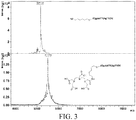
FIG. 3 is a MALDI-TOF mass spectrum of a DTPA anhydride-DNA conjugate prepared in DMSO with heating under microwave; -
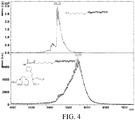
FIG. 4 is a MALDI-TOF mass spectrum of a p-SCN-Bn-DTPA-DNA conjugate prepared in an aqueous phase with heating under microwave; -
FIG. 5 is a MALDI-TOF mass spectrum of a p-SCN-Bn-DTPA-LNA conjugate prepared in DMSO with heating under microwave; -
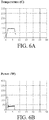
FIGs. 6A and 6B show variations in reaction temperature and power (94°C, 5 min) upon heating under microwave; and -
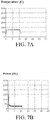
FIGs. 7A and 7B show variations in reaction temperature and power (75°C, 10 min) upon heating under microwave. - The features and implementations of the present invention are described in detail by way of most preferred examples.
- 32.4 nmol of a 16mer single-stranded DNA (5'-ATGGAATTCAGTTCTC-3') was dissolved in 20 µL of 0.5 M NaHCO3 solution. Then, 36 µL of DMSO (dimethyl sulfoxide) was added, which contained p-SCN-Bn-DTPA (2-(4-isothiocyanatobenzyl)-diethylenetriaminepentaacetic acid) in moles of 50 times of that of the DNA. Subsequently, the reaction was agitated overnight (for more than 12 hrs) at room temperature. Next, the resulting product was centrifuged for 3 min at 1000 g, and then passed through a Centri•Pure MINI SEQ Z-25 size exclusion column (a desalting column, manufactured by emp BIOTECH). Then, the eluate was collected, that is, DTPA-DNA. MS analysis of the product was carried out. The process was briefly as follows. 0.5 µL of the purified DTPA-DNA and 1.5 µL of 3-Hydroxypicolinic acid (3-HPA) were used as a matrix, mixed uniformly, dotted on a sample disc, naturally air dried, and determined for the molecular weight of DTPA-DNA by Matrix-Assisted Laser Desorption/Ionization Time of Flight Mass Spectrometry (MALDI-TOF). The molecular weight of the 16mer single-stranded DNA is determined to be 5200 Da by MS analysis. After conjugation to p-SCN-Bn-DTPA, the molecular weight peak is shown to shift to 5766 Da by MS analysis. However, there is a large amount of DNA unconjugated to p-SCN-Bn-DTPA, as shown in
FIG. 1 . - 32.4 nmol of a 16mer single-stranded DNA (5'-ATGGAATTCAGTTCTC-3') was dissolved in 25 µL of 0.5 M NaHCO3 solution. Then, 25 µL of DMSO was added, which contained 1 mg of p-SCN-Bn-DTPA. The reaction was continued for 10 min at 75°C on a Biotage Initiator microwave heater (see
FIGs. 7A and 7B for variations in reaction temperature and power upon heating under microwave). Next, the resulting product was centrifuged for 3 min at 1000 g, and then passed through a Z-25 size exclusion column. Then, the eluate was collected, that is, DTPA-Bn-SCN-DNA. The molecular weight of the product was determined by MALDI-TOF, as shown inFIG. 2 . Conjugation of p-SCN-Bn-DTPA to DNA with heating under microwave can provide 100% of DTPA-Bn-SCN-DNA. - 32.4 nmol of DNA was back dissolved in 37.5 µL of 0.5 M NaHCO3. 62.5 µL of DMSO was added, which contained 8 mg/mL of DTPA anhydride, and mixed until uniform. The reaction was continued for 10 min at 75°C on a microwave heater (see
FIGs. 7A and 7B for variations in reaction temperature and power upon heating under microwave). Next, the resulting product was centrifuged for 3 min at 1000 g, and then passed through a Z-25 size exclusion column. Then, the eluate was collected, that is, DTPA-DNA. The molecular weight of the product was determined by MALDI-TOF, as shown inFIG. 3 . Conjugation of DTPA anhydride to DNA with heating under microwave can provide 100% of DTPA-DNA. - 10 nmol of DNA was dissolved in 10 µL of double distilled water. 10 µL of 0.5 M NaHCO3 was added, which contained 0.333 mg of p-SCN-Bn-DTPA. Then 30 µL of double distilled water was added to give a total volume of 50 µL, and mixed until uniform. The reaction was continued for 5 min at 94°C on a microwave heater (see
FIGs. 6A and 6B for variations in reaction temperature and power upon heating under microwave). Next, the resulting product was centrifuged for 3 min at 1000 g, and then passed through a Z-25 size exclusion column. Then, the eluate was collected, that is, DTPA-Bn-NCS-DNA. The molecular weight of the product was determined by MS analysis. 100% of DTPA-Bn-SCN-DNA is confirmed to be obtained, as shown inFIG. 4 . However, no conjugation occurs when the reaction is carried out in an aqueous at 75°C for 10 min under microwave. - 30 nmol of a 16mer LNA (5'-ATGGAATTCAGTTCTC-3') was dissolved in 25 µL of 0.25 M NaHCO3 solution. 30 µL of DMSO was added, which contained 1 mg of p-SCN-Bn-DTPA. The reaction was continued for 10 min at 75°C on a Biotage Initiator microwave heater (see
FIGs. 7A and 7B for variations in reaction temperature and power upon heating under microwave). Next, the resulting product was centrifuged for 3 min at 1000 g, and then passed through a Z-25 size exclusion column. Then, the eluate was collected, that is, DTPA-Bn-SCN-LNA. The molecular weight of the product was determined by MALDI-TOF, as shown inFIG. 5 . Conjugation of p-SCN-Bn-DTPA to LNA with heating under microwave can provide 100% of DTPA-Bn-SCN-LNA. - In summary, the features of the present invention, as a whole or in any combination thereof are neither found in the same type of products, nor previously disclosed, thus meeting the requirements of the patent law. Therefore, this patent of invention is filed in accordance with the patent law.
Claims (6)
- A high-yield method for rapidly conjugating a nucleic acid having an amino group to a diethylenetriamine pentaacetic acid (DTPA) derivative, wherein the nucleic acid is a ribonucleic acid (RNA), a deoxyribonucleic acid (DNA) or a locked nucleic acid (LNA), and the method comprises the steps of: reacting the nucleic
acid and the DTPA derivative for 5 min at 94°C in an aqueous sodium bicarbonate solution or for 10 min at 75°C in a 2-10% sodium bicarbonate solution in DMSO, with heating under microwave, wherein the DTPA derivative is a DTPA anhydride or p-isothiocyanate benzyl-DTPA (SCN-Bn-DTPA). - The method according to claim 1, wherein the pH of the sodium bicarbonate solution is 8.0-8.5.
- The method according to claim 1, wherein the nucleic acid is the LNA or DNA having an amino group.
- The method according to claim 1, wherein the ribonucleic acid (RNA) is at nmol level.
- The method according to claim 1, wherein the reaction is complete at a reaction volume of only 50 µL.
- The method according to claim 5, wherein the reaction yield of the RNA-DTPA conjugate is 100%.
Applications Claiming Priority (1)
| Application Number | Priority Date | Filing Date | Title |
|---|---|---|---|
| TW104143832A TWI574972B (en) | 2015-12-25 | 2015-12-25 | High yield conjugation method of oligonucleotide and diethyltriamine pentaacetic acid |
Publications (2)
| Publication Number | Publication Date |
|---|---|
| EP3184123A1 EP3184123A1 (en) | 2017-06-28 |
| EP3184123B1 true EP3184123B1 (en) | 2020-10-07 |
Family
ID=56368880
Family Applications (1)
| Application Number | Title | Priority Date | Filing Date |
|---|---|---|---|
| EP16178202.4A Active EP3184123B1 (en) | 2015-12-25 | 2016-07-06 | High-yield method for rapidly conjugating ribonucleic acid (rna) to diethylenetriamine pentaacetic acid (dtpa) |
Country Status (4)
| Country | Link |
|---|---|
| US (1) | US9873874B2 (en) |
| EP (1) | EP3184123B1 (en) |
| JP (1) | JP6231170B2 (en) |
| TW (1) | TWI574972B (en) |
Family Cites Families (4)
| Publication number | Priority date | Publication date | Assignee | Title |
|---|---|---|---|---|
| US4962045A (en) * | 1988-05-02 | 1990-10-09 | The Perkin-Elmer Corporation | Time-resolved fluorimetric detection of lanthanide labeled nucleotides |
| US6232295B1 (en) * | 1994-10-12 | 2001-05-15 | Jon Faiz Kayyem | Cell-specific contrast agent and gene delivery vehicles |
| JPWO2008126837A1 (en) * | 2007-04-10 | 2010-07-22 | 公立大学法人横浜市立大学 | Labelable nucleic acid, labeled nucleic acid and use thereof |
| TWI478726B (en) * | 2013-06-10 | 2015-04-01 | Inst Nuclear Energy Res Atomic Energy Council | Method of bonding nano gold with diethylenetriaminepentaacetic (dtpa) acid |
-
2015
- 2015-12-25 TW TW104143832A patent/TWI574972B/en active
-
2016
- 2016-07-06 EP EP16178202.4A patent/EP3184123B1/en active Active
- 2016-07-11 JP JP2016137056A patent/JP6231170B2/en active Active
- 2016-07-18 US US15/212,697 patent/US9873874B2/en active Active
Non-Patent Citations (1)
| Title |
|---|
| None * |
Also Published As
| Publication number | Publication date |
|---|---|
| US9873874B2 (en) | 2018-01-23 |
| US20170183651A1 (en) | 2017-06-29 |
| TWI574972B (en) | 2017-03-21 |
| TW201722981A (en) | 2017-07-01 |
| EP3184123A1 (en) | 2017-06-28 |
| JP2017114841A (en) | 2017-06-29 |
| JP6231170B2 (en) | 2017-11-15 |
Similar Documents
| Publication | Publication Date | Title |
|---|---|---|
| Pourshahian | Therapeutic oligonucleotides, impurities, degradants, and their characterization by mass spectrometry | |
| US8093367B2 (en) | Preparation and isolation of 5′ capped mRNA | |
| Schoch et al. | Site-specific one-pot dual labeling of DNA by orthogonal cycloaddition chemistry | |
| EP2872147B1 (en) | Method for making chiral oligonucleotides | |
| Capaldi et al. | Synthesis of high-quality antisense drugs. Addition of acrylonitrile to phosphorothioate oligonucleotides: adduct characterization and avoidance | |
| Farzan et al. | Automated solid-phase click synthesis of oligonucleotide conjugates: from small molecules to diverse N-acetylgalactosamine clusters | |
| US10597719B2 (en) | Detection kit and simple method for detecting target nucleic acids | |
| Ameta et al. | RNA–peptide conjugate synthesis by inverse-electron demand Diels–Alder reaction | |
| US9315537B2 (en) | Multiple orthogonal labelling of oligonucleotides | |
| Forget et al. | 3′-Oligonucleotides conjugation via chemoselective oxime bond formation | |
| WO2023219114A1 (en) | Mrna cap analog and method for producing same, method for producing mrna, and kit | |
| US9873874B2 (en) | High-yield method for rapidly conjugating ribonucleic acid (RNA) to diethylenetriamine pentaacetic acid (DTPA) | |
| Cieślak et al. | The 2‐cyano‐2, 2‐dimethylethanimine‐N‐oxymethyl group for the 2′‐hydroxyl protection of ribonucleosides in the solid‐phase synthesis of RNA sequences | |
| Singh et al. | Metal free,“click and click–click” conjugation of ribonucleosides and 2′-OMe oligoribonucleotides on the solid phase | |
| EP2638048A1 (en) | Nucleic acidsbuilding blocks and methods for the synthesis of 5-hydroxymethylcytosine-containing | |
| McClain et al. | Nonchromatographic Purification of Synthetic RNA | |
| US12297225B2 (en) | Detection method for natural and modified small nucleic acids | |
| US11499178B2 (en) | Labeling method for nucleic acid | |
| US8816062B2 (en) | Maleimide-furanyl compounds that can be used in a general method for preparing maleimide-oligonucleotide derivatives | |
| Gissberg et al. | Fast and efficient synthesis of Zorro-LNA type 3′-5′-5′-3′ oligonucleotide conjugates via parallel in situ stepwise conjugation | |
| CN111233957B (en) | Dideoxynucleoside phosphoramidite monomer containing succinamide structure, its synthesis method and application | |
| WO2026106497A2 (en) | Functionalized circular rna and methods and intermediates for their production | |
| HK40097122A (en) | Chiral control | |
| Lewis | Development of new chemical biological tools to probe splice site selection | |
| Kowata et al. | Development of a 3′-amino linker with high conjugation activity and its application to conveniently cross-link blunt ends of a duplex |
Legal Events
| Date | Code | Title | Description |
|---|---|---|---|
| PUAI | Public reference made under article 153(3) epc to a published international application that has entered the european phase |
Free format text: ORIGINAL CODE: 0009012 |
|
| STAA | Information on the status of an ep patent application or granted ep patent |
Free format text: STATUS: REQUEST FOR EXAMINATION WAS MADE |
|
| 17P | Request for examination filed |
Effective date: 20160803 |
|
| AK | Designated contracting states |
Kind code of ref document: A1 Designated state(s): AL AT BE BG CH CY CZ DE DK EE ES FI FR GB GR HR HU IE IS IT LI LT LU LV MC MK MT NL NO PL PT RO RS SE SI SK SM TR |
|
| AX | Request for extension of the european patent |
Extension state: BA ME |
|
| STAA | Information on the status of an ep patent application or granted ep patent |
Free format text: STATUS: EXAMINATION IS IN PROGRESS |
|
| 17Q | First examination report despatched |
Effective date: 20190416 |
|
| GRAP | Despatch of communication of intention to grant a patent |
Free format text: ORIGINAL CODE: EPIDOSNIGR1 |
|
| STAA | Information on the status of an ep patent application or granted ep patent |
Free format text: STATUS: GRANT OF PATENT IS INTENDED |
|
| INTG | Intention to grant announced |
Effective date: 20200616 |
|
| GRAS | Grant fee paid |
Free format text: ORIGINAL CODE: EPIDOSNIGR3 |
|
| GRAA | (expected) grant |
Free format text: ORIGINAL CODE: 0009210 |
|
| STAA | Information on the status of an ep patent application or granted ep patent |
Free format text: STATUS: THE PATENT HAS BEEN GRANTED |
|
| AK | Designated contracting states |
Kind code of ref document: B1 Designated state(s): AL AT BE BG CH CY CZ DE DK EE ES FI FR GB GR HR HU IE IS IT LI LT LU LV MC MK MT NL NO PL PT RO RS SE SI SK SM TR |
|
| REG | Reference to a national code |
Ref country code: GB Ref legal event code: FG4D |
|
| REG | Reference to a national code |
Ref country code: CH Ref legal event code: EP Ref country code: AT Ref legal event code: REF Ref document number: 1320457 Country of ref document: AT Kind code of ref document: T Effective date: 20201015 |
|
| REG | Reference to a national code |
Ref country code: IE Ref legal event code: FG4D |
|
| REG | Reference to a national code |
Ref country code: DE Ref legal event code: R096 Ref document number: 602016045265 Country of ref document: DE |
|
| REG | Reference to a national code |
Ref country code: NL Ref legal event code: MP Effective date: 20201007 |
|
| REG | Reference to a national code |
Ref country code: AT Ref legal event code: MK05 Ref document number: 1320457 Country of ref document: AT Kind code of ref document: T Effective date: 20201007 |
|
| PG25 | Lapsed in a contracting state [announced via postgrant information from national office to epo] |
Ref country code: GR Free format text: LAPSE BECAUSE OF FAILURE TO SUBMIT A TRANSLATION OF THE DESCRIPTION OR TO PAY THE FEE WITHIN THE PRESCRIBED TIME-LIMIT Effective date: 20210108 Ref country code: FI Free format text: LAPSE BECAUSE OF FAILURE TO SUBMIT A TRANSLATION OF THE DESCRIPTION OR TO PAY THE FEE WITHIN THE PRESCRIBED TIME-LIMIT Effective date: 20201007 Ref country code: NL Free format text: LAPSE BECAUSE OF FAILURE TO SUBMIT A TRANSLATION OF THE DESCRIPTION OR TO PAY THE FEE WITHIN THE PRESCRIBED TIME-LIMIT Effective date: 20201007 Ref country code: NO Free format text: LAPSE BECAUSE OF FAILURE TO SUBMIT A TRANSLATION OF THE DESCRIPTION OR TO PAY THE FEE WITHIN THE PRESCRIBED TIME-LIMIT Effective date: 20210107 Ref country code: PT Free format text: LAPSE BECAUSE OF FAILURE TO SUBMIT A TRANSLATION OF THE DESCRIPTION OR TO PAY THE FEE WITHIN THE PRESCRIBED TIME-LIMIT Effective date: 20210208 Ref country code: RS Free format text: LAPSE BECAUSE OF FAILURE TO SUBMIT A TRANSLATION OF THE DESCRIPTION OR TO PAY THE FEE WITHIN THE PRESCRIBED TIME-LIMIT Effective date: 20201007 |
|
| REG | Reference to a national code |
Ref country code: LT Ref legal event code: MG4D |
|
| PG25 | Lapsed in a contracting state [announced via postgrant information from national office to epo] |
Ref country code: ES Free format text: LAPSE BECAUSE OF FAILURE TO SUBMIT A TRANSLATION OF THE DESCRIPTION OR TO PAY THE FEE WITHIN THE PRESCRIBED TIME-LIMIT Effective date: 20201007 Ref country code: AT Free format text: LAPSE BECAUSE OF FAILURE TO SUBMIT A TRANSLATION OF THE DESCRIPTION OR TO PAY THE FEE WITHIN THE PRESCRIBED TIME-LIMIT Effective date: 20201007 Ref country code: IS Free format text: LAPSE BECAUSE OF FAILURE TO SUBMIT A TRANSLATION OF THE DESCRIPTION OR TO PAY THE FEE WITHIN THE PRESCRIBED TIME-LIMIT Effective date: 20210207 Ref country code: LV Free format text: LAPSE BECAUSE OF FAILURE TO SUBMIT A TRANSLATION OF THE DESCRIPTION OR TO PAY THE FEE WITHIN THE PRESCRIBED TIME-LIMIT Effective date: 20201007 Ref country code: PL Free format text: LAPSE BECAUSE OF FAILURE TO SUBMIT A TRANSLATION OF THE DESCRIPTION OR TO PAY THE FEE WITHIN THE PRESCRIBED TIME-LIMIT Effective date: 20201007 Ref country code: SE Free format text: LAPSE BECAUSE OF FAILURE TO SUBMIT A TRANSLATION OF THE DESCRIPTION OR TO PAY THE FEE WITHIN THE PRESCRIBED TIME-LIMIT Effective date: 20201007 Ref country code: BG Free format text: LAPSE BECAUSE OF FAILURE TO SUBMIT A TRANSLATION OF THE DESCRIPTION OR TO PAY THE FEE WITHIN THE PRESCRIBED TIME-LIMIT Effective date: 20210107 |
|
| PG25 | Lapsed in a contracting state [announced via postgrant information from national office to epo] |
Ref country code: HR Free format text: LAPSE BECAUSE OF FAILURE TO SUBMIT A TRANSLATION OF THE DESCRIPTION OR TO PAY THE FEE WITHIN THE PRESCRIBED TIME-LIMIT Effective date: 20201007 |
|
| REG | Reference to a national code |
Ref country code: DE Ref legal event code: R097 Ref document number: 602016045265 Country of ref document: DE |
|
| PG25 | Lapsed in a contracting state [announced via postgrant information from national office to epo] |
Ref country code: CZ Free format text: LAPSE BECAUSE OF FAILURE TO SUBMIT A TRANSLATION OF THE DESCRIPTION OR TO PAY THE FEE WITHIN THE PRESCRIBED TIME-LIMIT Effective date: 20201007 Ref country code: EE Free format text: LAPSE BECAUSE OF FAILURE TO SUBMIT A TRANSLATION OF THE DESCRIPTION OR TO PAY THE FEE WITHIN THE PRESCRIBED TIME-LIMIT Effective date: 20201007 Ref country code: LT Free format text: LAPSE BECAUSE OF FAILURE TO SUBMIT A TRANSLATION OF THE DESCRIPTION OR TO PAY THE FEE WITHIN THE PRESCRIBED TIME-LIMIT Effective date: 20201007 Ref country code: SM Free format text: LAPSE BECAUSE OF FAILURE TO SUBMIT A TRANSLATION OF THE DESCRIPTION OR TO PAY THE FEE WITHIN THE PRESCRIBED TIME-LIMIT Effective date: 20201007 Ref country code: RO Free format text: LAPSE BECAUSE OF FAILURE TO SUBMIT A TRANSLATION OF THE DESCRIPTION OR TO PAY THE FEE WITHIN THE PRESCRIBED TIME-LIMIT Effective date: 20201007 Ref country code: SK Free format text: LAPSE BECAUSE OF FAILURE TO SUBMIT A TRANSLATION OF THE DESCRIPTION OR TO PAY THE FEE WITHIN THE PRESCRIBED TIME-LIMIT Effective date: 20201007 |
|
| PLBE | No opposition filed within time limit |
Free format text: ORIGINAL CODE: 0009261 |
|
| STAA | Information on the status of an ep patent application or granted ep patent |
Free format text: STATUS: NO OPPOSITION FILED WITHIN TIME LIMIT |
|
| PG25 | Lapsed in a contracting state [announced via postgrant information from national office to epo] |
Ref country code: DK Free format text: LAPSE BECAUSE OF FAILURE TO SUBMIT A TRANSLATION OF THE DESCRIPTION OR TO PAY THE FEE WITHIN THE PRESCRIBED TIME-LIMIT Effective date: 20201007 |
|
| 26N | No opposition filed |
Effective date: 20210708 |
|
| PG25 | Lapsed in a contracting state [announced via postgrant information from national office to epo] |
Ref country code: IT Free format text: LAPSE BECAUSE OF FAILURE TO SUBMIT A TRANSLATION OF THE DESCRIPTION OR TO PAY THE FEE WITHIN THE PRESCRIBED TIME-LIMIT Effective date: 20201007 Ref country code: AL Free format text: LAPSE BECAUSE OF FAILURE TO SUBMIT A TRANSLATION OF THE DESCRIPTION OR TO PAY THE FEE WITHIN THE PRESCRIBED TIME-LIMIT Effective date: 20201007 |
|
| PG25 | Lapsed in a contracting state [announced via postgrant information from national office to epo] |
Ref country code: SI Free format text: LAPSE BECAUSE OF FAILURE TO SUBMIT A TRANSLATION OF THE DESCRIPTION OR TO PAY THE FEE WITHIN THE PRESCRIBED TIME-LIMIT Effective date: 20201007 |
|
| REG | Reference to a national code |
Ref country code: CH Ref legal event code: PL |
|
| PG25 | Lapsed in a contracting state [announced via postgrant information from national office to epo] |
Ref country code: MC Free format text: LAPSE BECAUSE OF FAILURE TO SUBMIT A TRANSLATION OF THE DESCRIPTION OR TO PAY THE FEE WITHIN THE PRESCRIBED TIME-LIMIT Effective date: 20201007 |
|
| REG | Reference to a national code |
Ref country code: BE Ref legal event code: MM Effective date: 20210731 |
|
| PG25 | Lapsed in a contracting state [announced via postgrant information from national office to epo] |
Ref country code: LI Free format text: LAPSE BECAUSE OF NON-PAYMENT OF DUE FEES Effective date: 20210731 Ref country code: CH Free format text: LAPSE BECAUSE OF NON-PAYMENT OF DUE FEES Effective date: 20210731 |
|
| PG25 | Lapsed in a contracting state [announced via postgrant information from national office to epo] |
Ref country code: IS Free format text: LAPSE BECAUSE OF FAILURE TO SUBMIT A TRANSLATION OF THE DESCRIPTION OR TO PAY THE FEE WITHIN THE PRESCRIBED TIME-LIMIT Effective date: 20210207 Ref country code: LU Free format text: LAPSE BECAUSE OF NON-PAYMENT OF DUE FEES Effective date: 20210706 |
|
| PG25 | Lapsed in a contracting state [announced via postgrant information from national office to epo] |
Ref country code: IE Free format text: LAPSE BECAUSE OF NON-PAYMENT OF DUE FEES Effective date: 20210706 Ref country code: BE Free format text: LAPSE BECAUSE OF NON-PAYMENT OF DUE FEES Effective date: 20210731 |
|
| PG25 | Lapsed in a contracting state [announced via postgrant information from national office to epo] |
Ref country code: HU Free format text: LAPSE BECAUSE OF FAILURE TO SUBMIT A TRANSLATION OF THE DESCRIPTION OR TO PAY THE FEE WITHIN THE PRESCRIBED TIME-LIMIT; INVALID AB INITIO Effective date: 20160706 |
|
| PG25 | Lapsed in a contracting state [announced via postgrant information from national office to epo] |
Ref country code: CY Free format text: LAPSE BECAUSE OF FAILURE TO SUBMIT A TRANSLATION OF THE DESCRIPTION OR TO PAY THE FEE WITHIN THE PRESCRIBED TIME-LIMIT Effective date: 20201007 |
|
| PG25 | Lapsed in a contracting state [announced via postgrant information from national office to epo] |
Ref country code: MK Free format text: LAPSE BECAUSE OF FAILURE TO SUBMIT A TRANSLATION OF THE DESCRIPTION OR TO PAY THE FEE WITHIN THE PRESCRIBED TIME-LIMIT Effective date: 20201007 |
|
| PG25 | Lapsed in a contracting state [announced via postgrant information from national office to epo] |
Ref country code: MT Free format text: LAPSE BECAUSE OF FAILURE TO SUBMIT A TRANSLATION OF THE DESCRIPTION OR TO PAY THE FEE WITHIN THE PRESCRIBED TIME-LIMIT Effective date: 20201007 |
|
| PGFP | Annual fee paid to national office [announced via postgrant information from national office to epo] |
Ref country code: DE Payment date: 20250709 Year of fee payment: 10 |
|
| PGFP | Annual fee paid to national office [announced via postgrant information from national office to epo] |
Ref country code: GB Payment date: 20250707 Year of fee payment: 10 |
|
| PGFP | Annual fee paid to national office [announced via postgrant information from national office to epo] |
Ref country code: FR Payment date: 20250708 Year of fee payment: 10 |
|
| PG25 | Lapsed in a contracting state [announced via postgrant information from national office to epo] |
Ref country code: TR Free format text: LAPSE BECAUSE OF FAILURE TO SUBMIT A TRANSLATION OF THE DESCRIPTION OR TO PAY THE FEE WITHIN THE PRESCRIBED TIME-LIMIT Effective date: 20201007 |