EP3184088A1 - Surgical devices for performing a bariatric procedure - Google Patents
Surgical devices for performing a bariatric procedure Download PDFInfo
- Publication number
- EP3184088A1 EP3184088A1 EP16205719.4A EP16205719A EP3184088A1 EP 3184088 A1 EP3184088 A1 EP 3184088A1 EP 16205719 A EP16205719 A EP 16205719A EP 3184088 A1 EP3184088 A1 EP 3184088A1
- Authority
- EP
- European Patent Office
- Prior art keywords
- leg
- surgical device
- closure mechanism
- stomach
- surgical
- Prior art date
- Legal status (The legal status is an assumption and is not a legal conclusion. Google has not performed a legal analysis and makes no representation as to the accuracy of the status listed.)
- Withdrawn
Links
- 238000007681 bariatric surgery Methods 0.000 title description 9
- 230000007246 mechanism Effects 0.000 claims abstract description 53
- 210000002784 stomach Anatomy 0.000 abstract description 37
- 238000000034 method Methods 0.000 abstract description 20
- 238000007682 sleeve gastrectomy Methods 0.000 description 5
- 230000002441 reversible effect Effects 0.000 description 4
- 229920000491 Polyphenylsulfone Polymers 0.000 description 2
- 210000003238 esophagus Anatomy 0.000 description 2
- 235000013305 food Nutrition 0.000 description 2
- 240000005561 Musa balbisiana Species 0.000 description 1
- 235000018290 Musa x paradisiaca Nutrition 0.000 description 1
- 229920003295 Radel® Polymers 0.000 description 1
- 210000001198 duodenum Anatomy 0.000 description 1
- 230000037406 food intake Effects 0.000 description 1
- 235000012631 food intake Nutrition 0.000 description 1
- 208000014674 injury Diseases 0.000 description 1
- 239000000463 material Substances 0.000 description 1
- 239000002184 metal Substances 0.000 description 1
- 238000012986 modification Methods 0.000 description 1
- 230000004048 modification Effects 0.000 description 1
- 230000017074 necrotic cell death Effects 0.000 description 1
- 210000005036 nerve Anatomy 0.000 description 1
- 230000003647 oxidation Effects 0.000 description 1
- 238000007254 oxidation reaction Methods 0.000 description 1
- 239000002861 polymer material Substances 0.000 description 1
- 230000000287 tissue oxygenation Effects 0.000 description 1
- 230000008733 trauma Effects 0.000 description 1
Images




Classifications
-
- A—HUMAN NECESSITIES
- A61—MEDICAL OR VETERINARY SCIENCE; HYGIENE
- A61F—FILTERS IMPLANTABLE INTO BLOOD VESSELS; PROSTHESES; DEVICES PROVIDING PATENCY TO, OR PREVENTING COLLAPSING OF, TUBULAR STRUCTURES OF THE BODY, e.g. STENTS; ORTHOPAEDIC, NURSING OR CONTRACEPTIVE DEVICES; FOMENTATION; TREATMENT OR PROTECTION OF EYES OR EARS; BANDAGES, DRESSINGS OR ABSORBENT PADS; FIRST-AID KITS
- A61F5/00—Orthopaedic methods or devices for non-surgical treatment of bones or joints; Nursing devices ; Anti-rape devices
- A61F5/0003—Apparatus for the treatment of obesity; Anti-eating devices
- A61F5/0013—Implantable devices or invasive measures
- A61F5/005—Gastric bands
- A61F5/0063—Gastric bands wrapping the stomach
-
- A—HUMAN NECESSITIES
- A61—MEDICAL OR VETERINARY SCIENCE; HYGIENE
- A61B—DIAGNOSIS; SURGERY; IDENTIFICATION
- A61B17/00—Surgical instruments, devices or methods
- A61B17/12—Surgical instruments, devices or methods for ligaturing or otherwise compressing tubular parts of the body, e.g. blood vessels or umbilical cord
- A61B17/122—Clamps or clips, e.g. for the umbilical cord
-
- A—HUMAN NECESSITIES
- A61—MEDICAL OR VETERINARY SCIENCE; HYGIENE
- A61F—FILTERS IMPLANTABLE INTO BLOOD VESSELS; PROSTHESES; DEVICES PROVIDING PATENCY TO, OR PREVENTING COLLAPSING OF, TUBULAR STRUCTURES OF THE BODY, e.g. STENTS; ORTHOPAEDIC, NURSING OR CONTRACEPTIVE DEVICES; FOMENTATION; TREATMENT OR PROTECTION OF EYES OR EARS; BANDAGES, DRESSINGS OR ABSORBENT PADS; FIRST-AID KITS
- A61F5/00—Orthopaedic methods or devices for non-surgical treatment of bones or joints; Nursing devices ; Anti-rape devices
- A61F5/0003—Apparatus for the treatment of obesity; Anti-eating devices
- A61F5/0013—Implantable devices or invasive measures
- A61F5/0083—Reducing the size of the stomach, e.g. gastroplasty
- A61F5/0086—Reducing the size of the stomach, e.g. gastroplasty using clamps, folding means or the like
-
- A—HUMAN NECESSITIES
- A61—MEDICAL OR VETERINARY SCIENCE; HYGIENE
- A61F—FILTERS IMPLANTABLE INTO BLOOD VESSELS; PROSTHESES; DEVICES PROVIDING PATENCY TO, OR PREVENTING COLLAPSING OF, TUBULAR STRUCTURES OF THE BODY, e.g. STENTS; ORTHOPAEDIC, NURSING OR CONTRACEPTIVE DEVICES; FOMENTATION; TREATMENT OR PROTECTION OF EYES OR EARS; BANDAGES, DRESSINGS OR ABSORBENT PADS; FIRST-AID KITS
- A61F5/00—Orthopaedic methods or devices for non-surgical treatment of bones or joints; Nursing devices ; Anti-rape devices
- A61F5/0003—Apparatus for the treatment of obesity; Anti-eating devices
- A61F5/0089—Instruments for placement or removal
-
- A—HUMAN NECESSITIES
- A61—MEDICAL OR VETERINARY SCIENCE; HYGIENE
- A61B—DIAGNOSIS; SURGERY; IDENTIFICATION
- A61B17/00—Surgical instruments, devices or methods
- A61B17/12—Surgical instruments, devices or methods for ligaturing or otherwise compressing tubular parts of the body, e.g. blood vessels or umbilical cord
- A61B17/122—Clamps or clips, e.g. for the umbilical cord
- A61B17/1227—Spring clips
-
- A—HUMAN NECESSITIES
- A61—MEDICAL OR VETERINARY SCIENCE; HYGIENE
- A61B—DIAGNOSIS; SURGERY; IDENTIFICATION
- A61B17/00—Surgical instruments, devices or methods
- A61B2017/00743—Type of operation; Specification of treatment sites
- A61B2017/00818—Treatment of the gastro-intestinal system
Definitions
- the present disclosure relates to performing a bariatric procedure and surgical devices for use therewith. More particularly, the present disclosure relates to the use of a surgical clip for performing a bariatric surgery (e.g., a vertical sleeve gastrectomy).
- a surgical clip for performing a bariatric surgery (e.g., a vertical sleeve gastrectomy).
- a vertical sleeve gastrectomy is a permanent procedure and is a restrictive form of weight loss surgery in which approximately 85% of the left side of the stomach is removed leaving a cylindrical- or sleeve-shaped stomach with a capacity ranging from about 60 cubic centimeters to about 150 cubic centimeters.
- a vertical sleeve gastrectomy results in a remodeled stomach that resembles the size and shape of a banana ( FIG. 1 schematically illustrates the result of a vertical sleeve gastrectomy).
- the outlet valve and the nerves to the stomach remain intact and, while the stomach is drastically reduced in size, its function is preserved.
- a temporary or reversible bariatric surgery may employ a device to block or reduce an amount of stomach volume (as opposed to removal of a portion of the stomach) to limit the flow of food intake from the esophagus.
- Such devices are typically placed laterally or horizontally on a portion of the stomach (see FIG. 2 ).
- the present disclosure relates to a method of performing a vertical sleeve gastrostomy.
- the method includes positioning a surgical device adjacent a stomach, positioning a first leg of the surgical device on a dorsal side of the stomach, positioning a second leg of the surgical device on a ventral side of the stomach, approximating the first leg with respect to the second leg, and limiting movement between the first leg and the second leg with a closure mechanism.
- approximating the first leg with respect to the second leg includes pivoting the first leg with respect to the second leg.
- limiting movement between the first leg and the second leg with a closure mechanism includes securing the first leg to the second leg, such as temporarily securing the first leg to the second leg.
- the disclosed method also includes adjusting the closure mechanism to change tension acting on tissue between the first leg and the second leg.
- approximating the first leg with respect to the second is done by contacting the first leg and the second leg with at least one hand of a physician.
- the method includes removing the surgical device from contact with the stomach.
- the present disclosure also relates to a a surgical device for performing a vertical sleeve gastrostomy.
- the surgical device includes a first leg, a second leg, and a closure mechanism.
- the second leg is pivotally engaged with the first leg.
- the closure mechanism is disposed in mechanical cooperation with at least one of the first leg and the second leg and is configured to limit movement between the first leg and the second leg.
- Each of the first leg and the second leg includes a length of between about 8 inches and about 16 inches.
- each of the first leg and the second leg includes a length of about 12 inches.
- closure mechanism is configured to be a temporary closure mechanism.
- the surgical device includes a second closure mechanism disposed in mechanical cooperation with at least one of the first leg and the second leg and is configured to limit movement between the first leg and the second leg.
- the surgical device includes a living hinge disposed between the first leg and the second leg.
- proximal will refer to the portion of the surgical device closest to its hinge
- distal will refer to the portion of the surgical device farthest from its hinge
- surgical device 100 is configured to temporarily clamp onto a portion of a patient's stomach "S" to block off that portion from the flow of food therethrough, for example.
- surgical device 100 allows a section of the stomach to be blocked off, without being physically separated from the remainder of the stomach.
- Surgical device 100 generally includes a first leg 110, a second leg 120, a hinge 130, and a closure mechanism 140.
- First leg 110 engages or is attached to second leg 120 via hinge 130, and closure mechanism 140 helps maintain a desired gap between first leg 110 and second leg 120.
- closure mechanism 140 helps maintain a desired gap between first leg 110 and second leg 120.
- hinge 130 may be any suitable type of hinge 130 that allows for movement of first leg 110 and/or second leg 120 with respect to the other leg.
- hinge 130 in FIGS. 4 , 5 and 10 , hinge 130 is a living hinge; in FIGS. 6, 7 , 11 and 12 , hinge 130 includes a pinned hinge including a hinge pin 132 extending through apertures in proximal portions in each of first leg 110 and second leg 120.
- each of the disclosed embodiments of surgical device 100 may include a living hinge, a pinned hinge or another suitable hinge 130.
- other mechanical structures are usable to allow first leg 110 to move (e.g., pivotable movement or non-pivotable movement) with respect to second leg 120.
- Closure mechanism 140 of surgical device 100 is configured to help maintain first leg 110 and second leg 120 in an approximated position about tissue (i.e., the stomach "S"). As can be appreciated, compressed tissue that surgical device 100 is clamped upon has the tendency to expand toward its natural position. Closure mechanism 140 helps resists this expansion force of the tissue to help maintain a desired closure gap between first leg 110 and second leg 120.
- surgical device 100 may include a first closure mechanism disposed between proximal and distal ends of first leg 110 and second leg 120 (e.g., see FIGS. 4 , 5 and 9 ), and/or may include a second closure mechanism disposed at or near a distal end of first leg 110 and second 120 (e.g., see FIGS. 6, 7 and 10 ).
- First closure mechanism and second closure mechanism may be selected from at least one of several types of devices or mechanisms, such as devices that include adjustment features.
- surgical devices 100 of FIGS. 4-6 , 8 and 9 include at least one adjustable closure mechanism 140 (e.g., cable, wire, cable tie, ratchet and pawl mechanism, or other adjustable tension mechanism) for helping to maintain the relative positioning of first leg 110 and second leg 120.
- Surgical device 100 of FIG. 7 includes a pin or screw mechanism to adjust and maintain the distance between first leg 110 and second leg 120. It is further envisioned that closure mechanism 140 can be any other mechanical, pneumatic, hydraulic lock with positive locking, etc.
- Surgical device 100 of FIG. 10 includes a two-piece locking mechanism or closure mechanism 140 to maintain the distance between first leg 110 and second leg 120.
- first leg 110 includes a first portion 142 (e.g., a finger having a ramp) of closure mechanism 140
- second leg 120 includes a second portion 144 (e.g., a slot, cavity, notch, etc.) of closure mechanism 140
- first portion 142 of closure mechanism 140 is configured to mechanically engage second portion 144 of closure mechanism 140.
- Surgical device 100 of FIG. 11 also includes a two-piece locking mechanism or closure mechanism 140 to maintain the distance between first leg 110 and second leg 120.
- first portion 142 of closure mechanism 140 is located on first leg 110 and includes a notch.
- Second portion 144 of closure mechanism 140 is included on second leg 120 and is a finger configured to engage (e.g., releasably engage) the notch 142 of first leg 110.
- surgical device 100 may include any combination of at least one first closure mechanism and at least one second closure mechanism, and any type of closure mechanism 140 (e.g., adjustable closure mechanism) such as those described herein.
- closure mechanism 140 e.g., adjustable closure mechanism
- a tissue-contacting surface 122 of second leg 120 of surgical device 100 of these embodiments, or any of the embodiments disclosed herein, includes a plurality of pins 160 extending therefrom. Pins 160 may be useful to increase the surface area and/or gripping strength of second leg 120 to help ensure a desired grip on tissue.
- First leg 110 may also include a plurality of pins 160 extending from a tissue-contacting surface 112 thereof. The size, amount and spacing of pins 160 may be different from what is shown in the figures without departing from the scope of the present disclosure.
- First leg 110 and second 120 are sufficiently long to enable clamping of an appropriate length of the stomach "S" (e.g., an entire length or essentially an entire length of the stomach “S," as shown in FIGS. 3 and 9 , for example).
- each of first leg 110 and second leg 120 includes a length "L" (see FIG. 7 ) of between about 8 inches and about 16 inches. It is further envisioned that each of first leg 110 and second 1eg 120 is about 12 inches long.
- first leg 110 and second leg 120 may be the same or substantially the same length as each other, or first leg 110 may be longer or shorter than second leg 120.
- first leg 110 and/or second 120 may be rectangular, may include at least one rounded edge or corner, etc. Additionally, the lateral cross-sectional shape of first leg 110 and/or second leg 120 may include a taller center portion (i.e., at the middle of the width "W" (see FIG. 3 ) of the respective leg), and get smaller (either in a stepped, linear or curved configuration) toward lateral edges of the respective leg. Such a configuration may provide increased tissue oxygenation and/or reduced trauma.
- Surgical device 100 may be made from an absorbable plastic material, a polymer material (e.g., Radel ® polyphenylsulfone (PPSU)), metal, etc.). Additionally, surgical device 100 may be implantable, absorbable or removable.
- a polymer material e.g., Radel ® polyphenylsulfone (PPSU)
- PPSU polyphenylsulfone
- Such methods include positioning surgical device 100 adjacent a portion of the stomach "S" (e.g., in a substantially vertical position (as shown in FIGS. 3 and 9 ) such that the flow of food from the esophagus to the duodenum is not restricted), positioning first leg 110 on an upper or dorsal side of the stomach "S," positioning second leg 120 on a lower or ventral side of the stomach “S,” approximating the first leg 110 with respect to the second leg 120 to clamp the tissue of the stomach "S,” and securing (e.g., temporarily securing) the first leg 110 and the second leg 120 with closure mechanism 140 to limit movement therebetween. Additionally, a user may adjust the tension of surgical device 100 (e.g., by adjusting closure mechanism 140) to help reduce instances of tissue necrosis, and to improve tissue oxidation level, for instance.
- a user may adjust the tension of surgical device 100 (e.g., by adjusting closure mechanism 140) to help reduce instances of tissue necrosis, and to improve tissue oxidation level
- surgical device 100 can be clamped onto tissue with a physician's hand "H” or hands, or a surgeon's hand “H” or hands.
- a surgical instrument e.g., a laparoscopic instrument
- a laparoscopic instrument can be used to clamp surgical device 100 onto tissue.
- a user can remove, loosen or unlock closure mechanism 140, for example, by cutting cord, tie, cable, loosening screw, etc., and then taking surgical device 100 out of contact with the stomach "S," and out of the patient's body.
Landscapes
- Health & Medical Sciences (AREA)
- Life Sciences & Earth Sciences (AREA)
- Animal Behavior & Ethology (AREA)
- Vascular Medicine (AREA)
- Veterinary Medicine (AREA)
- Surgery (AREA)
- Engineering & Computer Science (AREA)
- Biomedical Technology (AREA)
- Heart & Thoracic Surgery (AREA)
- Public Health (AREA)
- General Health & Medical Sciences (AREA)
- Child & Adolescent Psychology (AREA)
- Nuclear Medicine, Radiotherapy & Molecular Imaging (AREA)
- Obesity (AREA)
- Nursing (AREA)
- Orthopedic Medicine & Surgery (AREA)
- Gastroenterology & Hepatology (AREA)
- Molecular Biology (AREA)
- Medical Informatics (AREA)
- Reproductive Health (AREA)
- Surgical Instruments (AREA)
- Prostheses (AREA)
Abstract
Description
- The present disclosure relates to performing a bariatric procedure and surgical devices for use therewith. More particularly, the present disclosure relates to the use of a surgical clip for performing a bariatric surgery (e.g., a vertical sleeve gastrectomy).
- A vertical sleeve gastrectomy is a permanent procedure and is a restrictive form of weight loss surgery in which approximately 85% of the left side of the stomach is removed leaving a cylindrical- or sleeve-shaped stomach with a capacity ranging from about 60 cubic centimeters to about 150 cubic centimeters. A vertical sleeve gastrectomy results in a remodeled stomach that resembles the size and shape of a banana (
FIG. 1 schematically illustrates the result of a vertical sleeve gastrectomy). Unlike many other forms of bariatric surgery, the outlet valve and the nerves to the stomach remain intact and, while the stomach is drastically reduced in size, its function is preserved. - A temporary or reversible bariatric surgery may employ a device to block or reduce an amount of stomach volume (as opposed to removal of a portion of the stomach) to limit the flow of food intake from the esophagus. Such devices are typically placed laterally or horizontally on a portion of the stomach (see
FIG. 2 ). - Devices that are typically used for a temporary or reversible bariatric surgery cannot be used for a vertical sleeve gastrostomy due at least in part to its size and/or strength limitations.
- In view of the foregoing, a need exists for methods of using a surgical device to perform a temporary or reversible vertical sleeve gastrostomy.
- The present disclosure relates to a method of performing a vertical sleeve gastrostomy. The method includes positioning a surgical device adjacent a stomach, positioning a first leg of the surgical device on a dorsal side of the stomach, positioning a second leg of the surgical device on a ventral side of the stomach, approximating the first leg with respect to the second leg, and limiting movement between the first leg and the second leg with a closure mechanism.
- In disclosed embodiments, approximating the first leg with respect to the second leg includes pivoting the first leg with respect to the second leg.
- It is further disclosed that limiting movement between the first leg and the second leg with a closure mechanism includes securing the first leg to the second leg, such as temporarily securing the first leg to the second leg.
- The disclosed method also includes adjusting the closure mechanism to change tension acting on tissue between the first leg and the second leg.
- In disclosed embodiments, approximating the first leg with respect to the second is done by contacting the first leg and the second leg with at least one hand of a physician.
- It is further disclosed that the method includes removing the surgical device from contact with the stomach.
- The present disclosure also relates to a a surgical device for performing a vertical sleeve gastrostomy. The surgical device includes a first leg, a second leg, and a closure mechanism. The second leg is pivotally engaged with the first leg. The closure mechanism is disposed in mechanical cooperation with at least one of the first leg and the second leg and is configured to limit movement between the first leg and the second leg. Each of the first leg and the second leg includes a length of between about 8 inches and about 16 inches.
- In disclosed embodiments, each of the first leg and the second leg includes a length of about 12 inches.
- It is further disclosed that the closure mechanism is configured to be a temporary closure mechanism.
- In additional embodiments, the surgical device includes a second closure mechanism disposed in mechanical cooperation with at least one of the first leg and the second leg and is configured to limit movement between the first leg and the second leg.
- In disclosed embodiments, the surgical device includes a living hinge disposed between the first leg and the second leg.
- Various aspects of the present disclosure are described hereinbelow with reference to the drawings, which are incorporated and constitute a part of this specification, wherein:
-
FIG. 1 schematically illustrates a patient's resected stomach as a result of a vertical sleeve gastrectomy in accordance with a method of the prior art; -
FIG. 2 schematically illustrates a band placed laterally on a portion of a patient's stomach in accordance with a method of the prior art; -
FIG. 3 illustrates a surgical device engaged with a portion of a patient's stomach according to embodiments of the present disclosure; -
FIGS. 4 and5 are perspective views of different embodiments of surgical devices of the present disclose in an open position; -
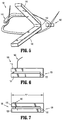
FIGS. 6 and 7 are side views of different embodiments of surgical devices of the present disclosure illustrated in the closed position; -
FIG. 8 is a perspective view of another surgical device of the present disclosure illustrated in a closed position; -
FIG. 9 is a perspective view of yet another surgical device of the present disclosure in a closed position and clamped on a portion of a patient's stomach; -
FIG. 10 is a perspective view of still another surgical device in an open position in accordance with embodiments of the present disclosure; -
FIG. 11 is a perspective view of a surgical device clamping tissue in accordance with another embodiment of the present disclosure; and -
FIG. 12 is a schematic side view of a surgeon's hand clamping a surgical device onto tissue in accordance with embodiments of the present disclosure. - Embodiments of the presently disclosed methods for performing bariatric procedures and surgical devices for use therewith will now be described in detail with reference to the drawings wherein like reference numerals designate identical or corresponding elements in each of the several views. In the description that follows, the term "proximal," will refer to the portion of the surgical device closest to its hinge, and the term "distal" will refer to the portion of the surgical device farthest from its hinge.
- With reference to
FIGS. 3-12 , various embodiments of surgical devices or surgical clips are illustrated and are generally identified asreference character 100. With particular reference toFIG. 3 ,surgical device 100 is configured to temporarily clamp onto a portion of a patient's stomach "S" to block off that portion from the flow of food therethrough, for example. In contrast to typical, permanent bariatric procedures (schematically illustrated inFIG. 1 ),surgical device 100 allows a section of the stomach to be blocked off, without being physically separated from the remainder of the stomach. -
Surgical device 100 generally includes afirst leg 110, asecond leg 120, ahinge 130, and aclosure mechanism 140.First leg 110 engages or is attached tosecond leg 120 viahinge 130, andclosure mechanism 140 helps maintain a desired gap betweenfirst leg 110 andsecond leg 120. As shown inFIGS. 3 and9 , for example, whensurgical device 100 is positioned on a portion of the stomach "S,"first leg 110 is positioned against a dorsal or upper portion of the stomach "S," andsecond leg 120 is positioned against a ventral or lower portion of the stomach "S." -
First leg 110 andsecond leg 120 are movable with respect to each other viahinge 130. As shown in the illustrated embodiments, for example,hinge 130 may be any suitable type ofhinge 130 that allows for movement offirst leg 110 and/orsecond leg 120 with respect to the other leg. For instance, inFIGS. 4 ,5 and10 ,hinge 130 is a living hinge; inFIGS. 6, 7 ,11 and 12 ,hinge 130 includes a pinned hinge including ahinge pin 132 extending through apertures in proximal portions in each offirst leg 110 andsecond leg 120. As can be appreciated, each of the disclosed embodiments ofsurgical device 100 may include a living hinge, a pinned hinge or anothersuitable hinge 130. Additionally, other mechanical structures are usable to allowfirst leg 110 to move (e.g., pivotable movement or non-pivotable movement) with respect tosecond leg 120. -
Closure mechanism 140 ofsurgical device 100 is configured to help maintainfirst leg 110 andsecond leg 120 in an approximated position about tissue (i.e., the stomach "S"). As can be appreciated, compressed tissue thatsurgical device 100 is clamped upon has the tendency to expand toward its natural position.Closure mechanism 140 helps resists this expansion force of the tissue to help maintain a desired closure gap betweenfirst leg 110 andsecond leg 120. - As shown in the accompanying figures, several types of
closure mechanisms 140 are disclosed and usable with surgical device. Further,surgical device 100 may include a first closure mechanism disposed between proximal and distal ends offirst leg 110 and second leg 120 (e.g., seeFIGS. 4 ,5 and9 ), and/or may include a second closure mechanism disposed at or near a distal end offirst leg 110 and second 120 (e.g., seeFIGS. 6, 7 and10 ). - First closure mechanism and second closure mechanism, collectively referred to herein as "closure mechanism," may be selected from at least one of several types of devices or mechanisms, such as devices that include adjustment features. For instance,
surgical devices 100 ofFIGS. 4-6 ,8 and 9 include at least one adjustable closure mechanism 140 (e.g., cable, wire, cable tie, ratchet and pawl mechanism, or other adjustable tension mechanism) for helping to maintain the relative positioning offirst leg 110 andsecond leg 120.Surgical device 100 ofFIG. 7 includes a pin or screw mechanism to adjust and maintain the distance betweenfirst leg 110 andsecond leg 120. It is further envisioned thatclosure mechanism 140 can be any other mechanical, pneumatic, hydraulic lock with positive locking, etc. -
Surgical device 100 ofFIG. 10 includes a two-piece locking mechanism orclosure mechanism 140 to maintain the distance betweenfirst leg 110 andsecond leg 120. Here,first leg 110 includes a first portion 142 (e.g., a finger having a ramp) ofclosure mechanism 140, andsecond leg 120 includes a second portion 144 (e.g., a slot, cavity, notch, etc.) ofclosure mechanism 140;first portion 142 ofclosure mechanism 140 is configured to mechanically engagesecond portion 144 ofclosure mechanism 140. -
Surgical device 100 ofFIG. 11 also includes a two-piece locking mechanism orclosure mechanism 140 to maintain the distance betweenfirst leg 110 andsecond leg 120. In this embodiment,first portion 142 ofclosure mechanism 140 is located onfirst leg 110 and includes a notch.Second portion 144 ofclosure mechanism 140 is included onsecond leg 120 and is a finger configured to engage (e.g., releasably engage) thenotch 142 offirst leg 110. - As can be appreciated
surgical device 100 may include any combination of at least one first closure mechanism and at least one second closure mechanism, and any type of closure mechanism 140 (e.g., adjustable closure mechanism) such as those described herein. - With particular reference to
FIGS. 11-13 , a tissue-contactingsurface 122 ofsecond leg 120 ofsurgical device 100 of these embodiments, or any of the embodiments disclosed herein, includes a plurality ofpins 160 extending therefrom.Pins 160 may be useful to increase the surface area and/or gripping strength ofsecond leg 120 to help ensure a desired grip on tissue.First leg 110 may also include a plurality ofpins 160 extending from a tissue-contacting surface 112 thereof. The size, amount and spacing ofpins 160 may be different from what is shown in the figures without departing from the scope of the present disclosure. -
First leg 110 and second 120 are sufficiently long to enable clamping of an appropriate length of the stomach "S" (e.g., an entire length or essentially an entire length of the stomach "S," as shown inFIGS. 3 and9 , for example). For instance, it is envisioned that each offirst leg 110 andsecond leg 120 includes a length "L" (seeFIG. 7 ) of between about 8 inches and about 16 inches. It is further envisioned that each offirst leg 110 andsecond 1eg 120 is about 12 inches long. Additionally,first leg 110 andsecond leg 120 may be the same or substantially the same length as each other, orfirst leg 110 may be longer or shorter thansecond leg 120. - Additionally, the lateral cross-sectional shape of
first leg 110 and/or second 120 may be rectangular, may include at least one rounded edge or corner, etc. Additionally, the lateral cross-sectional shape offirst leg 110 and/orsecond leg 120 may include a taller center portion (i.e., at the middle of the width "W" (seeFIG. 3 ) of the respective leg), and get smaller (either in a stepped, linear or curved configuration) toward lateral edges of the respective leg. Such a configuration may provide increased tissue oxygenation and/or reduced trauma. -
Surgical device 100 may be made from an absorbable plastic material, a polymer material (e.g., Radel ® polyphenylsulfone (PPSU)), metal, etc.). Additionally,surgical device 100 may be implantable, absorbable or removable. - Methods of performing a temporary or reversible vertical sleeve gastrostomy using
surgical device 100 are also disclosed. Such methods include positioningsurgical device 100 adjacent a portion of the stomach "S" (e.g., in a substantially vertical position (as shown inFIGS. 3 and9 ) such that the flow of food from the esophagus to the duodenum is not restricted), positioningfirst leg 110 on an upper or dorsal side of the stomach "S," positioningsecond leg 120 on a lower or ventral side of the stomach "S," approximating thefirst leg 110 with respect to thesecond leg 120 to clamp the tissue of the stomach "S," and securing (e.g., temporarily securing) thefirst leg 110 and thesecond leg 120 withclosure mechanism 140 to limit movement therebetween. Additionally, a user may adjust the tension of surgical device 100 (e.g., by adjusting closure mechanism 140) to help reduce instances of tissue necrosis, and to improve tissue oxidation level, for instance. - As shown in
FIG. 12 , it is envisioned thatsurgical device 100 can be clamped onto tissue with a physician's hand "H" or hands, or a surgeon's hand "H" or hands. Alternatively, a surgical instrument (e.g., a laparoscopic instrument) can be used to clampsurgical device 100 onto tissue. - To remove
surgical device 100, a user can remove, loosen or unlockclosure mechanism 140, for example, by cutting cord, tie, cable, loosening screw, etc., and then takingsurgical device 100 out of contact with the stomach "S," and out of the patient's body. - While the above description contains many specifics, these specifics should not be construed as limitations on the scope of the present disclosure, but merely as illustrations of various embodiments thereof. Therefore, the above description should not be construed as limiting, but merely as exemplifications of various embodiments. Those skilled in the art will envision other modifications within the scope and spirit of the claims appended hereto.
- The invention may be described by reference to the following numbered paragraphs:-
- 1. A method of performing a vertical sleeve gastrostomy, comprising:
- positioning a surgical device adjacent a stomach;
- positioning a first leg of the surgical device on a dorsal side of the stomach;
- positioning a second leg of the surgical device on a ventral side of the stomach;
- approximating the first leg with respect to the second leg; and
- limiting movement between the first leg and the second leg with a closure mechanism.
- 2. The method according to paragraph 1, wherein approximating the first leg with respect to the second leg includes pivoting the first leg with respect to the second leg.
- 3. The method according to paragraph 1, wherein limiting movement between the first leg and the second leg with a closure mechanism includes securing the first leg to the second leg.
- 4. The method according to paragraph 3, wherein securing the first leg to the second leg includes temporarily securing the first leg to the second leg.
- 5. The method according to paragraph 1, further comprising adjusting the closure mechanism to change tension acting on tissue between the first leg and the second leg.
- 6. The method according to paragraph 1, wherein approximating the first leg with respect to the second is done by contacting the first leg and the second leg with at least one hand of a physician.
- 7. The method according to paragraph 1, further comprising removing the surgical device from contact with the stomach.
- 8. A surgical device for performing a vertical sleeve gastrostomy, comprising:
- a first leg;
- a second leg being pivotally engaged with the first leg; and
- a closure mechanism disposed in mechanical cooperation with at least one of the first leg and the second leg and being configured to limit movement between the first leg and the second leg;
- 9. The surgical device according to paragraph 8, wherein each of the first leg and the second leg includes a length of about 12 inches.
- 10. The surgical device according to paragraph 8, wherein the closure mechanism is configured to be a temporary closure mechanism.
- 11. The surgical device according to paragraph 8, further comprising a second closure mechanism disposed in mechanical cooperation with at least one of the first leg and the second leg and being configured to limit movement between the first leg and the second leg.
- 12. The surgical device according to paragraph 8, further comprising a living hinge disposed between the first leg and the second leg.
Claims (5)
- A surgical device for performing a vertical sleeve gastrostomy, comprising:a first leg;a second leg being pivotally engaged with the first leg; anda closure mechanism disposed in mechanical cooperation with at least one of the first leg and the second leg and being configured to limit movement between the first leg and the second leg;wherein each of the first leg and the second leg includes a length of between about 8 inches and about 16 inches.
- The surgical device according to claim 1, wherein each of the first leg and the second leg includes a length of about 12 inches.
- The surgical device according to claim 1 or claim 2, wherein the closure mechanism is configured to be a temporary closure mechanism.
- The surgical device according to any preceding claim, further comprising a second closure mechanism disposed in mechanical cooperation with at least one of the first leg and the second leg and being configured to limit movement between the first leg and the second leg.
- The surgical device according to any preceding claim, further comprising a living hinge disposed between the first leg and the second leg.
Applications Claiming Priority (1)
| Application Number | Priority Date | Filing Date | Title |
|---|---|---|---|
| IN6824CH2015 | 2015-12-22 |
Publications (1)
| Publication Number | Publication Date |
|---|---|
| EP3184088A1 true EP3184088A1 (en) | 2017-06-28 |
Family
ID=57583058
Family Applications (1)
| Application Number | Title | Priority Date | Filing Date |
|---|---|---|---|
| EP16205719.4A Withdrawn EP3184088A1 (en) | 2015-12-22 | 2016-12-21 | Surgical devices for performing a bariatric procedure |
Country Status (4)
| Country | Link |
|---|---|
| US (1) | US20170172780A1 (en) |
| EP (1) | EP3184088A1 (en) |
| JP (1) | JP2017113547A (en) |
| CN (1) | CN107019583A (en) |
Families Citing this family (77)
| Publication number | Priority date | Publication date | Assignee | Title |
|---|---|---|---|---|
| JP4783372B2 (en) | 2004-10-08 | 2011-09-28 | タイコ ヘルスケア グループ エルピー | Device for applying a surgical clip |
| JP5047799B2 (en) | 2004-10-08 | 2012-10-10 | タイコ ヘルスケア グループ リミテッド パートナーシップ | Endoscopic surgical clip applier |
| EP1913881B1 (en) | 2006-10-17 | 2014-06-11 | Covidien LP | Apparatus for applying surgical clips |
| US8382773B2 (en) | 2007-03-26 | 2013-02-26 | Covidien Lp | Endoscopic surgical clip applier |
| CA2682958C (en) | 2007-04-11 | 2015-11-10 | Tyco Healthcare Group Lp | Surgical clip applier |
| US8465502B2 (en) | 2008-08-25 | 2013-06-18 | Covidien Lp | Surgical clip applier and method of assembly |
| US8267944B2 (en) | 2008-08-29 | 2012-09-18 | Tyco Healthcare Group Lp | Endoscopic surgical clip applier with lock out |
| US8409223B2 (en) | 2008-08-29 | 2013-04-02 | Covidien Lp | Endoscopic surgical clip applier with clip retention |
| US9358015B2 (en) | 2008-08-29 | 2016-06-07 | Covidien Lp | Endoscopic surgical clip applier with wedge plate |
| US8545486B2 (en) | 2009-12-15 | 2013-10-01 | Covidien Lp | Surgical clip applier |
| US8403945B2 (en) | 2010-02-25 | 2013-03-26 | Covidien Lp | Articulating endoscopic surgical clip applier |
| US8968337B2 (en) | 2010-07-28 | 2015-03-03 | Covidien Lp | Articulating clip applier |
| US9186153B2 (en) | 2011-01-31 | 2015-11-17 | Covidien Lp | Locking cam driver and jaw assembly for clip applier |
| US20130131697A1 (en) | 2011-11-21 | 2013-05-23 | Covidien Lp | Surgical clip applier |
| US9364216B2 (en) | 2011-12-29 | 2016-06-14 | Covidien Lp | Surgical clip applier with integrated clip counter |
| US9408610B2 (en) | 2012-05-04 | 2016-08-09 | Covidien Lp | Surgical clip applier with dissector |
| US9532787B2 (en) | 2012-05-31 | 2017-01-03 | Covidien Lp | Endoscopic clip applier |
| US9113892B2 (en) | 2013-01-08 | 2015-08-25 | Covidien Lp | Surgical clip applier |
| US9750500B2 (en) | 2013-01-18 | 2017-09-05 | Covidien Lp | Surgical clip applier |
| US9775624B2 (en) | 2013-08-27 | 2017-10-03 | Covidien Lp | Surgical clip applier |
| US10702278B2 (en) | 2014-12-02 | 2020-07-07 | Covidien Lp | Laparoscopic surgical ligation clip applier |
| US9931124B2 (en) | 2015-01-07 | 2018-04-03 | Covidien Lp | Reposable clip applier |
| WO2016112509A1 (en) | 2015-01-15 | 2016-07-21 | Covidien Lp | Endoscopic reposable surgical clip applier |
| US10292712B2 (en) | 2015-01-28 | 2019-05-21 | Covidien Lp | Surgical clip applier with integrated cutter |
| US10159491B2 (en) | 2015-03-10 | 2018-12-25 | Covidien Lp | Endoscopic reposable surgical clip applier |
| US10660652B2 (en) | 2015-10-10 | 2020-05-26 | Covidien Lp | Endoscopic surgical clip applier |
| CA2998890A1 (en) | 2015-11-03 | 2017-05-11 | Covidien Lp | Endoscopic surgical clip applier |
| US10905425B2 (en) | 2015-11-10 | 2021-02-02 | Covidien Lp | Endoscopic reposable surgical clip applier |
| US10390831B2 (en) | 2015-11-10 | 2019-08-27 | Covidien Lp | Endoscopic reposable surgical clip applier |
| AU2016386597A1 (en) | 2016-01-11 | 2018-07-05 | Covidien Lp | Endoscopic reposable surgical clip applier |
| JP6634521B2 (en) | 2016-01-18 | 2020-01-22 | コヴィディエン リミテッド パートナーシップ | Endoscopic surgical clip applier |
| CA2958160A1 (en) | 2016-02-24 | 2017-08-24 | Covidien Lp | Endoscopic reposable surgical clip applier |
| WO2018027788A1 (en) | 2016-08-11 | 2018-02-15 | Covidien Lp | Endoscopic surgical clip applier and clip applying systems |
| EP3503819A4 (en) | 2016-08-25 | 2020-04-22 | Covidien LP | Endoscopic surgical clip applier and clip applying systems |
| US10660651B2 (en) | 2016-10-31 | 2020-05-26 | Covidien Lp | Endoscopic reposable surgical clip applier |
| US10639044B2 (en) | 2016-10-31 | 2020-05-05 | Covidien Lp | Ligation clip module and clip applier |
| US10610236B2 (en) | 2016-11-01 | 2020-04-07 | Covidien Lp | Endoscopic reposable surgical clip applier |
| US10492795B2 (en) | 2016-11-01 | 2019-12-03 | Covidien Lp | Endoscopic surgical clip applier |
| US10426489B2 (en) | 2016-11-01 | 2019-10-01 | Covidien Lp | Endoscopic reposable surgical clip applier |
| US10709455B2 (en) | 2017-02-02 | 2020-07-14 | Covidien Lp | Endoscopic surgical clip applier |
| AU2017397500A1 (en) | 2017-02-06 | 2019-07-11 | Covidien Lp | Surgical clip applier with user feedback feature |
| US10758244B2 (en) | 2017-02-06 | 2020-09-01 | Covidien Lp | Endoscopic surgical clip applier |
| US10660725B2 (en) | 2017-02-14 | 2020-05-26 | Covidien Lp | Endoscopic surgical clip applier including counter assembly |
| US10603038B2 (en) | 2017-02-22 | 2020-03-31 | Covidien Lp | Surgical clip applier including inserts for jaw assembly |
| US10548602B2 (en) | 2017-02-23 | 2020-02-04 | Covidien Lp | Endoscopic surgical clip applier |
| US11583291B2 (en) | 2017-02-23 | 2023-02-21 | Covidien Lp | Endoscopic surgical clip applier |
| US10675112B2 (en) | 2017-08-07 | 2020-06-09 | Covidien Lp | Endoscopic surgical clip applier including counter assembly |
| US10932790B2 (en) | 2017-08-08 | 2021-03-02 | Covidien Lp | Geared actuation mechanism and surgical clip applier including the same |
| US10786262B2 (en) | 2017-08-09 | 2020-09-29 | Covidien Lp | Endoscopic reposable surgical clip applier |
| US10786263B2 (en) | 2017-08-15 | 2020-09-29 | Covidien Lp | Endoscopic reposable surgical clip applier |
| US10835341B2 (en) | 2017-09-12 | 2020-11-17 | Covidien Lp | Endoscopic surgical clip applier and handle assemblies for use therewith |
| US10758245B2 (en) | 2017-09-13 | 2020-09-01 | Covidien Lp | Clip counting mechanism for surgical clip applier |
| US10653429B2 (en) | 2017-09-13 | 2020-05-19 | Covidien Lp | Endoscopic surgical clip applier |
| US10835260B2 (en) | 2017-09-13 | 2020-11-17 | Covidien Lp | Endoscopic surgical clip applier and handle assemblies for use therewith |
| US11376015B2 (en) | 2017-11-03 | 2022-07-05 | Covidien Lp | Endoscopic surgical clip applier and handle assemblies for use therewith |
| US10828036B2 (en) | 2017-11-03 | 2020-11-10 | Covidien Lp | Endoscopic surgical clip applier and handle assemblies for use therewith |
| US10932791B2 (en) | 2017-11-03 | 2021-03-02 | Covidien Lp | Reposable multi-fire surgical clip applier |
| US11116513B2 (en) | 2017-11-03 | 2021-09-14 | Covidien Lp | Modular surgical clip cartridge |
| US10945734B2 (en) | 2017-11-03 | 2021-03-16 | Covidien Lp | Rotation knob assemblies and surgical instruments including the same |
| US10722236B2 (en) | 2017-12-12 | 2020-07-28 | Covidien Lp | Endoscopic reposable surgical clip applier |
| US10743887B2 (en) | 2017-12-13 | 2020-08-18 | Covidien Lp | Reposable multi-fire surgical clip applier |
| US10959737B2 (en) | 2017-12-13 | 2021-03-30 | Covidien Lp | Reposable multi-fire surgical clip applier |
| US10849630B2 (en) | 2017-12-13 | 2020-12-01 | Covidien Lp | Reposable multi-fire surgical clip applier |
| US11051827B2 (en) | 2018-01-16 | 2021-07-06 | Covidien Lp | Endoscopic surgical instrument and handle assemblies for use therewith |
| US10993721B2 (en) | 2018-04-25 | 2021-05-04 | Covidien Lp | Surgical clip applier |
| US10786273B2 (en) | 2018-07-13 | 2020-09-29 | Covidien Lp | Rotation knob assemblies for handle assemblies |
| US11344316B2 (en) | 2018-08-13 | 2022-05-31 | Covidien Lp | Elongated assemblies for surgical clip appliers and surgical clip appliers incorporating the same |
| US11246601B2 (en) | 2018-08-13 | 2022-02-15 | Covidien Lp | Elongated assemblies for surgical clip appliers and surgical clip appliers incorporating the same |
| US11219463B2 (en) | 2018-08-13 | 2022-01-11 | Covidien Lp | Bilateral spring for surgical instruments and surgical instruments including the same |
| US11051828B2 (en) | 2018-08-13 | 2021-07-06 | Covidien Lp | Rotation knob assemblies and surgical instruments including same |
| US11278267B2 (en) | 2018-08-13 | 2022-03-22 | Covidien Lp | Latch assemblies and surgical instruments including the same |
| US11147566B2 (en) | 2018-10-01 | 2021-10-19 | Covidien Lp | Endoscopic surgical clip applier |
| US11524398B2 (en) | 2019-03-19 | 2022-12-13 | Covidien Lp | Gear drive mechanisms for surgical instruments |
| US11779340B2 (en) | 2020-01-02 | 2023-10-10 | Covidien Lp | Ligation clip loading device |
| US11723669B2 (en) | 2020-01-08 | 2023-08-15 | Covidien Lp | Clip applier with clip cartridge interface |
| US12114866B2 (en) | 2020-03-26 | 2024-10-15 | Covidien Lp | Interoperative clip loading device |
| US12419648B2 (en) | 2022-09-26 | 2025-09-23 | Covidien Lp | Two-part fasteners for surgical clip appliers and surgical clip appliers for deploying the same |
Citations (4)
| Publication number | Priority date | Publication date | Assignee | Title |
|---|---|---|---|---|
| WO2008091537A2 (en) * | 2007-01-19 | 2008-07-31 | Moises Jacobs | Vertically oriented band for stomach |
| US20110009853A1 (en) * | 2001-12-04 | 2011-01-13 | Bertolero Arthur A | Left atrial appendage devices and methods |
| US20140046345A1 (en) * | 2012-08-09 | 2014-02-13 | Advanced Bariatric Technology, Llc | Polymer overmolded bariatric clamp and method of installing |
| WO2015095333A1 (en) * | 2013-12-17 | 2015-06-25 | Standard Bariatrics, Inc. | Resection line guide for a medical procedure and method of using same |
Family Cites Families (3)
| Publication number | Priority date | Publication date | Assignee | Title |
|---|---|---|---|---|
| US20030069589A1 (en) * | 2001-10-09 | 2003-04-10 | Small George H. | Umbilical cord clamp and methods of using same |
| US20100114124A1 (en) * | 2005-08-03 | 2010-05-06 | Brian Kelleher | Method and apparatus for partioning an organ within the body |
| WO2011094700A1 (en) * | 2010-01-29 | 2011-08-04 | Advanced Bariatric Technology, Llc | Surgical clamp and surgical clamp installation tool |
-
2016
- 2016-12-02 US US15/367,425 patent/US20170172780A1/en not_active Abandoned
- 2016-12-16 JP JP2016244329A patent/JP2017113547A/en active Pending
- 2016-12-21 CN CN201611193533.1A patent/CN107019583A/en active Pending
- 2016-12-21 EP EP16205719.4A patent/EP3184088A1/en not_active Withdrawn
Patent Citations (4)
| Publication number | Priority date | Publication date | Assignee | Title |
|---|---|---|---|---|
| US20110009853A1 (en) * | 2001-12-04 | 2011-01-13 | Bertolero Arthur A | Left atrial appendage devices and methods |
| WO2008091537A2 (en) * | 2007-01-19 | 2008-07-31 | Moises Jacobs | Vertically oriented band for stomach |
| US20140046345A1 (en) * | 2012-08-09 | 2014-02-13 | Advanced Bariatric Technology, Llc | Polymer overmolded bariatric clamp and method of installing |
| WO2015095333A1 (en) * | 2013-12-17 | 2015-06-25 | Standard Bariatrics, Inc. | Resection line guide for a medical procedure and method of using same |
Also Published As
| Publication number | Publication date |
|---|---|
| CN107019583A (en) | 2017-08-08 |
| JP2017113547A (en) | 2017-06-29 |
| US20170172780A1 (en) | 2017-06-22 |
Similar Documents
| Publication | Publication Date | Title |
|---|---|---|
| US20170172780A1 (en) | Methods of performing a bariatric procedure and surgical devices for use therewith | |
| US11944339B2 (en) | Minimally invasive surgical devices and methods | |
| ES2264172T3 (en) | SYSTEMS AND INSTRUMENTS FOR MINIMUM ACCESS SURGERY. | |
| US5133724A (en) | Abdominal aortic clamp | |
| EP2359759B1 (en) | Expandable thoracic access port | |
| CN100364483C (en) | Instruments for minimally invasive tissue distraction and surgery | |
| JP6297667B2 (en) | Surgical fastener applicator system | |
| ES2550368T3 (en) | Sternum osteosynthesis system | |
| US10231723B2 (en) | Surgical rib cutter and methods thereof | |
| EP2422725A2 (en) | Thoracic access port | |
| CN109805978B (en) | Polymer overmolded bariatric clamp and method of installation | |
| GB2476461A (en) | Laparoscopic surgical device with jaws biased closed | |
| DK156758B (en) | HAEMOSTATIC CLAMP | |
| EP1471839A2 (en) | Introducer assembly for medical instruments | |
| WO2009137761A2 (en) | Laparoscopic gastric and intestinal trocar | |
| US20100152789A1 (en) | Skin-Bone Clamp | |
| EP4017440B1 (en) | Capsular retractors | |
| US20140051936A1 (en) | Ergonomic and Versatile Handles for Tools Including Surgical Instruments | |
| CN106132317B (en) | Handle the pincer system of bodily tissue | |
| US20200229808A1 (en) | Retractor and modular extensions and instruments | |
| JP6138445B2 (en) | Patella resection assembly | |
| US20050192484A1 (en) | Retractor blades for minimally invasive surgical procedures and method of retraction | |
| JP2006509615A (en) | Guided retractor and usage | |
| US11058415B2 (en) | Suture guide and related parts, kits, and methods | |
| CN101374466B (en) | A device, clip, endoscope and method for the intraluminal treatment of tissue, e.g. hemorrhoids |
Legal Events
| Date | Code | Title | Description |
|---|---|---|---|
| PUAI | Public reference made under article 153(3) epc to a published international application that has entered the european phase |
Free format text: ORIGINAL CODE: 0009012 |
|
| AK | Designated contracting states |
Kind code of ref document: A1 Designated state(s): AL AT BE BG CH CY CZ DE DK EE ES FI FR GB GR HR HU IE IS IT LI LT LU LV MC MK MT NL NO PL PT RO RS SE SI SK SM TR |
|
| AX | Request for extension of the european patent |
Extension state: BA ME |
|
| 17P | Request for examination filed |
Effective date: 20171221 |
|
| RBV | Designated contracting states (corrected) |
Designated state(s): AL AT BE BG CH CY CZ DE DK EE ES FI FR GB GR HR HU IE IS IT LI LT LU LV MC MK MT NL NO PL PT RO RS SE SI SK SM TR |
|
| STAA | Information on the status of an ep patent application or granted ep patent |
Free format text: STATUS: THE APPLICATION HAS BEEN WITHDRAWN |
|
| 18W | Application withdrawn |
Effective date: 20190426 |