EP3182497A1 - Electrolyte for rechargeable lithium battery and rechargeable lithium battery comprising the same - Google Patents
Electrolyte for rechargeable lithium battery and rechargeable lithium battery comprising the same Download PDFInfo
- Publication number
- EP3182497A1 EP3182497A1 EP16186499.6A EP16186499A EP3182497A1 EP 3182497 A1 EP3182497 A1 EP 3182497A1 EP 16186499 A EP16186499 A EP 16186499A EP 3182497 A1 EP3182497 A1 EP 3182497A1
- Authority
- EP
- European Patent Office
- Prior art keywords
- substituted
- unsubstituted
- electrolyte
- group
- chemical formula
- Prior art date
- Legal status (The legal status is an assumption and is not a legal conclusion. Google has not performed a legal analysis and makes no representation as to the accuracy of the status listed.)
- Granted
Links
Images

Classifications
-
- H—ELECTRICITY
- H01—ELECTRIC ELEMENTS
- H01M—PROCESSES OR MEANS, e.g. BATTERIES, FOR THE DIRECT CONVERSION OF CHEMICAL ENERGY INTO ELECTRICAL ENERGY
- H01M10/00—Secondary cells; Manufacture thereof
- H01M10/05—Accumulators with non-aqueous electrolyte
- H01M10/056—Accumulators with non-aqueous electrolyte characterised by the materials used as electrolytes, e.g. mixed inorganic/organic electrolytes
- H01M10/0564—Accumulators with non-aqueous electrolyte characterised by the materials used as electrolytes, e.g. mixed inorganic/organic electrolytes the electrolyte being constituted of organic materials only
- H01M10/0566—Liquid materials
- H01M10/0567—Liquid materials characterised by the additives
-
- H—ELECTRICITY
- H01—ELECTRIC ELEMENTS
- H01M—PROCESSES OR MEANS, e.g. BATTERIES, FOR THE DIRECT CONVERSION OF CHEMICAL ENERGY INTO ELECTRICAL ENERGY
- H01M10/00—Secondary cells; Manufacture thereof
- H01M10/05—Accumulators with non-aqueous electrolyte
- H01M10/052—Li-accumulators
-
- H—ELECTRICITY
- H01—ELECTRIC ELEMENTS
- H01M—PROCESSES OR MEANS, e.g. BATTERIES, FOR THE DIRECT CONVERSION OF CHEMICAL ENERGY INTO ELECTRICAL ENERGY
- H01M10/00—Secondary cells; Manufacture thereof
- H01M10/05—Accumulators with non-aqueous electrolyte
- H01M10/052—Li-accumulators
- H01M10/0525—Rocking-chair batteries, i.e. batteries with lithium insertion or intercalation in both electrodes; Lithium-ion batteries
-
- H—ELECTRICITY
- H01—ELECTRIC ELEMENTS
- H01M—PROCESSES OR MEANS, e.g. BATTERIES, FOR THE DIRECT CONVERSION OF CHEMICAL ENERGY INTO ELECTRICAL ENERGY
- H01M10/00—Secondary cells; Manufacture thereof
- H01M10/05—Accumulators with non-aqueous electrolyte
- H01M10/056—Accumulators with non-aqueous electrolyte characterised by the materials used as electrolytes, e.g. mixed inorganic/organic electrolytes
-
- H—ELECTRICITY
- H01—ELECTRIC ELEMENTS
- H01M—PROCESSES OR MEANS, e.g. BATTERIES, FOR THE DIRECT CONVERSION OF CHEMICAL ENERGY INTO ELECTRICAL ENERGY
- H01M10/00—Secondary cells; Manufacture thereof
- H01M10/05—Accumulators with non-aqueous electrolyte
- H01M10/056—Accumulators with non-aqueous electrolyte characterised by the materials used as electrolytes, e.g. mixed inorganic/organic electrolytes
- H01M10/0564—Accumulators with non-aqueous electrolyte characterised by the materials used as electrolytes, e.g. mixed inorganic/organic electrolytes the electrolyte being constituted of organic materials only
- H01M10/0566—Liquid materials
- H01M10/0568—Liquid materials characterised by the solutes
-
- H—ELECTRICITY
- H01—ELECTRIC ELEMENTS
- H01M—PROCESSES OR MEANS, e.g. BATTERIES, FOR THE DIRECT CONVERSION OF CHEMICAL ENERGY INTO ELECTRICAL ENERGY
- H01M10/00—Secondary cells; Manufacture thereof
- H01M10/05—Accumulators with non-aqueous electrolyte
- H01M10/056—Accumulators with non-aqueous electrolyte characterised by the materials used as electrolytes, e.g. mixed inorganic/organic electrolytes
- H01M10/0564—Accumulators with non-aqueous electrolyte characterised by the materials used as electrolytes, e.g. mixed inorganic/organic electrolytes the electrolyte being constituted of organic materials only
- H01M10/0566—Liquid materials
- H01M10/0569—Liquid materials characterised by the solvents
-
- H—ELECTRICITY
- H01—ELECTRIC ELEMENTS
- H01M—PROCESSES OR MEANS, e.g. BATTERIES, FOR THE DIRECT CONVERSION OF CHEMICAL ENERGY INTO ELECTRICAL ENERGY
- H01M10/00—Secondary cells; Manufacture thereof
- H01M10/05—Accumulators with non-aqueous electrolyte
- H01M10/058—Construction or manufacture
- H01M10/0587—Construction or manufacture of accumulators having only wound construction elements, i.e. wound positive electrodes, wound negative electrodes and wound separators
-
- H—ELECTRICITY
- H01—ELECTRIC ELEMENTS
- H01M—PROCESSES OR MEANS, e.g. BATTERIES, FOR THE DIRECT CONVERSION OF CHEMICAL ENERGY INTO ELECTRICAL ENERGY
- H01M4/00—Electrodes
- H01M4/02—Electrodes composed of, or comprising, active material
- H01M4/13—Electrodes for accumulators with non-aqueous electrolyte, e.g. for lithium-accumulators; Processes of manufacture thereof
- H01M4/131—Electrodes based on mixed oxides or hydroxides, or on mixtures of oxides or hydroxides, e.g. LiCoOx
-
- H—ELECTRICITY
- H01—ELECTRIC ELEMENTS
- H01M—PROCESSES OR MEANS, e.g. BATTERIES, FOR THE DIRECT CONVERSION OF CHEMICAL ENERGY INTO ELECTRICAL ENERGY
- H01M4/00—Electrodes
- H01M4/02—Electrodes composed of, or comprising, active material
- H01M4/36—Selection of substances as active materials, active masses, active liquids
- H01M4/48—Selection of substances as active materials, active masses, active liquids of inorganic oxides or hydroxides
- H01M4/52—Selection of substances as active materials, active masses, active liquids of inorganic oxides or hydroxides of nickel, cobalt or iron
- H01M4/525—Selection of substances as active materials, active masses, active liquids of inorganic oxides or hydroxides of nickel, cobalt or iron of mixed oxides or hydroxides containing iron, cobalt or nickel for inserting or intercalating light metals, e.g. LiNiO2, LiCoO2 or LiCoOxFy
-
- H—ELECTRICITY
- H01—ELECTRIC ELEMENTS
- H01M—PROCESSES OR MEANS, e.g. BATTERIES, FOR THE DIRECT CONVERSION OF CHEMICAL ENERGY INTO ELECTRICAL ENERGY
- H01M4/00—Electrodes
- H01M4/02—Electrodes composed of, or comprising, active material
- H01M4/62—Selection of inactive substances as ingredients for active masses, e.g. binders, fillers
- H01M4/621—Binders
- H01M4/622—Binders being polymers
- H01M4/623—Binders being polymers fluorinated polymers
-
- H—ELECTRICITY
- H01—ELECTRIC ELEMENTS
- H01M—PROCESSES OR MEANS, e.g. BATTERIES, FOR THE DIRECT CONVERSION OF CHEMICAL ENERGY INTO ELECTRICAL ENERGY
- H01M4/00—Electrodes
- H01M4/02—Electrodes composed of, or comprising, active material
- H01M4/62—Selection of inactive substances as ingredients for active masses, e.g. binders, fillers
- H01M4/624—Electric conductive fillers
- H01M4/625—Carbon or graphite
-
- H—ELECTRICITY
- H01—ELECTRIC ELEMENTS
- H01M—PROCESSES OR MEANS, e.g. BATTERIES, FOR THE DIRECT CONVERSION OF CHEMICAL ENERGY INTO ELECTRICAL ENERGY
- H01M4/00—Electrodes
- H01M4/02—Electrodes composed of, or comprising, active material
- H01M4/64—Carriers or collectors
- H01M4/66—Selection of materials
- H01M4/661—Metal or alloys, e.g. alloy coatings
-
- H—ELECTRICITY
- H01—ELECTRIC ELEMENTS
- H01M—PROCESSES OR MEANS, e.g. BATTERIES, FOR THE DIRECT CONVERSION OF CHEMICAL ENERGY INTO ELECTRICAL ENERGY
- H01M4/00—Electrodes
- H01M4/02—Electrodes composed of, or comprising, active material
- H01M2004/026—Electrodes composed of, or comprising, active material characterised by the polarity
- H01M2004/028—Positive electrodes
-
- H—ELECTRICITY
- H01—ELECTRIC ELEMENTS
- H01M—PROCESSES OR MEANS, e.g. BATTERIES, FOR THE DIRECT CONVERSION OF CHEMICAL ENERGY INTO ELECTRICAL ENERGY
- H01M2220/00—Batteries for particular applications
- H01M2220/30—Batteries in portable systems, e.g. mobile phone, laptop
-
- H—ELECTRICITY
- H01—ELECTRIC ELEMENTS
- H01M—PROCESSES OR MEANS, e.g. BATTERIES, FOR THE DIRECT CONVERSION OF CHEMICAL ENERGY INTO ELECTRICAL ENERGY
- H01M2300/00—Electrolytes
- H01M2300/0017—Non-aqueous electrolytes
-
- H—ELECTRICITY
- H01—ELECTRIC ELEMENTS
- H01M—PROCESSES OR MEANS, e.g. BATTERIES, FOR THE DIRECT CONVERSION OF CHEMICAL ENERGY INTO ELECTRICAL ENERGY
- H01M2300/00—Electrolytes
- H01M2300/0017—Non-aqueous electrolytes
- H01M2300/0025—Organic electrolyte
- H01M2300/0028—Organic electrolyte characterised by the solvent
- H01M2300/0037—Mixture of solvents
- H01M2300/004—Three solvents
-
- Y—GENERAL TAGGING OF NEW TECHNOLOGICAL DEVELOPMENTS; GENERAL TAGGING OF CROSS-SECTIONAL TECHNOLOGIES SPANNING OVER SEVERAL SECTIONS OF THE IPC; TECHNICAL SUBJECTS COVERED BY FORMER USPC CROSS-REFERENCE ART COLLECTIONS [XRACs] AND DIGESTS
- Y02—TECHNOLOGIES OR APPLICATIONS FOR MITIGATION OR ADAPTATION AGAINST CLIMATE CHANGE
- Y02E—REDUCTION OF GREENHOUSE GAS [GHG] EMISSIONS, RELATED TO ENERGY GENERATION, TRANSMISSION OR DISTRIBUTION
- Y02E60/00—Enabling technologies; Technologies with a potential or indirect contribution to GHG emissions mitigation
- Y02E60/10—Energy storage using batteries
-
- Y—GENERAL TAGGING OF NEW TECHNOLOGICAL DEVELOPMENTS; GENERAL TAGGING OF CROSS-SECTIONAL TECHNOLOGIES SPANNING OVER SEVERAL SECTIONS OF THE IPC; TECHNICAL SUBJECTS COVERED BY FORMER USPC CROSS-REFERENCE ART COLLECTIONS [XRACs] AND DIGESTS
- Y02—TECHNOLOGIES OR APPLICATIONS FOR MITIGATION OR ADAPTATION AGAINST CLIMATE CHANGE
- Y02P—CLIMATE CHANGE MITIGATION TECHNOLOGIES IN THE PRODUCTION OR PROCESSING OF GOODS
- Y02P70/00—Climate change mitigation technologies in the production process for final industrial or consumer products
- Y02P70/50—Manufacturing or production processes characterised by the final manufactured product
Definitions
- the invention relates to an electrolyte for a rechargeable lithium battery and a rechargeable lithium battery comprising the same.
- the invention provides an electrolyte for a rechargeable lithium battery, the electrolyte comprising a lithium salt; an organic solvent; and an additive, wherein the additive comprises LiPO 2 F 2 , and a compound represented by the following Chemical Formula 1: wherein, in Chemical Formula 1, R 1 to R 7 are each independently a hydrogen atom, a substituted or unsubstituted C 1 to C 30 alkyl group, a substituted or unsubstituted C 1 to C 30 alkoxy group, a substituted or unsubstituted C 2 to C 30 alkenyl group, a substituted or unsubstituted C 2 to C 30 alkynyl group, a substituted or unsubstituted C 3 to C 30 cycloalkyl group, a substituted or unsubstituted C 3 to C 30 cycloalkenyl group, a substituted or unsubstituted C 3 to C 30 cycloalkynyl group, or a substituted or unsubstitute
- the compound represented by Chemical Formula 1 may be present in an amount of about 0.5 wt% to about 3 wt% based on the total weight of the electrolyte.
- the compound represented by Chemical Formula 1 may be present in an amount of about 1 wt% to about 2 wt%, based on the total weight of the electrolyte.
- the LiPO 2 F 2 may be present in an amount of about 0.5 wt% to about 1.5 wt%, based on the total weight of the electrolyte.
- the compound represented by Chemical Formula 1 may be present in an amount of about 50 parts by weight to about 300 parts by weight, based on 100 parts by weight of the LiPO 2 F 2 .
- the compound represented by Chemical Formula 1 may be represented by one of the following Chemical Formula 2 or 3: wherein, in Chemical Formulae 2 and 3, R 1 may be a hydrogen atom, a substituted or unsubstituted C 1 to C 30 alkyl group, a substituted or unsubstituted C 1 to C 30 alkoxy group, a substituted or unsubstituted C 2 to C 30 alkenyl group, a substituted or unsubstituted C 2 to C 30 alkynyl group, a substituted or unsubstituted C 3 to C 30 cycloalkyl group, a substituted or unsubstituted C 3 to C 30 cycloalkenyl group, a substituted or unsubstituted C 3 to C 30 cycloalkynyl group, or a substituted or unsubstituted C6 to C 30 aryl group.
- R 1 may be a hydrogen atom, a substituted or unsubstituted C 1 to C 30 al
- R 1 may be a hydrogen atom, a substituted or unsubstituted C 1 to C 10 alkyl group, a substituted or unsubstituted C 1 to C 10 alkoxy group, a substituted or unsubstituted C 2 to C 10 alkenyl group, or a substituted or unsubstituted C 2 to C 10 alkynyl group.
- the organic solvent may comprise a carbonate-based compound and an ester-based compound.
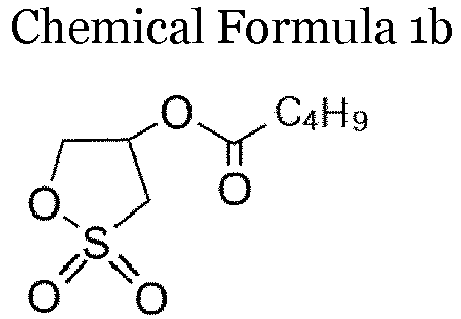
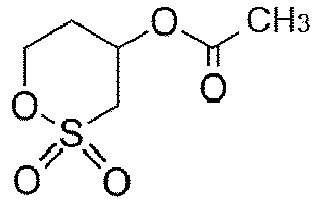
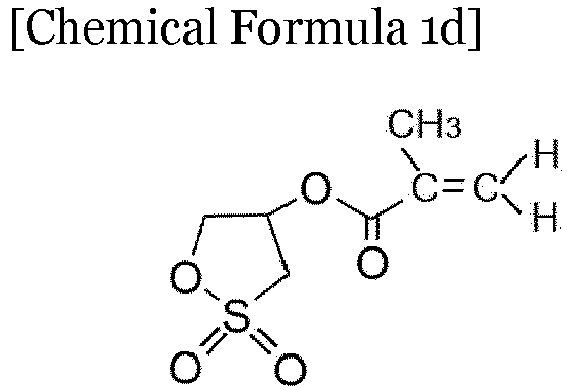
- the compound represented by Chemical Formula 1 may be represented by one of the following Chemical Formulae 1a to 1h:
- the present invention provides a rechargeable lithium battery comprising a positive electrode, a negative electrode, and the electrolyte of the invention described herein.
- the positive electrode may comprise a positive active material represented by Chemical Formula 4: Chemical Formula 4 Li a Ni b E c G d O 2 wherein, in Chemical Formula 4, 0.90 ⁇ a ⁇ 1.8, 0 ⁇ b ⁇ 0.9, 0 ⁇ c ⁇ 0.5, 0.001 ⁇ d ⁇ 0.1, E is Co, Mn, or a combination thereof, and G is Al, Cr, Mn, Fe, Mg, La, Ce, Sr, V, or a combination thereof.
- Chemical Formula 4 Li a Ni b E c G d O 2 wherein, in Chemical Formula 4, 0.90 ⁇ a ⁇ 1.8, 0 ⁇ b ⁇ 0.9, 0 ⁇ c ⁇ 0.5, 0.001 ⁇ d ⁇ 0.1, E is Co, Mn, or a combination thereof, and G is Al, Cr, Mn, Fe, Mg, La, Ce, Sr, V, or a combination thereof.
- the rechargeable lithium battery may be manufactured by injecting electrolyte into an electrode assembly, which comprises a positive electrode (comprising a positive active material capable of intercalating/deintercalating lithium) and a negative electrode (comprising a negative active material capable of intercalating/deintercalating lithium).
- the electrolyte may comprise an organic solvent in which a lithium salt is dissolved and may determine stability and performance of a rechargeable lithium battery.
- substituted may mean substituted with a substituent selected from a halogen (F, Br, Cl or I), a hydroxy group, an alkoxy group, a nitro group, a cyano group, an amino group, an azido group, an amidino group, a hydrazino group, a hydrazono group, a carbonyl group, a carbamyl group, a thiol group, an ester group, a carboxyl group or a salt thereof, a sulfonic acid group or a salt thereof, a phosphoric acid group or a salt thereof, a C 1 to C 20 alkyl group, a C 2 to C 20 alkenyl group, a C 2 to C 20 alkynyl group, a C6 to C 30 aryl group, a C 7 to C 30 arylalkyl group, a C 1 to C 4 alkoxy group, a halogen (F, Br, Cl or I), a hydroxy group, an al
- hetero' refers to a group having 1 to 3 hetero atoms selected from N, O, S, and P.
- the electrolyte according to the present invention comprises a lithium salt, an organic solvent, and an additive.
- the additive comprises a compound represented by Chemical Formula 1 and LiPO 2 F 2 .
- R 1 to R 7 are each independently a hydrogen atom, a substituted or unsubstituted C 1 to C 30 alkyl group, a substituted or unsubstituted C 1 to C 30 alkoxy group, a substituted or unsubstituted C 2 to C 30 alkenyl group, a substituted or unsubstituted C 2 to C 30 alkynyl group, a substituted or unsubstituted C 3 to C 30 cycloalkyl group, a substituted or unsubstituted C 3 to C 30 cycloalkenyl group, a substituted or unsubstituted C 3 to C 30 cycloalkynyl group, or a substituted or unsubstituted C6 to C 30 aryl group, k is 0 or 1.
- the electrolyte for a rechargeable lithium battery comprises a compound represented by Chemical Formula 1 and LiPO 2 F 2 as an additive. Accordingly, the electrolyte may help control a DC-IR (Direct current internal resistance) increase rate at a predetermined level and may help suppress resistance after being allowed to stand at a high temperature, and thus may help improve stability of a battery.
- DC-IR Direct current internal resistance
- the additive comprises one or more kinds of a cyclic sulfonate ester compound represented by Chemical Formula 1.
- Chemical Formula 1 When k is o in Chemical Formula 1, the compound includes a 5-membered ring structure, and when k is 1, the compound includes a 6-membered ring structure.
- the compound represented by Chemical Formula 1 may be represented by one of the following Chemical Formula 2 or Chemical Formula 3.
- R 1 may be a hydrogen atom, a substituted or unsubstituted C 1 to C 30 alkyl group, a substituted or unsubstituted C 1 to C 30 alkoxy group, a substituted or unsubstituted C 2 to C 30 alkenyl group, a substituted or unsubstituted C 2 to C 30 alkynyl group, a substituted or unsubstituted C 3 to C 30 cycloalkyl group, a substituted or unsubstituted C 3 to C 30 cycloalkenyl group, a substituted or unsubstituted C 3 to C 30 cycloalkynyl group, or a substituted or unsubstituted C6 to C 30 aryl group.
- R 1 may be a hydrogen atom, a substituted or unsubstituted C 1 to C 10 alkyl group, a substituted or unsubstituted C 1 to C 10 alkoxy group, a substituted or unsubstituted C 2 to C 10 alkenyl group, or a substituted or unsubstituted C 2 to C 10 alkynyl group.
- R 1 may be a hydrogen atom, a substituted or unsubstituted C 1 to C 5 alkyl group, a substituted or unsubstituted C 1 to C 5 alkoxy group, or a substituted or unsubstituted C 2 to C 5 alkenyl group.
- the compound represented by Chemical Formula 1 may be represented by one of Chemical Formulae 1a to 1h.
- the cyclic sulfonate ester compound represented by Chemical Formula 1 may be present in the electrolyte in an amount of about 0.5 wt% to about 3 wt%, e.g., about 1 wt% to about 2 wt%, based on the total weight (100 wt%) of the electrolyte.
- the cyclic sulfonate ester compound is used or included within this range, an excellent effect of suppressing resistance when being allowed to stand at a high temperature is obtained.
- the additive comprises the compound represented by Chemical Formula 1 and the LiPO 2 F 2 . Accordingly, battery stability is further improved when being allowed to stand at a high temperature.
- the compound represented by Chemical Formula 1 may be present in an amount of about 50 parts by weight to about 300 parts by weight, based on 100 parts by weight of the LiPO 2 F 2 .
- the LiPO 2 F 2 may be present in an amount of about 0.5 wt% to about 1.5 wt%, e.g., about 0.5 wt% to about 1.5 wt%, based on the total weight (100 wt%) of the electrolyte.
- the organic solvent may comprise a carbonate-based compound, an ester-based compound, an ether-based compound, a ketone-based compound, an alcohol-based compound, or a combination thereof.
- the carbonate-based compound and the ester-based compound may be mixed.
- the carbonate-based compound may be dimethyl carbonate (DMC), diethyl carbonate (DEC), dipropyl carbonate (DPC), methylpropyl carbonate (MPC), ethylpropyl carbonate (EPC), ethylmethyl carbonate (EMC), ethylene carbonate (EC), propylene carbonate (PC), butylene carbonate (BC), or a combination thereof.
- DMC dimethyl carbonate
- DEC diethyl carbonate
- DPC dipropyl carbonate
- MPC methylpropyl carbonate
- EPC ethylpropyl carbonate
- EMC ethylmethyl carbonate
- EMC ethylmethyl carbonate
- EC ethylene carbonate
- PC propylene carbonate
- BC butylene carbonate
- the ester-based compound may be methyl acetate, ethyl acetate, n-propyl acetate, methylpropionate, ethylpropionate, ⁇ -butyrolactone, decanolide, valerolactone, mevalonolactone, caprolactone, or the like.
- ethylpropionate is a solvent having low viscosity, and may be used with the carbonate-based compound to thus help adjust viscosity.
- the carbonate-based compound and the ester-based compound may be mixed in a volume ratio of about 10:0 to about 5:5, e.g., from about 10:0 to about 7:3.
- the additive may have versatile application as a mixture of the carbonate-based compound with the ester-based compound as well as the carbonate-based compound alone.
- excellent cell performance depending on a purpose of a battery may be obtained by appropriately adjusting viscosity of the solvent.
- the ether-based compound may be dibutylether, tetraglyme, diglyme, dimethoxyethane, 2-methyltetrahydrofuran, tetrahydrofuran, or the like.
- the ketone-based compound may be cyclohexanone or the like.
- the alcohol-based compound may be ethanol, isopropyl alcohol, or the like.
- the organic solvent may further comprise an aromatic hydrocarbon-based solvent as well as the carbonate-based solvent.
- the carbonate-based solvent and aromatic hydrocarbon-based solvent may be mixed together in a volume ratio of about 1:1 to about 30:1.
- the aromatic hydrocarbon-based organic solvent may be an aromatic hydrocarbon-based compound represented by Chemical Formula 5.
- R 1 to R 6 are the same or different and are selected from hydrogen, a halogen, a C 1 to C 10 alkyl group, a haloalkyl group, and a combination thereof.
- aromatic hydrocarbon-based organic solvent may be selected from benzene, fluorobenzene, 1,2-difluorobenzene, 1,3-difluorobenzene, 1,4-difluorobenzene, 1,2,3-trifluorobenzene, 1,2,4-trifluorobenzene, chlorobenzene, 1,2-dichlorobenzene, 1,3-dichlorobenzene, 1,4-dichlorobenzene, 1,2,3-trichlorobenzene, 1,2,4-trichlorobenzene, iodobenzene, 1,2-diiodobenzene, 1,3-diiodobenzene, 1,4-diiodobenzene, 1,2,3-triiodobenzene, 1,2,4-triiodobenzene, toluene, fluorotoluene, 2,3-difluorotoluene, 2,4-di
- the electrolyte may further comprise an additive of vinylene carbonate,or an ethylene carbonate-based compound represented by Chemical Formula 6, to improve cycle life.
- R 7 and R 8 are the same or different and are each independently hydrogen, a halogen, a cyano group (CN), a nitro group (NO 2 ), or a C 1 to C 5 fluoroalkyl group, provided that at least one of R 7 and R 8 is a halogen, a cyano group (CN), a nitro group (NO 2 ), or a C 1 to C 5 fluoroalkyl group; in other words R 7 and R 8 are not simultaneously hydrogen.
- Examples of the ethylene carbonate-based compound include difluoroethylene carbonate, chloroethylene carbonate, dichloroethylene carbonate, bromoethylene carbonate, dibromoethylene carbonate, nitroethylene carbonate, cyanoethylene carbonate, fluoroethylene carbonate, and the like.
- the amount of additive used for improving cycle life may be varied within an appropriate range.
- the electrolyte may further comprise a nitrile-based additive such as succinonitrile, adiponitrile, or a combination thereof.
- a nitrile-based additive such as succinonitrile, adiponitrile, or a combination thereof.
- the lithium salt may be dissolved in the organic solvent and may serve as a lithium ion source in a battery.
- the lithium salt may play a role of making the rechargeable lithium battery basically operate and promoting movement of lithium ions between positive and negative electrodes.
- the lithium salt may be LiPF 6 , LiBF 4 , LiSbF 6 , LiAsF 6 , LiN (SO 3 C 2 F 5 ) 2 , LiC 4 F 9 SO 3 , LiClO 4 , LiAlO 2 , LiAlCl 4 , LiN(C x F 2x+1 SO 2 (C y F 2y+1 SO 2 ) (in which the x and y are natural numbers, e.g., an integer of 1 to 20), LiCl, LiI, LiB(C 2 O 4 ) 2 (lithium bisoxalatoborate (LiBOB)), lithium bis(fluorosulfonyl)imide (LiFSI), or a combination thereof.
- LiPF 6 LiBF 4 , LiSbF 6 , LiAsF 6 , LiN (SO 3 C 2 F 5 ) 2 , LiC 4 F 9 SO 3 , LiClO 4 , LiAlO 2 , LiAlCl 4 ,
- the concentration of the lithium salt may be, e.g., about 0.1M to about 2.0 M.
- the electrolyte may have appropriate conductivity and viscosity and thus, may effectively move lithium ions and show excellent electrolyte performance.
- the viscosity of the electrolyte may be less than or equal to about 8 cP, e.g., less than or equal to about 5 cP or about 4 to about 5 cP.
- the electrolyte has viscosity within this range, excellent cell performance and specifically, excellent rate capability, are obtained.
- the ion conductivity of the electrolyte may be greater than or equal to about 5 mS/cm, e.g., about 5 mS/cm to about 12 mS/cm or about 6 mS/cm to about 9 mS/cm.
- the electrolyte has ion conductivity within this range, excellent cycle-life characteristics are obtained.
- the electrolyte may comprise fluoroethylene carbonate, LiBF 4 , lithium bisoxalatoborate, and succinic nitrile.
- FIG. 1 a rechargeable lithium battery comprising the electrolyte is described referring to FIG. 1 .
- FIG. 1 illustrates an exploded perspective view of a rechargeable lithium battery according to one embodiment.
- FIG. 1 shows a prismatic rechargeable lithium battery according to one embodiment.
- the rechargeable lithium battery according to an embodiment may have various shapes such as cylinder or pouch-type.
- a rechargeable lithium battery 100 may comprise an electrode assembly 40 (in which a separator 30 is interposed between a positive electrode 10 and a negative electrode 20), and a case 50 (housing the electrode assembly 40).
- the positive electrode 10, the negative electrode 20 and the separator 30 may be impregnated in an electrolyte.
- the electrolyte may be the same as described above.
- the positive electrode may comprise a current collector and a positive active material layer formed on the current collector.
- the positive active material layer may comprise a positive active material, and optionally a positive active material binder and a conductive material.
- the current collector may comprise, e.g., Al (aluminum).
- the positive active material may comprise lithiated intercalation compounds that reversibly intercalate and deintercalate lithium ions.
- at least one composite oxide of lithium and a metal of cobalt, manganese, nickel, or a combination thereof may be used, and examples thereof may be a compound represented by one of the following Chemical Formulae:
- the positive active material may be a NCA-based material represented by Li a Ni b E c G d O 2 (wherein 0.90 ⁇ a ⁇ 1.8, 0 ⁇ b ⁇ 0.9, 0 ⁇ c ⁇ 0.5, 0.001 ⁇ d ⁇ 0.1, E is Co, Mn, or a combination thereof, and G is Al, Cr, Mn, Fe, Mg, La, Ce, Sr, V, or a combination thereof).
- the positive active material comprises lithium cobalt oxide, lithium nickel cobalt manganese oxide, lithium nickel cobalt aluminum oxide, or a combination thereof.
- the positive active material binder may help improve the binding properties of positive active material particles with one another and with a current collector.
- the positive active material binder are polyvinyl alcohol, carboxylmethyl cellulose, hydroxypropyl cellulose, diacetyl cellulose, polyvinylchloride, carboxylated polyvinylchloride, polyvinylfluoride, an ethylene oxide-containing polymer, polyvinylpyrrolidone, polyurethane, polytetrafluoroethylene, polyvinylidene fluoride, polyethylene, polypropylene, a styrene-butadiene rubber, an acrylated styrene-butadiene rubber, an epoxy resin, nylon, and the like, but are not limited thereto.
- the conductive material may help improve the conductivity of an electrode.
- a suitable electrically conductive material that does not cause a chemical change may be used as a conductive material.
- Specific examples of the conductive material may be a carbon-based material such as natural graphite, artificial graphite, carbon black, acetylene black, ketjen black, denka black, a carbon fiber and the like; a metal-based material of a metal powder or a metal fiber selected from but not limited to copper, nickel, aluminum, silver, and the like; a conductive polymer such as a polyphenylene derivative; or a mixture thereof.
- the negative electrode may comprise a current collector and a negative active material layer formed on the current collector.
- the current collector may be a copper foil.
- the negative active material layer may comprise a negative active material, and optionally may further comprise a negative active material binder and/or a conductive material.
- the negative active material may comprise a material that reversibly intercalates/deintercalates lithium ions, a lithium metal, a lithium metal alloy, a material being capable of doping and dedoping lithium, or a transition metal oxide.
- the material that reversibly intercalates/deintercalates lithium ions may be a carbon material which is any carbon-based negative active material, for example those generally-used in rechargeable lithium batteries.
- the material being capable of doping and dedoping lithium may comprise Si, SiO x (0 ⁇ x ⁇ 2), a Si-C composite, a Si-Y' alloy (wherein Y' is an element selected from an alkali metal, an alkaline-earth metal, Group 13 to 16 elements, a transition metal, a rare earth element and combination thereof, and not Si), Sn, SnO 2 , a Sn-C composite, a Sn-Y alloy (wherein Y is an element selected from an alkali metal, an alkaline-earth metal, Group 13 to 16 elements, a transition metal, a rare earth element, and a combination thereof, and not Sn), and the like, and at least one of these may be mixed with SiO 2 .
- the element, Y' may be selected from Mg, Ca, Sr, Ba, Ra, Sc, Y, Ti, Zr, Hf, Rf, V, Nb, Ta, Db, Cr, Mo, W, Sg, Tc, Re, Bh, Fe, Pb, Ru, Os, Hs, Rh, Ir, Pd, Pt, Cu, Ag, Au, Zn, Cd, B, Al, Ga, Sn, In, Tl, Ge, P, As, Sb, Bi, S, Se, Te, Po, and a combination thereof.
- the negative active material binder may help improve binding properties of negative active material particles with one another and with a current collector.
- the negative active material binder may be a non-water-soluble binder, a water-soluble binder, or a combination thereof.
- the non-water-soluble binder may comprise polyvinylchloride, carboxylated polyvinylchloride, polyvinylfluoride, an ethylene oxide-containing polymer, polyvinylpyrrolidone, polyurethane, polytetrafluoroethylene, polyvinylidene fluoride, polyethylene, polypropylene, polyamideimide, polyimide, or a combination thereof.
- the water-soluble binder may comprise a styrene-butadiene rubber, an acrylated styrene-butadiene rubber, sodium polyacrylate, a copolymer of propylene and a C 2 to C8 olefin, a copolymer of (meth)acrylic acid and (meth)acrylic acid alkyl ester, or a combination thereof.
- a cellulose-based compound may be further used to provide viscosity.
- the cellulose-based compound may comprise one or more of carboxylmethyl cellulose, hydroxypropylmethyl cellulose, methyl cellulose, or alkali metal salts thereof.
- the alkali metal may be Na, K, or Li.
- the cellulose-based compound may be included in an amount of about 0.1 parts by weight to about 3 parts by weight based on 100 parts by weight of the negative active material.
- the conductive material may help improve the electrical conductivity of an electrode.
- a suitable electrically conductive material that does not cause a chemical change may be used as a conductive material.
- the conductive material is included to provide electrode conductivity. Any electrically conductive material may be used as a conductive material unless it causes a chemical change.
- the conductive material include a carbon-based material such as natural graphite, artificial graphite, carbon black, acetylene black, ketjen black, a carbon fiber, and the like; a metal-based material of a metal powder or a metal fiber selected from but not limited to copper, nickel, aluminum, silver, and the like; a conductive polymer such as a polyphenylene derivative; or a mixture thereof.
- the positive electrode and the negative electrode may be manufactured by a method comprising mixing each active material, a binder, and a conductive material to provide an active material composition, and coating the composition on a current collector.
- the solvent may comprise, e.g., N-methylpyrrolidone or the like.
- the binder is an aqueous binder, the solvent may be water.
- the separator may comprise suitable materials that separate a negative electrode from a positive electrode and provide a transporting passage for lithium ions.
- the separator may have a low resistance to ion transportation and an excellent impregnation for an electrolyte.
- it may be selected from a glass fiber, polyester, polyethylene, polypropylene, polytetrafluoroethylene (PTFE), or a combination thereof. It may have a form of a non-woven fabric or a woven fabric.
- a rechargeable lithium battery comprising the above electrolyte exhibits excellent stability as well as improved cell performance such as allowed-to-stand characteristics at a high temperature.
- LiCoO 2 , polyvinylidene fluoride, and carbon black in a weight ratio of 96:2:2 were put in an N-methylpyrrolidone (NMP) solvent, preparing a slurry.
- NMP N-methylpyrrolidone
- the slurry was coated on an aluminum (Al) thin film and dried, manufacturing a positive electrode.
- An electrolyte had the following composition.
- wt% in the electrolyte composition was based on the total weight of the electrolyte.
- the manufactured positive and negative electrodes, the electrolyte, and a separator made of a polyethylene material were used, manufacturing a rechargeable lithium battery cell.
- a rechargeable lithium battery cell was manufactured according to the same method as Example 1 except for not adding any of the LiPO 2 F 2 and the compound represented by Chemical Formula 1a, i.e., omitting the additive II.
- a rechargeable lithium battery cell was manufactured according to the same method as Example 1 except for not adding, i.e., omitting, the LiPO 2 F 2 in the additive II, and adding a total of only 2 wt% of the compound represented by Chemical Formula 1a.
- a rechargeable lithium battery cell was manufactured according to the same method as Example 1 except for not using, i.e., omitting, the compound represented by Chemical Formula 1a in the additive II, and adding a total of only 2 wt% of LiPO 2 F 2 .
- Electrochemical impedance spectroscopy (EIS) of the rechargeable lithium battery cells according to Example 1 and Comparative Examples 1 to 3 was measured.
- EIS electrochemical impedance spectroscopy
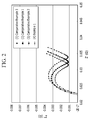
- FIG. 2 illustrates a graph showing the initial EIS results of the rechargeable lithium battery cells according to Example 1 and Comparative Examples 1 to 3
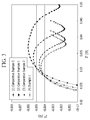
- FIG. 3 illustrates a graph showing the EIS results of the rechargeable lithium battery cells according to Example 1 and Comparative Examples 1 to 3 after being allowed to stand at high temperature for 30 days.
- the rechargeable lithium battery cell comprising the LiPO 2 F 2 and the compound represented by Chemical Formula 1a according to Example 1 were the most suppressed from resistance after being allowed to stand at a high temperature for 30 days.
- the high temperature was 60 °C.
- the diameter of a semicircle in the EIS graph indicates resistance on the interface of the positive and negative electrodes after being allowed to stand at a high temperature, and a smaller diameter of the semicircle indicates smaller resistance.
- the cells were charged at 1 A, 4.2 V, and 100 mA in a standard environment and then allowed to stand in an open circuit for 10 minutes.
- the rechargeable lithium battery cell comprising the LiPO 2 F 2 and the compound represented by Chemical Formula 1a according to Example 1 exhibited the lowest DC-IR increase rate and the lowest average DC-IR after being allowed to stand at 60 °C for 20 days.
- LiPF 6 may be used as the lithium salt for the electrolyte.
- LiPF 6 may react with an electrolyte solvent, may promote depletion of the solvent, and thus may generate a large amount of gas.
- the LiPF 6 may decompose, producing LiF and PF 5 , and thus may cause depletion of the electrolyte in the battery. Accordingly, performance of the battery at a high temperature and safety of the battery may be affected.
- an electrolyte may help suppress the side reaction of the lithium salt and may help improve battery performance.
- the present invention provides an electrolyte for a rechargeable lithium battery capable of maintaining battery performance as well as securing safety.
Landscapes
- Chemical & Material Sciences (AREA)
- Chemical Kinetics & Catalysis (AREA)
- Electrochemistry (AREA)
- General Chemical & Material Sciences (AREA)
- Engineering & Computer Science (AREA)
- Manufacturing & Machinery (AREA)
- Inorganic Chemistry (AREA)
- Physics & Mathematics (AREA)
- Condensed Matter Physics & Semiconductors (AREA)
- General Physics & Mathematics (AREA)
- Materials Engineering (AREA)
- Secondary Cells (AREA)
Abstract

Description
- The invention relates to an electrolyte for a rechargeable lithium battery and a rechargeable lithium battery comprising the same.
- Recent developments in high-tech electronics have allowed electronic devices to become smaller and lighter in weight, which leads to an increase in portable electronic devices. As a power source for such portable electronic devices, the demands for batteries with high energy density are increasing and research on lithium rechargeable batteries is underway.
- According to one aspect, the invention provides an electrolyte for a rechargeable lithium battery, the electrolyte comprising a lithium salt; an organic solvent; and an additive, wherein the additive comprises LiPO2F2, and a compound represented by the following Chemical Formula 1:

Chemical Formula 1, R1 to R7 are each independently a hydrogen atom, a substituted or unsubstituted C1 to C30 alkyl group, a substituted or unsubstituted C1 to C30 alkoxy group, a substituted or unsubstituted C2 to C30 alkenyl group, a substituted or unsubstituted C2 to C30 alkynyl group, a substituted or unsubstituted C3 to C30 cycloalkyl group, a substituted or unsubstituted C3 to C30 cycloalkenyl group, a substituted or unsubstituted C3 to C30 cycloalkynyl group, or a substituted or unsubstituted C6 to C30 aryl group, and k is 0 or 1. - The compound represented by Chemical Formula 1 may be present in an amount of about 0.5 wt% to about 3 wt% based on the total weight of the electrolyte.
- The compound represented by Chemical Formula 1 may be present in an amount of about 1 wt% to about 2 wt%, based on the total weight of the electrolyte.
- The LiPO2F2 may be present in an amount of about 0.5 wt% to about 1.5 wt%, based on the total weight of the electrolyte.
- The compound represented by Chemical Formula 1 may be present in an amount of about 50 parts by weight to about 300 parts by weight, based on 100 parts by weight of the LiPO2F2.
- The compound represented by Chemical Formula 1 may be represented by one of the following Chemical Formula 2 or 3:


Chemical Formulae - In
Chemical Formulae - The organic solvent may comprise a carbonate-based compound and an ester-based compound.
- The compound represented by Chemical Formula 1 may be represented by one of the following Chemical Formulae 1a to 1h:





- According to a further aspect, the present invention provides a rechargeable lithium battery comprising a positive electrode, a negative electrode, and the electrolyte of the invention described herein.
- The positive electrode may comprise a positive active material represented by Chemical Formula 4:
Chemical Formula 4 LiaNibEcGdO2
wherein, in Chemical Formula 4, 0.90 ≤ a ≤ 1.8, 0 ≤ b ≤ 0.9, 0 ≤ c ≤ 0.5, 0.001 ≤ d ≤ 0.1, E is Co, Mn, or a combination thereof, and G is Al, Cr, Mn, Fe, Mg, La, Ce, Sr, V, or a combination thereof. - The rechargeable lithium battery may be manufactured by injecting electrolyte into an electrode assembly, which comprises a positive electrode (comprising a positive active material capable of intercalating/deintercalating lithium) and a negative electrode (comprising a negative active material capable of intercalating/deintercalating lithium). The electrolyte may comprise an organic solvent in which a lithium salt is dissolved and may determine stability and performance of a rechargeable lithium battery.
- Features will be apparent to those of skill in the art by describing in detail exemplary embodiments with reference to the attached drawings in which:
-
FIG. 1 illustrates an exploded perspective view showing a rechargeable lithium battery according to one embodiment, -
FIG. 2 illustrates a graph showing the initial EIS result of rechargeable lithium battery cells according to Example 1 and Comparative Examples 1 to 3, and -
FIG. 3 illustrates a graph showing the EIS results of the rechargeable lithium battery cells according to Example 1 and Comparative Examples 1 to 3 after being allowed to stand for 30 days. - Example embodiments will now be described more fully hereinafter with reference to the accompanying drawings; however, they may be embodied in different forms and should not be construed as limited to the embodiments set forth herein. Rather, these embodiments are provided so that this disclosure will be thorough and complete, and will fully convey exemplary implementations to those skilled in the art.
- In the drawing figures, the dimensions of layers and regions may be exaggerated for clarity of illustration. It will also be understood that when a layer or element is referred to as being "on" another layer or element, it can be directly on the other layer or element, or intervening layers may also be present. In addition, it will also be understood that when a layer is referred to as being "between" two layers, it can be the only layer between the two layers, or one or more intervening layers may also be present. Like reference numerals refer to like elements throughout.
- As used herein, when a definition is not otherwise provided, the term "substituted" may mean substituted with a substituent selected from a halogen (F, Br, Cl or I), a hydroxy group, an alkoxy group, a nitro group, a cyano group, an amino group, an azido group, an amidino group, a hydrazino group, a hydrazono group, a carbonyl group, a carbamyl group, a thiol group, an ester group, a carboxyl group or a salt thereof, a sulfonic acid group or a salt thereof, a phosphoric acid group or a salt thereof, a C1 to C20 alkyl group, a C2 to C20 alkenyl group, a C2 to C20 alkynyl group, a C6 to C30 aryl group, a C7 to C30 arylalkyl group, a C1 to C4 alkoxy group, a C1 to C20 heteroalkyl group, a C3 to C20 heteroarylalkyl group, a C3 to C30 cycloalkyl group, a C3 to C15 cycloalkenyl group, a C6 to C15 cycloalkynyl group, a C2 to C20 heterocycloalkyl group, and a combination thereof.
- As used herein, when a definition is not otherwise provided, the term 'hetero' refers to a group having 1 to 3 hetero atoms selected from N, O, S, and P.
- The electrolyte according to the present invention comprises a lithium salt, an organic solvent, and an additive.
- The additive comprises a compound represented by Chemical Formula 1 and LiPO2F2.

- In
Chemical Formula 1, R1 to R7 are each independently a hydrogen atom, a substituted or unsubstituted C1 to C30 alkyl group, a substituted or unsubstituted C1 to C30 alkoxy group, a substituted or unsubstituted C2 to C30 alkenyl group, a substituted or unsubstituted C2 to C30 alkynyl group, a substituted or unsubstituted C3 to C30 cycloalkyl group, a substituted or unsubstituted C3 to C30 cycloalkenyl group, a substituted or unsubstituted C3 to C30 cycloalkynyl group, or a substituted or unsubstituted C6 to C30 aryl group,
k is 0 or 1. - The electrolyte for a rechargeable lithium battery comprises a compound represented by Chemical Formula 1 and LiPO2F2 as an additive. Accordingly, the electrolyte may help control a DC-IR (Direct current internal resistance) increase rate at a predetermined level and may help suppress resistance after being allowed to stand at a high temperature, and thus may help improve stability of a battery.
- The additive comprises one or more kinds of a cyclic sulfonate ester compound represented by Chemical Formula 1. When k is o in
Chemical Formula 1, the compound includes a 5-membered ring structure, and when k is 1, the compound includes a 6-membered ring structure. - In one embodiment, the compound represented by Chemical Formula 1 may be represented by one of the following Chemical Formula 2 or Chemical Formula 3.


- In
Chemical Formulae - In one embodiment, in
Chemical Formulae - In one embodiment, in
Chemical Formulae - In various embodiments, the compound represented by Chemical Formula 1 may be represented by one of Chemical Formulae 1a to 1h.




- In one embodiment, the cyclic sulfonate ester compound represented by Chemical Formula 1 may be present in the electrolyte in an amount of about 0.5 wt% to about 3 wt%, e.g., about 1 wt% to about 2 wt%, based on the total weight (100 wt%) of the electrolyte. When the cyclic sulfonate ester compound is used or included within this range, an excellent effect of suppressing resistance when being allowed to stand at a high temperature is obtained.
- As described above, the additive comprises the compound represented by Chemical Formula 1 and the LiPO2F2. Accordingly, battery stability is further improved when being allowed to stand at a high temperature.
- Regarding a ratio of components in the additive, the compound represented by Chemical Formula 1 may be present in an amount of about 50 parts by weight to about 300 parts by weight, based on 100 parts by weight of the LiPO2F2.
- In one embodiment, the LiPO2F2 may be present in an amount of about 0.5 wt% to about 1.5 wt%, e.g., about 0.5 wt% to about 1.5 wt%, based on the total weight (100 wt%) of the electrolyte.
- As an electrolyte component, the organic solvent may comprise a carbonate-based compound, an ester-based compound, an ether-based compound, a ketone-based compound, an alcohol-based compound, or a combination thereof. Of these, with a view toward helping to control a viscosity of a solvent, the carbonate-based compound and the ester-based compound may be mixed.
- The carbonate-based compound may be dimethyl carbonate (DMC), diethyl carbonate (DEC), dipropyl carbonate (DPC), methylpropyl carbonate (MPC), ethylpropyl carbonate (EPC), ethylmethyl carbonate (EMC), ethylene carbonate (EC), propylene carbonate (PC), butylene carbonate (BC), or a combination thereof.
- The ester-based compound may be methyl acetate, ethyl acetate, n-propyl acetate, methylpropionate, ethylpropionate, γ-butyrolactone, decanolide, valerolactone, mevalonolactone, caprolactone, or the like. Among these, ethylpropionate is a solvent having low viscosity, and may be used with the carbonate-based compound to thus help adjust viscosity.
- In one embodiment, the carbonate-based compound and the ester-based compound may be mixed in a volume ratio of about 10:0 to about 5:5, e.g., from about 10:0 to about 7:3. Accordingly, the additive may have versatile application as a mixture of the carbonate-based compound with the ester-based compound as well as the carbonate-based compound alone. In addition, when mixed within the volume ratio range, excellent cell performance depending on a purpose of a battery may be obtained by appropriately adjusting viscosity of the solvent.
- The ether-based compound may be dibutylether, tetraglyme, diglyme, dimethoxyethane, 2-methyltetrahydrofuran, tetrahydrofuran, or the like. The ketone-based compound may be cyclohexanone or the like. The alcohol-based compound may be ethanol, isopropyl alcohol, or the like.
- The organic solvent may further comprise an aromatic hydrocarbon-based solvent as well as the carbonate-based solvent. The carbonate-based solvent and aromatic hydrocarbon-based solvent may be mixed together in a volume ratio of about 1:1 to about 30:1.
- The aromatic hydrocarbon-based organic solvent may be an aromatic hydrocarbon-based compound represented by
Chemical Formula 5.
- In
Chemical Formula 5, R1 to R6 are the same or different and are selected from hydrogen, a halogen, a C1 to C10 alkyl group, a haloalkyl group, and a combination thereof. - Specific examples of the aromatic hydrocarbon-based organic solvent may be selected from benzene, fluorobenzene, 1,2-difluorobenzene, 1,3-difluorobenzene, 1,4-difluorobenzene, 1,2,3-trifluorobenzene, 1,2,4-trifluorobenzene, chlorobenzene, 1,2-dichlorobenzene, 1,3-dichlorobenzene, 1,4-dichlorobenzene, 1,2,3-trichlorobenzene, 1,2,4-trichlorobenzene, iodobenzene, 1,2-diiodobenzene, 1,3-diiodobenzene, 1,4-diiodobenzene, 1,2,3-triiodobenzene, 1,2,4-triiodobenzene, toluene, fluorotoluene, 2,3-difluorotoluene, 2,4-difluorotoluene, 2,5-difluorotoluene, 2,3,4-trifluorotoluene, 2,3,5-trifluorotoluene, chlorotoluene, 2,3-dichlorotoluene, 2,4-dichlorotoluene, 2,5-dichlorotoluene, 2,3,4-trichlorotoluene, 2,3,5-trichlorotoluene, iodotoluene, 2,3-diiodotoluene, 2,4-diiodotoluene, 2,5-diiodotoluene, 2,3,4-triiodotoluene, 2,3,5-triiodotoluene, xylene, and a combination thereof.
- The electrolyte may further comprise an additive of vinylene carbonate,or an ethylene carbonate-based compound represented by Chemical Formula 6, to improve cycle life.

- In Chemical Formula 6, R7 and R8 are the same or different and are each independently hydrogen, a halogen, a cyano group (CN), a nitro group (NO2), or a C1 to C5 fluoroalkyl group, provided that at least one of R7 and R8 is a halogen, a cyano group (CN), a nitro group (NO2), or a C1 to C5 fluoroalkyl group; in other words R7 and R8 are not simultaneously hydrogen.
- Examples of the ethylene carbonate-based compound include difluoroethylene carbonate, chloroethylene carbonate, dichloroethylene carbonate, bromoethylene carbonate, dibromoethylene carbonate, nitroethylene carbonate, cyanoethylene carbonate, fluoroethylene carbonate, and the like.
- The amount of additive used for improving cycle life may be varied within an appropriate range.
- In addition, the electrolyte may further comprise a nitrile-based additive such as succinonitrile, adiponitrile, or a combination thereof.
- As an electrolyte component, the lithium salt may be dissolved in the organic solvent and may serve as a lithium ion source in a battery. Thus, the lithium salt may play a role of making the rechargeable lithium battery basically operate and promoting movement of lithium ions between positive and negative electrodes.
- The lithium salt may be LiPF6, LiBF4, LiSbF6, LiAsF6, LiN (SO3C2F5)2, LiC4F9SO3, LiClO4, LiAlO2, LiAlCl4, LiN(CxF2x+1SO2(CyF2y+1SO2) (in which the x and y are natural numbers, e.g., an integer of 1 to 20), LiCl, LiI, LiB(C2O4)2 (lithium bisoxalatoborate (LiBOB)), lithium bis(fluorosulfonyl)imide (LiFSI), or a combination thereof.
- The concentration of the lithium salt may be, e.g., about 0.1M to about 2.0 M. When the concentration of the lithium salt is within this range, the electrolyte may have appropriate conductivity and viscosity and thus, may effectively move lithium ions and show excellent electrolyte performance.
- In one embodiment, the viscosity of the electrolyte may be less than or equal to about 8 cP, e.g., less than or equal to about 5 cP or about 4 to about 5 cP. When the electrolyte has viscosity within this range, excellent cell performance and specifically, excellent rate capability, are obtained.
- In one embodiment, the ion conductivity of the electrolyte may be greater than or equal to about 5 mS/cm, e.g., about 5 mS/cm to about 12 mS/cm or about 6 mS/cm to about 9 mS/cm. When the electrolyte has ion conductivity within this range, excellent cycle-life characteristics are obtained.
- In one embodiment, the electrolyte may comprise fluoroethylene carbonate, LiBF4, lithium bisoxalatoborate, and succinic nitrile.
- Hereinafter, a rechargeable lithium battery comprising the electrolyte is described referring to
FIG. 1 . -
FIG. 1 illustrates an exploded perspective view of a rechargeable lithium battery according to one embodiment.FIG. 1 shows a prismatic rechargeable lithium battery according to one embodiment. However, the rechargeable lithium battery according to an embodiment may have various shapes such as cylinder or pouch-type. - Referring to
FIG. 1 , arechargeable lithium battery 100 according to one embodiment may comprise an electrode assembly 40 (in which aseparator 30 is interposed between apositive electrode 10 and a negative electrode 20), and a case 50 (housing the electrode assembly 40). Thepositive electrode 10, thenegative electrode 20 and theseparator 30 may be impregnated in an electrolyte. - The electrolyte may be the same as described above.
- The positive electrode may comprise a current collector and a positive active material layer formed on the current collector. The positive active material layer may comprise a positive active material, and optionally a positive active material binder and a conductive material.
- The current collector may comprise, e.g., Al (aluminum).
- The positive active material may comprise lithiated intercalation compounds that reversibly intercalate and deintercalate lithium ions. In one embodiment, at least one composite oxide of lithium and a metal of cobalt, manganese, nickel, or a combination thereof may be used, and examples thereof may be a compound represented by one of the following Chemical Formulae:
- LiaA1-bBbD2 (0.90 ≤ a ≤ 1.8 and 0 ≤ b ≤ 0.5); LiaE1-bBbO2-cDc (0.90 ≤ a ≤ 1.8, 0 ≤ b ≤ 0.5, 0 ≤ c ≤ 0.05); LiaE2-bBbO4-cDc (0.90 ≤ a ≤ 1.8, 0 ≤ b ≤ 0.5, 0 ≤ c ≤ 0.05); LiaNii-b-cCobBcDα (0.90 ≤ a ≤ 1.8, 0 ≤ b ≤ 0.5, 0 ≤ c ≤ 0.05, 0 < α ≤ 2); LiaNi1-b-cCobBcO2-αFα (0.90 ≤ a ≤ 1.8, 0 ≤ b ≤ 0.5, 0 ≤ c ≤ 0.05, o < α < 2); LiaNi1-b-cCobBcO2-αF2 (0.90 ≤ a ≤ 1.8, 0 ≤ b ≤ 0.5, 0 ≤ c ≤ 0.05, 0 < α < 2); LiaNi1-b-cMnbBcDα (.90 ≤ a ≤ 1.8, 0 ≤ b ≤ 0.5, 0 ≤ c ≤ 0.05, 0 < α ≤ 2); LiaNi1-b-cMnbBcO2-αFα (0.90 ≤ a ≤ 1.8, 0 ≤ b ≤ 0.5, 0 ≤ c ≤ 0.05, o < α < 2); LiaNi1-b-cMnbBcO2-αF2 (0.90 ≤ a ≤ 1.8, 0 ≤ b ≤ 0.5, 0 ≤ c ≤ 0.05, 0 < α < 2); LiaNibEcGdO2 (0.90 ≤ a ≤ 1.8, 0 ≤ b ≤ 0.9, 0 ≤ c ≤ 0.5, 0.001 ≤ d ≤ 0.1); LiaNibCocMndGeO2 (0.90 ≤ a ≤ 1.8, 0 ≤ b ≤ 0.9, 0 ≤ c ≤ 0.5, 0 ≤ d ≤ 0.5, 0.001 ≤ e ≤ 0.1); LiaNiGbO2 (0.90 ≤ a ≤ 1.8, 0.001 ≤ b ≤ 0.1); LiaCoGbO2 (0.90 ≤ a ≤ 1.8, 0.001 ≤ b ≤ 0.1); LiaMnGbO2 (0.90 ≤ a ≤ 1.8, 0.001 ≤ b ≤ 0.1); LiaMn2GbO4 (0.90 ≤ a ≤ 1.8, 0.001 ≤ b ≤ 0.1); QO2; QS2; LiQS2; V2O5; LiV2O5; LiIO2; LiNiVO4; Li(3-f)J2(PO4)3(0 ≤ f ≤ 2); Li(3-f)Fe2(PO4)3(0 ≤ f ≤ 2); and LiFePO4.
- In the above chemical formulae, A may be Ni, Co, Mn, or a combination thereof; B may be Al, Ni, Co, Mn, Cr, Fe, Mg, Sr, V, a rare earth element, or a combination thereof; D may be O, F, S, P, or a combination thereof; E may be Co, Mn, or a combination thereof; F may be F, S, P, or a combination thereof; G may be Al, Cr, Mn, Fe, Mg, La, Ce, Sr, V, or a combination thereof; Q may be Ti, Mo, Mn, or a combination thereof; I may be Cr, V, Fe, Sc, Y, or a combination thereof; and J may be V, Cr, Mn, Co, Ni, Cu, or a combination thereof.
- For example, the positive active material may be a NCA-based material represented by LiaNibEcGdO2 (wherein 0.90 ≤ a ≤ 1.8, 0 ≤ b ≤ 0.9, 0 ≤ c ≤ 0.5, 0.001 ≤ d ≤ 0.1, E is Co, Mn, or a combination thereof, and G is Al, Cr, Mn, Fe, Mg, La, Ce, Sr, V, or a combination thereof).
- In one embodiment, the positive active material comprises lithium cobalt oxide, lithium nickel cobalt manganese oxide, lithium nickel cobalt aluminum oxide, or a combination thereof.
- The positive active material binder may help improve the binding properties of positive active material particles with one another and with a current collector. Examples of the positive active material binder are polyvinyl alcohol, carboxylmethyl cellulose, hydroxypropyl cellulose, diacetyl cellulose, polyvinylchloride, carboxylated polyvinylchloride, polyvinylfluoride, an ethylene oxide-containing polymer, polyvinylpyrrolidone, polyurethane, polytetrafluoroethylene, polyvinylidene fluoride, polyethylene, polypropylene, a styrene-butadiene rubber, an acrylated styrene-butadiene rubber, an epoxy resin, nylon, and the like, but are not limited thereto.
- The conductive material may help improve the conductivity of an electrode. A suitable electrically conductive material that does not cause a chemical change may be used as a conductive material. Specific examples of the conductive material may be a carbon-based material such as natural graphite, artificial graphite, carbon black, acetylene black, ketjen black, denka black, a carbon fiber and the like; a metal-based material of a metal powder or a metal fiber selected from but not limited to copper, nickel, aluminum, silver, and the like; a conductive polymer such as a polyphenylene derivative; or a mixture thereof. The negative electrode may comprise a current collector and a negative active material layer formed on the current collector.
- In one embodiment, the current collector may be a copper foil.
- In one embodiment, the negative active material layer may comprise a negative active material, and optionally may further comprise a negative active material binder and/or a conductive material.
- In one embodiment, the negative active material may comprise a material that reversibly intercalates/deintercalates lithium ions, a lithium metal, a lithium metal alloy, a material being capable of doping and dedoping lithium, or a transition metal oxide.
- The material that reversibly intercalates/deintercalates lithium ions may be a carbon material which is any carbon-based negative active material, for example those generally-used in rechargeable lithium batteries.
- The material being capable of doping and dedoping lithium may comprise Si, SiOx (0<x<2), a Si-C composite, a Si-Y' alloy (wherein Y' is an element selected from an alkali metal, an alkaline-earth metal, Group 13 to 16 elements, a transition metal, a rare earth element and combination thereof, and not Si), Sn, SnO2, a Sn-C composite, a Sn-Y alloy (wherein Y is an element selected from an alkali metal, an alkaline-earth metal, Group 13 to 16 elements, a transition metal, a rare earth element, and a combination thereof, and not Sn), and the like, and at least one of these may be mixed with SiO2. The element, Y', may be selected from Mg, Ca, Sr, Ba, Ra, Sc, Y, Ti, Zr, Hf, Rf, V, Nb, Ta, Db, Cr, Mo, W, Sg, Tc, Re, Bh, Fe, Pb, Ru, Os, Hs, Rh, Ir, Pd, Pt, Cu, Ag, Au, Zn, Cd, B, Al, Ga, Sn, In, Tl, Ge, P, As, Sb, Bi, S, Se, Te, Po, and a combination thereof.
- The negative active material binder may help improve binding properties of negative active material particles with one another and with a current collector.
- The negative active material binder may be a non-water-soluble binder, a water-soluble binder, or a combination thereof. The non-water-soluble binder may comprise polyvinylchloride, carboxylated polyvinylchloride, polyvinylfluoride, an ethylene oxide-containing polymer, polyvinylpyrrolidone, polyurethane, polytetrafluoroethylene, polyvinylidene fluoride, polyethylene, polypropylene, polyamideimide, polyimide, or a combination thereof.
- The water-soluble binder may comprise a styrene-butadiene rubber, an acrylated styrene-butadiene rubber, sodium polyacrylate, a copolymer of propylene and a C2 to C8 olefin, a copolymer of (meth)acrylic acid and (meth)acrylic acid alkyl ester, or a combination thereof.
- When the water-soluble binder is used as a negative electrode binder, a cellulose-based compound may be further used to provide viscosity.
- The cellulose-based compound may comprise one or more of carboxylmethyl cellulose, hydroxypropylmethyl cellulose, methyl cellulose, or alkali metal salts thereof. The alkali metal may be Na, K, or Li. The cellulose-based compound may be included in an amount of about 0.1 parts by weight to about 3 parts by weight based on 100 parts by weight of the negative active material.
- The conductive material may help improve the electrical conductivity of an electrode. A suitable electrically conductive material that does not cause a chemical change may be used as a conductive material. The conductive material is included to provide electrode conductivity. Any electrically conductive material may be used as a conductive material unless it causes a chemical change. Examples of the conductive material include a carbon-based material such as natural graphite, artificial graphite, carbon black, acetylene black, ketjen black, a carbon fiber, and the like; a metal-based material of a metal powder or a metal fiber selected from but not limited to copper, nickel, aluminum, silver, and the like; a conductive polymer such as a polyphenylene derivative; or a mixture thereof.
- The positive electrode and the negative electrode may be manufactured by a method comprising mixing each active material, a binder, and a conductive material to provide an active material composition, and coating the composition on a current collector. The solvent may comprise, e.g., N-methylpyrrolidone or the like. When the binder is an aqueous binder, the solvent may be water.
- The separator may comprise suitable materials that separate a negative electrode from a positive electrode and provide a transporting passage for lithium ions. For example, the separator may have a low resistance to ion transportation and an excellent impregnation for an electrolyte. For example, it may be selected from a glass fiber, polyester, polyethylene, polypropylene, polytetrafluoroethylene (PTFE), or a combination thereof. It may have a form of a non-woven fabric or a woven fabric.
- A rechargeable lithium battery comprising the above electrolyte exhibits excellent stability as well as improved cell performance such as allowed-to-stand characteristics at a high temperature.
- The following Examples and Comparative Examples are provided in order to highlight characteristics of one or more embodiments, but it will be understood that the Examples and Comparative Examples are not to be construed as limiting the scope of the embodiments. Further, it will be understood that the embodiments are not limited to the particular details described in the Examples and Comparative Examples.
- LiCoO2, polyvinylidene fluoride, and carbon black in a weight ratio of 96:2:2 were put in an N-methylpyrrolidone (NMP) solvent, preparing a slurry. The slurry was coated on an aluminum (Al) thin film and dried, manufacturing a positive electrode.
- In addition, graphite, carboxymethyl cellulose, and styrene-butadiene rubber in a weight ratio of 98:1:1 were put in distilled water, preparing a slurry. The slurry was coated on a copper foil and then dried and compressed, manufacturing a negative electrode.
- An electrolyte had the following composition.
-
- Salt: 1.5 M LiPF6
- Solvent: ethylene carbonate : ethyl methyl carbonate : dimethyl carbonate (volume ratio = 2:1:7)
- Additive I: 8 wt% of fluoroethylene carbonate (FEC), 0.2 wt% of LiBF4, 1 wt% of lithium bisoxalatoborate (LiBOB), and 0.5 wt% of succinic nitrile (SN)
- Additive II: 1 wt% of LiPO2F2 and 1 wt% of a compound represented by the following Chemical Formula 1a
- Here, "wt%" in the electrolyte composition was based on the total weight of the electrolyte.

- The manufactured positive and negative electrodes, the electrolyte, and a separator made of a polyethylene material were used, manufacturing a rechargeable lithium battery cell.
- A rechargeable lithium battery cell was manufactured according to the same method as Example 1 except for not adding any of the LiPO2F2 and the compound represented by Chemical Formula 1a, i.e., omitting the additive II.
- A rechargeable lithium battery cell was manufactured according to the same method as Example 1 except for not adding, i.e., omitting, the LiPO2F2 in the additive II, and adding a total of only 2 wt% of the compound represented by Chemical Formula 1a.
- A rechargeable lithium battery cell was manufactured according to the same method as Example 1 except for not using, i.e., omitting, the compound represented by Chemical Formula 1a in the additive II, and adding a total of only 2 wt% of LiPO2F2.
- Electrochemical impedance spectroscopy (EIS) of the rechargeable lithium battery cells according to Example 1 and Comparative Examples 1 to 3 was measured.
- The electrochemical impedance spectroscopy (EIS) was measured by using potentiostat equipment in a range of 106 Hz to 0.1 Hz.
- The results are provided in
FIGS. 2 and3 . -
FIG. 2 illustrates a graph showing the initial EIS results of the rechargeable lithium battery cells according to Example 1 and Comparative Examples 1 to 3, andFIG. 3 illustrates a graph showing the EIS results of the rechargeable lithium battery cells according to Example 1 and Comparative Examples 1 to 3 after being allowed to stand at high temperature for 30 days. - Referring to
FIGS. 2 and3 , the rechargeable lithium battery cell comprising the LiPO2F2 and the compound represented by Chemical Formula 1a according to Example 1 were the most suppressed from resistance after being allowed to stand at a high temperature for 30 days. Herein, the high temperature was 60 °C. The diameter of a semicircle in the EIS graph indicates resistance on the interface of the positive and negative electrodes after being allowed to stand at a high temperature, and a smaller diameter of the semicircle indicates smaller resistance. - DC-IR of the rechargeable lithium battery cells according to Example 1 and Comparative Examples 1 to 3 was measured.
- Initial capacity and DC-IR (Direct current internal resistance) of the rechargeable lithium battery cells of Example 1 and Comparative Examples 1 to 3 were measured using potentiostat equipment. Subsequently, the rechargeable lithium battery cells according to Example 1 and Comparative Examples 1 to 3 were allowed to stand at 60 °C for 20 days, and their retention capacities, recovery capacities, and DC-IR's were measured Their DC-IR increase rates (%) were obtained according to
Calculation 1. - The cells were charged at 1 A, 4.2 V, and 100 mA in a standard environment and then allowed to stand in an open circuit for 10 minutes.
- 2. Subsequently, the cells were discharged: (a) at 4A for 10 sec, (b) at 1A for 10 sec. and (c) at 4A for 4 sec., i.e. for a total of 24 sec.
- 3. The current and voltage of the cells were measured at 15 seconds and 23 seconds during the discharge described above and used to calculate resistance (ΔR=ΔV/ΔI). The resistance was compared with a reference resistance thereby calculating a DC-IR increase rate.
- Subsequently, initial average DC-IR's and each average DC-IR's after being allowed to stand at 60 °C for 20 days of the rechargeable lithium battery cells according to Example 1 and Comparative Examples 1 to 3 were obtained.
- The results are provided in Table 1.
Table 1 Electrolyte composition Initial time After being allowed to stand at 60°C for 20 days Average DC-IR Capacity (mAh) DC-IR (Ohm) Retention Capacity Recovery Capacity DC-IR DC-IR Increase rate (%) Initial time After 20 days Example 1 3473 36.1 3193 3347 37.7 104 36.1 37.7 3467 36.1 3189 3343 37.8 105 Comparative Example 1 3465 36.5 3181 3343 43.0 118 35.8 42.9 3468 35.1 3192 3355 42.8 122 Comparative Example 2 3474 36.5 3200 3359 39.4 108 36.4 39.5 3472 36.4 3196 3354 39.7 109 Comparative Example 3 3452 35.5 3174 3326 38.3 108 35.5 38.2 3470 35.5 3192 3347 38.2 108 - Referring to Table 1, the rechargeable lithium battery cell comprising the LiPO2F2 and the compound represented by Chemical Formula 1a according to Example 1 exhibited the lowest DC-IR increase rate and the lowest average DC-IR after being allowed to stand at 60 °C for 20 days.
- By way of summation and review, LiPF6 may be used as the lithium salt for the electrolyte. LiPF6 may react with an electrolyte solvent, may promote depletion of the solvent, and thus may generate a large amount of gas. The LiPF6 may decompose, producing LiF and PF5, and thus may cause depletion of the electrolyte in the battery. Accordingly, performance of the battery at a high temperature and safety of the battery may be affected.
- Accordingly, an electrolyte may help suppress the side reaction of the lithium salt and may help improve battery performance.
- The present invention provides an electrolyte for a rechargeable lithium battery capable of maintaining battery performance as well as securing safety.
- Accordingly, a rechargeable lithium battery maintaining performance as well as securing safety may be realized.
- Example embodiments have been disclosed herein, and although specific terms are employed, they are used and are to be interpreted in a generic and descriptive sense only and not for purpose of limitation. In some instances, as would be apparent to one of ordinary skill in the art as of the filing of the present application, features, characteristics, and/or elements described in connection with a particular embodiment may be used singly or in combination with features, characteristics, and/or elements described in connection with other embodiments unless otherwise specifically indicated. Accordingly, it will be understood by those of skill in the art that various changes in form and details may be made without departing from the scope of the present invention as set forth in the following claims.
Claims (11)
- An electrolyte for a rechargeable lithium battery, the electrolyte comprising:a lithium salt;an organic solvent; andan additive,wherein the additive comprises:
LiPO2F2,
anda compound represented by the following Chemical Formula 1: R1 to R7 are each independently a hydrogen atom, a substituted or unsubstituted C1 to C30 alkyl group, a substituted or unsubstituted C1 to C30 alkoxy group, a substituted or unsubstituted C2 to C30 alkenyl group, a substituted or unsubstituted C2 to C30 alkynyl group, a substituted or unsubstituted C3 to C30 cycloalkyl group, a substituted or unsubstituted C3 to C30 cycloalkenyl group, a substituted or unsubstituted C3 to C30 cycloalkynyl group, or a substituted or unsubstituted C6 to C30 aryl group, andk is 0 or 1.
 - The electrolyte as claimed in claim 1, wherein the compound represented by Chemical Formula 1 is present in an amount of about 0.5 wt% to about 3 wt% based on a total weight of the electrolyte.
- The electrolyte as claimed in claim 2, wherein the compound represented by Chemical Formula 1 is present in an amount of about 1 wt% to about 2 wt%, based on a total weight of the electrolyte.
- The electrolyte as claimed in any one or more of the preceding claims, wherein the LiPO2F2 is present in an amount of about 0.5 wt% to about 1.5 wt%, based on a total weight of the electrolyte.
- The electrolyte as claimed in any one or more of the preceding claims, wherein the compound represented by Chemical Formula 1 is present in an amount of about 50 parts by weight to about 300 parts by weight, based on 100 parts by weight of the LiPO2F2.
- The electrolyte as claimed in any one or more of the preceding claims, wherein the compound represented by Chemical Formula 1 is represented by one of the following Chemical Formula 2 or 3:


R1 is a hydrogen atom, a substituted or unsubstituted C1 to C30 alkyl group, a substituted or unsubstituted C1 to C30 alkoxy group, a substituted or unsubstituted C2 to C30 alkenyl group, a substituted or unsubstituted C2 to C30 alkynyl group, a substituted or unsubstituted C3 to C30 cycloalkyl group, a substituted or unsubstituted C3 to C30 cycloalkenyl group, a substituted or unsubstituted C3 to C30 cycloalkynyl group, or a substituted or unsubstituted C6 to C30 aryl group. - The electrolyte as claimed in claim 6, wherein R1 is a hydrogen atom, a substituted or unsubstituted C1 to C10 alkyl group, a substituted or unsubstituted C1 to C10 alkoxy group, a substituted or unsubstituted C2 to C10 alkenyl group, or a substituted or unsubstituted C2 to C10 alkynyl group.
- The electrolyte as claimed in any one or more of the preceding claims, wherein the organic solvent comprises a carbonate-based compound and an ester-based compound.
- The electrolyte as claimed in any one or more of the preceding claims, wherein the compound represented by Chemical Formula 1 is represented by one of the following Chemical Formulae 1a to 1h:


- A rechargeable lithium battery, comprising
a positive electrode,
a negative electrode, and
the electrolyte as defined in any one or more of the preceding claims. - The rechargeable lithium battery as claimed in claim 10, wherein the positive electrode comprises a positive active material represented by Chemical Formula 4:
Chemical Formula 4 LiaNibEcGdO2
wherein,0.90 ≤ a ≤ 1.8, 0 ≤ b ≤ 0.9, 0 ≤ c ≤ 0.5, 0.001 ≤ d ≤ 0.1,E is Co, Mn, or a combination thereof, andG is Al, Cr, Mn, Fe, Mg, La, Ce, Sr, V, or a combination thereof.
Applications Claiming Priority (1)
| Application Number | Priority Date | Filing Date | Title |
|---|---|---|---|
| KR1020150180363A KR20170072032A (en) | 2015-12-16 | 2015-12-16 | Electrolyte for rechargeable lithium battery and rechargeable lithium battery including the same |
Publications (2)
| Publication Number | Publication Date |
|---|---|
| EP3182497A1 true EP3182497A1 (en) | 2017-06-21 |
| EP3182497B1 EP3182497B1 (en) | 2018-10-03 |
Family
ID=56851502
Family Applications (1)
| Application Number | Title | Priority Date | Filing Date |
|---|---|---|---|
| EP16186499.6A Active EP3182497B1 (en) | 2015-12-16 | 2016-08-31 | Electrolyte for rechargeable lithium battery and rechargeable lithium battery comprising the same |
Country Status (4)
| Country | Link |
|---|---|
| US (1) | US10734681B2 (en) |
| EP (1) | EP3182497B1 (en) |
| KR (2) | KR20170072032A (en) |
| CN (1) | CN107017429B (en) |
Cited By (1)
| Publication number | Priority date | Publication date | Assignee | Title |
|---|---|---|---|---|
| WO2019189413A1 (en) * | 2018-03-27 | 2019-10-03 | 三菱ケミカル株式会社 | Nonaqueous electrolyte solution and energy device using same |
Families Citing this family (7)
| Publication number | Priority date | Publication date | Assignee | Title |
|---|---|---|---|---|
| US20190148710A1 (en) * | 2016-09-12 | 2019-05-16 | Panasonic Intellectual Property Management Co., Ltd. | Lithium batteries |
| JP7223221B2 (en) * | 2017-09-12 | 2023-02-16 | セントラル硝子株式会社 | Additive for non-aqueous electrolyte, non-aqueous electrolyte, and non-aqueous electrolyte battery |
| CN110350244B (en) * | 2018-04-05 | 2022-10-11 | 三星Sdi株式会社 | Electrolyte for rechargeable lithium battery and rechargeable lithium battery including the same |
| KR102152306B1 (en) * | 2018-04-19 | 2020-09-04 | 삼성에스디아이 주식회사 | Electrolyte for rechargeable lithium battery and rechargeable lithium battery |
| WO2021261886A1 (en) * | 2020-06-22 | 2021-12-30 | 주식회사 엘지에너지솔루션 | Non-aqueous electrolyte for lithium secondary battery and lithium secondary battery comprising same |
| EP4142007A1 (en) * | 2021-08-26 | 2023-03-01 | Samsung SDI Co., Ltd. | Rechargeable lithium battery |
| CN116250112A (en) * | 2021-12-31 | 2023-06-09 | 东莞新能源科技有限公司 | Electrochemical device and electronic device containing same |
Citations (4)
| Publication number | Priority date | Publication date | Assignee | Title |
|---|---|---|---|---|
| US20100323240A1 (en) * | 2007-03-12 | 2010-12-23 | Central Glass Company, Limited | Method for Producing Lithium Difluorophosphate and Nonaqueous Electrolyte Battery Using the Same |
| EP2704246A1 (en) * | 2011-04-26 | 2014-03-05 | Ube Industries, Ltd. | Non-aqueous electrolytic solution, electrical storage device utilizing same, and cyclic sulfonic acid ester compound |
| WO2014203912A1 (en) * | 2013-06-21 | 2014-12-24 | 宇部興産株式会社 | Nonaqueous electrolyte solution, electricity storage device using same, and biphenyl group-containing carbonate compound used in same |
| EP2889947A1 (en) * | 2012-08-24 | 2015-07-01 | UBE Industries, Ltd. | Nonaqueous electrolyte solution and electricity storage device using same |
Family Cites Families (6)
| Publication number | Priority date | Publication date | Assignee | Title |
|---|---|---|---|---|
| JP3897387B2 (en) | 1995-12-29 | 2007-03-22 | 株式会社ジーエス・ユアサコーポレーション | Method for producing positive electrode active material for lithium secondary battery |
| US5718989A (en) | 1995-12-29 | 1998-02-17 | Japan Storage Battery Co., Ltd. | Positive electrode active material for lithium secondary battery |
| KR20250156186A (en) * | 2007-04-05 | 2025-10-31 | 미쯔비시 케미컬 주식회사 | Nonaqueous electrolyte for rechargeable battery, and rechargeable battery with nonaqueous electrolyte |
| CN101640288B (en) | 2008-07-30 | 2012-03-07 | 比亚迪股份有限公司 | Lithium-ion battery electrolyte and lithium-ion battery containing same |
| KR101612351B1 (en) * | 2010-02-12 | 2016-04-15 | 미쓰비시 가가꾸 가부시키가이샤 | Nonaqueous electrolyte solution, and nonaqueous electrolyte secondary battery |
| JP6116029B2 (en) * | 2013-03-01 | 2017-04-19 | 日本電気株式会社 | Gel electrolyte and polymer secondary battery using the same |
-
2015
- 2015-12-16 KR KR1020150180363A patent/KR20170072032A/en not_active Ceased
-
2016
- 2016-07-26 US US15/219,582 patent/US10734681B2/en active Active
- 2016-08-31 EP EP16186499.6A patent/EP3182497B1/en active Active
- 2016-10-25 CN CN201610933679.9A patent/CN107017429B/en active Active
-
2023
- 2023-07-05 KR KR1020230087380A patent/KR102587914B1/en active Active
Patent Citations (4)
| Publication number | Priority date | Publication date | Assignee | Title |
|---|---|---|---|---|
| US20100323240A1 (en) * | 2007-03-12 | 2010-12-23 | Central Glass Company, Limited | Method for Producing Lithium Difluorophosphate and Nonaqueous Electrolyte Battery Using the Same |
| EP2704246A1 (en) * | 2011-04-26 | 2014-03-05 | Ube Industries, Ltd. | Non-aqueous electrolytic solution, electrical storage device utilizing same, and cyclic sulfonic acid ester compound |
| EP2889947A1 (en) * | 2012-08-24 | 2015-07-01 | UBE Industries, Ltd. | Nonaqueous electrolyte solution and electricity storage device using same |
| WO2014203912A1 (en) * | 2013-06-21 | 2014-12-24 | 宇部興産株式会社 | Nonaqueous electrolyte solution, electricity storage device using same, and biphenyl group-containing carbonate compound used in same |
Cited By (3)
| Publication number | Priority date | Publication date | Assignee | Title |
|---|---|---|---|---|
| WO2019189413A1 (en) * | 2018-03-27 | 2019-10-03 | 三菱ケミカル株式会社 | Nonaqueous electrolyte solution and energy device using same |
| JPWO2019189413A1 (en) * | 2018-03-27 | 2021-04-15 | 三菱ケミカル株式会社 | Non-aqueous electrolyte solution and energy device using it |
| US12494506B2 (en) | 2018-03-27 | 2025-12-09 | Mitsubishi Chemical Corporation | Nonaqueous electrolytic solution and energy device including the same |
Also Published As
| Publication number | Publication date |
|---|---|
| CN107017429B (en) | 2022-02-25 |
| US10734681B2 (en) | 2020-08-04 |
| EP3182497B1 (en) | 2018-10-03 |
| CN107017429A (en) | 2017-08-04 |
| KR20170072032A (en) | 2017-06-26 |
| KR102587914B1 (en) | 2023-10-10 |
| US20170179528A1 (en) | 2017-06-22 |
| KR20230108247A (en) | 2023-07-18 |
Similar Documents
| Publication | Publication Date | Title |
|---|---|---|
| EP2498329B1 (en) | Non-aqueous electrolyte for rechargeable lithium battery and rechargeable lithium battery including the same | |
| EP3182497B1 (en) | Electrolyte for rechargeable lithium battery and rechargeable lithium battery comprising the same | |
| EP3537517B1 (en) | Positive electrode for lithium secondary battery and lithium secondary battery comprising same | |
| EP2367230A1 (en) | Electrolyte solution for rechargeable lithium battery, and rechargeable lithium battery including the same | |
| EP2660906A1 (en) | Electrolyte for rechargeable lithium battery and rechargeable lithium battery including same | |
| US20110293990A1 (en) | Rechargeable lithium battery | |
| EP2706600A1 (en) | Rechargeable lithium battery and method of manufacturing the same | |
| EP3557679B1 (en) | Electrolyte for rechargeable lithium battery and rechargeable lithium battery | |
| EP2704244B1 (en) | Electrolyte for rechargeable lithium battery and rechargeable lithium battery including the same | |
| EP3817121B1 (en) | Electrolyte for rechargeable lithium battery, and rechargeable lithium battery comprising the same | |
| US11316161B2 (en) | Lithium secondary battery | |
| EP2660905A1 (en) | Positive active material for rechargeable lithium battery and rechargeable lithium battery | |
| US20150207174A1 (en) | Electrolyte and rechargeable lithium battery including same | |
| KR101702981B1 (en) | Electrolyte and rechargeable lithium battery including the same | |
| US20140141340A1 (en) | Electrolyte for rechargeable lithium battery and rechargeable lithium battery including the same | |
| US10236532B2 (en) | Additive for electrolyte and electrolyte and rechargeable lithium battery | |
| EP2728651A1 (en) | Positive electrode for rechargeable lithium battery and rechargeable lithium battery including same | |
| US9935334B2 (en) | Electrolyte and rechargeable lithium battery including same | |
| CN114556657A (en) | Electrolyte for lithium secondary battery and lithium secondary battery including the same | |
| EP4243147A1 (en) | Non-aqueous electrolyte for lithium secondary battery and lithium secondary battery comprising same | |
| EP4258407A1 (en) | Rechargeable lithium battery | |
| US20140205914A1 (en) | Electrolyte for lithium rechargeable battery and lithium rechargeable battery including the electrolyte | |
| US20140057161A1 (en) | Electrolyte Additive for Rechargeable Lithium Battery and Rechargeable Lithium Battery Including Same | |
| US9871269B2 (en) | Electrolyte and rechargeable lithium battery including same | |
| EP2866292A1 (en) | lithium battery comprising tricynoalkylborate electrolyte additive. |
Legal Events
| Date | Code | Title | Description |
|---|---|---|---|
| PUAI | Public reference made under article 153(3) epc to a published international application that has entered the european phase |
Free format text: ORIGINAL CODE: 0009012 |
|
| STAA | Information on the status of an ep patent application or granted ep patent |
Free format text: STATUS: THE APPLICATION HAS BEEN PUBLISHED |
|
| STAA | Information on the status of an ep patent application or granted ep patent |
Free format text: STATUS: REQUEST FOR EXAMINATION WAS MADE |
|
| AK | Designated contracting states |
Kind code of ref document: A1 Designated state(s): AL AT BE BG CH CY CZ DE DK EE ES FI FR GB GR HR HU IE IS IT LI LT LU LV MC MK MT NL NO PL PT RO RS SE SI SK SM TR |
|
| AX | Request for extension of the european patent |
Extension state: BA ME |
|
| 17P | Request for examination filed |
Effective date: 20170601 |
|
| RBV | Designated contracting states (corrected) |
Designated state(s): AL AT BE BG CH CY CZ DE DK EE ES FI FR GB GR HR HU IE IS IT LI LT LU LV MC MK MT NL NO PL PT RO RS SE SI SK SM TR |
|
| STAA | Information on the status of an ep patent application or granted ep patent |
Free format text: STATUS: EXAMINATION IS IN PROGRESS |
|
| 17Q | First examination report despatched |
Effective date: 20171018 |
|
| GRAP | Despatch of communication of intention to grant a patent |
Free format text: ORIGINAL CODE: EPIDOSNIGR1 |
|
| STAA | Information on the status of an ep patent application or granted ep patent |
Free format text: STATUS: GRANT OF PATENT IS INTENDED |
|
| INTG | Intention to grant announced |
Effective date: 20180530 |
|
| GRAS | Grant fee paid |
Free format text: ORIGINAL CODE: EPIDOSNIGR3 |
|
| GRAA | (expected) grant |
Free format text: ORIGINAL CODE: 0009210 |
|
| STAA | Information on the status of an ep patent application or granted ep patent |
Free format text: STATUS: THE PATENT HAS BEEN GRANTED |
|
| AK | Designated contracting states |
Kind code of ref document: B1 Designated state(s): AL AT BE BG CH CY CZ DE DK EE ES FI FR GB GR HR HU IE IS IT LI LT LU LV MC MK MT NL NO PL PT RO RS SE SI SK SM TR |
|
| REG | Reference to a national code |
Ref country code: GB Ref legal event code: FG4D |
|
| REG | Reference to a national code |
Ref country code: CH Ref legal event code: EP Ref country code: AT Ref legal event code: REF Ref document number: 1049619 Country of ref document: AT Kind code of ref document: T Effective date: 20181015 |
|
| REG | Reference to a national code |
Ref country code: DE Ref legal event code: R096 Ref document number: 602016006190 Country of ref document: DE Ref country code: IE Ref legal event code: FG4D |
|
| REG | Reference to a national code |
Ref country code: NL Ref legal event code: MP Effective date: 20181003 |
|
| REG | Reference to a national code |
Ref country code: LT Ref legal event code: MG4D |
|
| REG | Reference to a national code |
Ref country code: AT Ref legal event code: MK05 Ref document number: 1049619 Country of ref document: AT Kind code of ref document: T Effective date: 20181003 |
|
| PG25 | Lapsed in a contracting state [announced via postgrant information from national office to epo] |
Ref country code: NL Free format text: LAPSE BECAUSE OF FAILURE TO SUBMIT A TRANSLATION OF THE DESCRIPTION OR TO PAY THE FEE WITHIN THE PRESCRIBED TIME-LIMIT Effective date: 20181003 |
|
| PG25 | Lapsed in a contracting state [announced via postgrant information from national office to epo] |
Ref country code: BG Free format text: LAPSE BECAUSE OF FAILURE TO SUBMIT A TRANSLATION OF THE DESCRIPTION OR TO PAY THE FEE WITHIN THE PRESCRIBED TIME-LIMIT Effective date: 20190103 Ref country code: FI Free format text: LAPSE BECAUSE OF FAILURE TO SUBMIT A TRANSLATION OF THE DESCRIPTION OR TO PAY THE FEE WITHIN THE PRESCRIBED TIME-LIMIT Effective date: 20181003 Ref country code: LV Free format text: LAPSE BECAUSE OF FAILURE TO SUBMIT A TRANSLATION OF THE DESCRIPTION OR TO PAY THE FEE WITHIN THE PRESCRIBED TIME-LIMIT Effective date: 20181003 Ref country code: ES Free format text: LAPSE BECAUSE OF FAILURE TO SUBMIT A TRANSLATION OF THE DESCRIPTION OR TO PAY THE FEE WITHIN THE PRESCRIBED TIME-LIMIT Effective date: 20181003 Ref country code: HR Free format text: LAPSE BECAUSE OF FAILURE TO SUBMIT A TRANSLATION OF THE DESCRIPTION OR TO PAY THE FEE WITHIN THE PRESCRIBED TIME-LIMIT Effective date: 20181003 Ref country code: AT Free format text: LAPSE BECAUSE OF FAILURE TO SUBMIT A TRANSLATION OF THE DESCRIPTION OR TO PAY THE FEE WITHIN THE PRESCRIBED TIME-LIMIT Effective date: 20181003 Ref country code: PL Free format text: LAPSE BECAUSE OF FAILURE TO SUBMIT A TRANSLATION OF THE DESCRIPTION OR TO PAY THE FEE WITHIN THE PRESCRIBED TIME-LIMIT Effective date: 20181003 Ref country code: NO Free format text: LAPSE BECAUSE OF FAILURE TO SUBMIT A TRANSLATION OF THE DESCRIPTION OR TO PAY THE FEE WITHIN THE PRESCRIBED TIME-LIMIT Effective date: 20190103 Ref country code: LT Free format text: LAPSE BECAUSE OF FAILURE TO SUBMIT A TRANSLATION OF THE DESCRIPTION OR TO PAY THE FEE WITHIN THE PRESCRIBED TIME-LIMIT Effective date: 20181003 Ref country code: CZ Free format text: LAPSE BECAUSE OF FAILURE TO SUBMIT A TRANSLATION OF THE DESCRIPTION OR TO PAY THE FEE WITHIN THE PRESCRIBED TIME-LIMIT Effective date: 20181003 Ref country code: IS Free format text: LAPSE BECAUSE OF FAILURE TO SUBMIT A TRANSLATION OF THE DESCRIPTION OR TO PAY THE FEE WITHIN THE PRESCRIBED TIME-LIMIT Effective date: 20190203 |
|
| PG25 | Lapsed in a contracting state [announced via postgrant information from national office to epo] |
Ref country code: PT Free format text: LAPSE BECAUSE OF FAILURE TO SUBMIT A TRANSLATION OF THE DESCRIPTION OR TO PAY THE FEE WITHIN THE PRESCRIBED TIME-LIMIT Effective date: 20190203 Ref country code: RS Free format text: LAPSE BECAUSE OF FAILURE TO SUBMIT A TRANSLATION OF THE DESCRIPTION OR TO PAY THE FEE WITHIN THE PRESCRIBED TIME-LIMIT Effective date: 20181003 Ref country code: GR Free format text: LAPSE BECAUSE OF FAILURE TO SUBMIT A TRANSLATION OF THE DESCRIPTION OR TO PAY THE FEE WITHIN THE PRESCRIBED TIME-LIMIT Effective date: 20190104 Ref country code: SE Free format text: LAPSE BECAUSE OF FAILURE TO SUBMIT A TRANSLATION OF THE DESCRIPTION OR TO PAY THE FEE WITHIN THE PRESCRIBED TIME-LIMIT Effective date: 20181003 Ref country code: AL Free format text: LAPSE BECAUSE OF FAILURE TO SUBMIT A TRANSLATION OF THE DESCRIPTION OR TO PAY THE FEE WITHIN THE PRESCRIBED TIME-LIMIT Effective date: 20181003 |
|
| REG | Reference to a national code |
Ref country code: DE Ref legal event code: R097 Ref document number: 602016006190 Country of ref document: DE |
|
| PG25 | Lapsed in a contracting state [announced via postgrant information from national office to epo] |
Ref country code: IT Free format text: LAPSE BECAUSE OF FAILURE TO SUBMIT A TRANSLATION OF THE DESCRIPTION OR TO PAY THE FEE WITHIN THE PRESCRIBED TIME-LIMIT Effective date: 20181003 Ref country code: DK Free format text: LAPSE BECAUSE OF FAILURE TO SUBMIT A TRANSLATION OF THE DESCRIPTION OR TO PAY THE FEE WITHIN THE PRESCRIBED TIME-LIMIT Effective date: 20181003 |
|
| PLBE | No opposition filed within time limit |
Free format text: ORIGINAL CODE: 0009261 |
|
| STAA | Information on the status of an ep patent application or granted ep patent |
Free format text: STATUS: NO OPPOSITION FILED WITHIN TIME LIMIT |
|
| PG25 | Lapsed in a contracting state [announced via postgrant information from national office to epo] |
Ref country code: EE Free format text: LAPSE BECAUSE OF FAILURE TO SUBMIT A TRANSLATION OF THE DESCRIPTION OR TO PAY THE FEE WITHIN THE PRESCRIBED TIME-LIMIT Effective date: 20181003 Ref country code: SM Free format text: LAPSE BECAUSE OF FAILURE TO SUBMIT A TRANSLATION OF THE DESCRIPTION OR TO PAY THE FEE WITHIN THE PRESCRIBED TIME-LIMIT Effective date: 20181003 Ref country code: SK Free format text: LAPSE BECAUSE OF FAILURE TO SUBMIT A TRANSLATION OF THE DESCRIPTION OR TO PAY THE FEE WITHIN THE PRESCRIBED TIME-LIMIT Effective date: 20181003 Ref country code: RO Free format text: LAPSE BECAUSE OF FAILURE TO SUBMIT A TRANSLATION OF THE DESCRIPTION OR TO PAY THE FEE WITHIN THE PRESCRIBED TIME-LIMIT Effective date: 20181003 |
|
| 26N | No opposition filed |
Effective date: 20190704 |
|
| PG25 | Lapsed in a contracting state [announced via postgrant information from national office to epo] |
Ref country code: SI Free format text: LAPSE BECAUSE OF FAILURE TO SUBMIT A TRANSLATION OF THE DESCRIPTION OR TO PAY THE FEE WITHIN THE PRESCRIBED TIME-LIMIT Effective date: 20181003 |
|
| PG25 | Lapsed in a contracting state [announced via postgrant information from national office to epo] |
Ref country code: TR Free format text: LAPSE BECAUSE OF FAILURE TO SUBMIT A TRANSLATION OF THE DESCRIPTION OR TO PAY THE FEE WITHIN THE PRESCRIBED TIME-LIMIT Effective date: 20181003 |
|
| PG25 | Lapsed in a contracting state [announced via postgrant information from national office to epo] |
Ref country code: MC Free format text: LAPSE BECAUSE OF FAILURE TO SUBMIT A TRANSLATION OF THE DESCRIPTION OR TO PAY THE FEE WITHIN THE PRESCRIBED TIME-LIMIT Effective date: 20181003 Ref country code: LU Free format text: LAPSE BECAUSE OF NON-PAYMENT OF DUE FEES Effective date: 20190831 Ref country code: LI Free format text: LAPSE BECAUSE OF NON-PAYMENT OF DUE FEES Effective date: 20190831 Ref country code: CH Free format text: LAPSE BECAUSE OF NON-PAYMENT OF DUE FEES Effective date: 20190831 |
|
| REG | Reference to a national code |
Ref country code: BE Ref legal event code: MM Effective date: 20190831 |
|
| PG25 | Lapsed in a contracting state [announced via postgrant information from national office to epo] |
Ref country code: IE Free format text: LAPSE BECAUSE OF NON-PAYMENT OF DUE FEES Effective date: 20190831 |
|
| PG25 | Lapsed in a contracting state [announced via postgrant information from national office to epo] |
Ref country code: BE Free format text: LAPSE BECAUSE OF NON-PAYMENT OF DUE FEES Effective date: 20190831 |
|
| PG25 | Lapsed in a contracting state [announced via postgrant information from national office to epo] |
Ref country code: CY Free format text: LAPSE BECAUSE OF FAILURE TO SUBMIT A TRANSLATION OF THE DESCRIPTION OR TO PAY THE FEE WITHIN THE PRESCRIBED TIME-LIMIT Effective date: 20181003 |
|
| PG25 | Lapsed in a contracting state [announced via postgrant information from national office to epo] |
Ref country code: HU Free format text: LAPSE BECAUSE OF FAILURE TO SUBMIT A TRANSLATION OF THE DESCRIPTION OR TO PAY THE FEE WITHIN THE PRESCRIBED TIME-LIMIT; INVALID AB INITIO Effective date: 20160831 Ref country code: MT Free format text: LAPSE BECAUSE OF FAILURE TO SUBMIT A TRANSLATION OF THE DESCRIPTION OR TO PAY THE FEE WITHIN THE PRESCRIBED TIME-LIMIT Effective date: 20181003 |
|
| PG25 | Lapsed in a contracting state [announced via postgrant information from national office to epo] |
Ref country code: MK Free format text: LAPSE BECAUSE OF FAILURE TO SUBMIT A TRANSLATION OF THE DESCRIPTION OR TO PAY THE FEE WITHIN THE PRESCRIBED TIME-LIMIT Effective date: 20181003 |
|
| P01 | Opt-out of the competence of the unified patent court (upc) registered |
Effective date: 20230528 |
|
| PGFP | Annual fee paid to national office [announced via postgrant information from national office to epo] |
Ref country code: DE Payment date: 20250805 Year of fee payment: 10 |
|
| PGFP | Annual fee paid to national office [announced via postgrant information from national office to epo] |
Ref country code: GB Payment date: 20250731 Year of fee payment: 10 |
|
| PGFP | Annual fee paid to national office [announced via postgrant information from national office to epo] |
Ref country code: FR Payment date: 20250808 Year of fee payment: 10 |