EP3182325A1 - Input peripheral device security - Google Patents
Input peripheral device security Download PDFInfo
- Publication number
- EP3182325A1 EP3182325A1 EP16183650.7A EP16183650A EP3182325A1 EP 3182325 A1 EP3182325 A1 EP 3182325A1 EP 16183650 A EP16183650 A EP 16183650A EP 3182325 A1 EP3182325 A1 EP 3182325A1
- Authority
- EP
- European Patent Office
- Prior art keywords
- input
- peripheral
- input command
- sst
- agent
- Prior art date
- Legal status (The legal status is an assumption and is not a legal conclusion. Google has not performed a legal analysis and makes no representation as to the accuracy of the status listed.)
- Granted
Links
Images


Classifications
-
- G—PHYSICS
- G06—COMPUTING OR CALCULATING; COUNTING
- G06F—ELECTRIC DIGITAL DATA PROCESSING
- G06F21/00—Security arrangements for protecting computers, components thereof, programs or data against unauthorised activity
- G06F21/70—Protecting specific internal or peripheral components, in which the protection of a component leads to protection of the entire computer
- G06F21/82—Protecting input, output or interconnection devices
- G06F21/83—Protecting input, output or interconnection devices input devices, e.g. keyboards, mice or controllers thereof
-
- G—PHYSICS
- G07—CHECKING-DEVICES
- G07F—COIN-FREED OR LIKE APPARATUS
- G07F19/00—Complete banking systems; Coded card-freed arrangements adapted for dispensing or receiving monies or the like and posting such transactions to existing accounts, e.g. automatic teller machines
- G07F19/20—Automatic teller machines [ATMs]
- G07F19/201—Accessories of ATMs
-
- G—PHYSICS
- G06—COMPUTING OR CALCULATING; COUNTING
- G06F—ELECTRIC DIGITAL DATA PROCESSING
- G06F13/00—Interconnection of, or transfer of information or other signals between, memories, input/output devices or central processing units
- G06F13/38—Information transfer, e.g. on bus
- G06F13/42—Bus transfer protocol, e.g. handshake; Synchronisation
- G06F13/4282—Bus transfer protocol, e.g. handshake; Synchronisation on a serial bus, e.g. I2C bus, SPI bus
-
- G—PHYSICS
- G06—COMPUTING OR CALCULATING; COUNTING
- G06F—ELECTRIC DIGITAL DATA PROCESSING
- G06F21/00—Security arrangements for protecting computers, components thereof, programs or data against unauthorised activity
- G06F21/30—Authentication, i.e. establishing the identity or authorisation of security principals
- G06F21/44—Program or device authentication
-
- G—PHYSICS
- G06—COMPUTING OR CALCULATING; COUNTING
- G06F—ELECTRIC DIGITAL DATA PROCESSING
- G06F3/00—Input arrangements for transferring data to be processed into a form capable of being handled by the computer; Output arrangements for transferring data from processing unit to output unit, e.g. interface arrangements
- G06F3/06—Digital input from, or digital output to, record carriers, e.g. RAID, emulated record carriers or networked record carriers
- G06F3/0601—Interfaces specially adapted for storage systems
- G06F3/0602—Interfaces specially adapted for storage systems specifically adapted to achieve a particular effect
- G06F3/061—Improving I/O performance
-
- G—PHYSICS
- G06—COMPUTING OR CALCULATING; COUNTING
- G06F—ELECTRIC DIGITAL DATA PROCESSING
- G06F3/00—Input arrangements for transferring data to be processed into a form capable of being handled by the computer; Output arrangements for transferring data from processing unit to output unit, e.g. interface arrangements
- G06F3/06—Digital input from, or digital output to, record carriers, e.g. RAID, emulated record carriers or networked record carriers
- G06F3/0601—Interfaces specially adapted for storage systems
- G06F3/0628—Interfaces specially adapted for storage systems making use of a particular technique
- G06F3/0655—Vertical data movement, i.e. input-output transfer; data movement between one or more hosts and one or more storage devices
- G06F3/0659—Command handling arrangements, e.g. command buffers, queues, command scheduling
-
- G—PHYSICS
- G06—COMPUTING OR CALCULATING; COUNTING
- G06F—ELECTRIC DIGITAL DATA PROCESSING
- G06F3/00—Input arrangements for transferring data to be processed into a form capable of being handled by the computer; Output arrangements for transferring data from processing unit to output unit, e.g. interface arrangements
- G06F3/06—Digital input from, or digital output to, record carriers, e.g. RAID, emulated record carriers or networked record carriers
- G06F3/0601—Interfaces specially adapted for storage systems
- G06F3/0668—Interfaces specially adapted for storage systems adopting a particular infrastructure
- G06F3/067—Distributed or networked storage systems, e.g. storage area networks [SAN], network attached storage [NAS]
-
- G—PHYSICS
- G07—CHECKING-DEVICES
- G07F—COIN-FREED OR LIKE APPARATUS
- G07F19/00—Complete banking systems; Coded card-freed arrangements adapted for dispensing or receiving monies or the like and posting such transactions to existing accounts, e.g. automatic teller machines
- G07F19/20—Automatic teller machines [ATMs]
- G07F19/209—Monitoring, auditing or diagnose of functioning of ATMs
-
- G—PHYSICS
- G07—CHECKING-DEVICES
- G07F—COIN-FREED OR LIKE APPARATUS
- G07F19/00—Complete banking systems; Coded card-freed arrangements adapted for dispensing or receiving monies or the like and posting such transactions to existing accounts, e.g. automatic teller machines
- G07F19/20—Automatic teller machines [ATMs]
- G07F19/211—Software architecture within ATMs or in relation to the ATM network
-
- H—ELECTRICITY
- H04—ELECTRIC COMMUNICATION TECHNIQUE
- H04L—TRANSMISSION OF DIGITAL INFORMATION, e.g. TELEGRAPHIC COMMUNICATION
- H04L63/00—Network architectures or network communication protocols for network security
- H04L63/08—Network architectures or network communication protocols for network security for authentication of entities
- H04L63/0853—Network architectures or network communication protocols for network security for authentication of entities using an additional device, e.g. smartcard, SIM or a different communication terminal
-
- H—ELECTRICITY
- H04—ELECTRIC COMMUNICATION TECHNIQUE
- H04L—TRANSMISSION OF DIGITAL INFORMATION, e.g. TELEGRAPHIC COMMUNICATION
- H04L63/00—Network architectures or network communication protocols for network security
- H04L63/10—Network architectures or network communication protocols for network security for controlling access to devices or network resources
- H04L63/101—Access control lists [ACL]
-
- G—PHYSICS
- G06—COMPUTING OR CALCULATING; COUNTING
- G06F—ELECTRIC DIGITAL DATA PROCESSING
- G06F2221/00—Indexing scheme relating to security arrangements for protecting computers, components thereof, programs or data against unauthorised activity
- G06F2221/03—Indexing scheme relating to G06F21/50, monitoring users, programs or devices to maintain the integrity of platforms
- G06F2221/031—Protect user input by software means
-
- G—PHYSICS
- G06—COMPUTING OR CALCULATING; COUNTING
- G06F—ELECTRIC DIGITAL DATA PROCESSING
- G06F2221/00—Indexing scheme relating to security arrangements for protecting computers, components thereof, programs or data against unauthorised activity
- G06F2221/21—Indexing scheme relating to G06F21/00 and subgroups addressing additional information or applications relating to security arrangements for protecting computers, components thereof, programs or data against unauthorised activity
- G06F2221/2101—Auditing as a secondary aspect
-
- G—PHYSICS
- G06—COMPUTING OR CALCULATING; COUNTING
- G06F—ELECTRIC DIGITAL DATA PROCESSING
- G06F2221/00—Indexing scheme relating to security arrangements for protecting computers, components thereof, programs or data against unauthorised activity
- G06F2221/21—Indexing scheme relating to G06F21/00 and subgroups addressing additional information or applications relating to security arrangements for protecting computers, components thereof, programs or data against unauthorised activity
- G06F2221/2153—Using hardware token as a secondary aspect
Definitions
- ATMs are in general believed to be relatively secure devices since they handle consumer financial transactions. However, ATMs are susceptible to malware, viruses, and eavesdropping just like any other device having memory and processor capabilities.
- peripheral ports or wireless technologies (such as WiFi, Bluetooth®, etc. ) which may permit peripheral or device pairing with the ATMs.
- the wireless technologies are secured through encryption keys.
- the peripheral ports may be hidden out of typical sight but service engineers know here the ports are at and how to access them and some ingenious hackers may know how to gain access to the ports.
- keyboard One particular peripheral that may be beneficial to connect to an ATM for legitimate reasons and/or malicious reasons is a keyboard.
- a service engineer can use keys or key sequences to access resources or run programs on the ATM, which may be unavailable via a typical touchscreen of existing limited encrypted PINPAD.
- a method for input peripheral device security is presented. Specifically, an input command generated from an input peripheral of a host machine is intercepted. Then, a determination is made as to whether to block the input command from being processed by an Operating System (OS) of the host machine or whether to pass the input command to the OS for processing.
- OS Operating System
- a method comprising: intercepting an input command generated from an input peripheral of a host machine; and determining whether to block the input command from being processed by an Operating System (OS) of the host machine or whether to pass the input command to the OS for processing.
- OS Operating System
- the step of intercepting an input command optionally further includes identifying the input command as a keyboard connected to the host machine through a peripheral port of the host machine.
- the step of identifying the input command optionally further includes recognizing the input command as a sequence of keys activated on the keyboard.
- the step of determining whether to block the input command optionally further includes attempting to match the input command in a whitelist command file for the input peripheral and when matched passing the input command to the OS for processing and when unmatched ignoring the input command and blocking the input command from being processed by the OS.
- the step of determining whether to block the input command optionally further includes identifying a resource that initiated the input command from the input peripheral and making the determination based on security rights assigned to the resource with respect to the input command.
- the step of identifying a resource that initiated the input command optionally further includes dynamically obtaining the security rights for the resource from a remote network service over a network connection accessible from the host machine.
- the step of dynamically obtaining the security rights optionally further includes terminating the security rights when an authenticated session between the host machine and the resource terminates.
- the step of identifying a resource that initiated the input command optionally further includes obtaining the security rights based on a Universal Serial Bus (USB) key dongle interfaced to the input peripheral by a service engineer servicing the host machine, wherein the resource is the service engineer.
- USB Universal Serial Bus
- the step of determining whether to block the input command optionally further includes accessing a whitelist command file to make the determination based on an input peripheral identifier for the input peripheral.
- the method optionally further comprises logging a resource identifier for a resource that initiated the input command from the input peripheral when the determination is to block the input command from being processed by the OS.
- a Self-Service Terminal comprising: a processor; and an input peripheral agent configured to: i) execute on the processor of the SST and ii) determine whether to pass an input command initiated from an input peripheral to an Operating System (OS) of the SST for processing or whether to block the input command from being passed to the OS for processing.
- OS Operating System
- the input peripheral filter agent is optionally further configured, in ii), to: make the determination based on entries included in a whitelist input command file.
- the SST is optionally an ATM and a remote network service accessible over a network connection to the ATM at least partially controls the entries of the whitelist input command file over the network connection.
- a method comprising: remotely controlling over a network connection an agent executing on a Self-Service Terminal (SST) for enforcing whether the agent permits a key sequence initiated from a keyboard peripheral interfaced to the SST to be permissibly processed by the SST.
- SST Self-Service Terminal
- the step of remotely controlling optionally further includes indirectly controlling the agent through modifications to a whitelist key sequence file that resides on the SST and is processed by the agent.
- the step of remotely controlling optionally further includes directly controlling the agent through interactive instructions sent to the agent and dynamically interpreted and processed by the agent on the SST.
- the step of remotely controlling optionally further includes indirectly controlling the agent through modifications to a file that resides on the SST and is processed by the agent and directly controlling the agent through interactive instructions sent to the agent and dynamically interpreted and processed by the agent on the SST.
- the step of remotely controlling optionally further includes setting conditions for the agent for dynamic enforcement based at least in part on a resource that initiated the key sequence on the keyboard peripheral.
- the step of setting conditions for the agent optionally further includes setting at least one additional condition based on a single communication session between the resource and the SST.
- the step of setting conditions for the agent optionally further includes setting at least one additional condition based on a keyboard type associated with the keyboard peripheral.
- FIG. 1 is a diagram of a banking system for keyboard security on an Automated Teller Machine (ATM), according to an example embodiment. It is to be noted that the components are shown schematically in greatly simplified form, with only those components relevant to understanding of the embodiments being illustrated.
- ATM Automated Teller Machine
- the banking system 100 includes a bank branch 110, an ATM host/switch 130, and a core banking system 140.
- the bank branch 110 includes: an ATM 111 and a branch server 120.
- the ATM 111 includes one or more Central Processing Units (CPU(s) 112, memory 113, and a Hard Drive (HD) 115 (which may or may not be encrypted and dynamically decrypted as needed), and multiple peripheral devices 116.
- the memory 113 includes new and novel custom peripheral filter agent 114A as a running instance of executable instructions processed from the memory 113 by the one or more CPUs 112 on the ATM 111.
- the HD 115 includes drivers/application code/etc. 115A, an operating system (OS) 115B, and files 115C.
- the application code 115A may include the source code for the custom peripheral agent 114.
- the OS 115B is loaded from the HD 115 into the memory 113 and executed by the one or more CPUs 112, the OS 115B when loaded to memory 113 loads the executable version of the custom peripheral filter agent 114A into memory 113 along with the peripheral drivers 115A.
- the custom peripheral filter agent 114B loads from the files 115C a novel whitelist 114B into memory (cache).
- the custom peripheral filter agent 114B can communicated over a network connection from the ATM 111 to the branch server (such as through a Local Area Network (LAN) connection.
- LAN Local Area Network
- WAN Wide Area Network
- the custom peripheral filter manager 141 may also change information present in the whitelist 114B through communication with the custom peripheral filter agent or by replacement of the a file representing the whitelist 114B in the files 115C of the hard drive when the customer peripheral filter agent 114A is not loaded and running in memory 112 of the ATM 111.
- the custom peripheral filter agent 114A is configured to detect key events and key sequences from a detected keyboard peripheral 116 interfaced to the ATM 111. This can be done through listening to the port to which the keyboard peripheral 116 is interfaced to the ATM 111 (such as through a Universal Serial Bus (USB port) or other port including a wireless communication port) and/or monitoring commands being sent to and from a device driver associated with the keyboard peripheral 116.
- USB port Universal Serial Bus
- the custom peripheral filter agent 114A is configured to detect key events and key sequences from a detected keyboard peripheral 116 interfaced to the ATM 111. This can be done through listening to the port to which the keyboard peripheral 116 is interfaced to the ATM 111 (such as through a Universal Serial Bus (USB port) or other port including a wireless communication port) and/or monitoring commands being sent to and from a device driver associated with the keyboard peripheral 116.
- USB port Universal Serial Bus
- Any key events (can include key sequences) or key commands detected are intercepted from the device driver before being handled by the OS 115B and compared by the custom peripheral filter agent 114A to entries in the whitelist 114B. If a match for an entry in the whitelist 114B is found, then the key event or key command is allowed to pass to the OS 115B for normal handling on the ATM 111. However, if no match is found for an entry in the whitelist 114B with the intercepted key event or key command, the key event or key command is not passed to the OS 115B for handling; essentially the intercepted key even or key command is filtered, ignored and results in no action whatsoever on the ATM 111.
- the custom peripheral filter agent 114A is dynamically customizable and reactive. Moreover, unlike other approaches that rely on identifying keys or key sequences that are to be excluded by utilizing a novel whitelist approach, any unknown and uncertified keys or keys sequences are by default filtered and ignored by the custom peripheral filter agent 114A because only acceptable keys or key sequences are present and allowed to proceed if present in the whitelist 114B.
- custom peripheral filter manager 141 since the custom peripheral filter manager 141 has access to change the whitelist 114B new keys or key sequences can be dynamically and remotely added or existing keys or key sequences present in the whitelist 114B can be dynamically deleted and thereby filtered and ignored because their presence is removed from the whitelist 114B.
- a variety of security conditions with respect to the detected key events can be defined in either the whitelist 114B or a separate configuration file obtained from the files 115C and dynamically interpreted by the custom peripheral filter agent 114A. These conditions may be referenced in collections as a specific policy and each policy may be located based on an identity of a resource that triggers the key event or key sequences. For example, a service engineer authenticates via a login procedure and is represented as a unique identity associated with that service engineer.
- the custom peripheral filter agent 114A When the key event is intercepted by the custom peripheral filter agent 114A, metadata available from the OS 115B can identify the authenticated service engineer's identity, which the custom peripheral filter agent 114A locates in a configuration file or the whitelist associated with a condition or a set of conditions referenced as a policy. Those conditions can be evaluated to determine that even if a key event match is found in the whitelist 114B, the key event is to be ignored or filtered and not passed to the OS 115B for handling.
- the custom peripheral filter agent 114A can deploy fine grain and resource specific key command filtering, which can be dynamically changed through changes to entries in the whitelist 114B and/or the configuration file and which can be changed over a network by the custom peripheral filter manager 141.
- the conditions are based on an automated software resource rather than a user resource (service engineer).
- the conditions are integrated into the whitelist 114B as one file or a database.
- the keyboard peripheral 116 is a Bluetooth® keyboard.
- the keyboard peripheral 116 is a device operated by the service engineer than can pose as a keyboard for the ATM 111, such as a laptop, a tablet, a phone, or a wearable processing device configured to identify itself over a peripheral communication port to the ATM 111 as a type of keyboard peripheral 116.
- the whitelist groups whitelisted key entries based on a keyboard type, such that multiple different keyboard types are identified and managed in a single whitelist file or database 114B.
- each separate keyboard type includes its own separate whitelist file or database 114B.
- an identifier for the keyboard type may be used as the file name or file reference for each whitelist file 114B, such that when the custom peripheral filter agent 114A detects and event for a given keyboard type, the keyboard type/identifier can be processed by the custom peripheral filter agent 114A to locate and retrieve the proper whitelist file 114A from the files 115C on the hard drive 115.
- FIG. 1 Some of embodiments of the FIG. 1 and other embodiments are now discussed with reference to the FIGS. 2-4 .
- FIG. 2 is a diagram of a method 200 for input peripheral device security, according to an example embodiment.
- the software module(s) that implements the method 200 is referred to as a "Self-Service Terminal (SST) input device filtering agent.”
- the SST input device filtering agent is implemented as executable instructions programmed and residing within memory and/or a non-transitory computer-readable (processor-readable) storage medium and executed by one or more processors of a device.
- the processor(s) of the device that executes the SST input device filtering agent are specifically configured and programmed to process the SST input device filtering agent.
- the SST input device filtering agent has access to one or more network connections during its processing.
- the network connections can be wired, wireless, or a combination of wired and wireless.
- the device that executes the SST input device filtering agent is the ATM 111 of the FIG. 1 .
- the device that executes the SST input device filtering agent is a kiosk.
- the device that executes the SST input device filtering agent is a Point-Of-Sale (POS) terminal.
- POS Point-Of-Sale
- the SST input device filtering agent is the custom peripheral filter agent 114A of the FIG. 1 .
- the custom peripheral filter manager 141 is operable to custom-drive and alter the dynamic processing of the SST input device filtering agent without restarting the SST and without altering or modifying the executable instructions of the SST input device filtering agent.
- the SST input device filtering agent intercepts an input command generated from an input peripheral of a host machine.
- the SST input device filtering agent hooks into the kernel of the OS to permit intercepting of the input commands emanating from a device driver for the input peripheral.
- the hook is a registration with an OS kernel process to pass the input commands from all input peripherals to the SST input device filtering agent.
- the host machine is the ATM 111 of the FIG. 1 .
- the host machine is an SST.
- the SST is a kiosk.
- the SST input device filtering agent identifies the input command as a keyboard connected to the host machine through a peripheral port of the host machine.
- the SST input device filtering agent recognizes the input command as a sequence of keys activated on the keyboard.
- the sequence is a single key. In an embodiment the sequence is two or more keys.
- the SST input device filtering agent determines whether to block the input command from being processed by an OS of the host machine or whether to pass the input command to the OS for processing.
- the SST input device filtering agent attempts to match the input command to a whitelist command file for the input peripheral and when matched, the SST input device filtering agent passes the input command to the OS for processing and when unmatched, the SST input device filtering agent ignores the input command and blocks the input command from being processed by the OS.
- the whitelist command file is the whitelist file 114B of the FIG. 1 .
- the SST input device filtering agent identifies a resource that initiated the input command from the input peripheral and the SST input device filtering agent makes the determination based on security rights assigned to the resource with respect to the input command.
- the resource is an operator that operates the input peripheral.
- the operator is a service engineer that is servicing the SST.
- the resource is an automated service or application that can initiate the input command as coming from the input peripheral.
- the SST input device filtering agent dynamically obtains the security rights for the resource from a remote network service over a network connection accessible from the host machine.
- the remote network service is the custom peripheral filter manager 141 of the FIG. 1 .
- the remote network service is the method 300 discussed with reference to the FIG. 3 below.
- the SST input device filtering agent terminates the security rights when an authenticated session between the host machine and the resource terminates.
- the authenticated session is for a resource that is a service engineer performing service on the host machine (SST) pursuant to a service ticket.
- the SST input device filtering agent obtains the security rights based on a USB key dongle interfaced to the input peripheral by a service engineer servicing the host machine, where the resource is the service engineer.
- the SST input device filtering agent accesses a whitelist command file to make the determination based on an input peripheral identifier for the input peripheral.
- the whitelist command file is the whitelist file 114B of the FIG. 1 .
- the SST input device filtering agent logs a resource identifier for a resource that initiated the input command from the input peripheral when the determination is to block the input command from being processed by the OS of the host machine. This can be used for auditing input commands that were unauthorized and attempted on the host machine through the input peripheral.
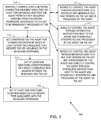
- FIG. 3 is a diagram of another method 300 for input peripheral device security, according to an example embodiment.
- the software module(s) that implements the method 300 is referred to as an "SST input device filter manager.”
- the SST input device filter manager is implemented as executable instructions programmed and residing within memory and/or a non-transitory computer-readable (processor-readable) storage medium and executed by one or more processors of a device.
- the processors that execute the SST input device filter manager are specifically configured and programmed to process the SST input device filter manager.
- the SST input device filter manager has access to one or more network connections during its processing.
- the network connections can be wired, wireless, or a combination of wired and wireless.
- the device that executes the SST input device filter manager is a server.
- the server is the core banking system 140 of the FIG. 1 .
- the device that executes the SST input device filter manager is an SST that is networked to another SST having an instance of the customer peripheral filter agent 114A of the FIG. 1 or an instance of the method 200 of the FIG. 2 .
- the SST input device filter manager is the custom peripheral filter manager 141 of the FIG. 1 .
- the SST input device filter manager interacts with the custom peripheral filter agent 114A of the FIG. 1 or the method 200 of the FIG. 2 .
- the SST input device filter manager directly interacts with the customer peripheral filter agent 114A of the FIG. 1 or the method 200 of the FIG. 2 .
- the SST input device filter manager indirectly interacts with the customer peripheral filter agent 114A of the FIG. 1 or the method 200 of the FIG. 2 through changes to one or more files, such as the whitelist file 114B and/or configuration files discussed with reference to the FIG. 1 .
- the SST input device filter manager directly interacts and indirectly interacts with the customer peripheral filter agent 114A of the FIG. 1 or the method 200 of the FIG. 2 .
- the SST input device filter manager remotely controls, over a network connection, an agent executing on an SST for enforcing whether the agent permits a key sequence initiated from a keyboard peripheral interfaced to the SST to be processed by the SST.
- the agent is the custom peripheral filter agent 114A of the FIG. 1 .
- the agent is the method 200 of the FIG. 2 .
- the SST is the ATM 111 of the FIG. 1 .
- the SST is a kiosk.
- the SST is a POS terminal.
- the SST input device filter manager controls the agent through modifications to a whitelist key sequence file that resides on the SST and is processed by the agent.
- the whitelist key sequence file is the whitelist file 114B of the FIG. 1 .
- the SST input device filter manager directly controls the agent through interactive instructions sent to the agent and dynamically interpreted and processed by the agent on the SST.
- the SST input device filter manager indirectly controls the agent through modifications to a file that resides on the SST and is processed by the agent and directly controls the agent through interactive instructions sent to the agent and dynamically interpreted and processed by the agent on the SST.
- the file is the whitelist file 114B of the FIG. 1 .
- the SST input device filter manager sets conditions for the gent for dynamic enforcement base at least in part on a resource that initiated the key sequence on the keyboard peripheral.
- the SST input device filter manager sets at least one additional condition based on a single communication session between the resource and the SST.
- the SST input device filter manager sets at least one additional condition based on a keyboard type associated with the keyboard peripheral.
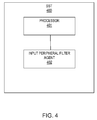
- FIG. 4 is a diagram of a SST 400, according to an example embodiment.
- the SST 400 includes a variety of hardware components and software components.
- the software components of the SST 400 are programmed and reside within memory and/or a non-transitory computer-readable medium and execute on one or more processors of the SST 400.
- the SST 400 may communicate over one or more networks, which can be wired, wireless, or a combination of wired and wireless.
- the SST 400 is the ATM 111 of the FIG. 1 .
- the SST 400 is a kiosk.
- the SST 400 is a POS terminal.
- the SST 400 includes a processor 401 and an input peripheral filter agent 402.
- the input peripheral filter agent 402 is adapted and configured to: execute on the processor 401.
- the input peripheral filter agent 402 is the custom peripheral filter agent 114A of the FIG. 1 .
- the input peripheral filter agent 402 is the method 200 of the FIG. 2 .
- the input peripheral filter agent 402 is further configured to: 1) execute on the processor 401 of the SST 400 and 2) determine whether to pass an input command initiated from an input peripheral to an OS of the SST 400 for processing or whether to block the input command from being passed to the OS for processing.
- the input peripheral filter agent 402 is further configured to make the determination based on entries included in a whitelist input command file.
- the whitelist input command file is the whitelist file 114B of the FIG. 1 .
- the SST 400 is the ATM 111 of the FIG. 1 and a remote network service accessible over a network connection to the ATM 111 at least partially controls the entries to the whitelist input command file over the network connection.
- the remote network service is the custom peripheral filter manager 141 of the FIG. 1 .
- the remote network service is the method 300 of the FIG. 3 .
- modules are illustrated as separate modules, but may be implemented as homogenous code, as individual components, some, but not all of these modules may be combined, or the functions may be implemented in software structured in any other convenient manner.
Landscapes
- Engineering & Computer Science (AREA)
- Theoretical Computer Science (AREA)
- Physics & Mathematics (AREA)
- General Physics & Mathematics (AREA)
- General Engineering & Computer Science (AREA)
- Computer Hardware Design (AREA)
- Computer Security & Cryptography (AREA)
- Software Systems (AREA)
- Human Computer Interaction (AREA)
- Business, Economics & Management (AREA)
- Accounting & Taxation (AREA)
- Finance (AREA)
- Computing Systems (AREA)
- Computer Networks & Wireless Communication (AREA)
- Signal Processing (AREA)
- Financial Or Insurance-Related Operations Such As Payment And Settlement (AREA)
- Computer And Data Communications (AREA)
Abstract
Description
- Automated Teller Machines (ATM) are in general believed to be relatively secure devices since they handle consumer financial transactions. However, ATMs are susceptible to malware, viruses, and eavesdropping just like any other device having memory and processor capabilities.
- Modern ATMs often include peripheral ports or wireless technologies (such as WiFi, Bluetooth®, etc.) which may permit peripheral or device pairing with the ATMs. Generally, the wireless technologies are secured through encryption keys. The peripheral ports may be hidden out of typical sight but service engineers know here the ports are at and how to access them and some ingenious hackers may know how to gain access to the ports.
- One particular peripheral that may be beneficial to connect to an ATM for legitimate reasons and/or malicious reasons is a keyboard. With a keyboard a service engineer can use keys or key sequences to access resources or run programs on the ATM, which may be unavailable via a typical touchscreen of existing limited encrypted PINPAD.
- However, because keys and key sequences can bypass some security checks and directly access resources that can be detrimental to the security of the ATM. Some ATM security systems will block all users from certain keys or key sequences through the operating system's (OS's) registry. However, this approach is too rigid since an authorized user of the ATM may have a legitimate need to access the blocked keys or key sequences).
- Therefore there is a need for improved finer-grain security associated with keys and key sequences of peripheral keyboards attached to a host machine.
- In various embodiments, methods and a Self-Service Terminal for input peripheral device security are presented.
- According to an embodiment, a method for input peripheral device security is presented. Specifically, an input command generated from an input peripheral of a host machine is intercepted. Then, a determination is made as to whether to block the input command from being processed by an Operating System (OS) of the host machine or whether to pass the input command to the OS for processing.
- According to a first aspect of the present invention there is provided a method comprising: intercepting an input command generated from an input peripheral of a host machine; and determining whether to block the input command from being processed by an Operating System (OS) of the host machine or whether to pass the input command to the OS for processing.
- The step of intercepting an input command optionally further includes identifying the input command as a keyboard connected to the host machine through a peripheral port of the host machine.
- The step of identifying the input command optionally further includes recognizing the input command as a sequence of keys activated on the keyboard.
- The step of determining whether to block the input command optionally further includes attempting to match the input command in a whitelist command file for the input peripheral and when matched passing the input command to the OS for processing and when unmatched ignoring the input command and blocking the input command from being processed by the OS.
- The step of determining whether to block the input command optionally further includes identifying a resource that initiated the input command from the input peripheral and making the determination based on security rights assigned to the resource with respect to the input command.
- The step of identifying a resource that initiated the input command optionally further includes dynamically obtaining the security rights for the resource from a remote network service over a network connection accessible from the host machine.
- The step of dynamically obtaining the security rights optionally further includes terminating the security rights when an authenticated session between the host machine and the resource terminates.
- The step of identifying a resource that initiated the input command optionally further includes obtaining the security rights based on a Universal Serial Bus (USB) key dongle interfaced to the input peripheral by a service engineer servicing the host machine, wherein the resource is the service engineer.
- The step of determining whether to block the input command optionally further includes accessing a whitelist command file to make the determination based on an input peripheral identifier for the input peripheral.
- The method optionally further comprises logging a resource identifier for a resource that initiated the input command from the input peripheral when the determination is to block the input command from being processed by the OS.
- According to a second aspect of the present invention there is provided a Self-Service Terminal (SST), comprising: a processor; and an input peripheral agent configured to: i) execute on the processor of the SST and ii) determine whether to pass an input command initiated from an input peripheral to an Operating System (OS) of the SST for processing or whether to block the input command from being passed to the OS for processing.
- The input peripheral filter agent is optionally further configured, in ii), to: make the determination based on entries included in a whitelist input command file.
- The SST is optionally an ATM and a remote network service accessible over a network connection to the ATM at least partially controls the entries of the whitelist input command file over the network connection.
- According to a third aspect of the present invention there is provided a method comprising: remotely controlling over a network connection an agent executing on a Self-Service Terminal (SST) for enforcing whether the agent permits a key sequence initiated from a keyboard peripheral interfaced to the SST to be permissibly processed by the SST.
- The step of remotely controlling optionally further includes indirectly controlling the agent through modifications to a whitelist key sequence file that resides on the SST and is processed by the agent.
- The step of remotely controlling optionally further includes directly controlling the agent through interactive instructions sent to the agent and dynamically interpreted and processed by the agent on the SST.
- The step of remotely controlling optionally further includes indirectly controlling the agent through modifications to a file that resides on the SST and is processed by the agent and directly controlling the agent through interactive instructions sent to the agent and dynamically interpreted and processed by the agent on the SST.
- The step of remotely controlling optionally further includes setting conditions for the agent for dynamic enforcement based at least in part on a resource that initiated the key sequence on the keyboard peripheral.
- The step of setting conditions for the agent optionally further includes setting at least one additional condition based on a single communication session between the resource and the SST.
- The step of setting conditions for the agent optionally further includes setting at least one additional condition based on a keyboard type associated with the keyboard peripheral.
- These and other aspects of the present invention will be apparent from the following specific description, given by way of example, with reference to the accompanying drawings, in which:
-
FIG. 1 is a diagram of a banking system for keyboard security on an Automated Teller Machine (ATM), according to an example embodiment; -
FIG. 2 is a diagram of a method for input peripheral device security, according to an example embodiment; -
FIG. 3 is a diagram of another method for input peripheral device security, according to an example embodiment; and -
FIG. 4 is a diagram of a Self-Service Terminal (SST), according to an example embodiment. - Reference is first made to
FIG. 1 , which is a diagram of a banking system for keyboard security on an Automated Teller Machine (ATM), according to an example embodiment. It is to be noted that the components are shown schematically in greatly simplified form, with only those components relevant to understanding of the embodiments being illustrated. - Furthermore, the various components (that are identified in the
FIG. 1 ) are illustrated and the arrangement of the components is presented for purposes of illustration only. It is to be noted that other arrangements with more or less components are possible without departing from the teachings of input peripheral device security, presented herein and below. - The
banking system 100 includes abank branch 110, an ATM host/switch 130, and acore banking system 140. Thebank branch 110 includes: anATM 111 and abranch server 120. - The
ATM 111 includes one or more Central Processing Units (CPU(s) 112,memory 113, and a Hard Drive (HD) 115 (which may or may not be encrypted and dynamically decrypted as needed), and multipleperipheral devices 116. Thememory 113 includes new and novel customperipheral filter agent 114A as a running instance of executable instructions processed from thememory 113 by the one ormore CPUs 112 on theATM 111. TheHD 115 includes drivers/application code/etc. 115A, an operating system (OS) 115B, andfiles 115C. Theapplication code 115A may include the source code for the custom peripheral agent 114. - On
ATM 111 boot, theOS 115B is loaded from theHD 115 into thememory 113 and executed by the one ormore CPUs 112, theOS 115B when loaded tomemory 113 loads the executable version of the customperipheral filter agent 114A intomemory 113 along with theperipheral drivers 115A. The customperipheral filter agent 114B loads from thefiles 115C anovel whitelist 114B into memory (cache). - The custom
peripheral filter agent 114B can communicated over a network connection from theATM 111 to the branch server (such as through a Local Area Network (LAN) connection. Through the branch server 120 a Wide Area Network (WAN) connection is available to the customperipheral filter agent 114A for two-way communication with the customperipheral filter manager 141 of thecore banking system 140. - The custom
peripheral filter manager 141 may also change information present in thewhitelist 114B through communication with the custom peripheral filter agent or by replacement of the a file representing thewhitelist 114B in thefiles 115C of the hard drive when the customerperipheral filter agent 114A is not loaded and running inmemory 112 of theATM 111. - During operation, the custom
peripheral filter agent 114A is configured to detect key events and key sequences from a detected keyboard peripheral 116 interfaced to theATM 111. This can be done through listening to the port to which the keyboard peripheral 116 is interfaced to the ATM 111 (such as through a Universal Serial Bus (USB port) or other port including a wireless communication port) and/or monitoring commands being sent to and from a device driver associated with the keyboard peripheral 116. - Any key events (can include key sequences) or key commands detected are intercepted from the device driver before being handled by the
OS 115B and compared by the customperipheral filter agent 114A to entries in thewhitelist 114B. If a match for an entry in thewhitelist 114B is found, then the key event or key command is allowed to pass to theOS 115B for normal handling on theATM 111. However, if no match is found for an entry in thewhitelist 114B with the intercepted key event or key command, the key event or key command is not passed to theOS 115B for handling; essentially the intercepted key even or key command is filtered, ignored and results in no action whatsoever on theATM 111. - Because processing actions of the custom
peripheral filter agent 114A is driven from thewhitelist 114B when new keyboards are deployed only known and certified keys or key sequences can be added in thewhitelist 114B and the customperipheral filter agent 114A does not need modified, recompiled, or changed in any way. In this sense, the customperipheral filter agent 114A is dynamically customizable and reactive. Moreover, unlike other approaches that rely on identifying keys or key sequences that are to be excluded by utilizing a novel whitelist approach, any unknown and uncertified keys or keys sequences are by default filtered and ignored by the customperipheral filter agent 114A because only acceptable keys or key sequences are present and allowed to proceed if present in thewhitelist 114B. - Moreover, since the custom
peripheral filter manager 141 has access to change thewhitelist 114B new keys or key sequences can be dynamically and remotely added or existing keys or key sequences present in thewhitelist 114B can be dynamically deleted and thereby filtered and ignored because their presence is removed from thewhitelist 114B. - A variety of security conditions with respect to the detected key events can be defined in either the
whitelist 114B or a separate configuration file obtained from thefiles 115C and dynamically interpreted by the customperipheral filter agent 114A. These conditions may be referenced in collections as a specific policy and each policy may be located based on an identity of a resource that triggers the key event or key sequences. For example, a service engineer authenticates via a login procedure and is represented as a unique identity associated with that service engineer. When the key event is intercepted by the customperipheral filter agent 114A, metadata available from theOS 115B can identify the authenticated service engineer's identity, which the customperipheral filter agent 114A locates in a configuration file or the whitelist associated with a condition or a set of conditions referenced as a policy. Those conditions can be evaluated to determine that even if a key event match is found in thewhitelist 114B, the key event is to be ignored or filtered and not passed to theOS 115B for handling. - In this manner, the custom
peripheral filter agent 114A can deploy fine grain and resource specific key command filtering, which can be dynamically changed through changes to entries in thewhitelist 114B and/or the configuration file and which can be changed over a network by the customperipheral filter manager 141. - This provides a variety of beneficial usages such as but not limited to:
- 1) changes to the filtered keys can come from the remote network-based custom
peripheral filter manager 141; - 2) changes to be made to which keys in the
whitelist 114B can be permitted based on a server engineer's authorization (identity which may be based on a secure USB dongle have a serial number known to be assigned to a specific service engineer); - 3) keyboard filter changes can be dynamically made without requiring any registry entries in the OS and without requiring the
ATM 111 to reboot; and - 4) keyboard filtering can be remotely managed from the custom
peripheral filter manager 141 and/or through configuration conditions or policies, such that filtering can be turned off during an engineer service ticket window and turned back on when the time is outside the service ticket window; - In an embodiment, the conditions are based on an automated software resource rather than a user resource (service engineer).
- In an embodiment, the conditions are integrated into the
whitelist 114B as one file or a database. - In an embodiment, the keyboard peripheral 116 is a Bluetooth® keyboard.
- In an embodiment, the keyboard peripheral 116 is a device operated by the service engineer than can pose as a keyboard for the
ATM 111, such as a laptop, a tablet, a phone, or a wearable processing device configured to identify itself over a peripheral communication port to theATM 111 as a type of keyboard peripheral 116. - In an embodiment, the whitelist groups whitelisted key entries based on a keyboard type, such that multiple different keyboard types are identified and managed in a single whitelist file or
database 114B. - In an embodiment, each separate keyboard type includes its own separate whitelist file or
database 114B. In such a case, an identifier for the keyboard type may be used as the file name or file reference for eachwhitelist file 114B, such that when the customperipheral filter agent 114A detects and event for a given keyboard type, the keyboard type/identifier can be processed by the customperipheral filter agent 114A to locate and retrieve theproper whitelist file 114A from thefiles 115C on thehard drive 115. - Some of embodiments of the
FIG. 1 and other embodiments are now discussed with reference to theFIGS. 2-4 . -
FIG. 2 is a diagram of amethod 200 for input peripheral device security, according to an example embodiment. The software module(s) that implements themethod 200 is referred to as a "Self-Service Terminal (SST) input device filtering agent." The SST input device filtering agent is implemented as executable instructions programmed and residing within memory and/or a non-transitory computer-readable (processor-readable) storage medium and executed by one or more processors of a device. The processor(s) of the device that executes the SST input device filtering agent are specifically configured and programmed to process the SST input device filtering agent. The SST input device filtering agent has access to one or more network connections during its processing. The network connections can be wired, wireless, or a combination of wired and wireless. - In an embodiment, the device that executes the SST input device filtering agent is the
ATM 111 of theFIG. 1 . - In an embodiment, the device that executes the SST input device filtering agent is a kiosk.
- In an embodiment, the device that executes the SST input device filtering agent is a Point-Of-Sale (POS) terminal.
- In an embodiment, the SST input device filtering agent is the custom
peripheral filter agent 114A of theFIG. 1 . - In an embodiment, the custom
peripheral filter manager 141 is operable to custom-drive and alter the dynamic processing of the SST input device filtering agent without restarting the SST and without altering or modifying the executable instructions of the SST input device filtering agent. - At 210, the SST input device filtering agent intercepts an input command generated from an input peripheral of a host machine.
- In an embodiment, the SST input device filtering agent hooks into the kernel of the OS to permit intercepting of the input commands emanating from a device driver for the input peripheral. In an embodiment, the hook is a registration with an OS kernel process to pass the input commands from all input peripherals to the SST input device filtering agent.
- In an embodiment, the host machine is the
ATM 111 of theFIG. 1 . - In an embodiment, the host machine is an SST. In an embodiment, the SST is a kiosk.
- In an embodiment, at 211, the SST input device filtering agent identifies the input command as a keyboard connected to the host machine through a peripheral port of the host machine.
- In an embodiment of 211 and at 212, the SST input device filtering agent recognizes the input command as a sequence of keys activated on the keyboard. In an embodiment the sequence is a single key. In an embodiment the sequence is two or more keys.
- At 220, the SST input device filtering agent determines whether to block the input command from being processed by an OS of the host machine or whether to pass the input command to the OS for processing.
- In an embodiment, at 221, the SST input device filtering agent attempts to match the input command to a whitelist command file for the input peripheral and when matched, the SST input device filtering agent passes the input command to the OS for processing and when unmatched, the SST input device filtering agent ignores the input command and blocks the input command from being processed by the OS.
- In an embodiment, the whitelist command file is the
whitelist file 114B of theFIG. 1 . - In an embodiment, at 222, the SST input device filtering agent identifies a resource that initiated the input command from the input peripheral and the SST input device filtering agent makes the determination based on security rights assigned to the resource with respect to the input command.
- In an embodiment, the resource is an operator that operates the input peripheral. In an embodiment, the operator is a service engineer that is servicing the SST.
- In an embodiment, the resource is an automated service or application that can initiate the input command as coming from the input peripheral.
- In an embodiment of 222 and at 223, the SST input device filtering agent dynamically obtains the security rights for the resource from a remote network service over a network connection accessible from the host machine. In an embodiment, the remote network service is the custom
peripheral filter manager 141 of theFIG. 1 . In an embodiment, the remote network service is themethod 300 discussed with reference to theFIG. 3 below. - In an embodiment of 223 and at 224, the SST input device filtering agent terminates the security rights when an authenticated session between the host machine and the resource terminates. In an embodiment, the authenticated session is for a resource that is a service engineer performing service on the host machine (SST) pursuant to a service ticket.
- In an embodiment of 222 and at 225, the SST input device filtering agent obtains the security rights based on a USB key dongle interfaced to the input peripheral by a service engineer servicing the host machine, where the resource is the service engineer.
- In embodiment, at 226, the SST input device filtering agent accesses a whitelist command file to make the determination based on an input peripheral identifier for the input peripheral. In an embodiment, the whitelist command file is the
whitelist file 114B of theFIG. 1 . - In an embodiment, at 230, the SST input device filtering agent logs a resource identifier for a resource that initiated the input command from the input peripheral when the determination is to block the input command from being processed by the OS of the host machine. This can be used for auditing input commands that were unauthorized and attempted on the host machine through the input peripheral.
-
FIG. 3 is a diagram of anothermethod 300 for input peripheral device security, according to an example embodiment. The software module(s) that implements themethod 300 is referred to as an "SST input device filter manager." The SST input device filter manager is implemented as executable instructions programmed and residing within memory and/or a non-transitory computer-readable (processor-readable) storage medium and executed by one or more processors of a device. The processors that execute the SST input device filter manager are specifically configured and programmed to process the SST input device filter manager. The SST input device filter manager has access to one or more network connections during its processing. The network connections can be wired, wireless, or a combination of wired and wireless. - In an embodiment, the device that executes the SST input device filter manager is a server. In an embodiment, the server is the
core banking system 140 of theFIG. 1 . - In an embodiment, the device that executes the SST input device filter manager is an SST that is networked to another SST having an instance of the customer
peripheral filter agent 114A of theFIG. 1 or an instance of themethod 200 of theFIG. 2 . - In an embodiment, the SST input device filter manager is the custom
peripheral filter manager 141 of theFIG. 1 . - In an embodiment, the SST input device filter manager interacts with the custom
peripheral filter agent 114A of theFIG. 1 or themethod 200 of theFIG. 2 . - In an embodiment, the SST input device filter manager directly interacts with the customer
peripheral filter agent 114A of theFIG. 1 or themethod 200 of theFIG. 2 . - In an embodiment, the SST input device filter manager indirectly interacts with the customer
peripheral filter agent 114A of theFIG. 1 or themethod 200 of theFIG. 2 through changes to one or more files, such as thewhitelist file 114B and/or configuration files discussed with reference to theFIG. 1 . - In an embodiment, the SST input device filter manager directly interacts and indirectly interacts with the customer
peripheral filter agent 114A of theFIG. 1 or themethod 200 of theFIG. 2 . - At 310, the SST input device filter manager remotely controls, over a network connection, an agent executing on an SST for enforcing whether the agent permits a key sequence initiated from a keyboard peripheral interfaced to the SST to be processed by the SST.
- In an embodiment, the agent is the custom
peripheral filter agent 114A of theFIG. 1 . - In an embodiment, the agent is the
method 200 of theFIG. 2 . - In an embodiment, the SST is the
ATM 111 of theFIG. 1 . - In an embodiment, the SST is a kiosk.
- In an embodiment, the SST is a POS terminal.
- According to an embodiment, at 311, the SST input device filter manager controls the agent through modifications to a whitelist key sequence file that resides on the SST and is processed by the agent.
- In an embodiment, the whitelist key sequence file is the
whitelist file 114B of theFIG. 1 . - In an embodiment, at 312, the SST input device filter manager directly controls the agent through interactive instructions sent to the agent and dynamically interpreted and processed by the agent on the SST.
- In an embodiment, at 313, the SST input device filter manager indirectly controls the agent through modifications to a file that resides on the SST and is processed by the agent and directly controls the agent through interactive instructions sent to the agent and dynamically interpreted and processed by the agent on the SST. In an embodiment, the file is the
whitelist file 114B of theFIG. 1 . - In an embodiment, at 314, the SST input device filter manager sets conditions for the gent for dynamic enforcement base at least in part on a resource that initiated the key sequence on the keyboard peripheral.
- In an embodiment of 314 and at 315, the SST input device filter manager sets at least one additional condition based on a single communication session between the resource and the SST.
- Inn an embodiment of 314 and at 316, the SST input device filter manager sets at least one additional condition based on a keyboard type associated with the keyboard peripheral.
-
FIG. 4 is a diagram of a SST 400, according to an example embodiment. The SST 400 includes a variety of hardware components and software components. The software components of the SST 400 are programmed and reside within memory and/or a non-transitory computer-readable medium and execute on one or more processors of the SST 400. The SST 400 may communicate over one or more networks, which can be wired, wireless, or a combination of wired and wireless. - In an embodiment, the SST 400 is the
ATM 111 of theFIG. 1 . - In an embodiment, the SST 400 is a kiosk.
- In an embodiment, the SST 400 is a POS terminal.
- The SST 400 includes a
processor 401 and an inputperipheral filter agent 402. - The input
peripheral filter agent 402 is adapted and configured to: execute on theprocessor 401. - In an embodiment, the input
peripheral filter agent 402 is the customperipheral filter agent 114A of theFIG. 1 . - In an embodiment, the input
peripheral filter agent 402 is themethod 200 of theFIG. 2 . - In an embodiment, the input
peripheral filter agent 402 is further configured to: 1) execute on theprocessor 401 of the SST 400 and 2) determine whether to pass an input command initiated from an input peripheral to an OS of the SST 400 for processing or whether to block the input command from being passed to the OS for processing. - In an embodiment, the input
peripheral filter agent 402 is further configured to make the determination based on entries included in a whitelist input command file. In an embodiment, the whitelist input command file is thewhitelist file 114B of theFIG. 1 . - In an embodiment, the SST 400 is the
ATM 111 of theFIG. 1 and a remote network service accessible over a network connection to theATM 111 at least partially controls the entries to the whitelist input command file over the network connection. In an embodiment, the remote network service is the customperipheral filter manager 141 of theFIG. 1 . In an embodiment, the remote network service is themethod 300 of theFIG. 3 . - It should be appreciated that where software is described in a particular form (such as a component or module) this is merely to aid understanding and is not intended to limit how software that implements those functions may be architected or structured. For example, modules are illustrated as separate modules, but may be implemented as homogenous code, as individual components, some, but not all of these modules may be combined, or the functions may be implemented in software structured in any other convenient manner.
- Furthermore, although the software modules are illustrated as executing on one piece of hardware, the software may be distributed over multiple processors or in any other convenient manner.
- The above description is illustrative, and not restrictive. Many other embodiments will be apparent to those of skill in the art upon reviewing the above description. The scope of embodiments should therefore be determined with reference to the appended claims, along with the full scope of equivalents to which such claims are entitled.
- In the foregoing description of the embodiments, various features are grouped together in a single embodiment for the purpose of streamlining the disclosure. This method of disclosure is not to be interpreted as reflecting that the claimed embodiments have more features than are expressly recited in each claim. Rather, as the following claims reflect, inventive subject matter lies in less than all features of a single disclosed embodiment.
Claims (13)
- A method (200) comprising:intercepting an input command generated from an input peripheral (116) of a host machine (111 or 400) (step 210); anddetermining whether to block the input command from being processed by an operating system (115B) of the host machine (111 or 400) or whether to pass the input command to the operating system (115B) for processing (step 220).
- The method of claim 1, wherein intercepting further includes identifying the input command as a keyboard connected to the host machine (111 or 400) through a peripheral port of the host machine (111 or 400) (step 211).
- The method of claim 2, wherein identifying further includes recognizing the input command as a sequence of keys activated on the keyboard (step 212).
- The method of any preceding claim, wherein determining further includes attempting to match the input command in a whitelist command file (114B) for the input peripheral (116) and when matched passing the input command to the operating system (115B) for processing and when unmatched ignoring the input command and blocking the input command from being processed by the operating system (115B) (step 221).
- The method of any preceding claim, wherein determining further includes identifying a resource that initiated the input command from the input peripheral (116) and making the determination based on security rights assigned to the resource with respect to the input command (step 222).
- The method of claim 5, wherein identifying further includes dynamically obtaining the security rights for the resource from a remote network service over a network connection accessible from the host machine (111 or 400) (step 223).
- The method of claim 6, wherein dynamically obtaining further includes terminating the security rights when an authenticated session between the host machine (111 or 400) and the resource terminates (step 224).
- The method of claim 5, identifying further includes obtaining the security rights based on a universal serial bus key dongle interfaced to the input peripheral (116) by a service engineer servicing the host machine (111 or 400), wherein the resource is the service engineer (step 225).
- The method of any preceding claim, wherein determining further includes accessing a whitelist command file (114B) to make the determination based on an input peripheral identifier for the input peripheral (step 226).
- The method of any preceding claim further comprising, logging a resource identifier for a resource that initiated the input command from the input peripheral (116) when the determination is to block the input command from being processed by the operating system (115B) (step 230).
- A self-service terminal (111 or 400) comprising:a processor (112 or 401); andan input peripheral agent (114A or 402) configured to: (i) execute on the processor (112 or 401) of the terminal (111 or 400) and (ii) determine whether to pass an input command initiated from an input peripheral (116) to an operating system (115B) of the terminal (111 or 400) for processing or whether to block the input command from being passed to the operating system (115B) for processing.
- The terminal of claim 11, wherein the input peripheral filter agent (114A or 402) is further configured in (ii) to make the determination based on entries included in a whitelist input command file (114B).
- The SST of claim 11 or 12, wherein the terminal is an automated teller machine and a remote network service accessible over a network connection to the automated teller machine at least partially controls the entries of the whitelist input command file (114B) over the network connection.
Applications Claiming Priority (1)
| Application Number | Priority Date | Filing Date | Title |
|---|---|---|---|
| US14/972,778 US10762245B2 (en) | 2015-12-17 | 2015-12-17 | Input peripheral device security |
Publications (2)
| Publication Number | Publication Date |
|---|---|
| EP3182325A1 true EP3182325A1 (en) | 2017-06-21 |
| EP3182325B1 EP3182325B1 (en) | 2019-02-06 |
Family
ID=56682008
Family Applications (1)
| Application Number | Title | Priority Date | Filing Date |
|---|---|---|---|
| EP16183650.7A Active EP3182325B1 (en) | 2015-12-17 | 2016-08-10 | Input peripheral device security |
Country Status (3)
| Country | Link |
|---|---|
| US (1) | US10762245B2 (en) |
| EP (1) | EP3182325B1 (en) |
| CN (1) | CN107038817B (en) |
Families Citing this family (9)
| Publication number | Priority date | Publication date | Assignee | Title |
|---|---|---|---|---|
| US10762245B2 (en) * | 2015-12-17 | 2020-09-01 | Ncr Corporation | Input peripheral device security |
| US10366224B2 (en) * | 2016-06-22 | 2019-07-30 | Dell Products, Lp | System and method for securing secure memory allocations in an information handling system |
| US10721212B2 (en) * | 2016-12-19 | 2020-07-21 | General Electric Company | Network policy update with operational technology |
| US10560482B2 (en) * | 2017-07-08 | 2020-02-11 | Vmware, Inc. | Network access by applications in an enterprise managed device system |
| CN109032520A (en) * | 2018-07-24 | 2018-12-18 | 郑州云海信息技术有限公司 | A kind of control method and device |
| US11194904B2 (en) | 2018-11-07 | 2021-12-07 | International Business Machines Corporation | Security actions based on monitored computer and user physical activities |
| CN111540133B (en) * | 2020-04-27 | 2022-07-05 | 中国银行股份有限公司 | Method and device for detecting state of external equipment and related equipment |
| US11704411B2 (en) | 2020-12-10 | 2023-07-18 | Ncr Corporation | Operating system encryption system and method |
| US12399719B2 (en) * | 2022-12-28 | 2025-08-26 | Advanced Micro Devices, Inc. | Resource access control |
Citations (3)
| Publication number | Priority date | Publication date | Assignee | Title |
|---|---|---|---|---|
| US20020143921A1 (en) * | 2001-04-03 | 2002-10-03 | Yann Stephan | Bus function authentication method, apparatus and computer program |
| EP1429226A1 (en) * | 2002-12-13 | 2004-06-16 | Infotronic S.P.A. | Electronic system and corresponding method for protecting an access gate of a computer |
| US20150248549A1 (en) * | 2014-02-28 | 2015-09-03 | Ncr Corporation | Unattended secure device authorization |
Family Cites Families (38)
| Publication number | Priority date | Publication date | Assignee | Title |
|---|---|---|---|---|
| US4951249A (en) * | 1986-10-24 | 1990-08-21 | Harcom Security Systems Corp. | Method and apparatus for controlled access to a computer system |
| US5223948A (en) * | 1990-10-10 | 1993-06-29 | Fuji Xerox Co., Ltd. | Image processing apparatus |
| US5809230A (en) * | 1996-01-16 | 1998-09-15 | Mclellan Software International, Llc | System and method for controlling access to personal computer system resources |
| US6288715B1 (en) * | 1999-05-11 | 2001-09-11 | Qwest Communications Int'l., Inc. | Screensaver messaging system |
| US20030217287A1 (en) * | 2002-05-16 | 2003-11-20 | Ilya Kruglenko | Secure desktop environment for unsophisticated computer users |
| US20050080898A1 (en) * | 2003-10-08 | 2005-04-14 | Block Jerald J. | System and method for managing computer usage |
| US8281114B2 (en) * | 2003-12-23 | 2012-10-02 | Check Point Software Technologies, Inc. | Security system with methodology for defending against security breaches of peripheral devices |
| US8050698B2 (en) * | 2004-07-15 | 2011-11-01 | Avaya Inc. | Peer-to-peer neighbor detection for proximity-based command execution |
| US8571541B2 (en) * | 2004-07-15 | 2013-10-29 | Avaya Inc. | Proximity-based authorization |
| EP1779248A4 (en) * | 2004-07-30 | 2008-02-27 | Research In Motion Ltd | Method and system for coordinating client and host security modules |
| WO2006101549A2 (en) * | 2004-12-03 | 2006-09-28 | Whitecell Software, Inc. | Secure system for allowing the execution of authorized computer program code |
| US8552984B2 (en) * | 2005-01-13 | 2013-10-08 | 602531 British Columbia Ltd. | Method, system, apparatus and computer-readable media for directing input associated with keyboard-type device |
| US8028301B2 (en) * | 2005-03-14 | 2011-09-27 | Symantec Corporation | Restricting recordal of user activity in a processing system |
| US7562385B2 (en) * | 2005-04-20 | 2009-07-14 | Fuji Xerox Co., Ltd. | Systems and methods for dynamic authentication using physical keys |
| AU2005100653A4 (en) * | 2005-08-12 | 2005-09-15 | Agent Mobile Pty Ltd | Mobile Device-Based End-User Filter |
| US7675435B2 (en) * | 2006-08-31 | 2010-03-09 | Microsoft Corporation | Smart filtering with multiple simultaneous keyboard inputs |
| US20080301816A1 (en) * | 2007-06-01 | 2008-12-04 | Ting David M T | Method and system for handling keystroke commands |
| CN101470411B (en) | 2007-12-28 | 2011-06-01 | 联合汽车电子有限公司 | System and method for safely updating ECU data |
| US8190783B2 (en) * | 2010-05-04 | 2012-05-29 | Microsoft Corporation | Assigning input devices to specific sessions |
| FR2969788B1 (en) * | 2010-12-27 | 2013-02-08 | Electricite De France | METHOD AND DEVICE FOR CONTROLLING ACCESS TO A COMPUTER SYSTEM |
| US9838392B2 (en) * | 2011-02-28 | 2017-12-05 | Nokia Technologies Oy | Method and apparatus for providing proxy-based access controls |
| US9015228B2 (en) * | 2011-02-28 | 2015-04-21 | Nokia Corporation | Method and apparatus for providing proxy-based sharing of access histories |
| US9317690B2 (en) * | 2011-03-28 | 2016-04-19 | Mcafee, Inc. | System and method for firmware based anti-malware security |
| US8677464B2 (en) * | 2011-06-22 | 2014-03-18 | Schweitzer Engineering Laboratories Inc. | Systems and methods for managing secure communication sessions with remote devices |
| US8387141B1 (en) * | 2011-09-27 | 2013-02-26 | Green Head LLC | Smartphone security system |
| US9154901B2 (en) * | 2011-12-03 | 2015-10-06 | Location Labs, Inc. | System and method for disabling and enabling mobile device functional components |
| US11042513B2 (en) * | 2012-01-03 | 2021-06-22 | International Business Machines Corporation | Extended tagging method and system |
| CN103685399B (en) * | 2012-09-17 | 2018-03-23 | 腾讯科技(深圳)有限公司 | A kind of methods, devices and systems for logging in class Unix virtual containers |
| US9275257B2 (en) * | 2012-10-16 | 2016-03-01 | Truedata Systems, Inc. | Secure communication architecture |
| US9317721B2 (en) * | 2012-10-31 | 2016-04-19 | Google Inc. | Privacy aware camera and device status indicator system |
| US20150031416A1 (en) * | 2013-07-23 | 2015-01-29 | Motorola Mobility Llc | Method and Device For Command Phrase Validation |
| US9760712B2 (en) * | 2014-05-23 | 2017-09-12 | Vmware, Inc. | Application whitelisting using user identification |
| US20150365237A1 (en) * | 2014-06-17 | 2015-12-17 | High Sec Labs Ltd. | Usb security gateway |
| US9342687B2 (en) * | 2014-08-07 | 2016-05-17 | International Business Machines Corporation | Detecting synthetic keystrokes |
| US10275370B2 (en) * | 2015-01-05 | 2019-04-30 | Google Llc | Operating system dongle |
| US10110496B2 (en) * | 2015-03-31 | 2018-10-23 | Juniper Networks, Inc. | Providing policy information on an existing communication channel |
| US10237280B2 (en) * | 2015-06-25 | 2019-03-19 | Websafety, Inc. | Management and control of mobile computing device using local and remote software agents |
| US10762245B2 (en) * | 2015-12-17 | 2020-09-01 | Ncr Corporation | Input peripheral device security |
-
2015
- 2015-12-17 US US14/972,778 patent/US10762245B2/en active Active
-
2016
- 2016-08-10 EP EP16183650.7A patent/EP3182325B1/en active Active
- 2016-09-27 CN CN201610855132.1A patent/CN107038817B/en active Active
Patent Citations (3)
| Publication number | Priority date | Publication date | Assignee | Title |
|---|---|---|---|---|
| US20020143921A1 (en) * | 2001-04-03 | 2002-10-03 | Yann Stephan | Bus function authentication method, apparatus and computer program |
| EP1429226A1 (en) * | 2002-12-13 | 2004-06-16 | Infotronic S.P.A. | Electronic system and corresponding method for protecting an access gate of a computer |
| US20150248549A1 (en) * | 2014-02-28 | 2015-09-03 | Ncr Corporation | Unattended secure device authorization |
Also Published As
| Publication number | Publication date |
|---|---|
| EP3182325B1 (en) | 2019-02-06 |
| US10762245B2 (en) | 2020-09-01 |
| CN107038817A (en) | 2017-08-11 |
| US20170177908A1 (en) | 2017-06-22 |
| CN107038817B (en) | 2020-08-07 |
Similar Documents
| Publication | Publication Date | Title |
|---|---|---|
| EP3182325B1 (en) | Input peripheral device security | |
| EP2916255B1 (en) | Unattended secure device authorization | |
| EP2973171B1 (en) | Context based switching to a secure operating system environment | |
| US9898739B2 (en) | System and method for ensuring safety of online transactions | |
| US9774568B2 (en) | Computer security architecture and related computing method | |
| EP3238123B1 (en) | Methods, systems and apparatus to initialize a platform | |
| CN104036166B (en) | The user of forced symmetric centralization is supported to put forward power method | |
| US12314371B2 (en) | Systems and methods for peripheral device security | |
| CN107832616B (en) | Computer pre-boot security verification, enforcement and repair | |
| US20200028683A1 (en) | Separate cryptographic keys for multiple modes | |
| Zhou et al. | KISS:“key it simple and secure” corporate key management | |
| US10733300B2 (en) | Basic input/output system (BIOS)/unified extensible firmware interface (UEFI) hard drive authentication | |
| KR100549645B1 (en) | Security method of data input by keyboard and security system implementing it | |
| CN117235818A (en) | Encryption authentication method and device based on solid state disk, computer equipment and medium | |
| US20190333038A1 (en) | Basic input/output system (bios) credential management | |
| KR101265474B1 (en) | Security service providing method for mobile virtualization service | |
| US10929827B2 (en) | Basic input/output system (BIOS) and unified extensible firmware interface (UEFI) one-time boot | |
| KR20160019615A (en) | Security apparatus based on whitelist and blacklist and method thereof | |
| EP2854088B1 (en) | A system and method for ensuring safety of online transactions | |
| KR101098382B1 (en) | System for network duplication and method thereof | |
| CN120937003A (en) | Transverse movement firewall | |
| KR20110096516A (en) | Network redundancy system and its provision method |
Legal Events
| Date | Code | Title | Description |
|---|---|---|---|
| PUAI | Public reference made under article 153(3) epc to a published international application that has entered the european phase |
Free format text: ORIGINAL CODE: 0009012 |
|
| STAA | Information on the status of an ep patent application or granted ep patent |
Free format text: STATUS: THE APPLICATION HAS BEEN PUBLISHED |
|
| AK | Designated contracting states |
Kind code of ref document: A1 Designated state(s): AL AT BE BG CH CY CZ DE DK EE ES FI FR GB GR HR HU IE IS IT LI LT LU LV MC MK MT NL NO PL PT RO RS SE SI SK SM TR |
|
| AX | Request for extension of the european patent |
Extension state: BA ME |
|
| STAA | Information on the status of an ep patent application or granted ep patent |
Free format text: STATUS: REQUEST FOR EXAMINATION WAS MADE |
|
| 17P | Request for examination filed |
Effective date: 20171221 |
|
| RBV | Designated contracting states (corrected) |
Designated state(s): AL AT BE BG CH CY CZ DE DK EE ES FI FR GB GR HR HU IE IS IT LI LT LU LV MC MK MT NL NO PL PT RO RS SE SI SK SM TR |
|
| STAA | Information on the status of an ep patent application or granted ep patent |
Free format text: STATUS: EXAMINATION IS IN PROGRESS |
|
| 17Q | First examination report despatched |
Effective date: 20180320 |
|
| RAP1 | Party data changed (applicant data changed or rights of an application transferred) |
Owner name: NCR CORPORATION |
|
| REG | Reference to a national code |
Ref country code: DE Ref legal event code: R079 Ref document number: 602016009778 Country of ref document: DE Free format text: PREVIOUS MAIN CLASS: G06F0021830000 Ipc: G06F0021440000 |
|
| GRAP | Despatch of communication of intention to grant a patent |
Free format text: ORIGINAL CODE: EPIDOSNIGR1 |
|
| STAA | Information on the status of an ep patent application or granted ep patent |
Free format text: STATUS: GRANT OF PATENT IS INTENDED |
|
| RIC1 | Information provided on ipc code assigned before grant |
Ipc: G06F 21/83 20130101ALI20180828BHEP Ipc: G06F 3/06 20060101ALI20180828BHEP Ipc: H04L 29/06 20060101ALI20180828BHEP Ipc: G06F 21/44 20130101AFI20180828BHEP Ipc: G06F 13/42 20060101ALI20180828BHEP |
|
| INTG | Intention to grant announced |
Effective date: 20180917 |
|
| RIN1 | Information on inventor provided before grant (corrected) |
Inventor name: FLETT, GRAHAM Inventor name: ROPER, ANTHONY |
|
| GRAS | Grant fee paid |
Free format text: ORIGINAL CODE: EPIDOSNIGR3 |
|
| GRAA | (expected) grant |
Free format text: ORIGINAL CODE: 0009210 |
|
| STAA | Information on the status of an ep patent application or granted ep patent |
Free format text: STATUS: THE PATENT HAS BEEN GRANTED |
|
| AK | Designated contracting states |
Kind code of ref document: B1 Designated state(s): AL AT BE BG CH CY CZ DE DK EE ES FI FR GB GR HR HU IE IS IT LI LT LU LV MC MK MT NL NO PL PT RO RS SE SI SK SM TR |
|
| REG | Reference to a national code |
Ref country code: GB Ref legal event code: FG4D |
|
| REG | Reference to a national code |
Ref country code: CH Ref legal event code: EP Ref country code: AT Ref legal event code: REF Ref document number: 1095350 Country of ref document: AT Kind code of ref document: T Effective date: 20190215 |
|
| REG | Reference to a national code |
Ref country code: IE Ref legal event code: FG4D |
|
| REG | Reference to a national code |
Ref country code: DE Ref legal event code: R096 Ref document number: 602016009778 Country of ref document: DE |
|
| REG | Reference to a national code |
Ref country code: DE Ref legal event code: R084 Ref document number: 602016009778 Country of ref document: DE |
|
| REG | Reference to a national code |
Ref country code: NL Ref legal event code: MP Effective date: 20190206 |
|
| REG | Reference to a national code |
Ref country code: LT Ref legal event code: MG4D |
|
| PG25 | Lapsed in a contracting state [announced via postgrant information from national office to epo] |
Ref country code: SE Free format text: LAPSE BECAUSE OF FAILURE TO SUBMIT A TRANSLATION OF THE DESCRIPTION OR TO PAY THE FEE WITHIN THE PRESCRIBED TIME-LIMIT Effective date: 20190206 Ref country code: PT Free format text: LAPSE BECAUSE OF FAILURE TO SUBMIT A TRANSLATION OF THE DESCRIPTION OR TO PAY THE FEE WITHIN THE PRESCRIBED TIME-LIMIT Effective date: 20190606 Ref country code: FI Free format text: LAPSE BECAUSE OF FAILURE TO SUBMIT A TRANSLATION OF THE DESCRIPTION OR TO PAY THE FEE WITHIN THE PRESCRIBED TIME-LIMIT Effective date: 20190206 Ref country code: NO Free format text: LAPSE BECAUSE OF FAILURE TO SUBMIT A TRANSLATION OF THE DESCRIPTION OR TO PAY THE FEE WITHIN THE PRESCRIBED TIME-LIMIT Effective date: 20190506 Ref country code: NL Free format text: LAPSE BECAUSE OF FAILURE TO SUBMIT A TRANSLATION OF THE DESCRIPTION OR TO PAY THE FEE WITHIN THE PRESCRIBED TIME-LIMIT Effective date: 20190206 Ref country code: LT Free format text: LAPSE BECAUSE OF FAILURE TO SUBMIT A TRANSLATION OF THE DESCRIPTION OR TO PAY THE FEE WITHIN THE PRESCRIBED TIME-LIMIT Effective date: 20190206 |
|
| REG | Reference to a national code |
Ref country code: AT Ref legal event code: MK05 Ref document number: 1095350 Country of ref document: AT Kind code of ref document: T Effective date: 20190206 |
|
| PG25 | Lapsed in a contracting state [announced via postgrant information from national office to epo] |
Ref country code: HR Free format text: LAPSE BECAUSE OF FAILURE TO SUBMIT A TRANSLATION OF THE DESCRIPTION OR TO PAY THE FEE WITHIN THE PRESCRIBED TIME-LIMIT Effective date: 20190206 Ref country code: GR Free format text: LAPSE BECAUSE OF FAILURE TO SUBMIT A TRANSLATION OF THE DESCRIPTION OR TO PAY THE FEE WITHIN THE PRESCRIBED TIME-LIMIT Effective date: 20190507 Ref country code: IS Free format text: LAPSE BECAUSE OF FAILURE TO SUBMIT A TRANSLATION OF THE DESCRIPTION OR TO PAY THE FEE WITHIN THE PRESCRIBED TIME-LIMIT Effective date: 20190606 Ref country code: LV Free format text: LAPSE BECAUSE OF FAILURE TO SUBMIT A TRANSLATION OF THE DESCRIPTION OR TO PAY THE FEE WITHIN THE PRESCRIBED TIME-LIMIT Effective date: 20190206 Ref country code: BG Free format text: LAPSE BECAUSE OF FAILURE TO SUBMIT A TRANSLATION OF THE DESCRIPTION OR TO PAY THE FEE WITHIN THE PRESCRIBED TIME-LIMIT Effective date: 20190506 Ref country code: RS Free format text: LAPSE BECAUSE OF FAILURE TO SUBMIT A TRANSLATION OF THE DESCRIPTION OR TO PAY THE FEE WITHIN THE PRESCRIBED TIME-LIMIT Effective date: 20190206 |
|
| REG | Reference to a national code |
Ref country code: GB Ref legal event code: 746 Effective date: 20190911 |
|
| PG25 | Lapsed in a contracting state [announced via postgrant information from national office to epo] |
Ref country code: SK Free format text: LAPSE BECAUSE OF FAILURE TO SUBMIT A TRANSLATION OF THE DESCRIPTION OR TO PAY THE FEE WITHIN THE PRESCRIBED TIME-LIMIT Effective date: 20190206 Ref country code: CZ Free format text: LAPSE BECAUSE OF FAILURE TO SUBMIT A TRANSLATION OF THE DESCRIPTION OR TO PAY THE FEE WITHIN THE PRESCRIBED TIME-LIMIT Effective date: 20190206 Ref country code: DK Free format text: LAPSE BECAUSE OF FAILURE TO SUBMIT A TRANSLATION OF THE DESCRIPTION OR TO PAY THE FEE WITHIN THE PRESCRIBED TIME-LIMIT Effective date: 20190206 Ref country code: IT Free format text: LAPSE BECAUSE OF FAILURE TO SUBMIT A TRANSLATION OF THE DESCRIPTION OR TO PAY THE FEE WITHIN THE PRESCRIBED TIME-LIMIT Effective date: 20190206 Ref country code: RO Free format text: LAPSE BECAUSE OF FAILURE TO SUBMIT A TRANSLATION OF THE DESCRIPTION OR TO PAY THE FEE WITHIN THE PRESCRIBED TIME-LIMIT Effective date: 20190206 Ref country code: EE Free format text: LAPSE BECAUSE OF FAILURE TO SUBMIT A TRANSLATION OF THE DESCRIPTION OR TO PAY THE FEE WITHIN THE PRESCRIBED TIME-LIMIT Effective date: 20190206 Ref country code: ES Free format text: LAPSE BECAUSE OF FAILURE TO SUBMIT A TRANSLATION OF THE DESCRIPTION OR TO PAY THE FEE WITHIN THE PRESCRIBED TIME-LIMIT Effective date: 20190206 Ref country code: AL Free format text: LAPSE BECAUSE OF FAILURE TO SUBMIT A TRANSLATION OF THE DESCRIPTION OR TO PAY THE FEE WITHIN THE PRESCRIBED TIME-LIMIT Effective date: 20190206 |
|
| REG | Reference to a national code |
Ref country code: DE Ref legal event code: R097 Ref document number: 602016009778 Country of ref document: DE |
|
| PG25 | Lapsed in a contracting state [announced via postgrant information from national office to epo] |
Ref country code: PL Free format text: LAPSE BECAUSE OF FAILURE TO SUBMIT A TRANSLATION OF THE DESCRIPTION OR TO PAY THE FEE WITHIN THE PRESCRIBED TIME-LIMIT Effective date: 20190206 Ref country code: SM Free format text: LAPSE BECAUSE OF FAILURE TO SUBMIT A TRANSLATION OF THE DESCRIPTION OR TO PAY THE FEE WITHIN THE PRESCRIBED TIME-LIMIT Effective date: 20190206 |
|
| PLBE | No opposition filed within time limit |
Free format text: ORIGINAL CODE: 0009261 |
|
| STAA | Information on the status of an ep patent application or granted ep patent |
Free format text: STATUS: NO OPPOSITION FILED WITHIN TIME LIMIT |
|
| PG25 | Lapsed in a contracting state [announced via postgrant information from national office to epo] |
Ref country code: AT Free format text: LAPSE BECAUSE OF FAILURE TO SUBMIT A TRANSLATION OF THE DESCRIPTION OR TO PAY THE FEE WITHIN THE PRESCRIBED TIME-LIMIT Effective date: 20190206 |
|
| 26N | No opposition filed |
Effective date: 20191107 |
|
| PG25 | Lapsed in a contracting state [announced via postgrant information from national office to epo] |
Ref country code: SI Free format text: LAPSE BECAUSE OF FAILURE TO SUBMIT A TRANSLATION OF THE DESCRIPTION OR TO PAY THE FEE WITHIN THE PRESCRIBED TIME-LIMIT Effective date: 20190206 |
|
| PG25 | Lapsed in a contracting state [announced via postgrant information from national office to epo] |
Ref country code: TR Free format text: LAPSE BECAUSE OF FAILURE TO SUBMIT A TRANSLATION OF THE DESCRIPTION OR TO PAY THE FEE WITHIN THE PRESCRIBED TIME-LIMIT Effective date: 20190206 |
|
| PG25 | Lapsed in a contracting state [announced via postgrant information from national office to epo] |
Ref country code: CH Free format text: LAPSE BECAUSE OF NON-PAYMENT OF DUE FEES Effective date: 20190831 Ref country code: LU Free format text: LAPSE BECAUSE OF NON-PAYMENT OF DUE FEES Effective date: 20190810 Ref country code: MC Free format text: LAPSE BECAUSE OF FAILURE TO SUBMIT A TRANSLATION OF THE DESCRIPTION OR TO PAY THE FEE WITHIN THE PRESCRIBED TIME-LIMIT Effective date: 20190206 Ref country code: LI Free format text: LAPSE BECAUSE OF NON-PAYMENT OF DUE FEES Effective date: 20190831 |
|
| REG | Reference to a national code |
Ref country code: BE Ref legal event code: MM Effective date: 20190831 |
|
| PG25 | Lapsed in a contracting state [announced via postgrant information from national office to epo] |
Ref country code: IE Free format text: LAPSE BECAUSE OF NON-PAYMENT OF DUE FEES Effective date: 20190810 |
|
| PG25 | Lapsed in a contracting state [announced via postgrant information from national office to epo] |
Ref country code: BE Free format text: LAPSE BECAUSE OF NON-PAYMENT OF DUE FEES Effective date: 20190831 |
|
| PG25 | Lapsed in a contracting state [announced via postgrant information from national office to epo] |
Ref country code: CY Free format text: LAPSE BECAUSE OF FAILURE TO SUBMIT A TRANSLATION OF THE DESCRIPTION OR TO PAY THE FEE WITHIN THE PRESCRIBED TIME-LIMIT Effective date: 20190206 |
|
| PG25 | Lapsed in a contracting state [announced via postgrant information from national office to epo] |
Ref country code: MT Free format text: LAPSE BECAUSE OF FAILURE TO SUBMIT A TRANSLATION OF THE DESCRIPTION OR TO PAY THE FEE WITHIN THE PRESCRIBED TIME-LIMIT Effective date: 20190206 Ref country code: HU Free format text: LAPSE BECAUSE OF FAILURE TO SUBMIT A TRANSLATION OF THE DESCRIPTION OR TO PAY THE FEE WITHIN THE PRESCRIBED TIME-LIMIT; INVALID AB INITIO Effective date: 20160810 |
|
| PG25 | Lapsed in a contracting state [announced via postgrant information from national office to epo] |
Ref country code: MK Free format text: LAPSE BECAUSE OF FAILURE TO SUBMIT A TRANSLATION OF THE DESCRIPTION OR TO PAY THE FEE WITHIN THE PRESCRIBED TIME-LIMIT Effective date: 20190206 |
|
| P01 | Opt-out of the competence of the unified patent court (upc) registered |
Effective date: 20230505 |
|
| REG | Reference to a national code |
Ref country code: DE Ref legal event code: R081 Ref document number: 602016009778 Country of ref document: DE Owner name: CARDTRONICS USA, INC. (GESELLSCHAFT NACH DEN G, US Free format text: FORMER OWNER: NCR CORPORATION, ATLANTA, GA, US |
|
| PGFP | Annual fee paid to national office [announced via postgrant information from national office to epo] |
Ref country code: DE Payment date: 20250827 Year of fee payment: 10 |
|
| PGFP | Annual fee paid to national office [announced via postgrant information from national office to epo] |
Ref country code: GB Payment date: 20250827 Year of fee payment: 10 |
|
| PGFP | Annual fee paid to national office [announced via postgrant information from national office to epo] |
Ref country code: FR Payment date: 20250825 Year of fee payment: 10 |