EP3182131A1 - Separating and quantifying thiamine pyrophosphate and pyridoxal 5-phosphate in human whole blood - Google Patents
Separating and quantifying thiamine pyrophosphate and pyridoxal 5-phosphate in human whole blood Download PDFInfo
- Publication number
- EP3182131A1 EP3182131A1 EP16204763.3A EP16204763A EP3182131A1 EP 3182131 A1 EP3182131 A1 EP 3182131A1 EP 16204763 A EP16204763 A EP 16204763A EP 3182131 A1 EP3182131 A1 EP 3182131A1
- Authority
- EP
- European Patent Office
- Prior art keywords
- plp
- tpp
- column
- liquid chromatography
- chromatography column
- Prior art date
- Legal status (The legal status is an assumption and is not a legal conclusion. Google has not performed a legal analysis and makes no representation as to the accuracy of the status listed.)
- Granted
Links
Images
Classifications
-
- G—PHYSICS
- G01—MEASURING; TESTING
- G01N—INVESTIGATING OR ANALYSING MATERIALS BY DETERMINING THEIR CHEMICAL OR PHYSICAL PROPERTIES
- G01N33/00—Investigating or analysing materials by specific methods not covered by groups G01N1/00 - G01N31/00
- G01N33/48—Biological material, e.g. blood, urine; Haemocytometers
- G01N33/50—Chemical analysis of biological material, e.g. blood, urine; Testing involving biospecific ligand binding methods; Immunological testing
- G01N33/82—Chemical analysis of biological material, e.g. blood, urine; Testing involving biospecific ligand binding methods; Immunological testing involving vitamins or their receptors
-
- B—PERFORMING OPERATIONS; TRANSPORTING
- B01—PHYSICAL OR CHEMICAL PROCESSES OR APPARATUS IN GENERAL
- B01D—SEPARATION
- B01D15/00—Separating processes involving the treatment of liquids with solid sorbents; Apparatus therefor
- B01D15/08—Selective adsorption, e.g. chromatography
- B01D15/26—Selective adsorption, e.g. chromatography characterised by the separation mechanism
- B01D15/32—Bonded phase chromatography
- B01D15/325—Reversed phase
-
- C—CHEMISTRY; METALLURGY
- C12—BIOCHEMISTRY; BEER; SPIRITS; WINE; VINEGAR; MICROBIOLOGY; ENZYMOLOGY; MUTATION OR GENETIC ENGINEERING
- C12Q—MEASURING OR TESTING PROCESSES INVOLVING ENZYMES, NUCLEIC ACIDS OR MICROORGANISMS; COMPOSITIONS OR TEST PAPERS THEREFOR; PROCESSES OF PREPARING SUCH COMPOSITIONS; CONDITION-RESPONSIVE CONTROL IN MICROBIOLOGICAL OR ENZYMOLOGICAL PROCESSES
- C12Q1/00—Measuring or testing processes involving enzymes, nucleic acids or microorganisms; Compositions therefor; Processes of preparing such compositions
- C12Q1/02—Measuring or testing processes involving enzymes, nucleic acids or microorganisms; Compositions therefor; Processes of preparing such compositions involving viable microorganisms
-
- G—PHYSICS
- G01—MEASURING; TESTING
- G01N—INVESTIGATING OR ANALYSING MATERIALS BY DETERMINING THEIR CHEMICAL OR PHYSICAL PROPERTIES
- G01N2560/00—Chemical aspects of mass spectrometric analysis of biological material
Definitions
- the present disclosure generally relates to methods for separating and quantifying Thiamine Pyrophosphate (TPP, Vitamin B1) and Pyridoxal 5-Phosphate (PLP, Vitamin B6) from human whole blood.
- TPP Thiamine Pyrophosphate
- PGP Pyridoxal 5-Phosphate
- Vitamin B1 is a water soluble coenzyme that has a role in nervous function, the metabolism of carbohydrates and fatty acids, and is vital for normal growth and development. Thiamine is metabolized by Thiamine Pyrophosphokinase + ATP into its physiologically active form, Thiamine Pyrophosphate (TPP). Vitamin B6 is a group of three vitamins; Pyridoxal, Pyridoxine and Pyridoxamine. The biologically active form of Vitamin B6 is Pyridoxal 5-Phosphate (PLP), a coenzyme that is involved in approximately one hundred enzymatic reactions, including the synthesis and breakdown of amino acids, phospholipids and glycogen.
- PRP Pyridoxal 5-Phosphate
- PLP and TPP have traditionally been analyzed independently using high performance liquid chromatography (HPLC) consisting of separate HPLC methods where total run times for each method can be up to 20 min long.
- HPLC high performance liquid chromatography
- pre-column derivatization of the PLP and TPP, such as with fluorescence-based detection is also usually required.
- the present invention provides a method of quantifying both native Thiamine Pyrophosphate (TPP) and native Pyridoxal 5-Phosphate (PLP) from a single sample of human whole blood using mass spectrometry, comprising: eluting TPP and PLP at time of less than 20 seconds apart from one another from a liquid chromatography column; generating a mass spectrometry signal during elution of the TPP and PLP; and quantifying the TPP and PLP using one or more calibration standards.
- TPP native Thiamine Pyrophosphate
- PLP native Pyridoxal 5-Phosphate
- quantifying the TPP and PLP using one or more calibration standards comprises augmenting human whole blood with TPP and/or PLP, and optionally diluting the human whole blood with phosphate buffered saline to generate the one or more calibration standards over a measuring range to which the amount of the TPP and PLP eluted from the column can be determined by mathematical expression.
- quantifying the TPP and PLP using one or more calibration standards comprises augmenting TPP and PLP depleted whole blood with TPP and PLP to generate the one or more calibration standards over a measuring range to which the amount of the TPP and PLP eluted from the column can be determined by mathematical expression.
- quantifying the TPP and PLP using one or more calibration standards comprises the use of surrogate matrix calibrators prepared from phosphate buffered saline solution optionally containing human serum albumin or bovine serum albumin and optionally augmented with TPP and PLP to generate the one or more calibration standards over a measuring range to which the amount of the TPP and PLP eluted from the column can be determined by mathematical expression.
- quantifying the TPP and PLP using one or more calibration standards comprises the use of surrogate analyte calibrators prepared in human whole blood by the addition of a different stable labeled isotope to that of the internal standard for TPP and PLP to generate the one or more calibration standards over a measuring range to which the amount of the TPP and PLP eluted from the column can be determined by mathematical expression.
- quantifying the TPP and PLP using one or more calibration standards comprises the use placing one or more calibration standards in the same sample together with the TPP and PLP eluted from the column, to which the amount of the TPP and PLP eluted from the column can be determined by mathematical expression.
- the one or more calibrators are provided in the form of a kit.
- TPP Thiamine Pyrophosphate
- PLP native Pyridoxal 5-Phosphate
- eluting TPP and PLP at time of less than 17 seconds apart from one another from the liquid chromatography column.
- eluting TPP and PLP at time of less than 15 seconds apart from one another from the liquid chromatography column.
- eluting TPP and PLP at time of less than 13 seconds apart from one another from the liquid chromatography column.
- both the TPP and PLP have a retention time on the liquid chromatography column of 35 seconds or greater.
- both the TPP and PLP have a retention time on the liquid chromatography column of 40 seconds or greater.
- both the TPP and PLP have a retention time on the liquid chromatography column of 45 seconds or greater.
- the total elution time of TPP and PLP does not exceed 3.5 minutes.
- the total elution time of TPP and PLP does not exceed 3.0 minutes.
- the total elution time of TPP and PLP does not exceed 2.5 minutes.
- the total elution time of TPP and PLP does not exceed 2.0 minutes.
- the liquid chromatography column is a reverse phase C18 HPLC column.
- the liquid chromatography column is a reverse phase C18 HPLC column having a 3.5 ⁇ m particle size.
- the liquid chromatography column is a reverse phase C18 HPLC column having a 3.5 ⁇ m particle size, a greater than 15% carbon load, and a pore size of greater than or equal to 100 ⁇ .
- the liquid chromatography column is a reverse phase C18 HPLC column having a 3.5 ⁇ m particle size, a 15% to 20% carbon load, and a pore size of 100 ⁇ .
- the TPP and PLP are eluted from the liquid chromatography column using a mobile phase comprising water (H 2 O), methanol (MeOH) and formic acid.
- a mobile phase comprising water (H 2 O), methanol (MeOH) and formic acid.
- the TPP and PLP are eluted from the liquid chromatography column using a mobile phase comprising H 2 O together with 0.1% formic acid (v/v) and MeOH together with 0.1% formic acid (v/v).
- the TPP and PLP are eluted from the liquid chromatography column using H 2 O together with 0.1% formic acid (v/v) and MeOH together with 0.1% formic acid (v/v), subject to a gradient comprising the following conditions: Time (min) Flow Rate (mL/min) % Total of H 2 O together with 0.1% formic acid (v/v) % Total of MeOH together with 0.1% formic acid (v/v) Curve 0 0.60 97 3 Initial 0.60 0.60 70 30 6 1.20 0.80 3 97 11 1.70 0.80 97 3 11 1.90 0.60 97 3 11
- the step of protein precipitating the TPP and PLP from whole blood prior to elution on the liquid chromatography column is preferably, including the step of protein precipitating the TPP and PLP from whole blood prior to elution on the liquid chromatography column.
- the TPP and PLP are mixed with trichloroacetic acid.
- the present disclosure relates to robust, high-throughput, and clinically applicable methods for simultaneously separating and quantifying the biologically active forms of Vitamin B1 (TPP) and Vitamin B6 (PLP) from human whole blood.
- TPP Vitamin B1
- PBP Vitamin B6
- the disclosed methods comprise a single HPLC run from a sample of human whole blood without the need for pre-column derivatization. See e.g., Figure 1 .
- the methods disclosed herein eliminate the need for multiple HPLC runs and the use of toxic derivatization reagents.
- the methods described herein minimize the elution time between the TPP and PLP on the chromatography column (e.g., less than 20 seconds apart from one another). See e.g., Figure 1 .
- this allows most of the column waste to be diverted from the mass spectrometer (e.g., in the case of quantification), thereby minimizing effects from early eluting interferences, which, as a result, improves detection sensitivity and accuracy as well as method robustness.
- the methods described herein comprise short run times (e.g., total run times of 3.5 minutes or less, such as 3.2 minutes or less) and optimized retention times for TPP and PLP (e.g., tR of 45 seconds or greater. See e.g., Figure 1 .
- this significantly reduces the amount of solvents used, lowers cost(s), and allows for a high throughput of samples to be analyzed.
- the methods described herein implement in certain aspects a mass spectrometer analysis of TPP and PLP where there is a single sample including a first known quantity of TPP and a first known quantity of PLP, and where the first known quantity of TPP, the known quantity of PLP, and the PLP and TPP from simultaneous separation from whole blood are each distinguishable within the single sample by mass spectrometry.
- this greatly reduces analysis times and eliminates the inefficiency of conventional calibration that uses multiple calibrators independently. See e.g., WO 2012/170549 .
- a method of quantifying both native Thiamine Pyrophosphate (TPP) and native Pyridoxal 5-Phosphate (PLP) from a single sample of human whole blood using mass spectrometry comprising eluting TPP and PLP at time of less than 20 seconds apart from one another from a liquid chromatography column; generating a mass spectrometry signal during elution of the TPP and PLP; and quantifying the TPP and PLP using one or more calibration standards.
- TPP Thiamine Pyrophosphate
- PLP Pyridoxal 5-Phosphate
- calibration standards also referred to as calibrators, mean a standard or reference material that contains a known amount of TPP or PLP, or both. These known amounts can then be used to generate a calibration line to which the amount of TPP and/or PLP can be determined from a sample containing an unknown amount.
- the use of calibration standards to determine unknown concentrations is known in the art. For example, for each calibrator standard the ratio of the peak area of TPP to the peak area of its corresponding internal standard is calculated. The determined response ratio (y) is plotted against the calibrator standard concentration (x) for TPP.
- the concentration of the unknown sample is 89.7nmol/L.
- the concentration of PLP is determined e.g., in the same manner.
- Calibrators used by the methods described herein can be prepared using a number of matrices, e.g., by i) human whole blood augmented with TPP and PLP and/or diluted with 0.01M phosphate buffered saline solution (pH 7.4), which may contain 1% human serum albumin or 1% bovine serum albumin to generate the calibrators over a desired measuring range; by ii) TPP and PLP depleted whole blood augmented with TPP and PLP to generate the calibrators over a desired measuring range; by iii) surrogate matrix calibrators prepared from 0.01M phosphate buffered saline solution (pH 7.4) which may contain 1% human serum albumin or 1% bovine serum albumin and augmented with TPP and PLP to generate the calibrators over a desired measuring range; by iv) surrogate analyte calibrators prepared in human whole blood by the addition of a different stable labeled isotope to that of the internal standard for TPP and PLP to
- quantifying the TPP and PLP using one or more calibration standards comprises augmenting human whole blood with TPP and/or PLP, and optionally diluting the human whole blood with phosphate buffered saline to generate the one or more calibration standards over a measuring range to which the amount of the TPP and PLP eluted from the column can be determined by mathematical expression, wherein the remaining features are as described in the first exemplary embodiment.
- quantifying the TPP and PLP using one or more calibration standards comprises augmenting TPP and PLP depleted whole blood with TPP and PLP to generate the one or more calibration standards over a measuring range to which the amount of the TPP and PLP eluted from the column can be determined by mathematical expression, wherein the remaining features are as described in the first exemplary embodiment.
- quantifying the TPP and PLP using one or more calibration standards comprises the use of surrogate matrix calibrators prepared from phosphate buffered saline solution optionally containing human serum albumin or bovine serum albumin and optionally augmented with TPP and PLP to generate the one or more calibration standards over a measuring range to which the amount of the TPP and PLP eluted from the column can be determined by mathematical expression, wherein the remaining features are as described in the first exemplary embodiment.
- quantifying the TPP and PLP using one or more calibration standards comprises the use of surrogate analyte calibrators prepared in human whole blood by the addition of a different stable labeled isotope to that of the internal standard for TPP and PLP to generate the one or more calibration standards over a measuring range to which the amount of the TPP and PLP eluted from the column can be determined by mathematical expression, wherein the remaining features are as described in the first exemplary embodiment.
- quantifying the TPP and PLP using one or more calibration standards comprises the placing one or more calibration standards of different masses and/or fragmentation patters in the same sample following the methods described in WO 2012/170549 together with the TPP and PLP eluted from the column, to which the amount of the TPP and PLP eluted from the column can be determined by e.g., mathematical expression, wherein the remaining features are as described in the first exemplary embodiment.
- Each of the calibrators described above may be provided in the form of a kit together with instructions to use said kit. Also, other non-mathematical based determinations for each of the above alternatives are contemplated and include e.g., reading the response ratios alone, reading the graph or calibrations lines, or the like.
- Mathematical determinations of the amount of TPP and PLP eluted from the column when compared with the one or more calibrators described herein can be made following the methods described in e.g., WO 2012/170549 .
- other non-mathematical based determinations are contemplated and include e.g., reading the response ratios alone, reading the graph or calibrations lines, or the like.
- TPP Thiamine Pyrophosphate
- PLP native Pyridoxal 5-Phosphate
- the methods described in the first, second, or third exemplary embodiment comprises eluting TPP and PLP at time of less than 17 seconds apart from one another from the liquid chromatography column.
- the methods described in the first, second, or third exemplary embodiment comprises eluting TPP and PLP at time of less than 15 seconds apart from one another from the liquid chromatography column.
- the methods described in the first, second, or third exemplary embodiment comprises eluting TPP and PLP at time of less than 13 seconds apart from one another from the liquid chromatography column.
- both the TPP and PLP have a retention time on the liquid chromatography column of 35 seconds or greater, wherein the remaining features are as described in the first, second, third, or fourth exemplary embodiment.
- both the TPP and PLP have a retention time on the liquid chromatography column of 40 seconds or greater, wherein the remaining features are as described in the first, second, third, or fourth exemplary embodiment.
- both the TPP and PLP have a retention time on the liquid chromatography column of 45 seconds or greater, wherein the remaining features are as described in the first, second, third, or fourth exemplary embodiment.
- the total elution time of TPP and PLP does not exceed 3.5 minutes, wherein the remaining features are as described in the first, second, third, fourth, or fifth exemplary embodiment.
- the total elution time of TPP and PLP does not exceed 3.2 minutes, wherein the remaining features are as described in the first, second, third, fourth, or fifth exemplary embodiment.
- the total elution time of TPP and PLP does not exceed 3.0 minutes, wherein the remaining features are as described in the first, second, third, fourth, or fifth exemplary embodiment.
- the total elution time of TPP and PLP does not exceed 2.5 minutes, wherein the remaining features are as described in the first, second, third, fourth, or fifth exemplary embodiment. In yet another alternative, the total elution time of TPP and PLP does not exceed 2.0 minutes, wherein the remaining features are as described in the first, second, third, fourth, or fifth exemplary embodiment.
- the liquid chromatography column is a reverse phase C18 HPLC column, wherein the remaining features are as described in the first, second, third, fourth, fifth, or sixth embodiment.
- the liquid chromatography column is a reverse phase C18 HPLC column having a 3.5 ⁇ m particle size, wherein the remaining features are as described in the first, second, third, fourth, fifth, sixth, or seventh exemplary embodiment.
- the liquid chromatography column is a reverse phase C18 HPLC column having a 3.5 ⁇ m particle size, a greater than 15% carbon load, and a pore size of greater than or equal to 100 ⁇ , wherein the remaining features are as described in the first, second, third, fourth, fifth, sixth, seventh, eighth, or ninth exemplary embodiment.
- the liquid chromatography column is a reverse phase C18 HPLC column having a 3.5 ⁇ m particle size, a 15% to 20% carbon load, and a pore size of 100 ⁇ , wherein the remaining features are as described in the first, second, third, fourth, fifth, sixth, seventh, eighth, or ninth exemplary embodiment.
- the TPP and PLP are eluted from the liquid chromatography column using a mobile phase comprising water (H 2 O), methanol (MeOH) and formic acid, wherein the remaining features are as described in the first, second, third, fourth, fifth, sixth, seventh, eighth, ninth, or tenth embodiment.
- the TPP and PLP are eluted from the liquid chromatography column using a mobile phase comprising H 2 O together with 0.1% formic acid (v/v) and MeOH together with 0.1% formic acid (v/v), wherein the remaining features are as described in the first, second, third, fourth, fifth, sixth, seventh, eighth, ninth, tenth, or eleventh exemplary embodiment.
- the TPP and PLP are eluted from the liquid chromatography column using H 2 O together with 0.1% formic acid (v/v) and MeOH together with 0.1% formic acid (v/v), subject to a gradient comprising the following conditions: Time (min) Flow Rate (mL/min) % Total of H 2 O together with 0.1% formic acid (v/v) % Total of MeOH together with 0.1% formic acid (v/v) Curve 0 0.60 97 3 Initial 0.60 0.60 70 30 6 1.20 0.80 3 97 11 1.70 0.80 97 3 11 1.90 0.60 97 3 11 wherein the remaining features are as described in the first, second, third, fourth, fifth, sixth, seventh, eighth, ninth, tenth, eleventh, or twelfth exemplary embodiment.
- the method described herein such as those described in the first, second, third, fourth, fifth, sixth, seventh, eighth, ninth, tenth, eleventh, twelfth, or thirteenth exemplary embodiment, further comprises the step of protein precipitating the TPP and PLP from whole blood prior to elution on the liquid chromatography column.
- the LC required approximately 100 injections of a prepared whole blood sample to condition the column. Peaks were not visible in the first 5-10 samples for TPP or PLP and then their areas increased over the course of the injections. This was accommodated for when a new column was placed onto the system.
- the quantifier ions typically give better peak response, however other qualifier ions may be selected if deemed more suitable.
- trichloroacetic acid (aq) was added and mixing was left for at least lhr*.
- Alternative amounts of trichloroacetic acid can be added during sample preparation and include e.g., at least 5%, at least 10%, at least 15%, at least 20%, at least 25% (w/v), or higher.
- the samples were transferred into a 1mL square collection plate for injection on the UPLC/MS/MS (Needle placement 2mm) or were injected directly off the pellet (Needle placement 10mm).
- the supernatant from the mixed sample was transferred into a 1mL round 96 well collection plate for injection on the UPLC/MS/MS.
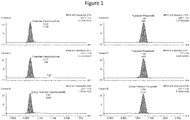
- the chromatograms in Figure 1 show the results of a low level sample: TPP approx 70nmol/L, PLP approx 45nmol/L.
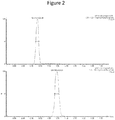
- a good signal to noise ratio was obtained from the low patient samples analyzed. This is due to the low amount of noise seen within all samples analyzed.
- TPP S:N ratio 125 (peak to peak) at 70nmol/L
- PLP S:N ratio 1019 (peak to peak) at 45nmol/L.
Landscapes
- Chemical & Material Sciences (AREA)
- Life Sciences & Earth Sciences (AREA)
- Health & Medical Sciences (AREA)
- Engineering & Computer Science (AREA)
- Molecular Biology (AREA)
- Analytical Chemistry (AREA)
- Immunology (AREA)
- Urology & Nephrology (AREA)
- Biomedical Technology (AREA)
- Hematology (AREA)
- Organic Chemistry (AREA)
- Microbiology (AREA)
- Biotechnology (AREA)
- Physics & Mathematics (AREA)
- Biochemistry (AREA)
- General Health & Medical Sciences (AREA)
- Proteomics, Peptides & Aminoacids (AREA)
- Zoology (AREA)
- Wood Science & Technology (AREA)
- Food Science & Technology (AREA)
- Pathology (AREA)
- General Physics & Mathematics (AREA)
- Medicinal Chemistry (AREA)
- Cell Biology (AREA)
- Chemical Kinetics & Catalysis (AREA)
- Biophysics (AREA)
- Bioinformatics & Cheminformatics (AREA)
- General Engineering & Computer Science (AREA)
- Genetics & Genomics (AREA)
- Other Investigation Or Analysis Of Materials By Electrical Means (AREA)
- Investigating Or Analysing Biological Materials (AREA)
Abstract
Description
- This application claims prority to U.S. Provisonal Application No.
62/268,190, filed December 16, 2015 - The present disclosure generally relates to methods for separating and quantifying Thiamine Pyrophosphate (TPP, Vitamin B1) and Pyridoxal 5-Phosphate (PLP, Vitamin B6) from human whole blood.
- Vitamin B1 (Thiamine) is a water soluble coenzyme that has a role in nervous function, the metabolism of carbohydrates and fatty acids, and is vital for normal growth and development. Thiamine is metabolized by Thiamine Pyrophosphokinase + ATP into its physiologically active form, Thiamine Pyrophosphate (TPP). Vitamin B6 is a group of three vitamins; Pyridoxal, Pyridoxine and Pyridoxamine. The biologically active form of Vitamin B6 is Pyridoxal 5-Phosphate (PLP), a coenzyme that is involved in approximately one hundred enzymatic reactions, including the synthesis and breakdown of amino acids, phospholipids and glycogen.
- The analysis of both PLP and TPP is important to diagnose potential nutritional deficiency which often occurs in elderly people due to malnutrition, in severe alcoholism, and in gastrointestinal compromise due to surgery or disease. This can lead to conditions such as e.g., Beriberi, Wernicke-Korsakoff syndrome, alterations of the skin, neurological disorders, anemias, and increases in homocysteine (hyperhomocysteinemia). PLP and TPP have traditionally been analyzed independently using high performance liquid chromatography (HPLC) consisting of separate HPLC methods where total run times for each method can be up to 20 min long. In addition, pre-column derivatization of the PLP and TPP, such as with fluorescence-based detection, is also usually required. These methods are not realistic in a high-throughput clinical setting because they are laborious, costly, and typically require the use of toxic reagents such as potassium ferricyanide.
- The present invention provides a method of quantifying both native Thiamine Pyrophosphate (TPP) and native Pyridoxal 5-Phosphate (PLP) from a single sample of human whole blood using mass spectrometry, comprising: eluting TPP and PLP at time of less than 20 seconds apart from one another from a liquid chromatography column; generating a mass spectrometry signal during elution of the TPP and PLP; and quantifying the TPP and PLP using one or more calibration standards.
- Preferably, quantifying the TPP and PLP using one or more calibration standards comprises augmenting human whole blood with TPP and/or PLP, and optionally diluting the human whole blood with phosphate buffered saline to generate the one or more calibration standards over a measuring range to which the amount of the TPP and PLP eluted from the column can be determined by mathematical expression.
- Preferably, quantifying the TPP and PLP using one or more calibration standards comprises augmenting TPP and PLP depleted whole blood with TPP and PLP to generate the one or more calibration standards over a measuring range to which the amount of the TPP and PLP eluted from the column can be determined by mathematical expression.
- Preferably, quantifying the TPP and PLP using one or more calibration standards comprises the use of surrogate matrix calibrators prepared from phosphate buffered saline solution optionally containing human serum albumin or bovine serum albumin and optionally augmented with TPP and PLP to generate the one or more calibration standards over a measuring range to which the amount of the TPP and PLP eluted from the column can be determined by mathematical expression.
- Preferably, quantifying the TPP and PLP using one or more calibration standards comprises the use of surrogate analyte calibrators prepared in human whole blood by the addition of a different stable labeled isotope to that of the internal standard for TPP and PLP to generate the one or more calibration standards over a measuring range to which the amount of the TPP and PLP eluted from the column can be determined by mathematical expression.
- Preferably, quantifying the TPP and PLP using one or more calibration standards comprises the use placing one or more calibration standards in the same sample together with the TPP and PLP eluted from the column, to which the amount of the TPP and PLP eluted from the column can be determined by mathematical expression.
- Preferably, the one or more calibrators are provided in the form of a kit.
- Also provided is a method of separating both native Thiamine Pyrophosphate (TPP) and native Pyridoxal 5-Phosphate (PLP) from whole blood comprising eluting TPP and PLP at time of less than 20 seconds apart from one another from a liquid chromatography column.
- Preferably, eluting TPP and PLP at time of less than 17 seconds apart from one another from the liquid chromatography column.
- Preferably, eluting TPP and PLP at time of less than 15 seconds apart from one another from the liquid chromatography column.
- Preferably, eluting TPP and PLP at time of less than 13 seconds apart from one another from the liquid chromatography column.
- Preferably, both the TPP and PLP have a retention time on the liquid chromatography column of 35 seconds or greater.
- Preferably, both the TPP and PLP have a retention time on the liquid chromatography column of 40 seconds or greater.
- Preferably, both the TPP and PLP have a retention time on the liquid chromatography column of 45 seconds or greater.
- Preferably, the total elution time of TPP and PLP does not exceed 3.5 minutes.
- Preferably, the total elution time of TPP and PLP does not exceed 3.0 minutes.
- Preferably, the total elution time of TPP and PLP does not exceed 2.5 minutes.
- Preferably, the total elution time of TPP and PLP does not exceed 2.0 minutes.
- Preferably, the liquid chromatography column is a reverse phase C18 HPLC column.
- Preferably, the liquid chromatography column is a reverse phase C18 HPLC column having a 3.5 µm particle size.
- Preferably, the liquid chromatography column is a reverse phase C18 HPLC column having a 3.5 µm particle size, a greater than 15% carbon load, and a pore size of greater than or equal to 100 Å.
- Preferably, the liquid chromatography column is a reverse phase C18 HPLC column having a 3.5 µm particle size, a 15% to 20% carbon load, and a pore size of 100Å.
- Preferably, the TPP and PLP are eluted from the liquid chromatography column using a mobile phase comprising water (H2O), methanol (MeOH) and formic acid.
- Preferably, the TPP and PLP are eluted from the liquid chromatography column using a mobile phase comprising H2O together with 0.1% formic acid (v/v) and MeOH together with 0.1% formic acid (v/v).
- Preferably, the TPP and PLP are eluted from the liquid chromatography column using H2O together with 0.1% formic acid (v/v) and MeOH together with 0.1% formic acid (v/v), subject to a gradient comprising the following conditions:
Time (min) Flow Rate (mL/min) % Total of H2O together with 0.1% formic acid (v/v) % Total of MeOH together with 0.1% formic acid (v/v) Curve 0 0.60 97 3 Initial 0.60 0.60 70 30 6 1.20 0.80 3 97 11 1.70 0.80 97 3 11 1.90 0.60 97 3 11 - Preferably, including the step of protein precipitating the TPP and PLP from whole blood prior to elution on the liquid chromatography column.
- Preferably, prior to eluting TPP and PLP, the TPP and PLP are mixed with trichloroacetic acid.
- In general, the present disclosure relates to robust, high-throughput, and clinically applicable methods for simultaneously separating and quantifying the biologically active forms of Vitamin B1 (TPP) and Vitamin B6 (PLP) from human whole blood.
- In one aspect, the disclosed methods comprise a single HPLC run from a sample of human whole blood without the need for pre-column derivatization. See e.g.,
Figure 1 . Thus, in one aspect, the methods disclosed herein eliminate the need for multiple HPLC runs and the use of toxic derivatization reagents. - In another aspect, the methods described herein minimize the elution time between the TPP and PLP on the chromatography column (e.g., less than 20 seconds apart from one another). See e.g.,
Figure 1 . Thus, in one aspect, this allows most of the column waste to be diverted from the mass spectrometer (e.g., in the case of quantification), thereby minimizing effects from early eluting interferences, which, as a result, improves detection sensitivity and accuracy as well as method robustness. - In yet another aspect, the methods described herein comprise short run times (e.g., total run times of 3.5 minutes or less, such as 3.2 minutes or less) and optimized retention times for TPP and PLP (e.g., tR of 45 seconds or greater. See e.g.,
Figure 1 . Thus, in one aspect, this significantly reduces the amount of solvents used, lowers cost(s), and allows for a high throughput of samples to be analyzed. - In yet another aspect, the methods described herein implement in certain aspects a mass spectrometer analysis of TPP and PLP where there is a single sample including a first known quantity of TPP and a first known quantity of PLP, and where the first known quantity of TPP, the known quantity of PLP, and the PLP and TPP from simultaneous separation from whole blood are each distinguishable within the single sample by mass spectrometry. Thus, in one aspect, this greatly reduces analysis times and eliminates the inefficiency of conventional calibration that uses multiple calibrators independently. See e.g.,
WO 2012/170549 . -
-
Figure 1 depicts HPLC chromatograms of the simultaneous separation of PLP and TPP using the methods described herein. -
Figure 2 illustrates the signal to noise ratio of TPP and PLP from a low patient sample using the methods described herein. -
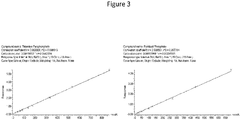
Figure 3 illustrates the calibration lines obtained from whole blood calibrators using the methods described herein. - In a first exemplary embodiment, provided is a method of quantifying both native Thiamine Pyrophosphate (TPP) and native Pyridoxal 5-Phosphate (PLP) from a single sample of human whole blood using mass spectrometry, comprising eluting TPP and PLP at time of less than 20 seconds apart from one another from a liquid chromatography column; generating a mass spectrometry signal during elution of the TPP and PLP; and quantifying the TPP and PLP using one or more calibration standards.
- As used herein, the terms "native Thiamine Pyrophosphate (TPP)" and "native Pyridoxal 5-Phosphate (PLP)" mean TPP and PLP which have not been subjected to or undergone pre-column derivatization. It is to be understood that pre-column derivatization refers to any methods that are employed prior to analysis which chemically modify TPP, PLP, or both. Thus, sample preparation methods which does not involve chemical modification of TPP and PLP (e.g., precipitation, dilution, extraction, filtering, centrifugation, drying, and the like) do not constitute pre-column derivatization methods.
- As used herein, calibration standards, also referred to as calibrators, mean a standard or reference material that contains a known amount of TPP or PLP, or both. These known amounts can then be used to generate a calibration line to which the amount of TPP and/or PLP can be determined from a sample containing an unknown amount. The use of calibration standards to determine unknown concentrations is known in the art. For example, for each calibrator standard the ratio of the peak area of TPP to the peak area of its corresponding internal standard is calculated. The determined response ratio (y) is plotted against the calibrator standard concentration (x) for TPP. A line of best fit (this can be linear, or quadratic) is drawn through all the calibrators and the equation of the line is determined, for example a linear line of best fit equation: y = 0.00619507 * x + 0.0442534. Using the determined equation of the calibration line, the TPP concentration in an unknown sample (x) can be calculated by rearranging the equation: x = (y - 0.0442534) ÷ 0.00619507 and determining the response ratio in the unknown sample (for example y = 0.6). Therefore, x = (0.6 - 0.0442534) ÷ 0.00619507; x = 89.7. Thus, the concentration of the unknown sample is 89.7nmol/L. The concentration of PLP is determined e.g., in the same manner.
- It is to be understood that while not mentioned in detail, other methods for determining the amount of TPP and/or PLP from a sample containing an unknown amount using calibration standards are encompassed. Thus, such determinations are not limited to those that require the use of mathematical equations. For example, unknown amounts can be determined by simply reading the response ratios alone, by reading the graph or calibrations lines, or the like.
- Calibrators used by the methods described herein can be prepared using a number of matrices, e.g., by i) human whole blood augmented with TPP and PLP and/or diluted with 0.01M phosphate buffered saline solution (pH 7.4), which may contain 1% human serum albumin or 1% bovine serum albumin to generate the calibrators over a desired measuring range; by ii) TPP and PLP depleted whole blood augmented with TPP and PLP to generate the calibrators over a desired measuring range; by iii) surrogate matrix calibrators prepared from 0.01M phosphate buffered saline solution (pH 7.4) which may contain 1% human serum albumin or 1% bovine serum albumin and augmented with TPP and PLP to generate the calibrators over a desired measuring range; by iv) surrogate analyte calibrators prepared in human whole blood by the addition of a different stable labeled isotope to that of the internal standard for TPP and PLP to generate a surrogate analyte calibration curve for TPP and PLP over the desired measuring range; or by v) a single sample approach where one or more calibration standards (each of which having a different mass and/or fragmentation pattern) are contained in the same sample as the TPP and PLP and are eluted from the liquid chromatography column. See e.g.,
WO 2012/170549 . - Thus, in a second exemplary embodiment, quantifying the TPP and PLP using one or more calibration standards comprises augmenting human whole blood with TPP and/or PLP, and optionally diluting the human whole blood with phosphate buffered saline to generate the one or more calibration standards over a measuring range to which the amount of the TPP and PLP eluted from the column can be determined by mathematical expression, wherein the remaining features are as described in the first exemplary embodiment. Alternatively, quantifying the TPP and PLP using one or more calibration standards comprises augmenting TPP and PLP depleted whole blood with TPP and PLP to generate the one or more calibration standards over a measuring range to which the amount of the TPP and PLP eluted from the column can be determined by mathematical expression, wherein the remaining features are as described in the first exemplary embodiment. In another alternative, quantifying the TPP and PLP using one or more calibration standards comprises the use of surrogate matrix calibrators prepared from phosphate buffered saline solution optionally containing human serum albumin or bovine serum albumin and optionally augmented with TPP and PLP to generate the one or more calibration standards over a measuring range to which the amount of the TPP and PLP eluted from the column can be determined by mathematical expression, wherein the remaining features are as described in the first exemplary embodiment. In another alternative, quantifying the TPP and PLP using one or more calibration standards comprises the use of surrogate analyte calibrators prepared in human whole blood by the addition of a different stable labeled isotope to that of the internal standard for TPP and PLP to generate the one or more calibration standards over a measuring range to which the amount of the TPP and PLP eluted from the column can be determined by mathematical expression, wherein the remaining features are as described in the first exemplary embodiment. In yet another alternative, quantifying the TPP and PLP using one or more calibration standards comprises the placing one or more calibration standards of different masses and/or fragmentation patters in the same sample following the methods described in
WO 2012/170549 together with the TPP and PLP eluted from the column, to which the amount of the TPP and PLP eluted from the column can be determined by e.g., mathematical expression, wherein the remaining features are as described in the first exemplary embodiment. Each of the calibrators described above may be provided in the form of a kit together with instructions to use said kit. Also, other non-mathematical based determinations for each of the above alternatives are contemplated and include e.g., reading the response ratios alone, reading the graph or calibrations lines, or the like. - Mathematical determinations of the amount of TPP and PLP eluted from the column when compared with the one or more calibrators described herein (such as the in the first and second exemplary embodiment) can be made following the methods described in e.g.,
WO 2012/170549 . Again, other non-mathematical based determinations are contemplated and include e.g., reading the response ratios alone, reading the graph or calibrations lines, or the like. - In an third exemplary embodiment, also provided is a method of separating both native Thiamine Pyrophosphate (TPP) and native Pyridoxal 5-Phosphate (PLP) from whole blood comprising eluting TPP and PLP at time of less than 20 seconds apart from one another from a liquid chromatography column.
- In a fourth exemplary embodiment, the methods described in the first, second, or third exemplary embodiment comprises eluting TPP and PLP at time of less than 17 seconds apart from one another from the liquid chromatography column. Alternatively, the methods described in the first, second, or third exemplary embodiment comprises eluting TPP and PLP at time of less than 15 seconds apart from one another from the liquid chromatography column. In another alternative, the methods described in the first, second, or third exemplary embodiment comprises eluting TPP and PLP at time of less than 13 seconds apart from one another from the liquid chromatography column.
- In a fifth exemplary embodiment, both the TPP and PLP have a retention time on the liquid chromatography column of 35 seconds or greater, wherein the remaining features are as described in the first, second, third, or fourth exemplary embodiment. Alternatively, both the TPP and PLP have a retention time on the liquid chromatography column of 40 seconds or greater, wherein the remaining features are as described in the first, second, third, or fourth exemplary embodiment. In another alternative, both the TPP and PLP have a retention time on the liquid chromatography column of 45 seconds or greater, wherein the remaining features are as described in the first, second, third, or fourth exemplary embodiment.
- In a sixth exemplary embodiment, the total elution time of TPP and PLP does not exceed 3.5 minutes, wherein the remaining features are as described in the first, second, third, fourth, or fifth exemplary embodiment. Alternatively, the total elution time of TPP and PLP does not exceed 3.2 minutes, wherein the remaining features are as described in the first, second, third, fourth, or fifth exemplary embodiment. In another alternative, the total elution time of TPP and PLP does not exceed 3.0 minutes, wherein the remaining features are as described in the first, second, third, fourth, or fifth exemplary embodiment. In another alternative, the total elution time of TPP and PLP does not exceed 2.5 minutes, wherein the remaining features are as described in the first, second, third, fourth, or fifth exemplary embodiment. In yet another alternative, the total elution time of TPP and PLP does not exceed 2.0 minutes, wherein the remaining features are as described in the first, second, third, fourth, or fifth exemplary embodiment.
- In a seventh exemplary embodiment, the liquid chromatography column is a reverse phase C18 HPLC column, wherein the remaining features are as described in the first, second, third, fourth, fifth, or sixth embodiment.
- In an eighth exemplary embodiment, the liquid chromatography column is a reverse phase C18 HPLC column having a 3.5 µm particle size, wherein the remaining features are as described in the first, second, third, fourth, fifth, sixth, or seventh exemplary embodiment.
- In a ninth exemplary embodiment, the liquid chromatography column is a reverse phase C18 HPLC column having a 3.5 µm particle size, a greater than 15% carbon load, and a pore size of greater than or equal to 100 Å, wherein the remaining features are as described in the first, second, third, fourth, fifth, sixth, seventh, eighth, or ninth exemplary embodiment.
- In a tenth exemplary embodiment, the liquid chromatography column is a reverse phase C18 HPLC column having a 3.5 µm particle size, a 15% to 20% carbon load, and a pore size of 100Å, wherein the remaining features are as described in the first, second, third, fourth, fifth, sixth, seventh, eighth, or ninth exemplary embodiment.
- In an eleventh exemplary embodiment, the TPP and PLP are eluted from the liquid chromatography column using a mobile phase comprising water (H2O), methanol (MeOH) and formic acid, wherein the remaining features are as described in the first, second, third, fourth, fifth, sixth, seventh, eighth, ninth, or tenth embodiment.
- In a twelfth exemplary embodiment, the TPP and PLP are eluted from the liquid chromatography column using a mobile phase comprising H2O together with 0.1% formic acid (v/v) and MeOH together with 0.1% formic acid (v/v), wherein the remaining features are as described in the first, second, third, fourth, fifth, sixth, seventh, eighth, ninth, tenth, or eleventh exemplary embodiment.
- In a thirteenth exemplary embodiment, the TPP and PLP are eluted from the liquid chromatography column using H2O together with 0.1% formic acid (v/v) and MeOH together with 0.1% formic acid (v/v), subject to a gradient comprising the following conditions:
Time (min) Flow Rate (mL/min) % Total of H2O together with 0.1% formic acid (v/v) % Total of MeOH together with 0.1% formic acid (v/v) Curve 0 0.60 97 3 Initial 0.60 0.60 70 30 6 1.20 0.80 3 97 11 1.70 0.80 97 3 11 1.90 0.60 97 3 11 - In a fourteenth exemplary embodiment, the method described herein such as those described in the first, second, third, fourth, fifth, sixth, seventh, eighth, ninth, tenth, eleventh, twelfth, or thirteenth exemplary embodiment, further comprises the step of protein precipitating the TPP and PLP from whole blood prior to elution on the liquid chromatography column.
-
- ACQUITY UPLC I-Class Binary Solvent Manager
- ACQUITY UPLC I-Class Sample Manager with Flow Through Needle
- ACQUITY UPLC I-Class Active Column Heater
- Xevo TQD
- The LC required approximately 100 injections of a prepared whole blood sample to condition the column. Peaks were not visible in the first 5-10 samples for TPP or PLP and then their areas increased over the course of the injections. This was accommodated for when a new column was placed onto the system.
- Mobile Phase A: H2O + 0.1% Formic Acid
- Mobile Phase B: MeOH + 0.1% Formic Acid
- Purge Solvent: H2O + 0.1% Formic Acid
- Seal Wash: 80:20 H2O:MeOH
- Wash Solvent: 80:20 H2O:MeOH
- Column: Symmetry C18, 2.1 x 100mm, 3.5µm (P/N WAT058965)
-
- Needle volume: 30µL (Optional extension loop)
- Injection volume: 20µL (Or range of 5 to 50µL is also acceptable dependent upon mass spectrometer used)
- Sample syringe volume: 100µL (Optional larger volume syringe)
- Sample temperature: 10°C
- Runtime: 2.0min
- Column temperature: 30°C ± 2°C alarm
- Load Ahead: Disabled
- Needle placement: 2mm (when transferred or 10mm when injecting straight off pellet)
-
- Approximate (optimized upon tuning)
- Capillary: 1.0kV (optimized upon tuning)
- Source temperature: 150°C (A range of 120 to 170°C is also acceptable)
- Desolvation temperature: 450°C (A range of 300 to 600°C is also acceptable)
- Desolvation gas flow: 1000L/Hr
- Extractor: 3V
- RF lens: 2.5V
- Cone gas flow: 10L/Hr
- Inter-Scan Delay
- MS inter-scan delay: 0.02sec
- Polarity/mode switch inter-scan delay: 0.02sec
- Inter-channel delay: 0.01sec
-
Approximate (optimized upon tuning) Compound Precursor (m/z) Product (m/z) Cone (V) Collision (kV) PLP (Quan) 248.0 150.0 20* 14 PLP (Qual) 248.0 94.0 20* 28 [2H3]-PLP 251.0 153.0 20* 14 TPP (Quan) 425.0 122.0 30 22 TPP (Qual) 425.0 304.0 30 16 [2H3]-TPP 428.0 125.0 30 22 *Cone Voltage not optimized due to an interfering compound at higher cone voltages. Value set to 20V - The quantifier ions typically give better peak response, however other qualifier ions may be selected if deemed more suitable.
- Dwell time for all compounds: 0.025sec (Auto Dwell not selected)
- The solvent delay and divert settings allow for the first 0.75min of the run and the column wash to be diverted to waste. Given the higher flow rate of 0.6mL/min, this allows for a good portion of the early eluting interferences and those eluting in the column wash to not enter the MS system. After the column wash, the mobile phase flow is sent back into the MS system to wash any TCA that may still be present in the MS system.
Time (min) Event Action 0.00 Flow State Waste 0.00 Solvent Delay Begin 0.75 Solvent Delay End 0.75 Flow State LC 1.35 Flow State Waste 1.35 Solvent Delay Begin 1.75 Flow State LC - 50uL of internal standard working solution (approx 200ng/mL (470nmol/L) of [2H3]-Thiamine Pyrophosphate & 100ng/mL (400nmol/L) of [2H3]-Pyridoxal 5-Phosphate) was aliquoted into a 2mL Square 96-Well Plate.
- While mixing the plate, 50µL of whole blood sample was added and mixing was left for at least 30min*. In one alternative, while mixing the plate, 50µL of whole blood sample was added and mixing was left for at least 30seconds.
- While continuing to mix the plate, 400µL of 200g/L (20% (w/v)) of trichloroacetic acid(aq) was added and mixing was left for at least lhr*. Alternative amounts of trichloroacetic acid can be added during sample preparation and include e.g., at least 5%, at least 10%, at least 15%, at least 20%, at least 25% (w/v), or higher.
- The use of trichloroacetic acid in the sample preparation was found to negate the need for ion pairing reagents to be used in the mobile phase of the LC system. This effectively removes the risk of contamination to the LC-MS/MS system when using such additives. In addition, when injecting a minimum of 10µL of a final diluent concentration of ≥50g/L (≥5% (w/v)) of trichloroacetic acid, equating to an on column concentration of ≥0.5mg, the negatively charged portion of the acid may act by binding to the positively charged sites in the column and system flow path (Fe+ and silanol groups). As a result, there were fewer charged sites remaining in the analytical system flow path and therefore the negatively charged phosphate groups present on thiamine pyrophosphate and pyridoxal 5-phosphate do not interact, preventing any unwanted secondary interactions during chromatographic separation.
- Once mixing was complete, the sample was centrifuged at 5,000g for 5min at 4°C.
- The samples were transferred into a 1mL square collection plate for injection on the UPLC/MS/MS (Needle placement 2mm) or were injected directly off the pellet (Needle placement 10mm). In one alternative, the supernatant from the mixed sample was transferred into a
1mL round 96 well collection plate for injection on the UPLC/MS/MS. - *The mixing times were not optimized after the sample was added to the internal standard and after the trichloroacetic acid was added for the current method. A time course experiment could be performed to possibly reduce the mixing times.
- The chromatograms in
Figure 1 show the results of a low level sample: TPP approx 70nmol/L, PLP approx 45nmol/L. As shown byFigure 2 , a good signal to noise ratio was obtained from the low patient samples analyzed. This is due to the low amount of noise seen within all samples analyzed. TPP S:N ratio = 125 (peak to peak) at 70nmol/L PLP S:N ratio = 1019 (peak to peak) at 45nmol/L. - Calibration lines are shown in
Figure 3 . Good r2 values (linearity) were obtained from whole blood calibrators (also diluted in PBS/BSA to obtain concentrations lower than approx 100nmol/L). The following calibration ranges were used in the 5 day imprecision run. TPP: 22.5 - 867.7nmol/L. PLP: 15.1 - 691.3nmol/L. In some instances, the gradient of the whole blood PLP calibration line reduced over the course of the 5 day imprecision testing. Without wishing to be bound by theory, it is thought that this could be due to a stability issue, either with freeze/thaw cycling or by storing the samples at ambient temperature while performing the sample preparation. PBS/BSA calibrators were also run alongside during testing which showed a more consistent gradient, therefore these were used during the processing of the imprecision data for PLP. - Samples from 4 different individuals to best span the concentration range were selected. 5 preparations of each individual were prepared and run on each of 5 days to assess imprecision. Good total run imprecision and repeatability were obtained for TPP and PLP. Imprecision data of ≤5.3% and 9.6% respectively, for all patient concentration levels, were observed.
TPP - Whole Blood Calibrators Sample Mean Repeatability Total (nmol/L) (%) (%) Patient A 73.3 5.3 5.3 Patient B 85.3 4.1 4.9 Patient C 114.4 4.5 4.6 Patient D 206.1 4.0 5.2 PLP - PBS/BSA Calibrators Sample Mean Repeatability Total (nmol/L) (%) (%) Patient A 44.5 9.3 9.6 Patient B 87.2 6.1 7.0 Patient C 140.5 4.1 4.1 Patient D 307.8 5.6 6.3 - The contents of all references (including literature references, issued patents, published patent applications, and co-pending patent applications) cited throughout this application are hereby expressly incorporated herein in their entireties by reference. Unless otherwise defined, all technical and scientific terms used herein are accorded the meaning commonly known to one with ordinary skill in the art.
- When used in this specification and claims, the terms "comprises" and "comprising" and variations thereof mean that the specified features, steps or integers are included. The terms are not to be interpreted to exclude the presence of other features, steps or components.
- The features disclosed in the foregoing description, or the following claims, or the accompanying drawings, expressed in their specific forms or in terms of a means for performing the disclosed function, or a method or process for attaining the disclosed result, as appropriate, may, separately, or in any combination of such features, be utilised for realising the invention in diverse forms thereof.
| Time (min) | Flow Rate (mL/min) | %A | %B | Curve |
| 0.00 | 0.60 | 97 | 3 | Initial |
| 0.60 | 0.60 | 70 | 30 | 6 |
| 1.20 | 0.80 | 3 | 97 | 11 |
| 1.70 | 0.80 | 97 | 3 | 11 |
| 1.90 | 0.60 | 97 | 3 | 11 |
| Inlet runtime: 2.0min | Low Pressure Limit: 1000psi |
| Seal wash: 1.5min | High Pressure Limit: 18000psi |
Claims (15)
- A method of quantifying both native Thiamine Pyrophosphate (TPP) and native Pyridoxal 5-Phosphate (PLP) from a single sample of human whole blood using mass spectrometry, comprising:eluting TPP and PLP at time of less than 20 seconds apart from one another from a liquid chromatography column;generating a mass spectrometry signal during elution of the TPP and PLP; andquantifying the TPP and PLP using one or more calibration standards.
- The method of Claim 1, wherein quantifying the TPP and PLP using one or more calibration standards comprises augmenting human whole blood with TPP and/or PLP, and optionally diluting the human whole blood with phosphate buffered saline to generate the one or more calibration standards over a measuring range to which the amount of the TPP and PLP eluted from the column can be determined by mathematical expression.
- The method of Claim 1, wherein quantifying the TPP and PLP using one or more calibration standards comprises augmenting TPP and PLP depleted whole blood with TPP and PLP to generate the one or more calibration standards over a measuring range to which the amount of the TPP and PLP eluted from the column can be determined by mathematical expression.
- The method of Claim 1, wherein quantifying the TPP and PLP using one or more calibration standards comprises the use of surrogate matrix calibrators prepared from phosphate buffered saline solution optionally containing human serum albumin or bovine serum albumin and optionally augmented with TPP and PLP to generate the one or more calibration standards over a measuring range to which the amount of the TPP and PLP eluted from the column can be determined by mathematical expression.
- The method of Claim 1, wherein quantifying the TPP and PLP using one or more calibration standards comprises the use of surrogate analyte calibrators prepared in human whole blood by the addition of a different stable labeled isotope to that of the internal standard for TPP and PLP to generate the one or more calibration standards over a measuring range to which the amount of the TPP and PLP eluted from the column can be determined by mathematical expression.
- The method of Claim 1, wherein quantifying the TPP and PLP using one or more calibration standards comprises the use placing one or more calibration standards in the same sample together with the TPP and PLP eluted from the column, to which the amount of the TPP and PLP eluted from the column can be determined by mathematical expression.
- The method of any one of Claims 1 to 6, wherein the one or more calibrators are provided in the form of a kit.
- A method of separating both native Thiamine Pyrophosphate (TPP) and native Pyridoxal 5-Phosphate (PLP) from whole blood comprising eluting TPP and PLP at time of less than 20 seconds apart from one another from a liquid chromatography column.
- The method of any one of Claims 1 to 8, comprising eluting TPP and PLP at time of less than 17 seconds apart from one another from the liquid chromatography column, preferably less than 15 seconds apart from one another from the liquid chromatography column, preferably less than 13 seconds apart from one another from the liquid chromatography column.
- The method of any one of Claims 1 to 9, wherein both the TPP and PLP have a retention time on the liquid chromatography column of 35 seconds or greater, preferably 40 seconds or greater, preferably 45 seconds or greater.
- The method of any one of Claims 1 to 10, wherein the total elution time of TPP and PLP does not exceed 3.5 minutes, preferably wherein the total elution time of TPP and PLP does not exceed 3.0 minutes, preferably wherein the total elution time of TPP and PLP does not exceed 2.5 minutes, preferably wherein the total elution time of TPP and PLP does not exceed 2.0 minutes.
- The method of any one of Claims 1 to 11, wherein the liquid chromatography column is a reverse phase C18 HPLC column, preferably having a 3.5 µm particle size, or wherein the liquid chromatography column is a reverse phase C18 HPLC column having a 3.5 µm particle size, a greater than 15% carbon load, preferably a 15% to 20% carbon load, and a pore size of greater than or equal to 100 Å.
- The method of any one of Claims 1 to 12, wherein the TPP and PLP are eluted from the liquid chromatography column using a mobile phase comprising water (H2O), methanol (MeOH) and formic acid, or wherein the TPP and PLP are eluted from the liquid chromatography column using a mobile phase comprising H2O together with 0.1% formic acid (v/v) and MeOH together with 0.1% formic acid (v/v), or wherein the TPP and PLP are eluted from the liquid chromatography column using H2O together with 0.1% formic acid (v/v) and MeOH together with 0.1% formic acid (v/v), subject to a gradient comprising the following conditions:
Time (min) Flow Rate (mL/min) % Total of H2O together with 0.1% formic acid (v/v) % Total of MeOH together with 0.1% formic acid (v/v) Curve 0 0.60 97 3 Initial 0.60 0.60 70 30 6 1.20 0.80 3 97 11 1.70 0.80 97 3 11 1.90 0.60 97 3 11 - The method of any one of Claims 1 to 13, further comprising the step of protein precipitating the TPP and PLP from whole blood prior to elution on the liquid chromatography column.
- The method of any one of Claims 1 to 14, wherein prior to eluting TPP and PLP, the TPP and PLP are mixed with trichloroacetic acid.
Applications Claiming Priority (1)
| Application Number | Priority Date | Filing Date | Title |
|---|---|---|---|
| US201562268190P | 2015-12-16 | 2015-12-16 |
Publications (2)
| Publication Number | Publication Date |
|---|---|
| EP3182131A1 true EP3182131A1 (en) | 2017-06-21 |
| EP3182131B1 EP3182131B1 (en) | 2019-09-18 |
Family
ID=57714392
Family Applications (1)
| Application Number | Title | Priority Date | Filing Date |
|---|---|---|---|
| EP16204763.3A Active EP3182131B1 (en) | 2015-12-16 | 2016-12-16 | Separating and quantifying thiamine pyrophosphate and pyridoxal 5-phosphate in human whole blood |
Country Status (2)
| Country | Link |
|---|---|
| US (1) | US20170184616A1 (en) |
| EP (1) | EP3182131B1 (en) |
Families Citing this family (1)
| Publication number | Priority date | Publication date | Assignee | Title |
|---|---|---|---|---|
| CN116381096A (en) * | 2023-04-17 | 2023-07-04 | 大连博源医学检验实验室有限公司 | A method for detecting the concentration of vitamin B1 active metabolite thiamine diphosphate in whole blood |
Citations (3)
| Publication number | Priority date | Publication date | Assignee | Title |
|---|---|---|---|---|
| US20090203145A1 (en) * | 2008-02-07 | 2009-08-13 | Min Huang | Methods for analysis of vitamins |
| WO2012170549A1 (en) | 2011-06-06 | 2012-12-13 | Waters Technologies Corporation | Compositions, methods, and kits for quantifying target analytes in a sample |
| WO2013010553A1 (en) * | 2011-07-18 | 2013-01-24 | Tallinn University Of Technology | Method and analytical kit for simultaneous quantification of b-complex vitamin content in food |
-
2016
- 2016-12-16 US US15/381,638 patent/US20170184616A1/en not_active Abandoned
- 2016-12-16 EP EP16204763.3A patent/EP3182131B1/en active Active
Patent Citations (3)
| Publication number | Priority date | Publication date | Assignee | Title |
|---|---|---|---|---|
| US20090203145A1 (en) * | 2008-02-07 | 2009-08-13 | Min Huang | Methods for analysis of vitamins |
| WO2012170549A1 (en) | 2011-06-06 | 2012-12-13 | Waters Technologies Corporation | Compositions, methods, and kits for quantifying target analytes in a sample |
| WO2013010553A1 (en) * | 2011-07-18 | 2013-01-24 | Tallinn University Of Technology | Method and analytical kit for simultaneous quantification of b-complex vitamin content in food |
Non-Patent Citations (1)
| Title |
|---|
| JOHAN PUTS ET AL: "Simultaneous Determination of Underivatized Vitamin B1 and B6 in Whole Blood by Reversed Phase Ultra High Performance Liquid Chromatography Tandem Mass Spectrometry", PLOS ONE, vol. 10, no. 7, 2 July 2015 (2015-07-02), pages e0132018, XP055354332, DOI: 10.1371/journal.pone.0132018 * |
Also Published As
| Publication number | Publication date |
|---|---|
| EP3182131B1 (en) | 2019-09-18 |
| US20170184616A1 (en) | 2017-06-29 |
Similar Documents
| Publication | Publication Date | Title |
|---|---|---|
| US20230324414A1 (en) | Quantitation of insulin-like growth factor-i and insulin-like growth factor-ii with high-resolution mass spectrometry | |
| Taylor | Matrix effects: the Achilles heel of quantitative high-performance liquid chromatography–electrospray–tandem mass spectrometry | |
| Thomas et al. | Determination of human insulin and its analogues in human blood using liquid chromatography coupled to ion mobility mass spectrometry (LC‐IM‐MS) | |
| EP2633324B1 (en) | Lc-ms configuration for purification and detection of analytes having a broad range of hydrophobicities | |
| US20220349897A1 (en) | Amyloid beta detection by mass spectrometry | |
| Said et al. | Determination of four immunosuppressive drugs in whole blood using MEPS and LC–MS/MS allowing automated sample work-up and analysis | |
| Held et al. | Quantitative urine amino acid analysis using liquid chromatography tandem mass spectrometry and aTRAQ® reagents | |
| Periat et al. | Systematic evaluation of matrix effects in hydrophilic interaction chromatography versus reversed phase liquid chromatography coupled to mass spectrometry | |
| Gong et al. | Post-pellet-digestion precipitation and solid phase extraction: a practical and efficient workflow to extract surrogate peptides for ultra-high performance liquid chromatography–tandem mass spectrometry bioanalysis of a therapeutic antibody in the low ng/mL range | |
| Marchi et al. | Evaluation of the influence of protein precipitation prior to on-line SPE–LC–API/MS procedures using multivariate data analysis | |
| Vanhee et al. | A simple dilute and shoot methodology for the identification and quantification of illegal insulin | |
| Fan et al. | Simultaneous separation and determination of vancomycin and its crystalline degradation products in human serum by ultra high performance liquid chromatography tandem mass spectrometry method and its application in therapeutic drug monitoring | |
| Ji et al. | Determination of gabapentin in human plasma using hydrophilic interaction liquid chromatography with tandem mass spectrometry | |
| Mazzarino et al. | Detection of recombinant insulins in human urine by liquid chromatography–electrospray ionization tandem mass spectrometry after immunoaffinity purification based on monolithic microcolumns | |
| JP2020530904A (en) | Detection and quantification of guanidinoacetic acid, creatine, and creatinine by mass spectrometry | |
| Zhang et al. | Diluting modulation-based two dimensional-liquid chromatography coupled with mass spectrometry for simultaneously determining multiclass prohibited substances in cosmetics | |
| EP3182131B1 (en) | Separating and quantifying thiamine pyrophosphate and pyridoxal 5-phosphate in human whole blood | |
| Yeung et al. | Mass spectrometry quantitation of immunosuppressive drugs in clinical specimens using online solid-phase extraction and accurate-mass full scan-single ion monitoring | |
| Sistik et al. | First Dimension Trap‐and‐Elute Combined with Second Dimension Reversed‐Phase Liquid Chromatography Separation Using a Two‐Dimensional‐Liquid Chromatography‐Tandem Mass Spectrometry System for Sensitive Quantification of Human Insulin and Six Insulin Analogs in Plasma: Improved Chromatographic Resolution and Stability Testing | |
| WO2007055362A1 (en) | Method and apparatus for detecting or determining polypeptide | |
| CN112326816A (en) | Liquid chromatography-mass spectrometry method for quantitatively detecting disuzumab in serum | |
| Andrieux et al. | Pantothenic acid (Vitamin B5) in fortified foods: comparison of a novel ultra-performance liquid chromatography-tandem mass spectrometry method and a microbiological assay (AOAC Official Method SM 992.07) | |
| Apostolou et al. | Comparison of hydrophilic interaction and reversed‐phase liquid chromatography coupled with tandem mass spectrometric detection for the determination of three pharmaceuticals in human plasma | |
| Arrizabalaga-Larrañaga et al. | Towards high throughput analysis using 96-well plate solid phase extraction to determine sedatives and β-blocker residues in food control monitoring | |
| EP3911959B1 (en) | High speed sample workflow for lc-ms based hba1c measurement |
Legal Events
| Date | Code | Title | Description |
|---|---|---|---|
| PUAI | Public reference made under article 153(3) epc to a published international application that has entered the european phase |
Free format text: ORIGINAL CODE: 0009012 |
|
| STAA | Information on the status of an ep patent application or granted ep patent |
Free format text: STATUS: THE APPLICATION HAS BEEN PUBLISHED |
|
| AK | Designated contracting states |
Kind code of ref document: A1 Designated state(s): AL AT BE BG CH CY CZ DE DK EE ES FI FR GB GR HR HU IE IS IT LI LT LU LV MC MK MT NL NO PL PT RO RS SE SI SK SM TR |
|
| AX | Request for extension of the european patent |
Extension state: BA ME |
|
| STAA | Information on the status of an ep patent application or granted ep patent |
Free format text: STATUS: REQUEST FOR EXAMINATION WAS MADE |
|
| 17P | Request for examination filed |
Effective date: 20171212 |
|
| RBV | Designated contracting states (corrected) |
Designated state(s): AL AT BE BG CH CY CZ DE DK EE ES FI FR GB GR HR HU IE IS IT LI LT LU LV MC MK MT NL NO PL PT RO RS SE SI SK SM TR |
|
| STAA | Information on the status of an ep patent application or granted ep patent |
Free format text: STATUS: EXAMINATION IS IN PROGRESS |
|
| 17Q | First examination report despatched |
Effective date: 20180409 |
|
| GRAJ | Information related to disapproval of communication of intention to grant by the applicant or resumption of examination proceedings by the epo deleted |
Free format text: ORIGINAL CODE: EPIDOSDIGR1 |
|
| STAA | Information on the status of an ep patent application or granted ep patent |
Free format text: STATUS: GRANT OF PATENT IS INTENDED |
|
| GRAP | Despatch of communication of intention to grant a patent |
Free format text: ORIGINAL CODE: EPIDOSNIGR1 |
|
| INTG | Intention to grant announced |
Effective date: 20190408 |
|
| RIN1 | Information on inventor provided before grant (corrected) |
Inventor name: WARDLE, ROBERT M. Inventor name: CALTON, LISA JANE |
|
| GRAS | Grant fee paid |
Free format text: ORIGINAL CODE: EPIDOSNIGR3 |
|
| GRAA | (expected) grant |
Free format text: ORIGINAL CODE: 0009210 |
|
| STAA | Information on the status of an ep patent application or granted ep patent |
Free format text: STATUS: THE PATENT HAS BEEN GRANTED |
|
| AK | Designated contracting states |
Kind code of ref document: B1 Designated state(s): AL AT BE BG CH CY CZ DE DK EE ES FI FR GB GR HR HU IE IS IT LI LT LU LV MC MK MT NL NO PL PT RO RS SE SI SK SM TR |
|
| REG | Reference to a national code |
Ref country code: GB Ref legal event code: FG4D |
|
| REG | Reference to a national code |
Ref country code: CH Ref legal event code: EP |
|
| REG | Reference to a national code |
Ref country code: DE Ref legal event code: R096 Ref document number: 602016020765 Country of ref document: DE |
|
| REG | Reference to a national code |
Ref country code: AT Ref legal event code: REF Ref document number: 1181953 Country of ref document: AT Kind code of ref document: T Effective date: 20191015 |
|
| REG | Reference to a national code |
Ref country code: IE Ref legal event code: FG4D |
|
| REG | Reference to a national code |
Ref country code: NL Ref legal event code: MP Effective date: 20190918 |
|
| PG25 | Lapsed in a contracting state [announced via postgrant information from national office to epo] |
Ref country code: NO Free format text: LAPSE BECAUSE OF FAILURE TO SUBMIT A TRANSLATION OF THE DESCRIPTION OR TO PAY THE FEE WITHIN THE PRESCRIBED TIME-LIMIT Effective date: 20191218 Ref country code: BG Free format text: LAPSE BECAUSE OF FAILURE TO SUBMIT A TRANSLATION OF THE DESCRIPTION OR TO PAY THE FEE WITHIN THE PRESCRIBED TIME-LIMIT Effective date: 20191218 Ref country code: SE Free format text: LAPSE BECAUSE OF FAILURE TO SUBMIT A TRANSLATION OF THE DESCRIPTION OR TO PAY THE FEE WITHIN THE PRESCRIBED TIME-LIMIT Effective date: 20190918 Ref country code: FI Free format text: LAPSE BECAUSE OF FAILURE TO SUBMIT A TRANSLATION OF THE DESCRIPTION OR TO PAY THE FEE WITHIN THE PRESCRIBED TIME-LIMIT Effective date: 20190918 Ref country code: HR Free format text: LAPSE BECAUSE OF FAILURE TO SUBMIT A TRANSLATION OF THE DESCRIPTION OR TO PAY THE FEE WITHIN THE PRESCRIBED TIME-LIMIT Effective date: 20190918 Ref country code: LT Free format text: LAPSE BECAUSE OF FAILURE TO SUBMIT A TRANSLATION OF THE DESCRIPTION OR TO PAY THE FEE WITHIN THE PRESCRIBED TIME-LIMIT Effective date: 20190918 |
|
| REG | Reference to a national code |
Ref country code: LT Ref legal event code: MG4D |
|
| PG25 | Lapsed in a contracting state [announced via postgrant information from national office to epo] |
Ref country code: GR Free format text: LAPSE BECAUSE OF FAILURE TO SUBMIT A TRANSLATION OF THE DESCRIPTION OR TO PAY THE FEE WITHIN THE PRESCRIBED TIME-LIMIT Effective date: 20191219 Ref country code: RS Free format text: LAPSE BECAUSE OF FAILURE TO SUBMIT A TRANSLATION OF THE DESCRIPTION OR TO PAY THE FEE WITHIN THE PRESCRIBED TIME-LIMIT Effective date: 20190918 Ref country code: LV Free format text: LAPSE BECAUSE OF FAILURE TO SUBMIT A TRANSLATION OF THE DESCRIPTION OR TO PAY THE FEE WITHIN THE PRESCRIBED TIME-LIMIT Effective date: 20190918 Ref country code: AL Free format text: LAPSE BECAUSE OF FAILURE TO SUBMIT A TRANSLATION OF THE DESCRIPTION OR TO PAY THE FEE WITHIN THE PRESCRIBED TIME-LIMIT Effective date: 20190918 |
|
| REG | Reference to a national code |
Ref country code: AT Ref legal event code: MK05 Ref document number: 1181953 Country of ref document: AT Kind code of ref document: T Effective date: 20190918 |
|
| PG25 | Lapsed in a contracting state [announced via postgrant information from national office to epo] |
Ref country code: ES Free format text: LAPSE BECAUSE OF FAILURE TO SUBMIT A TRANSLATION OF THE DESCRIPTION OR TO PAY THE FEE WITHIN THE PRESCRIBED TIME-LIMIT Effective date: 20190918 Ref country code: EE Free format text: LAPSE BECAUSE OF FAILURE TO SUBMIT A TRANSLATION OF THE DESCRIPTION OR TO PAY THE FEE WITHIN THE PRESCRIBED TIME-LIMIT Effective date: 20190918 Ref country code: PL Free format text: LAPSE BECAUSE OF FAILURE TO SUBMIT A TRANSLATION OF THE DESCRIPTION OR TO PAY THE FEE WITHIN THE PRESCRIBED TIME-LIMIT Effective date: 20190918 Ref country code: PT Free format text: LAPSE BECAUSE OF FAILURE TO SUBMIT A TRANSLATION OF THE DESCRIPTION OR TO PAY THE FEE WITHIN THE PRESCRIBED TIME-LIMIT Effective date: 20200120 Ref country code: NL Free format text: LAPSE BECAUSE OF FAILURE TO SUBMIT A TRANSLATION OF THE DESCRIPTION OR TO PAY THE FEE WITHIN THE PRESCRIBED TIME-LIMIT Effective date: 20190918 Ref country code: IT Free format text: LAPSE BECAUSE OF FAILURE TO SUBMIT A TRANSLATION OF THE DESCRIPTION OR TO PAY THE FEE WITHIN THE PRESCRIBED TIME-LIMIT Effective date: 20190918 Ref country code: RO Free format text: LAPSE BECAUSE OF FAILURE TO SUBMIT A TRANSLATION OF THE DESCRIPTION OR TO PAY THE FEE WITHIN THE PRESCRIBED TIME-LIMIT Effective date: 20190918 Ref country code: AT Free format text: LAPSE BECAUSE OF FAILURE TO SUBMIT A TRANSLATION OF THE DESCRIPTION OR TO PAY THE FEE WITHIN THE PRESCRIBED TIME-LIMIT Effective date: 20190918 |
|
| PG25 | Lapsed in a contracting state [announced via postgrant information from national office to epo] |
Ref country code: IS Free format text: LAPSE BECAUSE OF FAILURE TO SUBMIT A TRANSLATION OF THE DESCRIPTION OR TO PAY THE FEE WITHIN THE PRESCRIBED TIME-LIMIT Effective date: 20200224 Ref country code: CZ Free format text: LAPSE BECAUSE OF FAILURE TO SUBMIT A TRANSLATION OF THE DESCRIPTION OR TO PAY THE FEE WITHIN THE PRESCRIBED TIME-LIMIT Effective date: 20190918 Ref country code: SM Free format text: LAPSE BECAUSE OF FAILURE TO SUBMIT A TRANSLATION OF THE DESCRIPTION OR TO PAY THE FEE WITHIN THE PRESCRIBED TIME-LIMIT Effective date: 20190918 Ref country code: SK Free format text: LAPSE BECAUSE OF FAILURE TO SUBMIT A TRANSLATION OF THE DESCRIPTION OR TO PAY THE FEE WITHIN THE PRESCRIBED TIME-LIMIT Effective date: 20190918 |
|
| REG | Reference to a national code |
Ref country code: DE Ref legal event code: R097 Ref document number: 602016020765 Country of ref document: DE |
|
| PLBE | No opposition filed within time limit |
Free format text: ORIGINAL CODE: 0009261 |
|
| STAA | Information on the status of an ep patent application or granted ep patent |
Free format text: STATUS: NO OPPOSITION FILED WITHIN TIME LIMIT |
|
| PG2D | Information on lapse in contracting state deleted |
Ref country code: IS |
|
| PG25 | Lapsed in a contracting state [announced via postgrant information from national office to epo] |
Ref country code: DK Free format text: LAPSE BECAUSE OF FAILURE TO SUBMIT A TRANSLATION OF THE DESCRIPTION OR TO PAY THE FEE WITHIN THE PRESCRIBED TIME-LIMIT Effective date: 20190918 Ref country code: IS Free format text: LAPSE BECAUSE OF FAILURE TO SUBMIT A TRANSLATION OF THE DESCRIPTION OR TO PAY THE FEE WITHIN THE PRESCRIBED TIME-LIMIT Effective date: 20200119 |
|
| REG | Reference to a national code |
Ref country code: CH Ref legal event code: PL |
|
| 26N | No opposition filed |
Effective date: 20200619 |
|
| REG | Reference to a national code |
Ref country code: BE Ref legal event code: MM Effective date: 20191231 |
|
| PG25 | Lapsed in a contracting state [announced via postgrant information from national office to epo] |
Ref country code: SI Free format text: LAPSE BECAUSE OF FAILURE TO SUBMIT A TRANSLATION OF THE DESCRIPTION OR TO PAY THE FEE WITHIN THE PRESCRIBED TIME-LIMIT Effective date: 20190918 Ref country code: MC Free format text: LAPSE BECAUSE OF FAILURE TO SUBMIT A TRANSLATION OF THE DESCRIPTION OR TO PAY THE FEE WITHIN THE PRESCRIBED TIME-LIMIT Effective date: 20190918 |
|
| PG25 | Lapsed in a contracting state [announced via postgrant information from national office to epo] |
Ref country code: IE Free format text: LAPSE BECAUSE OF NON-PAYMENT OF DUE FEES Effective date: 20191216 Ref country code: LU Free format text: LAPSE BECAUSE OF NON-PAYMENT OF DUE FEES Effective date: 20191216 Ref country code: FR Free format text: LAPSE BECAUSE OF NON-PAYMENT OF DUE FEES Effective date: 20191231 |
|
| PG25 | Lapsed in a contracting state [announced via postgrant information from national office to epo] |
Ref country code: BE Free format text: LAPSE BECAUSE OF NON-PAYMENT OF DUE FEES Effective date: 20191231 Ref country code: CH Free format text: LAPSE BECAUSE OF NON-PAYMENT OF DUE FEES Effective date: 20191231 Ref country code: LI Free format text: LAPSE BECAUSE OF NON-PAYMENT OF DUE FEES Effective date: 20191231 |
|
| PG25 | Lapsed in a contracting state [announced via postgrant information from national office to epo] |
Ref country code: CY Free format text: LAPSE BECAUSE OF FAILURE TO SUBMIT A TRANSLATION OF THE DESCRIPTION OR TO PAY THE FEE WITHIN THE PRESCRIBED TIME-LIMIT Effective date: 20190918 |
|
| PG25 | Lapsed in a contracting state [announced via postgrant information from national office to epo] |
Ref country code: HU Free format text: LAPSE BECAUSE OF FAILURE TO SUBMIT A TRANSLATION OF THE DESCRIPTION OR TO PAY THE FEE WITHIN THE PRESCRIBED TIME-LIMIT; INVALID AB INITIO Effective date: 20161216 Ref country code: MT Free format text: LAPSE BECAUSE OF FAILURE TO SUBMIT A TRANSLATION OF THE DESCRIPTION OR TO PAY THE FEE WITHIN THE PRESCRIBED TIME-LIMIT Effective date: 20190918 |
|
| PG25 | Lapsed in a contracting state [announced via postgrant information from national office to epo] |
Ref country code: TR Free format text: LAPSE BECAUSE OF FAILURE TO SUBMIT A TRANSLATION OF THE DESCRIPTION OR TO PAY THE FEE WITHIN THE PRESCRIBED TIME-LIMIT Effective date: 20190918 |
|
| PG25 | Lapsed in a contracting state [announced via postgrant information from national office to epo] |
Ref country code: MK Free format text: LAPSE BECAUSE OF FAILURE TO SUBMIT A TRANSLATION OF THE DESCRIPTION OR TO PAY THE FEE WITHIN THE PRESCRIBED TIME-LIMIT Effective date: 20190918 |
|
| P01 | Opt-out of the competence of the unified patent court (upc) registered |
Effective date: 20230609 |
|
| P02 | Opt-out of the competence of the unified patent court (upc) changed |
Effective date: 20230619 |
|
| PGFP | Annual fee paid to national office [announced via postgrant information from national office to epo] |
Ref country code: DE Payment date: 20251126 Year of fee payment: 10 |
|
| PGFP | Annual fee paid to national office [announced via postgrant information from national office to epo] |
Ref country code: GB Payment date: 20251119 Year of fee payment: 10 |