EP3181125B1 - Capsule formulation - Google Patents
Capsule formulation Download PDFInfo
- Publication number
- EP3181125B1 EP3181125B1 EP14898418.0A EP14898418A EP3181125B1 EP 3181125 B1 EP3181125 B1 EP 3181125B1 EP 14898418 A EP14898418 A EP 14898418A EP 3181125 B1 EP3181125 B1 EP 3181125B1
- Authority
- EP
- European Patent Office
- Prior art keywords
- oil
- capsule
- seed
- vitamin
- active ingredient
- Prior art date
- Legal status (The legal status is an assumption and is not a legal conclusion. Google has not performed a legal analysis and makes no representation as to the accuracy of the status listed.)
- Active
Links
Images

Classifications
-
- A—HUMAN NECESSITIES
- A61—MEDICAL OR VETERINARY SCIENCE; HYGIENE
- A61K—PREPARATIONS FOR MEDICAL, DENTAL OR TOILETRY PURPOSES
- A61K47/00—Medicinal preparations characterised by the non-active ingredients used, e.g. carriers or inert additives; Targeting or modifying agents chemically bound to the active ingredient
- A61K47/06—Organic compounds, e.g. natural or synthetic hydrocarbons, polyolefins, mineral oil, petrolatum or ozokerite
- A61K47/08—Organic compounds, e.g. natural or synthetic hydrocarbons, polyolefins, mineral oil, petrolatum or ozokerite containing oxygen, e.g. ethers, acetals, ketones, quinones, aldehydes, peroxides
- A61K47/14—Esters of carboxylic acids, e.g. fatty acid monoglycerides, medium-chain triglycerides, parabens or PEG fatty acid esters
-
- A—HUMAN NECESSITIES
- A61—MEDICAL OR VETERINARY SCIENCE; HYGIENE
- A61K—PREPARATIONS FOR MEDICAL, DENTAL OR TOILETRY PURPOSES
- A61K47/00—Medicinal preparations characterised by the non-active ingredients used, e.g. carriers or inert additives; Targeting or modifying agents chemically bound to the active ingredient
- A61K47/44—Oils, fats or waxes according to two or more groups of A61K47/02-A61K47/42; Natural or modified natural oils, fats or waxes, e.g. castor oil, polyethoxylated castor oil, montan wax, lignite, shellac, rosin, beeswax or lanolin
-
- A—HUMAN NECESSITIES
- A61—MEDICAL OR VETERINARY SCIENCE; HYGIENE
- A61K—PREPARATIONS FOR MEDICAL, DENTAL OR TOILETRY PURPOSES
- A61K9/00—Medicinal preparations characterised by special physical form
- A61K9/0012—Galenical forms characterised by the site of application
- A61K9/0053—Mouth and digestive tract, i.e. intraoral and peroral administration
-
- A—HUMAN NECESSITIES
- A61—MEDICAL OR VETERINARY SCIENCE; HYGIENE
- A61K—PREPARATIONS FOR MEDICAL, DENTAL OR TOILETRY PURPOSES
- A61K9/00—Medicinal preparations characterised by special physical form
- A61K9/48—Preparations in capsules, e.g. of gelatin, of chocolate
-
- A—HUMAN NECESSITIES
- A61—MEDICAL OR VETERINARY SCIENCE; HYGIENE
- A61K—PREPARATIONS FOR MEDICAL, DENTAL OR TOILETRY PURPOSES
- A61K9/00—Medicinal preparations characterised by special physical form
- A61K9/48—Preparations in capsules, e.g. of gelatin, of chocolate
- A61K9/4808—Preparations in capsules, e.g. of gelatin, of chocolate characterised by the form of the capsule or the structure of the filling; Capsules containing small tablets; Capsules with outer layer for immediate drug release
-
- A—HUMAN NECESSITIES
- A61—MEDICAL OR VETERINARY SCIENCE; HYGIENE
- A61K—PREPARATIONS FOR MEDICAL, DENTAL OR TOILETRY PURPOSES
- A61K9/00—Medicinal preparations characterised by special physical form
- A61K9/48—Preparations in capsules, e.g. of gelatin, of chocolate
- A61K9/4816—Wall or shell material
-
- A—HUMAN NECESSITIES
- A61—MEDICAL OR VETERINARY SCIENCE; HYGIENE
- A61K—PREPARATIONS FOR MEDICAL, DENTAL OR TOILETRY PURPOSES
- A61K9/00—Medicinal preparations characterised by special physical form
- A61K9/48—Preparations in capsules, e.g. of gelatin, of chocolate
- A61K9/4833—Encapsulating processes; Filling of capsules
-
- A—HUMAN NECESSITIES
- A61—MEDICAL OR VETERINARY SCIENCE; HYGIENE
- A61K—PREPARATIONS FOR MEDICAL, DENTAL OR TOILETRY PURPOSES
- A61K9/00—Medicinal preparations characterised by special physical form
- A61K9/48—Preparations in capsules, e.g. of gelatin, of chocolate
- A61K9/4841—Filling excipients; Inactive ingredients
- A61K9/4858—Organic compounds
-
- B—PERFORMING OPERATIONS; TRANSPORTING
- B65—CONVEYING; PACKING; STORING; HANDLING THIN OR FILAMENTARY MATERIAL
- B65B—MACHINES, APPARATUS OR DEVICES FOR, OR METHODS OF, PACKAGING ARTICLES OR MATERIALS; UNPACKING
- B65B3/00—Packaging plastic material, semiliquids, liquids or mixed solids and liquids, in individual containers or receptacles, e.g. bags, sacks, boxes, cartons, cans, or jars
- B65B3/04—Methods of, or means for, filling the material into the containers or receptacles
-
- B—PERFORMING OPERATIONS; TRANSPORTING
- B65—CONVEYING; PACKING; STORING; HANDLING THIN OR FILAMENTARY MATERIAL
- B65B—MACHINES, APPARATUS OR DEVICES FOR, OR METHODS OF, PACKAGING ARTICLES OR MATERIALS; UNPACKING
- B65B7/00—Closing containers or receptacles after filling
- B65B7/16—Closing semi-rigid or rigid containers or receptacles not deformed by, or not taking-up shape of, contents, e.g. boxes or cartons
- B65B7/28—Closing semi-rigid or rigid containers or receptacles not deformed by, or not taking-up shape of, contents, e.g. boxes or cartons by applying separate preformed closures, e.g. lids, covers
- B65B7/2842—Securing closures on containers
-
- B—PERFORMING OPERATIONS; TRANSPORTING
- B65—CONVEYING; PACKING; STORING; HANDLING THIN OR FILAMENTARY MATERIAL
- B65D—CONTAINERS FOR STORAGE OR TRANSPORT OF ARTICLES OR MATERIALS, e.g. BAGS, BARRELS, BOTTLES, BOXES, CANS, CARTONS, CRATES, DRUMS, JARS, TANKS, HOPPERS, FORWARDING CONTAINERS; ACCESSORIES, CLOSURES, OR FITTINGS THEREFOR; PACKAGING ELEMENTS; PACKAGES
- B65D65/00—Wrappers or flexible covers; Packaging materials of special type or form
- B65D65/38—Packaging materials of special type or form
- B65D65/46—Applications of disintegrable, dissolvable or edible materials
- B65D65/463—Edible packaging materials
-
- A—HUMAN NECESSITIES
- A61—MEDICAL OR VETERINARY SCIENCE; HYGIENE
- A61J—CONTAINERS SPECIALLY ADAPTED FOR MEDICAL OR PHARMACEUTICAL PURPOSES; DEVICES OR METHODS SPECIALLY ADAPTED FOR BRINGING PHARMACEUTICAL PRODUCTS INTO PARTICULAR PHYSICAL OR ADMINISTERING FORMS; DEVICES FOR ADMINISTERING FOOD OR MEDICINES ORALLY; BABY COMFORTERS; DEVICES FOR RECEIVING SPITTLE
- A61J3/00—Devices or methods specially adapted for bringing pharmaceutical products into particular physical or administering forms
- A61J3/07—Devices or methods specially adapted for bringing pharmaceutical products into particular physical or administering forms into the form of capsules or similar small containers for oral use
Definitions
- the present invention relates to a capsule formulation.
- DRcaps (trademark) made by Capsugel Inc. are hard capsules composed of a hydrophilic-acid resistant capsule membrane.
- a formulation can become acid resistant just by being encapsulated, and these capsules do not necessarily require further application of an enteric coating on the capsule membrane (patent document 1).
- These types of acid resistant capsules do not dissolve even when submerged in an acid solution, and are useful for intestinal delivery because the hard capsules do not disintegrate in the stomach of a living organism. Therefore, there is no particular problem if a hard capsule does not disintegrate in the stomach when a sufficiently active ingredient (for example, garlic which can give one garlic breath) is enclosed in a hard capsule as long as the expected effect is obtained.
- a sufficiently active ingredient for example, garlic which can give one garlic breath
- gastric acid gastric juice
- an object of the present invention is to provide means for protecting active ingredients from gastric acid that seeps into the capsule membrane in capsule formulations including active ingredients wherein components can deteriorate if they come into contact with acid, without necessarily requiring an enteric coating.
- the present invention includes the following embodiments:
- the capsule formulation described herein is able to protect an active ingredient that may deteriorate (change/be dispersed/be annihilated) when it comes into contact with acid (gastric acid) seeping into a capsule. That is, even if oil is mixed with acid (gastric acid), due to having separating immiscible properties, acid (gastric acid) seeping into the capsule sinks to the bottom of the capsule because of the difference in the specific gravity of oil without being diffused into an encapsulated oil acceptable for pharmaceuticals or food. Therefore, contact between an acid and an active ingredient can be effectively reduced by separating both the aqueous phase (including acid) and the oil phase (including an active ingredient) within a capsule.
- capsule formulation described herein is employing an extremely simple composition, that is, encapsulating an active ingredient dispersed in an oil acceptable for pharmaceuticals or food.
- the presently disclosed capsule formulation can easily maintain the subtle balance between protecting against gastric acid and quickly disintegrating in the intestines (for example the small intestine or large intestine), and is advantageous in that it doesn't require an advanced formulation.
- the present disclosure relates to a capsule formulation containing an active ingredient and oil (also called a capsule formulation related to the present disclosure hereinafter).
- the capsule is an enteric capsule containing a water soluble film forming polymer and gellan gum, wherein the oil described above is acceptable for pharmaceuticals or foods, and the active ingredient described above is encapsulated in the capsule described above together with the oil described above.
- the capsule formulation may be used for any purpose as long as it is appropriate, it is particularly preferable that the capsule formulation be used as a capsule for pharmaceuticals or dietary supplements.
- the capsule can form a membrane that can enclose contents related to the present disclosure (that is, including an active ingredient and oil), the capsule may be either a soft capsule or a hard capsule.
- enteric used herein means that the capsule does not dissolve (or disintegrate) substantively in gastric acid or in the stomach but does dissolve in the intestines (small intestine, large intestine), and is used interchangeably with the term “acid resistance” in the present specification.
- Any water soluble film forming polymer known to be used as the base material for a capsule can be used as a water soluble film forming polymer.
- This type of water soluble film forming polymer can be selected from a group consisting of, but not limited to, for example, a cellulose derivative, preferably hydroxypropylmethylcellulose (HPMC), gelatin, pullulan, or polyvinyl alcohol (PVA), and a starch derivative, preferably hydroxypropylstarch.
- HPMC hydroxypropylmethylcellulose
- PVA polyvinyl alcohol
- the water soluble film forming polymer is selected from a group consisting of HPMC, gelatin, pullulan, PVA, and hydroxypropylstarch because the water soluble film forming polymer forms a film having optimal mechanistic properties in aspects of the elastic module and brittleness.
- One type of water soluble film forming polymer may be used or a combination of a plurality of types may be used. More preferably, the film forming polymer contains HPMC and/or gelatin. Alternatively, the film forming polymer is made of HPMC. Yet alternatively, the film forming polymer is made of gelatin.
- Gellan gum is an exopolysaccharide produced by fermentation.
- the ratio of gellan gum to water soluble film forming polymer is not particularly limited as long as the ratio can make the capsule acid resistant, and those skilled in the art can appropriately determine a proper ratio according to the type of water soluble film forming polymer used.
- gellan gum can be used at a ratio of approximately 4 to 15 parts by weight, wherein approximately 4.5 to 8 parts by weight is preferable, and approximately 4.5 to 6 parts by weight is more preferable relative to 100 parts by weight of water soluble film forming polymer.
- gellan gum can be used at a ratio of approximately 5 or 5.5 parts by weight relative to 100 parts by weight of water soluble film forming polymer.
- the capsule described herein can be manufactured by methods already well known among those skilled in the art.
- the hard capsule can be manufactured by a method wherein a gel is obtained by submerging a molding pin into an aqueous composition wherein water soluble film forming polymer and gellan gum are dissolved, pulling it out, and drying the aqueous composition adhered to the immersion pin.
- Plasticizers, preservatives, dispersing reagents (e.g. dextrin, sucrose, mannitol, and maltose), coloring agents, lubricants, disintegrants, surface active agents, and other additives are known, and these can be used appropriately in a capsule described herein.
- DRcaps trademark
- Capsugel a hard capsule manufactured by Capsugel
- the capsules may have an enteric coating applied over the membrane of the capsule. However, it is also acceptable if an enteric coating is not applied in order to effectively acquire the advantages described throughout the present specification.
- the capsule is a hard capsule having a body portion and a cap portion covering the body portion
- the fitted part (seam) of the body portion configuring the capsule body and the cap portion be sealed using band sealing to prevent the contents from leaking.
- Preparation of a band sealing solution used for band sealing and sealing methods may be carried out appropriately based on means and techniques that are well known among those skilled in the art.
- a composition identical to the membrane solution (aqueous composition) of the hard capsule may be used as a band sealing solution.
- 61/707 , 135 forms the basic application, which is an undisclosed application, discloses that an effect wherein further entry of acid is prevented because the internal pressure is driven upward by the volume of acid seeping into the hard capsule as a result of the airtightness of the hard capsule being increased by sealing the fitted part of (the body portion and cap portion of) an acid resistant hard capsule having a 2-piece constitution like the DRcaps (registered trademark) (made by Capsugel) with a band seal and by preventing entry of gastric acid using the fitted part.
- DRcaps registered trademark
- the band sealing solution disclosed in the US Application may be used for the band sealing solution used for band sealing in the present disclosure, and the composition after the solution thereof is dried may be alcohol: approximately 0% by weight, ammonia water: approximately 0 to 10% by weight, shellac: approximately 20 to 100% by weight, rosin: approximately 0 to 35% by weight, surface active agent: approximately 0 to 10% by weight, dye: approximately 0 to 70% by weight, glycerol, triacetin, polyoxyethylene glycol derivative, polyethylene glycol, or plasticizers such as phthalic acid esters: approximately 0 to 15% by weight, hydrated silicon dioxide, starch, crystalline cellulose, or flow agents such as talc: approximately 0 to 50% by weight.
- alcohol approximately 0% by weight
- ammonia water approximately 0 to 10% by weight
- shellac approximately 20 to 100% by weight
- rosin approximately 0 to 35% by weight
- surface active agent approximately 0 to 10% by weight
- dye approximately 0 to 70% by weight
- glycerol triace
- An active ingredient may be, but is not limited to, a pharmaceutical, dietary supplement (for example fucoidan, heme iron, polyphenols, including foods for specified health use or nutritional supplements), peptides or amino acids (for example, royal jelly, ornithine, citrulline, aminolevulinic acid, black vinegar, or hydrophobic amino acids such as, valine, leucine, or isoleucine), proteins (for example lactoproteins such as lactoferrin, collagen, or placenta), glycoproteins, enzyme fermented food (for example nattokinase), coenzymes (for example coenzyme Q10), vitamins (for example ⁇ carotene), minerals, living microbes (for example yeasts, lactic acid bacteria, or bifidobacteria), plant extracts (such as crude drugs, herbs, for example, turmeric extract, carrot extract, plum extract, ginkgo leaf extract, blueberry extract, or
- a physiologically active substance itself may be indicated in the substances included therein, or a substance that doesn't exhibit a physiological activity itself but can affect delivery of the physiologically active substance to the intestine through deterioration by contact with acid may be indicated.
- a strongly lipophilic and/or strongly hydrophobic active ingredient is preferred.
- an active ingredient it is more preferred that an active ingredient have ingredients that deteriorate (for example, change/are decomposed/become annihilated) when they come into contact with acid (gastric acid), for example, wherein the quality or titer thereof decreases.
- the amount of active ingredient with respect to all the encapsulated content can be included in an amount that can exert an expected degree of effect under given conditions (for example an active ingredient, diluting agent, oil acceptable for pharmaceuticals or foods, capsule, their capacity, or others).
- oil acceptable for pharmaceuticals or foods can reduce or substantively prevent (entirely or partially) an acid (acidic solution, for example, gastric acid in a living organism) from seeping into a capsule through the capsule membrane, and prevent contact with what is encapsulated in the capsule (particularly an active ingredient). That is, the oil described above is not limited, and is not limited particularly if the oil can exist separately without being mixed with the aqueous phase and form an oil phase by exhibiting hydrophobicity with respect to the aqueous phase (includes gastric acid, which is an acidic solution).
- An oil as described herein may be a liquid (for example fatty oil) or solid (for example fat) at room temperature. It is preferred that the oil is a liquid at the temperature of a living organism (specifically the temperature of the stomach, around 37°C).
- fat contains many saturated fatty acids (for example, palmitic acid or stearic acid), while fatty oil contains many unsaturated fatty acids (for example, oleic acid, linoleic acid, or linolenic acid). These may be esterified.
- an oil is not a fatty acid
- fat soluble (oil soluble) substances are also included.
- vitamin A (oil), vitamin D (oil), vitamin E (oil), vitamin K (oil), and fat soluble vitamins such as derivatives thereof, or glycerophospholipids such as lecithin are also included in the oils described herein.
- lecithin examples include lecithin that can be obtained from plants such as soy, rice, rapeseed, safflower, lecithin that can be obtained from an animal such as an egg yolk, and lecithin derivatives that can be obtained by chemically or enzymatically treating this lecithin.
- lecithin derivatives include enzymatically decomposed lecithin, hydrogenase-decomposed lecithin, hydroxyl lecithin, phosphatidyl glycerol, phosphatidic acid, and acetylated lecithin.
- an oil described herein is a plant oil, animal oil, fish oil, or mineral oil, and edible oil is preferred from the viewpoint of acceptable pharmaceuticals or foods.
- plant oil is preferred. Examples include safflower oil, olive oil, soybean oil, linseed oil, rice germ oil, wheat germ oil, coconut oil, corn oil, cottonseed oil, palm oil, palm nucleus oil, peanut oil, rapeseed oil, sesame oil, sunflower oil, almond oil, cashew oil, hazelnut oil, macadamia nut oil, mongongo oil, pecan oil, pine nut oil, pistachio oil, walnut oil, calabash seed oil, buffalo gourd oil, pumpkin seed oil, watermelon seed oil, acai berry extract, blackcurrant seed oil, borage seed oil, evening primrose oil, amaranth oil, apricot oil, apple seed oil, argan oil, artichoke oil, avocado oil, babassu oil, ben oil, cape chestnut oil, carob oil
- the specific gravity (density ratio with water as a standard) of oil described herein be 0.96 or lower, wherein 0.955 or lower is more preferable, 0.95 or lower is even more preferable, 0.945 or lower is still more preferable, and 0.94 or lower is still even more preferable.
- the present inventors found that the more the specific gravity of oil is separated from that of water, the easier it became to physically separate within the capsule the oil (oil phase) and acid (aqueous phase) seeping into the capsule, and the acid and oil (including for example an active ingredient) mixed less easily, protecting the active ingredient from the acid.
- the amount of oil with respect to all the encapsulated content can be included in an amount that can exert an expected degree of effect under given conditions (for example an active ingredient, excipient, capsule, their capacity, or others).
- an active ingredient for example, it is preferred for example that an active ingredient be included in a capsule in an amount that can be sufficiently soaked in oil, and it is more preferred that the active ingredient be dispersed or dissolved in oil.
- the amount of this type of oil with respect to all the encapsulated content can be 30% by weight or more, 35% by weight or more, 40% by weight or more, or 40 to 99.9% by weight.
- Those skilled in the art can appropriately determine a suitable amount according to the type of active ingredient and oil, but generally the higher amount of encapsulated oil the more preferred it is.
- a surfactant acceptable for pharmaceuticals or foods may be further included in the capsule in order to emulsify these components (particularly the active ingredients) in oil.
- this type of surfactant include but are not limited to monoglycerol fatty acid esters, diglycerin fatty acid esters, polyglycerol fatty acid esters, sucrose fatty acid esters, sorbitan fatty acid esters, propylene glycol fatty acid esters, or any combination thereof.
- the amount of this type of surfactant with respect to all encapsulated content be, for example, 5% by weight or less, wherein 3% by weight or less is more preferable, and 1% by weight or less is even more preferable.
- the surfactant has amphiphilic properties, lower HLB values (value expressing the degree of affinity a surfactant has for water and oil) are preferred, that is, one that is hydrophobic and/or has strong lipophilicity is preferred.
- a surfactant with an HLB value of approximately 3 to 6 is relatively preferred because only a part disperses into the aqueous phase, and a surfactant with an HLB value of approximately 1 to 3 is more preferable because it does not disperse into the aqueous phase hardly at all.
- Those skilled in the art can optimize by appropriately determining an adequate amount of surfactant referencing this technical common sense.
- an additive such as an excipient, preservative, stabilizer, stabilizing agent, or flavoring agent may be included as long as the effect (that is, protecting an active component from acid) achieved is not inhibited.
- the capsule formulation may be manufactured by a method including a step for enclosing an active ingredient; and a step for enclosing an oil acceptable for pharmaceuticals or food in the capsule, and these two steps may be carried out simultaneously or separately.
- a step for dispersing or dissolving the active ingredient in an oil acceptable for pharmaceuticals or food, and a step for enclosing in the capsule oil dispersed or dissolved by the active ingredient may be carried out simultaneously.
- the capsule formulation when using a surfactant, may be manufactured by a method including a step for mixing an active ingredient and surfactant in an oil acceptable for pharmaceuticals or food and emulsifying the active ingredient in the oil, and a step for enclosing oil emulsified by the active ingredient in the capsule, and these two steps may be carried out simultaneously or separately.
- oil is solid at room temperature, for example, one may wait for the active ingredient (and surfactant if desired) to disperse or dissolve into the oil, liquefy the oil by warming it, and use the oil to manufacture a capsule formulation. Specific conditions, procedures, and machinery used in each of these steps may be used appropriately according to the knowledge of those skilled in the art.
- manufacturing a capsule formulation by freely adding while revising various other steps known by those skilled in the art is within the scope of variations expected by those skilled in the art.
- the capsule formulation is administered by a method corresponding to the type of active ingredient, target age, gender, patient condition, or other condition.
- the dose of capsule formulation may be selected appropriately according to usage, target age, gender, patient condition, or other condition.
- the number of administrations may be selected appropriately according to usage, target age, gender, patient condition, or other condition, for example 3X/day, 2X/day, 1X/day, or a more infrequent number of administrations (for example 1X/week, or 1X/month) may be selected according to the stability thereof in the blood.
- the fine powder of a litmus reagent that changes to red in response to acid (blue, Wako Pure Chemical Industries Ltd. High grade), used as an active ingredient, is dispersed or dissolved in 0.2% by weight each of MCT, which is an edible oil (medium chain fatty acid triglyceride, coconad MT (made by Kao Co.) and glycerin, which is a water-based edible additive (made by Kao Co.) (dissolves very readily in water, comparative example). Then, 300 ⁇ L each of this solution is loaded into the separated body portion of an acid resistant hard capsule made by Capsugel (Drcaps (trademark), size no. 2, transparent no color).
- MCT an edible oil
- coconad MT made by Kao Co.
- glycerin which is a water-based edible additive (made by Kao Co.) (dissolves very readily in water, comparative example).
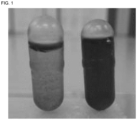
- a capsule formulation is prepared by sealing the fitted part of the cap portion and the body portion of the hard capsule using a band sealing solution (see FIG. 1 ).
- a band sealing solution is produced based on the information described in International Application PCT/US2013/041838 (application date May 20, 2013 ) (title of invention "ACID RESISTANT BANDING SOLUTION FOR TWO PIECE HARD CAPSULES") wherein US Patent Application No. 61/707 , 135 (application date: September 28, 2012 ) forms the basic application, which is an undisclosed application.
- the composition of the band sealing solution is ethanol: 59.9% by weight, shellac: 37.0% by weight, water: 1.6% by weight, and surfactant (sorbitan fatty acid aster and glycerin fatty acid ester) 1.5% by weight.
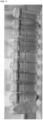
- capsule formulations are wrapped in wire to prevent the capsule formulations from floating up, and submerged in the first liquid (pH1.2 liquid) in the Japanese Pharmacopoeia which is maintained at 37° to simulate the gastric acid inside a living organism. Then, the liquid color in the capsule was observed at 20-minute intervals up to 120 minutes (acid resistance experiment) (see FIG. 2 ).
- the bottom inside the capsule turned slightly red after 20 minutes, but the color of the liquid in most of the capsule did not change from before being submerged in acid.
- the oil phase (MCT) and the aqueous phase (seeped acid solution) were separated and did not mix together, though acid seeping into the capsule had accumulated slightly on the bottom of the capsule due to the difference in the specific gravity of oil, and means that the acid solution and litmus reagent separated by oil were isolated.
- the amount of acid that seeped into the capsule did not increase hardly at all after 120 minutes, and it was confirmed that segregation of the litmus reagent separated by oil and the acid was maintained over a long period of time.
- the experiment was carried out with the same conditions used in example 1 (amount of oil, measurement conditions, and measurement time), and the effect on acid resistance when another oil or surfactant is enclosed in the capsule was examined.
- the following criteria were determined based on the color of the fine litmus powder dissolved or dispersed in oil enclosed in a capsule.
- capsule formulations were wrapped in wire to prevent the capsule formulations from floating up, and submerged in the first liquid (pH1.2 liquid) in the Japanese Pharmacopoeia maintained at 37° to simulate the gastric acid inside a living organism.
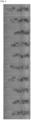
- the color of the liquid in the capsule 120 minutes after submersion is shown (see FIG. 4 ).
- DHA docosahexaenoic acid
- safflower oil, olive oil, soybean oil, linseed oil, rice germ oil, vitamin E, and vitamin A are used, there is no mixing with acid, and the interior of the capsule did not become acidic.
- all oils that obtained a "++" result had a specific gravity of 0.94 or lower. This suggests that the more the specific gravity of oil is separated from that of water, the easier it becomes to physically separate oil from acid seeping into the capsule, and the less easily it is mixed with acid.
- the present inventors found that many types of oil expressed acid resistance unrelated to the degree of saturation because the iodine value increases as the degree of saturation for the oil increases (that is, easily oxidizable).
Landscapes
- Health & Medical Sciences (AREA)
- Chemical & Material Sciences (AREA)
- Veterinary Medicine (AREA)
- Medicinal Chemistry (AREA)
- Pharmacology & Pharmacy (AREA)
- Life Sciences & Earth Sciences (AREA)
- Animal Behavior & Ethology (AREA)
- General Health & Medical Sciences (AREA)
- Public Health (AREA)
- Epidemiology (AREA)
- Engineering & Computer Science (AREA)
- Mechanical Engineering (AREA)
- Oil, Petroleum & Natural Gas (AREA)
- Nutrition Science (AREA)
- Physiology (AREA)
- Bioinformatics & Cheminformatics (AREA)
- Chemical Kinetics & Catalysis (AREA)
- General Chemical & Material Sciences (AREA)
- Medicinal Preparation (AREA)
Description
- The present invention relates to a capsule formulation.
- Many active ingredients in healthy food, oral drugs, or the like use a type of formulation that disintegrates in the stomach. Meanwhile, in formulations wherein the efficacy of an active ingredient can be reduced by gastric acid, the active ingredient can pass through the stomach and be delivered to the intestines while being protected from gastric acid, if desired, by applying an acid-resistant coating to the surface of a tableted or capsulated formulation. A method is known for this type of formulation wherein an enteric coating is applied onto a hard capsule membrane (that is, an outer film). However, the enteric coating generally requires additional coating steps following capsule formulation preparation, which is a problem because it increases manufacturing costs. Further, irregularities in coating, and quality stability are also concerns.
- Meanwhile, in recent years, hard capsules have been developed and are being sold wherein the hard capsule membranes (outer film) themselves are acid resistant. For example, DRcaps (trademark) made by Capsugel Inc. are hard capsules composed of a hydrophilic-acid resistant capsule membrane. A formulation can become acid resistant just by being encapsulated, and these capsules do not necessarily require further application of an enteric coating on the capsule membrane (patent document 1). These types of acid resistant capsules do not dissolve even when submerged in an acid solution, and are useful for intestinal delivery because the hard capsules do not disintegrate in the stomach of a living organism. Therefore, there is no particular problem if a hard capsule does not disintegrate in the stomach when a sufficiently active ingredient (for example, garlic which can give one garlic breath) is enclosed in a hard capsule as long as the expected effect is obtained.
-
- Patent Document 1:
US Laid-Open Patent No. 2012/0288562A1 relates to acid resistant hard pharmaceutical capsules that meet acid resistance criteria in pharmacopeia and processes for manufacturing such capsules. - Patent Document 2: International Patent Application No.
2014/006532A1 relates to capsule formulations that contain thymoquinone as an active ingredient. The capsule formulations allow storage of thymoquinone for a prolonged period of time at room temperature. - Patent Document 3:
US Laid-Open Patent No. 2012/134921A1 describes solid compositions comprising 5-aminolevulinic acid for use in photodynamic diagnosis in the lower part of the gastrointestinal tract. The compositions are stable at room temperature. - Patent Document 4:
US Laid-Open Patent No. 2012/164217A1 relates to scented hard capsules that are externally coated with a scenting composition. The scenting composition comprises one of more scenting agents and one or more gliding enhancing agents. The composition is in powder form or oil form at room temperature. - Patent Document 5: International Patent Application No.
2011/036601A1 describes acid resistant hard capsules and aqueous compositions for producing said capsule. The capsules are considered to meet the acid resistance criteria set forth in pharmacopeia. - While studying enteric capsule formulations that include an acid resistant hard capsule, surprisingly the present inventors found that even though the capsule does not disintegrate in the stomach, over time gastric acid gradually enters through the capsule membrane because the capsule membrane contains a hydrophilic material. Therefore, even if a capsule is used wherein the capsule membrane itself is acid resistant, in cases wherein the efficacy of an encapsulated active ingredient is reduced by a small amount of gastric acid (gastric juice), there is a possibility that the active ingredient will deteriorate (changes/be dispersed/be annihilated) when the active ingredient comes in contact with acid (gastric acid), and the expected effect will not be obtained sufficiently.
- In the light of the above problems, an object of the present invention is to provide means for protecting active ingredients from gastric acid that seeps into the capsule membrane in capsule formulations including active ingredients wherein components can deteriorate if they come into contact with acid, without necessarily requiring an enteric coating.
- As a result of earnest study, surprisingly, the present inventors found that the above problems could be resolved by developing a capsule formulation having the following configuration.
- That is, the present invention includes the following embodiments:
- (1) An enteric capsule formulation comprising an active ingredient and oil, wherein
- said capsule of said formulation comprises a water soluble film forming polymer and gellan gum;
- wherein the weight ratio of said water soluble film forming polymer and said gellan gum in said capsule is 4 to 15 parts by weight of gellan gum relative to 100 parts by weight of said water soluble film forming polymer;
- wherein said oil is an edible oil, and said edible oil is selected from the group consisting of: medium-chain triglyceride, safflower oil, olive oil, soybean oil, linseed oil, rice germ oil, wheat germ oil, coconut oil, corn oil, cottonseed oil, palm oil, palmnucleus oil, peanut oil, rapeseed oil, sesame oil, sunflower, oil, almond oil, cashew oil, hazelnut oil, macadamia nut oil, mongongo oil, pecan oil, pine nut oil, pistachio oil, walnut oil, calabash seed oil, buffalo gourd oil, pumpkin seed oil, watermelon seed oil, acai berry extract, blackcurrant seed oil, borage seed oil, evening primrose oil, amaranth oil, apricot oil, apple seed oil, argan oil, artichoke oil, avocado oil, babassu oil, ben oil, cape chestnut oil, carob oil, cohune palm oil, coriander oil, dica oil, false flax oil, grape seed oil, hemp oil, kapok seed oil, lallemantia oil, marula oil, meadowfoam seed oil, mustard oil, okra seed oil (hibiscus oil), papaya oil, perilla oil, poppyseed oil, prune kernel oil, quinoa oil, ramtil oil, camellia oil, thistle oil, tomato oil, saw palmetto oil, krill oil, borage oil, vitamin A oil, vitamin D oil, vitamin E oil, vitamin K oil, lecithin, and any combination thereof;
- and said active ingredient is encapsulated in said capsule together with said oil.
- (2) The capsule formulation according to (1), wherein said capsule does not have enteric coating.
- (3) The capsule formulation according to any one of (1) to (2), wherein said capsule is a hard capsule having a body portion and a cap portion, and the fitted part of said body portion and said cap portion is sealed by band-sealing.
- (4) The capsule formulation according to any one of (1) to (3), wherein the amount of said oil in the whole content encapsulated in said capsule is not less than 40% by weight.
- (5) The capsule formulation according to any one of (1) to (4), wherein said active ingredient is dispersed or dissolved in said oil.
- (6) The capsule formulation according to any one of (1) to ((), wherein a surfactant acceptable for pharmaceuticals or food is further encapsulated in said capsule.
- (7) The capsule formulation according to (§), wherein said active ingredient is emulsified in said oil by said surfactant.
- (8) The capsule formulation according to any one of (1) to (è), wherein said active ingredient is a pharmaceutical, a dietary supplement, peptides, amino acids, proteins, glycoproteins, enzyme fermented foods, enzymes, coenzymes, vitamins, minerals, living microbes, plant extracts, natural organic matters, or any combination thereof.
- (9) A method for producing a capsule formulation comprising an active ingredient and oil,
- wherein said capsule of said formulation is an enteric capsule comprising a water soluble film forming polymer and gellan gum,
- wherein the weight ratio of said water soluble film forming polymer and said gellan gum in said capsule is 4 to 15 parts by weight of gellan gum relative to 100 parts by weight of said water soluble film forming polymer,
- wherein said oil is an edible oil, and said edible oil is selected from the group consisting of: medium-chain triglyceride, safflower oil, olive oil, soybean oil, linseed oil, rice germ oil, wheat germ oil, coconut oil, corn oil, cottonseed oil, palm oil, palmnucleus oil, peanut oil, rapeseed oil, sesame oil, sunflower, oil, almond oil, cashew oil, hazelnut oil, macadamia nut oil, mongongo oil, pecan oil, pine nut oil, pistachio oil, walnut oil, calabash seed oil, buffalo gourd oil, pumpkin seed oil, watermelon seed oil, acai berry extract, blackcurrant seed oil, borage seed oil, evening primrose oil, amaranth oil, apricot oil, apple seed oil, argan oil, artichoke oil, avocado oil, babassu oil, ben oil, cape chestnut oil, carob oil, cohune palm oil, coriander oil, dica oil, false flax oil, grape seed oil, hemp oil, kapok seed oil, lallemantia oil, marula oil, meadowfoam seed oil, mustard oil, okra seed oil (hibiscus oil), papaya oil, perilla oil, poppyseed oil, prune kernel oil, quinoa oil, ramtil oil, camellia oil, thistle oil, tomato oil, saw palmetto oil, krill oil, borage oil, vitamin A oil, vitamin D oil, vitamin E oil, vitamin K oil, lecithin, and any combination thereof; and said method comprising: dispersing or dissolving said active ingredient in said oil; and encapsulating said oil having the dispersed active ingredient into said capsule.
- (10) The method for producing a capsule formulation according to (9), wherein said capsule is a hard capsule have a body portion and a cap portion, and said method comprises sealing the fitted part of said body portion and said cap portion by band-sealing after encapsulation into said capsule.
- (11) Use of an oil for protecting active ingredients from gastric acid that seeps into the capsule membrane in enteric capsule formulations including active ingredients,
- wherein said capsule of said formulation comprises a water soluble film forming polymer and gellan gum;
- wherein the weight ratio of said water soluble film forming polymer and said gellan gum in said capsule is 4 to 15 parts by weight of gellan gum relative to 100 parts by weight of said water soluble film forming polymer;
- wherein said oil is an edible oil, and said edible oil is selected from the group consisting of: medium-chain triglyceride, safflower oil, olive oil, soybean oil, linseed oil, rice germ oil, wheat germ oil, coconut oil, corn oil, cottonseed oil, palm oil, palmnucleus oil, peanut oil, rapeseed oil, sesame oil, sunflower, oil, almond oil, cashew oil, hazelnut oil, macadamia nut oil, mongongo oil, pecan oil, pine nut oil, pistachio oil, walnut oil, calabash seed oil, buffalo gourd oil, pumpkin seed oil, watermelon seed oil, acai berry extract, blackcurrant seed oil, borage seed oil, evening primrose oil, amaranth oil, apricot oil, apple seed oil, argan oil, artichoke oil, avocado oil, babassu oil, ben oil, cape chestnut oil, carob oil, cohune palm oil, coriander oil, dica oil, false flax oil, grape seed oil, hemp oil, kapok seed oil, lallemantia oil, marula oil, meadowfoam seed oil, mustard oil, okra seed oil (hibiscus oil), papaya oil, perilla oil, poppyseed oil, prune kernel oil, quinoa oil, ramtil oil, camellia oil, thistle oil, tomato oil, saw palmetto oil, krill oil, borage oil, vitamin A oil, vitamin D oil, vitamin E oil, vitamin K oil, lecithin, and any combination thereof;
- and said active ingredient is encapsulated in said capsule together with said oil.
- The capsule formulation described herein is able to protect an active ingredient that may deteriorate (change/be dispersed/be annihilated) when it comes into contact with acid (gastric acid) seeping into a capsule. That is, even if oil is mixed with acid (gastric acid), due to having separating immiscible properties, acid (gastric acid) seeping into the capsule sinks to the bottom of the capsule because of the difference in the specific gravity of oil without being diffused into an encapsulated oil acceptable for pharmaceuticals or food. Therefore, contact between an acid and an active ingredient can be effectively reduced by separating both the aqueous phase (including acid) and the oil phase (including an active ingredient) within a capsule.
- Further, another aspect of the capsule formulation described herein is employing an extremely simple composition, that is, encapsulating an active ingredient dispersed in an oil acceptable for pharmaceuticals or food. Thus, the presently disclosed capsule formulation can easily maintain the subtle balance between protecting against gastric acid and quickly disintegrating in the intestines (for example the small intestine or large intestine), and is advantageous in that it doesn't require an advanced formulation.
-
-
FIG. 1 is a picture depicting the capsule formulation created in example 1 (left in the picture: MCT (example); right in the picture: glycerin (comparative example)). A litmus reagent was uniformly dispersed in the MCT solution (the liquid in the capsule is a light blue color), and was dissolved in the glycerin solution (the liquid in the capsule is a dark blue color). -
FIG. 2 is a picture depicting the results of an acid resistance experiment (left side of each picture: MCT (example); right side of each picture: glycerin (comparative example)), wherein the liquid color in a capsule was observed at 20-minute intervals up to 120 minutes after a capsule formulation created by example 1 (the experiment was carried out so that n=3 for both the example and the comparative example) was submerged in the first liquid (pH1.2 liquid) in the Japanese Pharmacopoeia, which was maintained at 37°. -
FIG. 3 is a picture of the capsule formulation created in example 2 prior to being submerged in the first liquid (pH1.2 liquid) in the Japanese Pharmacopoeia, which was maintained at 37° (in order from the bottom of the picture: glycerin fatty acid ester, sorbitan fatty acid ester, safflower oil, olive oil, soybean oil, linseed oil, DHA, rice germ oil, vitamin E, and vitamin A). -
FIG. 4 is a picture depicting the results of an acid resistance experiment wherein the liquid color in a capsule was observed 120 minutes after the capsule formulation created in example 2 (the experiment was carried out so that n=3 for both the example and the comparative example) was submerged in the first liquid (pH1.2 liquid) in the Japanese Pharmacopoeia, which was maintained at 37° (in order from the bottom of the picture: glycerin fatty acid ester, sorbitan fatty acid ester, safflower oil, olive oil, soybean oil, linseed oil, DHA, rice germ oil, vitamin E, and vitamin A). -
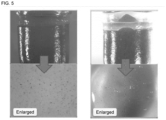
FIG. 5 depicts pictures taken near the fitted part of a capsule formulation and enlarged pictures thereof after being submerged in the first liquid (pH1.2 liquid) in the Japanese Pharmacopoeia, which was maintained at 37°, in cases wherein both DHA and vitamin E were used (upper left of the picture: DHA, bottom left of the picture: enlarge picture of when DHA was used, upper right of the picture: vitamin E, bottom right of the picture: enlarged picture of when vitamin E was used). - The present disclosure relates to a capsule formulation containing an active ingredient and oil (also called a capsule formulation related to the present disclosure hereinafter). In the capsule formulation described herein, the capsule is an enteric capsule containing a water soluble film forming polymer and gellan gum, wherein the oil described above is acceptable for pharmaceuticals or foods, and the active ingredient described above is encapsulated in the capsule described above together with the oil described above. Though the capsule formulation may be used for any purpose as long as it is appropriate, it is particularly preferable that the capsule formulation be used as a capsule for pharmaceuticals or dietary supplements.
- As long as the capsule can form a membrane that can enclose contents related to the present disclosure (that is, including an active ingredient and oil), the capsule may be either a soft capsule or a hard capsule.
- The term "enteric" used herein means that the capsule does not dissolve (or disintegrate) substantively in gastric acid or in the stomach but does dissolve in the intestines (small intestine, large intestine), and is used interchangeably with the term "acid resistance" in the present specification.
- Any water soluble film forming polymer known to be used as the base material for a capsule can be used as a water soluble film forming polymer. This type of water soluble film forming polymer can be selected from a group consisting of, but not limited to, for example, a cellulose derivative, preferably hydroxypropylmethylcellulose (HPMC), gelatin, pullulan, or polyvinyl alcohol (PVA), and a starch derivative, preferably hydroxypropylstarch. Preferably, the water soluble film forming polymer is selected from a group consisting of HPMC, gelatin, pullulan, PVA, and hydroxypropylstarch because the water soluble film forming polymer forms a film having optimal mechanistic properties in aspects of the elastic module and brittleness. One type of water soluble film forming polymer may be used or a combination of a plurality of types may be used. More preferably, the film forming polymer contains HPMC and/or gelatin. Alternatively, the film forming polymer is made of HPMC. Yet alternatively, the film forming polymer is made of gelatin.
- Gellan gum is an exopolysaccharide produced by fermentation. The ratio of gellan gum to water soluble film forming polymer is not particularly limited as long as the ratio can make the capsule acid resistant, and those skilled in the art can appropriately determine a proper ratio according to the type of water soluble film forming polymer used. For example, gellan gum can be used at a ratio of approximately 4 to 15 parts by weight, wherein approximately 4.5 to 8 parts by weight is preferable, and approximately 4.5 to 6 parts by weight is more preferable relative to 100 parts by weight of water soluble film forming polymer. Alternatively, gellan gum can be used at a ratio of approximately 5 or 5.5 parts by weight relative to 100 parts by weight of water soluble film forming polymer. When less gellan gum is used than the lower limit described above, there is a possibility that the eventual capsule will not be provided sufficient acid resistance against digestive fluids such as gastric acid. Meanwhile, when more gellan gum is used than the upper limit described above, there is a possibility that excess viscosity and excess gelation ability will be generated, making manufacture of high quality capsules difficult.
- The capsule described herein can be manufactured by methods already well known among those skilled in the art. For example, when the capsule is a hard capsule, the hard capsule can be manufactured by a method wherein a gel is obtained by submerging a molding pin into an aqueous composition wherein water soluble film forming polymer and gellan gum are dissolved, pulling it out, and drying the aqueous composition adhered to the immersion pin. Plasticizers, preservatives, dispersing reagents (e.g. dextrin, sucrose, mannitol, and maltose), coloring agents, lubricants, disintegrants, surface active agents, and other additives are known, and these can be used appropriately in a capsule described herein.
- Commercially available products may be used as capsules, for example, it is preferred that DRcaps (trademark), a hard capsule manufactured by Capsugel, be used.
- The capsules may have an enteric coating applied over the membrane of the capsule. However, it is also acceptable if an enteric coating is not applied in order to effectively acquire the advantages described throughout the present specification.
- When the capsule is a hard capsule having a body portion and a cap portion covering the body portion, it is preferred that the fitted part (seam) of the body portion configuring the capsule body and the cap portion be sealed using band sealing to prevent the contents from leaking. Preparation of a band sealing solution used for band sealing and sealing methods may be carried out appropriately based on means and techniques that are well known among those skilled in the art. For example, a composition identical to the membrane solution (aqueous composition) of the hard capsule may be used as a band sealing solution. International Application No.
PCT/US2013/ 041838 (application date: May 20, 2013) (title of invention "ACID RESISTANT BANDING SOLUTION FOR TWO PIECE HARD CAPSULES"), whereinUS Patent Application No. 61/707 ,135 (application date: September 28, 2012 ) forms the basic application, which is an undisclosed application, discloses that an effect wherein further entry of acid is prevented because the internal pressure is driven upward by the volume of acid seeping into the hard capsule as a result of the airtightness of the hard capsule being increased by sealing the fitted part of (the body portion and cap portion of) an acid resistant hard capsule having a 2-piece constitution like the DRcaps (registered trademark) (made by Capsugel) with a band seal and by preventing entry of gastric acid using the fitted part. The band sealing solution disclosed in the US Application may be used for the band sealing solution used for band sealing in the present disclosure, and the composition after the solution thereof is dried may be alcohol: approximately 0% by weight, ammonia water: approximately 0 to 10% by weight, shellac: approximately 20 to 100% by weight, rosin: approximately 0 to 35% by weight, surface active agent: approximately 0 to 10% by weight, dye: approximately 0 to 70% by weight, glycerol, triacetin, polyoxyethylene glycol derivative, polyethylene glycol, or plasticizers such as phthalic acid esters: approximately 0 to 15% by weight, hydrated silicon dioxide, starch, crystalline cellulose, or flow agents such as talc: approximately 0 to 50% by weight. - An active ingredient (can be rephrased active ingredients depending on the case in the present specification) may be, but is not limited to, a pharmaceutical, dietary supplement (for example fucoidan, heme iron, polyphenols, including foods for specified health use or nutritional supplements), peptides or amino acids (for example, royal jelly, ornithine, citrulline, aminolevulinic acid, black vinegar, or hydrophobic amino acids such as, valine, leucine, or isoleucine), proteins (for example lactoproteins such as lactoferrin, collagen, or placenta), glycoproteins, enzyme fermented food (for example nattokinase), coenzymes (for example coenzyme Q10), vitamins (for example β carotene), minerals, living microbes (for example yeasts, lactic acid bacteria, or bifidobacteria), plant extracts (such as crude drugs, herbs, for example, turmeric extract, carrot extract, plum extract, ginkgo leaf extract, blueberry extract, or sweet tea extract), natural organic matter such as propolis, or any combination thereof. Alternatively, a physiologically active substance itself may be indicated in the substances included therein, or a substance that doesn't exhibit a physiological activity itself but can affect delivery of the physiologically active substance to the intestine through deterioration by contact with acid may be indicated. In one aspect, a strongly lipophilic and/or strongly hydrophobic active ingredient is preferred. In another aspect, it is more preferred that an active ingredient have ingredients that deteriorate (for example, change/are decomposed/become annihilated) when they come into contact with acid (gastric acid), for example, wherein the quality or titer thereof decreases. The amount of active ingredient with respect to all the encapsulated content can be included in an amount that can exert an expected degree of effect under given conditions (for example an active ingredient, diluting agent, oil acceptable for pharmaceuticals or foods, capsule, their capacity, or others).
- "An oil acceptable for pharmaceuticals or foods" (can be simply rephrased "oil" in the present specification, depending on the case) can reduce or substantively prevent (entirely or partially) an acid (acidic solution, for example, gastric acid in a living organism) from seeping into a capsule through the capsule membrane, and prevent contact with what is encapsulated in the capsule (particularly an active ingredient). That is, the oil described above is not limited, and is not limited particularly if the oil can exist separately without being mixed with the aqueous phase and form an oil phase by exhibiting hydrophobicity with respect to the aqueous phase (includes gastric acid, which is an acidic solution).
- An oil as described herein may be a liquid (for example fatty oil) or solid (for example fat) at room temperature. It is preferred that the oil is a liquid at the temperature of a living organism (specifically the temperature of the stomach, around 37°C). In general, fat contains many saturated fatty acids (for example, palmitic acid or stearic acid), while fatty oil contains many unsaturated fatty acids (for example, oleic acid, linoleic acid, or linolenic acid). These may be esterified. It is known that the higher the degree of unsaturation in the oil the lower the melting temperature, and the more likely liquefaction is at low temperature (likely to be oxidized), and surprisingly the present inventors have found that various types of oils are useful as oils in the context of the present disclosure regardless of the degree of unsaturation.
- In general, fatty acids with a carbon number of 2 to 4 are called short chain fatty acids (lower fatty acids), fatty acids with a carbon number of 5 to 12 are called medium chain fatty acids, and fatty acids with a carbon number of 12 or more are called long chain fatty acids (higher fatty acids). Since fatty acids with a small carbon number generally have increased hydrophobicity, medium chain fatty acids (for example, medium chain fatty acid triglycerides, for example, tri (caprylic/capric acid) glycerin or tricaprylate glyceryl) and long chain fatty acids are preferred oils in the present context.
- Further, it is acceptable if an oil is not a fatty acid, for example fat soluble (oil soluble) substances are also included. For example, vitamin A (oil), vitamin D (oil), vitamin E (oil), vitamin K (oil), and fat soluble vitamins such as derivatives thereof, or glycerophospholipids such as lecithin are also included in the oils described herein. It should be noted that examples of lecithin that can be used include lecithin that can be obtained from plants such as soy, rice, rapeseed, safflower, lecithin that can be obtained from an animal such as an egg yolk, and lecithin derivatives that can be obtained by chemically or enzymatically treating this lecithin. It should be noted that examples of lecithin derivatives include enzymatically decomposed lecithin, hydrogenase-decomposed lecithin, hydroxyl lecithin, phosphatidyl glycerol, phosphatidic acid, and acetylated lecithin.
- It is preferred that an oil described herein is a plant oil, animal oil, fish oil, or mineral oil, and edible oil is preferred from the viewpoint of acceptable pharmaceuticals or foods. Further, plant oil is preferred. Examples include safflower oil, olive oil, soybean oil, linseed oil, rice germ oil, wheat germ oil, coconut oil, corn oil, cottonseed oil, palm oil, palm nucleus oil, peanut oil, rapeseed oil, sesame oil, sunflower oil, almond oil, cashew oil, hazelnut oil, macadamia nut oil, mongongo oil, pecan oil, pine nut oil, pistachio oil, walnut oil, calabash seed oil, buffalo gourd oil, pumpkin seed oil, watermelon seed oil, acai berry extract, blackcurrant seed oil, borage seed oil, evening primrose oil, amaranth oil, apricot oil, apple seed oil, argan oil, artichoke oil, avocado oil, babassu oil, ben oil, cape chestnut oil, carob oil, cohune palm oil, coriander oil, dica oil, false flax oil, grape seed oil, hemp oil, kapok seed oil, lallemantia oil, marula oil, meadowfoam seed oil, mustard oil, okra seed oil (hibiscus oil), papaya oil, perilla oil, poppyseed oil, prune kernel oil, quinoa oil, ramtil oil, camellia oil, thistle oil, tomato oil, saw palmetto oil, krill oil, borage oil, docosahexaenoic acid (DHA), and eicosapentaenoic acid (EPA), but are not limited thereto.
- It is preferable that the specific gravity (density ratio with water as a standard) of oil described herein be 0.96 or lower, wherein 0.955 or lower is more preferable, 0.95 or lower is even more preferable, 0.945 or lower is still more preferable, and 0.94 or lower is still even more preferable. Surprisingly, the present inventors found that the more the specific gravity of oil is separated from that of water, the easier it became to physically separate within the capsule the oil (oil phase) and acid (aqueous phase) seeping into the capsule, and the acid and oil (including for example an active ingredient) mixed less easily, protecting the active ingredient from the acid.
- In one aspect, the amount of oil with respect to all the encapsulated content can be included in an amount that can exert an expected degree of effect under given conditions (for example an active ingredient, excipient, capsule, their capacity, or others). For the amount of this type of oil with respect to all the encapsulated content, it is preferred for example that an active ingredient be included in a capsule in an amount that can be sufficiently soaked in oil, and it is more preferred that the active ingredient be dispersed or dissolved in oil. For example, the amount of this type of oil with respect to all the encapsulated content can be 30% by weight or more, 35% by weight or more, 40% by weight or more, or 40 to 99.9% by weight. Those skilled in the art can appropriately determine a suitable amount according to the type of active ingredient and oil, but generally the higher amount of encapsulated oil the more preferred it is.
- In one aspect, when an encapsulated active ingredient and other desired components are non-lipophilic, a surfactant acceptable for pharmaceuticals or foods may be further included in the capsule in order to emulsify these components (particularly the active ingredients) in oil. Examples of this type of surfactant include but are not limited to monoglycerol fatty acid esters, diglycerin fatty acid esters, polyglycerol fatty acid esters, sucrose fatty acid esters, sorbitan fatty acid esters, propylene glycol fatty acid esters, or any combination thereof. It is preferred that the amount of this type of surfactant with respect to all encapsulated content be, for example, 5% by weight or less, wherein 3% by weight or less is more preferable, and 1% by weight or less is even more preferable. Further, because the surfactant has amphiphilic properties, lower HLB values (value expressing the degree of affinity a surfactant has for water and oil) are preferred, that is, one that is hydrophobic and/or has strong lipophilicity is preferred. For example, a surfactant with an HLB value of approximately 3 to 6 is relatively preferred because only a part disperses into the aqueous phase, and a surfactant with an HLB value of approximately 1 to 3 is more preferable because it does not disperse into the aqueous phase hardly at all. Those skilled in the art can optimize by appropriately determining an adequate amount of surfactant referencing this technical common sense.
- Other than the components described above, an additive such as an excipient, preservative, stabilizer, stabilizing agent, or flavoring agent may be included as long as the effect (that is, protecting an active component from acid) achieved is not inhibited.
- In another aspect, the capsule formulation may be manufactured by a method including a step for enclosing an active ingredient; and a step for enclosing an oil acceptable for pharmaceuticals or food in the capsule, and these two steps may be carried out simultaneously or separately. When carrying out these two step simultaneously, a step for dispersing or dissolving the active ingredient in an oil acceptable for pharmaceuticals or food, and a step for enclosing in the capsule oil dispersed or dissolved by the active ingredient may be carried out simultaneously. Further, when using a surfactant, the capsule formulation may be manufactured by a method including a step for mixing an active ingredient and surfactant in an oil acceptable for pharmaceuticals or food and emulsifying the active ingredient in the oil, and a step for enclosing oil emulsified by the active ingredient in the capsule, and these two steps may be carried out simultaneously or separately. When oil is solid at room temperature, for example, one may wait for the active ingredient (and surfactant if desired) to disperse or dissolve into the oil, liquefy the oil by warming it, and use the oil to manufacture a capsule formulation. Specific conditions, procedures, and machinery used in each of these steps may be used appropriately according to the knowledge of those skilled in the art. Further, in order to better produce a capsule, manufacturing a capsule formulation by freely adding while revising various other steps known by those skilled in the art is within the scope of variations expected by those skilled in the art.
- The capsule formulation is administered by a method corresponding to the type of active ingredient, target age, gender, patient condition, or other condition. The dose of capsule formulation may be selected appropriately according to usage, target age, gender, patient condition, or other condition. The number of administrations may be selected appropriately according to usage, target age, gender, patient condition, or other condition, for example 3X/day, 2X/day, 1X/day, or a more infrequent number of administrations (for example 1X/week, or 1X/month) may be selected according to the stability thereof in the blood.
- Further, the term "includes" used in the present specification is intended to mean that a described item (element, step, member, or number) exists, except for when it is clearly meant to be understood differently given the context, and does not exclude the existence of other items (elements, steps, members, or numbers).
- As long as there are no alternate definitions, all of the terms used herein (including technical terms and chemical terms) have the same meaning as widely understood by those skilled in the arts. The terms used herein should be interpreted as having a consistent meaning, the meaning in the present specification and related technical field, as long as an alternate definition is not explicitly stated, and should not be idealized or interpreted using an overly formal meaning.
- There are cases wherein the examples may be described with reference to a schematic diagram, and in a case of a schematic diagram, expressions may be overstated in order to clarify the description.
- In the present specification, for example when phrased "1 to 10% by weight," those skilled in the art understand that the phrase refers individually and specifically to 1, 2, 3, 4, 5, 6, 7, 8, 9, or 10% by weight.
- In the present specification, all values used to express a range of values or component content are interpreted as including the meaning of the term "approximately," as long as it is not explicitly stated otherwise. For example, "10 times" is understood as meaning "approximately 10 times" as long as it's not explicitly stated otherwise.
- Below, the present disclosure is described in detail while referencing an example. However, the present disclosure can be realized through various aspects, and should not be interpreted as being limited to the example described herein.
- The fine powder of a litmus reagent that changes to red in response to acid (blue, Wako Pure Chemical Industries Ltd. High grade), used as an active ingredient, is dispersed or dissolved in 0.2% by weight each of MCT, which is an edible oil (medium chain fatty acid triglyceride, coconad MT (made by Kao Co.) and glycerin, which is a water-based edible additive (made by Kao Co.) (dissolves very readily in water, comparative example). Then, 300µL each of this solution is loaded into the separated body portion of an acid resistant hard capsule made by Capsugel (Drcaps (trademark), size no. 2, transparent no color). Then, a capsule formulation is prepared by sealing the fitted part of the cap portion and the body portion of the hard capsule using a band sealing solution (see
FIG. 1 ). It should be noted that the band sealing solution is produced based on the information described in International ApplicationPCT/US2013/041838 (application date May 20, 2013 ) (title of invention "ACID RESISTANT BANDING SOLUTION FOR TWO PIECE HARD CAPSULES") whereinUS Patent Application No. 61/707 ,135 (application date: September 28, 2012 ) forms the basic application, which is an undisclosed application. The composition of the band sealing solution is ethanol: 59.9% by weight, shellac: 37.0% by weight, water: 1.6% by weight, and surfactant (sorbitan fatty acid aster and glycerin fatty acid ester) 1.5% by weight. - These capsule formulations are wrapped in wire to prevent the capsule formulations from floating up, and submerged in the first liquid (pH1.2 liquid) in the Japanese Pharmacopoeia which is maintained at 37° to simulate the gastric acid inside a living organism. Then, the liquid color in the capsule was observed at 20-minute intervals up to 120 minutes (acid resistance experiment) (see
FIG. 2 ). - The results were that in the formulation using glycerin in the comparative example, the entire inside of the capsule turned red after 20 minutes, and it was confirmed that the acid seeping into the capsule had diffused into all of the liquid in the capsule.
- Meanwhile, in the formulation using the oil (MCT) from the example, the bottom inside the capsule turned slightly red after 20 minutes, but the color of the liquid in most of the capsule did not change from before being submerged in acid. This is because the oil phase (MCT) and the aqueous phase (seeped acid solution) were separated and did not mix together, though acid seeping into the capsule had accumulated slightly on the bottom of the capsule due to the difference in the specific gravity of oil, and means that the acid solution and litmus reagent separated by oil were isolated. Further, the amount of acid that seeped into the capsule did not increase hardly at all after 120 minutes, and it was confirmed that segregation of the litmus reagent separated by oil and the acid was maintained over a long period of time.
- The experiment was carried out with the same conditions used in example 1 (amount of oil, measurement conditions, and measurement time), and the effect on acid resistance when another oil or surfactant is enclosed in the capsule was examined. In this example, the following criteria were determined based on the color of the fine litmus powder dissolved or dispersed in oil enclosed in a capsule.
- "-": almost all red/unsuitable
- "+": about half red/passable
- "++": all blue/excellent
- The results are shown below.
Table 1 Substance Name Product Name Manufacturer Name Oil Color Result (color) Specific Gravity (25°C) Iodine Value Glycerin Glycerin Kao Co. None - 1.264 NA Glycerin fatty acid ester Poem DO-100V Riken Vitamin Co., Ltd. None - 1.02 NA Sorbitan fatty acid ester SO-30V Nikko Chemicals Co., Ltd. None - 0.95 NA Safflower oil Safflower salad oil Summit Oil Mill Co. Ltd. None ++ 0.92 114-150 Olive oil Pharmacopeia olive oil Kaneda Co., Ltd. None ++ 0.91 70-90 Soybean oil Soybean oil Riken Vitamin Co., Ltd. None ++ 0.92 114-138 Linseed oil Linseed oil Summit Oil Mill Co. None ++ 0.93 168-190 DHA DHA Nippon Chemical Feed Co., Ltd. Yellow + 0.95 188-205 Rice germ oil Rice germ oil Tsuno Food Industrial Co., Ltd. Light yellow ++ 0.92 92-115 Vitamin E Vegetable oil E-MIX-1000 containing vitamin E Tama Biochemical Co., Ltd. Dark green ++ 0.94 NA Vitamin A Vitamin A 300 Riken Vitamin Co., Ltd. Yellow ++ 0.92 NA - These capsule formulations were wrapped in wire to prevent the capsule formulations from floating up, and submerged in the first liquid (pH1.2 liquid) in the Japanese Pharmacopoeia maintained at 37° to simulate the gastric acid inside a living organism. The color of the liquid in the
capsule 120 minutes after submersion is shown (seeFIG. 4 ). - The results when glycerin fatty acid ester, which is a surfactant replacing oil, and sorbitan fatty acid ester were used were the same as when glycerin was used, the entire inside of the capsule turned red, acidified by the acid seeping into the capsule which had diffused into all of the liquid in the capsule. This shows that when a large amount of hydrophilic surfactant is used, both mix due to the hydrophilic function of the aqueous phase (acid), exposing the active ingredient included in the surfactant to acid.
- Meanwhile, when docosahexaenoic acid (DHA) is used, part of the inside of the capsule is acidified. However, when safflower oil, olive oil, soybean oil, linseed oil, rice germ oil, vitamin E, and vitamin A are used, there is no mixing with acid, and the interior of the capsule did not become acidic. Importantly, all oils that obtained a "++" result had a specific gravity of 0.94 or lower. This suggests that the more the specific gravity of oil is separated from that of water, the easier it becomes to physically separate oil from acid seeping into the capsule, and the less easily it is mixed with acid.
- It should be noted that because the four oils, DHA, rice germ oil, vitamin E, and vitamin A, are light yellow to dark green, visually confirming the change of the fine litmus powder from blue to red due to acid seeping into oil within the capsule was difficult. Therefore, the color was confirmed by enlarging the litmus particles dispersed within the oil from outside the capsule using a microscope. The determination criteria for this was the same as described above (see
FIG. 5 ). - Further, when indexing stability, surprisingly, the present inventors found that many types of oil expressed acid resistance unrelated to the degree of saturation because the iodine value increases as the degree of saturation for the oil increases (that is, easily oxidizable).
Claims (11)
- An enteric capsule formulation comprising an active ingredient and oil, whereinsaid capsule of said formulation comprises a water soluble film forming polymer and gellan gum;wherein the weight ratio of said water soluble film forming polymer and said gellan gum in said capsule is 4 to 15 parts by weight of gellan gum relative to 100 parts by weight of said water soluble film forming polymer;wherein said oil is an edible oil, and said edible oil is selected from the group consisting of: medium-chain triglyceride, safflower oil, olive oil, soybean oil, linseed oil, rice germ oil, wheat germ oil, coconut oil, corn oil, cottonseed oil, palm oil, palmnucleus oil, peanut oil, rapeseed oil, sesame oil, sunflower, oil, almond oil, cashew oil, hazelnut oil, macadamia nut oil, mongongo oil, pecan oil, pine nut oil, pistachio oil, walnut oil, calabash seed oil, buffalo gourd oil, pumpkin seed oil, watermelon seed oil, acai berry extract, blackcurrant seed oil, borage seed oil, evening primrose oil, amaranth oil, apricot oil, apple seed oil, argan oil, artichoke oil, avocado oil, babassu oil, ben oil, cape chestnut oil, carob oil, cohune palm oil, coriander oil, dica oil, false flax oil, grape seed oil, hemp oil, kapok seed oil, lallemantia oil, marula oil, meadowfoam seed oil, mustard oil, okra seed oil (hibiscus oil), papaya oil, perilla oil, poppyseed oil, prune kernel oil, quinoa oil, ramtil oil, camellia oil, thistle oil, tomato oil, saw palmetto oil, krill oil, borage oil, vitamin A oil, vitamin D oil, vitamin E oil, vitamin K oil, lecithin, and any combination thereof;and said active ingredient is encapsulated in said capsule together with said oil.
- The capsule formulation according to Claim 1, wherein said capsule does not have enteric coating.
- The capsule formulation according to Claims 1 or 2, wherein said capsule is a hard capsule having a body portion and a cap portion, and the fitted part of said body portion and said cap portion is sealed by band-sealing.
- The capsule formulation according to any one of Claims 1 to 3, wherein the amount of said oil in the whole content encapsulated in said capsule is not less than 40% by weight.
- The capsule formulation according to any one of Claims 1 to 4, wherein said active ingredient is dispersed or dissolved in said oil.
- The capsule formulation according to any one of Claims 1 to 5, wherein a surfactant acceptable for pharmaceuticals or foods is further encapsulated in said capsule.
- The capsule formulation according to claim 6, wherein said active ingredient is emulsified in said oil by said surfactant.
- The capsule formulation according to any one of Claims 1 to 7, wherein said active ingredient is a pharmaceutical, a dietary supplement, peptides, amino acids, proteins, glycoproteins, enzyme fermented foods, enzymes, coenzymes, vitamins, minerals, living microbes, plant extracts, natural organic matters, or any combination thereof.
- A method for producing an enteric capsule formulation comprising an active ingredient and oil, wherein said capsule of said formulation comprises a water soluble film forming polymer and gellan gum,wherein the weight ratio of said water soluble film forming polymer and said gellan gum in said capsule is 4 to 15 parts by weight of gellan gum relative to 100 parts by weight of said water soluble film forming polymer,wherein said oil is an edible oil, and said edible oil is selected from the group consisting of: medium-chain triglyceride, safflower oil, olive oil, soybean oil, linseed oil, rice germ oil, wheat germ oil, coconut oil, corn oil, cottonseed oil, palm oil, palmnucleus oil, peanut oil, rapeseed oil, sesame oil, sunflower, oil, almond oil, cashew oil, hazelnut oil, macadamia nut oil, mongongo oil, pecan oil, pine nut oil, pistachio oil, walnut oil, calabash seed oil, buffalo gourd oil, pumpkin seed oil, watermelon seed oil, acai berry extract, blackcurrant seed oil, borage seed oil, evening primrose oil, amaranth oil, apricot oil, apple seed oil, argan oil, artichoke oil, avocado oil, babassu oil, ben oil, cape chestnut oil, carob oil, cohune palm oil, coriander oil, dica oil, false flax oil, grape seed oil, hemp oil, kapok seed oil, lallemantia oil, marula oil, meadowfoam seed oil, mustard oil, okra seed oil (hibiscus oil), papaya oil, perilla oil, poppyseed oil, prune kernel oil, quinoa oil, ramtil oil, camellia oil, thistle oil, tomato oil, saw palmetto oil, krill oil, borage oil, vitamin A oil, vitamin D oil, vitamin E oil, vitamin K oil, lecithin, and any combination thereof; and said method comprising: dispersing or dissolving said active ingredient in said oil; and encapsulating said oil having the dispersed active ingredient into said capsule.
- The method for producing a capsule formulation according to Claim 9, wherein said capsule is a hard capsule having a body portion and a cap portion; and said method comprises sealing the fitted part of said body portion and said cap portion by band-sealing after encapsulation into said capsule.
- Use of an oil for protecting active ingredients from gastric acid that seeps into the capsule membrane in enteric capsule formulations including active ingredients,wherein said capsule of said formulation comprises a water soluble film forming polymer and gellan gum;wherein the weight ratio of said water soluble film forming polymer and said gellan gum in said capsule is 4 to 15 parts by weight of gellan gum relative to 100 parts by weight of said water soluble film forming polymer;wherein said oil is an edible oil, and said edible oil is selected from the group consisting of: medium-chain triglyceride, safflower oil, olive oil, soybean oil, linseed oil, rice germ oil, wheat germ oil, coconut oil, corn oil, cottonseed oil, palm oil, palmnucleus oil, peanut oil, rapeseed oil, sesame oil, sunflower, oil, almond oil, cashew oil, hazelnut oil, macadamia nut oil, mongongo oil, pecan oil, pine nut oil, pistachio oil, walnut oil, calabash seed oil, buffalo gourd oil, pumpkin seed oil, watermelon seed oil, acai berry extract, blackcurrant seed oil, borage seed oil, evening primrose oil, amaranth oil, apricot oil, apple seed oil, argan oil, artichoke oil, avocado oil, babassu oil, ben oil, cape chestnut oil, carob oil, cohune palm oil, coriander oil, dica oil, false flax oil, grape seed oil, hemp oil, kapok seed oil, lallemantia oil, marula oil, meadowfoam seed oil, mustard oil, okra seed oil (hibiscus oil), papaya oil, perilla oil, poppyseed oil, prune kernel oil, quinoa oil, ramtil oil, camellia oil, thistle oil, tomato oil, saw palmetto oil, krill oil, borage oil, vitamin A oil, vitamin D oil, vitamin E oil, vitamin K oil, lecithin, and any combination thereof;and said active ingredient is encapsulated in said capsule together with said oil.
Applications Claiming Priority (1)
| Application Number | Priority Date | Filing Date | Title |
|---|---|---|---|
| PCT/JP2014/070242 WO2016017006A1 (en) | 2014-07-31 | 2014-07-31 | Capsule formulation |
Publications (4)
| Publication Number | Publication Date |
|---|---|
| EP3181125A1 EP3181125A1 (en) | 2017-06-21 |
| EP3181125A4 EP3181125A4 (en) | 2018-01-17 |
| EP3181125B1 true EP3181125B1 (en) | 2025-02-19 |
| EP3181125C0 EP3181125C0 (en) | 2025-02-19 |
Family
ID=55216944
Family Applications (1)
| Application Number | Title | Priority Date | Filing Date |
|---|---|---|---|
| EP14898418.0A Active EP3181125B1 (en) | 2014-07-31 | 2014-07-31 | Capsule formulation |
Country Status (3)
| Country | Link |
|---|---|
| US (2) | US20170216146A1 (en) |
| EP (1) | EP3181125B1 (en) |
| WO (1) | WO2016017006A1 (en) |
Families Citing this family (4)
| Publication number | Priority date | Publication date | Assignee | Title |
|---|---|---|---|---|
| PL2480218T3 (en) | 2009-09-24 | 2020-11-16 | Capsugel Belgium Nv | Acid resistant capsules |
| EP3473246A1 (en) | 2017-10-19 | 2019-04-24 | Capsugel Belgium NV | Immediate release abuse deterrent formulations |
| CN109679877A (en) * | 2019-01-17 | 2019-04-26 | 广州承葛生物科技有限公司 | A kind of preparation method of high activity caprophyl capsule |
| US20240099982A1 (en) * | 2022-09-27 | 2024-03-28 | Gaia Herbs | Cellulose derivative free capsule for herbal extracts |
Citations (1)
| Publication number | Priority date | Publication date | Assignee | Title |
|---|---|---|---|---|
| WO2011036601A1 (en) * | 2009-09-24 | 2011-03-31 | Pfizer Inc. | Acid resistant capsules |
Family Cites Families (7)
| Publication number | Priority date | Publication date | Assignee | Title |
|---|---|---|---|---|
| JPS6024767B2 (en) * | 1979-08-24 | 1985-06-14 | 塩野義製薬株式会社 | enteric-coated hard capsules |
| JPH07196478A (en) * | 1993-12-30 | 1995-08-01 | Hajime Sugii | Soft capsule for highly safe food and medicine |
| JP5253235B2 (en) * | 2009-03-02 | 2013-07-31 | クオリカプス株式会社 | Enteric capsule |
| AU2010257752B2 (en) * | 2009-06-11 | 2015-04-09 | Photocure Asa | Solid compositions comprising 5-aminolevulinic acid |
| CA2772144A1 (en) * | 2009-09-04 | 2011-03-10 | Dominique Nicolas Cade | Scented capsules |
| US8629177B2 (en) * | 2010-08-24 | 2014-01-14 | Aphios Corporation | Nanoencapsulated delta-9-tetrahydrocannabinol |
| BR112014032948A2 (en) * | 2012-07-02 | 2017-06-27 | Dsm Ip Assets Bv | capsules containing thymquinone |
-
2014
- 2014-07-31 EP EP14898418.0A patent/EP3181125B1/en active Active
- 2014-07-31 US US15/500,493 patent/US20170216146A1/en not_active Abandoned
- 2014-07-31 WO PCT/JP2014/070242 patent/WO2016017006A1/en not_active Ceased
-
2021
- 2021-09-27 US US17/486,739 patent/US20220008296A1/en active Pending
Patent Citations (1)
| Publication number | Priority date | Publication date | Assignee | Title |
|---|---|---|---|---|
| WO2011036601A1 (en) * | 2009-09-24 | 2011-03-31 | Pfizer Inc. | Acid resistant capsules |
Also Published As
| Publication number | Publication date |
|---|---|
| US20170216146A1 (en) | 2017-08-03 |
| EP3181125A4 (en) | 2018-01-17 |
| EP3181125C0 (en) | 2025-02-19 |
| US20220008296A1 (en) | 2022-01-13 |
| EP3181125A1 (en) | 2017-06-21 |
| WO2016017006A1 (en) | 2016-02-04 |
Similar Documents
| Publication | Publication Date | Title |
|---|---|---|
| US20220008296A1 (en) | Capsule formulation | |
| Choi et al. | Nanoemulsions as delivery systems for lipophilic nutraceuticals: strategies for improving their formulation, stability, functionality and bioavailability: SJ Choi, DJ McClements | |
| JP4398862B2 (en) | Soft capsule | |
| Zhou et al. | Food-grade systems for delivery of DHA and EPA: Opportunities, fabrication, characterization and future perspectives | |
| JP6588193B2 (en) | Capsule formulation | |
| US6774247B2 (en) | Aqueous solution of ascorbic acid and method for producing same | |
| Milinčić et al. | Food nanoemulsions: how simulated gastrointestinal digestion models, nanoemulsion, and food matrix properties affect bioaccessibility of encapsulated bioactive compounds | |
| KR101763947B1 (en) | Method of microcapsulating phosphatidylserine | |
| JPWO2005061684A1 (en) | Oil composition | |
| US20230157964A1 (en) | A stable food-grade microcapsule for the delivery of unstable and food-incompatible active ingredients to food products | |
| KR20190142773A (en) | Encapsulated Nutritional and Pharmaceutical Compositions | |
| JP6297441B2 (en) | Bifidobacterium-containing capsule and method for producing the same | |
| EP2752202B1 (en) | Soft capsule pharmaceutical preparation, composition for soft capsule pharmaceutical preparation, and method for producing soft capsule pharmaceutical preparation | |
| JP2010235490A (en) | Phosphatidylserine-containing capsule and phosphatidylserine composition for capsule filling | |
| JP4913340B2 (en) | Capsule | |
| US10960016B2 (en) | Capsules containing high doses of krill phospholipids | |
| JP4339334B2 (en) | OIL-BASED SUBSTANCE WITH ANTIOXIDITY, PROCESS FOR PRODUCING THE SAME, AND METHOD FOR OXIDATION OF OIL-BASED SUBSTANCE | |
| TW200904456A (en) | Organic compounds | |
| JP2012051945A (en) | Capsule, method for manufacturing the same, and capsule wall | |
| RU2514414C1 (en) | Antioxidant premix and its production method | |
| BR0302860B1 (en) | Aqueous ascorbic acid solution, procedure for its preparation and application | |
| JP4969989B2 (en) | Phospholipid composition, food composition containing the same, pharmaceutical composition, and method for producing the same | |
| EA051709B1 (en) | A stable food-grade microcapsule for the delivery of unstable and food-incompatible active ingredients into food products. | |
| KR20240077381A (en) | Composition for increasing absorption of fat-soluble physiologically active ingredients using self-emulsifying delivery system | |
| HK40089346A (en) | A stable food-grade microcapsule for the delivery of unstable and food-incompatible active ingredients to food products |
Legal Events
| Date | Code | Title | Description |
|---|---|---|---|
| STAA | Information on the status of an ep patent application or granted ep patent |
Free format text: STATUS: THE INTERNATIONAL PUBLICATION HAS BEEN MADE |
|
| PUAI | Public reference made under article 153(3) epc to a published international application that has entered the european phase |
Free format text: ORIGINAL CODE: 0009012 |
|
| STAA | Information on the status of an ep patent application or granted ep patent |
Free format text: STATUS: REQUEST FOR EXAMINATION WAS MADE |
|
| 17P | Request for examination filed |
Effective date: 20170223 |
|
| AK | Designated contracting states |
Kind code of ref document: A1 Designated state(s): AL AT BE BG CH CY CZ DE DK EE ES FI FR GB GR HR HU IE IS IT LI LT LU LV MC MK MT NL NO PL PT RO RS SE SI SK SM TR |
|
| AX | Request for extension of the european patent |
Extension state: BA ME |
|
| DAX | Request for extension of the european patent (deleted) | ||
| A4 | Supplementary search report drawn up and despatched |
Effective date: 20171220 |
|
| RIC1 | Information provided on ipc code assigned before grant |
Ipc: A61K 47/14 20170101ALI20171214BHEP Ipc: A61K 9/48 20060101AFI20171214BHEP Ipc: A61K 47/44 20170101ALI20171214BHEP Ipc: A61J 3/07 20060101ALI20171214BHEP |
|
| STAA | Information on the status of an ep patent application or granted ep patent |
Free format text: STATUS: EXAMINATION IS IN PROGRESS |
|
| 17Q | First examination report despatched |
Effective date: 20190315 |
|
| GRAP | Despatch of communication of intention to grant a patent |
Free format text: ORIGINAL CODE: EPIDOSNIGR1 |
|
| STAA | Information on the status of an ep patent application or granted ep patent |
Free format text: STATUS: GRANT OF PATENT IS INTENDED |
|
| INTG | Intention to grant announced |
Effective date: 20240926 |
|
| GRAS | Grant fee paid |
Free format text: ORIGINAL CODE: EPIDOSNIGR3 |
|
| GRAA | (expected) grant |
Free format text: ORIGINAL CODE: 0009210 |
|
| STAA | Information on the status of an ep patent application or granted ep patent |
Free format text: STATUS: THE PATENT HAS BEEN GRANTED |
|
| AK | Designated contracting states |
Kind code of ref document: B1 Designated state(s): AL AT BE BG CH CY CZ DE DK EE ES FI FR GB GR HR HU IE IS IT LI LT LU LV MC MK MT NL NO PL PT RO RS SE SI SK SM TR |
|
| REG | Reference to a national code |
Ref country code: GB Ref legal event code: FG4D |
|
| REG | Reference to a national code |
Ref country code: CH Ref legal event code: EP |
|
| REG | Reference to a national code |
Ref country code: IE Ref legal event code: FG4D |
|
| REG | Reference to a national code |
Ref country code: DE Ref legal event code: R096 Ref document number: 602014091588 Country of ref document: DE |
|
| U01 | Request for unitary effect filed |
Effective date: 20250318 |
|
| U07 | Unitary effect registered |
Designated state(s): AT BE BG DE DK EE FI FR IT LT LU LV MT NL PT RO SE SI Effective date: 20250324 |
|
| PG25 | Lapsed in a contracting state [announced via postgrant information from national office to epo] |
Ref country code: RS Free format text: LAPSE BECAUSE OF FAILURE TO SUBMIT A TRANSLATION OF THE DESCRIPTION OR TO PAY THE FEE WITHIN THE PRESCRIBED TIME-LIMIT Effective date: 20250519 |
|
| PG25 | Lapsed in a contracting state [announced via postgrant information from national office to epo] |
Ref country code: PL Free format text: LAPSE BECAUSE OF FAILURE TO SUBMIT A TRANSLATION OF THE DESCRIPTION OR TO PAY THE FEE WITHIN THE PRESCRIBED TIME-LIMIT Effective date: 20250219 |
|
| PG25 | Lapsed in a contracting state [announced via postgrant information from national office to epo] |
Ref country code: ES Free format text: LAPSE BECAUSE OF FAILURE TO SUBMIT A TRANSLATION OF THE DESCRIPTION OR TO PAY THE FEE WITHIN THE PRESCRIBED TIME-LIMIT Effective date: 20250219 |
|
| PG25 | Lapsed in a contracting state [announced via postgrant information from national office to epo] |
Ref country code: NO Free format text: LAPSE BECAUSE OF FAILURE TO SUBMIT A TRANSLATION OF THE DESCRIPTION OR TO PAY THE FEE WITHIN THE PRESCRIBED TIME-LIMIT Effective date: 20250519 Ref country code: IS Free format text: LAPSE BECAUSE OF FAILURE TO SUBMIT A TRANSLATION OF THE DESCRIPTION OR TO PAY THE FEE WITHIN THE PRESCRIBED TIME-LIMIT Effective date: 20250619 |
|
| PG25 | Lapsed in a contracting state [announced via postgrant information from national office to epo] |
Ref country code: HR Free format text: LAPSE BECAUSE OF FAILURE TO SUBMIT A TRANSLATION OF THE DESCRIPTION OR TO PAY THE FEE WITHIN THE PRESCRIBED TIME-LIMIT Effective date: 20250219 |
|
| PG25 | Lapsed in a contracting state [announced via postgrant information from national office to epo] |
Ref country code: GR Free format text: LAPSE BECAUSE OF FAILURE TO SUBMIT A TRANSLATION OF THE DESCRIPTION OR TO PAY THE FEE WITHIN THE PRESCRIBED TIME-LIMIT Effective date: 20250520 |
|
| U20 | Renewal fee for the european patent with unitary effect paid |
Year of fee payment: 12 Effective date: 20250725 |
|
| PG25 | Lapsed in a contracting state [announced via postgrant information from national office to epo] |
Ref country code: SM Free format text: LAPSE BECAUSE OF FAILURE TO SUBMIT A TRANSLATION OF THE DESCRIPTION OR TO PAY THE FEE WITHIN THE PRESCRIBED TIME-LIMIT Effective date: 20250219 |
|
| PGFP | Annual fee paid to national office [announced via postgrant information from national office to epo] |
Ref country code: GB Payment date: 20250722 Year of fee payment: 12 |
|
| PG25 | Lapsed in a contracting state [announced via postgrant information from national office to epo] |
Ref country code: CZ Free format text: LAPSE BECAUSE OF FAILURE TO SUBMIT A TRANSLATION OF THE DESCRIPTION OR TO PAY THE FEE WITHIN THE PRESCRIBED TIME-LIMIT Effective date: 20250219 |
|
| PG25 | Lapsed in a contracting state [announced via postgrant information from national office to epo] |
Ref country code: SK Free format text: LAPSE BECAUSE OF FAILURE TO SUBMIT A TRANSLATION OF THE DESCRIPTION OR TO PAY THE FEE WITHIN THE PRESCRIBED TIME-LIMIT Effective date: 20250219 |
|
| PLBE | No opposition filed within time limit |
Free format text: ORIGINAL CODE: 0009261 |
|
| STAA | Information on the status of an ep patent application or granted ep patent |
Free format text: STATUS: NO OPPOSITION FILED WITHIN TIME LIMIT |
|
| REG | Reference to a national code |
Ref country code: CH Ref legal event code: L10 Free format text: ST27 STATUS EVENT CODE: U-0-0-L10-L00 (AS PROVIDED BY THE NATIONAL OFFICE) Effective date: 20251231 |
|
| 26N | No opposition filed |
Effective date: 20251120 |
|
| REG | Reference to a national code |
Ref country code: CH Ref legal event code: H13 Free format text: ST27 STATUS EVENT CODE: U-0-0-H10-H13 (AS PROVIDED BY THE NATIONAL OFFICE) Effective date: 20260224 |
|
| PG25 | Lapsed in a contracting state [announced via postgrant information from national office to epo] |
Ref country code: CH Free format text: LAPSE BECAUSE OF NON-PAYMENT OF DUE FEES Effective date: 20250731 |