EP3180996A1 - Container - Google Patents
Container Download PDFInfo
- Publication number
- EP3180996A1 EP3180996A1 EP16203556.2A EP16203556A EP3180996A1 EP 3180996 A1 EP3180996 A1 EP 3180996A1 EP 16203556 A EP16203556 A EP 16203556A EP 3180996 A1 EP3180996 A1 EP 3180996A1
- Authority
- EP
- European Patent Office
- Prior art keywords
- container
- insert
- chamber
- sensate substance
- main body
- Prior art date
- Legal status (The legal status is an assumption and is not a legal conclusion. Google has not performed a legal analysis and makes no representation as to the accuracy of the status listed.)
- Withdrawn
Links
Images
Classifications
-
- A—HUMAN NECESSITIES
- A24—TOBACCO; CIGARS; CIGARETTES; SIMULATED SMOKING DEVICES; SMOKERS' REQUISITES
- A24F—SMOKERS' REQUISITES; MATCH BOXES; SIMULATED SMOKING DEVICES
- A24F25/00—Devices used by the smoker for controlling the moisture content of, or for scenting, cigars, cigarettes or tobacco
-
- A—HUMAN NECESSITIES
- A24—TOBACCO; CIGARS; CIGARETTES; SIMULATED SMOKING DEVICES; SMOKERS' REQUISITES
- A24B—MANUFACTURE OR PREPARATION OF TOBACCO FOR SMOKING OR CHEWING; TOBACCO; SNUFF
- A24B15/00—Chemical features or treatment of tobacco; Tobacco substitutes, e.g. in liquid form
- A24B15/18—Treatment of tobacco products or tobacco substitutes
- A24B15/28—Treatment of tobacco products or tobacco substitutes by chemical substances
- A24B15/30—Treatment of tobacco products or tobacco substitutes by chemical substances by organic substances
-
- A—HUMAN NECESSITIES
- A24—TOBACCO; CIGARS; CIGARETTES; SIMULATED SMOKING DEVICES; SMOKERS' REQUISITES
- A24D—CIGARS; CIGARETTES; TOBACCO SMOKE FILTERS; MOUTHPIECES OF CIGARS OR CIGARETTES; MANUFACTURE OF TOBACCO SMOKE FILTERS OR MOUTHPIECES
- A24D1/00—Cigars; Cigarettes
- A24D1/002—Cigars; Cigarettes with additives, e.g. for flavouring
-
- A—HUMAN NECESSITIES
- A24—TOBACCO; CIGARS; CIGARETTES; SIMULATED SMOKING DEVICES; SMOKERS' REQUISITES
- A24F—SMOKERS' REQUISITES; MATCH BOXES; SIMULATED SMOKING DEVICES
- A24F23/00—Cases for tobacco, snuff, or chewing tobacco
-
- B—PERFORMING OPERATIONS; TRANSPORTING
- B65—CONVEYING; PACKING; STORING; HANDLING THIN OR FILAMENTARY MATERIAL
- B65B—MACHINES, APPARATUS OR DEVICES FOR, OR METHODS OF, PACKAGING ARTICLES OR MATERIALS; UNPACKING
- B65B29/00—Packaging of materials presenting special problems
- B65B29/02—Packaging of substances, e.g. tea, which are intended to be infused in the package
-
- B—PERFORMING OPERATIONS; TRANSPORTING
- B65—CONVEYING; PACKING; STORING; HANDLING THIN OR FILAMENTARY MATERIAL
- B65D—CONTAINERS FOR STORAGE OR TRANSPORT OF ARTICLES OR MATERIALS, e.g. BAGS, BARRELS, BOTTLES, BOXES, CANS, CARTONS, CRATES, DRUMS, JARS, TANKS, HOPPERS, FORWARDING CONTAINERS; ACCESSORIES, CLOSURES, OR FITTINGS THEREFOR; PACKAGING ELEMENTS; PACKAGES
- B65D25/00—Details of other kinds or types of rigid or semi-rigid containers
- B65D25/02—Internal fittings
-
- B—PERFORMING OPERATIONS; TRANSPORTING
- B65—CONVEYING; PACKING; STORING; HANDLING THIN OR FILAMENTARY MATERIAL
- B65D—CONTAINERS FOR STORAGE OR TRANSPORT OF ARTICLES OR MATERIALS, e.g. BAGS, BARRELS, BOTTLES, BOXES, CANS, CARTONS, CRATES, DRUMS, JARS, TANKS, HOPPERS, FORWARDING CONTAINERS; ACCESSORIES, CLOSURES, OR FITTINGS THEREFOR; PACKAGING ELEMENTS; PACKAGES
- B65D25/00—Details of other kinds or types of rigid or semi-rigid containers
- B65D25/14—Linings or internal coatings
-
- B—PERFORMING OPERATIONS; TRANSPORTING
- B65—CONVEYING; PACKING; STORING; HANDLING THIN OR FILAMENTARY MATERIAL
- B65D—CONTAINERS FOR STORAGE OR TRANSPORT OF ARTICLES OR MATERIALS, e.g. BAGS, BARRELS, BOTTLES, BOXES, CANS, CARTONS, CRATES, DRUMS, JARS, TANKS, HOPPERS, FORWARDING CONTAINERS; ACCESSORIES, CLOSURES, OR FITTINGS THEREFOR; PACKAGING ELEMENTS; PACKAGES
- B65D51/00—Closures not otherwise provided for
- B65D51/24—Closures not otherwise provided for combined or co-operating with auxiliary devices for non-closing purposes
-
- B—PERFORMING OPERATIONS; TRANSPORTING
- B65—CONVEYING; PACKING; STORING; HANDLING THIN OR FILAMENTARY MATERIAL
- B65D—CONTAINERS FOR STORAGE OR TRANSPORT OF ARTICLES OR MATERIALS, e.g. BAGS, BARRELS, BOTTLES, BOXES, CANS, CARTONS, CRATES, DRUMS, JARS, TANKS, HOPPERS, FORWARDING CONTAINERS; ACCESSORIES, CLOSURES, OR FITTINGS THEREFOR; PACKAGING ELEMENTS; PACKAGES
- B65D81/00—Containers, packaging elements, or packages, for contents presenting particular transport or storage problems, or adapted to be used for non-packaging purposes after removal of contents
- B65D81/18—Containers, packaging elements, or packages, for contents presenting particular transport or storage problems, or adapted to be used for non-packaging purposes after removal of contents providing specific environment for contents, e.g. temperature above or below ambient
- B65D81/20—Containers, packaging elements, or packages, for contents presenting particular transport or storage problems, or adapted to be used for non-packaging purposes after removal of contents providing specific environment for contents, e.g. temperature above or below ambient under vacuum or superatmospheric pressure, or in a special atmosphere, e.g. of inert gas
- B65D81/2069—Containers, packaging elements, or packages, for contents presenting particular transport or storage problems, or adapted to be used for non-packaging purposes after removal of contents providing specific environment for contents, e.g. temperature above or below ambient under vacuum or superatmospheric pressure, or in a special atmosphere, e.g. of inert gas in a special atmosphere
Definitions
- This invention relates to a container, specifically but not exclusively to a container for a snus smokeless tobacco product.
- Snus tobacco may be sold either in loose form or in portions disposed in permeable bags and is packaged in portable containers having a re-closable lid to maintain the moisture of the snus during transport, storage and display of the product. Snus is typically consumed by placing it under the upper lip for an extended period of time.
- a container comprising a main body and a lid which define a chamber for a recipient product, wherein a portion of the container is provided with a sensate substance which is released into the chamber to impart an organoleptic characteristic to a recipient product within said chamber.
- the main body may comprise the portion of the container which is provided with a sensate substance.
- the lid may comprise the portion of the container which is provided with a sensate substance.
- the portion of the container which is provided with a sensate substance may be an internal surface of the chamber.
- the container may comprise a permeable layer disposed between the portion of the container provided with a sensate substance and said chamber.
- the container may comprise a material which contains a sensate substance.
- the container may be provided with an inner layer which is provided with a sensate substance and which may be integrally formed with the container.
- the container may comprise an insert which is received in the container, said insert being provided with a sensate substance which is released into said chamber.
- the insert may be received within the main body of the container, said insert defining at least a part of the internal surface of the chamber.
- the insert may be shaped to match the internal shape of the main body such that the insert is received within the main body and covers the internal surface of said main body to define said chamber.
- the insert may be a different shape to the internal shape of the main body, so that it only partially covers the internal surface of the chamber.
- the insert may be shaped to match the internal shape of the lid such that the insert is received within the lid and covers the internal surface of said lid to define said chamber.
- the insert may be received in a recess formed in an internal surface of the chamber.
- the chamber may contain one or more recipient products.
- the recipient product may be a smokeless tobacco product.
- the recipient product may be a snus tobacco product.
- the recipient product may be snus tobacco.
- the container may be pocket-sized.
- an insert for a container for recipient products said insert being receivable within said container and being provided with a sensate substance which is released into a chamber of the container to impart an organoleptic characteristic on the recipient product within said container.
- a method of providing a recipient product received in a chamber of a container with an organoleptic characteristic comprising the step of providing a portion of the container with a sensate substance which is released into the chamber to impart an organoleptic characteristic on the recipient product within said container.
- Figure 1 shows a container 1 for snus tobacco pouches 2 which comprises a main body 3 and a removable lid 4.
- the examples shown in Figures 1 to 5 each relate to a round container which is pocket-sized for the convenience of the consumer, although it will be appreciated that other shapes and sizes are also possible and fall within the scope of the invention as defined in the claims.
- the container can be made from a rigid material.
- the container may be made from a polymer, such as polypropylene, polyethylene, high-density polyethylene, or acrylic, or a metal, such as aluminium or tin.
- suitable materials could include cellulose acetate, or composite materials such as a polymer fibrous composite.
- any other rigid and lightweight material may be suitable.
- the main body 3 of the container 1 comprises a planar bottom wall 5 and a cylindrical side wall 6 which extends perpendicularly to the bottom wall 5 to define a chamber 7 which is closed by the removable lid 4.
- the lid comprises a planar top wall 9 with a cylindrical side wall 10 that extends perpendicularly to the top wall 9.
- the cylindrical side wall 10 of the lid 4 and the cylindrical side wall 6 of the main body 3 are configured to have a push-fit relationship in the region where the two overlap, to allow the lid 4 to be removably attached to the main body 3.
- the side wall 6 of the main body 3, or the side wall 10 of the lid 4 may be stepped such that when the lid 4 is attached to the main body 3 the outer circumferential face of the assembled container is level and smooth.
- the chamber 7 within the container 1, as defined between the main body 3 and the lid 4, is for containing a smokeless snus tobacco product which may be provided in pouches 2 for the consumer's convenience, as shown in Figure 1 .
- the container 1 of the invention may instead be used for other products, such as loose snus tobacco, loose rolling tobacco or other tobacco products, smokeless or otherwise.
- non-tobacco products such as inert materials with or without nicotine, or plant matter other than tobacco, could be used.
- the smokeless snus tobacco product (or alternative) contained in the primary chamber 7 may be known as the recipient product.
- the main body 3 and lid 4 of the container shown in Figure 1 are configured to seal the chamber 7 from the atmosphere outside the container 1. That is, the push-fit or otherwise between the lid 4 and main body 3 is tight enough to restrict air flow therethrough.
- the container may also include a sealing gasket to help with the restriction of air flow.
- the main body 3 and lid 4 of the container shown in Figure 1 may hermetically seal the chamber 7 from the atmosphere outside the container 1.
- the lid 4 of the container 1 attaches to the main body 3 by means of a push fit - the tolerance between the lid 4 and the main body 3 is tight so that the consumer must push the lid 4 firmly onto the main body 3 to close the container 1. This ensures that the container 1 is adequately sealed from the outside environment while still being removable to allow the consumer to open the container and retrieve the products 2.
- the lid 4 may alternatively be attachable to the main body 3 of the container 1 in other ways, for example, the lid and main body may be provided with screw elements that engage with each other so that the lid is screwed onto the main body. Any other suitable method of allowing the lid 4 to be attachable to the main body 3 may also be used.
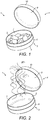
- Figure 2 shows a first example of the invention, wherein at least part of an interior surface of a container 1 similar to that described with reference to Figure 1 is provided with a sensate substance such that products placed in the container 1 are imparted with an organoleptic characteristic.
- a sensate substance will impart a characteristic on the recipient products that can be perceived by the senses.
- the sensate substance may impart a flavour and/or an aroma to the recipient products.
- the container 1 has a main body 3 and a lid 4 which are similar to those described with reference to Figure 1 , although it will be appreciated that other shapes and lid attachment means also fall within the invention as defined in the claims.
- the chamber 7 of the container 1 is defined within the space created between the bottom wall 5 and side wall 6 of the main body 3 and the top wall 9 and side wall 10 of the lid 4. Therefore, when products are placed within the chamber 7 they are surrounded by and may be in contact with these surfaces.
- a portion of the material that forms the chamber 7 of the container 1 of Figure 2 is provided with a sensate substance that is emitted into the chamber 7 and thereby transferred to products placed in the chamber 7 such that an organoleptic characteristic is imparted on those products.
- the interior surfaces of the top, bottom and side walls 5, 6, 9, 10 of the main body 3 and lid 4 are provided with a sensate substance.
- the sensate substance is emitted into the chamber 7 and is transferred to the products.
- the products 2 may also contact the material that is provided with a sensate substance so that the sensate substance is transferred directly to the products 2.
- At least one of the main body 3 and/or lid 4 are made from a material which is provided with a sensate substance.
- the main body and/or lid of the container may be entirely made from the material provided with a sensate substance, in which case the sensate substance will be emitted into the area surrounding the container and will also be transferred to any surfaces contacting the container, to give an indication of what organoleptic characteristic the product has been imparted with.
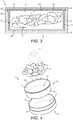
- the main body and/or lid of the container may be made from multiple layers, as shown in Figure 3 , the inner most of those being made from a material which is provided with a sensate substance.
- the container may be manufactured using a multiple-shot injection moulding process, where a single moulding is produced from multiple different materials in a machine cycle.
- this process may be used to produce a container with an inner layer that is provided with a sensate substance and an outer layer which is not provided with a sensate substance, as shown in Figure 3 .
- the main body and/or lid of the container can provide a sensate substance to the chamber, whilst any emission of the sensate substance from external faces of the container 1 is reduced.
- the container 1 shown in Figure 3 has a main body 3 and lid 4 as previously described with reference to Figure 1 .
- the main body 3 comprises an integral inner layer 11 which is provided with a sensate substance.
- the integral inner layer 11 covers a bottom surface 20 of the chamber, on the bottom wall 5 of the container, and an inner surface 21 of the side wall 6 of the container 1.
- the lid 4 also has an integral inner layer 12 which is provided with a sensate substance.
- the inner layer 12 of the lid 4 only covers the inner surface 23 of the top wall 9, and not the inner surface 22 of the side wall 10 of the lid 4.
- the inner surfaces 20, 21, 22, 23 of the chamber 7 may comprise a material provided with a sensate substance which forms an inner layer 11, 12 of the container and still fall within the invention as defined in the claims.
- a sensate substance which forms an inner layer 11, 12 of the container and still fall within the invention as defined in the claims.
- only the inner material of a bottom surface 20 of the chamber 7 might be provided with a sensate substance.
- only a portion of one of the surfaces may be provided with an inner layer of material provided with a sensate substance.
- the inner layers 11, 12 provided with a sensate substance are integrally formed with the main body 3 and lid 4 respectively during the multiple-shot moulding process when the different materials are formed together in such a way as they are fused together and are inseparable.
- the inner layers 11, 12 may be formed separately to the main body 3 and lid 4 and then assembled together with the main body 3 and lid 4 afterwards. Any other suitable method of producing the main body 3 and lid 4 with the inner layers 11, 12 provided with a sensate substance could also be used.
- the sensate substance may be provided to a portion of the container that does not form an innermost internal surface of the container.
- a multiple-shot forming process or a coating process may be used to provide a container having a portion of material provided with a sensate substance and a permeable layer provided between that material and the chamber such that the permeable layer forms at least a part of the surface of the chamber.
- the sensate substance released by the portion of the container provided with the sensate substance can pass through the permeable layer and into the chamber to impart an organoleptic characteristic to products in the chamber.
- Figure 4 shows a further example of a container of the invention which comprises a main body 3 and a lid (not shown) similar to those described with reference to Figure 1 .
- the container further comprises a liner insert 13 which is a separate component to the main body 3.
- the main body 3 of the container 1 is made from a material that is not provided with a sensate substance, for example a polymer or metal material (or any of the other suitable materials discussed earlier with reference to Figure 1 ).
- the liner insert 13 is made from a material which is provided with a sensate substance such that the sensate substance is transferred to products 2 placed in the container 1 to impart an organoleptic characteristic to those products 2.
- the liner insert 13 is formed to cover at least a part of the inside surface of the bottom wall 5 and side wall 6 of the main body 3 so that at least a part of the chamber 7 is defined by the liner insert 13. Therefore, when products 2 are placed in the chamber 7 the products 2 will be in proximity to, or in contact with, the liner insert 13 to allow transfer of the sensate substance.
- the liner insert 13 is formed to match the internal shape of the main body 3.
- the liner insert 13 has a bottom wall 14 and a side wall 15 which extends perpendicularly to the bottom wall 14 and defines a space therein which is the chamber 7 for receiving the products.
- the side wall 15 of the liner insert 13 may also include a lip 16 extending from the edge of the side wall 15 so that when the liner insert 13 is received within the main body 3 the lip 16 extends over an edge 17 of the side wall 6 of the main body 3.
- the exterior dimensions of the liner insert 13 may be the same or very close to the interior dimensions of the main body 3, such that the liner insert 13 is a close fit within the main body 3.
- the liner insert 13 may be a push-fit or interference fit with the main body 3 so that the liner insert 13 is retained in the main body 3 after insertion.
- the liner insert 13 may be adhered to the main body 3 such that the liner insert 13 is retained in the main body 13.
- both the main body 3 and the lid may be provided with a liner insert 13 such that the entire inner surface of the chamber 7 is formed from a material which is provided with a sensate substance, giving a greater surface area for transferring the sensate substance to recipient products.
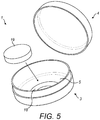
- Figure 5 shows another example of a container 1 which imparts an organoleptic characteristic on products received within the container 1.
- a recess 18 is formed in the bottom wall 5 of the main body 3 of the container 1 and an insert 19 can be inserted into that recess 18.
- the recess 18 and insert 19 may have any regular or irregular shape.
- the recess 18 and insert 19 shown in Figure 5 are oval shaped but may alternatively be circular, triangular or star shaped.
- the main body 3 of the container 1 is made from a material that is not provided with a sensate substance, for example a polymer or metal.
- the insert 19 is made from a material which is provided with a sensate substance, such that the sensate substance is emitted from the insert 19 and thereby transferred to products 2 placed in the container 1 to impart an organoleptic substance to those products 2.
- the insert 19 may be configured such that there is a push-fit or interference fit relationship between the insert 19 and recess 18, so that the insert 19 is retained in the recess 18 once inserted. Adhesive may also be provided between the insert 19 and the recess 18 to retain the insert 19 in place. Alternatively, the insert 19 may be a loose fit within the recess 18 so that a consumer can easily remove the insert 19 to stop further transfer of the organoleptic substance or to change the insert 19.
- the thickness of the insert 19 may be equal to the depth of the recess 18 so that the surface of the chamber 7 is smooth once the insert 19 has been received in the recess 18.
- the thickness of the insert 19 may be greater than the depth of the recess 18 such that, when the insert 19 is received in the recess 18, it protrudes into the chamber 7 and increases the surface area of material of the insert 19 in the chamber 7.
- the protruding part of the insert 19 will allow a consumer to grip the insert 19 and remove it from the recess 18.
- the recess 18 for receiving the insert 19 may be alternatively be formed in the lid of the container 1.
- the insert 19 of Figure 5 or the liner insert 13 of Figure 4 may be coloured to indicate the organoleptic characteristic that they will impart on the products in the container.
- an insert that will impart a menthol characteristic may be coloured green.
- the insert 19 of Figure 5 or the liner insert 13 of Figure 4 may be placed in the container 1 during the process of packaging the products 2, so that transfer of the sensate substance from the material provided with a sensate substance to the recipient products occurs from packaging, through storage, transport and sales display and onwards until the container is opened and all of the products have been consumed.
- the inserts 19, 13 may alternatively be separate from the container 1 so that the consumer places the insert 19, 13 into the container 1 if and when they desire. Therefore, the consumer can select when to impart an organoleptic characteristic to the products.
- the insert 13, 19 may be provided in a sealed wrap such that the sensate substance is retained in the insert until the wrap is opened and the insert is placed in the container for use.
- containers 1 described with reference to any of Figures 2 to 5 will impart an organoleptic characteristic on recipient products 2 placed within the container 1.
- at least a portion of the container is provided with a sensate substance that is emitted into the chamber 7 where products are received to impart an organoleptic characteristic on those recipient products.
- Providing the products 2 within the containers 1 with an organoleptic characteristic will counteract any reduction in the intensity of the flavour and/or aroma of the product resulting from the product being within the container between packaging and first opening. Therefore, the consumer is presented with a fresh product on first opening and after first opening the freshness of the remaining products is maintained.
- At least a portion of the container is provided with a sensate substance.
- the material of this portion may be provided with a sensate substance by means of infusion, sorption (adsorption or absorption) or any other means of providing a material with a sensate substance in such a way that the sensate substance can be released from the material.
- the material provided with a sensate substance may be made from a polymer material which is infused or impregnated with a sensate substance during manufacture of that material.
- Such a material that is provided with a sensate substance may be a polymer foam which is formed into the required shape and then exposed to the sensate substance which is absorbed by the foam. The sensate substance is retained and gradually released over time. The rate of release may be accelerated by warming the material.
- a material which may be provided with a sensate substance is a material comprised of cellulose acetate fibres which absorb the sensate substance.
- the inner layer of the two-shot components shown in Figure 3 , or the inserts 13, 19 of Figures 4 and 5 may be made from cellulose acetate fibres that have absorbed the sensate substance.
- a material that may be provided with a sensate substance is a botanical, absorbent material such as a wood material, which may make up all or a part of any of the components of the containers that are provided with a sensate substance, as described with reference to Figures 4 and 5 .
- Wood is naturally absorbent and any absorbed sensate substance would be gradually released.
- the wood may be a natural or processed wood.
- Another suitable botanical, absorbent material could be a tobacco material.
- the botanical, absorbent material such as the wood or tobacco may itself contribute to the sensate substance.
- the sensate substance provides an organoleptic characteristic to the recipient products in the container.
- a sensate substance can be perceived through the senses and will impart an organoleptic characteristic to the recipient products, which can also be perceived through the senses.
- the sensate substance may be a volatile substance, such as an aromatic botanical substance.
- the sensate substance when the sensate substance is released or emitted from the material of the container the sensate substance evaporates and permeates the chamber. When the evaporated sensate substance encounters a recipient product it will impart on that product an organoleptic characteristic.
- the sensate substance may be a liquid which is gradually released from the material and is transferred to the products by contact.
- the liquid may be an oil or a solution which carries a substance which, when transferred to the recipient product, imparts an organoleptic characteristic to that product.
- the sensate substance may provide a flavour to the recipient products 2.
- the terms "sensate substance” and "flavour” refer to materials which, where local regulations permit, may be used to create a desired taste or aroma in a product for adult consumers. They may include extracts (e.g., eucalyptus, licorice, hydrangea, Japanese white bark magnolia leaf, chamomile, fenugreek, clove, menthol, Japanese mint, aniseed, cinnamon, herb, wintergreen, cherry, berry, peach, apple, Drambuie, bourbon, scotch, whiskey, spearmint, peppermint, lavender, cardamon, celery, cascarilla, nutmeg, sandalwood, bergamot, geranium, honey essence, rose oil, vanilla, lemon oil, orange oil, cassia, caraway, cognac, jasmine, ylang-ylang, sage, fennel, piment, ginger, anise,
- the organoleptic characteristic may be an aroma, for example a menthol scent or other.
- a mentholated sensate substance may also create a cooling sensation when the infused product is consumed or used, as well as providing flavour and/or aroma.
- any combination of organoleptic characteristics may be provided by the sensate substance which may also act to provide an aroma to the air in the chamber, such that a consumer can smell the sensate substance on opening the container.
- the chamber 7 may be divided into any number of sub-chambers for storage of the recipient products.
- at least a portion of the interior surface of each of the sub-chambers may be provided with a different sensate substance, so that different organoleptic characteristics are imparted on the recipient products in different sub-chambers.
- the recipient products in each sub-chamber may be the same or they may be different.
Landscapes
- Engineering & Computer Science (AREA)
- Mechanical Engineering (AREA)
- Health & Medical Sciences (AREA)
- General Health & Medical Sciences (AREA)
- Toxicology (AREA)
- Chemical & Material Sciences (AREA)
- Chemical Kinetics & Catalysis (AREA)
- General Chemical & Material Sciences (AREA)
- Packages (AREA)
- Packaging Of Annular Or Rod-Shaped Articles, Wearing Apparel, Cassettes, Or The Like (AREA)
- Closures For Containers (AREA)
Abstract
Description
- This invention relates to a container, specifically but not exclusively to a container for a snus smokeless tobacco product.
- Snus tobacco may be sold either in loose form or in portions disposed in permeable bags and is packaged in portable containers having a re-closable lid to maintain the moisture of the snus during transport, storage and display of the product. Snus is typically consumed by placing it under the upper lip for an extended period of time.
- In accordance with embodiments of the invention, there is provided a container comprising a main body and a lid which define a chamber for a recipient product, wherein a portion of the container is provided with a sensate substance which is released into the chamber to impart an organoleptic characteristic to a recipient product within said chamber.
- In one example, the main body may comprise the portion of the container which is provided with a sensate substance.
- In another example, the lid may comprise the portion of the container which is provided with a sensate substance.
- The portion of the container which is provided with a sensate substance may be an internal surface of the chamber.
- Alternatively, the container may comprise a permeable layer disposed between the portion of the container provided with a sensate substance and said chamber.
- The container may comprise a material which contains a sensate substance.
- The container may be provided with an inner layer which is provided with a sensate substance and which may be integrally formed with the container.
- The container may comprise an insert which is received in the container, said insert being provided with a sensate substance which is released into said chamber.
- The insert may be received within the main body of the container, said insert defining at least a part of the internal surface of the chamber.
- The insert may be shaped to match the internal shape of the main body such that the insert is received within the main body and covers the internal surface of said main body to define said chamber.
- Alternatively, the insert may be a different shape to the internal shape of the main body, so that it only partially covers the internal surface of the chamber.
- The insert may be shaped to match the internal shape of the lid such that the insert is received within the lid and covers the internal surface of said lid to define said chamber.
- The insert may be received in a recess formed in an internal surface of the chamber.
- The chamber may contain one or more recipient products.
- The recipient product may be a smokeless tobacco product.
- The recipient product may be a snus tobacco product.
- The recipient product may be snus tobacco.
- The container may be pocket-sized.
- In accordance with embodiments of the invention, there is also provided an insert for a container for recipient products, said insert being receivable within said container and being provided with a sensate substance which is released into a chamber of the container to impart an organoleptic characteristic on the recipient product within said container.
- In accordance with embodiments of the invention, there is also provided a method of providing a recipient product received in a chamber of a container with an organoleptic characteristic, comprising the step of providing a portion of the container with a sensate substance which is released into the chamber to impart an organoleptic characteristic on the recipient product within said container.
- Embodiments of the invention will now be described, by way of example only, with reference to the accompanying drawings in which:
-
Figure 1 shows a container for snus tobacco pouches having a main body and a removable lid; -
Figure 2 shows an example of a container of the invention, wherein the container is provided with a sensate substance; -
Figure 3 shows a cross-sectional view of one example of the container ofFigure 2 ; -
Figure 4 shows another example of a container of the invention, having a liner which is provided with a sensate substance; and -
Figure 5 shows another example of a container of the invention, having an insert which is provided with a sensate substance. -
Figure 1 shows a container 1 forsnus tobacco pouches 2 which comprises amain body 3 and aremovable lid 4. The examples shown inFigures 1 to 5 each relate to a round container which is pocket-sized for the convenience of the consumer, although it will be appreciated that other shapes and sizes are also possible and fall within the scope of the invention as defined in the claims. - The container can be made from a rigid material. For example, the container may be made from a polymer, such as polypropylene, polyethylene, high-density polyethylene, or acrylic, or a metal, such as aluminium or tin. Other suitable materials could include cellulose acetate, or composite materials such as a polymer fibrous composite. Alternatively, any other rigid and lightweight material may be suitable.
- The
main body 3 of the container 1 comprises aplanar bottom wall 5 and acylindrical side wall 6 which extends perpendicularly to thebottom wall 5 to define achamber 7 which is closed by theremovable lid 4. The lid comprises a planar top wall 9 with acylindrical side wall 10 that extends perpendicularly to the top wall 9. Thecylindrical side wall 10 of thelid 4 and thecylindrical side wall 6 of themain body 3 are configured to have a push-fit relationship in the region where the two overlap, to allow thelid 4 to be removably attached to themain body 3. As shown inFigure 1 , theside wall 6 of themain body 3, or theside wall 10 of thelid 4, may be stepped such that when thelid 4 is attached to themain body 3 the outer circumferential face of the assembled container is level and smooth. - In this example, the
chamber 7 within the container 1, as defined between themain body 3 and thelid 4, is for containing a smokeless snus tobacco product which may be provided inpouches 2 for the consumer's convenience, as shown inFigure 1 . However, it will be appreciated that the container 1 of the invention may instead be used for other products, such as loose snus tobacco, loose rolling tobacco or other tobacco products, smokeless or otherwise. Also, non-tobacco products, such as inert materials with or without nicotine, or plant matter other than tobacco, could be used. The smokeless snus tobacco product (or alternative) contained in theprimary chamber 7 may be known as the recipient product. - It is important that the freshness of tobacco products such as those listed as examples above is maintained from the time of packaging to the time when a consumer opens the container and beyond until the product has been consumed. One characteristic of tobacco is that it is moist and to remain fresh it must not be allowed to dry out. Therefore, the
main body 3 andlid 4 of the container shown inFigure 1 are configured to seal thechamber 7 from the atmosphere outside the container 1. That is, the push-fit or otherwise between thelid 4 andmain body 3 is tight enough to restrict air flow therethrough. The container may also include a sealing gasket to help with the restriction of air flow. - It is noted that in some embodiments, the
main body 3 andlid 4 of the container shown inFigure 1 may hermetically seal thechamber 7 from the atmosphere outside the container 1. - As shown in
Figure 1 , thelid 4 of the container 1 attaches to themain body 3 by means of a push fit - the tolerance between thelid 4 and themain body 3 is tight so that the consumer must push thelid 4 firmly onto themain body 3 to close the container 1. This ensures that the container 1 is adequately sealed from the outside environment while still being removable to allow the consumer to open the container and retrieve theproducts 2. It will be appreciated that thelid 4 may alternatively be attachable to themain body 3 of the container 1 in other ways, for example, the lid and main body may be provided with screw elements that engage with each other so that the lid is screwed onto the main body. Any other suitable method of allowing thelid 4 to be attachable to themain body 3 may also be used. -
Figure 2 shows a first example of the invention, wherein at least part of an interior surface of a container 1 similar to that described with reference toFigure 1 is provided with a sensate substance such that products placed in the container 1 are imparted with an organoleptic characteristic. A sensate substance will impart a characteristic on the recipient products that can be perceived by the senses. In particular, the sensate substance may impart a flavour and/or an aroma to the recipient products. - As shown in
Figure 2 , the container 1 has amain body 3 and alid 4 which are similar to those described with reference toFigure 1 , although it will be appreciated that other shapes and lid attachment means also fall within the invention as defined in the claims. Thechamber 7 of the container 1 is defined within the space created between thebottom wall 5 andside wall 6 of themain body 3 and the top wall 9 andside wall 10 of thelid 4. Therefore, when products are placed within thechamber 7 they are surrounded by and may be in contact with these surfaces. - A portion of the material that forms the
chamber 7 of the container 1 ofFigure 2 is provided with a sensate substance that is emitted into thechamber 7 and thereby transferred to products placed in thechamber 7 such that an organoleptic characteristic is imparted on those products. - In this example, the interior surfaces of the top, bottom and
side walls main body 3 andlid 4 are provided with a sensate substance. In this way, when products are placed into thechamber 7 and thelid 4 is attached to themain body 3 the sensate substance is emitted into thechamber 7 and is transferred to the products. Theproducts 2 may also contact the material that is provided with a sensate substance so that the sensate substance is transferred directly to theproducts 2. - In a first example of the container described with reference to
Figure 2 , at least one of themain body 3 and/orlid 4 are made from a material which is provided with a sensate substance. - The main body and/or lid of the container may be entirely made from the material provided with a sensate substance, in which case the sensate substance will be emitted into the area surrounding the container and will also be transferred to any surfaces contacting the container, to give an indication of what organoleptic characteristic the product has been imparted with.
- In a second example of the container described with reference to
Figure 2 , the main body and/or lid of the container may be made from multiple layers, as shown inFigure 3 , the inner most of those being made from a material which is provided with a sensate substance. To achieve this, the container may be manufactured using a multiple-shot injection moulding process, where a single moulding is produced from multiple different materials in a machine cycle. In particular, this process may be used to produce a container with an inner layer that is provided with a sensate substance and an outer layer which is not provided with a sensate substance, as shown inFigure 3 . In this way, the main body and/or lid of the container can provide a sensate substance to the chamber, whilst any emission of the sensate substance from external faces of the container 1 is reduced. - In particular, the container 1 shown in
Figure 3 has amain body 3 andlid 4 as previously described with reference toFigure 1 . However, in this case themain body 3 comprises an integralinner layer 11 which is provided with a sensate substance. The integralinner layer 11 covers abottom surface 20 of the chamber, on thebottom wall 5 of the container, and aninner surface 21 of theside wall 6 of the container 1. Similarly, thelid 4 also has an integralinner layer 12 which is provided with a sensate substance. As shown inFigure 3 , theinner layer 12 of thelid 4 only covers theinner surface 23 of the top wall 9, and not theinner surface 22 of theside wall 10 of thelid 4. However, it will be appreciated that different parts of theinner surfaces chamber 7 may comprise a material provided with a sensate substance which forms aninner layer bottom surface 20 of thechamber 7 might be provided with a sensate substance. Alternatively, only a portion of one of the surfaces may be provided with an inner layer of material provided with a sensate substance. - The
inner layers main body 3 andlid 4 respectively during the multiple-shot moulding process when the different materials are formed together in such a way as they are fused together and are inseparable. Alternatively, theinner layers main body 3 andlid 4 and then assembled together with themain body 3 andlid 4 afterwards. Any other suitable method of producing themain body 3 andlid 4 with theinner layers - As shown in
Figure 3 , whenproducts 2, such as snus pouches, are placed in thechamber 7 of the container 1 they are directly exposed to, surrounded by and in contact with theinner layers inner layers products 2. - It will be appreciated that in an alternative example the sensate substance may be provided to a portion of the container that does not form an innermost internal surface of the container. For example, a multiple-shot forming process or a coating process may be used to provide a container having a portion of material provided with a sensate substance and a permeable layer provided between that material and the chamber such that the permeable layer forms at least a part of the surface of the chamber. In this example, the sensate substance released by the portion of the container provided with the sensate substance can pass through the permeable layer and into the chamber to impart an organoleptic characteristic to products in the chamber.
-
Figure 4 shows a further example of a container of the invention which comprises amain body 3 and a lid (not shown) similar to those described with reference toFigure 1 . In this example, the container further comprises aliner insert 13 which is a separate component to themain body 3. Themain body 3 of the container 1 is made from a material that is not provided with a sensate substance, for example a polymer or metal material (or any of the other suitable materials discussed earlier with reference toFigure 1 ). Theliner insert 13 is made from a material which is provided with a sensate substance such that the sensate substance is transferred toproducts 2 placed in the container 1 to impart an organoleptic characteristic to thoseproducts 2. - The
liner insert 13 is formed to cover at least a part of the inside surface of thebottom wall 5 andside wall 6 of themain body 3 so that at least a part of thechamber 7 is defined by theliner insert 13. Therefore, whenproducts 2 are placed in thechamber 7 theproducts 2 will be in proximity to, or in contact with, theliner insert 13 to allow transfer of the sensate substance. - In the example shown in
Figure 4 , theliner insert 13 is formed to match the internal shape of themain body 3. Theliner insert 13 has abottom wall 14 and aside wall 15 which extends perpendicularly to thebottom wall 14 and defines a space therein which is thechamber 7 for receiving the products. Theside wall 15 of theliner insert 13 may also include alip 16 extending from the edge of theside wall 15 so that when theliner insert 13 is received within themain body 3 thelip 16 extends over anedge 17 of theside wall 6 of themain body 3. - To retain the
liner insert 13 within themain body 3 the exterior dimensions of theliner insert 13 may be the same or very close to the interior dimensions of themain body 3, such that theliner insert 13 is a close fit within themain body 3. In particular, theliner insert 13 may be a push-fit or interference fit with themain body 3 so that theliner insert 13 is retained in themain body 3 after insertion. Alternatively or additionally, theliner insert 13 may be adhered to themain body 3 such that theliner insert 13 is retained in themain body 13. - It will be appreciated that the
liner insert 13 may alternatively be received in the lid of the container in the same way as described above. Alternatively, both themain body 3 and the lid may be provided with aliner insert 13 such that the entire inner surface of thechamber 7 is formed from a material which is provided with a sensate substance, giving a greater surface area for transferring the sensate substance to recipient products. -
Figure 5 shows another example of a container 1 which imparts an organoleptic characteristic on products received within the container 1. In this example, arecess 18 is formed in thebottom wall 5 of themain body 3 of the container 1 and aninsert 19 can be inserted into thatrecess 18. Therecess 18 and insert 19 may have any regular or irregular shape. For example, therecess 18 and insert 19 shown inFigure 5 are oval shaped but may alternatively be circular, triangular or star shaped. - Similar to the example described with reference to
Figure 4 , themain body 3 of the container 1 is made from a material that is not provided with a sensate substance, for example a polymer or metal. Theinsert 19 is made from a material which is provided with a sensate substance, such that the sensate substance is emitted from theinsert 19 and thereby transferred toproducts 2 placed in the container 1 to impart an organoleptic substance to thoseproducts 2. - The
insert 19 may be configured such that there is a push-fit or interference fit relationship between theinsert 19 andrecess 18, so that theinsert 19 is retained in therecess 18 once inserted. Adhesive may also be provided between theinsert 19 and therecess 18 to retain theinsert 19 in place. Alternatively, theinsert 19 may be a loose fit within therecess 18 so that a consumer can easily remove theinsert 19 to stop further transfer of the organoleptic substance or to change theinsert 19. - The thickness of the
insert 19 may be equal to the depth of therecess 18 so that the surface of thechamber 7 is smooth once theinsert 19 has been received in therecess 18. Alternatively, the thickness of theinsert 19 may be greater than the depth of therecess 18 such that, when theinsert 19 is received in therecess 18, it protrudes into thechamber 7 and increases the surface area of material of theinsert 19 in thechamber 7. Moreover, the protruding part of theinsert 19 will allow a consumer to grip theinsert 19 and remove it from therecess 18. It will be appreciated that therecess 18 for receiving theinsert 19 may be alternatively be formed in the lid of the container 1. - The
insert 19 ofFigure 5 or theliner insert 13 ofFigure 4 may be coloured to indicate the organoleptic characteristic that they will impart on the products in the container. For example, an insert that will impart a menthol characteristic may be coloured green. - The
insert 19 ofFigure 5 or theliner insert 13 ofFigure 4 may be placed in the container 1 during the process of packaging theproducts 2, so that transfer of the sensate substance from the material provided with a sensate substance to the recipient products occurs from packaging, through storage, transport and sales display and onwards until the container is opened and all of the products have been consumed. However, it will be appreciated that theinserts insert insert - The examples of containers 1 described with reference to any of
Figures 2 to 5 will impart an organoleptic characteristic onrecipient products 2 placed within the container 1. In particular, in each of the examples described with reference toFigures 2 to 5 , at least a portion of the container is provided with a sensate substance that is emitted into thechamber 7 where products are received to impart an organoleptic characteristic on those recipient products. - Providing the
products 2 within the containers 1 with an organoleptic characteristic will counteract any reduction in the intensity of the flavour and/or aroma of the product resulting from the product being within the container between packaging and first opening. Therefore, the consumer is presented with a fresh product on first opening and after first opening the freshness of the remaining products is maintained. - In each of the example containers described with reference to
Figures 2 to 5 , at least a portion of the container is provided with a sensate substance. The material of this portion may be provided with a sensate substance by means of infusion, sorption (adsorption or absorption) or any other means of providing a material with a sensate substance in such a way that the sensate substance can be released from the material. - For example, the material provided with a sensate substance may be made from a polymer material which is infused or impregnated with a sensate substance during manufacture of that material.
- Another example of such a material that is provided with a sensate substance may be a polymer foam which is formed into the required shape and then exposed to the sensate substance which is absorbed by the foam. The sensate substance is retained and gradually released over time. The rate of release may be accelerated by warming the material.
- Another example of a material which may be provided with a sensate substance, as described with reference to
Figures 2 to 5 , is a material comprised of cellulose acetate fibres which absorb the sensate substance. The inner layer of the two-shot components shown inFigure 3 , or theinserts Figures 4 and5 , may be made from cellulose acetate fibres that have absorbed the sensate substance. - Another example of a material that may be provided with a sensate substance is a botanical, absorbent material such as a wood material, which may make up all or a part of any of the components of the containers that are provided with a sensate substance, as described with reference to
Figures 4 and5 . Wood is naturally absorbent and any absorbed sensate substance would be gradually released. The wood may be a natural or processed wood. Another suitable botanical, absorbent material could be a tobacco material. Of course, the botanical, absorbent material such as the wood or tobacco may itself contribute to the sensate substance. - The sensate substance provides an organoleptic characteristic to the recipient products in the container. A sensate substance can be perceived through the senses and will impart an organoleptic characteristic to the recipient products, which can also be perceived through the senses.
- The sensate substance may be a volatile substance, such as an aromatic botanical substance. In this example, when the sensate substance is released or emitted from the material of the container the sensate substance evaporates and permeates the chamber. When the evaporated sensate substance encounters a recipient product it will impart on that product an organoleptic characteristic.
- Alternatively, the sensate substance may be a liquid which is gradually released from the material and is transferred to the products by contact. The liquid may be an oil or a solution which carries a substance which, when transferred to the recipient product, imparts an organoleptic characteristic to that product.
- The sensate substance may provide a flavour to the
recipient products 2. As used herein, the terms "sensate substance" and "flavour" refer to materials which, where local regulations permit, may be used to create a desired taste or aroma in a product for adult consumers. They may include extracts (e.g., eucalyptus, licorice, hydrangea, Japanese white bark magnolia leaf, chamomile, fenugreek, clove, menthol, Japanese mint, aniseed, cinnamon, herb, wintergreen, cherry, berry, peach, apple, Drambuie, bourbon, scotch, whiskey, spearmint, peppermint, lavender, cardamon, celery, cascarilla, nutmeg, sandalwood, bergamot, geranium, honey essence, rose oil, vanilla, lemon oil, orange oil, cassia, caraway, cognac, jasmine, ylang-ylang, sage, fennel, piment, ginger, anise, coriander, coffee, or a mint oil from any species of the genus Mentha), flavour enhancers, bitterness receptor site blockers, sensorial receptor site activators or stimulators, sugars and/or sugar substitutes (e.g., sucralose, acesulfame potassium, aspartame, saccharine, cyclamates, lactose, sucrose, glucose, fructose, sorbitol, or mannitol), and other additives such as charcoal, chlorophyll, minerals, botanicals, or breath freshening agents. They may be imitation, synthetic or natural ingredients or blends thereof. They may be in any suitable form, for example, oil, liquid, or powder. - Alternatively, the organoleptic characteristic may be an aroma, for example a menthol scent or other. A mentholated sensate substance may also create a cooling sensation when the infused product is consumed or used, as well as providing flavour and/or aroma. It will be appreciated that any combination of organoleptic characteristics may be provided by the sensate substance which may also act to provide an aroma to the air in the chamber, such that a consumer can smell the sensate substance on opening the container.
- It is noted that, in some embodiments (not shown in the drawings), the
chamber 7 may be divided into any number of sub-chambers for storage of the recipient products. In this case, at least a portion of the interior surface of each of the sub-chambers may be provided with a different sensate substance, so that different organoleptic characteristics are imparted on the recipient products in different sub-chambers. The recipient products in each sub-chamber may be the same or they may be different. - It should also be clear that, in embodiments, any number of recipient products may be used.
- In order to address various issues and advance the art, the entirety of this disclosure shows by way of illustration various embodiments in which the claimed invention(s) may be practiced and provide for a superior container. The advantages and features of the disclosure are of a representative sample of embodiments only, and are not exhaustive and/or exclusive. They are presented only to assist in understanding and teach the claimed features. It is to be understood that advantages, embodiments, examples, functions, features, structures, and/or other aspects of the disclosure are not to be considered limitations on the disclosure as defined by the claims or limitations on equivalents to the claims, and that other embodiments may be utilised and modifications may be made without departing from the scope and/or spirit of the disclosure. Various embodiments may suitably comprise, consist of, or consist essentially of, various combinations of the disclosed elements, components, features, parts, steps, means, etc. In addition, the disclosure includes other inventions not presently claimed, but which may be claimed in future.
- Further particular and preferred aspects of the invention are set out in the accompanying independent and dependent clauses. Features of the dependent clauses may be combined with those of the independent clauses and independent claims as appropriate and in combinations other than those explicitly set out in the clauses and claims.
- Clause 1. A container comprising a main body and a lid which define a chamber for a recipient product, wherein a portion of the container is made from a material which is provided with a sensate substance which is released into the chamber and thereby transferred to a recipient product within the chamber to impart an organoleptic characteristic to the recipient product.
-
Clause 2. The container of clause 1, wherein the main body comprises said portion of the container which is made from a material which is provided with a sensate substance. -
Clause 3. The container of clause 1 orclause 2, wherein the lid comprises said portion of the container which is made from a material which is provided with a sensate substance. -
Clause 4. The container of any preceding clause, wherein the portion of the container which is made from a material which is provided with a sensate substance is an internal surface of the chamber. -
Clause 5. The container of any of clauses 1 to 4, wherein the container comprises a permeable layer disposed between the portion of the container made from a material which is provided with a sensate substance and said chamber.Clause 6. The container of any preceding clause, wherein the container is made from a material which contains a sensate substance. -
Clause 7. The container of any preceding clause, wherein the container is provided with an inner layer which is made from a material which is provided with a sensate substance and which is integrally formed with the container. - Clause 8. The container of any of clauses 1 to 7, further comprising an insert which is received in the container, said insert being made from a material which is provided with a sensate substance which is released into said chamber.
- Clause 9. The container of clause 8, wherein the insert is received within the main body of the container, said insert defining at least a part of the internal surface of the chamber.
-
Clause 10. The container of clause 9, wherein the insert is shaped to match the internal shape of the main body such that the insert is received within the main body and covers the internal surface of said main body to define said chamber. -
Clause 11. The container of clause 9 orclause 10, wherein the insert is a different shape to the internal shape of the main body, so that it only partially covers the internal surface of the chamber. -
Clause 12. The container of clause 8, wherein the insert is shaped to match the internal shape of the lid such that the insert is received within the lid and covers the internal surface of said lid to define said chamber. -
Clause 13. The container of any of clauses 8 to 12, wherein the insert is received in a recess formed in an internal surface of the chamber. -
Clause 14. The container of any preceding clause, wherein the chamber contains one or more recipient products. -
Clause 15. The container of any preceding clause, wherein the recipient product is a smokeless tobacco product. -
Clause 16. The container of any preceding clause, wherein the recipient product is a snus tobacco product. -
Clause 17. The container of any preceding clause, wherein the container is pocket-sized. -
Clause 18. A method of providing a recipient product received in a chamber of a container comprising a main body and a lid with an organoleptic characteristic, comprising the step of:- making a portion of the container from a material provided with a sensate substance which is released into the chamber and thereby transferred to the recipient product in the container to impart an organoleptic characteristic on the recipient product.
Claims (15)
- An insert for a container for recipient products, said insert being receivable within said container and being made from a material provided with a sensate substance which is released into a chamber of the container to impart an organoleptic characteristic on the recipient product within said container.
- An insert according to claim 1, wherein the insert comprises a liner insert formed to cover at least a part of an inside surface of the container.
- An insert according to claim 2, wherein the insert comprises a bottom wall and a side wall extending perpendicularly to the bottom wall.
- An insert according to claim 3, wherein the bottom wall and the side wall define a chamber for receiving said recipient products.
- An insert according to claim 3 or claim 4, further comprising a lip extending from an edge of the side wall.
- An insert according to any one of claims 1 to 5, wherein the material is a polymer material infused or impregnated with the sensate substance during manufacture of the material.
- An insert according to any one of claims 1 to 5, wherein the material is a polymer foam which has absorbed the sensate substance after being formed into an insert shape.
- An insert according to any one of claims 1 to 5, wherein the material comprises cellulose acetate fibres that have absorbed the sensate substance.
- An insert according to any one of claims 1 to 5, wherein the material comprises a botanical absorbent material.
- An insert according to any one of claims 1 to 9, wherein the sensate substance is a volatile substance.
- An insert according to any one of claims 1 to 9, wherein the sensate substance is a liquid.
- An insert according to any one of claims 1 to 11, wherein the recipient product is a smokeless tobacco product.
- An insert according to any one of claims 1 to 12, wherein the recipient product is a snus tobacco product.
- An insert according to any one of claims 1 to 13, wherein the container is pocket-sized.
- A method of providing a recipient product received in a chamber of a container comprising a main body and a lid with an organoleptic characteristic, comprising the step of:placing into the container an insert made from a material provided with a sensate substance which is released into the chamber to impart an organoleptic characteristic on the recipient product within said container.
Applications Claiming Priority (2)
| Application Number | Priority Date | Filing Date | Title |
|---|---|---|---|
| GB1307024.8A GB2513165A (en) | 2013-04-18 | 2013-04-18 | Container |
| EP14717853.7A EP2986172A1 (en) | 2013-04-18 | 2014-04-15 | Container |
Related Parent Applications (1)
| Application Number | Title | Priority Date | Filing Date |
|---|---|---|---|
| EP14717853.7A Division EP2986172A1 (en) | 2013-04-18 | 2014-04-15 | Container |
Publications (1)
| Publication Number | Publication Date |
|---|---|
| EP3180996A1 true EP3180996A1 (en) | 2017-06-21 |
Family
ID=48537428
Family Applications (2)
| Application Number | Title | Priority Date | Filing Date |
|---|---|---|---|
| EP14717853.7A Pending EP2986172A1 (en) | 2013-04-18 | 2014-04-15 | Container |
| EP16203556.2A Withdrawn EP3180996A1 (en) | 2013-04-18 | 2014-04-15 | Container |
Family Applications Before (1)
| Application Number | Title | Priority Date | Filing Date |
|---|---|---|---|
| EP14717853.7A Pending EP2986172A1 (en) | 2013-04-18 | 2014-04-15 | Container |
Country Status (5)
| Country | Link |
|---|---|
| US (2) | US12127585B2 (en) |
| EP (2) | EP2986172A1 (en) |
| JP (3) | JP6533515B2 (en) |
| GB (1) | GB2513165A (en) |
| WO (1) | WO2014170654A1 (en) |
Families Citing this family (16)
| Publication number | Priority date | Publication date | Assignee | Title |
|---|---|---|---|---|
| GB2513163A (en) | 2013-04-18 | 2014-10-22 | British American Tobacco Co | Container |
| GB2513165A (en) | 2013-04-18 | 2014-10-22 | British American Tobacco Co | Container |
| US9936729B2 (en) | 2014-10-16 | 2018-04-10 | R.J. Reynolds Tobacco Company | Package for a tobacco-containing material and related packaging method |
| US9968130B2 (en) | 2014-10-16 | 2018-05-15 | R.J. Reynolds Tobacco Company | Package for a tobacco-containing material with a valve assembly and related packaging method |
| JP6495315B2 (en) * | 2014-10-24 | 2019-04-03 | 日本たばこ産業株式会社 | Flavor source manufacturing method and package |
| US11147309B2 (en) | 2015-06-10 | 2021-10-19 | R.J. Reynolds Tobacco Company | Container for smokeless tobacco products comprising a pulp material and related packaged product assembly and method |
| USD796329S1 (en) * | 2015-07-10 | 2017-09-05 | HCT Group Holdings Limited | Cosmetic jar |
| WO2017115234A1 (en) * | 2015-12-28 | 2017-07-06 | R. J. Reynolds Tobacco Company | Package for a tobacco-containing material and related packaging method |
| KR20180115802A (en) | 2016-03-16 | 2018-10-23 | 에이치씨티 그룹 홀딩스 리미티드 | Magnetic lid and assembly |
| USD852647S1 (en) | 2016-11-08 | 2019-07-02 | HCT Group Holding Limited | Dual cosmetics jar |
| USD867155S1 (en) * | 2017-08-03 | 2019-11-19 | Kenzo | Cream jar |
| WO2019177897A1 (en) | 2018-03-15 | 2019-09-19 | HCT Group Holdings Limited | Cosmetic jars with sweep collar |
| US20240002121A1 (en) * | 2020-11-20 | 2024-01-04 | Nicoventures Trading Limited | A container |
| KR20240018532A (en) * | 2021-06-04 | 2024-02-13 | 필립모리스 프로덕츠 에스.에이. | container with tray |
| US11737492B1 (en) | 2022-05-13 | 2023-08-29 | Brian Coates | Chewing tobacco preserving assembly |
| US12221264B1 (en) | 2023-02-23 | 2025-02-11 | Charles Michael Scudder | Terpene preservation system and method |
Citations (7)
| Publication number | Priority date | Publication date | Assignee | Title |
|---|---|---|---|---|
| US1972118A (en) * | 1932-01-07 | 1934-09-04 | Rex D Mcdill | Medicated stick |
| US4269203A (en) * | 1980-02-15 | 1981-05-26 | Corbett Lacey O | Anti-smoking device |
| FR2504498A1 (en) * | 1981-04-27 | 1982-10-29 | Stem Inc Chester | Oak cask for ageing and maturing wine, whisky etc. - contains pocketed oak contacting element to speed process and extend life of cask |
| WO2008135468A1 (en) * | 2007-05-04 | 2008-11-13 | British American Tobacco (Investments) Limited | Refill unit for a moist smokeless tobacco product |
| US20110083677A1 (en) * | 2009-10-09 | 2011-04-14 | Philip Morris Usa Inc. | Flavored packaging insert for smokeless tobacco |
| WO2011061130A1 (en) * | 2009-11-18 | 2011-05-26 | British American Tobacco Americas Prestaçáo De Serviços Ltda | A package for tobacco industry products |
| EP2454954A1 (en) * | 2009-06-16 | 2012-05-23 | Japan Tobacco, Inc. | Oral tobacco product |
Family Cites Families (45)
| Publication number | Priority date | Publication date | Assignee | Title |
|---|---|---|---|---|
| US224632A (en) * | 1880-02-17 | Henry beeey | ||
| US1935840A (en) * | 1931-11-05 | 1933-11-21 | American Tobacco Co | Tobacco receptacle |
| US2357258A (en) * | 1941-01-22 | 1944-08-29 | Clifford G Harris | Bakery flavoring product and method of making same |
| JPS4939779B1 (en) | 1968-09-30 | 1974-10-29 | ||
| DE1959102A1 (en) * | 1969-11-20 | 1971-05-27 | Ernst Ruediger | Menthol impregnater for cigarettes |
| US3688985A (en) * | 1970-12-09 | 1972-09-05 | Walter H Engel | Plastic article of manufacture impregnated with volatile matter |
| JPS5142221Y2 (en) * | 1974-04-09 | 1976-10-14 | ||
| JPS5217149U (en) | 1975-07-23 | 1977-02-07 | ||
| US4540721A (en) * | 1983-03-10 | 1985-09-10 | The Procter & Gamble Company | Method of providing odor to product container |
| US4686353A (en) | 1984-10-09 | 1987-08-11 | Donald Spector | Aroma-generating automobile cigarette lighter |
| US4598006A (en) * | 1985-05-02 | 1986-07-01 | Hercules Incorporated | Method for impregnating a thermoplastic polymer |
| US4706837A (en) | 1986-03-24 | 1987-11-17 | Inventive Packaging Corporation | Tamper-resistant package |
| US4814212A (en) * | 1988-05-05 | 1989-03-21 | Donald Spector | Automobile air freshener unit |
| US6358577B1 (en) * | 1995-06-07 | 2002-03-19 | Pechiney Emballage Flexible Europe | Membrane permeable to aromatic products |
| US5832934A (en) * | 1996-11-05 | 1998-11-10 | Pacific Handy Cutter | Hand held portable cigar humidor |
| CA2202717A1 (en) | 1997-04-15 | 1998-10-15 | Rothmans, Benson & Hedges Inc. | Cigarette or tobacco package with re-usable aroma releasent for multiple package openings |
| JP2002248160A (en) | 2001-02-23 | 2002-09-03 | T Hasegawa Co Ltd | Drug supply container |
| DE60237980D1 (en) * | 2001-08-06 | 2010-11-25 | Csp Technologies Inc | METHOD AND COMPOSITION FOR A CLADDING IN TOOL |
| US20040018278A1 (en) * | 2002-07-25 | 2004-01-29 | Popplewell Lewis Michael | Packaging containing fragrance |
| WO2007011913A2 (en) * | 2005-07-18 | 2007-01-25 | Resourceful Products, Inc. | Containers for removing moisture and/or oxygen |
| JP4939779B2 (en) | 2005-08-09 | 2012-05-30 | 株式会社日立製作所 | Projection-type image display device |
| FR2907703B1 (en) | 2006-10-30 | 2008-12-19 | Patrick Lalanne | METHOD FOR MANUFACTURING A BARRIER OF WOOD, KIT FOR BARRIER, BARRIQUE OBTAINED |
| US20080210249A1 (en) | 2007-03-02 | 2008-09-04 | Luzenberg Robert S | Systems, devices and methods for delivering one or more additives to smokeless tobacco |
| US8393465B2 (en) * | 2007-05-07 | 2013-03-12 | Philip Morris Usa Inc. | Pocket-size hybrid container for consumer items |
| US7648024B2 (en) * | 2007-05-29 | 2010-01-19 | Phillip Morris Usa Inc. | Pocket-sized, hand-held container for consumer items having a receptacle for used product, sealed tray, and thumb ridge on lid |
| GB0710778D0 (en) * | 2007-06-05 | 2007-07-18 | British American Tobacco Co | Disposable humidifier for use with tobacco products |
| US20090266910A1 (en) | 2008-04-28 | 2009-10-29 | James Hunter | Fragrance Filter Air Escape Patch For Plastic Trash Bags |
| US8215482B2 (en) | 2008-07-07 | 2012-07-10 | J.L. Clark, Inc. | Tobacco container with insert |
| GB0822657D0 (en) * | 2008-12-12 | 2009-01-21 | British American Tobacco Co | Container |
| US8109409B1 (en) | 2009-01-20 | 2012-02-07 | Macmurray Carolyn | Garbage can deodorizer |
| GB2467971A (en) | 2009-02-24 | 2010-08-25 | British American Tobacco Co | Pack for tobacco industry products |
| JP2011000004A (en) | 2009-06-16 | 2011-01-06 | Japan Tobacco Inc | Oral cavity tobacco product |
| EP2532255B1 (en) | 2010-02-05 | 2021-10-27 | Japan Tobacco Inc. | Oral tobacco product |
| EP2543610B1 (en) | 2010-03-04 | 2016-09-07 | Japan Tobacco, Inc. | Oral product holder device |
| WO2011114528A1 (en) * | 2010-03-19 | 2011-09-22 | 日本たばこ産業株式会社 | Cigarette pack |
| WO2011133575A1 (en) * | 2010-04-19 | 2011-10-27 | Freshtec, Inc. | Treatment of modified atmosphere packaging |
| JP5422748B2 (en) | 2010-10-18 | 2014-02-19 | 日本たばこ産業株式会社 | Process for producing flavor-releasing granules, flavor-releasing granules and cigarette filter comprising flavor-releasing granules |
| US20130008809A1 (en) * | 2011-07-06 | 2013-01-10 | Charles Cortez | Seal can |
| ITBO20110726A1 (en) * | 2011-12-16 | 2013-06-17 | Gd Spa | METHOD AND MACHINE FOR THE PRODUCTION OF ENVELOPES CONTAINING FIBER MATERIAL. |
| US8894478B1 (en) * | 2012-01-06 | 2014-11-25 | Woodrow Stillwagon | Environmental improvement system |
| US20130262345A1 (en) * | 2012-03-27 | 2013-10-03 | Gojo Industries, Inc. | Personalized dispenser system |
| KR101402606B1 (en) * | 2012-12-07 | 2014-06-03 | 전자부품연구원 | Structure of pixel for active matrix display and the method |
| GB2513165A (en) | 2013-04-18 | 2014-10-22 | British American Tobacco Co | Container |
| GB2513164A (en) | 2013-04-18 | 2014-10-22 | British American Tobacco Co | Container |
| GB2513166A (en) | 2013-04-18 | 2014-10-22 | British American Tobacco Co | Container |
-
2013
- 2013-04-18 GB GB1307024.8A patent/GB2513165A/en not_active Withdrawn
-
2014
- 2014-04-15 JP JP2016508230A patent/JP6533515B2/en active Active
- 2014-04-15 WO PCT/GB2014/051169 patent/WO2014170654A1/en not_active Ceased
- 2014-04-15 EP EP14717853.7A patent/EP2986172A1/en active Pending
- 2014-04-15 EP EP16203556.2A patent/EP3180996A1/en not_active Withdrawn
- 2014-04-15 US US14/785,590 patent/US12127585B2/en active Active
-
2017
- 2017-09-21 JP JP2017181247A patent/JP6572275B2/en active Active
- 2017-09-25 US US15/714,507 patent/US20180007957A1/en not_active Abandoned
-
2019
- 2019-02-04 JP JP2019017597A patent/JP6845875B2/en active Active
Patent Citations (7)
| Publication number | Priority date | Publication date | Assignee | Title |
|---|---|---|---|---|
| US1972118A (en) * | 1932-01-07 | 1934-09-04 | Rex D Mcdill | Medicated stick |
| US4269203A (en) * | 1980-02-15 | 1981-05-26 | Corbett Lacey O | Anti-smoking device |
| FR2504498A1 (en) * | 1981-04-27 | 1982-10-29 | Stem Inc Chester | Oak cask for ageing and maturing wine, whisky etc. - contains pocketed oak contacting element to speed process and extend life of cask |
| WO2008135468A1 (en) * | 2007-05-04 | 2008-11-13 | British American Tobacco (Investments) Limited | Refill unit for a moist smokeless tobacco product |
| EP2454954A1 (en) * | 2009-06-16 | 2012-05-23 | Japan Tobacco, Inc. | Oral tobacco product |
| US20110083677A1 (en) * | 2009-10-09 | 2011-04-14 | Philip Morris Usa Inc. | Flavored packaging insert for smokeless tobacco |
| WO2011061130A1 (en) * | 2009-11-18 | 2011-05-26 | British American Tobacco Americas Prestaçáo De Serviços Ltda | A package for tobacco industry products |
Also Published As
| Publication number | Publication date |
|---|---|
| US20160058069A1 (en) | 2016-03-03 |
| JP2016516425A (en) | 2016-06-09 |
| US12127585B2 (en) | 2024-10-29 |
| JP6533515B2 (en) | 2019-06-19 |
| GB2513165A (en) | 2014-10-22 |
| US20180007957A1 (en) | 2018-01-11 |
| JP6572275B2 (en) | 2019-09-04 |
| JP2019108167A (en) | 2019-07-04 |
| EP2986172A1 (en) | 2016-02-24 |
| JP2018023394A (en) | 2018-02-15 |
| GB201307024D0 (en) | 2013-05-29 |
| JP6845875B2 (en) | 2021-03-24 |
| WO2014170654A1 (en) | 2014-10-23 |
Similar Documents
| Publication | Publication Date | Title |
|---|---|---|
| US12127585B2 (en) | Container | |
| EP2986170B1 (en) | Container comprising a first chamber and a second chamber | |
| EP2986532B1 (en) | Container with substance carrier | |
| US8440023B2 (en) | Flavored packaging insert for smokeless tobacco | |
| US8141701B2 (en) | Pack for tobacco industry products | |
| US20180184709A1 (en) | Package for a tobacco-containing material and related packaging method | |
| EP2986171B1 (en) | Container | |
| GB2495930A (en) | Flavoured article for application to packaging for a smoking article | |
| WO2017115234A1 (en) | Package for a tobacco-containing material and related packaging method |
Legal Events
| Date | Code | Title | Description |
|---|---|---|---|
| PUAI | Public reference made under article 153(3) epc to a published international application that has entered the european phase |
Free format text: ORIGINAL CODE: 0009012 |
|
| STAA | Information on the status of an ep patent application or granted ep patent |
Free format text: STATUS: THE APPLICATION HAS BEEN PUBLISHED |
|
| AC | Divisional application: reference to earlier application |
Ref document number: 2986172 Country of ref document: EP Kind code of ref document: P |
|
| AK | Designated contracting states |
Kind code of ref document: A1 Designated state(s): AL AT BE BG CH CY CZ DE DK EE ES FI FR GB GR HR HU IE IS IT LI LT LU LV MC MK MT NL NO PL PT RO RS SE SI SK SM TR |
|
| STAA | Information on the status of an ep patent application or granted ep patent |
Free format text: STATUS: REQUEST FOR EXAMINATION WAS MADE |
|
| 17P | Request for examination filed |
Effective date: 20171221 |
|
| RBV | Designated contracting states (corrected) |
Designated state(s): AL AT BE BG CH CY CZ DE DK EE ES FI FR GB GR HR HU IE IS IT LI LT LU LV MC MK MT NL NO PL PT RO RS SE SI SK SM TR |
|
| STAA | Information on the status of an ep patent application or granted ep patent |
Free format text: STATUS: EXAMINATION IS IN PROGRESS |
|
| 17Q | First examination report despatched |
Effective date: 20191028 |
|
| STAA | Information on the status of an ep patent application or granted ep patent |
Free format text: STATUS: THE APPLICATION IS DEEMED TO BE WITHDRAWN |
|
| 18D | Application deemed to be withdrawn |
Effective date: 20200811 |