EP3179791A1 - Paging with optimized transmission resources in a mobile network - Google Patents
Paging with optimized transmission resources in a mobile network Download PDFInfo
- Publication number
- EP3179791A1 EP3179791A1 EP15306994.3A EP15306994A EP3179791A1 EP 3179791 A1 EP3179791 A1 EP 3179791A1 EP 15306994 A EP15306994 A EP 15306994A EP 3179791 A1 EP3179791 A1 EP 3179791A1
- Authority
- EP
- European Patent Office
- Prior art keywords
- paging
- entity
- transmission resources
- control information
- ran
- Prior art date
- Legal status (The legal status is an assumption and is not a legal conclusion. Google has not performed a legal analysis and makes no representation as to the accuracy of the status listed.)
- Granted
Links
Images

Classifications
-
- H—ELECTRICITY
- H04—ELECTRIC COMMUNICATION TECHNIQUE
- H04W—WIRELESS COMMUNICATION NETWORKS
- H04W68/00—User notification, e.g. alerting and paging, for incoming communication, change of service or the like
- H04W68/02—Arrangements for increasing efficiency of notification or paging channel
-
- H—ELECTRICITY
- H04—ELECTRIC COMMUNICATION TECHNIQUE
- H04W—WIRELESS COMMUNICATION NETWORKS
- H04W68/00—User notification, e.g. alerting and paging, for incoming communication, change of service or the like
- H04W68/08—User notification, e.g. alerting and paging, for incoming communication, change of service or the like using multi-step notification by increasing the notification area
-
- H—ELECTRICITY
- H04—ELECTRIC COMMUNICATION TECHNIQUE
- H04W—WIRELESS COMMUNICATION NETWORKS
- H04W8/00—Network data management
- H04W8/02—Processing of mobility data, e.g. registration information at HLR [Home Location Register] or VLR [Visitor Location Register]; Transfer of mobility data, e.g. between HLR, VLR or external networks
Definitions
- the present invention generally relates to mobile communication networks and systems.
- a mobile terminal In a mobile system, a mobile terminal also called User Equipment UE, has access to a mobile network providing mobile communication services.
- a mobile network generally comprises a Core Network (CN) accessed via a Radio Access Network (RAN).
- CN Core Network
- RAN Radio Access Network
- An example of 3GPP mobile system is EPS (Evolved Packet System), specified in particular in 3GPP TS 23.401.
- An EPS network comprises a Core Network called EPC (Evolved Packet Core) that can be accessed by a Radio Access Network (RAN) such as LTE-based RAN called E-UTRAN.
- EPC entities include Mobility Management Entity (MME) for E-UTRAN access to EPC.
- E-UTRAN entities include eNodeB (eNB). Each RAN entity controls one or more cells.
- mobility is supported by means of various mechanisms or procedures, such as in particular a paging procedure performed when there is a need to reach a User equipment UE in idle mode for an incoming call or session.
- a network triggered service request procedure (recalled in figure 1 taken from 3GPP TS 23.401) is performed, including a paging procedure.
- the paging procedure includes sending Paging messages by the MME serving the UE, on S1 interface, to eNBs belonging to a paging area included in the paging message (i.e. in release 12 of 3GPP the TAs in which the UE is registered), and paging the UE by the eNBs on the radio interface, in cells belonging to TAs in which the UE is registered.
- the current S1 Paging procedure does not allow for paging with optimized radio transmission resources.
- Embodiments of the present invention in particular address such needs.
- Embodiments of the invention are not limited to the E-UTRAN access to EPC case, and may be used in other cases, including GERAN/UTRAN access to EPC, 3GPP based systems other than EPS, or non-3GPP based systems.
- a Core Network CN entity such as Mobility Management Entity MME, capable of sending a paging request message such as S1 Paging message to a Radio Access Network RAN entity such as eNodeB, for paging a User Equipment UE, said CN entity configured to:
- a Radio Access Network RAN entity such as eNodeB, capable of receiving a paging request message such as S1 Paging message from a Core Network entity such as Mobility Management Entity MME, for paging a User Equipment UE, said RAN entity configured to:
- method(s) for paging with optimized radio transmission resources in a mobile network comprising at least one step performed by at least one of said CN entity and RAN entity.
- paging efficiency is key because of limitations of radio paging channel capacity. So far optimizations have concentrated on the localization aspect i.e. by improving the prediction of the area where the UE is likely located, one can reduce the paging area i.e. the number of eNBs and cells over which the radio paging message will be sent. By so doing one can save from paging uselessly in a number of cells thereby releasing the paging channel capacity in those cells.
- Another dimension can be used to optimize the paging which is to optimize the number of radio transmission resources used in a given cell for a paging. For example most of time a UE is not at cell edge and the radio paging message could reach the UE by using a "light paging" which consumes fewer radio resources (e.g. lower MCS, fewer PRBs). This kind of optimization are however not easy to design because they would require careful repetition of the paging by the MME so that if the UE is at cell edge and could not be reached by a "light paging" , a repeated "normal paging" (i.e. not light) can be sent to reach that UE.
- a repeated "normal paging" i.e. not light
- this kind of optimization would need to be standardized so that it works multi-vendor i.e. between MME of vendor A and eNB of vendor B in a way that improves the overall system efficiency regardless of the proprietary paging algorithms that vendor A has implemented for its MME and vendor B has implemented for its eNB.
- Paging Attempt Information includes a Paging Attempt Count (PAC) and may also include an Intended Number of Paging Attempts (INPA).
- RPA recommended paging area
- MME decides the following algorithm for the 3 repetitions:
- eNB3 Let's have the UE located at cell edge of one of the 10 cells (e.g. cell 3 managed by eNB3).
- An eNB is by definition stateless of successive pagings (does not keep knowledge of whether and how it has paged an UE). So eNB3 makes no correlation between the three paging repetitions from MME.
- the algorithm of eNB3 (which is from different vendor than MME) can be:
- eNB3 has made the wrong assumption that MME will not widen the paging area from paging area 1 into paging area 2 between the first and the second paging.
- the second paging with normal (more costly) paging (which will reach the UE) will involve 200 cells instead of 10 cells.
- eNB3 had been aware of the paging strategy of the MME, it would have applied a "normal paging" as soon as the first paging and the UE would have been reached through a paging over 10 cells instead of resorting to a paging over 200 cells.
- typical paging areas used by MMEs are either optimized area according to a list of recommended cells (introduced in release 13 of 3GPP through the "Recommended Cell List IE") which can typically be 10 cells, followed by default paging areas of before release 13 which typically includes a list of TAIs (typically can reach 200 cells).
- embodiments of the invention therefore propose that the MME controls when the eNB will possibly take advantage of doing a "light paging" if eNB supports this function.
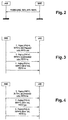
- the MME can simply add a new PRTR information element (Paging at Reduced Transmission Resources) in the paging request message (sent to the eNB), as illustrated in figure 2 .
- the PRTR can be a Boolean "reduced resources/ not reduced resources”. If the PRTR is set to "reduced resources" the eNB will typically infer that MME recommends/allows to page at reduced resources.
- Boolean information as indicated above is only an example of control information enabling the CN entity (such as MME) to influence the consumption by the RAN entity (such as eNodeB) of radio transmission resources for paging the UE, and other examples are of course possible.
- a typical MME implementation would set the information element to "reduced resources" when MME plans to do a subsequent paging with identical (or almost identical) paging area after the current paging and therefore it is worth having the eNBs trying to optimize the radio transmission resources for that paging.
- control information included in a paging request (such as S1 Paging message) to influence the RAN consumption of radio transmission resources may be set in relation with control information included in said paging request to control the paging area of said paging.
- FIG. 3 A first example of paging repetition scheme, according to embodiments of the invention, is illustrated in figure 3 .
- MME indicates during the first paging to eNB that it can try optimizing the paging because MME knows that the second paging will have same area.
- the third paging is the last one so MME recommends the eNB to NOT try optimizing the paging.
- FIG. 4 A second example of paging retransmission scheme, according to embodiments of the invention, is illustrated in figure 4 .
- MME indicates during the first paging to eNB that it recommends the eNB to NOT try optimizing the paging because the following one will be over a much larger area.
- MME can recommend eNB to optimize the radio paging because MME knows that there will be a third paging which will have the same paging area as the second paging.
- Embodiments of the invention allow a paged eNB to optimize the radio paging in terms of radio transmission resources which it invloves during the radio paging.
- Embodiments of the invention allow to optimize the paging resources system wide both in terms of paging area covered and number of radio transmission resources involved in each cell, at the same time, with an optimized coupling between these two dimensions.
- the optimization of the eNBs in terms of radio transmission resources which are involved during the radio paging is done under the control of the MME by a direct recommendation/allowance sent by MME to the eNB to use this feature.
- the eNB can only decide to use the radio optimization feature based on included Paging Attempt Count without knooing how MME will make the paging area vary over time. This can lead to opposite effect of degradation of paging resources system wide.
- One aspect is a Core Network CN entity, such as MME or SGSN or 5G Core Controller, capable of sending a Paging message to a Radio Access Network entity, such as eNB or RNC or BSC or 5G RAN entity, for paging of a User Equipment UE.
- a Core Network CN entity such as MME or SGSN or 5G Core Controller
- a Radio Access Network entity such as eNB or RNC or BSC or 5G RAN entity, for paging of a User Equipment UE.
- said CN entity is configured to:
- said CN entity is configured to:
- said CN entity is configured to:
- Radio Access Network RAN entity such as eNB or RNC or BSC or their 5G equivalent, capable of receiving a Paging message from a Core Network entity such as MME or SGSN or from a 5G Core controller, for paging of a User Equipment UE.
- said RAN entity is configured to:
- said RAN entity is configured to:
- Other aspects relate to a method for paging with optimized radio transmission resources in a mobile network, said method comprising at least one step performed by at least one of the thus configured CN entity and RAN entity.
- program storage devices e.g., digital data storage media, which are machine or computer readable and encode machine-executable or computer-executable programs of instructions, wherein said instructions perform some or all of the steps of said above-described methods.
- the program storage devices may be, e.g., digital memories, magnetic storage media such as a magnetic disks and magnetic tapes, hard drives, or optically readable digital data storage media.
- the embodiments are also intended to cover computers programmed to perform said steps of the above-described methods.
Landscapes
- Engineering & Computer Science (AREA)
- Computer Networks & Wireless Communication (AREA)
- Signal Processing (AREA)
- Databases & Information Systems (AREA)
- Mobile Radio Communication Systems (AREA)
Abstract
- provide in a paging request message, control information enabling said CN entity to influence the consumption by said RAN entity of radio transmission resources for said paging.
Description
- The present invention generally relates to mobile communication networks and systems.
- Descriptions of mobile networks and systems can be found in the literature, such as in particular in Technical Specifications published by standardization bodies such as for example 3GPP (3rd Generation Partnership Project).
- In a mobile system, a mobile terminal also called User Equipment UE, has access to a mobile network providing mobile communication services. A mobile network generally comprises a Core Network (CN) accessed via a Radio Access Network (RAN).
- An example of 3GPP mobile system is EPS (Evolved Packet System), specified in particular in 3GPP TS 23.401. An EPS network comprises a Core Network called EPC (Evolved Packet Core) that can be accessed by a Radio Access Network (RAN) such as LTE-based RAN called E-UTRAN. EPC entities include Mobility Management Entity (MME) for E-UTRAN access to EPC. E-UTRAN entities include eNodeB (eNB). Each RAN entity controls one or more cells.
- In such systems, mobility is supported by means of various mechanisms or procedures, such as in particular a paging procedure performed when there is a need to reach a User equipment UE in idle mode for an incoming call or session.
- In EPS for example, when a downlink packet is received for an UE in idle mode, a network triggered service request procedure (recalled in
figure 1 taken from 3GPP TS 23.401) is performed, including a paging procedure. - For E-UTRAN access to EPC for example, the paging procedure includes sending Paging messages by the MME serving the UE, on S1 interface, to eNBs belonging to a paging area included in the paging message (i.e. in release 12 of 3GPP the TAs in which the UE is registered), and paging the UE by the eNBs on the radio interface, in cells belonging to TAs in which the UE is registered.
- As recognized by the inventors and as will be described with more details later, the current S1 Paging procedure does not allow for paging with optimized radio transmission resources. There is a need for paging optimization, including paging with optimized radio transmission resources. More generally, there is a need to improve performances of such systems.
- Embodiments of the present invention in particular address such needs.
- Embodiments of the invention are not limited to the E-UTRAN access to EPC case, and may be used in other cases, including GERAN/UTRAN access to EPC, 3GPP based systems other than EPS, or non-3GPP based systems.
- These and other objects are achieved, in one aspect, by a Core Network CN entity such as Mobility Management Entity MME, capable of sending a paging request message such as S1 Paging message to a Radio Access Network RAN entity such as eNodeB, for paging a User Equipment UE, said CN entity configured to:
- provide in a paging request message, control information enabling said CN entity to influence the consumption by said RAN entity of radio transmission resources for said paging.
- These and other objects are achieved, in another aspect, by a Radio Access Network RAN entity, such as eNodeB, capable of receiving a paging request message such as S1 Paging message from a Core Network entity such as Mobility Management Entity MME, for paging a User Equipment UE, said RAN entity configured to:
- receive a paging request message containing control information enabling said CN entity to influence the consumption by said RAN entity of radio transmission resources for said paging,
- determine transmission resources for said paging, taking into account said control information.
- These and other objects are achieved, in another aspect, by method(s) for paging with optimized radio transmission resources in a mobile network, said method comprising at least one step performed by at least one of said CN entity and RAN entity.
- Some embodiments of apparatus and/or methods in accordance with embodiments of the present invention are now described, by way of example only, and with reference to the accompanying drawings, in which:
-
Figure 1 is intended to recall paging performed for example during a network triggered service request procedure in EPS, -
Figure 2 is intended to illustrate an example of Paging message sent by a Mobility Management Entity to a eNodeB, according to embodiments of the invention, -
Figure 3 is intended to illustrate a first example of paging repetition scheme, according to embodiments of the invention, -
Figure 4 is intended to illustrate a second example of paging repetition scheme, according to embodiments of the invention. -
- BSC
- Base Station Controller
- CN
- Core Network
- eNB
- eNodeB
- EPC
- Evolved Packet Core
- EPS
- Evolved Packet System
- E-UTRAN
- Evolved UMTS Terrestrial Radio Access Network
- IE
- Information Element
- INPA
- intended Number of Paging Attempts
- LTE
- Long Term Evolution
- MCS
- Modulation and Coding Scheme
- MME
- Mobility Management Entity
- PAC
- Paging Attempt Count
- PRB
- Physical Resource Block
- PRTR
- Paging at Reduced Transmission Resources
- RAN
- Radio Access Network
- RNC
- Radio Network Controller
- RPA
- Recommended Paging Area
- SGSN
- Serving GPRS Support Node
- TA
- Tracking Area
- UE
- User Equipment
- UTRAN
- UMTS Terrestrial Radio Access Network
- Following description of various aspects and/or embodiments of the invention will be made by way of example for E-UTRAN access to EPC. However, even if embodiments and/or aspects of the invention apply mainly to LTE (4G) technology, embodiments of the invention could apply to any cellular technology e.g. UTRAN, GERAN, 5G, etc.
- In 4G networks, paging efficiency is key because of limitations of radio paging channel capacity. So far optimizations have concentrated on the localization aspect i.e. by improving the prediction of the area where the UE is likely located, one can reduce the paging area i.e. the number of eNBs and cells over which the radio paging message will be sent. By so doing one can save from paging uselessly in a number of cells thereby releasing the paging channel capacity in those cells.
- However another dimension can be used to optimize the paging which is to optimize the number of radio transmission resources used in a given cell for a paging. For example most of time a UE is not at cell edge and the radio paging message could reach the UE by using a "light paging" which consumes fewer radio resources (e.g. lower MCS, fewer PRBs). This kind of optimization are however not easy to design because they would require careful repetition of the paging by the MME so that if the UE is at cell edge and could not be reached by a "light paging" , a repeated "normal paging" (i.e. not light) can be sent to reach that UE. Also this kind of optimization would need to be standardized so that it works multi-vendor i.e. between MME of vendor A and eNB of vendor B in a way that improves the overall system efficiency regardless of the proprietary paging algorithms that vendor A has implemented for its MME and vendor B has implemented for its eNB.
- A solution has been proposed in document R3-152869 where a Paging Attempt Information (PAI) is included in the paging message. This paging Attempt information includes a Paging Attempt Count (PAC) and may also include an Intended Number of Paging Attempts (INPA). This solution is not good enough because this PAI is included at the same level of the information called hereafter "recommended paging area" (RPA) (including list of TAIs or list of recommended cells) in the paging message, and included/set independently of each another. Therefore, when the MME repeats a paging message, the PAC gets incremented by one in each repetition regardless of the RPA indicated by the MME.
- As a result, algorithms solely based on PAI value to perform "light paging" could lead to disastrous paging and degrade the situation instead of optimizing. This is because the two "dimensions of paging" can potentially vary simultaneously. Here is an example to illustrate this:
- Imagine an MME which intends to page a UE successively with paging area 1 (made of 10 cells) and paging area 2 (made of 200 cells). MME intends to do 3 repetitions in total. In this typical case the MME evaluates at 80% that the UE is located in
paging area 1, and evaluates at 100% that the UE is located in paging are 2. - MME decides the following algorithm for the 3 repetitions:
- First paging (PAC set to 1) over
paging area 1 - Second paging (PAC set to 2) over
paging area 2 - Third paging (PAC set to 3) over
paging area 2 - Let's have the UE located at cell edge of one of the 10 cells (
e.g. cell 3 managed by eNB3). An eNB is by definition stateless of successive pagings (does not keep knowledge of whether and how it has paged an UE). So eNB3 makes no correlation between the three paging repetitions from MME. - The algorithm of eNB3 (which is from different vendor than MME) can be:
- First paging (PAC set to 1) the eNB makes a "light paging" therefore does not reach the UE. eNB assumes that the MME will make second paging including again
paging area 1. - Second paging and third paging (PAC set to 2 then 3) the eNB makes "normal paging" to reach the UE
- In this example, eNB3 has made the wrong assumption that MME will not widen the paging area from
paging area 1 intopaging area 2 between the first and the second paging. - As a result, the second paging with normal (more costly) paging (which will reach the UE) will involve 200 cells instead of 10 cells.
- As can be seen, if eNB3 had been aware of the paging strategy of the MME, it would have applied a "normal paging" as soon as the first paging and the UE would have been reached through a paging over 10 cells instead of resorting to a paging over 200 cells.
- This simple example shows how damaging it can be to let the eNB apply an autonomous "light paging" or "resource efficient paging" strategy based on PAI whereas it doesn't know the strategy of the MME in terms of "paging area width" over the repetitions. In the example above, the paging is 20 less efficient, which is a disaster.
- It should also be noted that the figures above are not exaggerated and are instead a typical use case. Indeed, typical paging areas used by MMEs are either optimized area according to a list of recommended cells (introduced in release 13 of 3GPP through the "Recommended Cell List IE") which can typically be 10 cells, followed by default paging areas of before release 13 which typically includes a list of TAIs (typically can reach 200 cells).
- The discussion above has shown that it is not possible for an eNB to optimize a paging in radio transmission resources ("light paging") based only on PAI if it doesn't know how MME will make the paging area vary over the MME repetitions of the pagings.
- Since only MME knows how it will change the paging area, embodiments of the invention therefore propose that the MME controls when the eNB will possibly take advantage of doing a "light paging" if eNB supports this function.
- In some embodiments, the MME can simply add a new PRTR information element (Paging at Reduced Transmission Resources) in the paging request message (sent to the eNB), as illustrated in
figure 2 . The PRTR can be a Boolean "reduced resources/ not reduced resources". If the PRTR is set to "reduced resources" the eNB will typically infer that MME recommends/allows to page at reduced resources. - As understood by the skilled person, a Boolean information as indicated above is only an example of control information enabling the CN entity (such as MME) to influence the consumption by the RAN entity (such as eNodeB) of radio transmission resources for paging the UE, and other examples are of course possible.
- In some embodiments, a typical MME implementation would set the information element to "reduced resources" when MME plans to do a subsequent paging with identical (or almost identical) paging area after the current paging and therefore it is worth having the eNBs trying to optimize the radio transmission resources for that paging.
- As understood by the skilled person, such typical implementation is only an example, and in a more general implementation, control information included in a paging request (such as S1 Paging message) to influence the RAN consumption of radio transmission resources may be set in relation with control information included in said paging request to control the paging area of said paging.
- A first example of paging repetition scheme, according to embodiments of the invention, is illustrated in
figure 3 . - In this first example :
- In first paging the MME includes PAC=1, INPA=3, paging area= list of recommended cells, PRTR=yes
- In second paging, the MME includes PAC=2, INPA=3, paging area= list of recommended cells, PRTR=no
- In third paging, the MME PAC=3, INPA=3, paging area= list of TAIs, PRTR= no
- In this first example, MME indicates during the first paging to eNB that it can try optimizing the paging because MME knows that the second paging will have same area. The third paging is the last one so MME recommends the eNB to NOT try optimizing the paging.
- A second example of paging retransmission scheme, according to embodiments of the invention, is illustrated in
figure 4 . - In this second example :
- In first paging the MME includes PAC=1, INPA=3, paging area= list of recommended cells, PRTR=no
- In second paging, the MME includes PAC=2, INPA=3, paging area= list of TAIs, PRTR=yes
- In third paging, the MME includes PAC=3, INPA=3, paging area= list of TAIs, PRTR= no
- In this second example, MME indicates during the first paging to eNB that it recommends the eNB to NOT try optimizing the paging because the following one will be over a much larger area. In contrast, for the second aging, MME can recommend eNB to optimize the radio paging because MME knows that there will be a third paging which will have the same paging area as the second paging.
- Embodiments of the invention allow a paged eNB to optimize the radio paging in terms of radio transmission resources which it invloves during the radio paging. Embodiments of the invention allow to optimize the paging resources system wide both in terms of paging area covered and number of radio transmission resources involved in each cell, at the same time, with an optimized coupling between these two dimensions.
- The optimization of the eNBs in terms of radio transmission resources which are involved during the radio paging is done under the control of the MME by a direct recommendation/allowance sent by MME to the eNB to use this feature.
- By so doing this leads to the overall system optimization of the paging both in terms of paging area and radio transmission resources. In contrast, in the current (above-recalled)solution, the eNB can only decide to use the radio optimization feature based on included Paging Attempt Count without knooing how MME will make the paging area vary over time. This can lead to opposite effect of degradation of paging resources system wide.
- Various aspects of the invention include (though not being limited to) following aspects.
- One aspect is a Core Network CN entity, such as MME or SGSN or 5G Core Controller, capable of sending a Paging message to a Radio Access Network entity, such as eNB or RNC or BSC or 5G RAN entity, for paging of a User Equipment UE.
- Various embodiments may be provided, including (though not being limited to) following embodiments, which may be taken alone or in combination, according to various combinations.
- In an embodiment, said CN entity is configured to:
- provide in a paging request message, control information enabling said CN entity to influence the consumption by said RAN entity of radio transmission resources for said paging.
- In an embodiment:
- said control information includes a Boolean information indicating either allowing/recommending paging at reduced transmission resources, or not recommending paging at reduced transmission resources.
- In an embodiment, said CN entity is configured to:
- provide said control information in successive paging request messages sent to said RAN entity for paging said UE in case of paging repetitions, to influence the consumption by said RAN entity of radio transmission resources during each paging repetition.
- In an embodiment, said CN entity is configured to:
- provide in a paging request message, additional control information enabling said CN entity to control the paging area width for said paging,
- provide said control information to influence the RAN consumption of radio transmission resources, said control information being set in relation with the control information included to control the paging area of said paging.
- Another aspect is a Radio Access Network RAN entity, such as eNB or RNC or BSC or their 5G equivalent, capable of receiving a Paging message from a Core Network entity such as MME or SGSN or from a 5G Core controller, for paging of a User Equipment UE.
- Various embodiments may be provided, including (though not being limited to):
- In an embodiment, said RAN entity is configured to:
- receive a paging request message containing control information enabling said CN entity to influence the consumption by said RAN entity of radio transmission resources for said paging,
- determine radio transmission resources for said paging, taking into account said control information.
- In an embodiment:
- said control information includes a Boolean information indicating either paging at reduced transmission resources is allowed/recommended, or not recommending paging at reduced transmission resources.
- In an embodiment, said RAN entity is configured to:
- receive said control information in successive paging request messages sent to said RAN entity for paging said UE in case of paging repetitions, to influence the consumption by said RAN entity of radio transmission resources during each paging repetition.
- In an embodiment, said RAN entity is configured to:
- receive in said paging request message, additional control information enabling said CN entity to control the paging area width for said paging.
- Other aspects relate to a method for paging with optimized radio transmission resources in a mobile network, said method comprising at least one step performed by at least one of the thus configured CN entity and RAN entity.
- A person of skill in the art would readily recognize that steps of various above-described methods can be performed by programmed computers. Herein, some embodiments are also intended to cover program storage devices, e.g., digital data storage media, which are machine or computer readable and encode machine-executable or computer-executable programs of instructions, wherein said instructions perform some or all of the steps of said above-described methods. The program storage devices may be, e.g., digital memories, magnetic storage media such as a magnetic disks and magnetic tapes, hard drives, or optically readable digital data storage media. The embodiments are also intended to cover computers programmed to perform said steps of the above-described methods.
Claims (9)
- A Core Network CN entity such as Mobility Management Entity MME, capable of sending a paging request message such as S1 Paging message to a Radio Access Network RAN entity such as eNodeB, for paging a User Equipment UE, said CN entity configured to:- provide in a paging request message, control information enabling said CN entity to influence the consumption by said RAN entity of radio transmission resources for said paging.
- A CN entity according to claim 1, wherein:- said control information includes a Boolean information indicating either allowing/recommending paging at reduced transmission resources, or not recommending paging at reduced transmission resources.
- A CN entity according to any of claims 1 or 2, configured to:- provide said control information in successive paging request messages sent to said RAN entity for paging said UE in case of paging repetitions, to influence the consumption by said RAN entity of radio transmission resources during each paging repetition.
- A CN entity according to any of claims 1 to 3, configured to:- provide in a paging request message, additional control information enabling said CN entity to control the paging area width for said paging- provide said control information to influence the RAN consumption of radio transmission resources, said control information being set in relation with the control information included to control the paging area of said paging.
- A Radio Access Network RAN entity, such as eNodeB, capable of receiving a paging request message such as S1 Paging message from a Core Network entity such as Mobility Management Entity MME, for paging a User Equipment UE, said RAN entity configured to:- receive a paging request message containing control information enabling said CN entity to influence the consumption by said RAN entity of radio transmission resources for said paging,- determine radio transmission resources for said paging, taking into account said control information.
- A RAN entity according to claim 5, wherein:- said control information includes a Boolean information indicating either paging at reduced transmission resources is allowed/recommended, or not recommending paging at reduced transmission resources.
- A RAN entity according to any of claims 5 or 6, configured to:- receive said control information in successive paging request messages sent to said RAN entity for paging said UE in case of paging repetitions, to influence the consumption by said RAN entity of radio transmission resources during each paging repetition.
- A RAN entity according to any of claims 5 to 7, configured to:- receive in said paging request message, additional control information enabling said CN entity to control the paging area width for said paging.
- A method for paging with optimized radio transmission resources in a mobile network, said method comprising at least one step performed by at least one of a CN entity and a RAN entity configured according to any of claims 1 to 8.
Priority Applications (6)
| Application Number | Priority Date | Filing Date | Title |
|---|---|---|---|
| EP15306994.3A EP3179791B1 (en) | 2015-12-11 | 2015-12-11 | Paging with optimized transmission resources in a mobile network |
| US16/060,582 US10728877B2 (en) | 2015-12-11 | 2016-12-08 | Paging with optimized transmission resources in a mobile network |
| MX2018006963A MX384822B (en) | 2015-12-11 | 2016-12-08 | Radio messaging with optimized transmission resources on mobile networks. |
| PCT/EP2016/080326 WO2017097932A1 (en) | 2015-12-11 | 2016-12-08 | Paging with optimized transmission resources in a mobile network |
| CN201680078571.4A CN108464043B (en) | 2015-12-11 | 2016-12-08 | Paging with optimized transmission resources in mobile networks |
| BR112018011825-7A BR112018011825B1 (en) | 2015-12-11 | 2016-12-08 | CENTRAL NETWORK ENTITY, RADIO ACCESS NETWORK ENTITY AND METHOD FOR PAGINATION OPTIMIZATION |
Applications Claiming Priority (1)
| Application Number | Priority Date | Filing Date | Title |
|---|---|---|---|
| EP15306994.3A EP3179791B1 (en) | 2015-12-11 | 2015-12-11 | Paging with optimized transmission resources in a mobile network |
Publications (2)
| Publication Number | Publication Date |
|---|---|
| EP3179791A1 true EP3179791A1 (en) | 2017-06-14 |
| EP3179791B1 EP3179791B1 (en) | 2021-01-27 |
Family
ID=55068928
Family Applications (1)
| Application Number | Title | Priority Date | Filing Date |
|---|---|---|---|
| EP15306994.3A Active EP3179791B1 (en) | 2015-12-11 | 2015-12-11 | Paging with optimized transmission resources in a mobile network |
Country Status (5)
| Country | Link |
|---|---|
| US (1) | US10728877B2 (en) |
| EP (1) | EP3179791B1 (en) |
| CN (1) | CN108464043B (en) |
| MX (1) | MX384822B (en) |
| WO (1) | WO2017097932A1 (en) |
Families Citing this family (5)
| Publication number | Priority date | Publication date | Assignee | Title |
|---|---|---|---|---|
| CN110381496B (en) * | 2017-08-09 | 2020-10-27 | 华为技术有限公司 | RNA distribution method, device and readable storage medium |
| CN114982320A (en) * | 2020-02-13 | 2022-08-30 | 索尼集团公司 | Method, network node and wireless device for enhancing paging of wireless devices in a group of wireless devices using paging retransmission |
| CN112423289B (en) * | 2020-11-09 | 2023-06-27 | Oppo广东移动通信有限公司 | Method and device for preventing application from being blocked, equipment and storage medium |
| EP4362574A1 (en) * | 2022-10-26 | 2024-05-01 | Nokia Technologies Oy | Paging update indication for enhanced paging strategy |
| WO2025118104A1 (en) * | 2023-12-04 | 2025-06-12 | 深圳传音控股股份有限公司 | Processing method, communication device, and storage medium |
Family Cites Families (4)
| Publication number | Priority date | Publication date | Assignee | Title |
|---|---|---|---|---|
| CN1323143A (en) * | 2000-05-08 | 2001-11-21 | 华为技术有限公司 | Paging channel optimizing method for digital mobile communication system |
| US20070202891A1 (en) * | 2006-02-28 | 2007-08-30 | Diachina John W | Methods for Reducing Paging Load in Generic Access Networks |
| CN102316580A (en) * | 2010-07-02 | 2012-01-11 | 华为技术有限公司 | Mobile paging method, device and system |
| US10327224B2 (en) * | 2014-11-12 | 2019-06-18 | Telefonaktiebolaget Lm Ericsson (Publ) | Efficient handling of paging |
-
2015
- 2015-12-11 EP EP15306994.3A patent/EP3179791B1/en active Active
-
2016
- 2016-12-08 US US16/060,582 patent/US10728877B2/en active Active
- 2016-12-08 WO PCT/EP2016/080326 patent/WO2017097932A1/en not_active Ceased
- 2016-12-08 CN CN201680078571.4A patent/CN108464043B/en active Active
- 2016-12-08 MX MX2018006963A patent/MX384822B/en unknown
Non-Patent Citations (5)
| Title |
|---|
| "3rd Generation Partnership Project; Technical Specification Group Services and System Aspects; Architecture enhancements for Cellular Internet of Things (Release 13)", 3GPP STANDARD; 3GPP TR 23.720, 3RD GENERATION PARTNERSHIP PROJECT (3GPP), MOBILE COMPETENCE CENTRE ; 650, ROUTE DES LUCIOLES ; F-06921 SOPHIA-ANTIPOLIS CEDEX ; FRANCE, vol. SA WG2, no. V1.2.0, 23 November 2015 (2015-11-23), pages 1 - 96, XP051046270 * |
| HUAWEI ET AL: "Introduction of Paging Optimisation and Paging for Coverage Enhancement capable UEs where the inclusion of the paging attempt count is not restricted", vol. RAN WG3, no. Anaheim CA, USA; 20151116 - 20151120, 24 November 2015 (2015-11-24), XP051026801, Retrieved from the Internet <URL:http://www.3gpp.org/ftp/tsg_ran/WG3_Iu/TSGR3_90/Docs/> [retrieved on 20151124] * |
| HUAWEI: "Paging for MTC", vol. RAN WG3, no. Fukuoka, Japan; 20150525 - 20150529, 15 May 2015 (2015-05-15), XP050969104, Retrieved from the Internet <URL:http://www.3gpp.org/ftp/tsg_ran/WG3_Iu/TSGR3_88/Docs/> [retrieved on 20150515] * |
| NOKIA NETWORKS: "Paging of Rel13 low complexity UE and/or UE in EC mode", vol. RAN WG2, no. Anaheim, USA; 20151116 - 20151120, 16 November 2015 (2015-11-16), XP051005855, Retrieved from the Internet <URL:http://www.3gpp.org/ftp/Meetings_3GPP_SYNC/RAN2/Docs/> [retrieved on 20151116] * |
| QUALCOMM INCORPORATED: "Enhanced Coverage for paging in LTE", vol. SA WG2, no. Chengdu; 20151019 - 20151023, 23 October 2015 (2015-10-23), XP051013806, Retrieved from the Internet <URL:http://www.3gpp.org/ftp/Meetings_3GPP_SYNC/SA2/Docs/> [retrieved on 20151023] * |
Also Published As
| Publication number | Publication date |
|---|---|
| BR112018011825A2 (en) | 2018-12-04 |
| US10728877B2 (en) | 2020-07-28 |
| MX2018006963A (en) | 2018-09-05 |
| MX384822B (en) | 2025-03-14 |
| CN108464043A (en) | 2018-08-28 |
| US20190007926A1 (en) | 2019-01-03 |
| EP3179791B1 (en) | 2021-01-27 |
| WO2017097932A1 (en) | 2017-06-15 |
| CN108464043B (en) | 2021-07-16 |
Similar Documents
| Publication | Publication Date | Title |
|---|---|---|
| US11696257B2 (en) | Paging procedures for user equipments with coverage extension | |
| RU2764011C1 (en) | Method for paging, base station and user equipment | |
| JP6751477B2 (en) | Method and apparatus for system information distribution | |
| EP2742732B1 (en) | Extended access barring and network sharing | |
| US20140171061A1 (en) | Network access delay for eab-configured ues and/or group-based addressed ues | |
| US9420533B2 (en) | Discontinuous reception | |
| US20170070974A1 (en) | Method and apparatus for determining information about access barring | |
| US20210337504A1 (en) | Method and device for indicating and receiving paging control information, storage medium, base station, and user equipment | |
| US10728877B2 (en) | Paging with optimized transmission resources in a mobile network | |
| CN104601276A (en) | Method for processing coverage enhancement in wireless communication system | |
| CN104619037A (en) | Method for Handling Random Access in Wireless Communication System | |
| US20220353756A1 (en) | Communication method, apparatus, and system | |
| CN105706507A (en) | Method and apparatus for transmitting a paging message in a wireless communication system | |
| CN117156527A (en) | Wireless communication method, network element and storage medium | |
| CN107277897A (en) | RA-RNTI collocation method and device | |
| US10149332B2 (en) | Radio resource control connection establishment | |
| CN107027186A (en) | The control method of Stochastic accessing, apparatus and system | |
| BR112018011825B1 (en) | CENTRAL NETWORK ENTITY, RADIO ACCESS NETWORK ENTITY AND METHOD FOR PAGINATION OPTIMIZATION | |
| CN102469533A (en) | Cell handover method, terminal, base station and system |
Legal Events
| Date | Code | Title | Description |
|---|---|---|---|
| PUAI | Public reference made under article 153(3) epc to a published international application that has entered the european phase |
Free format text: ORIGINAL CODE: 0009012 |
|
| STAA | Information on the status of an ep patent application or granted ep patent |
Free format text: STATUS: THE APPLICATION HAS BEEN PUBLISHED |
|
| AK | Designated contracting states |
Kind code of ref document: A1 Designated state(s): AL AT BE BG CH CY CZ DE DK EE ES FI FR GB GR HR HU IE IS IT LI LT LU LV MC MK MT NL NO PL PT RO RS SE SI SK SM TR |
|
| AX | Request for extension of the european patent |
Extension state: BA ME |
|
| STAA | Information on the status of an ep patent application or granted ep patent |
Free format text: STATUS: REQUEST FOR EXAMINATION WAS MADE |
|
| 17P | Request for examination filed |
Effective date: 20171214 |
|
| RBV | Designated contracting states (corrected) |
Designated state(s): AL AT BE BG CH CY CZ DE DK EE ES FI FR GB GR HR HU IE IS IT LI LT LU LV MC MK MT NL NO PL PT RO RS SE SI SK SM TR |
|
| RAP1 | Party data changed (applicant data changed or rights of an application transferred) |
Owner name: ALCATEL LUCENT |
|
| STAA | Information on the status of an ep patent application or granted ep patent |
Free format text: STATUS: EXAMINATION IS IN PROGRESS |
|
| 17Q | First examination report despatched |
Effective date: 20200309 |
|
| GRAP | Despatch of communication of intention to grant a patent |
Free format text: ORIGINAL CODE: EPIDOSNIGR1 |
|
| STAA | Information on the status of an ep patent application or granted ep patent |
Free format text: STATUS: GRANT OF PATENT IS INTENDED |
|
| INTG | Intention to grant announced |
Effective date: 20200901 |
|
| GRAS | Grant fee paid |
Free format text: ORIGINAL CODE: EPIDOSNIGR3 |
|
| GRAA | (expected) grant |
Free format text: ORIGINAL CODE: 0009210 |
|
| STAA | Information on the status of an ep patent application or granted ep patent |
Free format text: STATUS: THE PATENT HAS BEEN GRANTED |
|
| AK | Designated contracting states |
Kind code of ref document: B1 Designated state(s): AL AT BE BG CH CY CZ DE DK EE ES FI FR GB GR HR HU IE IS IT LI LT LU LV MC MK MT NL NO PL PT RO RS SE SI SK SM TR |
|
| REG | Reference to a national code |
Ref country code: GB Ref legal event code: FG4D |
|
| REG | Reference to a national code |
Ref country code: CH Ref legal event code: EP |
|
| REG | Reference to a national code |
Ref country code: AT Ref legal event code: REF Ref document number: 1359450 Country of ref document: AT Kind code of ref document: T Effective date: 20210215 |
|
| REG | Reference to a national code |
Ref country code: IE Ref legal event code: FG4D |
|
| REG | Reference to a national code |
Ref country code: DE Ref legal event code: R096 Ref document number: 602015065187 Country of ref document: DE |
|
| REG | Reference to a national code |
Ref country code: NL Ref legal event code: MP Effective date: 20210127 |
|
| REG | Reference to a national code |
Ref country code: LT Ref legal event code: MG9D |
|
| REG | Reference to a national code |
Ref country code: AT Ref legal event code: MK05 Ref document number: 1359450 Country of ref document: AT Kind code of ref document: T Effective date: 20210127 |
|
| PG25 | Lapsed in a contracting state [announced via postgrant information from national office to epo] |
Ref country code: PT Free format text: LAPSE BECAUSE OF FAILURE TO SUBMIT A TRANSLATION OF THE DESCRIPTION OR TO PAY THE FEE WITHIN THE PRESCRIBED TIME-LIMIT Effective date: 20210527 Ref country code: LT Free format text: LAPSE BECAUSE OF FAILURE TO SUBMIT A TRANSLATION OF THE DESCRIPTION OR TO PAY THE FEE WITHIN THE PRESCRIBED TIME-LIMIT Effective date: 20210127 Ref country code: GR Free format text: LAPSE BECAUSE OF FAILURE TO SUBMIT A TRANSLATION OF THE DESCRIPTION OR TO PAY THE FEE WITHIN THE PRESCRIBED TIME-LIMIT Effective date: 20210428 Ref country code: HR Free format text: LAPSE BECAUSE OF FAILURE TO SUBMIT A TRANSLATION OF THE DESCRIPTION OR TO PAY THE FEE WITHIN THE PRESCRIBED TIME-LIMIT Effective date: 20210127 Ref country code: FI Free format text: LAPSE BECAUSE OF FAILURE TO SUBMIT A TRANSLATION OF THE DESCRIPTION OR TO PAY THE FEE WITHIN THE PRESCRIBED TIME-LIMIT Effective date: 20210127 Ref country code: BG Free format text: LAPSE BECAUSE OF FAILURE TO SUBMIT A TRANSLATION OF THE DESCRIPTION OR TO PAY THE FEE WITHIN THE PRESCRIBED TIME-LIMIT Effective date: 20210427 Ref country code: NO Free format text: LAPSE BECAUSE OF FAILURE TO SUBMIT A TRANSLATION OF THE DESCRIPTION OR TO PAY THE FEE WITHIN THE PRESCRIBED TIME-LIMIT Effective date: 20210427 Ref country code: NL Free format text: LAPSE BECAUSE OF FAILURE TO SUBMIT A TRANSLATION OF THE DESCRIPTION OR TO PAY THE FEE WITHIN THE PRESCRIBED TIME-LIMIT Effective date: 20210127 |
|
| PG25 | Lapsed in a contracting state [announced via postgrant information from national office to epo] |
Ref country code: SE Free format text: LAPSE BECAUSE OF FAILURE TO SUBMIT A TRANSLATION OF THE DESCRIPTION OR TO PAY THE FEE WITHIN THE PRESCRIBED TIME-LIMIT Effective date: 20210127 Ref country code: AT Free format text: LAPSE BECAUSE OF FAILURE TO SUBMIT A TRANSLATION OF THE DESCRIPTION OR TO PAY THE FEE WITHIN THE PRESCRIBED TIME-LIMIT Effective date: 20210127 Ref country code: PL Free format text: LAPSE BECAUSE OF FAILURE TO SUBMIT A TRANSLATION OF THE DESCRIPTION OR TO PAY THE FEE WITHIN THE PRESCRIBED TIME-LIMIT Effective date: 20210127 Ref country code: LV Free format text: LAPSE BECAUSE OF FAILURE TO SUBMIT A TRANSLATION OF THE DESCRIPTION OR TO PAY THE FEE WITHIN THE PRESCRIBED TIME-LIMIT Effective date: 20210127 Ref country code: RS Free format text: LAPSE BECAUSE OF FAILURE TO SUBMIT A TRANSLATION OF THE DESCRIPTION OR TO PAY THE FEE WITHIN THE PRESCRIBED TIME-LIMIT Effective date: 20210127 |
|
| PG25 | Lapsed in a contracting state [announced via postgrant information from national office to epo] |
Ref country code: IS Free format text: LAPSE BECAUSE OF FAILURE TO SUBMIT A TRANSLATION OF THE DESCRIPTION OR TO PAY THE FEE WITHIN THE PRESCRIBED TIME-LIMIT Effective date: 20210527 |
|
| REG | Reference to a national code |
Ref country code: DE Ref legal event code: R097 Ref document number: 602015065187 Country of ref document: DE |
|
| PG25 | Lapsed in a contracting state [announced via postgrant information from national office to epo] |
Ref country code: CZ Free format text: LAPSE BECAUSE OF FAILURE TO SUBMIT A TRANSLATION OF THE DESCRIPTION OR TO PAY THE FEE WITHIN THE PRESCRIBED TIME-LIMIT Effective date: 20210127 Ref country code: EE Free format text: LAPSE BECAUSE OF FAILURE TO SUBMIT A TRANSLATION OF THE DESCRIPTION OR TO PAY THE FEE WITHIN THE PRESCRIBED TIME-LIMIT Effective date: 20210127 Ref country code: SM Free format text: LAPSE BECAUSE OF FAILURE TO SUBMIT A TRANSLATION OF THE DESCRIPTION OR TO PAY THE FEE WITHIN THE PRESCRIBED TIME-LIMIT Effective date: 20210127 |
|
| PG25 | Lapsed in a contracting state [announced via postgrant information from national office to epo] |
Ref country code: DK Free format text: LAPSE BECAUSE OF FAILURE TO SUBMIT A TRANSLATION OF THE DESCRIPTION OR TO PAY THE FEE WITHIN THE PRESCRIBED TIME-LIMIT Effective date: 20210127 Ref country code: SK Free format text: LAPSE BECAUSE OF FAILURE TO SUBMIT A TRANSLATION OF THE DESCRIPTION OR TO PAY THE FEE WITHIN THE PRESCRIBED TIME-LIMIT Effective date: 20210127 Ref country code: RO Free format text: LAPSE BECAUSE OF FAILURE TO SUBMIT A TRANSLATION OF THE DESCRIPTION OR TO PAY THE FEE WITHIN THE PRESCRIBED TIME-LIMIT Effective date: 20210127 |
|
| PLBE | No opposition filed within time limit |
Free format text: ORIGINAL CODE: 0009261 |
|
| STAA | Information on the status of an ep patent application or granted ep patent |
Free format text: STATUS: NO OPPOSITION FILED WITHIN TIME LIMIT |
|
| 26N | No opposition filed |
Effective date: 20211028 |
|
| PG25 | Lapsed in a contracting state [announced via postgrant information from national office to epo] |
Ref country code: AL Free format text: LAPSE BECAUSE OF FAILURE TO SUBMIT A TRANSLATION OF THE DESCRIPTION OR TO PAY THE FEE WITHIN THE PRESCRIBED TIME-LIMIT Effective date: 20210127 Ref country code: ES Free format text: LAPSE BECAUSE OF FAILURE TO SUBMIT A TRANSLATION OF THE DESCRIPTION OR TO PAY THE FEE WITHIN THE PRESCRIBED TIME-LIMIT Effective date: 20210127 |
|
| PG25 | Lapsed in a contracting state [announced via postgrant information from national office to epo] |
Ref country code: SI Free format text: LAPSE BECAUSE OF FAILURE TO SUBMIT A TRANSLATION OF THE DESCRIPTION OR TO PAY THE FEE WITHIN THE PRESCRIBED TIME-LIMIT Effective date: 20210127 |
|
| PG25 | Lapsed in a contracting state [announced via postgrant information from national office to epo] |
Ref country code: IT Free format text: LAPSE BECAUSE OF FAILURE TO SUBMIT A TRANSLATION OF THE DESCRIPTION OR TO PAY THE FEE WITHIN THE PRESCRIBED TIME-LIMIT Effective date: 20210127 |
|
| PG25 | Lapsed in a contracting state [announced via postgrant information from national office to epo] |
Ref country code: IS Free format text: LAPSE BECAUSE OF FAILURE TO SUBMIT A TRANSLATION OF THE DESCRIPTION OR TO PAY THE FEE WITHIN THE PRESCRIBED TIME-LIMIT Effective date: 20210527 |
|
| PG25 | Lapsed in a contracting state [announced via postgrant information from national office to epo] |
Ref country code: MC Free format text: LAPSE BECAUSE OF FAILURE TO SUBMIT A TRANSLATION OF THE DESCRIPTION OR TO PAY THE FEE WITHIN THE PRESCRIBED TIME-LIMIT Effective date: 20210127 |
|
| REG | Reference to a national code |
Ref country code: CH Ref legal event code: PL |
|
| REG | Reference to a national code |
Ref country code: BE Ref legal event code: MM Effective date: 20211231 |
|
| PG25 | Lapsed in a contracting state [announced via postgrant information from national office to epo] |
Ref country code: LU Free format text: LAPSE BECAUSE OF NON-PAYMENT OF DUE FEES Effective date: 20211211 Ref country code: IE Free format text: LAPSE BECAUSE OF NON-PAYMENT OF DUE FEES Effective date: 20211211 |
|
| PG25 | Lapsed in a contracting state [announced via postgrant information from national office to epo] |
Ref country code: BE Free format text: LAPSE BECAUSE OF NON-PAYMENT OF DUE FEES Effective date: 20211231 |
|
| PG25 | Lapsed in a contracting state [announced via postgrant information from national office to epo] |
Ref country code: LI Free format text: LAPSE BECAUSE OF NON-PAYMENT OF DUE FEES Effective date: 20211231 Ref country code: CH Free format text: LAPSE BECAUSE OF NON-PAYMENT OF DUE FEES Effective date: 20211231 |
|
| PG25 | Lapsed in a contracting state [announced via postgrant information from national office to epo] |
Ref country code: HU Free format text: LAPSE BECAUSE OF FAILURE TO SUBMIT A TRANSLATION OF THE DESCRIPTION OR TO PAY THE FEE WITHIN THE PRESCRIBED TIME-LIMIT; INVALID AB INITIO Effective date: 20151211 |
|
| PG25 | Lapsed in a contracting state [announced via postgrant information from national office to epo] |
Ref country code: CY Free format text: LAPSE BECAUSE OF FAILURE TO SUBMIT A TRANSLATION OF THE DESCRIPTION OR TO PAY THE FEE WITHIN THE PRESCRIBED TIME-LIMIT Effective date: 20210127 |
|
| PG25 | Lapsed in a contracting state [announced via postgrant information from national office to epo] |
Ref country code: MK Free format text: LAPSE BECAUSE OF FAILURE TO SUBMIT A TRANSLATION OF THE DESCRIPTION OR TO PAY THE FEE WITHIN THE PRESCRIBED TIME-LIMIT Effective date: 20210127 |
|
| PG25 | Lapsed in a contracting state [announced via postgrant information from national office to epo] |
Ref country code: TR Free format text: LAPSE BECAUSE OF FAILURE TO SUBMIT A TRANSLATION OF THE DESCRIPTION OR TO PAY THE FEE WITHIN THE PRESCRIBED TIME-LIMIT Effective date: 20210127 |
|
| PG25 | Lapsed in a contracting state [announced via postgrant information from national office to epo] |
Ref country code: MT Free format text: LAPSE BECAUSE OF FAILURE TO SUBMIT A TRANSLATION OF THE DESCRIPTION OR TO PAY THE FEE WITHIN THE PRESCRIBED TIME-LIMIT Effective date: 20210127 |
|
| PGFP | Annual fee paid to national office [announced via postgrant information from national office to epo] |
Ref country code: DE Payment date: 20251104 Year of fee payment: 11 |
|
| PGFP | Annual fee paid to national office [announced via postgrant information from national office to epo] |
Ref country code: GB Payment date: 20251030 Year of fee payment: 11 |
|
| PGFP | Annual fee paid to national office [announced via postgrant information from national office to epo] |
Ref country code: FR Payment date: 20251110 Year of fee payment: 11 |