EP3179658A1 - Method and device for ue-base station communication by using unlicensed spectrum - Google Patents
Method and device for ue-base station communication by using unlicensed spectrum Download PDFInfo
- Publication number
- EP3179658A1 EP3179658A1 EP15829479.3A EP15829479A EP3179658A1 EP 3179658 A1 EP3179658 A1 EP 3179658A1 EP 15829479 A EP15829479 A EP 15829479A EP 3179658 A1 EP3179658 A1 EP 3179658A1
- Authority
- EP
- European Patent Office
- Prior art keywords
- sub frame
- carrier
- physical layer
- layer signaling
- downlink
- Prior art date
- Legal status (The legal status is an assumption and is not a legal conclusion. Google has not performed a legal analysis and makes no representation as to the accuracy of the status listed.)
- Withdrawn
Links
Images

Classifications
-
- H—ELECTRICITY
- H04—ELECTRIC COMMUNICATION TECHNIQUE
- H04L—TRANSMISSION OF DIGITAL INFORMATION, e.g. TELEGRAPHIC COMMUNICATION
- H04L5/00—Arrangements affording multiple use of the transmission path
- H04L5/003—Arrangements for allocating sub-channels of the transmission path
- H04L5/0053—Allocation of signalling, i.e. of overhead other than pilot signals
-
- H—ELECTRICITY
- H04—ELECTRIC COMMUNICATION TECHNIQUE
- H04W—WIRELESS COMMUNICATION NETWORKS
- H04W72/00—Local resource management
- H04W72/12—Wireless traffic scheduling
-
- H—ELECTRICITY
- H04—ELECTRIC COMMUNICATION TECHNIQUE
- H04L—TRANSMISSION OF DIGITAL INFORMATION, e.g. TELEGRAPHIC COMMUNICATION
- H04L1/00—Arrangements for detecting or preventing errors in the information received
- H04L1/12—Arrangements for detecting or preventing errors in the information received by using return channel
- H04L1/16—Arrangements for detecting or preventing errors in the information received by using return channel in which the return channel carries supervisory signals, e.g. repetition request signals
- H04L1/18—Automatic repetition systems, e.g. Van Duuren systems
-
- H—ELECTRICITY
- H04—ELECTRIC COMMUNICATION TECHNIQUE
- H04L—TRANSMISSION OF DIGITAL INFORMATION, e.g. TELEGRAPHIC COMMUNICATION
- H04L1/00—Arrangements for detecting or preventing errors in the information received
- H04L1/12—Arrangements for detecting or preventing errors in the information received by using return channel
- H04L1/16—Arrangements for detecting or preventing errors in the information received by using return channel in which the return channel carries supervisory signals, e.g. repetition request signals
- H04L1/18—Automatic repetition systems, e.g. Van Duuren systems
- H04L1/1812—Hybrid protocols; Hybrid automatic repeat request [HARQ]
-
- H—ELECTRICITY
- H04—ELECTRIC COMMUNICATION TECHNIQUE
- H04W—WIRELESS COMMUNICATION NETWORKS
- H04W16/00—Network planning, e.g. coverage or traffic planning tools; Network deployment, e.g. resource partitioning or cells structures
- H04W16/14—Spectrum sharing arrangements between different networks
-
- H—ELECTRICITY
- H04—ELECTRIC COMMUNICATION TECHNIQUE
- H04W—WIRELESS COMMUNICATION NETWORKS
- H04W72/00—Local resource management
- H04W72/04—Wireless resource allocation
- H04W72/044—Wireless resource allocation based on the type of the allocated resource
- H04W72/0453—Resources in frequency domain, e.g. a carrier in FDMA
-
- H—ELECTRICITY
- H04—ELECTRIC COMMUNICATION TECHNIQUE
- H04W—WIRELESS COMMUNICATION NETWORKS
- H04W74/00—Wireless channel access
- H04W74/002—Transmission of channel access control information
- H04W74/006—Transmission of channel access control information in the downlink, i.e. towards the terminal
-
- H—ELECTRICITY
- H04—ELECTRIC COMMUNICATION TECHNIQUE
- H04L—TRANSMISSION OF DIGITAL INFORMATION, e.g. TELEGRAPHIC COMMUNICATION
- H04L5/00—Arrangements affording multiple use of the transmission path
- H04L5/0001—Arrangements for dividing the transmission path
- H04L5/0003—Two-dimensional division
- H04L5/0005—Time-frequency
- H04L5/0007—Time-frequency the frequencies being orthogonal, e.g. OFDM(A) or DMT
- H04L5/001—Time-frequency the frequencies being orthogonal, e.g. OFDM(A) or DMT the frequencies being arranged in component carriers
-
- H—ELECTRICITY
- H04—ELECTRIC COMMUNICATION TECHNIQUE
- H04L—TRANSMISSION OF DIGITAL INFORMATION, e.g. TELEGRAPHIC COMMUNICATION
- H04L5/00—Arrangements affording multiple use of the transmission path
- H04L5/14—Two-way operation using the same type of signal, i.e. duplex
- H04L5/1469—Two-way operation using the same type of signal, i.e. duplex using time-sharing
Definitions
- the present invention is related to a scheme adopting an unlicensed spectrum communication in a wireless communication system, and more particular to a communication method and device for an unlicensed spectrum based on Long Term Evolution (LTE).
- LTE Long Term Evolution
- 3rd Generation Partner Project defines a time division duplex (TDD) frame structure in a LTE system, as shown in Table 1, wherein D indicates a downlink sub frame, U indicates an uplink sub frame, and S is a special sub frame.
- Table 1 TDD LTE frame structure.
- R (Release) 12 of 3GPP introduces an enhanced interference management traffic adaptation (eIMTA) technique. That is for the TDD frame structure, it is capable of adjusting the TDD frame structure through a dynamic signaling.
- eIMTA enhanced interference management traffic adaptation
- the possible TDD frame structure includes seven TDD frame structures #0-#6 defined by the LTE.
- 3GPP LTE Long Term Evolution
- RP-132085 Radio Access Network
- the main purpose is to research the use of a non-standalone deployment of LTE on the licensed spectrum.
- the so-called non-standalone means that the communication on the unlicensed spectrum is associated with a serving cell on the licensed spectrum.
- An intuitive method is to reuse a concept of a carrier aggregation (CA) in the existing system as much as possible, i.e.
- CA carrier aggregation
- a serving cell deployed on the licensed spectrum serves as PCC (Primary Component Carrier), and a serving cell deployed on the unlicensed spectrum serves as SCC (Secondary Component Carrier).
- the CA includes traditional TDD CA, FDD (Frequency Division Duplex) CA and FDD-TDD CA introduced by 3GPP R12. In RAN #64 meeting (seminar), the communication on the unlicensed spectrum is uniformly named as LAA (License Assisted Access).
- the mainstream of the application scenario is a small cell communication, i.e. the small cell supports the PCC deployed on the licensed spectrum and the SCC deployed on the unlicensed spectrum at the same time, and a macrocell supports the PCC deployed on the licensed spectrum.
- the control signaling is transmitted on the PCC and the data is transmitted on the SCC.
- the above method has the following problem.
- the technique such as eICIC (enhanced Inter Cell Interference Cancellation) or FeICIC (Further eICIC) and so on, makes the small cell only transmit PDCCH (Physical Downlink Control Channel) and PDSCH (Physical Downlink Control Channel) on the specific sub frame of the PCC, so as to avoid the interference with the macro cell.
- PDCCH Physical Downlink Control Channel
- PDSCH Physical Downlink Control Channel
- the small cell may not schedule the SCC.
- the sub frame of the SCC corresponding to the uplink sub frame of the PCC may not be scheduled.
- the present invention provides a communication method and device on an unlicensed spectrum in a UE and a base station.
- the present invention discloses a method adopting an unlicensed spectrum communication in a user equipment (UE), which includes the following steps:
- the unlicensed spectrum simultaneously supports a self-scheduling and a cross carrier scheduling.
- the physical layer signaling is one of DCI (Downlink Control Information) formats ⁇ 1, 1A, 1B, 1C, 1D, 2, 2A, 2B, 2C, 2D ⁇ .
- the physical layer signaling is one of the DCI formats ⁇ 0, 4 ⁇ .
- the step A further includes the following steps:
- the downlink signaling is SIB (System Information Block) 1, and the SIB 1 is configured with a TDD frame structure of the second carrier, wherein the first sub frame corresponds to an uplink sub frame.
- the downlink signaling is a physical layer signaling with the TDD frame structure of the second carrier identified by eIMTA-RNTI (Radio Network Temporary Identifier), wherein the first sub frame corresponds the uplink sub frame.
- the downlink signaling is a RRC (Radio Resource Control) signaling, and the RRC signaling adopts a bitmap manner to configure whether the UE detects the first physical layer signaling in each sub frame of the first carrier.
- RRC Radio Resource Control
- the downlink signaling is subframePatternConfig-r11 IE (Information Element), it indicates ePDCCH (enhanced PDCCH) detecting sub frame set, and the first sub frame belongs to the ePDCCH detecting sub frame set.
- the step A further includes the following step:
- a control signaling for scheduling an unlicensed carrier is preferentially transmitted on a licensed carrier. Only in the uplink sub frame of the licensed carrier or the sub frame of the PDCCH does not be transmitted, the control signaling is transmitted on the unlicensed carrier.
- the method further includes the following steps:
- the HARQ_ACK indicates whether the downlink physical layer data is correctly received.
- the HARQ_ACK may further indicate whether the downlink data of other sub frames except the first sub frame is correctly received.
- the essence of the above aspect is that a mapping method similar to transmitting CCE/eCCE occupied by the DCI to the PUCCH resource by the primary cell in LTE is adopted to determine the mapping of the CCE/eCCE occupied by the first physical layer signaling to the PUCCH. Since PUCCH/ePUCCH does not exist in the first sub frame on a second serving cell, the PUCCH resource reserved for the second serving cell is capable of indicating the downlink sub frame on the first carrier, thereby saving the PUCCH resource.
- the primary cell is a TDD cell, and the first sub frame is a latest downlink sub frame in the downlink sub frames indicated by the HARQ_ACK.
- the primary cell is a FDD (Frequency Division Duplex) cell, and the first sub frame is a unique downlink sub frame indicated by the HARQ_ACK.
- the PUCCH occupied by the HARQ_ACK is co-determined by the first index and parameters of a higher layer configuration.
- the first index is the index of the first CCE occupied by the first physical layer signaling in PDCCH of the first sub frame of the first carrier, the mapping relationship of the PUCCH occupied by the HARQ_ACK and the first index reuses the mapping relationship of the PUCCH to the PUCCH resource of the primary cell in the existing LTE system except n CCE, m replacing as the first index.
- the first index is the index of the first eCCE occupied by the first physical layer signaling in the corresponding EPDCCH-PRB-set and the mapping relationship of the PUCCH occupied by the HARQ_ACK and the first index reuses the mapping relationship of the PUCCH to the PUCCH resource of the primary cell in the existing LTE system except n ECCE,q replacing as the first index and the related parameter of the EPDCCH-PRB-set replacing as the related parameter of the corresponding EPDCCH-PRB-set.
- n CCE, m and n ECCE,q are indexes of CCE and eCCE respectively, and the specific description thereof refers to TS 36.213.
- the present invention discloses a method adopting an unlicensed spectrum communication in a base station, which includes the following steps:
- the first physical layer signaling and the second physical layer signaling are identified by the same C-RNTI (Cell RNTI).
- the step A further includes the following steps:
- the downlink signal is SIB1, and the SIB 1 is configured with a TDD frame structure of the second carrier, wherein the first sub frame corresponds to an uplink sub frame.
- the downlink signaling is a physical layer signaling with the TDD frame structure of the second carrier identified by eIMTA-RNTI, wherein the first sub frame corresponds the uplink sub frame.
- the downlink signaling is a RRC signaling, and the RRC signaling adopts a bitmap manner to configure whether the UE detects the first physical layer signaling in each sub frame of the first carrier.
- the downlink signaling is subframePatternConfig-r11 IE (Information Element), it indicates ePDCCH detecting sub frame set, and the first sub frame belongs to the ePDCCH detecting sub frame set.
- the subframePatternConfig-r11 IE is used for indicating a higher layer signaling of a time domain resource, and the specific description thereof refers to TS36.331.
- the step A further includes the following step:
- the method further includes the following step:
- the present invention discloses a user equipment, and the user equipment includes:
- the first module is further used for at least one of the following:
- the user equipment further includes:
- the present invention discloses a base station equipment, and the base station equipment includes:
- the first module is further used for at least one of the following:
- the base station equipment further includes:
- the present invention provides a method and device adopting an unlicensed spectrum communication.
- the UE respectively detects the physical layer signalings on the PCC and the SCC in different sub frames, and schedules that the control signaling of the unlicensed carrier is preferentially transmitted on the licensed carrier. Only in the uplink sub frame of the licensed carrier or the sub frame of the PDCCH does not be transmitted, the control signaling is transmitted on the licensed carrier.
- the present invention ensures the transmission quality of the physical layer signaling as much as possible and also ensure that all sub frames on the SCC may be scheduled. Additionally, the present invention reuses the CA scheme of the existing LTE as much as possible and thus has good compatibility.
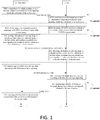
- Embodiment I illustrates a flowchart for scheduling an unlicensed spectrum, as shown in FIG.1 .
- the base station N1 is a serving base station of UE U2.
- step S11 the method involves transmitting a first physical layer signaling for scheduling a first carrier on a first sub frame of the first carrier, and transmitting a second physical layer signaling for scheduling the first carrier on a second sub frame of a second carrier.
- step S21 the method involves detecting a first physical layer signaling for scheduling a first carrier on a first sub frame of the first carrier, and detecting a second physical layer signaling for scheduling the first carrier on a second sub frame of a second carrier.
- the first carrier is deployed on an unlicensed spectrum
- the second serving cell is deployed on a licensed spectrum
- the first sub frame and the second frame are two different sub frames.
- the base station N1 transmits a downlink signaling, so as to indicate the target UE U1 to detect the first physical layer signaling on the first sub frame of the first carrier, and in step S201, the UE U1 receives a downlink signaling, so as to determine to detect the first physical layer signaling on the first sub frame of the first carrier.
- the downlink signaling is one of the following:
- the base station N1 determines a zero transmitting power maintained on PCFICH of a first sub frame of the second carrier, and in step S202, the UE U2 detects a PCFICH on a first sub frame of the second carrier, so as to determine that the PCFICH does not exist (i.e. the PDCCH does not exist).
- the first sub frame is a sub frame except a sub frame set (the sub frame set is configured by the RRC signaling) of the ePDCCH detected by the UE on the second carrier, i.e. the UE U2 does not detect ePDCCH on the first sub frame of the second carrier.
- the base station N1 transmits a downlink physical layer data according to the first physical layer signaling in step S12, and receives a HARQ_ACK for the downlink physical layer data on a serving cell belonged to the second carrier in step S13.
- the UE U2 receives a downlink physical layer data according to the first physical layer signaling in step S22, and transmitting a HARQ_ACK for the downlink physical layer data on a serving cell belonged to the second carrier in step S23.
- the serving cell belonged to the second carrier is a primary cell
- the first sub frame is a latest downlink sub frame in the downlink sub frame indicated by the HARQ_ACK
- the UE U1 detects the first physical layer signaling in the first sub frame
- a generating parameter of PUCCH resource occupied by the HARQ_ACK includes a first index.
- the first index is an index of a first CCE occupied by the first physical layer signaling in PDCCH of the first sub frame of the first carrier, or an index of a first eCCE occupied by the first physical layer signaling in a corresponding EPDCCH-PRB-set.
- Embodiment II is a structure diagram illustrating a processing device in a user equipment, as shown in FIG. 2 .
- the processing device 200 in the UE mainly includes a first receiving module 201, a first receiving module 202, and a second transmitting module 203, wherein the modules identified by a square frame F4 (i.e. the second receiving module 202 and the first transmitting module 203) is optional modules.
- the first receiving module 201 is used for detecting a first physical layer signaling for scheduling a first carrier on a first sub frame of the first carrier, and detecting a second physical layer signaling for scheduling the first carrier on a second sub frame of a second carrier.
- the first carrier is deployed on an unlicensed spectrum
- the second serving cell is deployed on a licensed spectrum
- the first sub frame and the second frame are two different sub frames.
- the physical layer signaling is DCI.
- the first module 201 is used for one of the following:
- the processing apparatus 200 of the UE further the first receiving module 202 and the second first transmitting module 203.
- the first receiving module 202 is used for receiving a downlink physical layer data according to the first physical layer signaling
- the second first transmitting module 203 is used for transmitting a HARQ_ACK for the downlink physical layer data on a serving cell belonged to the second carrier.
- he serving cell belonged to the second carrier is a primary cell
- the first sub frame is a latest downlink sub frame in the downlink sub frame indicated by the HARQ_ACK
- the first receiving module 201 detects the first physical layer signaling in the first sub frame
- a generating parameter of PUCCH resource occupied by the HARQ_ACK includes a first index.
- the first index is an index of a first CCE occupied by the first physical layer signaling in PDCCH of the first sub frame of the first carrier, or an index of a first eCCE occupied by the first physical layer signaling in a corresponding EPDCCH-PRB-set.
- the HARQ_ACK is transmitted by a PUCCH format 1b or a PUCCH format 1b selected by the channel.
- Embodiment III is a structure diagram illustrating a processing device in a base station equipment, as shown in FIG. 3 .
- the processing device 300 of the base station mainly includes a second transmitting module 301, a third transmitting module 302 and a third receiving module 303, wherein the modules identified by a square frame F5 (i.e. the third transmitting module 302 and the third receiving module 303) are optional modules.
- the second transmitting module 301 is used for transmitting a first physical layer signaling for scheduling a first carrier on a first sub frame of the first carrier, and transmitting a second physical layer signaling for scheduling the first carrier on a second sub frame of a second carrier.
- the first carrier is deployed on an unlicensed spectrum
- the second serving cell is deployed on a licensed spectrum
- the first sub frame and the second frame are two different sub frames
- target UEs of the first physical layer signaling and the second physical layer signaling are an identical UE.
- the second transmitting module 301 is further used for one of the following:
- the processing apparatus 300 of the base station includes the third transmitting module 302 and the third receiving module 303.
- the third transmitting module 302 is used for receiving a downlink physical layer data according to the first physical layer signaling and the third receiving module 303 is used for transmitting a HARQ_ACK for the downlink physical layer data on a serving cell belonged to the second carrier.
- the serving cell belonged to the second carrier is a primary cell
- the first sub frame is a latest downlink sub frame in the downlink sub frame indicated by the HARQ_ACK
- the PUCCH occupied by the HARQ_ACK is determined by the first index and the parameters of the higher layer configuration.
- the first index is an index of a first CCE occupied by the first physical layer signaling in PDCCH of the first sub frame of the first carrier, or an index of a first eCCE occupied by the first physical layer signaling in a corresponding EPDCCH-PRB-set.
Landscapes
- Engineering & Computer Science (AREA)
- Signal Processing (AREA)
- Computer Networks & Wireless Communication (AREA)
- Mobile Radio Communication Systems (AREA)
Abstract
Description
- The present invention is related to a scheme adopting an unlicensed spectrum communication in a wireless communication system, and more particular to a communication method and device for an unlicensed spectrum based on Long Term Evolution (LTE).
- 3rd Generation Partner Project (3GPP) defines a time division duplex (TDD) frame structure in a LTE system, as shown in Table 1, wherein D indicates a downlink sub frame, U indicates an uplink sub frame, and S is a special sub frame.
Table 1: TDD LTE frame structure. TDD frame structure Downlink - uplink switching point period Sub frame index number 0 1 2 3 4 5 6 7 8 9 #0 5ms D S U U U D S U U U #1 5ms D S U U D D S U U D #2 5 ms D S U D D D S U D D #3 10 ms D S U U U D D D D D #4 10 ms D S U U D D D D D D #5 10 ms D S U D D D D D D D #6 5 ms D S U U U D S U U D - R (Release) 12 of 3GPP introduces an enhanced interference management traffic adaptation (eIMTA) technique. That is for the TDD frame structure, it is capable of adjusting the TDD frame structure through a dynamic signaling. The possible TDD frame structure includes seven TDD frame structures #0-#6 defined by the LTE.
- In a traditional 3GPP LTE system, data transmission may only occur on a licensed spectrum. However, with the sharp increase on the communication amount, especially in some urban areas, it may be difficult for the licensed spectrum to meet the requirement of the communication amount. 3GPP RAN (Radio Access Network) #62 meeting discussed a new research topic, i.e. a research of the unlicensed spectrum (RP-132085). The main purpose is to research the use of a non-standalone deployment of LTE on the licensed spectrum. The so-called non-standalone means that the communication on the unlicensed spectrum is associated with a serving cell on the licensed spectrum. An intuitive method is to reuse a concept of a carrier aggregation (CA) in the existing system as much as possible, i.e. a serving cell deployed on the licensed spectrum serves as PCC (Primary Component Carrier), and a serving cell deployed on the unlicensed spectrum serves as SCC (Secondary Component Carrier). The CA includes traditional TDD CA, FDD (Frequency Division Duplex) CA and FDD-TDD CA introduced by 3GPP R12. In RAN #64 meeting (seminar), the communication on the unlicensed spectrum is uniformly named as LAA (License Assisted Access).
- For LAA, the mainstream of the application scenario is a small cell communication, i.e. the small cell supports the PCC deployed on the licensed spectrum and the SCC deployed on the unlicensed spectrum at the same time, and a macrocell supports the PCC deployed on the licensed spectrum. Compared to the licensed spectrum, it is more difficult to predict/control the interference on the unlicensed spectrum. Therefore, one viable method is that the control signaling is transmitted on the PCC and the data is transmitted on the SCC. However, the above method has the following problem.
- For the small cell, the technique, such as eICIC (enhanced Inter Cell Interference Cancellation) or FeICIC (Further eICIC) and so on, makes the small cell only transmit PDCCH (Physical Downlink Control Channel) and PDSCH (Physical Downlink Control Channel) on the specific sub frame of the PCC, so as to avoid the interference with the macro cell. In the sub frame without transmitting the PDCCH, the small cell may not schedule the SCC.
- If the PCC of the small cell adopts the traditional TDD or TDD eIMTA, the sub frame of the SCC corresponding to the uplink sub frame of the PCC may not be scheduled.
- For the above problem, the present invention provides a communication method and device on an unlicensed spectrum in a UE and a base station.
- The present invention discloses a method adopting an unlicensed spectrum communication in a user equipment (UE), which includes the following steps:
- step A: detecting a first physical layer signaling for scheduling a first carrier on a first sub frame of the first carrier, and detecting a second physical layer signaling for scheduling the first carrier on a second sub frame of a second carrier;
wherein the first carrier is deployed on an unlicensed spectrum, the second serving cell is deployed on a licensed spectrum, and the first sub frame and the second frame are two different sub frames. - The essence of the above aspect is that for the UE, the unlicensed spectrum simultaneously supports a self-scheduling and a cross carrier scheduling. In one embodiment, the physical layer signaling is one of DCI (Downlink Control Information) formats {1, 1A, 1B, 1C, 1D, 2, 2A, 2B, 2C, 2D}. In one embodiment, the physical layer signaling is one of the DCI formats {0, 4}.
- Specifically, according to an aspect of the present invention, the step A further includes the following steps:
- step A0: receiving a downlink signaling, so as to determine to detect the first physical layer signaling on the first sub frame of the first carrier.
- In one embodiment, the downlink signaling is SIB (System Information Block) 1, and the SIB 1 is configured with a TDD frame structure of the second carrier, wherein the first sub frame corresponds to an uplink sub frame. In one embodiment, the downlink signaling is a physical layer signaling with the TDD frame structure of the second carrier identified by eIMTA-RNTI (Radio Network Temporary Identifier), wherein the first sub frame corresponds the uplink sub frame. In one embodiment, the downlink signaling is a RRC (Radio Resource Control) signaling, and the RRC signaling adopts a bitmap manner to configure whether the UE detects the first physical layer signaling in each sub frame of the first carrier. In one embodiment, the downlink signaling is subframePatternConfig-r11 IE (Information Element), it indicates ePDCCH (enhanced PDCCH) detecting sub frame set, and the first sub frame belongs to the ePDCCH detecting sub frame set.
- Specifically, according to an aspect of the present invention, the step A further includes the following step:
- step A1: detecting a PCFICH (Physical control format indicator channel) on a first sub frame of the second carrier, so as to determine that the PCFICH does not exist;
wherein the first sub frame is a sub frame except a sub frame set of ePDCCH detected by the UE on the second carrier. That is, the UE does not detect the ePDCCH on the first sub frame of the second carrier. - The essence of the above aspect is that a control signaling for scheduling an unlicensed carrier is preferentially transmitted on a licensed carrier. Only in the uplink sub frame of the licensed carrier or the sub frame of the PDCCH does not be transmitted, the control signaling is transmitted on the unlicensed carrier.
- Specifically, according to an aspect of the present invention, the method further includes the following steps:
- step B: receiving a downlink physical layer data according to the first physical layer signaling; and
- step C: transmitting a HARQ (Hybrid Automatic Repeat Request)_ACK (Acknowledge) for the downlink physical layer data on a serving cell belonged to the second carrier;
wherein the serving cell belonged to the second carrier is a primary cell, the first sub frame is a latest downlink sub frame in the downlink sub frame indicated by the HARQ_ACK, the UE detects and gets the first physical layer signaling in the first sub frame, a generating parameter of PUCCH resource occupied by the HARQ_ACK includes a first index. The first index is an index of a first CCE (Control Channel Element) occupied by the first physical layer signaling in PDCCH (Physical Downlink Control Channel) of the first sub frame of the first carrier, or an index of a first eCCE (enhanced CCE) occupied by the first physical layer signaling in a corresponding EPDCCH-PRB-set. The EPDCCH-PRB-set is used to a PRB resource of the EPDCCH, and the specific introduction thereof refers to TS36.213. - The HARQ_ACK indicates whether the downlink physical layer data is correctly received. For the TDD, the HARQ_ACK may further indicate whether the downlink data of other sub frames except the first sub frame is correctly received.
- The essence of the above aspect is that a mapping method similar to transmitting CCE/eCCE occupied by the DCI to the PUCCH resource by the primary cell in LTE is adopted to determine the mapping of the CCE/eCCE occupied by the first physical layer signaling to the PUCCH. Since PUCCH/ePUCCH does not exist in the first sub frame on a second serving cell, the PUCCH resource reserved for the second serving cell is capable of indicating the downlink sub frame on the first carrier, thereby saving the PUCCH resource.
- In one embodiment, the primary cell is a TDD cell, and the first sub frame is a latest downlink sub frame in the downlink sub frames indicated by the HARQ_ACK. In one embodiment, the primary cell is a FDD (Frequency Division Duplex) cell, and the first sub frame is a unique downlink sub frame indicated by the HARQ_ACK. In one embodiment, the PUCCH occupied by the HARQ_ACK is co-determined by the first index and parameters of a higher layer configuration. In one embodiment, the first index is the index of the first CCE occupied by the first physical layer signaling in PDCCH of the first sub frame of the first carrier, the mapping relationship of the PUCCH occupied by the HARQ_ACK and the first index reuses the mapping relationship of the PUCCH to the PUCCH resource of the primary cell in the existing LTE system except n CCE,m replacing as the first index. In one embodiment, the first index is the index of the first eCCE occupied by the first physical layer signaling in the corresponding EPDCCH-PRB-set and the mapping relationship of the PUCCH occupied by the HARQ_ACK and the first index reuses the mapping relationship of the PUCCH to the PUCCH resource of the primary cell in the existing LTE system except n ECCE,q replacing as the first index and the related parameter of the EPDCCH-PRB-set replacing as the related parameter of the corresponding EPDCCH-PRB-set. n CCE,m and n ECCE,q are indexes of CCE and eCCE respectively, and the specific description thereof refers to TS 36.213.
- The present invention discloses a method adopting an unlicensed spectrum communication in a base station, which includes the following steps:
- Step A: transmitting a first physical layer signaling for scheduling a first carrier on a first sub frame of the first carrier, and transmitting a second physical layer signaling for scheduling the first carrier on a second sub frame of a second carrier;
wherein the first carrier is deployed on an unlicensed spectrum, the second serving cell is deployed on a licensed spectrum, the first sub frame and the second frame are two different sub frames, and target UEs of the first physical layer signaling and the second physical layer signaling are an identical UE. - In one embodiment, the first physical layer signaling and the second physical layer signaling are identified by the same C-RNTI (Cell RNTI).
- Specifically, according to an aspect of the present invention, the step A further includes the following steps:
- step A0: transmitting a downlink signaling, so as to indicate the target UE to detect the first physical layer signaling on the first sub frame of the first carrier.
- In one embodiment, the downlink signal is SIB1, and the SIB 1 is configured with a TDD frame structure of the second carrier, wherein the first sub frame corresponds to an uplink sub frame. In one embodiment, the downlink signaling is a physical layer signaling with the TDD frame structure of the second carrier identified by eIMTA-RNTI, wherein the first sub frame corresponds the uplink sub frame. In one embodiment, the downlink signaling is a RRC signaling, and the RRC signaling adopts a bitmap manner to configure whether the UE detects the first physical layer signaling in each sub frame of the first carrier. In one embodiment, the downlink signaling is subframePatternConfig-r11 IE (Information Element), it indicates ePDCCH detecting sub frame set, and the first sub frame belongs to the ePDCCH detecting sub frame set. The subframePatternConfig-r11 IE is used for indicating a higher layer signaling of a time domain resource, and the specific description thereof refers to TS36.331.
- Specifically, according to an aspect of the present invention, the step A further includes the following step:
- step A1 : determining a zero transmitting power maintained on PCFICH of a first sub frame of the second carrier;
wherein the first sub frame is a sub frame except a sub frame set of ePDCCH detected by the UE on the second carrier. That is, the UE does not detect ePDCCH on the first sub frame of the second carrier. - Specifically, according to an aspect of the present invention, the method further includes the following step:
- step B: transmitting a downlink physical layer data according to the first physical layer signaling; and
- step C: receiving a HARQ_ACK for the downlink physical layer data on a serving cell belonged to the second carrier;
wherein the serving cell belonged to the second carrier is a primary cell, the first sub frame is a latest downlink sub frame in the downlink sub frame indicated by the HARQ_ACK, a generating parameter of PUCCH resource occupied by the HARQ_ACK includes a first index; the first index is an index of a first CCE occupied by the first physical layer signaling in PDCCH of the first sub frame of the first carrier, or an index of a first eCCE occupied by the first physical layer signaling in a corresponding EPDCCH-PRB-set. - The present invention discloses a user equipment, and the user equipment includes:
- a first module, for detecting a first physical layer signaling for scheduling a first carrier on a first sub frame of the first carrier, and detecting a second physical layer signaling for scheduling the first carrier on a second sub frame of a second carrier;
- wherein the first carrier is deployed on an unlicensed spectrum, the second serving cell is deployed on a licensed spectrum, and the first sub frame and the second frame are two different sub frames.
- In one embodiment, the first module is further used for at least one of the following:
- detecting a PCFICH on a first sub frame of the second carrier, so as to determine that the PCFICH does not exist; wherein the first sub frame is a sub frame except a sub frame set of ePDCCH detected by the UE on the second carrier; and
- receiving a downlink signaling, so as to determine to detect the first physical layer signaling on the first sub frame of the first carrier.
- In another embodiment, the user equipment further includes:
- a second module, for receiving a downlink physical layer data according to the first physical layer signaling; and
- a third module, for transmitting a HARQ_ACK for the downlink physical layer data on a serving cell belonged to the second carrier;
- wherein the serving cell belonged to the second carrier is a primary cell, the first sub frame is a latest downlink sub frame in the downlink sub frame indicated by the HARQ_ACK, the UE detects and gets the first physical layer signaling in the first sub frame, a generating parameter of PUCCH resource occupied by the HARQ_ACK includes a first index; the first index is an index of a first CCE occupied by the first physical layer signaling in PDCCH of the first sub frame of the first carrier, or an index of a first eCCE occupied by the first physical layer signaling in a corresponding EPDCCH-PRB-set.
- The present invention discloses a base station equipment, and the base station equipment includes:
- a first module, for transmitting a first physical layer signaling for scheduling a first carrier on a first sub frame of the first carrier, and transmitting a second physical layer signaling for scheduling the first carrier on a second sub frame of a second carrier;
- wherein the first carrier is deployed on an unlicensed spectrum, the second serving cell is deployed on a licensed spectrum, the first sub frame and the second frame are two different sub frames, and target UEs of the first physical layer signaling and the second physical layer signaling are an identical UE.
- In one embodiment, the first module is further used for at least one of the following:
- determining a zero transmitting power maintained on PCFICH of a first sub frame of the second carrier; wherein the first sub frame is a sub frame except a sub frame set of ePDCCH detected by the UE on the second carrier; and
- transmitting a downlink signaling, so as to indicate the target UE to detect the first physical layer signaling on the first sub frame of the first carrier.
- The base station equipment further includes:
- a second module, for receiving a downlink physical layer data according to the first physical layer signaling; and
- a third module, for transmitting a HARQ_ACK for the downlink physical layer data on a serving cell belonged to the second carrier;
- wherein the serving cell belonged to the second carrier is a primary cell, the first sub frame is a latest downlink sub frame in the downlink sub frame indicated by the HARQ_ACK, a generating parameter of PUCCH resource occupied by the HARQ_ACK includes a first index; the first index is an index of a first CCE occupied by the first physical layer signaling in PDCCH of the first sub frame of the first carrier, or an index of a first eCCE occupied by the first physical layer signaling in a corresponding EPDCCH-PRB-set.
- For a problem that the control signaling in the LAA is only transmitted on the PCC resulted in a part of sub frames on the SCC not be scheduled, the present invention provides a method and device adopting an unlicensed spectrum communication. The UE respectively detects the physical layer signalings on the PCC and the SCC in different sub frames, and schedules that the control signaling of the unlicensed carrier is preferentially transmitted on the licensed carrier. Only in the uplink sub frame of the licensed carrier or the sub frame of the PDCCH does not be transmitted, the control signaling is transmitted on the licensed carrier. The present invention ensures the transmission quality of the physical layer signaling as much as possible and also ensure that all sub frames on the SCC may be scheduled. Additionally, the present invention reuses the CA scheme of the existing LTE as much as possible and thus has good compatibility.
- The above and other exemplary aspects, features and advantages of certain exemplary embodiments of the present invention will be more apparent from the following description taken in conjunction with the accompanying drawings, in which:
-
FIG. 1 is a flowchart for scheduling an unlicensed spectrum according to one embodiment of the present invention; -
FIG. 2 is a structure diagram illustrating a processing device in a user equipment according to one embodiment of the present invention; and -
FIG. 3 is a structure diagram illustrating a processing device in a base station equipment according to one embodiment of the present invention. - The following description with reference to the accompanying drawings is provided to explain the exemplary embodiments of the invention. Note that in the case of no conflict, the embodiments of the present invention and the features of the embodiments may be arbitrarily combined with each other.
- Embodiment I illustrates a flowchart for scheduling an unlicensed spectrum, as shown in
FIG.1 . InFIG. 1 , the base station N1 is a serving base station of UE U2. - For the base station N1, in step S11, the method involves transmitting a first physical layer signaling for scheduling a first carrier on a first sub frame of the first carrier, and transmitting a second physical layer signaling for scheduling the first carrier on a second sub frame of a second carrier.
- For the UE U2, in step S21, the method involves detecting a first physical layer signaling for scheduling a first carrier on a first sub frame of the first carrier, and detecting a second physical layer signaling for scheduling the first carrier on a second sub frame of a second carrier.
- In Embodiment I, the first carrier is deployed on an unlicensed spectrum, the second serving cell is deployed on a licensed spectrum, and the first sub frame and the second frame are two different sub frames.
- In a first exemplary embodiment of Embodiment I, in step S101, the base station N1 transmits a downlink signaling, so as to indicate the target UE U1 to detect the first physical layer signaling on the first sub frame of the first carrier, and in step S201, the UE U1 receives a downlink signaling, so as to determine to detect the first physical layer signaling on the first sub frame of the first carrier. The downlink signaling is one of the following:
- a SIB1 configured with a TDD frame structure of the second carrier, wherein the first sub frame corresponds to an uplink sub frame; and
- a physical layer signaling with the TDD frame structure of the second carrier identified by eIMTA-RNTI, wherein the first sub frame corresponds to the uplink sub frame;
- a RRC signaling, which adopts a bitmap manner to configure whether the UE detects the first physical layer signaling in each sub frame of the first carrier; and
- subframePatternConfig-r11 IE (Information Element), which indicates ePDCCH (enhanced PDCCH) detecting sub frame set, and the first sub frame belongs to the ePDCCH detecting sub frame set.
- In a second exemplary embodiment of Embodiment I, in step S102, the base station N1 determines a zero transmitting power maintained on PCFICH of a first sub frame of the second carrier, and in step S202, the UE U2 detects a PCFICH on a first sub frame of the second carrier, so as to determine that the PCFICH does not exist (i.e. the PDCCH does not exist). Wherein the first sub frame is a sub frame except a sub frame set (the sub frame set is configured by the RRC signaling) of the ePDCCH detected by the UE on the second carrier, i.e. the UE U2 does not detect ePDCCH on the first sub frame of the second carrier.
- In a third exemplary embodiment of Embodiment I, the base station N1 transmits a downlink physical layer data according to the first physical layer signaling in step S12, and receives a HARQ_ACK for the downlink physical layer data on a serving cell belonged to the second carrier in step S13. The UE U2 receives a downlink physical layer data according to the first physical layer signaling in step S22, and transmitting a HARQ_ACK for the downlink physical layer data on a serving cell belonged to the second carrier in step S23.
- In the third exemplary embodiment of Embodiment, the serving cell belonged to the second carrier is a primary cell, the first sub frame is a latest downlink sub frame in the downlink sub frame indicated by the HARQ_ACK, the UE U1 detects the first physical layer signaling in the first sub frame, and a generating parameter of PUCCH resource occupied by the HARQ_ACK includes a first index. The first index is an index of a first CCE occupied by the first physical layer signaling in PDCCH of the first sub frame of the first carrier, or an index of a first eCCE occupied by the first physical layer signaling in a corresponding EPDCCH-PRB-set.
- Embodiment II is a structure diagram illustrating a processing device in a user equipment, as shown in
FIG. 2 . InFIG. 2 , theprocessing device 200 in the UE mainly includes afirst receiving module 201, afirst receiving module 202, and asecond transmitting module 203, wherein the modules identified by a square frame F4 (i.e. thesecond receiving module 202 and the first transmitting module 203) is optional modules. - The
first receiving module 201 is used for detecting a first physical layer signaling for scheduling a first carrier on a first sub frame of the first carrier, and detecting a second physical layer signaling for scheduling the first carrier on a second sub frame of a second carrier. - In Embodiment, the first carrier is deployed on an unlicensed spectrum, the second serving cell is deployed on a licensed spectrum, and the first sub frame and the second frame are two different sub frames. The physical layer signaling is DCI.
- In a first exemplary embodiment of Embodiment, the
first module 201 is used for one of the following: - detecting a PCFICH on a first sub frame of the second carrier, so as to determine that the PCFICH does not exist; wherein the first sub frame is a sub frame except a sub frame set of ePDCCH detected by the UE on the second carrier; and
- receiving a downlink signaling, so as to determine to detect the first physical layer signaling on the first sub frame of the first carrier.
- In a second exemplary embodiment of Embodiment, the
processing apparatus 200 of the UE further thefirst receiving module 202 and the secondfirst transmitting module 203. Thefirst receiving module 202 is used for receiving a downlink physical layer data according to the first physical layer signaling, and the secondfirst transmitting module 203 is used for transmitting a HARQ_ACK for the downlink physical layer data on a serving cell belonged to the second carrier. - In the second exemplary embodiment of the Embodiment, he serving cell belonged to the second carrier is a primary cell, the first sub frame is a latest downlink sub frame in the downlink sub frame indicated by the HARQ_ACK, the
first receiving module 201 detects the first physical layer signaling in the first sub frame, and a generating parameter of PUCCH resource occupied by the HARQ_ACK includes a first index. The first index is an index of a first CCE occupied by the first physical layer signaling in PDCCH of the first sub frame of the first carrier, or an index of a first eCCE occupied by the first physical layer signaling in a corresponding EPDCCH-PRB-set. The HARQ_ACK is transmitted by a PUCCH format 1b or a PUCCH format 1b selected by the channel. - Embodiment III is a structure diagram illustrating a processing device in a base station equipment, as shown in
FIG. 3 . InFIG. 3 , theprocessing device 300 of the base station mainly includes asecond transmitting module 301, athird transmitting module 302 and athird receiving module 303, wherein the modules identified by a square frame F5 (i.e. thethird transmitting module 302 and the third receiving module 303) are optional modules. - The
second transmitting module 301 is used for transmitting a first physical layer signaling for scheduling a first carrier on a first sub frame of the first carrier, and transmitting a second physical layer signaling for scheduling the first carrier on a second sub frame of a second carrier. - In Embodiment III, the first carrier is deployed on an unlicensed spectrum, the second serving cell is deployed on a licensed spectrum, the first sub frame and the second frame are two different sub frames, and target UEs of the first physical layer signaling and the second physical layer signaling are an identical UE.
- In a first exemplary embodiment of Embodiment III, the
second transmitting module 301 is further used for one of the following: - determining a zero transmitting power maintained on PCFICH of a first sub frame of the second carrier; wherein the first sub frame is a sub frame except a sub frame set of ePDCCH detected by the UE on the second carrier; and
- transmitting a downlink signaling, so as to indicate the target UE to detect the first physical layer signaling on the first sub frame of the first carrier.
- In a second exemplary embodiment of Embodiment III, the
processing apparatus 300 of the base station includes thethird transmitting module 302 and thethird receiving module 303. Thethird transmitting module 302 is used for receiving a downlink physical layer data according to the first physical layer signaling and thethird receiving module 303 is used for transmitting a HARQ_ACK for the downlink physical layer data on a serving cell belonged to the second carrier. - In the second exemplary embodiment of Embodiment III, the serving cell belonged to the second carrier is a primary cell, the first sub frame is a latest downlink sub frame in the downlink sub frame indicated by the HARQ_ACK, and the PUCCH occupied by the HARQ_ACK is determined by the first index and the parameters of the higher layer configuration. The first index is an index of a first CCE occupied by the first physical layer signaling in PDCCH of the first sub frame of the first carrier, or an index of a first eCCE occupied by the first physical layer signaling in a corresponding EPDCCH-PRB-set.
- Those of ordinary skill will be appreciated that all or part of the above method may be accomplished by a program instructing related hardware. The program may be stored in a computer-readable storage medium, such as read-only memory, a hard disk or CD-ROM. Alternatively, all or part of the steps of the above-described embodiments may be accomplished by one or more integrated circuits. Accordingly, each module in the above-described embodiments may be accomplished by hardware implementation, or may also be realized by the form of software modules. The present invention is not limited to any particular form of combination of software and hardware.
- Although the present invention is illustrated and described with reference to specific embodiments, those skilled in the art will understand that many variations and modifications are readily attainable without departing from the spirit and scope thereof as defined by the appended claims and their legal equivalents.
Claims (14)
- A method adopting an unlicensed spectrum communication in a UE, characterized in that, the method comprises the following step:step A: detecting a first physical layer signaling for scheduling a first carrier on a first sub frame of the first carrier, and detecting a second physical layer signaling for scheduling the first carrier on a second sub frame of a second carrier;
wherein the first carrier is deployed on an unlicensed spectrum, the second serving cell is deployed on a licensed spectrum, and the first sub frame and the second frame are two different sub frames. - The method adopting the unlicensed spectrum communication in the UE according to claim 1, which is characterized in that, the step A further comprises the following step:step A0: receiving a downlink signaling, so as to determine to detect the first physical layer signaling on the first sub frame of the first carrier.
- The communication method adopting the unlicensed spectrum in the UE according to claim 2, which is characterized in that, the step A further comprises the following step:step A1: detecting a PCFICH on a first sub frame of the second carrier, so as to determine that the PCFICH does not exist;
wherein the first sub frame is a sub frame except a sub frame set of ePDCCH detected by the UE on the second carrier. - The method adopting the unlicensed spectrum communication in the UE according to any one of claims 1-3, which is characterized in that, the method further comprises the following steps:step B: receiving a downlink physical layer data according to the first physical layer signaling; andstep C: transmitting a HARQ_ACK for the downlink physical layer data on a serving cell belonged to the second carrier;
wherein the serving cell belonged to the second carrier is a primary cell, the first sub frame is a latest downlink sub frame in the downlink sub frame indicated by the HARQ_ACK, the UE detects and gets the first physical layer signaling in the first sub frame, a generating parameter of PUCCH resource occupied by the HARQ_ACK comprises a first index; the first index is an index of a first CCE occupied by the first physical layer signaling in PDCCH of the first sub frame of the first carrier, or an index of a first eCCE occupied by the first physical layer signaling in a corresponding EPDCCH-PRB-set. - A method adopting an unlicensed spectrum communication in a base station, characterized in that, the method comprises the following step:step A: transmitting a first physical layer signaling for scheduling a first carrier on a first sub frame of the first carrier, and transmitting a second physical layer signaling for scheduling the first carrier on a second sub frame of a second carrier;
wherein the first carrier is deployed on an unlicensed spectrum, the second serving cell is deployed on a licensed spectrum, the first sub frame and the second frame are two different sub frames, and target UEs of the first physical layer signaling and the second physical layer signaling are an identical UE. - The method adopting the unlicensed spectrum communication in the base station according to claim 5, which is characterized in that, the step A further the following step:step A0: transmitting a downlink signaling, so as to indicate the target UE to detect the first physical layer signaling on the first sub frame of the first carrier.
- The method adopting the unlicensed spectrum communication in the base station according to claim 5, which is characterized in that, the step A further comprises the following step:step A1: determining a zero transmitting power maintained on PCFICH of a first sub frame of the second carrier;
wherein the first sub frame is a sub frame except a sub frame set of ePDCCH detected by the UE on the second carrier. - The communication method adopting the unlicensed spectrum in the base station according to any one of claims 5-7, which is characterized in that, the method further comprises the following step:step B: transmitting a downlink physical layer data according to the first physical layer signaling; andstep C: receiving a HARQ_ACK for the downlink physical layer data on a serving cell belonged to the second carrier;
wherein the serving cell belonged to the second carrier is a primary cell, the first sub frame is a latest downlink sub frame in the downlink sub frame indicated by the HARQ_ACK, a generating parameter of PUCCH resource occupied by the HARQ_ACK comprises a first index; the first index is an index of a first CCE occupied by the first physical layer signaling in PDCCH of the first sub frame of the first carrier, or an index of a first eCCE occupied by the first physical layer signaling in a corresponding EPDCCH-PRB-set. - A user equipment, characterized in that, the user equipment comprises:a first module, for detecting a first physical layer signaling for scheduling a first carrier on a first sub frame of the first carrier, and detecting a second physical layer signaling for scheduling the first carrier on a second sub frame of a second carrier;wherein the first carrier is deployed on an unlicensed spectrum, the second serving cell is deployed on a licensed spectrum, and the first sub frame and the second frame are two different sub frames.
- The user equipment according to claim 9, which is characterized in that, the first module is further used for at least one of the following:detecting a PCFICH on a first sub frame of the second carrier, so as to determine that the PCFICH does not exist; wherein the first sub frame is a sub frame except a sub frame set of ePDCCH detected by the UE on the second carrier; andreceiving a downlink signaling, so as to determine to detect the first physical layer signaling on the first sub frame of the first carrier.
- The user equipment according to claim 9 or 10, which is characterized in that, the equipment further comprises:a second module, for receiving a downlink physical layer data according to the first physical layer signaling; anda third module, for transmitting a HARQ_ACK for the downlink physical layer data on a serving cell belonged to the second carrier;wherein the serving cell belonged to the second carrier is a primary cell, the first sub frame is a latest downlink sub frame in the downlink sub frame indicated by the HARQ_ACK, the UE detects and gets the first physical layer signaling in the first sub frame, a generating parameter of PUCCH resource occupied by the HARQ_ACK comprises a first index; the first index is an index of a first CCE occupied by the first physical layer signaling in PDCCH of the first sub frame of the first carrier, or an index of a first eCCE occupied by the first physical layer signaling in a corresponding EPDCCH-PRB-set.
- A base station equipment, characterized in that, the base station equipment comprises:a first module, for transmitting a first physical layer signaling for scheduling a first carrier on a first sub frame of the first carrier, and transmitting a second physical layer signaling for scheduling the first carrier on a second sub frame of a second carrier;wherein the first carrier is deployed on an unlicensed spectrum, the second serving cell is deployed on a licensed spectrum, the first sub frame and the second frame are two different sub frames, and target UEs of the first physical layer signaling and the second physical layer signaling are an identical UE.
- The base station equipment according to claim 12, which is characterized in that, the first module is further used for at least one of the following:determining a zero transmitting power maintained on PCFICH of a first sub frame of the second carrier; wherein the first sub frame is a sub frame except a sub frame set of ePDCCH detected by the UE on the second carrier; andtransmitting a downlink signaling, so as to indicate the target UE to detect the first physical layer signaling on the first sub frame of the first carrier.
- The base station equipment according to claim 12 or 13, which is characterized in that, the base station further comprises:a second module, for receiving a downlink physical layer data according to the first physical layer signaling; anda third module, for transmitting a HARQ_ACK for the downlink physical layer data on a serving cell belonged to the second carrier;wherein the serving cell belonged to the second carrier is a primary cell, the first sub frame is a latest downlink sub frame in the downlink sub frame indicated by the HARQ_ACK, a generating parameter of PUCCH resource occupied by the HARQ_ACK comprises a first index; the first index is an index of a first CCE occupied by the first physical layer signaling in PDCCH of the first sub frame of the first carrier, or an index of a first eCCE occupied by the first physical layer signaling in a corresponding EPDCCH-PRB-set.
Applications Claiming Priority (2)
| Application Number | Priority Date | Filing Date | Title |
|---|---|---|---|
| CN201410384347.0A CN105337710B (en) | 2014-08-06 | 2014-08-06 | Method and device for communication using unlicensed spectrum in UE and base station |
| PCT/CN2015/085031 WO2016019813A1 (en) | 2014-08-06 | 2015-07-24 | Method and device for ue-base station communication by using unlicensed spectrum |
Publications (2)
| Publication Number | Publication Date |
|---|---|
| EP3179658A1 true EP3179658A1 (en) | 2017-06-14 |
| EP3179658A4 EP3179658A4 (en) | 2018-03-28 |
Family
ID=55263135
Family Applications (1)
| Application Number | Title | Priority Date | Filing Date |
|---|---|---|---|
| EP15829479.3A Withdrawn EP3179658A4 (en) | 2014-08-06 | 2015-07-24 | Method and device for ue-base station communication by using unlicensed spectrum |
Country Status (4)
| Country | Link |
|---|---|
| US (1) | US9918332B2 (en) |
| EP (1) | EP3179658A4 (en) |
| CN (1) | CN105337710B (en) |
| WO (1) | WO2016019813A1 (en) |
Families Citing this family (5)
| Publication number | Priority date | Publication date | Assignee | Title |
|---|---|---|---|---|
| US10285068B2 (en) * | 2015-04-08 | 2019-05-07 | Nokia Technologies Oy | eNB controlled UE based conditional carrier selection |
| CN105682243B (en) * | 2016-03-25 | 2017-12-12 | 宇龙计算机通信科技(深圳)有限公司 | A kind of collocation method of dispatch, method of reseptance and relevant device |
| CN107567099A (en) * | 2016-06-30 | 2018-01-09 | 华为技术有限公司 | Ascending control channel is sent and method of reseptance and device |
| BR112018077424A2 (en) * | 2016-06-30 | 2019-04-02 | Huawei Technologies Co., Ltd. | uplink control channel send method, uplink control channel receive method and apparatus |
| CN113382479B (en) * | 2020-02-25 | 2023-04-18 | 维沃移动通信有限公司 | Service cell scheduling method, terminal equipment and network equipment |
Family Cites Families (12)
| Publication number | Priority date | Publication date | Assignee | Title |
|---|---|---|---|---|
| CN103069882B (en) * | 2010-08-13 | 2016-09-07 | 瑞典爱立信有限公司 | Subscriber equipment dual operation in authorizing frequency spectrum and unlicensed spectrum |
| US9413500B2 (en) * | 2010-09-15 | 2016-08-09 | Interdigital Patent Holdings, Inc. | Method and apparatus for dynamic bandwidth provisioning in frequency division duplex systems |
| KR20130126980A (en) * | 2011-02-07 | 2013-11-21 | 인터디지탈 패튼 홀딩스, 인크 | Method and apparatus for operating supplementary cells in licensed exempt spectrum |
| CN103609186B (en) * | 2011-06-02 | 2017-09-15 | 安华高科技通用Ip(新加坡)公司 | The flexible disabling of cross-carrier scheduling/enable in the wireless data transmission of carrier aggregation |
| WO2012171200A1 (en) | 2011-06-16 | 2012-12-20 | 华为技术有限公司 | Dynamic spectrum allocation method, central control unit, base station and spectrum allocation system |
| CN102843696B (en) * | 2011-06-21 | 2016-06-22 | 中国移动通信集团设计院有限公司 | The method of common spectrum resource, Apparatus and system between a kind of wireless system |
| US8874124B2 (en) | 2012-06-14 | 2014-10-28 | Netgear, Inc. | Dual band LTE small cell |
| WO2014123335A1 (en) * | 2013-02-05 | 2014-08-14 | Lg Electronics Inc. | Method and apparatus for performing resource allocation in wireless communication system |
| US9565593B2 (en) * | 2013-05-20 | 2017-02-07 | Qualcomm Incorporated | Techniques for selecting subframe type or for interleaving signals for wireless communications over unlicensed spectrum |
| JP6640718B2 (en) * | 2013-06-24 | 2020-02-05 | エルジー エレクトロニクス インコーポレイティド | Method and apparatus for controlling transmission power of sounding reference signal in wireless communication system |
| US20150103715A1 (en) * | 2013-10-14 | 2015-04-16 | Qualcomm Incorporated | Downlink control format indicator |
| CN106576261B (en) * | 2014-09-05 | 2020-11-03 | Lg 电子株式会社 | Method for transmitting data on unlicensed band and base station thereof |
-
2014
- 2014-08-06 CN CN201410384347.0A patent/CN105337710B/en active Active
-
2015
- 2015-07-24 WO PCT/CN2015/085031 patent/WO2016019813A1/en not_active Ceased
- 2015-07-24 EP EP15829479.3A patent/EP3179658A4/en not_active Withdrawn
- 2015-07-24 US US15/501,732 patent/US9918332B2/en active Active
Also Published As
| Publication number | Publication date |
|---|---|
| US20170230990A1 (en) | 2017-08-10 |
| EP3179658A4 (en) | 2018-03-28 |
| US9918332B2 (en) | 2018-03-13 |
| CN105337710A (en) | 2016-02-17 |
| CN105337710B (en) | 2019-09-06 |
| WO2016019813A1 (en) | 2016-02-11 |
Similar Documents
| Publication | Publication Date | Title |
|---|---|---|
| JP6559688B2 (en) | Coverage expansion through carrier aggregation | |
| US9980151B2 (en) | Method and device for transmission on unlicensed spectrum in UE and base station | |
| KR101712897B1 (en) | Dci transmission method and device under cross-band carrier aggregation | |
| US9525537B2 (en) | Method of and apparatus for informing dynamic uplink and downlink configuration in heterogeneous network | |
| US10602491B2 (en) | Communication method and device on unlicensed frequency band in UE and base station | |
| US9930667B2 (en) | Method and device for communication on unlicensed spectrum in UE and base station | |
| US10305652B2 (en) | Method and device for aperiodic SRS in UE and device base station | |
| US10193681B2 (en) | Method, apparatus and computer program for wireless communications | |
| JP7082059B2 (en) | Terminals, wireless communication methods, base stations and systems | |
| US9363800B2 (en) | Method for determining/facilitating the determination of PUCCH resource and apparatus thereof | |
| US9973324B2 (en) | Transmission method and apparatus in TDD-FDD joint system | |
| US20190123861A1 (en) | Method and apparatus of obtaining feedback of harq acknowledgment information | |
| WO2013088383A2 (en) | Method and apparatus for mapping to an uplink resource | |
| BR112015008538B1 (en) | METHOD, APPARATUS, EU, AND BASE STATION FOR TRANSMITTING HYBRID AUTOMATIC REPEAT APPLICATION CONFIRMATION INFORMATION | |
| CN103249153A (en) | Method and system for distributing dynamic frame structures of TDD (time division duplexing) system and evolution base station | |
| CN107925543A (en) | The repeated downlink supported is granted for more transmission time sections in ECC and grants design | |
| CN105992361B (en) | Scheduling method and device in enhanced CA | |
| US9918332B2 (en) | Method and device for UE-base station communication by using unlicensed spectrum | |
| CN105024790A (en) | Communication method on unauthorized frequency band and device | |
| EP4418738A1 (en) | Target cell multi-trp operation in l1/l2-triggered mobility | |
| JPWO2018062461A1 (en) | User terminal and wireless communication method | |
| CN105208664A (en) | Scheduling method and apparatus for TDD D2D | |
| CN103391178B (en) | PUCCH resource mapping, collocation method and device, user equipment, base station | |
| CN105898869B (en) | A transmission method and device in D2D communication | |
| CN105306184B (en) | A LAA transmission method and device |
Legal Events
| Date | Code | Title | Description |
|---|---|---|---|
| PUAI | Public reference made under article 153(3) epc to a published international application that has entered the european phase |
Free format text: ORIGINAL CODE: 0009012 |
|
| 17P | Request for examination filed |
Effective date: 20170215 |
|
| AK | Designated contracting states |
Kind code of ref document: A1 Designated state(s): AL AT BE BG CH CY CZ DE DK EE ES FI FR GB GR HR HU IE IS IT LI LT LU LV MC MK MT NL NO PL PT RO RS SE SI SK SM TR |
|
| AX | Request for extension of the european patent |
Extension state: BA ME |
|
| RIN1 | Information on inventor provided before grant (corrected) |
Inventor name: ZHANG, XIAOBO |
|
| DAV | Request for validation of the european patent (deleted) | ||
| DAX | Request for extension of the european patent (deleted) | ||
| A4 | Supplementary search report drawn up and despatched |
Effective date: 20180223 |
|
| RIC1 | Information provided on ipc code assigned before grant |
Ipc: H04L 5/14 20060101ALN20180219BHEP Ipc: H04L 1/18 20060101AFI20180219BHEP Ipc: H04L 5/00 20060101ALI20180219BHEP |
|
| STAA | Information on the status of an ep patent application or granted ep patent |
Free format text: STATUS: THE APPLICATION IS DEEMED TO BE WITHDRAWN |
|
| 18D | Application deemed to be withdrawn |
Effective date: 20180925 |