EP3178817A1 - Amorphous form of tetracyclic compound - Google Patents
Amorphous form of tetracyclic compound Download PDFInfo
- Publication number
- EP3178817A1 EP3178817A1 EP15830197.8A EP15830197A EP3178817A1 EP 3178817 A1 EP3178817 A1 EP 3178817A1 EP 15830197 A EP15830197 A EP 15830197A EP 3178817 A1 EP3178817 A1 EP 3178817A1
- Authority
- EP
- European Patent Office
- Prior art keywords
- salt
- compound
- amorphous form
- formula
- compound represented
- Prior art date
- Legal status (The legal status is an assumption and is not a legal conclusion. Google has not performed a legal analysis and makes no representation as to the accuracy of the status listed.)
- Granted
Links
Images





Classifications
-
- C—CHEMISTRY; METALLURGY
- C07—ORGANIC CHEMISTRY
- C07D—HETEROCYCLIC COMPOUNDS
- C07D401/00—Heterocyclic compounds containing two or more hetero rings, having nitrogen atoms as the only ring hetero atoms, at least one ring being a six-membered ring with only one nitrogen atom
- C07D401/02—Heterocyclic compounds containing two or more hetero rings, having nitrogen atoms as the only ring hetero atoms, at least one ring being a six-membered ring with only one nitrogen atom containing two hetero rings
- C07D401/10—Heterocyclic compounds containing two or more hetero rings, having nitrogen atoms as the only ring hetero atoms, at least one ring being a six-membered ring with only one nitrogen atom containing two hetero rings linked by a carbon chain containing aromatic rings
-
- A—HUMAN NECESSITIES
- A61—MEDICAL OR VETERINARY SCIENCE; HYGIENE
- A61K—PREPARATIONS FOR MEDICAL, DENTAL OR TOILETRY PURPOSES
- A61K47/00—Medicinal preparations characterised by the non-active ingredients used, e.g. carriers or inert additives; Targeting or modifying agents chemically bound to the active ingredient
- A61K47/30—Macromolecular organic or inorganic compounds, e.g. inorganic polyphosphates
- A61K47/32—Macromolecular compounds obtained by reactions only involving carbon-to-carbon unsaturated bonds, e.g. carbomers, poly(meth)acrylates, or polyvinyl pyrrolidone
-
- A—HUMAN NECESSITIES
- A61—MEDICAL OR VETERINARY SCIENCE; HYGIENE
- A61K—PREPARATIONS FOR MEDICAL, DENTAL OR TOILETRY PURPOSES
- A61K47/00—Medicinal preparations characterised by the non-active ingredients used, e.g. carriers or inert additives; Targeting or modifying agents chemically bound to the active ingredient
- A61K47/30—Macromolecular organic or inorganic compounds, e.g. inorganic polyphosphates
- A61K47/36—Polysaccharides; Derivatives thereof, e.g. gums, starch, alginate, dextrin, hyaluronic acid, chitosan, inulin, agar or pectin
- A61K47/38—Cellulose; Derivatives thereof
-
- A—HUMAN NECESSITIES
- A61—MEDICAL OR VETERINARY SCIENCE; HYGIENE
- A61K—PREPARATIONS FOR MEDICAL, DENTAL OR TOILETRY PURPOSES
- A61K9/00—Medicinal preparations characterised by special physical form
- A61K9/10—Dispersions; Emulsions
-
- A—HUMAN NECESSITIES
- A61—MEDICAL OR VETERINARY SCIENCE; HYGIENE
- A61P—SPECIFIC THERAPEUTIC ACTIVITY OF CHEMICAL COMPOUNDS OR MEDICINAL PREPARATIONS
- A61P35/00—Antineoplastic agents
- A61P35/04—Antineoplastic agents specific for metastasis
-
- C—CHEMISTRY; METALLURGY
- C07—ORGANIC CHEMISTRY
- C07D—HETEROCYCLIC COMPOUNDS
- C07D401/00—Heterocyclic compounds containing two or more hetero rings, having nitrogen atoms as the only ring hetero atoms, at least one ring being a six-membered ring with only one nitrogen atom
- C07D401/02—Heterocyclic compounds containing two or more hetero rings, having nitrogen atoms as the only ring hetero atoms, at least one ring being a six-membered ring with only one nitrogen atom containing two hetero rings
- C07D401/04—Heterocyclic compounds containing two or more hetero rings, having nitrogen atoms as the only ring hetero atoms, at least one ring being a six-membered ring with only one nitrogen atom containing two hetero rings directly linked by a ring-member-to-ring-member bond
-
- A—HUMAN NECESSITIES
- A61—MEDICAL OR VETERINARY SCIENCE; HYGIENE
- A61K—PREPARATIONS FOR MEDICAL, DENTAL OR TOILETRY PURPOSES
- A61K31/00—Medicinal preparations containing organic active ingredients
- A61K31/33—Heterocyclic compounds
- A61K31/395—Heterocyclic compounds having nitrogen as a ring hetero atom, e.g. guanethidine or rifamycins
- A61K31/535—Heterocyclic compounds having nitrogen as a ring hetero atom, e.g. guanethidine or rifamycins having six-membered rings with at least one nitrogen and one oxygen as the ring hetero atoms, e.g. 1,2-oxazines
- A61K31/5375—1,4-Oxazines, e.g. morpholine
- A61K31/5377—1,4-Oxazines, e.g. morpholine not condensed and containing further heterocyclic rings, e.g. timolol
Definitions
- the present invention relates to amorphous forms of tetracyclic compounds having inhibitory activity on ALK, and solid dispersions containing the amorphous forms.
- Anaplastic lymphoma kinase is one of receptor tyrosine kinases belonging to the insulin-receptor family (NPL 1 and NPL 2), and an abnormality in the ALK gene has been reported to lead to the production of an abnormal kinase with the gene fused with another gene.
- NPL 1 and PTL 1 As diseases with abnormalities of ALK, cancer and cancer metastasis (NPL 1 and PTL 1), depression, and cognitive function disorders (NPL 2) are known. Accordingly, provision of ALK inhibitors will results in that of effective therapeutic and prophylactic agents against these diseases.
- the compound is poorly soluble or insoluble to water, a sufficient bioavailability might not possibly be obtained when it is administered orally.
- amorphous forms of hydrochlorides of the tetracyclic compound represented by the formula (I) below have a very high physical stability and an excellent solubility. Furthermore, the present inventors found that solid dispersions containing the amorphous forms have excellent physical and chemical stabilities and solubility of the compound represented by the formula (I), a salt thereof, or a solvate of the compound or a salt thereof is improved.
- the present invention is as follows.
- an "amorphous form" as used in the present invention means a state of solid substances exhibiting no definite crystalline structure.
- the presence or absence of a crystalline structure can be examined by measuring X-ray powder diffraction (XRPD) under the measurement conditions given below.
- the amorphous forms in the present invention have a diffraction pattern containing a broad and weak peak (halo) when their X-ray powder diffraction (XRPD) was measured under the measurement conditions given below.
- the diffraction pattern becomes more distinctive when compared with those of crystalline forms. Glass-like substances which have no crystalline structure and are similar to non-crystalline fluids with a very high viscosity are also included in the amorphous forms of the present invention.
- the presence of the amorphous forms of the present invention can be examined using a well-known technique such as differential scanning calorimetry (DSC), solid NMR, X-ray (powder) diffraction, IR, NIR, and Raman spectroscopy, optionally by comparing them with a crystalline form of a compound represented by the formula (I), a salt thereof, or a solvate of the compound or a salt thereof when they are mixed with the crystalline form.
- DSC differential scanning calorimetry
- solid NMR solid NMR
- X-ray (powder) diffraction IR, NIR, and Raman spectroscopy
- an exothermic peak is detected by a differential scanning calorimetry analysis between about 190°C and about 230°C.
- the term "about” means ⁇ 5°C, and preferably ⁇ 2°C.
- the amorphous forms of the present invention have a glass transition temperature of about 190-230°C.
- the term "about” means ⁇ 5°C.
- the glass transition temperature is about 220-230°C.
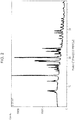
- Fig. 1 shows an example of a result of X-ray powder diffraction measurement on an amorphous form of a monohydrochloride of the compound represented by the formula (I).
- a differential scanning calorimeter When differential scanning calorimetry is performed, a differential scanning calorimeter, a nitrogen gas as a purge gas, a rate of temperature rise of 10°C/min, other devices and various DSC thermograms including conditions can be used. Crystalline and amorphous forms can be discriminated from each other because the crystalline forms are typically characterized by a sharp melt endothermic/endothermic peak and amorphous forms do not exhibit a specific endothermic peak that can be found in the crystalline forms. Those skilled in the art can thus determine the presence of an amorphous form by comparing DSC thermograms between the crystalline form and the amorphous form.
- the amorphous form of the present invention may be in a composition, in which the amorphous form is mixed with one or more crystalline forms.
- the amorphous form may be in a composition in which the amorphous form is mixed with the crystalline form at any mixing rate such as about 1%, 2%, 3%, 5%, 10%, 15%, 20%, 25%, 30%, 35%, 40%, 45%, 50%, 55%, 60%, 65%, 70%, 75%, 80%, 85%, 90%, 95%, 97%, 98%, or 99% by weight or less relative to the entire composition.
- the content of the crystalline form contained in the composition can be calculated using, for example, an X-ray powder diffraction method.
- the content of the amorphous form contained in the composition can be calculated using, for example, DSC.
- Examples of crystalline forms of the compound represented by the formula (I) or salts thereof include crystalline forms (form I, II, and III crystals) of monohydrochloride of the compound represented by the formula (I).
- the form I crystals are characterized by having an X-ray powder diffraction pattern with peaks at diffraction angles (2 ⁇ ) of 8.4°, 14.0°, 16.7°, 18.8°, and 23.3°.
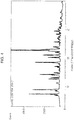
- An example of a result of X-ray powder diffraction measurement on the form I crystals is shown in Fig. 2 , and examples of peaks in X-ray powder diffraction patterns of these crystals are shown in Table 1.
- the form I crystals can be obtained by adding a solution containing the compound of the formula (I) dropwise to a liquid mixture of ethanol and hydrochloric acid, which contains 1 molar equivalent or more of hydrochloric acid relative to the compound of the formula (I), while keeping the temperature of the liquid mixture at about 35°C or higher.
- the form II crystals are characterized by having an X-ray powder diffraction pattern with peaks at diffraction angles (2 ⁇ ) of 9.2°, 10.2°, 16.2°, 20.5°, and 21.6°, and more specifically at diffraction angles (2 ⁇ ) of 9.2°, 10.2°, 16.2°, 17.5°, 19.5°, 20.5°, 21.6°, and 22.8°.
- An example of a result of X-ray powder diffraction measurement on the form II crystals is shown in Fig. 3 , and examples of peaks in X-ray powder diffraction patterns of these crystals are shown in Table 2.
- the form II crystals can be obtained by drying form III crystals described later at about 40°C under reduced pressure.
- the form II crystals are monohydrate.
- the monohydrate herein is not specifically limited as long as it is a crystal that stably contains about 1 equivalent of water under environments (e.g., temperature and relative humidity) where drugs are generally stored and used.
- the form III crystals can be obtained by adding a solution containing the compound of the formula (I) dropwise to a liquid mixture of ethanol and hydrochloric acid, which contains 1 molar equivalent or more of hydrochloric acid relative to the compound of the formula (I), while keeping the temperature of the liquid mixture at about 15°C.
- the form III crystals are characterized by having an X-ray powder diffraction pattern with peaks at diffraction angles (2 ⁇ ) of 12.7°, 14.3°, 15.0°, 18.5°, and 25.7°, and more specifically at diffraction angles (2 ⁇ ) of 7.5°, 12.7°, 14.3°, 15.0°, 18.5°, 20.3°, 21.0°, and 25.7°.
- the analysis of crystalline forms using X-ray powder diffraction can be performed according to a method usually used such as the "X-ray powder diffraction method" described in, for example, Japanese Pharmacopoeia (16th edition).
- the same crystal form typically refers to crystalline forms of which diffraction angles 2 ⁇ coincide with each other with an error of ⁇ 0.2°.
- Water content of the crystals can be measured using a method usually used: for example, with a dynamic vapor sorption instrument or by the Karl Fischer method.
- Examples of the salts of the compound represented by the formula (I) in the present invention include hydrochlorides, hydrobromides, hydroiodides, phosphates, phosphonates, sulfates, and sulfonates such as methanesulfonates and p-toluenesulfonates, carboxylates such as acetates, citrates, malates, tartrates, succinates, and salicylates, or alkali metal salts such as sodium salts and potassium salts; alkaline earth metal salts such as magnesium salts and calcium salts; and ammonium salts such as ammonium salts, alkylammonium salts, dialkylammonium salts, trialkylammonium salts, and tetraalkylammonium salts. These salts are produced by contacting the compound with an acid or a base that can be used for the production of drugs.
- a solvate of the compound represented by the formula (I) or a salt thereof can be either hydrate or non-hydrate.
- non-hydrates of the compound represented by the formula (I) or salts thereof include their solvates with alcohol (e.g., methanol, ethanol, and n-propanol), or dimethylformamide.
- the amorphous forms of the present invention have an excellent solubility and are thus expected to exhibit better absorbability in living bodies, in particular, higher intestinal absorbability than conventional crystalline forms. Accordingly, by using an amorphous form of the present invention in place of a crystalline form of the compound represented by the formula (I) or a salt thereof, a daily dose can be reduced. It is useful as drugs and medicines, in particular, oral pharmaceutical formulations.
- amorphous forms of the present invention Although typical amorphous forms crystallize fast and may sometimes have a problem in stability, the amorphous forms of the present invention hardly undergo crystallization and are thus stable.
- the amorphous forms of the present invention which are thus superior in stability are advantageous in terms of manufacturing and providing as well as using the products with a certain level of quality as drugs.
- the amorphous forms of the present invention can be manufactured using spray drying.
- the "spray drying” is a method of producing a dry powder of a compound by atomizing a solution, slurry, or emulsion containing the compound, which is referred to as a "feed solution”, to fine droplets and injecting them into a hot air stream. Injection of mist is also referred to as “spraying” and as a method for this, centrifugal spraying using a rotary disk and pressure spraying using a pressure nozzle are well known.
- Spray drying can be performed according to a method usually used. With spray drying, it is possible to produce stable and uniform amorphous forms with a high reproducibility, which is advantageous in terms of manufacturing and providing products with a certain level of quality as drugs.
- Examples of the aforementioned spray drying include a production method including the steps of: dissolving the compound represented by the general formula (I): a salt thereof or a solvate of the compound or a salt thereof into a solvent to prepare a feed solution; spraying the feed solution; and drying the sprayed feed solution to give an amorphous form thereof.
- One embodiment of the step of preparing the feed solution is to prepare it by dissolving form I crystals of monohydrochloride of the compound represented by the formula (I) into a solvent.
- Solvents used for the spray drying include tetrahydrofuran.
- concentration of tetrahydrofuran is, for example, 65% to 85%, and about 70% is preferable.
- the temperature at which the compound represented by the formula (I), a salt thereof, or a solvate of the compound or a salt thereof is dissolved into a solvent is preferably about 50°C ( ⁇ 5°C).
- the temperature during the spray drying is preferably about 120°C ( ⁇ 5°C).
- a step of removing the solvent such as a step of drying the sample under reduced pressure, can be included as a post-processing.
- the present invention also relates to solid dispersions containing an amorphous form of the compound represented by the formula (I), a salt thereof, or a solvate of the compound or a salt thereof; and an inert carrier. Since the amorphous form of the compound represented by the formula (I), a salt thereof, or a solvate of the compound or a salt thereof is stabilized more in the solid dispersion, its storage stability is improved and thus it is useful for actual clinical practices.
- solid dispersion refers to a solid composition in which one or more active ingredients are dispersed in an inert carrier or a matrix thereof.
- the active ingredient is preferably dispersed in the inert carrier or a matrix thereof at a molecular level.
- the "inert carrier” as used in the present invention means a solid or liquid vehicle diluent and may contain a plurality of substances.
- the inert carrier include solid polymers. Solid polymers are not specifically limited as long as they are pharmaceutically acceptable and can keep an amorphous state of the active ingredient(s). One of the solid polymers alone or a mixture of two or more can be used. A weight ratio of the amorphous form of the compound represented by the formula (I), a salt thereof, or a solvate of the compound or a salt thereof, as a free form, to the inert carrier is, for example, 9:1 to 1:9, preferably 2:1 to 1:9, and more preferably 1:2 to 1:9.
- a preferable embodiment of the present invention includes a solid dispersion in which an amorphous form of the compound represented by formula (I), a salt thereof, or a solvate of the compound or a salt thereof is dispersed in a solid polymer.
- a more preferable embodiment includes a solid dispersion in which the amorphous form is dispersed in the solid polymer at a molecular level.
- solid polymer examples include celluloses and their derivatives, and water-soluble synthetic polymers.
- celluloses and their derivatives include hypromellose, hypromellose acetate succinate, hypromellose phthalate, carboxymethyl cellulose, carboxymethyl ethyl cellulose, sodium carboxymethyl cellulose, hydroxyethyl cellulose, hydroxyethyl methyl cellulose, hydxoxypropyl cellulose, methyl cellulose, ethyl cellulose, and cellulose acetate phthalate.
- preferable examples include hypromellose acetate succinate and hypromellose phthalate.
- water-soluble synthetic polymers examples include polyethylene glycol, polyvinyl alcohol, povidone, copolyvidone, polyvinyl acetate phthalate, polyvinylacetal diethylamino acetate, cellulose acetate phthalate, a polyvinyl caprolactam-polyvinyl acetate-polyethylene glycol graft copolymer (product name: Soluplus), an aminoalkyl methacrylate copolymer E, an aminoalkyl methacrylate copolymer RS, a methacrylate copolymer L, a methacrylate copolymer LD, a methacrylate copolymer S, and carboxyvinyl polymers.
- preferable examples include the polyvinyl caprolactam-polyvinyl acetate-polyethylene glycol graft copolymer and the methacrylate copolymer L.
- solid dispersions can be obtained preferably by spray drying. Specifically, it can be obtained by, for example, dissolving the compound represented by the formula (I), a salt thereof, or a solvate of the compound or a salt thereof and other solid substance (such as the solid polymer) in a solvent, spray drying the solution thus obtained at about 100°C, and optionally, drying under reduced pressure as a post-processing.
- the weight ratio of the solid polymer to the amorphous form of the compound represented by the formula (I), a salt thereof, or a solvate of the compound or a salt thereof, as a free form is, for example, 9:1 to 1:9, preferably 2:1 to 1:9, and more preferably 1:2 to 1:9.
- the amorphous forms of the present invention can be administered orally or parenterally.
- oral dosage forms powders, fine granules, granules, tables, and capsules are suitably used.
- parenteral dosage forms suppositories and the like are suitably used.
- the amorphous form of the present invention is used as a solid dispersion, the solid dispersion itself can be used as a pharmaceutical preparation. It can also be used as a pharmaceutical preparation in the form of powders, fine granules, granules, tables, or capsules using a formulation technique such as compression molding.
- the amorphous forms, the solid dispersions and the pharmaceutical preparations of the present invention can be used for a liquid medicine in which they have been dispersed in a pharmaceutically acceptable solution in advance.
- they can be used for syrups for oral administration or injections for parenteral administration which includes a lyophilized agent for injection to be used after being reconstituted.
- They can also be prepared for liposomal drugs.
- a coloring agent for preparation of the dosage forms, a coloring agent, a sweetening agent, and a flavor, usually used; a diluent, an excipient, a binder, a lubricant, a disintegrating agent, a softening agent, a suspending agent, an emulsifying agent, a preservative, an antioxidant, a surfactant, a stabilizing agent, a pH adjusting agent, and a dispersing agent can be used.
- a diluent for preparation of the dosage forms.
- the disintegrating agent can be starches such as corn starches, potato starches, and partially pregelatinized starches, celluloses such as crystalline celluloses and microcrystalline celluloses, low-substituted hydroxypropyl celluloses, croscarmellose sodium, crospovidone, carmellose calcium, carmellose sodium, and carboxymethyl starch sodium.
- starches such as corn starches, potato starches, and partially pregelatinized starches
- celluloses such as crystalline celluloses and microcrystalline celluloses
- low-substituted hydroxypropyl celluloses croscarmellose sodium, crospovidone, carmellose calcium, carmellose sodium, and carboxymethyl starch sodium.
- examples include sugars such as lactose, sucrose, glucose, reducing maltose, mannitol, sorbitol, and erythritol, starches and their derivatives such as corn starches, potato starches, pregelatinized starches, partially pregelatinized starches, dextrin, and pullulan, celluloses such as crystalline celluloses and microcrystalline celluloses, magnesium silicate, magnesium aluminate metasilicate, sodium hydrogen phosphate, calcium hydrogen phosphate, and talc.
- sugars such as lactose, sucrose, glucose, reducing maltose, mannitol, sorbitol, and erythritol
- starches and their derivatives such as corn starches, potato starches, pregelatinized starches, partially pregelatinized starches, dextrin, and pullulan
- celluloses such as crystalline celluloses and microcrystalline celluloses
- magnesium silicate magnesium aluminate metasilicate
- lubricants examples include carnauba waxes, hydrogenated oils, stearic acid, magnesium stearate, calcium stearate, talc, sodium stearyl fumarate, and sucrose fatty acid ester.
- the solid dispersion or the pharmaceutical preparation of the present invention may partly contain crystals of the compound represented by the formula (I), a salt thereof, or a solvate of the compound or a salt thereof.
- at least 75% of the compound represented by the formula (I), a salt thereof, or a solvate of the compound or a salt thereof in the solid dispersion or the pharmaceutical preparation is present in the amorphous form, but not limited thereto. More preferably, this amount is at least 90%, and yet more preferably, 95%.
- the percentage of the amorphous forms can be obtained by comparing spectra of the X-ray powder diffraction between the crystalline and amorphous forms.
- Ingredients to be formulated as granules are loaded and premixed in a high-shear granulator. An appropriate amount of purified water is sprayed and the ingredients are agitated and granulated. They arc then dried under vacuum to give dry granules. The dry granules are sized using a sizing machine. The sized granules thus obtained and ingredients externally added are mixed in a mixer to produce mixed powders. The mixed powders are filled in a capsule to produce a capsule drug.
- the pharmaceutical preparation can contain 1%, 2%, 3%, 4%, 5%, 10%, 15%, 20%, 25%, 30%, 35%, 40%, 45%, 50%, 55%, 60%, 65%, 70%, 75%, 80%, 85%, 90%, 95%, 96%, 97%, 98%, 99% by weight or less of the amorphous form of the present invention relative to the entire monohydrochloride of the compound of the formula (1) contained in the pharmaceutical preparation.
- Preparation 1 Preparation 2 Ingredients to be formulated as granules Hydrochloride of the compound of formula (I) 161.33 161.33 Lactose monohydrate 33.67 52.42 Hydroxypropyl cellulose 15.00 15.00 Sodium lauryl sulfate 75.00 56.25 Carmellose calcium 15.00 0.00 Low-substituted hydroxypropyl cellulose 0.00 15.00 Ingredients externally added Carmellose calcium 28.35 0.00 Low-substituted hydroxypropyl cellulose 0.00 28.35 Magnesium stearate 1.65 1.65 Total 330.00 330.00 330.00
- a mixed solvent (40 mL) of tetrahydrofuran (140 mL) and water (60 mL) was added to a vessel containing form I crystals (600 mg) of monohydrochloride of 9-ethyl-6,6-dimethyl-8-(4-morpholin-4-yl-piperidin-1-yl)-11-oxo-6,11-dihydro-5H-benzo[b]carbazole-3-carbonitrile and the vessel was warmed in a water bath at 50°C. Subsequently, the mixture was stirred until the salt was dissolved. The solution thus obtained was spray-dried at about 120°C and dried under reduced pressure as a post-processing to give an amorphous form (530 mg) of monohydrochloride of the title compound.
- X-ray powder diffraction was measured under the following conditions on the amorphous form of 9-ethyl-6,6-dimethyl-8-(4-morpholin-4-yl-piperidin-1-yl)-11-oxo-6,11-dihydro-5H-benzo[b]carbazole-3-carbonitrilemonohydrochloride obtained in Example 1.
- a result of measurement is shown in Fig. 1 .
- Example 1 The amorphous form obtained in Example 1 had an X-ray powder diffraction pattern with a halo pattern, confirming that it is an amorphous form.
- the step 2 and the later step were performed at room temperature.
- Solubility of the amorphous form and form I crystals of 9-ethyl-6,6-dimethyl-8-(4-morpholin-4-yl-piperidin-1-yl)-1-oxo-6,11-dihydro-5H-benzo[b] carbazole-3-carbonitrilemonohydrochloride was examined using a shake flask method (37°C). Results are shown in Table 10. It was found that the solubility of the amorphous form was higher than that of the form I crystals.
- Solvents shown in Table 11 were added to vessels containing 2.58 g of the crystals of 9-ethyl-6,6-dimethyl-8-(4-morpholin-4-yl-piperidin-1-yl)-11-oxo-6,11-dihydro-5H-benzo[b]carbazole-3-carbonitrile thus obtained and 5.60 g of the solid polymer shown in Table 8 and the mixtures were stirred until they were dissolved.
- the liquid mixtures thus obtained were spray dried at about 100°C and dried under reduced pressure as a post-processing to give amorphous substances of the compound represented by the formula (I) (Example 8) and solid dispersions (Examples 9 to 15).
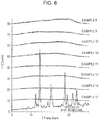
- Halo patterns were observed in all of the X-ray power diffraction patterns of the solid dispersions obtained in Examples 9 to 15, indicating that they are amorphous forms.
- amorphous substances and the solid dispersions of 9-ethyl-6,6-dimethyl-8-(4-morpholin-4-yl-piperidin-1-yl)-11-oxo-6,11-dihydro-5H-benzo[b]carbazole-3-carbonitrile obtained in Examples 8 to 15 were tested under two conditions: i) they were stored in a thermostatic bath set at 40°C for 3 months, and ii) they were stored in a thermostatic bath set at 40°C and 75% RH for 3 months in an open state. Residual rates of the principal drugs were measured under following conditions of high performance liquid chromatography. Results of the measurement are shown in Table 13. It was concluded that the amorphous substances and the solid dispersions were chemically stable.
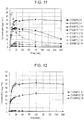
- Solubility of the amorphous substances and the solid dispersions of 9-ethyl-6,6-dimethyl-8-(4-morpholin-4-yl-piperidin-1-yl)-11-oxo-6,11-dihydro-5H-benzo[b]carbazole-3-carbonitrile obtained in Examples 8 to 15 in a fasted state simulated intestinal fluid (FaSSIF) was estimated using a small-scale dissolution tester (Vankel Technologies, Inc.) under conditions of 37°C and a puddle rotation speed of 50 rpm.
- the concentration of the compound of the formula (I) in the test solution was measured after 5, 10, 15, 20, 25, 30, 45, 60, 120, and 240 minutes under the following conditions of high performance liquid chromatography. Results of the measurement are shown in Fig. 11 .
- Example 16 Hydrochloride of the compound of formula (I) 16.5% Lactose monohydrate 44.3% Crystalline cellulose 20.0% Sodium starch glycolate 6.0% Hydroxypropyl cellulose 5.0% Sodium lauryl sulfate 7.7% Magnesium stearate 0.5%
- Solubility of Example 16 in FaSSIF was estimated using a small-scale dissolution tester under conditions of 37°C and a puddle rotation speed of 50 rpm and compared with those of Examples 8 and 10.
- Fig. 12 it was revealed that the solid dispersion using the polyvinyl caprolactam-polyvinyl acetate-polyethylene glycol graft copolymer as a polymer carrier had an improved solubility as compared with the crystalline pharmaceutical preparation of a hydrochloride.
- Example 10 Male beagle dogs purchased from Beijing Marshall Biotechnology Co., Ltd. were used in the test The animals were not allowed access to food or water 16.5 hours prior to the administration of the drug and injected intravenously with famotidine 2 hours prior to the administration to adjust their stomach pH.
- the preparations obtained in Examples 10 and 16 were each filled as a test compound in a gelatin capsule in an amount of 5 mg/kg and administered orally. Blood samples were collected over time from 15 minutes to 24 hours after the administration of the pharmaceutical preparations from a cephalic vein in the forearm using a syringe treated with heparin, and were centrifuged to obtain plasma. A blood level of the test compound was then examined (Table 16). [Table 16] Maximum blood concentration (ng/mL) Area under the curve for blood concentration (ng ⁇ hr/mL) Average Standard deviation Average Standard deviation Example 10 567 205 2790 1030 Example 16 264 143 1140 790
- the solid dispersions exhibited high blood levels of the test compounds and it was found that intestinal absorbabilities were improved by about 2.4 times based on the area under the curve for blood level.
- the amorphous forms of the present invention were stable for a long time at normal temperature and had an improved solubility.
- the solid dispersions of the present invention had excellent physical and chemical stabilities and further improved the solubility of the amorphous forms of the present invention. Accordingly, the amorphous forms and the solid dispersions of the present invention are extremely useful for drugs, in particular, dosage forms such as oral drugs which often have problems in bioabsorbabilities.
Landscapes
- Chemical & Material Sciences (AREA)
- Organic Chemistry (AREA)
- Health & Medical Sciences (AREA)
- Animal Behavior & Ethology (AREA)
- Veterinary Medicine (AREA)
- Public Health (AREA)
- Medicinal Chemistry (AREA)
- General Health & Medical Sciences (AREA)
- Pharmacology & Pharmacy (AREA)
- Life Sciences & Earth Sciences (AREA)
- Epidemiology (AREA)
- Inorganic Chemistry (AREA)
- Dispersion Chemistry (AREA)
- Nuclear Medicine, Radiotherapy & Molecular Imaging (AREA)
- General Chemical & Material Sciences (AREA)
- Chemical Kinetics & Catalysis (AREA)
- Oncology (AREA)
- Pharmaceuticals Containing Other Organic And Inorganic Compounds (AREA)
- Medicinal Preparation (AREA)
- Plural Heterocyclic Compounds (AREA)
Abstract
Description
- The present invention relates to amorphous forms of tetracyclic compounds having inhibitory activity on ALK, and solid dispersions containing the amorphous forms.
- Anaplastic lymphoma kinase (ALK) is one of receptor tyrosine kinases belonging to the insulin-receptor family (NPL 1 and NPL 2), and an abnormality in the ALK gene has been reported to lead to the production of an abnormal kinase with the gene fused with another gene.
- As diseases with abnormalities of ALK, cancer and cancer metastasis (
NPL 1 and PTL 1), depression, and cognitive function disorders (NPL 2) are known. Accordingly, provision of ALK inhibitors will results in that of effective therapeutic and prophylactic agents against these diseases. - As compounds having inhibitory activity on ALK, a compound represented by the formula (I) (compound name: 9-ethyl-6,6-dimethyl-8-(4-morpholin-4-yl-piperidin-1-yl)-11-oxo-6,11-dihydro-5H-benzo[b]carbazole-3-carbonitrile) and the like are known (
PTL 2,PTL 3, and PTL 4). - Since the compound is poorly soluble or insoluble to water, a sufficient bioavailability might not possibly be obtained when it is administered orally.
-
- PTL 1: Japanese Patent Laid-Open No.
2009100783(A - PTL 2: Japanese Patent No.
4588121 - PTL 3: Japanese Patent No.
4918630 - PTL 4: Japanese Patent Laid-open No.
2012-126711 -
- NPL 1: Nature, vol. 448, pp. 561-566,2007
- NPL 2: Neuropsychopharmacology, vol. 33, pp. 685-700,2008
- With respect to the aforementioned problem, the present inventors found, as a result of extensive studies, that amorphous forms of hydrochlorides of the tetracyclic compound represented by the formula (I) below have a very high physical stability and an excellent solubility. Furthermore, the present inventors found that solid dispersions containing the amorphous forms have excellent physical and chemical stabilities and solubility of the compound represented by the formula (I), a salt thereof, or a solvate of the compound or a salt thereof is improved.
- More specifically, the present invention is as follows.
- (1) An amorphous form of a compound represented by the formula (I):

- (2) The amorphous form described in (1), wherein the amorphous form includes a salt of the compound.
- (3) The amorphous form described in (1) or (2), wherein the salt is a hydrochloride.
- (4) The amorphous form described in any one of (1) to (3), wherein the salt is a monohydrochloride.
- (5) The amorphous form described in any one of (1) to (4), wherein an exothermic peak is detected between 190° ± 5°C and 230° ± 5°C by a differential scanning calorimetry analysis.
- (6) The amorphous form described in any one of (1) to (4), wherein a glass transition temperature is between 190 ± 5°C and 230 ± 5°C.
- (7) The amorphous form described in any one of (1) to (6), wherein the amorphous form has an X-ray powder diffraction pattern shown in
Fig. 1 . - (8) A method of producing an amorphous form of a compound represented by the formula (I), a salt thereof, or a solvate of the compound or a salt thereof, the method including the steps of: (i) dissolving the compound represented by the formula (I), the salt thereof, or the solvate of the compound or the salt thereof into a solvent to prepare a feed solution; (ii) spraying the feed solution obtained in the step (i); and (iii) drying the sprayed feed solution to provide the amorphous form of the compound represented by the formula (I), a salt thereof, or a solvate of the compound or a salt thereof.
- (9) The method described in (8), wherein the compound represented by the formula (I), the salt thereof, or the solvate of the compound or the salt thereof in the step (i) is a crystalline form.
- (10) The method described in (8), wherein the compound represented by the formula (I), the salt thereof, or the solvate of the compound or the salt thereof comprises a hydrochloride of the compound represented by the formula (I).
- (11) The method described in (9) or (10), wherein the compound represented by the formula (I), the salt thereof, or the solvate of the compound or the salt thereof comprises a monohydrochloride of the compound represented by the formula (I).
- (12) The method described in (9) to (11), wherein the hydrochloride of the compound represented by the formula (I) in the step (i) is a crystalline form having an X-ray powder diffraction pattern with peaks at diffraction angles (2θ) of 8.4° ± 0.2°, 14.0° ± 0.2°, 16.7° ± 0.2°, 18.8° ± 0.2°, and 23.3° ± 0.2°.
- (13) The method described in any one of (8) to (12), wherein the solvent is tetrahydrofuran.
- (14) The method described in (13) wherein a concentration of the tetrahydrofuran is between 65% and 85%.
- (15) An amorphous form of a compound represented by the formula (I), a salt thereof, or a solvate of the compound or a salt thereof, wherein the amorphous form is obtained by the method described in any one of (8) to (14).
- (16) An amorphous form of a monohydrochloride of the compound represented by the formula (I), wherein the amorphous form is obtained by the method described in any one of (8) to (14).
- (17) A composition including amorphous and crystalline forms of a compound represented by the formula (I), a salt thereof, or a solvate of the compound or a salt thereof.
- (18) The composition described in (17), wherein a content of the crystalline form is 10% by weight or less.
- (19) The composition described in (17) or (18), wherein a content of the crystalline form is 3% by weight or less.
- (20) The composition described in any one of (17) to (19), wherein a content of the crystalline form is 1% by weight or less.
- (21) The composition described in any one of (17) to (20), wherein the compound represented by the formula (I) or the salt thereof comprises a hydrochloride of the compound represented by the formula (I).
- (22) The composition described in any one of (17) to (21), wherein the compound represented by the formula (I) or the salt thereof comprises a monohydrochloride of the compound represented by the formula (I).
- (23) The composition described in any one of (17) to (22), wherein the amorphous form is detected as an exothermic peak between 190° ± 5°C and 230° ± 5°C by a differential scanning calorimetry analysis.
- (24) The composition described in any one of (17) to (22), wherein the amorphous form has a glass transition temperature of about 190 ± 5°C to 230 ± 5°C.
- (25) The composition described in any one of (17) to (24), wherein the amorphous form has an X-ray powder diffraction pattern shown in
Fig. 1 . - (26) A solid dispersion including an amorphous form of a compound represented by the formula (I), a salt thereof, or a solvate of the compound or a salt thereof; and an inert carrier.
- (27) The solid dispersion described in (26), wherein the inert carrier is a solid polymer.
- (28) The solid dispersion described in (27), wherein the solid polymer is cellulose or a derivative thereof or a water-soluble synthetic polymer.
- (29) The solid dispersion described in (28), wherein the solid polymer is hypromellose, hypromellose acetate succinate, hypromellose phthalate, carboxymethyl cellulose, carboxymethyl ethyl cellulose, sodium carboxymethyl cellulose, hydroxyethyl cellulose, hydroxyethyl methyl cellulose, hydroxypropyl cellulose, methyl cellulose, ethyl cellulose, cellulose acetate phthalate, polyethylene glycol, polyvinyl alcohol, povidone, copolyvidone, polyvinyl acetate phthalate, polyvinylacetal diethylamino acetate, cellulose acetate phthalate, a polyvinyl caprolactam-polyvinyl acetate-polyethylene glycol graft copolymer, an aminoalkyl methacrylate copolymer E, an aminoalkyl methacrylate copolymer RS, a methacrylate copolymer L, a methacrylate copolymer LD, a methacrylate copolymer S, or a carboxyvinyl polymer.
- (30) The solid dispersion described in (29), wherein the solid polymer is selected from a polyvinyl caprolactam-polyvinyl acetate-polyethylene glycol graft copolymer, hypromellose phthalate, hypromellose acetate succinate, and a methacrylate copolymer L.
- (31) The solid dispersion described in any one of (27) to (30), wherein a weight ratio of the compound represented by the formula (I), the salt thereof, or the solvate of the compound or the salt thereof, as a free form, and the inert carrier is 9:1 to 1:9.
- (32) A powder, fine granules, granules, a table, or a capsule containing the solid dispersion described in any one of (26) to (31).
-
- [
Fig. 1] Fig. 1 is a graph showing a result of X-ray powder diffraction measurement on an amorphous form of the present invention. - [
Fig. 2] Fig. 2 is a graph showing a result of X-ray powder diffraction measurement on form I crystals. - [
Fig. 3] Fig. 3 is a graph showing a result of X-ray powder diffraction measurement on form II crystals. - [
Fig. 4 ]Fig. 3 is a graph showing a result of X-ray powder diffraction measurement on form III crystals. - [
Fig. 5] Fig. 5 is a graph showing a result of differential scanning calorimetry (DSC) measurement on the amorphous form of the present invention. - [
Fig. 6] Fig. 6 shows a polarizing micrograph of a compound A which has been dried after being completely dissolved in 70% THF (concentration of the compound A: 14 mg/mL). - [
Fig. 7] Fig. 7 shows a polarizing micrograph of the compound A which has been dried after being completely dissolved in 80% THF (concentration of the compound A: 12 mg/mL). - [
Fig. 8] Fig. 8 is a graph showing a result of X-ray powder diffraction measurement on the amorphous form and solid dispersions of the present invention. - [
Fig. 9] Fig. 9 is a graph showing a result of X-ray powder diffraction measurement on amorphous forms and solid dispersions which have been stored under conditions of 40°C and 75% RH for 3 months. - [
Fig. 10] Fig. 10 is a graph showing a result of X-ray powder diffraction measurement on amorphous forms and solid dispersions which have been stored at 25°C for 1 year. - [
Fig. 11] Fig. 11 is a graph showing a result of a dissolution test on the amorphous forms and the solid dispersions of the present invention. - [
Fig. 12] Fig. 12 is a graph comparing elution profiles of the amorphous forms and the solid dispersions of the present invention with an elution profile of a crystalline pharmaceutical preparation of a hydrochloride. - An "amorphous form" as used in the present invention means a state of solid substances exhibiting no definite crystalline structure. The presence or absence of a crystalline structure can be examined by measuring X-ray powder diffraction (XRPD) under the measurement conditions given below. The amorphous forms in the present invention have a diffraction pattern containing a broad and weak peak (halo) when their X-ray powder diffraction (XRPD) was measured under the measurement conditions given below. The diffraction pattern becomes more distinctive when compared with those of crystalline forms. Glass-like substances which have no crystalline structure and are similar to non-crystalline fluids with a very high viscosity are also included in the amorphous forms of the present invention.
- Measurement conditions:
- Measuring instrument: X'Pert-Pro MPD (manufactured by PANalytical)
- Target: Cu
- Tube voltage: 45 kV
- Tube current: 40 mA
- Step size: 0.02°
- Scan axis: 2θ
- Sampling time per step: 43 sec.
- Scanning range: 3 to 40°
- The presence of the amorphous forms of the present invention can be examined using a well-known technique such as differential scanning calorimetry (DSC), solid NMR, X-ray (powder) diffraction, IR, NIR, and Raman spectroscopy, optionally by comparing them with a crystalline form of a compound represented by the formula (I), a salt thereof, or a solvate of the compound or a salt thereof when they are mixed with the crystalline form.
- Specifically, for amorphous forms of monohydrochloride of the compound represented by the formula (I) for example, an exothermic peak is detected by a differential scanning calorimetry analysis between about 190°C and about 230°C. The term "about" means ±5°C, and preferably ±2°C. In other words, the amorphous forms of the present invention have a glass transition temperature of about 190-230°C. The term "about" means ±5°C. Preferably, the glass transition temperature is about 220-230°C.
- When the X-ray powder diffraction is used, crystalline and amorphous forms can be discriminated easily from each other because the former exhibits a diffraction pattern containing a sharp peak whereas the latter exhibits a diffraction pattern containing a relatively broad and weak peak ("halo").
Fig. 1 shows an example of a result of X-ray powder diffraction measurement on an amorphous form of a monohydrochloride of the compound represented by the formula (I). - When differential scanning calorimetry is performed, a differential scanning calorimeter, a nitrogen gas as a purge gas, a rate of temperature rise of 10°C/min, other devices and various DSC thermograms including conditions can be used. Crystalline and amorphous forms can be discriminated from each other because the crystalline forms are typically characterized by a sharp melt endothermic/endothermic peak and amorphous forms do not exhibit a specific endothermic peak that can be found in the crystalline forms. Those skilled in the art can thus determine the presence of an amorphous form by comparing DSC thermograms between the crystalline form and the amorphous form.
- Some of the measurement conditions of the differential scanning calorimetry are given below.
- Instrument name: differential scanning calorimeter (DSC)
- Model: Q200 (manufactured by TA Instruments)
- Heating rate: 10°C/min. or 20°C/min.
- Measurement temperature range: 25°C to 350°C (Provided that if the sample contains much residual solvent, a pre-treatment with heat at 25°C to 125°C or 25°C to 175°C may be required.)
- Atmospheric gas: dry nitrogen
- Flow rate of atmospheric gas: 50 mL/min.
- Cell: aluminum pan (pinhole)
- Sample amount: 5 mg to 10 mg
- Reference standard: empty pan
- The amorphous form of the present invention may be in a composition, in which the amorphous form is mixed with one or more crystalline forms. The amorphous form may be in a composition in which the amorphous form is mixed with the crystalline form at any mixing rate such as about 1%, 2%, 3%, 5%, 10%, 15%, 20%, 25%, 30%, 35%, 40%, 45%, 50%, 55%, 60%, 65%, 70%, 75%, 80%, 85%, 90%, 95%, 97%, 98%, or 99% by weight or less relative to the entire composition.
- The content of the crystalline form contained in the composition can be calculated using, for example, an X-ray powder diffraction method.
- On the other hand, the content of the amorphous form contained in the composition can be calculated using, for example, DSC.
- Examples of crystalline forms of the compound represented by the formula (I) or salts thereof include crystalline forms (form I, II, and III crystals) of monohydrochloride of the compound represented by the formula (I).
- The form I crystals are characterized by having an X-ray powder diffraction pattern with peaks at diffraction angles (2θ) of 8.4°, 14.0°, 16.7°, 18.8°, and 23.3°. An example of a result of X-ray powder diffraction measurement on the form I crystals is shown in
Fig. 2 , and examples of peaks in X-ray powder diffraction patterns of these crystals are shown in Table 1. The form I crystals can be obtained by adding a solution containing the compound of the formula (I) dropwise to a liquid mixture of ethanol and hydrochloric acid, which contains 1 molar equivalent or more of hydrochloric acid relative to the compound of the formula (I), while keeping the temperature of the liquid mixture at about 35°C or higher.[Table 1] Diffraction angle (2θ) 3.5 20.2 28.8 8.0 20.5 29.5 8.4 21.0 29.9 8.7 21.5 30.8 11.0 21.8 31.3 11.9 22.1 31.8 12.1 22.3 31.9 14.0 22.6 32.6 15.1 22.9 33.1 15.6 23.3 33.2 16.1 24.1 33.8 16.4 24.8 34.7 16.7 25.4 35.3 17.1 25.7 35.5 17.5 26.1 36.4 18.2 26.9 36.6 18.8 27.7 37.5 19.0 27.9 38.8 19.1 28.2 39.4 - The form II crystals are characterized by having an X-ray powder diffraction pattern with peaks at diffraction angles (2θ) of 9.2°, 10.2°, 16.2°, 20.5°, and 21.6°, and more specifically at diffraction angles (2θ) of 9.2°, 10.2°, 16.2°, 17.5°, 19.5°, 20.5°, 21.6°, and 22.8°. An example of a result of X-ray powder diffraction measurement on the form II crystals is shown in
Fig. 3 , and examples of peaks in X-ray powder diffraction patterns of these crystals are shown in Table 2. The form II crystals can be obtained by drying form III crystals described later at about 40°C under reduced pressure.[Table 2] Diffraction angle (2θ) 3.6 19.5 29.2 6.6 20.0 29.6 8.9 20.5 30.3 9.2 20.8 31.0 10.2 21.6 31.3 11.1 22.2 32.6 11.3 22.8 32.9 12.0 23.2 33.6 12.1 23.8 34.0 13.3 24.2 34.8 14.6 24.6 35.5 16.0 24.8 36.2 16.2 25.6 37.7 17.3 26.2 38.3 17.5 26.9 38.8 18.0 27.5 39.4 18.2 27.8 39.9 18.5 28.4 18.8 28.9 - In one embodiment of the present invention, the form II crystals are monohydrate. The monohydrate herein is not specifically limited as long as it is a crystal that stably contains about 1 equivalent of water under environments (e.g., temperature and relative humidity) where drugs are generally stored and used.
- The form III crystals can be obtained by adding a solution containing the compound of the formula (I) dropwise to a liquid mixture of ethanol and hydrochloric acid, which contains 1 molar equivalent or more of hydrochloric acid relative to the compound of the formula (I), while keeping the temperature of the liquid mixture at about 15°C. The form III crystals are characterized by having an X-ray powder diffraction pattern with peaks at diffraction angles (2θ) of 12.7°, 14.3°, 15.0°, 18.5°, and 25.7°, and more specifically at diffraction angles (2θ) of 7.5°, 12.7°, 14.3°, 15.0°, 18.5°, 20.3°, 21.0°, and 25.7°.
Fig. 4 shows an example of a result of X-ray powder diffraction measurement on the form III crystals, and Table 3 shows examples of peaks in X-ray powder diffraction patterns of these crystals.[Table 3] Diffraction angle (2θ) 3.5 19.9 29.5 7.0 20.3 29.6 7.5 21.0 29.9 8.5 22.1 30.3 9.0 22.5 30.5 10.8 22.8 30.9 11.3 23.1 31.4 11.4 23.7 32.1 12.7 24.0 32.8 13.3 24.5 34.0 14.1 24.9 34.4 14.3 25.2 34.8 15.0 25.7 35.3 15.7 26.0 36.2 16.0 26.7 36.3 16.4 26.9 36.7 16.8 27.2 36.9 17.1 27.5 37.6 17.9 27.7 38.2 18.2 28.5 18.5 28.8 19.6 29.1 - The analysis of crystalline forms using X-ray powder diffraction can be performed according to a method usually used such as the "X-ray powder diffraction method" described in, for example, Japanese Pharmacopoeia (16th edition). The same crystal form typically refers to crystalline forms of which diffraction angles 2θ coincide with each other with an error of ±0.2°.
- An example of measurement conditions for an X-ray powder diffraction analysis is given below.
- Measuring instrument: X'Pert-Pro MPD (manufactured by PANalytical)
- Target: Cu
- Tube voltage: 45 kV
- Tube current: 40 mA
- Step size: 0.02
- Scan axis: 2θ
- Sampling time per step: 43 sec.
- Scanning range: 3 to 40°
- Water content of the crystals can be measured using a method usually used: for example, with a dynamic vapor sorption instrument or by the Karl Fischer method.
- An example of measurement conditions for a dynamic vapor sorption instrument is given below.
- Dynamic vapor sorption instrument: DVS-1 (Surface Measurement Systems)
- Temperature: fixed temperature about 25°C
- Atmospheric gas: dried nitrogen
- Flow rate of atmospheric gas: 200 sccm (mL/min.)
- Minimum equilibration time: 10 min.
- Maximum equilibration time: 1200 min.
- An example of measurement conditions for the measurement of water content using a Karl Fischer analyzer is given below.
- Method of analysis: coulometric titration method
- KF analyzer: volumetric moisture meter, model KF-100 (manufactured by Mitsubishi Chemical Corporation)
- Anode solution: Aquamicron AX (manufactured by Mitsubishi Chemical Corporation)
- Cathode solution: Aquamicron CXU (manufactured by Mitsubishi Chemical Corporation)
- Examples of the salts of the compound represented by the formula (I) in the present invention include hydrochlorides, hydrobromides, hydroiodides, phosphates, phosphonates, sulfates, and sulfonates such as methanesulfonates and p-toluenesulfonates, carboxylates such as acetates, citrates, malates, tartrates, succinates, and salicylates, or alkali metal salts such as sodium salts and potassium salts; alkaline earth metal salts such as magnesium salts and calcium salts; and ammonium salts such as ammonium salts, alkylammonium salts, dialkylammonium salts, trialkylammonium salts, and tetraalkylammonium salts. These salts are produced by contacting the compound with an acid or a base that can be used for the production of drugs.
- A solvate of the compound represented by the formula (I) or a salt thereof can be either hydrate or non-hydrate. Examples of non-hydrates of the compound represented by the formula (I) or salts thereof include their solvates with alcohol (e.g., methanol, ethanol, and n-propanol), or dimethylformamide.
- The amorphous forms of the present invention have an excellent solubility and are thus expected to exhibit better absorbability in living bodies, in particular, higher intestinal absorbability than conventional crystalline forms. Accordingly, by using an amorphous form of the present invention in place of a crystalline form of the compound represented by the formula (I) or a salt thereof, a daily dose can be reduced. It is useful as drugs and medicines, in particular, oral pharmaceutical formulations.
- Although typical amorphous forms crystallize fast and may sometimes have a problem in stability, the amorphous forms of the present invention hardly undergo crystallization and are thus stable. The amorphous forms of the present invention which are thus superior in stability are advantageous in terms of manufacturing and providing as well as using the products with a certain level of quality as drugs.
- The amorphous forms of the present invention can be manufactured using spray drying.
- The "spray drying" is a method of producing a dry powder of a compound by atomizing a solution, slurry, or emulsion containing the compound, which is referred to as a "feed solution", to fine droplets and injecting them into a hot air stream. Injection of mist is also referred to as "spraying" and as a method for this, centrifugal spraying using a rotary disk and pressure spraying using a pressure nozzle are well known.
- Spray drying can be performed according to a method usually used. With spray drying, it is possible to produce stable and uniform amorphous forms with a high reproducibility, which is advantageous in terms of manufacturing and providing products with a certain level of quality as drugs.
- Examples of the aforementioned spray drying include a production method including the steps of: dissolving the compound represented by the general formula (I):


- One embodiment of the step of preparing the feed solution is to prepare it by dissolving form I crystals of monohydrochloride of the compound represented by the formula (I) into a solvent.
- Solvents used for the spray drying include tetrahydrofuran. The concentration of tetrahydrofuran is, for example, 65% to 85%, and about 70% is preferable.
- The temperature at which the compound represented by the formula (I), a salt thereof, or a solvate of the compound or a salt thereof is dissolved into a solvent is preferably about 50°C (±5°C).
- The temperature during the spray drying is preferably about 120°C (±5°C).
- If a sample obtained by spray drying contains a residual solvent, a step of removing the solvent, such as a step of drying the sample under reduced pressure, can be included as a post-processing.
- Furthermore, the present invention also relates to solid dispersions containing an amorphous form of the compound represented by the formula (I), a salt thereof, or a solvate of the compound or a salt thereof; and an inert carrier. Since the amorphous form of the compound represented by the formula (I), a salt thereof, or a solvate of the compound or a salt thereof is stabilized more in the solid dispersion, its storage stability is improved and thus it is useful for actual clinical practices.
- The "solid dispersion" as used in the present invention refers to a solid composition in which one or more active ingredients are dispersed in an inert carrier or a matrix thereof. In the solid dispersion of the present invention, the active ingredient is preferably dispersed in the inert carrier or a matrix thereof at a molecular level.
- The "inert carrier" as used in the present invention means a solid or liquid vehicle diluent and may contain a plurality of substances. Preferable examples of the inert carrier include solid polymers. Solid polymers are not specifically limited as long as they are pharmaceutically acceptable and can keep an amorphous state of the active ingredient(s). One of the solid polymers alone or a mixture of two or more can be used. A weight ratio of the amorphous form of the compound represented by the formula (I), a salt thereof, or a solvate of the compound or a salt thereof, as a free form, to the inert carrier is, for example, 9:1 to 1:9, preferably 2:1 to 1:9, and more preferably 1:2 to 1:9.
- A preferable embodiment of the present invention includes a solid dispersion in which an amorphous form of the compound represented by formula (I), a salt thereof, or a solvate of the compound or a salt thereof is dispersed in a solid polymer. A more preferable embodiment includes a solid dispersion in which the amorphous form is dispersed in the solid polymer at a molecular level.
- Examples of the solid polymer include celluloses and their derivatives, and water-soluble synthetic polymers.
- Examples of celluloses and their derivatives include hypromellose, hypromellose acetate succinate, hypromellose phthalate, carboxymethyl cellulose, carboxymethyl ethyl cellulose, sodium carboxymethyl cellulose, hydroxyethyl cellulose, hydroxyethyl methyl cellulose, hydxoxypropyl cellulose, methyl cellulose, ethyl cellulose, and cellulose acetate phthalate. Among the aforementioned solid polymers, preferable examples include hypromellose acetate succinate and hypromellose phthalate.
- Examples of water-soluble synthetic polymers include polyethylene glycol, polyvinyl alcohol, povidone, copolyvidone, polyvinyl acetate phthalate, polyvinylacetal diethylamino acetate, cellulose acetate phthalate, a polyvinyl caprolactam-polyvinyl acetate-polyethylene glycol graft copolymer (product name: Soluplus), an aminoalkyl methacrylate copolymer E, an aminoalkyl methacrylate copolymer RS, a methacrylate copolymer L, a methacrylate copolymer LD, a methacrylate copolymer S, and carboxyvinyl polymers. Among the aforementioned solid polymers, preferable examples include the polyvinyl caprolactam-polyvinyl acetate-polyethylene glycol graft copolymer and the methacrylate copolymer L.
- These solid dispersions can be obtained preferably by spray drying. Specifically, it can be obtained by, for example, dissolving the compound represented by the formula (I), a salt thereof, or a solvate of the compound or a salt thereof and other solid substance (such as the solid polymer) in a solvent, spray drying the solution thus obtained at about 100°C, and optionally, drying under reduced pressure as a post-processing.
- The weight ratio of the solid polymer to the amorphous form of the compound represented by the formula (I), a salt thereof, or a solvate of the compound or a salt thereof, as a free form, is, for example, 9:1 to 1:9, preferably 2:1 to 1:9, and more preferably 1:2 to 1:9.
- The amorphous forms of the present invention can be administered orally or parenterally. As oral dosage forms, powders, fine granules, granules, tables, and capsules are suitably used. As parenteral dosage forms, suppositories and the like are suitably used. When the amorphous form of the present invention is used as a solid dispersion, the solid dispersion itself can be used as a pharmaceutical preparation. It can also be used as a pharmaceutical preparation in the form of powders, fine granules, granules, tables, or capsules using a formulation technique such as compression molding. The amorphous forms, the solid dispersions and the pharmaceutical preparations of the present invention can be used for a liquid medicine in which they have been dispersed in a pharmaceutically acceptable solution in advance. In such a case, they can be used for syrups for oral administration or injections for parenteral administration which includes a lyophilized agent for injection to be used after being reconstituted. They can also be prepared for liposomal drugs.
- For preparation of the dosage forms, a coloring agent, a sweetening agent, and a flavor, usually used; a diluent, an excipient, a binder, a lubricant, a disintegrating agent, a softening agent, a suspending agent, an emulsifying agent, a preservative, an antioxidant, a surfactant, a stabilizing agent, a pH adjusting agent, and a dispersing agent can be used. These various dosage forms may be prepared according to a method usually used, and may be prepared aseptically.
- For example, the disintegrating agent can be starches such as corn starches, potato starches, and partially pregelatinized starches, celluloses such as crystalline celluloses and microcrystalline celluloses, low-substituted hydroxypropyl celluloses, croscarmellose sodium, crospovidone, carmellose calcium, carmellose sodium, and carboxymethyl starch sodium.
- As the excipients, examples include sugars such as lactose, sucrose, glucose, reducing maltose, mannitol, sorbitol, and erythritol, starches and their derivatives such as corn starches, potato starches, pregelatinized starches, partially pregelatinized starches, dextrin, and pullulan, celluloses such as crystalline celluloses and microcrystalline celluloses, magnesium silicate, magnesium aluminate metasilicate, sodium hydrogen phosphate, calcium hydrogen phosphate, and talc.
- Examples of the lubricants include carnauba waxes, hydrogenated oils, stearic acid, magnesium stearate, calcium stearate, talc, sodium stearyl fumarate, and sucrose fatty acid ester.
- Furthermore, the solid dispersion or the pharmaceutical preparation of the present invention may partly contain crystals of the compound represented by the formula (I), a salt thereof, or a solvate of the compound or a salt thereof. Preferably, at least 75% of the compound represented by the formula (I), a salt thereof, or a solvate of the compound or a salt thereof in the solid dispersion or the pharmaceutical preparation is present in the amorphous form, but not limited thereto. More preferably, this amount is at least 90%, and yet more preferably, 95%. The percentage of the amorphous forms can be obtained by comparing spectra of the X-ray powder diffraction between the crystalline and amorphous forms.
- Exemplified formulations of pharmaceutical preparations containing form I crystals of a monohydrochloride of the compound represented by the formula (I) as an active ingredient are shown in Table 4. These pharmaceutical preparations can be produced using the following method.
- Ingredients to be formulated as granules are loaded and premixed in a high-shear granulator. An appropriate amount of purified water is sprayed and the ingredients are agitated and granulated. They arc then dried under vacuum to give dry granules. The dry granules are sized using a sizing machine. The sized granules thus obtained and ingredients externally added are mixed in a mixer to produce mixed powders. The mixed powders are filled in a capsule to produce a capsule drug.
- The pharmaceutical preparation can contain 1%, 2%, 3%, 4%, 5%, 10%, 15%, 20%, 25%, 30%, 35%, 40%, 45%, 50%, 55%, 60%, 65%, 70%, 75%, 80%, 85%, 90%, 95%, 96%, 97%, 98%, 99% by weight or less of the amorphous form of the present invention relative to the entire monohydrochloride of the compound of the formula (1) contained in the pharmaceutical preparation.
[Table 4] Name Preparation 1 Preparation 2Ingredients to be formulated as granules Hydrochloride of the compound of formula (I) 161.33 161.33 Lactose monohydrate 33.67 52.42 Hydroxypropyl cellulose 15.00 15.00 Sodium lauryl sulfate 75.00 56.25 Carmellose calcium 15.00 0.00 Low-substituted hydroxypropyl cellulose 0.00 15.00 Ingredients externally added Carmellose calcium 28.35 0.00 Low-substituted hydroxypropyl cellulose 0.00 28.35 Magnesium stearate 1.65 1.65 Total 330.00 330.00 - In the present specification, the following abbreviations may be used.
- MeOH: methanol
- EtOH: ethanol
- MeCN: acetonitrile
- THF: tetrahydrofran
- EtOAc: ethyl acetate
- DMSO: dimethyl sulfoxide
- tBuOH: tert-butyl alcohol
- The present invention is described specifically with reference to the Examples but they are merely exemplified and the present invention is not limited thereto.
- 400 g of 9-ethyl-6,6-dimethyl-8-(4-morpholin-4-yl-piperidin-1-yl)-11-oxo-6,11-dihydro-5H-benzo[b]carbazole-3-carbonitrile was dissolved in a mixed solvent of 4.8 L of methyl ethyl ketone, 1.44 L of acetic acid, and 1.68 L of distilled water at room temperature, and the solution was added dropwise to a mixture of 12 L of ethanol and 0.8 L of 2N hydrochloric acid at 60°C. Precipitated solids were recovered by filtration, washed with 2 L of ethanol, and dried to give 357 g of form I crystals of a monohydrochloride of the title compound.
- 9-ethyl-6,6-dimethyl-8-(4-morpholin-4-yl-piperidin-1-yl)-11-oxo-6,11-dihydro-5H-benzo[b]carbazole-3-carbonitrile (9.00 g) was dissolved in a mixed solvent of methyl ethyl ketone (90 ml), distilled water (31.5 ml), and acetic acid (27.0 ml). This solution was added dropwise to a liquid mixture of ethanol (90 ml) and 2N hydrochloric acid (18.00 ml) stirred at 15°C while keeping the temperature of the liquid mixture at 15°C. Subsequently, it was washed with a mixed solvent of methyl ethyl ketone (18.00 ml), distilled water (6.30 ml), and acetic acid (5.40 ml) and then stirred at 15°C. Precipitated solids were recovered by filtration to give form III crystals of a monohydrochloride of the title compound.
- The form III crystals obtained in Reference example 2 were washed with ethanol (90 ml) and then dried under reduced pressure at 40°C for about 16 hours to give form II crystals of a monohydrochloride of the title compound.
- 9-ethyl-6,6-dimethyl-8-(4-morpholin-4-yl-piperidin-1-yl)-11-oxo-6,11-dihydro-5H-benzo[b]carbazole-3-carbonitrile (4.00 g) was added to a mixed solvent of methyl ethyl ketone (40 ml), distilled water (14 ml), and acetic acid (12 ml) and dissolved therein at 35°C. This solution was added dropwise to a liquid mixture of ethanol (40 ml) and 2N hydrochloric acid (8.00 ml) (stirred at 15°C) while keeping the temperature of the liquid mixture at 15°C. To this liquid mixture, a mixed solvent of methyl ethyl ketone (8.00 ml), distilled water (2.80 ml), and acetic acid (2.40 ml) was added dropwise while keeping the temperature of the liquid mixture at 15°C. Subsequently, the liquid mixture was stirred at 15°C. Precipitated solids were recovered by filtration, washed with ethanol (40 ml) and then dried under reduced pressure at 40°C to give form II crystals (2.4805 g) of a monohydrochloride of the title compound.
- 9-ethyl-6,6-dimethyl-8-(4-morpholin-4-yl-pipendin-1-yl)-11-oxo-6,11-dihydro-5H-benzo[b]carbazole-3-carbonitrile (4.00 g) was added to a mixed solvent of methyl ethyl ketone (40 ml), distilled water (14 ml), and acetic acid (12 ml) and dissolved therein at 35°C. This solution was added dropwise to a liquid mixture of ethanol (40 ml) and 2N hydrochloric acid (8.00 ml) (stirred at 15°C) while keeping the temperature of the liquid mixture at 15°C. A mixed solvent of methyl ethyl ketone (8.00 ml), distilled water (2.80 ml), and acetic acid (2.40 ml) was added dropwise while keeping the temperature of the liquid mixture at 15°C. Subsequently, the liquid mixture was stirred at 15°C. Precipitated solids were recovered by filtration to give form III crystals (7.8435 g) of monohydrochloride of the title compound.
- X-ray powder diffraction was measured under the following conditions on form I, II, and III crystals of 9-ethyl-6,6-dimethyl-8-(4-morpholin-4-yl-piperidin-1-yl)-11-oxo-6,11-dihydro-5H-benzo[b]carbazole-3-carbonitrilemonohydrochloride obtained in Reference examples 1 to 5. Results of the measurement on the form II, III, and I crystals are shown in
Figs. 2 to 4 . - Measuring instrument: X'Pert-Pro MPD (manufactured by PANalytical)
- Target: Cu
- Tube voltage: 45 kV
- Tube current: 40 mA
- Step size: 0.02
- Scan axis: 2θ
- Sampling time per step: 43 sec.
- Scanning range: 3 to 40°
- A mixed solvent (40 mL) of tetrahydrofuran (140 mL) and water (60 mL) was added to a vessel containing form I crystals (600 mg) of monohydrochloride of 9-ethyl-6,6-dimethyl-8-(4-morpholin-4-yl-piperidin-1-yl)-11-oxo-6,11-dihydro-5H-benzo[b]carbazole-3-carbonitrile and the vessel was warmed in a water bath at 50°C. Subsequently, the mixture was stirred until the salt was dissolved. The solution thus obtained was spray-dried at about 120°C and dried under reduced pressure as a post-processing to give an amorphous form (530 mg) of monohydrochloride of the title compound.
- Conditions during the spray-drying are as follows.
- Spraying pressure: 20-30 mbar
- Inlet temperature: 120°C
- X-ray powder diffraction was measured under the following conditions on the amorphous form of 9-ethyl-6,6-dimethyl-8-(4-morpholin-4-yl-piperidin-1-yl)-11-oxo-6,11-dihydro-5H-benzo[b]carbazole-3-carbonitrilemonohydrochloride obtained in Example 1. A result of measurement is shown in
Fig. 1 . - Measuring instrument: X'Pert-Pro MPD (manufactured by PANalytical)
- Target: Cu
- Tube voltage: 45 kV
- Tube current: 40 mA
- Step size: 0.02°
- Scan axis: 2θ
- Sampling time per step: 43 sec.
- Scanning range: 3 to 40°
- The amorphous form obtained in Example 1 had an X-ray powder diffraction pattern with a halo pattern, confirming that it is an amorphous form.
- Differential scanning calorimetry was performed under the following conditions on the amorphous form of 9-ethyl-6,6-dimethyl-8-(4-morpholin-4-yl-piperidin-1-yl)-11-oxo-6,11-dihydro-5H-benzo[b]carbazole-3-carbonitrilemonohydrochloride obtained in a manner similar to Example 1. A result is shown in
Fig. 5 . Two exothermic peaks (at 252.86°C and 269.29°C) were observed. Furthermore, after the exothermic change, the samples were removed at about 300°C and stored at room temperature. Then, X-ray powder diffraction analysis was performed and as a result, it was found that transformation from the amorphous form to the crystalline form had occurred. The glass transition temperature was found at about 224.5°C. - Name of instrument: differential scanning calorimeter (DSC)
- Model: Q200 (manufactured by TA Instruments)
- Heating rate: 10°C/min.
- Measurement temperature range: 25°C to 350°C
- Atmospheric gas: dried nitrogen
- Flow rate of atmospheric gas: 50 mL/min.
- Cell: aluminum pan (pinhole)
- Sample volume: 5 mg to 10 mg
- Reference standard: empty pan
- Solubility of 9-ethyl-6,6-dimethyl-8-(4-morpholin-4-yl-piperidin-1-yl)-11-oxo-6,11-dihydro-5H-benzo[b]carbazole-3-carbonitrilemonohydrochloride (hereinafter, a compound A) to each solvent was evaluated.
- 5 mL of each of the solvents described in Table 5 was added to 5 mg of form I crystals of the compound A. When undissolved crystals were observed, the mixture was stirred at room temperature and the crystals were dissolved using ultrasound (step 1). After the processing described, when undissolved crystals were observed, the mixture was further stirred in a water bath at about 50°C (step 2).
- When the crystals were dissolved completely, the form I crystals of the compound A were further added (step 3).
- The procedure of the
steps 1 to 3 was repeated. - For CH2Cl2, the
step 2 and the later step were performed at room temperature. - Results obtained for the solvent other than THF are given in Table 6, and results obtained for THF are given in Table 7.
[Table 5] Solvent used Water content (vlv) 0% 10% 20% 30% Solvent MeOH NA NA NA X EtOH NA NA NA X Acetone NA NA NA X MeCN NA NA NA X THF X X X X EtOAC X NA NA NA CH2Cl2 X NA NA NA DMSO X tBuOH X Dioxane X NA: not assessed
X: assessed[Table 6] Concentration of the compound A in solvent 1 mg/ mL 2 mg/ mL 4 mg/mL 6 mg/ mL 8 mg/ mL 10 mg/mL Solvent 70% MeOH Y/- Y/- N/Y - - - 70% EtOH Y/- Y/- Y/- N/Y - - 70% acetone Y/- Y/- Y/- Y/- N/Y - 70% MeCN Y/- Y/- Y/- Y/- Y/- N/Y* EtOAc N/N - - - - - CH2Cl2 N/- - - - - - DMSO Y/- Y/- N/Y - - - t-BuOH N/N - - - - - 1,4-dioxane N/N - - - - - -
- Y: dissolved, N: not dissolved, -: not tested
- *: Formation of solids was observed inside the test tube.
- Y: dissolver, N: not dissolved, -: not tested
- Among the solutions obtained in Example 2, those in which the form I crystals of the compound A were found to be dissolved were dried on glass dishes placed on a hot plate heated at 100°C or higher. The solids thus obtained were examined using a polarizing microscope. Results are shown in
Figs. 6 and 7 . It was determined that amorphous forms could be obtained when 70% THF (in which the concentration of the compound A is 14 mg/mL) and 80% THF (in which the concentration of the compound A is 12 mg/mL) were used (see,Figs. 6 and 7 ). - It was observed that when the form I crystals of monohydrochloride of the compound represented by the formula (I) were pulverized using a jet mill, a small amount of amorphous form was formed in crystals, but the amorphous form tended to crystallize soon.
- The amorphous form of 9-ethyl-6,6-dimethyl-8-(4-morpholin-4-yl-piperidin-1-yl)-11-oxo-6,11-dihydro-5H-benzo[b]carbazole-3-carbonitrilemonohydrochloride was stored under a certain condition and transition of the state of the amorphous form of the test compound was analyzed using X-ray power diffraction as in the Test example 1. Results are shown in Table 8. As a result, it was found in a long-term stability test of 12 months under conditions of 30°C and 75% RH and in an accelerated test of 6 months under conditions of 40°C and 75% RH that the amorphous form hardly crystallized and physically stable, when it was stored in a sealed condition.
[Table 8] Storage temperature/humidity (°C/%RH) Storage state Storage period (month) 1 3 6 12 25/93 Open X X X - 30/75 Sealed - O O O 40/75 Sealed O O O - O: no peak of diffraction angle, X: clear peak of diffraction angle, -: not measured - A test of measuring intrinsic dissolution rate (according to USP chapter 1087 "APPARENT INTRINSIC DISSOLUTION-DISSOLUTION TESTING PROCEDURES FOR ROTATING DISK AND STATIONARY DISK") was performed on a composition containing the amorphous and crystalline forms (form I crystals) of 9-ethyl-6,6-dimethyl-8-(4-morpholin-4-yl-piperidin-1-yl)-11-oxo-6,11-dihydro-5H-benzo[b]carbazole-3-carbonitrilemonohydrochloride at certain ratios. Results are shown in Table 9. It was concluded that the dissolution rate was increased when the content of the amorphous was about 15% or higher.
[Table 9] Amount of amorphous (%) Intrinsic dissolution rate (mg/cm2/min) 0 < Lower than detection limit 0.0078 5.6 0.0065 9.8 0.0065 16.8 0.0112 - Solubility of the amorphous form and form I crystals of 9-ethyl-6,6-dimethyl-8-(4-morpholin-4-yl-piperidin-1-yl)-1-oxo-6,11-dihydro-5H-benzo[b] carbazole-3-carbonitrilemonohydrochloride was examined using a shake flask method (37°C). Results are shown in Table 10. It was found that the solubility of the amorphous form was higher than that of the form I crystals.
[Table 10] Sample solution Equilibration time (hour) Solubility (mg/mL) Form I crystal Amorphous First solution for dissolution test (Japanese Pharmacopoeia, 16th edition) 1 0.0012 0.0045 24 0.0013 0.0025 Simulated intestinal fluid (SIFsp) 1 < Lower than limit of quantitation < Lower than limit of quantitation 24 < Lower than limit of quantitation < Lower than limit of quantitation Acetate buffer pH 4.5 1 0.0004 0.0005 24 < Lower than limit of quantitation 0.0004 Phosphate buffer pH 8.0 1 < Lower than limit of quantitation < Lower than limit of quantitation 24 < Lower than limit of quantitation < Lower than limit of quantitation Solution for dissolution test 1 0.3641 1.1506 24 0.4102 1.1552 Water 1 0.0286 0.0599 24 0.0251 0.0393
Limit of quantitation: 0.0004 mg/mL - Crystals of 9-ethyl-6,6-dimethyl-8-(4-morpholin-4-yl-piperidin-1-yl)-11-oxo-6,11-dihydro-5H-benzo[b]carbazole-3-carbonitrile were obtained using a method similar to the following method (which is described in Example 805 of PTL 2).
- 500g of 6-cyano-2-(2-(4-ethyl-3-(4-morpholin-4-yl-piperidin-1-yl)phenyl)propan-2-yl)-1H-indole-3-carboxylic acid was dissolved in a mixture of 9.4 L of DMA, 270 mL of anhydrous acetic acid, and 1170 mL of DIPEA in a nitrogen gas stream and stirred at 90°C for 1 hour. After being cooled at room temperature, 3.525 L of methanol and then 5.875 L of distilled water were added. Precipitated solids were collected through filtration, washed twice with 1.41 L of a liquid mixture of methanol:water = 3:5 and then dried to give the title compound 389.6 g (85%).
- Solvents shown in Table 11 were added to vessels containing 2.58 g of the crystals of 9-ethyl-6,6-dimethyl-8-(4-morpholin-4-yl-piperidin-1-yl)-11-oxo-6,11-dihydro-5H-benzo[b]carbazole-3-carbonitrile thus obtained and 5.60 g of the solid polymer shown in Table 8 and the mixtures were stirred until they were dissolved. The liquid mixtures thus obtained were spray dried at about 100°C and dried under reduced pressure as a post-processing to give amorphous substances of the compound represented by the formula (I) (Example 8) and solid dispersions (Examples 9 to 15).
- Conditions during the spray drying are as follows.
- Spraying pressure: 25-50 mbar
- Inlet temperature: 100°C
- On the amorphous substances, the solid dispersions and the crystals as the starting material, of 9-ethyl-6,6-dimethyl-8-(4-morpholin-4-yl-piperidin-1-yl)-11-oxo-6,11-dihydro-5H-benzo[b]carbazole-3-carbonitrile obtained in Examples 8 to 15, X-ray powder diffraction was measured under the following conditions. Results of the measurement are shown in
Fig. 8 . - Measuring instrument: D8 discover with GADDS (manufactured by Bruker)
- Target: Cu
- Tube voltage: 40 kV
- Tube current: 40 mA
- Detection time: 100 sec.
- Detection angle:
phi 0°,chi 90° - Scanning range: 5 to 25.3°
- Halo patterns were observed in all of the X-ray power diffraction patterns of the solid dispersions obtained in Examples 9 to 15, indicating that they are amorphous forms.
- Accelerated test was performed on the amorphous substances and the solid dispersions of 9-ethyl-6,6-dimethyl-8-(4-morpholin-4-yl-piperidin-1-yl)-11-oxo-6,11-dihydro-5H-benzo[b]carbazole-3-carbonitrile obtained in Examples 8 to 15 under conditions of 40°C and 75% RH for 3 months, and X-ray powder diffraction was measured under the following conditions. Results of the measurement are shown in
Fig. 9 . It was concluded that the solid dispersion hardly crystallized and physically stable. - Measuring instrument: X'Pert-Pro MPD (manufactured by PANalytical)
- Target: Cu
- Tube voltage: 45 kV
- Tube current: 40 mA
- Step size: 0.02°
- Scan axis: 2θ
- Sampling time per step: 43 sec.
- Scanning range: 5 to 35°
- The amorphous substances and the solid dispersions of 9-ethyl-6,6-dimethyl-8-(4-morpholin-4-yl-piperidin-1-yl)-11-oxo-6,11-dihydro-5H-benzo[b]carbazole-3-carbonitrile obtained in Examples 8 to 15 were tested under two conditions: i) they were stored in a thermostatic bath set at 40°C for 3 months, and ii) they were stored in a thermostatic bath set at 40°C and 75% RH for 3 months in an open state. Residual rates of the principal drugs were measured under following conditions of high performance liquid chromatography. Results of the measurement are shown in Table 13. It was concluded that the amorphous substances and the solid dispersions were chemically stable.
- Detector: UV absorptiometer (measurement wavelength: 230 nm)
- Column: stainless column of 4.6 mm in inner diameter and 15 cm in length, filled with 3.5 um of octadecylsilyl silica gel for liquid chromatography
- Column temperature: fixed temperature about 35°C
- Mobile phase A: mixed solution of acetonitrile/trifluoroacetic acid (2000:1)
- Mobile phase B: mixed solution af water/trifluoroacetic acid (2000:1)
- Mobile phase supply: controlled concentration gradient with varying mixing ratio of mobile phases A and B as follows.
- Flow rate: 1.0 mL/min.
- Loading amount: 10 µL
- Sample temperature: fixed temperature about 25°C
- The amorphous substances and the solid dispersions of 9-ethyl-6,6-dimethyl-8-(4-morpholin-4-yl-piperidin-1-yl)-11-oxo-6,11-dihydro-5H-benzo[b]carbazole-3-carbonitrile obtained in Examples 8 to 15 were subjected to storage stability tests at 25°C for 1 year. X-ray powder diffraction was measured under the following conditions. Results of the measurement are shown in
Fig. 10 . It was concluded that the solid dispersions hardly crystallized and were physically stable. - Measuring instrument: X'Pert-Pro MPD (manufactured by PANalytical)
- Target: Cu
- Tube voltage: 45 kV
- Tube current: 40 mA
- Step size: 0.02°
- Scan axis: 2θ
- Sampling time per step: 43 sec.
- Scanning range: 5 to 35°
- Solubility of the amorphous substances and the solid dispersions of 9-ethyl-6,6-dimethyl-8-(4-morpholin-4-yl-piperidin-1-yl)-11-oxo-6,11-dihydro-5H-benzo[b]carbazole-3-carbonitrile obtained in Examples 8 to 15 in a fasted state simulated intestinal fluid (FaSSIF) was estimated using a small-scale dissolution tester (Vankel Technologies, Inc.) under conditions of 37°C and a puddle rotation speed of 50 rpm. For each test sample, the concentration of the compound of the formula (I) in the test solution was measured after 5, 10, 15, 20, 25, 30, 45, 60, 120, and 240 minutes under the following conditions of high performance liquid chromatography. Results of the measurement are shown in
Fig. 11 . - Detector: UV absorptiometer (measurement wavelength: 337 nm)
- Column: stainless column of 3.0 mm in inner diameter and 5 cm in length, filled with 3 um of octadecylsilyl silica gel for liquid chromatography
- Column temperature: fixed temperature about 40°C
- Mobile phase A: mixed solution of water/trifluoroacetic acid (1000:1)
- Mobile phase B: mixed solution of acetonitrile/trifluoroacetic acid (1000:1)
- Mobile phase supply: controlled concentration gradient with varying mixing ratio of mobile phases A and B as follows.
- Flow rate: 1.0 mL/min.
- Loading amount: 10 µL
- As a result, it was shown that the solubility of the amorphous substances of 9-ethyl-6,6-dimethyl-8-(4-morpholin-4-yl-piperidin-1-yl)-11-oxo-6,11-dihydro-5H-benzo[b]carbazole-3-carbonitrile is improved by formulating a polymer and that Soluplus (polyvinyl caprolactam-polyvinyl acetate-polyethylene glycol graft copolymer) exhibited the largest effect and the hypromellose acetate succinate, the hypromellose phthalate, and the methacrylate copolymer L exhibited the second largest effect.
- All ingredients including the form I crystals of 9-ethyl-6,6-dimethyl-8-(4-morpholin-4-yl-piperidin-1-yl)-11-oxo-6,11-dihydro-5H-benzo[b]carbazole-3-carbonitrilemonohydrochloride were weighed at a formulation ratio shown in Table 15. These ingredients except for magnesium stearate and some of sodium starch glycolate were loaded in a high-shear granulator and mixed. Subsequently, wet granulation was performed while adding purified water and the products were subjected to wet sizing and dried under vacuum. The products were then subjected to dry sizing to give granules. The granules thus obtained were mixed with magnesium stearate and the remainder of sodium starch glycolate in a V-shaped mixer to obtain granules for filling.
[Table 15] Ingredients Example 16 (wt%) Hydrochloride of the compound of formula (I) 16.5% Lactose monohydrate 44.3% Crystalline cellulose 20.0% Sodium starch glycolate 6.0% Hydroxypropyl cellulose 5.0% Sodium lauryl sulfate 7.7% Magnesium stearate 0.5% - Solubility of Example 16 in FaSSIF was estimated using a small-scale dissolution tester under conditions of 37°C and a puddle rotation speed of 50 rpm and compared with those of Examples 8 and 10. As a result, as shown in
Fig. 12 , it was revealed that the solid dispersion using the polyvinyl caprolactam-polyvinyl acetate-polyethylene glycol graft copolymer as a polymer carrier had an improved solubility as compared with the crystalline pharmaceutical preparation of a hydrochloride. - Male beagle dogs purchased from Beijing Marshall Biotechnology Co., Ltd. were used in the test The animals were not allowed access to food or water 16.5 hours prior to the administration of the drug and injected intravenously with
famotidine 2 hours prior to the administration to adjust their stomach pH. The preparations obtained in Examples 10 and 16 were each filled as a test compound in a gelatin capsule in an amount of 5 mg/kg and administered orally. Blood samples were collected over time from 15 minutes to 24 hours after the administration of the pharmaceutical preparations from a cephalic vein in the forearm using a syringe treated with heparin, and were centrifuged to obtain plasma. A blood level of the test compound was then examined (Table 16).[Table 16] Maximum blood concentration (ng/mL) Area under the curve for blood concentration (ng·hr/mL) Average Standard deviation Average Standard deviation Example 10 567 205 2790 1030 Example 16 264 143 1140 790 - As compared with the pharmaceutical preparations in the crystalline form, the solid dispersions exhibited high blood levels of the test compounds and it was found that intestinal absorbabilities were improved by about 2.4 times based on the area under the curve for blood level.
- As a result of the aforementioned investigation, the amorphous forms of the present invention were stable for a long time at normal temperature and had an improved solubility. In addition, the solid dispersions of the present invention had excellent physical and chemical stabilities and further improved the solubility of the amorphous forms of the present invention. Accordingly, the amorphous forms and the solid dispersions of the present invention are extremely useful for drugs, in particular, dosage forms such as oral drugs which often have problems in bioabsorbabilities.
| Concentration of the compound A (mg/mL) | |||||||||||
| 1 | 2 | 3 | 4 | 5 | 6 | 8 | 10 | 12 | 14 | ||
| Concentration of | 100% | N/N | - | - | - | - | - | - | - | - | - |
| 90% | Y/- | - | Y/- | - | N/N | - | - | - | - | - | |
| 80% | Y/- | - | - | Y/- | - | Y/- | Y/- | Y/- | Y/- | - | |
| 70% | Y/- | - | - | - | - | Y/- | Y/- | Y/- | Y/- | Y/- | |
| Solid polymer and solvent used for dissolution | |||||
| Example | Solid polymer | Manufacturer | Solvent | Solvent volume | |
| 8 | None | - | | 300 | |
| 9 | | BASF | THF | 300 | |
| 10 | | BASF | THF | 300 | |
| 11 | Hypromellose phthalate | Shin-Etsu Chemical) Co., Ltd. | | 300 | |
| 12 | Hypromellose acetate succinate | Shin-Etsu Chemical Co., Ltd. | | 300 | |
| 13 | Methacrylate copolymer L | Evonik Degussa Japan | THF:EtOH (15:1) | 320 | |
| 14 | Povidone | BASF | THF:EtOH (15:1) | 320 | |
| 15 | Hypromellose 2910 | Shin-Etsu Chemical Co., Ltd. | THF:H2O (12:1) | 325 mL | |
| Time after loading (min.) | Mobile phase A (vol%) | Mobile phase B (vol%) |
| 0-17 | 5 → 50 | 95 → 50 |
| 17-26 | 50 → 100 | 50 → 0 |
| 26-26.1 | 100 → 5 | 0 → 95 |
| 26.1-30 | 5 | 95 |
| Retention rate after 3 months at 40°C | Retention rate after 3 months at 40°C in 75% RH | |
| Example 8 | 99.60 | 99.66 |
| Example 9 | 99.66 | 99.21 |
| Example 10 | 99.79 | 99.71 |
| Example 11 | 99.75 | 99.61 |
| Example 12 | 99.71 | 99.60 |
| Example 13 | 99.63 | 99.59 |
| Example 14 | 99.72 | 99.56 |
| Example 15 | 99.84 | 99.73 |
| Time after loading (min.) | Mobile phase A (vol%) | Mobile phase B (vol%) |
| 0-1.5 | 65 | 35 |
| 1.5-1.51 | 65 → 5 | 35 → 95 |
| 1.51-3.0 | 5 | 95 |
| 3.0-3.01 | 5 → 65 | 95 → 35 |
| 3.01-3.5 | 65 | 35 |
Claims (17)
- An amorphous form of a compound represented by the formula (I):

- The amorphous form according to Claim 1, wherein the amorphous form comprises a salt of the compound.
- The amorphous form according to Claim 1 or 2, wherein the salt is a hydrochloride.
- The amorphous form according to any one of Claims 1 to 3, wherein the salt is a monohydrochloride.
- The amorphous form according to any one of Claims 1 to 4, wherein an exothermic peak is detected between about 190° ± 5°C and about 230° ± 5°C by a differential scanning calorimetry analysis.
- The amorphous form according to any one of Claims 1 to 4, wherein a glass transition temperature is between about 190 ± 5°C and about 230 ± 5°C.
- The amorphous form according to any one of Claims 1 to 6, wherein the amorphous form has an X-ray powder diffraction pattern shown in Fig. 1.
- A method of producing an amorphous form of a compound represented by the formula (1), a salt thereof, or a solvate of the compound or a salt thereof, the method comprising the steps of: (i) dissolving the compound represented by the formula (I), the salt thereof, or the solvate of the compound or the salt thereof into a solvent to prepare a feed solution; (ii) spraying the feed solution obtained in the step (i); and (iii) drying the sprayed feed solution to provide the amorphous form of the compound represented by the formula (I), the salt thereof, or the solvate of the compound or the salt thereof.
- The method according to Claim 8, wherein the solvent is tetrahydrofuran.
- The method according to Claim 9, wherein a concentration of the tetrahydrofuran is between 65% and 85%.
- An amorphous form of a compound represented by the formula (I), a salt thereof, or a solvate of the compound or a salt thereof, wherein the amorphous form is obtained by the method according to any one of Claims 8 to 10.
- A composition comprising amorphous and crystalline forms of a compound represented by the formula (I), a salt thereof, or a solvate of the compound or a salt thereof.
- A solid dispersion comprising an amorphous form of a compound represented by the formula (I), a salt thereof, or a solvate of the compound or a salt thereof; and an inert carrier.
- The solid dispersion according to Claim 13, wherein the inert carrier is a solid polymer.
- The solid dispersion according to Claim 14, wherein the solid polymer is selected from a polyvinyl caprolactam-polyvinyl acetate-polyethylene glycol graft copolymer, hypromellose phthalate, hypromellose acetate succinate, and a methacrylate copolymer L.
- The solid dispersion according to Claim 14 or 15, wherein a weight ratio of the compound represented by the formula (I), the salt thereof, or the solvate of the compound or the salt thereof, as a free form, and the inert carrier is 9:1 to 1:9.
- A powder, fine granules, granules, a table, or a capsule comprising the solid dispersion according to any one of Claims 13 to 16.
Priority Applications (2)
| Application Number | Priority Date | Filing Date | Title |
|---|---|---|---|
| EP19218884.5A EP3660009A1 (en) | 2014-08-08 | 2015-08-07 | Amorphous form of tetracyclic compound |
| PL15830197T PL3178817T3 (en) | 2014-08-08 | 2015-08-07 | Amorphous form of tetracyclic compound |
Applications Claiming Priority (2)
| Application Number | Priority Date | Filing Date | Title |
|---|---|---|---|
| JP2014162899 | 2014-08-08 | ||
| PCT/JP2015/072450 WO2016021707A1 (en) | 2014-08-08 | 2015-08-07 | Amorphous form of tetracyclic compound |
Related Child Applications (2)
| Application Number | Title | Priority Date | Filing Date |
|---|---|---|---|
| EP19218884.5A Division EP3660009A1 (en) | 2014-08-08 | 2015-08-07 | Amorphous form of tetracyclic compound |
| EP19218884.5A Division-Into EP3660009A1 (en) | 2014-08-08 | 2015-08-07 | Amorphous form of tetracyclic compound |
Publications (3)
| Publication Number | Publication Date |
|---|---|
| EP3178817A1 true EP3178817A1 (en) | 2017-06-14 |
| EP3178817A4 EP3178817A4 (en) | 2018-01-03 |
| EP3178817B1 EP3178817B1 (en) | 2020-06-10 |
Family
ID=55263964
Family Applications (2)
| Application Number | Title | Priority Date | Filing Date |
|---|---|---|---|
| EP15830197.8A Active EP3178817B1 (en) | 2014-08-08 | 2015-08-07 | Amorphous form of tetracyclic compound |
| EP19218884.5A Pending EP3660009A1 (en) | 2014-08-08 | 2015-08-07 | Amorphous form of tetracyclic compound |
Family Applications After (1)
| Application Number | Title | Priority Date | Filing Date |
|---|---|---|---|
| EP19218884.5A Pending EP3660009A1 (en) | 2014-08-08 | 2015-08-07 | Amorphous form of tetracyclic compound |
Country Status (8)
| Country | Link |
|---|---|
| US (5) | US10344014B2 (en) |
| EP (2) | EP3178817B1 (en) |
| JP (3) | JP6906308B2 (en) |
| DK (1) | DK3178817T3 (en) |
| ES (1) | ES2803577T3 (en) |
| PL (1) | PL3178817T3 (en) |
| TW (4) | TWI718102B (en) |
| WO (1) | WO2016021707A1 (en) |
Cited By (1)
| Publication number | Priority date | Publication date | Assignee | Title |
|---|---|---|---|---|
| WO2023161233A1 (en) * | 2022-02-22 | 2023-08-31 | Synthon B.V. | Solid forms of alectinib and alectinib salts |
Families Citing this family (28)
| Publication number | Priority date | Publication date | Assignee | Title |
|---|---|---|---|---|
| ES2668775T3 (en) * | 2009-06-10 | 2018-05-22 | Chugai Seiyaku Kabushiki Kaisha | Tetracyclic compounds |
| EP2606886B1 (en) | 2010-08-20 | 2020-01-08 | Chugai Seiyaku Kabushiki Kaisha | Composition comprising tetracyclic compound |
| PL2902029T3 (en) | 2012-09-25 | 2019-01-31 | Chugai Seiyaku Kabushiki Kaisha | RET inhibitor |
| WO2015163448A1 (en) | 2014-04-25 | 2015-10-29 | 中外製薬株式会社 | Preparation containing tetracyclic compound at high dose |
| MX2017015936A (en) | 2014-06-18 | 2018-04-18 | Chugai Pharmaceutical Co Ltd | New pharmaceutical composition comprising non-ionic surfactants. |
| TWI718102B (en) | 2014-08-08 | 2021-02-11 | 日商中外製藥股份有限公司 | Amorphous body of tetracyclic compound |
| CN114886852A (en) | 2014-12-05 | 2022-08-12 | 阿拉贡药品公司 | Anticancer composition |
| RS62421B1 (en) | 2014-12-05 | 2021-10-29 | Aragon Pharmaceuticals Inc | Anticancer compositions |
| TWI752901B (en) | 2015-01-16 | 2022-01-21 | 日商中外製藥股份有限公司 | Combined medicine |
| EA201892828A1 (en) * | 2016-06-03 | 2019-05-31 | Арагон Фармасьютикалз, Инк. | CONTRA-TRAY COMPOSITIONS |
| EP3596049A4 (en) * | 2017-03-15 | 2021-01-13 | Sun Pharma Advanced Research Company Limited | Novel amorphous dispersion of cyclopropanecarboxylic acid (5-{5-[ n'-(2-chloro-6-methylbenzoyl) hydrazinocarbonyl] -2-methyl-phenylethynyl}-pyridin-2-yl) amide |
| AU2018235446B2 (en) * | 2017-03-15 | 2022-04-07 | Sun Pharma Advanced Research Company Limited | Novel amorphous dispersion of 4-Methyl-3-quinolin-3-ylethynyl-benzoic acid N'-(2-chloro-6-methyl-benzoyl) hydrazide |
| WO2019008520A1 (en) | 2017-07-05 | 2019-01-10 | Fresenius Kabi Oncology Limited | A process for preparing alectinib or a pharmaceutically acceptable salt thereof |
| BR112020025499A2 (en) | 2018-06-29 | 2021-03-09 | Chugai Seiyaku Kabushiki Kaisha | PHARMACEUTICAL COMPOSITION THAT UNDERSTANDS A LITTLE SOLUBLE BASIC AGENT |
| TWI825163B (en) | 2018-09-04 | 2023-12-11 | 日商中外製藥股份有限公司 | Method for producing tetracyclic compound |
| EP3556754A1 (en) | 2018-12-07 | 2019-10-23 | Fresenius Kabi iPSUM S.r.l. | Process for the preparation of alectinib |
| WO2020122242A1 (en) * | 2018-12-14 | 2020-06-18 | 富士フイルム株式会社 | Pharmaceutical composition and method for producing same |
| WO2021040027A1 (en) * | 2019-08-30 | 2021-03-04 | 三栄源エフ・エフ・アイ株式会社 | Solid composition containing amorphous, poorly water-soluble material, and method for producing same |
| AR121187A1 (en) * | 2019-12-27 | 2022-04-27 | Chugai Pharmaceutical Co Ltd | METHOD TO CLASSIFY, EVALUATE OR MANUFACTURE SODIUM LAURYL SULFATE FROM RAW MATERIAL OR PHARMACEUTICAL FORMULATION CONTAINING IT |
| WO2022009235A1 (en) * | 2020-07-10 | 2022-01-13 | Msn Laboratories Private Limited, R&D Center | Process for the preparation of gilteritinib fumarate |
| CN116711170A (en) * | 2020-12-30 | 2023-09-05 | 伊顿智能动力有限公司 | Additively manufactured cable glands |
| CN116806152A (en) | 2021-01-29 | 2023-09-26 | 中外制药株式会社 | Pharmaceutical composition for treating children cancer |
| WO2022176017A1 (en) * | 2021-02-16 | 2022-08-25 | 大塚製薬株式会社 | Amorphous material and composition containing said amorphous material |
| EP4119128A1 (en) * | 2021-07-13 | 2023-01-18 | Dr. Falk Pharma Gmbh | Pharmaceutical composition for the oral administration of poorly soluble drugs comprising an amorphous solid dispersion |
| WO2023074785A1 (en) | 2021-10-28 | 2023-05-04 | 中外製薬株式会社 | Syrup preparation |
| JP2025512787A (en) * | 2022-03-25 | 2025-04-22 | シェンチェン ファーマシン シーオー.,エルティーディー. | Amorphous solid dispersion and pharmaceutical composition containing same |
| KR20260056240A (en) | 2023-08-31 | 2026-04-24 | 에프. 호프만-라 로슈 아게 | Treatment of non-small cell lung cancer using alectinib |
| WO2025104045A1 (en) | 2023-11-15 | 2025-05-22 | F. Hoffmann-La Roche Ag | Alectinib for the treatment of alk fusion-positive solid or cns tumours |
Family Cites Families (45)
| Publication number | Priority date | Publication date | Assignee | Title |
|---|---|---|---|---|
| US2699054A (en) * | 1953-10-09 | 1955-01-11 | Lloyd H Conover | Tetracycline |
| JPS4918630B1 (en) | 1970-07-29 | 1974-05-11 | ||
| JPH0892090A (en) | 1994-07-26 | 1996-04-09 | Tanabe Seiyaku Co Ltd | Pharmaceutical composition |
| EP0695755B1 (en) | 1994-08-04 | 1998-10-21 | F. Hoffmann-La Roche AG | Pyrrolocarbazole |
| BR9709301A (en) | 1996-05-01 | 1999-08-10 | Univ Mississipi | Halo-substituted protein kinase inhibitors |
| US6632822B1 (en) | 1999-05-14 | 2003-10-14 | The Australian National University | Compounds and therapeutic methods |
| US7125565B2 (en) | 2000-12-01 | 2006-10-24 | Kyowa Hakko Kogyo Co., Ltd. | Composition improved in the solubility or oral absorbability |
| JP2004067606A (en) | 2002-08-08 | 2004-03-04 | Zensei Yakuhin Kogyo Kk | Orally administrable itraconazole preparation |
| CN100398519C (en) | 2003-02-28 | 2008-07-02 | 伊诺泰克制药公司 | Tetracyclic benzamide derivatives and their usage |
| EP1454992B1 (en) | 2003-03-07 | 2006-05-31 | Istituto Nazionale Per Lo Studio E La Cura Dei Tumori | Anaplastic lymphoma kinase assay, reagents and compositions thereof |
| GB0305929D0 (en) | 2003-03-14 | 2003-04-23 | Novartis Ag | Organic compounds |
| US7872014B2 (en) | 2003-07-23 | 2011-01-18 | Exelixis, Inc. | Anaplastic lymphoma kinase modulators and methods of use |
| US7378414B2 (en) | 2003-08-25 | 2008-05-27 | Abbott Laboratories | Anti-infective agents |
| RU2006121646A (en) | 2003-11-21 | 2008-01-10 | Новартис АГ (CH) | 1H-IMIDAZOCHINOLINE DERIVATIVES AS PROTEINKINASE INHIBITORS |
| CA2548600A1 (en) | 2003-12-12 | 2005-06-23 | Merck Frosst Canada & Co. | Cathepsin cysteine protease inhibitors |
| WO2005090304A1 (en) | 2004-03-19 | 2005-09-29 | Speedel Experimenta Ag | Organic compounds |
| CA2559866A1 (en) | 2004-03-31 | 2005-10-20 | Exelixis, Inc. | Anaplastic lymphoma kinase modulators and methods of use |
| JP4242911B2 (en) | 2004-08-26 | 2009-03-25 | ファイザー・インク | Enantiopure aminoheteroaryl compounds as protein kinase inhibitors |
| US8575342B2 (en) | 2004-09-30 | 2013-11-05 | Tibotech Pharmaceuticals Ltd. | HIV inhibiting 5-heterocyclyl pyrimidines |
| GB0517329D0 (en) | 2005-08-25 | 2005-10-05 | Merck Sharp & Dohme | Stimulation of neurogenesis |
| RU2008122547A (en) | 2005-11-07 | 2009-12-20 | Айрм Ллк (Bm) | COMPOUNDS AND COMPOSITIONS AS MODULATORS OF ARPP (ACTIVATED RECEPTORS OF PROLIFERATOR PEROXIS) |
| CA2647448A1 (en) | 2006-04-12 | 2007-10-18 | Pfizer Limited | Pyrrolidine derivatives as modulators of chemokine ccr5 receptors |
| US7601716B2 (en) | 2006-05-01 | 2009-10-13 | Cephalon, Inc. | Pyridopyrazines and derivatives thereof as ALK and c-Met inhibitors |
| US8063225B2 (en) | 2006-08-14 | 2011-11-22 | Chembridge Corporation | Tricyclic compound derivatives useful in the treatment of neoplastic diseases, inflammatory disorders and immunomodulatory disorders |
| CA2598893C (en) | 2006-10-11 | 2012-04-10 | Astellas Pharma Inc. | Eml4-alk fusion gene |
| EP1914240B1 (en) | 2006-10-11 | 2009-12-02 | Astellas Pharma Inc. | EML4-ALK fusion gene |
| MX2009004426A (en) | 2006-10-23 | 2009-08-12 | Cephalon Inc | Fused bicyclic derivatives of 2,4-diaminopyrimidine as alk and c-met inhibitors. |
| US8546394B2 (en) | 2007-04-17 | 2013-10-01 | Bristol-Myers Squibb Company | Substituted [1,2,4]triazolo[4,3-A]pyrazine 11-beta-hydroxysteroid dehydrogenase inhibitors |
| TWI389893B (en) | 2007-07-06 | 2013-03-21 | Astellas Pharma Inc | Di (arylamino) ary1 compound |
| EA018503B1 (en) | 2007-07-20 | 2013-08-30 | НЕРВИАНО МЕДИКАЛ САЙЕНСИЗ С.р.л. | Substituted indazole derivatives active as kinase inhibitors |
| WO2009073620A2 (en) | 2007-11-30 | 2009-06-11 | Newlink Genetics | Ido inhibitors |
| TW201043269A (en) | 2009-04-14 | 2010-12-16 | Bristol Myers Squibb Co | Bioavailable compositions of amorphous alpha-(N-sulfonamido)acetamide compound |
| EA201190235A1 (en) | 2009-05-07 | 2012-05-30 | Астразенека Аб | SUBSTITUTED 1-CYANOETHYLGETHERO CYCLILCARBOXAMIDE COMPOUNDS 750 |
| US8609097B2 (en) | 2009-06-10 | 2013-12-17 | Hoffmann-La Roche Inc. | Use of an anti-Tau pS422 antibody for the treatment of brain diseases |
| GB0910046D0 (en) | 2009-06-10 | 2009-07-22 | Glaxosmithkline Biolog Sa | Novel compositions |
| ES2668775T3 (en) | 2009-06-10 | 2018-05-22 | Chugai Seiyaku Kabushiki Kaisha | Tetracyclic compounds |
| EP2606886B1 (en) | 2010-08-20 | 2020-01-08 | Chugai Seiyaku Kabushiki Kaisha | Composition comprising tetracyclic compound |
| JP5006987B2 (en) * | 2010-11-22 | 2012-08-22 | 中外製薬株式会社 | Medicine containing tetracyclic compound |
| CN102793929B (en) * | 2012-09-07 | 2013-12-11 | 上海奥科达生物医药科技有限公司 | Method for preparing stable amorphous drug preparation |
| PL2902029T3 (en) | 2012-09-25 | 2019-01-31 | Chugai Seiyaku Kabushiki Kaisha | RET inhibitor |
| JP2015185406A (en) | 2014-03-25 | 2015-10-22 | トヨタ自動車株式会社 | Fuel cell system and water content control method for fuel cell |
| WO2015163448A1 (en) | 2014-04-25 | 2015-10-29 | 中外製薬株式会社 | Preparation containing tetracyclic compound at high dose |
| RU2016146119A (en) | 2014-04-25 | 2018-05-29 | Чугаи Сейяку Кабусики Кайся | NEW CRYSTAL OF TETRACYCLIC COMPOUND |
| MX2017015936A (en) | 2014-06-18 | 2018-04-18 | Chugai Pharmaceutical Co Ltd | New pharmaceutical composition comprising non-ionic surfactants. |
| TWI718102B (en) | 2014-08-08 | 2021-02-11 | 日商中外製藥股份有限公司 | Amorphous body of tetracyclic compound |
-
2015
- 2015-08-06 TW TW104125739A patent/TWI718102B/en active
- 2015-08-06 TW TW111105131A patent/TWI803187B/en active
- 2015-08-06 TW TW111132529A patent/TWI831347B/en active
- 2015-08-06 TW TW109139533A patent/TWI765410B/en active
- 2015-08-07 ES ES15830197T patent/ES2803577T3/en active Active
- 2015-08-07 WO PCT/JP2015/072450 patent/WO2016021707A1/en not_active Ceased
- 2015-08-07 DK DK15830197.8T patent/DK3178817T3/en active
- 2015-08-07 US US15/501,267 patent/US10344014B2/en active Active
- 2015-08-07 PL PL15830197T patent/PL3178817T3/en unknown
- 2015-08-07 EP EP15830197.8A patent/EP3178817B1/en active Active
- 2015-08-07 JP JP2016540751A patent/JP6906308B2/en active Active
- 2015-08-07 EP EP19218884.5A patent/EP3660009A1/en active Pending
-
2019
- 2019-05-29 US US16/425,603 patent/US10774067B2/en active Active
-
2020
- 2020-09-14 US US17/019,896 patent/US20210238160A1/en not_active Abandoned
-
2021
- 2021-05-10 JP JP2021079717A patent/JP7116825B2/en active Active
-
2022
- 2022-07-29 JP JP2022121468A patent/JP7483804B2/en active Active
- 2022-11-04 US US17/980,827 patent/US20230339885A1/en not_active Abandoned
-
2024
- 2024-09-06 US US18/827,277 patent/US20250243179A1/en active Pending
Cited By (1)
| Publication number | Priority date | Publication date | Assignee | Title |
|---|---|---|---|---|
| WO2023161233A1 (en) * | 2022-02-22 | 2023-08-31 | Synthon B.V. | Solid forms of alectinib and alectinib salts |
Also Published As
| Publication number | Publication date |
|---|---|
| JP2021119194A (en) | 2021-08-12 |
| WO2016021707A1 (en) | 2016-02-11 |
| US20210238160A1 (en) | 2021-08-05 |
| US20190284163A1 (en) | 2019-09-19 |
| TW201613906A (en) | 2016-04-16 |
| JPWO2016021707A1 (en) | 2017-05-25 |
| EP3660009A1 (en) | 2020-06-03 |
| TWI718102B (en) | 2021-02-11 |
| EP3178817A4 (en) | 2018-01-03 |
| TWI831347B (en) | 2024-02-01 |
| TWI803187B (en) | 2023-05-21 |
| ES2803577T3 (en) | 2021-01-28 |
| JP2022153575A (en) | 2022-10-12 |
| JP6906308B2 (en) | 2021-07-21 |
| PL3178817T3 (en) | 2020-11-16 |
| EP3178817B1 (en) | 2020-06-10 |
| US10774067B2 (en) | 2020-09-15 |
| TW202115047A (en) | 2021-04-16 |
| US20230339885A1 (en) | 2023-10-26 |
| JP7116825B2 (en) | 2022-08-10 |
| JP7483804B2 (en) | 2024-05-15 |
| TW202222796A (en) | 2022-06-16 |
| TWI765410B (en) | 2022-05-21 |
| TW202322823A (en) | 2023-06-16 |
| DK3178817T3 (en) | 2020-07-13 |
| US20170217927A1 (en) | 2017-08-03 |
| US20250243179A1 (en) | 2025-07-31 |
| US10344014B2 (en) | 2019-07-09 |
Similar Documents
| Publication | Publication Date | Title |
|---|---|---|
| US20230339885A1 (en) | Amorphous form of tetracyclic compound | |
| US8227463B2 (en) | Amorphous body composed of heterocyclic compound, solid dispersion and pharmaceutical preparation each comprising the same, and process for production of the same | |
| JP2021512117A (en) | Pharmaceutical composition for treating cystic fibrosis | |
| EP3269719A1 (en) | Crystal form of jak inhibitor and preparation method thereof | |
| CN105924444B (en) | Crystal form of JAK inhibitor and preparation method thereof | |
| EP3263573A1 (en) | Crystal of imidazo-oxazine, pharmaceutical composition containing said crystal, and method for producing said crystal | |
| CN106928233B (en) | Salt of quinoline compound, crystal form, preparation method, composition and application thereof | |
| EP4431501A1 (en) | Pharmaceutically acceptable salt of eliglustat and crystal form thereof | |
| EP4696689A1 (en) | Salt form and crystal form of chiral heterocyclic compound having hedgehog pathway antagonist activity | |
| RU2822220C2 (en) | Pharmaceutical compositions for treatment of cystic fibriosis | |
| RU2822220C9 (en) | Pharmaceutical compositions for treatment of cystic fibriosis | |
| TW202521542A (en) | Crystal, drug composition and preparation method and application thereof | |
| WO2016165676A1 (en) | Amorphous forms of vemurafenib |
Legal Events
| Date | Code | Title | Description |
|---|---|---|---|
| STAA | Information on the status of an ep patent application or granted ep patent |
Free format text: STATUS: THE INTERNATIONAL PUBLICATION HAS BEEN MADE |
|
| PUAI | Public reference made under article 153(3) epc to a published international application that has entered the european phase |
Free format text: ORIGINAL CODE: 0009012 |
|
| STAA | Information on the status of an ep patent application or granted ep patent |
Free format text: STATUS: REQUEST FOR EXAMINATION WAS MADE |
|
| 17P | Request for examination filed |
Effective date: 20170308 |
|
| AK | Designated contracting states |
Kind code of ref document: A1 Designated state(s): AL AT BE BG CH CY CZ DE DK EE ES FI FR GB GR HR HU IE IS IT LI LT LU LV MC MK MT NL NO PL PT RO RS SE SI SK SM TR |
|
| AX | Request for extension of the european patent |
Extension state: BA ME |
|
| DAV | Request for validation of the european patent (deleted) | ||
| DAX | Request for extension of the european patent (deleted) | ||
| A4 | Supplementary search report drawn up and despatched |
Effective date: 20171206 |
|
| RIC1 | Information provided on ipc code assigned before grant |
Ipc: C07D 401/04 20060101AFI20171130BHEP Ipc: A61P 35/00 20060101ALI20171130BHEP Ipc: A61P 35/04 20060101ALI20171130BHEP Ipc: A61K 31/5377 20060101ALI20171130BHEP |
|
| STAA | Information on the status of an ep patent application or granted ep patent |
Free format text: STATUS: EXAMINATION IS IN PROGRESS |
|
| 17Q | First examination report despatched |
Effective date: 20181123 |
|
| GRAP | Despatch of communication of intention to grant a patent |
Free format text: ORIGINAL CODE: EPIDOSNIGR1 |
|
| STAA | Information on the status of an ep patent application or granted ep patent |
Free format text: STATUS: GRANT OF PATENT IS INTENDED |
|
| INTG | Intention to grant announced |
Effective date: 20200110 |
|
| GRAS | Grant fee paid |
Free format text: ORIGINAL CODE: EPIDOSNIGR3 |
|
| GRAA | (expected) grant |
Free format text: ORIGINAL CODE: 0009210 |
|
| STAA | Information on the status of an ep patent application or granted ep patent |
Free format text: STATUS: THE PATENT HAS BEEN GRANTED |
|
| AK | Designated contracting states |
Kind code of ref document: B1 Designated state(s): AL AT BE BG CH CY CZ DE DK EE ES FI FR GB GR HR HU IE IS IT LI LT LU LV MC MK MT NL NO PL PT RO RS SE SI SK SM TR |
|
| REG | Reference to a national code |
Ref country code: GB Ref legal event code: FG4D |
|
| REG | Reference to a national code |
Ref country code: CH Ref legal event code: EP Ref country code: AT Ref legal event code: REF Ref document number: 1279088 Country of ref document: AT Kind code of ref document: T Effective date: 20200615 |
|
| REG | Reference to a national code |
Ref country code: DE Ref legal event code: R096 Ref document number: 602015054154 Country of ref document: DE |
|
| REG | Reference to a national code |
Ref country code: IE Ref legal event code: FG4D |
|
| REG | Reference to a national code |
Ref country code: DK Ref legal event code: T3 Effective date: 20200707 |
|
| REG | Reference to a national code |
Ref country code: SE Ref legal event code: TRGR |
|
| REG | Reference to a national code |
Ref country code: CH Ref legal event code: NV Representative=s name: VOSSIUS AND PARTNER PATENTANWAELTE RECHTSANWAE, CH |
|
| REG | Reference to a national code |
Ref country code: NL Ref legal event code: FP |
|
| REG | Reference to a national code |
Ref country code: GR Ref legal event code: EP Ref document number: 20200402035 Country of ref document: GR Effective date: 20200916 |
|
| REG | Reference to a national code |
Ref country code: LT Ref legal event code: MG4D |
|
| PG25 | Lapsed in a contracting state [announced via postgrant information from national office to epo] |
Ref country code: FI Free format text: LAPSE BECAUSE OF FAILURE TO SUBMIT A TRANSLATION OF THE DESCRIPTION OR TO PAY THE FEE WITHIN THE PRESCRIBED TIME-LIMIT Effective date: 20200610 Ref country code: LT Free format text: LAPSE BECAUSE OF FAILURE TO SUBMIT A TRANSLATION OF THE DESCRIPTION OR TO PAY THE FEE WITHIN THE PRESCRIBED TIME-LIMIT Effective date: 20200610 Ref country code: NO Free format text: LAPSE BECAUSE OF FAILURE TO SUBMIT A TRANSLATION OF THE DESCRIPTION OR TO PAY THE FEE WITHIN THE PRESCRIBED TIME-LIMIT Effective date: 20200910 |
|
| PG25 | Lapsed in a contracting state [announced via postgrant information from national office to epo] |
Ref country code: BG Free format text: LAPSE BECAUSE OF FAILURE TO SUBMIT A TRANSLATION OF THE DESCRIPTION OR TO PAY THE FEE WITHIN THE PRESCRIBED TIME-LIMIT Effective date: 20200910 Ref country code: LV Free format text: LAPSE BECAUSE OF FAILURE TO SUBMIT A TRANSLATION OF THE DESCRIPTION OR TO PAY THE FEE WITHIN THE PRESCRIBED TIME-LIMIT Effective date: 20200610 Ref country code: RS Free format text: LAPSE BECAUSE OF FAILURE TO SUBMIT A TRANSLATION OF THE DESCRIPTION OR TO PAY THE FEE WITHIN THE PRESCRIBED TIME-LIMIT Effective date: 20200610 Ref country code: HR Free format text: LAPSE BECAUSE OF FAILURE TO SUBMIT A TRANSLATION OF THE DESCRIPTION OR TO PAY THE FEE WITHIN THE PRESCRIBED TIME-LIMIT Effective date: 20200610 |
|
| PG25 | Lapsed in a contracting state [announced via postgrant information from national office to epo] |
Ref country code: AL Free format text: LAPSE BECAUSE OF FAILURE TO SUBMIT A TRANSLATION OF THE DESCRIPTION OR TO PAY THE FEE WITHIN THE PRESCRIBED TIME-LIMIT Effective date: 20200610 |
|
| REG | Reference to a national code |
Ref country code: AT Ref legal event code: UEP Ref document number: 1279088 Country of ref document: AT Kind code of ref document: T Effective date: 20200610 |
|
| REG | Reference to a national code |
Ref country code: ES Ref legal event code: FG2A Ref document number: 2803577 Country of ref document: ES Kind code of ref document: T3 Effective date: 20210128 |
|
| PG25 | Lapsed in a contracting state [announced via postgrant information from national office to epo] |
Ref country code: EE Free format text: LAPSE BECAUSE OF FAILURE TO SUBMIT A TRANSLATION OF THE DESCRIPTION OR TO PAY THE FEE WITHIN THE PRESCRIBED TIME-LIMIT Effective date: 20200610 Ref country code: SM Free format text: LAPSE BECAUSE OF FAILURE TO SUBMIT A TRANSLATION OF THE DESCRIPTION OR TO PAY THE FEE WITHIN THE PRESCRIBED TIME-LIMIT Effective date: 20200610 Ref country code: CZ Free format text: LAPSE BECAUSE OF FAILURE TO SUBMIT A TRANSLATION OF THE DESCRIPTION OR TO PAY THE FEE WITHIN THE PRESCRIBED TIME-LIMIT Effective date: 20200610 Ref country code: PT Free format text: LAPSE BECAUSE OF FAILURE TO SUBMIT A TRANSLATION OF THE DESCRIPTION OR TO PAY THE FEE WITHIN THE PRESCRIBED TIME-LIMIT Effective date: 20201012 |
|
| PG25 | Lapsed in a contracting state [announced via postgrant information from national office to epo] |
Ref country code: SK Free format text: LAPSE BECAUSE OF FAILURE TO SUBMIT A TRANSLATION OF THE DESCRIPTION OR TO PAY THE FEE WITHIN THE PRESCRIBED TIME-LIMIT Effective date: 20200610 Ref country code: IS Free format text: LAPSE BECAUSE OF FAILURE TO SUBMIT A TRANSLATION OF THE DESCRIPTION OR TO PAY THE FEE WITHIN THE PRESCRIBED TIME-LIMIT Effective date: 20201010 |
|
| REG | Reference to a national code |
Ref country code: DE Ref legal event code: R097 Ref document number: 602015054154 Country of ref document: DE |
|
| PG25 | Lapsed in a contracting state [announced via postgrant information from national office to epo] |
Ref country code: MC Free format text: LAPSE BECAUSE OF FAILURE TO SUBMIT A TRANSLATION OF THE DESCRIPTION OR TO PAY THE FEE WITHIN THE PRESCRIBED TIME-LIMIT Effective date: 20200610 |
|
| PLBE | No opposition filed within time limit |
Free format text: ORIGINAL CODE: 0009261 |
|
| STAA | Information on the status of an ep patent application or granted ep patent |
Free format text: STATUS: NO OPPOSITION FILED WITHIN TIME LIMIT |
|
| PG25 | Lapsed in a contracting state [announced via postgrant information from national office to epo] |
Ref country code: LU Free format text: LAPSE BECAUSE OF NON-PAYMENT OF DUE FEES Effective date: 20200807 |
|
| 26N | No opposition filed |
Effective date: 20210311 |
|
| PG25 | Lapsed in a contracting state [announced via postgrant information from national office to epo] |
Ref country code: SI Free format text: LAPSE BECAUSE OF FAILURE TO SUBMIT A TRANSLATION OF THE DESCRIPTION OR TO PAY THE FEE WITHIN THE PRESCRIBED TIME-LIMIT Effective date: 20200610 |
|
| PG25 | Lapsed in a contracting state [announced via postgrant information from national office to epo] |
Ref country code: MT Free format text: LAPSE BECAUSE OF FAILURE TO SUBMIT A TRANSLATION OF THE DESCRIPTION OR TO PAY THE FEE WITHIN THE PRESCRIBED TIME-LIMIT Effective date: 20200610 Ref country code: CY Free format text: LAPSE BECAUSE OF FAILURE TO SUBMIT A TRANSLATION OF THE DESCRIPTION OR TO PAY THE FEE WITHIN THE PRESCRIBED TIME-LIMIT Effective date: 20200610 |
|
| PG25 | Lapsed in a contracting state [announced via postgrant information from national office to epo] |
Ref country code: MK Free format text: LAPSE BECAUSE OF FAILURE TO SUBMIT A TRANSLATION OF THE DESCRIPTION OR TO PAY THE FEE WITHIN THE PRESCRIBED TIME-LIMIT Effective date: 20200610 |
|
| PGFP | Annual fee paid to national office [announced via postgrant information from national office to epo] |
Ref country code: NL Payment date: 20250723 Year of fee payment: 11 |
|
| PGFP | Annual fee paid to national office [announced via postgrant information from national office to epo] |
Ref country code: ES Payment date: 20250901 Year of fee payment: 11 |
|
| PGFP | Annual fee paid to national office [announced via postgrant information from national office to epo] |
Ref country code: DK Payment date: 20250723 Year of fee payment: 11 Ref country code: DE Payment date: 20250724 Year of fee payment: 11 |
|
| PGFP | Annual fee paid to national office [announced via postgrant information from national office to epo] |
Ref country code: GR Payment date: 20250821 Year of fee payment: 11 |
|
| PGFP | Annual fee paid to national office [announced via postgrant information from national office to epo] |
Ref country code: TR Payment date: 20250730 Year of fee payment: 11 Ref country code: PL Payment date: 20250723 Year of fee payment: 11 Ref country code: IT Payment date: 20250723 Year of fee payment: 11 |
|
| PGFP | Annual fee paid to national office [announced via postgrant information from national office to epo] |
Ref country code: BE Payment date: 20250825 Year of fee payment: 11 Ref country code: GB Payment date: 20250725 Year of fee payment: 11 |
|
| PGFP | Annual fee paid to national office [announced via postgrant information from national office to epo] |
Ref country code: FR Payment date: 20250725 Year of fee payment: 11 Ref country code: AT Payment date: 20250819 Year of fee payment: 11 |
|
| PGFP | Annual fee paid to national office [announced via postgrant information from national office to epo] |
Ref country code: CH Payment date: 20250901 Year of fee payment: 11 Ref country code: SE Payment date: 20250723 Year of fee payment: 11 |
|
| PGFP | Annual fee paid to national office [announced via postgrant information from national office to epo] |
Ref country code: IE Payment date: 20250725 Year of fee payment: 11 |
|
| PGFP | Annual fee paid to national office [announced via postgrant information from national office to epo] |
Ref country code: RO Payment date: 20250725 Year of fee payment: 11 |