EP3176259A1 - Method for decolorizing dye - Google Patents
Method for decolorizing dye Download PDFInfo
- Publication number
- EP3176259A1 EP3176259A1 EP15827983.6A EP15827983A EP3176259A1 EP 3176259 A1 EP3176259 A1 EP 3176259A1 EP 15827983 A EP15827983 A EP 15827983A EP 3176259 A1 EP3176259 A1 EP 3176259A1
- Authority
- EP
- European Patent Office
- Prior art keywords
- dye
- derived
- mco
- decolorizing
- multicopper oxidase
- Prior art date
- Legal status (The legal status is an assumption and is not a legal conclusion. Google has not performed a legal analysis and makes no representation as to the accuracy of the status listed.)
- Withdrawn
Links
- 238000000034 method Methods 0.000 title claims description 12
- 102000043368 Multicopper oxidase Human genes 0.000 claims abstract description 115
- 108700020788 multicopper oxidase Proteins 0.000 claims abstract description 115
- 239000000203 mixture Substances 0.000 claims abstract description 39
- XMBWDFGMSWQBCA-UHFFFAOYSA-M iodide Chemical compound [I-] XMBWDFGMSWQBCA-UHFFFAOYSA-M 0.000 claims abstract description 26
- 229940006461 iodide ion Drugs 0.000 claims abstract description 26
- 238000004042 decolorization Methods 0.000 claims description 27
- 108010029541 Laccase Proteins 0.000 claims description 24
- 241001135756 Alphaproteobacteria Species 0.000 claims description 10
- 239000000975 dye Substances 0.000 description 71
- NLKNQRATVPKPDG-UHFFFAOYSA-M potassium iodide Substances [K+].[I-] NLKNQRATVPKPDG-UHFFFAOYSA-M 0.000 description 38
- 241000222355 Trametes versicolor Species 0.000 description 27
- 102000004190 Enzymes Human genes 0.000 description 20
- 108090000790 Enzymes Proteins 0.000 description 20
- 230000000694 effects Effects 0.000 description 16
- 241000894006 Bacteria Species 0.000 description 15
- OHDRQQURAXLVGJ-HLVWOLMTSA-N azane;(2e)-3-ethyl-2-[(e)-(3-ethyl-6-sulfo-1,3-benzothiazol-2-ylidene)hydrazinylidene]-1,3-benzothiazole-6-sulfonic acid Chemical compound [NH4+].[NH4+].S/1C2=CC(S([O-])(=O)=O)=CC=C2N(CC)C\1=N/N=C1/SC2=CC(S([O-])(=O)=O)=CC=C2N1CC OHDRQQURAXLVGJ-HLVWOLMTSA-N 0.000 description 13
- QIGBRXMKCJKVMJ-UHFFFAOYSA-N Hydroquinone Chemical compound OC1=CC=C(O)C=C1 QIGBRXMKCJKVMJ-UHFFFAOYSA-N 0.000 description 11
- NXXYKOUNUYWIHA-UHFFFAOYSA-N 2,6-Dimethylphenol Chemical compound CC1=CC=CC(C)=C1O NXXYKOUNUYWIHA-UHFFFAOYSA-N 0.000 description 10
- CBCKQZAAMUWICA-UHFFFAOYSA-N 1,4-phenylenediamine Chemical compound NC1=CC=C(N)C=C1 CBCKQZAAMUWICA-UHFFFAOYSA-N 0.000 description 8
- 241000233866 Fungi Species 0.000 description 7
- KLIDCXVFHGNTTM-UHFFFAOYSA-N syringol Natural products COC1=CC=CC(OC)=C1O KLIDCXVFHGNTTM-UHFFFAOYSA-N 0.000 description 7
- MHAJPDPJQMAIIY-UHFFFAOYSA-N Hydrogen peroxide Chemical compound OO MHAJPDPJQMAIIY-UHFFFAOYSA-N 0.000 description 6
- 238000007254 oxidation reaction Methods 0.000 description 6
- HJFZAYHYIWGLNL-UHFFFAOYSA-N 2,6-DiMepyz Natural products CC1=CN=CC(C)=N1 HJFZAYHYIWGLNL-UHFFFAOYSA-N 0.000 description 5
- MPVDXIMFBOLMNW-ISLYRVAYSA-N 7-hydroxy-8-[(E)-phenyldiazenyl]naphthalene-1,3-disulfonic acid Chemical compound OC1=CC=C2C=C(S(O)(=O)=O)C=C(S(O)(=O)=O)C2=C1\N=N\C1=CC=CC=C1 MPVDXIMFBOLMNW-ISLYRVAYSA-N 0.000 description 5
- 235000007685 Pleurotus columbinus Nutrition 0.000 description 5
- 240000001462 Pleurotus ostreatus Species 0.000 description 5
- 235000001603 Pleurotus ostreatus Nutrition 0.000 description 5
- 238000006243 chemical reaction Methods 0.000 description 5
- 230000003647 oxidation Effects 0.000 description 5
- 230000001590 oxidative effect Effects 0.000 description 5
- 239000000047 product Substances 0.000 description 5
- ZCYVEMRRCGMTRW-UHFFFAOYSA-N 7553-56-2 Chemical compound [I] ZCYVEMRRCGMTRW-UHFFFAOYSA-N 0.000 description 4
- YARKTHNUMGKMGS-LQGKIZFRSA-N chembl3193980 Chemical compound COC1=C(O)C(OC)=CC(\C=N\N=C\C=2C=C(OC)C(O)=C(OC)C=2)=C1 YARKTHNUMGKMGS-LQGKIZFRSA-N 0.000 description 4
- ORTQZVOHEJQUHG-UHFFFAOYSA-L copper(II) chloride Chemical compound Cl[Cu]Cl ORTQZVOHEJQUHG-UHFFFAOYSA-L 0.000 description 4
- 239000011630 iodine Substances 0.000 description 4
- 229910052740 iodine Inorganic materials 0.000 description 4
- 108090000623 proteins and genes Proteins 0.000 description 4
- QTBSBXVTEAMEQO-UHFFFAOYSA-N Acetic acid Chemical compound CC(O)=O QTBSBXVTEAMEQO-UHFFFAOYSA-N 0.000 description 3
- RYGMFSIKBFXOCR-UHFFFAOYSA-N Copper Chemical group [Cu] RYGMFSIKBFXOCR-UHFFFAOYSA-N 0.000 description 3
- JPVYNHNXODAKFH-UHFFFAOYSA-N Cu2+ Chemical compound [Cu+2] JPVYNHNXODAKFH-UHFFFAOYSA-N 0.000 description 3
- 150000001408 amides Chemical class 0.000 description 3
- 238000004458 analytical method Methods 0.000 description 3
- 229910001431 copper ion Inorganic materials 0.000 description 3
- CEQFOVLGLXCDCX-WUKNDPDISA-N methyl red Chemical compound C1=CC(N(C)C)=CC=C1\N=N\C1=CC=CC=C1C(O)=O CEQFOVLGLXCDCX-WUKNDPDISA-N 0.000 description 3
- 102000004169 proteins and genes Human genes 0.000 description 3
- FVAUCKIRQBBSSJ-UHFFFAOYSA-M sodium iodide Chemical compound [Na+].[I-] FVAUCKIRQBBSSJ-UHFFFAOYSA-M 0.000 description 3
- 239000000243 solution Substances 0.000 description 3
- 239000000758 substrate Substances 0.000 description 3
- XLYOFNOQVPJJNP-UHFFFAOYSA-N water Substances O XLYOFNOQVPJJNP-UHFFFAOYSA-N 0.000 description 3
- AZQWKYJCGOJGHM-UHFFFAOYSA-N 1,4-benzoquinone Chemical compound O=C1C=CC(=O)C=C1 AZQWKYJCGOJGHM-UHFFFAOYSA-N 0.000 description 2
- PAYRUJLWNCNPSJ-UHFFFAOYSA-N Aniline Chemical compound NC1=CC=CC=C1 PAYRUJLWNCNPSJ-UHFFFAOYSA-N 0.000 description 2
- 229910021592 Copper(II) chloride Inorganic materials 0.000 description 2
- 241001415897 Kordiimonadales Species 0.000 description 2
- TWRXJAOTZQYOKJ-UHFFFAOYSA-L Magnesium chloride Chemical compound [Mg+2].[Cl-].[Cl-] TWRXJAOTZQYOKJ-UHFFFAOYSA-L 0.000 description 2
- 108090000854 Oxidoreductases Proteins 0.000 description 2
- 102000004316 Oxidoreductases Human genes 0.000 description 2
- 102000003992 Peroxidases Human genes 0.000 description 2
- WCUXLLCKKVVCTQ-UHFFFAOYSA-M Potassium chloride Chemical compound [Cl-].[K+] WCUXLLCKKVVCTQ-UHFFFAOYSA-M 0.000 description 2
- 241001653978 Roseovarius sp. Species 0.000 description 2
- FAPWRFPIFSIZLT-UHFFFAOYSA-M Sodium chloride Chemical compound [Na+].[Cl-] FAPWRFPIFSIZLT-UHFFFAOYSA-M 0.000 description 2
- QVGXLLKOCUKJST-UHFFFAOYSA-N atomic oxygen Chemical compound [O] QVGXLLKOCUKJST-UHFFFAOYSA-N 0.000 description 2
- 239000010949 copper Substances 0.000 description 2
- 229910052802 copper Inorganic materials 0.000 description 2
- 239000012228 culture supernatant Substances 0.000 description 2
- 238000010790 dilution Methods 0.000 description 2
- 239000012895 dilution Substances 0.000 description 2
- 230000007613 environmental effect Effects 0.000 description 2
- 239000000835 fiber Substances 0.000 description 2
- 230000000813 microbial effect Effects 0.000 description 2
- 244000005700 microbiome Species 0.000 description 2
- 239000001301 oxygen Substances 0.000 description 2
- 229910052760 oxygen Inorganic materials 0.000 description 2
- 108040007629 peroxidase activity proteins Proteins 0.000 description 2
- KJFMBFZCATUALV-UHFFFAOYSA-N phenolphthalein Chemical compound C1=CC(O)=CC=C1C1(C=2C=CC(O)=CC=2)C2=CC=CC=C2C(=O)O1 KJFMBFZCATUALV-UHFFFAOYSA-N 0.000 description 2
- IOLCXVTUBQKXJR-UHFFFAOYSA-M potassium bromide Chemical compound [K+].[Br-] IOLCXVTUBQKXJR-UHFFFAOYSA-M 0.000 description 2
- PUZPDOWCWNUUKD-UHFFFAOYSA-M sodium fluoride Chemical compound [F-].[Na+] PUZPDOWCWNUUKD-UHFFFAOYSA-M 0.000 description 2
- 239000002351 wastewater Substances 0.000 description 2
- PAWQVTBBRAZDMG-UHFFFAOYSA-N 2-(3-bromo-2-fluorophenyl)acetic acid Chemical compound OC(=O)CC1=CC=CC(Br)=C1F PAWQVTBBRAZDMG-UHFFFAOYSA-N 0.000 description 1
- AXDJCCTWPBKUKL-UHFFFAOYSA-N 4-[(4-aminophenyl)-(4-imino-3-methylcyclohexa-2,5-dien-1-ylidene)methyl]aniline;hydron;chloride Chemical compound Cl.C1=CC(=N)C(C)=CC1=C(C=1C=CC(N)=CC=1)C1=CC=C(N)C=C1 AXDJCCTWPBKUKL-UHFFFAOYSA-N 0.000 description 1
- 241000607534 Aeromonas Species 0.000 description 1
- 235000001674 Agaricus brunnescens Nutrition 0.000 description 1
- 241000228212 Aspergillus Species 0.000 description 1
- 241000193830 Bacillus <bacterium> Species 0.000 description 1
- 108010015428 Bilirubin oxidase Proteins 0.000 description 1
- 241001465180 Botrytis Species 0.000 description 1
- 235000004936 Bromus mango Nutrition 0.000 description 1
- UXVMQQNJUSDDNG-UHFFFAOYSA-L Calcium chloride Chemical compound [Cl-].[Cl-].[Ca+2] UXVMQQNJUSDDNG-UHFFFAOYSA-L 0.000 description 1
- 241000725101 Clea Species 0.000 description 1
- 241000222680 Collybia Species 0.000 description 1
- 241000761389 Copa Species 0.000 description 1
- 241000222511 Coprinus Species 0.000 description 1
- 241000222356 Coriolus Species 0.000 description 1
- 241000196324 Embryophyta Species 0.000 description 1
- 241000588722 Escherichia Species 0.000 description 1
- 241000589565 Flavobacterium Species 0.000 description 1
- 241000123326 Fomes Species 0.000 description 1
- 101001018064 Homo sapiens Lysosomal-trafficking regulator Proteins 0.000 description 1
- 241001412243 Iodidimonas Species 0.000 description 1
- 241000588748 Klebsiella Species 0.000 description 1
- 241000222418 Lentinus Species 0.000 description 1
- 102100033472 Lysosomal-trafficking regulator Human genes 0.000 description 1
- 240000007228 Mangifera indica Species 0.000 description 1
- 235000014826 Mangifera indica Nutrition 0.000 description 1
- 241001465754 Metazoa Species 0.000 description 1
- 244000038561 Modiola caroliniana Species 0.000 description 1
- 235000010703 Modiola caroliniana Nutrition 0.000 description 1
- 241000221960 Neurospora Species 0.000 description 1
- 230000010718 Oxidation Activity Effects 0.000 description 1
- 108010033276 Peptide Fragments Proteins 0.000 description 1
- 102000007079 Peptide Fragments Human genes 0.000 description 1
- ISWSIDIOOBJBQZ-UHFFFAOYSA-N Phenol Chemical compound OC1=CC=CC=C1 ISWSIDIOOBJBQZ-UHFFFAOYSA-N 0.000 description 1
- 241000222395 Phlebia Species 0.000 description 1
- 241000222350 Pleurotus Species 0.000 description 1
- 241000221945 Podospora Species 0.000 description 1
- 241001236760 Psathyrella Species 0.000 description 1
- 241000589516 Pseudomonas Species 0.000 description 1
- 241001361634 Rhizoctonia Species 0.000 description 1
- 229910006069 SO3H Inorganic materials 0.000 description 1
- 241000223255 Scytalidium Species 0.000 description 1
- 239000004115 Sodium Silicate Substances 0.000 description 1
- PMZURENOXWZQFD-UHFFFAOYSA-L Sodium Sulfate Chemical compound [Na+].[Na+].[O-]S([O-])(=O)=O PMZURENOXWZQFD-UHFFFAOYSA-L 0.000 description 1
- UIIMBOGNXHQVGW-DEQYMQKBSA-M Sodium bicarbonate-14C Chemical compound [Na+].O[14C]([O-])=O UIIMBOGNXHQVGW-DEQYMQKBSA-M 0.000 description 1
- 235000009184 Spondias indica Nutrition 0.000 description 1
- 241000222354 Trametes Species 0.000 description 1
- 102000004142 Trypsin Human genes 0.000 description 1
- 108090000631 Trypsin Proteins 0.000 description 1
- 238000010521 absorption reaction Methods 0.000 description 1
- 229910001516 alkali metal iodide Inorganic materials 0.000 description 1
- 125000000217 alkyl group Chemical group 0.000 description 1
- 125000003275 alpha amino acid group Chemical group 0.000 description 1
- 239000001000 anthraquinone dye Substances 0.000 description 1
- 239000007864 aqueous solution Substances 0.000 description 1
- 150000004984 aromatic diamines Chemical class 0.000 description 1
- 239000000987 azo dye Substances 0.000 description 1
- LFYJSSARVMHQJB-QIXNEVBVSA-N bakuchiol Chemical compound CC(C)=CCC[C@@](C)(C=C)\C=C\C1=CC=C(O)C=C1 LFYJSSARVMHQJB-QIXNEVBVSA-N 0.000 description 1
- 239000007844 bleaching agent Substances 0.000 description 1
- KGBXLFKZBHKPEV-UHFFFAOYSA-N boric acid Chemical compound OB(O)O KGBXLFKZBHKPEV-UHFFFAOYSA-N 0.000 description 1
- 239000004327 boric acid Substances 0.000 description 1
- 239000007853 buffer solution Substances 0.000 description 1
- 239000001110 calcium chloride Substances 0.000 description 1
- 229910001628 calcium chloride Inorganic materials 0.000 description 1
- 235000011148 calcium chloride Nutrition 0.000 description 1
- 125000003178 carboxy group Chemical group [H]OC(*)=O 0.000 description 1
- 239000003153 chemical reaction reagent Substances 0.000 description 1
- 239000003086 colorant Substances 0.000 description 1
- ARUVKPQLZAKDPS-UHFFFAOYSA-L copper(II) sulfate Chemical compound [Cu+2].[O-][S+2]([O-])([O-])[O-] ARUVKPQLZAKDPS-UHFFFAOYSA-L 0.000 description 1
- 229910000366 copper(II) sulfate Inorganic materials 0.000 description 1
- 230000002255 enzymatic effect Effects 0.000 description 1
- YQGOJNYOYNNSMM-UHFFFAOYSA-N eosin Chemical compound [Na+].OC(=O)C1=CC=CC=C1C1=C2C=C(Br)C(=O)C(Br)=C2OC2=C(Br)C(O)=C(Br)C=C21 YQGOJNYOYNNSMM-UHFFFAOYSA-N 0.000 description 1
- 238000011156 evaluation Methods 0.000 description 1
- 229930003935 flavonoid Natural products 0.000 description 1
- 150000002215 flavonoids Chemical class 0.000 description 1
- 235000017173 flavonoids Nutrition 0.000 description 1
- GNBHRKFJIUUOQI-UHFFFAOYSA-N fluorescein Chemical compound O1C(=O)C2=CC=CC=C2C21C1=CC=C(O)C=C1OC1=CC(O)=CC=C21 GNBHRKFJIUUOQI-UHFFFAOYSA-N 0.000 description 1
- 239000003673 groundwater Substances 0.000 description 1
- LHGVFZTZFXWLCP-UHFFFAOYSA-N guaiacol Chemical compound COC1=CC=CC=C1O LHGVFZTZFXWLCP-UHFFFAOYSA-N 0.000 description 1
- 210000004209 hair Anatomy 0.000 description 1
- XMBWDFGMSWQBCA-UHFFFAOYSA-N hydrogen iodide Chemical compound I XMBWDFGMSWQBCA-UHFFFAOYSA-N 0.000 description 1
- 235000019239 indanthrene blue RS Nutrition 0.000 description 1
- UHOKSCJSTAHBSO-UHFFFAOYSA-N indanthrone blue Chemical compound C1=CC=C2C(=O)C3=CC=C4NC5=C6C(=O)C7=CC=CC=C7C(=O)C6=CC=C5NC4=C3C(=O)C2=C1 UHOKSCJSTAHBSO-UHFFFAOYSA-N 0.000 description 1
- COHYTHOBJLSHDF-BUHFOSPRSA-N indigo dye Chemical compound N\1C2=CC=CC=C2C(=O)C/1=C1/C(=O)C2=CC=CC=C2N1 COHYTHOBJLSHDF-BUHFOSPRSA-N 0.000 description 1
- COHYTHOBJLSHDF-UHFFFAOYSA-N indigo powder Natural products N1C2=CC=CC=C2C(=O)C1=C1C(=O)C2=CC=CC=C2N1 COHYTHOBJLSHDF-UHFFFAOYSA-N 0.000 description 1
- LPAGFVYQRIESJQ-UHFFFAOYSA-N indoline Chemical compound C1=CC=C2NCCC2=C1 LPAGFVYQRIESJQ-UHFFFAOYSA-N 0.000 description 1
- NPFOYSMITVOQOS-UHFFFAOYSA-K iron(III) citrate Chemical compound [Fe+3].[O-]C(=O)CC(O)(CC([O-])=O)C([O-])=O NPFOYSMITVOQOS-UHFFFAOYSA-K 0.000 description 1
- 229910001629 magnesium chloride Inorganic materials 0.000 description 1
- 235000011147 magnesium chloride Nutrition 0.000 description 1
- 238000004519 manufacturing process Methods 0.000 description 1
- VNWKTOKETHGBQD-UHFFFAOYSA-N methane Chemical class C VNWKTOKETHGBQD-UHFFFAOYSA-N 0.000 description 1
- CXKWCBBOMKCUKX-UHFFFAOYSA-M methylene blue Chemical compound [Cl-].C1=CC(N(C)C)=CC2=[S+]C3=CC(N(C)C)=CC=C3N=C21 CXKWCBBOMKCUKX-UHFFFAOYSA-M 0.000 description 1
- 229960000907 methylthioninium chloride Drugs 0.000 description 1
- 230000007935 neutral effect Effects 0.000 description 1
- 239000003002 pH adjusting agent Substances 0.000 description 1
- WOTPFVNWMLFMFW-ISLYRVAYSA-N para red Chemical compound OC1=CC=C2C=CC=CC2=C1\N=N\C1=CC=C(N(=O)=O)C=C1 WOTPFVNWMLFMFW-ISLYRVAYSA-N 0.000 description 1
- 239000000546 pharmaceutical excipient Substances 0.000 description 1
- 125000001791 phenazinyl group Chemical class C1(=CC=CC2=NC3=CC=CC=C3N=C12)* 0.000 description 1
- 238000013081 phylogenetic analysis Methods 0.000 description 1
- 150000004032 porphyrins Chemical class 0.000 description 1
- 239000001103 potassium chloride Substances 0.000 description 1
- 235000011164 potassium chloride Nutrition 0.000 description 1
- 239000012521 purified sample Substances 0.000 description 1
- 239000010802 sludge Substances 0.000 description 1
- 239000011780 sodium chloride Substances 0.000 description 1
- 235000002639 sodium chloride Nutrition 0.000 description 1
- 239000011775 sodium fluoride Substances 0.000 description 1
- 235000013024 sodium fluoride Nutrition 0.000 description 1
- 235000009518 sodium iodide Nutrition 0.000 description 1
- 239000001488 sodium phosphate Substances 0.000 description 1
- 229910000162 sodium phosphate Inorganic materials 0.000 description 1
- NTHWMYGWWRZVTN-UHFFFAOYSA-N sodium silicate Chemical compound [Na+].[Na+].[O-][Si]([O-])=O NTHWMYGWWRZVTN-UHFFFAOYSA-N 0.000 description 1
- 229910052911 sodium silicate Inorganic materials 0.000 description 1
- 229910052938 sodium sulfate Inorganic materials 0.000 description 1
- 235000011152 sodium sulphate Nutrition 0.000 description 1
- 239000003381 stabilizer Substances 0.000 description 1
- 229910001631 strontium chloride Inorganic materials 0.000 description 1
- AHBGXTDRMVNFER-UHFFFAOYSA-L strontium dichloride Chemical compound [Cl-].[Cl-].[Sr+2] AHBGXTDRMVNFER-UHFFFAOYSA-L 0.000 description 1
- -1 syricagaldazine Chemical compound 0.000 description 1
- 238000004885 tandem mass spectrometry Methods 0.000 description 1
- RYFMWSXOAZQYPI-UHFFFAOYSA-K trisodium phosphate Chemical compound [Na+].[Na+].[Na+].[O-]P([O-])([O-])=O RYFMWSXOAZQYPI-UHFFFAOYSA-K 0.000 description 1
- 239000012588 trypsin Substances 0.000 description 1
- 238000004065 wastewater treatment Methods 0.000 description 1
Images





Classifications
-
- D—TEXTILES; PAPER
- D06—TREATMENT OF TEXTILES OR THE LIKE; LAUNDERING; FLEXIBLE MATERIALS NOT OTHERWISE PROVIDED FOR
- D06L—DRY-CLEANING, WASHING OR BLEACHING FIBRES, FILAMENTS, THREADS, YARNS, FABRICS, FEATHERS OR MADE-UP FIBROUS GOODS; BLEACHING LEATHER OR FURS
- D06L4/00—Bleaching fibres, filaments, threads, yarns, fabrics, feathers or made-up fibrous goods; Bleaching leather or furs
- D06L4/40—Bleaching fibres, filaments, threads, yarns, fabrics, feathers or made-up fibrous goods; Bleaching leather or furs using enzymes
-
- A—HUMAN NECESSITIES
- A61—MEDICAL OR VETERINARY SCIENCE; HYGIENE
- A61K—PREPARATIONS FOR MEDICAL, DENTAL OR TOILETRY PURPOSES
- A61K8/00—Cosmetics or similar toiletry preparations
- A61K8/18—Cosmetics or similar toiletry preparations characterised by the composition
- A61K8/30—Cosmetics or similar toiletry preparations characterised by the composition containing organic compounds
- A61K8/64—Proteins; Peptides; Derivatives or degradation products thereof
- A61K8/66—Enzymes
-
- A—HUMAN NECESSITIES
- A61—MEDICAL OR VETERINARY SCIENCE; HYGIENE
- A61Q—SPECIFIC USE OF COSMETICS OR SIMILAR TOILETRY PREPARATIONS
- A61Q5/00—Preparations for care of the hair
- A61Q5/08—Preparations for bleaching the hair
-
- C—CHEMISTRY; METALLURGY
- C02—TREATMENT OF WATER, WASTE WATER, SEWAGE, OR SLUDGE
- C02F—TREATMENT OF WATER, WASTE WATER, SEWAGE, OR SLUDGE
- C02F1/00—Treatment of water, waste water, or sewage
- C02F1/72—Treatment of water, waste water, or sewage by oxidation
- C02F1/76—Treatment of water, waste water, or sewage by oxidation with halogens or compounds of halogens
- C02F1/766—Treatment of water, waste water, or sewage by oxidation with halogens or compounds of halogens by means of halogens other than chlorine or of halogenated compounds containing halogen other than chlorine
-
- C—CHEMISTRY; METALLURGY
- C02—TREATMENT OF WATER, WASTE WATER, SEWAGE, OR SLUDGE
- C02F—TREATMENT OF WATER, WASTE WATER, SEWAGE, OR SLUDGE
- C02F3/00—Biological treatment of water, waste water, or sewage
- C02F3/34—Biological treatment of water, waste water, or sewage characterised by the microorganisms used
- C02F3/342—Biological treatment of water, waste water, or sewage characterised by the microorganisms used characterised by the enzymes used
-
- D—TEXTILES; PAPER
- D06—TREATMENT OF TEXTILES OR THE LIKE; LAUNDERING; FLEXIBLE MATERIALS NOT OTHERWISE PROVIDED FOR
- D06P—DYEING OR PRINTING TEXTILES; DYEING LEATHER, FURS OR SOLID MACROMOLECULAR SUBSTANCES IN ANY FORM
- D06P5/00—Other features in dyeing or printing textiles, or dyeing leather, furs, or solid macromolecular substances in any form
- D06P5/13—Fugitive dyeing or stripping dyes
- D06P5/137—Fugitive dyeing or stripping dyes with other compounds
-
- D—TEXTILES; PAPER
- D06—TREATMENT OF TEXTILES OR THE LIKE; LAUNDERING; FLEXIBLE MATERIALS NOT OTHERWISE PROVIDED FOR
- D06P—DYEING OR PRINTING TEXTILES; DYEING LEATHER, FURS OR SOLID MACROMOLECULAR SUBSTANCES IN ANY FORM
- D06P5/00—Other features in dyeing or printing textiles, or dyeing leather, furs, or solid macromolecular substances in any form
- D06P5/15—Locally discharging the dyes
- D06P5/158—Locally discharging the dyes with other compounds
-
- D—TEXTILES; PAPER
- D21—PAPER-MAKING; PRODUCTION OF CELLULOSE
- D21C—PRODUCTION OF CELLULOSE BY REMOVING NON-CELLULOSE SUBSTANCES FROM CELLULOSE-CONTAINING MATERIALS; REGENERATION OF PULPING LIQUORS; APPARATUS THEREFOR
- D21C5/00—Other processes for obtaining cellulose, e.g. cooking cotton linters ; Processes characterised by the choice of cellulose-containing starting materials
- D21C5/02—Working-up waste paper
- D21C5/025—De-inking
-
- C—CHEMISTRY; METALLURGY
- C02—TREATMENT OF WATER, WASTE WATER, SEWAGE, OR SLUDGE
- C02F—TREATMENT OF WATER, WASTE WATER, SEWAGE, OR SLUDGE
- C02F2101/00—Nature of the contaminant
- C02F2101/30—Organic compounds
- C02F2101/308—Dyes; Colorants; Fluorescent agents
-
- Y—GENERAL TAGGING OF NEW TECHNOLOGICAL DEVELOPMENTS; GENERAL TAGGING OF CROSS-SECTIONAL TECHNOLOGIES SPANNING OVER SEVERAL SECTIONS OF THE IPC; TECHNICAL SUBJECTS COVERED BY FORMER USPC CROSS-REFERENCE ART COLLECTIONS [XRACs] AND DIGESTS
- Y02—TECHNOLOGIES OR APPLICATIONS FOR MITIGATION OR ADAPTATION AGAINST CLIMATE CHANGE
- Y02W—CLIMATE CHANGE MITIGATION TECHNOLOGIES RELATED TO WASTEWATER TREATMENT OR WASTE MANAGEMENT
- Y02W30/00—Technologies for solid waste management
- Y02W30/50—Reuse, recycling or recovery technologies
- Y02W30/64—Paper recycling
Definitions
- the present invention relates to a method for decolorizing various dyes and a composition used therefor.
- Patent Literature 1 decolorization using bacteria in activated sludge (Patent Literature 1), decolorization by a peroxidase derived from Geotrichs candidum (Patent Literature 2), decolorization by hydrogen peroxide and a peroxidase (Patent Literature 3), and decolorization by Klebsiella Flavobacterium and Aeromonas bacteria (Patent Literature 4) have been reported.
- a conventional decolorization means has the following problems. For example, a decolorization effect is not sufficient, a strong bleaching agent such as hydrogen peroxide is used, a treatment is performed under a lowpH condition, and the like.
- an obj ect of the present invention is to provide a novel decolorization means capable of decolorizing a dye safely.
- the present inventors have focused on and studied a multicopper oxidase produced by a microorganism. As a result, the present inventors have found that a dye can be decolorized strongly by action of combination of the multicopper oxidase and an iodide ion on the dye, whereas the multicopper oxidase alone does not act on the dye, and have completed the present invention.
- the present invention provides the following [1] to [12].
- compositions for decolorizing a dye according to the present invention By use of a composition for decolorizing a dye according to the present invention, various colored compositions including wastewater can be decolorized.
- a composition for decolorizing a dye according to the present invention contains a multicopper oxidase and an iodide ion.
- the multicopper oxidase is an enzyme containing four copper atoms necessary for an enzymatic activity in a molecule thereof, is an enzyme which performs four-electron reduction for oxygen and generates a water molecule, and includes a laccase and a bilirubin oxidase. Among these enzymes, a laccase is preferable.
- the laccase is an oxidase for oxidizing a phenol, and is present in plants, fungi, bacteria, and animals, for example.
- a laccase derived from fungi or bacteria is preferable.
- Examples of fungi and bacteria for generating a laccase include alpha-proteobacteria, aspergillus, neurospora, podospora, botrytis, collybia, fomes, lentinus, pleurotus, trametes, rhizoctonia, coprinus, psathyrella, miceliophthora, scytalidium, polypolus, phlebia, coriolus, bacillus, pseudomonas, and escherichia.
- alpha-proteobacteria is preferable.
- a laccase used in the present invention is more preferably a laccase derived from alpha-proteobacteria.
- the laccase derived from alpha-proteobacteria include a laccase derived from a Q-1 strain, which has been found by the present inventors ( Microbial Ecology, Vol. 49, 547-557 (2005 ), Applied And Environmental Microbiology, Vol. 78, No.11, 3941-3949 (2012 )).
- the Q-1 strain (accession number NITE BP-01864: deposited with National Institute of Technology and Evaluation Patent Microorganisms Depositary Center at 2-5-8-112, Kazusakamatari, Kisarazu, Chiba, Japan on June 3, 2014) is a new genus and new species bacterium belonging to a Kordiimonadales order.
- the present inventors have reported that the Q-1 strain generates amulticopper oxidase for oxidizing an iodide ion in the above literature. However, it is not known at all that combination of the multicopper oxidase generated by the Q-1 strain and an iodide ion decolorizes a dye.
- a multicopper oxidase used in the present invention preferably has such a property that a reaction pH is from 5 to 8 and the multicopper oxidase is stable (maintains a specific activity of 60% or more) at from 20 to 60°C.
- the composition for decolorizing a dye according to the present invention contains a multicopper oxidase.
- the composition may contain the multicopper oxidase as an enzyme separated or as a culture solution of a multicopper oxidase-producing bacterium containing a multicopper oxidase.
- the multicopper oxidase may be produced in the composition containing the multicopper oxidase-producing bacterium.
- the content of the multicopper oxidase in the composition for decolorizing a dye according to the present invention is preferably from 0.0001 to 1000 U/mL, more preferably from 0.001 to 100 U/mL, and still more preferably from 0.01 to 10 U/mL as a concentration at the time for acting on a dye from a viewpoint of an effect for decolorizing a dye.
- the multicopper oxidase-producing bacterium only needs to be added such that the multicopper oxidase has a concentration within this range at the time for acting on a dye.
- the content of the multicopper oxidase itself in the composition for decolorizing a dye depends on a specific activity of an enzyme and a dilution ratio at the time of use, for example. However, the content is preferably from 0.001 to 80% by mass, more preferably from 0.1 to 50% by mass, and still more preferably from 0.1 to 20% by mass. In addition, when the multicopper oxidase-producing bacterium is used, the content thereof is preferably from 0.01 to 80% by mass, more preferably from 0.1 to 50% by mass, and still more preferably from 0.1 to 20% by mass.
- the composition for decolorizing a dye according to the present invention needs to contain an iodide ion in addition to the multicopper oxidase.
- the iodide ion only needs to be generated at the time for acting on a dye. Therefore, the iodide ion is preferably added in a form of an alkali metal iodide such as potassium iodide or sodium iodide.
- an alkali metal iodide such as potassium iodide or sodium iodide.
- a source of the iodide ion a generally commercially available reagent may be used. However, iodide ion-rich groundwater in nature, such as natural gas salt water, may be used.
- the content of the iodide ion in the composition for decolorizing a dye is preferably from 0.001 to 1000 mM, more preferably from 0.01 to 100 mM, and still more preferably from 0.1 to 10 mM as a concentration at the time for acting on a dye from a viewpoint of an effect for decolorizing a dye.
- the content of the iodide ion itself in the composition for decolorizing a dye depends on a dilution ratio at the time of use, for example.
- the content of an iodide is preferably from 0.001 to 80% by mass, more preferably from 0.01 to 50% by mass, and still more preferably from 0.1 to 20% by mass.
- water a pH adjusting agent, an excipient, an enzyme stabilizer, andasalt (for example, copper(II) chloride, copper(II) sulfate, sodium chloride, magnesium chloride, sodium sulfate, calcium chloride, potassium chloride, sodium bicarbonate, potassium bromide, strontium chloride, boric acid, sodium silicate, sodium fluoride, ammonium nitrate, sodium phosphate, or iron citrate) can be blended with the composition for decolorizing a dye according to the present invention.
- a pH adjusting agent for example, copper(II) chloride, copper(II) sulfate, sodium chloride, magnesium chloride, sodium sulfate, calcium chloride, potassium chloride, sodium bicarbonate, potassium bromide, strontium chloride, boric acid, sodium silicate, sodium fluoride, ammonium nitrate, sodium phosphate, or iron citrate
- the content of a copper ion in the composition for decolorizing a dye is preferably from 0.5 ⁇ M to 50 mM, more preferably from 5 ⁇ M to 5 mM, and still more preferably from 50 to 500 ⁇ M as a concentration at the time for acting on a dye from a viewpoint of an effect for decolorizing a dye.
- Examples of a dye which can be decolorized by the composition for decolorizing a dye according to the present invention include an organic dye.
- a dye having -CH 3 -, -CN, -COOH, -O-, -OH, -OR, -NH 2 , -NR 2 , -Cl, -Br, -NO 2 , or -SO 3 H (R is an alkyl group) as an auxochrome is more preferable.
- More specific examples thereof include an azoic dye, an azo dye, an aniline dye, an anthraquinone dye, alizin, indanthrene, eosin, mango red, dihydroindole, methylene blue, a phenazine derivative dye, phenolphthalein, fuchsin, fluorescein, para red, mauve, flavonoid, a quinone dye, a porphyrin dye, a phycopilin dye, and an indigo dye.
- an azoic dye an azo dye, an aniline dye, an anthraquinone dye, alizin, indanthrene, eosin, mango red, dihydroindole, methylene blue, a phenazine derivative dye, phenolphthalein, fuchsin, fluorescein, para red, mauve, flavonoid, a quinone dye, a porphyrin dye, a phycopilin dye, and
- composition containing a multicopper oxidase and an iodide ion dye acts on a dye
- the dye can be decolorized.
- the compositions used here is similar to the above composition for decolorizing a dye. Therefore, examples of a combination of components for acting on a dye include a combination of a multicopper oxidase and an iodide ion, a combination of a multicopper oxidase-producing bacterium and an iodide ion, and a combination of a multicopper oxidase-producing bacterium culture and an iodide ion.
- Conditions for acting on a dye only need to cause a multicopper oxidase to exhibit an activity. However, for example, an action under conditions of from 10 to 90°C and pH 3 to 10 for 0.01 to 240 hours is preferable. An action under conditions of from 20 to 80°C and pH 4 to 9 for 0.1 to 24 hours is more preferable.
- the concentration of a multicopper oxidase at the time for acting on a dye is preferably from 0.0001 to 1000 U/mL, more preferably from 0.001 to 100 U/mL, and still more preferably from 0.01 to 10 U/mL.
- the concentration of an iodide ion at the time for acting on a dye is preferably from 0.001 to 1000 mM, more preferably from 0.01 to 100 mM, and still more preferably from 0.1 to 10 mM.
- a decolorized composition containing a multicopper oxidase, an iodide ion, and a dye is produced.
- a dye in wastewater containing an organic dye, paper in papermaking, a colored fiber, or a coloring agent for hairs, for example can be decolorized safely.
- a Q-1 strain (accession number NITE BP-01864) described in Microbial Ecology, Vol. 49, 547-557 (2005 ) and Applied And Environmental Microbiology, Vol. 78, No.11, 3941-3949 (2012 ) is a new genus and new species bacterium belonging to a Kordiimonadales order. A proposal to name the bacterium Iodidimonas marina has been made.
- An enzyme to catalyze an iodine oxidation reaction of the Q-1 strain is an extracellular secreted enzyme, and requires not hydrogen peroxide but oxygen. Therefore, the enzyme has been considered to be not a known haloperoxidase but an oxidase-like enzyme. Furthermore, in the presence of a copper ion, the enzyme production amount of the Q-1 strain was increased by about 20 times, and the enzyme itself contained copper as a cofactor.
- An enzyme purified from a culture supernatant exhibited an oxidation activity to a methoxy phenol, a p-diphenol, and an aromatic diamine, such as 2,2'-azinobis(3-ethylbenzothiaziline-6-ammonium sulfonate (ABTS), p-phenylenediamine, syricagaldazine, 2,6-dimethoxyphenol (2,6-DMP), or hydroquinone, in addition to an iodide ion.
- the enzyme had maximum absorption derived from type 3 and type 1 copper at 320 nm and 590 nm, respectively.
- MCO multicopper oxidase
- the Q-1 strain was subjected to draft genome analysis by Illumina GA II.
- An internal amino acid sequence obtained by subjecting a purified sample of the enzyme to a trypsin treatment and peptide fragment information obtainedbyLC-MS/MS analysis were compared with a draft genome sequence of the Q-1 strain.
- two ORFs (ioxA, ioxC) in the genome encoded the enzyme for oxidizing iodine were suggested.
- two ORFs ioxA, ioxC
- IoxA exhibited homology with an estimated MCO of Roseovarius sp.
- IoxA is a novel MCO systematically different from a known MCO (for example, CopA, CotA, or CueO) derived from a bacterium (the above literature).
- a specific activity, Km, Kcat, a reaction pH, and a reaction temperature were examined for an MCO derived from a filamentous fungus and an MCO derived from Q-1.
- As a substrate ABTS, 2, 6-DMP, hydroquinone, p-phenylenediamine (pPD), and syringaldazine (SGZ) were used.
- the MCO derived from Q-1 was cultured in a medium obtained by adding a copper (II) chloride aqueous solution to Marine, Broth 2216 manufactured by Becton Dickinson Co., Ltd. so as to obtain a copper ion concentration of 40 ⁇ M (final concentration) at 30°C for two days.
- a culture supernatant of the resulting culture solution was used as a crude enzyme.
- an MCO derived from coriolus versicolor brand name "Fluka” manufactured by Sigma-Aldrich Co. LLC.; product name "Laccase, Coriolus versicolor, CLEA”; product number “38837" was used.
- Tables 1 and 2 and Figs. 1 to 8 illustrate results thereof.
- Figs. 1 to 8 illustrate that an optimum pH of the MCO derived from a filamentous fungus was from 3 to 5, while an optimum pH of the MCO derived from a Q-1 strain was from 4 to 8, particularly from 6 to 8 in a neutral region.
- the Q-1 strain MCO was stable in a wide range of 20 to 60°C.
- a dye decolorization ability of the MCO derived from a Q-1 strain was examined. Examination was performed in the presence or the absence of KI. As a dye, RBBR, methyl red, orange G, and amide black were used. Reaction conditions were pH 7, 30°C, and from 5 to 18 hours ( Fig. 10 illustrates a case of 8 days).
- Example 2 A 20 mM acetic acid buffer solution was added to each of the MCO derived from coriolus versicolor used in Example 1 and an MCO derived from pleurotus ostreatus (product name Laccase from Pleurotus ostreatus (mushroom) manufactured by Sigma-Aldrich Co. LLC.) as the MCO derived from a filamentous fungus to obtain a pH of 4.0.
- MCO derived from pleurotus ostreatus product name Laccase from Pleurotus ostreatus (mushroom) manufactured by Sigma-Aldrich Co. LLC.
- Other reaction conditions were 30°C and from 5 to 18 hours ( Fig. 10 illustrates a case of 8 days).
- Figs. 9 to 17 illustrate results thereof. As clear from Figs. 9 to 17 , the Q-1 strain MCO alone did not exhibit a dye decolorization ability, but exhibited a strong dye decolorization ability in the presence of an iodide ion.
Landscapes
- Life Sciences & Earth Sciences (AREA)
- Engineering & Computer Science (AREA)
- Textile Engineering (AREA)
- Microbiology (AREA)
- Organic Chemistry (AREA)
- Chemical & Material Sciences (AREA)
- Water Supply & Treatment (AREA)
- Environmental & Geological Engineering (AREA)
- Hydrology & Water Resources (AREA)
- Health & Medical Sciences (AREA)
- Veterinary Medicine (AREA)
- Public Health (AREA)
- General Health & Medical Sciences (AREA)
- Animal Behavior & Ethology (AREA)
- Biodiversity & Conservation Biology (AREA)
- Epidemiology (AREA)
- Birds (AREA)
- Enzymes And Modification Thereof (AREA)
- Micro-Organisms Or Cultivation Processes Thereof (AREA)
Abstract
Description
- The present invention relates to a method for decolorizing various dyes and a composition used therefor.
- Mostofvariousprintedmatters, fibers, and other products have been colored using a dye. In order to recycle or dispose of these products, it is necessary to decolorize dyes thereof. In addition, decolorization is necessary in a wastewater treatment in a factory, or the like.
- As a method for decolorizing such a dye, decolorization using bacteria in activated sludge (Patent Literature 1), decolorization by a peroxidase derived from Geotrichs candidum (Patent Literature 2), decolorization by hydrogen peroxide and a peroxidase (Patent Literature 3), and decolorization by Klebsiella Flavobacterium and Aeromonas bacteria (Patent Literature 4) have been reported.
-
- Patent Literature 1:
JP H10-323185 A - Patent Literature 2:
JP 2000-245468 A - Patent Literature 3:
JP 2001-9466 A - Patent Literature 4:
JP 2002-28691 A - However, a conventional decolorization means has the following problems. For example, a decolorization effect is not sufficient, a strong bleaching agent such as hydrogen peroxide is used, a treatment is performed under a lowpH condition, and the like.
- Therefore, an obj ect of the present invention is to provide a novel decolorization means capable of decolorizing a dye safely.
- Therefore, the present inventors have focused on and studied a multicopper oxidase produced by a microorganism. As a result, the present inventors have found that a dye can be decolorized strongly by action of combination of the multicopper oxidase and an iodide ion on the dye, whereas the multicopper oxidase alone does not act on the dye, and have completed the present invention.
- That is, the present invention provides the following [1] to [12].
-
- [1] A composition for decolorizing a dye, containing a multicopper oxidase and an iodide ion.
- [2] The composition for decolorizing a dye described in [1], in which the multicopper oxidase is a laccase.
- [3] The composition for decolorizing a dye described in [1] or [2], in which the multicopper oxidase is a laccase derived from alpha-proteobacteria.
- [4] The composition for decolorizing a dye described in any one of [1] to [3], in which the dye is an organic dye having a chromophore selected from the group consisting of >C=C<, >C=O, >C=N-, -N=N-, -N-O-, and -NO2.
- [5] A method for decolorizing a dye, characterized in that a composition containing a multicopper oxidase and an iodide ion acts on a dye.
- [6] The method for decolorizing a dye described in [5], in which the multicopper oxidase is a laccase.
- [7] The method for decolorizing a dye described in [5] or [6], in which the multicopper oxidase is a laccase derived from alpha-proteobacteria.
- [8] The method for decolorizing a dye described in any one of [5] to [7], in which the dye is an organic dye having a chromophore selected from the group consisting of >C=C<, >C=O, >C=N-, -N=N-, -N-O-, and -NO2.
- [9] A decolorization composition containing a multicopper oxidase, an iodide ion, and a dye.
- [10] The decolorization composition described in [9], in which the multicopper oxidase is a laccase.
- [11] The decolorization composition described in [9] or [10], in which the multicopper oxidase is a laccase derived from alpha-proteobacteria.
- [12] The decolorization composition described in any one of [9] to [11], in which the dye is an organic dye having a chromophore selected from >C=C<, >C=O, >C=N-, -N=N-, -N-O-, and -NO2.
- By use of a composition for decolorizing a dye according to the present invention, various colored compositions including wastewater can be decolorized.
-
-
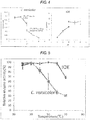
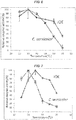
Fig. 1 illustrates an optimum pH for ABTS. C. versicolor indicates a multicopper oxidase (MCO) derived from coriolus versicolor. IOE indicates MCO derived from a Q-1 strain. -
Fig. 2 illustrates an optimum pH for 2,6-DMP. C. versicolor indicates a multicopper oxidase (MCO) derived from coriolus versicolor. IOE indicates MCO derived from a Q-1 strain. -
Fig. 3 illustrates an optimum pH for hydroquinone. C. versicolor indicates a multicopper oxidase (MCO) derived from coriolus versicolor. IOE indicates MCO derived from a Q-1 strain. -
Fig. 4 illustrates an optimum pH for p-phenylenediamine. C. versicolor indicates a multicopper oxidase (MCO) derived from coriolus versicolor. IOE indicates MCO derived from a Q-1 strain. -
Fig. 5 illustrates temperature stability for p-phenylenediamine oxidation. C. versicolor indicates a multicopper oxidase (MCO) derived from coriolus versicolor. IOE indicates MCO derived from a Q-1 strain. -
Fig. 6 illustrates temperature stability for ABTS oxidation. C. versicolor indicates a multicopper oxidase (MCO) derived from coriolus versicolor. IOE indicates MCO derived from a Q-1 strain. -
Fig. 7 illustrates an optimum temperature for p-phenylenediamine oxidation. C. versicolor indicates a multicopper oxidase (MCO) derived from coriolus versicolor. IOE indicates MCO derived from a Q-1 strain. -
Fig. 8 illustrates an optimum temperature for ABTS oxidation. C. versicolor indicates a multicopper oxidase (MCO) derived from coriolus versicolor. IOE indicates MCO derived from a Q-1 strain. -
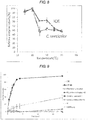
Fig. 9 illustrates a decolorization ability of each enzyme for RBBR (KI 1 mM, RBBR 0.3 mM, 0.01 U/mL as ability for ABTS oxidation). IOE: MCO alone, derived from a Q-1 strain. IOE + KI: combination of MCO derived from a Q-1 strain and KI. Pleurotus ostreatus : MCO alone, derived frompleurotus ostreatus. Pleurotus ostreatus + KI: combination of MCO derived from pleurotus ostreatus and KI. Coriolus versicolor: MCO derived from coriolus versicolor. Coriolus versicolor + KI: combination of MCO derived from coriolus versicolor and KI. KI: KI alone. RBBR only: RBBR alone. -
Fig. 10 illustrates decolorization ability for RBBR in the presence of a mediator (KI 1 mM,ABTS 10 µM,HBT 1 mM, RBBR 0.3 mM, 0.01 U/mL) . IOE + KI: combination of MCO derived from a Q-1 strain, and KI. IOE + ABTS: combination of MCO derived from a Q-1 strain and ABTS. corio + ABTS: combination of MCO derived from coriolus versicolor and ABTS. corio + HBT: combination of MCO derived from coriolus versicolor and HBT. -
Fig. 11 illustrates an influence of a KI concentration on RBBR decolorization of MCO derived from a Q-1 strain (RBBR 0.3 mM, 3.3 × 10⁻³ U/mL, four hours). -
Fig. 12 illustrates an effect of apH on RBBRdecolorization of MCO derived from a Q-1 strain (KI 1 mM, RBBR 0.3 mM, 3.3 × 10⁻³ U/mL, three hours). -
Fig. 13 illustrates RBBR decolorization ability in the absence of a mediator (RBBR 0.3 mM, 0.01 U/mL). IOE: corio of MCO derived from a Q-1 strain: MCO derived from coriolus versicolor. -
Fig. 14 illustrates decolorization of orange G by MCO derived from a Q-1 strain (KI 1 mM, orange G 0.3 mM, 3.3 × 10⁻³ U/mL). KI + IOE: combination of MCO derived from a Q-1 strain and KI. KI: KI alone. IOE: MCO derived from a Q-1 strain alone. -
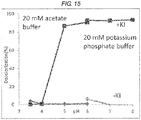
Fig. 15 illustrates an effect of a pH on decolorization of orange G by MCO derived from a Q-1 strain (KI 1 mM, orange G 0.3 mM, 3.3 × 10⁻³ U/mL, three hours). +KI: KI is added, -KI: KI is not added. -
Fig. 16 illustrates decolorization of methyl red by MCO derived from a Q-1 strain (KI 1 mM, methyl red 0.3 mM, 3.3 × 10⁻³ U/mL). KI + IOE : combination of MCO derived from a Q-1 strain and KI. KI: KI alone. IOE : MCO alone, derived from a Q-1 strain. -
Fig. 17 illustrates decolorization of amide black by MCO derived from a Q-1 strain (KI 1 mM, amide black 0.3 mM, 3.3 × 10⁻³ U/mL). KI + IOE: combination of MCO derived from a Q-1 strain and KI. IOE: MCO alone, derived from a Q-1 strain. - A composition for decolorizing a dye according to the present invention contains a multicopper oxidase and an iodide ion.
- The multicopper oxidase is an enzyme containing four copper atoms necessary for an enzymatic activity in a molecule thereof, is an enzyme which performs four-electron reduction for oxygen and generates a water molecule, and includes a laccase and a bilirubin oxidase. Among these enzymes, a laccase is preferable.
- The laccase is an oxidase for oxidizing a phenol, and is present in plants, fungi, bacteria, and animals, for example. Among these laccases, a laccase derived from fungi or bacteria is preferable. Examples of fungi and bacteria for generating a laccase include alpha-proteobacteria, aspergillus, neurospora, podospora, botrytis, collybia, fomes, lentinus, pleurotus, trametes, rhizoctonia, coprinus, psathyrella, miceliophthora, scytalidium, polypolus, phlebia, coriolus, bacillus, pseudomonas, and escherichia. However, among these examples, alpha-proteobacteria is preferable.
- A laccase used in the present invention is more preferably a laccase derived from alpha-proteobacteria. Examples of the laccase derived from alpha-proteobacteria include a laccase derived from a Q-1 strain, which has been found by the present inventors (Microbial Ecology, Vol. 49, 547-557 (2005), Applied And Environmental Microbiology, Vol. 78, No.11, 3941-3949 (2012)). Here, the Q-1 strain (accession number NITE BP-01864: deposited with National Institute of Technology and Evaluation Patent Microorganisms Depositary Center at 2-5-8-112, Kazusakamatari, Kisarazu, Chiba, Japan on June 3, 2014) is a new genus and new species bacterium belonging to a Kordiimonadales order. The present inventors have reported that the Q-1 strain generates amulticopper oxidase for oxidizing an iodide ion in the above literature. However, it is not known at all that combination of the multicopper oxidase generated by the Q-1 strain and an iodide ion decolorizes a dye.
- A multicopper oxidase used in the present invention preferably has such a property that a reaction pH is from 5 to 8 and the multicopper oxidase is stable (maintains a specific activity of 60% or more) at from 20 to 60°C.
- The composition for decolorizing a dye according to the present invention contains a multicopper oxidase. The composition may contain the multicopper oxidase as an enzyme separated or as a culture solution of a multicopper oxidase-producing bacterium containing a multicopper oxidase. In addition, the multicopper oxidase may be produced in the composition containing the multicopper oxidase-producing bacterium.
- The content of the multicopper oxidase in the composition for decolorizing a dye according to the present invention is preferably from 0.0001 to 1000 U/mL, more preferably from 0.001 to 100 U/mL, and still more preferably from 0.01 to 10 U/mL as a concentration at the time for acting on a dye from a viewpoint of an effect for decolorizing a dye. When the multicopper oxidase-producing bacterium is used, the multicopper oxidase-producing bacterium only needs to be added such that the multicopper oxidase has a concentration within this range at the time for acting on a dye.
- The content of the multicopper oxidase itself in the composition for decolorizing a dye depends on a specific activity of an enzyme and a dilution ratio at the time of use, for example. However, the content is preferably from 0.001 to 80% by mass, more preferably from 0.1 to 50% by mass, and still more preferably from 0.1 to 20% by mass. In addition, when the multicopper oxidase-producing bacterium is used, the content thereof is preferably from 0.01 to 80% by mass, more preferably from 0.1 to 50% by mass, and still more preferably from 0.1 to 20% by mass.
- The multicopper oxidase alone exhibits no effect for decolorizing a dye. Therefore, the composition for decolorizing a dye according to the present invention needs to contain an iodide ion in addition to the multicopper oxidase. The iodide ion only needs to be generated at the time for acting on a dye. Therefore, the iodide ion is preferably added in a form of an alkali metal iodide such as potassium iodide or sodium iodide. As a source of the iodide ion, a generally commercially available reagent may be used. However, iodide ion-rich groundwater in nature, such as natural gas salt water, may be used.
- The content of the iodide ion in the composition for decolorizing a dye is preferably from 0.001 to 1000 mM, more preferably from 0.01 to 100 mM, and still more preferably from 0.1 to 10 mM as a concentration at the time for acting on a dye from a viewpoint of an effect for decolorizing a dye.
- The content of the iodide ion itself in the composition for decolorizing a dye depends on a dilution ratio at the time of use, for example. However, the content of an iodide is preferably from 0.001 to 80% by mass, more preferably from 0.01 to 50% by mass, and still more preferably from 0.1 to 20% by mass.
- In addition to the above components, water, a pH adjusting agent, an excipient, an enzyme stabilizer, andasalt (for example, copper(II) chloride, copper(II) sulfate, sodium chloride, magnesium chloride, sodium sulfate, calcium chloride, potassium chloride, sodium bicarbonate, potassium bromide, strontium chloride, boric acid, sodium silicate, sodium fluoride, ammonium nitrate, sodium phosphate, or iron citrate) can be blended with the composition for decolorizing a dye according to the present invention.
- The content of a copper ion in the composition for decolorizing a dye is preferably from 0.5 µM to 50 mM, more preferably from 5 µM to 5 mM, and still more preferably from 50 to 500 µM as a concentration at the time for acting on a dye from a viewpoint of an effect for decolorizing a dye.
- Examples of a dye which can be decolorized by the composition for decolorizing a dye according to the present invention include an organic dye. Preferable examples thereof include a dye having a chromophore such as >C=C<, >C=O,>C=N-, -N=N-, -N=O-, -N-O-, or -NO2. A dye having -CH3-, -CN, -COOH, -O-, -OH, -OR, -NH2, -NR2, -Cl, -Br, -NO2, or -SO3H (R is an alkyl group) as an auxochrome is more preferable. More specific examples thereof include an azoic dye, an azo dye, an aniline dye, an anthraquinone dye, alizin, indanthrene, eosin, mango red, dihydroindole, methylene blue, a phenazine derivative dye, phenolphthalein, fuchsin, fluorescein, para red, mauve, flavonoid, a quinone dye, a porphyrin dye, a phycopilin dye, and an indigo dye.
- When the composition containing a multicopper oxidase and an iodide ion dye acts on a dye, the dye can be decolorized. The compositions used here is similar to the above composition for decolorizing a dye. Therefore, examples of a combination of components for acting on a dye include a combination of a multicopper oxidase and an iodide ion, a combination of a multicopper oxidase-producing bacterium and an iodide ion, and a combination of a multicopper oxidase-producing bacterium culture and an iodide ion.
- Conditions for acting on a dye only need to cause a multicopper oxidase to exhibit an activity. However, for example, an action under conditions of from 10 to 90°C and
pH 3 to 10 for 0.01 to 240 hours is preferable. An action under conditions of from 20 to 80°C andpH 4 to 9 for 0.1 to 24 hours is more preferable. The concentration of a multicopper oxidase at the time for acting on a dye is preferably from 0.0001 to 1000 U/mL, more preferably from 0.001 to 100 U/mL, and still more preferably from 0.01 to 10 U/mL. The concentration of an iodide ion at the time for acting on a dye is preferably from 0.001 to 1000 mM, more preferably from 0.01 to 100 mM, and still more preferably from 0.1 to 10 mM. - By performing the method for decolorizing a dye according to the present invention, a decolorized composition containing a multicopper oxidase, an iodide ion, and a dye is produced.
- According to the present invention, a dye in wastewater containing an organic dye, paper in papermaking, a colored fiber, or a coloring agent for hairs, for example, can be decolorized safely.
- Hereinafter, the present invention will be described in more detail based on Examples, but the present invention is not limited in any way thereto.
- A Q-1 strain (accession number NITE BP-01864) described in Microbial Ecology, Vol. 49, 547-557 (2005) and Applied And Environmental Microbiology, Vol. 78, No.11, 3941-3949 (2012) is a new genus and new species bacterium belonging to a Kordiimonadales order. A proposal to name the bacterium Iodidimonas marina has been made.
- An enzyme to catalyze an iodine oxidation reaction of the Q-1 strain is an extracellular secreted enzyme, and requires not hydrogen peroxide but oxygen. Therefore, the enzyme has been considered to be not a known haloperoxidase but an oxidase-like enzyme. Furthermore, in the presence of a copper ion, the enzyme production amount of the Q-1 strain was increased by about 20 times, and the enzyme itself contained copper as a cofactor. An enzyme purified from a culture supernatant exhibited an oxidation activity to a methoxy phenol, a p-diphenol, and an aromatic diamine, such as 2,2'-azinobis(3-ethylbenzothiaziline-6-ammonium sulfonate (ABTS), p-phenylenediamine, syricagaldazine, 2,6-dimethoxyphenol (2,6-DMP), or hydroquinone, in addition to an iodide ion. In addition, the enzyme had maximum absorption derived from
type 3 andtype 1 copper at 320 nm and 590 nm, respectively. The above results strongly suggested that the enzyme for oxidizing iodine was a multicopper oxidase (MCO). - In order to estimate a structural gene of the enzyme, the Q-1 strain was subjected to draft genome analysis by Illumina GA II. An internal amino acid sequence obtained by subjecting a purified sample of the enzyme to a trypsin treatment and peptide fragment information obtainedbyLC-MS/MS analysis were compared with a draft genome sequence of the Q-1 strain. As a result, it was suggested that two ORFs (ioxA, ioxC) in the genome encoded the enzyme for oxidizing iodine. As a result of BLASTP analysis, IoxA exhibited homology with an estimated MCO of Roseovarius sp. 217 systematically close to a bacterium for oxidizing iodine in
group 1, and IoxC exhibited homology with an unknown functional protein of the Roseovarius sp. 217. As a result of molecular phylogenetic analysis, it has been clear that IoxA is a novel MCO systematically different from a known MCO (for example, CopA, CotA, or CueO) derived from a bacterium (the above literature). - A specific activity, Km, Kcat, a reaction pH, and a reaction temperature were examined for an MCO derived from a filamentous fungus and an MCO derived from Q-1. As a substrate, ABTS, 2, 6-DMP, hydroquinone, p-phenylenediamine (pPD), and syringaldazine (SGZ) were used. The MCO derived from Q-1 was cultured in a medium obtained by adding a copper (II) chloride aqueous solution to Marine, Broth 2216 manufactured by Becton Dickinson Co., Ltd. so as to obtain a copper ion concentration of 40 µM (final concentration) at 30°C for two days. A culture supernatant of the resulting culture solution was used as a crude enzyme. As the MCO derived from a filamentous fungus, an MCO derived from coriolus versicolor (brand name "Fluka" manufactured by Sigma-Aldrich Co. LLC.; product name "Laccase, Coriolus versicolor, CLEA"; product number "38837") was used. Tables 1 and 2 and
Figs. 1 to 8 illustrate results thereof. -
Figs. 1 to 8 illustrate that an optimum pH of the MCO derived from a filamentous fungus was from 3 to 5, while an optimum pH of the MCO derived from a Q-1 strain was from 4 to 8, particularly from 6 to 8 in a neutral region. In addition, as temperature stability of the Q-1 strain MCO, the Q-1 strain MCO was stable in a wide range of 20 to 60°C.[Table 1] Activity of Coriolus versicolor against each substrate ABTS 2,6-DMP Hydroquinone pPD SGZ KI specific activity (U/mg protein) 2.15×10⁻¹ 2.65×10⁻² 2.42×10⁻³ 1.11×10⁻¹ 4.17×10⁻⁴ N.D. Km (mM) 6.16×10⁻² 5.19×10⁻² 1.34×10⁻² 9.21×10⁻² 3.79 N.D. kcta (min-1) 2.10×10 3.83 2.71×10⁻¹ 6.20 6.82×10² N.D. kcat/Km (min-1M-1) 3.40×10⁵ 7.38×10⁴ 2.03×10⁴ 6.73×10⁴ 1.80×10 N.D. [Table 2] Activity of IOE against each substrate ABTS 2,6-DMP Hydroquinone pPD SGZ KI specific activity (U/mg protein) 1.22 3.4×10⁻³ 3.57×10⁻¹ 1.68×10 N.D. 2.49×10 Km (mM) 2.66×10⁻² 4.78×10⁻² 2.31 7.65×10⁻¹ N.D. 2.42×10 kcta (min-1) 2.35×10² 4.87×10 7.20×10² 4.67×10³ N.D. 2.22×10⁴ kcat/Km (min-1M-1) 8.83×10⁶ 1.02×10⁴ 2.33×10⁵ 6.11×10⁶ N.D. 9.19×10⁵ - A dye decolorization ability of the MCO derived from a Q-1 strain was examined. Examination was performed in the presence or the absence of KI. As a dye, RBBR, methyl red, orange G, and amide black were used. Reaction conditions were
pH Fig. 10 illustrates a case of 8 days). - A 20 mM acetic acid buffer solution was added to each of the MCO derived from coriolus versicolor used in Example 1 and an MCO derived from pleurotus ostreatus (product name Laccase from Pleurotus ostreatus (mushroom) manufactured by Sigma-Aldrich Co. LLC.) as the MCO derived from a filamentous fungus to obtain a pH of 4.0. Other reaction conditions were 30°C and from 5 to 18 hours (
Fig. 10 illustrates a case of 8 days). -
Figs. 9 to 17 illustrate results thereof. As clear fromFigs. 9 to 17 , the Q-1 strain MCO alone did not exhibit a dye decolorization ability, but exhibited a strong dye decolorization ability in the presence of an iodide ion.
Claims (12)
- A composition for decolorizing a dye, comprising a multicopper oxidase and an iodide ion.
- The composition for decolorizing a dye according to claim 1, wherein the multicopper oxidase is a laccase.
- The composition for decolorizing a dye according to claim 1 or 2, wherein the multicopper oxidase is a laccase derived from alpha-proteobacteria.
- The composition for decolorizing a dye according to any one of claims 1 to 3, wherein the dye is an organic dye having a chromophore selected from the group consisting of >C=C<, >C=O, >C=N-, -N=N-, -N-O-, and -NO2.
- A method for decolorizing a dye, wherein a composition containing a multicopper oxidase and an iodide ion acts on a dye.
- The method for decolorizing a dye according to claim 5, wherein the multicopper oxidase is a laccase.
- The method for decolorizing a dye according to claim 5 or 6, wherein the multicopper oxidase is a laccase derived from alpha-proteobacteria.
- The method for decolorizing a dye according to any one of claims 5 to 7, wherein the dye is an organic dye having a chromophore selected from the group consisting of >C=C<, >C=O, >C=N-, -N=N-, -N-O-, and -NO2.
- A decolorization composition comprising a multicopper oxidase, an iodide ion, and a dye.
- The decolorization composition according to claim 9, wherein the multicopper oxidase is a laccase.
- The decolorization composition according to claim 9 or 10, wherein the multicopper oxidase is a laccase derived from alpha-proteobacteria.
- The decolorization composition according to any one of claims 9 to 11, wherein the dye is an organic dye having a chromophore selected from the group consisting of >C=C<, >C=O, >C=N-, -N=N-, -N-O-, and -NO2.
Applications Claiming Priority (2)
| Application Number | Priority Date | Filing Date | Title |
|---|---|---|---|
| JP2014153326 | 2014-07-28 | ||
| PCT/JP2015/071375 WO2016017640A1 (en) | 2014-07-28 | 2015-07-28 | Method for decolorizing dye |
Publications (2)
| Publication Number | Publication Date |
|---|---|
| EP3176259A1 true EP3176259A1 (en) | 2017-06-07 |
| EP3176259A4 EP3176259A4 (en) | 2018-03-21 |
Family
ID=55217540
Family Applications (1)
| Application Number | Title | Priority Date | Filing Date |
|---|---|---|---|
| EP15827983.6A Withdrawn EP3176259A4 (en) | 2014-07-28 | 2015-07-28 | Method for decolorizing dye |
Country Status (4)
| Country | Link |
|---|---|
| US (1) | US20180209090A1 (en) |
| EP (1) | EP3176259A4 (en) |
| JP (1) | JP6600782B2 (en) |
| WO (1) | WO2016017640A1 (en) |
Families Citing this family (3)
| Publication number | Priority date | Publication date | Assignee | Title |
|---|---|---|---|---|
| CN110869744B (en) | 2017-07-18 | 2023-07-28 | 索尼公司 | Information processing apparatus, information processing method, program, and information processing system |
| CN114277088A (en) * | 2021-12-02 | 2022-04-05 | 深圳市锦瑞生物科技股份有限公司 | A kind of total bilirubin determination reagent, preparation method of reagent ball and determination chip |
| CN114703527B (en) * | 2022-03-11 | 2024-06-11 | 广东长盈精密技术有限公司 | Anodic oxidation dyeing process |
Family Cites Families (5)
| Publication number | Priority date | Publication date | Assignee | Title |
|---|---|---|---|---|
| US5766896A (en) * | 1994-11-22 | 1998-06-16 | Novo Nordisk Biotech Inc. | Method of producing iodine by use of a copper containing oxidase enzyme |
| AU2003221466A1 (en) * | 2002-04-25 | 2003-11-10 | Novozymes A/S | Methods and compositions for killing spores |
| DE102007017540A1 (en) * | 2007-04-04 | 2008-10-09 | Technische Universität Dresden | Procedure for de-coloring wastewater containing dye, comprises bringing the wastewater having brown coal granules, which is loaded with microorganisms and/or fungus and is used as substrate for the growth of the microorganisms or fungus |
| FI122278B (en) * | 2009-09-11 | 2011-11-15 | Upm Kymmene Corp | Process for decolorizing suspensions containing inkjet ink |
| EP2666360A1 (en) * | 2012-05-24 | 2013-11-27 | EMPA Eidgenössische Materialprüfungs- und Forschungsanstalt | Wood protection against microorganisms by laccase-catalysed iodination |
-
2015
- 2015-07-28 US US15/329,589 patent/US20180209090A1/en not_active Abandoned
- 2015-07-28 WO PCT/JP2015/071375 patent/WO2016017640A1/en not_active Ceased
- 2015-07-28 JP JP2016538366A patent/JP6600782B2/en active Active
- 2015-07-28 EP EP15827983.6A patent/EP3176259A4/en not_active Withdrawn
Also Published As
| Publication number | Publication date |
|---|---|
| WO2016017640A1 (en) | 2016-02-04 |
| JP6600782B2 (en) | 2019-11-06 |
| JPWO2016017640A1 (en) | 2017-04-27 |
| EP3176259A4 (en) | 2018-03-21 |
| US20180209090A1 (en) | 2018-07-26 |
Similar Documents
| Publication | Publication Date | Title |
|---|---|---|
| Stoilova et al. | Properties of crude laccase from Trametes versicolor produced by solid-substrate fermentation | |
| Ciullini et al. | Fungal laccase, cellobiose dehydrogenase, and chemical mediators: combined actions for the decolorization of different classes of textile dyes | |
| Grassi et al. | Potential of Trametes trogii culture fluids and its purified laccase for the decolorization of different types of recalcitrant dyes without the addition of redox mediators | |
| Viswanath et al. | Fungal laccases and their applications in bioremediation | |
| Champagne et al. | Contribution of manganese peroxidase and laccase to dye decoloration by Trametes versicolor | |
| Halaburgi et al. | Purification and characterization of a thermostable laccase from the ascomycetes Cladosporium cladosporioides and its applications | |
| Si et al. | Selection of a pH-and temperature-stable laccase from Ganoderma australe and its application for bioremediation of textile dyes | |
| Henriksson et al. | A critical review of cellobiose dehydrogenases | |
| Gianfreda et al. | Laccases: a useful group of oxidoreductive enzymes | |
| Liers et al. | Production, purification and partial enzymatic and molecular characterization of a laccase from the wood-rotting ascomycete Xylaria polymorpha | |
| Ibrahim et al. | Blue laccase from Galerina sp.: Properties and potential for Kraft lignin demethylation | |
| Abdel-Hamid et al. | Insights into lignin degradation and its potential industrial applications | |
| Lorenzo et al. | Inhibition of laccase activity from Trametes versicolor by heavy metals and organic compounds | |
| Mogharabi et al. | Laccase and laccase‐mediated systems in the synthesis of organic compounds | |
| Heinzkill et al. | Characterization of laccases and peroxidases from wood-rotting fungi (family Coprinaceae) | |
| FI100109B (en) | Microperoxidase preparations containing a hemopeptide as an active component | |
| Saito et al. | Isolation of a novel alkaline-induced laccase from Flammulina velutipes and its application for hair coloring | |
| Moreira et al. | Reactive dyes and textile effluent decolorization by a mediator system of salt-tolerant laccase from Peniophora cinerea | |
| Trovaslet et al. | Potential of a Pycnoporus sanguineus laccase in bioremediation of wastewater and kinetic activation in the presence of an anthraquinonic acid dye | |
| Maalej-Kammoun et al. | Malachite green decolourization and detoxification by the laccase from a newly isolated strain of Trametes sp. | |
| Chen et al. | Properties of the newly isolated extracellular thermo-alkali-stable laccase from thermophilic actinomycetes, Thermobifida fusca and its application in dye intermediates oxidation | |
| Sugano et al. | Complete decolorization of the anthraquinone dye Reactive blue 5 by the concerted action of two peroxidases from Thanatephorus cucumeris Dec 1 | |
| Mukhopadhyay et al. | Purification and biochemical characterization of a newly produced yellow laccase from Lentinus squarrosulus MR13 | |
| Yang et al. | Purification and characterization of a new laccase from Shiraia sp. SUPER-H168 | |
| Chandra et al. | Extremophilic ligninolytic enzymes |
Legal Events
| Date | Code | Title | Description |
|---|---|---|---|
| 17P | Request for examination filed |
Effective date: 20170127 |
|
| AK | Designated contracting states |
Kind code of ref document: A1 Designated state(s): AL AT BE BG CH CY CZ DE DK EE ES FI FR GB GR HR HU IE IS IT LI LT LU LV MC MK MT NL NO PL PT RO RS SE SI SK SM TR |
|
| AX | Request for extension of the european patent |
Extension state: BA ME |
|
| PUAI | Public reference made under article 153(3) epc to a published international application that has entered the european phase |
Free format text: ORIGINAL CODE: 0009012 |
|
| DAV | Request for validation of the european patent (deleted) | ||
| DAX | Request for extension of the european patent (deleted) | ||
| A4 | Supplementary search report drawn up and despatched |
Effective date: 20180221 |
|
| RIC1 | Information provided on ipc code assigned before grant |
Ipc: C02F 3/34 20060101ALI20180215BHEP Ipc: C02F 1/76 20060101ALI20180215BHEP Ipc: D06P 5/13 20060101ALI20180215BHEP Ipc: C02F 1/00 20060101AFI20180215BHEP Ipc: C12N 9/02 20060101ALI20180215BHEP Ipc: A61Q 5/08 20060101ALI20180215BHEP Ipc: C02F 103/30 20060101ALI20180215BHEP Ipc: D06L 4/40 20170101ALI20180215BHEP Ipc: D21C 5/02 20060101ALI20180215BHEP Ipc: D06P 5/15 20060101ALI20180215BHEP Ipc: C02F 101/30 20060101ALI20180215BHEP |
|
| STAA | Information on the status of an ep patent application or granted ep patent |
Free format text: STATUS: THE APPLICATION HAS BEEN WITHDRAWN |
|
| 18W | Application withdrawn |
Effective date: 20190516 |