EP3175461B1 - Chemical process for primary system material passivation during hot functional testing of nuclear power plants - Google Patents
Chemical process for primary system material passivation during hot functional testing of nuclear power plants Download PDFInfo
- Publication number
- EP3175461B1 EP3175461B1 EP15828246.7A EP15828246A EP3175461B1 EP 3175461 B1 EP3175461 B1 EP 3175461B1 EP 15828246 A EP15828246 A EP 15828246A EP 3175461 B1 EP3175461 B1 EP 3175461B1
- Authority
- EP
- European Patent Office
- Prior art keywords
- coolant water
- zinc
- primary system
- initiating
- coolant
- Prior art date
- Legal status (The legal status is an assumption and is not a legal conclusion. Google has not performed a legal analysis and makes no representation as to the accuracy of the status listed.)
- Active
Links
Images


Classifications
-
- G—PHYSICS
- G21—NUCLEAR PHYSICS; NUCLEAR ENGINEERING
- G21C—NUCLEAR REACTORS
- G21C17/00—Monitoring; Testing ; Maintaining
- G21C17/02—Devices or arrangements for monitoring coolant or moderator
- G21C17/022—Devices or arrangements for monitoring coolant or moderator for monitoring liquid coolants or moderators
- G21C17/0225—Chemical surface treatment, e.g. corrosion
-
- C—CHEMISTRY; METALLURGY
- C23—COATING METALLIC MATERIAL; COATING MATERIAL WITH METALLIC MATERIAL; CHEMICAL SURFACE TREATMENT; DIFFUSION TREATMENT OF METALLIC MATERIAL; COATING BY VACUUM EVAPORATION, BY SPUTTERING, BY ION IMPLANTATION OR BY CHEMICAL VAPOUR DEPOSITION, IN GENERAL; INHIBITING CORROSION OF METALLIC MATERIAL OR INCRUSTATION IN GENERAL
- C23F—NON-MECHANICAL REMOVAL OF METALLIC MATERIAL FROM SURFACE; INHIBITING CORROSION OF METALLIC MATERIAL OR INCRUSTATION IN GENERAL; MULTI-STEP PROCESSES FOR SURFACE TREATMENT OF METALLIC MATERIAL INVOLVING AT LEAST ONE PROCESS PROVIDED FOR IN CLASS C23 AND AT LEAST ONE PROCESS COVERED BY SUBCLASS C21D OR C22F OR CLASS C25
- C23F11/00—Inhibiting corrosion of metallic material by applying inhibitors to the surface in danger of corrosion or adding them to the corrosive agent
- C23F11/08—Inhibiting corrosion of metallic material by applying inhibitors to the surface in danger of corrosion or adding them to the corrosive agent in other liquids
- C23F11/18—Inhibiting corrosion of metallic material by applying inhibitors to the surface in danger of corrosion or adding them to the corrosive agent in other liquids using inorganic inhibitors
-
- C—CHEMISTRY; METALLURGY
- C23—COATING METALLIC MATERIAL; COATING MATERIAL WITH METALLIC MATERIAL; CHEMICAL SURFACE TREATMENT; DIFFUSION TREATMENT OF METALLIC MATERIAL; COATING BY VACUUM EVAPORATION, BY SPUTTERING, BY ION IMPLANTATION OR BY CHEMICAL VAPOUR DEPOSITION, IN GENERAL; INHIBITING CORROSION OF METALLIC MATERIAL OR INCRUSTATION IN GENERAL
- C23F—NON-MECHANICAL REMOVAL OF METALLIC MATERIAL FROM SURFACE; INHIBITING CORROSION OF METALLIC MATERIAL OR INCRUSTATION IN GENERAL; MULTI-STEP PROCESSES FOR SURFACE TREATMENT OF METALLIC MATERIAL INVOLVING AT LEAST ONE PROCESS PROVIDED FOR IN CLASS C23 AND AT LEAST ONE PROCESS COVERED BY SUBCLASS C21D OR C22F OR CLASS C25
- C23F11/00—Inhibiting corrosion of metallic material by applying inhibitors to the surface in danger of corrosion or adding them to the corrosive agent
- C23F11/08—Inhibiting corrosion of metallic material by applying inhibitors to the surface in danger of corrosion or adding them to the corrosive agent in other liquids
- C23F11/18—Inhibiting corrosion of metallic material by applying inhibitors to the surface in danger of corrosion or adding them to the corrosive agent in other liquids using inorganic inhibitors
- C23F11/187—Mixtures of inorganic inhibitors
-
- G—PHYSICS
- G21—NUCLEAR PHYSICS; NUCLEAR ENGINEERING
- G21C—NUCLEAR REACTORS
- G21C21/00—Apparatus or processes specially adapted to the manufacture of reactors or parts thereof
-
- Y—GENERAL TAGGING OF NEW TECHNOLOGICAL DEVELOPMENTS; GENERAL TAGGING OF CROSS-SECTIONAL TECHNOLOGIES SPANNING OVER SEVERAL SECTIONS OF THE IPC; TECHNICAL SUBJECTS COVERED BY FORMER USPC CROSS-REFERENCE ART COLLECTIONS [XRACs] AND DIGESTS
- Y02—TECHNOLOGIES OR APPLICATIONS FOR MITIGATION OR ADAPTATION AGAINST CLIMATE CHANGE
- Y02E—REDUCTION OF GREENHOUSE GAS [GHG] EMISSIONS, RELATED TO ENERGY GENERATION, TRANSMISSION OR DISTRIBUTION
- Y02E30/00—Energy generation of nuclear origin
- Y02E30/30—Nuclear fission reactors
Definitions
- This invention relates generally to hot functional testing of nuclear power plants and, more particularly, to the development of protective oxide films on primary system material during hot functional testing.
- Nuclear power plants generally include a primary system, which includes a reactor vessel, steam generators, reactor coolant pumps, pressurizer and connecting piping.
- a reactor coolant loop includes a reactor coolant pump, a steam generator and piping that connects these components to the reactor vessel.
- Nuclear power plants can have two, three or four reactor coolant loops.
- the nuclear fuel is contained in the reactor core, which is housed in the reactor vessel.
- a function of the primary system is to transfer heat from the nuclear fuel to the steam generator.
- coolant water circulates through the primary system.
- System materials and surfaces that are contacted by the coolant water will undergo general corrosion.
- passive, e.g., protective, oxide films on primary side surfaces, e.g., metal surfaces is important for controlling corrosion of the materials and component, and for controlling corrosion product release during power operation.
- metal oxide is generated.
- a portion of the metal oxide forms an adherent layer on the primary side surfaces and a remainder of the metal oxide is released into the coolant water.
- the adherent oxide layer develops, it becomes increasingly passive, e.g., protective, and slows the corrosion reaction with the metal surfaces, and eventually the corrosion reaction is reduced to a low, steady state value.
- PWRs Pressurized Water Reactors
- RCS Reactor Coolant System
- corrosion occurs and deposits form when structural materials in the RCS are exposed to high temperature reactor coolant during plant operation. These corrosion products are subsequently released into the reactor coolant and can deposit on the fuel in the reactor core.
- significant effort has been expended in the selection of corrosion resistant materials, as well as development of chemistry control additives and plant operating practices to minimize corrosion formation and deposition.
- chemistry control is used to develop passive films on primary system materials and surfaces to control the corrosion rate and corrosion release rate during power operation, in order to minimize the deposition of corrosion products on the core as "crud" and subsequent activation. This is necessary to minimize the risk for crud-related fuel performance issues and plant dose rates.
- New nuclear plants undergo hot functional testing (HFT) prior to loading fuel into the nuclear core (pre-core) to demonstrate operability of the plant.
- HFT hot functional testing
- pre-core HFT an initial (primer) oxide layer develops on surfaces in the primary system, e.g., RCS, upon initial exposure to high temperature coolant water.
- RCS primary system
- this primer oxide layer impacts the inventory of corrosion products available to deposit on the core and, thereby, impacts fuel crud risks and plant dose rates.
- the primer oxide layer affects the corrosion resistance for the life of the nuclear power plant.
- the restructuring process can continue over many fuel cycles until the existing oxide films are restructured with high concentrations of zinc and chromium present near the metal oxide interface.
- Zinc injection in operating nuclear plants can cause the additional release of particulate or dissolved corrosion products into the coolant as the zinc atoms are incorporated into the existing oxide films and they replace or displace other atoms, e.g., nickel and cobalt atoms.
- the release of these additional corrosion products into the coolant can increase the concentration of corrosion products circulating in the primary system, which can increase the amount of material available to deposit on the fuel and thereby, potentially increase the risk for fuel performance issues.
- the subcooled boiling process provides a mechanism for circulating corrosion products to concentrate and deposit at the cladding surface of the nuclear fuel element in the reactor core. Crud deposition occurs in areas of the reactor core undergoing subcooled boiling to a much greater extent than on non-boiling surfaces. Once porous crud deposits are present, the boiling process also provides a mechanism to concentrate any contaminants in the coolant within the crud layer. Increased crud deposition may lead to increased risk of Crud Induced Power Shift (CIPS), also known as Axial Offset Anomaly (AOA). The risk of Crud Induced Localized Corrosion (CILC) may also be increased.
- CIPS Crud Induced Power Shift
- AOA Axial Offset Anomaly
- CILC Crud Induced Localized Corrosion
- CIPS occurs when crud deposits become sufficiently extensive and sub-cooled boiling rates are sufficiently high to result in precipitation of significant amounts of lithium-boron compounds within the crud layer. This results in a shift in axial power distribution away from the boron deposits. Locally, thick crud deposits can also reduce heat transfer and increase fuel cladding temperatures, which can lead to CILC.
- Another concern associated with adding zinc to coolant water in an operating nuclear plant is the potential for zinc oxide or zinc silicate to deposit within the crud of the fuel cladding. Such deposition may decrease the transfer through porous crud and thereby, potentially increase fuel cladding corrosion. The likelihood of this scenario can increase if the boiling concentration process within the crud causes the zinc concentration to exceed the solubility limit of either zinc oxide or zinc silicate. To reduce or preclude these fuel risks in an operating nuclear power plant, the level of zinc in the coolant is monitored and controlled, and typically limited to 40 ppb or less during power operation.
- pre-core HFT provides a unique opportunity to initiate the development of protective oxide films on primary system surfaces and to remove releasable corrosion products, which can prevent deposition and neutron activation during power operation. Further, since the nuclear plant has not been operating prior to pre-core HFT, no existing oxide films have been formed and therefore, the initial protective oxide films formed on the RCS surfaces during pre-core HFT can include zinc incorporated therein without the need to restructure existing films.
- Tomari 3 in Japan was the first PWR in the world to inject zinc during hot functional testing, but the levels used were similar to that during power operation, i.e., 3 to 7 ppb, see document Hayakawa et al.: "Zinc Injection during hot Functional Test (HFT) in Tomari Unit 3", Nuclear Plant Chemistry Conference 2010 NPC 2010 - International conference on water chemistry of nuclear reactor systems and 8th international radiolysis, Quebec City, Quebec [CA], vol. 1, session 1, paper 1.15P, 3 October 2010 (2010-10-03), - 7 October 2010 (2010-10-07), pages 312 - 329, XP055580707, Curran Associates, Red Hook, NY [US], ISBN: 978-1-61782-395-4 .
- HFT hot Functional Test
- This invention achieves the foregoing objectives by providing a method of passivating a metal surface in a primary system of a new nuclear power plant, as claimed in claim 1.
- the primary system is a reactor coolant system.
- the zinc can be zinc acetate.
- the method can further include adding a base, e.g., hydroxide, to the coolant water.
- the base can be in a concentration sufficient for the coolant water to have an alkaline pH from about 6.9 to about 7.4 at the operating temperature or from about 9.5 to 10.1 at 25°C.
- the base can be selected from lithium hydroxide, potassium hydroxide and mixtures thereof.
- the concentration of lithium can be from about 0.3 to about 2.0 ppm.
- initiating the acid-reducing phase may comprise removing the added lithium hydroxide from the coolant water.
- the method can further include adding boric acid to the coolant water.
- concentration can be about 100 ppm boron or less.
- the method can further include adding hydrogen to the coolant water.
- the hydrogen may be present in the coolant water in an amount of at least about 4 cm 3 /kg or from about 4 to about 50 cm 3 /kg or from about 4 to about 15 cm 3 /kg or from about 15 to about 30 cm 3 /kg, or about 4.5 cm 3 /kg.
- the coolant chemistry is controlled through a series of temperature hold points or "plateaus" that are maintained for system testing as the RCS is brought up to normal operation temperature and then back down to ambient temperature in a plant-specific manner.
- adding the lithium and/or hydrogen is initiated when the temperature of the coolant water is about 177°C (350°F) or higher.
- the oxygen scavenger may be, but is not limited to, hydrazine.
- the oxygen scavenger can be added when the coolant water temperature is about 121°C (250°F) or lower, or about 66°C (150°F) or lower. In certain embodiments, the oxygen scavenger is added in an amount of about 1.5 times the stoichiometric amount of oxygen. In other embodiments, the oxygen scavenger is added in an amount such that the resultant oxygen level in the coolant water is less than about 100 ppb.
- the alkaline-reducing phase can be conducted at a temperature of about 177°C (350°F) or higher. In certain embodiments, the alkaline-reducing phase can be conducted at a temperature that simulates normal operating temperature of the nuclear power plant. In certain embodiments, the normal operating temperature is from about 260°C to about 316°C (500°F to about 600°F).
- Adding the oxidizing agent, e.g., hydrogen peroxide, for the acid-oxidizing phase can be initiated when the water coolant temperature is about 82°C (180°F) or lower.
- the invention generally relates to preconditioning, e.g., passivating, primary system surfaces in a nuclear power plant.
- the preconditioning includes developing initial (primer) passivation films on primary system surfaces during pre-core hot functional testing (HFT) of a new nuclear power plant.
- Passive films are instrumental in contributing to controlling corrosion on primary system surfaces and corrosion release during nuclear power plant operation.
- the preconditioning process is conducted prior to the initial loading of nuclear fuel in the reactor core and prior to initiating normal operation of the new nuclear power plant. Therefore, the preconditioning precedes the development of passivation films on primary system surfaces that typically exist in nuclear power plants due to normal plant operation. This preconditioning process can be conducted at specified chemistry and time-at-temperature conditions.
- the preconditioning includes the following three phases: 1) an alkaline-reducing phase, 2) an acid-reducing phase and 3) an acid-oxidizing phase. Certain chemical addition and temperature conditions can be associated with each of the phases.
- the majority of HFT is conducted in the alkaline-reducing phase, and at least a majority of the alkaline-reducing phase is conducted at a temperature which simulates normal operating temperature (NOT) of a nuclear power plant.
- NOT normal operating temperature
- NOT can vary and may depend on a particular type and design of nuclear power plant. For example, the Westinghouse API000 ® PWR design has a NOT of about 292°F (557°F).
- the HFT preconditioning process includes the introduction of additives, e.g., zinc, into coolant water that circulates through the primary system of a nuclear power plant and contacts the primary system surfaces, which results in formation of a chromium-rich oxide with zinc incorporated at the metal-oxide surface to control corrosion release during subsequent normal plant operation.
- additives e.g., zinc
- the preconditioning process in accordance with the invention is described for a nuclear power plant having a Pressurized Water Reactor (PWR) and Reactor Coolant System (RCS) as the primary system.
- PWR Pressurized Water Reactor
- RCS Reactor Coolant System
- the duration of preconditioning and, in particular, the duration of each phase within the preconditioning process can vary and is typically determined by the amount of time that is needed for various system tests to be performed.
- the time for each of the three phases can be pre-determined and extended beyond the time needed to perform conventional testing, such that there are hold points for the preconditioning passivation process.
- the temperatures at which each of the phases is initiated or terminated are exemplary and may vary based on the design and operation of a specific plant.
- the RCS Prior to initiating pre-core HFT, the RCS is filled with demineralized water.
- An oxygen scavenger such as hydrazine, is added to the RCS and pressurizer at low temperatures to scavenge oxygen in the reactor coolant.
- Hydrazine addition is known in the art to control concentrations of dissolved oxygen in nuclear plants.
- the amount of hydrazine added can vary and is typically such that the resultant oxygen level in the coolant water is at or below 100 ppb.
- the hydrazine is added at 1.5 times the stoichiometric amount of oxygen present.
- the hydrazine can be added at various temperatures and is typically added at a reactor coolant temperature of about 122°C (250°F) or lower, or about 66°C (150°F) or lower.
- a base e.g., hydroxide
- the base e.g., hydroxide
- the base can be in a concentration sufficient for the coolant water to have an alkaline pH.
- the pH is from about 6.9 to about 7.4 at the operating temperature or from about to about 10.1 at 25°C.
- Suitable bases e.g., hydroxides, for use in the invention are known in the art and include, but are not limited to, lithium hydroxide and potassium hydroxide, and mixtures thereof.
- the concentration of lithium is controlled to establish a reactor coolant pH in HFT that simulates reactor coolant pH during normal power operation.
- the lithium concentration is from about 0.3 to about 2.0 ppm or about 0.5 ppm.
- the amount of lithium hydroxide will be controlled to provide an at-temperature pH, i.e., pHT, that is within a range considered optimal for normal power operation based on industry experience.
- the zinc concentration maintained during HFT is significantly higher than the levels typically used during power operation.
- the concentration of zinc added during normal power operation is about 5 to 10 ppb, with a maximum of 40 ppb.
- the concentration of zinc is limited based on the fuel risks associated therewith. Since fuel is not present during pre-core hot functional testing, the risk for zinc to impact the performance of the fuel is not a concern.
- the dissolved hydrogen concentration in the reactor coolant is in an amount of at least about 4 cm 3 /kg or from about 4 to about 50 cm 3 /kg or from about 4 to about 15 cm 3 /kg or from about 15 to about 30 cm 3 /kg, or about 4.5 cm 3 /kg.
- the combination of lithium, hydrogen, and zinc can be employed to develop initial (primer) protective chromium and zinc-rich oxide films on primary system surfaces.
- a low level of boric acid such as, about 100 ppm boron or less, can also be added to the reactor coolant.
- the boric acid may be beneficial for preventing stress corrosion cracking of stainless steel due to concentration of lithium hydroxide.
- the addition of boric acid is also particularly favorable because boric acid is known to modify the zeta potential of oxides generated in the reactor coolant system, the electrical charge on oxide particles in the RCS, for the purposes of better suspending the particles for their removal from the RCS.
- the chemistry additions are performed and the preconditioning chemistry of the coolant water is established prior to reaching normal operating temperature (NOT).
- NOT normal operating temperature
- various tests may be conducted.
- the preconditioning chemistry of the coolant water is maintained throughout the remainder of the alkaline-reducing phase until the coolant water is borated.
- the reactor coolant is borated, e.g., with the addition of boric acid, to initiate the acid-reducing phase.
- the acid-reducing phase boric acid is added and any added lithium hydroxide is removed from the reactor coolant to simulate plant shutdown chemistry conditions when an acidic environment is created.
- the boron concentration of the reactor coolant is about 500 ppm or greater.
- the borated reactor coolant is sufficiently acidic relative to neutral pH at elevated temperature (e.g., about 4.0 to 5.6).
- the acid-reducing phase is initiated as near to the end of the NOT Plateau as is practical to maximize the time period with an alkaline pH prior to borating the coolant water.
- the addition of zinc may be terminated or, optionally, zinc addition may be continued.
- reducing conditions are maintained with continued addition during the acid-reducing phase of hydrogen on an as-needed basis.
- the temperature is then reduced and hydrogen is removed from the reactor coolant in preparation for oxygenation of the reactor coolant during the acid-oxidizing phase.
- An oxidizing agent such as, but not limited to, hydrogen peroxide, may be used for chemical degassing to facilitate hydrogen removal.
- the oxidizing agent is added in an amount that is sufficient for nickel to remain dissolved (e.g., resulting in about 1 ppm oxygen or greater), such that it can more easily be removed from the system by ion exchange.
- the oxidizing agent e.g., hydrogen peroxide
- the reactor coolant temperature is in the range from about 82°C (180°F) to about 60°C (140°F)
- the addition of the oxidizing agent can continue as the temperature further decreases.
- zinc continues to be removed, e.g., by Chemical Volume and Control System purification. A residual amount of zinc is expected to remain in the reactor coolant since zinc may be released from RCS surfaces when injection is terminated and as the plant is cooled down. Continued purification to reduce dissolved corrosion products and suspended solids during this phase is conducted, in order to minimize the inventory of corrosion products available to deposit on the core during power operation.
- the invention provides various benefits and advantages over the prior art, such as, but not limited to, the ability to control zinc addition during a preconditioning, pre-core phase in a manner that cannot be achieved during normal plant operation and furthermore, the ability to add zinc in a higher concentration during the preconditioning, pre-core phase as compared to post-core normal power operation.
- FIG. 1 illustrates chemistry milestones that occur at various RCS temperatures during pre-core HFT. As shown in FIG. 1 , various chemistry changes occur throughout temperature plateaus during pre-core HFT. FIG. 1 identifies Milestones 1 through 7. The RCS temperature generally increases or heats up from Milestone 1 to Milestone 4, at which NOT is reached. Following testing at NOT, the RCS temperature generally decreases or cools down. Milestones 1 and 2 take place at the onset of HFT and prior to initiating the alkaline-reducing phase. For Milestone 1, a hydrazine target is established prior to exceeding about 66°F (150°F) in the RCS.
- Milestone 2 low oxygen is established prior to exceeding about 121°C (250°F) in the reactor coolant and pressurizer.
- Milestone 3 relates to the start of the alkaline-reducing phase and includes initiating the addition of lithium, hydrogen and zinc at a RCS temperature of about 177°C (350°F) or higher. As shown in FIG. 1 , between Milestones 3 and 4, the RCS temperature increases from about 177°C (350°F) to NOT, e.g., about 292°C (557°F).
- Milestone 4 includes establishing lithium, hydrogen and zinc targets prior to NOT to achieve alkaline-reducing conditions.
- the horizontal line corresponding to a temperature of 292°C (557°F). represents the NOT Plateau. As previously described, tests are typically conducted during the NOT Plateau.
- Milestone 5 occurs at the end of the NOT Plateau and includes borating the reactor coolant to achieve acid-reducing conditions. Between Milestones 5 and 6, the RCS temperature decreases. At Milestone 6, degassing of hydrogen is completed in preparation for controlled oxygenation.
- Milestone 7 is in the acid-oxidizing phase and includes the addition of hydrogen peroxide when the temperature of the reactor coolant and pressurizer is about 82°C (180°F) or lower to achieve acid-oxidizing conditions. Corrosion product removal is maximized during this phase, in order to minimize the inventory available to deposit on the fuel and become activated, thereby improving fuel performance and minimizing plant dose rates.
- a simulation test was conducted using known PWR primary circuit materials, i.e., Alloy 690 and 304 stainless steel coupons. Portions of the surface area of some of the coupons were electropolished prior to the environmental exposure while other coupons were mechanically polished, representative of surface finishes. Corrosion weight loss experiments were conducted in the HFT test with zinc, and the results indicated that negligible corrosion was experienced for the Alloy 690 materials (which represent the highest surface area on the PWR primary system).
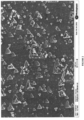
- the passive oxide films on the electropolished Alloy 690 were very fine and protective as shown in FIG. 2 .
- the passive oxide films on the mechanically polished Alloy 690 were more developed but composed of very fine oxide crystals approximately 100 nanometers in size as shown in FIG. 3 .
Landscapes
- Engineering & Computer Science (AREA)
- Chemical & Material Sciences (AREA)
- Physics & Mathematics (AREA)
- High Energy & Nuclear Physics (AREA)
- General Engineering & Computer Science (AREA)
- Plasma & Fusion (AREA)
- Materials Engineering (AREA)
- Organic Chemistry (AREA)
- Metallurgy (AREA)
- Mechanical Engineering (AREA)
- Inorganic Chemistry (AREA)
- Manufacturing & Machinery (AREA)
- Preventing Corrosion Or Incrustation Of Metals (AREA)
- Monitoring And Testing Of Nuclear Reactors (AREA)
- Testing Resistance To Weather, Investigating Materials By Mechanical Methods (AREA)
Description
- This invention relates generally to hot functional testing of nuclear power plants and, more particularly, to the development of protective oxide films on primary system material during hot functional testing.
- Nuclear power plants generally include a primary system, which includes a reactor vessel, steam generators, reactor coolant pumps, pressurizer and connecting piping. A reactor coolant loop includes a reactor coolant pump, a steam generator and piping that connects these components to the reactor vessel. Nuclear power plants can have two, three or four reactor coolant loops. The nuclear fuel is contained in the reactor core, which is housed in the reactor vessel. A function of the primary system is to transfer heat from the nuclear fuel to the steam generator.
- In order for the primary system to perform its function, coolant water circulates through the primary system. System materials and surfaces that are contacted by the coolant water will undergo general corrosion. The development of passive, e.g., protective, oxide films on primary side surfaces, e.g., metal surfaces, is important for controlling corrosion of the materials and component, and for controlling corrosion product release during power operation. As metal corrodes, metal oxide is generated. A portion of the metal oxide forms an adherent layer on the primary side surfaces and a remainder of the metal oxide is released into the coolant water. As the adherent oxide layer develops, it becomes increasingly passive, e.g., protective, and slows the corrosion reaction with the metal surfaces, and eventually the corrosion reaction is reduced to a low, steady state value.
- The primary system in Pressurized Water Reactors (PWRs) is the Reactor Coolant System (RCS). In PWRs, corrosion occurs and deposits form when structural materials in the RCS are exposed to high temperature reactor coolant during plant operation. These corrosion products are subsequently released into the reactor coolant and can deposit on the fuel in the reactor core. Historically, significant effort has been expended in the selection of corrosion resistant materials, as well as development of chemistry control additives and plant operating practices to minimize corrosion formation and deposition. During normal plant operation, chemistry control is used to develop passive films on primary system materials and surfaces to control the corrosion rate and corrosion release rate during power operation, in order to minimize the deposition of corrosion products on the core as "crud" and subsequent activation. This is necessary to minimize the risk for crud-related fuel performance issues and plant dose rates.
- New nuclear plants undergo hot functional testing (HFT) prior to loading fuel into the nuclear core (pre-core) to demonstrate operability of the plant. During pre-core HFT, an initial (primer) oxide layer develops on surfaces in the primary system, e.g., RCS, upon initial exposure to high temperature coolant water. Following pre-core HFT, during subsequent commercial operation of the nuclear plant, this primer oxide layer impacts the inventory of corrosion products available to deposit on the core and, thereby, impacts fuel crud risks and plant dose rates. Thus, it is believed that the primer oxide layer affects the corrosion resistance for the life of the nuclear power plant.
- PWRs that started-up in the 1970's and 1980's had performed HFT using only lithium hydroxide for chemistry control of the primary system, in order to maintain an alkaline pH. Since that time, plants have performed HFT using dissolved hydrogen as well, to develop more protective oxides on RCS surfaces. Also, at least one plant has used boric acid and hydrogen peroxide during HFT to simulate the chemistry conditions during a refueling shutdown, which results in the dissolution of corrosion products such that they can be easily removed from the system by ion exchange.
- In the commercial operation of nuclear plants, experience has shown that there are benefits to be derived from zinc injection. For example, it has been found that as zinc is incorporated into existing corrosion films on primary system surfaces, e.g., RCS surfaces, the oxides become more stable and protective, inhibiting both general and localized corrosion. The vast majority of PWRs performing zinc injection are mature plants that started this process after a significant period of operation, e.g., 15 to 20 years, with normal primary water chemistry. The zinc is only injected at normal operating temperatures during power operation. Thus, in these mature plants, the existing oxide films have been formed and established on metal surfaces as a result of continued plant operation. Nickel and cobalt atoms are present in the existing oxide films, and zinc injection is used to restructure the existing oxide films. The restructuring process can continue over many fuel cycles until the existing oxide films are restructured with high concentrations of zinc and chromium present near the metal oxide interface. Zinc injection in operating nuclear plants can cause the additional release of particulate or dissolved corrosion products into the coolant as the zinc atoms are incorporated into the existing oxide films and they replace or displace other atoms, e.g., nickel and cobalt atoms. The release of these additional corrosion products into the coolant can increase the concentration of corrosion products circulating in the primary system, which can increase the amount of material available to deposit on the fuel and thereby, potentially increase the risk for fuel performance issues.
- This additional risk limits the concentration of zinc that can be used during power operation, especially for PWRs with higher subcooled nuclear boiling. The subcooled boiling process provides a mechanism for circulating corrosion products to concentrate and deposit at the cladding surface of the nuclear fuel element in the reactor core. Crud deposition occurs in areas of the reactor core undergoing subcooled boiling to a much greater extent than on non-boiling surfaces. Once porous crud deposits are present, the boiling process also provides a mechanism to concentrate any contaminants in the coolant within the crud layer. Increased crud deposition may lead to increased risk of Crud Induced Power Shift (CIPS), also known as Axial Offset Anomaly (AOA). The risk of Crud Induced Localized Corrosion (CILC) may also be increased. CIPS occurs when crud deposits become sufficiently extensive and sub-cooled boiling rates are sufficiently high to result in precipitation of significant amounts of lithium-boron compounds within the crud layer. This results in a shift in axial power distribution away from the boron deposits. Locally, thick crud deposits can also reduce heat transfer and increase fuel cladding temperatures, which can lead to CILC.
- Another concern associated with adding zinc to coolant water in an operating nuclear plant is the potential for zinc oxide or zinc silicate to deposit within the crud of the fuel cladding. Such deposition may decrease the transfer through porous crud and thereby, potentially increase fuel cladding corrosion. The likelihood of this scenario can increase if the boiling concentration process within the crud causes the zinc concentration to exceed the solubility limit of either zinc oxide or zinc silicate. To reduce or preclude these fuel risks in an operating nuclear power plant, the level of zinc in the coolant is monitored and controlled, and typically limited to 40 ppb or less during power operation.
- It has been found that pre-core HFT provides a unique opportunity to initiate the development of protective oxide films on primary system surfaces and to remove releasable corrosion products, which can prevent deposition and neutron activation during power operation. Further, since the nuclear plant has not been operating prior to pre-core HFT, no existing oxide films have been formed and therefore, the initial protective oxide films formed on the RCS surfaces during pre-core HFT can include zinc incorporated therein without the need to restructure existing films.
Tomari 3 in Japan was the first PWR in the world to inject zinc during hot functional testing, but the levels used were similar to that during power operation, i.e., 3 to 7 ppb, see document Hayakawa et al.: "Zinc Injection during hot Functional Test (HFT) in Tomari Unit 3", Nuclear Plant Chemistry Conference 2010 NPC 2010 - International conference on water chemistry of nuclear reactor systems and 8th international radiolysis, Quebec City, Quebec [CA], vol. 1, session 1, paper 1.15P, 3 October 2010 (2010-10-03), - 7 October 2010 (2010-10-07), pages 312 - 329, XP055580707, Curran Associates, Red Hook, NY [US], ISBN: 978-1-61782-395-4. Since fuel is not loaded during pre-core HFT, the amount of zinc injected into the coolant water can be increased without the risk of fuel-related concerns and issues.
Further prior art is found in documentEP 2 312 588 Al disclosing a method of operating a nuclear plant wherein, after a nuclear plant is newly constructed, and when a primary cooling system of the nuclear reactor raises the temperature to around a power operation temperature for the first time, zinc is injected into a primary coolant present in the primary coolant system by a zinc injector.
DocumentUS 5 171 515 discloses a process for inhibiting corrosion caused by the presents of coolant water pashing through a pressurized water nuclear reactor by the addition of effective amount of an aqueous solution of zinc borate to the reactor coolant water. Document "research report VTT-R-00699-12" entitled "Start-up and Shut-down Water Chemistries in Pressure Water Reactors" by Iva Betova et al., Technical Research Center of Finland, of 25.01.2012 describes start-up and shot-down water chemistries in pressurized water reactors during normal nuclear power plant operation conditions. - Thus, there is a need in the art to improve the control of reactor coolant chemistry during pre-core HFT as a preconditioning process to passivate the RCS surfaces prior to normal power operation of a nuclear power plant, in order to control corrosion and optimize the long-term integrity and performance of plant systems in the nuclear power plant. This will also significantly reduce the inventory of corrosion products available to deposit on the fuel and become activated during normal power operation, thereby improving fuel performance and minimizing plant dose rates.
- This invention achieves the foregoing objectives by providing a method of passivating a metal surface in a primary system of a new nuclear power plant, as claimed in claim 1.
- In certain embodiments, the primary system is a reactor coolant system.
- The zinc can be zinc acetate.
- The method can further include adding a base, e.g., hydroxide, to the coolant water. The base can be in a concentration sufficient for the coolant water to have an alkaline pH from about 6.9 to about 7.4 at the operating temperature or from about 9.5 to 10.1 at 25°C. The base can be selected from lithium hydroxide, potassium hydroxide and mixtures thereof. The concentration of lithium can be from about 0.3 to about 2.0 ppm. When the base added to the coolant water is lithium hydroxide, initiating the acid-reducing phase may comprise removing the added lithium hydroxide from the coolant water.
- The method can further include adding boric acid to the coolant water. The concentration can be about 100 ppm boron or less.
- The method can further include adding hydrogen to the coolant water. The hydrogen may be present in the coolant water in an amount of at least about 4 cm3/kg or from about 4 to about 50 cm3/kg or from about 4 to about 15 cm3/kg or from about 15 to about 30 cm3/kg, or about 4.5 cm3/kg.
- The coolant chemistry is controlled through a series of temperature hold points or "plateaus" that are maintained for system testing as the RCS is brought up to normal operation temperature and then back down to ambient temperature in a plant-specific manner. In certain embodiments, adding the lithium and/or hydrogen is initiated when the temperature of the coolant water is about 177°C (350°F) or higher.
- The oxygen scavenger may be, but is not limited to, hydrazine. The oxygen scavenger can be added when the coolant water temperature is about 121°C (250°F) or lower, or about 66°C (150°F) or lower. In certain embodiments, the oxygen scavenger is added in an amount of about 1.5 times the stoichiometric amount of oxygen. In other embodiments, the oxygen scavenger is added in an amount such that the resultant oxygen level in the coolant water is less than about 100 ppb.
- The alkaline-reducing phase can be conducted at a temperature of about 177°C (350°F) or higher. In certain embodiments, the alkaline-reducing phase can be conducted at a temperature that simulates normal operating temperature of the nuclear power plant. In certain embodiments, the normal operating temperature is from about 260°C to about 316°C (500°F to about 600°F).
- Adding the oxidizing agent, e.g., hydrogen peroxide, for the acid-oxidizing phase can be initiated when the water coolant temperature is about 82°C (180°F) or lower.
- A further understanding of the invention can be gained from the following description of the preferred embodiments when read in conjunction with the accompanying drawing in which:
-
FIG. 1 is a schematic showing chemistry milestones at corresponding Reactor Coolant Temperatures during pre-core hot functional testing, in accordance with certain embodiments of the invention; -
FIG. 2 is an image showing passivation oxide crystals on electropolishedAlloy 690 surfaces resulting from simulated hot functional test with zinc; and -
FIG. 3 is an image showing passivation oxide crystals on machinedAlloy 690 surfaces resulting from simulated hot functional test with zinc. - The invention generally relates to preconditioning, e.g., passivating, primary system surfaces in a nuclear power plant. The preconditioning includes developing initial (primer) passivation films on primary system surfaces during pre-core hot functional testing (HFT) of a new nuclear power plant. Passive films are instrumental in contributing to controlling corrosion on primary system surfaces and corrosion release during nuclear power plant operation. In accordance with the invention, the preconditioning process is conducted prior to the initial loading of nuclear fuel in the reactor core and prior to initiating normal operation of the new nuclear power plant. Therefore, the preconditioning precedes the development of passivation films on primary system surfaces that typically exist in nuclear power plants due to normal plant operation. This preconditioning process can be conducted at specified chemistry and time-at-temperature conditions. The preconditioning includes the following three phases: 1) an alkaline-reducing phase, 2) an acid-reducing phase and 3) an acid-oxidizing phase. Certain chemical addition and temperature conditions can be associated with each of the phases. In general, the majority of HFT is conducted in the alkaline-reducing phase, and at least a majority of the alkaline-reducing phase is conducted at a temperature which simulates normal operating temperature (NOT) of a nuclear power plant. NOT can vary and may depend on a particular type and design of nuclear power plant. For example, the Westinghouse API000® PWR design has a NOT of about 292°F (557°F).
- In general, the HFT preconditioning process includes the introduction of additives, e.g., zinc, into coolant water that circulates through the primary system of a nuclear power plant and contacts the primary system surfaces, which results in formation of a chromium-rich oxide with zinc incorporated at the metal-oxide surface to control corrosion release during subsequent normal plant operation.
- For ease of description, the preconditioning process in accordance with the invention is described for a nuclear power plant having a Pressurized Water Reactor (PWR) and Reactor Coolant System (RCS) as the primary system. The duration of preconditioning and, in particular, the duration of each phase within the preconditioning process, can vary and is typically determined by the amount of time that is needed for various system tests to be performed. In certain embodiments, the time for each of the three phases can be pre-determined and extended beyond the time needed to perform conventional testing, such that there are hold points for the preconditioning passivation process. Further, the temperatures at which each of the phases is initiated or terminated are exemplary and may vary based on the design and operation of a specific plant.
- Prior to initiating pre-core HFT, the RCS is filled with demineralized water. An oxygen scavenger, such as hydrazine, is added to the RCS and pressurizer at low temperatures to scavenge oxygen in the reactor coolant. Hydrazine addition is known in the art to control concentrations of dissolved oxygen in nuclear plants. The amount of hydrazine added can vary and is typically such that the resultant oxygen level in the coolant water is at or below 100 ppb. In certain embodiments, the hydrazine is added at 1.5 times the stoichiometric amount of oxygen present. The hydrazine can be added at various temperatures and is typically added at a reactor coolant temperature of about 122°C (250°F) or lower, or about 66°C (150°F) or lower.
- Following the addition of hydrazine and the initiation of heat up, chemical additions to establish preconditioning chemistry to initiate the alkaline-reducing phase begin when the reactor coolant temperature reaches or exceeds about 177°C (350°F). This phase includes the addition of zinc. Also, a base, e.g., hydroxide, can be added to the reactor coolant to maintain an alkaline pH for controlling corrosion and the corrosion product release rate. The base, e.g., hydroxide, can be in a concentration sufficient for the coolant water to have an alkaline pH. In certain embodiments, the pH is from about 6.9 to about 7.4 at the operating temperature or from about to about 10.1 at 25°C. Suitable bases, e.g., hydroxides, for use in the invention are known in the art and include, but are not limited to, lithium hydroxide and potassium hydroxide, and mixtures thereof. Wherein the base is lithium hydroxide, the concentration of lithium is controlled to establish a reactor coolant pH in HFT that simulates reactor coolant pH during normal power operation. In certain embodiments, the lithium concentration is from about 0.3 to about 2.0 ppm or about 0.5 ppm. The amount of lithium hydroxide will be controlled to provide an at-temperature pH, i.e., pHT, that is within a range considered optimal for normal power operation based on industry experience.
- The zinc concentration maintained during HFT is significantly higher than the levels typically used during power operation. Typically, the concentration of zinc added during normal power operation is about 5 to 10 ppb, with a maximum of 40 ppb. As previously indicated, it is known that zinc can negatively impact fuel performance during nuclear power operations and therefore, the concentration of zinc is limited based on the fuel risks associated therewith. Since fuel is not present during pre-core hot functional testing, the risk for zinc to impact the performance of the fuel is not a concern. Furthermore, without intending to be bound by any particular theory, it is believed that since a new plant has fresh metal surfaces (as opposed to a mature operating plant having existent oxide films formed on metal surfaces), a significant amount of zinc will be incorporated into the newly formed film, which leads to a highly stable and protective oxide with fewer defects in the oxide lattice. Fewer defects is effective to reduce the electronic and ionic conductivity of the oxide film, which limits further corrosion reactions at the metal-oxide interface and at the oxide-solution interface. As a result, the corrosion product release rates are lower, and there is increased suppression of radiocobalt incorporation into RCS surfaces. It is therefore desirable to maximize the zinc exposure prior to power operation. The zinc concentration in the reactor coolant during pre-core HFT is from greater than about 40 to about 300 ppb. It is desirable to maximize the amount of zinc exposure prior to power operation, while still maintaining the zinc concentration below the solubility limit.
- In addition to lithium and zinc, hydrogen also may be added during the alkaline-reducing phase to maintain a reducing chemistry environment and to produce oxides on the RCS surfaces that are similar to those that will be stable during normal plant operation. In certain embodiments, the dissolved hydrogen concentration in the reactor coolant is in an amount of at least about 4 cm3/kg or from about 4 to about 50 cm3/kg or from about 4 to about 15 cm3/kg or from about 15 to about 30 cm3/kg, or about 4.5 cm3/kg. Thus, during the alkaline-reducing phase, the combination of lithium, hydrogen, and zinc can be employed to develop initial (primer) protective chromium and zinc-rich oxide films on primary system surfaces.
- In certain embodiments, a low level of boric acid, such as, about 100 ppm boron or less, can also be added to the reactor coolant. The boric acid may be beneficial for preventing stress corrosion cracking of stainless steel due to concentration of lithium hydroxide. The addition of boric acid is also particularly favorable because boric acid is known to modify the zeta potential of oxides generated in the reactor coolant system, the electrical charge on oxide particles in the RCS, for the purposes of better suspending the particles for their removal from the RCS.
- In the alkaline-reducing phase, the chemistry additions are performed and the preconditioning chemistry of the coolant water is established prior to reaching normal operating temperature (NOT). During the time period when HFT is at NOT, which may be referred to as the NOT Plateau, various tests may be conducted. The preconditioning chemistry of the coolant water is maintained throughout the remainder of the alkaline-reducing phase until the coolant water is borated. Near the end of the NOT Plateau, e.g., at the end of the alkaline-reducing phase, the reactor coolant is borated, e.g., with the addition of boric acid, to initiate the acid-reducing phase.
- In the acid-reducing phase, boric acid is added and any added lithium hydroxide is removed from the reactor coolant to simulate plant shutdown chemistry conditions when an acidic environment is created. In certain embodiments, the boron concentration of the reactor coolant is about 500 ppm or greater. The borated reactor coolant is sufficiently acidic relative to neutral pH at elevated temperature (e.g., about 4.0 to 5.6). The acid-reducing phase is initiated as near to the end of the NOT Plateau as is practical to maximize the time period with an alkaline pH prior to borating the coolant water. Upon initiation of the acid-reducing phase, the addition of zinc may be terminated or, optionally, zinc addition may be continued. However, reducing conditions are maintained with continued addition during the acid-reducing phase of hydrogen on an as-needed basis.
- The temperature is then reduced and hydrogen is removed from the reactor coolant in preparation for oxygenation of the reactor coolant during the acid-oxidizing phase. An oxidizing agent, such as, but not limited to, hydrogen peroxide, may be used for chemical degassing to facilitate hydrogen removal. In certain embodiments, the oxidizing agent is added in an amount that is sufficient for nickel to remain dissolved (e.g., resulting in about 1 ppm oxygen or greater), such that it can more easily be removed from the system by ion exchange. Further, in certain embodiments, the oxidizing agent, e.g., hydrogen peroxide, is initiated in the acid-oxidizing phase when the reactor coolant temperature is in the range from about 82°C (180°F) to about 60°C (140°F), and the addition of the oxidizing agent can continue as the temperature further decreases. Furthermore, during the acid-oxidizing phase, zinc continues to be removed, e.g., by Chemical Volume and Control System purification. A residual amount of zinc is expected to remain in the reactor coolant since zinc may be released from RCS surfaces when injection is terminated and as the plant is cooled down. Continued purification to reduce dissolved corrosion products and suspended solids during this phase is conducted, in order to minimize the inventory of corrosion products available to deposit on the core during power operation.
- The invention provides various benefits and advantages over the prior art, such as, but not limited to, the ability to control zinc addition during a preconditioning, pre-core phase in a manner that cannot be achieved during normal plant operation and furthermore, the ability to add zinc in a higher concentration during the preconditioning, pre-core phase as compared to post-core normal power operation.
- It is contemplated and understood that conventional tests associated with assessing the operability of a new nuclear power plant are carried out during pre-core hot functional testing, including during heat up, e.g., as the reactor coolant temperature increases to NOT, during the time period wherein NOT is maintained, e.g., the NOT Plateau, and during cooldown, e.g., as the reactor coolant temperature decreases from NOT to ambient temperature.
- In accordance with certain embodiments of the invention,
FIG. 1 illustrates chemistry milestones that occur at various RCS temperatures during pre-core HFT. As shown inFIG. 1 , various chemistry changes occur throughout temperature plateaus during pre-core HFT.FIG. 1 identifies Milestones 1 through 7. The RCS temperature generally increases or heats up from Milestone 1 to Milestone 4, at which NOT is reached. Following testing at NOT, the RCS temperature generally decreases or cools down. Milestones 1 and 2 take place at the onset of HFT and prior to initiating the alkaline-reducing phase. For Milestone 1, a hydrazine target is established prior to exceeding about 66°F (150°F) in the RCS. For Milestone 2, low oxygen is established prior to exceeding about 121°C (250°F) in the reactor coolant and pressurizer. Milestone 3 relates to the start of the alkaline-reducing phase and includes initiating the addition of lithium, hydrogen and zinc at a RCS temperature of about 177°C (350°F) or higher. As shown inFIG. 1 , between Milestones 3 and 4, the RCS temperature increases from about 177°C (350°F) to NOT, e.g., about 292°C (557°F). Milestone 4 includes establishing lithium, hydrogen and zinc targets prior to NOT to achieve alkaline-reducing conditions. The horizontal line corresponding to a temperature of 292°C (557°F). represents the NOT Plateau. As previously described, tests are typically conducted during the NOT Plateau. Testing can also be performed during heat up from ambient to NOT and during cooldown from NOT to ambient. Milestone 5 occurs at the end of the NOT Plateau and includes borating the reactor coolant to achieve acid-reducing conditions. Between Milestones 5 and 6, the RCS temperature decreases. At Milestone 6, degassing of hydrogen is completed in preparation for controlled oxygenation. Milestone 7 is in the acid-oxidizing phase and includes the addition of hydrogen peroxide when the temperature of the reactor coolant and pressurizer is about 82°C (180°F) or lower to achieve acid-oxidizing conditions. Corrosion product removal is maximized during this phase, in order to minimize the inventory available to deposit on the fuel and become activated, thereby improving fuel performance and minimizing plant dose rates. - In accordance with the invention, a simulation test was conducted using known PWR primary circuit materials, i.e.,
Alloy 690 and 304 stainless steel coupons. Portions of the surface area of some of the coupons were electropolished prior to the environmental exposure while other coupons were mechanically polished, representative of surface finishes. Corrosion weight loss experiments were conducted in the HFT test with zinc, and the results indicated that negligible corrosion was experienced for theAlloy 690 materials (which represent the highest surface area on the PWR primary system). The passive oxide films on the electropolishedAlloy 690 were very fine and protective as shown inFIG. 2 . The passive oxide films on the mechanicallypolished Alloy 690 were more developed but composed of very fine oxide crystals approximately 100 nanometers in size as shown inFIG. 3 .
Claims (11)
- A method of passivating a metal surface in a primary system of a new nuclear power plant having a nuclear core, a pressurizer and coolant water flowing through the primary system, prior to the initial loading of nuclear fuel into the reactor core and prior to initiating normal operation of the new nuclear power plant, the method comprising:prior to initiating pre-core hot functional testing, filling the primary system with demineralized water and adding an oxygen scavenger to the primary system and pressurizer at low temperatures to scavenge oxygen in the coolant water;achieving an alkaline-reducing phase, comprising:heating the primary system to a simulated normal operating temperature prior to an initial loading of fuel in the nuclear core;initiating an addition of zinc to the coolant water at a temperature greater than or equal to 177°C (350° F) prior to reaching the simulated normal operating temperature;achieving a target zinc concentration in the coolant water from greater than 40 to 300 ppb at the simulated normal operating temperature;conducting hot functional testing in the primary system at the target zinc concentration and the simulated normal operating temperature;allowing the zinc to contact the metal surface in the primary system; andforming an initial zinc-containing oxide film on the metal surfaceinitiating an acid-reducing phase to simulate a plant shutdown chemistry condition, comprising:
adding boric acid to the coolant water; andinitiating an acid-oxidizing phase, comprising:
reducing temperature and removing hydrogen from the coolant water. - The method of claim 1, wherein the zinc is added in the form of zinc acetate.
- The method of claim 1, wherein the alkaline reducing phase further comprises adding to the coolant water a base selected from the group consisting of lithium hydroxide, potassium hydroxide and mixtures thereof.
- The method of claim 3, wherein the lithium hydroxide has a concentration sufficient for the coolant water to have a pH from 6.9 to 7.4 at the operating temperature or from 9.5 to 10.1 at 25 °C
- The method of claim 4, wherein the concentration of lithium in the coolant water is from 0.3 ppm to 2.0 ppm.
- The method of claim 3, wherein the base added to the coolant water is lithium hydroxide, and initiating the acid-reducing phase comprises removing the added lithium hydroxide from the coolant water.
- The method of claim 3, wherein the alkaline reducing phase further comprises adding to the coolant water boric acid, such that a boron concentration in the coolant water is 100 ppm or less.
- The method of claim 7, wherein the alkaline reducing phase further comprises adding hydrogen at a concentration selected from a value or a range consisting of at least 4 cm3/kg, from 4 to 50 cm3/kg, from 4 to 15 cm3 /kg, from 15 to 30 cm3/kg, and 4.5 cm3/kg.
- The method of claim 7, wherein the adding of the zinc, the lithium hydroxide and the hydrogen is initiated when the coolant water has a temperature of 177 °C (350 °F) or higher and less than the simulated normal operating temperature of the coolant water.
- The method of claim 1, further comprising:initiating an alkaline-reducing phase, comprising: adding the zinc to the coolant water;adding hydroxide to the coolant water to maintain the coolant water at an alkaline pH; andadding hydrogen to the coolant water;then initiating an acid-reducing phase, comprising: borating the coolant water; andremoving the hydroxide; andthen initiating an acid-oxidizing phase, comprising: removing hydrogen from the coolant water.
- The method of claim 1, further comprising:adding hydroxide to the coolant water and adding boric acid to the coolant water during the alkaline reducing phase;establishing a plateau at the simulated normal operating temperature; and conducting the hot functional testing during the plateau.
Priority Applications (1)
| Application Number | Priority Date | Filing Date | Title |
|---|---|---|---|
| SI201532024T SI3175461T1 (en) | 2014-07-30 | 2015-07-29 | Chemical process for primary system material passivation during hot functional testing of nuclear power plants |
Applications Claiming Priority (2)
| Application Number | Priority Date | Filing Date | Title |
|---|---|---|---|
| US201462030850P | 2014-07-30 | 2014-07-30 | |
| PCT/US2015/042603 WO2016018985A1 (en) | 2014-07-30 | 2015-07-29 | Chemical process for primary system material passivation during hot functional testing of nuclear power plants |
Publications (3)
| Publication Number | Publication Date |
|---|---|
| EP3175461A1 EP3175461A1 (en) | 2017-06-07 |
| EP3175461A4 EP3175461A4 (en) | 2018-01-24 |
| EP3175461B1 true EP3175461B1 (en) | 2024-05-15 |
Family
ID=55180724
Family Applications (1)
| Application Number | Title | Priority Date | Filing Date |
|---|---|---|---|
| EP15828246.7A Active EP3175461B1 (en) | 2014-07-30 | 2015-07-29 | Chemical process for primary system material passivation during hot functional testing of nuclear power plants |
Country Status (14)
| Country | Link |
|---|---|
| US (1) | US10453576B2 (en) |
| EP (1) | EP3175461B1 (en) |
| JP (1) | JP6702641B2 (en) |
| KR (1) | KR102455906B1 (en) |
| CN (2) | CN111254442A (en) |
| BR (1) | BR112017001371B1 (en) |
| CA (1) | CA2954684C (en) |
| ES (1) | ES2984060T3 (en) |
| FI (1) | FI3175461T3 (en) |
| HU (1) | HUE067665T2 (en) |
| LT (1) | LT3175461T (en) |
| PL (1) | PL3175461T3 (en) |
| SI (1) | SI3175461T1 (en) |
| WO (1) | WO2016018985A1 (en) |
Families Citing this family (13)
| Publication number | Priority date | Publication date | Assignee | Title |
|---|---|---|---|---|
| US11469006B2 (en) * | 2016-08-04 | 2022-10-11 | Dominion Engineering, Inc. | Suppression of radionuclide deposition on nuclear power plant components |
| LT3639279T (en) * | 2017-06-16 | 2021-12-27 | Seaborg Aps | Molten salt reactor |
| CN109545402A (en) * | 2018-10-30 | 2019-03-29 | 中广核研究院有限公司 | A kind of method that nuclear power station is adjusted based on the chemical environment of water of no soluble boron coolant |
| CN109559836A (en) * | 2018-10-30 | 2019-04-02 | 中广核研究院有限公司 | A kind of method that nuclear power station is improved based on the chemical environment of water of no soluble boron coolant |
| CN110306177A (en) * | 2019-05-21 | 2019-10-08 | 中广核工程有限公司 | Chemical technology for the primary Ioops system passivation during the pre- marginal test of nuclear power plant |
| CN110360912A (en) * | 2019-07-09 | 2019-10-22 | 福建福清核电有限公司 | A kind of nuclear power station pipeline verification test device and method |
| US20240044008A1 (en) * | 2022-08-04 | 2024-02-08 | Robert D. Varrin, Jr. | Method for Coating Nuclear Power Plant Components |
| CN115798750B (en) * | 2022-11-07 | 2026-03-03 | 广东核电合营有限公司 | Zinc adding method for primary loop coolant of pressurized water reactor nuclear power unit |
| CN117165932A (en) * | 2023-09-13 | 2023-12-05 | 中广核研究院有限公司 | Preoxidation method for primary loop system of boron-free nuclear reactor |
| FR3156807A1 (en) * | 2023-12-15 | 2025-06-20 | Commissariat A L'energie Atomique Et Aux Energies Alternatives | Process for chemical conditioning of a heat transfer fluid in a primary circuit of a nuclear power plant. |
| CN119710667A (en) * | 2024-12-24 | 2025-03-28 | 中国核动力研究设计院 | A method for prefabricating oxide film on metal material surface |
| CN120183764B (en) * | 2025-05-20 | 2025-08-12 | 中核核电运行管理有限公司 | Zinc concentration control method for zinc adding operation in main system of pressurized water reactor nuclear motor unit |
| CN120891025B (en) * | 2025-07-29 | 2026-04-07 | 上海交通大学 | Pressurized water reactor core oxidation and corrosion product deposition multi-physics coupled hardware-in-the-loop device |
Family Cites Families (13)
| Publication number | Priority date | Publication date | Assignee | Title |
|---|---|---|---|---|
| US5171515A (en) * | 1988-04-20 | 1992-12-15 | Westinghouse Electric Corp. | Process for inhibiting corrosion in a pressurized water nuclear reactor |
| JPH0213894A (en) * | 1988-04-20 | 1990-01-18 | Westinghouse Electric Corp <We> | Corrosion control of pressurized water type nuclear reactor system |
| JPH08220293A (en) * | 1995-02-09 | 1996-08-30 | Toshiba Corp | How to operate a nuclear power plant |
| DE19739361C1 (en) * | 1997-09-09 | 1998-10-15 | Siemens Ag | Zinc introduction into nuclear reactor primary water system |
| CA2333072A1 (en) * | 1998-10-13 | 2000-04-20 | Thomas P. Diaz | Application of noble metals to internal surfaces of operating boiling water reactors in the presence of zinc in reactor water |
| JP3709514B2 (en) * | 2000-02-25 | 2005-10-26 | 株式会社日立製作所 | Nuclear power plant and operation method thereof |
| JP2003028985A (en) * | 2001-07-13 | 2003-01-29 | Mitsubishi Heavy Ind Ltd | Zinc injection system and operation method therefor |
| JP4105052B2 (en) * | 2003-07-22 | 2008-06-18 | 日立Geニュークリア・エナジー株式会社 | A method for mitigating stress corrosion cracking in nuclear plant structural materials. |
| US20060193425A1 (en) * | 2005-02-28 | 2006-08-31 | Lockamon Brian G | Apparatus and method for limiting and analyzing stress corrosion cracking in pressurized water reactors |
| US20080137796A1 (en) * | 2005-12-06 | 2008-06-12 | General Electric Company | Method for reducing carbon steel corrosion in high temperature, high pressure water |
| FR2909388B1 (en) * | 2006-12-01 | 2009-01-16 | Areva Np Sas | CORROSION RESISTANT ZIRCONIUM ALLOY FOR FUEL ASSEMBLING COMPONENT FOR BOILING WATER REACTOR, COMPONENT PRODUCED THEREBY, FUEL ASSEMBLY AND USE THEREOF. |
| JP5118576B2 (en) * | 2008-08-12 | 2013-01-16 | 三菱重工業株式会社 | Operation method of nuclear power plant |
| CA2745030C (en) * | 2008-12-01 | 2017-05-02 | Electric Power Research Institute, Inc. | Crystal habit modifiers for nuclear power water chemistry control of fuel deposits and steam generator crud |
-
2015
- 2015-07-29 CA CA2954684A patent/CA2954684C/en active Active
- 2015-07-29 KR KR1020177005753A patent/KR102455906B1/en active Active
- 2015-07-29 CN CN202010082080.5A patent/CN111254442A/en active Pending
- 2015-07-29 ES ES15828246T patent/ES2984060T3/en active Active
- 2015-07-29 JP JP2017501364A patent/JP6702641B2/en active Active
- 2015-07-29 PL PL15828246.7T patent/PL3175461T3/en unknown
- 2015-07-29 HU HUE15828246A patent/HUE067665T2/en unknown
- 2015-07-29 EP EP15828246.7A patent/EP3175461B1/en active Active
- 2015-07-29 CN CN201580040744.9A patent/CN106574378A/en active Pending
- 2015-07-29 SI SI201532024T patent/SI3175461T1/en unknown
- 2015-07-29 WO PCT/US2015/042603 patent/WO2016018985A1/en not_active Ceased
- 2015-07-29 BR BR112017001371-1A patent/BR112017001371B1/en active IP Right Grant
- 2015-07-29 FI FIEP15828246.7T patent/FI3175461T3/en active
- 2015-07-29 US US14/812,051 patent/US10453576B2/en active Active
- 2015-07-29 LT LTEPPCT/US2015/042603T patent/LT3175461T/en unknown
Non-Patent Citations (1)
| Title |
|---|
| HAYAKAWA H ET AL: "Zinc Injection from Hot Functional Test (HFT) in Tomari Unit 3", NUCLEAR PLANT CHEMISTRY CONFERENCE 2010 NPC 2010 - INTERNATIONAL CONFERENCE ON WATER CHEMISTRY OF NUCLEAR REACTOR SYSTEMS AND 8TH INTERNATIONAL RADIOLYSIS, ELECTROCHEMISTRY AND MATERIALS PERFORMANCE WORKSHOP, QUEBEC CITY, QUEBEC [CA], vol. 1, Session 1, Paper 1.15P, 3 October 2010 (2010-10-03) - 7 October 2010 (2010-10-07), Curran Associates, Red Hook, NY [US], pages 312 - 329, XP055580707, ISBN: 978-1-61782-395-4 * |
Also Published As
| Publication number | Publication date |
|---|---|
| KR102455906B1 (en) | 2022-10-17 |
| EP3175461A1 (en) | 2017-06-07 |
| US20160035442A1 (en) | 2016-02-04 |
| CA2954684C (en) | 2023-10-17 |
| EP3175461A4 (en) | 2018-01-24 |
| WO2016018985A1 (en) | 2016-02-04 |
| CN106574378A (en) | 2017-04-19 |
| CA2954684A1 (en) | 2016-02-04 |
| SI3175461T1 (en) | 2024-09-30 |
| BR112017001371A2 (en) | 2017-11-21 |
| KR20170041784A (en) | 2017-04-17 |
| BR112017001371B1 (en) | 2022-05-24 |
| CN111254442A (en) | 2020-06-09 |
| HUE067665T2 (en) | 2024-11-28 |
| PL3175461T3 (en) | 2024-09-16 |
| LT3175461T (en) | 2024-07-10 |
| JP6702641B2 (en) | 2020-06-03 |
| ES2984060T3 (en) | 2024-10-28 |
| FI3175461T3 (en) | 2024-08-06 |
| US10453576B2 (en) | 2019-10-22 |
| JP2017522557A (en) | 2017-08-10 |
Similar Documents
| Publication | Publication Date | Title |
|---|---|---|
| US10453576B2 (en) | Chemical process for primary system material passivation during hot functional testing of nuclear power plants | |
| US20130251086A1 (en) | Reactor decontamination process and reagent | |
| CN110306177A (en) | Chemical technology for the primary Ioops system passivation during the pre- marginal test of nuclear power plant | |
| US4364900A (en) | Deposit suppression in the core of water-cooled nuclear reactors | |
| CN112657931A (en) | Method for cleaning lead-bismuth alloy on spent fuel | |
| Was et al. | Effect of irradiation on stress-corrosion cracking and corrosion in light water reactors | |
| Bennett et al. | Materials requirements for liquid metal fast breeder reactors | |
| RU2543573C1 (en) | Intracircuit passivation method of steel surfaces of fast neutron nuclear reactor | |
| US20100027731A1 (en) | Bwr start up corrosion protection | |
| Song et al. | Improvement of molten core cooling strategy in a severe accident management guideline | |
| CN103426485B (en) | It is a kind of to prevent the method for fused mass melting loss pressure vessel and the system for implementing this method in reactor | |
| Neymotin et al. | Analysis of high pressure boil-off situation during MSIV closure ATWS in a typical BWR/4 | |
| JPH07287094A (en) | Method for preventing stress corrosion cracking and plant to which the method is applied | |
| Lundberg et al. | Corrosion of spent advanced test reactor fuel | |
| JP2005024280A (en) | Small loca safety evaluation method | |
| JP6599866B2 (en) | Method for treating sodium with saline solution and method for cleaning a nuclear reactor fuel assembly using said treatment method | |
| Kiriushin et al. | Improving Nuclear and Radiation Safety During the Process of Russian Nuclear Submarine Utilization | |
| Strasser et al. | Peter Rudling | |
| Šadek et al. | Analysis of Small Break LOCA During Mode 3 and Mode 4 Operation for NPP Krško | |
| Huh et al. | Effectiveness of RCS Depressurization Strategy for Severe Accident Management | |
| Goncharov et al. | IH WATER REGIME AND CORE STATE IN WWER REACTORS | |
| Sehga | Accomplishments and challenges of the severe accident research | |
| Van Rooyen et al. | Denting of Inconel steam generator tubes in pressurized water reactors. Final report | |
| CA2145897A1 (en) | Method of mitigating stress corrosion cracking of metals in high-temperature water by control of crack tip ph | |
| O'Keefe | FFTF EXAMINATION FACILITY ATMOSPHERE IMPURITY CONTROL REQUIREMENTS (A REVIEW OF EXISTING INFORMATION). |
Legal Events
| Date | Code | Title | Description |
|---|---|---|---|
| STAA | Information on the status of an ep patent application or granted ep patent |
Free format text: STATUS: THE INTERNATIONAL PUBLICATION HAS BEEN MADE |
|
| 17P | Request for examination filed |
Effective date: 20170110 |
|
| AK | Designated contracting states |
Kind code of ref document: A1 Designated state(s): AL AT BE BG CH CY CZ DE DK EE ES FI FR GB GR HR HU IE IS IT LI LT LU LV MC MK MT NL NO PL PT RO RS SE SI SK SM TR |
|
| AX | Request for extension of the european patent |
Extension state: BA ME |
|
| RIN1 | Information on inventor provided before grant (corrected) |
Inventor name: MAZZOCCOLI, JASON P. Inventor name: SILVA, EDWARD J. Inventor name: BUCKLEY, DEBORAH J. Inventor name: JACKO, RICHARD J. Inventor name: DEVITO, RACHEL L. Inventor name: BYERS, WILLIAM A. |
|
| PUAI | Public reference made under article 153(3) epc to a published international application that has entered the european phase |
Free format text: ORIGINAL CODE: 0009012 |
|
| STAA | Information on the status of an ep patent application or granted ep patent |
Free format text: STATUS: REQUEST FOR EXAMINATION WAS MADE |
|
| DAV | Request for validation of the european patent (deleted) | ||
| DAX | Request for extension of the european patent (deleted) | ||
| A4 | Supplementary search report drawn up and despatched |
Effective date: 20180104 |
|
| RIC1 | Information provided on ipc code assigned before grant |
Ipc: G21C 17/022 20060101ALI20171221BHEP Ipc: C23F 11/18 20060101AFI20171221BHEP Ipc: G21C 21/00 20060101ALI20171221BHEP |
|
| STAA | Information on the status of an ep patent application or granted ep patent |
Free format text: STATUS: EXAMINATION IS IN PROGRESS |
|
| 17Q | First examination report despatched |
Effective date: 20190423 |
|
| GRAP | Despatch of communication of intention to grant a patent |
Free format text: ORIGINAL CODE: EPIDOSNIGR1 |
|
| STAA | Information on the status of an ep patent application or granted ep patent |
Free format text: STATUS: GRANT OF PATENT IS INTENDED |
|
| INTG | Intention to grant announced |
Effective date: 20231215 |
|
| P01 | Opt-out of the competence of the unified patent court (upc) registered |
Effective date: 20240202 |
|
| GRAS | Grant fee paid |
Free format text: ORIGINAL CODE: EPIDOSNIGR3 |
|
| GRAA | (expected) grant |
Free format text: ORIGINAL CODE: 0009210 |
|
| STAA | Information on the status of an ep patent application or granted ep patent |
Free format text: STATUS: THE PATENT HAS BEEN GRANTED |
|
| AK | Designated contracting states |
Kind code of ref document: B1 Designated state(s): AL AT BE BG CH CY CZ DE DK EE ES FI FR GB GR HR HU IE IS IT LI LT LU LV MC MK MT NL NO PL PT RO RS SE SI SK SM TR |
|
| REG | Reference to a national code |
Ref country code: CH Ref legal event code: EP Ref country code: GB Ref legal event code: FG4D |
|
| REG | Reference to a national code |
Ref country code: DE Ref legal event code: R096 Ref document number: 602015088724 Country of ref document: DE |
|
| REG | Reference to a national code |
Ref country code: IE Ref legal event code: FG4D |
|
| REG | Reference to a national code |
Ref country code: RO Ref legal event code: EPE |
|
| REG | Reference to a national code |
Ref country code: FI Ref legal event code: FGE |
|
| REG | Reference to a national code |
Ref country code: SE Ref legal event code: TRGR |
|
| REG | Reference to a national code |
Ref country code: NL Ref legal event code: MP Effective date: 20240515 |
|
| PG25 | Lapsed in a contracting state [announced via postgrant information from national office to epo] |
Ref country code: IS Free format text: LAPSE BECAUSE OF FAILURE TO SUBMIT A TRANSLATION OF THE DESCRIPTION OR TO PAY THE FEE WITHIN THE PRESCRIBED TIME-LIMIT Effective date: 20240915 |
|
| PG25 | Lapsed in a contracting state [announced via postgrant information from national office to epo] |
Ref country code: HR Free format text: LAPSE BECAUSE OF FAILURE TO SUBMIT A TRANSLATION OF THE DESCRIPTION OR TO PAY THE FEE WITHIN THE PRESCRIBED TIME-LIMIT Effective date: 20240515 |
|
| PG25 | Lapsed in a contracting state [announced via postgrant information from national office to epo] |
Ref country code: GR Free format text: LAPSE BECAUSE OF FAILURE TO SUBMIT A TRANSLATION OF THE DESCRIPTION OR TO PAY THE FEE WITHIN THE PRESCRIBED TIME-LIMIT Effective date: 20240816 |
|
| PG25 | Lapsed in a contracting state [announced via postgrant information from national office to epo] |
Ref country code: PT Free format text: LAPSE BECAUSE OF FAILURE TO SUBMIT A TRANSLATION OF THE DESCRIPTION OR TO PAY THE FEE WITHIN THE PRESCRIBED TIME-LIMIT Effective date: 20240916 |
|
| REG | Reference to a national code |
Ref country code: AT Ref legal event code: MK05 Ref document number: 1686954 Country of ref document: AT Kind code of ref document: T Effective date: 20240515 |
|
| PG25 | Lapsed in a contracting state [announced via postgrant information from national office to epo] |
Ref country code: NL Free format text: LAPSE BECAUSE OF FAILURE TO SUBMIT A TRANSLATION OF THE DESCRIPTION OR TO PAY THE FEE WITHIN THE PRESCRIBED TIME-LIMIT Effective date: 20240515 |
|
| PG25 | Lapsed in a contracting state [announced via postgrant information from national office to epo] |
Ref country code: AT Free format text: LAPSE BECAUSE OF FAILURE TO SUBMIT A TRANSLATION OF THE DESCRIPTION OR TO PAY THE FEE WITHIN THE PRESCRIBED TIME-LIMIT Effective date: 20240515 |
|
| REG | Reference to a national code |
Ref country code: ES Ref legal event code: FG2A Ref document number: 2984060 Country of ref document: ES Kind code of ref document: T3 Effective date: 20241028 |
|
| PG25 | Lapsed in a contracting state [announced via postgrant information from national office to epo] |
Ref country code: LV Free format text: LAPSE BECAUSE OF FAILURE TO SUBMIT A TRANSLATION OF THE DESCRIPTION OR TO PAY THE FEE WITHIN THE PRESCRIBED TIME-LIMIT Effective date: 20240515 |
|
| PG25 | Lapsed in a contracting state [announced via postgrant information from national office to epo] |
Ref country code: PT Free format text: LAPSE BECAUSE OF FAILURE TO SUBMIT A TRANSLATION OF THE DESCRIPTION OR TO PAY THE FEE WITHIN THE PRESCRIBED TIME-LIMIT Effective date: 20240916 Ref country code: NO Free format text: LAPSE BECAUSE OF FAILURE TO SUBMIT A TRANSLATION OF THE DESCRIPTION OR TO PAY THE FEE WITHIN THE PRESCRIBED TIME-LIMIT Effective date: 20240815 Ref country code: NL Free format text: LAPSE BECAUSE OF FAILURE TO SUBMIT A TRANSLATION OF THE DESCRIPTION OR TO PAY THE FEE WITHIN THE PRESCRIBED TIME-LIMIT Effective date: 20240515 Ref country code: LV Free format text: LAPSE BECAUSE OF FAILURE TO SUBMIT A TRANSLATION OF THE DESCRIPTION OR TO PAY THE FEE WITHIN THE PRESCRIBED TIME-LIMIT Effective date: 20240515 Ref country code: IS Free format text: LAPSE BECAUSE OF FAILURE TO SUBMIT A TRANSLATION OF THE DESCRIPTION OR TO PAY THE FEE WITHIN THE PRESCRIBED TIME-LIMIT Effective date: 20240915 Ref country code: HR Free format text: LAPSE BECAUSE OF FAILURE TO SUBMIT A TRANSLATION OF THE DESCRIPTION OR TO PAY THE FEE WITHIN THE PRESCRIBED TIME-LIMIT Effective date: 20240515 Ref country code: GR Free format text: LAPSE BECAUSE OF FAILURE TO SUBMIT A TRANSLATION OF THE DESCRIPTION OR TO PAY THE FEE WITHIN THE PRESCRIBED TIME-LIMIT Effective date: 20240816 Ref country code: AT Free format text: LAPSE BECAUSE OF FAILURE TO SUBMIT A TRANSLATION OF THE DESCRIPTION OR TO PAY THE FEE WITHIN THE PRESCRIBED TIME-LIMIT Effective date: 20240515 Ref country code: RS Free format text: LAPSE BECAUSE OF FAILURE TO SUBMIT A TRANSLATION OF THE DESCRIPTION OR TO PAY THE FEE WITHIN THE PRESCRIBED TIME-LIMIT Effective date: 20240815 |
|
| REG | Reference to a national code |
Ref country code: HU Ref legal event code: AG4A Ref document number: E067665 Country of ref document: HU |
|
| PG25 | Lapsed in a contracting state [announced via postgrant information from national office to epo] |
Ref country code: DK Free format text: LAPSE BECAUSE OF FAILURE TO SUBMIT A TRANSLATION OF THE DESCRIPTION OR TO PAY THE FEE WITHIN THE PRESCRIBED TIME-LIMIT Effective date: 20240515 |
|
| PG25 | Lapsed in a contracting state [announced via postgrant information from national office to epo] |
Ref country code: EE Free format text: LAPSE BECAUSE OF FAILURE TO SUBMIT A TRANSLATION OF THE DESCRIPTION OR TO PAY THE FEE WITHIN THE PRESCRIBED TIME-LIMIT Effective date: 20240515 |
|
| PG25 | Lapsed in a contracting state [announced via postgrant information from national office to epo] |
Ref country code: SK Free format text: LAPSE BECAUSE OF FAILURE TO SUBMIT A TRANSLATION OF THE DESCRIPTION OR TO PAY THE FEE WITHIN THE PRESCRIBED TIME-LIMIT Effective date: 20240515 |
|
| PG25 | Lapsed in a contracting state [announced via postgrant information from national office to epo] |
Ref country code: SM Free format text: LAPSE BECAUSE OF FAILURE TO SUBMIT A TRANSLATION OF THE DESCRIPTION OR TO PAY THE FEE WITHIN THE PRESCRIBED TIME-LIMIT Effective date: 20240515 |
|
| PG25 | Lapsed in a contracting state [announced via postgrant information from national office to epo] |
Ref country code: SM Free format text: LAPSE BECAUSE OF FAILURE TO SUBMIT A TRANSLATION OF THE DESCRIPTION OR TO PAY THE FEE WITHIN THE PRESCRIBED TIME-LIMIT Effective date: 20240515 Ref country code: SK Free format text: LAPSE BECAUSE OF FAILURE TO SUBMIT A TRANSLATION OF THE DESCRIPTION OR TO PAY THE FEE WITHIN THE PRESCRIBED TIME-LIMIT Effective date: 20240515 Ref country code: EE Free format text: LAPSE BECAUSE OF FAILURE TO SUBMIT A TRANSLATION OF THE DESCRIPTION OR TO PAY THE FEE WITHIN THE PRESCRIBED TIME-LIMIT Effective date: 20240515 Ref country code: DK Free format text: LAPSE BECAUSE OF FAILURE TO SUBMIT A TRANSLATION OF THE DESCRIPTION OR TO PAY THE FEE WITHIN THE PRESCRIBED TIME-LIMIT Effective date: 20240515 |
|
| REG | Reference to a national code |
Ref country code: DE Ref legal event code: R119 Ref document number: 602015088724 Country of ref document: DE |
|
| PG25 | Lapsed in a contracting state [announced via postgrant information from national office to epo] |
Ref country code: IT Free format text: LAPSE BECAUSE OF FAILURE TO SUBMIT A TRANSLATION OF THE DESCRIPTION OR TO PAY THE FEE WITHIN THE PRESCRIBED TIME-LIMIT Effective date: 20240515 Ref country code: MC Free format text: LAPSE BECAUSE OF FAILURE TO SUBMIT A TRANSLATION OF THE DESCRIPTION OR TO PAY THE FEE WITHIN THE PRESCRIBED TIME-LIMIT Effective date: 20240515 |
|
| REG | Reference to a national code |
Ref country code: CH Ref legal event code: PL |
|
| PG25 | Lapsed in a contracting state [announced via postgrant information from national office to epo] |
Ref country code: LU Free format text: LAPSE BECAUSE OF NON-PAYMENT OF DUE FEES Effective date: 20240729 |
|
| PLBE | No opposition filed within time limit |
Free format text: ORIGINAL CODE: 0009261 |
|
| STAA | Information on the status of an ep patent application or granted ep patent |
Free format text: STATUS: NO OPPOSITION FILED WITHIN TIME LIMIT |
|
| PG25 | Lapsed in a contracting state [announced via postgrant information from national office to epo] |
Ref country code: HU Free format text: LAPSE BECAUSE OF NON-PAYMENT OF DUE FEES Effective date: 20240730 |
|
| PG25 | Lapsed in a contracting state [announced via postgrant information from national office to epo] |
Ref country code: LU Free format text: LAPSE BECAUSE OF NON-PAYMENT OF DUE FEES Effective date: 20240729 Ref country code: HU Free format text: LAPSE BECAUSE OF NON-PAYMENT OF DUE FEES Effective date: 20240730 |
|
| PG25 | Lapsed in a contracting state [announced via postgrant information from national office to epo] |
Ref country code: DE Free format text: LAPSE BECAUSE OF NON-PAYMENT OF DUE FEES Effective date: 20250201 |
|
| PG25 | Lapsed in a contracting state [announced via postgrant information from national office to epo] |
Ref country code: BG Free format text: LAPSE BECAUSE OF NON-PAYMENT OF DUE FEES Effective date: 20240729 |
|
| 26N | No opposition filed |
Effective date: 20250218 |
|
| PG25 | Lapsed in a contracting state [announced via postgrant information from national office to epo] |
Ref country code: CH Free format text: LAPSE BECAUSE OF NON-PAYMENT OF DUE FEES Effective date: 20240731 |
|
| PGFP | Annual fee paid to national office [announced via postgrant information from national office to epo] |
Ref country code: FI Payment date: 20250617 Year of fee payment: 11 |
|
| PGFP | Annual fee paid to national office [announced via postgrant information from national office to epo] |
Ref country code: LT Payment date: 20250625 Year of fee payment: 11 |
|
| PG25 | Lapsed in a contracting state [announced via postgrant information from national office to epo] |
Ref country code: BG Free format text: LAPSE BECAUSE OF NON-PAYMENT OF DUE FEES Effective date: 20240729 |
|
| PGFP | Annual fee paid to national office [announced via postgrant information from national office to epo] |
Ref country code: BG Payment date: 20250627 Year of fee payment: 11 |
|
| PGRI | Patent reinstated in contracting state [announced from national office to epo] |
Ref country code: BG Effective date: 20250527 |
|
| PGFP | Annual fee paid to national office [announced via postgrant information from national office to epo] |
Ref country code: RO Payment date: 20250627 Year of fee payment: 11 |
|
| PGFP | Annual fee paid to national office [announced via postgrant information from national office to epo] |
Ref country code: CZ Payment date: 20250627 Year of fee payment: 11 |
|
| PG25 | Lapsed in a contracting state [announced via postgrant information from national office to epo] |
Ref country code: IE Free format text: LAPSE BECAUSE OF NON-PAYMENT OF DUE FEES Effective date: 20240729 |
|
| PGFP | Annual fee paid to national office [announced via postgrant information from national office to epo] |
Ref country code: SI Payment date: 20250627 Year of fee payment: 11 |
|
| PGFP | Annual fee paid to national office [announced via postgrant information from national office to epo] |
Ref country code: ES Payment date: 20250822 Year of fee payment: 11 |
|
| PGFP | Annual fee paid to national office [announced via postgrant information from national office to epo] |
Ref country code: PL Payment date: 20250718 Year of fee payment: 11 |
|
| PGFP | Annual fee paid to national office [announced via postgrant information from national office to epo] |
Ref country code: BE Payment date: 20250716 Year of fee payment: 11 Ref country code: GB Payment date: 20250721 Year of fee payment: 11 |
|
| PGFP | Annual fee paid to national office [announced via postgrant information from national office to epo] |
Ref country code: FR Payment date: 20250722 Year of fee payment: 11 |
|
| PGFP | Annual fee paid to national office [announced via postgrant information from national office to epo] |
Ref country code: SE Payment date: 20250718 Year of fee payment: 11 |
|
| PG25 | Lapsed in a contracting state [announced via postgrant information from national office to epo] |
Ref country code: CY Free format text: LAPSE BECAUSE OF FAILURE TO SUBMIT A TRANSLATION OF THE DESCRIPTION OR TO PAY THE FEE WITHIN THE PRESCRIBED TIME-LIMIT; INVALID AB INITIO Effective date: 20150729 |