EP3174186A2 - Method and apparatus for decoupling the power of grid-connected inverter - Google Patents
Method and apparatus for decoupling the power of grid-connected inverter Download PDFInfo
- Publication number
- EP3174186A2 EP3174186A2 EP16200753.8A EP16200753A EP3174186A2 EP 3174186 A2 EP3174186 A2 EP 3174186A2 EP 16200753 A EP16200753 A EP 16200753A EP 3174186 A2 EP3174186 A2 EP 3174186A2
- Authority
- EP
- European Patent Office
- Prior art keywords
- voltage
- inverter
- amplitude
- power
- phase
- Prior art date
- Legal status (The legal status is an assumption and is not a legal conclusion. Google has not performed a legal analysis and makes no representation as to the accuracy of the status listed.)
- Granted
Links
Images



Classifications
-
- H—ELECTRICITY
- H02—GENERATION; CONVERSION OR DISTRIBUTION OF ELECTRIC POWER
- H02J—ELECTRIC POWER NETWORKS; CIRCUIT ARRANGEMENTS OR SYSTEMS FOR SUPPLYING OR DISTRIBUTING ELECTRIC POWER; SYSTEMS FOR STORING ELECTRIC ENERGY
- H02J3/00—Circuit arrangements for AC mains or AC distribution networks
- H02J3/18—Arrangements for adjusting, eliminating or compensating reactive power in networks
-
- H—ELECTRICITY
- H02—GENERATION; CONVERSION OR DISTRIBUTION OF ELECTRIC POWER
- H02M—APPARATUS FOR CONVERSION BETWEEN AC AND AC, BETWEEN AC AND DC, OR BETWEEN DC AND DC, AND FOR USE WITH MAINS OR SIMILAR POWER SUPPLY SYSTEMS; CONVERSION OF DC OR AC INPUT POWER INTO SURGE OUTPUT POWER; CONTROL OR REGULATION THEREOF
- H02M7/00—Conversion of AC power input into DC power output; Conversion of DC power input into AC power output
- H02M7/42—Conversion of DC power input into AC power output without possibility of reversal
-
- H—ELECTRICITY
- H02—GENERATION; CONVERSION OR DISTRIBUTION OF ELECTRIC POWER
- H02M—APPARATUS FOR CONVERSION BETWEEN AC AND AC, BETWEEN AC AND DC, OR BETWEEN DC AND DC, AND FOR USE WITH MAINS OR SIMILAR POWER SUPPLY SYSTEMS; CONVERSION OF DC OR AC INPUT POWER INTO SURGE OUTPUT POWER; CONTROL OR REGULATION THEREOF
- H02M7/00—Conversion of AC power input into DC power output; Conversion of DC power input into AC power output
- H02M7/42—Conversion of DC power input into AC power output without possibility of reversal
- H02M7/44—Conversion of DC power input into AC power output without possibility of reversal by static converters
- H02M7/48—Conversion of DC power input into AC power output without possibility of reversal by static converters using discharge tubes with control electrode or semiconductor devices with control electrode
- H02M7/53—Conversion of DC power input into AC power output without possibility of reversal by static converters using discharge tubes with control electrode or semiconductor devices with control electrode using devices of a triode or transistor type requiring continuous application of a control signal
- H02M7/537—Conversion of DC power input into AC power output without possibility of reversal by static converters using discharge tubes with control electrode or semiconductor devices with control electrode using devices of a triode or transistor type requiring continuous application of a control signal using semiconductor devices only, e.g. single switched pulse inverters
-
- H—ELECTRICITY
- H02—GENERATION; CONVERSION OR DISTRIBUTION OF ELECTRIC POWER
- H02M—APPARATUS FOR CONVERSION BETWEEN AC AND AC, BETWEEN AC AND DC, OR BETWEEN DC AND DC, AND FOR USE WITH MAINS OR SIMILAR POWER SUPPLY SYSTEMS; CONVERSION OF DC OR AC INPUT POWER INTO SURGE OUTPUT POWER; CONTROL OR REGULATION THEREOF
- H02M1/00—Details of apparatus for conversion
- H02M1/0083—Converters characterised by their input or output configuration
- H02M1/0093—Converters characterised by their input or output configuration wherein the output is created by adding a regulated voltage to or subtracting it from an unregulated input
-
- Y—GENERAL TAGGING OF NEW TECHNOLOGICAL DEVELOPMENTS; GENERAL TAGGING OF CROSS-SECTIONAL TECHNOLOGIES SPANNING OVER SEVERAL SECTIONS OF THE IPC; TECHNICAL SUBJECTS COVERED BY FORMER USPC CROSS-REFERENCE ART COLLECTIONS [XRACs] AND DIGESTS
- Y02—TECHNOLOGIES OR APPLICATIONS FOR MITIGATION OR ADAPTATION AGAINST CLIMATE CHANGE
- Y02E—REDUCTION OF GREENHOUSE GAS [GHG] EMISSIONS, RELATED TO ENERGY GENERATION, TRANSMISSION OR DISTRIBUTION
- Y02E40/00—Technologies for an efficient electrical power generation, transmission or distribution
- Y02E40/30—Reactive power compensation
Definitions
- the present invention belongs to the technical field for controlling the grid-connected inverters, and particularly relates to a method and apparatus for decoupling the output power of a grid-connected inverter.
- Grid-connected inverters are interface equipments indispensable for electrical energy transportation from renewable power generation systems to power grids.
- the performance of grid-connected inverters will impose great influences on the stability of power generation systems and power grids.
- Output power fluctuations generated from grid-connected inverters will decrease the utilization efficiency of the energy, and major fluctuations may cause a shock, or even a safety danger of power grids.
- grid-connected inverters are classified into two categories: current-controlled type and voltage-controlled type.
- Most of traditional grid-connected inverters operate in a current-controlled mode, because this control mode has advantages of having a simple structure, and being easy to implement a maximum power point tracking (MPPT) algorithm, etc.
- MPPT maximum power point tracking
- the current-controlled grid-connected inverters cannot operate in an island mode.
- grid-connected inverters should be able to operate in island mode. Hence the inverters can operate independently when large power grids are unavailable, ensuring that the power supply to the important local loads is not influenced.
- voltage-controlled grid-connected inverters which can be operated in an island mode have been widely applied.
- voltage-controlled grid-connected inverters are also advantageous in that it can be smoothly transited between the island mode and the grid connection mode, can provide voltage support for a weak grid, and can be independent of phase-locked loops, etc. Therefore, they are expected to have a wide application.
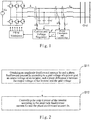
- FIG. 1 illustrates a block diagram of a voltage-controlled grid-connected inverter in the prior art.
- the output voltage v, output current i and inductor current i L at the inverter side of the inverter are acquired.
- the output voltage v and the output current i are used for computing the active power and the reactive power of the inverter, and further obtaining the amplitude and phase reference values of the output voltage of the inverter through a power control algorithm.
- the inductor current i L and the output voltage v which are the feedback signals of a current and voltage regulator, is used to adjust the reference values.
- the adjusted signals are supplied to a PWM modulator (pulse width modulator), thereby controlling the output power of the inverter.
- PWM modulator pulse width modulator
- an aspect of the present invention is to provide a method for decoupling the power of a voltage-controlled grid-connected inverter, thereby achieving independent control of the active power and reactive power outputted from the inverter.
- the present invention further provides an apparatus for controlling an output power of an inverter, the inverter being electrically connected to a power grid
- the present invention also provides a method for decoupling an output power of an inverter, the inverter being electrically connected to a power grid, wherein the method comprises the following steps:
- the present invention further provides an apparatus for decoupling a power of an inverter, the inverter being electrically connected to a power grid, wherein the apparatus comprises:
- This solution accurately computes the coupling amount in real time according to the relationship between active power and reactive power outputted from an inverter, and then decouples the output power according to an amplitude feedforward amount and a phase feedforward amount, respectively, so as to achieve independent control of active power and reactive power outputted from the inverter. It can be applied simply and is easy to upgrade the existing inverters to achieve good decoupling effects so that the power outputted from the inverters is stable and precise, thereby providing a good solution for engineering applications.
- FIGS. 9 and 10 show the results of the comparison between an inverter using this method and an inverter using a conventional control method.
- FIGS. 9 and 10 show the results of the comparison between an inverter using this method and an inverter using a conventional control method.
- FIG. 9A and FIG. 10A show the cases when the instruction for the active power changes. It can be indicated that fluctuations of the reactive power can be effectively suppressed by using the technical solution according to embodiments of the present invention
- FIG. 9B and FIG. 10B show the cases when the instructions for the reactive power changes. It can be inferred that the fluctuations of the active power can be effectively suppressed by using the technical solution according to embodiments of the present invention.
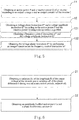
- FIG. 2 is a flowchart of method for controlling an output power of an inverter according to one embodiment of the present invention, the inverter being electrically connected to a power grid.
- the control method may comprise the following steps:
- the grid voltage and the output voltage of the inverter involved in the present invention may be line voltage or phase voltage, but the present invention is not limited thereto.
- the control period refers to a period of an inverter system at the corresponding control frequency, such as 1kHz-200kHz, but the present invention is not limited thereto.
- FIG. 3 is a schematic diagram of the structure of an apparatus for controlling an output power of an inverter according to one embodiment of the present invention, the inverter being electrically connected to a power grid, wherein the control apparatus may comprise a feedforward amount acquisition module and a power regulation module.
- the power regulation module may control the output power of the inverter according to the amplitude feedforward amount E ff and the phase feedforward amount ⁇ ff .
- FIG. 4 is a flowchart of a method for decoupling an output power of an inverter according to one embodiment of the present invention, the inverter being electrically connected to a power grid;
- FIG. 5 is a flowchart of sub-steps of step 1 of a method for decoupling an output power of an inverter according to one embodiment of the present invention;
- FIG. 6 is a flowchart of sub-steps of step 2 of a method for decoupling an output power of an inverter according to one embodiment of the present invention;
- FIG. 7 is a flowchart of sub-steps of step 3 of a method for decoupling an output power of an inverter according to one embodiment of the present invention.
- the grid-connected inverter is of a voltage-controlled type, and the output terminal of the inverter is electrically connected to the power grid.
- the power decoupling method may comprise the following steps:
- step 1 may further comprise the following steps:
- Step 2 may further comprise the following steps:
- Step 3 may further comprise the following steps:
- step 12 may comprise the following steps:
- the frequency control instruction ⁇ * and the voltage amplitude instruction E* may be obtained by many other methods, such as a virtual synchronous generator control algorithm which may obtain the operating characteristics similar to those of a synchronous generator by controlling the inverter to simulate the operating principle of a synchronous generator.
- FIG. 8 is a schematic diagram of the structure of an apparatus for decoupling a power of an inverter according to one embodiment of the present invention.
- the inverter of the present invention is of a voltage-controlled type, and the inverter is electrically connected to the power grid.
- the power decoupling apparatus may comprise:
- preprocessing module may further comprise:
- the frequency control instruction ⁇ * and the voltage amplitude instruction E* can also be obtained by many other methods such as a virtual synchronous generator control algorithm.
- reference voltage generator may further comprise:
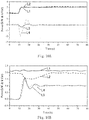
- FIG. 9A shows a simulation waveform of the output reactive power when the instruction for the active power of the inverter changes according to one embodiment of the present invention
- FIG. 9B shows a simulation waveform of the output active power when the instruction for the reactive power of the inverter changes according to one embodiment of the present invention
- FIG. 10A shows an experimental waveform when the instruction for the active power of the inverter increases from 2kW to 3kW according to one embodiment of the present invention
- FIG. 10B shows an experimental waveform when the instruction for the reactive power of the inverter increases from 0kvar to 1kvar according to one embodiment of the present invention.
- curve L1 denotes a waveform of the output active power with the decoupling control method
- curve L2 denotes a waveform of the output active power without the decoupling control method
- curve L3 denotes a waveform of the output reactive power with the decoupling control method
- curve L4 denotes a waveform of the output reactive power without the decoupling control method.
- curve L1 denotes a waveform of the output active power with the decoupling control method
- curve L2 denotes a waveform of the output active power without the decoupling control method
- curve L3 denotes a waveform of the output reactive power with the decoupling control method
- curve L4 denotes a waveform of the output reactive power without the decoupling control method.
- FIG. 10A verifies the variation of the reactive power when the instruction value for the active power increases from 2kW to 3kW, and it can be seen that fluctuations of the reactive power after decoupling are obviously smaller than those before decoupling;
- FIG. 10A verifies the variation of the reactive power when the instruction value for the active power increases from 2kW to 3kW, and it can be seen that fluctuations of the reactive power after decoupling are obviously smaller than those before decoupling;
- FIG. 10A verifies the variation of the reactive power when the instruction value for the active power increases from 2kW to 3kW, and it can be seen that fluctuations of the reactive power after decoupling are obviously smaller than
Landscapes
- Engineering & Computer Science (AREA)
- Power Engineering (AREA)
- Inverter Devices (AREA)
Abstract
Description
- The present invention belongs to the technical field for controlling the grid-connected inverters, and particularly relates to a method and apparatus for decoupling the output power of a grid-connected inverter.
- With the growing of the environmental and energy crises, more and more attention has been paid to renewable energy power generation which has been applied in more and more fields. Grid-connected inverters are interface equipments indispensable for electrical energy transportation from renewable power generation systems to power grids. The performance of grid-connected inverters will impose great influences on the stability of power generation systems and power grids. Output power fluctuations generated from grid-connected inverters will decrease the utilization efficiency of the energy, and major fluctuations may cause a shock, or even a safety danger of power grids.
- Depending on different control methods, grid-connected inverters are classified into two categories: current-controlled type and voltage-controlled type. Most of traditional grid-connected inverters operate in a current-controlled mode, because this control mode has advantages of having a simple structure, and being easy to implement a maximum power point tracking (MPPT) algorithm, etc. However, the current-controlled grid-connected inverters cannot operate in an island mode. In recent years, with the promotion and application of new technologies such as distributed generation and micro-grids, grid-connected inverters should be able to operate in island mode. Hence the inverters can operate independently when large power grids are unavailable, ensuring that the power supply to the important local loads is not influenced. In this context, voltage-controlled grid-connected inverters which can be operated in an island mode have been widely applied. In addition, voltage-controlled grid-connected inverters are also advantageous in that it can be smoothly transited between the island mode and the grid connection mode, can provide voltage support for a weak grid, and can be independent of phase-locked loops, etc. Therefore, they are expected to have a wide application.
- Referring to
FIG. 1, FIG. 1 illustrates a block diagram of a voltage-controlled grid-connected inverter in the prior art. As shown inFIG. 1 , the output voltage v, output current i and inductor current iL at the inverter side of the inverter are acquired. Here, the output voltage v and the output current i are used for computing the active power and the reactive power of the inverter, and further obtaining the amplitude and phase reference values of the output voltage of the inverter through a power control algorithm. Further, the inductor current iL and the output voltage v, which are the feedback signals of a current and voltage regulator, is used to adjust the reference values. The adjusted signals are supplied to a PWM modulator (pulse width modulator), thereby controlling the output power of the inverter. - However, in the prior art both current-controlled and voltage-controlled grid-connected inverters have a problem about the coupling of output power. That is, the active power and reactive power cannot be controlled independently, and maybe affected by each other. As for the current-controlled type, many scholars have proposed decoupling methods, such as inductor current feedforward methods, vector PI controllers and so on. However, these methods cannot be directly applied to voltage-controlled grid-connected inverters because of the difference in the control mechanisms.
- In addition, some scholars has proposed methods, such as virtual impedance and virtual power, for solving power coupling problems caused by the line transmission impedance which is not purely inductive. It can be considered that the active power and the reactive power of the inverter are decoupled based on the small signal models with these methods. However, these methods cannot solve large-signal coupling problems which are caused by the inherent topology of circuits. Therefore, when the reference values for one of the active power and the reactive power changes, the other one of the active power and the reactive power will fluctuate due to the coupling. This problem has not received enough attention, so there is a lack of effective decoupling methods.
- In order to overcome the above-mentioned problems existing in the prior art, an aspect of the present invention is to provide a method for decoupling the power of a voltage-controlled grid-connected inverter, thereby achieving independent control of the active power and reactive power outputted from the inverter.
- The present invention is carried out by the following technical solution:
- a method for controlling an output power of an inverter, the inverter being electrically connected to a power grid, wherein the control method comprises the following steps:
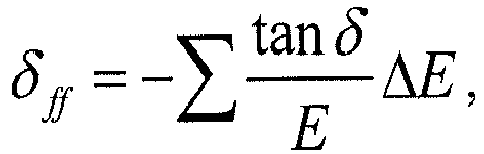
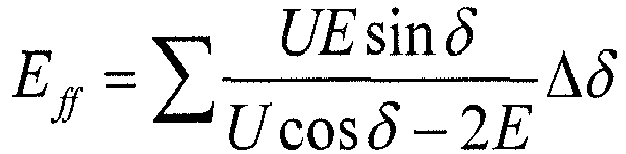
- obtaining an amplitude feedforward amount Eff and a phase feedforward amount δff according to a grid voltage of the power grid, an output voltage of the inverter, and a phase difference δ between the output voltage of the inverter and the grid voltage, using the following Equation:


- wherein U is an amplitude of the grid voltage, E is an amplitude of the output voltage of the inverter, ΔE is a variation of the amplitude E of the output voltage of the inverter during two adjacent control periods, Δδ is a variation of the phase difference δ during two adjacent control periods; and
- controlling the output power of the inverter according to the amplitude feedforward amount Eff and the phase feedforward amount δff.
- The present invention further provides an apparatus for controlling an output power of an inverter, the inverter being electrically connected to a power grid, wherein the apparatus comprises
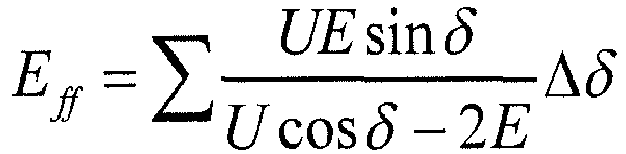
a feedforward amount acquisition module, configured to obtain an amplitude feedforward amount Eff and a phase feedforward amount δff according to a grid voltage of the power grid, an output voltage of the inverter, and a phase difference δ between the output voltage of the inverter and the grid voltage, using the following Equation: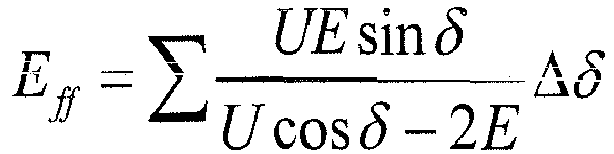
a power regulation module, configured to control the output power of the inverter according to the amplitude feedforward amount Eff and the phase feedforward amount δff. - Further, the present invention also provides a method for decoupling an output power of an inverter, the inverter being electrically connected to a power grid, wherein the method comprises the following steps:
- step 1: obtaining a voltage amplitude instruction E* and a voltage phase instruction θ* according to an output voltage and an output current of the inverter;
- step 2: obtaining an amplitude feedforward amount Eff and a phase feedforward amount δff according to an amplitude U of a grid voltage of the power grid, an amplitude E of the output voltage of the inverter, and a phase difference δ between the output voltage of the inverter and the grid voltage;
- step 3: obtaining a reference voltage amplitude Eref according to the voltage amplitude instruction E* and the amplitude feedforward amount Eff, and obtaining a reference voltage phase θref according to the voltage phase instruction θ* and the phase feedforward amount δff; and
- step 4: regulating the output power of the inverter using the reference voltage amplitude Eref and the reference voltage phase θref.
- In addition, the present invention further provides an apparatus for decoupling a power of an inverter, the inverter being electrically connected to a power grid, wherein the apparatus comprises:
- a preprocessing module, configured to obtain a voltage amplitude instruction E* and a voltage phase instruction θ* according to an output voltage and an output current of the inverter;
- a feedforward amount acquisition module, configured to obtain an amplitude feedforward amount Eff and a phase feedforward amount δff according to an amplitude U of the grid voltage, an amplitude E of the output voltage of the inverter, and a phase difference δ between the output voltage of the inverter and the grid voltage;
- a reference voltage generator, configured to obtain a reference voltage amplitude Eref according to the voltage amplitude instruction E* and the amplitude feedforward amount Eff, and to obtain a reference voltage phase θref according to the voltage phase instruction θ* and the phase feedforward amount δff; and
- a power regulator, configured to control the output power of the inverter using the reference voltage amplitude Eref and the reference voltage phase θref.
- This solution accurately computes the coupling amount in real time according to the relationship between active power and reactive power outputted from an inverter, and then decouples the output power according to an amplitude feedforward amount and a phase feedforward amount, respectively, so as to achieve independent control of active power and reactive power outputted from the inverter. It can be applied simply and is easy to upgrade the existing inverters to achieve good decoupling effects so that the power outputted from the inverters is stable and precise, thereby providing a good solution for engineering applications.
-
-
FIG. 1 illustrates a block diagram of a voltage-controlled grid-connected inverter in the prior art; -
FIG. 2 is a flowchart of method for controlling an output power of an inverter according to one embodiment of the present invention; -
FIG. 3 is a schematic diagram of the structure of an apparatus for controlling an output power of an inverter according to one embodiment of the present invention; -
FIG. 4 is a flowchart of a method for decoupling an output power of an inverter according to one embodiment of the present invention; -
FIG. 5 is a flowchart of sub-steps ofstep 1 of a method for decoupling an output power of an inverter according to one embodiment of the present invention; -
FIG. 6 is a flowchart of sub-steps ofstep 2 of a method for decoupling an output power of an inverter according to one embodiment of the present invention; -
FIG. 7 is a flowchart of sub-steps ofstep 3 of a method for decoupling an output power of an inverter according to one embodiment of the present invention; -
FIG. 8 is a schematic diagram of the structure of an apparatus for decoupling a power of an inverter according to one embodiment of the present invention; -
FIG. 9A shows a simulation waveform of the output reactive power when the instruction for the active power of the inverter changes according to one embodiment of the present invention; -
FIG. 9B shows a simulation waveform of the output active power when the instruction for the reactive power of the inverter changes according to one embodiment of the present invention; -
FIG. 10A shows an experimental waveform when the instruction for the active power of the inverter increases from 2kW to 3kW according to one embodiment of the present invention; and -
FIG. 10B shows an experimental waveform when the instruction for the reactive power of the inverter increases from 0kvar to 1kvar according to one embodiment of the present invention. - A preferred embodiment is provided herein to further describe the detailed contents and technical description of the present invention, but should not be construed as limiting the implementation of the present invention.
- One embodiment of the present invention provides a technical solution for decoupling the output power of a grid-connected inverter, the principle of which is illustrated in
FIGs. 2-8 . The results of the comparison between an inverter using this method and an inverter using a conventional control method are shown inFIGS. 9 and10 .FIG. 9A andFIG. 10A show the cases when the instruction for the active power changes. It can be indicated that fluctuations of the reactive power can be effectively suppressed by using the technical solution according to embodiments of the present invention; andFIG. 9B andFIG. 10B show the cases when the instructions for the reactive power changes. It can be inferred that the fluctuations of the active power can be effectively suppressed by using the technical solution according to embodiments of the present invention. - Referring to
FIG. 2 , which is a flowchart of method for controlling an output power of an inverter according to one embodiment of the present invention, the inverter being electrically connected to a power grid. As shown inFIG. 2 , the control method may comprise the following steps: - a feedforward amount acquisition step S11: obtaining an amplitude feedforward amount Eff and a phase feedforward amount δff, according to the grid voltage of the power grid, the output voltage of the inverter, and a phase difference δ between the output voltage of the inverter and the grid voltage, for example, by using the following Equation:


a power regulation step S12: controlling the output power of the inverter according to the amplitude feedforward amount Eff and the phase feedforward amount δff. - Noted that the grid voltage and the output voltage of the inverter involved in the present invention may be line voltage or phase voltage, but the present invention is not limited thereto. The control period refers to a period of an inverter system at the corresponding control frequency, such as 1kHz-200kHz, but the present invention is not limited thereto.
- Next, referring to
FIG. 3 , which is a schematic diagram of the structure of an apparatus for controlling an output power of an inverter according to one embodiment of the present invention, the inverter being electrically connected to a power grid, wherein the control apparatus may comprise a feedforward amount acquisition module and a power regulation module. - The feedforward amount acquisition module may obtain an amplitude feedforward amount Eff and a phase feedforward amount δff according to a grid voltage of the power grid, an output voltage of the inverter, and a phase difference δ between the output voltage of the inverter and the grid voltage, for example, by using the following Equation:


- The power regulation module may control the output power of the inverter according to the amplitude feedforward amount Eff and the phase feedforward amount δff.
- Referring to
FIGs. 4-7 .FIG. 4 is a flowchart of a method for decoupling an output power of an inverter according to one embodiment of the present invention, the inverter being electrically connected to a power grid;FIG. 5 is a flowchart of sub-steps ofstep 1 of a method for decoupling an output power of an inverter according to one embodiment of the present invention;FIG. 6 is a flowchart of sub-steps ofstep 2 of a method for decoupling an output power of an inverter according to one embodiment of the present invention; andFIG. 7 is a flowchart of sub-steps ofstep 3 of a method for decoupling an output power of an inverter according to one embodiment of the present invention. - The grid-connected inverter is of a voltage-controlled type, and the output terminal of the inverter is electrically connected to the power grid.
- As shown in
FIGS. 4-7 , the power decoupling method may comprise the following steps: - step 0: obtaining an output voltage v and an output current i of the inverter, for example, by performing a sampling operation through a sampling circuit;
- step 1: obtaining a voltage amplitude instruction E* and a voltage phase instruction θ* according to the output voltage v and the output current i of the inverter, wherein the amplitude E and the phase θ of the output voltage v can be obtained according to the output voltage v;
- step 2: obtaining an amplitude feedforward amount Eff and a phase feedforward amount δff according to an amplitude U of a grid voltage of the power grid, an amplitude E of the output voltage of the inverter, and a phase difference δ between the output voltage of the inverter and the grid voltage;
- step 3: obtaining a reference voltage amplitude Eref according to the voltage amplitude instruction E* and the amplitude feedforward amount Eff, and obtaining a reference voltage phase θref according to the voltage phase instruction θ* and the phase feedforward amount θff; and
- step 4: controlling the output power of the inverter using the reference voltage amplitude Eref and the reference voltage phase θref.
- Further,
step 1 may further comprise the following steps: - step 11: obtaining an active power P and a reactive power Q of the inverter according to the output voltage v and the output current i of the inverter, with the following Equation:

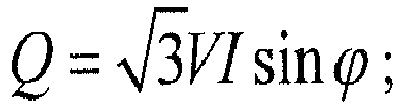
- step 12: obtaining the voltage phase instruction θ* and the voltage amplitude instruction E* according to the active power P and the reactive power Q using a power control algorithm (such as a droop control algorithm).
-
Step 2 may further comprise the following steps: - step 21:obtaining a variation ΔE of the amplitude E of the output voltage of the inverter and a variation Δδ of the phase difference δ during two adjacent control periods, respectively, e.g., ΔE = E2-E1 and Δδ= δ2-δ1, wherein E2 represents the amplitude of the output voltage of the inverter that is acquired in the present control period; δ2 represents the phase difference between the output voltage of the inverter and the grid voltage that are acquired in the present control period; E1 represents the amplitude of the output voltage of the inverter that is acquired in the previous control period; and δ1 represents the phase difference between the output voltage of the inverter and the grid voltage that are acquired in the previous control period; and wherein, in one embodiment, for example, the output voltage of the inverter is a line voltage, but the present invention is not limited thereto; and
- step 22: obtaining the amplitude feedforward amount Eff and the phase feedforward amount δff using the following Equation:


-
Step 3 may further comprise the following steps: - step 31: obtaining the reference voltage amplitude Eref by adding the voltage amplitude instruction E* with the amplitude feedforward amount Eff, for example, using the following Equation:

- step 32: obtaining the reference voltage phase θref by adding the voltage phase instruction θ* with the phase feedforward amount δff, for example, using the following Equation:

step 31 and step 32 may be performed sequentially, but the present invention is not limited thereto; in other embodiments,step 31 and step 32 may be performed simultaneously or in reverse sequence. - Further, step 12 may comprise the following steps:
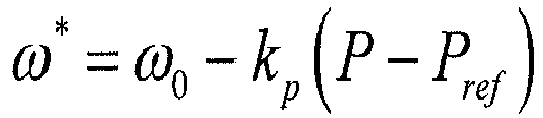
- step 121: obtaining a frequency control instruction ω* and the voltage amplitude instruction E*, for example, according to the following Equation of the droop control algorithm:


- step 122: obtaining the voltage phase instruction θ* by performing an integral operation on the frequency control instruction ω*:

- Noted that this embodiment is described by using the droop control algorithm as an example of the power control algorithm, but the present invention is not limited thereto. In other embodiments, the frequency control instruction ω* and the voltage amplitude instruction E* may be obtained by many other methods, such as a virtual synchronous generator control algorithm which may obtain the operating characteristics similar to those of a synchronous generator by controlling the inverter to simulate the operating principle of a synchronous generator.
- Next, referring to
FIG. 8, FIG. 8 is a schematic diagram of the structure of an apparatus for decoupling a power of an inverter according to one embodiment of the present invention. The inverter of the present invention is of a voltage-controlled type, and the inverter is electrically connected to the power grid. - As shown in
FIG. 8 , the power decoupling apparatus may comprise: - a parameter acquisition module, configured to obtain an output voltage v and an output current i of the inverter;
- a preprocessing module, configured to obtain a voltage amplitude instruction E* and a voltage phase instruction θ* according to the output voltage v and the output current i of the inverter;
- a feedforward amount acquisition module, configured to obtain an amplitude feedforward amount Eff and a phase feedforward amount δff according to an amplitude U of the grid voltage, an amplitude E of the output voltage of the inverter, and a phase difference δ between the output voltage of the inverter and the grid voltage, for example, using the following Equation:


- a reference voltage generator, configured to obtain a reference voltage amplitude Eref according to the voltage amplitude instruction E* and the amplitude feedforward amount Eff, for example, by a first superimposition module of the reference voltage generator, and to obtain a reference voltage phase θref according to the voltage phase instruction θ* and the phase feedforward amount δff, for example, by a second superimposition module of the reference voltage generator; and
- a power regulator, configured to control the output power of the inverter using the reference voltage amplitude Eref and the reference voltage phase θref. For example, the output power of the inverter may be adjusted by controlling the turning-on and/or turning-off of the respective switches according to the PWM signals which is generated according to a closed-loop control, but the present invention is not limited thereto.
- Further, the preprocessing module may further comprise:
- a power calculation module, configured to obtain an active power P and a reactive power Q of the inverter according to the output voltage v and the output current i of the inverter, using the following Equation:


- wherein V is the effective value of the line voltage of output voltage, I is the effective value of the line current of output current, and ϕ is a phase difference between the phase voltage of output voltage and the phase current of output current.
- a droop control module, configured to obtain the voltage phase instruction θ* and the voltage amplitude instruction E* according to the active power P and the reactive power Q using a droop control algorithm.
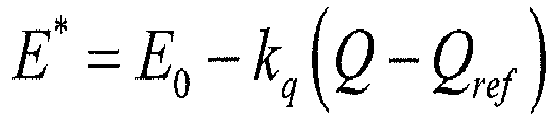
- Furthermore, the droop control module may be configured to obtain a frequency control instruction ω* and the voltage amplitude instruction E*, for example, according to the following Equation of droop control algorithm:


- Then, the droop control module may also be configured to obtain the voltage phase instruction θ* by performing an integral operation on the frequency control instruction ω*, for example, using the following Equation:

- Noted that this embodiment is described by using the droop control algorithm as an example of the power control algorithm, but the present invention is not limited thereto. In other embodiments, the frequency control instruction ω* and the voltage amplitude instruction E* can also be obtained by many other methods such as a virtual synchronous generator control algorithm.
- Furthermore, the reference voltage generator may further comprise:
- a first addition module, configured to obtain the reference voltage amplitude Eref by adding the voltage amplitude instruction E* with the amplitude feedforward amount Eff, for example, using the following Equation:

- a second addition module, configured to obtain the reference voltage phase θref by adding the voltage phase instruction θ* with the phase feedforward amount δff, for example, using the following Equation:

- Next, referring to
FIGs. 9A, 9B ,10A and 10B ,FIG. 9A shows a simulation waveform of the output reactive power when the instruction for the active power of the inverter changes according to one embodiment of the present invention;FIG. 9B shows a simulation waveform of the output active power when the instruction for the reactive power of the inverter changes according to one embodiment of the present invention;FIG. 10A shows an experimental waveform when the instruction for the active power of the inverter increases from 2kW to 3kW according to one embodiment of the present invention; andFIG. 10B shows an experimental waveform when the instruction for the reactive power of the inverter increases from 0kvar to 1kvar according to one embodiment of the present invention. - As shown in
FIGS. 9A and 9B , curve L1 denotes a waveform of the output active power with the decoupling control method; curve L2 denotes a waveform of the output active power without the decoupling control method; curve L3 denotes a waveform of the output reactive power with the decoupling control method; and curve L4 denotes a waveform of the output reactive power without the decoupling control method. In the beginning, the inverter supplies active power of 10kW to the power grid, with no output reactive power. The instruction value for the active power decreases from 10kW to 5kW at 1.5s, and then restores to 10kW at 2.5s. FromFIG. 9A , it can be found that fluctuations of reactive power during this period can be effectively suppressed by using the solution of the present invention. The instruction value for the reactive power increases from 0kvar to 6kvar at 3.5s, and then restores to 0kvar at 4.5s. FromFIG. 9B , it can be found that fluctuations of active power during this period can be effectively suppressed by using the solution of the present invention. - As shown in
FIGs. 10A and 10B , curve L1 denotes a waveform of the output active power with the decoupling control method; curve L2 denotes a waveform of the output active power without the decoupling control method; curve L3 denotes a waveform of the output reactive power with the decoupling control method; and curve L4 denotes a waveform of the output reactive power without the decoupling control method.FIG. 10A verifies the variation of the reactive power when the instruction value for the active power increases from 2kW to 3kW, and it can be seen that fluctuations of the reactive power after decoupling are obviously smaller than those before decoupling;FIG. 10B verifies the variation of the active power when the instruction value for the reactive power changes from 0kvar to 1kvar, and the result shows that fluctuations of the active power after decoupling are obviously smaller than those before decoupling. The experimental results prove the effectiveness of the power decoupling solution according to embodiments of the present invention. - It should be noted that the above embodiments are used only to illustrate the present invention but not to limit the technical solution described in the present invention; meanwhile, although the present invention has been disclosed in detail with reference to the above embodiments in the present description, those of ordinary skills in the art should appreciate that they still can make amendments or equivalent substitutions to the present invention; therefore, all technical solutions not departing from the spirit and scope of the present invention and the improvements thereof should all fall within the scopes of protection of the appended claims of the present invention.
Claims (15)
- A method for controlling an output power of an inverter, the inverter being electrically connected to a power grid, wherein the control method comprises the following steps:obtaining an amplitude feedforward amount Eff and a phase feedforward amount δff according to a grid voltage of the power grid, an output voltage of the inverter, and a phase difference δ between the output voltage of the inverter and the grid voltage, using the following Equation:
 controlling the output power of the inverter according to the amplitude feedforward amount Eff and the phase feedforward amount δff.
 - An apparatus for controlling an output power of an inverter, the inverter being electrically connected to a power grid, wherein the apparatus comprises:a feedforward amount acquisition module, configured to obtain an amplitude feedforward amount Eff and a phase feedforward amount δff according to a grid voltage of the power grid, an output voltage of the inverter, and a phase difference δ between the output voltage of the inverter and the grid voltage, using the following Equation:
 a power regulation module, configured to control the output power of the inverter according to the amplitude feedforward amount Eff and the phase feedforward amount δff.
 - A method for decoupling an output power of an inverter, the inverter being electrically connected to a power grid, wherein the method comprises the following steps:step 1: obtaining a voltage amplitude instruction E* and a voltage phase instruction θ* according to an output voltage and an output current of the inverter;step 2: obtaining an amplitude feedforward amount Eff and a phase feedforward amount δff according to an amplitude U of a grid voltage of the power grid, an amplitude E of the output voltage of the inverter, and a phase difference δ between the output voltage of the inverter and the grid voltage;step 3: obtaining a reference voltage amplitude Eref according to the voltage amplitude instruction E* and the amplitude feedforward amount Eff, and obtaining a reference voltage phase θref according to the voltage phase instruction θ* and the phase feedforward amount δff; andstep 4: regulating the output power of the inverter using the reference voltage amplitude Eref and the reference voltage phase θref.
- The method according to claim 3, wherein said step 1 comprises the following steps:step 11: obtaining an active power P and a reactive power Q of the inverter according to the output voltage and the output current of the inverter; andstep 12: obtaining the voltage phase instruction θ* and the voltage amplitude instruction E* according to the active power P and the reactive power Q using a droop control algorithm.
- The method according to claim 4, wherein said step 12 comprises the following steps:step 121: obtaining a frequency control instruction ω* and the voltage amplitude instruction E* according to the following Equation of the droop control algorithm:
 step 122: obtaining the voltage phase instruction θ* by performing an integral operation on the frequency control instruction ω*.
 - The method according to claim 3, wherein said step 2 comprises the following steps:step 21: obtaining a variation ΔE of the amplitude E of the output voltage of the inverter and a variation Δδ of the phase difference δ during two adjacent control periods, respectively; andstep 22: obtaining the amplitude feedforward amount Eff and the phase feedforward amount δff using the following Equation:


- The method according to claim 3, wherein said step 3 comprises the following steps:step 31: obtaining the reference voltage amplitude Eref by adding the voltage amplitude instruction E* with the amplitude feedforward amount Eff; andstep 32: obtaining the reference voltage phase θref by adding the voltage phase instruction θ* with the phase feedforward amount δff.
- The method according to claim 3, wherein before said step 1, said method further comprises a step 0 for obtaining the output voltage and the output current of the inverter.
- An apparatus for decoupling a power of an inverter, the inverter being electrically connected to a power grid, wherein the apparatus comprises:a preprocessing module, configured to obtain a voltage amplitude instruction E* and a voltage phase instruction θ* according to an output voltage and an output current of the inverter;a feedforward amount acquisition module, configured to obtain an amplitude feedforward amount Eff and a phase feedforward amount δff according to an amplitude U of the grid voltage, an amplitude E of the output voltage of the inverter, and a phase difference δ between the output voltage of the inverter and the grid voltage;a reference voltage generator, configured to obtain a reference voltage amplitude Eref according to the voltage amplitude instruction E* and the amplitude feedforward amount Eff, and to obtain a reference voltage phase θref according to the voltage phase instruction θ* and the phase feedforward amount δff; anda power regulator, configured to control the output power of the inverter using the reference voltage amplitude Eref and the reference voltage phase θref.
- The apparatus according to claim 9, wherein the preprocessing module comprises:a power calculation module, configured to obtain an active power P and a reactive power Q of the inverter according to the output voltage and the output current of the inverter; anda droop control module, configured to obtain the voltage phase instruction θ* and the voltage amplitude instruction E* according to the active power P and the reactive power Q using a droop control algorithm.
- The apparatus according to claim 10, wherein the droop control module is configured to obtain a frequency control instruction ω* and the voltage amplitude instruction E* according to the following Equation of the droop control algorithm:

to obtain the voltage phase instruction θ* by performing an integral operation on the frequency control instruction ω*. - The apparatus according to claim 9, wherein the feedforward amount acquisition module obtains a variation ΔE of the amplitude E of the output voltage of the inverter and a variation Δδ of the phase difference δ during two adjacent control periods, respectively, and obtains the amplitude feedforward amount Eff and the phase feedforward amount δff using the following Equation:


- The apparatus according to claim 9, wherein the reference voltage generator further comprises:a first addition module, configured to obtain the reference voltage amplitude Eref by adding the voltage amplitude instruction E* with the amplitude feedforward amount Eff; anda second addition module, configured to obtain the reference voltage phase θref by adding the voltage phase instruction θ* with the phase feedforward amount δff.
- The apparatus according to claim 9, further comprising a parameter acquisition module for obtaining the output voltage and the output current of the inverter.
- The apparatus according to claim 9, wherein the inverter is of a voltage-controlled type.
Applications Claiming Priority (2)
| Application Number | Priority Date | Filing Date | Title |
|---|---|---|---|
| CN201510851797.0A CN105356487A (en) | 2015-11-27 | 2015-11-27 | Power decoupling method for voltage controlled grid-connected inverter |
| CN201610946590.6A CN106816889B (en) | 2015-11-27 | 2016-10-26 | Grid-connected inverter power decoupling method and device |
Publications (3)
| Publication Number | Publication Date |
|---|---|
| EP3174186A2 true EP3174186A2 (en) | 2017-05-31 |
| EP3174186A3 EP3174186A3 (en) | 2017-08-30 |
| EP3174186B1 EP3174186B1 (en) | 2021-10-20 |
Family
ID=57421678
Family Applications (1)
| Application Number | Title | Priority Date | Filing Date |
|---|---|---|---|
| EP16200753.8A Active EP3174186B1 (en) | 2015-11-27 | 2016-11-25 | Method and apparatus for decoupling the power of grid-connected inverter |
Country Status (2)
| Country | Link |
|---|---|
| US (1) | US9887547B2 (en) |
| EP (1) | EP3174186B1 (en) |
Cited By (2)
| Publication number | Priority date | Publication date | Assignee | Title |
|---|---|---|---|---|
| CN110571849A (en) * | 2019-08-20 | 2019-12-13 | 南京国电南自电网自动化有限公司 | A Fast Control Method of Virtual Synchronous Machine Responding to Power Commands |
| WO2023178873A1 (en) * | 2022-03-22 | 2023-09-28 | 西安热工研究院有限公司 | Grid-connected point voltage regulation method and system for thermal power molten salt energy storage converter device |
Families Citing this family (23)
| Publication number | Priority date | Publication date | Assignee | Title |
|---|---|---|---|---|
| US10651656B2 (en) | 2016-09-14 | 2020-05-12 | Texas Tech University System | UDE-based robust droop control for parallel inverter operation |
| CN106655272B (en) * | 2017-01-16 | 2018-12-04 | 湖南大学 | Inhibit failure temporary impact current mode virtual synchronous inverter and its control method |
| CN108063458A (en) * | 2018-01-24 | 2018-05-22 | 国网江苏省电力有限公司苏州供电分公司 | A kind of micro-capacitance sensor plug-and-play apparatus |
| CN108199396B (en) * | 2018-02-06 | 2021-09-07 | 上海交通大学 | Virtual excitation closed-loop control system for energy storage inverter and its design method |
| CN108544935B (en) * | 2018-03-20 | 2020-06-30 | 清华大学 | A transmission power control method for a two-way wireless charging system for an electric vehicle |
| CN109245163B (en) * | 2018-10-19 | 2022-07-19 | 南京丰道电力科技有限公司 | Adjusting method of distributed AGC/AVC adjusting system |
| CN110311404B (en) * | 2018-11-29 | 2023-09-05 | 湖北工业大学 | Current prediction control method for single-phase grid-connected photovoltaic inverter |
| CN109861308B (en) * | 2018-12-13 | 2020-06-26 | 合肥东徽欣能电气科技有限公司 | Virtual synchronous generator fault ride-through control method |
| CN109713678B (en) * | 2019-02-12 | 2022-08-30 | 易事特集团股份有限公司 | Microgrid voltage control method and system |
| CN112242719B (en) * | 2019-07-17 | 2022-04-15 | 华北电力大学 | Inverter improved droop control method based on virtual synchronous machine technology |
| KR102253484B1 (en) * | 2019-12-30 | 2021-05-18 | 국민대학교산학협력단 | Stand-alone and grid-connected compatible inverter system for supporting the restoration of grid power and operation method thereof |
| US11177660B2 (en) * | 2020-01-27 | 2021-11-16 | Mitsubishi Electric Power Products, Inc. | System and method for power converter control for virtual impedance |
| CN113759184B (en) * | 2020-06-03 | 2024-09-24 | 台达电子企业管理(上海)有限公司 | Island detection method and device for inverter |
| CN113765137B (en) | 2020-06-03 | 2025-01-21 | 台达电子企业管理(上海)有限公司 | Control method and device for three-phase AC system |
| CN113315401B (en) * | 2021-06-03 | 2022-03-29 | 昱能科技股份有限公司 | Micro inverter and grid-connected output control method and device thereof |
| CN113489027B (en) * | 2021-08-03 | 2022-08-09 | 李畅 | Virtual inductance control method and system for suppressing frequency oscillation of virtual synchronous generator |
| CN114069728B (en) * | 2021-09-30 | 2024-11-05 | 厦门科华数能科技有限公司 | Energy storage converter parallel control method and device based on virtual synchronous generator |
| CN114094621A (en) * | 2021-11-05 | 2022-02-25 | 武汉大学 | A system and method for synchronous control of DC capacitors of grid-connected converters |
| US12388344B2 (en) * | 2022-09-06 | 2025-08-12 | Battelle Memorial Institute | Current-limiting control strategy for single-loop droop-controlled grid-forming inverters |
| CN119253775B (en) * | 2024-09-27 | 2026-03-24 | 苏州海鹏科技有限公司 | A Quasi-Closed-Loop Control Method for Active and Reactive Power of a Grid-Connected Inverter |
| CN119994949B (en) * | 2025-01-17 | 2025-12-26 | 南京理工大学 | Virtual impedance feedforward controller-based grid-structured converter control method and system |
| CN120729077B (en) * | 2025-08-21 | 2025-12-02 | 湖南大学 | Double feedforward optimization control method and system of energy storage converter and storage medium |
| CN121124084B (en) * | 2025-11-14 | 2026-02-03 | 山东大学 | Power decoupling method of voltage feedforward compensation and adaptive virtual impedance coordinated control |
Family Cites Families (7)
| Publication number | Priority date | Publication date | Assignee | Title |
|---|---|---|---|---|
| FR1370324A (en) * | 1962-09-27 | 1964-08-21 | Sonnenschein Accumulatoren | Device and method for maintaining constant the voltage supplied by a battery |
| US6952089B2 (en) * | 2003-08-29 | 2005-10-04 | Rockwell Automation Technologies, Inc. | Motor drive with voltage-accurate inverter |
| JP5002343B2 (en) * | 2007-06-18 | 2012-08-15 | 株式会社豊田中央研究所 | AC motor drive control device |
| JP5566736B2 (en) * | 2010-03-12 | 2014-08-06 | 株式会社東芝 | Solar power system |
| TWI462458B (en) * | 2011-09-09 | 2014-11-21 | Delta Electronics Inc | Driver having dead-time compensation function |
| EP2940826B1 (en) * | 2012-12-27 | 2018-01-31 | Kawasaki Jukogyo Kabushiki Kaisha | Combined power generation system having power converting device |
| WO2014203116A1 (en) | 2013-06-19 | 2014-12-24 | Danfoss Power Electronics A/S | Inverter synchronization |
-
2016
- 2016-11-23 US US15/360,983 patent/US9887547B2/en active Active
- 2016-11-25 EP EP16200753.8A patent/EP3174186B1/en active Active
Non-Patent Citations (1)
| Title |
|---|
| None |
Cited By (2)
| Publication number | Priority date | Publication date | Assignee | Title |
|---|---|---|---|---|
| CN110571849A (en) * | 2019-08-20 | 2019-12-13 | 南京国电南自电网自动化有限公司 | A Fast Control Method of Virtual Synchronous Machine Responding to Power Commands |
| WO2023178873A1 (en) * | 2022-03-22 | 2023-09-28 | 西安热工研究院有限公司 | Grid-connected point voltage regulation method and system for thermal power molten salt energy storage converter device |
Also Published As
| Publication number | Publication date |
|---|---|
| US20170155247A1 (en) | 2017-06-01 |
| EP3174186A3 (en) | 2017-08-30 |
| EP3174186B1 (en) | 2021-10-20 |
| US9887547B2 (en) | 2018-02-06 |
Similar Documents
| Publication | Publication Date | Title |
|---|---|---|
| EP3174186A2 (en) | Method and apparatus for decoupling the power of grid-connected inverter | |
| CN103944190B (en) | A kind of stable state control method of three-phase dual mode inverter | |
| EP3285350B1 (en) | Cascaded photovoltaic grid-connected inverter, control method and control device for the same | |
| EP2790312A2 (en) | Power decoupling controller and method for power conversion system | |
| EP2731222B1 (en) | Power grid reactive compensation method and apparatus, and grid-tied inverter | |
| US9705419B2 (en) | Control signal generating system and inverter control device thereof for improving grid stability | |
| EP3961903A1 (en) | Control device | |
| Vu et al. | Model predictive control for power control in islanded DC microgrids. | |
| Thai et al. | Voltage harmonic reduction using virtual oscillator based inverters in islanded microgrids | |
| EP3961904B1 (en) | Control device | |
| Mumtahina et al. | Comparative analysis of grid forming and grid following converters in time domain and phasor domain form | |
| US12395065B2 (en) | Electric power converter for a photovoltaic energy source | |
| JP7558675B2 (en) | Power Conversion Equipment | |
| JP7136368B2 (en) | power converter | |
| KR101728019B1 (en) | Apparatus and method for controlling voltage of three-phase inverter for stand-alone microgrid | |
| Segaran et al. | High-performance bi-directional AC-DC converters for PHEV with minimised DC bus capacitance | |
| Saha et al. | Modelling and control of STATCOM to ensure stable power system operation | |
| Mora et al. | Optimal switching sequence MPC for four-leg two-level grid-connected converters | |
| CN102244475A (en) | Inverter current control method based on repetitive control | |
| Hildebrandt et al. | Inner Grid-Forming Control Loops-Comparative Analysis of the Disturbance Response Behavior | |
| Pozzebon et al. | A grid-connected multilevel converter for interfacing PV arrays and energy storage devices | |
| EP4478575A1 (en) | Method and system for controlling electronic converters | |
| Malanda et al. | Comparison of DC voltage Control Strategies for Multi-terminal HVDC Network during AC Faults | |
| Tran et al. | Simple structure for reactive power control of AC photovoltaic modules | |
| Roldan-Perez et al. | Finite-gain-current repetitive controller for synchronverters with harmonic-sharing capabilities |
Legal Events
| Date | Code | Title | Description |
|---|---|---|---|
| PUAI | Public reference made under article 153(3) epc to a published international application that has entered the european phase |
Free format text: ORIGINAL CODE: 0009012 |
|
| STAA | Information on the status of an ep patent application or granted ep patent |
Free format text: STATUS: THE APPLICATION HAS BEEN PUBLISHED |
|
| AK | Designated contracting states |
Kind code of ref document: A2 Designated state(s): AL AT BE BG CH CY CZ DE DK EE ES FI FR GB GR HR HU IE IS IT LI LT LU LV MC MK MT NL NO PL PT RO RS SE SI SK SM TR |
|
| AX | Request for extension of the european patent |
Extension state: BA ME |
|
| PUAL | Search report despatched |
Free format text: ORIGINAL CODE: 0009013 |
|
| AK | Designated contracting states |
Kind code of ref document: A3 Designated state(s): AL AT BE BG CH CY CZ DE DK EE ES FI FR GB GR HR HU IE IS IT LI LT LU LV MC MK MT NL NO PL PT RO RS SE SI SK SM TR |
|
| AX | Request for extension of the european patent |
Extension state: BA ME |
|
| RIC1 | Information provided on ipc code assigned before grant |
Ipc: H02M 7/42 20060101ALI20170725BHEP Ipc: H02M 1/00 20070101AFI20170725BHEP Ipc: H02J 3/18 20060101ALI20170725BHEP |
|
| STAA | Information on the status of an ep patent application or granted ep patent |
Free format text: STATUS: REQUEST FOR EXAMINATION WAS MADE |
|
| 17P | Request for examination filed |
Effective date: 20180223 |
|
| RBV | Designated contracting states (corrected) |
Designated state(s): AL AT BE BG CH CY CZ DE DK EE ES FI FR GB GR HR HU IE IS IT LI LT LU LV MC MK MT NL NO PL PT RO RS SE SI SK SM TR |
|
| STAA | Information on the status of an ep patent application or granted ep patent |
Free format text: STATUS: EXAMINATION IS IN PROGRESS |
|
| 17Q | First examination report despatched |
Effective date: 20190415 |
|
| GRAP | Despatch of communication of intention to grant a patent |
Free format text: ORIGINAL CODE: EPIDOSNIGR1 |
|
| STAA | Information on the status of an ep patent application or granted ep patent |
Free format text: STATUS: GRANT OF PATENT IS INTENDED |
|
| INTG | Intention to grant announced |
Effective date: 20210531 |
|
| GRAS | Grant fee paid |
Free format text: ORIGINAL CODE: EPIDOSNIGR3 |
|
| GRAA | (expected) grant |
Free format text: ORIGINAL CODE: 0009210 |
|
| STAA | Information on the status of an ep patent application or granted ep patent |
Free format text: STATUS: THE PATENT HAS BEEN GRANTED |
|
| AK | Designated contracting states |
Kind code of ref document: B1 Designated state(s): AL AT BE BG CH CY CZ DE DK EE ES FI FR GB GR HR HU IE IS IT LI LT LU LV MC MK MT NL NO PL PT RO RS SE SI SK SM TR |
|
| REG | Reference to a national code |
Ref country code: GB Ref legal event code: FG4D |
|
| REG | Reference to a national code |
Ref country code: CH Ref legal event code: EP |
|
| REG | Reference to a national code |
Ref country code: IE Ref legal event code: FG4D |
|
| REG | Reference to a national code |
Ref country code: DE Ref legal event code: R096 Ref document number: 602016065063 Country of ref document: DE |
|
| REG | Reference to a national code |
Ref country code: AT Ref legal event code: REF Ref document number: 1440747 Country of ref document: AT Kind code of ref document: T Effective date: 20211115 |
|
| REG | Reference to a national code |
Ref country code: NL Ref legal event code: FP |
|
| REG | Reference to a national code |
Ref country code: LT Ref legal event code: MG9D |
|
| REG | Reference to a national code |
Ref country code: AT Ref legal event code: MK05 Ref document number: 1440747 Country of ref document: AT Kind code of ref document: T Effective date: 20211020 |
|
| PG25 | Lapsed in a contracting state [announced via postgrant information from national office to epo] |
Ref country code: RS Free format text: LAPSE BECAUSE OF FAILURE TO SUBMIT A TRANSLATION OF THE DESCRIPTION OR TO PAY THE FEE WITHIN THE PRESCRIBED TIME-LIMIT Effective date: 20211020 Ref country code: LT Free format text: LAPSE BECAUSE OF FAILURE TO SUBMIT A TRANSLATION OF THE DESCRIPTION OR TO PAY THE FEE WITHIN THE PRESCRIBED TIME-LIMIT Effective date: 20211020 Ref country code: FI Free format text: LAPSE BECAUSE OF FAILURE TO SUBMIT A TRANSLATION OF THE DESCRIPTION OR TO PAY THE FEE WITHIN THE PRESCRIBED TIME-LIMIT Effective date: 20211020 Ref country code: BG Free format text: LAPSE BECAUSE OF FAILURE TO SUBMIT A TRANSLATION OF THE DESCRIPTION OR TO PAY THE FEE WITHIN THE PRESCRIBED TIME-LIMIT Effective date: 20220120 Ref country code: AT Free format text: LAPSE BECAUSE OF FAILURE TO SUBMIT A TRANSLATION OF THE DESCRIPTION OR TO PAY THE FEE WITHIN THE PRESCRIBED TIME-LIMIT Effective date: 20211020 |
|
| PG25 | Lapsed in a contracting state [announced via postgrant information from national office to epo] |
Ref country code: IS Free format text: LAPSE BECAUSE OF FAILURE TO SUBMIT A TRANSLATION OF THE DESCRIPTION OR TO PAY THE FEE WITHIN THE PRESCRIBED TIME-LIMIT Effective date: 20220220 Ref country code: SE Free format text: LAPSE BECAUSE OF FAILURE TO SUBMIT A TRANSLATION OF THE DESCRIPTION OR TO PAY THE FEE WITHIN THE PRESCRIBED TIME-LIMIT Effective date: 20211020 Ref country code: PT Free format text: LAPSE BECAUSE OF FAILURE TO SUBMIT A TRANSLATION OF THE DESCRIPTION OR TO PAY THE FEE WITHIN THE PRESCRIBED TIME-LIMIT Effective date: 20220221 Ref country code: PL Free format text: LAPSE BECAUSE OF FAILURE TO SUBMIT A TRANSLATION OF THE DESCRIPTION OR TO PAY THE FEE WITHIN THE PRESCRIBED TIME-LIMIT Effective date: 20211020 Ref country code: NO Free format text: LAPSE BECAUSE OF FAILURE TO SUBMIT A TRANSLATION OF THE DESCRIPTION OR TO PAY THE FEE WITHIN THE PRESCRIBED TIME-LIMIT Effective date: 20220120 Ref country code: LV Free format text: LAPSE BECAUSE OF FAILURE TO SUBMIT A TRANSLATION OF THE DESCRIPTION OR TO PAY THE FEE WITHIN THE PRESCRIBED TIME-LIMIT Effective date: 20211020 Ref country code: HR Free format text: LAPSE BECAUSE OF FAILURE TO SUBMIT A TRANSLATION OF THE DESCRIPTION OR TO PAY THE FEE WITHIN THE PRESCRIBED TIME-LIMIT Effective date: 20211020 Ref country code: GR Free format text: LAPSE BECAUSE OF FAILURE TO SUBMIT A TRANSLATION OF THE DESCRIPTION OR TO PAY THE FEE WITHIN THE PRESCRIBED TIME-LIMIT Effective date: 20220121 Ref country code: ES Free format text: LAPSE BECAUSE OF FAILURE TO SUBMIT A TRANSLATION OF THE DESCRIPTION OR TO PAY THE FEE WITHIN THE PRESCRIBED TIME-LIMIT Effective date: 20211020 |
|
| REG | Reference to a national code |
Ref country code: CH Ref legal event code: PL |
|
| REG | Reference to a national code |
Ref country code: DE Ref legal event code: R097 Ref document number: 602016065063 Country of ref document: DE |
|
| PG25 | Lapsed in a contracting state [announced via postgrant information from national office to epo] |
Ref country code: SM Free format text: LAPSE BECAUSE OF FAILURE TO SUBMIT A TRANSLATION OF THE DESCRIPTION OR TO PAY THE FEE WITHIN THE PRESCRIBED TIME-LIMIT Effective date: 20211020 Ref country code: SK Free format text: LAPSE BECAUSE OF FAILURE TO SUBMIT A TRANSLATION OF THE DESCRIPTION OR TO PAY THE FEE WITHIN THE PRESCRIBED TIME-LIMIT Effective date: 20211020 Ref country code: RO Free format text: LAPSE BECAUSE OF FAILURE TO SUBMIT A TRANSLATION OF THE DESCRIPTION OR TO PAY THE FEE WITHIN THE PRESCRIBED TIME-LIMIT Effective date: 20211020 Ref country code: MC Free format text: LAPSE BECAUSE OF FAILURE TO SUBMIT A TRANSLATION OF THE DESCRIPTION OR TO PAY THE FEE WITHIN THE PRESCRIBED TIME-LIMIT Effective date: 20211020 Ref country code: LU Free format text: LAPSE BECAUSE OF NON-PAYMENT OF DUE FEES Effective date: 20211125 Ref country code: EE Free format text: LAPSE BECAUSE OF FAILURE TO SUBMIT A TRANSLATION OF THE DESCRIPTION OR TO PAY THE FEE WITHIN THE PRESCRIBED TIME-LIMIT Effective date: 20211020 Ref country code: DK Free format text: LAPSE BECAUSE OF FAILURE TO SUBMIT A TRANSLATION OF THE DESCRIPTION OR TO PAY THE FEE WITHIN THE PRESCRIBED TIME-LIMIT Effective date: 20211020 Ref country code: CZ Free format text: LAPSE BECAUSE OF FAILURE TO SUBMIT A TRANSLATION OF THE DESCRIPTION OR TO PAY THE FEE WITHIN THE PRESCRIBED TIME-LIMIT Effective date: 20211020 Ref country code: BE Free format text: LAPSE BECAUSE OF NON-PAYMENT OF DUE FEES Effective date: 20211130 |
|
| REG | Reference to a national code |
Ref country code: BE Ref legal event code: MM Effective date: 20211130 |
|
| PLBE | No opposition filed within time limit |
Free format text: ORIGINAL CODE: 0009261 |
|
| STAA | Information on the status of an ep patent application or granted ep patent |
Free format text: STATUS: NO OPPOSITION FILED WITHIN TIME LIMIT |
|
| PG25 | Lapsed in a contracting state [announced via postgrant information from national office to epo] |
Ref country code: LI Free format text: LAPSE BECAUSE OF NON-PAYMENT OF DUE FEES Effective date: 20211130 Ref country code: CH Free format text: LAPSE BECAUSE OF NON-PAYMENT OF DUE FEES Effective date: 20211130 |
|
| 26N | No opposition filed |
Effective date: 20220721 |
|
| GBPC | Gb: european patent ceased through non-payment of renewal fee |
Effective date: 20220120 |
|
| PG25 | Lapsed in a contracting state [announced via postgrant information from national office to epo] |
Ref country code: IE Free format text: LAPSE BECAUSE OF NON-PAYMENT OF DUE FEES Effective date: 20211125 Ref country code: GB Free format text: LAPSE BECAUSE OF NON-PAYMENT OF DUE FEES Effective date: 20220120 Ref country code: AL Free format text: LAPSE BECAUSE OF FAILURE TO SUBMIT A TRANSLATION OF THE DESCRIPTION OR TO PAY THE FEE WITHIN THE PRESCRIBED TIME-LIMIT Effective date: 20211020 |
|
| PG25 | Lapsed in a contracting state [announced via postgrant information from national office to epo] |
Ref country code: SI Free format text: LAPSE BECAUSE OF FAILURE TO SUBMIT A TRANSLATION OF THE DESCRIPTION OR TO PAY THE FEE WITHIN THE PRESCRIBED TIME-LIMIT Effective date: 20211020 Ref country code: FR Free format text: LAPSE BECAUSE OF NON-PAYMENT OF DUE FEES Effective date: 20211220 |
|
| PG25 | Lapsed in a contracting state [announced via postgrant information from national office to epo] |
Ref country code: IT Free format text: LAPSE BECAUSE OF FAILURE TO SUBMIT A TRANSLATION OF THE DESCRIPTION OR TO PAY THE FEE WITHIN THE PRESCRIBED TIME-LIMIT Effective date: 20211020 Ref country code: HU Free format text: LAPSE BECAUSE OF FAILURE TO SUBMIT A TRANSLATION OF THE DESCRIPTION OR TO PAY THE FEE WITHIN THE PRESCRIBED TIME-LIMIT; INVALID AB INITIO Effective date: 20161125 |
|
| PG25 | Lapsed in a contracting state [announced via postgrant information from national office to epo] |
Ref country code: CY Free format text: LAPSE BECAUSE OF FAILURE TO SUBMIT A TRANSLATION OF THE DESCRIPTION OR TO PAY THE FEE WITHIN THE PRESCRIBED TIME-LIMIT Effective date: 20211020 |
|
| PG25 | Lapsed in a contracting state [announced via postgrant information from national office to epo] |
Ref country code: MK Free format text: LAPSE BECAUSE OF FAILURE TO SUBMIT A TRANSLATION OF THE DESCRIPTION OR TO PAY THE FEE WITHIN THE PRESCRIBED TIME-LIMIT Effective date: 20211020 |
|
| PG25 | Lapsed in a contracting state [announced via postgrant information from national office to epo] |
Ref country code: TR Free format text: LAPSE BECAUSE OF FAILURE TO SUBMIT A TRANSLATION OF THE DESCRIPTION OR TO PAY THE FEE WITHIN THE PRESCRIBED TIME-LIMIT Effective date: 20211020 |
|
| PG25 | Lapsed in a contracting state [announced via postgrant information from national office to epo] |
Ref country code: MT Free format text: LAPSE BECAUSE OF FAILURE TO SUBMIT A TRANSLATION OF THE DESCRIPTION OR TO PAY THE FEE WITHIN THE PRESCRIBED TIME-LIMIT Effective date: 20211020 |
|
| PGFP | Annual fee paid to national office [announced via postgrant information from national office to epo] |
Ref country code: NL Payment date: 20251003 Year of fee payment: 10 |
|
| PGFP | Annual fee paid to national office [announced via postgrant information from national office to epo] |
Ref country code: DE Payment date: 20250930 Year of fee payment: 10 |