EP3173977A1 - Method and device for feature extraction - Google Patents
Method and device for feature extraction Download PDFInfo
- Publication number
- EP3173977A1 EP3173977A1 EP16199669.9A EP16199669A EP3173977A1 EP 3173977 A1 EP3173977 A1 EP 3173977A1 EP 16199669 A EP16199669 A EP 16199669A EP 3173977 A1 EP3173977 A1 EP 3173977A1
- Authority
- EP
- European Patent Office
- Prior art keywords
- image
- blocks
- cells
- sparse
- vector
- Prior art date
- Legal status (The legal status is an assumption and is not a legal conclusion. Google has not performed a legal analysis and makes no representation as to the accuracy of the status listed.)
- Ceased
Links
Images




Classifications
-
- G—PHYSICS
- G06—COMPUTING OR CALCULATING; COUNTING
- G06V—IMAGE OR VIDEO RECOGNITION OR UNDERSTANDING
- G06V10/00—Arrangements for image or video recognition or understanding
- G06V10/40—Extraction of image or video features
- G06V10/50—Extraction of image or video features by performing operations within image blocks; by using histograms, e.g. histogram of oriented gradients [HoG]; by summing image-intensity values; Projection analysis
-
- G—PHYSICS
- G06—COMPUTING OR CALCULATING; COUNTING
- G06V—IMAGE OR VIDEO RECOGNITION OR UNDERSTANDING
- G06V10/00—Arrangements for image or video recognition or understanding
- G06V10/70—Arrangements for image or video recognition or understanding using pattern recognition or machine learning
- G06V10/77—Processing image or video features in feature spaces; using data integration or data reduction, e.g. principal component analysis [PCA] or independent component analysis [ICA] or self-organising maps [SOM]; Blind source separation
- G06V10/7715—Feature extraction, e.g. by transforming the feature space, e.g. multi-dimensional scaling [MDS]; Mappings, e.g. subspace methods
-
- G—PHYSICS
- G06—COMPUTING OR CALCULATING; COUNTING
- G06F—ELECTRIC DIGITAL DATA PROCESSING
- G06F18/00—Pattern recognition
- G06F18/20—Analysing
- G06F18/21—Design or setup of recognition systems or techniques; Extraction of features in feature space; Blind source separation
- G06F18/213—Feature extraction, e.g. by transforming the feature space; Summarisation; Mappings, e.g. subspace methods
- G06F18/2136—Feature extraction, e.g. by transforming the feature space; Summarisation; Mappings, e.g. subspace methods based on sparsity criteria, e.g. with an overcomplete basis
-
- G—PHYSICS
- G06—COMPUTING OR CALCULATING; COUNTING
- G06T—IMAGE DATA PROCESSING OR GENERATION, IN GENERAL
- G06T7/00—Image analysis
- G06T7/10—Segmentation; Edge detection
- G06T7/11—Region-based segmentation
-
- G—PHYSICS
- G06—COMPUTING OR CALCULATING; COUNTING
- G06V—IMAGE OR VIDEO RECOGNITION OR UNDERSTANDING
- G06V10/00—Arrangements for image or video recognition or understanding
- G06V10/40—Extraction of image or video features
- G06V10/50—Extraction of image or video features by performing operations within image blocks; by using histograms, e.g. histogram of oriented gradients [HoG]; by summing image-intensity values; Projection analysis
- G06V10/507—Summing image-intensity values; Histogram projection analysis
-
- G—PHYSICS
- G06—COMPUTING OR CALCULATING; COUNTING
- G06V—IMAGE OR VIDEO RECOGNITION OR UNDERSTANDING
- G06V10/00—Arrangements for image or video recognition or understanding
- G06V10/40—Extraction of image or video features
- G06V10/46—Descriptors for shape, contour or point-related descriptors, e.g. scale invariant feature transform [SIFT] or bags of words [BoW]; Salient regional features
- G06V10/469—Contour-based spatial representations, e.g. vector-coding
- G06V10/473—Contour-based spatial representations, e.g. vector-coding using gradient analysis
-
- G—PHYSICS
- G06—COMPUTING OR CALCULATING; COUNTING
- G06V—IMAGE OR VIDEO RECOGNITION OR UNDERSTANDING
- G06V10/00—Arrangements for image or video recognition or understanding
- G06V10/40—Extraction of image or video features
- G06V10/513—Sparse representations
Definitions
- step 202 a sample image is obtained, wherein the sample image includes a plurality of categories of image sets.
- the partitioning into blocks may be performed before the partitioning into cells, and vice versa.
- the implementation order is without any specific limit.
- a transverse gradient and a longitudinal gradient are calculated using the gradient operator.
- Table 1 Mask type Central vector Non-central vector Attention correction vector diagonal Sobel operator operator [10-1] [1-1] [180-8-1] 0 1 ⁇ 1 0 1 0 ⁇ 1 2 0 ⁇ 2 1 0 1 1 0 0 ⁇ 1
- any gradient operator in Table 1 may be selected, or other gradient operators may also be selected.
- the selection of gradient operator will not be specifically limited in the embodiment.
- the gradient direction ⁇ (x,y) is ranged from -90 degrees to 90 degrees.
- the gradient direction ⁇ (x,y) is partitioned evenly into z portions, and all the elements in the sparse vector corresponding to each of the cells are counted based on weight m(x, y) in respective partitioned portion to obtain a z-dimensional vector for each of the cells finally, that is, a descriptor corresponding to each of the cells is obtained.
- the gradient direction ⁇ (x,y) is partitioned evenly into 9 portions, wherein the angle corresponding to each of the portions is 20 degrees; and all the elements in each of the cells are counted based on weight m(x, y) in respective 20-degrees to finally obtain a 9-dimentional vector for each of the cells.
- the number of portions wherein the gradient direction is partitioned is not specifically limited in the present embodiment.
- the terminal performs statistics on the descriptors obtained from respective cells contained in each of the blocks to obtain the HOG feature of each of the blocks.
- the terminal counts the HOG feature of respective blocks to obtain the HOG feature of the image.
- the HOG feature of respective blocks in the image are cascaded to form a matrix to obtain the HOG feature of the image, wherein each column of the matrix represents the HOG feature of one block.
- an image includes K blocks, and the HOG feature of each of the blocks is K i , then K i HOG feature are cascaded to form a matrix 250, wherein K 1 is placed at the first column 26 of the cascaded matrix, and K 2 is placed at the second column 27 of the cascaded matrix, and so on, as shown in FIG. 2E .
- the method for feature extraction may solve the following fact that the detection rate and accuracy are relatively low in pattern recognition due to the fact that the process for extracting the HOG feature is directly calculated with respect to the spatial domain of the image.
- the method may achieve the intended effect of improving the detection rate and accuracy in pattern recognition
- Step 209 may be substituted for step 209a and 209b, as shown in FIG. 3A .
- the HOG feature of each of the blocks are an L*1-dimensional vector formed by cascading the descriptors corresponding to each of the cells.
- the terminal adjusts the L*1-dimensional vector to an M*N matrix, that is, the L*1-dimensional vector in each of the blocks is adjusted to a corresponding matrix according to the included cells, wherein each column of the corresponding matrix is a descriptor of a cell; and then the descriptors of each of the cell are adjusted according to the corresponding pixels, wherein each column of the adjusted matrix is the HOG feature corresponding to the pixels of the corresponding column in the corresponding block.
- step 209b the HOG feature of the image is obtained according to the adjusted HOG feature of each of the blocks and the corresponding position of each of the blocks in the image.
- the method for feature extraction may highlight the feature of each of the blocks in the image.
- FIG. 4 is a block diagram illustrating a device for feature extraction according to an exemplary embodiment.
- the device for feature extraction may include, but not limited to:
- the pixels in each of the cells are served as the given observed signals, thus obtaining the respective sparse signal of each of the cells.
- an extraction module 460 configured to extract a Histogram of Oriented Gradient (HOG) feature of the image according to the sparse vectors.
- HOG Histogram of Oriented Gradient
- the HOG feature of the image is extracted according to the sparse vector processed with the sparse signal decomposition.
- Pattern recognition generally involves the feature extraction for a plurality of images.
- the processing module 510 may perform normalization processing to transform the images of different sizes into those of a predetermined size in order to perform a unified processing on them.
- an obtaining module 520 configured to obtain a sample image, wherein the sample image includes a plurality of categories of image sets.
- K-SVD algorithm may implement the dictionary learning in sample images through iterative process, which uses sparse representation coefficients to update the atoms in the dictionary.
- a set of atoms in the dictionary which may reflect image feature, are obtained finally, namely predetermined dictionary D, wherein the atoms is referred to the elements in the dictionary. That is, the final predetermined dictionary D is an optimum dictionary obtained by sample images learning.
- the partition of the normalized image by the partition module 540 may include: firstly partitioning the image into a plurality of cells, and then combining adjacent cells into a block, wherein each of the blocks include a plurality of cells.
- a block may compose of four adjacent pairwise cells which is arranged in a shape of Chinese feature " ".
- the partitioning into blocks may be performed before the partitioning into cells, and vice versa.
- the implementation order is without any specific limit.
- the partition module 540 may not specifically limit to it.
- the device may further include a decomposition module 550, configured to perform the sparse signal decomposition on each of the cells using the predetermined dictionary D to get a sparse vector corresponding to each of the cell respectively.
- a decomposition module 550 configured to perform the sparse signal decomposition on each of the cells using the predetermined dictionary D to get a sparse vector corresponding to each of the cell respectively.
- the predetermined dictionary D is a dictionary calculated by applying an iterative algorithm to the sample images, and the sparse signal decomposition refers to converting a given observed signal into a sparse vector according to the predetermined dictionary D, wherein the value of a plurality of elements in the sparse signal is zero.
- the pixels in each of the cells are served as the given observed signals, and converted into the corresponding sparse vector according to the predetermined dictionary D, thus obtaining the respective sparse signal of each of the cells.
- the decomposition module 550 may include the following sub-modules:
- the pixels in each of the cells may be considered as a matrix, and the matrix corresponding to the pixels in each of the cells may be adjusted to an n*1-dimensional vector.
- the device may further include an extraction module 560, configured to extract a Histogram of Oriented Gradient (HOG) feature of the image according to the sparse vectors.
- HOG Histogram of Oriented Gradient
- the HOG feature of the image is extracted according to the sparse vectors subject to sparse signal decomposition.
- the extraction module 560 may further include the following sub-modules:
- the gradient direction ⁇ (x,y) is ranged from -90 degrees to 90 degrees.
- the gradient direction ⁇ (x,y) is partitioned evenly into z portions, and all the elements in the sparse vector corresponding to each of the cells are counted based on weight m(x, y) in respective partitioned portion to obtain a z-dimensional vector for each of the cells finally, that is, a descriptor corresponding to each of the cells is obtained.
- the extraction module 560 may further include a first statistics sub-module 562, configured to perform statistics on a respective descriptor in each of the blocks to obtain the HOG feature of each of the blocks.
- the first statistics sub-module 562 may perform statistics on the descriptors of the respective cells included in each of the blocks to obtain the HOG feature of each of the blocks.
- the first statistics sub-module may cascade the descriptors corresponding to the respective cells, so that the HOG feature of each of the block is a vector, whose dimension is k times of the dimension of the descriptor corresponding to the cells included in the block.
- the extraction module 560 may further include a second statistics sub-module 563, configured to perform statistics on the HOG feature of respective blocks in the image to obtain the HOG feature of the image.
- the second statistics sub-module 563 may perform statistics on the HOG feature of the respective blocks in the image to obtain the HOG feature of the image.
- the second statistics sub-module 563 may be configured to cascade the HOG feature of each of the blocks to be a matrix to obtain the HOG feature of the image, wherein each column of the matrix is the HOG feature of one of the blocks.
- the device for feature extraction may solve the following fact that the detection rate and accuracy are relatively low in pattern recognition due to the fact that the process for extracting the HOG feature is directly calculated with respect to the spatial domain of the image.
- the device may achieve the intended effect of improving the detection rate and accuracy in pattern recognition by extract
- the second statistics sub-module 563 may include the following sub-modules, as shown in Fig. 6 :
- the HOG feature of each of the blocks are an L*1-dimensional vector formed by cascading the descriptors corresponding to each of the cells.
- the second adjustment sub-module 610 may adjust the L*1-dimensional vector to an M*N matrix, that is, the L*1-dimensional vector in each of the blocks is adjusted to a corresponding matrix according to the included cells, wherein each column of the corresponding matrix is a descriptor of a cell; and then the descriptors of each of the cell are adjusted according to the corresponding pixels, wherein each column of the adjusted matrix is the HOG feature corresponding to the pixels of the corresponding column in the corresponding block.
- a feature extraction sub-module 620 configured to obtain the HOG feature of the image according to the adjusted HOG feature of each of the blocks and the corresponding position of each of the blocks in the image.
- the feature extraction sub-module 620 may obtain the HOG feature of the positions of the corresponding pixels in the image according to the adjusted HOG feature of each of the blocks and the corresponding position of each of the blocks in the image.
- a device for feature extraction which may implement the method for feature extraction in the disclosure, the device including: a processor; and a memory, used to store the instructions executable by the processor; wherein the processor is configured to:
- FIG. 7 is a block diagram of a device 700 for feature extraction according to an exemplary embodiment.
- the device 700 may be a mobile phone, a computer, a digital broadcast terminal, a messaging device, a gaming console, a tablet, a medical device, exercise equipment, a personal digital assistant, and the like.
- the device 700 may include one or more of the following components: a processing component 702, a memory 704, a power component 706, a multimedia component 708, an audio component 710, an input/output (I/O) interface 712, a sensor component 714, and a communication component 716.
- a processing component 702 a memory 704
- a power component 706 a multimedia component 708, an audio component 710, an input/output (I/O) interface 712, a sensor component 714, and a communication component 716.
- I/O input/output
- the processing component 702 typically controls overall operations of the device 700, such as the operations associated with display, telephone calls, data communications, camera operations, and recording operations.
- the processing component 702 may include one or more processors 718 to execute instructions to perform all or part of the steps in the above described methods.
- the processing component 702 may include one or more modules which facilitate the interaction between the processing component 702 and other components.
- the processing component 702 may include a multimedia module to facilitate the interaction between the multimedia component 708 and the processing component 702.
- the memory 704 is configured to store various types of data to support the operation of the device 700. Examples of such data include instructions for any applications or methods operated on the device 700, contact data, phonebook data, messages, pictures, video, etc.
- the memory 704 may be implemented using any type of volatile or non-volatile memory devices, or a combination thereof, such as a static random access memory (SRAM), an electrically erasable programmable read-only memory (EEPROM), an erasable programmable read-only memory (EPROM), a programmable read-only memory (PROM), a read-only memory (ROM), a magnetic memory, a flash memory, a magnetic or optical disk.
- SRAM static random access memory
- EEPROM electrically erasable programmable read-only memory
- EPROM erasable programmable read-only memory
- PROM programmable read-only memory
- ROM read-only memory
- magnetic memory a magnetic memory
- flash memory a flash memory
- magnetic or optical disk a magnetic or optical
- the power component 706 provides power to various components of the device 700.
- the power component 706 may include a power management system, one or more power sources, and any other components associated with the generation, management, and distribution of power for the device 700.
- the multimedia component 708 includes a screen providing an output interface between the device 700 and the user.
- the screen may include a liquid crystal display (LCD) and a touch panel (TP). If the screen includes the touch panel, the screen may be implemented as a touch screen to receive input signals from the user.
- the touch panel includes one or more touch sensors to sense touches, swipes, and gestures on the touch panel. The touch sensors may not only sense a boundary of a touch or swipe action, but also sense a period of time and a pressure associated with the touch or swipe action.
- the multimedia component 708 includes a front camera and/or a rear camera.
- the front camera and the rear camera may receive an external multimedia datum while the device 700 is in an operation mode, such as a photographing mode or a video mode.
- an operation mode such as a photographing mode or a video mode.
- Each of the front camera and the rear camera may be a fixed optical lens system or have optical focusing and zooming capability.
- the audio component 710 is configured to output and/or input audio signals.
- the audio component 710 includes a microphone ("MIC") configured to receive an external audio signal when the device 700 is in an operation mode, such as a call mode, a recording mode, and a voice recognition mode.
- the received audio signal may be further stored in the memory 704 or transmitted via the communication component 716.
- the audio component 710 further includes a speaker to output audio signals.
- the I/O interface 712 provides an interface between the processing component 702 and peripheral interface modules, the peripheral interface modules being, for example, a keyboard, a click wheel, buttons, and the like.
- the buttons may include, but are not limited to, a home button, a volume button, a starting button, and a locking button.
- the sensor component 714 includes one or more sensors to provide status assessments of various aspects of the device 700. For instance, the sensor component 714 may detect an open/closed status of the device 700, relative positioning of components (e.g., the display and the keypad, of the device 700), a change in position of the device 700 or a component of the device 700, a presence or absence of user contact with the device 700, an orientation or an acceleration/deceleration of the device 700, and a change in temperature of the device 700.
- the sensor component 714 may include a proximity sensor configured to detect the presence of a nearby object without any physical contact.
- the sensor component 714 may also include a light sensor, such as a CMOS or CCD image sensor, for use in imaging applications.
- the sensor component 714 may also include an accelerometer sensor, a gyroscope sensor, a magnetic sensor, a pressure sensor, or a temperature sensor.
- the communication component 716 is configured to facilitate communication, wired or wirelessly, between the device 700 and other devices.
- the device 700 can access a wireless network based on a communication standard, such as WiFi, 2G, or 3G, or a combination thereof.
- the communication component 716 receives a broadcast signal or broadcast associated information from an external broadcast management system via a broadcast channel.
- the communication component 716 further includes a near field communication (NFC) module to facilitate short-range communications.
- the NFC module may be implemented based on a radio frequency identification (RFID) technology, an infrared data association (IrDA) technology, an ultra-wideband (UWB) technology, a Bluetooth (BT) technology, and other technologies.
- RFID radio frequency identification
- IrDA infrared data association
- UWB ultra-wideband
- BT Bluetooth
- the device 700 may be implemented with one or more application specific integrated circuits (ASICs), digital signal processors (DSPs), digital signal processing devices (DSPDs), programmable logic devices (PLDs), field programmable gate arrays (FPGAs), controllers, micro-controllers, microprocessors, or other electronic components, for performing the above described methods for feature retrieving.
- ASICs application specific integrated circuits
- DSPs digital signal processors
- DSPDs digital signal processing devices
- PLDs programmable logic devices
- FPGAs field programmable gate arrays
- controllers micro-controllers, microprocessors, or other electronic components, for performing the above described methods for feature retrieving.
- non-transitory computer-readable storage medium including instructions, such as included in the memory 704, executable by the processor 718 in the device 700, for performing the above-described methods for feature retrieving.
- the non-transitory computer-readable storage medium may be a ROM, a RAM, a CD-ROM, a magnetic tape, a floppy disc, an optical data storage device, and the like.
Landscapes
- Engineering & Computer Science (AREA)
- Theoretical Computer Science (AREA)
- Computer Vision & Pattern Recognition (AREA)
- General Physics & Mathematics (AREA)
- Physics & Mathematics (AREA)
- Multimedia (AREA)
- Artificial Intelligence (AREA)
- Evolutionary Computation (AREA)
- Databases & Information Systems (AREA)
- Software Systems (AREA)
- Medical Informatics (AREA)
- General Health & Medical Sciences (AREA)
- Computing Systems (AREA)
- Health & Medical Sciences (AREA)
- Data Mining & Analysis (AREA)
- Life Sciences & Earth Sciences (AREA)
- Bioinformatics & Cheminformatics (AREA)
- Bioinformatics & Computational Biology (AREA)
- Evolutionary Biology (AREA)
- General Engineering & Computer Science (AREA)
- Image Analysis (AREA)
Abstract
Description
- The present disclosure generally relates to the technical field of image processing, and more particularly to a method and a device for feature extraction.
- The image detection and recognition is an important research field in computer vision. The most common way in the image detection and recognition technology is to extract some feature of an image to detect and recognize the image.
- In the related art, an image is detected and recognized by extracting a Histogram of Oriented Gradient (HOG) feature of the image. The method for extracting the HOG feature is as follows: calculating the gradient of each of the pixels in an image; partitioning the image into a plurality of cells, wherein each of the cells includes a plurality of pixels, wherein every n adjacent cells compose a block; performing statistics on the gradient histogram of all pixels in each of the cells, and obtaining the HOG feature of each of the blocks according to the gradient histogram of all the cells in each of the blocks; and performing statistics on the HOG feature of the image to obtain the HOG feature of the image.
- In view of the fact in related arts, a method and device for feature extraction are provided in the disclosure. The technical solutions are as follows:
- According to a first aspect of the present disclosure, a method for feature extraction is provided, including: partitioning an image into a plurality of blocks, wherein each of the blocks includes a plurality of cells; performing a sparse signal decomposition on each of the cells using a predetermined dictionary D to obtain a sparse vector corresponding to each of the cells respectively, wherein the predetermined dictionary D is a dictionary calculated by applying an iterative algorithm to a sample image; and extracting a Histogram of Oriented Gradient (HOG) feature of the image according to the sparse vectors.
- In a particular embodiment, the method may further include: obtaining the sample image, wherein the sample image includes a plurality of categories of image sets; iterating to obtain an optimum dictionary as the predetermined dictionary D, using the following formula:

- In a particular embodiment, the method may further include: performing a sparse signal decomposition on each of the cells using a predetermined dictionary D to obtain a sparse vector corresponding to each of the cells respectively includes: adjusting pixels in each of the cells to an n*1-dimensional vector; and performing, under the predetermined dictionary D, the sparse signal decomposition on the vector in each of the cells to obtain the corresponding sparse vector, using the following formula:

- In a particular embodiment, the extracting the Histogram of Oriented Gradient (HOG) feature of the image according to the sparse vectors may include: calculating, according to the sparse vector, a gradient magnitude and gradient direction of each of the cells to obtain a descriptor of each of the cells; performing statistics on respective descriptors in each of the blocks to obtain the HOG feature of each of the blocks; and performing statistics on the HOG feature of each of the blocks in the image to obtain the HOG feature of the image.
- In a particular embodiment, the performing statistics on the HOG feature of each of the blocks in the image to obtain the HOG feature of the image may include: cascading the HOG feature of each of the blocks in the image into a matrix, to obtain the HOG feature of the image, wherein each column of the matrix is a HOG feature of one of the blocks.
- In a particular embodiment, performing statistics on the HOG feature of each of the blocks in the image to obtain the HOG feature of the image may include: adjusting the HOG feature of each of the blocks in the image from an initial L*1-dimensional vector to a M*N matrix, wherein each of the blocks includes M*N pixels, and L=M*N; and obtaining the HOG feature of the image according to the adjusted HOG feature of each of the blocks and a corresponding position of each of the blocks in the image.
- In a particular embodiment, the method may further include: normalizing the image to obtain an image of a predetermined size.
- In one particular embodiment, the steps of the method for feature extraction are determined by computer program instructions.
- Consequently, according to a fourth aspect, the invention is also directed to a computer program for executing the steps of a method for feature extraction as defined above when this program is executed by a computer.
- This program can use any programming language and take the form of source code, object code or a code intermediate between source code and object code, such as a partially compiled form, or any other desirable form.
- The invention is also directed to a computer-readable information medium containing instructions of a computer program as defined above.
- The information medium can be any entity or device capable of storing the program. For example, the support can include storage means such as a ROM, for example a CD ROM or a microelectronic circuit ROM, or magnetic storage means, for example a diskette (floppy disk) or a hard disk.
- Alternatively, the information medium can be an integrated circuit in which the program is incorporated, the circuit being adapted to execute the method in question or to be used in its execution.
- According to a second aspect of the present disclosure, a device for feature extraction is provided, including: a partition module, configured to partition an image into a plurality of blocks, wherein each of the blocks includes a plurality of cells; a decomposition module, configured to perform a sparse signal decomposition on each of the cells using a predetermined dictionary D, to obtain a sparse vector corresponding to each of the cells respectively, wherein the predetermined dictionary D is a dictionary calculated by applying an iterative algorithm to a sample image; and an extraction module, configured to extract a Histogram of Oriented Gradient (HOG) feature of the image according to the sparse vectors.
- In a particular embodiment, the device may further include: obtaining module, configured to obtain a sample image, wherein the sample image includes a plurality of categories of image sets; and an iteration module, configured to iterate to obtain an optimum dictionary as the predetermined dictionary D, using the following formula:


- In a particular embodiment, the extraction module may include: a calculation sub-module, configured to calculate, according to the sparse vector, a respective gradient magnitude and gradient direction of each of the cells, to obtain a descriptor of each of the cells; a first statistics sub-module, configured to perform statistics on a respective descriptor in each of the blocks to obtain the HOG feature of each of the blocks; and a second statistics sub-module, configured to perform statistics on the HOG feature of each of the blocks in the image to obtain the HOG feature of the image.
- In an alternative embodiment, the second statistics sub-module may be configured to cascade the HOG feature of each of the blocks in the image into a matrix, to obtain the HOG feature of the image, wherein each column of the matrix is a HOG feature of one of the blocks.
- In a particular embodiment, the second statistics sub-module may include: a second adjustment sub-module, configured to adjust the HOG feature of each of the blocks in the image from an initial L*1-dimensional vector to an M*N matrix, wherein each of the blocks includes M*N pixels, and L=M*N; and a feature extraction sub-module, configured to obtain the HOG feature of the image according to the adjusted HOG feature of each of the blocks and a corresponding position of each of the blocks in the image.
- In a particular embodiment, the device may further include: a processing module, configured to normalize the image to obtain an image of a predetermined size.
- According to a third aspect of the present disclosure, a device for feature extraction is provided, including: a processor, and a memory for storing instructions executable by the processor; wherein the processor is configured to partition an image into a plurality of blocks, wherein each of the blocks includes a plurality of cells; perform a sparse signal decomposition on each of the cells using a predetermined dictionary D, to obtain a sparse vector corresponding to each of the cells respectively, wherein the predetermined dictionary D is a dictionary calculated by applying an iterative algorithm to a sample image; and extract a Histogram of Oriented Gradient (HOG) feature of the image according to the sparse vectors.
- Embodiments of the disclosure may provide at least some of the following beneficial effects:
- By partitioning an image into a plurality of blocks, wherein each of the blocks includes a plurality of cells; performing a sparse signal decomposition on each of the cells using a predetermined dictionary D, to obtain a sparse vector corresponding to each of the cells respectively, wherein the predetermined dictionary D is a dictionary calculated by applying an iterative algorithm to a sample image; and extracting a Histogram of Oriented Gradient (HOG) feature of the image according to the sparse vectors, the following fact may be solved that the process of the extraction of the HOG feature is directly calculated with respect to the space domain of the image, which causes the detection rate and accuracy are relatively low in pattern recognition. The effect may be reached that the detection rate and accuracy are improved in pattern recognition by extracting the HOG feature of the image in the frequency domain.
- It is to be understood that both the forgoing general description and the following detailed description are exemplary only, and are not restrictive of the present disclosure.
- The accompanying drawings, which are incorporated in and constitute a part of this specification, illustrate embodiments consistent with the invention and, together with the description, serve to explain the principles of the invention.
-
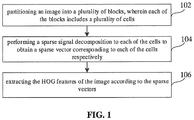
FIG. 1 is a flow chart showing a method for feature extraction according to an exemplary embodiment. -
FIG. 2A is a flow chart showing a method for feature extraction according to another exemplary embodiment. -
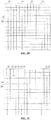
FIG. 2B is a schematic diagram showing the image partition according to an exemplary embodiment. -
FIG. 2C is a schematic diagram showing the image partition according to another exemplary embodiment. -
FIG. 2D is a schematic diagram showing adjusting pixels of a cell according to an exemplary embodiment. -
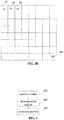
FIG. 2E is a schematic diagram showing the statistics of the HOG feature in a block according to an exemplary embodiment. -
FIG. 3A is a flow chart showing a method for feature extraction according to an exemplary embodiment. -
FIG. 3B is a flow chart showing the statistics of the HOG feature of an image according to an exemplary embodiment. -
FIG. 4 is a block diagram showing a device for feature extraction according to an exemplary embodiment. -
FIG. 5 is a block diagram showing a device for feature extraction according to another exemplary embodiment. -
FIG. 6 is a block diagram showing sub-modules of a device for feature extraction according to an exemplary embodiment. -
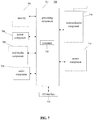
FIG. 7 is a block diagram showing a device for feature extraction according to another exemplary embodiment. - Reference will now be made in detail to exemplary embodiments, examples of which are illustrated in the accompanying drawings. The following description refers to the accompanying drawings in which same numbers in different drawings represent same or similar elements unless otherwise described. The implementations set forth in the following description of exemplary embodiments do not represent all implementations consistent with the invention. Instead, they are merely examples of device and methods consistent with aspects related to the invention as recited in the appended claims.
-
FIG. 1 is a flow chart showing a method for feature extraction according to an exemplary embodiment. As shown inFIG. 1 , the embodiment takes the method which is applied in hardware (such as a device or a terminal) for pattern recognition as an example, and the method may include the following steps. - In
step 102, an image is partitioned into a plurality of blocks, wherein each of the blocks includes a plurality of cells. - In
step 104, the sparse signal decomposition is performed on each of the cells using a predetermined dictionary D to obtain a sparse vector corresponding to each of the cells respectively. - The predetermined dictionary D is a dictionary calculated by applying an iterative algorithm to a sample image.
- The sparse signal decomposition refers to converting a given observed signal into a sparse vector according to a predetermined dictionary D, wherein a plurality of elements in the sparse vector is zero.
- In the embodiment, the pixels in each of the cells is taken as a given observed signal, which is converted into a corresponding sparse vector according to a predetermined dictionary D, and then the sparse vector corresponding to each of the cells is obtained respectively.
- In
step 106, the HOG feature of the image is extracted according to the sparse vector. - The HOG feature of the image is extracted according to the sparse vector obtained from the sparse signal decomposition.
- To sum up, by partitioning an image into a plurality of blocks, wherein each of the blocks includes a plurality of cells; performing a sparse signal decomposition on each of the cells using a predetermined dictionary D to obtain a sparse vector corresponding to each of the cells respectively, wherein the predetermined dictionary D is a dictionary calculated by applying an iterative algorithm to a sample image; and extracting a Histogram of Oriented Gradient (HOG) feature of the image according to the sparse vectors, the method for feature extraction provided in the present embodiment of the disclosure may solve the following fact that the detection rate and accuracy are relatively low in pattern recognition due to the fact that the process for extracting the HOG feature is directly calculated with respect to the spatial domain of the image. The method may achieve the intended effect of improving the detection rate and accuracy in pattern recognition by extracting the HOG feature of the image in the frequency domain.
-
FIG. 2A is a flow chart showing a method for feature extraction according to another exemplary embodiment. As shown inFIG. 2A , the embodiment takes the method which is applied in hardware (such as a device or terminal) for pattern recognition as an example, and the method may include the following steps. - In
step 201, the image is normalized to obtain an image of a predetermined size. - Pattern recognition generally involves the feature extraction for a plurality of images. Before performing the feature extraction to an image, a terminal may perform normalization processing on images to transform images of different sizes into those of a predetermined size in order to perform a unified processing on the sample images.
- In
step 202, a sample image is obtained, wherein the sample image includes a plurality of categories of image sets. - The terminal may obtain the sample image through a sample image library, wherein the sample image includes a plurality of categories of image sets, such as face recognition, body recognition or vehicle recognition, and will not be elaborated herein.
- Alternatively, after obtaining the sample image, the terminal may perform normalization processing on the sample image to transform sample images of different sizes into those of a predetermined size in order to perform a unified processing on the sample images.
- In
step 203, the optimum dictionary which is take as the predetermined dictionary D may be obtained by iteratively using the following formula:
- K-SVD algorithm may implement the dictionary learning in sample images through iterative process, which uses sparse representation coefficients to update the atoms in the dictionary. Through continuous iteration, a set of atoms in the dictionary, which may reflect image feature, are obtained finally, namely predetermined dictionary D, wherein the atoms is referred to the elements in the dictionary. That is, the final predetermined dictionary D is an optimum dictionary obtained by sample images learning.
- The iterative process of K-SVD algorithms is as follows: assuming that there are X categories sample images, Ni sample images are provided for the i-th category. All the sample images of i-th category are represented by the matrix Y i = [yil,...,y iN
i ] and the sample images of all categories are represented by Y i = [Y 1,...,Yx ]. Using the formulas above to learn in the sample images, an optimum predetermined dictionary D will be obtained finally. - In
step 204, the image is partitioned into a plurality of blocks, wherein each of the blocks includes a plurality of cells. - In a particular example, the partition of the normalized image by the terminal may include: partitioning the image into a plurality of blocks, then partitioning each of the blocks into a plurality of cells.
- In a particular example, the partition of the normalized image by the terminal may include: partitioning the image into a plurality of cells, and then combining adjacent cells into a block, wherein each of the blocks include a plurality of cells. For example, a block may compose of four adjacent pairwise cells which is arranged in a shape of Chinese feature "".

- In the present exemplary embodiment, during the process of image partition, the partitioning into blocks may be performed before the partitioning into cells, and vice versa. The implementation order is without any specific limit.
- For example, an
image 20 of 128 pixels * 128 pixels may be firstly partitioned intonon-overlapping blocks 21 of 16 pixels * 16 pixels, and then each of theblocks 21 of 16 pixels * 16 pixels is partitioned intocells 22 of 8 pixels * 8 pixels, so that the image may include 8 * 8=64non-overlapping blocks 21, and each of the blocks may include 2 * 2=4 cells, as shown inFIG. 2B . - For example, an
image 20 of 128 pixels * 128 pixels is partitioned into overlappingblocks 23 of 16 pixels * 16 pixels firstly, and then each of theblocks 23 of 16 pixels * 16 pixels is partitioned intocells 24 of 8 pixels * 8 pixels, so that the image may include 16 * 16=256 overlapping blocks 23, and each of the blocks may include 2 * 2=4 cells, as shown inFIG. 2C . - In
step 205, the pixels in each of the cells is adjusted to an n*1-dimensional vector. - After the image is partitioned, the pixels in each of the cells may be considered as a matrix, and the matrix corresponding to the pixels in each of the cells may be adjusted to an n*1-dimensional vector. In the process of adjusting the matrix, the
second column K 227 in thematrix 25 corresponding to the pixels is cascaded to be under thefirst column K 126, and the third column (not shown in the FIG) in thematrix 25 corresponding to the pixels is cascaded to be under thesecond column K 227, and so on. Thereby, thematrix 25 corresponding to the pixels in each of the cells is adjusted to an n*1-dimensional vector 28, as shown inFIG. 2D . - In
step 206, the vectors in each of the cells are subject to the sparse signal decomposition to obtain the corresponding sparse vectors, using the following formula:
- For each of the cells in an image, the terminal may obtain an optimum predetermined dictionary D through iterative calculation, and take the vectors in each of the cells as given observed signals y, and then calculate the sparse vector x for the vectors in each of the cells under the optimum predetermined dictionary D using the formula above. Since the adjusted vectors in each of the cells are of n*1-dimentional, and the predetermined dictionary D obtained by iterative calculation by the terminal is an n*m matrix, thus the sparse vector calculated by the above formula which corresponds to the vectors in each of the cells is of m*1 dimensional.
- In
step 207, a gradient magnitude and a gradient direction of each of the cells is calculated according to the sparse vectors to obtain a descriptor of each of the cells. - The terminal may calculate a transverse gradient and a longitudinal gradient of each of the pixels in each cell which is subject to the sparse signal decomposition using the gradient operator.
- That is, for each element of the sparse vector corresponding to each of the cells, a transverse gradient and a longitudinal gradient are calculated using the gradient operator.
- For example, the common gradient operators are shown in table1 below:
Table 1 Mask type Central vector Non-central vector Attention correction vector diagonal Sobel operator operator [10-1] [1-1] [180-8-1] 


- In the embodiment, when calculating the gradient of the pixels in each of the cells, any gradient operator in Table 1 may be selected, or other gradient operators may also be selected. The selection of gradient operator will not be specifically limited in the embodiment.
- Assuming that the transverse gradient of the element in sparse vector is H(x, y), and the longitudinal gradient is V(x, y), then the gradient direction and gradient magnitude corresponding to the element may be calculated by formula (1) and (2) as below:


- The gradient direction θ(x,y) is ranged from -90 degrees to 90 degrees. The gradient direction θ(x,y) is partitioned evenly into z portions, and all the elements in the sparse vector corresponding to each of the cells are counted based on weight m(x, y) in respective partitioned portion to obtain a z-dimensional vector for each of the cells finally, that is, a descriptor corresponding to each of the cells is obtained.
- For example, the gradient direction θ(x,y) is partitioned evenly into 9 portions, wherein the angle corresponding to each of the portions is 20 degrees; and all the elements in each of the cells are counted based on weight m(x, y) in respective 20-degrees to finally obtain a 9-dimentional vector for each of the cells.
- The number of portions wherein the gradient direction is partitioned is not specifically limited in the present embodiment.
- In
step 208, the respective descriptors in each of the blocks are counted to obtain the HOG feature of each of the blocks. - The terminal performs statistics on the descriptors obtained from respective cells contained in each of the blocks to obtain the HOG feature of each of the blocks.
- When performing statistics on all the descriptors obtained from respective cells, the terminal may cascade the descriptors corresponding to respective cells, so that the HOG feature of each of the blocks may be a vector, wherein the dimension of the vector is k times of the dimension of the descriptor corresponding to the cells contained in the block.
- For example, the descriptor in respective cells is a 9-dimensional vector, and each of the blocks includes 4 cells. The 9-dimensional descriptors in 4 cells are cascaded to form a 36-dimensional vector, which is served as the HOG feature of the corresponding block.
- In
step 209, the HOG feature of respective blocks are counted to obtain the HOG feature of the image. - The terminal counts the HOG feature of respective blocks to obtain the HOG feature of the image. The HOG feature of respective blocks in the image are cascaded to form a matrix to obtain the HOG feature of the image, wherein each column of the matrix represents the HOG feature of one block.
- For example, an image includes K blocks, and the HOG feature of each of the blocks is Ki, then Ki HOG feature are cascaded to form a
matrix 250, wherein K1 is placed at thefirst column 26 of the cascaded matrix, and K2 is placed at thesecond column 27 of the cascaded matrix, and so on, as shown inFIG. 2E . - To sum up, by obtaining the sample images including a plurality of categories of image sets; using a formula to iterate to obtain an optimum dictionary, which is served as the predetermined dictionary D; partitioning the image into a plurality of blocks, wherein each of the blocks includes a plurality of cells; adjusting the pixels in each of the cells to an n*1-dimensional vector; performing a sparse signal decomposition on each of the cells using a formula to obtain the corresponding sparse vector; calculating a gradient magnitude and a gradient direction for each of the cells according to the sparse vector, to obtain a descriptor of each of the cells; and performing statistics on respective descriptors in each of the blocks to obtain the HOG feature of the image, the method for feature extraction provided in the present embodiment of the disclosure may solve the following fact that the detection rate and accuracy are relatively low in pattern recognition due to the fact that the process for extracting the HOG feature is directly calculated with respect to the spatial domain of the image. The method may achieve the intended effect of improving the detection rate and accuracy in pattern recognition by extracting the HOG feature of the image in the frequency domain.
- Based on the exemplary embodiment illustrated in
Fig. 2A , during the process for performing statistics on the HOG feature of respective blocks in the image to obtain the HOG feature of the image, it may be arranged according to the corresponding position in the image. Step 209 may be substituted forstep FIG. 3A . - In
step 209a, the HOG feature of each of the blocks in the image are adjusted to an M*N matrix from an initial L*1-dimensional vector, wherein each of the blocks includes M*N pixels, and L=M*N. - The HOG feature of each of the blocks are an L*1-dimensional vector formed by cascading the descriptors corresponding to each of the cells. The terminal adjusts the L*1-dimensional vector to an M*N matrix, that is, the L*1-dimensional vector in each of the blocks is adjusted to a corresponding matrix according to the included cells, wherein each column of the corresponding matrix is a descriptor of a cell; and then the descriptors of each of the cell are adjusted according to the corresponding pixels, wherein each column of the adjusted matrix is the HOG feature corresponding to the pixels of the corresponding column in the corresponding block.
- In
step 209b, the HOG feature of the image is obtained according to the adjusted HOG feature of each of the blocks and the corresponding position of each of the blocks in the image. - According to the adjusted HOG feature of each of the blocks and the corresponding position of each of the blocks in the image, the HOG feature of the positions of the corresponding pixels in the image are obtained.
- For example, an image includes K blocks, and HOG feature of respective blocks are Ki, so that the Ki HOG feature are adjusted to an M*N matrix. The
matrix 31 adjusted by K1 is placed at the corresponding position of thefirst block 32 in the image, and thematrix 33 adjusted by K2 is placed at the corresponding position of thesecond block 34 in the image, and so on, finally the matrix MN is placed at the corresponding position of the last block MN in the image, as shown inFIG. 3B . - To sum up, by adjusting the HOG feature of each of the blocks in the image from an initial L*1-dimensional vector to an M*N matrix, wherein each of the blocks includes M*N pixels, and L=M*N; obtaining the HOG feature of the image according to the adjusted HOG feature of each of the blocks and the corresponding position of each of the blocks in the image; and thus enabling the extracted HOG feature of the image to correspond to the corresponding position of each of the blocks in the image, the method for feature extraction provided in the present embodiment may highlight the feature of each of the blocks in the image.
- The embodiments described below are embodiments for the device of the disclosure, which may be used to implement the method as shown in the embodiments of the disclosure. For the details undisclosed in the embodiments for the device, please refer to the embodiments for the method of the disclosure.
-
FIG. 4 is a block diagram illustrating a device for feature extraction according to an exemplary embodiment. As shown inFIG. 4 , the device for feature extraction may include, but not limited to: - a
partition module 420, configured to partition an image into a plurality of blocks, wherein each of the blocks includes a plurality of cells; - a
decomposition module 440, configured to perform the sparse signal decomposition on each of the cells using a predetermined dictionary D, to obtain a sparse vector corresponding to each of the cells respectively; - wherein the predetermined dictionary D is a dictionary calculated by applying an iterative algorithm to the sample images, and the sparse signal decomposition refers to converting a given observed signal into a sparse vector according to the predetermined dictionary D, wherein the value of a plurality of elements in the sparse signal is zero.
- In the embodiment, the pixels in each of the cells are served as the given observed signals, thus obtaining the respective sparse signal of each of the cells.
anextraction module 460, configured to extract a Histogram of Oriented Gradient (HOG) feature of the image according to the sparse vectors. - The HOG feature of the image is extracted according to the sparse vector processed with the sparse signal decomposition.
- To sum up, by partitioning an image into a plurality of blocks, wherein each of the blocks includes a plurality of cells; performing a sparse signal decomposition on each of the cells using a predetermined dictionary D to obtain a sparse vector corresponding to each of the cells respectively, wherein the predetermined dictionary D is a dictionary calculated by applying an iterative algorithm to a sample image; and extracting a Histogram of Oriented Gradient (HOG) feature of the image according to the sparse vectors, the device for feature extraction provided in the embodiment of the disclosure may solve the following fact that the detection rate and accuracy are relatively low in pattern recognition due to the fact that the process for extracting the HOG feature is directly calculated with respect to the spatial domain of the image. The device may achieve the intended effect of improving the detection rate and accuracy in pattern recognition by extracting the HOG feature of the image in the frequency domain.
-
FIG. 5 is a block diagram showing a device for feature extraction according to another exemplary embodiment. As shown inFIG. 5 , the device for feature extraction may include, but not limited to: - an
processing module 510, configured to performing normalization processing on the image to obtain an image of a predetermined size. - Pattern recognition generally involves the feature extraction for a plurality of images.
- Before performing the feature extraction to an image, the
processing module 510 may perform normalization processing to transform the images of different sizes into those of a predetermined size in order to perform a unified processing on them.
an obtaining module 520, configured to obtain a sample image, wherein the sample image includes a plurality of categories of image sets. - Through sample image library, the obtaining module 520 may obtain the sample images including a plurality of categories of the image sets, such as face recognition, body recognition or vehicle recognition and the like.
aniteration module 530, configured to use the following formula to iterate to obtain an optimum dictionary as the predetermined dictionary D:
- K-SVD algorithm may implement the dictionary learning in sample images through iterative process, which uses sparse representation coefficients to update the atoms in the dictionary. Through continuous iteration, a set of atoms in the dictionary, which may reflect image feature, are obtained finally, namely predetermined dictionary D, wherein the atoms is referred to the elements in the dictionary. That is, the final predetermined dictionary D is an optimum dictionary obtained by sample images learning.
- The iterative process of K-SVD algorithms is as follows: assuming that there are X categories sample images, Ni sample images are provided for the i-th category. All the sample images of i-th category are represented by the matrix Y i = [yil ,...,yiN
i ] and the sample images of all categories are represented by Y i = [Y 1,...,Yx ]. Using the formulas above to learn in the sample images, an optimum predetermined dictionary D will be obtained finally. - The device may further include a
partition module 540, configured to partition an image into a plurality of blocks, wherein each of the blocks includes a plurality of cells. - In a particular example, the partition of the normalized image by the
partition module 540 may include: firstly partitioning the image into a plurality of blocks, then partitioning each of the blocks into a plurality of cells. - In a particular example, the partition of the normalized image by the
partition module 540 may include: firstly partitioning the image into a plurality of cells, and then combining adjacent cells into a block, wherein each of the blocks include a plurality of cells. For example, a block may compose of four adjacent pairwise cells which is arranged in a shape of Chinese feature "".
- In the present exemplary embodiment, during the process of image partition by the
partition module 540, the partitioning into blocks may be performed before the partitioning into cells, and vice versa. The implementation order is without any specific limit. - In the present exemplary embodiment, there may be or may not be an overlapping area between the partitioned blocks of the image. The
partition module 540 may not specifically limit to it. - The device may further include a decomposition module 550, configured to perform the sparse signal decomposition on each of the cells using the predetermined dictionary D to get a sparse vector corresponding to each of the cell respectively.
- The predetermined dictionary D is a dictionary calculated by applying an iterative algorithm to the sample images, and the sparse signal decomposition refers to converting a given observed signal into a sparse vector according to the predetermined dictionary D, wherein the value of a plurality of elements in the sparse signal is zero.
- In the present exemplary embodiment, the pixels in each of the cells are served as the given observed signals, and converted into the corresponding sparse vector according to the predetermined dictionary D, thus obtaining the respective sparse signal of each of the cells.
- In the present exemplary embodiment, the decomposition module 550 may include the following sub-modules:
- a
first adjustment sub-module 551, configured to adjust pixels in each of the cells to an n*1-dimensional vector. - After the partition of the image, the pixels in each of the cells may be considered as a matrix, and the matrix corresponding to the pixels in each of the cells may be adjusted to an n*1-dimensional vector.
- The decomposition module 550 may further include a
signal decomposition sub-module 552, configured to perform the sparse signal decomposition on the vectors in each of the cells according to the predetermined dictionary D to obtain the corresponding sparse vector, using the following formula:
- For each of the cells in the image, an optimum predetermined dictionary D is calculated by the
iteration module 530, and thesignal decomposition sub-module 552 serves the vectors in each of the cells as the given observed signals y, then the sparse vector x for the vectors in each of the cells is calculated under a predefined over-complete dictionary D using the formula above. Since the adjusted vectors in each of the cells are of n*1-dimention, and the predetermined dictionary D calculated by theiteration module 530 is an n*m matrix, thus the sparse vector corresponding to the vectors in each of the cells calculated using formula above is of m*1 dimension. - The device may further include an extraction module 560, configured to extract a Histogram of Oriented Gradient (HOG) feature of the image according to the sparse vectors.
- The HOG feature of the image is extracted according to the sparse vectors subject to sparse signal decomposition.
- In the present exemplary embodiment, the extraction module 560 may further include the following sub-modules:
- a
calculation sub-module 561, configured to calculate a gradient magnitude and a gradient direction of each of the cells according to the sparse vectors, to obtain the descriptors of each of the cells. - The calculation sub-module 561 may calculate a transverse gradient and a longitudinal gradient of each of the pixels in each cell which is subject to the sparse signal decomposition using the gradient operator. The embodiment will not specifically limit to the selection of the gradient operator.
- That is, for each element of the sparse vector corresponding to each of the cells, a transverse gradient and a longitudinal gradient are calculated using the gradient operator
- Assuming that the transverse gradient of the element in sparse vector is H(x, y), and the longitudinal gradient is V(x, y), then the gradient direction and gradient magnitude corresponding to the element may be calculated by formula (1) and (2) as below:


- The gradient direction θ(x,y) is ranged from -90 degrees to 90 degrees. The gradient direction θ(x,y) is partitioned evenly into z portions, and all the elements in the sparse vector corresponding to each of the cells are counted based on weight m(x, y) in respective partitioned portion to obtain a z-dimensional vector for each of the cells finally, that is, a descriptor corresponding to each of the cells is obtained.
- The extraction module 560 may further include a
first statistics sub-module 562, configured to perform statistics on a respective descriptor in each of the blocks to obtain the HOG feature of each of the blocks. - The first statistics sub-module 562 may perform statistics on the descriptors of the respective cells included in each of the blocks to obtain the HOG feature of each of the blocks.
- While performing statistics on the descriptors of the respective cells, the first statistics sub-module may cascade the descriptors corresponding to the respective cells, so that the HOG feature of each of the block is a vector, whose dimension is k times of the dimension of the descriptor corresponding to the cells included in the block.
- The extraction module 560 may further include a
second statistics sub-module 563, configured to perform statistics on the HOG feature of respective blocks in the image to obtain the HOG feature of the image. - The second statistics sub-module 563 may perform statistics on the HOG feature of the respective blocks in the image to obtain the HOG feature of the image.
- In a particular example, the second statistics sub-module 563 may be configured to cascade the HOG feature of each of the blocks to be a matrix to obtain the HOG feature of the image, wherein each column of the matrix is the HOG feature of one of the blocks.
- To sum up, by obtaining the sample images including a plurality of categories of image sets; using a formula iterate to obtain an optimum dictionary, which is served as the predetermined dictionary D; partitioning the image into a plurality of blocks, wherein each of the blocks includes a plurality of cells; adjusting the pixels in each of the cells to an n*1-dimensional vector; performing a sparse signal decomposition on each of the cells using a formula to obtain the corresponding sparse vector; calculating a gradient magnitude and a gradient direction for each of the cells according to the sparse vector, to obtain a descriptor of each of the cells; and performing statistics on respective descriptors in each of the blocks to obtain the HOG feature of the image, the device for feature extraction provided in the embodiment of the disclosure may solve the following fact that the detection rate and accuracy are relatively low in pattern recognition due to the fact that the process for extracting the HOG feature is directly calculated with respect to the spatial domain of the image. The device may achieve the intended effect of improving the detection rate and accuracy in pattern recognition by extracting the HOG feature of the image in the frequency domain.
- Based on the alternative embodiment illustrated in
Fig. 5 , the second statistics sub-module 563 may include the following sub-modules, as shown inFig. 6 : - a
second adjustment sub-module 610, configured to adjust the HOG feature of each of the blocks in the image from an initial L*1-dimensional vector to an M*N matrix, wherein each of the blocks includes M*N pixels, and L=M*N. - The HOG feature of each of the blocks are an L*1-dimensional vector formed by cascading the descriptors corresponding to each of the cells. The
second adjustment sub-module 610 may adjust the L*1-dimensional vector to an M*N matrix, that is, the L*1-dimensional vector in each of the blocks is adjusted to a corresponding matrix according to the included cells, wherein each column of the corresponding matrix is a descriptor of a cell; and then the descriptors of each of the cell are adjusted according to the corresponding pixels, wherein each column of the adjusted matrix is the HOG feature corresponding to the pixels of the corresponding column in the corresponding block.
afeature extraction sub-module 620, configured to obtain the HOG feature of the image according to the adjusted HOG feature of each of the blocks and the corresponding position of each of the blocks in the image. - The
feature extraction sub-module 620 may obtain the HOG feature of the positions of the corresponding pixels in the image according to the adjusted HOG feature of each of the blocks and the corresponding position of each of the blocks in the image. - To sum up, by adjusting the HOG feature of each of the blocks in the image from an initial L*1-dimensional vector to an M*N matrix, wherein each of the blocks includes M*N pixels, and L=M*N; obtaining the HOG feature of the image according to the adjusted HOG feature of each of the blocks and the corresponding position of each of the blocks in the image; and thus enabling the extracted HOG feature of the image to correspond to the corresponding position of each of the blocks in the image, the device for feature extraction provided in the embodiment may highlight the feature of each of the blocks in the image.
- With respect to the device in the above embodiments, the specific manners that the respective modules perform operations have been described in detail in the embodiments regarding the relevant methods, and will not be elaborated herein.
- In an exemplary embodiment of the disclosure, a device for feature extraction is provided, which may implement the method for feature extraction in the disclosure, the device including: a processor; and a memory, used to store the instructions executable by the processor; wherein the processor is configured to:
- partition an image into a plurality of blocks, wherein each of the blocks includes a plurality of cells;
- perform a sparse signal decomposition on each of the cells using a predetermined dictionary D to obtain a sparse vector corresponding to each of the cells respectively, wherein the predetermined dictionary D is a dictionary calculated by applying an iterative algorithm to a sample image;
- extract a Histogram of Oriented Gradient (HOG) feature of the image according to the sparse vectors
-
FIG. 7 is a block diagram of adevice 700 for feature extraction according to an exemplary embodiment. For example, thedevice 700 may be a mobile phone, a computer, a digital broadcast terminal, a messaging device, a gaming console, a tablet, a medical device, exercise equipment, a personal digital assistant, and the like. - Referring to
FIG. 7 , thedevice 700 may include one or more of the following components: aprocessing component 702, amemory 704, apower component 706, amultimedia component 708, anaudio component 710, an input/output (I/O)interface 712, asensor component 714, and acommunication component 716. - The
processing component 702 typically controls overall operations of thedevice 700, such as the operations associated with display, telephone calls, data communications, camera operations, and recording operations. Theprocessing component 702 may include one or more processors 718 to execute instructions to perform all or part of the steps in the above described methods. Moreover, theprocessing component 702 may include one or more modules which facilitate the interaction between theprocessing component 702 and other components. For instance, theprocessing component 702 may include a multimedia module to facilitate the interaction between themultimedia component 708 and theprocessing component 702. - The
memory 704 is configured to store various types of data to support the operation of thedevice 700. Examples of such data include instructions for any applications or methods operated on thedevice 700, contact data, phonebook data, messages, pictures, video, etc. Thememory 704 may be implemented using any type of volatile or non-volatile memory devices, or a combination thereof, such as a static random access memory (SRAM), an electrically erasable programmable read-only memory (EEPROM), an erasable programmable read-only memory (EPROM), a programmable read-only memory (PROM), a read-only memory (ROM), a magnetic memory, a flash memory, a magnetic or optical disk. - The
power component 706 provides power to various components of thedevice 700. Thepower component 706 may include a power management system, one or more power sources, and any other components associated with the generation, management, and distribution of power for thedevice 700. - The
multimedia component 708 includes a screen providing an output interface between thedevice 700 and the user. In some embodiments, the screen may include a liquid crystal display (LCD) and a touch panel (TP). If the screen includes the touch panel, the screen may be implemented as a touch screen to receive input signals from the user. The touch panel includes one or more touch sensors to sense touches, swipes, and gestures on the touch panel. The touch sensors may not only sense a boundary of a touch or swipe action, but also sense a period of time and a pressure associated with the touch or swipe action. In some embodiments, themultimedia component 708 includes a front camera and/or a rear camera. The front camera and the rear camera may receive an external multimedia datum while thedevice 700 is in an operation mode, such as a photographing mode or a video mode. Each of the front camera and the rear camera may be a fixed optical lens system or have optical focusing and zooming capability. - The
audio component 710 is configured to output and/or input audio signals. For example, theaudio component 710 includes a microphone ("MIC") configured to receive an external audio signal when thedevice 700 is in an operation mode, such as a call mode, a recording mode, and a voice recognition mode. The received audio signal may be further stored in thememory 704 or transmitted via thecommunication component 716. In some embodiments, theaudio component 710 further includes a speaker to output audio signals. - The I/
O interface 712 provides an interface between theprocessing component 702 and peripheral interface modules, the peripheral interface modules being, for example, a keyboard, a click wheel, buttons, and the like. The buttons may include, but are not limited to, a home button, a volume button, a starting button, and a locking button. - The
sensor component 714 includes one or more sensors to provide status assessments of various aspects of thedevice 700. For instance, thesensor component 714 may detect an open/closed status of thedevice 700, relative positioning of components (e.g., the display and the keypad, of the device 700), a change in position of thedevice 700 or a component of thedevice 700, a presence or absence of user contact with thedevice 700, an orientation or an acceleration/deceleration of thedevice 700, and a change in temperature of thedevice 700. Thesensor component 714 may include a proximity sensor configured to detect the presence of a nearby object without any physical contact. Thesensor component 714 may also include a light sensor, such as a CMOS or CCD image sensor, for use in imaging applications. In some embodiments, thesensor component 714 may also include an accelerometer sensor, a gyroscope sensor, a magnetic sensor, a pressure sensor, or a temperature sensor. - The
communication component 716 is configured to facilitate communication, wired or wirelessly, between thedevice 700 and other devices. Thedevice 700 can access a wireless network based on a communication standard, such as WiFi, 2G, or 3G, or a combination thereof. In an exemplary embodiment, thecommunication component 716 receives a broadcast signal or broadcast associated information from an external broadcast management system via a broadcast channel. In an exemplary embodiment, thecommunication component 716 further includes a near field communication (NFC) module to facilitate short-range communications. For example, the NFC module may be implemented based on a radio frequency identification (RFID) technology, an infrared data association (IrDA) technology, an ultra-wideband (UWB) technology, a Bluetooth (BT) technology, and other technologies. - In exemplary embodiments, the
device 700 may be implemented with one or more application specific integrated circuits (ASICs), digital signal processors (DSPs), digital signal processing devices (DSPDs), programmable logic devices (PLDs), field programmable gate arrays (FPGAs), controllers, micro-controllers, microprocessors, or other electronic components, for performing the above described methods for feature retrieving. - In exemplary embodiments, there is also provided a non-transitory computer-readable storage medium including instructions, such as included in the
memory 704, executable by the processor 718 in thedevice 700, for performing the above-described methods for feature retrieving. For example, the non-transitory computer-readable storage medium may be a ROM, a RAM, a CD-ROM, a magnetic tape, a floppy disc, an optical data storage device, and the like. - Other embodiments of the invention will be apparent to those skilled in the art from consideration of the specification and practice of the disclosures herein. This application is intended to cover any variations, uses, or adaptations of the disclosure following the general principles thereof and including such departures from the present disclosure as come within known or customary practice in the art. It is intended that the specification and examples be considered as exemplary only, with a true scope of the invention being indicated by the following claims.
- It will be appreciated that the inventive concept is not limited to the exact construction that has been described above and illustrated in the accompanying drawings, and that various modifications and changes can be made without departing from the scope thereof. It is intended that the scope of the invention only be limited by the appended claims.
Claims (16)
- A method for feature extraction, characterized in that it comprises:partitioning (102) an image into a plurality of blocks, wherein each of the blocks includes a plurality of cells;performing (104) a sparse signal decomposition on each of the cells using a predetermined dictionary D, to obtain a sparse vector corresponding to each of the cells respectively, wherein the predetermined dictionary D is a dictionary calculated by applying an iterative algorithm to a sample image; andextracting (106) a Histogram of Oriented Gradient (HOG) feature of the image according to the sparse vectors.
- The method of claim 1, further comprising:obtaining (202) the sample image, wherein the sample image includes a plurality of categories of image sets; anditerating (203) to obtain an optimum dictionary as the predetermined dictionary D, using the following formula:

- The method of claim 1 or 2, wherein the performing (104) the sparse signal decomposition on each of the cells using a predetermined dictionary D, to obtain the sparse vector corresponding to each of the cells respectively comprises:adjusting (205) pixels in each of the cells to an n*1-dimensional vector; andperforming (206), under the predetermined dictionary D, the sparse signal decomposition on the vector in each of the cells, to obtain the corresponding sparse vector, using the following formula:

- The method of any one of claims 1 to 3, wherein the extracting (106) the Histogram of Oriented Gradient (HOG) feature of the image according to the sparse vectors comprises:calculating (207), according to the sparse vectors, a gradient magnitude and gradient direction of each of the cells, to obtain a descriptor of each of the cells;performing (208) statistics on respective descriptors in each of the blocks to obtain the HOG feature of each of the blocks; andperforming (209) statistics on the HOG feature of each of the blocks in the image to obtain the HOG feature of the image.
- The method of claim 4, wherein the performing (209) statistics on the HOG feature of each of the blocks in the image to obtain the HOG feature of the image includes:cascading the HOG feature of each of the blocks in the image into a matrix, to obtain the HOG feature of the image, wherein each column of the matrix is a HOG feature of one of the blocks.
- The method of claim 4, wherein the performing (209) statistics on the HOG feature of each of the blocks in the image to obtain the HOG feature of the image includes:adjusting (209a) the HOG feature of each of the blocks in the image from an initial L*1-dimensional vector to an M*N matrix, wherein each of the blocks includes M*N pixels, and L=M*N; andobtaining (209b) the HOG feature of the image according to the adjusted HOG feature of each of the blocks and a corresponding position of each of the blocks in the image.
- The method of any one of claims 1 to 6, further comprising:normalizing (201) the image to obtain an image of a predetermined size.
- A device for feature extraction, characterized in comprising:a partition module (420), configured to partition an image into a plurality of blocks, wherein each of the blocks includes a plurality of cells;a decomposition module (440), configured to perform a sparse signal decomposition on each of the cells using a predetermined dictionary D, to obtain a sparse vector corresponding to each of the cells respectively, wherein the predetermined dictionary D is a dictionary calculated by applying an iterative algorithm to a sample image; andan extraction module (460), configured to extract a Histogram of Oriented Gradient (HOG) feature of the image according to the sparse vectors.
- The device of claim 8, further comprising:an obtaining module (520), configured to obtain a sample image, wherein the sample image includes a plurality of categories of image sets; andan iteration module (530), configured to iterate to obtain an optimum dictionary as the predetermined dictionary D, using the following formula:

- The device of claim 8 or 9, wherein the decomposition module (440) comprises:a first adjustment sub-module (551), configured to adjust pixels in each of the cells to an n*1-dimensional vector; anda signal decomposition sub-module (552), configured to perform, under the predetermined dictionary D, the sparse signal decomposition on the vector in each of the cells, to obtain the corresponding sparse vector, using the following formula:

- The device of any one of claims 8 to 10, wherein the extraction module (460) comprises:a calculation sub-module (561), configured to calculate, according to the sparse vectors, a respective gradient magnitude and gradient direction of each of the cells, to obtain a descriptor of each of the cells;a first statistics sub-module (562), configured to perform statistics on a respective descriptors in each of the blocks to obtain the HOG feature of each of the blocks; anda second statistics sub-module (563), configured to perform statistics on the HOG feature of each of the blocks in the image to obtain the HOG feature of the image.
- The device of claim 11, wherein the second statistics sub-module is configured to cascade the HOG feature of each of the blocks in the image into a matrix, to obtain the HOG feature of the image, wherein each column of the matrix is a HOG feature of one of the blocks.
- The device of claim 11, wherein the second statistics sub-module (563) comprises:a second adjustment sub-module (610), configured to adjust the HOG feature of each of the blocks in the image from an initial L*1-dimensional vector to an M*N matrix, wherein each of the blocks includes M*N pixels, and L=M*N; anda feature extraction sub-module (620), configured to obtain the HOG feature of the image according to the adjusted HOG feature of each of the blocks and a corresponding position of each of the blocks in the image.
- The device of any one of claims 8 to 13, further comprising:a processing module, configured to normalize the image to obtain an image of a predetermined size.
- A recording medium readable by a computer and having recorded thereon a computer program including instructions for executing the steps of a method for feature extraction according to any one of claims 1 to 7.
- A computer program including instructions for executing the steps of a method for feature extraction according to any one of claims 1 to 7 when said program is executed by a computer.
Applications Claiming Priority (1)
| Application Number | Priority Date | Filing Date | Title |
|---|---|---|---|
| CN201510829071.7A CN105654094B (en) | 2015-11-25 | 2015-11-25 | Feature extracting method and device |
Publications (1)
| Publication Number | Publication Date |
|---|---|
| EP3173977A1 true EP3173977A1 (en) | 2017-05-31 |
Family
ID=56481854
Family Applications (1)
| Application Number | Title | Priority Date | Filing Date |
|---|---|---|---|
| EP16199669.9A Ceased EP3173977A1 (en) | 2015-11-25 | 2016-11-18 | Method and device for feature extraction |
Country Status (8)
| Country | Link |
|---|---|
| US (1) | US20170147896A1 (en) |
| EP (1) | EP3173977A1 (en) |
| JP (1) | JP2018507494A (en) |
| KR (1) | KR101792961B1 (en) |
| CN (1) | CN105654094B (en) |
| MX (1) | MX360694B (en) |
| RU (1) | RU2644516C2 (en) |
| WO (1) | WO2017088248A1 (en) |
Families Citing this family (5)
| Publication number | Priority date | Publication date | Assignee | Title |
|---|---|---|---|---|
| CN105654092B (en) * | 2015-11-25 | 2019-08-30 | 小米科技有限责任公司 | Feature extracting method and device |
| CN106875546B (en) * | 2017-02-10 | 2019-02-05 | 大连海事大学 | A method of identifying VAT invoices |
| CN108520248A (en) * | 2018-04-17 | 2018-09-11 | 成都乐动信息技术有限公司 | Recognizing model of movement method and device |
| CN110866131A (en) * | 2018-08-21 | 2020-03-06 | 北京京东尚科信息技术有限公司 | Image deduplication method, device, medium and electronic device |
| CN115995107B (en) * | 2022-12-02 | 2024-11-15 | 中国人民解放军国防科技大学 | Armed face recognition method, system, electronic equipment and readable storage medium |
Citations (1)
| Publication number | Priority date | Publication date | Assignee | Title |
|---|---|---|---|---|
| CN104850852A (en) * | 2015-04-27 | 2015-08-19 | 小米科技有限责任公司 | Feature vector calculation method and device |
Family Cites Families (15)
| Publication number | Priority date | Publication date | Assignee | Title |
|---|---|---|---|---|
| AU1776001A (en) * | 1999-11-18 | 2001-05-30 | Info Assets, Inc. | Rendering image data |
| US7725484B2 (en) * | 2005-11-18 | 2010-05-25 | University Of Kentucky Research Foundation (Ukrf) | Scalable object recognition using hierarchical quantization with a vocabulary tree |
| JP2008283573A (en) * | 2007-05-11 | 2008-11-20 | Olympus Corp | Image processing device |
| BR122019021946B1 (en) * | 2007-06-29 | 2024-02-06 | Velos Media International Limited | IMAGE CODING DEVICE FOR ENCODING INPUT IMAGES AND IMAGE DECODING DEVICE FOR DECODING ENCODED IMAGE DATA |
| US8625861B2 (en) * | 2008-05-15 | 2014-01-07 | International Business Machines Corporation | Fingerprint representation using gradient histograms |
| RU2484531C2 (en) * | 2009-01-22 | 2013-06-10 | Государственное научное учреждение центральный научно-исследовательский и опытно-конструкторский институт робототехники и технической кибернетики (ЦНИИ РТК) | Apparatus for processing video information of security alarm system |
| CN102609681B (en) * | 2012-01-12 | 2014-04-30 | 北京大学 | Face recognition method based on dictionary learning models |
| JP2014016710A (en) * | 2012-07-06 | 2014-01-30 | Toyota Central R&D Labs Inc | Object detection device and program |
| CN102891999B (en) * | 2012-09-26 | 2014-11-26 | 南昌大学 | Combined image compression/encryption method based on compressed sensing |
| JP6351240B2 (en) * | 2013-11-20 | 2018-07-04 | キヤノン株式会社 | Image processing apparatus, image processing method, and program |
| JP2015125662A (en) * | 2013-12-27 | 2015-07-06 | 株式会社リコー | Object identification program and device |
| CN103903238B (en) * | 2014-03-21 | 2017-06-20 | 西安理工大学 | The notable structure and dependency structure fusion method of characteristics of image |
| CN104123538B (en) * | 2014-07-04 | 2018-11-06 | 西安理工大学 | A kind of bad image detecting method of network of view-based access control model bag of words |
| CN104239872A (en) * | 2014-09-26 | 2014-12-24 | 南开大学 | Abnormal Chinese character identification method |
| CN104657717B (en) * | 2015-02-12 | 2018-02-02 | 合肥工业大学 | A kind of pedestrian detection method based on layering nuclear sparse expression |
-
2015
- 2015-11-25 CN CN201510829071.7A patent/CN105654094B/en active Active
- 2015-12-29 JP JP2017552214A patent/JP2018507494A/en active Pending
- 2015-12-29 RU RU2016110146A patent/RU2644516C2/en active
- 2015-12-29 WO PCT/CN2015/099309 patent/WO2017088248A1/en not_active Ceased
- 2015-12-29 KR KR1020167005589A patent/KR101792961B1/en active Active
- 2015-12-29 MX MX2016003579A patent/MX360694B/en active IP Right Grant
-
2016
- 2016-11-18 EP EP16199669.9A patent/EP3173977A1/en not_active Ceased
- 2016-11-23 US US15/360,021 patent/US20170147896A1/en not_active Abandoned
Patent Citations (1)
| Publication number | Priority date | Publication date | Assignee | Title |
|---|---|---|---|---|
| CN104850852A (en) * | 2015-04-27 | 2015-08-19 | 小米科技有限责任公司 | Feature vector calculation method and device |
Non-Patent Citations (2)
| Title |
|---|
| BARDEH NARGES GHAEDI ET AL: "New approach for human detection in images using histograms of oriented gradients", 2013 21ST IRANIAN CONFERENCE ON ELECTRICAL ENGINEERING (ICEE), IEEE, 14 May 2013 (2013-05-14), pages 1 - 4, XP032483163, DOI: 10.1109/IRANIANCEE.2013.6599619 * |
| DALAL N ET AL: "Histograms of oriented gradients for human detection", PROCEEDINGS / 2005 IEEE COMPUTER SOCIETY CONFERENCE ON COMPUTER VISION AND PATTERN RECOGNITION, CVPR 2005 : [20 - 25 JUNE 2005, SAN DIEGO, CA], IEEE, PISCATAWAY, NJ, USA, 25 June 2005 (2005-06-25), pages 886 - 893vol.1, XP031330347, ISBN: 978-0-7695-2372-9 * |
Also Published As
| Publication number | Publication date |
|---|---|
| CN105654094B (en) | 2019-11-29 |
| US20170147896A1 (en) | 2017-05-25 |
| KR101792961B1 (en) | 2017-11-02 |
| KR20170074213A (en) | 2017-06-29 |
| MX2016003579A (en) | 2017-07-14 |
| CN105654094A (en) | 2016-06-08 |
| MX360694B (en) | 2018-11-14 |
| RU2644516C2 (en) | 2018-02-12 |
| RU2016110146A (en) | 2017-09-28 |
| WO2017088248A1 (en) | 2017-06-01 |
| JP2018507494A (en) | 2018-03-15 |
Similar Documents
| Publication | Publication Date | Title |
|---|---|---|
| US11532180B2 (en) | Image processing method and device and storage medium | |
| CN111310616B (en) | Image processing method and device, electronic equipment and storage medium | |
| EP2977959B1 (en) | Method and device for adjusting skin color | |
| JP6134446B2 (en) | Image division method, image division apparatus, image division device, program, and recording medium | |
| US9959484B2 (en) | Method and apparatus for generating image filter | |
| US10282637B2 (en) | Method, device, and storage medium for image characteristic extraction | |
| EP3173977A1 (en) | Method and device for feature extraction | |
| US11250547B2 (en) | Facial image enhancement method, device and electronic device | |
| CN108062547B (en) | Character detection method and device | |
| EP3173976A1 (en) | Method and device for extracting characteristic | |
| CN107967459B (en) | Convolution processing method, device and storage medium | |
| CN105354793A (en) | Facial image processing method and device | |
| EP2975574A2 (en) | Method, apparatus and terminal for image retargeting | |
| US9665925B2 (en) | Method and terminal device for retargeting images | |
| EP4064180B1 (en) | Depth of field based creation of a blurred image | |
| CN108053372A (en) | The method and apparatus for handling depth image | |
| EP4060566B1 (en) | Method and apparatus for processing information, storage medium, electronic device and computer program product | |
| CN116342388A (en) | Image processing method, device, electronic device and storage medium | |
| HK40020908A (en) | Image processing method, device, electronic apparatus and storage medium |
Legal Events
| Date | Code | Title | Description |
|---|---|---|---|
| PUAI | Public reference made under article 153(3) epc to a published international application that has entered the european phase |
Free format text: ORIGINAL CODE: 0009012 |
|
| STAA | Information on the status of an ep patent application or granted ep patent |
Free format text: STATUS: THE APPLICATION HAS BEEN PUBLISHED |
|
| AK | Designated contracting states |
Kind code of ref document: A1 Designated state(s): AL AT BE BG CH CY CZ DE DK EE ES FI FR GB GR HR HU IE IS IT LI LT LU LV MC MK MT NL NO PL PT RO RS SE SI SK SM TR |
|
| AX | Request for extension of the european patent |
Extension state: BA ME |
|
| STAA | Information on the status of an ep patent application or granted ep patent |
Free format text: STATUS: REQUEST FOR EXAMINATION WAS MADE |
|
| 17P | Request for examination filed |
Effective date: 20171122 |
|
| RBV | Designated contracting states (corrected) |
Designated state(s): AL AT BE BG CH CY CZ DE DK EE ES FI FR GB GR HR HU IE IS IT LI LT LU LV MC MK MT NL NO PL PT RO RS SE SI SK SM TR |
|
| STAA | Information on the status of an ep patent application or granted ep patent |
Free format text: STATUS: EXAMINATION IS IN PROGRESS |
|
| 17Q | First examination report despatched |
Effective date: 20180314 |
|
| STAA | Information on the status of an ep patent application or granted ep patent |
Free format text: STATUS: THE APPLICATION HAS BEEN REFUSED |
|
| 18R | Application refused |
Effective date: 20190920 |