TECHNICAL FIELD
-
The present disclosure relates to the field of software application, and more particularly, to a method and device for pushing user information.
BACKGROUND
-
With the manner of interpersonal communication becoming more and more convenient, a user increasingly needs to remember user information of a large number of users, such as name and contact information.
-
In a practical application, since a user usually cannot remember accurately the user information of each user, related problems arise. For example, a few days after the user and a colleague introduced each other by names and chatted a lot at their first meeting, when the user meets the colleague again, the user may not be able to recall the name of the colleague, which causes embarrassment and inconvenience.
SUMMARY
-
Accordingly, the embodiments of the present disclosure provide a method and device for pushing user information, in accordance with claims which follow.
-
According to a first aspect, the invention relates to a method for pushing user information, which includes that: a first Identity (ID) of first User Equipment (UE) is obtained through near field or short distance communication; a first database is searched to obtain first user information corresponding to the first ID, the first database including user information corresponding to respective ones of a plurality of UE IDs; and a pushing message is output, the pushing message including the first user information.
-
The technical solution provided by the implementation mode may include the following beneficial effects: when there are other users getting close to a user, the ID of UE of said other users can be obtained through near field communication; the user information of said other users is obtained by searching user information corresponding to each UE ID, and the pushing message including the user information is output, thereby enabling the user to obtain the user information of said other users around accurately and timely, avoiding embarrassment and inconvenience caused by forgetfulness, and improving the accuracy and reliability of user identification.
-
Furthermore, the method may further include that: when it is detected that the user information corresponding to the first ID does not exist in the first database, an edit request is generated, the edit request including the first ID; an edit response is received, the edit response including received user information; and the received user information is considered as the user information corresponding to the first ID and stored into the first database.
-
The technical solution provided by the implementation mode may include the following beneficial effects: when it is detected that the user information corresponding to the ID obtained currently does not exist in the database, an edit request is generated, and the user information input by the user is stored in the database as the user information corresponding to the ID obtained currently, thereby achieving update and completeness of the database, and improving the accuracy and reliability of user identification.
-
Furthermore, the step of searching first database to obtain first user information corresponding to the first ID may include that: the first database is searched to obtain the first user information corresponding to the first ID only when the first ID is not an ID of a detected UE.
-
The technical solution provided by the implementation mode may include the following beneficial effects: only when it is detected that a new UE ID appears, the database is searched to obtain the user information corresponding to the new UE ID, thereby avoiding frequent repeated processing, and effectively saving power consumption and processing resources of a device for pushing user information.
-
Furthermore, the method may further include that: a prompt forbidden option is pushed, wherein the prompt forbidden option includes the first user information.
-
Furthermore, the method may further include that: when a confirmation instruction for the prompt forbidden option is detected, a prompt forbidden marker is added to the first ID in the first database.
-
The technical solution provided by the implementation mode may include the following beneficial effects: the prompt forbidden option is pushed while the pushing message including the user information is output; if the user selects the prompt forbidden option, then the prompt forbidden marker is added to the first ID in the database in order to identify.
-
Furthermore, the method may further include that: when it is detected that the first ID in the first database carries the prompt forbidden marker, outputting the pushing message is forbidden.
-
The technical solution provided by the implementation mode may include the following beneficial effects: the prompt forbidden option is pushed while the pushing message including the user information is output; if the user selects the prompt forbidden option, then the prompt forbidden marker is added to the corresponding ID in the database; if the obtained ID of UE is added with the prompt forbidden marker, then there is no need to output the pushing message, thereby avoiding unnecessary processing, and further saving power consumption and processing resources of a device for pushing user information.
-
According to a second aspect of embodiments of the present disclosure, a device for pushing user information is provided, which includes: an obtaining module, which is configured to obtain a first ID of first UE through near field or short distance communication; a searching module, which is configured to search a first database to obtain first user information corresponding to the first ID obtained by the obtaining module, the first database including user information corresponding to respective ones of a plurality of UE IDs ; and a first pushing module, which is configured to output a pushing message, the pushing message including the first user information obtained by the searching module.
-
The technical solution provided by the implementation mode may include the following beneficial effects: when there are other users getting close to the user, the ID of UE of said other users can be obtained through near field communication; the user information of said other users is obtained by searching user information corresponding to each UE ID, and the pushing message including the user information is output, thereby enabling the user to obtain the user information of said other users around accurately and timely, avoiding embarrassment and inconvenience caused by forgetfulness, and improving the accuracy and reliability of user identification.
-
Furthermore, the device may further include: a second pushing module, which is configured to, when the searching module detects that the user information corresponding to the first ID does not exist in the first database, generate an edit request, the edit request including the first ID; a first receiving module, which is configured to receive an edit response, the edit response including received user information; and an editing module, which is configured to store the user information received by the first receiving module, which is considered as the user information corresponding to the first ID, into the first database.
-
The technical solution provided by the implementation mode may include the following beneficial effects: when it is detected that the user information corresponding to the ID obtained currently does not exist in the database, an edit request is pushed, and the user information input by the user is stored in the database as the user information corresponding to the ID obtained currently, thereby achieving update and completeness of the database, and improving the accuracy and reliability of user identification.
-
Furthermore, the searching module may include a searching submodule, which is configured to, when the first ID obtained by the obtaining module is not an ID of UE detected currently, search the first database to obtain the first user information corresponding to the first ID.
-
The technical solution provided by the implementation mode may include the following beneficial effects: only when it is detected that a new UE ID appears, the database is searched to obtain the user information corresponding to the new UE ID, thereby avoiding frequent repeated processing, and effectively saving power consumption and processing resources of a device for pushing user information.
-
Furthermore, the device may further include a third pushing module, which is configured to push a prompt forbidden option, the prompt forbidden option including the first user information.
-
Furthermore, the device may further include a marking module, which is configured to, when a confirmation instruction for the prompt forbidden option is detected, add a prompt forbidden marker to the first ID in the first database.
-
The technical solution provided by the implementation mode may include the following beneficial effects: the prompt forbidden option is pushed while the pushing message including the user information is output; if the user selects the prompt forbidden option, then the prompt forbidden marker is added to the first ID in the database in order to identify.
-
Furthermore, the device may further include a processing module, which is configured to, when it is detected that the first ID in the first database carries the prompt forbidden marker, forbid outputting the pushing message.
-
The technical solution provided by the implementation mode may include the following beneficial effects: the prompt forbidden option is pushed while the pushing message including the user information is output; if the user selects the prompt forbidden option, then the prompt forbidden marker is added to the corresponding ID in the database; if the obtained ID of UE is added with the prompt forbidden marker, then there is no need to output the pushing message, thereby avoiding unnecessary processing, and further saving power consumption and processing resources of a device for pushing user information.
-
According to a third aspect of embodiments of the present disclosure, a device for pushing user information is provided, which includes: a processor, and a storage, which is configured to store an instruction executable by the processor; wherein the processor is configured to: obtain a first ID of first UE through near field communication; search a first database to obtain first user information corresponding to the first ID, the first database including user information corresponding to respective ones of a plurality of UE IDs ; and output a pushing message, the pushing message including the first user information.
-
The technical solution provided by the implementation mode may include the following beneficial effects: when there are other users getting close to the user, the ID of UE of said other users can be obtained through near field communication; the user information of said other users is obtained by searching the user information corresponding to each UE ID and the pushing message including the user information is output, thereby enabling the user to obtain the user information of said other users around accurately and timely, avoiding embarrassment and inconvenience caused by forgetfulness, and improving the accuracy and reliability of user identification.
-
In one particular embodiment, the steps of the method for pushing user information are determined by computer program instructions.
-
Consequently, the invention is also directed to a computer program for executing the steps of a method for pushing user information as described above when this program is executed by a computer.
-
This program can use any programming language and take the form of source code, object code or a code intermediate between source code and object code, such as a partially compiled form, or any other desirable form.
-
The invention is also directed to a computer-readable information medium containing instructions of a computer program as described above.
-
The information medium can be any entity or device capable of storing the program. For example, the support can include storage means such as a ROM, for example a CD ROM or a microelectronic circuit ROM, or magnetic storage means, for example a hard disk.
-
Alternatively, the information medium can be an integrated circuit in which the program is incorporated, the circuit being adapted to execute the method in question or to be used in its execution.
-
It is to be understood that the above general description and the following detailed description are only exemplary and explanatory, and cannot limit the embodiments of the present disclosure.
BRIEF DESCRIPTION OF THE DRAWINGS
-
The accompanying drawings, which are incorporated in this specification and constitute a part of this specification, illustrate embodiments consistent with the present disclosure and, together with the description, serve to explain the principles of the present disclosure.
- Fig. 1A is a flowchart showing a method for pushing user information, according to an exemplary embodiment;
- Fig. 1B is a flowchart showing a method for pushing user information, according to another exemplary embodiment;
- Fig. 2 is a flowchart showing a method for pushing user information, according to another exemplary embodiment;
- Fig. 3A is a flowchart showing a method for pushing user information, according to another exemplary embodiment;
- Fig. 3B is a flowchart showing a method for pushing user information, according to another exemplary embodiment;
- Fig. 4A is a structure diagram of a device for pushing user information, according to an exemplary embodiment;
- Fig. 4B is a structure diagram of a device for pushing user information, according to another exemplary embodiment;
- Fig. 5 is a structure diagram of a device for pushing user information, according to another exemplary embodiment;
- Fig. 6A is a structure diagram of a device for pushing user information, according to another exemplary embodiment;
- Fig. 6B is a structure diagram of a device for pushing user information, according to another exemplary embodiment;
- Fig. 7 is a block diagram of a device for pushing user information, according to an exemplary embodiment; and
- Fig. 8 is a block diagram of a device 800 for pushing user information, according to an exemplary embodiment.
-
The accompanying drawings, which are incorporated in this specification and constitute a part of this specification, illustrate embodiments consistent with the present disclosure and, together with the description, serve to explain the principles of the present disclosure.
DETAILED DESCRIPTION
-
Reference will now be made in detail to exemplary embodiments, examples of which are illustrated in the accompanying drawings. The following description refers to the accompanying drawings in which the same numbers in different drawings represent the same or similar elements unless otherwise represented. The implementations set forth in the following description of exemplary embodiments do not represent all implementations consistent with the disclosure. Instead, they are merely examples of devices and methods consistent with aspects related to the disclosure as recited in the appended claims.
-
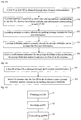
Fig. 1A is a flowchart showing a method for pushing user information, according to an exemplary embodiment; as shown in Fig. 1A, the present embodiment is illustrated by applying the method for pushing user information to a device for pushing user information; the method for pushing user information may include the following steps.
-
In Step 101, a first ID of first UE is obtained through near field communication.
-
Specifically, the executive body of the present embodiment may be a device for pushing user information, which is equipped with functions of near field communication and pushing processing, such as a terminal and a wearable device. The step is illustrated through a practical application scene:
- a user carries a device for pushing user information; when there are other users getting close to the user, the device for pushing user information obtains the first ID of the first UE carried by said other users through the near field communication in order to implement the following solutions.
-
Here, there may be various manners of short distance communication, such as Near Field Communication (NFC) and Bluetooth, which are not limited by the present embodiment herein.
-
In Step 102, the first database is searched to obtain first user information corresponding to the first ID, wherein the database includes the user information corresponding to the ID of each UE.
-
The step is illustrated still in the above practical application scene:
- after obtaining the first ID of the first UE carried by said other users, the device for pushing user information searches the first database, which stores the user information corresponding to the ID of each UE, to obtain the first user information corresponding to the first ID, namely the user information of said other users, in order to implement the following solutions.
-
In a practical application, when the user constantly stays at a certain place, if the UE of the users around stays still, then a UE list scanned by the device for pushing user information of the user will not change. Only when new UE ID is scanned, for example, the user starts to move, or a new user get close to the user, the device for pushing user information will output a pushing message including the user information of the new user. Correspondingly, as shown in Fig. 1B, Fig. 1B is a flowchart showing a method for pushing user information, according to another exemplary embodiment; on basis of the implementation mode in Fig. 1A, Step 102 may include the following steps.
-
In Step 104, when the first ID is not the ID of the UE detected currently, the first database is searched to obtain the first user information corresponding to the first ID.
-
In this implementation mode, only when it is detected that a new UE ID appears, the database is searched to obtain the user information corresponding to the new UE ID, thereby avoiding frequent repeated processing, and effectively saving power consumption and processing resources of the device for pushing user information.
-
In Step 103, the pushing message is output, wherein the pushing message includes the first user information.
-
The step is illustrated still in the above practical application scene:
- after obtaining the first user information of said other users, the device for pushing user information outputs the pushing message including the first user information in order to enable the user to get the user information of said other users accurately and timely.
-
Specifically, there may be various ways of outputting a pushing message, such as popping up a corresponding window on a screen to display the pushing message, or vibrating to prompt and display the pushing message, which are not limited by the present embodiment herein.
-
Here, the user information is used for enabling users to identify the user; the contents of the user information may be determined according to the actual need, such as a user name, an equipment model, and contact information, which are not limited by the present embodiment herein.
-
To sum up, with the method for pushing user information provided by the present embodiment, when there are other users getting close to a user, the ID of UE of said other users can be obtained through the short distance communication; the user information of said other users is obtained by searching the user information corresponding to each UE ID, and the pushing message including the user information is output, thereby enabling the user to obtain the user information of said other users around accurately and timely, avoiding embarrassment and inconvenience caused by forgetfulness, and improving the accuracy and reliability of user identification.
-
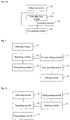
Fig. 2 is a flowchart showing a method for pushing user information, according to another exemplary embodiment; as shown in Fig. 2, the present embodiment is illustrated by applying the method for pushing user information to a device for pushing user information; on basis of the implementation modes in Fig. 1A or Fig. 1B, the method for pushing user information may also include the following steps.
-
In Step 201, when it is detected that the user information corresponding to the first ID does not exist in the database, an edit request is pushed, wherein the edit request includes the first ID.
-
In Step 202, an edit response is received, wherein the edit response includes received user information.
-
In Step 203, the received user information is stored into the database and taken as the user information corresponding to the first ID.
-
Specifically, the executive body of the present embodiment may be the device for pushing user information. The solution of the present embodiment can be used for updating the database, which is illustrated through a practical application scene:
- after obtaining the first ID of the first UE carried by said other users, the device for pushing user information searches the first database; when it is found that there is no user information corresponding to the first UE in the database, that is, the user information of said other users is not stored before, so it is needed to add the user information of said other users to update the database. Specifically, the device for pushing user information can push an edit request; after obtaining the user information of said other users, the user can return an edit response including the user information according to the edit request; after receiving the edit response, the device for pushing user information stores the user information in the edit response, which is taken as the user information corresponding to the first ID, into the database.
-
Specifically, there may be various manners of pushing an edit request; for example, an input box pops on a display interface; correspondingly, after the user inputs an owner name of the first UE and other user information in the input box, the device for pushing user information stores the first ID and the user information input by the user in the database; the various manners are not limited by the present embodiment herein.
-
In addition, to make it convenient for the user to further identify which UE corresponds to the user information needing to be edited currently, the first ID may also include the equipment model of the first UE.
-
For example, suppose there are two users around the user, the model of a mobile phone used by user A is MI, the model of a mobile phone used by the other user B is iPhone, and there is no user information of the two users in the database, then the device for pushing user information needs to push two edit requests; the user may not fully identify which user's user information should be filled in if only according to the ID of UE, but the user can make a judgment according to the equipment model displayed in the edit request; for example, suppose the equipment model displayed in the edit request pushed currently is MI, then the user information of the user A can be filled in the edit response corresponding to the edit request.
-
To sum up, with the method for pushing user information provided by the present embodiment, when it is detected that the user information corresponding to the ID obtained currently does not exist in the database, an edit request is pushed, and the user information input by the user, which is taken as the user information corresponding to the ID obtained currently, is stored into the database, thereby achieving update and completeness of the database, and improving the accuracy and reliability of user identification.
-
Fig. 3A is a flowchart showing a method for pushing user information, according to another exemplary embodiment; as shown in Fig. 3A, the present embodiment is illustrated by applying the method for pushing user information to a device for pushing user information; on basis of any of above implementation modes, the method for pushing user information may also include the following steps.
-
In Step 301, a prompt forbidden option is pushed, wherein the prompt forbidden option includes the first user information.
-
In Step 302, when a confirmation instruction for the prompt forbidden option is detected, the prompt forbidden marker is added to the first ID in the database.
-
The step is illustrated still in the above practical application scene:
- in a practical application, there may be some other users with a close communication relationship with the use, so the user can identify the users very easily, and then there is no need to output a pushing message including the user information of said other users. Specifically, the device for pushing user information can consult with the user about whether it is also needed to identify said other users in future by pushing a prompt forbidden option while finding the first user information corresponding to the first ID and outputting the pushing message; if it is detected that the user selects the prompt forbidden option, it means that there is no need to identify said other users in future; correspondingly, the first ID in the database can be added with the prompt forbidden marker in order to facilitate identification.
-
Subsequently, if the obtained ID of UE is added with the prompt forbidden marker, then there is no need to output a pushing message. Correspondingly, as shown in Fig. 3B, Fig. 3B is a flowchart showing a method for pushing user information, according to another exemplary embodiment; on basis of the implementation in Fig. 3A, the method for pushing user information may also include the following steps.
-
In Step 303, when it is detected that the first ID in the database carries the prompt forbidden marker, outputting the pushing message is forbidden.
-
To sum up, with the method for pushing user information provided by the present embodiment, the prompt forbidden option is pushed while the pushing message including the user information is output; if the user selects the prompt forbidden option, then the prompt forbidden marker is added to the corresponding ID in the database; if the obtained ID of UE is added with the prompt forbidden marker, then there is no need to output the pushing message, thereby avoiding unnecessary processing, and further saving power consumption and processing resources of the device for pushing user information.
-
Fig. 4A is a structure diagram of a device for pushing user information, according to an exemplary embodiment; as shown in Fig. 4A, the device for pushing user information may include:
- an obtaining module 41, which is configured to obtain a first ID of first UE through short distance communication;
- a searching module 42, which is configured to search a first database to obtain first user information corresponding to the first ID obtained by the obtaining module 41, wherein the first database includes user information corresponding to each UE ID; and
- a first pushing module 43, which is configured to output a pushing message, wherein the pushing message includes the first user information obtained by the searching module.
-
Specifically, the device for pushing user information is equipped with the functions of short distance communication and pushing processing, such as a terminal and a wearable device.
-
The device is illustrated through a practical application scene:
- a user carries the device for pushing user information; when there are other users getting close to the user, the obtaining module 41 obtains the first ID of the first UE carried by said other users through the short distance communication; the searching module 42 searches the first database, which stores the user information corresponding to each ID UE, to obtain the first user information corresponding to the first ID, namely the user information of said other users; the first pushing module 43 output the pushing message including the first user information in order to enable the user to get the user information of said other users accurately and timely.
-
Here, there can be various manners of performing the short distance communication by the obtaining module 41, such as NFC and Bluetooth, which are not limited by the present embodiment herein.
-
Specifically, there can be various ways of outputting a pushing message by the first pushing module 43, such as popping up a corresponding window on a screen to display the pushing message, or vibrating to prompt and display the pushing message, which are not limited by the present embodiment herein.
-
Here, the user information is used for enabling users to identify the user; the contents of the user information can be determined according to the actual need, such as a user name, an equipment model, and contact information, which are not limited by the present embodiment herein.
-
In a practical application, when the user constantly stays at a certain place, if the UE of users around stays still, then a UE list scanned by the obtaining module 41 will not change. Only when new UE ID is scanned by the obtaining module 41, for example, the user starts to move, or a new user gets close to the user, the first pushing module 43 needs to output a pushing message including the user information of the new user. Correspondingly, as shown in Fig. 4B, Fig. 4B is a structure diagram of a device for pushing user information, according to another exemplary embodiment; on basis of the implementation mode in Fig. 4A, the searching module 42 includes:
- a searching submodule 421, which is configured to, when the first ID obtained by the obtaining module 41 is not the ID of the UE detected currently, search the first database to obtain the first user information corresponding to the first ID.
-
In the implementation mode, only when the obtaining module 41 detects that a new UE ID appears, the searching submodule 421 searches the database to obtain the user information corresponding to the new UE ID, thereby avoiding frequent repeated processing, and effectively saving power consumption and processing resources of the device for pushing user information.
-
To sum up, with the device for pushing user information provided by the present embodiment, when there are other users getting close to the user, the ID of UE of said other users can be obtained through the short distance communication; the user information of said other users is obtained by searching the user information corresponding to each UE ID, and a pushing message including the user information is output, thereby enabling the user to obtain the user information of said other users around accurately and timely, avoiding embarrassment and inconvenience caused by forgetfulness, and improving the accuracy and reliability of user identification.
-
Fig. 5 is a structure diagram of a device for pushing user information, according to another exemplary embodiment; as shown in Fig. 5, on basis of the implementation modes in Fig. 4A or Fig. 4B, the device for pushing user information may also include:
- a second pushing module 51, which is configured to, when the searching module 42 detects that the user information corresponding to the first ID does not exist in the database, push an edit request, wherein the edit request includes the first ID;
- a first receiving module 52, which is configured to receive a edit response, wherein the edit response includes the received user information; and
- an editing module 53, which is configured to store the user information received by the first receiving module 52, which is taken as the user information corresponding to the first ID, into the database.
-
Specifically, the solution of the present embodiment can be used for updating the database, which is illustrated through a practical application scene:
- after obtaining the first ID of the first UE carried by said other users by the obtaining module 41, the searching module 42 searches the first database; when the searching module 42 finds that the user information corresponding to the first UE does not exist in the database, that is, the user information of said other users is not stored before, so it is needed to add the user information of said other users to update the database. Specifically, the second pushing module 51 can push an edit request; after obtaining the user information of said other users, the user can return an edit response including the user information according to the edit request; after the first receiving module 52 receives the edit response, the editing module 53 takes the user information in the edit response as the user information corresponding to the first ID and stores it into the database.
-
Specifically, there can be various manners of pushing an edit request by the second pushing module 51; for example, the input box pops on a display interface; correspondingly, after the user inputs the owner name of the first UE and other user information in the input box, the device for pushing user information stores the first ID and the user information input by the user into the database; the various manners are not limited by the present embodiment herein.
-
In addition, to make it convenient for the user to further identify which UE corresponds to the user information needing to be edited currently, the first ID may also include the equipment model of the first UE.
-
To sum up, with the device for pushing user information provided by the present embodiment, when it is detected that the user information corresponding to the ID obtained currently does not exist in the database, an edit request is pushed, and the user information input by the user is taken as the user information corresponding to the ID obtained currently and stored into the database, thereby achieving update and completeness of the database, and improving the accuracy and reliability of user identification.
-
Fig. 6A is a structure diagram of a device for pushing user information, according to another exemplary embodiment; as shown in Fig. 6A, on basis of any above implementation, the device for pushing user information may also include:
- a third pushing module 61, which is configured to push a prompt forbidden option, wherein the prompt forbidden option includes the first user information; and
- a marking module 62, which is configured to, when a confirmation instruction for the prompt forbidden option is detected, add the prompt forbidden marker to the first ID in the database.
-
The device is illustrated still through the above practical application scene:
- the third pushing module 61 can consult with the user about whether it is still needed to identify other users in future by pushing the prompt forbidden option while the searching module 42 finds the first user information corresponding to the first ID and the first pushing module 43 outputs the pushing message; if it is detected that the user selects the prompt forbidden option, it means that there is no need to identify said other users in future; correspondingly, the first ID in the database can be added with the prompt forbidden marker in order to facilitate identification.
-
Subsequently, if the ID of UE obtained by the obtaining module 41 is added with the prompt forbidden marker, then there is no need to output a pushing message. Correspondingly, as shown in Fig. 6B, Fig. 6B is a structure diagram of a device for pushing user information, according to another exemplary embodiment; on basis of the implementation in Fig. 6A, the device also includes:
- a processing module 63, which is configured to, when it is detected that the first ID in the database carries the prompt forbidden marker, forbid outputting the pushing message.
-
To sum up, with the device for pushing user information provided by the present embodiment, the prompt forbidden option is pushed while the pushing message including the user information is output; if the user selects the prompt forbidden option, then the prompt forbidden marker is added to the corresponding ID in the database; if the obtained ID of UE is added with the prompt forbidden marker, then there is no need to output the pushing message, thereby avoiding unnecessary processing, and further saving power consumption and processing resources of the device for pushing user information.
-
The internal function and structure of the device for pushing user information are described above.
-
Fig. 7 is a block diagram of a device for pushing user information, according to an exemplary embodiment; as shown in Fig. 7, the device for pushing user information can be implemented as:
- a processor; and
- a storage, which is configured to store an instruction executable by the processor;
- wherein, the processor is configured to: obtain a first ID of first UE through short distance communication; search a first database to obtain first user information corresponding to the first ID, wherein the first database includes user information corresponding to each UE ID; and output a pushing message, wherein the pushing message includes the first user information.
-
With the device for pushing user information provided by the present embodiment, when there are other users getting close to the user, the ID of UE of said other users can be obtained through the short distance communication; the user information of said other users is obtained by searching the user information corresponding to each ID of UE, and the pushing message including the user information is output, thereby enabling the user to obtain the user information of said other users around accurately and timely, avoiding embarrassment and inconvenience caused by forgetfulness, and improving the accuracy and reliability of user identification.
-
Fig. 8 is a block diagram of a device 800 for pushing user information, according to an exemplary embodiment. For example, the device 800 for pushing user information may be a computer, a terminal, a message transceiver, a game console, a tablet device, medical equipment, fitness equipment, and a personal digital assistant, and the like.
-
With reference to Fig. 8, the device 800 for pushing user information may include one or more than one component as follows: a processing component 802, a memory 804, a power component 806, a multimedia component 808, an audio component 810, an Input/Output (I/O) interface 812, a sensor component 814 and a communication component 816.
-
Generally, the processing component 802 controls the overall operations of the device 800 for pushing user information, such as the operations associated with display, phone calls, data communications, camera operations and recording operations. The processing component 802 may include one or more than one processor 820 to execute the instructions to perform all or part of steps of the above method. In addition, the processing component 802 may include one or more than one module to facilitate interaction between the processing component 802 and other components. For example, the processing component 802 may include a multimedia module to facilitate interaction between the multimedia component 808 and the processing component 802.
-
The memory 804 is configured to store various types of data to support operations of the device 800. Examples of such data include instructions for any applications or methods operated on the device 800, contact data, telephone directory data, messages, pictures, video, etc. The memory 804 may be implemented using any type of volatile or non-volatile storage devices or a combination of them, such as a Static Random Access Memory (SRAM), an Electrically Erasable Programmable Read-Only Memory (EEPROM), an Erasable Programmable Read-Only Memory (EPROM), a Programmable Read Only Memory (PROM), a Read Only Memory (ROM), a Magnetic Memory, a Flash Memory, a Magnetic Disk or an Optical Disk.
-
The power component 806 provides power for each component of the device 800 for pushing user information. The power component 806 may include a power management system, one or more than one power source, and other components associated with the generation, management, and distribution of power in the device 800.
-
The multimedia component 808 includes a screen which provides an output interface between the device 800 for pushing user information and the user. In some embodiments, the screen may include a Liquid Crystal Display (LCD) and a Touch Panel (TP). If the screen includes the TP, then the screen can be implemented as a touch screen to receive an input signal from the user. The TP includes one or more than one touch sensor to sense touches, swipes, and gestures on the touch panel. The touch sensors may not only sense a boundary of a touch or swipe action, but also sense a period of time and a pressure associated with the touch or swipe action. In some embodiments, the multimedia component 808 includes a front camera and/or a rear camera. The front camera and the rear camera may receive an external multimedia datum while the device 800 is in an operation mode, such as a photographing mode or a video mode. Each of the front camera and the rear camera may be a fixed optical lens system or have focus and optical zoom capability.
-
The audio component 810 is configured to output and/or input an audio signal. For example, the audio component 810 includes a Microphone (MIC); when the device 800 for pushing user information is in the operation mode, e.g. a calling mode, a recording mode and a voice recognition mode, the MIC is configured to receive an external audio signal. The received audio signal may be further stored in the memory 804 or sent via the communication component 816. In some embodiments, the audio component 810 also includes a loudspeaker for outputting the audio signal.
-
The I/O interface 812 provides an interface between the processing component 802 and a peripheral interface module; the peripheral interface module can be a keyboard, a click wheel, buttons, etc. These buttons may include, but is not limited to, a home button, a volume button, a start button and a lock button.
-
The sensor component 814 includes one or more than one sensor for providing status assessments of various aspects of the device 800 for pushing user information. For example, the sensor component 814 can detect an open/close state of the device 800 for pushing user information and relative positioning of components, for example, the components are a display and a keypad of the device 800 for pushing user information; the sensor component 814 can also detect a position change of the device 800 for pushing user information or a component of the device 800 for pushing user information, the presence or absence of touch between the user and the device 800 for pushing user information, an orientation or an acceleration/deceleration or the device 800 for pushing user information, and a temperature change of the device 800 for pushing user information. The sensor component 814 may include a proximity sensor, which is configured to detect the presence of a nearby object when there is no any physical contact. The sensor component 814 may also include an optical sensor, such as a Complementary Metal-Oxide Semiconductor (CMOS) or a Charge Coupled Device (CCD) image sensor, which is used for imaging application. In some embodiments, the sensor component 814 may also include an acceleration sensor, a gyroscope sensor, a magnetic sensor, a pressure sensor or a temperature sensor.
-
The communication component 816 is configured to facilitate wired or wireless communication between the device 800 for pushing user information and other devices. The device 800 for pushing user information can access a wireless network based on a communication standard, such as WiFi, 2G or 3G, or a combination of them. In an exemplary embodiment, the communication component 816 receives, via a broadcast channel, a broadcast signal or broadcast related information from an external broadcast management system. In an exemplary embodiment, the communication component 816 also includes an NFC module for facilitating short range communication. For example, the NFC module may be implemented based on a Radio Frequency Identification (RFID) technology, an Infrared Data Association (IrDA) technology, a Ultra Wideband (UWB) technology, a Bluetooth (BT) technology and other technologies.
-
In an exemplary embodiment, the device 800 for pushing user information may be implemented with one or more application specific integrated circuits (ASICs), a Digital Signal Processors (DSPs), Digital Signal Processing Devices (DSPDs), Programmable Logic Devices (PLDs), Field Programmable Gate Arrays (FPGAs), controllers, microcontrollers, microprocessors or other electronic components, for performing the above methods.
-
In an exemplary embodiment, a non-temporary computer-readable storage medium including instructions is also provided, such as included in the memory 804, executable by the processor 820 of the device 800 for pushing user information to perform the above method. For example, the non-temporary computer-readable storage medium may be a ROM, a Random Access Memory (RAM), a CD-ROM, a magnetic tape, a floppy disk, an optical data storage device, etc.
-
For the non-temporary computer-readable storage medium, when the instructions in the storage medium are executed by the processor of the device for pushing user information, the device for pushing user information can execute a method for pushing user information; the method includes that:
- a first ID of first UE is obtained through short distance communication; a first database is searched to obtain first user information corresponding to the first ID, wherein the database includes the user information corresponding to each UE ID; and a pushing message is output, wherein the pushing message includes the first user information.
-
Those skilled in the art can clearly understand that for describing conveniently and succinctly, the specific working process of the above device may refer to the corresponding process in the embodiments of the method.
-
Other embodiments of the present disclosure will be apparent to those skilled in the art from consideration of the specification and practice of the invention disclosed here. This application is intended to cover any variations, uses, or adaptations of the invention following the general principles thereof and including such departures from the present disclosure as come within known or customary practice in the art. It is intended that the specification and examples be considered as exemplary only, with a true scope and spirit of the disclosure being indicated by the following claims.
-
It will be appreciated that the present disclosure is not limited to the exact construction that has been described above and illustrated in the accompanying drawings, and that various modifications and changes can be made without departing from the scope thereof. It is intended that the scope of the disclosure only be limited by the appended claims.
INDUSTRY APPLICABILITY
-
By the technical solutions provided by the embodiments of the present disclosure, when there are other users getting close to the user, the ID of UE of said other users can be obtained through near field communication; the user information of said other users is obtained by searching user information corresponding to each UE ID, and the pushing message including the user information is output, thereby enabling the user to obtain the user information of said other users around accurately and timely, avoiding embarrassment and inconvenience caused by forgetfulness, and improving the accuracy and reliability of user identification.