EP3173259A1 - Self-programming tyre pressure monitoring device and implementation method therefor - Google Patents
Self-programming tyre pressure monitoring device and implementation method therefor Download PDFInfo
- Publication number
- EP3173259A1 EP3173259A1 EP14898209.3A EP14898209A EP3173259A1 EP 3173259 A1 EP3173259 A1 EP 3173259A1 EP 14898209 A EP14898209 A EP 14898209A EP 3173259 A1 EP3173259 A1 EP 3173259A1
- Authority
- EP
- European Patent Office
- Prior art keywords
- codes
- guidance
- self
- pressure monitoring
- monitoring device
- Prior art date
- Legal status (The legal status is an assumption and is not a legal conclusion. Google has not performed a legal analysis and makes no representation as to the accuracy of the status listed.)
- Withdrawn
Links
Images

Classifications
-
- B—PERFORMING OPERATIONS; TRANSPORTING
- B60—VEHICLES IN GENERAL
- B60C—VEHICLE TYRES; TYRE INFLATION; TYRE CHANGING; CONNECTING VALVES TO INFLATABLE ELASTIC BODIES IN GENERAL; DEVICES OR ARRANGEMENTS RELATED TO TYRES
- B60C23/00—Devices for measuring, signalling, controlling, or distributing tyre pressure or temperature, specially adapted for mounting on vehicles; Arrangement of tyre inflating devices on vehicles, e.g. of pumps or of tanks; Tyre cooling arrangements
- B60C23/02—Signalling devices actuated by tyre pressure
- B60C23/04—Signalling devices actuated by tyre pressure mounted on the wheel or tyre
- B60C23/0408—Signalling devices actuated by tyre pressure mounted on the wheel or tyre transmitting the signals by non-mechanical means from the wheel or tyre to a vehicle body mounted receiver
- B60C23/0471—System initialisation, e.g. upload or calibration of operating parameters
-
- B—PERFORMING OPERATIONS; TRANSPORTING
- B60—VEHICLES IN GENERAL
- B60C—VEHICLE TYRES; TYRE INFLATION; TYRE CHANGING; CONNECTING VALVES TO INFLATABLE ELASTIC BODIES IN GENERAL; DEVICES OR ARRANGEMENTS RELATED TO TYRES
- B60C23/00—Devices for measuring, signalling, controlling, or distributing tyre pressure or temperature, specially adapted for mounting on vehicles; Arrangement of tyre inflating devices on vehicles, e.g. of pumps or of tanks; Tyre cooling arrangements
- B60C23/02—Signalling devices actuated by tyre pressure
- B60C23/04—Signalling devices actuated by tyre pressure mounted on the wheel or tyre
- B60C23/0408—Signalling devices actuated by tyre pressure mounted on the wheel or tyre transmitting the signals by non-mechanical means from the wheel or tyre to a vehicle body mounted receiver
- B60C23/0422—Signalling devices actuated by tyre pressure mounted on the wheel or tyre transmitting the signals by non-mechanical means from the wheel or tyre to a vehicle body mounted receiver characterised by the type of signal transmission means
- B60C23/0433—Radio signals
- B60C23/0447—Wheel or tyre mounted circuits
-
- B—PERFORMING OPERATIONS; TRANSPORTING
- B60—VEHICLES IN GENERAL
- B60C—VEHICLE TYRES; TYRE INFLATION; TYRE CHANGING; CONNECTING VALVES TO INFLATABLE ELASTIC BODIES IN GENERAL; DEVICES OR ARRANGEMENTS RELATED TO TYRES
- B60C23/00—Devices for measuring, signalling, controlling, or distributing tyre pressure or temperature, specially adapted for mounting on vehicles; Arrangement of tyre inflating devices on vehicles, e.g. of pumps or of tanks; Tyre cooling arrangements
- B60C23/02—Signalling devices actuated by tyre pressure
- B60C23/04—Signalling devices actuated by tyre pressure mounted on the wheel or tyre
- B60C23/0408—Signalling devices actuated by tyre pressure mounted on the wheel or tyre transmitting the signals by non-mechanical means from the wheel or tyre to a vehicle body mounted receiver
- B60C23/0422—Signalling devices actuated by tyre pressure mounted on the wheel or tyre transmitting the signals by non-mechanical means from the wheel or tyre to a vehicle body mounted receiver characterised by the type of signal transmission means
- B60C23/0433—Radio signals
- B60C23/0447—Wheel or tyre mounted circuits
- B60C23/0455—Transmission control of wireless signals
- B60C23/0462—Structure of transmission protocol
-
- B—PERFORMING OPERATIONS; TRANSPORTING
- B60—VEHICLES IN GENERAL
- B60C—VEHICLE TYRES; TYRE INFLATION; TYRE CHANGING; CONNECTING VALVES TO INFLATABLE ELASTIC BODIES IN GENERAL; DEVICES OR ARRANGEMENTS RELATED TO TYRES
- B60C23/00—Devices for measuring, signalling, controlling, or distributing tyre pressure or temperature, specially adapted for mounting on vehicles; Arrangement of tyre inflating devices on vehicles, e.g. of pumps or of tanks; Tyre cooling arrangements
- B60C23/02—Signalling devices actuated by tyre pressure
- B60C23/04—Signalling devices actuated by tyre pressure mounted on the wheel or tyre
- B60C23/0408—Signalling devices actuated by tyre pressure mounted on the wheel or tyre transmitting the signals by non-mechanical means from the wheel or tyre to a vehicle body mounted receiver
- B60C23/0479—Communicating with external units being not part of the vehicle, e.g. tools for diagnostic, mobile phones, electronic keys or service stations
Definitions
- the step of inputting the format codes further comprises entering a to-be-defined condition and responding to the corresponding format codes within a specific period of time.
- the microcontroller unit also comprises a guidance procedure module; the guidance procedure module initializes the device; the initialization comprises configuring a guidance procedure of the device, designating and collecting parameters of the device, and executing a specific data format.
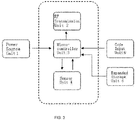
- FIG. 3 is a block diagram showing a structure of an embodiment of a self-programming tire pressure monitoring sensor.
- the self-programming tire pressure sensor comprises a sensor unit 4, a microcontroller unit 3, a code input unit 5, a radio-frequency (RF) transmission unit 2 and a power source unit 1.
- the sensor unit 4, the code input unit 5 and the RF transmission unit 2 are connected with the microcontroller unit 3.
Landscapes
- Engineering & Computer Science (AREA)
- Mechanical Engineering (AREA)
- Computer Networks & Wireless Communication (AREA)
- Arrangements For Transmission Of Measured Signals (AREA)
- Measuring Fluid Pressure (AREA)
Abstract
Description
- The present invention relates to a Tire Pressure Monitoring System (TPMS), and more specifically relates to a self-programming tire pressure monitoring device and implementation method therefor.
- A tire pressure monitoring (TPM) sensor is installed inside a tire (usually integrated with a valve of the tire) where it can sense various conditions of the tire on its own, including tire pressure, tire temperature and tire rotation etc. and then convert the sensed conditions into a given data format for sending to a receiver in the car by RF transmission. After the receiver has received the data, corresponding feedback will be generated (by means of texts, graphics or sounds) to inform the driver whether the tire has anything abnormal. The TPM sensor and the receiver together constitute a complete TPMS which informs the driver of the conditions of the tire to ensure driving safety.
- TPM sensor nowadays can be one of the following two types divided according to different markets: an original equipment (OE) sensor and an after-sale sensor. An OE sensor is a sensor having a specific type of data format (protocol), developed by a supplier particularly for a specific client (car manufacturer). The OE sensor is installed in the car before it is launched in the market. An OE sensor transmits a single type (or a unique type) of data format during feedback or operation. Different OE sensors developed by different suppliers have different data formats (may be identical sometimes). Even a same supplier may develop various sensors with different data formats according to client's requirements. For example, a sensor installed on a General Motors (GM) vehicle transmits data with a format different from the sensor installed on a BMW vehicle. In other words, the sensors used by these two brands are not exchangeable. Further, cars of the same model but manufactured in different years are very likely to have different sensors which are not exchangeable. Therefore, from year 2000 or even earlier, there are OE sensors having as many as hundred types of protocols.
- Since a TPM sensor requires a battery to operate, it has a definite service period. In general, an OE TPMS sensor can be used for 5-10 years. If a TPM sensor of a car is damaged or its battery is depleted and thus requires replacement, a same model of sensor is in principle required, meaning that the distributors should stockpile different sensors to meet the requirements of different clients. As such, it is demanding for the entire after-sale service industry. Waste of large amount of resources will also be resulted.
- Therefore, the following types of after-sale sensor have emerged in the market to solve the problem of excessive stock stocked up by the distributers:
- As shown in
FIG. 1 , a programmable sensor is operated with a specialized programming tool ordevice 1. The operation principle is to firstly store protocols of different sensors into the specialized programming tool, and then input software codes into ablank sensor 2 via wire or wireless means. In some cases, thesensor 2 has to be pre-written with some guidance programs in order to complete the programming process. Alternatively, several protocols may be stored in thesensor 2 and chosen in accordance with commands transmitted by wire or wireless means from thetool 1. After programming of thesensor 2 is finished, thesensor 2 transmits a unique type of codes (corresponding to the choice made by the tool). This kind of after-sale sensor is characterized in that programming of the sensor may include many types of protocols. Therefore, a distributor may only have to prepare a few types of sensors for replacement of all TPM sensors of cars of different requirements. Also, since the sensor only transmits one type of data format at one time, its battery has a longer service life. However, this kind of sensor has a disadvantage that it must be operated with a specialized programming tool or equipment. The entire operation process is therefore more complicated. Also, the programming tool requires scheduled or non-scheduled updates, thereby requiring operation by a more skillful operator. Besides, a wireless programmable sensor is designed not being programmable after being used for a certain period of time. Therefore, the sensor is not reusable and hence not convenient to use. - As shown in
FIG. 2 , the operating principle of a multi-protocol sensor is to firstly write different types of formats into thesensor 3 in the form of software programs, and then output and transmit all the formats at the same time via wireless means in response to a certain condition (e.g. rotation or low frequency RF command). This kind of TPM sensor is advantageous in that it does not require a programming tool, and thus it is more convenient to use. However, among all the formats output and transmitted every time, only one format is applicable to the target car model and all other formats are useless. Therefore, much power is wasted in transmitting useless formats, and the battery will run out of power in a short period of time. Besides, due to short battery service life, only limited types of formats can be stored in the sensor. Compared with programmable sensors, distributors may need to have more types of sensors in stock in order to meet the clients' needs. In short, this kind of sensor has the disadvantages of short battery service life, limited format types stored in the sensor, and distributors may need to have more types of sensors in stock in order to meet the clients' needs. - In view of the above, a person skilled in this field of art has to provide a technical solution to develop a kind of sensor which has longer service life, which is easy to operate, and which can transmits signals with more contents and available formats so as to significantly reduce stock amount.
- An object of the present invention is to provide a self-programming tire pressure monitoring device and method. The present invention is easy to operate and has a long service life, and can also significantly reduce stock amount of distributor.
- The present invention provides an implementation method of a self-programming tire pressure monitoring device; the method comprises storing multiple types of format codes in advance, and then choosing corresponding type of format codes according to guidance codes generated by the self-programming tire pressure monitoring device.
- The method comprises the following steps: generating guidance codes, wherein the self-programming tire pressure monitoring device generates the guidance codes; receiving the guidance codes, wherein the guidance codes are received when an external coding condition is satisfied; inputting format codes, which comprises responding to the corresponding format codes according to the guidance codes being received, to generate data formats that correspond to the format codes.
- The method also comprises an initialization step, which comprises configuring guidance procedure, designating and collecting parameters, and executing specific data formats.
- The method also comprises execution step, which comprises executing the data formats and transmitting data signals of the data formats.
- The method also comprises a monitoring step, which comprises executing the steps of generating the guidance codes, receiving the guidance codes and inputting the format codes again when another external coding condition different from the current external coding condition is detected.
- According to the method, the external coding condition includes but not limited to pressure, temperature, acceleration and battery voltage.
- According to the method, the step of receiving the guidance codes further comprises refusing to receive the guidance codes when the external coding condition is not satisfied.
- According to the method, the step of inputting the format codes further comprises entering a to-be-defined condition and responding to the corresponding format codes within a specific period of time.
- The present invention also provides a self-programming tire pressure monitoring device. The device comprises a code input unit which generates guidance codes; a microcontroller unit which stores multiple types of format codes in advance, and chooses corresponding type of format codes according to the guidance codes; a RF transmission unit which transmits data from the microcontroller unit with a specific radio frequency; and a sensor unit which collects external data and transmits the external data collected to the microcontroller unit.
- The device also comprises an expanded storage unit which stores data when the microcontroller unit does not have enough storage space.
- The device also comprises a power source unit which supplies power to the self-programming tire pressure monitoring device.
- According to the device, the microcontroller unit comprises a code input module; when an external coding condition is satisfied, the code input module receives the guidance codes and responds to corresponding format codes according to the guidance codes received, so as to generate data formats corresponding to the format codes.
- According to the device, the microcontroller unit also comprises a guidance procedure module; the guidance procedure module initializes the device; the initialization comprises configuring a guidance procedure of the device, designating and collecting parameters of the device, and executing a specific data format.
- According to the device, the microcontroller unit also comprises a procedure execution module which executes a procedure of the data formats that correspond to the format codes, and transmits data signals of the data formats to the RF transmission unit.
- According to the device, the guidance procedure module guides the procedure to the procedure execution module under a certain condition.
- According to the device, the sensor unit comprises a function module of the sensor's functions; the function module collects basic data; the basic data includes but not limited to pressure, temperature, acceleration and battery voltage.
- According to the device, the microcontroller unit monitors the external coding condition; when another external coding condition different from the current external coding condition is detected, the code input unit receives guidance codes, and the device responds to format codes corresponding to the guidance codes received, to generate a data formats corresponding to the format codes.
- According to the device, the external coding condition is a set value of pressure, temperature or acceleration etc.
- According to the device, the code input module refuses to receive the guidance codes when the external coding condition is not satisfied.
- According to the device, the code input module enters a to-be-defined condition and responds to the corresponding format codes within a certain period of time.
- According to the device, the device also comprises a low frequency transmission unit which creates a low frequency communication response channel and responds to external low frequency commands.
- The present invention has the following advantages and beneficial effects: Firstly, the sensor of the present invention does not require external tools and is very simple to operate. Further, the sensor of the present invention transmits only a few data packets each time, thereby significantly lengthening the service life of the battery. Also, the sensor of the present invention can store more formats and contents compared with a typical multi-protocol sensor, thereby significantly reducing the stock amount of the distributor.
-
-
FIG. 1 is a programmable sensor according to prior art. -
FIG. 2 is a multi-protocol/compound protocol sensor according to prior art. -
FIG. 3 is a block diagram showing a structure of a self-programming tire pressure monitoring sensor according to an embodiment of the present invention. -
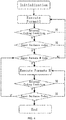
FIG. 4 is a flow chart of a sensor procedure module of the self-programming tire pressure monitoring sensor. - The present invention will be further described in detail below with reference to the drawings and an embodiment for easier comprehension of the objects, characteristics and advantages of the present invention.
-
FIG. 3 is a block diagram showing a structure of an embodiment of a self-programming tire pressure monitoring sensor. As shown inFIG. 3 , the self-programming tire pressure sensor comprises asensor unit 4, amicrocontroller unit 3, a code input unit 5, a radio-frequency (RF)transmission unit 2 and apower source unit 1. Thesensor unit 4, the code input unit 5 and theRF transmission unit 2 are connected with themicrocontroller unit 3. - The
microcontroller unit 3 can be a typical microcontroller for processing data, coding the data and sending the data to theRF transmission unit 2. Such typical microcontroller also executes software programs required to be run in the tire pressure monitoring sensor. - The
RF transmission unit 2 transmits the data according to a specified radio frequency. - The
sensor unit 4 comprises a pressure sensor unit, a temperature sensor unit, an acceleration sensor unit, a battery voltage monitoring unit and a low frequency channel unit etc. Thesensor unit 4 collects data from an external environment. The data collected by thesensor unit 4 is directly transmitted to themicrocontroller unit 3 for processing. - The
power source unit 1 supplies power to the entire self-programming tire pressure monitoring sensor. - The inventive concept of the present invention is the code input unit 5 additionally provided to a typical structure of a sensor. An expanded storage unit 6 can also be additionally provided to increase the ability of the sensor to store different formats.
- A principle of the present invention is to firstly store a plurality of TPMS formats in the
microcontroller unit 3 according to a certain method. If themicrocontroller unit 3 does not have sufficient storage space, the expanded storage unit 6 can be additionally provided. The formats in the self-programming tire pressure monitoring device are stored according to a specific method. - The code input unit 5 generates codes, which are then input into the
microcontroller unit 3 for choosing and defining required format types. There is no limitation as to a coding method of the code input unit 5. The coding method can be simple, or can be complicated. Defined formats will then be output and transmitted via wireless means like the situation in a typical TPM sensor. By creating a special protocol between the code input unit 5 and software program, codes being coded to themicrocontroller unit 3 can be reusable. -
FIG. 4 is a flow chart showing an implementation method of the self-programming tire pressure monitoring sensor. The method comprises the following steps: - In an initialization phase, configuring a guidance procedure of the sensor, activating a function module of the sensor to designate and collect parameters of pressure, temperature and acceleration etc, and executing a specified format software procedure.
- When a specific requirement of an external coding condition such as a condition relating to pressure, temperature or acceleration is satisfied, receiving guidance code commands. For example, when pressure is smaller than a set value, such as 30KPA, start receiving and responding the guidance code commands; when pressure is larger than the set value (sensor placed in the tire, and pressure is applied), configuring the sensor in an execution condition where it cannot receive and respond to the guidance code commands.
- Responding to specific guidance code commands, so that the sensor enters a to-be-defined condition; and then receiving and responding to code input commands of specific formats within a specific period of time.
- Inputting specific format code commands after the guidance code commands, and the
microcontroller unit 3 will perform parameter rearrangement of the guidance procedure to generate data formats that satisfies the requirement. - Executing the new formats; after completing the input of the format code commands, the procedure will execute an execute mode of the new sensor formats and transmit the new format data signals.
- While running the software having the new formats, the external coding condition and data will be monitored to determine whether the sensor will be defined again or whether the current format will be continued to be executed.
- The self-programming tire pressure monitoring sensor of the present invention does not require data transmission and commands from outside. The present invention uses the code input unit carried within the sensor to generate specific coding data which will be transmitted to the microcontroller unit within the sensor, and determines what formats of TPMS data are to be generated and transmitted in the execution of subsequent procedures in order to satisfy a particular data format required by a particular car model. In other words, the present invention can generate different formats of TPMS data without the need of external coding or programming tool.
- Besides, each format information or procedure information stored in the storage unit of the sensor corresponds to a specific code and also to a particular car model in actual implementation. When an external condition for defining/programming the senor is satisfied, a user who wishes to define the sensor corresponding to a particular car model is only required to directly input associated codes so that the sensor is enabled to execute a procedure of a sensor type specifically corresponding to the particular car model and transmits data that corresponds to the requirements required by the particular car model.
- Also, when the sensor is executing a particular data format, the sensor may respond to specific codes and then be defined/programmed again if a certain external condition is satisfied. If the external condition is not satisfied, the sensor will refuse to respond to corresponding code commands and cannot be defined or re-defined/re-programmed.
- Coding method of the input of the present invention is not subject to limitation. The purpose of coding is to let the microcontroller module recognize the codes and eventually generate and execute the running procedure of the formats in concern.
- The present invention can generate TPMS data of different formats without the need of external coding or programming tool. The present invention is very simple to operate. Besides, the sensor of the present invention only transmits a few data packets each time, thereby significantly lengthening the service life of the battery. Also, the present invention can store much more formats and contents compared with a typical multi-protocol sensor, thereby significantly reducing the stock amount required at the distributor.
- The self-programming tire pressure monitoring method and device according to the present invention have been described in detail above. An embodiment of the present invention is described to explain the principle and implementation of the present invention. The above embodiment is intended to assist in understanding the method of the present invention and its essence. A person skilled in this field of art may make changes to the embodiment and the field of application of the present invention according to the teachings of the present invention. In summary, the description herein should not limit the present invention.
Claims (20)
- An implementation method of a self-programming tire pressure monitoring device, wherein the method comprises storing multiple types of format codes in advance, and then choosing corresponding type of format codes according to guidance codes generated by the self-programming tire pressure monitoring device.
- The method of claim 1, wherein the method comprises the following steps:generating guidance codes, wherein the self-programming tire pressure monitoring device generates the guidance codes;receiving the guidance codes, wherein the guidance codes are received when an external coding condition is satisfied;inputting format codes, which comprises responding to the corresponding format codes according to the guidance codes being received, so as to generate data formats that correspond to the format codes.
- The method of claim 2, wherein the method also comprises an initialization step, which comprises configuring a guidance procedure, designating and collecting parameters, and executing a specific data format.
- The method of claim 2, wherein the method also comprises an execution step, which comprises executing the data formats and transmitting data signals of the data formats.
- The method of claim 2, wherein the method also comprises a monitoring step, which comprises executing the steps of generating the guidance codes, receiving the guidance codes and inputting the format codes again when another external coding condition different from the current external coding condition is detected.
- The method of claim 2, wherein the external coding condition includes but not limited to pressure, temperature, acceleration and battery voltage.
- The method of claim 2, wherein the step of receiving the guidance codes further comprises refusing to receive the guidance codes when the external coding condition is not satisfied.
- The method of claim 2, wherein the step of inputting the format codes further comprises entering a to-be-defined condition and responding to the corresponding format codes within a specific period of time.
- A self-programming tire pressure monitoring device, comprising:a code input unit which generates guidance codes;a microcontroller unit which stores multiple types of format codes in advance, and chooses corresponding type of format codes according to the guidance codes;a radio-frequency (RF) transmission unit which transmits data from the microcontroller unit with a specific radio frequency; anda sensor unit which collects external data and transmits the external data collected to the microcontroller unit.
- The self-programming tire pressure monitoring device of claim 9, wherein the device also comprises an expanded storage unit which stores data when the microcontroller unit does not have enough storage space.
- The self-programming tire pressure monitoring device of claim 9, wherein the device also comprises a power source unit which supplies power to the self-programming tire pressure monitoring device.
- The self-programming tire pressure monitoring device of claim 9, wherein the microcontroller unit comprises a code input module; when an external coding condition is satisfied, the code input module receives the guidance codes and responds to a corresponding format codes according to the guidance codes received, so as to generate data formats corresponding to the format codes.
- The self-programming tire pressure monitoring device of claim 12, wherein the microcontroller unit also comprises a guidance procedure module; the guidance procedure module initializes the device; the initialization comprises configuring a guidance procedure of the device, designating and collecting parameters of the device, and executing a specific data format.
- The self-programming tire pressure monitoring device of claim 12, wherein the microcontroller unit also comprises a procedure execution module which executes a procedure of the data formats that correspond to the format codes, and transmits data signals of the data formats to the RF transmission unit.
- The self-programming tire pressure monitoring device of claim 14, wherein the guidance procedure module guides the procedure to the procedure execution module under a certain condition.
- The self-programming tire pressure monitoring device of claim 9, wherein the sensor unit comprises a function module of the sensor's functions; the function module collects basic data; the basic data includes but not limited to pressure, temperature, acceleration and battery voltage.
- The self-programming tire pressure monitoring device of claim 12, wherein the microcontroller unit monitors the external coding condition; when another external coding condition different from the current external coding condition is detected, the code input unit receives guidance codes, and the device responds to corresponding format codes according to the guidance codes received, so as to generate data formats corresponding to the format codes.
- The self-programming tire pressure monitoring device of claim 12, wherein the code input module refuses to receive the guidance codes when the external coding condition is not satisfied.
- The self-programming tire pressure monitoring device of claim 12, wherein the code input module enters a to-be-defined condition and responds to the corresponding format codes within a certain period of time.
- The self-programming tire pressure monitoring device of claim 9, wherein the device also comprises a low frequency transmission unit which creates a low frequency communication response channel and responds to external low frequency commands.
Applications Claiming Priority (2)
| Application Number | Priority Date | Filing Date | Title |
|---|---|---|---|
| CN201410353797.3A CN104070943B (en) | 2014-07-23 | 2014-07-23 | A kind of self-programming tire pressure monitoring device and implementation method |
| PCT/CN2014/085140 WO2016011695A1 (en) | 2014-07-23 | 2014-08-26 | Self-programming tyre pressure monitoring device and implementation method therefor |
Publications (2)
| Publication Number | Publication Date |
|---|---|
| EP3173259A1 true EP3173259A1 (en) | 2017-05-31 |
| EP3173259A4 EP3173259A4 (en) | 2018-04-04 |
Family
ID=51592702
Family Applications (1)
| Application Number | Title | Priority Date | Filing Date |
|---|---|---|---|
| EP14898209.3A Withdrawn EP3173259A4 (en) | 2014-07-23 | 2014-08-26 | Self-programming tyre pressure monitoring device and implementation method therefor |
Country Status (4)
| Country | Link |
|---|---|
| US (1) | US20170050477A1 (en) |
| EP (1) | EP3173259A4 (en) |
| CN (1) | CN104070943B (en) |
| WO (1) | WO2016011695A1 (en) |
Families Citing this family (16)
| Publication number | Priority date | Publication date | Assignee | Title |
|---|---|---|---|---|
| WO2016061806A1 (en) * | 2014-10-24 | 2016-04-28 | 方汉杰 | Tire pressure monitoring device |
| CN107225918A (en) * | 2016-03-24 | 2017-10-03 | 苏州驶安特汽车电子有限公司 | A kind of tyre pressure sensor system and communication protocol concocting method |
| DE102016222304A1 (en) * | 2016-11-14 | 2018-05-17 | Continental Reifen Deutschland Gmbh | Method for determining a battery condition |
| CN106541792A (en) * | 2016-12-08 | 2017-03-29 | 万通智控科技股份有限公司 | A kind of TPM sensor initialization system and method |
| CN106696614A (en) * | 2017-03-03 | 2017-05-24 | 万通智控科技股份有限公司 | Tire pressure monitoring device and locking method |
| CN107139658A (en) * | 2017-04-12 | 2017-09-08 | 万通智控科技股份有限公司 | Device for monitoring tyre pressure and locking means |
| US10384496B1 (en) * | 2018-02-14 | 2019-08-20 | Infineon Technologies Ag | Configuration data storage for a tire pressure sensor |
| GB2584853A (en) | 2019-06-17 | 2020-12-23 | Airbus Operations Ltd | Initialisation of tyre monitoring devices |
| GB2584854A (en) * | 2019-06-17 | 2020-12-23 | Airbus Operations Ltd | Configuration mode entry for a tyre monitoring device |
| CN112477527A (en) * | 2020-11-05 | 2021-03-12 | 东风汽车集团有限公司 | Automatic configuration method and device for tire pressure sensor |
| CN112381966A (en) * | 2020-11-10 | 2021-02-19 | 易显智能科技有限责任公司 | Method for acquiring driving data signal and related device thereof |
| CN112519515A (en) * | 2020-12-21 | 2021-03-19 | 万通智控科技股份有限公司 | Tire pressure sensing system |
| CN113987544B (en) * | 2021-11-02 | 2025-08-29 | 琻捷电子科技(江苏)股份有限公司 | Tire pressure detection data transmission method and device |
| CN115742637A (en) * | 2022-11-29 | 2023-03-07 | 温州车盾王电子科技有限公司 | Tire pressure sensor adaptive to various vehicle types |
| CN116100997B (en) * | 2022-12-27 | 2024-04-02 | 深圳市星卡科技股份有限公司 | Tire pressure programming method, device, computer equipment and storage medium |
| CN117162710B (en) * | 2023-09-04 | 2026-03-24 | 铁将军汽车电子股份有限公司 | Tire condition monitoring relay methods, systems, devices and equipment |
Family Cites Families (16)
| Publication number | Priority date | Publication date | Assignee | Title |
|---|---|---|---|---|
| US6693522B2 (en) * | 2001-10-12 | 2004-02-17 | Lear Corporation | System and method for tire pressure monitoring including automatic tire location recognition |
| US6838985B2 (en) * | 2002-03-25 | 2005-01-04 | Lear Corporation | System and method for remote tire pressure monitoring with low frequency initiation |
| US7518495B2 (en) * | 2003-11-18 | 2009-04-14 | Lear Corporation | Universal tire pressure monitor |
| CN1586932A (en) * | 2004-08-31 | 2005-03-02 | 武汉虹信通信技术有限责任公司 | Tyre pressure real time monitor system |
| US8374744B2 (en) * | 2006-10-02 | 2013-02-12 | Lear Corporation | Tire pressure monitor signal processing |
| CN101169344B (en) * | 2006-10-26 | 2010-08-25 | 为升电装工业股份有限公司 | Programmable universal tire pressure sensor setting system and setting method |
| WO2009006518A1 (en) * | 2007-07-03 | 2009-01-08 | Continental Automotive Systems Us, Inc. | Universal tire pressure monitoring sensor |
| KR101599365B1 (en) * | 2011-08-09 | 2016-03-14 | 컨티넨탈 오토모티브 시스템즈 인코포레이티드 | Protocol arrangement in a tire pressure monitoring system |
| CN102529612A (en) * | 2012-02-28 | 2012-07-04 | 杭州万通气门嘴有限公司 | Setting method of sensor of tire pressure monitoring system of motor vehicle, sensor and sensor setting device |
| PT2822936T (en) * | 2012-03-07 | 2021-12-02 | Univ Of Delhi | Aminoquinoline derivatives and uses thereof |
| CN102862450B (en) * | 2012-08-21 | 2015-02-18 | 深圳市元征科技股份有限公司 | System and method for realizing upgrading of transmitting terminal of tire pressure monitoring system (TPMS) based on wireless communication |
| TWI483858B (en) * | 2012-09-07 | 2015-05-11 | Orange Electronic Co Ltd | Tire monitor parameter setting method |
| DE102013001837B3 (en) * | 2013-02-04 | 2014-06-26 | Alligator Ventilfabrik Gmbh | Universal monitoring device for vehicle tires |
| US9120357B2 (en) * | 2013-03-15 | 2015-09-01 | Continental Automotive Systems, Inc. | Methods, systems and devices for integration of tire pressure monitoring sensors with a tire pressure monitoring system |
| CN103419577B (en) * | 2013-08-20 | 2016-06-15 | 深圳市道通科技股份有限公司 | A kind of scalable universal tire pressure sensing apparatus, system and network system realization |
| TWI558580B (en) * | 2014-02-26 | 2016-11-21 | Method for setting the complex tire pressure sensor |
-
2014
- 2014-07-23 CN CN201410353797.3A patent/CN104070943B/en not_active Expired - Fee Related
- 2014-08-26 EP EP14898209.3A patent/EP3173259A4/en not_active Withdrawn
- 2014-08-26 US US15/118,897 patent/US20170050477A1/en not_active Abandoned
- 2014-08-26 WO PCT/CN2014/085140 patent/WO2016011695A1/en not_active Ceased
Also Published As
| Publication number | Publication date |
|---|---|
| CN104070943B (en) | 2017-10-17 |
| WO2016011695A1 (en) | 2016-01-28 |
| EP3173259A4 (en) | 2018-04-04 |
| US20170050477A1 (en) | 2017-02-23 |
| CN104070943A (en) | 2014-10-01 |
Similar Documents
| Publication | Publication Date | Title |
|---|---|---|
| EP3173259A1 (en) | Self-programming tyre pressure monitoring device and implementation method therefor | |
| US10434827B2 (en) | Method for configuring a tyre pressure sensor | |
| CN101687447B (en) | Universal Tire Pressure Monitoring Sensor | |
| US20170225526A1 (en) | Method for configuring a tyre pressure sensor | |
| US9296267B2 (en) | Methods, systems and devices for recording and transmitting identification information of tire pressure monitoring sensors to a vehicle | |
| EP3753756B1 (en) | Tire positioning method and apparatus, electronic control unit, and tire pressure sensor | |
| US10377190B2 (en) | Tire pressure monitoring sensor enabling fast configuration and software updates | |
| CN105365503B (en) | General tyre pressure sensor | |
| CN102529612A (en) | Setting method of sensor of tire pressure monitoring system of motor vehicle, sensor and sensor setting device | |
| CN116300804A (en) | Remote diagnosis method, remote diagnosis device, electronic equipment and computer readable storage medium | |
| KR101949969B1 (en) | Method for adapting a tire-pressure monitoring device to a vehicle type, tire-pressure monitoring system having at least one tire-pressure monitoring device that can be adapted by means of said method, and tire-pressure monitoring device therefor | |
| CN204415057U (en) | tire pressure monitoring device | |
| CN105365502A (en) | Universal tire pressure sensor | |
| EP3303015B1 (en) | Tire pressure monitoring sensor | |
| US20240403027A1 (en) | In-vehicle device, program, and method for updating program | |
| KR101479764B1 (en) | Smart-key system to resister ID automatically for motorcycle, and its using method | |
| US11073439B2 (en) | Cross-platform universal tire pressure monitoring sensor | |
| US10605570B2 (en) | Method and apparatus for launch control packet processing | |
| EP2987333B1 (en) | Remote control for first and second apparatus | |
| US9586448B2 (en) | Tire pressure monitoring sensor with changing functionality based upon vehicle action | |
| CN110023113B (en) | Electronic wheel unit and control device for wheel monitoring system, wheel monitoring system, and method for monitoring wheels in a vehicle | |
| EP3967527B1 (en) | Tire sensor configuring device and smart tire system including the same | |
| EP2949484B1 (en) | TPMS sensor position input method | |
| CN111015666A (en) | Robot adaptation method, storage medium, control device, method and system | |
| WO2016061806A1 (en) | Tire pressure monitoring device |
Legal Events
| Date | Code | Title | Description |
|---|---|---|---|
| PUAI | Public reference made under article 153(3) epc to a published international application that has entered the european phase |
Free format text: ORIGINAL CODE: 0009012 |
|
| 17P | Request for examination filed |
Effective date: 20161121 |
|
| AK | Designated contracting states |
Kind code of ref document: A1 Designated state(s): AL AT BE BG CH CY CZ DE DK EE ES FI FR GB GR HR HU IE IS IT LI LT LU LV MC MK MT NL NO PL PT RO RS SE SI SK SM TR |
|
| AX | Request for extension of the european patent |
Extension state: BA ME |
|
| DAX | Request for extension of the european patent (deleted) | ||
| A4 | Supplementary search report drawn up and despatched |
Effective date: 20180302 |
|
| RIC1 | Information provided on ipc code assigned before grant |
Ipc: B60C 23/04 20060101AFI20180226BHEP |
|
| STAA | Information on the status of an ep patent application or granted ep patent |
Free format text: STATUS: THE APPLICATION IS DEEMED TO BE WITHDRAWN |
|
| 18D | Application deemed to be withdrawn |
Effective date: 20181002 |