EP3171890B1 - Novel allergen - Google Patents
Novel allergen Download PDFInfo
- Publication number
- EP3171890B1 EP3171890B1 EP15750835.9A EP15750835A EP3171890B1 EP 3171890 B1 EP3171890 B1 EP 3171890B1 EP 15750835 A EP15750835 A EP 15750835A EP 3171890 B1 EP3171890 B1 EP 3171890B1
- Authority
- EP
- European Patent Office
- Prior art keywords
- protein
- equ
- horse
- allergy
- ige
- Prior art date
- Legal status (The legal status is an assumption and is not a legal conclusion. Google has not performed a legal analysis and makes no representation as to the accuracy of the status listed.)
- Active
Links
Images






Classifications
-
- G—PHYSICS
- G01—MEASURING; TESTING
- G01N—INVESTIGATING OR ANALYSING MATERIALS BY DETERMINING THEIR CHEMICAL OR PHYSICAL PROPERTIES
- G01N33/00—Investigating or analysing materials by specific methods not covered by groups G01N1/00 - G01N31/00
- G01N33/48—Biological material, e.g. blood, urine; Haemocytometers
- G01N33/50—Chemical analysis of biological material, e.g. blood, urine; Testing involving biospecific ligand binding methods; Immunological testing
- G01N33/68—Chemical analysis of biological material, e.g. blood, urine; Testing involving biospecific ligand binding methods; Immunological testing involving proteins, peptides or amino acids
- G01N33/6854—Immunoglobulins
-
- C—CHEMISTRY; METALLURGY
- C07—ORGANIC CHEMISTRY
- C07K—PEPTIDES
- C07K14/00—Peptides having more than 20 amino acids; Gastrins; Somatostatins; Melanotropins; Derivatives thereof
-
- A—HUMAN NECESSITIES
- A61—MEDICAL OR VETERINARY SCIENCE; HYGIENE
- A61K—PREPARATIONS FOR MEDICAL, DENTAL OR TOILETRY PURPOSES
- A61K39/00—Medicinal preparations containing antigens or antibodies
- A61K39/35—Allergens
-
- A—HUMAN NECESSITIES
- A61—MEDICAL OR VETERINARY SCIENCE; HYGIENE
- A61P—SPECIFIC THERAPEUTIC ACTIVITY OF CHEMICAL COMPOUNDS OR MEDICINAL PREPARATIONS
- A61P37/00—Drugs for immunological or allergic disorders
- A61P37/08—Antiallergic agents
-
- C—CHEMISTRY; METALLURGY
- C07—ORGANIC CHEMISTRY
- C07K—PEPTIDES
- C07K14/00—Peptides having more than 20 amino acids; Gastrins; Somatostatins; Melanotropins; Derivatives thereof
- C07K14/435—Peptides having more than 20 amino acids; Gastrins; Somatostatins; Melanotropins; Derivatives thereof from animals; from humans
- C07K14/46—Peptides having more than 20 amino acids; Gastrins; Somatostatins; Melanotropins; Derivatives thereof from animals; from humans from vertebrates
- C07K14/47—Peptides having more than 20 amino acids; Gastrins; Somatostatins; Melanotropins; Derivatives thereof from animals; from humans from vertebrates from mammals
Definitions
- the present invention relates to the field of allergy. More specifically, the invention relates to the identification of novel allergens from mammals and to diagnosis and treatment of allergy towards mammals.
- allergens that induce immediate and/or delayed types of hypersensitivity are known as allergens (Breiteneder, Hoffmann-Sommergruber et al. 1997). These include products of grasses, trees, weeds, animal dander, insects, food, drugs and chemicals.
- allergens include products of grasses, trees, weeds, animal dander, insects, food, drugs and chemicals.
- the antibodies involved in atopic allergy belong primarily to the immunoglobulin E isotype (IgE). IgE binds to basophils mast cells and dendritic cells via a specific high affinity receptor Fc ⁇ RI. Upon exposure to an allergen, allergen-specific IgE antibodies on the cell surface become cross linked leading to the release of inflammatory mediators such as histamine and leukotrienes resulting in physiological manifestations of allergy (Akdis 2006).
- Diagnostic tests for allergy involve the detection of IgE antibodies from patients with a specificity to proteins from an allergen source.
- a positive IgE test i.e. IgE sensitisation
- IgE sensitisation do not always lead to clinical manifestations of allergy and this discrepancy is one of the main reasons for trying to develop new and better diagnostic procedures.
- an aqueous extract from the allergen source containing a mixture of proteins, is used in these tests.
- the allergenic proteins present in crude extract have only partly been identified and characterised.
- Diagnostic test procedures for detection of specific IgE antibodies in patients can either utilize an in vitro immunoassay using serum from the patient, or be a skin prick test (SPT), performed by topical application of the specific extract on the skin of the patient (Wainstein, Yee et al. 2007).
- SPT skin prick test
- a doctor's diagnosis of allergy is usually based on both a positive test of IgE sensitisation for the relevant allergen source and a convincing clinical history of allergic reactions to this allergen.
- many important allergenic proteins in the allergenic extracts have been identified and characterized. This has enabled the quantitation of specific IgE antibodies to each of these individual allergenic components, often referred to as component resolved diagnostics (CRD) (Hiller, Laffer et al.
- CCD component resolved diagnostics
- MA Masthoff, Mattsson et al. 2013.
- a necessary requirement if MA can be applied is that the majority of the individual allergen components from an allergen source has been identified and characterised.
- One of the most important implications of MA diagnostics is to distinguish a genuine IgE sensitisation from sensitisation due to cross reactivity which may help the clinician to determine whether a single, a few closely related or several widely different allergen sources are responsible for the allergic symptoms. This can lead to an improved diagnosis of hypersensitivity of pollen (Stumvoll, Westritschnig et al. 2003), venoms (Müller, Schmid-Grendelmeier et al. 2012) and food allergy (Matsuo, Dahlstrom et al.
- allergen component IgE tests are better at predicting a clinical outcome of allergy than the use of a classical extract IgE test (Nicolaou, Poorafshar et al. 2010; Codreanu, Collumble et al. 2011; Masthoff, Mattsson et al. 2013).
- Nicolaou, Poorafshar et al. 2010; Codreanu, Collumble et al. 2011; Masthoff, Mattsson et al. 2013 One reason for this is that some components may be low abundant and therefore only demonstrate IgE reactivity due to cross reactivity with homologous components from other species. Individuals having only IgE reactivity to such cross reactive components may therefore be less likely to have clinical symptoms to this allergen (Asarnoj, Moverare et al.
- allergen components Another use of allergen components is to use these to enhance the diagnostic sensitivity of an extract by spiking the extract with a component. This may be particularly important in miniaturized or non-laboratory immunoassay, such as an allergen microarray or a doctor's office test where the combination of less favourable assay conditions, lower capacity for antibody-binding allergen reagent and natural allergen extract of limited potency, may cause insufficient diagnostic sensitivity. In conclusion, it is thus of great importance to identify and characterise all important allergenic proteins in each allergen source.
- the treatment of allergy is most often reducing symptoms of allergy by e. g. anti-histamines but more long-term and curative treatment of allergy can be performed with specific immunotherapy.
- Application of the disease causing allergenic extract most commonly either subcutaneously or sublingually, that causes a specific activation of a protective immune response to the allergenic proteins.
- a specific activation of the immune system alleviates the symptoms of allergy upon subsequent environmental exposure of the same allergen (Akdis and Akdis 2007).
- a further development of regular immunotherapy has been to use one or several purified allergenic proteins instead of a crude natural extract. Such immunotherapy has been successfully performed for grass pollen allergic patients (Jutel, Jaeger et al.
- allergen-specific IgG antibodies may modulate the effect of IgE antibodies, either directly by acting as blocking antibodies on the allergen or indirectly by acting via Fc receptors (Akdis and Akdis 2007; Uermosi, Beerli et al. 2010; Uermosi, Zabel et al. 2014).
- Fc receptors Fc receptors
- by assessing both the specific IgE and the specific IgG response to an allergen may be more clinically relevant than measuring the IgE response alone (Custovic, Soderstrom et al. 2011; Caubet, Bencharitiwong et al. 2012; Du Toit, Roberts et al. 2015).
- immunotherapy induces a specific IgG response which mainly consists of the IgG4 subclass. Since this antibody response is part of the mechanism for successful immunotherapy
- the analysis-of allergen specific IgG antibodies may be a way to monitor the efficacy of the treatment.
- the measurement of allergen-specific IgG levels may reflect natural or induced tolerance to the allergen through environmental exposure or immunotherapy treatment and may in combination with IgE levels increase the clinical relevance of a diagnostic test.
- Horse dander is an increasingly common cause of respiratory allergy (Liccardi, D'Amato et al. 2011), with symptoms including rhinitis, conjunctivitis, bronchial inflammation and asthma.
- Occupational exposure to horse allergens is a significant risk factor for allergic sensitisation (Tutluoglu, Atis et al. 2002) but considerable concentrations of allergens can be detected also in other places such as schools (Kim, Elfman et al. 2005).
- IgE sensitisation to horse dander was in one study shown to be associated with a high risk of developing asthma (Ronmark, Perzanowski et al. 2003).
- Equ c 1 Extracts of horse hair and dander contain a complexity of allergenic proteins and four horse allergens have so far been identified: Equ c 1, Equ c 2, Equ c 3 and Equ c 4.
- the first two are both members of the lipocalin protein family and have been purified from their natural source (Dandeu, Rabillon et al. 1993; Goubran Botros, Rabillon et al. 1998) while only Equ c 1 has been expressed as a recombinant protein (Gregoire, Rosinski-Chupin et al. 1996).
- the amino acid sequence of Equ c 1 is 67% similar to that of the cat allergen Fel d 4 (Smith, Butler et al. 2004).
- Equ c 3 horse serum albumin, is a relatively conserved protein showing extensive cross-reactivity to other mammalian albumins (Goubran Botros, Gregoire et al. 1996). Equ c 4, was first purified (Goubran Botros, Rabillon et al. 1998; Goubran Botros, Poncet et al. 2001) and only later identified as horse sweat latherin (McDonald, Fleming et al. 2009). Recently, a novel horse allergen from the C-D subfamily of the secretoglobin protein family has been characterised (Equ c 15k, WO2011/133105 ). Equ c 1 is claimed to be the most important one of the known horse allergens (Dandeu, Rabillon et al.
- the invention relates to an isolated heterodimeric protein having a first peptide chain and a second peptide chain together having an overall sequence identity of at least 70 %, such as 75%, 80%, 85%, 90%, 95%, or 98%, with the combined sequences of SEQ ID NO: 3 and SEQ ID NO: 4.
- the invention relates to a single chain protein having an overall sequence identity of at least 70%, such as 75%, 80%, 85%, 90%, 95%, or 98%, with the combined amino acid sequences according to SEQ ID NO: 3 and SEQ ID NO: 4.
- the invention relates to a fragment of a protein according to any one of the above aspects comprising at least one IgE antibody epitope of a heterodimeric protein having a first peptide chain having the sequence according to SEQ ID NO: 3 and a second peptide chain having the sequence according to SEQ ID NO: 4.
- the invention relates to a protein or protein fragment according to the above aspects, which has been immobilized to a solid or soluble support.
- Supports suitable for the immobilization of proteins and peptides are well known in the art, and the present invention encompasses in this aspect any support which does not negatively impact the immunogenic properties of the protein or protein fragment to any substantial extent.
- the term "immobilized” may be any kind of attachment suitable for a specific support.
- the protein or protein fragment according to the invention has been immobilized to a solid support suitable for use in a diagnostic method, such as ImmunoCAP, EliA or VarelisA.
- the protein or protein fragment according to the invention has been immobilized to a natural or synthetic polymeric structure in solution, such as one or more dendromeric structures in solution.
- the invention relates to a protein or protein fragment according to the above aspects, which has been provided with a label or a labelling element.
- the invention is a protein or protein fragment according to the invention which has been provided with a luminescent label, such as a photoluminiscent such as a fluorescent or phosphorescent label, a chemiluminescent label or a radioluminescent label.
- the protein or protein fragment according to the invention has been derivatized with an element which may be identified, such as an affinity function. Affinity functions for the labelling of proteins and peptides are well known in the art, and the skilled person will be able to choose any suitable function, such as biotin.
- the invention relates to a nucleic acid molecule coding for a protein or protein fragment according to the above aspects, as well as a vector comprising the nucleic acid molecule, a host cell comprising the vector, and a method for recombinant production of a protein or protein fragment according to the above aspects, comprising cultivating the host cell under conditions suitable for expression of the protein.
- the invention relates to a method for in vitro assessment of type 1 allergy comprising the steps of
- the method according to the invention comprises detecting the presence, of IgE and/or IgG antibodies specifically binding to said protein, peptide chain or protein fragment.
- the present invention uses other or additional isotypes of antibodies such as IgA; IgD; and/or IgM.
- the presence of specific IgE antibodies is indicative of a Type 1 allergy to horse in said patient and the level of specific IgG antibodies is informative in regard to natural or induced tolerance to horse through environmental exposure or immunotherapy treatment.
- this method according to this aspect further comprises the steps of
- the further purified allergen component from horse is preferably selected from the group consisting of native and recombinant Equ c 1, Equ c 2, Equ c 3, Equ c 4/5, and Equ c 15k.
- the present invention relates to an assay using labelled and/or immobilized proteins and/or protein fragments as described in the present application.
- the invention is an assay comprising the steps of (i) capturing of an antibody isotype of interest on a solid or soluble support as discussed above; (ii) adding a protein or protein fragment according to the invention; and (iii) direct or indirect detection of the binding of protein or protein fragment to the antibody.
- the protein or protein fragment has been labelled with a fluorophore, in which case the detection is a direct detection.
- the protein or protein fragment has been derivatized as discussed above, e.g. by an enzyme-conjugated element such as avidin or streptavidin.
- the present invention is useful in a number of different types of IgE and IgG assays, such as in a reverse assay where for example IgE antibodies obtained from an IgE sensitised subject are captured on a support and detected by binding to a labelled allergen, as discussed above.
- the invention relates to a kit for performing the methods according to the above aspects, said kit comprising a protein, peptide chain, or protein fragment according to the invention immobilised on a solid support.
- the solid support is selected from the group of nitrocellulose, glass, silicon, and plastic and/or is a microarray chip.
- the kit further comprises a detecting agent capable of binding to antibodies, such as IgE antibodies and/or IgG antibodies bound to the immobilised protein, peptide chain, or protein fragment.
- detecting agents may e.g. be anti-IgE antibodies labelled with detectable labels, such as dyes, fluorophores or enzymes, as is known in the art of immunoassays.
- aspects of the invention further include proteins or protein fragments according to the aspects above for use in methods for therapy or diagnosis practised on the human or animal body, such as therapy or diagnosis of Type 1 allergy practised on the human or animal body, and methods for treatment of Type 1 allergy, comprising administering, to an individual susceptible to such treatment, a protein, peptide chain, or protein fragment according to the above aspects.
- protein and “peptide” should be construed to have their usual meaning in the art. The terms are used interchangeably herein, if not otherwise stated.
- the "length" of a protein is the number of amino acid residues in the protein.
- a "fragment" of a protein should be construed as meaning a protein fragment consisting of at least 10 amino acids, or having a length of at least 10% of the length of original protein. Fragments include protein fragments with a length of at least 20%, 30%, 40%, 50%, 60%, 70%, 80%, and 90% of the full length of the original protein.
- a "variant" of a protein relates to a variant of an original protein having a sequence identity to said original protein of at least 70 %, preferably over 75 %, 80 %, 85%, 90 %, 95%, or 98 %, calculated over the entire length of the variant protein.
- a number of software tools for aligning an original and a variant protein and calculating sequence identity are commercially available, such as Clustal Omega provided by the European Bioinformatics Institute (Cambridge, United Kingdom). Protein variants may have a length of 10%, 20%, 30%, 40%, 50%, 60%, 70%, 80%, 90%, 95%, 98%, 100%, 105%, or 110% of the original protein.
- Protein variants may thus comprise additional amino acids as a result of their production, such as a hexahistidine tag, linker sequences, or vector derived amino acids.
- the variant protein should preferably also comprise at least one IgE antibody epitope of the original allergenic protein, i.e. bind IgE antibodies from a serum sample from a representative patient sensitized to the original allergenic protein. Whether a variant of an original allergenic protein comprises an IgE antibody epitope of the original allergenic protein can be assayed by using the inhibition assay described in Example 10.
- Variants comprising an IgE binding epitope of the original IgE binding epitope are those molecules that causes a "significant inhibition" of the binding to the original protein which should be construed as those molecules that can inhibit the binding by at least 10%, 20%, 30% 40% or 50% compared to inhibition by buffer alone (IgE diluent, Thermo Fisher Scientific).
- the variant binds IgE antibodies at substantially the same level as the original allergenic protein. Binding levels can be measured by immobilising the variant or fragment on a solid phase and measuring the IgE reactivity of individual sera as is described in Example 8.
- substantially the same level should be construed as meaning that the binding level of the variant differs from the binding level of the original protein by at most 25%, 20%, 15%, 10%, or 5%.
- a "heterodimeric protein” relates to a protein that in its native form comprise two protein chains with different amino acid sequences, bound together by covalent or non-covalent bonds.
- the monomer units, i.e. the protein chains, may be encoded by one gene or separate genes in the organism of origin.
- Sequence identity relates to the extent to which two (nucleotide or amino acid) sequences have the same residues at the same positions in an alignment, expressed as a percentage.
- “Alignment” in this regard relates to the process or result of matching up the nucleotide or amino acid residues of two or more biological sequences to achieve maximal levels of identity and, in the case of amino acid sequences, conservation, for the purpose of assessing the degree of similarity and the possibility of homology.
- the amino acid sequences of the respective chains, or the nucleic acid sequences encoding them may be concatenated and used in the alignment in order to determine an "overall" sequence identity.
- vector relates to a DNA molecule used as a vehicle to artificially carry foreign genetic material into another cell, where it can be replicated and/or expressed.
- the present invention relates to an isolated horse allergen, herein denoted Equ c s, belonging to the secretoglobin family, showing an electrophoretic mobility (apparent molecular weight) corresponding to approximately 18 kDa under non-reducing conditions, and comprising a first peptide chain having a molecular weight in the order of 5 kDa and a second peptide chain having a molecular weight in the order of 10 kDa, linked together by one or more disulphide bonds.
- This aspect of the invention also comprises variants and fragments of Equ c s with certain sequence identity to native Equ c s, as defined above, and preferably comprising at least one IgE antibody epitope of native Equ c s.
- Such variants and fragments preferably have IgE reactivity to Equ c s reactive sera and at least 10% of the IgE binding to the original rEqu c s molecule can be inhibited by such a variant or fragment, as determined by the assay described in Example 10.
- Equ c s is, for simplicity, used to also include such variants and fragments thereof.
- the invention relates to an isolated nucleic acid molecule encoding the allergen according to the first-mentioned aspect, as well as to a vector containing the nucleic acid molecule, and to a host cell containing the vector.
- Recombinant proteins or peptides produced by such a vector-containing host cell may be glycosylated or not depending on the host cell used.
- the invention relates to an in vitro method for assessment of a Type I allergy in a patient, wherein a body fluid sample, such as a blood or serum sample from the patient, is brought into contact with Equ c s or a composition according to the previous aspect, whereby it can be determined whether or not the patient sample contains IgE antibodies that bind specifically to the Equ c s.
- a body fluid sample such as a blood or serum sample from the patient
- the Equ c s may e.g. be immobilized on a solid support, such as in a conventional laboratory immunoassay, in a microarray or in a lateral flow assay, or used as a fluid-phase reagent.
- the invention relates to an in vitro method for assessment of a Type I allergy in a patient, wherein a body fluid sample, such as a blood or serum sample from the patient, is brought into contact with Equ c s, whereby it can be determined whether or not the patient sample contains IgE antibodies that bind specifically to the Equ c s but not to other horse allergen components, such as Equ c 1, Equ c 2, Equ c 3, Equ c 4/5 or Equ c 15k.
- a patient showing IgE reactivity against Equ c s, but not against other horse allergen components is likely to be primarily sensitised to cats and not to horses.
- the wildtype Equ c s molecule may, as mentioned above, be replaced with fragments or variants of Equ c s, natural or man-made, comprising IgE antibody epitopes from the wildtype protein.
- the invention further relates to a method of treatment of Type I allergy comprising administering to a patient in need of such treatment Equ c s or a modified Equ c s, as explained below.
- This aspect of the invention also relates to the use of the Equ c s in such immunotherapy, including e.g. component-resolved immunotherapy (Valenta and Niederberger 2007).
- the Equ c s may be used in its natural form or in a recombinant form displaying biochemical and immunological properties similar to those of the natural molecule.
- the Equ c s may be used in a modified form, generated chemically or genetically, in order to abrogate or attenuate its IgE antibody binding capacity, while preferably being capable of eliciting an IgG response in a treated individual.
- modifications include, but are not limited to, fragmentation, truncation, tandemerization or aggregation of the molecule, deletion of internal segment(s), substitution of amino acid residue(s), domain rearrangement, or disruption at least in part of the tertiary structure by disruption of disulfide bridges or its binding to another macromolecular structure, or other low molecular weight compounds.
- the individual 10 kDa and/or 5 kDa subunits of Equ c s are used as modified Equ c s.
- the Equ c s protein may be purified from its natural source, such as from urine, saliva or other body fluids, or from tissue, such as hair or dander, from horse. It may also, as mentioned above, be produced by recombinant DNA technology or chemically synthesized by methods known to a person skilled in the art or described in the present application.
- the allergenic horse protein described here belongs to the secretoglobin protein family, specifically one subfamily which comprises tetrameric proteins formed by two heterodimeric subunits.
- the heterodimer consists of two chains derived from different genes linked together by disulfide bridges (Klug et al. 2000).
- the horse secretoglobin described here is a 18 ⁇ 2 kDa heterodimer, herein referred to as Equ c s, consisting of a 5 ⁇ 2 kDa and a 10 ⁇ 2 kDa subunit, respectively, which for the purposes of this invention are referred to as the 5 and 10 kDa subunits, respectively.
- the molecular weight assignments are according to their apparent molecular weight as observed in SDS-PAGE, as described in Example 3 below. It is understood that the apparent molecular weights will vary depending on the separation conditions, including electrophoretic separation medium and concentration thereof, linear or gradient buffer used, etc. Also, the 10 kDa subunit contains an N-glycosylation site, the occupation of which by a glycan structure may affect the apparent molecular weight.
- the amino acid sequence of the 5 kDa chain has the predicted amino acid sequence (SEQ ID NO: 3) and a theoretical molecular weight of 7.9 kDa.
- the amino acid sequence of the 10 kDa chain has the predicted amino acid sequence (SEQ ID NO: 4) and a theoretical molecular weight of 9.6 kDa.
- Equ c s The novel horse protein, herein referred to as Equ c s, consists of one 5 kDa amino acid chain and one 10/11 kDa amino acid chain joined together by disulfide bridges. Considering the fact that the two polypeptide chains are encoded by separate genes, this study demonstrates the presence of a heterodimeric protein that has not previously been anticipated by bioinformatic studies of the horse genome. It is distinct from previously known horse allergens. This allergen represents an important addition to the panel of known horse allergens and will be useful in the diagnosis of horse allergy. Since this is an allergen that is cross reactive to the main cat allergen Fel d 1, IgE reactivity to this molecule may reflect cross reactive sensitisation to horse dander that may or may not be associated to clinical symptoms.
- EXAMPLE 1 Identification of sera detecting an unknown allergen component in horse dander extract that is similar to Fel d 1
- Horse dander extract, cat dander extract and Fel d 1 regular ImmunoCAP tests were used. Experimental immunoCAP tests using recombinant Equ c 1 and Equ c 15k as well as Equ c 2 and Equ c 4 purified from horse dander and Equ c 3 purified from horse serum were produced essentially as described in Patent WO2011/133105 ).
- a collection of sera having high level of sensitisation to cat dander extract were tested for IgE reactivity to cat and horse dander components.
- the five sera identified here were characterised by high IgE reactivity to cat dander extract, Fel d 1 and horse dander extract without concomitant reactivity to any of the five known horse allergen components (table 1).
- EXAMPLE 2 Purification of a horse dander allergen component, homologous to the cat allergen Fel d 1
- an unknown allergen component similar to Fel d 1
- horse dander extract and by fractioning horse dander extract by chromatographic procedures and immobilising these fractions on an ImmunoCAP solid phase, the unknown component could be followed during several chromatographic steps.
- MBS MOPS-buffered saline
- the chromatogram is shown in Figure 1 in which six fractions, indicated by arrows, were immobilised on solid phase as described previously (Marknell DeWitt, Niederberger et al. 2002).
- the IgE binding using the sera described above to the immobilised fractions are shown in table 3 which indicates that the tested fractions 18, 22 and 26 contain the highest amounts of the unknown allergen component.
- Fractions 16-27 (indicated with vertical bars in Figure 1 ) were pooled and subjected to hydrophobic interaction chromatography.
- the HIC pool was conditioned by adding half the volume of the pool of Tris pH 8.5 to the HIC pool.
- EXAMPLE 4 Bioinformatic analysis of horse genomic sequences identifying amino acid sequences homologous to chain 1 and chain 2 of Fel d 1
- the cat allergen protein Fel d 1 which was immunologically similar to the unknown horse dander protein as demonstrated in example 1, consists of two amino acid chains, chain 1 and chain 2 (acc no: NP_001041618 and NP_001041619 respectively) joined together by disulfide bridges.
- a TBLASTN search of a horse genome database (wsg) with the sequence of Fel d 1, chain 1 (NP_001041618) resulted in a match of aa 17-79 to the translation of nucleotide positions 77633-77453 (of the reverse strand) of Acc No. AAWR02030062, a 105199 bp segment of the horse genome sequence.
- AAWR02030062 was fed into the gene finding program FGENESH+ together with the precursor sequence of Fel d 1 chain 1.
- the program searches for homologous genes within a genomic sequence.
- the result was a postulated sequence consisting of three exons Acc No. AAWR02030062:
- Equ c s, chain 1 The complete DNA sequence of this postulated sequence, denoted Equ c s, chain 1, is shown in Figure 6a (SEQ ID NO: 45) encoding 92 amino acid residues (SEQ ID NO: 1, Figure 6b ), of which the first 22 residues were predicted by SignalP to form a signal peptide.
- the mature protein deduced from the cloned cDNA consisted of 70 amino acid residues, including three cysteins, and had a predicted molecular mass of 7.9 kDa and an isoelectric point of 4.96.
- a protein BLAST homology search using this predicted sequence reveals an amino acid sequence with homology to secretoglobins.
- the predicted sequence has 67% amino acid identity to Fel d 1 chain 1 (SEQ ID NO: 47) ( Figure 6c ).
- EXAMPLE 5 PCR amplification and sequencing of Equ c s chain 1 and chain 2 mRNA from horse skin
- RNA was prepared from horse skin using the RNAqueous kit (Ambion, Austin, TX, USA). Polyadenylated RNA was isolated from total RNA using the mRNA Purification kit and first strand cDNA was prepared using the First-Strand cDNA Synthesis kit (both from Thermo Fisher Scientific).3' RACE was performed according to Frohman (Frohman 1993), using a gene-specific forward oligonucleotide primer from the untranslated sequence before the starting codon,
- EXAMPLE 6 N-terminal sequencing and MALDI TOF analysis using the postulated sequences of Equ c s chain 1 and chain 2
- the SDS-PAGE analysis ( Fig. 5 ) and the mass spectrometric analysis above provides evidence that the 5 and 10 kDa amino acid chains can be identified as Equ c s, chain 1 and 2, respectively. In native non-reduced state, these amino acid chains are joined together by one or more disulfide bridges, thereby forming a heterodimeric protein.
- the analysis links together the sequence SEQ ID No 3, encoded by one gene, with SEQ ID No 4, encoded by a different gene, that together make up a previously unknown heterodimeric secretoglobin protein.
- a synthetic Equ c s single chain gene was designed by combining nucleotide sequences encoding the amino acid sequences of the 5 kDa and the 10 kDa subunits with a sequence encoding a linker peptide comprising 3x (Gly-Gly-Gly-Gly-Ser, residues 72-86 of SEQ ID NO: 5).
- the full-length synthetic gene was cloned into the NdeI and XhoI sites of vector pET23a(+) (Novagen, Madison, WI, USA), adding a C-terminal hexahistidine tag to enable protein purification by immobilised metal ion affinity chromatography (IMAC).
- the amino acid sequence for the whole recombinant protein (denominated rEqu c s ab) is
- the nucleotide sequence was designed for optimal codon usage in E. coli (DNA2.0, Menlo Park, CA, USA).
- the nucleic acid sequence encoding the whole recombinant protein is
- the nucleic acid sequence encoding chain 1 is
- the nucleic acid encoding chain 2 is
- the plasmid DNA constructs was transformed into E.coli strain BL21-AI (Invitrogen) and recombinant Equ c s single chain protein was produced using a 3-litre bioreactor (Belach Bioteknik, Skog ⁇ s, Sweden).
- EXAMPLE 8 Assessment of IgE binding activity of nEqu c 1, nEqu c 2, nEqu c 3, nEqu c 4, Equ c 15k and Equ c s in a cohort of horse allergic patients
- the corresponding relative concentration of IgE antibody to nEqu c 1 was 52%, whereas for nEqu c 2, nEqu c 3, nEqu c 4/5 and Equ c 15k the relative concentrations were 35%, 69%, 9% and 37%, respectively, among sera specifically reactive to those allergens. Twenty-four of the 25 sera showed IgE antibody binding to horse dander extract. All of those sera showed binding to at least one of the five individual horse allergens tested. The sum of the IgE binding levels to the individual component matched or exceeded that to horse dander extract.
- Equ c s and Fel d 1 the five sera used in example 1 were tested for cross-inhibition, using both horse dander extract, rFel d 1 and rEqu c s on solid phase as well as rEqu c 15k, rEqu c s and rFel d 1 as inhibitors at a final concentration of 100 ⁇ g/mL.
- As an inhibition control buffer 0.1 M sodium phosphate buffer, pH 7.4, containing 0.3% human serum albumin, was used. Means of duplicate determinations of each inhibition were calculated and the fraction of inhibition was calculated as the fraction of the binding using inhibition control buffer that could be quenched with each inhibitor.
- EXAMPLE 10 Assessment of IgE-binding properties of a variant or fragment (analyte) of an allergenic protein
- the original allergenic protein in this case Equ c s, is immobilized to a solid support.
- Serum samples from at least three representative human patients sensitized to the relevant species and showing IgE reactivity to the original allergenic protein from that species are incubated for 2 h at room temperature with the analyte at a final concentration of 100 ⁇ g/mL and, in parallel as negative controls, with buffer alone and the non-allergenic maltose binding protein (MBP) of E. coli.
- MBP non-allergenic maltose binding protein
- the samples are then analysed for IgE binding to solid supports carrying immobilized Equ c s to study whether preincubation with the variant or fragment of Equ c s specifically inhibits or significantly lowers IgE binding.
Landscapes
- Health & Medical Sciences (AREA)
- Life Sciences & Earth Sciences (AREA)
- Chemical & Material Sciences (AREA)
- Immunology (AREA)
- Engineering & Computer Science (AREA)
- Medicinal Chemistry (AREA)
- General Health & Medical Sciences (AREA)
- Molecular Biology (AREA)
- Organic Chemistry (AREA)
- Proteomics, Peptides & Aminoacids (AREA)
- Urology & Nephrology (AREA)
- Hematology (AREA)
- Biomedical Technology (AREA)
- Biochemistry (AREA)
- Microbiology (AREA)
- Animal Behavior & Ethology (AREA)
- Pharmacology & Pharmacy (AREA)
- Public Health (AREA)
- Veterinary Medicine (AREA)
- Genetics & Genomics (AREA)
- Pathology (AREA)
- Gastroenterology & Hepatology (AREA)
- Biophysics (AREA)
- General Physics & Mathematics (AREA)
- Cell Biology (AREA)
- Food Science & Technology (AREA)
- Physics & Mathematics (AREA)
- Biotechnology (AREA)
- Analytical Chemistry (AREA)
- Toxicology (AREA)
- Zoology (AREA)
- General Chemical & Material Sciences (AREA)
- Nuclear Medicine, Radiotherapy & Molecular Imaging (AREA)
- Chemical Kinetics & Catalysis (AREA)
- Bioinformatics & Cheminformatics (AREA)
- Pulmonology (AREA)
- Mycology (AREA)
- Epidemiology (AREA)
- Peptides Or Proteins (AREA)
- Measuring Or Testing Involving Enzymes Or Micro-Organisms (AREA)
Description
- The present invention relates to the field of allergy. More specifically, the invention relates to the identification of novel allergens from mammals and to diagnosis and treatment of allergy towards mammals.
- Approximately 20% of the populations of the industrialized world become hypersensitive (allergic) upon exposure to antigens from a variety of environmental sources. Those antigens that induce immediate and/or delayed types of hypersensitivity are known as allergens (Breiteneder, Hoffmann-Sommergruber et al. 1997). These include products of grasses, trees, weeds, animal dander, insects, food, drugs and chemicals. The antibodies involved in atopic allergy belong primarily to the immunoglobulin E isotype (IgE). IgE binds to basophils mast cells and dendritic cells via a specific high affinity receptor FcεRI. Upon exposure to an allergen, allergen-specific IgE antibodies on the cell surface become cross linked leading to the release of inflammatory mediators such as histamine and leukotrienes resulting in physiological manifestations of allergy (Akdis 2006).
- Diagnostic tests for allergy involve the detection of IgE antibodies from patients with a specificity to proteins from an allergen source. However, a positive IgE test, i.e. IgE sensitisation, do not always lead to clinical manifestations of allergy and this discrepancy is one of the main reasons for trying to develop new and better diagnostic procedures. In typical tests, an aqueous extract from the allergen source, containing a mixture of proteins, is used in these tests. For most allergen sources, the allergenic proteins present in crude extract have only partly been identified and characterised. Diagnostic test procedures for detection of specific IgE antibodies in patients can either utilize an in vitro immunoassay using serum from the patient, or be a skin prick test (SPT), performed by topical application of the specific extract on the skin of the patient (Wainstein, Yee et al. 2007). In clinical practice, a doctor's diagnosis of allergy is usually based on both a positive test of IgE sensitisation for the relevant allergen source and a convincing clinical history of allergic reactions to this allergen. In recent years, many important allergenic proteins in the allergenic extracts have been identified and characterized. This has enabled the quantitation of specific IgE antibodies to each of these individual allergenic components, often referred to as component resolved diagnostics (CRD) (Hiller, Laffer et al. 2002) (Valenta, Lidholm et al. 1999) or molecular-based allergy (MA) diagnostics (Canonica, Ansotegui et al. 2013).
It is now widely recognised that Molecular-based allergy (MA) diagnostics has several distinct advantages as compared to conventional IgE analysis using allergen extracts (Canonica, Ansotegui et al. 2013). Analysis of all relevant allergen components from an allergen source has been shown to significantly increase the clinical utility of IgE testing as exemplified by wheat, peanut and hazelnut. (Nicolaou, Poorafshar et al. 2010; Codreanu, Collignon et al. 2011; Ebisawa, Moverare et al. 2012) (Masthoff, Mattsson et al. 2013). A necessary requirement if MA can be applied is that the majority of the individual allergen components from an allergen source has been identified and characterised.
One of the most important implications of MA diagnostics is to distinguish a genuine IgE sensitisation from sensitisation due to cross reactivity which may help the clinician to determine whether a single, a few closely related or several widely different allergen sources are responsible for the allergic symptoms. This can lead to an improved diagnosis of hypersensitivity of pollen (Stumvoll, Westritschnig et al. 2003), venoms (Müller, Schmid-Grendelmeier et al. 2012) and food allergy (Matsuo, Dahlstrom et al. 2008; Ebisawa, Shibata et al. 2012) In particular for peanut and hazelnut allergy, the use of allergen component IgE tests are better at predicting a clinical outcome of allergy than the use of a classical extract IgE test (Nicolaou, Poorafshar et al. 2010; Codreanu, Collignon et al. 2011; Masthoff, Mattsson et al. 2013). One reason for this is that some components may be low abundant and therefore only demonstrate IgE reactivity due to cross reactivity with homologous components from other species. Individuals having only IgE reactivity to such cross reactive components may therefore be less likely to have clinical symptoms to this allergen (Asarnoj, Moverare et al. 2010; Asarnoj, Nilsson et al. 2012). Despite their low clinical association, it is very important to identify all those low abundant cross reactive components in an allergen extract because in the clinical work up of a patient it is important that the sum of IgE reactivities to all components add up to that of the whole extract in order to rule out IgE reactivity to other minor or unknown components in the extract. The outcome of MA diagnostics can thus lead to improved selection of optimal immunotherapy treatment and better risk assessment of different food allergies. - Another use of allergen components is to use these to enhance the diagnostic sensitivity of an extract by spiking the extract with a component. This may be particularly important in miniaturized or non-laboratory immunoassay, such as an allergen microarray or a doctor's office test where the combination of less favourable assay conditions, lower capacity for antibody-binding allergen reagent and natural allergen extract of limited potency, may cause insufficient diagnostic sensitivity.
In conclusion, it is thus of great importance to identify and characterise all important allergenic proteins in each allergen source. - The treatment of allergy is most often reducing symptoms of allergy by e. g. anti-histamines but more long-term and curative treatment of allergy can be performed with specific immunotherapy. Application of the disease causing allergenic extract, most commonly either subcutaneously or sublingually, that causes a specific activation of a protective immune response to the allergenic proteins. Although the exact mechanisms are not fully known, such a specific activation of the immune system alleviates the symptoms of allergy upon subsequent environmental exposure of the same allergen (Akdis and Akdis 2007). A further development of regular immunotherapy has been to use one or several purified allergenic proteins instead of a crude natural extract. Such immunotherapy has been successfully performed for grass pollen allergic patients (Jutel, Jaeger et al. 2005) (Cromwell, Fiebig et al. 2006) (Saarne, Kaiser et al. 2005) and it has also been suggested for treating allergy against animal dander (Valenta, Lidholm et al. 1999; Gronlund, Saarne et al. 2009).
- In recent years there has been increasing attention on allergen-specific IgG antibodies. These may modulate the effect of IgE antibodies, either directly by acting as blocking antibodies on the allergen or indirectly by acting via Fc receptors (Akdis and Akdis 2007; Uermosi, Beerli et al. 2010; Uermosi, Zabel et al. 2014).
Thus, by assessing both the specific IgE and the specific IgG response to an allergen may be more clinically relevant than measuring the IgE response alone (Custovic, Soderstrom et al. 2011; Caubet, Bencharitiwong et al. 2012; Du Toit, Roberts et al. 2015). It is well known that immunotherapy induces a specific IgG response which mainly consists of the IgG4 subclass. Since this antibody response is part of the mechanism for successful immunotherapy - (Uermosi, Beerli et al. 2010; Uermosi, Zabel et al. 2014), the analysis-of allergen specific IgG antibodies may be a way to monitor the efficacy of the treatment.
In conclusion, the measurement of allergen-specific IgG levels may reflect natural or induced tolerance to the allergen through environmental exposure or immunotherapy treatment and may in combination with IgE levels increase the clinical relevance of a diagnostic test. - Horse dander is an increasingly common cause of respiratory allergy (Liccardi, D'Amato et al. 2011), with symptoms including rhinitis, conjunctivitis, bronchial inflammation and asthma. Occupational exposure to horse allergens is a significant risk factor for allergic sensitisation (Tutluoglu, Atis et al. 2002) but considerable concentrations of allergens can be detected also in other places such as schools (Kim, Elfman et al. 2005). IgE sensitisation to horse dander was in one study shown to be associated with a high risk of developing asthma (Ronmark, Perzanowski et al. 2003).
- Extracts of horse hair and dander contain a complexity of allergenic proteins and four horse allergens have so far been identified: Equ
c 1, Equc 2, Equ c 3 and Equ c 4. The first two are both members of the lipocalin protein family and have been purified from their natural source (Dandeu, Rabillon et al. 1993; Goubran Botros, Rabillon et al. 1998) while only Equ c 1 has been expressed as a recombinant protein (Gregoire, Rosinski-Chupin et al. 1996). The amino acid sequence of Equ c 1 is 67% similar to that of the cat allergen Fel d 4 (Smith, Butler et al. 2004). Equc 3, horse serum albumin, is a relatively conserved protein showing extensive cross-reactivity to other mammalian albumins (Goubran Botros, Gregoire et al. 1996). Equc 4, was first purified (Goubran Botros, Rabillon et al. 1998; Goubran Botros, Poncet et al. 2001) and only later identified as horse sweat latherin (McDonald, Fleming et al. 2009). Recently, a novel horse allergen from the C-D subfamily of the secretoglobin protein family has been characterised (Equc 15k,WO2011/133105 ).
Equc 1 is claimed to be the most important one of the known horse allergens (Dandeu, Rabillon et al. 1993) and IgE antibody recognition of the recombinant protein was present in 76% of a population of horse allergic subjects studied (Saarelainen, Rytkonen-Nissinen et al. 2008). In another study using purified native allergens, only 33% of horse allergic patients were sensitized to Equ c 2 and 23% to Equ c 4 (Goubran Botros, Rabillon et al. 1998). The frequency of IgE binding to horse serum albumin has been addressed in several studies demonstrating reactivity in up to 40% of horse allergic subjects (Spitzauer et al. 1993; Cabañas et al. 2000). However, as sensitization to serum albumins is often accompanied by higher concentrations of IgE antibodies to other allergen components, its specific clinical relevance is uncertain (Spitzauer, Schweiger et al. 1993; Cabañas, López-Serrano et al. 2000). A recent study confirmed the relative prevalence of these horse allergen components and demonstrated a prevalence of 48% of the horse allergic patients having IgE reactivity to Equ c 15k. (WO2011/133105 ). - By using sera that were not reactive to any of the known horse allergen components, a novel horse allergen was purified and identified as a secretoglobin. The sequence was partly identified using N-terminal sequencing and MALDI ToF MS. The complete amino acid sequence was verified by 3'RACE and a recombinant single chain protein was produced in E. Coli, having similar IgE reactivity as the natural purified protein. The use of the allergen in diagnosis and therapy is also disclosed as well as a diagnostic kit and a pharmaceutical composition containing the allergen.
- In a first aspect, the invention relates to an isolated heterodimeric protein having a first peptide chain and a second peptide chain together having an overall sequence identity of at least 70 %, such as 75%, 80%, 85%, 90%, 95%, or 98%, with the combined sequences of SEQ ID NO: 3 and SEQ ID NO: 4.
- In a further aspect, the invention relates to a single chain protein having an overall sequence identity of at least 70%, such as 75%, 80%, 85%, 90%, 95%, or 98%, with the combined amino acid sequences according to SEQ ID NO: 3 and SEQ ID NO: 4.
- In a further aspect, the invention relates to a fragment of a protein according to any one of the above aspects comprising at least one IgE antibody epitope of a heterodimeric protein having a first peptide chain having the sequence according to SEQ ID NO: 3 and a second peptide chain having the sequence according to SEQ ID NO: 4.
- In a further aspect, the invention relates to a protein or protein fragment according to the above aspects, which has been immobilized to a solid or soluble support. Supports suitable for the immobilization of proteins and peptides are well known in the art, and the present invention encompasses in this aspect any support which does not negatively impact the immunogenic properties of the protein or protein fragment to any substantial extent. In this context, it is understood that the term "immobilized" may be any kind of attachment suitable for a specific support. In one embodiment, the protein or protein fragment according to the invention has been immobilized to a solid support suitable for use in a diagnostic method, such as ImmunoCAP, EliA or VarelisA. In an alternative embodiment, the protein or protein fragment according to the invention has been immobilized to a natural or synthetic polymeric structure in solution, such as one or more dendromeric structures in solution.
- In a further aspect, the invention relates to a protein or protein fragment according to the above aspects, which has been provided with a label or a labelling element. Thus, in one embodiment, the invention is a protein or protein fragment according to the invention which has been provided with a luminescent label, such as a photoluminiscent such as a fluorescent or phosphorescent label, a chemiluminescent label or a radioluminescent label. In an alternative embodiment, the protein or protein fragment according to the invention has been derivatized with an element which may be identified, such as an affinity function. Affinity functions for the labelling of proteins and peptides are well known in the art, and the skilled person will be able to choose any suitable function, such as biotin.
- In a further aspect, the invention relates to a nucleic acid molecule coding for a protein or protein fragment according to the above aspects, as well as a vector comprising the nucleic acid molecule, a host cell comprising the vector, and a method for recombinant production of a protein or protein fragment according to the above aspects, comprising cultivating the host cell under conditions suitable for expression of the protein.
- In a further aspect, the invention relates to a method for in vitro assessment of
type 1 allergy comprising the steps of - contacting an immunoglobulin-containing body fluid sample from a patient suspected of having
Type 1 allergy with a protein, peptide chain or protein fragment according to the above aspects; and - detecting the presence, in the sample, of antibodies, such as IgE antibodies specifically binding to said protein, peptide chain or protein fragment;
- In one embodiment, the method according to the invention comprises detecting the presence, of IgE and/or IgG antibodies specifically binding to said protein, peptide chain or protein fragment. In other embodiment(s), the present invention uses other or additional isotypes of antibodies such as IgA; IgD; and/or IgM. In this embodiment, the presence of specific IgE antibodies is indicative of a
Type 1 allergy to horse in said patient and the level of specific IgG antibodies is informative in regard to natural or induced tolerance to horse through environmental exposure or immunotherapy treatment. - In one embodiment, this method according to this aspect further comprises the steps of
- contacting the immunoglobulin-containing body fluid sample from the patient suspected of having
Type 1 allergy with at least one further purified allergen component from horse; and - detecting the presence, in the sample, of IgE antibodies specifically binding to said purified allergen component from horse;
- In this embodiment, the further purified allergen component from horse is preferably selected from the group consisting of native and
recombinant Equ c 1,Equ c 2,Equ c 3,Equ c 4/5, andEqu c 15k. - In a further aspect, the present invention relates to an assay using labelled and/or immobilized proteins and/or protein fragments as described in the present application. In one embodiment, the invention is an assay comprising the steps of (i) capturing of an antibody isotype of interest on a solid or soluble support as discussed above; (ii) adding a protein or protein fragment according to the invention; and (iii) direct or indirect detection of the binding of protein or protein fragment to the antibody. In one embodiment, the protein or protein fragment has been labelled with a fluorophore, in which case the detection is a direct detection. In another embodiment, the protein or protein fragment has been derivatized as discussed above, e.g. by an enzyme-conjugated element such as avidin or streptavidin.
- Thus, the present invention is useful in a number of different types of IgE and IgG assays, such as in a reverse assay where for example IgE antibodies obtained from an IgE sensitised subject are captured on a support and detected by binding to a labelled allergen, as discussed above.
- In a further aspect, the invention relates to a kit for performing the methods according to the above aspects, said kit comprising a protein, peptide chain, or protein fragment according to the invention immobilised on a solid support.
- In one embodiment of this aspect the solid support is selected from the group of nitrocellulose, glass, silicon, and plastic and/or is a microarray chip.
- In one embodiment of this aspect the kit further comprises a detecting agent capable of binding to antibodies, such as IgE antibodies and/or IgG antibodies bound to the immobilised protein, peptide chain, or protein fragment. Such detecting agents may e.g. be anti-IgE antibodies labelled with detectable labels, such as dyes, fluorophores or enzymes, as is known in the art of immunoassays.
- Aspects of the invention further include proteins or protein fragments according to the aspects above for use in methods for therapy or diagnosis practised on the human or animal body, such as therapy or diagnosis of
Type 1 allergy practised on the human or animal body, and methods for treatment ofType 1 allergy, comprising administering, to an individual susceptible to such treatment, a protein, peptide chain, or protein fragment according to the above aspects. - The terms "protein" and "peptide" should be construed to have their usual meaning in the art. The terms are used interchangeably herein, if not otherwise stated.
- The "length" of a protein is the number of amino acid residues in the protein.
- A "fragment" of a protein should be construed as meaning a protein fragment consisting of at least 10 amino acids, or having a length of at least 10% of the length of original protein. Fragments include protein fragments with a length of at least 20%, 30%, 40%, 50%, 60%, 70%, 80%, and 90% of the full length of the original protein.
- A "variant" of a protein relates to a variant of an original protein having a sequence identity to said original protein of at least 70 %, preferably over 75 %, 80 %, 85%, 90 %, 95%, or 98 %, calculated over the entire length of the variant protein. A number of software tools for aligning an original and a variant protein and calculating sequence identity are commercially available, such as Clustal Omega provided by the European Bioinformatics Institute (Cambridge, United Kingdom). Protein variants may have a length of 10%, 20%, 30%, 40%, 50%, 60%, 70%, 80%, 90%, 95%, 98%, 100%, 105%, or 110% of the original protein. Protein variants may thus comprise additional amino acids as a result of their production, such as a hexahistidine tag, linker sequences, or vector derived amino acids. In order to be a "variant" of an original allergenic protein, the variant protein should preferably also comprise at least one IgE antibody epitope of the original allergenic protein, i.e. bind IgE antibodies from a serum sample from a representative patient sensitized to the original allergenic protein. Whether a variant of an original allergenic protein comprises an IgE antibody epitope of the original allergenic protein can be assayed by using the inhibition assay described in Example 10. Variants comprising an IgE binding epitope of the original IgE binding epitope are those molecules that causes a "significant inhibition" of the binding to the original protein which should be construed as those molecules that can inhibit the binding by at least 10%, 20%, 30% 40% or 50% compared to inhibition by buffer alone (IgE diluent, Thermo Fisher Scientific). Preferably, the variant binds IgE antibodies at substantially the same level as the original allergenic protein. Binding levels can be measured by immobilising the variant or fragment on a solid phase and measuring the IgE reactivity of individual sera as is described in Example 8. For the purposes of this definition, "substantially the same level" should be construed as meaning that the binding level of the variant differs from the binding level of the original protein by at most 25%, 20%, 15%, 10%, or 5%.
- A "heterodimeric protein" relates to a protein that in its native form comprise two protein chains with different amino acid sequences, bound together by covalent or non-covalent bonds. The monomer units, i.e. the protein chains, may be encoded by one gene or separate genes in the organism of origin.
- "Sequence identity" relates to the extent to which two (nucleotide or amino acid) sequences have the same residues at the same positions in an alignment, expressed as a percentage. "Alignment" in this regard relates to the process or result of matching up the nucleotide or amino acid residues of two or more biological sequences to achieve maximal levels of identity and, in the case of amino acid sequences, conservation, for the purpose of assessing the degree of similarity and the possibility of homology. In case of a heterodimeric protein, the amino acid sequences of the respective chains, or the nucleic acid sequences encoding them, may be concatenated and used in the alignment in order to determine an "overall" sequence identity. See also Fassler and Cooper, "BLAST Glossary", in BLAST® Help, Bethesda (MD): National Center for Biotechnology Information (US); 2008-.
The term "vector" relates to a DNA molecule used as a vehicle to artificially carry foreign genetic material into another cell, where it can be replicated and/or expressed. -
-
Figure 1 shows the fractionation of horse dander proteins by size exclusion chromatography (SEC) where A280 absorbance is indicated by solid line and conductivity is indicated by a hatched line. Arrows indicate the position of the fractions that were tested for IgE reactivity. Vertical bars indicate the pool containing the active fraction that was subjected to further purification. -
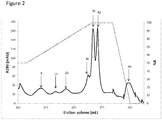
Figure 2 shows the second purification step of the unknown horse dander component by hydrophobic interaction chromatography where A280 absorbance is indicated by solid line and the percentage of Tris pH 8.0 buffer in pump B (%B) is indicated by a hatched line. Arrows indicate the position of the fractions that were tested for IgE reactivity. Vertical bars indicate the pool containing the active fraction that was subjected to further purification. -
Figure 3 shows the third purification step of the unknown horse dander component by anion exchange chromatography where A280 absorbance is indicated by solid line and conductivity is indicated by a hatched line. Arrows indicate the position of the fractions that were tested for IgE reactivity. Horizontal bars indicate the pools that were further tested of which one contained the active fraction that was subjected to further purification. -
Figure 4 shows the fourth purification step of the unknown horse dander component by reversed phase chromatography where A280 absorbance is indicated by solid line and the percentage of 0.05% TFA 90% acetonitril buffer in pump B (%B) is indicated by a hatched line. Vertical bars indicate the pooling of the three peaks (labelled 1,2 and 3) that each was subjected to SDS PAGE analysis and tested for IgE reactivity. -
Figure 5 shows SDS-PAGE analysis of reduced and non-reduced samples of the three peaks from the RPC purification step. Lane M contains molecular weight marker proteins with the molecular weights indicated to the left. -
Figure 6 shows the postulated nucleotide (a) and amino acid (b) sequence of the full length proteinEqu c s chain 1. In (c) the amino acid alignment with the homologousmolecule Fel d 1chain 1 from cat is shown. -
Figure 7 shows the postulated nucleotide (a) and amino acid (b) sequence of the full length proteinEqu c s chain 2. In (c) the amino acid alignment with the homologousmolecule Fel d 1chain 2 from cat is shown. -
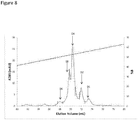
Figure 8 shows the RPC purification step of an anion exchange chromatography pool, performed using a steeper gradient in order to increase the concentration of protein in the fractions. Vertical bars indicate the fractions D4 and D5 that were subjected to MS/MS in-solution digestion analysis. -
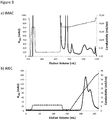
Figure 9 shows the purification of recombinant Equ c s by IMAC (a) where A280 absorbance is indicated by solid line and conductivity is indicated by a hatched line. The imidazol elution gradient ranges from 800-1200 mL. Arrows indicate the peak that was pooled and subjected to anion exchange chromatography (b). Arrrows indicate thepeak -
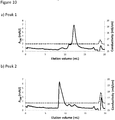
Figure 10 shows analytical gel filtration analysis of recombinant Equ c s ab where A280 absorbance is indicated by solid line and conductivity is indicated by a hatched line. In (a) analysis of rEqu c s ab,peak 1 from AIEC, and in (b) rEqu c s ab,peak 2 from AIEC, is shown. In (c) SDS PAGE analysis of recombinant Equ c s ab ofpeak 1 andpeak 2 from AIEC under both reducing and non-reducing conditions is shown. -
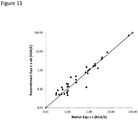
Figure 11 shows the correlation between the IgE reactivity of native and recombinant Equ c s in 35 horse dander sensitised subjects. The 0.35 kUA/L and 0.1 kUA/L levels are indicated by dotted lines. -
Figure 12 shows levels of IgE antibodies to horse dander extract (HDE),Equ c 1,nEqu c 2,nEqu c 3.nEqu c 4,rEqu c 15k and rEqu c s in a cohort of 25 horse dander allergic subjects. The number of observations below 0.1 kUA/L is indicated in brackets for each component. Dotted line indicates the 0.35 kUA/L level and solid line indicates the 0.1 kUA/L level. Horizontal bars indicate median levels of IgE. -
Figure 13 compares IgE antibody binding to rEqu c s andrFel d 1 in a cohort of horse dander sensitised subjects. The 0.35 kUA/L and 0.1 kUA/L levels are indicated by dotted lines. - The following sequences are listed in the sequence listing.
SEQ ID NO: Description 1 amino acid sequence of the 5 kDa chain of Equ c s including signal peptide 2 predicted amino acid sequence of the 10 kDa chain of Equ c s including signal peptide 3 predicted amino acid sequence of the 5 kDa chain of Equ c s 4 predicted amino acid sequence of the 10 kDa chain of Equ c s 5 amino acid sequence for the whole recombinant protein rEqu c s ab 6 nucleic acid sequence encoding the whole recombinant protein rEqu c s ab 7 amino acid sequence for the alternative recombinant protein rEqu c s ba 8 nucleic acid sequence encoding the alternative recombinant protein rEqu c s ba 9 Codon optimized nucleic acid molecule encoding chain 1 10 Codon optimized nucleic acid molecule encoding chain 2 11 Forward primer for chain 1, PCR 1 12 Forward primer for chain 2, PCR 1 13 Forward primer for chain 1, PCR 2 14 Forward primer for chain 2, PCR 2 15 Reverse primer for chain 1, PCR 2 16 Reverse primer for chain 2, PCR 2 17-33 Peptide fragments disclosed in Table 7 34-43 Peptide fragments disclosed in Table 8 44 Double sequence given by N-terminal sequencing analysis by Edman degradation of the RPC peak 2 45 The complete DNA sequence of the postulated sequence denoted Equ c s , chain 1 46 The complete DNA sequence of the postulated sequence denoted Equ c s , chain 2 47 Fel d 1 chain 1 48 Fel d 1 chain 2 - In one aspect the present invention relates to an isolated horse allergen, herein denoted Equ c s, belonging to the secretoglobin family, showing an electrophoretic mobility (apparent molecular weight) corresponding to approximately 18 kDa under non-reducing conditions, and comprising a first peptide chain having a molecular weight in the order of 5 kDa and a second peptide chain having a molecular weight in the order of 10 kDa, linked together by one or more disulphide bonds. This aspect of the invention also comprises variants and fragments of Equ c s with certain sequence identity to native Equ c s, as defined above, and preferably comprising at least one IgE antibody epitope of native Equ c s. Such variants and fragments preferably have IgE reactivity to Equ c s reactive sera and at least 10% of the IgE binding to the original rEqu c s molecule can be inhibited by such a variant or fragment, as determined by the assay described in Example 10. Also in the other aspects of the invention described below, the term "Equ c s" is, for simplicity, used to also include such variants and fragments thereof.
- In another aspect, the invention relates to an isolated nucleic acid molecule encoding the allergen according to the first-mentioned aspect, as well as to a vector containing the nucleic acid molecule, and to a host cell containing the vector. Recombinant proteins or peptides produced by such a vector-containing host cell may be glycosylated or not depending on the host cell used.
- In a further aspect, the invention relates to an in vitro method for assessment of a Type I allergy in a patient, wherein a body fluid sample, such as a blood or serum sample from the patient, is brought into contact with Equ c s or a composition according to the previous aspect, whereby it can be determined whether or not the patient sample contains IgE antibodies that bind specifically to the Equ c s. Such a method may be carried out in any manner known in the art. The Equ c s may e.g. be immobilized on a solid support, such as in a conventional laboratory immunoassay, in a microarray or in a lateral flow assay, or used as a fluid-phase reagent.
- In yet a further aspect, the invention relates to an in vitro method for assessment of a Type I allergy in a patient, wherein a body fluid sample, such as a blood or serum sample from the patient, is brought into contact with Equ c s, whereby it can be determined whether or not the patient sample contains IgE antibodies that bind specifically to the Equ c s but not to other horse allergen components, such as
Equ c 1,Equ c 2,Equ c 3,Equ c 4/5 orEqu c 15k. A patient showing IgE reactivity against Equ c s, but not against other horse allergen components, is likely to be primarily sensitised to cats and not to horses. - In the above mentioned aspects, the wildtype Equ c s molecule may, as mentioned above, be replaced with fragments or variants of Equ c s, natural or man-made, comprising IgE antibody epitopes from the wildtype protein.
- The invention further relates to a method of treatment of Type I allergy comprising administering to a patient in need of such treatment Equ c s or a modified Equ c s, as explained below. This aspect of the invention also relates to the use of the Equ c s in such immunotherapy, including e.g. component-resolved immunotherapy (Valenta and Niederberger 2007). In one embodiment of this aspect, the Equ c s may be used in its natural form or in a recombinant form displaying biochemical and immunological properties similar to those of the natural molecule. In another embodiment, the Equ c s may be used in a modified form, generated chemically or genetically, in order to abrogate or attenuate its IgE antibody binding capacity, while preferably being capable of eliciting an IgG response in a treated individual. Examples of modifications include, but are not limited to, fragmentation, truncation, tandemerization or aggregation of the molecule, deletion of internal segment(s), substitution of amino acid residue(s), domain rearrangement, or disruption at least in part of the tertiary structure by disruption of disulfide bridges or its binding to another macromolecular structure, or other low molecular weight compounds. In yet another embodiment of this aspect, the individual 10 kDa and/or 5 kDa subunits of Equ c s are used as modified Equ c s.
- In all of the above mentioned aspects of the invention, the Equ c s protein may be purified from its natural source, such as from urine, saliva or other body fluids, or from tissue, such as hair or dander, from horse. It may also, as mentioned above, be produced by recombinant DNA technology or chemically synthesized by methods known to a person skilled in the art or described in the present application.
- The allergenic horse protein described here, Equ c s, belongs to the secretoglobin protein family, specifically one subfamily which comprises tetrameric proteins formed by two heterodimeric subunits. The heterodimer consists of two chains derived from different genes linked together by disulfide bridges (Klug et al. 2000). The horse secretoglobin described here is a 18±2 kDa heterodimer, herein referred to as Equ c s, consisting of a 5±2 kDa and a 10 ±2 kDa subunit, respectively, which for the purposes of this invention are referred to as the 5 and 10 kDa subunits, respectively. The molecular weight assignments are according to their apparent molecular weight as observed in SDS-PAGE, as described in Example 3 below. It is understood that the apparent molecular weights will vary depending on the separation conditions, including electrophoretic separation medium and concentration thereof, linear or gradient buffer used, etc. Also, the 10 kDa subunit contains an N-glycosylation site, the occupation of which by a glycan structure may affect the apparent molecular weight.
- The amino acid sequence of the 5 kDa chain has the predicted amino acid sequence(SEQ ID NO: 3) and a theoretical molecular weight of 7.9 kDa.

- The amino acid sequence of the 10 kDa chain has the predicted amino acid sequence(SEQ ID NO: 4) and a theoretical molecular weight of 9.6 kDa.

- It is to be noted that structurally related proteins have been described in a wide range of mammalian species but only two proteins have been defined as allergens, the major cat allergen Fel d 1 (Acc no P30438 and P30440) and
Equ c 15k (WO2011/133105 ). - Although the horse dander
allergens Equ c 1,Equ c 2,Equ c 3,Equ c 4/5 andEqu c 15k cover most of the IgE reactivity to horse dander extract observed in horse allergic patients, we have encountered several cases of cat allergic individuals demonstrating IgE reactivity to horse dander extract without concomitant reactivity to any of the five known horse allergen components. This invention describes the identification and characterisation of the horse allergen responsible for this unknown IgE reactivity to horse dander extract leading to the discovery of a protein homologue to the catallergen Fel d 1.
In a collection of sera from cat sensitised subjects a number of sera could be characterised having reactivity to horse dander extract while no reactivity to any of the known horse dander allergens could be detected. Using the sera described above, the IgE binding to horse dander extract could be inhibited byrecombinant Fel d 1, indicating that the IgE reactivity is directed to a horse protein that is immunologically similar toFel d 1. - With the aid of these sera, a new major allergen could be purified from horse dander and identified as a member of the secretoglobin protein family. The novel horse protein, herein referred to as Equ c s, consists of one 5 kDa amino acid chain and one 10/11 kDa amino acid chain joined together by disulfide bridges. Considering the fact that the two polypeptide chains are encoded by separate genes, this study demonstrates the presence of a heterodimeric protein that has not previously been anticipated by bioinformatic studies of the horse genome. It is distinct from previously known horse allergens. This allergen represents an important addition to the panel of known horse allergens and will be useful in the diagnosis of horse allergy. Since this is an allergen that is cross reactive to the main cat
allergen Fel d 1, IgE reactivity to this molecule may reflect cross reactive sensitisation to horse dander that may or may not be associated to clinical symptoms. - The examples below illustrate the present invention with the isolation and use of the secretoglobin denoted Equ c s from horse. The examples are only illustrative and should not be considered as limiting the invention, which is defined by the scope of the appended claims.
- Horse dander extract, cat dander extract and
Fel d 1 regular ImmunoCAP tests were used. Experimental immunoCAP tests usingrecombinant Equ c 1 andEqu c 15k as well asEqu c 2 andEqu c 4 purified from horse dander andEqu c 3 purified from horse serum were produced essentially as described in PatentWO2011/133105 ).
A collection of sera having high level of sensitisation to cat dander extract were tested for IgE reactivity to cat and horse dander components. The five sera identified here were characterised by high IgE reactivity to cat dander extract,Fel d 1 and horse dander extract without concomitant reactivity to any of the five known horse allergen components (table 1). These sera thus detected an unknown allergen component in horse dander extract.
The selected sera were utilised in inhibition tests using both horse dander extract and cat dander extract as solid phase (table 2). As inhibitorsrecombinant Equ c 15k,Fel d 1 andFel d 7 respectively were used at a final concentration of 100 µg/ml. As an inhibition control buffer, 0.1 M sodium phosphate buffer, pH 7.4, containing 0.3% human serum albumin was used. Means of duplicate determinations of each inhibition were calculated and the fraction of inhibition was calculated as the fraction of the binding using inhibition control buffer that could be quenched with each inhibitor. In these selected sera, binding to cat dander extract could be almost completely inhibited by Fel d 1 (table 2a). None of the other inhibitors tested showed any inhibition. This demonstrates that the IgE binding to cat dander extract is dominated by reactivity toFel d 1. Likewise, the binding to horse dander extract solid phase (table 2b) could be fully inhibited byrFel d 1 but none of the other inhibitors. This demonstrated that the binding to horse dander extract by these sera is directed to a horse dander component that is immunologically similar to the catallergen Fel d 1. AlthoughEqu c 15k belongs to the secretoglobin family this protein did not demonstrate any inhibition of the binding to horse dander extract, indicating that the horse component searched for is notEqu c 15k. This can be explained by the fact that the two proteins belong to different sectretoglobin subfamilies,Fel d 1 belongs to the B-E subfamily andEqu c 15k belongs to the C-D subfamily (Laukaitis and Karn 2005), WO2011/133105 - By use of the sera described in example 1, an unknown allergen component, similar to
Fel d 1, could be detected in horse dander extract and by fractioning horse dander extract by chromatographic procedures and immobilising these fractions on an ImmunoCAP solid phase, the unknown component could be followed during several chromatographic steps. - Horse dander (Allergon, Välinge, Sweden) was extracted in 20 mM MOPS, pH 7.6, 0.15 M NaCl (MBS = MOPS-buffered saline), clarified by centrifugation and filtered through a 0.45 µm mixed cellulose ester filter (Millipore, Billerica, MA, USA). As a first purification step, the clarified extract was applied to a
Superdex™ 75 column (XK26/100, Vt= 505 mL, GE Healthcare Bio-Sciences AB, Uppsala, Sweden) for size exclusion chromatography (SEC) and elution was performed with MBS at a flow rate of 2 mL/min.
The chromatogram is shown inFigure 1 in which six fractions, indicated by arrows, were immobilised on solid phase as described previously (Marknell DeWitt, Niederberger et al. 2002). The IgE binding using the sera described above to the immobilised fractions are shown in table 3 which indicates that the testedfractions Figure 1 ) were pooled and subjected to hydrophobic interaction chromatography. - The pool from SEC was adjusted to 1 M NH4SO4 and applied to a Phenyl Sepharose™ HP column (HR10/10, Vt= 8.0 mL, GE Healthcare Life Sciences) equilibrated with 1 M NH4SO4 in 20 mM tris pH 8.0. Elution was performed in a linear NH4SO4 gradient from 1 M to 0 M NH4SO4 (indicated as 50%-100%B in the chromatogram in
figure 2 betweenelution volumes 140 to 260 mL). In order to elute strongly bound proteins, the pump A was washed and the buffer was changed to 30% isopropanol in 20mM Tris pH 8.0. An isopropanol gradient from 0-30% isopropanol was then used to elute remaining protein on the column (indicated as a gradient from 100%-0%B on the chromatogram betweenelution volumes 285 and 325 mL). Seven peaks, indicated in the chromatogram, were diluted 1:2 in coupling buffer (0.1M NaHCO3, pH8.0), immobilised on ImmunoCAP solid phase and tested for IgE reactivity using the previously described detector sera (table 4). The highest IgE reactivity was obtained in the isopropanol wash gradient infraction 60. Fractions 58-66 were pooled and subjected to anion exchange chromatography. - The HIC pool was conditioned by adding half the volume of the pool of Tris pH 8.5 to the HIC pool. The pool was subsequently applied to an anion exchange column Source™ 15Q (PE4.6/100, Vt= 1.66 mL, GE Healthcare Life Sciences) equilibrated with 20 mM Tris, pH 8.5. Upon elution in a linear 0-0.50 M NaCl gradient in the same buffer the protein was resolved into several peaks (
Figure 3 ) of which seven were immobilised after dilution 1:4 in coupling buffer. Since IgE reactivity to the unknown component was detected in most of the fractions at this dilution (table 5a), three pools, B4-B1, C1 -C4 and C1-C11, were pooled based on protein band pattern on SDS PAGE and immobilised after dilution 1:20 in coupling buffer. IgE analysis of the more diluted pooled fractions revealed that the highest activity (table 5b) was found in the first pool, B4-B1 which was subjected to a final chromatographic RPC purification step. - The anion exchange pool was conditioned by adding TFA to a final concentration of 0.065% and subjected to a final RPC purification step by applying the sample to a
Source™ 15 RPC column (Resource, Vt= 3.2 mL; GE Healthcare Life Sciences) equilibrated with 0.065% TFA in water. Elution was performed in a linear 0-60% gradient of buffer B, consisting of 0.05% TFA in 90% acetonitrile. A Three peaks were eluted near the end of the gradient (Figure 4 ) that were immobilised on solid phase and tested. According to table 6 the two first peaks contained high levels of the unknown component of which peak no 2 contained slightly more than the first peak. - SDS PAGE analysis of the RPC fractions revealed a similar pattern for the first two RPC peaks, one 5 kDa band and a double band at 10/11 kDa under reducing conditions that came together at a broad band at 18 kDa under non-reducing conditions. This band pattern is consistent with proteins from the secretoglobin family that typically contain two bands at 5 and 10 kDa under reducing conditions and one band at 15-20 kDa under non-reducing conditions. The largest of the two bands band is glycosylated and therefore may appear diffuse or as in this case appear as a double band.
N-terminal sequencing analysis by Edman degradation of theRPC peak 2, performed essentiallly as described in (Mattsson, Lundgren et al. 2009), revealed a double sequence that became less clear after seven residues:Amino acid residue no: 1 2 3 4 5 6 7 First alternative D P S F Y A V Second alternative - I R P A V - - Since the relative amounts of the amino acids in each cycle were similar it was not possible to establish a primary and a secondary sequence from these data. The double sequence is also shown in the sequence listing as in SEQ ID NO: 44.
In gel digestion with trypsin on spots from one dimensional SDS PAGE gelelectrophoretic bands Bruker Daltonics Autoflex 2 instrument (Bruker Daltonics, Bremen, Germany) followed by peptide mass fingerprint (PMF) analysis did not result in significant matches with any known proteins in the NCBI-NR database except for the 5 kDa band that matched a predicted sequence of an uncharacterised horse protein (XP_005596696). However, although a part of the sequence of this record was homologous to secretoglobins, the molecular weight was too high for this family of molecules and did not match the band that it was picked out from. It was assumed that this predicted record was faulty. - The cat allergen
protein Fel d 1, which was immunologically similar to the unknown horse dander protein as demonstrated in example 1, consists of two amino acid chains,chain 1 and chain 2 (acc no: NP_001041618 and NP_001041619 respectively) joined together by disulfide bridges.
A TBLASTN search of a horse genome database (wsg) with the sequence ofFel d 1, chain 1 (NP_001041618) resulted in a match of aa 17-79 to the translation of nucleotide positions 77633-77453 (of the reverse strand) of Acc No. AAWR02030062, a 105199 bp segment of the horse genome sequence.
A larger segment surrounding this sequence, 90000-70021 of Acc No. AAWR02030062 was fed into the gene finding program FGENESH+ together with the precursor sequence ofFel d 1chain 1. The program searches for homologous genes within a genomic sequence.
The result was a postulated sequence consisting of three exons Acc No. AAWR02030062: - 77850 -> 77790
- 77632 -> 77445
- 76428 -> 76399
- The complete DNA sequence of this postulated sequence, denoted Equ c s,
chain 1, is shown inFigure 6a (SEQ ID NO: 45) encoding 92 amino acid residues (SEQ ID NO: 1,Figure 6b ), of which the first 22 residues were predicted by SignalP to form a signal peptide. The mature protein deduced from the cloned cDNA consisted of 70 amino acid residues, including three cysteins, and had a predicted molecular mass of 7.9 kDa and an isoelectric point of 4.96. A protein BLAST homology search using this predicted sequence reveals an amino acid sequence with homology to secretoglobins. The predicted sequence has 67% amino acid identity toFel d 1 chain 1 (SEQ ID NO: 47) (Figure 6c ). - Similarly to above A TBLASTN search of a horse genome database (wsg) with the sequence of
Fel d 1, chain 2 (NP_001041619) resulted in a match of aa 21-85 to the translation of nucleotide positions 82588-82782 (of the forward strand) of Acc No. AAWR02030062, a 105199 bp segment of the horse genome sequence.
A larger segment surrounding this sequence, 70021-94020 of Acc No. AAWR02030062 was fed into the gene finding program FGENESH+ together with the precursor sequence ofFel d 1chain 2. The program searches for homologous genes within a genomic sequence.
The result was an incomplete postulated sequence consisting of two exons from Acc No. AAWR02030062: - 82004 -> 82064
- 82589 -> 82770
- Total RNA was prepared from horse skin using the RNAqueous kit (Ambion, Austin, TX, USA). Polyadenylated RNA was isolated from total RNA using the mRNA Purification kit and first strand cDNA was prepared using the First-Strand cDNA Synthesis kit (both from Thermo Fisher Scientific).3' RACE was performed according to Frohman (Frohman 1993), using a gene-specific forward oligonucleotide primer from the untranslated sequence before the starting codon,
- 5'-ATAAAAGGGCTGCAGAATTG-3'(SEQ ID NO: 11, chain 1) and
- 5'-GCAGCAGAAACCCTGCCCTG-3' (SEQ ID NO: 12, chain 2).
- 5'-GTGAGCACCTGCCACCTG-3' (SEQ ID NO: 13, chain 1) and
- 5'-GAAGAGCATTCTAGCAGTTG-3' (SEQ ID NO: 14, chain 2)
- 5'-GAATCTTCTAATCAGACAC-3' (SEQ ID NO: 15, chain 1) and
- 5'-GGTAGAGGAGACAGGTGTC-3' (SEQ ID NO: 16, chain 2).
- Re-evaluation of the double amino acid sequence described in example 3 was performed using the postulated sequences of Equ c s. The double sequence can now be interpreted as DICPAV (residues 1-6 of SEQ ID NO: 3) and CPSFYAV (residues 1-7 of SEQ ID NO: 4) which are identical to the postulated N-terminal sequences of the
mature chain 1 andchain 2 of the Equ c s protein.
In gel digestion of the 5, 10 and 11 kDa bands of the reduced sample ofpeak 2 infigure 5 and the 18 kDa band of the non-reduced sample of the same peak was subjected to MALDI ToF peptide mass fingerprint (PMF) analysis, essentially as described in (Mattsson, Lundgren et al. 2009). In the 5 kDa band eight different peptides were detected having a mass that matched hypothetical trypsin cleaved peptides in the postulatedEqu c s chain 1 sequence (table 7a). these peptides covered 89% of the postulated mature sequence including the N-terminal and C-terminal ends of the amino acid chain.
In the 11 kDa band two different peptides were detected that matched the mass of hypothetical trypsin cleaved peptides in the postulatedEqu c s chain 2 sequence (table 7b). These peptides covered 32% of the postulated mature sequence including the N-terminal end of the amino acid chain. The reason that only a small part of thechain 2 sequence could be identified is that it contains an N-glycosylation and the fact that the trypsin cleavage sites are distributed so that either too large or too small peptides are produced. In the 18 kDa band, peptides from bothchain 1 andchain 2 could be found.
In order to increase the signal strength of these peptides to enable MS/MS analysis, two fractions from an RPC chromatography purification similar to that as described in example 2 but using a steeper gradient (Figure 8 ) whereby the first two peaks do not become fully resolved were used. The fractions from these first two peaks (fraction D5 and D4) were reduced, alkylated with iodoacetamid and subjected to in solution digestion by trypsin. Using these samples, the whole amino acid sequence covered by the PMF analysis c from the 5 and 10 kDa band could be verified by MS/MS analysis to have sequences identical to the postulated fragments (table 8). A further analysis from this sample assumed semitrypsin cleavage sites (i.e. allowing that only one of the ends of each peptide was cleaved by trypsin) identified a large peptide fragment near the C terminal end of chain 2 (table 8). - The SDS-PAGE analysis (
Fig. 5 ) and the mass spectrometric analysis above provides evidence that the 5 and 10 kDa amino acid chains can be identified as Equ c s,chain SEQ ID No 3, encoded by one gene, withSEQ ID No 4, encoded by a different gene, that together make up a previously unknown heterodimeric secretoglobin protein. - A synthetic Equ c s single chain gene was designed by combining nucleotide sequences encoding the amino acid sequences of the 5 kDa and the 10 kDa subunits with a sequence encoding a linker peptide comprising 3x (Gly-Gly-Gly-Gly-Ser, residues 72-86 of SEQ ID NO: 5). The full-length synthetic gene was cloned into the NdeI and XhoI sites of vector pET23a(+) (Novagen, Madison, WI, USA), adding a C-terminal hexahistidine tag to enable protein purification by immobilised metal ion affinity chromatography (IMAC).
The amino acid sequence for the whole recombinant protein (denominated rEqu c s ab) is
- The nucleotide sequence was designed for optimal codon usage in E. coli (DNA2.0, Menlo Park, CA, USA).
The nucleic acid sequence encoding the whole recombinant protein is
- The nucleic acid
sequence encoding chain 1 is

- The nucleic
acid encoding chain 2 is
- An alternative construct was designed having the 10 kDa subunit at the N-terminal end followed by the linker and the 5 kDa subunit, thereby connecting the two subunits in the other end of each amino acid chain. The amino acid sequence for the alternative recombinant protein (denominated rEqu c s ba) isand the nucleic acid sequence encoding the same protein is


- The plasmid DNA constructs was transformed into E.coli strain BL21-AI (Invitrogen) and recombinant Equ c s single chain protein was produced using a 3-litre bioreactor (Belach Bioteknik, Skogås, Sweden).
- The method of purification of recombinant Equ c s were almost identical for the two variants of the protein. Harvested cells was resuspended in 20 mM Tris-HCl pH 8.0 and lysed by passing the suspension through an Emulsiflex C5 homogenizor (Avestin, Ottawa, Ontario, Canada) at 10 000-15 000 kPa. After clarification by centrifugation and filtration, the supernatant was applied to a Chelating Sepharose FF column (GE Healthcare Life Sciences), charged with NiSO4. Column washing was performed with 20 mM imidazole in 20 mM Tris-HCl pH 8.0, 0.15 M NaCl and the recombinant protein eluted in a linear 20-500 mM gradient of imidazole in the same buffer (
Figure 9a ). Further purification of the recombinant protein was performed by AIEC in 20 mM Tris-HCl pH 8.0 using a Q Sepharose™ FF column (GE Healthcare Life Sciences). The protein was eluted using a linear 0-0.6 M NaCl gradient resulting in a double peak where the two peaks were pooled separately (figure 9b ). The protein concentration of the preparations was determined from absorbance at 280 nm, using a calculated extinction coefficient of 0.34 per mg/mL. - Analytical gel filtration of
peak 1 andpeak 2 of rEqu c s ab demonstrated thatpeak 1 contained a mixture of dimeric and monomeric form of rEqu c s (Fig 10 a) whereaspeak 2 contained mostly aggregated material (Fig 10 b) . This result was also the case for the other recombinant form, rEqu c s ba (data not shown).
SDS PAGE analysis of single chain recombinant Equ c s demonstrated a single band at 19 kDa for reducing conditions and a slightly lower apparent molecular weight band at 16 kDa for nonreducing conditions (Figure 10c ). During non-reducing conditions higher molecular weight band predominantly at 39 kDa were also present, supposedly representing a dimeric form of the protein.
N-terminal sequence analysis of the first variant of rEqu c s (rEqu c s ab) resulted in a clear and unambiguous sequence readout with no deviation from expected sequence and where the initiator methionine was fully retained. In the preparation of the second variant, rEqu c s ba, the initiator methionine was retained in approximately half of the sample but the remainder of the preparation started at the second amino acid chain. In conclusion, both of the recombinant preparations contained intact rEqu c s. - Each of
peak - Further analysis of IgE reactivity using sera from 35 horse dander sensitized subjects was performed comparing recombinant Equ c s ab with the native
purified protein fraction 2 from RPC (Fig 4 ).
There was a good agreement (r=0.99) between IgE binding to purified native Equ c s and recombinant Equ c s (Fig. 11 ), demonstrating that the recombinant protein was immunologically active and structurally similar to the native protein. These data provide strong evidence that the amino acid sequence of the 5 kDa (SEQ ID NO: 3) and 10 kDa (SEQ ID NO: 4) subunits of Equ c s, as predicted from the genomic sequence information identified, are correct and represents the amino acid sequence of the purified horse dander allergen Equ c s. - Sera from 25 horse allergic subjects from Spain (n=20) and Sweden (n=5) were used in the study. All patients had a doctors' diagnosis of horse allergy with symptoms such as asthma, rhinoconjunctivitis and urticaria, and a positive skin prick test to horse dander extract. All samples and clinical data were collected under the approval of the local ethics committee at each center contributing to the biobank in which the samples and data had been deposited.
- The levels of specific IgE antibodies to horse dander extract,
nEqu c 1,nEqu c 2,nEqu c 3 andnEqu c 4,rEqu c 15k and rEqu c s ab among the 25 horse allergic subjects were determined using ImmunoCAP™ (Fig. 12 , Table 10). In Table 10, all ImmunoCAP™ levels are displayed as kUA/L and the origin of each patient is indicated by ES (Spain) or SE (Sweden). Recorded allergic symptoms on exposure to horse are rhinitis (rhin), asthma (astm), urticaria (urt) or anaphylaxis (anaph).
Of the 25 sera tested, 13 (52%) showed an IgE response ≥0.35 kUA/L to rEqu c s whereas 12 (48%) had IgE reactivity torEqu c 15k, 16 (64%) tonEqu c 2 and 19 (76%) tonEqu c 1. BothnEqu c 3 andnEqu c 4/5 appeared as minor allergens among the subjects studied, binding IgE ab from only 5 (20%) and 7 (28%) of the tested sera, respectively. In this study cohort none of the patients reacted exclusively to rEqu c s whereas four (16%) and two of the 25 sera reacted exclusively toEqu c 15k andEqu c 1, respectively. On average among allEqu c 15k-reactive sera, the concentration of IgE antibody to Equ c s amounted to 30% of that to horse dander. - The corresponding relative concentration of IgE antibody to
nEqu c 1 was 52%, whereas fornEqu c 2,nEqu c 3,nEqu c 4/5 andEqu c 15k the relative concentrations were 35%, 69%, 9% and 37%, respectively, among sera specifically reactive to those allergens. Twenty-four of the 25 sera showed IgE antibody binding to horse dander extract. All of those sera showed binding to at least one of the five individual horse allergens tested. The sum of the IgE binding levels to the individual component matched or exceeded that to horse dander extract. - Since the unknown IgE reactivity that was the starting point of this study was inhibited by
Fel d 1, the relationship between recombinant Equ c s andFel d 1 was investigated. The levels of IgE binding toFel d 1 was evaluated in sera of 35 horse dander sensitized subjects, including those 25 horse allergic patients described in Example 8. There was significant correlation (r=0.92) between the IgE levels to recombinant Equ c s and rFel d 1 (Fig. 13 ) and for almost all of the subjects the IgE reactivity toFel d 1 was higher than that of Equ c s.
In order to further investigate the relationship between Equ c s andFel d 1, the five sera used in example 1 were tested for cross-inhibition, using both horse dander extract,rFel d 1 and rEqu c s on solid phase as well asrEqu c 15k, rEqu c s andrFel d 1 as inhibitors at a final concentration of 100 µg/mL. As an inhibition control buffer, 0.1 M sodium phosphate buffer, pH 7.4, containing 0.3% human serum albumin, was used. Means of duplicate determinations of each inhibition were calculated and the fraction of inhibition was calculated as the fraction of the binding using inhibition control buffer that could be quenched with each inhibitor.
In these selected sera, inhibition of binding to horse dander extract could only be achieved byFel d 1 and Equ c s indicating that Equ c s indeed is the unknown protein in horse dander extract that is accountable for the binding of these sera (Table 11A). Binding toFel d 1 immunoCAP can be inhibited byFel d 1 itself but not by Equ c s (Table 11B) whereas binding to Equ c s could be inhibited by bothFel d 1 and Equ c s (Table 11C). This demonstrates that the IgE binding betweenFel d 1 and Equ c s is indeed cross reactive as both the high extent of sequence homology between the two proteins (Figure 6C and7C ) and the high correlation of IgE binding to a population of horse dander sensitised sera suggests. Furthermore, the fact thatFel d 1 could inhibit binding to Equ c s solid phase but Equ c s could not inhibit binding toFel d 1, as well as the fact that the IgE binding toFel d 1 was always higher than to Equ c s in the population of horse dander sensitised sera suggested that these sera were originally sensitised toFel d 1 and the binding to Equ c s was a result of cross reactivity. - The original allergenic protein, in this case Equ c s, is immobilized to a solid support. Serum samples from at least three representative human patients sensitized to the relevant species and showing IgE reactivity to the original allergenic protein from that species are incubated for 2 h at room temperature with the analyte at a final concentration of 100 µg/mL and, in parallel as negative controls, with buffer alone and the non-allergenic maltose binding protein (MBP) of E. coli. The samples are then analysed for IgE binding to solid supports carrying immobilized Equ c s to study whether preincubation with the variant or fragment of Equ c s specifically inhibits or significantly lowers IgE binding.
Table 1 IgE binding characteristics of sera utilised for detection of an unknown horse dander component. CDE rFel d 1 HDE rEqu c 1 nEqu c 2nEqu c 3nEqu c 4rEqu c 15kSerum kUA/L kUA/L kUA/L kUA/L kUA/L kUA/L kUA/L kUA/L A >100 >100 12,0 0,19 0,46 0,05 0,11 0,08 B 97,0 95,1 11,4 0,21 0,32 0,07 0,16 0,08 C 87,9 >100 10,9 0,13 0,21 0,03 0,08 0,06 D 61,9 69,0 7,36 0,11 0,16 0,04 0,09 0,06 E 67,6 61,0 6,28 0,02 0,04 0,14 0,02 0,00 CDE- cat dander extract
HDE - horse dander extractTable 2 Inhibition of IgE binding to a) cat dander extract and b) horse dander extract, using the inhibitors Equ c 15k,Fel d 1 andFel d 7.a) binding to cat dander extract solid phase Serum Inhibitor Concentration (kUA/L) Inhibition (%) A buffer 73,3 0 Equ c 15k 74,6 -2 Fel d 1 13,5 82 Fel d 7 76,2 -4 B buffer 59,7 0 Equ c 15k 56,4 6 Fel d 1 8,5 86 Fel d 7 58,7 2 C buffer 55,9 0 Equ c 15k 57,2 -2 Fel d 1 9,06 84 Fel d 7 57,6 -3 D buffer 39,1 0 Equ c 15k 39,1 0 Fel d 1 6,17 84 Fel d 7 37,7 4 E buffer 53,6 0 Equ c 15k 51,2 4 Fel d 1 19,0 65 Fel d 7 56,7 -6 b) binding to horse dander extract solid phase Serum Inhibitor Concentration (kUA/L) Inhibition (%) A buffer 7,46 0 Equ c 15k 7,87 -5 Fel d 1 0,12 98 Fel d 7 7,99 -7 B buffer 6,42 0 Equ c 15k 6,57 -2 Fel d 1 0,22 97 Fel d 7 6,84 -6 C buffer 6,27 0 Equ c 15k 5,97 5 Fel d 1 0,11 98 Fel d 7 6,09 3 D buffer 4,20 0 Equ c 15k 4,04 4 Fel d 1 0,10 98 Fel d 7 4,42 -5 E buffer 4,64 0 Equ c 15k 4,56 2 Fel d 1 0,06 99 Fel d 7 4,70 -1 Table 3 IgE binding of detector sera to immobilised fractions from SEC chromatography of horse dander extract Fraction 18 22 26 30 34 38 Serum kUA/L kUA/L kUA/L kUA/L kUA/L kUA/L A 18,9 16,4 18,3 10,1 4,01 1,78 B 12,4 11,5 11,8 7,02 3,04 1,53 C 15,2 12,3 12,2 7,25 3,02 1,46 D 10,7 8,79 8,44 5,40 2,22 1,02 E 11,0 9,31 9,24 6,45 2,49 0,77 Table 4 IgE binding of detector sera to immobilised fractions from HIC chromatography of an enriched fraction from horse dander extract Fraction 8 17 23 36 39 42 60 Sera kUA/L kUA/L kUA/L kUA/L kUA/L kUA/L kUA/L A 0,21 0,25 0,44 2,67 3,99 11,9 22,9 B 0,29 0,65 0,55 2,69 3,15 9,43 16,8 C 0,17 0,22 0,30 2,03 3,25 9,98 18,0 D 0,17 0,19 0,26 1,59 2,27 6,62 11,4 E 0,06 0,16 0,19 1,15 2,20 8,32 13,9 Table 5 IgE binding of detector sera to immobilised fractions from anion exchange chromatography of an enriched fraction from horse dander extract. a) Immobilised fractions at dilution 1:4 Fraction B3 B2 C1 C2 C5 C8 D9 Sera kUA/L kUA/L kUA/L kUA/L kUA/L kUA/L kUA/ L A 25,7 25,5 23,5 23,3 20,3 20,5 5,2 B 18,1 17,9 17,9 16,9 16,2 16,3 4,0 C 17,1 16,8 16,8 16,7 17,1 16,2 3,8 D 11,6 11,7 11,7 11,2 11,4 10,3 2,6 E 14,9 14,4 14,7 13,9 14,5 12,1 2,0 b) Immobilised pools at dilution 1:20 Fraction B4-B1 C1-C4 C5-C11 Sera kUA/L kUA/L kUA/ L A 10,71 9,00 6,50 B 8,92 7,67 5,07 C 8,46 6,72 4,97 D 5,44 4,48 3,26 E 5,74 4,46 3,00 Table 6 IgE binding of detector sera to immobilised fractions from RPC chromatography of an enriched fraction from horse dander extract. Fraction 1 2 3 Sera kUA/L kUA/L kUA/ L A 17,8 21,1 5,52 B 13,2 15,1 4,41 C 13,5 15,2 4,14 D 9,68 11,0 2,97 E 8,10 9,99 1,92 Table 7 Peptide fragments matching the theoretical masses of trypsin cleaved Equ c s from in gel digestion of a) 5 kDa b and b) 10 kDa band of reduced sample and c) 18 kDa band of non-reduced sample. a) m/z measured m/z theoretical Equ c s chain range peptide SEQ ID NO: 2609.29 2609.28 1 23-45 -. DICPAVKEDVNIFLTGTPDDYVK.K 17 1825.85 1825.88 1 30-45 K.EDVNIFLTGTPDDYVK.K 18 1953.97 1953.98 1 30-46 K.EDVNIFLTGTPDDYVKK.V 19 908.50 908.49 1 46-52 K.KVSQYQR.N 20 780.39 780.39 1 47-52 K.VSQYQR.N 21 1068.59 1068.6 1 53-62 R.NPVILANAEK.I 22 1659.84 1659.88 1 71-85 K.LTAEDKENALSVLEK.I 23 891.39 891.35 1 86-92 K.IYSSDFC.- 24 b) m/z measured m/z theoretical Equ c s chain range peptide SEQ ID NO: 1697.84 1697.89 2 24-39 - CPSFYAVLGVLSLGSK.T 25 1510.67 1510.72 2 62-74 K.IQDCYNEAGVITK.I 26 c) m/z measured m/z theoretical Equ c s chain range peptide SEQ ID NO: 2609.31 2609.28 1 23-45 -.DICPAVKEDVNIFLTGTPDDYVK.K 27 1825.86 1825.88 1 30-45 K.EDVNIFLTGTPDDYVK.K 28 1953.93 1953.98 1 30-46 K.EDVNIFLTGTPDDYVKK.V 29 908.46 908.49 1 46-52 K.KVSQYQR.N 30 1068.56 1068.6 1 53-62 R.NPVILANAEK.I 31 1659.84 1659.88 1 71-85 K.LTAEDKENALSVLEK.I 32 1510.69 1510.72 2 62-74 K.IQDCYNEAGVITK.I 33 Table 8 Peptides identified by MS/MS from in-solution digested fraction from RPC. m/z measured theoretical m/z MS/MS score Equ c s chain range peptide SEQ ID NO: 802.34 802.41 22.2 1 23-29 -. DICPAVK.E 34 1825.96 1825.88 88.0 1 30-45 K.EDVNIFLTGTPDDYVK.K 35 908.46 908.49 55.3 1 46-52 K.KVSQYQR.N 36 780.34 780.39 25.9 1 47-52 K.VSQYQR.N 37 1068.58 1068.6 75.9 1 53-62 R.NPVILANAEK.I 38 1659.89 1659.88 82.4 1 71-85 K.LTAEDKENALSVLEK.I 39 891.31 891.35 14.8 1 86-92 K.IYSSDFC.- 40 1510.75 1510.72 127.2 2 62-74 K.IQDCYNEAGVITK.I 41 1697.90 1697.89 128.3 2 24-39 - CPSFYAVLGVLSLGSK.T 42 2573.50 2573.32 53.4 2 75-98 K.ISDLIIMGTITTSPECISHALSTL.T* 43 *Peptide identified by semitrypsin cleavage of protein. Table 9 IgE reactivity of rEqu s c preparations peak 1 rEqu c s ba peak 2 rEqu c s ba peak 1 rEqu c s ab peak 2 rEqu c s ab Sera kUA/I kUA/I kUA/I kUA/I A 24,87 23,09 23,40 23,12 B 15,70 15,02 15,61 15,23 C 15,15 15,34 16,77 15,57 D 15,41 15,59 16,10 15,50 E 13,16 12,99 13,05 13,23 Table 10 IgE reactivity of 25 horse allergic patients Patient no symptoms Country e3 nEqu c 1 nEqu c 2 nEqu c 3 nEqu c 4 rEqu c 15k rEqu c s 1 Rhin SE 1,55 0,06 0,21 0,12 0,30 1,31 0,14 2 Rhin, astm SE 1,28 1,24 0,56 0,00 0,16 0,03 0,48 3 Rhin ES 4,79 1,42 0,13 0,00 0,04 1,89 0,05 4 Rhin, astm ES 5,87 4,96 2,32 0,07 0,53 0,16 1,14 5 Rhin, astm ES 1,79 1,28 0,26 0,01 0,15 0,04 1,12 6 Rhin, astm ES 8,74 5,41 5,56 0,00 0,34 0,02 0,80 7 Rhin, astm ES 0,21 0,00 0,02 0,00 0,02 0,20 0,06 8 Rhin, astm ES 4,55 1,41 2,02 0,00 0,53 0,86 0,10 9 Rhin ES 0,55 0,00 0,01 0,00 0,02 0,63 0,06 10 astm, urt, a ES 17,31 6,20 2,67 11,90 3,11 6,07 0,08 11 Rhin ES 16,62 1,30 15,15 5,04 0,86 0,10 1,72 12 Rhin, urt ES 13,49 2,91 1,19 0,03 0,30 12,96 1,31 13 hin, astm, u SE 26,19 11,04 7,48 0,05 2,94 5,68 1,80 14 Rhin SE 6,58 3,42 1,08 0,01 0,48 1,16 2,23 15 Rhin, astm SE 7,01 0,03 0,04 0,04 0,20 7,45 0,13 16 Rhin ES 6,78 5,77 0,95 9,43 0,28 0,02 0,97 17 Rhin ES 28,73 21,92 5,89 33,75 1,19 0,24 9,25 18 Rhin, urt ES 13,81 5,44 14,10 0,05 0,13 0,07 0,14 19 Rhin, astm ES 5,18 0,06 0,08 0,06 0,18 5,81 1,54 20 Rhin, astm ES 0,78 0,76 0,09 0,01 0,02 0,02 0,06 21 Rhin, astm ES 1,96 1,63 0,58 0,01 0,16 0,04 0,32 22 Rhin, urt ES 1,28 0,24 1,75 0,01 0,02 0,06 0,23 23 Rhin, astm ES 6,94 2,49 0,30 0,00 0,10 1,36 4,02 24 Rhin, astm ES 3,18 1,46 1,31 0,00 0,13 0,60 0,05 25 Rhin ES 7,78 5,46 1,32 4,61 0,08 0,03 4,99 Table 11 Inhibition of IgE binding to a) horse dander extract, b) rFel d 1 and c) rEqu c s solid phase, using the inhibitors Equ c 15k, Equ c s and Fel d 1. a) binding to horse dander extract solid phase Serum Inhibitor Concentration (kUA/L) Inhibition (%) A buffer 6,71 0 Equ c 15k 7,40 -10 Equ c s 0,27 96 Fel d 1 0,13 98 B buffer 5,03 0 Equ c 15k 5,10 -2 Equ c s 0,33 93 Fel d 1 0,20 96 C buffer 5,49 0 Equ c 15k 5,50 0 Equ c s 0,25 96 Fel d 1 0,12 98 D buffer 5,01 0 Equ c 15k 5,32 -6 Equ c s 0,22 96 Fel d 1 0,13 97 E buffer 3,70 0 Equ c 15k 4,06 -10 Equ c s 0,09 98 Fel d 1 0,06 98 b) binding to rFel d 1 solid phase Serum Inhibitor Concentration (kUA/L) Inhibition (%) A buffer 54,97 0 Equ c 15k 57,45 -5 Equ c s 58,70 -7 Fel d 1 5,22 91 B buffer 42,07 0 Equ c 15k 43,80 -4 Equ c s 43,20 -3 Fel d 1 3,87 91 C buffer 47,30 0 Equ c 15k 49,98 -6 Equ c s 48,35 -2 Fel d 1 4,01 92 D buffer 44,15 0 Equ c 15k 45,25 -2 Equ c s 41,90 5 Fel d 1 3,85 91 E buffer 32,38 0 Equ c 15k 33,32 -3 Equ c s 29,99 7 Fel d 1 2,02 94 c) binding to rEqu c s solid phase Serum Inhibitor Concentration (kUA/L) Inhibition (%) A buffer 13,39 0 Equ c 15k 11,73 12 Equ c s 5,30 60 Fel d 1 0,59 96 B buffer 9,08 0 Equ c 15k 8,63 5 Equ c s 3,47 62 Fel d 1 0,45 95 C buffer 10,05 0 Equ c 15k 9,37 7 Equ c s 3,82 62 Fel d 1 0,40 96 D buffer 9,22 0 Equ c 15k 8,44 8 Equ c s 3,76 59 Fel d 1 0,40 96 E buffer 6,60 0 Equ c 15k 6,33 4 Equ c s 1,59 76 Fel d 1 0,24 96 -
- Akdis, C. A. (2006). "Allergy and hypersensitivity: mechanisms of allergic disease." Curr Opin Immunol 18(6): 718-726.
- Akdis, M. and C. A. Akdis (2007). "Mechanisms of allergen-specific immunotherapy." J Allergy Clin Immunol 119(4): 780-791.
- Asarnoj, A., R. Moverare, et al. (2010). "IgE to peanut allergen components: relation to peanut symptoms and pollen sensitization in 8-year-olds." Allergy .
- Asarnoj, A., C. Nilsson, et al. (2012). "Peanut .
- Breiteneder, H., K. Hoffmann-Sommergruber, et al. (1997). "Recombinant allergens; basic and practical considerations." Arbeiten aus dem Paul Ehrlich Institut - Bundesamt fur Sera und Impfstoffe - Zu Frankfurt Am(91): 80-86.
- Cabañas, R., M. C. López-Serrano, et al. (2000). "Importance of albumin in cross-reactivity among cat, dog and horse allergens." Journal of Investigational Allergology and Clinical Immunology 10(2): 71-77.
- Canonica, G. W., I. J. Ansotegui, et al. (2013). "A WAO - ARIA - GA2LEN consensus document on molecular-based allergy diagnostics." World Allergy Organ J 6(1): 17.
- Caubet, J. C., R. Bencharitiwong, et al. (2012). "Significance of ovomucoid- and ovalbumin-specific IgE/IgG(4) ratios in egg allergy." J Allergy Clin Immunol 129(3): 739-747.
- Codreanu, F., O. Collignon, et al. (2011). "A novel immunoassay using recombinant allergens simplifies peanut allergy diagnosis." Int Arch Allergy Immunol 154(3): 216-226.
- Cromwell, O., H. Fiebig, et al. (2006). "Strategies for recombinant allergen vaccines and fruitful results from first clinical studies." Immunol Allergy Clin North Am 26(2): 261-281, vii.
- Custovic, A., L. Soderstrom, et al. (2011). "Allergen-specific IgG antibody levels modify the relationship between allergen-specific IgE and wheezing in childhood." J Allergy Clin Immunol 127(6): 1480-1485.
- Dandeu, J. P., J. Rabillon, et al. (1993). "Hydrophobic Interaction Chromatography for Isolation and Purification of Equ.Cl, the Horse Major Allergen." Journal of Chromatography-Biomedical Applications 621(1): 23-31.
- Du Toit, G., G. Roberts, et al. (2015). "Randomized trial of peanut consumption in infants at risk for peanut allergy." N Engl J Med 372(9): 803-813.
- Ebisawa, M., R. Moverare, et al. (2012). "Measurement of Ara h 1-, 2-, and 3-specific IgE antibodies is useful in diagnosis of peanut allergy in Japanese children." Pediatr Allergy Immunol 23(6): 573-581.
- Ebisawa, M., R. Shibata, et al. (2012). "Clinical utility of IgE antibodies to omega-5 gliadin in the diagnosis of wheat allergy: a pediatric multicenter challenge study." Int Arch Allergy Immunol 158(1): 71-76.
- Goubran Botros, H., C. Gregoire, et al. (1996). "Cross-antigenicity of horse serum albumin with dog and cat albumins: study of three short peptides with significant inhibitory activity towards specific human IgE and IgG antibodies." Immunology 88(3): 340-347.
- Goubran Botros, H., P. Poncet, et al. (2001). "Biochemical characterization and surfactant properties of horse allergens." Eur J Biochem 268(10): 3126-3136.
- Goubran Botros, H., J. Rabillon, et al. (1998). "Thiophilic adsorption chromatography: purification of Equ c2 and Equ c3, two horse allergens from horse sweat." Journal of Chromatography. B, Biomedical Sciences & Applications 710(1-2): 57-65.
- Gregoire, C., I. Rosinski-Chupin, et al. (1996). "cDNA cloning and sequencing reveal the major horse allergen Equ c1 to be a glycoprotein member of the lipocalin superfamily." Journal of Biological Chemistry 271(51): 32951-32959.
- Gronlund, H., T. Saarne, et al. (2009). "The Major Cat Allergen, .
- Hiller, R., S. Laffer, et al. (2002). "Microarrayed allergen molecules: diagnostic gatekeepers for allergy treatment." FASEB Journal 16(3): 414-416.
- Jutel, M., L. Jaeger, et al. (2005). "Allergen-specific immunotherapy with recombinant grass pollen allergens." J Allergy Clin Immunol 116(3): 608-613.
- Kim, J. L., L. Elfman, et al. (2005). "Current asthma and respiratory symptoms among pupils in relation to dietary factors and allergens in the school environment." Indoor Air 15(3): 170-182.
- Laukaitis, C. and R. Karn (2005). "evolution of the secretoglobins: a genomic and proteomic view." biol J Linnean Soc 84: 493-501.
- Liccardi, G., G. D'Amato, et al. (2011). "Sensitization to Horse Allergens in Italy: A Multicentre Study in Urban Atopic Subjects without Occupational Exposure." Int Arch Allergy Immunol 155(4): 412-417.
- Marknell DeWitt, Å., V. Niederberger, et al. (2002). "Molecular and immunological characterization of a novel timothy grass (Phleum pratense) pollen allergen, Phl p 11." Clinical & Experimental Allergy 32(9): 1329-1340.
- Masthoff, L. J., L. Mattsson, et al. (2013). "Sensitization to Cor a 9 and Cor a 14 is highly specific for a hazelnut allergy with objective symptoms in Dutch children and adults." J Allergy Clin Immunol 132(2): 393-399.
- Matsuo, H., J. Dahlstrom, et al. (2008). "Sensitivity and specificity of recombinant omega-5 gliadin-specific IgE measurement for the diagnosis of wheat-dependent exercise-induced anaphylaxis." Allergy 63(2): 233-236.
- Mattsson, L., T. Lundgren, et al. (2009). "Prostatic kallikrein: A new major dog allergen." J Allergy Clin Immunol 123(2): 362-368.
- McDonald, R. E., R. I. Fleming, et al. (2009). "Latherin: a surfactant protein of horse sweat and saliva." PLoS One 4(5): e5726.
- Müller, U., P. Schmid-Grendelmeier, et al. (2012). "IgE to recombinant .
- Nicolaou, N., M. Poorafshar, et al. (2010). "Allergy or tolerance in children sensitized to peanut: prevalence and differentiation using component-resolved diagnostics." J Allergy Clin Immunol 125(1): 191-197 e191-113.
- Ronmark, E., M. Perzanowski, et al. (2003). "Different sensitization profile for asthma, rhinitis, and eczema among 7-8-year-old children: report from the Obstructive Lung Disease in Northern Sweden studies." Pediatr Allergy Immunol 14(2): 91-99.
- Saarelainen, S., M. Rytkonen-Nissinen, et al. (2008). "Animal-derived lipocalin allergens exhibit immunoglobulin E cross-reactivity." Clin Exp Allergy 38(2): 374-381.
- Saarne, T., L. Kaiser, et al. (2005). "Rational design of hypoallergens applied to the major cat .
- Smith, W., A. J. Butler, et al. (2004). ".
- Spitzauer, S., C. Schweiger, et al. (1993). "Characterisation of dog allergens by means of immunoblotting." International Archives of Allergy and Immunology 100: 60-67.
- Stumvoll, S., K. Westritschnig, et al. (2003). "Identification of cross-reactive and genuine Parietaria judaica pollen allergens." Journal of Allergy and Clinical Immunology 111(5): 974-979.
- Tutluoglu, B., S. Atis, et al. (2002). "Sensitization to horse hair, symptoms and lung function in grooms." Clin Exp Allergy 32(8): 1170-1173.
- Uermosi, C., R. R. Beerli, et al. (2010). "Mechanisms of allergen-specific desensitization." J Allergy Clin Immunol 126(2): 375-383.
- Uermosi, C., F. Zabel, et al. (2014). "IgG-mediated down-regulation of IgE bound to mast cells: a potential novel mechanism of allergen-specific desensitization." Allergy 69(3): 338-347.
- Wainstein, B. K., A. Yee, et al. (2007). "Combining skin prick, immediate skin application and specific-IgE testing in the diagnosis of peanut allergy in children." Pediatr Allergy Immunol 18(3): 231-239.
- Valenta, R., J. Lidholm, et al. (1999). "The recombinant allergen-based concept of component-resolved diagnostics and immunotherapy (CRD and CRIT)." Clinical and Experimental Allergy 29(7): 896-904.
- Valenta, R. and V. Niederberger (2007). "Recombinant allergens for immunotherapy." J Allergy Clin Immunol 119(4): 826-830.
-
- <110> Phadia AB
- <120> Novel horse allergen
- <130> P10607SE00
- <160> 48
- <170> PatentIn version 3.5
- <210> 1
<211> 92
<212> PRT
<213> Equus caballus - <220>
<221> SIGNAL
<222> (1)..(22) - <220>
<221> mat_peptide
<222> (23)..(92) - <400> 1

- <210> 2
<211> 114
<212> PRT
<213> Equus caballus - <220>
<221> SIGNAL
<222> (1)..(23) - <220>
<221> mat_peptide
<222> (24)..(114) - <400> 2

- <210> 3
<211> 70
<212> PRT
<213> Equus caballus - <400> 3

- <210> 4
<211> 91
<212> PRT
<213> Equus caballus - <400> 4

- <210> 5
<211> 185
<212> PRT
<213> Artificial Sequence - <220>
<223> Synthetic single chain protein - <220>
<221> INIT_MET
<222> (1)..(1) - <220>
<221> MISC_FEATURE
<222> (72)..(86)
<223> Linker peptide - <220>
<221> MISC_FEATURE
<222> (180)..(185)
<223> Hexahistidine tag - <400> 5


- <210> 6
<211> 555
<212> DNA
<213> Artificial Sequence - <220>
<223> DNA encoding synthetic single chain peptide - <400> 6


- <210> 7
<211> 185
<212> PRT
<213> Artificial Sequence - <220>
<223> Synthetic single chain peptide - <220>
<221> INIT_MET
<222> (1)..(1) - <220>
<221> MISC_FEATURE
<222> (93)..(107)
<223> Linker peptide - <220>
<221> MISC_FEATURE
<222> (180)..(185)
<223> Hexahistidine tag - <400> 7


- <210> 8
<211> 555
<212> DNA
<213> Artificial Sequence - <220>
<223> DNA encoding synthetic single chain peptide - <400> 8

- <210> 9
<211> 210
<212> DNA
<213> Artificial Sequence - <220>
<223> Codon optimizedchain 1 - <400> 9


- <210> 10
<211> 273
<212> DNA
<213> Artificial Sequence - <220>
<223> Codon optimizedchain 2 - <400> 10
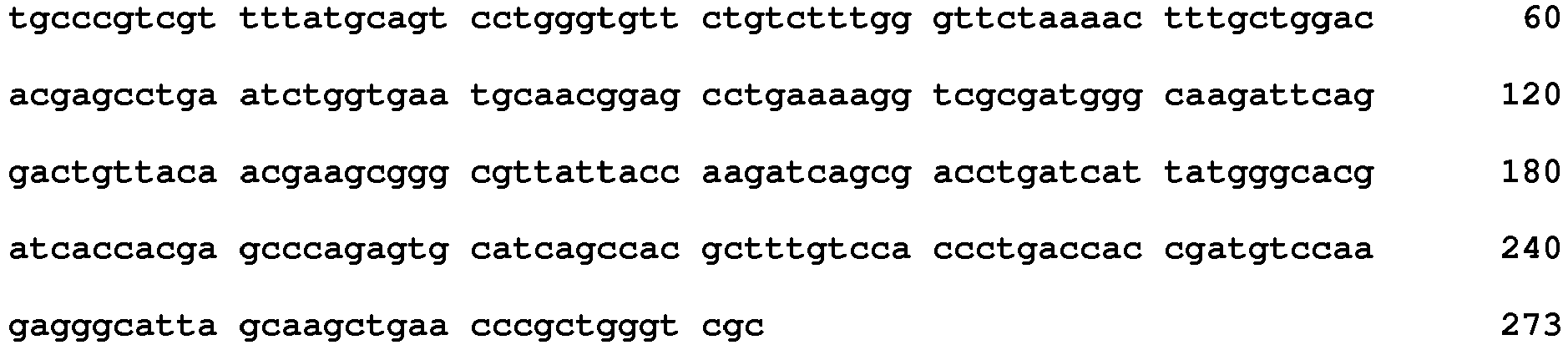
- <210> 11
<211> 20
<212> DNA
<213> Artificial Sequence - <220>
<223> Forward primer forchain 1,PCR 1 - <400> 11
ataaaagggc tgcagaattg 20 - <210> 12
<211> 20
<212> DNA
<213> Artificial Sequence - <220>
<223> Forward primer forchain 2,PCR 1 - <400> 12
gcagcagaaa ccctgccctg 20 - <210> 13
<211> 18
<212> DNA
<213> Artificial Sequence - <220>
<223> Forward primer forchain 1 - <400> 13
gtgagcacct gccacctg 18 - <210> 14
<211> 20
<212> DNA
<213> Artificial Sequence - <220>
<223> Forward primer forchain 2 - <400> 14
gaagagcatt ctagcagttg 20 - <210> 15
<211> 19
<212> DNA
<213> Artificial Sequence - <220>
<223> Reverse primer forchain 1 - <400> 15
gaatcttcta atcagacac 19 - <210> 16
<211> 19
<212> DNA
<213> Artificial Sequence - <220>
<223> Reverse primer forchain 2 - <400> 16
ggtagaggag acaggtgtc 19 - <210> 17
<211> 23
<212> PRT
<213> Equus caballus - <400> 17

- <210> 18
<211> 16
<212> PRT
<213> Equus caballus - <400> 18

- <210> 19
<211> 17
<212> PRT
<213> Equus caballus - <400> 19

- <210> 20
<211> 7
<212> PRT
<213> Equus caballus - <400> 20

- <210> 21
<211> 6
<212> PRT
<213> Equus caballus - <400> 21

- <210> 22
<211> 10
<212> PRT
<213> Equus caballus - <400> 22

- <210> 23
<211> 15
<212> PRT
<213> Equus caballus - <400> 23

- <210> 24
<211> 7
<212> PRT
<213> Equus caballus - <400> 24


- <210> 25
<211> 16
<212> PRT
<213> Equus caballus - <400> 25

- <210> 26
<211> 13
<212> PRT
<213> Equus caballus - <400> 26

- <210> 27
<211> 23
<212> PRT
<213> Equus caballus - <400> 27

- <210> 28
<211> 16
<212> PRT
<213> Equus caballus - <400> 28

- <210> 29
<211> 17
<212> PRT
<213> Equus caballus - <400> 29

- <210> 30
<211> 7
<212> PRT
<213> Equus caballus - <400> 30

- <210> 31
<211> 10
<212> PRT
<213> Equus caballus - <400> 31

- <210> 32
<211> 15
<212> PRT
<213> Equus caballus - <400> 32

- <210> 33
<211> 13
<212> PRT
<213> Equus caballus - <400> 33

- <210> 34
<211> 7
<212> PRT
<213> Equus caballus - <400> 34

- <210> 35
<211> 16
<212> PRT
<213> Equus caballus - <400> 35

- <210> 36
<211> 7
<212> PRT
<213> Equus caballus - <400> 36

- <210> 37
<211> 6
<212> PRT
<213> Equus caballus - <400> 37

- <210> 38
<211> 10
<212> PRT
<213> Equus caballus - <400> 38

- <210> 39
<211> 15
<212> PRT
<213> Equus caballus - <400> 39

- <210> 40
<211> 7
<212> PRT
<213> Equus caballus - <400> 40

- <210> 41
<211> 13
<212> PRT
<213> Equus caballus - <400> 41

- <210> 42
<211> 16
<212> PRT
<213> Equus caballus - <400> 42

- <210> 43
<211> 24
<212> PRT
<213> Equus caballus - <400> 43

- <210> 44
<211> 7
<212> PRT
<213> Equus caballus - <220>
<221> UNSURE
<222> (1)..(1)
<223> Asp or Cys - <220>
<221> UNSURE
<222> (2)..(2)
<223> Pro, Ile or Cys - <220>
<221> UNSURE
<222> (3)..(3)
<223> Ser, Arg, or Cys - <220>
<221> UNSURE
<222> (4)..(4)
<223> Phe, Pro, or Cys - <220>
<221> UNSURE
<222> (5)..(5)
<223> Tyr, Ala, or Cys - <220>
<221> UNSURE
<222> (6)..(6)
<223> Ala, Val, or Cys - <220>
<221> UNSURE
<222> (7)..(7)
<223> Val, or Cys - <400> 44

- <210> 45
<211> 279
<212> DNA
<213> Equus caballus - <400> 45

- <210> 46
<211> 345
<212> DNA
<213> Equus caballus - <400> 46
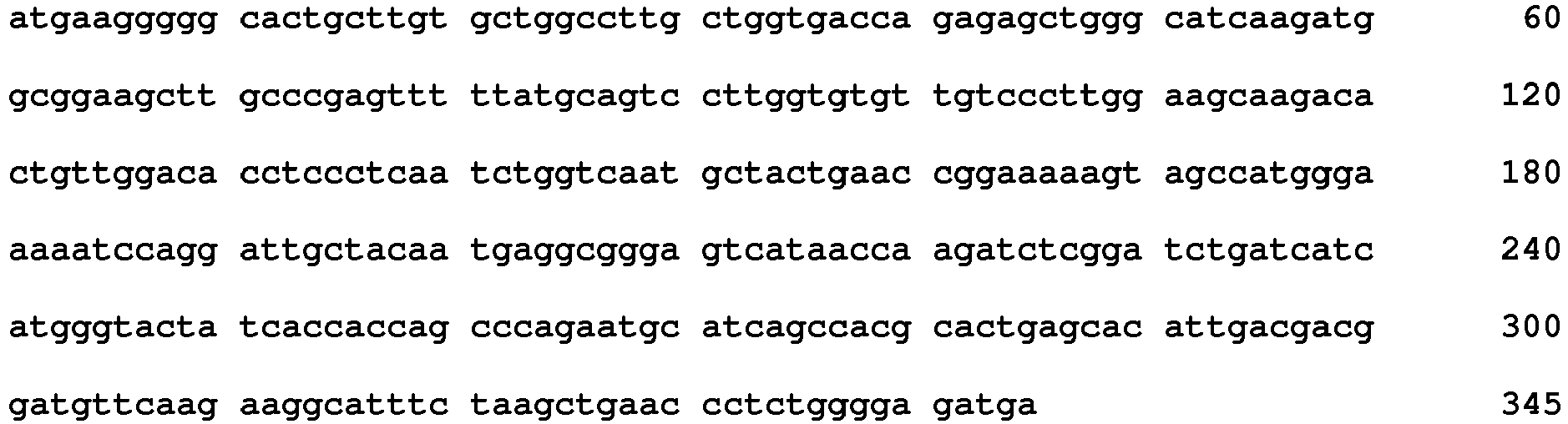
- <210> 47
<211> 88
<212> PRT
<213> Felis catus - <220>
<221> SIGNAL
<222> (1)..(18) - <400> 47

- <210> 48
<211> 109
<212> PRT
<213> Felis catus - <220>
<221> SIGNAL
<222> (1)..(23) - <400> 48
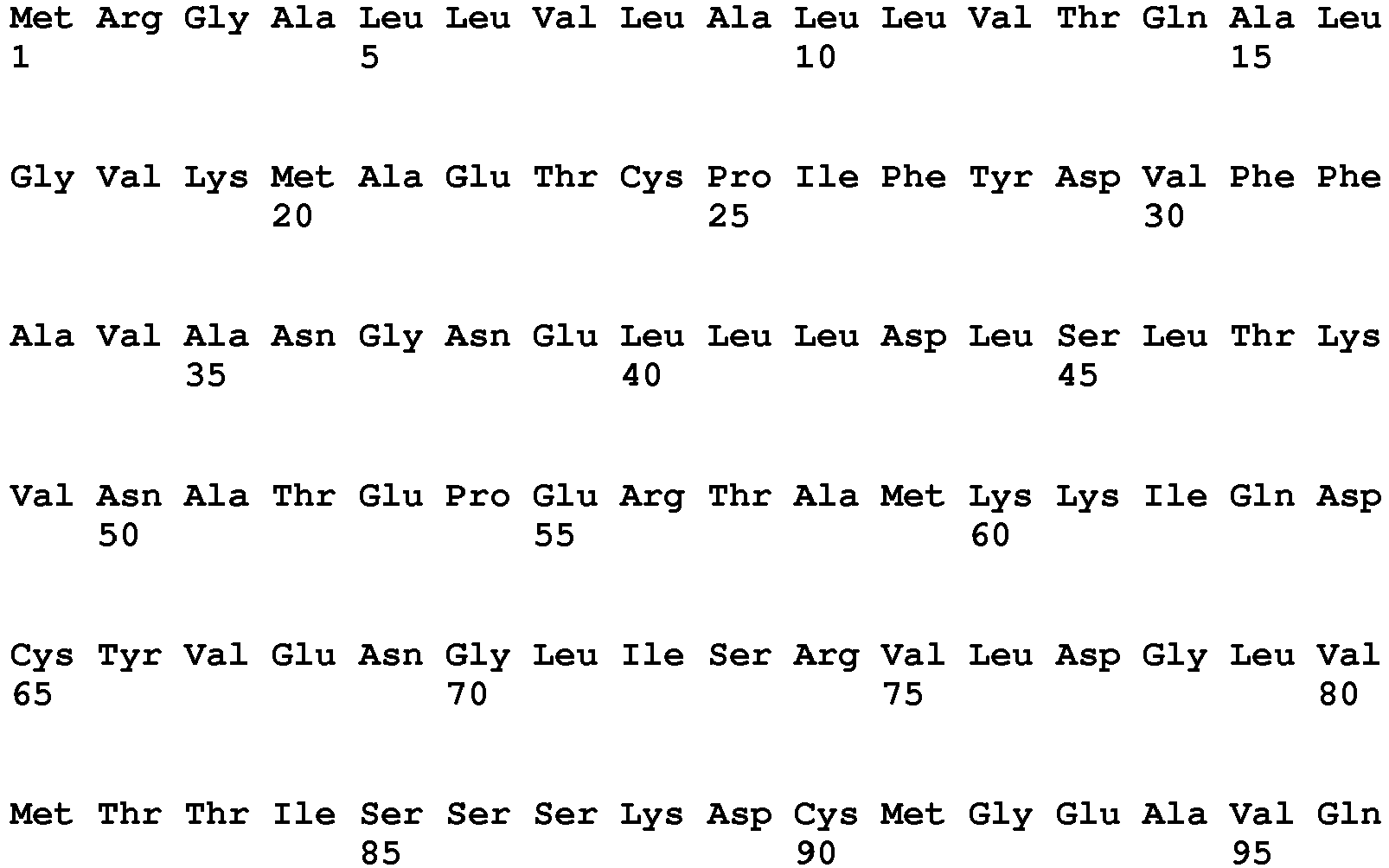

The complete DNA sequence of this postulated sequence, denoted Equ c s ,
Claims (13)
- A protein which is an isolated heterodimeric protein or a single chain protein, wherein either a first peptide and a second peptide chain of the heterodimeric protein; or the single chain protein; have an overall sequence identity of at least 70 % with the combined sequences of SEQ ID NO: 3 and SEQ ID NO: 4,.
- A fragment of a protein according to claim 1, said fragment comprising at least one IgE antibody epitope of a heterodimeric protein having a first peptide chain having the sequence according to SEQ ID NO: 3 and a second peptide chain having the sequence according to SEQ ID NO: 4, and said fragment having a length of at least 60% of the combined length of the amino acid sequences according to SEQ ID NO: 3 and SEQ ID NO: 4.
- A protein or a fragment of a protein according to any one of claims 1-2, which has been immobilized to a solid or soluble support and/or which has been provided with a detectable label.
- A nucleic acid molecule coding for a protein according to claim 1 or a protein fragment according to claim 2.
- A vector comprising the nucleic acid molecule according to claim 4.
- A host cell comprising the vector according to claim 5.
- A method for in vitro assessment of type 1 allergy comprising the steps of- contacting an immunoglobulin-containing body fluid sample from a patient suspected of having Type 1 allergy with a protein or protein fragment according to any one of claims 1 to 2; and- detecting the presence, in the sample, of antibodies specifically binding to said protein, peptide chain or protein fragment;
wherein the presence of such bound antibodies is indicative of a Type 1 allergy in said patient. - A method according to claim 7, which comprises detecting the presence, in the sample, of IgE and/or IgG antibodies specifically binding to said protein, peptide chain or protein fragment;
wherein the presence of specific IgE antibodies is indicative of a Type 1 allergy to horse in said patient and the level of specific IgG antibodies is informative in regard to natural or induced tolerance to horse through environmental exposure or immunotherapy treatment. - The method according to claim 7 or 8, further comprising the steps of- contacting the immunoglobulin-containing body fluid sample from the patient suspected of having Type 1 allergy with at least one further purified allergen component from horse; and- detecting the presence, in the sample, of IgE antibodies specifically binding to said purified allergen component from horse;
wherein the combination of presence of IgE antibodies specifically binding to said protein, peptide chain or protein fragment, and absence of IgE antibodies specifically binding to said allergen component from horse, is indicative of a Type 1 allergy to cat in said patient. - The method according to claim 9, wherein the further purified allergen component from horse is selected from the group consisting of native and recombinant Equ c 1, Equ c 2, Equ c 3, Equ c 4/5, and Equ c 15k.
- A kit for performing the method according to any one of claims 7-10, comprising a protein or protein fragment according to any one of claims 1 to 2 immobilised on a solid support, and further comprising a reagent capable of detecting antibodies bound to said immobilised protein or protein fragment.
- A protein or protein fragment according to any one of claims 1 to 2 for use in methods of diagnosis of Type 1 allergy, practised on the human or animal body.
- A protein or protein fragment according to any one of claims 1 to 2 for use in methods for therapy of Type 1 allergy, practised on the human or animal body.
Applications Claiming Priority (2)
| Application Number | Priority Date | Filing Date | Title |
|---|---|---|---|
| SE1450907 | 2014-07-21 | ||
| PCT/SE2015/050828 WO2016013971A1 (en) | 2014-07-21 | 2015-07-20 | Novel allergen |
Publications (2)
| Publication Number | Publication Date |
|---|---|
| EP3171890A1 EP3171890A1 (en) | 2017-05-31 |
| EP3171890B1 true EP3171890B1 (en) | 2020-12-02 |
Family
ID=53872123
Family Applications (1)
| Application Number | Title | Priority Date | Filing Date |
|---|---|---|---|
| EP15750835.9A Active EP3171890B1 (en) | 2014-07-21 | 2015-07-20 | Novel allergen |
Country Status (10)
| Country | Link |
|---|---|
| US (1) | US10753946B2 (en) |
| EP (1) | EP3171890B1 (en) |
| JP (1) | JP6785216B2 (en) |
| CN (1) | CN106604929B (en) |
| AU (1) | AU2015294723B2 (en) |
| CA (1) | CA2955348A1 (en) |
| DK (1) | DK3171890T3 (en) |
| ES (1) | ES2856128T3 (en) |
| RU (1) | RU2017104910A (en) |
| WO (1) | WO2016013971A1 (en) |
Family Cites Families (3)
| Publication number | Priority date | Publication date | Assignee | Title |
|---|---|---|---|---|
| US6019972A (en) * | 1989-11-03 | 2000-02-01 | Immulogic Pharmaceutical Corporation | Peptides of human T cell reactive feline protein (TRFP) |
| EP1195606A1 (en) | 2000-10-03 | 2002-04-10 | VBC-Genomics Forschungsges.m.b.H. | Allergen-microarray assay |
| DK2560990T3 (en) | 2010-04-23 | 2016-09-26 | Phadia Ab | Novel allergen |
-
2015
- 2015-07-20 ES ES15750835T patent/ES2856128T3/en active Active
- 2015-07-20 EP EP15750835.9A patent/EP3171890B1/en active Active
- 2015-07-20 US US15/327,253 patent/US10753946B2/en active Active
- 2015-07-20 JP JP2017503551A patent/JP6785216B2/en active Active
- 2015-07-20 CN CN201580038584.4A patent/CN106604929B/en active Active
- 2015-07-20 CA CA2955348A patent/CA2955348A1/en active Pending
- 2015-07-20 WO PCT/SE2015/050828 patent/WO2016013971A1/en not_active Ceased
- 2015-07-20 AU AU2015294723A patent/AU2015294723B2/en active Active
- 2015-07-20 RU RU2017104910A patent/RU2017104910A/en not_active Application Discontinuation
- 2015-07-20 DK DK15750835.9T patent/DK3171890T3/en active
Non-Patent Citations (2)
| Title |
|---|
| DATABASE UniPARC [online] UniProt; 1 February 2011 (2011-02-01), retrieved from https://www.uniprot.org/uniparc/UPI0001FB0512 Database accession no. UPI0001FB0512 * |
| DATABASE UniParc [online] UniProt; retrieved from https://www.uniprot.org/uniparc/UPI000155EE49 Database accession no. UPI000155EE49 * |
Also Published As
| Publication number | Publication date |
|---|---|
| CN106604929B (en) | 2021-11-05 |
| US10753946B2 (en) | 2020-08-25 |
| AU2015294723A1 (en) | 2017-02-16 |
| CN106604929A (en) | 2017-04-26 |
| US20170219602A1 (en) | 2017-08-03 |
| CA2955348A1 (en) | 2016-01-28 |
| JP6785216B2 (en) | 2020-11-18 |
| RU2017104910A (en) | 2018-08-21 |
| DK3171890T3 (en) | 2021-02-22 |
| WO2016013971A1 (en) | 2016-01-28 |
| JP2017524358A (en) | 2017-08-31 |
| EP3171890A1 (en) | 2017-05-31 |
| ES2856128T3 (en) | 2021-09-27 |
| AU2015294723B2 (en) | 2021-05-06 |
Similar Documents
| Publication | Publication Date | Title |
|---|---|---|
| US9274114B2 (en) | Prostate kallikrein allergen | |
| US10753946B2 (en) | Allergen | |
| WO2021004885A1 (en) | Novel allergen | |
| US9724407B2 (en) | Horse allergen and methods | |
| RU2592674C2 (en) | Allergens produced by recombinant methods | |
| Rea et al. | Refolding of the Cupressus arizonica major pollen allergen Cup a1. 02 overexpressed in Escherichia coli |
Legal Events
| Date | Code | Title | Description |
|---|---|---|---|
| STAA | Information on the status of an ep patent application or granted ep patent |
Free format text: STATUS: THE INTERNATIONAL PUBLICATION HAS BEEN MADE |
|
| PUAI | Public reference made under article 153(3) epc to a published international application that has entered the european phase |
Free format text: ORIGINAL CODE: 0009012 |
|
| STAA | Information on the status of an ep patent application or granted ep patent |
Free format text: STATUS: REQUEST FOR EXAMINATION WAS MADE |
|
| 17P | Request for examination filed |
Effective date: 20170214 |
|
| AK | Designated contracting states |
Kind code of ref document: A1 Designated state(s): AL AT BE BG CH CY CZ DE DK EE ES FI FR GB GR HR HU IE IS IT LI LT LU LV MC MK MT NL NO PL PT RO RS SE SI SK SM TR |
|
| AX | Request for extension of the european patent |
Extension state: BA ME |
|
| DAV | Request for validation of the european patent (deleted) | ||
| DAX | Request for extension of the european patent (deleted) | ||
| STAA | Information on the status of an ep patent application or granted ep patent |
Free format text: STATUS: EXAMINATION IS IN PROGRESS |
|
| 17Q | First examination report despatched |
Effective date: 20180731 |
|
| GRAP | Despatch of communication of intention to grant a patent |
Free format text: ORIGINAL CODE: EPIDOSNIGR1 |
|
| STAA | Information on the status of an ep patent application or granted ep patent |
Free format text: STATUS: GRANT OF PATENT IS INTENDED |
|
| INTG | Intention to grant announced |
Effective date: 20200903 |
|
| GRAS | Grant fee paid |
Free format text: ORIGINAL CODE: EPIDOSNIGR3 |
|
| GRAA | (expected) grant |
Free format text: ORIGINAL CODE: 0009210 |
|
| STAA | Information on the status of an ep patent application or granted ep patent |
Free format text: STATUS: THE PATENT HAS BEEN GRANTED |
|
| AK | Designated contracting states |
Kind code of ref document: B1 Designated state(s): AL AT BE BG CH CY CZ DE DK EE ES FI FR GB GR HR HU IE IS IT LI LT LU LV MC MK MT NL NO PL PT RO RS SE SI SK SM TR |
|
| REG | Reference to a national code |
Ref country code: GB Ref legal event code: FG4D |
|
| REG | Reference to a national code |
Ref country code: AT Ref legal event code: REF Ref document number: 1340163 Country of ref document: AT Kind code of ref document: T Effective date: 20201215 Ref country code: CH Ref legal event code: EP |
|
| REG | Reference to a national code |
Ref country code: DE Ref legal event code: R096 Ref document number: 602015062889 Country of ref document: DE |
|
| REG | Reference to a national code |
Ref country code: IE Ref legal event code: FG4D |
|
| REG | Reference to a national code |
Ref country code: DK Ref legal event code: T3 Effective date: 20210216 |
|
| REG | Reference to a national code |
Ref country code: CH Ref legal event code: NV Representative=s name: NOVAGRAAF INTERNATIONAL SA, CH |
|
| REG | Reference to a national code |
Ref country code: SE Ref legal event code: TRGR |
|
| REG | Reference to a national code |
Ref country code: NL Ref legal event code: FP |
|
| PG25 | Lapsed in a contracting state [announced via postgrant information from national office to epo] |
Ref country code: RS Free format text: LAPSE BECAUSE OF FAILURE TO SUBMIT A TRANSLATION OF THE DESCRIPTION OR TO PAY THE FEE WITHIN THE PRESCRIBED TIME-LIMIT Effective date: 20201202 Ref country code: FI Free format text: LAPSE BECAUSE OF FAILURE TO SUBMIT A TRANSLATION OF THE DESCRIPTION OR TO PAY THE FEE WITHIN THE PRESCRIBED TIME-LIMIT Effective date: 20201202 Ref country code: NO Free format text: LAPSE BECAUSE OF FAILURE TO SUBMIT A TRANSLATION OF THE DESCRIPTION OR TO PAY THE FEE WITHIN THE PRESCRIBED TIME-LIMIT Effective date: 20210302 Ref country code: GR Free format text: LAPSE BECAUSE OF FAILURE TO SUBMIT A TRANSLATION OF THE DESCRIPTION OR TO PAY THE FEE WITHIN THE PRESCRIBED TIME-LIMIT Effective date: 20210303 |
|
| PG25 | Lapsed in a contracting state [announced via postgrant information from national office to epo] |
Ref country code: BG Free format text: LAPSE BECAUSE OF FAILURE TO SUBMIT A TRANSLATION OF THE DESCRIPTION OR TO PAY THE FEE WITHIN THE PRESCRIBED TIME-LIMIT Effective date: 20210302 Ref country code: LV Free format text: LAPSE BECAUSE OF FAILURE TO SUBMIT A TRANSLATION OF THE DESCRIPTION OR TO PAY THE FEE WITHIN THE PRESCRIBED TIME-LIMIT Effective date: 20201202 Ref country code: PL Free format text: LAPSE BECAUSE OF FAILURE TO SUBMIT A TRANSLATION OF THE DESCRIPTION OR TO PAY THE FEE WITHIN THE PRESCRIBED TIME-LIMIT Effective date: 20201202 |
|
| PG25 | Lapsed in a contracting state [announced via postgrant information from national office to epo] |
Ref country code: HR Free format text: LAPSE BECAUSE OF FAILURE TO SUBMIT A TRANSLATION OF THE DESCRIPTION OR TO PAY THE FEE WITHIN THE PRESCRIBED TIME-LIMIT Effective date: 20201202 |
|
| REG | Reference to a national code |
Ref country code: LT Ref legal event code: MG9D |
|
| PG25 | Lapsed in a contracting state [announced via postgrant information from national office to epo] |
Ref country code: RO Free format text: LAPSE BECAUSE OF FAILURE TO SUBMIT A TRANSLATION OF THE DESCRIPTION OR TO PAY THE FEE WITHIN THE PRESCRIBED TIME-LIMIT Effective date: 20201202 Ref country code: PT Free format text: LAPSE BECAUSE OF FAILURE TO SUBMIT A TRANSLATION OF THE DESCRIPTION OR TO PAY THE FEE WITHIN THE PRESCRIBED TIME-LIMIT Effective date: 20210405 Ref country code: SK Free format text: LAPSE BECAUSE OF FAILURE TO SUBMIT A TRANSLATION OF THE DESCRIPTION OR TO PAY THE FEE WITHIN THE PRESCRIBED TIME-LIMIT Effective date: 20201202 Ref country code: LT Free format text: LAPSE BECAUSE OF FAILURE TO SUBMIT A TRANSLATION OF THE DESCRIPTION OR TO PAY THE FEE WITHIN THE PRESCRIBED TIME-LIMIT Effective date: 20201202 Ref country code: SM Free format text: LAPSE BECAUSE OF FAILURE TO SUBMIT A TRANSLATION OF THE DESCRIPTION OR TO PAY THE FEE WITHIN THE PRESCRIBED TIME-LIMIT Effective date: 20201202 Ref country code: CZ Free format text: LAPSE BECAUSE OF FAILURE TO SUBMIT A TRANSLATION OF THE DESCRIPTION OR TO PAY THE FEE WITHIN THE PRESCRIBED TIME-LIMIT Effective date: 20201202 Ref country code: EE Free format text: LAPSE BECAUSE OF FAILURE TO SUBMIT A TRANSLATION OF THE DESCRIPTION OR TO PAY THE FEE WITHIN THE PRESCRIBED TIME-LIMIT Effective date: 20201202 |
|
| REG | Reference to a national code |
Ref country code: DE Ref legal event code: R097 Ref document number: 602015062889 Country of ref document: DE |
|
| REG | Reference to a national code |
Ref country code: ES Ref legal event code: FG2A Ref document number: 2856128 Country of ref document: ES Kind code of ref document: T3 Effective date: 20210927 |
|
| PG25 | Lapsed in a contracting state [announced via postgrant information from national office to epo] |
Ref country code: IS Free format text: LAPSE BECAUSE OF FAILURE TO SUBMIT A TRANSLATION OF THE DESCRIPTION OR TO PAY THE FEE WITHIN THE PRESCRIBED TIME-LIMIT Effective date: 20210402 |
|
| PLBE | No opposition filed within time limit |
Free format text: ORIGINAL CODE: 0009261 |
|
| STAA | Information on the status of an ep patent application or granted ep patent |
Free format text: STATUS: NO OPPOSITION FILED WITHIN TIME LIMIT |
|
| PG25 | Lapsed in a contracting state [announced via postgrant information from national office to epo] |
Ref country code: AL Free format text: LAPSE BECAUSE OF FAILURE TO SUBMIT A TRANSLATION OF THE DESCRIPTION OR TO PAY THE FEE WITHIN THE PRESCRIBED TIME-LIMIT Effective date: 20201202 |
|
| 26N | No opposition filed |
Effective date: 20210903 |
|
| PG25 | Lapsed in a contracting state [announced via postgrant information from national office to epo] |
Ref country code: SI Free format text: LAPSE BECAUSE OF FAILURE TO SUBMIT A TRANSLATION OF THE DESCRIPTION OR TO PAY THE FEE WITHIN THE PRESCRIBED TIME-LIMIT Effective date: 20201202 |
|
| PG25 | Lapsed in a contracting state [announced via postgrant information from national office to epo] |
Ref country code: MC Free format text: LAPSE BECAUSE OF FAILURE TO SUBMIT A TRANSLATION OF THE DESCRIPTION OR TO PAY THE FEE WITHIN THE PRESCRIBED TIME-LIMIT Effective date: 20201202 |
|
| REG | Reference to a national code |
Ref country code: BE Ref legal event code: MM Effective date: 20210731 |
|
| PG25 | Lapsed in a contracting state [announced via postgrant information from national office to epo] |
Ref country code: IS Free format text: LAPSE BECAUSE OF FAILURE TO SUBMIT A TRANSLATION OF THE DESCRIPTION OR TO PAY THE FEE WITHIN THE PRESCRIBED TIME-LIMIT Effective date: 20210402 Ref country code: LU Free format text: LAPSE BECAUSE OF NON-PAYMENT OF DUE FEES Effective date: 20210720 |
|
| PG25 | Lapsed in a contracting state [announced via postgrant information from national office to epo] |
Ref country code: IE Free format text: LAPSE BECAUSE OF NON-PAYMENT OF DUE FEES Effective date: 20210720 Ref country code: BE Free format text: LAPSE BECAUSE OF NON-PAYMENT OF DUE FEES Effective date: 20210731 |
|
| REG | Reference to a national code |
Ref country code: AT Ref legal event code: UEP Ref document number: 1340163 Country of ref document: AT Kind code of ref document: T Effective date: 20201202 |
|
| PG25 | Lapsed in a contracting state [announced via postgrant information from national office to epo] |
Ref country code: HU Free format text: LAPSE BECAUSE OF FAILURE TO SUBMIT A TRANSLATION OF THE DESCRIPTION OR TO PAY THE FEE WITHIN THE PRESCRIBED TIME-LIMIT; INVALID AB INITIO Effective date: 20150720 |
|
| PG25 | Lapsed in a contracting state [announced via postgrant information from national office to epo] |
Ref country code: CY Free format text: LAPSE BECAUSE OF FAILURE TO SUBMIT A TRANSLATION OF THE DESCRIPTION OR TO PAY THE FEE WITHIN THE PRESCRIBED TIME-LIMIT Effective date: 20201202 |
|
| PG25 | Lapsed in a contracting state [announced via postgrant information from national office to epo] |
Ref country code: MK Free format text: LAPSE BECAUSE OF FAILURE TO SUBMIT A TRANSLATION OF THE DESCRIPTION OR TO PAY THE FEE WITHIN THE PRESCRIBED TIME-LIMIT Effective date: 20201202 |
|
| PG25 | Lapsed in a contracting state [announced via postgrant information from national office to epo] |
Ref country code: MT Free format text: LAPSE BECAUSE OF FAILURE TO SUBMIT A TRANSLATION OF THE DESCRIPTION OR TO PAY THE FEE WITHIN THE PRESCRIBED TIME-LIMIT Effective date: 20201202 |
|
| PGFP | Annual fee paid to national office [announced via postgrant information from national office to epo] |
Ref country code: NL Payment date: 20250617 Year of fee payment: 11 |
|
| PGFP | Annual fee paid to national office [announced via postgrant information from national office to epo] |
Ref country code: ES Payment date: 20250822 Year of fee payment: 11 |
|
| PGFP | Annual fee paid to national office [announced via postgrant information from national office to epo] |
Ref country code: DK Payment date: 20250721 Year of fee payment: 11 Ref country code: DE Payment date: 20250616 Year of fee payment: 11 |
|
| PGFP | Annual fee paid to national office [announced via postgrant information from national office to epo] |
Ref country code: IT Payment date: 20250618 Year of fee payment: 11 |
|
| PGFP | Annual fee paid to national office [announced via postgrant information from national office to epo] |
Ref country code: GB Payment date: 20250715 Year of fee payment: 11 |
|
| PGFP | Annual fee paid to national office [announced via postgrant information from national office to epo] |
Ref country code: AT Payment date: 20250618 Year of fee payment: 11 Ref country code: FR Payment date: 20250718 Year of fee payment: 11 |
|
| PGFP | Annual fee paid to national office [announced via postgrant information from national office to epo] |
Ref country code: CH Payment date: 20250801 Year of fee payment: 11 Ref country code: SE Payment date: 20250718 Year of fee payment: 11 |
|
| PG25 | Lapsed in a contracting state [announced via postgrant information from national office to epo] |
Ref country code: TR Free format text: LAPSE BECAUSE OF FAILURE TO SUBMIT A TRANSLATION OF THE DESCRIPTION OR TO PAY THE FEE WITHIN THE PRESCRIBED TIME-LIMIT Effective date: 20201202 |