EP3171652A1 - Data transmission method and apparatus - Google Patents
Data transmission method and apparatus Download PDFInfo
- Publication number
- EP3171652A1 EP3171652A1 EP14900256.0A EP14900256A EP3171652A1 EP 3171652 A1 EP3171652 A1 EP 3171652A1 EP 14900256 A EP14900256 A EP 14900256A EP 3171652 A1 EP3171652 A1 EP 3171652A1
- Authority
- EP
- European Patent Office
- Prior art keywords
- uplink shared
- shared resource
- enb
- resource
- uplink
- Prior art date
- Legal status (The legal status is an assumption and is not a legal conclusion. Google has not performed a legal analysis and makes no representation as to the accuracy of the status listed.)
- Granted
Links
Images

Classifications
-
- H—ELECTRICITY
- H04—ELECTRIC COMMUNICATION TECHNIQUE
- H04W—WIRELESS COMMUNICATION NETWORKS
- H04W28/00—Network traffic management; Network resource management
- H04W28/16—Central resource management; Negotiation of resources or communication parameters, e.g. negotiating bandwidth or QoS [Quality of Service]
- H04W28/26—Resource reservation
-
- H—ELECTRICITY
- H04—ELECTRIC COMMUNICATION TECHNIQUE
- H04L—TRANSMISSION OF DIGITAL INFORMATION, e.g. TELEGRAPHIC COMMUNICATION
- H04L5/00—Arrangements affording multiple use of the transmission path
- H04L5/003—Arrangements for allocating sub-channels of the transmission path
- H04L5/0044—Allocation of payload; Allocation of data channels, e.g. PDSCH or PUSCH
-
- H—ELECTRICITY
- H04—ELECTRIC COMMUNICATION TECHNIQUE
- H04L—TRANSMISSION OF DIGITAL INFORMATION, e.g. TELEGRAPHIC COMMUNICATION
- H04L5/00—Arrangements affording multiple use of the transmission path
- H04L5/003—Arrangements for allocating sub-channels of the transmission path
- H04L5/0058—Allocation criteria
- H04L5/006—Quality of the received signal, e.g. BER, SNR, water filling
-
- H—ELECTRICITY
- H04—ELECTRIC COMMUNICATION TECHNIQUE
- H04L—TRANSMISSION OF DIGITAL INFORMATION, e.g. TELEGRAPHIC COMMUNICATION
- H04L5/00—Arrangements affording multiple use of the transmission path
- H04L5/0091—Signalling for the administration of the divided path, e.g. signalling of configuration information
- H04L5/0094—Indication of how sub-channels of the path are allocated
-
- H—ELECTRICITY
- H04—ELECTRIC COMMUNICATION TECHNIQUE
- H04W—WIRELESS COMMUNICATION NETWORKS
- H04W72/00—Local resource management
- H04W72/04—Wireless resource allocation
- H04W72/044—Wireless resource allocation based on the type of the allocated resource
-
- H—ELECTRICITY
- H04—ELECTRIC COMMUNICATION TECHNIQUE
- H04W—WIRELESS COMMUNICATION NETWORKS
- H04W72/00—Local resource management
- H04W72/20—Control channels or signalling for resource management
- H04W72/23—Control channels or signalling for resource management in the downlink direction of a wireless link, i.e. towards a terminal
-
- H—ELECTRICITY
- H04—ELECTRIC COMMUNICATION TECHNIQUE
- H04L—TRANSMISSION OF DIGITAL INFORMATION, e.g. TELEGRAPHIC COMMUNICATION
- H04L5/00—Arrangements affording multiple use of the transmission path
- H04L5/003—Arrangements for allocating sub-channels of the transmission path
- H04L5/0078—Timing of allocation
- H04L5/0087—Timing of allocation when data requirements change
-
- H—ELECTRICITY
- H04—ELECTRIC COMMUNICATION TECHNIQUE
- H04W—WIRELESS COMMUNICATION NETWORKS
- H04W72/00—Local resource management
- H04W72/12—Wireless traffic scheduling
- H04W72/1263—Mapping of traffic onto schedule, e.g. scheduled allocation or multiplexing of flows
- H04W72/1268—Mapping of traffic onto schedule, e.g. scheduled allocation or multiplexing of flows of uplink data flows
Definitions
- Embodiments of the present invention relate to the field of communications technologies, and in particular, to a data transmission method and apparatus.
- LTE Long Term Evolution
- UE User Equipment
- eNB evolved NodeB
- PDCCH Physical Downlink Control Channel
- PUSCH Physical Uplink Shared Channel
- Embodiments of the present invention provide a data transmission method and apparatus, to improve PUSCH utilization.
- a first aspect of the embodiments of the present invention provides a data transmission method, including:
- the transmitting uplink data on one of the uplink shared resources corresponding to the location information includes:
- the determining, by the UE from the M uplink shared resources, one to-be-used uplink shared resource in an idle state includes:
- the uplink shared resource information further includes modulation and coding schemes MCSs respectively corresponding to the M uplink shared resources; and the determining, by the UE according to a status of a channel between the UE and the eNB, one candidate uplink shared resource from the M uplink shared resources includes:
- the M uplink shared resources are in a one-to-one correspondence with M physical reservation indication channel PRICHs, and the PRICHs are used to indicate whether the uplink shared resources corresponding to the PRICHs are in an idle state; and the determining, by the UE, the candidate uplink shared resource as the to-be-used uplink shared resource when the candidate uplink shared resource is in an idle state includes:
- the determining the candidate uplink shared resource as the to-be-used uplink shared resource when the candidate uplink shared resource is in an idle state includes:
- the resource reservation response is carried on the PRICHs, and the PRICHs are further used to indicate whether the candidate uplink shared resource requested by the UE for reservation is successfully reserved.
- the transmitting, by the UE, the uplink data on the to-be-used uplink shared resource includes:
- the method further includes:
- the method further includes:
- the receiving, by UE, uplink shared resource information sent by an eNB includes:
- the method before the descrambling, by the UE, the uplink shared resource information by using the shared RNTI, the method further includes:
- the receiving, by UE, uplink shared resource information sent by an eNB includes:
- the receiving, by UE, uplink shared resource information sent by an eNB includes:
- the receiving, by UE, uplink shared resource information sent by an eNB includes:
- a second aspect of the embodiments of the present invention provides a data transmission method, including:
- the M uplink shared resources are in a one-to-one correspondence with M physical reservation indication channel PRICHs, and the PRICH is used to indicate whether a shared resource corresponding to the PRICH is in an idle state; and after the sending, by the eNB, uplink shared resource information to the at least one UE, the method further includes:
- the method further includes:
- the resource reservation response is carried on the PRICHs, and the PRICHs are further used to indicate whether the candidate uplink shared resource requested by the UE for reservation is successfully reserved.
- the method further includes:
- the sending, by the eNB, uplink shared resource information to the at least one UE includes:
- the method before the scrambling, by the eNB, the uplink shared resource information by using a shared RNTI, the method further includes:
- the sending, by the eNB, uplink shared resource information to the at least one UE includes:
- the sending, by the eNB, uplink shared resource information to the at least one UE includes:
- a third aspect of the embodiments of the present invention provides a data transmission apparatus, where the data transmission apparatus is user equipment UE, including:
- the sending module is specifically configured to: determine one to-be-used uplink shared resource in an idle state from the M uplink shared resources, and transmit the uplink data on the to-be-used uplink shared resource.
- the sending module is specifically configured to: determine one candidate uplink shared resource from the M uplink shared resources according to a status of a channel between the UE and the eNB, and determine the candidate uplink shared resource as the to-be-used uplink shared resource when the candidate uplink shared resource is in an idle state.
- the uplink shared resource information further includes modulation and coding schemes MCSs respectively corresponding to the M uplink shared resources; and the sending module is specifically configured to determine one candidate uplink shared resource from the M uplink shared resources according to the status of the channel between the UE and the eNB and according to the MCSs of the M uplink shared resources.
- the M uplink shared resources are in a one-to-one correspondence with M physical reservation indication channel PRICHs, and the PRICHs are used to indicate whether the uplink shared resources corresponding to the PRICHs are in an idle state; and the sending module is specifically configured to: determine, according to a PRICH corresponding to the candidate uplink shared resource, whether the candidate uplink shared resource is in an idle state; and determine the candidate uplink shared resource as the to-be-used uplink shared resource when the candidate uplink shared resource is in an idle state.
- the sending module is specifically configured to: send a resource reservation request on the candidate uplink shared resource to the eNB when the candidate uplink shared resource is in an idle state, where the resource reservation request is used to request the eNB to reserve the candidate uplink shared resource for the UE; receive a resource reservation response sent by the eNB, where the resource reservation response is used to indicate whether the candidate uplink shared resource requested by the UE for reservation is successfully reserved; and determine the candidate uplink shared resource as the to-be-used uplink shared resource if the resource reservation response indicates that the candidate uplink shared resource is successfully reserved.
- the resource reservation response is carried on the PRICHs, and the PRICHs are further used to indicate whether the candidate uplink shared resource requested by the UE for reservation is successfully reserved.
- the sending module is specifically configured to: if a volume of to-be-transmitted uplink data of the UE is greater than a maximum volume of data that is allowed to be transmitted on the to-be-used uplink shared resource, transmit the uplink data on the to-be-used uplink shared resource, where the uplink data includes the resource reservation request.
- the receiving module is further configured to: after the sending module transmits the uplink data on the to-be-used uplink shared resource, receive uplink data feedback information sent by the eNB, where the uplink data feedback information is used to notify the UE whether the eNB successfully receives the uplink data; and determine a packet error rate of the uplink data according to the uplink data feedback information; and the sending module is further configured to: when the packet error rate is greater than a preset threshold, re-determine a to-be-used uplink shared resource to transmit the uplink data, or send a scheduling request SR to the eNB to request a dedicated transmission resource to transmit the uplink data.
- the receiving module is further configured to: receive uplink shared resource update information sent by the eNB, where the uplink shared resource update information is used to update the location information of the uplink shared resources; and re-determine a to-be-used uplink shared resource according to the uplink shared resource update information.
- the receiving module is specifically configured to: receive, by using physical layer signaling, the uplink shared resource information sent by the eNB, where the physical layer signaling is scrambled by using a shared RNTI; and the parsing module is specifically configured to: descramble the physical layer signaling by using the shared RNTI to obtain the uplink shared resource information; and parse the uplink shared resource information to obtain the location information.
- the receiving module is further configured to: before the parsing module descrambles the uplink shared resource information by using the shared RNTI, receive the shared RNTI sent by the eNB.
- the receiving module is specifically configured to receive, by using dedicated Radio Resource Control RRC protocol signaling, the uplink shared resource information sent by the eNB.
- the receiving module is specifically configured to receive, by using a system broadcast message, the uplink shared resource information sent by the eNB.
- the receiving module is specifically configured to receive, by using a Msg4 message, the uplink shared resource information sent by the eNB.
- a fourth aspect of the embodiments of the present invention provides a data transmission apparatus, where the data transmission apparatus is an evolved NodeB eNB, including:
- the M uplink shared resources are in a one-to-one correspondence with M physical reservation indication channel PRICHs, and the PRICH is used to indicate whether a shared resource corresponding to the PRICH is in an idle state; and the sending module is further configured to send resource information of the M PRICHs to the at least one UE after sending the uplink shared resource information to the at least one UE.
- the apparatus further includes:
- the resource reservation response is carried on the PRICHs, and the PRICHs are further used to indicate whether the candidate uplink shared resource requested by the UE for reservation is successfully reserved.
- the sending module is further configured to send uplink shared resource update information to the at least one UE.
- the sending module is specifically configured to: scramble physical layer signaling by using a shared RNTI; and send the uplink shared resource information to the at least one UE by using the physical layer signaling.
- the sending module is further configured to send the shared RNTI to the at least one UE before scrambling the uplink shared resource information by using the shared RNTI.
- the sending module is specifically configured to send the uplink shared resource information to the at least one UE by using dedicated Radio Resource Control RRC protocol signaling.
- the sending module is specifically configured to send the uplink shared resource information to the at least one UE by using a Msg4 message.
- a fifth aspect of the embodiments of the present invention provides a data transmission apparatus, where the data transmission apparatus is user equipment UE, including:
- the transmitter is specifically configured to: determine one to-be-used uplink shared resource in an idle state from the M uplink shared resources, and transmit the uplink data on the to-be-used uplink shared resource.
- the transmitter is specifically configured to: determine one candidate uplink shared resource from the M uplink shared resources according to a status of a channel between the UE and the eNB, and determine the candidate uplink shared resource as the to-be-used uplink shared resource when the candidate uplink shared resource is in an idle state.
- the uplink shared resource information further includes modulation and coding schemes MCSs respectively corresponding to the M uplink shared resources; and the transmitter is specifically configured to determine one candidate uplink shared resource from the M uplink shared resources according to the status of the channel between the UE and the eNB and according to the MCSs of the M uplink shared resources.
- the M uplink shared resources are in a one-to-one correspondence with M physical reservation indication channel PRICHs, and the PRICHs are used to indicate whether the uplink shared resources corresponding to the PRICHs are in an idle state; and the transmitter is specifically configured to: determine, according to a PRICH corresponding to the candidate uplink shared resource, whether the candidate uplink shared resource is in an idle state; and determine the candidate uplink shared resource as the to-be-used uplink shared resource when the candidate uplink shared resource is in an idle state.
- the transmitter is specifically configured to: send a resource reservation request on the candidate uplink shared resource to the eNB when the candidate uplink shared resource is in an idle state, where the resource reservation request is used to request the eNB to reserve the candidate uplink shared resource for the UE; receive a resource reservation response sent by the eNB, where the resource reservation response is used to indicate whether the candidate uplink shared resource requested by the UE for reservation is successfully reserved; and determine the candidate uplink shared resource as the to-be-used uplink shared resource if the resource reservation response indicates that the candidate uplink shared resource is successfully reserved.
- the resource reservation response is carried on the PRICHs, and the PRICHs are further used to indicate whether the candidate uplink shared resource requested by the UE for reservation is successfully reserved.
- the transmitter is specifically configured to: if a volume of to-be-transmitted uplink data of the UE is greater than a maximum volume of data that is allowed to be transmitted on the to-be-used uplink shared resource, transmit the uplink data on the to-be-used uplink shared resource, where the uplink data includes the resource reservation request.
- the receiver is further configured to: after the transmitter transmits the uplink data on the to-be-used uplink shared resource, receive uplink data feedback information sent by the eNB, where the uplink data feedback information is used to notify the UE whether the eNB successfully receives the uplink data; and determine a packet error rate of the uplink data according to the uplink data feedback information; and the transmitter is further configured to: when the packet error rate is greater than a preset threshold, re-determine a to-be-used uplink shared resource to transmit the uplink data, or send a scheduling request SR to the eNB to request a dedicated transmission resource to transmit the uplink data.
- the receiver is further configured to: receive uplink shared resource update information sent by the eNB, where the uplink shared resource update information is used to update the location information of the uplink shared resources; and re-determine a to-be-used uplink shared resource according to the uplink shared resource update information.
- the receiver is specifically configured to: receive, by using physical layer signaling, the uplink shared resource information sent by the eNB, where the physical layer signaling is scrambled by using a shared RNTI; and the parser is specifically configured to: descramble the physical layer signaling by using the shared RNTI to obtain the uplink shared resource information; and parse the uplink shared resource information to obtain the location information.
- the receiver is further configured to: before the parser descrambles the uplink shared resource information by using the shared RNTI, receive the shared RNTI sent by the eNB.
- the receiver is specifically configured to receive, by using dedicated Radio Resource Control RRC protocol signaling, the uplink shared resource information sent by the eNB.
- the receiver is specifically configured to receive, by using a system broadcast message, the uplink shared resource information sent by the eNB.
- the receiver is specifically configured to receive, by using a Msg4 message, the uplink shared resource information sent by the eNB.
- a sixth aspect of the embodiments of the present invention provides a data transmission apparatus, where the data transmission apparatus is an evolved NodeB eNB, including:
- the M uplink shared resources are in a one-to-one correspondence with M physical reservation indication channel PRICHs, and the PRICH is used to indicate whether a shared resource corresponding to the PRICH is in an idle state; and the transmitter is further configured to send resource information of the M PRICHs to the at least one UE after sending the uplink shared resource information to the at least one UE.
- the apparatus further includes:
- the resource reservation response is carried on the PRICHs, and the PRICHs are further used to indicate whether the candidate uplink shared resource requested by the UE for reservation is successfully reserved.
- the transmitter is further configured to send uplink shared resource update information to the at least one UE.
- the transmitter is specifically configured to: scramble physical layer signaling by using a shared RNTI; and send the uplink shared resource information to the at least one UE by using the physical layer signaling.
- the transmitter is further configured to send the shared RNTI to the at least one UE before scrambling the uplink shared resource information by using the shared RNTI.
- the transmitter is specifically configured to send the uplink shared resource information to the at least one UE by using dedicated Radio Resource Control RRC protocol signaling.
- the transmitter is specifically configured to send the uplink shared resource information to the at least one UE by using a Msg4 message.
- UE receives uplink shared resource information sent by an eNB.
- the uplink shared information includes location information of M uplink shared resources, and the M uplink shared resources are uplink shared resources, allocated by the eNB, that the UE is allowed to use without a need to request grant. Therefore, the UE can parse the uplink shared resource information to obtain the location information, and can transmit the uplink data on one of the uplink shared resources corresponding to the location information.
- a limited PDCCH capacity does not impose restrictions, thereby improving PUSCH utilization.
- an eNB pre-allocates some uplink shared resources for UE within a preset area. These uplink shared resources can be used in a "PDCCH less" manner. This specifically means that the UE within a preset area can use, without a need to request grant, these uplink shared resources that are pre-allocated by the eNB. Because the uplink shared resources can be used without a need to request grant, restriction on waiting for grant on a PDCCH is removed. This saves PDCCH resources and thereby improves PUSCH utilization.
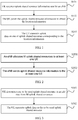
- FIG. 1 is a schematic flowchart of Embodiment 1 of a data transmission method according to the present invention. This embodiment is executed by UE. As shown in FIG. 1 , the method in this embodiment includes the following steps.
- S101 The UE receives uplink shared resource information sent by an eNB.
- the eNB allocates M uplink shared resources to at least one UE.
- the M uplink shared resources are uplink shared resources, allocated by the eNB, that the at least one UE is allowed to use without a need to request grant, and M is an integer greater than or equal to 1.
- the at least one UE refers to UE within a preset area.
- the eNB determines the UE within a preset area according to a preset rule and according to information fed back by the UE, such as a service type, and then allocates the M uplink shared resources to the UE within a preset area, so that the UE within a preset area can use the M uplink shared resources without a need to request grant.
- the eNB After allocating the M uplink shared resources to the at least one UE, the eNB sends the uplink shared resource information to the at least one UE.
- the uplink shared resource information includes location information of the M uplink shared resources, so that the UE determines, according to the location information, which uplink shared resources can be used without a need to request grant.
- the location information includes information such as a time-frequency resource.
- the UE receives the uplink shared resource information sent by the eNB.
- the UE parses the uplink shared resource information to obtain the location information.
- the UE After receiving the uplink shared information, the UE parses the uplink shared information to obtain the location information of the M uplink shared resources.
- S103 The UE transmits uplink data on one of the uplink shared resources corresponding to the location information.
- the UE When the UE needs to transmit uplink data, the UE can perform transmission on one of the uplink shared resources corresponding to the obtained location information of the M uplink shared resources, and does not need to go through a process of requesting grant.
- UE receives uplink shared resource information sent by an eNB.
- the uplink shared information includes location information of M uplink shared resources, and the M uplink shared resources are uplink shared resources, allocated by the eNB, that the UE is allowed to use without a need to request grant. Therefore, the UE can parse the uplink shared resource information to obtain the location information, and can transmit uplink data on one of the uplink shared resources corresponding to the location information.
- a limited PDCCH capacity does not impose restrictions, thereby improving PUSCH utilization.
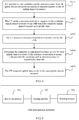
- FIG. 2 is a schematic flowchart of Embodiment 2 of a data transmission method according to the present invention. This embodiment is executed by an eNB. As shown in FIG. 2 , the method in this embodiment includes the following steps.
- the eNB allocates M uplink shared resources to at least one UE.
- the M uplink shared resources are uplink shared resources, allocated by the eNB, that the at least one UE is allowed to use without a need to request grant, and M is an integer greater than or equal to 1.
- the eNB sends uplink shared resource information to the at least one UE.
- the uplink shared resource information includes location information of the M uplink shared resources.
- the location information includes information such as a time-frequency resource.
- an eNB allocates M uplink shared resources to at least one UE, and the eNB sends uplink shared resource information to the at least one UE.
- the M uplink shared resources are uplink shared resources, allocated by the eNB, that the at least one UE is allowed to use without a need to request grant. Therefore, the UE can transmit uplink data on one of the M uplink shared resources.
- a limited PDCCH capacity does not impose restrictions, thereby improving PUSCH utilization.
- manners for sending the uplink shared resource information by the eNB to the at least one UE include but are not limited to the following four manners:
- the physical layer signaling may be a DCI message.
- the UE receives, by using the physical layer signaling, the uplink shared resource information sent by the eNB.
- the physical layer signaling is scrambled by using the shared RNTI.
- the UE descrambles the received physical layer signaling by using the shared RNTI to obtain the uplink shared resources.
- the UE receives the shared RNTI sent by the eNB.
- the eNB may send the RNTI to the UE by using dedicated signaling, and only UE that has a same shared RNTI that is used by the eNB for scrambling can successfully perform descrambling. Only the UE that successfully performs descrambling can use, without a need to request grant, the M uplink shared resources included in the uplink shared resource information.
- Implementation manner 2 The eNB sends the uplink shared resource information to the at least one UE by using dedicated Radio Resource Control RRC protocol signaling.
- the UE receives, by using the dedicated RRC signaling, the uplink shared resource information sent by the eNB.
- Implementation manner 3 The eNB sends the uplink shared resource information to the at least one UE by using a system broadcast message.
- the UE receives, by using the system broadcast message, the uplink shared resource information sent by the eNB.
- the eNB sends the uplink shared resource information to the at least one UE by using a Msg4 message.
- the UE receives, by using the Msg4 message, the uplink shared resource information sent by the eNB.
- the UE when there are two UEs within a preset area, after the UE receives the uplink shared resource information sent by the eNB, and when the UE transmits uplink data, the UE may use the M uplink shared resources allocated by the eNB in the following several manners.
- the manners include but are not limited to the following several manners.
- FIG. 3 is a schematic flowchart of Embodiment 3 of a data transmission method according to the present invention.
- S301 UE determines one to-be-used uplink shared resource in an idle state from M uplink shared resources.
- the UE determines one candidate uplink shared resource from the M uplink shared resources according to a status of a channel between the UE and the eNB, or randomly determines one candidate uplink shared resource from the M uplink shared resources.
- the UE determines the candidate uplink shared resource as the to-be-used uplink shared resource when the candidate uplink shared resource is in an idle state.
- each uplink shared resource is corresponding to one modulation and coding scheme (Modulation and Coding Scheme, MCS for short hereinafter). Therefore, the uplink shared resource information may further include transmission-related information, such as an MCS.
- MCSs of the M shared resources may be the same or may be different according to different positions of the UE. This is not limited in the present invention.
- the determining one candidate uplink shared resource from the M uplink shared resources may be specifically: determining, according to the MCSs of the M uplink shared resources and from the M uplink shared resources, that one uplink shared resource suitable for the UE is used as the candidate uplink shared resource.
- the UE may perform selection from the M uplink shared resources according to the status of the channel between the UE and the eNB and according to the modulation and coding schemes of the M shared resources. When a channel status for the UE is relatively good, that is, a measurement result is greater than a first preset threshold, the UE may select a shared resource with a relatively high modulation and coding scheme.
- the UE may select a shared resource with a relatively low modulation and coding scheme.
- the channel status may be a result of a pilot signal measured by the UE.
- the first preset threshold and the second preset threshold are configured for the UE by using higher layer signaling.
- the M uplink shared resources are in a one-to-one correspondence with M physical reservation indication channels (Physical Reservation Indication Channel, PRICH for short hereinafter), and the PRICHs are used to indicate whether the uplink shared resources corresponding to the PRICHs are in an idle state.
- PRICH Physical Reservation Indication Channel
- the eNB After sending the uplink shared information to the at least one UE, the eNB further sends the M PRICHs to the at least one UE, so that the UE determines, according to a PRICH, whether a corresponding uplink shared resource is in an idle state.
- the UE may determine, according to a PRICH corresponding to the candidate uplink shared channel, whether the candidate uplink shared resource is in an idle state. When the candidate uplink shared resource is in an idle state, the UE determines the candidate uplink shared resource as the to-be-used uplink shared resource.
- the UE When the candidate uplink shared resource is in an occupied state, that is, data is being transmitted on a candidate uplink shared channel, the UE backs off for a period of time according to a backoff rule, determines whether the candidate uplink shared resource is in an idle state, and then determines the candidate uplink shared resource as the to-be-used uplink shared resource when the candidate uplink shared resource is in an idle state.
- the UE may re-select a suboptimal uplink shared resource as the candidate uplink shared resource.
- the present invention is not limited thereto.
- the UE may first determine a candidate uplink shared channel according to whether the M uplink shared resources are in an idle state. For how to determine whether the M uplink shared resources are in an idle state, refer to the description of the previous paragraph. Details are not described herein again. Multiple candidate uplink shared resources may be determined according to whether the M uplink shared resources are in an idle state. Then, one shared resource that is most suitable for the UE to perform uplink data transmission is determined as the to-be-used uplink shared resource according to channel statuses (which may be specifically modulation and coding schemes) of the multiple candidate uplink shared resources.
- channel statuses which may be specifically modulation and coding schemes
- the present invention further provides a rule for defining a PRICH.
- Each uplink shared resource is corresponding to one PRICH. Multiple PRICHs form one PRICH group. PRICHs in a same PRICH group are differentiated by using orthogonal code.
- Each PRICH is uniquely identified in the following two manners: 1. a group number and orthogonal code; 2. a PHICH group number, orthogonal code, and an offset. 3.
- a PRICH resource is notified to the UE by using dedicated RRC signaling or in a broadcast form.
- S302 The UE transmits uplink data on the to-be-used uplink shared resource.
- the UE may transmit the uplink data on the to-be-used uplink shared resource.
- FIG. 4 is a schematic flowchart of Embodiment 4 of a data transmission method according to the present invention. The following steps are included.
- S401. UE determines one candidate uplink shared resource from M uplink shared resources according to channel statuses of the M uplink shared resources.
- S402 The UE sends a resource reservation request on the candidate uplink shared resource to an eNB when the candidate uplink shared resource is in an idle state.
- the resource reservation request is used to request the eNB to reserve the candidate uplink shared resource for the UE.
- a difference between this implementation manner and the first implementation manner lies in that UE sends a resource reservation request on the candidate uplink shared resource to an eNB, so as to request the eNB to reserve, for first UE (for ease of description, the UE that sends the resource reservation request is referred to as the "first UE"), an uplink shared resource (the candidate uplink shared resource) requested by the first UE for reservation.
- the eNB After receiving the resource reservation request sent by the first UE in at least one UE, the eNB determines, according to whether the uplink shared resource requested by the first UE for reservation is in an idle state, whether to reserve the candidate uplink shared resource for the UE, sends a resource reservation response to the first UE, and notifies the UE of a reservation result by using the resource reservation response.
- the resource reservation response is used to indicate whether the uplink shared resource requested by the first UE for reservation is reserved successfully. If the uplink shared resource requested by the first UE for reservation is reserved, the resource reservation response carries an indication indicating successful reservation. If the uplink shared resource requested by the first UE for reservation is not reserved, the resource reservation response carries an indication indicating failed reservation.
- S403 The UE receives a resource reservation response sent by the eNB.
- the resource reservation response is used to indicate whether the candidate uplink shared resource requested by the UE for reservation is reserved successfully.
- the resource reservation response is carried on the PRICHs, and the PRICHs are further used to indicate whether the candidate uplink shared resource requested by the UE for reservation is reserved successfully.
- S404 Determine the candidate uplink shared resource as a to-be-used uplink shared resource if the resource reservation response indicates that the candidate uplink shared resource is successfully reserved.
- the eNB reserves the candidate uplink shared resource for the UE, another UE is not allowed to transmit data on the candidate uplink shared resource.
- the UE may back off for a period of time and perform requesting again, or may select another uplink shared resource as the candidate uplink shared resource.
- the present invention is not limited thereto.
- S405 The UE transmits uplink data on the to-be-used uplink shared resource.
- the UE Before transmitting the uplink data by using the uplink shared resource, the UE requests the eNB to reserve the to-be-used uplink shared resource. Therefore, when two or more UEs use a same uplink shared resource, a conflict can be avoided.
- the resource reservation request may be carried in a Media Access Control protocol data unit MAC PDU header, or may be carried in a Media Access Control control element MAC CE, or may be carried in a Msg3 message of an RACH procedure.
- the resource reservation request is carried in a MAC PDU header.
- a data packet format is shown in the following table. Table 1 RR R E LCID F L
- RR means a resource reservation request
- R means Reserved, indicating Reserved
- E means Extension, indicating whether the MAC header includes another field
- LCID stands for Logical Channel ID, indicating a logical channel ID
- F means Format, indicating a size of a length field
- L means Length, indicating a length of a corresponding MAC SDU or a variable length of a corresponding MAC CE.
- the UE adds a resource reservation request in an uplink data packet when transmitting the uplink data on the to-be-used uplink shared resource. For example, the UE receives a resource reservation response sent by the eNB, and the resource reservation response indicates that a candidate uplink shared resource is successfully reserved.
- a resource reservation request is carried in a data packet transmitted for the first time. If a resource reservation response indicates that the resource is successfully reserved, a second block of data is transmitted on the same uplink shared resource. Assuming that a size of the data block transmitted for the first time by the UE is 5 M, a volume of to-be-transmitted data is 8 M, and a resource reservation request is carried in a data packet transmitted for the second time. If a resource reservation response indicates that the resource is successfully reserved, a third block of data is transmitted on the same uplink shared resource.
- a volume of to-be-transmitted data is 3 M, less than the maximum size of a data packet that is allowed to be transmitted on the candidate uplink shared resource each time.
- the third block of data is transmitted on the same uplink shared resource, without a need to carry a resource reservation request. After transmission of the third block of data is complete, a status of the corresponding uplink shared resource is changed to idle. Specifically, a value of a PRICH corresponding to the uplink shared resource is set to idle.
- the UE before sending a first piece of uplink data to the eNB, the UE does not send a resource reservation request to the eNB but directly adds, according to an actual situation, a resource reservation request to the first uplink data packet and a subsequent uplink data packet. Specifically, the UE determines, according to a relationship between the volume of to-be-transmitted uplink data of the UE and the maximum volume of data that is allowed to be transmitted on the to-be-used uplink shared resource, whether to carry a resource reservation request. In the embodiment shown in FIG. 4 , the UE sends a resource reservation request to the eNB before sending a first uplink data packet to the eNB, and adds a resource reservation request to the first uplink data packet and a subsequent uplink data packet according to an actual situation.
- the UE may further add a size of a to-be-transmitted data packet of the UE to the resource reservation request transmitted for the first time. Assuming that the size of the to-be-transmitted data packet of the UE is 13 M, the first-time-transmitted resource reservation request of the UE carries the size 13 M of the to-be-transmitted data packet, so that the eNB continuously reserves the uplink shared resource for the UE according to the size, carried in the resource reservation request, of the to-be-transmitted data packet.
- the eNB after the UE transmits the uplink data on the to-be-used uplink shared resource to the eNB, the eNB sends, according to a status of a parsed data packet, an uplink data feedback by using a physical hybrid automatic repeat request indicator channel (Physical Hybrid Automatic Repeat Request Indicator Channel, PHICH for short).
- Uplink data feedback information is used to notify the UE whether the eNB successfully receives the uplink data.
- the UE After receiving the uplink data feedback information sent by the eNB, the UE determines a packet error rate of the uplink data according to the uplink data feedback information.
- the UE When the packet error rate is greater than a preset threshold, the UE re-determines a to-be-used uplink shared resource to transmit the uplink data, or the UE sends an SR to the eNB to request a dedicated transmission resource to transmit the uplink data.
- the UE may re-determine a to-be-used uplink shared resource in the following manner: The UE performs transmission on another shared resource, or the UE uses an RACH procedure to send a resource request.
- the eNB when the eNB re-allocates the uplink shared resources or reclaims an allocated uplink shared resource, the eNB sends uplink shared resource update information to the UE.
- the uplink shared resource update information is used to update the location information of the uplink shared resources.
- the UE re-determines, according to the uplink shared resource update information, a to-be-used uplink shared resource.
- FIG. 5 is a schematic structural diagram of Embodiment 1 of a data transmission apparatus according to the present invention.
- the data transmission apparatus is user equipment UE.
- the apparatus in this embodiment includes a receiving module 501, a parsing module 502, and a sending module 503.
- the receiving module 501 is configured to receive uplink shared resource information sent by an evolved NodeB eNB, where the uplink shared resource information includes location information of M uplink shared resources, the M uplink shared resources are uplink shared resources, allocated by the eNB, that the UE is allowed to use without a need to request grant, and M is an integer greater than or equal to 1.
- the parsing module 502 is configured to parse the uplink shared resource information to obtain the location information.
- the sending module 503 is configured to transmit uplink data on one of the uplink shared resources corresponding to the location information.
- the sending module 503 is specifically configured to: determine one to-be-used uplink shared resource in an idle state from the M uplink shared resources, and transmit the uplink data on the to-be-used uplink shared resource.
- the sending module 503 is specifically configured to: determine one candidate uplink shared resource from the M uplink shared resources according to a status of a channel between the UE and the eNB, and determine the candidate uplink shared resource as the to-be-used uplink shared resource when the candidate uplink shared resource is in an idle state.
- the uplink shared resource information further includes modulation and coding schemes MCSs respectively corresponding to the M uplink shared resources.
- the sending module 503 is specifically configured to determine one candidate uplink shared resource from the M uplink shared resources according to the status of the channel between the UE and the eNB and according to the MCSs of the M uplink shared resources.
- the M uplink shared resources are in a one-to-one correspondence with M physical reservation indication channel PRICHs, and the PRICHs are used to indicate whether the uplink shared resources corresponding to the PRICHs are in an idle state.
- the sending module 503 is specifically configured to: determine, according to a PRICH corresponding to the candidate uplink shared resource, whether the candidate uplink shared resource is in an idle state; and determine the candidate uplink shared resource as the to-be-used uplink shared resource when the candidate uplink shared resource is in an idle state.
- the sending module 503 is specifically configured to: send a resource reservation request on the candidate uplink shared resource to the eNB when the candidate uplink shared resource is in an idle state, where the resource reservation request is used to request the eNB to reserve the candidate uplink shared resource for the UE; receive a resource reservation response sent by the eNB, where the resource reservation response is used to indicate whether the candidate uplink shared resource requested by the UE for reservation is successfully reserved; and determine the candidate uplink shared resource as the to-be-used uplink shared resource if the resource reservation response indicates that the candidate uplink shared resource is successfully reserved.
- the resource reservation response is carried on the PRICHs, and the PRICHs are further used to indicate whether the candidate uplink shared resource requested by the UE for reservation is successfully reserved.
- the sending module 503 is specifically configured to: if a volume of to-be-transmitted uplink data of the UE is greater than a maximum volume of data that is allowed to be transmitted on the to-be-used uplink shared resource, transmit the uplink data on the to-be-used uplink shared resource, where the uplink data includes the resource reservation request.
- the receiving module 501 is further configured to: after the sending module transmits the uplink data on the to-be-used uplink shared resource, receive uplink data feedback information sent by the eNB, where the uplink data feedback information is used to notify the UE whether the eNB successfully receives the uplink data; and determine a packet error rate of the uplink data according to the uplink data feedback information.
- the sending module 503 is further configured to: when the packet error rate is greater than a preset threshold, re-determine a to-be-used uplink shared resource to transmit the uplink data, or send a scheduling request SR to the eNB to request a dedicated transmission resource to transmit the uplink data.
- the receiving module 501 is further configured to: receive uplink shared resource update information sent by the eNB, where the uplink shared resource update information is used to update the location information of the uplink shared resources; and re-determine a to-be-used uplink shared resource according to the uplink shared resource update information.
- the receiving module 501 is specifically configured to: receive, by using physical layer signaling, the uplink shared resource information sent by the eNB, where the physical layer signaling is scrambled by using a shared RNTI.
- the parsing module 502 is specifically configured to: descramble the physical layer signaling by using the shared RNTI to obtain the uplink shared resource information; and parse the uplink shared resource information to obtain the location information.
- the receiving module 501 is further configured to: before the parsing module descrambles the uplink shared resource information by using the shared RNTI, receive the shared RNTI sent by the eNB.
- the receiving module 501 is specifically configured to receive, by using dedicated Radio Resource Control RRC protocol signaling, the uplink shared resource information sent by the eNB.
- the receiving module 501 is specifically configured to receive, by using a system broadcast message, the uplink shared resource information sent by the eNB.
- the receiving module 501 is specifically configured to receive, by using a Msg4 message, the uplink shared resource information sent by the eNB.
- the apparatus in this foregoing embodiment may be correspondingly configured to implement the technical solution in the method embodiment shown in FIG. 1 .
- Implementation principles and technical effects thereof are similar, and details are not described herein again.
- FIG. 6 is a schematic structural diagram of Embodiment 2 of a data transmission apparatus according to the present invention.
- the data transmission apparatus is an evolved NodeB eNB.
- the apparatus in this embodiment includes an allocating module 601 and a sending module 602.
- the allocating module 601 is configured to allocate M uplink shared resources to at least one user equipment UE, where the M uplink shared resources are uplink shared resources, allocated by the eNB, that the at least one UE is allowed to use without a need to request grant, and M is an integer greater than or equal to 1.
- the sending module 602 is configured to send uplink shared resource information to the at least one UE, where the uplink shared resource information includes location information of the M uplink shared resources.
- the M uplink shared resources are in a one-to-one correspondence with M physical reservation indication channel PRICHs, and the PRICH is used to indicate whether a shared resource corresponding to the PRICH is in an idle state.
- the sending module 602 is further configured to send resource information of the M PRICHs to the at least one UE after sending the uplink shared resource information to the at least one UE.
- a receiving module is further included.
- the receiving module is configured to receive a resource reservation request sent by first UE in the at least one UE, where the resource reservation request is used to request the eNB to reserve, for the first UE, an uplink shared resource requested by the first UE for reservation.
- the sending module 602 is further configured to send a resource reservation response to the first UE according to whether the uplink shared resource requested by the first UE for reservation is in an idle state, where the resource reservation response is used to indicate whether the uplink shared resource requested by the first UE for reservation is successfully reserved.
- the resource reservation response is carried on the PRICHs, and the PRICHs are further used to indicate whether the candidate uplink shared resource requested by the UE for reservation is successfully reserved.
- the sending module 602 is further configured to send uplink shared resource update information to the at least one UE.
- the sending module 602 is specifically configured to: scramble physical layer signaling by using a shared RNTI; and send the uplink shared resource information to the at least one UE by using the physical layer signaling.
- the sending module 602 is further configured to send the shared RNTI to the at least one UE before scrambling the uplink shared resource information by using the shared RNTI.
- the sending module 602 is specifically configured to send the uplink shared resource information to the at least one UE by using dedicated Radio Resource Control RRC protocol signaling.
- the sending module 602 is specifically configured to send the uplink shared resource information to the at least one UE by using a Msg4 message.
- the apparatus in this foregoing embodiment may be correspondingly configured to implement the technical solution in the method embodiment shown in FIG. 2 .
- Implementation principles and technical effects thereof are similar, and details are not described herein again.
- FIG. 7 is a schematic structural diagram of Embodiment 3 of a data transmission apparatus according to the present invention.
- the data transmission apparatus is user equipment UE.
- the apparatus in this embodiment includes a receiver 701, a parser 702, and a transmitter 703.
- the receiver 701 is configured to receive uplink shared resource information sent by an evolved NodeB eNB, where the uplink shared resource information includes location information of M uplink shared resources, the M uplink shared resources are uplink shared resources, allocated by the eNB, that the UE is allowed to use without a need to request grant, and M is an integer greater than or equal to 1.
- the parser 702 is configured to parse the uplink shared resource information to obtain the location information.
- the transmitter 703 is configured to transmit uplink data on one of the uplink shared resources corresponding to the location information.
- the transmitter 703 is specifically configured to: determine one to-be-used uplink shared resource in an idle state from the M uplink shared resources, and transmit the uplink data on the to-be-used uplink shared resource.
- the transmitter 703 is specifically configured to: determine one candidate uplink shared resource from the M uplink shared resources according to a status of a channel between the UE and the eNB, and determine the candidate uplink shared resource as the to-be-used uplink shared resource when the candidate uplink shared resource is in an idle state.
- the uplink shared resource information further includes modulation and coding schemes MCSs respectively corresponding to the M uplink shared resources.
- the transmitter 703 is specifically configured to determine one candidate uplink shared resource from the M uplink shared resources according to the status of the channel between the UE and the eNB and according to the MCSs of the M uplink shared resources.
- the M uplink shared resources are in a one-to-one correspondence with M physical reservation indication channel PRICHs, and the PRICHs are used to indicate whether the uplink shared resources corresponding to the PRICHs are in an idle state.
- the transmitter 703 is specifically configured to: determine, according to a PRICH corresponding to the candidate uplink shared resource, whether the candidate uplink shared resource is in an idle state; and determine the candidate uplink shared resource as the to-be-used uplink shared resource when the candidate uplink shared resource is in an idle state.
- the transmitter 703 is specifically configured to: send a resource reservation request on the candidate uplink shared resource to the eNB when the candidate uplink shared resource is in an idle state, where the resource reservation request is used to request the eNB to reserve the candidate uplink shared resource for the UE; receive a resource reservation response sent by the eNB, where the resource reservation response is used to indicate whether the candidate uplink shared resource requested by the UE for reservation is successfully reserved; and determine the candidate uplink shared resource as the to-be-used uplink shared resource if the resource reservation response indicates that the candidate uplink shared resource is successfully reserved.
- the resource reservation response is carried on the PRICHs, and the PRICHs are further used to indicate whether the candidate uplink shared resource requested by the UE for reservation is successfully reserved.
- the transmitter 703 is specifically configured to: if a volume of to-be-transmitted uplink data of the UE is greater than a maximum volume of data that is allowed to be transmitted on the to-be-used uplink shared resource, transmit the uplink data on the to-be-used uplink shared resource, where the uplink data includes the resource reservation request.
- the receiver 701 is further configured to: after the transmitter transmits the uplink data on the to-be-used uplink shared resource, receive uplink data feedback information sent by the eNB, where the uplink data feedback information is used to notify the UE whether the eNB successfully receives the uplink data; and determine a packet error rate of the uplink data according to the uplink data feedback information.
- the transmitter 703 is further configured to: when the packet error rate is greater than a preset threshold, re-determine a to-be-used uplink shared resource to transmit the uplink data, or send a scheduling request SR to the eNB to request a dedicated transmission resource to transmit the uplink data.
- the receiver 701 is further configured to: receive uplink shared resource update information sent by the eNB, where the uplink shared resource update information is used to update the location information of the uplink shared resources; and re-determine a to-be-used uplink shared resource according to the uplink shared resource update information.
- the receiver 701 is specifically configured to: receive, by using physical layer signaling, the uplink shared resource information sent by the eNB, where the physical layer signaling is scrambled by using a shared RNTI.
- the parser is specifically configured to: descramble the physical layer signaling by using the shared RNTI to obtain the uplink shared resource information; and parse the uplink shared resource information to obtain the location information.
- the receiver 701 is further configured to: before the parser descrambles the uplink shared resource information by using the shared RNTI, receive the shared RNTI sent by the eNB.
- the receiver 701 is specifically configured to receive, by using dedicated Radio Resource Control RRC protocol signaling, the uplink shared resource information sent by the eNB.
- the receiver 701 is specifically configured to receive, by using a system broadcast message, the uplink shared resource information sent by the eNB.
- the receiver 701 is specifically configured to receive, by using a Msg4 message, the uplink shared resource information sent by the eNB.
- the apparatus in this foregoing embodiment may be correspondingly configured to implement the technical solution in the method embodiment shown in FIG. 1 .
- Implementation principles and technical effects thereof are similar, and details are not described herein again.
- FIG. 8 is a schematic structural diagram of Embodiment 4 of a data transmission apparatus according to the present invention.
- the data transmission apparatus is an evolved NodeB eNB.
- the apparatus in this embodiment includes a processor 801 and a transmitter 802.
- the processor 801 is configured to allocate M uplink shared resources to at least one user equipment UE, where the M uplink shared resources are uplink shared resources, allocated by the eNB, that the at least one UE is allowed to use without a need to request grant, and M is an integer greater than or equal to 1.
- the transmitter 802 is configured to send uplink shared resource information to the at least one UE, where the uplink shared resource information includes location information of the M uplink shared resources.
- the M uplink shared resources are in a one-to-one correspondence with M physical reservation indication channel PRICHs, and the PRICH is used to indicate whether a shared resource corresponding to the PRICH is in an idle state.
- the transmitter 802 is further configured to send resource information of the M PRICHs to the at least one UE after sending the uplink shared resource information to the at least one UE.
- a receiver is further included, and configured to receive a resource reservation request sent by first UE in the at least one UE, where the resource reservation request is used to request the eNB to reserve, for the first UE, an uplink shared resource requested by the first UE for reservation.
- the transmitter 802 is further configured to send a resource reservation response to the first UE according to whether the uplink shared resource requested by the first UE for reservation is in an idle state, where the resource reservation response is used to indicate whether the uplink shared resource requested by the first UE for reservation is successfully reserved.
- the resource reservation response is carried on the PRICHs, and the PRICHs are further used to indicate whether the candidate uplink shared resource requested by the UE for reservation is successfully reserved.
- the transmitter 802 is further configured to send uplink shared resource update information to the at least one UE.
- the transmitter 802 is specifically configured to: scramble physical layer signaling by using a shared RNTI; and send the uplink shared resource information to the at least one UE by using the physical layer signaling.
- the transmitter 802 is further configured to send the shared RNTI to the at least one UE before scrambling the uplink shared resource information by using the shared RNTI.
- the transmitter 802 is specifically configured to send the uplink shared resource information to the at least one UE by using dedicated Radio Resource Control RRC protocol signaling.
- the transmitter 802 is specifically configured to send the uplink shared resource information to the at least one UE by using a Msg4 message.
- the apparatus in this foregoing embodiment may be correspondingly configured to implement the technical solution in the method embodiment shown in FIG. 2 .
- Implementation principles and technical effects thereof are similar, and details are not described herein again.
- the disclosed apparatus and method may be implemented in other manners.
- the described apparatus embodiment is merely an example.
- the unit division is merely logical function division and may be other division in actual implementation.
- a plurality of units or components may be combined or integrated into another system, or some features may be ignored or not performed.
- the displayed or discussed mutual couplings or direct couplings or communication connections may be implemented by using some interfaces.
- the indirect couplings or communication connections between the apparatuses or units may be implemented in electronic, mechanical, or other forms.
- the units described as separate parts may or may not be physically separate. Parts displayed as units may or may not be physical units, and may be located in one position or may be distributed on a plurality of network units. Some or all of the units may be selected according to actual needs to achieve the objectives of the solutions of the embodiments.
- functional units in the embodiments of the present invention may be integrated into one processing unit, or each of the units may exist alone physically, or two or more units are integrated into one unit.
- the integrated unit may be implemented in a form of hardware, or may be implemented in a form of hardware in addition to a software functional unit.
- the integrated unit may be stored in a computer-readable storage medium.
- the software functional unit is stored in a storage medium and includes several instructions for instructing a computer device (which may be a personal computer, a server, or a network device) or a processor (processor) to perform a part of the steps of the methods described in the embodiments of the present invention.
- the foregoing storage medium includes: any medium that can store program code, such as a USB flash drive, a removable hard disk, a read-only memory (Read-Only Memory, ROM), a random access memory (Random Access Memory, RAM), a magnetic disk, or an optical disc.
Landscapes
- Engineering & Computer Science (AREA)
- Signal Processing (AREA)
- Computer Networks & Wireless Communication (AREA)
- Quality & Reliability (AREA)
- Mobile Radio Communication Systems (AREA)
Description
- Embodiments of the present invention relate to the field of communications technologies, and in particular, to a data transmission method and apparatus.
- On a Long Term Evolution (Long Term Evolution, LTE for short) network, a quantity of users increases, and various new applications also gradually emerge. Therefore, a large quantity of data packets need to be transmitted on an uplink. On the LTE network, each time user equipment (User Equipment, UE for short hereinafter) transmits uplink data, the UE needs to send an uplink scheduling request (Scheduling Request, SR for short) to an evolved NodeB (Evolved NodeB, eNB for short hereinafter), wait for grant from the eNB on a physical downlink control channel (Physical Downlink Control Channel, PDCCH for short hereinafter), and after receiving grant on the PDCCH, transmit the uplink data on a physical uplink shared channel (Physical Uplink Shared Channel, PUSCH for short hereinafter).
- However, when a large quantity of data packets need to be transmitted on an uplink, PUSCH utilization is not high by using the prior-art method because a PDCCH capacity is limited.
- Embodiments of the present invention provide a data transmission method and apparatus, to improve PUSCH utilization.
- A first aspect of the embodiments of the present invention provides a data transmission method, including:
- receiving, by user equipment UE, uplink shared resource information sent by an evolved NodeB eNB, where the uplink shared resource information includes location information of M uplink shared resources, the M uplink shared resources are uplink shared resources, allocated by the eNB, that the UE is allowed to use without a need to request grant, and M is an integer greater than or equal to 1;
- parsing, by the UE, the uplink shared resource information to obtain the location information; and
- transmitting, by the UE, uplink data on one of the uplink shared resources corresponding to the location information.
- With reference to the first aspect, in a first possible implementation manner of the first aspect, the transmitting uplink data on one of the uplink shared resources corresponding to the location information includes:
- determining, by the UE from the M uplink shared resources, one to-be-used uplink shared resource in an idle state; and
- transmitting, by the UE, the uplink data on the to-be-used uplink shared resource.
- With reference to the first possible implementation manner of the first aspect, in a second possible implementation manner, the determining, by the UE from the M uplink shared resources, one to-be-used uplink shared resource in an idle state includes:
- determining, by the UE according to a status of a channel between the UE and the eNB, one candidate uplink shared resource from the M uplink shared resources; and
- determining, by the UE, the candidate uplink shared resource as the to-be-used uplink shared resource when the candidate uplink shared resource is in an idle state.
- With reference to the second possible implementation manner of the first aspect, in a third possible implementation manner, the uplink shared resource information further includes modulation and coding schemes MCSs respectively corresponding to the M uplink shared resources; and
the determining, by the UE according to a status of a channel between the UE and the eNB, one candidate uplink shared resource from the M uplink shared resources includes: - determining, by the UE from the M uplink shared resources, one candidate uplink shared resource according to the status of the channel between the UE and the eNB and according to the MCSs of the M uplink shared resources.
- With reference to the second possible implementation manner or the third possible implementation manner of the first aspect, in a fourth possible implementation manner, the M uplink shared resources are in a one-to-one correspondence with M physical reservation indication channel PRICHs, and the PRICHs are used to indicate whether the uplink shared resources corresponding to the PRICHs are in an idle state; and
the determining, by the UE, the candidate uplink shared resource as the to-be-used uplink shared resource when the candidate uplink shared resource is in an idle state includes: - determining, by the UE according to a PRICH corresponding to the candidate uplink shared resource, whether the candidate uplink shared resource is in an idle state; and
- determining the candidate uplink shared resource as the to-be-used uplink shared resource when the candidate uplink shared resource is in an idle state.
- With reference to the fourth possible implementation manner of the first aspect, in a fifth possible implementation manner, the determining the candidate uplink shared resource as the to-be-used uplink shared resource when the candidate uplink shared resource is in an idle state includes:
- sending, by the UE, a resource reservation request on the candidate uplink shared resource to the eNB when the candidate uplink shared resource is in an idle state, where the resource reservation request is used to request the eNB to reserve the candidate uplink shared resource for the UE;
- receiving, by the UE, a resource reservation response sent by the eNB, where the resource reservation response is used to indicate whether the candidate uplink shared resource requested by the UE for reservation is successfully reserved; and
- determining the candidate uplink shared resource as the to-be-used uplink shared resource if the resource reservation response indicates that the candidate uplink shared resource is successfully reserved.
- With reference to the fifth possible implementation manner of the first aspect, in a sixth possible implementation manner, the resource reservation response is carried on the PRICHs, and the PRICHs are further used to indicate whether the candidate uplink shared resource requested by the UE for reservation is successfully reserved.
- With reference to any one of the fourth to the sixth possible implementation manners of the first aspect, in a seventh possible implementation manner, the transmitting, by the UE, the uplink data on the to-be-used uplink shared resource includes:
- if a volume of to-be-transmitted uplink data of the UE is greater than a maximum volume of data that is allowed to be transmitted on the to-be-used uplink shared resource, transmitting, by the UE, the uplink data on the to-be-used uplink shared resource, where the uplink data includes the resource reservation request.
- With reference to any one of the first aspect or the first to the seventh possible implementation manners of the first aspect, in an eighth possible implementation manner, after the transmitting, by the UE, the uplink data on the to-be-used uplink shared resource, the method further includes:
- receiving, by the UE, uplink data feedback information sent by the eNB, where the uplink data feedback information is used to notify the UE whether the eNB successfully receives the uplink data;
- determining, by the UE, a packet error rate of the uplink data according to the uplink data feedback information; and
- when the packet error rate is greater than a preset threshold, re-determining, by the UE, a to-be-used uplink shared resource to transmit the uplink data, or sending, by the UE, a scheduling request SR to the eNB to request a dedicated transmission resource to transmit the uplink data.
- With reference to any one of the first aspect or the first to the eighth possible implementation manners of the first aspect, in a ninth possible implementation manner, the method further includes:
- receiving, by the UE, uplink shared resource update information sent by the eNB, where the uplink shared resource update information is used to update the location information of the uplink shared resources; and
- re-determining, by the UE, a to-be-used uplink shared resource according to the uplink shared resource update information.
- With reference to any one of the first aspect or the first to the ninth possible implementation manners of the first aspect, in a tenth possible implementation manner, the receiving, by UE, uplink shared resource information sent by an eNB includes:
- receiving, by the UE by using physical layer signaling, the uplink shared resource information sent by the eNB, where the physical layer signaling is scrambled by using a shared RNTI; and
- the parsing, by the UE, the uplink shared resource information to obtain the location information includes:
- descrambling, by the UE, the physical layer signaling by using the shared RNTI to obtain the uplink shared resource information; and
- parsing, by the UE, the uplink shared resource information to obtain the location information.
- With reference to the tenth possible implementation manner of the first aspect, in an eleventh possible implementation manner, before the descrambling, by the UE, the uplink shared resource information by using the shared RNTI, the method further includes:
- receiving, by the UE, the shared RNTI sent by the eNB.
- With reference to any one of the first aspect or the first to the ninth possible implementation manners of the first aspect, in a twelfth possible implementation manner, the receiving, by UE, uplink shared resource information sent by an eNB includes:
- receiving, by the UE by using dedicated Radio Resource Control RRC protocol signaling, the uplink shared resource information sent by the eNB.
- With reference to any one of the first aspect or the first to the ninth possible implementation manners of the first aspect, in a thirteenth possible implementation manner, the receiving, by UE, uplink shared resource information sent by an eNB includes:
- receiving, by the UE by using a system broadcast message, the uplink shared resource information sent by the eNB.
- With reference to any one of the first aspect or the first to the ninth possible implementation manners of the first aspect, in a fourteenth possible implementation manner, the receiving, by UE, uplink shared resource information sent by an eNB includes:
- receiving, by the UE by using a Msg4 message, the uplink shared resource information sent by the eNB.
- A second aspect of the embodiments of the present invention provides a data transmission method, including:
- allocating, by an evolved NodeB eNB, M uplink shared resources to at least one user equipment UE, where the M uplink shared resources are uplink shared resources, allocated by the eNB, that the at least one UE is allowed to use without a need to request grant, and M is an integer greater than or equal to 1; and
- sending, by the eNB, uplink shared resource information to the at least one UE, where the uplink shared resource information includes location information of the M uplink shared resources.
- With reference to the second aspect, in a first possible implementation manner of the second aspect, the M uplink shared resources are in a one-to-one correspondence with M physical reservation indication channel PRICHs, and the PRICH is used to indicate whether a shared resource corresponding to the PRICH is in an idle state; and
after the sending, by the eNB, uplink shared resource information to the at least one UE, the method further includes: - sending, by the eNB, resource information of the M PRICHs to the at least one UE.
- With reference to the second aspect or the first possible implementation manner of the second aspect, in a second possible implementation manner of the second aspect, the method further includes:
- receiving, by the eNB, a resource reservation request sent by first UE in the at least one UE, where the resource reservation request is used to request the eNB to reserve, for the first UE, an uplink shared resource requested by the first UE for reservation; and
- sending, by the eNB, a resource reservation response to the first UE according to whether the uplink shared resource requested by the first UE for reservation is in an idle state, where the resource reservation response is used to indicate whether the uplink shared resource requested by the first UE for reservation is successfully reserved.
- With reference to the second possible implementation manner of the second aspect, in a third possible implementation manner, the resource reservation response is carried on the PRICHs, and the PRICHs are further used to indicate whether the candidate uplink shared resource requested by the UE for reservation is successfully reserved.
- With reference to any one of the second aspect or the first to the third possible implementation manners of the second aspect, in a fourth possible implementation manner, the method further includes:
- sending, by the eNB, uplink shared resource update information to the at least one UE.
- With reference to any one of the second aspect or the first to the third possible implementation manners of the second aspect, in a fifth possible implementation manner, the sending, by the eNB, uplink shared resource information to the at least one UE includes:
- scrambling, by the eNB, physical layer signaling by using a shared RNTI; and
- sending, by the eNB, the uplink shared resource information to the at least one UE by using the physical layer signaling.
- With reference to the fifth possible implementation manner of the second aspect, in a sixth possible implementation manner, before the scrambling, by the eNB, the uplink shared resource information by using a shared RNTI, the method further includes:
- sending, by the eNB, the shared RNTI to the at least one UE.
- With reference to any one of the second aspect or the first to the third possible implementation manners of the second aspect, in a seventh possible implementation manner, the sending, by the eNB, uplink shared resource information to the at least one UE includes:
- sending, by the eNB by using dedicated Radio Resource Control RRC protocol signaling, the uplink shared resource information to the at least one UE.
- With reference to any one of the second aspect or the first to the third possible implementation manners of the second aspect, in an eighth possible implementation manner, the sending, by the eNB, uplink shared resource information to the at least one UE includes:
- sending, by the eNB, the uplink shared resource information to the at least one UE by using a Msg4 message.
- A third aspect of the embodiments of the present invention provides a data transmission apparatus, where the data transmission apparatus is user equipment UE, including:
- a receiving module, configured to receive uplink shared resource information sent by an evolved NodeB eNB, where the uplink shared resource information includes location information of M uplink shared resources, the M uplink shared resources are uplink shared resources, allocated by the eNB, that the UE is allowed to use without a need to request grant, and M is an integer greater than or equal to 1;
- a parsing module, configured to parse the uplink shared resource information to obtain the location information; and
- a sending module, configured to transmit uplink data on one of the uplink shared resources corresponding to the location information.
- With reference to the third aspect, in a first possible implementation manner of the third aspect, the sending module is specifically configured to: determine one to-be-used uplink shared resource in an idle state from the M uplink shared resources, and transmit the uplink data on the to-be-used uplink shared resource.
- With reference to the first possible implementation manner of the third aspect, in a second possible implementation manner, the sending module is specifically configured to: determine one candidate uplink shared resource from the M uplink shared resources according to a status of a channel between the UE and the eNB, and determine the candidate uplink shared resource as the to-be-used uplink shared resource when the candidate uplink shared resource is in an idle state.
- With reference to the second possible implementation manner of the third aspect, in a third possible implementation manner, the uplink shared resource information further includes modulation and coding schemes MCSs respectively corresponding to the M uplink shared resources; and
the sending module is specifically configured to determine one candidate uplink shared resource from the M uplink shared resources according to the status of the channel between the UE and the eNB and according to the MCSs of the M uplink shared resources. - With reference to the second possible implementation manner or the third possible implementation manner of the third aspect, in a fourth possible implementation manner, the M uplink shared resources are in a one-to-one correspondence with M physical reservation indication channel PRICHs, and the PRICHs are used to indicate whether the uplink shared resources corresponding to the PRICHs are in an idle state; and
the sending module is specifically configured to: determine, according to a PRICH corresponding to the candidate uplink shared resource, whether the candidate uplink shared resource is in an idle state; and determine the candidate uplink shared resource as the to-be-used uplink shared resource when the candidate uplink shared resource is in an idle state. - With reference to the fourth possible implementation manner of the third aspect, in a fifth possible implementation manner, the sending module is specifically configured to: send a resource reservation request on the candidate uplink shared resource to the eNB when the candidate uplink shared resource is in an idle state, where the resource reservation request is used to request the eNB to reserve the candidate uplink shared resource for the UE; receive a resource reservation response sent by the eNB, where the resource reservation response is used to indicate whether the candidate uplink shared resource requested by the UE for reservation is successfully reserved; and determine the candidate uplink shared resource as the to-be-used uplink shared resource if the resource reservation response indicates that the candidate uplink shared resource is successfully reserved.
- With reference to the fifth possible implementation manner of the third aspect, in a sixth possible implementation manner, the resource reservation response is carried on the PRICHs, and the PRICHs are further used to indicate whether the candidate uplink shared resource requested by the UE for reservation is successfully reserved.
- With reference to any one of the fourth to the sixth possible implementation manners of the third aspect, in a seventh possible implementation manner, the sending module is specifically configured to: if a volume of to-be-transmitted uplink data of the UE is greater than a maximum volume of data that is allowed to be transmitted on the to-be-used uplink shared resource, transmit the uplink data on the to-be-used uplink shared resource, where the uplink data includes the resource reservation request.
- With reference to any one of the third aspect or the first to the seventh possible implementation manners of the third aspect, in an eighth possible implementation manner, the receiving module is further configured to: after the sending module transmits the uplink data on the to-be-used uplink shared resource, receive uplink data feedback information sent by the eNB, where the uplink data feedback information is used to notify the UE whether the eNB successfully receives the uplink data; and determine a packet error rate of the uplink data according to the uplink data feedback information; and
the sending module is further configured to: when the packet error rate is greater than a preset threshold, re-determine a to-be-used uplink shared resource to transmit the uplink data, or send a scheduling request SR to the eNB to request a dedicated transmission resource to transmit the uplink data. - With reference to any one of the third aspect or the first to the eighth possible implementation manners of the third aspect, in a ninth possible implementation manner, the receiving module is further configured to: receive uplink shared resource update information sent by the eNB, where the uplink shared resource update information is used to update the location information of the uplink shared resources; and re-determine a to-be-used uplink shared resource according to the uplink shared resource update information.
- With reference to any one of the third aspect or the first to the ninth possible implementation manners of the third aspect, in a tenth possible implementation manner, the receiving module is specifically configured to: receive, by using physical layer signaling, the uplink shared resource information sent by the eNB, where the physical layer signaling is scrambled by using a shared RNTI; and
the parsing module is specifically configured to: descramble the physical layer signaling by using the shared RNTI to obtain the uplink shared resource information; and parse the uplink shared resource information to obtain the location information. - With reference to the tenth possible implementation manner of the third aspect, in an eleventh possible implementation manner, the receiving module is further configured to: before the parsing module descrambles the uplink shared resource information by using the shared RNTI, receive the shared RNTI sent by the eNB.
- With reference to any one of the third aspect or the first to the ninth possible implementation manners of the third aspect, in a twelfth possible implementation manner, the receiving module is specifically configured to receive, by using dedicated Radio Resource Control RRC protocol signaling, the uplink shared resource information sent by the eNB.
- With reference to any one of the third aspect or the first to the ninth possible implementation manners of the third aspect, in a thirteenth possible implementation manner, the receiving module is specifically configured to receive, by using a system broadcast message, the uplink shared resource information sent by the eNB.
- With reference to any one of the third aspect or the first to the ninth possible implementation manners of the third aspect, in a fourteenth possible implementation manner, the receiving module is specifically configured to receive, by using a Msg4 message, the uplink shared resource information sent by the eNB.
- A fourth aspect of the embodiments of the present invention provides a data transmission apparatus, where the data transmission apparatus is an evolved NodeB eNB, including:
- an allocating module, configured to allocate M uplink shared resources to at least one user equipment UE, where the M uplink shared resources are uplink shared resources, allocated by the eNB, that the at least one UE is allowed to use without a need to request grant, and M is an integer greater than or equal to 1; and
- a sending module, configured to send uplink shared resource information to the at least one UE, where the uplink shared resource information includes location information of the M uplink shared resources.
- With reference to the fourth aspect, in a first possible implementation manner of the fourth aspect, the M uplink shared resources are in a one-to-one correspondence with M physical reservation indication channel PRICHs, and the PRICH is used to indicate whether a shared resource corresponding to the PRICH is in an idle state; and
the sending module is further configured to send resource information of the M PRICHs to the at least one UE after sending the uplink shared resource information to the at least one UE. - With reference to the fourth aspect or the first possible implementation manner of the fourth aspect, in a second possible implementation manner of the fourth aspect, the apparatus further includes:
- a receiving module, configured to receive a resource reservation request sent by first UE in the at least one UE, where the resource reservation request is used to request the eNB to reserve, for the first UE, an uplink shared resource requested by the first UE for reservation; where
- the sending module is further configured to send a resource reservation response to the first UE according to whether the uplink shared resource requested by the first UE for reservation is in an idle state, where the resource reservation response is used to indicate whether the uplink shared resource requested by the first UE for reservation is successfully reserved.
- With reference to the second possible implementation manner of the fourth aspect, in a third possible implementation manner, the resource reservation response is carried on the PRICHs, and the PRICHs are further used to indicate whether the candidate uplink shared resource requested by the UE for reservation is successfully reserved.
- With reference to any one of the fourth aspect or the first to the third possible implementation manners of the fourth aspect, in a fourth possible implementation manner, the sending module is further configured to send uplink shared resource update information to the at least one UE.
- With reference to any one of the fourth aspect or the first to the third possible implementation manners of the fourth aspect, in a fifth possible implementation manner, the sending module is specifically configured to: scramble physical layer signaling by using a shared RNTI; and send the uplink shared resource information to the at least one UE by using the physical layer signaling.
- With reference to the fifth possible implementation manner of the fourth aspect, in a sixth possible implementation manner, the sending module is further configured to send the shared RNTI to the at least one UE before scrambling the uplink shared resource information by using the shared RNTI.
- With reference to any one of the fourth aspect or the first to the third possible implementation manners of the fourth aspect, in a seventh possible implementation manner, the sending module is specifically configured to send the uplink shared resource information to the at least one UE by using dedicated Radio Resource Control RRC protocol signaling.
- With reference to any one of the fourth aspect or the first to the third possible implementation manners of the fourth aspect, in an eighth possible implementation manner, the sending module is specifically configured to send the uplink shared resource information to the at least one UE by using a Msg4 message.
- A fifth aspect of the embodiments of the present invention provides a data transmission apparatus, where the data transmission apparatus is user equipment UE, including:
- a receiver, configured to receive uplink shared resource information sent by an evolved NodeB eNB, where the uplink shared resource information includes location information of M uplink shared resources, the M uplink shared resources are uplink shared resources, allocated by the eNB, that the UE is allowed to use without a need to request grant, and M is an integer greater than or equal to 1;
- a parser, configured to parse the uplink shared resource information to obtain the location information; and
- a transmitter, configured to transmit uplink data on one of the uplink shared resources corresponding to the location information.
- With reference to the fifth aspect, in a first possible implementation manner of the fifth aspect, the transmitter is specifically configured to: determine one to-be-used uplink shared resource in an idle state from the M uplink shared resources, and transmit the uplink data on the to-be-used uplink shared resource.
- With reference to the first possible implementation manner of the fifth aspect, in a second possible implementation manner, the transmitter is specifically configured to: determine one candidate uplink shared resource from the M uplink shared resources according to a status of a channel between the UE and the eNB, and determine the candidate uplink shared resource as the to-be-used uplink shared resource when the candidate uplink shared resource is in an idle state.
- With reference to the second possible implementation manner of the fifth aspect, in a third possible implementation manner, the uplink shared resource information further includes modulation and coding schemes MCSs respectively corresponding to the M uplink shared resources; and
the transmitter is specifically configured to determine one candidate uplink shared resource from the M uplink shared resources according to the status of the channel between the UE and the eNB and according to the MCSs of the M uplink shared resources. - With reference to the second possible implementation manner or the third possible implementation manner of the fifth aspect, in a fourth possible implementation manner, the M uplink shared resources are in a one-to-one correspondence with M physical reservation indication channel PRICHs, and the PRICHs are used to indicate whether the uplink shared resources corresponding to the PRICHs are in an idle state; and
the transmitter is specifically configured to: determine, according to a PRICH corresponding to the candidate uplink shared resource, whether the candidate uplink shared resource is in an idle state; and determine the candidate uplink shared resource as the to-be-used uplink shared resource when the candidate uplink shared resource is in an idle state. - With reference to the fourth possible implementation manner of the fifth aspect, in a fifth possible implementation manner, the transmitter is specifically configured to: send a resource reservation request on the candidate uplink shared resource to the eNB when the candidate uplink shared resource is in an idle state, where the resource reservation request is used to request the eNB to reserve the candidate uplink shared resource for the UE; receive a resource reservation response sent by the eNB, where the resource reservation response is used to indicate whether the candidate uplink shared resource requested by the UE for reservation is successfully reserved; and determine the candidate uplink shared resource as the to-be-used uplink shared resource if the resource reservation response indicates that the candidate uplink shared resource is successfully reserved.
- With reference to the fifth possible implementation manner of the fifth aspect, in a sixth possible implementation manner, the resource reservation response is carried on the PRICHs, and the PRICHs are further used to indicate whether the candidate uplink shared resource requested by the UE for reservation is successfully reserved.
- With reference to any one of the fourth to the sixth possible implementation manners of the fifth aspect, in a seventh possible implementation manner, the transmitter is specifically configured to: if a volume of to-be-transmitted uplink data of the UE is greater than a maximum volume of data that is allowed to be transmitted on the to-be-used uplink shared resource, transmit the uplink data on the to-be-used uplink shared resource, where the uplink data includes the resource reservation request.
- With reference to any one of the fifth aspect or the first to the seventh possible implementation manners of the fifth aspect, in an eighth possible implementation manner, the receiver is further configured to: after the transmitter transmits the uplink data on the to-be-used uplink shared resource, receive uplink data feedback information sent by the eNB, where the uplink data feedback information is used to notify the UE whether the eNB successfully receives the uplink data; and determine a packet error rate of the uplink data according to the uplink data feedback information; and
the transmitter is further configured to: when the packet error rate is greater than a preset threshold, re-determine a to-be-used uplink shared resource to transmit the uplink data, or send a scheduling request SR to the eNB to request a dedicated transmission resource to transmit the uplink data. - With reference to any one of the fifth aspect or the first to the eighth possible implementation manners of the fifth aspect, in a ninth possible implementation manner, the receiver is further configured to: receive uplink shared resource update information sent by the eNB, where the uplink shared resource update information is used to update the location information of the uplink shared resources; and re-determine a to-be-used uplink shared resource according to the uplink shared resource update information.
- With reference to any one of the fifth aspect or the first to the ninth possible implementation manners of the fifth aspect, in a tenth possible implementation manner, the receiver is specifically configured to: receive, by using physical layer signaling, the uplink shared resource information sent by the eNB, where the physical layer signaling is scrambled by using a shared RNTI; and
the parser is specifically configured to: descramble the physical layer signaling by using the shared RNTI to obtain the uplink shared resource information; and parse the uplink shared resource information to obtain the location information. - With reference to the tenth possible implementation manner of the fifth aspect, in an eleventh possible implementation manner, the receiver is further configured to: before the parser descrambles the uplink shared resource information by using the shared RNTI, receive the shared RNTI sent by the eNB.
- With reference to any one of the fifth aspect or the first to the ninth possible implementation manners of the fifth aspect, in a twelfth possible implementation manner, the receiver is specifically configured to receive, by using dedicated Radio Resource Control RRC protocol signaling, the uplink shared resource information sent by the eNB.
- With reference to any one of the fifth aspect or the first to the ninth possible implementation manners of the fifth aspect, in a thirteenth possible implementation manner, the receiver is specifically configured to receive, by using a system broadcast message, the uplink shared resource information sent by the eNB.
- With reference to any one of the fifth aspect or the first to the ninth possible implementation manners of the fifth aspect, in a fourteenth possible implementation manner, the receiver is specifically configured to receive, by using a Msg4 message, the uplink shared resource information sent by the eNB.
- A sixth aspect of the embodiments of the present invention provides a data transmission apparatus, where the data transmission apparatus is an evolved NodeB eNB, including:
- a processor, configured to allocate M uplink shared resources to at least one user equipment UE, where the M uplink shared resources are uplink shared resources, allocated by the eNB, that the at least one UE is allowed to use without a need to request grant, and M is an integer greater than or equal to 1; and
- a transmitter, configured to send uplink shared resource information to the at least one UE, where the uplink shared resource information includes location information of the M uplink shared resources.
- With reference to the sixth aspect, in a first possible implementation manner of the sixth aspect, the M uplink shared resources are in a one-to-one correspondence with M physical reservation indication channel PRICHs, and the PRICH is used to indicate whether a shared resource corresponding to the PRICH is in an idle state; and
the transmitter is further configured to send resource information of the M PRICHs to the at least one UE after sending the uplink shared resource information to the at least one UE. - With reference to the sixth aspect or the first possible implementation manner of the sixth aspect, in a second possible implementation manner of the sixth aspect, the apparatus further includes:
- a receiver, configured to receive a resource reservation request sent by first UE in the at least one UE, where the resource reservation request is used to request the eNB to reserve, for the first UE, an uplink shared resource requested by the first UE for reservation; where
- the transmitter is further configured to send a resource reservation response to the first UE according to whether the uplink shared resource requested by the first UE for reservation is in an idle state, where the resource reservation response is used to indicate whether the uplink shared resource requested by the first UE for reservation is successfully reserved.
- With reference to the second possible implementation manner of the sixth aspect, in a third possible implementation manner, the resource reservation response is carried on the PRICHs, and the PRICHs are further used to indicate whether the candidate uplink shared resource requested by the UE for reservation is successfully reserved.
- With reference to any one of the sixth aspect or the first to the third possible implementation manners of the sixth aspect, in a fourth possible implementation manner, the transmitter is further configured to send uplink shared resource update information to the at least one UE.
- With reference to any one of the sixth aspect or the first to the third possible implementation manners of the sixth aspect, in a fifth possible implementation manner, the transmitter is specifically configured to: scramble physical layer signaling by using a shared RNTI; and send the uplink shared resource information to the at least one UE by using the physical layer signaling.
- With reference to the fifth possible implementation manner of the sixth aspect, in a sixth possible implementation manner, the transmitter is further configured to send the shared RNTI to the at least one UE before scrambling the uplink shared resource information by using the shared RNTI.
- With reference to any one of the sixth aspect or the first to the third possible implementation manners of the sixth aspect, in a seventh possible implementation manner, the transmitter is specifically configured to send the uplink shared resource information to the at least one UE by using dedicated Radio Resource Control RRC protocol signaling.
- With reference to any one of the sixth aspect or the first to the third possible implementation manners of the sixth aspect, in an eighth possible implementation manner, the transmitter is specifically configured to send the uplink shared resource information to the at least one UE by using a Msg4 message.
- According to the data transmission method and apparatus provided in the embodiments of the present invention, UE receives uplink shared resource information sent by an eNB. The uplink shared information includes location information of M uplink shared resources, and the M uplink shared resources are uplink shared resources, allocated by the eNB, that the UE is allowed to use without a need to request grant. Therefore, the UE can parse the uplink shared resource information to obtain the location information, and can transmit the uplink data on one of the uplink shared resources corresponding to the location information. A limited PDCCH capacity does not impose restrictions, thereby improving PUSCH utilization.
- To describe the technical solutions in the embodiments of the present invention or in the prior art more clearly, the following briefly describes the accompanying drawings required for describing the embodiments or the prior art. Apparently, the accompanying drawings in the following description show some embodiments of the present invention, and persons of ordinary skill in the art may still derive other drawings from these accompanying drawings without creative efforts.
-
FIG. 1 is a schematic flowchart of Embodiment 1 of a data transmission method according to the present invention; -
FIG. 2 is a schematic flowchart of Embodiment 2 of a data transmission method according to the present invention; -
FIG. 3 is a schematic flowchart ofEmbodiment 3 of a data transmission method according to the present invention; -
FIG. 4 is a schematic flowchart of Embodiment 4 of a data transmission method according to the present invention; -
FIG. 5 is a schematic structural diagram of Embodiment 1 of a data transmission apparatus according to the present invention; -
FIG. 6 is a schematic structural diagram of Embodiment 2 of a data transmission apparatus according to the present invention; -
FIG. 7 is a schematic structural diagram ofEmbodiment 3 of a data transmission apparatus according to the present invention; and -
FIG. 8 is a schematic structural diagram of Embodiment 4 of a data transmission apparatus according to the present invention. - To make the objectives, technical solutions, and advantages of the embodiments of the present invention clearer, the following clearly and completely describes the technical solutions in the embodiments of the present invention with reference to the accompanying drawings in the embodiments of the present invention. Apparently, the described embodiments are some but not all of the embodiments of the present invention. All other embodiments obtained by persons of ordinary skill in the art based on the embodiments of the present invention without creative efforts shall fall within the protection scope of the present invention.
- In the specification, claims, and accompanying drawings of the present invention, the terms "first", "second", "third", "fourth", and so on (if existent) are intended to distinguish between similar objects but do not necessarily indicate a specific order or sequence. It should be understood that the data termed in such a way are interchangeable in proper circumstances, so that the embodiments of the present invention described herein can be implemented in orders except the order illustrated or described herein. Moreover, the terms "include", "contain" and any other variants mean to cover the non-exclusive inclusion, for example, a process, method, system, product, or device that includes a list of steps or units is not necessarily limited to those units, but may include other units not expressly listed or inherent to such a process, method, system, product, or device.
- In the existing LTE, when transmitting uplink data, UE needs to send an SR to an eNB, and then waits for grant on a PDCCH. The UE can transmit the uplink data on a PUSCH only after receiving grant. When a connection quantity is relatively large, a PDCCH capacity is limited, and consequently, PUSCH utilization is not high. To resolve the foregoing problem, in the present invention, an eNB pre-allocates some uplink shared resources for UE within a preset area. These uplink shared resources can be used in a "PDCCH less" manner. This specifically means that the UE within a preset area can use, without a need to request grant, these uplink shared resources that are pre-allocated by the eNB. Because the uplink shared resources can be used without a need to request grant, restriction on waiting for grant on a PDCCH is removed. This saves PDCCH resources and thereby improves PUSCH utilization.
- The following describes the technical solutions of the present invention in detail by using specific embodiments. The following specific embodiments may be combined, and the same or similar concepts or processes may be not repeated in some embodiments.
-
FIG. 1 is a schematic flowchart of Embodiment 1 of a data transmission method according to the present invention. This embodiment is executed by UE. As shown inFIG. 1 , the method in this embodiment includes the following steps. - S101: The UE receives uplink shared resource information sent by an eNB.
- The eNB allocates M uplink shared resources to at least one UE. The M uplink shared resources are uplink shared resources, allocated by the eNB, that the at least one UE is allowed to use without a need to request grant, and M is an integer greater than or equal to 1. The at least one UE refers to UE within a preset area. Before allocating the M uplink shared resources to the at least one UE, the eNB determines the UE within a preset area according to a preset rule and according to information fed back by the UE, such as a service type, and then allocates the M uplink shared resources to the UE within a preset area, so that the UE within a preset area can use the M uplink shared resources without a need to request grant.
- After allocating the M uplink shared resources to the at least one UE, the eNB sends the uplink shared resource information to the at least one UE. The uplink shared resource information includes location information of the M uplink shared resources, so that the UE determines, according to the location information, which uplink shared resources can be used without a need to request grant. The location information includes information such as a time-frequency resource.
- Correspondingly, the UE receives the uplink shared resource information sent by the eNB.
- S102: The UE parses the uplink shared resource information to obtain the location information.
- After receiving the uplink shared information, the UE parses the uplink shared information to obtain the location information of the M uplink shared resources.
- S103: The UE transmits uplink data on one of the uplink shared resources corresponding to the location information.
- When the UE needs to transmit uplink data, the UE can perform transmission on one of the uplink shared resources corresponding to the obtained location information of the M uplink shared resources, and does not need to go through a process of requesting grant.
- In this embodiment of the present invention, UE receives uplink shared resource information sent by an eNB. The uplink shared information includes location information of M uplink shared resources, and the M uplink shared resources are uplink shared resources, allocated by the eNB, that the UE is allowed to use without a need to request grant. Therefore, the UE can parse the uplink shared resource information to obtain the location information, and can transmit uplink data on one of the uplink shared resources corresponding to the location information. A limited PDCCH capacity does not impose restrictions, thereby improving PUSCH utilization.
-
FIG. 2 is a schematic flowchart of Embodiment 2 of a data transmission method according to the present invention. This embodiment is executed by an eNB. As shown inFIG. 2 , the method in this embodiment includes the following steps. - S201: The eNB allocates M uplink shared resources to at least one UE.
- The M uplink shared resources are uplink shared resources, allocated by the eNB, that the at least one UE is allowed to use without a need to request grant, and M is an integer greater than or equal to 1.
- S202: The eNB sends uplink shared resource information to the at least one UE.
- The uplink shared resource information includes location information of the M uplink shared resources. The location information includes information such as a time-frequency resource.
- For detailed description of S201 and S202, refer to the description of S101 shown in
FIG. 1 . Details are not described herein again. - In this embodiment, an eNB allocates M uplink shared resources to at least one UE, and the eNB sends uplink shared resource information to the at least one UE. The M uplink shared resources are uplink shared resources, allocated by the eNB, that the at least one UE is allowed to use without a need to request grant. Therefore, the UE can transmit uplink data on one of the M uplink shared resources. A limited PDCCH capacity does not impose restrictions, thereby improving PUSCH utilization.
- In the foregoing embodiments, manners for sending the uplink shared resource information by the eNB to the at least one UE include but are not limited to the following four manners:
- Implementation manner 1: The eNB sends the uplink shared resource information to the at least one UE by using physical layer signaling. The eNB scrambles the physical layer signaling by using a shared radio network temporary identifier (Radio Network Temporary Identifier, RNTI for short hereinafter), for example, performing scrambling by using a PDCCH-RNTI (PDCCH Less RNTI, PL-RNTI for short hereinafter). Before the eNB uses the shared RNTI to scramble the physical layer signaling, the eNB sends the shared RNTI to the at least one UE, that is, the at least one UE has a same shared RNTI. The shared RNTI is different from an existing shared RNTI.
- The physical layer signaling may be a DCI message.
- Correspondingly, the UE receives, by using the physical layer signaling, the uplink shared resource information sent by the eNB. The physical layer signaling is scrambled by using the shared RNTI. The UE descrambles the received physical layer signaling by using the shared RNTI to obtain the uplink shared resources. Before descrambling, the UE receives the shared RNTI sent by the eNB. Specifically, the eNB may send the RNTI to the UE by using dedicated signaling, and only UE that has a same shared RNTI that is used by the eNB for scrambling can successfully perform descrambling. Only the UE that successfully performs descrambling can use, without a need to request grant, the M uplink shared resources included in the uplink shared resource information.
- Implementation manner 2: The eNB sends the uplink shared resource information to the at least one UE by using dedicated Radio Resource Control RRC protocol signaling.
- Correspondingly, the UE receives, by using the dedicated RRC signaling, the uplink shared resource information sent by the eNB.
- Implementation manner 3: The eNB sends the uplink shared resource information to the at least one UE by using a system broadcast message.
- Correspondingly, the UE receives, by using the system broadcast message, the uplink shared resource information sent by the eNB.
- Fourth implementation manner: The eNB sends the uplink shared resource information to the at least one UE by using a Msg4 message.
- Correspondingly, the UE receives, by using the Msg4 message, the uplink shared resource information sent by the eNB.
- In the present invention, the foregoing four implementation manners are only used as examples for description, and do not impose limitations on a specific implementation manner of the present invention.
- In the foregoing embodiments, when there are two UEs within a preset area, after the UE receives the uplink shared resource information sent by the eNB, and when the UE transmits uplink data, the UE may use the M uplink shared resources allocated by the eNB in the following several manners. Specifically, the manners include but are not limited to the following several manners.
- A first implementation manner includes the following steps. As shown in
FIG. 3, FIG. 3 is a schematic flowchart ofEmbodiment 3 of a data transmission method according to the present invention. - S301: UE determines one to-be-used uplink shared resource in an idle state from M uplink shared resources.
- Specifically, the UE determines one candidate uplink shared resource from the M uplink shared resources according to a status of a channel between the UE and the eNB, or randomly determines one candidate uplink shared resource from the M uplink shared resources. The UE determines the candidate uplink shared resource as the to-be-used uplink shared resource when the candidate uplink shared resource is in an idle state.
- In the foregoing embodiment, in the M uplink shared resources allocated by the eNB, each uplink shared resource is corresponding to one modulation and coding scheme (Modulation and Coding Scheme, MCS for short hereinafter). Therefore, the uplink shared resource information may further include transmission-related information, such as an MCS. The MCSs of the M shared resources may be the same or may be different according to different positions of the UE. This is not limited in the present invention.
- The determining one candidate uplink shared resource from the M uplink shared resources may be specifically: determining, according to the MCSs of the M uplink shared resources and from the M uplink shared resources, that one uplink shared resource suitable for the UE is used as the candidate uplink shared resource. Specifically, the UE may perform selection from the M uplink shared resources according to the status of the channel between the UE and the eNB and according to the modulation and coding schemes of the M shared resources. When a channel status for the UE is relatively good, that is, a measurement result is greater than a first preset threshold, the UE may select a shared resource with a relatively high modulation and coding scheme. When a channel status for the UE is relatively poor, that is, a measurement result is less than a second preset threshold, the UE may select a shared resource with a relatively low modulation and coding scheme. The channel status may be a result of a pilot signal measured by the UE. The first preset threshold and the second preset threshold are configured for the UE by using higher layer signaling.
- After the candidate uplink shared resource is determined, whether the candidate uplink shared resource is in an idle state needs to be further determined. Specifically, the M uplink shared resources are in a one-to-one correspondence with M physical reservation indication channels (Physical Reservation Indication Channel, PRICH for short hereinafter), and the PRICHs are used to indicate whether the uplink shared resources corresponding to the PRICHs are in an idle state. After sending the uplink shared information to the at least one UE, the eNB further sends the M PRICHs to the at least one UE, so that the UE determines, according to a PRICH, whether a corresponding uplink shared resource is in an idle state. For example, when the PRICH is 1, it indicates that an uplink shared channel corresponding to the PRICH is in an occupied state; or when the PRICH is 0, it indicates that an uplink shared channel corresponding to the PRICH is in an idle state. Therefore, the UE may determine, according to a PRICH corresponding to the candidate uplink shared channel, whether the candidate uplink shared resource is in an idle state. When the candidate uplink shared resource is in an idle state, the UE determines the candidate uplink shared resource as the to-be-used uplink shared resource. When the candidate uplink shared resource is in an occupied state, that is, data is being transmitted on a candidate uplink shared channel, the UE backs off for a period of time according to a backoff rule, determines whether the candidate uplink shared resource is in an idle state, and then determines the candidate uplink shared resource as the to-be-used uplink shared resource when the candidate uplink shared resource is in an idle state. When the candidate uplink shared resource is in an occupied state, the UE may re-select a suboptimal uplink shared resource as the candidate uplink shared resource. The present invention is not limited thereto.
- Certainly, alternatively, the UE may first determine a candidate uplink shared channel according to whether the M uplink shared resources are in an idle state. For how to determine whether the M uplink shared resources are in an idle state, refer to the description of the previous paragraph. Details are not described herein again. Multiple candidate uplink shared resources may be determined according to whether the M uplink shared resources are in an idle state. Then, one shared resource that is most suitable for the UE to perform uplink data transmission is determined as the to-be-used uplink shared resource according to channel statuses (which may be specifically modulation and coding schemes) of the multiple candidate uplink shared resources.
- Specifically, which manner is used to determine the to-be-used uplink shared resource is not limited in the present invention.
- In S301, the present invention further provides a rule for defining a PRICH. Each uplink shared resource is corresponding to one PRICH. Multiple PRICHs form one PRICH group. PRICHs in a same PRICH group are differentiated by using orthogonal code. Each PRICH is uniquely identified in the following two manners: 1. a group number and orthogonal code; 2. a PHICH group number, orthogonal code, and an offset. 3. A PRICH resource is notified to the UE by using dedicated RRC signaling or in a broadcast form.
- S302: The UE transmits uplink data on the to-be-used uplink shared resource.
- After determining the to-be-used uplink shared resource, the UE may transmit the uplink data on the to-be-used uplink shared resource.
- To avoid a conflict occurred when the UE uses an uplink shared resource, the present invention further provides a second implementation manner. Specifically, as shown in
FIG. 4, FIG. 4 is a schematic flowchart of Embodiment 4 of a data transmission method according to the present invention. The following steps are included. - S401. UE determines one candidate uplink shared resource from M uplink shared resources according to channel statuses of the M uplink shared resources.
- For this step, refer to the detailed description of S201. Details are not described herein again.
- S402: The UE sends a resource reservation request on the candidate uplink shared resource to an eNB when the candidate uplink shared resource is in an idle state.
- The resource reservation request is used to request the eNB to reserve the candidate uplink shared resource for the UE.
- For how to determine whether the candidate uplink shared resource is in an idle state, refer to the detailed description of S201. Details are not described herein again.
- When the candidate uplink shared resource is in an idle state, a difference between this implementation manner and the first implementation manner lies in that UE sends a resource reservation request on the candidate uplink shared resource to an eNB, so as to request the eNB to reserve, for first UE (for ease of description, the UE that sends the resource reservation request is referred to as the "first UE"), an uplink shared resource (the candidate uplink shared resource) requested by the first UE for reservation. After receiving the resource reservation request sent by the first UE in at least one UE, the eNB determines, according to whether the uplink shared resource requested by the first UE for reservation is in an idle state, whether to reserve the candidate uplink shared resource for the UE, sends a resource reservation response to the first UE, and notifies the UE of a reservation result by using the resource reservation response. The resource reservation response is used to indicate whether the uplink shared resource requested by the first UE for reservation is reserved successfully. If the uplink shared resource requested by the first UE for reservation is reserved, the resource reservation response carries an indication indicating successful reservation. If the uplink shared resource requested by the first UE for reservation is not reserved, the resource reservation response carries an indication indicating failed reservation.
- S403: The UE receives a resource reservation response sent by the eNB.
- The resource reservation response is used to indicate whether the candidate uplink shared resource requested by the UE for reservation is reserved successfully. The resource reservation response is carried on the PRICHs, and the PRICHs are further used to indicate whether the candidate uplink shared resource requested by the UE for reservation is reserved successfully.
- S404: Determine the candidate uplink shared resource as a to-be-used uplink shared resource if the resource reservation response indicates that the candidate uplink shared resource is successfully reserved.
- If the eNB reserves the candidate uplink shared resource for the UE, another UE is not allowed to transmit data on the candidate uplink shared resource.
- If the resource reservation response indicates that the candidate uplink shared resource fails to be reserved, the UE may back off for a period of time and perform requesting again, or may select another uplink shared resource as the candidate uplink shared resource. The present invention is not limited thereto.
- S405: The UE transmits uplink data on the to-be-used uplink shared resource.
- Before transmitting the uplink data by using the uplink shared resource, the UE requests the eNB to reserve the to-be-used uplink shared resource. Therefore, when two or more UEs use a same uplink shared resource, a conflict can be avoided.
- In the foregoing embodiment, the resource reservation request may be carried in a Media Access Control protocol data unit MAC PDU header, or may be carried in a Media Access Control control element MAC CE, or may be carried in a Msg3 message of an RACH procedure.
- For example, the resource reservation request is carried in a MAC PDU header. A data packet format is shown in the following table.
Table 1 RR R E LCID F L - "RR" means a resource reservation request; "R" means Reserved, indicating Reserved; "E" means Extension, indicating whether the MAC header includes another field; "LCID" stands for Logical Channel ID, indicating a logical channel ID; "F" means Format, indicating a size of a length field; and "L" means Length, indicating a length of a corresponding MAC SDU or a variable length of a corresponding MAC CE.
- In the embodiment shown in
FIG. 3 orFIG. 4 , if a volume of to-be-transmitted uplink data of the UE is greater than a maximum volume of data that is allowed to be transmitted on the to-be-used uplink shared resource, that is, the to-be-transmitted uplink data needs to be divided into multiple blocks and then transmitted, the UE adds a resource reservation request in an uplink data packet when transmitting the uplink data on the to-be-used uplink shared resource. For example, the UE receives a resource reservation response sent by the eNB, and the resource reservation response indicates that a candidate uplink shared resource is successfully reserved. If a maximum size of a data packet that is allowed to be transmitted on the candidate uplink shared resource each time is 5 M, and a volume of to-be-transmitted data of the UE is 13 M, a resource reservation request is carried in a data packet transmitted for the first time. If a resource reservation response indicates that the resource is successfully reserved, a second block of data is transmitted on the same uplink shared resource. Assuming that a size of the data block transmitted for the first time by the UE is 5 M, a volume of to-be-transmitted data is 8 M, and a resource reservation request is carried in a data packet transmitted for the second time. If a resource reservation response indicates that the resource is successfully reserved, a third block of data is transmitted on the same uplink shared resource. Assuming that a size of the data block transmitted for the second time is 5 M, a volume of to-be-transmitted data is 3 M, less than the maximum size of a data packet that is allowed to be transmitted on the candidate uplink shared resource each time. The third block of data is transmitted on the same uplink shared resource, without a need to carry a resource reservation request. After transmission of the third block of data is complete, a status of the corresponding uplink shared resource is changed to idle. Specifically, a value of a PRICH corresponding to the uplink shared resource is set to idle. A difference lies in the following: In the embodiment shown inFIG. 3 , before sending a first piece of uplink data to the eNB, the UE does not send a resource reservation request to the eNB but directly adds, according to an actual situation, a resource reservation request to the first uplink data packet and a subsequent uplink data packet. Specifically, the UE determines, according to a relationship between the volume of to-be-transmitted uplink data of the UE and the maximum volume of data that is allowed to be transmitted on the to-be-used uplink shared resource, whether to carry a resource reservation request. In the embodiment shown inFIG. 4 , the UE sends a resource reservation request to the eNB before sending a first uplink data packet to the eNB, and adds a resource reservation request to the first uplink data packet and a subsequent uplink data packet according to an actual situation. - In the foregoing embodiment, the UE may further add a size of a to-be-transmitted data packet of the UE to the resource reservation request transmitted for the first time. Assuming that the size of the to-be-transmitted data packet of the UE is 13 M, the first-time-transmitted resource reservation request of the UE carries the size 13 M of the to-be-transmitted data packet, so that the eNB continuously reserves the uplink shared resource for the UE according to the size, carried in the resource reservation request, of the to-be-transmitted data packet.
- In the foregoing embodiment, after the UE transmits the uplink data on the to-be-used uplink shared resource to the eNB, the eNB sends, according to a status of a parsed data packet, an uplink data feedback by using a physical hybrid automatic repeat request indicator channel (Physical Hybrid Automatic Repeat Request Indicator Channel, PHICH for short). Uplink data feedback information is used to notify the UE whether the eNB successfully receives the uplink data. After receiving the uplink data feedback information sent by the eNB, the UE determines a packet error rate of the uplink data according to the uplink data feedback information. When the packet error rate is greater than a preset threshold, the UE re-determines a to-be-used uplink shared resource to transmit the uplink data, or the UE sends an SR to the eNB to request a dedicated transmission resource to transmit the uplink data. The UE may re-determine a to-be-used uplink shared resource in the following manner: The UE performs transmission on another shared resource, or the UE uses an RACH procedure to send a resource request.
- In the foregoing embodiment, when the eNB re-allocates the uplink shared resources or reclaims an allocated uplink shared resource, the eNB sends uplink shared resource update information to the UE. The uplink shared resource update information is used to update the location information of the uplink shared resources. The UE re-determines, according to the uplink shared resource update information, a to-be-used uplink shared resource. For a specific manner, refer to specific descriptions of the foregoing embodiments. Details are not described herein again.
-
FIG. 5 is a schematic structural diagram of Embodiment 1 of a data transmission apparatus according to the present invention. The data transmission apparatus is user equipment UE. The apparatus in this embodiment includes a receivingmodule 501, aparsing module 502, and a sendingmodule 503. The receivingmodule 501 is configured to receive uplink shared resource information sent by an evolved NodeB eNB, where the uplink shared resource information includes location information of M uplink shared resources, the M uplink shared resources are uplink shared resources, allocated by the eNB, that the UE is allowed to use without a need to request grant, and M is an integer greater than or equal to 1. Theparsing module 502 is configured to parse the uplink shared resource information to obtain the location information. The sendingmodule 503 is configured to transmit uplink data on one of the uplink shared resources corresponding to the location information. - In the foregoing embodiment, the sending
module 503 is specifically configured to: determine one to-be-used uplink shared resource in an idle state from the M uplink shared resources, and transmit the uplink data on the to-be-used uplink shared resource. - In the foregoing embodiment, the sending
module 503 is specifically configured to: determine one candidate uplink shared resource from the M uplink shared resources according to a status of a channel between the UE and the eNB, and determine the candidate uplink shared resource as the to-be-used uplink shared resource when the candidate uplink shared resource is in an idle state. - In the foregoing embodiment, the uplink shared resource information further includes modulation and coding schemes MCSs respectively corresponding to the M uplink shared resources. The sending
module 503 is specifically configured to determine one candidate uplink shared resource from the M uplink shared resources according to the status of the channel between the UE and the eNB and according to the MCSs of the M uplink shared resources. - In the foregoing embodiment, the M uplink shared resources are in a one-to-one correspondence with M physical reservation indication channel PRICHs, and the PRICHs are used to indicate whether the uplink shared resources corresponding to the PRICHs are in an idle state.
- The sending
module 503 is specifically configured to: determine, according to a PRICH corresponding to the candidate uplink shared resource, whether the candidate uplink shared resource is in an idle state; and determine the candidate uplink shared resource as the to-be-used uplink shared resource when the candidate uplink shared resource is in an idle state. - In the foregoing embodiment, the sending
module 503 is specifically configured to: send a resource reservation request on the candidate uplink shared resource to the eNB when the candidate uplink shared resource is in an idle state, where the resource reservation request is used to request the eNB to reserve the candidate uplink shared resource for the UE; receive a resource reservation response sent by the eNB, where the resource reservation response is used to indicate whether the candidate uplink shared resource requested by the UE for reservation is successfully reserved; and determine the candidate uplink shared resource as the to-be-used uplink shared resource if the resource reservation response indicates that the candidate uplink shared resource is successfully reserved. - In the foregoing embodiment, the resource reservation response is carried on the PRICHs, and the PRICHs are further used to indicate whether the candidate uplink shared resource requested by the UE for reservation is successfully reserved.
- In the foregoing embodiment, the sending
module 503 is specifically configured to: if a volume of to-be-transmitted uplink data of the UE is greater than a maximum volume of data that is allowed to be transmitted on the to-be-used uplink shared resource, transmit the uplink data on the to-be-used uplink shared resource, where the uplink data includes the resource reservation request. - In the foregoing embodiment, the receiving
module 501 is further configured to: after the sending module transmits the uplink data on the to-be-used uplink shared resource, receive uplink data feedback information sent by the eNB, where the uplink data feedback information is used to notify the UE whether the eNB successfully receives the uplink data; and determine a packet error rate of the uplink data according to the uplink data feedback information. - The sending
module 503 is further configured to: when the packet error rate is greater than a preset threshold, re-determine a to-be-used uplink shared resource to transmit the uplink data, or send a scheduling request SR to the eNB to request a dedicated transmission resource to transmit the uplink data. - In the foregoing embodiment, the receiving
module 501 is further configured to: receive uplink shared resource update information sent by the eNB, where the uplink shared resource update information is used to update the location information of the uplink shared resources; and re-determine a to-be-used uplink shared resource according to the uplink shared resource update information. - In the foregoing embodiment, the receiving
module 501 is specifically configured to: receive, by using physical layer signaling, the uplink shared resource information sent by the eNB, where the physical layer signaling is scrambled by using a shared RNTI. - The
parsing module 502 is specifically configured to: descramble the physical layer signaling by using the shared RNTI to obtain the uplink shared resource information; and parse the uplink shared resource information to obtain the location information. - In the foregoing embodiment, the receiving
module 501 is further configured to: before the parsing module descrambles the uplink shared resource information by using the shared RNTI, receive the shared RNTI sent by the eNB. - In the foregoing embodiment, the receiving
module 501 is specifically configured to receive, by using dedicated Radio Resource Control RRC protocol signaling, the uplink shared resource information sent by the eNB. - In the foregoing embodiment, the receiving
module 501 is specifically configured to receive, by using a system broadcast message, the uplink shared resource information sent by the eNB. - In the foregoing embodiment, the receiving
module 501 is specifically configured to receive, by using a Msg4 message, the uplink shared resource information sent by the eNB. - The apparatus in this foregoing embodiment may be correspondingly configured to implement the technical solution in the method embodiment shown in
FIG. 1 . Implementation principles and technical effects thereof are similar, and details are not described herein again. -
FIG. 6 is a schematic structural diagram of Embodiment 2 of a data transmission apparatus according to the present invention. The data transmission apparatus is an evolved NodeB eNB. The apparatus in this embodiment includes an allocatingmodule 601 and a sendingmodule 602. The allocatingmodule 601 is configured to allocate M uplink shared resources to at least one user equipment UE, where the M uplink shared resources are uplink shared resources, allocated by the eNB, that the at least one UE is allowed to use without a need to request grant, and M is an integer greater than or equal to 1. The sendingmodule 602 is configured to send uplink shared resource information to the at least one UE, where the uplink shared resource information includes location information of the M uplink shared resources. - In the foregoing embodiment, the M uplink shared resources are in a one-to-one correspondence with M physical reservation indication channel PRICHs, and the PRICH is used to indicate whether a shared resource corresponding to the PRICH is in an idle state. The sending
module 602 is further configured to send resource information of the M PRICHs to the at least one UE after sending the uplink shared resource information to the at least one UE. - In the foregoing embodiment, a receiving module is further included. The receiving module is configured to receive a resource reservation request sent by first UE in the at least one UE, where the resource reservation request is used to request the eNB to reserve, for the first UE, an uplink shared resource requested by the first UE for reservation. The sending
module 602 is further configured to send a resource reservation response to the first UE according to whether the uplink shared resource requested by the first UE for reservation is in an idle state, where the resource reservation response is used to indicate whether the uplink shared resource requested by the first UE for reservation is successfully reserved. - In the foregoing embodiment, the resource reservation response is carried on the PRICHs, and the PRICHs are further used to indicate whether the candidate uplink shared resource requested by the UE for reservation is successfully reserved.
- In the foregoing embodiment, the sending
module 602 is further configured to send uplink shared resource update information to the at least one UE. - In the foregoing embodiment, the sending
module 602 is specifically configured to: scramble physical layer signaling by using a shared RNTI; and send the uplink shared resource information to the at least one UE by using the physical layer signaling. - In the foregoing embodiment, the sending
module 602 is further configured to send the shared RNTI to the at least one UE before scrambling the uplink shared resource information by using the shared RNTI. - In the foregoing embodiment, the sending
module 602 is specifically configured to send the uplink shared resource information to the at least one UE by using dedicated Radio Resource Control RRC protocol signaling. - In the foregoing embodiment, the sending
module 602 is specifically configured to send the uplink shared resource information to the at least one UE by using a Msg4 message. - The apparatus in this foregoing embodiment may be correspondingly configured to implement the technical solution in the method embodiment shown in
FIG. 2 . Implementation principles and technical effects thereof are similar, and details are not described herein again. -
FIG. 7 is a schematic structural diagram ofEmbodiment 3 of a data transmission apparatus according to the present invention. As shown inFIG. 7 , the data transmission apparatus is user equipment UE. The apparatus in this embodiment includes areceiver 701, aparser 702, and a transmitter 703. Thereceiver 701 is configured to receive uplink shared resource information sent by an evolved NodeB eNB, where the uplink shared resource information includes location information of M uplink shared resources, the M uplink shared resources are uplink shared resources, allocated by the eNB, that the UE is allowed to use without a need to request grant, and M is an integer greater than or equal to 1. Theparser 702 is configured to parse the uplink shared resource information to obtain the location information. The transmitter 703 is configured to transmit uplink data on one of the uplink shared resources corresponding to the location information. - In the foregoing embodiment, the transmitter 703 is specifically configured to: determine one to-be-used uplink shared resource in an idle state from the M uplink shared resources, and transmit the uplink data on the to-be-used uplink shared resource.
- In the foregoing embodiment, the transmitter 703 is specifically configured to: determine one candidate uplink shared resource from the M uplink shared resources according to a status of a channel between the UE and the eNB, and determine the candidate uplink shared resource as the to-be-used uplink shared resource when the candidate uplink shared resource is in an idle state.
- In the foregoing embodiment, the uplink shared resource information further includes modulation and coding schemes MCSs respectively corresponding to the M uplink shared resources. The transmitter 703 is specifically configured to determine one candidate uplink shared resource from the M uplink shared resources according to the status of the channel between the UE and the eNB and according to the MCSs of the M uplink shared resources.
- In the foregoing embodiment, the M uplink shared resources are in a one-to-one correspondence with M physical reservation indication channel PRICHs, and the PRICHs are used to indicate whether the uplink shared resources corresponding to the PRICHs are in an idle state. The transmitter 703 is specifically configured to: determine, according to a PRICH corresponding to the candidate uplink shared resource, whether the candidate uplink shared resource is in an idle state; and determine the candidate uplink shared resource as the to-be-used uplink shared resource when the candidate uplink shared resource is in an idle state.
- In the foregoing embodiment, the transmitter 703 is specifically configured to: send a resource reservation request on the candidate uplink shared resource to the eNB when the candidate uplink shared resource is in an idle state, where the resource reservation request is used to request the eNB to reserve the candidate uplink shared resource for the UE; receive a resource reservation response sent by the eNB, where the resource reservation response is used to indicate whether the candidate uplink shared resource requested by the UE for reservation is successfully reserved; and determine the candidate uplink shared resource as the to-be-used uplink shared resource if the resource reservation response indicates that the candidate uplink shared resource is successfully reserved.
- In the foregoing embodiment, the resource reservation response is carried on the PRICHs, and the PRICHs are further used to indicate whether the candidate uplink shared resource requested by the UE for reservation is successfully reserved.
- In the foregoing embodiment, the transmitter 703 is specifically configured to: if a volume of to-be-transmitted uplink data of the UE is greater than a maximum volume of data that is allowed to be transmitted on the to-be-used uplink shared resource, transmit the uplink data on the to-be-used uplink shared resource, where the uplink data includes the resource reservation request.
- In the foregoing embodiment, the
receiver 701 is further configured to: after the transmitter transmits the uplink data on the to-be-used uplink shared resource, receive uplink data feedback information sent by the eNB, where the uplink data feedback information is used to notify the UE whether the eNB successfully receives the uplink data; and determine a packet error rate of the uplink data according to the uplink data feedback information. The transmitter 703 is further configured to: when the packet error rate is greater than a preset threshold, re-determine a to-be-used uplink shared resource to transmit the uplink data, or send a scheduling request SR to the eNB to request a dedicated transmission resource to transmit the uplink data. - In the foregoing embodiment, the
receiver 701 is further configured to: receive uplink shared resource update information sent by the eNB, where the uplink shared resource update information is used to update the location information of the uplink shared resources; and re-determine a to-be-used uplink shared resource according to the uplink shared resource update information. - In the foregoing embodiment, the
receiver 701 is specifically configured to: receive, by using physical layer signaling, the uplink shared resource information sent by the eNB, where the physical layer signaling is scrambled by using a shared RNTI. - The parser is specifically configured to: descramble the physical layer signaling by using the shared RNTI to obtain the uplink shared resource information; and parse the uplink shared resource information to obtain the location information.
- In the foregoing embodiment, the
receiver 701 is further configured to: before the parser descrambles the uplink shared resource information by using the shared RNTI, receive the shared RNTI sent by the eNB. - In the foregoing embodiment, the
receiver 701 is specifically configured to receive, by using dedicated Radio Resource Control RRC protocol signaling, the uplink shared resource information sent by the eNB. - In the foregoing embodiment, the
receiver 701 is specifically configured to receive, by using a system broadcast message, the uplink shared resource information sent by the eNB. - In the foregoing embodiment, the
receiver 701 is specifically configured to receive, by using a Msg4 message, the uplink shared resource information sent by the eNB. - The apparatus in this foregoing embodiment may be correspondingly configured to implement the technical solution in the method embodiment shown in
FIG. 1 . Implementation principles and technical effects thereof are similar, and details are not described herein again. -
FIG. 8 is a schematic structural diagram of Embodiment 4 of a data transmission apparatus according to the present invention. The data transmission apparatus is an evolved NodeB eNB. As shown inFIG. 8 , the apparatus in this embodiment includes aprocessor 801 and atransmitter 802. Theprocessor 801 is configured to allocate M uplink shared resources to at least one user equipment UE, where the M uplink shared resources are uplink shared resources, allocated by the eNB, that the at least one UE is allowed to use without a need to request grant, and M is an integer greater than or equal to 1. Thetransmitter 802 is configured to send uplink shared resource information to the at least one UE, where the uplink shared resource information includes location information of the M uplink shared resources. - In the foregoing embodiment, the M uplink shared resources are in a one-to-one correspondence with M physical reservation indication channel PRICHs, and the PRICH is used to indicate whether a shared resource corresponding to the PRICH is in an idle state. The
transmitter 802 is further configured to send resource information of the M PRICHs to the at least one UE after sending the uplink shared resource information to the at least one UE. - In the foregoing embodiment, a receiver is further included, and configured to receive a resource reservation request sent by first UE in the at least one UE, where the resource reservation request is used to request the eNB to reserve, for the first UE, an uplink shared resource requested by the first UE for reservation. The
transmitter 802 is further configured to send a resource reservation response to the first UE according to whether the uplink shared resource requested by the first UE for reservation is in an idle state, where the resource reservation response is used to indicate whether the uplink shared resource requested by the first UE for reservation is successfully reserved. - In the foregoing embodiment, the resource reservation response is carried on the PRICHs, and the PRICHs are further used to indicate whether the candidate uplink shared resource requested by the UE for reservation is successfully reserved.
- In the foregoing embodiment, the
transmitter 802 is further configured to send uplink shared resource update information to the at least one UE. - In the foregoing embodiment, the
transmitter 802 is specifically configured to: scramble physical layer signaling by using a shared RNTI; and send the uplink shared resource information to the at least one UE by using the physical layer signaling. - In the foregoing embodiment, the
transmitter 802 is further configured to send the shared RNTI to the at least one UE before scrambling the uplink shared resource information by using the shared RNTI. - In the foregoing embodiment, the
transmitter 802 is specifically configured to send the uplink shared resource information to the at least one UE by using dedicated Radio Resource Control RRC protocol signaling. - In the foregoing embodiment, the
transmitter 802 is specifically configured to send the uplink shared resource information to the at least one UE by using a Msg4 message. - The apparatus in this foregoing embodiment may be correspondingly configured to implement the technical solution in the method embodiment shown in
FIG. 2 . Implementation principles and technical effects thereof are similar, and details are not described herein again. - In the several embodiments provided in the present invention, it should be understood that the disclosed apparatus and method may be implemented in other manners. For example, the described apparatus embodiment is merely an example. For example, the unit division is merely logical function division and may be other division in actual implementation. For example, a plurality of units or components may be combined or integrated into another system, or some features may be ignored or not performed. In addition, the displayed or discussed mutual couplings or direct couplings or communication connections may be implemented by using some interfaces. The indirect couplings or communication connections between the apparatuses or units may be implemented in electronic, mechanical, or other forms.
- The units described as separate parts may or may not be physically separate. Parts displayed as units may or may not be physical units, and may be located in one position or may be distributed on a plurality of network units. Some or all of the units may be selected according to actual needs to achieve the objectives of the solutions of the embodiments.
- In addition, functional units in the embodiments of the present invention may be integrated into one processing unit, or each of the units may exist alone physically, or two or more units are integrated into one unit. The integrated unit may be implemented in a form of hardware, or may be implemented in a form of hardware in addition to a software functional unit.
- When the foregoing integrated unit is implemented in a form of a software functional unit, the integrated unit may be stored in a computer-readable storage medium. The software functional unit is stored in a storage medium and includes several instructions for instructing a computer device (which may be a personal computer, a server, or a network device) or a processor (processor) to perform a part of the steps of the methods described in the embodiments of the present invention. The foregoing storage medium includes: any medium that can store program code, such as a USB flash drive, a removable hard disk, a read-only memory (Read-Only Memory, ROM), a random access memory (Random Access Memory, RAM), a magnetic disk, or an optical disc.
- It may be clearly understood by persons skilled in the art that, for the purpose of convenient and brief description, division of the foregoing function modules is taken as an example for illustration. In actual application, the foregoing functions can be allocated to different function modules and implemented according to a requirement, that is, an inner structure of an apparatus is divided into different function modules to implement all or part of the functions described above. For a detailed working process of the foregoing apparatus, reference may be made to a corresponding process in the foregoing method embodiments, and details are not described herein.
- Finally, it should be noted that the foregoing embodiments are merely intended to describe the technical solutions of the present invention, but not to limit the present invention. Although the present invention is described in detail with reference to the foregoing embodiments, persons of ordinary skill in the art should understand that they may still make modifications to the technical solutions described in the foregoing embodiments or make equivalent replacements to some or all technical features thereof, without departing from the scope of the technical solutions of the embodiments of the present invention.
Claims (72)
- A data transmission method, comprising:receiving, by user equipment UE, uplink shared resource information sent by an evolved NodeB eNB, wherein the uplink shared resource information comprises location information of M uplink shared resources, the M uplink shared resources are uplink shared resources, allocated by the eNB, that the UE is allowed to use without a need to request grant, and M is an integer greater than or equal to 1;parsing, by the UE, the uplink shared resource information to obtain the location information; andtransmitting, by the UE, uplink data on one of the uplink shared resources corresponding to the location information.
- The method according to claim 1, wherein the transmitting uplink data on one of the uplink shared resources corresponding to the location information comprises:determining, by the UE from the M uplink shared resources, one to-be-used uplink shared resource in an idle state; andtransmitting, by the UE, the uplink data on the to-be-used uplink shared resource.
- The method according to claim 2, wherein the determining, by the UE from the M uplink shared resources, one to-be-used uplink shared resource in an idle state comprises:determining, by the UE according to a status of a channel between the UE and the eNB, one candidate uplink shared resource from the M uplink shared resources; anddetermining, by the UE, the candidate uplink shared resource as the to-be-used uplink shared resource when the candidate uplink shared resource is in an idle state.
- The method according to claim 3, wherein the uplink shared resource information further comprises modulation and coding schemes MCSs respectively corresponding to the M uplink shared resources; and
the determining, by the UE according to a status of a channel between the UE and the eNB, one candidate uplink shared resource from the M uplink shared resources comprises:determining, by the UE from the M uplink shared resources, one candidate uplink shared resource according to the status of the channel between the UE and the eNB and according to the MCSs of the M uplink shared resources. - The method according to claim 3 or 4, wherein the M uplink shared resources are in a one-to-one correspondence with M physical reservation indication channel PRICHs, and the PRICHs are used to indicate whether the uplink shared resources corresponding to the PRICHs are in an idle state; and
the determining, by the UE, the candidate uplink shared resource as the to-be-used uplink shared resource when the candidate uplink shared resource is in an idle state comprises:determining, by the UE according to a PRICH corresponding to the candidate uplink shared resource, whether the candidate uplink shared resource is in an idle state; anddetermining the candidate uplink shared resource as the to-be-used uplink shared resource when the candidate uplink shared resource is in an idle state. - The method according to claim 5, the determining the candidate uplink shared resource as the to-be-used uplink shared resource when the candidate uplink shared resource is in an idle state comprises:sending, by the UE, a resource reservation request on the candidate uplink shared resource to the eNB when the candidate uplink shared resource is in an idle state, wherein the resource reservation request is used to request the eNB to reserve the candidate uplink shared resource for the UE;receiving, by the UE, a resource reservation response sent by the eNB, wherein the resource reservation response is used to indicate whether the candidate uplink shared resource requested by the UE for reservation is successfully reserved; anddetermining the candidate uplink shared resource as the to-be-used uplink shared resource if the resource reservation response indicates that the candidate uplink shared resource is successfully reserved.
- The method according to claim 6, wherein the resource reservation response is carried on the PRICHs, and the PRICHs are further used to indicate whether the candidate uplink shared resource requested by the UE for reservation is successfully reserved.
- The method according to any one of claims 5 to 7, wherein the transmitting, by the UE, the uplink data on the to-be-used uplink shared resource comprises:if a volume of to-be-transmitted uplink data of the UE is greater than a maximum volume of data that is allowed to be transmitted on the to-be-used uplink shared resource, transmitting, by the UE, the uplink data on the to-be-used uplink shared resource, wherein the uplink data comprises the resource reservation request.
- The method according to any one of claims 1 to 8, after the transmitting, by the UE, the uplink data on the to-be-used uplink shared resource, further comprising:receiving, by the UE, uplink data feedback information sent by the eNB, wherein the uplink data feedback information is used to notify the UE whether the eNB successfully receives the uplink data;determining, by the UE, a packet error rate of the uplink data according to the uplink data feedback information; andwhen the packet error rate is greater than a preset threshold, re-determining, by the UE, a to-be-used uplink shared resource to transmit the uplink data, or sending, by the UE, a scheduling request SR to the eNB to request a dedicated transmission resource to transmit the uplink data.
- The method according to any one of claims 1 to 9, further comprising:receiving, by the UE, uplink shared resource update information sent by the eNB, wherein the uplink shared resource update information is used to update the location information of the uplink shared resources; andre-determining, by the UE, a to-be-used uplink shared resource according to the uplink shared resource update information.
- The method according to any one of claims 1 to 10, wherein the receiving, by UE, uplink shared resource information sent by an eNB comprises:receiving, by the UE by using physical layer signaling, the uplink shared resource information sent by the eNB, wherein the physical layer signaling is scrambled by using a shared RNTI; andthe parsing, by the UE, the uplink shared resource information to obtain the location information comprises:descrambling, by the UE, the physical layer signaling by using the shared RNTI to obtain the uplink shared resource information; andparsing, by the UE, the uplink shared resource information to obtain the location information.
- The method according to claim 11, before the descrambling, by the UE, the uplink shared resource information by using the shared RNTI, further comprising:receiving, by the UE, the shared RNTI sent by the eNB.
- The method according to any one of claims 1 to 10, wherein the receiving, by UE, uplink shared resource information sent by an eNB comprises:receiving, by the UE by using dedicated Radio Resource Control RRC protocol signaling, the uplink shared resource information sent by the eNB.
- The method according to any one of claims 1 to 10, wherein the receiving, by UE, uplink shared resource information sent by an eNB comprises:receiving, by the UE by using a system broadcast message, the uplink shared resource information sent by the eNB.
- The method according to any one of claims 1 to 10, wherein the receiving, by UE, uplink shared resource information sent by an eNB comprises:receiving, by the UE by using a Msg4 message, the uplink shared resource information sent by the eNB.
- A data transmission method, comprising:allocating, by an evolved NodeB eNB, M uplink shared resources to at least one user equipment UE, wherein the M uplink shared resources are uplink shared resources, allocated by the eNB, that the at least one UE is allowed to use without a need to request grant, and M is an integer greater than or equal to 1; andsending, by the eNB, uplink shared resource information to the at least one UE, wherein the uplink shared resource information comprises location information of the M uplink shared resources.
- The method according to claim 16, wherein the M uplink shared resources are in a one-to-one correspondence with M physical reservation indication channel PRICHs, and the PRICH is used to indicate whether a shared resource corresponding to the PRICH is in an idle state; and
after the sending, by the eNB, uplink shared resource information to the at least one UE, the method further comprises:sending, by the eNB, resource information of the M PRICHs to the at least one UE. - The method according to claim 16 or 17, further comprising:receiving, by the eNB, a resource reservation request sent by first UE in the at least one UE, wherein the resource reservation request is used to request the eNB to reserve, for the first UE, an uplink shared resource requested by the first UE for reservation; andsending, by the eNB, a resource reservation response to the first UE according to whether the uplink shared resource requested by the first UE for reservation is in an idle state, wherein the resource reservation response is used to indicate whether the uplink shared resource requested by the first UE for reservation is successfully reserved.
- The method according to claim 18, wherein the resource reservation response is carried on the PRICHs, and the PRICHs are further used to indicate whether the candidate uplink shared resource requested by the UE for reservation is successfully reserved.
- The method according to any one of claims 16 to 19, further comprising:sending, by the eNB, uplink shared resource update information to the at least one UE.
- The method according to any one of claims 16 to 19, wherein the sending, by the eNB, uplink shared resource information to the at least one UE comprises:scrambling, by the eNB, physical layer signaling by using a shared RNTI; andsending, by the eNB, the uplink shared resource information to the at least one UE by using the physical layer signaling.
- The method according to claim 21, before the scrambling, by the eNB, the uplink shared resource information by using a shared RNTI, further comprising:sending, by the eNB, the shared RNTI to the at least one UE.
- The method according to any one of claims 16 to 19, wherein the sending, by the eNB, uplink shared resource information to the at least one UE comprises:sending, by the eNB by using dedicated Radio Resource Control RRC protocol signaling, the uplink shared resource information to the at least one UE.
- The method according to any one of claims 16 to 19, wherein the sending, by the eNB, uplink shared resource information to the at least one UE comprises:sending, by the eNB, the uplink shared resource information to the at least one UE by using a Msg4 message.
- A data transmission apparatus, wherein the data transmission apparatus is user equipment UE, comprising:a receiving module, configured to receive uplink shared resource information sent by an evolved NodeB eNB, wherein the uplink shared resource information comprises location information of M uplink shared resources, the M uplink shared resources are uplink shared resources, allocated by the eNB, that the UE is allowed to use without a need to request grant, and M is an integer greater than or equal to 1;a parsing module, configured to parse the uplink shared resource information to obtain the location information; anda sending module, configured to transmit uplink data on one of the uplink shared resources corresponding to the location information.
- The apparatus according to claim 25, wherein the sending module is specifically configured to: determine one to-be-used uplink shared resource in an idle state from the M uplink shared resources, and transmit the uplink data on the to-be-used uplink shared resource.
- The apparatus according to claim 26, wherein the sending module is specifically configured to: determine one candidate uplink shared resource from the M uplink shared resources according to a status of a channel between the UE and the eNB, and determine the candidate uplink shared resource as the to-be-used uplink shared resource when the candidate uplink shared resource is in an idle state.
- The apparatus according to claim 27, wherein the uplink shared resource information further comprises modulation and coding schemes MCSs respectively corresponding to the M uplink shared resources; and
the sending module is specifically configured to determine one candidate uplink shared resource from the M uplink shared resources according to the status of the channel between the UE and the eNB and according to the MCSs of the M uplink shared resources. - The apparatus according to claim 27 or 28, wherein the M uplink shared resources are in a one-to-one correspondence with M physical reservation indication channel PRICHs, and the PRICHs are used to indicate whether the uplink shared resources corresponding to the PRICHs are in an idle state; and
the sending module is specifically configured to: determine, according to a PRICH corresponding to the candidate uplink shared resource, whether the candidate uplink shared resource is in an idle state; and determine the candidate uplink shared resource as the to-be-used uplink shared resource when the candidate uplink shared resource is in an idle state. - The apparatus according to claim 29, wherein the sending module is specifically configured to: send a resource reservation request on the candidate uplink shared resource to the eNB when the candidate uplink shared resource is in an idle state, wherein the resource reservation request is used to request the eNB to reserve the candidate uplink shared resource for the UE; receive a resource reservation response sent by the eNB, wherein the resource reservation response is used to indicate whether the candidate uplink shared resource requested by the UE for reservation is successfully reserved; and determine the candidate uplink shared resource as the to-be-used uplink shared resource if the resource reservation response indicates that the candidate uplink shared resource is successfully reserved.
- The apparatus according to claim 30, wherein the resource reservation response is carried on the PRICHs, and the PRICHs are further used to indicate whether the candidate uplink shared resource requested by the UE for reservation is successfully reserved.
- The apparatus according to any one of claims 29 to 31, the sending module is specifically configured to: if a volume of to-be-transmitted uplink data of the UE is greater than a maximum volume of data that is allowed to be transmitted on the to-be-used uplink shared resource, transmit the uplink data on the to-be-used uplink shared resource, wherein the uplink data comprises the resource reservation request.
- The apparatus according to any one of claims 25 to 32, wherein the receiving module is further configured to: after the sending module transmits the uplink data on the to-be-used uplink shared resource, receive uplink data feedback information sent by the eNB, wherein the uplink data feedback information is used to notify the UE whether the eNB successfully receives the uplink data; and determine a packet error rate of the uplink data according to the uplink data feedback information; and
the sending module is further configured to: when the packet error rate is greater than a preset threshold, re-determine a to-be-used uplink shared resource to transmit the uplink data, or send a scheduling request SR to the eNB to request a dedicated transmission resource to transmit the uplink data. - The apparatus according to any one of claims 25 to 33, wherein the receiving module is further configured to: receive uplink shared resource update information sent by the eNB, wherein the uplink shared resource update information is used to update the location information of the uplink shared resources; and re-determine a to-be-used uplink shared resource according to the uplink shared resource update information.
- The apparatus according to any one of claims 25 to 34, wherein the receiving module is specifically configured to: receive, by using physical layer signaling, the uplink shared resource information sent by the eNB, wherein the physical layer signaling is scrambled by using a shared RNTI; and
the parsing module is specifically configured to: descramble the physical layer signaling by using the shared RNTI to obtain the uplink shared resource information; and parse the uplink shared resource information to obtain the location information. - The apparatus according to claim 35, wherein the receiving module is further configured to: before the parsing module descrambles the uplink shared resource information by using the shared RNTI, receive the shared RNTI sent by the eNB.
- The apparatus according to any one of claims 25 to 34, wherein the receiving module is specifically configured to receive, by using dedicated Radio Resource Control RRC protocol signaling, the uplink shared resource information sent by the eNB.
- The apparatus according to any one of claims 25 to 34, wherein the receiving module is specifically configured to receive, by using a system broadcast message, the uplink shared resource information sent by the eNB.
- The apparatus according to any one of claims 25 to 34, wherein the receiving module is specifically configured to receive, by using a Msg4 message, the uplink shared resource information sent by the eNB.
- A data transmission apparatus, wherein the data transmission apparatus is an evolved NodeB eNB, comprising:an allocating module, configured to allocate M uplink shared resources to at least one user equipment UE, wherein the M uplink shared resources are uplink shared resources, allocated by the eNB, that the at least one UE is allowed to use without a need to request grant, and M is an integer greater than or equal to 1; anda sending module, configured to send uplink shared resource information to the at least one UE, wherein the uplink shared resource information comprises location information of the M uplink shared resources.
- The apparatus according to claim 40, wherein the M uplink shared resources are in a one-to-one correspondence with M physical reservation indication channel PRICHs, and the PRICH is used to indicate whether a shared resource corresponding to the PRICH is in an idle state; and
the sending module is further configured to send resource information of the M PRICHs to the at least one UE after sending the uplink shared resource information to the at least one UE. - The apparatus according to claim 40 or 41, further comprising:a receiving module, configured to receive a resource reservation request sent by first UE in the at least one UE, wherein the resource reservation request is used to request the eNB to reserve, for the first UE, an uplink shared resource requested by the first UE for reservation; whereinthe sending module is further configured to send a resource reservation response to the first UE according to whether the uplink shared resource requested by the first UE for reservation is in an idle state, wherein the resource reservation response is used to indicate whether the uplink shared resource requested by the first UE for reservation is successfully reserved.
- The apparatus according to claim 42, wherein the resource reservation response is carried on the PRICHs, and the PRICHs are further used to indicate whether the candidate uplink shared resource requested by the UE for reservation is successfully reserved.
- The apparatus according to any one of claims 40 to 43, wherein the sending module is further configured to send uplink shared resource update information to the at least one UE.
- The apparatus according to any one of claims 40 to 43, wherein the sending module is specifically configured to: scramble physical layer signaling by using a shared RNTI; and send the uplink shared resource information to the at least one UE by using the physical layer signaling.
- The apparatus according to claim 45, wherein the sending module is further configured to send the shared RNTI to the at least one UE before scrambling the uplink shared resource information by using the shared RNTI.
- The apparatus according to any one of claims 40 to 43, wherein the sending module is specifically configured to send the uplink shared resource information to the at least one UE by using dedicated Radio Resource Control RRC protocol signaling.
- The apparatus according to any one of claims 40 to 43, wherein the sending module is specifically configured to send the uplink shared resource information to the at least one UE by using a Msg4 message.
- A data transmission apparatus, wherein the data transmission apparatus is user equipment UE, comprising:a receiver, configured to receive uplink shared resource information sent by an evolved NodeB eNB, wherein the uplink shared resource information comprises location information of M uplink shared resources, the M uplink shared resources are uplink shared resources, allocated by the eNB, that the UE is allowed to use without a need to request grant, and M is an integer greater than or equal to 1;a parser, configured to parse the uplink shared resource information to obtain the location information; anda transmitter, configured to transmit uplink data on one of the uplink shared resources corresponding to the location information.
- The apparatus according to claim 49, wherein the transmitter is specifically configured to: determine one to-be-used uplink shared resource in an idle state from the M uplink shared resources, and transmit the uplink data on the to-be-used uplink shared resource.
- The apparatus according to claim 50, wherein the transmitter is specifically configured to: determine one candidate uplink shared resource from the M uplink shared resources according to a status of a channel between the UE and the eNB, and determine the candidate uplink shared resource as the to-be-used uplink shared resource when the candidate uplink shared resource is in an idle state.
- The apparatus according to claim 51, wherein the uplink shared resource information further comprises modulation and coding schemes MCSs respectively corresponding to the M uplink shared resources; and
the transmitter is specifically configured to determine one candidate uplink shared resource from the M uplink shared resources according to the status of the channel between the UE and the eNB and according to the MCSs of the M uplink shared resources. - The apparatus according to claim 51 or 52, wherein the M uplink shared resources are in a one-to-one correspondence with M physical reservation indication channel PRICHs, and the PRICHs are used to indicate whether the uplink shared resources corresponding to the PRICHs are in an idle state; and
the transmitter is specifically configured to: determine, according to a PRICH corresponding to the candidate uplink shared resource, whether the candidate uplink shared resource is in an idle state; and determine the candidate uplink shared resource as the to-be-used uplink shared resource when the candidate uplink shared resource is in an idle state. - The apparatus according to claim 53, wherein the transmitter is specifically configured to: send a resource reservation request on the candidate uplink shared resource to the eNB when the candidate uplink shared resource is in an idle state, wherein the resource reservation request is used to request the eNB to reserve the candidate uplink shared resource for the UE; receive a resource reservation response sent by the eNB, wherein the resource reservation response is used to indicate whether the candidate uplink shared resource requested by the UE for reservation is successfully reserved; and determine the candidate uplink shared resource as the to-be-used uplink shared resource if the resource reservation response indicates that the candidate uplink shared resource is successfully reserved.
- The apparatus according to claim 54, wherein the resource reservation response is carried on the PRICHs, and the PRICHs are further used to indicate whether the candidate uplink shared resource requested by the UE for reservation is successfully reserved.
- The apparatus according to any one of claims 53 to 55, the transmitter is specifically configured to: if a volume of to-be-transmitted uplink data of the UE is greater than a maximum volume of data that is allowed to be transmitted on the to-be-used uplink shared resource, transmit the uplink data on the to-be-used uplink shared resource, wherein the uplink data comprises the resource reservation request.
- The apparatus according to any one of claims 49 to 56, wherein the receiver is further configured to: after the transmitter transmits the uplink data on the to-be-used uplink shared resource, receive uplink data feedback information sent by the eNB, wherein the uplink data feedback information is used to notify the UE whether the eNB successfully receives the uplink data; and determine a packet error rate of the uplink data according to the uplink data feedback information; and
the transmitter is further configured to: when the packet error rate is greater than a preset threshold, re-determine a to-be-used uplink shared resource to transmit the uplink data, or send a scheduling request SR to the eNB to request a dedicated transmission resource to transmit the uplink data. - The apparatus according to any one of claims 49 to 57, wherein the receiver is further configured to: receive uplink shared resource update information sent by the eNB, wherein the uplink shared resource update information is used to update the location information of the uplink shared resources; and re-determine a to-be-used uplink shared resource according to the uplink shared resource update information.
- The apparatus according to any one of claims 49 to 58, wherein the receiver is specifically configured to: receive, by using physical layer signaling, the uplink shared resource information sent by the eNB, wherein the physical layer signaling is scrambled by using a shared RNTI; and
the parser is specifically configured to: descramble the physical layer signaling by using the shared RNTI to obtain the uplink shared resource information; and parse the uplink shared resource information to obtain the location information. - The apparatus according to claim 59, wherein the receiver is further configured to: before the parser descrambles the uplink shared resource information by using the shared RNTI, receive the shared RNTI sent by the eNB.
- The apparatus according to any one of claims 49 to 58, wherein the receiver is specifically configured to receive, by using dedicated Radio Resource Control RRC protocol signaling, the uplink shared resource information sent by the eNB.
- The apparatus according to any one of claims 49 to 58, wherein the receiver is specifically configured to receive, by using a system broadcast message, the uplink shared resource information sent by the eNB.
- The apparatus according to any one of claims 49 to 58, wherein the receiver is specifically configured to receive, by using a Msg4 message, the uplink shared resource information sent by the eNB.
- A data transmission apparatus, wherein the data transmission apparatus is an evolved NodeB eNB, comprising:a processor, configured to allocate M uplink shared resources to at least one user equipment UE, wherein the M uplink shared resources are uplink shared resources, allocated by the eNB, that the at least one UE is allowed to use without a need to request grant, and M is an integer greater than or equal to 1; anda transmitter, configured to send uplink shared resource information to the at least one UE, wherein the uplink shared resource information comprises location information of the M uplink shared resources.
- The apparatus according to claim 64, wherein the M uplink shared resources are in a one-to-one correspondence with M physical reservation indication channel PRICHs, and the PRICH is used to indicate whether a shared resource corresponding to the PRICH is in an idle state; and
the transmitter is further configured to send resource information of the M PRICHs to the at least one UE after sending the uplink shared resource information to the at least one UE. - The apparatus according to claim 64 or 65, further comprising:a receiver, configured to receive a resource reservation request sent by first UE in the at least one UE, wherein the resource reservation request is used to request the eNB to reserve, for the first UE, an uplink shared resource requested by the first UE for reservation; whereinthe transmitter is further configured to send a resource reservation response to the first UE according to whether the uplink shared resource requested by the first UE for reservation is in an idle state, wherein the resource reservation response is used to indicate whether the uplink shared resource requested by the first UE for reservation is successfully reserved.
- The apparatus according to claim 66, wherein the resource reservation response is carried on the PRICHs, and the PRICHs are further used to indicate whether the candidate uplink shared resource requested by the UE for reservation is successfully reserved.
- The apparatus according to any one of claims 64 to 67, wherein the transmitter is further configured to send uplink shared resource update information to the at least one UE.
- The apparatus according to any one of claims 64 to 67, wherein the transmitter is specifically configured to: scramble physical layer signaling by using a shared RNTI; and send the uplink shared resource information to the at least one UE by using the physical layer signaling.
- The apparatus according to claim 69, wherein the transmitter is further configured to send the shared RNTI to the at least one UE before scrambling the uplink shared resource information by using the shared RNTI.
- The apparatus according to any one of claims 64 to 67, wherein the transmitter is specifically configured to send the uplink shared resource information to the at least one UE by using dedicated Radio Resource Control RRC protocol signaling.
- The apparatus according to any one of claims 64 to 67, wherein the transmitter is specifically configured to send the uplink shared resource information to the at least one UE by using a Msg4 message.
Applications Claiming Priority (1)
| Application Number | Priority Date | Filing Date | Title |
|---|---|---|---|
| PCT/CN2014/084729 WO2016026087A1 (en) | 2014-08-19 | 2014-08-19 | Data transmission method and apparatus |
Publications (3)
| Publication Number | Publication Date |
|---|---|
| EP3171652A1 true EP3171652A1 (en) | 2017-05-24 |
| EP3171652A4 EP3171652A4 (en) | 2017-08-23 |
| EP3171652B1 EP3171652B1 (en) | 2019-08-14 |
Family
ID=55350080
Family Applications (1)
| Application Number | Title | Priority Date | Filing Date |
|---|---|---|---|
| EP14900256.0A Active EP3171652B1 (en) | 2014-08-19 | 2014-08-19 | Data transmission method and apparatus |
Country Status (5)
| Country | Link |
|---|---|
| US (1) | US10194353B2 (en) |
| EP (1) | EP3171652B1 (en) |
| JP (1) | JP6460428B2 (en) |
| CN (1) | CN105637962B (en) |
| WO (1) | WO2016026087A1 (en) |
Cited By (1)
| Publication number | Priority date | Publication date | Assignee | Title |
|---|---|---|---|---|
| EP3468281A4 (en) * | 2016-07-07 | 2019-05-08 | Huawei Technologies Co., Ltd. | METHOD FOR TRANSMITTING DATA, USER EQUIPMENT AND BASE STATION |
Families Citing this family (5)
| Publication number | Priority date | Publication date | Assignee | Title |
|---|---|---|---|---|
| KR102018145B1 (en) * | 2015-01-28 | 2019-09-04 | 후지쯔 가부시끼가이샤 | Wireless communication system, base station apparatus and terminal apparatus |
| EP3282789B1 (en) | 2015-04-06 | 2020-12-02 | Fujitsu Limited | Base station, terminal, wireless communication system and base station control method |
| CN108024366A (en) * | 2016-11-04 | 2018-05-11 | 北京三星通信技术研究有限公司 | It is a kind of based on exempt from scheduling data transmission method and equipment |
| JP2020505803A (en) | 2017-01-06 | 2020-02-20 | オッポ広東移動通信有限公司 | Data transmission method and device |
| US11324066B2 (en) * | 2018-04-23 | 2022-05-03 | Qualcomm Incorporated | Dynamic downlink monitoring techniques for communication systems |
Family Cites Families (16)
| Publication number | Priority date | Publication date | Assignee | Title |
|---|---|---|---|---|
| CN1996806A (en) * | 2006-01-06 | 2007-07-11 | 北京三星通信技术研究有限公司 | Device and method for data transfer in the competitive resource of the wireless communication system |
| CN101018362B (en) * | 2007-02-06 | 2010-12-29 | 北京邮电大学 | A media access control method based on the OFDMA technology |
| CN101272602B (en) * | 2007-03-21 | 2012-05-23 | 华为技术有限公司 | Method, system and device for switching between networks |
| US8861449B2 (en) * | 2008-11-21 | 2014-10-14 | Telefonaktiebolaget L M Ericsson (Publ) | Transmission method and devices in a communication system with contention-based data transmission |
| US20100322086A1 (en) * | 2009-06-17 | 2010-12-23 | Motorola, Inc. | Enabling buffer status reports in a communication system |
| JP2011142532A (en) * | 2010-01-08 | 2011-07-21 | Sharp Corp | Wireless communication system, base station apparatus, mobile station device, wireless communication method, and integrated circuit |
| CN102158932B (en) * | 2010-02-12 | 2015-06-03 | 中兴通讯股份有限公司 | Contention based uplink transmitting method and system |
| US8478258B2 (en) * | 2010-03-05 | 2013-07-02 | Intel Corporation | Techniques to reduce false detection of control channel messages in a wireless network |
| CN102291826B (en) * | 2010-06-18 | 2014-01-08 | 华为技术有限公司 | Uplink transmission method, configuration method and relevant equipment based on competition |
| EP2608613A1 (en) | 2010-08-17 | 2013-06-26 | Fujitsu Limited | Method, system and transmitter for allocating resources |
| US8767596B2 (en) * | 2010-08-19 | 2014-07-01 | Motorola Mobility Llc | Method and apparatus for using contention-based resource zones for transmitting data in a wireless network |
| GB2487906B (en) * | 2011-02-04 | 2015-02-25 | Wireless Tech Solutions Llc | Telecommunication method and system |
| KR101600487B1 (en) * | 2011-04-18 | 2016-03-21 | 엘지전자 주식회사 | Signal transmission method and device in a wireless communication system |
| JP5724632B2 (en) * | 2011-05-25 | 2015-05-27 | 富士通株式会社 | Base station and communication method |
| WO2013020279A1 (en) * | 2011-08-10 | 2013-02-14 | Renesas Mobile Corporation | Method and apparatus for triggering a ranked transmission |
| US9532388B2 (en) * | 2014-06-24 | 2016-12-27 | Verizon Patent And Licensing Inc. | Activating and deactivating transmission time interval bundling |
-
2014
- 2014-08-19 JP JP2017510319A patent/JP6460428B2/en not_active Expired - Fee Related
- 2014-08-19 CN CN201480036865.1A patent/CN105637962B/en active Active
- 2014-08-19 WO PCT/CN2014/084729 patent/WO2016026087A1/en not_active Ceased
- 2014-08-19 EP EP14900256.0A patent/EP3171652B1/en active Active
-
2017
- 2017-02-17 US US15/435,536 patent/US10194353B2/en active Active
Cited By (2)
| Publication number | Priority date | Publication date | Assignee | Title |
|---|---|---|---|---|
| EP3468281A4 (en) * | 2016-07-07 | 2019-05-08 | Huawei Technologies Co., Ltd. | METHOD FOR TRANSMITTING DATA, USER EQUIPMENT AND BASE STATION |
| US10980038B2 (en) | 2016-07-07 | 2021-04-13 | Huawei Technologies Co., Ltd. | Data transmission method, user equipment, and base station |
Also Published As
| Publication number | Publication date |
|---|---|
| EP3171652B1 (en) | 2019-08-14 |
| JP6460428B2 (en) | 2019-01-30 |
| US10194353B2 (en) | 2019-01-29 |
| CN105637962A (en) | 2016-06-01 |
| JP2017528982A (en) | 2017-09-28 |
| EP3171652A4 (en) | 2017-08-23 |
| CN105637962B (en) | 2019-06-28 |
| US20170164242A1 (en) | 2017-06-08 |
| WO2016026087A1 (en) | 2016-02-25 |
Similar Documents
| Publication | Publication Date | Title |
|---|---|---|
| US10194353B2 (en) | Data transmission method and apparatus | |
| US11019645B2 (en) | System and method for uplink grant-free transmission scheme | |
| JP6683842B2 (en) | Uplink information transmission method and apparatus, base station, and user equipment | |
| EP3316651B1 (en) | Random access method and corresponding device | |
| JP6204599B2 (en) | Method, user equipment, and base station for pre-determining resources in random access | |
| EP3235320B1 (en) | Uplink resource scheduling in multiple time instances | |
| KR102310983B1 (en) | Random access method and device | |
| EP3179654A1 (en) | Data transmission method, user equipment and base station | |
| US20160198453A1 (en) | Method, Device, and System for Sending Feedback Information | |
| EP3570612A1 (en) | System and method for uplink grant-free transmission scheme | |
| EP3316611B1 (en) | Sending apparatus, receiving apparatus and method for feedback information | |
| US12200768B2 (en) | Methods and apparatus for determining network identifier for use by user equipment | |
| CN104936300A (en) | Uplink channel processing method, terminal, base station and system | |
| EP3133859B1 (en) | Methods and apparatus for establishing uplink multi-user multi-input multi-output | |
| CN114828086B (en) | A data transmission method and a communication device | |
| KR20080102853A (en) | Control channel transmission and reception method including additional information | |
| JP7025467B2 (en) | Uplink information transmission method and equipment, base stations, and user equipment | |
| EP3319388B1 (en) | Carrier indication method, user equipment, and base station | |
| JP6449954B2 (en) | Method, user equipment, and base station for pre-determining resources in random access |
Legal Events
| Date | Code | Title | Description |
|---|---|---|---|
| STAA | Information on the status of an ep patent application or granted ep patent |
Free format text: STATUS: THE INTERNATIONAL PUBLICATION HAS BEEN MADE |
|
| PUAI | Public reference made under article 153(3) epc to a published international application that has entered the european phase |
Free format text: ORIGINAL CODE: 0009012 |
|
| STAA | Information on the status of an ep patent application or granted ep patent |
Free format text: STATUS: REQUEST FOR EXAMINATION WAS MADE |
|
| 17P | Request for examination filed |
Effective date: 20170216 |
|
| AK | Designated contracting states |
Kind code of ref document: A1 Designated state(s): AL AT BE BG CH CY CZ DE DK EE ES FI FR GB GR HR HU IE IS IT LI LT LU LV MC MK MT NL NO PL PT RO RS SE SI SK SM TR |
|
| AX | Request for extension of the european patent |
Extension state: BA ME |
|
| A4 | Supplementary search report drawn up and despatched |
Effective date: 20170720 |
|
| RIC1 | Information provided on ipc code assigned before grant |
Ipc: H04L 5/00 20060101AFI20170714BHEP Ipc: H04W 72/12 20090101ALI20170714BHEP |
|
| DAX | Request for extension of the european patent (deleted) | ||
| STAA | Information on the status of an ep patent application or granted ep patent |
Free format text: STATUS: EXAMINATION IS IN PROGRESS |
|
| 17Q | First examination report despatched |
Effective date: 20180723 |
|
| REG | Reference to a national code |
Ref country code: DE Ref legal event code: R079 Ref document number: 602014051977 Country of ref document: DE Free format text: PREVIOUS MAIN CLASS: H04W0072040000 Ipc: H04W0072120000 |
|
| GRAP | Despatch of communication of intention to grant a patent |
Free format text: ORIGINAL CODE: EPIDOSNIGR1 |
|
| STAA | Information on the status of an ep patent application or granted ep patent |
Free format text: STATUS: GRANT OF PATENT IS INTENDED |
|
| RIC1 | Information provided on ipc code assigned before grant |
Ipc: H04L 5/00 20060101ALI20190128BHEP Ipc: H04W 72/12 20090101AFI20190128BHEP |
|
| INTG | Intention to grant announced |
Effective date: 20190220 |
|
| GRAS | Grant fee paid |
Free format text: ORIGINAL CODE: EPIDOSNIGR3 |
|
| GRAA | (expected) grant |
Free format text: ORIGINAL CODE: 0009210 |
|
| STAA | Information on the status of an ep patent application or granted ep patent |
Free format text: STATUS: THE PATENT HAS BEEN GRANTED |
|
| AK | Designated contracting states |
Kind code of ref document: B1 Designated state(s): AL AT BE BG CH CY CZ DE DK EE ES FI FR GB GR HR HU IE IS IT LI LT LU LV MC MK MT NL NO PL PT RO RS SE SI SK SM TR |
|
| REG | Reference to a national code |
Ref country code: GB Ref legal event code: FG4D |
|
| REG | Reference to a national code |
Ref country code: CH Ref legal event code: EP Ref country code: AT Ref legal event code: REF Ref document number: 1168558 Country of ref document: AT Kind code of ref document: T Effective date: 20190815 |
|
| REG | Reference to a national code |
Ref country code: IE Ref legal event code: FG4D |
|
| REG | Reference to a national code |
Ref country code: DE Ref legal event code: R096 Ref document number: 602014051977 Country of ref document: DE |
|
| REG | Reference to a national code |
Ref country code: NL Ref legal event code: MP Effective date: 20190814 |
|
| REG | Reference to a national code |
Ref country code: LT Ref legal event code: MG4D |
|
| PG25 | Lapsed in a contracting state [announced via postgrant information from national office to epo] |
Ref country code: SE Free format text: LAPSE BECAUSE OF FAILURE TO SUBMIT A TRANSLATION OF THE DESCRIPTION OR TO PAY THE FEE WITHIN THE PRESCRIBED TIME-LIMIT Effective date: 20190814 Ref country code: NO Free format text: LAPSE BECAUSE OF FAILURE TO SUBMIT A TRANSLATION OF THE DESCRIPTION OR TO PAY THE FEE WITHIN THE PRESCRIBED TIME-LIMIT Effective date: 20191114 Ref country code: FI Free format text: LAPSE BECAUSE OF FAILURE TO SUBMIT A TRANSLATION OF THE DESCRIPTION OR TO PAY THE FEE WITHIN THE PRESCRIBED TIME-LIMIT Effective date: 20190814 Ref country code: PT Free format text: LAPSE BECAUSE OF FAILURE TO SUBMIT A TRANSLATION OF THE DESCRIPTION OR TO PAY THE FEE WITHIN THE PRESCRIBED TIME-LIMIT Effective date: 20191216 Ref country code: BG Free format text: LAPSE BECAUSE OF FAILURE TO SUBMIT A TRANSLATION OF THE DESCRIPTION OR TO PAY THE FEE WITHIN THE PRESCRIBED TIME-LIMIT Effective date: 20191114 Ref country code: HR Free format text: LAPSE BECAUSE OF FAILURE TO SUBMIT A TRANSLATION OF THE DESCRIPTION OR TO PAY THE FEE WITHIN THE PRESCRIBED TIME-LIMIT Effective date: 20190814 Ref country code: NL Free format text: LAPSE BECAUSE OF FAILURE TO SUBMIT A TRANSLATION OF THE DESCRIPTION OR TO PAY THE FEE WITHIN THE PRESCRIBED TIME-LIMIT Effective date: 20190814 Ref country code: LT Free format text: LAPSE BECAUSE OF FAILURE TO SUBMIT A TRANSLATION OF THE DESCRIPTION OR TO PAY THE FEE WITHIN THE PRESCRIBED TIME-LIMIT Effective date: 20190814 |
|
| REG | Reference to a national code |
Ref country code: AT Ref legal event code: MK05 Ref document number: 1168558 Country of ref document: AT Kind code of ref document: T Effective date: 20190814 |
|
| PG25 | Lapsed in a contracting state [announced via postgrant information from national office to epo] |
Ref country code: RS Free format text: LAPSE BECAUSE OF FAILURE TO SUBMIT A TRANSLATION OF THE DESCRIPTION OR TO PAY THE FEE WITHIN THE PRESCRIBED TIME-LIMIT Effective date: 20190814 Ref country code: IS Free format text: LAPSE BECAUSE OF FAILURE TO SUBMIT A TRANSLATION OF THE DESCRIPTION OR TO PAY THE FEE WITHIN THE PRESCRIBED TIME-LIMIT Effective date: 20191214 Ref country code: LV Free format text: LAPSE BECAUSE OF FAILURE TO SUBMIT A TRANSLATION OF THE DESCRIPTION OR TO PAY THE FEE WITHIN THE PRESCRIBED TIME-LIMIT Effective date: 20190814 Ref country code: AL Free format text: LAPSE BECAUSE OF FAILURE TO SUBMIT A TRANSLATION OF THE DESCRIPTION OR TO PAY THE FEE WITHIN THE PRESCRIBED TIME-LIMIT Effective date: 20190814 Ref country code: ES Free format text: LAPSE BECAUSE OF FAILURE TO SUBMIT A TRANSLATION OF THE DESCRIPTION OR TO PAY THE FEE WITHIN THE PRESCRIBED TIME-LIMIT Effective date: 20190814 Ref country code: GR Free format text: LAPSE BECAUSE OF FAILURE TO SUBMIT A TRANSLATION OF THE DESCRIPTION OR TO PAY THE FEE WITHIN THE PRESCRIBED TIME-LIMIT Effective date: 20191115 |
|
| PG25 | Lapsed in a contracting state [announced via postgrant information from national office to epo] |
Ref country code: TR Free format text: LAPSE BECAUSE OF FAILURE TO SUBMIT A TRANSLATION OF THE DESCRIPTION OR TO PAY THE FEE WITHIN THE PRESCRIBED TIME-LIMIT Effective date: 20190814 |
|
| PG25 | Lapsed in a contracting state [announced via postgrant information from national office to epo] |
Ref country code: PL Free format text: LAPSE BECAUSE OF FAILURE TO SUBMIT A TRANSLATION OF THE DESCRIPTION OR TO PAY THE FEE WITHIN THE PRESCRIBED TIME-LIMIT Effective date: 20190814 Ref country code: DK Free format text: LAPSE BECAUSE OF FAILURE TO SUBMIT A TRANSLATION OF THE DESCRIPTION OR TO PAY THE FEE WITHIN THE PRESCRIBED TIME-LIMIT Effective date: 20190814 Ref country code: RO Free format text: LAPSE BECAUSE OF FAILURE TO SUBMIT A TRANSLATION OF THE DESCRIPTION OR TO PAY THE FEE WITHIN THE PRESCRIBED TIME-LIMIT Effective date: 20190814 Ref country code: IT Free format text: LAPSE BECAUSE OF FAILURE TO SUBMIT A TRANSLATION OF THE DESCRIPTION OR TO PAY THE FEE WITHIN THE PRESCRIBED TIME-LIMIT Effective date: 20190814 Ref country code: AT Free format text: LAPSE BECAUSE OF FAILURE TO SUBMIT A TRANSLATION OF THE DESCRIPTION OR TO PAY THE FEE WITHIN THE PRESCRIBED TIME-LIMIT Effective date: 20190814 Ref country code: EE Free format text: LAPSE BECAUSE OF FAILURE TO SUBMIT A TRANSLATION OF THE DESCRIPTION OR TO PAY THE FEE WITHIN THE PRESCRIBED TIME-LIMIT Effective date: 20190814 |
|
| PG25 | Lapsed in a contracting state [announced via postgrant information from national office to epo] |
Ref country code: LI Free format text: LAPSE BECAUSE OF NON-PAYMENT OF DUE FEES Effective date: 20190831 Ref country code: SM Free format text: LAPSE BECAUSE OF FAILURE TO SUBMIT A TRANSLATION OF THE DESCRIPTION OR TO PAY THE FEE WITHIN THE PRESCRIBED TIME-LIMIT Effective date: 20190814 Ref country code: CZ Free format text: LAPSE BECAUSE OF FAILURE TO SUBMIT A TRANSLATION OF THE DESCRIPTION OR TO PAY THE FEE WITHIN THE PRESCRIBED TIME-LIMIT Effective date: 20190814 Ref country code: MC Free format text: LAPSE BECAUSE OF FAILURE TO SUBMIT A TRANSLATION OF THE DESCRIPTION OR TO PAY THE FEE WITHIN THE PRESCRIBED TIME-LIMIT Effective date: 20190814 Ref country code: CH Free format text: LAPSE BECAUSE OF NON-PAYMENT OF DUE FEES Effective date: 20190831 Ref country code: IS Free format text: LAPSE BECAUSE OF FAILURE TO SUBMIT A TRANSLATION OF THE DESCRIPTION OR TO PAY THE FEE WITHIN THE PRESCRIBED TIME-LIMIT Effective date: 20200224 Ref country code: SK Free format text: LAPSE BECAUSE OF FAILURE TO SUBMIT A TRANSLATION OF THE DESCRIPTION OR TO PAY THE FEE WITHIN THE PRESCRIBED TIME-LIMIT Effective date: 20190814 Ref country code: LU Free format text: LAPSE BECAUSE OF NON-PAYMENT OF DUE FEES Effective date: 20190819 |
|
| REG | Reference to a national code |
Ref country code: BE Ref legal event code: MM Effective date: 20190831 |
|
| REG | Reference to a national code |
Ref country code: DE Ref legal event code: R097 Ref document number: 602014051977 Country of ref document: DE |
|
| PLBE | No opposition filed within time limit |
Free format text: ORIGINAL CODE: 0009261 |
|
| STAA | Information on the status of an ep patent application or granted ep patent |
Free format text: STATUS: NO OPPOSITION FILED WITHIN TIME LIMIT |
|
| PG2D | Information on lapse in contracting state deleted |
Ref country code: IS |
|
| PG25 | Lapsed in a contracting state [announced via postgrant information from national office to epo] |
Ref country code: IE Free format text: LAPSE BECAUSE OF NON-PAYMENT OF DUE FEES Effective date: 20190819 |
|
| 26N | No opposition filed |
Effective date: 20200603 |
|
| PG25 | Lapsed in a contracting state [announced via postgrant information from national office to epo] |
Ref country code: SI Free format text: LAPSE BECAUSE OF FAILURE TO SUBMIT A TRANSLATION OF THE DESCRIPTION OR TO PAY THE FEE WITHIN THE PRESCRIBED TIME-LIMIT Effective date: 20190814 Ref country code: BE Free format text: LAPSE BECAUSE OF NON-PAYMENT OF DUE FEES Effective date: 20190831 |
|
| PG25 | Lapsed in a contracting state [announced via postgrant information from national office to epo] |
Ref country code: FR Free format text: LAPSE BECAUSE OF NON-PAYMENT OF DUE FEES Effective date: 20191014 |
|
| PG25 | Lapsed in a contracting state [announced via postgrant information from national office to epo] |
Ref country code: CY Free format text: LAPSE BECAUSE OF FAILURE TO SUBMIT A TRANSLATION OF THE DESCRIPTION OR TO PAY THE FEE WITHIN THE PRESCRIBED TIME-LIMIT Effective date: 20190814 |
|
| PG25 | Lapsed in a contracting state [announced via postgrant information from national office to epo] |
Ref country code: MT Free format text: LAPSE BECAUSE OF FAILURE TO SUBMIT A TRANSLATION OF THE DESCRIPTION OR TO PAY THE FEE WITHIN THE PRESCRIBED TIME-LIMIT Effective date: 20190814 Ref country code: HU Free format text: LAPSE BECAUSE OF FAILURE TO SUBMIT A TRANSLATION OF THE DESCRIPTION OR TO PAY THE FEE WITHIN THE PRESCRIBED TIME-LIMIT; INVALID AB INITIO Effective date: 20140819 |
|
| PGFP | Annual fee paid to national office [announced via postgrant information from national office to epo] |
Ref country code: GB Payment date: 20210714 Year of fee payment: 8 |
|
| PG25 | Lapsed in a contracting state [announced via postgrant information from national office to epo] |
Ref country code: MK Free format text: LAPSE BECAUSE OF FAILURE TO SUBMIT A TRANSLATION OF THE DESCRIPTION OR TO PAY THE FEE WITHIN THE PRESCRIBED TIME-LIMIT Effective date: 20190814 |
|
| GBPC | Gb: european patent ceased through non-payment of renewal fee |
Effective date: 20220819 |
|
| PG25 | Lapsed in a contracting state [announced via postgrant information from national office to epo] |
Ref country code: GB Free format text: LAPSE BECAUSE OF NON-PAYMENT OF DUE FEES Effective date: 20220819 |
|
| PGFP | Annual fee paid to national office [announced via postgrant information from national office to epo] |
Ref country code: DE Payment date: 20250702 Year of fee payment: 12 |