EP3170871A1 - Carbon blacks and use in electrodes for lead acid batteries - Google Patents
Carbon blacks and use in electrodes for lead acid batteries Download PDFInfo
- Publication number
- EP3170871A1 EP3170871A1 EP16002660.5A EP16002660A EP3170871A1 EP 3170871 A1 EP3170871 A1 EP 3170871A1 EP 16002660 A EP16002660 A EP 16002660A EP 3170871 A1 EP3170871 A1 EP 3170871A1
- Authority
- EP
- European Patent Office
- Prior art keywords
- carbon black
- heat
- surface area
- treated carbon
- treated
- Prior art date
- Legal status (The legal status is an assumption and is not a legal conclusion. Google has not performed a legal analysis and makes no representation as to the accuracy of the status listed.)
- Granted
Links
Images




Classifications
-
- C—CHEMISTRY; METALLURGY
- C09—DYES; PAINTS; POLISHES; NATURAL RESINS; ADHESIVES; COMPOSITIONS NOT OTHERWISE PROVIDED FOR; APPLICATIONS OF MATERIALS NOT OTHERWISE PROVIDED FOR
- C09C—TREATMENT OF INORGANIC MATERIALS, OTHER THAN FIBROUS FILLERS, TO ENHANCE THEIR PIGMENTING OR FILLING PROPERTIES ; PREPARATION OF CARBON BLACK ; PREPARATION OF INORGANIC MATERIALS WHICH ARE NO SINGLE CHEMICAL COMPOUNDS AND WHICH ARE MAINLY USED AS PIGMENTS OR FILLERS
- C09C1/00—Treatment of specific inorganic materials other than fibrous fillers; Preparation of carbon black
- C09C1/44—Carbon
- C09C1/48—Carbon black
- C09C1/56—Treatment of carbon black ; Purification
-
- H—ELECTRICITY
- H01—ELECTRIC ELEMENTS
- H01M—PROCESSES OR MEANS, e.g. BATTERIES, FOR THE DIRECT CONVERSION OF CHEMICAL ENERGY INTO ELECTRICAL ENERGY
- H01M4/00—Electrodes
- H01M4/02—Electrodes composed of, or comprising, active material
- H01M4/14—Electrodes for lead-acid accumulators
-
- H—ELECTRICITY
- H01—ELECTRIC ELEMENTS
- H01M—PROCESSES OR MEANS, e.g. BATTERIES, FOR THE DIRECT CONVERSION OF CHEMICAL ENERGY INTO ELECTRICAL ENERGY
- H01M4/00—Electrodes
- H01M4/02—Electrodes composed of, or comprising, active material
- H01M4/36—Selection of substances as active materials, active masses, active liquids
- H01M4/48—Selection of substances as active materials, active masses, active liquids of inorganic oxides or hydroxides
- H01M4/56—Selection of substances as active materials, active masses, active liquids of inorganic oxides or hydroxides of lead
-
- H—ELECTRICITY
- H01—ELECTRIC ELEMENTS
- H01M—PROCESSES OR MEANS, e.g. BATTERIES, FOR THE DIRECT CONVERSION OF CHEMICAL ENERGY INTO ELECTRICAL ENERGY
- H01M4/00—Electrodes
- H01M4/02—Electrodes composed of, or comprising, active material
- H01M4/62—Selection of inactive substances as ingredients for active masses, e.g. binders, fillers
- H01M4/624—Electric conductive fillers
- H01M4/625—Carbon or graphite
-
- C—CHEMISTRY; METALLURGY
- C01—INORGANIC CHEMISTRY
- C01P—INDEXING SCHEME RELATING TO STRUCTURAL AND PHYSICAL ASPECTS OF SOLID INORGANIC COMPOUNDS
- C01P2006/00—Physical properties of inorganic compounds
- C01P2006/12—Surface area
-
- C—CHEMISTRY; METALLURGY
- C01—INORGANIC CHEMISTRY
- C01P—INDEXING SCHEME RELATING TO STRUCTURAL AND PHYSICAL ASPECTS OF SOLID INORGANIC COMPOUNDS
- C01P2006/00—Physical properties of inorganic compounds
- C01P2006/14—Pore volume
-
- C—CHEMISTRY; METALLURGY
- C01—INORGANIC CHEMISTRY
- C01P—INDEXING SCHEME RELATING TO STRUCTURAL AND PHYSICAL ASPECTS OF SOLID INORGANIC COMPOUNDS
- C01P2006/00—Physical properties of inorganic compounds
- C01P2006/40—Electric properties
-
- C—CHEMISTRY; METALLURGY
- C01—INORGANIC CHEMISTRY
- C01P—INDEXING SCHEME RELATING TO STRUCTURAL AND PHYSICAL ASPECTS OF SOLID INORGANIC COMPOUNDS
- C01P2006/00—Physical properties of inorganic compounds
- C01P2006/90—Other properties not specified above
-
- H—ELECTRICITY
- H01—ELECTRIC ELEMENTS
- H01M—PROCESSES OR MEANS, e.g. BATTERIES, FOR THE DIRECT CONVERSION OF CHEMICAL ENERGY INTO ELECTRICAL ENERGY
- H01M10/00—Secondary cells; Manufacture thereof
- H01M10/06—Lead-acid accumulators
-
- Y—GENERAL TAGGING OF NEW TECHNOLOGICAL DEVELOPMENTS; GENERAL TAGGING OF CROSS-SECTIONAL TECHNOLOGIES SPANNING OVER SEVERAL SECTIONS OF THE IPC; TECHNICAL SUBJECTS COVERED BY FORMER USPC CROSS-REFERENCE ART COLLECTIONS [XRACs] AND DIGESTS
- Y02—TECHNOLOGIES OR APPLICATIONS FOR MITIGATION OR ADAPTATION AGAINST CLIMATE CHANGE
- Y02E—REDUCTION OF GREENHOUSE GAS [GHG] EMISSIONS, RELATED TO ENERGY GENERATION, TRANSMISSION OR DISTRIBUTION
- Y02E60/00—Enabling technologies; Technologies with a potential or indirect contribution to GHG emissions mitigation
- Y02E60/10—Energy storage using batteries
Definitions
- carbon blacks such as heat-treated carbon blacks that can be used in electrodes and lead acid batteries.
- Suitable carbon additives include carbon blacks. Carbon blacks are carbon materials with a unique hierarchical structure made from oil feedstock in a high temperature, high throughput process. Characteristics of carbon blacks such as morphology, purity and surface properties have been studied in the context of lead acid battery applications.
- the present invention provides:
- a carbon black has a Brunauer-Emmett-Teller (BET) surface area ranging from 100 m 2 /g to 1100 m 2 /g and a surface energy (SE) of 10 mJ/m 2 or less.
- BET Brunauer-Emmett-Teller
- SE surface energy
- a heat-treated carbon black is prepared by a process including heating a carbon black at a temperature ranging from 1100°C to 1700°C in an inert atmosphere to form the heat-treated carbon black.
- the heat-treated carbon black has a Brunauer-Emmett-Teller (BET) surface area ranging from 100 m 2 /g to 1100 m 2 /g and a surface energy (SE) of 10 mJ/m 2 or less.
- BET Brunauer-Emmett-Teller
- a heat-treated carbon black is prepared by a process including heating a carbon black at a temperature ranging from 1100°C to 1700°C in an inert atmosphere to form the heat-treated carbon black.
- the heat-treated carbon black has a Brunauer-Emmett-Teller (BET) surface area ranging from 100 m 2 /g to 1100 m 2 /g and a Raman microcrystalline planar size (L a ) of at least 22 ⁇ , at least 25 ⁇ , e.g., ranging from 22 ⁇ to 50 ⁇ , or from 25 ⁇ to 50 ⁇ .
- BET Brunauer-Emmett-Teller
- a composition in a fourth general aspect, includes lead oxide and the carbon black or heat-treated carbon black of any one of the first, second, or third general aspects and/or implementations thereof.
- the composition includes 0.1 wt% to 5 wt% of the carbon black or heat-treated carbon black relative to the lead oxide.
- the composition is a paste.
- an electrode in a fifth general aspect, includes an electrically conductive substrate and a material supported by a surface of the electrically conductive substrate.
- the material includes the carbon black or heat-treated carbon black of any one of the first, second, or third general aspects and/or implementations thereof or the composition of the fourth general aspect and/or implementations thereof.
- a lead acid battery in a sixth general aspect, includes a first electrode, a second electrode, and an electrolyte in contact with the first electrode and the second electrode.
- the first electrode may be the electrode of the fifth general aspect and/or implementations thereof.
- a seventh general aspect includes heating a carbon black at a temperature ranging from 1100°C to 1700°C in an inert atmosphere to form a heat-treated carbon black.
- the heat-treated carbon black has a Brunauer-Emmett-Teller (BET) surface area ranging from 100 m 2 /g and 1100 m 2 /g and a surface energy (SE) 10 mJ/m 2 or less.
- BET Brunauer-Emmett-Teller
- SE surface energy
- An eighth general aspect includes heating a carbon black at a temperature ranging from 1100°C to 1700°C in an inert atmosphere to form a heat-treated carbon black.
- the heat-treated carbon black has a Brunauer-Emmett-Teller (BET) surface area ranging from 100 m 2 /g and 1100 m 2 /g and a Raman microcrystalline planar size (L a ) ranging from 22 ⁇ to 50 ⁇ .
- BET Brunauer-Emmett-Teller
- the carbon black or heat-treated carbon black may have a Raman microcrystalline planar size (L a ) of at least 22 ⁇ or at least 25 ⁇ . In some cases, the carbon black or heat-treated carbon black has a Raman microcrystalline planar size (L a ) of 50 ⁇ or less. In certain cases, the carbon black or heat-treated carbon has a surface energy (SE) of 10 mJ/m 2 or less, 9 mJ/m 2 or less, 6 mJ/m 2 or less, or 3 mJ/m 2 or less. In some examples, the carbon black or heat-treated carbon black has a statistical thickness surface area (STSA) of at least 100 m 2 /g, e.g., ranging from 100 m 2 /g to 600 m 2 /g.
- STSA statistical thickness surface area
- the carbon black or heat-treated carbon black, materials, and compositions of the general aspects and/or implementations thereof as described above can be used in lead acid batteries (e.g., in one or more electrodes of a lead acid battery) to improve conductivity and reduce outgassing while maintaining high charge acceptance and cycleability.
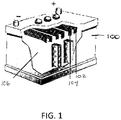
- lead acid battery 100 is an electrochemical storage battery including first electrode 102, second electrode 104, and electrolyte 106.
- Electrolyte 106 generally includes aqueous sulfuric acid. Electrodes 102 and 104 are typically plates held in a parallel orientation and electrically isolated by a porous separator to allow movement of ions.
- first electrode 102 is a positive battery plate including a current collector (e.g., a metal plate or grid) covered with a layer of positive, electrically conductive lead dioxide (PbO 2 ) on the surface;
- second electrode 104 is a negative battery plate including a current collector covered with a negative, active material, such as lead metal (Pb).
- a lead acid battery generally includes a multiplicity of negative and positive plates.
- Negative plates of lead acid batteries are typically produced by applying a paste including lead oxide powder and sulfuric acid to electrically conductive lead alloy structures known as grids. After the plates have been cured and dried, the plates can be assembled into a battery and charged to convert the lead oxide into Pb.
- an expander mixture is added to the lead oxide/sulfuric acid paste to improve the performance of the negative plate.
- the expander mixture may include, for example, barium sulfate as a nucleating agent for lead sulfate produced when the plate is discharged, carbon to increase the electrical conductivity of the active material in the discharged state, and a lignosulfonate or other organic material to increase the surface area of the active material and to assist in stabilizing the physical structure of the active material.
- Pb supplied by the negative plate reacts with ionized sulfuric acid electrolyte to form lead sulfate (PbSO 4 ) on the surface of the negative plate, while PbO 2 on the positive plate reacts to form PbSO 4 on or near the positive plate.
- PbSO 4 on the surface of the negative plate reacts to form Pb
- PbSO 4 on the surface of the positive plate reacts to form PbO 2 .
- a charging cycle converts PbSO 4 into Pb and PbO 2
- a discharge cycle releases stored electrical potential by converting PbO 2 and Pb into PbSO 4 .
- Valve regulated lead acid (VRLA) batteries include a one-way valve that inhibits external gases from entering the battery and allows internal gases, such as oxygen generated during charging, to escape if internal pressure exceeds a selected threshold.
- VRLA batteries the electrolyte is typically immobilized either by absorption of the electrolyte into a glass mat separator or by gelling the sulfuric acid with silica particles.
- Carbon as an additive enables high dynamic charge acceptance and improved cycle life (cycleability) of both flooded and VRLA lead acid batteries. It is generally believed that high surface area carbon in the negative plate forms a conductive network within the lead sulfate matrix of a discharged negative plate. This conductive matrix is thought to facilitate a high recharge rate by providing a conductive path for the electrochemical conversion of lead sulfate back to lead, therefore inhibiting formation of large lead sulfate crystallites and minimizing their growth on the plate surface. The effect is greater with the addition of larger amounts of carbon and also increases as the surface area of the carbon increases.
- reaction mechanism at a carbon surface is understood as follows, where S indicates the carbon surface, and S-H ads represents hydrogen adsorbed to the carbon surface:
- the rate of hydrogen evolution at a carbon surface is affected by the number of adsorption sites, chance recombination of surface-adsorbed hydrogen, and other factors, including diffusion of protons to surface-adsorbed hydrogen.
- heat treatment of carbon black generally refers to a heating process other than that used to form the carbon black. That is, heat treatment of carbon black is generally refers to a post-treatment of carbon black previously formed by methods generally known in the art, such as a furnace black process.
- the post-treatment occurs under inert conditions (i.e., in an atmosphere substantially devoid of oxygen), and typically occurs in a vessel other than that in which the carbon black was formed.
- Inert conditions include, but are not limited to, an atmosphere of inert gas, such as nitrogen, argon, and the like.
- Heat treatment of carbon blacks under inert conditions is thought to reduce the number of defects, dislocations, and/or discontinuities in carbon black crystallites and to reduce the number of surface groups on the carbon black, thereby reducing the number of adsorption sites for Reaction (1) and reducing activity of the carbon surface towards hydrogen adsorption, in turn reducing gassing and hydrogen evolution.
- Other advantages of heat treating carbon black for use in lead acid batteries include increasing the conductivity and hydrophobicity of the carbon black. Increased conductivity may be observed, for example, as an increase in degree of crystallinity evidenced by an increase in microcrystalline planar size (L a ) (i.e., size of ordered domains of microcrystalline carbon black) as determined by Raman spectroscopy.
- Increased hydrophobicity may be observed, for example, as a lower surface energy (SE).
- SE surface energy
- Excessive heat treatment can result in excessive loss of total surface area (e.g., Brunauer-Emmett-Teller (BET) surface area) or external surface area (e.g., statistical thickness surface area (STSA)), such that the heat-treated carbon black no longer provides a suitable increase in charge acceptance and cycleability.
- BET Brunauer-Emmett-Teller
- STSA statistical thickness surface area
- heat-treatment parameters may be advantageously selected to achieve a high degree of crystallinity and high hydrophobicity while maintaining a surface area suitable to provide increased charge acceptance and cycleability.
- Optimal parameters for preparing high surface area heat-treated carbon blacks can be determined experimentally, such that the carbon blacks are suitable for use in, e.g., lead acid batteries to achieve high conductivity, high hydrophobicity, and reduced outgassing while maintaining improved charge acceptance and cycleability.
- SE surface energy
- L a Raman microcrystalline planar size
- the carbon black or heat-treated carbon black has a statistical thickness surface area (STSA) of at least 100 m 2 /g and/or less than 600 m 2 /g, e.g., a statistical thickness surface area (STSA) ranging from 100 m 2 /g to 600 m 2 /g.
- STSA statistical thickness surface area
- the carbon black prior to heating has a surface energy of greater than 10 mJ/m 2 and a BET surface area of at least 200 m 2 /g, e.g., a BET surface area of at least 300 m 2 /g, at least 500 m 2 /g, at least 1000 m 2 /g, 1200 m 2 /g, at least 1300 m 2 /g, at least 1400 m 2 /g, or at least 1500 m 2 /g.
- the carbon black prior to the heat treatment, has a surface energy of greater than 10 mJ/m 2 and a BET surface area ranging from 200 m 2 /g to 2100 m 2 /g, e.g., a BET surface area ranging from 300 m 2 /g to 2100 m 2 /g, from 500 m 2 /g to 2100 m 2 /g, from 1000 m 2 /g to 2100 m 2 /g, from 1200 m 2 /g to 2100 m 2 /g, from 1300 m 2 /g to 2100 m 2 /g, from 1400 m 2 /g to 2100 m 2 /g, or from 1500 m 2 /g to 2100 m 2 /g.
- the heat treatment decreases the BET surface area by at least 10%, relative to the BET surface area of the untreated carbon black. In one embodiment, the BET surface area is decreased in conjunction with decreasing the surface energy. In another embodiment, the heat treatment decreases the BET surface area by at least 25% relative to the BET surface area of the untreated carbon black, e.g., by at least 30%, at least 40%, at least 50%, or by at least 65%, relative to the BET surface area of the untreated carbon black. In yet another embodiment, the heat treatment decreases the BET surface area by at least 10% to 70%, at least 25% to 70%, at least 30% to 70%, at least 40% to 70%, or by at least 50% to 70%, relative to the BET surface area of the untreated carbon black.
- the heat treatment increases the Raman microcrystalline planar size (L a ) and decreases the surface energy while decreasing the BET surface area by no more than 25%, e.g., by no more than 10%, or decreases by 1% to 25%, 5% to 25%, 10% to 25%, 1% to 10%, or 5% to 10%, relative to the BET surface area of the untreated carbon black.
- Certain carbon blacks including heat-treated carbon blacks with a selected combination of properties (e.g., high surface area, high conductivity, and high hydrophobicity) can be used in lead acid batteries to provide improved charge acceptance and cycleability as well as reduced hydrogen evolution compared to other (e.g., non-heat-treated) carbon blacks.
- a selected combination of properties e.g., high surface area, high conductivity, and high hydrophobicity
- heat-treated carbon black can be used in the formation of an electrode for a lead acid battery.
- the electrode may include, for example, an electrically conductive substrate, and a material supported by the surface of the electrically conductive substrate, where the material is a composition including lead oxide and a heat-treated carbon black as described herein.
- the composition may be in the form of a paste.
- the composition includes 0.1 wt% to 5 wt% of the heat-treated carbon black relative to the lead oxide.
- Desirable charge acceptance may be achieved when a paste for a negative electrode includes lead oxide and a heat-treated carbon black at a loading of about 1 wt% heat-treated carbon black relative to the lead oxide. It has also been found that a higher loading (e.g., about 3 wt%) is needed for carbon blacks having a lower surface area. However, electrodes with higher loadings of lower surface area carbon blacks exhibit lower cycleability than electrodes with lower loadings of the higher surface area carbon black. Thus, it is believed that a combination of better charge acceptance and better cycleability is achieved for a low loading of a high surface area heat-treated carbon black.
- a carbon black with an initial BET surface area of about 1500 m 2 /g may be heat treated under a variety of conditions to yield various heat-treated carbon blacks.
- heat treatment at 1300°C may yield a carbon black having a BET surface area of 1000 m 2 /g that exhibits optimal performance with 1.5 wt% loading of the heat-treated carbon black.
- heat treatment at 1400°C may yield a carbon black having a BET surface area of 750 m 2 /g that exhibits optimal performance with 2 wt% loading of the heat-treated carbon black.
- heat treatment may yield a carbon black having a BET surface area of 500 m 2 /g that exhibits optimal performance with 3 wt% loading of the carbon black. At a loading of 3 wt%, however, cycleability may be less than optimal. Thus, a lower limit of surface area (and thus an upper limit on the heat treatment temperature t) may be selected to yield optimal results with respect to charge acceptance and cycleablility.
- a carbon black with a lower initial BET surface area of about 250 m 2 /g may be heat treated under a variety of conditions to yield various heat-treated carbon blacks, and that a lower limit of BET surface area of the heat-treated carbon black may be selected such that the increased loading needed at lower surface area does not have a significant negative impact on the cycleability.
- an electrode having deposited thereon a material comprising the heat-treated carbon blacks disclosed herein displays lower hydrogen evolution currents.
- electrodes coated with heat-treated carbon black samples have a hydrogen evolution current that is at least 20%, at least 25%, at least 30%, or even at least 50% lower relative to an untreated carbon black sample having a comparable BET surface area or STSA value.
- Comparable surface area values include those within 5% or within 10% the surface area relative to the untreated carbon black sample.
- BET surface area and porosity (total pore volume) of a solid material were obtained based on physical adsorption and capillary condensation principles.
- carbon black was dosed with nitrogen at a series of precisely controlled pressures, with incremental pressure increases in a range between 0.01 and 0.3 P/P 0 .
- the total nitrogen intrusion pore volume, or BET surface area was calculated by methods known in the art.
- External surface area (statistical thickness surface area or STSA), associated with meso-and macropores of carbon blacks, was calculated based on the statistical thickness method as generally known in the art, in which t-plots are used to determine the average thicknesses at any point on an isotherm by multiplying the fraction of monolayer capacity, V a /V m at that point by the thickness of the nitrogen monolayer, defined as 3.54 ⁇ for the nitrogen molecule.
- Surface areas and total pore volumes reported herein were calculated in accordance with ASTM D6556-10, which is incorporated herein by reference.
- Raman measurements of L a were based on Gruber et al., "Raman studies of heat-treated carbon blacks," Carbon Vol. 32 (7), pp. 1377-1382, 1994 , which is incorporated herein by reference.
- the Raman spectrum of carbon includes two major “resonance" bands at about 1340 cm -1 and 1580 cm -1 , denoted as the “D” and “G” bands, respectively. It is generally considered that the D band is attributed to disordered sp 2 carbon and the G band to graphitic or "ordered” sp 2 carbon.
- L a 43.5 ⁇ area of G band / area of D band , in which L a is calculated in Angstroms.
- L a 43.5 ⁇ area of G band / area of D band , in which L a is calculated in Angstroms.
- the surface energy (SE) of carbon black samples was determined by measuring the water vapor adsorption using a gravimetric instrument.
- the carbon black sample was loaded onto a microbalance in a humidity chamber and allowed to equilibrate at a series of step changes in relative humidity. The change in mass was recorded. The equilibrium mass increase as a function of relative humidity was used to generate the vapor sorption isotherm.
- the spreading pressure is related to the surface energy of the solid and is indicative of the hydrophobic/hydrophilic properties of the solid, with a lower surface energy (SE) corresponding to a higher hydrophobicity.
- a furnace carbon black was treated at elevated temperatures from 1000°C to 1600°C for a dwell time of 1 or 2 hours at a selected temperature under an inert atmosphere (N 2 ).
- the treatment conditions are listed in Table 1. Values of BET surface area, external surface area (STSA), total pore volume, SE, and degree of crystallinity (L a Raman) are shown for the non-heat-treated carbon black and Samples 1A-1G, corresponding to samples heated at 1000°C (1 hour), 1150°C (1 hour and 2 hours), 1300°C (1 hour), 1400°C (1 hour), 1500°C (1 hour), and 1600°C (1 hour), respectively.
- BET surface area FIG. 2
- external surface area STSA FIG. 3
- SE FIG.
- FIGS. 2-6 Plots including values for Samples 1A, 1B, 1D, 1E, 1F, and 1G, as well as the non-heat-treated carbon black, are shown in FIGS. 2-6 .
- BET surface area decreases from 1504 m 2 /g at 1000°C (Sample 1A) to 534 m 2 /g at 1600°C (Sample 1G), with a relatively sharp decrease appearing between 1150°C (Sample 1B) and 1300°C (Sample 1D).
- FIG. 2 BET surface area decreases from 1504 m 2 /g at 1000°C (Sample 1A) to 534 m 2 /g at 1600°C (Sample 1G), with a relatively sharp decrease appearing between 1150°C (Sample 1B) and 1300°C (Sample 1D).
- STSA exital surface area
- STSA generally decreases as the heat-treatment temperature increases, with a value of 563 m 2 /g at 1000°C (Sample 1A) and a value of 481 m 2 /g at 1600°C (Sample 1G), with a relatively sharp decrease appearing between 1300°C (Sample 1D) and 1400°C (Sample 1E).
- FIG. 4 shows a decrease in pore volume from 1.60 ml/g at 1000°C (Sample 1A) to 1.03 ml/g at 1600°C (Sample 1G).
- Example 5 shows a decrease in SE from 11.7 mJ/m 2 at 1150°C (Sample 1B) to 7.0 mJ/m 2 at 1600°C (Sample 1G).
- hydrophobicity of the heat-treated carbon black increases with an increase in temperature.
- the degree of crystallinity of carbon black heat treated at 1000°C (21.1 A) is similar to that of non-heat treated carbon black (20.8 A).
- the L a value increases from 21.1 ⁇ at 1000°C (Sample 1A) to 33.3 ⁇ at 1600°C (Sample 1G).
- the conductivity of heat-treated carbon black is also expected to increase as treatment temperature increases.
- Samples 1D-1G are seen to have a combination of properties including a BET surface area ranging from 100 m 2 /g to 1100 m 2 /g, a SE of 10 mJ/m 2 or less, and a Raman microcrystalline planar size (L a ) ranging from 22 ⁇ (or 25 ⁇ ) to 50 ⁇ .
- the non-heat-treated sample and Samples 1A-1C are seen to have a BET surface area over 1100 m 2 /g, a SE over 10 mJ/cm 2 , and a lower Raman microcrystalline planar size (L a ) than Samples 1D-1G.
- VXC72 A commercial carbon black, VXC72, available from Cabot Corporation, was heated 1200°C for a dwell time of 2 hours and then heated at a final temperature for a dwell time of 3 hours, all under an inert atmosphere (N 2 ).
- the treatment conditions are listed in Table 2.
- Samples 2A-2C correspond to VXC72 samples heated at a final temperature of 1200°C, 1400°C, and 1600°C, respectively.
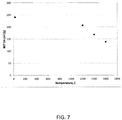
- BET surface area FIG. 7
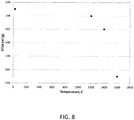
- STSA FIG. 8
- total pore volume decrease
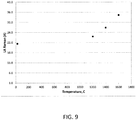
- degree of crystallinity L a Raman, FIG. 9
- SE FIG. 10
- FIGS. 7-9 Plots including values for Samples 2A, 2B, and 2C, as well as non-heat-treated VXC72 are shown in FIGS. 7-9 .
- BET surface area decreases almost linearly from 207 m 2 /g (Sample 2A) to 138 m 2 /g (Sample 2C).
- STSA external surface area
- FIG. 8 STSA (external surface area) generally decreases as the heat-treatment temperature increases, with a value of 144 m 2 /g (Sample 2A) and a value of 135 m 2 /g (Sample 2C).
- the L a value increases from 24.0 ⁇ (Sample 2A) to 34.6 ⁇ (Sample 2C).
- the conductivity of heat-treated carbon black is also expected to increase as the final treatment temperature increases.
- SE decreases from about 9 mJ/m 2 (Sample 2A) to about 5 mJ/m 2 (Sample 2C).
- Samples 2A-2C each heated at a temperature in the range of 1200°C to 1600°C, are seen to have a combination of properties including a BET surface area ranging from 100 m 2 /g to 1100 m 2 /g and a Raman microcrystalline planar size (L a ) ranging from 22 ⁇ to 50 ⁇ , and a SE of 9 mJ/m 2 or less.
- This Example illustrates the reduced gassing rates resulting from hydrogen evolution for the heat-treated carbon blacks disclosed herein, as analyzed by rotating disc electrode (RDE) measurements.
- the RDE method can be used for analysis of the hydrogen evolution on carbon surfaces at various potentials and temperatures.
- the hydrogen evolution currents at fixed voltage can be used as a measure for the hydrogen evolution and compared for various carbon types as a function of surface area of the carbon versus heat treatment conditions.
- Rotating disc electrode measurements were performed with a Princeton Applied Research BiStat potentiostat controlling a Pine Speed control and Pine Analytical rotator interfaced via PC using EC-Lab v10.21 software.
- a three electrode glass cell (Pine Analytical) was used with a platinum wire counter-electrode, calomel reference electrode, and glassy carbon working electrode coated with 100 micrograms the carbon black samples under investigation.
- Electrodes were prepared by coating polished glassy carbon electrodes with 25 microliters of 4 mg/mL carbon ink prepared by adding 20 mg carbon in H2O: IPA-HPLC grade (4mL: 1mL) solution and sonicating for 1 minute. After drying ( ⁇ 1 min. at 25°C), 12 microliters of 0.05 wt.% Nafion solution was added as binder on top of the electrode, and the electrode was dried under nitrogen for 1h at 25°C.
- the electrolyte used was H 2 SO 4 0.5 M purged with argon for 20 minutes prior to starting the experiment.
- Hydrogen reduction currents reported herein were measured at 50°C during cyclic voltammetry (CV) scans at 20mV/s, from -0.3 to -1V vs. SCE with 3,000 rpm disc rotation speed. The reported currents were read at -0.65V vs. SCE (-0.4V vs. SHE), normalized by weight of carbon black, and measured once a steady-state was achieved. Pre-formation cycles at 100 mV/s (usually less than 10) were performed to achieve steady state of the CV current.
- Samples Comp A, Comp B, and Comp C are comparative samples of furnace carbon blacks that have not been heat treated. Samples A and B are formed by heat treating Samples Comp A and Comp B, respectively, at 1300°C for 2 h. Table 4. Properties of carbon black samples Comp A A Comp B B Comp C BET-SA (m 2 /g) 245 159 1500 1043 1160 STSA (m 2 /g) 159 162 482 533 410 SE (mJ/m2) 20.4 7.2 12.4 9.1 14.3
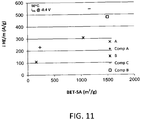
- FIG. 11 is a plot showing mass-normalized hydrogen evolution current (iHE/m, A/g) at -0.4 v and 50°C versus N 2 BET-SA (m 2 /g).
- mass-normalized hydrogen evolution current iHE/m, A/g
- N 2 BET-SA m 2 /g
- FIG. 12 is a plot showing mass normalized hydrogen evolution current at - 0.4V and 50°C versus STSA surface area (m 2 /g) for Samples A, B, Comp A, and Comp B. From FIG. 2 it can be seen that at comparable STSA surface area heat treated carbon blacks show significantly lower hydrogen evolution currents. For example, there is more than 50% reduction of the hydrogen evolution current when Samples A and Comp A are compared. Similarly, the hydrogen evolution current for the heat treated Sample B is nearly 30% lower than the hydrogen evolution current for Sample Comp B, which has a similar STSA value.
Landscapes
- Chemical & Material Sciences (AREA)
- Chemical Kinetics & Catalysis (AREA)
- Electrochemistry (AREA)
- General Chemical & Material Sciences (AREA)
- Organic Chemistry (AREA)
- Engineering & Computer Science (AREA)
- Inorganic Chemistry (AREA)
- Manufacturing & Machinery (AREA)
- Battery Electrode And Active Subsutance (AREA)
- Inert Electrodes (AREA)
- Carbon And Carbon Compounds (AREA)
- Pigments, Carbon Blacks, Or Wood Stains (AREA)
- Secondary Cells (AREA)
Abstract
Description
- Disclosed herein are carbon blacks, such as heat-treated carbon blacks that can be used in electrodes and lead acid batteries.
- Applications such as microhybrid cars and storage for renewable energy sources are placing strong demands on lead acid batteries in terms of improved cycleability at high rate-partial state of charge (HRPSoC) conditions and high dynamic charge acceptance (DCA). Benefits of carbon additives in reducing negative plate sulfation and improving the cycleability and charge acceptance of valve regulated lead acid (VRLA) batteries have been demonstrated. Suitable carbon additives include carbon blacks. Carbon blacks are carbon materials with a unique hierarchical structure made from oil feedstock in a high temperature, high throughput process. Characteristics of carbon blacks such as morphology, purity and surface properties have been studied in the context of lead acid battery applications.
- The present invention provides:
- 1. A carbon black having a Brunauer-Emmett-Teller (BET) surface area ranging from 100 m2/g to 1100 m2/g, and a surface energy (SE) of 10 mJ/m2 or less.
- 2. The carbon black of item 1, wherein the carbon black has a Raman microcrystalline planar size (La) of at least 22 Å.
- 3. The carbon black of item 1, wherein the carbon black has a Raman microcrystalline planar size (La) of at least 25 Å.
- 4. The carbon black of any one of items 1 through 3, wherein the carbon black has a Raman microcrystalline planar size (La) of 50 Å or less.
- 5. The carbon black of any one of items 1 through 4, wherein the surface energy (SE) is 9 mJ/m2 or less.
- 6. The carbon black of any one of items 1 through 5, wherein the surface energy (SE) is 6 mJ/m2 or less.
- 7. The carbon black of any one of items 1 through 6, wherein the surface energy (SE) is 3 mJ/m2 or less.
- 8. The carbon black of any one of items 1 through 6, wherein the surface energy (SE) ranges from 1 mJ/m2 to 10 mJ/m2.
- 9. The carbon black of any one of items 1 through 8, wherein the carbon black has a statistical thickness surface area (STSA) of at least 100 m2/g.
- 10. The carbon black of any one of items 1 through 9, wherein the carbon black has a statistical thickness surface area (STSA) of 600 m2/g or less.
- 11. The carbon black of any one of items 1 through 10, wherein the carbon black has a statistical thickness surface area (STSA) ranging from 100 m2/g to 600 m2/g.
- 12. A heat-treated carbon black prepared by a process comprising heating a carbon black at a temperature ranging from 1100°C to 1700°C in an inert atmosphere to form the heat-treated carbon black, wherein the heat-treated carbon black has a Brunauer-Emmett-Teller (BET) surface area ranging from 100 m2/g to 1100 m2/g and a surface energy (SE) of 10 mJ/m2 or less.
- 13. The heat-treated carbon black of item 12, wherein the heat-treated carbon black has a Raman microcrystalline planar size (La) of at least 22 Å.
- 14. The heat-treated carbon black of item 12, wherein the heat-treated carbon black has a Raman microcrystalline planar size (La) of at least 25 Å.
- 15. The heat-treated carbon black of any one of items 12 through 14, wherein the heat-treated carbon black has a Raman microcrystalline planar size (La) of 50 Å or less.
- 16. The heat-treated carbon black of any one of items 12 through 15, wherein the surface energy (SE) is 9 mJ/m2 or less.
- 17. The heat-treated carbon black of any one of items 12 through 16, wherein the surface energy (SE) is 6 mJ/m2 or less.
- 18. The heat treated carbon black of any one of items 12 through 17, wherein the surface energy (SE) is 3 mJ/m2 or less.
- 19. The heat-treated carbon black of any one of items 12 through 18, wherein the heat-treated carbon black has a statistical thickness surface area (STSA) of at least 100 m2/g.
- 20. The heat-treated carbon black of any one of items 12 through 19, wherein the heat-treated carbon black has a statistical thickness surface area (STSA) of 600 m2/g or less.
- 21. The heat-treated carbon black of any one of items 12 through 20, wherein the heat-treated carbon black has a statistical thickness surface area (STSA) of ranging from 100 m2/g to 600 m2/g.
- 22. A heat-treated carbon black prepared by a process comprising heating a carbon black at a temperature ranging from 1100°C to 1700°C in an inert atmosphere to form the heat-treated carbon black, wherein the heat-treated carbon black has a Brunauer-Emmett-Teller (BET) surface area ranging from 100 m2/gto 1100 m2/g and a Raman microcrystalline planar size (La) ranging from 22 Å to 50 Å.
- 23. The heat-treated carbon black of item 22, wherein the heat-treated carbon black has a Raman microcrystalline planar size (La) of at least 25 Å.
- 24. The heat-treated carbon black of item 22 or 23, wherein the surface energy (SE) of the heat-treated carbon black is 10 mJ/m2 or less.
- 25. The heat-treated carbon black of any one of items 22 through 24, wherein the surface energy (SE) of the heat-treated carbon black is 9 mJ/m2 or less.
- 26. The heat-treated carbon black of any one of items 22 through 25, wherein the surface energy (SE) of the heat treated carbon black is 6 mJ/m2 or less.
- 27. The heat-treated carbon black of any one of items 22 through 26, wherein the surface energy (SE) of the heat treated carbon black is 3 mJ/m2 or less.
- 28. The heat-treated carbon black of any one of items 22 through 27, wherein the heat-treated carbon black has a statistical thickness surface area (STSA) of at least 100 m2/g.
- 29. The heat-treated carbon black of any one of items 22 through 28, wherein the heat-treated carbon black has a statistical thickness surface area (STSA) of 600 m2/g or less.
- 30. The heat-treated carbon black of any one of items 22 through 29, wherein the heat-treated carbon black has a statistical thickness surface area (STSA) ranging from 100 m2/g to 600 m2/g.
- 31. An electrode comprising:
- an electrically conductive substrate; and
- a material supported by a surface of the electrically conductive substrate, the material comprising the carbon black of any one of items 1 through 10 or the heat-treated carbon black of any one of items 12 through 29.
- 32. A lead acid battery comprising:
- a first electrode, wherein the first electrode comprises the electrode of item 31;
- a second electrode; and
- an electrolyte in contact with the first electrode and the second electrode.
- 33. A composition comprising:
- lead oxide; and
- the carbon black of any one of items 1 through 10 or the heat-treated carbon black of any one of items 12 through 29,
- 34. The composition of item 33, wherein the composition is a paste.
- 35. An electrode comprising:
- an electrically conductive substrate; and
- a material supported by a surface of the electrically conductive substrate, the material comprising the composition of item 33 or 34.
- 36. A lead acid battery comprising:
- a first electrode, wherein the first electrode comprises the electrode of item 35;
- a second electrode; and
- an electrolyte in contact with the first electrode and the second electrode.
- 37. A method comprising:
- heating a carbon black at a temperature ranging from 1100°C to 1700°C in an inert atmosphere to form a heat-treated carbon black,
- wherein the heat-treated carbon black has a Brunauer-Emmett-Teller (BET) surface area ranging from 100 m2/g to 1100 m2/g and a surface energy (SE) of 10 mJ/m2 or less.
- 38. The method of item 37, wherein the heat-treated carbon black has a Raman microcrystalline planar size (La) of at least 22 Å.
- 39. The method of item 37, wherein the heat-treated carbon black has a Raman microcrystalline planar size (La) of at least 25 Å.
- 40. The method of any one of items 37 through 39, wherein the heat-treated carbon black has a Raman microcrystalline planar size (La) of 50 Å or less.
- 41. The method of any one of items 37 through 40, wherein the surface energy (SE) of the heat-treated carbon black is 10 mJ/m2 or less.
- 42. The method of any one of items 37 through 41, wherein the surface energy (SE) of the heat-treated carbon black is 9 mJ/m2 or less.
- 43. The method of any one of items 37 through 42, wherein the surface energy (SE) of the heat treated carbon black is 6 mJ/m2 or less.
- 44. The method of any one of items 37 through 43, wherein the surface energy (SE) of the heat treated carbon black is 3 mJ/m2 or less.
- 45. The method of any one of items 37 through 44, wherein the heat-treated carbon black has a statistical thickness surface area (STSA) of at least 100 m2/g.
- 46. The method of any one of items 37 through 45, wherein the heat-treated carbon black has a statistical thickness surface area (STSA) of 600 m2/g or less.
- 47. The method of any one of items 33 through 46, wherein the heat-treated carbon black has a statistical thickness surface area (STSA) of ranging from 100 m2/g to 600 m2/g.
- 48. A method comprising:
- heating a carbon black at a temperature ranging from 1100°C to 1700°C in an inert atmosphere to form a heat-treated carbon black,
- wherein the heat-treated carbon black has a Brunauer-Emmett-Teller (BET) surface area ranging from 100 m2/g to 1100 m2/g and a Raman microcrystalline planar size (La) ranging from 22 Å to 50 Å.
- 49. The method of item 48, wherein the heat-treated carbon black has a Raman microcrystalline planar size (La) of at least 25 Å.
- 50. The method of item 48 or 49, wherein the surface energy (SE) of the heat-treated carbon black is 10 mJ/m2 or less.
- 51. The method of any one of items 48 through 50, wherein the surface energy (SE) of the heat-treated carbon black is 9 mJ/m2 or less.
- 52. The method of any one of items 48 through 51, wherein the surface energy (SE) of the heat treated carbon black is 6 mJ/m2 or less.
- 53. The method of any one of items 48 through 52, wherein the surface energy (SE) of the heat treated carbon black is 3 mJ/m2 or less.
- 54. The method of any one of items 48 through 53, wherein the heat-treated carbon black has a statistical thickness surface area (STSA) of at least 100 m2/g.
- 55. The method of any one of items 48 through 54, wherein the heat-treated carbon black has a statistical thickness surface area (STSA) of 600 m2/g or less.
- 56. The method of any one of items 48 through 55, wherein the heat-treated carbon black has a statistical thickness surface area (STSA) ranging from 100 m2/g to 600 m2/g.
- In a first general aspect, a carbon black has a Brunauer-Emmett-Teller (BET) surface area ranging from 100 m2/g to 1100 m2/g and a surface energy (SE) of 10 mJ/m2 or less.
- In a second general aspect, a heat-treated carbon black is prepared by a process including heating a carbon black at a temperature ranging from 1100°C to 1700°C in an inert atmosphere to form the heat-treated carbon black. The heat-treated carbon black has a Brunauer-Emmett-Teller (BET) surface area ranging from 100 m2/g to 1100 m2/g and a surface energy (SE) of 10 mJ/m2 or less.
- In a third general aspect, a heat-treated carbon black is prepared by a process including heating a carbon black at a temperature ranging from 1100°C to 1700°C in an inert atmosphere to form the heat-treated carbon black. The heat-treated carbon black has a Brunauer-Emmett-Teller (BET) surface area ranging from 100 m2/g to 1100 m2/g and a Raman microcrystalline planar size (La) of at least 22 Å, at least 25 Å, e.g., ranging from 22 Å to 50 Å, or from 25 Å to 50 Å.
- In a fourth general aspect, a composition includes lead oxide and the carbon black or heat-treated carbon black of any one of the first, second, or third general aspects and/or implementations thereof. The composition includes 0.1 wt% to 5 wt% of the carbon black or heat-treated carbon black relative to the lead oxide. In some embodiments, the composition is a paste.
- In a fifth general aspect, an electrode includes an electrically conductive substrate and a material supported by a surface of the electrically conductive substrate. The material includes the carbon black or heat-treated carbon black of any one of the first, second, or third general aspects and/or implementations thereof or the composition of the fourth general aspect and/or implementations thereof.
- In a sixth general aspect, a lead acid battery includes a first electrode, a second electrode, and an electrolyte in contact with the first electrode and the second electrode. The first electrode may be the electrode of the fifth general aspect and/or implementations thereof.
- A seventh general aspect includes heating a carbon black at a temperature ranging from 1100°C to 1700°C in an inert atmosphere to form a heat-treated carbon black. The heat-treated carbon black has a Brunauer-Emmett-Teller (BET) surface area ranging from 100 m2/g and 1100 m2/g and a surface energy (SE) 10 mJ/m2 or less.
- An eighth general aspect includes heating a carbon black at a temperature ranging from 1100°C to 1700°C in an inert atmosphere to form a heat-treated carbon black. The heat-treated carbon black has a Brunauer-Emmett-Teller (BET) surface area ranging from 100 m2/g and 1100 m2/g and a Raman microcrystalline planar size (La) ranging from 22 Å to 50 Å.
- Implementations of the general aspects above may include one or more of the following features. For example, the carbon black or heat-treated carbon black may have a Raman microcrystalline planar size (La) of at least 22 Å or at least 25 Å. In some cases, the carbon black or heat-treated carbon black has a Raman microcrystalline planar size (La) of 50 Å or less. In certain cases, the carbon black or heat-treated carbon has a surface energy (SE) of 10 mJ/m2 or less, 9 mJ/m2 or less, 6 mJ/m2 or less, or 3 mJ/m2 or less. In some examples, the carbon black or heat-treated carbon black has a statistical thickness surface area (STSA) of at least 100 m2/g, e.g., ranging from 100 m2/g to 600 m2/g.
- The carbon black or heat-treated carbon black, materials, and compositions of the general aspects and/or implementations thereof as described above can be used in lead acid batteries (e.g., in one or more electrodes of a lead acid battery) to improve conductivity and reduce outgassing while maintaining high charge acceptance and cycleability.
- The details of one or more embodiments of the invention are set forth in the accompanying drawings and the description below. Other features, objects, and advantages of the invention will be apparent from the description and drawings, and from the claims.
- The concepts herein may be more completely understood in consideration of the following detailed description of various embodiments in connection with the accompanying drawings, in which:
-
FIG. 1 depicts a lead acid battery; -
FIG. 2 is a plot showing Brunauer-Emmett-Teller (BET) surface area versus temperature for a heat-treated carbon black; -
FIG. 3 is a plot showing statistical thickness surface area (STSA) versus temperature for a heat-treated carbon black; -
FIG. 4 is a plot showing pore volume versus temperature for a heat-treated carbon black; -
FIG. 5 is a plot showing Raman microcrystalline planar size (La) versus temperature for a heat-treated carbon black; -
FIG. 6 is a plot showing surface energy (SE) versus temperature for a heat-treated carbon black; -
FIG. 7 is a plot showing BET surface area versus temperature for a heat-treated carbon black; -
FIG. 8 is a plot showing STSA versus temperature for a heat-treated carbon black; -
FIG. 9 is a plot showing Raman microcrystalline planar size (La) versus temperature for a heat-treated carbon black; -
FIG. 10 is a plot showing SE versus temperature for a heat-treated carbon black; -
FIG. 11 is a plot showing mass-normalized hydrogen evolution current (iHE/m, A/g) at -0.4 v and 50°C versus N2 BET-SA (m2/g); and -
FIG. 12 is a plot showing mass normalized hydrogen evolution current at -0.4V and 50°C versus STSA surface area (m2/g). - Referring to
FIG. 1 , leadacid battery 100 is an electrochemical storage battery includingfirst electrode 102,second electrode 104, andelectrolyte 106.Electrolyte 106 generally includes aqueous sulfuric acid.Electrodes FIG. 1 ,first electrode 102 is a positive battery plate including a current collector (e.g., a metal plate or grid) covered with a layer of positive, electrically conductive lead dioxide (PbO2) on the surface;second electrode 104 is a negative battery plate including a current collector covered with a negative, active material, such as lead metal (Pb). A lead acid battery generally includes a multiplicity of negative and positive plates. - Negative plates of lead acid batteries are typically produced by applying a paste including lead oxide powder and sulfuric acid to electrically conductive lead alloy structures known as grids. After the plates have been cured and dried, the plates can be assembled into a battery and charged to convert the lead oxide into Pb. In some cases, an expander mixture is added to the lead oxide/sulfuric acid paste to improve the performance of the negative plate. The expander mixture may include, for example, barium sulfate as a nucleating agent for lead sulfate produced when the plate is discharged, carbon to increase the electrical conductivity of the active material in the discharged state, and a lignosulfonate or other organic material to increase the surface area of the active material and to assist in stabilizing the physical structure of the active material.
- During discharge cycles, Pb supplied by the negative plate reacts with ionized sulfuric acid electrolyte to form lead sulfate (PbSO4) on the surface of the negative plate, while PbO2 on the positive plate reacts to form PbSO4 on or near the positive plate. During charging cycles, PbSO4 on the surface of the negative plate reacts to form Pb, and PbSO4 on the surface of the positive plate reacts to form PbO2. Thus, a charging cycle converts PbSO4 into Pb and PbO2, and a discharge cycle releases stored electrical potential by converting PbO2 and Pb into PbSO4.
- Lead acid batteries are produced in flooded cell and valve regulated configurations. In flooded cell batteries, the electrodes/plates are immersed in electrolyte and gases created during charging are vented to the atmosphere. Valve regulated lead acid (VRLA) batteries include a one-way valve that inhibits external gases from entering the battery and allows internal gases, such as oxygen generated during charging, to escape if internal pressure exceeds a selected threshold. In VRLA batteries, the electrolyte is typically immobilized either by absorption of the electrolyte into a glass mat separator or by gelling the sulfuric acid with silica particles.
- Carbon as an additive (e.g., in the form of carbon black) enables high dynamic charge acceptance and improved cycle life (cycleability) of both flooded and VRLA lead acid batteries. It is generally believed that high surface area carbon in the negative plate forms a conductive network within the lead sulfate matrix of a discharged negative plate. This conductive matrix is thought to facilitate a high recharge rate by providing a conductive path for the electrochemical conversion of lead sulfate back to lead, therefore inhibiting formation of large lead sulfate crystallites and minimizing their growth on the plate surface. The effect is greater with the addition of larger amounts of carbon and also increases as the surface area of the carbon increases.
- The use of high surface area carbon in lead acid batteries, however, can lead to high gassing rates thought to be related to hydrogen evolution, and high loading of carbon can reduce cycleability. Water decomposition occurs above the water decomposition voltage in a lead acid battery, with decomposition rate and the resulting volumes of oxygen and hydrogen increasing along with overpotential. In addition, the potential of hydrogen evolution on carbon surfaces is lower than on lead and therefore the presence of carbon could lead to an increased rate of hydrogen evolution and therefore higher water loss.
- The potential impact of hydrogen outgassing can be serious. At levels approaching 4% concentration, hydrogen gas build-up can present safety hazards. Over the life of a flooded lead acid battery, the rate of outgassing influences watering maintenance, as the greater the outgassing, the greater the need to ensure that proper electrolyte levels are maintained in the battery. For maintenance-free flooded lead acid batteries, high water loss increases electrolyte concentration and lowers cycle life. Dry out from water loss is also a possible failure mode in VLRA batteries.
- Similar to hydrogen evolution reactions at platinum and other electrodes, the reaction mechanism at a carbon surface is understood as follows, where S indicates the carbon surface, and S-Hads represents hydrogen adsorbed to the carbon surface:
Adsorption step: S + H3O+ + e- ↔ S-Hads + H2O (1) Recombination step: S-Hads + S-Hads → H2 + 2S (2a) Electrochemical desorption step: S-Hads + H3O+ + e- → H2 + H2O + 2S (2b) - As used herein, heat treatment of carbon black generally refers to a heating process other than that used to form the carbon black. That is, heat treatment of carbon black is generally refers to a post-treatment of carbon black previously formed by methods generally known in the art, such as a furnace black process. The post-treatment occurs under inert conditions (i.e., in an atmosphere substantially devoid of oxygen), and typically occurs in a vessel other than that in which the carbon black was formed. Inert conditions include, but are not limited to, an atmosphere of inert gas, such as nitrogen, argon, and the like. Heat treatment of carbon blacks under inert conditions, as described herein, is thought to reduce the number of defects, dislocations, and/or discontinuities in carbon black crystallites and to reduce the number of surface groups on the carbon black, thereby reducing the number of adsorption sites for Reaction (1) and reducing activity of the carbon surface towards hydrogen adsorption, in turn reducing gassing and hydrogen evolution. Other advantages of heat treating carbon black for use in lead acid batteries include increasing the conductivity and hydrophobicity of the carbon black. Increased conductivity may be observed, for example, as an increase in degree of crystallinity evidenced by an increase in microcrystalline planar size (La) (i.e., size of ordered domains of microcrystalline carbon black) as determined by Raman spectroscopy. Increased hydrophobicity may be observed, for example, as a lower surface energy (SE). Excessive heat treatment, however, can result in excessive loss of total surface area (e.g., Brunauer-Emmett-Teller (BET) surface area) or external surface area (e.g., statistical thickness surface area (STSA)), such that the heat-treated carbon black no longer provides a suitable increase in charge acceptance and cycleability. Accordingly, as described herein, heat-treatment parameters may be advantageously selected to achieve a high degree of crystallinity and high hydrophobicity while maintaining a surface area suitable to provide increased charge acceptance and cycleability.
- Optimal parameters for preparing high surface area heat-treated carbon blacks can be determined experimentally, such that the carbon blacks are suitable for use in, e.g., lead acid batteries to achieve high conductivity, high hydrophobicity, and reduced outgassing while maintaining improved charge acceptance and cycleability. For example, it was found that a carbon black prepared by heating a carbon black at a temperature ranging from 1100°C to 1700°C to yield a heat-treated carbon black having a BET surface area ranging from 100 m2/g to 1100 m2/g combined with one or more other selected properties, such as a surface energy (SE) of 10 mJ/m2 or less (e.g., 9 mJ/m2 or less, 6 mJ/m2 or less, or 3 mJ/m2 or less), a Raman microcrystalline planar size (La) of at least 22 Å and 50 Å or less (e.g., ranging from 22 Å to 50 Å, at least 25 Å, or ranging from 25 Å to 50 Å etc.) or a combination thereof, provides a carbon black suitable for use in a lead acid battery.
- In some examples, the carbon black or heat-treated carbon black has a statistical thickness surface area (STSA) of at least 100 m2/g and/or less than 600 m2/g, e.g., a statistical thickness surface area (STSA) ranging from 100 m2/g to 600 m2/g.
- In one embodiment, the carbon black prior to heating (untreated carbon black) has a surface energy of greater than 10 mJ/m2 and a BET surface area of at least 200 m2/g, e.g., a BET surface area of at least 300 m2/g, at least 500 m2/g, at least 1000 m2/g, 1200 m2/g, at least 1300 m2/g, at least 1400 m2/g, or at least 1500 m2/g. In another embodiment, the carbon black, prior to the heat treatment, has a surface energy of greater than 10 mJ/m2 and a BET surface area ranging from 200 m2/g to 2100 m2/g, e.g., a BET surface area ranging from 300 m2/g to 2100 m2/g, from 500 m2/g to 2100 m2/g, from 1000 m2/g to 2100 m2/g, from 1200 m2/g to 2100 m2/g, from 1300 m2/g to 2100 m2/g, from 1400 m2/g to 2100 m2/g, or from 1500 m2/g to 2100 m2/g.
- In one embodiment, the heat treatment decreases the BET surface area by at least 10%, relative to the BET surface area of the untreated carbon black. In one embodiment, the BET surface area is decreased in conjunction with decreasing the surface energy. In another embodiment, the heat treatment decreases the BET surface area by at least 25% relative to the BET surface area of the untreated carbon black, e.g., by at least 30%, at least 40%, at least 50%, or by at least 65%, relative to the BET surface area of the untreated carbon black. In yet another embodiment, the heat treatment decreases the BET surface area by at least 10% to 70%, at least 25% to 70%, at least 30% to 70%, at least 40% to 70%, or by at least 50% to 70%, relative to the BET surface area of the untreated carbon black.
- In another embodiment, the heat treatment increases the Raman microcrystalline planar size (La) and decreases the surface energy while decreasing the BET surface area by no more than 25%, e.g., by no more than 10%, or decreases by 1% to 25%, 5% to 25%, 10% to 25%, 1% to 10%, or 5% to 10%, relative to the BET surface area of the untreated carbon black.
- Certain carbon blacks, including heat-treated carbon blacks with a selected combination of properties (e.g., high surface area, high conductivity, and high hydrophobicity) can be used in lead acid batteries to provide improved charge acceptance and cycleability as well as reduced hydrogen evolution compared to other (e.g., non-heat-treated) carbon blacks.
- In some cases, heat-treated carbon black can be used in the formation of an electrode for a lead acid battery. The electrode may include, for example, an electrically conductive substrate, and a material supported by the surface of the electrically conductive substrate, where the material is a composition including lead oxide and a heat-treated carbon black as described herein. The composition may be in the form of a paste. In some cases, the composition includes 0.1 wt% to 5 wt% of the heat-treated carbon black relative to the lead oxide.
- Desirable charge acceptance may be achieved when a paste for a negative electrode includes lead oxide and a heat-treated carbon black at a loading of about 1 wt% heat-treated carbon black relative to the lead oxide. It has also been found that a higher loading (e.g., about 3 wt%) is needed for carbon blacks having a lower surface area. However, electrodes with higher loadings of lower surface area carbon blacks exhibit lower cycleability than electrodes with lower loadings of the higher surface area carbon black. Thus, it is believed that a combination of better charge acceptance and better cycleability is achieved for a low loading of a high surface area heat-treated carbon black.
- For example, a carbon black with an initial BET surface area of about 1500 m2/g may be heat treated under a variety of conditions to yield various heat-treated carbon blacks. In one case, heat treatment at 1300°C may yield a carbon black having a BET surface area of 1000 m2/g that exhibits optimal performance with 1.5 wt% loading of the heat-treated carbon black. In another example, heat treatment at 1400°C may yield a carbon black having a BET surface area of 750 m2/g that exhibits optimal performance with 2 wt% loading of the heat-treated carbon black. In yet another example, heat treatment may yield a carbon black having a BET surface area of 500 m2/g that exhibits optimal performance with 3 wt% loading of the carbon black. At a loading of 3 wt%, however, cycleability may be less than optimal. Thus, a lower limit of surface area (and thus an upper limit on the heat treatment temperature t) may be selected to yield optimal results with respect to charge acceptance and cycleablility. Similarly, it is thought that, for example, a carbon black with a lower initial BET surface area of about 250 m2/g may be heat treated under a variety of conditions to yield various heat-treated carbon blacks, and that a lower limit of BET surface area of the heat-treated carbon black may be selected such that the increased loading needed at lower surface area does not have a significant negative impact on the cycleability.
- In another embodiment, an electrode having deposited thereon a material comprising the heat-treated carbon blacks disclosed herein displays lower hydrogen evolution currents. For example, electrodes coated with heat-treated carbon black samples have a hydrogen evolution current that is at least 20%, at least 25%, at least 30%, or even at least 50% lower relative to an untreated carbon black sample having a comparable BET surface area or STSA value. Comparable surface area values include those within 5% or within 10% the surface area relative to the untreated carbon black sample.
- BET surface area and porosity (total pore volume) of a solid material were obtained based on physical adsorption and capillary condensation principles. At -273°C, carbon black was dosed with nitrogen at a series of precisely controlled pressures, with incremental pressure increases in a range between 0.01 and 0.3 P/P0. At a pressure just below atmospheric pressure, the total nitrogen intrusion pore volume, or BET surface area, was calculated by methods known in the art. External surface area (statistical thickness surface area or STSA), associated with meso-and macropores of carbon blacks, was calculated based on the statistical thickness method as generally known in the art, in which t-plots are used to determine the average thicknesses at any point on an isotherm by multiplying the fraction of monolayer capacity, Va/Vm at that point by the thickness of the nitrogen monolayer, defined as 3.54 Å for the nitrogen molecule. Surface areas and total pore volumes reported herein were calculated in accordance with ASTM D6556-10, which is incorporated herein by reference.
- Raman measurements of La (microcrystalline planar size) were based on Gruber et al., "Raman studies of heat-treated carbon blacks," Carbon Vol. 32 (7), pp. 1377-1382, 1994, which is incorporated herein by reference. The Raman spectrum of carbon includes two major "resonance" bands at about 1340 cm-1 and 1580 cm-1, denoted as the "D" and "G" bands, respectively. It is generally considered that the D band is attributed to disordered sp2 carbon and the G band to graphitic or "ordered" sp2 carbon. Using an empirical approach, the ratio of the G/D bands and the La measured by X-ray diffraction (XRD) are highly correlated, and regression analysis gives the empirical relationship:

- The surface energy (SE) of carbon black samples was determined by measuring the water vapor adsorption using a gravimetric instrument. The carbon black sample was loaded onto a microbalance in a humidity chamber and allowed to equilibrate at a series of step changes in relative humidity. The change in mass was recorded. The equilibrium mass increase as a function of relative humidity was used to generate the vapor sorption isotherm. Spreading pressure (in mJ/m2) for a sample is calculated as πe/BET, in which:

- A furnace carbon black was treated at elevated temperatures from 1000°C to 1600°C for a dwell time of 1 or 2 hours at a selected temperature under an inert atmosphere (N2). The treatment conditions are listed in Table 1. Values of BET surface area, external surface area (STSA), total pore volume, SE, and degree of crystallinity (La Raman) are shown for the non-heat-treated carbon black and Samples 1A-1G, corresponding to samples heated at 1000°C (1 hour), 1150°C (1 hour and 2 hours), 1300°C (1 hour), 1400°C (1 hour), 1500°C (1 hour), and 1600°C (1 hour), respectively. Generally, with increasing treatment temperature, BET surface area (
FIG. 2 ), external surface area STSA (FIG. 3 ), SE (FIG. 4 ), and total pore volume (FIG. 5 ) decrease, while degree of crystallinity (La Raman,FIG. 6 ) increases.Table 1. Properties of heat-treated carbon black. Heat treatment Temperature (°C) Dwell time (hr) BET surface area (m2/g) External surface area (m2/g) Total pore volume (ml/g) SE (mJ/m 2) La Raman (Å) Not treated - 1546 562 1.69 10.4 20.8 Sample 1A 1000 1 1504 563 1.60 11.4 21.1 Sample 1B 1150 1 1409 558 1.52 11.7 22.1 Sample 1C 1150 2 1376 573 1.51 10.7 22.4 Sample 1D 1300 1 1050 561 1.35 9.1 26.3 Sample 1E 1400 1 875 550 1.24 8.5 29.6 Sample 1F 1500 1 682 524 1.14 8.3 31.6 Sample 1G 1600 1 534 481 1.03 7.0 33.3 - Plots including values for Samples 1A, 1B, 1D, 1E, 1F, and 1G, as well as the non-heat-treated carbon black, are shown in
FIGS. 2-6 . As seen inFIG. 2 , BET surface area decreases from 1504 m2/g at 1000°C (Sample 1A) to 534 m2/g at 1600°C (Sample 1G), with a relatively sharp decrease appearing between 1150°C (Sample 1B) and 1300°C (Sample 1D). As seen inFIG. 3 , STSA (external surface area) generally decreases as the heat-treatment temperature increases, with a value of 563 m2/g at 1000°C (Sample 1A) and a value of 481 m2/g at 1600°C (Sample 1G), with a relatively sharp decrease appearing between 1300°C (Sample 1D) and 1400°C (Sample 1E).FIG. 4 shows a decrease in pore volume from 1.60 ml/g at 1000°C (Sample 1A) to 1.03 ml/g at 1600°C (Sample 1G).FIG. 5 shows a decrease in SE from 11.7 mJ/m2 at 1150°C (Sample 1B) to 7.0 mJ/m2 at 1600°C (Sample 1G). Thus, from a treatment temperature of 1150°C, and possibly lower, to a treatment temperature of 1600°C, hydrophobicity of the heat-treated carbon black increases with an increase in temperature. As seen inFIG. 6 , the degree of crystallinity of carbon black heat treated at 1000°C (21.1 A) is similar to that of non-heat treated carbon black (20.8 A). The La value increases from 21.1 Å at 1000°C (Sample 1A) to 33.3 Å at 1600°C (Sample 1G). As such, the conductivity of heat-treated carbon black is also expected to increase as treatment temperature increases. - From Table 1, Samples 1D-1G are seen to have a combination of properties including a BET surface area ranging from 100 m2/g to 1100 m2/g, a SE of 10 mJ/m2 or less, and a Raman microcrystalline planar size (La) ranging from 22 Å (or 25 Å) to 50 Å. The non-heat-treated sample and Samples 1A-1C are seen to have a BET surface area over 1100 m2/g, a SE over 10 mJ/cm2, and a lower Raman microcrystalline planar size (La) than Samples 1D-1G.
- A commercial carbon black, VXC72, available from Cabot Corporation, was heated 1200°C for a dwell time of 2 hours and then heated at a final temperature for a dwell time of 3 hours, all under an inert atmosphere (N2). The treatment conditions are listed in Table 2. Samples 2A-2C correspond to VXC72 samples heated at a final temperature of 1200°C, 1400°C, and 1600°C, respectively. Generally, with increasing final temperature, BET surface area (
FIG. 7 ), STSA (FIG. 8 ), and total pore volume decrease, and degree of crystallinity (La Raman,FIG. 9 ) and SE (FIG. 10 ) increase.Table 2. Properties of heat-treated carbon black (VXC72). Final Heat treatment Temperature ("C) Dwell time BET surface area (m2/g) External surface area (m2/g) Total pore volume (ml/g) La Raman (Å) SE (mJ/m2) VXC72 - - 240 145 0.51 20.4 13.0 Sample 2A 1200 5hr at 1200C 207 144 0.49 24.0 8.9 Sample 2B 1400 2hr at 1200C, 3hr at 1400C 169 142 0.49 28.4 6.3 Sample 2C 1600 2hr at 1200C, 3hr at 1600C 138 135 0.44 34.6 4.9 - Plots including values for Samples 2A, 2B, and 2C, as well as non-heat-treated VXC72) are shown in
FIGS. 7-9 . As seen inFIG. 7 , BET surface area decreases almost linearly from 207 m2/g (Sample 2A) to 138 m2/g (Sample 2C). As seen inFIG. 8 , STSA (external surface area) generally decreases as the heat-treatment temperature increases, with a value of 144 m2/g (Sample 2A) and a value of 135 m2/g (Sample 2C). As seen inFIG. 9 , the La value increases from 24.0 Å (Sample 2A) to 34.6 Å (Sample 2C). As such, the conductivity of heat-treated carbon black is also expected to increase as the final treatment temperature increases. As seen inFIG. 10 , SE decreases from about 9 mJ/m2 (Sample 2A) to about 5 mJ/m2 (Sample 2C). - From Table 2, Samples 2A-2C, each heated at a temperature in the range of 1200°C to 1600°C, are seen to have a combination of properties including a BET surface area ranging from 100 m2/g to 1100 m2/g and a Raman microcrystalline planar size (La) ranging from 22 Å to 50 Å, and a SE of 9 mJ/m2 or less.
- BET surface area, STSA, and pore volume, and degree of crystallinity of six commercial, non-heat-treated carbon blacks were measured. Results are listed in Table 3. None of the carbon blacks shown in Table 3 has a combination of properties including a BET surface area ranging from 100 m2/g to 1100 m2/g and a SE of 10 mJ/m2 or less.
Table 3. Properties of commercial, non-heat-treated carbon blacks. Manufacturer BET surface area (m2/g) External surface area (m2/g) Total pore volume (ml/g) La Raman (Å) SE (mJ/m2) VXC72 Cabot 240 145 0.51 20.4 13.0 BP700 Cabot 229 157 1.08 17.9 20.4 BP2000 Cabot 1491 585 2.18 21.7 13.4 Printex L6 Degussa 282 128 0.46 20.8 17.8 Lamp Black 101 Degussa 28 19 0.05 19.3 18.9 Ketjenblack EC300J Akzo Noble 853 553 1.13 23.7 11.8 - This Example illustrates the reduced gassing rates resulting from hydrogen evolution for the heat-treated carbon blacks disclosed herein, as analyzed by rotating disc electrode (RDE) measurements. The RDE method can be used for analysis of the hydrogen evolution on carbon surfaces at various potentials and temperatures. For example, the hydrogen evolution currents at fixed voltage can be used as a measure for the hydrogen evolution and compared for various carbon types as a function of surface area of the carbon versus heat treatment conditions.
- Rotating disc electrode measurements were performed with a Princeton Applied Research BiStat potentiostat controlling a Pine Speed control and Pine Analytical rotator interfaced via PC using EC-Lab v10.21 software. A three electrode glass cell (Pine Analytical) was used with a platinum wire counter-electrode, calomel reference electrode, and glassy carbon working electrode coated with 100 micrograms the carbon black samples under investigation.
- Electrodes were prepared by coating polished glassy carbon electrodes with 25 microliters of 4 mg/mL carbon ink prepared by adding 20 mg carbon in H2O: IPA-HPLC grade (4mL: 1mL) solution and sonicating for 1 minute. After drying (∼ 1 min. at 25°C), 12 microliters of 0.05 wt.% Nafion solution was added as binder on top of the electrode, and the electrode was dried under nitrogen for 1h at 25°C.
- The electrolyte used was H2SO4 0.5 M purged with argon for 20 minutes prior to starting the experiment. Hydrogen reduction currents reported herein were measured at 50°C during cyclic voltammetry (CV) scans at 20mV/s, from -0.3 to -1V vs. SCE with 3,000 rpm disc rotation speed. The reported currents were read at -0.65V vs. SCE (-0.4V vs. SHE), normalized by weight of carbon black, and measured once a steady-state was achieved. Pre-formation cycles at 100 mV/s (usually less than 10) were performed to achieve steady state of the CV current.
- The properties of the carbon black samples analyzed are outlined in Table 4 below. Samples Comp A, Comp B, and Comp C are comparative samples of furnace carbon blacks that have not been heat treated. Samples A and B are formed by heat treating Samples Comp A and Comp B, respectively, at 1300°C for 2 h.
Table 4. Properties of carbon black samples Comp A A Comp B B Comp C BET-SA (m2/g) 245 159 1500 1043 1160 STSA (m2/g) 159 162 482 533 410 SE (mJ/m2) 20.4 7.2 12.4 9.1 14.3 -
FIG. 11 is a plot showing mass-normalized hydrogen evolution current (iHE/m, A/g) at -0.4 v and 50°C versus N2 BET-SA (m2/g). In analyzing carbon blacks of comparable N2 BET surface areas, it can be seen that the heat-treated carbon blacks show significantly lower hydrogen evolution currents. For example, there is more than a 50% reduction of the hydrogen evolution current when the Samples A and Comp A carbon blacks are compared. Similarly, the hydrogen evolution current for the heat treated Sample B is nearly 50% lower than the hydrogen evolution current for Samples Comp B and even Comp C, which has a similar surface area to Sample B but has not been heat treated. -
FIG. 12 is a plot showing mass normalized hydrogen evolution current at - 0.4V and 50°C versus STSA surface area (m2/g) for Samples A, B, Comp A, and Comp B. FromFIG. 2 it can be seen that at comparable STSA surface area heat treated carbon blacks show significantly lower hydrogen evolution currents. For example, there is more than 50% reduction of the hydrogen evolution current when Samples A and Comp A are compared. Similarly, the hydrogen evolution current for the heat treated Sample B is nearly 30% lower than the hydrogen evolution current for Sample Comp B, which has a similar STSA value. - The use of the terms "a" and "an" and "the" are to be construed to cover both the singular and the plural, unless otherwise indicated herein or clearly contradicted by context. The terms "comprising," "having," "including," and "containing" are to be construed as open-ended terms (i.e., meaning "including, but not limited to,") unless otherwise noted. Recitation of ranges of values herein are merely intended to serve as a shorthand method of referring individually to each separate value falling within the range, unless otherwise indicated herein, and each separate value is incorporated into the specification as if it were individually recited herein. All methods described herein can be performed in any suitable order unless otherwise indicated herein or otherwise clearly contradicted by context. The use of any and all examples, or exemplary language (e.g., "such as") provided herein, is intended merely to better illuminate the invention and does not pose a limitation on the scope of the invention unless otherwise claimed. No language in the specification should be construed as indicating any non-claimed element as essential to the practice of the invention.
Claims (11)
- A carbon black having a Brunauer-Emmett-Teller (BET) surface area ranging from 100 m2/g to 1100 m2/g, and a surface energy (SE) of 10 mJ/m2 or less.
- The carbon black of claim 1, wherein the carbon black has a Raman microcrystalline planar size (La) of at least 22 Å.
- The carbon black of claim 1, wherein the carbon black has a Raman microcrystalline planar size (La) of at least 25 Å.
- The carbon black of any one of claims 1 through 3, wherein the carbon black has a Raman microcrystalline planar size (La) of 50 Å or less.
- The carbon black of any one of claims 1 through 4, wherein the surface energy (SE) is 9 mJ/m2 or less.
- The carbon black of any one of claims 1 through 5, wherein the surface energy (SE) is 6 mJ/m2 or less.
- The carbon black of any one of claims 1 through 6, wherein the surface energy (SE) is 3 mJ/m2 or less.
- The carbon black of any one of claims 1 through 6, wherein the surface energy (SE) ranges from 1 mJ/m2 to 10 mJ/m2.
- The carbon black of any one of claims 1 through 8, wherein the carbon black has a statistical thickness surface area (STSA) of at least 100 m2/g.
- The carbon black of any one of claims 1 through 9, wherein the carbon black has a statistical thickness surface area (STSA) of 600 m2/g or less.
- The carbon black of any one of claims 1 through 10, wherein the carbon black has a statistical thickness surface area (STSA) ranging from 100 m2/g to 600 m2/g.
Priority Applications (1)
| Application Number | Priority Date | Filing Date | Title |
|---|---|---|---|
| PL16002660T PL3170871T3 (en) | 2011-12-22 | 2012-12-21 | Carbon blacks and use in electrodes for lead acid batteries |
Applications Claiming Priority (3)
| Application Number | Priority Date | Filing Date | Title |
|---|---|---|---|
| US201161578994P | 2011-12-22 | 2011-12-22 | |
| EP12815948.0A EP2794767B1 (en) | 2011-12-22 | 2012-12-21 | Carbon blacks and use in electrodes for lead acid batteries |
| PCT/US2012/071269 WO2013096784A1 (en) | 2011-12-22 | 2012-12-21 | Carbon blacks and use in electrodes for lead acid batteries |
Related Parent Applications (2)
| Application Number | Title | Priority Date | Filing Date |
|---|---|---|---|
| EP12815948.0A Division-Into EP2794767B1 (en) | 2011-12-22 | 2012-12-21 | Carbon blacks and use in electrodes for lead acid batteries |
| EP12815948.0A Division EP2794767B1 (en) | 2011-12-22 | 2012-12-21 | Carbon blacks and use in electrodes for lead acid batteries |
Publications (2)
| Publication Number | Publication Date |
|---|---|
| EP3170871A1 true EP3170871A1 (en) | 2017-05-24 |
| EP3170871B1 EP3170871B1 (en) | 2019-03-27 |
Family
ID=47559716
Family Applications (2)
| Application Number | Title | Priority Date | Filing Date |
|---|---|---|---|
| EP16002660.5A Active EP3170871B1 (en) | 2011-12-22 | 2012-12-21 | Carbon blacks and use in electrodes for lead acid batteries |
| EP12815948.0A Active EP2794767B1 (en) | 2011-12-22 | 2012-12-21 | Carbon blacks and use in electrodes for lead acid batteries |
Family Applications After (1)
| Application Number | Title | Priority Date | Filing Date |
|---|---|---|---|
| EP12815948.0A Active EP2794767B1 (en) | 2011-12-22 | 2012-12-21 | Carbon blacks and use in electrodes for lead acid batteries |
Country Status (10)
| Country | Link |
|---|---|
| US (1) | US9287565B2 (en) |
| EP (2) | EP3170871B1 (en) |
| JP (2) | JP6039687B2 (en) |
| KR (2) | KR101625781B1 (en) |
| CN (2) | CN104114650B (en) |
| ES (2) | ES2732489T3 (en) |
| HU (2) | HUE045319T2 (en) |
| PL (2) | PL2794767T3 (en) |
| TR (1) | TR201905706T4 (en) |
| WO (1) | WO2013096784A1 (en) |
Families Citing this family (52)
| Publication number | Priority date | Publication date | Assignee | Title |
|---|---|---|---|---|
| JP2010510674A (en) | 2006-11-15 | 2010-04-02 | エナジーツー・インコーポレイテッド | Electric double layer capacitor device |
| KR101830879B1 (en) | 2009-07-01 | 2018-02-21 | 바스프 에스이 | Ultrapure synthetic carbon materials |
| WO2012045002A1 (en) | 2010-09-30 | 2012-04-05 | Energ2 Technologies, Inc. | Enhanced packing of energy storage particles |
| US20120262127A1 (en) | 2011-04-15 | 2012-10-18 | Energ2 Technologies, Inc. | Flow ultracapacitor |
| CN103947017B (en) | 2011-06-03 | 2017-11-17 | 巴斯福股份公司 | Carbon-lead blends for use in hybrid energy storage devices |
| US9409777B2 (en) | 2012-02-09 | 2016-08-09 | Basf Se | Preparation of polymeric resins and carbon materials |
| CN105190948B (en) | 2013-03-14 | 2019-04-26 | 14族科技公司 | Composite carbon materials containing lithium alloyed electrochemical modifiers |
| HUE035012T2 (en) * | 2013-06-21 | 2018-05-02 | Cabot Corp | Conductive carbons for lithium ion batteries |
| SI3011618T1 (en) | 2013-06-21 | 2018-06-29 | Cabot Corporation | Conductive carbons for lithium ion batteries |
| US10195583B2 (en) | 2013-11-05 | 2019-02-05 | Group 14 Technologies, Inc. | Carbon-based compositions with highly efficient volumetric gas sorption |
| CN103700898B (en) * | 2014-01-23 | 2016-04-13 | 武汉大学 | A kind of lead-acid battery repair agent and preparation method thereof |
| JP6665121B2 (en) | 2014-03-14 | 2020-03-13 | グループ14・テクノロジーズ・インコーポレイテッドGroup14 Technologies, Inc. | Novel method for sol-gel polymerization in solvent-free and preparation of variable carbon structures derived from sol-gel polymerization |
| US11253839B2 (en) | 2014-04-29 | 2022-02-22 | Archer-Daniels-Midland Company | Shaped porous carbon products |
| CN106457217B (en) | 2014-04-29 | 2019-07-02 | 阿彻丹尼尔斯米德兰公司 | Carbon black-based shaped porous products |
| CN106463726A (en) * | 2014-06-10 | 2017-02-22 | 卡博特公司 | Electrode compositions comprising carbon additives |
| JP6959861B2 (en) | 2014-08-29 | 2021-11-05 | オリオン エンジニアード カーボンズ ゲゼルシャフト ミット ベシュレンクテル ハフツング | The process of controlling the porosity of carbon black |
| JP6136080B2 (en) * | 2015-02-18 | 2017-05-31 | 株式会社Gsユアサ | Lead acid battery |
| US20180131049A1 (en) * | 2015-06-14 | 2018-05-10 | Smithville Labs, LLC | Apparatus and method for charging valve regulated lead acid batteries |
| EP3314684B1 (en) | 2015-06-24 | 2019-11-20 | Cabot Corporation | Carbonaceous materials for lead acid batteries |
| EP3544097B1 (en) | 2015-07-17 | 2021-04-28 | Cabot Corporation | Oxidized carbon blacks and applications for lead acid batteries |
| US20190097222A1 (en) | 2015-08-14 | 2019-03-28 | Energ2 Technologies, Inc. | Composites of porous nano-featured silicon materials and carbon materials |
| EP4286355A3 (en) | 2015-08-28 | 2024-05-01 | Group14 Technologies, Inc. | Novel materials with extremely durable intercalation of lithium and manufacturing methods thereof |
| WO2017066703A1 (en) * | 2015-10-15 | 2017-04-20 | Energ2 Technologies, Inc. | Low-gassing carbon materials for improving performance of lead acid batteries |
| US10464048B2 (en) | 2015-10-28 | 2019-11-05 | Archer-Daniels-Midland Company | Porous shaped metal-carbon products |
| US10722867B2 (en) | 2015-10-28 | 2020-07-28 | Archer-Daniels-Midland Company | Porous shaped carbon products |
| US10767028B2 (en) | 2016-02-01 | 2020-09-08 | Cabot Corporation | Compounded rubber having improved thermal transfer |
| WO2017136196A1 (en) | 2016-02-01 | 2017-08-10 | Cabot Corporation | Thermally conductive polymer compositions containing carbon black |
| CN105702964A (en) * | 2016-03-18 | 2016-06-22 | 湖州品创孵化器有限公司 | A kind of negative electrode additive of valve-regulated lead-acid storage battery for hybrid electric vehicle |
| CN115411268B (en) * | 2016-05-05 | 2024-05-14 | 卡博特公司 | Electrodes, compositions, and devices having high structure carbon black |
| US11098201B2 (en) | 2016-08-24 | 2021-08-24 | Denka Company Limited | Carbon black for batteries, conductive composition for electrodes, electrode for batteries, and battery |
| EP3293745B1 (en) * | 2016-09-12 | 2019-08-14 | Heraeus Battery Technology GmbH | Additive material for an electrode of an electrochemical cell, double layer capacitor and a method for manufacturing an electrode of the same |
| US11611071B2 (en) | 2017-03-09 | 2023-03-21 | Group14 Technologies, Inc. | Decomposition of silicon-containing precursors on porous scaffold materials |
| BR112019022706B1 (en) | 2017-05-03 | 2023-10-31 | Cabot Corporation | CARBON BLACK WITH A STATISTICAL THICKNESS SURFACE AREA OF 90 TO 150 M2/G AN OIL ABSORPTION INDEX OF AT LEAST 190 ML/100 G AND AN OIL ABSORPTION INDEX IN THE CRUSHED STATE OF AT LEAST 110 ML/100 G, MODIFIED CARBON BLACK, RUBBER COMPOUND AND VULCANIZED RUBBER COMPOUND INCORPORATING THE SAME |
| PL3639311T3 (en) * | 2017-06-15 | 2021-11-22 | Cabot Corporation | Electrodes containing carbon black particles and related methods |
| US20180366772A1 (en) | 2017-06-15 | 2018-12-20 | Cabot Corporation | Electrodes and batteries containing different carbon black particles |
| EP3723183A4 (en) * | 2018-06-06 | 2021-03-17 | Hitachi Chemical Company, Ltd. | Lead storage battery |
| KR102749435B1 (en) * | 2019-12-30 | 2024-12-31 | 오씨아이 주식회사 | Manufacturing method of high purity and high crystalline carbon black |
| KR102701894B1 (en) * | 2020-03-09 | 2024-09-02 | 오씨아이 주식회사 | Manufacturing method for carbon black with selective resistance, oxidation resistance and high dispersion |
| WO2022035879A1 (en) | 2020-08-10 | 2022-02-17 | Group14 Technologies, Inc. | Vibro-thermally assisted chemical vapor infiltration |
| KR102600078B1 (en) | 2020-08-18 | 2023-11-08 | 그룹14 테크놀로지스, 인코포레이티드 | Manufacturing of silicon-carbon composite materials |
| US11174167B1 (en) | 2020-08-18 | 2021-11-16 | Group14 Technologies, Inc. | Silicon carbon composites comprising ultra low Z |
| US11335903B2 (en) | 2020-08-18 | 2022-05-17 | Group14 Technologies, Inc. | Highly efficient manufacturing of silicon-carbon composites materials comprising ultra low z |
| US11639292B2 (en) | 2020-08-18 | 2023-05-02 | Group14 Technologies, Inc. | Particulate composite materials |
| WO2022051109A1 (en) | 2020-09-01 | 2022-03-10 | Cabot Corporation | Dynamic charge acceptance in lead acid batteries |
| CA3195890A1 (en) | 2020-09-30 | 2022-04-07 | Group14 Technologies, Inc. | Methods of passivation to control oxygen content and reactivity of silicon-carbon composite materials |
| CN113402905A (en) * | 2021-06-28 | 2021-09-17 | 青岛黑猫新材料研究院有限公司 | High-porosity carbon black, preparation method and preparation device thereof |
| KR102620381B1 (en) * | 2021-10-20 | 2024-01-03 | 오씨아이 주식회사 | Carbon black having high crystallinity and preparng method thereof |
| DE112024000620T5 (en) * | 2023-01-25 | 2025-11-20 | Cabot Corporation | Carbon blacks with strontium and barium additives and processes for their production |
| CN117701035B (en) * | 2023-12-25 | 2025-04-25 | 焦作市和兴化学工业有限公司 | Carbon black having high conductivity, method and apparatus for preparing the same, electrode, and secondary battery |
| BE1032343B1 (en) | 2024-01-18 | 2026-04-21 | Cabot Corp | Silicon-carbon compounds for lithium-ion battery anodes |
| WO2025207302A1 (en) | 2024-03-25 | 2025-10-02 | Cabot Corporation | Silicon-carbon composites for lithium-ion battery anodes |
| US20260139142A1 (en) * | 2024-07-23 | 2026-05-21 | Cabot Corporation | Efficient process of etching highly graphitic carbons |
Citations (3)
| Publication number | Priority date | Publication date | Assignee | Title |
|---|---|---|---|---|
| EP1737916A2 (en) * | 2004-03-15 | 2007-01-03 | Cabot Corporation | Surface modified carbon products and their applications |
| US20080269379A1 (en) * | 2007-04-24 | 2008-10-30 | Belmont James A | Coating composition incorporating a low structure carbon black and devices formed therewith |
| WO2011053668A1 (en) * | 2009-11-02 | 2011-05-05 | Cabot Corporation | High surface area and low structure carbon blacks for energy storage applications |
Family Cites Families (22)
| Publication number | Priority date | Publication date | Assignee | Title |
|---|---|---|---|---|
| DE2515633C3 (en) * | 1975-04-10 | 1980-06-19 | Hoechst Ag, 6000 Frankfurt | Process for the production of a conductive carbon black for depolarizer masses of dry batteries |
| JPS54126691A (en) * | 1978-03-27 | 1979-10-02 | Raion Akuzo Kk | Method of manufacturing high electric conductive carbon black |
| JPS6067564A (en) * | 1983-09-22 | 1985-04-17 | Mitsubishi Petrochem Co Ltd | Production of carbon black having high electrical conductivity |
| JPS6166759A (en) * | 1984-09-11 | 1986-04-05 | Denki Kagaku Kogyo Kk | Carbon black having high electrical conductivity, and its production |
| JPH0791422B2 (en) * | 1987-05-20 | 1995-10-04 | 東海カーボン株式会社 | Heat aging resistant rubber composition |
| JPH01223165A (en) * | 1988-03-03 | 1989-09-06 | Mitsubishi Petrochem Co Ltd | Production of highly electrically conductive carbon black |
| US5156935A (en) * | 1988-07-21 | 1992-10-20 | Yuasa Battery Co., Ltd. | Lead-acid battery |
| JP3238197B2 (en) * | 1992-05-28 | 2001-12-10 | 財団法人電力中央研究所 | Lithium secondary battery |
| NO302242B1 (en) * | 1995-07-07 | 1998-02-09 | Kvaerner Eng | Process for achieving an increased arrangement of the nanostructure in a carbon material |
| JPH10130424A (en) * | 1996-10-31 | 1998-05-19 | Asahi Carbon Kk | Low heat generating carbon black and rubber composition containing the same |
| JP2000273351A (en) * | 1999-03-23 | 2000-10-03 | Osaka Gas Co Ltd | Preparation of graphitized carbon black |
| EP1248307A1 (en) * | 2001-04-03 | 2002-10-09 | Hitachi, Ltd. | Lead-acid battery |
| CN100340611C (en) * | 2002-12-27 | 2007-10-03 | 精工爱普生株式会社 | Modified carbon black, carbon black dispersion and water-based ink |
| EP1675917A2 (en) | 2003-09-18 | 2006-07-05 | Columbian Chemicals Company | Thermally modified carbon blacks for various type applications and a process for producing same |
| JP4707426B2 (en) * | 2005-03-23 | 2011-06-22 | 三洋電機株式会社 | Nonaqueous electrolyte secondary battery |
| US7722713B2 (en) * | 2005-05-17 | 2010-05-25 | Cabot Corporation | Carbon blacks and polymers containing the same |
| SG129313A1 (en) * | 2005-07-27 | 2007-02-26 | Denka Singapore Private Ltd | Carbon black, method for producing the same, and its use |
| JP2008098009A (en) * | 2006-10-12 | 2008-04-24 | Furukawa Battery Co Ltd:The | Positive electrode plate for lead acid battery |
| US9017837B2 (en) * | 2008-02-19 | 2015-04-28 | Cabot Corporation | High surface area graphitized carbon and processes for making same |
| CN105702921A (en) * | 2009-11-02 | 2016-06-22 | 卡博特公司 | Lead-acid batteries and pastes therefor |
| US8765297B2 (en) * | 2011-01-04 | 2014-07-01 | Exide Technologies | Advanced graphite additive for enhanced cycle-life of lead-acid batteries |
| US8956688B2 (en) * | 2011-10-12 | 2015-02-17 | Ut-Battelle, Llc | Aqueous processing of composite lithium ion electrode material |
-
2012
- 2012-12-21 KR KR1020147019970A patent/KR101625781B1/en active Active
- 2012-12-21 PL PL12815948T patent/PL2794767T3/en unknown
- 2012-12-21 CN CN201280069570.5A patent/CN104114650B/en active Active
- 2012-12-21 EP EP16002660.5A patent/EP3170871B1/en active Active
- 2012-12-21 ES ES16002660T patent/ES2732489T3/en active Active
- 2012-12-21 JP JP2014548956A patent/JP6039687B2/en active Active
- 2012-12-21 TR TR2019/05706T patent/TR201905706T4/en unknown
- 2012-12-21 CN CN201510471142.0A patent/CN105070884A/en active Pending
- 2012-12-21 HU HUE16002660A patent/HUE045319T2/en unknown
- 2012-12-21 ES ES12815948.0T patent/ES2630054T3/en active Active
- 2012-12-21 HU HUE12815948A patent/HUE034878T2/en unknown
- 2012-12-21 KR KR1020167012448A patent/KR102036313B1/en active Active
- 2012-12-21 PL PL16002660T patent/PL3170871T3/en unknown
- 2012-12-21 WO PCT/US2012/071269 patent/WO2013096784A1/en not_active Ceased
- 2012-12-21 EP EP12815948.0A patent/EP2794767B1/en active Active
-
2013
- 2013-04-04 US US13/856,825 patent/US9287565B2/en active Active
-
2016
- 2016-08-01 JP JP2016151150A patent/JP2016196662A/en active Pending
Patent Citations (3)
| Publication number | Priority date | Publication date | Assignee | Title |
|---|---|---|---|---|
| EP1737916A2 (en) * | 2004-03-15 | 2007-01-03 | Cabot Corporation | Surface modified carbon products and their applications |
| US20080269379A1 (en) * | 2007-04-24 | 2008-10-30 | Belmont James A | Coating composition incorporating a low structure carbon black and devices formed therewith |
| WO2011053668A1 (en) * | 2009-11-02 | 2011-05-05 | Cabot Corporation | High surface area and low structure carbon blacks for energy storage applications |
Non-Patent Citations (1)
| Title |
|---|
| GRUBER ET AL.: "Raman studies of heat-treated carbon blacks", CARBON, vol. 32, no. 7, 1994, pages 1377 - 1382 |
Also Published As
| Publication number | Publication date |
|---|---|
| US9287565B2 (en) | 2016-03-15 |
| KR101625781B1 (en) | 2016-05-30 |
| JP2015509119A (en) | 2015-03-26 |
| ES2630054T3 (en) | 2017-08-17 |
| JP2016196662A (en) | 2016-11-24 |
| TR201905706T4 (en) | 2019-05-21 |
| PL3170871T3 (en) | 2019-10-31 |
| KR20160058970A (en) | 2016-05-25 |
| KR20140113955A (en) | 2014-09-25 |
| EP2794767A1 (en) | 2014-10-29 |
| EP2794767B1 (en) | 2017-03-29 |
| PL2794767T3 (en) | 2017-10-31 |
| CN104114650B (en) | 2016-08-17 |
| CN105070884A (en) | 2015-11-18 |
| CN104114650A (en) | 2014-10-22 |
| EP3170871B1 (en) | 2019-03-27 |
| JP6039687B2 (en) | 2016-12-07 |
| HUE045319T2 (en) | 2019-12-30 |
| ES2732489T3 (en) | 2019-11-22 |
| KR102036313B1 (en) | 2019-10-24 |
| US20130295462A1 (en) | 2013-11-07 |
| WO2013096784A1 (en) | 2013-06-27 |
| HUE034878T2 (en) | 2018-03-28 |
Similar Documents
| Publication | Publication Date | Title |
|---|---|---|
| EP2794767B1 (en) | Carbon blacks and use in electrodes for lead acid batteries | |
| Li et al. | Advanced hybrid Li–air batteries with high-performance mesoporous nanocatalysts | |
| KR20180081730A (en) | Carbon materials with low gas generation for improving the performance of lead-acid batteries | |
| JP5557564B2 (en) | Nitrogen-containing carbon alloy and carbon catalyst using the same | |
| US20040180264A1 (en) | Lead-acid battery | |
| KR101812722B1 (en) | Sequential treatment method for graphite felt electrode and vanadium redox flow battery using the same | |
| KR102178664B1 (en) | Carbon catalyst doped with nitrogen and sulfur and Preparation method thereof | |
| US20150065333A1 (en) | Bifunctional catalysts for oxygen reduction and evolution reactions and rechargeable metal air batteries using the same | |
| US20160293972A1 (en) | Carbon-based catalysts for oxygen reduction reactions | |
| JP2002367613A (en) | Lead storage battery | |
| JP5246697B2 (en) | Method for manufacturing electrode for electric double layer capacitor | |
| US20220020998A1 (en) | Compositions, electrodes and lead-acid batteries having improved low-temperature performance | |
| EP4485586A1 (en) | Sulfur-modified carbon material, preparation method therefor, and application thereof | |
| KR20210092195A (en) | Catalyst systems, electrodes, and fuel cells or electrolysers | |
| CN101901916B (en) | Carbon-carried manganese tetraoxide composite catalytic material and preparation method thereof | |
| KR102625316B1 (en) | Edgeless activated carbon, manufacturing method thereof, lead-carbon battery including the same and method for producing the same | |
| US20240291077A1 (en) | Electrolyte for metal-air battery, preparation method therefor, and metal-air battery using same | |
| KR101561608B1 (en) | The method for preparation of positive active material for lithium air battery and the positive active material thereby | |
| CN116646546A (en) | Application of Sulfur-Containing Platinum-Carbon Catalysts in Improving the Anti-CO Toxicity of Platinum-Carbon Catalysts | |
| JP5817286B2 (en) | Method for producing carbon material for electric double layer capacitor | |
| KR20250166552A (en) | Activated Carbon from Rice Husk, Its Manufacturing Method, and Application Products Containing It | |
| JPH06196173A (en) | Fuel cell | |
| CN121641990A (en) | High-performance carbon felt electrode for flow battery and preparation method and application thereof |
Legal Events
| Date | Code | Title | Description |
|---|---|---|---|
| PUAI | Public reference made under article 153(3) epc to a published international application that has entered the european phase |
Free format text: ORIGINAL CODE: 0009012 |
|
| STAA | Information on the status of an ep patent application or granted ep patent |
Free format text: STATUS: THE APPLICATION HAS BEEN PUBLISHED |
|
| AC | Divisional application: reference to earlier application |
Ref document number: 2794767 Country of ref document: EP Kind code of ref document: P |
|
| AK | Designated contracting states |
Kind code of ref document: A1 Designated state(s): AL AT BE BG CH CY CZ DE DK EE ES FI FR GB GR HR HU IE IS IT LI LT LU LV MC MK MT NL NO PL PT RO RS SE SI SK SM TR |
|
| RIN1 | Information on inventor provided before grant (corrected) |
Inventor name: MOESER, GEOFFREY D. Inventor name: ATANASSOVA, PAOLINA Inventor name: SUN, YIPENG Inventor name: KOEHLERT, KENNETH C. Inventor name: PIERRE, DANNY Inventor name: OLJACA, MIODRAG Inventor name: BLIZANAC, BERISLAV Inventor name: SAWREY, JEFFREY SCOTT |
|
| STAA | Information on the status of an ep patent application or granted ep patent |
Free format text: STATUS: REQUEST FOR EXAMINATION WAS MADE |
|
| 17P | Request for examination filed |
Effective date: 20171124 |
|
| RBV | Designated contracting states (corrected) |
Designated state(s): AL AT BE BG CH CY CZ DE DK EE ES FI FR GB GR HR HU IE IS IT LI LT LU LV MC MK MT NL NO PL PT RO RS SE SI SK SM TR |
|
| STAA | Information on the status of an ep patent application or granted ep patent |
Free format text: STATUS: EXAMINATION IS IN PROGRESS |
|
| 17Q | First examination report despatched |
Effective date: 20180409 |
|
| GRAP | Despatch of communication of intention to grant a patent |
Free format text: ORIGINAL CODE: EPIDOSNIGR1 |
|
| STAA | Information on the status of an ep patent application or granted ep patent |
Free format text: STATUS: GRANT OF PATENT IS INTENDED |
|
| INTG | Intention to grant announced |
Effective date: 20181011 |
|
| GRAS | Grant fee paid |
Free format text: ORIGINAL CODE: EPIDOSNIGR3 |
|
| GRAA | (expected) grant |
Free format text: ORIGINAL CODE: 0009210 |
|
| STAA | Information on the status of an ep patent application or granted ep patent |
Free format text: STATUS: THE PATENT HAS BEEN GRANTED |
|
| RIN1 | Information on inventor provided before grant (corrected) |
Inventor name: ATANASSOVA, PAOLINA Inventor name: SAWREY, JEFFREY SCOTT Inventor name: PIERRE, DANNY Inventor name: OLJACA, MIODRAG Inventor name: KOEHLERT, KENNETH C. Inventor name: MOESER, GEOFFREY D. Inventor name: BLIZANAC, BERISLAV Inventor name: SUN, YIPENG |
|
| AC | Divisional application: reference to earlier application |
Ref document number: 2794767 Country of ref document: EP Kind code of ref document: P |
|
| AK | Designated contracting states |
Kind code of ref document: B1 Designated state(s): AL AT BE BG CH CY CZ DE DK EE ES FI FR GB GR HR HU IE IS IT LI LT LU LV MC MK MT NL NO PL PT RO RS SE SI SK SM TR |
|
| REG | Reference to a national code |
Ref country code: GB Ref legal event code: FG4D |
|
| REG | Reference to a national code |
Ref country code: CH Ref legal event code: EP |
|
| REG | Reference to a national code |
Ref country code: AT Ref legal event code: REF Ref document number: 1113030 Country of ref document: AT Kind code of ref document: T Effective date: 20190415 |
|
| REG | Reference to a national code |
Ref country code: IE Ref legal event code: FG4D |
|
| REG | Reference to a national code |
Ref country code: DE Ref legal event code: R096 Ref document number: 602012058443 Country of ref document: DE |
|
| PG25 | Lapsed in a contracting state [announced via postgrant information from national office to epo] |
Ref country code: LT Free format text: LAPSE BECAUSE OF FAILURE TO SUBMIT A TRANSLATION OF THE DESCRIPTION OR TO PAY THE FEE WITHIN THE PRESCRIBED TIME-LIMIT Effective date: 20190327 Ref country code: FI Free format text: LAPSE BECAUSE OF FAILURE TO SUBMIT A TRANSLATION OF THE DESCRIPTION OR TO PAY THE FEE WITHIN THE PRESCRIBED TIME-LIMIT Effective date: 20190327 Ref country code: NO Free format text: LAPSE BECAUSE OF FAILURE TO SUBMIT A TRANSLATION OF THE DESCRIPTION OR TO PAY THE FEE WITHIN THE PRESCRIBED TIME-LIMIT Effective date: 20190627 Ref country code: SE Free format text: LAPSE BECAUSE OF FAILURE TO SUBMIT A TRANSLATION OF THE DESCRIPTION OR TO PAY THE FEE WITHIN THE PRESCRIBED TIME-LIMIT Effective date: 20190327 |
|
| REG | Reference to a national code |
Ref country code: NL Ref legal event code: MP Effective date: 20190327 |
|
| PG25 | Lapsed in a contracting state [announced via postgrant information from national office to epo] |
Ref country code: LV Free format text: LAPSE BECAUSE OF FAILURE TO SUBMIT A TRANSLATION OF THE DESCRIPTION OR TO PAY THE FEE WITHIN THE PRESCRIBED TIME-LIMIT Effective date: 20190327 Ref country code: HR Free format text: LAPSE BECAUSE OF FAILURE TO SUBMIT A TRANSLATION OF THE DESCRIPTION OR TO PAY THE FEE WITHIN THE PRESCRIBED TIME-LIMIT Effective date: 20190327 Ref country code: GR Free format text: LAPSE BECAUSE OF FAILURE TO SUBMIT A TRANSLATION OF THE DESCRIPTION OR TO PAY THE FEE WITHIN THE PRESCRIBED TIME-LIMIT Effective date: 20190628 Ref country code: RS Free format text: LAPSE BECAUSE OF FAILURE TO SUBMIT A TRANSLATION OF THE DESCRIPTION OR TO PAY THE FEE WITHIN THE PRESCRIBED TIME-LIMIT Effective date: 20190327 Ref country code: BG Free format text: LAPSE BECAUSE OF FAILURE TO SUBMIT A TRANSLATION OF THE DESCRIPTION OR TO PAY THE FEE WITHIN THE PRESCRIBED TIME-LIMIT Effective date: 20190627 Ref country code: NL Free format text: LAPSE BECAUSE OF FAILURE TO SUBMIT A TRANSLATION OF THE DESCRIPTION OR TO PAY THE FEE WITHIN THE PRESCRIBED TIME-LIMIT Effective date: 20190327 |
|
| REG | Reference to a national code |
Ref country code: AT Ref legal event code: MK05 Ref document number: 1113030 Country of ref document: AT Kind code of ref document: T Effective date: 20190327 |
|
| PG25 | Lapsed in a contracting state [announced via postgrant information from national office to epo] |
Ref country code: PT Free format text: LAPSE BECAUSE OF FAILURE TO SUBMIT A TRANSLATION OF THE DESCRIPTION OR TO PAY THE FEE WITHIN THE PRESCRIBED TIME-LIMIT Effective date: 20190727 Ref country code: AL Free format text: LAPSE BECAUSE OF FAILURE TO SUBMIT A TRANSLATION OF THE DESCRIPTION OR TO PAY THE FEE WITHIN THE PRESCRIBED TIME-LIMIT Effective date: 20190327 Ref country code: CZ Free format text: LAPSE BECAUSE OF FAILURE TO SUBMIT A TRANSLATION OF THE DESCRIPTION OR TO PAY THE FEE WITHIN THE PRESCRIBED TIME-LIMIT Effective date: 20190327 Ref country code: RO Free format text: LAPSE BECAUSE OF FAILURE TO SUBMIT A TRANSLATION OF THE DESCRIPTION OR TO PAY THE FEE WITHIN THE PRESCRIBED TIME-LIMIT Effective date: 20190327 Ref country code: SK Free format text: LAPSE BECAUSE OF FAILURE TO SUBMIT A TRANSLATION OF THE DESCRIPTION OR TO PAY THE FEE WITHIN THE PRESCRIBED TIME-LIMIT Effective date: 20190327 Ref country code: IT Free format text: LAPSE BECAUSE OF FAILURE TO SUBMIT A TRANSLATION OF THE DESCRIPTION OR TO PAY THE FEE WITHIN THE PRESCRIBED TIME-LIMIT Effective date: 20190327 Ref country code: EE Free format text: LAPSE BECAUSE OF FAILURE TO SUBMIT A TRANSLATION OF THE DESCRIPTION OR TO PAY THE FEE WITHIN THE PRESCRIBED TIME-LIMIT Effective date: 20190327 |
|
| REG | Reference to a national code |
Ref country code: ES Ref legal event code: FG2A Ref document number: 2732489 Country of ref document: ES Kind code of ref document: T3 Effective date: 20191122 |
|
| PG25 | Lapsed in a contracting state [announced via postgrant information from national office to epo] |
Ref country code: SM Free format text: LAPSE BECAUSE OF FAILURE TO SUBMIT A TRANSLATION OF THE DESCRIPTION OR TO PAY THE FEE WITHIN THE PRESCRIBED TIME-LIMIT Effective date: 20190327 |
|
| REG | Reference to a national code |
Ref country code: HU Ref legal event code: AG4A Ref document number: E045319 Country of ref document: HU |
|
| PG25 | Lapsed in a contracting state [announced via postgrant information from national office to epo] |
Ref country code: IS Free format text: LAPSE BECAUSE OF FAILURE TO SUBMIT A TRANSLATION OF THE DESCRIPTION OR TO PAY THE FEE WITHIN THE PRESCRIBED TIME-LIMIT Effective date: 20190727 Ref country code: AT Free format text: LAPSE BECAUSE OF FAILURE TO SUBMIT A TRANSLATION OF THE DESCRIPTION OR TO PAY THE FEE WITHIN THE PRESCRIBED TIME-LIMIT Effective date: 20190327 |
|
| REG | Reference to a national code |
Ref country code: DE Ref legal event code: R097 Ref document number: 602012058443 Country of ref document: DE |
|
| PG25 | Lapsed in a contracting state [announced via postgrant information from national office to epo] |
Ref country code: DK Free format text: LAPSE BECAUSE OF FAILURE TO SUBMIT A TRANSLATION OF THE DESCRIPTION OR TO PAY THE FEE WITHIN THE PRESCRIBED TIME-LIMIT Effective date: 20190327 |
|
| PLBE | No opposition filed within time limit |
Free format text: ORIGINAL CODE: 0009261 |
|
| STAA | Information on the status of an ep patent application or granted ep patent |
Free format text: STATUS: NO OPPOSITION FILED WITHIN TIME LIMIT |
|
| PG25 | Lapsed in a contracting state [announced via postgrant information from national office to epo] |
Ref country code: SI Free format text: LAPSE BECAUSE OF FAILURE TO SUBMIT A TRANSLATION OF THE DESCRIPTION OR TO PAY THE FEE WITHIN THE PRESCRIBED TIME-LIMIT Effective date: 20190327 |
|
| 26N | No opposition filed |
Effective date: 20200103 |
|
| REG | Reference to a national code |
Ref country code: CH Ref legal event code: PL |
|
| REG | Reference to a national code |
Ref country code: BE Ref legal event code: MM Effective date: 20191231 |
|
| PG25 | Lapsed in a contracting state [announced via postgrant information from national office to epo] |
Ref country code: MC Free format text: LAPSE BECAUSE OF FAILURE TO SUBMIT A TRANSLATION OF THE DESCRIPTION OR TO PAY THE FEE WITHIN THE PRESCRIBED TIME-LIMIT Effective date: 20190327 |
|
| GBPC | Gb: european patent ceased through non-payment of renewal fee |
Effective date: 20191221 |
|
| PG25 | Lapsed in a contracting state [announced via postgrant information from national office to epo] |
Ref country code: GB Free format text: LAPSE BECAUSE OF NON-PAYMENT OF DUE FEES Effective date: 20191221 Ref country code: IE Free format text: LAPSE BECAUSE OF NON-PAYMENT OF DUE FEES Effective date: 20191221 Ref country code: LU Free format text: LAPSE BECAUSE OF NON-PAYMENT OF DUE FEES Effective date: 20191221 |
|
| PG25 | Lapsed in a contracting state [announced via postgrant information from national office to epo] |
Ref country code: LI Free format text: LAPSE BECAUSE OF NON-PAYMENT OF DUE FEES Effective date: 20191231 Ref country code: CH Free format text: LAPSE BECAUSE OF NON-PAYMENT OF DUE FEES Effective date: 20191231 Ref country code: BE Free format text: LAPSE BECAUSE OF NON-PAYMENT OF DUE FEES Effective date: 20191231 |
|
| PG25 | Lapsed in a contracting state [announced via postgrant information from national office to epo] |
Ref country code: CY Free format text: LAPSE BECAUSE OF FAILURE TO SUBMIT A TRANSLATION OF THE DESCRIPTION OR TO PAY THE FEE WITHIN THE PRESCRIBED TIME-LIMIT Effective date: 20190327 |
|
| PG25 | Lapsed in a contracting state [announced via postgrant information from national office to epo] |
Ref country code: MT Free format text: LAPSE BECAUSE OF FAILURE TO SUBMIT A TRANSLATION OF THE DESCRIPTION OR TO PAY THE FEE WITHIN THE PRESCRIBED TIME-LIMIT Effective date: 20190327 |
|
| PG25 | Lapsed in a contracting state [announced via postgrant information from national office to epo] |
Ref country code: MK Free format text: LAPSE BECAUSE OF FAILURE TO SUBMIT A TRANSLATION OF THE DESCRIPTION OR TO PAY THE FEE WITHIN THE PRESCRIBED TIME-LIMIT Effective date: 20190327 |
|
| P01 | Opt-out of the competence of the unified patent court (upc) registered |
Effective date: 20230530 |
|
| PGFP | Annual fee paid to national office [announced via postgrant information from national office to epo] |
Ref country code: DE Payment date: 20251118 Year of fee payment: 14 |
|
| PGFP | Annual fee paid to national office [announced via postgrant information from national office to epo] |
Ref country code: HU Payment date: 20251128 Year of fee payment: 14 Ref country code: FR Payment date: 20251111 Year of fee payment: 14 |
|
| PGFP | Annual fee paid to national office [announced via postgrant information from national office to epo] |
Ref country code: TR Payment date: 20251121 Year of fee payment: 14 |
|
| PGFP | Annual fee paid to national office [announced via postgrant information from national office to epo] |
Ref country code: PL Payment date: 20251113 Year of fee payment: 14 |
|
| PGFP | Annual fee paid to national office [announced via postgrant information from national office to epo] |
Ref country code: ES Payment date: 20260120 Year of fee payment: 14 |