EP3169047A1 - Information processing method and information processing device - Google Patents
Information processing method and information processing device Download PDFInfo
- Publication number
- EP3169047A1 EP3169047A1 EP14902363.2A EP14902363A EP3169047A1 EP 3169047 A1 EP3169047 A1 EP 3169047A1 EP 14902363 A EP14902363 A EP 14902363A EP 3169047 A1 EP3169047 A1 EP 3169047A1
- Authority
- EP
- European Patent Office
- Prior art keywords
- information
- operation system
- contact
- received
- designated contact
- Prior art date
- Legal status (The legal status is an assumption and is not a legal conclusion. Google has not performed a legal analysis and makes no representation as to the accuracy of the status listed.)
- Granted
Links
Images


Classifications
-
- H—ELECTRICITY
- H04—ELECTRIC COMMUNICATION TECHNIQUE
- H04M—TELEPHONIC COMMUNICATION
- H04M1/00—Substation equipment, e.g. for use by subscribers
- H04M1/26—Devices for calling a subscriber
- H04M1/27—Devices whereby a plurality of signals may be stored simultaneously
- H04M1/274—Devices whereby a plurality of signals may be stored simultaneously with provision for storing more than one subscriber number at a time, e.g. using toothed disc
- H04M1/2745—Devices whereby a plurality of signals may be stored simultaneously with provision for storing more than one subscriber number at a time, e.g. using toothed disc using static electronic memories, e.g. chips
- H04M1/27453—Directories allowing storage of additional subscriber data, e.g. metadata
- H04M1/27457—Management thereof, e.g. manual editing of data
-
- H—ELECTRICITY
- H04—ELECTRIC COMMUNICATION TECHNIQUE
- H04M—TELEPHONIC COMMUNICATION
- H04M1/00—Substation equipment, e.g. for use by subscribers
- H04M1/26—Devices for calling a subscriber
- H04M1/27—Devices whereby a plurality of signals may be stored simultaneously
- H04M1/274—Devices whereby a plurality of signals may be stored simultaneously with provision for storing more than one subscriber number at a time, e.g. using toothed disc
- H04M1/2745—Devices whereby a plurality of signals may be stored simultaneously with provision for storing more than one subscriber number at a time, e.g. using toothed disc using static electronic memories, e.g. chips
- H04M1/27453—Directories allowing storage of additional subscriber data, e.g. metadata
-
- H—ELECTRICITY
- H04—ELECTRIC COMMUNICATION TECHNIQUE
- H04M—TELEPHONIC COMMUNICATION
- H04M1/00—Substation equipment, e.g. for use by subscribers
- H04M1/57—Arrangements for indicating or recording the number of the calling subscriber at the called subscriber's set
- H04M1/575—Means for retrieving and displaying personal data about calling party
-
- H—ELECTRICITY
- H04—ELECTRIC COMMUNICATION TECHNIQUE
- H04M—TELEPHONIC COMMUNICATION
- H04M1/00—Substation equipment, e.g. for use by subscribers
- H04M1/72—Mobile telephones; Cordless telephones, i.e. devices for establishing wireless links to base stations without route selection
- H04M1/724—User interfaces specially adapted for cordless or mobile telephones
-
- H—ELECTRICITY
- H04—ELECTRIC COMMUNICATION TECHNIQUE
- H04M—TELEPHONIC COMMUNICATION
- H04M1/00—Substation equipment, e.g. for use by subscribers
- H04M1/72—Mobile telephones; Cordless telephones, i.e. devices for establishing wireless links to base stations without route selection
- H04M1/724—User interfaces specially adapted for cordless or mobile telephones
- H04M1/72448—User interfaces specially adapted for cordless or mobile telephones with means for adapting the functionality of the device according to specific conditions
-
- H—ELECTRICITY
- H04—ELECTRIC COMMUNICATION TECHNIQUE
- H04M—TELEPHONIC COMMUNICATION
- H04M1/00—Substation equipment, e.g. for use by subscribers
- H04M1/72—Mobile telephones; Cordless telephones, i.e. devices for establishing wireless links to base stations without route selection
- H04M1/725—Cordless telephones
-
- H—ELECTRICITY
- H04—ELECTRIC COMMUNICATION TECHNIQUE
- H04M—TELEPHONIC COMMUNICATION
- H04M19/00—Current supply arrangements for telephone systems
- H04M19/02—Current supply arrangements for telephone systems providing ringing current or supervisory tones, e.g. dialling tone or busy tone
- H04M19/04—Current supply arrangements for telephone systems providing ringing current or supervisory tones, e.g. dialling tone or busy tone the ringing-current being generated at the substations
-
- H—ELECTRICITY
- H04—ELECTRIC COMMUNICATION TECHNIQUE
- H04M—TELEPHONIC COMMUNICATION
- H04M3/00—Automatic or semi-automatic exchanges
- H04M3/42—Systems providing special services or facilities to subscribers
- H04M3/42008—Systems for anonymous communication between parties, e.g. by use of disposal contact identifiers
-
- H—ELECTRICITY
- H04—ELECTRIC COMMUNICATION TECHNIQUE
- H04M—TELEPHONIC COMMUNICATION
- H04M1/00—Substation equipment, e.g. for use by subscribers
- H04M1/72—Mobile telephones; Cordless telephones, i.e. devices for establishing wireless links to base stations without route selection
- H04M1/724—User interfaces specially adapted for cordless or mobile telephones
- H04M1/72484—User interfaces specially adapted for cordless or mobile telephones wherein functions are triggered by incoming communication events
-
- H—ELECTRICITY
- H04—ELECTRIC COMMUNICATION TECHNIQUE
- H04M—TELEPHONIC COMMUNICATION
- H04M2203/00—Aspects of automatic or semi-automatic exchanges
- H04M2203/10—Aspects of automatic or semi-automatic exchanges related to the purpose or context of the telephonic communication
- H04M2203/1016—Telecontrol
- H04M2203/1025—Telecontrol of avatars
-
- H—ELECTRICITY
- H04—ELECTRIC COMMUNICATION TECHNIQUE
- H04M—TELEPHONIC COMMUNICATION
- H04M2250/00—Details of telephonic subscriber devices
- H04M2250/60—Details of telephonic subscriber devices logging of communication history, e.g. outgoing or incoming calls, missed calls, messages or URLs
Definitions
- the present disclosure relates to the field of terminal technology, and particularly to an information processing method and an information processing device.
- Existing dual-system terminals generally include a security system and a normal system. Both the security system and the normal system have contacts, short message (SMS), multimedia message (MMS), email, call log and other applications.
- SMS short message
- MMS multimedia message
- users can set security data, which is contact-centric and can include the contact phone number, SMS, MMS, an email, call log and other related data.
- the security data can only be stored or read out in the security system, and all normal data of the normal system can be shared to the security system.
- a terminal when a terminal receives information in the normal system, it is impossible for the terminal to identify which operation system this information is related to. Take contacts for example, which can divided into security contacts and normal contacts, among which the security contact can only be stored or read out in the security system.
- the terminal receives an incoming call of contact A in the normal system, it is impossible for the normal system to identify whether contact A is a security contact that can only be stored and read out in the security system, and therefore, it is difficult to comprehensively protect security data and information related to the security data in the security system.
- the terminal can identify contact A as a security contact only when the incoming call of contact A is received in the security system.
- an information processing method is applicable to a terminal with multiple operation systems and includes: according to the content of information received in a current operation system, the type of the information is determined; according to the type of the information, an operation system for processing the information is determined, and the information is processed by the operation system.
- the type of the information can be determined according to the content included in the information, and the operation system for processing the information can be selected.
- a terminal is provided with a normal system and a security system, contact A is included in the contacts of the security system and is set as a private contact of the security system by user, however, contact A is not included in the contacts of the normal system.
- the terminal receives an incoming call, it is determined from the contact number of the incoming call that the incoming call is from private contact A of the security system, that is, the coming call is information relating to private contact A of the security system.
- the terminal can switch directly to or remind the user to switch to the security system to answer or otherwise process the incoming call.
- the current operation system when the current operation system receives the information, it can determine the operation system for processing the information according to the content of the information. Specifically, it is possible for the current operation system to recognize, based on the content of the information, whether the information is information related to a designated contact of either operation system, and select an operation system for processing the information based on the determination result.
- the content of the information received includes at least one of the following: the avatar, name, email address, and phone number of the contact of the information and the type of the information;
- the type of the information includes a security type and a non-security type, among which information of the security type is information related to a designated contact in either operation system, and information of the non-security type is information related to a contact other than the designated contact.
- the content of the information can be the basis for determining the type of the information, among which the type of the information can include but not limited to at least one of the following: the avatar, name, email address, and phone number of the contact of the information and the type of the information.
- the type of information can include a security type and a non-security type.
- a terminal is provided with operation system A and operation system B, and among information received by the terminal, there are two types of security information, that is, information related to a designated contact in operation system A and information related to a designated contact in operation system B; there are two types of non-security information either, that is: information related to a contact other than the designated contact in operation system A and information related to a contact other than the designated contact in operation system B.
- the method further includes: information of the designated contact of each operation system of the multiple operation systems is stored in the current operation system, among which the information of the designated contact includes at least one of the following: the avatar, name, type, email address, and phone number of the designated contact.
- the current operation system by storing the information of the designated contact of each operation system in the current operation system, when information is received, the current operation system can judge whether or not the received information is associated with the stored content, and if yes, the operation system related to the associated content will be selected to process the received information.
- the stored information of the designated contact of each operation system includes but not limited at least one of the following: the avatar, name, type, email address, and phone number of the designated contact.
- the current operation system can only read one individual information, for example, if only the email address of the designated contact is stored in the current operation system, the current operation system can only identify according to the stored email address that the contact that sent the email is the designated contact of either operation system, and cannot determine other information of the designated contact according to the stored email address, thus can avoid the revealing of any operation system-related privacy information and maximize the protection of the security of user privacy.
- the process that the type of the information is determined according to the content of the information received in the current operation system includes: according to the content of the received information and information of the designated contact of either operation system stored in the current operation system, it is determined that whether the received information is information related to the designated contact of either operation system.
- SMS short message
- the operation system related to the associated content will be selected to process the information.
- a short message SMS
- the content of this SMS includes the phone number, type, and avatar of the contact, and text message.
- the phone number of the contact who pushed the SMS is stored in the current operation system, it can be determined that the stored phone number is the phone number of the designated contact of operation system A, and it can be further determined that operation system A is the operation system for processing the received information.
- the process that the operation system for processing the information is determined according to the type of the information and the information is processed by the operation system includes: when it is determined that the received information is the information related to the designated contact of the either operation system, the either operation system will be used to process the information; otherwise, the operation system for processing the received information is determined according to a setting command received, and the determined operation system will be used to process the information.
- the received information can be processed by an operation system corresponding to the stored information; otherwise, if the received information is not information associated with the designated contact of either operation system, it can be set that the received information will be processed directly in the current operation system, or it is also possible to determine whether the contact who pushed the information is a contact other than the designated contact of either operation system, and if yes, the either operation system will be used to process the information, otherwise, the information will be processed in the current operation system.
- the method can further include: upon detecting that the information of the designated contact of the either operation system is updated, the information of the designated contact of the either operation system stored in the current operation system can be updated synchronously.
- a collection of part of the information of the designated contact of either operation system is stored in the current operation system, and when part of the information of the designated contact of either operation system is changed, the changes will be synchronized to the current operation system, so as to ensure that the current operation system can accurately determine the type of the received information based on the content of the information, in other words, to accurately determine whether the information is related to part of the information of the designated contact of either operation system, so as to determine the operation system for processing the received information.
- the accuracy of judgment can be improved, and the security of user privacy can be better protected.
- an information processing device is applicable to a terminal having multiple operation systems and includes: a first determining unit, configured to determine the type of information received in a current operation system according to the content of the information; and a second determining unit, configured to determine an operation system for processing the information according to the type of the information; and a processor, configured to use the operation system to process the information.
- the type of the information can be determined according to the content included in the information, and the operation system for processing the information can be selected.
- a terminal is provided with a normal system and a security system
- Contact A is included in the contacts of the security system and is set as a private contact of the security system by user, however, Contact A is not included in the contacts of the normal system.
- the terminal receives an incoming call, it is determined from the contact number of the incoming call that the incoming call is from private Contact A of the security system, that is, the coming call is information relating to private Contact A of the security system.
- the terminal can switch directly to or remind the user to switch to the security system to answer or otherwise process the incoming call.
- the current operation system when the current operation system receives the information, it can determine the operation system for processing the information according to the content of the information. Specifically, it is possible for the current operation system to recognize, based on the content of the information, whether the information is information related to a designated contact of either operation system, and select an operation system for processing the information based on the determination result.
- the content of the information received includes at least one of the following: the avatar, name, email address, phone number of the contact who pushed the information and the type of the information; the type of the information includes a security type and a non-security type, among which information of the security type is information related to a designated contact in either operation system, and information of the non-security type is information related to a contact other than the designated contact.
- the content of the information can be the basis for determining the type of the information, among which the type of the information can include but not limited to at least one of the following: the avatar, name, email address, and phone number of the contact who pushed the information and the type of the information.
- the type of information can include a security type and a non-security type.
- a terminal is provided with operation system A and operation system B, and among information received by the terminal, there are two types of security information, that is, information related to a designated contact in operation system A and information related to a designated contact in operation system B; there are two types of non-security information either, that is: information related to a contact other than the designated contact in operation system A and information related to a contact other than the designated contact in operation system B.
- the information processing device can further include: a storage unit, configured to store, in the current operation system, information of the designated contact of each operation system of the multiple operation systems, among which the information of the designated contact includes at least one of the following: the avatar, name, email address, and phone number of the designated contact and the type of the information.
- a storage unit configured to store, in the current operation system, information of the designated contact of each operation system of the multiple operation systems, among which the information of the designated contact includes at least one of the following: the avatar, name, email address, and phone number of the designated contact and the type of the information.
- the current operation system by storing the information of the designated contact of each operation system in the current operation system, when information is received, the current operation system can judge whether or not the received information is associated with the stored content, and if yes, the operation system related to the associated content will be selected to process the received information.
- the stored information of the designated contact of each operation system includes but not limited at least one of the following: the avatar, name, email address, and phone number of the designated contact and the type of the information.
- the current operation system can only read one individual information, for example, if only the email address of the designated contact is stored in the current operation system, the current operation system can only identify according to the stored email address that the contact that sent the email is the designated contact of either operation system, and cannot determine other information of the designated contact according to the stored email address, thus can avoid the revealing of any operation system-related privacy information and maximize the protection of the security of user privacy.
- the first determining unit is configured to determine whether the received information is information related to the designated contact of either operation system according to the content of the received information and information of the designated contact of either operation system stored in the current operation system.
- SMS short message
- the operation system related to the associated content will be selected to process the information.
- a short message SMS
- the content of this SMS includes the phone number, the type, and the avatar of the contact, and text message.
- the phone number of the contact who pushed the SMS is stored in the current operation system, it can be determined that the stored phone number is the phone number of the designated contact of operation system A, and it can be further determined that operation system A is the operation system for processing the received information.
- the second determining unit is further configured to: when it is determined that the received information is information related to the designated contact of the either operation system, determine to use the either operation system to process the information; otherwise, determine the operation system for processing the received information according to a setting command received.
- the received information can be processed by an operation system corresponding to the stored information; otherwise, if the received information is not information associated with the designated contact of either operation system, it can be set that the received information will be processed directly in the current operation system, or it is also possible to determine whether the contact who pushed the information is a contact other than the designated contact of either operation system, and if yes, the either operation system will be used to process the information, otherwise, the information will be processed in the current operation system.
- the information processing device can further include: an updating unit, configured to synchronously update the information of the designated contact of the either operation system stored in the current operation system upon detecting that the information of the designated contact of the either operation system is updated.
- a collection of part of the information of the designated contact of either operation system is stored in the current operation system, and when part of the information of the designated contact of either operation system is changed, the changes will be synchronized to the current operation system, so as to ensure that the current operation system can accurately determine the type of the received information based on the content of the information, in other words, to accurately determine whether the information is related to part of the information of the designated contact of either operation system, so as to determine the operation system for processing the received information.
- the accuracy of judgment can be improved, and the privacy and security of the user can be better protected.
- a terminal with multiple operation systems and includes the information processing device described above.
- the terminal has all of the advantages of the information processing device of the above-described technical scheme, and will not be described again here.
- FIG.1 is a flowchart illustrating an information processing method according to an embodiment of the present disclosure.
- the information processing device can include the following steps.
- the type of the information is determined.
- the type of the information can be determined according to the content included in the information, and the operation system for processing the information can be selected.
- a terminal is provided with a normal system and a security system
- Contact A is included in the contacts of the security system and is set as a private contact of the security system by user, however, Contact A is not included in the contacts of the normal system.
- the terminal receives an incoming call, it is determined from the contact number of the incoming call that the incoming call is from private Contact A of the security system, that is, the coming call is information relating to private Contact A of the security system.
- the terminal can switch directly to or remind the user to switch to the security system to answer or otherwise process the incoming call.
- the current operation system when the current operation system receives the information, it can determine the operation system for processing the information according to the content of the information. Specifically, it is possible for the current operation system to recognize, based on the content of the information, whether the information is information related to a designated contact of either operation system, and select an operation system for processing the information based on the determination result.
- the content of the information received includes at least one of the following: the avatar, name, email address, phone number of the contact of the information and the type of the information; the type of the information includes a security type and a non-security type, among which information of the security type is information related to a designated contact in either operation system, and information of the non-security type is information related to a contact other than the designated contact.
- the content of the information referred to herein can be obtained from the information per se received by the terminal, for example, business card information of the sender can be attached in the information per se; alternatively, the content of the information can be transmitted simultaneously when the sender transmits the information through other technical means such as Rich Communication Suite (RCS); it is also possible that the receiver obtain the content of the information form a server of the operator.
- RCS Rich Communication Suite
- the content of the information can be the basis for determining the type of the information, among which the type of the information can include but not limited to at least one of the following: the avatar, name, email address, phone number of the contact of the information and the type of the information.
- the type of information can include a security type and a non-security type.
- a terminal is provided with operation system A and operation system B, and among information received by the terminal, there are two types of security information, that is, information related to a designated contact in operation system A and information related to a designated contact in operation system B; there are two types of non-security information either, that is: information related to a contact other than the designated contact in operation system A and information related to a contact other than the designated contact in operation system B.
- the method further includes: information of the designated contact of each operation system of the multiple operation systems is stored in the current operation system, among which the information of the designated contact includes at least one of the following: the avatar, name, email address, and phone number of the designated contact and the type of the information.
- the current operation system by storing the information of the designated contact of each operation system in the current operation system, when information is received, the current operation system can judge whether or not the received information is associated with the stored content, and if yes, the operation system related to the associated content will be selected to process the received information.
- the stored information of the designated contact of each operation system includes but not limited at least one of the following: the avatar, name, email address, and phone number of the designated contact and the type of the information.
- the current operation system can only read one individual information, for example, if only the email address of the designated contact is stored in the current operation system, the current operation system can only identify according to the stored email address that the contact that sent the email is the designated contact of either operation system, and cannot determine other information of the designated contact according to the stored email address, thus can avoid the revealing of any operation system-related privacy information and maximize the protection of the security of user privacy.
- avatar information of all designated contacts can be used as an avatar collection
- name information of all designated contacts can be used as a name collection
- email address information of all designated contacts can be used as an email address collection
- phone number of all designated contacts can be used as a phone number collection; there is no correspondence among the avatar collection, the name collection, the email address collection, and the phone number collection.
- At least one of the avatar collection, the name collection, the email address collection, and the phone number collection can be stored in the normal system. Since meaning information can only be obtained when several critical information (such as name and phone number) are combined together, the possibility of information revealing of the designated contact in the normal system can be avoided.
- Step 102 can include: it is determined that whether the received information is information related to the designated contact of either operation system according to the content of the received information and information of the designated contact of either operation system stored in the current operation system.
- SMS short message
- the operation system related to the associated content will be selected to process the information.
- a short message SMS
- the content of this SMS includes the phone number, the type, and the avatar of the contact, and text message.
- the phone number of the contact who pushed the SMS is stored in the current operation system, it can be determined that the stored phone number is the phone number of the designated contact of operation system A, and it can be further determined that operation system A is the operation system for processing the received information.
- Step 104 can include: when it is determined that the received information is information related to the designated contact of the either operation system, the either operation system will be used to process the information; otherwise, the operation system for processing the received information is determined according to a setting command received, and the determined operation system will be used to process the information.
- the received information can be processed by an operation system corresponding to the stored information; otherwise, if the received information is not information associated with the designated contact of either operation system, it can be set that the received information will be processed directly in the current operation system, or it is also possible to determine whether the contact who pushed the information is a contact other than the designated contact of either operation system, and if yes, the either operation system will be used to process the information, otherwise, the information will be processed in the current operation system.
- the method can further include: upon detecting that the information of the designated contact of the either operation system is updated, the information of the designated contact of the either operation system stored in the current operation system can be updated synchronously.
- a collection of part of the information of the designated contact of either operation system is stored in the current operation system, and when part of the information of the designated contact of either operation system is changed, the changes will be synchronized to the current operation system, so as to ensure that the current operation system can accurately determine the type of the received information based on the content of the information, in other words, to accurately determine whether the information is related to part of the information of the designated contact of either operation system, so as to determine the operation system for processing the received information.
- the accuracy of judgment can be improved, and the security of user privacy can be better protected.
- FIG. 2 is a flowchart illustrating an information processing method according to another embodiment of the present disclosure.
- the information processing method is applicable to a dual system based terminal having a normal system and a security system, and as illustrate in FIG.2 , the method can include the follows:
- Step 202 the terminal receives an incoming call in the normal system, among which the incoming call contains the contact phone number of the incoming call.
- Step 204 it is determined that whether the phone number of the incoming call matches the phone number of a shared field; if yes, proceed to Step 206, otherwise, the process ends.
- the security system can set the phone number of a secure contact to be the shared field with the normal system and store the shared field in the normal system. By determining whether the contact phone number of the incoming call matches or relates to the phone number of the shared field, the terminal can determine whether the contact of the incoming call is the secure contact of the security system. Furthermore, when the phone number of the secure contact of the security system is updated, the phone number of the shared field stored in the normal system will be updated synchronously, so as to ensure the accuracy of the basis of judgment.
- Step 206 the terminal switches to the security system automatically. If it is determined that the contact of the incoming call is the secure contact of the security system, the terminal can switch to the security system to answer or otherwise process the incoming call.
- Step 208 after the call is ended, the terminal will save a call log and return to the normal system.
- the call log can be saved for the security system, and in order to ensure the security of the security system, the terminal will return to the normal system automatically after the call is ended, which can avoid the revealing of privacy information of the security system caused by staying in the security system after the call is ended.
- FIG.3A is a schematic diagram illustrating a secure contact and information thereof illustrated in FIG.2 .
- the secure contact is a privacy contact set in the security system, and can only be saved and read out by the security system.
- information of the secure contact includes the name and phone number of each secure contact; besides, information of the secure contact can includes the avatar, type and other information of each secure contact.
- avatar information of all designated contacts can be used as an avatar collection
- name information of all designated contacts can be used as a name collection
- email address information of all designated contacts can be used as an email address collection
- phone number of all designated contacts can be used as a phone number collection; there is no correspondence among the avatar collection, the name collection, the email address collection, and the phone number collection.
- At least one of the avatar collection, the name collection, the email address collection, and the phone number collection can be stored in the normal system. Since meaning information can only be obtained when several critical information (such as name and phone number) are combined together, the possibility of information revealing of the designated contact in the normal system can be avoided.
- FIG.3B is a schematic diagram illustrating a shared field of a normal system in the embodiment illustrated in FIG.2 .
- the security system can set the phone number of the secure contact to be a shared field with the normal system, that is, the shared field can include phone numbers of multiple secure contacts.
- the security system can store the shared field in the normal system, and by determining whether the contact phone number of the incoming call is the same as or relates to the phone number of the shared field, the terminal can determine whether the contact of the incoming call is the secure contact of the security system. Furthermore, when the phone number of the secure contact of the security system is updated, the phone number of the shared field stored in the normal system will be updated synchronously, so as to ensure the accuracy of the basis of judgment. In this way, when an incoming call is received in the normal system, the normal system can identify whether the contact of the incoming call is the secure contact of the security system according to the phone number of the shared field.
- the normal system can identify whether the contact sending the SMS is the secure contact of the security system according to the phone number of the shared field.
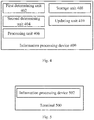
- FIG. 4 is a block diagram illustrating the information processing device according to an embodiment of the present disclosure.
- the information processing device 400 includes: a first determining unit 402, configured to determine the type of information received in a current operation system according to the content of the information; and a second determining unit 404, configured to determine an operation system for processing the information according to the type of the information; and a processor 406, configured to use the operation system to process the information.
- the type of the information can be determined according to the content included in the information, and the operation system for processing the information can be selected.
- a terminal is provided with a normal system and a security system
- Contact A is included in the contacts of the security system and is set as a private contact of the security system by user, however, Contact A is not included in the contacts of the normal system.
- the terminal receives an incoming call, it is determined from the contact number of the incoming call that the incoming call is from private Contact A of the security system, that is, the coming call is information relating to private Contact A of the security system.
- the terminal can switch directly to or remind the user to switch to the security system to answer or otherwise process the incoming call.
- the current operation system when the current operation system receives the information, it can determine the operation system for processing the information according to the content of the information. Specifically, it is possible for the current operation system to recognize, based on the content of the information, whether the information is information related to a designated contact of either operation system, and select an operation system for processing the information based on the determination result.
- the content of the information received includes at least one of the following: the avatar, name, email address, phone number of the contact of the information and the type of the information; the type of the information includes a security type and a non-security type, among which information of the security type is information related to a designated contact in either operation system, and information of the non-security type is information related to a contact other than the designated contact.
- the content of the information referred to herein can be obtained from the information per se received by the terminal, for example, business card information of the sender can be attached in the information per se; alternatively, the content of the information can be transmitted simultaneously when the sender transmits the information through other technical means such as Rich Communication Suite (RCS); it is also possible that the receiver obtain the content of the information form a server of the operator.
- RCS Rich Communication Suite
- the content of the information can be the basis for determining the type of the information, among which the type of the information can include but not limited to at least one of the following: the avatar, name, email address, and phone number of the contact who pushed the information and the type of the information.
- the type of information can include a security type and a non-security type.
- the terminal is provided with operation system A and operation system B, and among information received by the terminal, there are two types of security information, that is, information related to a designated contact in operation system A and information related to a designated contact in operation system B; there are two types of non-security information either, that is: information related to a contact other than the designated contact in operation system A and information related to a contact other than the designated contact in operation system B.
- the information processing device can further include: a memory 408, configured to store information of the designated contact of each operation system of the multiple operation systems in the current operation system, among which the information of the designated contact includes at least one of the following: the avatar, name, email address, and phone number of the designated contact and the type of the information.
- the current operation system by storing the information of the designated contact of each operation system in the current operation system, when information is received, the current operation system can judge whether or not the received information is associated with the stored content, and if yes, the operation system related to the associated content will be selected to process the received information.
- the stored information of the designated contact of each operation system includes but not limited at least one of the following: the avatar, name, email address, and phone number of the designated contact and the type of the information.
- the current operation system can only read one individual information, for example, if only the email address of the designated contact is stored in the current operation system, the current operation system can only identify according to the stored email address that the contact that sent the email is the designated contact of either operation system, and cannot determine other information of the designated contact according to the stored email address, thus can avoid the revealing of any operation system-related privacy information and maximize the protection of the security of user privacy.
- avatar information of all designated contacts can be used as an avatar collection
- name information of all designated contacts can be used as a name collection
- email address information of all designated contacts can be used as an email address collection
- phone number of all designated contacts can be used as a phone number collection; there is no correspondence among the avatar collection, the name collection, the email address collection, and the phone number collection.
- At least one of the avatar collection, the name collection, the email address collection, and the phone number collection can be stored in the normal system. Since meaning information can only be obtained when several critical information (such as name and phone number) are combined together, the possibility of information revealing of the designated contact in the normal system can be avoided.
- the first determining unit 402 is configured to: determine whether the received information is information related to the designated contact of either operation system according to the content of the received information and information of the designated contact of either operation system stored in the current operation system.
- SMS short message
- operation system A the operation system for processing the received information.
- the second determining unit 404 is configured to: when it is determined that the received information is information related to the designated contact of the either operation system, determine to use the either operation system to process the information; otherwise, determine the operation system for processing the received information according to a setting command received.
- the received information can be processed by an operation system corresponding to the stored information; otherwise, if the received information is not information associated with the designated contact of either operation system, it can be set that the received information will be processed directly in the current operation system, or it is also possible to determine whether the contact who pushed the information is a contact other than the designated contact of either operation system, and if yes, the either operation system will be used to process the information, otherwise, the information will be processed in the current operation system.
- the information processing device further includes: an updating unit 410, configured to synchronously update the information of the designated contact of the either operation system stored in the current operation system if it is detected that the information of the designated contact of the either operation system is updated.
- a collection of part of the information of the designated contact of either operation system is stored in the current operation system, and when part of the information of the designated contact of either operation system is changed, the changes will be synchronized to the current operation system, so as to ensure that the current operation system can accurately determine the type of the received information based on the content of the information, in other words, to accurately determine whether the information is related to part of the information of the designated contact of either operation system, so as to determine the operation system for processing the received information.
- the accuracy of judgment can be improved, and the security of user privacy can be better protected.
- FIG. 5 is a block diagram illustrating a terminal according to an embodiment of the present disclosure.
- a terminal 500 includes: an information processing device 502 (equivalents to the information processing device 400 illustrated in FIG. 4 according to the embodiment of the present disclosure), configured to determine the type of information received in a current operation system according to the content of the information, and determine an operation system for processing the information according to the type of the information. The determined operation system will be used to process the information.
- an information processing device 502 (equivalents to the information processing device 400 illustrated in FIG. 4 according to the embodiment of the present disclosure), configured to determine the type of information received in a current operation system according to the content of the information, and determine an operation system for processing the information according to the type of the information. The determined operation system will be used to process the information.
- the type of the information can be determined according to the content included in the information, and the operation system for processing the information can be selected.
- a terminal is provided with a normal system and a security system
- Contact A is included in the contacts of the security system and is set as a private contact of the security system by user, however, Contact A is not included in the contacts of the normal system.
- the terminal receives an incoming call, it is determined from the contact number of the incoming call that the incoming call is from private Contact A of the security system, that is, the coming call is information relating to private Contact A of the security system.
- the terminal can switch directly to or remind the user to switch to the security system to answer or otherwise process the incoming call.
- the current operation system when the current operation system receives the information, it can determine the operation system for processing the information according to the content of the information. Specifically, it is possible for the current operation system to recognize, based on the content of the information, whether the information is information related to a designated contact of either operation system, and select an operation system for processing the information based on the determination result.
- the content of the information received by the terminal 500 can include at least one of the following: the avatar, name, email address, and phone number of the contact of the information and the type of the information; the type of the information includes a security type and a non-security type, among which information of the security type is information related to a designated contact in either operation system, and information of the non-security type is information related to a contact other than the designated contact.
- the content of the information can be the basis for determining the type of the information, among which the type of the information can include but not limited to at least one of the following: the avatar, name, email address, and phone number of the contact of the information and the type of the information.
- the type of information can include a security type and a non-security type.
- the terminal 500 is provided with operation system A and operation system B, and among information received by the terminal, there are two types of security information, that is, information related to a designated contact in operation system A and information related to a designated contact in operation system B; there are two types of non-security information either, that is: information related to a contact other than the designated contact in operation system A and information related to a contact other than the designated contact in operation system B.
- the information processing device 502 of the terminal 500 can be configured to store information of the designated contact of each operation system of the multiple operation systems in the current operation system, among which the information of the designated contact includes at least one of the following: the avatar, name, email address, and phone number of the designated contact and the type of the information.
- the current operation system by storing the information of the designated contact of each operation system in the current operation system, when information is received, the current operation system can judge whether or not the received information is associated with the stored content, and if yes, the operation system related to the associated content will be selected to process the received information.
- the stored information of the designated contact of each operation system includes but not limited at least one of the following: the avatar, name, email address, and phone number of the designated contact and the type of the information.
- the current operation system can only read one individual information, for example, if only the email address of the designated contact is stored in the current operation system, the current operation system can only identify according to the stored email address that the contact that sent the email is the designated contact of either operation system, and cannot determine other information of the designated contact according to the stored email address, thus can avoid the revealing of any operation system-related privacy information and maximize the protection of the security of user privacy.
- avatar information of all designated contacts can be used as an avatar collection
- name information of all designated contacts can be used as a name collection
- email address information of all designated contacts can be used as an email address collection
- phone number of all designated contacts can be used as a phone number collection; there is no correspondence among the avatar collection, the name collection, the email address collection, and the phone number collection.
- At least one of the avatar collection, the name collection, the email address collection, and the phone number collection can be stored in the normal system. Since meaning information can only be obtained when several critical information (such as name and phone number) are combined together, the possibility of information revealing of the designated contact in the normal system can be avoided.
- the information processing device 502 of the terminal 500 can be configured to determine, according to the content of the received information and information of the designated contact of either operation system stored in the current operation system, whether the received information is information related to the designated contact of either operation system.
- SMS short message
- operation system A the operation system for processing the received information.
- the information processing device 502 of the terminal 500 is configured to: determine to use the either operation system to process the information if it is determined that the received information is information related to the designated contact of the either operation system; otherwise, determine the operation system for processing the received information according to a setting command received.
- the received information can be processed by an operation system corresponding to the stored information; otherwise, if the received information is not information associated with the designated contact of either operation system, it can be set that the received information will be processed directly in the current operation system, or it is also possible to determine whether the contact who pushed the information is a contact other than the designated contact of either operation system, and if yes, the either operation system will be used to process the information, otherwise, the information will be processed in the current operation system.
- the information processing device 502 of the terminal 500 is configured to synchronously update the information of the designated contact of the either operation system stored in the current operation system if it is detected that the information of the designated contact of the either operation system is updated.
- a collection of part of the information of the designated contact of either operation system is stored in the current operation system, and when part of the information of the designated contact of either operation system is changed, the changes will be synchronized to the current operation system, so as to ensure that the current operation system can accurately determine the type of the received information based on the content of the information, in other words, to accurately determine whether the information is related to part of the information of the designated contact of either operation system, so as to determine the operation system for processing the received information.
- the accuracy of judgment can be improved, and the security of user privacy can be better protected.
Landscapes
- Engineering & Computer Science (AREA)
- Signal Processing (AREA)
- Computer Networks & Wireless Communication (AREA)
- Human Computer Interaction (AREA)
- Library & Information Science (AREA)
- Business, Economics & Management (AREA)
- General Business, Economics & Management (AREA)
- Telephone Function (AREA)
- Telephonic Communication Services (AREA)
- Information Transfer Between Computers (AREA)
Abstract
Description
- This application claims the benefit of priority to Chinese Patent Application No.
201410510579.6, filed on September 28, 2014 - The present disclosure relates to the field of terminal technology, and particularly to an information processing method and an information processing device.
- Existing dual-system terminals generally include a security system and a normal system. Both the security system and the normal system have contacts, short message (SMS), multimedia message (MMS), email, call log and other applications. Generally, users can set security data, which is contact-centric and can include the contact phone number, SMS, MMS, an email, call log and other related data. The security data can only be stored or read out in the security system, and all normal data of the normal system can be shared to the security system.
- However, when a terminal receives information in the normal system, it is impossible for the terminal to identify which operation system this information is related to. Take contacts for example, which can divided into security contacts and normal contacts, among which the security contact can only be stored or read out in the security system. When the terminal receives an incoming call of contact A in the normal system, it is impossible for the normal system to identify whether contact A is a security contact that can only be stored and read out in the security system, and therefore, it is difficult to comprehensively protect security data and information related to the security data in the security system. The terminal can identify contact A as a security contact only when the incoming call of contact A is received in the security system.
- Therefore, it is desirable to provide a new technical solution in which a security contact for a security system can be identified in a normal system, in other words, it is desirable to provide a new technical solution in which an operation system associated with the received information can be determined in a current operation system, so as to comprehensively protect the information received by the terminal that relates to data of any one of the operation systems.
- Based on the above-mentioned problems, a new technical solution is proposed in the present disclosure, in which an operation system associated with received information can be determined in a current operation system, thereby completely protecting the security of data of either operation system related information received by the terminal.
- In view of this, according to one aspect of the present disclosure, it is provided an information processing method. The method is applicable to a terminal with multiple operation systems and includes: according to the content of information received in a current operation system, the type of the information is determined; according to the type of the information, an operation system for processing the information is determined, and the information is processed by the operation system.
- In this technical scheme, when the terminal receives calls, text messages, e-mail, or other information in the current operation system, the type of the information can be determined according to the content included in the information, and the operation system for processing the information can be selected. For example, a terminal is provided with a normal system and a security system, contact A is included in the contacts of the security system and is set as a private contact of the security system by user, however, contact A is not included in the contacts of the normal system. When the terminal receives an incoming call, it is determined from the contact number of the incoming call that the incoming call is from private contact A of the security system, that is, the coming call is information relating to private contact A of the security system. Therefore, when an incoming call is received, through the above judgment, the terminal can switch directly to or remind the user to switch to the security system to answer or otherwise process the incoming call. Through the technical scheme, when the current operation system receives the information, it can determine the operation system for processing the information according to the content of the information. Specifically, it is possible for the current operation system to recognize, based on the content of the information, whether the information is information related to a designated contact of either operation system, and select an operation system for processing the information based on the determination result. Therefore, it is possible to enhance the security of the information received by the terminal, to prevent the received privacy information related to any operating system from being revealed, to comprehensively protect the information received by the terminal that relates to data of any one of the operation systems, and to maximize the protection of the privacy of users.
- In the above-mentioned technical scheme, the content of the information received includes at least one of the following: the avatar, name, email address, and phone number of the contact of the information and the type of the information; the type of the information includes a security type and a non-security type, among which information of the security type is information related to a designated contact in either operation system, and information of the non-security type is information related to a contact other than the designated contact.
- In this technical scheme, the content of the information can be the basis for determining the type of the information, among which the type of the information can include but not limited to at least one of the following: the avatar, name, email address, and phone number of the contact of the information and the type of the information. Macroscopically, the type of information can include a security type and a non-security type. For example, suppose a terminal is provided with operation system A and operation system B, and among information received by the terminal, there are two types of security information, that is, information related to a designated contact in operation system A and information related to a designated contact in operation system B; there are two types of non-security information either, that is: information related to a contact other than the designated contact in operation system A and information related to a contact other than the designated contact in operation system B.
- In the above-mentioned technical scheme, before the type of the information is determined according to the content of the information received in the current operation system, the method further includes: information of the designated contact of each operation system of the multiple operation systems is stored in the current operation system, among which the information of the designated contact includes at least one of the following: the avatar, name, type, email address, and phone number of the designated contact.
- In this technical scheme, by storing the information of the designated contact of each operation system in the current operation system, when information is received, the current operation system can judge whether or not the received information is associated with the stored content, and if yes, the operation system related to the associated content will be selected to process the received information. The stored information of the designated contact of each operation system includes but not limited at least one of the following: the avatar, name, type, email address, and phone number of the designated contact. Since a variety of information of the designated contact will be meaningful only in combination, if the current operation system can only read one individual information, for example, if only the email address of the designated contact is stored in the current operation system, the current operation system can only identify according to the stored email address that the contact that sent the email is the designated contact of either operation system, and cannot determine other information of the designated contact according to the stored email address, thus can avoid the revealing of any operation system-related privacy information and maximize the protection of the security of user privacy. Therefore, rather than storing all information of the designated contact in the current operation system, only one or several kinds of information of the designated contact of either operation system can be classified and stored in the current operation system in the form of collections that do not correspond to each other, thereby enhancing the security of the privacy information associated with any one of the operation systems and maximizing the security of user privacy.
- In the above-mentioned technical scheme, the process that the type of the information is determined according to the content of the information received in the current operation system includes: according to the content of the received information and information of the designated contact of either operation system stored in the current operation system, it is determined that whether the received information is information related to the designated contact of either operation system.
- In this technical scheme, it is possible to determine whether or not the received information is associated with the content stored in the current operation system, and when the received information is associated with the stored content, the operation system related to the associated content will be selected to process the information. For example, a short message (SMS) is received in a terminal having operation system A and operation system B, and the content of this SMS includes the phone number, type, and avatar of the contact, and text message. Upon detecting that the phone number of the contact who pushed the SMS is stored in the current operation system, it can be determined that the stored phone number is the phone number of the designated contact of operation system A, and it can be further determined that operation system A is the operation system for processing the received information.
- In the above-mentioned technical scheme, the process that the operation system for processing the information is determined according to the type of the information and the information is processed by the operation system includes: when it is determined that the received information is the information related to the designated contact of the either operation system, the either operation system will be used to process the information; otherwise, the operation system for processing the received information is determined according to a setting command received, and the determined operation system will be used to process the information.
- In this technical scheme, if the received information is associated with information stored in the current operation system, the received information can be processed by an operation system corresponding to the stored information; otherwise, if the received information is not information associated with the designated contact of either operation system, it can be set that the received information will be processed directly in the current operation system, or it is also possible to determine whether the contact who pushed the information is a contact other than the designated contact of either operation system, and if yes, the either operation system will be used to process the information, otherwise, the information will be processed in the current operation system.
- In the above-mentioned technical scheme, as an implementation, the method can further include: upon detecting that the information of the designated contact of the either operation system is updated, the information of the designated contact of the either operation system stored in the current operation system can be updated synchronously.
- In this technical solution, a collection of part of the information of the designated contact of either operation system is stored in the current operation system, and when part of the information of the designated contact of either operation system is changed, the changes will be synchronized to the current operation system, so as to ensure that the current operation system can accurately determine the type of the received information based on the content of the information, in other words, to accurately determine whether the information is related to part of the information of the designated contact of either operation system, so as to determine the operation system for processing the received information. Through this technical scheme, the accuracy of judgment can be improved, and the security of user privacy can be better protected.
- According to another aspect of the present disclosure, it is provided an information processing device. The device is applicable to a terminal having multiple operation systems and includes: a first determining unit, configured to determine the type of information received in a current operation system according to the content of the information; and a second determining unit, configured to determine an operation system for processing the information according to the type of the information; and a processor, configured to use the operation system to process the information.
- In this technical scheme, when the terminal receives calls, text messages, e-mail, or other information in the current operation system, the type of the information can be determined according to the content included in the information, and the operation system for processing the information can be selected. For example, a terminal is provided with a normal system and a security system, Contact A is included in the contacts of the security system and is set as a private contact of the security system by user, however, Contact A is not included in the contacts of the normal system. When the terminal receives an incoming call, it is determined from the contact number of the incoming call that the incoming call is from private Contact A of the security system, that is, the coming call is information relating to private Contact A of the security system. Therefore, when an incoming call is received, through the above judgment, the terminal can switch directly to or remind the user to switch to the security system to answer or otherwise process the incoming call. Through the technical scheme, when the current operation system receives the information, it can determine the operation system for processing the information according to the content of the information. Specifically, it is possible for the current operation system to recognize, based on the content of the information, whether the information is information related to a designated contact of either operation system, and select an operation system for processing the information based on the determination result. Therefore, it is possible to enhance the security of the information received by the terminal, to prevent the received privacy information related to any operating system from being revealed, to comprehensively protect the information received by the terminal that relates to data of any one of the operation systems, and to maximize the protection of the privacy of users.
- In the above-mentioned technical scheme, the content of the information received includes at least one of the following: the avatar, name, email address, phone number of the contact who pushed the information and the type of the information; the type of the information includes a security type and a non-security type, among which information of the security type is information related to a designated contact in either operation system, and information of the non-security type is information related to a contact other than the designated contact.
- In this technical scheme, the content of the information can be the basis for determining the type of the information, among which the type of the information can include but not limited to at least one of the following: the avatar, name, email address, and phone number of the contact who pushed the information and the type of the information. Macroscopically, the type of information can include a security type and a non-security type. For example, suppose a terminal is provided with operation system A and operation system B, and among information received by the terminal, there are two types of security information, that is, information related to a designated contact in operation system A and information related to a designated contact in operation system B; there are two types of non-security information either, that is: information related to a contact other than the designated contact in operation system A and information related to a contact other than the designated contact in operation system B.
- In the above-mentioned technical scheme, as an implementation, the information processing device can further include: a storage unit, configured to store, in the current operation system, information of the designated contact of each operation system of the multiple operation systems, among which the information of the designated contact includes at least one of the following: the avatar, name, email address, and phone number of the designated contact and the type of the information.
- In this technical scheme, by storing the information of the designated contact of each operation system in the current operation system, when information is received, the current operation system can judge whether or not the received information is associated with the stored content, and if yes, the operation system related to the associated content will be selected to process the received information. The stored information of the designated contact of each operation system includes but not limited at least one of the following: the avatar, name, email address, and phone number of the designated contact and the type of the information. Since a variety of information of the designated contact will be meaningful only in combination, if the current operation system can only read one individual information, for example, if only the email address of the designated contact is stored in the current operation system, the current operation system can only identify according to the stored email address that the contact that sent the email is the designated contact of either operation system, and cannot determine other information of the designated contact according to the stored email address, thus can avoid the revealing of any operation system-related privacy information and maximize the protection of the security of user privacy. Therefore, rather than storing all information of the designated contact in the current operation system, only one or several kinds of information of the designated contact of either operation system can be classified and stored in the current operation system in the form of collections that do not correspond to each other, thereby enhancing the security of the privacy information associated with either operation system and maximizing the security of user privacy.
- In the above-mentioned technical scheme, as an implementation, the first determining unit is configured to determine whether the received information is information related to the designated contact of either operation system according to the content of the received information and information of the designated contact of either operation system stored in the current operation system.
- In this technical scheme, it is possible to determine whether or not the received information is associated with the content stored in the current operation system, and when the received information is associated with the stored content, the operation system related to the associated content will be selected to process the information. For example, a short message (SMS) is received in a terminal having operation system A and operation system B, and the content of this SMS includes the phone number, the type, and the avatar of the contact, and text message. Upon detecting that the phone number of the contact who pushed the SMS is stored in the current operation system, it can be determined that the stored phone number is the phone number of the designated contact of operation system A, and it can be further determined that operation system A is the operation system for processing the received information.
- In the above-mentioned technical scheme, the second determining unit is further configured to: when it is determined that the received information is information related to the designated contact of the either operation system, determine to use the either operation system to process the information; otherwise, determine the operation system for processing the received information according to a setting command received.
- In this technical scheme, if the received information is associated with information stored in the current operation system, the received information can be processed by an operation system corresponding to the stored information; otherwise, if the received information is not information associated with the designated contact of either operation system, it can be set that the received information will be processed directly in the current operation system, or it is also possible to determine whether the contact who pushed the information is a contact other than the designated contact of either operation system, and if yes, the either operation system will be used to process the information, otherwise, the information will be processed in the current operation system.
- In the above-mentioned technical scheme, as one implementation, the information processing device can further include: an updating unit, configured to synchronously update the information of the designated contact of the either operation system stored in the current operation system upon detecting that the information of the designated contact of the either operation system is updated.
- In this technical solution, a collection of part of the information of the designated contact of either operation system is stored in the current operation system, and when part of the information of the designated contact of either operation system is changed, the changes will be synchronized to the current operation system, so as to ensure that the current operation system can accurately determine the type of the received information based on the content of the information, in other words, to accurately determine whether the information is related to part of the information of the designated contact of either operation system, so as to determine the operation system for processing the received information. Through this technical scheme, the accuracy of judgment can be improved, and the privacy and security of the user can be better protected.
- According to a further aspect of the present disclosure, it is provided a terminal with multiple operation systems and includes the information processing device described above. The terminal has all of the advantages of the information processing device of the above-described technical scheme, and will not be described again here.
- With aid of the technical schemes described above, it is possible to enhance the security of the information received by the terminal, to prevent the received privacy information related to any operating system from being revealed, to comprehensively protect the information received by the terminal that relates to data of any one of the operation systems, and to maximize the protection of the privacy of users.
-
-
FIG.1 is a flowchart illustrating an information processing method according to an embodiment of the present disclosure; -
FIG.2 is a flowchart illustrating an information processing method according to another embodiment of the present disclosure; -
FIG.3A is a schematic diagram illustrating a secure contact and information thereof illustrated inFIG.2 ; -
FIG.3B is a schematic diagram illustrating a shared field of a normal system illustrated inFIG.2 ; -
FIG.4 is a block diagram illustrating the information processing device according to an embodiment of the present disclosure; -
FIG.5 is a block diagram illustrating the terminal according to an embodiment of the present disclosure. - For a better understanding of the above and other objects, features, and advantages of the present disclosure, the present disclosure will be described in further detail with reference to the accompanying drawings and detailed description.
- In the following description, numerous specific details are set forth in order to facilitate a thorough understanding of the present disclosure, however, the present disclosure may be practiced otherwise than as specifically described herein, accordingly, the scope of the present disclosure is not to be limited by the specific embodiments disclosed below.
-
FIG.1 is a flowchart illustrating an information processing method according to an embodiment of the present disclosure. - As shown in FIG.l, the information processing device can include the following steps.
- S102, according to the content of information received in a current operation system, the type of the information is determined.
- S104, according to the type of the information, an operation system for processing the information is determined, and the information is processed by the operation system.
- In this technical scheme, when the terminal receives calls, text messages, e-mail, or other information in the current operation system, the type of the information can be determined according to the content included in the information, and the operation system for processing the information can be selected. For example, a terminal is provided with a normal system and a security system, Contact A is included in the contacts of the security system and is set as a private contact of the security system by user, however, Contact A is not included in the contacts of the normal system. When the terminal receives an incoming call, it is determined from the contact number of the incoming call that the incoming call is from private Contact A of the security system, that is, the coming call is information relating to private Contact A of the security system. Therefore, when an incoming call is received, through the above judgment, the terminal can switch directly to or remind the user to switch to the security system to answer or otherwise process the incoming call. Through the technical scheme, when the current operation system receives the information, it can determine the operation system for processing the information according to the content of the information. Specifically, it is possible for the current operation system to recognize, based on the content of the information, whether the information is information related to a designated contact of either operation system, and select an operation system for processing the information based on the determination result. Therefore, it is possible to enhance the security of the information received by the terminal, to prevent the received privacy information related to any operating system from being revealed, to comprehensively protect the information received by the terminal that relates to data of any one of the operation systems, and to maximize the protection of the privacy of users.
- In the above-mentioned technical scheme, the content of the information received includes at least one of the following: the avatar, name, email address, phone number of the contact of the information and the type of the information; the type of the information includes a security type and a non-security type, among which information of the security type is information related to a designated contact in either operation system, and information of the non-security type is information related to a contact other than the designated contact. It will be appreciated that the content of the information referred to herein can be obtained from the information per se received by the terminal, for example, business card information of the sender can be attached in the information per se; alternatively, the content of the information can be transmitted simultaneously when the sender transmits the information through other technical means such as Rich Communication Suite (RCS); it is also possible that the receiver obtain the content of the information form a server of the operator. The present disclosure is not limited thereto.
- In this technical scheme, the content of the information can be the basis for determining the type of the information, among which the type of the information can include but not limited to at least one of the following: the avatar, name, email address, phone number of the contact of the information and the type of the information. Macroscopically, the type of information can include a security type and a non-security type. For example, suppose a terminal is provided with operation system A and operation system B, and among information received by the terminal, there are two types of security information, that is, information related to a designated contact in operation system A and information related to a designated contact in operation system B; there are two types of non-security information either, that is: information related to a contact other than the designated contact in operation system A and information related to a contact other than the designated contact in operation system B.
- In the above-mentioned technical scheme, as an implementation, before
Step 102, the method further includes: information of the designated contact of each operation system of the multiple operation systems is stored in the current operation system, among which the information of the designated contact includes at least one of the following: the avatar, name, email address, and phone number of the designated contact and the type of the information. - In this technical scheme, by storing the information of the designated contact of each operation system in the current operation system, when information is received, the current operation system can judge whether or not the received information is associated with the stored content, and if yes, the operation system related to the associated content will be selected to process the received information. The stored information of the designated contact of each operation system includes but not limited at least one of the following: the avatar, name, email address, and phone number of the designated contact and the type of the information. Since a variety of information of the designated contact will be meaningful only in combination, if the current operation system can only read one individual information, for example, if only the email address of the designated contact is stored in the current operation system, the current operation system can only identify according to the stored email address that the contact that sent the email is the designated contact of either operation system, and cannot determine other information of the designated contact according to the stored email address, thus can avoid the revealing of any operation system-related privacy information and maximize the protection of the security of user privacy. Therefore, rather than storing all information of the designated contact in the current operation system, only one or several kinds of information of the designated contact of either operation system can be classified and stored in the current operation system in the form of collections that do not correspond to each other, thereby enhancing the security of the privacy information associated with either operation system and maximizing the security of user privacy. It should be noted that, avatar information of all designated contacts can be used as an avatar collection, name information of all designated contacts can be used as a name collection, email address information of all designated contacts can be used as an email address collection; and phone number of all designated contacts can be used as a phone number collection; there is no correspondence among the avatar collection, the name collection, the email address collection, and the phone number collection. In this way, at least one of the avatar collection, the name collection, the email address collection, and the phone number collection can be stored in the normal system. Since meaning information can only be obtained when several critical information (such as name and phone number) are combined together, the possibility of information revealing of the designated contact in the normal system can be avoided.
- In the above-mentioned technical scheme, as an implementation,
Step 102 can include: it is determined that whether the received information is information related to the designated contact of either operation system according to the content of the received information and information of the designated contact of either operation system stored in the current operation system. - In this technical scheme, it is possible to determine whether or not the received information is associated with the content stored in the current operation system, and when the received information is associated with the stored content, the operation system related to the associated content will be selected to process the information. For example, a short message (SMS) is received in a terminal having operation system A and operation system B, and the content of this SMS includes the phone number, the type, and the avatar of the contact, and text message. Upon detecting that the phone number of the contact who pushed the SMS is stored in the current operation system, it can be determined that the stored phone number is the phone number of the designated contact of operation system A, and it can be further determined that operation system A is the operation system for processing the received information.
- In the above-mentioned technical scheme, as an implementation,
Step 104 can include: when it is determined that the received information is information related to the designated contact of the either operation system, the either operation system will be used to process the information; otherwise, the operation system for processing the received information is determined according to a setting command received, and the determined operation system will be used to process the information. - In this technical scheme, if the received information is associated with information stored in the current operation system, the received information can be processed by an operation system corresponding to the stored information; otherwise, if the received information is not information associated with the designated contact of either operation system, it can be set that the received information will be processed directly in the current operation system, or it is also possible to determine whether the contact who pushed the information is a contact other than the designated contact of either operation system, and if yes, the either operation system will be used to process the information, otherwise, the information will be processed in the current operation system.
- In the above-mentioned technical scheme, as an implementation, the method can further include: upon detecting that the information of the designated contact of the either operation system is updated, the information of the designated contact of the either operation system stored in the current operation system can be updated synchronously.
- In this technical solution, a collection of part of the information of the designated contact of either operation system is stored in the current operation system, and when part of the information of the designated contact of either operation system is changed, the changes will be synchronized to the current operation system, so as to ensure that the current operation system can accurately determine the type of the received information based on the content of the information, in other words, to accurately determine whether the information is related to part of the information of the designated contact of either operation system, so as to determine the operation system for processing the received information. Through this technical scheme, the accuracy of judgment can be improved, and the security of user privacy can be better protected.
-
FIG. 2 is a flowchart illustrating an information processing method according to another embodiment of the present disclosure. - The information processing method according to another embodiment of the present disclosure is applicable to a dual system based terminal having a normal system and a security system, and as illustrate in
FIG.2 , the method can include the follows: -
Step 202, the terminal receives an incoming call in the normal system, among which the incoming call contains the contact phone number of the incoming call. -
Step 204, it is determined that whether the phone number of the incoming call matches the phone number of a shared field; if yes, proceed to Step 206, otherwise, the process ends. The security system can set the phone number of a secure contact to be the shared field with the normal system and store the shared field in the normal system. By determining whether the contact phone number of the incoming call matches or relates to the phone number of the shared field, the terminal can determine whether the contact of the incoming call is the secure contact of the security system. Furthermore, when the phone number of the secure contact of the security system is updated, the phone number of the shared field stored in the normal system will be updated synchronously, so as to ensure the accuracy of the basis of judgment. -
Step 206, the terminal switches to the security system automatically. If it is determined that the contact of the incoming call is the secure contact of the security system, the terminal can switch to the security system to answer or otherwise process the incoming call. -
Step 208, after the call is ended, the terminal will save a call log and return to the normal system. After the call is ended, the call log can be saved for the security system, and in order to ensure the security of the security system, the terminal will return to the normal system automatically after the call is ended, which can avoid the revealing of privacy information of the security system caused by staying in the security system after the call is ended. - Through the above technical scheme, it is possible to determine whether the contact of the incoming call is the secure contact without switching to the security system, and therefore, it is possible to enhance the security of the information received by the terminal, to prevent the received privacy information related to any operating system from being revealed, to comprehensively protect the information received by the terminal that relates to data of any one of the operation systems, and to maximize the protection of the privacy of users.
-
FIG.3A is a schematic diagram illustrating a secure contact and information thereof illustrated inFIG.2 . - The secure contact is a privacy contact set in the security system, and can only be saved and read out by the security system. As shown in
FIG. 3A , information of the secure contact includes the name and phone number of each secure contact; besides, information of the secure contact can includes the avatar, type and other information of each secure contact. It should be noted that, avatar information of all designated contacts can be used as an avatar collection, name information of all designated contacts can be used as a name collection, email address information of all designated contacts can be used as an email address collection; and phone number of all designated contacts can be used as a phone number collection; there is no correspondence among the avatar collection, the name collection, the email address collection, and the phone number collection. In this way, at least one of the avatar collection, the name collection, the email address collection, and the phone number collection can be stored in the normal system. Since meaning information can only be obtained when several critical information (such as name and phone number) are combined together, the possibility of information revealing of the designated contact in the normal system can be avoided. -
FIG.3B is a schematic diagram illustrating a shared field of a normal system in the embodiment illustrated inFIG.2 . - The security system can set the phone number of the secure contact to be a shared field with the normal system, that is, the shared field can include phone numbers of multiple secure contacts. The security system can store the shared field in the normal system, and by determining whether the contact phone number of the incoming call is the same as or relates to the phone number of the shared field, the terminal can determine whether the contact of the incoming call is the secure contact of the security system. Furthermore, when the phone number of the secure contact of the security system is updated, the phone number of the shared field stored in the normal system will be updated synchronously, so as to ensure the accuracy of the basis of judgment. In this way, when an incoming call is received in the normal system, the normal system can identify whether the contact of the incoming call is the secure contact of the security system according to the phone number of the shared field.
- When a SMS is received in the normal system, with aid of the above-mentioned technical scheme, similarly, the normal system can identify whether the contact sending the SMS is the secure contact of the security system according to the phone number of the shared field.
-
FIG. 4 is a block diagram illustrating the information processing device according to an embodiment of the present disclosure. - As shown in
FIG. 4 , theinformation processing device 400 according to an embodiment of the present disclosure includes: a first determiningunit 402, configured to determine the type of information received in a current operation system according to the content of the information; and a second determiningunit 404, configured to determine an operation system for processing the information according to the type of the information; and aprocessor 406, configured to use the operation system to process the information. - In this technical scheme, when the terminal receives calls, text messages, e-mail, or other information in the current operation system, the type of the information can be determined according to the content included in the information, and the operation system for processing the information can be selected. For example, a terminal is provided with a normal system and a security system, Contact A is included in the contacts of the security system and is set as a private contact of the security system by user, however, Contact A is not included in the contacts of the normal system. When the terminal receives an incoming call, it is determined from the contact number of the incoming call that the incoming call is from private Contact A of the security system, that is, the coming call is information relating to private Contact A of the security system. Therefore, when an incoming call is received, through the above judgment, the terminal can switch directly to or remind the user to switch to the security system to answer or otherwise process the incoming call. Through the technical scheme, when the current operation system receives the information, it can determine the operation system for processing the information according to the content of the information. Specifically, it is possible for the current operation system to recognize, based on the content of the information, whether the information is information related to a designated contact of either operation system, and select an operation system for processing the information based on the determination result. Therefore, it is possible to enhance the security of the information received by the terminal, to prevent the received privacy information related to any operating system from being revealed, to comprehensively protect the information received by the terminal that relates to data of any one of the operation systems, and to maximize the protection of the privacy of users.
- In the above-mentioned technical scheme, the content of the information received includes at least one of the following: the avatar, name, email address, phone number of the contact of the information and the type of the information; the type of the information includes a security type and a non-security type, among which information of the security type is information related to a designated contact in either operation system, and information of the non-security type is information related to a contact other than the designated contact. It will be appreciated that the content of the information referred to herein can be obtained from the information per se received by the terminal, for example, business card information of the sender can be attached in the information per se; alternatively, the content of the information can be transmitted simultaneously when the sender transmits the information through other technical means such as Rich Communication Suite (RCS); it is also possible that the receiver obtain the content of the information form a server of the operator. The present disclosure is not limited thereto.
- In this technical scheme, the content of the information can be the basis for determining the type of the information, among which the type of the information can include but not limited to at least one of the following: the avatar, name, email address, and phone number of the contact who pushed the information and the type of the information. Macroscopically, the type of information can include a security type and a non-security type. For example, suppose the terminal is provided with operation system A and operation system B, and among information received by the terminal, there are two types of security information, that is, information related to a designated contact in operation system A and information related to a designated contact in operation system B; there are two types of non-security information either, that is: information related to a contact other than the designated contact in operation system A and information related to a contact other than the designated contact in operation system B.
- In the above-mentioned technical scheme, as an implementation, the information processing device can further include: a
memory 408, configured to store information of the designated contact of each operation system of the multiple operation systems in the current operation system, among which the information of the designated contact includes at least one of the following: the avatar, name, email address, and phone number of the designated contact and the type of the information. - In this technical scheme, by storing the information of the designated contact of each operation system in the current operation system, when information is received, the current operation system can judge whether or not the received information is associated with the stored content, and if yes, the operation system related to the associated content will be selected to process the received information. The stored information of the designated contact of each operation system includes but not limited at least one of the following: the avatar, name, email address, and phone number of the designated contact and the type of the information. Since a variety of information of the designated contact will be meaningful only in combination, if the current operation system can only read one individual information, for example, if only the email address of the designated contact is stored in the current operation system, the current operation system can only identify according to the stored email address that the contact that sent the email is the designated contact of either operation system, and cannot determine other information of the designated contact according to the stored email address, thus can avoid the revealing of any operation system-related privacy information and maximize the protection of the security of user privacy. Therefore, rather than storing all information of the designated contact in the current operation system, only one or several kinds of information of the designated contact of either operation system can be classified and stored in the current operation system in the form of collections that do not correspond to each other, thereby enhancing the security of the privacy information associated with either operation system and maximizing the security of user privacy. It should be noted that, avatar information of all designated contacts can be used as an avatar collection, name information of all designated contacts can be used as a name collection, email address information of all designated contacts can be used as an email address collection; and phone number of all designated contacts can be used as a phone number collection; there is no correspondence among the avatar collection, the name collection, the email address collection, and the phone number collection. In this way, at least one of the avatar collection, the name collection, the email address collection, and the phone number collection can be stored in the normal system. Since meaning information can only be obtained when several critical information (such as name and phone number) are combined together, the possibility of information revealing of the designated contact in the normal system can be avoided.
- In the above-mentioned technical scheme, as an implementation, the first determining
unit 402 is configured to: determine whether the received information is information related to the designated contact of either operation system according to the content of the received information and information of the designated contact of either operation system stored in the current operation system. - In this technical scheme, it is possible to determine whether or not the received information is associated with the content stored in the current operation system, and when the received information is associated with the stored content, the operation system related to the associated content will be selected to process the information. For example, a short message (SMS) is received in a terminal having operation system A and operation system B, among which the SMS content includes a contact phone number and message text. Upon detecting that the phone number of the contact who pushed the SMS is stored in the current operation system, it can be determined that the stored phone number is the phone number of the designated contact of operation system A, and it can be further determined that operation system A is the operation system for processing the received information.
- In the above-mentioned technical scheme, as an implementation, the second determining
unit 404 is configured to: when it is determined that the received information is information related to the designated contact of the either operation system, determine to use the either operation system to process the information; otherwise, determine the operation system for processing the received information according to a setting command received. - In this technical scheme, if the received information is associated with information stored in the current operation system, the received information can be processed by an operation system corresponding to the stored information; otherwise, if the received information is not information associated with the designated contact of either operation system, it can be set that the received information will be processed directly in the current operation system, or it is also possible to determine whether the contact who pushed the information is a contact other than the designated contact of either operation system, and if yes, the either operation system will be used to process the information, otherwise, the information will be processed in the current operation system.
- In the above-mentioned technical scheme, as an implementation, the information processing device further includes: an updating
unit 410, configured to synchronously update the information of the designated contact of the either operation system stored in the current operation system if it is detected that the information of the designated contact of the either operation system is updated. - In this technical solution, a collection of part of the information of the designated contact of either operation system is stored in the current operation system, and when part of the information of the designated contact of either operation system is changed, the changes will be synchronized to the current operation system, so as to ensure that the current operation system can accurately determine the type of the received information based on the content of the information, in other words, to accurately determine whether the information is related to part of the information of the designated contact of either operation system, so as to determine the operation system for processing the received information. Through this technical scheme, the accuracy of judgment can be improved, and the security of user privacy can be better protected.
-
FIG. 5 is a block diagram illustrating a terminal according to an embodiment of the present disclosure. - As shown in
FIG. 5 , a terminal 500 according to an embodiment of the present disclosure includes: an information processing device 502 (equivalents to theinformation processing device 400 illustrated inFIG. 4 according to the embodiment of the present disclosure), configured to determine the type of information received in a current operation system according to the content of the information, and determine an operation system for processing the information according to the type of the information. The determined operation system will be used to process the information. - In this technical scheme, when the terminal 500 receives calls, text messages, e-mail, or other information in the current operation system, the type of the information can be determined according to the content included in the information, and the operation system for processing the information can be selected. For example, a terminal is provided with a normal system and a security system, Contact A is included in the contacts of the security system and is set as a private contact of the security system by user, however, Contact A is not included in the contacts of the normal system. When the terminal receives an incoming call, it is determined from the contact number of the incoming call that the incoming call is from private Contact A of the security system, that is, the coming call is information relating to private Contact A of the security system. Therefore, when an incoming call is received, through the above judgment, the terminal can switch directly to or remind the user to switch to the security system to answer or otherwise process the incoming call. Through the technical scheme, when the current operation system receives the information, it can determine the operation system for processing the information according to the content of the information. Specifically, it is possible for the current operation system to recognize, based on the content of the information, whether the information is information related to a designated contact of either operation system, and select an operation system for processing the information based on the determination result. Therefore, it is possible to enhance the security of the information received by the terminal 500, to prevent the received privacy information related to any operating system from being revealed, to comprehensively protect the information received by the terminal 500 that relates to data of any one of the operation systems, and to maximize the protection of the privacy of users.
- In the above-mentioned technical scheme, the content of the information received by the terminal 500 can include at least one of the following: the avatar, name, email address, and phone number of the contact of the information and the type of the information; the type of the information includes a security type and a non-security type, among which information of the security type is information related to a designated contact in either operation system, and information of the non-security type is information related to a contact other than the designated contact.
- In this technical scheme, the content of the information can be the basis for determining the type of the information, among which the type of the information can include but not limited to at least one of the following: the avatar, name, email address, and phone number of the contact of the information and the type of the information. Macroscopically, the type of information can include a security type and a non-security type. For example, suppose the terminal 500 is provided with operation system A and operation system B, and among information received by the terminal, there are two types of security information, that is, information related to a designated contact in operation system A and information related to a designated contact in operation system B; there are two types of non-security information either, that is: information related to a contact other than the designated contact in operation system A and information related to a contact other than the designated contact in operation system B.
- In the above-mentioned technical scheme, as an implementation, the
information processing device 502 of the terminal 500 can be configured to store information of the designated contact of each operation system of the multiple operation systems in the current operation system, among which the information of the designated contact includes at least one of the following: the avatar, name, email address, and phone number of the designated contact and the type of the information. - In this technical scheme, by storing the information of the designated contact of each operation system in the current operation system, when information is received, the current operation system can judge whether or not the received information is associated with the stored content, and if yes, the operation system related to the associated content will be selected to process the received information. The stored information of the designated contact of each operation system includes but not limited at least one of the following: the avatar, name, email address, and phone number of the designated contact and the type of the information. Since a variety of information of the designated contact will be meaningful only in combination, if the current operation system can only read one individual information, for example, if only the email address of the designated contact is stored in the current operation system, the current operation system can only identify according to the stored email address that the contact that sent the email is the designated contact of either operation system, and cannot determine other information of the designated contact according to the stored email address, thus can avoid the revealing of any operation system-related privacy information and maximize the protection of the security of user privacy. Therefore, rather than storing all information of the designated contact in the current operation system, only one or several kinds of information of the designated contact of either operation system can be classified and stored in the current operation system in the form of collections that do not correspond to each other, thereby enhancing the security of the privacy information associated with either operation system and maximizing the security of user privacy. It should be noted that, avatar information of all designated contacts can be used as an avatar collection, name information of all designated contacts can be used as a name collection, email address information of all designated contacts can be used as an email address collection; and phone number of all designated contacts can be used as a phone number collection; there is no correspondence among the avatar collection, the name collection, the email address collection, and the phone number collection. In this way, at least one of the avatar collection, the name collection, the email address collection, and the phone number collection can be stored in the normal system. Since meaning information can only be obtained when several critical information (such as name and phone number) are combined together, the possibility of information revealing of the designated contact in the normal system can be avoided.
- In the above-mentioned technical scheme, as an implementation, the
information processing device 502 of the terminal 500 can be configured to determine, according to the content of the received information and information of the designated contact of either operation system stored in the current operation system, whether the received information is information related to the designated contact of either operation system. - In this technical scheme, it is possible to determine whether or not the received information is associated with the content stored in the current operation system, and when the received information is associated with the stored content, the operation system related to the associated content will be selected to process the information. For example, a short message (SMS) is received in a terminal having operation system A and operation system B, among which the SMS content includes a contact phone number and message text. Upon detecting that the phone number of the contact who pushed the SMS is stored in the current operation system, it can be determined that the stored phone number is the phone number of the designated contact of operation system A, and it can be further determined that operation system A is the operation system for processing the received information.
- In the above-mentioned technical scheme, as an implementation, the
information processing device 502 of the terminal 500 is configured to: determine to use the either operation system to process the information if it is determined that the received information is information related to the designated contact of the either operation system; otherwise, determine the operation system for processing the received information according to a setting command received. - In this technical scheme, if the received information is associated with information stored in the current operation system, the received information can be processed by an operation system corresponding to the stored information; otherwise, if the received information is not information associated with the designated contact of either operation system, it can be set that the received information will be processed directly in the current operation system, or it is also possible to determine whether the contact who pushed the information is a contact other than the designated contact of either operation system, and if yes, the either operation system will be used to process the information, otherwise, the information will be processed in the current operation system.
- In the above-mentioned technical scheme, as an implementation, the
information processing device 502 of the terminal 500 is configured to synchronously update the information of the designated contact of the either operation system stored in the current operation system if it is detected that the information of the designated contact of the either operation system is updated. - In this technical solution, a collection of part of the information of the designated contact of either operation system is stored in the current operation system, and when part of the information of the designated contact of either operation system is changed, the changes will be synchronized to the current operation system, so as to ensure that the current operation system can accurately determine the type of the received information based on the content of the information, in other words, to accurately determine whether the information is related to part of the information of the designated contact of either operation system, so as to determine the operation system for processing the received information. Through this technical scheme, the accuracy of judgment can be improved, and the security of user privacy can be better protected.
- Through any of the technical schemes described above, it is possible to enhance the security of the information received by the terminal, to prevent the received privacy information related to any operating system from being revealed, to comprehensively protect the information received by the terminal that relates to data of any one of the operation systems, and to maximize the protection of the privacy of users.
- While the present disclosure has been described in detail above with reference to the exemplary embodiments, the scope of the present disclosure is not limited thereto. As will occur to those skilled in the art, the present disclosure is susceptible to various modifications and changes without departing from the spirit and principle of the present disclosure. Therefore, the scope of the present disclosure should be determined by the scope of the claims.
Claims (12)
- An information processing method applicable to a terminal with multiple operation systems, comprising:determining the type of information received in a current operation system according to the content of the information; anddetermining an operation system for processing the information according to the type of the information, and using the operation system to process the information.
- The information processing method of claim 1, wherein the content of the information received comprises at least one of the following: the avatar, name, email address, and phone number of the designated contact and the type of the information; and
the type of the information comprises a security type and a non-security type, and information of the security type is information related to a designated contact of either operation system, and information of the non-security type is information related to a contact other than the designated contact. - The information processing method of claim 2, wherein before determining the type of the information received in the current operation system according to the content of the information, the method further comprises:storing information of the designated contact of each operation system of the multiple operation systems in the current operation system, wherein the information of the designated contact includes at least one of the following: the avatar, name, type, email address, and phone number of the designated contact.
- The information processing method of claim 3, wherein the process of determining the type of the information received in the current operation system according to the content of the information comprises:according to the content of the information received and information of the designated contact of each operation system stored in the current operation system, determining whether the information received is information related to the designated contact of the either operation system.
- The information processing method of claim 4, wherein the process of determining the operation system for processing the information according to the type of the information, and using the operation system to process the information comprises:when it is determined that the information received is the information related to the designated contact of the either operation system, using the either operation system to process the information; otherwise, determining the operation system for processing the information received according to a received setting command, and using the operation system to process the information.
- The information processing method of any of claims 2-5, further comprising:updating the information of the designated contact of the either operation system stored in the current operation system synchronously upon detecting that the information of the designated contact of the either operation system is updated.
- An information processing device applicable to a terminal with multiple operation systems, comprising:a first determining unit, configured to determine the type of information received in a current operation system according to the content of the information;a second determining unit, configured to determine an operation system for processing the information according to the type of the information; anda processor, configured to use the operation system to process the information.
- The information processing device according to claim 7, wherein the content of the information received comprises at least one of the following: the avatar, name, email address, and phone number of the designated contact and the type of the information; and
the type of the information comprises a security type and a non-security type, and information of the security type is information related to a designated contact of either operation system, and information of the non-security type is information related to a contact other than the designated contact. - The information processing device according to claim 8, further comprising:a storage unit, configured to store information of the designated contact of each operation system of the multiple operation systems in the current operation system, wherein the information of the designated contact includes at least one of the following: the avatar, name, type, email address, and phone number of the designated contact.
- The information processing device according to claim 9, wherein the first determining unit is configured to:determine whether the information received is information related to the designated contact of the either operation system, according to the content of the information received and information of the designated contact of each operation system stored in the current operation system.
- The information processing device according to claim 10, wherein the second determining unit is configured to:determine to use the either operation system to process the information when it is determined that the information received is the information related to the designated contact of the either operation system; otherwise, determine the operation system for processing the information received according to a received setting command, and using the operation system to process the information.
- The information processing device according to any of claims 8-11, further comprising:an updating unit, configured to update the information of the designated contact of the either operation system stored in the current operation system synchronously upon detecting that the information of the designated contact of the either operation system is updated.
Applications Claiming Priority (2)
| Application Number | Priority Date | Filing Date | Title |
|---|---|---|---|
| CN201410510579.6A CN104270524A (en) | 2014-09-28 | 2014-09-28 | Information processing method and device |
| PCT/CN2014/092617 WO2016045191A1 (en) | 2014-09-28 | 2014-11-29 | Information processing method and information processing device |
Publications (3)
| Publication Number | Publication Date |
|---|---|
| EP3169047A1 true EP3169047A1 (en) | 2017-05-17 |
| EP3169047A4 EP3169047A4 (en) | 2017-12-06 |
| EP3169047B1 EP3169047B1 (en) | 2019-06-19 |
Family
ID=52162012
Family Applications (1)
| Application Number | Title | Priority Date | Filing Date |
|---|---|---|---|
| EP14902363.2A Active EP3169047B1 (en) | 2014-09-28 | 2014-11-29 | Information processing method and information processing device |
Country Status (4)
| Country | Link |
|---|---|
| US (1) | US9900416B2 (en) |
| EP (1) | EP3169047B1 (en) |
| CN (1) | CN104270524A (en) |
| WO (1) | WO2016045191A1 (en) |
Cited By (1)
| Publication number | Priority date | Publication date | Assignee | Title |
|---|---|---|---|---|
| EP3240270A4 (en) * | 2014-12-25 | 2018-08-01 | Yulong Computer Telecommunication Scientific (Shenzhen) Co., Ltd. | Method, device and terminal for processing communication event of terminal |
Families Citing this family (21)
| Publication number | Priority date | Publication date | Assignee | Title |
|---|---|---|---|---|
| CN105611032B (en) * | 2014-11-21 | 2019-12-10 | 东莞宇龙通信科技有限公司 | Processing method and processing device for communication information of terminal and terminal |
| CN104618585A (en) * | 2015-01-14 | 2015-05-13 | 宇龙计算机通信科技(深圳)有限公司 | Method and device for establishing communication connection based on multi-system terminal |
| CN104580737A (en) * | 2015-01-22 | 2015-04-29 | 宇龙计算机通信科技(深圳)有限公司 | Communication interception controlling method for mobile terminal and mobile terminal |
| CN104602216A (en) * | 2015-02-02 | 2015-05-06 | 西安酷派软件科技有限公司 | Call management method of multi-system terminal and multi-system terminal |
| CN104768207B (en) * | 2015-03-10 | 2019-03-22 | 西安酷派软件科技有限公司 | Event interception method, event interception device and terminal |
| CN105635428B (en) * | 2015-03-23 | 2019-04-12 | 西安酷派软件科技有限公司 | Notifier processes method, notifier processes device and terminal |
| CN106161739A (en) * | 2015-04-01 | 2016-11-23 | 宇龙计算机通信科技(深圳)有限公司 | A kind of communication message processing method for dual system and device |
| CN105577906B (en) * | 2015-04-08 | 2019-06-11 | 宇龙计算机通信科技(深圳)有限公司 | A method and device for prompting a multi-system terminal notification message |
| IN2015CH02514A (en) * | 2015-05-19 | 2015-07-10 | Wipro Ltd | |
| CN105049630B (en) * | 2015-08-07 | 2018-06-19 | 北京元心科技有限公司 | The telephone receiving method of intelligent terminal and its multisystem |
| CN105049638B (en) * | 2015-08-26 | 2018-05-01 | 北京元心科技有限公司 | The method and device conversed in the terminal device of multiple operating system |
| CN107533603A (en) * | 2015-08-31 | 2018-01-02 | 华为技术有限公司 | Short message processing method, device and terminal |
| CN105338175A (en) * | 2015-09-29 | 2016-02-17 | 北京元心科技有限公司 | Method for performing distribution processing on short messages in terminal equipment and system thereof |
| CN105162804A (en) * | 2015-09-30 | 2015-12-16 | 北京奇虎科技有限公司 | Communication information protection method and apparatus |
| CN105791567B (en) * | 2016-02-29 | 2019-05-14 | 宇龙计算机通信科技(深圳)有限公司 | Information storage method and multi-system mobile terminal |
| CN105812569A (en) * | 2016-04-19 | 2016-07-27 | 奇酷软件(深圳)有限公司 | Information management method and information management device for terminal |
| CN106060243B (en) * | 2016-05-16 | 2019-07-09 | 北京珠穆朗玛移动通信有限公司 | Dual user system contact approaches to IM and its mobile terminal |
| CN108390989B (en) * | 2018-01-05 | 2021-08-27 | 郑州信大捷安信息技术股份有限公司 | Inter-system notification synchronization method based on Android dual systems |
| CN109214216B (en) * | 2018-07-05 | 2022-08-30 | 北京智联安科技有限公司 | Internet of things chip, terminal and method for realizing terminal system security |
| US20200153781A1 (en) * | 2018-11-13 | 2020-05-14 | Matthew Kent McGinnis | Methods, Systems, and Apparatus for Text to Persistent Messaging |
| US11126784B2 (en) | 2018-11-13 | 2021-09-21 | Illumy Inc. | Methods, systems, and apparatus for email to persistent messaging |
Family Cites Families (13)
| Publication number | Priority date | Publication date | Assignee | Title |
|---|---|---|---|---|
| CN1779641A (en) * | 2004-11-25 | 2006-05-31 | 英特维数位科技股份有限公司 | Architecture and method for updating data of computer system |
| US8468244B2 (en) * | 2007-01-05 | 2013-06-18 | Digital Doors, Inc. | Digital information infrastructure and method for security designated data and with granular data stores |
| US8655939B2 (en) * | 2007-01-05 | 2014-02-18 | Digital Doors, Inc. | Electromagnetic pulse (EMP) hardened information infrastructure with extractor, cloud dispersal, secure storage, content analysis and classification and method therefor |
| CN101894042B (en) * | 2010-06-24 | 2014-05-07 | 宇龙计算机通信科技(深圳)有限公司 | Realization method for sharing application among a plurality of operating systems, system and mobile terminal |
| US20120115435A1 (en) * | 2010-11-09 | 2012-05-10 | Microsoft Corporation | Privacy in Mobile Device Communications |
| CN102469144B (en) * | 2010-11-19 | 2015-02-18 | 中国电信股份有限公司 | Method and system for realizing multisystem address-book data fusion |
| KR101714534B1 (en) * | 2010-12-06 | 2017-03-09 | 삼성전자주식회사 | Method and apparatus for providing privacy protecting function in mobile terminal |
| CN102045449A (en) * | 2010-12-31 | 2011-05-04 | 周良勇 | Multi-operating system smart phone |
| CN102957783A (en) * | 2011-08-16 | 2013-03-06 | 飞图科技(北京)有限公司 | Function for achieving two user use systems on smart phone |
| CN102291480A (en) * | 2011-08-29 | 2011-12-21 | 宇龙计算机通信科技(深圳)有限公司 | Method and system for prompting communication event of private contact, and mobile terminal |
| CN103391374B (en) * | 2013-08-08 | 2015-07-08 | 北京邮电大学 | A dual-system terminal supporting seamless switching |
| CN103413089B (en) * | 2013-08-28 | 2016-12-28 | 天翼电信终端有限公司 | Mobile terminal and the method realizing dual system thereof |
| CN103458125B (en) * | 2013-09-06 | 2015-10-28 | 叶鼎 | The guard method of a kind of high-grade privacy smart phone and private information thereof |
-
2014
- 2014-09-28 CN CN201410510579.6A patent/CN104270524A/en active Pending
- 2014-11-29 EP EP14902363.2A patent/EP3169047B1/en active Active
- 2014-11-29 WO PCT/CN2014/092617 patent/WO2016045191A1/en not_active Ceased
-
2017
- 2017-02-13 US US15/431,300 patent/US9900416B2/en not_active Expired - Fee Related
Cited By (1)
| Publication number | Priority date | Publication date | Assignee | Title |
|---|---|---|---|---|
| EP3240270A4 (en) * | 2014-12-25 | 2018-08-01 | Yulong Computer Telecommunication Scientific (Shenzhen) Co., Ltd. | Method, device and terminal for processing communication event of terminal |
Also Published As
| Publication number | Publication date |
|---|---|
| EP3169047B1 (en) | 2019-06-19 |
| US9900416B2 (en) | 2018-02-20 |
| WO2016045191A1 (en) | 2016-03-31 |
| EP3169047A4 (en) | 2017-12-06 |
| US20170155748A1 (en) | 2017-06-01 |
| CN104270524A (en) | 2015-01-07 |
Similar Documents
| Publication | Publication Date | Title |
|---|---|---|
| EP3169047B1 (en) | Information processing method and information processing device | |
| CN104008313B (en) | The guard method of privacy information and device | |
| US20150207917A1 (en) | Mobile terminal intelligent anti-theft method and mobile terminal | |
| EP2849474A1 (en) | Information processing method and terminal | |
| CN107872377A (en) | Message prompt method and device | |
| US10461934B2 (en) | Authentication-based message display method and communication terminal thereof | |
| CN104038613B (en) | The method and apparatus of information security management | |
| CN110267314B (en) | Method and device for switching network slices | |
| CN104270525A (en) | Information processing method and device | |
| CN103200325B (en) | For the ancillary equipment of mobile terminal and carry out with mobile terminal the method that communicates | |
| US8538395B2 (en) | System and method for identifying a contact associated with an electronic communication | |
| CN104486748B (en) | Contact number update method and mobile terminal | |
| CN104573548A (en) | Information encryption and decryption methods and devices and terminal | |
| US10104215B2 (en) | Blacklist management method and device | |
| WO2016149955A1 (en) | Notification processing method, notification processing apparatus, and terminal | |
| EP3240270A1 (en) | Method, device and terminal for processing communication event of terminal | |
| US20170195482A1 (en) | Processing Method and Processing Device for Communication Information of Terminal and Terminal | |
| CN104378506A (en) | Data operation method, data operation device and terminal | |
| CN105516458A (en) | Conversation information processing method and apparatus | |
| CN106982242A (en) | The method and device of many registration terminal synchronizing informations | |
| HK1253252A1 (en) | Message prompt method and apparatus | |
| CN106487541B (en) | Multi-communication module fault control method and server | |
| CN105323226B (en) | Business communication method, business terminal, business server and system | |
| WO2013174353A2 (en) | Method and system for controlling message of mobile terminal, and mobile terminal | |
| WO2016155073A1 (en) | Communication message processing method and device for dual systems |
Legal Events
| Date | Code | Title | Description |
|---|---|---|---|
| STAA | Information on the status of an ep patent application or granted ep patent |
Free format text: STATUS: THE INTERNATIONAL PUBLICATION HAS BEEN MADE |
|
| PUAI | Public reference made under article 153(3) epc to a published international application that has entered the european phase |
Free format text: ORIGINAL CODE: 0009012 |
|
| STAA | Information on the status of an ep patent application or granted ep patent |
Free format text: STATUS: REQUEST FOR EXAMINATION WAS MADE |
|
| 17P | Request for examination filed |
Effective date: 20170209 |
|
| AK | Designated contracting states |
Kind code of ref document: A1 Designated state(s): AL AT BE BG CH CY CZ DE DK EE ES FI FR GB GR HR HU IE IS IT LI LT LU LV MC MK MT NL NO PL PT RO RS SE SI SK SM TR |
|
| AX | Request for extension of the european patent |
Extension state: BA ME |
|
| A4 | Supplementary search report drawn up and despatched |
Effective date: 20171107 |
|
| RIC1 | Information provided on ipc code assigned before grant |
Ipc: H04M 1/70 20060101ALI20171027BHEP Ipc: H04M 1/725 20060101AFI20171027BHEP Ipc: H04M 19/04 20060101ALI20171027BHEP Ipc: H04M 1/2745 20060101ALI20171027BHEP |
|
| DAX | Request for extension of the european patent (deleted) | ||
| REG | Reference to a national code |
Ref country code: DE Ref legal event code: R079 Ref document number: 602014048917 Country of ref document: DE Free format text: PREVIOUS MAIN CLASS: H04M0001725000 Ipc: H04M0019040000 |
|
| GRAP | Despatch of communication of intention to grant a patent |
Free format text: ORIGINAL CODE: EPIDOSNIGR1 |
|
| STAA | Information on the status of an ep patent application or granted ep patent |
Free format text: STATUS: GRANT OF PATENT IS INTENDED |
|
| RIC1 | Information provided on ipc code assigned before grant |
Ipc: H04M 19/04 20060101AFI20190129BHEP Ipc: H04M 1/2745 20060101ALI20190129BHEP Ipc: H04M 1/725 20060101ALI20190129BHEP Ipc: H04M 1/57 20060101ALI20190129BHEP Ipc: H04M 3/42 20060101ALI20190129BHEP Ipc: H04M 1/70 20060101ALI20190129BHEP |
|
| INTG | Intention to grant announced |
Effective date: 20190301 |
|
| GRAS | Grant fee paid |
Free format text: ORIGINAL CODE: EPIDOSNIGR3 |
|
| GRAA | (expected) grant |
Free format text: ORIGINAL CODE: 0009210 |
|
| STAA | Information on the status of an ep patent application or granted ep patent |
Free format text: STATUS: THE PATENT HAS BEEN GRANTED |
|
| AK | Designated contracting states |
Kind code of ref document: B1 Designated state(s): AL AT BE BG CH CY CZ DE DK EE ES FI FR GB GR HR HU IE IS IT LI LT LU LV MC MK MT NL NO PL PT RO RS SE SI SK SM TR |
|
| REG | Reference to a national code |
Ref country code: GB Ref legal event code: FG4D |
|
| REG | Reference to a national code |
Ref country code: CH Ref legal event code: EP |
|
| REG | Reference to a national code |
Ref country code: IE Ref legal event code: FG4D |
|
| REG | Reference to a national code |
Ref country code: DE Ref legal event code: R096 Ref document number: 602014048917 Country of ref document: DE |
|
| REG | Reference to a national code |
Ref country code: AT Ref legal event code: REF Ref document number: 1146979 Country of ref document: AT Kind code of ref document: T Effective date: 20190715 |
|
| REG | Reference to a national code |
Ref country code: NL Ref legal event code: FP |
|
| PG25 | Lapsed in a contracting state [announced via postgrant information from national office to epo] |
Ref country code: LT Free format text: LAPSE BECAUSE OF FAILURE TO SUBMIT A TRANSLATION OF THE DESCRIPTION OR TO PAY THE FEE WITHIN THE PRESCRIBED TIME-LIMIT Effective date: 20190619 Ref country code: SE Free format text: LAPSE BECAUSE OF FAILURE TO SUBMIT A TRANSLATION OF THE DESCRIPTION OR TO PAY THE FEE WITHIN THE PRESCRIBED TIME-LIMIT Effective date: 20190619 Ref country code: HR Free format text: LAPSE BECAUSE OF FAILURE TO SUBMIT A TRANSLATION OF THE DESCRIPTION OR TO PAY THE FEE WITHIN THE PRESCRIBED TIME-LIMIT Effective date: 20190619 Ref country code: NO Free format text: LAPSE BECAUSE OF FAILURE TO SUBMIT A TRANSLATION OF THE DESCRIPTION OR TO PAY THE FEE WITHIN THE PRESCRIBED TIME-LIMIT Effective date: 20190919 Ref country code: AL Free format text: LAPSE BECAUSE OF FAILURE TO SUBMIT A TRANSLATION OF THE DESCRIPTION OR TO PAY THE FEE WITHIN THE PRESCRIBED TIME-LIMIT Effective date: 20190619 Ref country code: FI Free format text: LAPSE BECAUSE OF FAILURE TO SUBMIT A TRANSLATION OF THE DESCRIPTION OR TO PAY THE FEE WITHIN THE PRESCRIBED TIME-LIMIT Effective date: 20190619 |
|
| REG | Reference to a national code |
Ref country code: LT Ref legal event code: MG4D |
|
| PG25 | Lapsed in a contracting state [announced via postgrant information from national office to epo] |
Ref country code: GR Free format text: LAPSE BECAUSE OF FAILURE TO SUBMIT A TRANSLATION OF THE DESCRIPTION OR TO PAY THE FEE WITHIN THE PRESCRIBED TIME-LIMIT Effective date: 20190920 Ref country code: LV Free format text: LAPSE BECAUSE OF FAILURE TO SUBMIT A TRANSLATION OF THE DESCRIPTION OR TO PAY THE FEE WITHIN THE PRESCRIBED TIME-LIMIT Effective date: 20190619 Ref country code: BG Free format text: LAPSE BECAUSE OF FAILURE TO SUBMIT A TRANSLATION OF THE DESCRIPTION OR TO PAY THE FEE WITHIN THE PRESCRIBED TIME-LIMIT Effective date: 20190919 Ref country code: RS Free format text: LAPSE BECAUSE OF FAILURE TO SUBMIT A TRANSLATION OF THE DESCRIPTION OR TO PAY THE FEE WITHIN THE PRESCRIBED TIME-LIMIT Effective date: 20190619 |
|
| REG | Reference to a national code |
Ref country code: AT Ref legal event code: MK05 Ref document number: 1146979 Country of ref document: AT Kind code of ref document: T Effective date: 20190619 |
|
| PG25 | Lapsed in a contracting state [announced via postgrant information from national office to epo] |
Ref country code: RO Free format text: LAPSE BECAUSE OF FAILURE TO SUBMIT A TRANSLATION OF THE DESCRIPTION OR TO PAY THE FEE WITHIN THE PRESCRIBED TIME-LIMIT Effective date: 20190619 Ref country code: CZ Free format text: LAPSE BECAUSE OF FAILURE TO SUBMIT A TRANSLATION OF THE DESCRIPTION OR TO PAY THE FEE WITHIN THE PRESCRIBED TIME-LIMIT Effective date: 20190619 Ref country code: SK Free format text: LAPSE BECAUSE OF FAILURE TO SUBMIT A TRANSLATION OF THE DESCRIPTION OR TO PAY THE FEE WITHIN THE PRESCRIBED TIME-LIMIT Effective date: 20190619 Ref country code: PT Free format text: LAPSE BECAUSE OF FAILURE TO SUBMIT A TRANSLATION OF THE DESCRIPTION OR TO PAY THE FEE WITHIN THE PRESCRIBED TIME-LIMIT Effective date: 20191021 Ref country code: AT Free format text: LAPSE BECAUSE OF FAILURE TO SUBMIT A TRANSLATION OF THE DESCRIPTION OR TO PAY THE FEE WITHIN THE PRESCRIBED TIME-LIMIT Effective date: 20190619 Ref country code: EE Free format text: LAPSE BECAUSE OF FAILURE TO SUBMIT A TRANSLATION OF THE DESCRIPTION OR TO PAY THE FEE WITHIN THE PRESCRIBED TIME-LIMIT Effective date: 20190619 |
|
| PG25 | Lapsed in a contracting state [announced via postgrant information from national office to epo] |
Ref country code: IT Free format text: LAPSE BECAUSE OF FAILURE TO SUBMIT A TRANSLATION OF THE DESCRIPTION OR TO PAY THE FEE WITHIN THE PRESCRIBED TIME-LIMIT Effective date: 20190619 Ref country code: ES Free format text: LAPSE BECAUSE OF FAILURE TO SUBMIT A TRANSLATION OF THE DESCRIPTION OR TO PAY THE FEE WITHIN THE PRESCRIBED TIME-LIMIT Effective date: 20190619 Ref country code: IS Free format text: LAPSE BECAUSE OF FAILURE TO SUBMIT A TRANSLATION OF THE DESCRIPTION OR TO PAY THE FEE WITHIN THE PRESCRIBED TIME-LIMIT Effective date: 20191019 Ref country code: SM Free format text: LAPSE BECAUSE OF FAILURE TO SUBMIT A TRANSLATION OF THE DESCRIPTION OR TO PAY THE FEE WITHIN THE PRESCRIBED TIME-LIMIT Effective date: 20190619 |
|
| PG25 | Lapsed in a contracting state [announced via postgrant information from national office to epo] |
Ref country code: TR Free format text: LAPSE BECAUSE OF FAILURE TO SUBMIT A TRANSLATION OF THE DESCRIPTION OR TO PAY THE FEE WITHIN THE PRESCRIBED TIME-LIMIT Effective date: 20190619 |
|
| PG25 | Lapsed in a contracting state [announced via postgrant information from national office to epo] |
Ref country code: DK Free format text: LAPSE BECAUSE OF FAILURE TO SUBMIT A TRANSLATION OF THE DESCRIPTION OR TO PAY THE FEE WITHIN THE PRESCRIBED TIME-LIMIT Effective date: 20190619 Ref country code: PL Free format text: LAPSE BECAUSE OF FAILURE TO SUBMIT A TRANSLATION OF THE DESCRIPTION OR TO PAY THE FEE WITHIN THE PRESCRIBED TIME-LIMIT Effective date: 20190619 |
|
| PG25 | Lapsed in a contracting state [announced via postgrant information from national office to epo] |
Ref country code: IS Free format text: LAPSE BECAUSE OF FAILURE TO SUBMIT A TRANSLATION OF THE DESCRIPTION OR TO PAY THE FEE WITHIN THE PRESCRIBED TIME-LIMIT Effective date: 20200224 |
|
| REG | Reference to a national code |
Ref country code: DE Ref legal event code: R097 Ref document number: 602014048917 Country of ref document: DE |
|
| REG | Reference to a national code |
Ref country code: CH Ref legal event code: PL |
|
| PLBE | No opposition filed within time limit |
Free format text: ORIGINAL CODE: 0009261 |
|
| STAA | Information on the status of an ep patent application or granted ep patent |
Free format text: STATUS: NO OPPOSITION FILED WITHIN TIME LIMIT |
|
| PG2D | Information on lapse in contracting state deleted |
Ref country code: IS |
|
| PG25 | Lapsed in a contracting state [announced via postgrant information from national office to epo] |
Ref country code: LU Free format text: LAPSE BECAUSE OF NON-PAYMENT OF DUE FEES Effective date: 20191129 Ref country code: CH Free format text: LAPSE BECAUSE OF NON-PAYMENT OF DUE FEES Effective date: 20191130 Ref country code: MC Free format text: LAPSE BECAUSE OF FAILURE TO SUBMIT A TRANSLATION OF THE DESCRIPTION OR TO PAY THE FEE WITHIN THE PRESCRIBED TIME-LIMIT Effective date: 20190619 Ref country code: LI Free format text: LAPSE BECAUSE OF NON-PAYMENT OF DUE FEES Effective date: 20191130 |
|
| 26N | No opposition filed |
Effective date: 20200603 |
|
| REG | Reference to a national code |
Ref country code: BE Ref legal event code: MM Effective date: 20191130 |
|
| PG25 | Lapsed in a contracting state [announced via postgrant information from national office to epo] |
Ref country code: SI Free format text: LAPSE BECAUSE OF FAILURE TO SUBMIT A TRANSLATION OF THE DESCRIPTION OR TO PAY THE FEE WITHIN THE PRESCRIBED TIME-LIMIT Effective date: 20190619 |
|
| PG25 | Lapsed in a contracting state [announced via postgrant information from national office to epo] |
Ref country code: IE Free format text: LAPSE BECAUSE OF NON-PAYMENT OF DUE FEES Effective date: 20191129 |
|
| PG25 | Lapsed in a contracting state [announced via postgrant information from national office to epo] |
Ref country code: BE Free format text: LAPSE BECAUSE OF NON-PAYMENT OF DUE FEES Effective date: 20191130 |
|
| PG25 | Lapsed in a contracting state [announced via postgrant information from national office to epo] |
Ref country code: CY Free format text: LAPSE BECAUSE OF FAILURE TO SUBMIT A TRANSLATION OF THE DESCRIPTION OR TO PAY THE FEE WITHIN THE PRESCRIBED TIME-LIMIT Effective date: 20190619 |
|
| PG25 | Lapsed in a contracting state [announced via postgrant information from national office to epo] |
Ref country code: MT Free format text: LAPSE BECAUSE OF FAILURE TO SUBMIT A TRANSLATION OF THE DESCRIPTION OR TO PAY THE FEE WITHIN THE PRESCRIBED TIME-LIMIT Effective date: 20190619 Ref country code: HU Free format text: LAPSE BECAUSE OF FAILURE TO SUBMIT A TRANSLATION OF THE DESCRIPTION OR TO PAY THE FEE WITHIN THE PRESCRIBED TIME-LIMIT; INVALID AB INITIO Effective date: 20141129 |
|
| PG25 | Lapsed in a contracting state [announced via postgrant information from national office to epo] |
Ref country code: MK Free format text: LAPSE BECAUSE OF FAILURE TO SUBMIT A TRANSLATION OF THE DESCRIPTION OR TO PAY THE FEE WITHIN THE PRESCRIBED TIME-LIMIT Effective date: 20190619 |
|
| PGFP | Annual fee paid to national office [announced via postgrant information from national office to epo] |
Ref country code: NL Payment date: 20241029 Year of fee payment: 11 |
|
| PGFP | Annual fee paid to national office [announced via postgrant information from national office to epo] |
Ref country code: DE Payment date: 20241108 Year of fee payment: 11 |
|
| PGFP | Annual fee paid to national office [announced via postgrant information from national office to epo] |
Ref country code: GB Payment date: 20241122 Year of fee payment: 11 |
|
| PGFP | Annual fee paid to national office [announced via postgrant information from national office to epo] |
Ref country code: FR Payment date: 20241120 Year of fee payment: 11 |