EP3168738A1 - Systems and methods for managing multiple independent datalink displays - Google Patents
Systems and methods for managing multiple independent datalink displays Download PDFInfo
- Publication number
- EP3168738A1 EP3168738A1 EP16196478.8A EP16196478A EP3168738A1 EP 3168738 A1 EP3168738 A1 EP 3168738A1 EP 16196478 A EP16196478 A EP 16196478A EP 3168738 A1 EP3168738 A1 EP 3168738A1
- Authority
- EP
- European Patent Office
- Prior art keywords
- page
- display
- editing
- display device
- flag
- Prior art date
- Legal status (The legal status is an assumption and is not a legal conclusion. Google has not performed a legal analysis and makes no representation as to the accuracy of the status listed.)
- Granted
Links
Images




Classifications
-
- G—PHYSICS
- G06—COMPUTING OR CALCULATING; COUNTING
- G06F—ELECTRIC DIGITAL DATA PROCESSING
- G06F3/00—Input arrangements for transferring data to be processed into a form capable of being handled by the computer; Output arrangements for transferring data from processing unit to output unit, e.g. interface arrangements
- G06F3/14—Digital output to display device ; Cooperation and interconnection of the display device with other functional units
- G06F3/1423—Digital output to display device ; Cooperation and interconnection of the display device with other functional units controlling a plurality of local displays, e.g. CRT and flat panel display
-
- B—PERFORMING OPERATIONS; TRANSPORTING
- B60—VEHICLES IN GENERAL
- B60K—ARRANGEMENT OR MOUNTING OF PROPULSION UNITS OR OF TRANSMISSIONS IN VEHICLES; ARRANGEMENT OR MOUNTING OF PLURAL DIVERSE PRIME-MOVERS IN VEHICLES; AUXILIARY DRIVES FOR VEHICLES; INSTRUMENTATION OR DASHBOARDS FOR VEHICLES; ARRANGEMENTS IN CONNECTION WITH COOLING, AIR INTAKE, GAS EXHAUST OR FUEL SUPPLY OF PROPULSION UNITS IN VEHICLES
- B60K35/00—Instruments specially adapted for vehicles; Arrangement of instruments in or on vehicles
- B60K35/10—Input arrangements, i.e. from user to vehicle, associated with vehicle functions or specially adapted therefor
-
- B—PERFORMING OPERATIONS; TRANSPORTING
- B60—VEHICLES IN GENERAL
- B60K—ARRANGEMENT OR MOUNTING OF PROPULSION UNITS OR OF TRANSMISSIONS IN VEHICLES; ARRANGEMENT OR MOUNTING OF PLURAL DIVERSE PRIME-MOVERS IN VEHICLES; AUXILIARY DRIVES FOR VEHICLES; INSTRUMENTATION OR DASHBOARDS FOR VEHICLES; ARRANGEMENTS IN CONNECTION WITH COOLING, AIR INTAKE, GAS EXHAUST OR FUEL SUPPLY OF PROPULSION UNITS IN VEHICLES
- B60K35/00—Instruments specially adapted for vehicles; Arrangement of instruments in or on vehicles
- B60K35/20—Output arrangements, i.e. from vehicle to user, associated with vehicle functions or specially adapted therefor
- B60K35/21—Output arrangements, i.e. from vehicle to user, associated with vehicle functions or specially adapted therefor using visual output, e.g. blinking lights or matrix displays
- B60K35/22—Display screens
-
- B—PERFORMING OPERATIONS; TRANSPORTING
- B60—VEHICLES IN GENERAL
- B60K—ARRANGEMENT OR MOUNTING OF PROPULSION UNITS OR OF TRANSMISSIONS IN VEHICLES; ARRANGEMENT OR MOUNTING OF PLURAL DIVERSE PRIME-MOVERS IN VEHICLES; AUXILIARY DRIVES FOR VEHICLES; INSTRUMENTATION OR DASHBOARDS FOR VEHICLES; ARRANGEMENTS IN CONNECTION WITH COOLING, AIR INTAKE, GAS EXHAUST OR FUEL SUPPLY OF PROPULSION UNITS IN VEHICLES
- B60K35/00—Instruments specially adapted for vehicles; Arrangement of instruments in or on vehicles
- B60K35/20—Output arrangements, i.e. from vehicle to user, associated with vehicle functions or specially adapted therefor
- B60K35/29—Instruments characterised by the way in which information is handled, e.g. showing information on plural displays or prioritising information according to driving conditions
-
- B—PERFORMING OPERATIONS; TRANSPORTING
- B60—VEHICLES IN GENERAL
- B60K—ARRANGEMENT OR MOUNTING OF PROPULSION UNITS OR OF TRANSMISSIONS IN VEHICLES; ARRANGEMENT OR MOUNTING OF PLURAL DIVERSE PRIME-MOVERS IN VEHICLES; AUXILIARY DRIVES FOR VEHICLES; INSTRUMENTATION OR DASHBOARDS FOR VEHICLES; ARRANGEMENTS IN CONNECTION WITH COOLING, AIR INTAKE, GAS EXHAUST OR FUEL SUPPLY OF PROPULSION UNITS IN VEHICLES
- B60K35/00—Instruments specially adapted for vehicles; Arrangement of instruments in or on vehicles
- B60K35/80—Arrangements for controlling instruments
-
- B—PERFORMING OPERATIONS; TRANSPORTING
- B60—VEHICLES IN GENERAL
- B60K—ARRANGEMENT OR MOUNTING OF PROPULSION UNITS OR OF TRANSMISSIONS IN VEHICLES; ARRANGEMENT OR MOUNTING OF PLURAL DIVERSE PRIME-MOVERS IN VEHICLES; AUXILIARY DRIVES FOR VEHICLES; INSTRUMENTATION OR DASHBOARDS FOR VEHICLES; ARRANGEMENTS IN CONNECTION WITH COOLING, AIR INTAKE, GAS EXHAUST OR FUEL SUPPLY OF PROPULSION UNITS IN VEHICLES
- B60K35/00—Instruments specially adapted for vehicles; Arrangement of instruments in or on vehicles
- B60K35/80—Arrangements for controlling instruments
- B60K35/81—Arrangements for controlling instruments for controlling displays
-
- G—PHYSICS
- G06—COMPUTING OR CALCULATING; COUNTING
- G06F—ELECTRIC DIGITAL DATA PROCESSING
- G06F16/00—Information retrieval; Database structures therefor; File system structures therefor
- G06F16/90—Details of database functions independent of the retrieved data types
- G06F16/904—Browsing; Visualisation therefor
-
- G—PHYSICS
- G06—COMPUTING OR CALCULATING; COUNTING
- G06F—ELECTRIC DIGITAL DATA PROCESSING
- G06F3/00—Input arrangements for transferring data to be processed into a form capable of being handled by the computer; Output arrangements for transferring data from processing unit to output unit, e.g. interface arrangements
- G06F3/01—Input arrangements or combined input and output arrangements for interaction between user and computer
- G06F3/048—Interaction techniques based on graphical user interfaces [GUI]
- G06F3/0481—Interaction techniques based on graphical user interfaces [GUI] based on specific properties of the displayed interaction object or a metaphor-based environment, e.g. interaction with desktop elements like windows or icons, or assisted by a cursor's changing behaviour or appearance
- G06F3/0483—Interaction with page-structured environments, e.g. book metaphor
-
- G—PHYSICS
- G06—COMPUTING OR CALCULATING; COUNTING
- G06F—ELECTRIC DIGITAL DATA PROCESSING
- G06F3/00—Input arrangements for transferring data to be processed into a form capable of being handled by the computer; Output arrangements for transferring data from processing unit to output unit, e.g. interface arrangements
- G06F3/01—Input arrangements or combined input and output arrangements for interaction between user and computer
- G06F3/048—Interaction techniques based on graphical user interfaces [GUI]
- G06F3/0484—Interaction techniques based on graphical user interfaces [GUI] for the control of specific functions or operations, e.g. selecting or manipulating an object, an image or a displayed text element, setting a parameter value or selecting a range
- G06F3/04842—Selection of displayed objects or displayed text elements
-
- G—PHYSICS
- G06—COMPUTING OR CALCULATING; COUNTING
- G06F—ELECTRIC DIGITAL DATA PROCESSING
- G06F3/00—Input arrangements for transferring data to be processed into a form capable of being handled by the computer; Output arrangements for transferring data from processing unit to output unit, e.g. interface arrangements
- G06F3/14—Digital output to display device ; Cooperation and interconnection of the display device with other functional units
- G06F3/1454—Digital output to display device ; Cooperation and interconnection of the display device with other functional units involving copying of the display data of a local workstation or window to a remote workstation or window so that an actual copy of the data is displayed simultaneously on two or more displays, e.g. teledisplay
-
- G—PHYSICS
- G06—COMPUTING OR CALCULATING; COUNTING
- G06F—ELECTRIC DIGITAL DATA PROCESSING
- G06F3/00—Input arrangements for transferring data to be processed into a form capable of being handled by the computer; Output arrangements for transferring data from processing unit to output unit, e.g. interface arrangements
- G06F3/14—Digital output to display device ; Cooperation and interconnection of the display device with other functional units
- G06F3/147—Digital output to display device ; Cooperation and interconnection of the display device with other functional units using display panels
-
- G—PHYSICS
- G06—COMPUTING OR CALCULATING; COUNTING
- G06F—ELECTRIC DIGITAL DATA PROCESSING
- G06F40/00—Handling natural language data
- G06F40/10—Text processing
- G06F40/166—Editing, e.g. inserting or deleting
-
- B—PERFORMING OPERATIONS; TRANSPORTING
- B60—VEHICLES IN GENERAL
- B60K—ARRANGEMENT OR MOUNTING OF PROPULSION UNITS OR OF TRANSMISSIONS IN VEHICLES; ARRANGEMENT OR MOUNTING OF PLURAL DIVERSE PRIME-MOVERS IN VEHICLES; AUXILIARY DRIVES FOR VEHICLES; INSTRUMENTATION OR DASHBOARDS FOR VEHICLES; ARRANGEMENTS IN CONNECTION WITH COOLING, AIR INTAKE, GAS EXHAUST OR FUEL SUPPLY OF PROPULSION UNITS IN VEHICLES
- B60K2360/00—Indexing scheme associated with groups B60K35/00 or B60K37/00 relating to details of instruments or dashboards
- B60K2360/18—Information management
- B60K2360/182—Distributing information between displays
-
- B—PERFORMING OPERATIONS; TRANSPORTING
- B60—VEHICLES IN GENERAL
- B60K—ARRANGEMENT OR MOUNTING OF PROPULSION UNITS OR OF TRANSMISSIONS IN VEHICLES; ARRANGEMENT OR MOUNTING OF PLURAL DIVERSE PRIME-MOVERS IN VEHICLES; AUXILIARY DRIVES FOR VEHICLES; INSTRUMENTATION OR DASHBOARDS FOR VEHICLES; ARRANGEMENTS IN CONNECTION WITH COOLING, AIR INTAKE, GAS EXHAUST OR FUEL SUPPLY OF PROPULSION UNITS IN VEHICLES
- B60K2360/00—Indexing scheme associated with groups B60K35/00 or B60K37/00 relating to details of instruments or dashboards
- B60K2360/18—Information management
- B60K2360/184—Displaying the same information on different displays
-
- B—PERFORMING OPERATIONS; TRANSPORTING
- B60—VEHICLES IN GENERAL
- B60K—ARRANGEMENT OR MOUNTING OF PROPULSION UNITS OR OF TRANSMISSIONS IN VEHICLES; ARRANGEMENT OR MOUNTING OF PLURAL DIVERSE PRIME-MOVERS IN VEHICLES; AUXILIARY DRIVES FOR VEHICLES; INSTRUMENTATION OR DASHBOARDS FOR VEHICLES; ARRANGEMENTS IN CONNECTION WITH COOLING, AIR INTAKE, GAS EXHAUST OR FUEL SUPPLY OF PROPULSION UNITS IN VEHICLES
- B60K2360/00—Indexing scheme associated with groups B60K35/00 or B60K37/00 relating to details of instruments or dashboards
- B60K2360/18—Information management
- B60K2360/195—Blocking or enabling display functions
-
- B—PERFORMING OPERATIONS; TRANSPORTING
- B60—VEHICLES IN GENERAL
- B60K—ARRANGEMENT OR MOUNTING OF PROPULSION UNITS OR OF TRANSMISSIONS IN VEHICLES; ARRANGEMENT OR MOUNTING OF PLURAL DIVERSE PRIME-MOVERS IN VEHICLES; AUXILIARY DRIVES FOR VEHICLES; INSTRUMENTATION OR DASHBOARDS FOR VEHICLES; ARRANGEMENTS IN CONNECTION WITH COOLING, AIR INTAKE, GAS EXHAUST OR FUEL SUPPLY OF PROPULSION UNITS IN VEHICLES
- B60K2360/00—Indexing scheme associated with groups B60K35/00 or B60K37/00 relating to details of instruments or dashboards
- B60K2360/18—Information management
- B60K2360/197—Blocking or enabling of input functions
-
- B—PERFORMING OPERATIONS; TRANSPORTING
- B60—VEHICLES IN GENERAL
- B60K—ARRANGEMENT OR MOUNTING OF PROPULSION UNITS OR OF TRANSMISSIONS IN VEHICLES; ARRANGEMENT OR MOUNTING OF PLURAL DIVERSE PRIME-MOVERS IN VEHICLES; AUXILIARY DRIVES FOR VEHICLES; INSTRUMENTATION OR DASHBOARDS FOR VEHICLES; ARRANGEMENTS IN CONNECTION WITH COOLING, AIR INTAKE, GAS EXHAUST OR FUEL SUPPLY OF PROPULSION UNITS IN VEHICLES
- B60K2360/00—Indexing scheme associated with groups B60K35/00 or B60K37/00 relating to details of instruments or dashboards
- B60K2360/20—Optical features of instruments
- B60K2360/33—Illumination features
- B60K2360/343—Illumination of matrix displays
- B60K2360/344—Illumination of matrix displays for additionally illuminating mechanical elements, e.g. pointers or control knobs
-
- B—PERFORMING OPERATIONS; TRANSPORTING
- B60—VEHICLES IN GENERAL
- B60K—ARRANGEMENT OR MOUNTING OF PROPULSION UNITS OR OF TRANSMISSIONS IN VEHICLES; ARRANGEMENT OR MOUNTING OF PLURAL DIVERSE PRIME-MOVERS IN VEHICLES; AUXILIARY DRIVES FOR VEHICLES; INSTRUMENTATION OR DASHBOARDS FOR VEHICLES; ARRANGEMENTS IN CONNECTION WITH COOLING, AIR INTAKE, GAS EXHAUST OR FUEL SUPPLY OF PROPULSION UNITS IN VEHICLES
- B60K2360/00—Indexing scheme associated with groups B60K35/00 or B60K37/00 relating to details of instruments or dashboards
- B60K2360/55—Remote control arrangements
- B60K2360/56—Remote control arrangements using mobile devices
- B60K2360/573—Mobile devices controlling vehicle functions
-
- G—PHYSICS
- G09—EDUCATION; CRYPTOGRAPHY; DISPLAY; ADVERTISING; SEALS
- G09G—ARRANGEMENTS OR CIRCUITS FOR CONTROL OF INDICATING DEVICES USING STATIC MEANS TO PRESENT VARIABLE INFORMATION
- G09G2358/00—Arrangements for display data security
-
- G—PHYSICS
- G09—EDUCATION; CRYPTOGRAPHY; DISPLAY; ADVERTISING; SEALS
- G09G—ARRANGEMENTS OR CIRCUITS FOR CONTROL OF INDICATING DEVICES USING STATIC MEANS TO PRESENT VARIABLE INFORMATION
- G09G2380/00—Specific applications
- G09G2380/10—Automotive applications
Definitions
- AOC Air Traffic Control
- FMS Flight Management System
- AOC includes: the collection of aircraft information and status; entry of information by the crew; and communication of the information to airline operations maintenance, and other airline services.
- aircraft are equipped with multiple displays so more than one member of the crew may enter information or perform AOC, ATC, or FMS communications at the same time.
- the most common operation is for different crew members to work on different pages that are unrelated. However, when the crew does not discuss the pages that are currently being worked on, some problems can arise.
- the embodiments of the present disclosure provide systems and method for managing multiple independent displays in the cockpit of an aircraft or other vehicle and will be understood by reading and studying the following specification.
- a system for managing multiple independent cockpit displays comprises a first display device and a second display device in a cockpit of a vehicle, wherein the first display device and the second display device are configured to receive input from a user and display pages to the user, wherein the pages are pre-defined by a plurality of parameters in a page definition database.
- the system also includes a display device control system comprising a processor coupled to a memory, wherein the memory stores the page definition database.
- the processor is configured to receive a request from a user to display a first page on the first display device; retrieve a flag associated with the first page, wherein the flag is a pre-defined parameter in the page definition database, wherein the flag indicates whether a particular page is safe or unsafe for simultaneous display and editing on two or more display devices; retrieve a group designator associated with the first page and a group designator associated with a second page displayed on a second display device, wherein the group designator is a pre-defined parameter in the page definition database, wherein the group designator identifies pages that are related to one another; and control display and editing of pages on the first display device in response to the request based on at least one of: the flag associated with the first page, the group designator associated with the first page, and the group designator associated with the second page.
- the embodiments described herein provide systems and methods for managing multiple independent displays in the cockpit of an aircraft or other vehicles such as but not limited to ground, sea, or space vehicles.
- the embodiments described herein include two or more display devices in the cockpit of a vehicle and a display device control system that controls the display and editing of pages on the two or more display devices.
- the display device control system allows individual vehicle fleet owners or fleet operators to designate which pages are "safe” for simultaneous display and editing on multiple display devices and those that are "unsafe” for simultaneous display and editing on multiple display devices.
- the display device control system includes customizable flags and designators in a page definition database used to define each page displayed on the multiple independent displays.
- a "cockpit" refers to the vehicle control station from which a driver, pilot, or crew operates and/or directs operation of the vehicle.
- Figure 1 is example embodiment of a system 100 that includes multiple independent cockpit displays.
- System 100 generally includes two display devices 102, 104 and a display device control system 106.
- the display device control system 106 generally includes at least one processor 108 coupled to a memory 110, the memory 110 storing a page definition database 112 and executable display device control instructions 114.
- the system 100 optionally includes a third display device 105. While three display devices are shown in Figure 1 , it should be understood that this is for ease of illustration and the teachings of the present disclosure could be applied to a system with more than three display devices.
- Each display device 102, 104 is located in the cockpit and operates independently from other display devices.
- the display devices 102, 104 each comprise a control display device (CDU), a multifunction control and display device (MCDU), a multi-input interactive display device (MIDU), a multi-function display (MFD), or the like.
- CDU control display device
- MCDU multifunction control and display device
- MIDU multi-input interactive display device
- MFD multi-function display
- each display 102, 104 can display various uplink, downlink, and sidelink messages.
- the display devices 102, 104 enable a user (e.g. crew member) to navigate an onscreen menu structure to respond to messages, enter data, or request information.
- Each display device 102, 104 is configured to receive input from a user and display information to the user.
- the information displayed to the user on the display devices 102, 104 includes pages defined in the page definition database 112.
- each page is defined by various parameters or configuration information in the page definition database 112, which is a code structure including tables, arrays, variables, flags, and the like.
- the parameters include a combination of fixed text, variable data, actions, fields for data entry, selection keys, and the like.
- the actions may be simple or complex. A simple action can include, for example, entering data, displaying another page, or sending a message.
- a complex action can include, for example, a set of logic to calculate data, logic to conditionally perform actions depending on data values or previous line select key actions, logic to trigger future actions, and set flags that will be used to cause other actions (e.g. dynamic screen functions).
- the page definition database 112 is configured by an aircraft/fleet operator, a conglomeration of airlines, an organization, a pilot, a flight crew, a maintenance crew, or the like.
- the page definition database 112 is loaded into memory 110 on display device control system 106 from an external storage medium 116 that exists externally to display device control system 106.
- the page definition database 112 is loaded into memory 110 via a data loader, datalink/uplink, through remote access, or using other methods known to one having skill in the art.
- external storage medium 116 is an appropriate non-transitory storage media, such as flash or other non-volatile memory, magnetic disc drives, and/or optical disc drives.
- External storage medium 116 stores the page definition database 112 so that a vehicle can access external storage medium 116 to acquire the page definition database 112.
- a fleet having a fleet specific configuration stores the page definition database 112 in external storage medium 116 that exists externally to display device control system 106, where external storage medium 116 is accessible by multiple vehicles.
- external storage medium 116 is stored on a server that is controlled by a fleet operator.
- page definition database 112 is distributed on a disk, a USB drive, or the like for loading of the page definition database 112 onto individual display device control systems 106.
- each vehicle associated with a particular fleet requiring the same page definition database 112 has the page definition database 112 loaded into memory on the display device control system 106.
- a configuration generation tool 118 creates the page definition database 112 stored in external storage medium 116.
- Configuration generation tool 118 is a tool that is operated by the fleet or a third party that creates page definition database 112 that is commonly shared among multiple vehicles within a fleet or other group.
- a fleet uses configuration generation tool 118 such as a ground based software tool or a reconfiguration tool to create the page definition database 112 stored in external storage medium 116.
- the configuration generation tool 118 defines the parameters or configuration information of the page definition database 112. By controlling multiple aspects of the page definition database 112 available through external storage medium 116, the configuration generation tool 118 allows an organization to configure the control of communications through multiple independent display devices on individual vehicles in the fleet.
- the display device control system 106 can be implemented in a flight management system (FMS), a communication management function (CMF), or another independent system in a vehicle.
- FMS flight management system
- CMF communication management function
- the processor 108 includes or functions with software programs, firmware, or other computer readable instructions for carrying out various methods, process tasks, calculations, and controls functions, which are used in managing multiple independent display devices in the cockpit of a vehicle.
- the display device control system 106 is configured to control how pages are displayed on the display devices.
- the display device control system 106 controls the pages that are displayed on the display devices using the parameters in the page definition database 112 and input from the user.
- the display device control system 106 ensures that the confusing interactions discussed above do not occur with the two or more display devices of system 100. Since the page definition database 112 used to define the pages is not a relational database, methods of locking access to files in a relational database are not effective in the context of system 100. Further, the page definition database 112 does not directly identify which data elements control underlying actions on particular pages and the data relationships in the page definition database 112 do not enable knowledge as to how messages generated by the system 100 will be used by a ground system that receives them.
- system 100 includes a flag in the page definition database 112 for designating the availability of each page for simultaneous display and editing.
- a flag in the page definition database 112 allows the person or entity (e.g. airline, pilot, third party, etc.) configuring the page definition database 112 to designate whether a particular page is safe or unsafe for simultaneous display and editing on two or more display devices prior to operation of the system.
- the flag is a pre-defined parameter in the page definition database 112.
- the designation of a page as being safe or unsafe is a subjective designation by the person or entity that configures the page definition database 112.
- Example criteria that can be used for this designation includes, but is not limited to, the content of the page, the safety critical nature of the information entered on the page, the number of interactions with other pages, and safety regulations or standards.
- the flag associated with a respective page is a variable that indicates the state of the respective page with regard to simultaneous display and editing.
- a page designated as safe has few interactions with other pages or has no input by users.
- a safe page could include a page for requesting weather information or text messaging with the fleet control.
- a safe page would be fully available for display and editing by the two or more display devices without restriction. Thus, safe pages are always available for simultaneous independent display and editing for multiple crew members.
- a page designated as unsafe generally has many complex interactions with other pages.
- an unsafe page could include load sheet data processing or takeoff data.
- an unsafe page would not be available for simultaneous independent display and editing by multiple crew members on different displays.
- it may be desirable to allow simultaneous display of an unsafe page but to restrict the ability to interact with or edit the page.
- the second crew member to access the page would be restricted to only viewing the page. By including this flag in the page definition database 112, undesirable results from simultaneously displaying and/or editing pages can be avoided.
- the page definition database 112 also includes a group designator for each unsafe page that comprises a group designation associated with each respective unsafe page.
- the group designator can be a group identifier number, letter, or the like that corresponds to a group of unsafe pages that are related to one another.
- the group designator provides the ability for the person or entity configuring the page definition database 112 to identify which unsafe pages are related to one another.
- pages that are related to one another include, but are not limited to, pages that interact with one another, pages that share data, and pages related to the same stage of navigation.
- a group of pages that each include fields for inputting runway data could be designated as belonging to the same group, i.e. same group designator.
- the group designation of an unsafe page is a subjective designation by the person or entity that configures the page definition database 112.
- a single unsafe page can have more than one group designator when it is related to multiple groups of pages.
- the display device control system 106 uses the group designator to prevent related unsafe pages from being displayed and edited simultaneously on multiple display devices.
- the group designator also allows unrelated unsafe pages to be displayed and edited simultaneously on multiple display devices. This provides more flexibility for the display device control system 106 than just preventing access to different unsafe pages by different users under all circumstances. In particular, different users can access different unsafe pages that are unrelated to one another, i.e. having a different group designator, because there is no risk of the confusing or dangerous interactions discussed above.
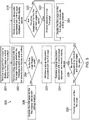
- Figures 2A-2B include a flow chart illustrating a display device control algorithm 200 of one embodiment of the present disclosure. It should be understood that algorithm 200 may be implemented using any one of the embodiments described above in Figure 1 . As such, elements of algorithm 200 may be used in conjunction with, in combination with, or substituted for elements of the embodiments described above. Further, the functions, structures and other description of elements for such embodiments described above may apply to like named elements of algorithm 200 and vice versa.
- algorithm 200 is for controlling two display devices as performed by the processor 108 executing the display device control instructions 114 in Figure 1 .
- the two display devices include a first display device 102 and a second display device 104.
- one or more of the steps discussed herein with respect to algorithm 200 may be omitted for optimization.
- the display device control system 106 receives a request from a user to display a first page on a first display device 102 in the cockpit.
- a user can request to display a page by entering information in a field, selecting a key, or the like.
- the algorithm 200 proceeds to 202 with retrieving a flag associated with the first page indicating whether the first page is safe or unsafe for simultaneous display and editing on two or more display devices.
- the algorithm 200 determines whether the flag indicates that the first page is safe for simultaneous display and editing on two or more display devices.
- the algorithm 200 proceeds to 206 and the processor 108 displays the first page on the first display device 102 with editing enabled.
- the algorithm 200 proceeds to 208 with retrieving a flag associated with a second page displayed on the second display device 104 indicating whether the second page is safe or unsafe for simultaneous display and editing on two or more display devices.
- the algorithm 200 determines whether the flag associated with the second page indicates that the second page is safe for simultaneous display and editing on two or more display devices.
- the algorithm 200 proceeds to 212 and the processor 108 displays the first page on the first display device 102 with editing enabled.
- an identifier can include a word, number, letter, symbol, or the like that is used to identify or name a page.
- the identifier for the main menu page of display devices used for AOC could be "AOC Menu.”
- the algorithm 200 determines whether the identifiers associated with the first page and the second page are the same. In other words, the algorithm 200 determines whether the first page and the second page are the same page.
- prohibiting selection comprises preventing display and editing of the first page on the first display device.
- prohibiting selection of the first page can include prohibiting display of the first page on the first display device 102, displaying an error indication on the first display device 102, displaying the first page on the first display device 102 with editing disabled, displaying the first page on the first display device 102 with at least one of a color and additional text indicating that the first page is unavailable for editing, or the like.
- the error indication notifies the user that the requested page is in use.
- the algorithm 200 proceeds to 222 with retrieving a group designator associated with the first page and 224 with retrieving a group designator associated with the second page.
- retrieving a group designator can include retrieving one group designator or a set of multiple group designators.
- the algorithm 200 determines whether the group designators associated with the first and second pages are the same. In other words, the algorithm 200 determines whether the first and second pages belong to the same group.
- determining whether the group designators associated with the first and second pages are the same includes determining whether any of the group designators associated with the first page are the same as any group designator associated with the second page.
- the algorithm 200 proceeds to 228 and the processor 108 prohibits selection of the first page.
- the algorithm 200 proceeds to 230 and the processor 108 displays the first page on the first display device 102 with editing enabled.
- Figure 3 includes a flow chart illustrating a display device control algorithm 300 according to one embodiment of the present disclosure.
- algorithm 300 may be implemented using any one of the embodiments described above in Figures 1-2B .
- elements of algorithm 300 may be used in conjunction with, in combination with, or substituted for elements of the embodiments described above.
- the functions, structures and other description of elements for such embodiments described above may apply to like named elements of algorithm 300 and vice versa.
- algorithm 300 is for controlling two display devices as performed by the processor 108 executing the display device control instructions 114 in Figure 1 .
- Algorithm 300 includes similar steps to algorithm 200 and the similar steps have the same reference numerals. However, when executing algorithm 300, the processor 108 omits steps 208-220 discussed above with respect to Figures 2A-2B . Accordingly, when the first page is flagged as unsafe, as determined at step 204, the algorithm 300 proceeds directly to 222-230 described above with respect to Figure 2B .
- Algorithm 300 leverages that the information regarding the flag associated with the second page can be inferred based on the group designator associated with the second page. In particular, when the second page has the same group designator as the first page, then the second page must be flagged as unsafe. Further, the identifier associated with the second page may not provide any additional information necessary to determine whether or not the first page can be displayed.
- Figures 4A-4C include a flow chart illustrating a display device control algorithm 400 of one embodiment of the present disclosure. It should be understood that algorithm 400 may be implemented using any one of the embodiments described above in Figures 1-3 . As such, elements of algorithm 400 may be used in conjunction with, in combination with, or substituted for elements of the embodiments described above. Further, the functions, structures and other description of elements for such embodiments described above may apply to like named elements of algorithm 400 and vice versa.
- algorithm 400 is for controlling three display devices as performed by the processor 108 executing the display device control instructions 114 in Figure 1 .
- the three display devices include a first display device 102, a second display device 104, and a third display device 105.
- Algorithm 400 includes similar steps to algorithms 200, 300 and the similar steps have the same reference numerals. In some embodiments, one or more of the steps discussed herein with respect to algorithm 400 may be omitted for optimization.
- the display device control system 106 receives a request from a user to display a first page on a first display device 102 in the cockpit.
- the algorithm 400 proceeds to 202 with retrieving a flag associated with the first page indicating whether the first page is safe or unsafe for simultaneous display and editing on two or more display devices.
- the algorithm 400 determines whether the flag indicates that the first page is safe for simultaneous display and editing on two or more display devices. When the first page is flagged as safe, then the algorithm 400 proceeds to 206 and the processor 108 displays the first page on the first display device 102 with editing enabled.
- the processor 108 proceeds to 208 with retrieving a flag associated with a second page displayed on the second display device 104 indicating whether the second page is safe or unsafe for simultaneous display and editing on two or more display devices.
- the algorithm 400 determines whether the flag associated with the second page indicates that the second page is safe for simultaneous display and editing on two or more display devices.
- the algorithm 400 proceeds directly to 302, as shown in Figure 4A , without performing steps 214-228.
- the algorithm 400 proceeds with steps 214-228 as discussed above with respect to Figure 2B .
- the algorithm 400 proceeds to steps 302-306, discussed herein.
- the algorithm 400 proceeds with retrieving a flag associated with a third page displayed on the third display device 105 indicating whether the third page is safe or unsafe for simultaneous display and editing on two or more display devices.
- the algorithm 400 determines whether the flag indicates that the third page is safe for simultaneous display and editing on two or more display devices. When the third page is flagged as safe, then the algorithm 400 proceeds to 306 and the processor 108 displays the first page on the first display device 102 with editing enabled.
- the algorithm 400 proceeds to 308 with retrieving an identifier associated with the first page and 310 with retrieving an identifier associated with the third page.
- step 308 is redundant with step 214 and can be skipped.
- the algorithm 400 determines whether the identifiers associated with the first page and the third page are the same. In other words, the algorithm 400 determines whether the first page and the third page are the same page. When the identifiers associated with the first page and the third page are the same, then the algorithm 400 proceeds to 314 and the processor 108 prohibits selection of the first page.
- the algorithm 400 proceeds to 316, with retrieving a group designator associated with the first page and 318 with retrieving a group designator associated with the third page.
- step 316 is redundant with step 222 and can be skipped.
- the algorithm 400 determines whether the group designators associated with the first and third pages are the same. In other words, the algorithm 400 determines whether the first and third pages belong to the same group. When the group designators associated with the first and third pages are the same, then the algorithm 400 proceeds to 322 and the processor 108 prohibits selection of the first page. When the group designators associated with the first and third pages are different, then the algorithm 400 proceeds to 324 and the processor 108 displays the first page on the first display device 102 with editing enabled.
- Figure 5 includes a flow chart illustrating a display device control algorithm according to one embodiment of the present disclosure.
- algorithm 500 may be implemented using any one of the embodiments described above in Figures 1-4C .
- elements of algorithm 500 may be used in conjunction with, in combination with, or substituted for elements of the embodiments described above.
- the functions, structures and other description of elements for such embodiments described above may apply to like named elements of algorithm 500 and vice versa.
- algorithm 500 is for controlling three display devices as performed by the processor 108 executing the display device control instructions 114 in Figure 1 .
- Algorithm 500 includes similar steps to algorithm 400 and the similar steps have the same reference numerals.
- the processor 108 omits steps 208-220 discussed above with respect to Figures 2A-2B and 4A-4B . Accordingly, when the first page is flagged as unsafe, as determined at step 204, the algorithm 200 proceeds directly to 222 with retrieving a group designator associated with the first page and 224 with retrieving a group designator associated with the second page.
- Algorithm 500 leverages that the information regarding the flag associated with the second page can be inferred based on the group designator associated with the second page and the information regarding the flag of the third page can be inferred based on the group designator associated with the third page. Further, the identifiers associated with the second and third pages may not provide any additional information necessary to determine whether or not the first page can be displayed.
- Figure 6 illustrates an example method 600 of managing multiple independent cockpit display devices according to one embodiment of the present disclosure. It should be understood that method 600 may be implemented using any one of the embodiments described above in Figure 1-5 . As such, elements of method 600 may be used in conjunction with, in combination with, or substituted for elements of the embodiments described above. Further, the functions, structures and other description of elements for such embodiments described above may apply to like named elements of method 600 and vice versa.
- the method begins at 602 with receiving a request from a user to display a first page of a plurality of pages on a first display device in a cockpit, wherein the each page is pre-defined by a plurality of parameters in a page definition database.
- the method proceeds to 604 with determining whether a flag associated with the first page indicates that the first page is safe or unsafe for simultaneous display and editing on two or more display devices, wherein the flag is retrieved from the page definition database, wherein the flag is a pre-defined parameter in the page definition database.
- the method proceeds to 606 with determining whether a flag associated with a second page displayed on a second display device indicates that the second page is safe or unsafe for simultaneous display and editing on two or more display devices.
- the method proceeds to 608 with determining whether an identifier associated with the first page and an identifier associated with the second page are the same or different.
- the method proceeds to 610 with determining whether a group designator associated with the first page and a group designator associated with the second page are the same or different, wherein the group designator is a pre-defined parameter in the plurality of parameters in the page definition database, wherein the group designator identifies pages related to one another.
- the method proceeds to 612 with controlling display and editing of pages on the first display device based on at least one of: the flag associated with the first page; the flag associated with the second page; the identifiers for the first page and the second page; and the group designators associated with the first page and the second page.
- Figure 7 illustrates an example method 700 of managing multiple independent cockpit display devices according to one embodiment of the present disclosure. It should be understood that method 700 may be implemented using any one of the embodiments described above in Figure 1-6 . As such, elements of method 700 may be used in conjunction with, in combination with, or substituted for elements of the embodiments described above. Further, the functions, structures and other description of elements for such embodiments described above may apply to like named elements of method 700 and vice versa.
- the method begins at 702 with receiving a request from a user to display a first page of a plurality of pages on a first display device in a cockpit, wherein the each page is pre-defined by a plurality of parameters in a page definition database.
- the method proceeds to 704 with determining whether a flag associated with the first page indicates that the first page is safe or unsafe for simultaneous display and editing on two or more display devices, wherein the flag is retrieved from the page definition database, wherein the flag is a pre-defined parameter in the page definition database.
- the method proceeds to 706 with determining whether a group designator associated with the first page and a group designator associated with the second page are the same or different, wherein the group designator is a pre-defined parameter in the plurality of parameters in the page definition database, wherein the group designator identifies pages related to one another.
- the method proceeds to 708 with controlling display and editing of pages on the first display device based on at least one of: the flag associated with the first page, the group designator associated with the first page, and the group designator associated with second page.
- system elements, method steps, or examples described throughout this disclosure may be implemented using one or more computer systems, field programmable gate arrays (FPGAs), or similar devices comprising a processor coupled to a memory (such as shown in Figure 1 , for example) and executing code to realize those elements, processes, or examples, said code stored on a non-transient data storage device.
- FPGAs field programmable gate arrays
- other embodiments of the present disclosure may include elements comprising program instructions resident on computer readable media which when implemented by such computer systems, enable them to implement the embodiments described herein.
- computer readable media refers to tangible memory storage devices having non-transient physical forms.
- Non-transient physical forms may include computer memory devices, such as but not limited to punch cards, magnetic disk or tape, any optical data storage system, flash read only memory (ROM), non-volatile ROM, programmable ROM (PROM), erasable-programmable ROM (E-PROM), random access memory (RAM), or any other form of permanent, semi-permanent, or temporary memory storage system or device having a physical, tangible form.
- Program instructions include, but are not limited to computer-executable instructions executed by computer system processors and hardware description languages such as Very High Speed Integrated Circuit (VHSIC) Hardware Description Language (VHDL).
- VHSIC Very High Speed Integrated Circuit
- VHDL Hardware Description Language
Landscapes
- Engineering & Computer Science (AREA)
- Theoretical Computer Science (AREA)
- General Engineering & Computer Science (AREA)
- Combustion & Propulsion (AREA)
- Transportation (AREA)
- Mechanical Engineering (AREA)
- Chemical & Material Sciences (AREA)
- General Physics & Mathematics (AREA)
- Physics & Mathematics (AREA)
- Human Computer Interaction (AREA)
- Databases & Information Systems (AREA)
- Data Mining & Analysis (AREA)
- Health & Medical Sciences (AREA)
- Artificial Intelligence (AREA)
- Audiology, Speech & Language Pathology (AREA)
- Computational Linguistics (AREA)
- General Health & Medical Sciences (AREA)
- User Interface Of Digital Computer (AREA)
- Digital Computer Display Output (AREA)
Abstract
Description
- Crew members of an aircraft conduct airline operational communications (AOC), Air Traffic Control (ATC) communications, and Flight Management System (FMS) communications via datalink through displays in the cockpit of the aircraft. Current displays are dynamic and provide prompt questions for the crew to enter information. AOC includes: the collection of aircraft information and status; entry of information by the crew; and communication of the information to airline operations maintenance, and other airline services. In order to improve efficiency, aircraft are equipped with multiple displays so more than one member of the crew may enter information or perform AOC, ATC, or FMS communications at the same time. The most common operation is for different crew members to work on different pages that are unrelated. However, when the crew does not discuss the pages that are currently being worked on, some problems can arise. For example, allowing multiple members of the crew to access or edit pages at the same time causes a crew member to see live editing of the document that is not performed by that particular crew member. Also, inconsistent information may be entered in the page such that the crew members could interfere with each other's work. These problems cause confusion and safety issues for the crewr. Further, the problems can reduce the efficiency of the crew.
- Placing a restriction on all pages so only one crew member may access a page at a time is not adequate for optimal operation by the crew. For example, certain pages include operations that involve requesting information (e.g., weather data) or communicating through text messages. These pages may be accessed simultaneously by the crew without complication, so a rigid locking mechanism that prevents simultaneous use of these pages is undesirable.
- For the reasons stated above and for other reasons stated below which will become apparent to those skilled in the art upon reading and understanding the specification, there is a need in the art for improved systems and methods for managing multiple independent displays for a vehicle.
- The embodiments of the present disclosure provide systems and method for managing multiple independent displays in the cockpit of an aircraft or other vehicle and will be understood by reading and studying the following specification.
- In one embodiment, a system for managing multiple independent cockpit displays comprises a first display device and a second display device in a cockpit of a vehicle, wherein the first display device and the second display device are configured to receive input from a user and display pages to the user, wherein the pages are pre-defined by a plurality of parameters in a page definition database. The system also includes a display device control system comprising a processor coupled to a memory, wherein the memory stores the page definition database. The processor is configured to receive a request from a user to display a first page on the first display device; retrieve a flag associated with the first page, wherein the flag is a pre-defined parameter in the page definition database, wherein the flag indicates whether a particular page is safe or unsafe for simultaneous display and editing on two or more display devices; retrieve a group designator associated with the first page and a group designator associated with a second page displayed on a second display device, wherein the group designator is a pre-defined parameter in the page definition database, wherein the group designator identifies pages that are related to one another; and control display and editing of pages on the first display device in response to the request based on at least one of: the flag associated with the first page, the group designator associated with the first page, and the group designator associated with the second page.
- Understanding that the drawings depict only exemplary embodiments and are not therefore to be considered limiting in scope, the exemplary embodiments will be described with additional specificity and detail through the use of the accompanying drawings, in which:
-
Figure 1 is a block diagram of an example system for managing multiple independent cockpit display devices according to one embodiment of the present disclosure. -
Figures 2A-2B illustrate a flow chart of exemplary logic executed by a display device control system for controlling two display devices according to one embodiment of the present disclosure. -
Figure 3 illustrates a flow chart of exemplary logic executed by a display device control system for controlling two display devices according to one embodiment of the present disclosure. -
Figures 4A-4C illustrate a flow chart of exemplary logic executed by the display device control system for controlling three display devices according to one embodiment of the present disclosure. -
Figure 5 illustrates a flow chart of exemplary logic executed by the display device control system for controlling three display devices according to one embodiment of the present disclosure. -
Figure 6 is a flow chart illustrating an example method of managing multiple independent cockpit display devices according to one embodiment of the present disclosure. -
Figure 7 is a flow chart illustrating an example method of managing multiple independent cockpit display devices according to one embodiment of the present disclosure. - In accordance with common practice, the various described features are not drawn to scale but are drawn to emphasize specific features relevant to the exemplary embodiments.
- In the following detailed description, reference is made to the accompanying drawings that form a part hereof, and in which is shown by way of illustration specific illustrative embodiments. However, it is to be understood that other embodiments may be utilized and that logical, mechanical, and electrical changes may be made. Furthermore, the method presented in the drawing figures and the specification is not to be construed as limiting the order in which the individual steps may be performed. The following detailed description is, therefore, not to be taken in a limiting sense.
- The embodiments described herein provide systems and methods for managing multiple independent displays in the cockpit of an aircraft or other vehicles such as but not limited to ground, sea, or space vehicles. The embodiments described herein include two or more display devices in the cockpit of a vehicle and a display device control system that controls the display and editing of pages on the two or more display devices. The display device control system allows individual vehicle fleet owners or fleet operators to designate which pages are "safe" for simultaneous display and editing on multiple display devices and those that are "unsafe" for simultaneous display and editing on multiple display devices. In particular, the display device control system includes customizable flags and designators in a page definition database used to define each page displayed on the multiple independent displays. As the term is used herein, it should be appreciated that a "cockpit" refers to the vehicle control station from which a driver, pilot, or crew operates and/or directs operation of the vehicle.
-
Figure 1 is example embodiment of asystem 100 that includes multiple independent cockpit displays.System 100 generally includes twodisplay devices device control system 106. The displaydevice control system 106 generally includes at least oneprocessor 108 coupled to amemory 110, thememory 110 storing apage definition database 112 and executable display device control instructions 114. In exemplary embodiments, thesystem 100 optionally includes athird display device 105. While three display devices are shown inFigure 1 , it should be understood that this is for ease of illustration and the teachings of the present disclosure could be applied to a system with more than three display devices. - Each
display device display devices display display devices - Each
display device display devices page definition database 112. In exemplary embodiments, each page is defined by various parameters or configuration information in thepage definition database 112, which is a code structure including tables, arrays, variables, flags, and the like. In exemplary embodiments, the parameters include a combination of fixed text, variable data, actions, fields for data entry, selection keys, and the like. In exemplary embodiments, the actions may be simple or complex. A simple action can include, for example, entering data, displaying another page, or sending a message. A complex action can include, for example, a set of logic to calculate data, logic to conditionally perform actions depending on data values or previous line select key actions, logic to trigger future actions, and set flags that will be used to cause other actions (e.g. dynamic screen functions). In exemplary embodiments, thepage definition database 112 is configured by an aircraft/fleet operator, a conglomeration of airlines, an organization, a pilot, a flight crew, a maintenance crew, or the like. - In exemplary embodiments, the
page definition database 112 is loaded intomemory 110 on displaydevice control system 106 from anexternal storage medium 116 that exists externally to displaydevice control system 106. In exemplary embodiments, thepage definition database 112 is loaded intomemory 110 via a data loader, datalink/uplink, through remote access, or using other methods known to one having skill in the art. In at least one example,external storage medium 116 is an appropriate non-transitory storage media, such as flash or other non-volatile memory, magnetic disc drives, and/or optical disc drives.External storage medium 116 stores thepage definition database 112 so that a vehicle can accessexternal storage medium 116 to acquire thepage definition database 112. For example, a fleet having a fleet specific configuration, stores thepage definition database 112 inexternal storage medium 116 that exists externally to displaydevice control system 106, whereexternal storage medium 116 is accessible by multiple vehicles. For example,external storage medium 116 is stored on a server that is controlled by a fleet operator. In an alternative implementation,page definition database 112 is distributed on a disk, a USB drive, or the like for loading of thepage definition database 112 onto individual displaydevice control systems 106. In exemplary embodiments, each vehicle associated with a particular fleet requiring the samepage definition database 112 has thepage definition database 112 loaded into memory on the displaydevice control system 106. - In certain embodiments, a configuration generation tool 118 creates the
page definition database 112 stored inexternal storage medium 116. Configuration generation tool 118 is a tool that is operated by the fleet or a third party that createspage definition database 112 that is commonly shared among multiple vehicles within a fleet or other group. For example, a fleet uses configuration generation tool 118 such as a ground based software tool or a reconfiguration tool to create thepage definition database 112 stored inexternal storage medium 116. The configuration generation tool 118 defines the parameters or configuration information of thepage definition database 112. By controlling multiple aspects of thepage definition database 112 available throughexternal storage medium 116, the configuration generation tool 118 allows an organization to configure the control of communications through multiple independent display devices on individual vehicles in the fleet. - In exemplary embodiments, the display
device control system 106 can be implemented in a flight management system (FMS), a communication management function (CMF), or another independent system in a vehicle. Theprocessor 108 includes or functions with software programs, firmware, or other computer readable instructions for carrying out various methods, process tasks, calculations, and controls functions, which are used in managing multiple independent display devices in the cockpit of a vehicle. - The display
device control system 106 is configured to control how pages are displayed on the display devices. In particular, the displaydevice control system 106 controls the pages that are displayed on the display devices using the parameters in thepage definition database 112 and input from the user. The displaydevice control system 106 ensures that the confusing interactions discussed above do not occur with the two or more display devices ofsystem 100. Since thepage definition database 112 used to define the pages is not a relational database, methods of locking access to files in a relational database are not effective in the context ofsystem 100. Further, thepage definition database 112 does not directly identify which data elements control underlying actions on particular pages and the data relationships in thepage definition database 112 do not enable knowledge as to how messages generated by thesystem 100 will be used by a ground system that receives them. - In exemplary embodiments,
system 100 includes a flag in thepage definition database 112 for designating the availability of each page for simultaneous display and editing. In exemplary embodiments, a flag in thepage definition database 112 allows the person or entity (e.g. airline, pilot, third party, etc.) configuring thepage definition database 112 to designate whether a particular page is safe or unsafe for simultaneous display and editing on two or more display devices prior to operation of the system. In other words, the flag is a pre-defined parameter in thepage definition database 112. In exemplary embodiments, the designation of a page as being safe or unsafe is a subjective designation by the person or entity that configures thepage definition database 112. Example criteria that can be used for this designation includes, but is not limited to, the content of the page, the safety critical nature of the information entered on the page, the number of interactions with other pages, and safety regulations or standards. In some embodiments, the flag associated with a respective page is a variable that indicates the state of the respective page with regard to simultaneous display and editing. - In exemplary embodiments, a page designated as safe has few interactions with other pages or has no input by users. For example, a safe page could include a page for requesting weather information or text messaging with the fleet control. A safe page would be fully available for display and editing by the two or more display devices without restriction. Thus, safe pages are always available for simultaneous independent display and editing for multiple crew members.
- In exemplary embodiments, a page designated as unsafe generally has many complex interactions with other pages. In an example, an unsafe page could include load sheet data processing or takeoff data. In some embodiments, an unsafe page would not be available for simultaneous independent display and editing by multiple crew members on different displays. In other embodiments, it may be desirable to allow simultaneous display of an unsafe page, but to restrict the ability to interact with or edit the page. For example, it may be desirable to mirror a page on the multiple displays in the cockpit, so one of the crew members can verify the work of another. In such embodiments, the second crew member to access the page would be restricted to only viewing the page. By including this flag in the
page definition database 112, undesirable results from simultaneously displaying and/or editing pages can be avoided. - A system that prevents simultaneously displaying and/or editing of a single unsafe page could still be susceptible to confusing interactions because unsafe pages can have interactions with other pages. To further prevent confusing interactions, the
page definition database 112 also includes a group designator for each unsafe page that comprises a group designation associated with each respective unsafe page. In exemplary embodiments, the group designator can be a group identifier number, letter, or the like that corresponds to a group of unsafe pages that are related to one another. The group designator provides the ability for the person or entity configuring thepage definition database 112 to identify which unsafe pages are related to one another. In exemplary embodiments, pages that are related to one another include, but are not limited to, pages that interact with one another, pages that share data, and pages related to the same stage of navigation. For example, a group of pages that each include fields for inputting runway data could be designated as belonging to the same group, i.e. same group designator. In exemplary embodiments, the group designation of an unsafe page is a subjective designation by the person or entity that configures thepage definition database 112. In some embodiments, a single unsafe page can have more than one group designator when it is related to multiple groups of pages. - The display
device control system 106 uses the group designator to prevent related unsafe pages from being displayed and edited simultaneously on multiple display devices. The group designator also allows unrelated unsafe pages to be displayed and edited simultaneously on multiple display devices. This provides more flexibility for the displaydevice control system 106 than just preventing access to different unsafe pages by different users under all circumstances. In particular, different users can access different unsafe pages that are unrelated to one another, i.e. having a different group designator, because there is no risk of the confusing or dangerous interactions discussed above. -
Figures 2A-2B include a flow chart illustrating a displaydevice control algorithm 200 of one embodiment of the present disclosure. It should be understood thatalgorithm 200 may be implemented using any one of the embodiments described above inFigure 1 . As such, elements ofalgorithm 200 may be used in conjunction with, in combination with, or substituted for elements of the embodiments described above. Further, the functions, structures and other description of elements for such embodiments described above may apply to like named elements ofalgorithm 200 and vice versa. - In exemplary embodiments,
algorithm 200 is for controlling two display devices as performed by theprocessor 108 executing the display device control instructions 114 inFigure 1 . The two display devices include afirst display device 102 and asecond display device 104. In some embodiments, one or more of the steps discussed herein with respect toalgorithm 200 may be omitted for optimization. - At 201, the display
device control system 106 receives a request from a user to display a first page on afirst display device 102 in the cockpit. In exemplary embodiments, a user can request to display a page by entering information in a field, selecting a key, or the like. - The
algorithm 200 proceeds to 202 with retrieving a flag associated with the first page indicating whether the first page is safe or unsafe for simultaneous display and editing on two or more display devices. At 204, thealgorithm 200 determines whether the flag indicates that the first page is safe for simultaneous display and editing on two or more display devices. When the first page is flagged as safe, then thealgorithm 200 proceeds to 206 and theprocessor 108 displays the first page on thefirst display device 102 with editing enabled. - When the first page is flagged as unsafe, the
algorithm 200 proceeds to 208 with retrieving a flag associated with a second page displayed on thesecond display device 104 indicating whether the second page is safe or unsafe for simultaneous display and editing on two or more display devices. At 210, thealgorithm 200 determines whether the flag associated with the second page indicates that the second page is safe for simultaneous display and editing on two or more display devices. When the second page is flagged as safe, then thealgorithm 200 proceeds to 212 and theprocessor 108 displays the first page on thefirst display device 102 with editing enabled. - When the second page is flagged as unsafe, the
algorithm 200 proceeds to 214, shown inFigure 2B , with retrieving an identifier associated with the first page and 216 with retrieving an identifier associated with the second page. In exemplary embodiments, an identifier can include a word, number, letter, symbol, or the like that is used to identify or name a page. For example, the identifier for the main menu page of display devices used for AOC could be "AOC Menu." At 218, thealgorithm 200 determines whether the identifiers associated with the first page and the second page are the same. In other words, thealgorithm 200 determines whether the first page and the second page are the same page. When the identifiers associated with the first page and the second page are the same, then thealgorithm 200 proceeds to 220 and theprocessor 108 prohibits selection of the first page. In exemplary embodiments, prohibiting selection comprises preventing display and editing of the first page on the first display device. In exemplary embodiments, prohibiting selection of the first page can include prohibiting display of the first page on thefirst display device 102, displaying an error indication on thefirst display device 102, displaying the first page on thefirst display device 102 with editing disabled, displaying the first page on thefirst display device 102 with at least one of a color and additional text indicating that the first page is unavailable for editing, or the like. In some embodiments, the error indication notifies the user that the requested page is in use. - When the identifiers associated with the first page and the second page are not the same, then the
algorithm 200 proceeds to 222 with retrieving a group designator associated with the first page and 224 with retrieving a group designator associated with the second page. In exemplary embodiments, retrieving a group designator can include retrieving one group designator or a set of multiple group designators. At 226, thealgorithm 200 determines whether the group designators associated with the first and second pages are the same. In other words, thealgorithm 200 determines whether the first and second pages belong to the same group. In exemplary embodiments where a set of multiple group designators is retrieved, then determining whether the group designators associated with the first and second pages are the same includes determining whether any of the group designators associated with the first page are the same as any group designator associated with the second page. When the group designators associated with the first and second pages are the same, then thealgorithm 200 proceeds to 228 and theprocessor 108 prohibits selection of the first page. When the group designators associated with the first and second pages are different, then thealgorithm 200 proceeds to 230 and theprocessor 108 displays the first page on thefirst display device 102 with editing enabled. -
Figure 3 includes a flow chart illustrating a displaydevice control algorithm 300 according to one embodiment of the present disclosure. It should be understood thatalgorithm 300 may be implemented using any one of the embodiments described above inFigures 1-2B . As such, elements ofalgorithm 300 may be used in conjunction with, in combination with, or substituted for elements of the embodiments described above. Further, the functions, structures and other description of elements for such embodiments described above may apply to like named elements ofalgorithm 300 and vice versa. - In exemplary embodiments,
algorithm 300 is for controlling two display devices as performed by theprocessor 108 executing the display device control instructions 114 inFigure 1 .Algorithm 300 includes similar steps toalgorithm 200 and the similar steps have the same reference numerals. However, when executingalgorithm 300, theprocessor 108 omits steps 208-220 discussed above with respect toFigures 2A-2B . Accordingly, when the first page is flagged as unsafe, as determined atstep 204, thealgorithm 300 proceeds directly to 222-230 described above with respect toFigure 2B .Algorithm 300 leverages that the information regarding the flag associated with the second page can be inferred based on the group designator associated with the second page. In particular, when the second page has the same group designator as the first page, then the second page must be flagged as unsafe. Further, the identifier associated with the second page may not provide any additional information necessary to determine whether or not the first page can be displayed. -
Figures 4A-4C include a flow chart illustrating a displaydevice control algorithm 400 of one embodiment of the present disclosure. It should be understood thatalgorithm 400 may be implemented using any one of the embodiments described above inFigures 1-3 . As such, elements ofalgorithm 400 may be used in conjunction with, in combination with, or substituted for elements of the embodiments described above. Further, the functions, structures and other description of elements for such embodiments described above may apply to like named elements ofalgorithm 400 and vice versa. - In exemplary embodiments,
algorithm 400 is for controlling three display devices as performed by theprocessor 108 executing the display device control instructions 114 inFigure 1 . The three display devices include afirst display device 102, asecond display device 104, and athird display device 105.Algorithm 400 includes similar steps toalgorithms algorithm 400 may be omitted for optimization. - At 201, the display
device control system 106 receives a request from a user to display a first page on afirst display device 102 in the cockpit. Thealgorithm 400 proceeds to 202 with retrieving a flag associated with the first page indicating whether the first page is safe or unsafe for simultaneous display and editing on two or more display devices. At 204, thealgorithm 400 determines whether the flag indicates that the first page is safe for simultaneous display and editing on two or more display devices. When the first page is flagged as safe, then thealgorithm 400 proceeds to 206 and theprocessor 108 displays the first page on thefirst display device 102 with editing enabled. - When the first page is flagged as unsafe, the
processor 108 proceeds to 208 with retrieving a flag associated with a second page displayed on thesecond display device 104 indicating whether the second page is safe or unsafe for simultaneous display and editing on two or more display devices. At 210, thealgorithm 400 determines whether the flag associated with the second page indicates that the second page is safe for simultaneous display and editing on two or more display devices. When the second page is flagged as safe, as determined atstep 210, then thealgorithm 400 proceeds directly to 302, as shown inFigure 4A , without performing steps 214-228. When the second page is flagged as unsafe, thealgorithm 400 proceeds with steps 214-228 as discussed above with respect toFigure 2B . When the group designators associated with the first and second pages are not the same, as determined atstep 226, then thealgorithm 400 proceeds to steps 302-306, discussed herein. - At 302, the
algorithm 400 proceeds with retrieving a flag associated with a third page displayed on thethird display device 105 indicating whether the third page is safe or unsafe for simultaneous display and editing on two or more display devices. At 304, thealgorithm 400 determines whether the flag indicates that the third page is safe for simultaneous display and editing on two or more display devices. When the third page is flagged as safe, then thealgorithm 400 proceeds to 306 and theprocessor 108 displays the first page on thefirst display device 102 with editing enabled. - When the third page is flagged as unsafe and the second page is flagged as safe, then the
algorithm 400 proceeds to 308 with retrieving an identifier associated with the first page and 310 with retrieving an identifier associated with the third page. When the second page is flagged as unsafe, then step 308 is redundant withstep 214 and can be skipped. At 312, thealgorithm 400 determines whether the identifiers associated with the first page and the third page are the same. In other words, thealgorithm 400 determines whether the first page and the third page are the same page. When the identifiers associated with the first page and the third page are the same, then thealgorithm 400 proceeds to 314 and theprocessor 108 prohibits selection of the first page. - When the identifiers associated with the first page and the third page are not the same and the second page is flagged as safe, then the
algorithm 400 proceeds to 316, with retrieving a group designator associated with the first page and 318 with retrieving a group designator associated with the third page. When the second page is flagged as unsafe, then step 316 is redundant withstep 222 and can be skipped. At 320, thealgorithm 400 determines whether the group designators associated with the first and third pages are the same. In other words, thealgorithm 400 determines whether the first and third pages belong to the same group. When the group designators associated with the first and third pages are the same, then thealgorithm 400 proceeds to 322 and theprocessor 108 prohibits selection of the first page. When the group designators associated with the first and third pages are different, then thealgorithm 400 proceeds to 324 and theprocessor 108 displays the first page on thefirst display device 102 with editing enabled. -
Figure 5 includes a flow chart illustrating a display device control algorithm according to one embodiment of the present disclosure. It should be understood thatalgorithm 500 may be implemented using any one of the embodiments described above inFigures 1-4C . As such, elements ofalgorithm 500 may be used in conjunction with, in combination with, or substituted for elements of the embodiments described above. Further, the functions, structures and other description of elements for such embodiments described above may apply to like named elements ofalgorithm 500 and vice versa. - In exemplary embodiments,
algorithm 500 is for controlling three display devices as performed by theprocessor 108 executing the display device control instructions 114 inFigure 1 .Algorithm 500 includes similar steps toalgorithm 400 and the similar steps have the same reference numerals. When executingalgorithm 500, theprocessor 108 omits steps 208-220 discussed above with respect toFigures 2A-2B and4A-4B . Accordingly, when the first page is flagged as unsafe, as determined atstep 204, thealgorithm 200 proceeds directly to 222 with retrieving a group designator associated with the first page and 224 with retrieving a group designator associated with the second page. When the group designators for the first and second pages are different, as determined atstep 226, thealgorithm 500 omits steps 302-316 and proceeds directly to 318-324 described above with respect toFigure 4C .Algorithm 500 leverages that the information regarding the flag associated with the second page can be inferred based on the group designator associated with the second page and the information regarding the flag of the third page can be inferred based on the group designator associated with the third page. Further, the identifiers associated with the second and third pages may not provide any additional information necessary to determine whether or not the first page can be displayed. - While the
algorithms algorithms -
Figure 6 illustrates anexample method 600 of managing multiple independent cockpit display devices according to one embodiment of the present disclosure. It should be understood thatmethod 600 may be implemented using any one of the embodiments described above inFigure 1-5 . As such, elements ofmethod 600 may be used in conjunction with, in combination with, or substituted for elements of the embodiments described above. Further, the functions, structures and other description of elements for such embodiments described above may apply to like named elements ofmethod 600 and vice versa. - The method begins at 602 with receiving a request from a user to display a first page of a plurality of pages on a first display device in a cockpit, wherein the each page is pre-defined by a plurality of parameters in a page definition database.
- The method proceeds to 604 with determining whether a flag associated with the first page indicates that the first page is safe or unsafe for simultaneous display and editing on two or more display devices, wherein the flag is retrieved from the page definition database, wherein the flag is a pre-defined parameter in the page definition database.
- When the flag associated with the first page indicates that the first page is unsafe for simultaneous display and editing on two or more display devices, the method proceeds to 606 with determining whether a flag associated with a second page displayed on a second display device indicates that the second page is safe or unsafe for simultaneous display and editing on two or more display devices.
- When the flag associated with the second page indicates that the second page is unsafe for simultaneous display and editing on two or more display devices, the method proceeds to 608 with determining whether an identifier associated with the first page and an identifier associated with the second page are the same or different.
- When the identifier associated with the first page and the identifier associated with the second page are different, the method proceeds to 610 with determining whether a group designator associated with the first page and a group designator associated with the second page are the same or different, wherein the group designator is a pre-defined parameter in the plurality of parameters in the page definition database, wherein the group designator identifies pages related to one another.
- The method proceeds to 612 with controlling display and editing of pages on the first display device based on at least one of: the flag associated with the first page; the flag associated with the second page; the identifiers for the first page and the second page; and the group designators associated with the first page and the second page.
-
Figure 7 illustrates anexample method 700 of managing multiple independent cockpit display devices according to one embodiment of the present disclosure. It should be understood thatmethod 700 may be implemented using any one of the embodiments described above inFigure 1-6 . As such, elements ofmethod 700 may be used in conjunction with, in combination with, or substituted for elements of the embodiments described above. Further, the functions, structures and other description of elements for such embodiments described above may apply to like named elements ofmethod 700 and vice versa. - The method begins at 702 with receiving a request from a user to display a first page of a plurality of pages on a first display device in a cockpit, wherein the each page is pre-defined by a plurality of parameters in a page definition database.
- The method proceeds to 704 with determining whether a flag associated with the first page indicates that the first page is safe or unsafe for simultaneous display and editing on two or more display devices, wherein the flag is retrieved from the page definition database, wherein the flag is a pre-defined parameter in the page definition database.
- When the flag associated with the first page indicates that the first page is unsafe for simultaneous display and editing on two or more display devices, the method proceeds to 706 with determining whether a group designator associated with the first page and a group designator associated with the second page are the same or different, wherein the group designator is a pre-defined parameter in the plurality of parameters in the page definition database, wherein the group designator identifies pages related to one another.
- The method proceeds to 708 with controlling display and editing of pages on the first display device based on at least one of: the flag associated with the first page, the group designator associated with the first page, and the group designator associated with second page.
- The systems and methods described herein overcome the problems with AOC, ATC, and FMS
-
- Example 1 includes a system for managing multiple independent cockpit displays, comprising: a first display device and a second display device in a cockpit of an vehicle, where the first display device and the second display device are configured to receive input from a user and display pages to the user, wherein the pages are pre-defined by a plurality of parameters in a page definition database; a display device control system comprising a processor coupled to a memory, wherein the memory stores the page definition database, wherein the processor is configured to: receive a request from a user to display a first page on the first display device; retrieve a flag associated with the first page, wherein the flag is a pre-defined parameter in the page definition database, wherein the flag indicates whether a particular page is safe or unsafe for simultaneous display and editing on two or more display devices; retrieve a group designator associated with the first page and a group designator associated with a second page displayed on a second display device, wherein the group designator is a pre-defined parameter in the page definition database, wherein the group designator identifies pages that are related to one another; and control display and editing of pages on the first display device in response to the request based on at least one of: the flag associated with the first page, the group designator associated with the first page, and the group designator associated with the second page.
- Example 2 includes the system of Example 1, wherein the processor is configured to display the first page on the first display device with editing enabled when: the flag associated with the first page indicates that the first page is safe for simultaneous display and editing on two or more display devices; or the group designator associated with the first page and the group designator associated with the second page are different.
- Example 3 includes the system of any of Examples 1-2, wherein the processor is configured to prohibit selection of the first page when the group designator associated with the first page and the group designator associated with the second page are the same.
- Example 4 includes the system of Example 3, wherein prohibit selection of the first page comprises at least one of: prohibit display of the first page on the first display device; display an error indication on the first display device; display the first page on the first display device with editing disabled; and display the first page on the first display device, the first page having at least one of a color and additional text indicating that the first page is unavailable for editing.
- Example 5 includes the system of any of Examples 1-4, wherein the processor is further configured to: retrieve a flag associated with the second page displayed on the second display device; and display the first page on the first display device with editing enabled when the flag associated with the second page indicates that the second page is safe for simultaneous display and editing on two or more display devices.
- Example 6 includes the system of any of Examples 1-4, wherein the processor is further configured to retrieve an identifier associated with the first page and an identifier associated with the second page when the flag associated with the first page and the flag associated with the second page indicate that the first page and the second page are unsafe for simultaneous display and editing on two or more display devices, wherein the identifier is retrieved from the page definition database.
- Example 7 includes the system of Example 6, wherein the processor is configured to retrieve the group designator associated with the first page and the group designator associated with the second page when: the flag associated with the first page and the flag associated with the second page indicate that the first page and the second page are unsafe for simultaneous display and editing on two or more display devices; and the identifier associated with the first page and the identifier associated with the second page are different.
- Example 8 includes the system of Example 7, wherein the processor is configured to display the first page on the first display device with editing enabled when the group designator associated with the first page and the group designator associated with the second page are different.
- Example 9 includes the system of any of Examples 1-8, further comprising a third display device, wherein the processor is further configured to: retrieve a group designator associated with the third page; and control display and editing of pages on the first display device in response to the request based on the group designator associated with the third page.
- Example 10 includes the system of Example 9, wherein the processor is further configured to retrieve a flag associated with the second page and a flag associated with the third page; wherein the processor is configured to display the first page on the first display device with editing enabled when: the flag associated with the first page indicates that the first page is unsafe for simultaneous display and editing on two or more display devices; the flag associated with the second page indicates that the second page is safe for simultaneous display and editing on two or more display devices; and the flag associated with the third page indicates that the third page is safe for simultaneous display and editing on two or more display devices.
- Example 11 includes the system of Example 10, wherein the processor is configured to retrieve the flag associated with the third page when: the flag associated with the first page indicates that the first page is unsafe for simultaneous display and editing on two or more display devices and the flag associated with the second page indicates that the second page is safe for simultaneous display and editing on two or more display devices; or the flag associated with the first page and the flag associated with the second page indicate that the first page and the second page are unsafe for simultaneous display and editing on two or more display devices and the group designators associated with the first page and the second page are different.
- Example 12 includes the system of Examples 11, wherein the processor is further configured to retrieve an identifier of the first page and an identifier of the third page; wherein the processor is configured to prohibit selection of the first page when: the identifier of the first page and the identifier of the third page are the same; or the group designator associated with the first page and the group designator associated with the third page are the same.
- Example 13 includes a method for managing multiple independent display devices in a cockpit, the method comprising: receiving a request from a user to display a first page of a plurality of pages on a first display device in a cockpit, wherein the plurality of pages are pre-defined by a plurality of parameters in a page definition database; determining whether a flag associated with the first page indicates that the first page is safe or unsafe for simultaneous display and editing on two or more display devices, wherein the flag is retrieved from the page definition database, wherein the flag is a pre-defined parameter in the page definition database; when the flag associated with the first page indicates that the first page is unsafe for simultaneous display and editing on two or more display devices, determining whether a group designator associated with the first page and a group designator associated with the second page are the same or different, wherein the group designator is retrieved from the page definition database, wherein the group designator is a pre-defined parameter in the page definition database, wherein the group designator identifies pages related to one another; and controlling display and editing of pages on the first display device based on at least one of: the flag associated with the first page and the group designators associated with the first page and the second page.
- Example 14 includes the method of Example 13, further comprising displaying the first page on the first display device with editing enabled when the flag associated with the first page indicates that the first page is safe for simultaneous display and editing on two or more display devices.
- Example 15 includes the method of any of Examples 13-14, further comprising prohibiting selection of the first page when the group designator associated with the first page and the group designator associated with the second page are the same.
- Example 16 includes the method of any of Examples 13-15, further comprising displaying the first page on the first display device with editing enabled when the group designator associated with the first page and the group designator associated with the second page are different.
- Example 17 includes the method of any of Examples 13-16, further comprising: when the flag associated with the first page indicates that the first page is unsafe for simultaneous display and editing on two or more display devices, determining whether a flag associated with a second page displayed on a second display device indicates that the second page is safe or unsafe for simultaneous display and editing on two or more display devices; and displaying the first page on the first display device with editing enabled when the flag associated with the second page indicates that the second page is safe for simultaneous display and editing on two or more display devices.
- Example 18 includes the method of Example 17, further comprising: when the flag associated with the first page indicates that the first page is unsafe for simultaneous display and editing on two or more display devices and the flag associated with the second page indicates that the second page is unsafe for simultaneous display and editing on two or more display devices, determining whether an identifier associated with the first page and an identifier associated with the second page are the same, wherein the identifier is retrieved from the page definition database; and prohibiting selection of the first page when the identifier associated with the first page and the identifier associated with the second page are the same.
- Example 19 includes the method of any of Examples 17-18, further comprising: when the group designator associated with the first page and the group designator associated with the second page are different, determining whether a group designator associated with the first page and a group designator associated with the third page displayed on a third display device are the same; and displaying the first page on the first display device with editing enabled when the group designators associated with the first page and the third page are different.
- Example 20 includes the method of Example 19, further comprising: when the flag associated with the first page indicates that the first page is unsafe for simultaneous display and editing on two or more display devices and the flag associated with the second page indicates that the second page is safe for simultaneous display and editing on two or more display devices, determining whether a flag associated with the third page indicates that the third page is safe or unsafe for simultaneous display and editing on two or more display devices; and displaying the first page on the first display device with editing enabled when the flag associated with the third page indicates that the third page is safe for simultaneous display and editing on two or more display devices.
- In various alternative embodiments, system elements, method steps, or examples described throughout this disclosure (such as the display device control system, or sub-parts thereof, for example) may be implemented using one or more computer systems, field programmable gate arrays (FPGAs), or similar devices comprising a processor coupled to a memory (such as shown in
Figure 1 , for example) and executing code to realize those elements, processes, or examples, said code stored on a non-transient data storage device. Therefore other embodiments of the present disclosure may include elements comprising program instructions resident on computer readable media which when implemented by such computer systems, enable them to implement the embodiments described herein. As used herein, the term "computer readable media" refers to tangible memory storage devices having non-transient physical forms. Such non-transient physical forms may include computer memory devices, such as but not limited to punch cards, magnetic disk or tape, any optical data storage system, flash read only memory (ROM), non-volatile ROM, programmable ROM (PROM), erasable-programmable ROM (E-PROM), random access memory (RAM), or any other form of permanent, semi-permanent, or temporary memory storage system or device having a physical, tangible form. Program instructions include, but are not limited to computer-executable instructions executed by computer system processors and hardware description languages such as Very High Speed Integrated Circuit (VHSIC) Hardware Description Language (VHDL). - Although specific embodiments have been illustrated and described herein, it will be appreciated by those of ordinary skill in the art that any arrangement, which is calculated to achieve the same purpose, may be substituted for the specific embodiments shown. Therefore, it is manifestly intended that this invention be limited only by the claims and the equivalents thereo£
Claims (10)
- A system (100) for managing multiple independent cockpit displays, comprising:a first display device (102) and a second display device (104) in a cockpit of an vehicle, wherein the first display device (102) and the second display device (104) are configured to receive input from a user and display pages to the user, wherein the pages are pre-defined by a plurality of parameters in a page definition database (112);a display device control system (106) comprising a processor (108) coupled to a memory (110), wherein the memory (110) stores the page definition database (112), wherein the processor (108) is configured to:receive (201) a request from a user to display a first page on the first display device (102);retrieve (202) a flag associated with the first page, wherein the flag is a pre-defined parameter in the page definition database (112), wherein the flag indicates whether a particular page is safe or unsafe for simultaneous display and editing on two or more display devices;retrieve (222, 224) a group designator associated with the first page and a group designator associated with a second page displayed on a second display device (104), wherein the group designator is a pre-defined parameter in the page definition database (112), wherein the group designator identifies pages that are related to one another; andcontrol display and editing of pages on the first display device (102) in response to the request based on at least one of: the flag associated with the first page, the group designator associated with the first page, and the group designator associated with the second page.
- The system (100) of claim 1, wherein the processor (108) is configured to display (206, 230) the first page on the first display device (102) with editing enabled when:the flag associated with the first page indicates that the first page is safe for simultaneous display and editing on two or more display devices; orthe group designator associated with the first page and the group designator associated with the second page are different.
- The system (100) of claim 1, wherein the processor (108) is configured to prohibit (228) selection of the first page when the group designator associated with the first page and the group designator associated with the second page are the same.
- The system (100) of claim 1, further comprising a third display device (105), wherein the processor (108) is further configured to:retrieve (318) a group designator associated with the third page; andcontrol display and editing of pages on the first display device (102) in response to the request based on the group designator associated with the third page.
- The system (100) of claim 4, wherein the processor (108) is further configured to retrieve (208, 302) a flag associated with the second page and a flag associated with the third page;
wherein the processor (108) is configured to display (306) the first page on the first display device (102) with editing enabled when:the flag associated with the first page indicates that the first page is unsafe for simultaneous display and editing on two or more display devices;the flag associated with the second page indicates that the second page is safe for simultaneous display and editing on two or more display devices; andthe flag associated with the third page indicates that the third page is safe for simultaneous display and editing on two or more display devices. - The system (100) of claim 5, wherein the processor (108) is further configured to retrieve (308, 310) an identifier of the first page and an identifier of the third page;
wherein the processor (108) is configured to prohibit (314, 322) selection of the first page when:the identifier of the first page and the identifier of the third page are the same; orthe group designator associated with the first page and the group designator associated with the third page are the same. - A method (700) for managing multiple independent display devices in a cockpit, the method comprising:receiving (702) a request from a user to display a first page of a plurality of pages on a first display device (102) in a cockpit, wherein the each page is pre-defined by a plurality of parameters in a page definition database (112);determining (704) whether a flag associated with the first page indicates that the first page is safe or unsafe for simultaneous display and editing on two or more display devices, wherein the flag is retrieved from the page definition database (112), wherein the flag is a pre-defined parameter in the page definition database (112);when the flag associated with the first page indicates that the first page is unsafe for simultaneous display on two or more display devices, determining (706) whether a group designator associated with the first page and a group designator associated with the second page are the same or different, wherein the group designator is retrieved from the page definition database (112), wherein the group designator is a pre-defined parameter in the page definition database (112), wherein the group designator identifies pages related to one another; andcontrolling (708) display and editing of pages on the first display device (102) based on at least one of: the flag associated with the first page and the group designators associated with the first page and the second page.
- The method of claim 7, further comprising:when the flag associated with the first page indicates that the first page is unsafe for simultaneous display and editing on two or more display devices, determining (210) whether a flag associated with a second page displayed on a second display device (104) indicates that the second page is safe or unsafe for simultaneous display and editing on two or more display devices; anddisplaying (212) the first page on the first display device (102) with editing enabled when the flag associated with the second page indicates that the second page is safe for simultaneous display and editing on two or more display devices.
- The method of claim 8, further comprising:when the flag associated with the first page indicates that the first page is unsafe for simultaneous display and editing on two or more display devices and the flag associated with the second page indicates that the second page is unsafe for simultaneous display and editing on two or more display devices, determining (218) whether an identifier associated with the first page and an identifier associated with the second page are the same, wherein the identifier is retrieved from the page definition database (112); andprohibiting (220) selection of the first page when the identifier associated with the first page and the identifier associated with the second page are the same.
- The method of claim 9, further comprising:when the group designator associated with the first page and the group designator associated with the second page are different, determining (320) whether a group designator associated with the first page and a group designator associated with the third page displayed on a third display device (105) are the same; anddisplaying (324) the first page on the first display device (102) with editing enabled when the group designators associated with the first page and the third page are different.
Applications Claiming Priority (1)
| Application Number | Priority Date | Filing Date | Title |
|---|---|---|---|
| US14/940,104 US10430139B2 (en) | 2015-11-12 | 2015-11-12 | Systems and methods for managing multiple independent datalink displays |
Publications (2)
| Publication Number | Publication Date |
|---|---|
| EP3168738A1 true EP3168738A1 (en) | 2017-05-17 |
| EP3168738B1 EP3168738B1 (en) | 2022-03-30 |
Family
ID=57394332
Family Applications (1)
| Application Number | Title | Priority Date | Filing Date |
|---|---|---|---|
| EP16196478.8A Not-in-force EP3168738B1 (en) | 2015-11-12 | 2016-10-28 | Systems and methods for managing multiple independent datalink displays |
Country Status (4)
| Country | Link |
|---|---|
| US (1) | US10430139B2 (en) |
| EP (1) | EP3168738B1 (en) |
| CN (1) | CN107066220B (en) |
| CA (1) | CA2947560A1 (en) |
Families Citing this family (1)
| Publication number | Priority date | Publication date | Assignee | Title |
|---|---|---|---|---|
| US12012218B2 (en) | 2021-11-08 | 2024-06-18 | Rockwell Collins, Inc. | Embedded display automatic flight controls distributed architecture |
Citations (2)
| Publication number | Priority date | Publication date | Assignee | Title |
|---|---|---|---|---|
| WO2011017063A2 (en) * | 2009-07-26 | 2011-02-10 | Aspen Avionics, Inc. | Avionics devices, systems and methods |
| WO2014168566A1 (en) * | 2013-04-09 | 2014-10-16 | BAE Systems Hägglunds Aktiebolag | A distributed display device for vehicles and an object provided with a distributed display device |
Family Cites Families (11)
| Publication number | Priority date | Publication date | Assignee | Title |
|---|---|---|---|---|
| US4698752A (en) | 1982-11-15 | 1987-10-06 | American Telephone And Telegraph Company At&T Bell Laboratories | Data base locking |
| EP0674253B1 (en) * | 1994-03-15 | 2003-02-19 | Kabushiki Kaisha Toshiba | Shared file editing system with file content secrecy, version management and asynchronous editing |
| US8089423B1 (en) * | 2000-05-12 | 2012-01-03 | Harris Scott C | Automatic configuration of multiple monitor systems |
| US6803860B1 (en) | 2002-02-28 | 2004-10-12 | Garmin International, Inc. | Cockpit control systems and methods of controlling data on multiple cockpit instrument panels |
| US8484576B2 (en) | 2003-04-17 | 2013-07-09 | Supersonic Aerospace International, Llc | System and method for customizing multiple windows of information on a display |
| US20070016650A1 (en) | 2005-04-01 | 2007-01-18 | Gilbert Gary J | System and methods for collaborative development of content over an electronic network |
| US20110169755A1 (en) * | 2010-01-08 | 2011-07-14 | Michael Sean Murphy | Integrated Vehicle Entertainment/Navigation System with Multi-Zone Control |
| US9626872B2 (en) | 2010-04-30 | 2017-04-18 | Honeywell International Inc. | Enhanced flight crew display for supporting multiple controller/pilot data link communications (CPDLC) versions |
| US8694184B1 (en) | 2010-09-21 | 2014-04-08 | The Boeing Company | Methods, systems, and apparatus for layered and multi-indexed flight management interface |
| KR101907934B1 (en) * | 2012-02-16 | 2018-10-15 | 삼성전자주식회사 | Apparatus and method for playing contents in portable electronic device |
| US9565176B2 (en) * | 2015-03-10 | 2017-02-07 | Citrix Systems, Inc. | Multiscreen secure content access |
-
2015
- 2015-11-12 US US14/940,104 patent/US10430139B2/en not_active Expired - Fee Related
-
2016
- 2016-10-28 EP EP16196478.8A patent/EP3168738B1/en not_active Not-in-force
- 2016-11-03 CA CA2947560A patent/CA2947560A1/en not_active Abandoned
- 2016-11-11 CN CN201610993191.5A patent/CN107066220B/en not_active Expired - Fee Related
Patent Citations (2)
| Publication number | Priority date | Publication date | Assignee | Title |
|---|---|---|---|---|
| WO2011017063A2 (en) * | 2009-07-26 | 2011-02-10 | Aspen Avionics, Inc. | Avionics devices, systems and methods |
| WO2014168566A1 (en) * | 2013-04-09 | 2014-10-16 | BAE Systems Hägglunds Aktiebolag | A distributed display device for vehicles and an object provided with a distributed display device |
Also Published As
| Publication number | Publication date |
|---|---|
| CN107066220A (en) | 2017-08-18 |
| CN107066220B (en) | 2021-11-05 |
| US10430139B2 (en) | 2019-10-01 |
| US20170139660A1 (en) | 2017-05-18 |
| EP3168738B1 (en) | 2022-03-30 |
| CA2947560A1 (en) | 2017-05-12 |
Similar Documents
| Publication | Publication Date | Title |
|---|---|---|
| CN104143271B (en) | The system and method for supporting information for providing bulletin on downlink lets pass and permits and report | |
| US7177731B2 (en) | Systems and methods for handling aircraft information received from an off-board source | |
| CN104778861B (en) | Airborne flight planning with data link integration | |
| US8284043B2 (en) | Method of formulating response to expired timer for data link message | |
| US9223413B2 (en) | Next action page key for system generated messages | |
| US8462018B1 (en) | Systems and method for controlling the simultaneous display of multi-level classified information on the same surface of an aircraft display unit | |
| US11535393B2 (en) | Methods and systems for automatic cross-checking of electronic checklists | |
| EP2975596B1 (en) | Systems and methods of airport traffic control | |
| CN106354153A (en) | Unmanned aerial vehicle flight control method and device | |
| CN102306149A (en) | Flight planning with digital notam | |
| US9676472B2 (en) | Systems and methods for configurable user interfaces | |
| EP3640939B1 (en) | Methods and apparatus for voice-controlled access and display of electronic charts onboard an aircraft | |
| CN102710429A (en) | Systems and methods for managing non-integrated controller pilot data link communications (cpdlc) systems on an aircraft | |
| US20170069213A1 (en) | Method of flight plan filing and clearance using wireless communication device | |
| EP3208728A1 (en) | Systems and methods for flexible access of internal data of an avionics system | |
| US10102754B2 (en) | Systems and methods for managing controller pilot data link communication (CPDLC) systems | |
| CN107220272A (en) | For providing the method and apparatus that critical electronic checks forms data during flying | |
| EP2916315B1 (en) | Automatic window placement | |
| EP3792895A1 (en) | Determining an airport for landing an aircraft | |
| US10430139B2 (en) | Systems and methods for managing multiple independent datalink displays | |
| CN110610622A (en) | Method and system for rapid processing and response of aircraft air traffic control instructions | |
| US20160364987A1 (en) | Systems and methods for processing concatenated datalink messages | |
| US9652989B1 (en) | Integration and display of symbology and graphical flight planning in a flight management system | |
| EP2966787B1 (en) | Aircraft system and method for indicating available communication channels | |
| AU2021211965A1 (en) | Aircraft management system and method of use |
Legal Events
| Date | Code | Title | Description |
|---|---|---|---|
| PUAI | Public reference made under article 153(3) epc to a published international application that has entered the european phase |
Free format text: ORIGINAL CODE: 0009012 |
|
| STAA | Information on the status of an ep patent application or granted ep patent |
Free format text: STATUS: REQUEST FOR EXAMINATION WAS MADE |
|
| 17P | Request for examination filed |
Effective date: 20161028 |
|
| AK | Designated contracting states |
Kind code of ref document: A1 Designated state(s): AL AT BE BG CH CY CZ DE DK EE ES FI FR GB GR HR HU IE IS IT LI LT LU LV MC MK MT NL NO PL PT RO RS SE SI SK SM TR |
|
| AX | Request for extension of the european patent |
Extension state: BA ME |
|
| STAA | Information on the status of an ep patent application or granted ep patent |
Free format text: STATUS: EXAMINATION IS IN PROGRESS |
|
| 17Q | First examination report despatched |
Effective date: 20180911 |
|
| RIC1 | Information provided on ipc code assigned before grant |
Ipc: G06F 16/904 20190101ALI20210423BHEP Ipc: G06F 3/147 20060101ALI20210423BHEP Ipc: B60K 35/00 20060101ALI20210423BHEP Ipc: G06F 3/14 20060101AFI20210423BHEP |
|
| GRAP | Despatch of communication of intention to grant a patent |
Free format text: ORIGINAL CODE: EPIDOSNIGR1 |
|
| STAA | Information on the status of an ep patent application or granted ep patent |
Free format text: STATUS: GRANT OF PATENT IS INTENDED |
|
| INTG | Intention to grant announced |
Effective date: 20210610 |
|
| RIN1 | Information on inventor provided before grant (corrected) |
Inventor name: HILL, KATHRYN BATES |
|
| GRAJ | Information related to disapproval of communication of intention to grant by the applicant or resumption of examination proceedings by the epo deleted |
Free format text: ORIGINAL CODE: EPIDOSDIGR1 |
|
| STAA | Information on the status of an ep patent application or granted ep patent |
Free format text: STATUS: EXAMINATION IS IN PROGRESS |
|
| INTC | Intention to grant announced (deleted) | ||
| GRAS | Grant fee paid |
Free format text: ORIGINAL CODE: EPIDOSNIGR3 |
|
| STAA | Information on the status of an ep patent application or granted ep patent |
Free format text: STATUS: GRANT OF PATENT IS INTENDED |
|
| GRAP | Despatch of communication of intention to grant a patent |
Free format text: ORIGINAL CODE: EPIDOSNIGR1 |
|
| GRAJ | Information related to disapproval of communication of intention to grant by the applicant or resumption of examination proceedings by the epo deleted |
Free format text: ORIGINAL CODE: EPIDOSDIGR1 |
|
| GRAP | Despatch of communication of intention to grant a patent |
Free format text: ORIGINAL CODE: EPIDOSNIGR1 |
|
| GRAS | Grant fee paid |
Free format text: ORIGINAL CODE: EPIDOSNIGR3 |
|
| STAA | Information on the status of an ep patent application or granted ep patent |
Free format text: STATUS: EXAMINATION IS IN PROGRESS |
|
| INTG | Intention to grant announced |
Effective date: 20210928 |
|
| GRAS | Grant fee paid |
Free format text: ORIGINAL CODE: EPIDOSNIGR3 |
|
| STAA | Information on the status of an ep patent application or granted ep patent |
Free format text: STATUS: GRANT OF PATENT IS INTENDED |
|
| INTC | Intention to grant announced (deleted) | ||
| GRAP | Despatch of communication of intention to grant a patent |
Free format text: ORIGINAL CODE: EPIDOSNIGR1 |
|
| INTG | Intention to grant announced |
Effective date: 20211116 |
|
| GRAA | (expected) grant |
Free format text: ORIGINAL CODE: 0009210 |
|
| STAA | Information on the status of an ep patent application or granted ep patent |
Free format text: STATUS: THE PATENT HAS BEEN GRANTED |
|
| AK | Designated contracting states |
Kind code of ref document: B1 Designated state(s): AL AT BE BG CH CY CZ DE DK EE ES FI FR GB GR HR HU IE IS IT LI LT LU LV MC MK MT NL NO PL PT RO RS SE SI SK SM TR |
|
| REG | Reference to a national code |
Ref country code: GB Ref legal event code: FG4D |
|
| REG | Reference to a national code |
Ref country code: CH Ref legal event code: EP |
|
| REG | Reference to a national code |
Ref country code: DE Ref legal event code: R096 Ref document number: 602016070445 Country of ref document: DE |
|
| REG | Reference to a national code |
Ref country code: AT Ref legal event code: REF Ref document number: 1479821 Country of ref document: AT Kind code of ref document: T Effective date: 20220415 |
|
| REG | Reference to a national code |
Ref country code: IE Ref legal event code: FG4D |
|
| REG | Reference to a national code |
Ref country code: LT Ref legal event code: MG9D |
|
| PG25 | Lapsed in a contracting state [announced via postgrant information from national office to epo] |
Ref country code: SE Free format text: LAPSE BECAUSE OF FAILURE TO SUBMIT A TRANSLATION OF THE DESCRIPTION OR TO PAY THE FEE WITHIN THE PRESCRIBED TIME-LIMIT Effective date: 20220330 Ref country code: RS Free format text: LAPSE BECAUSE OF FAILURE TO SUBMIT A TRANSLATION OF THE DESCRIPTION OR TO PAY THE FEE WITHIN THE PRESCRIBED TIME-LIMIT Effective date: 20220330 Ref country code: NO Free format text: LAPSE BECAUSE OF FAILURE TO SUBMIT A TRANSLATION OF THE DESCRIPTION OR TO PAY THE FEE WITHIN THE PRESCRIBED TIME-LIMIT Effective date: 20220630 Ref country code: LT Free format text: LAPSE BECAUSE OF FAILURE TO SUBMIT A TRANSLATION OF THE DESCRIPTION OR TO PAY THE FEE WITHIN THE PRESCRIBED TIME-LIMIT Effective date: 20220330 Ref country code: HR Free format text: LAPSE BECAUSE OF FAILURE TO SUBMIT A TRANSLATION OF THE DESCRIPTION OR TO PAY THE FEE WITHIN THE PRESCRIBED TIME-LIMIT Effective date: 20220330 Ref country code: BG Free format text: LAPSE BECAUSE OF FAILURE TO SUBMIT A TRANSLATION OF THE DESCRIPTION OR TO PAY THE FEE WITHIN THE PRESCRIBED TIME-LIMIT Effective date: 20220630 |
|
| REG | Reference to a national code |
Ref country code: NL Ref legal event code: MP Effective date: 20220330 |
|
| REG | Reference to a national code |
Ref country code: AT Ref legal event code: MK05 Ref document number: 1479821 Country of ref document: AT Kind code of ref document: T Effective date: 20220330 |
|
| PG25 | Lapsed in a contracting state [announced via postgrant information from national office to epo] |
Ref country code: LV Free format text: LAPSE BECAUSE OF FAILURE TO SUBMIT A TRANSLATION OF THE DESCRIPTION OR TO PAY THE FEE WITHIN THE PRESCRIBED TIME-LIMIT Effective date: 20220330 Ref country code: GR Free format text: LAPSE BECAUSE OF FAILURE TO SUBMIT A TRANSLATION OF THE DESCRIPTION OR TO PAY THE FEE WITHIN THE PRESCRIBED TIME-LIMIT Effective date: 20220701 Ref country code: FI Free format text: LAPSE BECAUSE OF FAILURE TO SUBMIT A TRANSLATION OF THE DESCRIPTION OR TO PAY THE FEE WITHIN THE PRESCRIBED TIME-LIMIT Effective date: 20220330 |
|
| PG25 | Lapsed in a contracting state [announced via postgrant information from national office to epo] |
Ref country code: NL Free format text: LAPSE BECAUSE OF FAILURE TO SUBMIT A TRANSLATION OF THE DESCRIPTION OR TO PAY THE FEE WITHIN THE PRESCRIBED TIME-LIMIT Effective date: 20220330 |
|
| PG25 | Lapsed in a contracting state [announced via postgrant information from national office to epo] |
Ref country code: SM Free format text: LAPSE BECAUSE OF FAILURE TO SUBMIT A TRANSLATION OF THE DESCRIPTION OR TO PAY THE FEE WITHIN THE PRESCRIBED TIME-LIMIT Effective date: 20220330 Ref country code: SK Free format text: LAPSE BECAUSE OF FAILURE TO SUBMIT A TRANSLATION OF THE DESCRIPTION OR TO PAY THE FEE WITHIN THE PRESCRIBED TIME-LIMIT Effective date: 20220330 Ref country code: RO Free format text: LAPSE BECAUSE OF FAILURE TO SUBMIT A TRANSLATION OF THE DESCRIPTION OR TO PAY THE FEE WITHIN THE PRESCRIBED TIME-LIMIT Effective date: 20220330 Ref country code: PT Free format text: LAPSE BECAUSE OF FAILURE TO SUBMIT A TRANSLATION OF THE DESCRIPTION OR TO PAY THE FEE WITHIN THE PRESCRIBED TIME-LIMIT Effective date: 20220801 Ref country code: ES Free format text: LAPSE BECAUSE OF FAILURE TO SUBMIT A TRANSLATION OF THE DESCRIPTION OR TO PAY THE FEE WITHIN THE PRESCRIBED TIME-LIMIT Effective date: 20220330 Ref country code: EE Free format text: LAPSE BECAUSE OF FAILURE TO SUBMIT A TRANSLATION OF THE DESCRIPTION OR TO PAY THE FEE WITHIN THE PRESCRIBED TIME-LIMIT Effective date: 20220330 Ref country code: CZ Free format text: LAPSE BECAUSE OF FAILURE TO SUBMIT A TRANSLATION OF THE DESCRIPTION OR TO PAY THE FEE WITHIN THE PRESCRIBED TIME-LIMIT Effective date: 20220330 Ref country code: AT Free format text: LAPSE BECAUSE OF FAILURE TO SUBMIT A TRANSLATION OF THE DESCRIPTION OR TO PAY THE FEE WITHIN THE PRESCRIBED TIME-LIMIT Effective date: 20220330 |
|
| PG25 | Lapsed in a contracting state [announced via postgrant information from national office to epo] |
Ref country code: PL Free format text: LAPSE BECAUSE OF FAILURE TO SUBMIT A TRANSLATION OF THE DESCRIPTION OR TO PAY THE FEE WITHIN THE PRESCRIBED TIME-LIMIT Effective date: 20220330 Ref country code: IS Free format text: LAPSE BECAUSE OF FAILURE TO SUBMIT A TRANSLATION OF THE DESCRIPTION OR TO PAY THE FEE WITHIN THE PRESCRIBED TIME-LIMIT Effective date: 20220730 Ref country code: AL Free format text: LAPSE BECAUSE OF FAILURE TO SUBMIT A TRANSLATION OF THE DESCRIPTION OR TO PAY THE FEE WITHIN THE PRESCRIBED TIME-LIMIT Effective date: 20220330 |
|
| REG | Reference to a national code |
Ref country code: DE Ref legal event code: R097 Ref document number: 602016070445 Country of ref document: DE |
|
| PG25 | Lapsed in a contracting state [announced via postgrant information from national office to epo] |
Ref country code: DK Free format text: LAPSE BECAUSE OF FAILURE TO SUBMIT A TRANSLATION OF THE DESCRIPTION OR TO PAY THE FEE WITHIN THE PRESCRIBED TIME-LIMIT Effective date: 20220330 |
|
| PLBE | No opposition filed within time limit |
Free format text: ORIGINAL CODE: 0009261 |
|
| STAA | Information on the status of an ep patent application or granted ep patent |
Free format text: STATUS: NO OPPOSITION FILED WITHIN TIME LIMIT |
|
| 26N | No opposition filed |
Effective date: 20230103 |
|
| REG | Reference to a national code |
Ref country code: DE Ref legal event code: R119 Ref document number: 602016070445 Country of ref document: DE |
|
| PG25 | Lapsed in a contracting state [announced via postgrant information from national office to epo] |
Ref country code: SI Free format text: LAPSE BECAUSE OF FAILURE TO SUBMIT A TRANSLATION OF THE DESCRIPTION OR TO PAY THE FEE WITHIN THE PRESCRIBED TIME-LIMIT Effective date: 20220330 Ref country code: MC Free format text: LAPSE BECAUSE OF FAILURE TO SUBMIT A TRANSLATION OF THE DESCRIPTION OR TO PAY THE FEE WITHIN THE PRESCRIBED TIME-LIMIT Effective date: 20220330 |
|
| REG | Reference to a national code |
Ref country code: CH Ref legal event code: PL |
|
| REG | Reference to a national code |
Ref country code: BE Ref legal event code: MM Effective date: 20221031 |
|
| GBPC | Gb: european patent ceased through non-payment of renewal fee |
Effective date: 20221028 |
|
| PG25 | Lapsed in a contracting state [announced via postgrant information from national office to epo] |
Ref country code: LU Free format text: LAPSE BECAUSE OF NON-PAYMENT OF DUE FEES Effective date: 20221028 |
|
| P01 | Opt-out of the competence of the unified patent court (upc) registered |
Effective date: 20230526 |
|
| PG25 | Lapsed in a contracting state [announced via postgrant information from national office to epo] |
Ref country code: LI Free format text: LAPSE BECAUSE OF NON-PAYMENT OF DUE FEES Effective date: 20221031 Ref country code: IT Free format text: LAPSE BECAUSE OF FAILURE TO SUBMIT A TRANSLATION OF THE DESCRIPTION OR TO PAY THE FEE WITHIN THE PRESCRIBED TIME-LIMIT Effective date: 20220330 Ref country code: FR Free format text: LAPSE BECAUSE OF NON-PAYMENT OF DUE FEES Effective date: 20221031 Ref country code: DE Free format text: LAPSE BECAUSE OF NON-PAYMENT OF DUE FEES Effective date: 20230503 Ref country code: CH Free format text: LAPSE BECAUSE OF NON-PAYMENT OF DUE FEES Effective date: 20221031 |
|
| PG25 | Lapsed in a contracting state [announced via postgrant information from national office to epo] |
Ref country code: BE Free format text: LAPSE BECAUSE OF NON-PAYMENT OF DUE FEES Effective date: 20221031 |
|
| PG25 | Lapsed in a contracting state [announced via postgrant information from national office to epo] |
Ref country code: IE Free format text: LAPSE BECAUSE OF NON-PAYMENT OF DUE FEES Effective date: 20221028 Ref country code: GB Free format text: LAPSE BECAUSE OF NON-PAYMENT OF DUE FEES Effective date: 20221028 |
|
| PG25 | Lapsed in a contracting state [announced via postgrant information from national office to epo] |
Ref country code: HU Free format text: LAPSE BECAUSE OF FAILURE TO SUBMIT A TRANSLATION OF THE DESCRIPTION OR TO PAY THE FEE WITHIN THE PRESCRIBED TIME-LIMIT; INVALID AB INITIO Effective date: 20161028 |
|
| PG25 | Lapsed in a contracting state [announced via postgrant information from national office to epo] |
Ref country code: CY Free format text: LAPSE BECAUSE OF FAILURE TO SUBMIT A TRANSLATION OF THE DESCRIPTION OR TO PAY THE FEE WITHIN THE PRESCRIBED TIME-LIMIT Effective date: 20220330 |
|
| PG25 | Lapsed in a contracting state [announced via postgrant information from national office to epo] |
Ref country code: MK Free format text: LAPSE BECAUSE OF FAILURE TO SUBMIT A TRANSLATION OF THE DESCRIPTION OR TO PAY THE FEE WITHIN THE PRESCRIBED TIME-LIMIT Effective date: 20220330 |
|
| PG25 | Lapsed in a contracting state [announced via postgrant information from national office to epo] |
Ref country code: TR Free format text: LAPSE BECAUSE OF FAILURE TO SUBMIT A TRANSLATION OF THE DESCRIPTION OR TO PAY THE FEE WITHIN THE PRESCRIBED TIME-LIMIT Effective date: 20220330 |
|
| PG25 | Lapsed in a contracting state [announced via postgrant information from national office to epo] |
Ref country code: MT Free format text: LAPSE BECAUSE OF FAILURE TO SUBMIT A TRANSLATION OF THE DESCRIPTION OR TO PAY THE FEE WITHIN THE PRESCRIBED TIME-LIMIT Effective date: 20220330 |