EP3168264B1 - Poly(arylene ether) resin composition and cable coated therewith - Google Patents
Poly(arylene ether) resin composition and cable coated therewith Download PDFInfo
- Publication number
- EP3168264B1 EP3168264B1 EP16814609.0A EP16814609A EP3168264B1 EP 3168264 B1 EP3168264 B1 EP 3168264B1 EP 16814609 A EP16814609 A EP 16814609A EP 3168264 B1 EP3168264 B1 EP 3168264B1
- Authority
- EP
- European Patent Office
- Prior art keywords
- poly
- arylene ether
- weight
- resin composition
- molecular weight
- Prior art date
- Legal status (The legal status is an assumption and is not a legal conclusion. Google has not performed a legal analysis and makes no representation as to the accuracy of the status listed.)
- Active
Links
Images

Classifications
-
- C—CHEMISTRY; METALLURGY
- C09—DYES; PAINTS; POLISHES; NATURAL RESINS; ADHESIVES; COMPOSITIONS NOT OTHERWISE PROVIDED FOR; APPLICATIONS OF MATERIALS NOT OTHERWISE PROVIDED FOR
- C09D—COATING COMPOSITIONS, e.g. PAINTS, VARNISHES OR LACQUERS; FILLING PASTES; CHEMICAL PAINT OR INK REMOVERS; INKS; CORRECTING FLUIDS; WOODSTAINS; PASTES OR SOLIDS FOR COLOURING OR PRINTING; USE OF MATERIALS THEREFOR
- C09D171/00—Coating compositions based on polyethers obtained by reactions forming an ether link in the main chain; Coating compositions based on derivatives of such polymers
- C09D171/08—Polyethers derived from hydroxy compounds or from their metallic derivatives
- C09D171/10—Polyethers derived from hydroxy compounds or from their metallic derivatives from phenols
- C09D171/12—Polyphenylene oxides
-
- C—CHEMISTRY; METALLURGY
- C08—ORGANIC MACROMOLECULAR COMPOUNDS; THEIR PREPARATION OR CHEMICAL WORKING-UP; COMPOSITIONS BASED THEREON
- C08L—COMPOSITIONS OF MACROMOLECULAR COMPOUNDS
- C08L71/00—Compositions of polyethers obtained by reactions forming an ether link in the main chain; Compositions of derivatives of such polymers
- C08L71/08—Polyethers derived from hydroxy compounds or from their metallic derivatives
- C08L71/10—Polyethers derived from hydroxy compounds or from their metallic derivatives from phenols
- C08L71/12—Polyphenylene oxides
-
- C—CHEMISTRY; METALLURGY
- C08—ORGANIC MACROMOLECULAR COMPOUNDS; THEIR PREPARATION OR CHEMICAL WORKING-UP; COMPOSITIONS BASED THEREON
- C08K—Use of inorganic or non-macromolecular organic substances as compounding ingredients
- C08K5/00—Use of organic ingredients
-
- C—CHEMISTRY; METALLURGY
- C08—ORGANIC MACROMOLECULAR COMPOUNDS; THEIR PREPARATION OR CHEMICAL WORKING-UP; COMPOSITIONS BASED THEREON
- C08L—COMPOSITIONS OF MACROMOLECULAR COMPOUNDS
- C08L25/00—Compositions of, homopolymers or copolymers of compounds having one or more unsaturated aliphatic radicals, each having only one carbon-to-carbon double bond, and at least one being terminated by an aromatic carbocyclic ring; Compositions of derivatives of such polymers
- C08L25/02—Homopolymers or copolymers of hydrocarbons
- C08L25/04—Homopolymers or copolymers of styrene
- C08L25/06—Polystyrene
-
- C—CHEMISTRY; METALLURGY
- C08—ORGANIC MACROMOLECULAR COMPOUNDS; THEIR PREPARATION OR CHEMICAL WORKING-UP; COMPOSITIONS BASED THEREON
- C08L—COMPOSITIONS OF MACROMOLECULAR COMPOUNDS
- C08L71/00—Compositions of polyethers obtained by reactions forming an ether link in the main chain; Compositions of derivatives of such polymers
- C08L71/08—Polyethers derived from hydroxy compounds or from their metallic derivatives
- C08L71/10—Polyethers derived from hydroxy compounds or from their metallic derivatives from phenols
- C08L71/12—Polyphenylene oxides
- C08L71/123—Polyphenylene oxides not modified by chemical after-treatment
-
- C—CHEMISTRY; METALLURGY
- C09—DYES; PAINTS; POLISHES; NATURAL RESINS; ADHESIVES; COMPOSITIONS NOT OTHERWISE PROVIDED FOR; APPLICATIONS OF MATERIALS NOT OTHERWISE PROVIDED FOR
- C09D—COATING COMPOSITIONS, e.g. PAINTS, VARNISHES OR LACQUERS; FILLING PASTES; CHEMICAL PAINT OR INK REMOVERS; INKS; CORRECTING FLUIDS; WOODSTAINS; PASTES OR SOLIDS FOR COLOURING OR PRINTING; USE OF MATERIALS THEREFOR
- C09D5/00—Coating compositions, e.g. paints, varnishes or lacquers, characterised by their physical nature or the effects produced; Filling pastes
- C09D5/18—Fireproof paints including high temperature resistant paints
-
- H—ELECTRICITY
- H01—ELECTRIC ELEMENTS
- H01B—CABLES; CONDUCTORS; INSULATORS; SELECTION OF MATERIALS FOR THEIR CONDUCTIVE, INSULATING OR DIELECTRIC PROPERTIES
- H01B3/00—Insulators or insulating bodies characterised by the insulating materials; Selection of materials for their insulating or dielectric properties
- H01B3/18—Insulators or insulating bodies characterised by the insulating materials; Selection of materials for their insulating or dielectric properties mainly consisting of organic substances
- H01B3/30—Insulators or insulating bodies characterised by the insulating materials; Selection of materials for their insulating or dielectric properties mainly consisting of organic substances plastics; resins; waxes
- H01B3/42—Insulators or insulating bodies characterised by the insulating materials; Selection of materials for their insulating or dielectric properties mainly consisting of organic substances plastics; resins; waxes polyesters; polyethers; polyacetals
- H01B3/427—Polyethers
-
- H—ELECTRICITY
- H01—ELECTRIC ELEMENTS
- H01B—CABLES; CONDUCTORS; INSULATORS; SELECTION OF MATERIALS FOR THEIR CONDUCTIVE, INSULATING OR DIELECTRIC PROPERTIES
- H01B7/00—Insulated conductors or cables characterised by their form
- H01B7/17—Protection against damage caused by external factors, e.g. sheaths or armouring
- H01B7/29—Protection against damage caused by extremes of temperature or by flame
- H01B7/295—Protection against damage caused by extremes of temperature or by flame using material resistant to flame
-
- C—CHEMISTRY; METALLURGY
- C08—ORGANIC MACROMOLECULAR COMPOUNDS; THEIR PREPARATION OR CHEMICAL WORKING-UP; COMPOSITIONS BASED THEREON
- C08J—WORKING-UP; GENERAL PROCESSES OF COMPOUNDING; AFTER-TREATMENT NOT COVERED BY SUBCLASSES C08B, C08C, C08F, C08G or C08H
- C08J2207/00—Foams characterised by their intended use
- C08J2207/06—Electrical wire insulation
-
- C—CHEMISTRY; METALLURGY
- C08—ORGANIC MACROMOLECULAR COMPOUNDS; THEIR PREPARATION OR CHEMICAL WORKING-UP; COMPOSITIONS BASED THEREON
- C08K—Use of inorganic or non-macromolecular organic substances as compounding ingredients
- C08K5/00—Use of organic ingredients
- C08K5/0008—Organic ingredients according to more than one of the "one dot" groups of C08K5/01 - C08K5/59
- C08K5/0066—Flame-proofing or flame-retarding additives
-
- C—CHEMISTRY; METALLURGY
- C08—ORGANIC MACROMOLECULAR COMPOUNDS; THEIR PREPARATION OR CHEMICAL WORKING-UP; COMPOSITIONS BASED THEREON
- C08L—COMPOSITIONS OF MACROMOLECULAR COMPOUNDS
- C08L2201/00—Properties
- C08L2201/02—Flame or fire retardant/resistant
-
- C—CHEMISTRY; METALLURGY
- C08—ORGANIC MACROMOLECULAR COMPOUNDS; THEIR PREPARATION OR CHEMICAL WORKING-UP; COMPOSITIONS BASED THEREON
- C08L—COMPOSITIONS OF MACROMOLECULAR COMPOUNDS
- C08L2203/00—Applications
- C08L2203/20—Applications use in electrical or conductive gadgets
- C08L2203/202—Applications use in electrical or conductive gadgets use in electrical wires or wirecoating
-
- C—CHEMISTRY; METALLURGY
- C08—ORGANIC MACROMOLECULAR COMPOUNDS; THEIR PREPARATION OR CHEMICAL WORKING-UP; COMPOSITIONS BASED THEREON
- C08L—COMPOSITIONS OF MACROMOLECULAR COMPOUNDS
- C08L2205/00—Polymer mixtures characterised by other features
- C08L2205/02—Polymer mixtures characterised by other features containing two or more polymers of the same C08L -group
-
- C—CHEMISTRY; METALLURGY
- C08—ORGANIC MACROMOLECULAR COMPOUNDS; THEIR PREPARATION OR CHEMICAL WORKING-UP; COMPOSITIONS BASED THEREON
- C08L—COMPOSITIONS OF MACROMOLECULAR COMPOUNDS
- C08L2205/00—Polymer mixtures characterised by other features
- C08L2205/02—Polymer mixtures characterised by other features containing two or more polymers of the same C08L -group
- C08L2205/025—Polymer mixtures characterised by other features containing two or more polymers of the same C08L -group containing two or more polymers of the same hierarchy C08L, and differing only in parameters such as density, comonomer content, molecular weight, structure
-
- C—CHEMISTRY; METALLURGY
- C08—ORGANIC MACROMOLECULAR COMPOUNDS; THEIR PREPARATION OR CHEMICAL WORKING-UP; COMPOSITIONS BASED THEREON
- C08L—COMPOSITIONS OF MACROMOLECULAR COMPOUNDS
- C08L2205/00—Polymer mixtures characterised by other features
- C08L2205/03—Polymer mixtures characterised by other features containing three or more polymers in a blend
-
- C—CHEMISTRY; METALLURGY
- C08—ORGANIC MACROMOLECULAR COMPOUNDS; THEIR PREPARATION OR CHEMICAL WORKING-UP; COMPOSITIONS BASED THEREON
- C08L—COMPOSITIONS OF MACROMOLECULAR COMPOUNDS
- C08L2205/00—Polymer mixtures characterised by other features
- C08L2205/03—Polymer mixtures characterised by other features containing three or more polymers in a blend
- C08L2205/035—Polymer mixtures characterised by other features containing three or more polymers in a blend containing four or more polymers in a blend
-
- C—CHEMISTRY; METALLURGY
- C08—ORGANIC MACROMOLECULAR COMPOUNDS; THEIR PREPARATION OR CHEMICAL WORKING-UP; COMPOSITIONS BASED THEREON
- C08L—COMPOSITIONS OF MACROMOLECULAR COMPOUNDS
- C08L53/00—Compositions of block copolymers containing at least one sequence of a polymer obtained by reactions only involving carbon-to-carbon unsaturated bonds; Compositions of derivatives of such polymers
- C08L53/02—Compositions of block copolymers containing at least one sequence of a polymer obtained by reactions only involving carbon-to-carbon unsaturated bonds; Compositions of derivatives of such polymers of vinyl-aromatic monomers and conjugated dienes
Definitions
- the present invention relates to a poly(arylene ether) resin composition, and more particularly to a poly (arylene ether) resin composition having superior flame retardancy, tensile strength, flexibility, extrusion processability, elongation, and appearance characteristics and a cable coated with the same.
- halogenated resins i.e., poly(vinyl chloride) resin
- poly(vinyl chloride) resins have advantages such as relatively low cost, broad application range, flexibility, and intrinsic flame retardancy, and disadvantages such as generation of dioxin and large amounts of toxic gases when combusted. Accordingly, a variety of materials to replace poly (vinyl chloride) resins are being researched in fields related with electrical wires including cables, but flame retardancy, processability and productivity thereof have failed to meet expectations.
- modified poly(arylene ether) resins that are recently attracting attention have superior flame retardancy and insulation
- the modified poly(arylene ether) resins are often applied as a substitute of a material for wires in various fields.
- styrene-based block copolymers that are added to address low flexibility of poly(arylene ether) resins are relatively expensive, there is a burden due to cost increase of raw materials.
- an extrusion speed of a wire manufactured using equipment for mass production of conventional poly(vinyl chloride) resins is 900 to 1,200 m per minute
- the extrusion speed is merely approximately 300 m per minute in the case of a conventional modified poly(arylene ether) resin, whereby productivity is dramatically decreased, compared to a poly(vinyl chloride) resin.
- KR 10-2013-0077468 A which relates to a phosphorus flame retardant including a base resin, which includes a poly(arylene ether) resin and a polyolefin resin, and a thermoplastic resin composition, attempted to address the above problems by applying a polyolefin-based resin.
- a conventional technology using a three-component resin composition of a poly(arylene ether) resin, a polyolefin-based resin, and a styrene-based block copolymer has still not addressed the fundamental problems of poly(arylene ether) resins, such as extrusion processability and hardness.
- Patent Document 1 KR 2013-0077468 A
- US 2006/0106139 discloses a flame retardant thermoplastic composition
- a flame retardant thermoplastic composition comprising: a poly (arylene ether) ; an impact modifier; a polyolefin; a phosphoric acid salt; a metal hydroxide; and an organic phosphate wherein the amount of phosphoric acid salt by weight is greater than or equal to the amount of organic phosphate by weight.
- WO 2014/075291 discloses cable jacketing compositions comprising poly(phenylene ether), hydrogenated block copolymer of alkenyl aromatic compound and conjugated diene, poly-olefin homopolymer polybutene and flame retardant.
- the present invention has been made in view of the above problems, and it is one object of the present invention to provide a poly(arylene ether) resin composition having superior flame retardancy, tensile strength, flexibility, extrusion processability, elongation, and appearance characteristics.
- a poly (arylene ether) resin composition including 20 to 40 % by weight of a poly(arylene ether) resin, 15 to 35 % by weight of a low-molecular weight styrene-based block copolymer having a weight-average molecular weight of 90,000 g/mol or less, 10 to 30 % by weight of a high-molecular weight styrene-based block copolymer having a weight-average molecular weight of 95,000 g/mol or more, 1 to 20 % by weight of a flame retardant, and 0 to 20 % by weight of an additive.
- the poly(arylene ether) resin may be, for example, a poly(phenylene ether) resin.
- the low-molecular weight styrene-based block copolymer may have, for example, a weight-average molecular weight of 80,000 g/mol or less.
- the low-molecular weight styrene-based block copolymer may have, for example, a melt index (230 °C/2.16 kg) of 3 g/10 min or less.
- a styrene content in the low-molecular weight styrene-based block copolymer may be, for example, 20 to 40 % by weight.
- the high-molecular weight styrene-based block copolymer may have, for example, a weight-average molecular weight of 100,000 g/mol or more.
- the high-molecular weight styrene-based block copolymer may have, for example, a melt index (230 °C/5 kg) of 15 g/10 min or more.
- a styrene content in the high-molecular weight styrene-based block copolymer may be, for example, 10 to 25 % by weight.
- the styrene-based block copolymer may be, for example, a styrene-ethylene-butylene-styrene copolymer.
- the additive may be, for example, one or more selected from the group consisting of mineral oil, a thermal stabilizer, a lubricant, an antioxidant, a light stabilizer, a chain extender, a reaction catalyst, a release agent, a pigment, a dye, an antistatic agent, an antimicrobial agent, a processing aid, a metal deactivator, a flame retardant, a fluorine-based anti-dripping agent, an inorganic filler, glass fiber, an anti-wear and anti-abrasion agent, and a coupling agent.
- mineral oil for example, one or more selected from the group consisting of mineral oil, a thermal stabilizer, a lubricant, an antioxidant, a light stabilizer, a chain extender, a reaction catalyst, a release agent, a pigment, a dye, an antistatic agent, an antimicrobial agent, a processing aid, a metal deactivator, a flame retardant, a fluorine-based anti-dripping agent, an inorganic filler, glass
- the poly(arylene ether) resin composition may have, for example, a melt index (250 °C/10 kg) of 20 g/10 min or more.
- the poly(arylene ether) resin composition may have, for example, a tensile strength of 240 kgf/cm 2 or more.
- the poly(arylene ether) resin composition may have, for example, an elongation of 175 % or more.
- the poly(arylene ether) resin composition may have, for example, a Shore A hardness of 80 to 97.
- a cable coated with the poly (arylene ether) resin composition there is provided a cable coated with the poly (arylene ether) resin composition.
- the present invention provides a poly (arylene ether) resin composition having superior flame retardancy, tensile strength, flexibility, extrusion processability, elongation, and appearance characteristics and a cable coated with the same.
- the present inventors confirmed that a two-component resin composition of a poly (arylene ether) resin and a styrene-based block copolymer, which is prepared by mixing a poly (arylene ether) resin with low-molecular weight and high-molecular weight styrene-based block copolymers, exhibits superior extrusion processability, flame retardancy, and the like, compared to a conventional modified poly(arylene ether) resin composition, thus completing the present invention.
- the poly(arylene ether) resin composition of the present invention includes 20 to 40 % by weight of a poly(arylene ether) resin, 15 to 35 % by weight of a low-molecular weight styrene-based block copolymer having a weight-average molecular weight of 90,000 g/mol or less, 10 to 30 % by weight of a high-molecular weight styrene-based block copolymer having a weight-average molecular weight of 95,000 g/mol or more, 1 to 20 % by weight of a flame retardant, and 0 to 20 % by weight of an additive.
- the poly(arylene ether) resin may be, for example, a homopolymer including a unit represented by Formula 1 or 2 below; or a copolymer including a unit represented by Formula 1 or 2 below: [Formula 1] -Ar(R a ) n -O- wherein Ra, R1, R 2 , R 3 and R 4 , which are substituents of an arylene group (Ar) or phenylene group, are each independently or simultaneously hydrogen, chlorine, bromine, or iodine or a methyl, ethyl, propyl, allyl, phenyl, methylbenzyl, chloromethyl, bromomethyl, cyanoethyl, cyano, methoxy, phenoxy or nitro group, n is an integer of 4 to 20 and Ar is a C 7 to C 20 arylene group.
- R 1 and R 2 may be an alkyl group or a C 1 to C 4 alkyl group
- R 3 and R 4 may be
- the poly(arylene ether) resin may be, for example, a poly(phenylene ether)-based resin.
- the poly(phenylene ether)-based resin may be a poly (arylene ether) resin including a unit represented by [Formula 3] below: wherein W, X, Y and Z are each independently or simultaneously hydrogen, chlorine, bromine, or iodine or a methyl, ethyl, propyl, allyl, phenyl, methylbenzyl, chloromethyl, bromomethyl, cyanoethyl, cyano, methoxy, phenoxy, or nitro group, and n, which indicates the number of repeat units, is an integer of 3 to 1000, an integer of 3 to 100, or an integer of 5 to 60.
- W, X, Y and Z are each independently or simultaneously hydrogen, chlorine, bromine, or iodine or a methyl, ethyl, propyl, allyl, phenyl, methylbenzyl, chloromethyl, bromomethyl, cyanoethyl, cyano, methoxy, phen
- the homopolymer of the poly(arylene ether) resin may be one or more selected from the group consisting of, for example, poly(2,6-dimethyl-1,4-phenylene) ether, poly(2,6-diethyl-1,4-phenylene) ether, poly(2-methyl-6-propyl-1,4-phenylene) ether, poly(2,6-dipropyl-1,4-phenylene) ether, poly(2-ethyl-6propyl-1,4-phenylene) ether, poly(2,6-dimethoxy-1,4-phenylene) ether, poly(2,6-dichloromethyl-1,4-phenylene) ether, poly(2,6-dibromomethyl-1,4-phenylene) ether, poly(2,6-diphenyl-1,4-phenylene) ether and poly(2,5-dimethyl-1,4-phenylene) ether, but the present invention is specifically not limited thereto.
- the copolymer of the poly(arylene ether) resin may be, as a specific example, a poly (phenylene ether) -based copolymer, a main chain of which is poly (phenylene ether), such as a copolymer of 2,6-dimethylphenol and 2,3,6-trimethylphenol, a copolymer of 2,6-dimethylphenol and o-cresol, or a copolymer of 2,3,6-trimethylphenol and o-cresol, but the present invention is specifically not limited thereto.
- a poly (phenylene ether) -based copolymer such as a copolymer of 2,6-dimethylphenol and 2,3,6-trimethylphenol, a copolymer of 2,6-dimethylphenol and o-cresol, or a copolymer of 2,3,6-trimethylphenol and o-cresol, but the present invention is specifically not limited thereto.
- the poly(arylene ether) resin may be, other than the homopolymers and copolymers of the poly(arylene ether) resin, for example, a modified poly (arylene ether) resin obtained by reacting ⁇ , ⁇ -unsaturated carboxylic acid or a derivative thereof, sterin or a derivative thereof, or unsaturated carboxylic acid or a derivative thereof with the homopolymer or copolymer of the poly (arylene ether) in a molten state, a solution state, or a slurry state at 30 to 350 °C in the presence or absence of an initiator.
- a modified poly (arylene ether) resin obtained by reacting ⁇ , ⁇ -unsaturated carboxylic acid or a derivative thereof, sterin or a derivative thereof, or unsaturated carboxylic acid or a derivative thereof with the homopolymer or copolymer of the poly (arylene ether) in a molten state, a solution state, or a slurry state at 30 to 350
- the poly(arylene ether) resin may have an intrinsic viscosity (measured under conditions of 0.5 g/dl, chloroform solution, and 30 °C) of, for example, 0.25 to 0.50 dl/g, 0.30 to 0.50 dl/g, or 0.35 to 0.45 dl/g. Within this range, superior extrusion processability is provided.
- the amount of the poly(arylene ether) resin may be, for example, 20 to 40 % by weight based on a total weight of the resin composition according to the present invention.
- the amount is less than 20 % by weight, it is difficult to realize flame retardancy, tensile strength is decreased, and raw material costs increase.
- the amount is greater than 40 % by weight, there are advantages in terms of flame retardancy. However, hardness remarkably increases, elongation and flexibility required in electric wires are not satisfied, and productivity may be decreased due to a relatively low melt index.
- the amount of the poly(arylene ether) resin may be 25 to 35 % by weight or 28 to 33 % by weight. Within this range, suitable flame retardancy is realized and, upon extrusion to an electric wire, flexibility and elongation with respect to the standard are satisfied.
- the styrene-based block copolymer may be, for example, a low- or high-molecular weight styrene-based block copolymer.
- the low-molecular weight styrene-based block copolymer refers to, for example, a styrene-based block copolymer having a weight-average molecular weight of 90,000 g/mol or less
- the high-molecular weight styrene-based block copolymer refers to, for example, a styrene-based block copolymer having a weight-average molecular weight of 95,000 g/mol or more.
- the low-molecular weight styrene-based block copolymer may have a weight-average molecular weight, for example, 80,000 g/mol or less, 10,000 to 80,000 g/mol, or 30,000 to 80,000 g/mol. Within this range, superior flexibility and extrusion processability are provided.
- the high-molecular weight styrene-based block copolymer may have a weight-average molecular weight of, for example, 98,000 g/mol or more, 98,000 to 240,000 g/mol, or 100,000 to 200,000 g/mol. Within this range, superior elongation and appearance characteristics are provided.
- the low- or high-molecular weight styrene-based block copolymer may be, for example, one or a mixture of two or more selected from the group consisting of a styrene-butadiene copolymer, a styrene-ethylene-propylene copolymer, a styrene-isoprene copolymer, an ⁇ -methylstyrene-butadiene copolymer, a styrene-butadiene-styrene copolymer, a styrene-ethylene-propylene-styrene copolymer, a styrene-ethylene-butylene-styrene copolymer, a styrene-(ethylene-butylene/styrene copolymer)-styrene copolymer, a styrene-isoprene-styrene copo
- the low- or high-molecular weight styrene-based block copolymer may be a styrene-ethylene-butylene-styrene copolymer.
- the styrene-ethylene-butylene-styrene copolymer may be, for example, a linear polymeric compound.
- the low-molecular weight styrene-based block copolymer may have, for example, a melt index (230 °C/2.16 kg) of 3 g/10 min or less. When the melt index is greater than 3 g/10 min, extrusion processability is decreased. In another embodiment, the low-molecular weight styrene-based block copolymer may have a melt index (230 °C/2.16 kg) of 1 to 3 g/10 min, or 1.5 to 2.5 g/10 min. Within this range, superior elongation is provided.
- the high-molecular weight styrene-based block copolymer may have, for example, a melt index (230 °C/5 kg) of 15 g/10 min or more. When the melt index is less than 15 g/10 min, hardness is decreased. In another embodiment, the high-molecular weight styrene-based block copolymer may have a melt index (230 °C/5 kg) of 18 g/10 min or more, 20 g/10 min or more, or 20 to 30 g/10 min. Within this range, superior flexibility and flame retardancy are provided.
- a styrene content in the low- or high-molecular weight styrene-based block copolymer may be, for example, 10 to 40 % by weight.
- the styrene content in the low-molecular weight styrene-based block copolymer may be 20 to 40 % by weight, or 25 to 35 % by weight
- the styrene content in the high-molecular weight styrene-based block copolymer may be 10 to 25 % by weight, or 10 to 15 % by weight. Within this range, superior flame retardancy is provided.
- the styrene-based block copolymer may be prepared, for example, by mixing the high-molecular weight styrene-based block copolymer with the a low-molecular weight styrene-based block copolymer in a weight ratio of 1:1.1 to 1:3, or 1:1.3 to 1:2.5, or 1:1.5 to 1:2. Within this range, superior extrusion processability is provided.
- the low-molecular weight styrene-based block copolymer may have, for example, a Shore A hardness of 50 to 90, 60 to 90, or 70 to 90. Within this range, superior property balance is provided.
- the high-molecular weight styrene-based block copolymer may have, for example, a Shore A hardness of 30 to 80, 30 to 70, or 40 to 60. Within this range, superior property balance is provided.
- the hardness may increase proportionally to increase in the content of a vinyl aromatic monomer such as the styrene.
- the amount of the low-molecular weight styrene-based block copolymer may be, for example, 15 to 35 % by weight based on a total weight of the resin composition according to the present invention. When the amount is less than 15 % by weight, flexibility may be decreased, and, when the amount is greater than 35 % by weight, a melt index may be decreased and thus productivity may be decreased. In another embodiment, the amount of the low-molecular weight styrene-based block copolymer may be 20 to 35 % by weight, or 20 to 30 % by weight based on a total weight of the resin composition according to the present invention. Within this range, superior flame retardancy is provided,
- the amount of the high-molecular weight styrene-based block copolymer may be, for example, 10 to 30 % by weight based on a total weight of the resin composition according to the present invention. When the amount is less than 10 % by weight, hardness increases and, when the amount is greater than 30 % by weight, flame retardancy is considerably poor and cost efficiency is low. In another embodiment, the amount of the high-molecular weight styrene-based block copolymer may be 10 to 25 % by weight, or 10 to 20 % by weight based on a total weight of the resin composition according to the present invention. Within this range, superior extrusion processability is provided.
- the flame retardant may be one or more selected from the group consisting of, for example, a nitrogenous flame retardant, a solid phosphorus flame retardant, and a liquid phosphorus flame retardant (room temperature, 20 to 26 °C).
- the flame retardant may be two or more selected from the group consisting of an organic metal phosphinate-based flame retardant, a nitrogenous/phosphorus flame retardant in solid state at room temperature, and an organic phosphate-based flame retardant in liquid state at room temperature. In this case, superior flame retardancy and processability are provided.
- the solid or liquid state of the flame retardant refers to state at room temperature, 22 to 23 °C, or 20 to 26 °C under atmospheric pressure.
- the solid or liquid phosphorus flame retardant may be, for example, a general flame retardant used to provide flame retardancy to a synthetic resin or resin composition. In another embodiment, to provide eco-friendly flame retardancy, a halogen-based flame retardant might not be used. In addition, the remaining phosphorus flame retardants, except for a red phosphorus flame retardant, among phosphorus flame retardants may be used. As a specific example, the solid or liquid phosphorus flame retardant may be one or more selected from the group consisting of a phosphate ester compound, phosphate, pyrophosphate, phosphonate, metal-substituted phosphinate, phosphanate, and metal phosphate.
- the phosphate ester compound may be, for example, a phosphate compound having an alkyl group or an aromatic group.
- the phosphate ester compound may be one or more selected from the group consisting of trimethylphosphate, triethylphosphate, tributylphosphate, trioctylphosphate, triphenylphosphate, tricresylphosphate, triylylyphosphate, cresyldiphenylphosphate, octyldiphenylphosphate and an aromatic diphosphate represented by [Formula 4] below: wherein Ar 1 , Ar 2 , Ar 3 and Ar 4 are each independently or simultaneously a phenyl group or an aryl group substituted with one to three C 1 to C 4 alkyl groups, R is phenylene or and n is an integer of 1 to 5.
- the metal phosphate may be, for example, aluminum dialkyl phosphate.
- the nitrogenous flame retardant may be, for example, a general flame retardant used to provide flame retardancy to the synthetic resin or resin composition.
- the nitrogenous flame retardant may be melamine or a derivative thereof.
- the nitrogenous flame retardant may be one or more selected from the group consisting melamine, cyanuric melamine, and a melem-phosphoric acid reaction product and mixtures thereof, e.g., melamine phosphate, melamine pyrophosphate, and melamine polyphosphate.
- the amount of the flame retardant may be, for example, 1 to 20 % by weight based on a total weight of the resin composition according to the present invention.
- the amount is greater than 20 % by weight, dispersion of a flame retardant might not be satisfactorily performed, and appearance and quality may be deteriorated due to the flame retardant protruding from a surface of a processed and molded electric wire. Accordingly, mechanical properties of an electric wire are remarkable deteriorated.
- the amount of the flame retardant may be 5 to 20 % by weight or 10 to 20 % by weight based on a total weight of the resin composition according to the present invention. Within this range, superior flame retardancy is provided.
- the poly(arylene ether) resin composition according to the present invention may include , for example, one or more additives selected from the group consisting of mineral oil, a thermal stabilizer, a lubricant, an antioxidant, a light stabilizer, a chain extender, a reaction catalyst, a release agent, a pigment, a dye, an antistatic agent, an antimicrobial agent, a processing aid, a metal deactivator, a flame retardant, a fluorine-based anti-dripping agent, an inorganic filler, glass fiber, an anti-wear and anti-abrasion agent, and a coupling agent.
- additives selected from the group consisting of mineral oil, a thermal stabilizer, a lubricant, an antioxidant, a light stabilizer, a chain extender, a reaction catalyst, a release agent, a pigment, a dye, an antistatic agent, an antimicrobial agent, a processing aid, a metal deactivator, a flame retardant, a fluorine-based anti-dripping
- the lubricant may be included in an amount of, for example, 5 % by weight or less, 0.1 to 5 % by weight, or 1 to 5 % by weight.
- the antioxidant may be included in an amount of, for example, 1 % by weight or less, 0.01 to 1 % by weight, or 0.1 to 1 % by weight.
- the mineral oil may be included in an amount of, for example, 1 % by weight or less, 0.01 to 1 % by weight, or 0.1 to 1 % by weight.
- the release agent may be included in an amount of, for example, 1 % by weight or less, 0.01 to 1 % by weight, or 0.1 to 1 % by weight.
- a kneading device used in the present invention may be, for example, a banbury mixer, a single screw extruder, a twin screw extruder a buss kneader, or the like.
- the poly(arylene ether) resin composition according to the present invention may have, for example, a melt index (250 °C/10 kg) of 20 g/10 min to 100 g/10 min, or 20 g/10 min to 50 g/10 min, or 25 g/10 min to 35 g/10 min. Within this range, superior extrusion processability is provided.
- a melt index 250 °C/10 kg
- the poly(arylene ether) resin composition may have, for example, a tensile strength of 220 to 400 kgf/cm 2 , 220 to 350 kgf/cm 2 , 240 to 350 kgf/cm 2 , or 245 to 320 kgf/cm 2 .
- the poly(arylene ether) resin composition may have, for example, an elongation of 175 % to 350 %, 190 % to 300 %, or 200 % to 250 %.
- the poly(arylene ether) resin composition may have, for example, a Shore A hardness of 80 to 97, 85 to 93, or 88 to 90.
- a poly(phenylene ether) resin (product name: PX 100F, manufactured by Mitsubishi Engineering Plastics) having a viscosity of 0.38 ⁇ 0.02 dl/g, a volatile content of 0.6 % by weight or less, a whiteness of 95 % or more, and a bulk density of 0.6 ⁇ 0.2 g/ml was used.
- a styrene-based block copolymer (product name: LCY 9552, manufactured by LCY Chemical) having a styrene content of 30 %, a weight-average molecular weight of 75,000 g/mol, a melt index (230 °C/ 2.16 kg) of 1.5 to 2.5 g/10 min, and a hardness of 80 was used.
- a styrene-based block copolymer (product name: LCY 9557, manufactured by LCY Chemical) having a styrene content of 13 %, a weight-average molecular weight of 100,000 g/mol, a melt index (230 °C/ 5 kg) of 21 g/10 min, and a hardness of 53 was used.
- a styrene-based block copolymer (product name: SBC G 1657, manufactured by Kraton) having a styrene content of 13%, a weight-average molecular weight of 105,000 g/mol, a melt index (230 °C/5 kg) of 22 g/10 min, and a hardness of 47 was used.
- a styrene-based block copolymer (product name: SBC G 1651, manufactured by Kraton) having a styrene content of 31.5%, a weight-average molecular weight of 241,000 g/mol, and a hardness of 60 was used (with regard to melt index (230 °C/5 kg), flow was not observed).
- a styrene-based block copolymer (manufactured by Kraton, product name: SBC G 1650) having a styrene content of 30%, a weight-average molecular weight of 95,000 g/mol, a melt index (230 °C/5 kg) of less than 1 g/10 min, and a hardness of 72 was used.
- Aluminum diethylphosphate (product name: OP 1230, manufactured by Clariant), in which a phosphorus content was 23 to 24 %; bisphenol-A-diphenylphosphate (product name: FP-600, manufactured by Adeka), as a phosphorus flame retardant in liquid state at room temperature; and melaminepolyphosphate (product name: NONFLA 601, manufactured by DOOBON), in which a nitrogen content was 39 to 42 % and a phosphorus content was 14 to 17 %, as a nitrogenous flame retardant, were mixed and used.
- additives a mixture of silicon-based and amide-based lubricants, a mixture of phenolic and phosphite antioxidants, mineral oil, and a lubricant were used.
- A 32 % by weight of poly(arylene ether), (B) 28 % by weight of the low-molecular weight styrene-based block copolymer, (C-1) 18 % by weight of the high-molecular weight styrene-based block copolymer, (D) 16 % by weight of the flame retardant, and (E) 6 % by weight of the additives were mixed by means of a super mixer and melted and kneaded at 200 to 290 °C by means of a twin screw extruder, followed by being prepared into a pellet-type resin composition through extrusion processing.
- a pellet-type resin composition was prepared in the same manner as in Example 1, except that (A) 34 % by weight of poly (arylene ether), (B) 26 % by weight of the low-molecular weight styrene-based block copolymer, (C-2) 16 % by weight of the high-molecular weight styrene-based block copolymer, (D) 17 % by weight of the flame retardant, and (E) 7 % by weight of the additives were mixed.
- a pellet-type resin composition was prepared in the same manner as in Example 1, except that (A) 28 % by weight of poly (arylene ether) , (B) 26 % by weight of the low-molecular weight styrene-based block copolymer, (C-1) 21 % by weight of the high-molecular weight styrene-based block copolymer, (D) 19 % by weight of the flame retardant and (E) 6 % by weight of the additives were mixed, as summarized in Table 1 below.
- a pellet-type resin composition was prepared in the same manner as in Example 2, except that (C-3) the high-molecular weight styrene-based block copolymer was added in the same amount as (B) the low-molecular weight styrene-based block copolymer, instead of (B) the low-molecular weight styrene-based block copolymer.
- a pellet-type resin composition was prepared in the same manner as in Example 2, except that (C-4) the high-molecular weight styrene-based block copolymer was added in the same amount as (B) the low-molecular weight styrene-based block copolymer, instead of (B) the low-molecular weight styrene-based block copolymer.
- a pellet-type resin composition was prepared in the same manner as in Example 2, except that (C-3) the high-molecular weight styrene-based block copolymer was added in the same amount as (B) the low-molecular weight styrene-based block copolymer, instead of (B) the low-molecular weight styrene-based block copolymer, and (C-1) the high-molecular weight styrene-based block copolymer was added in the same amount as (C-2) the high-molecular weight styrene-based block copolymer, instead of (C-2) the high-molecular weight styrene-based block copolymer.
- a pellet-type resin composition was prepared in the same manner as in Example 2, except that (C-4) the high-molecular weight styrene-based block copolymer was added in the same amount as (B) the low-molecular weight styrene-based block copolymer, instead of (B) the low-molecular weight styrene-based block copolymer, and (C-1) the high-molecular weight styrene-based block copolymer was added in the same amount as (C-2) the high-molecular weight styrene-based block copolymer, instead of (C-2) the high-molecular weight styrene-based block copolymer.
- a pellet-type resin composition was prepared in the same manner as in Example 1, except that, (A) 19 % by weight of poly (arylene ether), (B) 33 % by weight of the low-molecular weight styrene-based block copolymer, (C-1) 16 % by weight of the high-molecular weight styrene-based block copolymer, (D) 25 % by weight of the flame retardant, and (E) 7 % by weight of the additives were mixed, as summarized in Table 1 below.
- a pellet-type resin composition was prepared in the same manner as in Example 1, except that, (A) 41 % by weight of poly (arylene ether), (B) 8 % by weight of the low-molecular weight styrene-based block copolymer, (C-1) 23 % by weight of the high-molecular weight styrene-based block copolymer, (D) 21 % by weight of the flame retardant, and (E) 7 % by weight of the additives were mixed, as summarized in Table 1 below.
- the pellet-type resin composition prepared according to each of Examples 1 to 3 and Comparative Examples 1 to 6 was dried at 80 °C for four hours and stood for one day at room temperature. Subsequently, a resultant product was extruded under extrusion conditions of 220 to 270 °C, 80 rpm, and a speed of 35 m/min by means of a wire coating extruder (19 ⁇ HAAKE extruder manufactured by Thermo Scientific, Germany), thereby manufacturing a cable specimen.
- Weight-average molecular weight Calibrated using PC standard by means of Agilent 1200 series GPC. A measurement method was as follows.
- Examples 1 to 3 including both the low-molecular weight styrene-based block copolymer and the high-molecular weight styrene-based block copolymer of the present invention exhibit a superior melt index (250 °C/10 kg) of 20 g/10 min or more, high flexibility, i.e., a tensile strength of 220 kgf/cm 2 or more and an elongation of 175 % or more, and a superior Shore A hardness range of 80 to 97 and passed the flame retardancy test. Accordingly, it can be confirmed that the poly(arylene ether) resin compositions of Examples 1 to 3 have overall superior mechanical properties and superior balance between respective properties.
- Comparative Examples 1 to 4 including only the high-molecular weight styrene-based block copolymer are examined.
- a melt index 250 °C/10 kg
- flexibility is low, i.e., a tensile strength and an elongation are 239 kgf/cm 2 and 138 %, respectively
- productivity is very low, i.e., torque and pressure, upon extrusion, are 61 Nm and 100 bar, respectively.
- appearance quality is very poor.
- Comparative Example 5 In the case of Comparative Example 5 in which the poly(phenylene ether) resin is used in a small amount compared to the present invention, it can be confirmed that melt index, tensile strength, flame retardancy, and extrusion processability are poor. In the case of Comparative Example 5 in which the poly(phenylene ether) resin is used in a large amount compared to the present invention, it can be confirmed that elongation and extrusion processability are remarkably poor.
Landscapes
- Chemical & Material Sciences (AREA)
- Organic Chemistry (AREA)
- Chemical Kinetics & Catalysis (AREA)
- Health & Medical Sciences (AREA)
- Medicinal Chemistry (AREA)
- Polymers & Plastics (AREA)
- Engineering & Computer Science (AREA)
- Life Sciences & Earth Sciences (AREA)
- Materials Engineering (AREA)
- Wood Science & Technology (AREA)
- Spectroscopy & Molecular Physics (AREA)
- Physics & Mathematics (AREA)
- Compositions Of Macromolecular Compounds (AREA)
- Organic Insulating Materials (AREA)
- Insulated Conductors (AREA)
Description
- The present invention relates to a poly(arylene ether) resin composition, and more particularly to a poly (arylene ether) resin composition having superior flame retardancy, tensile strength, flexibility, extrusion processability, elongation, and appearance characteristics and a cable coated with the same.
- Conventionally, halogenated resins, i.e., poly(vinyl chloride) resin, were generally used as materials of insulated electric wires and wires for optical conductors. Poly(vinyl chloride) resins have advantages such as relatively low cost, broad application range, flexibility, and intrinsic flame retardancy, and disadvantages such as generation of dioxin and large amounts of toxic gases when combusted. Accordingly, a variety of materials to replace poly (vinyl chloride) resins are being researched in fields related with electrical wires including cables, but flame retardancy, processability and productivity thereof have failed to meet expectations.
- Since modified poly(arylene ether) resins that are recently attracting attention have superior flame retardancy and insulation, the modified poly(arylene ether) resins are often applied as a substitute of a material for wires in various fields. However, since styrene-based block copolymers that are added to address low flexibility of poly(arylene ether) resins are relatively expensive, there is a burden due to cost increase of raw materials.
- In addition, while an extrusion speed of a wire manufactured using equipment for mass production of conventional poly(vinyl chloride) resins is 900 to 1,200 m per minute, the extrusion speed is merely approximately 300 m per minute in the case of a conventional modified poly(arylene ether) resin, whereby productivity is dramatically decreased, compared to a poly(vinyl chloride) resin.
- For these reasons, related industries are currently trying to reduce price burden of a styrene-based block copolymer while improving the extrusion of wires by applying a polyolefin-based material.
- For example,
KR 10-2013-0077468 A - (Patent Document 1)
KR 2013-0077468 A -
US 2006/0106139 discloses a flame retardant thermoplastic composition comprising: a poly (arylene ether) ; an impact modifier; a polyolefin; a phosphoric acid salt; a metal hydroxide; and an organic phosphate wherein the amount of phosphoric acid salt by weight is greater than or equal to the amount of organic phosphate by weight.WO 2014/075291 discloses cable jacketing compositions comprising poly(phenylene ether), hydrogenated block copolymer of alkenyl aromatic compound and conjugated diene, poly-olefin homopolymer polybutene and flame retardant. - Therefore, the present invention has been made in view of the above problems, and it is one object of the present invention to provide a poly(arylene ether) resin composition having superior flame retardancy, tensile strength, flexibility, extrusion processability, elongation, and appearance characteristics.
- It is another object of the present invention to provide a cable coated with the poly(arylene ether) resin composition.
- The above and other objects can be accomplished by the present invention described below.
- In accordance with an aspect of the present invention, the above and other objects can be accomplished by the provision of a poly (arylene ether) resin composition, including 20 to 40 % by weight of a poly(arylene ether) resin, 15 to 35 % by weight of a low-molecular weight styrene-based block copolymer having a weight-average molecular weight of 90,000 g/mol or less, 10 to 30 % by weight of a high-molecular weight styrene-based block copolymer having a weight-average molecular weight of 95,000 g/mol or more, 1 to 20 % by weight of a flame retardant, and 0 to 20 % by weight of an additive.
- The poly(arylene ether) resin may be, for example, a poly(phenylene ether) resin.
- The low-molecular weight styrene-based block copolymer may have, for example, a weight-average molecular weight of 80,000 g/mol or less.
- The low-molecular weight styrene-based block copolymer may have, for example, a melt index (230 °C/2.16 kg) of 3 g/10 min or less.
- A styrene content in the low-molecular weight styrene-based block copolymer may be, for example, 20 to 40 % by weight.
- The high-molecular weight styrene-based block copolymer may have, for example, a weight-average molecular weight of 100,000 g/mol or more.
- The high-molecular weight styrene-based block copolymer may have, for example, a melt index (230 °C/5 kg) of 15 g/10 min or more.
- A styrene content in the high-molecular weight styrene-based block copolymer may be, for example, 10 to 25 % by weight.
- The styrene-based block copolymer may be, for example, a styrene-ethylene-butylene-styrene copolymer.
- The additive may be, for example, one or more selected from the group consisting of mineral oil, a thermal stabilizer, a lubricant, an antioxidant, a light stabilizer, a chain extender, a reaction catalyst, a release agent, a pigment, a dye, an antistatic agent, an antimicrobial agent, a processing aid, a metal deactivator, a flame retardant, a fluorine-based anti-dripping agent, an inorganic filler, glass fiber, an anti-wear and anti-abrasion agent, and a coupling agent.
- The poly(arylene ether) resin composition may have, for example, a melt index (250 °C/10 kg) of 20 g/10 min or more.
- The poly(arylene ether) resin composition may have, for example, a tensile strength of 240 kgf/cm2 or more.
- The poly(arylene ether) resin composition may have, for example, an elongation of 175 % or more.
- The poly(arylene ether) resin composition may have, for example, a Shore A hardness of 80 to 97.
- In accordance with another aspect of the present invention, there is provided a cable coated with the poly (arylene ether) resin composition.
- As apparent from the above description, the present invention provides a poly (arylene ether) resin composition having superior flame retardancy, tensile strength, flexibility, extrusion processability, elongation, and appearance characteristics and a cable coated with the same.
-
-
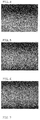
FIGS. 1 to 6 illustrate a cable surface viewed at 150x magnification, manufactured according to each of Examples 1 and 2 and Comparative Examples 1 to 4. -
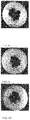
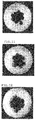
FIGS. 7 to 12 illustrate a photograph of a sectional view of a cable viewed at 150x magnification, manufactured according to each of Examples 1 and 2 and Comparative Examples 1 to 4. - Hereinafter, the present invention is described in detail.
- The present inventors confirmed that a two-component resin composition of a poly (arylene ether) resin and a styrene-based block copolymer, which is prepared by mixing a poly (arylene ether) resin with low-molecular weight and high-molecular weight styrene-based block copolymers, exhibits superior extrusion processability, flame retardancy, and the like, compared to a conventional modified poly(arylene ether) resin composition, thus completing the present invention.
- The poly(arylene ether) resin composition of the present invention includes 20 to 40 % by weight of a poly(arylene ether) resin, 15 to 35 % by weight of a low-molecular weight styrene-based block copolymer having a weight-average molecular weight of 90,000 g/mol or less, 10 to 30 % by weight of a high-molecular weight styrene-based block copolymer having a weight-average molecular weight of 95,000 g/mol or more, 1 to 20 % by weight of a flame retardant, and 0 to 20 % by weight of an additive.
- Hereinafter, each constituent of the poly (arylene ether) resin composition of the present invention is described in detail.
- The poly(arylene ether) resin may be, for example, a homopolymer including a unit represented by Formula 1 or 2 below; or a copolymer including a unit represented by Formula 1 or 2 below:
[Formula 1] -Ar(Ra)n-O-

- The poly(arylene ether) resin may be, for example, a poly(phenylene ether)-based resin.
- As a specific example, the poly(phenylene ether)-based resin may be a poly (arylene ether) resin including a unit represented by [Formula 3] below:

- The homopolymer of the poly(arylene ether) resin may be one or more selected from the group consisting of, for example, poly(2,6-dimethyl-1,4-phenylene) ether, poly(2,6-diethyl-1,4-phenylene) ether, poly(2-methyl-6-propyl-1,4-phenylene) ether, poly(2,6-dipropyl-1,4-phenylene) ether, poly(2-ethyl-6propyl-1,4-phenylene) ether, poly(2,6-dimethoxy-1,4-phenylene) ether, poly(2,6-dichloromethyl-1,4-phenylene) ether, poly(2,6-dibromomethyl-1,4-phenylene) ether, poly(2,6-diphenyl-1,4-phenylene) ether and poly(2,5-dimethyl-1,4-phenylene) ether, but the present invention is specifically not limited thereto.
- In addition, the copolymer of the poly(arylene ether) resin may be, as a specific example, a poly (phenylene ether) -based copolymer, a main chain of which is poly (phenylene ether), such as a copolymer of 2,6-dimethylphenol and 2,3,6-trimethylphenol, a copolymer of 2,6-dimethylphenol and o-cresol, or a copolymer of 2,3,6-trimethylphenol and o-cresol, but the present invention is specifically not limited thereto.
- The poly(arylene ether) resin may be, other than the homopolymers and copolymers of the poly(arylene ether) resin, for example, a modified poly (arylene ether) resin obtained by reacting α,β-unsaturated carboxylic acid or a derivative thereof, sterin or a derivative thereof, or unsaturated carboxylic acid or a derivative thereof with the homopolymer or copolymer of the poly (arylene ether) in a molten state, a solution state, or a slurry state at 30 to 350 °C in the presence or absence of an initiator.
- The poly(arylene ether) resin may have an intrinsic viscosity (measured under conditions of 0.5 g/dl, chloroform solution, and 30 °C) of, for example, 0.25 to 0.50 dl/g, 0.30 to 0.50 dl/g, or 0.35 to 0.45 dl/g. Within this range, superior extrusion processability is provided.
- The amount of the poly(arylene ether) resin may be, for example, 20 to 40 % by weight based on a total weight of the resin composition according to the present invention. When the amount is less than 20 % by weight, it is difficult to realize flame retardancy, tensile strength is decreased, and raw material costs increase. When the amount is greater than 40 % by weight, there are advantages in terms of flame retardancy. However, hardness remarkably increases, elongation and flexibility required in electric wires are not satisfied, and productivity may be decreased due to a relatively low melt index.
- In another embodiment, the amount of the poly(arylene ether) resin may be 25 to 35 % by weight or 28 to 33 % by weight. Within this range, suitable flame retardancy is realized and, upon extrusion to an electric wire, flexibility and elongation with respect to the standard are satisfied.
- The styrene-based block copolymer may be, for example, a low- or high-molecular weight styrene-based block copolymer. The low-molecular weight styrene-based block copolymer refers to, for example, a styrene-based block copolymer having a weight-average molecular weight of 90,000 g/mol or less, and the high-molecular weight styrene-based block copolymer refers to, for example, a styrene-based block copolymer having a weight-average molecular weight of 95,000 g/mol or more.
- The low-molecular weight styrene-based block copolymer may have a weight-average molecular weight, for example, 80,000 g/mol or less, 10,000 to 80,000 g/mol, or 30,000 to 80,000 g/mol. Within this range, superior flexibility and extrusion processability are provided.
- The high-molecular weight styrene-based block copolymer may have a weight-average molecular weight of, for example, 98,000 g/mol or more, 98,000 to 240,000 g/mol, or 100,000 to 200,000 g/mol. Within this range, superior elongation and appearance characteristics are provided.
- the low- or high-molecular weight styrene-based block copolymer may be, for example, one or a mixture of two or more selected from the group consisting of a styrene-butadiene copolymer, a styrene-ethylene-propylene copolymer, a styrene-isoprene copolymer, an α-methylstyrene-butadiene copolymer, a styrene-butadiene-styrene copolymer, a styrene-ethylene-propylene-styrene copolymer, a styrene-ethylene-butylene-styrene copolymer, a styrene-(ethylene-butylene/styrene copolymer)-styrene copolymer, a styrene-isoprene-styrene copolymer, an α-methylstyrene-butadiene-α-methylstyrene copolymer, and a modified product obtained by selectively hydrogenating the same.
- As a specific example, the low- or high-molecular weight styrene-based block copolymer may be a styrene-ethylene-butylene-styrene copolymer. The styrene-ethylene-butylene-styrene copolymer may be, for example, a linear polymeric compound.
- The low-molecular weight styrene-based block copolymer may have, for example, a melt index (230 °C/2.16 kg) of 3 g/10 min or less. When the melt index is greater than 3 g/10 min, extrusion processability is decreased. In another embodiment, the low-molecular weight styrene-based block copolymer may have a melt index (230 °C/2.16 kg) of 1 to 3 g/10 min, or 1.5 to 2.5 g/10 min. Within this range, superior elongation is provided.
- The high-molecular weight styrene-based block copolymer may have, for example, a melt index (230 °C/5 kg) of 15 g/10 min or more. When the melt index is less than 15 g/10 min, hardness is decreased. In another embodiment, the high-molecular weight styrene-based block copolymer may have a melt index (230 °C/5 kg) of 18 g/10 min or more, 20 g/10 min or more, or 20 to 30 g/10 min. Within this range, superior flexibility and flame retardancy are provided.
- A styrene content in the low- or high-molecular weight styrene-based block copolymer may be, for example, 10 to 40 % by weight. As a specific example, the styrene content in the low-molecular weight styrene-based block copolymer may be 20 to 40 % by weight, or 25 to 35 % by weight, and the styrene content in the high-molecular weight styrene-based block copolymer may be 10 to 25 % by weight, or 10 to 15 % by weight. Within this range, superior flame retardancy is provided.
- The styrene-based block copolymer may be prepared, for example, by mixing the high-molecular weight styrene-based block copolymer with the a low-molecular weight styrene-based block copolymer in a weight ratio of 1:1.1 to 1:3, or 1:1.3 to 1:2.5, or 1:1.5 to 1:2. Within this range, superior extrusion processability is provided.
- The low-molecular weight styrene-based block copolymer may have, for example, a Shore A hardness of 50 to 90, 60 to 90, or 70 to 90. Within this range, superior property balance is provided.
- In addition, the high-molecular weight styrene-based block copolymer may have, for example, a Shore A hardness of 30 to 80, 30 to 70, or 40 to 60. Within this range, superior property balance is provided.
- The hardness may increase proportionally to increase in the content of a vinyl aromatic monomer such as the styrene.
- The amount of the low-molecular weight styrene-based block copolymer may be, for example, 15 to 35 % by weight based on a total weight of the resin composition according to the present invention. When the amount is less than 15 % by weight, flexibility may be decreased, and, when the amount is greater than 35 % by weight, a melt index may be decreased and thus productivity may be decreased. In another embodiment, the amount of the low-molecular weight styrene-based block copolymer may be 20 to 35 % by weight, or 20 to 30 % by weight based on a total weight of the resin composition according to the present invention. Within this range, superior flame retardancy is provided,
- The amount of the high-molecular weight styrene-based block copolymer may be, for example, 10 to 30 % by weight based on a total weight of the resin composition according to the present invention. When the amount is less than 10 % by weight, hardness increases and, when the amount is greater than 30 % by weight, flame retardancy is considerably poor and cost efficiency is low. In another embodiment, the amount of the high-molecular weight styrene-based block copolymer may be 10 to 25 % by weight, or 10 to 20 % by weight based on a total weight of the resin composition according to the present invention. Within this range, superior extrusion processability is provided.
- The flame retardant may be one or more selected from the group consisting of, for example, a nitrogenous flame retardant, a solid phosphorus flame retardant, and a liquid phosphorus flame retardant (room temperature, 20 to 26 °C). Preferably, the flame retardant may be two or more selected from the group consisting of an organic metal phosphinate-based flame retardant, a nitrogenous/phosphorus flame retardant in solid state at room temperature, and an organic phosphate-based flame retardant in liquid state at room temperature. In this case, superior flame retardancy and processability are provided.
- The solid or liquid state of the flame retardant refers to state at room temperature, 22 to 23 °C, or 20 to 26 °C under atmospheric pressure.
- The solid or liquid phosphorus flame retardant may be, for example, a general flame retardant used to provide flame retardancy to a synthetic resin or resin composition. In another embodiment, to provide eco-friendly flame retardancy, a halogen-based flame retardant might not be used. In addition, the remaining phosphorus flame retardants, except for a red phosphorus flame retardant, among phosphorus flame retardants may be used. As a specific example, the solid or liquid phosphorus flame retardant may be one or more selected from the group consisting of a phosphate ester compound, phosphate, pyrophosphate, phosphonate, metal-substituted phosphinate, phosphanate, and metal phosphate. The phosphate ester compound may be, for example, a phosphate compound having an alkyl group or an aromatic group. As a specific example, the phosphate ester compound may be one or more selected from the group consisting of trimethylphosphate, triethylphosphate, tributylphosphate, trioctylphosphate, triphenylphosphate, tricresylphosphate, triylylyphosphate, cresyldiphenylphosphate, octyldiphenylphosphate and an aromatic diphosphate represented by [Formula 4] below:


- The metal phosphate may be, for example, aluminum dialkyl phosphate.
- The nitrogenous flame retardant may be, for example, a general flame retardant used to provide flame retardancy to the synthetic resin or resin composition. In another embodiment, the nitrogenous flame retardant may be melamine or a derivative thereof. As a specific example, the nitrogenous flame retardant may be one or more selected from the group consisting melamine, cyanuric melamine, and a melem-phosphoric acid reaction product and mixtures thereof, e.g., melamine phosphate, melamine pyrophosphate, and melamine polyphosphate.
- The amount of the flame retardant may be, for example, 1 to 20 % by weight based on a total weight of the resin composition according to the present invention. When the amount is greater than 20 % by weight, dispersion of a flame retardant might not be satisfactorily performed, and appearance and quality may be deteriorated due to the flame retardant protruding from a surface of a processed and molded electric wire. Accordingly, mechanical properties of an electric wire are remarkable deteriorated. In another embodiment, the amount of the flame retardant may be 5 to 20 % by weight or 10 to 20 % by weight based on a total weight of the resin composition according to the present invention. Within this range, superior flame retardancy is provided.
- In addition, the poly(arylene ether) resin composition according to the present invention may include , for example, one or more additives selected from the group consisting of mineral oil, a thermal stabilizer, a lubricant, an antioxidant, a light stabilizer, a chain extender, a reaction catalyst, a release agent, a pigment, a dye, an antistatic agent, an antimicrobial agent, a processing aid, a metal deactivator, a flame retardant, a fluorine-based anti-dripping agent, an inorganic filler, glass fiber, an anti-wear and anti-abrasion agent, and a coupling agent.
- The lubricant may be included in an amount of, for example, 5 % by weight or less, 0.1 to 5 % by weight, or 1 to 5 % by weight.
- The antioxidant may be included in an amount of, for example, 1 % by weight or less, 0.01 to 1 % by weight, or 0.1 to 1 % by weight.
- The mineral oil may be included in an amount of, for example, 1 % by weight or less, 0.01 to 1 % by weight, or 0.1 to 1 % by weight.
- The release agent (lubricant) may be included in an amount of, for example, 1 % by weight or less, 0.01 to 1 % by weight, or 0.1 to 1 % by weight.
- In addition, a kneading device used in the present invention may be, for example, a banbury mixer, a single screw extruder, a twin screw extruder a buss kneader, or the like.
- The poly(arylene ether) resin composition according to the present invention may have, for example, a melt index (250 °C/10 kg) of 20 g/10 min to 100 g/10 min, or 20 g/10 min to 50 g/10 min, or 25 g/10 min to 35 g/10 min. Within this range, superior extrusion processability is provided.
- The poly(arylene ether) resin composition may have, for example, a tensile strength of 220 to 400 kgf/cm2, 220 to 350 kgf/cm2, 240 to 350 kgf/cm2, or 245 to 320 kgf/cm2.
- The poly(arylene ether) resin composition may have, for example, an elongation of 175 % to 350 %, 190 % to 300 %, or 200 % to 250 %.
- The poly(arylene ether) resin composition may have, for example, a Shore A hardness of 80 to 97, 85 to 93, or 88 to 90.
- Now, the present invention will be described in more detail with reference to the following preferred examples. However, these examples are provided for illustrative purposes only.
- (A) Poly(arylene ether), (B) the low-molecular weight styrene-based block copolymer, (C-1 to C-4) a high-molecular weight styrene-based block copolymer, (D) a flame retardant, and (E) the additives used in the following examples and comparative examples are as follows:
- A poly(phenylene ether) resin (product name: PX 100F, manufactured by Mitsubishi Engineering Plastics) having a viscosity of 0.38 ± 0.02 dl/g, a volatile content of 0.6 % by weight or less, a whiteness of 95 % or more, and a bulk density of 0.6 ± 0.2 g/ml was used.
- A styrene-based block copolymer (product name: LCY 9552, manufactured by LCY Chemical) having a styrene content of 30 %, a weight-average molecular weight of 75,000 g/mol, a melt index (230 °C/ 2.16 kg) of 1.5 to 2.5 g/10 min, and a hardness of 80 was used.
- A styrene-based block copolymer (product name: LCY 9557, manufactured by LCY Chemical) having a styrene content of 13 %, a weight-average molecular weight of 100,000 g/mol, a melt index (230 °C/ 5 kg) of 21 g/10 min, and a hardness of 53 was used.
- A styrene-based block copolymer (product name: SBC G 1657, manufactured by Kraton) having a styrene content of 13%, a weight-average molecular weight of 105,000 g/mol, a melt index (230 °C/5 kg) of 22 g/10 min, and a hardness of 47 was used.
- A styrene-based block copolymer (product name: SBC G 1651, manufactured by Kraton) having a styrene content of 31.5%, a weight-average molecular weight of 241,000 g/mol, and a hardness of 60 was used (with regard to melt index (230 °C/5 kg), flow was not observed).
- A styrene-based block copolymer (manufactured by Kraton, product name: SBC G 1650) having a styrene content of 30%, a weight-average molecular weight of 95,000 g/mol, a melt index (230 °C/5 kg) of less than 1 g/10 min, and a hardness of 72 was used.
- Aluminum diethylphosphate (product name: OP 1230, manufactured by Clariant), in which a phosphorus content was 23 to 24 %; bisphenol-A-diphenylphosphate (product name: FP-600, manufactured by Adeka), as a phosphorus flame retardant in liquid state at room temperature; and melaminepolyphosphate (product name: NONFLA 601, manufactured by DOOBON), in which a nitrogen content was 39 to 42 % and a phosphorus content was 14 to 17 %, as a nitrogenous flame retardant, were mixed and used.
- As additives, a mixture of silicon-based and amide-based lubricants, a mixture of phenolic and phosphite antioxidants, mineral oil, and a lubricant were used.
- (A) 32 % by weight of poly(arylene ether), (B) 28 % by weight of the low-molecular weight styrene-based block copolymer, (C-1) 18 % by weight of the high-molecular weight styrene-based block copolymer, (D) 16 % by weight of the flame retardant, and (E) 6 % by weight of the additives were mixed by means of a super mixer and melted and kneaded at 200 to 290 °C by means of a twin screw extruder, followed by being prepared into a pellet-type resin composition through extrusion processing.
- A pellet-type resin composition was prepared in the same manner as in Example 1, except that (A) 34 % by weight of poly (arylene ether), (B) 26 % by weight of the low-molecular weight styrene-based block copolymer, (C-2) 16 % by weight of the high-molecular weight styrene-based block copolymer, (D) 17 % by weight of the flame retardant, and (E) 7 % by weight of the additives were mixed.
- A pellet-type resin composition was prepared in the same manner as in Example 1, except that (A) 28 % by weight of poly (arylene ether) , (B) 26 % by weight of the low-molecular weight styrene-based block copolymer, (C-1) 21 % by weight of the high-molecular weight styrene-based block copolymer, (D) 19 % by weight of the flame retardant and (E) 6 % by weight of the additives were mixed, as summarized in Table 1 below.
- A pellet-type resin composition was prepared in the same manner as in Example 2, except that (C-3) the high-molecular weight styrene-based block copolymer was added in the same amount as (B) the low-molecular weight styrene-based block copolymer, instead of (B) the low-molecular weight styrene-based block copolymer.
- A pellet-type resin composition was prepared in the same manner as in Example 2, except that (C-4) the high-molecular weight styrene-based block copolymer was added in the same amount as (B) the low-molecular weight styrene-based block copolymer, instead of (B) the low-molecular weight styrene-based block copolymer.
- A pellet-type resin composition was prepared in the same manner as in Example 2, except that (C-3) the high-molecular weight styrene-based block copolymer was added in the same amount as (B) the low-molecular weight styrene-based block copolymer, instead of (B) the low-molecular weight styrene-based block copolymer, and (C-1) the high-molecular weight styrene-based block copolymer was added in the same amount as (C-2) the high-molecular weight styrene-based block copolymer, instead of (C-2) the high-molecular weight styrene-based block copolymer.
- A pellet-type resin composition was prepared in the same manner as in Example 2, except that (C-4) the high-molecular weight styrene-based block copolymer was added in the same amount as (B) the low-molecular weight styrene-based block copolymer, instead of (B) the low-molecular weight styrene-based block copolymer, and (C-1) the high-molecular weight styrene-based block copolymer was added in the same amount as (C-2) the high-molecular weight styrene-based block copolymer, instead of (C-2) the high-molecular weight styrene-based block copolymer.
- A pellet-type resin composition was prepared in the same manner as in Example 1, except that, (A) 19 % by weight of poly (arylene ether), (B) 33 % by weight of the low-molecular weight styrene-based block copolymer, (C-1) 16 % by weight of the high-molecular weight styrene-based block copolymer, (D) 25 % by weight of the flame retardant, and (E) 7 % by weight of the additives were mixed, as summarized in Table 1 below.
- A pellet-type resin composition was prepared in the same manner as in Example 1, except that, (A) 41 % by weight of poly (arylene ether), (B) 8 % by weight of the low-molecular weight styrene-based block copolymer, (C-1) 23 % by weight of the high-molecular weight styrene-based block copolymer, (D) 21 % by weight of the flame retardant, and (E) 7 % by weight of the additives were mixed, as summarized in Table 1 below.
- The pellet-type resin composition prepared according to each of Examples 1 to 3 and Comparative Examples 1 to 6 was dried at 80 °C for four hours and stood for one day at room temperature. Subsequently, a resultant product was extruded under extrusion conditions of 220 to 270 °C, 80 rpm, and a speed of 35 m/min by means of a wire coating extruder (19 Ø HAAKE extruder manufactured by Thermo Scientific, Germany), thereby manufacturing a cable specimen.
- Properties of the cable specimen of the poly(arylene ether) resin composition obtained according to each of Examples 1 to 3 and Comparative Examples 1 to 6 were measured according to the following methods. Results are summarized in Table 1 below.
- Weight-average molecular weight: Calibrated using PC standard by means of Agilent 1200 series GPC. A measurement method was as follows.

-
- Column: Polymer Lab mixed B X 2
- Solvent: Tetrahydrofuran (0.45 µm filtered)
- Flow: 1.0 ml/min
- Injection volume: 100µL (0.45 µm filtered)
- Running time: 25 min
- Detector: Agilent RI detector
-
- 1) An appropriate amount of sample was taken, dissolved in THF at a concentration of 1mg/ml, and filtered through a 0.45 µm syringe filter.
- 2) GPC chromatogram was obtained by injecting a sample solution.
- 3) GPC chromatogram was obtained by injecting a standard solution.
- 4) A calibration curve and an equation were obtained from the GPC chromatogram of the standard solution. A retention time of the sample solution was substituted into the equation to obtain the weight-average molecular weight of the sample.
- Cable appearance evaluation: Inspected and evaluated with the naked eye upon extrusion of a cable according to UL 1581.
- Tensile strength: Measured according to UL 1581 using a cable specimen.
- Elongation (tensile elongation): Measured according to UL 1581 using a cable specimen.
- Flame retardancy (VW-1) : Measured according to UL 1581 using a cable specimen.
- Melt index: Measured according to a standard measurement method, ASTM D1238 (230 °C/2.16 kg, 230 °C/5 kg and 250 °C/10 kg) .
- Hardness (Shore A) : Measured according to a standard measurement method, ASTM D2240.
-
- As summarized in [Table 1], it can be confirmed that Examples 1 to 3 including both the low-molecular weight styrene-based block copolymer and the high-molecular weight styrene-based block copolymer of the present invention exhibit a superior melt index (250 °C/10 kg) of 20 g/10 min or more, high flexibility, i.e., a tensile strength of 220 kgf/cm2 or more and an elongation of 175 % or more, and a superior Shore A hardness range of 80 to 97 and passed the flame retardancy test. Accordingly, it can be confirmed that the poly(arylene ether) resin compositions of Examples 1 to 3 have overall superior mechanical properties and superior balance between respective properties. In addition, it can be confirmed that, in regard to the extrudability of the poly(arylene ether) resin compositions of the present invention, a torque required upon extrusion of a cable is very low, i.e., 32 Nm or less, and a pressure is very low, i.e., 80 bar or less, which indicates superior productivity. Further, as illustrated in the cable surface images of
FIGS. 1 and 2 below and the photographs of the cable sectional views ofFIGS. 7 and8 , appearance quality of the cables is excellent, which indicates overall superior extrusion processability. - Hereinafter, Comparative Examples 1 to 4 including only the high-molecular weight styrene-based block copolymer are examined. In the case of Comparative Example 1, it can be confirmed that a melt index (250 °C/10 kg) is very low, i.e., as 2 g/10 min; flexibility is low, i.e., a tensile strength and an elongation are 239 kgf/cm2 and 138 %, respectively; and productivity is very low, i.e., torque and pressure, upon extrusion, are 61 Nm and 100 bar, respectively. In addition, it can be confirmed that, as illustrated in
FIGS. 3 and9 , appearance quality is very poor. - In the case of Comparative Example 2, it can be confirmed that a melt index (250 °C/10 kg) is low as 13 g/10 min; flexibility is low, i.e., a tensile strength and an elongation are 229 kgf/cm2 and 172 %, respectively; and productivity is low, i.e., torque and pressure, upon extrusion, are 33 Nm and 88 bar, respectively. In addition, it can be confirmed that, as illustrated in
FIG. 4 , cable surface appearance quality is poor. - In the case of Comparative Example 3, it can be confirmed that a melt index (250 °C/10 kg) is very low, i.e., 1.5 g/10 min; flexibility is very low, i.e., a tensile strength and an elongation are 211 kgf/cm2 and 131 %, respectively; and productivity is very low, i.e., torque and pressure, upon extrusion, are 71 Nm and 124 bar, respectively. In addition, it can be confirmed that, as illustrated in
FIGS. 5 and11 , appearance quality is very poor. - In the case of Comparative Example 4, it can be confirmed that a melt index (250 °C/10 kg) is low, i.e., 11 g/10 min; flexibility is very low, i.e., a tensile strength and an elongation are 192 kgf/cm2 and 128 %, respectively; and productivity is low, i.e., torque and pressure, upon extrusion, are 37 Nm and 104 bar, respectively. In addition, it can be confirmed that, as illustrated in
FIGS. 6 and12 , appearance quality is poor. - In the case of Comparative Example 5 in which the poly(phenylene ether) resin is used in a small amount compared to the present invention, it can be confirmed that melt index, tensile strength, flame retardancy, and extrusion processability are poor. In the case of Comparative Example 5 in which the poly(phenylene ether) resin is used in a large amount compared to the present invention, it can be confirmed that elongation and extrusion processability are remarkably poor.
- In conclusion, it can be confirmed that, by mixing the poly(arylene ether) resin, the low- and high-molecular weight styrene-based block copolymers, and the flame retardant, a poly(arylene ether) resin composition exhibiting superior flame retardancy, tensile strength, flexibility, extrusion processability, elongation, and appearance characteristics, and a cable coated with the same are realized.
| Classific ation | Examples | Comparative Examples | |||||||
| 1 | 2 | 3 | 1 | 2 | 3 | 4 | 5 | 6 | |
| (A) PPE (% by weight) | 32 | 34 | 28 | 34 | 34 | 34 | 34 | 19 | 41 |
| (B) SBC (% by weight) | 28 | 26 | 26 | - | - | - | - | 33 | 8 |
| (C-1) SBC (% by weight) | 18 | - | 21 | - | - | 16 | 16 | 16 | 23 |
| (C-2) SBC (% by weight) | - | 16 | 16 | 16 | - | - | |||
| (C-3) SBC (% by weight) | - | - | 26 | - | 26 | - | |||
| (C-4) SBC (% by weiqht) | - | - | - | 26 | - | 26 | |||
| (D) FR (% by weiqht) | 16 | 17 | 19 | 17 | 17 | 17 | 17 | 25 | 21 |
| (E) Others | 6 | 7 | 6 | 7 | 7 | 7 | 7 | 7 | 7 |
| Mechanical characteristics of cable specimens | |||||||||
| melt index (MI 250 °C/10 kg, g/10 min) | 31 | 29 | 37 | 2 | 13 | 1. 5 | 11 | 3 | 47 |
| Tensile strength (room temperatu re TS, kgf/cm2) | 30 0 | 24 9 | 22 1 | 23 9 | 22 9 | 21 1 | 19 2 | 14 4 | 41 0 |
| Elongatio n (room temperatu re TE, %) | 23 5 | 21 7 | 28 8 | 13 8 | 17 2 | 13 1 | 12 8 | 26 2 | 89 |
| Hardness (Shore A) | 90 | 89 | 88 | 92 | 93 | 92 | 92 | 85 | 97 |
| Flame retardanc y (VW-1) | PA SS | PA SS | PA SS | PA SS | PA SS | PA SS | PA SS | FA IL | PA SS |
| Cable extrudability | |||||||||
| Torque upon extrusion (Nm) | 31 .9 | 29 .7 | 42 .3 | 61 | 33 | 71 | 37 | 62 | 24 .4 |
| Pressure upon extrusion (bar) | 71 .7 | 68 .4 | 87 .4 | 10 0 | 88 | 12 4 | 10 4 | 81 | 62 |
| Extrusion processab ility | ⊚ | ⊚ | ○ | x | x | x | x | x | x |
| * Extrusion processability: Classified into four steps based on appearance quality and productivity upon extrusion of a cable (⊚ - very good, ○ - good, Δ - normal, x - poor). | |||||||||
Claims (15)
- A poly(arylene ether) resin composition, comprising 20 to 40 % by weight of a poly(arylene ether) resin, 15 to 35 % by weight of a low-molecular weight styrene-based block copolymer having a weight-average molecular weight of 90,000 g/mol or less, 10 to 30 % by weight of a high-molecular weight styrene-based block copolymer having a weight-average molecular weight of 95,000 g/mol or more, 1 to 20 % by weight of a flame retardant, and 0 to 20 % by weight of an additive, wherein the weight-average molecular weight is measured by GPC using PC standard.
- The poly(arylene ether) resin composition according to claim 1, wherein the poly(arylene ether) resin is a poly(phenylene ether) resin.
- The poly(arylene ether) resin composition according to claim 1, wherein the low-molecular weight styrene-based block copolymer has a weight-average molecular weight of 80,000 g/mol or less, wherein the weight-average molecular weight is measured by GPC using PC standard.
- The poly(arylene ether) resin composition according to claim 1, wherein the low-molecular weight styrene-based block copolymer has a melt index (230 °C/2.16 kg) of 3 g/10 min or less, wherein the melt index is measured according to ASTM D 1238.
- The poly(arylene ether) resin composition according to claim 1, wherein a styrene content in the low-molecular weight styrene-based block copolymer is 20 to 40 % by weight.
- The poly(arylene ether) resin composition according to claim 1, wherein the high-molecular weight styrene-based block copolymer has a weight-average molecular weight of 100,000 g/mol or more, wherein the weight-average molecular weight is measured by GPC using PC standard.
- The poly(arylene ether) resin composition according to claim 1, wherein the high-molecular weight styrene-based block copolymer has a melt index (230 °C/5 kg) of 15 g/10 min or more, wherein the melt index is measured according to ASTM D 1238.
- The poly(arylene ether) resin composition according to claim 1, wherein a styrene content in the high-molecular weight styrene-based block copolymer is 10 to 25 % by weight.
- The poly(arylene ether) resin composition according to claim 1, wherein the styrene-based block copolymer is a styrene-ethylene-butylene-styrene copolymer.
- The poly(arylene ether) resin composition according to claim 1, wherein the additive is one or more selected from the group consisting of mineral oil, a thermal stabilizer, a lubricant, an antioxidant, a light stabilizer, a chain extender, a reaction catalyst, a release agent, a pigment, a dye, an antistatic agent, an antimicrobial agent, a processing aid, a metal deactivator, a flame retardant, a fluorine-based anti-dripping agent, an inorganic filler, glass fiber, an anti-wear and anti-abrasion agent, and a coupling agent.
- The poly(arylene ether) resin composition according to claim 1, wherein the poly(arylene ether) resin composition has a melt index (250 °C/10 kg) of 20 g/10 min or more, wherein the melt index is measured according to ASTM D 1238.
- The poly(arylene ether) resin composition according to claim 1, wherein the poly(arylene ether) resin composition has a tensile strength of 240 kgf/cm2 or more, wherein the tensile strength is measured according to UL 1581 using a cable specism.
- The poly(arylene ether) resin composition according to claim 1, wherein the poly(arylene ether) resin composition has an elongation of 175 % or more, wherein the elongation is measured according to UL 1581 using a cable specism.
- The poly(arylene ether) resin composition according to claim 1, wherein the poly(arylene ether) resin composition has a Shore A hardness of 80 to 97, wherein the Shore A hardness is measured according to ASTM D 2240.
- A cable coated with the poly(arylene ether) resin composition according to any one of claims 1 to 14.
Priority Applications (1)
| Application Number | Priority Date | Filing Date | Title |
|---|---|---|---|
| PL16814609T PL3168264T3 (en) | 2015-06-17 | 2016-06-13 | Poly(arylene ether) resin composition and cable coated therewith |
Applications Claiming Priority (3)
| Application Number | Priority Date | Filing Date | Title |
|---|---|---|---|
| KR20150085812 | 2015-06-17 | ||
| KR1020160072077A KR102013180B1 (en) | 2015-06-17 | 2016-06-10 | Poly(arylene ether) resin composition and a cable covered therefrom |
| PCT/KR2016/006227 WO2016208896A2 (en) | 2015-06-17 | 2016-06-13 | Poly(arylene ether) resin composition and cable coated therewith |
Publications (3)
| Publication Number | Publication Date |
|---|---|
| EP3168264A2 EP3168264A2 (en) | 2017-05-17 |
| EP3168264A4 EP3168264A4 (en) | 2017-12-27 |
| EP3168264B1 true EP3168264B1 (en) | 2018-08-15 |
Family
ID=57736725
Family Applications (1)
| Application Number | Title | Priority Date | Filing Date |
|---|---|---|---|
| EP16814609.0A Active EP3168264B1 (en) | 2015-06-17 | 2016-06-13 | Poly(arylene ether) resin composition and cable coated therewith |
Country Status (6)
| Country | Link |
|---|---|
| US (1) | US10301503B2 (en) |
| EP (1) | EP3168264B1 (en) |
| JP (1) | JP6469211B2 (en) |
| KR (1) | KR102013180B1 (en) |
| CN (1) | CN106715588B (en) |
| PL (1) | PL3168264T3 (en) |
Families Citing this family (4)
| Publication number | Priority date | Publication date | Assignee | Title |
|---|---|---|---|---|
| WO2017203381A1 (en) * | 2016-05-27 | 2017-11-30 | Sabic Global Technologies B.V. | Poly(phenylene ether) composition and article |
| JP7142636B2 (en) * | 2017-08-03 | 2022-09-27 | 三菱エンジニアリングプラスチックス株式会社 | Resin composition, molded product and electric wire |
| KR102257969B1 (en) * | 2018-04-06 | 2021-05-28 | 주식회사 엘지화학 | Thermoplastic resin composition |
| JP7511163B2 (en) * | 2019-07-17 | 2024-07-05 | パナソニックIpマネジメント株式会社 | Resin composition, prepreg, resin-coated film, resin-coated metal foil, metal-clad laminate, and wiring board |
Family Cites Families (25)
| Publication number | Priority date | Publication date | Assignee | Title |
|---|---|---|---|---|
| US4423189A (en) * | 1981-10-28 | 1983-12-27 | General Electric Company | Compositions of a polyphenylene ether resin, low molecular weight polystyrene and a block copolymer |
| US5124405A (en) * | 1990-07-27 | 1992-06-23 | Shell Oil Company | Method of chemically crosslinking unsaturated polymers |
| US5397822A (en) * | 1993-08-18 | 1995-03-14 | General Electric Company | Thermoplastic compositions containing polyphenylene ether resin and characterized by improved elongation and flexibility employing a blend of multiblock copolymers |
| US5932648A (en) | 1995-09-15 | 1999-08-03 | Shell Oil Company | Low VOC, high solids fumigation adhesive composition |
| US5719226A (en) * | 1995-09-15 | 1998-02-17 | Shell Oil Company | Low viscosity hot melt disposables adhesive composition |
| JP3456416B2 (en) * | 1998-06-03 | 2003-10-14 | 住友化学工業株式会社 | Resin composition |
| JP2004161929A (en) | 2002-11-14 | 2004-06-10 | Ge Plastics Japan Ltd | Resin composition for wire / cable coating materials |
| US7582692B2 (en) * | 2004-04-01 | 2009-09-01 | Sabic Innovative Plastics Ip B.V. | Flame retardant thermoplastic composition and articles comprising the same |
| KR100565251B1 (en) * | 2004-07-19 | 2006-03-30 | 엘지전자 주식회사 | Saving water washing method of drum washing machine |
| US7504585B2 (en) * | 2004-12-17 | 2009-03-17 | Sabic Innovative Plastics Ip B.V. | Thermoplastic composition, coated conductor, and methods for making and testing the same |
| KR20090016638A (en) * | 2006-08-03 | 2009-02-16 | 아사히 가세이 케미칼즈 가부시키가이샤 | Flame Retardant Resin Composition |
| US20080045655A1 (en) * | 2006-08-18 | 2008-02-21 | General Electric Company | Poly(arylene ether) composition, method, and article |
| JP5243006B2 (en) | 2006-12-04 | 2013-07-24 | 三菱エンジニアリングプラスチックス株式会社 | Flame retardant polyamide resin composition and molded article |
| US7576150B2 (en) * | 2007-02-28 | 2009-08-18 | Sabic Innovative Plastics Ip B.V. | Poly(arylene ether) composition, method, and article |
| US7655714B2 (en) | 2007-09-27 | 2010-02-02 | Sabic Innovative Plastics Ip B.V. | Flame-retardant poly(arylene ether) composition and its use as a covering for coated wire |
| DE102008059733B4 (en) * | 2008-12-01 | 2010-11-25 | Barthelt, Hans-Peter, Dipl.-Ing. | Hospital bed with removable headboard |
| US7970847B1 (en) * | 2010-01-08 | 2011-06-28 | Research In Motion Limited | Method and apparatus for processing data on a computing device |
| US8703852B2 (en) * | 2011-06-03 | 2014-04-22 | Sabic Innovative Plastics Ip B.V. | Impact-resistant poly(arylene ether) resins with improved clarity |
| CN106632926B (en) * | 2011-09-29 | 2019-07-30 | 三菱化学株式会社 | Hydrogenated block copolymer, resin composition, film and container |
| KR101466277B1 (en) | 2011-12-29 | 2014-11-27 | 제일모직 주식회사 | Thermoplastic resin composition and article including same |
| US8703851B2 (en) * | 2012-09-26 | 2014-04-22 | Sabic Innovative Plastics Ip B.V. | Poly(phenylene ether) composition and article |
| WO2014075291A1 (en) * | 2012-11-16 | 2014-05-22 | Sabic Innovative Plastics Ip B.V. | Flexible, wrinkle resistant poly(phenylene ether) cable jacketing composition |
| JP6273687B2 (en) | 2013-03-29 | 2018-02-07 | 三菱ケミカル株式会社 | Medical multi-chamber container |
| KR101473774B1 (en) | 2013-05-06 | 2014-12-17 | 현대이피 주식회사 | Thermoplastic resin composition with polyphenylene ether having improved impact resistance and flame retardancy |
| JP6148118B2 (en) | 2013-08-28 | 2017-06-14 | 旭化成株式会社 | PPE-containing resin composition |
-
2016
- 2016-06-10 KR KR1020160072077A patent/KR102013180B1/en active Active
- 2016-06-13 PL PL16814609T patent/PL3168264T3/en unknown
- 2016-06-13 JP JP2017508069A patent/JP6469211B2/en active Active
- 2016-06-13 CN CN201680002650.7A patent/CN106715588B/en active Active
- 2016-06-13 US US15/509,810 patent/US10301503B2/en active Active
- 2016-06-13 EP EP16814609.0A patent/EP3168264B1/en active Active
Non-Patent Citations (1)
| Title |
|---|
| None * |
Also Published As
| Publication number | Publication date |
|---|---|
| EP3168264A4 (en) | 2017-12-27 |
| CN106715588A (en) | 2017-05-24 |
| JP6469211B2 (en) | 2019-02-13 |
| PL3168264T3 (en) | 2019-04-30 |
| US20170306175A1 (en) | 2017-10-26 |
| JP2018509484A (en) | 2018-04-05 |
| CN106715588B (en) | 2018-11-16 |
| EP3168264A2 (en) | 2017-05-17 |
| KR102013180B1 (en) | 2019-08-22 |
| US10301503B2 (en) | 2019-05-28 |
| KR20160149148A (en) | 2016-12-27 |
Similar Documents
| Publication | Publication Date | Title |
|---|---|---|
| EP3178881B1 (en) | Polypropylene resin composition and cable coated with same | |
| CN101679740B (en) | Flame retardant thermoplastic composition and articles comprising the same | |
| US20110266024A1 (en) | Flame-retardant poly(arylene ether) composition and its use as a covering for coated wire | |
| CN102977584A (en) | Flame retardant thermoplastic composition and articles comprising the same | |
| KR101473774B1 (en) | Thermoplastic resin composition with polyphenylene ether having improved impact resistance and flame retardancy | |
| EP0467113A1 (en) | Thermoplastic compositions containing polyphenylene ether resin and characterized by improved elongation and flexibility | |
| US10301503B2 (en) | Poly(arylene ether) resin composition and cable coated with the same | |
| EP2928962A1 (en) | Polyamide composition, method, and article | |
| JP2014522430A (en) | Solar power generation terminal box and connector molding composition | |
| CN101107317B (en) | Flame retardant thermoplastic composition and articles comprising the same | |
| US9631091B2 (en) | Poly (arylene ether) flame retardant resin composition and non-crosslinked flame retardant cable | |
| JP7296006B2 (en) | THERMOPLASTIC RESIN COMPOSITION, MANUFACTURING METHOD THEREOF, AND MOLDED PRODUCTS MADE THEREOF | |
| US9944792B2 (en) | Modified poly(arylene ether) resin composition comprising mineral oil and wire prepared by the composition | |
| KR20170013515A (en) | Poly(arylene ether) resin composition and method for preparing the resin composition | |
| CN111019319A (en) | A kind of PPE material for mobile phone charger shell and preparation method thereof | |
| KR20220082716A (en) | Thermoplastic resin composition, method for preparing the same and article prepared therefrom | |
| WO2016208896A2 (en) | Poly(arylene ether) resin composition and cable coated therewith | |
| KR20210038026A (en) | Non-halogen flame retardant resin composition and flame retardant resin modled articles produced by the same |
Legal Events
| Date | Code | Title | Description |
|---|---|---|---|
| STAA | Information on the status of an ep patent application or granted ep patent |
Free format text: STATUS: THE INTERNATIONAL PUBLICATION HAS BEEN MADE |
|
| PUAI | Public reference made under article 153(3) epc to a published international application that has entered the european phase |
Free format text: ORIGINAL CODE: 0009012 |
|
| STAA | Information on the status of an ep patent application or granted ep patent |
Free format text: STATUS: REQUEST FOR EXAMINATION WAS MADE |
|
| 17P | Request for examination filed |
Effective date: 20170209 |
|
| AK | Designated contracting states |
Kind code of ref document: A2 Designated state(s): AL AT BE BG CH CY CZ DE DK EE ES FI FR GB GR HR HU IE IS IT LI LT LU LV MC MK MT NL NO PL PT RO RS SE SI SK SM TR |
|
| AX | Request for extension of the european patent |
Extension state: BA ME |
|
| A4 | Supplementary search report drawn up and despatched |
Effective date: 20171127 |
|
| RIC1 | Information provided on ipc code assigned before grant |
Ipc: C08K 5/00 20060101ALI20171121BHEP Ipc: C08L 25/06 20060101ALI20171121BHEP Ipc: C08L 71/12 20060101AFI20171121BHEP |
|
| GRAP | Despatch of communication of intention to grant a patent |
Free format text: ORIGINAL CODE: EPIDOSNIGR1 |
|
| STAA | Information on the status of an ep patent application or granted ep patent |
Free format text: STATUS: GRANT OF PATENT IS INTENDED |
|
| INTG | Intention to grant announced |
Effective date: 20180403 |
|
| GRAS | Grant fee paid |
Free format text: ORIGINAL CODE: EPIDOSNIGR3 |
|
| GRAA | (expected) grant |
Free format text: ORIGINAL CODE: 0009210 |
|
| STAA | Information on the status of an ep patent application or granted ep patent |
Free format text: STATUS: THE PATENT HAS BEEN GRANTED |
|
| DAV | Request for validation of the european patent (deleted) | ||
| DAX | Request for extension of the european patent (deleted) | ||
| AK | Designated contracting states |
Kind code of ref document: B1 Designated state(s): AL AT BE BG CH CY CZ DE DK EE ES FI FR GB GR HR HU IE IS IT LI LT LU LV MC MK MT NL NO PL PT RO RS SE SI SK SM TR |
|
| REG | Reference to a national code |
Ref country code: CH Ref legal event code: EP Ref country code: GB Ref legal event code: FG4D Ref country code: AT Ref legal event code: REF Ref document number: 1029707 Country of ref document: AT Kind code of ref document: T Effective date: 20180815 |
|
| REG | Reference to a national code |
Ref country code: IE Ref legal event code: FG4D |
|
| REG | Reference to a national code |
Ref country code: DE Ref legal event code: R096 Ref document number: 602016004834 Country of ref document: DE |
|
| REG | Reference to a national code |
Ref country code: NL Ref legal event code: MP Effective date: 20180815 |
|
| REG | Reference to a national code |
Ref country code: LT Ref legal event code: MG4D |
|
| REG | Reference to a national code |
Ref country code: AT Ref legal event code: MK05 Ref document number: 1029707 Country of ref document: AT Kind code of ref document: T Effective date: 20180815 |
|
| PG25 | Lapsed in a contracting state [announced via postgrant information from national office to epo] |
Ref country code: NL Free format text: LAPSE BECAUSE OF FAILURE TO SUBMIT A TRANSLATION OF THE DESCRIPTION OR TO PAY THE FEE WITHIN THE PRESCRIBED TIME-LIMIT Effective date: 20180815 Ref country code: BG Free format text: LAPSE BECAUSE OF FAILURE TO SUBMIT A TRANSLATION OF THE DESCRIPTION OR TO PAY THE FEE WITHIN THE PRESCRIBED TIME-LIMIT Effective date: 20181115 Ref country code: LT Free format text: LAPSE BECAUSE OF FAILURE TO SUBMIT A TRANSLATION OF THE DESCRIPTION OR TO PAY THE FEE WITHIN THE PRESCRIBED TIME-LIMIT Effective date: 20180815 Ref country code: RS Free format text: LAPSE BECAUSE OF FAILURE TO SUBMIT A TRANSLATION OF THE DESCRIPTION OR TO PAY THE FEE WITHIN THE PRESCRIBED TIME-LIMIT Effective date: 20180815 Ref country code: AT Free format text: LAPSE BECAUSE OF FAILURE TO SUBMIT A TRANSLATION OF THE DESCRIPTION OR TO PAY THE FEE WITHIN THE PRESCRIBED TIME-LIMIT Effective date: 20180815 Ref country code: IS Free format text: LAPSE BECAUSE OF FAILURE TO SUBMIT A TRANSLATION OF THE DESCRIPTION OR TO PAY THE FEE WITHIN THE PRESCRIBED TIME-LIMIT Effective date: 20181215 Ref country code: GR Free format text: LAPSE BECAUSE OF FAILURE TO SUBMIT A TRANSLATION OF THE DESCRIPTION OR TO PAY THE FEE WITHIN THE PRESCRIBED TIME-LIMIT Effective date: 20181116 Ref country code: NO Free format text: LAPSE BECAUSE OF FAILURE TO SUBMIT A TRANSLATION OF THE DESCRIPTION OR TO PAY THE FEE WITHIN THE PRESCRIBED TIME-LIMIT Effective date: 20181115 Ref country code: FI Free format text: LAPSE BECAUSE OF FAILURE TO SUBMIT A TRANSLATION OF THE DESCRIPTION OR TO PAY THE FEE WITHIN THE PRESCRIBED TIME-LIMIT Effective date: 20180815 Ref country code: SE Free format text: LAPSE BECAUSE OF FAILURE TO SUBMIT A TRANSLATION OF THE DESCRIPTION OR TO PAY THE FEE WITHIN THE PRESCRIBED TIME-LIMIT Effective date: 20180815 |
|
| PG25 | Lapsed in a contracting state [announced via postgrant information from national office to epo] |
Ref country code: HR Free format text: LAPSE BECAUSE OF FAILURE TO SUBMIT A TRANSLATION OF THE DESCRIPTION OR TO PAY THE FEE WITHIN THE PRESCRIBED TIME-LIMIT Effective date: 20180815 Ref country code: AL Free format text: LAPSE BECAUSE OF FAILURE TO SUBMIT A TRANSLATION OF THE DESCRIPTION OR TO PAY THE FEE WITHIN THE PRESCRIBED TIME-LIMIT Effective date: 20180815 Ref country code: LV Free format text: LAPSE BECAUSE OF FAILURE TO SUBMIT A TRANSLATION OF THE DESCRIPTION OR TO PAY THE FEE WITHIN THE PRESCRIBED TIME-LIMIT Effective date: 20180815 |
|
| PG25 | Lapsed in a contracting state [announced via postgrant information from national office to epo] |
Ref country code: EE Free format text: LAPSE BECAUSE OF FAILURE TO SUBMIT A TRANSLATION OF THE DESCRIPTION OR TO PAY THE FEE WITHIN THE PRESCRIBED TIME-LIMIT Effective date: 20180815 Ref country code: CZ Free format text: LAPSE BECAUSE OF FAILURE TO SUBMIT A TRANSLATION OF THE DESCRIPTION OR TO PAY THE FEE WITHIN THE PRESCRIBED TIME-LIMIT Effective date: 20180815 Ref country code: IT Free format text: LAPSE BECAUSE OF FAILURE TO SUBMIT A TRANSLATION OF THE DESCRIPTION OR TO PAY THE FEE WITHIN THE PRESCRIBED TIME-LIMIT Effective date: 20180815 Ref country code: RO Free format text: LAPSE BECAUSE OF FAILURE TO SUBMIT A TRANSLATION OF THE DESCRIPTION OR TO PAY THE FEE WITHIN THE PRESCRIBED TIME-LIMIT Effective date: 20180815 Ref country code: ES Free format text: LAPSE BECAUSE OF FAILURE TO SUBMIT A TRANSLATION OF THE DESCRIPTION OR TO PAY THE FEE WITHIN THE PRESCRIBED TIME-LIMIT Effective date: 20180815 |
|
| REG | Reference to a national code |
Ref country code: DE Ref legal event code: R097 Ref document number: 602016004834 Country of ref document: DE |
|
| PG25 | Lapsed in a contracting state [announced via postgrant information from national office to epo] |
Ref country code: SM Free format text: LAPSE BECAUSE OF FAILURE TO SUBMIT A TRANSLATION OF THE DESCRIPTION OR TO PAY THE FEE WITHIN THE PRESCRIBED TIME-LIMIT Effective date: 20180815 Ref country code: SK Free format text: LAPSE BECAUSE OF FAILURE TO SUBMIT A TRANSLATION OF THE DESCRIPTION OR TO PAY THE FEE WITHIN THE PRESCRIBED TIME-LIMIT Effective date: 20180815 Ref country code: DK Free format text: LAPSE BECAUSE OF FAILURE TO SUBMIT A TRANSLATION OF THE DESCRIPTION OR TO PAY THE FEE WITHIN THE PRESCRIBED TIME-LIMIT Effective date: 20180815 |
|
| PLBE | No opposition filed within time limit |
Free format text: ORIGINAL CODE: 0009261 |
|
| STAA | Information on the status of an ep patent application or granted ep patent |
Free format text: STATUS: NO OPPOSITION FILED WITHIN TIME LIMIT |
|
| 26N | No opposition filed |
Effective date: 20190516 |
|
| PG25 | Lapsed in a contracting state [announced via postgrant information from national office to epo] |
Ref country code: SI Free format text: LAPSE BECAUSE OF FAILURE TO SUBMIT A TRANSLATION OF THE DESCRIPTION OR TO PAY THE FEE WITHIN THE PRESCRIBED TIME-LIMIT Effective date: 20180815 |
|
| PG25 | Lapsed in a contracting state [announced via postgrant information from national office to epo] |
Ref country code: MC Free format text: LAPSE BECAUSE OF FAILURE TO SUBMIT A TRANSLATION OF THE DESCRIPTION OR TO PAY THE FEE WITHIN THE PRESCRIBED TIME-LIMIT Effective date: 20180815 |
|
| REG | Reference to a national code |
Ref country code: CH Ref legal event code: PL |
|
| REG | Reference to a national code |
Ref country code: BE Ref legal event code: MM Effective date: 20190630 |
|
| PG25 | Lapsed in a contracting state [announced via postgrant information from national office to epo] |
Ref country code: TR Free format text: LAPSE BECAUSE OF FAILURE TO SUBMIT A TRANSLATION OF THE DESCRIPTION OR TO PAY THE FEE WITHIN THE PRESCRIBED TIME-LIMIT Effective date: 20180815 |
|
| PG25 | Lapsed in a contracting state [announced via postgrant information from national office to epo] |
Ref country code: IE Free format text: LAPSE BECAUSE OF NON-PAYMENT OF DUE FEES Effective date: 20190613 |
|
| PG25 | Lapsed in a contracting state [announced via postgrant information from national office to epo] |
Ref country code: BE Free format text: LAPSE BECAUSE OF NON-PAYMENT OF DUE FEES Effective date: 20190630 Ref country code: LI Free format text: LAPSE BECAUSE OF NON-PAYMENT OF DUE FEES Effective date: 20190630 Ref country code: LU Free format text: LAPSE BECAUSE OF NON-PAYMENT OF DUE FEES Effective date: 20190613 Ref country code: CH Free format text: LAPSE BECAUSE OF NON-PAYMENT OF DUE FEES Effective date: 20190630 |
|
| PG25 | Lapsed in a contracting state [announced via postgrant information from national office to epo] |
Ref country code: PT Free format text: LAPSE BECAUSE OF FAILURE TO SUBMIT A TRANSLATION OF THE DESCRIPTION OR TO PAY THE FEE WITHIN THE PRESCRIBED TIME-LIMIT Effective date: 20181215 |
|
| PG25 | Lapsed in a contracting state [announced via postgrant information from national office to epo] |
Ref country code: CY Free format text: LAPSE BECAUSE OF FAILURE TO SUBMIT A TRANSLATION OF THE DESCRIPTION OR TO PAY THE FEE WITHIN THE PRESCRIBED TIME-LIMIT Effective date: 20180815 |
|
| PG25 | Lapsed in a contracting state [announced via postgrant information from national office to epo] |
Ref country code: MT Free format text: LAPSE BECAUSE OF FAILURE TO SUBMIT A TRANSLATION OF THE DESCRIPTION OR TO PAY THE FEE WITHIN THE PRESCRIBED TIME-LIMIT Effective date: 20180815 Ref country code: HU Free format text: LAPSE BECAUSE OF FAILURE TO SUBMIT A TRANSLATION OF THE DESCRIPTION OR TO PAY THE FEE WITHIN THE PRESCRIBED TIME-LIMIT; INVALID AB INITIO Effective date: 20160613 |
|
| PG25 | Lapsed in a contracting state [announced via postgrant information from national office to epo] |
Ref country code: MK Free format text: LAPSE BECAUSE OF FAILURE TO SUBMIT A TRANSLATION OF THE DESCRIPTION OR TO PAY THE FEE WITHIN THE PRESCRIBED TIME-LIMIT Effective date: 20180815 |
|
| PGFP | Annual fee paid to national office [announced via postgrant information from national office to epo] |
Ref country code: GB Payment date: 20260526 Year of fee payment: 11 Ref country code: PL Payment date: 20260520 Year of fee payment: 11 |
|
| PGFP | Annual fee paid to national office [announced via postgrant information from national office to epo] |
Ref country code: DE Payment date: 20260520 Year of fee payment: 11 |
|
| PGFP | Annual fee paid to national office [announced via postgrant information from national office to epo] |
Ref country code: FR Payment date: 20260527 Year of fee payment: 11 |