EP3166199A1 - Method and wireless charging receiver capable of automatically detecting information of wireless power transmitter to limit maximum charging current provided for portable device - Google Patents
Method and wireless charging receiver capable of automatically detecting information of wireless power transmitter to limit maximum charging current provided for portable device Download PDFInfo
- Publication number
- EP3166199A1 EP3166199A1 EP16167869.3A EP16167869A EP3166199A1 EP 3166199 A1 EP3166199 A1 EP 3166199A1 EP 16167869 A EP16167869 A EP 16167869A EP 3166199 A1 EP3166199 A1 EP 3166199A1
- Authority
- EP
- European Patent Office
- Prior art keywords
- power
- wireless
- portable device
- charging receiver
- wireless charging
- Prior art date
- Legal status (The legal status is an assumption and is not a legal conclusion. Google has not performed a legal analysis and makes no representation as to the accuracy of the status listed.)
- Granted
Links
Images
Classifications
-
- H—ELECTRICITY
- H04—ELECTRIC COMMUNICATION TECHNIQUE
- H04B—TRANSMISSION
- H04B5/00—Near-field transmission systems, e.g. inductive or capacitive transmission systems
- H04B5/70—Near-field transmission systems, e.g. inductive or capacitive transmission systems specially adapted for specific purposes
- H04B5/79—Near-field transmission systems, e.g. inductive or capacitive transmission systems specially adapted for specific purposes for data transfer in combination with power transfer
-
- H—ELECTRICITY
- H02—GENERATION; CONVERSION OR DISTRIBUTION OF ELECTRIC POWER
- H02J—ELECTRIC POWER NETWORKS; CIRCUIT ARRANGEMENTS OR SYSTEMS FOR SUPPLYING OR DISTRIBUTING ELECTRIC POWER; SYSTEMS FOR STORING ELECTRIC ENERGY
- H02J50/00—Circuit arrangements or systems for wireless supply or distribution of electric power
- H02J50/10—Circuit arrangements or systems for wireless supply or distribution of electric power using inductive coupling
-
- H—ELECTRICITY
- H02—GENERATION; CONVERSION OR DISTRIBUTION OF ELECTRIC POWER
- H02J—ELECTRIC POWER NETWORKS; CIRCUIT ARRANGEMENTS OR SYSTEMS FOR SUPPLYING OR DISTRIBUTING ELECTRIC POWER; SYSTEMS FOR STORING ELECTRIC ENERGY
- H02J50/00—Circuit arrangements or systems for wireless supply or distribution of electric power
- H02J50/80—Circuit arrangements or systems for wireless supply or distribution of electric power involving the exchange of data, concerning supply or distribution of electric power, between transmitting devices and receiving devices
-
- H—ELECTRICITY
- H02—GENERATION; CONVERSION OR DISTRIBUTION OF ELECTRIC POWER
- H02J—ELECTRIC POWER NETWORKS; CIRCUIT ARRANGEMENTS OR SYSTEMS FOR SUPPLYING OR DISTRIBUTING ELECTRIC POWER; SYSTEMS FOR STORING ELECTRIC ENERGY
- H02J7/00—Circuit arrangements for charging or discharging batteries or for supplying loads from batteries
- H02J7/90—Regulation of charging or discharging current or voltage
-
- H—ELECTRICITY
- H02—GENERATION; CONVERSION OR DISTRIBUTION OF ELECTRIC POWER
- H02J—ELECTRIC POWER NETWORKS; CIRCUIT ARRANGEMENTS OR SYSTEMS FOR SUPPLYING OR DISTRIBUTING ELECTRIC POWER; SYSTEMS FOR STORING ELECTRIC ENERGY
- H02J7/00—Circuit arrangements for charging or discharging batteries or for supplying loads from batteries
- H02J7/90—Regulation of charging or discharging current or voltage
- H02J7/933—Regulation of charging or discharging current or voltage the cycle being controlled or terminated in response to electric parameters
-
- H—ELECTRICITY
- H04—ELECTRIC COMMUNICATION TECHNIQUE
- H04B—TRANSMISSION
- H04B1/00—Details of transmission systems, not covered by a single one of groups H04B3/00 - H04B13/00; Details of transmission systems not characterised by the medium used for transmission
- H04B1/38—Transceivers, i.e. devices in which transmitter and receiver form a structural unit and in which at least one part is used for functions of transmitting and receiving
- H04B1/3827—Portable transceivers
- H04B1/3883—Arrangements for mounting batteries or battery chargers
-
- H—ELECTRICITY
- H02—GENERATION; CONVERSION OR DISTRIBUTION OF ELECTRIC POWER
- H02J—ELECTRIC POWER NETWORKS; CIRCUIT ARRANGEMENTS OR SYSTEMS FOR SUPPLYING OR DISTRIBUTING ELECTRIC POWER; SYSTEMS FOR STORING ELECTRIC ENERGY
- H02J7/00—Circuit arrangements for charging or discharging batteries or for supplying loads from batteries
-
- H—ELECTRICITY
- H02—GENERATION; CONVERSION OR DISTRIBUTION OF ELECTRIC POWER
- H02J—ELECTRIC POWER NETWORKS; CIRCUIT ARRANGEMENTS OR SYSTEMS FOR SUPPLYING OR DISTRIBUTING ELECTRIC POWER; SYSTEMS FOR STORING ELECTRIC ENERGY
- H02J7/00—Circuit arrangements for charging or discharging batteries or for supplying loads from batteries
- H02J7/40—Circuit arrangements for charging or discharging batteries or for supplying loads from batteries characterised by the exchange of charge or discharge related data
- H02J7/42—Circuit arrangements for charging or discharging batteries or for supplying loads from batteries characterised by the exchange of charge or discharge related data with electronic devices having internal batteries, e.g. mobile phones
Definitions
- the present invention relates to a wireless charging scheme, and more particularly to a wireless charging receiver and a method applied into the receiver according to the pre-characterizing clauses of claims 1 and 9.
- a conventional charging system between a wireless power transmitter and a conventional wireless power receiver can be used to transfer power wirelessly to a portable device.
- the conventional charging system inevitably collapses if the power level provided by the wireless power transmitter is not enough while the portable device draws a larger charging current from the conventional wireless power receiver.
- one of the objectives of the invention is to provide a method and wireless charging receiver capable of automatically detecting information of a wireless power transmitter to limit a maximum charging current provided for a portable device, to solve the above-mentioned problems.
- a wireless charging receiver comprising a microcontroller and a setting circuit.
- the microcontroller is configured to dynamically detect information of a wireless power transmitter which provides power for a portable device via the wireless charging receiver.
- the setting circuit is coupled to the microcontroller and configured to dynamically generate at least one power configuration signal on at least one signal path of a communication interface between the wireless charging receiver and the portable device according to the detected information of the wireless power transmitter, to limit a maximum charging current provided from the wireless charging receiver to the portable device at a specific charging current level.
- a method applied in the wireless charging receiver comprises: dynamically detecting information of a wireless power transmitter which provides power for a portable device via the wireless charging receiver; and dynamically generating at least one power configuration signal on at least one signal path of a communication interface between the wireless charging receiver and the portable device according to the detected information of the wireless power transmitter, to limit a maximum charging current provided from the wireless charging receiver to the portable device at a specific charging current level.
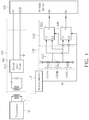
- FIG. 1 is a diagram showing a wireless charging receiver according to an embodiment of the invention.
- FIG. 1 is a diagram showing a wireless charging receiver 100 according to an embodiment of the invention.
- the wireless charging receiver 100 is capable of automatically/dynamically detecting information of a wireless power transmitter 101 and selecting an appropriate power confutation from multiple different power configurations to set an appropriate power confutation for a portable device 102 such as a smart phone device or a wearable electronic device without causing the charging system between transmitter 101 and receiver 100 collapse when the portable device 102 draws a charging current from the receiver 100 as far as possible.
- the receiver 100 is able to set different appropriate power confutations for portable device 102 to limit the maximum charging current provided from the receiver 100 to the portable device 102 at different current levels in response to different power transmitters.
- the receiver 100 can be applied in various kinds of wireless power standards such as Qi published by WPC (Wireless Power Consortium), PMA (Power Matters Alliance) standard, A4WP (Alliance for Wireless Power) standard, and so on.
- the receiver 100 can select and configure different maximum charging currents for the portable device 102 according to different information of different power transmitters. For example, the receiver 100 is arranged to configure a smaller maximum output charging current for the portable device 102 when detecting/determining that the type of transmitter 101 or power level provided by transmitter 101 corresponds to a lower power level. Alternatively, the receiver 100 is arranged to configure a larger maximum output charging current for the portable device 102 when detecting/determining that the type of transmitter 101 or power level provided by transmitter 101 corresponds to a higher power level.
- the information of wireless power transmitter 101 comprises type and/or transmitted power level of the wireless power transmitter 101. That is, the receiver 100 can sense and configure a maximum charging current for the portable device 102 based on the type or power level of the power transmitter 101. Additionally, the above-mentioned maximum output charging current indicates a maximum charging current that can be averagely provided by receiver 100 or a maximum charging current that can be instantaneously provided by receiver 100.
- the receiver 100 comprises a power path circuit 105, a controller 110 such as a microcontroller, and a setting circuit 115.
- the power path circuit 105 is electrically coupled to the wireless power transmitter 101 and connected to the portable device 102 and is configured to transfer and deliver power provided by the wireless power transmitter 101 to the portable device 102.
- the power path circuit 105 includes a transformer coil and a power path block 1051, and is used to sense and transfer the power provided by the wireless power transmitter 101.
- the microcontroller 110 is coupled to the power path circuit 105 and configured to dynamically detect information of the wireless power transmitter 101 which provides power for the portable device 102 via the wireless charging receiver 100. For example, the microcontroller 110 can detect the type and/or transmitted power level provided by wireless power transmitter 101.
- the microcontroller 110 is then arranged to generate the control signal SC to control the setting circuit 115 according to the detected type and/or transmitted power level of wireless power transmitter 101.
- the setting circuit 115 is coupled to the microcontroller 110 and configured to generate at least one power configuration signal on at least one signal path of a communication interface between the wireless charging receiver 100 and the portable device 102 according to the detected information of the wireless power transmitter, and thus a charging current provided for the portable device 102 can be limited at a specific charging current level according to the at least one power configuration signal.
- the communication interface can be a universal serial bus (USB) interface, and the at least one signal path can correspond to a positive data port D+ or negative data port D-. That is, the setting circuit 115 can inform the portable device 102 of the selected power configuration (i.e. the maximum charging current) by sending one power configuration signal on one of data ports D+ and D- or by sending two power configuration signals on data ports D+ and D-.
- the portable device 102 can know/detect how much current amount can be extracted from the receiver 100, and is arranged to draw an appropriate charging current from the receiver 100 based on the information carried by the power configuration signal (s) .
- the USB interface is not meant to be a limitation of the invention.
- the operation of sending power configuration signal (s) on signal path (s) of a communication interface can be also applied into various kinds of communication interfaces.
- Communication between portable device 102 and receiver 100 can be accomplished by sending a plurality of power configuration signals (e.g. a set of power configuration signals) on signal paths of the communication interface to inform portable device 102 of which power configuration is selected by receiver 100.
- a plurality of power configuration signals e.g. a set of power configuration signals
- the setting circuit 115 is arranged to generate a set of power configuration signals on data ports D+ and D- of the USB communication interface between the wireless charging receiver 100 and the portable device 102 according to the detected information of the wireless power transmitter 101.
- the set of power configuration signals transmitted on the data ports D+ and D- in this embodiment is a set of voltage level signals that are used to hold/keep the voltage levels of the data ports D+ and D- at corresponding levels so as to inform the portable device 102 of the power configuration selected by receiver 100.
- the portable device 102 can know/obtain which power configuration and corresponding output charging current are selected by receiver 100.
- An exemplary table showing a mapping between different output charging currents and corresponding voltage levels at data ports D+ and D- for iOS devices is shown below. Charging current D+ voltage D- voltage 0.5A 2V 2V 1.0A 2V 2.7V 2.1A 2.7V 2V 2.4A 2.7V 2.7V
- the setting circuit 115 of receiver 100 is arranged to generate and output a set of voltage levels both corresponding to 2Volts on data ports D+ and D- to hold/keep both the levels of D+ and D- at 2Volts.
- the portable device 102 can detect that the receiver 100 in this situation is arranged to provide an output charging current of at most 0.5A, and accordingly draws a charging current from receiver 100 based on the maximum charging current of 0.5A. For example, the portable device 102 can draw a charging current of 0.5A as far as possible.
- the setting circuit 115 of receiver 100 is arranged to generate and output a set of voltage levels including 2Volts for data port D+ and 2.7Volts for data port D- to hold/keep the levels of D+ and D- at 2Volts and 2.7Volts respectively.
- portable device 102 can know/detect that the receiver 100 in this situation is arranged to provide an output charging current of at most 1.0A, and accordingly draws a charging current from receiver 100 based on the maximum charging current of 1.0A. For example, the portable device 102 can draw a charging current of 1.0A as far as possible.
- the setting circuit 115 of receiver 100 is arranged to generate and output a set of voltage levels including 2.7Volts for data port D+ and 2Volts for data port D- to hold/keep the levels of D+ and D- at 2.7Volts and 2Volts respectively.
- the portable device 102 can know/detect that the receiver 100 in this situation is arranged to provide an output charging current of at most 2.1A, and accordingly draws a charging current from receiver 100 based on the maximum charging current of 2.1A. For example, the portable device 102 can draw a charging current of 2.1A as far as possible.
- the setting circuit 115 of receiver 100 is arranged to generate and output a set of voltage levels 2.7Volts on data ports D+ and D- to hold/keep both the levels of D+ and D- at 2.7Volts respectively.
- the portable device 102 can know/detect that the receiver 100 in this situation is arranged to provide an output charging current of at most 2.4A, and accordingly draws a charging current from receiver 100 based on the maximum charging current of 2.4A. For example, the portable device 102 can draw a charging current of 2.4A as far as possible.
- the above examples of the mapping for different charging currents and voltage levels are used for illustrative purposes to explain how the receiver 100 communicate with portable device 102 via data ports D+/D- of the USB communication interface, and are not meant to be limitations of the invention.
- the receiver 100 is still able to communicate with the portable device 102 implemented by android device or other type devices by transmitting different power configuration signal (s) on data port (s) of the communication interface to inform the portable device 102.
- the receiver 100 is able to provide low power and/or medium power for the portable device 102 in response to different types of the transmitter 101.
- the setting circuit 115 comprises a voltage divider 1151 and a selection circuit 1152.
- the voltage divider 1151 comprises resistor elements 1151A-1151C connected in series between a supply voltage such 5Volts and a ground level wherein the resistor elements 1151A-1151C respectively include resistances R1, R2, R3.
- the voltage divider 1151 Based on the resistances R1, R2, R3 and the voltage dividing structure, the voltage divider 1151 generates different voltage levels such as 2.7Volts and 2Volts as a first voltage signal V1 and a second voltage signal V2 shown in FIG. 1 , respectively.
- the selection circuit 1152 is coupled to the voltage divider 1151 and based on the control signal SC from the microcontroller 110 to select a power configuration so as to select one of the first voltage signal V1 and the second voltage signal V2 as a first power configuration signal outputted to a positive signal path of the communication interface (e.g. data port D+ of USB interface) and to select the other of the first voltage signal and the second voltage signal as a second power configuration signal outputted to a negative signal path of the communication interface (e.g. data port D- of USB interface) .
- the selection circuit 1152 comprises two multiplexers 1152A and 1152B both receiving signals V1-V2 and controlled by the microcontroller 110.
- the first voltage signal V1 is a voltage level of 2.7Volts
- the second voltage signal V2 is a voltage level of 2Volts.
- the multiplexer 1152A of selection circuit 1152 is arranged to receive signal V1 at its input port X1, receive signal V2 at its input port X2, and output an output a signal from its output port Y to the data port D+ as the first power configuration signal.
- the multiplexer 1152B of selection circuit 1152 is arranged to receive signal V1 at its input port X2, receive signal V2 at its input port X1, and to output an output a signal from its output port Y to the data port D- as the second power configuration signal.
- the microcontroller 110 is arranged to generate the control signal SC to the multiplexers 1152A-1152B to control the multiplexers 1152A-1152B.
- the microcontroller 110 When the microcontroller 110 detects/determines that the maximum/average/nominal power level provided by transmitter 101 is equal to or approximates to a low power such as 5W, the microcontroller 110 is arranged to generate and output the control signal SC including a first logic level such as low logic level to multiplexers 1152A-1152B. Based on the low logic level, the multiplexer 1152A selects the signal V2 (i.e. 2Volts) from signals V1 and V2 as its output, and the multiplexer 1152B selects the signal V1 (i.e. 2.7Volts) from signals V1 and V2 as its output. Accordingly, voltage levels at data ports D+ and D- are kept at 2Volts and 2.7Volts, respectively. This informs the portable device 102 of the selected power configuration indicating that the maximum output charging current provided for portable device 102 is configured as 1.0A.
- V2 i.e. 2Volts
- V1 i.e. 2.7Volts
- the microcontroller 110 When the microcontroller 110 detects/determines that the maximum/average/nominal power level provided by transmitter 101 is equal to or approximates to a medium power such as a range of 5-15W, the microcontroller 110 is arranged to generate and output the control signal SC including a second logic level such as high logic level to multiplexers 1152A-1152B. Based on the high logic level, the multiplexer 1152A selects the signal V1 (i.e. 2.7Volts) from signals V1 and V2 as its output, and the multiplexer 1152B selects the signal V2 (i.e. 2Volts) from signals V1 and V2 as its output. Accordingly, voltage levels at data ports D+ and D- are kept at 2.7Volts and 2Volts, respectively. This informs the portable device 102 of the selected power configuration indicating that the maximum output charging current provided for portable device 102 is configured as 2.1A.
- V1 i.e. 2.7Volts
- V2 i.e. 2
- the microcontroller 110 can be arranged to control the power path circuit 105 to perform a current limit operation according to the detected information of the wireless power transmitter 101.
- the output charging current provided for the portable device 102 can be configured as a maximum charging current corresponding to medium power even though the receiver 100 may detect that power transmitter 101 only transmits low power.
- the current limit operation is arranged to limit the maximum current provided for the portable device 102 as the specific current such as 1.0A corresponding to low power. Thus, even though the power transmitter 101 only transmits the low power, the power transfer system between transmitter 101 and receiver 100 will not collapse.
- the operation and function of current limit is optional and is not meant to be a limitation of the invention.
- the microcontroller 110 can be implemented within a single integrated circuit such as a chip or system on chip (SOC), and the setting circuit 115 can be externally connected to the single integrated circuit.
- the microcontroller 110 and setting circuit 115 can be implemented within the same single integrated circuit.
Landscapes
- Engineering & Computer Science (AREA)
- Computer Networks & Wireless Communication (AREA)
- Power Engineering (AREA)
- Signal Processing (AREA)
- Charge And Discharge Circuits For Batteries Or The Like (AREA)
Abstract
Description
- The present invention relates to a wireless charging scheme, and more particularly to a wireless charging receiver and a method applied into the receiver according to the pre-characterizing clauses of claims 1 and 9.
- Generally speaking, a conventional charging system between a wireless power transmitter and a conventional wireless power receiver can be used to transfer power wirelessly to a portable device. However, the conventional charging system inevitably collapses if the power level provided by the wireless power transmitter is not enough while the portable device draws a larger charging current from the conventional wireless power receiver.
- Therefore one of the objectives of the invention is to provide a method and wireless charging receiver capable of automatically detecting information of a wireless power transmitter to limit a maximum charging current provided for a portable device, to solve the above-mentioned problems.
- According to an embodiment of the invention, a wireless charging receiver is disclosed. The receiver comprises a microcontroller and a setting circuit. The microcontroller is configured to dynamically detect information of a wireless power transmitter which provides power for a portable device via the wireless charging receiver. The setting circuit is coupled to the microcontroller and configured to dynamically generate at least one power configuration signal on at least one signal path of a communication interface between the wireless charging receiver and the portable device according to the detected information of the wireless power transmitter, to limit a maximum charging current provided from the wireless charging receiver to the portable device at a specific charging current level.
- According to the embodiment, a method applied in the wireless charging receiver is further disclosed. The method comprises: dynamically detecting information of a wireless power transmitter which provides power for a portable device via the wireless charging receiver; and dynamically generating at least one power configuration signal on at least one signal path of a communication interface between the wireless charging receiver and the portable device according to the detected information of the wireless power transmitter, to limit a maximum charging current provided from the wireless charging receiver to the portable device at a specific charging current level.
- In the following, the invention is further illustrated by way of example, taking reference to the accompanying drawings. Thereof
-
FIG. 1 is a diagram showing a wireless charging receiver according to an embodiment of the invention. - Please refer to
FIG. 1 , which is a diagram showing awireless charging receiver 100 according to an embodiment of the invention. Thewireless charging receiver 100 is capable of automatically/dynamically detecting information of awireless power transmitter 101 and selecting an appropriate power confutation from multiple different power configurations to set an appropriate power confutation for aportable device 102 such as a smart phone device or a wearable electronic device without causing the charging system betweentransmitter 101 andreceiver 100 collapse when theportable device 102 draws a charging current from thereceiver 100 as far as possible. Equivalently, thereceiver 100 is able to set different appropriate power confutations forportable device 102 to limit the maximum charging current provided from thereceiver 100 to theportable device 102 at different current levels in response to different power transmitters. Thereceiver 100 can be applied in various kinds of wireless power standards such as Qi published by WPC (Wireless Power Consortium), PMA (Power Matters Alliance) standard, A4WP (Alliance for Wireless Power) standard, and so on. - It should be noted that a conventional charging system between a power transmitter and a conventional power receiver may collapse due to that the power level provided by the conventional power transmitter is not enough while a portable device tries to draw a larger current from the conventional power receiver. However, in this embodiment of the invention, the
receiver 100 can select and configure different maximum charging currents for theportable device 102 according to different information of different power transmitters. For example, thereceiver 100 is arranged to configure a smaller maximum output charging current for theportable device 102 when detecting/determining that the type oftransmitter 101 or power level provided bytransmitter 101 corresponds to a lower power level. Alternatively, thereceiver 100 is arranged to configure a larger maximum output charging current for theportable device 102 when detecting/determining that the type oftransmitter 101 or power level provided bytransmitter 101 corresponds to a higher power level. - The information of
wireless power transmitter 101 comprises type and/or transmitted power level of thewireless power transmitter 101. That is, thereceiver 100 can sense and configure a maximum charging current for theportable device 102 based on the type or power level of thepower transmitter 101. Additionally, the above-mentioned maximum output charging current indicates a maximum charging current that can be averagely provided byreceiver 100 or a maximum charging current that can be instantaneously provided byreceiver 100. - In practice, the
receiver 100 comprises apower path circuit 105, acontroller 110 such as a microcontroller, and asetting circuit 115. Thepower path circuit 105 is electrically coupled to thewireless power transmitter 101 and connected to theportable device 102 and is configured to transfer and deliver power provided by thewireless power transmitter 101 to theportable device 102. In practice, thepower path circuit 105 includes a transformer coil and apower path block 1051, and is used to sense and transfer the power provided by thewireless power transmitter 101. Themicrocontroller 110 is coupled to thepower path circuit 105 and configured to dynamically detect information of thewireless power transmitter 101 which provides power for theportable device 102 via thewireless charging receiver 100. For example, themicrocontroller 110 can detect the type and/or transmitted power level provided bywireless power transmitter 101. Themicrocontroller 110 is then arranged to generate the control signal SC to control thesetting circuit 115 according to the detected type and/or transmitted power level ofwireless power transmitter 101. - The
setting circuit 115 is coupled to themicrocontroller 110 and configured to generate at least one power configuration signal on at least one signal path of a communication interface between thewireless charging receiver 100 and theportable device 102 according to the detected information of the wireless power transmitter, and thus a charging current provided for theportable device 102 can be limited at a specific charging current level according to the at least one power configuration signal. The communication interface can be a universal serial bus (USB) interface, and the at least one signal path can correspond to a positive data port D+ or negative data port D-. That is, thesetting circuit 115 can inform theportable device 102 of the selected power configuration (i.e. the maximum charging current) by sending one power configuration signal on one of data ports D+ and D- or by sending two power configuration signals on data ports D+ and D-. Thus, theportable device 102 can know/detect how much current amount can be extracted from thereceiver 100, and is arranged to draw an appropriate charging current from thereceiver 100 based on the information carried by the power configuration signal (s) . It should be noted that the USB interface is not meant to be a limitation of the invention. The operation of sending power configuration signal (s) on signal path (s) of a communication interface can be also applied into various kinds of communication interfaces. - Communication between
portable device 102 andreceiver 100 can be accomplished by sending a plurality of power configuration signals (e.g. a set of power configuration signals) on signal paths of the communication interface to informportable device 102 of which power configuration is selected byreceiver 100. For instance, if the portable device is an iOS-based device, thesetting circuit 115 is arranged to generate a set of power configuration signals on data ports D+ and D- of the USB communication interface between thewireless charging receiver 100 and theportable device 102 according to the detected information of thewireless power transmitter 101. The set of power configuration signals transmitted on the data ports D+ and D- in this embodiment is a set of voltage level signals that are used to hold/keep the voltage levels of the data ports D+ and D- at corresponding levels so as to inform theportable device 102 of the power configuration selected byreceiver 100. By detecting the voltage levels at the data ports D+ and D-, theportable device 102 can know/obtain which power configuration and corresponding output charging current are selected byreceiver 100. An exemplary table showing a mapping between different output charging currents and corresponding voltage levels at data ports D+ and D- for iOS devices is shown below.Charging current D+ voltage D- voltage 0.5A 2V 2V 1.0A 2V 2.7V 2.1A 2.7V 2V 2.4A 2.7V 2.7V - For example, when
receiver 100 selects a lowest power configuration, thesetting circuit 115 ofreceiver 100 is arranged to generate and output a set of voltage levels both corresponding to 2Volts on data ports D+ and D- to hold/keep both the levels of D+ and D- at 2Volts. Theportable device 102 can detect that thereceiver 100 in this situation is arranged to provide an output charging current of at most 0.5A, and accordingly draws a charging current fromreceiver 100 based on the maximum charging current of 0.5A. For example, theportable device 102 can draw a charging current of 0.5A as far as possible. - When
receiver 100 selects a low (or lower) power configuration, thesetting circuit 115 ofreceiver 100 is arranged to generate and output a set of voltage levels including 2Volts for data port D+ and 2.7Volts for data port D- to hold/keep the levels of D+ and D- at 2Volts and 2.7Volts respectively. Thusportable device 102 can know/detect that thereceiver 100 in this situation is arranged to provide an output charging current of at most 1.0A, and accordingly draws a charging current fromreceiver 100 based on the maximum charging current of 1.0A. For example, theportable device 102 can draw a charging current of 1.0A as far as possible. - When
receiver 100 selects a medium power configuration, thesetting circuit 115 ofreceiver 100 is arranged to generate and output a set of voltage levels including 2.7Volts for data port D+ and 2Volts for data port D- to hold/keep the levels of D+ and D- at 2.7Volts and 2Volts respectively. Thus theportable device 102 can know/detect that thereceiver 100 in this situation is arranged to provide an output charging current of at most 2.1A, and accordingly draws a charging current fromreceiver 100 based on the maximum charging current of 2.1A. For example, theportable device 102 can draw a charging current of 2.1A as far as possible. - When
receiver 100 selects a higher power configuration, thesetting circuit 115 ofreceiver 100 is arranged to generate and output a set of voltage levels 2.7Volts on data ports D+ and D- to hold/keep both the levels of D+ and D- at 2.7Volts respectively. Thus theportable device 102 can know/detect that thereceiver 100 in this situation is arranged to provide an output charging current of at most 2.4A, and accordingly draws a charging current fromreceiver 100 based on the maximum charging current of 2.4A. For example, theportable device 102 can draw a charging current of 2.4A as far as possible. - It should be noted that the above examples of the mapping for different charging currents and voltage levels are used for illustrative purposes to explain how the
receiver 100 communicate withportable device 102 via data ports D+/D- of the USB communication interface, and are not meant to be limitations of the invention. In other examples such as android devices, thereceiver 100 is still able to communicate with theportable device 102 implemented by android device or other type devices by transmitting different power configuration signal (s) on data port (s) of the communication interface to inform theportable device 102. - Further, it should be noted that the
receiver 100 is able to provide low power and/or medium power for theportable device 102 in response to different types of thetransmitter 101. In practice, for generating low power configuration signals and/or medium power configuration signals in different situations, thesetting circuit 115 comprises avoltage divider 1151 and aselection circuit 1152. Thevoltage divider 1151 comprisesresistor elements 1151A-1151C connected in series between a supply voltage such 5Volts and a ground level wherein theresistor elements 1151A-1151C respectively include resistances R1, R2, R3. Based on the resistances R1, R2, R3 and the voltage dividing structure, thevoltage divider 1151 generates different voltage levels such as 2.7Volts and 2Volts as a first voltage signal V1 and a second voltage signal V2 shown inFIG. 1 , respectively. Theselection circuit 1152 is coupled to thevoltage divider 1151 and based on the control signal SC from themicrocontroller 110 to select a power configuration so as to select one of the first voltage signal V1 and the second voltage signal V2 as a first power configuration signal outputted to a positive signal path of the communication interface (e.g. data port D+ of USB interface) and to select the other of the first voltage signal and the second voltage signal as a second power configuration signal outputted to a negative signal path of the communication interface (e.g. data port D- of USB interface) . In practice, theselection circuit 1152 comprises twomultiplexers microcontroller 110. - For instance, the first voltage signal V1 is a voltage level of 2.7Volts, and the second voltage signal V2 is a voltage level of 2Volts. The
multiplexer 1152A ofselection circuit 1152 is arranged to receive signal V1 at its input port X1, receive signal V2 at its input port X2, and output an output a signal from its output port Y to the data port D+ as the first power configuration signal. Themultiplexer 1152B ofselection circuit 1152 is arranged to receive signal V1 at its input port X2, receive signal V2 at its input port X1, and to output an output a signal from its output port Y to the data port D- as the second power configuration signal. Themicrocontroller 110 is arranged to generate the control signal SC to themultiplexers 1152A-1152B to control themultiplexers 1152A-1152B. - When the
microcontroller 110 detects/determines that the maximum/average/nominal power level provided bytransmitter 101 is equal to or approximates to a low power such as 5W, themicrocontroller 110 is arranged to generate and output the control signal SC including a first logic level such as low logic level tomultiplexers 1152A-1152B. Based on the low logic level, themultiplexer 1152A selects the signal V2 (i.e. 2Volts) from signals V1 and V2 as its output, and themultiplexer 1152B selects the signal V1 (i.e. 2.7Volts) from signals V1 and V2 as its output. Accordingly, voltage levels at data ports D+ and D- are kept at 2Volts and 2.7Volts, respectively. This informs theportable device 102 of the selected power configuration indicating that the maximum output charging current provided forportable device 102 is configured as 1.0A. - When the
microcontroller 110 detects/determines that the maximum/average/nominal power level provided bytransmitter 101 is equal to or approximates to a medium power such as a range of 5-15W, themicrocontroller 110 is arranged to generate and output the control signal SC including a second logic level such as high logic level to multiplexers 1152A-1152B. Based on the high logic level, themultiplexer 1152A selects the signal V1 (i.e. 2.7Volts) from signals V1 and V2 as its output, and themultiplexer 1152B selects the signal V2 (i.e. 2Volts) from signals V1 and V2 as its output. Accordingly, voltage levels at data ports D+ and D- are kept at 2.7Volts and 2Volts, respectively. This informs theportable device 102 of the selected power configuration indicating that the maximum output charging current provided forportable device 102 is configured as 2.1A. - Further, the
microcontroller 110 can be arranged to control thepower path circuit 105 to perform a current limit operation according to the detected information of thewireless power transmitter 101. For example, the output charging current provided for theportable device 102 can be configured as a maximum charging current corresponding to medium power even though thereceiver 100 may detect thatpower transmitter 101 only transmits low power. The current limit operation is arranged to limit the maximum current provided for theportable device 102 as the specific current such as 1.0A corresponding to low power. Thus, even though thepower transmitter 101 only transmits the low power, the power transfer system betweentransmitter 101 andreceiver 100 will not collapse. The operation and function of current limit is optional and is not meant to be a limitation of the invention. - Additionally, the
microcontroller 110 can be implemented within a single integrated circuit such as a chip or system on chip (SOC), and thesetting circuit 115 can be externally connected to the single integrated circuit. Alternatively, themicrocontroller 110 and settingcircuit 115 can be implemented within the same single integrated circuit.
Claims (15)
- A wireless charging receiver (100), characterized by:a controller (110), configured to dynamically detect information of a wireless power transmitter (101) which provides power for a portable device (102) via the wireless charging receiver (100); anda setting circuit (115), coupled to the controller (110), configured to dynamically generate at least one power configuration signal on at least one signal path of a communication interface between the wireless charging receiver (100) and the portable device (102) according to the detected information of the wireless power transmitter (101), to limit a maximum charging current provided from the wireless charging receiver (100) to the portable device (102) at a specific charging current level.
- The wireless charging receiver (100) of claim 1, characterized in that the controller (110) is arranged to detect at least one of a type and an output power level of the wireless power transmitter (101).
- The wireless charging receiver (100) of claim 1, characterized in that the setting circuit (115) is arranged to generate a set of power configuration signal on data ports D+ and D- of the communication interface between the wireless charging receiver (100) and the portable device (102) according to the detected information of the wireless power transmitter (101).
- The wireless charging receiver (100) of claim 1, characterized in that the setting circuit (115) is arranged to select a power configuration among a plurality of power configurations according to the detected information of the wireless power transmitter (101), and to generate the at least one power configuration signal on the at least one signal path of a communication interface between the wireless charging receiver (100) and the portable device (102) based on the selected power configuration; the maximum charging current provided from the wireless charging receiver (100) corresponds to the selected power configuration.
- The wireless charging receiver (100) of claim 4, characterized in that the setting circuit (115) selects a low power configuration when the detected information of the wireless power transmitter (101) corresponds to low power; and, the setting circuit (115) selects a medium power configuration when the detected information of the wireless power transmitter (101) corresponds to medium power.
- The wireless charging receiver (100) of claim 4, characterized in that the setting circuit (115) comprises:a voltage divider (1151), configured to generate a first voltage signal and a second voltage signal different from the first voltage signal; anda selection circuit (1152), coupled to the voltage divider (1151), configured to selecting one of the first voltage signal and the second voltage signal as a first power configuration signal outputted to a positive signal path of the communication interface according to the selected power configuration, and selecting the other of the first voltage signal and the second voltage signal as a second power configuration signal outputted to a negative signal path of the communication interface according to the selected power configuration;wherein the maximum charging current provided from the wireless charging receiver (100) corresponds to the first power configuration signal and the second power configuration signal.
- The wireless charging receiver (100) of claim 1, further characterized by:a power path circuit (105), electrically coupled to the wireless power transmitter (101) and connected to the portable device (102), configured to transfer and deliver power provided by the wireless power transmitter (101) to the portable device (102);wherein the controller (110) is arranged to control the power path circuit (105) to perform a current limit operation according to the detected information of the wireless power transmitter (101).
- The wireless charging receiver (100) of claim 1, characterized in that:the controller (110) is implemented within an integrated circuit, and the setting circuit (115) is externally connected to the integrated circuit; orthe controller (110) and the setting circuit (115) are implemented within the same integrated circuit.
- A method applied in a wireless charging receiver (100), characterized by:dynamically detecting information of a wireless power transmitter (101) which provides power for a portable device (102) via the wireless charging receiver (100); anddynamically generating at least one power configuration signal on at least one signal path of a communication interface between the wireless charging receiver (100) and the portable device (102) according to the detected information of the wireless power transmitter (101), to limit a maximum charging current provided from the wireless charging receiver (100) to the portable device (102) at a specific charging current level.
- The method of claim 9, further characterized by:detecting at least one of a type and an output power level of the wireless power transmitter (101).
- The method of claim 9, further characterized by:generating a set of power configuration signal on data ports D+ and D- of the communication interface between the wireless charging receiver (100) and the portable device (102) according to the detected information of the wireless power transmitter (101).
- The method of claim 9, further characterized by:selecting a power configuration among a plurality of power configurations according to the detected information of the wireless power transmitter (101); andgenerating the at least one power configuration signal on the at least one signal path of a communication interface between the wireless charging receiver (100) and the portable device (102) based on the selected power configuration, to limit a maximum charging current provided from the wireless charging receiver (100) to the portable device (102) at a specific charging current level.
- The method of claim 12, further characterized by:selecting a low power configuration when the detected information of the wireless power transmitter (101) corresponds to low power; andselecting a medium power configuration when the detected information of the wireless power transmitter (101) corresponds to medium power.
- The method of claim 12, further characterized by:generating a first voltage signal and a second voltage signal different from the first voltage signal;selecting one of the first voltage signal and the second voltage signal as a first power configuration signal outputted to a positive signal path of the communication interface according to the selected power configuration; andselecting the other of the first voltage signal and the second voltage signal as a second power configuration signal outputted to a negative signal path of the communication interface according to the selected power configuration.
- The method of claim 9, further characterized by:controlling a power path circuit (105) of the wireless charging receiver (100) to perform a current limit operation according to the detected information of the wireless power transmitter (101).
Applications Claiming Priority (2)
| Application Number | Priority Date | Filing Date | Title |
|---|---|---|---|
| US201562250711P | 2015-11-04 | 2015-11-04 | |
| US15/139,349 US9735837B2 (en) | 2015-11-04 | 2016-04-27 | Method and wireless charging receiver capable of automatically detecting information of wireless power transmitter to limit maximum charging current provided for portable device |
Publications (2)
| Publication Number | Publication Date |
|---|---|
| EP3166199A1 true EP3166199A1 (en) | 2017-05-10 |
| EP3166199B1 EP3166199B1 (en) | 2018-08-29 |
Family
ID=55919631
Family Applications (1)
| Application Number | Title | Priority Date | Filing Date |
|---|---|---|---|
| EP16167869.3A Active EP3166199B1 (en) | 2015-11-04 | 2016-05-02 | Method and wireless charging receiver capable of automatically detecting information of wireless power transmitter to limit maximum charging current provided for portable device |
Country Status (3)
| Country | Link |
|---|---|
| US (1) | US9735837B2 (en) |
| EP (1) | EP3166199B1 (en) |
| CN (1) | CN106655542B (en) |
Families Citing this family (2)
| Publication number | Priority date | Publication date | Assignee | Title |
|---|---|---|---|---|
| US10978899B2 (en) * | 2017-02-02 | 2021-04-13 | Apple Inc. | Wireless charging system with duty cycle control |
| KR102670946B1 (en) * | 2019-09-27 | 2024-05-31 | 에스케이하이닉스 주식회사 | Semiconductor apparatus for generating reference voltage |
Citations (2)
| Publication number | Priority date | Publication date | Assignee | Title |
|---|---|---|---|---|
| US20110298297A1 (en) * | 2009-02-27 | 2011-12-08 | Koninklijke Philips Electronics N.V. | Methods, transmission devices and transmission control system for transmitting power wirelessly |
| US20150194838A1 (en) * | 2012-07-31 | 2015-07-09 | Intellectual Discovery Co., Ltd. | Method for wirelessly charging multi-node wireless power transmitting system |
Family Cites Families (8)
| Publication number | Priority date | Publication date | Assignee | Title |
|---|---|---|---|---|
| US20120194124A1 (en) * | 2011-01-31 | 2012-08-02 | Nokia Corporation | Wireless Battery Charging System |
| US9252846B2 (en) * | 2011-09-09 | 2016-02-02 | Qualcomm Incorporated | Systems and methods for detecting and identifying a wireless power device |
| KR101831993B1 (en) * | 2011-11-18 | 2018-02-26 | 삼성전자주식회사 | Apparatus and method for controlling amount of charging current for wireless power receiver |
| US9467008B2 (en) * | 2012-07-28 | 2016-10-11 | WIPQTUS Inc. | Input power appraisal based wireless power system |
| WO2014072978A1 (en) * | 2012-11-07 | 2014-05-15 | Powermat Technologies Ltd. | Adaptable inductive power receiver for electrical devices |
| US8910863B2 (en) * | 2013-01-05 | 2014-12-16 | Otter Products, Llc | Electronic device case for mobile point of sale |
| EP2903171B1 (en) * | 2014-01-30 | 2019-08-28 | Analog Devices Global Unlimited Company | Transmitter noise cancellation in a multi transmitter-receiver system |
| CN204649875U (en) * | 2015-06-10 | 2015-09-16 | 宁波力芯科信息科技有限公司 | A kind of pick-up unit for wireless charging receiver |
-
2016
- 2016-04-27 US US15/139,349 patent/US9735837B2/en active Active
- 2016-05-02 EP EP16167869.3A patent/EP3166199B1/en active Active
- 2016-06-08 CN CN201610402674.3A patent/CN106655542B/en active Active
Patent Citations (2)
| Publication number | Priority date | Publication date | Assignee | Title |
|---|---|---|---|---|
| US20110298297A1 (en) * | 2009-02-27 | 2011-12-08 | Koninklijke Philips Electronics N.V. | Methods, transmission devices and transmission control system for transmitting power wirelessly |
| US20150194838A1 (en) * | 2012-07-31 | 2015-07-09 | Intellectual Discovery Co., Ltd. | Method for wirelessly charging multi-node wireless power transmitting system |
Also Published As
| Publication number | Publication date |
|---|---|
| CN106655542A (en) | 2017-05-10 |
| US20170126280A1 (en) | 2017-05-04 |
| US9735837B2 (en) | 2017-08-15 |
| CN106655542B (en) | 2019-03-15 |
| EP3166199B1 (en) | 2018-08-29 |
Similar Documents
| Publication | Publication Date | Title |
|---|---|---|
| CN111404219B (en) | Method, electronic device and charger equipment for fast USB charging | |
| EP3186714B1 (en) | Usb type c to mhl m1 dead battery charging | |
| JP6916429B2 (en) | Power over Ethernet control system | |
| US10664029B2 (en) | Power supply apparatus and power receiving apparatus | |
| US10581272B2 (en) | Input power appraisal based wireless power system | |
| EP3413426B1 (en) | Hub | |
| US20160156137A1 (en) | System and circuit using usb type-c interface | |
| US9414107B2 (en) | Pluggable electronic device and method for determining output data of pluggable electronic device | |
| US9467008B2 (en) | Input power appraisal based wireless power system | |
| US20130181660A1 (en) | Charge control circuit for usb device | |
| US20100201308A1 (en) | Device and method for battery charging | |
| EP3032693B1 (en) | Electronic device and power adapter capable of communicating with each other, and associated charging system | |
| CN111698366B (en) | Mobile phone hardware extension method based on USB interface | |
| US9639132B2 (en) | Systems and methods for automatic detection of a device | |
| WO2017159883A4 (en) | Host apparatus and extension device | |
| US10804883B2 (en) | Power supply apparatus and master power supply circuit, slave power supply circuit and control method thereof | |
| JP2015076100A (en) | Serial communication via communication control pin | |
| US20160072339A1 (en) | Power receiving apparatus, control method, and storage medium | |
| KR20230038253A (en) | Data line and charging device | |
| CN106557445A (en) | EBI with non-feeder ear | |
| JP2017097688A (en) | Port connection circuit, port connection control method, electronic apparatus | |
| US10976790B2 (en) | Load balancing in multi-port USB systems | |
| EP3166199B1 (en) | Method and wireless charging receiver capable of automatically detecting information of wireless power transmitter to limit maximum charging current provided for portable device | |
| CN104168067A (en) | Method for judging optical power signal intensity in optical receiving circuit and circuit thereof | |
| EP3068012A1 (en) | External power supply and system connection detection unit applied thereto |
Legal Events
| Date | Code | Title | Description |
|---|---|---|---|
| PUAI | Public reference made under article 153(3) epc to a published international application that has entered the european phase |
Free format text: ORIGINAL CODE: 0009012 |
|
| STAA | Information on the status of an ep patent application or granted ep patent |
Free format text: STATUS: THE APPLICATION HAS BEEN PUBLISHED |
|
| AK | Designated contracting states |
Kind code of ref document: A1 Designated state(s): AL AT BE BG CH CY CZ DE DK EE ES FI FR GB GR HR HU IE IS IT LI LT LU LV MC MK MT NL NO PL PT RO RS SE SI SK SM TR |
|
| AX | Request for extension of the european patent |
Extension state: BA ME |
|
| STAA | Information on the status of an ep patent application or granted ep patent |
Free format text: STATUS: REQUEST FOR EXAMINATION WAS MADE |
|
| 17P | Request for examination filed |
Effective date: 20170613 |
|
| RBV | Designated contracting states (corrected) |
Designated state(s): AL AT BE BG CH CY CZ DE DK EE ES FI FR GB GR HR HU IE IS IT LI LT LU LV MC MK MT NL NO PL PT RO RS SE SI SK SM TR |
|
| STAA | Information on the status of an ep patent application or granted ep patent |
Free format text: STATUS: EXAMINATION IS IN PROGRESS |
|
| 17Q | First examination report despatched |
Effective date: 20171123 |
|
| GRAP | Despatch of communication of intention to grant a patent |
Free format text: ORIGINAL CODE: EPIDOSNIGR1 |
|
| STAA | Information on the status of an ep patent application or granted ep patent |
Free format text: STATUS: GRANT OF PATENT IS INTENDED |
|
| RIC1 | Information provided on ipc code assigned before grant |
Ipc: H04B 5/00 20060101ALI20180419BHEP Ipc: H02J 50/80 20160101ALI20180419BHEP Ipc: H02J 7/00 20060101AFI20180419BHEP Ipc: H02J 50/10 20160101ALI20180419BHEP |
|
| INTG | Intention to grant announced |
Effective date: 20180508 |
|
| GRAS | Grant fee paid |
Free format text: ORIGINAL CODE: EPIDOSNIGR3 |
|
| GRAA | (expected) grant |
Free format text: ORIGINAL CODE: 0009210 |
|
| STAA | Information on the status of an ep patent application or granted ep patent |
Free format text: STATUS: THE PATENT HAS BEEN GRANTED |
|
| AK | Designated contracting states |
Kind code of ref document: B1 Designated state(s): AL AT BE BG CH CY CZ DE DK EE ES FI FR GB GR HR HU IE IS IT LI LT LU LV MC MK MT NL NO PL PT RO RS SE SI SK SM TR |
|
| REG | Reference to a national code |
Ref country code: GB Ref legal event code: FG4D |
|
| REG | Reference to a national code |
Ref country code: CH Ref legal event code: EP |
|
| REG | Reference to a national code |
Ref country code: AT Ref legal event code: REF Ref document number: 1036292 Country of ref document: AT Kind code of ref document: T Effective date: 20180915 |
|
| REG | Reference to a national code |
Ref country code: IE Ref legal event code: FG4D |
|
| REG | Reference to a national code |
Ref country code: DE Ref legal event code: R096 Ref document number: 602016005088 Country of ref document: DE |
|
| REG | Reference to a national code |
Ref country code: NL Ref legal event code: MP Effective date: 20180829 |
|
| REG | Reference to a national code |
Ref country code: LT Ref legal event code: MG4D |
|
| PG25 | Lapsed in a contracting state [announced via postgrant information from national office to epo] |
Ref country code: GR Free format text: LAPSE BECAUSE OF FAILURE TO SUBMIT A TRANSLATION OF THE DESCRIPTION OR TO PAY THE FEE WITHIN THE PRESCRIBED TIME-LIMIT Effective date: 20181130 Ref country code: BG Free format text: LAPSE BECAUSE OF FAILURE TO SUBMIT A TRANSLATION OF THE DESCRIPTION OR TO PAY THE FEE WITHIN THE PRESCRIBED TIME-LIMIT Effective date: 20181129 Ref country code: NL Free format text: LAPSE BECAUSE OF FAILURE TO SUBMIT A TRANSLATION OF THE DESCRIPTION OR TO PAY THE FEE WITHIN THE PRESCRIBED TIME-LIMIT Effective date: 20180829 Ref country code: LT Free format text: LAPSE BECAUSE OF FAILURE TO SUBMIT A TRANSLATION OF THE DESCRIPTION OR TO PAY THE FEE WITHIN THE PRESCRIBED TIME-LIMIT Effective date: 20180829 Ref country code: SE Free format text: LAPSE BECAUSE OF FAILURE TO SUBMIT A TRANSLATION OF THE DESCRIPTION OR TO PAY THE FEE WITHIN THE PRESCRIBED TIME-LIMIT Effective date: 20180829 Ref country code: IS Free format text: LAPSE BECAUSE OF FAILURE TO SUBMIT A TRANSLATION OF THE DESCRIPTION OR TO PAY THE FEE WITHIN THE PRESCRIBED TIME-LIMIT Effective date: 20181229 Ref country code: RS Free format text: LAPSE BECAUSE OF FAILURE TO SUBMIT A TRANSLATION OF THE DESCRIPTION OR TO PAY THE FEE WITHIN THE PRESCRIBED TIME-LIMIT Effective date: 20180829 Ref country code: FI Free format text: LAPSE BECAUSE OF FAILURE TO SUBMIT A TRANSLATION OF THE DESCRIPTION OR TO PAY THE FEE WITHIN THE PRESCRIBED TIME-LIMIT Effective date: 20180829 Ref country code: NO Free format text: LAPSE BECAUSE OF FAILURE TO SUBMIT A TRANSLATION OF THE DESCRIPTION OR TO PAY THE FEE WITHIN THE PRESCRIBED TIME-LIMIT Effective date: 20181129 |
|
| REG | Reference to a national code |
Ref country code: AT Ref legal event code: MK05 Ref document number: 1036292 Country of ref document: AT Kind code of ref document: T Effective date: 20180829 |
|
| PG25 | Lapsed in a contracting state [announced via postgrant information from national office to epo] |
Ref country code: HR Free format text: LAPSE BECAUSE OF FAILURE TO SUBMIT A TRANSLATION OF THE DESCRIPTION OR TO PAY THE FEE WITHIN THE PRESCRIBED TIME-LIMIT Effective date: 20180829 Ref country code: LV Free format text: LAPSE BECAUSE OF FAILURE TO SUBMIT A TRANSLATION OF THE DESCRIPTION OR TO PAY THE FEE WITHIN THE PRESCRIBED TIME-LIMIT Effective date: 20180829 Ref country code: AL Free format text: LAPSE BECAUSE OF FAILURE TO SUBMIT A TRANSLATION OF THE DESCRIPTION OR TO PAY THE FEE WITHIN THE PRESCRIBED TIME-LIMIT Effective date: 20180829 |
|
| PG25 | Lapsed in a contracting state [announced via postgrant information from national office to epo] |
Ref country code: RO Free format text: LAPSE BECAUSE OF FAILURE TO SUBMIT A TRANSLATION OF THE DESCRIPTION OR TO PAY THE FEE WITHIN THE PRESCRIBED TIME-LIMIT Effective date: 20180829 Ref country code: CZ Free format text: LAPSE BECAUSE OF FAILURE TO SUBMIT A TRANSLATION OF THE DESCRIPTION OR TO PAY THE FEE WITHIN THE PRESCRIBED TIME-LIMIT Effective date: 20180829 Ref country code: IT Free format text: LAPSE BECAUSE OF FAILURE TO SUBMIT A TRANSLATION OF THE DESCRIPTION OR TO PAY THE FEE WITHIN THE PRESCRIBED TIME-LIMIT Effective date: 20180829 Ref country code: AT Free format text: LAPSE BECAUSE OF FAILURE TO SUBMIT A TRANSLATION OF THE DESCRIPTION OR TO PAY THE FEE WITHIN THE PRESCRIBED TIME-LIMIT Effective date: 20180829 Ref country code: EE Free format text: LAPSE BECAUSE OF FAILURE TO SUBMIT A TRANSLATION OF THE DESCRIPTION OR TO PAY THE FEE WITHIN THE PRESCRIBED TIME-LIMIT Effective date: 20180829 Ref country code: ES Free format text: LAPSE BECAUSE OF FAILURE TO SUBMIT A TRANSLATION OF THE DESCRIPTION OR TO PAY THE FEE WITHIN THE PRESCRIBED TIME-LIMIT Effective date: 20180829 Ref country code: PL Free format text: LAPSE BECAUSE OF FAILURE TO SUBMIT A TRANSLATION OF THE DESCRIPTION OR TO PAY THE FEE WITHIN THE PRESCRIBED TIME-LIMIT Effective date: 20180829 |
|
| PG25 | Lapsed in a contracting state [announced via postgrant information from national office to epo] |
Ref country code: SK Free format text: LAPSE BECAUSE OF FAILURE TO SUBMIT A TRANSLATION OF THE DESCRIPTION OR TO PAY THE FEE WITHIN THE PRESCRIBED TIME-LIMIT Effective date: 20180829 Ref country code: DK Free format text: LAPSE BECAUSE OF FAILURE TO SUBMIT A TRANSLATION OF THE DESCRIPTION OR TO PAY THE FEE WITHIN THE PRESCRIBED TIME-LIMIT Effective date: 20180829 Ref country code: SM Free format text: LAPSE BECAUSE OF FAILURE TO SUBMIT A TRANSLATION OF THE DESCRIPTION OR TO PAY THE FEE WITHIN THE PRESCRIBED TIME-LIMIT Effective date: 20180829 |
|
| REG | Reference to a national code |
Ref country code: DE Ref legal event code: R097 Ref document number: 602016005088 Country of ref document: DE |
|
| PLBE | No opposition filed within time limit |
Free format text: ORIGINAL CODE: 0009261 |
|
| STAA | Information on the status of an ep patent application or granted ep patent |
Free format text: STATUS: NO OPPOSITION FILED WITHIN TIME LIMIT |
|
| 26N | No opposition filed |
Effective date: 20190531 |
|
| PG25 | Lapsed in a contracting state [announced via postgrant information from national office to epo] |
Ref country code: SI Free format text: LAPSE BECAUSE OF FAILURE TO SUBMIT A TRANSLATION OF THE DESCRIPTION OR TO PAY THE FEE WITHIN THE PRESCRIBED TIME-LIMIT Effective date: 20180829 |
|
| REG | Reference to a national code |
Ref country code: CH Ref legal event code: PL |
|
| PG25 | Lapsed in a contracting state [announced via postgrant information from national office to epo] |
Ref country code: CH Free format text: LAPSE BECAUSE OF NON-PAYMENT OF DUE FEES Effective date: 20190531 Ref country code: LI Free format text: LAPSE BECAUSE OF NON-PAYMENT OF DUE FEES Effective date: 20190531 Ref country code: MC Free format text: LAPSE BECAUSE OF FAILURE TO SUBMIT A TRANSLATION OF THE DESCRIPTION OR TO PAY THE FEE WITHIN THE PRESCRIBED TIME-LIMIT Effective date: 20180829 |
|
| REG | Reference to a national code |
Ref country code: BE Ref legal event code: MM Effective date: 20190531 |
|
| PG25 | Lapsed in a contracting state [announced via postgrant information from national office to epo] |
Ref country code: LU Free format text: LAPSE BECAUSE OF NON-PAYMENT OF DUE FEES Effective date: 20190502 |
|
| PG25 | Lapsed in a contracting state [announced via postgrant information from national office to epo] |
Ref country code: TR Free format text: LAPSE BECAUSE OF FAILURE TO SUBMIT A TRANSLATION OF THE DESCRIPTION OR TO PAY THE FEE WITHIN THE PRESCRIBED TIME-LIMIT Effective date: 20180829 |
|
| PG25 | Lapsed in a contracting state [announced via postgrant information from national office to epo] |
Ref country code: IE Free format text: LAPSE BECAUSE OF NON-PAYMENT OF DUE FEES Effective date: 20190502 |
|
| PG25 | Lapsed in a contracting state [announced via postgrant information from national office to epo] |
Ref country code: BE Free format text: LAPSE BECAUSE OF NON-PAYMENT OF DUE FEES Effective date: 20190531 |
|
| PG25 | Lapsed in a contracting state [announced via postgrant information from national office to epo] |
Ref country code: PT Free format text: LAPSE BECAUSE OF FAILURE TO SUBMIT A TRANSLATION OF THE DESCRIPTION OR TO PAY THE FEE WITHIN THE PRESCRIBED TIME-LIMIT Effective date: 20181229 |
|
| PG25 | Lapsed in a contracting state [announced via postgrant information from national office to epo] |
Ref country code: CY Free format text: LAPSE BECAUSE OF FAILURE TO SUBMIT A TRANSLATION OF THE DESCRIPTION OR TO PAY THE FEE WITHIN THE PRESCRIBED TIME-LIMIT Effective date: 20180829 |
|
| PG25 | Lapsed in a contracting state [announced via postgrant information from national office to epo] |
Ref country code: HU Free format text: LAPSE BECAUSE OF FAILURE TO SUBMIT A TRANSLATION OF THE DESCRIPTION OR TO PAY THE FEE WITHIN THE PRESCRIBED TIME-LIMIT; INVALID AB INITIO Effective date: 20160502 Ref country code: MT Free format text: LAPSE BECAUSE OF FAILURE TO SUBMIT A TRANSLATION OF THE DESCRIPTION OR TO PAY THE FEE WITHIN THE PRESCRIBED TIME-LIMIT Effective date: 20180829 |
|
| PG25 | Lapsed in a contracting state [announced via postgrant information from national office to epo] |
Ref country code: MK Free format text: LAPSE BECAUSE OF FAILURE TO SUBMIT A TRANSLATION OF THE DESCRIPTION OR TO PAY THE FEE WITHIN THE PRESCRIBED TIME-LIMIT Effective date: 20180829 |
|
| P01 | Opt-out of the competence of the unified patent court (upc) registered |
Effective date: 20230607 |
|
| PGFP | Annual fee paid to national office [announced via postgrant information from national office to epo] |
Ref country code: DE Payment date: 20250325 Year of fee payment: 10 |
|
| PGFP | Annual fee paid to national office [announced via postgrant information from national office to epo] |
Ref country code: GB Payment date: 20260313 Year of fee payment: 11 |
|
| PGFP | Annual fee paid to national office [announced via postgrant information from national office to epo] |
Ref country code: FR Payment date: 20260309 Year of fee payment: 11 |