EP3166091A1 - System and method for enhancing a proximity warning sound - Google Patents
System and method for enhancing a proximity warning sound Download PDFInfo
- Publication number
- EP3166091A1 EP3166091A1 EP16197407.6A EP16197407A EP3166091A1 EP 3166091 A1 EP3166091 A1 EP 3166091A1 EP 16197407 A EP16197407 A EP 16197407A EP 3166091 A1 EP3166091 A1 EP 3166091A1
- Authority
- EP
- European Patent Office
- Prior art keywords
- proximity warning
- warning sound
- enhancing
- indicator
- reverberation
- Prior art date
- Legal status (The legal status is an assumption and is not a legal conclusion. Google has not performed a legal analysis and makes no representation as to the accuracy of the status listed.)
- Granted
Links
Images


Classifications
-
- G—PHYSICS
- G08—SIGNALLING
- G08B—SIGNALLING SYSTEMS, e.g. PERSONAL CALLING SYSTEMS; ORDER TELEGRAPHS; ALARM SYSTEMS
- G08B21/00—Alarms responsive to a single specified undesired or abnormal condition and not otherwise provided for
- G08B21/02—Alarms for ensuring the safety of persons
-
- G—PHYSICS
- G08—SIGNALLING
- G08B—SIGNALLING SYSTEMS, e.g. PERSONAL CALLING SYSTEMS; ORDER TELEGRAPHS; ALARM SYSTEMS
- G08B3/00—Audible signalling systems, e.g. audible personal calling systems
- G08B3/10—Audible signalling systems, e.g. audible personal calling systems using electric transmission; using electromagnetic transmission
-
- G—PHYSICS
- G08—SIGNALLING
- G08G—TRAFFIC CONTROL SYSTEMS
- G08G1/00—Traffic control systems for road vehicles
- G08G1/16—Anti-collision systems
- G08G1/166—Anti-collision systems for active traffic, e.g. moving vehicles, pedestrians, bikes
-
- G—PHYSICS
- G08—SIGNALLING
- G08G—TRAFFIC CONTROL SYSTEMS
- G08G1/00—Traffic control systems for road vehicles
- G08G1/16—Anti-collision systems
- G08G1/167—Driving aids for lane monitoring, lane changing, e.g. blind spot detection
-
- G—PHYSICS
- G08—SIGNALLING
- G08G—TRAFFIC CONTROL SYSTEMS
- G08G1/00—Traffic control systems for road vehicles
- G08G1/16—Anti-collision systems
- G08G1/168—Driving aids for parking, e.g. acoustic or visual feedback on parking space
Definitions
- the present disclosure relates to the field of processing audio signals.
- a system and method for enhancing a proximity warning sound are known in the art.
- Proximity warning systems may indicate the relative proximity between a first object and a second object.
- objects may move relative to a person without the person's awareness. In some cases this may pose a safety hazard to either the person, the object, which may also be a person, or to the person's property. In other applications there may be a benefit in a person knowing the distance between themselves and the other person or object.
- Many automobiles contain proximity warning systems, or parking assistance systems that help the driver to avoid collisions with nearby objects and that include the use of audible feedback.
- the audible feedback is typically not in an intuitive form and therefore requires familiarization and learning on the part of the driver. The familiarization and learning requirement may cause some degree of distraction from the task at hand for the driver.
- a system and method for enhancing a proximity warning sound may determine an indicator of a distance between a first object and a second object.
- a proximity warning sound may be generated including a reverberation mimicking component responsive to the determined distance indicator; where a human listener perceives the reverberation mimicking component included in the audible proximity warning sound to be indicative of the determined distance indicator.
- Figure 1A is a schematic representation of an overhead view of an automobile in which a system for enhancing a proximity warning sound 100 may be used.
- the representation of a automobile cabin may stand as a simplified representation of the automobile as a whole except where the description explicitly refers to the cabin.
- the example automobile, or first object 102 may include multiple audio transducers (a.k.a. audio speakers) 106A, 106B, 106C and 106D (collectively or generically audio transducers 106) and may be occupied and/or operated by a driver, or user 104.
- a person, or second object 108 may be located a distance 110A relative to the automobile.
- Either of the first object 102 and the second object 108 may be a stationary object or a moving object.
- One or more of the audio transducers 106 may emit a proximity warning sound generated by a proximity warning system.
- the proximity warning system may contain a distance estimator that may determine an indicator of the distance 110A between the automobile, or first object 102, and the person, or second object 108.
- the distance estimator associated with an automobile may utilize one or more external sensors 112 that may detect objects.
- External sensors 112 may include, for example, ultrasound, magnetic sensing, radio detection and ranging (RADAR), light detection and ranging (LIDAR), optical and infrared.
- One or more of the audio transducers 106 may emit a proximity warning sound generated by the proximity warning system responsive to the determined distance indicator.
- Figure 1B is a schematic representation of an overhead view of an automobile in which the system for enhancing a proximity warning sound 100 may be used in which the automobile, or first object 102, may have moved closer to the person, or second object 108, shown in Figure 1A and may now be located a distance 110B relative to the automobile.
- the distance 110A and the distance 110B may be collectively or generically referred to as the distance 110.
- One or more of the audio transducers 106 may emit a proximity warning sound generated by the proximity warning system responsive to the determined distance indicator.
- the proximity warning sound emitted by the audio transducers 106 shown in Figure 1B may be different than the proximity warning sound emitted by the audio transducers 106 shown in Figure 1A indicating that the second object 108 is in closer proximity to the first object 102 and thereby that distance 110B is less than distance 110A.
- the proximity warning sound may utilize properties of sound to indicate proximity or the severity of a situation.
- the pitch, amplitude and/or repetition rate of the proximity warning sound may be modified to indicate proximity. For example, when reversing the automobile shown in Figure 1A and Figure 1B , the proximity warning system may increase the repetition rate or pitch of the proximity warning sound to indicate the proximity from the rear of the automobile 102 to the second object 108.
- references to indications of proximity may be understood to include estimations or approximations of either absolute or relative proximity.
- proximity may be understood to be a measure of distance between a first and a second object or point of reference. Further any reference to a measure of distance is not limited to a single linear measure of distance but may include measures of distance in multiple dimensions.
- the proximity warning sound generated in Figure 1A and Figure 1B may in addition optionally indicate perceptually the orientation and/or position of the second object 108 relative to the position of the automobile 102.
- An orientation indicator may be determined for the orientation of the second object 108 relative to the automobile 102 using, for example, the one or more external sensors 112. Orientation of the second object relative to the first object may also be known as a direction or bearing.
- the proximity warning sound may be spatialized using the audio transducers 106 so that the driver perceives the proximity warning sound to be emanating from behind and to the left of the driver. Spatializing the proximity warning sound may further inform the driver that the object is, for example, behind and to the left of the automobile.
- Proximity warning systems in an automobile may include, for example, parking and reversing assistance systems, pedestrian and object detection systems, blind-spot warning system, and lane departure warning systems.
- Further examples of proximity sounds that may be generated by a system for enhancing a proximity warning include a phone ringtone modified to indicate the distance to the location of a calling party.
- a relative ratio of reverberations is a further property of sound that may be intrinsically linked to proximity and therefore potentially be more perceptually intuitive to a human listener than modifying the pitch, amplitude and/or the repetition rate of the proximity warning sound.
- the relative ratio of the reverberation tail components to the direct sound may be described as the wetness of the sound.
- the listener may perceive the sound associated with a far away object to contain an indirect, or wet, component to be almost as loud as the direct components.
- the ratio of wet to dry components contained in a proximity warning sound may provide an intuitive indication of proximity to an object when generating a proximity warning sound.
- a proximity warning system may generate a proximity warning sound including a reverberation mimicking component, or reverberation component.
- the gain or the tail length of a reverberation component may be used to indicate or suggest proximity to an object.
- multiple proximity warning sounds may be stored a priori, each containing differing levels of reverberation where the wetter versions may be emitted by the system when far from an object and the dryer ones may be emitted when close to an object.
- a proximity warning sound may be stored and then processed using a reverberation filter or convolution with an impulse response of a reverberant acoustic space based on the distance 110.
- the impulse response of the reverberant acoustic space may be dynamically created using, for example, inputs from external sensors 112 that detect objects.
- the reverberation components may be emitted from one or more of the audio transducers 106.
- the proximity warning sound may include the reverberation component in addition to modified sound properties including, for example, pitch, amplitude and repetition rate. Utilizing the reverberation components to indicate proximity may add a useful dimension to help indicate proximity to an object in an intuitive manner and without jarring, frightening, or otherwise be distracting to a user. Further the inclusion of reverberation components in the proximity warning sound may allow the user (a.k.a. listener) to intuitively perceive a sense of indicated distance to an object (e.g. second object 108) while mitigating the need for familiarization or learning on the part of the user.
- modified sound properties including, for example, pitch, amplitude and repetition rate.
- FIG. 2 is a schematic representation of a system for enhancing a proximity warning sound.
- the system 200 is an example system for enhancing a proximity warning sound.
- the example system configuration includes one or more external inputs 202, a distance processor 204, a proximity warning generator 206, a reverberation synthesizer 208 and one or more audio transducers 212.
- the one or more external inputs 202 may include data and/or signals that are responsive to the distance between a first object 102 and a second object 108.
- the distance processor 204 may utilize the one or more external inputs 202 to generate an indicator of a distance 210 between the first object 102 and the second object 108.
- the indicator of distance 210 may include an estimation or approximation of either absolute or relative distance between the first object 102 and the second object 108.
- the distance processor 204 may, for example, combine inputs from two or more external sensors 202 and/or smooth the inputs from the external sensors 202.
- the determined distance of either absolute or relative distance between the first object 102 and the second object 108 may change over time (i.e. the objects are in relative motion).
- the proximity warning generator 206 may receive the indicator of determined distance 210 and generate or select a proximity warning sound to be emitted from the one or more audio transducers 212.
- the reverberation synthesizer 208 may receive the indicator of determined distance 210 and apply reverberation components to the proximity warning sound created by the proximity warning generator 206.
- the proximity warning generator 206 may receive the indicator of determined distance 210 and responsive to the received indicator of determined distance 210 selects a proximity warning sound that contains reverberation mimicking components where a human listener perceives the reverberation mimicking components included in the audible proximity warning sound to be indicative of the indicator of determined distance 210.
- the proximity warning generator 206 may comprise an audio signal processor, a digital signal processor or other similar device for generating or modifying an audio signal.
- the one or more audio transducers 212 emit the proximity warning sound into an acoustic space 214.
- Figure 3 is a representation of a method for enhancing a proximity warning sound.
- the method 300 may be, for example, implemented using any of the systems 100 and 200 described herein with reference to Figures 1A, 1B , and 2 .
- the method 300 may include the following acts. Determining an indicator of a distance between a first object and a second object 302. Generating a proximity warning sound including a reverberation mimicking component responsive to the determined distance indicator; where a human listener perceives the reverberation mimicking component included in the audible proximity warning sound to be indicative of the determined distance indicator 304. When the determined distance changes over time, the proximity warning sound including a reverberation mimicking component may be modified to reflect the change in determined distance.
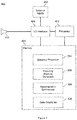
- FIG 4 is a further schematic representation of a system for enhancing a proximity warning sound.
- the system 400 comprises a processor 402, memory 404 (the contents of which are accessible by the processor 402) and an I/O interface 406.
- the memory 404 may store instructions which when executed using the process 402 may cause the system 400 to render the functionality associated with enhancing a proximity warning sound as described herein.
- the memory 804 may store instructions which when executed using the processor 402 may cause the system 400 to render the functionality associated with the distance processor 204, the proximity warning generator 206 and the reverberation synthesizer 208 as described herein.
- data structures, temporary variables and other information may store data in data storage 408.
- the processor 402 may comprise a single processor or multiple processors that may be disposed on a single chip, on multiple devices or distributed over more that one system.
- the processor 402 may be hardware that executes computer executable instructions or computer code embodied in the memory 404 or in other memory to perform one or more features of the system.
- the processor 402 may include a general purpose processor, a central processing unit (CPU), a graphics processing unit (GPU), an application specific integrated circuit (ASIC), a digital signal processor (DSP), a field programmable gate array (FPGA), a digital circuit, an analog circuit, a microcontroller, any other type of processor, or any combination thereof.
- the memory 404 may comprise a device for storing and retrieving data, processor executable instructions, or any combination thereof.
- the memory 404 may include non-volatile and/or volatile memory, such as a random access memory (RAM), a read-only memory (ROM), an erasable programmable read-only memory (EPROM), or a flash memory.
- RAM random access memory
- ROM read-only memory
- EPROM erasable programmable read-only memory
- flash memory a flash memory.
- the memory 404 may comprise a single device or multiple devices that may be disposed on one or more dedicated memory devices or on a processor or other similar device.
- the memory 404 may include an optical, magnetic (hard-drive) or any other form of data storage device.
- the memory 404 may store computer code, such as the distance processor 204, the proximity warning generator 206 and the reverberation synthesizer 208 as described herein.
- the computer code may include instructions executable with the processor 402.
- the computer code may be written in any computer language, such as C, C++, assembly language, channel program code, and/or any combination of computer languages.
- the memory 404 may store information in data structures including, for example, information representative of an impulse response or a reverberant acoustic space.
- the I/O interface 406 may be used to connect devices such as, for example, the audio transducers 106 and 212, the external inputs 202 and to other components of the system 400.
- the system 400 may include more, fewer, or different components than illustrated in Figure 4 . Furthermore, each one of the components of system 400 may include more, fewer, or different elements than is illustrated in Figure 4 .
- Flags, data, databases, tables, entities, and other data structures may be separately stored and managed, may be incorporated into a single memory or database, may be distributed, or may be logically and physically organized in many different ways.
- the components may operate independently or be part of a same program or hardware.
- the components may be resident on separate hardware, such as separate removable circuit boards, or share common hardware, such as a same memory and processor for implementing instructions from the memory. Programs may be parts of a single program, separate programs, or distributed across several memories and processors.
- the functions, acts or tasks illustrated in the figures or described may be executed in response to one or more sets of logic or instructions stored in or on computer readable media.
- the functions, acts or tasks are independent of the particular type of instructions set, storage media, processor or processing strategy and may be performed by software, hardware, integrated circuits, firmware, micro code and the like, operating alone or in combination.
- processing strategies may include multiprocessing, multitasking, parallel processing, distributed processing, and/or any other type of processing.
- the instructions are stored on a removable media device for reading by local or remote systems.
- the logic or instructions are stored in a remote location for transfer through a computer network or over telephone lines.
- the logic or instructions may be stored within a given computer such as, for example, a CPU.
Landscapes
- Physics & Mathematics (AREA)
- General Physics & Mathematics (AREA)
- Electromagnetism (AREA)
- Business, Economics & Management (AREA)
- Emergency Management (AREA)
- Traffic Control Systems (AREA)
- Emergency Alarm Devices (AREA)
Abstract
Description
- The present disclosure relates to the field of processing audio signals. In particular, to a system and method for enhancing a proximity warning sound.
- Proximity warning systems may indicate the relative proximity between a first object and a second object. In some applications, objects may move relative to a person without the person's awareness. In some cases this may pose a safety hazard to either the person, the object, which may also be a person, or to the person's property. In other applications there may be a benefit in a person knowing the distance between themselves and the other person or object. Many automobiles contain proximity warning systems, or parking assistance systems that help the driver to avoid collisions with nearby objects and that include the use of audible feedback. The audible feedback is typically not in an intuitive form and therefore requires familiarization and learning on the part of the driver. The familiarization and learning requirement may cause some degree of distraction from the task at hand for the driver.
- There is a need for an enhanced proximity warning systems that provides an audible queue and/or feedback related to a distance between a first object and a second object in an intuitive and safe manner.
- The system and method may be better understood with reference to the following drawings and description. The components in the figures are not necessarily to scale, emphasis instead being placed upon illustrating the principles of the disclosure. Moreover, in the figures, like referenced numerals designate corresponding parts throughout the different views.
- Other systems, methods, features and advantages will be, or will become, apparent to one with skill in the art upon examination of the following figures and detailed description. It is intended that all such additional systems, methods, features and advantages be included with this description and be protected by the following claims.
-
Fig. 1A is a schematic representation of an overhead view of an automobile in which a system for enhancing a proximity warning sound may be used. -
Fig. 1B is a schematic representation of an overhead view of an automobile in which a system for enhancing a proximity warning sound may be used. -
Fig. 2 is a schematic representation of a system for enhancing a proximity warning sound. -
Fig. 3 is a representation of a method for enhancing a proximity warning sound. -
Fig. 4 is a further schematic representation of a system for enhancing a proximity warning sound. - A system and method for enhancing a proximity warning sound may determine an indicator of a distance between a first object and a second object. A proximity warning sound may be generated including a reverberation mimicking component responsive to the determined distance indicator; where a human listener perceives the reverberation mimicking component included in the audible proximity warning sound to be indicative of the determined distance indicator.
-
Figure 1A is a schematic representation of an overhead view of an automobile in which a system for enhancing aproximity warning sound 100 may be used. In bothFigures 1A and 1B the representation of a automobile cabin may stand as a simplified representation of the automobile as a whole except where the description explicitly refers to the cabin. The example automobile, orfirst object 102, may include multiple audio transducers (a.k.a. audio speakers) 106A, 106B, 106C and 106D (collectively or generically audio transducers 106) and may be occupied and/or operated by a driver, oruser 104. A person, orsecond object 108, may be located adistance 110A relative to the automobile. Either of thefirst object 102 and thesecond object 108 may be a stationary object or a moving object. One or more of the audio transducers 106 may emit a proximity warning sound generated by a proximity warning system. The proximity warning system may contain a distance estimator that may determine an indicator of thedistance 110A between the automobile, orfirst object 102, and the person, orsecond object 108. The distance estimator associated with an automobile may utilize one or moreexternal sensors 112 that may detect objects.External sensors 112 may include, for example, ultrasound, magnetic sensing, radio detection and ranging (RADAR), light detection and ranging (LIDAR), optical and infrared. One or more of the audio transducers 106 may emit a proximity warning sound generated by the proximity warning system responsive to the determined distance indicator. -
Figure 1B is a schematic representation of an overhead view of an automobile in which the system for enhancing aproximity warning sound 100 may be used in which the automobile, orfirst object 102, may have moved closer to the person, orsecond object 108, shown inFigure 1A and may now be located a distance 110B relative to the automobile. Thedistance 110A and the distance 110B may be collectively or generically referred to as the distance 110. One or more of the audio transducers 106 may emit a proximity warning sound generated by the proximity warning system responsive to the determined distance indicator. The proximity warning sound emitted by the audio transducers 106 shown inFigure 1B may be different than the proximity warning sound emitted by the audio transducers 106 shown inFigure 1A indicating that thesecond object 108 is in closer proximity to thefirst object 102 and thereby that distance 110B is less thandistance 110A. The proximity warning sound may utilize properties of sound to indicate proximity or the severity of a situation. The pitch, amplitude and/or repetition rate of the proximity warning sound may be modified to indicate proximity. For example, when reversing the automobile shown inFigure 1A and Figure 1B , the proximity warning system may increase the repetition rate or pitch of the proximity warning sound to indicate the proximity from the rear of theautomobile 102 to thesecond object 108. In this description and the claims that follow references to indications of proximity may be understood to include estimations or approximations of either absolute or relative proximity. Where proximity may be understood to be a measure of distance between a first and a second object or point of reference. Further any reference to a measure of distance is not limited to a single linear measure of distance but may include measures of distance in multiple dimensions. - The proximity warning sound generated in
Figure 1A and Figure 1B may in addition optionally indicate perceptually the orientation and/or position of thesecond object 108 relative to the position of theautomobile 102. An orientation indicator may be determined for the orientation of thesecond object 108 relative to theautomobile 102 using, for example, the one or moreexternal sensors 112. Orientation of the second object relative to the first object may also be known as a direction or bearing. For example, the proximity warning sound may be spatialized using the audio transducers 106 so that the driver perceives the proximity warning sound to be emanating from behind and to the left of the driver. Spatializing the proximity warning sound may further inform the driver that the object is, for example, behind and to the left of the automobile. Proximity warning systems in an automobile may include, for example, parking and reversing assistance systems, pedestrian and object detection systems, blind-spot warning system, and lane departure warning systems. Further examples of proximity sounds that may be generated by a system for enhancing a proximity warning include a phone ringtone modified to indicate the distance to the location of a calling party. - A relative ratio of reverberations is a further property of sound that may be intrinsically linked to proximity and therefore potentially be more perceptually intuitive to a human listener than modifying the pitch, amplitude and/or the repetition rate of the proximity warning sound. The relative ratio of the reverberation tail components to the direct sound may be described as the wetness of the sound. When an object makes a sound in a room, the listener perceives the direct propagation of the sound and the indirect reflections of the sound that arrive later in time. The listener may perceive the sound associated with a close object to contain a direct, or dry, component that is louder than the indirect component. The listener may perceive the sound associated with a far away object to contain an indirect, or wet, component to be almost as loud as the direct components. The ratio of wet to dry components contained in a proximity warning sound may provide an intuitive indication of proximity to an object when generating a proximity warning sound.
- A proximity warning system may generate a proximity warning sound including a reverberation mimicking component, or reverberation component. The gain or the tail length of a reverberation component may be used to indicate or suggest proximity to an object. In a first example, multiple proximity warning sounds may be stored a priori, each containing differing levels of reverberation where the wetter versions may be emitted by the system when far from an object and the dryer ones may be emitted when close to an object. In a second example, a proximity warning sound may be stored and then processed using a reverberation filter or convolution with an impulse response of a reverberant acoustic space based on the distance 110. The impulse response of the reverberant acoustic space may be dynamically created using, for example, inputs from
external sensors 112 that detect objects. The reverberation components may be emitted from one or more of the audio transducers 106. - The proximity warning sound may include the reverberation component in addition to modified sound properties including, for example, pitch, amplitude and repetition rate. Utilizing the reverberation components to indicate proximity may add a useful dimension to help indicate proximity to an object in an intuitive manner and without jarring, frightening, or otherwise be distracting to a user. Further the inclusion of reverberation components in the proximity warning sound may allow the user (a.k.a. listener) to intuitively perceive a sense of indicated distance to an object (e.g. second object 108) while mitigating the need for familiarization or learning on the part of the user.
-
Figure 2 is a schematic representation of a system for enhancing a proximity warning sound. Thesystem 200 is an example system for enhancing a proximity warning sound. The example system configuration includes one or moreexternal inputs 202, adistance processor 204, aproximity warning generator 206, areverberation synthesizer 208 and one or moreaudio transducers 212. The one or moreexternal inputs 202 may include data and/or signals that are responsive to the distance between afirst object 102 and asecond object 108. Thedistance processor 204 may utilize the one or moreexternal inputs 202 to generate an indicator of adistance 210 between thefirst object 102 and thesecond object 108. The indicator ofdistance 210 may include an estimation or approximation of either absolute or relative distance between thefirst object 102 and thesecond object 108. Thedistance processor 204 may, for example, combine inputs from two or moreexternal sensors 202 and/or smooth the inputs from theexternal sensors 202. The determined distance of either absolute or relative distance between thefirst object 102 and thesecond object 108 may change over time (i.e. the objects are in relative motion). - The
proximity warning generator 206 may receive the indicator ofdetermined distance 210 and generate or select a proximity warning sound to be emitted from the one or moreaudio transducers 212. Thereverberation synthesizer 208 may receive the indicator ofdetermined distance 210 and apply reverberation components to the proximity warning sound created by theproximity warning generator 206. In an alternative implementation, theproximity warning generator 206 may receive the indicator ofdetermined distance 210 and responsive to the received indicator ofdetermined distance 210 selects a proximity warning sound that contains reverberation mimicking components where a human listener perceives the reverberation mimicking components included in the audible proximity warning sound to be indicative of the indicator ofdetermined distance 210. Theproximity warning generator 206 may comprise an audio signal processor, a digital signal processor or other similar device for generating or modifying an audio signal. The one or moreaudio transducers 212 emit the proximity warning sound into anacoustic space 214. -
Figure 3 is a representation of a method for enhancing a proximity warning sound. Themethod 300 may be, for example, implemented using any of thesystems Figures 1A, 1B , and2 . Themethod 300 may include the following acts. Determining an indicator of a distance between a first object and asecond object 302. Generating a proximity warning sound including a reverberation mimicking component responsive to the determined distance indicator; where a human listener perceives the reverberation mimicking component included in the audible proximity warning sound to be indicative of thedetermined distance indicator 304. When the determined distance changes over time, the proximity warning sound including a reverberation mimicking component may be modified to reflect the change in determined distance. -
Figure 4 is a further schematic representation of a system for enhancing a proximity warning sound. Thesystem 400 comprises aprocessor 402, memory 404 (the contents of which are accessible by the processor 402) and an I/O interface 406. Thememory 404 may store instructions which when executed using theprocess 402 may cause thesystem 400 to render the functionality associated with enhancing a proximity warning sound as described herein. For example, the memory 804 may store instructions which when executed using theprocessor 402 may cause thesystem 400 to render the functionality associated with thedistance processor 204, theproximity warning generator 206 and thereverberation synthesizer 208 as described herein. In addition, data structures, temporary variables and other information may store data indata storage 408. - The
processor 402 may comprise a single processor or multiple processors that may be disposed on a single chip, on multiple devices or distributed over more that one system. Theprocessor 402 may be hardware that executes computer executable instructions or computer code embodied in thememory 404 or in other memory to perform one or more features of the system. Theprocessor 402 may include a general purpose processor, a central processing unit (CPU), a graphics processing unit (GPU), an application specific integrated circuit (ASIC), a digital signal processor (DSP), a field programmable gate array (FPGA), a digital circuit, an analog circuit, a microcontroller, any other type of processor, or any combination thereof. - The
memory 404 may comprise a device for storing and retrieving data, processor executable instructions, or any combination thereof. Thememory 404 may include non-volatile and/or volatile memory, such as a random access memory (RAM), a read-only memory (ROM), an erasable programmable read-only memory (EPROM), or a flash memory. Thememory 404 may comprise a single device or multiple devices that may be disposed on one or more dedicated memory devices or on a processor or other similar device. Alternatively or in addition, thememory 404 may include an optical, magnetic (hard-drive) or any other form of data storage device. - The
memory 404 may store computer code, such as thedistance processor 204, theproximity warning generator 206 and thereverberation synthesizer 208 as described herein. The computer code may include instructions executable with theprocessor 402. The computer code may be written in any computer language, such as C, C++, assembly language, channel program code, and/or any combination of computer languages. Thememory 404 may store information in data structures including, for example, information representative of an impulse response or a reverberant acoustic space. - The I/
O interface 406 may be used to connect devices such as, for example, theaudio transducers 106 and 212, theexternal inputs 202 and to other components of thesystem 400. - All of the disclosure, regardless of the particular implementation described, is exemplary in nature, rather than limiting. The
system 400 may include more, fewer, or different components than illustrated inFigure 4 . Furthermore, each one of the components ofsystem 400 may include more, fewer, or different elements than is illustrated inFigure 4 . Flags, data, databases, tables, entities, and other data structures may be separately stored and managed, may be incorporated into a single memory or database, may be distributed, or may be logically and physically organized in many different ways. The components may operate independently or be part of a same program or hardware. The components may be resident on separate hardware, such as separate removable circuit boards, or share common hardware, such as a same memory and processor for implementing instructions from the memory. Programs may be parts of a single program, separate programs, or distributed across several memories and processors. - The functions, acts or tasks illustrated in the figures or described may be executed in response to one or more sets of logic or instructions stored in or on computer readable media. The functions, acts or tasks are independent of the particular type of instructions set, storage media, processor or processing strategy and may be performed by software, hardware, integrated circuits, firmware, micro code and the like, operating alone or in combination. Likewise, processing strategies may include multiprocessing, multitasking, parallel processing, distributed processing, and/or any other type of processing. In one embodiment, the instructions are stored on a removable media device for reading by local or remote systems. In other embodiments, the logic or instructions are stored in a remote location for transfer through a computer network or over telephone lines. In yet other embodiments, the logic or instructions may be stored within a given computer such as, for example, a CPU.
- While various embodiments of the system and method system and method for enhancing a proximity warning sound, it will be apparent to those of ordinary skill in the art that many more embodiments and implementations are possible within the scope of the present invention. Accordingly, the invention is not to be restricted except in light of the attached claims and their equivalents.
Claims (15)
- A method for enhancing a proximity warning sound characterized by the steps of:determining an indicator of a distance between a first object and a second object (302); andgenerating a proximity warning sound including a reverberation mimicking component responsive to the determined distance indicator (304); where a human listener perceives the reverberation mimicking component included in the proximity warning sound to be indicative of the determined distance indicator.
- The method for enhancing a proximity warning sound of claim 1, where each of the first object and the second object includes any one or more of: an automobile, a moving object, a stationary object and a person (108).
- The method for enhancing a proximity warning sound of claim 1, where the determining an indicator of the distance uses one or more external sensors (112) that detect objects.
- The method for enhancing a proximity warning sound of claim 1, where the indicator of the distance between the first object and the second object is updated responsive to changes in the distance over time and the step of generating the proximity warning sound is responsive to updates to the indicator of the distance between the first object and the second object.
- The method for enhancing a proximity warning sound of claim 1, where the reverberation mimicking component modifies the relative ratio of the reverberation tail components to the direct sound responsive to the determined distance indicator.
- The method for enhancing a proximity warning sound of claim 5, where the relative ratio of the reverberation tail components to the direct sound is decreased responsive to a decreasing determined distance indicator.
- The method of enhancing a proximity warning sound of claim 6, where the reverberation tail components includes a reverberation tail length.
- The method of enhancing a proximity warning sound of claim 6, where the reverberation tail components includes a reverberation gain.
- The method of enhancing a proximity warning sound of claim 6, where the reverberation tail components includes an impulse response of a reverberant acoustic space.
- The method for enhancing a proximity warning sound of claim 6, where the reverberation mimicking component modifies the relative ratio of the reverberation tail components to the direct sound by selecting one of one or more proximity warning sounds containing differing ratios of reverberation tail components to direct sound that are generated a priori.
- The method for enhancing a proximity warning sound of claim 1, further comprising: determining a orientation indicator of an orientation of the second object relative to the first objection; where the proximity warning sound is spatialized responsive to the determined orientation indicator when played through audio transducers.
- The method for enhancing a proximity warning sound of claim 1, where the determined indicator of distance is an estimate of the relative proximity of the second object to the first object.
- The method for enhancing a proximity warning sound of claim 1, where the determined indicator of distance is an estimate of the absolute proximity of the second object to the first object.
- The method for enhancing a proximity warning sound of claim 1, where the proximity warning sound directly varies in pitch and repetition as a result of a changing distance.
- A system for enhancing a proximity warning sound defined by a process defined by claims 1 to 10 characterized in that:a hardware processor (204) determines the indicator of the distance between the first object and the second object; andan audio signal processor (206) generates the proximity warning sound that includes the reverberation mimicking component responsive to the determined distance indicator; where the human listener perceives the reverberation mimicking component included in the proximity warning sound to be indicative of the determined distance indicator.
Applications Claiming Priority (1)
| Application Number | Priority Date | Filing Date | Title |
|---|---|---|---|
| US14/935,057 US9734686B2 (en) | 2015-11-06 | 2015-11-06 | System and method for enhancing a proximity warning sound |
Publications (2)
| Publication Number | Publication Date |
|---|---|
| EP3166091A1 true EP3166091A1 (en) | 2017-05-10 |
| EP3166091B1 EP3166091B1 (en) | 2021-01-06 |
Family
ID=57348465
Family Applications (1)
| Application Number | Title | Priority Date | Filing Date |
|---|---|---|---|
| EP16197407.6A Active EP3166091B1 (en) | 2015-11-06 | 2016-11-04 | System and method for enhancing a proximity warning sound |
Country Status (3)
| Country | Link |
|---|---|
| US (1) | US9734686B2 (en) |
| EP (1) | EP3166091B1 (en) |
| CA (1) | CA2947562C (en) |
Families Citing this family (6)
| Publication number | Priority date | Publication date | Assignee | Title |
|---|---|---|---|---|
| DE102014107305A1 (en) * | 2014-05-23 | 2015-11-26 | Valeo Schalter Und Sensoren Gmbh | Parking assistance device for a motor vehicle |
| EP3231690A1 (en) * | 2016-04-13 | 2017-10-18 | Ford Global Technologies, LLC | Method and device for assisting a parking manoeuvre |
| JP6470335B2 (en) * | 2017-03-15 | 2019-02-13 | 株式会社Subaru | Vehicle display system and method for controlling vehicle display system |
| US20180336795A1 (en) * | 2017-05-16 | 2018-11-22 | Steven J. Swanson | Permission-status conditioning system apparatus and method |
| CN109872504B (en) * | 2019-03-08 | 2024-06-07 | 上海理工大学 | Real-time autonomous distress system for major accident of expressway |
| US12275351B2 (en) * | 2023-08-30 | 2025-04-15 | Ford Global Technologies, Llc | Acoustic vehicle alerting system |
Citations (4)
| Publication number | Priority date | Publication date | Assignee | Title |
|---|---|---|---|---|
| WO1999053455A1 (en) * | 1998-04-08 | 1999-10-21 | Koninklijke Philips Electronics N.V. | Method of producing alarm signals |
| JP2002040131A (en) * | 2000-07-26 | 2002-02-06 | Mazda Motor Corp | Vehicle alarm system |
| US7106180B1 (en) * | 2001-08-30 | 2006-09-12 | Frank Joseph Pompei | Directional acoustic alerting system |
| JP2008046862A (en) * | 2006-08-16 | 2008-02-28 | Nissan Motor Co Ltd | Vehicle alarm device and warning sound output method |
Family Cites Families (13)
| Publication number | Priority date | Publication date | Assignee | Title |
|---|---|---|---|---|
| US5812056A (en) * | 1997-05-09 | 1998-09-22 | Golden Eagle Electronics Manufactory Ltd. | Child locating and monitoring device |
| KR100598003B1 (en) * | 1998-03-25 | 2006-07-06 | 레이크 테크놀로지 리미티드 | Audio signal processing method and apparatus |
| WO2007096808A1 (en) * | 2006-02-21 | 2007-08-30 | Koninklijke Philips Electronics N.V. | Audio encoding and decoding |
| US8150051B2 (en) * | 2007-12-12 | 2012-04-03 | Bose Corporation | System and method for sound system simulation |
| US9939413B2 (en) * | 2008-01-09 | 2018-04-10 | Surf Technology As | Measurement and imaging of scatterers with memory of scatterer parameters using at least two-frequency elastic wave pulse complexes |
| US20100079267A1 (en) * | 2008-09-29 | 2010-04-01 | Tsun-Huang Lin | Automobile Anti-Collision Early-Warning Device |
| US8587631B2 (en) * | 2010-06-29 | 2013-11-19 | Alcatel Lucent | Facilitating communications using a portable communication device and directed sound output |
| US9230419B2 (en) * | 2010-07-27 | 2016-01-05 | Rite-Hite Holding Corporation | Methods and apparatus to detect and warn proximate entities of interest |
| CN103329576B (en) * | 2011-01-05 | 2016-12-07 | 皇家飞利浦电子股份有限公司 | Audio system and method of operation |
| EP2727378B1 (en) * | 2011-07-01 | 2019-10-16 | Dolby Laboratories Licensing Corporation | Audio playback system monitoring |
| US20140112483A1 (en) * | 2012-10-24 | 2014-04-24 | Alcatel-Lucent Usa Inc. | Distance-based automatic gain control and proximity-effect compensation |
| US20150070129A1 (en) * | 2013-09-12 | 2015-03-12 | Toyota Motor Engineering & Manufacturing North America, Inc. | Methods and systems for providing navigation assistance to a user |
| US20150350141A1 (en) * | 2014-05-31 | 2015-12-03 | Apple Inc. | Message user interfaces for capture and transmittal of media and location content |
-
2015
- 2015-11-06 US US14/935,057 patent/US9734686B2/en active Active
-
2016
- 2016-11-04 EP EP16197407.6A patent/EP3166091B1/en active Active
- 2016-11-04 CA CA2947562A patent/CA2947562C/en active Active
Patent Citations (4)
| Publication number | Priority date | Publication date | Assignee | Title |
|---|---|---|---|---|
| WO1999053455A1 (en) * | 1998-04-08 | 1999-10-21 | Koninklijke Philips Electronics N.V. | Method of producing alarm signals |
| JP2002040131A (en) * | 2000-07-26 | 2002-02-06 | Mazda Motor Corp | Vehicle alarm system |
| US7106180B1 (en) * | 2001-08-30 | 2006-09-12 | Frank Joseph Pompei | Directional acoustic alerting system |
| JP2008046862A (en) * | 2006-08-16 | 2008-02-28 | Nissan Motor Co Ltd | Vehicle alarm device and warning sound output method |
Also Published As
| Publication number | Publication date |
|---|---|
| US9734686B2 (en) | 2017-08-15 |
| US20170132893A1 (en) | 2017-05-11 |
| CA2947562C (en) | 2023-12-12 |
| EP3166091B1 (en) | 2021-01-06 |
| CA2947562A1 (en) | 2017-05-06 |
Similar Documents
| Publication | Publication Date | Title |
|---|---|---|
| CA2947562C (en) | System and method for enhancing a proximity warning sound | |
| US8170222B2 (en) | Augmented reality enhanced audio | |
| US9896031B1 (en) | Spatial auditory alerts for a vehicle | |
| US10126823B2 (en) | In-vehicle gesture interactive spatial audio system | |
| KR102115222B1 (en) | Electronic device for controlling sound and method for operating thereof | |
| US20200058222A1 (en) | Notification control apparatus and method for controlling notification | |
| US9640182B2 (en) | Systems and vehicles that provide speech recognition system notifications | |
| US20140350942A1 (en) | Vehicle human machine interface with gaze direction and voice recognition | |
| CN114013368A (en) | Pedestrian warning system and method | |
| CN112578376A (en) | Method and apparatus for combining frames of an overlapping scanning system | |
| CN110231863B (en) | Voice interaction method and vehicle-mounted equipment | |
| JP2015506491A (en) | Acoustic signal correction | |
| US9594148B2 (en) | Estimation device and estimation method using sound image localization processing | |
| US20180376242A1 (en) | Information processing apparatus, information processing system, control method, and program | |
| EP3282229B1 (en) | System and method for generating an acoustic signal for localization of a point of interest | |
| EP3313102A1 (en) | Apparatus and method for intelligent audio levels for car, home or public entertainment | |
| JPWO2019053881A1 (en) | Driving support device and driving support method | |
| WO2022244109A1 (en) | Audio content provision device, control method, and computer-readable medium | |
| JP2018077585A (en) | Information presenting apparatus, information presenting method, and information presenting program | |
| CN107948857B (en) | Sound processing method and electronic equipment | |
| CN113078706A (en) | Method and device for controlling prompt lamp of earphone charging box and computer readable storage medium | |
| US20250175756A1 (en) | Techniques for adding distance-dependent reverb to an audio signal for a virtual sound source | |
| KR20200058354A (en) | Electronic device for controlling sound and method for operating thereof | |
| Keshavarz et al. | Sound localization-based navigational user interfaces | |
| WO2024197200A1 (en) | Rendering audio over multiple loudspeakers utilizing interaural cues for height virtualization |
Legal Events
| Date | Code | Title | Description |
|---|---|---|---|
| PUAI | Public reference made under article 153(3) epc to a published international application that has entered the european phase |
Free format text: ORIGINAL CODE: 0009012 |
|
| STAA | Information on the status of an ep patent application or granted ep patent |
Free format text: STATUS: THE APPLICATION HAS BEEN PUBLISHED |
|
| AK | Designated contracting states |
Kind code of ref document: A1 Designated state(s): AL AT BE BG CH CY CZ DE DK EE ES FI FR GB GR HR HU IE IS IT LI LT LU LV MC MK MT NL NO PL PT RO RS SE SI SK SM TR |
|
| AX | Request for extension of the european patent |
Extension state: BA ME |
|
| STAA | Information on the status of an ep patent application or granted ep patent |
Free format text: STATUS: REQUEST FOR EXAMINATION WAS MADE |
|
| 17P | Request for examination filed |
Effective date: 20171106 |
|
| RBV | Designated contracting states (corrected) |
Designated state(s): AL AT BE BG CH CY CZ DE DK EE ES FI FR GB GR HR HU IE IS IT LI LT LU LV MC MK MT NL NO PL PT RO RS SE SI SK SM TR |
|
| STAA | Information on the status of an ep patent application or granted ep patent |
Free format text: STATUS: EXAMINATION IS IN PROGRESS |
|
| 17Q | First examination report despatched |
Effective date: 20190311 |
|
| RAP1 | Party data changed (applicant data changed or rights of an application transferred) |
Owner name: BLACKBERRY LIMITED |
|
| GRAP | Despatch of communication of intention to grant a patent |
Free format text: ORIGINAL CODE: EPIDOSNIGR1 |
|
| STAA | Information on the status of an ep patent application or granted ep patent |
Free format text: STATUS: GRANT OF PATENT IS INTENDED |
|
| INTG | Intention to grant announced |
Effective date: 20200709 |
|
| GRAS | Grant fee paid |
Free format text: ORIGINAL CODE: EPIDOSNIGR3 |
|
| GRAA | (expected) grant |
Free format text: ORIGINAL CODE: 0009210 |
|
| STAA | Information on the status of an ep patent application or granted ep patent |
Free format text: STATUS: THE PATENT HAS BEEN GRANTED |
|
| AK | Designated contracting states |
Kind code of ref document: B1 Designated state(s): AL AT BE BG CH CY CZ DE DK EE ES FI FR GB GR HR HU IE IS IT LI LT LU LV MC MK MT NL NO PL PT RO RS SE SI SK SM TR |
|
| REG | Reference to a national code |
Ref country code: GB Ref legal event code: FG4D |
|
| REG | Reference to a national code |
Ref country code: AT Ref legal event code: REF Ref document number: 1353197 Country of ref document: AT Kind code of ref document: T Effective date: 20210115 Ref country code: CH Ref legal event code: EP |
|
| REG | Reference to a national code |
Ref country code: DE Ref legal event code: R096 Ref document number: 602016050917 Country of ref document: DE |
|
| REG | Reference to a national code |
Ref country code: IE Ref legal event code: FG4D |
|
| REG | Reference to a national code |
Ref country code: NL Ref legal event code: MP Effective date: 20210106 |
|
| REG | Reference to a national code |
Ref country code: AT Ref legal event code: MK05 Ref document number: 1353197 Country of ref document: AT Kind code of ref document: T Effective date: 20210106 |
|
| REG | Reference to a national code |
Ref country code: LT Ref legal event code: MG9D |
|
| PG25 | Lapsed in a contracting state [announced via postgrant information from national office to epo] |
Ref country code: PT Free format text: LAPSE BECAUSE OF FAILURE TO SUBMIT A TRANSLATION OF THE DESCRIPTION OR TO PAY THE FEE WITHIN THE PRESCRIBED TIME-LIMIT Effective date: 20210506 Ref country code: NO Free format text: LAPSE BECAUSE OF FAILURE TO SUBMIT A TRANSLATION OF THE DESCRIPTION OR TO PAY THE FEE WITHIN THE PRESCRIBED TIME-LIMIT Effective date: 20210406 Ref country code: FI Free format text: LAPSE BECAUSE OF FAILURE TO SUBMIT A TRANSLATION OF THE DESCRIPTION OR TO PAY THE FEE WITHIN THE PRESCRIBED TIME-LIMIT Effective date: 20210106 Ref country code: HR Free format text: LAPSE BECAUSE OF FAILURE TO SUBMIT A TRANSLATION OF THE DESCRIPTION OR TO PAY THE FEE WITHIN THE PRESCRIBED TIME-LIMIT Effective date: 20210106 Ref country code: GR Free format text: LAPSE BECAUSE OF FAILURE TO SUBMIT A TRANSLATION OF THE DESCRIPTION OR TO PAY THE FEE WITHIN THE PRESCRIBED TIME-LIMIT Effective date: 20210407 Ref country code: BG Free format text: LAPSE BECAUSE OF FAILURE TO SUBMIT A TRANSLATION OF THE DESCRIPTION OR TO PAY THE FEE WITHIN THE PRESCRIBED TIME-LIMIT Effective date: 20210406 Ref country code: NL Free format text: LAPSE BECAUSE OF FAILURE TO SUBMIT A TRANSLATION OF THE DESCRIPTION OR TO PAY THE FEE WITHIN THE PRESCRIBED TIME-LIMIT Effective date: 20210106 Ref country code: LT Free format text: LAPSE BECAUSE OF FAILURE TO SUBMIT A TRANSLATION OF THE DESCRIPTION OR TO PAY THE FEE WITHIN THE PRESCRIBED TIME-LIMIT Effective date: 20210106 |
|
| PG25 | Lapsed in a contracting state [announced via postgrant information from national office to epo] |
Ref country code: LV Free format text: LAPSE BECAUSE OF FAILURE TO SUBMIT A TRANSLATION OF THE DESCRIPTION OR TO PAY THE FEE WITHIN THE PRESCRIBED TIME-LIMIT Effective date: 20210106 Ref country code: PL Free format text: LAPSE BECAUSE OF FAILURE TO SUBMIT A TRANSLATION OF THE DESCRIPTION OR TO PAY THE FEE WITHIN THE PRESCRIBED TIME-LIMIT Effective date: 20210106 Ref country code: RS Free format text: LAPSE BECAUSE OF FAILURE TO SUBMIT A TRANSLATION OF THE DESCRIPTION OR TO PAY THE FEE WITHIN THE PRESCRIBED TIME-LIMIT Effective date: 20210106 Ref country code: AT Free format text: LAPSE BECAUSE OF FAILURE TO SUBMIT A TRANSLATION OF THE DESCRIPTION OR TO PAY THE FEE WITHIN THE PRESCRIBED TIME-LIMIT Effective date: 20210106 Ref country code: SE Free format text: LAPSE BECAUSE OF FAILURE TO SUBMIT A TRANSLATION OF THE DESCRIPTION OR TO PAY THE FEE WITHIN THE PRESCRIBED TIME-LIMIT Effective date: 20210106 |
|
| PG25 | Lapsed in a contracting state [announced via postgrant information from national office to epo] |
Ref country code: IS Free format text: LAPSE BECAUSE OF FAILURE TO SUBMIT A TRANSLATION OF THE DESCRIPTION OR TO PAY THE FEE WITHIN THE PRESCRIBED TIME-LIMIT Effective date: 20210506 |
|
| REG | Reference to a national code |
Ref country code: DE Ref legal event code: R097 Ref document number: 602016050917 Country of ref document: DE |
|
| PG25 | Lapsed in a contracting state [announced via postgrant information from national office to epo] |
Ref country code: CZ Free format text: LAPSE BECAUSE OF FAILURE TO SUBMIT A TRANSLATION OF THE DESCRIPTION OR TO PAY THE FEE WITHIN THE PRESCRIBED TIME-LIMIT Effective date: 20210106 Ref country code: EE Free format text: LAPSE BECAUSE OF FAILURE TO SUBMIT A TRANSLATION OF THE DESCRIPTION OR TO PAY THE FEE WITHIN THE PRESCRIBED TIME-LIMIT Effective date: 20210106 Ref country code: SM Free format text: LAPSE BECAUSE OF FAILURE TO SUBMIT A TRANSLATION OF THE DESCRIPTION OR TO PAY THE FEE WITHIN THE PRESCRIBED TIME-LIMIT Effective date: 20210106 |
|
| PLBE | No opposition filed within time limit |
Free format text: ORIGINAL CODE: 0009261 |
|
| STAA | Information on the status of an ep patent application or granted ep patent |
Free format text: STATUS: NO OPPOSITION FILED WITHIN TIME LIMIT |
|
| PG25 | Lapsed in a contracting state [announced via postgrant information from national office to epo] |
Ref country code: ES Free format text: LAPSE BECAUSE OF FAILURE TO SUBMIT A TRANSLATION OF THE DESCRIPTION OR TO PAY THE FEE WITHIN THE PRESCRIBED TIME-LIMIT Effective date: 20210106 Ref country code: DK Free format text: LAPSE BECAUSE OF FAILURE TO SUBMIT A TRANSLATION OF THE DESCRIPTION OR TO PAY THE FEE WITHIN THE PRESCRIBED TIME-LIMIT Effective date: 20210106 Ref country code: RO Free format text: LAPSE BECAUSE OF FAILURE TO SUBMIT A TRANSLATION OF THE DESCRIPTION OR TO PAY THE FEE WITHIN THE PRESCRIBED TIME-LIMIT Effective date: 20210106 Ref country code: SK Free format text: LAPSE BECAUSE OF FAILURE TO SUBMIT A TRANSLATION OF THE DESCRIPTION OR TO PAY THE FEE WITHIN THE PRESCRIBED TIME-LIMIT Effective date: 20210106 |
|
| 26N | No opposition filed |
Effective date: 20211007 |
|
| PG25 | Lapsed in a contracting state [announced via postgrant information from national office to epo] |
Ref country code: AL Free format text: LAPSE BECAUSE OF FAILURE TO SUBMIT A TRANSLATION OF THE DESCRIPTION OR TO PAY THE FEE WITHIN THE PRESCRIBED TIME-LIMIT Effective date: 20210106 |
|
| PG25 | Lapsed in a contracting state [announced via postgrant information from national office to epo] |
Ref country code: SI Free format text: LAPSE BECAUSE OF FAILURE TO SUBMIT A TRANSLATION OF THE DESCRIPTION OR TO PAY THE FEE WITHIN THE PRESCRIBED TIME-LIMIT Effective date: 20210106 |
|
| PG25 | Lapsed in a contracting state [announced via postgrant information from national office to epo] |
Ref country code: IT Free format text: LAPSE BECAUSE OF FAILURE TO SUBMIT A TRANSLATION OF THE DESCRIPTION OR TO PAY THE FEE WITHIN THE PRESCRIBED TIME-LIMIT Effective date: 20210106 |
|
| PG25 | Lapsed in a contracting state [announced via postgrant information from national office to epo] |
Ref country code: IS Free format text: LAPSE BECAUSE OF FAILURE TO SUBMIT A TRANSLATION OF THE DESCRIPTION OR TO PAY THE FEE WITHIN THE PRESCRIBED TIME-LIMIT Effective date: 20210506 |
|
| PG25 | Lapsed in a contracting state [announced via postgrant information from national office to epo] |
Ref country code: MC Free format text: LAPSE BECAUSE OF FAILURE TO SUBMIT A TRANSLATION OF THE DESCRIPTION OR TO PAY THE FEE WITHIN THE PRESCRIBED TIME-LIMIT Effective date: 20210106 |
|
| REG | Reference to a national code |
Ref country code: CH Ref legal event code: PL |
|
| PG25 | Lapsed in a contracting state [announced via postgrant information from national office to epo] |
Ref country code: LU Free format text: LAPSE BECAUSE OF NON-PAYMENT OF DUE FEES Effective date: 20211104 Ref country code: BE Free format text: LAPSE BECAUSE OF NON-PAYMENT OF DUE FEES Effective date: 20211130 |
|
| REG | Reference to a national code |
Ref country code: BE Ref legal event code: MM Effective date: 20211130 |
|
| PG25 | Lapsed in a contracting state [announced via postgrant information from national office to epo] |
Ref country code: IE Free format text: LAPSE BECAUSE OF NON-PAYMENT OF DUE FEES Effective date: 20211104 |
|
| PG25 | Lapsed in a contracting state [announced via postgrant information from national office to epo] |
Ref country code: HU Free format text: LAPSE BECAUSE OF FAILURE TO SUBMIT A TRANSLATION OF THE DESCRIPTION OR TO PAY THE FEE WITHIN THE PRESCRIBED TIME-LIMIT; INVALID AB INITIO Effective date: 20161104 |
|
| P01 | Opt-out of the competence of the unified patent court (upc) registered |
Effective date: 20230518 |
|
| PG25 | Lapsed in a contracting state [announced via postgrant information from national office to epo] |
Ref country code: CY Free format text: LAPSE BECAUSE OF FAILURE TO SUBMIT A TRANSLATION OF THE DESCRIPTION OR TO PAY THE FEE WITHIN THE PRESCRIBED TIME-LIMIT Effective date: 20210106 |
|
| PG25 | Lapsed in a contracting state [announced via postgrant information from national office to epo] |
Ref country code: LI Free format text: LAPSE BECAUSE OF NON-PAYMENT OF DUE FEES Effective date: 20220630 Ref country code: CH Free format text: LAPSE BECAUSE OF NON-PAYMENT OF DUE FEES Effective date: 20220630 |
|
| PG25 | Lapsed in a contracting state [announced via postgrant information from national office to epo] |
Ref country code: MK Free format text: LAPSE BECAUSE OF FAILURE TO SUBMIT A TRANSLATION OF THE DESCRIPTION OR TO PAY THE FEE WITHIN THE PRESCRIBED TIME-LIMIT Effective date: 20210106 |
|
| PG25 | Lapsed in a contracting state [announced via postgrant information from national office to epo] |
Ref country code: TR Free format text: LAPSE BECAUSE OF FAILURE TO SUBMIT A TRANSLATION OF THE DESCRIPTION OR TO PAY THE FEE WITHIN THE PRESCRIBED TIME-LIMIT Effective date: 20210106 |
|
| PG25 | Lapsed in a contracting state [announced via postgrant information from national office to epo] |
Ref country code: MT Free format text: LAPSE BECAUSE OF FAILURE TO SUBMIT A TRANSLATION OF THE DESCRIPTION OR TO PAY THE FEE WITHIN THE PRESCRIBED TIME-LIMIT Effective date: 20210106 |
|
| PGFP | Annual fee paid to national office [announced via postgrant information from national office to epo] |
Ref country code: DE Payment date: 20251118 Year of fee payment: 10 |
|
| PGFP | Annual fee paid to national office [announced via postgrant information from national office to epo] |
Ref country code: GB Payment date: 20251120 Year of fee payment: 10 |
|
| PGFP | Annual fee paid to national office [announced via postgrant information from national office to epo] |
Ref country code: FR Payment date: 20251120 Year of fee payment: 10 |