EP3165648A1 - Tubular knitted fabric provided with tightening portion and knitting method therefor - Google Patents
Tubular knitted fabric provided with tightening portion and knitting method therefor Download PDFInfo
- Publication number
- EP3165648A1 EP3165648A1 EP16002353.7A EP16002353A EP3165648A1 EP 3165648 A1 EP3165648 A1 EP 3165648A1 EP 16002353 A EP16002353 A EP 16002353A EP 3165648 A1 EP3165648 A1 EP 3165648A1
- Authority
- EP
- European Patent Office
- Prior art keywords
- circumferential
- section
- base
- elastic yarn
- knitting
- Prior art date
- Legal status (The legal status is an assumption and is not a legal conclusion. Google has not performed a legal analysis and makes no representation as to the accuracy of the status listed.)
- Withdrawn
Links
- 238000009940 knitting Methods 0.000 title claims abstract description 89
- 238000000034 method Methods 0.000 title claims abstract description 76
- 239000004744 fabric Substances 0.000 title claims abstract description 57
- 238000009963 fulling Methods 0.000 claims abstract description 17
- 244000309466 calf Species 0.000 claims description 8
- 238000010586 diagram Methods 0.000 description 8
- 210000003423 ankle Anatomy 0.000 description 2
- 210000002683 foot Anatomy 0.000 description 2
- 229920000742 Cotton Polymers 0.000 description 1
- 239000004677 Nylon Substances 0.000 description 1
- 229920002334 Spandex Polymers 0.000 description 1
- NIXOWILDQLNWCW-UHFFFAOYSA-N acrylic acid group Chemical group C(C=C)(=O)O NIXOWILDQLNWCW-UHFFFAOYSA-N 0.000 description 1
- 230000015572 biosynthetic process Effects 0.000 description 1
- 238000003780 insertion Methods 0.000 description 1
- 230000037431 insertion Effects 0.000 description 1
- 238000004519 manufacturing process Methods 0.000 description 1
- 229920001778 nylon Polymers 0.000 description 1
- 230000002093 peripheral effect Effects 0.000 description 1
- 238000007747 plating Methods 0.000 description 1
- 229920000728 polyester Polymers 0.000 description 1
- 238000009958 sewing Methods 0.000 description 1
- 239000004759 spandex Substances 0.000 description 1
- 230000003313 weakening effect Effects 0.000 description 1
- 210000002268 wool Anatomy 0.000 description 1
Images






Classifications
-
- D—TEXTILES; PAPER
- D04—BRAIDING; LACE-MAKING; KNITTING; TRIMMINGS; NON-WOVEN FABRICS
- D04B—KNITTING
- D04B1/00—Weft knitting processes for the production of fabrics or articles not dependent on the use of particular machines; Fabrics or articles defined by such processes
- D04B1/14—Other fabrics or articles characterised primarily by the use of particular thread materials
- D04B1/18—Other fabrics or articles characterised primarily by the use of particular thread materials elastic threads
-
- D—TEXTILES; PAPER
- D04—BRAIDING; LACE-MAKING; KNITTING; TRIMMINGS; NON-WOVEN FABRICS
- D04B—KNITTING
- D04B1/00—Weft knitting processes for the production of fabrics or articles not dependent on the use of particular machines; Fabrics or articles defined by such processes
- D04B1/22—Weft knitting processes for the production of fabrics or articles not dependent on the use of particular machines; Fabrics or articles defined by such processes specially adapted for knitting goods of particular configuration
- D04B1/24—Weft knitting processes for the production of fabrics or articles not dependent on the use of particular machines; Fabrics or articles defined by such processes specially adapted for knitting goods of particular configuration wearing apparel
- D04B1/26—Weft knitting processes for the production of fabrics or articles not dependent on the use of particular machines; Fabrics or articles defined by such processes specially adapted for knitting goods of particular configuration wearing apparel stockings
-
- D—TEXTILES; PAPER
- D10—INDEXING SCHEME ASSOCIATED WITH SUBLASSES OF SECTION D, RELATING TO TEXTILES
- D10B—INDEXING SCHEME ASSOCIATED WITH SUBLASSES OF SECTION D, RELATING TO TEXTILES
- D10B2509/00—Medical; Hygiene
- D10B2509/02—Bandages, dressings or absorbent pads
- D10B2509/028—Elastic support stockings or elastic bandages
Definitions
- the present invention relates to a tubular knitted fabric knitted by use of a flatbed knitting machine equipped with a pair of front and back needle beds.
- the present invention relates to a tubular knitted fabric provided with a tightening portion given a tightening force by interweaving an elastic yarn such as a rubber yarn, and relates to a knitting method therefor.
- tubular knitted fabrics having support functions are devised such that a tightening force is changed so as to correspond to parts of the body by partially arranging an elastic yarn such as a rubber yarn by so-called cut-and-boss and cut-and-sew techniques.
- an elastic yarn such as a rubber yarn
- cut-and-boss and cut-and-sew techniques there are problems that the end of the cut elastic yarn swells and becomes stiff, and that the elastic yarn is gradually pulled out from the base knit structure, thereby weakening the tightening force.
- stiffness is caused by a sewing line swollen in a line shape and a peripheral texture thereof.
- Japanese Laid-Open Patent Publication No. 2007-39814 proposes a method in which: the amount of an elastic yarn to be inserted in a base knit structure and the density of the base knit structure is changed for each course, thereby changing the tightening force in the wale direction.
- the elastic yarn is fed by use of a conical roller, and for each course, the elastic yarn is supplied from a portion of the conical roller at a different diameter, whereby the amount of insertion of the elastic yarn is changed.
- Japanese Laid-Open Patent Publication No. 2010-242235 proposes a sock in which: a shrinkable elastic yarn is hooked on a loop of a ground weave at each of both ends in the circling direction of a tightening portion and then returned, whereby a tightening portion is provided only in the arch portion and not provided in the instep portion.
- the ground weave is formed by circling-knitting, whereas only the elastic yarn is returned in the circling direction of the ground weave.
- Japanese Laid-Open Patent Publication No. 2013-60696 proposes the following knitting method, in which: a tubular knitted fabric is divided into a plurality of knitted portions in the circumferential direction; and knitting is performed while the knitting direction in each knitted portion is alternately reversed at each of both ends in the course direction.
- a tubular knitted fabric is divided into a plurality of knitted portions in the circumferential direction; and knitting is performed while the knitting direction in each knitted portion is alternately reversed at each of both ends in the course direction.
- an elastic yarn having a different tightening force is used in plating or used as the base yarn, whereby the tightening force at each portion is changed.
- the knitted fabric according to Japanese Laid-Open Patent Publication No. 2007-39814 has a problem that the tightening force in the circumferential direction cannot be changed although the tightening force in the wale direction can be changed.
- the knitted fabrics according to Japanese Laid-Open Patent Publication No. 2010-242235 and Japanese Laid-Open Patent Publication No. 2013-60696 each have a problem that the tightening force cannot be changed in the wale direction although the tightening force can be changed in the circumferential direction.
- An object of the present invention is to provide a tubular knitted fabric in which the tightening force is changed in both of the circumferential direction and the wale direction not by means of the cut-and-boss or cut-and-sew technique, and to provide a method for knitting the tubular knitted fabric.
- a method for knitting a tubular knitted fabric according to the present invention made in order to solve the above problems is a tubular knitted fabric knitting method for knitting a tubular knitted fabric provided with a tightening portion composed of a base yarn and an elastic yarn, by use of a flatbed knitting machine having at least a pair of front and back needle beds, the method including: a base course knitting step of knitting one course of a base knit structure by circling-knitting the base yarn; a first-circumferential-section-side line portion forming step of forming a first-circumferential-section-side line portion composed of the elastic yarn extending along a base course, while alternately repeating forming a tuck portion which passes a rear side of the base knit structure and a missed portion which passes a front side of the base knit structure, by alternately repeating a tucking operation of the elastic yarn and one or a plurality of missing operations of the elastic yarn for a first circumferential section which is part of the tightening portion in
- base course means a course of the base knit structure.
- a step of performing the first-circumferential-section-side line portion forming step N1 times and the second-circumferential-section-side line portion forming step M1 times between successive base course knitting steps and a step of performing the first-circumferential-section-side line portion forming step N2 times and the second-circumferential-section-side line portion forming step M2 times between successive base course knitting steps are alternately performed once with a base course knitting step therebetween.
- the ratio between the numbers of the line portions in the first circumferential section and the second circumferential section can be made (N1+N2):(M1+M2), and within the range of the numbers of the line portions that can be provided per base course, the ratio between the tightening forces of the first circumferential section and the second circumferential section can be varied.
- the tucking operation is performed at positions, in the course direction, that are different between in two line portion forming steps that are consecutively performed with the returning point forming step therebetween. Accordingly, appearance of a ridge pattern can be suppressed.
- a tubular knitted fabric according to the present invention is a tubular knitted fabric that has a weft knitted structure and that is provided with a tightening portion composed of a base yarn and an elastic yarn, wherein the tightening portion is formed by a base knit structure circling-knitted by the base yarn and a tightening structure composed of the elastic yarn interwoven in the base knit structure, and is divided into one or a plurality of vertical sections arranged in a wale direction of the base knit structure, the vertical section is divided into at least two circumferential sections including a first circumferential section and a second circumferential section adjacent to each other in a circling direction of the base knit structure, the tightening structure includes: line portions which are each composed of the elastic yarn extending along a base course while alternately repeating a tuck portion which passes a rear side of the base knit structure and a missed portion which passes a front side of the base knit structure; returning points at each of which the elastic yarn is returned with respect to the circling direction
- two circumferential sections include, per course, the line portions by different numbers from each other, and thus, the tightening force of the tightening portion can be changed with respect to the circumferential direction of the base knit structure.
- a base course in which a ratio between the numbers of the line portions in the first circumferential section and the second circumferential section is N2:M2 are alternately repeated every course, such that a ratio between the numbers of the line portions in the first circumferential section and the second circumferential section is (N1+N2):(M1+M2) in an entirety of the vertical section.
- two line portions returned at the returning point have the tuck portion at positions, in the course direction, that are different between the two line portions. Accordingly, appearance of a ridge pattern can be suppressed.
- the tubular knitted fabric according to the present invention has a plurality of the vertical sections, and the ratios between the numbers of the line portions in the first circumferential section and the second circumferential section are different between at least two vertical sections among the plurality of the vertical sections.
- the present invention includes the tubular knitted fabric provided with the tightening portion in which the tightening portion is configured to tighten a shin or a calf, the first circumferential section is configured to tighten the calf side, and the second circumferential section is configured to tighten the shin side.
- FIG 1 is a tubular knitted fabric 100 which is a five-toe sock according to one embodiment of the present invention.
- the tubular knitted fabric 100 includes: a rib top portion 2; a leg portion 3; a foot portion 4; and five toe caps 5, wherein the leg portion 3 is provided with a tightening portion 1.
- the tubular knitted fabric 100 has a base knit structure knitted by the same base yarn 6 and extending from the rib top portion 2 to the toe caps 5, and the tightening portion 1 is formed by an elastic yarn 7 being interwoven in the base knit structure.
- a known elastic yarn or an inelastic yarn such as cotton, wool, linen, silk, polyester, acrylic, nylon, or a blended yarn of these, can be used as appropriate.
- the elastic yarn 7 a known elastic yarn such as a rubber yarn, Spandex, or a covering yarn, can be used as appropriate.
- one loop of a base knit structure will also be referred to as "one stitch”.
- the tightening portion 1 includes: three vertical sections (first vertical section 11, second vertical section 12, and third vertical section 13) which are provided from the ankle to the shin/calf portion and which are divided portions in the up-down direction (wale direction).
- the three vertical sections 11, 12, 13 each include two circumferential sections which are divided portions in the circumferential direction (first circumferential sections 11a, 12a, 13a, and second circumferential sections 11b, 12b, 13b).
- the first circumferential sections 11a, 12a, 13a are located at the back side (calf side) of the tightening portion 1, and are knitted by the needle bed F at the front side of the flatbed knitting machine as described later.
- the second circumferential sections 11b, 12b, 13b are located at the front side (shin side) of the tightening portion 1, and are knitted by the needle bed B at the back side of the flatbed knitting machine.
- the tightening portion 1 includes: a base knit structure 14 knitted by the base yarn 6; and a tightening structure 15 knitted by the elastic yarn 7.
- the base knit structure 14 denotes, of the base knit structure continuing from the toe caps 5 to the rib top portion 2, a portion that is in the range of the tightening portion 1.
- the base knit structure 14 is not a structure separate from the portion of the base knit structure other than the tightening portion 1, but is a structure integrated therewith.
- FIG. 2 and FIG. 3 show the knitted structure of the second vertical section 12, viewed from the rear side thereof.
- the loop indicated by a chain double-dashed line in one vertical row at the left end in FIG 2 denotes the same loop as the loop in the vertical row at the right end of the base knit structure 14, thereby indicating that the left and right ends of the knitted fabric in FIG. 2 are continued to each other and that the knitted fabric continues in a tubular shape.
- the tightening structure 15 includes: returning points 15c at each of which the elastic yarn 7 is returned with respect to the circling direction (left-right direction in FIG. 2 ) of the base knit structure 14; and line portions 151a, 151b formed by the elastic yarn 7 returned at the returning points 15c.
- the line portions 151a, 151b are each provided such that a tuck portion 15a and a missed portion 15b are alternately repeated for every stitch.
- the tuck portion 15a is a portion in which the elastic yarn 7 passes the rear side (nearer side to the viewer of the drawing sheet of FIG. 2 ) of the loop 14a of the base knit structure 14.
- the missed portion 15b is a portion in which the elastic yarn 7 passes the front side (rear side of the drawing sheet of FIG 2 ) of the loop 14a of the base knit structure 14.
- Each returning point 15c is provided such that the elastic yarn 7 is hooked on a proximal end portion 14b (see FIG 3 ) of the loop 14a of the base knit structure 14.
- the first circumferential section 12a has a knitted structure in which the positions of the tuck portion 15a and the missed portion 15b of the two line portions 151a are shifted from each other by one stitch, such that the tuck portion 15a and the missed portion 15b of the two line portions 151a are alternately arranged.
- One of the two line portions 151a in the first circumferential section 12a is provided only for a half circumference (only for the first circumferential section 12a) of the tubular knitted fabric, and the other one line portion 151a is provided so as to extend for the entire circumference of the tubular knitted fabric together with the line portion 151b in the second circumferential section 12b.
- a cross-over yarn 1 5d from the adjacent base course C1, C3, ... is provided at the right end of the first circumferential section 12a, and the returning point 15c is provided at the left end of the first circumferential section 12a.
- the cross-over yarn 15d from the adjacent base course C2, C4 is provided at the left end of the first circumferential section 12a, and the returning point 15c is provided at the right end of the first circumferential section 12a.
- the positions of the returning point 15c and the cross-over yarn 15d are alternated for each base course, whereby in the entirety of the base courses, the number of the line portion 151a in the first circumferential section 12a is made 2, and the number of the line portion 151b in the second circumferential section 12b is made 1.
- the first circumferential section 11a knitted by the front needle bed F is provided with three line portions 151a per base course, and the second circumferential section 11b is provided with one line portion 151b per base course, whereby the ratio between the numbers of the line portions in the first circumferential section 11a and the second circumferential section 11b is set to be 3:1.
- the tuck portion 15a is provided every three stitches so that the tuck portions 15a do not overlap with each other among the three line portions 151a.
- the line portions 151a are connected to each other via the returning points 1 5c at two positions.
- the line portion 151b of the second circumferential section 11b is connected to the line portion 151a of the first circumferential section 11a by the cross-over yarn 15d and a border portion 11c provided at both ends of the second circumferential section 11b.
- the reference character 6 denotes the base yarn
- the reference character 7 denotes the elastic yarn
- the right arrow and the left arrow each denotes a yarn feeding direction.
- a base course 141 (see W1 to W4, or W8 to W11) in which the first circumferential section 13a is provided with two line portions 151a and the second circumferential section 13b is provided with one line portion 151b, and a course (see W5 to W7, or W12 to W14) in which the first circumferential section 13a is provided with one line portion 151a and the second circumferential section 13b is provided with one line portion 151b are alternately repeated, whereby the ratio between the numbers of line portions in the first circumferential section 13a and the second circumferential section 13b is set to be 3:2 in the entirety of the third vertical section 13.
- the tubular knitted fabric 100 is knitted by use of a flatbed knitting machine equipped with at least a pair of front and back needle beds.
- the tightening portion 1 is knitted by performing, in an appropriate order by an appropriate number of times, a base course knitting step S1, a first-circumferential-section-side line portion forming step S2, a second-circumferential-section-side line portion forming step S3, a returning point forming step S4, and a border portion passing step S5.
- the base course knitting step S1 is a step of knitting one base course 141 of the base knit structure 14. For example, as shown in the procedures W1 and W5 in FIG. 4 , a base yarn is fed in a circling manner to the knitting needles of the front and back needle beds F and R, whereby one plain stitch course is knitted.
- the first-circumferential-section-side line portion forming step S2 is a step of forming a line portion 151a in the first circumferential section 11a, 12a, 13a.
- the line portion 151a is formed in the following manner. For example, as shown in the procedures W2 and W3 in FIG. 4 , while the elastic yarn 7 is fed to the front needle bed F of the flatbed knitting machine, tucking operations by the knitting needles are repeated with one or a plurality of stitches of missing operations interposed therebetween, such that the elastic yarn 7 passes the rear side of the base knit structure in the tuck portions 15a and passes the front side of the base knit structure in the missed portions 15b.
- the second-circumferential-section-side line portion forming step S3 is a step of forming a line portion 151b in the second circumferential section 11b, 12b, 13b.
- the line portion 151b is formed in the following manner. For example, as shown in the procedure W4 in FIG 4 , while the elastic yarn 7 is fed to the back needle bed B of the flatbed knitting machine, tucking operations by the knitting needles are repeated with one or a plurality of stitches of missing operations interposed therebetween, such that the elastic yarn 7 alternately passes the front side and the rear side of the base knit structure.
- the returning point forming step S4 is a step of forming the returning point 15c at which the elastic yarn 7 is returned with respect to the circling direction of the base knit structure 14.
- the returning point 15c is formed in the following manner. For example, as shown at the right end in the column of the procedure W2 in FIG. 4 , a tucking operation is performed on the knitting needle at the position where the elastic yarn 7 is to be returned, and the yarn feeding direction of the elastic yarn 7 is reversed with respect to the circling direction of the base knit structure 14, whereby the elastic yarn 7 is hooked from outside on the proximal end portion 14b of the loop 14a of the base knit structure 14.
- the border portion passing step S5 is a step in which the elastic yarn 7 to be interwoven in the base knit structure 14 is caused to pass, without being returned at, the border portion 11c, 12c, 13c between the first circumferential section 11a, 12a, 13a and the second circumferential section 11b, 12b, 13b.
- the line portion 151a of the first circumferential section 11a, 12a, 13a and the line portion 151b of the second circumferential section 11b, 12b, 13b are combined together, to form one line portion that extends over the entire length in the circumferential direction of the tubular knitted fabric.
- a cross-over yarn forming step S6 is a step in which: while the base course knitting step S1 is performed, a yarn feeding port for feeding the elastic yarn 7 is withdrawn, thereby to form a cross-over yarn 15d which is the elastic yarn 7 extending across adjacent two base courses 141.
- the first vertical section 11 is knitted by repeating the procedures of W1 to W5 a plurality of times.
- the base course knitting step S1 is performed in the procedure W1 to form one base course.
- the first-circumferential-section-side line portion forming step S2 is performed twice to form three first-circumferential-section-side line portions 151a.
- the second-circumferential-section-side line portion forming step S3 is performed to form one second-circumferential-section-side line portion 151b.
- the returning point forming step S4 is performed to form the returning point 15c
- the border portion passing step S5 is performed to cause the elastic yarn 7 to pass from the first circumferential section to the second circumferential section.
- the reference character 15e in the drawing represents a passing point.
- the second vertical section 12 is knitted by repeating the procedures W1 to W8 a plurality of times.
- the base course knitting step S1 is performed to form one base course 141.
- the first-circumferential-section-side line portion forming step S2 is performed to form two first-circumferential-section-side line portions 151a.
- the second-circumferential-section-side line portion forming step S3 is performed to form one second-circumferential-section-side line portion 151b.
- the step S1 is performed again, to form one base course 141.
- the yarn feeding direction of the elastic yarn 7 employed in the procedure W2 to the procedure W4 is reversed, and the step S2 is performed twice and the step S3 is performed once in this order, whereby two first-circumferential-section-side line portions 151a and one second-circumferential-section-side line portion 151b are formed.
- the returning point forming step S4 is performed to form the returning point 15c.
- the border portion passing step S5 is performed, whereby the elastic yarn 7 is caused to pass from the first circumferential section to the second circumferential section.
- tucking operations are performed every two stitches, with one stitch of missing operation interposed therebetween. Tucking operations are performed at positions that are different between the procedure W2 and the procedure W3, and between the procedure W6 and the procedure W7.
- the third vertical section 13 is knitted by repeating the procedures W1 to W14 in FIG. 6 a plurality of times.
- the elastic yarn is knitted only through the tucking operation and the missing operation of the knitting needles.
- the line portion can be formed by a desired number. Accordingly, the number of line portions can be changed for each base course, and thus, the tightening force of the tightening portion 1 can be changed in the wale direction of the base knit structure 14.
- the first-circumferential-section-side line portion forming step S2 and the second-circumferential-section-side line portion forming step S3 are performed different numbers of times.
- the first-circumferential-section-side line portions 151a and the second-circumferential-section-side line portions 151b are formed by different numbers. Accordingly, the tightening force of the tightening portion 1 can be changed in the circumferential direction of the base knit structure 14.
- three vertical sections 11, 12, 13 are provided in the tightening portion 1, and the ratio between the numbers of the first-circumferential-section-side line portions 151a and the second-circumferential-section-side line portions 151b is set to be 3:1 in the first vertical section 11, 2:1 in the second vertical section 12, and 3:2 in the third vertical section 13.
- the ankle side is tightened well and the rib top side is easily widened, and thus, the sock is easy to wear.
- the positions of the tuck portions 15a among a plurality of first-circumferential-section-side line portions 151a are arranged so as not to overlap one another.
- a base course that includes two first-circumferential-section-side line portions 151a and one second-circumferential-section-side line portion; a base course that includes one first-circumferential-section-side line portion 151a and one second-circumferential-section-side line portion are alternately repeated, whereby the ratio between the numbers of the line portions in the first circumferential section and the second circumferential section are made 3:2 in the entirety of the third vertical section 13.
- FIG. 8 and FIG. 9 respectively show tubular knitted fabrics 200 and 300 according to other embodiments of the present invention.
- the second circumferential sections 11b, 12b, 13b of the tubular knitted fabric 100 shown in FIG. 1 are each formed in a thin strip shape so as to diagonally extend from upper left to lower right in the drawing.
- the first circumferential section occupies a wider portion in the circumferential direction than the second circumferential section.
- the returning point forming step S4 is performed not by the knitting needles at both ends, but by knitting needles at an intermediate position, whereby the first circumferential sections 11a, 12a, 13a are knitted so as to extend across both ends of the front needle bed and the back needle bed.
- the position of the stitch that forms the returning point is shifted little by little for each course, whereby the border portions 11c, 12c, 13c are each formed in a curved shape.
- both of the upper and lower end portions are knitted by the returning point being shifted little by little with respect to the course.
- the position of the returning point is not changed for a certain section, whereby each border portion 311c is formed so as to include a curved portion and a straight portion.
- a first circumferential section 311a is formed so as to have a wider area toward its lower portion and extend from behind toward the front, whereas a second circumferential section 311b is formed so as to have a wider area toward its upper portion and extend toward the back.
- the number of the vertical section is one.
- the present invention is not limited to the embodiments described above.
- the tuck positions of the two line portions returned at the returning point may be aligned with each other.
- the number of the vertical sections in the tightening portion may be two, four, or more.
- the tightening portion is not limited to the shin or calf portion, and may be provided at a foot portion of the sock.
- the tubular knitted fabric is not limited to a sock with toe caps, but may be a sock without toe caps. Further, not limited to socks, the tubular knitted fabric includes tights, leggings, and all of other known tubular knitted fabrics.
- Either of the front and back needle beds of the flatbed knitting machine may be used for either of the front and back of the tubular knitted fabric.
- FIG. 7 to FIG. 9 the portions common with those in the embodiment described above are denoted by the same reference characters and description thereof is omitted.
Landscapes
- Engineering & Computer Science (AREA)
- Textile Engineering (AREA)
- Knitting Of Fabric (AREA)
- Socks And Pantyhose (AREA)
Abstract
In this tubular knitted fabric 100 provided with a tightening portion and the knitting method therefor, knitting is performed by use of a flatbed knitting machine having a pair of front and back needle beds, and line portions 151a, 151b are formed such that an elastic yarn 7 alternately passes the front side and the rear side of a base knit structure 14 by alternately repeating a tucking operation and a missing operation on the elastic yarn 7. First circumferential sections 11a, 12a, 13a and second circumferential sections 11a, 12a, 13a of a tightening portion 1 are provided with the line portions 151a, 151b by different numbers.
Description
- The present invention relates to a tubular knitted fabric knitted by use of a flatbed knitting machine equipped with a pair of front and back needle beds. In particular, the present invention relates to a tubular knitted fabric provided with a tightening portion given a tightening force by interweaving an elastic yarn such as a rubber yarn, and relates to a knitting method therefor.
- Conventionally, tubular knitted fabrics having support functions are devised such that a tightening force is changed so as to correspond to parts of the body by partially arranging an elastic yarn such as a rubber yarn by so-called cut-and-boss and cut-and-sew techniques. However, in the tightening portion made by the cut-and-boss technique, there are problems that the end of the cut elastic yarn swells and becomes stiff, and that the elastic yarn is gradually pulled out from the base knit structure, thereby weakening the tightening force. Also in the tightening portion made by the cut-and-sew technique, there is a problem that stiffness is caused by a sewing line swollen in a line shape and a peripheral texture thereof.
- Thus, various knitting methods for tubular knitted fabrics have been proposed in which tightening force at parts of the tubular knitted fabric is changed not by the cut-and-boss or cut-and-sew technique. For example,
Japanese Laid-Open Patent Publication No. 2007-39814 Japanese Laid-Open Patent Publication No. 2007-39814 -
Japanese Laid-Open Patent Publication No. 2010-242235 Japanese Laid-Open Patent Publication No. 2010-242235 - Further,
Japanese Laid-Open Patent Publication No. 2013-60696 Japanese Laid-Open Patent Publication No. 2013-60696 - However, the knitted fabric according to
Japanese Laid-Open Patent Publication No. 2007-39814 Japanese Laid-Open Patent Publication No. 2010-242235 Japanese Laid-Open Patent Publication No. 2013-60696 - The present invention has been made in view of the above problems. An object of the present invention is to provide a tubular knitted fabric in which the tightening force is changed in both of the circumferential direction and the wale direction not by means of the cut-and-boss or cut-and-sew technique, and to provide a method for knitting the tubular knitted fabric.
- A method for knitting a tubular knitted fabric according to the present invention made in order to solve the above problems is a tubular knitted fabric knitting method for knitting a tubular knitted fabric provided with a tightening portion composed of a base yarn and an elastic yarn, by use of a flatbed knitting machine having at least a pair of front and back needle beds, the method including: a base course knitting step of knitting one course of a base knit structure by circling-knitting the base yarn; a first-circumferential-section-side line portion forming step of forming a first-circumferential-section-side line portion composed of the elastic yarn extending along a base course, while alternately repeating forming a tuck portion which passes a rear side of the base knit structure and a missed portion which passes a front side of the base knit structure, by alternately repeating a tucking operation of the elastic yarn and one or a plurality of missing operations of the elastic yarn for a first circumferential section which is part of the tightening portion in a circling direction; a second-circumferential-section-side line portion forming step of forming a second-circumferential-section-side line portion composed of the elastic yarn extending along the base course, while alternately repeating forming a tuck portion which passes the rear side of the base knit structure and a missed portion which passes the front side of the base knit structure, by alternately repeating a tucking operation of the elastic yarn and one or a plurality of missing operations of the elastic yarn for a second circumferential section which is part of the tightening portion in the circling direction and which is adjacent to the first circumferential section; a returning point forming step of returning the elastic yarn in the circling direction by tucking the elastic yarn at an end of the first circumferential section or at an end of the second circumferential section to hook the elastic yarn on a loop of the base knit structure; and a border portion passing step of causing the elastic yarn to pass a border portion between the first circumferential section and the second circumferential section, wherein the base course knitting step is performed a plurality of times, in a case where, between successive base course knitting steps, the first-circumferential-section-side line portion forming step is consecutively performed or the second-circumferential-section-side line portion forming step is consecutively performed, the returning point forming step is performed between the identical two consecutively-performed line portion forming steps, in a case where, between successive base course knitting steps, the first-circumferential-section-side line portion forming step and the second-circumferential-section-side line portion forming step are consecutively performed, the border portion passing step is performed between the two different line portion forming steps, the first-circumferential-section-side line portion forming step and the second-circumferential-section-side line portion forming step are performed different numbers of times so as to knit the tightening portion, a step of performing the first-circumferential-section-side line portion forming step N1 times and the second-circumferential-section-side line portion forming step M1 times between successive base course knitting steps, and a step of performing the first-circumferential-section-side line portion forming step N2 times and the second-circumferential-section-side line portion forming step M2 times between successive base course knitting steps are alternately performed once with a base course knitting step therebetween, and the tucking operation is performed at positions, in a course direction, that are different between the two line portion forming steps that are consecutively performed with the returning point forming step therebetween.
- Here, "base course" means a course of the base knit structure.
- As described above, by performing the line portion forming step a plurality of times after knitting one base course and before knitting the next base course, it becomes possible to change the number of the line portions per course of the base knit structure, for each course of the base knit structure. Thus, it is possible to change the tightening force of the tightening portion with respect to the wale direction.
- By performing the first-circumferential-section-side line portion forming step and the second-circumferential-section-side line portion forming step by different numbers of times, it is possible to provide both the circumferential sections with the line portions by different numbers, respectively. Thus, it is possible to change the tightening force of the tightening portion with respect to the circumferential direction.
- When the tightening force can thus be changed with respect to the wale and circumferential directions of the tubular knitted fabric in this manner, it is possible to reduce the tightening force in portions that need not be strongly tightened, thereby ensuring the stretchability. This enables formation of a tubular knitted fabric that is easy to wear.
- In addition, a step of performing the first-circumferential-section-side line portion forming step N1 times and the second-circumferential-section-side line portion forming step M1 times between successive base course knitting steps, and a step of performing the first-circumferential-section-side line portion forming step N2 times and the second-circumferential-section-side line portion forming step M2 times between successive base course knitting steps are alternately performed once with a base course knitting step therebetween. Accordingly, the ratio between the numbers of the line portions in the first circumferential section and the second circumferential section can be made (N1+N2):(M1+M2), and within the range of the numbers of the line portions that can be provided per base course, the ratio between the tightening forces of the first circumferential section and the second circumferential section can be varied.
- Furthermore, the tucking operation is performed at positions, in the course direction, that are different between in two line portion forming steps that are consecutively performed with the returning point forming step therebetween. Accordingly, appearance of a ridge pattern can be suppressed.
- A tubular knitted fabric according to the present invention is a tubular knitted fabric that has a weft knitted structure and that is provided with a tightening portion composed of a base yarn and an elastic yarn, wherein the tightening portion is formed by a base knit structure circling-knitted by the base yarn and a tightening structure composed of the elastic yarn interwoven in the base knit structure, and is divided into one or a plurality of vertical sections arranged in a wale direction of the base knit structure, the vertical section is divided into at least two circumferential sections including a first circumferential section and a second circumferential section adjacent to each other in a circling direction of the base knit structure, the tightening structure includes: line portions which are each composed of the elastic yarn extending along a base course while alternately repeating a tuck portion which passes a rear side of the base knit structure and a missed portion which passes a front side of the base knit structure; returning points at each of which the elastic yarn is returned with respect to the circling direction of the base knit structure, by being hooked from outside on a proximal end portion of a loop of the base knit structure; and passing points at each of which the elastic yarn passes a border between the first circumferential section and the second circumferential section, the first circumferential section and the second circumferential section include, per course of the base knit structure, the line portions by numbers different from each other, in the vertical section, a base course in which a ratio between the numbers of the line portions in the first circumferential section and the second circumferential section is N1:M1, and a base course in which a ratio between the numbers of the line portions in the first circumferential section and the second circumferential section is N2:M2 are alternately repeated every course, such that a ratio between the numbers of the line portions in the first circumferential section and the second circumferential section is (N1+N2):(M1+M2) in an entirety of the vertical section, and two line portions returned at the returning point have the tuck portion at positions, in a course direction, that are different between the two line portions.
- As described above, in the tubular knitted fabric according to the present invention, two circumferential sections include, per course, the line portions by different numbers from each other, and thus, the tightening force of the tightening portion can be changed with respect to the circumferential direction of the base knit structure.
- In the vertical section, a base course in which a ratio between the numbers of the line portions in the first circumferential section and the second circumferential section is N1:M1, and a base course in which a ratio between the numbers of the line portions in the first circumferential section and the second circumferential section is N2:M2 are alternately repeated every course, such that a ratio between the numbers of the line portions in the first circumferential section and the second circumferential section is (N1+N2):(M1+M2) in an entirety of the vertical section. Accordingly, within the range of the numbers of the line portions that can be provided per base course, the ratio between the tightening forces of the first circumferential section and the second circumferential section can be varied.
- Further, in the tubular knitted fabric according to the present invention, two line portions returned at the returning point have the tuck portion at positions, in the course direction, that are different between the two line portions. Accordingly, appearance of a ridge pattern can be suppressed.
- Preferably, the tubular knitted fabric according to the present invention has a plurality of the vertical sections, and the ratios between the numbers of the line portions in the first circumferential section and the second circumferential section are different between at least two vertical sections among the plurality of the vertical sections. By causing the ratios between the numbers of the line portions in two circumferential sections to be different between two vertical sections arranged in the wale direction of the base knit structure in this manner, it is possible to change the tightening force of the tightening portion with respect to the wale direction of the base knit structure.
- The present invention includes the tubular knitted fabric provided with the tightening portion in which the tightening portion is configured to tighten a shin or a calf, the first circumferential section is configured to tighten the calf side, and the second circumferential section is configured to tighten the shin side.
- As described above, according to the method of knitting the tubular knitted fabric provided with the tightening portion of the present invention, it is possible to provide a tubular knitted fabric in which the tightening force of the tightening portion is changed both in the wale direction and the circumferential direction, without damaging wearing feeling due to stiffness.
-
-
FIG 1 is a perspective view of a tubular knitted fabric according to one embodiment of the present invention; -
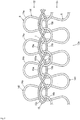
FIG 2 is a structure diagram schematically showing a knitted structure of a second vertical section shown inFIG. 1 , viewed from the rear side of the tubular knitted fabric; -
FIG 3 is an enlarged view of a major part showing the vicinity of a returning point in the structure diagram shown inFIG. 1 ; -
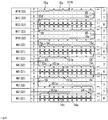
FIG 4 is a knitting diagram illustrating a method for knitting the second vertical section shown inFIG. 1 ; -
FIG 5 is a knitting diagram illustrating a method for knitting a first vertical section shown inFIG. 1 ; -
FIG 6 is a knitting diagram illustrating a method for knitting a third vertical section shown inFIG. 1 ; -
FIG 7 is a knitting diagram illustrating a method for knitting a tightening portion according to another embodiment of the present invention; -
FIG 8 is a perspective view of a tubular knitted fabric according to still another embodiment of the present invention; and -
FIG 9 is perspective views of a tubular knitted fabric according to still another embodiment of the present invention, (a) viewed from the front side thereof, and (b) viewed from the back side thereof. - Hereinafter, embodiments of the present invention will be described in detail with reference to the drawings as appropriate. However, the present invention is not limited to the embodiments below.
-
FIG 1 is a tubular knittedfabric 100 which is a five-toe sock according to one embodiment of the present invention. As shown inFIG 1 , the tubular knittedfabric 100 includes: a ribtop portion 2; aleg portion 3; afoot portion 4; and fivetoe caps 5, wherein theleg portion 3 is provided with a tighteningportion 1. The tubular knittedfabric 100 has a base knit structure knitted by thesame base yarn 6 and extending from the ribtop portion 2 to thetoe caps 5, and the tighteningportion 1 is formed by anelastic yarn 7 being interwoven in the base knit structure. - As the
base yarn 6, a known elastic yarn or an inelastic yarn, such as cotton, wool, linen, silk, polyester, acrylic, nylon, or a blended yarn of these, can be used as appropriate. As theelastic yarn 7, a known elastic yarn such as a rubber yarn, Spandex, or a covering yarn, can be used as appropriate. In the description below, one loop of a base knit structure will also be referred to as "one stitch". - The tightening
portion 1 includes: three vertical sections (firstvertical section 11, secondvertical section 12, and third vertical section 13) which are provided from the ankle to the shin/calf portion and which are divided portions in the up-down direction (wale direction). The threevertical sections circumferential sections circumferential sections circumferential sections portion 1, and are knitted by the needle bed F at the front side of the flatbed knitting machine as described later. The secondcircumferential sections portion 1, and are knitted by the needle bed B at the back side of the flatbed knitting machine. - As shown in
FIG. 2 andFIG. 3 , the tighteningportion 1 includes: abase knit structure 14 knitted by thebase yarn 6; and a tighteningstructure 15 knitted by theelastic yarn 7. Thebase knit structure 14 denotes, of the base knit structure continuing from the toe caps 5 to therib top portion 2, a portion that is in the range of the tighteningportion 1. Thebase knit structure 14 is not a structure separate from the portion of the base knit structure other than the tighteningportion 1, but is a structure integrated therewith. - Next, the tightening
structure 15 will be described with reference to the second vertical section having the simplest structure, used as an example.FIG. 2 andFIG. 3 show the knitted structure of the secondvertical section 12, viewed from the rear side thereof. The loop indicated by a chain double-dashed line in one vertical row at the left end inFIG 2 denotes the same loop as the loop in the vertical row at the right end of thebase knit structure 14, thereby indicating that the left and right ends of the knitted fabric inFIG. 2 are continued to each other and that the knitted fabric continues in a tubular shape. - The tightening
structure 15 includes: returningpoints 15c at each of which theelastic yarn 7 is returned with respect to the circling direction (left-right direction inFIG. 2 ) of thebase knit structure 14; andline portions elastic yarn 7 returned at the returningpoints 15c. Theline portions tuck portion 15a and a missedportion 15b are alternately repeated for every stitch. Thetuck portion 15a is a portion in which theelastic yarn 7 passes the rear side (nearer side to the viewer of the drawing sheet ofFIG. 2 ) of theloop 14a of thebase knit structure 14. The missedportion 15b is a portion in which theelastic yarn 7 passes the front side (rear side of the drawing sheet ofFIG 2 ) of theloop 14a of thebase knit structure 14. Each returningpoint 15c is provided such that theelastic yarn 7 is hooked on aproximal end portion 14b (seeFIG 3 ) of theloop 14a of thebase knit structure 14. - With respect to the second
vertical section 12, twoline portions 151a are provided per base course in the firstcircumferential section 12a, and oneline portion 151b is provided per base course in the secondcircumferential section 12b. The firstcircumferential section 12a has a knitted structure in which the positions of thetuck portion 15a and the missedportion 15b of the twoline portions 151a are shifted from each other by one stitch, such that thetuck portion 15a and the missedportion 15b of the twoline portions 151a are alternately arranged. One of the twoline portions 151a in the firstcircumferential section 12a is provided only for a half circumference (only for the firstcircumferential section 12a) of the tubular knitted fabric, and the other oneline portion 151a is provided so as to extend for the entire circumference of the tubular knitted fabric together with theline portion 151b in the secondcircumferential section 12b. - As shown in
FIG. 2 , in theline portion 151a in the base course C2, C4, ... of the secondvertical section 12, across-over yarn 1 5d from the adjacent base course C1, C3, ... is provided at the right end of the firstcircumferential section 12a, and the returningpoint 15c is provided at the left end of the firstcircumferential section 12a. In theline portion 151a in the base course C3, C5, ... of the secondvertical section 12, thecross-over yarn 15d from the adjacent base course C2, C4 is provided at the left end of the firstcircumferential section 12a, and the returningpoint 15c is provided at the right end of the firstcircumferential section 12a. In this manner, the positions of the returningpoint 15c and thecross-over yarn 15d are alternated for each base course, whereby in the entirety of the base courses, the number of theline portion 151a in the firstcircumferential section 12a is made 2, and the number of theline portion 151b in the secondcircumferential section 12b is made 1. - In the first
vertical section 11 that corresponds to the thickest portion of the calf, as shown in the knitting diagram shown inFIG. 5 , the firstcircumferential section 11a knitted by the front needle bed F is provided with threeline portions 151a per base course, and the secondcircumferential section 11b is provided with oneline portion 151b per base course, whereby the ratio between the numbers of the line portions in the firstcircumferential section 11a and the secondcircumferential section 11b is set to be 3:1. In theline portions 151a of the firstcircumferential section 11a, thetuck portion 15a is provided every three stitches so that thetuck portions 15a do not overlap with each other among the threeline portions 151a. Theline portions 151a are connected to each other via the returningpoints 1 5c at two positions. Theline portion 151b of the secondcircumferential section 11b is connected to theline portion 151a of the firstcircumferential section 11a by thecross-over yarn 15d and aborder portion 11c provided at both ends of the secondcircumferential section 11b. - In the knitting diagrams in
FIG. 4 to FIG. 7 , thereference character 6 denotes the base yarn, thereference character 7 denotes the elastic yarn, and the right arrow and the left arrow each denotes a yarn feeding direction. - Further, as shown in
FIG. 6 , with respect to the thirdvertical section 13, a base course 141 (see W1 to W4, or W8 to W11) in which the firstcircumferential section 13a is provided with twoline portions 151a and the secondcircumferential section 13b is provided with oneline portion 151b, and a course (see W5 to W7, or W12 to W14) in which the firstcircumferential section 13a is provided with oneline portion 151a and the secondcircumferential section 13b is provided with oneline portion 151b are alternately repeated, whereby the ratio between the numbers of line portions in the firstcircumferential section 13a and the secondcircumferential section 13b is set to be 3:2 in the entirety of the thirdvertical section 13. - Next, a method for knitting the tubular knitted
fabric 100 will be described. The tubularknitted fabric 100 is knitted by use of a flatbed knitting machine equipped with at least a pair of front and back needle beds. - The tightening
portion 1 is knitted by performing, in an appropriate order by an appropriate number of times, a base course knitting step S1, a first-circumferential-section-side line portion forming step S2, a second-circumferential-section-side line portion forming step S3, a returning point forming step S4, and a border portion passing step S5. - It should be noted that as a method for knitting the portions from the
rib top portion 2 to the toe caps 5 other than the tighteningportion 1, a known method such as the method described inJapanese Laid-Open Patent Publication No. 2010-242235 - The base course knitting step S1 is a step of knitting one
base course 141 of thebase knit structure 14. For example, as shown in the procedures W1 and W5 inFIG. 4 , a base yarn is fed in a circling manner to the knitting needles of the front and back needle beds F and R, whereby one plain stitch course is knitted. - The first-circumferential-section-side line portion forming step S2 is a step of forming a
line portion 151a in the firstcircumferential section line portion 151a is formed in the following manner. For example, as shown in the procedures W2 and W3 inFIG. 4 , while theelastic yarn 7 is fed to the front needle bed F of the flatbed knitting machine, tucking operations by the knitting needles are repeated with one or a plurality of stitches of missing operations interposed therebetween, such that theelastic yarn 7 passes the rear side of the base knit structure in thetuck portions 15a and passes the front side of the base knit structure in the missedportions 15b. - The second-circumferential-section-side line portion forming step S3 is a step of forming a
line portion 151b in the secondcircumferential section line portion 151b is formed in the following manner. For example, as shown in the procedure W4 inFIG 4 , while theelastic yarn 7 is fed to the back needle bed B of the flatbed knitting machine, tucking operations by the knitting needles are repeated with one or a plurality of stitches of missing operations interposed therebetween, such that theelastic yarn 7 alternately passes the front side and the rear side of the base knit structure. - The returning point forming step S4 is a step of forming the returning
point 15c at which theelastic yarn 7 is returned with respect to the circling direction of thebase knit structure 14. The returningpoint 15c is formed in the following manner. For example, as shown at the right end in the column of the procedure W2 inFIG. 4 , a tucking operation is performed on the knitting needle at the position where theelastic yarn 7 is to be returned, and the yarn feeding direction of theelastic yarn 7 is reversed with respect to the circling direction of thebase knit structure 14, whereby theelastic yarn 7 is hooked from outside on theproximal end portion 14b of theloop 14a of thebase knit structure 14. - As shown between the procedures W3 and W4 in
FIG. 4 , for example, the border portion passing step S5 is a step in which theelastic yarn 7 to be interwoven in thebase knit structure 14 is caused to pass, without being returned at, theborder portion circumferential section circumferential section elastic yarn 7 to pass, without being returned, from the firstcircumferential section circumferential section circumferential section circumferential section line portion 151a of the firstcircumferential section line portion 151b of the secondcircumferential section - As shown in the procedures W4 to W6 in
FIG. 4 , for example, a cross-over yarn forming step S6 is a step in which: while the base course knitting step S1 is performed, a yarn feeding port for feeding theelastic yarn 7 is withdrawn, thereby to form across-over yarn 15d which is theelastic yarn 7 extending across adjacent twobase courses 141. - Next, a method for knitting the first
vertical section 11 to the thirdvertical section 13 will be described in detail with reference toFIG. 4 to FIG. 6 . - As shown in
FIG. 5 , the firstvertical section 11 is knitted by repeating the procedures of W1 to W5 a plurality of times. First, the base course knitting step S1 is performed in the procedure W1 to form one base course. Then, in the procedure W2 to the procedure W4, the first-circumferential-section-side line portion forming step S2 is performed twice to form three first-circumferential-section-side line portions 151a. Then, in the procedure W5, the second-circumferential-section-side line portion forming step S3 is performed to form one second-circumferential-section-side line portion 151b. As shown inFIG 5 , at the end of the procedure W2, W3, the returning point forming step S4 is performed to form the returningpoint 15c, and at the end of the procedure W4, the border portion passing step S5 is performed to cause theelastic yarn 7 to pass from the first circumferential section to the second circumferential section. Thereference character 15e in the drawing represents a passing point. In the procedure W2 to the procedure W4, tucking operations are performed on theelastic yarn 7 every three stitches, with two stitches of missing operations interposed therebetween. - As shown in
FIG. 4 , the secondvertical section 12 is knitted by repeating the procedures W1 to W8 a plurality of times. First, in the procedure W1, the base course knitting step S1 is performed to form onebase course 141. Subsequently, in the procedure W2 and the procedure W3, the first-circumferential-section-side line portion forming step S2 is performed to form two first-circumferential-section-side line portions 151a. Then, in the procedure W4, the second-circumferential-section-side line portion forming step S3 is performed to form one second-circumferential-section-side line portion 151b. Next, in the procedure W5, the step S1 is performed again, to form onebase course 141. Then, in the procedure W6 to the procedure W8, the yarn feeding direction of theelastic yarn 7 employed in the procedure W2 to the procedure W4 is reversed, and the step S2 is performed twice and the step S3 is performed once in this order, whereby two first-circumferential-section-side line portions 151a and one second-circumferential-section-side line portion 151b are formed. As shown inFIG. 4 , at the end of the procedures W2 and W6, the returning point forming step S4 is performed to form the returningpoint 15c. At the end of the procedures W3 and W7, the border portion passing step S5 is performed, whereby theelastic yarn 7 is caused to pass from the first circumferential section to the second circumferential section. In knitting of theline portion vertical section 12, tucking operations are performed every two stitches, with one stitch of missing operation interposed therebetween. Tucking operations are performed at positions that are different between the procedure W2 and the procedure W3, and between the procedure W6 and the procedure W7. - The third
vertical section 13 is knitted by repeating the procedures W1 to W14 inFIG. 6 a plurality of times. First, in the procedure W1 to the procedure W4, onebase course 141, two first-circumferential-section-side line portions 151a, and one second-circumferential-section-side line portion 151b are formed. Subsequently, in the procedure W5 to the procedure W7, one base course, one first-circumferential-section-side line portion 151a, and one second-circumferential-section-side line portion 151b are formed. In this manner, in the procedure W1 to the procedure W7, three first-circumferential-section-side line portions 1 51 a and two second-circumferential-section-side line portions 151b are formed. Next, in the procedures W8 to W14, the yarn feeding direction of theelastic yarn 7 is reversed, and the same steps as in the procedure W1 to the procedure W7 are repeated, whereby three first-circumferential-section-side line portions 151a and two second-circumferential-section-side line portions 151b are further formed. Consequently, in the procedure W1 to the procedure W14, a total of six first-circumferential-section-side line portions 151a, and a total of four second-circumferential-section-side line portions 151b are formed. As a result of repeating the procedure W1 to the procedure W14, the ratio between the numbers of the line portions in the firstcircumferential section 13a and the secondcircumferential section 13b becomes 3:2 in the entirety of the thirdvertical section 13. - As described above, in the manufacturing method according to the present embodiment, when the first-circumferential-section-side line portion forming step S2 and the second-circumferential-section-side line portion forming step S3 each using the elastic yarn are performed between successive two base course knitting steps S1, S1, the elastic yarn is knitted only through the tucking operation and the missing operation of the knitting needles. Thus, for one base course, the line portion can be formed by a desired number. Accordingly, the number of line portions can be changed for each base course, and thus, the tightening force of the tightening
portion 1 can be changed in the wale direction of thebase knit structure 14. - In the knitting method according to the present embodiment, the first-circumferential-section-side line portion forming step S2 and the second-circumferential-section-side line portion forming step S3 are performed different numbers of times. Thus, the first-circumferential-section-
side line portions 151a and the second-circumferential-section-side line portions 151b are formed by different numbers. Accordingly, the tightening force of the tighteningportion 1 can be changed in the circumferential direction of thebase knit structure 14. - In the present embodiment, three
vertical sections portion 1, and the ratio between the numbers of the first-circumferential-section-side line portions 151a and the second-circumferential-section-side line portions 151b is set to be 3:1 in the firstvertical section 11, 2:1 in the secondvertical section 12, and 3:2 in the thirdvertical section 13. Thus, the ankle side is tightened well and the rib top side is easily widened, and thus, the sock is easy to wear. - In the present embodiment, the positions of the
tuck portions 15a among a plurality of first-circumferential-section-side line portions 151a are arranged so as not to overlap one another. Thus, it is possible to reduce the burden to the knitting needles, and it is possible to prevent unnatural bumps on the knitted fabric due to overlaps of the tuck portions. - Further, according to the present embodiment, in the third
vertical section 13, a base course that includes two first-circumferential-section-side line portions 151a and one second-circumferential-section-side line portion; a base course that includes one first-circumferential-section-side line portion 151a and one second-circumferential-section-side line portion are alternately repeated, whereby the ratio between the numbers of the line portions in the first circumferential section and the second circumferential section are made 3:2 in the entirety of the thirdvertical section 13. Thus, compared with a case of providing base courses that each include three first-circumferential-section-side line portions 151a and two second-circumferential-section-side line portions, it is possible to reduce the number of the line portions per base course, and it is possible to set as appropriate the ratio between the numbers of the line portions in the first circumferential section and the second circumferential section, without too much increasing the number of elastic yarns per base course. -
FIG. 8 andFIG. 9 respectively show tubularknitted fabrics fabric 200, the secondcircumferential sections fabric 100 shown inFIG. 1 are each formed in a thin strip shape so as to diagonally extend from upper left to lower right in the drawing. The first circumferential section occupies a wider portion in the circumferential direction than the second circumferential section. In knitting of the tubular knittedfabric 200, among the knitting needles of the front needle bed that are used in knitting, the returning point forming step S4 is performed not by the knitting needles at both ends, but by knitting needles at an intermediate position, whereby the firstcircumferential sections border portions - In the tubular knitted
fabric 300 shown inFIG. 9 , both of the upper and lower end portions are knitted by the returning point being shifted little by little with respect to the course. In an intermediate portion in the up-down direction, the position of the returning point is not changed for a certain section, whereby eachborder portion 311c is formed so as to include a curved portion and a straight portion. Afirst circumferential section 311a is formed so as to have a wider area toward its lower portion and extend from behind toward the front, whereas a secondcircumferential section 311b is formed so as to have a wider area toward its upper portion and extend toward the back. In the tubular knittedfabric 300, the number of the vertical section is one. - The present invention is not limited to the embodiments described above. For example, as shown in
FIG. 7 , the tuck positions of the two line portions returned at the returning point may be aligned with each other. The number of the vertical sections in the tightening portion may be two, four, or more. The tightening portion is not limited to the shin or calf portion, and may be provided at a foot portion of the sock. The tubular knitted fabric is not limited to a sock with toe caps, but may be a sock without toe caps. Further, not limited to socks, the tubular knitted fabric includes tights, leggings, and all of other known tubular knitted fabrics. Either of the front and back needle beds of the flatbed knitting machine may be used for either of the front and back of the tubular knitted fabric. In the embodiments shown inFIG. 7 to FIG. 9 , the portions common with those in the embodiment described above are denoted by the same reference characters and description thereof is omitted.
Claims (4)
- A tubular knitted fabric knitting method for knitting a tubular knitted fabric 100 provided with a tightening portion 1 composed of a base yarn 6 and an elastic yarn 7, by use of a flatbed knitting machine having at least a pair of front and back needle beds, the method comprising:a base course knitting step of knitting one course of a base knit structure 14 by circling-knitting the base yarn 6;a first-circumferential-section-side line portion forming step of forming a first-circumferential-section-side line portion 151a composed of the elastic yarn 7 extending along a base course 141, while alternately repeating forming a tuck portion 15a which passes a rear side of the base knit structure 14 and a missed portion 15b which passes a front side of the base knit structure 14, by alternately repeating a tucking operation of the elastic yarn 7 and one or a plurality of missing operations of the elastic yarn 7 for a first circumferential section 11a which is part of the tightening portion 1 in a circling direction;a second-circumferential-section-side line portion forming step of forming a second-circumferential-section-side line portion 151b composed of the elastic yarn 7 extending along the base course 141, while alternately repeating forming a tuck portion 15a which passes the rear side of the base knit structure 14 and a missed portion 15b which passes the front side of the base knit structure 14, by alternately repeating a tucking operation of the elastic yarn 7 and one or a plurality of missing operations of the elastic yarn 7 for a second circumferential section 11b which is part of the tightening portion 1 in the circling direction and which is adjacent to the first circumferential section 11a;a returning point forming step of returning the elastic yarn 7 in the circling direction by tucking the elastic yarn 7 at an end of the first circumferential section 11a or at an end of the second circumferential section 11b to hook the elastic yarn 7 on a loop 14a of the base knit structure 14; anda border portion passing step of causing the elastic yarn 7 to pass a border portion 11c between the first circumferential section 11a and the second circumferential section 11b, whereinthe base course knitting step is performed a plurality of times,in a case where, between successive base course knitting steps, the first-circumferential-section-side line portion forming step is consecutively performed or the second-circumferential-section-side line portion forming step is consecutively performed, the returning point forming step is performed between the identical two consecutively-performed line portion forming steps,in a case where, between successive base course knitting steps, the first-circumferential-section-side line portion forming step and the second-circumferential-section-side line portion forming step are consecutively performed, the border portion passing step is performed between the two different line portion forming steps,the first-circumferential-section-side line portion forming step and the second-circumferential-section-side line portion forming step are performed different numbers of times so as to knit the tightening portion 1,a step of performing the first-circumferential-section-side line portion forming step N1 times and the second-circumferential-section-side line portion forming step M1 times between successive base course knitting steps, and a step of performing the first-circumferential-section-side line portion forming step N2 times and the second-circumferential-section-side line portion forming step M2 times between successive base course knitting steps are alternately performed once with a base course knitting step therebetween, andthe tucking operation is performed at positions, in a course direction, that are different between the two line portion forming steps that are consecutively performed with the returning point forming step therebetween.
- A tubular knitted fabric that has a weft knitted structure and that is provided with a tightening portion 1 composed of a base yarn 6 and an elastic yarn 7, whereinthe tightening portion 1is formed bya base knit structure 14 circling-knitted by the base yarn 6 anda tightening structure 15 composed of the elastic yarn 7 interwoven in the base knit structure 14, andis divided into one or a plurality of vertical sections 11, 12, 13 arranged in a wale direction of the base knit structure 14,the vertical section 11, 12, 13 is divided into at least two circumferential sections including a first circumferential section 11a, 12a, 13a and a second circumferential section 11b, 12b, 13b adjacent to each other in a circling direction of the base knit structure 14,the tightening structure 15 includes:line portions 151a, 151b which are each composed of the elastic yarn 7 extending along a base course 141 while alternately repeating a tuck portion 15a which passes a rear side of the base knit structure 14 and a missed portion 15b which passes a front side of the base knit structure 14;returning points 15c at each of which the elastic yarn 7 is returned with respect to the circling direction of the base knit structure 14, by being hooked from outside on a proximal end portion 14b of a loop 14a of the base knit structure 14; andpassing points 15e at each of which the elastic yarn 7 passes a border between the first circumferential section 11a, 12a, 13a and the second circumferential section 11b, 12b, 13b,the first circumferential section 11a, 12a, 13a and the second circumferential section 11b, 12b, 13b include, per course of the base knit structure 14, the line portions by numbers different from each other,in the vertical section 13, a base course 141 in which a ratio between the numbers of the line portions in the first circumferential section 13a and the second circumferential section 13b is N1:M1, and a base course 141 in which a ratio between the numbers of the line portions in the first circumferential section 13a and the second circumferential section 13b is N2:M2 are alternately repeated every course, such that a ratio between the numbers of the line portions in the first circumferential section 13a and the second circumferential section 13b is (N1+N2):(M1+M2) in an entirety of the vertical section 13, andtwo line portions returned at the returning point 15c have the tuck portion 15a at positions, in a course direction, that are different between the two line portions.
- The tubular knitted fabric provided with the tightening portion 1 according to claim 2, wherein
the tubular knitted fabric has a plurality of the vertical sections 11, 12, 13, and
the ratios between the numbers of the line portions in the first circumferential section 13a and the second circumferential section 13b are different between at least two vertical sections among the plurality of the vertical sections 11, 12, 13. - The tubular knitted fabric provided with the tightening portion 1 according to claim 2 or claim 3, wherein
the tightening portion 1 is configured to tighten a shin or a calf,
the first circumferential section 11a, 12a, 13a is configured to tighten the calf side, and
the second circumferential section 11b, 12b, 13b is configured to tighten the shin side.
Applications Claiming Priority (1)
| Application Number | Priority Date | Filing Date | Title |
|---|---|---|---|
| JP2015218263A JP6019202B1 (en) | 2015-11-06 | 2015-11-06 | Tubular knitted fabric with tightening part |
Publications (1)
| Publication Number | Publication Date |
|---|---|
| EP3165648A1 true EP3165648A1 (en) | 2017-05-10 |
Family
ID=57216868
Family Applications (1)
| Application Number | Title | Priority Date | Filing Date |
|---|---|---|---|
| EP16002353.7A Withdrawn EP3165648A1 (en) | 2015-11-06 | 2016-11-05 | Tubular knitted fabric provided with tightening portion and knitting method therefor |
Country Status (2)
| Country | Link |
|---|---|
| EP (1) | EP3165648A1 (en) |
| JP (1) | JP6019202B1 (en) |
Cited By (3)
| Publication number | Priority date | Publication date | Assignee | Title |
|---|---|---|---|---|
| CN108823772A (en) * | 2018-08-09 | 2018-11-16 | 福建荣荣新材料股份有限公司 | Has the method for the flat knitting and two-needle bar cross machine knitting multilayer fabric of multilayered structure |
| SE1850633A1 (en) * | 2018-05-28 | 2019-11-29 | Ikea Supply Ag | Loudspeaker unit, loudspeaker cover, and methods |
| IT201800006428A1 (en) * | 2018-06-18 | 2019-12-18 | TUBULAR KNIT GARMENT IN THE FORM OF TIGHTS AND THE LIKE |
Families Citing this family (1)
| Publication number | Priority date | Publication date | Assignee | Title |
|---|---|---|---|---|
| EP4570101A1 (en) * | 2022-08-10 | 2025-06-18 | Okamoto Corporation | Footwear item |
Citations (4)
| Publication number | Priority date | Publication date | Assignee | Title |
|---|---|---|---|---|
| JP2007039814A (en) | 2005-07-29 | 2007-02-15 | Washio Kk | 5 toe high socks or the like and method for knitting the same |
| JP2010013748A (en) * | 2008-07-01 | 2010-01-21 | Shima Seiki Mfg Ltd | Method for knitting cylindrical knit |
| JP2010242235A (en) | 2009-04-02 | 2010-10-28 | Knitido Kk | Sock at part of which tightening part is formed, and method for making the same |
| JP2013060696A (en) | 2012-11-05 | 2013-04-04 | Gunze Ltd | Highly functional clothing |
Family Cites Families (1)
| Publication number | Priority date | Publication date | Assignee | Title |
|---|---|---|---|---|
| JP2013007133A (en) * | 2011-06-23 | 2013-01-10 | Shima Seiki Mfg Ltd | Method for knitting three-dimensional fabric, and knitted fabric |
-
2015
- 2015-11-06 JP JP2015218263A patent/JP6019202B1/en active Active
-
2016
- 2016-11-05 EP EP16002353.7A patent/EP3165648A1/en not_active Withdrawn
Patent Citations (4)
| Publication number | Priority date | Publication date | Assignee | Title |
|---|---|---|---|---|
| JP2007039814A (en) | 2005-07-29 | 2007-02-15 | Washio Kk | 5 toe high socks or the like and method for knitting the same |
| JP2010013748A (en) * | 2008-07-01 | 2010-01-21 | Shima Seiki Mfg Ltd | Method for knitting cylindrical knit |
| JP2010242235A (en) | 2009-04-02 | 2010-10-28 | Knitido Kk | Sock at part of which tightening part is formed, and method for making the same |
| JP2013060696A (en) | 2012-11-05 | 2013-04-04 | Gunze Ltd | Highly functional clothing |
Cited By (4)
| Publication number | Priority date | Publication date | Assignee | Title |
|---|---|---|---|---|
| SE1850633A1 (en) * | 2018-05-28 | 2019-11-29 | Ikea Supply Ag | Loudspeaker unit, loudspeaker cover, and methods |
| WO2019231375A1 (en) * | 2018-05-28 | 2019-12-05 | Ikea Supply Ag | Loudspeaker unit, loudspeaker cover, and methods |
| IT201800006428A1 (en) * | 2018-06-18 | 2019-12-18 | TUBULAR KNIT GARMENT IN THE FORM OF TIGHTS AND THE LIKE | |
| CN108823772A (en) * | 2018-08-09 | 2018-11-16 | 福建荣荣新材料股份有限公司 | Has the method for the flat knitting and two-needle bar cross machine knitting multilayer fabric of multilayered structure |
Also Published As
| Publication number | Publication date |
|---|---|
| JP6019202B1 (en) | 2016-11-02 |
| JP2017089029A (en) | 2017-05-25 |
Similar Documents
| Publication | Publication Date | Title |
|---|---|---|
| JP5980409B2 (en) | Shoe upper knitting method | |
| US9441315B2 (en) | Method for knitting knitted fabric and knitted fabric | |
| US20180199668A1 (en) | Knitted fabric and knitted fabric joining method | |
| JP4055099B2 (en) | Supporter and its manufacturing method | |
| AU2015230213B2 (en) | Foot-covering garment, method for manufacturing such a foot-covering garment and a circular machine for knitwear or hosiery | |
| TWI585254B (en) | Method for knitting knitted fabric | |
| EP3165648A1 (en) | Tubular knitted fabric provided with tightening portion and knitting method therefor | |
| EP2208814A1 (en) | End-connecting method for doubly-cylindrical fabric | |
| JP3164218U (en) | Structure of the waist part of tights etc. | |
| JP2008248442A (en) | Method for knitting single welt, single welt texture, and clothing having the same | |
| KR20090065441A (en) | Knitted fabric with finger parts and knitting method thereof | |
| JP2010013748A (en) | Method for knitting cylindrical knit | |
| JP6199195B2 (en) | Stockings formed with warp knitted fabric | |
| JP6230733B1 (en) | Foot cover knitting method and foot cover | |
| JP4734193B2 (en) | clothing | |
| EP3030703A1 (en) | Foot-covering garment and manufacturing method | |
| JP4695671B2 (en) | Elastic warp knitted fabric | |
| JP5984766B2 (en) | Raschel warp knitted fabric | |
| JP2007197856A (en) | Knit wear | |
| JP3067019B2 (en) | Insert knitting structure and insert knitting method for knitting it | |
| JP2023161495A (en) | short socks | |
| TWI611772B (en) | Knitting method of shoe uppers | |
| JP2015055014A (en) | Double raschel warp-knitted fabric | |
| JPWO2007122673A1 (en) | Warp knitted lace for brassiere | |
| JPH1181097A (en) | How to knit socks |
Legal Events
| Date | Code | Title | Description |
|---|---|---|---|
| PUAI | Public reference made under article 153(3) epc to a published international application that has entered the european phase |
Free format text: ORIGINAL CODE: 0009012 |
|
| AK | Designated contracting states |
Kind code of ref document: A1 Designated state(s): AL AT BE BG CH CY CZ DE DK EE ES FI FR GB GR HR HU IE IS IT LI LT LU LV MC MK MT NL NO PL PT RO RS SE SI SK SM TR |
|
| AX | Request for extension of the european patent |
Extension state: BA ME |
|
| STAA | Information on the status of an ep patent application or granted ep patent |
Free format text: STATUS: THE APPLICATION IS DEEMED TO BE WITHDRAWN |
|
| 18D | Application deemed to be withdrawn |
Effective date: 20171111 |