EP3165373A1 - A method for stopping a print system - Google Patents
A method for stopping a print system Download PDFInfo
- Publication number
- EP3165373A1 EP3165373A1 EP16195721.2A EP16195721A EP3165373A1 EP 3165373 A1 EP3165373 A1 EP 3165373A1 EP 16195721 A EP16195721 A EP 16195721A EP 3165373 A1 EP3165373 A1 EP 3165373A1
- Authority
- EP
- European Patent Office
- Prior art keywords
- sheet
- unit
- finishing
- print system
- Prior art date
- Legal status (The legal status is an assumption and is not a legal conclusion. Google has not performed a legal analysis and makes no representation as to the accuracy of the status listed.)
- Granted
Links
Images

Classifications
-
- G—PHYSICS
- G06—COMPUTING OR CALCULATING; COUNTING
- G06K—GRAPHICAL DATA READING; PRESENTATION OF DATA; RECORD CARRIERS; HANDLING RECORD CARRIERS
- G06K15/00—Arrangements for producing a permanent visual presentation of the output data, e.g. computer output printers
- G06K15/40—Details not directly involved in printing, e.g. machine management, management of the arrangement as a whole or of its constitutive parts
- G06K15/408—Handling exceptions, e.g. faults
- G06K15/4085—Handling paper jams
-
- B—PERFORMING OPERATIONS; TRANSPORTING
- B41—PRINTING; LINING MACHINES; TYPEWRITERS; STAMPS
- B41J—TYPEWRITERS; SELECTIVE PRINTING MECHANISMS, i.e. MECHANISMS PRINTING OTHERWISE THAN FROM A FORME; CORRECTION OF TYPOGRAPHICAL ERRORS
- B41J13/00—Devices or arrangements of selective printing mechanisms, e.g. ink-jet printers or thermal printers, specially adapted for supporting or handling copy material in short lengths, e.g. sheets
- B41J13/0009—Devices or arrangements of selective printing mechanisms, e.g. ink-jet printers or thermal printers, specially adapted for supporting or handling copy material in short lengths, e.g. sheets control of the transport of the copy material
- B41J13/0018—Devices or arrangements of selective printing mechanisms, e.g. ink-jet printers or thermal printers, specially adapted for supporting or handling copy material in short lengths, e.g. sheets control of the transport of the copy material in the sheet input section of automatic paper handling systems
-
- B—PERFORMING OPERATIONS; TRANSPORTING
- B41—PRINTING; LINING MACHINES; TYPEWRITERS; STAMPS
- B41J—TYPEWRITERS; SELECTIVE PRINTING MECHANISMS, i.e. MECHANISMS PRINTING OTHERWISE THAN FROM A FORME; CORRECTION OF TYPOGRAPHICAL ERRORS
- B41J2/00—Typewriters or selective printing mechanisms characterised by the printing or marking process for which they are designed
- B41J2/005—Typewriters or selective printing mechanisms characterised by the printing or marking process for which they are designed characterised by bringing liquid or particles selectively into contact with a printing material
- B41J2/01—Ink jet
-
- B—PERFORMING OPERATIONS; TRANSPORTING
- B41—PRINTING; LINING MACHINES; TYPEWRITERS; STAMPS
- B41J—TYPEWRITERS; SELECTIVE PRINTING MECHANISMS, i.e. MECHANISMS PRINTING OTHERWISE THAN FROM A FORME; CORRECTION OF TYPOGRAPHICAL ERRORS
- B41J29/00—Details of, or accessories for, typewriters or selective printing mechanisms not otherwise provided for
- B41J29/38—Drives, motors, controls or automatic cut-off devices for the entire printing mechanism
- B41J29/387—Automatic cut-off devices
-
- G—PHYSICS
- G03—PHOTOGRAPHY; CINEMATOGRAPHY; ANALOGOUS TECHNIQUES USING WAVES OTHER THAN OPTICAL WAVES; ELECTROGRAPHY; HOLOGRAPHY
- G03G—ELECTROGRAPHY; ELECTROPHOTOGRAPHY; MAGNETOGRAPHY
- G03G15/00—Apparatus for electrographic processes using a charge pattern
- G03G15/50—Machine control of apparatus for electrographic processes using a charge pattern, e.g. regulating differents parts of the machine, multimode copiers, microprocessor control
-
- G—PHYSICS
- G03—PHOTOGRAPHY; CINEMATOGRAPHY; ANALOGOUS TECHNIQUES USING WAVES OTHER THAN OPTICAL WAVES; ELECTROGRAPHY; HOLOGRAPHY
- G03G—ELECTROGRAPHY; ELECTROPHOTOGRAPHY; MAGNETOGRAPHY
- G03G15/00—Apparatus for electrographic processes using a charge pattern
- G03G15/55—Self-diagnostics; Malfunction or lifetime display
-
- G—PHYSICS
- G03—PHOTOGRAPHY; CINEMATOGRAPHY; ANALOGOUS TECHNIQUES USING WAVES OTHER THAN OPTICAL WAVES; ELECTROGRAPHY; HOLOGRAPHY
- G03G—ELECTROGRAPHY; ELECTROPHOTOGRAPHY; MAGNETOGRAPHY
- G03G15/00—Apparatus for electrographic processes using a charge pattern
- G03G15/65—Apparatus which relate to the handling of copy material
- G03G15/6555—Handling of sheet copy material taking place in a specific part of the copy material feeding path
- G03G15/6558—Feeding path after the copy sheet preparation and up to the transfer point, e.g. registering; Deskewing; Correct timing of sheet feeding to the transfer point
- G03G15/6561—Feeding path after the copy sheet preparation and up to the transfer point, e.g. registering; Deskewing; Correct timing of sheet feeding to the transfer point for sheet registration
- G03G15/6564—Feeding path after the copy sheet preparation and up to the transfer point, e.g. registering; Deskewing; Correct timing of sheet feeding to the transfer point for sheet registration with correct timing of sheet feeding
-
- G—PHYSICS
- G06—COMPUTING OR CALCULATING; COUNTING
- G06K—GRAPHICAL DATA READING; PRESENTATION OF DATA; RECORD CARRIERS; HANDLING RECORD CARRIERS
- G06K15/00—Arrangements for producing a permanent visual presentation of the output data, e.g. computer output printers
- G06K15/40—Details not directly involved in printing, e.g. machine management, management of the arrangement as a whole or of its constitutive parts
- G06K15/4025—Managing optional units, e.g. sorters, document feeders
- G06K15/403—Managing optional units, e.g. sorters, document feeders handling the outputted documents, e.g. staplers, sorters
- G06K15/404—Managing other optional outputs, e.g. collators, staplers
-
- G—PHYSICS
- G06—COMPUTING OR CALCULATING; COUNTING
- G06K—GRAPHICAL DATA READING; PRESENTATION OF DATA; RECORD CARRIERS; HANDLING RECORD CARRIERS
- G06K15/00—Arrangements for producing a permanent visual presentation of the output data, e.g. computer output printers
- G06K15/40—Details not directly involved in printing, e.g. machine management, management of the arrangement as a whole or of its constitutive parts
- G06K15/4065—Managing print media, e.g. determining available sheet sizes
Definitions
- the present invention relates to a method for stopping a print system from printing, the print system comprising a control unit for controlling the printing of sheets, a print engine for printing recording material on the sheets, an input tray for holding sheets to be printed upon, and a finishing unit, the method comprising the steps of scheduling a plurality of sheets for printing by the print engine and for finishing by the finishing unit, scheduling a plurality of sheets for printing by the print engine and for finishing by the finishing unit, the scheduling step comprising for each sheet of the plurality sending a sheet request for the sheet from the control unit to the finishing unit and, upon receiving the sheet request, replying by the finishing unit an earliest expected arrival time of the sheet at the finishing unit, which earliest expected arrival time is respected by the print engine as a minimum delay time between the sheet and a previous sheet preceding the sheet.
- a finishing unit is any unit positioned at an outlet of the print engine for printed media.
- a finishing unit may be a stapler, a stacker, a perforator, a binder, a packager, a sealer, a folder, a stitcher, a varnisher, a laminator, a embosser, an stripper, a collator, a puncher, or any other finishing or paper handling device, or any combination of the foregoing.
- a sheet is transferred from an input tray through the print engine to a finishing unit.
- the trajectory from input tray to the finishing unit is also known as the paper path of the print system.
- the error will be notified to the control unit of the print system for example by means of sensors in the print system.
- the control unit will stop the print engine and sheets which are at that moment somewhere in the paper path have to be removed by a manual time-consuming action of the operator.
- operator actions are required in case of a local action request from the finishing unit or to manually adjust parts of the finishing unit due to sheet specifications or to manually unload a full stacker of sheets. If such operator actions are not scheduled a paper jam may occur in the finishing unit and/or in the paper path.
- the object of the invention is to provide a method that can stop the print engine without having to remove sheets from the paper path. Another object is to provide a print system in which the method is implemented.
- an earliest expected arrival time for a particular sheet of the plurality, which particular sheet has not been separated from the input tray is so huge that a gap in time between the particular sheet and a previous sheet which is preceding the particular sheet is larger than a travel time of the previous sheet from the input tray to the finishing unit, and the method comprises the steps of submitting a notification by the finishing unit to the control unit, after the previous sheet has been deposited in the finishing unit, the notification comprising a stop request by means of reporting an error on the particular sheet to the print system, which error normally leads to a print engine stop, and stopping the print engine by the control unit before the particular sheet is separated from the input tray.
- the paper path of the print system will be empty since the previous sheet and possible sheets before the previous sheet are already received by the finishing unit. This is advantageous since the operator does not have to get sheets out of the paper path of the print system.
- There is time left before the print system is going to print the particular sheet because of the huge earliest expected arrival time of the particular sheet and the submitted notification which leads to a print engine stop before the particular sheet has left the input tray. Therefore the paper path will stay empty.
- the notification may be called artificial since in reality there has no error occurred on the particular sheet since the particular sheet has not even been separated from the input tray.
- the finishing unit In order to prevent an error leading to a stop of the print engine like a paper jam, the finishing unit has given a bottom up signal by means of the huge earliest expected arrival time for the particular sheet that an operator action is needed on the finishing unit before the particular sheet arrives at the finishing unit or even before the particular sheet is separated from the input tray.
- the previous sheet is a last scheduled sheet in a print queue buffer of the control unit.
- sheets are scheduled in the print queue buffer of the control unit of the print system those sheets may be printed by the print engine and arrive at the finishing unit before the print engine is stopped as a result of the notification. Therefore the gap in time between separation of the previous sheet preceding the particular sheet from the input tray and the separation of the particular sheet from the input tray is taking into account that the print queue buffer is empty, i.e. the sheets scheduled in the print queue buffer of the control unit are printed and processed by the finishing unit, before the particular sheet is going to be separated from the input tray. By doing so, the print queue buffer becomes empty and no sheet will be present in the paper path before the particular sheet is separated from the input tray.
- the submitted earliest expected arrival time is a maximum time to be defined in the memory of the finishing unit. For example, if the value for the earliest expected arrival time is defined in the memory of the finishing unit as 32 bits and in milliseconds, the maximum time is 4294967296 milliseconds which approximately equals 50 days. Due to this unrealistic high duration of 50 days the print engine will stop scheduling any new sheets while the print engine keeps processing and sending the sheets which are already scheduled in the print queue buffer of the control unit.
- the notification comprises a desired operator action and a location of the print system at which the desired operator action should be applied and the method comprises the step of displaying the notification on a user interface of the print system.
- the desired operator action may also be displayed at a possibly present user interface of the finishing unit.
- the notification comprises an engine information item like an error code.
- the engine information item is known beforehand to the control unit of the print system.
- the engine information item can be decoded by the control unit into an appropriate instruction for the operator.
- the appropriate instruction can be shown at the user interface of the print system.
- the appropriate instruction may comprise an instruction to clear the stop request in the finishing unit. Clearance of the stop request may be effectuated by pressing a user operable digital item - like a green button - on an external tracking system at the user interface of the print system or at a possible user interface of the finishing unit.
- the finishing unit comprises a detection module for detecting a need for the desired operator action.
- the finishing unit is a stacker system for printed sheets which is coupled to an OEM finisher obtained from an original equipment manufacturer
- the stacker system may comprise a detection module for deriving from the print specifications for the sheets that an operator action for the sheets is needed at the OEM finisher.
- the stacker system applies the method according to the invention and a so-called soft stop of the print system is introduced. This is advantageous since by applying the method in this manner an earliest possible moment in time is enforced for clearing the reason of the stop request.
- the detection module is a camera system for detecting a stop request for the sheets to be separated from the input tray.
- Sheets arriving at the finishing unit may comprise a content error or a media error.
- a content error may be an erroneous - not-readable or doubled or missing or out-of-output-category - printed object on the sheet like a bar code, OR code, scan code, etc.
- a media error may be that an unspecified media type is used, the sheets are wrongly inserted in the input tray, the orientation of the printed sheets when arriving at the finishing unit is not correct, preprinted media should have been used instead of normal media, etc. In this way an extra check on the wanted output of the print system is introduced.
- the detection module is part of a local user interface of the finishing unit which is configured to receive a finishing unit user request to stop printing.
- the operator may visually or aurally detect an error and is able to pass this error to the finishing unit by means of the local user interface of the finishing unit.
- the error is a foreseen paper jam caused by the particular sheet. Physically, it is impossible that the particular sheet caused a paper jam, since the particular sheet has not even been separated from the input tray. However, due to such a severe error as a foreseen paper jam, the control unit will at least - as soon as possible - stop the print engine.
- the present invention also relates to a print system comprising a control unit for controlling the printing of sheets, a print engine for actually printing recording material on the sheets, an input tray for holding sheets to be printed upon, and a finishing unit, wherein the control unit is configured to execute the step of sending a sheet request to the finishing unit and the step of stopping the print engine and the finishing unit is configured to execute the other steps of the method according to the invention.
- the finishing unit comprises a high-level integrated unit connected to the control unit of the print system, and a low-level integrated unit connected to the high-level integrated unit, wherein the control unit of the print system controls the high-level integrated unit and the high-level integrated unit is configured to receive signals from the low-level integrated unit in case of an error on a sheet of the plurality which error is detected by the low-level integrated unit.
- the finishing unit comprises a high-level integrated unit connected to the control unit of the print system, and a low-level integrated unit connected to the high-level integrated unit, wherein the control unit of the print system controls the high-level integrated unit and the high-level integrated unit is configured to predict a future error in the low-level integrated unit by means of the print specifications of the plurality of sheets.
- the present invention further relates to a non-transitory computer readable medium comprising computer executable program code configured to instruct a computer to perform a method according to the invention.
- Fig. 1 shows the general arrangement of a print system 100 according to the invention.
- the print system 100 may be an inkjet print system, an electro-photographical print system, or a 3D objects print system.
- the print system 100 may comprise a scanner 1 for opto-electrical scanning of a document and delivering digital image information corresponding thereto.
- the print system 100 comprises a feeder 2 for feeding image information from an external source 5 to the print system 100, a print engine 3 for printing digital image information on the sheets and a finishing unit 4 for post-processing the printed sheets.
- the feeder 2 is configured to receive a print job with a print job ticket comprising a plurality of print job settings for the sheets to be printed upon.
- Both the scanner 1 and the feeder unit 2 are connected to a device 15 for processing and intermediate storage of image information, which is in turn connected to the print engine 3.
- the optional scanner 1, the feeder unit 2, the device 15 and the print engine 3 are connected to a control unit 18, which is also connected to a user interface 19 provided with an operator control panel 19A with operator control elements and a display element, for example an LCD screen in the form of a touch screen for use by an operator at the print system 100.
- the operator control panel 19A may be remotely wireless connected to the print system 100.
- the control unit 18 comprises a print queue buffer (not shown) for ordering the sheets of the print jobs which are submitted to the print system 100 via the feeder 2 or via the scanner 1.
- the control unit 18 may be integrated near the print engine 3 or may be positioned remotely from the print engine 3.
- the user interface 19 gathers information from the control unit 18 and the device 15 in order to display the gathered information at the operator control panel 19A.
- the user interface 19 may also be implemented as a work station, wired or wireless connected to the print system 100, or as a mobile device, wireless connected to the print system 100.
- the control unit 18 comprises storage for a plurality of print system settings.
- the print system settings determine a pre-printing process like a ripping process of a print job, a print process by the print engine 3, and a post-printing process like an inline finishing step.
- the print engine 3 comprises at least one input tray (see Fig. 2 ) for holding sheets of the print media to be printed upon by the print engine 3.
- the finishing unit 4 comprises a high-level tightly integrated unit which communicates with the control unit 18 by means of an integrated finisher protocol.
- the control unit 18 has knowledge about the capabilities and the constraints of the finishing unit 4.
- the finishing unit 4 may comprise a low-level loosely integrated unit. In the latter case the control unit 18 has no knowledge about the capabilities and the constraints of the finishing unit 4.
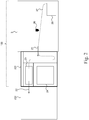
- Fig. 2 shows another embodiment according to the invention.
- the finishing unit 4 comprises a high-level integrated unit 231 coupled to a low-level integrated unit 232.
- the characteristics - features and constraints - of the high-level integrated unit 231 are known to the control unit 18 of the print system 100.
- the high-level integrated unit 231 is arranged between an outlet 21 of the print engine 3 and an inlet 22 of the low-level integrated unit 232.
- the low-level integrated unit 232 is controlled by the high-level integrated unit 231 by means of a low-level interface based on one or more I/O - input and output - communication lines.
- the characteristics - features and constraints - of the low-level integrated unit 232 are known to the high-level integrated unit 231 as far as necessarily and are not known to the control unit 18 of the print system 100.
- the print system 100 comprises an input tray 25 for holding media to be printed. Media to be printed and to be finished is led along a paper path 27 from the input tray 25 along a print head or print assembly 26 to the outlet 21.
- the high-level integrated unit 231 is capable of determining that an operator action is needed for a particular sheet or beginning at a particular sheet at the low-level integrated unit 232 because of the sheet specifications received by the high-level integrated unit 231 from the control unit 18 of the print system 100.
- the high-level integrated unit 231 submits a huge expected earliest arrival time of the particular sheet and submits a notification for the particular sheet to let stop the print engine after the sheet previous to the particular sheet has been processed by the low-level integrated unit 232. Such a stop may be necessary due to an operator action on the low-level integrated unit 232. For example, if the low-level integrated unit 232 needs an operator action since the format size of the media is changing, a number of pages of a book is changing, a number of pages for binding is changing, a perforating pattern is changing, etc.
- the high-level integrated unit 231 may be for example a high capacity stacker with at least one window 23, 24 for looking inside the high capacity stacker.
- the low-level integrated unit 232 may be for example an OEM finisher obtained from an original equipment manufacturer like a book binder, a perforator, sealing device, etc.
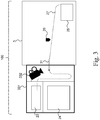
- Fig. 3 shows another embodiment according to the invention.
- the low-level integrated unit resides inside the high-level integrated unit.
- a low-level integrated unit 332 is placed inside the high-level integrated unit 331.
- the high-level integrated unit 331 is controlled by the control unit 18 (see Fig. 1 ) of the print system 100 by means of a high-level interface protocol.
- the characteristics of the high-level integrated unit 331 are known to the control unit of the print system 100.
- the low-level integrated unit 332 is not controlled by the high-level integrated unit 331. Only a status signal - an error or none error - of the low-level integrated unit 332 is arriving at the high-level integrated unit 331.
- the control unit 18 of the print system 100 is unaware of the low-level integrated unit 332.
- the low-level integrated unit 332 may be a detection system like a camera system for inspecting sheets which are travelling from the print engine 3 through an outlet 31 to the high-level integrated unit 331.
- the camera system is scanning sheets which enter the high-level integrated unit 331.
- an algorithm for example image processing software, it is determined whether or not a sheet is correctly printed.
- the high-level integrated unit 331 sends a huge earliest expected arrival time of the next sheet to be processed by the print engine to the control unit 18 (See Fig. 1 ) of the print system 100 and generates and sends a notification of a severe error to the control unit 18 in order to let the print engine 3 stop printing.
- the next sheet to be processed may be a first sheet which has not yet been separated from the input tray 25 and is still residing in the input tray 25 of the print system 100.
- the detection system may be a camera system, a weight system, an audio system, a light sensor, etc.
- the detection system triggers the high-level integrated unit 331 to send a huge earliest expected arrival time for the next sheet to the control unit of the print system 100. Also a notification leading to a print stop is submitted.
- the low-level integrated unit 332 is placed in-between the print engine 3 and the high-level integrated unit 331.
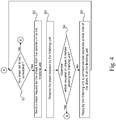
- Fig. 4 - 5 show a flow diagram of an embodiment of the method according to the invention.
- the method starts in a starting point A in Fig. 4 and proceeds to a first step S1.
- step S1 it is checked if there is any sheet left to be scheduled for processing in the print system. If so, the method proceeds to a second step S2. If not, the method ends in an end point E.
- a sheet request for a sheet X left to be scheduled is sent from the control unit to the finishing unit.
- a third step S3 the sheet request for the sheet X is received by the finishing unit.
- a fourth step S4 it is checked if an operator action is required on the sheet X before the sheet X enters the finishing unit. An exception may be predicted or foreseen that will require an operator intervention. If so, the method proceeds via a mid point B to a sixth step S6 (See Fig. 5 ). If not, the method proceeds to a fifth step S5.
- a regular earliest expected arrival time of the sheet X at the finishing unit is replied by the finishing unit.
- the earliest expected arrival time is respected by the print engine as a minimum delay time between the sheet X and the previous sheet X-1 preceding the sheet X.
- the method returns to the first step S1.
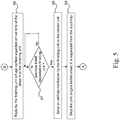
- a sixth step S6 shown in Fig. 5 an earliest expected arrival time of the sheet X at the finishing unit is replied by the finishing unit.
- the sheet X has not yet been separated from the input tray of the print system.
- the earliest expected arrival time is respected by the print engine as a minimum delay time between the sheet X and a previous sheet X-1 preceding the sheet X.
- the earliest expected arrival time for the sheet X is determined to be so huge that a gap in time between the sheet X and a previous sheet X-1 which is preceding the sheet X is larger than a travel time of the previous sheet X-1 from the input tray to the finishing unit.
- the method proceeds to a seventh step S7.
- a seventh step S7 it is checked if the previous sheet X-1 has been deposited in the finishing unit. If so, the method proceeds to an eight step S8. If not, the method returns to the seventh step S7.
- a notification is submitted by the finishing unit to the control unit, after the previous sheet X-1 has been deposited in the finishing unit.
- the notification is reporting an error on sheet X to the print system.
- the reported error normally leads to a print engine stop.
- a ninth step S9 the print engine is stopped by the control unit before the sheet X is separated from the input tray.
- the method returns to the start point A in Fig. 4 .
Landscapes
- Engineering & Computer Science (AREA)
- General Engineering & Computer Science (AREA)
- Physics & Mathematics (AREA)
- General Physics & Mathematics (AREA)
- Theoretical Computer Science (AREA)
- Microelectronics & Electronic Packaging (AREA)
- Accessory Devices And Overall Control Thereof (AREA)
- Controlling Sheets Or Webs (AREA)
Abstract
Description
- The present invention relates to a method for stopping a print system from printing, the print system comprising a control unit for controlling the printing of sheets, a print engine for printing recording material on the sheets, an input tray for holding sheets to be printed upon, and a finishing unit, the method comprising the steps of scheduling a plurality of sheets for printing by the print engine and for finishing by the finishing unit, scheduling a plurality of sheets for printing by the print engine and for finishing by the finishing unit, the scheduling step comprising for each sheet of the plurality sending a sheet request for the sheet from the control unit to the finishing unit and, upon receiving the sheet request, replying by the finishing unit an earliest expected arrival time of the sheet at the finishing unit, which earliest expected arrival time is respected by the print engine as a minimum delay time between the sheet and a previous sheet preceding the sheet.
- A finishing unit is any unit positioned at an outlet of the print engine for printed media.
A finishing unit may be a stapler, a stacker, a perforator, a binder, a packager, a sealer, a folder, a stitcher, a varnisher, a laminator, a embosser, an stripper, a collator, a puncher, or any other finishing or paper handling device, or any combination of the foregoing. - In the print system a sheet is transferred from an input tray through the print engine to a finishing unit. The trajectory from input tray to the finishing unit is also known as the paper path of the print system. When an error occurs in the finishing unit or in the paper path, the error will be notified to the control unit of the print system for example by means of sensors in the print system. The control unit will stop the print engine and sheets which are at that moment somewhere in the paper path have to be removed by a manual time-consuming action of the operator.
Sometimes operator actions are required in case of a local action request from the finishing unit or to manually adjust parts of the finishing unit due to sheet specifications or to manually unload a full stacker of sheets. If such operator actions are not scheduled a paper jam may occur in the finishing unit and/or in the paper path. - The object of the invention is to provide a method that can stop the print engine without having to remove sheets from the paper path. Another object is to provide a print system in which the method is implemented.
- For this purpose, an earliest expected arrival time for a particular sheet of the plurality, which particular sheet has not been separated from the input tray, is so huge that a gap in time between the particular sheet and a previous sheet which is preceding the particular sheet is larger than a travel time of the previous sheet from the input tray to the finishing unit, and the method comprises the steps of submitting a notification by the finishing unit to the control unit, after the previous sheet has been deposited in the finishing unit, the notification comprising a stop request by means of reporting an error on the particular sheet to the print system, which error normally leads to a print engine stop, and stopping the print engine by the control unit before the particular sheet is separated from the input tray.
- By doing so, the paper path of the print system will be empty since the previous sheet and possible sheets before the previous sheet are already received by the finishing unit. This is advantageous since the operator does not have to get sheets out of the paper path of the print system. There is time left before the print system is going to print the particular sheet because of the huge earliest expected arrival time of the particular sheet and the submitted notification which leads to a print engine stop before the particular sheet has left the input tray. Therefore the paper path will stay empty.
The notification may be called artificial since in reality there has no error occurred on the particular sheet since the particular sheet has not even been separated from the input tray. In order to prevent an error leading to a stop of the print engine like a paper jam, the finishing unit has given a bottom up signal by means of the huge earliest expected arrival time for the particular sheet that an operator action is needed on the finishing unit before the particular sheet arrives at the finishing unit or even before the particular sheet is separated from the input tray. - According to an embodiment the previous sheet is a last scheduled sheet in a print queue buffer of the control unit. When sheets are scheduled in the print queue buffer of the control unit of the print system those sheets may be printed by the print engine and arrive at the finishing unit before the print engine is stopped as a result of the notification. Therefore the gap in time between separation of the previous sheet preceding the particular sheet from the input tray and the separation of the particular sheet from the input tray is taking into account that the print queue buffer is empty, i.e. the sheets scheduled in the print queue buffer of the control unit are printed and processed by the finishing unit, before the particular sheet is going to be separated from the input tray. By doing so, the print queue buffer becomes empty and no sheet will be present in the paper path before the particular sheet is separated from the input tray.
- According to an embodiment the submitted earliest expected arrival time is a maximum time to be defined in the memory of the finishing unit. For example, if the value for the earliest expected arrival time is defined in the memory of the finishing unit as 32 bits and in milliseconds, the maximum time is 4294967296 milliseconds which approximately equals 50 days. Due to this unrealistic high duration of 50 days the print engine will stop scheduling any new sheets while the print engine keeps processing and sending the sheets which are already scheduled in the print queue buffer of the control unit.
- According to an embodiment the notification comprises a desired operator action and a location of the print system at which the desired operator action should be applied and the method comprises the step of displaying the notification on a user interface of the print system. The desired operator action may also be displayed at a possibly present user interface of the finishing unit. According to an alternative embodiment the notification comprises an engine information item like an error code. The engine information item is known beforehand to the control unit of the print system. The engine information item can be decoded by the control unit into an appropriate instruction for the operator. The appropriate instruction can be shown at the user interface of the print system. The appropriate instruction may comprise an instruction to clear the stop request in the finishing unit. Clearance of the stop request may be effectuated by pressing a user operable digital item - like a green button - on an external tracking system at the user interface of the print system or at a possible user interface of the finishing unit.
- According to an embodiment the finishing unit comprises a detection module for detecting a need for the desired operator action. For example, if the finishing unit is a stacker system for printed sheets which is coupled to an OEM finisher obtained from an original equipment manufacturer, the stacker system may comprise a detection module for deriving from the print specifications for the sheets that an operator action for the sheets is needed at the OEM finisher. The stacker system applies the method according to the invention and a so-called soft stop of the print system is introduced. This is advantageous since by applying the method in this manner an earliest possible moment in time is enforced for clearing the reason of the stop request.
- According to an embodiment the detection module is a camera system for detecting a stop request for the sheets to be separated from the input tray. Sheets arriving at the finishing unit may comprise a content error or a media error. A content error may be an erroneous - not-readable or doubled or missing or out-of-output-category - printed object on the sheet like a bar code, OR code, scan code, etc. A media error may be that an unspecified media type is used, the sheets are wrongly inserted in the input tray, the orientation of the printed sheets when arriving at the finishing unit is not correct, preprinted media should have been used instead of normal media, etc. In this way an extra check on the wanted output of the print system is introduced.
- According to an embodiment the detection module is part of a local user interface of the finishing unit which is configured to receive a finishing unit user request to stop printing. The operator may visually or aurally detect an error and is able to pass this error to the finishing unit by means of the local user interface of the finishing unit.
- According to an embodiment the error is a foreseen paper jam caused by the particular sheet. Physically, it is impossible that the particular sheet caused a paper jam, since the particular sheet has not even been separated from the input tray. However, due to such a severe error as a foreseen paper jam, the control unit will at least - as soon as possible - stop the print engine.
- The present invention also relates to a print system comprising a control unit for controlling the printing of sheets, a print engine for actually printing recording material on the sheets, an input tray for holding sheets to be printed upon, and a finishing unit, wherein the control unit is configured to execute the step of sending a sheet request to the finishing unit and the step of stopping the print engine and the finishing unit is configured to execute the other steps of the method according to the invention.
- According to an embodiment of the print system the finishing unit comprises a high-level integrated unit connected to the control unit of the print system, and a low-level integrated unit connected to the high-level integrated unit, wherein the control unit of the print system controls the high-level integrated unit and the high-level integrated unit is configured to receive signals from the low-level integrated unit in case of an error on a sheet of the plurality which error is detected by the low-level integrated unit.
- According to an embodiment of the print system the finishing unit comprises a high-level integrated unit connected to the control unit of the print system, and a low-level integrated unit connected to the high-level integrated unit, wherein the control unit of the print system controls the high-level integrated unit and the high-level integrated unit is configured to predict a future error in the low-level integrated unit by means of the print specifications of the plurality of sheets.
- The present invention further relates to a non-transitory computer readable medium comprising computer executable program code configured to instruct a computer to perform a method according to the invention.
- The invention will now be explained further with reference to the Examples indicated below.
-
Figure 1 shows the general arrangement of the print system according to the invention. -
Figure 2 shows a first example of a print system according to the invention. -
Figure 3 shows a second example of a print system according to the invention. -
Figures 4 - 5 show a flow diagram of the method according to the invention. -
Fig. 1 shows the general arrangement of aprint system 100 according to the invention. Theprint system 100 may be an inkjet print system, an electro-photographical print system, or a 3D objects print system. Theprint system 100 may comprise a scanner 1 for opto-electrical scanning of a document and delivering digital image information corresponding thereto. Theprint system 100 comprises afeeder 2 for feeding image information from an external source 5 to theprint system 100, a print engine 3 for printing digital image information on the sheets and a finishing unit 4 for post-processing the printed sheets. Thefeeder 2 is configured to receive a print job with a print job ticket comprising a plurality of print job settings for the sheets to be printed upon. Both the scanner 1 and thefeeder unit 2 are connected to adevice 15 for processing and intermediate storage of image information, which is in turn connected to the print engine 3. The optional scanner 1, thefeeder unit 2, thedevice 15 and the print engine 3 are connected to acontrol unit 18, which is also connected to auser interface 19 provided with anoperator control panel 19A with operator control elements and a display element, for example an LCD screen in the form of a touch screen for use by an operator at theprint system 100. Theoperator control panel 19A may be remotely wireless connected to theprint system 100. Thecontrol unit 18 comprises a print queue buffer (not shown) for ordering the sheets of the print jobs which are submitted to theprint system 100 via thefeeder 2 or via the scanner 1. Thecontrol unit 18 may be integrated near the print engine 3 or may be positioned remotely from the print engine 3. Theuser interface 19 gathers information from thecontrol unit 18 and thedevice 15 in order to display the gathered information at theoperator control panel 19A. Theuser interface 19 may also be implemented as a work station, wired or wireless connected to theprint system 100, or as a mobile device, wireless connected to theprint system 100. Thecontrol unit 18 comprises storage for a plurality of print system settings. The print system settings determine a pre-printing process like a ripping process of a print job, a print process by the print engine 3, and a post-printing process like an inline finishing step. The print engine 3 comprises at least one input tray (seeFig. 2 ) for holding sheets of the print media to be printed upon by the print engine 3.
The finishing unit 4 comprises a high-level tightly integrated unit which communicates with thecontrol unit 18 by means of an integrated finisher protocol. Thecontrol unit 18 has knowledge about the capabilities and the constraints of the finishing unit 4.
The finishing unit 4 may comprise a low-level loosely integrated unit. In the latter case thecontrol unit 18 has no knowledge about the capabilities and the constraints of the finishing unit 4. -
Fig. 2 shows another embodiment according to the invention. The finishing unit 4 comprises a high-levelintegrated unit 231 coupled to a low-levelintegrated unit 232. The characteristics - features and constraints - of the high-levelintegrated unit 231 are known to thecontrol unit 18 of theprint system 100. The high-levelintegrated unit 231 is arranged between anoutlet 21 of the print engine 3 and aninlet 22 of the low-levelintegrated unit 232. The low-levelintegrated unit 232 is controlled by the high-levelintegrated unit 231 by means of a low-level interface based on one or more I/O - input and output - communication lines. The characteristics - features and constraints - of the low-levelintegrated unit 232 are known to the high-levelintegrated unit 231 as far as necessarily and are not known to thecontrol unit 18 of theprint system 100. Theprint system 100 comprises aninput tray 25 for holding media to be printed. Media to be printed and to be finished is led along apaper path 27 from theinput tray 25 along a print head orprint assembly 26 to theoutlet 21.
According to the invention the high-levelintegrated unit 231 is capable of determining that an operator action is needed for a particular sheet or beginning at a particular sheet at the low-levelintegrated unit 232 because of the sheet specifications received by the high-levelintegrated unit 231 from thecontrol unit 18 of theprint system 100. The high-levelintegrated unit 231 submits a huge expected earliest arrival time of the particular sheet and submits a notification for the particular sheet to let stop the print engine after the sheet previous to the particular sheet has been processed by the low-levelintegrated unit 232.
Such a stop may be necessary due to an operator action on the low-levelintegrated unit 232. For example, if the low-levelintegrated unit 232 needs an operator action since the format size of the media is changing, a number of pages of a book is changing, a number of pages for binding is changing, a perforating pattern is changing, etc. The high-levelintegrated unit 231 may be for example a high capacity stacker with at least onewindow integrated unit 232 may be for example an OEM finisher obtained from an original equipment manufacturer like a book binder, a perforator, sealing device, etc. -
Fig. 3 shows another embodiment according to the invention. The low-level integrated unit resides inside the high-level integrated unit. A low-levelintegrated unit 332 is placed inside the high-levelintegrated unit 331. The high-levelintegrated unit 331 is controlled by the control unit 18 (seeFig. 1 ) of theprint system 100 by means of a high-level interface protocol. The characteristics of the high-levelintegrated unit 331 are known to the control unit of theprint system 100. The low-levelintegrated unit 332 is not controlled by the high-levelintegrated unit 331. Only a status signal - an error or none error - of the low-levelintegrated unit 332 is arriving at the high-levelintegrated unit 331. Thecontrol unit 18 of theprint system 100 is unaware of the low-levelintegrated unit 332.
The low-levelintegrated unit 332 may be a detection system like a camera system for inspecting sheets which are travelling from the print engine 3 through anoutlet 31 to the high-levelintegrated unit 331. The camera system is scanning sheets which enter the high-levelintegrated unit 331. By means of an algorithm, for example image processing software, it is determined whether or not a sheet is correctly printed.
At a moment in time that the camera system detects a wrongly printed sheet, the high-levelintegrated unit 331 sends a huge earliest expected arrival time of the next sheet to be processed by the print engine to the control unit 18 (SeeFig. 1 ) of theprint system 100 and generates and sends a notification of a severe error to thecontrol unit 18 in order to let the print engine 3 stop printing. The next sheet to be processed may be a first sheet which has not yet been separated from theinput tray 25 and is still residing in theinput tray 25 of theprint system 100. - The detection system may be a camera system, a weight system, an audio system, a light sensor, etc. The detection system triggers the high-level
integrated unit 331 to send a huge earliest expected arrival time for the next sheet to the control unit of theprint system 100. Also a notification leading to a print stop is submitted. - According to an alternative embodiment the low-level
integrated unit 332 is placed in-between the print engine 3 and the high-levelintegrated unit 331. -
Fig. 4 - 5 show a flow diagram of an embodiment of the method according to the invention. - The method starts in a starting point A in
Fig. 4 and proceeds to a first step S1. - In the first step S1 it is checked if there is any sheet left to be scheduled for processing in the print system. If so, the method proceeds to a second step S2. If not, the method ends in an end point E.
- In the second step S2 a sheet request for a sheet X left to be scheduled is sent from the control unit to the finishing unit.
- In a third step S3 the sheet request for the sheet X is received by the finishing unit.
- In a fourth step S4 it is checked if an operator action is required on the sheet X before the sheet X enters the finishing unit. An exception may be predicted or foreseen that will require an operator intervention. If so, the method proceeds via a mid point B to a sixth step S6 (See
Fig. 5 ). If not, the method proceeds to a fifth step S5. - In a fifth step S5 a regular earliest expected arrival time of the sheet X at the finishing unit is replied by the finishing unit. The earliest expected arrival time is respected by the print engine as a minimum delay time between the sheet X and the previous sheet X-1 preceding the sheet X. The method returns to the first step S1.
- In a sixth step S6 shown in
Fig. 5 an earliest expected arrival time of the sheet X at the finishing unit is replied by the finishing unit. The sheet X has not yet been separated from the input tray of the print system. The earliest expected arrival time is respected by the print engine as a minimum delay time between the sheet X and a previous sheet X-1 preceding the sheet X. However, contrary to the fifth step S5, the earliest expected arrival time for the sheet X is determined to be so huge that a gap in time between the sheet X and a previous sheet X-1 which is preceding the sheet X is larger than a travel time of the previous sheet X-1 from the input tray to the finishing unit. The method proceeds to a seventh step S7. - In a seventh step S7 it is checked if the previous sheet X-1 has been deposited in the finishing unit. If so, the method proceeds to an eight step S8. If not, the method returns to the seventh step S7.
- In the eighth step S8 a notification is submitted by the finishing unit to the control unit, after the previous sheet X-1 has been deposited in the finishing unit. The notification is reporting an error on sheet X to the print system. The reported error normally leads to a print engine stop.
- In a ninth step S9 the print engine is stopped by the control unit before the sheet X is separated from the input tray. The method returns to the start point A in
Fig. 4 .
Claims (12)
- Method for stopping a print system from printing, the print system comprising a control unit for controlling the printing of sheets, a print engine for printing recording material on the sheets, an input tray for holding sheets to be printed upon, and a finishing unit,
the method comprising the steps ofscheduling a plurality of sheets (X-1, X) for printing by the print engine and for finishing by the finishing unit,the scheduling step comprising for each sheet of the pluralitya) sending a sheet request for the sheet from the control unit to the finishing unit andb) upon receiving the sheet request, replying by the finishing unit an earliest expected arrival time of the sheet at the finishing unit, which earliest expected arrival time is respected by the print engine as a minimum delay time between the sheet and a previous sheet preceding the sheet,wherein
an earliest expected arrival time for a particular sheet (X) of the plurality, which particular sheet (X) has not been separated from the input tray, is so huge that a gap in time between the particular sheet (X) and a previous sheet (X-1) which is preceding the particular sheet (X) is larger than a travel time of the previous sheet (X-1) from the input tray to the finishing unit,and the method comprises the steps ofc) submitting a notification by the finishing unit to the control unit, after the previous sheet (X-1) has been deposited in the finishing unit, the notification comprising a stop request by means of reporting an error on the particular sheet (X) to the print system, which error normally leads to a print engine stop, andd) stopping the print engine by the control unit before the particular sheet (X) is separated from the input tray. - Method according to claim 1, wherein the previous sheet (X-1) is a last scheduled sheet in a print queue buffer of the print engine.
- Method according to any of the preceding claims, wherein the submitted earliest expected arrival time is a maximum time to be defined in the memory of the finishing unit.
- Method according to claim 1, wherein the notification comprises a desired operator action and a location of the print system at which the desired operator action should be applied and the method comprises the step of displaying the notification on a user interface of the print system.
- Method according to claim 4, wherein the finishing unit comprises a detection module for detecting a need for the desired operator action.
- Method according to claim 5, wherein the detection module is a camera system for detecting a stop request for the sheets to be separated from the input tray.
- Method according to claim 5, wherein the detection module is part of a local user interface of the finishing unit which is configured to receive a finishing unit user request.
- Method according to any of the preceding claims, wherein the error is a foreseen paper jam caused by the particular sheet (X).
- Print system comprising a control unit for controlling the printing of sheets, a print engine for actually printing recording material on the sheets, an input tray for holding sheets to be printed upon, and a finishing unit, wherein the control unit is configured to execute the steps a) and d) of the method according to any of the claims 1 - 8 and the finishing unit is configured to execute the steps b) and c) of the method according to any of the claims 1 - 8.
- Print system according to claim 9, wherein the finishing unit comprises a high-level integrated unit connected to the control unit of the print system, and a low-level integrated unit connected to the high-level integrated unit, wherein the control unit of the print system controls the high-level integrated unit and the high-level integrated unit is configured to receive signals from the low-level integrated unit in case of an error on a sheet of the plurality which error is detected by the low-level integrated unit.
- Print system according to any of the claims 9 - 10, wherein the finishing unit comprises a high-level integrated unit connected to the control unit of the print system, and a low-level integrated unit connected to the high-level integrated unit, wherein the control unit of the print system controls the high-level integrated unit and the high-level integrated unit is configured to predict a future error in the low-level integrated unit by means of the print specifications of the plurality of sheets.
- Non-transitory computer readable medium comprising computer executable program code configured to instruct a computer to perform a method according to any of the claims 1 - 8.
Applications Claiming Priority (1)
| Application Number | Priority Date | Filing Date | Title |
|---|---|---|---|
| EP15192775 | 2015-11-03 |
Publications (2)
| Publication Number | Publication Date |
|---|---|
| EP3165373A1 true EP3165373A1 (en) | 2017-05-10 |
| EP3165373B1 EP3165373B1 (en) | 2018-07-25 |
Family
ID=54476762
Family Applications (1)
| Application Number | Title | Priority Date | Filing Date |
|---|---|---|---|
| EP16195721.2A Not-in-force EP3165373B1 (en) | 2015-11-03 | 2016-10-26 | A method for stopping a print system |
Country Status (2)
| Country | Link |
|---|---|
| US (1) | US9740973B2 (en) |
| EP (1) | EP3165373B1 (en) |
Citations (2)
| Publication number | Priority date | Publication date | Assignee | Title |
|---|---|---|---|---|
| US20140153937A1 (en) * | 2012-12-03 | 2014-06-05 | Canon Kabushiki Kaisha | Printing system, printing apparatus, method of controlling the same, and storage medium |
| US8985729B1 (en) * | 2013-10-14 | 2015-03-24 | Lexmark International, Inc. | Methods and apparatus for automatic recovery within an imaging device |
Family Cites Families (4)
| Publication number | Priority date | Publication date | Assignee | Title |
|---|---|---|---|---|
| JP6084862B2 (en) * | 2013-02-28 | 2017-02-22 | 理想科学工業株式会社 | Post-processing equipment |
| JP5841633B2 (en) * | 2014-04-15 | 2016-01-13 | キヤノン株式会社 | Printing apparatus, control method thereof, and program |
| JP2015219482A (en) * | 2014-05-21 | 2015-12-07 | 富士ゼロックス株式会社 | Image forming apparatus, image forming system, and image formation instruction apparatus |
| US9850084B2 (en) * | 2015-10-21 | 2017-12-26 | Kodak Alaris Inc. | Detection of process abnormalities in a media processing system |
-
2016
- 2016-10-19 US US15/297,465 patent/US9740973B2/en not_active Expired - Fee Related
- 2016-10-26 EP EP16195721.2A patent/EP3165373B1/en not_active Not-in-force
Patent Citations (2)
| Publication number | Priority date | Publication date | Assignee | Title |
|---|---|---|---|---|
| US20140153937A1 (en) * | 2012-12-03 | 2014-06-05 | Canon Kabushiki Kaisha | Printing system, printing apparatus, method of controlling the same, and storage medium |
| US8985729B1 (en) * | 2013-10-14 | 2015-03-24 | Lexmark International, Inc. | Methods and apparatus for automatic recovery within an imaging device |
Also Published As
| Publication number | Publication date |
|---|---|
| EP3165373B1 (en) | 2018-07-25 |
| US9740973B2 (en) | 2017-08-22 |
| US20170124437A1 (en) | 2017-05-04 |
Similar Documents
| Publication | Publication Date | Title |
|---|---|---|
| US8294929B2 (en) | Image forming apparatus, image forming system, method of printing sample print, and computer program product | |
| CN103482402B (en) | The control method of sheet material processing apparatus and sheet material processing apparatus | |
| US8533540B2 (en) | Error identification and recovery in variable print jobs | |
| US20140241737A1 (en) | Sheet processing apparatus, image forming system, and sheet processing control method | |
| US9050845B2 (en) | Printing system, control method therefor, and storage medium storing control program therefor | |
| US20160070223A1 (en) | Printing apparatus, printing method, storage medium for storing program, and printing system | |
| US9940082B2 (en) | System, printing apparatus and method for controlling the same, and post-processing apparatus and method for controlling the same for performing re-printing processing for a first job preferentially | |
| JP2015104878A (en) | Print control device, method and program | |
| CN1932658B (en) | Image forming apparatus and system, sheet processing apparatus and method, and discharging method | |
| JP2010026038A (en) | Printing system, image forming apparatus, post-processing device, image forming program, and post-processing program | |
| EP2159067B1 (en) | Using buffers to support uncertainties in marking engine execution | |
| US10384823B2 (en) | Image forming apparatus and image forming system with information presentation for resuming printing after occurrence of error | |
| US10606524B2 (en) | Image forming apparatus, image forming system, information processing apparatus, control method for an information processing apparatus, and non-transitory computer-readable storage medium with determination of mounted punch die | |
| JP6673098B2 (en) | Image forming apparatus, post-processing apparatus, image forming system, management apparatus, and program | |
| EP3165373B1 (en) | A method for stopping a print system | |
| JP6248776B2 (en) | Image forming apparatus and method of controlling image forming apparatus | |
| US10209663B2 (en) | Image forming apparatus, control method for image forming apparatus, and non-transitory computer-readable storage medium | |
| US8773717B2 (en) | Information processing apparatus, information processing method, and storage medium for adding check operation to instruction based on error information acquired | |
| US9013762B2 (en) | Method for scanning documents and automatically controlling the further processing of the documents | |
| US20180134509A1 (en) | Information processing apparatus for controlling execution of print job in which post-processing is designated | |
| US10168965B2 (en) | Printing system for printing a plurality of images on a web and a method thereof | |
| US10248364B2 (en) | Method and system for print device problem capture | |
| EP3660653B1 (en) | Method for operating a printing system, printer controller and printing system | |
| EP3015411A1 (en) | Method for limiting a height of a stack of sheets in a printing device | |
| US8800989B2 (en) | Paper conveying device |
Legal Events
| Date | Code | Title | Description |
|---|---|---|---|
| PUAI | Public reference made under article 153(3) epc to a published international application that has entered the european phase |
Free format text: ORIGINAL CODE: 0009012 |
|
| STAA | Information on the status of an ep patent application or granted ep patent |
Free format text: STATUS: THE APPLICATION HAS BEEN PUBLISHED |
|
| AK | Designated contracting states |
Kind code of ref document: A1 Designated state(s): AL AT BE BG CH CY CZ DE DK EE ES FI FR GB GR HR HU IE IS IT LI LT LU LV MC MK MT NL NO PL PT RO RS SE SI SK SM TR |
|
| AX | Request for extension of the european patent |
Extension state: BA ME |
|
| STAA | Information on the status of an ep patent application or granted ep patent |
Free format text: STATUS: REQUEST FOR EXAMINATION WAS MADE |
|
| 17P | Request for examination filed |
Effective date: 20171110 |
|
| RBV | Designated contracting states (corrected) |
Designated state(s): AL AT BE BG CH CY CZ DE DK EE ES FI FR GB GR HR HU IE IS IT LI LT LU LV MC MK MT NL NO PL PT RO RS SE SI SK SM TR |
|
| RIC1 | Information provided on ipc code assigned before grant |
Ipc: B41J 13/00 20060101AFI20180108BHEP |
|
| GRAP | Despatch of communication of intention to grant a patent |
Free format text: ORIGINAL CODE: EPIDOSNIGR1 |
|
| STAA | Information on the status of an ep patent application or granted ep patent |
Free format text: STATUS: GRANT OF PATENT IS INTENDED |
|
| INTG | Intention to grant announced |
Effective date: 20180223 |
|
| GRAS | Grant fee paid |
Free format text: ORIGINAL CODE: EPIDOSNIGR3 |
|
| GRAA | (expected) grant |
Free format text: ORIGINAL CODE: 0009210 |
|
| STAA | Information on the status of an ep patent application or granted ep patent |
Free format text: STATUS: THE PATENT HAS BEEN GRANTED |
|
| AK | Designated contracting states |
Kind code of ref document: B1 Designated state(s): AL AT BE BG CH CY CZ DE DK EE ES FI FR GB GR HR HU IE IS IT LI LT LU LV MC MK MT NL NO PL PT RO RS SE SI SK SM TR |
|
| REG | Reference to a national code |
Ref country code: GB Ref legal event code: FG4D |
|
| REG | Reference to a national code |
Ref country code: CH Ref legal event code: EP |
|
| REG | Reference to a national code |
Ref country code: AT Ref legal event code: REF Ref document number: 1021331 Country of ref document: AT Kind code of ref document: T Effective date: 20180815 |
|
| REG | Reference to a national code |
Ref country code: IE Ref legal event code: FG4D |
|
| REG | Reference to a national code |
Ref country code: DE Ref legal event code: R096 Ref document number: 602016004276 Country of ref document: DE |
|
| REG | Reference to a national code |
Ref country code: NL Ref legal event code: FP |
|
| REG | Reference to a national code |
Ref country code: FR Ref legal event code: PLFP Year of fee payment: 3 |
|
| REG | Reference to a national code |
Ref country code: LT Ref legal event code: MG4D |
|
| REG | Reference to a national code |
Ref country code: AT Ref legal event code: MK05 Ref document number: 1021331 Country of ref document: AT Kind code of ref document: T Effective date: 20180725 |
|
| PG25 | Lapsed in a contracting state [announced via postgrant information from national office to epo] |
Ref country code: RS Free format text: LAPSE BECAUSE OF FAILURE TO SUBMIT A TRANSLATION OF THE DESCRIPTION OR TO PAY THE FEE WITHIN THE PRESCRIBED TIME-LIMIT Effective date: 20180725 Ref country code: IS Free format text: LAPSE BECAUSE OF FAILURE TO SUBMIT A TRANSLATION OF THE DESCRIPTION OR TO PAY THE FEE WITHIN THE PRESCRIBED TIME-LIMIT Effective date: 20181125 Ref country code: AT Free format text: LAPSE BECAUSE OF FAILURE TO SUBMIT A TRANSLATION OF THE DESCRIPTION OR TO PAY THE FEE WITHIN THE PRESCRIBED TIME-LIMIT Effective date: 20180725 Ref country code: LT Free format text: LAPSE BECAUSE OF FAILURE TO SUBMIT A TRANSLATION OF THE DESCRIPTION OR TO PAY THE FEE WITHIN THE PRESCRIBED TIME-LIMIT Effective date: 20180725 Ref country code: SE Free format text: LAPSE BECAUSE OF FAILURE TO SUBMIT A TRANSLATION OF THE DESCRIPTION OR TO PAY THE FEE WITHIN THE PRESCRIBED TIME-LIMIT Effective date: 20180725 Ref country code: BG Free format text: LAPSE BECAUSE OF FAILURE TO SUBMIT A TRANSLATION OF THE DESCRIPTION OR TO PAY THE FEE WITHIN THE PRESCRIBED TIME-LIMIT Effective date: 20181025 Ref country code: PL Free format text: LAPSE BECAUSE OF FAILURE TO SUBMIT A TRANSLATION OF THE DESCRIPTION OR TO PAY THE FEE WITHIN THE PRESCRIBED TIME-LIMIT Effective date: 20180725 Ref country code: FI Free format text: LAPSE BECAUSE OF FAILURE TO SUBMIT A TRANSLATION OF THE DESCRIPTION OR TO PAY THE FEE WITHIN THE PRESCRIBED TIME-LIMIT Effective date: 20180725 Ref country code: GR Free format text: LAPSE BECAUSE OF FAILURE TO SUBMIT A TRANSLATION OF THE DESCRIPTION OR TO PAY THE FEE WITHIN THE PRESCRIBED TIME-LIMIT Effective date: 20181026 Ref country code: NO Free format text: LAPSE BECAUSE OF FAILURE TO SUBMIT A TRANSLATION OF THE DESCRIPTION OR TO PAY THE FEE WITHIN THE PRESCRIBED TIME-LIMIT Effective date: 20181025 |
|
| PG25 | Lapsed in a contracting state [announced via postgrant information from national office to epo] |
Ref country code: LV Free format text: LAPSE BECAUSE OF FAILURE TO SUBMIT A TRANSLATION OF THE DESCRIPTION OR TO PAY THE FEE WITHIN THE PRESCRIBED TIME-LIMIT Effective date: 20180725 Ref country code: HR Free format text: LAPSE BECAUSE OF FAILURE TO SUBMIT A TRANSLATION OF THE DESCRIPTION OR TO PAY THE FEE WITHIN THE PRESCRIBED TIME-LIMIT Effective date: 20180725 Ref country code: AL Free format text: LAPSE BECAUSE OF FAILURE TO SUBMIT A TRANSLATION OF THE DESCRIPTION OR TO PAY THE FEE WITHIN THE PRESCRIBED TIME-LIMIT Effective date: 20180725 |
|
| REG | Reference to a national code |
Ref country code: DE Ref legal event code: R097 Ref document number: 602016004276 Country of ref document: DE |
|
| PG25 | Lapsed in a contracting state [announced via postgrant information from national office to epo] |
Ref country code: IT Free format text: LAPSE BECAUSE OF FAILURE TO SUBMIT A TRANSLATION OF THE DESCRIPTION OR TO PAY THE FEE WITHIN THE PRESCRIBED TIME-LIMIT Effective date: 20180725 Ref country code: RO Free format text: LAPSE BECAUSE OF FAILURE TO SUBMIT A TRANSLATION OF THE DESCRIPTION OR TO PAY THE FEE WITHIN THE PRESCRIBED TIME-LIMIT Effective date: 20180725 Ref country code: CZ Free format text: LAPSE BECAUSE OF FAILURE TO SUBMIT A TRANSLATION OF THE DESCRIPTION OR TO PAY THE FEE WITHIN THE PRESCRIBED TIME-LIMIT Effective date: 20180725 Ref country code: EE Free format text: LAPSE BECAUSE OF FAILURE TO SUBMIT A TRANSLATION OF THE DESCRIPTION OR TO PAY THE FEE WITHIN THE PRESCRIBED TIME-LIMIT Effective date: 20180725 Ref country code: ES Free format text: LAPSE BECAUSE OF FAILURE TO SUBMIT A TRANSLATION OF THE DESCRIPTION OR TO PAY THE FEE WITHIN THE PRESCRIBED TIME-LIMIT Effective date: 20180725 |
|
| PG25 | Lapsed in a contracting state [announced via postgrant information from national office to epo] |
Ref country code: SK Free format text: LAPSE BECAUSE OF FAILURE TO SUBMIT A TRANSLATION OF THE DESCRIPTION OR TO PAY THE FEE WITHIN THE PRESCRIBED TIME-LIMIT Effective date: 20180725 Ref country code: DK Free format text: LAPSE BECAUSE OF FAILURE TO SUBMIT A TRANSLATION OF THE DESCRIPTION OR TO PAY THE FEE WITHIN THE PRESCRIBED TIME-LIMIT Effective date: 20180725 Ref country code: SM Free format text: LAPSE BECAUSE OF FAILURE TO SUBMIT A TRANSLATION OF THE DESCRIPTION OR TO PAY THE FEE WITHIN THE PRESCRIBED TIME-LIMIT Effective date: 20180725 |
|
| PLBE | No opposition filed within time limit |
Free format text: ORIGINAL CODE: 0009261 |
|
| STAA | Information on the status of an ep patent application or granted ep patent |
Free format text: STATUS: NO OPPOSITION FILED WITHIN TIME LIMIT |
|
| REG | Reference to a national code |
Ref country code: BE Ref legal event code: MM Effective date: 20181031 |
|
| PG25 | Lapsed in a contracting state [announced via postgrant information from national office to epo] |
Ref country code: MC Free format text: LAPSE BECAUSE OF FAILURE TO SUBMIT A TRANSLATION OF THE DESCRIPTION OR TO PAY THE FEE WITHIN THE PRESCRIBED TIME-LIMIT Effective date: 20180725 Ref country code: LU Free format text: LAPSE BECAUSE OF NON-PAYMENT OF DUE FEES Effective date: 20181026 |
|
| 26N | No opposition filed |
Effective date: 20190426 |
|
| REG | Reference to a national code |
Ref country code: IE Ref legal event code: MM4A |
|
| PG25 | Lapsed in a contracting state [announced via postgrant information from national office to epo] |
Ref country code: SI Free format text: LAPSE BECAUSE OF FAILURE TO SUBMIT A TRANSLATION OF THE DESCRIPTION OR TO PAY THE FEE WITHIN THE PRESCRIBED TIME-LIMIT Effective date: 20180725 Ref country code: BE Free format text: LAPSE BECAUSE OF NON-PAYMENT OF DUE FEES Effective date: 20181031 |
|
| PG25 | Lapsed in a contracting state [announced via postgrant information from national office to epo] |
Ref country code: IE Free format text: LAPSE BECAUSE OF NON-PAYMENT OF DUE FEES Effective date: 20181026 |
|
| PG25 | Lapsed in a contracting state [announced via postgrant information from national office to epo] |
Ref country code: MT Free format text: LAPSE BECAUSE OF NON-PAYMENT OF DUE FEES Effective date: 20181026 |
|
| PG25 | Lapsed in a contracting state [announced via postgrant information from national office to epo] |
Ref country code: TR Free format text: LAPSE BECAUSE OF FAILURE TO SUBMIT A TRANSLATION OF THE DESCRIPTION OR TO PAY THE FEE WITHIN THE PRESCRIBED TIME-LIMIT Effective date: 20180725 |
|
| PG25 | Lapsed in a contracting state [announced via postgrant information from national office to epo] |
Ref country code: PT Free format text: LAPSE BECAUSE OF FAILURE TO SUBMIT A TRANSLATION OF THE DESCRIPTION OR TO PAY THE FEE WITHIN THE PRESCRIBED TIME-LIMIT Effective date: 20180725 |
|
| REG | Reference to a national code |
Ref country code: CH Ref legal event code: PL |
|
| PG25 | Lapsed in a contracting state [announced via postgrant information from national office to epo] |
Ref country code: MK Free format text: LAPSE BECAUSE OF NON-PAYMENT OF DUE FEES Effective date: 20180725 Ref country code: HU Free format text: LAPSE BECAUSE OF FAILURE TO SUBMIT A TRANSLATION OF THE DESCRIPTION OR TO PAY THE FEE WITHIN THE PRESCRIBED TIME-LIMIT; INVALID AB INITIO Effective date: 20161026 Ref country code: CY Free format text: LAPSE BECAUSE OF FAILURE TO SUBMIT A TRANSLATION OF THE DESCRIPTION OR TO PAY THE FEE WITHIN THE PRESCRIBED TIME-LIMIT Effective date: 20180725 |
|
| PG25 | Lapsed in a contracting state [announced via postgrant information from national office to epo] |
Ref country code: CH Free format text: LAPSE BECAUSE OF NON-PAYMENT OF DUE FEES Effective date: 20191031 Ref country code: LI Free format text: LAPSE BECAUSE OF NON-PAYMENT OF DUE FEES Effective date: 20191031 |
|
| PGFP | Annual fee paid to national office [announced via postgrant information from national office to epo] |
Ref country code: NL Payment date: 20220929 Year of fee payment: 7 |
|
| PGFP | Annual fee paid to national office [announced via postgrant information from national office to epo] |
Ref country code: FR Payment date: 20221031 Year of fee payment: 7 |
|
| PGFP | Annual fee paid to national office [announced via postgrant information from national office to epo] |
Ref country code: GB Payment date: 20221020 Year of fee payment: 7 Ref country code: DE Payment date: 20221019 Year of fee payment: 7 |
|
| REG | Reference to a national code |
Ref country code: DE Ref legal event code: R119 Ref document number: 602016004276 Country of ref document: DE |
|
| REG | Reference to a national code |
Ref country code: NL Ref legal event code: MM Effective date: 20231101 |
|
| GBPC | Gb: european patent ceased through non-payment of renewal fee |
Effective date: 20231026 |
|
| PG25 | Lapsed in a contracting state [announced via postgrant information from national office to epo] |
Ref country code: GB Free format text: LAPSE BECAUSE OF NON-PAYMENT OF DUE FEES Effective date: 20231026 |
|
| PG25 | Lapsed in a contracting state [announced via postgrant information from national office to epo] |
Ref country code: NL Free format text: LAPSE BECAUSE OF NON-PAYMENT OF DUE FEES Effective date: 20231101 |
|
| PG25 | Lapsed in a contracting state [announced via postgrant information from national office to epo] |
Ref country code: NL Free format text: LAPSE BECAUSE OF NON-PAYMENT OF DUE FEES Effective date: 20231101 Ref country code: GB Free format text: LAPSE BECAUSE OF NON-PAYMENT OF DUE FEES Effective date: 20231026 Ref country code: FR Free format text: LAPSE BECAUSE OF NON-PAYMENT OF DUE FEES Effective date: 20231031 Ref country code: DE Free format text: LAPSE BECAUSE OF NON-PAYMENT OF DUE FEES Effective date: 20240501 |