EP3163792A1 - Fully homomorphic message authentication method, device and system - Google Patents
Fully homomorphic message authentication method, device and system Download PDFInfo
- Publication number
- EP3163792A1 EP3163792A1 EP15775600.8A EP15775600A EP3163792A1 EP 3163792 A1 EP3163792 A1 EP 3163792A1 EP 15775600 A EP15775600 A EP 15775600A EP 3163792 A1 EP3163792 A1 EP 3163792A1
- Authority
- EP
- European Patent Office
- Prior art keywords
- computation
- computed data
- character string
- computation result
- authentication
- Prior art date
- Legal status (The legal status is an assumption and is not a legal conclusion. Google has not performed a legal analysis and makes no representation as to the accuracy of the status listed.)
- Granted
Links
- 238000000034 method Methods 0.000 title claims abstract description 93
- 238000004422 calculation algorithm Methods 0.000 claims description 107
- 238000012545 processing Methods 0.000 claims description 28
- 230000008569 process Effects 0.000 abstract description 38
- 238000012795 verification Methods 0.000 abstract description 20
- 230000006870 function Effects 0.000 description 142
- 238000010586 diagram Methods 0.000 description 12
- 230000000694 effects Effects 0.000 description 5
- 238000005516 engineering process Methods 0.000 description 3
- 238000004891 communication Methods 0.000 description 2
- 238000004590 computer program Methods 0.000 description 2
- 230000003287 optical effect Effects 0.000 description 2
- 238000004364 calculation method Methods 0.000 description 1
- 230000036541 health Effects 0.000 description 1
- 238000012986 modification Methods 0.000 description 1
- 230000004048 modification Effects 0.000 description 1
- 230000000750 progressive effect Effects 0.000 description 1
Images


Classifications
-
- H—ELECTRICITY
- H04—ELECTRIC COMMUNICATION TECHNIQUE
- H04L—TRANSMISSION OF DIGITAL INFORMATION, e.g. TELEGRAPHIC COMMUNICATION
- H04L63/00—Network architectures or network communication protocols for network security
- H04L63/08—Network architectures or network communication protocols for network security for authentication of entities
- H04L63/0876—Network architectures or network communication protocols for network security for authentication of entities based on the identity of the terminal or configuration, e.g. MAC address, hardware or software configuration or device fingerprint
-
- H—ELECTRICITY
- H04—ELECTRIC COMMUNICATION TECHNIQUE
- H04L—TRANSMISSION OF DIGITAL INFORMATION, e.g. TELEGRAPHIC COMMUNICATION
- H04L63/00—Network architectures or network communication protocols for network security
- H04L63/12—Applying verification of the received information
- H04L63/123—Applying verification of the received information received data contents, e.g. message integrity
-
- H—ELECTRICITY
- H04—ELECTRIC COMMUNICATION TECHNIQUE
- H04L—TRANSMISSION OF DIGITAL INFORMATION, e.g. TELEGRAPHIC COMMUNICATION
- H04L63/00—Network architectures or network communication protocols for network security
- H04L63/12—Applying verification of the received information
- H04L63/126—Applying verification of the received information the source of the received data
-
- H—ELECTRICITY
- H04—ELECTRIC COMMUNICATION TECHNIQUE
- H04L—TRANSMISSION OF DIGITAL INFORMATION, e.g. TELEGRAPHIC COMMUNICATION
- H04L9/00—Cryptographic mechanisms or cryptographic arrangements for secret or secure communications; Network security protocols
- H04L9/008—Cryptographic mechanisms or cryptographic arrangements for secret or secure communications; Network security protocols involving homomorphic encryption
-
- H—ELECTRICITY
- H04—ELECTRIC COMMUNICATION TECHNIQUE
- H04L—TRANSMISSION OF DIGITAL INFORMATION, e.g. TELEGRAPHIC COMMUNICATION
- H04L9/00—Cryptographic mechanisms or cryptographic arrangements for secret or secure communications; Network security protocols
- H04L9/32—Cryptographic mechanisms or cryptographic arrangements for secret or secure communications; Network security protocols including means for verifying the identity or authority of a user of the system or for message authentication, e.g. authorization, entity authentication, data integrity or data verification, non-repudiation, key authentication or verification of credentials
-
- H—ELECTRICITY
- H04—ELECTRIC COMMUNICATION TECHNIQUE
- H04L—TRANSMISSION OF DIGITAL INFORMATION, e.g. TELEGRAPHIC COMMUNICATION
- H04L9/00—Cryptographic mechanisms or cryptographic arrangements for secret or secure communications; Network security protocols
- H04L9/32—Cryptographic mechanisms or cryptographic arrangements for secret or secure communications; Network security protocols including means for verifying the identity or authority of a user of the system or for message authentication, e.g. authorization, entity authentication, data integrity or data verification, non-repudiation, key authentication or verification of credentials
- H04L9/3226—Cryptographic mechanisms or cryptographic arrangements for secret or secure communications; Network security protocols including means for verifying the identity or authority of a user of the system or for message authentication, e.g. authorization, entity authentication, data integrity or data verification, non-repudiation, key authentication or verification of credentials using a predetermined code, e.g. password, passphrase or PIN
- H04L9/3231—Biological data, e.g. fingerprint, voice or retina
-
- H—ELECTRICITY
- H04—ELECTRIC COMMUNICATION TECHNIQUE
- H04L—TRANSMISSION OF DIGITAL INFORMATION, e.g. TELEGRAPHIC COMMUNICATION
- H04L63/00—Network architectures or network communication protocols for network security
- H04L63/04—Network architectures or network communication protocols for network security for providing a confidential data exchange among entities communicating through data packet networks
- H04L63/0428—Network architectures or network communication protocols for network security for providing a confidential data exchange among entities communicating through data packet networks wherein the data content is protected, e.g. by encrypting or encapsulating the payload
- H04L63/0442—Network architectures or network communication protocols for network security for providing a confidential data exchange among entities communicating through data packet networks wherein the data content is protected, e.g. by encrypting or encapsulating the payload wherein the sending and receiving network entities apply asymmetric encryption, i.e. different keys for encryption and decryption
-
- H—ELECTRICITY
- H04—ELECTRIC COMMUNICATION TECHNIQUE
- H04L—TRANSMISSION OF DIGITAL INFORMATION, e.g. TELEGRAPHIC COMMUNICATION
- H04L63/00—Network architectures or network communication protocols for network security
- H04L63/08—Network architectures or network communication protocols for network security for authentication of entities
- H04L63/0861—Network architectures or network communication protocols for network security for authentication of entities using biometrical features, e.g. fingerprint, retina-scan
Definitions
- Embodiments of the present invention relate to the field of computer and information technologies, and in particular, to a method, an apparatus, and a system for authenticating a fully homomorphic message.
- a fully homomorphic encryption algorithm includes an algorithm for generating a public key, a private key, and a computation key, an encryption algorithm, a decryption algorithm, and a ciphertext computation function.
- the fully homomorphic encryption algorithm is mainly used to authenticate a computation result of distributed computation, that is, a technology for authenticating a fully homomorphic message.
- a terminal acquires a message authentication key, where the message authentication key includes a public key, a private key, and a computation key that are acquired according to the foregoing fully homomorphic encryption algorithm, and further includes a first character string and a second character string.
- the first character string is a subset of a randomly-generated set ⁇ 1, 2, ..., n-1, n ⁇ and has a length of n/2
- the second character string is a random character string that consists of 0 and 1 and has a length of n, where n is an integer greater than or equal to 2.
- the terminal generates an authentication fingerprint of each bit of to-be-computed data according to the message authentication key and the encryption algorithm in the foregoing fully homomorphic encryption algorithm, and sends the to-be-computed data, the authentication fingerprint, the message authentication key, and the foregoing fully homomorphic encryption algorithm together to a server.
- the server computes the to-be-computed data according to a pre-configured computation function used to compute the to-be-computed data to acquire a computation result, computes a first component of an authentication fingerprint of the computation result by using a pre-configured family of hash functions, computes each character of the first character string in the message authentication key according to the computation result, the authentication fingerprint of each bit of the to-be-computed data, and the foregoing computation key, and by using the ciphertext computation function in the foregoing fully homomorphic encryption algorithm, to acquire a second component of the authentication fingerprint of the computation result, to finally acquire an entire authentication fingerprint of the computation result, and returns the computation result and the authentication fingerprint of the computation result to the terminal.
- the terminal first recomputes a first component of the authentication fingerprint of the computation result according to the pre-configured family of hash functions to determine that the first component of the authentication fingerprint of the computation result that is obtained by means of recomputation is the same as the first component of the authentication fingerprint that is returned by the server; and then performs further authentication, for the j th bit of the to-be-computed data and the i th character of the first character string of the terminal, generates a pseudo random string rand (i, j) according to a pre-configured pseudo random function, inputs 0 and the rand (i, j) into the foregoing encryption algorithm to acquire an encryption ciphertext corresponding to 0 in the pseudo random string rand (i, j), performs computation according to the encryption ciphertext, the pre-configured computation function used to compute the to-be-computed data, and the computation key, and by using the ciphertext computation function in the fully homomorphic encryption algorithm, to acquire the i th second component of the
- the first character string in the message authentication key consists of a subset of ⁇ 1, 2, ..., n-1, n ⁇ and has a length of n/2
- computation of the authentication fingerprint of each bit of the to-be-computed data is complex.
- an authentication server of the terminal returns the computation result, it is required to obtain the computation result by means of recomputation, and to perform n/2 times of computation on each bit of the to-be-computed data to acquire the second component of the authentication fingerprint corresponding to the computation result, to compare the second component of the authentication fingerprint corresponding to the computation result with a second component of a second authentication fingerprint for authentication. Therefore, an amount of computation is large and verification efficiency is low.
- Embodiments of the present invention provide a method, an apparatus, and a system for authenticating a fully homomorphic message, to effectively reduce an amount of computation in a verification process and improve efficiency of verifying a computation result of a server.
- a first aspect of the present invention provides a method for authenticating a fully homomorphic message, where the method is applied to a terminal and includes:
- the authentication fingerprint corresponding to the i th bit is generated by executing the following steps:
- the performing correctness authentication on the computation result according to the received authentication fingerprint corresponding to the computation result includes:
- the acquiring a first component of the authentication fingerprint corresponding to the computation result, where the first component is obtained by means of recomputation includes:
- the acquiring a first component of the authentication fingerprint corresponding to the computation result, where the first component is obtained by means of recomputation includes:
- the message authentication key further includes a private key, and the continuing performing correctness authentication on the computation result if the first component of the received authentication fingerprint corresponding to the computation result is equal to the first component, of the authentication fingerprint corresponding to the computation result, where the latter is obtained by means of recomputation includes:
- a second aspect of the present invention provides a method for authenticating a fully homomorphic message, where the method is applied to a server and includes:
- the obtaining, by means of computation, a computation result of the to-be-computed data according to the to-be-computed data and a pre-configured computation function used to compute the to-be-computed data includes:
- the authentication fingerprint corresponding to each bit of the to-be-computed data includes a first component and n second components
- the message authentication key further includes a computation key
- the message authentication key includes:
- a third aspect of an embodiment of the present invention provides an apparatus for authenticating a fully homomorphic message, including:
- the generating module is specifically configured to:
- the processing module is specifically configured to:
- the processing module is further configured to acquire, according to acquired first components of t authentication fingerprints corresponding to the t bits of the to-be-computed data and by using a computation function used to compute the to-be-computed data, the first component of the authentication fingerprint corresponding to the computation result, where the first component is obtained by means of recomputation, where the computation function used to compute the to-be-computed data is a hash tree, where the hash tree includes t inputs and one output, and each node in the hash tree is a pre-configured secure hash function.
- the transceiver module is further configured to:
- the message authentication key further includes a private key
- the processing module is further configured to:
- a fourth aspect of an embodiment of the present invention provides an apparatus for authenticating a fully homomorphic message, including:
- the processing module is specifically configured to:
- the authentication fingerprint corresponding to each bit of the to-be-computed data includes a first component and n second components
- the message authentication key includes a computation key
- the processing module is further configured to:
- a fifth aspect of the present invention provides a system for authenticating a fully homomorphic message, where the system includes a terminal and a server, where:
- the terminal is specifically configured to: generate, according to a pre-configured pseudo random function and a label of the i th bit of the to-be-computed data, the first component of the authentication fingerprint corresponding to the i th bit; generate, according to the pseudo random function, n pseudo random strings corresponding to the i th bit of the to-be-computed data; and generate, according to the first character string, the second character string, and the n pseudo random strings, the n ciphertexts corresponding to the i th bit, where the n ciphertexts serve as the second component of the authentication fingerprint corresponding to the i th bit, where: the i th bit, the public key, and the j th pseudo random string are input into the pre-configured encryption algorithm to generate the ciphertext if the j th character of the first character string is 0; or 0, the public key, and the j th pseudo random string are input into
- a first character string that consists of 0 and 1 and has a length of n and a second character string that consists of 0 and 1 and has a length of n are selected, where a quantity of characters 1 in the first character string is 2n/3, and in the second character string, characters at locations corresponding to the characters 1 in the first character string include characters 0 whose quantity is n/3, which resolves a problem in the prior art that a process of calculating a random number except 1 or 0 in a process of computing an authentication fingerprint corresponding to each bit is complex because a first character string is a subset of a randomly-generated set ⁇ 1, 2, ..., n-1, n ⁇ and has a length of n/2. Therefore, an amount of computation is effectively reduced in a verification process, and efficiency of verifying a computation result of a
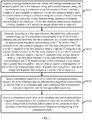
- FIG. 1 is a flowchart of a method for authenticating a fully homomorphic message according to Embodiment 1 of the present invention.
- This embodiment of the present invention provides a method for authenticating a fully homomorphic message that is mainly used in a distributed environment, for example, a cloud computing environment. That is, a terminal needs a server to compute specified to-be-computed data according to a computation function to acquire a computation result, and the server returns the computation result to the terminal.
- the server needs to perform correctness verification on the computation result returned by the server.
- This embodiment mainly provides a technical solution of a method for authenticating a fully homomorphic message on a terminal side in the foregoing process. As shown in FIG. 1 , specific steps are as follows:
- the terminal receives the computation result and the authentication fingerprint corresponding to the computation result that are returned by the server, where the computation result is acquired by computing the to-be-computed data; verifies, by using the authentication fingerprint corresponding to the computation result, whether the computation result is correct; and if it is verified that the computation result is correct, receives the computation result, or if it is verified that the computation result is incorrect, discards the computation result.
- a message authentication key is acquired, where the message authentication key includes: a first character string that is a character string that consists of 0 and 1 and has a length of n, where a quantity of characters 1 in the first character string is 2n/3, and a second character string that is a character string that consists of 0 and 1 and has a length of n, where characters at locations corresponding to the characters 1 in the first character string include characters 0 whose quantity is n/3.
- An authentication fingerprint corresponding to each bit of to-be-computed data is generated according to the message authentication key; the to-be-computed data, the authentication fingerprint corresponding to each bit, a fully homomorphic encryption algorithm, and the message authentication key are sent to a server, so that the server obtains, by means of computation, a computation result of the to-be-computed data and an authentication fingerprint corresponding to the computation result, and returns the computation result and the authentication fingerprint corresponding to the computation result to a terminal; and the terminal performs correctness authentication on the computation result according to the received authentication fingerprint corresponding to the computation result.
- the first character string that consists of 0 and 1 and has a length of n and the second character string that consists of 0 and 1 and has a length of n are selected, where the quantity of the 1s in the first character string is 2n/3, and in the second character string, the characters at the locations corresponding to the characters 1 in the first character string include characters 0 whose quantity is n/3, which resolves a problem in the prior art that a process of calculating a random number except 1 or 0 in a process of computing an authentication fingerprint corresponding to each bit is complex because a first character string is a subset of a randomly-generated set ⁇ 1, 2, ..., n-1, n ⁇ and has a length of n/2. Therefore, complexity of an algorithm of the terminal and an amount of computation are effectively reduced.
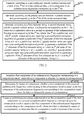
- FIG. 2 is a flowchart of a method for authenticating a fully homomorphic message according to Embodiment 2 of the present invention.
- the message authentication key further includes a public key pk, a private key sk ' , a computation key evk ' , a pre-configured secure hash function, and a pre-configured pseudo random function, and the authentication fingerprint corresponding to the i th bit is generated by executing the following steps:
- the to-be-computed data has a total of t bits
- the pre-configured pseudo random function may be a single function (or may be a family of functions).
- the pseudo random function is f k
- the first component of the authentication fingerprint of the i th bit is v i
- each bit of the to-be-computed data has a specified label, and the label is an identifier of each bit, is similar to a serial number, and is used to mark a location of the bit in to-be-processed data.
- the pre-configured encryption algorithm is an encryption algorithm ( HE.Enc ) in the fully homomorphic encryption algorithm; i is an integer that is greater than or equal to 1 and less than or equal to the total quantity t of the bits of the to-be-computed data; j is an integer that is greater than or equal to 1 and less than or equal to n.
- HE.Enc encryption algorithm
- i is an integer that is greater than or equal to 1 and less than or equal to the total quantity t of the bits of the to-be-computed data;
- j is an integer that is greater than or equal to 1 and less than or equal to n.
- the first character string is determined by means of traversing in the foregoing manner, the n ciphertexts are acquired as the second component of the authentication fingerprint corresponding to the i th bit.
- c j HE . Enc (1, pk , rand j ) represents an encryption ciphertext corresponding to 1 in the pseudo random string rand i .
- the authentication fingerprint corresponding to the i th bit includes the second component of the authentication fingerprint of the i th bit and the first component of the authentication fingerprint of the i th bit.
- a message authentication key is acquired, where the message authentication key includes: a first character string that is a character string that consists of 0 and 1 and has a length of n, where a quantity of characters 1 in the first character string is 2n/3, and a second character string that is a character string that consists of 0 and 1 and has a length of n, where characters at locations corresponding to the characters 1 in the first character string include characters 0 whose quantity is n/3.
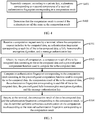
- FIG. 3 is a flowchart of a method for authenticating a fully homomorphic message according to Embodiment 3 of the present invention. As shown in FIG. 3 , on the basis of the foregoing Embodiment 1 and Embodiment 2, steps for specifically implementing S104 are as follows:
- the terminal receives the computation result and the authentication fingerprint corresponding to the computation result that are returned by the server.
- the terminal first needs to acquire the first component of the authentication fingerprint corresponding to the computation result, where the first component is obtained by means of recomputation.
- Two specific acquiring manners are as follows:
- the second acquiring manner is that: a computation function used to compute the to-be-computed data is not configured on the terminal, but a third-party device is introduced for computation, and a computation function used to compute the to-be-computed data is configured on the third-party device; the terminal sends first components of the t authentication fingerprints corresponding to the t bits of the to-be-computed data to the third-party device, so that the third-party device acquires, according to the received first components of the t authentication fingerprints corresponding to the t bits of the to-be-computed data and by using the pre-configured computation function used to compute the to-be-computed data, the first component of the authentication fingerprint corresponding to the computation result, where the first component is obtained by means of recomputation; and the terminal receives the first component of the authentication fingerprint corresponding to the computation result, where the first component is obtained by means of recomputation and returned by the third-party device, where the computation function used to compute the to-be-computed data is
- the third-party device is a semi-trusted third-party (for example, the health authorities) user equipment that does not need to know the computation function used to compute the to-be-computed data, and the third-party device does not know the to-be-computed data of the terminal either, which protects privacy of the user equipment.
- the third-party device does not know the to-be-computed data of the terminal either, which protects privacy of the user equipment.
- a message authentication key is acquired, where the message authentication key includes: a first character string that is a character string that consists of 0 and 1 and has a length of n, where a quantity of characters 1 in the first character string is 2n/3, and a second character string that is a character string that consists of 0 and 1 and has a length of n, where characters at locations corresponding to the characters 1 in the first character string include characters 0 whose quantity is n/3.
- the terminal acquires, by means of computation, a first component of the authentication fingerprint corresponding to the computation result; or if a computation function used to compute the to-be-computed data is not configured on the terminal, the terminal sends the computation result to a third-party device, so that the third-party device performs computation and returns a first component of the authentication fingerprint corresponding to the computation result, where the first component is obtained by means of recomputation; and the terminal compares the first component with a first component of the received authentication fingerprint corresponding to the computation result that is sent by the server, to verify correctness of the computation result, and if the computation result is correct, the terminal performs further verification.
- Using the third-party device to compute the first component of the authentication fingerprint corresponding to the computation result further avoids inconvenience caused by that the terminal does not know the computation function used to compute the to-be-computed data in a case in which the computation function used to compute the to-be-computed data is a business secret. Therefore, privacy of the terminal is protected, complexity of an algorithm of the terminal and an amount of computation are effectively reduced, and efficiency of verifying the computation result is improved.
- FIG. 4 is a flowchart of a method for authenticating a fully homomorphic message according to Embodiment 4 of the present invention.
- the message authentication key further includes a private key, and a specific implementation manner of the continuing performing correctness authentication on the computation result if the first component of the received authentication fingerprint corresponding to the computation result is equal to the first component of the authentication fingerprint corresponding to the computation result, where the latter is obtained by means of recomputation is as follows:
- the terminal performs, according to the private key, decryption computation on each second component of the received authentication fingerprint corresponding to the computation result that is sent by the server, to acquire the n corresponding plaintexts, which are used to be compared with the computation result for determining.
- the computation result sent by the server is e
- the authentication fingerprint corresponding to the computation result is c 1 * , ... c n * , V *
- the second component of the authentication fingerprint corresponding to the computation result are c 1 * , ... c n *
- authentication may be performed in the following manner:
- the foregoing three steps are a specific operation manner in one verification process for different characters in the first character string and the second character string.
- j increases by 1, and authentication is continued according to characters in the first character string and the second character string, where j is an integer that is greater than or equal to 1 and less than or equal to n, and n is a positive integer greater than or equal to 2, that is, determined lengths of the first character string and the second character string.
- the foregoing computation result e is verified according to the plaintexts e 1 , ... , e n acquired by means of decryption and computation. If the computation result e is not discarded in an entire verification process with reference to the foregoing other embodiments, the computation result e is accepted, and the terminal considers the computation result returned by the server correct.
- a message authentication key is acquired, where the message authentication key includes: a first character string that is a character string that consists of 0 and 1 and has a length of n, where a quantity of characters 1 in the first character string is 2n/3, and a second character string that is a character string that consists of 0 and 1 and has a length of n, where characters at locations corresponding to the characters 1 in the first character string include characters 0 whose quantity is n/3.
- the terminal itself acquires, by means of computation, a first component of the authentication fingerprint corresponding to the computation result; or if a computation function used to compute the to-be-computed data is not configured on the terminal, the terminal sends the computation result to a third-party device, so that the third-party device performs computation and returns a first component of the authentication fingerprint corresponding to the computation result, where the first component is obtained by means of recomputation; and the terminal compares the first component with a first component of the received authentication fingerprint corresponding to the computation result that is sent by the server, to verify correctness of the computation result, and if the computation result is correct, the terminal performs further verification.
- a private key is invoked to decrypt and compute a second component of the authentication fingerprint corresponding to the computation result that is sent by the server to acquire t plaintexts, and the t plaintexts are compared with the computation result to verify correctness of the computation result.
- the technical solution in this embodiment effectively reduces complexity of an algorithm and an amount of computation during verification by the terminal, and improves efficiency of verifying the computation result.
- FIG. 5 is a flowchart of a method for authenticating a fully homomorphic message according to Embodiment 5 of the present invention. As shown in FIG. 5 , this embodiment provides a technical solution of a method for authenticating a fully homomorphic message on a server side, and specific steps are as follows:
- the computation function used to compute the to-be-computed data is pre-configured on the server, so that the to-be-computed data sent by the terminal is computed to acquire the computation result.
- the server does not need to return original to-be-computed data to the terminal, but adds a corresponding authentication fingerprint to the computation result, so that the terminal verifies the computation result according to the authentication fingerprint corresponding to the computation result, and acquires a correct computation result without knowing the original to-be-computed data.
- a computation request sent by a terminal is received, where the computation request includes a message authentication key; a server obtains, by means of computation, a computation result of to-be-computed data according to a pre-configured computation function used to compute the to-be-computed data, acquires, by means of computation, an authentication fingerprint corresponding to the computation result according to the message authentication key, the computation result, and an authentication fingerprint corresponding to each bit of the to-be-computed data, and returns the authentication fingerprint corresponding to the computation result to the terminal, so that the terminal performs correctness authentication on the computation result according to the received authentication fingerprint corresponding to the computation result, which resolves a problem in the prior art that a process of calculating a random number except 1 or 0 in a process of computing an authentication fingerprint corresponding to each bit is complex because a first character string of a message authentication key generated by a terminal is a subset of a randomly-generated set ⁇ 1, 2, ...
- FIG. 6 is a flowchart of a method for authenticating a fully homomorphic message according to Embodiment 6 of the present invention. As shown in FIG. 6 , on the basis of the foregoing Embodiment, steps for specifically implementing S502 and S503 are as follows:
- the authentication fingerprint corresponding to the computation result includes the first component of the authentication fingerprint corresponding to the computation result and the n second components of the authentication fingerprint corresponding to the computation result.
- the server obtains, by means of computation, the computation result of the to-be-computed data and the authentication fingerprint corresponding to the computation result; and sends the computation result and the authentication fingerprint corresponding to the computation result to the terminal, so that the terminal verifies correctness of the computation result according to the authentication fingerprint corresponding to the computation result, and acquires a correct computation result.
- a computation request sent by a terminal is received, where the computation request includes a message authentication key, which includes a computation key; a server obtains, by means of computation, a computation result of to-be-computed data according to a pre-configured computation function used to compute the to-be-computed data, acquires, by means of computation according to the message authentication key, the computation result, and an authentication fingerprint corresponding to each bit of the to-be-computed data, a first component and a second component of an authentication fingerprint corresponding to the computation result, and returns the first component and the second component of the authentication fingerprint corresponding to the computation result to the terminal, so that the terminal performs correctness authentication on the computation result according to the received authentication fingerprint corresponding to the computation result, which resolves a problem in the prior art that a process of calculating a random number except 1 or 0 in a process of computing an authentication fingerprint corresponding to each bit is complex because a first character string of a message
- FIG. 7 is a schematic diagram of an instance of a computation function used to compute to-be-computed data according to the present invention.
- the computation function used to compute the to-be-computed data is a hash tree, where the hash tree includes t inputs and one output, and each node in the hash tree is a pre-configured secure hash function.
- the following uses examples to illustrate an application of the computation function, and g may be used to represent the computation function used to compute the to-be-computed data.
- g may be expressed as ⁇ 0,1 ⁇ t ⁇ ⁇ 0,1 ⁇ , and is a circuit.
- the secure hash function H is ⁇ 0,1 ⁇ * ⁇ ⁇ 0,1 ⁇ m
- the hash tree g H is expressed as ⁇ 0,1 ⁇ * ⁇ t ⁇ ⁇ 0,1 ⁇ m .
- a total quantity of bits of the to-be-computed data is 6, and each node is a secure hash function H, which may be an addition gate or multiplication gate circuit.
- the server When acquiring the computation result of the to-be-computed data, the server inputs each bit of the to-be-computed data into a different input line, and an acquired final output result is the computation result e.
- the server When acquiring the first component of the authentication fingerprint corresponding to the computation result, the server inputs an input of the input line into the first component v i (i is greater than or equal to 1 and less than or equal to 6) of the authentication fingerprint corresponding to each bit of the to-be-computed data as an input, and what is finally output is the first component of the authentication fingerprint corresponding to the computation result.
- a computation manner is the same as that used by the server.
- FIG. 8 is a schematic structural diagram of an apparatus for authenticating a fully homomorphic message according to Embodiment 1 of the present invention.
- the apparatus for authenticating a fully homomorphic message 80 includes: an acquiring module 81, configured to acquire a message authentication key, where: the message authentication key includes a public key, a first character string, and a second character string; the first character string is a character string that consists of 0 and 1 and has a length of n, and a quantity of characters 1 in the first character string is 2n/3; the second character string is a character string that consists of 0 and 1 and has a length of n, and in the second character string, characters at locations corresponding to the characters 1 in the first character string include characters 0 whose quantity is n/3; and n is an integer greater than or equal to 2; a generating module 82, configured to: generate, according to a first input character, the public key, and a pseudo random string, one of n ciphertexts
- an acquiring module acquires a message authentication key, where the message authentication key includes: a first character string that is a character string that consists of 0 and 1 and has a length of n, where a quantity of characters 1 in the first character string is 2n/3, and a second character string that is a character string that consists of 0 and 1 and has a length of n, where characters at locations corresponding to the characters 1 in the first character string include characters 0 whose quantity is n/3; a generating module generates, according to the message authentication key, an authentication fingerprint corresponding to each bit of to-be-computed data; a transceiver module sends the to-be-computed data, the authentication fingerprint corresponding to each bit, a fully homomorphic encryption algorithm, and the message authentication key to a server, so that the server obtains, by means of computation, a computation result of the to-be-computed data and an authentication fingerprint corresponding to the computation result
- the first character string that consists of 0 and 1 and has a length of n and the second character string that consists of 0 and 1 and has a length of n are selected, where the quantity of the 1s in the first character string is 2n/3, and in the second character string, the characters at the locations corresponding to the characters 1 in the first character string include characters 0 whose quantity is n/3, which resolves a problem in the prior art that a process of calculating a random number except 1 or 0 in a process of computing an authentication fingerprint corresponding to each bit is complex because a first character string is a subset of a randomly-generated set ⁇ 1, 2, ..., n-1, n ⁇ and has a length of n/2. Therefore, complexity of an algorithm of the terminal and an amount of computation are effectively reduced.
- the generating module 82 is specifically configured to:
- processing module 84 is specifically configured to:
- the processing module 84 is further configured to acquire, according to acquired first components of t authentication fingerprints corresponding to the t bits of the to-be-computed data and by using a computation function used to compute the to-be-computed data, the first component of the authentication fingerprint corresponding to the computation result, where the first component is obtained by means of recomputation, where the computation function used to compute the to-be-computed data is a hash tree, where the hash tree includes t inputs and one output, and each node in the hash tree is a pre-configured secure hash function.
- the transceiver module 83 is further configured to:
- the message authentication key further includes a private key
- the processing module 84 is further configured to:
- the apparatus for authenticating a fully homomorphic message provided in this embodiment is configured to execute the technical solutions of the method embodiments shown in FIG. 1 to FIG. 7 .
- the implementation principle and technical effect thereof are similar, and details are not described herein again.
- FIG. 9 is a schematic structural diagram of an apparatus for authenticating a fully homomorphic message according to Embodiment 3 of the present invention.
- the apparatus for authenticating a fully homomorphic message 90 includes: a transceiver module 91, configured to receive a computation request sent by a terminal, where the computation request includes: to-be-computed data, an authentication fingerprint corresponding to each bit of the to-be-computed data, a fully homomorphic encryption algorithm, and a message authentication key; and a processing module 92, configured to obtain, by means of computation, a computation result of the to-be-computed data according to the to-be-computed data and a pre-configured computation function used to compute the to-be-computed data, where the processing module 92 is further configured to compute an authentication fingerprint corresponding to the computation result according to the pre-configured computation function used to compute the to-be-computed data, the computation result of the to-be-computed data, the authentication fingerprint corresponding
- the apparatus for authenticating a fully homomorphic message is configured to execute the technical solutions of the method embodiments shown in FIG. 1 to FIG. 7 .
- a receiving module receives a computation request sent by a terminal, where the computation request includes to-be-computed data and a message authentication key;
- a processing module obtains, by means of computation, a computation result of the to-be-computed data according to a pre-configured computation function used to compute the to-be-computed data, acquires, by means of computation, an authentication fingerprint corresponding to the computation result according to the message authentication key, the computation result, and an authentication fingerprint corresponding to each bit of the to-be-computed data, and returns the authentication fingerprint corresponding to the computation result to the terminal, so that the terminal performs correctness authentication on the computation result according to the received authentication fingerprint corresponding to the computation result, which resolves a problem in the prior art that a process of calculating a random number except 1 or 0 in a process of computing an authentication fingerprint corresponding to each bit is complex
- the processing module 92 is specifically configured to:
- the authentication fingerprint corresponding to each bit of the to-be-computed data includes a first component and n second components
- the message authentication key includes a computation key
- the processing module 92 is further configured to:
- the authentication fingerprint corresponding to the computation result includes the first component of the authentication fingerprint corresponding to the computation result and the second component of the authentication fingerprint corresponding to the computation result.
- the apparatus for authenticating a fully homomorphic message provided in this embodiment is configured to execute the technical solutions of the method embodiments shown in FIG. 1 to FIG. 7 .
- the implementation principle and technical effect thereof are similar, and details are not described herein again.
- FIG. 10 is a schematic structural diagram of a terminal according to Embodiment 1 of the present invention.
- the terminal 100 includes: a processor 101, a sender 102, and a receiver 103.
- the processor 101 is configured to acquire a message authentication key, where: the message authentication key includes a first character string and a second character string; the first character string is a character string that consists of 0 and 1 and has a length of n, and a quantity of characters 1 in the first character string is 2n/3; the second character string is a character string that consists of 0 and 1 and has a length of n, and in the second character string, characters at locations corresponding to the characters 1 in the first character string include characters 0 whose quantity is n/3; and n is an integer greater than or equal to 2.
- the processor 101 is further configured to generate, according to the message authentication key, an authentication fingerprint corresponding to each bit of to-be-computed data.
- the sender 102 is configured to send a computation request to a server, where the computation request includes: the to-be-computed data, the authentication fingerprint corresponding to each bit of the to-be-computed data, a pre-configured fully homomorphic encryption algorithm, and the message authentication key.
- the receiver 103 is configured to receive a computation result of the to-be-computed data and an authentication fingerprint corresponding to the computation result that are returned by the server.
- the processor 101 is further configured to perform correctness authentication on the computation result according to the received authentication fingerprint corresponding to the computation result.
- a processor acquires a message authentication key, where the message authentication key includes: a first character string that is a character string that consists of 0 and 1 and has a length of n, where a quantity of characters 1 in the first character string is 2n/3, and a second character string that is a character string that consists of 0 and 1 and has a length of n, where characters at locations corresponding to the characters 1 in the first character string include characters 0 whose quantity is n/3, and generates, according to the message authentication key, an authentication fingerprint corresponding to each bit of to-be-computed data; a sender sends the to-be-computed data, the authentication fingerprint corresponding to each bit, a fully homomorphic encryption algorithm, and the message authentication key to a server, so that the server obtains, by means of computation, a computation result of the to-be-computed data and an authentication fingerprint corresponding to the computation result, and returns the computation
- the first character string that consists of 0 and 1 and has a length of n and the second character string that consists of 0 and 1 and has a length of n are selected, where the quantity of the 1s in the first character string is 2n/3, and in the second character string, the characters at the locations corresponding to the characters 1 in the first character string include characters 0 whose quantity is n/3; a ciphertext including n2/3 0 and 1 is inserted into an acquired second component of the authentication fingerprint corresponding to each bit of the to-be-computed data, which resolves a problem in the prior art that a process of calculating a random number except 1 or 0 in a process of computing an authentication fingerprint corresponding to each bit is complex because a first character string is a subset of a randomly-generated set ⁇ 1, 2, ..., n-1, n ⁇ and has a length of n/2. Therefore, complexity of an algorithm of the terminal and an amount of computation are effectively reduced.
- the message authentication key further includes a public key
- the processor 101 is specifically configured to:
- processor 101 is specifically configured to:
- processor 101 is specifically configured to:
- the sender 102 is further configured to send first components of t authentication fingerprints corresponding to the t bits of the to-be-computed data to a third-party device, so that the third-party device acquires, according to the received first components of the t authentication fingerprints corresponding to the t bits of the to-be-computed data and by using a pre-configured computation function used to compute the to-be-computed data, the first component of the authentication fingerprint corresponding to the computation result, where the first component is obtained by means of recomputation.
- the receiver 103 is further configured to receive the first component of the authentication fingerprint corresponding to the computation result, where the first component is obtained by means of recomputation and returned by the third-party device, and the computation function used to compute the to-be-computed data is a hash tree, where the hash tree includes t inputs and one output, and each node in the hash tree is the secure hash function.
- the message authentication key further includes a private key
- the processor 101 is further configured to:
- the terminal provided in this embodiment is configured to execute the technical solutions of the embodiments shown in FIG. 1 to FIG. 7 .
- the implementation principle and technical effect thereof are similar, and details are not described herein again.
- FIG. 11 is a schematic structural diagram of a server according to Embodiment 1 of the present invention.
- the server 110 includes: a receiver 111, a processor 112, and a sender 113.
- the receiver 111 is configured to receive a computation request sent by a terminal, where the computation request includes: to-be-computed data, an authentication fingerprint corresponding to each bit of the to-be-computed data, a fully homomorphic encryption algorithm, and a message authentication key.
- the processor 112 is configured to obtain, by means of computation, a computation result of the to-be-computed data according to the to-be-computed data and a pre-configured computation function used to compute the to-be-computed data.
- the processor 112 is further configured to compute an authentication fingerprint corresponding to the computation result according to the pre-configured computation function used to compute the to-be-computed data, the computation result of the to-be-computed data, the authentication fingerprint corresponding to each bit of the to-be-computed data, the pre-configured fully homomorphic encryption algorithm, and the message authentication key.
- the sender 113 is configured to return, to the terminal, the computation result of the to-be-computed data and the authentication fingerprint corresponding to the computation result, so that the terminal performs correctness authentication on the computation result according to the received authentication fingerprint corresponding to the computation result.
- a receiver receives a computation request sent by a terminal, where the computation request includes a message authentication key; a processor obtains, by means of computation, a computation result of to-be-computed data according to a pre-configured computation function used to compute the to-be-computed data, acquires, by means of computation, an authentication fingerprint corresponding to the computation result according to the message authentication key, the computation result, and an authentication fingerprint corresponding to each bit of the to-be-computed data, and returns the authentication fingerprint corresponding to the computation result to the terminal, so that the terminal performs correctness authentication on the computation result according to the received authentication fingerprint corresponding to the computation result.
- the processor 112 is specifically configured to:
- the authentication fingerprint corresponding to each bit of the to-be-computed data includes a first component and n second components
- the message authentication key includes a computation key
- the processor 112 is specifically configured to:
- the server provided in this embodiment is configured to execute the technical solutions of the method embodiments shown in FIG. 1 to FIG. 7 .
- the implementation principle and technical effect thereof are similar, and details are not described herein again.
- the processor 101 and the processor 112 may be a central processing unit (Central Processing Unit, CPU for short), or may be another general purpose processor, a digital signal processor (Digital Signal Processor, DSP for short), an application-specific integrated circuit (Application Specific Integrated Circuit, ASIC for short), a field-programmable gate array (Field-Programmable Gate Array, FPGA for short), another programmable logic device, a discrete gate or transistor logic device, a discrete hardware component, or the like.
- the general purpose processor may be a microprocessor or the processor may be any conventional processor or the like.
- the steps in the method embodiments shown in FIG. 1 to FIG. 7 may be completed by the terminal and the server by using an integrated logic circuit of hardware in the processor or an instruction in a form of software. Steps of the methods disclosed with reference to the embodiments of the present invention may be directly executed and accomplished by means of a hardware processor, or may be executed and completed by using a combination of hardware and software modules in the processor.
- the software module may be located in a mature storage medium in the field, such as a random access memory, a flash memory, a read-only memory, a programmable read-only memory, an electrically-erasable programmable memory, or a register.
- an apparatus embodiment is basically similar to a method embodiment, and therefore is described briefly; for related parts, refer to partial descriptions in the method embodiment.
- the described apparatus embodiment is merely exemplary.
- the units described as separate parts may or may not be physically separate, and parts displayed as units may or may not be physical units, may be located in one position, or may be distributed on a plurality of network units. Some or all of the modules may be selected according to actual requirements to achieve the objectives of the solutions of the embodiments. Persons of ordinary skill in the art may understand and implement the embodiments of the present invention without creative efforts.
- the present invention may be implemented by software in addition to necessary universal hardware, or by dedicated hardware, including a dedicated integrated circuit, a dedicated CPU, a dedicated memory, a dedicated component, and the like.
- dedicated hardware including a dedicated integrated circuit, a dedicated CPU, a dedicated memory, a dedicated component, and the like.
- any functions that can be performed by a computer program can be easily implemented by using corresponding hardware.
- a specific hardware structure used to achieve a same function may have various forms, for example, in a form of an analog circuit, a digital circuit, a dedicated circuit, or the like.
- software program implementation is a better implementation manner in most cases.
- the technical solutions of the present invention essentially or the part contributing to the prior art may be implemented in a form of a software product.
- the computer software product is stored in a readable storage medium, such as a floppy disk, a USB flash drive, a removable hard disk, a read-only memory (ROM, Read-Only Memory), a random access memory (RAM, Random Access Memory), a magnetic disk, or an optical disc of a computer, and includes several instructions for instructing a computer device (which may be a personal computer, a server, a network device, and the like) to perform the methods described in the embodiments of the present invention.
- a computer device which may be a personal computer, a server, a network device, and the like
- FIG. 12 is a schematic structural diagram of a system for authenticating a fully homomorphic message according to Embodiment 1 of the present invention.
- the system for authenticating a fully homomorphic message 120 includes a terminal 121 and a server 122.
- the terminal 121 is configured to: acquire a message authentication key, where: the message authentication key includes a first character string and a second character string; the first character string is a character string that consists of 0 and 1 and has a length of n, and a quantity of characters 1 in the first character string is 2n/3; the second character string is a character string that consists of 0 and 1 and has a length of n, and in the second character string, characters at locations corresponding to the characters 1 in the first character string include characters 0 whose quantity is n/3; and n is an integer greater than or equal to 2; generate, according to a first input character, the public key, and a pseudo random string, one of n ciphertexts corresponding to the i th bit of to-be-computed data, and determine that the n ciphertexts are a second component of an authentication fingerprint corresponding to the i th bit, where: if the j th character of the first character string is 0, the first input character is the i
- the server 122 is configured to: receive the computation request sent by the terminal; obtain, by means of computation, the computation result of the to-be-computed data according to the to-be-computed data and a pre-configured computation function used to compute the to-be-computed data; compute the authentication fingerprint corresponding to the computation result according to the pre-configured computation function used to compute the to-be-computed data, the computation result of the to-be-computed data, the authentication fingerprint corresponding to each bit of the to-be-computed data, the pre-configured fully homomorphic encryption algorithm, and the message authentication key; and return, to the terminal, the computation result of the to-be-computed data and the authentication fingerprint corresponding to the computation result, so that the terminal performs correctness authentication on the computation result according to the received authentication fingerprint corresponding to the computation result.
- a terminal acquires a message authentication key, where the message authentication key includes: a first character string that is a character string that consists of 0 and 1 and has a length of n, where a quantity of characters 1 in the first character string is 2n/3, and a second character string that is a character string that consists of 0 and 1 and has a length of n, where characters at locations corresponding to the characters 1 in the first character string include characters 0 whose quantity is n/3; generates, according to the message authentication key, an authentication fingerprint corresponding to each bit of to-be-computed data; and sends the to-be-computed data, the authentication fingerprint corresponding to each bit, a fully homomorphic encryption algorithm, and the message authentication key to a server, so that the server obtains, by means of computation, a computation result of the to-be-computed data and an authentication fingerprint corresponding to the computation
- the first character string that consists of 0 and 1 and has a length of n and the second character string that consists of 0 and 1 and has a length of n are selected, where the quantity of the 1s in the first character string is 2n/3, and in the second character string, the characters at the locations corresponding to the characters 1 in the first character string include characters 0 whose quantity is n/3; a ciphertext including n2/3 0 and 1 is inserted into an acquired second component of the authentication fingerprint corresponding to each bit of the to-be-computed data, which resolves a problem in the prior art that a process of calculating a random number except 1 or 0 in a process of computing an authentication fingerprint corresponding to each bit is complex because a first character string is a subset of a randomly-generated set ⁇ 1, 2, ..., n-1, n ⁇ and has a length of n/2. Therefore, complexity of an algorithm of the terminal and an amount of computation are effectively reduced.
- the terminal 121 is specifically configured to: generate, according to a pre-configured pseudo random function and a label of the i th bit of the to-be-computed data, the first component of the authentication fingerprint corresponding to the i th bit; generate, according to the pseudo random function, n pseudo random strings corresponding to the i th bit of the to-be-computed data; and generate, according to the first character string, the second character string, and the n pseudo random strings, the n ciphertexts corresponding to the i th bit, where the n ciphertexts serve as the second component of the authentication fingerprint corresponding to the i th bit, where: the i th bit, the public key, and the j th pseudo random string are input into the pre-configured encryption algorithm to generate the ciphertext if the j th character of the first character string is 0; or 0, the public key, and the j th pseudo random string are input into the pre-configured encryption algorithm
- the terminal 121 is further configured to: acquire a first component of the authentication fingerprint corresponding to the computation result, where the first component is obtained by means of recomputation; determine, by means of comparison, whether a first component of the received authentication fingerprint corresponding to the computation result is equal to the first component of the authentication fingerprint corresponding to the computation result, where the latter is obtained by means of recomputation; and continue performing correctness authentication on the computation result if the first component of the received authentication fingerprint corresponding to the computation result is equal to the first component of the authentication fingerprint corresponding to the computation result, where the latter is obtained by means of recomputation; or determine that the computation result is incorrect if the two are unequal.
- the terminal 121 is specifically configured to: acquire, according to first components of t authentication fingerprints corresponding to the t bits of the to-be-computed data and by using the computation function used to compute the to-be-computed data, the first component of the authentication fingerprint corresponding to the computation result, where the first component is obtained by means of recomputation; or send first components of t authentication fingerprints corresponding to the t bits of the to-be-computed data to a third-party device, so that the third-party device acquires, according to the received first components of the t authentication fingerprints corresponding to the t bits of the to-be-computed data and by using the pre-configured computation function used to compute the to-be-computed data, the first component of the authentication fingerprint corresponding to the computation result, where the first component is obtained by means of recomputation; and receive the first component of the authentication fingerprint corresponding to the computation result, where the first component is obtained by means of recomputation and returned by the third-party device, and the computation function used to
- the terminal 121 is further configured to: separately compute, according to the private key, n plaintexts corresponding to n second components of the received authentication fingerprint corresponding to the computation result; and determine that the computation result is correct if the n plaintexts are all the same as the computation result.
- the server 122 is specifically configured to: acquire the computation result of the to-be-computed data according to the t bits of the to-be-computed data and by using the pre-configured computation function used to compute the to-be-computed data, where the pre-configured computation function used to compute the to-be-computed data is a hash tree, where: the hash tree includes t inputs and one output, and each node in the hash tree is a pre-configured secure hash function; and t is the total quantity of the bits of the to-be-computed data.
- the server 122 is further configured to: acquire, according to the first components of the t authentication fingerprints corresponding to the t bits of the to-be-computed data and by using the pre-configured computation function used to compute the to-be-computed data, the first component of the authentication fingerprint corresponding to the computation result; and acquire, according to the computation result, n second components of the authentication fingerprint corresponding to each bit of the to-be-computed data, and the computation key, and by using a ciphertext computation function in the pre-configured fully homomorphic encryption algorithm, the n second components of the authentication fingerprint corresponding to the computation result.
- the system for authenticating a fully homomorphic message provided in the foregoing embodiment is configured to execute the technical solution of any one of the method embodiments shown in FIG. 1 to FIG. 7 .
- the implementation principle and technical effect thereof are similar, and details are not described herein again.
- connection relationships between modules indicate that the modules have communication connections with each other, which may be specifically implemented as one or more communications buses or signal cables. Persons of ordinary skill in the art may understand and implement the embodiments of the present invention without creative efforts.
- the present invention may be implemented by software in addition to necessary universal hardware, or by dedicated hardware, including a dedicated integrated circuit, a dedicated CPU, a dedicated memory, a dedicated component, and the like.
- dedicated hardware including a dedicated integrated circuit, a dedicated CPU, a dedicated memory, a dedicated component, and the like.
- any functions that can be performed by a computer program can be easily implemented by using corresponding hardware.
- a specific hardware structure used to achieve a same function may have various forms, for example, in a form of an analog circuit, a digital circuit, a dedicated circuit, or the like.
- software program implementation is a better implementation manner in most cases.
- the technical solutions of the present invention essentially or the part contributing to the prior art may be implemented in a form of a software product.
- the computer software product is stored in a readable storage medium, such as a floppy disk, a USB flash drive, a removable hard disk, a read-only memory (ROM, Read-Only Memory), a random access memory (RAM, Random Access Memory), a magnetic disk, or an optical disc of a computer, and includes several instructions for instructing a computer device (which may be a personal computer, a server, a network device, and the like) to perform the methods described in the embodiments of the present invention.
- a computer device which may be a personal computer, a server, a network device, and the like
Landscapes
- Engineering & Computer Science (AREA)
- Computer Security & Cryptography (AREA)
- Computer Networks & Wireless Communication (AREA)
- Signal Processing (AREA)
- General Engineering & Computer Science (AREA)
- Computing Systems (AREA)
- Computer Hardware Design (AREA)
- Health & Medical Sciences (AREA)
- Biomedical Technology (AREA)
- General Health & Medical Sciences (AREA)
- Life Sciences & Earth Sciences (AREA)
- Biodiversity & Conservation Biology (AREA)
- Power Engineering (AREA)
- Collating Specific Patterns (AREA)
- Measurement Of The Respiration, Hearing Ability, Form, And Blood Characteristics Of Living Organisms (AREA)
Abstract
Description
- Embodiments of the present invention relate to the field of computer and information technologies, and in particular, to a method, an apparatus, and a system for authenticating a fully homomorphic message.
- A fully homomorphic encryption algorithm includes an algorithm for generating a public key, a private key, and a computation key, an encryption algorithm, a decryption algorithm, and a ciphertext computation function. The fully homomorphic encryption algorithm is mainly used to authenticate a computation result of distributed computation, that is, a technology for authenticating a fully homomorphic message.
- Currently, a specific implementation manner of the technology for authenticating a fully homomorphic message is as follows: A terminal acquires a message authentication key, where the message authentication key includes a public key, a private key, and a computation key that are acquired according to the foregoing fully homomorphic encryption algorithm, and further includes a first character string and a second character string. The first character string is a subset of a randomly-generated set {1, 2, ..., n-1, n} and has a length of n/2, and the second character string is a random character string that consists of 0 and 1 and has a length of n, where n is an integer greater than or equal to 2. The terminal generates an authentication fingerprint of each bit of to-be-computed data according to the message authentication key and the encryption algorithm in the foregoing fully homomorphic encryption algorithm, and sends the to-be-computed data, the authentication fingerprint, the message authentication key, and the foregoing fully homomorphic encryption algorithm together to a server. The server computes the to-be-computed data according to a pre-configured computation function used to compute the to-be-computed data to acquire a computation result, computes a first component of an authentication fingerprint of the computation result by using a pre-configured family of hash functions, computes each character of the first character string in the message authentication key according to the computation result, the authentication fingerprint of each bit of the to-be-computed data, and the foregoing computation key, and by using the ciphertext computation function in the foregoing fully homomorphic encryption algorithm, to acquire a second component of the authentication fingerprint of the computation result, to finally acquire an entire authentication fingerprint of the computation result, and returns the computation result and the authentication fingerprint of the computation result to the terminal. The terminal first recomputes a first component of the authentication fingerprint of the computation result according to the pre-configured family of hash functions to determine that the first component of the authentication fingerprint of the computation result that is obtained by means of recomputation is the same as the first component of the authentication fingerprint that is returned by the server; and then performs further authentication, for the jth bit of the to-be-computed data and the ith character of the first character string of the terminal, generates a pseudo random string rand (i, j) according to a pre-configured pseudo random function,
inputs 0 and the rand (i, j) into the foregoing encryption algorithm to acquire an encryption ciphertext corresponding to 0 in the pseudo random string rand (i, j), performs computation according to the encryption ciphertext, the pre-configured computation function used to compute the to-be-computed data, and the computation key, and by using the ciphertext computation function in the fully homomorphic encryption algorithm, to acquire the ith second component of the authentication fingerprint of the computation result, performs n/2 times of such computation according to the foregoing method to acquire all second components of the authentication fingerprint of the computation result, and determines, by means of comparison, whether the second component of the authentication fingerprint of the computation result that is sent by the server are the same as the second components of the authentication fingerprint of the computation result that are acquired by the terminal. If the authentication fingerprint of the computation result that is sent by the server is the same as the authentication fingerprint of the computation result that is obtained by the terminal by means of recomputation, it is determined that the computation result is correct. A computation result of each bit of the to-be-computed data is verified according to the foregoing method. - However, because the first character string in the message authentication key consists of a subset of {1, 2, ..., n-1, n} and has a length of n/2, computation of the authentication fingerprint of each bit of the to-be-computed data is complex. In addition, when an authentication server of the terminal returns the computation result, it is required to obtain the computation result by means of recomputation, and to perform n/2 times of computation on each bit of the to-be-computed data to acquire the second component of the authentication fingerprint corresponding to the computation result, to compare the second component of the authentication fingerprint corresponding to the computation result with a second component of a second authentication fingerprint for authentication. Therefore, an amount of computation is large and verification efficiency is low.
- Embodiments of the present invention provide a method, an apparatus, and a system for authenticating a fully homomorphic message, to effectively reduce an amount of computation in a verification process and improve efficiency of verifying a computation result of a server.
- A first aspect of the present invention provides a method for authenticating a fully homomorphic message, where the method is applied to a terminal and includes:
- acquiring a message authentication key, where: the message authentication key includes a public key, a first character string, and a second character string; the first character string is a character string that consists of 0 and 1 and has a length of n, and a quantity of
characters 1 in the first character string is 2n/3; the second character string is a character string that consists of 0 and 1 and has a length of n, and in the second character string, characters at locations corresponding to thecharacters 1 in the first character string includecharacters 0 whose quantity is n/3; and n is an integer greater than or equal to 2; - generating, according to a first input character, the public key, and a pseudo random string, one of n ciphertexts corresponding to the i th bit of to-be-computed data, and determining that the n ciphertexts are a second component of an authentication fingerprint corresponding to the i th bit, where: if the j th character of the first character string is 0, the first input character is the i th bit, or if the j th character of the first character string is 1 and the j th character of the second character string is 0, the first input character is 0, or if the j th character of the first character string is 1 and the j th character of the second character string is 1, the first input character is 1; the authentication fingerprint corresponding to the i th bit further includes a first component; i is an integer that is greater than or equal to 1 and less than or equal to a total quantity t of bits of the to-be-computed data, where t is greater than or equal to 1; and j is an integer that is greater than or equal to 1 and less than or equal to n;
- sending a computation request to a server, where the computation request includes: the to-be-computed data, an authentication fingerprint corresponding to each bit of the to-be-computed data, a pre-configured fully homomorphic encryption algorithm, and the message authentication key; and
- receiving a computation result of the to-be-computed data and an authentication fingerprint corresponding to the computation result that are returned by the server; and performing correctness authentication on the computation result according to the received authentication fingerprint corresponding to the computation result.
- With reference to the first aspect, in a first possible implementation manner of the first aspect, the authentication fingerprint corresponding to the i th bit is generated by executing the following steps:
- generating, according to a pre-configured pseudo random function and a label of the i th bit of the to-be-computed data, the first component of the authentication fingerprint corresponding to the i th bit;
- generating, according to the pseudo random function, n pseudo random strings corresponding to the i th bit of the to-be-computed data; and
- generating, according to the first character string, the second character string, and the n pseudo random strings, the n ciphertexts corresponding to the i th bit, where the n ciphertexts serve as the second component of the authentication fingerprint corresponding to the i th bit, where: the i th bit, the public key, and they j th pseudo random string are input into the pre-configured encryption algorithm to generate a ciphertext if the j th character of the first character string is 0; or 0, the public key, and the j th pseudo random string are input into the pre-configured encryption algorithm to generate a ciphertext if the j th character of the first character string is 1 and the j th character of the second character string is 0; or 1, the public key, and the j th pseudo random string are input into the pre-configured encryption algorithm to generate a ciphertext if the j th character of the first character string is 1 and the j th character of the second character string is 1.
- With reference to the first aspect or the first possible implementation manner of the first aspect, in a second possible implementation manner of the first aspect, the performing correctness authentication on the computation result according to the received authentication fingerprint corresponding to the computation result includes:
- acquiring a first component of the authentication fingerprint corresponding to the computation result, where the first component is obtained by means of recomputation;
- determining, by means of comparison, whether a first component of the received authentication fingerprint corresponding to the computation result is equal to the first component of the authentication fingerprint corresponding to the computation result, where the latter is obtained by means of recomputation; and
- continuing performing correctness authentication on the computation result if the first component of the received authentication fingerprint corresponding to the computation result is equal to the first component of the authentication fingerprint corresponding to the computation result, where the latter is obtained by means of recomputation; or determining that the computation result is incorrect if the two are unequal.
- With reference to the second possible implementation manner of the first aspect, in a third possible implementation manner of the first aspect, the acquiring a first component of the authentication fingerprint corresponding to the computation result, where the first component is obtained by means of recomputation includes:
- acquiring, according to first components of t authentication fingerprints corresponding to the t bits of the to-be-computed data and by using a computation function used to compute the to-be-computed data, the first component of the authentication fingerprint corresponding to the computation result, where the first component is obtained by means of recomputation, where
- the computation function used to compute the to-be-computed data is a hash tree, where the hash tree includes t inputs and one output, and each node in the hash tree is a pre-configured secure hash function.
- With reference to the second possible implementation manner of the first aspect, in a fourth possible implementation manner of the first aspect, the acquiring a first component of the authentication fingerprint corresponding to the computation result, where the first component is obtained by means of recomputation includes:
- sending first components of t authentication fingerprints corresponding to the t bits of the to-be-computed data to a third-party device, so that the third-party device acquires, according to the received first components of the t authentication fingerprints corresponding to the t bits of the to-be-computed data and by using a pre-configured computation function used to compute the to-be-computed data, the first component of the authentication fingerprint corresponding to the computation result, where the first component is obtained by means of recomputation; and
- receiving the first component of the authentication fingerprint corresponding to the computation result, where the first component is obtained by means of recomputation and returned by the third-party device, and
- the computation function used to compute the to-be-computed data is a hash tree, where the hash tree includes t inputs and one output, and each node in the hash tree is the secure hash function.
- With reference to any one of the second to the fourth possible implementation manners of the first aspect, in a fifth possible implementation manner of the first aspect, the message authentication key further includes a private key, and the continuing performing correctness authentication on the computation result if the first component of the received authentication fingerprint corresponding to the computation result is equal to the first component, of the authentication fingerprint corresponding to the computation result, where the latter is obtained by means of recomputation includes:
- separately computing, according to the private key, n plaintexts corresponding to n second components of the received authentication fingerprint corresponding to the computation result; and
- determining that the computation result is correct if the n plaintexts are all the same as the computation result.
- A second aspect of the present invention provides a method for authenticating a fully homomorphic message, where the method is applied to a server and includes:
- receiving a computation request sent by a terminal, where the computation request includes: to-be-computed data, an authentication fingerprint corresponding to each bit of the to-be-computed data, a fully homomorphic encryption algorithm, and a message authentication key;
- obtaining, by means of computation, a computation result of the to-be-computed data according to the to-be-computed data and a pre-configured computation function used to compute the to-be-computed data;
- computing an authentication fingerprint corresponding to the computation result according to the pre-configured computation function used to compute the to-be-computed data, the computation result of the to-be-computed data, the authentication fingerprint corresponding to each bit of the to-be-computed data, the pre-configured fully homomorphic encryption algorithm, and the message authentication key; and
- returning, to the terminal, the computation result of the to-be-computed data and the authentication fingerprint corresponding to the computation result, so that the terminal performs correctness authentication on the computation result according to the received authentication fingerprint corresponding to the computation result.
- With reference to the second aspect, in a first possible implementation manner of the second aspect, the obtaining, by means of computation, a computation result of the to-be-computed data according to the to-be-computed data and a pre-configured computation function used to compute the to-be-computed data includes:
- acquiring the computation result of the to-be-computed data according to t bits of the to-be-computed data and by using the pre-configured computation function used to compute the to-be-computed data, where
- the pre-configured computation function used to compute the to-be-computed data is a hash tree, where: the hash tree includes t inputs and one output, and each node in the hash tree is a pre-configured secure hash function; and t is a total quantity of bits of the to-be-computed data.
- With reference to the first possible implementation manner of the second aspect, in a second possible implementation manner of the second aspect, the authentication fingerprint corresponding to each bit of the to-be-computed data includes a first component and n second components, the message authentication key further includes a computation key, and the computing an authentication fingerprint corresponding to the computation result according to the pre-configured computation function used to compute the to-be-computed data, the computation result of the to-be-computed data, the authentication fingerprint corresponding to each bit of the to-be-computed data, the pre-configured fully homomorphic encryption algorithm, and the message authentication key includes:
- acquiring, according to first components of t authentication fingerprints corresponding to the t bits of the to-be-computed data and by using the pre-configured computation function used to compute the to-be-computed data, a first component of the authentication fingerprint corresponding to the computation result; and
- acquiring, according to the computation result, the n second components of the authentication fingerprint corresponding to each bit of the to-be-computed data, and the computation key, and by using a ciphertext computation function in the pre-configured fully homomorphic encryption algorithm, n second components of the authentication fingerprint corresponding to the computation result.
- A third aspect of an embodiment of the present invention provides an apparatus for authenticating a fully homomorphic message, including:
- an acquiring module, configured to acquire a message authentication key, where: the message authentication key includes a public key, a first character string, and a second character string; the first character string is a character string that consists of 0 and 1 and has a length of n, and a quantity of
characters 1 in the first character string is 2n/3; the second character string is a character string that consists of 0 and 1 and has a length of n, and in the second character string, characters at locations corresponding to thecharacters 1 in the first character string includecharacters 0 whose quantity is n/3; and n is an integer greater than or equal to 2; - a generating module, configured to: generate, according to a first input character, the public key, and a pseudo random string, one of n ciphertexts corresponding to the i th bit of to-be-computed data, and determine that the n ciphertexts are a second component of an authentication fingerprint corresponding to the i th bit, where: if the j th character of the first character string is 0, the first input character is the i th bit, or if the j th character of the first character string is 1 and the j th character of the second character string is 0, the first input character is 0, or if the j th character of the first character string is 1 and the j th character of the second character string is 1, the first input character is 1; the authentication fingerprint corresponding to the i th bit further includes a first component; i is an integer that is greater than or equal to 1 and less than or equal to a total quantity t of bits of the to-be-computed data, where t is greater than or equal to 1; and j is an integer that is greater than or equal to 1 and less than or equal to n;
- a transceiver module, configured to send a computation request to a server, where the computation request includes: the to-be-computed data, an authentication fingerprint corresponding to each bit of the to-be-computed data, a pre-configured fully homomorphic encryption algorithm, and the message authentication key, where
- the transceiver module is further configured to receive a computation result of the to-be-computed data and an authentication fingerprint corresponding to the computation result that are returned by the server; and
- a processing module, configured to perform correctness authentication on the computation result according to the authentication fingerprint corresponding to the computation result that is received by the transceiver module.
- With reference to the third aspect, in a first possible implementation manner of the third aspect, the generating module is specifically configured to:
- generate, according to a pre-configured pseudo random function and a label of the i th bit of the to-be-computed data, the first component of the authentication fingerprint corresponding to the i th bit;
- generate, according to the pseudo random function, n pseudo random strings corresponding to the i th bit of the to-be-computed data; and
- generate, according to the first character string, the second character string, and the n pseudo random strings, the n ciphertexts corresponding to the i th bit, where the n ciphertexts serve as the second component of the authentication fingerprint corresponding to the i th bit, where: the i th bit, the public key, and the j th pseudo random string are input into the pre-configured encryption algorithm to generate a ciphertext if the j th character of the first character string is 0; or 0, the public key, and the j th pseudo random string are input into the pre-configured encryption algorithm to generate a ciphertext if the j th character of the first character string is 1 and the j th character of the second character string is 0; or 1, the public key, and the j th pseudo random string are input into the pre-configured encryption algorithm to generate a ciphertext if the j th character of the first character string is 1 and the j th character of the second character string is 1.
- With reference to the third aspect and the first possible implementation manner of the third aspect, in a second possible implementation manner of the third aspect, the processing module is specifically configured to:
- acquire a first component of the authentication fingerprint corresponding to the computation result, where the first component is obtained by means of recomputation;
- determine, by means of comparison, whether a first component of the received authentication fingerprint corresponding to the computation result is equal to the first component of the authentication fingerprint corresponding to the computation result, where the latter is obtained by means of recomputation; and
- continue performing correctness authentication on the computation result if the first component of the received authentication fingerprint corresponding to the computation result is equal to the first component of the authentication fingerprint corresponding to the computation result, where the latter is obtained by means of recomputation; or determine that the computation result is incorrect if the two are unequal.
- With reference to the second possible implementation manner of the third aspect, in a third possible implementation manner of the third aspect, the processing module is further configured to acquire, according to acquired first components of t authentication fingerprints corresponding to the t bits of the to-be-computed data and by using a computation function used to compute the to-be-computed data, the first component of the authentication fingerprint corresponding to the computation result, where the first component is obtained by means of recomputation, where
the computation function used to compute the to-be-computed data is a hash tree, where the hash tree includes t inputs and one output, and each node in the hash tree is a pre-configured secure hash function. - With reference to the second possible implementation manner of the third aspect, in a fourth possible implementation manner of the third aspect, the transceiver module is further configured to:
- send first components of t authentication fingerprints corresponding to the t bits of the to-be-computed data to a third-party device, so that the third-party device acquires, according to the received first components of the t authentication fingerprints corresponding to the t bits of the to-be-computed data and by using a pre-configured computation function used to compute the to-be-computed data, the first component of the authentication fingerprint corresponding to the computation result, where the first component is obtained by means of recomputation; and
- receive the first component of the authentication fingerprint corresponding to the computation result, where the first component is obtained by means of recomputation and returned by the third-party device, and
- the computation function used to compute the to-be-computed data is a hash tree, where the hash tree includes t inputs and one output, and each node in the hash tree is the secure hash function.
- With reference to any one of the second to the fourth possible implementation manners of the third aspect, in a fifth possible implementation manner of the third aspect, the message authentication key further includes a private key, and the processing module is further configured to:
- separately compute, according to the private key, n plaintexts corresponding to n second components of the received authentication fingerprint corresponding to the computation result; and
- determine that the computation result is correct if the n plaintexts are all the same as the computation result.
- A fourth aspect of an embodiment of the present invention provides an apparatus for authenticating a fully homomorphic message, including:
- a transceiver module, configured to receive a computation request sent by a terminal, where the computation request includes: to-be-computed data, an authentication fingerprint corresponding to each bit of the to-be-computed data, a fully homomorphic encryption algorithm, and a message authentication key; and
- a processing module, configured to obtain, by means of computation, a computation result of the to-be-computed data according to the to-be-computed data and a pre-configured computation function used to compute the to-be-computed data, where
- the processing module is further configured to compute an authentication fingerprint corresponding to the computation result according to the pre-configured computation function used to compute the to-be-computed data, the computation result of the to-be-computed data, the authentication fingerprint corresponding to each bit of the to-be-computed data, the pre-configured fully homomorphic encryption algorithm, and the message authentication key; and
- the transceiver module is further configured to return, to the terminal, the computation result of the to-be-computed data and the authentication fingerprint corresponding to the computation result, so that the terminal performs correctness authentication on the computation result according to the received authentication fingerprint corresponding to the computation result.
- With reference to the fourth aspect, in a first possible implementation manner of the fourth aspect, the processing module is specifically configured to:
- acquire the computation result of the to-be-computed data according to t bits of the to-be-computed data and by using the pre-configured computation function used to compute the to-be-computed data, where
- the pre-configured computation function used to compute the to-be-computed data is a hash tree, where: the hash tree includes t inputs and one output, and each node in the hash tree is a pre-configured secure hash function; and t is a total quantity of bits of the to-be-computed data.
- With reference to the first possible implementation manner of the fourth aspect, in a second possible implementation manner of the fourth aspect, the authentication fingerprint corresponding to each bit of the to-be-computed data includes a first component and n second components, the message authentication key includes a computation key, and the processing module is further configured to:
- acquire, according to first components of t authentication fingerprints corresponding to the t bits of the to-be-computed data and by using the pre-configured computation function used to compute the to-be-computed data, a first component of the authentication fingerprint corresponding to the computation result; and
- acquire, according to the computation result, the n second components of the authentication fingerprint corresponding to each bit of the to-be-computed data, and the computation key, and by using a ciphertext computation function in the pre-configured fully homomorphic encryption algorithm, n second components of the authentication fingerprint corresponding to the computation result.
- A fifth aspect of the present invention provides a system for authenticating a fully homomorphic message, where the system includes a terminal and a server, where:
- the terminal is configured to: acquire a message authentication key, where: the message authentication key includes a first character string and a second character string; the first character string is a character string that consists of 0 and 1 and has a length of n, and a quantity of characters 1 in the first character string is 2n/3; the second character string is a character string that consists of 0 and 1 and has a length of n, and in the second character string, characters at locations corresponding to the characters 1 in the first character string include characters 0 whose quantity is n/3; and n is an integer greater than or equal to 2; generate, according to a first input character, the public key, and a pseudo random string, one of n ciphertexts corresponding to the i th bit of to-be-computed data, and determine that the n ciphertexts are a second component of an authentication fingerprint corresponding to the i th bit, where: if the j th character of the first character string is 0, the first input character is the i th bit, or if the j th character of the first character string is 1 and the j th character of the second character string is 0, the first input character is 0, or if the j th character of the first character string is 1 and the j th character of the second character string is 1, the first input character is 1; the authentication fingerprint corresponding to the i th bit further includes a first component; i is an integer that is greater than or equal to 1 and less than or equal to a total quantity t of bits of the to-be-computed data, where t is greater than or equal to 1; and j is an integer that is greater than or equal to 1 and less than or equal to n; send a computation request to the server, where the computation request includes: the to-be-computed data, an authentication fingerprint corresponding to each bit of the to-be-computed data, a pre-configured fully homomorphic encryption algorithm, and the message authentication key; receive a computation result of the to-be-computed data and an authentication fingerprint corresponding to the computation result that are returned by the server; and perform correctness authentication on the computation result according to the received authentication fingerprint corresponding to the computation result; and
- the server is configured to: receive the computation request sent by the terminal; obtain, by means of computation, the computation result of the to-be-computed data according to the to-be-computed data and a pre-configured computation function used to compute the to-be-computed data; compute the authentication fingerprint corresponding to the computation result according to the pre-configured computation function used to compute the to-be-computed data, the computation result of the to-be-computed data, the authentication fingerprint corresponding to each bit of the to-be-computed data, the pre-configured fully homomorphic encryption algorithm, and the message authentication key; and return, to the terminal, the computation result of the to-be-computed data and the authentication fingerprint corresponding to the computation result, so that the terminal performs correctness authentication on the computation result according to the received authentication fingerprint corresponding to the computation result.
- With reference to the fifth aspect, in a first possible implementation manner of the fifth aspect, the terminal is specifically configured to: generate, according to a pre-configured pseudo random function and a label of the i th bit of the to-be-computed data, the first component of the authentication fingerprint corresponding to the i th bit; generate, according to the pseudo random function, n pseudo random strings corresponding to the i th bit of the to-be-computed data; and generate, according to the first character string, the second character string, and the n pseudo random strings, the n ciphertexts corresponding to the i th bit, where the n ciphertexts serve as the second component of the authentication fingerprint corresponding to the i th bit, where: the i th bit, the public key, and the j th pseudo random string are input into the pre-configured encryption algorithm to generate the ciphertext if the j th character of the first character string is 0; or 0, the public key, and the j th pseudo random string are input into the pre-configured encryption algorithm to generate the ciphertext if the j th character of the first character string is 1 and the j th character of the second character string is 0; or 1, the public key, and the j th pseudo random string are input into the pre-configured encryption algorithm to generate the ciphertext if the j th character of the first character string is 1 and the j th character of the second character string is 1, where i is an integer that is greater than or equal to 1 and less than or equal to the total quantity t of the bits of the to-be-computed data, and j is an integer that is greater than or equal to 1 and less than or equal to n.
- It can be learned that, according to the method for authenticating a fully homomorphic message, apparatus, and system that are provided in the embodiments of the present invention, on a premise that security verification is met, a first character string that consists of 0 and 1 and has a length of n and a second character string that consists of 0 and 1 and has a length of n are selected, where a quantity of
characters 1 in the first character string is 2n/3, and in the second character string, characters at locations corresponding to thecharacters 1 in the first character string includecharacters 0 whose quantity is n/3, which resolves a problem in the prior art that a process of calculating a random number except 1 or 0 in a process of computing an authentication fingerprint corresponding to each bit is complex because a first character string is a subset of a randomly-generated set {1, 2, ..., n-1, n} and has a length of n/2. Therefore, an amount of computation is effectively reduced in a verification process, and efficiency of verifying a computation result of a server is improved. - To describe the technical solutions in the embodiments of the present invention or in the prior art more clearly, the following briefly introduces the accompanying drawings required for describing the embodiments or the prior art. Apparently, the accompanying drawings in the following description show some embodiments of the present invention, and persons of ordinary skill in the art may still derive other drawings from these accompanying drawings without creative efforts.
-
FIG. 1 is a flowchart of a method for authenticating a fully homomorphic message according toEmbodiment 1 of the present invention; -
FIG. 2 is a flowchart of a method for authenticating a fully homomorphic message according toEmbodiment 2 of the present invention; -
FIG. 3 is a flowchart of a method for authenticating a fully homomorphic message according toEmbodiment 3 of the present invention; -
FIG. 4 is a flowchart of a method for authenticating a fully homomorphic message according to Embodiment 4 of the present invention; -
FIG. 5 is a flowchart of a method for authenticating a fully homomorphic message according to Embodiment 5 of the present invention; -
FIG. 6 is a flowchart of a method for authenticating a fully homomorphic message according toEmbodiment 6 of the present invention; -
FIG. 7 is a schematic diagram of an instance of a computation function used to compute to-be-computed data according to the present invention; -
FIG. 8 is a schematic structural diagram of an apparatus for authenticating a fully homomorphic message according toEmbodiment 1 of the present invention; -
FIG. 9 is a schematic structural diagram of an apparatus for authenticating a fully homomorphic message according toEmbodiment 3 of the present invention; -
FIG. 10 is a schematic structural diagram of a terminal according toEmbodiment 1 of the present invention; -
FIG. 11 is a schematic structural diagram of a server according toEmbodiment 1 of the present invention; and -
FIG. 12 is a schematic structural diagram of a system for authenticating a fully homomorphic message according toEmbodiment 1 of the present invention. - To make the objectives, technical solutions, and advantages of the embodiments of the present invention clearer, the following clearly and completely describes the technical solutions in the embodiments of the present invention with reference to the accompanying drawings in the embodiments of the present invention. Apparently, the described embodiments are some but not all of the embodiments of the present invention. All other embodiments obtained by persons of ordinary skill in the art based on the embodiments of the present invention without creative efforts shall fall within the protection scope of the present invention.
-
FIG. 1 is a flowchart of a method for authenticating a fully homomorphic message according toEmbodiment 1 of the present invention. This embodiment of the present invention provides a method for authenticating a fully homomorphic message that is mainly used in a distributed environment, for example, a cloud computing environment. That is, a terminal needs a server to compute specified to-be-computed data according to a computation function to acquire a computation result, and the server returns the computation result to the terminal. However, there is no trust relationship between the server and the terminal, or the server is objectively malicious, or attacked by a hacker, so that the computation result is not what is required by the terminal. Therefore, the terminal needs to perform correctness verification on the computation result returned by the server. This embodiment mainly provides a technical solution of a method for authenticating a fully homomorphic message on a terminal side in the foregoing process. As shown inFIG. 1 , specific steps are as follows: - S101: Acquire a message authentication key, where: the message authentication key includes a public key, a first character string, and a second character string; the first character string is a character string that consists of 0 and 1 and has a length of n, and a quantity of
characters 1 in the first character string is 2n/3; the second character string is a character string that consists of 0 and 1 and has a length of n, and in the second character string, characters at locations corresponding to thecharacters 1 in the first character string includecharacters 0 whose quantity is n/3; and n is an integer greater than or equal to 2.
In this embodiment, the terminal determines a random security parameter n, where n is an integer greater than or equal to 2, that is, the lengths of the first character string and the second character string; and then selects the first character string and the second character string whose lengths are both n, where characters in both the first character string and the second character string are 0 or 1, the first character string includes 2n/3 1 andcharacters 0 whose quantity is n/3, and in the second character string, there arecharacters 0 whose quantity is n/3 and n/3 1 separately at 2n/3 locations corresponding to the locations of the Is in the first character string. For example, n is 9, that is, the lengths of the first character string and the second character string are both 9, the first character string is {010111011}, including six Is, and the second character string may be {100101010}. It should be noted that, in this example, in a case in which the first character string is determined, the second character string does not have only one form, the foregoing is merely an example, and the second character string is acceptable provided that the foregoing condition is met. That is, in the second character string, a half of locations corresponding to thecharacters 1 in the first character string are 0s, and the other half of the locations are 1s. - S102: Generate, according to a first input character, the public key, and a pseudo random string, one of n ciphertexts corresponding to the i th bit of to-be-computed data, and determine that the n ciphertexts are a second component of an authentication fingerprint corresponding to the i th bit, where: if the j th character of the first character string is 0, the first input character is the i th bit, or if the j th character of the first character string is 1 and the j th character of the second character string is 0, the first input character is 0, or if the j th character of the first character string is 1 and the j th character of the second character string is 1, the first input character is 1; the authentication fingerprint corresponding to the i th bit further includes a first component; i is an integer that is greater than or equal to 1 and less than or equal to a total quantity t of bits of the to-be-computed data, where t is greater than or equal to 1; and j is an integer that is greater than or equal to 1 and less than or equal to n.
In this embodiment, an authentication fingerprint corresponding to each bit of the to-be-computed data is generated according to the message authentication key, where the to-be-computed data includes information of at least one bit, and for each bit of the to-be-computed data, a corresponding authentication fingerprint is generated according to the message authentication key. - S103: Send a computation request to a server, where the computation request includes: the to-be-computed data, the authentication fingerprint corresponding to each bit of the to-be-computed data, a pre-configured fully homomorphic encryption algorithm, and the message authentication key.
In this embodiment, if the to-be-computed data has t bits, the computation request sent to the server includes t authentication fingerprints corresponding to the t bits of the to-be-computed data. The fully homomorphic encryption algorithm includes an algorithm for generating a public key, a private key, and a computation key, an encryption algorithm, a decryption algorithm, and a ciphertext computation function, and is mainly applied in an operation process of computing the authentication fingerprint corresponding to each bit and verifying the computation result of the server. The fully homomorphic encryption algorithm is an existing algorithm, and details are not described herein again. - S104: Receive a computation result of the to-be-computed data and an authentication fingerprint corresponding to the computation result that are returned by the server, and perform correctness authentication on the computation result according to the received authentication fingerprint corresponding to the computation result.
- In this embodiment, the terminal receives the computation result and the authentication fingerprint corresponding to the computation result that are returned by the server, where the computation result is acquired by computing the to-be-computed data; verifies, by using the authentication fingerprint corresponding to the computation result, whether the computation result is correct; and if it is verified that the computation result is correct, receives the computation result, or if it is verified that the computation result is incorrect, discards the computation result.
- According to the method for authenticating a fully homomorphic message provided in this embodiment, on a premise that a verification requirement is met, a message authentication key is acquired, where the message authentication key includes: a first character string that is a character string that consists of 0 and 1 and has a length of n, where a quantity of
characters 1 in the first character string is 2n/3, and a second character string that is a character string that consists of 0 and 1 and has a length of n, where characters at locations corresponding to thecharacters 1 in the first character string includecharacters 0 whose quantity is n/3. An authentication fingerprint corresponding to each bit of to-be-computed data is generated according to the message authentication key; the to-be-computed data, the authentication fingerprint corresponding to each bit, a fully homomorphic encryption algorithm, and the message authentication key are sent to a server, so that the server obtains, by means of computation, a computation result of the to-be-computed data and an authentication fingerprint corresponding to the computation result, and returns the computation result and the authentication fingerprint corresponding to the computation result to a terminal; and the terminal performs correctness authentication on the computation result according to the received authentication fingerprint corresponding to the computation result. The first character string that consists of 0 and 1 and has a length of n and the second character string that consists of 0 and 1 and has a length of n are selected, where the quantity of the 1s in the first character string is 2n/3, and in the second character string, the characters at the locations corresponding to thecharacters 1 in the first character string includecharacters 0 whose quantity is n/3, which resolves a problem in the prior art that a process of calculating a random number except 1 or 0 in a process of computing an authentication fingerprint corresponding to each bit is complex because a first character string is a subset of a randomly-generated set {1, 2, ..., n-1, n} and has a length of n/2. Therefore, complexity of an algorithm of the terminal and an amount of computation are effectively reduced. - Further,
FIG. 2 is a flowchart of a method for authenticating a fully homomorphic message according toEmbodiment 2 of the present invention. On the basis of the embodiment shown inFIG. 1 , the message authentication key further includes a public key pk, a private key sk', a computation key evk', a pre-configured secure hash function, and a pre-configured pseudo random function, and the authentication fingerprint corresponding to the i th bit is generated by executing the following steps: - S201: Generate, according to the pre-configured pseudo random function and a label of the i th bit of the to-be-computed data, the first component of the authentication fingerprint corresponding to the i th bit.
- In this embodiment, the to-be-computed data has a total of t bits, and the pre-configured pseudo random function may be a single function (or may be a family of functions). For example, the pseudo random function is fk , the first component of the authentication fingerprint of the i th bit is vi , and the label τ of the i th bit is input into the pseudo random function for calculation to acquire the first component of the authentication fingerprint of the i th bit, that is, vi = fk (τ).
- In addition, in this embodiment of the present invention, each bit of the to-be-computed data has a specified label, and the label is an identifier of each bit, is similar to a serial number, and is used to mark a location of the bit in to-be-processed data.
- S202: Generate, according to the pseudo random function, n pseudo random strings corresponding to the i th bit of the to-be-computed data.
In this embodiment, for example, i and the label τ of the i th bit are input into the foregoing pseudo random function to generate the n pseudo random strings, that is, randi = fk (τ,i), where the n pseudo random strings may be expressed as rand 1,rand 2,...,randn , and are used in a subsequent process of computing the second component of the authentication fingerprint of the i th bit. - S203: Generate, according to the first character string, the second character string, and the n pseudo random strings, the n ciphertexts corresponding to the i th bit, where the n ciphertexts serve as the second component of the authentication fingerprint corresponding to the i th bit, where: the i th bit, the public key, and the j th pseudo random string are input into the pre-configured encryption algorithm to generate a ciphertext if the j th character of the first character string is 0; or 0, the public key, and the j th pseudo random string are input into the pre-configured encryption algorithm to generate a ciphertext if the j th character of the first character string is 1 and the j th character of the second character string is 0; or 1, the public key, and the j th pseudo random string are input into the pre-configured encryption algorithm to generate a ciphertext if the j th character of the first character string is 1 and the j th character of the second character string is 1.
- In this embodiment, the pre-configured encryption algorithm is an encryption algorithm (HE.Enc) in the fully homomorphic encryption algorithm; i is an integer that is greater than or equal to 1 and less than or equal to the total quantity t of the bits of the to-be-computed data; j is an integer that is greater than or equal to 1 and less than or equal to n. For the i th bit, a manner of acquiring the second component of the authentication fingerprint corresponding to the i th bit is described in detail:
- The i th bit, the public key, and the j th pseudo random string are input into the pre-configured encryption algorithm to generate the ciphertext cj if the j th character of the first character string is 0, that is, cj = HE.Enc(bi,pk,randj ), where bi is used to represent the i th bit.
- 0, the public key, and the j th pseudo random string are input into the pre-configured encryption algorithm to generate the ciphertext cj if the j th character of the first character string is 1 and the j th character of the second character string is 0, that is, cj = HE.Enc(0,pk,randj ).
- 1, the public key, and the pseudo random string are input into the pre-configured encryption algorithm to generate the ciphertext cj if the j th character of the first character string is 1 and the j th character of the second character string is 1, that is, cj = HE.Enc(1,pk,randj ).
- The first character string is determined by means of traversing in the foregoing manner, the n ciphertexts are acquired as the second component of the authentication fingerprint corresponding to the i th bit. cj = HE.Enc(bi,pk,randj ) represents an encryption ciphertext corresponding to bi in the pseudo random string randi. For example, cj = HE.Enc(1,pk,randj ) represents an encryption ciphertext corresponding to 1 in the pseudo random string randi.
- The authentication fingerprint corresponding to the i th bit includes the second component of the authentication fingerprint of the i th bit and the first component of the authentication fingerprint of the i th bit. The authentication fingerprint corresponding to the i th bit may be represented as θ i = (c 1 ,...c n ,v i).
- According to the method for authenticating a fully homomorphic message provided in this embodiment, a message authentication key is acquired, where the message authentication key includes: a first character string that is a character string that consists of 0 and 1 and has a length of n, where a quantity of
characters 1 in the first character string is 2n/3, and a second character string that is a character string that consists of 0 and 1 and has a length of n, where characters at locations corresponding to thecharacters 1 in the first character string includecharacters 0 whose quantity is n/3. In a process of generating, according to the message authentication key, an authentication fingerprint corresponding to each bit of to-be-computed data, a randomciphertext including 2characters 0 whose quantity is n/3 and 1 is inserted into a second component of the authentication fingerprint corresponding to each bit; the to-be-computed data, the authentication fingerprint corresponding to each bit, a fully homomorphic encryption algorithm, and the message authentication key are sent to a server, so that the server obtains, by means of computation, a computation result of the to-be-computed data and an authentication fingerprint corresponding to the computation result, and returns the computation result and the authentication fingerprint corresponding to the computation result to a terminal; and the terminal performs correctness authentication on the computation result according to the received authentication fingerprint corresponding to the computation result. The first character string that has a length of n and in which the quantity of the 1s is 2n/3 and the second character string that has a length of n and in which the characters at the locations corresponding to thecharacters 1 in the first character string includecharacters 0 whose quantity is n/3 are selected, which resolves a problem in the prior art that a process of calculating a random number except 1 or 0 in a process of computing an authentication fingerprint corresponding to each bit is complex because a first character string is a subset of a randomly-generated set {1, 2, ..., n-1, n} and has a length of n/2. Therefore, complexity of an algorithm of the terminal and an amount of computation are effectively reduced, and efficiency of verifying the computation result is improved. -
FIG. 3 is a flowchart of a method for authenticating a fully homomorphic message according toEmbodiment 3 of the present invention. As shown inFIG. 3 , on the basis of the foregoingEmbodiment 1 andEmbodiment 2, steps for specifically implementing S104 are as follows: - S301: Acquire a first component of the authentication fingerprint corresponding to the computation result, where the first component is obtained by means of recomputation.
- In this embodiment, the terminal receives the computation result and the authentication fingerprint corresponding to the computation result that are returned by the server. To verify a first component of the authentication fingerprint corresponding to the computation result, the terminal first needs to acquire the first component of the authentication fingerprint corresponding to the computation result, where the first component is obtained by means of recomputation. Two specific acquiring manners are as follows:
- The first acquiring manner is that: a computation function used to compute the to-be-computed data is pre-configured on the terminal, and the terminal acquires, according to acquired first components of the t authentication fingerprints corresponding to the t bits of the to-be-computed data and by using the computation function used to compute the to-be-computed data, the first component of the authentication fingerprint corresponding to the computation result, where the first component is obtained by means of recomputation, where
the computation function used to compute the to-be-computed data is a hash tree, where the hash tree includes t inputs and one output, and each node in the hash tree is a pre-configured secure hash function. - The second acquiring manner is that: a computation function used to compute the to-be-computed data is not configured on the terminal, but a third-party device is introduced for computation, and a computation function used to compute the to-be-computed data is configured on the third-party device; the terminal sends first components of the t authentication fingerprints corresponding to the t bits of the to-be-computed data to the third-party device, so that the third-party device acquires, according to the received first components of the t authentication fingerprints corresponding to the t bits of the to-be-computed data and by using the pre-configured computation function used to compute the to-be-computed data, the first component of the authentication fingerprint corresponding to the computation result, where the first component is obtained by means of recomputation; and the terminal receives the first component of the authentication fingerprint corresponding to the computation result, where the first component is obtained by means of recomputation and returned by the third-party device, where the computation function used to compute the to-be-computed data is a hash tree, the hash tree includes t inputs and one output, and each node in the hash tree is the secure hash function.
- The third-party device is a semi-trusted third-party (for example, the health authorities) user equipment that does not need to know the computation function used to compute the to-be-computed data, and the third-party device does not know the to-be-computed data of the terminal either, which protects privacy of the user equipment.
- S302: Determine, by means of comparison, whether a first component of the received authentication fingerprint corresponding to the computation result is equal to the first component of the authentication fingerprint corresponding to the computation result, where the latter is obtained by means of recomputation.
- S303: Continue performing correctness authentication on the computation result if the first component of the received authentication fingerprint corresponding to the computation result is equal to the first component of the authentication fingerprint corresponding to the computation result, where the latter is obtained by means of recomputation; or determine that the computation result is incorrect if the two are unequal.
- According to the method for authenticating a fully homomorphic message provided in this embodiment, a message authentication key is acquired, where the message authentication key includes: a first character string that is a character string that consists of 0 and 1 and has a length of n, where a quantity of
characters 1 in the first character string is 2n/3, and a second character string that is a character string that consists of 0 and 1 and has a length of n, where characters at locations corresponding to thecharacters 1 in the first character string includecharacters 0 whose quantity is n/3. In a process of generating, according to the message authentication key, an authentication fingerprint corresponding to each bit of to-be-computed data, a randomciphertext including 2characters 0 whose quantity is n/3 and 1 is inserted into a second component of the authentication fingerprint corresponding to each bit; the to-be-computed data, the authentication fingerprint corresponding to each bit, a fully homomorphic encryption algorithm, and the message authentication key are sent to a server, so that the server obtains, by means of computation, a computation result of the to-be-computed data and an authentication fingerprint corresponding to the computation result, and returns the computation result and the authentication fingerprint corresponding to the computation result to a terminal; and the terminal acquires an authentication fingerprint corresponding to the computation result that is obtained by means of recomputation, to perform correctness authentication on the computation result. Specifically, if a computation function used to compute the to-be-computed data is configured on the terminal, the terminal acquires, by means of computation, a first component of the authentication fingerprint corresponding to the computation result; or if a computation function used to compute the to-be-computed data is not configured on the terminal, the terminal sends the computation result to a third-party device, so that the third-party device performs computation and returns a first component of the authentication fingerprint corresponding to the computation result, where the first component is obtained by means of recomputation; and the terminal compares the first component with a first component of the received authentication fingerprint corresponding to the computation result that is sent by the server, to verify correctness of the computation result, and if the computation result is correct, the terminal performs further verification. The first character string that has a length of n and in which the quantity of the 1s is 2n/3 and the second character string that has a length of n and in which the characters at the locations corresponding to thecharacters 1 in the first character string includecharacters 0 whose quantity is n/3 are selected, which resolves a problem in the prior art that a process of calculating a random number except 1 or 0 in a process of computing an authentication fingerprint corresponding to each bit is complex because a first character string is a subset of a randomly-generated set {1, 2, ..., n-1, n} and has a length of n/2. Using the third-party device to compute the first component of the authentication fingerprint corresponding to the computation result further avoids inconvenience caused by that the terminal does not know the computation function used to compute the to-be-computed data in a case in which the computation function used to compute the to-be-computed data is a business secret. Therefore, privacy of the terminal is protected, complexity of an algorithm of the terminal and an amount of computation are effectively reduced, and efficiency of verifying the computation result is improved. -
FIG. 4 is a flowchart of a method for authenticating a fully homomorphic message according to Embodiment 4 of the present invention. As shown inFIG. 4 , on the basis of the foregoing embodiment shown inFIG. 3 , the message authentication key further includes a private key, and a specific implementation manner of the continuing performing correctness authentication on the computation result if the first component of the received authentication fingerprint corresponding to the computation result is equal to the first component of the authentication fingerprint corresponding to the computation result, where the latter is obtained by means of recomputation is as follows: - S401: Separately compute, according to the private key, n plaintexts corresponding to n second components of the received authentication fingerprint corresponding to the computation result.
- In this embodiment, the terminal performs, according to the private key, decryption computation on each second component of the received authentication fingerprint corresponding to the computation result that is sent by the server, to acquire the n corresponding plaintexts, which are used to be compared with the computation result for determining.
- For example, the computation result sent by the server is e, the authentication fingerprint corresponding to the computation result is


- S402: Determine that the computation result is correct if the n plaintexts are all the same as the computation result.
- In this embodiment, whether the foregoing n plaintexts are equal to the foregoing computation result is determined from 1 to n one by one. If there is one plaintext that is different from the computation result, the computation result is considered incorrect, and the correctness verification operation ends. Specifically, authentication may be performed in the following manner:
- If the j th character of the first character string is 0, whether the computation result is equal to the j th plaintext is determined; if the computation result is unequal to the j th plaintext, it is determined that the computation result is incorrect, the computation result is discarded, and the correctness verification operation ends.
- If the j th character of the first character string is 1, and the j th character of the second character string is 1, whether the computation result is equal to the j th plaintext is determined. If it is verified that there is one plaintext that is unequal to the computation result, it is determined that the computation result is incorrect, the computation result is discarded, and the correctness verification operation ends.
- If the j th character of the first character string is 1, and the j th character of the second character string is 0, whether the computation result is equal to the j th plaintext is determined. If it is verified that there is one plaintext that is unequal to the computation result, it is determined that the computation result is incorrect, the computation result is discarded, and the correctness verification operation ends.
- The foregoing three steps are a specific operation manner in one verification process for different characters in the first character string and the second character string. Each time it is verified that a plaintext is the same as the computation result, j increases by 1, and authentication is continued according to characters in the first character string and the second character string, where j is an integer that is greater than or equal to 1 and less than or equal to n, and n is a positive integer greater than or equal to 2, that is, determined lengths of the first character string and the second character string.
- For example, the foregoing computation result e is verified according to the plaintexts e 1,...,en acquired by means of decryption and computation. If the computation result e is not discarded in an entire verification process with reference to the foregoing other embodiments, the computation result e is accepted, and the terminal considers the computation result returned by the server correct.
- According to the method for authenticating a fully homomorphic message provided in this embodiment, a message authentication key is acquired, where the message authentication key includes: a first character string that is a character string that consists of 0 and 1 and has a length of n, where a quantity of
characters 1 in the first character string is 2n/3, and a second character string that is a character string that consists of 0 and 1 and has a length of n, where characters at locations corresponding to thecharacters 1 in the first character string includecharacters 0 whose quantity is n/3. In a process of generating, according to the message authentication key, an authentication fingerprint corresponding to each bit of to-be-computed data, a randomciphertext including 2characters 0 whose quantity is n/3 and 1 is inserted into a second component of the authentication fingerprint corresponding to each bit; the to-be-computed data, the authentication fingerprint corresponding to each bit, a fully homomorphic encryption algorithm, and the message authentication key are sent to a server, so that the server obtains, by means of computation, a computation result of the to-be-computed data and an authentication fingerprint corresponding to the computation result, and returns the computation result and the authentication fingerprint corresponding to the computation result to a terminal; and the terminal acquires an authentication fingerprint corresponding to the computation result that is obtained by means of recomputation, to perform correctness authentication on the computation result. Specifically, if a computation function used to compute the to-be-computed data is configured on the terminal, the terminal itself acquires, by means of computation, a first component of the authentication fingerprint corresponding to the computation result; or if a computation function used to compute the to-be-computed data is not configured on the terminal, the terminal sends the computation result to a third-party device, so that the third-party device performs computation and returns a first component of the authentication fingerprint corresponding to the computation result, where the first component is obtained by means of recomputation; and the terminal compares the first component with a first component of the received authentication fingerprint corresponding to the computation result that is sent by the server, to verify correctness of the computation result, and if the computation result is correct, the terminal performs further verification. A private key is invoked to decrypt and compute a second component of the authentication fingerprint corresponding to the computation result that is sent by the server to acquire t plaintexts, and the t plaintexts are compared with the computation result to verify correctness of the computation result. The first character string that has a length of n and in which the quantity of the 1s is 2n/3 and the second character string that has a length of n and in which the characters at the locations corresponding to thecharacters 1 in the first character string includecharacters 0 whose quantity is n/3 are selected, which resolves a problem in the prior art that a process of calculating a random number except 1 or 0 in a process of computing an authentication fingerprint corresponding to each bit is complex because a first character string is a subset of a randomly-generated set {1, 2, ..., n-1, n} and has a length of n/2; further avoids inconvenience caused by that the terminal does not know the computation function used to compute the to-be-computed data in a case in which the computation function used to compute the to-be-computed data is a business secret, and therefore, privacy of the terminal is protected. In addition, after the authentication fingerprint corresponding to the computation result that is returned by the server is received, only a total of n times of decryption and computation are needed. Compared with the prior art in which n/2 times of operations are further performed on each bit and a total of t*(n/2) times of operations are needed to acquire, by means of recomputation, the second component of the authentication fingerprint corresponding to the computation result, the technical solution in this embodiment effectively reduces complexity of an algorithm and an amount of computation during verification by the terminal, and improves efficiency of verifying the computation result. -
FIG. 5 is a flowchart of a method for authenticating a fully homomorphic message according to Embodiment 5 of the present invention. As shown inFIG. 5 , this embodiment provides a technical solution of a method for authenticating a fully homomorphic message on a server side, and specific steps are as follows: - S501: Receive a computation request sent by a terminal, where the computation request includes: to-be-computed data, an authentication fingerprint corresponding to each bit of the to-be-computed data, a fully homomorphic encryption algorithm, and a message authentication key.
- S502: Obtain, by means of computation, a computation result of the to-be-computed data according to the to-be-computed data and a pre-configured computation function used to compute the to-be-computed data.
- S503: Compute an authentication fingerprint corresponding to the computation result according to the pre-configured computation function used to compute the to-be-computed data, the computation result of the to-be-computed data, the authentication fingerprint corresponding to each bit of the to-be-computed data, the pre-configured fully homomorphic encryption algorithm, and the message authentication key.
- S504: Return, to the terminal, the computation result of the to-be-computed data and the authentication fingerprint corresponding to the computation result, so that the terminal performs correctness authentication on the computation result according to the received authentication fingerprint corresponding to the computation result.
- In this embodiment, the computation function used to compute the to-be-computed data is pre-configured on the server, so that the to-be-computed data sent by the terminal is computed to acquire the computation result. The server does not need to return original to-be-computed data to the terminal, but adds a corresponding authentication fingerprint to the computation result, so that the terminal verifies the computation result according to the authentication fingerprint corresponding to the computation result, and acquires a correct computation result without knowing the original to-be-computed data.
- According to the method for authenticating a fully homomorphic message provided in this embodiment, a computation request sent by a terminal is received, where the computation request includes a message authentication key; a server obtains, by means of computation, a computation result of to-be-computed data according to a pre-configured computation function used to compute the to-be-computed data, acquires, by means of computation, an authentication fingerprint corresponding to the computation result according to the message authentication key, the computation result, and an authentication fingerprint corresponding to each bit of the to-be-computed data, and returns the authentication fingerprint corresponding to the computation result to the terminal, so that the terminal performs correctness authentication on the computation result according to the received authentication fingerprint corresponding to the computation result, which resolves a problem in the prior art that a process of calculating a random number except 1 or 0 in a process of computing an authentication fingerprint corresponding to each bit is complex because a first character string of a message authentication key generated by a terminal is a subset of a randomly-generated set {1, 2, ..., n-1, n} and has a length of n/2. Therefore, an amount of computation in a process of verification by the terminal is effectively reduced, and efficiency of verifying the computation result of the server by the terminal is improved.
-
FIG. 6 is a flowchart of a method for authenticating a fully homomorphic message according toEmbodiment 6 of the present invention. As shown inFIG. 6 , on the basis of the foregoing Embodiment, steps for specifically implementing S502 and S503 are as follows: - S601: Acquire the computation result of the to-be-computed data according to t bits of the to-be-computed data and by using the pre-configured computation function used to compute the to-be-computed data.
In this embodiment, the computation result of the to-be-computed data is acquired first. The computation function used to compute the to-be-computed data is a hash tree, where: the hash tree includes t inputs and one output, and each node in the hash tree is a pre-configured secure hash function; and t is a total quantity of bits of the to-be-computed data. - S602: Acquire, according to first components of t authentication fingerprints corresponding to the t bits of the to-be-computed data and by using the pre-configured computation function used to compute the to-be-computed data, a first component of the authentication fingerprint corresponding to the computation result.
In this embodiment, the authentication fingerprint corresponding to each bit of the to-be-computed data includes a first component and a second component. For the t bits of the to-be-computed data, there is a total of t corresponding authentication fingerprints, each authentication fingerprint includes one first component and n second components, and the message authentication key includes a computation key. - S603: Acquire, according to the computation result, n second components of the authentication fingerprint corresponding to each bit of the to-be-computed data, and the computation key, and by using a ciphertext computation function in the pre-configured fully homomorphic encryption algorithm, n second components of the authentication fingerprint corresponding to the computation result.
- In this embodiment, the authentication fingerprint corresponding to the computation result includes the first component of the authentication fingerprint corresponding to the computation result and the n second components of the authentication fingerprint corresponding to the computation result. The server obtains, by means of computation, the computation result of the to-be-computed data and the authentication fingerprint corresponding to the computation result; and sends the computation result and the authentication fingerprint corresponding to the computation result to the terminal, so that the terminal verifies correctness of the computation result according to the authentication fingerprint corresponding to the computation result, and acquires a correct computation result.
- According to the method for authenticating a fully homomorphic message provided in this embodiment, a computation request sent by a terminal is received, where the computation request includes a message authentication key, which includes a computation key; a server obtains, by means of computation, a computation result of to-be-computed data according to a pre-configured computation function used to compute the to-be-computed data, acquires, by means of computation according to the message authentication key, the computation result, and an authentication fingerprint corresponding to each bit of the to-be-computed data, a first component and a second component of an authentication fingerprint corresponding to the computation result, and returns the first component and the second component of the authentication fingerprint corresponding to the computation result to the terminal, so that the terminal performs correctness authentication on the computation result according to the received authentication fingerprint corresponding to the computation result, which resolves a problem in the prior art that a process of calculating a random number except 1 or 0 in a process of computing an authentication fingerprint corresponding to each bit is complex because a first character string of a message authentication key generated by a terminal is a subset of a randomly-generated set {1, 2, ..., n-1, n} and has a length of n/2. Therefore, an amount of computation in a process of verification by the terminal is effectively reduced, and efficiency of verifying the computation result of the server by the terminal is improved.
-
FIG. 7 is a schematic diagram of an instance of a computation function used to compute to-be-computed data according to the present invention. As shown inFIG. 7 , in the technical solutions shown inFIG. 1 to FIG. 6 , the computation function used to compute the to-be-computed data is a hash tree, where the hash tree includes t inputs and one output, and each node in the hash tree is a pre-configured secure hash function. The following uses examples to illustrate an application of the computation function, and g may be used to represent the computation function used to compute the to-be-computed data. - In this embodiment, g may be expressed as {0,1} t → {0,1}, and is a circuit. The secure hash function H is {0,1}* → {0,1} m , the hash tree gH is expressed as {{0,1}*}t → {0,1}m. As shown in
FIG. 7 , a total quantity of bits of the to-be-computed data is 6, and each node is a secure hash function H, which may be an addition gate or multiplication gate circuit. When acquiring the computation result of the to-be-computed data, the server inputs each bit of the to-be-computed data into a different input line, and an acquired final output result is the computation result e. When acquiring the first component of the authentication fingerprint corresponding to the computation result, the server inputs an input of the input line into the first component vi (i is greater than or equal to 1 and less than or equal to 6) of the authentication fingerprint corresponding to each bit of the to-be-computed data as an input, and what is finally output is the first component of the authentication fingerprint corresponding to the computation result. When the terminal and the third-party device apply the computation function used to compute the to-be-computed data, a computation manner is the same as that used by the server. -
FIG. 8 is a schematic structural diagram of an apparatus for authenticating a fully homomorphic message according toEmbodiment 1 of the present invention. As shown inFIG. 8 , the apparatus for authenticating a fullyhomomorphic message 80 includes: an acquiringmodule 81, configured to acquire a message authentication key, where: the message authentication key includes a public key, a first character string, and a second character string; the first character string is a character string that consists of 0 and 1 and has a length of n, and a quantity ofcharacters 1 in the first character string is 2n/3; the second character string is a character string that consists of 0 and 1 and has a length of n, and in the second character string, characters at locations corresponding to thecharacters 1 in the first character string includecharacters 0 whose quantity is n/3; and n is an integer greater than or equal to 2;
agenerating module 82, configured to: generate, according to a first input character, the public key, and a pseudo random string, one of n ciphertexts corresponding to the i th bit of to-be-computed data, and determine that the n ciphertexts are a second component of an authentication fingerprint corresponding to the i th bit, where: if the j th character of the first character string is 0, the first input character is the i th bit, or if the j th character of the first character string is 1 and the j th character of the second character string is 0, the first input character is 0, or if the j th character of the first character string is 1 and the j th character of the second character string is 1, the first input character is 1; the authentication fingerprint corresponding to the i th bit further includes a first component; i is an integer that is greater than or equal to 1 and less than or equal to a total quantity t of bits of the to-be-computed data, where t is greater than or equal to 1; and j is an integer that is greater than or equal to 1 and less than or equal to n;
atransceiver module 83, configured to send a computation request to a server, where the computation request includes: the to-be-computed data, an authentication fingerprint corresponding to each bit of the to-be-computed data, a pre-configured fully homomorphic encryption algorithm, and the message authentication key, where
thetransceiver module 83 is further configured to receive a computation result of the to-be-computed data and an authentication fingerprint corresponding to the computation result that are returned by the server; and
aprocessing module 84, configured to perform correctness authentication on the computation result according to the authentication fingerprint corresponding to the computation result that is received by the transceiver module. - According to the apparatus for authenticating a fully homomorphic message provided in this embodiment, an acquiring module acquires a message authentication key, where the message authentication key includes: a first character string that is a character string that consists of 0 and 1 and has a length of n, where a quantity of
characters 1 in the first character string is 2n/3, and a second character string that is a character string that consists of 0 and 1 and has a length of n, where characters at locations corresponding to thecharacters 1 in the first character string includecharacters 0 whose quantity is n/3; a generating module generates, according to the message authentication key, an authentication fingerprint corresponding to each bit of to-be-computed data; a transceiver module sends the to-be-computed data, the authentication fingerprint corresponding to each bit, a fully homomorphic encryption algorithm, and the message authentication key to a server, so that the server obtains, by means of computation, a computation result of the to-be-computed data and an authentication fingerprint corresponding to the computation result, and returns the computation result and the authentication fingerprint corresponding to the computation result to a terminal; and a processing module performs correctness authentication on the computation result according to the received authentication fingerprint corresponding to the computation result. The first character string that consists of 0 and 1 and has a length of n and the second character string that consists of 0 and 1 and has a length of n are selected, where the quantity of the 1s in the first character string is 2n/3, and in the second character string, the characters at the locations corresponding to thecharacters 1 in the first character string includecharacters 0 whose quantity is n/3, which resolves a problem in the prior art that a process of calculating a random number except 1 or 0 in a process of computing an authentication fingerprint corresponding to each bit is complex because a first character string is a subset of a randomly-generated set {1, 2, ..., n-1, n} and has a length of n/2. Therefore, complexity of an algorithm of the terminal and an amount of computation are effectively reduced. - In
Embodiment 2 of the apparatus for authenticating a fully homomorphic message according to the present invention, on the basis of the foregoing embodiment, the generatingmodule 82 is specifically configured to: - generate, according to a pre-configured pseudo random function and a label of the i th bit of the to-be-computed data, the first component of the authentication fingerprint corresponding to the i th bit;
- generate, according to the pseudo random function, n pseudo random strings corresponding to the i th bit of the to-be-computed data; and
- generate, according to the first character string, the second character string, and the n pseudo random strings, the n ciphertexts corresponding to the i th bit, where the n ciphertexts serve as the second component of the authentication fingerprint corresponding to the i th bit, where: the i th bit, the public key, and the j th pseudo random string are input into the pre-configured encryption algorithm to generate a ciphertext if the j th character of the first character string is 0; or 0, the public key, and the j th pseudo random string are input into the pre-configured encryption algorithm to generate a ciphertext if the j th character of the first character string is 1 and the j th character of the second character string is 0; or 1, the public key, and the j th pseudo random string are input into the pre-configured encryption algorithm to generate a ciphertext if the j th character of the first character string is 1 and the j th character of the second character string is 1.
- Further, the
processing module 84 is specifically configured to: - recompute a first component of the authentication fingerprint corresponding to the computation result;
- determine, by means of comparison, whether a first component of the received authentication fingerprint corresponding to the computation result is equal to the first component of the authentication fingerprint corresponding to the computation result, where the latter is obtained by means of recomputation; and
- continue performing correctness authentication on the computation result if the first component of the received authentication fingerprint corresponding to the computation result is equal to the first component of the authentication fingerprint corresponding to the computation result, where the latter is obtained by means of recomputation; or determine that the computation result is incorrect if the two are unequal.
- Optionally, the
processing module 84 is further configured to acquire, according to acquired first components of t authentication fingerprints corresponding to the t bits of the to-be-computed data and by using a computation function used to compute the to-be-computed data, the first component of the authentication fingerprint corresponding to the computation result, where the first component is obtained by means of recomputation, where
the computation function used to compute the to-be-computed data is a hash tree, where the hash tree includes t inputs and one output, and each node in the hash tree is a pre-configured secure hash function. - Optionally, the
transceiver module 83 is further configured to: - send first components of t authentication fingerprints corresponding to the t bits of the to-be-computed data to a third-party device, so that the third-party device acquires, according to the received first components of the t authentication fingerprints corresponding to the t bits of the to-be-computed data and by using a pre-configured computation function used to compute the to-be-computed data, the first component of the authentication fingerprint corresponding to the computation result, where the first component is obtained by means of recomputation; and
- receive the first component of the authentication fingerprint corresponding to the computation result, where the first component is obtained by means of recomputation and returned by the third-party device, and
- the computation function used to compute the to-be-computed data is a hash tree, where the hash tree includes t inputs and one output, and each node in the hash tree is the secure hash function.
- Further, the message authentication key further includes a private key, and the
processing module 84 is further configured to: - separately compute, according to the private key, n plaintexts corresponding to n second components of the received authentication fingerprint corresponding to the computation result; and
- determine that the computation result is correct if the n plaintexts are all the same as the computation result.
- The apparatus for authenticating a fully homomorphic message provided in this embodiment is configured to execute the technical solutions of the method embodiments shown in
FIG. 1 to FIG. 7 . The implementation principle and technical effect thereof are similar, and details are not described herein again. -
FIG. 9 is a schematic structural diagram of an apparatus for authenticating a fully homomorphic message according toEmbodiment 3 of the present invention. As shown inFIG. 9 , the apparatus for authenticating a fullyhomomorphic message 90 includes: atransceiver module 91, configured to receive a computation request sent by a terminal, where the computation request includes: to-be-computed data, an authentication fingerprint corresponding to each bit of the to-be-computed data, a fully homomorphic encryption algorithm, and a message authentication key; and
aprocessing module 92, configured to obtain, by means of computation, a computation result of the to-be-computed data according to the to-be-computed data and a pre-configured computation function used to compute the to-be-computed data, where
theprocessing module 92 is further configured to compute an authentication fingerprint corresponding to the computation result according to the pre-configured computation function used to compute the to-be-computed data, the computation result of the to-be-computed data, the authentication fingerprint corresponding to each bit of the to-be-computed data, the pre-configured fully homomorphic encryption algorithm, and the message authentication key; and
thetransceiver module 91 is further configured to return, to the terminal, the computation result of the to-be-computed data and the authentication fingerprint corresponding to the computation result, so that the terminal performs correctness authentication on the computation result according to the received authentication fingerprint corresponding to the computation result. - The apparatus for authenticating a fully homomorphic message provided in this embodiment is configured to execute the technical solutions of the method embodiments shown in
FIG. 1 to FIG. 7 . A receiving module receives a computation request sent by a terminal, where the computation request includes to-be-computed data and a message authentication key; a processing module obtains, by means of computation, a computation result of the to-be-computed data according to a pre-configured computation function used to compute the to-be-computed data, acquires, by means of computation, an authentication fingerprint corresponding to the computation result according to the message authentication key, the computation result, and an authentication fingerprint corresponding to each bit of the to-be-computed data, and returns the authentication fingerprint corresponding to the computation result to the terminal, so that the terminal performs correctness authentication on the computation result according to the received authentication fingerprint corresponding to the computation result, which resolves a problem in the prior art that a process of calculating a random number except 1 or 0 in a process of computing an authentication fingerprint corresponding to each bit is complex because a first character string is a subset of a randomly-generated set {1, 2, ..., n-1, n} and has a length of n/2. Therefore, complexity of an algorithm of the terminal and an amount of computation are effectively reduced. - In Embodiment 4 of the apparatus for authenticating a fully homomorphic message according to the present invention, on the basis of the foregoing embodiment, the
processing module 92 is specifically configured to: - acquire the computation result of the to-be-computed data according to t bits of the to-be-computed data and by using the pre-configured computation function used to compute the to-be-computed data, where
- the pre-configured computation function used to compute the to-be-computed data is a hash tree, where: the hash tree includes t inputs and one output, and each node in the hash tree is a pre-configured secure hash function; and t is a total quantity of bits of the to-be-computed data.
- Further, the authentication fingerprint corresponding to each bit of the to-be-computed data includes a first component and n second components, the message authentication key includes a computation key, and the
processing module 92 is further configured to: - acquire, according to first components of t authentication fingerprints corresponding to the t bits of the to-be-computed data and by using the pre-configured computation function used to compute the to-be-computed data, a first component of the authentication fingerprint corresponding to the computation result; and
- acquire, according to the computation result, the n second components of the authentication fingerprint corresponding to each bit of the to-be-computed data, and the computation key, and by using a ciphertext computation function in the pre-configured fully homomorphic encryption algorithm, n second components of the authentication fingerprint corresponding to the computation result.
- That is, the authentication fingerprint corresponding to the computation result includes the first component of the authentication fingerprint corresponding to the computation result and the second component of the authentication fingerprint corresponding to the computation result.
- The apparatus for authenticating a fully homomorphic message provided in this embodiment is configured to execute the technical solutions of the method embodiments shown in
FIG. 1 to FIG. 7 . The implementation principle and technical effect thereof are similar, and details are not described herein again. -
FIG. 10 is a schematic structural diagram of a terminal according toEmbodiment 1 of the present invention. As shown inFIG. 10 , the terminal 100 includes: aprocessor 101, asender 102, and areceiver 103. Specifically, theprocessor 101 is configured to acquire a message authentication key, where: the message authentication key includes a first character string and a second character string; the first character string is a character string that consists of 0 and 1 and has a length of n, and a quantity ofcharacters 1 in the first character string is 2n/3; the second character string is a character string that consists of 0 and 1 and has a length of n, and in the second character string, characters at locations corresponding to thecharacters 1 in the first character string includecharacters 0 whose quantity is n/3; and n is an integer greater than or equal to 2. - The
processor 101 is further configured to generate, according to the message authentication key, an authentication fingerprint corresponding to each bit of to-be-computed data. - The
sender 102 is configured to send a computation request to a server, where the computation request includes: the to-be-computed data, the authentication fingerprint corresponding to each bit of the to-be-computed data, a pre-configured fully homomorphic encryption algorithm, and the message authentication key. - The
receiver 103 is configured to receive a computation result of the to-be-computed data and an authentication fingerprint corresponding to the computation result that are returned by the server. - The
processor 101 is further configured to perform correctness authentication on the computation result according to the received authentication fingerprint corresponding to the computation result. - According to the terminal provided in this embodiment, on a premise that a verification requirement is met, a processor acquires a message authentication key, where the message authentication key includes: a first character string that is a character string that consists of 0 and 1 and has a length of n, where a quantity of
characters 1 in the first character string is 2n/3, and a second character string that is a character string that consists of 0 and 1 and has a length of n, where characters at locations corresponding to thecharacters 1 in the first character string includecharacters 0 whose quantity is n/3, and generates, according to the message authentication key, an authentication fingerprint corresponding to each bit of to-be-computed data; a sender sends the to-be-computed data, the authentication fingerprint corresponding to each bit, a fully homomorphic encryption algorithm, and the message authentication key to a server, so that the server obtains, by means of computation, a computation result of the to-be-computed data and an authentication fingerprint corresponding to the computation result, and returns the computation result and the authentication fingerprint corresponding to the computation result to the terminal; and the processor performs correctness authentication on the computation result according to the authentication fingerprint corresponding to the computation result that is received by a receiver. The first character string that consists of 0 and 1 and has a length of n and the second character string that consists of 0 and 1 and has a length of n are selected, where the quantity of the 1s in the first character string is 2n/3, and in the second character string, the characters at the locations corresponding to thecharacters 1 in the first character string includecharacters 0 whose quantity is n/3; a ciphertext including n2/3 0 and 1 is inserted into an acquired second component of the authentication fingerprint corresponding to each bit of the to-be-computed data, which resolves a problem in the prior art that a process of calculating a random number except 1 or 0 in a process of computing an authentication fingerprint corresponding to each bit is complex because a first character string is a subset of a randomly-generated set {1, 2, ..., n-1, n} and has a length of n/2. Therefore, complexity of an algorithm of the terminal and an amount of computation are effectively reduced. - In
Embodiment 2 of the terminal according to the present invention, on the basis of the foregoing embodiment, the message authentication key further includes a public key, and theprocessor 101 is specifically configured to: - generate, according to a pre-configured pseudo random function and a label of the i th bit of the to-be-computed data, a first component of an authentication fingerprint corresponding to the i th bit;
- generate, according to the pseudo random function, n pseudo random strings corresponding to the i th bit of the to-be-computed data; and
- generate, according to the first character string, the second character string, and the n pseudo random strings, n ciphertexts corresponding to the i th bit, where the n ciphertexts serve as a second component of the authentication fingerprint corresponding to the i th bit, where: the i th bit, the public key, and the j th pseudo random string are input into the pre-configured encryption algorithm to generate the ciphertext if the j th character of the first character string is 0; or 0, the public key, and the j th pseudo random string are input into the pre-configured encryption algorithm to generate the ciphertext if the j th character of the first character string is 1 and the j th character of the second character string is 0; or 1, the public key, and the j th pseudo random string are input into the pre-configured encryption algorithm to generate the ciphertext if the j th character of the first character string is 1 and the j th character of the second character string is 1, where
- i is an integer that is greater than or equal to 1 and less than or equal to a total quantity t of bits of the to-be-computed data, and j is an integer that is greater than or equal to 1 and less than or equal to n.
- Further, the
processor 101 is specifically configured to: - acquire a first component of the authentication fingerprint corresponding to the computation result, where the first component is obtained by means of recomputation;
- determine, by means of comparison, whether a first component of the received authentication fingerprint corresponding to the computation result is equal to the first component of the authentication fingerprint corresponding to the computation result, where the latter is obtained by means of recomputation; and
- continue performing correctness authentication on the computation result if the first component of the received authentication fingerprint corresponding to the computation result is equal to the first component of the authentication fingerprint corresponding to the computation result, where the latter is obtained by means of recomputation; or determine that the computation result is incorrect if the two are unequal.
- Further, the
processor 101 is specifically configured to: - acquire, according to first components of t authentication fingerprints corresponding to the t bits of the to-be-computed data and by using a computation function used to compute the to-be-computed data, the first component of the authentication fingerprint corresponding to the computation result, where the first component is obtained by means of recomputation, where
- the computation function used to compute the to-be-computed data is a hash tree, where the hash tree includes t inputs and one output, and each node in the hash tree is a pre-configured secure hash function.
- Optionally, the
sender 102 is further configured to send first components of t authentication fingerprints corresponding to the t bits of the to-be-computed data to a third-party device, so that the third-party device acquires, according to the received first components of the t authentication fingerprints corresponding to the t bits of the to-be-computed data and by using a pre-configured computation function used to compute the to-be-computed data, the first component of the authentication fingerprint corresponding to the computation result, where the first component is obtained by means of recomputation. - The
receiver 103 is further configured to receive the first component of the authentication fingerprint corresponding to the computation result, where the first component is obtained by means of recomputation and returned by the third-party device, and
the computation function used to compute the to-be-computed data is a hash tree, where the hash tree includes t inputs and one output, and each node in the hash tree is the secure hash function. - Optionally, the message authentication key further includes a private key, and the
processor 101 is further configured to: - separately compute, according to the private key, n plaintexts corresponding to n second components of the received authentication fingerprint corresponding to the computation result; and
- determine that the computation result is correct if the n plaintexts are all the same as the computation result.
- The terminal provided in this embodiment is configured to execute the technical solutions of the embodiments shown in
FIG. 1 to FIG. 7 . The implementation principle and technical effect thereof are similar, and details are not described herein again. -
FIG. 11 is a schematic structural diagram of a server according toEmbodiment 1 of the present invention. As shown in the figure, theserver 110 includes: areceiver 111, aprocessor 112, and asender 113. Specifically, thereceiver 111 is configured to receive a computation request sent by a terminal, where the computation request includes: to-be-computed data, an authentication fingerprint corresponding to each bit of the to-be-computed data, a fully homomorphic encryption algorithm, and a message authentication key. - The
processor 112 is configured to obtain, by means of computation, a computation result of the to-be-computed data according to the to-be-computed data and a pre-configured computation function used to compute the to-be-computed data. - The
processor 112 is further configured to compute an authentication fingerprint corresponding to the computation result according to the pre-configured computation function used to compute the to-be-computed data, the computation result of the to-be-computed data, the authentication fingerprint corresponding to each bit of the to-be-computed data, the pre-configured fully homomorphic encryption algorithm, and the message authentication key. - The
sender 113 is configured to return, to the terminal, the computation result of the to-be-computed data and the authentication fingerprint corresponding to the computation result, so that the terminal performs correctness authentication on the computation result according to the received authentication fingerprint corresponding to the computation result. - According to the server provided in this embodiment, a receiver receives a computation request sent by a terminal, where the computation request includes a message authentication key; a processor obtains, by means of computation, a computation result of to-be-computed data according to a pre-configured computation function used to compute the to-be-computed data, acquires, by means of computation, an authentication fingerprint corresponding to the computation result according to the message authentication key, the computation result, and an authentication fingerprint corresponding to each bit of the to-be-computed data, and returns the authentication fingerprint corresponding to the computation result to the terminal, so that the terminal performs correctness authentication on the computation result according to the received authentication fingerprint corresponding to the computation result. A first character string that has a length of n and in which a quantity of
characters 1 is 2n/3 and a second character string that has a length of n and in which characters at locations corresponding to thecharacters 1 in the first character string includecharacters 0 whose quantity is n/3 are selected, which resolves a problem in the prior art that a process of calculating a random number except 1 or 0 in a process of computing an authentication fingerprint corresponding to each bit is complex because a first character string is a subset of a randomly-generated set {1, 2, ..., n-1, n} and has a length of n/2. Therefore, complexity of an algorithm of the terminal and an amount of computation are effectively reduced. - In
Embodiment 2 of the server according to the present invention, on the basis of the foregoing embodiment, theprocessor 112 is specifically configured to: - acquire the computation result of the to-be-computed data according to t bits of the to-be-computed data and by using the pre-configured computation function used to compute the to-be-computed data, where
- the pre-configured computation function used to compute the to-be-computed data is a hash tree, where: the hash tree includes t inputs and one output, and each node in the hash tree is a pre-configured secure hash function; and t is a total quantity of bits of the to-be-computed data.
- Further, the authentication fingerprint corresponding to each bit of the to-be-computed data includes a first component and n second components, the message authentication key includes a computation key, and the
processor 112 is specifically configured to: - acquire, according to first components of t authentication fingerprints corresponding to the t bits of the to-be-computed data and by using the pre-configured computation function used to compute the to-be-computed data, a first component of the authentication fingerprint corresponding to the computation result; and
- acquire, according to the computation result, the n second components of the authentication fingerprint corresponding to each bit of the to-be-computed data, and the computation key, and by using a ciphertext computation function in the pre-configured fully homomorphic encryption algorithm, n second components of the authentication fingerprint corresponding to the computation result.
- The server provided in this embodiment is configured to execute the technical solutions of the method embodiments shown in
FIG. 1 to FIG. 7 . The implementation principle and technical effect thereof are similar, and details are not described herein again. - In addition, it should be understood that in
Embodiment 1 andEmbodiment 2 of the terminal andEmbodiment 1 andEmbodiment 2 of the server, theprocessor 101 and theprocessor 112 may be a central processing unit (Central Processing Unit, CPU for short), or may be another general purpose processor, a digital signal processor (Digital Signal Processor, DSP for short), an application-specific integrated circuit (Application Specific Integrated Circuit, ASIC for short), a field-programmable gate array (Field-Programmable Gate Array, FPGA for short), another programmable logic device, a discrete gate or transistor logic device, a discrete hardware component, or the like. The general purpose processor may be a microprocessor or the processor may be any conventional processor or the like. - In an implementation process, the steps in the method embodiments shown in
FIG. 1 to FIG. 7 may be completed by the terminal and the server by using an integrated logic circuit of hardware in the processor or an instruction in a form of software. Steps of the methods disclosed with reference to the embodiments of the present invention may be directly executed and accomplished by means of a hardware processor, or may be executed and completed by using a combination of hardware and software modules in the processor. The software module may be located in a mature storage medium in the field, such as a random access memory, a flash memory, a read-only memory, a programmable read-only memory, an electrically-erasable programmable memory, or a register. - The embodiments in this specification are all described in a progressive manner, for same or similar parts in the embodiments, refer to these embodiments, and each embodiment focuses on a difference from other embodiments. Especially, an apparatus embodiment is basically similar to a method embodiment, and therefore is described briefly; for related parts, refer to partial descriptions in the method embodiment. The described apparatus embodiment is merely exemplary. The units described as separate parts may or may not be physically separate, and parts displayed as units may or may not be physical units, may be located in one position, or may be distributed on a plurality of network units. Some or all of the modules may be selected according to actual requirements to achieve the objectives of the solutions of the embodiments. Persons of ordinary skill in the art may understand and implement the embodiments of the present invention without creative efforts.
- Based on the description of the foregoing implementation manners, persons skilled in the art may clearly understand that the present invention may be implemented by software in addition to necessary universal hardware, or by dedicated hardware, including a dedicated integrated circuit, a dedicated CPU, a dedicated memory, a dedicated component, and the like. Generally, any functions that can be performed by a computer program can be easily implemented by using corresponding hardware. Moreover, a specific hardware structure used to achieve a same function may have various forms, for example, in a form of an analog circuit, a digital circuit, a dedicated circuit, or the like. However, as for the present invention, software program implementation is a better implementation manner in most cases. Based on such an understanding, the technical solutions of the present invention essentially or the part contributing to the prior art may be implemented in a form of a software product. The computer software product is stored in a readable storage medium, such as a floppy disk, a USB flash drive, a removable hard disk, a read-only memory (ROM, Read-Only Memory), a random access memory (RAM, Random Access Memory), a magnetic disk, or an optical disc of a computer, and includes several instructions for instructing a computer device (which may be a personal computer, a server, a network device, and the like) to perform the methods described in the embodiments of the present invention.
-
FIG. 12 is a schematic structural diagram of a system for authenticating a fully homomorphic message according toEmbodiment 1 of the present invention. As shown inFIG. 12 , the system for authenticating a fullyhomomorphic message 120 includes a terminal 121 and aserver 122. - The terminal 121 is configured to: acquire a message authentication key, where: the message authentication key includes a first character string and a second character string; the first character string is a character string that consists of 0 and 1 and has a length of n, and a quantity of characters 1 in the first character string is 2n/3; the second character string is a character string that consists of 0 and 1 and has a length of n, and in the second character string, characters at locations corresponding to the characters 1 in the first character string include characters 0 whose quantity is n/3; and n is an integer greater than or equal to 2; generate, according to a first input character, the public key, and a pseudo random string, one of n ciphertexts corresponding to the i th bit of to-be-computed data, and determine that the n ciphertexts are a second component of an authentication fingerprint corresponding to the i th bit, where: if the j th character of the first character string is 0, the first input character is the i th bit, or if the j th character of the first character string is 1 and the j th character of the second character string is 0, the first input character is 0, or if the j th character of the first character string is 1 and the j th character of the second character string is 1, the first input character is 1; the authentication fingerprint corresponding to the i th bit further includes a first component; i is an integer that is greater than or equal to 1 and less than or equal to a total quantity t of bits of the to-be-computed data, where t is greater than or equal to 1; and j is an integer that is greater than or equal to 1 and less than or equal to n; send a computation request to the server, where the computation request includes: the to-be-computed data, an authentication fingerprint corresponding to each bit of the to-be-computed data, a pre-configured fully homomorphic encryption algorithm, and the message authentication key; receive a computation result of the to-be-computed data and an authentication fingerprint corresponding to the computation result that are returned by the server; and perform correctness authentication on the computation result according to the received authentication fingerprint corresponding to the computation result.
- The
server 122 is configured to: receive the computation request sent by the terminal; obtain, by means of computation, the computation result of the to-be-computed data according to the to-be-computed data and a pre-configured computation function used to compute the to-be-computed data; compute the authentication fingerprint corresponding to the computation result according to the pre-configured computation function used to compute the to-be-computed data, the computation result of the to-be-computed data, the authentication fingerprint corresponding to each bit of the to-be-computed data, the pre-configured fully homomorphic encryption algorithm, and the message authentication key; and return, to the terminal, the computation result of the to-be-computed data and the authentication fingerprint corresponding to the computation result, so that the terminal performs correctness authentication on the computation result according to the received authentication fingerprint corresponding to the computation result. - According to the system for authenticating a fully homomorphic message provided in this embodiment, on a premise that a verification requirement is met, a terminal acquires a message authentication key, where the message authentication key includes: a first character string that is a character string that consists of 0 and 1 and has a length of n, where a quantity of characters 1 in the first character string is 2n/3, and a second character string that is a character string that consists of 0 and 1 and has a length of n, where characters at locations corresponding to the characters 1 in the first character string include characters 0 whose quantity is n/3; generates, according to the message authentication key, an authentication fingerprint corresponding to each bit of to-be-computed data; and sends the to-be-computed data, the authentication fingerprint corresponding to each bit, a fully homomorphic encryption algorithm, and the message authentication key to a server, so that the server obtains, by means of computation, a computation result of the to-be-computed data and an authentication fingerprint corresponding to the computation result, and returns the computation result and the authentication fingerprint corresponding to the computation result to the terminal; and the terminal performs correctness authentication on the computation result according to the authentication fingerprint corresponding to the computation result that is received by a receiver. The first character string that consists of 0 and 1 and has a length of n and the second character string that consists of 0 and 1 and has a length of n are selected, where the quantity of the 1s in the first character string is 2n/3, and in the second character string, the characters at the locations corresponding to the
characters 1 in the first character string includecharacters 0 whose quantity is n/3; a ciphertext including n2/3 0 and 1 is inserted into an acquired second component of the authentication fingerprint corresponding to each bit of the to-be-computed data, which resolves a problem in the prior art that a process of calculating a random number except 1 or 0 in a process of computing an authentication fingerprint corresponding to each bit is complex because a first character string is a subset of a randomly-generated set {1, 2, ..., n-1, n} and has a length of n/2. Therefore, complexity of an algorithm of the terminal and an amount of computation are effectively reduced. - On the basis of the foregoing embodiment, the terminal 121 is specifically configured to: generate, according to a pre-configured pseudo random function and a label of the i th bit of the to-be-computed data, the first component of the authentication fingerprint corresponding to the i th bit; generate, according to the pseudo random function, n pseudo random strings corresponding to the i th bit of the to-be-computed data; and generate, according to the first character string, the second character string, and the n pseudo random strings, the n ciphertexts corresponding to the i th bit, where the n ciphertexts serve as the second component of the authentication fingerprint corresponding to the i th bit, where: the i th bit, the public key, and the j th pseudo random string are input into the pre-configured encryption algorithm to generate the ciphertext if the j th character of the first character string is 0; or 0, the public key, and the j th pseudo random string are input into the pre-configured encryption algorithm to generate the ciphertext if the j th character of the first character string is 1 and the j th character of the second character string is 0; or 1, the public key, and the j th pseudo random string are input into the pre-configured encryption algorithm to generate the ciphertext if the j th character of the first character string is 1 and the j th character of the second character string is 1, where i is an integer that is greater than or equal to 1 and less than or equal to the total quantity t of the bits of the to-be-computed data, and j is an integer that is greater than or equal to 1 and less than or equal to n.
- Optionally, the terminal 121 is further configured to: acquire a first component of the authentication fingerprint corresponding to the computation result, where the first component is obtained by means of recomputation; determine, by means of comparison, whether a first component of the received authentication fingerprint corresponding to the computation result is equal to the first component of the authentication fingerprint corresponding to the computation result, where the latter is obtained by means of recomputation; and continue performing correctness authentication on the computation result if the first component of the received authentication fingerprint corresponding to the computation result is equal to the first component of the authentication fingerprint corresponding to the computation result, where the latter is obtained by means of recomputation; or determine that the computation result is incorrect if the two are unequal.
- Optionally, the terminal 121 is specifically configured to: acquire, according to first components of t authentication fingerprints corresponding to the t bits of the to-be-computed data and by using the computation function used to compute the to-be-computed data, the first component of the authentication fingerprint corresponding to the computation result, where the first component is obtained by means of recomputation; or send first components of t authentication fingerprints corresponding to the t bits of the to-be-computed data to a third-party device, so that the third-party device acquires, according to the received first components of the t authentication fingerprints corresponding to the t bits of the to-be-computed data and by using the pre-configured computation function used to compute the to-be-computed data, the first component of the authentication fingerprint corresponding to the computation result, where the first component is obtained by means of recomputation; and receive the first component of the authentication fingerprint corresponding to the computation result, where the first component is obtained by means of recomputation and returned by the third-party device, and the computation function used to compute the to-be-computed data is a hash tree, where the hash tree includes t inputs and one output, and each node in the hash tree is the secure hash function.
- Optionally, the terminal 121 is further configured to: separately compute, according to the private key, n plaintexts corresponding to n second components of the received authentication fingerprint corresponding to the computation result; and determine that the computation result is correct if the n plaintexts are all the same as the computation result.
- Optionally, the
server 122 is specifically configured to: acquire the computation result of the to-be-computed data according to the t bits of the to-be-computed data and by using the pre-configured computation function used to compute the to-be-computed data, where the pre-configured computation function used to compute the to-be-computed data is a hash tree, where: the hash tree includes t inputs and one output, and each node in the hash tree is a pre-configured secure hash function; and t is the total quantity of the bits of the to-be-computed data. - Optionally, the
server 122 is further configured to: acquire, according to the first components of the t authentication fingerprints corresponding to the t bits of the to-be-computed data and by using the pre-configured computation function used to compute the to-be-computed data, the first component of the authentication fingerprint corresponding to the computation result; and
acquire, according to the computation result, n second components of the authentication fingerprint corresponding to each bit of the to-be-computed data, and the computation key, and by using a ciphertext computation function in the pre-configured fully homomorphic encryption algorithm, the n second components of the authentication fingerprint corresponding to the computation result. - The system for authenticating a fully homomorphic message provided in the foregoing embodiment is configured to execute the technical solution of any one of the method embodiments shown in
FIG. 1 to FIG. 7 . The implementation principle and technical effect thereof are similar, and details are not described herein again. - It should be noted that the described apparatus embodiment is merely exemplary. The units described as separate parts may or may not be physically separate, and parts displayed as units may or may not be physical units, may be located in one position, or may be distributed on a plurality of network units. Some or all of the modules may be selected according to actual requirements to achieve the objectives of the solutions of the embodiments. In addition, in the accompanying drawings of the apparatus embodiments provided by the present invention, connection relationships between modules indicate that the modules have communication connections with each other, which may be specifically implemented as one or more communications buses or signal cables. Persons of ordinary skill in the art may understand and implement the embodiments of the present invention without creative efforts.
- Based on the description of the foregoing implementation manners, persons skilled in the art may clearly understand that the present invention may be implemented by software in addition to necessary universal hardware, or by dedicated hardware, including a dedicated integrated circuit, a dedicated CPU, a dedicated memory, a dedicated component, and the like. Generally, any functions that can be performed by a computer program can be easily implemented by using corresponding hardware. Moreover, a specific hardware structure used to achieve a same function may have various forms, for example, in a form of an analog circuit, a digital circuit, a dedicated circuit, or the like. However, as for the present invention, software program implementation is a better implementation manner in most cases. Based on such an understanding, the technical solutions of the present invention essentially or the part contributing to the prior art may be implemented in a form of a software product. The computer software product is stored in a readable storage medium, such as a floppy disk, a USB flash drive, a removable hard disk, a read-only memory (ROM, Read-Only Memory), a random access memory (RAM, Random Access Memory), a magnetic disk, or an optical disc of a computer, and includes several instructions for instructing a computer device (which may be a personal computer, a server, a network device, and the like) to perform the methods described in the embodiments of the present invention.
- Finally, it should be noted that the foregoing embodiments are merely intended for describing the technical solutions of the present invention, but not for limiting the present invention. Although the present invention is described in detail with reference to the foregoing embodiments, persons of ordinary skill in the art should understand that they may still make modifications to the technical solutions described in the foregoing embodiments or make equivalent replacements to some or all technical features thereof, without departing from the scope of the technical solutions of the embodiments of the present invention.
Claims (20)
- A method for authenticating a fully homomorphic message, wherein the method is applied to a terminal and comprises:acquiring a message authentication key, wherein the message authentication key comprises a public key, a first character string, and a second character string; the first character string is a character string that consists of 0 and 1 and has a length of n, and a quantity of characters 1 in the first character string is 2n/3; the second character string is a character string that consists of 0 and 1 and has a length of n, and in the second character string, characters at locations corresponding to the characters 1 in the first character string comprise characters 0 whose quantity is n/3; and n is an integer greater than or equal to 2;generating, according to a first input character, the public key, and a pseudo random string, one of n ciphertexts corresponding to the i th bit of to-be-computed data, and determining that the n ciphertexts are a second component of an authentication fingerprint corresponding to the i th bit, wherein: if the j th character of the first character string is 0, the first input character is the i th bit, or if the j th character of the first character string is 1 and the j th character of the second character string is 0, the first input character is 0, or if the j th character of the first character string is 1 and the jth character of the second character string is 1, the first input character is 1; the authentication fingerprint corresponding to the i th bit further comprises a first component; i is an integer that is greater than or equal to 1 and less than or equal to a total quantity t of bits of the to-be-computed data, wherein t is greater than or equal to 1; and j is an integer that is greater than or equal to 1 and less than or equal to n;sending a computation request to a server, wherein the computation request comprises: the to-be-computed data, an authentication fingerprint corresponding to each bit of the to-be-computed data, a pre-configured fully homomorphic encryption algorithm, and the message authentication key;receiving a computation result of the to-be-computed data and an authentication fingerprint corresponding to the computation result that are returned by the server; andperforming correctness authentication on the computation result according to the received authentication fingerprint corresponding to the computation result.
- The method according to claim 1, wherein the authentication fingerprint corresponding to the i th bit is generated by executing the following steps:generating, according to a pre-configured pseudo random function and a label of the i th bit of the to-be-computed data, the first component of the authentication fingerprint corresponding to the i th bit;generating, according to the pseudo random function, n pseudo random strings corresponding to the i th bit of the to-be-computed data; andgenerating, according to the first character string, the second character string, and the n pseudo random strings, the n ciphertexts corresponding to the i th bit, wherein the n ciphertexts serve as the second component of the authentication fingerprint corresponding to the i th bit, wherein: the i th bit, the public key, and the j th pseudo random string are input into the pre-configured encryption algorithm to generate a ciphertext if the j th character of the first character string is 0; or 0, the public key, and the j th pseudo random string are input into the pre-configured encryption algorithm to generate a ciphertext if the j th character of the first character string is 1 and the j th character of the second character string is 0; or 1, the public key, and the j th pseudo random string are input into the pre-configured encryption algorithm to generate a ciphertext if the j th character of the first character string is 1 and the j th character of the second character string is 1.
- The method according to claim 2, wherein the performing correctness authentication on the computation result according to the received authentication fingerprint corresponding to the computation result comprises:acquiring a first component of the authentication fingerprint corresponding to the computation result, wherein the first component is obtained by means of recomputation;determining, by means of comparison, whether a first component of the received authentication fingerprint corresponding to the computation result is equal to the first component of the authentication fingerprint corresponding to the computation result, wherein the latter is obtained by means of recomputation; andperforming correctness authentication on the computation result if the first component of the received authentication fingerprint corresponding to the computation result is equal to the first component of the authentication fingerprint corresponding to the computation result, wherein the latter is obtained by means of recomputation; or determining that the computation result is incorrect if the two are unequal.
- The method according to claim 3, wherein the acquiring a first component of the authentication fingerprint corresponding to the computation result, wherein the first component is obtained by means of recomputation comprises:acquiring, according to first components of t authentication fingerprints corresponding to the t bits of the to-be-computed data and by using a computation function used to compute the to-be-computed data, the first component of the authentication fingerprint corresponding to the computation result, wherein the first component is obtained by means of recomputation, whereinthe computation function used to compute the to-be-computed data is a hash tree, wherein the hash tree comprises t inputs and one output, and each node in the hash tree is a pre-configured secure hash function.
- The method according to claim 3, wherein the acquiring a first component of the authentication fingerprint corresponding to the computation result, wherein the first component is obtained by means of recomputation comprises:sending first components of t authentication fingerprints corresponding to the t bits of the to-be-computed data to a third-party device, so that the third-party device acquires, according to the received first components of the t authentication fingerprints corresponding to the t bits of the to-be-computed data and by using a pre-configured computation function used to compute the to-be-computed data, the first component of the authentication fingerprint corresponding to the computation result, wherein the first component is obtained by means of recomputation; andreceiving the first component of the authentication fingerprint corresponding to the computation result, wherein the first component is obtained by means of recomputation and returned by the third-party device, andthe computation function used to compute the to-be-computed data is a hash tree, wherein the hash tree comprises t inputs and one output, and each node in the hash tree is the secure hash function.
- The method according to any one of claims 3 to 5, wherein the message authentication key further comprises a private key, and the continuing performing correctness authentication on the computation result if the first component of the received authentication fingerprint corresponding to the computation result is equal to the first component of the authentication fingerprint corresponding to the computation result, wherein the first component is obtained by means of recomputation comprises:separately computing, according to the private key, n plaintexts corresponding to n second components of the received authentication fingerprint corresponding to the computation result; anddetermining that the computation result is correct if the n plaintexts are all the same as the computation result.
- A method for authenticating a fully homomorphic message, wherein the method is applied to a server and comprises:receiving a computation request sent by a terminal, wherein the computation request comprises: to-be-computed data, an authentication fingerprint corresponding to each bit of the to-be-computed data, a pre-configured fully homomorphic encryption algorithm, and a message authentication key;obtaining, by means of computation, a computation result of the to-be-computed data according to the to-be-computed data and a pre-configured computation function used to compute the to-be-computed data;computing an authentication fingerprint corresponding to the computation result according to the pre-configured computation function used to compute the to-be-computed data, the computation result of the to-be-computed data, the authentication fingerprint corresponding to each bit of the to-be-computed data, the pre-configured fully homomorphic encryption algorithm, and the message authentication key; andreturning, to the terminal, the computation result of the to-be-computed data and the authentication fingerprint corresponding to the computation result, so that the terminal performs correctness authentication on the computation result according to the received authentication fingerprint corresponding to the computation result.
- The method according to claim 7, wherein the obtaining, by means of computation, a computation result of the to-be-computed data according to the to-be-computed data and a pre-configured computation function used to compute the to-be-computed data comprises:acquiring the computation result of the to-be-computed data according to t bits of the to-be-computed data and by using the pre-configured computation function used to compute the to-be-computed data, whereinthe pre-configured computation function used to compute the to-be-computed data is a hash tree, wherein: the hash tree comprises t inputs and one output, and each node in the hash tree is a pre-configured secure hash function; and t is a total quantity of bits of the to-be-computed data.
- The method according to claim 8, wherein the authentication fingerprint corresponding to each bit of the to-be-computed data comprises a first component and n second components, the message authentication key comprises a computation key, and the computing an authentication fingerprint corresponding to the computation result according to the pre-configured computation function used to compute the to-be-computed data, the computation result of the to-be-computed data, the authentication fingerprint corresponding to each bit of the to-be-computed data, the pre-configured fully homomorphic encryption algorithm, and the message authentication key comprises:acquiring, according to first components of t authentication fingerprints corresponding to the t bits of the to-be-computed data and by using the pre-configured computation function used to compute the to-be-computed data, a first component of the authentication fingerprint corresponding to the computation result; andacquiring, according to the computation result, the n second components of the authentication fingerprint corresponding to each bit of the to-be-computed data, and the computation key, and by using a ciphertext computation function in the pre-configured fully homomorphic encryption algorithm, n second components of the authentication fingerprint corresponding to the computation result.
- An apparatus for authenticating a fully homomorphic message, comprising:an acquiring module, configured to acquire a message authentication key, wherein: the message authentication key comprises a public key, a first character string, and a second character string; the first character string is a character string that consists of 0 and 1 and has a length of n, and a quantity of characters 1 in the first character string is 2n/3; the second character string is a character string that consists of 0 and 1 and has a length of n, and in the second character string, characters at locations corresponding to the characters 1 in the first character string comprise characters 0 whose quantity is n/3; and n is an integer greater than or equal to 2;a generating module, configured to: generate, according to a first input character, the public key, and a pseudo random string, one of n ciphertexts corresponding to the i th bit of to-be-computed data, and determine that the n ciphertexts are a second component of an authentication fingerprint corresponding to the i th bit, wherein: if the j th character of the first character string is 0, the first input character is the i th bit, or if the j th character of the first character string is 1 and the j th character of the second character string is 0, the first input character is 0, or if the j th character of the first character string is 1 and the j th character of the second character string is 1, the first input character is 1; the authentication fingerprint corresponding to the i th bit further comprises a first component; i is an integer that is greater than or equal to 1 and less than or equal to a total quantity t of bits of the to-be-computed data, wherein t is greater than or equal to 1; and j is an integer that is greater than or equal to 1 and less than or equal to n;a transceiver module, configured to send a computation request to a server, wherein the computation request comprises: the to-be-computed data, an authentication fingerprint corresponding to each bit of the to-be-computed data, a pre-configured fully homomorphic encryption algorithm, and the message authentication key, whereinthe transceiver module is further configured to receive a computation result of the to-be-computed data and an authentication fingerprint corresponding to the computation result that are returned by the server; anda processing module, configured to perform correctness authentication on the computation result according to the authentication fingerprint corresponding to the computation result that is received by the transceiver module.
- The apparatus according to claim 10, wherein the generating module is specifically configured to:generate, according to a pre-configured pseudo random function and a label of the i th bit of the to-be-computed data, the first component of the authentication fingerprint corresponding to the i th bit;generate, according to the pseudo random function, n pseudo random strings corresponding to the i th bit of the to-be-computed data; andgenerate, according to the first character string, the second character string, and the n pseudo random strings, the n ciphertexts corresponding to the i th bit, wherein the n ciphertexts serve as the second component of the authentication fingerprint corresponding to the i th bit, wherein: the i th bit, the public key, and the j th pseudo random string are input into the pre-configured encryption algorithm to generate a ciphertext if the j th character of the first character string is 0; or 0, the public key, and the j th pseudo random string are input into the pre-configured encryption algorithm to generate a ciphertext if the j th character of the first character string is 1 and the j th character of the second character string is 0; or 1, the public key, and the j th pseudo random string are input into the pre-configured encryption algorithm to generate a ciphertext if the j th character of the first character string is 1 and the j th character of the second character string is 1.
- The apparatus according to claim 10 or 11, wherein the processing module is specifically configured to:acquire a first component of the authentication fingerprint corresponding to the computation result, wherein the first component is obtained by means of recomputation;determine, by means of comparison, whether a first component of the received authentication fingerprint corresponding to the computation result is equal to the first component of the authentication fingerprint corresponding to the computation result, wherein the latter is obtained by means of recomputation; andcontinue performing correctness authentication on the computation result if the first component of the received authentication fingerprint corresponding to the computation result is equal to the first component of the authentication fingerprint corresponding to the computation result, wherein the latter is obtained by means of recomputation; or determine that the computation result is incorrect if the two are unequal.
- The apparatus according to claim 12, wherein the processing module is further configured to acquire, according to acquired first components of t authentication fingerprints corresponding to the t bits of the to-be-computed data and by using a computation function used to compute the to-be-computed data, the first component of the authentication fingerprint corresponding to the computation result, wherein the first component is obtained by means of recomputation, wherein
the computation function used to compute the to-be-computed data is a hash tree, wherein the hash tree comprises t inputs and one output, and each node in the hash tree is a pre-configured secure hash function. - The apparatus according to claim 12, wherein the transceiver module is further configured to:send first components of t authentication fingerprints corresponding to the t bits of the to-be-computed data to a third-party device, so that the third-party device acquires, according to the received first components of the t authentication fingerprints corresponding to the t bits of the to-be-computed data and by using a pre-configured computation function used to compute the to-be-computed data, the first component of the authentication fingerprint corresponding to the computation result, wherein the first component is obtained by means of recomputation; andreceive the first component of the authentication fingerprint corresponding to the computation result, wherein the first component is obtained by means of recomputation and returned by the third-party device, andthe computation function used to compute the to-be-computed data is a hash tree, wherein the hash tree comprises t inputs and one output, and each node in the hash tree is the secure hash function.
- The apparatus according to any one of claims 12 to 14, wherein the message authentication key further comprises a private key, and the processing module is further configured to:separately compute, according to the private key, n plaintexts corresponding to n second components of the received authentication fingerprint corresponding to the computation result; anddetermine that the computation result is correct if the n plaintexts are all the same as the computation result.
- An apparatus for authenticating a fully homomorphic message, comprising:a transceiver module, configured to receive a computation request sent by a terminal, wherein the computation request comprises: to-be-computed data, an authentication fingerprint corresponding to each bit of the to-be-computed data, a fully homomorphic encryption algorithm, and a message authentication key; anda processing module, configured to obtain, by means of computation, a computation result of the to-be-computed data according to the to-be-computed data and a pre-configured computation function used to compute the to-be-computed data, whereinthe processing module is further configured to compute an authentication fingerprint corresponding to the computation result according to the pre-configured computation function used to compute the to-be-computed data, the computation result of the to-be-computed data, the authentication fingerprint corresponding to each bit of the to-be-computed data, the pre-configured fully homomorphic encryption algorithm, and the message authentication key; andthe transceiver module is further configured to return, to the terminal, the computation result of the to-be-computed data and the authentication fingerprint corresponding to the computation result, so that the terminal performs correctness authentication on the computation result according to the received authentication fingerprint corresponding to the computation result.
- The apparatus according to claim 16, wherein the processing module is specifically configured to:acquire the computation result of the to-be-computed data according to t bits of the to-be-computed data and by using the pre-configured computation function used to compute the to-be-computed data, whereinthe pre-configured computation function used to compute the to-be-computed data is a hash tree, wherein: the hash tree comprises t inputs and one output, and each node in the hash tree is a pre-configured secure hash function; and t is a total quantity of bits of the to-be-computed data.
- The apparatus according to claim 17, wherein the authentication fingerprint corresponding to each bit of the to-be-computed data comprises a first component and n second components, the message authentication key comprises a computation key, and the processing module is further configured to:acquire, according to first components of t authentication fingerprints corresponding to the t bits of the to-be-computed data and by using the pre-configured computation function used to compute the to-be-computed data, a first component of the authentication fingerprint corresponding to the computation result; andacquire, according to the computation result, the n second components of the authentication fingerprint corresponding to each bit of the to-be-computed data, and the computation key, and by using a ciphertext computation function in the pre-configured fully homomorphic encryption algorithm, n second components of the authentication fingerprint corresponding to the computation result.
- A system for authenticating a fully homomorphic message, wherein the system comprises a terminal and a server, wherein:the terminal is configured to: acquire a message authentication key, wherein: the message authentication key comprises a first character string and a second character string; the first character string is a character string that consists of 0 and 1 and has a length of n, and a quantity of characters 1 in the first character string is 2n/3; the second character string is a character string that consists of 0 and 1 and has a length of n, and in the second character string, characters at locations corresponding to the characters 1 in the first character string comprise characters 0 whose quantity is n/3; and n is an integer greater than or equal to 2; generate, according to a first input character, the public key, and a pseudo random string, one of n ciphertexts corresponding to the i th bit of to-be-computed data, and determine that the n ciphertexts are a second component of an authentication fingerprint corresponding to the i th bit, wherein: if the j th character of the first character string is 0, the first input character is the i th bit, or if the j th character of the first character string is 1 and the j th character of the second character string is 0, the first input character is 0, or if the j th character of the first character string is 1 and the j th character of the second character string is 1, the first input character is 1; the authentication fingerprint corresponding to the i th bit further comprises a first component; i is an integer that is greater than or equal to 1 and less than or equal to a total quantity t of bits of the to-be-computed data, wherein t is greater than or equal to 1; and j is an integer that is greater than or equal to 1 and less than or equal to n; send a computation request to the server, wherein the computation request comprises: the to-be-computed data, an authentication fingerprint corresponding to each bit of the to-be-computed data, a pre-configured fully homomorphic encryption algorithm, and the message authentication key; receive a computation result of the to-be-computed data and an authentication fingerprint corresponding to the computation result that are returned by the server; and perform correctness authentication on the computation result according to the received authentication fingerprint corresponding to the computation result; andthe server is configured to: receive the computation request sent by the terminal; obtain, by means of computation, the computation result of the to-be-computed data according to the to-be-computed data and a pre-configured computation function used to compute the to-be-computed data; compute the authentication fingerprint corresponding to the computation result according to the pre-configured computation function used to compute the to-be-computed data, the computation result of the to-be-computed data, the authentication fingerprint corresponding to each bit of the to-be-computed data, the pre-configured fully homomorphic encryption algorithm, and the message authentication key; and return, to the terminal, the computation result of the to-be-computed data and the authentication fingerprint corresponding to the computation result, so that the terminal performs correctness authentication on the computation result according to the received authentication fingerprint corresponding to the computation result.
- The system according to claim 19, wherein the terminal is specifically configured to: generate, according to a pre-configured pseudo random function and a label of the i th bit of the to-be-computed data, the first component of the authentication fingerprint corresponding to the i th bit; generate, according to the pseudo random function, n pseudo random strings corresponding to the i th bit of the to-be-computed data; and generate, according to the first character string, the second character string, and the n pseudo random strings, the n ciphertexts corresponding to the i th bit, wherein the n ciphertexts serve as the second component of the authentication fingerprint corresponding to the i th bit, wherein: the i th bit, the public key, and the j th pseudo random string are input into the pre-configured encryption algorithm to generate the ciphertext if the j th character of the first character string is 0; or 0, the public key, and the j th pseudo random string are input into the pre-configured encryption algorithm to generate the ciphertext if the j th character of the first character string is 1 and the j th character of the second character string is 0; or 1, the public key, and the j th pseudo random string are input into the pre-configured encryption algorithm to generate the ciphertext if the j th character of the first character string is 1 and the j th character of the second character string is 1, wherein i is an integer that is greater than or equal to 1 and less than or equal to the total quantity t of the bits of the to-be-computed data, and j is an integer that is greater than or equal to 1 and less than or equal to n.
Applications Claiming Priority (2)
| Application Number | Priority Date | Filing Date | Title |
|---|---|---|---|
| CN201410309571.3A CN105337736B (en) | 2014-06-30 | 2014-06-30 | Full homomorphism message authentication method, apparatus and system |
| PCT/CN2015/072570 WO2016000453A1 (en) | 2014-06-30 | 2015-02-09 | Fully homomorphic message authentication method, device and system |
Publications (3)
| Publication Number | Publication Date |
|---|---|
| EP3163792A1 true EP3163792A1 (en) | 2017-05-03 |
| EP3163792A4 EP3163792A4 (en) | 2018-02-28 |
| EP3163792B1 EP3163792B1 (en) | 2019-08-28 |
Family
ID=55018404
Family Applications (1)
| Application Number | Title | Priority Date | Filing Date |
|---|---|---|---|
| EP15775600.8A Active EP3163792B1 (en) | 2014-06-30 | 2015-02-09 | Fully homomorphic message authentication method, device and system |
Country Status (4)
| Country | Link |
|---|---|
| US (1) | US10009343B2 (en) |
| EP (1) | EP3163792B1 (en) |
| CN (1) | CN105337736B (en) |
| WO (1) | WO2016000453A1 (en) |
Families Citing this family (18)
| Publication number | Priority date | Publication date | Assignee | Title |
|---|---|---|---|---|
| US20170293913A1 (en) * | 2016-04-12 | 2017-10-12 | The Governing Council Of The University Of Toronto | System and methods for validating and performing operations on homomorphically encrypted data |
| IT201600105253A1 (en) * | 2016-10-19 | 2018-04-19 | Torino Politecnico | Device and methods for authentication of a user apparatus |
| US10880275B2 (en) | 2017-01-20 | 2020-12-29 | Enveil, Inc. | Secure analytics using homomorphic and injective format-preserving encryption |
| US11777729B2 (en) | 2017-01-20 | 2023-10-03 | Enveil, Inc. | Secure analytics using term generation and homomorphic encryption |
| US11196541B2 (en) | 2017-01-20 | 2021-12-07 | Enveil, Inc. | Secure machine learning analytics using homomorphic encryption |
| WO2018136801A1 (en) | 2017-01-20 | 2018-07-26 | Enveil, Inc. | End-to-end secure operations using a query matrix |
| US11507683B2 (en) | 2017-01-20 | 2022-11-22 | Enveil, Inc. | Query processing with adaptive risk decisioning |
| WO2018136811A1 (en) | 2017-01-20 | 2018-07-26 | Enveil, Inc. | Secure web browsing via homomorphic encryption |
| EP3503456A1 (en) * | 2017-12-19 | 2019-06-26 | Koninklijke Philips N.V. | Homomorphic encryption for password authentication |
| CN110661610B (en) | 2018-06-29 | 2020-11-03 | 创新先进技术有限公司 | Input acquisition method and device of secure multi-party computing protocol |
| CN109413506B (en) * | 2018-09-30 | 2021-06-11 | 武汉斗鱼网络科技有限公司 | Bullet screen data verification method and device, terminal and storage medium |
| US10902133B2 (en) | 2018-10-25 | 2021-01-26 | Enveil, Inc. | Computational operations in enclave computing environments |
| US10817262B2 (en) | 2018-11-08 | 2020-10-27 | Enveil, Inc. | Reduced and pipelined hardware architecture for Montgomery Modular Multiplication |
| US10554637B1 (en) * | 2019-05-01 | 2020-02-04 | Cyberark Software Ltd. | Secure and reconstructible distribution of data among network resources |
| US12106227B2 (en) * | 2019-09-17 | 2024-10-01 | Sap Se | Non-interactive private decision tree evaluation |
| US11601258B2 (en) | 2020-10-08 | 2023-03-07 | Enveil, Inc. | Selector derived encryption systems and methods |
| CN112182660B (en) * | 2020-10-28 | 2024-09-20 | 深圳前海微众银行股份有限公司 | Data sorting method and device |
| CN114297671B (en) * | 2021-12-03 | 2025-12-16 | 广州大学 | Homomorphic encryption method and application thereof in privacy protection classifier |
Family Cites Families (19)
| Publication number | Priority date | Publication date | Assignee | Title |
|---|---|---|---|---|
| WO2009076669A1 (en) | 2007-12-13 | 2009-06-18 | Massachusetts Institute Of Technology | Private data processing |
| US8630422B2 (en) | 2009-11-10 | 2014-01-14 | International Business Machines Corporation | Fully homomorphic encryption method based on a bootstrappable encryption scheme, computer program and apparatus |
| CN102082665B (en) * | 2009-11-30 | 2013-10-23 | 中国移动通信集团公司 | Identification authentication method, system and equipment in EAP authentication |
| US8861716B2 (en) | 2010-03-30 | 2014-10-14 | International Business Machines Corporation | Efficient homomorphic encryption scheme for bilinear forms |
| US8565435B2 (en) | 2010-08-16 | 2013-10-22 | International Business Machines Corporation | Efficient implementation of fully homomorphic encryption |
| JP2012049679A (en) | 2010-08-25 | 2012-03-08 | Sony Corp | Terminal apparatus, server, data processing system, data processing method and program |
| CN102012980B (en) * | 2010-11-16 | 2013-02-13 | 中国科学技术大学苏州研究院 | Security Detection Method for Text Information Hiding Based on Homomorphic Encryption System |
| WO2013080204A1 (en) * | 2011-11-28 | 2013-06-06 | Porticor Ltd. | Methods and devices for securing keys for a non-secured, distributed environment with applications to virtualization and cloud-computing security and management |
| US8667288B2 (en) * | 2012-05-29 | 2014-03-04 | Robert Bosch Gmbh | System and method for message verification in broadcast and multicast networks |
| WO2014016795A2 (en) * | 2012-07-26 | 2014-01-30 | Nds Limited | Method and system for homomorphicly randomizing an input |
| JP2014126865A (en) * | 2012-12-27 | 2014-07-07 | Fujitsu Ltd | Device and method for encryption processing |
| US9992177B2 (en) * | 2013-04-05 | 2018-06-05 | Nec Corporation | Method and system for modifying an authenticated and/or encrypted message |
| JP2014209677A (en) * | 2013-04-16 | 2014-11-06 | 株式会社東芝 | Data management device, power consumption calculation system, data management method, and data management program |
| JP6059347B2 (en) * | 2013-07-18 | 2017-01-11 | 日本電信電話株式会社 | Decoding device, decoding capability providing device, method and program thereof |
| CN103475472B (en) * | 2013-07-22 | 2018-07-20 | 浙江万里学院 | The full homomorphic cryptography method of NTRU types on ring LWE |
| US10037544B2 (en) * | 2013-12-18 | 2018-07-31 | Intel Corporation | Technologies for collecting advertising statistics in a privacy sensitive manner |
| US9264407B2 (en) * | 2014-04-03 | 2016-02-16 | Palo Alto Research Center Incorporated | Computer-implemented system and method for establishing distributed secret shares in a private data aggregation scheme |
| US10148291B2 (en) * | 2014-04-24 | 2018-12-04 | University Of Maryland, College Park | Practical dynamic proofs of retrievability with multiple buffers |
| US20150365227A1 (en) * | 2014-06-11 | 2015-12-17 | International Business Machines Corporation | Shared security utility appliance for secure application and data processing |
-
2014
- 2014-06-30 CN CN201410309571.3A patent/CN105337736B/en not_active Expired - Fee Related
-
2015
- 2015-02-09 EP EP15775600.8A patent/EP3163792B1/en active Active
- 2015-02-09 WO PCT/CN2015/072570 patent/WO2016000453A1/en not_active Ceased
- 2015-12-31 US US14/985,883 patent/US10009343B2/en active Active
Also Published As
| Publication number | Publication date |
|---|---|
| US20160119346A1 (en) | 2016-04-28 |
| EP3163792B1 (en) | 2019-08-28 |
| CN105337736B (en) | 2018-10-30 |
| US10009343B2 (en) | 2018-06-26 |
| CN105337736A (en) | 2016-02-17 |
| EP3163792A4 (en) | 2018-02-28 |
| WO2016000453A1 (en) | 2016-01-07 |
Similar Documents
| Publication | Publication Date | Title |
|---|---|---|
| EP3163792A1 (en) | Fully homomorphic message authentication method, device and system | |
| EP2737656B1 (en) | Credential validation | |
| JP7836879B2 (en) | Decentralized technologies for transport layer security and data validation in other contexts. | |
| US20200313886A1 (en) | Executing a cryptographic operation | |
| CN109818730B (en) | Blind signature acquisition method and device and server | |
| US20160204936A1 (en) | Information processing method, computer-readable recording medium, and information processing apparatus | |
| CN109818752B (en) | Credit score generation method and device, computer equipment and storage medium | |
| JP2017517979A (en) | Common method RSA key pair for signature generation and encryption / decryption | |
| US9230114B1 (en) | Remote verification of file protections for cloud data storage | |
| US12348611B2 (en) | Method for processing multi-source data | |
| US8977847B1 (en) | Distributed challenge-response authentication | |
| EP3829102A1 (en) | Methods of generating a cryptographic key and a digital signature based on lattices | |
| US10523440B2 (en) | Signature generation and verification system | |
| US12587364B2 (en) | Method of data transmission, and electronic device | |
| US20180302220A1 (en) | User attribute matching method and terminal | |
| Kang et al. | Lightweight user authentication scheme for roaming service in GLOMONET with privacy preserving | |
| JP2025156351A (en) | Digital signature system based on a group of special-purpose local devices | |
| WO2022116175A1 (en) | Method and apparatus for generating digital signature and server | |
| CN112417489A (en) | Digital signature generation method and device and server | |
| CN115883212A (en) | Information processing method, device, electronic device and storage medium | |
| WO2016014048A1 (en) | Attribute-based cryptography | |
| US12316751B2 (en) | Secret zero generation and usage | |
| CN115344882A (en) | Multi-party computing method, device and storage medium based on trusted computing environment | |
| EP3361670B1 (en) | Multi-ttp-based method and device for verifying validity of identity of entity | |
| CN116599662B (en) | Auditing methods and devices for weak passwords |
Legal Events
| Date | Code | Title | Description |
|---|---|---|---|
| STAA | Information on the status of an ep patent application or granted ep patent |
Free format text: STATUS: THE INTERNATIONAL PUBLICATION HAS BEEN MADE |
|
| PUAI | Public reference made under article 153(3) epc to a published international application that has entered the european phase |
Free format text: ORIGINAL CODE: 0009012 |
|
| STAA | Information on the status of an ep patent application or granted ep patent |
Free format text: STATUS: REQUEST FOR EXAMINATION WAS MADE |
|
| 17P | Request for examination filed |
Effective date: 20151015 |
|
| AK | Designated contracting states |
Kind code of ref document: A1 Designated state(s): AL AT BE BG CH CY CZ DE DK EE ES FI FR GB GR HR HU IE IS IT LI LT LU LV MC MK MT NL NO PL PT RO RS SE SI SK SM TR |
|
| AX | Request for extension of the european patent |
Extension state: BA ME |
|
| RIC1 | Information provided on ipc code assigned before grant |
Ipc: H04L 9/32 20060101AFI20170724BHEP |
|
| DAX | Request for extension of the european patent (deleted) | ||
| A4 | Supplementary search report drawn up and despatched |
Effective date: 20180125 |
|
| RIC1 | Information provided on ipc code assigned before grant |
Ipc: H04L 9/32 20060101AFI20180119BHEP |
|
| STAA | Information on the status of an ep patent application or granted ep patent |
Free format text: STATUS: EXAMINATION IS IN PROGRESS |
|
| 17Q | First examination report despatched |
Effective date: 20181002 |
|
| GRAP | Despatch of communication of intention to grant a patent |
Free format text: ORIGINAL CODE: EPIDOSNIGR1 |
|
| STAA | Information on the status of an ep patent application or granted ep patent |
Free format text: STATUS: GRANT OF PATENT IS INTENDED |
|
| INTG | Intention to grant announced |
Effective date: 20190328 |
|
| GRAS | Grant fee paid |
Free format text: ORIGINAL CODE: EPIDOSNIGR3 |
|
| GRAA | (expected) grant |
Free format text: ORIGINAL CODE: 0009210 |
|
| STAA | Information on the status of an ep patent application or granted ep patent |
Free format text: STATUS: THE PATENT HAS BEEN GRANTED |
|
| AK | Designated contracting states |
Kind code of ref document: B1 Designated state(s): AL AT BE BG CH CY CZ DE DK EE ES FI FR GB GR HR HU IE IS IT LI LT LU LV MC MK MT NL NO PL PT RO RS SE SI SK SM TR |
|
| REG | Reference to a national code |
Ref country code: GB Ref legal event code: FG4D |
|
| REG | Reference to a national code |
Ref country code: CH Ref legal event code: EP |
|
| REG | Reference to a national code |
Ref country code: AT Ref legal event code: REF Ref document number: 1173765 Country of ref document: AT Kind code of ref document: T Effective date: 20190915 |
|
| REG | Reference to a national code |
Ref country code: IE Ref legal event code: FG4D |
|
| REG | Reference to a national code |
Ref country code: DE Ref legal event code: R096 Ref document number: 602015036789 Country of ref document: DE |
|
| REG | Reference to a national code |
Ref country code: NL Ref legal event code: MP Effective date: 20190828 |
|
| REG | Reference to a national code |
Ref country code: LT Ref legal event code: MG4D |
|
| PG25 | Lapsed in a contracting state [announced via postgrant information from national office to epo] |
Ref country code: SE Free format text: LAPSE BECAUSE OF FAILURE TO SUBMIT A TRANSLATION OF THE DESCRIPTION OR TO PAY THE FEE WITHIN THE PRESCRIBED TIME-LIMIT Effective date: 20190828 Ref country code: PT Free format text: LAPSE BECAUSE OF FAILURE TO SUBMIT A TRANSLATION OF THE DESCRIPTION OR TO PAY THE FEE WITHIN THE PRESCRIBED TIME-LIMIT Effective date: 20191230 Ref country code: FI Free format text: LAPSE BECAUSE OF FAILURE TO SUBMIT A TRANSLATION OF THE DESCRIPTION OR TO PAY THE FEE WITHIN THE PRESCRIBED TIME-LIMIT Effective date: 20190828 Ref country code: NO Free format text: LAPSE BECAUSE OF FAILURE TO SUBMIT A TRANSLATION OF THE DESCRIPTION OR TO PAY THE FEE WITHIN THE PRESCRIBED TIME-LIMIT Effective date: 20191128 Ref country code: HR Free format text: LAPSE BECAUSE OF FAILURE TO SUBMIT A TRANSLATION OF THE DESCRIPTION OR TO PAY THE FEE WITHIN THE PRESCRIBED TIME-LIMIT Effective date: 20190828 Ref country code: NL Free format text: LAPSE BECAUSE OF FAILURE TO SUBMIT A TRANSLATION OF THE DESCRIPTION OR TO PAY THE FEE WITHIN THE PRESCRIBED TIME-LIMIT Effective date: 20190828 Ref country code: BG Free format text: LAPSE BECAUSE OF FAILURE TO SUBMIT A TRANSLATION OF THE DESCRIPTION OR TO PAY THE FEE WITHIN THE PRESCRIBED TIME-LIMIT Effective date: 20191128 Ref country code: LT Free format text: LAPSE BECAUSE OF FAILURE TO SUBMIT A TRANSLATION OF THE DESCRIPTION OR TO PAY THE FEE WITHIN THE PRESCRIBED TIME-LIMIT Effective date: 20190828 |
|
| PG25 | Lapsed in a contracting state [announced via postgrant information from national office to epo] |
Ref country code: RS Free format text: LAPSE BECAUSE OF FAILURE TO SUBMIT A TRANSLATION OF THE DESCRIPTION OR TO PAY THE FEE WITHIN THE PRESCRIBED TIME-LIMIT Effective date: 20190828 Ref country code: LV Free format text: LAPSE BECAUSE OF FAILURE TO SUBMIT A TRANSLATION OF THE DESCRIPTION OR TO PAY THE FEE WITHIN THE PRESCRIBED TIME-LIMIT Effective date: 20190828 Ref country code: AL Free format text: LAPSE BECAUSE OF FAILURE TO SUBMIT A TRANSLATION OF THE DESCRIPTION OR TO PAY THE FEE WITHIN THE PRESCRIBED TIME-LIMIT Effective date: 20190828 Ref country code: ES Free format text: LAPSE BECAUSE OF FAILURE TO SUBMIT A TRANSLATION OF THE DESCRIPTION OR TO PAY THE FEE WITHIN THE PRESCRIBED TIME-LIMIT Effective date: 20190828 Ref country code: GR Free format text: LAPSE BECAUSE OF FAILURE TO SUBMIT A TRANSLATION OF THE DESCRIPTION OR TO PAY THE FEE WITHIN THE PRESCRIBED TIME-LIMIT Effective date: 20191129 Ref country code: IS Free format text: LAPSE BECAUSE OF FAILURE TO SUBMIT A TRANSLATION OF THE DESCRIPTION OR TO PAY THE FEE WITHIN THE PRESCRIBED TIME-LIMIT Effective date: 20191228 |
|
| REG | Reference to a national code |
Ref country code: AT Ref legal event code: MK05 Ref document number: 1173765 Country of ref document: AT Kind code of ref document: T Effective date: 20190828 |
|
| PG25 | Lapsed in a contracting state [announced via postgrant information from national office to epo] |
Ref country code: TR Free format text: LAPSE BECAUSE OF FAILURE TO SUBMIT A TRANSLATION OF THE DESCRIPTION OR TO PAY THE FEE WITHIN THE PRESCRIBED TIME-LIMIT Effective date: 20190828 |
|
| PG25 | Lapsed in a contracting state [announced via postgrant information from national office to epo] |
Ref country code: RO Free format text: LAPSE BECAUSE OF FAILURE TO SUBMIT A TRANSLATION OF THE DESCRIPTION OR TO PAY THE FEE WITHIN THE PRESCRIBED TIME-LIMIT Effective date: 20190828 Ref country code: DK Free format text: LAPSE BECAUSE OF FAILURE TO SUBMIT A TRANSLATION OF THE DESCRIPTION OR TO PAY THE FEE WITHIN THE PRESCRIBED TIME-LIMIT Effective date: 20190828 Ref country code: IT Free format text: LAPSE BECAUSE OF FAILURE TO SUBMIT A TRANSLATION OF THE DESCRIPTION OR TO PAY THE FEE WITHIN THE PRESCRIBED TIME-LIMIT Effective date: 20190828 Ref country code: AT Free format text: LAPSE BECAUSE OF FAILURE TO SUBMIT A TRANSLATION OF THE DESCRIPTION OR TO PAY THE FEE WITHIN THE PRESCRIBED TIME-LIMIT Effective date: 20190828 Ref country code: EE Free format text: LAPSE BECAUSE OF FAILURE TO SUBMIT A TRANSLATION OF THE DESCRIPTION OR TO PAY THE FEE WITHIN THE PRESCRIBED TIME-LIMIT Effective date: 20190828 Ref country code: PL Free format text: LAPSE BECAUSE OF FAILURE TO SUBMIT A TRANSLATION OF THE DESCRIPTION OR TO PAY THE FEE WITHIN THE PRESCRIBED TIME-LIMIT Effective date: 20190828 |
|
| PG25 | Lapsed in a contracting state [announced via postgrant information from national office to epo] |
Ref country code: SM Free format text: LAPSE BECAUSE OF FAILURE TO SUBMIT A TRANSLATION OF THE DESCRIPTION OR TO PAY THE FEE WITHIN THE PRESCRIBED TIME-LIMIT Effective date: 20190828 Ref country code: CZ Free format text: LAPSE BECAUSE OF FAILURE TO SUBMIT A TRANSLATION OF THE DESCRIPTION OR TO PAY THE FEE WITHIN THE PRESCRIBED TIME-LIMIT Effective date: 20190828 Ref country code: IS Free format text: LAPSE BECAUSE OF FAILURE TO SUBMIT A TRANSLATION OF THE DESCRIPTION OR TO PAY THE FEE WITHIN THE PRESCRIBED TIME-LIMIT Effective date: 20200224 Ref country code: SK Free format text: LAPSE BECAUSE OF FAILURE TO SUBMIT A TRANSLATION OF THE DESCRIPTION OR TO PAY THE FEE WITHIN THE PRESCRIBED TIME-LIMIT Effective date: 20190828 |
|
| REG | Reference to a national code |
Ref country code: DE Ref legal event code: R097 Ref document number: 602015036789 Country of ref document: DE |
|
| PLBE | No opposition filed within time limit |
Free format text: ORIGINAL CODE: 0009261 |
|
| STAA | Information on the status of an ep patent application or granted ep patent |
Free format text: STATUS: NO OPPOSITION FILED WITHIN TIME LIMIT |
|
| PG2D | Information on lapse in contracting state deleted |
Ref country code: IS |
|
| 26N | No opposition filed |
Effective date: 20200603 |
|
| PG25 | Lapsed in a contracting state [announced via postgrant information from national office to epo] |
Ref country code: SI Free format text: LAPSE BECAUSE OF FAILURE TO SUBMIT A TRANSLATION OF THE DESCRIPTION OR TO PAY THE FEE WITHIN THE PRESCRIBED TIME-LIMIT Effective date: 20190828 |
|
| REG | Reference to a national code |
Ref country code: CH Ref legal event code: PL |
|
| REG | Reference to a national code |
Ref country code: BE Ref legal event code: MM Effective date: 20200229 |
|
| PG25 | Lapsed in a contracting state [announced via postgrant information from national office to epo] |
Ref country code: LU Free format text: LAPSE BECAUSE OF NON-PAYMENT OF DUE FEES Effective date: 20200209 Ref country code: MC Free format text: LAPSE BECAUSE OF FAILURE TO SUBMIT A TRANSLATION OF THE DESCRIPTION OR TO PAY THE FEE WITHIN THE PRESCRIBED TIME-LIMIT Effective date: 20190828 |
|
| PG25 | Lapsed in a contracting state [announced via postgrant information from national office to epo] |
Ref country code: LI Free format text: LAPSE BECAUSE OF NON-PAYMENT OF DUE FEES Effective date: 20200229 Ref country code: CH Free format text: LAPSE BECAUSE OF NON-PAYMENT OF DUE FEES Effective date: 20200229 |
|
| PG25 | Lapsed in a contracting state [announced via postgrant information from national office to epo] |
Ref country code: IE Free format text: LAPSE BECAUSE OF NON-PAYMENT OF DUE FEES Effective date: 20200209 |
|
| PG25 | Lapsed in a contracting state [announced via postgrant information from national office to epo] |
Ref country code: BE Free format text: LAPSE BECAUSE OF NON-PAYMENT OF DUE FEES Effective date: 20200229 |
|
| PGFP | Annual fee paid to national office [announced via postgrant information from national office to epo] |
Ref country code: FR Payment date: 20210113 Year of fee payment: 7 |
|
| PGFP | Annual fee paid to national office [announced via postgrant information from national office to epo] |
Ref country code: GB Payment date: 20211230 Year of fee payment: 8 |
|
| PGFP | Annual fee paid to national office [announced via postgrant information from national office to epo] |
Ref country code: DE Payment date: 20211230 Year of fee payment: 8 |
|
| PG25 | Lapsed in a contracting state [announced via postgrant information from national office to epo] |
Ref country code: MT Free format text: LAPSE BECAUSE OF FAILURE TO SUBMIT A TRANSLATION OF THE DESCRIPTION OR TO PAY THE FEE WITHIN THE PRESCRIBED TIME-LIMIT Effective date: 20190828 Ref country code: CY Free format text: LAPSE BECAUSE OF FAILURE TO SUBMIT A TRANSLATION OF THE DESCRIPTION OR TO PAY THE FEE WITHIN THE PRESCRIBED TIME-LIMIT Effective date: 20190828 |
|
| PG25 | Lapsed in a contracting state [announced via postgrant information from national office to epo] |
Ref country code: MK Free format text: LAPSE BECAUSE OF FAILURE TO SUBMIT A TRANSLATION OF THE DESCRIPTION OR TO PAY THE FEE WITHIN THE PRESCRIBED TIME-LIMIT Effective date: 20190828 |
|
| PG25 | Lapsed in a contracting state [announced via postgrant information from national office to epo] |
Ref country code: FR Free format text: LAPSE BECAUSE OF NON-PAYMENT OF DUE FEES Effective date: 20220228 |
|
| REG | Reference to a national code |
Ref country code: DE Ref legal event code: R119 Ref document number: 602015036789 Country of ref document: DE |
|
| GBPC | Gb: european patent ceased through non-payment of renewal fee |
Effective date: 20230209 |
|
| PG25 | Lapsed in a contracting state [announced via postgrant information from national office to epo] |
Ref country code: GB Free format text: LAPSE BECAUSE OF NON-PAYMENT OF DUE FEES Effective date: 20230209 |
|
| PG25 | Lapsed in a contracting state [announced via postgrant information from national office to epo] |
Ref country code: GB Free format text: LAPSE BECAUSE OF NON-PAYMENT OF DUE FEES Effective date: 20230209 Ref country code: DE Free format text: LAPSE BECAUSE OF NON-PAYMENT OF DUE FEES Effective date: 20230901 |