EP3163452A1 - Efficient virtual i/o address translation - Google Patents
Efficient virtual i/o address translation Download PDFInfo
- Publication number
- EP3163452A1 EP3163452A1 EP16191770.3A EP16191770A EP3163452A1 EP 3163452 A1 EP3163452 A1 EP 3163452A1 EP 16191770 A EP16191770 A EP 16191770A EP 3163452 A1 EP3163452 A1 EP 3163452A1
- Authority
- EP
- European Patent Office
- Prior art keywords
- network interface
- interface controller
- translation
- bus address
- ring
- Prior art date
- Legal status (The legal status is an assumption and is not a legal conclusion. Google has not performed a legal analysis and makes no representation as to the accuracy of the status listed.)
- Granted
Links
Images



Classifications
-
- G—PHYSICS
- G06—COMPUTING OR CALCULATING; COUNTING
- G06F—ELECTRIC DIGITAL DATA PROCESSING
- G06F9/00—Arrangements for program control, e.g. control units
- G06F9/06—Arrangements for program control, e.g. control units using stored programs, i.e. using an internal store of processing equipment to receive or retain programs
- G06F9/44—Arrangements for executing specific programs
- G06F9/455—Emulation; Interpretation; Software simulation, e.g. virtualisation or emulation of application or operating system execution engines
- G06F9/45533—Hypervisors; Virtual machine monitors
- G06F9/45558—Hypervisor-specific management and integration aspects
-
- G—PHYSICS
- G06—COMPUTING OR CALCULATING; COUNTING
- G06F—ELECTRIC DIGITAL DATA PROCESSING
- G06F12/00—Accessing, addressing or allocating within memory systems or architectures
- G06F12/02—Addressing or allocation; Relocation
- G06F12/08—Addressing or allocation; Relocation in hierarchically structured memory systems, e.g. virtual memory systems
- G06F12/10—Address translation
- G06F12/1027—Address translation using associative or pseudo-associative address translation means, e.g. translation look-aside buffer [TLB]
- G06F12/1045—Address translation using associative or pseudo-associative address translation means, e.g. translation look-aside buffer [TLB] associated with a data cache
-
- G—PHYSICS
- G06—COMPUTING OR CALCULATING; COUNTING
- G06F—ELECTRIC DIGITAL DATA PROCESSING
- G06F12/00—Accessing, addressing or allocating within memory systems or architectures
- G06F12/02—Addressing or allocation; Relocation
- G06F12/08—Addressing or allocation; Relocation in hierarchically structured memory systems, e.g. virtual memory systems
- G06F12/10—Address translation
- G06F12/1081—Address translation for peripheral access to main memory, e.g. direct memory access [DMA]
-
- G—PHYSICS
- G06—COMPUTING OR CALCULATING; COUNTING
- G06F—ELECTRIC DIGITAL DATA PROCESSING
- G06F12/00—Accessing, addressing or allocating within memory systems or architectures
- G06F12/02—Addressing or allocation; Relocation
- G06F12/08—Addressing or allocation; Relocation in hierarchically structured memory systems, e.g. virtual memory systems
- G06F12/10—Address translation
- G06F12/109—Address translation for multiple virtual address spaces, e.g. segmentation
-
- G—PHYSICS
- G06—COMPUTING OR CALCULATING; COUNTING
- G06F—ELECTRIC DIGITAL DATA PROCESSING
- G06F13/00—Interconnection of, or transfer of information or other signals between, memories, input/output devices or central processing units
- G06F13/38—Information transfer, e.g. on bus
- G06F13/40—Bus structure
- G06F13/4004—Coupling between buses
- G06F13/4022—Coupling between buses using switching circuits, e.g. switching matrix, connection or expansion network
-
- G—PHYSICS
- G06—COMPUTING OR CALCULATING; COUNTING
- G06F—ELECTRIC DIGITAL DATA PROCESSING
- G06F13/00—Interconnection of, or transfer of information or other signals between, memories, input/output devices or central processing units
- G06F13/38—Information transfer, e.g. on bus
- G06F13/40—Bus structure
- G06F13/4004—Coupling between buses
- G06F13/4027—Coupling between buses using bus bridges
- G06F13/404—Coupling between buses using bus bridges with address mapping
-
- G—PHYSICS
- G06—COMPUTING OR CALCULATING; COUNTING
- G06F—ELECTRIC DIGITAL DATA PROCESSING
- G06F13/00—Interconnection of, or transfer of information or other signals between, memories, input/output devices or central processing units
- G06F13/38—Information transfer, e.g. on bus
- G06F13/42—Bus transfer protocol, e.g. handshake; Synchronisation
- G06F13/4282—Bus transfer protocol, e.g. handshake; Synchronisation on a serial bus, e.g. I2C bus, SPI bus
-
- G—PHYSICS
- G06—COMPUTING OR CALCULATING; COUNTING
- G06F—ELECTRIC DIGITAL DATA PROCESSING
- G06F15/00—Digital computers in general; Data processing equipment in general
- G06F15/16—Combinations of two or more digital computers each having at least an arithmetic unit, a program unit and a register, e.g. for a simultaneous processing of several programs
- G06F15/163—Interprocessor communication
- G06F15/17—Interprocessor communication using an input/output type connection, e.g. channel, I/O port
-
- G—PHYSICS
- G06—COMPUTING OR CALCULATING; COUNTING
- G06F—ELECTRIC DIGITAL DATA PROCESSING
- G06F9/00—Arrangements for program control, e.g. control units
- G06F9/06—Arrangements for program control, e.g. control units using stored programs, i.e. using an internal store of processing equipment to receive or retain programs
- G06F9/46—Multiprogramming arrangements
- G06F9/50—Allocation of resources, e.g. of the central processing unit [CPU]
- G06F9/5005—Allocation of resources, e.g. of the central processing unit [CPU] to service a request
- G06F9/5011—Allocation of resources, e.g. of the central processing unit [CPU] to service a request the resources being hardware resources other than CPUs, Servers and Terminals
- G06F9/5016—Allocation of resources, e.g. of the central processing unit [CPU] to service a request the resources being hardware resources other than CPUs, Servers and Terminals the resource being the memory
-
- G—PHYSICS
- G06—COMPUTING OR CALCULATING; COUNTING
- G06F—ELECTRIC DIGITAL DATA PROCESSING
- G06F15/00—Digital computers in general; Data processing equipment in general
- G06F15/76—Architectures of general purpose stored program computers
- G06F15/78—Architectures of general purpose stored program computers comprising a single central processing unit
- G06F15/7807—System on chip, i.e. computer system on a single chip; System in package, i.e. computer system on one or more chips in a single package
- G06F15/781—On-chip cache; Off-chip memory
-
- G—PHYSICS
- G06—COMPUTING OR CALCULATING; COUNTING
- G06F—ELECTRIC DIGITAL DATA PROCESSING
- G06F9/00—Arrangements for program control, e.g. control units
- G06F9/06—Arrangements for program control, e.g. control units using stored programs, i.e. using an internal store of processing equipment to receive or retain programs
- G06F9/44—Arrangements for executing specific programs
- G06F9/455—Emulation; Interpretation; Software simulation, e.g. virtualisation or emulation of application or operating system execution engines
- G06F9/45533—Hypervisors; Virtual machine monitors
- G06F9/45558—Hypervisor-specific management and integration aspects
- G06F2009/45579—I/O management, e.g. providing access to device drivers or storage
-
- G—PHYSICS
- G06—COMPUTING OR CALCULATING; COUNTING
- G06F—ELECTRIC DIGITAL DATA PROCESSING
- G06F2212/00—Indexing scheme relating to accessing, addressing or allocation within memory systems or architectures
- G06F2212/10—Providing a specific technical effect
- G06F2212/1016—Performance improvement
- G06F2212/1024—Latency reduction
-
- G—PHYSICS
- G06—COMPUTING OR CALCULATING; COUNTING
- G06F—ELECTRIC DIGITAL DATA PROCESSING
- G06F2212/00—Indexing scheme relating to accessing, addressing or allocation within memory systems or architectures
- G06F2212/15—Use in a specific computing environment
- G06F2212/151—Emulated environment, e.g. virtual machine
Definitions
- the present disclosure relates generally to virtual machines, such as virtual machines supported by an operating system. More particularly, the present disclosure relates to providing efficient virtual input/output (I/O) address translation for network interface devices within a virtual machine.
- I/O virtual input/output
- a high-performance server network may use virtual machine architecture hosted by a hypervisor. Virtual machines may in turn use virtual memory addresses that are mapped to physical memory addresses to more efficiently use memory space.
- a memory management unit in a host system may translate the virtual addresses to the physical addresses.
- the high-performance server network may also use a high-performance network interface device, such as a network interface controller (NIC). When transmitting and receiving data, the data may be transferred between the host system and the NIC. To read outgoing data sent from the host system or write incoming data to the host system, the NIC may request translation of the virtual addresses to access the desired physical addresses. These translation requests may incur latency that may negatively affect network performance.
- NIC network interface controller
- Present embodiments relate to systems and methods for enhancing network performance of a high-performance server network by using a directed input/output (I/O) support technology.
- a high-performance network interface device such as a network interface controller (NIC)
- NIC network interface controller
- the NIC may initiate memory transactions with the untranslated guest bus addresses, which results in an I/O fault and a request for translation. Requesting translations at opportune times using the capabilities provided by the directed I/O support technology may reduce or eliminate the latency incurred as a result from initiating memory transactions with the untranslated guest bus addresses.
- a method in a first embodiment, includes using a network interface controller to monitor a transmit ring, wherein the transmit ring comprises a circular ring data structure that stores descriptors, wherein a descriptor describes data and comprises a guest bus address that provides a virtual memory location of the data.
- the method also includes using the network interface controller to determine that a descriptor has been written to the transmit ring.
- the method further includes using a network interface controller to attempt to retrieve a translation for the guest bus address.
- the method includes using a network interface controller to read the descriptor from the transmit ring.
- a method in a second embodiment, includes using a network interface controller to monitoring a receive ring, wherein the receive ring comprises a circular ring data structure that stores descriptors, wherein a descriptor describes data and comprises a guest bus address that provides a virtual memory location of the data.
- the method also includes using the network interface controller to determine that a descriptor has been written to the receive ring.
- the method further includes using the network interface controller to attempt to retrieve a translation for the guest bus address.
- the method includes using the network interface controller to read the descriptor from the receive ring.
- a tangible, non-transitory, machine-readable-medium includes machine-readable instructions to monitor a circular ring data structure that stores descriptors, wherein a descriptor describes data and comprises a guest bus address that provides a virtual memory location of the data.
- the machine-readable-medium also includes machine-readable instructions to determine that the descriptor has been written to the circular ring data structure.
- the machine-readable-medium further includes machine-readable instructions to determine when a translation for the guest bus address has been cached.
- the machine-readable-medium includes machine-readable instructions to read the translation when the translation has been determined to have been cached.
- the machine-readable-medium also includes machine-readable instructions to request the translation for the guest bus address when the translation has not been determined to have been cached.
- the machine-readable-medium further includes machine-readable instructions to read the descriptor from the circular ring data structure.
- embodiments of the present disclosure relate generally to optimizing virtual input/output (I/O) address translation for network interface devices, such as a network interface controller (NIC), within a virtual machine.
- the present embodiments relate to the NIC using the directed I/O support technology by accessing untranslated, virtual "guest" bus addresses from the virtual machines hosted by the hypervisor and translating the guest bus addresses at opportune times.
- guest in the present disclosure refers to the virtual machines that are installed on the host operating system and that run on a virtualization platform of the host operating system.
- Guest bus addresses are virtual memory addresses that are mapped to physical memory addresses of the host system.
- a processor of the host system may map noncontiguous physical memory (e.g., from a variety of different sources, such as a memory of the host processor, a memory of a hard disk, etc.) to a contiguous virtual address space - the virtual memory. Additionally, software of the host system may extend memory capabilities to provide a virtual address space that can exceed the capacity of the physical memory of the host system, and thus reference more memory than may be physically present on the host system.
- Address translation hardware of the processor may translate the guest bus addresses to physical addresses to access stored data.
- the NIC may initiate memory transactions with the untranslated guest bus addresses, which results in an I/O fault and a request for translation. Requesting translations at opportune times using the capabilities provided by the directed I/O support technology may reduce or eliminate the latency incurred as a result from initiating memory transactions with the untranslated guest bus addresses.
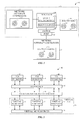
- FIG. 1 is a block diagram illustrating a system 10 that includes an internal I/O bus interconnect 11 in accordance with an embodiment.
- the I/O bus interconnect 11 may use a high-speed serial computer expansion bus standard that supports directed I/O support technology, such as Peripheral Component Interconnect Express (PCIe) 3.0 or later, Intel QuickPath Interconnect (QPI), etc.
- PCIe 3.0 supports single root I/O virtualization (SR-IOV).
- the system 10 may include a host system 22.
- the host system 22 may include a processor 14, a host memory 16, a root complex 12, and one or more switches 18 that provide one or more connection points 20 (e.g., PCIe 3.0 ports).
- the root complex 12 may connect the processor 14 and the host memory 16 to the one or more switches 18 of the system 10.
- the host memory 16 may include a physical random access memory (RAM) of the system 10.
- the host memory 16 may include memory allocated to a transmit ring 28 and a receive ring 30 used by either and/or both of the NICs 24 to process data packets.
- the root complex 12 may generate transaction requests on behalf of the processor 14.
- the root complex 12 may be a discrete device or integrated with the processor 14.
- the root complex 12 may include the one or more switches 18 that provide the one or more connection points 20 (e.g., PCIe 3.0 ports).
- the system 10 may further include NICs 24.
- the host system 22 may include NIC 24, which may be coupled to the processor 14 via the I/O bus interconnect 11.
- NIC 24 may be coupled to the switch 18 by the port 20.
- NIC 24 may include an on-chip memory 26.
- the on-chip memory 26 may include memory allocated to the transmit ring 28 and the receive ring 30 used by the host system 22 and the NIC 24 to process data packets.
- the on-chip memory 26 may include a copy of data stored in the host memory 16.
- the transmit ring 28 and the receive ring 30 of the on-chip memory 26 may include a copy of the data stored in the transmit ring 28 and the receive ring 30 of the host memory 16.
- the on-chip memory 26 may include a copy of descriptors stored in the host memory 16.
- FIG. 2 is a block diagram illustrating a software system 40 that uses an I/O bus interconnect standard that supports directed I/O support technology in accordance with an embodiment.
- the software system 40 may include one or more virtual machines (VMs) or guest machines 42. Each VM 42 has a virtual function (VF) driver 44 that provides an interface to the NIC 24.
- the software system 40 may also include a hypervisor or virtual machine monitor 46 that creates and runs the VMs 42.
- the software system uses an I/O bus interconnect standard (e.g., a high-speed serial computer expansion bus standard) 48 that supports directed I/O support technology that enables access to devices such as the NIC 24.
- I/O bus interconnect standard e.g., a high-speed serial computer expansion bus standard
- the I/O bus interconnect standard 48 may use PCIe 3.0 or later, Intel QPI, etc.
- PCIe 3.0 supports single root I/O virtualization (SR-IOV).
- SR-IOV may enable a single device that is connected to the switch 18, such as the NIC 24, to appear to be multiple separate devices.
- the software system may expose the NIC 24 as a virtual NIC 50 to each of the VMs 42.
- SR-IOV may also enable the VMs 42 to access resources within the NIC 24, via virtual functions 52.
- the VMs 42 may see these resources as virtual NIC resources 54. This functionality may be observed with Windows, Linux and other variations of these operating systems (e.g., frameworks provided by Intel Data Plane Development Kit (DPDK), VMWare, Xen, etc.).
- FIG. 3 is a diagram illustrating the transmit ring 28 in accordance with an embodiment.
- the transmit ring 28 may be used by the NIC 24 to process packets formatted by the VF driver 44.
- the transmit ring 28 is a data structure that uses a single, fixed-size buffer as if it were connected end-to-end, such as a circular ring.
- the transmit ring 28 includes entries 70 numbered 0 to n-1, wherein each entry 70 contains a descriptor 72 that describes a physical fragment 82 of data in memory for a packet of data. That is, the packet may be made up of the one or more fragments 82.
- packet 0 may be made up of the fragments 0, 1, and 2.
- the descriptor 72 may include a guest bus address 74 that is the virtual location of the fragment 82.
- the descriptor 72 may further include, enter alia, information relevant to the fragment 82 (e.g., length of physical fragment 76), information relevant to the packet (e.g., end of packet indicator 78), and control information 80.
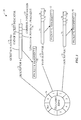
- FIG. 4 is a diagram illustrating the process 90 of transmitting data in accordance with an embodiment.
- the VF driver 44 may receive (block 92) the packet 94 from the guest OS and separate the packet 94 into fragments 82.
- the VF driver 44 may receive the fragments 82 that have been separated from the packet 94 by the guest OS.
- packet 0 is made up of three fragments, 0, 1, and 2.
- the NIC 24 is monitoring (block 96) the transmit ring 28 for descriptors 72 (shown in FIG.
- the NIC 24 has the ability to monitor the transmit ring 28 that is stored on the host memory 16 by using, for example, Address Translation Services (ATS), provided by SR-IOV.
- ATS enables the VM 42 to perform direct memory access (DMA) transactions to and from a PCIe device (e.g., the NIC 24) by using look-up tables to map the virtual address to the corresponding physical address.
- ATS also enables the PCIe device to perform DMA transactions to the VM 42 in the same manner. If the transmit ring 28 is stored on the on-chip memory 26 in the NIC 24, the NIC 24 may access the transmit ring 28 without performing DMA transactions.
- the VF driver 44 may write (block 98) descriptor 0 (shown in FIG. 3 ) to a first entry 70 in the transmit ring 28.
- descriptor 0 may include, inter alia, the guest bus address 74 that is the virtual location of fragment 0 that makes up packet 0.
- the NIC 24 continues monitoring (block 96) the transmit ring 28 for new descriptors 72.
- the VF driver 44 may write (block 100) descriptor 1 to a second entry 70 in the transmit ring 28.
- Descriptor 1 may include, inter alia, the guest bus address 74 that is the virtual location of fragment 1 of packet 0.
- the NIC 24 may determine (block 102) that descriptor 0 has been written to the transmit ring 28. In that case, the NIC 24 may attempt to retrieve and/or request a translation for guest bus address 0 (i.e., the guest bus address 74 contained in descriptor 0). The NIC 24 may eventually receive the translated physical address for guest bus address 0. The VF driver 44 may write (block 104) descriptor 2 to a third entry 70 in the transmit ring 28. Descriptor 2 may include, inter alia, the guest bus address 74 that is the virtual location of fragment 2 of packet 0. Approximately at this time, the NIC 24 may determine (block 106) that descriptor 1 has been written to the transmit ring 28.
- the NIC 24 may request a translation for guest bus address 1 (i.e., the guest bus address 74 contained in descriptor 1).
- the NIC 24 may further determine (block 108) that descriptor 2 has been written to the transmit ring 28. In that case, the NIC 24 may request a translation for guest bus address 2 (i.e., the guest bus address 74 contained in descriptor 2).
- the NIC 24 may eventually receive the translated physical address for guest bus address 2.
- the VF driver 44 may notify (block 110) the NIC 24 by writing in the doorbell register 112 of the NIC 24.
- the doorbell register 112 is a register of the NIC 24 that enables software (e.g., the VF driver 44) to write to the register such that the NIC 24 is notified that one or more packets have been written to the transmit ring 28.
- the NIC 24 may read (block 116) descriptors 0, 1, and 2 from the transmit ring 28.
- the NIC 24 may determine that it has received the translated physical addresses for guest bus addresses 0, 1, and 2 before reading 116 descriptors 0, 1, and 2 from the transmit ring 28. The NIC 24 may then read 118 fragments 0, 1, and 2 using the information in the descriptors 0, 1, and 2 in conjunction with the translated physical addresses for guest bus address 0, 1, and 2. The NIC 24 may combine 120 fragments 0, 1, and 2 into packet 0, and transmit packet 0.
- the NIC 24 may initiate memory transactions with the untranslated guest bus addresses, resulting in an I/O fault and a request for translation.
- the process 90 of transmitting data results in one or more guest bus addresses 74 remaining untranslated, initiating the memory transaction with the untranslated bus address 74 may still occur.
- the process 90 of transmitting data as described above may reduce or eliminate the latency incurred as a result from initiating the memory transactions with the untranslated guest bus addresses 74.
- some embodiments may use an address translation caching feature of the directed I/O support technology to further improve latency and overall performance characteristic of the process 90 of transmitting data.
- PCIe supports an Address Translation Cache (ATC) feature to cache and reuse address translations. This may be especially useful for common guest bus addresses 74 that are repeatedly used.
- ATC Address Translation Cache
- FIG. 5 is a diagram illustrating the receive ring 30 in accordance with an embodiment.
- the receive ring 30 may be used by the VF driver 44 to provide receive buffers to the NIC 24.
- the receive ring 28 is a data structure that uses a single, fixed-size buffer as if it were connected end-to-end, such as a circular ring.
- the receive ring 30 includes entries 130 numbered 0 to n-1, wherein each entry 130 contains a descriptor 132 that describes a complete packet 94 of data.
- the descriptor 132 may include the guest bus address 74 that is the virtual location of the receive buffer designated to store the packet 94.
- the descriptor 132 may further include, inter alia, control information 80.
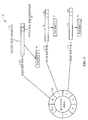
- FIG. 6 is a diagram illustrating the process 140 of receiving data in accordance with an embodiment.
- the VF driver 44 may allocate (block 142) host memory 16 for receiving data.
- the VF driver 44 may allocate host memory 16 as receive buffers 144 for receiving incoming packets 94.
- the NIC 24 is monitoring (block 146) the receive ring 30 for new descriptors 132 (shown in FIG. 5 ) written by the VF Driver 44.
- the NIC 24 has the ability to monitor the receive ring 30 stored on the host memory 16 by using ATS, provided by SR-IOV.
- ATS enables the VM 42 to perform DMA transactions to and from a PCIe device (e.g., the NIC 24) by using look-up tables to map the virtual address to the corresponding physical address.
- ATS also enables the PCIe device to perform DMA transactions to the VM 42 in the same manner. If the receive ring 30 is stored on the on-chip memory 26 in the NIC 24, the NIC 24 may access the receive ring 30 without performing DMA transactions.
- the VF driver 44 may write (block 148) descriptor 0 to a first entry 130 in the receive ring 30.
- descriptor 0 may include, inter alia, the guest bus address 74 that is the virtual location of the receive buffer designated to store packet 0.
- the NIC 24 continues monitoring (block 146) the receive ring 30 for new descriptors 132.
- the NIC 24 may determine (block 150) that the descriptor 0 has been written to the receive ring 30. In that case, the NIC 24 may attempt to retrieve and/or request a translation for guest bus address 0 (i.e., the guest bus address 74 contained in descriptor 0).
- the NIC 24 may eventually receive the translated physical address for guest bus address 0.
- the VF driver 44 may notify (block 152) the NIC 24 by writing in the doorbell register 154 of the NIC 24.
- the doorbell register 154 is a register of the NIC 24 that enables software (e.g., the VF driver 44) to write to the register such that the NIC 24 is notified that one or more packets have been written to the receive ring 30.
- the NIC 24 may read (block 158) descriptor 0 from the receive ring 30.
- the NIC 24 may determine that it has received the translated physical addresses for the guest bus addresses 74 before reading (block 158) descriptor 0 from the receive ring 30.
- the NIC 24 may write (block 162) the packet 94 to the receive buffer 144 allocated in host memory 16 for receiving the incoming packet 94.
- the VF driver 44 thus receives (block 164) the incoming packet 94.
- the NIC 24 may initiate memory transactions with the untranslated guest bus addresses, which may result in an I/O fault and a request for translation.
- the process 140 of receiving data results in one or more guest bus addresses 74 remaining untranslated, initiating the memory transaction with the untranslated bus address 74 may still occur.
- the process 140 of transmitting data as described above may reduce or eliminate the latency incurred as a result from initiating the memory transactions with the untranslated guest bus addresses 74.
- some embodiments may use an address translation caching feature of the directed I/O support technology to further improve latency and overall performance characteristic of the process 140 of receiving data.
- PCIe supports the ATC feature to cache and reuse address translations. This may be especially useful for common guest bus addresses 74 that are repeatedly used.
- the NIC 24 may read (block 196) the descriptors 72 in the transmit ring 28.
- the NIC 24 may then read (block 198) fragments of data located at the guest bus addresses 74.
- the read operation may result in an I/O fault, followed by an attempt to retrieve and/or a request for translation of the untranslated guest bus address 74. This may incur latency that may negatively impact network performance. No additional latency is incurred for the guest bus addresses 74 that have already been translated because they were translated at opportune times, e.g., while the VF driver 44 was processing one or more packets into the transmit ring 28.
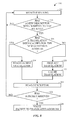
- the NIC 24 may then read (block 224) the new descriptor 132.
- the NIC 24 may determine (node 226) whether a packet 94 has arrived. If not, the method may return to block 212 and continues to monitor the receive ring 30 for new descriptors 132. If the NIC 24 has determined that the packet 94 has arrived, the NIC 24 may write (block 228) the packet to the translated guest bus address.
- Performing translations of the guest bus addresses 74 at opportune times e.g., while the VF driver 44 is writing descriptors to the receive ring 30 or notifying the NIC 24 that there is a new descriptor 132 in the receive ring 30 prior to the arrival of the packet 94, may eliminate the latency incurred resulting from requesting translations after the descriptor 132 is read or after the packet 94 arrives, thus enhancing network performance.
Landscapes
- Engineering & Computer Science (AREA)
- Theoretical Computer Science (AREA)
- General Engineering & Computer Science (AREA)
- Physics & Mathematics (AREA)
- General Physics & Mathematics (AREA)
- Software Systems (AREA)
- Computer Hardware Design (AREA)
- Mathematical Physics (AREA)
- Information Transfer Systems (AREA)
- Memory System Of A Hierarchy Structure (AREA)
- Multi Processors (AREA)
Abstract
Description
- The present disclosure relates generally to virtual machines, such as virtual machines supported by an operating system. More particularly, the present disclosure relates to providing efficient virtual input/output (I/O) address translation for network interface devices within a virtual machine.
- This section is intended to introduce the reader to various aspects of art that may be related to various aspects of the present disclosure, which are described and/or claimed below. This discussion is believed to be helpful in providing the reader with background information to facilitate a better understanding of the various aspects of the present disclosure. Accordingly, it should be understood that these statements are to be read in this light, and not as admissions of prior art.
- A high-performance server network may use virtual machine architecture hosted by a hypervisor. Virtual machines may in turn use virtual memory addresses that are mapped to physical memory addresses to more efficiently use memory space. A memory management unit in a host system may translate the virtual addresses to the physical addresses. The high-performance server network may also use a high-performance network interface device, such as a network interface controller (NIC). When transmitting and receiving data, the data may be transferred between the host system and the NIC. To read outgoing data sent from the host system or write incoming data to the host system, the NIC may request translation of the virtual addresses to access the desired physical addresses. These translation requests may incur latency that may negatively affect network performance.
- A summary of certain embodiments disclosed herein is set forth below. It should be understood that these aspects are presented merely to provide the reader with a brief summary of these certain embodiments. Indeed, this disclosure may encompass a variety of aspects that may not be set forth below.
- Present embodiments relate to systems and methods for enhancing network performance of a high-performance server network by using a directed input/output (I/O) support technology. In particular, the present embodiments relate to a high-performance network interface device, such as a network interface controller (NIC), using the directed I/O support technology by accessing untranslated, virtual "guest" bus addresses from virtual machines hosted by a hypervisor and translating the guest bus addresses at opportune times. The NIC may initiate memory transactions with the untranslated guest bus addresses, which results in an I/O fault and a request for translation. Requesting translations at opportune times using the capabilities provided by the directed I/O support technology may reduce or eliminate the latency incurred as a result from initiating memory transactions with the untranslated guest bus addresses.
- In a first embodiment, a method includes using a network interface controller to monitor a transmit ring, wherein the transmit ring comprises a circular ring data structure that stores descriptors, wherein a descriptor describes data and comprises a guest bus address that provides a virtual memory location of the data. The method also includes using the network interface controller to determine that a descriptor has been written to the transmit ring. The method further includes using a network interface controller to attempt to retrieve a translation for the guest bus address. The method includes using a network interface controller to read the descriptor from the transmit ring.
- In a second embodiment, a method includes using a network interface controller to monitoring a receive ring, wherein the receive ring comprises a circular ring data structure that stores descriptors, wherein a descriptor describes data and comprises a guest bus address that provides a virtual memory location of the data. The method also includes using the network interface controller to determine that a descriptor has been written to the receive ring. The method further includes using the network interface controller to attempt to retrieve a translation for the guest bus address. The method includes using the network interface controller to read the descriptor from the receive ring.
- In a third embodiment, a tangible, non-transitory, machine-readable-medium includes machine-readable instructions to monitor a circular ring data structure that stores descriptors, wherein a descriptor describes data and comprises a guest bus address that provides a virtual memory location of the data. The machine-readable-medium also includes machine-readable instructions to determine that the descriptor has been written to the circular ring data structure. The machine-readable-medium further includes machine-readable instructions to determine when a translation for the guest bus address has been cached. The machine-readable-medium includes machine-readable instructions to read the translation when the translation has been determined to have been cached. The machine-readable-medium also includes machine-readable instructions to request the translation for the guest bus address when the translation has not been determined to have been cached. The machine-readable-medium further includes machine-readable instructions to read the descriptor from the circular ring data structure.
- Various refinements of the features noted above may be made in relation to various aspects of the present disclosure. Further features may also be incorporated in these various aspects as well. These refinements and additional features may be made individually or in any combination. For instance, various features discussed below in relation to one or more of the illustrated embodiments may be incorporated into any of the above-described aspects of the present invention alone or in any combination. The brief summary presented above is intended only to familiarize the reader with certain aspects and contexts of embodiments of the present disclosure without limitation to the claimed subject matter.
- Various aspects of this disclosure may be better understood upon reading the following detailed description and upon reference to the drawings in which:
-
FIG. 1 is a block diagram illustrating a system that includes an internal input/output (I/O) bus interconnect in accordance with an embodiment; -
FIG. 2 is a block diagram illustrating a software system that uses an internal I/O bus interconnect standard that supports directed I/O support technology in accordance with an embodiment; -
FIG. 3 is a diagram illustrating a transmit ring in accordance with an embodiment; -
FIG. 4 is a diagram illustrating a process of transmitting data in accordance with an embodiment; -
FIG. 5 is a diagram illustrating a receive ring in accordance with an embodiment; -
FIG. 6 is a diagram illustrating a process of receiving data in accordance with an embodiment; -
FIG. 7 is a flow chart illustrating a method of transmitting data in accordance with an embodiment; and -
FIG. 8 is a flow chart illustrating a method of receiving data in accordance with an embodiment. - One or more specific embodiments will be described below. In an effort to provide a concise description of these embodiments, not all features of an actual implementation are described in the specification. It should be appreciated that in the development of any such actual implementation, as in any engineering or design project, numerous implementation-specific decisions must be made to achieve the developers' specific goals, such as compliance with system-related and business-related constraints, which may vary from one implementation to another. Moreover, it should be appreciated that such a development effort might be complex and time consuming, but would nevertheless be a routine undertaking of design, fabrication, and manufacture for those of ordinary skill having the benefit of this disclosure.
- As discussed in further detail below, embodiments of the present disclosure relate generally to optimizing virtual input/output (I/O) address translation for network interface devices, such as a network interface controller (NIC), within a virtual machine. In particular, the present embodiments relate to the NIC using the directed I/O support technology by accessing untranslated, virtual "guest" bus addresses from the virtual machines hosted by the hypervisor and translating the guest bus addresses at opportune times. The term "guest" in the present disclosure refers to the virtual machines that are installed on the host operating system and that run on a virtualization platform of the host operating system. Guest bus addresses are virtual memory addresses that are mapped to physical memory addresses of the host system. A processor of the host system may map noncontiguous physical memory (e.g., from a variety of different sources, such as a memory of the host processor, a memory of a hard disk, etc.) to a contiguous virtual address space - the virtual memory. Additionally, software of the host system may extend memory capabilities to provide a virtual address space that can exceed the capacity of the physical memory of the host system, and thus reference more memory than may be physically present on the host system. Address translation hardware of the processor may translate the guest bus addresses to physical addresses to access stored data. The NIC may initiate memory transactions with the untranslated guest bus addresses, which results in an I/O fault and a request for translation. Requesting translations at opportune times using the capabilities provided by the directed I/O support technology may reduce or eliminate the latency incurred as a result from initiating memory transactions with the untranslated guest bus addresses.
- With the foregoing in mind,
FIG. 1 is a block diagram illustrating asystem 10 that includes an internal I/O bus interconnect 11 in accordance with an embodiment. The I/O bus interconnect 11 may use a high-speed serial computer expansion bus standard that supports directed I/O support technology, such as Peripheral Component Interconnect Express (PCIe) 3.0 or later, Intel QuickPath Interconnect (QPI), etc. For example, PCIe 3.0 supports single root I/O virtualization (SR-IOV). Thesystem 10 may include ahost system 22. Thehost system 22 may include aprocessor 14, ahost memory 16, aroot complex 12, and one ormore switches 18 that provide one or more connection points 20 (e.g., PCIe 3.0 ports). Theroot complex 12 may connect theprocessor 14 and thehost memory 16 to the one ormore switches 18 of thesystem 10. Thehost memory 16 may include a physical random access memory (RAM) of thesystem 10. Thehost memory 16 may include memory allocated to a transmitring 28 and a receivering 30 used by either and/or both of theNICs 24 to process data packets. Theroot complex 12 may generate transaction requests on behalf of theprocessor 14. Theroot complex 12 may be a discrete device or integrated with theprocessor 14. Theroot complex 12 may include the one ormore switches 18 that provide the one or more connection points 20 (e.g., PCIe 3.0 ports). Thesystem 10 may further includeNICs 24. In some embodiments, thehost system 22 may includeNIC 24, which may be coupled to theprocessor 14 via the I/O bus interconnect 11. It should be understood that theprocessor 14 of thehost system 22 may include one or more processors that perform the tasks and share the structure of theprocessor 14. In some embodiments,NIC 24 may be coupled to theswitch 18 by theport 20.NIC 24 may include an on-chip memory 26. The on-chip memory 26 may include memory allocated to the transmitring 28 and the receivering 30 used by thehost system 22 and theNIC 24 to process data packets. The on-chip memory 26 may include a copy of data stored in thehost memory 16. For example, the transmitring 28 and the receivering 30 of the on-chip memory 26 may include a copy of the data stored in the transmitring 28 and the receivering 30 of thehost memory 16. In some embodiments, the on-chip memory 26 may include a copy of descriptors stored in thehost memory 16. - Turning now to a virtual machine architecture applicable to the
system 10,FIG. 2 is a block diagram illustrating asoftware system 40 that uses an I/O bus interconnect standard that supports directed I/O support technology in accordance with an embodiment. Thesoftware system 40 may include one or more virtual machines (VMs) orguest machines 42. EachVM 42 has a virtual function (VF)driver 44 that provides an interface to theNIC 24. Thesoftware system 40 may also include a hypervisor or virtual machine monitor 46 that creates and runs theVMs 42. The software system uses an I/O bus interconnect standard (e.g., a high-speed serial computer expansion bus standard) 48 that supports directed I/O support technology that enables access to devices such as theNIC 24. For example, the I/Obus interconnect standard 48 may use PCIe 3.0 or later, Intel QPI, etc. In particular, PCIe 3.0 supports single root I/O virtualization (SR-IOV). SR-IOV may enable a single device that is connected to theswitch 18, such as theNIC 24, to appear to be multiple separate devices. In particular, the software system may expose theNIC 24 as avirtual NIC 50 to each of theVMs 42. SR-IOV may also enable theVMs 42 to access resources within theNIC 24, viavirtual functions 52. TheVMs 42 may see these resources asvirtual NIC resources 54. This functionality may be observed with Windows, Linux and other variations of these operating systems (e.g., frameworks provided by Intel Data Plane Development Kit (DPDK), VMWare, Xen, etc.). - As noted above, the
host memory 16 or the on-chip memory 26 of theNIC 24 may include the transmitring 28.FIG. 3 is a diagram illustrating the transmitring 28 in accordance with an embodiment. The transmitring 28 may be used by theNIC 24 to process packets formatted by theVF driver 44. The transmitring 28 is a data structure that uses a single, fixed-size buffer as if it were connected end-to-end, such as a circular ring. The transmitring 28 includesentries 70 numbered 0 to n-1, wherein eachentry 70 contains adescriptor 72 that describes aphysical fragment 82 of data in memory for a packet of data. That is, the packet may be made up of the one or more fragments 82. For example,packet 0 may be made up of thefragments descriptor 72 may include aguest bus address 74 that is the virtual location of thefragment 82. Thedescriptor 72 may further include, enter alia, information relevant to the fragment 82 (e.g., length of physical fragment 76), information relevant to the packet (e.g., end of packet indicator 78), and controlinformation 80. - Turning to the process of transmitting data, a guest operating system (OS) of the
VM 42 may provide one or more packets to be transmitted in a single call to theVF driver 44.FIG. 4 is a diagram illustrating theprocess 90 of transmitting data in accordance with an embodiment. TheVF driver 44 may receive (block 92) thepacket 94 from the guest OS and separate thepacket 94 intofragments 82. Alternatively, theVF driver 44 may receive thefragments 82 that have been separated from thepacket 94 by the guest OS. In the illustrated example,packet 0 is made up of three fragments, 0, 1, and 2. During this time, theNIC 24 is monitoring (block 96) the transmitring 28 for descriptors 72 (shown inFIG. 3 ) written by theVF Driver 44. TheNIC 24 has the ability to monitor the transmitring 28 that is stored on thehost memory 16 by using, for example, Address Translation Services (ATS), provided by SR-IOV. In particular, ATS enables theVM 42 to perform direct memory access (DMA) transactions to and from a PCIe device (e.g., the NIC 24) by using look-up tables to map the virtual address to the corresponding physical address. ATS also enables the PCIe device to perform DMA transactions to theVM 42 in the same manner. If the transmitring 28 is stored on the on-chip memory 26 in theNIC 24, theNIC 24 may access the transmitring 28 without performing DMA transactions. - The
VF driver 44 may write (block 98) descriptor 0 (shown inFIG. 3 ) to afirst entry 70 in the transmitring 28. As depicted inFIG. 3 ,descriptor 0 may include, inter alia, theguest bus address 74 that is the virtual location offragment 0 that makes uppacket 0. During this time, theNIC 24 continues monitoring (block 96) the transmitring 28 fornew descriptors 72. TheVF driver 44 may write (block 100)descriptor 1 to asecond entry 70 in the transmitring 28.Descriptor 1 may include, inter alia, theguest bus address 74 that is the virtual location offragment 1 ofpacket 0. Approximately at this time, theNIC 24 may determine (block 102) thatdescriptor 0 has been written to the transmitring 28. In that case, theNIC 24 may attempt to retrieve and/or request a translation for guest bus address 0 (i.e., theguest bus address 74 contained in descriptor 0). TheNIC 24 may eventually receive the translated physical address forguest bus address 0. TheVF driver 44 may write (block 104)descriptor 2 to athird entry 70 in the transmitring 28.Descriptor 2 may include, inter alia, theguest bus address 74 that is the virtual location offragment 2 ofpacket 0. Approximately at this time, theNIC 24 may determine (block 106) thatdescriptor 1 has been written to the transmitring 28. In that case, theNIC 24 may request a translation for guest bus address 1 (i.e., theguest bus address 74 contained in descriptor 1). TheNIC 24 may further determine (block 108) thatdescriptor 2 has been written to the transmitring 28. In that case, theNIC 24 may request a translation for guest bus address 2 (i.e., theguest bus address 74 contained in descriptor 2). TheNIC 24 may eventually receive the translated physical address forguest bus address 2. - Once the three
descriptors ring 28, theVF driver 44 may notify (block 110) theNIC 24 by writing in thedoorbell register 112 of theNIC 24. Thedoorbell register 112 is a register of theNIC 24 that enables software (e.g., the VF driver 44) to write to the register such that theNIC 24 is notified that one or more packets have been written to the transmitring 28. After theNIC 24 receives (block 114) the notification from theVF driver 44, theNIC 24 may read (block 116)descriptors ring 28. Alternatively, theNIC 24 may determine that it has received the translated physical addresses for guest bus addresses 0, 1, and 2 before reading 116descriptors ring 28. TheNIC 24 may then read 118fragments descriptors guest bus address NIC 24 may combine 120fragments packet 0, and transmitpacket 0. - As mentioned briefly above, the
NIC 24 may initiate memory transactions with the untranslated guest bus addresses, resulting in an I/O fault and a request for translation. In the case where theprocess 90 of transmitting data results in one or more guest bus addresses 74 remaining untranslated, initiating the memory transaction with theuntranslated bus address 74 may still occur. However, theprocess 90 of transmitting data as described above may reduce or eliminate the latency incurred as a result from initiating the memory transactions with the untranslated guest bus addresses 74. - Additionally, some embodiments may use an address translation caching feature of the directed I/O support technology to further improve latency and overall performance characteristic of the
process 90 of transmitting data. For example, PCIe supports an Address Translation Cache (ATC) feature to cache and reuse address translations. This may be especially useful for common guest bus addresses 74 that are repeatedly used. - As noted above, the
host memory 16 or the on-chip memory 26 of theNIC 24 may also include the receivering 30.FIG. 5 is a diagram illustrating the receivering 30 in accordance with an embodiment. The receivering 30 may be used by theVF driver 44 to provide receive buffers to theNIC 24. The receivering 28 is a data structure that uses a single, fixed-size buffer as if it were connected end-to-end, such as a circular ring. The receivering 30 includesentries 130 numbered 0 to n-1, wherein eachentry 130 contains adescriptor 132 that describes acomplete packet 94 of data. Thedescriptor 132 may include theguest bus address 74 that is the virtual location of the receive buffer designated to store thepacket 94. Thedescriptor 132 may further include, inter alia, controlinformation 80. -
FIG. 6 is a diagram illustrating theprocess 140 of receiving data in accordance with an embodiment. TheVF driver 44 may allocate (block 142)host memory 16 for receiving data. In particular, theVF driver 44 may allocatehost memory 16 as receivebuffers 144 for receivingincoming packets 94. During this time, theNIC 24 is monitoring (block 146) the receivering 30 for new descriptors 132 (shown inFIG. 5 ) written by theVF Driver 44. TheNIC 24 has the ability to monitor the receivering 30 stored on thehost memory 16 by using ATS, provided by SR-IOV. In particular, ATS enables theVM 42 to perform DMA transactions to and from a PCIe device (e.g., the NIC 24) by using look-up tables to map the virtual address to the corresponding physical address. ATS also enables the PCIe device to perform DMA transactions to theVM 42 in the same manner. If the receivering 30 is stored on the on-chip memory 26 in theNIC 24, theNIC 24 may access the receivering 30 without performing DMA transactions. - The
VF driver 44 may write (block 148)descriptor 0 to afirst entry 130 in the receivering 30. As depicted inFIG. 5 ,descriptor 0 may include, inter alia, theguest bus address 74 that is the virtual location of the receive buffer designated to storepacket 0. During this time, theNIC 24 continues monitoring (block 146) the receivering 30 fornew descriptors 132. Approximately at this time, theNIC 24 may determine (block 150) that thedescriptor 0 has been written to the receivering 30. In that case, theNIC 24 may attempt to retrieve and/or request a translation for guest bus address 0 (i.e., theguest bus address 74 contained in descriptor 0). TheNIC 24 may eventually receive the translated physical address forguest bus address 0. - Once
descriptor 0 is written to the receivering 30, theVF driver 44 may notify (block 152) theNIC 24 by writing in thedoorbell register 154 of theNIC 24. Thedoorbell register 154 is a register of theNIC 24 that enables software (e.g., the VF driver 44) to write to the register such that theNIC 24 is notified that one or more packets have been written to the receivering 30. After theNIC 24 receives (block 156) the notification from theVF driver 44, theNIC 24 may read (block 158)descriptor 0 from the receivering 30. Alternatively, theNIC 24 may determine that it has received the translated physical addresses for the guest bus addresses 74 before reading (block 158)descriptor 0 from the receivering 30. When anincoming packet 94 arrives (block 160) at theNIC 24, theNIC 24 may write (block 162) thepacket 94 to the receivebuffer 144 allocated inhost memory 16 for receiving theincoming packet 94. TheVF driver 44 thus receives (block 164) theincoming packet 94. - As discussed above, the
NIC 24 may initiate memory transactions with the untranslated guest bus addresses, which may result in an I/O fault and a request for translation. In the case where theprocess 140 of receiving data results in one or more guest bus addresses 74 remaining untranslated, initiating the memory transaction with theuntranslated bus address 74 may still occur. However, it is envisioned that theprocess 140 of transmitting data as described above may reduce or eliminate the latency incurred as a result from initiating the memory transactions with the untranslated guest bus addresses 74. - Additionally, some embodiments may use an address translation caching feature of the directed I/O support technology to further improve latency and overall performance characteristic of the
process 140 of receiving data. For example, PCIe supports the ATC feature to cache and reuse address translations. This may be especially useful for common guest bus addresses 74 that are repeatedly used. - Turning now to
FIG. 7 , a flow chart that illustrates amethod 180 of transmitting data in accordance with an embodiment. TheNIC 24 may determine (node 182) whether a notification has been received from theVF driver 44 that one ormore packets 94 have been written to the transmitring 28. If theNIC 24 determines that the notification has not been received, theNIC 24 may monitor (block 184) the transmitring 28 fornew descriptors 72. TheNIC 24 has the ability to monitor the transmitring 28 stored on thehost memory 16 by using ATS, provided by SR-IOV. In particular, ATS enables theVM 42 to perform direct memory access (DMA) transactions to and from a PCIe device (e.g., the NIC 24) by using look-up tables to map the virtual address to the corresponding physical address. ATS also enables the PCIe device to perform DMA transactions to theVM 42 in the same manner. If the transmitring 28 is stored on the on-chip memory 26 in theNIC 24, theNIC 24 may access the transmitring 28 without performing DMA transactions. - The
NIC 24 may determine (node 186) whether anew descriptor 72 has been written to the transmitring 28. If not, themethod 180 may return tonode 182. If theNIC 24 determines that anew descriptor 72 has been written to the transmitring 28, theNIC 24 may then determine (node 188) whether a translation has been cached for aguest bus address 74 of thenew descriptor 72. If so, theNIC 24 may read (block 190) the cached translation for theguest bus address 74 and themethod 180 may continue tonode 182. If the translation has not been cached for theguest bus address 74, theNIC 24 may attempt to retrieve and/or request (block 192) a translation for theguest bus address 74. TheNIC 24 may then cache (block 194) the translation for theguest bus address 74. In some embodiments, theNIC 24 may only cache the translation for theguest bus address 74 if the address is determined to be a commonguest bus address 74 that may be repeatedly used. In some embodiments, theNIC 24 may only cache the translation for theguest bus address 74 only after it has been determined that there is a threshold amount of memory resources to allow for caching the translation of theguest bus address 74. Themethod 180 may then continue to node182. - If the
NIC 24 determines (node 182) that the notification from theVF driver 44 that one ormore packets 94 have been written to the transmitring 28 has been received, theNIC 24 may read (block 196) thedescriptors 72 in the transmitring 28. TheNIC 24 may then read (block 198) fragments of data located at the guest bus addresses 74. For those guest bus addresses 74 that remain untranslated, the read operation may result in an I/O fault, followed by an attempt to retrieve and/or a request for translation of the untranslatedguest bus address 74. This may incur latency that may negatively impact network performance. No additional latency is incurred for the guest bus addresses 74 that have already been translated because they were translated at opportune times, e.g., while theVF driver 44 was processing one or more packets into the transmitring 28. - Turning now to
FIG. 8 , a flow chart illustrating amethod 210 of receiving data in accordance with an embodiment. TheNIC 24 may monitor (block 212) the receivering 30 fornew descriptors 132. TheNIC 24 has the ability to monitor the receivering 30 stored on thehost memory 16 by using ATS, provided by SR-IOV. In particular, ATS enables theVM 42 to perform direct memory access (DMA) transactions to and from a PCIe device (e.g., the NIC 24) by using look-up tables to map the virtual address to the corresponding physical address. ATS also enables the PCIe device to perform DMA transactions to theVM 42 in the same manner. If the receivering 30 is stored on the on-chip memory 26 in theNIC 24, theNIC 24 may access the receivering 30 without performing DMA transactions. - The
NIC 24 may determine (node 214) whether anew descriptor 132 has been written to the receivering 30. If not, themethod 210 may return to block 212. If theNIC 24 determines that anew descriptor 132 has been written to the receivering 30, theNIC 24 may then determine (node 216) whether a translation has been cached for aguest bus address 74 of thenew descriptor 132. If so, theNIC 24 may read (block 218) the cached translation for theguest bus address 74 and themethod 180 may continue to block 224. If the translation has not been cached for theguest bus address 74, theNIC 24 may attempt to retrieve and/or request (block 220) a translation for theguest bus address 74. TheNIC 24 may then cache (block 222) the translation for theguest bus address 74. In some embodiments, theNIC 24 may only cache the translation for theguest bus address 74 if the address is determined to be a commonguest bus address 74 that may be repeatedly used. In some embodiments, theNIC 24 may only cache the translation for theguest bus address 74 only after it has been determined that there is a threshold amount of memory resources to allow for caching the translation of theguest bus address 74. Themethod 180 may then continue to block 224. - The
NIC 24 may then read (block 224) thenew descriptor 132. TheNIC 24 may determine (node 226) whether apacket 94 has arrived. If not, the method may return to block 212 and continues to monitor the receivering 30 fornew descriptors 132. If theNIC 24 has determined that thepacket 94 has arrived, theNIC 24 may write (block 228) the packet to the translated guest bus address. Performing translations of the guest bus addresses 74 at opportune times, e.g., while theVF driver 44 is writing descriptors to the receivering 30 or notifying theNIC 24 that there is anew descriptor 132 in the receivering 30 prior to the arrival of thepacket 94, may eliminate the latency incurred resulting from requesting translations after thedescriptor 132 is read or after thepacket 94 arrives, thus enhancing network performance. -
- Additional Embodiment 1: A method, comprising: using a network interface controller to monitor a receive ring, wherein the receive ring comprises a circular ring data structure that stores descriptors, wherein a descriptor describes data and comprises a guest bus address that provides a virtual memory location of the data; using the network interface controller to determine that the descriptor has been written to the receive ring; using the network interface controller to attempt to retrieve a translation for the guest bus address; and using the network interface controller to read the descriptor from the receive ring.
- Additional Embodiment 2: The method of
Additional Embodiment 1, wherein the receive ring is stored on a memory of a network interface controller. - Additional Embodiment 3: The method of
Additional Embodiments - Additional Embodiment 4: The method of one or Additional Embodiments 1-3, wherein using the network interface controller to attempt to retrieve the translation for the guest bus address comprises: using the network interface controller to determine when the translation for the guest bus address has been cached; using the network interface controller to read the translation from a cache when the translation has been determined to have been cached; and using the network interface controller to request the translation for the guest bus address when the translation has not been determined to have been cached.
- Additional Embodiment 5: The method of one of Additional Embodiments 1-4, comprising: using the network interface controller to initiate a memory transaction with an untranslated guest bus address when the translation for the guest bus address was not retrieved.
- Additional Embodiment 6: The method of one of Additional Embodiments 1-5, wherein using the network interface controller to monitor the receive ring comprises the network interface controller using single root input/output virtualization.
- Additional Embodiment 7: The method of one of Additional Embodiments 1-6, wherein the network interface controller is a Peripheral Component Interconnect Express 3.0 or later device.
- Additional Embodiment 8: A tangible, non-transitory, machine-readable-medium, comprising machine-readable instructions to: monitor a circular ring data structure that stores descriptors, wherein a descriptor describes data and comprises a guest bus address that provides a virtual memory location of the data; determine that the descriptor has been written to the circular ring data structure; determine when a translation for the guest bus address has been cached; read the translation when the translation has been determined to have been cached; request the translation for the guest bus address when the translation has not been determined to have been cached; and read the descriptor from the circular ring data structure.
- Additional Embodiment 9: The tangible, non-transitory, machine-readable-medium of Additional Embodiment 8, comprising machine-readable instructions to initiate a memory transaction with an untranslated guest bus address when the translation for the guest bus address was not retrieved.
- Additional Embodiment 10: The tangible, non-transitory, machine-readable-medium of Additional Embodiment 8 or 9,comprising machine-readable instructions to receive a notification that one or more packets have been written to the circular ring data structure.
- Additional Embodiment 11: The tangible, non-transitory, machine-readable-medium of one of Additional Embodiments 8-10, comprising machine-readable instructions to cache a translated guest bus address.
- Additional Embodiment 12: The tangible, non-transitory, machine-readable-medium of one of Additional Embodiments 8-10, wherein the machine-readable instructions to monitor the circular ring are performed by a network interface controller using single root input/output virtualization.
- Additional Embodiment 13: The tangible, non-transitory, machine-readable-medium of
Additional Embodiment 12, wherein the network interface controller is an Intel QuickPath Interconnect device. - While the embodiments set forth in the present disclosure may be susceptible to various modifications and alternative forms, specific embodiments have been shown by way of example in the drawings and have been described in detail herein. However, it should be understood that the disclosure is not intended to be limited to the particular forms disclosed.
Claims (15)
- A method, comprising:using a network interface controller to monitor a transmit ring, wherein the transmit ring comprises a circular ring data structure that stores descriptors, wherein a descriptor describes data and comprises a guest bus address that provides a virtual memory location of the data;using the network interface controller to determine that the descriptor has been written to the transmit ring;using the network interface controller to attempt to retrieve a translation for the guest bus address; andusing the network interface controller to read the descriptor from the transmit ring.
- The method of claim 1, wherein the transmit ring is stored on a host memory.
- The method of claims 1 or 2, wherein using the network interface controller to attempt to retrieve the translation for the guest bus address occurs before using the network interface controller to receive a notification that one or more packets have been written to the transmit ring.
- The method of one of claims 1-3, wherein using the network interface controller to attempt to retrieve the translation for the guest bus address comprises:using the network interface controller to determine when the translation for the guest bus address has been cached;using the network interface controller to read the translation from a cache when the translation has been determined to have been cached; andusing the network interface controller to request the translation for the guest bus address when the translation has not been determined to have been cached.
- The method of one of claims 1-4, comprising:using the network interface controller to initiate a memory transaction with an untranslated guest bus address when the translation for the guest bus address was not retrieved.
- The method of one of claims 1-5, wherein using the network interface controller to monitor the transmit ring comprises the network interface controller using single root input/output virtualization.
- The method of one of claims 1-6, wherein the network interface controller is an input/output bus interconnect device.
- A method, comprising:using a network interface controller to monitor a receive ring, wherein the receive ring comprises a circular ring data structure that stores descriptors, wherein a descriptor describes data and comprises a guest bus address that provides a virtual memory location of the data;using the network interface controller to determine that the descriptor has been written to the receive ring;using the network interface controller to attempt to retrieve a translation for the guest bus address; andusing the network interface controller to read the descriptor from the receive ring.
- The method of claim 8, wherein the receive ring is stored on a memory of a network interface controller.
- An integrated circuit device that executes instructions stored on a tangible, non-transitory, machine-readable-medium, the instructions comprising instructions to:monitor a circular ring data structure that stores descriptors, wherein a descriptor describes data and comprises a guest bus address that provides a virtual memory location of the data;determine that the descriptor has been written to the circular ring data structure;determine when a translation for the guest bus address has been cached;read the translation when the translation has been determined to have been cached;request the translation for the guest bus address when the translation has not been determined to have been cached; andread the descriptor from the circular ring data structure.
- The integrated circuit device of claim 10 that executes the instructions stored on the tangible, non-transitory, machine-readable-medium, the instructions comprising instructions to initiate a memory transaction with an untranslated guest bus address when the translation for the guest bus address was not retrieved.
- The integrated circuit device of claim 10 that executes the instructions stored on the tangible, non-transitory, machine-readable-medium, the instructions comprising instructions to receive a notification that one or more packets have been written to the circular ring data structure.
- The integrated circuit device of claim 10 that executes the instructions stored on the tangible, non-transitory, machine-readable-medium, the instructions comprising instructions to cache a translated guest bus address.
- The integrated circuit device of claim 10 that executes the instructions stored on the tangible, non-transitory, machine-readable-medium, the instructions comprising instructions to monitor a circular ring are performed by a network interface controller using single root input/output virtualization.
- The integrated circuit of claim 14, wherein the network interface controller comprises a point-to-point interconnect device.
Applications Claiming Priority (1)
| Application Number | Priority Date | Filing Date | Title |
|---|---|---|---|
| US14/873,007 US10216533B2 (en) | 2015-10-01 | 2015-10-01 | Efficient virtual I/O address translation |
Publications (2)
| Publication Number | Publication Date |
|---|---|
| EP3163452A1 true EP3163452A1 (en) | 2017-05-03 |
| EP3163452B1 EP3163452B1 (en) | 2018-06-06 |
Family
ID=57391739
Family Applications (1)
| Application Number | Title | Priority Date | Filing Date |
|---|---|---|---|
| EP16191770.3A Active EP3163452B1 (en) | 2015-10-01 | 2016-09-30 | Efficient virtual i/o address translation |
Country Status (3)
| Country | Link |
|---|---|
| US (2) | US10216533B2 (en) |
| EP (1) | EP3163452B1 (en) |
| CN (1) | CN106560791B (en) |
Cited By (1)
| Publication number | Priority date | Publication date | Assignee | Title |
|---|---|---|---|---|
| WO2026129088A1 (en) * | 2024-12-16 | 2026-06-25 | Airoha Technology (Suzhou) Limited | Network packet processing apparatus with multi-core parallel processing capability and packet order-preserving capability and associated network packet processing method |
Families Citing this family (10)
| Publication number | Priority date | Publication date | Assignee | Title |
|---|---|---|---|---|
| US11150928B2 (en) * | 2016-06-08 | 2021-10-19 | Red Hat Israel, Ltd. | Hypervisor translation bypass |
| CN107005495B (en) | 2017-01-20 | 2020-03-27 | 华为技术有限公司 | Method, network card, host device and computer system for forwarding data packets |
| US10540294B2 (en) * | 2017-02-17 | 2020-01-21 | Red Hat Israel, Ltd. | Secure zero-copy packet forwarding |
| CN109542581B (en) * | 2017-09-22 | 2020-10-13 | 深圳市中兴微电子技术有限公司 | Device sharing method, device and storage medium |
| US10834009B2 (en) | 2019-03-18 | 2020-11-10 | Intel Corporation | Systems and methods for predictive scheduling and rate limiting |
| WO2020236281A1 (en) | 2019-05-23 | 2020-11-26 | Cray Inc. | System and method for facilitating efficient host memory access from a network interface controller (nic) |
| US20220188167A1 (en) * | 2020-12-14 | 2022-06-16 | Dell Products, Lp | System and method to adapt memory usage of containerized workspaces |
| US20210149821A1 (en) * | 2020-12-23 | 2021-05-20 | Intel Corporation | Address translation technologies |
| US12219009B2 (en) * | 2021-01-15 | 2025-02-04 | Intel Corporation | Virtual device portability |
| US20260030191A1 (en) * | 2024-07-25 | 2026-01-29 | Microchip Touch Solutions Limited | SYSTEM AND METHODS FOR DYNAMIC MIGRATION OF ENDPOINTS ACROSS PCIe HOSTS |
Citations (3)
| Publication number | Priority date | Publication date | Assignee | Title |
|---|---|---|---|---|
| US20080091915A1 (en) * | 2006-10-17 | 2008-04-17 | Moertl Daniel F | Apparatus and Method for Communicating with a Memory Registration Enabled Adapter Using Cached Address Translations |
| WO2014036004A1 (en) * | 2012-08-29 | 2014-03-06 | Advanced Micro Devices, Inc. | Virtual input/output memory management unit wihtin a guest virtual machine |
| US20140281055A1 (en) * | 2013-03-15 | 2014-09-18 | Vmware, Inc. | Latency reduction for direct memory access operations involving address translation |
Family Cites Families (11)
| Publication number | Priority date | Publication date | Assignee | Title |
|---|---|---|---|---|
| US6925547B2 (en) * | 2000-12-14 | 2005-08-02 | Silicon Graphics, Inc. | Remote address translation in a multiprocessor system |
| US6839808B2 (en) * | 2001-07-06 | 2005-01-04 | Juniper Networks, Inc. | Processing cluster having multiple compute engines and shared tier one caches |
| US7620753B1 (en) * | 2005-03-17 | 2009-11-17 | Apple Inc. | Lockless access to a ring buffer |
| US20060236011A1 (en) * | 2005-04-15 | 2006-10-19 | Charles Narad | Ring management |
| US7734842B2 (en) * | 2006-03-28 | 2010-06-08 | International Business Machines Corporation | Computer-implemented method, apparatus, and computer program product for managing DMA write page faults using a pool of substitute pages |
| US7506084B2 (en) * | 2006-10-17 | 2009-03-17 | International Business Machines Corporation | Method for communicating with an I/O adapter using cached address translations |
| US8769168B2 (en) * | 2006-10-17 | 2014-07-01 | International Business Machines Corporation | Method for communicating with a network adapter using a queue data structure and cached address translations |
| US9256560B2 (en) * | 2009-07-29 | 2016-02-09 | Solarflare Communications, Inc. | Controller integration |
| US20110153909A1 (en) * | 2009-12-22 | 2011-06-23 | Yao Zu Dong | Efficient Nested Virtualization |
| CN102650976B (en) * | 2012-04-01 | 2014-07-09 | 中国科学院计算技术研究所 | Control device and method supporting single IO (Input/Output) virtual user level interface |
| US10394751B2 (en) * | 2013-11-06 | 2019-08-27 | Solarflare Communications, Inc. | Programmed input/output mode |
-
2015
- 2015-10-01 US US14/873,007 patent/US10216533B2/en active Active
-
2016
- 2016-09-30 EP EP16191770.3A patent/EP3163452B1/en active Active
- 2016-10-08 CN CN201610876727.5A patent/CN106560791B/en active Active
-
2019
- 2019-02-04 US US16/267,356 patent/US10713083B2/en active Active
Patent Citations (3)
| Publication number | Priority date | Publication date | Assignee | Title |
|---|---|---|---|---|
| US20080091915A1 (en) * | 2006-10-17 | 2008-04-17 | Moertl Daniel F | Apparatus and Method for Communicating with a Memory Registration Enabled Adapter Using Cached Address Translations |
| WO2014036004A1 (en) * | 2012-08-29 | 2014-03-06 | Advanced Micro Devices, Inc. | Virtual input/output memory management unit wihtin a guest virtual machine |
| US20140281055A1 (en) * | 2013-03-15 | 2014-09-18 | Vmware, Inc. | Latency reduction for direct memory access operations involving address translation |
Cited By (1)
| Publication number | Priority date | Publication date | Assignee | Title |
|---|---|---|---|---|
| WO2026129088A1 (en) * | 2024-12-16 | 2026-06-25 | Airoha Technology (Suzhou) Limited | Network packet processing apparatus with multi-core parallel processing capability and packet order-preserving capability and associated network packet processing method |
Also Published As
| Publication number | Publication date |
|---|---|
| US10713083B2 (en) | 2020-07-14 |
| US20190243675A1 (en) | 2019-08-08 |
| EP3163452B1 (en) | 2018-06-06 |
| CN106560791B (en) | 2020-10-27 |
| US10216533B2 (en) | 2019-02-26 |
| CN106560791A (en) | 2017-04-12 |
| US20170097840A1 (en) | 2017-04-06 |
Similar Documents
| Publication | Publication Date | Title |
|---|---|---|
| US10713083B2 (en) | Efficient virtual I/O address translation | |
| US9003082B2 (en) | Information processing apparatus, arithmetic device, and information transferring method | |
| US9639464B2 (en) | Application-assisted handling of page faults in I/O operations | |
| US8914458B2 (en) | Look-ahead handling of page faults in I/O operations | |
| US8745276B2 (en) | Use of free pages in handling of page faults | |
| US20210216453A1 (en) | Systems and methods for input/output computing resource control | |
| CN108027642B (en) | System and method for isolating input/output computing resources | |
| US11042495B2 (en) | Providing interrupts from an input-output memory management unit to guest operating systems | |
| US20160077946A1 (en) | Page resolution status reporting | |
| US8996774B2 (en) | Performing emulated message signaled interrupt handling | |
| CA2800632C (en) | Enable/disable adapters of a computing environment | |
| US10310759B2 (en) | Use efficiency of platform memory resources through firmware managed I/O translation table paging | |
| US11194735B2 (en) | Technologies for flexible virtual function queue assignment | |
| US10983833B2 (en) | Virtualized and synchronous access to hardware accelerators | |
| EP3980885B1 (en) | Guest operating system buffer and log access by an input-output memory management unit | |
| US20070130372A1 (en) | I/O address translation apparatus and method for specifying a relaxed ordering for I/O accesses | |
| CN104123173A (en) | Method and device for achieving communication between virtual machines |
Legal Events
| Date | Code | Title | Description |
|---|---|---|---|
| PUAI | Public reference made under article 153(3) epc to a published international application that has entered the european phase |
Free format text: ORIGINAL CODE: 0009012 |
|
| 17P | Request for examination filed |
Effective date: 20160930 |
|
| AK | Designated contracting states |
Kind code of ref document: A1 Designated state(s): AL AT BE BG CH CY CZ DE DK EE ES FI FR GB GR HR HU IE IS IT LI LT LU LV MC MK MT NL NO PL PT RO RS SE SI SK SM TR |
|
| AX | Request for extension of the european patent |
Extension state: BA ME |
|
| REG | Reference to a national code |
Ref country code: DE Ref legal event code: R079 Ref document number: 602016003338 Country of ref document: DE Free format text: PREVIOUS MAIN CLASS: G06F0012104500 Ipc: G06F0013420000 |
|
| GRAP | Despatch of communication of intention to grant a patent |
Free format text: ORIGINAL CODE: EPIDOSNIGR1 |
|
| RIC1 | Information provided on ipc code assigned before grant |
Ipc: G06F 13/40 20060101ALI20180126BHEP Ipc: G06F 13/42 20060101AFI20180126BHEP |
|
| INTG | Intention to grant announced |
Effective date: 20180214 |
|
| GRAS | Grant fee paid |
Free format text: ORIGINAL CODE: EPIDOSNIGR3 |
|
| GRAA | (expected) grant |
Free format text: ORIGINAL CODE: 0009210 |
|
| AK | Designated contracting states |
Kind code of ref document: B1 Designated state(s): AL AT BE BG CH CY CZ DE DK EE ES FI FR GB GR HR HU IE IS IT LI LT LU LV MC MK MT NL NO PL PT RO RS SE SI SK SM TR |
|
| REG | Reference to a national code |
Ref country code: GB Ref legal event code: FG4D |
|
| REG | Reference to a national code |
Ref country code: CH Ref legal event code: EP Ref country code: AT Ref legal event code: REF Ref document number: 1006849 Country of ref document: AT Kind code of ref document: T Effective date: 20180615 |
|
| REG | Reference to a national code |
Ref country code: IE Ref legal event code: FG4D |
|
| REG | Reference to a national code |
Ref country code: DE Ref legal event code: R096 Ref document number: 602016003338 Country of ref document: DE |
|
| REG | Reference to a national code |
Ref country code: FR Ref legal event code: PLFP Year of fee payment: 3 |
|
| REG | Reference to a national code |
Ref country code: NL Ref legal event code: MP Effective date: 20180606 |
|
| REG | Reference to a national code |
Ref country code: LT Ref legal event code: MG4D |
|
| PG25 | Lapsed in a contracting state [announced via postgrant information from national office to epo] |
Ref country code: ES Free format text: LAPSE BECAUSE OF FAILURE TO SUBMIT A TRANSLATION OF THE DESCRIPTION OR TO PAY THE FEE WITHIN THE PRESCRIBED TIME-LIMIT Effective date: 20180606 Ref country code: LT Free format text: LAPSE BECAUSE OF FAILURE TO SUBMIT A TRANSLATION OF THE DESCRIPTION OR TO PAY THE FEE WITHIN THE PRESCRIBED TIME-LIMIT Effective date: 20180606 Ref country code: CY Free format text: LAPSE BECAUSE OF FAILURE TO SUBMIT A TRANSLATION OF THE DESCRIPTION OR TO PAY THE FEE WITHIN THE PRESCRIBED TIME-LIMIT Effective date: 20180606 Ref country code: NO Free format text: LAPSE BECAUSE OF FAILURE TO SUBMIT A TRANSLATION OF THE DESCRIPTION OR TO PAY THE FEE WITHIN THE PRESCRIBED TIME-LIMIT Effective date: 20180906 Ref country code: SE Free format text: LAPSE BECAUSE OF FAILURE TO SUBMIT A TRANSLATION OF THE DESCRIPTION OR TO PAY THE FEE WITHIN THE PRESCRIBED TIME-LIMIT Effective date: 20180606 Ref country code: BG Free format text: LAPSE BECAUSE OF FAILURE TO SUBMIT A TRANSLATION OF THE DESCRIPTION OR TO PAY THE FEE WITHIN THE PRESCRIBED TIME-LIMIT Effective date: 20180906 Ref country code: FI Free format text: LAPSE BECAUSE OF FAILURE TO SUBMIT A TRANSLATION OF THE DESCRIPTION OR TO PAY THE FEE WITHIN THE PRESCRIBED TIME-LIMIT Effective date: 20180606 |
|
| PG25 | Lapsed in a contracting state [announced via postgrant information from national office to epo] |
Ref country code: LV Free format text: LAPSE BECAUSE OF FAILURE TO SUBMIT A TRANSLATION OF THE DESCRIPTION OR TO PAY THE FEE WITHIN THE PRESCRIBED TIME-LIMIT Effective date: 20180606 Ref country code: RS Free format text: LAPSE BECAUSE OF FAILURE TO SUBMIT A TRANSLATION OF THE DESCRIPTION OR TO PAY THE FEE WITHIN THE PRESCRIBED TIME-LIMIT Effective date: 20180606 Ref country code: HR Free format text: LAPSE BECAUSE OF FAILURE TO SUBMIT A TRANSLATION OF THE DESCRIPTION OR TO PAY THE FEE WITHIN THE PRESCRIBED TIME-LIMIT Effective date: 20180606 Ref country code: GR Free format text: LAPSE BECAUSE OF FAILURE TO SUBMIT A TRANSLATION OF THE DESCRIPTION OR TO PAY THE FEE WITHIN THE PRESCRIBED TIME-LIMIT Effective date: 20180907 |
|
| REG | Reference to a national code |
Ref country code: AT Ref legal event code: MK05 Ref document number: 1006849 Country of ref document: AT Kind code of ref document: T Effective date: 20180606 |
|
| PG25 | Lapsed in a contracting state [announced via postgrant information from national office to epo] |
Ref country code: NL Free format text: LAPSE BECAUSE OF FAILURE TO SUBMIT A TRANSLATION OF THE DESCRIPTION OR TO PAY THE FEE WITHIN THE PRESCRIBED TIME-LIMIT Effective date: 20180606 |
|
| PG25 | Lapsed in a contracting state [announced via postgrant information from national office to epo] |
Ref country code: RO Free format text: LAPSE BECAUSE OF FAILURE TO SUBMIT A TRANSLATION OF THE DESCRIPTION OR TO PAY THE FEE WITHIN THE PRESCRIBED TIME-LIMIT Effective date: 20180606 Ref country code: SK Free format text: LAPSE BECAUSE OF FAILURE TO SUBMIT A TRANSLATION OF THE DESCRIPTION OR TO PAY THE FEE WITHIN THE PRESCRIBED TIME-LIMIT Effective date: 20180606 Ref country code: IS Free format text: LAPSE BECAUSE OF FAILURE TO SUBMIT A TRANSLATION OF THE DESCRIPTION OR TO PAY THE FEE WITHIN THE PRESCRIBED TIME-LIMIT Effective date: 20181006 Ref country code: AT Free format text: LAPSE BECAUSE OF FAILURE TO SUBMIT A TRANSLATION OF THE DESCRIPTION OR TO PAY THE FEE WITHIN THE PRESCRIBED TIME-LIMIT Effective date: 20180606 Ref country code: EE Free format text: LAPSE BECAUSE OF FAILURE TO SUBMIT A TRANSLATION OF THE DESCRIPTION OR TO PAY THE FEE WITHIN THE PRESCRIBED TIME-LIMIT Effective date: 20180606 Ref country code: PL Free format text: LAPSE BECAUSE OF FAILURE TO SUBMIT A TRANSLATION OF THE DESCRIPTION OR TO PAY THE FEE WITHIN THE PRESCRIBED TIME-LIMIT Effective date: 20180606 Ref country code: CZ Free format text: LAPSE BECAUSE OF FAILURE TO SUBMIT A TRANSLATION OF THE DESCRIPTION OR TO PAY THE FEE WITHIN THE PRESCRIBED TIME-LIMIT Effective date: 20180606 |
|
| PG25 | Lapsed in a contracting state [announced via postgrant information from national office to epo] |
Ref country code: IT Free format text: LAPSE BECAUSE OF FAILURE TO SUBMIT A TRANSLATION OF THE DESCRIPTION OR TO PAY THE FEE WITHIN THE PRESCRIBED TIME-LIMIT Effective date: 20180606 Ref country code: SM Free format text: LAPSE BECAUSE OF FAILURE TO SUBMIT A TRANSLATION OF THE DESCRIPTION OR TO PAY THE FEE WITHIN THE PRESCRIBED TIME-LIMIT Effective date: 20180606 |
|
| REG | Reference to a national code |
Ref country code: DE Ref legal event code: R097 Ref document number: 602016003338 Country of ref document: DE |
|
| PLBE | No opposition filed within time limit |
Free format text: ORIGINAL CODE: 0009261 |
|
| STAA | Information on the status of an ep patent application or granted ep patent |
Free format text: STATUS: NO OPPOSITION FILED WITHIN TIME LIMIT |
|
| PG25 | Lapsed in a contracting state [announced via postgrant information from national office to epo] |
Ref country code: MC Free format text: LAPSE BECAUSE OF FAILURE TO SUBMIT A TRANSLATION OF THE DESCRIPTION OR TO PAY THE FEE WITHIN THE PRESCRIBED TIME-LIMIT Effective date: 20180606 |
|
| 26N | No opposition filed |
Effective date: 20190307 |
|
| PG25 | Lapsed in a contracting state [announced via postgrant information from national office to epo] |
Ref country code: DK Free format text: LAPSE BECAUSE OF FAILURE TO SUBMIT A TRANSLATION OF THE DESCRIPTION OR TO PAY THE FEE WITHIN THE PRESCRIBED TIME-LIMIT Effective date: 20180606 Ref country code: SI Free format text: LAPSE BECAUSE OF FAILURE TO SUBMIT A TRANSLATION OF THE DESCRIPTION OR TO PAY THE FEE WITHIN THE PRESCRIBED TIME-LIMIT Effective date: 20180606 |
|
| REG | Reference to a national code |
Ref country code: BE Ref legal event code: MM Effective date: 20180930 |
|
| REG | Reference to a national code |
Ref country code: IE Ref legal event code: MM4A |
|
| PG25 | Lapsed in a contracting state [announced via postgrant information from national office to epo] |
Ref country code: LU Free format text: LAPSE BECAUSE OF NON-PAYMENT OF DUE FEES Effective date: 20180930 |
|
| PG25 | Lapsed in a contracting state [announced via postgrant information from national office to epo] |
Ref country code: IE Free format text: LAPSE BECAUSE OF NON-PAYMENT OF DUE FEES Effective date: 20180930 |
|
| PG25 | Lapsed in a contracting state [announced via postgrant information from national office to epo] |
Ref country code: BE Free format text: LAPSE BECAUSE OF NON-PAYMENT OF DUE FEES Effective date: 20180930 |
|
| PG25 | Lapsed in a contracting state [announced via postgrant information from national office to epo] |
Ref country code: AL Free format text: LAPSE BECAUSE OF FAILURE TO SUBMIT A TRANSLATION OF THE DESCRIPTION OR TO PAY THE FEE WITHIN THE PRESCRIBED TIME-LIMIT Effective date: 20180606 |
|
| PG25 | Lapsed in a contracting state [announced via postgrant information from national office to epo] |
Ref country code: MT Free format text: LAPSE BECAUSE OF NON-PAYMENT OF DUE FEES Effective date: 20180930 |
|
| PG25 | Lapsed in a contracting state [announced via postgrant information from national office to epo] |
Ref country code: TR Free format text: LAPSE BECAUSE OF FAILURE TO SUBMIT A TRANSLATION OF THE DESCRIPTION OR TO PAY THE FEE WITHIN THE PRESCRIBED TIME-LIMIT Effective date: 20180606 |
|
| PG25 | Lapsed in a contracting state [announced via postgrant information from national office to epo] |
Ref country code: PT Free format text: LAPSE BECAUSE OF FAILURE TO SUBMIT A TRANSLATION OF THE DESCRIPTION OR TO PAY THE FEE WITHIN THE PRESCRIBED TIME-LIMIT Effective date: 20180606 |
|
| REG | Reference to a national code |
Ref country code: CH Ref legal event code: PL |
|
| PG25 | Lapsed in a contracting state [announced via postgrant information from national office to epo] |
Ref country code: MK Free format text: LAPSE BECAUSE OF NON-PAYMENT OF DUE FEES Effective date: 20180606 Ref country code: HU Free format text: LAPSE BECAUSE OF FAILURE TO SUBMIT A TRANSLATION OF THE DESCRIPTION OR TO PAY THE FEE WITHIN THE PRESCRIBED TIME-LIMIT; INVALID AB INITIO Effective date: 20160930 |
|
| PG25 | Lapsed in a contracting state [announced via postgrant information from national office to epo] |
Ref country code: LI Free format text: LAPSE BECAUSE OF NON-PAYMENT OF DUE FEES Effective date: 20190930 Ref country code: CH Free format text: LAPSE BECAUSE OF NON-PAYMENT OF DUE FEES Effective date: 20190930 |
|
| GBPC | Gb: european patent ceased through non-payment of renewal fee |
Effective date: 20200930 |
|
| PG25 | Lapsed in a contracting state [announced via postgrant information from national office to epo] |
Ref country code: GB Free format text: LAPSE BECAUSE OF NON-PAYMENT OF DUE FEES Effective date: 20200930 |
|
| P01 | Opt-out of the competence of the unified patent court (upc) registered |
Effective date: 20230531 |
|
| PGFP | Annual fee paid to national office [announced via postgrant information from national office to epo] |
Ref country code: DE Payment date: 20250819 Year of fee payment: 10 |
|
| PGFP | Annual fee paid to national office [announced via postgrant information from national office to epo] |
Ref country code: FR Payment date: 20250821 Year of fee payment: 10 |