EP3159838A1 - System and method for evaluating reviewer's ability to provide feedback - Google Patents
System and method for evaluating reviewer's ability to provide feedback Download PDFInfo
- Publication number
- EP3159838A1 EP3159838A1 EP16193841.0A EP16193841A EP3159838A1 EP 3159838 A1 EP3159838 A1 EP 3159838A1 EP 16193841 A EP16193841 A EP 16193841A EP 3159838 A1 EP3159838 A1 EP 3159838A1
- Authority
- EP
- European Patent Office
- Prior art keywords
- score
- comments
- reviewer
- feedback
- qualitative
- Prior art date
- Legal status (The legal status is an assumption and is not a legal conclusion. Google has not performed a legal analysis and makes no representation as to the accuracy of the status listed.)
- Ceased
Links
Images




Classifications
-
- G—PHYSICS
- G06—COMPUTING OR CALCULATING; COUNTING
- G06F—ELECTRIC DIGITAL DATA PROCESSING
- G06F16/00—Information retrieval; Database structures therefor; File system structures therefor
- G06F16/30—Information retrieval; Database structures therefor; File system structures therefor of unstructured textual data
- G06F16/35—Clustering; Classification
-
- G—PHYSICS
- G06—COMPUTING OR CALCULATING; COUNTING
- G06F—ELECTRIC DIGITAL DATA PROCESSING
- G06F40/00—Handling natural language data
- G06F40/10—Text processing
- G06F40/103—Formatting, i.e. changing of presentation of documents
- G06F40/117—Tagging; Marking up; Designating a block; Setting of attributes
-
- G—PHYSICS
- G06—COMPUTING OR CALCULATING; COUNTING
- G06Q—INFORMATION AND COMMUNICATION TECHNOLOGY [ICT] SPECIALLY ADAPTED FOR ADMINISTRATIVE, COMMERCIAL, FINANCIAL, MANAGERIAL OR SUPERVISORY PURPOSES; SYSTEMS OR METHODS SPECIALLY ADAPTED FOR ADMINISTRATIVE, COMMERCIAL, FINANCIAL, MANAGERIAL OR SUPERVISORY PURPOSES, NOT OTHERWISE PROVIDED FOR
- G06Q10/00—Administration; Management
- G06Q10/06—Resources, workflows, human or project management; Enterprise or organisation planning; Enterprise or organisation modelling
- G06Q10/063—Operations research, analysis or management
- G06Q10/0639—Performance analysis of employees; Performance analysis of enterprise or organisation operations
-
- G—PHYSICS
- G06—COMPUTING OR CALCULATING; COUNTING
- G06Q—INFORMATION AND COMMUNICATION TECHNOLOGY [ICT] SPECIALLY ADAPTED FOR ADMINISTRATIVE, COMMERCIAL, FINANCIAL, MANAGERIAL OR SUPERVISORY PURPOSES; SYSTEMS OR METHODS SPECIALLY ADAPTED FOR ADMINISTRATIVE, COMMERCIAL, FINANCIAL, MANAGERIAL OR SUPERVISORY PURPOSES, NOT OTHERWISE PROVIDED FOR
- G06Q10/00—Administration; Management
- G06Q10/10—Office automation; Time management
- G06Q10/105—Human resources
Definitions
- the present invention claims priority to Indian Provisional specification (Title: System and method for evaluating reviewer's ability to provide feedback) No. 4004/MUM/2015 , filed in India on October 23, 2015.
- the embodiments herein generally relate to evaluating feedback and more particularly to the system and method for evaluating reviewer's ability to provide feedback.
- performance evaluation is an organizational component that impacts many aspects of management and the organization's workforce (e.g., pay, promotion, accountability, retention, training, etc.).
- the performance evaluation is a core component of human resource management because it satisfies both organizational and individual needs.
- One of the types of performance relates to an employee performance at work.
- Conventional techniques use performance evaluation tools to assist in measuring and judging employee performance.
- reviewers may not be able to provide accurate and reliable performance evaluation ratings for the employees, thus leading to failure of the conventional performance evaluation tools.
- an embodiment herein provides a system and method for evaluating reviewer's ability to provide feedback.
- a method for evaluating reviewer's ability to provide feedback is disclosed.
- the feedback provided by a reviewer to corresponding subordinates is received, wherein the feedback comprises of qualitative feedback and quantitative feedback and wherein the qualitative feedback comprises of comments provided by the reviewer to the corresponding subordinates and the quantitative feedback comprises of numeric scores given by the reviewer to the corresponding subordinates.
- the qualitative feedback is evaluated to provide a qualitative score and a specificity score.
- the qualitative feedback is evaluated using regular expression patterns and the qualitative score is determined by computing an average to total number of comments in four dimensions, wherein the four dimensions comprises suggestions, appreciations, level of noise and duplicate comments.
- the specificity score is evaluated for the comments based on an average number of concrete noun phrases used for each of the comment.
- numeric scores given by the reviewer to the corresponding subordinate are evaluated based on rating given by the reviewer to the corresponding subordinates, self-appraisal rating given by the subordinates and a normalized organization rating. Subsequently, computing a weighted average of the qualitative score, the specificity score and the quantitative score to provide a rank to the reviewer by evaluating based on softness nature, realistic nature and critical nature of the rating given by the reviewer.
- a system for evaluating reviewer's ability to provide feedback includes at least one processor and a memory communicatively coupled to the at least one processor, wherein the memory includes an evaluation module to receive the feedback provided by a reviewer to corresponding subordinates, wherein the feedback comprises of qualitative feedback and quantitative feedback and wherein the qualitative feedback comprises of comments provided by the reviewer to the corresponding subordinates and the quantitative feedback comprises of numeric scores given by the reviewer to the corresponding subordinates.
- the qualitative feedback is evaluated to provide a qualitative score and a specificity score.
- the qualitative feedback is evaluated using regular expression patterns and a qualitative score is determined by computing an average to total number of comments in four dimensions, wherein the four dimensions comprises suggestions, appreciations, level of noise and duplicate comments.
- the specificity score is evaluated for the comments based on an average number of concrete noun phrases used for each of the comment.
- numeric scores given by the reviewer to the corresponding subordinate are evaluated based on rating given by the reviewer to the corresponding subordinates, self-appraisal rating given by the subordinates and a normalized organization rating.
- computing a weighted average of the qualitative score, the specificity score and the quantitative score to provide a rank to the reviewer by evaluating based on softness nature, realistic nature and critical nature of the rating given by the reviewer.
- any block diagram herein represent conceptual views of illustrative systems embodying the principles of the present subject matter.
- any flow charts, flow diagrams, state transition diagrams, pseudo code, and the like represent various processes which may be substantially represented in computer readable medium and so executed by a computing device or processor, whether or not such computing device or processor is explicitly shown.
- the system can be implemented in a variety of computing devices.
- the computing devices that can implement the described system include, but are not limited to, desktop computers, laptops or other portable computers, multiprocessor systems, microprocessor based programmable consumer electronics, laptops, network computers, minicomputers, mainframe computers, and the like.
- desktop computers laptops or other portable computers
- multiprocessor systems microprocessor based programmable consumer electronics
- laptops network computers
- minicomputers minicomputers
- mainframe computers and the like.
- a method for evaluating reviewer's ability to provide feedback includes receiving qualitative feedback and quantitative feedback provided by a reviewer to corresponding subordinates.
- the qualitative feedback comprises of comments given by the reviewer to corresponding subordinates.
- the qualitative feedback is evaluated to determine a qualitative score and a specificity score.
- the comments are evaluated using regular expression patterns to determine the qualitative score that further includes suggestion score, appreciation score, level of noise score and duplicate comments score.
- the specificity score on the qualitative comments is determined based on concrete noun phrases used for each comment.
- the quantitative feedback is evaluated to determine a quantitative score.
- the quantitative feedback comprises of numeric scores that are evaluated based on rating given by the supervisor, self-rating given by the sub-ordinate and normalized rating of the organization. Subsequently, weighted average of the qualitative score, the specificity score and the quantitative score are computed to provide a rank to the supervisor for the feedback provided to the corresponding subordinates.
- FIG. 1 schematically illustrates a system 100 for evaluating reviewer's ability to provide feedback, according to an embodiment of the present disclosure.
- the system 100 includes one or more processor(s) 102 and a memory 104 communicatively coupled to each other.
- the memory 104 includes an evaluation module 106 that performs analysis of reviewer's (E.g. supervisor) comments.
- the supervisor can be any user providing qualitative and/or quantitative feedback to other users.
- the system 100 also includes interface(s) 108.
- FIG. 1 shows example components of the system 100, in other implementations, the system 100 may contain fewer components, additional components, different components, or differently arranged components than depicted in FIG. 1 .
- the processor(s) 102 and the memory 104 may be communicatively coupled by a system bus.
- the processor(s) 102 may include circuitry implementing, among others, audio and logic functions associated with the communication.
- the processor 102 may include, among other things, a clock, an arithmetic logic unit (ALU) and logic gates configured to support operation of the processor(s) 102.
- the processor(s) 102 can be a single processing unit or a number of units, all of which include multiple computing units.
- the processor(s) 102 may be implemented as one or more microprocessors, microcomputers, microcontrollers, digital signal processors, central processing units, state machines, logic circuitries, and/or any devices that manipulate signals based on operational instructions.
- the processor(s) 102 is configured to fetch and execute computer-readable instructions and data stored in the memory 104.
- processors may be provided through the use of dedicated hardware as well as hardware capable of executing software in association with appropriate software.
- the functions may be provided by a single dedicated processor, by a single shared processor, or by a plurality of individual processors, some of which may be shared.
- explicit use of the term "processor” should not be construed to refer exclusively to hardware capable of executing software, and may implicitly include, without limitation, digital signal processor (DSP) hardware, network processor, application specific integrated circuit (ASIC), field programmable gate array (FPGA), read only memory (ROM) for storing software, random access memory (RAM), and non-volatile storage.
- DSP digital signal processor
- ASIC application specific integrated circuit
- FPGA field programmable gate array
- ROM read only memory
- RAM random access memory
- non-volatile storage Other hardware, conventional, and/or custom, may also be included.
- the interface(s) 108 may include a variety of software and hardware interfaces, for example, interfaces for peripheral device(s), such as a keyboard, a mouse, an external memory, and a printer.
- the interface(s) 108 can facilitate multiple communications within a wide variety of networks and protocol types, including wired networks, for example, local area network (LAN), cable, etc., and wireless networks, such as Wireless LAN (WLAN), cellular, or satellite.
- the interface(s) 108 may include one or more ports for connecting the system 100 to other network devices.
- the memory 104 may include any computer-readable medium known in the art including, for example, volatile memory, such as static random access memory (SRAM) and dynamic random access memory (DRAM), and/or non-volatile memory, such as read only memory (ROM), erasable programmable ROM, flash memories, hard disks, optical disks, and magnetic tapes.
- volatile memory such as static random access memory (SRAM) and dynamic random access memory (DRAM)
- non-volatile memory such as read only memory (ROM), erasable programmable ROM, flash memories, hard disks, optical disks, and magnetic tapes.
- ROM read only memory
- erasable programmable ROM erasable programmable ROM
- flash memories such as hard disks, optical disks, and magnetic tapes.
- the memory 104 may store any number of pieces of information, and data, used by the system 100 to evaluate the qualitative and quantitative performance rating.
- the memory 104 may be configured to store information, data, applications, instructions or the like for system 100 to
- the memory 104 may be configured to store instructions which when executed by the processor 102 causes the system 100 to behave in a manner as described in various embodiments.
- the memory 104 includes the evaluation module 106 and other modules.
- the module 106 include routines, programs, objects, components, data structures, etc., which perform particular tasks or implement particular abstract data types.
- the system 100 for evaluation of reviewer's ability to provide feedback evaluates the supervisor's ability in providing qualitative and quantitative feedback to corresponding subordinates.
- the evaluation module 106 evaluates performance rating given by the supervisor to corresponding subordinates based on the qualitative feedback and quantitative feedback.
- the evaluation module 106 performs a qualitative analysis and a quantitative analysis to measure supervisor's ability to provide feedback.
- the evaluation module 106 performs qualitative analysis including textual comments or feedback provided by the supervisor about the performance of each subordinate.
- the evaluation module 106 performs quantitative analysis on a numerical rating (say from 1 to 5) provided for each subordinate quantifying their performance. This ability is measured across various dimensions for each of the type of evaluation.
- the evaluation module 106 performs analysis of qualitative feedback by determining level of noise, suggestions, appreciations, specificity and duplicate comments in the textual comments or the qualitative feedback.
- the evaluation module performs analysis of qualitative feedback to give qualitative score and specificity score.
- the qualitative score is determined based on level of noise, suggestions, appreciations and duplicate comments using regular expression patterns.
- the level of noise in the textual comment is determined based on special characters, spelling errors, grammatical errors, etc.
- the suggestions in the textual comment or feedback are determined to measure whether the supervisor is providing any useful suggestions to subordinates for improving their performance.
- the appreciations in the textual comment or feedback are determined to measure whether the supervisor is providing any positive encouragement or appreciating good efforts of the subordinates.
- duplicate comments in the textual comment or feedback are determined to measure whether the supervisor is writing personalized comments for each subordinate or just providing the same comment for all subordinates.
- the specificity of the qualitative feedback is determined to evaluate the specificity or concreteness of the comments written by the supervisor.
- a non-specific comment like "You need to improve your performance” is not useful for the subordinate.
- a concrete comment like "You should improve your email writing skills" is more useful.
- the evaluation module 106 performs evaluation of quantitative feedback given by the reviewer to corresponding subordinates based on ratings given by the reviewer, self-rating given by the sub-ordinate and normalized rating of the organization.
- the evaluation module 106 for quantitative feedback determines a realistic score, a softness score and a critical nature score on numerical rating given by supervisor.
- the realistic score on numerical rating is determined by the evaluation module 106 to determine how realistic is the reviewer, i.e. are the ratings assigned by the reviewer to the subordinates are close to the final normalized ratings of the subordinates.
- the evaluation module determines softness score on numerical rating to measure whether any supervisor is soft or lenient, i.e.
- the critical nature score on numerical rating is determined by evaluation module 106 to measure whether any reviewer is too critical, i.e. is the reviewer assigning much lower ratings to the subordinates compared to the self-appraisal ratings given by the subordinate. This is explained in more detailed with respect to FIG. 2 .
- FIG. 2 is a block diagram 200 illustrating evaluation of qualitative and quantitative feedback on the feedback given by reviewer.
- the evaluation module 106 obtains supervisor feedback 202 from a database.
- the supervisor feedback 202 includes qualitative feedback and quantitative feedback.
- the evaluation module 106 performs analysis of qualitative feedback 204 and analysis of quantitative feedback 206 for evaluating rating ability of the reviewer.
- the evaluation module 106 performs the qualitative analysis including textual comment or feedback provided by the supervisor for the performance of each subordinate.
- the evaluation module 106 performs quantitative analysis on numerical rating (say from 1 to 5) provided for each subordinate quantifying their performance.
- the evaluation module 106 performs analysis of qualitative feedback to determine a qualitative score and a specificity score.
- the qualitative score is determined by analyzing the level of noise, suggestions, appreciations and duplicate of comments in the textual comment or feedback using regular expressions patterns.
- the specificity of the comments given to the corresponding subordinates is determined by the evaluation module 106.
- the level of noise is determined based on the level of "noise" in the textual comment in the form of use of special characters, spelling errors, grammatical errors, etc. For each supervisor, all the comments are checked with following regular expression pattern for possible presence of noise.
- suggestions in the textual comment are determined to measure whether the supervisor is providing useful suggestions to subordinates for improving their performance. For each supervisor, all the comments are checked with the following regular expression patterns for possible presence of suggestions.
- the second pattern is applied on the POS-tagged comment. For each word in the comment, an appropriate part-of-speech tag is identified.
- the input comment is then converted to the format: word1/TAG1 word2/TAG2 .... wordn/TAGn.
- the comment is said to have a suggestion within it.
- the score for this dimension S sugg is computed as a ratio of comments with suggestions to the total number of comments.
- S sugg i #Comments having a suggestion in it n i
- the appreciation in the textual comments is determined to measure whether the supervisor is providing any positive encouragement or appreciating good efforts of the subordinates. For each supervisor, all the comments are checked with following regular expression pattern for possible presence of appreciation. ⁇ b(good
- the other dimension that is considered in analysis of qualitative feedback is duplicate comments.
- the duplicate comments in the qualitative feedback is determined based on measuring whether the supervisor is writing personalized comments for each subordinate or he/she is merely providing the same comment for all the subordinates.
- Two scores are determined for the measure of duplicate comments. The first one is computed as the ratio of number of distinct comments written by the supervisor to the total number of comments written by him/her.
- S distinct_comments i Number of distinct comments written by i th supervisor Total number of comments written by i th supervisor
- the second score is computed as the ratio of number of distinct words used by the supervisor for writing the comments to the total number of words used.
- S distinct_words i Number of distinct words used by i th supervisor in comments Total number of words used by i th supervisor in comments
- the specificity or concreteness of the textual comments on the qualitative feedback given by the supervisor is evaluated.
- the specificity of the qualitative feedback is determined and a specificity score is determined for the supervisor. For example, a non-specific comment like "You need to improve your performance” is not very useful for the subordinate. Whereas a concrete comment like "You should improve your email writing skills" is a lot more useful.
- S spec is computed as the average number of "concrete" noun phrases used per comment.
- S spec i #Concrete noun phrases used by i th supervisor n i
- a specificity score is computed for each distinct noun phrase from the entire corpus of comments.
- three aspects are considered for computing concreteness score for each noun phrase.
- the three aspects Corpus frequency score, WordNet Frequency Score and WordNet Hypernym Depth are the three aspects that are determined to evaluate the specificity of the comments.
- WordNet Hypernym Depth S hyp NP It is computed as the depth of the headword of NP in the WordNet hypernym tree. The intuition is that deeper is the word in WordNet hypernym tree, more specific or concrete it is.
- S hyp NP Depth in hypernym tree of the head word on NP
- the corpus frequency score, word net frequency score and word net hypernym depth are computed for all the noun phrases in the corpus and they are normalized to lie between 0 and 1.
- the final concreteness score of an NP is then computed as the sum of all the three normalized scores.
- the evaluation module 106 further performs analysis of quantitative feedback by determining a realistic score, a softness score and a critical nature score on numerical rating given by the supervisor.
- the evaluation module 106 performs analysis of quantitative feedback based on the rating given by the reviewer to corresponding subordinates, self-appraisal rating and normalized rating given by the organization.
- the ratings given by the reviewer are normalized at the organization level and are computed as normalized rating.
- the realistic score on numerical rating is computed as the average of absolute difference between the supervisor's assigned rating and normalized organization level rating for all the subordinates.
- softness score on numerical rating is computed as the average of difference between the reviewer assigned rating and normalized organization level rating for all the subordinates.
- the critical nature score on numerical rating is computed as the average of difference between the supervisor rating and self-appraisal rating for all the subordinates.
- the highest score is computed by aggregating the score at Aggregation of scores 208 that are obtained from the analysis of qualitative feedback and analysis of quantitative feedback.
- the different scores described herein have different ranges and variance. Hence, the scores themselves are not used for combining to get the final score. Therefore, the weighted average of ranks is computed to obtain the final rank.
- the weights can be set based on the domain knowledge.
- the qualitative scores and quantitative scores for a reviewer in an organization are given.
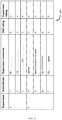
- Table 300 in FIG. 3 illustrates a higher qualitative score achieved by supervisor, in textual comments
- Table 400 in FIG. 4 illustrates a low qualitative score achieved by reviewer because of noisy comments provided by the supervisor.
- Table 500 in FIG. 5 illustrates a high quantitative score in comparison between supervisor rating and normalized organization level rating for employees.
- Table 600 in FIG. 6 illustrates a low quantitative score in comparison between reviewer rating and normalized organization level rating for employees.
- FIG. 7 is a flow chart illustrating a method for evaluating reviewer's ability to provide feedback, according to an embodiment of the present disclosure.
- qualitative and quantitative feedback provided by the supervisor to corresponding subordinates is received.
- the comments are evaluated using regular expression patterns and a qualitative score is computed.
- comments are further evaluated to determine a specificity score based on average number of concrete noun phrases used for each of the comment.
- a quantitative score is evaluated for the rating given by the supervisor.
- weighted average of qualitative score, specificity score and quantitative score is computed. Further at block 712, a rank is provided to the supervisor based on the weighted average.
Landscapes
- Engineering & Computer Science (AREA)
- Business, Economics & Management (AREA)
- Human Resources & Organizations (AREA)
- Theoretical Computer Science (AREA)
- Entrepreneurship & Innovation (AREA)
- Strategic Management (AREA)
- Physics & Mathematics (AREA)
- General Physics & Mathematics (AREA)
- Economics (AREA)
- Educational Administration (AREA)
- Development Economics (AREA)
- Quality & Reliability (AREA)
- General Business, Economics & Management (AREA)
- Operations Research (AREA)
- Marketing (AREA)
- Tourism & Hospitality (AREA)
- Data Mining & Analysis (AREA)
- General Engineering & Computer Science (AREA)
- Game Theory and Decision Science (AREA)
- Databases & Information Systems (AREA)
- Health & Medical Sciences (AREA)
- Artificial Intelligence (AREA)
- Audiology, Speech & Language Pathology (AREA)
- Computational Linguistics (AREA)
- General Health & Medical Sciences (AREA)
- Machine Translation (AREA)
Abstract
Description
- The present invention claims priority to Indian Provisional specification (Title: System and method for evaluating reviewer's ability to provide feedback) No.
4004/MUM/2015 - The embodiments herein generally relate to evaluating feedback and more particularly to the system and method for evaluating reviewer's ability to provide feedback.
- Generally, performance evaluation is an organizational component that impacts many aspects of management and the organization's workforce (e.g., pay, promotion, accountability, retention, training, etc.). The performance evaluation is a core component of human resource management because it satisfies both organizational and individual needs. One of the types of performance relates to an employee performance at work. Conventional techniques use performance evaluation tools to assist in measuring and judging employee performance. However, in an organization, reviewers may not be able to provide accurate and reliable performance evaluation ratings for the employees, thus leading to failure of the conventional performance evaluation tools.
- The following presents a simplified summary of some embodiments of the disclosure in order to provide a basic understanding of the embodiments. This summary is not an extensive overview of the embodiments. It is not intended to identify key/critical elements of the embodiments or to delineate the scope of the embodiments. Its sole purpose is to present some embodiments in a simplified form as a prelude to the more detailed description that is presented below. In view of the foregoing, an embodiment herein provides a system and method for evaluating reviewer's ability to provide feedback.
- In one aspect, a method for evaluating reviewer's ability to provide feedback is disclosed. In an embodiment, the feedback provided by a reviewer to corresponding subordinates is received, wherein the feedback comprises of qualitative feedback and quantitative feedback and wherein the qualitative feedback comprises of comments provided by the reviewer to the corresponding subordinates and the quantitative feedback comprises of numeric scores given by the reviewer to the corresponding subordinates. The qualitative feedback is evaluated to provide a qualitative score and a specificity score. The qualitative feedback is evaluated using regular expression patterns and the qualitative score is determined by computing an average to total number of comments in four dimensions, wherein the four dimensions comprises suggestions, appreciations, level of noise and duplicate comments. Furthermore, the specificity score is evaluated for the comments based on an average number of concrete noun phrases used for each of the comment. In addition, numeric scores given by the reviewer to the corresponding subordinate are evaluated based on rating given by the reviewer to the corresponding subordinates, self-appraisal rating given by the subordinates and a normalized organization rating. Subsequently, computing a weighted average of the qualitative score, the specificity score and the quantitative score to provide a rank to the reviewer by evaluating based on softness nature, realistic nature and critical nature of the rating given by the reviewer.
- In another aspect, a system for evaluating reviewer's ability to provide feedback is disclosed. In an embodiment, the system includes at least one processor and a memory communicatively coupled to the at least one processor, wherein the memory includes an evaluation module to receive the feedback provided by a reviewer to corresponding subordinates, wherein the feedback comprises of qualitative feedback and quantitative feedback and wherein the qualitative feedback comprises of comments provided by the reviewer to the corresponding subordinates and the quantitative feedback comprises of numeric scores given by the reviewer to the corresponding subordinates. The qualitative feedback is evaluated to provide a qualitative score and a specificity score. The qualitative feedback is evaluated using regular expression patterns and a qualitative score is determined by computing an average to total number of comments in four dimensions, wherein the four dimensions comprises suggestions, appreciations, level of noise and duplicate comments. Furthermore, the specificity score is evaluated for the comments based on an average number of concrete noun phrases used for each of the comment. In addition, numeric scores given by the reviewer to the corresponding subordinate are evaluated based on rating given by the reviewer to the corresponding subordinates, self-appraisal rating given by the subordinates and a normalized organization rating. Subsequently, computing a weighted average of the qualitative score, the specificity score and the quantitative score to provide a rank to the reviewer by evaluating based on softness nature, realistic nature and critical nature of the rating given by the reviewer.
- It should be appreciated by those skilled in the art that any block diagram herein represent conceptual views of illustrative systems embodying the principles of the present subject matter. Similarly, it is appreciated that any flow charts, flow diagrams, state transition diagrams, pseudo code, and the like represent various processes which may be substantially represented in computer readable medium and so executed by a computing device or processor, whether or not such computing device or processor is explicitly shown.
- The embodiments herein are better understood from the following detailed description with reference to the drawings, in which:
-
FIG. 1 illustrates a system for evaluating reviewer's ability to provide feedback, according to an embodiment of the present disclosure; -
FIG. 2 is a block diagram illustrating evaluation of qualitative and quantitative feedback on the feedback given by a reviewer, shown inFIG. 1 , according to an embodiment of the present disclosure; -
FIG. 3 illustrates a table including high evaluation scores of a reviewer, according to an embodiment of the present disclosure; -
FIG. 4 illustrates a table including lower qualitative evaluation scores of a reviewer, according to an embodiment of the present disclosure; and -
FIGS. 5 and6 are tables illustrating comparison between supervisor rating and normalized organization level rating for an employee, according to an embodiment of the present disclosure. -
FIG. 7 is a flow chart illustrating a method for evaluating reviewer's ability to provide feedback, according to an embodiment of the present disclosure. - The embodiments herein and the various features and advantages thereof are explained more fully with reference to the non-lining embodiments that are illustrated in the accompanying drawings and detailed in the following description. The examples used herein are intended merely to facilitate an understanding of ways in which the embodiments herein may be practiced and to further enable those of skilled in the art to practice the embodiments herein. Accordingly, examples should not be construed as limiting the scope of the embodiments herein.
- The terms "reviewer" and "supervisor" are used interchangeably in the document.
- System and method for evaluating reviewer's ability to provide feedback is disclosed. The system can be implemented in a variety of computing devices. The computing devices that can implement the described system include, but are not limited to, desktop computers, laptops or other portable computers, multiprocessor systems, microprocessor based programmable consumer electronics, laptops, network computers, minicomputers, mainframe computers, and the like. Although the description herein is with reference to certain computing systems, the system may be implemented in other devices, albeit with a few variations, as will be understood by a person skilled in the art.
- In one aspect, a method for evaluating reviewer's ability to provide feedback is disclosed. In an example embodiment, the system includes receiving qualitative feedback and quantitative feedback provided by a reviewer to corresponding subordinates. The qualitative feedback comprises of comments given by the reviewer to corresponding subordinates. The qualitative feedback is evaluated to determine a qualitative score and a specificity score. The comments are evaluated using regular expression patterns to determine the qualitative score that further includes suggestion score, appreciation score, level of noise score and duplicate comments score. Further, the specificity score on the qualitative comments is determined based on concrete noun phrases used for each comment. Furthermore, the quantitative feedback is evaluated to determine a quantitative score. The quantitative feedback comprises of numeric scores that are evaluated based on rating given by the supervisor, self-rating given by the sub-ordinate and normalized rating of the organization. Subsequently, weighted average of the qualitative score, the specificity score and the quantitative score are computed to provide a rank to the supervisor for the feedback provided to the corresponding subordinates.
- The manner in which the described system is implemented to evaluate reviewer's ability to provide feedback has been explained in detail with respect to the following figure(s). While aspects of the described system can be implemented in any number of different computing systems, transmission environments, and/or configurations, the embodiments are described in the context of the following exemplary system.
-
FIG. 1 schematically illustrates asystem 100 for evaluating reviewer's ability to provide feedback, according to an embodiment of the present disclosure. As shown inFIG. 1 , thesystem 100 includes one or more processor(s) 102 and amemory 104 communicatively coupled to each other. Thememory 104 includes anevaluation module 106 that performs analysis of reviewer's (E.g. supervisor) comments. For example, the supervisor can be any user providing qualitative and/or quantitative feedback to other users. Thesystem 100 also includes interface(s) 108. AlthoughFIG. 1 shows example components of thesystem 100, in other implementations, thesystem 100 may contain fewer components, additional components, different components, or differently arranged components than depicted inFIG. 1 . - The processor(s) 102 and the
memory 104 may be communicatively coupled by a system bus. The processor(s) 102 may include circuitry implementing, among others, audio and logic functions associated with the communication. Theprocessor 102 may include, among other things, a clock, an arithmetic logic unit (ALU) and logic gates configured to support operation of the processor(s) 102. The processor(s) 102 can be a single processing unit or a number of units, all of which include multiple computing units. The processor(s) 102 may be implemented as one or more microprocessors, microcomputers, microcontrollers, digital signal processors, central processing units, state machines, logic circuitries, and/or any devices that manipulate signals based on operational instructions. Among other capabilities, the processor(s) 102 is configured to fetch and execute computer-readable instructions and data stored in thememory 104. - The functions of the various elements shown in the figure, including any functional blocks labeled as "processor(s)", may be provided through the use of dedicated hardware as well as hardware capable of executing software in association with appropriate software. When provided by a processor, the functions may be provided by a single dedicated processor, by a single shared processor, or by a plurality of individual processors, some of which may be shared. Moreover, explicit use of the term "processor" should not be construed to refer exclusively to hardware capable of executing software, and may implicitly include, without limitation, digital signal processor (DSP) hardware, network processor, application specific integrated circuit (ASIC), field programmable gate array (FPGA), read only memory (ROM) for storing software, random access memory (RAM), and non-volatile storage. Other hardware, conventional, and/or custom, may also be included.
- The interface(s) 108 may include a variety of software and hardware interfaces, for example, interfaces for peripheral device(s), such as a keyboard, a mouse, an external memory, and a printer. The interface(s) 108 can facilitate multiple communications within a wide variety of networks and protocol types, including wired networks, for example, local area network (LAN), cable, etc., and wireless networks, such as Wireless LAN (WLAN), cellular, or satellite. For the purpose, the interface(s) 108 may include one or more ports for connecting the
system 100 to other network devices. - The
memory 104 may include any computer-readable medium known in the art including, for example, volatile memory, such as static random access memory (SRAM) and dynamic random access memory (DRAM), and/or non-volatile memory, such as read only memory (ROM), erasable programmable ROM, flash memories, hard disks, optical disks, and magnetic tapes. Thememory 104, may store any number of pieces of information, and data, used by thesystem 100 to evaluate the qualitative and quantitative performance rating. Thememory 104 may be configured to store information, data, applications, instructions or the like forsystem 100 to carry out various functions in accordance with various example embodiments. Additionally or alternatively, thememory 104 may be configured to store instructions which when executed by theprocessor 102 causes thesystem 100 to behave in a manner as described in various embodiments. Thememory 104 includes theevaluation module 106 and other modules. Themodule 106 include routines, programs, objects, components, data structures, etc., which perform particular tasks or implement particular abstract data types. - In operation, the
system 100 for evaluation of reviewer's ability to provide feedback evaluates the supervisor's ability in providing qualitative and quantitative feedback to corresponding subordinates. In an example embodiment, theevaluation module 106 evaluates performance rating given by the supervisor to corresponding subordinates based on the qualitative feedback and quantitative feedback. In this embodiment, theevaluation module 106 performs a qualitative analysis and a quantitative analysis to measure supervisor's ability to provide feedback. For example, theevaluation module 106 performs qualitative analysis including textual comments or feedback provided by the supervisor about the performance of each subordinate. Theevaluation module 106 performs quantitative analysis on a numerical rating (say from 1 to 5) provided for each subordinate quantifying their performance. This ability is measured across various dimensions for each of the type of evaluation. - In an example implementation, the
evaluation module 106 performs analysis of qualitative feedback by determining level of noise, suggestions, appreciations, specificity and duplicate comments in the textual comments or the qualitative feedback. The evaluation module performs analysis of qualitative feedback to give qualitative score and specificity score. The qualitative score is determined based on level of noise, suggestions, appreciations and duplicate comments using regular expression patterns. In an example embodiment, the level of noise in the textual comment is determined based on special characters, spelling errors, grammatical errors, etc. The suggestions in the textual comment or feedback are determined to measure whether the supervisor is providing any useful suggestions to subordinates for improving their performance. The appreciations in the textual comment or feedback are determined to measure whether the supervisor is providing any positive encouragement or appreciating good efforts of the subordinates. Further, duplicate comments in the textual comment or feedback are determined to measure whether the supervisor is writing personalized comments for each subordinate or just providing the same comment for all subordinates. - In an example embodiment, the specificity of the qualitative feedback is determined to evaluate the specificity or concreteness of the comments written by the supervisor. In this example, a non-specific comment like "You need to improve your performance" is not useful for the subordinate. Whereas a concrete comment like "You should improve your email writing skills" is more useful.
- In an example embodiment, the
evaluation module 106 performs evaluation of quantitative feedback given by the reviewer to corresponding subordinates based on ratings given by the reviewer, self-rating given by the sub-ordinate and normalized rating of the organization. In an example embodiment theevaluation module 106 for quantitative feedback determines a realistic score, a softness score and a critical nature score on numerical rating given by supervisor. In an example embodiment, the realistic score on numerical rating is determined by theevaluation module 106 to determine how realistic is the reviewer, i.e. are the ratings assigned by the reviewer to the subordinates are close to the final normalized ratings of the subordinates. The evaluation module determines softness score on numerical rating to measure whether any supervisor is soft or lenient, i.e. is assigning much higher ratings to the subordinates compared to the final normalized ratings. The critical nature score on numerical rating is determined byevaluation module 106 to measure whether any reviewer is too critical, i.e. is the reviewer assigning much lower ratings to the subordinates compared to the self-appraisal ratings given by the subordinate. This is explained in more detailed with respect toFIG. 2 . -
FIG. 2 is a block diagram 200 illustrating evaluation of qualitative and quantitative feedback on the feedback given by reviewer. For example, theevaluation module 106 obtainssupervisor feedback 202 from a database. In this example, thesupervisor feedback 202 includes qualitative feedback and quantitative feedback. Further, theevaluation module 106 performs analysis ofqualitative feedback 204 and analysis ofquantitative feedback 206 for evaluating rating ability of the reviewer. Theevaluation module 106 performs the qualitative analysis including textual comment or feedback provided by the supervisor for the performance of each subordinate. Theevaluation module 106 performs quantitative analysis on numerical rating (say from 1 to 5) provided for each subordinate quantifying their performance. - In an embodiment, the
evaluation module 106 performs analysis of qualitative feedback to determine a qualitative score and a specificity score. The qualitative score is determined by analyzing the level of noise, suggestions, appreciations and duplicate of comments in the textual comment or feedback using regular expressions patterns. In an example embodiment, the specificity of the comments given to the corresponding subordinates is determined by theevaluation module 106. In an example embodiment, the level of noise is determined based on the level of "noise" in the textual comment in the form of use of special characters, spelling errors, grammatical errors, etc. For each supervisor, all the comments are checked with following regular expression pattern for possible presence of noise. The pattern [^A-Za-z0-9]{5,} is matched only if the comment contains at least five consecutive non-letter and non-digit characters. For ith supervisor, the score for this dimension Snoise is computed as a ratio of comments without noise to the total number of comments.
- Further, the suggestions in the textual comment are determined to measure whether the supervisor is providing useful suggestions to subordinates for improving their performance. For each supervisor, all the comments are checked with the following regular expression patterns for possible presence of suggestions.
plain_text_pattern=
   \b(recommend(ed|ing)?|suggest(ion)?|advice|advise(d)?|improve|
   expect(ed|ing)?|enhance|upgrade|ensure|require(d)?|aim|focus|i
   mprovise|practice|would be|could be|should be|please see|be
   (better|good|best) lup\W?to\W?date|implement|make sure|needs?
   to|try to)\b





Claims (19)
- A method for evaluating reviewer's ability to provide feedback, the method comprising of:receiving the feedback provided by a reviewer to corresponding subordinates, wherein the feedback comprises qualitative feedback and quantitative feedback, wherein the qualitative feedback comprises of comments provided by the reviewer to the corresponding subordinates and the quantitative feedback comprises of numeric scores given by the reviewer to the corresponding subordinatesevaluating the comments using regular expression patterns and computing a qualitative score wherein the qualitative score is determined by computing an average to total number of comments in four dimensions, wherein the four dimensions comprise suggestions, appreciations, level of noise and duplicate comments;evaluating the comments to determine a specificity score based on an average number of concrete noun phrases used for each of the comment;evaluating a quantitative score for the numeric rating given by the reviewer to the corresponding subordinate based on a rating given by the reviewer to the corresponding subordinates, self-appraisal rating given by the subordinates and a normalized organization rating; andcomputing a weighted average of the qualitative score, the specificity score and the quantitative score to provide a rank to the reviewer.
- The method according to claim 1, wherein the qualitative score comprises of a suggestion score, an appreciation score, a level of noise score and a duplicate comments score.
- The method according to claim 1, wherein the regular expression patterns comprise at least one of a plain text pattern and a parts of speech (POS) tagged text pattern.
- The method according to claim 2, wherein the suggestion score is computed as a ratio of a number of comments to a total number of comments given by the reviewer.
- The method according to claim 2, wherein the appreciation score is computed as a ratio of number of comments with appreciations to the total number of comments given by the reviewer.
- The method according to claim 2, wherein the level of noise score is computed as a ratio of number of comments without noise to total number of comments given by the reviewer.
- The method according to claim 2, wherein the duplicate comment score is computed for giving duplicate comments by the reviewer as a ratio of number of distinct comments to the total number of comments.
- The method according to claim 1, wherein evaluating the specificity score based on the average number of concrete noun phrases used in the comments comprises:evaluating the specificity score based on a corpus frequency score, a wordnet frequency score and wordnet hypernym depth, wherein the corpus frequency score is determined using frequency of a word in a performance appraisal (PA) domain corpus, wherein the wordnet frequency score is determined using the frequency in the wordnet corpus and wherein the wordnet hypernym depth is computed as depth of a headword of noun phrase (NP) in the wordnet hypernym tree.
- The method according to claim 1, wherein the quantitative score comprises of a softness score, a realistic score and a critical nature score by evaluating the rating given by the reviewer based on softness nature, realistic nature and critical nature of the reviewer.
- A system for evaluating reviewer's ability to provide feedback, wherein the system comprising:at least one processor (102);a memory (104) communicatively coupled to the at least one processor, wherein the memory includes an evaluation module (106) to:receive a feedback provided by a reviewer to corresponding subordinates, wherein the feedback comprises qualitative feedback and quantitative feedback, wherein the qualitative feedback comprises of comments provided by the reviewer to the corresponding subordinates and the quantitative feedback comprises numeric rating given by the reviewer to the corresponding subordinates;evaluate the comments using regular expression patterns and computing a qualitative score wherein qualitative score is determined by computing an average to total number of comments in four dimensions, wherein the four dimensions comprises suggestions, appreciations, level of noise and duplicate comments;evaluate the comments to determine a specificity score based on an average number of concrete noun phrases used for each of the comment;evaluate a quantitative score for the numeric rating given by the reviewer to the corresponding subordinate based on a rating given by the reviewer to the corresponding subordinates, self-appraisal rating given by the subordinates and a normalized organization rating; andcompute a weighted average of the qualitative score, the specificity score and the quantitative score to provide a rank to the reviewer.
- The system according to claim 10, wherein the qualitative score includes a suggestion score, an appreciation score, a level of noise score and a duplicate comments score.
- The system according to claim 10, wherein the regular expression patterns comprise at least one of a plain text pattern and a parts of speech (POS) tagged text pattern.
- The system according to claim 11, wherein the suggestion score is computed as a ratio of a number of comments to a total number of comments given by the reviewer.
- The system according to claim 11, wherein the appreciation score is computed as a ratio of number of comments with appreciations to the total number of comments given by the reviewer.
- The system according to claim 11, wherein the level of noise score is computed as a ratio of number of comments without noise to the total number of comments given by the reviewer.
- The system according to claim 11, wherein the duplicate comments score is computed for giving duplicate comments by the reviewer as a ratio of number of distinct comments to the total number of comments.
- The system according to claim 10, wherein evaluating the specificity score based on the average number of concrete noun phrases used in the comment comprises:evaluating the specificity score based on a corpus frequency score, a wordnet frequency score and wordnet hypernym depth, wherein the corpus frequency score is determined using frequency of a word in a performance appraisal (PA) domain corpus, wherein the wordnet frequency score is determined using the frequency in the wordnet corpus and wherein the wordnet hypernym depth is computed as depth of a headword of noun phrase (NP) in the wordnet hypernym tree.
- The system according to claim 10, wherein the quantitative score comprises of a softness score, a realistic score and a critical nature score by evaluating the rating given by the reviewer based on softness nature, realistic nature and critical nature of the reviewer.
- A non-transitory computer readable medium embodying a program executable in a computing device for evaluating reviewer's ability to provide feedback, the program comprising:receiving the feedback provided by a reviewer to corresponding subordinates, wherein the feedback comprises qualitative feedback and quantitative feedback, wherein the qualitative feedback comprises of comments provided by the reviewer to the corresponding subordinates and the quantitative feedback comprises of numeric scores given by the reviewer to the corresponding subordinatesevaluating the comments using regular expression patterns and computing a qualitative score wherein the qualitative score is determined by computing an average to total number of comments in four dimensions, wherein the four dimensions comprise suggestions, appreciations, level of noise and duplicate comments;evaluating the comments to determine a specificity score based on an average number of concrete noun phrases used for each of the comment;evaluating a quantitative score for the numeric rating given by the reviewer to the corresponding subordinate based on a rating given by the reviewer to the corresponding subordinates, self-appraisal rating given by the subordinates and a normalized organization rating; andcomputing a weighted average of the qualitative score, the specificity score and the quantitative score to provide a rank to the reviewer.
Applications Claiming Priority (1)
| Application Number | Priority Date | Filing Date | Title |
|---|---|---|---|
| IN4004MU2015 | 2015-10-23 |
Publications (1)
| Publication Number | Publication Date |
|---|---|
| EP3159838A1 true EP3159838A1 (en) | 2017-04-26 |
Family
ID=57394321
Family Applications (1)
| Application Number | Title | Priority Date | Filing Date |
|---|---|---|---|
| EP16193841.0A Ceased EP3159838A1 (en) | 2015-10-23 | 2016-10-14 | System and method for evaluating reviewer's ability to provide feedback |
Country Status (2)
| Country | Link |
|---|---|
| US (1) | US10810244B2 (en) |
| EP (1) | EP3159838A1 (en) |
Families Citing this family (7)
| Publication number | Priority date | Publication date | Assignee | Title |
|---|---|---|---|---|
| JP6683790B1 (en) * | 2018-10-29 | 2020-04-22 | 株式会社Fronteo | Computer, computer control method, and program |
| US11861310B1 (en) * | 2019-04-25 | 2024-01-02 | Educational Testing Service | Lexical concreteness in narrative text |
| CN111581296B (en) * | 2020-04-02 | 2022-08-16 | 深圳壹账通智能科技有限公司 | Data correlation analysis method and device, computer system and readable storage medium |
| WO2022015730A1 (en) | 2020-07-13 | 2022-01-20 | Ai21 Labs | Controllable reading guides and natural language generation |
| US11599842B2 (en) * | 2021-01-15 | 2023-03-07 | Oracle International Corporation | Modeling expectation mismatches |
| US11164153B1 (en) * | 2021-04-27 | 2021-11-02 | Skyhive Technologies Inc. | Generating skill data through machine learning |
| US20240095624A1 (en) * | 2022-09-06 | 2024-03-21 | Grene Robotics (India) Private Limited | Device, system, and method of autonomous resource planning |
Family Cites Families (11)
| Publication number | Priority date | Publication date | Assignee | Title |
|---|---|---|---|---|
| US5743742A (en) | 1996-04-01 | 1998-04-28 | Electronic Data Systems Corporation | System for measuring leadership effectiveness |
| US20030004778A1 (en) * | 2001-05-10 | 2003-01-02 | Gareau Brian R. | Computer architecture and computer iplemented and/or assisted method of performing a cultural assessment of an organization and making improvements thereon |
| US20040153355A1 (en) | 2003-01-31 | 2004-08-05 | Deering Anne M. | Method and system for assessing leadership skills |
| US20080114608A1 (en) | 2006-11-13 | 2008-05-15 | Rene Bastien | System and method for rating performance |
| US20110099052A1 (en) * | 2009-10-28 | 2011-04-28 | Xerox Corporation | Automatic checking of expectation-fulfillment schemes |
| US20130282446A1 (en) * | 2010-04-15 | 2013-10-24 | Colin Dobell | Methods and systems for capturing, measuring, sharing and influencing the behavioural qualities of a service performance |
| US20140074565A1 (en) * | 2012-09-10 | 2014-03-13 | Clifton E. Green | System and method for human resource performance management |
| US20150206102A1 (en) * | 2014-01-21 | 2015-07-23 | International Business Machines Corporation | Human Resource Analytics Engine with Multiple Data Sources |
| US10089588B2 (en) * | 2014-05-06 | 2018-10-02 | Sears Brands, L.L.C. | System and method supporting ongoing worker feedback |
| US9824323B1 (en) * | 2014-08-11 | 2017-11-21 | Walgreen Co. | Gathering in-store employee ratings using triggered feedback solicitations |
| US10114814B1 (en) * | 2015-09-28 | 2018-10-30 | NarrativeDX, Inc. | System and method for actionizing patient comments |
-
2016
- 2016-10-14 US US15/294,244 patent/US10810244B2/en active Active
- 2016-10-14 EP EP16193841.0A patent/EP3159838A1/en not_active Ceased
Non-Patent Citations (1)
| Title |
|---|
| No relevant documents disclosed * |
Also Published As
| Publication number | Publication date |
|---|---|
| US20170140043A1 (en) | 2017-05-18 |
| US10810244B2 (en) | 2020-10-20 |
Similar Documents
| Publication | Publication Date | Title |
|---|---|---|
| US10810244B2 (en) | System and method for evaluating reviewer's ability to provide feedback | |
| Bonifay et al. | When are multidimensional data unidimensional enough for structural equation modeling? An evaluation of the DETECT multidimensionality index | |
| Campbell et al. | Cultural engagement and the economic performance of the cultural and creative industries: An occupational critique | |
| Wiedermann et al. | Asymmetric properties of the Pearson correlation coefficient: Correlation as the negative association between linear regression residuals | |
| Papadimitriou et al. | Does merging improve efficiency? A study of English universities | |
| Kouame | Using readability tests to improve the accuracy of evaluation documents intended for low-literate participants | |
| Martín Martín et al. | Country distance (COD): Development and Validation of a new objective measure | |
| Adelman et al. | A behavioral database for masked form priming | |
| Wilcox et al. | Modern regression methods that can substantially increase power and provide a more accurate understanding of associations | |
| Kirikkaleli | Interlinkage between economic, financial, and political risks in the Balkan countries: Evidence from a panel cointegration | |
| Fischer et al. | More on the structure of male role norms: Exploratory and multiple sample confirmatory analyses | |
| Puppatz et al. | The assessment of organizational culture in cross‐cultural settings: Investigating the psychometric quality and cultural equivalence of three quantitative instruments | |
| Schepens et al. | Learning complex features: A morphological account of L2 learnability | |
| Gharibi et al. | Influential factors in lexical richness of young heritage speakers’ family language: Iranians in New Zealand | |
| Fisher et al. | Public value: Recovering the ethical for public sector managers | |
| König et al. | Party ideology and legislative agendas: Estimating contextual policy positions for the study of EU decision-making | |
| Anderson et al. | Exploring the robustness of a unidimensional item response theory model with empirically multidimensional data | |
| George et al. | Confidence intervals for estimating the population signal-to-noise ratio: a simulation study | |
| Wang et al. | Customer-driven product design selection using web based user-generated content | |
| Rastogi et al. | Exploration of exhaustion in early-career construction professionals in India | |
| Baniamin | Linking trust, performance, and governance quality: What can explain the incongruity? | |
| Jeong et al. | Writing to advance knowledge: The impact of readability on knowledge diffusion in OSCM | |
| Jasso et al. | The utility of an English semantics measure for identifying developmental language disorder in Spanish–English bilinguals | |
| Shi et al. | On some confidence intervals for estimating the mean of a skewed population | |
| Chan et al. | External influence as an indicator of scholarly importance |
Legal Events
| Date | Code | Title | Description |
|---|---|---|---|
| PUAI | Public reference made under article 153(3) epc to a published international application that has entered the european phase |
Free format text: ORIGINAL CODE: 0009012 |
|
| AK | Designated contracting states |
Kind code of ref document: A1 Designated state(s): AL AT BE BG CH CY CZ DE DK EE ES FI FR GB GR HR HU IE IS IT LI LT LU LV MC MK MT NL NO PL PT RO RS SE SI SK SM TR |
|
| AX | Request for extension of the european patent |
Extension state: BA ME |
|
| 17P | Request for examination filed |
Effective date: 20171026 |
|
| RBV | Designated contracting states (corrected) |
Designated state(s): AL AT BE BG CH CY CZ DE DK EE ES FI FR GB GR HR HU IE IS IT LI LT LU LV MC MK MT NL NO PL PT RO RS SE SI SK SM TR |
|
| 17Q | First examination report despatched |
Effective date: 20190918 |
|
| STAA | Information on the status of an ep patent application or granted ep patent |
Free format text: STATUS: THE APPLICATION HAS BEEN REFUSED |
|
| 18R | Application refused |
Effective date: 20201220 |