EP3158707B1 - Authentication of devices having unequal capabilities - Google Patents
Authentication of devices having unequal capabilities Download PDFInfo
- Publication number
- EP3158707B1 EP3158707B1 EP15731221.6A EP15731221A EP3158707B1 EP 3158707 B1 EP3158707 B1 EP 3158707B1 EP 15731221 A EP15731221 A EP 15731221A EP 3158707 B1 EP3158707 B1 EP 3158707B1
- Authority
- EP
- European Patent Office
- Prior art keywords
- authentication
- network devices
- selectively
- request data
- associated network
- Prior art date
- Legal status (The legal status is an assumption and is not a legal conclusion. Google has not performed a legal analysis and makes no representation as to the accuracy of the status listed.)
- Not-in-force
Links
- 230000006854 communication Effects 0.000 claims description 141
- 238000004891 communication Methods 0.000 claims description 141
- 238000000034 method Methods 0.000 claims description 39
- 230000004044 response Effects 0.000 claims description 14
- 230000001052 transient effect Effects 0.000 claims description 6
- 238000012545 processing Methods 0.000 description 49
- 230000006870 function Effects 0.000 description 12
- 238000010586 diagram Methods 0.000 description 9
- 230000007175 bidirectional communication Effects 0.000 description 4
- 230000007246 mechanism Effects 0.000 description 4
- 238000004519 manufacturing process Methods 0.000 description 3
- 230000003287 optical effect Effects 0.000 description 3
- 230000009471 action Effects 0.000 description 2
- 230000010354 integration Effects 0.000 description 2
- 230000003068 static effect Effects 0.000 description 2
- 238000012795 verification Methods 0.000 description 2
- 230000001133 acceleration Effects 0.000 description 1
- 230000004075 alteration Effects 0.000 description 1
- 238000013475 authorization Methods 0.000 description 1
- 230000008878 coupling Effects 0.000 description 1
- 238000010168 coupling process Methods 0.000 description 1
- 238000005859 coupling reaction Methods 0.000 description 1
- 230000007123 defense Effects 0.000 description 1
- 230000001419 dependent effect Effects 0.000 description 1
- 238000012986 modification Methods 0.000 description 1
- 230000004048 modification Effects 0.000 description 1
Images





Classifications
-
- H—ELECTRICITY
- H04—ELECTRIC COMMUNICATION TECHNIQUE
- H04L—TRANSMISSION OF DIGITAL INFORMATION, e.g. TELEGRAPHIC COMMUNICATION
- H04L63/00—Network architectures or network communication protocols for network security
- H04L63/08—Network architectures or network communication protocols for network security for authentication of entities
-
- H—ELECTRICITY
- H04—ELECTRIC COMMUNICATION TECHNIQUE
- H04L—TRANSMISSION OF DIGITAL INFORMATION, e.g. TELEGRAPHIC COMMUNICATION
- H04L63/00—Network architectures or network communication protocols for network security
- H04L63/02—Network architectures or network communication protocols for network security for separating internal from external traffic, e.g. firewalls
- H04L63/0281—Proxies
-
- H—ELECTRICITY
- H04—ELECTRIC COMMUNICATION TECHNIQUE
- H04L—TRANSMISSION OF DIGITAL INFORMATION, e.g. TELEGRAPHIC COMMUNICATION
- H04L63/00—Network architectures or network communication protocols for network security
- H04L63/08—Network architectures or network communication protocols for network security for authentication of entities
- H04L63/0869—Network architectures or network communication protocols for network security for authentication of entities for achieving mutual authentication
-
- H—ELECTRICITY
- H04—ELECTRIC COMMUNICATION TECHNIQUE
- H04L—TRANSMISSION OF DIGITAL INFORMATION, e.g. TELEGRAPHIC COMMUNICATION
- H04L63/00—Network architectures or network communication protocols for network security
- H04L63/08—Network architectures or network communication protocols for network security for authentication of entities
- H04L63/0884—Network architectures or network communication protocols for network security for authentication of entities by delegation of authentication, e.g. a proxy authenticates an entity to be authenticated on behalf of this entity vis-à-vis an authentication entity
-
- H—ELECTRICITY
- H04—ELECTRIC COMMUNICATION TECHNIQUE
- H04L—TRANSMISSION OF DIGITAL INFORMATION, e.g. TELEGRAPHIC COMMUNICATION
- H04L67/00—Network arrangements or protocols for supporting network services or applications
- H04L67/01—Protocols
- H04L67/12—Protocols specially adapted for proprietary or special-purpose networking environments, e.g. medical networks, sensor networks, networks in vehicles or remote metering networks
-
- H—ELECTRICITY
- H04—ELECTRIC COMMUNICATION TECHNIQUE
- H04L—TRANSMISSION OF DIGITAL INFORMATION, e.g. TELEGRAPHIC COMMUNICATION
- H04L9/00—Cryptographic mechanisms or cryptographic arrangements for secret or secure communications; Network security protocols
- H04L9/08—Key distribution or management, e.g. generation, sharing or updating, of cryptographic keys or passwords
- H04L9/0816—Key establishment, i.e. cryptographic processes or cryptographic protocols whereby a shared secret becomes available to two or more parties, for subsequent use
- H04L9/0819—Key transport or distribution, i.e. key establishment techniques where one party creates or otherwise obtains a secret value, and securely transfers it to the other(s)
- H04L9/083—Key transport or distribution, i.e. key establishment techniques where one party creates or otherwise obtains a secret value, and securely transfers it to the other(s) involving central third party, e.g. key distribution center [KDC] or trusted third party [TTP]
- H04L9/0833—Key transport or distribution, i.e. key establishment techniques where one party creates or otherwise obtains a secret value, and securely transfers it to the other(s) involving central third party, e.g. key distribution center [KDC] or trusted third party [TTP] involving conference or group key
-
- H—ELECTRICITY
- H04—ELECTRIC COMMUNICATION TECHNIQUE
- H04L—TRANSMISSION OF DIGITAL INFORMATION, e.g. TELEGRAPHIC COMMUNICATION
- H04L9/00—Cryptographic mechanisms or cryptographic arrangements for secret or secure communications; Network security protocols
- H04L9/08—Key distribution or management, e.g. generation, sharing or updating, of cryptographic keys or passwords
- H04L9/0861—Generation of secret information including derivation or calculation of cryptographic keys or passwords
-
- H—ELECTRICITY
- H04—ELECTRIC COMMUNICATION TECHNIQUE
- H04L—TRANSMISSION OF DIGITAL INFORMATION, e.g. TELEGRAPHIC COMMUNICATION
- H04L9/00—Cryptographic mechanisms or cryptographic arrangements for secret or secure communications; Network security protocols
- H04L9/08—Key distribution or management, e.g. generation, sharing or updating, of cryptographic keys or passwords
- H04L9/0891—Revocation or update of secret information, e.g. encryption key update or rekeying
-
- H—ELECTRICITY
- H04—ELECTRIC COMMUNICATION TECHNIQUE
- H04L—TRANSMISSION OF DIGITAL INFORMATION, e.g. TELEGRAPHIC COMMUNICATION
- H04L9/00—Cryptographic mechanisms or cryptographic arrangements for secret or secure communications; Network security protocols
- H04L9/32—Cryptographic mechanisms or cryptographic arrangements for secret or secure communications; Network security protocols including means for verifying the identity or authority of a user of the system or for message authentication, e.g. authorization, entity authentication, data integrity or data verification, non-repudiation, key authentication or verification of credentials
- H04L9/321—Cryptographic mechanisms or cryptographic arrangements for secret or secure communications; Network security protocols including means for verifying the identity or authority of a user of the system or for message authentication, e.g. authorization, entity authentication, data integrity or data verification, non-repudiation, key authentication or verification of credentials involving a third party or a trusted authority
-
- H—ELECTRICITY
- H04—ELECTRIC COMMUNICATION TECHNIQUE
- H04L—TRANSMISSION OF DIGITAL INFORMATION, e.g. TELEGRAPHIC COMMUNICATION
- H04L2209/00—Additional information or applications relating to cryptographic mechanisms or cryptographic arrangements for secret or secure communication H04L9/00
- H04L2209/76—Proxy, i.e. using intermediary entity to perform cryptographic operations
-
- H—ELECTRICITY
- H04—ELECTRIC COMMUNICATION TECHNIQUE
- H04L—TRANSMISSION OF DIGITAL INFORMATION, e.g. TELEGRAPHIC COMMUNICATION
- H04L2209/00—Additional information or applications relating to cryptographic mechanisms or cryptographic arrangements for secret or secure communication H04L9/00
- H04L2209/84—Vehicles
Definitions
- the present disclosure relates generally to authentication of devices having unequal capabilities such as for example in-vehicle, industrial floor, home automation, and any other networked electronic devices having varying different communication and processing capabilities.
- Modern vehicles such as cars, trucks, planes and trains typically use tens to over a hundred networked electronic devices ranging from simple sensors generating various feedback signal messages to more complicated Electronic Control Units (ECUs) consisting of microcontrollers and microcomputers for control of vehicle systems and operations, to support communication between the vehicle and systems external to the vehicle, and to provide applications to users.
- ECUs Electronic Control Units
- the originally installed devices on a vehicle are authenticated or assumed to be authentic during the device or vehicle manufacturing process. Accordingly, no provisions are made for further device authentication to be performed after the vehicle leaves the vehicle manufacturing plant. Consequently, without an authorization protocol in place, unauthorized devices can be easily installed into the in-vehicle network or used to replace existing devices on a vehicle. Unauthorized aftermarket devices can also be attached to the in-vehicle network to provide user services and communicate with other in-vehicle devices. Similar problems exist in industrial floor, home automation, and other networked device systems.
- In-vehicle device authentication systems that support widely diverse in-vehicle devices over heterogeneous networks are unavailable. For example, since Controller Area Network (CAN) buses do not provide device authentication mechanisms, application-layer authentication mechanisms such as the seed-key method have been used to control access to ECU firmware from external diagnostic tools for ECU firmware updates. These application-layer authentication mechanisms, however, cannot support authentication of all types of in-vehicle networks, especially devices that only send but not receive data (e.g., sensors) and devices that are incapable of performing sophisticated cryptographic operations. Various authentication tools for in-vehicle Ethernet networks are limited to supporting device authentication at the Ethernet MAC layer. Therefore, the application layer and network-specific authentication protocols are unable to provide for authentication of in-vehicle electronic devices having varying different communication and processing capabilities.
- CAN Controller Area Network
- US 2011/004918 discloses facilitating heterogeneous authentication for allowing network access.
- IP Internet Protocols
- the embodiments herein allow in-vehicle devices to use different individualized authentication methods that match their own particular capabilities and, further, the embodiments herein also support devices attached to different types of in-vehicle networks (e.g., CAN, LIN, MOST, and Ethernet).
- in-vehicle networks e.g., CAN, LIN, MOST, and Ethernet.
- apparatus, methods and logic encoded in one or more tangible non-transient computer readable media for execution by a processor and when executed by the processor, the logic, the apparatus, and the methods are operable to authenticate a plurality of associated in-vehicle network devices having unequal communication and processing capabilities.
- First and second signals are received by a first communication port configured to communicate via an associated communication network with first and second sets of associated in-vehicle network devices having first and second authentication capabilities respectively.
- the first signal includes first authentication request data representative of a request for authentication from at least one of the first set of network devices having the first authentication capability.
- the second signal includes second authentication request data representative of a request for authentication from at least one of the second set of network devices having the second authentication capability.
- An authentication proxy processor selectively authenticates the at least one of the first set of network devices based on the first authentication request data in accordance with the first authentication capability, and selectively authenticates the at least one of the second set of network devices based on the second authentication request data in accordance with the second authentication capability.
- the authentication proxy logic selectively distributes the first cryptographic key set to the first set of network devices.
- the authentication proxy logic selectively distributes the second cryptographic key set to the first set of network devices.
- the first authentication request data is selectively forwarded by a second communication port configured to communicate via an associated authentication network to an associated authentication processor.
- the associated authentication processor selectively authenticates the first authentication request data.
- a first cryptographic key set is selectively received by the authentication proxy logic via the second communication port from the associated authentication network responsive to the associated authentication processor authenticating the at least one of the first set of network devices based on the first authentication request data, and the authentication proxy logic selectively distributes the first cryptographic key set to the first set of network devices.
- the second authentication request data is selectively forwarded by a second communication port configured to communicate via the associated authentication network to the associated authentication processor.
- the associated authentication processor selectively authenticates the second authentication request data.
- a second cryptographic key set is selectively received by the authentication proxy logic via the second communication port from the associated authentication network responsive to the associated authentication processor authenticating the at least one of the second set of network devices based on the second authentication request data, and the authentication proxy logic selectively distributes the second cryptographic key set to the first set of network devices.
- FIG. 1 illustrates an apparatus 100 disposed in an associated vehicle 10 for authenticating a plurality of associated network devices 150 having unequal communication capabilities.
- the apparatus 100 includes, in the example embodiment, a first communication port 110 configured to communicate via an associated communication network 140 with the plurality of associated network devices 150, a second communication port 120 configured to communicate via an associated authentication network 142 with an associated authentication processor 190, and authentication proxy logic 130 operatively coupled with the first and second communication ports 110, 120.
- logic includes but is not limited to hardware, firmware, software and/or combinations of each to perform a function(s) or an action(s), and/or to cause a function or action from another component.
- logic may include a software controlled microprocessor, discrete logic such as an application specific integrated circuit ("ASIC"), system on a chip (“SoC”), programmable system on a chip (“PSoC”), a programmable/programmed logic device, memory device containing instructions, or the like, or combinational logic embodied in hardware.
- Logic may also be fully embodied as software stored on a non-transitory, tangible medium which performs a described function when executed by a processor.
- Logic may suitably comprise one or more modules configured to perform one or more functions.
- the apparatus 100 is configured to locally authenticate in-vehicle devices 152 having vastly different computing and communication capabilities, including devices that can only send but not receive messages such as simple sensors or the like, devices that are capable of performing only symmetric-key cryptographic operations and not public-key algorithms, devices that do not support IP protocols, and devices that support sophisticated security algorithms and IP-based security protocols.
- the apparatus 100 is configured to locally authenticate in-vehicle devices using different authentication methods that match the respective capabilities of the various devices 152.
- the apparatus 100 is configured to locally authenticate the in-vehicle devices 152 which may be attached to different types of networks (e.g., CAN, LIN, MOST, and Ethernet) comprising the associated communication network 140.
- the in-vehicle devices 152 are classified to allow devices with different capabilities to use different authentication procedures based on their communication and cryptographic processing capabilities, as illustrated in Figure 1 .
- a first set (“Type B” devices) of associated network devices 160 in the example embodiment has a first authentication capability wherein the in-vehicle electronic devices of the first set 160 have bidirectional communication capability and are capable of supporting only symmetric-key cryptography.
- the apparatus 100 is in operative communication with the first set of devices 160 via the first communication port 110 using the associated communication network 140.
- a second set (“Type C" devices) of associated network devices 170 in the example embodiment has a second authentication capability wherein the in-vehicle electronic devices of the second set 170 can send but not receive messages, and are capable of supporting only symmetric-key cryptography.
- the apparatus 100 is in operative communication with the second set of devices 170 via the first communication port 110 using the associated communication network 140.
- the devices of the second set (Type C) of associated network devices 170 are, in the example embodiment, simple sensor devices or the like, capable of only transmitting encrypted messages representative of a measure of the parameter being sensed, for example.
- a third set (“Type A" devices) of associated network devices 180 in the example embodiment has a third authentication capability wherein the in-vehicle electronic devices of the third set 180 have bidirectional communication capability and are capable of supporting both public-key and symmetric-key cryptography.
- the apparatus 100 is in operative communication with the third set of devices 180 via the first communication port 110 using the associated communication network 140.
- the first communication port 110 receives signals 144 comprising authentication request data 146 representative of requests for authentication from one or more of the network devices 152.
- the authentication proxy logic 130 selectively authenticates the network devices 152 based on the authentication request data in accordance with the authentication capability of the associated requesting device.
- the authentication proxy logic adapts is authentication response in accordance with the particular communication and processing capabilities of the authentication-requesting device. For some devices such as the second set (Type C) of associated network devices 170 capable of only transmitting encrypted messages representative of a measure of the parameter being sensed, for example, the authentication proxy logic intercepts the messages and interprets them as authentication requests is the device is not already authenticated.
- the authentication proxy logic selectively generates a cryptographic key set responsive to the authentication proxy logic authenticating the network devices based on the authentication request data in accordance with the particular authentication capability of the requesting device. Thereafter, the authentication proxy logic selectively distributes the cryptographic key set to selected one or more of the network devices.
- the authentication proxy logic 130 selectively forwards the authentication request data 146 to the associated authentication processor 190 by the second communication port 120 via the associated authentication network 142 responsive to the authentication proxy logic 130 failing to locally authenticate the authentication-requesting associated network device.
- the authentication proxy logic 130 selectively receives a first cryptographic key set 148 by the second communication port 120 via the associated authentication network 142 responsive to the associated authentication processor 190 authenticating the authentication-requesting associated network device. Thereafter, the authentication proxy logic 130 selectively distributes the first cryptographic key set 148 to the appropriate one or more associated in-vehicle network devices 150.
- the first communication port 110 receives a first signal 162 comprising first authentication request data 164 representative of a request for authentication from at least one 166 of the first set of network devices 160 having the first authentication capability, and receives a second signal 172 comprising second authentication request data 174 representative of a request for authentication from at least one 176 of the second set of network devices 170 having the second authentication capability different than the first authentication capability.
- the authentication proxy logic 130 selectively authenticates the at least one 166 of the first set of network devices 160 based on the first authentication request data 164 in accordance with the first authentication capability, and selectively authenticates the at least one 176 of the second set of network devices 170 based on the second authentication request data 174 in accordance with the second authentication capability different than the first authentication capability.
- the authentication proxy logic 130 selectively generates the first cryptographic key set 168 responsive to the authentication proxy logic 130 authenticating the at least one 166 of the first set of network devices 160 based on the first authentication request data 164 in accordance with the first authentication capability, and selectively generates a second cryptographic key set 178 responsive to the authentication proxy logic 130 authenticating the at least one 176 of the second set of network devices 170 based on the second authentication request data 174 in accordance with the second authentication capability.
- the authentication proxy logic 130 of the example embodiment since the second set of network devices 170 are capable of only sending but not receiving messages, but are capable of supporting symmetric-key cryptography, the authentication proxy logic 130 of the example embodiment selectively distributes the first cryptographic key set 168 to the first set of network devices 160, and selectively also distributes the second cryptographic key set 178 to the first set of network devices 160.
- the authentication proxy logic 130 of the example embodiment also selectively distributes the first and second cryptographic key sets 168, 178 to the third set of network devices 180 as may be necessary or desired for the third set of network devices 180 to communicate with the first and second sets of network devices 160, 170.
- the authentication proxy logic 130 selectively forwards the first authentication request data 164 to the associated authentication processor 190 by the second communication port 120 via the associated authentication network 142 responsive to the authentication proxy logic 130 failing to locally authenticate the at least one 166 of the first set of network devices 160 based on the first authentication request data 164 in accordance with the first authentication capability.
- the authentication proxy logic 130 selectively receives a first cryptographic key set 168' by the second communication port 120 via the associated authentication network 142 responsive to the associated authentication processor 190 authenticating the at least one 166 of the first set of network devices 160 based on the first authentication request data 164. Thereafter, the authentication proxy logic 130 selectively distributes the received first cryptographic key 168' set to the first set of network devices 160.
- the authentication proxy logic 130 selectively forwards the second authentication request data 174 to the associated authentication processor 190 by the second communication port 120 via the associated authentication network 142 responsive to the authentication proxy logic 130 failing to locally authenticate the at least one 176 of the second set of network devices 170 based on the second authentication request data 174 in accordance with the second authentication capability.
- the authentication proxy logic 130 selectively receives a second cryptographic key set 178' by the second communication port 120 via the associated authentication network 142 responsive to the associated authentication processor 190 authenticating the at least one 176 of the second set of network devices 170 based on the second authentication request data 174.
- the authentication proxy logic 130 selectively distributes the second cryptographic key set 178' to the first set of network devices 160.
- the second cryptographic key set 178' is not distributed to the second set of network devices 170 because, as noted above, in the example embodiment, the second set of network devices 170 are capable of only sending but not receiving messages.
- the authentication proxy logic 130 may also selectively distribute the second cryptographic key set 178' to the third set of network devices 180 as may be necessary or desired for the third set of network devices 180 to communicate with the first and second sets of network devices 160, 170.
- the first set (Type B) of associated network devices 160 in the example embodiment has an overall first authentication capability wherein the in-vehicle electronic devices of the first set 160 have bidirectional communication capability and are capable of supporting only symmetric-key cryptography.
- FIG. 2a shows a capability block 210 of the first set 160 of devices defining capabilities of the first set 160 of devices such as processing and communication capabilities for example.
- the capabilities block 210 of the first set 160 of devices includes a first tier set 220 of processing and communication capabilities, and a second tier set 230 of processing and communication capabilities.
- the first tier set 220 of processing and communication capabilities includes Message Integrity and Confidentiality Protection processing and communication capabilities 222.
- the second tier set 230 of capabilities includes processing and communication capabilities for Authenticating with Other Devices Using Preconfigured Private Keys 232, processing and communication capabilities for Establishing Symmetric Integrity and Confidentiality Keys With Other Devices 234, and processing and communication capabilities for performing Virtual Local Area Network (VLAN) Functions 236.
- VLAN Virtual Local Area Network
- the second set (Type C) of associated network devices 170 in the example embodiment has an overall second authentication capability wherein the in-vehicle electronic devices of the second set 170 can send but not receive messages, and are capable of supporting only symmetric-key cryptography.
- the second set (Type C) of associated network devices 170 are, in the example embodiment, simple sensor devices or the like, capable of only transmitting encrypted messages representative of a measure of the parameter being sensed such as vehicle speed, acceleration or altitude, for example.
- FIG. 2b shows a capabilities block 240 of the second set 170 of devices defining capabilities of the second set 170 of devices such as processing and communication capabilities for example.
- the capabilities block 240 of the second set 170 of devices includes the first tier set 220 of processing and communication capabilities of the first set 160 of devices.
- the first tier set 220 of processing and communication capabilities includes Message Integrity and Confidentiality Protection processing and communication capabilities 222.
- the first tier set 220 of processing and communication capabilities are the same as between the first and second sets of network devices 160, 170 in the example embodiment, they may be different in other embodiments.
- the third set (Type A) of associated network devices 180 in the example embodiment has an overall third authentication capability wherein the in-vehicle electronic devices of the third set 180 have bidirectional communication capability and are capable of supporting both public-key and symmetric-key cryptography.
- a capabilities block 250 of the third set 180 of devices defines capabilities of the third set 180 of devices such as processing and communication capabilities for example.
- the capabilities block 250 of the third set 170 of devices includes the first tier set 220 of processing and communication capabilities of the first and second sets 160, 170 of devices, the second tier set 230 of processing and communication capabilities of the second set 170 of devices unavailable to the second set 170 of devices, and a third tier set 260 of processing and communication capabilities unavailable to the first and second sets 160, 170 of devices.
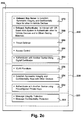
- the third tier set 260 of processing and communication capabilities includes Authentication Using Digital Certificates processing and communication capabilities 262, Access Control processing and communication capabilities 264, Threat Defense processing and communication capabilities 266, Onboard Authentication processing and communication capabilities 268, and Onboard Key Server processing and communication capabilities 270.
- the first and second tier sets 220, 230 of processing and communication capabilities are the same as between the second and third sets of network devices 170, 180 in the example embodiment; they may be different in other embodiments.
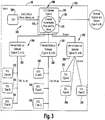
- FIG. 3 is a schematic diagram illustrating a simplified configuration of a network 300 having several sub-networks 302, 304, 306, and 308 within a vehicle 10 wherein a selected one 310 of the third set of network devices 180 is functionally operable in the capacity of the apparatus 100 ( FIG. 1 ) for authenticating a plurality of associated network devices having unequal communication capabilities described above in connection with FIG. 1 .
- the illustrated embodiment demonstrates an example showing a manner in which different electronic devices within an associated vehicle 10 can be implemented as different types of in-vehicle network devices for providing authentication of the in-vehicle electronic devices having the different communication and processing capabilities.
- a selected one 310 of the third set of network devices 180 is functionally operable in the capacity of the network gateway apparatus 100 described above in connection with FIG. 1 as a Connected Vehicle Gateway for authenticating the plurality of associated network devices having the unequal communication capabilities.
- the first sub-network 302 includes an Electronic Control Unit (ECU) 320 of the associated vehicle 10 wherein the ECU 320 is in operative communication with the Connected Vehicle Gateway network device 310 and wherein the network device 310 is a member of the third set of network devices 180.
- ECU Electronic Control Unit
- the second, third and fourth sub-networks 304, 306, and 308 are operatively coupled with the Connected Vehicle Gateway network device 310 and each includes, respectively, an internal switch or gateway device 330, 340, and 350.
- the internal switch or gateway devices 330, 340, and 350 may be implemented, according to the example, as devices selected from one or more of the first, second or third sets of network devices 160, 170, and 180.
- each subsystem or network domain 302, 304, 306, and 308 within the associated vehicle 10 can contain any combination of devices selected from the first, second or third sets of network devices 160, 170, and 180.
- the second sub-network 304 is a CAN, LIN, or other network and includes a first ECU 332 having communication and processing capabilities of the third set of network devices 180, a second ECU 334 having communication and processing capabilities of the first set of network devices 160, and a third ECU 336 having communication and processing capabilities of the first set of network devices 160.
- the third sub-network 306 is a CAN, LIN, or other network and includes a first ECU 342 having communication and processing capabilities of the first set of network devices 160, a second ECU 344 having communication and processing capabilities of the second set of network devices 170, and a third ECU 346 having communication and processing capabilities of the second set of network devices 170.
- the fourth sub-network 308 is an Ethernet network and includes a first ECU 352 having communication and processing capabilities of the third set of network devices 180, a second ECU 354 having communication and processing capabilities of the first set of network devices 160, and a third ECU 356 having communication and processing capabilities of the second set of network devices 170.
- the collection of session keys used to protect data to be communicated from a Type-X device to a Type-Y device will be referred to as "X-to-Y session keys" or "X-to-Y keys.”
- the X-to-Y keys may be allowed to be different from the Y-to-X keys.
- larger keys can be used between devices among the third set of network devices 180 (Type-A) than between devices among the first set of network devices 160 (Type-B).
- the B-to-A session keys for some Type-B devices can be larger than for other Type-B devices to allow messages from selected Type-B devices to have a higher level of protection than messages from other Type-B devices.
- each device is preconfigured with a set of permanent keys used to bootstrap its security operations.
- These permanent keys can be, for example, a set of public-private key pairs and their certificates for the third set (Type-A) of network devices 180, and a set of private Master Private Keys for any other type of device.
- Each device may also be provisioned in an embodiment with an Authentication Token wherein, in the example embodiment the Authentication Token is an encrypted data object that the device can use to authenticate itself with the Onboard Authentication Proxy Logic 130.
- a Group Key of a device among the third set of network devices 180 contains keys for generating A-to-A keys, A-to-B, B-to-A, and C-to-A keys.
- a Group Key of a device among the first set of network devices 160 contains keys for generating B-to-A, A-to-B, and B-to-B keys.
- a device among the second set of network devices 170 contains keys for generating C-to-A and C-to-B session keys.
- the devices establish their respective Group Keys as a result of successful device authentication.
- Different types of devices can use different methods to establish the Group Keys depending on the device's capabilities.
- devices among the third set of network devices 180 may use public-key based key establishment protocols.
- Devices among the first set of network devices 160 can use preconfigured private keys and symmetric-key encryption to establish Group Keys or they can be given the Group Keys by the Onboard Key Server portion 100 of the Connected Vehicle Gateway network device 310.
- device among the second set of network devices 170 can be preconfigured with Group Keys.
- each device In order for establishing secure communications, each device needs to know the session keys for each of its communication peers.
- the need for explicit peer discovery protocol is eliminated and the requirement of devices performing key establishment with each individual communication peer is eliminated.
- each device establishes the Group Keys as a result of its authentication with the Onboard Key Server portion 100 of the Connected Vehicle Gateway network device 310 and uses the Group Keys to locally generate and update its session keys.
- the Onboard Key Server portion 100 of the Connected Vehicle Gateway network device 310 obtains the C-to-B session keys and the C-to-A session keys from one or more off-board authentication servers 190 and distributes them to devices of the third and first sets (Types A and B) of associated network devices 180, 160 that need to receive messages from the devices of the second set (Type-C) of associated network devices 170.
- a Connected Vehicle Gateway device 310 that acts as the Onboard Authentication Proxy logic 130 ( FIG. 1 ) and includes onboard key server logic for authenticating other in-vehicle devices, and serves as the vehicle's interface with external networks.
- the original Connected Vehicle Gateway on a vehicle is authenticated by the device or vehicle manufacturer during device or vehicle manufacturing process.
- New Connected Vehicle Gateway device 310 installed on a vehicle can be either pre-authenticated or be authenticated by an off-board authentication server when it can access the off-board authentication server.
- the Connected Vehicle Gateway device 310 acquires all the necessary security materials it will need to communicate with other in-vehicle devices and to provide the Onboard Authentication Proxy and the Onboard Key Server functions.
- devices belonging to the third set of network devices 180 are authenticated by the Onboard Authentication Proxy on the Connected Vehicle Gateway device 310. Since the devices belonging to the third set of network devices 180 (Type-A) are powerful devices, they may use any standard authentication protocols and algorithms to authenticate with the Connected Vehicle Gateway device 310 as necessary or desired.
- FIG. 4 is a control flow diagram illustrating a sample procedure 400 for authenticating a device 410 selected from the first set of network devices 160 (Type-B).
- devices selected from the first set of network devices 160 are authenticated by the Connected Vehicle Gateway device 310 based on symmetric keys.
- the authentication can be achieved in accordance with a first procedure or a second procedure, both to be described and shown with reference to FIG. 4 .
- the device 410 selected from the first set of network devices 160 selectively sends at 420 an encrypted version of its Authentication Token to the Connected Vehicle Gateway device 310.
- the Connected Vehicle Gateway device 310 uses the Authentication Token to directly and locally authenticate the device 410.
- the new device 410 (Type-B) and the Connected Vehicle Gateway device 310 both selectively generate at 430 the keying materials that the new Type-B device will need to communicate with other in-vehicle devices.
- the Connected Vehicle Gateway device 310 then distributes these keys at 440 to other devices 412, 414 that are authorized to receive data from the new Type-B device 410.
- the new device 410 selected from the first set of network devices 160 selectively sends at 450 signed or encrypted data packets to an off-board authentication processor 190 ( FIG. 1 ) via an associated authentication network 142.
- the Connected Vehicle Gateway device 310 authenticates the device 410 (Type-B) by verifying or decrypting these packets. Successful verification of the signatures or decryption of the encrypted messages indicates that the device 410 (Type-B) is authenticated.
- the Connected Vehicle Gateway device 310 if the Connected Vehicle Gateway device 310 cannot verify or decrypt the messages received from the new Type-B device 410, the Connected Vehicle Gateway device 310 is operative to forward one or a small set of these messages to the off-board authentication system including the off-board authentication processor 190 and associated authentication network 142 ( FIG. 1 ) for example, which will try to authenticate the new Type-B device 410 by verifying or decrypting the messages.
- the off-board authentication system including the off-board authentication processor 190 and associated authentication network 142 ( FIG. 1 ) for example, which will try to authenticate the new Type-B device 410 by verifying or decrypting the messages.
- the off-board authentication system 190 Upon successful authentication, the off-board authentication system 190 is operative to send the new Group Keys of the Type-B device 410 (or the device's B-to-A and B-to-B session keys) to the Connected Vehicle Gateway device 310.
- the Connected Vehicle Gateway device 310 then distributes at 440 these session keys to the newly authenticated Type-B device 410 and other devices 412, 414 that need to receive data from the new Type-B device 410. If the Connected Vehicle Gateway device 310 within the associated vehicle 10 cannot access the off-board authentication system 190 temporarily, the traffic from the new Type-B device 410 is selectively accepted by the Connected Vehicle Gateway device 310 for a predefined time period to allow the new device 410 to function while authentication is in progress.
- FIG. 5 is a control flow diagram illustrating a sample procedure 500 for authenticating a device 510 selected from the second set of network devices 170 (Type-C).
- devices selected from the second set of network devices 170 do not run or otherwise perform any authentication protocol.
- devices selected from the second set of network devices 170 start sending signed or encrypted messages as soon as they wake, are energized, or otherwise boot up.
- the Connected Vehicle Gateway device 310 captures these messages at 520 and authenticates the device 510 of the second set of network devices 170 (Type-C) by verifying or decrypting these messages.
- the Connected Vehicle Gateway device 310 If the Connected Vehicle Gateway device 310 cannot verify or decrypt these messages, the Connected Vehicle Gateway device 310 forwards one or a small set of the messages at 530 to the off-board authentication system including the off-board authentication processor 190 and associated authentication network 142 for example ( FIG. 1 ), which will try to verify or decrypt the messages. Upon successful verification or decryption, the off-board authentication system will send to the Connected Vehicle Gateway device 310 at 540 the Group Keys for generating the Type-C device's session keys (or the Type-C device's C-to-A session keys and C-to-B session keys).
- the Connected Vehicle Gateway device 310 distributes these keys at 550 to the other authenticated in-vehicle devices 512, 514 that need to receive messages from the newly authenticated Type-C device 510. If the Connected Vehicle Gateway device 310 within the associated vehicle 10 cannot access the off-board authentication system 190 temporarily, the traffic from the new Type-C device 510 is selectively accepted by the Connected Vehicle Gateway device 310 for a predefined time period to allow the new device 510 to function while authentication is in progress.
- FIG. 6 is a block diagram illustrating an example of a computer system 600 upon which an example embodiment can be implemented.
- Computer system 600 may be employed to implement the functionality of the authentication proxy logic 130 in the apparatus 100 in general, as well as the Connected Vehicle Gateway device 310 of the one or more associated vehicles 10.
- Computer system 600 includes a bus 602 or other communication mechanism for communicating information and a processor 604 coupled with bus 602 for processing information.
- Computer system 600 also includes a main memory 606, such as random access memory (RAM) or other dynamic storage device coupled to bus 602 for storing information and instructions to be executed by processor 304.
- Main memory 606 also may be used for storing a temporary variable or other intermediate information during execution of instructions to be executed by processor 604.
- Computer system 600 further includes a read only memory (ROM) 608 or other static storage device coupled to bus 602 for storing static information and instructions for processor 604.
- ROM read only memory
- a storage device 610 such as a magnetic disk, optical disk, and/or flash storage, is provided and coupled to bus 602 for storing information and instructions.
- An aspect of the example embodiment is related to the use of computer system 600 for authenticating devices having unequal capabilities.
- a further aspect of the example embodiment is related to the use of computer system 600 for authenticating devices having unequal capabilities such as for example in-vehicle electronic devices having varying different communication and processing capabilities.
- these functionalities are provided by computer system 600 in response to the processor 604 executing one or more sequences of one or more instructions contained in a non-transitory main memory 606.
- Such instructions may be read into main memory 606 from another computer-readable medium, such as storage device 610. Execution of the sequence of instructions contained in main memory 606 causes processor 604 to perform the process steps described herein.
- processors in a multiprocessing arrangement may also be employed to execute the sequences of instructions contained in main memory 606.
- hardwired circuitry may be used in place of or in combination with software instructions to implement an example embodiment.
- embodiments described herein are not limited to any specific combination of hardware circuitry and software.
- Non-volatile media include for example optical or magnetic disks, such as storage device 610.
- Volatile media includes dynamic memory such as main memory 606.
- tangible media may include any non-transitory media such as a volatile and non-volatile media.
- Computer-readable media include for example floppy disk, a flexible disk, hard disk, magnetic cards, paper tape, any other physical medium with patterns of holes, a RAM, a PROM, an EPROM, a FLASHPROM, CD, DVD or any other memory chip or cartridge, or any other medium from which a computer can read.
- Various forms of computer-readable media may be involved in carrying one or more sequences of one or more instructions to processor 604 for execution.
- the instructions may initially be borne on a magnetic disk of a remote computer.
- the remote computer can load the instructions into its dynamic memory and send the instructions over a telephone line using a modem.
- a modem local to computer system 600 can receive the data on the telephone line and use an infrared transmitter to convert the data to an infrared signal.
- An infrared detector coupled to bus 602 can receive the data carried in the infrared signal and place the data on bus 602.
- Bus 602 carries the data to main memory 606 from which processor 604 retrieves and executes the instructions.
- the instructions received by main memory 606 may optionally be stored on storage device 610 either before or after execution by processor 604.
- Computer system 600 also includes a first communication interface 620 operatively coupled with the bus 602.
- Communication interface 620 provides a two-way data communication coupling computer system 600 with a communication link 630.
- communication interface 620 may be a local area network (LAN) card to provide a data communication connection to a compatible LAN such as for example a Controller Area Network (CAN) network.
- LAN local area network
- CAN Controller Area Network
- communication interface 620 may be an integrated services digital network (ISDN) card or a modem to provide a data communication connection to a corresponding type of telephone line.
- ISDN integrated services digital network
- Wireless links may also be implemented.
- communication interface 620 sends and receives electrical, electromagnetic, or optical signals that carry digital data streams representing various types of information.
- FIGS. 7 , 8a , 8b , 9a , and 9b While, for purposes of simplicity of explanation, the methodologies of these FIGS. are shown and described as executing serially, it is to be understood and appreciated that the example embodiment is not limited by the illustrated order, as some aspects could occur in different orders and/or concurrently with other aspects from that shown and described herein. Moreover, not all illustrated features may be required to implement a methodology in accordance with an aspect the example embodiment. The methodologies described herein are suitably adapted to be implemented in hardware, software, or a combination thereof.
- a first signal 162 ( FIG. 1 ) is received at 710 by the first communication port 110.
- the first communication port 110 is configured to communicate via the associated communication network 140 with first and second sets of associated network devices 160, 170 having the first and second authentication capabilities respectively.
- the first signal 162 received comprises first authentication request data 164 representative of a request for authentication from at least one 166 of the first set of associated network devices 160 having the first authentication capability.
- a second signal 172 is received at 720 by the first communication port 110 wherein the second signal 172 comprises second authentication request data 174 representative of a request for authentication from at least one 176 of the second set of associated network devices 170 having the second authentication capability.
- the authentication proxy processor 130 selectively authenticates the at least one of the first set of associated network devices 166 based on the first authentication request data 164 in accordance with the first authentication capability.
- the authentication proxy processor 130 selectively authenticates the at least one of the second set of associated network devices 176 based on the second authentication request data 174 in accordance with the second authentication capability.
- FIG. 8a shows the selective authentication of step 730 of FIG. 7 in greater detail.
- the authentication proxy logic 130 selectively generates at 812 a first cryptographic key set 168 responsive to the authentication proxy logic 130 authenticating the at least one of the first set of associated network devices 166 based on the first authentication request data 164 in accordance with the first authentication capability.
- the authentication proxy logic 130 selectively distributes the first cryptographic key set 168 to the first set of associated network devices 160.
- FIG. 8b shows the selective authentication of step 740 of FIG. 7 in greater detail.
- the authentication proxy logic 130 selectively generates at 822 a second cryptographic key set 178 responsive to the authentication proxy logic 130 authenticating the at least one of the second set of associated network devices 176 based on the second authentication request data 174 in accordance with the second authentication capability.
- the authentication proxy logic 130 selectively distributes the second cryptographic key set 178 to the first set of associated network devices 160.
- the second set of associated network devices 170 are limited in their capabilities, particularly their communication and processing capabilities to only send but not receive messages or other electronic communications from devices of the overall in-vehicle network.
- FIG. 8c shows the receiving the second authentication request data step 720 of FIG. 7 in greater detail.
- the authentication proxy logic 130 is operative to intercept at 832 unidirectional message data transmitted by the at least one 176 of the second set of associated network devices 170 into the associated communication network 140.
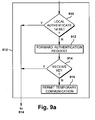
- FIG. 9a shows authentication of a one of the first set of network devices by the authentication proxy logic 130 using the associated authentication processor 190 via the associated authentication network 142 in accordance with the example embodiment.
- the authentication proxy logic 130 Responsive to the authentication proxy logic 130 failing to locally authenticate the at least one 166 of the first set of associated network devices 160 at step 812 ( FIG. 8a ), at 910, the authentication proxy logic 130 selectively forwards at 912, by the second communication port 120 configured to communicate via the associated authentication network 142 with the associated authentication processor 190 the first authentication request data 164.
- the authentication proxy logic 130 selectively receives a first cryptographic key set 168 via the second communication port 120 from the associated authentication network 142 responsive to the associated authentication processor 190 authenticating the at least one 166 of the first set of associated network devices 160 based on the first authentication request data 164.
- the authentication proxy logic 130 selectively distributes the first cryptographic key set 168 to the first set of associated network devices 160.
- the authentication proxy logic 130 permits the newly added device of the first set of associated network devices 160 to operate or otherwise function for a predefined time period to allow the new device to perform initial limited integration functions while authentication is in progress.
- FIG. 9b shows authentication of a one of the second set of network devices by the authentication proxy logic 130 using the associated authentication processor 190 via the associated authentication network 142 in accordance with the example embodiment.
- the authentication proxy logic 130 Responsive to the authentication proxy logic 130 failing to locally authenticate the at least one 176 of the second set of associated network devices 170 at step 822 ( FIG. 8b ), at 920, the authentication proxy logic 130 selectively forwards at 922, by the second communication port 120 configured to communicate via the associated authentication network 142 with the associated authentication processor 190 the second authentication request data 174.
- the authentication proxy logic 130 selectively receives a second cryptographic key set 178 via the second communication port 120 from the associated authentication network 142 responsive to the associated authentication processor 190 authenticating the at least one 176 of the second set of associated network devices 170 based on the second authentication request data 174.
- the authentication proxy logic 130 selectively distributes the second cryptographic key set 178 to the first set of associated network devices 170. It is to be appreciated that in the example embodiment the second set of associated network devices 17 are limited in their capabilities, particularly their communication and processing capabilities to only send but not receive messages or other electronic communications from devices of the overall in-vehicle network.
- the authentication proxy logic 130 permits the newly added device of the second set of associated network devices 170 to operate or otherwise function for a predefined time period to allow the new device to perform initial limited integration functions while authentication is in progress.
Landscapes
- Engineering & Computer Science (AREA)
- Computer Security & Cryptography (AREA)
- Computer Networks & Wireless Communication (AREA)
- Signal Processing (AREA)
- Computing Systems (AREA)
- General Engineering & Computer Science (AREA)
- Computer Hardware Design (AREA)
- Health & Medical Sciences (AREA)
- General Health & Medical Sciences (AREA)
- Medical Informatics (AREA)
- Small-Scale Networks (AREA)
- Data Exchanges In Wide-Area Networks (AREA)
- Mobile Radio Communication Systems (AREA)
Description
- The present disclosure relates generally to authentication of devices having unequal capabilities such as for example in-vehicle, industrial floor, home automation, and any other networked electronic devices having varying different communication and processing capabilities.
- Modern vehicles such as cars, trucks, planes and trains typically use tens to over a hundred networked electronic devices ranging from simple sensors generating various feedback signal messages to more complicated Electronic Control Units (ECUs) consisting of microcontrollers and microcomputers for control of vehicle systems and operations, to support communication between the vehicle and systems external to the vehicle, and to provide applications to users. The originally installed devices on a vehicle are authenticated or assumed to be authentic during the device or vehicle manufacturing process. Accordingly, no provisions are made for further device authentication to be performed after the vehicle leaves the vehicle manufacturing plant. Consequently, without an authorization protocol in place, unauthorized devices can be easily installed into the in-vehicle network or used to replace existing devices on a vehicle. Unauthorized aftermarket devices can also be attached to the in-vehicle network to provide user services and communicate with other in-vehicle devices. Similar problems exist in industrial floor, home automation, and other networked device systems.
- In-vehicle device authentication systems that support widely diverse in-vehicle devices over heterogeneous networks are unavailable. For example, since Controller Area Network (CAN) buses do not provide device authentication mechanisms, application-layer authentication mechanisms such as the seed-key method have been used to control access to ECU firmware from external diagnostic tools for ECU firmware updates. These application-layer authentication mechanisms, however, cannot support authentication of all types of in-vehicle networks, especially devices that only send but not receive data (e.g., sensors) and devices that are incapable of performing sophisticated cryptographic operations. Various authentication tools for in-vehicle Ethernet networks are limited to supporting device authentication at the Ethernet MAC layer. Therefore, the application layer and network-specific authentication protocols are unable to provide for authentication of in-vehicle electronic devices having varying different communication and processing capabilities.
-
US 2011/004918 discloses facilitating heterogeneous authentication for allowing network access. - Aspects of the invention are recited in the independent claims and preferred features are recited in the dependent claims.
- The accompanying drawings incorporated herein and forming a part of the specification illustrate the example embodiments.
-
FIG. 1 is a simplified block diagram illustrating a system for authenticating devices having unequal capabilities such as in-vehicle electronic devices having varying different communication and processing capabilities. -
FIG. 2a is an illustration of a capabilities block showing communication and processing capabilities of a first set of the in-vehicle devices ofFIG. 1 . -
FIG. 2b is an illustration of a capabilities block showing communication and processing capabilities of a second set of the in-vehicle devices ofFIG. 1 . -
FIG. 2c is an illustration of a capabilities block showing communication and processing capabilities of a third set of the in-vehicle devices ofFIG. 1 . -
FIG. 3 is a schematic diagram illustrating a simplified configuration of a network having several sub-networks within an associated vehicle. -
FIG. 4 is a control flow diagram illustrating a sample procedure for authenticating a device ("Type-B" device) selected from the first set of in-vehicle network devices having capabilities as shown inFIG. 2a . -
FIG. 5 is a flow diagram illustrating a sample procedure for authenticating a device ("Type-C" device) selected from the second set of in-vehicle network devices having capabilities as shown inFIG. 2b . -
FIG. 6 is a block diagram illustrating an example of a computer system upon which an example embodiment can be implemented. -
FIG. 7 is a flow chart showing a method in accordance with an example embodiment of authenticating a plurality of associated network devices having unequal communication capabilities. -
FIGS. 8a, 8b, and 8c are flow charts showing methods of authenticating a plurality of associated network devices having unequal communication capabilities by authentication proxy logic local to the network devices. -
FIGS. 9a and9b are flow charts showing methods of authenticating a plurality of associated network devices having unequal communication capabilities by authentication proxy logic in operative communication with an authentication processor remote to the network devices. - The following presents a simplified overview of the example embodiments in order to provide a basic understanding of some aspects of the example embodiments. This overview is not an extensive overview of the example embodiments. It is intended to neither identify key or critical elements of the example embodiments nor delineate the scope of the appended claims. Its sole purpose is to present some concepts of the example embodiments in a simplified form as a prelude to the more detailed description that is presented later.
- Overall, in accordance with example embodiments herein, apparatus, methods and logic encoded in one or more tangible non-transient computer readable media for execution by a processor and when executed by the processor, the logic, the apparatus, and the methods are operable to locally authenticate in-vehicle devices that have different and potentially vastly different computing and communication capabilities, thereby supporting network inclusion of devices with diverse capabilities such as devices that can only send but not receive data, devices that can perform only symmetric-key cryptographic operations but not public-key algorithms, devices that do not support Internet Protocols (IP), and devices that support sophisticated security algorithms and IP-based security protocols. The embodiments herein allow in-vehicle devices to use different individualized authentication methods that match their own particular capabilities and, further, the embodiments herein also support devices attached to different types of in-vehicle networks (e.g., CAN, LIN, MOST, and Ethernet).
- In accordance with example embodiments herein, apparatus, methods and logic encoded in one or more tangible non-transient computer readable media for execution by a processor and when executed by the processor, the logic, the apparatus, and the methods are operable to authenticate a plurality of associated in-vehicle network devices having unequal communication and processing capabilities. First and second signals are received by a first communication port configured to communicate via an associated communication network with first and second sets of associated in-vehicle network devices having first and second authentication capabilities respectively. The first signal includes first authentication request data representative of a request for authentication from at least one of the first set of network devices having the first authentication capability. The second signal includes second authentication request data representative of a request for authentication from at least one of the second set of network devices having the second authentication capability. An authentication proxy processor selectively authenticates the at least one of the first set of network devices based on the first authentication request data in accordance with the first authentication capability, and selectively authenticates the at least one of the second set of network devices based on the second authentication request data in accordance with the second authentication capability.
- In accordance with further example embodiments herein, apparatus, methods and logic encoded in one or more tangible non-transient computer readable media for execution by a processor and when executed by the processor, the logic, the apparatus, and the methods are operable to selectively generate by the authentication proxy logic a first cryptographic key set responsive to the authentication proxy logic authenticating the at least one of the first set of network devices based on the first authentication request data in accordance with the first authentication capability. The authentication proxy logic selectively distributes the first cryptographic key set to the first set of network devices.
- In accordance with still further example embodiments herein, apparatus, methods and logic encoded in one or more tangible non-transient computer readable media for execution by a processor and when executed by the processor, the logic, the apparatus, and the methods are operable to selectively generate by the authentication proxy logic a second cryptographic key set responsive to the authentication proxy logic authenticating the at least one of the second set of network devices based on the second authentication request data in accordance with the second authentication capability. The authentication proxy logic selectively distributes the second cryptographic key set to the first set of network devices.
- In accordance with still further example embodiments herein, apparatus, methods and logic encoded in one or more tangible non-transient computer readable media for execution by a processor and when executed by the processor, the logic, the apparatus, and the methods are operable to intercept by the authentication proxy logic unidirectional message data transmitted by the at least one of the second set of network devices into the associated communication network, wherein the intercepted unidirectional message comprises the second authentication request data representative of the request for authentication from the at least one of the second set of network devices.
- In accordance with still further example embodiments herein, responsive to the authentication proxy logic failing to locally authenticate the at least one of the first set of network devices based on the first authentication request data in accordance with the first authentication capability, the first authentication request data is selectively forwarded by a second communication port configured to communicate via an associated authentication network to an associated authentication processor. The associated authentication processor selectively authenticates the first authentication request data. A first cryptographic key set is selectively received by the authentication proxy logic via the second communication port from the associated authentication network responsive to the associated authentication processor authenticating the at least one of the first set of network devices based on the first authentication request data, and the authentication proxy logic selectively distributes the first cryptographic key set to the first set of network devices.
- Yet still further in accordance with example embodiments herein, responsive to the authentication proxy logic failing to locally authenticate the at least one of the second set of network devices based on the second authentication request data in accordance with the second authentication capability, the second authentication request data is selectively forwarded by a second communication port configured to communicate via the associated authentication network to the associated authentication processor. The associated authentication processor selectively authenticates the second authentication request data. A second cryptographic key set is selectively received by the authentication proxy logic via the second communication port from the associated authentication network responsive to the associated authentication processor authenticating the at least one of the second set of network devices based on the second authentication request data, and the authentication proxy logic selectively distributes the second cryptographic key set to the first set of network devices.
- This description provides examples not intended to limit the scope of the appended claims. The figures generally indicate the features of the examples, where it is understood and appreciated that like reference numerals are used to refer to like elements. Reference in the specification to "one embodiment" or "an embodiment" or "an example embodiment" means that a particular feature, structure, or characteristic described is included in at least one embodiment described herein and does not imply that the feature, structure, or characteristic is present in all embodiments described herein.
- With reference now to the drawing Figures, wherein the showings are for purposes of illustrating example embodiments only and not for purposes of limiting same,
FIG. 1 illustrates anapparatus 100 disposed in an associatedvehicle 10 for authenticating a plurality of associatednetwork devices 150 having unequal communication capabilities. Theapparatus 100 includes, in the example embodiment, afirst communication port 110 configured to communicate via an associatedcommunication network 140 with the plurality of associatednetwork devices 150, asecond communication port 120 configured to communicate via an associatedauthentication network 142 with an associatedauthentication processor 190, andauthentication proxy logic 130 operatively coupled with the first andsecond communication ports - In accordance with the embodiments herein, the
apparatus 100 is configured to locally authenticate in-vehicle devices 152 having vastly different computing and communication capabilities, including devices that can only send but not receive messages such as simple sensors or the like, devices that are capable of performing only symmetric-key cryptographic operations and not public-key algorithms, devices that do not support IP protocols, and devices that support sophisticated security algorithms and IP-based security protocols. In addition, theapparatus 100 is configured to locally authenticate in-vehicle devices using different authentication methods that match the respective capabilities of thevarious devices 152. Yet still further, theapparatus 100 is configured to locally authenticate the in-vehicle devices 152 which may be attached to different types of networks (e.g., CAN, LIN, MOST, and Ethernet) comprising the associatedcommunication network 140. In accordance with the example embodiment, the in-vehicle devices 152 are classified to allow devices with different capabilities to use different authentication procedures based on their communication and cryptographic processing capabilities, as illustrated inFigure 1 . - A first set ("Type B" devices) of associated
network devices 160 in the example embodiment has a first authentication capability wherein the in-vehicle electronic devices of thefirst set 160 have bidirectional communication capability and are capable of supporting only symmetric-key cryptography. Theapparatus 100 is in operative communication with the first set ofdevices 160 via thefirst communication port 110 using the associatedcommunication network 140. Similarly, a second set ("Type C" devices) of associatednetwork devices 170 in the example embodiment has a second authentication capability wherein the in-vehicle electronic devices of thesecond set 170 can send but not receive messages, and are capable of supporting only symmetric-key cryptography. Theapparatus 100 is in operative communication with the second set ofdevices 170 via thefirst communication port 110 using the associatedcommunication network 140. The devices of the second set (Type C) of associatednetwork devices 170 are, in the example embodiment, simple sensor devices or the like, capable of only transmitting encrypted messages representative of a measure of the parameter being sensed, for example. Lastly in the example embodiment, a third set ("Type A" devices) of associatednetwork devices 180 in the example embodiment has a third authentication capability wherein the in-vehicle electronic devices of thethird set 180 have bidirectional communication capability and are capable of supporting both public-key and symmetric-key cryptography. Theapparatus 100 is in operative communication with the third set ofdevices 180 via thefirst communication port 110 using the associatedcommunication network 140. - Overall, the
first communication port 110 receivessignals 144 comprisingauthentication request data 146 representative of requests for authentication from one or more of thenetwork devices 152. Theauthentication proxy logic 130 selectively authenticates thenetwork devices 152 based on the authentication request data in accordance with the authentication capability of the associated requesting device. The authentication proxy logic adapts is authentication response in accordance with the particular communication and processing capabilities of the authentication-requesting device. For some devices such as the second set (Type C) of associatednetwork devices 170 capable of only transmitting encrypted messages representative of a measure of the parameter being sensed, for example, the authentication proxy logic intercepts the messages and interprets them as authentication requests is the device is not already authenticated. The authentication proxy logic selectively generates a cryptographic key set responsive to the authentication proxy logic authenticating the network devices based on the authentication request data in accordance with the particular authentication capability of the requesting device. Thereafter, the authentication proxy logic selectively distributes the cryptographic key set to selected one or more of the network devices. - In addition to the above, in general in the example embodiment, the
authentication proxy logic 130 selectively forwards theauthentication request data 146 to the associatedauthentication processor 190 by thesecond communication port 120 via the associatedauthentication network 142 responsive to theauthentication proxy logic 130 failing to locally authenticate the authentication-requesting associated network device. Theauthentication proxy logic 130 selectively receives a first cryptographic key set 148 by thesecond communication port 120 via the associatedauthentication network 142 responsive to the associatedauthentication processor 190 authenticating the authentication-requesting associated network device. Thereafter, theauthentication proxy logic 130 selectively distributes the first cryptographic key set 148 to the appropriate one or more associated in-vehicle network devices 150. - In a particular example embodiment and with continued reference to
Figure 1 , thefirst communication port 110 receives afirst signal 162 comprising firstauthentication request data 164 representative of a request for authentication from at least one 166 of the first set ofnetwork devices 160 having the first authentication capability, and receives a second signal 172 comprising secondauthentication request data 174 representative of a request for authentication from at least one 176 of the second set ofnetwork devices 170 having the second authentication capability different than the first authentication capability. Theauthentication proxy logic 130 selectively authenticates the at least one 166 of the first set ofnetwork devices 160 based on the firstauthentication request data 164 in accordance with the first authentication capability, and selectively authenticates the at least one 176 of the second set ofnetwork devices 170 based on the secondauthentication request data 174 in accordance with the second authentication capability different than the first authentication capability. - The
authentication proxy logic 130 selectively generates the first cryptographic key set 168 responsive to theauthentication proxy logic 130 authenticating the at least one 166 of the first set ofnetwork devices 160 based on the firstauthentication request data 164 in accordance with the first authentication capability, and selectively generates a second cryptographic key set 178 responsive to theauthentication proxy logic 130 authenticating the at least one 176 of the second set ofnetwork devices 170 based on the secondauthentication request data 174 in accordance with the second authentication capability. - In the example embodiment, since the second set of
network devices 170 are capable of only sending but not receiving messages, but are capable of supporting symmetric-key cryptography, theauthentication proxy logic 130 of the example embodiment selectively distributes the first cryptographic key set 168 to the first set ofnetwork devices 160, and selectively also distributes the second cryptographic key set 178 to the first set ofnetwork devices 160. Theauthentication proxy logic 130 of the example embodiment also selectively distributes the first and second cryptographic key sets 168, 178 to the third set ofnetwork devices 180 as may be necessary or desired for the third set ofnetwork devices 180 to communicate with the first and second sets ofnetwork devices - In addition to the above, in the example embodiment, the
authentication proxy logic 130 selectively forwards the firstauthentication request data 164 to the associatedauthentication processor 190 by thesecond communication port 120 via the associatedauthentication network 142 responsive to theauthentication proxy logic 130 failing to locally authenticate the at least one 166 of the first set ofnetwork devices 160 based on the firstauthentication request data 164 in accordance with the first authentication capability. Theauthentication proxy logic 130 selectively receives a first cryptographic key set 168' by thesecond communication port 120 via the associatedauthentication network 142 responsive to the associatedauthentication processor 190 authenticating the at least one 166 of the first set ofnetwork devices 160 based on the firstauthentication request data 164. Thereafter, theauthentication proxy logic 130 selectively distributes the received first cryptographic key 168' set to the first set ofnetwork devices 160. - Still further in addition to the above, in the example embodiment, the
authentication proxy logic 130 selectively forwards the secondauthentication request data 174 to the associatedauthentication processor 190 by thesecond communication port 120 via the associatedauthentication network 142 responsive to theauthentication proxy logic 130 failing to locally authenticate the at least one 176 of the second set ofnetwork devices 170 based on the secondauthentication request data 174 in accordance with the second authentication capability. Theauthentication proxy logic 130 selectively receives a second cryptographic key set 178' by thesecond communication port 120 via the associatedauthentication network 142 responsive to the associatedauthentication processor 190 authenticating the at least one 176 of the second set ofnetwork devices 170 based on the secondauthentication request data 174. Thereafter, theauthentication proxy logic 130 selectively distributes the second cryptographic key set 178' to the first set ofnetwork devices 160. The second cryptographic key set 178' is not distributed to the second set ofnetwork devices 170 because, as noted above, in the example embodiment, the second set ofnetwork devices 170 are capable of only sending but not receiving messages. In the example embodiment, theauthentication proxy logic 130 may also selectively distribute the second cryptographic key set 178' to the third set ofnetwork devices 180 as may be necessary or desired for the third set ofnetwork devices 180 to communicate with the first and second sets ofnetwork devices - As noted above, the first set (Type B) of associated
network devices 160 in the example embodiment has an overall first authentication capability wherein the in-vehicle electronic devices of thefirst set 160 have bidirectional communication capability and are capable of supporting only symmetric-key cryptography.FIG. 2a shows acapability block 210 of thefirst set 160 of devices defining capabilities of thefirst set 160 of devices such as processing and communication capabilities for example. The capabilities block 210 of thefirst set 160 of devices includes a first tier set 220 of processing and communication capabilities, and a second tier set 230 of processing and communication capabilities. In the example embodiment the first tier set 220 of processing and communication capabilities includes Message Integrity and Confidentiality Protection processing andcommunication capabilities 222. Also in the example embodiment the second tier set 230 of capabilities includes processing and communication capabilities for Authenticating with Other Devices UsingPreconfigured Private Keys 232, processing and communication capabilities for Establishing Symmetric Integrity and Confidentiality Keys WithOther Devices 234, and processing and communication capabilities for performing Virtual Local Area Network (VLAN) Functions 236. - Similarly, the second set (Type C) of associated
network devices 170 in the example embodiment has an overall second authentication capability wherein the in-vehicle electronic devices of thesecond set 170 can send but not receive messages, and are capable of supporting only symmetric-key cryptography. The second set (Type C) of associatednetwork devices 170 are, in the example embodiment, simple sensor devices or the like, capable of only transmitting encrypted messages representative of a measure of the parameter being sensed such as vehicle speed, acceleration or altitude, for example.FIG. 2b shows a capabilities block 240 of thesecond set 170 of devices defining capabilities of thesecond set 170 of devices such as processing and communication capabilities for example. The capabilities block 240 of thesecond set 170 of devices includes the first tier set 220 of processing and communication capabilities of thefirst set 160 of devices. In the example embodiment the first tier set 220 of processing and communication capabilities includes Message Integrity and Confidentiality Protection processing andcommunication capabilities 222. Although the first tier set 220 of processing and communication capabilities are the same as between the first and second sets ofnetwork devices - Lastly in the example embodiment, the third set (Type A) of associated
network devices 180 in the example embodiment has an overall third authentication capability wherein the in-vehicle electronic devices of thethird set 180 have bidirectional communication capability and are capable of supporting both public-key and symmetric-key cryptography. As shown inFIG. 2c , a capabilities block 250 of thethird set 180 of devices defines capabilities of thethird set 180 of devices such as processing and communication capabilities for example. The capabilities block 250 of thethird set 170 of devices includes the first tier set 220 of processing and communication capabilities of the first andsecond sets second set 170 of devices unavailable to thesecond set 170 of devices, and a third tier set 260 of processing and communication capabilities unavailable to the first andsecond sets communication capabilities 262, Access Control processing andcommunication capabilities 264, Threat Defense processing andcommunication capabilities 266, Onboard Authentication processing andcommunication capabilities 268, and Onboard Key Server processing andcommunication capabilities 270. Although the first and second tier sets 220, 230 of processing and communication capabilities are the same as between the second and third sets ofnetwork devices -
FIG. 3 is a schematic diagram illustrating a simplified configuration of anetwork 300 havingseveral sub-networks vehicle 10 wherein a selected one 310 of the third set ofnetwork devices 180 is functionally operable in the capacity of the apparatus 100 (FIG. 1 ) for authenticating a plurality of associated network devices having unequal communication capabilities described above in connection withFIG. 1 . The illustrated embodiment demonstrates an example showing a manner in which different electronic devices within an associatedvehicle 10 can be implemented as different types of in-vehicle network devices for providing authentication of the in-vehicle electronic devices having the different communication and processing capabilities. In particular, in the example shown, a selected one 310 of the third set ofnetwork devices 180 is functionally operable in the capacity of thenetwork gateway apparatus 100 described above in connection withFIG. 1 as a Connected Vehicle Gateway for authenticating the plurality of associated network devices having the unequal communication capabilities. In the example embodiment illustrated, thefirst sub-network 302 includes an Electronic Control Unit (ECU) 320 of the associatedvehicle 10 wherein theECU 320 is in operative communication with the Connected VehicleGateway network device 310 and wherein thenetwork device 310 is a member of the third set ofnetwork devices 180. The second, third andfourth sub-networks Gateway network device 310 and each includes, respectively, an internal switch orgateway device gateway devices network devices network domain vehicle 10 can contain any combination of devices selected from the first, second or third sets ofnetwork devices - In the example embodiment shown in
FIG. 3 , thesecond sub-network 304 is a CAN, LIN, or other network and includes afirst ECU 332 having communication and processing capabilities of the third set ofnetwork devices 180, asecond ECU 334 having communication and processing capabilities of the first set ofnetwork devices 160, and athird ECU 336 having communication and processing capabilities of the first set ofnetwork devices 160. Similarly, thethird sub-network 306 is a CAN, LIN, or other network and includes afirst ECU 342 having communication and processing capabilities of the first set ofnetwork devices 160, asecond ECU 344 having communication and processing capabilities of the second set ofnetwork devices 170, and athird ECU 346 having communication and processing capabilities of the second set ofnetwork devices 170. Lastly in the example embodiment shown inFIG. 3 , thefourth sub-network 308 is an Ethernet network and includes afirst ECU 352 having communication and processing capabilities of the third set ofnetwork devices 180, asecond ECU 354 having communication and processing capabilities of the first set ofnetwork devices 160, and athird ECU 356 having communication and processing capabilities of the second set ofnetwork devices 170. - In accordance with the embodiments herein, with regard to security key management, the collection of session keys used to protect data to be communicated from a Type-X device to a Type-Y device will be referred to as "X-to-Y session keys" or "X-to-Y keys." The X-to-Y keys may be allowed to be different from the Y-to-X keys. For example, larger keys can be used between devices among the third set of network devices 180 (Type-A) than between devices among the first set of network devices 160 (Type-B). In an embodiment, the B-to-A session keys for some Type-B devices can be larger than for other Type-B devices to allow messages from selected Type-B devices to have a higher level of protection than messages from other Type-B devices.
- In the example embodiment illustrated, each device is preconfigured with a set of permanent keys used to bootstrap its security operations. These permanent keys can be, for example, a set of public-private key pairs and their certificates for the third set (Type-A) of
network devices 180, and a set of private Master Private Keys for any other type of device. Each device may also be provisioned in an embodiment with an Authentication Token wherein, in the example embodiment the Authentication Token is an encrypted data object that the device can use to authenticate itself with the OnboardAuthentication Proxy Logic 130. - Multiple in-vehicle devices can form a communication group and use a common set of Group Keys to generate their session keys for securing communications within the group. A Group Key of a device among the third set of network devices 180 (Type-A) contains keys for generating A-to-A keys, A-to-B, B-to-A, and C-to-A keys. A Group Key of a device among the first set of network devices 160 (Type-B) contains keys for generating B-to-A, A-to-B, and B-to-B keys. Lastly, a device among the second set of network devices 170 (Type-C) contains keys for generating C-to-A and C-to-B session keys.
- In accordance with the embodiments herein, the devices establish their respective Group Keys as a result of successful device authentication. Different types of devices can use different methods to establish the Group Keys depending on the device's capabilities. For example, devices among the third set of network devices 180 (Type-A) may use public-key based key establishment protocols. Devices among the first set of network devices 160 (Type-B) can use preconfigured private keys and symmetric-key encryption to establish Group Keys or they can be given the Group Keys by the Onboard
Key Server portion 100 of the Connected VehicleGateway network device 310. Lastly, device among the second set of network devices 170 (Type-C) can be preconfigured with Group Keys. - In order for establishing secure communications, each device needs to know the session keys for each of its communication peers. In accordance with the example embodiments herein, rather than the requirement that each device first discover its communication peers and then perform a key agreement protocol with each peer to establish the session keys, which requires every device to implement a peer discovery protocol and execute key establishment protocol with each peer and can be impractical for many in-vehicle devices with highly constrained computing and communication capabilities, the need for explicit peer discovery protocol is eliminated and the requirement of devices performing key establishment with each individual communication peer is eliminated. Instead, in accordance with the example embodiments herein, each device establishes the Group Keys as a result of its authentication with the Onboard
Key Server portion 100 of the Connected VehicleGateway network device 310 and uses the Group Keys to locally generate and update its session keys. The OnboardKey Server portion 100 of the Connected VehicleGateway network device 310 obtains the C-to-B session keys and the C-to-A session keys from one or more off-board authentication servers 190 and distributes them to devices of the third and first sets (Types A and B) of associatednetwork devices network devices 170. - In accordance with the embodiments herein, authentication of in-vehicle devices having unequal capabilities such as for example having different communication and processing capabilities is enabled. In an example embodiment, a Connected
Vehicle Gateway device 310 that acts as the Onboard Authentication Proxy logic 130 (FIG. 1 ) and includes onboard key server logic for authenticating other in-vehicle devices, and serves as the vehicle's interface with external networks. The original Connected Vehicle Gateway on a vehicle is authenticated by the device or vehicle manufacturer during device or vehicle manufacturing process. New ConnectedVehicle Gateway device 310 installed on a vehicle can be either pre-authenticated or be authenticated by an off-board authentication server when it can access the off-board authentication server. As a result of successful authentication, the ConnectedVehicle Gateway device 310 acquires all the necessary security materials it will need to communicate with other in-vehicle devices and to provide the Onboard Authentication Proxy and the Onboard Key Server functions. - In accordance with the embodiments herein, devices belonging to the third set of network devices 180 (Type-A) are authenticated by the Onboard Authentication Proxy on the Connected
Vehicle Gateway device 310. Since the devices belonging to the third set of network devices 180 (Type-A) are powerful devices, they may use any standard authentication protocols and algorithms to authenticate with the ConnectedVehicle Gateway device 310 as necessary or desired. -
FIG. 4 is a control flow diagram illustrating asample procedure 400 for authenticating adevice 410 selected from the first set of network devices 160 (Type-B). In accordance with the example embodiment, overall, devices selected from the first set of network devices 160 (Type-B) are authenticated by the ConnectedVehicle Gateway device 310 based on symmetric keys. In the illustrated embodiment, the authentication can be achieved in accordance with a first procedure or a second procedure, both to be described and shown with reference toFIG. 4 . - In accordance with the first authentication procedure and with continued reference to
FIG. 4 , thedevice 410 selected from the first set of network devices 160 (Type-B) selectively sends at 420 an encrypted version of its Authentication Token to the ConnectedVehicle Gateway device 310. The ConnectedVehicle Gateway device 310 uses the Authentication Token to directly and locally authenticate thedevice 410. Upon successful authentication, the new device 410 (Type-B) and the ConnectedVehicle Gateway device 310 both selectively generate at 430 the keying materials that the new Type-B device will need to communicate with other in-vehicle devices. The ConnectedVehicle Gateway device 310 then distributes these keys at 440 toother devices B device 410. - In accordance with the second authentication procedure and with continued reference to
FIG. 4 , thenew device 410 selected from the first set of network devices 160 (Type-B) selectively sends at 450 signed or encrypted data packets to an off-board authentication processor 190 (FIG. 1 ) via an associatedauthentication network 142. In this case, the ConnectedVehicle Gateway device 310 authenticates the device 410 (Type-B) by verifying or decrypting these packets. Successful verification of the signatures or decryption of the encrypted messages indicates that the device 410 (Type-B) is authenticated. - With continued reference to
FIG. 4 and in accordance with the embodiment illustrated there, in either of the above first and second authentication protocol cases, if the ConnectedVehicle Gateway device 310 cannot verify or decrypt the messages received from the new Type-B device 410, the ConnectedVehicle Gateway device 310 is operative to forward one or a small set of these messages to the off-board authentication system including the off-board authentication processor 190 and associated authentication network 142 (FIG. 1 ) for example, which will try to authenticate the new Type-B device 410 by verifying or decrypting the messages. Upon successful authentication, the off-board authentication system 190 is operative to send the new Group Keys of the Type-B device 410 (or the device's B-to-A and B-to-B session keys) to the ConnectedVehicle Gateway device 310. The ConnectedVehicle Gateway device 310 then distributes at 440 these session keys to the newly authenticated Type-B device 410 andother devices B device 410. If the ConnectedVehicle Gateway device 310 within the associatedvehicle 10 cannot access the off-board authentication system 190 temporarily, the traffic from the new Type-B device 410 is selectively accepted by the ConnectedVehicle Gateway device 310 for a predefined time period to allow thenew device 410 to function while authentication is in progress. -
FIG. 5 is a control flow diagram illustrating asample procedure 500 for authenticating adevice 510 selected from the second set of network devices 170 (Type-C). In accordance with the example embodiment, overall, devices selected from the second set of network devices 170 (Type-C) do not run or otherwise perform any authentication protocol. In general, devices selected from the second set of network devices 170 (Type-C) start sending signed or encrypted messages as soon as they wake, are energized, or otherwise boot up. In accordance with the embodiment, the ConnectedVehicle Gateway device 310 captures these messages at 520 and authenticates thedevice 510 of the second set of network devices 170 (Type-C) by verifying or decrypting these messages. If the ConnectedVehicle Gateway device 310 cannot verify or decrypt these messages, the ConnectedVehicle Gateway device 310 forwards one or a small set of the messages at 530 to the off-board authentication system including the off-board authentication processor 190 and associatedauthentication network 142 for example (FIG. 1 ), which will try to verify or decrypt the messages. Upon successful verification or decryption, the off-board authentication system will send to the ConnectedVehicle Gateway device 310 at 540 the Group Keys for generating the Type-C device's session keys (or the Type-C device's C-to-A session keys and C-to-B session keys). The ConnectedVehicle Gateway device 310 distributes these keys at 550 to the other authenticated in-vehicle devices C device 510. If the ConnectedVehicle Gateway device 310 within the associatedvehicle 10 cannot access the off-board authentication system 190 temporarily, the traffic from the new Type-C device 510 is selectively accepted by the ConnectedVehicle Gateway device 310 for a predefined time period to allow thenew device 510 to function while authentication is in progress. -
FIG. 6 is a block diagram illustrating an example of a computer system 600 upon which an example embodiment can be implemented. Computer system 600 may be employed to implement the functionality of theauthentication proxy logic 130 in theapparatus 100 in general, as well as the ConnectedVehicle Gateway device 310 of the one or more associatedvehicles 10. - Computer system 600 includes a
bus 602 or other communication mechanism for communicating information and aprocessor 604 coupled withbus 602 for processing information. Computer system 600 also includes amain memory 606, such as random access memory (RAM) or other dynamic storage device coupled tobus 602 for storing information and instructions to be executed byprocessor 304.Main memory 606 also may be used for storing a temporary variable or other intermediate information during execution of instructions to be executed byprocessor 604. Computer system 600 further includes a read only memory (ROM) 608 or other static storage device coupled tobus 602 for storing static information and instructions forprocessor 604. Astorage device 610, such as a magnetic disk, optical disk, and/or flash storage, is provided and coupled tobus 602 for storing information and instructions. - An aspect of the example embodiment is related to the use of computer system 600 for authenticating devices having unequal capabilities. A further aspect of the example embodiment is related to the use of computer system 600 for authenticating devices having unequal capabilities such as for example in-vehicle electronic devices having varying different communication and processing capabilities. According to an example embodiment, these functionalities are provided by computer system 600 in response to the
processor 604 executing one or more sequences of one or more instructions contained in a non-transitorymain memory 606. Such instructions may be read intomain memory 606 from another computer-readable medium, such asstorage device 610. Execution of the sequence of instructions contained inmain memory 606 causesprocessor 604 to perform the process steps described herein. One or more processors in a multiprocessing arrangement may also be employed to execute the sequences of instructions contained inmain memory 606. In alternative embodiments, hardwired circuitry may be used in place of or in combination with software instructions to implement an example embodiment. Thus, embodiments described herein are not limited to any specific combination of hardware circuitry and software. - The term "computer-readable medium" as used herein refers to any non-transitory medium that participates in providing instructions to
processor 604 for execution. Such a medium may take many forms, including but not limited to non-volatile media, and volatile media. Non-volatile media include for example optical or magnetic disks, such asstorage device 610. Volatile media includes dynamic memory such asmain memory 606. As used herein, tangible media may include any non-transitory media such as a volatile and non-volatile media. Common forms of computer-readable media include for example floppy disk, a flexible disk, hard disk, magnetic cards, paper tape, any other physical medium with patterns of holes, a RAM, a PROM, an EPROM, a FLASHPROM, CD, DVD or any other memory chip or cartridge, or any other medium from which a computer can read. - Various forms of computer-readable media may be involved in carrying one or more sequences of one or more instructions to
processor 604 for execution. For example, the instructions may initially be borne on a magnetic disk of a remote computer. The remote computer can load the instructions into its dynamic memory and send the instructions over a telephone line using a modem. A modem local to computer system 600 can receive the data on the telephone line and use an infrared transmitter to convert the data to an infrared signal. An infrared detector coupled tobus 602 can receive the data carried in the infrared signal and place the data onbus 602.Bus 602 carries the data tomain memory 606 from whichprocessor 604 retrieves and executes the instructions. The instructions received bymain memory 606 may optionally be stored onstorage device 610 either before or after execution byprocessor 604. - Computer system 600 also includes a
first communication interface 620 operatively coupled with thebus 602.Communication interface 620 provides a two-way data communication coupling computer system 600 with acommunication link 630. For example,communication interface 620 may be a local area network (LAN) card to provide a data communication connection to a compatible LAN such as for example a Controller Area Network (CAN) network. As another example,communication interface 620 may be an integrated services digital network (ISDN) card or a modem to provide a data communication connection to a corresponding type of telephone line. Wireless links may also be implemented. In any such implementation,communication interface 620 sends and receives electrical, electromagnetic, or optical signals that carry digital data streams representing various types of information. - In view of the foregoing structural and functional features described above, a methodology in accordance with an example embodiment will be better appreciated with reference to
FIGS. 7 ,8a ,8b ,9a , and9b . While, for purposes of simplicity of explanation, the methodologies of these FIGS. are shown and described as executing serially, it is to be understood and appreciated that the example embodiment is not limited by the illustrated order, as some aspects could occur in different orders and/or concurrently with other aspects from that shown and described herein. Moreover, not all illustrated features may be required to implement a methodology in accordance with an aspect the example embodiment. The methodologies described herein are suitably adapted to be implemented in hardware, software, or a combination thereof. - With reference first to
FIG. 7 , amethod 700 in accordance with an example embodiment of authenticating a plurality of associated network devices having unequal communication capabilities will be described. A first signal 162 (FIG. 1 ) is received at 710 by thefirst communication port 110. Thefirst communication port 110 is configured to communicate via the associatedcommunication network 140 with first and second sets of associatednetwork devices first signal 162 received comprises firstauthentication request data 164 representative of a request for authentication from at least one 166 of the first set of associatednetwork devices 160 having the first authentication capability. A second signal 172 is received at 720 by thefirst communication port 110 wherein the second signal 172 comprises secondauthentication request data 174 representative of a request for authentication from at least one 176 of the second set of associatednetwork devices 170 having the second authentication capability. At 730 theauthentication proxy processor 130 selectively authenticates the at least one of the first set of associatednetwork devices 166 based on the firstauthentication request data 164 in accordance with the first authentication capability. Similarly, at 740, theauthentication proxy processor 130 selectively authenticates the at least one of the second set of associatednetwork devices 176 based on the secondauthentication request data 174 in accordance with the second authentication capability. -
FIG. 8a shows the selective authentication ofstep 730 ofFIG. 7 in greater detail. With reference now to that Figure, theauthentication proxy logic 130 selectively generates at 812 a first cryptographic key set 168 responsive to theauthentication proxy logic 130 authenticating the at least one of the first set of associatednetwork devices 166 based on the firstauthentication request data 164 in accordance with the first authentication capability. At 814, theauthentication proxy logic 130 selectively distributes the first cryptographic key set 168 to the first set of associatednetwork devices 160. -
FIG. 8b shows the selective authentication ofstep 740 ofFIG. 7 in greater detail. With reference now to that Figure, theauthentication proxy logic 130 selectively generates at 822 a second cryptographic key set 178 responsive to theauthentication proxy logic 130 authenticating the at least one of the second set of associatednetwork devices 176 based on the secondauthentication request data 174 in accordance with the second authentication capability. At 814, theauthentication proxy logic 130 selectively distributes the second cryptographic key set 178 to the first set of associatednetwork devices 160. It is to be appreciated that in the example embodiment the second set of associatednetwork devices 170 are limited in their capabilities, particularly their communication and processing capabilities to only send but not receive messages or other electronic communications from devices of the overall in-vehicle network. -
FIG. 8c shows the receiving the second authentication request data step 720 ofFIG. 7 in greater detail. With reference now to that Figure, since the second set of associatednetwork devices 170 are limited in their capabilities, particularly their communication and processing capabilities to only send but not receive messages or other electronic communications from devices of the overall in-vehicle network, theauthentication proxy logic 130 is operative to intercept at 832 unidirectional message data transmitted by the at least one 176 of the second set of associatednetwork devices 170 into the associatedcommunication network 140. - In
FIG. 9a , shows authentication of a one of the first set of network devices by theauthentication proxy logic 130 using the associatedauthentication processor 190 via the associatedauthentication network 142 in accordance with the example embodiment. Responsive to theauthentication proxy logic 130 failing to locally authenticate the at least one 166 of the first set of associatednetwork devices 160 at step 812 (FIG. 8a ), at 910, theauthentication proxy logic 130 selectively forwards at 912, by thesecond communication port 120 configured to communicate via the associatedauthentication network 142 with the associatedauthentication processor 190 the firstauthentication request data 164. At 914, theauthentication proxy logic 130 selectively receives a first cryptographic key set 168 via thesecond communication port 120 from the associatedauthentication network 142 responsive to the associatedauthentication processor 190 authenticating the at least one 166 of the first set of associatednetwork devices 160 based on the firstauthentication request data 164. At 814 (FIG. 8a ), theauthentication proxy logic 130 selectively distributes the first cryptographic key set 168 to the first set of associatednetwork devices 160. Atstep 916, theauthentication proxy logic 130 permits the newly added device of the first set of associatednetwork devices 160 to operate or otherwise function for a predefined time period to allow the new device to perform initial limited integration functions while authentication is in progress. - In
FIG. 9b , shows authentication of a one of the second set of network devices by theauthentication proxy logic 130 using the associatedauthentication processor 190 via the associatedauthentication network 142 in accordance with the example embodiment. Responsive to theauthentication proxy logic 130 failing to locally authenticate the at least one 176 of the second set of associatednetwork devices 170 at step 822 (FIG. 8b ), at 920, theauthentication proxy logic 130 selectively forwards at 922, by thesecond communication port 120 configured to communicate via the associatedauthentication network 142 with the associatedauthentication processor 190 the secondauthentication request data 174. At 924, theauthentication proxy logic 130 selectively receives a second cryptographic key set 178 via thesecond communication port 120 from the associatedauthentication network 142 responsive to the associatedauthentication processor 190 authenticating the at least one 176 of the second set of associatednetwork devices 170 based on the secondauthentication request data 174. At 824 (FIG. 8b ), theauthentication proxy logic 130 selectively distributes the second cryptographic key set 178 to the first set of associatednetwork devices 170. It is to be appreciated that in the example embodiment the second set of associated network devices 17 are limited in their capabilities, particularly their communication and processing capabilities to only send but not receive messages or other electronic communications from devices of the overall in-vehicle network. Atstep 926, theauthentication proxy logic 130 permits the newly added device of the second set of associatednetwork devices 170 to operate or otherwise function for a predefined time period to allow the new device to perform initial limited integration functions while authentication is in progress. - Described above are example embodiments. It is, of course, not possible to describe every conceivable combination of components or methodologies, but one of ordinary skill in the art will recognize that many further combinations and permutations of the example embodiments are possible. Accordingly, this application is intended to embrace all such alterations, modifications and variations that fall within the scope of the appended claims interpreted in accordance with the breadth to which they are fairly, legally and equitably entitled.
Claims (9)
- An apparatus (100) for authenticating a plurality of associated network devices (150) having unequal communication capabilities, the apparatus comprising:a first communication port (110) configured to:communicate via an associated communication network (140) with a first set (160) of associated network devices (150) having a first authentication capability,communicate via the associated communication network (140) with a second set (170) of associated network devices (150) having a second authentication capability different from the first authentication capability; andauthentication proxy logic (130) operatively coupled with the first communication port (110);wherein the first communication port (110) is configured to:receive (710) a first signal (162) comprising first authentication request data (146, 164) representative of a request for authentication from at least one (166) of the first set (160) of associated network devices having the first authentication capability;receive (720, 830, 832) a second signal (172) comprising second authentication request data (146, 174) representative of a request for authentication from at least one (176) of the second set (170) of associated network devices having the second authentication capability;wherein the authentication proxy logic (130) of the apparatus is configured to:selectively authenticate (730, 810) the at least one of the first set of associated network devices based on the first authentication request data in accordance with the first authentication capability;selectively authenticate (740, 820) the at least one of the second set of associated network devices based on the second authentication request data in accordance with the second authentication capability;selectively generate a first cryptographic key set (168) in response to the authentication proxy logic authenticating the at least one of the first set of associated network devices based on the first authentication request data in accordance with the first authentication capability;selectively distribute (814) the first cryptographic key set (168) to the first set of associated network devices,selectively generate a second cryptographic key set (178) in response to the authentication proxy logic authenticating the at least one of the second set of associated network devices based on the second authentication request data in accordance with the second authentication capability; andselectively distribute (824) the second cryptographic key set (178) to the first set of associated network devices,wherein the first communication port (110) is configured to:receive (720, 830, 832) the second authentication request data representative of the request for authentication from the at least one of the second set of associated network devices as intercepted unidirectional message data transmitted by the at least one of the second set of associated network devices into the associated communication network; andwherein the authentication proxy logic (130) is configured to:
selectively distribute (814, 824) the first (168) and second (178) cryptographic key sets to the first set of associated network devices without distributing the first (168) and second (178) cryptographic key sets to the second set of associated network devices. - The apparatus according to claim 1, further comprising:a second communication port (120) operatively coupled with the authentication proxy logic (130), the second communication port (120) being configured to:
communicate via an associated authentication network (142) with an associated authentication processor (190);wherein the authentication proxy logic (130) is configured to:
selectively forward the first authentication request data (146, 164) to the associated authentication processor (190) by the second communication port (120) via the associated authentication network (142) in response to the authentication proxy logic (130) failing to locally authenticate the at least one (166) of the first set (160) of associated network devices (150) based on the first authentication request data in accordance with the first authentication capability. - The apparatus according to claim 2, wherein:
the authentication proxy logic (130) is configured to:selectively receive a first cryptographic key set (148, 168') by the second communication port (120) via the associated authentication network (142) in response to the associated authentication processor (190) authenticating the at least one of the first set of associated network devices based on the first authentication request data; andselectively distribute the first cryptographic key set (148, 168') to the first set of associated network devices (150). - The apparatus according to claim 3, wherein:
the authentication proxy logic (130) is configured to:selectively forward the second authentication request data (146, 174) to the associated authentication processor (190) by the second communication port (120) via the associated authentication network (142) in response to the authentication proxy logic failing to locally authenticate the at least one (176) of the second set (170) of associated network devices (150) based on the second authentication request data in accordance with the second authentication capability;selectively receive a second cryptographic key set (178') by the second communication port (120) via the associated authentication network (142) in response to the associated authentication processor authenticating the at least one (176) of the second set (170) of associated network devices; andselectively distribute the second cryptographic key set (178') to the first set (160) of associated network devices. - A method of authenticating a plurality of associated network devices (150) having unequal communication capabilities, the method comprising:receiving (710) a first signal (162) by a first communication port (110) configured to communicate via an associated communication network (140) with first (160) and second (170) sets of associated network devices (150) having first and second authentication capabilities respectively,
the first signal (162) comprising first authentication request data (146, 164) representative of a request for authentication from at least one (166) of the first set (160) of associated network devices having the first authentication capability;receiving (720, 830, 832) a second signal (172) by the first communication port,
the second signal (172) comprising second authentication request data (146, 174) representative of a request for authentication from at least one (176) of the second set (170) of associated network devices having the second authentication capability;selectively authenticating (730, 810) by an authentication proxy processor (130) the at least one of the first set of associated network devices based on the first authentication request data in accordance with the first authentication capability;selectively authenticating (740, 820) by the authentication proxy processor (130) the at least one of the second set of associated network devices based on the second authentication request data in accordance with the second authentication capability;selectively generating by the authentication proxy logic a first cryptographic key set (168) in response to the authentication proxy logic authenticating the at least one of the first set of associated network devices based on the first authentication request data in accordance with the first authentication capability; andselectively distributing (814) by authentication proxy logic the first cryptographic key set to the first set of associated network devices;selectively generating by the authentication proxy logic a second cryptographic key set (178) in response to the authentication proxy logic authenticating the at least one of the second set of associated network devices based on the second authentication request data in accordance with the second authentication capability; andselectively distributing (824) by authentication proxy logic the second cryptographic key set to the first set of associated network devices,wherein the receiving (720, 830, 832) of the second authentication request data representative of a request for authentication from at least one of the second set of associated network devices comprises intercepting by the authentication proxy logic unidirectional message data transmitted by the at least one of the second set of associated network devices into the associated communication network; andwherein the selectively distributing (814, 824) by the authentication proxy logic the first (168) and second (178) cryptographic key sets to the first set of associated network devices is performed without distributing the first and second cryptographic key sets to the second set of associated network devices. - The method according to claim 5, further comprising:
selectively forwarding by a second communication port (120) configured to communicate via an associated authentication network (142) with an associated authentication processor (190) the first authentication request data (146, 164) in response to the authentication proxy logic (130) failing to locally authenticate the at least one (166) of the first set (160) of associated network devices (150) based on the first authentication request data in accordance with the first authentication capability. - The method according to claim 6, further comprising:selectively receiving by the authentication proxy logic a first cryptographic key set (148, 168') via the second communication port (120) from the associated authentication network (142) in response to the associated authentication processor (190) authenticating the at least one of the first set of associated network devices based on the first authentication request data; andselectively distributing by the authentication proxy logic the first cryptographic key set (148, 168') to the first set of associated network devices.
- The method according to claim 7, further comprising:selectively forwarding by the second communication port (120) configured to communicate via an associated authentication network with the associated authentication processor the second authentication request data in response to the authentication proxy logic failing to locally authenticate the at least one (176) of the second set (170) of associated network devices based on the second authentication request data in accordance with the second authentication capability;selectively receiving by the authentication proxy logic a second cryptographic key set (178') by the second communication port (120) via the associated authentication network in response to the associated authentication processor authenticating the at least one of the second set of associated network devices; andselectively distributing by the authentication proxy logic the second cryptographic key set (178') to the first set (160) of associated network devices.
- Logic encoded in one or more tangible non-transient computer readable media for execution by an associated processor and when executed by the associated processor the logic being operable to perform a method according to any of claims 5 to 8.
Applications Claiming Priority (2)
| Application Number | Priority Date | Filing Date | Title |
|---|---|---|---|
| US14/306,440 US9215228B1 (en) | 2014-06-17 | 2014-06-17 | Authentication of devices having unequal capabilities |
| PCT/US2015/035766 WO2015195521A1 (en) | 2014-06-17 | 2015-06-15 | Authentication of devices having unequal capabilities |
Publications (2)
| Publication Number | Publication Date |
|---|---|
| EP3158707A1 EP3158707A1 (en) | 2017-04-26 |
| EP3158707B1 true EP3158707B1 (en) | 2019-01-16 |
Family
ID=53484193
Family Applications (1)
| Application Number | Title | Priority Date | Filing Date |
|---|---|---|---|
| EP15731221.6A Not-in-force EP3158707B1 (en) | 2014-06-17 | 2015-06-15 | Authentication of devices having unequal capabilities |
Country Status (4)
| Country | Link |
|---|---|
| US (1) | US9215228B1 (en) |
| EP (1) | EP3158707B1 (en) |
| CN (1) | CN106576096B (en) |
| WO (1) | WO2015195521A1 (en) |
Families Citing this family (38)
| Publication number | Priority date | Publication date | Assignee | Title |
|---|---|---|---|---|
| JP6197000B2 (en) * | 2015-07-03 | 2017-09-13 | Kddi株式会社 | System, vehicle, and software distribution processing method |
| US9756024B2 (en) * | 2015-09-18 | 2017-09-05 | Trillium Incorporated | Computer-implemented cryptographic method for improving a computer network, and terminal, system and computer-readable medium for the same |
| US11397801B2 (en) * | 2015-09-25 | 2022-07-26 | Argus Cyber Security Ltd. | System and method for controlling access to an in-vehicle communication network |
| JP6217728B2 (en) * | 2015-10-19 | 2017-10-25 | トヨタ自動車株式会社 | Vehicle system and authentication method |
| US20170295154A1 (en) * | 2016-04-07 | 2017-10-12 | Gogo Llc | Systems and methods for authenticating applications to on-board services |
| US10819418B2 (en) | 2016-04-29 | 2020-10-27 | Honeywell International Inc. | Systems and methods for secure communications over broadband datalinks |
| WO2018048279A1 (en) * | 2016-09-12 | 2018-03-15 | 엘지전자 주식회사 | Communication system |
| US11182349B2 (en) | 2017-06-04 | 2021-11-23 | Apple Inc. | Synchronizing content |
| US11025412B2 (en) | 2017-06-04 | 2021-06-01 | Apple Inc. | Synchronizing content |
| KR102368606B1 (en) * | 2017-07-31 | 2022-03-02 | 현대자동차주식회사 | In-vehicle apparatus for efficient reprogramming and method for controlling there of |
| US10367811B2 (en) | 2017-10-06 | 2019-07-30 | Stealthpath, Inc. | Methods for internet communication security |
| US10361859B2 (en) | 2017-10-06 | 2019-07-23 | Stealthpath, Inc. | Methods for internet communication security |
| WO2019071131A1 (en) * | 2017-10-06 | 2019-04-11 | Stealthpath, Inc. | Methods for internet communication security |
| US10375019B2 (en) | 2017-10-06 | 2019-08-06 | Stealthpath, Inc. | Methods for internet communication security |
| US10397186B2 (en) | 2017-10-06 | 2019-08-27 | Stealthpath, Inc. | Methods for internet communication security |
| US10374803B2 (en) | 2017-10-06 | 2019-08-06 | Stealthpath, Inc. | Methods for internet communication security |
| US10630642B2 (en) | 2017-10-06 | 2020-04-21 | Stealthpath, Inc. | Methods for internet communication security |
| US10652742B2 (en) * | 2017-11-20 | 2020-05-12 | Valeo Comfort And Driving Assistance | Hybrid authentication of vehicle devices and/or mobile user devices |
| US10771450B2 (en) * | 2018-01-12 | 2020-09-08 | Blackberry Limited | Method and system for securely provisioning a remote device |
| US10834207B2 (en) * | 2018-02-27 | 2020-11-10 | Excelfore Corporation | System and method for updating software in an electronic device |
| US11917018B2 (en) | 2018-02-27 | 2024-02-27 | Excelfore Corporation | Broker-based bus protocol and multi-client architecture |
| WO2019187204A1 (en) * | 2018-03-28 | 2019-10-03 | 日本電気株式会社 | Control device, in-vehicle communication system, communication control method, and program |
| US10819689B2 (en) | 2018-05-03 | 2020-10-27 | Honeywell International Inc. | Systems and methods for encrypted vehicle data service exchanges |
| US10715511B2 (en) * | 2018-05-03 | 2020-07-14 | Honeywell International Inc. | Systems and methods for a secure subscription based vehicle data service |
| WO2020027858A1 (en) * | 2018-08-01 | 2020-02-06 | Viasat, Inc. | Vehicle information service for on-vehicle applications |
| DE102018214354A1 (en) * | 2018-08-24 | 2020-02-27 | Robert Bosch Gmbh | First vehicle-side terminal, method for operating the first terminal, second vehicle-side terminal and method for operating the second vehicle-side terminal |
| CN109257167B (en) * | 2018-09-03 | 2021-05-07 | 华东师范大学 | A Resource Allocation Method to Protect Privacy in Fog Computing |
| US11290437B2 (en) | 2018-12-27 | 2022-03-29 | Beijing Voyager Technology Co., Ltd. | Trusted platform protection in an autonomous vehicle |
| US10991175B2 (en) * | 2018-12-27 | 2021-04-27 | Beijing Voyager Technology Co., Ltd. | Repair management system for autonomous vehicle in a trusted platform |
| CN109922135A (en) * | 2019-01-25 | 2019-06-21 | 深圳市鼎微科技有限公司 | Vehicle mounted guidance vehicle cloud agreement selection method and system |
| US11558423B2 (en) | 2019-09-27 | 2023-01-17 | Stealthpath, Inc. | Methods for zero trust security with high quality of service |
| EP4080982A4 (en) | 2019-12-31 | 2023-01-25 | Huawei Technologies Co., Ltd. | COMMUNICATION DEVICE AND METHOD |
| KR20220028879A (en) * | 2020-08-31 | 2022-03-08 | 현대자동차주식회사 | Apparatus for managing update of ecu in vehicle and method thereof |
| CN113016201B (en) * | 2020-12-31 | 2022-05-24 | 华为技术有限公司 | Key provisioning method and related product |
| DE102021123327A1 (en) * | 2021-09-09 | 2023-03-09 | Bayerische Motoren Werke Aktiengesellschaft | Method for securely configuring a plurality of gateway control devices of a vehicle, computer-readable medium, system, and vehicle |
| WO2023076858A1 (en) * | 2021-10-27 | 2023-05-04 | Atieva, Inc. | Authentication mechanism for vehicle mode or vehicle function |
| CN114423003B (en) * | 2021-12-29 | 2024-01-30 | 中国航空工业集团公司西安飞机设计研究所 | Airplane key comprehensive management method and system |
| CN115297479A (en) * | 2022-08-04 | 2022-11-04 | 上海博泰悦臻网络技术服务有限公司 | Authentication method and authentication system |
Family Cites Families (16)
| Publication number | Priority date | Publication date | Assignee | Title |
|---|---|---|---|---|
| US7055027B1 (en) * | 1999-03-22 | 2006-05-30 | Microsoft Corporation | System and method for trusted inspection of a data stream |
| US8234387B2 (en) * | 2003-06-05 | 2012-07-31 | Intertrust Technologies Corp. | Interoperable systems and methods for peer-to-peer service orchestration |
| US6985089B2 (en) | 2003-10-24 | 2006-01-10 | Palo Alto Reserach Center Inc. | Vehicle-to-vehicle communication protocol |
| JP2005196568A (en) | 2004-01-08 | 2005-07-21 | Denso Corp | Vehicle parts management method and apparatus, vehicle parts management data update method and apparatus, and vehicle parts management center |
| US7346370B2 (en) * | 2004-04-29 | 2008-03-18 | Cellport Systems, Inc. | Enabling interoperability between distributed devices using different communication link technologies |
| US7738871B2 (en) * | 2004-11-05 | 2010-06-15 | Interdigital Technology Corporation | Wireless communication method and system for implementing media independent handover between technologically diversified access networks |
| US7860019B2 (en) * | 2004-11-05 | 2010-12-28 | Toshiba America Research, Inc. | Peer-to-peer network and user information discovery and sharing for mobile users and devices |
| CN100591013C (en) * | 2006-09-05 | 2010-02-17 | 华为技术有限公司 | Authentication method and authentication system |
| US9172686B2 (en) * | 2007-09-28 | 2015-10-27 | Alcatel Lucent | Facilitating heterogeneous authentication for allowing network access |
| EP2318807B1 (en) * | 2008-08-11 | 2012-12-26 | Telcordia Technologies, Inc. | System and method for using networked mobile devices in vehicles |
| US8452969B2 (en) | 2009-09-16 | 2013-05-28 | GM Global Technology Operations LLC | Flexible broadcast authentication in resource-constrained systems: providing a tradeoff between communication and computational overheads |
| US8995327B2 (en) | 2009-12-02 | 2015-03-31 | Mitsubishi Electric Research Laboratories, Inc. | Broadcasting messages in multi-channel vehicular networks |
| US8559537B2 (en) | 2010-05-12 | 2013-10-15 | GM Global Technology Operations LLC | Spectral-temporal averaging for IEEE 802.11p dynamic channel equalization |
| US8863256B1 (en) | 2011-01-14 | 2014-10-14 | Cisco Technology, Inc. | System and method for enabling secure transactions using flexible identity management in a vehicular environment |
| JP5310761B2 (en) * | 2011-03-04 | 2013-10-09 | トヨタ自動車株式会社 | Vehicle network system |
| EP3825886B1 (en) * | 2012-03-29 | 2024-10-02 | Arilou Information Security Technologies Ltd. | Protecting a vehicle electronic system |
-
2014
- 2014-06-17 US US14/306,440 patent/US9215228B1/en not_active Expired - Fee Related
-
2015
- 2015-06-15 EP EP15731221.6A patent/EP3158707B1/en not_active Not-in-force
- 2015-06-15 CN CN201580032753.3A patent/CN106576096B/en not_active Expired - Fee Related
- 2015-06-15 WO PCT/US2015/035766 patent/WO2015195521A1/en not_active Ceased
Also Published As
| Publication number | Publication date |
|---|---|
| US9215228B1 (en) | 2015-12-15 |
| CN106576096A (en) | 2017-04-19 |
| US20150365389A1 (en) | 2015-12-17 |
| CN106576096B (en) | 2019-12-13 |
| EP3158707A1 (en) | 2017-04-26 |
| WO2015195521A1 (en) | 2015-12-23 |
Similar Documents
| Publication | Publication Date | Title |
|---|---|---|
| US9215228B1 (en) | Authentication of devices having unequal capabilities | |
| EP3192229B1 (en) | Supporting differentiated secure communications among heterogeneous electronic devices | |
| US12192379B2 (en) | Systems and methods for enabling trusted communications between controllers | |
| JP7496823B2 (en) | Unauthorized frame detection device and unauthorized frame detection method | |
| CN105917629B (en) | Secure network access protection by authenticated time measurement | |
| IL275291B2 (en) | A system and method for securing data traffic between a non-IP endpoint device connected to a gateway device and a connected service | |
| IL275001B1 (en) | System and method for recording device lifecycle transactions as versioned blocks in a blockchain network using a transaction connector and broker service | |
| JP6940240B2 (en) | Certificate acquisition method, authentication method and network device | |
| CN108809907B (en) | A certificate request message sending method, receiving method and device | |
| JP2024501578A (en) | Key provisioning methods and related products | |
| US12407728B2 (en) | Secure communication system | |
| WO2017193093A1 (en) | Systems and methods for enabling trusted communications between entities | |
| US20250193195A1 (en) | Secure communication system | |
| KR102244184B1 (en) | Provisioning method of a first communication device using a second communication device | |
| EP3703331B1 (en) | Systems and methods for network management | |
| US20220210143A1 (en) | Apparatus and method for communicating data in in-vehicle network based on automotive ethernet | |
| EP4313696A1 (en) | System and method for secure identification, registration and commissioning of security devices | |
| JP7656065B2 (en) | Secure key management device, authentication system, wide area network, and method for generating session keys - Patents.com | |
| JP7480689B2 (en) | Communication control method and communication device | |
| KR20250030513A (en) | How to authenticate data | |
| CN120476568A (en) | Method and vehicle for service-oriented permission query in a network | |
| CN120530600A (en) | Vehicle-mounted device, information processing method, and vehicle-mounted system | |
| WO2018169807A1 (en) | Systems and methods for enabling trusted communications between controllers |
Legal Events
| Date | Code | Title | Description |
|---|---|---|---|
| STAA | Information on the status of an ep patent application or granted ep patent |
Free format text: STATUS: THE INTERNATIONAL PUBLICATION HAS BEEN MADE |
|
| PUAI | Public reference made under article 153(3) epc to a published international application that has entered the european phase |
Free format text: ORIGINAL CODE: 0009012 |
|
| STAA | Information on the status of an ep patent application or granted ep patent |
Free format text: STATUS: REQUEST FOR EXAMINATION WAS MADE |
|
| 17P | Request for examination filed |
Effective date: 20161209 |
|
| AK | Designated contracting states |
Kind code of ref document: A1 Designated state(s): AL AT BE BG CH CY CZ DE DK EE ES FI FR GB GR HR HU IE IS IT LI LT LU LV MC MK MT NL NO PL PT RO RS SE SI SK SM TR |
|
| AX | Request for extension of the european patent |
Extension state: BA ME |
|
| DAV | Request for validation of the european patent (deleted) | ||
| DAX | Request for extension of the european patent (deleted) | ||
| STAA | Information on the status of an ep patent application or granted ep patent |
Free format text: STATUS: EXAMINATION IS IN PROGRESS |
|
| 17Q | First examination report despatched |
Effective date: 20180212 |
|
| GRAP | Despatch of communication of intention to grant a patent |
Free format text: ORIGINAL CODE: EPIDOSNIGR1 |
|
| STAA | Information on the status of an ep patent application or granted ep patent |
Free format text: STATUS: GRANT OF PATENT IS INTENDED |
|
| INTG | Intention to grant announced |
Effective date: 20180806 |
|
| GRAS | Grant fee paid |
Free format text: ORIGINAL CODE: EPIDOSNIGR3 |
|
| GRAA | (expected) grant |
Free format text: ORIGINAL CODE: 0009210 |
|
| STAA | Information on the status of an ep patent application or granted ep patent |
Free format text: STATUS: THE PATENT HAS BEEN GRANTED |
|
| AK | Designated contracting states |
Kind code of ref document: B1 Designated state(s): AL AT BE BG CH CY CZ DE DK EE ES FI FR GB GR HR HU IE IS IT LI LT LU LV MC MK MT NL NO PL PT RO RS SE SI SK SM TR |
|
| REG | Reference to a national code |
Ref country code: GB Ref legal event code: FG4D |
|
| REG | Reference to a national code |
Ref country code: CH Ref legal event code: EP |
|
| REG | Reference to a national code |
Ref country code: IE Ref legal event code: FG4D |
|
| REG | Reference to a national code |
Ref country code: DE Ref legal event code: R096 Ref document number: 602015023628 Country of ref document: DE |
|
| REG | Reference to a national code |
Ref country code: AT Ref legal event code: REF Ref document number: 1090590 Country of ref document: AT Kind code of ref document: T Effective date: 20190215 |
|
| REG | Reference to a national code |
Ref country code: NL Ref legal event code: MP Effective date: 20190116 |
|
| REG | Reference to a national code |
Ref country code: LT Ref legal event code: MG4D |
|
| PG25 | Lapsed in a contracting state [announced via postgrant information from national office to epo] |
Ref country code: NL Free format text: LAPSE BECAUSE OF FAILURE TO SUBMIT A TRANSLATION OF THE DESCRIPTION OR TO PAY THE FEE WITHIN THE PRESCRIBED TIME-LIMIT Effective date: 20190116 |
|
| REG | Reference to a national code |
Ref country code: AT Ref legal event code: MK05 Ref document number: 1090590 Country of ref document: AT Kind code of ref document: T Effective date: 20190116 |
|
| PG25 | Lapsed in a contracting state [announced via postgrant information from national office to epo] |
Ref country code: SE Free format text: LAPSE BECAUSE OF FAILURE TO SUBMIT A TRANSLATION OF THE DESCRIPTION OR TO PAY THE FEE WITHIN THE PRESCRIBED TIME-LIMIT Effective date: 20190116 Ref country code: LT Free format text: LAPSE BECAUSE OF FAILURE TO SUBMIT A TRANSLATION OF THE DESCRIPTION OR TO PAY THE FEE WITHIN THE PRESCRIBED TIME-LIMIT Effective date: 20190116 Ref country code: ES Free format text: LAPSE BECAUSE OF FAILURE TO SUBMIT A TRANSLATION OF THE DESCRIPTION OR TO PAY THE FEE WITHIN THE PRESCRIBED TIME-LIMIT Effective date: 20190116 Ref country code: FI Free format text: LAPSE BECAUSE OF FAILURE TO SUBMIT A TRANSLATION OF THE DESCRIPTION OR TO PAY THE FEE WITHIN THE PRESCRIBED TIME-LIMIT Effective date: 20190116 Ref country code: PT Free format text: LAPSE BECAUSE OF FAILURE TO SUBMIT A TRANSLATION OF THE DESCRIPTION OR TO PAY THE FEE WITHIN THE PRESCRIBED TIME-LIMIT Effective date: 20190516 Ref country code: PL Free format text: LAPSE BECAUSE OF FAILURE TO SUBMIT A TRANSLATION OF THE DESCRIPTION OR TO PAY THE FEE WITHIN THE PRESCRIBED TIME-LIMIT Effective date: 20190116 Ref country code: NO Free format text: LAPSE BECAUSE OF FAILURE TO SUBMIT A TRANSLATION OF THE DESCRIPTION OR TO PAY THE FEE WITHIN THE PRESCRIBED TIME-LIMIT Effective date: 20190416 |
|
| PG25 | Lapsed in a contracting state [announced via postgrant information from national office to epo] |
Ref country code: BG Free format text: LAPSE BECAUSE OF FAILURE TO SUBMIT A TRANSLATION OF THE DESCRIPTION OR TO PAY THE FEE WITHIN THE PRESCRIBED TIME-LIMIT Effective date: 20190416 Ref country code: GR Free format text: LAPSE BECAUSE OF FAILURE TO SUBMIT A TRANSLATION OF THE DESCRIPTION OR TO PAY THE FEE WITHIN THE PRESCRIBED TIME-LIMIT Effective date: 20190417 Ref country code: LV Free format text: LAPSE BECAUSE OF FAILURE TO SUBMIT A TRANSLATION OF THE DESCRIPTION OR TO PAY THE FEE WITHIN THE PRESCRIBED TIME-LIMIT Effective date: 20190116 Ref country code: IS Free format text: LAPSE BECAUSE OF FAILURE TO SUBMIT A TRANSLATION OF THE DESCRIPTION OR TO PAY THE FEE WITHIN THE PRESCRIBED TIME-LIMIT Effective date: 20190516 Ref country code: RS Free format text: LAPSE BECAUSE OF FAILURE TO SUBMIT A TRANSLATION OF THE DESCRIPTION OR TO PAY THE FEE WITHIN THE PRESCRIBED TIME-LIMIT Effective date: 20190116 Ref country code: HR Free format text: LAPSE BECAUSE OF FAILURE TO SUBMIT A TRANSLATION OF THE DESCRIPTION OR TO PAY THE FEE WITHIN THE PRESCRIBED TIME-LIMIT Effective date: 20190116 |
|
| REG | Reference to a national code |
Ref country code: DE Ref legal event code: R097 Ref document number: 602015023628 Country of ref document: DE |
|
| PG25 | Lapsed in a contracting state [announced via postgrant information from national office to epo] |
Ref country code: AL Free format text: LAPSE BECAUSE OF FAILURE TO SUBMIT A TRANSLATION OF THE DESCRIPTION OR TO PAY THE FEE WITHIN THE PRESCRIBED TIME-LIMIT Effective date: 20190116 Ref country code: RO Free format text: LAPSE BECAUSE OF FAILURE TO SUBMIT A TRANSLATION OF THE DESCRIPTION OR TO PAY THE FEE WITHIN THE PRESCRIBED TIME-LIMIT Effective date: 20190116 Ref country code: CZ Free format text: LAPSE BECAUSE OF FAILURE TO SUBMIT A TRANSLATION OF THE DESCRIPTION OR TO PAY THE FEE WITHIN THE PRESCRIBED TIME-LIMIT Effective date: 20190116 Ref country code: EE Free format text: LAPSE BECAUSE OF FAILURE TO SUBMIT A TRANSLATION OF THE DESCRIPTION OR TO PAY THE FEE WITHIN THE PRESCRIBED TIME-LIMIT Effective date: 20190116 Ref country code: SK Free format text: LAPSE BECAUSE OF FAILURE TO SUBMIT A TRANSLATION OF THE DESCRIPTION OR TO PAY THE FEE WITHIN THE PRESCRIBED TIME-LIMIT Effective date: 20190116 Ref country code: AT Free format text: LAPSE BECAUSE OF FAILURE TO SUBMIT A TRANSLATION OF THE DESCRIPTION OR TO PAY THE FEE WITHIN THE PRESCRIBED TIME-LIMIT Effective date: 20190116 Ref country code: IT Free format text: LAPSE BECAUSE OF FAILURE TO SUBMIT A TRANSLATION OF THE DESCRIPTION OR TO PAY THE FEE WITHIN THE PRESCRIBED TIME-LIMIT Effective date: 20190116 Ref country code: DK Free format text: LAPSE BECAUSE OF FAILURE TO SUBMIT A TRANSLATION OF THE DESCRIPTION OR TO PAY THE FEE WITHIN THE PRESCRIBED TIME-LIMIT Effective date: 20190116 |
|
| PLBE | No opposition filed within time limit |
Free format text: ORIGINAL CODE: 0009261 |
|
| STAA | Information on the status of an ep patent application or granted ep patent |
Free format text: STATUS: NO OPPOSITION FILED WITHIN TIME LIMIT |
|
| PG25 | Lapsed in a contracting state [announced via postgrant information from national office to epo] |
Ref country code: SM Free format text: LAPSE BECAUSE OF FAILURE TO SUBMIT A TRANSLATION OF THE DESCRIPTION OR TO PAY THE FEE WITHIN THE PRESCRIBED TIME-LIMIT Effective date: 20190116 |
|
| 26N | No opposition filed |
Effective date: 20191017 |
|
| PG25 | Lapsed in a contracting state [announced via postgrant information from national office to epo] |
Ref country code: MC Free format text: LAPSE BECAUSE OF FAILURE TO SUBMIT A TRANSLATION OF THE DESCRIPTION OR TO PAY THE FEE WITHIN THE PRESCRIBED TIME-LIMIT Effective date: 20190116 |
|
| REG | Reference to a national code |
Ref country code: CH Ref legal event code: PL |
|
| PG25 | Lapsed in a contracting state [announced via postgrant information from national office to epo] |
Ref country code: SI Free format text: LAPSE BECAUSE OF FAILURE TO SUBMIT A TRANSLATION OF THE DESCRIPTION OR TO PAY THE FEE WITHIN THE PRESCRIBED TIME-LIMIT Effective date: 20190116 |
|
| REG | Reference to a national code |
Ref country code: BE Ref legal event code: MM Effective date: 20190630 |
|
| PG25 | Lapsed in a contracting state [announced via postgrant information from national office to epo] |
Ref country code: TR Free format text: LAPSE BECAUSE OF FAILURE TO SUBMIT A TRANSLATION OF THE DESCRIPTION OR TO PAY THE FEE WITHIN THE PRESCRIBED TIME-LIMIT Effective date: 20190116 |
|
| PG25 | Lapsed in a contracting state [announced via postgrant information from national office to epo] |
Ref country code: IE Free format text: LAPSE BECAUSE OF NON-PAYMENT OF DUE FEES Effective date: 20190615 |
|
| PG25 | Lapsed in a contracting state [announced via postgrant information from national office to epo] |
Ref country code: BE Free format text: LAPSE BECAUSE OF NON-PAYMENT OF DUE FEES Effective date: 20190630 Ref country code: CH Free format text: LAPSE BECAUSE OF NON-PAYMENT OF DUE FEES Effective date: 20190630 Ref country code: LI Free format text: LAPSE BECAUSE OF NON-PAYMENT OF DUE FEES Effective date: 20190630 Ref country code: LU Free format text: LAPSE BECAUSE OF NON-PAYMENT OF DUE FEES Effective date: 20190615 |
|
| PGFP | Annual fee paid to national office [announced via postgrant information from national office to epo] |
Ref country code: DE Payment date: 20200629 Year of fee payment: 6 Ref country code: FR Payment date: 20200625 Year of fee payment: 6 |
|
| PGFP | Annual fee paid to national office [announced via postgrant information from national office to epo] |
Ref country code: GB Payment date: 20200629 Year of fee payment: 6 |
|
| PG25 | Lapsed in a contracting state [announced via postgrant information from national office to epo] |
Ref country code: CY Free format text: LAPSE BECAUSE OF FAILURE TO SUBMIT A TRANSLATION OF THE DESCRIPTION OR TO PAY THE FEE WITHIN THE PRESCRIBED TIME-LIMIT Effective date: 20190116 |
|
| PG25 | Lapsed in a contracting state [announced via postgrant information from national office to epo] |
Ref country code: MT Free format text: LAPSE BECAUSE OF FAILURE TO SUBMIT A TRANSLATION OF THE DESCRIPTION OR TO PAY THE FEE WITHIN THE PRESCRIBED TIME-LIMIT Effective date: 20190116 Ref country code: HU Free format text: LAPSE BECAUSE OF FAILURE TO SUBMIT A TRANSLATION OF THE DESCRIPTION OR TO PAY THE FEE WITHIN THE PRESCRIBED TIME-LIMIT; INVALID AB INITIO Effective date: 20150615 |
|
| REG | Reference to a national code |
Ref country code: DE Ref legal event code: R079 Ref document number: 602015023628 Country of ref document: DE Free format text: PREVIOUS MAIN CLASS: H04L0029060000 Ipc: H04L0065000000 |
|
| REG | Reference to a national code |
Ref country code: DE Ref legal event code: R119 Ref document number: 602015023628 Country of ref document: DE |
|
| GBPC | Gb: european patent ceased through non-payment of renewal fee |
Effective date: 20210615 |
|
| PG25 | Lapsed in a contracting state [announced via postgrant information from national office to epo] |
Ref country code: GB Free format text: LAPSE BECAUSE OF NON-PAYMENT OF DUE FEES Effective date: 20210615 Ref country code: DE Free format text: LAPSE BECAUSE OF NON-PAYMENT OF DUE FEES Effective date: 20220101 |
|
| PG25 | Lapsed in a contracting state [announced via postgrant information from national office to epo] |
Ref country code: FR Free format text: LAPSE BECAUSE OF NON-PAYMENT OF DUE FEES Effective date: 20210630 |
|
| PG25 | Lapsed in a contracting state [announced via postgrant information from national office to epo] |
Ref country code: MK Free format text: LAPSE BECAUSE OF FAILURE TO SUBMIT A TRANSLATION OF THE DESCRIPTION OR TO PAY THE FEE WITHIN THE PRESCRIBED TIME-LIMIT Effective date: 20190116 |
|
| P01 | Opt-out of the competence of the unified patent court (upc) registered |
Effective date: 20230525 |