EP3158079B1 - Detection of a source of pink discoloration defect in a sample - Google Patents
Detection of a source of pink discoloration defect in a sample Download PDFInfo
- Publication number
- EP3158079B1 EP3158079B1 EP15736414.2A EP15736414A EP3158079B1 EP 3158079 B1 EP3158079 B1 EP 3158079B1 EP 15736414 A EP15736414 A EP 15736414A EP 3158079 B1 EP3158079 B1 EP 3158079B1
- Authority
- EP
- European Patent Office
- Prior art keywords
- cheese
- sample
- dairy product
- pink
- defect
- Prior art date
- Legal status (The legal status is an assumption and is not a legal conclusion. Google has not performed a legal analysis and makes no representation as to the accuracy of the status listed.)
- Not-in-force
Links
- 230000007547 defect Effects 0.000 title claims description 53
- 238000002845 discoloration Methods 0.000 title claims description 20
- 238000001514 detection method Methods 0.000 title claims description 16
- 235000013351 cheese Nutrition 0.000 claims description 174
- 241000589499 Thermus thermophilus Species 0.000 claims description 68
- 238000004519 manufacturing process Methods 0.000 claims description 49
- 238000000034 method Methods 0.000 claims description 46
- 235000013365 dairy product Nutrition 0.000 claims description 42
- 239000004615 ingredient Substances 0.000 claims description 29
- 235000013336 milk Nutrition 0.000 claims description 22
- 239000008267 milk Substances 0.000 claims description 22
- 210000004080 milk Anatomy 0.000 claims description 22
- 239000007858 starting material Substances 0.000 claims description 21
- XLYOFNOQVPJJNP-UHFFFAOYSA-N water Substances O XLYOFNOQVPJJNP-UHFFFAOYSA-N 0.000 claims description 19
- 108091093088 Amplicon Proteins 0.000 claims description 10
- 238000012545 processing Methods 0.000 claims description 8
- 238000003753 real-time PCR Methods 0.000 claims description 7
- 238000003556 assay Methods 0.000 claims description 5
- 239000012267 brine Substances 0.000 claims description 5
- 239000003153 chemical reaction reagent Substances 0.000 claims description 5
- 239000007788 liquid Substances 0.000 claims description 5
- HPALAKNZSZLMCH-UHFFFAOYSA-M sodium;chloride;hydrate Chemical compound O.[Na+].[Cl-] HPALAKNZSZLMCH-UHFFFAOYSA-M 0.000 claims description 5
- 238000010998 test method Methods 0.000 claims description 2
- 240000002129 Malva sylvestris Species 0.000 description 43
- 235000006770 Malva sylvestris Nutrition 0.000 description 43
- 239000000523 sample Substances 0.000 description 35
- 230000005070 ripening Effects 0.000 description 33
- 241000589596 Thermus Species 0.000 description 28
- 241000894006 Bacteria Species 0.000 description 21
- 108020004414 DNA Proteins 0.000 description 17
- 238000002474 experimental method Methods 0.000 description 15
- 238000003752 polymerase chain reaction Methods 0.000 description 14
- 241000196324 Embryophyta Species 0.000 description 13
- 240000002605 Lactobacillus helveticus Species 0.000 description 13
- 241000194020 Streptococcus thermophilus Species 0.000 description 12
- 238000011529 RT qPCR Methods 0.000 description 11
- 108090000623 proteins and genes Proteins 0.000 description 11
- 150000003839 salts Chemical class 0.000 description 10
- 108020004465 16S ribosomal RNA Proteins 0.000 description 9
- 238000004458 analytical method Methods 0.000 description 9
- 230000015572 biosynthetic process Effects 0.000 description 9
- IJGRMHOSHXDMSA-UHFFFAOYSA-N Atomic nitrogen Chemical compound N#N IJGRMHOSHXDMSA-UHFFFAOYSA-N 0.000 description 8
- XBDQKXXYIPTUBI-UHFFFAOYSA-N dimethylselenoniopropionate Natural products CCC(O)=O XBDQKXXYIPTUBI-UHFFFAOYSA-N 0.000 description 8
- 235000018102 proteins Nutrition 0.000 description 8
- 102000004169 proteins and genes Human genes 0.000 description 8
- 238000011282 treatment Methods 0.000 description 8
- 229920001817 Agar Polymers 0.000 description 7
- 239000008272 agar Substances 0.000 description 7
- 239000000203 mixture Substances 0.000 description 7
- 239000000047 product Substances 0.000 description 7
- 230000000007 visual effect Effects 0.000 description 7
- JVTAAEKCZFNVCJ-UHFFFAOYSA-N lactic acid Chemical compound CC(O)C(O)=O JVTAAEKCZFNVCJ-UHFFFAOYSA-N 0.000 description 6
- 241000192095 Deinococcus-Thermus Species 0.000 description 5
- 101150017040 I gene Proteins 0.000 description 5
- 239000005862 Whey Substances 0.000 description 5
- 108010046377 Whey Proteins Proteins 0.000 description 5
- 102000007544 Whey Proteins Human genes 0.000 description 5
- 238000004925 denaturation Methods 0.000 description 5
- 230000036425 denaturation Effects 0.000 description 5
- 230000000813 microbial effect Effects 0.000 description 5
- 239000000843 powder Substances 0.000 description 5
- 238000012163 sequencing technique Methods 0.000 description 5
- 235000013967 Lactobacillus helveticus Nutrition 0.000 description 4
- 235000017284 Pometia pinnata Nutrition 0.000 description 4
- 230000001580 bacterial effect Effects 0.000 description 4
- 230000000694 effects Effects 0.000 description 4
- 229940054346 lactobacillus helveticus Drugs 0.000 description 4
- 229910052757 nitrogen Inorganic materials 0.000 description 4
- 235000014059 processed cheese Nutrition 0.000 description 4
- 235000019260 propionic acid Nutrition 0.000 description 4
- 238000012175 pyrosequencing Methods 0.000 description 4
- 238000011002 quantification Methods 0.000 description 4
- 241000894007 species Species 0.000 description 4
- 238000012360 testing method Methods 0.000 description 4
- 241000192125 Firmicutes Species 0.000 description 3
- 241000186660 Lactobacillus Species 0.000 description 3
- 238000012408 PCR amplification Methods 0.000 description 3
- 241000186428 Propionibacterium freudenreichii Species 0.000 description 3
- 230000003321 amplification Effects 0.000 description 3
- 239000007373 castenholz medium Substances 0.000 description 3
- 210000004027 cell Anatomy 0.000 description 3
- 238000006243 chemical reaction Methods 0.000 description 3
- 239000012153 distilled water Substances 0.000 description 3
- 238000005516 engineering process Methods 0.000 description 3
- 235000013305 food Nutrition 0.000 description 3
- 238000012165 high-throughput sequencing Methods 0.000 description 3
- 239000004310 lactic acid Substances 0.000 description 3
- 235000014655 lactic acid Nutrition 0.000 description 3
- 239000002609 medium Substances 0.000 description 3
- 238000003199 nucleic acid amplification method Methods 0.000 description 3
- IUVKMZGDUIUOCP-BTNSXGMBSA-N quinbolone Chemical compound O([C@H]1CC[C@H]2[C@H]3[C@@H]([C@]4(C=CC(=O)C=C4CC3)C)CC[C@@]21C)C1=CCCC1 IUVKMZGDUIUOCP-BTNSXGMBSA-N 0.000 description 3
- 239000000243 solution Substances 0.000 description 3
- 101150084750 1 gene Proteins 0.000 description 2
- CYDQOEWLBCCFJZ-UHFFFAOYSA-N 4-(4-fluorophenyl)oxane-4-carboxylic acid Chemical compound C=1C=C(F)C=CC=1C1(C(=O)O)CCOCC1 CYDQOEWLBCCFJZ-UHFFFAOYSA-N 0.000 description 2
- 102000053602 DNA Human genes 0.000 description 2
- 238000007400 DNA extraction Methods 0.000 description 2
- 238000007399 DNA isolation Methods 0.000 description 2
- 238000001712 DNA sequencing Methods 0.000 description 2
- 241000588724 Escherichia coli Species 0.000 description 2
- 102100027280 Fanconi anemia group A protein Human genes 0.000 description 2
- 102100039401 Gap junction beta-6 protein Human genes 0.000 description 2
- 101710188943 Gap junction beta-6 protein Proteins 0.000 description 2
- IJKRDVKGCQRKBI-UHFFFAOYSA-N Lactobacillinsaeure Natural products CCCCCCC1CC1CCCCCCCCCC(O)=O IJKRDVKGCQRKBI-UHFFFAOYSA-N 0.000 description 2
- CSNNHWWHGAXBCP-UHFFFAOYSA-L Magnesium sulfate Chemical compound [Mg+2].[O-][S+2]([O-])([O-])[O-] CSNNHWWHGAXBCP-UHFFFAOYSA-L 0.000 description 2
- 101710163270 Nuclease Proteins 0.000 description 2
- 238000009004 PCR Kit Methods 0.000 description 2
- 241000425347 Phyla <beetle> Species 0.000 description 2
- ZYFVNVRFVHJEIU-UHFFFAOYSA-N PicoGreen Chemical compound CN(C)CCCN(CCCN(C)C)C1=CC(=CC2=[N+](C3=CC=CC=C3S2)C)C2=CC=CC=C2N1C1=CC=CC=C1 ZYFVNVRFVHJEIU-UHFFFAOYSA-N 0.000 description 2
- FAPWRFPIFSIZLT-UHFFFAOYSA-M Sodium chloride Chemical compound [Na+].[Cl-] FAPWRFPIFSIZLT-UHFFFAOYSA-M 0.000 description 2
- 241001129210 Thermaceae Species 0.000 description 2
- 241000051160 Thermus thermophilus HB27 Species 0.000 description 2
- 235000001014 amino acid Nutrition 0.000 description 2
- 150000001413 amino acids Chemical class 0.000 description 2
- 238000000137 annealing Methods 0.000 description 2
- 235000014121 butter Nutrition 0.000 description 2
- 239000005018 casein Substances 0.000 description 2
- BECPQYXYKAMYBN-UHFFFAOYSA-N casein, tech. Chemical compound NCCCCC(C(O)=O)N=C(O)C(CC(O)=O)N=C(O)C(CCC(O)=N)N=C(O)C(CC(C)C)N=C(O)C(CCC(O)=O)N=C(O)C(CC(O)=O)N=C(O)C(CCC(O)=O)N=C(O)C(C(C)O)N=C(O)C(CCC(O)=N)N=C(O)C(CCC(O)=N)N=C(O)C(CCC(O)=N)N=C(O)C(CCC(O)=O)N=C(O)C(CCC(O)=O)N=C(O)C(COP(O)(O)=O)N=C(O)C(CCC(O)=N)N=C(O)C(N)CC1=CC=CC=C1 BECPQYXYKAMYBN-UHFFFAOYSA-N 0.000 description 2
- 235000021240 caseins Nutrition 0.000 description 2
- 238000010367 cloning Methods 0.000 description 2
- 238000011161 development Methods 0.000 description 2
- 238000010790 dilution Methods 0.000 description 2
- 239000012895 dilution Substances 0.000 description 2
- 239000000284 extract Substances 0.000 description 2
- 238000002955 isolation Methods 0.000 description 2
- IJKRDVKGCQRKBI-ZWKOTPCHSA-N lactobacillic acid Chemical compound CCCCCC[C@H]1C[C@H]1CCCCCCCCCC(O)=O IJKRDVKGCQRKBI-ZWKOTPCHSA-N 0.000 description 2
- FGIUAXJPYTZDNR-UHFFFAOYSA-N potassium nitrate Chemical compound [K+].[O-][N+]([O-])=O FGIUAXJPYTZDNR-UHFFFAOYSA-N 0.000 description 2
- 230000008569 process Effects 0.000 description 2
- WQGWDDDVZFFDIG-UHFFFAOYSA-N pyrogallol Chemical compound OC1=CC=CC(O)=C1O WQGWDDDVZFFDIG-UHFFFAOYSA-N 0.000 description 2
- 230000000717 retained effect Effects 0.000 description 2
- 235000020183 skimmed milk Nutrition 0.000 description 2
- 239000001509 sodium citrate Substances 0.000 description 2
- 239000001540 sodium lactate Substances 0.000 description 2
- 229940005581 sodium lactate Drugs 0.000 description 2
- 235000011088 sodium lactate Nutrition 0.000 description 2
- VWDWKYIASSYTQR-UHFFFAOYSA-N sodium nitrate Chemical compound [Na+].[O-][N+]([O-])=O VWDWKYIASSYTQR-UHFFFAOYSA-N 0.000 description 2
- HRXKRNGNAMMEHJ-UHFFFAOYSA-K trisodium citrate Chemical compound [Na+].[Na+].[Na+].[O-]C(=O)CC(O)(CC([O-])=O)C([O-])=O HRXKRNGNAMMEHJ-UHFFFAOYSA-K 0.000 description 2
- 235000019263 trisodium citrate Nutrition 0.000 description 2
- 229940038773 trisodium citrate Drugs 0.000 description 2
- 235000008939 whole milk Nutrition 0.000 description 2
- 235000013618 yogurt Nutrition 0.000 description 2
- 241001156739 Actinobacteria <phylum> Species 0.000 description 1
- 241000606125 Bacteroides Species 0.000 description 1
- 241001608472 Bifidobacterium longum Species 0.000 description 1
- 244000017106 Bixa orellana Species 0.000 description 1
- VEXZGXHMUGYJMC-UHFFFAOYSA-M Chloride anion Chemical compound [Cl-] VEXZGXHMUGYJMC-UHFFFAOYSA-M 0.000 description 1
- 235000019750 Crude protein Nutrition 0.000 description 1
- 108010017826 DNA Polymerase I Proteins 0.000 description 1
- 102000016928 DNA-directed DNA polymerase Human genes 0.000 description 1
- 108010014303 DNA-directed DNA polymerase Proteins 0.000 description 1
- 238000002965 ELISA Methods 0.000 description 1
- 238000008157 ELISA kit Methods 0.000 description 1
- 108010067770 Endopeptidase K Proteins 0.000 description 1
- 102100039290 Gap junction gamma-1 protein Human genes 0.000 description 1
- 101710178004 Gap junction gamma-1 protein Proteins 0.000 description 1
- WHUUTDBJXJRKMK-UHFFFAOYSA-N Glutamic acid Natural products OC(=O)C(N)CCC(O)=O WHUUTDBJXJRKMK-UHFFFAOYSA-N 0.000 description 1
- 229910021578 Iron(III) chloride Inorganic materials 0.000 description 1
- 238000007696 Kjeldahl method Methods 0.000 description 1
- 238000012313 Kruskal-Wallis test Methods 0.000 description 1
- ONIBWKKTOPOVIA-BYPYZUCNSA-N L-Proline Chemical compound OC(=O)[C@@H]1CCCN1 ONIBWKKTOPOVIA-BYPYZUCNSA-N 0.000 description 1
- WHUUTDBJXJRKMK-VKHMYHEASA-N L-glutamic acid Chemical compound OC(=O)[C@@H](N)CCC(O)=O WHUUTDBJXJRKMK-VKHMYHEASA-N 0.000 description 1
- ROHFNLRQFUQHCH-YFKPBYRVSA-N L-leucine Chemical compound CC(C)C[C@H](N)C(O)=O ROHFNLRQFUQHCH-YFKPBYRVSA-N 0.000 description 1
- KDXKERNSBIXSRK-YFKPBYRVSA-N L-lysine Chemical compound NCCCC[C@H](N)C(O)=O KDXKERNSBIXSRK-YFKPBYRVSA-N 0.000 description 1
- KZSNJWFQEVHDMF-BYPYZUCNSA-N L-valine Chemical compound CC(C)[C@H](N)C(O)=O KZSNJWFQEVHDMF-BYPYZUCNSA-N 0.000 description 1
- GUBGYTABKSRVRQ-QKKXKWKRSA-N Lactose Natural products OC[C@H]1O[C@@H](O[C@H]2[C@H](O)[C@@H](O)C(O)O[C@@H]2CO)[C@H](O)[C@@H](O)[C@H]1O GUBGYTABKSRVRQ-QKKXKWKRSA-N 0.000 description 1
- ROHFNLRQFUQHCH-UHFFFAOYSA-N Leucine Natural products CC(C)CC(N)C(O)=O ROHFNLRQFUQHCH-UHFFFAOYSA-N 0.000 description 1
- 241000440393 Listeria monocytogenes EGD-e Species 0.000 description 1
- 239000006137 Luria-Bertani broth Substances 0.000 description 1
- KDXKERNSBIXSRK-UHFFFAOYSA-N Lysine Natural products NCCCCC(N)C(O)=O KDXKERNSBIXSRK-UHFFFAOYSA-N 0.000 description 1
- 239000004472 Lysine Substances 0.000 description 1
- 239000001968 M17 agar Substances 0.000 description 1
- 102000016943 Muramidase Human genes 0.000 description 1
- 108010014251 Muramidase Proteins 0.000 description 1
- 108010062010 N-Acetylmuramoyl-L-alanine Amidase Proteins 0.000 description 1
- ONIBWKKTOPOVIA-UHFFFAOYSA-N Proline Natural products OC(=O)C1CCCN1 ONIBWKKTOPOVIA-UHFFFAOYSA-N 0.000 description 1
- 241000192142 Proteobacteria Species 0.000 description 1
- CGNLCCVKSWNSDG-UHFFFAOYSA-N SYBR Green I Chemical compound CN(C)CCCN(CCC)C1=CC(C=C2N(C3=CC=CC=C3S2)C)=C2C=CC=CC2=[N+]1C1=CC=CC=C1 CGNLCCVKSWNSDG-UHFFFAOYSA-N 0.000 description 1
- 241000405383 Salmonella enterica subsp. enterica serovar Typhimurium str. LT2 Species 0.000 description 1
- 244000057717 Streptococcus lactis Species 0.000 description 1
- 235000014897 Streptococcus lactis Nutrition 0.000 description 1
- QAOWNCQODCNURD-UHFFFAOYSA-N Sulfuric acid Chemical compound OS(O)(=O)=O QAOWNCQODCNURD-UHFFFAOYSA-N 0.000 description 1
- 241000015345 Thermus antranikianii Species 0.000 description 1
- 241000589500 Thermus aquaticus Species 0.000 description 1
- 241000557720 Thermus brockianus Species 0.000 description 1
- 241000589501 Thermus caldophilus Species 0.000 description 1
- 241000589498 Thermus filiformis Species 0.000 description 1
- 241000015334 Thermus igniterrae Species 0.000 description 1
- 241000693773 Thermus kawarayensis Species 0.000 description 1
- 241000220705 Thermus nonproteolyticus Species 0.000 description 1
- 241000557726 Thermus oshimai Species 0.000 description 1
- 241001660282 Thermus rehai Species 0.000 description 1
- 241001522143 Thermus scotoductus Species 0.000 description 1
- 241000105459 Thermus yunnanensis Species 0.000 description 1
- KZSNJWFQEVHDMF-UHFFFAOYSA-N Valine Natural products CC(C)C(N)C(O)=O KZSNJWFQEVHDMF-UHFFFAOYSA-N 0.000 description 1
- 238000000246 agarose gel electrophoresis Methods 0.000 description 1
- 229960000723 ampicillin Drugs 0.000 description 1
- AVKUERGKIZMTKX-NJBDSQKTSA-N ampicillin Chemical compound C1([C@@H](N)C(=O)N[C@H]2[C@H]3SC([C@@H](N3C2=O)C(O)=O)(C)C)=CC=CC=C1 AVKUERGKIZMTKX-NJBDSQKTSA-N 0.000 description 1
- 238000000540 analysis of variance Methods 0.000 description 1
- 235000012665 annatto Nutrition 0.000 description 1
- 239000010362 annatto Substances 0.000 description 1
- 238000013459 approach Methods 0.000 description 1
- 230000000721 bacterilogical effect Effects 0.000 description 1
- 230000008901 benefit Effects 0.000 description 1
- 229940009291 bifidobacterium longum Drugs 0.000 description 1
- 238000007622 bioinformatic analysis Methods 0.000 description 1
- KGBXLFKZBHKPEV-UHFFFAOYSA-N boric acid Chemical compound OB(O)O KGBXLFKZBHKPEV-UHFFFAOYSA-N 0.000 description 1
- 238000009937 brining Methods 0.000 description 1
- 238000004422 calculation algorithm Methods 0.000 description 1
- 238000004364 calculation method Methods 0.000 description 1
- 229940041514 candida albicans extract Drugs 0.000 description 1
- 238000005119 centrifugation Methods 0.000 description 1
- 238000004040 coloring Methods 0.000 description 1
- 239000012141 concentrate Substances 0.000 description 1
- 238000010276 construction Methods 0.000 description 1
- 238000011109 contamination Methods 0.000 description 1
- JZCCFEFSEZPSOG-UHFFFAOYSA-L copper(II) sulfate pentahydrate Chemical compound O.O.O.O.O.[Cu+2].[O-]S([O-])(=O)=O JZCCFEFSEZPSOG-UHFFFAOYSA-L 0.000 description 1
- 239000007799 cork Substances 0.000 description 1
- 239000006071 cream Substances 0.000 description 1
- 238000012864 cross contamination Methods 0.000 description 1
- 238000012258 culturing Methods 0.000 description 1
- 230000003247 decreasing effect Effects 0.000 description 1
- 230000018044 dehydration Effects 0.000 description 1
- 238000006297 dehydration reaction Methods 0.000 description 1
- 238000013461 design Methods 0.000 description 1
- GUJOJGAPFQRJSV-UHFFFAOYSA-N dialuminum;dioxosilane;oxygen(2-);hydrate Chemical compound O.[O-2].[O-2].[O-2].[Al+3].[Al+3].O=[Si]=O.O=[Si]=O.O=[Si]=O.O=[Si]=O GUJOJGAPFQRJSV-UHFFFAOYSA-N 0.000 description 1
- BNIILDVGGAEEIG-UHFFFAOYSA-L disodium hydrogen phosphate Chemical compound [Na+].[Na+].OP([O-])([O-])=O BNIILDVGGAEEIG-UHFFFAOYSA-L 0.000 description 1
- 229910000397 disodium phosphate Inorganic materials 0.000 description 1
- 239000000839 emulsion Substances 0.000 description 1
- 238000000605 extraction Methods 0.000 description 1
- 238000001914 filtration Methods 0.000 description 1
- 239000007789 gas Substances 0.000 description 1
- 235000013922 glutamic acid Nutrition 0.000 description 1
- 239000004220 glutamic acid Substances 0.000 description 1
- 238000010438 heat treatment Methods 0.000 description 1
- 244000144980 herd Species 0.000 description 1
- 238000011534 incubation Methods 0.000 description 1
- 238000011081 inoculation Methods 0.000 description 1
- RBTARNINKXHZNM-UHFFFAOYSA-K iron trichloride Chemical compound Cl[Fe](Cl)Cl RBTARNINKXHZNM-UHFFFAOYSA-K 0.000 description 1
- 229930027917 kanamycin Natural products 0.000 description 1
- 229960000318 kanamycin Drugs 0.000 description 1
- SBUJHOSQTJFQJX-NOAMYHISSA-N kanamycin Chemical compound O[C@@H]1[C@@H](O)[C@H](O)[C@@H](CN)O[C@@H]1O[C@H]1[C@H](O)[C@@H](O[C@@H]2[C@@H]([C@@H](N)[C@H](O)[C@@H](CO)O2)O)[C@H](N)C[C@@H]1N SBUJHOSQTJFQJX-NOAMYHISSA-N 0.000 description 1
- 229930182823 kanamycin A Natural products 0.000 description 1
- 229940039696 lactobacillus Drugs 0.000 description 1
- 239000008101 lactose Substances 0.000 description 1
- 229960000274 lysozyme Drugs 0.000 description 1
- 235000010335 lysozyme Nutrition 0.000 description 1
- 239000004325 lysozyme Substances 0.000 description 1
- 229910052943 magnesium sulfate Inorganic materials 0.000 description 1
- SQQMAOCOWKFBNP-UHFFFAOYSA-L manganese(II) sulfate Chemical compound [Mn+2].[O-]S([O-])(=O)=O SQQMAOCOWKFBNP-UHFFFAOYSA-L 0.000 description 1
- 229910000357 manganese(II) sulfate Inorganic materials 0.000 description 1
- 239000000463 material Substances 0.000 description 1
- 230000002906 microbiologic effect Effects 0.000 description 1
- 238000012543 microbiological analysis Methods 0.000 description 1
- 244000005700 microbiome Species 0.000 description 1
- 238000002156 mixing Methods 0.000 description 1
- 108010009719 mutanolysin Proteins 0.000 description 1
- MGFYIUFZLHCRTH-UHFFFAOYSA-N nitrilotriacetic acid Chemical compound OC(=O)CN(CC(O)=O)CC(O)=O MGFYIUFZLHCRTH-UHFFFAOYSA-N 0.000 description 1
- 108020004707 nucleic acids Proteins 0.000 description 1
- 102000039446 nucleic acids Human genes 0.000 description 1
- 150000007523 nucleic acids Chemical class 0.000 description 1
- 235000021049 nutrient content Nutrition 0.000 description 1
- 235000016046 other dairy product Nutrition 0.000 description 1
- 238000013081 phylogenetic analysis Methods 0.000 description 1
- 238000011020 pilot scale process Methods 0.000 description 1
- 239000013612 plasmid Substances 0.000 description 1
- 238000003918 potentiometric titration Methods 0.000 description 1
- 238000002360 preparation method Methods 0.000 description 1
- 230000013777 protein digestion Effects 0.000 description 1
- 230000017854 proteolysis Effects 0.000 description 1
- 238000000746 purification Methods 0.000 description 1
- 238000003908 quality control method Methods 0.000 description 1
- 235000020185 raw untreated milk Nutrition 0.000 description 1
- 229940108461 rennet Drugs 0.000 description 1
- 108010058314 rennet Proteins 0.000 description 1
- 230000004044 response Effects 0.000 description 1
- 108091008146 restriction endonucleases Proteins 0.000 description 1
- 238000009938 salting Methods 0.000 description 1
- 239000011734 sodium Substances 0.000 description 1
- 239000011780 sodium chloride Substances 0.000 description 1
- 235000008983 soft cheese Nutrition 0.000 description 1
- 239000007787 solid Substances 0.000 description 1
- 238000002798 spectrophotometry method Methods 0.000 description 1
- 238000001228 spectrum Methods 0.000 description 1
- 238000010950 spiking study Methods 0.000 description 1
- 229910001220 stainless steel Inorganic materials 0.000 description 1
- 239000010935 stainless steel Substances 0.000 description 1
- 238000007619 statistical method Methods 0.000 description 1
- 239000008223 sterile water Substances 0.000 description 1
- 230000001954 sterilising effect Effects 0.000 description 1
- 238000003860 storage Methods 0.000 description 1
- 230000004083 survival effect Effects 0.000 description 1
- 239000008399 tap water Substances 0.000 description 1
- 235000020679 tap water Nutrition 0.000 description 1
- 230000008685 targeting Effects 0.000 description 1
- 235000013619 trace mineral Nutrition 0.000 description 1
- 239000011573 trace mineral Substances 0.000 description 1
- 238000012546 transfer Methods 0.000 description 1
- 239000012137 tryptone Substances 0.000 description 1
- 239000004474 valine Substances 0.000 description 1
- 230000035899 viability Effects 0.000 description 1
- 235000021119 whey protein Nutrition 0.000 description 1
- 239000012138 yeast extract Substances 0.000 description 1
- RZLVQBNCHSJZPX-UHFFFAOYSA-L zinc sulfate heptahydrate Chemical compound O.O.O.O.O.O.O.[Zn+2].[O-]S([O-])(=O)=O RZLVQBNCHSJZPX-UHFFFAOYSA-L 0.000 description 1
Images


Classifications
-
- C—CHEMISTRY; METALLURGY
- C12—BIOCHEMISTRY; BEER; SPIRITS; WINE; VINEGAR; MICROBIOLOGY; ENZYMOLOGY; MUTATION OR GENETIC ENGINEERING
- C12Q—MEASURING OR TESTING PROCESSES INVOLVING ENZYMES, NUCLEIC ACIDS OR MICROORGANISMS; COMPOSITIONS OR TEST PAPERS THEREFOR; PROCESSES OF PREPARING SUCH COMPOSITIONS; CONDITION-RESPONSIVE CONTROL IN MICROBIOLOGICAL OR ENZYMOLOGICAL PROCESSES
- C12Q1/00—Measuring or testing processes involving enzymes, nucleic acids or microorganisms; Compositions therefor; Processes of preparing such compositions
- C12Q1/68—Measuring or testing processes involving enzymes, nucleic acids or microorganisms; Compositions therefor; Processes of preparing such compositions involving nucleic acids
- C12Q1/6876—Nucleic acid products used in the analysis of nucleic acids, e.g. primers or probes
- C12Q1/6888—Nucleic acid products used in the analysis of nucleic acids, e.g. primers or probes for detection or identification of organisms
- C12Q1/689—Nucleic acid products used in the analysis of nucleic acids, e.g. primers or probes for detection or identification of organisms for bacteria
-
- C—CHEMISTRY; METALLURGY
- C12—BIOCHEMISTRY; BEER; SPIRITS; WINE; VINEGAR; MICROBIOLOGY; ENZYMOLOGY; MUTATION OR GENETIC ENGINEERING
- C12Q—MEASURING OR TESTING PROCESSES INVOLVING ENZYMES, NUCLEIC ACIDS OR MICROORGANISMS; COMPOSITIONS OR TEST PAPERS THEREFOR; PROCESSES OF PREPARING SUCH COMPOSITIONS; CONDITION-RESPONSIVE CONTROL IN MICROBIOLOGICAL OR ENZYMOLOGICAL PROCESSES
- C12Q1/00—Measuring or testing processes involving enzymes, nucleic acids or microorganisms; Compositions therefor; Processes of preparing such compositions
- C12Q1/02—Measuring or testing processes involving enzymes, nucleic acids or microorganisms; Compositions therefor; Processes of preparing such compositions involving viable microorganisms
- C12Q1/04—Determining presence or kind of microorganism; Use of selective media for testing antibiotics or bacteriocides; Compositions containing a chemical indicator therefor
-
- G—PHYSICS
- G01—MEASURING; TESTING
- G01N—INVESTIGATING OR ANALYSING MATERIALS BY DETERMINING THEIR CHEMICAL OR PHYSICAL PROPERTIES
- G01N33/00—Investigating or analysing materials by specific methods not covered by groups G01N1/00 - G01N31/00
- G01N33/48—Biological material, e.g. blood, urine; Haemocytometers
- G01N33/50—Chemical analysis of biological material, e.g. blood, urine; Testing involving biospecific ligand binding methods; Immunological testing
- G01N33/53—Immunoassay; Biospecific binding assay; Materials therefor
- G01N33/569—Immunoassay; Biospecific binding assay; Materials therefor for microorganisms, e.g. protozoa, bacteria, viruses
- G01N33/56911—Bacteria
Definitions
- the pinking defect in cheese is a worldwide problem. It impacts on a range of ripened cheeses, including Swiss, Cheddar and Italian-type cheese as well as in ripened cheeses coloured with the food colouring, annatto. Its appearance can result in the downgrading or rejection of cheese and a consequential economic loss to producers. Pink discolouration defect can manifest in a number of ways depending on the cheese-type: at the surface of the cheese block either in patches or all over the block surface; as a uniform pink border occurring below the external surfaces of the cheese block conferring a pinked ring appearance; or sporadically distributed within the cheese block. While the cause of this defect is unknown, the topic has been the subject of much debate.
- the Applicant has surprisingly discovered that the source of pink discoloration defect in cheese are bacteria that have heretofore not been associated with cheese production, Thermus thermophilus.
- High throughput DNA sequencing of the genome of control cheeses and cheeses having the pink coloration defect revealed the presence of T. thermophilus in defect cheeses at a significantly higher level than in control cheeses ( Fig. 3c ).
- T. thermophilus in defect cheeses at a significantly higher level than in control cheeses ( Fig. 3c ).
- the pink coloration defect occurred in spiked cheeses only.
- the invention broadly provides a method of determining the presence in a sample of a source of pink discoloration defect of cheese or a dairy product, comprising the steps of assaying the sample to detect the presence of a Thermus thermophilus bacteria in the sample, wherein the sample is an ingredient employed in cheese or dairy product manufacture or is obtained from a dairy product or cheese processing plant, and wherein detection of Thermus thermophilus bacteria in the sample indicates that the sample contains a source of pink discoloration defect of cheese or of a dairy product.
- the invention relates to a method of determining the presence of a source of pink discolouration of cheese, however the invention may be applied to detecting the source of pink discolouration of other products, for example other dairy products such as, for example, milk, milk products, yoghurt, cream, butter, spreads, milk-derived protein powders and liquids including casein, whey protein, whole milk and skim milk powders.
- dairy products such as, for example, milk, milk products, yoghurt, cream, butter, spreads, milk-derived protein powders and liquids including casein, whey protein, whole milk and skim milk powders.
- pink discoloration defect should be understood to mean the pink discoloration of dairy products or cheese, that in the case of cheese can occur at the surface of the cheese block in patches or all over the block surface, as a uniform pink border occurring below the external surfaces of the cheese block, or sporadically distributed within the cheese block.
- Thermus thermophilus or " T. thermophilus” should be understood to mean a bacteria of the genus Thermus and the species thermophilus. These are gram positive, extremely thermophilic, aerobic microorganisms, and are generally characterised by having a highly conserved region within the polymerase I gene.
- Thermus thermophilus is T. thermophilus DPC6866 and T. thermophilus HB27 (DSMZ Culture Collection, Germany)
- the term "detection of Thermus thermophilus bacteria in the sample” should typically be understood to mean detection of level of bacteria in the sample in excess of 10 1 cfu g -1 , for example at least 10 2 cfu g -1 or 10 3 cfu g -1 as determined using the qPCR technique described below.
- cheese should be understood to mean any cheese, including hard, soft, semi-soft, or processed cheese products including processed cheese slices or cheese food products.
- dairy product should be understood to mean milk or any product made from milk, including cheese, yoghurt, butter, dairy spreads, and milk-derived protein powders and liquids or concentrates, such as for example casein, whey, whole milk and skim milk powders.
- the sample may be obtained from a dairy or cheese processing plant, particularly a plant known to be producing cheese having the pink coloration defect.
- the sample is obtained from a surface of piece of machinery employed in the plant. Examples of plant or machinery employed in cheese or milk processing include milk vats, starter culture vats, pasteurisers.
- the sample is a swab taken from, for example, a surface of a machine
- the sample may also be an ingredient employed in cheese manufacture, for example, milk, starter culture, hot water, brine or any other ingredient that is used to make or process the cheese.
- the sample may also be an ingredient employed in dairy product manufacture, for example, milk, starter culture, water, hot water, brine, salt, sugar, or any other ingredient that is used to make or process dairy products.
- the sample is hot water.
- the invention provides a method of testing a dairy product or cheese manufacturing system for a risk of pink discoloration in the dairy product or cheese manufactured by the system, in which the dairy product or cheese manufacturing system comprises a cheese manufacturing plant and cheese manufacturing ingredients processed by the plant, a dairy product manufacturing plant and dairy product manufacturing ingredients processed by the plant, the method comprising the steps of assaying at least one sample obtained from the plant or ingredients to detect the presence of a Thermus thermophilus bacteria with the method of the invention detailed above, wherein detection of the Thermus thermophilus bacteria in at least one sample indicates a risk of pink discoloration in the dairy product or cheese manufactured by the system.
- the plurality of samples are obtained from the plant or ingredients and are selected from milk vat, starter culture vat, pasteuriser, steriliser, starter culture, water, hot water, brine, salt, sugar, CIP liquid.
- the plurality of samples includes at least one sample from the cheese manufacturing plant and at least one sample from the cheese ingredients, at least one sample from the dairy product manufacturing plant and at least one sample from the dairy product ingredients.
- the invention provides a method of identifying an origin of pink coloration defect in a dairy product or cheese manufacturing system of the type comprising a cheese manufacturing plant and cheese manufacturing ingredients processed by the plant, or a dairy product manufacturing plant and dairy product manufacturing ingredients processed by the plant, the method comprising the steps of assaying samples obtained from a plurality of different sources selected from locations within the plant or ingredients to detect the presence of a Thermus thermophilus bacteria in the samples, according to the methods of the invention as detailed above, wherein detection of Thermus thermophilus bacteria in one of the samples indicates that the origin of the pink coloration defect is the source of the sample.
- a sample obtained from hot water tests positive for T. thermophilus this indicates that the hot water source is the origin of the pink discoloration defect. This will enable the plant operator to treat the hot water supply lines, storage vessels, and heating vessels, to eliminate the bacteria.
- the invention provides a method of modifying a cheese or dairy product manufacturing system of the type producing cheese or a dairy product having a pink discoloration defect, the method comprising the steps of identifying an origin of the pink coloration or defect according to a method of the invention, and modifying the cheese or diary product manufacturing system to remove or treat the origin of the pink discoloration defect.
- the origin of the pink coloration defect is colonisation of a location within the manufacturing plant with Thermus thermophilus
- the surface is generally treated to remove the bacteria.
- Various methods of treatment to remove the bacteria will be apparent to a person skilled in the art, including treatment of the location with a sterilising liquid or gas.
- the origin of the pink coloration defect is the presence of Thermus thermophilus in a manufacturing ingredient
- the ingredient is generally replaced with an ingredient not containing Thermus thermophilus.
- the presence or otherwise of an ingredient to be used in cheese making may be determined by assaying the ingredient for presence of Thermus thermophilus bacteria, preferably quantitatively.
- the assay to detect the presence of Thermus thermophilus in the sample comprises polymerase chain reaction (PCR), preferably quantitative PCR.
- PCR polymerase chain reaction
- qPCR quantitative PCR
- PCR and qPCR will be well known to those skilled in the art, and involve amplification of a target sequence that is specific to the target bacteria, and not present in other bacteria known to be present in the sample.
- a target sequence that is specific to Thermus thermophilus is a region of the polymerase I gene that can be amplified with PCR using the following primers:
- the method employs PCR that is adapted to detect the presence of an amplicon that is unique to Thermus thermophilus, for example a target sequence that can be amplified using the primers of SEQUENCE ID NO'S 1 and 2, or a variant thereof that is specific to Thermus thermophilus.
- a PCR kit for detecting the presence of Thermus thermophilus in a sample.
- the kit comprises a forward primer of SEQUENCE ID NO: 1 and a reverse primer of SEQUENCE ID NO: 2.
- the kit comprises a control primer pair.
- thermophilus in another aspect, described is a quantitative PCR kit for specific quantitative detection of Thermus thermophilus , and comprising:
- Thermus thermophilus in a sample will be apparent to person skilled in the art, including use of antibodies that are specific to Thermus thermophilus, (doi:10.3390/antib2030501), for example a suitable ELISA or quantitative ELISA kit, or use of mass spectrophotometry.
- Thermus bacteria may be employed to detect the presence of a source of pink discolouration defect in a sample.
- Thermus species include T. antranikianii , T. aquaticus, T. brockianus, T. caldophilus, T. filiformis , T. igniterrae, T. kawarayuensis, T. nonproteolyticus, T. oshimai, T. rehai, T. scotoductus, T. thermophilus, T. yunnanensi, T. sp. Manikaranii.
- Methods for detecting these species of Thermus bacteria will be known by a person skilled in the art and from the literature in the field.
- the invention also relates to the use of a kit for assaying a sample for the presence of a cause of pink discoloration defect, the kit comprising a diagnostic reagent for detecting the presence of Thermus thermophilus in a sample.
- the kit comprises means for quantitative detection of at least 10 2 or 10 3 cfu.g -1 .
- the kit is a PCR, ideally a quantitative PCR kit.
- the kit comprises primer pairs adapted to quantitatively detect a target sequence in the T. Thermophilus DNA polymerase I gene that is unique to T. Thermophilus, i.e. a target sequence that can be amplified using a primer pair of SEQ ID NO's 1 and 2.
- the PCR kit comprises a primer pair of SEQ ID NO: 1 and 2.
- the kit comprises a probe adapted to specifically bind to a target sequence that is unique to T. thermophilus.
- the disclosure relates to a kit for use in a method of the invention, for example for use in a method of determination of the presence of a source of pink discoloration in a sample.
- nucleic acid extraction 1 g of cheese from the defect or control cheese was combined with 9ml 2% tri-sodium citrate and homogenised before DNA was extracted using the PowerFoodTM Microbial DNA Isolation kit (MoBio Laboratories Inc., USA) (Quigley et al., 2012a). As described previously (Quigley et al., 2012a), additional steps, whereby the homogenate was treated with 50 ⁇ g ml -1 lysozyme and 100 U mutanolysin at 37°C for 1 hour followed with protein digestion by adding 250 ⁇ g ml -1 proteinase K and incubating at 55°C for 1 hour, were added to the standard manufacturer's instructions.
- DNA extracts were used as a template for PCR amplification of 16S rRNA tags (V4 region; 408 nt long) using universal 16S primers predicted to bind to 94.6% of all 16S genes i.e. the forward primer F1, 5'-AYTGGGYDTAAAGNG, SEQ ID 3 ((RDP's Pyrosequencing Pipeline: http://pyro.cme.msu.edu/pyro/help.jsp ) and reverse primer V5, 5-CCGTCAATTYYTTTRAGTTT-3' SEQ ID 4 (Claesson et al., 2010).
- the primers incorporated the proprietary 19-mer sequences at the 5' end to allow emulsion-based clonal amplification for the 454-pyrosequencing system.
- Unique molecular identifier (MID) tags were incorporated between the adaptamer and the target-specific primer sequence, to allow identification of individual sequences from pooled amplicons.
- the PCR reaction contained 25 ⁇ l BioMix RedTM (Bioline Reagents Ltd., London, UK), 1 ⁇ l of each primer (10pmol), 5 ⁇ l DNA template and nuclease free H 2 O to give a final reaction volume of 50 ⁇ l.
- PCR amplification was performed using a G-Storm thermal cycler (Gene Technologies, UK).
- the amplification programme consisted of an initial denaturation step at 94°C for 2 min, followed by 40 cycles; denaturation at 94°C for 1 min, annealing at 52°C for 1 min and extension at 72°C for 1 min. A final elongation step at 72°C for 2 mins was also included.
- Amplicons were cleaned using the AMPure XP purification system (Beckman Coulter, Takeley, United Kingdom). The quantity of DNA extracted by the different methods was assessed using the Quant-ItTM Picogreen® dsDNA reagent (Invitrogen, USA) used in accordance with the manufacturer's instructions and a NanodropTM 3300 Fluorospectrometer (Thermo Fisher Scientific Inc, USA). The ND3300 excites in the presence of dsDNA bound with Picogreen® at 470nm and monitors emission at 525nm.
- the 16S rRNA V4 amplicons were sequenced on a 454 Genome Sequencer FLX platform (Roche Diagnostics Ltd, Burgess Hill, West Wales, UK) according to 454 protocols. Read processing was performed using techniques implemented in the RDP pyrosequencing pipeline Sequences not passing the FLX quality controls were discarded, the 454 specific portion of the primer were trimmed, the raw sequences were sorted according to tag sequences and reads with low quality scores (quality scores below 40) and short length (less than 150 bp for the 16S rRNA V4 region) were removed as well as reads that did not have exact matches with the primer sequence.
- the QIIME suite of programs was used to align, chimera check, cluster and carry out phylogenetics on sequence reads, as well as, to measure microbial ⁇ -diversities and to plot rarefaction curves to determine if sequencing was carried out to sufficient depth ⁇ -diversities were calculated on the sequence reads based on Weighted Unifrac and principal coordinate analysis (PCoA) performed. KiNGviewer was used to visualise PCoA plots. Trimmed fasta sequences were assessed using BLAST against the SILVA version 100 database. The resulting BLAST output was parsed using MEGAN version 62.3.0.
- MEGAN assigns reads to NCBI taxonomies by employing the Lowest Common Ancestor algorithm which assigns each RNA-tag to the lowest common ancestor in the taxonomy from a subset of the best scoring matches in the BLAST result.
- Bit scores were used from within MEGAN for filtering the results prior to tree construction and summarisation (absolute cut-off: BLAST bit-score 86, relative cut-off: 10% of the top hit).
- the statistical significance of differences in proportions of microbial taxa was determined by the non-parametric Kruskal-Wallis test (Kruskal and Wallis, 1952) using Minitab® statistical package.
- Castenholz TYE medium was chosen to selectively support the growth of strains from the genus Thermus.
- Castenholz TYE medium was prepared by mixing 5 parts 2X Castenholz salts with one part 1% TYE and 4 parts distilled water.
- Castenholz Salts, 2X contained 0.2 g nitrilotriacetic acid, 0.12g CaSO 4 .2H 2 0, 0.2g MgSO 4 .H 2 O, 0.016g NaCl, 0.21g KNO 3 , 1.4g NaNO 3 , 0.22g Na 2 HPO 4 , 2.0ml FeCl 3 solution (0.03%) and 2.0ml Nitsch's Trace elements ⁇ 0.5ml H 2 SO 4 , 2.2g MnSO 4 , 0.5g ZnSO 4 .7H 2 O, 0.5g H 3 BO 3 , 0.016g CuSO 4 .5H 2 O, 0.025g Na 2 MoO 4 .2H 2 0, 0.046g CoCl 2 .
- 1% TYE solution consisted of 10.0 g tryptone, 10.0 g yeast extract dissolved in 1 L distilled water.
- the final pH of Castenholz TYE medium should be 7.6.
- 3% (w/v) bacteriological agar was added to the final solution. Thermus was isolated by enriching for 3 days at 70°C in Castenholz medium followed by isolation on Castenholz agar at 55°C for a further 3 days.
- a set of primers (TpolFor; 5'-AGCCTCCTCCACGAGTTC-3' and TpolRev; 5'-GTAGGCGAGGAGCATGGGGT-3') (SEQ ID 1 and 2) targeting a region specifically conserved within the polymerase 1 gene of Thermus were designed to facilitate PCR and qPCR-based detection of the genus. The theoretical specificity of these primers was tested using the oligo probe search tools in the BLAST classifier database.
- PCR amplification of the polymerase 1 gene using these primers was carried out under the following parameters: 95°C for 2 min initial denaturation, followed by 40 cycles of 94°Cx30 s, 63°Cx30 s, 72°Cx45 s, and a final elongation of 72°C for 2 min.
- the resultant products were visualised by agarose gel electrophoresis. Amplicons generated were cleaned using the Roche High Pure PCR clean-up kit and sequenced (Source Bioscience; Dublin, Ireland). The specificity of the primer pair was tested using DNA from a selection of cheese-associated Gram-positive and Gram-negative cultures i.e.
- Streptococcus thermophilus (Defined Starter Mix, TFP, France), Lactobacillus helveticus DPC6865, Propionibacterium freudenreichii DPC6451 and Lactococcus lactis HP as well as Escherchia coli, Listeria monocytogenes EGDe, Salmonella typhimurium LT2 and Bifidobacterium longum DPC15697.
- qPCR quantitative real-time protocol was designed. Genomic DNA was extracted from Thermus thermophilus HB27 (DSMZ Culture Collection, Germany) using the PowerFood Microbial DNA extraction kit (Cambio). A PCR product from within the polymerasel gene was generated using the genus-specific primers, as described above. Purified amplicons were cloned into the pCR®2.1-TOPO vector using the TOPO-TA cloning system (Invitrogen, Life Technologies, Carlsbad, California) in accordance with manufacturer's instructions. Following cloning, the complete vector was transformed into chemically competent TOP-10 E.
- Each PCR reaction contained 5 ⁇ l Sybr green master mix (Roche), 1 ⁇ l of both forward and reverse primer (7.5 pmol), 2 ⁇ l of DNA and was made up to a final volume of 10 ⁇ l with nuclease free dsH 2 O.
- the PCR conditions were as follows: an initial denaturation at 95°C for 10 min, followed by 45 cycles of denaturation at 95°C for 20 sec, annealing at 61°C for 15 sec and elongation 72°C for 20 sec. Assays were performed in triplicate. To facilitate quantification by qPCR, we applied the formula of Quigley et al., 2013, to convert from copies ⁇ l -1 to cfu g -1 of cheese.
- thermophilus (Defined Starter Mix, TPF, France) and L. helveticus DPC6865 were each grown overnight at 37°C in reconstituted low heat-skim milk powder, which had first been heat-treated at 90°C for 30 min. Propionibacterium freudenreichii DPC6451 was grown for 3 days at 30°C in sodium lactate broth..
- T. thermophilus DPC6866 obtained from a cheese with a pink defect, was grown in Castenholz broth at 60°C with shaking for 36 hours. Cells were collected by centrifugation at 14,000 g for 20 min, washed once to remove trace media and resuspended in sterile water.
- Raw milk was obtained from Teagasc, Moorepark dairy herd, standardised, pasteurised at 72°C for 15 sec and pumped at 32°C into four individual cylindrical stainless steel vats with automated variable speed cutters and stirrers. This milk was employed to manufacture continental-type cheese at pilot-scale level in Moorepark Technology Ltd (Fermoy, Cork, Ireland). Details with respect to the manufacture of control and test cheeses can be found in Table 1. Enumeration of microbiological content, composition of cheeses and proteolysis were measured at various stages of ripening (Table 2).
- cheese samples were aseptically removed, placed in a stomacher bag, diluted 1:10 with sterile tri-sodium citrate (2% w/v, Sigma) and homogenised in a Seward Stomacher® 400 Lab System (Seward Ltd., West Wales, UK) for 2 min. Further dilutions were prepared as required. Viable S. thermophilus were enumerated on M17 agar (Oxoid) with 0.5% lactose (Oxoid) at 42°C for 3 days. L. helveticus were enumerated on MRS agar (Oxoid) adjusted to pH5.4 at 37°C for 3 days under anaerobic conditions.
- PAB levels were enumerated on sodium lactate agar containing 40 ⁇ g ml -1 kanamycin (Sigma) at 30°C for 7 days under anaerobic conditions.
- Non-starter lactic acid bacteria (NSLAB) were enumerated on Lactobacillus Selective Agar (LBS; Difco) at 30°C for 5 days aerobically.
- T. thermophilus was monitored using qPCR methods. To facilitate this, DNA was extracted from milk, whey or 10 ml cheese homogenate using the PowerFood DNA isolation kit as described above.
- a randomised complete block design that incorporated the four treatments and 3 blocks (replicate trials) was used for the analysis of response variables relating to the composition of cheeses, moisture, salt and protein, as well as starter bacteria, PAB, NSLAB, T. thermophilus, pH, pH4.6SN, FAA and apparent colour differences. Analysis of variance was carried out on data using the general linear model procedure of SAS (SAS Institute). The Tukey honestly significant difference test was used to determine the significance of difference between the means. The level of significance was determined at p ⁇ 0.05.
- compositional sequencing reveals higher proportions of the genus Thermus in cheeses with a pink defect
- helveticus starter added ( Figure 4 ).
- the changes observed in levels of L. helveticus during cheese production were not significant.
- Counts of PAB increased significantly until 46 d ripening ( p ⁇ 0.0001) ( Figure 4 ), however they did not differ significantly between treatments.
- Viable NSLAB numbers increased significantly until the end of warm room ripening ( Figure 4 ) ( p ⁇ 0.0001).
- Thermus thermophilus was inoculated with a view to obtaining >10 4 cfu g -1 in the three experimental cheeses. Using culture-independent qPCR, the levels of T. thermophilus present in the inoculated milk, lost in whey, and retained in curd, as well as throughout ripening were determined ( Figure 5 ). Thermus was present at 10 6 cfu ml -1 in milk after 1 h inoculation (sampled prior to rennet addition). There was some loss of T. thermophilus in whey, i.e. 10 2 cfu ml -1 , however, considerable levels were retained within the curd (10 5 cfu g -1 ).
- Control cheeses which were not spiked with T. thermophilus, were also assessed and were found not to contain Thermus (data not shown), establishing that no natural contamination, or cross-contamination, occurred during production. Slight numerical increases in the levels of T. thermophilus were noted during hot room ripening, however these were not significant. Following transfer to the cold room for continued ripening, we observed a slight decrease in the levels of T. thermophilus to 10 4 cfu g -1 . This was consistent across all three experimental cheeses ( Figure 5 ).
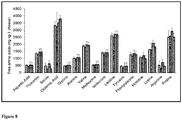
- the FAAs present at greatest concentrations in the cheeses at most ripening times were glutamic acid, valine, leucine, lysine and proline, and were in line with that expected in Swiss-type cheeses (Sheehan et al., 2008).
- Thermus was consistently detected in hot water sources. Notably, Thermus is a known thermophillic water bacterium and has been isolated previously from hot tap water (Pask-Hughes and Williams, 1975). Table 1: Details and differences between manufacture of continental-type spiked cheese trials.
- Table 4 Effect of treatment on colour properties as determined by Hunter L , a , b , dimensions. a* value Cheese Sample Area Assessed 116 d 144 d Control Top -2.22 -2.22 Side -2.20 -2.17 Base -2.01 -2.32 Centre -2.08 -2.38 Exp 1 Top -2.20 -2.21 Side -2.05 -2.28 Base -2.23 -2.21 Centre -1.91 -1.95 Exp 2 Top -2.57 -2.28 Side -2.20 -2.16 Base -2.52 -2.10 Centre -1.75 -1.34* Exp 3 Top -2.08 -2.14 Side -1.91 -2.35 Base -1.75 -2.13 Centre -1.73 -1.82
- Here we represent a values which indicate formation of redness colour. The results are those taken from 144 d old cheeses * Statistically significant difference compared to control cheese p 0.0009. Data presented in this table are means for three replicate trials
Landscapes
- Chemical & Material Sciences (AREA)
- Life Sciences & Earth Sciences (AREA)
- Health & Medical Sciences (AREA)
- Engineering & Computer Science (AREA)
- Organic Chemistry (AREA)
- Analytical Chemistry (AREA)
- Proteomics, Peptides & Aminoacids (AREA)
- Immunology (AREA)
- Zoology (AREA)
- Wood Science & Technology (AREA)
- Molecular Biology (AREA)
- Physics & Mathematics (AREA)
- Microbiology (AREA)
- Biotechnology (AREA)
- General Health & Medical Sciences (AREA)
- Biochemistry (AREA)
- Bioinformatics & Cheminformatics (AREA)
- Biophysics (AREA)
- Genetics & Genomics (AREA)
- General Engineering & Computer Science (AREA)
- Biomedical Technology (AREA)
- Urology & Nephrology (AREA)
- Hematology (AREA)
- Tropical Medicine & Parasitology (AREA)
- Cell Biology (AREA)
- Virology (AREA)
- Toxicology (AREA)
- Food Science & Technology (AREA)
- Medicinal Chemistry (AREA)
- General Physics & Mathematics (AREA)
- Pathology (AREA)
- Measuring Or Testing Involving Enzymes Or Micro-Organisms (AREA)
- Dairy Products (AREA)
Description
- The pinking defect in cheese is a worldwide problem. It impacts on a range of ripened cheeses, including Swiss, Cheddar and Italian-type cheese as well as in ripened cheeses coloured with the food colouring, annatto. Its appearance can result in the downgrading or rejection of cheese and a consequential economic loss to producers. Pink discolouration defect can manifest in a number of ways depending on the cheese-type: at the surface of the cheese block either in patches or all over the block surface; as a uniform pink border occurring below the external surfaces of the cheese block conferring a pinked ring appearance; or sporadically distributed within the cheese block. While the cause of this defect is unknown, the topic has been the subject of much debate. It has been suggested that the pink defects are caused by physicochemical factors, though a microbial basis has also been proposed. Indeed, in the latter case, it has been noted that cheeses containing specific starter cultures, and strains of lactobacilli and propionic acid bacteria (PAB) in particular, are more likely to have a pink discolouration.
- Daly et al. associate pink discoloration with certain strains of thermophilic lactobacilli and propionic acid bacteria.
- The Applicant has surprisingly discovered that the source of pink discoloration defect in cheese are bacteria that have heretofore not been associated with cheese production, Thermus thermophilus. High throughput DNA sequencing of the genome of control cheeses and cheeses having the pink coloration defect revealed the presence of T. thermophilus in defect cheeses at a significantly higher level than in control cheeses (
Fig. 3c ). In addition, following the production of three experimental continental-type cheeses spiked with T. thermophilus and unspiked control cheeses, it was apparent that the pink coloration defect occurred in spiked cheeses only. - Accordingly, in a first aspect, the invention broadly provides a method of determining the presence in a sample of a source of pink discoloration defect of cheese or a dairy product, comprising the steps of assaying the sample to detect the presence of a Thermus thermophilus bacteria in the sample, wherein the sample is an ingredient employed in cheese or dairy product manufacture or is obtained from a dairy product or cheese processing plant, and wherein detection of Thermus thermophilus bacteria in the sample indicates that the sample contains a source of pink discoloration defect of cheese or of a dairy product.
- In particular, the invention relates to a method of determining the presence of a source of pink discolouration of cheese, however the invention may be applied to detecting the source of pink discolouration of other products, for example other dairy products such as, for example, milk, milk products, yoghurt, cream, butter, spreads, milk-derived protein powders and liquids including casein, whey protein, whole milk and skim milk powders.
- In this specification, the term "pink discoloration defect" should be understood to mean the pink discoloration of dairy products or cheese, that in the case of cheese can occur at the surface of the cheese block in patches or all over the block surface, as a uniform pink border occurring below the external surfaces of the cheese block, or sporadically distributed within the cheese block.
- In this specification, the term "Thermus thermophilus" or "T. thermophilus" should be understood to mean a bacteria of the genus Thermus and the species thermophilus. These are gram positive, extremely thermophilic, aerobic microorganisms, and are generally characterised by having a highly conserved region within the polymerase I gene.
- An example of Thermus thermophilus is T. thermophilus DPC6866 and T. thermophilus HB27 (DSMZ Culture Collection, Germany)
In this specification, the term "detection of Thermus thermophilus bacteria in the sample" should typically be understood to mean detection of level of bacteria in the sample in excess of 101 cfu g-1, for example at least 102 cfu g-1 or 103 cfu g-1 as determined using the qPCR technique described below. - In the specification, the term "cheese" should be understood to mean any cheese, including hard, soft, semi-soft, or processed cheese products including processed cheese slices or cheese food products.
- In this specification, the term "dairy product" should be understood to mean milk or any product made from milk, including cheese, yoghurt, butter, dairy spreads, and milk-derived protein powders and liquids or concentrates, such as for example casein, whey, whole milk and skim milk powders.
- The sample may be obtained from a dairy or cheese processing plant, particularly a plant known to be producing cheese having the pink coloration defect. Generally, the sample is obtained from a surface of piece of machinery employed in the plant. Examples of plant or machinery employed in cheese or milk processing include milk vats, starter culture vats, pasteurisers. Typically, the sample is a swab taken from, for example, a surface of a machine The sample may also be an ingredient employed in cheese manufacture, for example, milk, starter culture, hot water, brine or any other ingredient that is used to make or process the cheese. The sample may also be an ingredient employed in dairy product manufacture, for example, milk, starter culture, water, hot water, brine, salt, sugar, or any other ingredient that is used to make or process dairy products.
- Preferably, the sample is hot water.
- In a second aspect, the invention provides a method of testing a dairy product or cheese manufacturing system for a risk of pink discoloration in the dairy product or cheese manufactured by the system, in which the dairy product or cheese manufacturing system comprises a cheese manufacturing plant and cheese manufacturing ingredients processed by the plant, a dairy product manufacturing plant and dairy product manufacturing ingredients processed by the plant, the method comprising the steps of assaying at least one sample obtained from the plant or ingredients to detect the presence of a Thermus thermophilus bacteria with the method of the invention detailed above, wherein detection of the Thermus thermophilus bacteria in at least one sample indicates a risk of pink discoloration in the dairy product or cheese manufactured by the system.
- Suitably, the plurality of samples are obtained from the plant or ingredients and are selected from milk vat, starter culture vat, pasteuriser, steriliser, starter culture, water, hot water, brine, salt, sugar, CIP liquid. Preferably, the plurality of samples includes at least one sample from the cheese manufacturing plant and at least one sample from the cheese ingredients, at least one sample from the dairy product manufacturing plant and at least one sample from the dairy product ingredients.
- In a further aspect, the invention provides a method of identifying an origin of pink coloration defect in a dairy product or cheese manufacturing system of the type comprising a cheese manufacturing plant and cheese manufacturing ingredients processed by the plant, or a dairy product manufacturing plant and dairy product manufacturing ingredients processed by the plant, the method comprising the steps of assaying samples obtained from a plurality of different sources selected from locations within the plant or ingredients to detect the presence of a Thermus thermophilus bacteria in the samples, according to the methods of the invention as detailed above, wherein detection of Thermus thermophilus bacteria in one of the samples indicates that the origin of the pink coloration defect is the source of the sample. Thus, if a sample obtained from hot water tests positive for T. thermophilus, this indicates that the hot water source is the origin of the pink discoloration defect. This will enable the plant operator to treat the hot water supply lines, storage vessels, and heating vessels, to eliminate the bacteria.
- In the further aspect, the invention provides a method of modifying a cheese or dairy product manufacturing system of the type producing cheese or a dairy product having a pink discoloration defect, the method comprising the steps of identifying an origin of the pink coloration or defect according to a method of the invention, and modifying the cheese or diary product manufacturing system to remove or treat the origin of the pink discoloration defect. Where the origin of the pink coloration defect is colonisation of a location within the manufacturing plant with Thermus thermophilus, the surface is generally treated to remove the bacteria. Various methods of treatment to remove the bacteria will be apparent to a person skilled in the art, including treatment of the location with a sterilising liquid or gas.
- Where the origin of the pink coloration defect is the presence of Thermus thermophilus in a manufacturing ingredient, the ingredient is generally replaced with an ingredient not containing Thermus thermophilus. The presence or otherwise of an ingredient to be used in cheese making may be determined by assaying the ingredient for presence of Thermus thermophilus bacteria, preferably quantitatively.
- Preferably, the assay to detect the presence of Thermus thermophilus in the sample comprises polymerase chain reaction (PCR), preferably quantitative PCR. The details of PCR and qPCR will be well known to those skilled in the art, and involve amplification of a target sequence that is specific to the target bacteria, and not present in other bacteria known to be present in the sample. One example of a target sequence that is specific to Thermus thermophilus is a region of the polymerase I gene that can be amplified with PCR using the following primers:
- Forward Primer (TpolFor): AGCCTCCTCCACGAGTTC [SEQUENCE ID NO: 1]
- Reverse Primer: (TpolRev): GTAGGCGAGGAGCATGGGGT [SEQUENCE ID NO: 2]
- Thus, in one preferred embodiment of the invention, the method employs PCR that is adapted to detect the presence of an amplicon that is unique to Thermus thermophilus, for example a target sequence that can be amplified using the primers of SEQUENCE ID NO'S 1 and 2, or a variant thereof that is specific to Thermus thermophilus.
- Thus, in another aspect, described is a PCR kit, preferably a qPCR kit, for detecting the presence of Thermus thermophilus in a sample. The kit comprises a forward primer of SEQUENCE ID NO: 1 and a reverse primer of SEQUENCE ID NO: 2. Suitably, the kit comprises a control primer pair.
- In another aspect, described is a quantitative PCR kit for specific quantitative detection of Thermus thermophilus, and comprising:
- a forward primer of SEQUENCE ID NO: 1 and a reverse primer of SEQUENCE ID NO:2; and optionally including one or more further reagents selected from buffer, dNTPs, thermostable hot-start DNA polymerase, and an appropriate dye (such as SYBR® Green).
- Other methods for detecting the presence of Thermus thermophilus in a sample will be apparent to person skilled in the art, including use of antibodies that are specific to Thermus thermophilus, (doi:10.3390/antib2030501), for example a suitable ELISA or quantitative ELISA kit, or use of mass spectrophotometry.
- It will be appreciated that other species of Thermus bacteria may be employed to detect the presence of a source of pink discolouration defect in a sample. Other Thermus species include T. antranikianii, T. aquaticus, T. brockianus, T. caldophilus, T. filiformis, T. igniterrae, T. kawarayuensis, T. nonproteolyticus, T. oshimai, T. rehai, T. scotoductus, T. thermophilus, T. yunnanensi, T. sp. Manikaranii. Methods for detecting these species of Thermus bacteria will be known by a person skilled in the art and from the literature in the field. ( http://rd.springer.com/referenceworkentry/10.1007%2F0-387-30747-8 32. The Prokaryotes 2006, pp 797-812 The Genus Thermus and Relatives Milton S. Da Costa, Fred A. Rainey, M. Fernanda Nobre)
- The invention also relates to the use of a kit for assaying a sample for the presence of a cause of pink discoloration defect, the kit comprising a diagnostic reagent for detecting the presence of Thermus thermophilus in a sample. Typically, the kit comprises means for quantitative detection of at least 102 or 103 cfu.g-1. Suitably the kit is a PCR, ideally a quantitative PCR kit. The kit comprises primer pairs adapted to quantitatively detect a target sequence in the T. Thermophilus DNA polymerase I gene that is unique to T. Thermophilus, i.e. a target sequence that can be amplified using a primer pair of SEQ ID NO's 1 and 2. Preferably, the PCR kit comprises a primer pair of SEQ ID NO: 1 and 2. As described herein, the kit comprises a probe adapted to specifically bind to a target sequence that is unique to T. thermophilus.
- The disclosure relates to a kit for use in a method of the invention, for example for use in a method of determination of the presence of a source of pink discoloration in a sample.
-
-
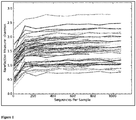
Figure 1 . Rarefaction curve of Shannon diversity indicating satisfactory coverage of all samples sequenced. -
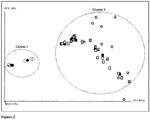
Figure 2 . Principal Co-ordinate Analysis (PCoA) plot based on Weighted Unifrac, highlighting a split of the bacterial population into two clusters. Two different cheese types manufactured using thermophillic cultures withcheese type 1 represented as dark red (control) and bright red (defect) andcheese type 2 represented in dark blue (control) and light blue (defect). -
Figure 3 . Bacterial composition of defect and control cheeses as determined by high throughput sequencing. 16S rRNA sequences assigned according to MEGAN using the Silva database at the (a) phylum, (b) family and (c) genus levels with the three cheese types affected by the pink discolouration defect and controls populations. -
Figure 4 . Counts of ripening bacteria, Lactobacillus helveticus (Lh), Streptococcus thermophilus (St), propionic acid bacteria(PAB) and non-starter lactic acid bacteria (NSLAB) throughout ripening, 1d, 11d, 46d, 60d, 88d, 116d. -
Figure 5 . Thermus thermophilus levels, as determined by qPCR, throughout manufacture. M-inoculated milk, W-whey, C-curd.
Experimental cheese 1,
experimental cheese 2,experimental cheese 3.
-
Figure 6 . The effect of different treatments on cheese pH over ripening. Control cheese,
experiment 1cheese 2 cheeseexperiment and
and
experiment 3 cheese.
-
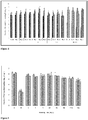
Figure 7 . The effect of different experimental set-up on cheese % pH4.6 soluble nitrogen over ripening time. Control cheese,experiment 1 cheese,experiment 2 cheeseandexperiment 3 cheese. -
Figure 8 . The effect of different experimental set-up on free amino acid levels after 116 days ripening. Control cheese, experimentcheese 1, experimentcheese 2, experimentcheese 3. - For nucleic acid extraction, 1 g of cheese from the defect or control cheese was combined with
9ml 2% tri-sodium citrate and homogenised before DNA was extracted using the PowerFood™ Microbial DNA Isolation kit (MoBio Laboratories Inc., USA) (Quigley et al., 2012a). As described previously (Quigley et al., 2012a), additional steps, whereby the homogenate was treated with 50 µg ml-1 lysozyme and 100 U mutanolysin at 37°C for 1 hour followed with protein digestion by adding 250 µg ml-1 proteinase K and incubating at 55°C for 1 hour, were added to the standard manufacturer's instructions. - DNA extracts were used as a template for PCR amplification of 16S rRNA tags (V4 region; 408 nt long) using universal 16S primers predicted to bind to 94.6% of all 16S genes i.e. the forward primer F1, 5'-AYTGGGYDTAAAGNG, SEQ ID 3 ((RDP's Pyrosequencing Pipeline: http://pyro.cme.msu.edu/pyro/help.jsp) and reverse primer V5, 5-CCGTCAATTYYTTTRAGTTT-3' SEQ ID 4 (Claesson et al., 2010). The primers incorporated the proprietary 19-mer sequences at the 5' end to allow emulsion-based clonal amplification for the 454-pyrosequencing system. Unique molecular identifier (MID) tags were incorporated between the adaptamer and the target-specific primer sequence, to allow identification of individual sequences from pooled amplicons. The PCR reaction contained 25 µl BioMix Red™ (Bioline Reagents Ltd., London, UK), 1 µl of each primer (10pmol), 5 µl DNA template and nuclease free H2O to give a final reaction volume of 50 µl. PCR amplification was performed using a G-Storm thermal cycler (Gene Technologies, UK). The amplification programme consisted of an initial denaturation step at 94°C for 2 min, followed by 40 cycles; denaturation at 94°C for 1 min, annealing at 52°C for 1 min and extension at 72°C for 1 min. A final elongation step at 72°C for 2 mins was also included. Amplicons were cleaned using the AMPure XP purification system (Beckman Coulter, Takeley, United Kingdom). The quantity of DNA extracted by the different methods was assessed using the Quant-It™ Picogreen® dsDNA reagent (Invitrogen, USA) used in accordance with the manufacturer's instructions and a Nanodrop™ 3300 Fluorospectrometer (Thermo Fisher Scientific Inc, USA). The ND3300 excites in the presence of dsDNA bound with Picogreen® at 470nm and monitors emission at 525nm.
- The 16S rRNA V4 amplicons were sequenced on a 454 Genome Sequencer FLX platform (Roche Diagnostics Ltd, Burgess Hill, West Sussex, UK) according to 454 protocols. Read processing was performed using techniques implemented in the RDP pyrosequencing pipeline Sequences not passing the FLX quality controls were discarded, the 454 specific portion of the primer were trimmed, the raw sequences were sorted according to tag sequences and reads with low quality scores (quality scores below 40) and short length (less than 150 bp for the 16S rRNA V4 region) were removed as well as reads that did not have exact matches with the primer sequence. The QIIME suite of programs was used to align, chimera check, cluster and carry out phylogenetics on sequence reads, as well as, to measure microbial α-diversities and to plot rarefaction curves to determine if sequencing was carried out to sufficient depth β-diversities were calculated on the sequence reads based on Weighted Unifrac and principal coordinate analysis (PCoA) performed. KiNGviewer was used to visualise PCoA plots. Trimmed fasta sequences were assessed using BLAST against the
SILVA version 100 database. The resulting BLAST output was parsed using MEGAN version 62.3.0. MEGAN assigns reads to NCBI taxonomies by employing the Lowest Common Ancestor algorithm which assigns each RNA-tag to the lowest common ancestor in the taxonomy from a subset of the best scoring matches in the BLAST result. Bit scores were used from within MEGAN for filtering the results prior to tree construction and summarisation (absolute cut-off: BLAST bit-score 86, relative cut-off: 10% of the top hit). The statistical significance of differences in proportions of microbial taxa was determined by the non-parametric Kruskal-Wallis test (Kruskal and Wallis, 1952) using Minitab® statistical package. - Castenholz TYE medium was chosen to selectively support the growth of strains from the genus Thermus. Castenholz TYE medium was prepared by mixing 5 parts 2X Castenholz salts with one
part 1% TYE and 4 parts distilled water. Castenholz Salts, 2X contained 0.2 g nitrilotriacetic acid, 0.12g CaSO4.2H20, 0.2g MgSO4.H2O, 0.016g NaCl, 0.21g KNO3, 1.4g NaNO3, 0.22g Na2HPO4, 2.0ml FeCl3 solution (0.03%) and 2.0ml Nitsch's Trace elements {0.5ml H2SO4, 2.2g MnSO4, 0.5g ZnSO4.7H2O, 0.5g H3BO3, 0.016g CuSO4.5H2O, 0.025g Na2MoO4.2H20, 0.046g CoCl2.6H2O distilled water 1L}, adjusted to a final volume of 1 L and final pH of 8.2. 1% TYE solution consisted of 10.0 g tryptone, 10.0 g yeast extract dissolved in 1 L distilled water. The final pH of Castenholz TYE medium should be 7.6. For preparation of the corresponding agar, 3% (w/v) bacteriological agar was added to the final solution. Thermus was isolated by enriching for 3 days at 70°C in Castenholz medium followed by isolation on Castenholz agar at 55°C for a further 3 days. - A set of primers (TpolFor; 5'-AGCCTCCTCCACGAGTTC-3' and TpolRev; 5'-GTAGGCGAGGAGCATGGGGT-3') (
SEQ ID 1 and 2) targeting a region specifically conserved within thepolymerase 1 gene of Thermus were designed to facilitate PCR and qPCR-based detection of the genus. The theoretical specificity of these primers was tested using the oligo probe search tools in the BLAST classifier database. PCR amplification of thepolymerase 1 gene using these primers was carried out under the following parameters: 95°C for 2 min initial denaturation, followed by 40 cycles of 94°Cx30 s, 63°Cx30 s, 72°Cx45 s, and a final elongation of 72°C for 2 min. The resultant products were visualised by agarose gel electrophoresis. Amplicons generated were cleaned using the Roche High Pure PCR clean-up kit and sequenced (Source Bioscience; Dublin, Ireland). The specificity of the primer pair was tested using DNA from a selection of cheese-associated Gram-positive and Gram-negative cultures i.e. Streptococcus thermophilus (Defined Starter Mix, TFP, France), Lactobacillus helveticus DPC6865, Propionibacterium freudenreichii DPC6451 and Lactococcus lactis HP as well as Escherchia coli, Listeria monocytogenes EGDe, Salmonella typhimurium LT2 and Bifidobacterium longum DPC15697. - To facilitate the quantification of Thermus by molecular means, a quantitative real-time (qPCR) protocol was designed. Genomic DNA was extracted from Thermus thermophilus HB27 (DSMZ Culture Collection, Germany) using the PowerFood Microbial DNA extraction kit (Cambio). A PCR product from within the polymerasel gene was generated using the genus-specific primers, as described above. Purified amplicons were cloned into the pCR®2.1-TOPO vector using the TOPO-TA cloning system (Invitrogen, Life Technologies, Carlsbad, California) in accordance with manufacturer's instructions. Following cloning, the complete vector was transformed into chemically competent TOP-10 E. coli cells (Invitrogen) and harvested on LB media containing 100 µg ml-1 ampicillin. The accuracy of the cloned amplicon was confirmed by restriction analysis and DNA sequencing. QPCR standards were prepared following the linearization of plasmid DNA with pst restriction enzyme and quantification with the Nanodrop ND-1000 (Thermo Fisher Scientific Inc). A standard curve was then generated via a series of dilutions from 102 to 108 copies µl-1 DNA. The LightCycler 480 SYBR Green I Master kit (Roche Diagnostics GmbH, Mannheim, Germany) was used for quantification according to the manufacturer's instructions. Each PCR reaction contained 5µl Sybr green master mix (Roche), 1 µl of both forward and reverse primer (7.5 pmol), 2 µl of DNA and was made up to a final volume of 10 µl with nuclease free dsH2O. The PCR conditions were as follows: an initial denaturation at 95°C for 10 min, followed by 45 cycles of denaturation at 95°C for 20 sec, annealing at 61°C for 15 sec and elongation 72°C for 20 sec. Assays were performed in triplicate. To facilitate quantification by qPCR, we applied the formula of Quigley et al., 2013, to convert from copies µl-1 to cfu g-1 of cheese.
- The starter cultures S. thermophilus (Defined Starter Mix, TPF, France) and L. helveticus DPC6865 were each grown overnight at 37°C in reconstituted low heat-skim milk powder, which had first been heat-treated at 90°C for 30 min. Propionibacterium freudenreichii DPC6451 was grown for 3 days at 30°C in sodium lactate broth.. T. thermophilus DPC6866, obtained from a cheese with a pink defect, was grown in Castenholz broth at 60°C with shaking for 36 hours. Cells were collected by centrifugation at 14,000 g for 20 min, washed once to remove trace media and resuspended in sterile water. Raw milk was obtained from Teagasc, Moorepark dairy herd, standardised, pasteurised at 72°C for 15 sec and pumped at 32°C into four individual cylindrical stainless steel vats with automated variable speed cutters and stirrers. This milk was employed to manufacture continental-type cheese at pilot-scale level in Moorepark Technology Ltd (Fermoy, Cork, Ireland). Details with respect to the manufacture of control and test cheeses can be found in Table 1. Enumeration of microbiological content, composition of cheeses and proteolysis were measured at various stages of ripening (Table 2). To enumerate specific bacterial components, cheese samples were aseptically removed, placed in a stomacher bag, diluted 1:10 with sterile tri-sodium citrate (2% w/v, Sigma) and homogenised in a
Seward Stomacher® 400 Lab System (Seward Ltd., West Sussex, UK) for 2 min. Further dilutions were prepared as required. Viable S. thermophilus were enumerated on M17 agar (Oxoid) with 0.5% lactose (Oxoid) at 42°C for 3 days. L. helveticus were enumerated on MRS agar (Oxoid) adjusted to pH5.4 at 37°C for 3 days under anaerobic conditions. PAB levels were enumerated on sodium lactate agar containing 40 µg ml-1 kanamycin (Sigma) at 30°C for 7 days under anaerobic conditions. Non-starter lactic acid bacteria (NSLAB) were enumerated on Lactobacillus Selective Agar (LBS; Difco) at 30°C for 5 days aerobically. T. thermophilus was monitored using qPCR methods. To facilitate this, DNA was extracted from milk, whey or 10 ml cheese homogenate using the PowerFood DNA isolation kit as described above. Grated samples from cheeses were analysed for salt (IDF, 1988), moisture (IDF, 1982) and protein (IDF, 1993) after 11 days of manufacture, pH (Standards, 1976) was measured throughout ripening. The levels of nitrogen soluble at pH 4.6 (pH 4.6SN) were measured as described by Sheehan et al. (2007). Free amino acid analysis was carried out on pH 4.6SN extract as described by Fenelon et al. (2000). - Cheese rounds were examined visually throughout ripening for the formation of pink discolouration defect. Pink colour formation was quantified with a Chroma Meter using Hunter, L, a, b colour scale. The colour was measured using fresh sliced exposed cheese surface. The colour meter was standardised with a white standard plate (Y=88.31, x=0.3160, y=0.3226). Hunter a (redness) values were recorded.
- A randomised complete block design that incorporated the four treatments and 3 blocks (replicate trials) was used for the analysis of response variables relating to the composition of cheeses, moisture, salt and protein, as well as starter bacteria, PAB, NSLAB, T. thermophilus, pH, pH4.6SN, FAA and apparent colour differences. Analysis of variance was carried out on data using the general linear model procedure of SAS (SAS Institute). The Tukey honestly significant difference test was used to determine the significance of difference between the means. The level of significance was determined at p <0.05.
- Compositional (16S rDNA) sequencing was performed on DNA extracted from control (n=9) and pink defect (n=9) samples of a commercially produced continental-type cheese. Sequencing coverage was satisfactory for all samples (SI Figure S1). Phylogenetic analysis established that the sequence reads corresponded to five different bacterial phyla (
Figure 1a ), i.e. Firmicutes, Proteobacteria, Bacteroides, Actinobacteria and Deinococcus-Thermus. Firmicutes and Deinococcus-Thermus dominated with less than 1% of assigned reads corresponding to other phyla. The proportions of Firmicutes present did not differ between control and defect samples. Reads corresponding to the phylum Deinococcus-Thermus were detected in defect-associated samples only (6%). When reads were assigned at the family level, eleven families were identified (Figure 1b ). All reads from the phylum Deinococcus-Thermus were assigned to the family Thermaceae and, again, this was the only taxon for which significant differences were observed, i.e. 6% and 0% in defect and control, respectively. When these reads were assigned at genus level, 15 genera were identified (Figure 1c /SI Figure S2). Reads corresponding to Deinococcus-Thermus and Thermaceae were assigned to the genus Thermus and, again, this was the only taxonomic group for which there were significant differences (P = 0.002). - Following the identification of reads assigned to the genus Thermus in samples of cheeses containing the pink discolouration defect, attempts were made to isolate this bacterium, which is not regarded as being a typical cheese-associated genus, from the defect cheeses. Castenholz medium was employed as it has previously been shown to support the growth of Thermus (Brock and Freeze, 1969) but, due to its minimal nutrient content, was unlikely to support the growth of other genera. An enrichment step, whereby cheese was homogenised in Castenholz medium and incubated at 70°C for 3 days, was employed to encourage the growth of Thermus, which are characterised by their highly thermophilic nature, and to prevent the growth of more moderately thermophilic cultures such as those within the starter culture population. A 3% agar was employed to allow incubation at high temperature (55°C) without rapid dehydration of the media. Use of this approach resulted in the successful isolation of Thermus from defect cheese.
- Rapid, culture-independent PCR-based methods to detect Thermus were also developed. A primer pair was designed to selectively amplify the polymerase I gene of Thermus and assays with a broad variety of controls established the primers to be specific. To take full advantage of the specificity of these primers, a corresponding qPCR-based protocol was developed. Quantitative PCR analysis (of the cheeses used for 16S rDNA analysis) confirmed that Thermus was absent from the control cheeses and that defect cheeses contained on average 1.77 x 10³ cfu g-1. Sequencing of PCR amplicons from defect cheeses and from Thermus strains isolated from these cheeses revealed that the species in question was T. thermophilus. A representative defect cheese isolate, T. thermophilus DPC6866, was employed in subsequent studies.
- To establish definitively that Thermus is responsible for the formation of pink defects in cheese, a trial was carried out whereby cheese containing T. thermophilus was produced and the degree of pink development compared to that of a control cheese. For this, a continental-type cheese was manufactured. Trials were carried out in triplicate and in each instance four cheeses were produced. These included the control cheese, which contained no T. thermophilus, and three experimental cheeses, all of which contained T. thermophilus at 106 cfu g-1. Experiment 1 (exp 1) cheese contained T. thermophilus with starter cultures at normal levels (500 g L. helveticus, 250 g S. thermophilus, 4 g PAB). Experiment 2 (exp 2) cheese contained T. thermophilus with higher levels of L. helveticus (500 g). Finally, experiment 3 (exp 3) cheese contained T. thermophilus with higher levels of L. helveticus (500 g) and lower levels of S. thermophilus (250 g) (Table 1). The reasoning behind the varying levels of L. helveticus and S. thermophilus was due to the increased and decreased levels of these bacteria (respectively), as detected by the pyrosequencing data where Thermus was present.
- Mean viable cell numbers of S. thermophilus were determined to be 107 cfu g-1 at
day 1 of ripening in control,exp 1 andexp 2 cheeses and at 106 cfu g-1 inexp 3 cheese, which correlates with levels of starter S. thermophilus inoculated into the cheese milk. There were significant increases (p=0.0063) in the numbers of S. thermophilus over time (Figure 4 ) but there were no significant differences between treatments. L. helveticus numbers were 1 x 10⁶ cfu g-1 at 1 d ripening, in control andexp 1 cheese, whileexp 2 andexp 3 cheese contained 5 x 10⁶ cfu g-1, again reflecting the different levels of L. helveticus starter added (Figure 4 ). The changes observed in levels of L. helveticus during cheese production were not significant. Counts of PAB increased significantly until 46 d ripening (p<0.0001) (Figure 4 ), however they did not differ significantly between treatments. Viable NSLAB numbers increased significantly until the end of warm room ripening (Figure 4 ) (p<0.0001). We observed a significant difference in the levels of NSLAB between control cheese andexp 2 cheese (p=0.0438) and control cheese andexp 3 cheese at 60 d ripening (p=0.0225). - Thermus thermophilus was inoculated with a view to obtaining >104 cfu g-1 in the three experimental cheeses. Using culture-independent qPCR, the levels of T. thermophilus present in the inoculated milk, lost in whey, and retained in curd, as well as throughout ripening were determined (
Figure 5 ). Thermus was present at 106 cfu ml-1 in milk after 1 h inoculation (sampled prior to rennet addition). There was some loss of T. thermophilus in whey, i.e. 102 cfu ml-1, however, considerable levels were retained within the curd (105 cfu g-1). Control cheeses, which were not spiked with T. thermophilus, were also assessed and were found not to contain Thermus (data not shown), establishing that no natural contamination, or cross-contamination, occurred during production. Slight numerical increases in the levels of T. thermophilus were noted during hot room ripening, however these were not significant. Following transfer to the cold room for continued ripening, we observed a slight decrease in the levels of T. thermophilus to 104 cfu g-1. This was consistent across all three experimental cheeses (Figure 5 ). - The gross composition of cheeses at 11 d ripening was assessed and is summarised in Table 3. All cheeses had statistically similar pH values, levels of moisture, salt and protein. The consistency of these results between cheeses and cheese trials indicate good repetition across each day of manufacture i.e. no significant differences were detected between these variables. Significant increases in pH (
Figure 6 ), pH 4.6SN (soluble nitrogen) (Figure 7 ) and total FAA (p<0.0001 for all three parameters assessed) were observed throughout ripening. The concentrations of individual FAAs (mg kg-1 of cheese) in all cheeses at 116 d of ripening are shown inFigure 8 . The FAAs present at greatest concentrations in the cheeses at most ripening times were glutamic acid, valine, leucine, lysine and proline, and were in line with that expected in Swiss-type cheeses (Sheehan et al., 2008). - To quantify the formation of "pinking" in the cheese samples we applied a Chroma Meter using Hunter L, a, b colour scale throughout ripening. Hunter a values determine the level of redness (+) to greenness (-) (Wadhwani and McMahon, 2012). Changes in the a values are summarised in Table 4. The a reading is a negative value, establishing that the overall colour is in the green spectrum. However, throughout the centre of the experimental cheeses there is a shift towards a more positive value. These differences were first noted after 116 d ripening (a = -2.08, -1.91, -1.75, -1.73, for control,
exp 1,exp 2 andexp 3 cheeses, respectively) and the intensity of this value and the formation of a pink hue developed further inexp 2 cheese at 144 d, (a=-2.38 - 1.95, -1.34 and -1.82 for control,exp 1,exp 2 andexp 3 cheeses, respectively). This further pinking ofexp 2 cheese between 116 d and 144 d was statistically significant (p=0.0108). Theexp 2 144 d values were also significantly less negative than those of the control (p=0.0009) andexp 1 cheeses (p=0.0235). - Thermus was consistently detected in hot water sources. Notably, Thermus is a known thermophillic water bacterium and has been isolated previously from hot tap water (Pask-Hughes and Williams, 1975).
Table 1: Details and differences between manufacture of continental-type spiked cheese trials. Treatment Control Cheese Experiment 1 Cheese Experiment 2 Cheese Experiment 3 Cheese Milk Volume 454 kg 454 kg 454 kg 454 kg Starter Culture (w/v) Streptococcus thermophilus 500 g 500 g 500 g 250 g Lactobacillus helveticus 250 g 250 g 500 g 500 g Propionibacterium freudenreichii 4 g 4 g 4 g 4 g Test Bacterium cfu ml-1 Thermus thermophilus 0 106 106 106 Curd Formation As Standard Cook 0.5°C min to 45° C 1 °C min to 53°C Drain pH pH 6.30 Curd Handling Pre-press and mould Salting Method Brine Cheese Size 10kg Cool Room Ripening 8.5°C x 10 days Hot Room Ripening 22°C x 7 weeks Ripening Regime 4.5°C after hot room step Table 2: Assessment carried out at different stages of manufacture and ripening. Ripening Time (days) Stages of Ripening Sample Type Microbiological Analysis Compositional Analysis 0 Day of manufacture Milk, Wey, Curd Tt pH 1 After Brining Cheese Tt, St, Lh, PAB pH, Moisture, Salt, Proteins, pH4.6SN, FAA 11 After 10 days at cool room ripening (8.5°C) Cheese Tt, St, Lh, PAB, NSLAB pH, Moisture, Salt, Proteins, pH4.6SN, FAA 46 After 5 weeks at warm room ripening (22°C) Cheese Tt, St, Lh, PAB, NSLAB pH, pH4.6SN, FAA, visual examination 60 End of warm room ripening (22°C) Cheese Tt, PAB, NSLAB pH, pH4.6SN, FAA, visual examination 88 After 1 month in cold room (4.5 °C) Cheese Tt, NSLAB pH, pH4.6SN, FAA, visual examination 116 After 2 months in cold room (4.5 °C) Cheese Tt, NSLAB pH, pH4.6SN, FAA, visual examination 144 After 3 months in cold room (4.5 °C) Cheese Tt pH, pH4.6SN, FAA, visual examination - Tt - Thermus thermophilus; St - Streptococcus thermophilus; Lh - Lactobacillus helveticus; PAB - Propionic Acid Bacteria; NSLAB - Non-starter lactic acid bacteria; pH4.6SN - pH4.6 s
Table 3: Composition of cheeses at 11 days post manufacture. pH % Moisture % Salt % Protein Control 5.21 41.10 1.36 24.931 Exp 15.24 40.80 1.25 25.271 Exp 25.21 41.50 1.22 25.723 Exp 35.23 40.94 1.28 24.804 Data presented in this table are means for three replicate trials. Table 4: Effect of treatment on colour properties as determined by Hunter L, a, b, dimensions. a* value Cheese Sample Area Assessed 116 d 144 d Control Top -2.22 -2.22 Side -2.20 -2.17 Base -2.01 -2.32 Centre -2.08 -2.38 Exp 1Top -2.20 -2.21 Side -2.05 -2.28 Base -2.23 -2.21 Centre -1.91 -1.95 Exp 2Top -2.57 -2.28 Side -2.20 -2.16 Base -2.52 -2.10 Centre -1.75 -1.34* Exp 3Top -2.08 -2.14 Side -1.91 -2.35 Base -1.75 -2.13 Centre -1.73 -1.82 Here we represent a values which indicate formation of redness colour. The results are those taken from 144 d old cheeses
* Statistically significant difference compared to control cheese p= 0.0009.
Data presented in this table are means for three replicate trials. -
- ALEGRIA, A., SZCZESNY, P., MAYO, B., BARDOWSKI, J. & KOWALCZYK, M. 2012. Biodiversity in Oscypek, a traditional Polish cheese, determined by culture-dependent and - independent approaches. Applied and Environmental Microbiology, 78, 1890-8.
- ALTSCHUL, S. F., GISH, W., MILLER, W., MYERS, E. W. & LIPMAN, D. J. 1990. Basic local alignment search tool. Journal of Molecular Biology, 215, 403-10.
- ANDERSEN, C. M., WOLD, J. P. & MORTENSEN, G. 2006. Light-induced changes in semi-hard cheese determined by fluorescence spectroscopy and chemometrics. International Dairy Journal, 16, 1483-1489.
- ANDERSSON, A. F., LINDBERG, M., JAKOBSSON, H., BACKHED, F., NYREN, P. & ENGSTRAND, L. 2008. Comparative analysis of human gut microbiota by barcoded pyrosequencing. PloS one, 3, e2836.
- BETZOLD, N. 2004. Pink discolouration of Mozzerella cheese. Thesis, University of Wisconsin, Wisconsin, USA.
- BOTTAZZI, V., CAPPA, F., SCOLARI, G. & PARISI, M. 2000. Occurring of pink discolouration in Grana cheese made with one-strain starter culture / Comparsa di colorazione rossa in formaggio Grana prodotto con starter monocoltura.. Scienza e Tecnica Lattiero Casearia, 51, 67-74.
- BROCK, T. D. & FREEZE, H. 1969. Thermus aquaticus gen. n. and sp. n., a nonsporulating extreme thermophile. Journal of Bacteriology, 98, 289-297.
- CAPORASO, J. G., KUCZYNSKI, J., STOMBAUGH, J., BITTINGER, K., BUSHMAN, F. D., COSTELLO, E. K., FIERER, N., PENA, A. G., GOODRICH, J. K., GORDON, J. I., HUTTLEY, G. A., KELLEY, S. T., KNIGHTS, D., KOENIG, J. E., LEY, R. E., LOZUPONE, C. A., MCDONALD, D., MUEGGE, B. D., PIRRUNG, M., REEDER, J., SEVINSKY, J. R., TUMBAUGH, P. J., WALTERS, W. A., WIDMANN, J., YATSUNENKO, T., ZANEVELD, J. & KNIGHT, R. 2010. QIIME allows analysis of high-throughput community sequencing data. Nature Methods, 7, 335-336.
- CARINI, S., LODI, R. & GIUSSANI, G. 1979. Pink discoloration in Fontina cheese. Latte, 4,914-920.
- CHANG, S.-F., AYRES, J. W. & SANDINE, W. E. 1985. Analysis of cheese for histamine, tyramine, tryptamine, histidine, tyrosine, and tryptophane. Journal of Dairy Science, 68, 2840-2846.
- CLAESSON, M. J., WANG, Q., O'SULLIVAN, O., GREENE-DINIZ, R., COLE, J. R., ROSS, R. P. & O'TOOLE, P. W. 2010. Comparison of two next-generation sequencing technologies for resolving highly complex microbiota composition using tandem variable 16S rRNA gene regions. Nucleic Acids Research, 38, e200.
- COLE, J. R., WANG, Q., CARDENAS, E., FISH, J., CHAI, B., FARRIS, R. J., KULAM-SYED-MOHIDEEN, A.S., MCGARRELL, D. M., MARSH, T., GARRITY, G. M. & TIEDJE, J. M. 2009. The Ribosomal Database Project: improved alignments and new tools for rRNA analysis. Nucleic Acids Research, 37, D141-5.
- DALY, D. F. M., MCSWEENEY, P. L. H. & SHEEHAN, J. 2012. Pink discolouration defect in commercial cheese: a review. Dairy Science & Technology, 92, 439-453.
- DOBSON, A., O'SULLIVAN, O., COTTER, P. D., ROSS, P. & HILL, C. 2011. High-throughput sequence-based analysis of the bacterial composition of kefir and an associated kefir grain. FEMS Microbiology Letters, 320, 56-62.
- EKMAN, J., KOSONEN, M., JOKELA, S., KOLARI, M., KORHONEN, P. & SALKINOJA-SALONEN, M. 2007. Detection and quantitation of colored deposit-forming Meiothermus spp. in paper industry processes and end products. Journal of Industrial Microbiology & Biotechnology, 34, 203-211.
- ERCOLINI, D., DE FILIPPIS, F., LA STORIA, A. & IACONO, M. 2012. "Remake" by high-throughput sequencing of the microbiota involved in the production of water buffalo mozzarella cheese. Applied and Environmental Microbiology, 78, 8142-5.
- FENELON, M. A., O'CONNOR, P. & GUINEE, T. P. 2000. The effect of fat content on the microbiology and proteolysis in Cheddar Cheese During Ripening. Journal of Dairy Science, 83,2173-2183.
- GIULIANO, G., ROSATI, C. & BRAMLEY, P. M. 2003. To dye or not to dye: biochemistry of annatto unveiled. TRENDS in Biotechnology, 21, 513-516.
- GOVINDARAJAN, S. & MORRIS, H. 1973. Pink discoloration in Cheddar cheese. Journal of Food Science, 38, 675-678.
- HONG, C., WENDORFF, W. & BRADLEY JR, R. 1995a. Factors affecting light-Induced pink discoloration of annatto-colored cheese. Journal of Food Science, 60, 94-97.
- HONG, C., WENDORFF, W. & BRADLEY, R. 1995b. Effects of packaging and lighting on pink discoloration and lipid oxidation of annatto-colored cheeses. Journal of Dairy Science, 78, 1896-1902.
- HUSON, D. H., AUCH, A. F., QI, J. & SCHUSTER, S. C. 2007. MEGAN analysis of metagenomic data. Genome Research, 17, 377-386.
- IDF 1982. Determination of total solids content (cheese and processed cheese), International Standards 4a Brussels, Belgium: International Dairy Federation.
- IDF 1988. Cheese and processed cheese: Determination of chloride content (potentiometric titration method). International Standards 4a Brussels, Belgium: International Dairy Federation.
- IDF 1993. Milk: Determination of the nitrogen content (Kjeldahl method) and calculation of crude protein content., International Standards 20b Brussels, Belgium: International Dairy Federation.
- KOLARI, M., NUUTINEN, J., RAINEY, F. & SALKINOJA-SALONEN, M. 2003. Colored moderately thermophilic bacteria in paper-machine biofilms. Journal of Industrial Microbiology and Biotechnology, 30, 225-238.
- KRUSKAL, W. H. & WALLIS, A. W. 1952. Use of ranks in one-criterion variance analysis. Journal of the American Statistical Association, Vol. 47, pp. 583-621.
- MARTLEY, F. G. & MICHEL, V. 2001. Pinkish colouration in Cheddar cheese-description and factors contributing to its formation. Journal of Dairy Research, 68, 327-332.
- MASOUD, W., TAKAMIYA, M., VOGENSEN, F. K., LILLEVANG, S., ABU AL-SOUD, W., SORENSEN, S. J. & JAKOBSEN, M. 2011. Characterization of bacterial populations in Danish raw milk cheeses made with different starter cultures by denaturating gradient gel electrophoresis and pyrosequencing. International Dairy Journal, 21, 142-148.
- MORTENSEN, G., BERTELSEN, G., MORTENSEN, B. K. & STAPELFELDT, H. 2004. Light-induced changes in packaged cheeses-a review. International Dairy Journal, 14, 85-102.
- MORTENSEN, G., SØRENSEN, J. & STAPELFELDT, H. 2002. Light-induced oxidation in semihard cheeses. Evaluation of methods used to determine levels of oxidation. Journal of Agricultural and Food Chemistry, 50, 4364-4370.
- PARAMITA, A. & BROOME, M. Pink discolouration in Romano style cheese - role of a-dicarbonyls. 5th IDF Symposium on Cheese Ripening - Cheese 2008, Bern, Switzerland.
- PARK, H., REINBOLD, G. & HAMMOND, E. 1967. Role of propionibacteria in split defect of Swiss cheese. Journal of Dairy Science, 50, 820-823.
- PASK-HUGHES, R. & WILLIAMS, R. A. 1975. Extremely thermophilic gram-negative bacteria from hot tap water. Journal of General Microbiology, 88, 321-8.
- PĚ̌̌̌̌Č̌̌̌̌KOVÁ, M. 1991. Properties of a hyperthermophilic bacterium (Thermus sp.) isolated from a Carlsbad spring. Folia Microbiologica, 36, 515-521.
- PELAEZ, C. & NORTHOLT, M. D. 1988. Factors leading to pink discolouration of the surface of Gouda cheese. Netherlands Milk and Dairy Journal, 42, 323-336.
- PRUESSE, E., QUAST, C., KNITTEL, K., FUCHS, B. M., LUDWIG, W. G., PEPLIES, J. & GLOCKNER, F. O. 2007. SILVA: a comprehensive online resource for quality checked and aligned ribosomal RNA sequence data compatible with ARB. Nucleic Acids Research, 35, 7188-7196.
- QUIGLEY, L., MCCARTHY, R., O'SULLIVAN, O., BERESFORD, T. P., FITZGERALD, G. F., ROSS, R. P., STANTON, C. & COTTER, P. D. 2013. The microbial content of raw and pasteurized cow milk as determined by molecular approaches. Journal of Dairy Science, 96, 4928-4937.
- QUIGLEY, L., O'SULLIVAN, O., BERESFORD, T., PAUL ROSS, R., FITZGERALD, G. & COTTER, P. 2012a. A comparison of methods used to extract bacterial DNA from raw milk and raw milk cheese. Journal of Applied Microbiology, 113, 96-105.
- QUIGLEY, L., O'SULLIVAN, O., BERESFORD, T. P., ROSS, R. P., FITZGERALD, G. F. & COTTER, P. D. 2011. Molecular approaches to analysing the microbial composition of raw milk and raw milk cheese. International Journal of Food Microbiology, 150, 81-94.
- QUIGLEY, L., O'SULLIVAN, O., BERESFORD, T. P., ROSS, R. P., FITZGERALD, G. F. & COTTER, P. D. 2012b. high-throughput sequencing for detection of subpopulations of bacteria not previously associated with artisanal cheeses. Applied and Environmental Microbiology, 78, 5717-5723.
- ROESCH, L. F., FULTHORPE, R. R., RIVA, A., CASELLA, G., HADWIN, A. K. M., KENT, A. D., DAROUB, S. H., CAMARGO, F. A. O., FARMERIE, W. G. & TRIPLETT, E. W. 2007. Pyrosequencing enumerates and contrasts soil microbial diversity. The ISME Journal, 1, 283-290.
- ROH, S. W., KIM, K. H., NAM, Y. D., CHANG, H. W., PARK, E. J. & BAE, J. W. 2010. Investigation of archaeal and bacterial diversity in fermented seafood using barcoded pyrosequencing. The ISME Journal, 4, 1-16.
- SAKAMOTO, N., TANAKA, S., SONOMOTO, K. & NAKAYAMA, J. 2011. 16S rRNA pyrosequencing-based investigation of the bacterial community in Nukadoko, a pickling bed of fermented rice bran. International Journal of Food Microbiology, 144, 352-359.
- SHANNON, E. & OLSON, N. 1969. Rapid screening test to predict the tendency of lactic starter cultures to produce pink discoloration in Italian cheese. Journal of Dairy Science, 52, 1678-1680.
- SHANNON, E., OLSON, N. & VON ELBE, J. 1968. Pink Discoloration in Italian Varieties of Cheese. Journal of Dairy Science, 51, 613-614.
- SHARP, R. J. & WILLIAMS, R. A. 1988. Properties of Thermus ruber strains isolated from Icelandic hot springs and DNA: DNA homology of Thermus ruber and Thermus aquaticus. Applied and Environmental Microbiology, 54, 2049-2053.
- SHEEHAN, J. J., FENELON, M. A., WILKINSON, M. G. & MCSWEENEY, P. L. H. 2007. Effect of cook temperature on starter and non-starter lactic acid bacteria viability, cheese composition and ripening indices of a semi-hard cheese manufactured using thermophilic cultures. International Dairy Journal, 17, 704-716.
- SHEEHAN, J. J., WILKINSON, M. G. & MCSWEENEY, P. L. 2008. Influence of processing and ripening parameters on starter, non-starter and propionic acid bacteria and on the ripening characteristics of semi-hard cheeses. International Dairy Journal, 18, 905-917.
- SHUMAKER, E. & WENDORFF, W. 2007. Factors affecting pink discoloration in annatto-colored pasteurized process cheese. Journal of Food Science, 63, 828-831.
- STANDARDS, I. B. 1976. British Standard Methods for Chemical Analysis of Cheese: Determination of pH value., London: British Standards Institute.
- TIAN, B. & HUA, Y. 2010. Carotenoid biosynthesis in extremophilic Deinococcus-Thermus bacteria. Trends in microbiology, 18, 512-520.
- URICH, T., LANZEN, A., QI, J., HUSON, D. H., SCHLEPER, C. & SCHUSTER, S. C. 2008. Simultaneous assessment of soil microbial community structure and function through analysis of the meta-transcriptome. PloS One, 3, e2527.
- WADHWANI, R. & MCMAHON, D. 2012. Color of low-fat cheese influences flavor perception and consumer liking. Journal of Dairy Science, 95, 2336-2346.
-
- <110> Agriculture and Food Development Authority (TEAGASC)
- <120> Detection of a source of pink discoloration defect in a sample
- <130> P11409PC00
- <150>
GB1410948.2
<151> 2014-06-19 - <160> 4
- <170> PatentIn version 3.5
- <210> 1
<211> 18
<212> DNA
<213> Artificial Sequence - <220>
<223> Forward primer for Thermus thermophilus polymerase I gene target sequence - <400> 1
agcctcctcc acgagttc 18 - <210> 2
<211> 20
<212> DNA
<213> Artificial Sequence - <220>
<223> Reverse primer for Thermus thermophilus polymerase I gene target sequence - <400> 2
gtaggcgagg agcatggggt 20 - <210> 3
<211> 15
<212> DNA
<213> Artificial Sequence - <220>
<223> Forward primer for 16s rRNA - <220>
<221> misc_feature
<222> (14)..(14)
<223> n is a, c, g, or t - <400> 3
aytgggydta aagng 15 - <210> 4
<211> 20
<212> DNA
<213> Artificial Sequence - <220>
<223> Reverse primer for 16s rRNA - <400> 4
ccgtcaatty ytttragttt 20
Claims (14)
- A method of determining the presence in a sample of a source of pink discoloration defect of cheese or a dairy product, comprising the steps of assaying the sample to detect the presence of a Thermus thermophilus bacteria in the sample, wherein the sample is an ingredient employed in cheese or dairy product manufacture or is obtained from a dairy product or cheese processing plant, and wherein detection of Thermus thermophilus bacteria in the sample indicates that the sample contains a source of pink discoloration defect of cheese or of a dairy product.
- A method as claimed in Claim 1 in which the sample is obtained from a dairy product processing plant or in which the sample is obtained from a cheese processing plant.
- A method as claimed in Claim 1 or 2 in which the sample is a swab obtained from a cheese processing plant or an ingredient employed in cheese manufacture.
- A method as claimed in Claim 2 in which the sample is hot water employed in cheese manufacture.
- A method as claimed in any preceding Claim in which the sample is assayed using quantitative PCR.
- A method as claimed in Claim 5 in which the quantitative PCR assay employs a primer pair of SEQUENCE ID NO: 1 and 2.
- A method of testing a dairy product manufacturing system for a risk of pink discoloration in the dairy product manufactured by the system, in which the dairy product manufacturing system comprises a dairy product manufacturing plant and dairy product manufacturing ingredients processed by the plant, the method comprising the steps of assaying at least one sample obtained from the plant or ingredients to detect the presence of a Thermus thermophilus bacteria according to a method of any of Claims 1 to 6, wherein detection of Thermus thermophilus bacteria in the at least one sample indicates a risk of pink discoloration in the dairy product manufactured by the system.
- A method as claimed in Claim 7 in which a plurality of samples are obtained from the plant or ingredients and are selected from milk vat, starter culture vat, pasteuriser, starter culture, hot water, brine, CIP liquid,
- A method of identifying an origin of pink coloration defect in a dairy product manufacturing system of the type comprising a dairy product manufacturing plant and dairy product manufacturing ingredients processed by the plant, the method comprising the steps of assaying samples obtained from a plurality of different sources selected from locations within the plant or ingredients to detect the presence of a Thermus thermophilus bacteria in the samples according to a method of any of Claims 1 to 6, wherein detection of Thermus thermophilus bacteria in one of the samples indicates that the origin of the pink coloration defect is the source of the sample.
- A method as claimed in any one of Claims 7 to 9 in which the dairy product is cheese.
- A method of modifying a cheese manufacturing system of the type producing cheese having a pink coloration defect, the method comprising the steps of identifying an origin of the pink coloration defect according to a method of Claim 10, and modifying the cheese manufacturing system to remove or treat the origin of the pink coloration defect.
- A method as claimed in Claim 11 in which the origin of the pink coloration defect is colonisation of a location within the cheese manufacturing plant with Thermus thermophilus, wherein the surface is treated to remove the colonisation, or in which the origin of the pink coloration defect is the presence of Thermus thermophilus within a cheese manufacturing ingredient , wherein the ingredient is replaced with an ingredient not containing Thermus thermophilus
- A method as claimed in any preceding Claim in which the assay to detect the presence of Thermus thermophilus in the sample comprises quantitative PCR, in which the PCR is optionally adapted to detect the presence of an amplicon obtained using a primer pair of SEQ ID NO: 1 and 2.
- Use of a kit for detecting the presence of a source of pink discoloration defect in a sample, the kit comprising a diagnostic reagent for detecting the presence in the sample of Thermus thermophilus, in which the kit comprises a primer pair of SEQUENCE ID NO: 1 or a variant thereof that is specific to Thermus thermophilus and SEQUENCE ID NO:2 or a variant thereof that is specific to Thermus thermophilus.
Applications Claiming Priority (2)
| Application Number | Priority Date | Filing Date | Title |
|---|---|---|---|
| GBGB1410948.2A GB201410948D0 (en) | 2014-06-19 | 2014-06-19 | Detection of a source of pink discoloration defect in a sample |
| PCT/EP2015/063831 WO2015193482A1 (en) | 2014-06-19 | 2015-06-19 | Detection of a source of pink discoloration defect in a sample |
Publications (2)
| Publication Number | Publication Date |
|---|---|
| EP3158079A1 EP3158079A1 (en) | 2017-04-26 |
| EP3158079B1 true EP3158079B1 (en) | 2019-02-27 |
Family
ID=51409849
Family Applications (1)
| Application Number | Title | Priority Date | Filing Date |
|---|---|---|---|
| EP15736414.2A Not-in-force EP3158079B1 (en) | 2014-06-19 | 2015-06-19 | Detection of a source of pink discoloration defect in a sample |
Country Status (4)
| Country | Link |
|---|---|
| US (1) | US20170152547A1 (en) |
| EP (1) | EP3158079B1 (en) |
| GB (1) | GB201410948D0 (en) |
| WO (1) | WO2015193482A1 (en) |
-
2014
- 2014-06-19 GB GBGB1410948.2A patent/GB201410948D0/en not_active Ceased
-
2015
- 2015-06-19 US US15/319,422 patent/US20170152547A1/en not_active Abandoned
- 2015-06-19 WO PCT/EP2015/063831 patent/WO2015193482A1/en not_active Ceased
- 2015-06-19 EP EP15736414.2A patent/EP3158079B1/en not_active Not-in-force
Non-Patent Citations (1)
| Title |
|---|
| None * |
Also Published As
| Publication number | Publication date |
|---|---|
| WO2015193482A1 (en) | 2015-12-23 |
| EP3158079A1 (en) | 2017-04-26 |
| GB201410948D0 (en) | 2014-08-06 |
| US20170152547A1 (en) | 2017-06-01 |
Similar Documents
| Publication | Publication Date | Title |
|---|---|---|
| Quigley et al. | Thermus and the pink discoloration defect in cheese | |
| Aldrete-Tapia et al. | High-throughput sequencing of microbial communities in Poro cheese, an artisanal Mexican cheese | |
| Alegría et al. | Diversity and evolution of the microbial populations during manufacture and ripening of Casín, a traditional Spanish, starter-free cheese made from cow's milk | |
| Trmčić et al. | A standard bacterial isolate set for research on contemporary dairy spoilage | |
| Alegría et al. | Identification, typing, and functional characterization of Leuconostoc spp. strains from traditional, starter-free cheeses | |
| Porcellato et al. | Bacterial dynamics and functional analysis of microbial metagenomes during ripening of Dutch-type cheese | |
| O'Sullivan et al. | Nucleic acid-based approaches to investigate microbial-related cheese quality defects | |
| Maifreni et al. | Identification of the Enterobacteriaceae in Montasio cheese and assessment of their amino acid decarboxylase activity | |
| Morales et al. | Isolation and partial characterization of halotolerant lactic acid bacteria from two Mexican cheeses | |
| Fusieger et al. | Technological properties of Lactococcus lactis subsp. lactis bv. diacetylactis obtained from dairy and non-dairy niches | |
| Gonçalves et al. | Bacterial communities in Serpa cheese by culture dependent techniques, 16S rRNA gene sequencing and high‐throughput sequencing analysis | |
| Dolci et al. | rRNA-based monitoring of the microbiota involved in Fontina PDO cheese production in relation to different stages of cow lactation | |
| Meng et al. | Identification and proteolytic activity quantification of Pseudomonas spp. isolated from different raw milks at storage temperatures | |
| Avnİ Kırmacı et al. | Identification and characterisation of lactic acid bacteria isolated from traditional Urfa cheese | |
| Flórez et al. | Microbial characterisation of the traditional Spanish blue-veined Cabrales cheese: identification of dominant lactic acid bacteria | |
| Berthoud et al. | Development of new methods for the quantitative detection and typing of Lactobacillus parabuchneri in dairy products | |
| Martín-Platero et al. | Polyphasic approach to bacterial dynamics during the ripening of Spanish farmhouse cheese, using culture-dependent and-independent methods | |
| Karabey et al. | Determination of the microbial flora in traditional İzmir Tulum cheeses by Denaturing Gradient Gel Electrophoresis | |
| Silva et al. | Biodiversity and succession of lactic microbiota involved in Brazilian buffalo mozzarella cheese production | |
| Sofu et al. | Bacterial diversity dynamics of traditional Turkish Ezine Cheese as evaluated by PCR‐DGGE and SSCP analysis | |
| El-Ghaish et al. | Bacteriocin production and safety evaluation of non-starter Enterococcus faecium IM1 and Enterococcus hirae IM1 strains isolated from homemade Egyptian dairy products | |
| Liu et al. | The bacterial community structure of yond bap, a traditional fermented goat milk product, from distinct Chinese regions | |
| Gemelas et al. | Selective Lactococcus enumeration in raw milk | |
| Attar et al. | Antibacterial effects of Lactococcus lactis isolated from Lighvan cheese regarding the recognition of Nisin, Lacticin and Lactococcin structural genes | |
| Ryser et al. | Cadaverine, putrescine, and histamine formation of Morganella morganii in raclette-type cheese |
Legal Events
| Date | Code | Title | Description |
|---|---|---|---|
| STAA | Information on the status of an ep patent application or granted ep patent |
Free format text: STATUS: THE INTERNATIONAL PUBLICATION HAS BEEN MADE |
|
| PUAI | Public reference made under article 153(3) epc to a published international application that has entered the european phase |
Free format text: ORIGINAL CODE: 0009012 |
|
| STAA | Information on the status of an ep patent application or granted ep patent |
Free format text: STATUS: REQUEST FOR EXAMINATION WAS MADE |
|
| 17P | Request for examination filed |
Effective date: 20170119 |
|
| AK | Designated contracting states |
Kind code of ref document: A1 Designated state(s): AL AT BE BG CH CY CZ DE DK EE ES FI FR GB GR HR HU IE IS IT LI LT LU LV MC MK MT NL NO PL PT RO RS SE SI SK SM TR |
|
| AX | Request for extension of the european patent |
Extension state: BA ME |
|
| DAV | Request for validation of the european patent (deleted) | ||
| DAX | Request for extension of the european patent (deleted) | ||
| STAA | Information on the status of an ep patent application or granted ep patent |
Free format text: STATUS: EXAMINATION IS IN PROGRESS |
|
| 17Q | First examination report despatched |
Effective date: 20170927 |
|
| GRAP | Despatch of communication of intention to grant a patent |
Free format text: ORIGINAL CODE: EPIDOSNIGR1 |
|
| STAA | Information on the status of an ep patent application or granted ep patent |
Free format text: STATUS: GRANT OF PATENT IS INTENDED |
|
| RIC1 | Information provided on ipc code assigned before grant |
Ipc: C12Q 1/689 20180101ALI20180706BHEP Ipc: G01N 33/569 20060101ALI20180706BHEP Ipc: C12Q 1/04 20060101AFI20180706BHEP |
|
| INTG | Intention to grant announced |
Effective date: 20180807 |
|
| GRAS | Grant fee paid |
Free format text: ORIGINAL CODE: EPIDOSNIGR3 |
|
| GRAJ | Information related to disapproval of communication of intention to grant by the applicant or resumption of examination proceedings by the epo deleted |
Free format text: ORIGINAL CODE: EPIDOSDIGR1 |
|
| GRAL | Information related to payment of fee for publishing/printing deleted |
Free format text: ORIGINAL CODE: EPIDOSDIGR3 |
|
| STAA | Information on the status of an ep patent application or granted ep patent |
Free format text: STATUS: EXAMINATION IS IN PROGRESS |
|
| GRAJ | Information related to disapproval of communication of intention to grant by the applicant or resumption of examination proceedings by the epo deleted |
Free format text: ORIGINAL CODE: EPIDOSDIGR1 |
|
| GRAL | Information related to payment of fee for publishing/printing deleted |
Free format text: ORIGINAL CODE: EPIDOSDIGR3 |
|
| GRAR | Information related to intention to grant a patent recorded |
Free format text: ORIGINAL CODE: EPIDOSNIGR71 |
|
| STAA | Information on the status of an ep patent application or granted ep patent |
Free format text: STATUS: GRANT OF PATENT IS INTENDED |
|
| INTC | Intention to grant announced (deleted) | ||
| RIN1 | Information on inventor provided before grant (corrected) |
Inventor name: SHEEHAN, DIARMUID JJ. Inventor name: QUIGLEY, LISA Inventor name: COTTER, PAUL |
|
| GRAA | (expected) grant |
Free format text: ORIGINAL CODE: 0009210 |
|
| STAA | Information on the status of an ep patent application or granted ep patent |
Free format text: STATUS: THE PATENT HAS BEEN GRANTED |
|
| RIC1 | Information provided on ipc code assigned before grant |
Ipc: G01N 33/569 20060101ALI20180706BHEP Ipc: C12Q 1/04 20060101AFI20180706BHEP Ipc: C12Q 1/689 20180101ALI20180706BHEP |
|
| AK | Designated contracting states |
Kind code of ref document: B1 Designated state(s): AL AT BE BG CH CY CZ DE DK EE ES FI FR GB GR HR HU IE IS IT LI LT LU LV MC MK MT NL NO PL PT RO RS SE SI SK SM TR |
|
| INTG | Intention to grant announced |
Effective date: 20190118 |
|
| REG | Reference to a national code |
Ref country code: GB Ref legal event code: FG4D |
|
| REG | Reference to a national code |
Ref country code: CH Ref legal event code: EP |
|
| REG | Reference to a national code |
Ref country code: AT Ref legal event code: REF Ref document number: 1101391 Country of ref document: AT Kind code of ref document: T Effective date: 20190315 |
|
| REG | Reference to a national code |
Ref country code: IE Ref legal event code: FG4D |
|
| REG | Reference to a national code |
Ref country code: DE Ref legal event code: R096 Ref document number: 602015025386 Country of ref document: DE |
|
| REG | Reference to a national code |
Ref country code: NL Ref legal event code: FP |
|
| REG | Reference to a national code |
Ref country code: LT Ref legal event code: MG4D |
|
| PG25 | Lapsed in a contracting state [announced via postgrant information from national office to epo] |
Ref country code: PT Free format text: LAPSE BECAUSE OF FAILURE TO SUBMIT A TRANSLATION OF THE DESCRIPTION OR TO PAY THE FEE WITHIN THE PRESCRIBED TIME-LIMIT Effective date: 20190627 Ref country code: NO Free format text: LAPSE BECAUSE OF FAILURE TO SUBMIT A TRANSLATION OF THE DESCRIPTION OR TO PAY THE FEE WITHIN THE PRESCRIBED TIME-LIMIT Effective date: 20190527 Ref country code: LT Free format text: LAPSE BECAUSE OF FAILURE TO SUBMIT A TRANSLATION OF THE DESCRIPTION OR TO PAY THE FEE WITHIN THE PRESCRIBED TIME-LIMIT Effective date: 20190227 Ref country code: FI Free format text: LAPSE BECAUSE OF FAILURE TO SUBMIT A TRANSLATION OF THE DESCRIPTION OR TO PAY THE FEE WITHIN THE PRESCRIBED TIME-LIMIT Effective date: 20190227 Ref country code: SE Free format text: LAPSE BECAUSE OF FAILURE TO SUBMIT A TRANSLATION OF THE DESCRIPTION OR TO PAY THE FEE WITHIN THE PRESCRIBED TIME-LIMIT Effective date: 20190227 |
|
| PG25 | Lapsed in a contracting state [announced via postgrant information from national office to epo] |
Ref country code: BG Free format text: LAPSE BECAUSE OF FAILURE TO SUBMIT A TRANSLATION OF THE DESCRIPTION OR TO PAY THE FEE WITHIN THE PRESCRIBED TIME-LIMIT Effective date: 20190527 Ref country code: HR Free format text: LAPSE BECAUSE OF FAILURE TO SUBMIT A TRANSLATION OF THE DESCRIPTION OR TO PAY THE FEE WITHIN THE PRESCRIBED TIME-LIMIT Effective date: 20190227 Ref country code: IS Free format text: LAPSE BECAUSE OF FAILURE TO SUBMIT A TRANSLATION OF THE DESCRIPTION OR TO PAY THE FEE WITHIN THE PRESCRIBED TIME-LIMIT Effective date: 20190627 Ref country code: LV Free format text: LAPSE BECAUSE OF FAILURE TO SUBMIT A TRANSLATION OF THE DESCRIPTION OR TO PAY THE FEE WITHIN THE PRESCRIBED TIME-LIMIT Effective date: 20190227 Ref country code: GR Free format text: LAPSE BECAUSE OF FAILURE TO SUBMIT A TRANSLATION OF THE DESCRIPTION OR TO PAY THE FEE WITHIN THE PRESCRIBED TIME-LIMIT Effective date: 20190528 Ref country code: RS Free format text: LAPSE BECAUSE OF FAILURE TO SUBMIT A TRANSLATION OF THE DESCRIPTION OR TO PAY THE FEE WITHIN THE PRESCRIBED TIME-LIMIT Effective date: 20190227 |
|
| REG | Reference to a national code |
Ref country code: AT Ref legal event code: MK05 Ref document number: 1101391 Country of ref document: AT Kind code of ref document: T Effective date: 20190227 |
|
| PG25 | Lapsed in a contracting state [announced via postgrant information from national office to epo] |
Ref country code: RO Free format text: LAPSE BECAUSE OF FAILURE TO SUBMIT A TRANSLATION OF THE DESCRIPTION OR TO PAY THE FEE WITHIN THE PRESCRIBED TIME-LIMIT Effective date: 20190227 Ref country code: IT Free format text: LAPSE BECAUSE OF FAILURE TO SUBMIT A TRANSLATION OF THE DESCRIPTION OR TO PAY THE FEE WITHIN THE PRESCRIBED TIME-LIMIT Effective date: 20190227 Ref country code: SK Free format text: LAPSE BECAUSE OF FAILURE TO SUBMIT A TRANSLATION OF THE DESCRIPTION OR TO PAY THE FEE WITHIN THE PRESCRIBED TIME-LIMIT Effective date: 20190227 Ref country code: ES Free format text: LAPSE BECAUSE OF FAILURE TO SUBMIT A TRANSLATION OF THE DESCRIPTION OR TO PAY THE FEE WITHIN THE PRESCRIBED TIME-LIMIT Effective date: 20190227 Ref country code: CZ Free format text: LAPSE BECAUSE OF FAILURE TO SUBMIT A TRANSLATION OF THE DESCRIPTION OR TO PAY THE FEE WITHIN THE PRESCRIBED TIME-LIMIT Effective date: 20190227 Ref country code: EE Free format text: LAPSE BECAUSE OF FAILURE TO SUBMIT A TRANSLATION OF THE DESCRIPTION OR TO PAY THE FEE WITHIN THE PRESCRIBED TIME-LIMIT Effective date: 20190227 Ref country code: AL Free format text: LAPSE BECAUSE OF FAILURE TO SUBMIT A TRANSLATION OF THE DESCRIPTION OR TO PAY THE FEE WITHIN THE PRESCRIBED TIME-LIMIT Effective date: 20190227 Ref country code: DK Free format text: LAPSE BECAUSE OF FAILURE TO SUBMIT A TRANSLATION OF THE DESCRIPTION OR TO PAY THE FEE WITHIN THE PRESCRIBED TIME-LIMIT Effective date: 20190227 |
|
| REG | Reference to a national code |
Ref country code: DE Ref legal event code: R097 Ref document number: 602015025386 Country of ref document: DE |
|
| PG25 | Lapsed in a contracting state [announced via postgrant information from national office to epo] |
Ref country code: SM Free format text: LAPSE BECAUSE OF FAILURE TO SUBMIT A TRANSLATION OF THE DESCRIPTION OR TO PAY THE FEE WITHIN THE PRESCRIBED TIME-LIMIT Effective date: 20190227 Ref country code: PL Free format text: LAPSE BECAUSE OF FAILURE TO SUBMIT A TRANSLATION OF THE DESCRIPTION OR TO PAY THE FEE WITHIN THE PRESCRIBED TIME-LIMIT Effective date: 20190227 |
|
| PG25 | Lapsed in a contracting state [announced via postgrant information from national office to epo] |
Ref country code: AT Free format text: LAPSE BECAUSE OF FAILURE TO SUBMIT A TRANSLATION OF THE DESCRIPTION OR TO PAY THE FEE WITHIN THE PRESCRIBED TIME-LIMIT Effective date: 20190227 |
|
| REG | Reference to a national code |
Ref country code: DE Ref legal event code: R119 Ref document number: 602015025386 Country of ref document: DE |
|
| PLBE | No opposition filed within time limit |
Free format text: ORIGINAL CODE: 0009261 |
|
| STAA | Information on the status of an ep patent application or granted ep patent |
Free format text: STATUS: NO OPPOSITION FILED WITHIN TIME LIMIT |
|
| PG25 | Lapsed in a contracting state [announced via postgrant information from national office to epo] |
Ref country code: MC Free format text: LAPSE BECAUSE OF FAILURE TO SUBMIT A TRANSLATION OF THE DESCRIPTION OR TO PAY THE FEE WITHIN THE PRESCRIBED TIME-LIMIT Effective date: 20190227 |
|
| REG | Reference to a national code |
Ref country code: CH Ref legal event code: PL |
|
| 26N | No opposition filed |
Effective date: 20191128 |
|
| PG25 | Lapsed in a contracting state [announced via postgrant information from national office to epo] |
Ref country code: SI Free format text: LAPSE BECAUSE OF FAILURE TO SUBMIT A TRANSLATION OF THE DESCRIPTION OR TO PAY THE FEE WITHIN THE PRESCRIBED TIME-LIMIT Effective date: 20190227 |
|
| REG | Reference to a national code |
Ref country code: BE Ref legal event code: MM Effective date: 20190630 |
|
| PG25 | Lapsed in a contracting state [announced via postgrant information from national office to epo] |
Ref country code: TR Free format text: LAPSE BECAUSE OF FAILURE TO SUBMIT A TRANSLATION OF THE DESCRIPTION OR TO PAY THE FEE WITHIN THE PRESCRIBED TIME-LIMIT Effective date: 20190227 |
|
| PG25 | Lapsed in a contracting state [announced via postgrant information from national office to epo] |
Ref country code: DE Free format text: LAPSE BECAUSE OF NON-PAYMENT OF DUE FEES Effective date: 20200101 |
|
| PG25 | Lapsed in a contracting state [announced via postgrant information from national office to epo] |
Ref country code: BE Free format text: LAPSE BECAUSE OF NON-PAYMENT OF DUE FEES Effective date: 20190630 Ref country code: LI Free format text: LAPSE BECAUSE OF NON-PAYMENT OF DUE FEES Effective date: 20190630 Ref country code: CH Free format text: LAPSE BECAUSE OF NON-PAYMENT OF DUE FEES Effective date: 20190630 Ref country code: LU Free format text: LAPSE BECAUSE OF NON-PAYMENT OF DUE FEES Effective date: 20190619 |
|
| PGFP | Annual fee paid to national office [announced via postgrant information from national office to epo] |
Ref country code: FR Payment date: 20200626 Year of fee payment: 6 |
|
| PGFP | Annual fee paid to national office [announced via postgrant information from national office to epo] |
Ref country code: NL Payment date: 20200626 Year of fee payment: 6 |
|
| PG25 | Lapsed in a contracting state [announced via postgrant information from national office to epo] |
Ref country code: CY Free format text: LAPSE BECAUSE OF FAILURE TO SUBMIT A TRANSLATION OF THE DESCRIPTION OR TO PAY THE FEE WITHIN THE PRESCRIBED TIME-LIMIT Effective date: 20190227 |
|
| PG25 | Lapsed in a contracting state [announced via postgrant information from national office to epo] |
Ref country code: MT Free format text: LAPSE BECAUSE OF FAILURE TO SUBMIT A TRANSLATION OF THE DESCRIPTION OR TO PAY THE FEE WITHIN THE PRESCRIBED TIME-LIMIT Effective date: 20190227 Ref country code: HU Free format text: LAPSE BECAUSE OF FAILURE TO SUBMIT A TRANSLATION OF THE DESCRIPTION OR TO PAY THE FEE WITHIN THE PRESCRIBED TIME-LIMIT; INVALID AB INITIO Effective date: 20150619 |
|
| PGFP | Annual fee paid to national office [announced via postgrant information from national office to epo] |
Ref country code: GB Payment date: 20210625 Year of fee payment: 7 Ref country code: IE Payment date: 20210625 Year of fee payment: 7 |
|
| REG | Reference to a national code |
Ref country code: NL Ref legal event code: MM Effective date: 20210701 |
|
| PG25 | Lapsed in a contracting state [announced via postgrant information from national office to epo] |
Ref country code: NL Free format text: LAPSE BECAUSE OF NON-PAYMENT OF DUE FEES Effective date: 20210701 Ref country code: FR Free format text: LAPSE BECAUSE OF NON-PAYMENT OF DUE FEES Effective date: 20210630 |
|
| PG25 | Lapsed in a contracting state [announced via postgrant information from national office to epo] |
Ref country code: MK Free format text: LAPSE BECAUSE OF FAILURE TO SUBMIT A TRANSLATION OF THE DESCRIPTION OR TO PAY THE FEE WITHIN THE PRESCRIBED TIME-LIMIT Effective date: 20190227 |
|
| GBPC | Gb: european patent ceased through non-payment of renewal fee |
Effective date: 20220619 |
|
| PG25 | Lapsed in a contracting state [announced via postgrant information from national office to epo] |
Ref country code: IE Free format text: LAPSE BECAUSE OF NON-PAYMENT OF DUE FEES Effective date: 20220619 |
|
| PG25 | Lapsed in a contracting state [announced via postgrant information from national office to epo] |
Ref country code: GB Free format text: LAPSE BECAUSE OF NON-PAYMENT OF DUE FEES Effective date: 20220619 |