EP3157169A1 - Audio system, audio device, mobile terminal device and audio signal control method - Google Patents
Audio system, audio device, mobile terminal device and audio signal control method Download PDFInfo
- Publication number
- EP3157169A1 EP3157169A1 EP15806556.5A EP15806556A EP3157169A1 EP 3157169 A1 EP3157169 A1 EP 3157169A1 EP 15806556 A EP15806556 A EP 15806556A EP 3157169 A1 EP3157169 A1 EP 3157169A1
- Authority
- EP
- European Patent Office
- Prior art keywords
- audio signal
- audio
- volume
- sound quality
- level
- Prior art date
- Legal status (The legal status is an assumption and is not a legal conclusion. Google has not performed a legal analysis and makes no representation as to the accuracy of the status listed.)
- Granted
Links
Images


Classifications
-
- G—PHYSICS
- G10—MUSICAL INSTRUMENTS; ACOUSTICS
- G10L—SPEECH ANALYSIS TECHNIQUES OR SPEECH SYNTHESIS; SPEECH RECOGNITION; SPEECH OR VOICE PROCESSING TECHNIQUES; SPEECH OR AUDIO CODING OR DECODING
- G10L21/00—Speech or voice signal processing techniques to produce another audible or non-audible signal, e.g. visual or tactile, in order to modify its quality or its intelligibility
- G10L21/02—Speech enhancement, e.g. noise reduction or echo cancellation
- G10L21/0316—Speech enhancement, e.g. noise reduction or echo cancellation by changing the amplitude
- G10L21/0324—Details of processing therefor
- G10L21/034—Automatic adjustment
-
- H—ELECTRICITY
- H03—ELECTRONIC CIRCUITRY
- H03G—CONTROL OF AMPLIFICATION
- H03G1/00—Details of arrangements for controlling amplification
- H03G1/02—Remote control of amplification, tone or bandwidth
-
- G—PHYSICS
- G10—MUSICAL INSTRUMENTS; ACOUSTICS
- G10L—SPEECH ANALYSIS TECHNIQUES OR SPEECH SYNTHESIS; SPEECH RECOGNITION; SPEECH OR VOICE PROCESSING TECHNIQUES; SPEECH OR AUDIO CODING OR DECODING
- G10L21/00—Speech or voice signal processing techniques to produce another audible or non-audible signal, e.g. visual or tactile, in order to modify its quality or its intelligibility
- G10L21/02—Speech enhancement, e.g. noise reduction or echo cancellation
- G10L21/0316—Speech enhancement, e.g. noise reduction or echo cancellation by changing the amplitude
- G10L21/0364—Speech enhancement, e.g. noise reduction or echo cancellation by changing the amplitude for improving intelligibility
-
- H—ELECTRICITY
- H03—ELECTRONIC CIRCUITRY
- H03G—CONTROL OF AMPLIFICATION
- H03G3/00—Gain control in amplifiers or frequency changers
- H03G3/002—Control of digital or coded signals
-
- H—ELECTRICITY
- H03—ELECTRONIC CIRCUITRY
- H03G—CONTROL OF AMPLIFICATION
- H03G3/00—Gain control in amplifiers or frequency changers
- H03G3/20—Automatic control
- H03G3/30—Automatic control in amplifiers having semiconductor devices
- H03G3/3005—Automatic control in amplifiers having semiconductor devices in amplifiers suitable for low-frequencies, e.g. audio amplifiers
-
- H—ELECTRICITY
- H03—ELECTRONIC CIRCUITRY
- H03G—CONTROL OF AMPLIFICATION
- H03G3/00—Gain control in amplifiers or frequency changers
- H03G3/20—Automatic control
- H03G3/30—Automatic control in amplifiers having semiconductor devices
- H03G3/32—Automatic control in amplifiers having semiconductor devices the control being dependent upon ambient noise level or sound level
-
- H—ELECTRICITY
- H03—ELECTRONIC CIRCUITRY
- H03G—CONTROL OF AMPLIFICATION
- H03G5/00—Tone control or bandwidth control in amplifiers
- H03G5/16—Automatic control
-
- H—ELECTRICITY
- H04—ELECTRIC COMMUNICATION TECHNIQUE
- H04M—TELEPHONIC COMMUNICATION
- H04M1/00—Substation equipment, e.g. for use by subscribers
-
- H—ELECTRICITY
- H04—ELECTRIC COMMUNICATION TECHNIQUE
- H04M—TELEPHONIC COMMUNICATION
- H04M9/00—Arrangements for interconnection not involving centralised switching
- H04M9/08—Two-way loud-speaking telephone systems with means for conditioning the signal, e.g. for suppressing echoes for one or both directions of traffic
-
- H—ELECTRICITY
- H04—ELECTRIC COMMUNICATION TECHNIQUE
- H04Q—SELECTING
- H04Q9/00—Arrangements in telecontrol or telemetry systems for selectively calling a substation from a main station, in which substation desired apparatus is selected for applying a control signal thereto or for obtaining measured values therefrom
-
- H—ELECTRICITY
- H04—ELECTRIC COMMUNICATION TECHNIQUE
- H04R—LOUDSPEAKERS, MICROPHONES, GRAMOPHONE PICK-UPS OR LIKE ACOUSTIC ELECTROMECHANICAL TRANSDUCERS; ELECTRIC HEARING AIDS; PUBLIC ADDRESS SYSTEMS
- H04R3/00—Circuits for transducers
Definitions
- the present invention relates to: an audio system including an audio device configured to amplify and output an audio signal and a mobile terminal device configured to set volume or sound quality of the audio signal output by the audio device via a wireless network; an audio device; a mobile terminal device; and an audio signal control method.
- an audio device configured to: receive an audio signal from a reproduction device configured to reproduce an audio signal via a wireless network through use of a wireless network system; and amplify and output the received audio signal (see, for example, PTL 1).
- an audio system including such an audio device as described above and a mobile terminal device, e.g., a cellular phone.
- the mobile terminal device and the audio device are connected to each other through a wireless network, and the audio device receives an audio signal transmitted from the mobile terminal device, amplifies the audio signal, and outputs the audio signal from a speaker.
- adjustment of volume or selection of a song of the audio signal output by the audio device can be arbitrarily changed remotely through operation of the mobile terminal device.
- Such an audio system configured to transmit and receive the audio signal through the wireless network system does not require a reproduction device and a speaker device to be connected to each other through a signal cable unlike the related art. Therefore, there is no need to fix an installation place of the audio device, and a user is allowed to change the installation place of the audio device freely depending on an installation position and a listening position that are desired by the user, and to arbitrarily set the volume and the selection of the song of the audio signal output from the audio device by operating the mobile terminal device at a place distant from the audio device. Thus, the use can enjoy the audio signal output from the audio device.
- surrounding environmental sound differs depending on a place where the audio device is installed.
- the surrounding environmental sound e.g., operation sound of a ventilating fan and a refrigerator in the kitchen
- the audio signal may become harder to listen to depending on the surrounding environmental sound even when the user listens to the audio signal at the same volume as when the audio device was installed in the living room.
- the user needs to adjust the volume of the audio signal to be output from the audio device every time the place where the audio device is installed is changed, and volume adjustment work is felt extremely burdensome.
- the audio system including those devices is used to listen to the audio signal in a room
- the user may carelessly increase the volume of the audio signal output from the audio device from time to time, and the audio signal at high volume may leak outdoors from the room as noise, which may trouble neighbors.
- the installation place of the audio device can be easily changed, while there is a fear that the user may forget to confirm an outdoor environment of the room where the audio device is installed and the sound of the audio signal may be more liable to leak outdoors.
- the present invention has an object to provide an audio system capable of setting an audio signal being listened to automatically to appropriate volume or sound quality.
- the audio system includes an audio device configured to amplify and output an audio signal and a mobile terminal device configured to set the volume or sound quality of the audio signal output by the audio device via a wireless network.
- an audio system including: one or more audio devices each configured to amplify and output an audio signal; and a mobile terminal device configured to set volume or sound quality of the audio signal output by each of the one or more audio devices via a wireless network, in which : the mobile terminal device includes : a microphone unit configured to collect a surrounding sound wave; and a transmission unit configured to set volume or sound quality of the audio signal to be amplified by each of the one or more audio devices based on the surrounding sound wave collected by the microphone unit, and to transmit information on the set volume or sound quality of the audio signal to each of the one or more audio devices; the one or more audio devices each includes: an amplification unit configured to amplify the audio signal; a control unit configured to adjust the volume or sound quality of the audio signal to be used by the amplification unit; and a reception unit configured to receive information on a setting of the volume or sound quality of the audio signal from the mobile terminal device; and the control unit is configured to control the amplification unit to adjust
- an audio device which is configured to amplify and output an audio signal, including: an amplification unit configured to amplify the audio signal; and a control unit configured to set volume or sound quality of the audio signal to be used by the amplification unit, in which the control unit is configured to control the amplification unit to adjust the volume or sound quality of the audio signal based on information on a setting of the volume or sound quality of the audio signal received by the reception unit via a wireless network from a mobile terminal device configured to set the volume or sound quality of the audio signal based on a surrounding sound wave.
- a mobile terminal device which is configured to set volume or sound quality of an audio signal output by each of one or more audio devices via a wireless network
- the mobile terminal device including: a microphone unit configured to collect a surrounding sound wave; and a transmission unit configured to set the volume or sound quality of the audio signal to be amplified by each of the one or more audio devices based on the surrounding sound wave collected by the microphone unit, and to transmit information on the set volume or sound quality of the audio signal to each of the one or more audio devices.
- an audio signal control method of controlling volume or sound quality of an audio signal output from each of one or more audio devices including the steps of: detecting a level or a frequency characteristic of a surrounding sound wave collected by a microphone unit of a mobile terminal device; setting the volume or sound quality of the audio signal to be amplified by each of the one or more audio devices based on the level or frequency characteristic of the detected surrounding sound wave; and controlling information on a setting of the set volume or sound quality of the audio signal to be transmitted to each of the one or more audio devices.
- the audio system capable of setting the audio signal being listened to automatically to the appropriate volume or sound quality.
- the audio system includes the audio device configured to amplify and output the audio signal and the mobile terminal device configured to set the volume or sound quality of the audio signal output by the audio device via the wireless network.
- FIG. 1 is a block diagram for illustrating a configuration of an audio system according to one embodiment of the present invention.
- the audio system includes an audio device and a mobile terminal device.
- the audio device is a general-purpose audio device configured to amplify and output an audio signal input from outside through an input terminal or in a wireless manner.
- the mobile terminal device is a general-purpose mobile terminal device formed of a smartphone, a portable personal computer, or the like.
- the mobile terminal device 1 includes a communication unit 11, a control unit 12, an audio signal recording unit 13, an operation unit 14, a display unit 15, and an application recording unit 16.
- the communication unit 11 isconfiguredto conduct mutual information communications to/from another device, e.g., an audio device 2, by wireless communication means, e.g., wireless fidelity (Wi-Fi).
- Wi-Fi wireless fidelity
- the wireless communication means based on Wi-Fi is used as mutual information communication means between devices.
- wired communication means may be used, or any one of various wireless communication means including Bluetooth (registered trademark) and infrared communications may be used.
- the control unit 12 is configured to control the entire mobile terminal device 1 including the communication unit 11, the audio signal recording unit 13, the operation unit 14, the display unit 15, and the application recording unit 16.
- the application recording unit 16 is configured to record application software input by communication means using the communication unit 11 or via a signal input unit (not shown).
- the display unit 15 is configured to display, when the application software recorded in the application recording unit 16 is activated, each kind of key and information corresponding to the activated software.
- the operation unit 14 is formed of a touch panel, and is configured to detect that the key has been selected when each kind of key is touched, and to output each kind of signal to the control unit 12.
- the audio signal recording unit 13 is configured to record the audio signal input by the communication means using the communication unit 11 or via the signal input unit (not shown).
- a microphone unit 17 is configured to collect a surrounding sound wave around the mobile terminal device 1, to convert collected sound into a sound signal, and to output the converted sound signal to the control unit 12.
- the control unit 12 transmits the sound signal output from the microphone unit 17 to the another mobile terminal device via the communication unit 11, and outputs the sound signal, which has been input from the another mobile terminal device via the communication unit 11, from a speaker (not shown).
- the audio device 2 includes a communication unit 21, a control unit 22, an input unit 23, a reproduction unit 24, an amplification unit 25, a speaker 26, and an operation unit 27.
- the communication unit 21 is configured to conduct information communications to/from another device, e.g., the mobile terminal device 1, by the wireless communication means based on Wi-Fi or the like. For example, when receiving an audio signal from the communication unit 11 of the mobile terminal device 1 by the wireless communication means, the communication unit 21 outputs the received audio signal to the reproduction unit 24 via the control unit 22.
- the input unit 23 is connected to an external reproduction device, and is configuredto input an audio signal output from the reproduction device, and to output the input audio signal to the reproduction unit 24 via the control unit 22.
- the operation unit 27 is configured to receive various operation instructions for reproduction start, reproduction stop, volume adjustment, and sound quality adjustment, which relate to the audio signal, from a user, and to output a content of the received operation instruction to the control unit 22.
- the control unit 22 is configured to control the entire audio device 2 including the communication unit 21, the input unit 23, the reproduction unit 24, the amplification unit 25, and the operation unit 27.
- the reproduction unit 24 is configured to reproduce the audio signal input from the communication unit 21 or the input unit 23 under control of the control unit 22.
- the amplification unit 25 is configured to amplify the audio signal reproduced by the reproduction unit 24 with volume and sound quality that have been specified by the control unit 22, and to output the amplified audio signal to the speaker 26.
- the speaker 26 is configured to output the audio signal output from the amplification unit 25 as a sound wave.
- application software relating to the operation of the audio device 2, which is recorded in the application recording unit 16 is activated in a state in which the application software relating to the operation of the audio device 2 is recorded in the application recording unit 16 in advance.
- the control unit 12 controls the display unit 15 so that the display unit 15 displays the operation key relating to the operation of the audio device 2, and controls the operation unit 14 to receive an instruction relating to the operation of the audio device 2 through the operation unit 14.
- control unit 12 transmits the input various instruction signals to the control unit 22 of the audio device 2 via the communication unit 11 and the communication unit 21.
- the control unit 22 of the audio device 2 controls the reproduction unit 24 to conduct the selection, the reproduction start, and the reproduction stop, which relate to a song of the audio signal input from the communication unit 21 or the input unit 23, based on the various instructions transmitted from the control unit 12, and controls the amplification unit 25 to adjust an amplification value and sound quality of the audio signal output to the speaker 26.
- the audio system it is possible to remotely operate the selection, the reproduction start, the reproduction stop, and the adjustment of the volume and sound quality, which relate to the song of the audio signal output from the audio device 2, by operating the operation unit 14 of the mobile terminal device 1.
- FIG. 2 is a diagram for illustrating a case where, in the audio system according to this embodiment, the audio device 2 is installed in the indoor place, and the user who exists in the same indoor place as the audio device 2 listens to the audio signal output from the audio device 2 by operating the operation unit 14 while holding the mobile terminal device 1.
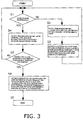
- FIG. 3 is a flowchart for illustrating operations of the mobile terminal device 1 and the audio device 2 conducted in the audio system according to this embodiment when an automatic volume-and-sound quality setting with the environmental sound being taken into consideration is conducted for the audio signal output from the audio device 2 in a state in which the audio device 2 is installed in the indoor place as illustrated in FIG. 2 with the user existing in the same indoor place as the audio device 2.
- Step S1 when the "application software relating to the automatic volume-and-sound quality setting with the environmental sound being taken into consideration" recorded in the application recording unit 16 is activated by the mobile terminal device 1, the control unit 12 accesses the control unit 22 of the audio device 2 through wireless communications based on the communication unit 11 and the communication unit 21, and determines whether or not the audio device 2 is reproducing an audio signal (Step S1).
- the control unit 12 When determining in Step S1 that the audio device 2 is not reproducing an audio signal, the control unit 12 first detects an average environmental sound level exhibited around the mobile terminal device 1 during a fixed time period and a level distribution of each frequency of environmental sound based on the sound signal collected by the microphone unit 17 as a "listening level of the environmental sound” and a "level distribution of each frequency of the environmental sound", respectively (Step S2).
- the "level distribution of each frequency of the environmental sound” represents, for example, a level distribution of noise, which is emitted from a transportation facility or the like and concentrated on an extremely low frequency, or a level distribution of environmental sound, e.g., wind noise of a ventilating fan, which is distributed unevenly over a specific frequency or a high frequency range.
- control unit 12 controls the control unit 22 to set a volume level and the level distribution of each frequency (frequency characteristic) for the amplification unit 25, which have been adjusted by the control unit 22 of the audio device 2, to a "volume and sound quality with the environmental sound level and the level distribution of each frequency being taken into consideration” based on the "listening level of the environmental sound” and the "level distribution of each frequency of the environmental sound” that have been detected (Step S3).
- a setting change is automatically controlled so that an amplification level of the audio signal to be amplified by the amplification unit 25 has an amplification value larger than the detected "listening level of the environmental sound" by 30 dB.
- the control unit 12 controls the control unit 22 so that the amplification level of the audio signal to be amplified by the amplification unit 25 becomes 40 dB.
- the control unit 12 controls the control unit 22 so that the amplification level of the audio signal to be amplified by the amplification unit 25 becomes 60 dB.
- control unit 12 controls the control unit 22 so that the output level of a frequency band high in level among frequency bands of the environmental sound increases in the audio signal to be amplified by the amplification unit 25.
- Step S3 After the "volume and sound quality with the environmental sound level and the level distribution of each frequency being taken into consideration" are set in Step S3, the procedure returns to Step S1.
- Step S3 it is possible to prevent the audio signal from becoming harder to listen to due to surrounding environmental sound by setting the "volume and sound quality with the environmental sound level and the level distribution of each frequency being taken into consideration" in Step S3, for example, by increasing the amplification value of the audio signal in accordance with the listening level of the environmental sound when the listening level of the environmental sound is high while decreasing the amplification value of the audio signal in accordance with the listening level of the environmental sound when the listening level of the environmental sound is low.
- the output level of the frequency band high in level among the frequency bands of the environmental sound is increased in the audio signal to be amplified by the amplification unit 25, to thereby be able to correct a situation in which, for example, a bass sound portion of the audio signal is temporarily masked by noise exhibiting a low frequency range due to vibrations or noise when a truck or a train passes by around the house, bass sound or the like of the audio signal becomes harder to hear, and the user feels that the bass sound is lacking.
- the user can comfortably keep listening to music without feeling a large change in volume.
- Step S1 When determining in Step S1 that the audio device 2 is reproducing an audio signal, the control unit 12 first detects an average sound level exhibited around the mobile terminal device 1 during the fixed time period and a level distribution of each frequency of sound based on the sound signal collected by the microphone unit 17 as a "listening level of the audio signal including the environmental sound” and a “level distribution of each frequency including the environmental sound", respectively (Step S4). Subsequently, the control unit 12 determines whether or not the "listening level of the environmental sound” and the "level distribution of each frequency of the environmental sound" have been detected in Step S2 (Step S5), and when determining that the detection has not been finished, returns to Step S1.
- Step S5 When determining in Step S5 that the "listening level of the environmental sound” and the "level distribution of each frequency of the environmental sound” have been detected in Step S2, the control unit 12 controls the control unit 22 to set the volume level and the level distribution of each frequency (frequency characteristic) for the amplification unit 25, which have been adjusted by the control unit 22 of the audio device 2, to a "volume and sound quality with the listening level and the level distribution of each frequency of each of the environmental sound and the audio including the environmental sound being taken into consideration” based on the "listening level of the environmental sound", the "level distribution of each frequency of the environmental sound", the “listening level of the audio signal including the environmental sound”, and the "level distribution of each frequency including the environmental sound", which have been detected (Step S6).
- the setting change is automatically controlled so that the amplification level of the audio signal to be amplified by the amplification unit 25 has an amplification value larger than the detected "listening level of the environmental sound" by 30 dB when a difference between the "listening level of the audio signal including the environmental sound” and the “listening level of the environmental sound” is larger than 25 dB while the setting change is automatically controlled so that the amplification level of the audio signal to be amplified by the amplification unit 25 has an amplification value larger than the detected "listening level of the environmental sound” by 35 dB when the difference between the "listening level of the audio signal including the environmental sound” and the “listening level of the environmental sound” is smaller than 25 dB.
- the control unit 12 controls the control unit 22 so that the amplification level of the audio signal to be amplified by the amplification unit 25 becomes 40 dB being the amplification value larger than the "listening level of the environmental sound" by 30 dB.
- the control unit 12 controls the control unit 22 so that the amplification level of the audio signal to be amplified by the amplification unit 25 becomes 45 dB being the amplification value larger than the "listening level of the environmental sound" by 35 dB.
- the control unit 12 controls the control unit 22 so that the output level of a frequency band exhibiting a large difference in level of a specific frequency band increases in the audio signal to be amplified by the amplification unit 25.
- Step S6 it is possible to prevent the audio signal from becoming hard to listen to or sound quality from changing due to an obstruction or a distance between the audio device 2 and the user holding the mobile terminal device 1 by setting the "volume and sound quality with the listening level and the level distribution of each frequency of each of the environmental sound and the audio including the environmental sound being taken into consideration" in Step S6.
- the above-mentioned prevention is enabled by further increasing the amplification value of the audio signal to be increased in accordance with the listening level of the environmental sound and increasing the output level of a specific frequency band exhibiting a large difference in level within the "level distribution of each frequency of the environmental sound” and the "level distribution of each frequency including the environmental sound” in a case where the difference between the "listening level of the audio signal including the environmental sound” and the “listening level of the environmental sound” is smaller than a predefined value, in short, in a case where the audio signal to reach the user is weaker than expected, even when the volume of the audio signal to reach the user is small or there is a change in sound quality because the distance between the audio device 2 and the user holding the mobile terminal device 1 is long or an obstruction exists between the audio device 2 and the user holding the mobile terminal device 1 even after the sound quality and the amplification value of the audio signal to be used by the amplification unit 25 have been changed in accordance with the listening level of the environmental sound and a frequency band-specific level distribution
- the audio system when the "application software relating to the automatic volume-and-sound quality setting with the environmental sound being taken into consideration" recorded in the application recording unit 16 is activated by the user holding the mobile terminal device 1, the "listening level of the environmental sound", the “level distribution of each frequency of the environmental sound”, the “listening level of the audio signal including the environmental sound”, and the “level distribution of each frequency including the environmental sound” around the user are detected by the microphone unit 17 of the mobile terminal device 1 held by the user, to thereby be able to optimize the volume and sound quality of the audio signal to be used by the amplification unit 25. Therefore, the user does not need to manually adjust the volume and sound quality, and hence it is possible to automatically set the volume and sound quality of the audio signal output by the audio device 2 to appropriate volume and sound quality even when the installation position of the audio device 2 is changed.
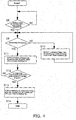
- FIG. 4 is a flowchart for illustrating operations of the mobile terminal device 1 and the audio device 2 conducted in the audio system according to this embodiment when an automatic volume setting with an outdoor leak level being taken into consideration is conducted for the audio signal output from the audio device 2.
- Step S8 when the "application software relating to the automatic volume setting with the outdoor leak level being taken into consideration" recorded in the application recording unit 16 is activated by the mobile terminal device 1 (Step S8), the control unit 12 accesses the control unit 22 of the audio device 2 through the wireless communications based on the communication unit 11 and the communication unit 21, and determines whether or not the audio device 2 is reproducing an audio signal (Step S9).
- Step S9 When determining in Step S9 that the audio device 2 is not reproducing an audio signal, the control unit 12 first detects the average environmental sound level exhibited around the mobile terminal device 1 during the fixed time period based on the sound signal collected by the microphone unit 17 as an "outdoor level exhibited when the audio is not being reproduced" (Step S10), and returns to Step S9.
- Step S9 When determining in Step S9 that the audio device 2 is reproducing an audio signal, the control unit 12 first detects the average environmental sound level exhibited around the mobile terminal device 1 during the fixed time period based on the sound signal collected by the microphone unit 17 as an "outdoor level exhibited when the audio is being reproduced" (Step S11). Subsequently, the control unit 12 determines whether or not the "outdoor level exhibited when the audio is not being reproduced" has been detected in Step S10 (Step S12), and when determining that the detection has not been finished, returns to Step S9.
- Step S12 When determining in Step S12 that the "outdoor level exhibited when the audio is not being reproduced” has been detected in Step S10, the control unit 12 controls the control unit 22 to set the volume level for the amplification unit 25, which has been adjusted by the control unit 22 of the audio device 2, to a "volume level with the outdoor leak level being taken into consideration” based on the "outdoor level exhibited when the audio is not being reproduced” and the "outdoor level exhibited when the audio is being reproduced", which have been detected (Step S13).
- the set amplification value for the amplification unit 25 is maintained when a difference between the "outdoor level exhibited when the audio is not being reproduced” and the "outdoor level exhibited when the audio is being reproduced” is smaller than 10 dB, while the setting change is automatically controlled for the amplification level of the audio signal to be amplified by the amplification unit 25 so that the difference between the "outdoor level exhibited when the audio is not being reproduced” and the "outdoor level exhibited when the audio is being reproduced” becomes smaller than 10 dB when the difference is larger than 10 dB.
- the control unit 12 maintains the set amplification value for the amplification unit 25.
- the control unit 12 automatically controls the setting change for the amplification level of the audio signal to be amplified by the amplification unit 25 so that the difference becomes smaller than 10 dB.
- the volume of the audio signal is adjusted by setting the "volume level with the outdoor leak level being taken into consideration" in Step S13 so that, for example, when the audio signal output indoors leaks out outdoors at high volume to cause the difference between the outdoor environmental sound level exhibited with no audio signal being reproduced and the outdoor environmental sound level exhibited when the audio signal is being reproduced indoors to become larger than 10 dB, the difference between the outdoor environmental sound level exhibited with no audio signal being reproduced and the outdoor environmental sound level exhibited when the audio signal is being reproduced indoors becomes smaller than 10 dB, to thereby be able to prevent the audio signal at high volume from leaking outdoors from the room as noise to trouble the neighbors.
- the audio system when the "application software relating to the automatic volume setting with the outdoor leak level being taken into consideration" recorded in the application recording unit 16 is activated by the user holding the mobile terminal device 1, the "outdoor level exhibited when the audio is not being reproduced” and the “outdoor level exhibited when the audio is being reproduced” are detected, and the amplification value of the audio signal to be used by the amplification unit 25 is automatically adjusted to a volume level that does not trouble the neighborhood outdoors, to thereby allow the volume to become as appropriate as to prevent noise from troubling the neighborhood.
- the environmental sound and an output of the audio signal are measured by a general-purpose mobile terminal device formed of a smartphone, a portable personal computer, or the like. Therefore, there is no need to prepare a microphone for measurement, which is necessary for the measurement of acoustics, and the environmental sound and the output of the audio signal can be measured easily by the user carrying around the mobile terminal device 1. Hence, the configuration of this embodiment can be easily achieved at low cost.
- the audio system is configured to conduct the two automatic volume settings including the automatic volume-and-sound quality setting with the environmental sound being taken into consideration, which is described with reference to FIG. 3 , and the automatic volume setting with the outdoor leak level being taken into consideration, which is described with reference to FIG. 4 .
- the audio system may be configured to conduct only any one of the automatic settings, or may be configured to conduct other automatic settings corresponding to various surrounding environments.
- the audio system may be configured to measure a change in listening level of the audio signal output from the audio device 2 for each fixed time period by the microphone unit 17 of the mobile terminal device 1 in a case where the user' s position or orientation is changed when the user is enjoying the audio signal output from the audio device 2 with the mobile terminal device 1 being held while, for example, dancing in front of the audio device 2, and to change the amplification value of the audio signal to be used by the amplification unit 25 in accordance with the measured change in listening level.
- This allows the user to comfortably enjoy the audio signal without having trouble to listen to the audio signal output from the audio device 2 even when the user's position or orientation is changed.
- the audio system is configuredto detect the "listening level of the environmental sound", the "level distribution of each frequency of the environmental sound”, the “listening level of the audio signal including the environmental sound”, and the “level distribution of each frequency including the environmental sound” in the automatic volume-and-sound quality setting with the environmental sound being taken into consideration, which is described with reference to FIG. 3 , and to automatically set the volume and sound quality of the audio signal output from the audio device 2.
- the audio system may be configured to detect only the "listening level of the environmental sound” and the “listening level of the audio signal including the environmental sound”, and to automatically set only the volume of the audio signal output from the audio device 2.
- the audio system may also be configured to detect only the "level distribution of each frequency of the environmental sound” or the "level distribution of each frequency including the environmental sound", and to automatically set only the sound quality of the audio signal output from the audio device 2.
- the audio system is configured to conduct the two automatic volume settings including the automatic volume-and-sound quality setting with the environmental sound being taken into consideration, which is described with reference to FIG. 3 , and the automatic volume setting with the outdoor leak level being taken into consideration, which is described with reference to FIG. 4 .
- the audio system is not limited to such a configuration for the automatic settings, and may be applied to a case where, for example, a plurality of audio devices are installed on the periphery of the room, and the user listens to a multi-channel surround sound audio signal output from speakers of the plurality of audio devices.
- the audio system may also be configured to: calculate, by the microphone unit 17 of the mobile terminal device 1, the volume level of the audio signal output from the speaker of each audio device and a time period required until the audio signal reaches; detect the volume level of the audio signal output from each audio device and a delay time of the audio signal output from each audio device based on the calculated values through use of an algorithm, for example, a least-squares method; and automatically set a correction value.
- an algorithm for example, a least-squares method
- the audio system according to this embodiment is not limited to one audio device 2 as illustrated in FIG. 2 .
- the audio system may be configured so that two audio devices are installed on the periphery of the room, and configured to detect all surrounding environments by the microphone unit 17 of the mobile terminal device 1, and to automatically set the sound quality or volume of a stereo audio signal output by the speakers of the two audio devices.
- the audio system may also be configured so that two or three or more audio devices are installed on the periphery of the room, and configured to automatically set the sound quality or the volume of a monaural audio signal output from each of the speakers of the two or three or more audio devices or an individual audio signal output from each of the speakers of the two or three or more audio devices.
- the audio system is configured to detect the "listening level of the environmental sound", the "level distribution of each frequency of the environmental sound”, the “listening level of the audio signal including the environmental sound”, and the “level distribution of each frequency including the environmental sound” when the automatic volume-and-sound quality setting with the environmental sound being taken into consideration is conducted, and to detect the "outdoor level exhibited when the audio is not being reproduced” and the "outdoor level exhibited when the audio is being reproduced” when the automatic volume setting with the outdoor leak level being taken into consideration is conducted.
- the audio system is not limited to those detections, and may be configured to detect any kind of volume or frequency band, for example, detect all listening levels or a level distribution of only a specific frequency range band.
- the audio system is configured to record the "application software relating to the automatic volume-and-sound quality setting with the environmental sound being taken into consideration” and the "application software relating to the automatic volume setting with the outdoor leak level being taken into consideration” in the application recording unit 16 of the mobile terminal device 1.
- the audio system may be configured to record those pieces of application software on the audio device 2, and to cause the audio device 2 to adjust the volume and sound quality based on a result of measuring the acoustics by the mobile terminal device 1.
- the audio system may also be configured to control the volume and sound quality by reading software recorded in advance in another device that can conduct information communications to/from the mobile terminal device 1 or the audio device 2.
- the audio system is configured so that the application software is activated by the user when the automatic volume-and-sound quality setting with the environmental sound being taken into consideration and the automatic volume setting with the outdoor leak level being taken into consideration are conducted.
- the user does not need to activate the application software.
- the audio system may be configured to discriminate whether the user holding the mobile terminal device 1 exists indoors or outdoors by a global positioning system (GPS) or the like included in the mobile terminal device 1, and to automatically activate the application software based on a result of the discrimination to control the volume and sound quality of the audio signal.
- GPS global positioning system
- the audio system is configured so that the mobile terminal device 1 and the audio device 2 conduct the information communications to/from each other by the wireless communication means based on Wi-Fi.
- the audio system may employ various wireless or wired information communication means including Bluetooth (registered trademark), infrared communications, and a high-definition multimedia interface (HDMI (registered trademark)).
- the present invention can be used for: an audio system including an audio device configured to amplify and output an audio signal and a mobile terminal device configured to set volume or sound quality of the audio signal output by the audio device via a wireless network; an audio device; a mobile terminal device; and an audio signal control method, in a useful manner.
- 1 mobile terminal device 11 communication unit, 12 control unit, 13 audio signal recording unit, 14 operation unit, 15 display unit, 16 application recording unit, 17 microphone unit, 2 audio device, 21 communication unit, 22 control unit, 23 input unit, 24 reproduction unit, 25 amplification unit, 26 speaker, 27 operation unit, 30 user, 50 indoor place, 51 outdoor place
Landscapes
- Engineering & Computer Science (AREA)
- Signal Processing (AREA)
- Multimedia (AREA)
- Physics & Mathematics (AREA)
- Acoustics & Sound (AREA)
- Quality & Reliability (AREA)
- Health & Medical Sciences (AREA)
- Audiology, Speech & Language Pathology (AREA)
- Human Computer Interaction (AREA)
- Computational Linguistics (AREA)
- Computer Networks & Wireless Communication (AREA)
- Circuit For Audible Band Transducer (AREA)
- Telephone Function (AREA)
- Tone Control, Compression And Expansion, Limiting Amplitude (AREA)
- Control Of Amplification And Gain Control (AREA)
Abstract
Description
- The present invention relates to: an audio system including an audio device configured to amplify and output an audio signal and a mobile terminal device configured to set volume or sound quality of the audio signal output by the audio device via a wireless network; an audio device; a mobile terminal device; and an audio signal control method.
- Currently, there is known an audio device configured to: receive an audio signal from a reproduction device configured to reproduce an audio signal via a wireless network through use of a wireless network system; and amplify and output the received audio signal (see, for example, PTL 1). In recent years, there is also known an audio system including such an audio device as described above and a mobile terminal device, e.g., a cellular phone. In the above-mentioned audio system, the mobile terminal device and the audio device are connected to each other through a wireless network, and the audio device receives an audio signal transmitted from the mobile terminal device, amplifies the audio signal, and outputs the audio signal from a speaker. With such a related-art audio system, adjustment of volume or selection of a song of the audio signal output by the audio device can be arbitrarily changed remotely through operation of the mobile terminal device.
- Such an audio system configured to transmit and receive the audio signal through the wireless network system does not require a reproduction device and a speaker device to be connected to each other through a signal cable unlike the related art. Therefore, there is no need to fix an installation place of the audio device, and a user is allowed to change the installation place of the audio device freely depending on an installation position and a listening position that are desired by the user, and to arbitrarily set the volume and the selection of the song of the audio signal output from the audio device by operating the mobile terminal device at a place distant from the audio device. Thus, the use can enjoy the audio signal output from the audio device.
- [PTL 1]
JP 10-234099 A - In an audio system configured to transmit and receive an audio signal through use of a wireless network as described above, when a user attempts to listen to the audio signal after changing an installation place of an audio device, surrounding environmental sound differs depending on a place where the audio device is installed. For example, in an exemplary case where the user desires to listen to the audio signal in a kitchen after changing the installation place of the audio device, which has been installed in a living room located in an indoor place, to the kitchen, when the user listens to the audio signal at the same volume as when the audio device was installed in the living room, the surrounding environmental sound, e.g., operation sound of a ventilating fan and a refrigerator in the kitchen, increases to a higher level than in the living room. Therefore, the audio signal may become harder to listen to depending on the surrounding environmental sound even when the user listens to the audio signal at the same volume as when the audio device was installed in the living room. In such a case, the user needs to adjust the volume of the audio signal to be output from the audio device every time the place where the audio device is installed is changed, and volume adjustment work is felt extremely burdensome.
- In another case where the audio system including those devices is used to listen to the audio signal in a room, when the user desires to listen to music clearly, the user may carelessly increase the volume of the audio signal output from the audio device from time to time, and the audio signal at high volume may leak outdoors from the room as noise, which may trouble neighbors. Thus, with the related-art audio system, the installation place of the audio device can be easily changed, while there is a fear that the user may forget to confirm an outdoor environment of the room where the audio device is installed and the sound of the audio signal may be more liable to leak outdoors.
- The present invention has an object to provide an audio system capable of setting an audio signal being listened to automatically to appropriate volume or sound quality. The audio system includes an audio device configured to amplify and output an audio signal and a mobile terminal device configured to set the volume or sound quality of the audio signal output by the audio device via a wireless network.
- According to one embodiment of the present invention, there is provided an audio system, including: one or more audio devices each configured to amplify and output an audio signal; and a mobile terminal device configured to set volume or sound quality of the audio signal output by each of the one or more audio devices via a wireless network, in which : the mobile terminal device includes : a microphone unit configured to collect a surrounding sound wave; and a transmission unit configured to set volume or sound quality of the audio signal to be amplified by each of the one or more audio devices based on the surrounding sound wave collected by the microphone unit, and to transmit information on the set volume or sound quality of the audio signal to each of the one or more audio devices; the one or more audio devices each includes: an amplification unit configured to amplify the audio signal; a control unit configured to adjust the volume or sound quality of the audio signal to be used by the amplification unit; and a reception unit configured to receive information on a setting of the volume or sound quality of the audio signal from the mobile terminal device; and the control unit is configured to control the amplification unit to adjust the volume or sound quality of the audio signal based on the information on the setting of the volume or sound quality of the audio signal received by the reception unit.
- Further, according to one embodiment of the present invention, there is provided an audio device, which is configured to amplify and output an audio signal, including: an amplification unit configured to amplify the audio signal; and a control unit configured to set volume or sound quality of the audio signal to be used by the amplification unit, in which the control unit is configured to control the amplification unit to adjust the volume or sound quality of the audio signal based on information on a setting of the volume or sound quality of the audio signal received by the reception unit via a wireless network from a mobile terminal device configured to set the volume or sound quality of the audio signal based on a surrounding sound wave.
- Further, according to one embodiment of the present invention, there is provided a mobile terminal device, which is configured to set volume or sound quality of an audio signal output by each of one or more audio devices via a wireless network, the mobile terminal device including: a microphone unit configured to collect a surrounding sound wave; and a transmission unit configured to set the volume or sound quality of the audio signal to be amplified by each of the one or more audio devices based on the surrounding sound wave collected by the microphone unit, and to transmit information on the set volume or sound quality of the audio signal to each of the one or more audio devices.
- Further, according to one embodiment of the present invention, there is provided an audio signal control method of controlling volume or sound quality of an audio signal output from each of one or more audio devices, the audio signal control method including the steps of: detecting a level or a frequency characteristic of a surrounding sound wave collected by a microphone unit of a mobile terminal device; setting the volume or sound quality of the audio signal to be amplified by each of the one or more audio devices based on the level or frequency characteristic of the detected surrounding sound wave; and controlling information on a setting of the set volume or sound quality of the audio signal to be transmitted to each of the one or more audio devices.
- According to the present invention, it is possible to provide the audio system capable of setting the audio signal being listened to automatically to the appropriate volume or sound quality. The audio system includes the audio device configured to amplify and output the audio signal and the mobile terminal device configured to set the volume or sound quality of the audio signal output by the audio device via the wireless network.
-
-
FIG. 1 is a block diagram for illustrating a configuration of an audio system according to one embodiment of the present invention. -
FIG. 2 is a diagram for illustrating a case where, in the audio system according to this embodiment, anaudio device 2 is installed in an indoor place, and a user who exists in the same indoor place as theaudio device 2 listens to an audio signal output from theaudio device 2 by operating anoperation unit 14 while holding amobile terminal device 1. -
FIG. 3 is a flowchart for illustrating operations of themobile terminal device 1 and theaudio device 2 conducted in the audio system according to this embodiment when an automatic volume-and-sound quality setting with the environmental sound being taken into consideration is conducted for the audio signal output from theaudio device 2 in a state in which theaudio device 2 is installed in the indoor place as illustrated inFIG. 2 with the user existing in the same indoor place as theaudio device 2. -
FIG. 4 is a flowchart for illustrating operations of themobile terminal device 1 and theaudio device 2 conducted in the audio system according to this embodiment when an automatic volume setting with an outdoor leak level being taken into consideration is conducted for the audio signal output from theaudio device 2. - One embodiment of the present invention is described with reference to the drawings.
-
FIG. 1 is a block diagram for illustrating a configuration of an audio system according to one embodiment of the present invention. - The audio system according to this embodiment includes an audio device and a mobile terminal device. The audio device is a general-purpose audio device configured to amplify and output an audio signal input from outside through an input terminal or in a wireless manner. The mobile terminal device is a general-purpose mobile terminal device formed of a smartphone, a portable personal computer, or the like.
- First, a description is made of a configuration of a
mobile terminal device 1. - As illustrated in
FIG. 1 , themobile terminal device 1 includes a communication unit 11, acontrol unit 12, an audiosignal recording unit 13, anoperation unit 14, adisplay unit 15, and anapplication recording unit 16. - The communication unit 11 isconfiguredto conduct mutual information communications to/from another device, e.g., an
audio device 2, by wireless communication means, e.g., wireless fidelity (Wi-Fi). In this embodiment, the wireless communication means based on Wi-Fi is used as mutual information communication means between devices. However, as long as the information communications can be conducted between the devices, wired communication means may be used, or any one of various wireless communication means including Bluetooth (registered trademark) and infrared communications may be used. - The
control unit 12 is configured to control the entiremobile terminal device 1 including the communication unit 11, the audiosignal recording unit 13, theoperation unit 14, thedisplay unit 15, and theapplication recording unit 16. Theapplication recording unit 16 is configured to record application software input by communication means using the communication unit 11 or via a signal input unit (not shown). - The
display unit 15 is configured to display, when the application software recorded in theapplication recording unit 16 is activated, each kind of key and information corresponding to the activated software. Theoperation unit 14 is formed of a touch panel, and is configured to detect that the key has been selected when each kind of key is touched, and to output each kind of signal to thecontrol unit 12. The audiosignal recording unit 13 is configured to record the audio signal input by the communication means using the communication unit 11 or via the signal input unit (not shown). - A
microphone unit 17 is configured to collect a surrounding sound wave around themobile terminal device 1, to convert collected sound into a sound signal, and to output the converted sound signal to thecontrol unit 12. When themobile terminal device 1 enables a conversation with another mobile terminal device by telephone, thecontrol unit 12 transmits the sound signal output from themicrophone unit 17 to the another mobile terminal device via the communication unit 11, and outputs the sound signal, which has been input from the another mobile terminal device via the communication unit 11, from a speaker (not shown). - Next, a description is made of a configuration of the
audio device 2. - The
audio device 2 includes acommunication unit 21, acontrol unit 22, aninput unit 23, areproduction unit 24, anamplification unit 25, aspeaker 26, and anoperation unit 27. - The
communication unit 21 is configured to conduct information communications to/from another device, e.g., themobile terminal device 1, by the wireless communication means based on Wi-Fi or the like. For example, when receiving an audio signal from the communication unit 11 of themobile terminal device 1 by the wireless communication means, thecommunication unit 21 outputs the received audio signal to thereproduction unit 24 via thecontrol unit 22. Theinput unit 23 is connected to an external reproduction device, and is configuredto input an audio signal output from the reproduction device, and to output the input audio signal to thereproduction unit 24 via thecontrol unit 22. - The
operation unit 27 is configured to receive various operation instructions for reproduction start, reproduction stop, volume adjustment, and sound quality adjustment, which relate to the audio signal, from a user, and to output a content of the received operation instruction to thecontrol unit 22. Thecontrol unit 22 is configured to control theentire audio device 2 including thecommunication unit 21, theinput unit 23, thereproduction unit 24, theamplification unit 25, and theoperation unit 27. Thereproduction unit 24 is configured to reproduce the audio signal input from thecommunication unit 21 or theinput unit 23 under control of thecontrol unit 22. Theamplification unit 25 is configured to amplify the audio signal reproduced by thereproduction unit 24 with volume and sound quality that have been specified by thecontrol unit 22, and to output the amplified audio signal to thespeaker 26. Thespeaker 26 is configured to output the audio signal output from theamplification unit 25 as a sound wave. - Next, a description is made of a configuration employed in a case where an operation of the
audio device 2 is controlled by themobile terminal device 1 in a state illustrated inFIG. 1 in which themobile terminal device 1 and theaudio device 2 are connected to each other by the wireless communication means. - First, application software relating to the operation of the
audio device 2, which is recorded in theapplication recording unit 16, is activated in a state in which the application software relating to the operation of theaudio device 2 is recorded in theapplication recording unit 16 in advance. When the application software relating to the operation of theaudio device 2, which is recorded in theapplication recording unit 16, is activated, thecontrol unit 12 controls thedisplay unit 15 so that thedisplay unit 15 displays the operation key relating to the operation of theaudio device 2, and controls theoperation unit 14 to receive an instruction relating to the operation of theaudio device 2 through theoperation unit 14. When various instruction signals for the selection, the reproduction start, the reproduction stop, the change of the volume and sound quality of the audio signal, and the like, which relate to a song of the audio signal within theaudio device 2, are input from theoperation unit 14 by the operation of theoperation unit 14, thecontrol unit 12 transmits the input various instruction signals to thecontrol unit 22 of theaudio device 2 via the communication unit 11 and thecommunication unit 21. Thecontrol unit 22 of theaudio device 2 controls thereproduction unit 24 to conduct the selection, the reproduction start, and the reproduction stop, which relate to a song of the audio signal input from thecommunication unit 21 or theinput unit 23, based on the various instructions transmitted from thecontrol unit 12, and controls theamplification unit 25 to adjust an amplification value and sound quality of the audio signal output to thespeaker 26. - As described above, with the audio system according to this embodiment, it is possible to remotely operate the selection, the reproduction start, the reproduction stop, and the adjustment of the volume and sound quality, which relate to the song of the audio signal output from the
audio device 2, by operating theoperation unit 14 of the mobileterminal device 1. -
FIG. 2 is a diagram for illustrating a case where, in the audio system according to this embodiment, theaudio device 2 is installed in the indoor place, and the user who exists in the same indoor place as theaudio device 2 listens to the audio signal output from theaudio device 2 by operating theoperation unit 14 while holding the mobileterminal device 1. -
FIG. 3 is a flowchart for illustrating operations of the mobileterminal device 1 and theaudio device 2 conducted in the audio system according to this embodiment when an automatic volume-and-sound quality setting with the environmental sound being taken into consideration is conducted for the audio signal output from theaudio device 2 in a state in which theaudio device 2 is installed in the indoor place as illustrated inFIG. 2 with the user existing in the same indoor place as theaudio device 2. - It is assumed in this embodiment that "application software relating to the automatic volume-and-sound quality setting with the environmental sound being taken into consideration" is recorded in advance in the
application recording unit 16 of the mobileterminal device 1. - First, when the "application software relating to the automatic volume-and-sound quality setting with the environmental sound being taken into consideration" recorded in the
application recording unit 16 is activated by the mobileterminal device 1, thecontrol unit 12 accesses thecontrol unit 22 of theaudio device 2 through wireless communications based on the communication unit 11 and thecommunication unit 21, and determines whether or not theaudio device 2 is reproducing an audio signal (Step S1). When determining in Step S1 that theaudio device 2 is not reproducing an audio signal, thecontrol unit 12 first detects an average environmental sound level exhibited around the mobileterminal device 1 during a fixed time period and a level distribution of each frequency of environmental sound based on the sound signal collected by themicrophone unit 17 as a "listening level of the environmental sound" and a "level distribution of each frequency of the environmental sound", respectively (Step S2). The "level distribution of each frequency of the environmental sound" represents, for example, a level distribution of noise, which is emitted from a transportation facility or the like and concentrated on an extremely low frequency, or a level distribution of environmental sound, e.g., wind noise of a ventilating fan, which is distributed unevenly over a specific frequency or a high frequency range. - Subsequently, the
control unit 12 controls thecontrol unit 22 to set a volume level and the level distribution of each frequency (frequency characteristic) for theamplification unit 25, which have been adjusted by thecontrol unit 22 of theaudio device 2, to a "volume and sound quality with the environmental sound level and the level distribution of each frequency being taken into consideration" based on the "listening level of the environmental sound" and the "level distribution of each frequency of the environmental sound" that have been detected (Step S3). - In regard to the setting of the "volume and sound quality with the environmental sound level and the level distribution of each frequency being taken into consideration", for example, in regard to the setting of the volume, a setting change is automatically controlled so that an amplification level of the audio signal to be amplified by the
amplification unit 25 has an amplification value larger than the detected "listening level of the environmental sound" by 30 dB. In this case, for example, when the "listening level of the environmental sound" is 10 dB, thecontrol unit 12 controls thecontrol unit 22 so that the amplification level of the audio signal to be amplified by theamplification unit 25 becomes 40 dB. When the "listening level of the environmental sound" is 30 dB, thecontrol unit 12 controls thecontrol unit 22 so that the amplification level of the audio signal to be amplified by theamplification unit 25 becomes 60 dB. - Meanwhile, in regard to the setting of, for example, the sound quality of the "volume and sound quality with the environmental sound level and the level distribution of each frequency being taken into consideration" , when a specific frequency band exhibits a high level within the detected "level distribution of each frequency of the environmental sound", the
control unit 12 controls thecontrol unit 22 so that the output level of a frequency band high in level among frequency bands of the environmental sound increases in the audio signal to be amplified by theamplification unit 25. In this manner, by increasing the output level of the same frequency band as the band high in level among the frequency bands of the environmental sound in the audio signal being output, it is possible to prevent the audio signal from being masked by the environmental sound distributed unevenly over a specific band, and by subjecting only the band over which the environmental sound distributed unevenly to adjustment of the sound quality, e.g., the frequency characteristic, it is possible to ensure an efficient ratio of noise and listening sound with a minimum change in total volume. After the "volume and sound quality with the environmental sound level and the level distribution of each frequency being taken into consideration" are set in Step S3, the procedure returns to Step S1. - In this manner, it is possible to prevent the audio signal from becoming harder to listen to due to surrounding environmental sound by setting the "volume and sound quality with the environmental sound level and the level distribution of each frequency being taken into consideration" in Step S3, for example, by increasing the amplification value of the audio signal in accordance with the listening level of the environmental sound when the listening level of the environmental sound is high while decreasing the amplification value of the audio signal in accordance with the listening level of the environmental sound when the listening level of the environmental sound is low. Further, when a specific frequency band exhibits a high level within the detected "level distribution of each frequency of the environmental sound", the output level of the frequency band high in level among the frequency bands of the environmental sound is increased in the audio signal to be amplified by the
amplification unit 25, to thereby be able to correct a situation in which, for example, a bass sound portion of the audio signal is temporarily masked by noise exhibiting a low frequency range due to vibrations or noise when a truck or a train passes by around the house, bass sound or the like of the audio signal becomes harder to hear, and the user feels that the bass sound is lacking. Hence, the user can comfortably keep listening to music without feeling a large change in volume. - When determining in Step S1 that the
audio device 2 is reproducing an audio signal, thecontrol unit 12 first detects an average sound level exhibited around the mobileterminal device 1 during the fixed time period and a level distribution of each frequency of sound based on the sound signal collected by themicrophone unit 17 as a "listening level of the audio signal including the environmental sound" and a "level distribution of each frequency including the environmental sound", respectively (Step S4). Subsequently, thecontrol unit 12 determines whether or not the "listening level of the environmental sound" and the "level distribution of each frequency of the environmental sound" have been detected in Step S2 (Step S5), and when determining that the detection has not been finished, returns to Step S1. - When determining in Step S5 that the "listening level of the environmental sound" and the "level distribution of each frequency of the environmental sound" have been detected in Step S2, the
control unit 12 controls thecontrol unit 22 to set the volume level and the level distribution of each frequency (frequency characteristic) for theamplification unit 25, which have been adjusted by thecontrol unit 22 of theaudio device 2, to a "volume and sound quality with the listening level and the level distribution of each frequency of each of the environmental sound and the audio including the environmental sound being taken into consideration" based on the "listening level of the environmental sound", the "level distribution of each frequency of the environmental sound", the "listening level of the audio signal including the environmental sound", and the "level distribution of each frequency including the environmental sound", which have been detected (Step S6). - In regard to the setting of the "volume and sound quality with the listening level and the level distribution of each frequency of each of the environmental sound and the audio including the environmental sound being taken into consideration", for example, in regard to the setting of the volume, the setting change is automatically controlled so that the amplification level of the audio signal to be amplified by the
amplification unit 25 has an amplification value larger than the detected "listening level of the environmental sound" by 30 dB when a difference between the "listening level of the audio signal including the environmental sound" and the "listening level of the environmental sound" is larger than 25 dB while the setting change is automatically controlled so that the amplification level of the audio signal to be amplified by theamplification unit 25 has an amplification value larger than the detected "listening level of the environmental sound" by 35 dB when the difference between the "listening level of the audio signal including the environmental sound" and the "listening level of the environmental sound" is smaller than 25 dB. In this case, for example, when the difference between the "listening level of the audio signal including the environmental sound" and the "listening level of the environmental sound" is larger than 25 dB with the "listening level of the environmental sound" being 10 dB and the "listening level of the audio signal including the environmental sound" being 40 dB, thecontrol unit 12 controls thecontrol unit 22 so that the amplification level of the audio signal to be amplified by theamplification unit 25 becomes 40 dB being the amplification value larger than the "listening level of the environmental sound" by 30 dB. When the difference between the "listening level of the audio signal including the environmental sound" and the "listening level of the environmental sound" is smaller than 25 dB with the "listening level of the environmental sound" being 10 dB and the "listening level of the audio signal including the environmental sound" being 30 dB, thecontrol unit 12 controls thecontrol unit 22 so that the amplification level of the audio signal to be amplified by theamplification unit 25 becomes 45 dB being the amplification value larger than the "listening level of the environmental sound" by 35 dB. - Meanwhile, in regard to the setting of, for example, the sound quality of the "volume and sound quality with the listening level and the level distribution of each frequency of each of the environmental sound and the audio including the environmental sound being taken into consideration", when a specific frequency band exhibits a large difference in level within the "level distribution of each frequency of the environmental sound" and the "level distribution of each frequency including the environmental sound" in the "level distribution of each frequency of the environmental sound" and the "level distribution of each frequency including the environmental sound" that have been detected, the
control unit 12 controls thecontrol unit 22 so that the output level of a frequency band exhibiting a large difference in level of a specific frequency band increases in the audio signal to be amplified by theamplification unit 25. In this manner, by increasing the output level of the same frequency band as the band exhibiting a large difference in level of a specific frequency band in the audio signal being output, it is possible to further prevent the audio signal from being masked by the environmental sound distributed unevenly over a specific band. - In this manner, it is possible to prevent the audio signal from becoming hard to listen to or sound quality from changing due to an obstruction or a distance between the
audio device 2 and the user holding the mobileterminal device 1 by setting the "volume and sound quality with the listening level and the level distribution of each frequency of each of the environmental sound and the audio including the environmental sound being taken into consideration" in Step S6. For example, the above-mentioned prevention is enabled by further increasing the amplification value of the audio signal to be increased in accordance with the listening level of the environmental sound and increasing the output level of a specific frequency band exhibiting a large difference in level within the "level distribution of each frequency of the environmental sound" and the "level distribution of each frequency including the environmental sound" in a case where the difference between the "listening level of the audio signal including the environmental sound" and the "listening level of the environmental sound" is smaller than a predefined value, in short, in a case where the audio signal to reach the user is weaker than expected, even when the volume of the audio signal to reach the user is small or there is a change in sound quality because the distance between theaudio device 2 and the user holding the mobileterminal device 1 is long or an obstruction exists between theaudio device 2 and the user holding the mobileterminal device 1 even after the sound quality and the amplification value of the audio signal to be used by theamplification unit 25 have been changed in accordance with the listening level of the environmental sound and a frequency band-specific level distribution in Step S3. - As described above, in the audio system according to this embodiment, when the "application software relating to the automatic volume-and-sound quality setting with the environmental sound being taken into consideration" recorded in the
application recording unit 16 is activated by the user holding the mobileterminal device 1, the "listening level of the environmental sound", the "level distribution of each frequency of the environmental sound", the "listening level of the audio signal including the environmental sound", and the "level distribution of each frequency including the environmental sound" around the user are detected by themicrophone unit 17 of the mobileterminal device 1 held by the user, to thereby be able to optimize the volume and sound quality of the audio signal to be used by theamplification unit 25. Therefore, the user does not need to manually adjust the volume and sound quality, and hence it is possible to automatically set the volume and sound quality of the audio signal output by theaudio device 2 to appropriate volume and sound quality even when the installation position of theaudio device 2 is changed. -
FIG. 4 is a flowchart for illustrating operations of the mobileterminal device 1 and theaudio device 2 conducted in the audio system according to this embodiment when an automatic volume setting with an outdoor leak level being taken into consideration is conducted for the audio signal output from theaudio device 2. - It is assumed in this embodiment that "application software relating to the automatic volume setting with the outdoor leak level being taken into consideration" is recorded in advance in the
application recording unit 16 of the mobileterminal device 1. - First, in a state in which a
user 30 holding the mobileterminal device 1 has moved to anoutdoor place 51 after such a state as illustrated inFIG. 2 in which theuser 30 exists in anindoor place 50 where theaudio device 2 is installed, when the "application software relating to the automatic volume setting with the outdoor leak level being taken into consideration" recorded in theapplication recording unit 16 is activated by the mobile terminal device 1 (Step S8), thecontrol unit 12 accesses thecontrol unit 22 of theaudio device 2 through the wireless communications based on the communication unit 11 and thecommunication unit 21, and determines whether or not theaudio device 2 is reproducing an audio signal (Step S9). When determining in Step S9 that theaudio device 2 is not reproducing an audio signal, thecontrol unit 12 first detects the average environmental sound level exhibited around the mobileterminal device 1 during the fixed time period based on the sound signal collected by themicrophone unit 17 as an "outdoor level exhibited when the audio is not being reproduced" (Step S10), and returns to Step S9. - When determining in Step S9 that the
audio device 2 is reproducing an audio signal, thecontrol unit 12 first detects the average environmental sound level exhibited around the mobileterminal device 1 during the fixed time period based on the sound signal collected by themicrophone unit 17 as an "outdoor level exhibited when the audio is being reproduced" (Step S11). Subsequently, thecontrol unit 12 determines whether or not the "outdoor level exhibited when the audio is not being reproduced" has been detected in Step S10 (Step S12), and when determining that the detection has not been finished, returns to Step S9. - When determining in Step S12 that the "outdoor level exhibited when the audio is not being reproduced" has been detected in Step S10, the
control unit 12 controls thecontrol unit 22 to set the volume level for theamplification unit 25, which has been adjusted by thecontrol unit 22 of theaudio device 2, to a "volume level with the outdoor leak level being taken into consideration" based on the "outdoor level exhibited when the audio is not being reproduced" and the "outdoor level exhibited when the audio is being reproduced", which have been detected (Step S13). In regard to the setting of the "volume level with the outdoor leak level being taken into consideration", for example, the set amplification value for theamplification unit 25 is maintained when a difference between the "outdoor level exhibited when the audio is not being reproduced" and the "outdoor level exhibited when the audio is being reproduced" is smaller than 10 dB, while the setting change is automatically controlled for the amplification level of the audio signal to be amplified by theamplification unit 25 so that the difference between the "outdoor level exhibited when the audio is not being reproduced" and the "outdoor level exhibited when the audio is being reproduced" becomes smaller than 10 dB when the difference is larger than 10 dB. In this case, for example, when the difference is smaller than 10 dB with the "outdoor level exhibited when the audio is not being reproduced" being 10 dB and the "outdoor level exhibited when the audio is being reproduced" being 18 dB, thecontrol unit 12 maintains the set amplification value for theamplification unit 25. When the difference is larger than 10 dB with the "outdoor level exhibited when the audio is not being reproduced" being 10 dB and the "outdoor level exhibited when the audio is being reproduced" being 30 dB, thecontrol unit 12 automatically controls the setting change for the amplification level of the audio signal to be amplified by theamplification unit 25 so that the difference becomes smaller than 10 dB. - In this manner, the volume of the audio signal is adjusted by setting the "volume level with the outdoor leak level being taken into consideration" in Step S13 so that, for example, when the audio signal output indoors leaks out outdoors at high volume to cause the difference between the outdoor environmental sound level exhibited with no audio signal being reproduced and the outdoor environmental sound level exhibited when the audio signal is being reproduced indoors to become larger than 10 dB, the difference between the outdoor environmental sound level exhibited with no audio signal being reproduced and the outdoor environmental sound level exhibited when the audio signal is being reproduced indoors becomes smaller than 10 dB, to thereby be able to prevent the audio signal at high volume from leaking outdoors from the room as noise to trouble the neighbors.
- As described above, in the audio system according to this embodiment, when the "application software relating to the automatic volume setting with the outdoor leak level being taken into consideration" recorded in the
application recording unit 16 is activated by the user holding the mobileterminal device 1, the "outdoor level exhibited when the audio is not being reproduced" and the "outdoor level exhibited when the audio is being reproduced" are detected, and the amplification value of the audio signal to be used by theamplification unit 25 is automatically adjusted to a volume level that does not trouble the neighborhood outdoors, to thereby allow the volume to become as appropriate as to prevent noise from troubling the neighborhood. - In the audio system according to this embodiment, the environmental sound and an output of the audio signal are measured by a general-purpose mobile terminal device formed of a smartphone, a portable personal computer, or the like. Therefore, there is no need to prepare a microphone for measurement, which is necessary for the measurement of acoustics, and the environmental sound and the output of the audio signal can be measured easily by the user carrying around the mobile
terminal device 1. Hence, the configuration of this embodiment can be easily achieved at low cost. - The audio system according to this embodiment is configured to conduct the two automatic volume settings including the automatic volume-and-sound quality setting with the environmental sound being taken into consideration, which is described with reference to
FIG. 3 , and the automatic volume setting with the outdoor leak level being taken into consideration, which is described with reference toFIG. 4 . However, the audio system may be configured to conduct only any one of the automatic settings, or may be configured to conduct other automatic settings corresponding to various surrounding environments. For example, the audio system may be configured to measure a change in listening level of the audio signal output from theaudio device 2 for each fixed time period by themicrophone unit 17 of the mobileterminal device 1 in a case where the user' s position or orientation is changed when the user is enjoying the audio signal output from theaudio device 2 with the mobileterminal device 1 being held while, for example, dancing in front of theaudio device 2, and to change the amplification value of the audio signal to be used by theamplification unit 25 in accordance with the measured change in listening level. This allows the user to comfortably enjoy the audio signal without having trouble to listen to the audio signal output from theaudio device 2 even when the user's position or orientation is changed. - The audio system according to this embodiment is configuredto detect the "listening level of the environmental sound", the "level distribution of each frequency of the environmental sound", the "listening level of the audio signal including the environmental sound", and the "level distribution of each frequency including the environmental sound" in the automatic volume-and-sound quality setting with the environmental sound being taken into consideration, which is described with reference to
FIG. 3 , and to automatically set the volume and sound quality of the audio signal output from theaudio device 2. However, for example, the audio system may be configured to detect only the "listening level of the environmental sound" and the "listening level of the audio signal including the environmental sound", and to automatically set only the volume of the audio signal output from theaudio device 2. The audio system may also be configured to detect only the "level distribution of each frequency of the environmental sound" or the "level distribution of each frequency including the environmental sound", and to automatically set only the sound quality of the audio signal output from theaudio device 2. - The audio system according to this embodiment is configured to conduct the two automatic volume settings including the automatic volume-and-sound quality setting with the environmental sound being taken into consideration, which is described with reference to
FIG. 3 , and the automatic volume setting with the outdoor leak level being taken into consideration, which is described with reference toFIG. 4 . However, the audio system is not limited to such a configuration for the automatic settings, and may be applied to a case where, for example, a plurality of audio devices are installed on the periphery of the room, and the user listens to a multi-channel surround sound audio signal output from speakers of the plurality of audio devices. In such a case, the audio system may also be configured to: calculate, by themicrophone unit 17 of the mobileterminal device 1, the volume level of the audio signal output from the speaker of each audio device and a time period required until the audio signal reaches; detect the volume level of the audio signal output from each audio device and a delay time of the audio signal output from each audio device based on the calculated values through use of an algorithm, for example, a least-squares method; and automatically set a correction value. With this configuration, when a multi-channel surround sound audio signal is listened to through use of a plurality of audio devices, it is possible to conduct, without bothering to prepare a microphone for measuring a sound field, such a setting as to automatically correct the volume level of the audio signal output from the speaker of each audio device and the delay time required until the audio signal output from the speaker of each audio device reaches the user. - The audio system according to this embodiment is not limited to one
audio device 2 as illustrated inFIG. 2 . For example, the audio system may be configured so that two audio devices are installed on the periphery of the room, and configured to detect all surrounding environments by themicrophone unit 17 of the mobileterminal device 1, and to automatically set the sound quality or volume of a stereo audio signal output by the speakers of the two audio devices. The audio system may also be configured so that two or three or more audio devices are installed on the periphery of the room, and configured to automatically set the sound quality or the volume of a monaural audio signal output from each of the speakers of the two or three or more audio devices or an individual audio signal output from each of the speakers of the two or three or more audio devices. - The audio system according to this embodiment is configured to detect the "listening level of the environmental sound", the "level distribution of each frequency of the environmental sound", the "listening level of the audio signal including the environmental sound", and the "level distribution of each frequency including the environmental sound" when the automatic volume-and-sound quality setting with the environmental sound being taken into consideration is conducted, and to detect the "outdoor level exhibited when the audio is not being reproduced" and the "outdoor level exhibited when the audio is being reproduced" when the automatic volume setting with the outdoor leak level being taken into consideration is conducted. However, the audio system is not limited to those detections, and may be configured to detect any kind of volume or frequency band, for example, detect all listening levels or a level distribution of only a specific frequency range band.
- The audio system according to this embodiment is configured to record the "application software relating to the automatic volume-and-sound quality setting with the environmental sound being taken into consideration" and the "application software relating to the automatic volume setting with the outdoor leak level being taken into consideration" in the
application recording unit 16 of the mobileterminal device 1. However, for example, the audio system may be configured to record those pieces of application software on theaudio device 2, and to cause theaudio device 2 to adjust the volume and sound quality based on a result of measuring the acoustics by the mobileterminal device 1. The audio system may also be configured to control the volume and sound quality by reading software recorded in advance in another device that can conduct information communications to/from the mobileterminal device 1 or theaudio device 2. - The audio system according to this embodiment is configured so that the application software is activated by the user when the automatic volume-and-sound quality setting with the environmental sound being taken into consideration and the automatic volume setting with the outdoor leak level being taken into consideration are conducted. However, the user does not need to activate the application software. For example, the audio system may be configured to discriminate whether the user holding the mobile
terminal device 1 exists indoors or outdoors by a global positioning system (GPS) or the like included in the mobileterminal device 1, and to automatically activate the application software based on a result of the discrimination to control the volume and sound quality of the audio signal. - The audio system according to this embodiment is configured so that the mobile
terminal device 1 and theaudio device 2 conduct the information communications to/from each other by the wireless communication means based on Wi-Fi. However, in addition to the wireless communication means based on Wi-Fi, the audio system may employ various wireless or wired information communication means including Bluetooth (registered trademark), infrared communications, and a high-definition multimedia interface (HDMI (registered trademark)). - The present invention can be used for: an audio system including an audio device configured to amplify and output an audio signal and a mobile terminal device configured to set volume or sound quality of the audio signal output by the audio device via a wireless network; an audio device; a mobile terminal device; and an audio signal control method, in a useful manner.
- 1 mobile terminal device, 11 communication unit, 12 control unit, 13 audio signal recording unit, 14 operation unit, 15 display unit, 16 application recording unit, 17 microphone unit, 2 audio device, 21 communication unit, 22 control unit, 23 input unit, 24 reproduction unit, 25 amplification unit, 26 speaker, 27 operation unit, 30 user, 50 indoor place, 51 outdoor place
Claims (9)
- An audio system, comprising:one or more audio devices each configured to amplify and output an audio signal; anda mobile terminal device configured to set volume or sound quality of the audio signal output by each of the one or more audio devices via a wireless network, wherein:the mobile terminal device comprises:a microphone unit configured to collect a surrounding sound wave; anda transmission unit configured to set volume or sound quality of the audio signal to be amplified by each of the one or more audio devices based on the surrounding sound wave collected by the microphone unit, and to transmit information on the set volume or sound quality of the audio signal to each of the one or more audio devices;the one or more audio devices each comprises:an amplification unit configured to amplify the audio signal;a control unit configured to adjust the volume or sound quality of the audio signal to be used by the amplification unit; anda reception unit configured to receive information on a setting of the volume or sound quality of the audio signal from the mobile terminal device; andthe control unit is configured to control the amplification unit to adjust the volume or sound quality of the audio signal based on the information on the setting of the volume or sound quality of the audio signal received by the reception unit.
- An audio device, which is configured to amplify and output an audio signal, comprising:an amplification unit configured to amplify the audio signal; anda control unit configured to set volume or sound quality of the audio signal to be used by the amplification unit,wherein the control unit is configured to control the amplification unit to adjust the volume or sound quality of the audio signal based on information on a setting of the volume or sound quality of the audio signal received by the reception unit via a wireless network from a mobile terminal device configured to set the volume or sound quality of the audio signal based on a surrounding sound wave.
- A mobile terminal device, which is configured to set volume or sound quality of an audio signal output by each of one or more audio devices via a wireless network, the mobile terminal device comprising:a microphone unit configured to collect a surrounding sound wave; anda transmission unit configured to set the volume or sound quality of the audio signal to be amplified by each of the one or more audio devices based on the surrounding sound wave collected by the microphone unit, and to transmit information on the set volume or sound quality of the audio signal to each of the one or more audio devices.
- An audio device according to claim 2, wherein the control unit is configured to control the amplification unit to adjust the volume or sound quality of the audio signal to volume or sound quality with environmental sound being taken into consideration based on the surrounding sound wave collected by the microphone unit.
- An audio device according to claim 2, wherein the control unit is configured to control the amplification unit to adjust the volume of the audio signal to volume with an outdoor leak level being taken into consideration based on the surrounding sound wave collected by the microphone unit.
- An audio signal control method of controlling volume or sound quality of an audio signal output from each of one or more audio devices, the audio signal control method comprising the steps of:detecting a level or a frequency characteristic of a surrounding sound wave collected by a microphone unit of a mobile terminal device;setting the volume or sound quality of the audio signal to be amplified by each of the one or more audio devices based on the level or frequency characteristic of the detected surrounding sound wave; andcontrolling information on a setting of the set volume or sound quality of the audio signal to be transmitted to each of the one or more audio devices.
- An audio signal control method according to claim 6, wherein the step of setting the volume or sound quality of the audio signal to be amplified by each of the one or more audio devices comprises automatically setting volume or sound quality with environmental sound being taken into consideration based on the level or frequency characteristic of the detected surrounding sound wave.
- An audio signal control method according to claim 6, wherein the step of setting the volume or sound quality of the audio signal to be amplified by each of the one or more audio devices comprises automatically setting volume with an outdoor leak level being taken into consideration based on the level of the detected surrounding sound wave.
- An audio signal control method according to claim 6, wherein the step of setting the volume or sound quality of the audio signal to be amplified by each of the one or more audio devices comprises automatically setting the sound quality based on a level distribution of each frequency of the detected surrounding sound wave.
Applications Claiming Priority (3)
| Application Number | Priority Date | Filing Date | Title |
|---|---|---|---|
| JP2014119512 | 2014-06-10 | ||
| JP2015047932A JP6497986B2 (en) | 2014-06-10 | 2015-03-11 | Audio system, audio device, portable terminal device, and audio signal control method |
| PCT/JP2015/060045 WO2015190160A1 (en) | 2014-06-10 | 2015-03-31 | Audio system, audio device, mobile terminal device and audio signal control method |
Publications (3)
| Publication Number | Publication Date |
|---|---|
| EP3157169A1 true EP3157169A1 (en) | 2017-04-19 |
| EP3157169A4 EP3157169A4 (en) | 2018-02-28 |
| EP3157169B1 EP3157169B1 (en) | 2025-09-24 |
Family
ID=54833269
Family Applications (1)
| Application Number | Title | Priority Date | Filing Date |
|---|---|---|---|
| EP15806556.5A Active EP3157169B1 (en) | 2014-06-10 | 2015-03-31 | Audio system, audio device, mobile terminal device and audio signal control method |
Country Status (4)
| Country | Link |
|---|---|
| US (1) | US10026416B2 (en) |
| EP (1) | EP3157169B1 (en) |
| JP (1) | JP6497986B2 (en) |
| WO (1) | WO2015190160A1 (en) |
Families Citing this family (15)
| Publication number | Priority date | Publication date | Assignee | Title |
|---|---|---|---|---|
| US11356520B2 (en) * | 2015-05-29 | 2022-06-07 | Sound United, Llc. | System and method for selecting and providing zone-specific media |
| TWM533386U (en) * | 2016-08-16 | 2016-12-01 | Unlimiter Mfa Co Ltd | Electronic device capable of automatically adjusting volume |
| US10057716B1 (en) | 2017-04-18 | 2018-08-21 | International Business Machines Corporation | Monitoring a status of a disconnected device by a mobile device and an audio analysis system in an infrastructure |
| JP7225855B2 (en) * | 2018-09-13 | 2023-02-21 | ヤマハ株式会社 | SOUND SIGNAL PROCESSING DEVICE, SOUND SIGNAL PROCESSING METHOD, AND PROGRAM |
| US10887688B2 (en) | 2018-09-13 | 2021-01-05 | Yamaha Corporation | Audio signal processing apparatus, audio signal processing method, and storage medium that update currently used parameter upon receiving change operation instruction |
| US11418267B2 (en) | 2019-02-08 | 2022-08-16 | Electronics And Telecommunications Research Institute | Receiver for removing noise generated in human body communication |
| KR102314869B1 (en) * | 2019-02-08 | 2021-10-20 | 한국전자통신연구원 | Receiver for removing noise generated in human body communication |
| CN111836166A (en) * | 2020-06-16 | 2020-10-27 | 钟杰东 | Integrated audio system of mobile communication terminal |
| US12243437B2 (en) | 2020-12-02 | 2025-03-04 | Simply Ltd. | Crowd-based device configuration selection of a music teaching system |
| US11893898B2 (en) | 2020-12-02 | 2024-02-06 | Joytunes Ltd. | Method and apparatus for an adaptive and interactive teaching of playing a musical instrument |
| US11670188B2 (en) | 2020-12-02 | 2023-06-06 | Joytunes Ltd. | Method and apparatus for an adaptive and interactive teaching of playing a musical instrument |
| US11900825B2 (en) * | 2020-12-02 | 2024-02-13 | Joytunes Ltd. | Method and apparatus for an adaptive and interactive teaching of playing a musical instrument |
| US11972693B2 (en) | 2020-12-02 | 2024-04-30 | Joytunes Ltd. | Method, device, system and apparatus for creating and/or selecting exercises for learning playing a music instrument |
| CN113190207B (en) * | 2021-04-26 | 2024-11-22 | 北京小米移动软件有限公司 | Information processing method, device, electronic device and storage medium |
| US11540052B1 (en) * | 2021-11-09 | 2022-12-27 | Lenovo (United States) Inc. | Audio component adjustment based on location |
Family Cites Families (12)
| Publication number | Priority date | Publication date | Assignee | Title |
|---|---|---|---|---|
| JPH0641227U (en) * | 1992-11-05 | 1994-05-31 | アルパイン株式会社 | Automatic volume control device |
| JPH10234099A (en) | 1997-02-19 | 1998-09-02 | Sony Corp | Speaker device |
| JP3352946B2 (en) * | 1998-06-30 | 2002-12-03 | 松下電器産業株式会社 | Adaptive sound quality volume control device |
| US6584201B1 (en) * | 1998-07-07 | 2003-06-24 | Lucent Technologies Inc. | Remote automatic volume control apparatus |
| KR101089165B1 (en) * | 2003-07-28 | 2011-12-05 | 코닌클리케 필립스 일렉트로닉스 엔.브이. | Audio Controls, Methods And Computer Program Products |
| EP1829028A1 (en) * | 2004-12-04 | 2007-09-05 | Dynamic Hearing Pty Ltd | Method and apparatus for adaptive sound processing parameters |
| KR100800725B1 (en) * | 2005-09-07 | 2008-02-01 | 삼성전자주식회사 | Automatic volume control method and device for adapting to ambient noise during audio reproduction of mobile communication terminal |
| US20090016540A1 (en) * | 2006-01-25 | 2009-01-15 | Tc Electronics A/S | Auditory perception controlling device and method |
| JP4894342B2 (en) * | 2006-04-20 | 2012-03-14 | パナソニック株式会社 | Sound playback device |
| WO2008081403A1 (en) * | 2006-12-29 | 2008-07-10 | Grundig Elektronik Anonim Sirketi | A method for reducing noise |
| JP2011024046A (en) * | 2009-07-16 | 2011-02-03 | Fujitsu Toshiba Mobile Communications Ltd | Information processing apparatus |
| JP2013216427A (en) * | 2012-04-06 | 2013-10-24 | Toshiba Elevator Co Ltd | Elevator notification sound volume control device |
-
2015
- 2015-03-11 JP JP2015047932A patent/JP6497986B2/en active Active
- 2015-03-31 US US15/317,747 patent/US10026416B2/en active Active
- 2015-03-31 EP EP15806556.5A patent/EP3157169B1/en active Active
- 2015-03-31 WO PCT/JP2015/060045 patent/WO2015190160A1/en not_active Ceased
Also Published As
| Publication number | Publication date |
|---|---|
| JP2016015711A (en) | 2016-01-28 |
| EP3157169B1 (en) | 2025-09-24 |
| EP3157169A4 (en) | 2018-02-28 |
| US10026416B2 (en) | 2018-07-17 |
| JP6497986B2 (en) | 2019-04-10 |
| WO2015190160A1 (en) | 2015-12-17 |
| US20170117003A1 (en) | 2017-04-27 |
Similar Documents
| Publication | Publication Date | Title |
|---|---|---|
| EP3157169B1 (en) | Audio system, audio device, mobile terminal device and audio signal control method | |
| US20250147718A1 (en) | Dynamic Computation of System Response Volume | |
| KR101455710B1 (en) | Method and apparatus for audio intelligibility enhancement and computing apparatus | |
| JP2016015711A5 (en) | ||
| US20130051572A1 (en) | Method for optimizing reproduction of audio signals from an apparatus for audio reproduction | |
| KR102051545B1 (en) | Auditory device for considering external environment of user, and control method performed by auditory device | |
| JP4232775B2 (en) | Sound field correction device | |
| JP2013501969A (en) | Method, system and equipment | |
| US9900692B2 (en) | System and method for playback in a speaker system | |
| CN103250431A (en) | A method for optimizing reproduction of audio signals from an apparatus for audio reproduction | |
| KR101659410B1 (en) | Sound optimization device and method about combination of personal smart device and earphones | |
| WO2018026083A1 (en) | User environment-based hearing assitance device fitting system and method | |
| US10194242B2 (en) | Content playback device, content playback method, and non-transitory computer-readable storage medium | |
| US10610709B2 (en) | Communication device and method for configuring the communication device | |
| KR101355910B1 (en) | Wireless microphone system using smart phone | |
| KR101294205B1 (en) | User voice auto-adjusted broadcasting apparatus for remote broadcasting system and method thereof | |
| JP2015192256A (en) | speaker device | |
| KR20090022624A (en) | Wireless communication system and volume control method using the same | |
| KR101399915B1 (en) | Public address system with the setting means of automatic microphone signal | |
| KR101782980B1 (en) | Wireless transceiving system and method between mobile device and channel speaker | |
| KR100972159B1 (en) | Device for controling audio signal in wire and wireless communication instrument | |
| KR101461968B1 (en) | Sound setting device and method of home theater system | |
| KR101049812B1 (en) | Indoor wireless audio system and its control method | |
| KR100491971B1 (en) | Method and apparatus for controlling speaker volume of audio system having multi-channel amp | |
| JP2018166270A (en) | Broadcast broadcasting system and slave station device |
Legal Events
| Date | Code | Title | Description |
|---|---|---|---|
| STAA | Information on the status of an ep patent application or granted ep patent |
Free format text: STATUS: THE INTERNATIONAL PUBLICATION HAS BEEN MADE |
|
| PUAI | Public reference made under article 153(3) epc to a published international application that has entered the european phase |
Free format text: ORIGINAL CODE: 0009012 |
|
| STAA | Information on the status of an ep patent application or granted ep patent |
Free format text: STATUS: REQUEST FOR EXAMINATION WAS MADE |
|
| 17P | Request for examination filed |
Effective date: 20161229 |
|
| AK | Designated contracting states |
Kind code of ref document: A1 Designated state(s): AL AT BE BG CH CY CZ DE DK EE ES FI FR GB GR HR HU IE IS IT LI LT LU LV MC MK MT NL NO PL PT RO RS SE SI SK SM TR |
|
| AX | Request for extension of the european patent |
Extension state: BA ME |
|
| DAV | Request for validation of the european patent (deleted) | ||
| DAX | Request for extension of the european patent (deleted) | ||
| A4 | Supplementary search report drawn up and despatched |
Effective date: 20180130 |
|
| RIC1 | Information provided on ipc code assigned before grant |
Ipc: H03G 3/24 20060101AFI20180124BHEP Ipc: H04M 1/00 20060101ALI20180124BHEP Ipc: H04Q 9/00 20060101ALI20180124BHEP Ipc: H03G 3/32 20060101ALI20180124BHEP Ipc: H04R 3/00 20060101ALI20180124BHEP Ipc: H03G 3/30 20060101ALI20180124BHEP Ipc: H03G 1/02 20060101ALI20180124BHEP Ipc: H03G 5/16 20060101ALI20180124BHEP |
|
| 111Z | Information provided on other rights and legal means of execution |
Free format text: AL AT BE BG CH CY CZ DE DK EE ES FI FR GB GR HR HU IE IS IT LT LU LV MC MK MT NL NO PL PT RO RS SE SI SK SM TR Effective date: 20201204 |
|
| 111Z | Information provided on other rights and legal means of execution |
Free format text: AL AT BE BG CH CY CZ DE DK EE ES FI FR GB GR HR HU IE IS IT LT LU LV MC MK MT NL NO PL PT RO RS SE SI SK SM TR AL AT BE BG CH CY CZ DE DK EE ES FI FR GB GR HR HU IE IS IT LT LU LV MC MK MT NL NO PL PT RO RS SE SI SK SM TR Effective date: 20201204 |
|
| STAA | Information on the status of an ep patent application or granted ep patent |
Free format text: STATUS: EXAMINATION IS IN PROGRESS |
|
| 17Q | First examination report despatched |
Effective date: 20210422 |
|
| D11X | Information provided on other rights and legal means of execution (deleted) | ||
| REG | Reference to a national code |
Ref country code: DE Ipc: H03G0003320000 Ref country code: DE Ref legal event code: R079 Ref document number: 602015092423 Country of ref document: DE Free format text: PREVIOUS MAIN CLASS: H03G0003240000 Ipc: H03G0003320000 |
|
| GRAP | Despatch of communication of intention to grant a patent |
Free format text: ORIGINAL CODE: EPIDOSNIGR1 |
|
| STAA | Information on the status of an ep patent application or granted ep patent |
Free format text: STATUS: GRANT OF PATENT IS INTENDED |
|
| RIC1 | Information provided on ipc code assigned before grant |
Ipc: H04R 3/00 20060101ALI20241119BHEP Ipc: H04Q 9/00 20060101ALI20241119BHEP Ipc: H03G 1/02 20060101ALI20241119BHEP Ipc: H04M 1/00 20060101ALI20241119BHEP Ipc: H03G 5/16 20060101ALI20241119BHEP Ipc: H03G 3/30 20060101ALI20241119BHEP Ipc: H04M 9/08 20060101ALI20241119BHEP Ipc: H03G 3/32 20060101AFI20241119BHEP |
|
| INTG | Intention to grant announced |
Effective date: 20241213 |
|
| GRAJ | Information related to disapproval of communication of intention to grant by the applicant or resumption of examination proceedings by the epo deleted |
Free format text: ORIGINAL CODE: EPIDOSDIGR1 |
|
| STAA | Information on the status of an ep patent application or granted ep patent |
Free format text: STATUS: EXAMINATION IS IN PROGRESS |
|
| GRAP | Despatch of communication of intention to grant a patent |
Free format text: ORIGINAL CODE: EPIDOSNIGR1 |
|
| STAA | Information on the status of an ep patent application or granted ep patent |
Free format text: STATUS: GRANT OF PATENT IS INTENDED |
|
| INTC | Intention to grant announced (deleted) | ||
| INTG | Intention to grant announced |
Effective date: 20250507 |
|
| GRAS | Grant fee paid |
Free format text: ORIGINAL CODE: EPIDOSNIGR3 |
|
| GRAA | (expected) grant |
Free format text: ORIGINAL CODE: 0009210 |
|
| STAA | Information on the status of an ep patent application or granted ep patent |
Free format text: STATUS: THE PATENT HAS BEEN GRANTED |
|
| AK | Designated contracting states |
Kind code of ref document: B1 Designated state(s): AL AT BE BG CH CY CZ DE DK EE ES FI FR GB GR HR HU IE IS IT LI LT LU LV MC MK MT NL NO PL PT RO RS SE SI SK SM TR |
|
| REG | Reference to a national code |
Ref country code: GB Ref legal event code: FG4D |
|
| REG | Reference to a national code |
Ref country code: CH Ref legal event code: EP |
|
| REG | Reference to a national code |
Ref country code: DE Ref legal event code: R096 Ref document number: 602015092423 Country of ref document: DE |
|
| REG | Reference to a national code |
Ref country code: IE Ref legal event code: FG4D |
|
| P01 | Opt-out of the competence of the unified patent court (upc) registered |
Free format text: CASE NUMBER: UPC_APP_8486_3157169/2025 Effective date: 20250930 |
|
| PG25 | Lapsed in a contracting state [announced via postgrant information from national office to epo] |
Ref country code: NO Free format text: LAPSE BECAUSE OF FAILURE TO SUBMIT A TRANSLATION OF THE DESCRIPTION OR TO PAY THE FEE WITHIN THE PRESCRIBED TIME-LIMIT Effective date: 20251224 |
|
| REG | Reference to a national code |
Ref country code: LT Ref legal event code: MG9D |
|
| PG25 | Lapsed in a contracting state [announced via postgrant information from national office to epo] |
Ref country code: FI Free format text: LAPSE BECAUSE OF FAILURE TO SUBMIT A TRANSLATION OF THE DESCRIPTION OR TO PAY THE FEE WITHIN THE PRESCRIBED TIME-LIMIT Effective date: 20250924 |
|
| PG25 | Lapsed in a contracting state [announced via postgrant information from national office to epo] |
Ref country code: HR Free format text: LAPSE BECAUSE OF FAILURE TO SUBMIT A TRANSLATION OF THE DESCRIPTION OR TO PAY THE FEE WITHIN THE PRESCRIBED TIME-LIMIT Effective date: 20250924 |
|
| PG25 | Lapsed in a contracting state [announced via postgrant information from national office to epo] |
Ref country code: GR Free format text: LAPSE BECAUSE OF FAILURE TO SUBMIT A TRANSLATION OF THE DESCRIPTION OR TO PAY THE FEE WITHIN THE PRESCRIBED TIME-LIMIT Effective date: 20251225 |
|
| PG25 | Lapsed in a contracting state [announced via postgrant information from national office to epo] |
Ref country code: SE Free format text: LAPSE BECAUSE OF FAILURE TO SUBMIT A TRANSLATION OF THE DESCRIPTION OR TO PAY THE FEE WITHIN THE PRESCRIBED TIME-LIMIT Effective date: 20250924 |
|
| PG25 | Lapsed in a contracting state [announced via postgrant information from national office to epo] |
Ref country code: LV Free format text: LAPSE BECAUSE OF FAILURE TO SUBMIT A TRANSLATION OF THE DESCRIPTION OR TO PAY THE FEE WITHIN THE PRESCRIBED TIME-LIMIT Effective date: 20250924 |
|
| PG25 | Lapsed in a contracting state [announced via postgrant information from national office to epo] |
Ref country code: BG Free format text: LAPSE BECAUSE OF FAILURE TO SUBMIT A TRANSLATION OF THE DESCRIPTION OR TO PAY THE FEE WITHIN THE PRESCRIBED TIME-LIMIT Effective date: 20250924 |
|
| PG25 | Lapsed in a contracting state [announced via postgrant information from national office to epo] |
Ref country code: RS Free format text: LAPSE BECAUSE OF FAILURE TO SUBMIT A TRANSLATION OF THE DESCRIPTION OR TO PAY THE FEE WITHIN THE PRESCRIBED TIME-LIMIT Effective date: 20251224 |
|
| REG | Reference to a national code |
Ref country code: NL Ref legal event code: MP Effective date: 20250924 |
|
| PG25 | Lapsed in a contracting state [announced via postgrant information from national office to epo] |
Ref country code: NL Free format text: LAPSE BECAUSE OF FAILURE TO SUBMIT A TRANSLATION OF THE DESCRIPTION OR TO PAY THE FEE WITHIN THE PRESCRIBED TIME-LIMIT Effective date: 20250924 |
|
| REG | Reference to a national code |
Ref country code: AT Ref legal event code: MK05 Ref document number: 1841209 Country of ref document: AT Kind code of ref document: T Effective date: 20250924 |
|
| PG25 | Lapsed in a contracting state [announced via postgrant information from national office to epo] |
Ref country code: SM Free format text: LAPSE BECAUSE OF FAILURE TO SUBMIT A TRANSLATION OF THE DESCRIPTION OR TO PAY THE FEE WITHIN THE PRESCRIBED TIME-LIMIT Effective date: 20250924 |
|
| PGFP | Annual fee paid to national office [announced via postgrant information from national office to epo] |
Ref country code: GB Payment date: 20260224 Year of fee payment: 12 |
|
| PG25 | Lapsed in a contracting state [announced via postgrant information from national office to epo] |
Ref country code: ES Free format text: LAPSE BECAUSE OF FAILURE TO SUBMIT A TRANSLATION OF THE DESCRIPTION OR TO PAY THE FEE WITHIN THE PRESCRIBED TIME-LIMIT Effective date: 20250924 |
|
| PGFP | Annual fee paid to national office [announced via postgrant information from national office to epo] |
Ref country code: DE Payment date: 20260223 Year of fee payment: 12 |
|
| PG25 | Lapsed in a contracting state [announced via postgrant information from national office to epo] |
Ref country code: AT Free format text: LAPSE BECAUSE OF FAILURE TO SUBMIT A TRANSLATION OF THE DESCRIPTION OR TO PAY THE FEE WITHIN THE PRESCRIBED TIME-LIMIT Effective date: 20250924 |
|
| PG25 | Lapsed in a contracting state [announced via postgrant information from national office to epo] |
Ref country code: IT Free format text: LAPSE BECAUSE OF FAILURE TO SUBMIT A TRANSLATION OF THE DESCRIPTION OR TO PAY THE FEE WITHIN THE PRESCRIBED TIME-LIMIT Effective date: 20250924 |
|
| PG25 | Lapsed in a contracting state [announced via postgrant information from national office to epo] |
Ref country code: IS Free format text: LAPSE BECAUSE OF FAILURE TO SUBMIT A TRANSLATION OF THE DESCRIPTION OR TO PAY THE FEE WITHIN THE PRESCRIBED TIME-LIMIT Effective date: 20260124 |
|
| PGFP | Annual fee paid to national office [announced via postgrant information from national office to epo] |
Ref country code: FR Payment date: 20260223 Year of fee payment: 12 |
|
| PG25 | Lapsed in a contracting state [announced via postgrant information from national office to epo] |
Ref country code: CZ Free format text: LAPSE BECAUSE OF FAILURE TO SUBMIT A TRANSLATION OF THE DESCRIPTION OR TO PAY THE FEE WITHIN THE PRESCRIBED TIME-LIMIT Effective date: 20250924 Ref country code: PT Free format text: LAPSE BECAUSE OF FAILURE TO SUBMIT A TRANSLATION OF THE DESCRIPTION OR TO PAY THE FEE WITHIN THE PRESCRIBED TIME-LIMIT Effective date: 20260126 |
|
| PG25 | Lapsed in a contracting state [announced via postgrant information from national office to epo] |
Ref country code: PL Free format text: LAPSE BECAUSE OF FAILURE TO SUBMIT A TRANSLATION OF THE DESCRIPTION OR TO PAY THE FEE WITHIN THE PRESCRIBED TIME-LIMIT Effective date: 20250924 |
|
| PG25 | Lapsed in a contracting state [announced via postgrant information from national office to epo] |
Ref country code: EE Free format text: LAPSE BECAUSE OF FAILURE TO SUBMIT A TRANSLATION OF THE DESCRIPTION OR TO PAY THE FEE WITHIN THE PRESCRIBED TIME-LIMIT Effective date: 20250924 Ref country code: SK Free format text: LAPSE BECAUSE OF FAILURE TO SUBMIT A TRANSLATION OF THE DESCRIPTION OR TO PAY THE FEE WITHIN THE PRESCRIBED TIME-LIMIT Effective date: 20250924 |
|
| REG | Reference to a national code |
Ref country code: DE Ref legal event code: R097 Ref document number: 602015092423 Country of ref document: DE |
|
| PG25 | Lapsed in a contracting state [announced via postgrant information from national office to epo] |
Ref country code: LT Free format text: LAPSE BECAUSE OF FAILURE TO SUBMIT A TRANSLATION OF THE DESCRIPTION OR TO PAY THE FEE WITHIN THE PRESCRIBED TIME-LIMIT Effective date: 20250924 |
|
| PG25 | Lapsed in a contracting state [announced via postgrant information from national office to epo] |
Ref country code: DK Free format text: LAPSE BECAUSE OF FAILURE TO SUBMIT A TRANSLATION OF THE DESCRIPTION OR TO PAY THE FEE WITHIN THE PRESCRIBED TIME-LIMIT Effective date: 20250924 |
|
| PLBE | No opposition filed within time limit |
Free format text: ORIGINAL CODE: 0009261 |
|
| STAA | Information on the status of an ep patent application or granted ep patent |
Free format text: STATUS: NO OPPOSITION FILED WITHIN TIME LIMIT |
|
| REG | Reference to a national code |
Ref country code: CH Ref legal event code: L10 Free format text: ST27 STATUS EVENT CODE: U-0-0-L10-L00 (AS PROVIDED BY THE NATIONAL OFFICE) Effective date: 20260805 |