EP3156961A1 - Virtual media device - Google Patents
Virtual media device Download PDFInfo
- Publication number
- EP3156961A1 EP3156961A1 EP16202269.3A EP16202269A EP3156961A1 EP 3156961 A1 EP3156961 A1 EP 3156961A1 EP 16202269 A EP16202269 A EP 16202269A EP 3156961 A1 EP3156961 A1 EP 3156961A1
- Authority
- EP
- European Patent Office
- Prior art keywords
- media
- media data
- data
- port
- media device
- Prior art date
- Legal status (The legal status is an assumption and is not a legal conclusion. Google has not performed a legal analysis and makes no representation as to the accuracy of the status listed.)
- Granted
Links
Images


Classifications
-
- G—PHYSICS
- G06—COMPUTING OR CALCULATING; COUNTING
- G06F—ELECTRIC DIGITAL DATA PROCESSING
- G06F13/00—Interconnection of, or transfer of information or other signals between, memories, input/output devices or central processing units
- G06F13/10—Program control for peripheral devices
- G06F13/105—Program control for peripheral devices where the program performs an input/output emulation function
-
- H—ELECTRICITY
- H04—ELECTRIC COMMUNICATION TECHNIQUE
- H04L—TRANSMISSION OF DIGITAL INFORMATION, e.g. TELEGRAPHIC COMMUNICATION
- H04L67/00—Network arrangements or protocols for supporting network services or applications
- H04L67/01—Protocols
- H04L67/02—Protocols based on web technology, e.g. hypertext transfer protocol [HTTP]
- H04L67/025—Protocols based on web technology, e.g. hypertext transfer protocol [HTTP] for remote control or remote monitoring of applications
-
- H—ELECTRICITY
- H04—ELECTRIC COMMUNICATION TECHNIQUE
- H04W—WIRELESS COMMUNICATION NETWORKS
- H04W4/00—Services specially adapted for wireless communication networks; Facilities therefor
- H04W4/80—Services using short range communication, e.g. near-field communication [NFC], radio-frequency identification [RFID] or low energy communication
Definitions
- Real-time multimedia communications are increasingly used as applications are able to be developed to utilize multimedia and as network infrastructures can handle increased throughput.
- One example of real-time multimedia communications is Internet Messaging using a web-camera.
- Most web-cameras for audio and video communications today have a physical connection to a host computer via a Universal Serial Bus (USB) cable. This restricts the web-camera to within a certain distance of the host computer, therefore preventing the web-camera from roaming around a house, office, coffee shop, etc.
- USB Universal Serial Bus
- IP Internet Protocol
- a virtual media device is disclosed.
- one embodiment comprises a virtual media device operating in a computing device, wherein the virtual media device is controlled by a remote media device.
- a computing device may stream media data to and from the remote media device.
- FIG. 1 shows an example system 100 including an embodiment computing device 110 for virtually connecting with a remote media device 190.
- Computing device 110 includes a port 160 to receive media data 150 through a network interface 180 from a remote media device 190.
- Computing device 110 may also include a kernel mode driver 125 running a virtual media device 126, however other embodiments are not so limited and virtual media device 126 may operate in a different environment than a kernel mode driver 125. In this way, the virtual media device can be controlled by data or commands sent from the remote media device 190.
- Computing device 110 includes a listener service 120 in communication with port 160 through a communication stack 115, which may further include a network stack, a universal serial bus (USB) stack, or a combination of protocol stacks, etc., and port 160 may be a universal serial bus port, etc.
- the listener service 120 may receive the media data 150 from the port 160, and forward it to a virtual media device 126.
- a listener service 120 may be a service running in user mode, but other embodiments are not so limited.
- FIG. 1 An example MICROSOFT WINDOWS communication stack 115' is shown in FIG. 1 with example functional blocks outlined with a dotted line.
- a WINDOWS sockets application programming interface (API), or WinSock 116 defines a standard interface for listener service 120 to access network services in the kernel portion of WINDOWS communication stack 115'.
- WinSock 116 communicates media data 150 and commands using AFD.sys 117, a device driver responsible for managing a TCP/IP 118 communications protocol.
- AFD.sys 117 may manage a network frame size, or may set a limit on simultaneous network transfers for certain types of devices.
- media data then may be sent to or received from a network interface card through a logical link control interface, such as through NDIS driver 119.
- WINDOWS communication stack 115' is one example communication stack according to a WINDOWS architecture and certain protocols. Other embodiments are not so limited and other suitable communications stacks, protocols, connections, combinations, etc., may be used as communications stack 115.
- the listener service 120 communicates to the virtual media device 126 through a virtual bus that includes a command bus 128, a video bus 124, and an audio bus 122.
- a virtual bus that includes a command bus 128, a video bus 124, and an audio bus 122.
- Other embodiments may use other communications between listener service 120 and virtual media device 126 in similar fashion to send and receive media data to and from a remote media device.
- Virtual media device 126 may also be operable to render media data and output the media data to the remotely connected media device through the listener service 120.
- remote media device 190 is a web-camera
- a user may walk around remotely from computing device 110 and virtual media device 126 may not only receive audio and video data from the web-camera, but may forward audio data from a live chat with a friend in communication with the user through a separate network interface coupled to computing device 110, for example using a live messenger service through the Internet.
- the virtual media device may be further operable to output a command to control the remotely connected media device through the listener service 120.
- the video bus 124 in system 100 is shown as a unidirectional bus to receive video data from the listener service 120 and forward it to the virtual media device 126.
- Other embodiments are not so limited.
- an embodiment may communicate audio data and video data to and from the web-camera.
- the virtual media device 126 may comprise multiple drivers, such as a system kernel streaming driver, a system port class audio driver, mini-drivers including a virtual audio driver and a virtual video driver, etc. In this way, virtual media device 126 may provide media and multimedia streaming functionality to operate as if the remote media device 190 were directly connected to the computing device 110.
- drivers such as a system kernel streaming driver, a system port class audio driver, mini-drivers including a virtual audio driver and a virtual video driver, etc.
- the media data may be stored in a shared memory to reduce latency induced by multiple copies of the same data.
- the listener service 120 stores the media data in memory, and the virtual media device 126 captures the media data from the memory, instead of having the listener service 120 send the media data to the virtual media device 126 and record the media data to memory multiple times.
- the virtual media device 126 may capture the media data 150 from the listener service 120 and output the media data 150 to an application 130, for example an application program that consumes media data, such as a messaging service, browser, video or audio conferencing software, or other suitable application programs that may communicate media data.
- the listener service 120 may be configured to decode the media data and send the media data to virtual media device 126. Additionally, the listener service 120 may be configured to place the media data into a plurality of frames to be sent to the virtual media device 126.
- virtual media device 126 communicates video data to video stack 132.
- an example video stack 132 is a DirectShow filter graph.
- Virtual media device 126 may also communicate audio data with audio stack 134.
- an example audio stack 134 is the DirectSound component of the DirectX library of API's. DirectX codec's are explained in the current example; however, embodiments may use other suitable multimedia frameworks.
- the remote media device 190 is depicted as a web-camera, such as an IP based web-camera, but other suitable remote devices are not so limited.
- IP devices may be coupled to computing device 110 and appear to an application program as if they were directly connected to the computing device 110 in similar fashion to remote media device 190.
- other example remote media devices may be simple input and output devices such as keyboards, mice, or other remotely connected devices that may exchange data, media, commands, inputs and outputs, etc. with the computing device 110.
- a remotely connected media device may be a web-camera that is in communication with the computing device 110 over a wireless network 185, and further communicates multimedia data including audio data and video data to a network interface 180 (e.g. a network interface card or a NIC).
- a network interface 180 e.g. a network interface card or a NIC
- Other embodiments may communicate over types of networks other than wireless network 185, or may even communicate over a direct connection, etc., as non-limiting examples.
- remote media device 190 may be coupled with network interface 180 through wired network 195.
- the web-camera also may receive or send commands to computing device 110 through the network interface 180 using real-time transport control protocol packets, or RTCP packets, and may receive or send multimedia data to computing device 110 through the network interface 180 using real-time transport protocol packets, or RTP packets.
- RTCP packets real-time transport control protocol packets
- RTP packets Real-time transport protocol packets
- Other suitable communications and control protocols can be used to send media data or multimedia data between a remote media device 190 and a computing device 110.
- computing device 110 may provide a locked mode for the port 160.
- the virtual media device may allow listener service 120 to access and/or change a setting of port 160, without allowing an application other than listener service 120 to change port settings.
- kernel mode driver 125 selectively operates a port in a locked mode that restricts changes to port settings.
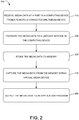
- FIG. 2 shows a process flow depicting a method 200 for virtually connecting a media device to a computing device.
- a virtual media device may be controlled by a remote media device by first receiving media data at a port in a computing device from a remotely connected media device, as depicted in block 210.
- the media data may be received from a remotely connected media device over a wireless network.
- the media data may be multimedia data including audio data and/or video data.
- the media data may be received at the port in real-time transport protocol packets, but other protocols suitable for streaming media data may be used. Additionally, some embodiments may comprise decoding the media data with the listener service after it is received at the port. In some embodiments, method 200 may further comprise receiving the media data from the port in real-time transport protocol packets, and encapsulating the media data into a plurality of frames to be sent to the virtual media device.
- method 200 also comprises forwarding the media data to a listener service in the computing device, as indicated in block 220.
- the media data may be forwarded to the listener service through communication stack 115.
- Examples of communication stack 115 include a network stack, a universal serial bus (USB) stack, or a combination of protocol stacks, etc., and the port may be a universal serial bus port or another suitable communications port.
- USB universal serial bus
- method 200 comprises storing the media data to memory as indicated at block 230.
- method 200 further comprises the listener service storing the media data in a shared memory, and a virtual media device capturing the media data from the shared memory, instead of having the listener service send the media data to the virtual media device and record the media data to memory multiple times, as illustrated in block 240.
- method 200 comprises outputting the media data to an application program as shown in block 250.
- the virtual media device may provide media and multimedia streaming functionality as if a remote media device were directly connected to a computing device.
- method 200 further comprises providing a locked mode for the port, wherein when the virtual media device is configured to set a port to a locked mode an unauthorized application cannot change port settings.
- method 200 may include bidirectional communications with a remotely connected media device.
- method 200 may further comprise rendering media data with the virtual media device, and outputting the media data to the remotely connected media device through the listener service.
- method 200 may further comprise outputting a command with the virtual media device to control the remotely connected media device through the listener service.
- the remotely connected media device is a web-camera
- the web-camera may have settings that may be adjusted.
- method 200 may send commands to adjust the settings including zooming in or out, turning a volume up or down, powering on or off, or other settings on a remotely connected media device that may be operated by commands.
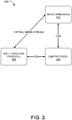
- FIG. 3 shows a block diagram illustrating one example system 300 with a virtual connection between media streaming service 310 and an 802.11 wireless protocol 330.
- a media device such as a web-camera
- the web-camera may provide a media stream to be consumed by a computing device.
- the web-camera may be wirelessly decoupled from the computing device using a wirelessly compatible USB dongle that enumerates as a USB audio class device and also enumerates as a USB video class device.
- a wirelessly compatible USB dongle that enumerates as a USB audio class device and also enumerates as a USB video class device.
- an interface may be IEEE 1394, SCSI, Bluetooth, or other suitable interfaces.
- the web-camera may be wirelessly connected to a computing device over the IEEE 802.11 suite of wireless protocols and may convert from a wireless protocol to USB audio and video data. However, this example would convert from 802.11 wireless protocol into the USB protocol.
- FIG. 3 illustrates a system providing a virtual media stream according to the embodiments described above with reference to FIGs. 1-2 . Other embodiments may use other protocols than those depicted in FIG. 3 , and other embodiments may also establish virtual media streams between different components than those listed in FIG. 3 .
- the USB protocol 320 conversion in FIG. 3 would take place in a USB stack coupled directly to kernel mode media drivers or a virtual media device.
- the configuration illustrated in FIG. 1 passes the media data received from the wireless protocol to the listener service 120, then down to the virtual media device 126 and back up to a listener media streaming service.
- a media stream may be sent over an 802.11 wireless protocol 330.
- system 300 Instead of converting the media stream from the 802.11 wireless protocol into the USB protocol 320, and sending the media stream to a media streaming service 310, system 300 establishes a virtual media stream from the 802.11 wireless protocol 330 to the media streaming service 310.
- This approach allows an IP connected device to provide media data to a virtual media device and thus create a virtual media stream between the 802.11 wireless protocol 330 and the media streaming service 310.
- FIG. 4 shows a process flow depicting a method 400 for switching port between a normal mode and a locked mode.
- the locked mode is illustrated as a camera mode wherein configuration settings for a port may be locked to 3 rd party applications but configuration settings may be changed by camera service 410.
- Other embodiments are not so limited, and port or other configuration settings may be locked for most applications yet unlocked and changeable by a virtual device, service, etc. Additionally, FIG.
- FIG. 4 illustrates two control loops, a first control loop for the camera service 410 is depicted by the dot-dash arrows on the right side of the figure, and a second control loop for a 3 rd party application 480 is depicted by the solid arrows on the left side of the figure.
- Method 400 includes a camera service 410 and a 3 rd party application 480 operating in user mode, and a mini-port driver 420 operating in kernel mode.
- Camera service 410 and 3 rd party application 480 send a set request or a get request to mini-port driver 420, wherein a set request is to control settings, and a get request is to get media data, etc.
- either camera service 410 or 3 rd party application 480 may send a request.
- the mini-port driver 420 In response to a request, the mini-port driver 420 then forwards the request to decision block 430 to determine if the computing device is in camera mode. If the computing device is in camera mode and the request came from the camera service 410, then a request successful message 440 is sent to the camera service. For example, if the request was to either set a control setting or to get data, then since the request came from the camera service 410 the request successful message 440 is sent.
- a request successful message 450 is sent to 3 rd party application 480.
- the reason a request successful message 450 is sent to 3 rd party application 480 is that since the computing device is not in camera mode, then the 3 rd party application may change network settings or get media data.
- method 400 forwards the request to decision block 460 to determine if the request was a read request, such as a get, or a write request such as a set. In this case, if the request was a read request then a request successful message 450 is sent to the 3 rd party application 480 since the 3 rd party application is not trying to change network settings but is only trying to receive data from a remotely connected camera.
- a fail request 470 is returned if the request is from a 3 rd party application 480 and it was a set request, and the computing device is in camera mode.
- the mini-port driver 420 may allow camera service 410 to get media data or change network settings, and the mini-port driver 420 may also provide a camera only mode where 3 rd party applications can only read data from a remotely connected media device but not change network settings.
- program may connote a single program or multiple programs acting in concert, and may be used to denote applications, services, or any other type or class of program.
- computer and “computing device” as used herein include any device that electronically executes one or more programs, including, but not limited to, personal computers, laptop computers, hand-held devices, cellular phones, microprocessor-based programmable consumer electronics and/or appliances, and any other suitable computing devices that may provide a local virtual media device that communicates media data with a remote media device.
Landscapes
- Engineering & Computer Science (AREA)
- Theoretical Computer Science (AREA)
- Computer Networks & Wireless Communication (AREA)
- Signal Processing (AREA)
- Physics & Mathematics (AREA)
- General Engineering & Computer Science (AREA)
- General Physics & Mathematics (AREA)
- Computer And Data Communications (AREA)
- Two-Way Televisions, Distribution Of Moving Picture Or The Like (AREA)
- Selective Calling Equipment (AREA)
- User Interface Of Digital Computer (AREA)
- Signal Processing For Digital Recording And Reproducing (AREA)
Abstract
Description
- Real-time multimedia communications are increasingly used as applications are able to be developed to utilize multimedia and as network infrastructures can handle increased throughput. One example of real-time multimedia communications is Internet Messaging using a web-camera. Most web-cameras for audio and video communications today have a physical connection to a host computer via a Universal Serial Bus (USB) cable. This restricts the web-camera to within a certain distance of the host computer, therefore preventing the web-camera from roaming around a house, office, coffee shop, etc.
- Some web-cameras connect to host computers as Internet Protocol (IP) devices. This allows a web-camera to move remotely from a host computer, but the web-camera functionality is accessed as an external service that is not visible to applications running on the host computer without knowing the IP address for the IP web-camera.
- A virtual media device is disclosed. For example, one embodiment comprises a virtual media device operating in a computing device, wherein the virtual media device is controlled by a remote media device. In this manner, a computing device may stream media data to and from the remote media device.
- This Summary is provided to introduce concepts in a simplified form that are further described below in the Detailed Description. This Summary is not intended to identify key features or essential features of the claimed subject matter, nor is it intended to be used to limit the scope of the claimed subject matter. Furthermore, the claimed subject matter is not limited to implementations that solve any or all disadvantages noted in any part of this disclosure.
-
-
FIG. 1 shows an example of an embodiment computing device for virtually connecting with a media device. -
FIG. 2 shows a process flow depicting a method for virtually connecting a media device to a computing device. -
FIG. 3 shows a block diagram of an embodiment computing device for virtually connecting with a media device. -
FIG. 4 shows a process flow depicting a method for switching an embodiment driver between a normal mode and a reserved mode. -
FIG. 1 shows anexample system 100 including anembodiment computing device 110 for virtually connecting with aremote media device 190.Computing device 110 includes aport 160 to receivemedia data 150 through anetwork interface 180 from aremote media device 190.Computing device 110 may also include akernel mode driver 125 running avirtual media device 126, however other embodiments are not so limited andvirtual media device 126 may operate in a different environment than akernel mode driver 125. In this way, the virtual media device can be controlled by data or commands sent from theremote media device 190. -
Computing device 110 includes alistener service 120 in communication withport 160 through acommunication stack 115, which may further include a network stack, a universal serial bus (USB) stack, or a combination of protocol stacks, etc., andport 160 may be a universal serial bus port, etc. In this way, thelistener service 120 may receive themedia data 150 from theport 160, and forward it to avirtual media device 126. In one example, alistener service 120 may be a service running in user mode, but other embodiments are not so limited. - An example MICROSOFT WINDOWS communication stack 115' is shown in
FIG. 1 with example functional blocks outlined with a dotted line. In this example WINDOWS communication stack 115', a WINDOWS sockets application programming interface (API), or WinSock 116, defines a standard interface forlistener service 120 to access network services in the kernel portion of WINDOWS communication stack 115'. WinSock 116 communicatesmedia data 150 and commands using AFD.sys 117, a device driver responsible for managing a TCP/IP 118 communications protocol. For example, AFD.sys 117 may manage a network frame size, or may set a limit on simultaneous network transfers for certain types of devices. Continuing with a WINDOWS example communication stack, media data then may be sent to or received from a network interface card through a logical link control interface, such as through NDISdriver 119. WINDOWS communication stack 115' is one example communication stack according to a WINDOWS architecture and certain protocols. Other embodiments are not so limited and other suitable communications stacks, protocols, connections, combinations, etc., may be used ascommunications stack 115. - The
listener service 120 communicates to thevirtual media device 126 through a virtual bus that includes acommand bus 128, avideo bus 124, and anaudio bus 122. Other embodiments may use other communications betweenlistener service 120 andvirtual media device 126 in similar fashion to send and receive media data to and from a remote media device. - In the
example computing device 110 depicted inFIG. 1 , theaudio bus 122 andcommand bus 128 are illustrated as bidirectional.Virtual media device 126 may also be operable to render media data and output the media data to the remotely connected media device through thelistener service 120. For example, ifremote media device 190 is a web-camera, a user may walk around remotely fromcomputing device 110 andvirtual media device 126 may not only receive audio and video data from the web-camera, but may forward audio data from a live chat with a friend in communication with the user through a separate network interface coupled to computingdevice 110, for example using a live messenger service through the Internet. Additionally, in the illustrated example the virtual media device may be further operable to output a command to control the remotely connected media device through thelistener service 120. - The
video bus 124 insystem 100 is shown as a unidirectional bus to receive video data from thelistener service 120 and forward it to thevirtual media device 126. Other embodiments are not so limited. For example, as web-cameras may be developed with an interactive display, an embodiment may communicate audio data and video data to and from the web-camera. - In some embodiments, the
virtual media device 126 may comprise multiple drivers, such as a system kernel streaming driver, a system port class audio driver, mini-drivers including a virtual audio driver and a virtual video driver, etc. In this way,virtual media device 126 may provide media and multimedia streaming functionality to operate as if theremote media device 190 were directly connected to thecomputing device 110. - In some embodiments, the media data may be stored in a shared memory to reduce latency induced by multiple copies of the same data. In one example, when media data is received from
remote media device 190, thelistener service 120 stores the media data in memory, and thevirtual media device 126 captures the media data from the memory, instead of having thelistener service 120 send the media data to thevirtual media device 126 and record the media data to memory multiple times. - In some embodiments, the
virtual media device 126 may capture themedia data 150 from thelistener service 120 and output themedia data 150 to anapplication 130, for example an application program that consumes media data, such as a messaging service, browser, video or audio conferencing software, or other suitable application programs that may communicate media data. In some embodiments, thelistener service 120 may be configured to decode the media data and send the media data tovirtual media device 126. Additionally, thelistener service 120 may be configured to place the media data into a plurality of frames to be sent to thevirtual media device 126. - In the illustrated example,
virtual media device 126 communicates video data tovideo stack 132. In a WINDOWS environment, anexample video stack 132 is a DirectShow filter graph.Virtual media device 126 may also communicate audio data withaudio stack 134. In a WINDOWS environment, anexample audio stack 134 is the DirectSound component of the DirectX library of API's. DirectX codec's are explained in the current example; however, embodiments may use other suitable multimedia frameworks. - The
remote media device 190 is depicted as a web-camera, such as an IP based web-camera, but other suitable remote devices are not so limited. For example, other IP devices may be coupled to computingdevice 110 and appear to an application program as if they were directly connected to thecomputing device 110 in similar fashion toremote media device 190. In some embodiments, other example remote media devices may be simple input and output devices such as keyboards, mice, or other remotely connected devices that may exchange data, media, commands, inputs and outputs, etc. with thecomputing device 110. - In a more detailed example, in a
computing device 110 running a MICROSOFT WINDOWS operating system (OS), a remotely connected media device may be a web-camera that is in communication with thecomputing device 110 over awireless network 185, and further communicates multimedia data including audio data and video data to a network interface 180 (e.g. a network interface card or a NIC). Other embodiments may communicate over types of networks other thanwireless network 185, or may even communicate over a direct connection, etc., as non-limiting examples. For example,remote media device 190 may be coupled withnetwork interface 180 throughwired network 195. - In this example, the web-camera also may receive or send commands to computing
device 110 through thenetwork interface 180 using real-time transport control protocol packets, or RTCP packets, and may receive or send multimedia data to computingdevice 110 through thenetwork interface 180 using real-time transport protocol packets, or RTP packets. Other suitable communications and control protocols can be used to send media data or multimedia data between aremote media device 190 and acomputing device 110. - In some embodiments,
computing device 110 may provide a locked mode for theport 160. For example, when set to locked mode, the virtual media device may allowlistener service 120 to access and/or change a setting ofport 160, without allowing an application other thanlistener service 120 to change port settings. In one example,kernel mode driver 125 selectively operates a port in a locked mode that restricts changes to port settings. -
FIG. 2 shows a process flow depicting amethod 200 for virtually connecting a media device to a computing device. For example, a virtual media device may be controlled by a remote media device by first receiving media data at a port in a computing device from a remotely connected media device, as depicted inblock 210. In one example, the media data may be received from a remotely connected media device over a wireless network. Further, the media data may be multimedia data including audio data and/or video data. - In one example, the media data may be received at the port in real-time transport protocol packets, but other protocols suitable for streaming media data may be used. Additionally, some embodiments may comprise decoding the media data with the listener service after it is received at the port. In some embodiments,
method 200 may further comprise receiving the media data from the port in real-time transport protocol packets, and encapsulating the media data into a plurality of frames to be sent to the virtual media device. - Then,
method 200 also comprises forwarding the media data to a listener service in the computing device, as indicated inblock 220. For example, the media data may be forwarded to the listener service throughcommunication stack 115. Examples ofcommunication stack 115 include a network stack, a universal serial bus (USB) stack, or a combination of protocol stacks, etc., and the port may be a universal serial bus port or another suitable communications port. - Next,
method 200 comprises storing the media data to memory as indicated atblock 230. For example, when media data is received from a remotely connected media device,method 200 further comprises the listener service storing the media data in a shared memory, and a virtual media device capturing the media data from the shared memory, instead of having the listener service send the media data to the virtual media device and record the media data to memory multiple times, as illustrated inblock 240. - Then, after capturing the media data from the memory with a virtual media device,
method 200 comprises outputting the media data to an application program as shown inblock 250. In this way, the virtual media device may provide media and multimedia streaming functionality as if a remote media device were directly connected to a computing device. - In some embodiments,
method 200 further comprises providing a locked mode for the port, wherein when the virtual media device is configured to set a port to a locked mode an unauthorized application cannot change port settings. - In some embodiments,
method 200 may include bidirectional communications with a remotely connected media device. For example,method 200 may further comprise rendering media data with the virtual media device, and outputting the media data to the remotely connected media device through the listener service. - Additionally,
method 200 may further comprise outputting a command with the virtual media device to control the remotely connected media device through the listener service. For example, if the remotely connected media device is a web-camera, the web-camera may have settings that may be adjusted. In this way,method 200 may send commands to adjust the settings including zooming in or out, turning a volume up or down, powering on or off, or other settings on a remotely connected media device that may be operated by commands. -
FIG. 3 shows a block diagram illustrating oneexample system 300 with a virtual connection betweenmedia streaming service 310 and an 802.11wireless protocol 330. For example, a media device, such as a web-camera, may provide a media stream to be consumed by a computing device. Additionally, the web-camera may be wirelessly decoupled from the computing device using a wirelessly compatible USB dongle that enumerates as a USB audio class device and also enumerates as a USB video class device. Other embodiments are not so limited, for example instead of a USB interface, an interface may be IEEE 1394, SCSI, Bluetooth, or other suitable interfaces. - For example, the web-camera may be wirelessly connected to a computing device over the IEEE 802.11 suite of wireless protocols and may convert from a wireless protocol to USB audio and video data. However, this example would convert from 802.11 wireless protocol into the USB protocol.
FIG. 3 illustrates a system providing a virtual media stream according to the embodiments described above with reference toFIGs. 1-2 . Other embodiments may use other protocols than those depicted inFIG. 3 , and other embodiments may also establish virtual media streams between different components than those listed inFIG. 3 . - With reference to the example in
FIG. 1 , the USB protocol 320 conversion inFIG. 3 would take place in a USB stack coupled directly to kernel mode media drivers or a virtual media device. However, the configuration illustrated inFIG. 1 passes the media data received from the wireless protocol to thelistener service 120, then down to thevirtual media device 126 and back up to a listener media streaming service. Referring now tosystem 300, a media stream may be sent over an 802.11wireless protocol 330. - Instead of converting the media stream from the 802.11 wireless protocol into the USB protocol 320, and sending the media stream to a
media streaming service 310,system 300 establishes a virtual media stream from the 802.11wireless protocol 330 to themedia streaming service 310. This approach allows an IP connected device to provide media data to a virtual media device and thus create a virtual media stream between the 802.11wireless protocol 330 and themedia streaming service 310. -
FIG. 4 shows a process flow depicting amethod 400 for switching port between a normal mode and a locked mode. In the example illustrated inFIG. 4 , the locked mode is illustrated as a camera mode wherein configuration settings for a port may be locked to 3rd party applications but configuration settings may be changed bycamera service 410. Other embodiments are not so limited, and port or other configuration settings may be locked for most applications yet unlocked and changeable by a virtual device, service, etc. Additionally,FIG. 4 illustrates two control loops, a first control loop for thecamera service 410 is depicted by the dot-dash arrows on the right side of the figure, and a second control loop for a 3rdparty application 480 is depicted by the solid arrows on the left side of the figure. -
Method 400 includes acamera service 410 and a 3rdparty application 480 operating in user mode, and amini-port driver 420 operating in kernel mode.Camera service 410 and 3rdparty application 480 send a set request or a get request tomini-port driver 420, wherein a set request is to control settings, and a get request is to get media data, etc. Inmethod 400, eithercamera service 410 or 3rdparty application 480 may send a request. - In response to a request, the
mini-port driver 420 then forwards the request to decision block 430 to determine if the computing device is in camera mode. If the computing device is in camera mode and the request came from thecamera service 410, then a requestsuccessful message 440 is sent to the camera service. For example, if the request was to either set a control setting or to get data, then since the request came from thecamera service 410 the requestsuccessful message 440 is sent. - However, if a request is received at
mini-port driver 420 from 3rd party application and the computing device is not in camera mode, then a requestsuccessful message 450 is sent to 3rdparty application 480. The reason a requestsuccessful message 450 is sent to 3rdparty application 480 is that since the computing device is not in camera mode, then the 3rd party application may change network settings or get media data. - If however the computing device is in camera mode and the request was sent from the 3rd
party application 480, thenmethod 400 forwards the request to decision block 460 to determine if the request was a read request, such as a get, or a write request such as a set. In this case, if the request was a read request then a requestsuccessful message 450 is sent to the 3rdparty application 480 since the 3rd party application is not trying to change network settings but is only trying to receive data from a remotely connected camera. - In
method 400, afail request 470 is returned if the request is from a 3rdparty application 480 and it was a set request, and the computing device is in camera mode. In this way, themini-port driver 420 may allowcamera service 410 to get media data or change network settings, and themini-port driver 420 may also provide a camera only mode where 3rd party applications can only read data from a remotely connected media device but not change network settings. - It will be appreciated that the embodiments described herein may be implemented, for example, via computer-executable instructions or code, such as programs, stored on a computer-readable medium and executed by a computing device. Generally, programs include routines, objects, components, data structures, and the like that perform particular tasks or implement particular abstract data types. As used herein, the term "program" may connote a single program or multiple programs acting in concert, and may be used to denote applications, services, or any other type or class of program.
- The terms "computer" and "computing device" as used herein include any device that electronically executes one or more programs, including, but not limited to, personal computers, laptop computers, hand-held devices, cellular phones, microprocessor-based programmable consumer electronics and/or appliances, and any other suitable computing devices that may provide a local virtual media device that communicates media data with a remote media device.
- It will further be understood that the configurations and/or approaches described herein are exemplary in nature, and that these specific embodiments or examples are not to be considered in a limiting sense, because numerous variations are possible. The specific routines or methods described herein may represent one or more of any number of processing strategies. As such, various acts illustrated may be performed in the sequence illustrated, in other sequences, in parallel, or in some cases omitted.
- The order of any of the above-described processes is not necessarily required to achieve the features and/or results of the embodiments described herein, but is provided for ease of illustration and description. The subject matter of the present disclosure includes all novel and nonobvious combinations and subcombinations of the various processes, systems and configurations, and other features, functions, acts, and/or properties disclosed herein, as well as any and all equivalents thereof.
The following is a list of further preferred embodiments of the invention: - Embodiment 1. A computing device (110) with a virtual media device (126) to be controlled by a remote media device (190), the computing device comprising:
- a port (160) to receive media data (150) from a remotely connected media device (190);
- a listener service (120) in communication with the port (160), the listener service (120) to receive the media data (150) from the port (160); and
- a virtual media device (126) to capture the media data (150) from the listener service (120) and output the media data (126) to an application program (130).
- Embodiment 2. The computing device of embodiment 1, wherein the virtual media device selectively operates the port in a locked mode that restricts changes to port settings.
- Embodiment 3. The computing device of embodiment 1, wherein the virtual media device is further operable to render media data and output the media data to the remotely connected media device through the listener service.
- Embodiment 4. The computing device of embodiment 1, wherein the virtual media device is further operable to output a command to control the remotely connected media device through the listener service.
- Embodiment 5. The computing device of embodiment 1, wherein the media data is multimedia data including audio data and video data.
- Embodiment 6. The computing device of embodiment 1, wherein the listener service stores the media data in memory, and the virtual media device captures the media data from the memory.
- Embodiment 7. The computing device of embodiment 1, wherein the listener service is configured to receive the media data from the port in real-time transport protocol packets, and the listener service is further configured to decode the media data.
- Embodiment 8. The computing device of embodiment 1, wherein the listener service is configured to receive the media data from the port in real-time transport protocol packets, and is further configured to place the media data into a plurality of frames to be sent to the virtual media device.
- Embodiment 9. The computing device of embodiment 1, wherein the remotely connected media device is in communication with the computing device over a wireless network coupled with a port through a network interface.
- Embodiment 10. The computing device of embodiment 1, wherein the port is a universal serial bus port.
- Embodiment 11. In a computing device (110), a method to operate a virtual media device (126) that is controlled by a remote media device (190), the method comprising:
- receiving media data (150) at a port (160) in a computing device (110) from a remotely connected media device (190);
- forwarding the media data (150) to a listener service (120) in the computing device (110);
- storing the media data (150) to memory;
- capturing the media data (150) from the memory with a virtual media device (126); and
- outputting the media data (150) to an application program (130).
- Embodiment 12. The method of embodiment 11, further comprising providing a locked mode for the port, wherein when the port is set to locked mode an application cannot change port settings.
- Embodiment 13. The method of embodiment 11, further comprising:
- rendering media data with the virtual media device; and
- outputting the media data to the remotely connected media device through the listener service.
- Embodiment 14. The method of embodiment 11, further comprising outputting a command from the virtual media device to control the remotely connected media device through the listener service.
- Embodiment 15. The method of embodiment 11, wherein the media data is multimedia data including audio data and video data.
- Embodiment 16. The method of embodiment 11, further comprising:
- storing the media data in a memory with the listener service; and
- capturing the media data from the memory with the virtual media device.
- Embodiment 17. The method of embodiment 11, further comprising:
- receiving the media data from the port in real-time transport protocol packets; and
- decoding the media data with the listener service.
- Embodiment 18. The method of embodiment 11, further comprising:
- receiving the media data from the port in real-time transport protocol packets; and
- encapsulating the media data into a plurality of frames to be sent to the virtual media device.
- Embodiment 19. The method of embodiment 11, wherein receiving media data from a remotely connected media device further comprises receiving the media data over a wireless network.
- Embodiment 20. A computer-readable medium comprising instructions executable by a computing device (110) to operate a virtual media device (126) that is controlled by a remote media device (190), the instructions being executable to perform a method comprising:
- receiving media data (150) at a port (160) in a computing device (110) from a remotely connected media device (190);
- forwarding the media data (150) to a listener service (120) in the computing device (110);
- storing the media data (150) to memory;
- capturing the media data (150) from the memory with a virtual media device (126); and
- outputting the media data (150) to an application program (130).
Claims (11)
- A computing device (110) with a virtual media device (126) to be controlled by a remote media device (190), the computing device comprising:a port (160) to receive media data (150) from a remotely connected media device (190);a listener service (120) in communication with the port (160), the listener service (120) to receive the media data (150) from the port (160); anda virtual media device (126) to capture the media data (150) from the listener service (120) and output the media data (126) to an application program (130),wherein the virtual media device is further operable to render media data and output the media data to the remotely connected media device through the listener service, and/orwherein the listener service is configured to receive the media data from the port in real-time transport protocol packets, and the listener service is further configured to decode the media data and/or to place the media data into a plurality of frames to be sent to the virtual media device.
- The computing device of claim 1, wherein the virtual media device selectively operates the port in a locked mode that restricts changes to port settings.
- The computing device of claim 1, wherein the virtual media device is further operable to output a command to control the remotely connected media device through the listener service.
- The computing device of claim 1, wherein the media data is multimedia data including audio data and video data.
- The computing device of claim 1, wherein the listener service stores the media data in memory, and the virtual media device captures the media data from the memory.
- The computing device of claim 1, wherein the remotely connected media device is in communication with the computing device over a wireless network coupled with a port through a network interface, and/or wherein the port is a universal serial bus port.
- In a computing device (110), a method to operate a virtual media device (126) that is controlled by a remote media device (190), the method comprising:receiving media data (150) at a port (160) in a computing device (110) from a remotely connected media device (190);forwarding the media data (150) to a listener service (120) in the computing device (110);storing the media data (150) to memory;capturing the media data (150) from the memory with a virtual media device (126); andoutputting the media data (150) to an application program (130); andfurther comprising:rendering media data with the virtual media device; andoutputting the media data to the remotely connected media device through the listener service; and/orfurther comprising:receiving the media data from the port in real-time transport protocol packets; anddecoding the media data with the listener service or encapsulating the media data into a plurality of frames to be sent to the virtual media device.
- The method of claim 7, further comprising providing a locked mode for the port, wherein when the port is set to locked mode an application cannot change port settings, and wherein the media data is multimedia data including audio data and video data, and wherein receiving media data from a remotely connected media device further comprises receiving the media data over a wireless network.
- The method of claim 7, further comprising outputting a command from the virtual media device to control the remotely connected media device through the listener service.
- The method of claim 7, further comprising:storing the media data in a memory with the listener service; andcapturing the media data from the memory with the virtual media device.
- A computer-readable medium comprising instructions executable by a computing device (110) to operate a virtual media device (126) that is controlled by a remote media device (190), the instructions being executable to perform the method of one of claims 7 to 10.
Applications Claiming Priority (2)
| Application Number | Priority Date | Filing Date | Title |
|---|---|---|---|
| US12/129,663 US8645579B2 (en) | 2008-05-29 | 2008-05-29 | Virtual media device |
| EP09758932.9A EP2308023B1 (en) | 2008-05-29 | 2009-05-12 | Virtual media device |
Related Parent Applications (1)
| Application Number | Title | Priority Date | Filing Date |
|---|---|---|---|
| EP09758932.9A Division EP2308023B1 (en) | 2008-05-29 | 2009-05-12 | Virtual media device |
Publications (2)
| Publication Number | Publication Date |
|---|---|
| EP3156961A1 true EP3156961A1 (en) | 2017-04-19 |
| EP3156961B1 EP3156961B1 (en) | 2018-02-28 |
Family
ID=41381207
Family Applications (2)
| Application Number | Title | Priority Date | Filing Date |
|---|---|---|---|
| EP09758932.9A Not-in-force EP2308023B1 (en) | 2008-05-29 | 2009-05-12 | Virtual media device |
| EP16202269.3A Not-in-force EP3156961B1 (en) | 2008-05-29 | 2009-05-12 | Virtual media device |
Family Applications Before (1)
| Application Number | Title | Priority Date | Filing Date |
|---|---|---|---|
| EP09758932.9A Not-in-force EP2308023B1 (en) | 2008-05-29 | 2009-05-12 | Virtual media device |
Country Status (5)
| Country | Link |
|---|---|
| US (1) | US8645579B2 (en) |
| EP (2) | EP2308023B1 (en) |
| ES (1) | ES2617656T3 (en) |
| TW (1) | TWI539805B (en) |
| WO (1) | WO2009148769A2 (en) |
Families Citing this family (9)
| Publication number | Priority date | Publication date | Assignee | Title |
|---|---|---|---|---|
| US8311983B2 (en) * | 2009-04-28 | 2012-11-13 | Whp Workflow Solutions, Llc | Correlated media for distributed sources |
| US10419722B2 (en) | 2009-04-28 | 2019-09-17 | Whp Workflow Solutions, Inc. | Correlated media source management and response control |
| US10565065B2 (en) | 2009-04-28 | 2020-02-18 | Getac Technology Corporation | Data backup and transfer across multiple cloud computing providers |
| US9819840B2 (en) | 2010-01-11 | 2017-11-14 | Bryan Nunes | Audio device that extracts the audio of a multimedia stream and serves the audio on a network while the video is displayed |
| WO2011085407A1 (en) * | 2010-01-11 | 2011-07-14 | Signet Media Inc. | System and method for providing an audio component of a multimedia content displayed on an electronic display device to one or more wireless computing devices |
| US8533531B2 (en) * | 2010-06-10 | 2013-09-10 | Microsoft Corporation | Multimedia hardware emulation for application testing |
| CN103092676A (en) * | 2013-01-04 | 2013-05-08 | 华为技术有限公司 | Analog input output method, device and system of virtual machine cluster |
| US20190238596A1 (en) * | 2016-10-10 | 2019-08-01 | Gn Audio A/S | A real time communication system |
| WO2021074060A1 (en) | 2019-10-18 | 2021-04-22 | Sony Corporation | Terminal devices, infrastructure equipment and methods |
Citations (3)
| Publication number | Priority date | Publication date | Assignee | Title |
|---|---|---|---|---|
| EP0978976A2 (en) * | 1998-07-22 | 2000-02-09 | Hewlett-Packard Company | An application dispatcher for server application |
| EP1521427A2 (en) * | 2003-09-30 | 2005-04-06 | Microsoft Corporation | Systems and methods for determining remote device media capabilities |
| US20070061477A1 (en) * | 2005-09-09 | 2007-03-15 | Microsoft Corporation | Plug And Play Device Redirection For Remote Systems |
Family Cites Families (21)
| Publication number | Priority date | Publication date | Assignee | Title |
|---|---|---|---|---|
| US7576770B2 (en) * | 2003-02-11 | 2009-08-18 | Raymond Metzger | System for a plurality of video cameras disposed on a common network |
| JP3831538B2 (en) * | 1998-11-26 | 2006-10-11 | インターナショナル・ビジネス・マシーンズ・コーポレーション | Power saving method and apparatus for display |
| US6804718B1 (en) * | 1999-03-18 | 2004-10-12 | Kent Ridge Digital Labs | Computing system and method for migrating a mobile computing environment |
| SG94330A1 (en) * | 1999-07-24 | 2003-02-18 | Kent Ridge Digital Labs | Mobile computing system and method for a network |
| US6845398B1 (en) * | 1999-08-02 | 2005-01-18 | Lucent Technologies Inc. | Wireless multimedia player |
| US20060244839A1 (en) * | 1999-11-10 | 2006-11-02 | Logitech Europe S.A. | Method and system for providing multi-media data from various sources to various client applications |
| US7546629B2 (en) * | 2002-03-06 | 2009-06-09 | Check Point Software Technologies, Inc. | System and methodology for security policy arbitration |
| US20030133015A1 (en) * | 2001-12-17 | 2003-07-17 | Jackel Lawrence David | Web-connected interactive digital camera |
| US7185169B2 (en) * | 2002-04-26 | 2007-02-27 | Voom Technologies, Inc. | Virtual physical drives |
| JP2007511110A (en) * | 2003-10-07 | 2007-04-26 | リブレストリーム テクノロジーズ インコーポレイテッド | A camera that transmits streaming media to remote clients |
| GB0325673D0 (en) | 2003-11-04 | 2003-12-10 | Koninkl Philips Electronics Nv | Virtual content directory service |
| US20060001737A1 (en) * | 2004-07-01 | 2006-01-05 | Dawson Thomas P | Video conference arrangement |
| US20060026162A1 (en) * | 2004-07-19 | 2006-02-02 | Zoran Corporation | Content management system |
| US7614058B2 (en) * | 2004-09-21 | 2009-11-03 | Dell Products L. P. | System and method for virtual media command filtering |
| CN101273630A (en) | 2005-04-21 | 2008-09-24 | 四次方有限公司 | Integrated wireless multimedia transmission system |
| US20060288155A1 (en) | 2005-06-03 | 2006-12-21 | Seagate Technology Llc | Storage-centric computer system |
| US20070011338A1 (en) * | 2005-06-08 | 2007-01-11 | Logitech Europe S.A. | System and method for transparently processing multimedia data |
| US7702906B1 (en) * | 2005-06-30 | 2010-04-20 | Symantec Operating Corporation | Securing kernel metadata communication in environments employing distributed software services |
| US20070147827A1 (en) * | 2005-12-28 | 2007-06-28 | Arnold Sheynman | Methods and apparatus for wireless stereo video streaming |
| WO2007115392A1 (en) * | 2006-04-07 | 2007-10-18 | Kangaroo Media Inc. | Method and system for enhancing the experience of a spectator attending a live sporting event |
| US7623502B2 (en) * | 2006-06-16 | 2009-11-24 | Sony Ericsson Mobile Communications Ab | Wireless media player |
-
2008
- 2008-05-29 US US12/129,663 patent/US8645579B2/en not_active Expired - Fee Related
-
2009
- 2009-05-07 TW TW098115156A patent/TWI539805B/en not_active IP Right Cessation
- 2009-05-12 WO PCT/US2009/043520 patent/WO2009148769A2/en not_active Ceased
- 2009-05-12 EP EP09758932.9A patent/EP2308023B1/en not_active Not-in-force
- 2009-05-12 ES ES09758932.9T patent/ES2617656T3/en active Active
- 2009-05-12 EP EP16202269.3A patent/EP3156961B1/en not_active Not-in-force
Patent Citations (3)
| Publication number | Priority date | Publication date | Assignee | Title |
|---|---|---|---|---|
| EP0978976A2 (en) * | 1998-07-22 | 2000-02-09 | Hewlett-Packard Company | An application dispatcher for server application |
| EP1521427A2 (en) * | 2003-09-30 | 2005-04-06 | Microsoft Corporation | Systems and methods for determining remote device media capabilities |
| US20070061477A1 (en) * | 2005-09-09 | 2007-03-15 | Microsoft Corporation | Plug And Play Device Redirection For Remote Systems |
Also Published As
| Publication number | Publication date |
|---|---|
| WO2009148769A3 (en) | 2010-04-01 |
| WO2009148769A2 (en) | 2009-12-10 |
| ES2617656T3 (en) | 2017-06-19 |
| EP2308023A4 (en) | 2015-09-09 |
| US20090300241A1 (en) | 2009-12-03 |
| US8645579B2 (en) | 2014-02-04 |
| EP2308023A2 (en) | 2011-04-13 |
| EP2308023B1 (en) | 2016-12-07 |
| TW200952469A (en) | 2009-12-16 |
| EP3156961B1 (en) | 2018-02-28 |
| TWI539805B (en) | 2016-06-21 |
Similar Documents
| Publication | Publication Date | Title |
|---|---|---|
| EP3156961B1 (en) | Virtual media device | |
| JP7629485B2 (en) | Method and system for making functional devices available to meeting participants - Patents.com | |
| US9024995B2 (en) | Video calling using a remote camera device to stream video to a local endpoint host acting as a proxy | |
| US10904103B2 (en) | Electronic tool and methods for meetings | |
| EP2756668B1 (en) | Electronic tool and methods for meetings | |
| CN111629239B (en) | Screen projection processing method, device, equipment and computer readable storage medium | |
| CA2909672A1 (en) | Electronic tool and methods for meetings | |
| CA2797986A1 (en) | Collaboration system and method | |
| WO2017124860A1 (en) | Distributed wireless multi-screen virtual machine service system | |
| US12137038B2 (en) | Electronic tool and methods for meetings | |
| CN106303377A (en) | Video monitoring processing method and processing device | |
| CN104023191A (en) | Android-based camera projection system and implementation method | |
| CN104883344A (en) | Method and device of negotiating media capabilities | |
| CN114710568B (en) | Audio and video data communication methods, equipment and storage media | |
| US8990704B2 (en) | Remote user interface media adapter in network bridge | |
| CN103856809A (en) | Method, system and terminal equipment for multipoint at the same screen | |
| EP2696591B1 (en) | Video calling using a remote camera device to stream video to a local endpoint host acting as a proxy | |
| CN107835509B (en) | A method, apparatus, system, device and storage medium for interconnecting devices | |
| JP4934148B2 (en) | SIP multi-user media client with user agent shared by multiple user applications | |
| US20060143314A1 (en) | Remote USB videophone communication | |
| CN206024025U (en) | A kind of home gateway | |
| CN115442349B (en) | Optimize the media experience in meetings with different participants | |
| JP6404915B2 (en) | Automatic data compression | |
| CN115202600A (en) | Method, large-screen display device and system for screen projection control | |
| EP3866401B1 (en) | Move stream content from point to point over the existing ip gateway |
Legal Events
| Date | Code | Title | Description |
|---|---|---|---|
| PUAI | Public reference made under article 153(3) epc to a published international application that has entered the european phase |
Free format text: ORIGINAL CODE: 0009012 |
|
| 17P | Request for examination filed |
Effective date: 20161205 |
|
| AC | Divisional application: reference to earlier application |
Ref document number: 2308023 Country of ref document: EP Kind code of ref document: P |
|
| AK | Designated contracting states |
Kind code of ref document: A1 Designated state(s): AT BE BG CH CY CZ DE DK EE ES FI FR GB GR HR HU IE IS IT LI LT LU LV MC MK MT NL NO PL PT RO SE SI SK TR |
|
| 17Q | First examination report despatched |
Effective date: 20170802 |
|
| GRAP | Despatch of communication of intention to grant a patent |
Free format text: ORIGINAL CODE: EPIDOSNIGR1 |
|
| INTG | Intention to grant announced |
Effective date: 20170915 |
|
| GRAS | Grant fee paid |
Free format text: ORIGINAL CODE: EPIDOSNIGR3 |
|
| GRAA | (expected) grant |
Free format text: ORIGINAL CODE: 0009210 |
|
| AC | Divisional application: reference to earlier application |
Ref document number: 2308023 Country of ref document: EP Kind code of ref document: P |
|
| AK | Designated contracting states |
Kind code of ref document: B1 Designated state(s): AT BE BG CH CY CZ DE DK EE ES FI FR GB GR HR HU IE IS IT LI LT LU LV MC MK MT NL NO PL PT RO SE SI SK TR |
|
| REG | Reference to a national code |
Ref country code: GB Ref legal event code: FG4D Ref country code: CH Ref legal event code: EP |
|
| REG | Reference to a national code |
Ref country code: AT Ref legal event code: REF Ref document number: 974917 Country of ref document: AT Kind code of ref document: T Effective date: 20180315 |
|
| REG | Reference to a national code |
Ref country code: IE Ref legal event code: FG4D |
|
| REG | Reference to a national code |
Ref country code: DE Ref legal event code: R096 Ref document number: 602009051071 Country of ref document: DE |
|
| REG | Reference to a national code |
Ref country code: FR Ref legal event code: PLFP Year of fee payment: 10 |
|
| REG | Reference to a national code |
Ref country code: NL Ref legal event code: FP |
|
| REG | Reference to a national code |
Ref country code: LT Ref legal event code: MG4D |
|
| REG | Reference to a national code |
Ref country code: AT Ref legal event code: MK05 Ref document number: 974917 Country of ref document: AT Kind code of ref document: T Effective date: 20180228 |
|
| PG25 | Lapsed in a contracting state [announced via postgrant information from national office to epo] |
Ref country code: FI Free format text: LAPSE BECAUSE OF FAILURE TO SUBMIT A TRANSLATION OF THE DESCRIPTION OR TO PAY THE FEE WITHIN THE PRESCRIBED TIME-LIMIT Effective date: 20180228 Ref country code: LT Free format text: LAPSE BECAUSE OF FAILURE TO SUBMIT A TRANSLATION OF THE DESCRIPTION OR TO PAY THE FEE WITHIN THE PRESCRIBED TIME-LIMIT Effective date: 20180228 Ref country code: NO Free format text: LAPSE BECAUSE OF FAILURE TO SUBMIT A TRANSLATION OF THE DESCRIPTION OR TO PAY THE FEE WITHIN THE PRESCRIBED TIME-LIMIT Effective date: 20180528 Ref country code: HR Free format text: LAPSE BECAUSE OF FAILURE TO SUBMIT A TRANSLATION OF THE DESCRIPTION OR TO PAY THE FEE WITHIN THE PRESCRIBED TIME-LIMIT Effective date: 20180228 Ref country code: ES Free format text: LAPSE BECAUSE OF FAILURE TO SUBMIT A TRANSLATION OF THE DESCRIPTION OR TO PAY THE FEE WITHIN THE PRESCRIBED TIME-LIMIT Effective date: 20180228 Ref country code: CY Free format text: LAPSE BECAUSE OF FAILURE TO SUBMIT A TRANSLATION OF THE DESCRIPTION OR TO PAY THE FEE WITHIN THE PRESCRIBED TIME-LIMIT Effective date: 20180228 |
|
| PG25 | Lapsed in a contracting state [announced via postgrant information from national office to epo] |
Ref country code: BG Free format text: LAPSE BECAUSE OF FAILURE TO SUBMIT A TRANSLATION OF THE DESCRIPTION OR TO PAY THE FEE WITHIN THE PRESCRIBED TIME-LIMIT Effective date: 20180528 Ref country code: GR Free format text: LAPSE BECAUSE OF FAILURE TO SUBMIT A TRANSLATION OF THE DESCRIPTION OR TO PAY THE FEE WITHIN THE PRESCRIBED TIME-LIMIT Effective date: 20180529 Ref country code: LV Free format text: LAPSE BECAUSE OF FAILURE TO SUBMIT A TRANSLATION OF THE DESCRIPTION OR TO PAY THE FEE WITHIN THE PRESCRIBED TIME-LIMIT Effective date: 20180228 Ref country code: SE Free format text: LAPSE BECAUSE OF FAILURE TO SUBMIT A TRANSLATION OF THE DESCRIPTION OR TO PAY THE FEE WITHIN THE PRESCRIBED TIME-LIMIT Effective date: 20180228 Ref country code: AT Free format text: LAPSE BECAUSE OF FAILURE TO SUBMIT A TRANSLATION OF THE DESCRIPTION OR TO PAY THE FEE WITHIN THE PRESCRIBED TIME-LIMIT Effective date: 20180228 |
|
| PG25 | Lapsed in a contracting state [announced via postgrant information from national office to epo] |
Ref country code: PL Free format text: LAPSE BECAUSE OF FAILURE TO SUBMIT A TRANSLATION OF THE DESCRIPTION OR TO PAY THE FEE WITHIN THE PRESCRIBED TIME-LIMIT Effective date: 20180228 Ref country code: IT Free format text: LAPSE BECAUSE OF FAILURE TO SUBMIT A TRANSLATION OF THE DESCRIPTION OR TO PAY THE FEE WITHIN THE PRESCRIBED TIME-LIMIT Effective date: 20180228 Ref country code: EE Free format text: LAPSE BECAUSE OF FAILURE TO SUBMIT A TRANSLATION OF THE DESCRIPTION OR TO PAY THE FEE WITHIN THE PRESCRIBED TIME-LIMIT Effective date: 20180228 Ref country code: RO Free format text: LAPSE BECAUSE OF FAILURE TO SUBMIT A TRANSLATION OF THE DESCRIPTION OR TO PAY THE FEE WITHIN THE PRESCRIBED TIME-LIMIT Effective date: 20180228 |
|
| REG | Reference to a national code |
Ref country code: DE Ref legal event code: R097 Ref document number: 602009051071 Country of ref document: DE |
|
| PG25 | Lapsed in a contracting state [announced via postgrant information from national office to epo] |
Ref country code: SK Free format text: LAPSE BECAUSE OF FAILURE TO SUBMIT A TRANSLATION OF THE DESCRIPTION OR TO PAY THE FEE WITHIN THE PRESCRIBED TIME-LIMIT Effective date: 20180228 Ref country code: DK Free format text: LAPSE BECAUSE OF FAILURE TO SUBMIT A TRANSLATION OF THE DESCRIPTION OR TO PAY THE FEE WITHIN THE PRESCRIBED TIME-LIMIT Effective date: 20180228 Ref country code: CZ Free format text: LAPSE BECAUSE OF FAILURE TO SUBMIT A TRANSLATION OF THE DESCRIPTION OR TO PAY THE FEE WITHIN THE PRESCRIBED TIME-LIMIT Effective date: 20180228 |
|
| REG | Reference to a national code |
Ref country code: CH Ref legal event code: PL |
|
| PLBE | No opposition filed within time limit |
Free format text: ORIGINAL CODE: 0009261 |
|
| STAA | Information on the status of an ep patent application or granted ep patent |
Free format text: STATUS: NO OPPOSITION FILED WITHIN TIME LIMIT |
|
| REG | Reference to a national code |
Ref country code: BE Ref legal event code: MM Effective date: 20180531 |
|
| PG25 | Lapsed in a contracting state [announced via postgrant information from national office to epo] |
Ref country code: MC Free format text: LAPSE BECAUSE OF FAILURE TO SUBMIT A TRANSLATION OF THE DESCRIPTION OR TO PAY THE FEE WITHIN THE PRESCRIBED TIME-LIMIT Effective date: 20180228 |
|
| 26N | No opposition filed |
Effective date: 20181129 |
|
| REG | Reference to a national code |
Ref country code: IE Ref legal event code: MM4A |
|
| PG25 | Lapsed in a contracting state [announced via postgrant information from national office to epo] |
Ref country code: LI Free format text: LAPSE BECAUSE OF NON-PAYMENT OF DUE FEES Effective date: 20180531 Ref country code: CH Free format text: LAPSE BECAUSE OF NON-PAYMENT OF DUE FEES Effective date: 20180531 |
|
| PG25 | Lapsed in a contracting state [announced via postgrant information from national office to epo] |
Ref country code: LU Free format text: LAPSE BECAUSE OF NON-PAYMENT OF DUE FEES Effective date: 20180512 |
|
| PG25 | Lapsed in a contracting state [announced via postgrant information from national office to epo] |
Ref country code: IE Free format text: LAPSE BECAUSE OF NON-PAYMENT OF DUE FEES Effective date: 20180512 |
|
| PG25 | Lapsed in a contracting state [announced via postgrant information from national office to epo] |
Ref country code: BE Free format text: LAPSE BECAUSE OF NON-PAYMENT OF DUE FEES Effective date: 20180531 |
|
| PG25 | Lapsed in a contracting state [announced via postgrant information from national office to epo] |
Ref country code: MT Free format text: LAPSE BECAUSE OF NON-PAYMENT OF DUE FEES Effective date: 20180512 |
|
| PG25 | Lapsed in a contracting state [announced via postgrant information from national office to epo] |
Ref country code: TR Free format text: LAPSE BECAUSE OF FAILURE TO SUBMIT A TRANSLATION OF THE DESCRIPTION OR TO PAY THE FEE WITHIN THE PRESCRIBED TIME-LIMIT Effective date: 20180228 |
|
| PG25 | Lapsed in a contracting state [announced via postgrant information from national office to epo] |
Ref country code: PT Free format text: LAPSE BECAUSE OF FAILURE TO SUBMIT A TRANSLATION OF THE DESCRIPTION OR TO PAY THE FEE WITHIN THE PRESCRIBED TIME-LIMIT Effective date: 20180228 |
|
| PG25 | Lapsed in a contracting state [announced via postgrant information from national office to epo] |
Ref country code: HU Free format text: LAPSE BECAUSE OF FAILURE TO SUBMIT A TRANSLATION OF THE DESCRIPTION OR TO PAY THE FEE WITHIN THE PRESCRIBED TIME-LIMIT; INVALID AB INITIO Effective date: 20090512 Ref country code: MK Free format text: LAPSE BECAUSE OF NON-PAYMENT OF DUE FEES Effective date: 20180228 |
|
| PG25 | Lapsed in a contracting state [announced via postgrant information from national office to epo] |
Ref country code: IS Free format text: LAPSE BECAUSE OF FAILURE TO SUBMIT A TRANSLATION OF THE DESCRIPTION OR TO PAY THE FEE WITHIN THE PRESCRIBED TIME-LIMIT Effective date: 20180628 |
|
| PG25 | Lapsed in a contracting state [announced via postgrant information from national office to epo] |
Ref country code: SI Free format text: LAPSE BECAUSE OF NON-PAYMENT OF DUE FEES Effective date: 20180512 |
|
| P01 | Opt-out of the competence of the unified patent court (upc) registered |
Effective date: 20230505 |
|
| PGFP | Annual fee paid to national office [announced via postgrant information from national office to epo] |
Ref country code: NL Payment date: 20240418 Year of fee payment: 16 |
|
| PGFP | Annual fee paid to national office [announced via postgrant information from national office to epo] |
Ref country code: GB Payment date: 20240418 Year of fee payment: 16 |
|
| PGFP | Annual fee paid to national office [announced via postgrant information from national office to epo] |
Ref country code: DE Payment date: 20240418 Year of fee payment: 16 |
|
| PGFP | Annual fee paid to national office [announced via postgrant information from national office to epo] |
Ref country code: FR Payment date: 20240418 Year of fee payment: 16 |
|
| REG | Reference to a national code |
Ref country code: DE Ref legal event code: R119 Ref document number: 602009051071 Country of ref document: DE |
|
| REG | Reference to a national code |
Ref country code: NL Ref legal event code: MM Effective date: 20250601 |
|
| GBPC | Gb: european patent ceased through non-payment of renewal fee |
Effective date: 20250512 |
|
| PG25 | Lapsed in a contracting state [announced via postgrant information from national office to epo] |
Ref country code: NL Free format text: LAPSE BECAUSE OF NON-PAYMENT OF DUE FEES Effective date: 20250601 |
|
| PG25 | Lapsed in a contracting state [announced via postgrant information from national office to epo] |
Ref country code: GB Free format text: LAPSE BECAUSE OF NON-PAYMENT OF DUE FEES Effective date: 20250512 |
|
| PG25 | Lapsed in a contracting state [announced via postgrant information from national office to epo] |
Ref country code: DE Free format text: LAPSE BECAUSE OF NON-PAYMENT OF DUE FEES Effective date: 20251202 |
|
| PG25 | Lapsed in a contracting state [announced via postgrant information from national office to epo] |
Ref country code: FR Free format text: LAPSE BECAUSE OF NON-PAYMENT OF DUE FEES Effective date: 20250531 |