EP3153523A2 - Variants of prothymosin alpha and methods of using same - Google Patents
Variants of prothymosin alpha and methods of using same Download PDFInfo
- Publication number
- EP3153523A2 EP3153523A2 EP16199824.0A EP16199824A EP3153523A2 EP 3153523 A2 EP3153523 A2 EP 3153523A2 EP 16199824 A EP16199824 A EP 16199824A EP 3153523 A2 EP3153523 A2 EP 3153523A2
- Authority
- EP
- European Patent Office
- Prior art keywords
- seq
- protα
- polypeptide
- cells
- hiv
- Prior art date
- Legal status (The legal status is an assumption and is not a legal conclusion. Google has not performed a legal analysis and makes no representation as to the accuracy of the status listed.)
- Withdrawn
Links
- 108010014750 prothymosin alpha Proteins 0.000 title claims abstract description 82
- 238000000034 method Methods 0.000 title claims abstract description 70
- 102100037925 Prothymosin alpha Human genes 0.000 title abstract description 7
- 208000036142 Viral infection Diseases 0.000 claims abstract description 38
- 206010028980 Neoplasm Diseases 0.000 claims abstract description 37
- 230000009385 viral infection Effects 0.000 claims abstract description 37
- 201000011510 cancer Diseases 0.000 claims abstract description 34
- 208000028867 ischemia Diseases 0.000 claims abstract description 29
- 230000001939 inductive effect Effects 0.000 claims abstract description 22
- 208000019838 Blood disease Diseases 0.000 claims abstract description 13
- 208000014951 hematologic disease Diseases 0.000 claims abstract description 13
- 208000018706 hematopoietic system disease Diseases 0.000 claims abstract description 13
- 208000035143 Bacterial infection Diseases 0.000 claims abstract description 12
- 208000022362 bacterial infectious disease Diseases 0.000 claims abstract description 12
- 206010017533 Fungal infection Diseases 0.000 claims abstract description 10
- 208000031888 Mycoses Diseases 0.000 claims abstract description 10
- 108090000765 processed proteins & peptides Proteins 0.000 claims description 242
- 102000004196 processed proteins & peptides Human genes 0.000 claims description 212
- 229920001184 polypeptide Polymers 0.000 claims description 153
- 125000003275 alpha amino acid group Chemical group 0.000 claims description 99
- 102000014150 Interferons Human genes 0.000 claims description 79
- 108010050904 Interferons Proteins 0.000 claims description 79
- 150000007523 nucleic acids Chemical class 0.000 claims description 61
- 238000011282 treatment Methods 0.000 claims description 59
- 102000039446 nucleic acids Human genes 0.000 claims description 57
- 108020004707 nucleic acids Proteins 0.000 claims description 57
- FWMNVWWHGCHHJJ-SKKKGAJSSA-N 4-amino-1-[(2r)-6-amino-2-[[(2r)-2-[[(2r)-2-[[(2r)-2-amino-3-phenylpropanoyl]amino]-3-phenylpropanoyl]amino]-4-methylpentanoyl]amino]hexanoyl]piperidine-4-carboxylic acid Chemical compound C([C@H](C(=O)N[C@H](CC(C)C)C(=O)N[C@H](CCCCN)C(=O)N1CCC(N)(CC1)C(O)=O)NC(=O)[C@H](N)CC=1C=CC=CC=1)C1=CC=CC=C1 FWMNVWWHGCHHJJ-SKKKGAJSSA-N 0.000 claims description 56
- 108010055166 Chemokine CCL5 Proteins 0.000 claims description 52
- 102000001327 Chemokine CCL5 Human genes 0.000 claims description 52
- 230000028993 immune response Effects 0.000 claims description 51
- 229940047124 interferons Drugs 0.000 claims description 40
- 229940079322 interferon Drugs 0.000 claims description 39
- 239000002773 nucleotide Substances 0.000 claims description 37
- 125000003729 nucleotide group Chemical group 0.000 claims description 37
- 239000000203 mixture Substances 0.000 claims description 36
- 239000000427 antigen Substances 0.000 claims description 34
- 108091007433 antigens Proteins 0.000 claims description 34
- 102000036639 antigens Human genes 0.000 claims description 34
- 241000700605 Viruses Species 0.000 claims description 33
- 230000006698 induction Effects 0.000 claims description 30
- 239000012634 fragment Substances 0.000 claims description 29
- 230000003389 potentiating effect Effects 0.000 claims description 28
- 239000008194 pharmaceutical composition Substances 0.000 claims description 24
- 241000713772 Human immunodeficiency virus 1 Species 0.000 claims description 23
- 239000002246 antineoplastic agent Substances 0.000 claims description 16
- 229940127089 cytotoxic agent Drugs 0.000 claims description 16
- 239000003937 drug carrier Substances 0.000 claims description 15
- 208000031886 HIV Infections Diseases 0.000 claims description 14
- 229960001592 paclitaxel Drugs 0.000 claims description 12
- 108010047761 Interferon-alpha Proteins 0.000 claims description 11
- 102000006992 Interferon-alpha Human genes 0.000 claims description 11
- RCINICONZNJXQF-MZXODVADSA-N taxol Chemical compound O([C@@H]1[C@@]2(C[C@@H](C(C)=C(C2(C)C)[C@H](C([C@]2(C)[C@@H](O)C[C@H]3OC[C@]3([C@H]21)OC(C)=O)=O)OC(=O)C)OC(=O)[C@H](O)[C@@H](NC(=O)C=1C=CC=CC=1)C=1C=CC=CC=1)O)C(=O)C1=CC=CC=C1 RCINICONZNJXQF-MZXODVADSA-N 0.000 claims description 9
- 108010014726 Interferon Type I Proteins 0.000 claims description 8
- 229930012538 Paclitaxel Natural products 0.000 claims description 8
- 241000894006 Bacteria Species 0.000 claims description 7
- 241000713340 Human immunodeficiency virus 2 Species 0.000 claims description 6
- 102000002227 Interferon Type I Human genes 0.000 claims description 6
- NKANXQFJJICGDU-QPLCGJKRSA-N Tamoxifen Chemical compound C=1C=CC=CC=1C(/CC)=C(C=1C=CC(OCCN(C)C)=CC=1)/C1=CC=CC=C1 NKANXQFJJICGDU-QPLCGJKRSA-N 0.000 claims description 6
- 241000710772 Yellow fever virus Species 0.000 claims description 6
- 229940051021 yellow-fever virus Drugs 0.000 claims description 6
- 241000150230 Crimean-Congo hemorrhagic fever orthonairovirus Species 0.000 claims description 5
- 241000233866 Fungi Species 0.000 claims description 5
- 241000713124 Rift Valley fever virus Species 0.000 claims description 5
- FDKXTQMXEQVLRF-ZHACJKMWSA-N (E)-dacarbazine Chemical compound CN(C)\N=N\c1[nH]cnc1C(N)=O FDKXTQMXEQVLRF-ZHACJKMWSA-N 0.000 claims description 4
- CMSMOCZEIVJLDB-UHFFFAOYSA-N Cyclophosphamide Chemical compound ClCCN(CCCl)P1(=O)NCCCO1 CMSMOCZEIVJLDB-UHFFFAOYSA-N 0.000 claims description 4
- 241000712902 Lassa mammarenavirus Species 0.000 claims description 4
- 208000030852 Parasitic disease Diseases 0.000 claims description 4
- 229960004397 cyclophosphamide Drugs 0.000 claims description 4
- 229960003901 dacarbazine Drugs 0.000 claims description 4
- 108010018844 interferon type III Proteins 0.000 claims description 4
- 244000045947 parasite Species 0.000 claims description 4
- 241000701076 Macacine alphaherpesvirus 1 Species 0.000 claims description 3
- BPEGJWRSRHCHSN-UHFFFAOYSA-N Temozolomide Chemical compound O=C1N(C)N=NC2=C(C(N)=O)N=CN21 BPEGJWRSRHCHSN-UHFFFAOYSA-N 0.000 claims description 3
- 229960004316 cisplatin Drugs 0.000 claims description 3
- DQLATGHUWYMOKM-UHFFFAOYSA-L cisplatin Chemical compound N[Pt](N)(Cl)Cl DQLATGHUWYMOKM-UHFFFAOYSA-L 0.000 claims description 3
- MKXKFYHWDHIYRV-UHFFFAOYSA-N flutamide Chemical compound CC(C)C(=O)NC1=CC=C([N+]([O-])=O)C(C(F)(F)F)=C1 MKXKFYHWDHIYRV-UHFFFAOYSA-N 0.000 claims description 3
- 229960002074 flutamide Drugs 0.000 claims description 3
- 208000032839 leukemia Diseases 0.000 claims description 3
- 229960001786 megestrol Drugs 0.000 claims description 3
- RQZAXGRLVPAYTJ-GQFGMJRRSA-N megestrol acetate Chemical compound C1=C(C)C2=CC(=O)CC[C@]2(C)[C@@H]2[C@@H]1[C@@H]1CC[C@@](C(C)=O)(OC(=O)C)[C@@]1(C)CC2 RQZAXGRLVPAYTJ-GQFGMJRRSA-N 0.000 claims description 3
- GZUITABIAKMVPG-UHFFFAOYSA-N raloxifene Chemical compound C1=CC(O)=CC=C1C1=C(C(=O)C=2C=CC(OCCN3CCCCC3)=CC=2)C2=CC=C(O)C=C2S1 GZUITABIAKMVPG-UHFFFAOYSA-N 0.000 claims description 3
- 229960004622 raloxifene Drugs 0.000 claims description 3
- 229960001603 tamoxifen Drugs 0.000 claims description 3
- 229960004964 temozolomide Drugs 0.000 claims description 3
- 241000710829 Dengue virus group Species 0.000 claims description 2
- 201000011001 Ebola Hemorrhagic Fever Diseases 0.000 claims description 2
- 206010061192 Haemorrhagic fever Diseases 0.000 claims description 2
- 101000738717 Pelophylax lessonae Prothymosin alpha Proteins 0.000 abstract description 260
- 208000015181 infectious disease Diseases 0.000 abstract description 54
- 208000037265 diseases, disorders, signs and symptoms Diseases 0.000 abstract description 22
- 201000010099 disease Diseases 0.000 abstract description 19
- 108010077850 Nuclear Localization Signals Proteins 0.000 abstract description 16
- 230000021633 leukocyte mediated immunity Effects 0.000 abstract description 6
- 230000002071 myeloproliferative effect Effects 0.000 abstract description 4
- 230000002062 proliferating effect Effects 0.000 abstract description 4
- 230000002246 oncogenic effect Effects 0.000 abstract description 3
- 210000004027 cell Anatomy 0.000 description 131
- 108090000623 proteins and genes Proteins 0.000 description 114
- 235000018102 proteins Nutrition 0.000 description 88
- 102000004169 proteins and genes Human genes 0.000 description 88
- 210000002540 macrophage Anatomy 0.000 description 64
- 230000000694 effects Effects 0.000 description 57
- 108020004999 messenger RNA Proteins 0.000 description 57
- 210000001744 T-lymphocyte Anatomy 0.000 description 53
- 239000003112 inhibitor Substances 0.000 description 44
- 230000014509 gene expression Effects 0.000 description 40
- 102100026720 Interferon beta Human genes 0.000 description 38
- 108090000467 Interferon-beta Proteins 0.000 description 38
- 241000725303 Human immunodeficiency virus Species 0.000 description 32
- 230000036436 anti-hiv Effects 0.000 description 21
- 230000010076 replication Effects 0.000 description 21
- 108091032973 (ribonucleotides)n+m Proteins 0.000 description 18
- 230000002068 genetic effect Effects 0.000 description 18
- 239000013641 positive control Substances 0.000 description 18
- 230000003612 virological effect Effects 0.000 description 18
- 239000002609 medium Substances 0.000 description 16
- 238000011529 RT qPCR Methods 0.000 description 15
- -1 deletions (e.g. Chemical class 0.000 description 15
- 239000002158 endotoxin Substances 0.000 description 15
- 108060008682 Tumor Necrosis Factor Proteins 0.000 description 14
- 239000006228 supernatant Substances 0.000 description 14
- MZOFCQQQCNRIBI-VMXHOPILSA-N (3s)-4-[[(2s)-1-[[(2s)-1-[[(1s)-1-carboxy-2-hydroxyethyl]amino]-4-methyl-1-oxopentan-2-yl]amino]-5-(diaminomethylideneamino)-1-oxopentan-2-yl]amino]-3-[[2-[[(2s)-2,6-diaminohexanoyl]amino]acetyl]amino]-4-oxobutanoic acid Chemical compound OC[C@@H](C(O)=O)NC(=O)[C@H](CC(C)C)NC(=O)[C@H](CCCN=C(N)N)NC(=O)[C@H](CC(O)=O)NC(=O)CNC(=O)[C@@H](N)CCCCN MZOFCQQQCNRIBI-VMXHOPILSA-N 0.000 description 13
- 238000002965 ELISA Methods 0.000 description 13
- 108090001005 Interleukin-6 Proteins 0.000 description 13
- 102000004889 Interleukin-6 Human genes 0.000 description 13
- 102000000852 Tumor Necrosis Factor-alpha Human genes 0.000 description 13
- 238000003556 assay Methods 0.000 description 13
- 230000001580 bacterial effect Effects 0.000 description 13
- 239000003795 chemical substances by application Substances 0.000 description 13
- 150000001413 amino acids Chemical class 0.000 description 12
- 238000004458 analytical method Methods 0.000 description 12
- 230000004044 response Effects 0.000 description 12
- 108020004414 DNA Proteins 0.000 description 11
- 241000588724 Escherichia coli Species 0.000 description 11
- 241000699666 Mus <mouse, genus> Species 0.000 description 11
- 108091036414 Polyinosinic:polycytidylic acid Proteins 0.000 description 11
- 230000004913 activation Effects 0.000 description 11
- 238000002474 experimental method Methods 0.000 description 11
- 239000012530 fluid Substances 0.000 description 11
- 230000004048 modification Effects 0.000 description 11
- 238000012986 modification Methods 0.000 description 11
- 229940115272 polyinosinic:polycytidylic acid Drugs 0.000 description 11
- 239000000047 product Substances 0.000 description 11
- 239000002299 complementary DNA Substances 0.000 description 10
- 150000001875 compounds Chemical class 0.000 description 10
- 230000002458 infectious effect Effects 0.000 description 10
- 238000002955 isolation Methods 0.000 description 10
- 108091008109 Pseudogenes Proteins 0.000 description 9
- 102000057361 Pseudogenes Human genes 0.000 description 9
- 230000024932 T cell mediated immunity Effects 0.000 description 9
- 230000000840 anti-viral effect Effects 0.000 description 9
- 238000001514 detection method Methods 0.000 description 9
- 239000003814 drug Substances 0.000 description 9
- 230000006870 function Effects 0.000 description 9
- 238000004519 manufacturing process Methods 0.000 description 9
- 238000004949 mass spectrometry Methods 0.000 description 9
- 210000001616 monocyte Anatomy 0.000 description 9
- 230000002265 prevention Effects 0.000 description 9
- 101710205625 Capsid protein p24 Proteins 0.000 description 8
- 239000012623 DNA damaging agent Substances 0.000 description 8
- 208000037357 HIV infectious disease Diseases 0.000 description 8
- 101710177166 Phosphoprotein Proteins 0.000 description 8
- 102000007056 Recombinant Fusion Proteins Human genes 0.000 description 8
- 108010008281 Recombinant Fusion Proteins Proteins 0.000 description 8
- 102000002278 Ribosomal Proteins Human genes 0.000 description 8
- 108010000605 Ribosomal Proteins Proteins 0.000 description 8
- 101710149279 Small delta antigen Proteins 0.000 description 8
- FAPWRFPIFSIZLT-UHFFFAOYSA-M Sodium chloride Chemical compound [Na+].[Cl-] FAPWRFPIFSIZLT-UHFFFAOYSA-M 0.000 description 8
- 102100022563 Tubulin polymerization-promoting protein Human genes 0.000 description 8
- 239000003636 conditioned culture medium Substances 0.000 description 8
- 210000002919 epithelial cell Anatomy 0.000 description 8
- 229960005420 etoposide Drugs 0.000 description 8
- VJJPUSNTGOMMGY-MRVIYFEKSA-N etoposide Chemical compound COC1=C(O)C(OC)=CC([C@@H]2C3=CC=4OCOC=4C=C3[C@@H](O[C@H]3[C@@H]([C@@H](O)[C@@H]4O[C@H](C)OC[C@H]4O3)O)[C@@H]3[C@@H]2C(OC3)=O)=C1 VJJPUSNTGOMMGY-MRVIYFEKSA-N 0.000 description 8
- 208000033519 human immunodeficiency virus infectious disease Diseases 0.000 description 8
- 238000000338 in vitro Methods 0.000 description 8
- 230000001404 mediated effect Effects 0.000 description 8
- 244000052769 pathogen Species 0.000 description 8
- 238000012360 testing method Methods 0.000 description 8
- 210000001519 tissue Anatomy 0.000 description 8
- 238000013518 transcription Methods 0.000 description 8
- 230000035897 transcription Effects 0.000 description 8
- 102000004127 Cytokines Human genes 0.000 description 7
- 108090000695 Cytokines Proteins 0.000 description 7
- 238000012286 ELISA Assay Methods 0.000 description 7
- 108091008874 T cell receptors Proteins 0.000 description 7
- 102000016266 T-Cell Antigen Receptors Human genes 0.000 description 7
- 239000000872 buffer Substances 0.000 description 7
- 230000007541 cellular toxicity Effects 0.000 description 7
- 210000001151 cytotoxic T lymphocyte Anatomy 0.000 description 7
- 230000003834 intracellular effect Effects 0.000 description 7
- 230000035772 mutation Effects 0.000 description 7
- 230000001717 pathogenic effect Effects 0.000 description 7
- 230000009467 reduction Effects 0.000 description 7
- 239000000126 substance Substances 0.000 description 7
- 208000024891 symptom Diseases 0.000 description 7
- 241001430294 unidentified retrovirus Species 0.000 description 7
- 101000742104 Bacillus subtilis (strain 168) ATP-dependent isoleucine adenylase Proteins 0.000 description 6
- 101000946889 Homo sapiens Monocyte differentiation antigen CD14 Proteins 0.000 description 6
- 108010074328 Interferon-gamma Proteins 0.000 description 6
- 241000713666 Lentivirus Species 0.000 description 6
- 102100035877 Monocyte differentiation antigen CD14 Human genes 0.000 description 6
- 108091028043 Nucleic acid sequence Proteins 0.000 description 6
- DNIAPMSPPWPWGF-UHFFFAOYSA-N Propylene glycol Chemical compound CC(O)CO DNIAPMSPPWPWGF-UHFFFAOYSA-N 0.000 description 6
- 206010038997 Retroviral infections Diseases 0.000 description 6
- 238000010171 animal model Methods 0.000 description 6
- 239000011324 bead Substances 0.000 description 6
- 230000037396 body weight Effects 0.000 description 6
- 230000003833 cell viability Effects 0.000 description 6
- 230000002538 fungal effect Effects 0.000 description 6
- 230000002401 inhibitory effect Effects 0.000 description 6
- 238000002347 injection Methods 0.000 description 6
- 239000007924 injection Substances 0.000 description 6
- 210000005105 peripheral blood lymphocyte Anatomy 0.000 description 6
- 239000002953 phosphate buffered saline Substances 0.000 description 6
- 238000000746 purification Methods 0.000 description 6
- 230000001105 regulatory effect Effects 0.000 description 6
- 238000003757 reverse transcription PCR Methods 0.000 description 6
- 108090000930 ribosomal protein S11 Proteins 0.000 description 6
- 102000004413 ribosomal protein S11 Human genes 0.000 description 6
- 239000000243 solution Substances 0.000 description 6
- 229960005486 vaccine Drugs 0.000 description 6
- 206010006187 Breast cancer Diseases 0.000 description 5
- 208000026310 Breast neoplasm Diseases 0.000 description 5
- 102000019034 Chemokines Human genes 0.000 description 5
- 108010012236 Chemokines Proteins 0.000 description 5
- PEDCQBHIVMGVHV-UHFFFAOYSA-N Glycerine Chemical compound OCC(O)CO PEDCQBHIVMGVHV-UHFFFAOYSA-N 0.000 description 5
- 102000008070 Interferon-gamma Human genes 0.000 description 5
- 108091005804 Peptidases Proteins 0.000 description 5
- 108010029485 Protein Isoforms Proteins 0.000 description 5
- 102000001708 Protein Isoforms Human genes 0.000 description 5
- 239000003242 anti bacterial agent Substances 0.000 description 5
- 210000003719 b-lymphocyte Anatomy 0.000 description 5
- 238000003776 cleavage reaction Methods 0.000 description 5
- 230000000875 corresponding effect Effects 0.000 description 5
- 238000005194 fractionation Methods 0.000 description 5
- KTUFNOKKBVMGRW-UHFFFAOYSA-N imatinib Chemical compound C1CN(C)CCN1CC1=CC=C(C(=O)NC=2C=C(NC=3N=C(C=CN=3)C=3C=NC=CC=3)C(C)=CC=2)C=C1 KTUFNOKKBVMGRW-UHFFFAOYSA-N 0.000 description 5
- 230000005764 inhibitory process Effects 0.000 description 5
- 238000003752 polymerase chain reaction Methods 0.000 description 5
- 108091008077 processed pseudogenes Proteins 0.000 description 5
- 230000002441 reversible effect Effects 0.000 description 5
- 230000007017 scission Effects 0.000 description 5
- 230000000638 stimulation Effects 0.000 description 5
- 241000713704 Bovine immunodeficiency virus Species 0.000 description 4
- OBMZMSLWNNWEJA-XNCRXQDQSA-N C1=CC=2C(C[C@@H]3NC(=O)[C@@H](NC(=O)[C@H](NC(=O)N(CC#CCN(CCCC[C@H](NC(=O)[C@@H](CC4=CC=CC=C4)NC3=O)C(=O)N)CC=C)NC(=O)[C@@H](N)C)CC3=CNC4=C3C=CC=C4)C)=CNC=2C=C1 Chemical compound C1=CC=2C(C[C@@H]3NC(=O)[C@@H](NC(=O)[C@H](NC(=O)N(CC#CCN(CCCC[C@H](NC(=O)[C@@H](CC4=CC=CC=C4)NC3=O)C(=O)N)CC=C)NC(=O)[C@@H](N)C)CC3=CNC4=C3C=CC=C4)C)=CNC=2C=C1 OBMZMSLWNNWEJA-XNCRXQDQSA-N 0.000 description 4
- 108091026890 Coding region Proteins 0.000 description 4
- 208000035473 Communicable disease Diseases 0.000 description 4
- 241000709661 Enterovirus Species 0.000 description 4
- 241000713800 Feline immunodeficiency virus Species 0.000 description 4
- 108010027044 HIV Core Protein p24 Proteins 0.000 description 4
- 241000711549 Hepacivirus C Species 0.000 description 4
- 239000005536 L01XE08 - Nilotinib Substances 0.000 description 4
- 231100000070 MTS assay Toxicity 0.000 description 4
- 238000000719 MTS assay Methods 0.000 description 4
- 108700018351 Major Histocompatibility Complex Proteins 0.000 description 4
- 101710176384 Peptide 1 Proteins 0.000 description 4
- 239000002202 Polyethylene glycol Substances 0.000 description 4
- 241000713311 Simian immunodeficiency virus Species 0.000 description 4
- 238000000692 Student's t-test Methods 0.000 description 4
- CBPNZQVSJQDFBE-FUXHJELOSA-N Temsirolimus Chemical compound C1C[C@@H](OC(=O)C(C)(CO)CO)[C@H](OC)C[C@@H]1C[C@@H](C)[C@H]1OC(=O)[C@@H]2CCCCN2C(=O)C(=O)[C@](O)(O2)[C@H](C)CC[C@H]2C[C@H](OC)/C(C)=C/C=C/C=C/[C@@H](C)C[C@@H](C)C(=O)[C@H](OC)[C@H](O)/C(C)=C/[C@@H](C)C(=O)C1 CBPNZQVSJQDFBE-FUXHJELOSA-N 0.000 description 4
- 241000223238 Trichophyton Species 0.000 description 4
- RJURFGZVJUQBHK-UHFFFAOYSA-N actinomycin D Natural products CC1OC(=O)C(C(C)C)N(C)C(=O)CN(C)C(=O)C2CCCN2C(=O)C(C(C)C)NC(=O)C1NC(=O)C1=C(N)C(=O)C(C)=C2OC(C(C)=CC=C3C(=O)NC4C(=O)NC(C(N5CCCC5C(=O)N(C)CC(=O)N(C)C(C(C)C)C(=O)OC4C)=O)C(C)C)=C3N=C21 RJURFGZVJUQBHK-UHFFFAOYSA-N 0.000 description 4
- 239000004480 active ingredient Substances 0.000 description 4
- 239000002671 adjuvant Substances 0.000 description 4
- 230000003321 amplification Effects 0.000 description 4
- 230000000844 anti-bacterial effect Effects 0.000 description 4
- 230000004663 cell proliferation Effects 0.000 description 4
- 238000012512 characterization method Methods 0.000 description 4
- 238000011161 development Methods 0.000 description 4
- 230000018109 developmental process Effects 0.000 description 4
- 229940079593 drug Drugs 0.000 description 4
- 239000013604 expression vector Substances 0.000 description 4
- 229960002411 imatinib Drugs 0.000 description 4
- 210000002865 immune cell Anatomy 0.000 description 4
- 238000001727 in vivo Methods 0.000 description 4
- 229960003130 interferon gamma Drugs 0.000 description 4
- 230000000302 ischemic effect Effects 0.000 description 4
- 239000007788 liquid Substances 0.000 description 4
- 239000000463 material Substances 0.000 description 4
- HHZIURLSWUIHRB-UHFFFAOYSA-N nilotinib Chemical compound C1=NC(C)=CN1C1=CC(NC(=O)C=2C=C(NC=3N=C(C=CN=3)C=3C=NC=CC=3)C(C)=CC=2)=CC(C(F)(F)F)=C1 HHZIURLSWUIHRB-UHFFFAOYSA-N 0.000 description 4
- 238000003199 nucleic acid amplification method Methods 0.000 description 4
- 229960001972 panitumumab Drugs 0.000 description 4
- 239000008363 phosphate buffer Substances 0.000 description 4
- 229920001223 polyethylene glycol Polymers 0.000 description 4
- 108091033319 polynucleotide Proteins 0.000 description 4
- 102000040430 polynucleotide Human genes 0.000 description 4
- 239000002157 polynucleotide Substances 0.000 description 4
- 238000002360 preparation method Methods 0.000 description 4
- 230000008569 process Effects 0.000 description 4
- 229960004641 rituximab Drugs 0.000 description 4
- 238000002864 sequence alignment Methods 0.000 description 4
- 239000011780 sodium chloride Substances 0.000 description 4
- 239000002904 solvent Substances 0.000 description 4
- 230000020382 suppression by virus of host antigen processing and presentation of peptide antigen via MHC class I Effects 0.000 description 4
- 238000001356 surgical procedure Methods 0.000 description 4
- 229940124597 therapeutic agent Drugs 0.000 description 4
- 230000001225 therapeutic effect Effects 0.000 description 4
- 238000001890 transfection Methods 0.000 description 4
- 238000013519 translation Methods 0.000 description 4
- 239000013638 trimer Substances 0.000 description 4
- 239000013598 vector Substances 0.000 description 4
- 230000029812 viral genome replication Effects 0.000 description 4
- 102000040650 (ribonucleotides)n+m Human genes 0.000 description 3
- 208000030507 AIDS Diseases 0.000 description 3
- 241000228212 Aspergillus Species 0.000 description 3
- 108010006654 Bleomycin Proteins 0.000 description 3
- 210000001266 CD8-positive T-lymphocyte Anatomy 0.000 description 3
- 241000222120 Candida <Saccharomycetales> Species 0.000 description 3
- 108010092160 Dactinomycin Proteins 0.000 description 3
- ZBNZXTGUTAYRHI-UHFFFAOYSA-N Dasatinib Chemical compound C=1C(N2CCN(CCO)CC2)=NC(C)=NC=1NC(S1)=NC=C1C(=O)NC1=C(C)C=CC=C1Cl ZBNZXTGUTAYRHI-UHFFFAOYSA-N 0.000 description 3
- LFQSCWFLJHTTHZ-UHFFFAOYSA-N Ethanol Chemical compound CCO LFQSCWFLJHTTHZ-UHFFFAOYSA-N 0.000 description 3
- HKVAMNSJSFKALM-GKUWKFKPSA-N Everolimus Chemical compound C1C[C@@H](OCCO)[C@H](OC)C[C@@H]1C[C@@H](C)[C@H]1OC(=O)[C@@H]2CCCCN2C(=O)C(=O)[C@](O)(O2)[C@H](C)CC[C@H]2C[C@H](OC)/C(C)=C/C=C/C=C/[C@@H](C)C[C@@H](C)C(=O)[C@H](OC)[C@H](O)/C(C)=C/[C@@H](C)C(=O)C1 HKVAMNSJSFKALM-GKUWKFKPSA-N 0.000 description 3
- 241000282412 Homo Species 0.000 description 3
- 101000797762 Homo sapiens C-C motif chemokine 5 Proteins 0.000 description 3
- 101100005713 Homo sapiens CD4 gene Proteins 0.000 description 3
- 101001002469 Homo sapiens Interferon lambda-2 Proteins 0.000 description 3
- 241000701085 Human alphaherpesvirus 3 Species 0.000 description 3
- 102100020989 Interferon lambda-2 Human genes 0.000 description 3
- 239000005517 L01XE01 - Imatinib Substances 0.000 description 3
- 239000002136 L01XE07 - Lapatinib Substances 0.000 description 3
- 208000014767 Myeloproliferative disease Diseases 0.000 description 3
- 208000009869 Neu-Laxova syndrome Diseases 0.000 description 3
- 108091034117 Oligonucleotide Proteins 0.000 description 3
- 102000035195 Peptidases Human genes 0.000 description 3
- 206010063837 Reperfusion injury Diseases 0.000 description 3
- 241000725643 Respiratory syncytial virus Species 0.000 description 3
- 208000001203 Smallpox Diseases 0.000 description 3
- 208000006011 Stroke Diseases 0.000 description 3
- 208000004006 Tick-borne encephalitis Diseases 0.000 description 3
- 241000223997 Toxoplasma gondii Species 0.000 description 3
- 229940121375 antifungal agent Drugs 0.000 description 3
- 239000003429 antifungal agent Substances 0.000 description 3
- 230000006907 apoptotic process Effects 0.000 description 3
- 238000003570 cell viability assay Methods 0.000 description 3
- 230000001413 cellular effect Effects 0.000 description 3
- 230000008859 change Effects 0.000 description 3
- PIQCTGMSNWUMAF-UHFFFAOYSA-N chembl522892 Chemical compound C1CN(C)CCN1C1=CC=C(NC(=N2)C=3C(NC4=CC=CC(F)=C4C=3N)=O)C2=C1 PIQCTGMSNWUMAF-UHFFFAOYSA-N 0.000 description 3
- 239000003153 chemical reaction reagent Substances 0.000 description 3
- 238000004587 chromatography analysis Methods 0.000 description 3
- 210000000349 chromosome Anatomy 0.000 description 3
- 230000000295 complement effect Effects 0.000 description 3
- 238000011109 contamination Methods 0.000 description 3
- 231100000433 cytotoxic Toxicity 0.000 description 3
- 230000001472 cytotoxic effect Effects 0.000 description 3
- 230000006378 damage Effects 0.000 description 3
- 230000007423 decrease Effects 0.000 description 3
- 238000012217 deletion Methods 0.000 description 3
- 230000037430 deletion Effects 0.000 description 3
- 210000004443 dendritic cell Anatomy 0.000 description 3
- 208000035475 disorder Diseases 0.000 description 3
- 239000002612 dispersion medium Substances 0.000 description 3
- 210000003527 eukaryotic cell Anatomy 0.000 description 3
- 238000009472 formulation Methods 0.000 description 3
- 230000012010 growth Effects 0.000 description 3
- 210000002443 helper t lymphocyte Anatomy 0.000 description 3
- 125000000487 histidyl group Chemical group [H]N([H])C(C(=O)O*)C([H])([H])C1=C([H])N([H])C([H])=N1 0.000 description 3
- 230000001965 increasing effect Effects 0.000 description 3
- 239000004615 ingredient Substances 0.000 description 3
- 238000003780 insertion Methods 0.000 description 3
- 230000037431 insertion Effects 0.000 description 3
- 238000007914 intraventricular administration Methods 0.000 description 3
- 239000007951 isotonicity adjuster Substances 0.000 description 3
- BCFGMOOMADDAQU-UHFFFAOYSA-N lapatinib Chemical compound O1C(CNCCS(=O)(=O)C)=CC=C1C1=CC=C(N=CN=C2NC=3C=C(Cl)C(OCC=4C=C(F)C=CC=4)=CC=3)C2=C1 BCFGMOOMADDAQU-UHFFFAOYSA-N 0.000 description 3
- 210000000265 leukocyte Anatomy 0.000 description 3
- 239000003446 ligand Substances 0.000 description 3
- 238000005259 measurement Methods 0.000 description 3
- 239000012528 membrane Substances 0.000 description 3
- 230000003278 mimic effect Effects 0.000 description 3
- 230000000116 mitigating effect Effects 0.000 description 3
- 208000031225 myocardial ischemia Diseases 0.000 description 3
- OHDXDNUPVVYWOV-UHFFFAOYSA-N n-methyl-1-(2-naphthalen-1-ylsulfanylphenyl)methanamine Chemical compound CNCC1=CC=CC=C1SC1=CC=CC2=CC=CC=C12 OHDXDNUPVVYWOV-UHFFFAOYSA-N 0.000 description 3
- 210000000822 natural killer cell Anatomy 0.000 description 3
- 239000013642 negative control Substances 0.000 description 3
- 238000010606 normalization Methods 0.000 description 3
- 108700027936 paclitaxel poliglumex Proteins 0.000 description 3
- VYXXMAGSIYIYGD-NWAYQTQBSA-N propan-2-yl 2-[[[(2R)-1-(6-aminopurin-9-yl)propan-2-yl]oxymethyl-(pyrimidine-4-carbonylamino)phosphoryl]amino]-2-methylpropanoate Chemical compound CC(C)OC(=O)C(C)(C)NP(=O)(CO[C@H](C)Cn1cnc2c(N)ncnc12)NC(=O)c1ccncn1 VYXXMAGSIYIYGD-NWAYQTQBSA-N 0.000 description 3
- 238000011321 prophylaxis Methods 0.000 description 3
- 235000019833 protease Nutrition 0.000 description 3
- 238000003753 real-time PCR Methods 0.000 description 3
- 239000000523 sample Substances 0.000 description 3
- WUWDLXZGHZSWQZ-WQLSENKSSA-N semaxanib Chemical compound N1C(C)=CC(C)=C1\C=C/1C2=CC=CC=C2NC\1=O WUWDLXZGHZSWQZ-WQLSENKSSA-N 0.000 description 3
- 238000010561 standard procedure Methods 0.000 description 3
- 230000001954 sterilising effect Effects 0.000 description 3
- 238000004659 sterilization and disinfection Methods 0.000 description 3
- 238000003786 synthesis reaction Methods 0.000 description 3
- 229960000235 temsirolimus Drugs 0.000 description 3
- 238000012384 transportation and delivery Methods 0.000 description 3
- 229960000241 vandetanib Drugs 0.000 description 3
- UHTHHESEBZOYNR-UHFFFAOYSA-N vandetanib Chemical compound COC1=CC(C(/N=CN2)=N/C=3C(=CC(Br)=CC=3)F)=C2C=C1OCC1CCN(C)CC1 UHTHHESEBZOYNR-UHFFFAOYSA-N 0.000 description 3
- 229950000578 vatalanib Drugs 0.000 description 3
- YCOYDOIWSSHVCK-UHFFFAOYSA-N vatalanib Chemical compound C1=CC(Cl)=CC=C1NC(C1=CC=CC=C11)=NN=C1CC1=CC=NC=C1 YCOYDOIWSSHVCK-UHFFFAOYSA-N 0.000 description 3
- 230000007502 viral entry Effects 0.000 description 3
- 238000001262 western blot Methods 0.000 description 3
- ZPUHVPYXSITYDI-HEUWMMRCSA-N xyotax Chemical compound OC(=O)[C@@H](N)CCC(O)=O.O([C@@H]1[C@@]2(C[C@@H](C(C)=C(C2(C)C)[C@H](C([C@]2(C)[C@@H](O)C[C@H]3OC[C@]3([C@H]21)OC(C)=O)=O)OC(=O)C)OC(=O)[C@H](O)[C@@H](NC(=O)C=1C=CC=CC=1)C=1C=CC=CC=1)O)C(=O)C1=CC=CC=C1 ZPUHVPYXSITYDI-HEUWMMRCSA-N 0.000 description 3
- YBJHBAHKTGYVGT-ZKWXMUAHSA-N (+)-Biotin Chemical compound N1C(=O)N[C@@H]2[C@H](CCCCC(=O)O)SC[C@@H]21 YBJHBAHKTGYVGT-ZKWXMUAHSA-N 0.000 description 2
- XXJWYDDUDKYVKI-UHFFFAOYSA-N 4-[(4-fluoro-2-methyl-1H-indol-5-yl)oxy]-6-methoxy-7-[3-(1-pyrrolidinyl)propoxy]quinazoline Chemical compound COC1=CC2=C(OC=3C(=C4C=C(C)NC4=CC=3)F)N=CN=C2C=C1OCCCN1CCCC1 XXJWYDDUDKYVKI-UHFFFAOYSA-N 0.000 description 2
- TVZGACDUOSZQKY-LBPRGKRZSA-N 4-aminofolic acid Chemical compound C1=NC2=NC(N)=NC(N)=C2N=C1CNC1=CC=C(C(=O)N[C@@H](CCC(O)=O)C(O)=O)C=C1 TVZGACDUOSZQKY-LBPRGKRZSA-N 0.000 description 2
- SRSGVKWWVXWSJT-ATVHPVEESA-N 5-[(z)-(5-fluoro-2-oxo-1h-indol-3-ylidene)methyl]-2,4-dimethyl-n-(2-pyrrolidin-1-ylethyl)-1h-pyrrole-3-carboxamide Chemical compound CC=1NC(\C=C/2C3=CC(F)=CC=C3NC\2=O)=C(C)C=1C(=O)NCCN1CCCC1 SRSGVKWWVXWSJT-ATVHPVEESA-N 0.000 description 2
- 206010001513 AIDS related complex Diseases 0.000 description 2
- BUROJSBIWGDYCN-GAUTUEMISA-N AP 23573 Chemical compound C1C[C@@H](OP(C)(C)=O)[C@H](OC)C[C@@H]1C[C@@H](C)[C@H]1OC(=O)[C@@H]2CCCCN2C(=O)C(=O)[C@](O)(O2)[C@H](C)CC[C@H]2C[C@H](OC)/C(C)=C/C=C/C=C/[C@@H](C)C[C@@H](C)C(=O)[C@H](OC)[C@H](O)/C(C)=C/[C@@H](C)C(=O)C1 BUROJSBIWGDYCN-GAUTUEMISA-N 0.000 description 2
- 108010012934 Albumin-Bound Paclitaxel Proteins 0.000 description 2
- IJGRMHOSHXDMSA-UHFFFAOYSA-N Atomic nitrogen Chemical compound N#N IJGRMHOSHXDMSA-UHFFFAOYSA-N 0.000 description 2
- 241001519465 Avian metapneumovirus Species 0.000 description 2
- MLDQJTXFUGDVEO-UHFFFAOYSA-N BAY-43-9006 Chemical compound C1=NC(C(=O)NC)=CC(OC=2C=CC(NC(=O)NC=3C=C(C(Cl)=CC=3)C(F)(F)F)=CC=2)=C1 MLDQJTXFUGDVEO-UHFFFAOYSA-N 0.000 description 2
- 241000193738 Bacillus anthracis Species 0.000 description 2
- 108091003079 Bovine Serum Albumin Proteins 0.000 description 2
- 102100032367 C-C motif chemokine 5 Human genes 0.000 description 2
- 241000222122 Candida albicans Species 0.000 description 2
- DLGOEMSEDOSKAD-UHFFFAOYSA-N Carmustine Chemical compound ClCCNC(=O)N(N=O)CCCl DLGOEMSEDOSKAD-UHFFFAOYSA-N 0.000 description 2
- 208000001726 Classical Swine Fever Diseases 0.000 description 2
- 241000711573 Coronaviridae Species 0.000 description 2
- UHDGCWIWMRVCDJ-CCXZUQQUSA-N Cytarabine Chemical compound O=C1N=C(N)C=CN1[C@H]1[C@@H](O)[C@H](O)[C@@H](CO)O1 UHDGCWIWMRVCDJ-CCXZUQQUSA-N 0.000 description 2
- 241000701022 Cytomegalovirus Species 0.000 description 2
- 206010048843 Cytomegalovirus chorioretinitis Diseases 0.000 description 2
- 229960005500 DHA-paclitaxel Drugs 0.000 description 2
- 102000053602 DNA Human genes 0.000 description 2
- BXZVVICBKDXVGW-NKWVEPMBSA-N Didanosine Chemical compound O1[C@H](CO)CC[C@@H]1N1C(NC=NC2=O)=C2N=C1 BXZVVICBKDXVGW-NKWVEPMBSA-N 0.000 description 2
- AOJJSUZBOXZQNB-TZSSRYMLSA-N Doxorubicin Chemical compound O([C@H]1C[C@@](O)(CC=2C(O)=C3C(=O)C=4C=CC=C(C=4C(=O)C3=C(O)C=21)OC)C(=O)CO)[C@H]1C[C@H](N)[C@H](O)[C@H](C)O1 AOJJSUZBOXZQNB-TZSSRYMLSA-N 0.000 description 2
- 239000006144 Dulbecco’s modified Eagle's medium Substances 0.000 description 2
- 241001466953 Echovirus Species 0.000 description 2
- 108010013369 Enteropeptidase Proteins 0.000 description 2
- 102100029727 Enteropeptidase Human genes 0.000 description 2
- 208000032027 Essential Thrombocythemia Diseases 0.000 description 2
- 108050001049 Extracellular proteins Proteins 0.000 description 2
- GHASVSINZRGABV-UHFFFAOYSA-N Fluorouracil Chemical compound FC1=CNC(=O)NC1=O GHASVSINZRGABV-UHFFFAOYSA-N 0.000 description 2
- 241000531123 GB virus C Species 0.000 description 2
- WQZGKKKJIJFFOK-GASJEMHNSA-N Glucose Natural products OC[C@H]1OC(O)[C@H](O)[C@@H](O)[C@@H]1O WQZGKKKJIJFFOK-GASJEMHNSA-N 0.000 description 2
- 241000700721 Hepatitis B virus Species 0.000 description 2
- 241000724675 Hepatitis E virus Species 0.000 description 2
- 101001119215 Homo sapiens 40S ribosomal protein S11 Proteins 0.000 description 2
- 101000599940 Homo sapiens Interferon gamma Proteins 0.000 description 2
- 101001002470 Homo sapiens Interferon lambda-1 Proteins 0.000 description 2
- 101000669447 Homo sapiens Toll-like receptor 4 Proteins 0.000 description 2
- 108091006905 Human Serum Albumin Proteins 0.000 description 2
- 102000008100 Human Serum Albumin Human genes 0.000 description 2
- 241000701041 Human betaherpesvirus 7 Species 0.000 description 2
- 241000701044 Human gammaherpesvirus 4 Species 0.000 description 2
- 241001502974 Human gammaherpesvirus 8 Species 0.000 description 2
- 241000701027 Human herpesvirus 6 Species 0.000 description 2
- 241000342334 Human metapneumovirus Species 0.000 description 2
- 241000701806 Human papillomavirus Species 0.000 description 2
- DGAQECJNVWCQMB-PUAWFVPOSA-M Ilexoside XXIX Chemical compound C[C@@H]1CC[C@@]2(CC[C@@]3(C(=CC[C@H]4[C@]3(CC[C@@H]5[C@@]4(CC[C@@H](C5(C)C)OS(=O)(=O)[O-])C)C)[C@@H]2[C@]1(C)O)C)C(=O)O[C@H]6[C@@H]([C@H]([C@@H]([C@H](O6)CO)O)O)O.[Na+] DGAQECJNVWCQMB-PUAWFVPOSA-M 0.000 description 2
- 102100034343 Integrase Human genes 0.000 description 2
- 102100026688 Interferon epsilon Human genes 0.000 description 2
- 101710147309 Interferon epsilon Proteins 0.000 description 2
- 102100022469 Interferon kappa Human genes 0.000 description 2
- 102100020990 Interferon lambda-1 Human genes 0.000 description 2
- 102100020992 Interferon lambda-3 Human genes 0.000 description 2
- 239000005551 L01XE03 - Erlotinib Substances 0.000 description 2
- 239000002147 L01XE04 - Sunitinib Substances 0.000 description 2
- 239000005511 L01XE05 - Sorafenib Substances 0.000 description 2
- UIARLYUEJFELEN-LROUJFHJSA-N LSM-1231 Chemical compound C12=C3N4C5=CC=CC=C5C3=C3C(=O)NCC3=C2C2=CC=CC=C2N1[C@]1(C)[C@](CO)(O)C[C@H]4O1 UIARLYUEJFELEN-LROUJFHJSA-N 0.000 description 2
- GQYIWUVLTXOXAJ-UHFFFAOYSA-N Lomustine Chemical compound ClCCN(N=O)C(=O)NC1CCCCC1 GQYIWUVLTXOXAJ-UHFFFAOYSA-N 0.000 description 2
- 201000005505 Measles Diseases 0.000 description 2
- 201000009906 Meningitis Diseases 0.000 description 2
- 241000351643 Metapneumovirus Species 0.000 description 2
- 241001480037 Microsporum Species 0.000 description 2
- 241000712045 Morbillivirus Species 0.000 description 2
- 241000711466 Murine hepatitis virus Species 0.000 description 2
- PXHVJJICTQNCMI-UHFFFAOYSA-N Nickel Chemical compound [Ni] PXHVJJICTQNCMI-UHFFFAOYSA-N 0.000 description 2
- 241001263478 Norovirus Species 0.000 description 2
- 241000713112 Orthobunyavirus Species 0.000 description 2
- 241000702244 Orthoreovirus Species 0.000 description 2
- ISWSIDIOOBJBQZ-UHFFFAOYSA-N Phenol Chemical compound OC1=CC=CC=C1 ISWSIDIOOBJBQZ-UHFFFAOYSA-N 0.000 description 2
- 241000224016 Plasmodium Species 0.000 description 2
- 241000711902 Pneumovirus Species 0.000 description 2
- 108010092799 RNA-directed DNA polymerase Proteins 0.000 description 2
- 241000711798 Rabies lyssavirus Species 0.000 description 2
- 108020004511 Recombinant DNA Proteins 0.000 description 2
- 206010063897 Renal ischaemia Diseases 0.000 description 2
- 102100037486 Reverse transcriptase/ribonuclease H Human genes 0.000 description 2
- NCDNCNXCDXHOMX-UHFFFAOYSA-N Ritonavir Natural products C=1C=CC=CC=1CC(NC(=O)OCC=1SC=NC=1)C(O)CC(CC=1C=CC=CC=1)NC(=O)C(C(C)C)NC(=O)N(C)CC1=CSC(C(C)C)=N1 NCDNCNXCDXHOMX-UHFFFAOYSA-N 0.000 description 2
- 241000701062 Saimiriine gammaherpesvirus 2 Species 0.000 description 2
- 241000700584 Simplexvirus Species 0.000 description 2
- IQFYYKKMVGJFEH-XLPZGREQSA-N Thymidine Chemical compound O=C1NC(=O)C(C)=CN1[C@@H]1O[C@H](CO)[C@@H](O)C1 IQFYYKKMVGJFEH-XLPZGREQSA-N 0.000 description 2
- 239000003819 Toceranib Substances 0.000 description 2
- 102000002689 Toll-like receptor Human genes 0.000 description 2
- 108020000411 Toll-like receptor Proteins 0.000 description 2
- 102100039360 Toll-like receptor 4 Human genes 0.000 description 2
- 241000711484 Transmissible gastroenteritis virus Species 0.000 description 2
- 241000893966 Trichophyton verrucosum Species 0.000 description 2
- 108090000631 Trypsin Proteins 0.000 description 2
- 102000004142 Trypsin Human genes 0.000 description 2
- 241000711970 Vesiculovirus Species 0.000 description 2
- JXLYSJRDGCGARV-WWYNWVTFSA-N Vinblastine Natural products O=C(O[C@H]1[C@](O)(C(=O)OC)[C@@H]2N(C)c3c(cc(c(OC)c3)[C@]3(C(=O)OC)c4[nH]c5c(c4CCN4C[C@](O)(CC)C[C@H](C3)C4)cccc5)[C@@]32[C@H]2[C@@]1(CC)C=CCN2CC3)C JXLYSJRDGCGARV-WWYNWVTFSA-N 0.000 description 2
- 108020000999 Viral RNA Proteins 0.000 description 2
- 241000713325 Visna/maedi virus Species 0.000 description 2
- 241000607479 Yersinia pestis Species 0.000 description 2
- 238000002835 absorbance Methods 0.000 description 2
- 230000021736 acetylation Effects 0.000 description 2
- 238000006640 acetylation reaction Methods 0.000 description 2
- 208000017733 acquired polycythemia vera Diseases 0.000 description 2
- RJURFGZVJUQBHK-IIXSONLDSA-N actinomycin D Chemical compound C[C@H]1OC(=O)[C@H](C(C)C)N(C)C(=O)CN(C)C(=O)[C@@H]2CCCN2C(=O)[C@@H](C(C)C)NC(=O)[C@H]1NC(=O)C1=C(N)C(=O)C(C)=C2OC(C(C)=CC=C3C(=O)N[C@@H]4C(=O)N[C@@H](C(N5CCC[C@H]5C(=O)N(C)CC(=O)N(C)[C@@H](C(C)C)C(=O)O[C@@H]4C)=O)C(C)C)=C3N=C21 RJURFGZVJUQBHK-IIXSONLDSA-N 0.000 description 2
- 239000000654 additive Substances 0.000 description 2
- 238000000246 agarose gel electrophoresis Methods 0.000 description 2
- 239000000556 agonist Substances 0.000 description 2
- MBMBGCFOFBJSGT-KUBAVDMBSA-N all-cis-docosa-4,7,10,13,16,19-hexaenoic acid Chemical compound CC\C=C/C\C=C/C\C=C/C\C=C/C\C=C/C\C=C/CCC(O)=O MBMBGCFOFBJSGT-KUBAVDMBSA-N 0.000 description 2
- 230000009435 amidation Effects 0.000 description 2
- 238000007112 amidation reaction Methods 0.000 description 2
- 125000000539 amino acid group Chemical group 0.000 description 2
- 229960003896 aminopterin Drugs 0.000 description 2
- 230000000259 anti-tumor effect Effects 0.000 description 2
- 229940088710 antibiotic agent Drugs 0.000 description 2
- 230000010056 antibody-dependent cellular cytotoxicity Effects 0.000 description 2
- 230000030741 antigen processing and presentation Effects 0.000 description 2
- 230000000890 antigenic effect Effects 0.000 description 2
- 239000003435 antirheumatic agent Substances 0.000 description 2
- 239000007864 aqueous solution Substances 0.000 description 2
- 229940120638 avastin Drugs 0.000 description 2
- 229960000397 bevacizumab Drugs 0.000 description 2
- 230000005540 biological transmission Effects 0.000 description 2
- 230000015572 biosynthetic process Effects 0.000 description 2
- OYVAGSVQBOHSSS-UAPAGMARSA-O bleomycin A2 Chemical compound N([C@H](C(=O)N[C@H](C)[C@@H](O)[C@H](C)C(=O)N[C@@H]([C@H](O)C)C(=O)NCCC=1SC=C(N=1)C=1SC=C(N=1)C(=O)NCCC[S+](C)C)[C@@H](O[C@H]1[C@H]([C@@H](O)[C@H](O)[C@H](CO)O1)O[C@@H]1[C@H]([C@@H](OC(N)=O)[C@H](O)[C@@H](CO)O1)O)C=1N=CNC=1)C(=O)C1=NC([C@H](CC(N)=O)NC[C@H](N)C(N)=O)=NC(N)=C1C OYVAGSVQBOHSSS-UAPAGMARSA-O 0.000 description 2
- 210000004369 blood Anatomy 0.000 description 2
- 239000008280 blood Substances 0.000 description 2
- 210000000601 blood cell Anatomy 0.000 description 2
- 210000004899 c-terminal region Anatomy 0.000 description 2
- 229930188550 carminomycin Natural products 0.000 description 2
- XREUEWVEMYWFFA-CSKJXFQVSA-N carminomycin Chemical compound C1[C@H](N)[C@H](O)[C@H](C)O[C@H]1O[C@@H]1C2=C(O)C(C(=O)C3=C(O)C=CC=C3C3=O)=C3C(O)=C2C[C@@](O)(C(C)=O)C1 XREUEWVEMYWFFA-CSKJXFQVSA-N 0.000 description 2
- XREUEWVEMYWFFA-UHFFFAOYSA-N carminomycin I Natural products C1C(N)C(O)C(C)OC1OC1C2=C(O)C(C(=O)C3=C(O)C=CC=C3C3=O)=C3C(O)=C2CC(O)(C(C)=O)C1 XREUEWVEMYWFFA-UHFFFAOYSA-N 0.000 description 2
- 239000000969 carrier Substances 0.000 description 2
- 229950001725 carubicin Drugs 0.000 description 2
- 210000004970 cd4 cell Anatomy 0.000 description 2
- 229960002412 cediranib Drugs 0.000 description 2
- 238000004113 cell culture Methods 0.000 description 2
- 230000010261 cell growth Effects 0.000 description 2
- 230000007969 cellular immunity Effects 0.000 description 2
- 210000003169 central nervous system Anatomy 0.000 description 2
- 229960005395 cetuximab Drugs 0.000 description 2
- JROFGZPOBKIAEW-HAQNSBGRSA-N chembl3120215 Chemical compound N1C=2C(OC)=CC=CC=2C=C1C(=C1C(N)=NC=NN11)N=C1[C@H]1CC[C@H](C(O)=O)CC1 JROFGZPOBKIAEW-HAQNSBGRSA-N 0.000 description 2
- 238000006243 chemical reaction Methods 0.000 description 2
- JCKYGMPEJWAADB-UHFFFAOYSA-N chlorambucil Chemical compound OC(=O)CCCC1=CC=C(N(CCCl)CCCl)C=C1 JCKYGMPEJWAADB-UHFFFAOYSA-N 0.000 description 2
- 229960004630 chlorambucil Drugs 0.000 description 2
- OSASVXMJTNOKOY-UHFFFAOYSA-N chlorobutanol Chemical compound CC(C)(O)C(Cl)(Cl)Cl OSASVXMJTNOKOY-UHFFFAOYSA-N 0.000 description 2
- 238000000576 coating method Methods 0.000 description 2
- 238000002648 combination therapy Methods 0.000 description 2
- 230000016396 cytokine production Effects 0.000 description 2
- 208000001763 cytomegalovirus retinitis Diseases 0.000 description 2
- 231100000135 cytotoxicity Toxicity 0.000 description 2
- 238000002784 cytotoxicity assay Methods 0.000 description 2
- 231100000263 cytotoxicity test Toxicity 0.000 description 2
- 229960000640 dactinomycin Drugs 0.000 description 2
- 229960002448 dasatinib Drugs 0.000 description 2
- 230000003247 decreasing effect Effects 0.000 description 2
- 230000007123 defense Effects 0.000 description 2
- 230000002950 deficient Effects 0.000 description 2
- 238000013461 design Methods 0.000 description 2
- LRCZQSDQZJBHAF-PUBGEWHCSA-N dha-paclitaxel Chemical compound N([C@H]([C@@H](OC(=O)CC\C=C/C\C=C/C\C=C/C\C=C/C\C=C/C\C=C/CC)C(=O)O[C@@H]1C(=C2[C@@H](OC(C)=O)C(=O)[C@]3(C)[C@@H](O)C[C@H]4OC[C@]4([C@H]3[C@H](OC(=O)C=3C=CC=CC=3)[C@](C2(C)C)(O)C1)OC(C)=O)C)C=1C=CC=CC=1)C(=O)C1=CC=CC=C1 LRCZQSDQZJBHAF-PUBGEWHCSA-N 0.000 description 2
- 230000004069 differentiation Effects 0.000 description 2
- 230000029087 digestion Effects 0.000 description 2
- 239000002988 disease modifying antirheumatic drug Substances 0.000 description 2
- 239000006185 dispersion Substances 0.000 description 2
- 238000009826 distribution Methods 0.000 description 2
- 238000005516 engineering process Methods 0.000 description 2
- 210000003979 eosinophil Anatomy 0.000 description 2
- 229940082789 erbitux Drugs 0.000 description 2
- AAKJLRGGTJKAMG-UHFFFAOYSA-N erlotinib Chemical compound C=12C=C(OCCOC)C(OCCOC)=CC2=NC=NC=1NC1=CC=CC(C#C)=C1 AAKJLRGGTJKAMG-UHFFFAOYSA-N 0.000 description 2
- 230000001747 exhibiting effect Effects 0.000 description 2
- 239000012091 fetal bovine serum Substances 0.000 description 2
- 229960002949 fluorouracil Drugs 0.000 description 2
- 230000004927 fusion Effects 0.000 description 2
- IRSCQMHQWWYFCW-UHFFFAOYSA-N ganciclovir Chemical compound O=C1NC(N)=NC2=C1N=CN2COC(CO)CO IRSCQMHQWWYFCW-UHFFFAOYSA-N 0.000 description 2
- 229960002963 ganciclovir Drugs 0.000 description 2
- XGALLCVXEZPNRQ-UHFFFAOYSA-N gefitinib Chemical compound C=12C=C(OCCCN3CCOCC3)C(OC)=CC2=NC=NC=1NC1=CC=C(F)C(Cl)=C1 XGALLCVXEZPNRQ-UHFFFAOYSA-N 0.000 description 2
- 229960003297 gemtuzumab ozogamicin Drugs 0.000 description 2
- 235000011187 glycerol Nutrition 0.000 description 2
- 230000013595 glycosylation Effects 0.000 description 2
- 238000006206 glycosylation reaction Methods 0.000 description 2
- 239000003102 growth factor Substances 0.000 description 2
- 230000003394 haemopoietic effect Effects 0.000 description 2
- 208000029570 hepatitis D virus infection Diseases 0.000 description 2
- 229940022353 herceptin Drugs 0.000 description 2
- 238000004128 high performance liquid chromatography Methods 0.000 description 2
- 102000044367 human RPS11 Human genes 0.000 description 2
- 230000006303 immediate early viral mRNA transcription Effects 0.000 description 2
- 230000002163 immunogen Effects 0.000 description 2
- 239000002955 immunomodulating agent Substances 0.000 description 2
- 229940121354 immunomodulator Drugs 0.000 description 2
- 239000007943 implant Substances 0.000 description 2
- 229960001936 indinavir Drugs 0.000 description 2
- CBVCZFGXHXORBI-PXQQMZJSSA-N indinavir Chemical compound C([C@H](N(CC1)C[C@@H](O)C[C@@H](CC=2C=CC=CC=2)C(=O)N[C@H]2C3=CC=CC=C3C[C@H]2O)C(=O)NC(C)(C)C)N1CC1=CC=CN=C1 CBVCZFGXHXORBI-PXQQMZJSSA-N 0.000 description 2
- 239000000411 inducer Substances 0.000 description 2
- 238000001802 infusion Methods 0.000 description 2
- NOESYZHRGYRDHS-UHFFFAOYSA-N insulin Chemical compound N1C(=O)C(NC(=O)C(CCC(N)=O)NC(=O)C(CCC(O)=O)NC(=O)C(C(C)C)NC(=O)C(NC(=O)CN)C(C)CC)CSSCC(C(NC(CO)C(=O)NC(CC(C)C)C(=O)NC(CC=2C=CC(O)=CC=2)C(=O)NC(CCC(N)=O)C(=O)NC(CC(C)C)C(=O)NC(CCC(O)=O)C(=O)NC(CC(N)=O)C(=O)NC(CC=2C=CC(O)=CC=2)C(=O)NC(CSSCC(NC(=O)C(C(C)C)NC(=O)C(CC(C)C)NC(=O)C(CC=2C=CC(O)=CC=2)NC(=O)C(CC(C)C)NC(=O)C(C)NC(=O)C(CCC(O)=O)NC(=O)C(C(C)C)NC(=O)C(CC(C)C)NC(=O)C(CC=2NC=NC=2)NC(=O)C(CO)NC(=O)CNC2=O)C(=O)NCC(=O)NC(CCC(O)=O)C(=O)NC(CCCNC(N)=N)C(=O)NCC(=O)NC(CC=3C=CC=CC=3)C(=O)NC(CC=3C=CC=CC=3)C(=O)NC(CC=3C=CC(O)=CC=3)C(=O)NC(C(C)O)C(=O)N3C(CCC3)C(=O)NC(CCCCN)C(=O)NC(C)C(O)=O)C(=O)NC(CC(N)=O)C(O)=O)=O)NC(=O)C(C(C)CC)NC(=O)C(CO)NC(=O)C(C(C)O)NC(=O)C1CSSCC2NC(=O)C(CC(C)C)NC(=O)C(NC(=O)C(CCC(N)=O)NC(=O)C(CC(N)=O)NC(=O)C(NC(=O)C(N)CC=1C=CC=CC=1)C(C)C)CC1=CN=CN1 NOESYZHRGYRDHS-UHFFFAOYSA-N 0.000 description 2
- 230000003993 interaction Effects 0.000 description 2
- 108010080375 interferon kappa Proteins 0.000 description 2
- 229960004891 lapatinib Drugs 0.000 description 2
- 150000002632 lipids Chemical class 0.000 description 2
- 210000004072 lung Anatomy 0.000 description 2
- 210000004698 lymphocyte Anatomy 0.000 description 2
- 239000006166 lysate Substances 0.000 description 2
- 239000003550 marker Substances 0.000 description 2
- 230000007246 mechanism Effects 0.000 description 2
- SGDBTWWWUNNDEQ-LBPRGKRZSA-N melphalan Chemical compound OC(=O)[C@@H](N)CC1=CC=C(N(CCCl)CCCl)C=C1 SGDBTWWWUNNDEQ-LBPRGKRZSA-N 0.000 description 2
- 229960001924 melphalan Drugs 0.000 description 2
- 210000004379 membrane Anatomy 0.000 description 2
- 230000011987 methylation Effects 0.000 description 2
- 238000007069 methylation reaction Methods 0.000 description 2
- 239000000178 monomer Substances 0.000 description 2
- 210000004877 mucosa Anatomy 0.000 description 2
- 230000007498 myristoylation Effects 0.000 description 2
- 229960001346 nilotinib Drugs 0.000 description 2
- 229960004378 nintedanib Drugs 0.000 description 2
- XZXHXSATPCNXJR-ZIADKAODSA-N nintedanib Chemical compound O=C1NC2=CC(C(=O)OC)=CC=C2\C1=C(C=1C=CC=CC=1)\NC(C=C1)=CC=C1N(C)C(=O)CN1CCN(C)CC1 XZXHXSATPCNXJR-ZIADKAODSA-N 0.000 description 2
- 229940021182 non-steroidal anti-inflammatory drug Drugs 0.000 description 2
- 210000004940 nucleus Anatomy 0.000 description 2
- 230000030648 nucleus localization Effects 0.000 description 2
- GLDOVTGHNKAZLK-UHFFFAOYSA-N octadecan-1-ol Chemical compound CCCCCCCCCCCCCCCCCCO GLDOVTGHNKAZLK-UHFFFAOYSA-N 0.000 description 2
- 230000003287 optical effect Effects 0.000 description 2
- 210000000056 organ Anatomy 0.000 description 2
- 230000036961 partial effect Effects 0.000 description 2
- 210000003819 peripheral blood mononuclear cell Anatomy 0.000 description 2
- 210000003800 pharynx Anatomy 0.000 description 2
- 230000026731 phosphorylation Effects 0.000 description 2
- 238000006366 phosphorylation reaction Methods 0.000 description 2
- BASFCYQUMIYNBI-UHFFFAOYSA-N platinum Chemical compound [Pt] BASFCYQUMIYNBI-UHFFFAOYSA-N 0.000 description 2
- 208000037244 polycythemia vera Diseases 0.000 description 2
- 230000004481 post-translational protein modification Effects 0.000 description 2
- 239000000843 powder Substances 0.000 description 2
- 230000013823 prenylation Effects 0.000 description 2
- 125000002924 primary amino group Chemical group [H]N([H])* 0.000 description 2
- 208000003476 primary myelofibrosis Diseases 0.000 description 2
- 230000003651 pro-proliferative effect Effects 0.000 description 2
- 235000019419 proteases Nutrition 0.000 description 2
- 238000000164 protein isolation Methods 0.000 description 2
- 238000001742 protein purification Methods 0.000 description 2
- 102000005962 receptors Human genes 0.000 description 2
- 108020003175 receptors Proteins 0.000 description 2
- 238000011084 recovery Methods 0.000 description 2
- 230000002829 reductive effect Effects 0.000 description 2
- 238000010839 reverse transcription Methods 0.000 description 2
- 229960001302 ridaforolimus Drugs 0.000 description 2
- 229960000311 ritonavir Drugs 0.000 description 2
- NCDNCNXCDXHOMX-XGKFQTDJSA-N ritonavir Chemical compound N([C@@H](C(C)C)C(=O)N[C@H](C[C@H](O)[C@H](CC=1C=CC=CC=1)NC(=O)OCC=1SC=NC=1)CC=1C=CC=CC=1)C(=O)N(C)CC1=CSC(C(C)C)=N1 NCDNCNXCDXHOMX-XGKFQTDJSA-N 0.000 description 2
- 229960001852 saquinavir Drugs 0.000 description 2
- QWAXKHKRTORLEM-UGJKXSETSA-N saquinavir Chemical compound C([C@@H]([C@H](O)CN1C[C@H]2CCCC[C@H]2C[C@H]1C(=O)NC(C)(C)C)NC(=O)[C@H](CC(N)=O)NC(=O)C=1N=C2C=CC=CC2=CC=1)C1=CC=CC=C1 QWAXKHKRTORLEM-UGJKXSETSA-N 0.000 description 2
- 229950003647 semaxanib Drugs 0.000 description 2
- 238000012163 sequencing technique Methods 0.000 description 2
- 239000011734 sodium Substances 0.000 description 2
- 229910052708 sodium Inorganic materials 0.000 description 2
- 241000894007 species Species 0.000 description 2
- 238000001228 spectrum Methods 0.000 description 2
- 230000004936 stimulating effect Effects 0.000 description 2
- 238000006467 substitution reaction Methods 0.000 description 2
- WINHZLLDWRZWRT-ATVHPVEESA-N sunitinib Chemical compound CCN(CC)CCNC(=O)C1=C(C)NC(\C=C/2C3=CC(F)=CC=C3NC\2=O)=C1C WINHZLLDWRZWRT-ATVHPVEESA-N 0.000 description 2
- 230000001629 suppression Effects 0.000 description 2
- 230000002195 synergetic effect Effects 0.000 description 2
- 230000009885 systemic effect Effects 0.000 description 2
- 239000003826 tablet Substances 0.000 description 2
- 238000004885 tandem mass spectrometry Methods 0.000 description 2
- 229940069905 tasigna Drugs 0.000 description 2
- QFJCIRLUMZQUOT-UHFFFAOYSA-N temsirolimus Natural products C1CC(O)C(OC)CC1CC(C)C1OC(=O)C2CCCCN2C(=O)C(=O)C(O)(O2)C(C)CCC2CC(OC)C(C)=CC=CC=CC(C)CC(C)C(=O)C(OC)C(O)C(C)=CC(C)C(=O)C1 QFJCIRLUMZQUOT-UHFFFAOYSA-N 0.000 description 2
- 229960004231 thymalfasin Drugs 0.000 description 2
- WYWHKKSPHMUBEB-UHFFFAOYSA-N tioguanine Chemical compound N1C(N)=NC(=S)C2=C1N=CN2 WYWHKKSPHMUBEB-UHFFFAOYSA-N 0.000 description 2
- 229960005267 tositumomab Drugs 0.000 description 2
- 229960000575 trastuzumab Drugs 0.000 description 2
- 230000001960 triggered effect Effects 0.000 description 2
- 239000012588 trypsin Substances 0.000 description 2
- 230000001173 tumoral effect Effects 0.000 description 2
- 230000014567 type I interferon production Effects 0.000 description 2
- 241000701161 unidentified adenovirus Species 0.000 description 2
- 241001529453 unidentified herpesvirus Species 0.000 description 2
- 241000712461 unidentified influenza virus Species 0.000 description 2
- 230000003827 upregulation Effects 0.000 description 2
- 239000013603 viral vector Substances 0.000 description 2
- 210000002845 virion Anatomy 0.000 description 2
- XLYOFNOQVPJJNP-UHFFFAOYSA-N water Substances O XLYOFNOQVPJJNP-UHFFFAOYSA-N 0.000 description 2
- HBOMLICNUCNMMY-XLPZGREQSA-N zidovudine Chemical compound O=C1NC(=O)C(C)=CN1[C@@H]1O[C@H](CO)[C@@H](N=[N+]=[N-])C1 HBOMLICNUCNMMY-XLPZGREQSA-N 0.000 description 2
- AADVCYNFEREWOS-UHFFFAOYSA-N (+)-DDM Natural products C=CC=CC(C)C(OC(N)=O)C(C)C(O)C(C)CC(C)=CC(C)C(O)C(C)C=CC(O)CC1OC(=O)C(C)C(O)C1C AADVCYNFEREWOS-UHFFFAOYSA-N 0.000 description 1
- KGWWHPZQLVVAPT-STTJLUEPSA-N (2r,3r)-2,3-dihydroxybutanedioic acid;6-(4-methylpiperazin-1-yl)-n-(5-methyl-1h-pyrazol-3-yl)-2-[(e)-2-phenylethenyl]pyrimidin-4-amine Chemical compound OC(=O)[C@H](O)[C@@H](O)C(O)=O.C1CN(C)CCN1C1=CC(NC2=NNC(C)=C2)=NC(\C=C\C=2C=CC=CC=2)=N1 KGWWHPZQLVVAPT-STTJLUEPSA-N 0.000 description 1
- LNAZSHAWQACDHT-XIYTZBAFSA-N (2r,3r,4s,5r,6s)-4,5-dimethoxy-2-(methoxymethyl)-3-[(2s,3r,4s,5r,6r)-3,4,5-trimethoxy-6-(methoxymethyl)oxan-2-yl]oxy-6-[(2r,3r,4s,5r,6r)-4,5,6-trimethoxy-2-(methoxymethyl)oxan-3-yl]oxyoxane Chemical compound CO[C@@H]1[C@@H](OC)[C@H](OC)[C@@H](COC)O[C@H]1O[C@H]1[C@H](OC)[C@@H](OC)[C@H](O[C@H]2[C@@H]([C@@H](OC)[C@H](OC)O[C@@H]2COC)OC)O[C@@H]1COC LNAZSHAWQACDHT-XIYTZBAFSA-N 0.000 description 1
- YOVVNQKCSKSHKT-HNNXBMFYSA-N (2s)-1-[4-[[2-(2-aminopyrimidin-5-yl)-7-methyl-4-morpholin-4-ylthieno[3,2-d]pyrimidin-6-yl]methyl]piperazin-1-yl]-2-hydroxypropan-1-one Chemical compound C1CN(C(=O)[C@@H](O)C)CCN1CC1=C(C)C2=NC(C=3C=NC(N)=NC=3)=NC(N3CCOCC3)=C2S1 YOVVNQKCSKSHKT-HNNXBMFYSA-N 0.000 description 1
- MCEHFIXEKNKSRW-LBPRGKRZSA-N (2s)-2-[[3,5-dichloro-4-[(2,4-diaminopteridin-6-yl)methyl-methylamino]benzoyl]amino]pentanedioic acid Chemical compound C=1N=C2N=C(N)N=C(N)C2=NC=1CN(C)C1=C(Cl)C=C(C(=O)N[C@@H](CCC(O)=O)C(O)=O)C=C1Cl MCEHFIXEKNKSRW-LBPRGKRZSA-N 0.000 description 1
- LKJPYSCBVHEWIU-KRWDZBQOSA-N (R)-bicalutamide Chemical compound C([C@@](O)(C)C(=O)NC=1C=C(C(C#N)=CC=1)C(F)(F)F)S(=O)(=O)C1=CC=C(F)C=C1 LKJPYSCBVHEWIU-KRWDZBQOSA-N 0.000 description 1
- SWQQELWGJDXCFT-PNHWDRBUSA-N 1-[(2r,3r,4s,5r)-3,4-dihydroxy-5-(hydroxymethyl)oxolan-2-yl]-5-ethynylimidazole-4-carboxamide Chemical compound C#CC1=C(C(=O)N)N=CN1[C@H]1[C@H](O)[C@H](O)[C@@H](CO)O1 SWQQELWGJDXCFT-PNHWDRBUSA-N 0.000 description 1
- SPMVMDHWKHCIDT-UHFFFAOYSA-N 1-[2-chloro-4-[(6,7-dimethoxy-4-quinolinyl)oxy]phenyl]-3-(5-methyl-3-isoxazolyl)urea Chemical compound C=12C=C(OC)C(OC)=CC2=NC=CC=1OC(C=C1Cl)=CC=C1NC(=O)NC=1C=C(C)ON=1 SPMVMDHWKHCIDT-UHFFFAOYSA-N 0.000 description 1
- IXPNQXFRVYWDDI-UHFFFAOYSA-N 1-methyl-2,4-dioxo-1,3-diazinane-5-carboximidamide Chemical compound CN1CC(C(N)=N)C(=O)NC1=O IXPNQXFRVYWDDI-UHFFFAOYSA-N 0.000 description 1
- UEJJHQNACJXSKW-UHFFFAOYSA-N 2-(2,6-dioxopiperidin-3-yl)-1H-isoindole-1,3(2H)-dione Chemical compound O=C1C2=CC=CC=C2C(=O)N1C1CCC(=O)NC1=O UEJJHQNACJXSKW-UHFFFAOYSA-N 0.000 description 1
- SGTNSNPWRIOYBX-UHFFFAOYSA-N 2-(3,4-dimethoxyphenyl)-5-{[2-(3,4-dimethoxyphenyl)ethyl](methyl)amino}-2-(propan-2-yl)pentanenitrile Chemical compound C1=C(OC)C(OC)=CC=C1CCN(C)CCCC(C#N)(C(C)C)C1=CC=C(OC)C(OC)=C1 SGTNSNPWRIOYBX-UHFFFAOYSA-N 0.000 description 1
- PDMUGYOXRHVNMO-UHFFFAOYSA-N 2-[4-[3-(6-quinolinylmethyl)-5-triazolo[4,5-b]pyrazinyl]-1-pyrazolyl]ethanol Chemical compound C1=NN(CCO)C=C1C1=CN=C(N=NN2CC=3C=C4C=CC=NC4=CC=3)C2=N1 PDMUGYOXRHVNMO-UHFFFAOYSA-N 0.000 description 1
- NDMPLJNOPCLANR-UHFFFAOYSA-N 3,4-dihydroxy-15-(4-hydroxy-18-methoxycarbonyl-5,18-seco-ibogamin-18-yl)-16-methoxy-1-methyl-6,7-didehydro-aspidospermidine-3-carboxylic acid methyl ester Natural products C1C(CC)(O)CC(CC2(C(=O)OC)C=3C(=CC4=C(C56C(C(C(O)C7(CC)C=CCN(C67)CC5)(O)C(=O)OC)N4C)C=3)OC)CN1CCC1=C2NC2=CC=CC=C12 NDMPLJNOPCLANR-UHFFFAOYSA-N 0.000 description 1
- FGTCROZDHDSNIO-UHFFFAOYSA-N 3-(4-quinolinylmethylamino)-N-[4-(trifluoromethoxy)phenyl]-2-thiophenecarboxamide Chemical compound C1=CC(OC(F)(F)F)=CC=C1NC(=O)C1=C(NCC=2C3=CC=CC=C3N=CC=2)C=CS1 FGTCROZDHDSNIO-UHFFFAOYSA-N 0.000 description 1
- AOJJSUZBOXZQNB-VTZDEGQISA-N 4'-epidoxorubicin Chemical compound O([C@H]1C[C@@](O)(CC=2C(O)=C3C(=O)C=4C=CC=C(C=4C(=O)C3=C(O)C=21)OC)C(=O)CO)[C@H]1C[C@H](N)[C@@H](O)[C@H](C)O1 AOJJSUZBOXZQNB-VTZDEGQISA-N 0.000 description 1
- FJKROLUGYXJWQN-UHFFFAOYSA-N 4-hydroxybenzoic acid Chemical compound OC(=O)C1=CC=C(O)C=C1 FJKROLUGYXJWQN-UHFFFAOYSA-N 0.000 description 1
- UHPMCKVQTMMPCG-UHFFFAOYSA-N 5,8-dihydroxy-2-methoxy-6-methyl-7-(2-oxopropyl)naphthalene-1,4-dione Chemical compound CC1=C(CC(C)=O)C(O)=C2C(=O)C(OC)=CC(=O)C2=C1O UHPMCKVQTMMPCG-UHFFFAOYSA-N 0.000 description 1
- VVIAGPKUTFNRDU-UHFFFAOYSA-N 6S-folinic acid Natural products C1NC=2NC(N)=NC(=O)C=2N(C=O)C1CNC1=CC=C(C(=O)NC(CCC(O)=O)C(O)=O)C=C1 VVIAGPKUTFNRDU-UHFFFAOYSA-N 0.000 description 1
- STQGQHZAVUOBTE-UHFFFAOYSA-N 7-Cyan-hept-2t-en-4,6-diinsaeure Natural products C1=2C(O)=C3C(=O)C=4C(OC)=CC=CC=4C(=O)C3=C(O)C=2CC(O)(C(C)=O)CC1OC1CC(N)C(O)C(C)O1 STQGQHZAVUOBTE-UHFFFAOYSA-N 0.000 description 1
- FUXVKZWTXQUGMW-FQEVSTJZSA-N 9-Aminocamptothecin Chemical compound C1=CC(N)=C2C=C(CN3C4=CC5=C(C3=O)COC(=O)[C@]5(O)CC)C4=NC2=C1 FUXVKZWTXQUGMW-FQEVSTJZSA-N 0.000 description 1
- KVLFRAWTRWDEDF-IRXDYDNUSA-N AZD-8055 Chemical compound C1=C(CO)C(OC)=CC=C1C1=CC=C(C(=NC(=N2)N3[C@H](COCC3)C)N3[C@H](COCC3)C)C2=N1 KVLFRAWTRWDEDF-IRXDYDNUSA-N 0.000 description 1
- 241000235389 Absidia Species 0.000 description 1
- 244000215068 Acacia senegal Species 0.000 description 1
- 208000010507 Adenocarcinoma of Lung Diseases 0.000 description 1
- 208000003200 Adenoma Diseases 0.000 description 1
- 206010001233 Adenoma benign Diseases 0.000 description 1
- 206010067484 Adverse reaction Diseases 0.000 description 1
- ULXXDDBFHOBEHA-ONEGZZNKSA-N Afatinib Chemical compound N1=CN=C2C=C(OC3COCC3)C(NC(=O)/C=C/CN(C)C)=CC2=C1NC1=CC=C(F)C(Cl)=C1 ULXXDDBFHOBEHA-ONEGZZNKSA-N 0.000 description 1
- 229920001817 Agar Polymers 0.000 description 1
- 108010088751 Albumins Proteins 0.000 description 1
- 102000009027 Albumins Human genes 0.000 description 1
- GUBGYTABKSRVRQ-XLOQQCSPSA-N Alpha-Lactose Chemical compound O[C@@H]1[C@@H](O)[C@@H](O)[C@@H](CO)O[C@H]1O[C@@H]1[C@@H](CO)O[C@H](O)[C@H](O)[C@H]1O GUBGYTABKSRVRQ-XLOQQCSPSA-N 0.000 description 1
- 241000710929 Alphavirus Species 0.000 description 1
- 241000223600 Alternaria Species 0.000 description 1
- 206010001935 American trypanosomiasis Diseases 0.000 description 1
- 241000224489 Amoeba Species 0.000 description 1
- 108091093088 Amplicon Proteins 0.000 description 1
- 108010064942 Angiopep-2 Proteins 0.000 description 1
- 241000710189 Aphthovirus Species 0.000 description 1
- 241000712891 Arenavirus Species 0.000 description 1
- 239000004475 Arginine Substances 0.000 description 1
- 208000022211 Arteriovenous Malformations Diseases 0.000 description 1
- 102000015790 Asparaginase Human genes 0.000 description 1
- 108010024976 Asparaginase Proteins 0.000 description 1
- 241000228197 Aspergillus flavus Species 0.000 description 1
- 241001225321 Aspergillus fumigatus Species 0.000 description 1
- 241000132177 Aspergillus glaucus Species 0.000 description 1
- 241000351920 Aspergillus nidulans Species 0.000 description 1
- 241000228245 Aspergillus niger Species 0.000 description 1
- 241001465318 Aspergillus terreus Species 0.000 description 1
- 201000001320 Atherosclerosis Diseases 0.000 description 1
- 208000023275 Autoimmune disease Diseases 0.000 description 1
- 241000271566 Aves Species 0.000 description 1
- 241000711404 Avian avulavirus 1 Species 0.000 description 1
- 108090001008 Avidin Proteins 0.000 description 1
- 208000032791 BCR-ABL1 positive chronic myelogenous leukemia Diseases 0.000 description 1
- YUXMAKUNSXIEKN-BTJKTKAUSA-N BGT226 Chemical compound OC(=O)\C=C/C(O)=O.C1=NC(OC)=CC=C1C1=CC=C(N=CC2=C3N(C=4C=C(C(N5CCNCC5)=CC=4)C(F)(F)F)C(=O)N2C)C3=C1 YUXMAKUNSXIEKN-BTJKTKAUSA-N 0.000 description 1
- 241001455947 Babesia divergens Species 0.000 description 1
- 241000223848 Babesia microti Species 0.000 description 1
- 241000235579 Basidiobolus Species 0.000 description 1
- DWRXFEITVBNRMK-UHFFFAOYSA-N Beta-D-1-Arabinofuranosylthymine Natural products O=C1NC(=O)C(C)=CN1C1C(O)C(O)C(CO)O1 DWRXFEITVBNRMK-UHFFFAOYSA-N 0.000 description 1
- 206010005003 Bladder cancer Diseases 0.000 description 1
- 241000335423 Blastomyces Species 0.000 description 1
- 241000588832 Bordetella pertussis Species 0.000 description 1
- 241000589968 Borrelia Species 0.000 description 1
- 241000283690 Bos taurus Species 0.000 description 1
- 208000003508 Botulism Diseases 0.000 description 1
- 241000711895 Bovine orthopneumovirus Species 0.000 description 1
- 241000712005 Bovine respirovirus 3 Species 0.000 description 1
- 241000710780 Bovine viral diarrhea virus 1 Species 0.000 description 1
- 241000614861 Brachiola Species 0.000 description 1
- 201000006474 Brain Ischemia Diseases 0.000 description 1
- 241000589567 Brucella abortus Species 0.000 description 1
- 241001509299 Brucella canis Species 0.000 description 1
- 241001148106 Brucella melitensis Species 0.000 description 1
- 241001148112 Brucella neotomae Species 0.000 description 1
- 241000589568 Brucella ovis Species 0.000 description 1
- 241000514715 Brucella pinnipedialis Species 0.000 description 1
- 241000508772 Brucella sp. Species 0.000 description 1
- 241001148111 Brucella suis Species 0.000 description 1
- 241000589513 Burkholderia cepacia Species 0.000 description 1
- 241000722910 Burkholderia mallei Species 0.000 description 1
- 241001136175 Burkholderia pseudomallei Species 0.000 description 1
- 241001508395 Burkholderia sp. Species 0.000 description 1
- COVZYZSDYWQREU-UHFFFAOYSA-N Busulfan Chemical compound CS(=O)(=O)OCCCCOS(C)(=O)=O COVZYZSDYWQREU-UHFFFAOYSA-N 0.000 description 1
- 210000003771 C cell Anatomy 0.000 description 1
- 102100035875 C-C chemokine receptor type 5 Human genes 0.000 description 1
- 101710149870 C-C chemokine receptor type 5 Proteins 0.000 description 1
- 102000001902 CC Chemokines Human genes 0.000 description 1
- 108010040471 CC Chemokines Proteins 0.000 description 1
- 102000004274 CCR5 Receptors Human genes 0.000 description 1
- 108010017088 CCR5 Receptors Proteins 0.000 description 1
- 241000714198 Caliciviridae Species 0.000 description 1
- 241001493160 California encephalitis virus Species 0.000 description 1
- 241000222173 Candida parapsilosis Species 0.000 description 1
- 241000222178 Candida tropicalis Species 0.000 description 1
- GAGWJHPBXLXJQN-UORFTKCHSA-N Capecitabine Chemical compound C1=C(F)C(NC(=O)OCCCCC)=NC(=O)N1[C@H]1[C@H](O)[C@H](O)[C@@H](C)O1 GAGWJHPBXLXJQN-UORFTKCHSA-N 0.000 description 1
- GAGWJHPBXLXJQN-UHFFFAOYSA-N Capecitabine Natural products C1=C(F)C(NC(=O)OCCCCC)=NC(=O)N1C1C(O)C(O)C(C)O1 GAGWJHPBXLXJQN-UHFFFAOYSA-N 0.000 description 1
- 108090000565 Capsid Proteins Proteins 0.000 description 1
- 201000009030 Carcinoma Diseases 0.000 description 1
- 208000010667 Carcinoma of liver and intrahepatic biliary tract Diseases 0.000 description 1
- 241000710190 Cardiovirus Species 0.000 description 1
- 229940123587 Cell cycle inhibitor Drugs 0.000 description 1
- 241000282693 Cercopithecidae Species 0.000 description 1
- 206010008120 Cerebral ischaemia Diseases 0.000 description 1
- 102100023321 Ceruloplasmin Human genes 0.000 description 1
- 208000024699 Chagas disease Diseases 0.000 description 1
- 229920002101 Chitin Polymers 0.000 description 1
- 241001647372 Chlamydia pneumoniae Species 0.000 description 1
- 241000606153 Chlamydia trachomatis Species 0.000 description 1
- 241001668502 Cladophialophora carrionii Species 0.000 description 1
- 241000222290 Cladosporium Species 0.000 description 1
- 241001508813 Clavispora lusitaniae Species 0.000 description 1
- 241000193155 Clostridium botulinum Species 0.000 description 1
- 241000193468 Clostridium perfringens Species 0.000 description 1
- 241000193449 Clostridium tetani Species 0.000 description 1
- 241000223205 Coccidioides immitis Species 0.000 description 1
- 102000008186 Collagen Human genes 0.000 description 1
- 108010035532 Collagen Proteins 0.000 description 1
- 241000702669 Coltivirus Species 0.000 description 1
- 241001480517 Conidiobolus Species 0.000 description 1
- 241000606678 Coxiella burnetii Species 0.000 description 1
- 201000007336 Cryptococcosis Diseases 0.000 description 1
- 241000221204 Cryptococcus neoformans Species 0.000 description 1
- 241000223935 Cryptosporidium Species 0.000 description 1
- 241000235555 Cunninghamella Species 0.000 description 1
- 241000223208 Curvularia Species 0.000 description 1
- 241000371644 Curvularia ravenelii Species 0.000 description 1
- FMGYKKMPNATWHP-UHFFFAOYSA-N Cyperquat Chemical compound C1=C[N+](C)=CC=C1C1=CC=CC=C1 FMGYKKMPNATWHP-UHFFFAOYSA-N 0.000 description 1
- FBPFZTCFMRRESA-FSIIMWSLSA-N D-Glucitol Natural products OC[C@H](O)[C@H](O)[C@@H](O)[C@H](O)CO FBPFZTCFMRRESA-FSIIMWSLSA-N 0.000 description 1
- FBPFZTCFMRRESA-KVTDHHQDSA-N D-Mannitol Chemical compound OC[C@@H](O)[C@@H](O)[C@H](O)[C@H](O)CO FBPFZTCFMRRESA-KVTDHHQDSA-N 0.000 description 1
- FBPFZTCFMRRESA-JGWLITMVSA-N D-glucitol Chemical compound OC[C@H](O)[C@@H](O)[C@H](O)[C@H](O)CO FBPFZTCFMRRESA-JGWLITMVSA-N 0.000 description 1
- WVXNSAVVKYZVOE-UHFFFAOYSA-N DCC-2036 Chemical compound C1=NC(C(=O)NC)=CC(OC=2C=C(F)C(NC(=O)NC=3N(N=C(C=3)C(C)(C)C)C=3C=C4C=CC=NC4=CC=3)=CC=2)=C1 WVXNSAVVKYZVOE-UHFFFAOYSA-N 0.000 description 1
- 230000006820 DNA synthesis Effects 0.000 description 1
- 241000450599 DNA viruses Species 0.000 description 1
- 108010014303 DNA-directed DNA polymerase Proteins 0.000 description 1
- 102000016928 DNA-directed DNA polymerase Human genes 0.000 description 1
- 206010051055 Deep vein thrombosis Diseases 0.000 description 1
- 208000001490 Dengue Diseases 0.000 description 1
- 206010012310 Dengue fever Diseases 0.000 description 1
- 102000016911 Deoxyribonucleases Human genes 0.000 description 1
- 108010053770 Deoxyribonucleases Proteins 0.000 description 1
- 241000702421 Dependoparvovirus Species 0.000 description 1
- 229920002307 Dextran Polymers 0.000 description 1
- 102100024746 Dihydrofolate reductase Human genes 0.000 description 1
- AADVCYNFEREWOS-OBRABYBLSA-N Discodermolide Chemical compound C=C\C=C/[C@H](C)[C@H](OC(N)=O)[C@@H](C)[C@H](O)[C@@H](C)C\C(C)=C/[C@H](C)[C@@H](O)[C@@H](C)\C=C/[C@@H](O)C[C@@H]1OC(=O)[C@H](C)[C@@H](O)[C@H]1C AADVCYNFEREWOS-OBRABYBLSA-N 0.000 description 1
- XXPXYPLPSDPERN-UHFFFAOYSA-N Ecteinascidin 743 Natural products COc1cc2C(NCCc2cc1O)C(=O)OCC3N4C(O)C5Cc6cc(C)c(OC)c(O)c6C(C4C(S)c7c(OC(=O)C)c(C)c8OCOc8c37)N5C XXPXYPLPSDPERN-UHFFFAOYSA-N 0.000 description 1
- 241000223924 Eimeria Species 0.000 description 1
- 241000243234 Encephalitozoon Species 0.000 description 1
- 241000596569 Encephalitozoon intestinalis Species 0.000 description 1
- 241000194032 Enterococcus faecalis Species 0.000 description 1
- 241000194031 Enterococcus faecium Species 0.000 description 1
- 241001442406 Enterocytozoon bieneusi Species 0.000 description 1
- 241000991587 Enterovirus C Species 0.000 description 1
- 241000146324 Enterovirus D68 Species 0.000 description 1
- HTIJFSOGRVMCQR-UHFFFAOYSA-N Epirubicin Natural products COc1cccc2C(=O)c3c(O)c4CC(O)(CC(OC5CC(N)C(=O)C(C)O5)c4c(O)c3C(=O)c12)C(=O)CO HTIJFSOGRVMCQR-UHFFFAOYSA-N 0.000 description 1
- 108700039887 Essential Genes Proteins 0.000 description 1
- 239000001856 Ethyl cellulose Substances 0.000 description 1
- ZZSNKZQZMQGXPY-UHFFFAOYSA-N Ethyl cellulose Chemical compound CCOCC1OC(OC)C(OCC)C(OCC)C1OC1C(O)C(O)C(OC)C(CO)O1 ZZSNKZQZMQGXPY-UHFFFAOYSA-N 0.000 description 1
- 241000223682 Exophiala Species 0.000 description 1
- 241000710831 Flavivirus Species 0.000 description 1
- 238000012413 Fluorescence activated cell sorting analysis Methods 0.000 description 1
- 241000122862 Fonsecaea Species 0.000 description 1
- 241000589601 Francisella Species 0.000 description 1
- 241001135321 Francisella philomiragia Species 0.000 description 1
- 241000589602 Francisella tularensis Species 0.000 description 1
- 241000589599 Francisella tularensis subsp. novicida Species 0.000 description 1
- 241000223218 Fusarium Species 0.000 description 1
- 108010010803 Gelatin Proteins 0.000 description 1
- 108700028146 Genetic Enhancer Elements Proteins 0.000 description 1
- 241000178292 Geotrichum clavatum Species 0.000 description 1
- 108010070675 Glutathione transferase Proteins 0.000 description 1
- 102000005720 Glutathione transferase Human genes 0.000 description 1
- 102000003886 Glycoproteins Human genes 0.000 description 1
- 108090000288 Glycoproteins Proteins 0.000 description 1
- 108010017213 Granulocyte-Macrophage Colony-Stimulating Factor Proteins 0.000 description 1
- 102100039620 Granulocyte-macrophage colony-stimulating factor Human genes 0.000 description 1
- 229920000084 Gum arabic Polymers 0.000 description 1
- 241000606768 Haemophilus influenzae Species 0.000 description 1
- 241001466963 Hawaii calicivirus Species 0.000 description 1
- 206010019196 Head injury Diseases 0.000 description 1
- 102000002812 Heat-Shock Proteins Human genes 0.000 description 1
- 108010004889 Heat-Shock Proteins Proteins 0.000 description 1
- 241000590002 Helicobacter pylori Species 0.000 description 1
- 101710154606 Hemagglutinin Proteins 0.000 description 1
- 241000035314 Henipavirus Species 0.000 description 1
- 206010073069 Hepatic cancer Diseases 0.000 description 1
- 208000005331 Hepatitis D Diseases 0.000 description 1
- 108010072039 Histidine kinase Proteins 0.000 description 1
- 241000228404 Histoplasma capsulatum Species 0.000 description 1
- 208000017604 Hodgkin disease Diseases 0.000 description 1
- 101001054334 Homo sapiens Interferon beta Proteins 0.000 description 1
- 101001002466 Homo sapiens Interferon lambda-3 Proteins 0.000 description 1
- 101000904173 Homo sapiens Progonadoliberin-1 Proteins 0.000 description 1
- 241000702617 Human parvovirus B19 Species 0.000 description 1
- VSNHCAURESNICA-UHFFFAOYSA-N Hydroxyurea Chemical compound NC(=O)NO VSNHCAURESNICA-UHFFFAOYSA-N 0.000 description 1
- XDXDZDZNSLXDNA-TZNDIEGXSA-N Idarubicin Chemical compound C1[C@H](N)[C@H](O)[C@H](C)O[C@H]1O[C@@H]1C2=C(O)C(C(=O)C3=CC=CC=C3C3=O)=C3C(O)=C2C[C@@](O)(C(C)=O)C1 XDXDZDZNSLXDNA-TZNDIEGXSA-N 0.000 description 1
- XDXDZDZNSLXDNA-UHFFFAOYSA-N Idarubicin Natural products C1C(N)C(O)C(C)OC1OC1C2=C(O)C(C(=O)C3=CC=CC=C3C3=O)=C3C(O)=C2CC(O)(C(C)=O)C1 XDXDZDZNSLXDNA-UHFFFAOYSA-N 0.000 description 1
- 108060003951 Immunoglobulin Proteins 0.000 description 1
- 241000712431 Influenza A virus Species 0.000 description 1
- 102000004877 Insulin Human genes 0.000 description 1
- 108090001061 Insulin Proteins 0.000 description 1
- 102100037850 Interferon gamma Human genes 0.000 description 1
- 101710099621 Interferon lambda-3 Proteins 0.000 description 1
- 108010002352 Interleukin-1 Proteins 0.000 description 1
- 108090000174 Interleukin-10 Proteins 0.000 description 1
- 102000003814 Interleukin-10 Human genes 0.000 description 1
- 108010002350 Interleukin-2 Proteins 0.000 description 1
- 102000000588 Interleukin-2 Human genes 0.000 description 1
- 108091092195 Intron Proteins 0.000 description 1
- 241000710842 Japanese encephalitis virus Species 0.000 description 1
- 206010023347 Keratoacanthoma Diseases 0.000 description 1
- 241000588748 Klebsiella Species 0.000 description 1
- 241000588747 Klebsiella pneumoniae Species 0.000 description 1
- 244000285963 Kluyveromyces fragilis Species 0.000 description 1
- 235000014663 Kluyveromyces fragilis Nutrition 0.000 description 1
- FFEARJCKVFRZRR-BYPYZUCNSA-N L-methionine Chemical compound CSCC[C@H](N)C(O)=O FFEARJCKVFRZRR-BYPYZUCNSA-N 0.000 description 1
- FBOZXECLQNJBKD-ZDUSSCGKSA-N L-methotrexate Chemical compound C=1N=C2N=C(N)N=C(N)C2=NC=1CN(C)C1=CC=C(C(=O)N[C@@H](CCC(O)=O)C(O)=O)C=C1 FBOZXECLQNJBKD-ZDUSSCGKSA-N 0.000 description 1
- 239000005411 L01XE02 - Gefitinib Substances 0.000 description 1
- 239000002067 L01XE06 - Dasatinib Substances 0.000 description 1
- 239000002118 L01XE12 - Vandetanib Substances 0.000 description 1
- 239000002177 L01XE27 - Ibrutinib Substances 0.000 description 1
- GUBGYTABKSRVRQ-QKKXKWKRSA-N Lactose Natural products OC[C@H]1O[C@@H](O[C@H]2[C@H](O)[C@@H](O)C(O)O[C@@H]2CO)[C@H](O)[C@@H](O)[C@H]1O GUBGYTABKSRVRQ-QKKXKWKRSA-N 0.000 description 1
- 241000589242 Legionella pneumophila Species 0.000 description 1
- 241000222722 Leishmania <genus> Species 0.000 description 1
- 241000222740 Leishmania braziliensis Species 0.000 description 1
- 241000222727 Leishmania donovani Species 0.000 description 1
- 241000222736 Leishmania tropica Species 0.000 description 1
- 108010000817 Leuprolide Proteins 0.000 description 1
- JXLYSJRDGCGARV-PJXZDTQASA-N Leurosidine Natural products O=C(O[C@H]1[C@](O)(C(=O)OC)[C@@H]2N(C)c3c(cc(c(OC)c3)[C@]3(C(=O)OC)c4[nH]c5c(c4CCN4C[C@@](O)(CC)C[C@H](C3)C4)cccc5)[C@@]32[C@H]2[C@@]1(CC)C=CCN2CC3)C JXLYSJRDGCGARV-PJXZDTQASA-N 0.000 description 1
- LPGWZGMPDKDHEP-HLTPFJCJSA-N Leurosine Chemical compound C([C@]1([C@@H]2O1)CC)N(CCC=1C3=CC=CC=C3NC=11)C[C@H]2C[C@]1(C(=O)OC)C1=CC([C@]23[C@H]([C@@]([C@H](OC(C)=O)[C@]4(CC)C=CCN([C@H]34)CC2)(O)C(=O)OC)N2C)=C2C=C1OC LPGWZGMPDKDHEP-HLTPFJCJSA-N 0.000 description 1
- LPGWZGMPDKDHEP-GKWAKPNHSA-N Leurosine Natural products O=C(O[C@H]1[C@](O)(C(=O)OC)[C@@H]2N(C)c3c(cc(c(OC)c3)[C@]3(C(=O)OC)c4[nH]c5c(c4CCN4C[C@]6(CC)O[C@@H]6[C@H](C3)C4)cccc5)[C@@]32[C@H]2[C@@]1(CC)C=CCN2CC3)C LPGWZGMPDKDHEP-GKWAKPNHSA-N 0.000 description 1
- 239000012097 Lipofectamine 2000 Substances 0.000 description 1
- 241000186779 Listeria monocytogenes Species 0.000 description 1
- 208000016604 Lyme disease Diseases 0.000 description 1
- KDXKERNSBIXSRK-UHFFFAOYSA-N Lysine Natural products NCCCCC(N)C(O)=O KDXKERNSBIXSRK-UHFFFAOYSA-N 0.000 description 1
- 239000004472 Lysine Substances 0.000 description 1
- 241000711828 Lyssavirus Species 0.000 description 1
- 102000043131 MHC class II family Human genes 0.000 description 1
- 108091054438 MHC class II family Proteins 0.000 description 1
- 241001539803 Magnusiomyces capitatus Species 0.000 description 1
- 241000555676 Malassezia Species 0.000 description 1
- 241000555688 Malassezia furfur Species 0.000 description 1
- 101710175625 Maltose/maltodextrin-binding periplasmic protein Proteins 0.000 description 1
- 241000124008 Mammalia Species 0.000 description 1
- 241001559185 Mammalian rubulavirus 5 Species 0.000 description 1
- 229930195725 Mannitol Natural products 0.000 description 1
- 241001465754 Metazoa Species 0.000 description 1
- 241000235048 Meyerozyma guilliermondii Species 0.000 description 1
- 241000243190 Microsporidia Species 0.000 description 1
- 241001295810 Microsporidium Species 0.000 description 1
- 241000893980 Microsporum canis Species 0.000 description 1
- 241001460074 Microsporum distortum Species 0.000 description 1
- 241001260008 Microsporum equinum Species 0.000 description 1
- HRHKSTOGXBBQCB-UHFFFAOYSA-N Mitomycin E Natural products O=C1C(N)=C(C)C(=O)C2=C1C(COC(N)=O)C1(OC)C3N(C)C3CN12 HRHKSTOGXBBQCB-UHFFFAOYSA-N 0.000 description 1
- PCZOHLXUXFIOCF-UHFFFAOYSA-N Monacolin X Natural products C12C(OC(=O)C(C)CC)CC(C)C=C2C=CC(C)C1CCC1CC(O)CC(=O)O1 PCZOHLXUXFIOCF-UHFFFAOYSA-N 0.000 description 1
- 241000588655 Moraxella catarrhalis Species 0.000 description 1
- 241000235575 Mortierella Species 0.000 description 1
- 241000235395 Mucor Species 0.000 description 1
- 208000005647 Mumps Diseases 0.000 description 1
- 241000711941 Murine orthopneumovirus Species 0.000 description 1
- 241000711408 Murine respirovirus Species 0.000 description 1
- 101100199910 Mus musculus Rps11 gene Proteins 0.000 description 1
- 241000699670 Mus sp. Species 0.000 description 1
- 241000238367 Mya arenaria Species 0.000 description 1
- 102100038895 Myc proto-oncogene protein Human genes 0.000 description 1
- 101710135898 Myc proto-oncogene protein Proteins 0.000 description 1
- 241000187479 Mycobacterium tuberculosis Species 0.000 description 1
- 241000202934 Mycoplasma pneumoniae Species 0.000 description 1
- 206010028561 Myeloid metaplasia Diseases 0.000 description 1
- NWIBSHFKIJFRCO-WUDYKRTCSA-N Mytomycin Chemical compound C1N2C(C(C(C)=C(N)C3=O)=O)=C3[C@@H](COC(N)=O)[C@@]2(OC)[C@@H]2[C@H]1N2 NWIBSHFKIJFRCO-WUDYKRTCSA-N 0.000 description 1
- FOFDIMHVKGYHRU-UHFFFAOYSA-N N-(1,3-benzodioxol-5-ylmethyl)-4-(4-benzofuro[3,2-d]pyrimidinyl)-1-piperazinecarbothioamide Chemical compound C12=CC=CC=C2OC2=C1N=CN=C2N(CC1)CCN1C(=S)NCC1=CC=C(OCO2)C2=C1 FOFDIMHVKGYHRU-UHFFFAOYSA-N 0.000 description 1
- VNBRGSXVFBYQNN-UHFFFAOYSA-N N-[4-[(2-amino-3-chloro-4-pyridinyl)oxy]-3-fluorophenyl]-4-ethoxy-1-(4-fluorophenyl)-2-oxo-3-pyridinecarboxamide Chemical compound O=C1C(C(=O)NC=2C=C(F)C(OC=3C(=C(N)N=CC=3)Cl)=CC=2)=C(OCC)C=CN1C1=CC=C(F)C=C1 VNBRGSXVFBYQNN-UHFFFAOYSA-N 0.000 description 1
- UBQYURCVBFRUQT-UHFFFAOYSA-N N-benzoyl-Ferrioxamine B Chemical compound CC(=O)N(O)CCCCCNC(=O)CCC(=O)N(O)CCCCCNC(=O)CCC(=O)N(O)CCCCCN UBQYURCVBFRUQT-UHFFFAOYSA-N 0.000 description 1
- ZDZOTLJHXYCWBA-VCVYQWHSSA-N N-debenzoyl-N-(tert-butoxycarbonyl)-10-deacetyltaxol Chemical compound O([C@H]1[C@H]2[C@@](C([C@H](O)C3=C(C)[C@@H](OC(=O)[C@H](O)[C@@H](NC(=O)OC(C)(C)C)C=4C=CC=CC=4)C[C@]1(O)C3(C)C)=O)(C)[C@@H](O)C[C@H]1OC[C@]12OC(=O)C)C(=O)C1=CC=CC=C1 ZDZOTLJHXYCWBA-VCVYQWHSSA-N 0.000 description 1
- 241000893976 Nannizzia gypsea Species 0.000 description 1
- 241000264375 Nannizzia nana Species 0.000 description 1
- 206010028851 Necrosis Diseases 0.000 description 1
- 241000588653 Neisseria Species 0.000 description 1
- 206010029260 Neuroblastoma Diseases 0.000 description 1
- 241000526636 Nipah henipavirus Species 0.000 description 1
- 241000714209 Norwalk virus Species 0.000 description 1
- 241001126829 Nosema Species 0.000 description 1
- 108091005461 Nucleic proteins Proteins 0.000 description 1
- 208000001388 Opportunistic Infections Diseases 0.000 description 1
- 241000702259 Orbivirus Species 0.000 description 1
- 241000150218 Orthonairovirus Species 0.000 description 1
- 241000700629 Orthopoxvirus Species 0.000 description 1
- 241000283973 Oryctolagus cuniculus Species 0.000 description 1
- 101710093908 Outer capsid protein VP4 Proteins 0.000 description 1
- 101710135467 Outer capsid protein sigma-1 Proteins 0.000 description 1
- 102000004316 Oxidoreductases Human genes 0.000 description 1
- 108090000854 Oxidoreductases Proteins 0.000 description 1
- 241001236817 Paecilomyces <Clavicipitaceae> Species 0.000 description 1
- 241001631646 Papillomaviridae Species 0.000 description 1
- 241000526686 Paracoccidioides brasiliensis Species 0.000 description 1
- 241000711504 Paramyxoviridae Species 0.000 description 1
- 208000002606 Paramyxoviridae Infections Diseases 0.000 description 1
- 241000991583 Parechovirus Species 0.000 description 1
- 241000228143 Penicillium Species 0.000 description 1
- 108010057150 Peplomycin Proteins 0.000 description 1
- 208000018262 Peripheral vascular disease Diseases 0.000 description 1
- 241000710778 Pestivirus Species 0.000 description 1
- 241000713137 Phlebovirus Species 0.000 description 1
- 102000012288 Phosphopyruvate Hydratase Human genes 0.000 description 1
- 108010022181 Phosphopyruvate Hydratase Proteins 0.000 description 1
- 241000235645 Pichia kudriavzevii Species 0.000 description 1
- 241000709664 Picornaviridae Species 0.000 description 1
- KMSKQZKKOZQFFG-HSUXVGOQSA-N Pirarubicin Chemical compound O([C@H]1[C@@H](N)C[C@@H](O[C@H]1C)O[C@H]1C[C@@](O)(CC=2C(O)=C3C(=O)C=4C=CC=C(C=4C(=O)C3=C(O)C=21)OC)C(=O)CO)[C@H]1CCCCO1 KMSKQZKKOZQFFG-HSUXVGOQSA-N 0.000 description 1
- 241000305299 Pithomyces Species 0.000 description 1
- 206010035148 Plague Diseases 0.000 description 1
- 241001492488 Pleistophora Species 0.000 description 1
- 241000233872 Pneumocystis carinii Species 0.000 description 1
- 108010020346 Polyglutamic Acid Proteins 0.000 description 1
- 108010040201 Polymyxins Proteins 0.000 description 1
- 241001505332 Polyomavirus sp. Species 0.000 description 1
- 239000004372 Polyvinyl alcohol Substances 0.000 description 1
- 241000605862 Porphyromonas gingivalis Species 0.000 description 1
- 201000009754 Powassan encephalitis Diseases 0.000 description 1
- 241000700625 Poxviridae Species 0.000 description 1
- 101710093543 Probable non-specific lipid-transfer protein Proteins 0.000 description 1
- 102100024028 Progonadoliberin-1 Human genes 0.000 description 1
- 239000004365 Protease Substances 0.000 description 1
- 229940079156 Proteasome inhibitor Drugs 0.000 description 1
- 101710176177 Protein A56 Proteins 0.000 description 1
- 108010009736 Protein Hydrolysates Proteins 0.000 description 1
- 108010076504 Protein Sorting Signals Proteins 0.000 description 1
- 241000125945 Protoparvovirus Species 0.000 description 1
- 241000589517 Pseudomonas aeruginosa Species 0.000 description 1
- 208000010378 Pulmonary Embolism Diseases 0.000 description 1
- 238000002123 RNA extraction Methods 0.000 description 1
- 239000013614 RNA sample Substances 0.000 description 1
- 206010038389 Renal cancer Diseases 0.000 description 1
- 241001361634 Rhizoctonia Species 0.000 description 1
- 241000235527 Rhizopus Species 0.000 description 1
- IWUCXVSUMQZMFG-AFCXAGJDSA-N Ribavirin Chemical compound N1=C(C(=O)N)N=CN1[C@H]1[C@H](O)[C@H](O)[C@@H](CO)O1 IWUCXVSUMQZMFG-AFCXAGJDSA-N 0.000 description 1
- 241000606701 Rickettsia Species 0.000 description 1
- 239000006146 Roswell Park Memorial Institute medium Substances 0.000 description 1
- 241000702670 Rotavirus Species 0.000 description 1
- 241000710801 Rubivirus Species 0.000 description 1
- 241000907329 Russian Spring-Summer encephalitis virus Species 0.000 description 1
- BCZUAADEACICHN-UHFFFAOYSA-N SGX-523 Chemical compound C1=NN(C)C=C1C1=NN2C(SC=3C=C4C=CC=NC4=CC=3)=NN=C2C=C1 BCZUAADEACICHN-UHFFFAOYSA-N 0.000 description 1
- 238000010818 SYBR green PCR Master Mix Methods 0.000 description 1
- 241000235070 Saccharomyces Species 0.000 description 1
- 241000293026 Saksenaea Species 0.000 description 1
- 241000293871 Salmonella enterica subsp. enterica serovar Typhi Species 0.000 description 1
- 241000224003 Sarcocystis Species 0.000 description 1
- 206010039491 Sarcoma Diseases 0.000 description 1
- 241000132889 Scedosporium Species 0.000 description 1
- 201000010208 Seminoma Diseases 0.000 description 1
- 206010040047 Sepsis Diseases 0.000 description 1
- 208000019802 Sexually transmitted disease Diseases 0.000 description 1
- 241000509413 Snow Mountain virus Species 0.000 description 1
- 229920002125 Sokalan® Polymers 0.000 description 1
- 241001149962 Sporothrix Species 0.000 description 1
- 241001149963 Sporothrix schenckii Species 0.000 description 1
- 241000713675 Spumavirus Species 0.000 description 1
- 241000710888 St. Louis encephalitis virus Species 0.000 description 1
- 241000191940 Staphylococcus Species 0.000 description 1
- 241000191967 Staphylococcus aureus Species 0.000 description 1
- 241001147691 Staphylococcus saprophyticus Species 0.000 description 1
- 229920002472 Starch Polymers 0.000 description 1
- 235000021355 Stearic acid Nutrition 0.000 description 1
- 241000193985 Streptococcus agalactiae Species 0.000 description 1
- 241000193998 Streptococcus pneumoniae Species 0.000 description 1
- 241000193996 Streptococcus pyogenes Species 0.000 description 1
- 101000996723 Sus scrofa Gonadotropin-releasing hormone receptor Proteins 0.000 description 1
- 108700012920 TNF Proteins 0.000 description 1
- 241001523006 Talaromyces marneffei Species 0.000 description 1
- WFWLQNSHRPWKFK-UHFFFAOYSA-N Tegafur Chemical compound O=C1NC(=O)C(F)=CN1C1OCCC1 WFWLQNSHRPWKFK-UHFFFAOYSA-N 0.000 description 1
- 206010043376 Tetanus Diseases 0.000 description 1
- HATRDXDCPOXQJX-UHFFFAOYSA-N Thapsigargin Natural products CCCCCCCC(=O)OC1C(OC(O)C(=C/C)C)C(=C2C3OC(=O)C(C)(O)C3(O)C(CC(C)(OC(=O)C)C12)OC(=O)CCC)C HATRDXDCPOXQJX-UHFFFAOYSA-N 0.000 description 1
- 241000223777 Theileria Species 0.000 description 1
- 208000005485 Thrombocytosis Diseases 0.000 description 1
- 108010078233 Thymalfasin Proteins 0.000 description 1
- 102400000800 Thymosin alpha-1 Human genes 0.000 description 1
- 241001249162 Trachipleistophora Species 0.000 description 1
- 101710150448 Transcriptional regulator Myc Proteins 0.000 description 1
- 102000004338 Transferrin Human genes 0.000 description 1
- 108090000901 Transferrin Proteins 0.000 description 1
- 208000032109 Transient ischaemic attack Diseases 0.000 description 1
- YCPOZVAOBBQLRI-WDSKDSINSA-N Treosulfan Chemical compound CS(=O)(=O)OC[C@H](O)[C@@H](O)COS(C)(=O)=O YCPOZVAOBBQLRI-WDSKDSINSA-N 0.000 description 1
- 241000589884 Treponema pallidum Species 0.000 description 1
- 241000893963 Trichophyton concentricum Species 0.000 description 1
- 241000893962 Trichophyton equinum Species 0.000 description 1
- 241001045770 Trichophyton mentagrophytes Species 0.000 description 1
- 241001609979 Trichophyton quinckeanum Species 0.000 description 1
- 241000223229 Trichophyton rubrum Species 0.000 description 1
- 241001480048 Trichophyton tonsurans Species 0.000 description 1
- 241001480050 Trichophyton violaceum Species 0.000 description 1
- 241000223231 Trichosporon beigelii Species 0.000 description 1
- 241000209140 Triticum Species 0.000 description 1
- 235000021307 Triticum Nutrition 0.000 description 1
- 241001442399 Trypanosoma brucei gambiense Species 0.000 description 1
- 241001442397 Trypanosoma brucei rhodesiense Species 0.000 description 1
- 241000223109 Trypanosoma cruzi Species 0.000 description 1
- 241000711955 Turkey rhinotracheitis virus Species 0.000 description 1
- 208000037386 Typhoid Diseases 0.000 description 1
- ISAKRJDGNUQOIC-UHFFFAOYSA-N Uracil Chemical class O=C1C=CNC(=O)N1 ISAKRJDGNUQOIC-UHFFFAOYSA-N 0.000 description 1
- 241000870995 Variola Species 0.000 description 1
- 206010047249 Venous thrombosis Diseases 0.000 description 1
- 241000251539 Vertebrata <Metazoa> Species 0.000 description 1
- 241000607626 Vibrio cholerae Species 0.000 description 1
- 229940122803 Vinca alkaloid Drugs 0.000 description 1
- 108700005077 Viral Genes Proteins 0.000 description 1
- 206010051511 Viral diarrhoea Diseases 0.000 description 1
- 241000144556 Vittaforma Species 0.000 description 1
- 201000006449 West Nile encephalitis Diseases 0.000 description 1
- 208000027418 Wounds and injury Diseases 0.000 description 1
- 241000607447 Yersinia enterocolitica Species 0.000 description 1
- NBLHOLNNKJBEDC-XOGQCRKLSA-N [(2r,3s,4s,5r,6r)-2-[(2r,3s,4s,5s,6s)-2-[(1r,2s)-2-[[6-amino-2-[(1s)-3-amino-1-[[(2s)-2,3-diamino-3-oxopropyl]amino]-3-oxopropyl]-5-methylpyrimidine-4-carbonyl]amino]-3-[[(2r,3s,4s)-5-[[(2s,3r)-1-[2-[4-[4-[4-(diaminomethylideneamino)butylcarbamoyl]-1,3-th Chemical compound N([C@H](C(=O)N[C@H](C)[C@@H](O)[C@H](C)C(=O)N[C@@H]([C@H](O)C)C(=O)NCCC=1SC=C(N=1)C=1SC=C(N=1)C(=O)NCCCCN=C(N)N)[C@@H](O[C@H]1[C@H]([C@@H](O)[C@H](O)[C@H](CO)O1)O[C@@H]1[C@H]([C@@H](OC(N)=O)[C@H](O)[C@@H](CO)O1)O)C=1NC=NC=1)C(=O)C1=NC([C@H](CC(N)=O)NC[C@H](N)C(N)=O)=NC(N)=C1C NBLHOLNNKJBEDC-XOGQCRKLSA-N 0.000 description 1
- 241000222126 [Candida] glabrata Species 0.000 description 1
- 241000606834 [Haemophilus] ducreyi Species 0.000 description 1
- DULZJSBFYXKCJG-UHFFFAOYSA-M [OH-].[Si+4].CN(C)CCC[Si](C)(C)[O-].c1ccc2c3nc(nc4[n-]c(nc5nc(nc6[n-]c(n3)c3ccccc63)c3ccccc53)c3ccccc43)c2c1 Chemical compound [OH-].[Si+4].CN(C)CCC[Si](C)(C)[O-].c1ccc2c3nc(nc4[n-]c(nc5nc(nc6[n-]c(n3)c3ccccc63)c3ccccc53)c3ccccc43)c2c1 DULZJSBFYXKCJG-UHFFFAOYSA-M 0.000 description 1
- 229940028652 abraxane Drugs 0.000 description 1
- 239000003070 absorption delaying agent Substances 0.000 description 1
- 238000010521 absorption reaction Methods 0.000 description 1
- JXLYSJRDGCGARV-KSNABSRWSA-N ac1l29ym Chemical compound C([C@H](C[C@]1(C(=O)OC)C=2C(=CC3=C([C@]45[C@H]([C@@]([C@H](OC(C)=O)[C@]6(CC)C=CCN([C@H]56)CC4)(O)C(=O)OC)N3C)C=2)OC)C[C@](C2)(O)CC)N2CCC2=C1NC1=CC=CC=C21 JXLYSJRDGCGARV-KSNABSRWSA-N 0.000 description 1
- 235000010489 acacia gum Nutrition 0.000 description 1
- 239000000205 acacia gum Substances 0.000 description 1
- DPXJVFZANSGRMM-UHFFFAOYSA-N acetic acid;2,3,4,5,6-pentahydroxyhexanal;sodium Chemical compound [Na].CC(O)=O.OCC(O)C(O)C(O)C(O)C=O DPXJVFZANSGRMM-UHFFFAOYSA-N 0.000 description 1
- 230000002378 acidificating effect Effects 0.000 description 1
- 229930183665 actinomycin Natural products 0.000 description 1
- 239000013543 active substance Substances 0.000 description 1
- 230000004721 adaptive immunity Effects 0.000 description 1
- 239000012082 adaptor molecule Substances 0.000 description 1
- 208000009956 adenocarcinoma Diseases 0.000 description 1
- 239000000362 adenosine triphosphatase inhibitor Substances 0.000 description 1
- 230000006838 adverse reaction Effects 0.000 description 1
- 229940042992 afinitor Drugs 0.000 description 1
- 239000008272 agar Substances 0.000 description 1
- 235000010419 agar Nutrition 0.000 description 1
- 229960000548 alemtuzumab Drugs 0.000 description 1
- 230000000172 allergic effect Effects 0.000 description 1
- 229960000473 altretamine Drugs 0.000 description 1
- 229910052782 aluminium Inorganic materials 0.000 description 1
- XAGFODPZIPBFFR-UHFFFAOYSA-N aluminium Chemical compound [Al] XAGFODPZIPBFFR-UHFFFAOYSA-N 0.000 description 1
- 238000000137 annealing Methods 0.000 description 1
- 239000005557 antagonist Substances 0.000 description 1
- 229940045799 anthracyclines and related substance Drugs 0.000 description 1
- 230000002280 anti-androgenic effect Effects 0.000 description 1
- 229940046836 anti-estrogen Drugs 0.000 description 1
- 230000001833 anti-estrogenic effect Effects 0.000 description 1
- 230000003302 anti-idiotype Effects 0.000 description 1
- 230000000340 anti-metabolite Effects 0.000 description 1
- 230000006023 anti-tumor response Effects 0.000 description 1
- 239000000051 antiandrogen Substances 0.000 description 1
- 229940030495 antiandrogen sex hormone and modulator of the genital system Drugs 0.000 description 1
- 210000000612 antigen-presenting cell Anatomy 0.000 description 1
- 229940100197 antimetabolite Drugs 0.000 description 1
- 239000002256 antimetabolite Substances 0.000 description 1
- 229940045719 antineoplastic alkylating agent nitrosoureas Drugs 0.000 description 1
- 238000013459 approach Methods 0.000 description 1
- ODKSFYDXXFIFQN-UHFFFAOYSA-N arginine Natural products OC(=O)C(N)CCCNC(N)=N ODKSFYDXXFIFQN-UHFFFAOYSA-N 0.000 description 1
- 230000005744 arteriovenous malformation Effects 0.000 description 1
- 210000001367 artery Anatomy 0.000 description 1
- 229960003272 asparaginase Drugs 0.000 description 1
- DCXYFEDJOCDNAF-UHFFFAOYSA-M asparaginate Chemical compound [O-]C(=O)C(N)CC(N)=O DCXYFEDJOCDNAF-UHFFFAOYSA-M 0.000 description 1
- 229940091771 aspergillus fumigatus Drugs 0.000 description 1
- 208000010668 atopic eczema Diseases 0.000 description 1
- RITAVMQDGBJQJZ-FMIVXFBMSA-N axitinib Chemical compound CNC(=O)C1=CC=CC=C1SC1=CC=C(C(\C=C\C=2N=CC=CC=2)=NN2)C2=C1 RITAVMQDGBJQJZ-FMIVXFBMSA-N 0.000 description 1
- 229940065181 bacillus anthracis Drugs 0.000 description 1
- 244000052616 bacterial pathogen Species 0.000 description 1
- 210000003651 basophil Anatomy 0.000 description 1
- 230000008901 benefit Effects 0.000 description 1
- IQFYYKKMVGJFEH-UHFFFAOYSA-N beta-L-thymidine Natural products O=C1NC(=O)C(C)=CN1C1OC(CO)C(O)C1 IQFYYKKMVGJFEH-UHFFFAOYSA-N 0.000 description 1
- 229960000997 bicalutamide Drugs 0.000 description 1
- 230000000975 bioactive effect Effects 0.000 description 1
- 230000004071 biological effect Effects 0.000 description 1
- 229960002685 biotin Drugs 0.000 description 1
- 235000020958 biotin Nutrition 0.000 description 1
- 239000011616 biotin Substances 0.000 description 1
- 201000001531 bladder carcinoma Diseases 0.000 description 1
- 229960001561 bleomycin Drugs 0.000 description 1
- NBLHOLNNKJBEDC-UHFFFAOYSA-N bleomycin B2 Natural products N=1C(C=2SC=C(N=2)C(=O)NCCCCN=C(N)N)=CSC=1CCNC(=O)C(C(O)C)NC(=O)C(C)C(O)C(C)NC(=O)C(C(OC1C(C(O)C(O)C(CO)O1)OC1C(C(OC(N)=O)C(O)C(CO)O1)O)C=1NC=NC=1)NC(=O)C1=NC(C(CC(N)=O)NCC(N)C(N)=O)=NC(N)=C1C NBLHOLNNKJBEDC-UHFFFAOYSA-N 0.000 description 1
- 230000036770 blood supply Effects 0.000 description 1
- 210000001124 body fluid Anatomy 0.000 description 1
- 210000000988 bone and bone Anatomy 0.000 description 1
- 208000008921 border disease Diseases 0.000 description 1
- GXJABQQUPOEUTA-RDJZCZTQSA-N bortezomib Chemical compound C([C@@H](C(=O)N[C@@H](CC(C)C)B(O)O)NC(=O)C=1N=CC=NC=1)C1=CC=CC=C1 GXJABQQUPOEUTA-RDJZCZTQSA-N 0.000 description 1
- UBPYILGKFZZVDX-UHFFFAOYSA-N bosutinib Chemical compound C1=C(Cl)C(OC)=CC(NC=2C3=CC(OC)=C(OCCCN4CCN(C)CC4)C=C3N=CC=2C#N)=C1Cl UBPYILGKFZZVDX-UHFFFAOYSA-N 0.000 description 1
- 210000004556 brain Anatomy 0.000 description 1
- 210000000133 brain stem Anatomy 0.000 description 1
- 210000005013 brain tissue Anatomy 0.000 description 1
- 210000000481 breast Anatomy 0.000 description 1
- 206010006451 bronchitis Diseases 0.000 description 1
- 229940074375 burkholderia mallei Drugs 0.000 description 1
- 229960002092 busulfan Drugs 0.000 description 1
- PPBOKXIGFIBOGK-BDTUAEFFSA-N bvdv Chemical compound C([C@@H](C(=O)N[C@@H](CCCCN)C(=O)N[C@@H](CCC(N)=O)C(=O)N[C@@H]([C@@H](C)CC)C(=O)N[C@@H](CC(N)=O)C(=O)N[C@@H](CCCNC(N)=N)C(=O)NCC(=O)N[C@@H](CC(C)C)C(=O)N[C@@H](CCCCN)C(=O)N[C@@H](CCCCN)C(O)=O)NC(=O)[C@H](CC(C)C)NC(=O)[C@H](CO)NC(=O)[C@H](CC=1C=CC(O)=CC=1)NC(=O)[C@@H](NC(=O)[C@H](CC(C)C)NC(=O)[C@H](CC(O)=O)NC(=O)[C@H](CC(C)C)NC(=O)[C@@H](N)C(C)C)[C@@H](C)CC)C1=CN=CN1 PPBOKXIGFIBOGK-BDTUAEFFSA-N 0.000 description 1
- 102000028861 calmodulin binding Human genes 0.000 description 1
- 108091000084 calmodulin binding Proteins 0.000 description 1
- 229940112129 campath Drugs 0.000 description 1
- VSJKWCGYPAHWDS-FQEVSTJZSA-N camptothecin Chemical compound C1=CC=C2C=C(CN3C4=CC5=C(C3=O)COC(=O)[C@]5(O)CC)C4=NC2=C1 VSJKWCGYPAHWDS-FQEVSTJZSA-N 0.000 description 1
- 229940095731 candida albicans Drugs 0.000 description 1
- 208000032343 candida glabrata infection Diseases 0.000 description 1
- 229940055022 candida parapsilosis Drugs 0.000 description 1
- 229960004117 capecitabine Drugs 0.000 description 1
- 229960004562 carboplatin Drugs 0.000 description 1
- 190000008236 carboplatin Chemical compound 0.000 description 1
- 229920003123 carboxymethyl cellulose sodium Polymers 0.000 description 1
- 125000002057 carboxymethyl group Chemical group [H]OC(=O)C([H])([H])[*] 0.000 description 1
- 229940063834 carboxymethylcellulose sodium Drugs 0.000 description 1
- 230000007211 cardiovascular event Effects 0.000 description 1
- 229960005243 carmustine Drugs 0.000 description 1
- 239000005018 casein Substances 0.000 description 1
- BECPQYXYKAMYBN-UHFFFAOYSA-N casein, tech. Chemical compound NCCCCC(C(O)=O)N=C(O)C(CC(O)=O)N=C(O)C(CCC(O)=N)N=C(O)C(CC(C)C)N=C(O)C(CCC(O)=O)N=C(O)C(CC(O)=O)N=C(O)C(CCC(O)=O)N=C(O)C(C(C)O)N=C(O)C(CCC(O)=N)N=C(O)C(CCC(O)=N)N=C(O)C(CCC(O)=N)N=C(O)C(CCC(O)=O)N=C(O)C(CCC(O)=O)N=C(O)C(COP(O)(O)=O)N=C(O)C(CCC(O)=N)N=C(O)C(N)CC1=CC=CC=C1 BECPQYXYKAMYBN-UHFFFAOYSA-N 0.000 description 1
- 235000021240 caseins Nutrition 0.000 description 1
- 230000015556 catabolic process Effects 0.000 description 1
- 230000030833 cell death Effects 0.000 description 1
- 230000011748 cell maturation Effects 0.000 description 1
- 238000001516 cell proliferation assay Methods 0.000 description 1
- 239000001913 cellulose Substances 0.000 description 1
- 229920002678 cellulose Polymers 0.000 description 1
- AEULIVPVIDOLIN-UHFFFAOYSA-N cep-11981 Chemical compound C1=C2C3=C4CNC(=O)C4=C4C5=CN(C)N=C5CCC4=C3N(CC(C)C)C2=CC=C1NC1=NC=CC=N1 AEULIVPVIDOLIN-UHFFFAOYSA-N 0.000 description 1
- 230000002490 cerebral effect Effects 0.000 description 1
- 206010008118 cerebral infarction Diseases 0.000 description 1
- 210000003679 cervix uteri Anatomy 0.000 description 1
- GBVKRUOMSUTVPW-AHNVSIPUSA-N chembl1089636 Chemical compound N([C@H]([C@@H](OC(=O)CCC(=O)N[C@@H](C(O)C)C(=O)N[C@@H](CC=1C=CC=CC=1)C(=O)N[C@@H](CC=1C=CC=CC=1)C(=O)N[C@@H](CC=1C=CC(O)=CC=1)C(=O)NCC(=O)NCC(=O)N[C@@H](CO)C(=O)N[C@@H](CCCNC(N)=N)C(=O)NCC(=O)N[C@@H](CCCCNC(=O)CCC(=O)O[C@H]([C@@H](NC(=O)C=1C=CC=CC=1)C=1C=CC=CC=1)C(=O)O[C@@H]1C(=C2[C@@H](OC(C)=O)C(=O)[C@]3(C)[C@@H](O)C[C@H]4OC[C@]4([C@H]3[C@H](OC(=O)C=3C=CC=CC=3)[C@](C2(C)C)(O)C1)OC(C)=O)C)C(=O)N[C@@H](CCCNC(N)=N)C(=O)N[C@@H](CC(N)=O)C(=O)N[C@@H](CC(N)=O)C(=O)N[C@@H](CC=1C=CC=CC=1)C(=O)N[C@@H](CCCCNC(=O)CCC(=O)O[C@H]([C@@H](NC(=O)C=1C=CC=CC=1)C=1C=CC=CC=1)C(=O)O[C@@H]1C(=C2[C@@H](OC(C)=O)C(=O)[C@]3(C)[C@@H](O)C[C@H]4OC[C@]4([C@H]3[C@H](OC(=O)C=3C=CC=CC=3)[C@](C2(C)C)(O)C1)OC(C)=O)C)C(=O)N[C@@H]([C@@H](C)O)C(=O)N[C@@H](CCC(O)=O)C(=O)N[C@@H](CCC(O)=O)C(=O)N[C@@H](CC=1C=CC(O)=CC=1)C(O)=O)C(=O)O[C@@H]1C(=C2[C@@H](OC(C)=O)C(=O)[C@]3(C)[C@@H](O)C[C@H]4OC[C@]4([C@H]3[C@H](OC(=O)C=3C=CC=CC=3)[C@](C2(C)C)(O)C1)OC(C)=O)C)C=1C=CC=CC=1)C(=O)C1=CC=CC=C1 GBVKRUOMSUTVPW-AHNVSIPUSA-N 0.000 description 1
- JXDYOSVKVSQGJM-UHFFFAOYSA-N chembl3109738 Chemical compound N1C2=CC(Br)=CC=C2CN(C)CCCCCOC2=CC3=C1N=CN=C3C=C2OC JXDYOSVKVSQGJM-UHFFFAOYSA-N 0.000 description 1
- 230000023385 chemokine (C-C motif) ligand 5 production Effects 0.000 description 1
- 230000035605 chemotaxis Effects 0.000 description 1
- 229940038705 chlamydia trachomatis Drugs 0.000 description 1
- 229960004926 chlorobutanol Drugs 0.000 description 1
- 230000001684 chronic effect Effects 0.000 description 1
- 238000010367 cloning Methods 0.000 description 1
- 229920001436 collagen Polymers 0.000 description 1
- 210000001072 colon Anatomy 0.000 description 1
- 230000001332 colony forming effect Effects 0.000 description 1
- 230000000536 complexating effect Effects 0.000 description 1
- 238000002247 constant time method Methods 0.000 description 1
- 239000000356 contaminant Substances 0.000 description 1
- 238000007796 conventional method Methods 0.000 description 1
- 208000029078 coronary artery disease Diseases 0.000 description 1
- 239000006071 cream Substances 0.000 description 1
- SBRXTSOCZITGQG-UHFFFAOYSA-N crisnatol Chemical compound C1=CC=C2C(CNC(CO)(CO)C)=CC3=C(C=CC=C4)C4=CC=C3C2=C1 SBRXTSOCZITGQG-UHFFFAOYSA-N 0.000 description 1
- 229950007258 crisnatol Drugs 0.000 description 1
- 229960005061 crizotinib Drugs 0.000 description 1
- KTEIFNKAUNYNJU-GFCCVEGCSA-N crizotinib Chemical compound O([C@H](C)C=1C(=C(F)C=CC=1Cl)Cl)C(C(=NC=1)N)=CC=1C(=C1)C=NN1C1CCNCC1 KTEIFNKAUNYNJU-GFCCVEGCSA-N 0.000 description 1
- 210000004748 cultured cell Anatomy 0.000 description 1
- 229960000684 cytarabine Drugs 0.000 description 1
- 230000009089 cytolysis Effects 0.000 description 1
- 230000000120 cytopathologic effect Effects 0.000 description 1
- OPTASPLRGRRNAP-UHFFFAOYSA-N cytosine Chemical class NC=1C=CNC(=O)N=1 OPTASPLRGRRNAP-UHFFFAOYSA-N 0.000 description 1
- 230000003013 cytotoxicity Effects 0.000 description 1
- LVXJQMNHJWSHET-AATRIKPKSA-N dacomitinib Chemical compound C=12C=C(NC(=O)\C=C\CN3CCCCC3)C(OC)=CC2=NC=NC=1NC1=CC=C(F)C(Cl)=C1 LVXJQMNHJWSHET-AATRIKPKSA-N 0.000 description 1
- 229950006418 dactolisib Drugs 0.000 description 1
- JOGKUKXHTYWRGZ-UHFFFAOYSA-N dactolisib Chemical compound O=C1N(C)C2=CN=C3C=CC(C=4C=C5C=CC=CC5=NC=4)=CC3=C2N1C1=CC=C(C(C)(C)C#N)C=C1 JOGKUKXHTYWRGZ-UHFFFAOYSA-N 0.000 description 1
- 229960000975 daunorubicin Drugs 0.000 description 1
- STQGQHZAVUOBTE-VGBVRHCVSA-N daunorubicin Chemical compound O([C@H]1C[C@@](O)(CC=2C(O)=C3C(=O)C=4C=CC=C(C=4C(=O)C3=C(O)C=21)OC)C(C)=O)[C@H]1C[C@H](N)[C@H](O)[C@H](C)O1 STQGQHZAVUOBTE-VGBVRHCVSA-N 0.000 description 1
- 230000034994 death Effects 0.000 description 1
- 230000005860 defense response to virus Effects 0.000 description 1
- 229960000958 deferoxamine Drugs 0.000 description 1
- 238000006731 degradation reaction Methods 0.000 description 1
- 238000003936 denaturing gel electrophoresis Methods 0.000 description 1
- 208000025729 dengue disease Diseases 0.000 description 1
- 230000001419 dependent effect Effects 0.000 description 1
- 238000010511 deprotection reaction Methods 0.000 description 1
- 238000001212 derivatisation Methods 0.000 description 1
- 229960003957 dexamethasone Drugs 0.000 description 1
- UREBDLICKHMUKA-CXSFZGCWSA-N dexamethasone Chemical compound C1CC2=CC(=O)C=C[C@]2(C)[C@]2(F)[C@@H]1[C@@H]1C[C@@H](C)[C@@](C(=O)CO)(O)[C@@]1(C)C[C@@H]2O UREBDLICKHMUKA-CXSFZGCWSA-N 0.000 description 1
- 238000000502 dialysis Methods 0.000 description 1
- 235000005911 diet Nutrition 0.000 description 1
- 230000037213 diet Effects 0.000 description 1
- 238000009792 diffusion process Methods 0.000 description 1
- 229940105990 diglycerin Drugs 0.000 description 1
- GPLRAVKSCUXZTP-UHFFFAOYSA-N diglycerol Chemical compound OCC(O)COCC(O)CO GPLRAVKSCUXZTP-UHFFFAOYSA-N 0.000 description 1
- 108020001096 dihydrofolate reductase Proteins 0.000 description 1
- 239000003085 diluting agent Substances 0.000 description 1
- 238000010790 dilution Methods 0.000 description 1
- 239000012895 dilution Substances 0.000 description 1
- 206010013023 diphtheria Diseases 0.000 description 1
- LOKCTEFSRHRXRJ-UHFFFAOYSA-I dipotassium trisodium dihydrogen phosphate hydrogen phosphate dichloride Chemical compound P(=O)(O)(O)[O-].[K+].P(=O)(O)([O-])[O-].[Na+].[Na+].[Cl-].[K+].[Cl-].[Na+] LOKCTEFSRHRXRJ-UHFFFAOYSA-I 0.000 description 1
- 229960003668 docetaxel Drugs 0.000 description 1
- 229940090949 docosahexaenoic acid Drugs 0.000 description 1
- 235000020669 docosahexaenoic acid Nutrition 0.000 description 1
- 230000003291 dopaminomimetic effect Effects 0.000 description 1
- 239000002552 dosage form Substances 0.000 description 1
- 231100000673 dose–response relationship Toxicity 0.000 description 1
- 229950005454 doxifluridine Drugs 0.000 description 1
- ZWAOHEXOSAUJHY-ZIYNGMLESA-N doxifluridine Chemical compound O[C@@H]1[C@H](O)[C@@H](C)O[C@H]1N1C(=O)NC(=O)C(F)=C1 ZWAOHEXOSAUJHY-ZIYNGMLESA-N 0.000 description 1
- 229960004679 doxorubicin Drugs 0.000 description 1
- 241001493065 dsRNA viruses Species 0.000 description 1
- FSIRXIHZBIXHKT-MHTVFEQDSA-N edatrexate Chemical compound C=1N=C2N=C(N)N=C(N)C2=NC=1CC(CC)C1=CC=C(C(=O)N[C@@H](CCC(O)=O)C(O)=O)C=C1 FSIRXIHZBIXHKT-MHTVFEQDSA-N 0.000 description 1
- 229950006700 edatrexate Drugs 0.000 description 1
- 239000012636 effector Substances 0.000 description 1
- 238000001493 electron microscopy Methods 0.000 description 1
- 238000004520 electroporation Methods 0.000 description 1
- 230000008030 elimination Effects 0.000 description 1
- 238000003379 elimination reaction Methods 0.000 description 1
- 206010014599 encephalitis Diseases 0.000 description 1
- 239000003623 enhancer Substances 0.000 description 1
- 230000002708 enhancing effect Effects 0.000 description 1
- HKSZLNNOFSGOKW-UHFFFAOYSA-N ent-staurosporine Natural products C12=C3N4C5=CC=CC=C5C3=C3CNC(=O)C3=C2C2=CC=CC=C2N1C1CC(NC)C(OC)C4(C)O1 HKSZLNNOFSGOKW-UHFFFAOYSA-N 0.000 description 1
- 229940032049 enterococcus faecalis Drugs 0.000 description 1
- 230000000369 enteropathogenic effect Effects 0.000 description 1
- 230000000688 enterotoxigenic effect Effects 0.000 description 1
- 230000006862 enzymatic digestion Effects 0.000 description 1
- 210000002615 epidermis Anatomy 0.000 description 1
- 229960001904 epirubicin Drugs 0.000 description 1
- 229960001433 erlotinib Drugs 0.000 description 1
- 210000003238 esophagus Anatomy 0.000 description 1
- 229960001842 estramustine Drugs 0.000 description 1
- FRPJXPJMRWBBIH-RBRWEJTLSA-N estramustine Chemical compound ClCCN(CCCl)C(=O)OC1=CC=C2[C@H]3CC[C@](C)([C@H](CC4)O)[C@@H]4[C@@H]3CCC2=C1 FRPJXPJMRWBBIH-RBRWEJTLSA-N 0.000 description 1
- 239000000328 estrogen antagonist Substances 0.000 description 1
- BEFDCLMNVWHSGT-UHFFFAOYSA-N ethenylcyclopentane Chemical compound C=CC1CCCC1 BEFDCLMNVWHSGT-UHFFFAOYSA-N 0.000 description 1
- 235000019325 ethyl cellulose Nutrition 0.000 description 1
- 229920001249 ethyl cellulose Polymers 0.000 description 1
- 229960000752 etoposide phosphate Drugs 0.000 description 1
- LIQODXNTTZAGID-OCBXBXKTSA-N etoposide phosphate Chemical compound COC1=C(OP(O)(O)=O)C(OC)=CC([C@@H]2C3=CC=4OCOC=4C=C3[C@@H](O[C@H]3[C@@H]([C@@H](O)[C@@H]4O[C@H](C)OC[C@H]4O3)O)[C@@H]3[C@@H]2C(OC3)=O)=C1 LIQODXNTTZAGID-OCBXBXKTSA-N 0.000 description 1
- 229960005167 everolimus Drugs 0.000 description 1
- 230000006126 farnesylation Effects 0.000 description 1
- 239000000835 fiber Substances 0.000 description 1
- 238000001914 filtration Methods 0.000 description 1
- 229960000961 floxuridine Drugs 0.000 description 1
- ODKNJVUHOIMIIZ-RRKCRQDMSA-N floxuridine Chemical compound C1[C@H](O)[C@@H](CO)O[C@H]1N1C(=O)NC(=O)C(F)=C1 ODKNJVUHOIMIIZ-RRKCRQDMSA-N 0.000 description 1
- 229960000390 fludarabine Drugs 0.000 description 1
- GIUYCYHIANZCFB-FJFJXFQQSA-N fludarabine phosphate Chemical compound C1=NC=2C(N)=NC(F)=NC=2N1[C@@H]1O[C@H](COP(O)(O)=O)[C@@H](O)[C@@H]1O GIUYCYHIANZCFB-FJFJXFQQSA-N 0.000 description 1
- 238000001943 fluorescence-activated cell sorting Methods 0.000 description 1
- VVIAGPKUTFNRDU-ABLWVSNPSA-N folinic acid Chemical compound C1NC=2NC(N)=NC(=O)C=2N(C=O)C1CNC1=CC=C(C(=O)N[C@@H](CCC(O)=O)C(O)=O)C=C1 VVIAGPKUTFNRDU-ABLWVSNPSA-N 0.000 description 1
- 235000008191 folinic acid Nutrition 0.000 description 1
- 239000011672 folinic acid Substances 0.000 description 1
- 239000012737 fresh medium Substances 0.000 description 1
- 244000053095 fungal pathogen Species 0.000 description 1
- 102000037865 fusion proteins Human genes 0.000 description 1
- 108020001507 fusion proteins Proteins 0.000 description 1
- 229920000370 gamma-poly(glutamate) polymer Polymers 0.000 description 1
- 229960002584 gefitinib Drugs 0.000 description 1
- 239000000499 gel Substances 0.000 description 1
- 238000001641 gel filtration chromatography Methods 0.000 description 1
- 239000008273 gelatin Substances 0.000 description 1
- 229920000159 gelatin Polymers 0.000 description 1
- 239000007903 gelatin capsule Substances 0.000 description 1
- 235000019322 gelatine Nutrition 0.000 description 1
- 235000011852 gelatine desserts Nutrition 0.000 description 1
- 238000002523 gelfiltration Methods 0.000 description 1
- 229960005277 gemcitabine Drugs 0.000 description 1
- SDUQYLNIPVEERB-QPPQHZFASA-N gemcitabine Chemical compound O=C1N=C(N)C=CN1[C@H]1C(F)(F)[C@H](O)[C@@H](CO)O1 SDUQYLNIPVEERB-QPPQHZFASA-N 0.000 description 1
- 230000006130 geranylgeranylation Effects 0.000 description 1
- 229940080856 gleevec Drugs 0.000 description 1
- 229950007540 glesatinib Drugs 0.000 description 1
- 208000005017 glioblastoma Diseases 0.000 description 1
- 239000003862 glucocorticoid Substances 0.000 description 1
- 239000008103 glucose Substances 0.000 description 1
- 229930004094 glycosylphosphatidylinositol Natural products 0.000 description 1
- XLXSAKCOAKORKW-UHFFFAOYSA-N gonadorelin Chemical compound C1CCC(C(=O)NCC(N)=O)N1C(=O)C(CCCN=C(N)N)NC(=O)C(CC(C)C)NC(=O)CNC(=O)C(NC(=O)C(CO)NC(=O)C(CC=1C2=CC=CC=C2NC=1)NC(=O)C(CC=1NC=NC=1)NC(=O)C1NC(=O)CC1)CC1=CC=C(O)C=C1 XLXSAKCOAKORKW-UHFFFAOYSA-N 0.000 description 1
- 210000003714 granulocyte Anatomy 0.000 description 1
- 239000001963 growth medium Substances 0.000 description 1
- 239000010440 gypsum Substances 0.000 description 1
- 229910052602 gypsum Inorganic materials 0.000 description 1
- 229940047650 haemophilus influenzae Drugs 0.000 description 1
- 230000036541 health Effects 0.000 description 1
- 208000019622 heart disease Diseases 0.000 description 1
- 229940037467 helicobacter pylori Drugs 0.000 description 1
- 239000000185 hemagglutinin Substances 0.000 description 1
- 201000005787 hematologic cancer Diseases 0.000 description 1
- 208000024200 hematopoietic and lymphoid system neoplasm Diseases 0.000 description 1
- 208000006454 hepatitis Diseases 0.000 description 1
- 231100000283 hepatitis Toxicity 0.000 description 1
- 206010073071 hepatocellular carcinoma Diseases 0.000 description 1
- UUVWYPNAQBNQJQ-UHFFFAOYSA-N hexamethylmelamine Chemical compound CN(C)C1=NC(N(C)C)=NC(N(C)C)=N1 UUVWYPNAQBNQJQ-UHFFFAOYSA-N 0.000 description 1
- 210000003630 histaminocyte Anatomy 0.000 description 1
- HNDVDQJCIGZPNO-UHFFFAOYSA-N histidine Natural products OC(=O)C(N)CC1=CN=CN1 HNDVDQJCIGZPNO-UHFFFAOYSA-N 0.000 description 1
- 229920001519 homopolymer Polymers 0.000 description 1
- 102000045341 human CCL5 Human genes 0.000 description 1
- 210000005260 human cell Anatomy 0.000 description 1
- 230000028996 humoral immune response Effects 0.000 description 1
- 229960001330 hydroxycarbamide Drugs 0.000 description 1
- 229960001507 ibrutinib Drugs 0.000 description 1
- XYFPWWZEPKGCCK-GOSISDBHSA-N ibrutinib Chemical compound C1=2C(N)=NC=NC=2N([C@H]2CN(CCC2)C(=O)C=C)N=C1C(C=C1)=CC=C1OC1=CC=CC=C1 XYFPWWZEPKGCCK-GOSISDBHSA-N 0.000 description 1
- 229960000908 idarubicin Drugs 0.000 description 1
- 229960001101 ifosfamide Drugs 0.000 description 1
- HOMGKSMUEGBAAB-UHFFFAOYSA-N ifosfamide Chemical compound ClCCNP1(=O)OCCCN1CCCl HOMGKSMUEGBAAB-UHFFFAOYSA-N 0.000 description 1
- 230000007124 immune defense Effects 0.000 description 1
- 230000001900 immune effect Effects 0.000 description 1
- 210000000987 immune system Anatomy 0.000 description 1
- 238000003018 immunoassay Methods 0.000 description 1
- 102000018358 immunoglobulin Human genes 0.000 description 1
- 230000017555 immunoglobulin mediated immune response Effects 0.000 description 1
- 239000000568 immunological adjuvant Substances 0.000 description 1
- 229960001438 immunostimulant agent Drugs 0.000 description 1
- 239000003022 immunostimulating agent Substances 0.000 description 1
- 230000003308 immunostimulating effect Effects 0.000 description 1
- 238000009169 immunotherapy Methods 0.000 description 1
- 230000008676 import Effects 0.000 description 1
- 238000000099 in vitro assay Methods 0.000 description 1
- 238000010874 in vitro model Methods 0.000 description 1
- 239000003701 inert diluent Substances 0.000 description 1
- 230000028709 inflammatory response Effects 0.000 description 1
- 206010022000 influenza Diseases 0.000 description 1
- 208000037797 influenza A Diseases 0.000 description 1
- 208000037798 influenza B Diseases 0.000 description 1
- 208000037799 influenza C Diseases 0.000 description 1
- 108091006086 inhibitor proteins Proteins 0.000 description 1
- 208000014674 injury Diseases 0.000 description 1
- 239000002348 inosinate dehydrogenase inhibitor Substances 0.000 description 1
- 229940125396 insulin Drugs 0.000 description 1
- 230000014828 interferon-gamma production Effects 0.000 description 1
- 210000004347 intestinal mucosa Anatomy 0.000 description 1
- 238000007913 intrathecal administration Methods 0.000 description 1
- 238000001990 intravenous administration Methods 0.000 description 1
- 238000004255 ion exchange chromatography Methods 0.000 description 1
- 238000005040 ion trap Methods 0.000 description 1
- 229940084651 iressa Drugs 0.000 description 1
- 229960004768 irinotecan Drugs 0.000 description 1
- UWKQSNNFCGGAFS-XIFFEERXSA-N irinotecan Chemical compound C1=C2C(CC)=C3CN(C(C4=C([C@@](C(=O)OC4)(O)CC)C=4)=O)C=4C3=NC2=CC=C1OC(=O)N(CC1)CCC1N1CCCCC1 UWKQSNNFCGGAFS-XIFFEERXSA-N 0.000 description 1
- 208000023589 ischemic disease Diseases 0.000 description 1
- 230000006122 isoprenylation Effects 0.000 description 1
- 210000003734 kidney Anatomy 0.000 description 1
- 239000008101 lactose Substances 0.000 description 1
- 208000003849 large cell carcinoma Diseases 0.000 description 1
- 210000002429 large intestine Anatomy 0.000 description 1
- 210000000867 larynx Anatomy 0.000 description 1
- 229940115932 legionella pneumophila Drugs 0.000 description 1
- 229960004942 lenalidomide Drugs 0.000 description 1
- GOTYRUGSSMKFNF-UHFFFAOYSA-N lenalidomide Chemical compound C1C=2C(N)=CC=CC=2C(=O)N1C1CCC(=O)NC1=O GOTYRUGSSMKFNF-UHFFFAOYSA-N 0.000 description 1
- 229950001845 lestaurtinib Drugs 0.000 description 1
- 229960001691 leucovorin Drugs 0.000 description 1
- GFIJNRVAKGFPGQ-LIJARHBVSA-N leuprolide Chemical compound CCNC(=O)[C@@H]1CCCN1C(=O)[C@H](CCCNC(N)=N)NC(=O)[C@H](CC(C)C)NC(=O)[C@@H](CC(C)C)NC(=O)[C@@H](NC(=O)[C@H](CO)NC(=O)[C@H](CC=1C2=CC=CC=C2NC=1)NC(=O)[C@H](CC=1N=CNC=1)NC(=O)[C@H]1NC(=O)CC1)CC1=CC=C(O)C=C1 GFIJNRVAKGFPGQ-LIJARHBVSA-N 0.000 description 1
- 229960004338 leuprorelin Drugs 0.000 description 1
- 230000000670 limiting effect Effects 0.000 description 1
- MPVGZUGXCQEXTM-UHFFFAOYSA-N linifanib Chemical compound CC1=CC=C(F)C(NC(=O)NC=2C=CC(=CC=2)C=2C=3C(N)=NNC=3C=CC=2)=C1 MPVGZUGXCQEXTM-UHFFFAOYSA-N 0.000 description 1
- 210000000088 lip Anatomy 0.000 description 1
- 238000004811 liquid chromatography Methods 0.000 description 1
- 238000004895 liquid chromatography mass spectrometry Methods 0.000 description 1
- 201000002250 liver carcinoma Diseases 0.000 description 1
- 229960002247 lomustine Drugs 0.000 description 1
- PCZOHLXUXFIOCF-BXMDZJJMSA-N lovastatin Chemical compound C([C@H]1[C@@H](C)C=CC2=C[C@H](C)C[C@@H]([C@H]12)OC(=O)[C@@H](C)CC)C[C@@H]1C[C@@H](O)CC(=O)O1 PCZOHLXUXFIOCF-BXMDZJJMSA-N 0.000 description 1
- 229960004844 lovastatin Drugs 0.000 description 1
- QLJODMDSTUBWDW-UHFFFAOYSA-N lovastatin hydroxy acid Natural products C1=CC(C)C(CCC(O)CC(O)CC(O)=O)C2C(OC(=O)C(C)CC)CC(C)C=C21 QLJODMDSTUBWDW-UHFFFAOYSA-N 0.000 description 1
- 239000007937 lozenge Substances 0.000 description 1
- 229940076783 lucentis Drugs 0.000 description 1
- 201000005249 lung adenocarcinoma Diseases 0.000 description 1
- 229940124302 mTOR inhibitor Drugs 0.000 description 1
- 239000003628 mammalian target of rapamycin inhibitor Substances 0.000 description 1
- 239000000594 mannitol Substances 0.000 description 1
- 235000010355 mannitol Nutrition 0.000 description 1
- 201000001441 melanoma Diseases 0.000 description 1
- GLVAUDGFNGKCSF-UHFFFAOYSA-N mercaptopurine Chemical compound S=C1NC=NC2=C1NC=N2 GLVAUDGFNGKCSF-UHFFFAOYSA-N 0.000 description 1
- 229960001428 mercaptopurine Drugs 0.000 description 1
- 230000002503 metabolic effect Effects 0.000 description 1
- 229910052751 metal Inorganic materials 0.000 description 1
- 239000002184 metal Substances 0.000 description 1
- 229930182817 methionine Natural products 0.000 description 1
- FBOZXECLQNJBKD-UHFFFAOYSA-N methotrexate Chemical compound C=1N=C2N=C(N)N=C(N)C2=NC=1CN(C)C1=CC=C(C(=O)NC(CCC(O)=O)C(O)=O)C=C1 FBOZXECLQNJBKD-UHFFFAOYSA-N 0.000 description 1
- 229960000485 methotrexate Drugs 0.000 description 1
- 229920000609 methyl cellulose Polymers 0.000 description 1
- 239000001923 methylcellulose Substances 0.000 description 1
- 235000010981 methylcellulose Nutrition 0.000 description 1
- HRHKSTOGXBBQCB-VFWICMBZSA-N methylmitomycin Chemical compound O=C1C(N)=C(C)C(=O)C2=C1[C@@H](COC(N)=O)[C@@]1(OC)[C@H]3N(C)[C@H]3CN12 HRHKSTOGXBBQCB-VFWICMBZSA-N 0.000 description 1
- HPNSFSBZBAHARI-UHFFFAOYSA-N micophenolic acid Natural products OC1=C(CC=C(C)CCC(O)=O)C(OC)=C(C)C2=C1C(=O)OC2 HPNSFSBZBAHARI-UHFFFAOYSA-N 0.000 description 1
- 230000003641 microbiacidal effect Effects 0.000 description 1
- 229940124561 microbicide Drugs 0.000 description 1
- 239000002855 microbicide agent Substances 0.000 description 1
- 230000005012 migration Effects 0.000 description 1
- 238000013508 migration Methods 0.000 description 1
- CFCUWKMKBJTWLW-BKHRDMLASA-N mithramycin Chemical compound O([C@@H]1C[C@@H](O[C@H](C)[C@H]1O)OC=1C=C2C=C3C[C@H]([C@@H](C(=O)C3=C(O)C2=C(O)C=1C)O[C@@H]1O[C@H](C)[C@@H](O)[C@H](O[C@@H]2O[C@H](C)[C@H](O)[C@H](O[C@@H]3O[C@H](C)[C@@H](O)[C@@](C)(O)C3)C2)C1)[C@H](OC)C(=O)[C@@H](O)[C@@H](C)O)[C@H]1C[C@@H](O)[C@H](O)[C@@H](C)O1 CFCUWKMKBJTWLW-BKHRDMLASA-N 0.000 description 1
- 229960001156 mitoxantrone Drugs 0.000 description 1
- KKZJGLLVHKMTCM-UHFFFAOYSA-N mitoxantrone Chemical compound O=C1C2=C(O)C=CC(O)=C2C(=O)C2=C1C(NCCNCCO)=CC=C2NCCNCCO KKZJGLLVHKMTCM-UHFFFAOYSA-N 0.000 description 1
- 238000010369 molecular cloning Methods 0.000 description 1
- 239000003147 molecular marker Substances 0.000 description 1
- 238000012544 monitoring process Methods 0.000 description 1
- 210000004980 monocyte derived macrophage Anatomy 0.000 description 1
- 230000000877 morphologic effect Effects 0.000 description 1
- 238000010172 mouse model Methods 0.000 description 1
- 210000000214 mouth Anatomy 0.000 description 1
- 210000002200 mouth mucosa Anatomy 0.000 description 1
- 208000010805 mumps infectious disease Diseases 0.000 description 1
- 229960000951 mycophenolic acid Drugs 0.000 description 1
- HPNSFSBZBAHARI-RUDMXATFSA-N mycophenolic acid Chemical compound OC1=C(C\C=C(/C)CCC(O)=O)C(OC)=C(C)C2=C1C(=O)OC2 HPNSFSBZBAHARI-RUDMXATFSA-N 0.000 description 1
- 206010028537 myelofibrosis Diseases 0.000 description 1
- 210000000066 myeloid cell Anatomy 0.000 description 1
- 208000010125 myocardial infarction Diseases 0.000 description 1
- LBWFXVZLPYTWQI-IPOVEDGCSA-N n-[2-(diethylamino)ethyl]-5-[(z)-(5-fluoro-2-oxo-1h-indol-3-ylidene)methyl]-2,4-dimethyl-1h-pyrrole-3-carboxamide;(2s)-2-hydroxybutanedioic acid Chemical compound OC(=O)[C@@H](O)CC(O)=O.CCN(CC)CCNC(=O)C1=C(C)NC(\C=C/2C3=CC(F)=CC=C3NC\2=O)=C1C LBWFXVZLPYTWQI-IPOVEDGCSA-N 0.000 description 1
- YRCHYHRCBXNYNU-UHFFFAOYSA-N n-[[3-fluoro-4-[2-[5-[(2-methoxyethylamino)methyl]pyridin-2-yl]thieno[3,2-b]pyridin-7-yl]oxyphenyl]carbamothioyl]-2-(4-fluorophenyl)acetamide Chemical compound N1=CC(CNCCOC)=CC=C1C1=CC2=NC=CC(OC=3C(=CC(NC(=S)NC(=O)CC=4C=CC(F)=CC=4)=CC=3)F)=C2S1 YRCHYHRCBXNYNU-UHFFFAOYSA-N 0.000 description 1
- GOQYKNQRPGWPLP-UHFFFAOYSA-N n-heptadecyl alcohol Natural products CCCCCCCCCCCCCCCCCO GOQYKNQRPGWPLP-UHFFFAOYSA-N 0.000 description 1
- 238000005319 nano flow HPLC Methods 0.000 description 1
- 239000002105 nanoparticle Substances 0.000 description 1
- 239000006199 nebulizer Substances 0.000 description 1
- 230000017074 necrotic cell death Effects 0.000 description 1
- 230000019569 negative regulation of cell differentiation Effects 0.000 description 1
- 230000017095 negative regulation of cell growth Effects 0.000 description 1
- JWNPDZNEKVCWMY-VQHVLOKHSA-N neratinib Chemical compound C=12C=C(NC(=O)\C=C\CN(C)C)C(OCC)=CC2=NC=C(C#N)C=1NC(C=C1Cl)=CC=C1OCC1=CC=CC=N1 JWNPDZNEKVCWMY-VQHVLOKHSA-N 0.000 description 1
- 239000002581 neurotoxin Substances 0.000 description 1
- 231100000618 neurotoxin Toxicity 0.000 description 1
- 238000006386 neutralization reaction Methods 0.000 description 1
- 229940080607 nexavar Drugs 0.000 description 1
- 229910052759 nickel Inorganic materials 0.000 description 1
- 229910052757 nitrogen Inorganic materials 0.000 description 1
- 230000025308 nuclear transport Effects 0.000 description 1
- 229960000435 oblimersen Drugs 0.000 description 1
- MIMNFCVQODTQDP-NDLVEFNKSA-N oblimersen Chemical compound O=C1NC(=O)C(C)=CN1[C@@H]1O[C@H](COP(S)(=O)O[C@@H]2[C@H](O[C@H](C2)N2C3=NC=NC(N)=C3N=C2)COP(O)(=S)O[C@@H]2[C@H](O[C@H](C2)N2C(N=C(N)C=C2)=O)COP(O)(=S)O[C@@H]2[C@H](O[C@H](C2)N2C(N=C(N)C=C2)=O)COP(O)(=S)O[C@@H]2[C@H](O[C@H](C2)N2C3=C(C(NC(N)=N3)=O)N=C2)COP(O)(=S)O[C@@H]2[C@H](O[C@H](C2)N2C(N=C(N)C=C2)=O)COP(O)(=S)O[C@@H]2[C@H](O[C@H](C2)N2C3=C(C(NC(N)=N3)=O)N=C2)COP(O)(=S)O[C@@H]2[C@H](O[C@H](C2)N2C(NC(=O)C(C)=C2)=O)COP(O)(=S)O[C@@H]2[C@H](O[C@H](C2)N2C3=C(C(NC(N)=N3)=O)N=C2)COP(O)(=S)O[C@@H]2[C@H](O[C@H](C2)N2C(N=C(N)C=C2)=O)COP(O)(=S)O[C@@H]2[C@H](O[C@H](C2)N2C3=C(C(NC(N)=N3)=O)N=C2)COP(O)(=S)O[C@@H]2[C@H](O[C@H](C2)N2C3=NC=NC(N)=C3N=C2)COP(O)(=S)O[C@@H]2[C@H](O[C@H](C2)N2C(N=C(N)C=C2)=O)COP(O)(=S)O[C@@H]2[C@H](O[C@H](C2)N2C(N=C(N)C=C2)=O)COP(O)(=S)O[C@@H]2[C@H](O[C@H](C2)N2C(N=C(N)C=C2)=O)COP(O)(=S)O[C@@H]2[C@H](O[C@H](C2)N2C(NC(=O)C(C)=C2)=O)COP(O)(=S)O[C@@H]2[C@H](O[C@H](C2)N2C(N=C(N)C=C2)=O)COP(O)(=S)O[C@@H]2[C@H](O[C@H](C2)N2C(NC(=O)C(C)=C2)=O)CO)[C@@H](O)C1 MIMNFCVQODTQDP-NDLVEFNKSA-N 0.000 description 1
- QIQXTHQIDYTFRH-UHFFFAOYSA-N octadecanoic acid Chemical compound CCCCCCCCCCCCCCCCCC(O)=O QIQXTHQIDYTFRH-UHFFFAOYSA-N 0.000 description 1
- OQCDKBAXFALNLD-UHFFFAOYSA-N octadecanoic acid Natural products CCCCCCCC(C)CCCCCCCCC(O)=O OQCDKBAXFALNLD-UHFFFAOYSA-N 0.000 description 1
- 238000011275 oncology therapy Methods 0.000 description 1
- 239000003960 organic solvent Substances 0.000 description 1
- 210000001672 ovary Anatomy 0.000 description 1
- 229960001756 oxaliplatin Drugs 0.000 description 1
- DWAFYCQODLXJNR-BNTLRKBRSA-L oxaliplatin Chemical compound O1C(=O)C(=O)O[Pt]11N[C@@H]2CCCC[C@H]2N1 DWAFYCQODLXJNR-BNTLRKBRSA-L 0.000 description 1
- 229960002239 paclitaxel poliglumex Drugs 0.000 description 1
- 108010046239 paclitaxel-Angiopep-2 conjugate Proteins 0.000 description 1
- 229940090244 palladia Drugs 0.000 description 1
- 210000000496 pancreas Anatomy 0.000 description 1
- 201000010198 papillary carcinoma Diseases 0.000 description 1
- 239000012188 paraffin wax Substances 0.000 description 1
- 230000001575 pathological effect Effects 0.000 description 1
- 229920001277 pectin Polymers 0.000 description 1
- 239000001814 pectin Substances 0.000 description 1
- 235000010987 pectin Nutrition 0.000 description 1
- 229940046159 pegylated liposomal doxorubicin Drugs 0.000 description 1
- 229960005079 pemetrexed Drugs 0.000 description 1
- QOFFJEBXNKRSPX-ZDUSSCGKSA-N pemetrexed Chemical compound C1=N[C]2NC(N)=NC(=O)C2=C1CCC1=CC=C(C(=O)N[C@@H](CCC(O)=O)C(O)=O)C=C1 QOFFJEBXNKRSPX-ZDUSSCGKSA-N 0.000 description 1
- QIMGFXOHTOXMQP-GFAGFCTOSA-N peplomycin Chemical compound N([C@H](C(=O)N[C@H](C)[C@@H](O)[C@H](C)C(=O)N[C@@H]([C@H](O)C)C(=O)NCCC=1SC=C(N=1)C=1SC=C(N=1)C(=O)NCCCN[C@@H](C)C=1C=CC=CC=1)[C@@H](O[C@H]1[C@H]([C@@H](O)[C@H](O)[C@H](CO)O1)O[C@@H]1[C@H]([C@@H](OC(N)=O)[C@H](O)[C@@H](CO)O1)O)C=1NC=NC=1)C(=O)C1=NC([C@H](CC(N)=O)NC[C@H](N)C(N)=O)=NC(N)=C1C QIMGFXOHTOXMQP-GFAGFCTOSA-N 0.000 description 1
- 229950003180 peplomycin Drugs 0.000 description 1
- 239000000137 peptide hydrolase inhibitor Substances 0.000 description 1
- 238000010647 peptide synthesis reaction Methods 0.000 description 1
- 230000000737 periodic effect Effects 0.000 description 1
- 230000002093 peripheral effect Effects 0.000 description 1
- 239000008180 pharmaceutical surfactant Substances 0.000 description 1
- 239000012071 phase Substances 0.000 description 1
- 229960003742 phenol Drugs 0.000 description 1
- 150000008300 phosphoramidites Chemical class 0.000 description 1
- 238000002428 photodynamic therapy Methods 0.000 description 1
- IEQIEDJGQAUEQZ-UHFFFAOYSA-N phthalocyanine Chemical compound N1C(N=C2C3=CC=CC=C3C(N=C3C4=CC=CC=C4C(=N4)N3)=N2)=C(C=CC=C2)C2=C1N=C1C2=CC=CC=C2C4=N1 IEQIEDJGQAUEQZ-UHFFFAOYSA-N 0.000 description 1
- 239000006187 pill Substances 0.000 description 1
- 229960001221 pirarubicin Drugs 0.000 description 1
- 239000013600 plasmid vector Substances 0.000 description 1
- 238000007747 plating Methods 0.000 description 1
- 229910052697 platinum Inorganic materials 0.000 description 1
- 229960003171 plicamycin Drugs 0.000 description 1
- 229920005862 polyol Polymers 0.000 description 1
- 150000003077 polyols Chemical class 0.000 description 1
- 229920002451 polyvinyl alcohol Polymers 0.000 description 1
- 229920000036 polyvinylpyrrolidone Polymers 0.000 description 1
- 239000001267 polyvinylpyrrolidone Substances 0.000 description 1
- 235000013855 polyvinylpyrrolidone Nutrition 0.000 description 1
- PHXJVRSECIGDHY-UHFFFAOYSA-N ponatinib Chemical compound C1CN(C)CCN1CC(C(=C1)C(F)(F)F)=CC=C1NC(=O)C1=CC=C(C)C(C#CC=2N3N=CC=CC3=NC=2)=C1 PHXJVRSECIGDHY-UHFFFAOYSA-N 0.000 description 1
- 229960001131 ponatinib Drugs 0.000 description 1
- 229950004406 porfiromycin Drugs 0.000 description 1
- 229960005205 prednisolone Drugs 0.000 description 1
- OIGNJSKKLXVSLS-VWUMJDOOSA-N prednisolone Chemical compound O=C1C=C[C@]2(C)[C@H]3[C@@H](O)C[C@](C)([C@@](CC4)(O)C(=O)CO)[C@@H]4[C@@H]3CCC2=C1 OIGNJSKKLXVSLS-VWUMJDOOSA-N 0.000 description 1
- CPTBDICYNRMXFX-UHFFFAOYSA-N procarbazine Chemical compound CNNCC1=CC=C(C(=O)NC(C)C)C=C1 CPTBDICYNRMXFX-UHFFFAOYSA-N 0.000 description 1
- 229960000624 procarbazine Drugs 0.000 description 1
- 229940002612 prodrug Drugs 0.000 description 1
- 239000000651 prodrug Substances 0.000 description 1
- 230000000770 proinflammatory effect Effects 0.000 description 1
- 230000035755 proliferation Effects 0.000 description 1
- 230000001737 promoting effect Effects 0.000 description 1
- 230000000069 prophylactic effect Effects 0.000 description 1
- 210000002307 prostate Anatomy 0.000 description 1
- 239000003207 proteasome inhibitor Substances 0.000 description 1
- 230000001681 protective effect Effects 0.000 description 1
- 239000003531 protein hydrolysate Substances 0.000 description 1
- 238000000734 protein sequencing Methods 0.000 description 1
- 230000002685 pulmonary effect Effects 0.000 description 1
- 150000003212 purines Chemical class 0.000 description 1
- 238000011002 quantification Methods 0.000 description 1
- CVWXJKQAOSCOAB-UHFFFAOYSA-N quizartinib Chemical compound O1C(C(C)(C)C)=CC(NC(=O)NC=2C=CC(=CC=2)C=2N=C3N(C4=CC=C(OCCN5CCOCC5)C=C4S3)C=2)=N1 CVWXJKQAOSCOAB-UHFFFAOYSA-N 0.000 description 1
- 229950001626 quizartinib Drugs 0.000 description 1
- 238000001959 radiotherapy Methods 0.000 description 1
- 229960003876 ranibizumab Drugs 0.000 description 1
- ZAHRKKWIAAJSAO-UHFFFAOYSA-N rapamycin Natural products COCC(O)C(=C/C(C)C(=O)CC(OC(=O)C1CCCCN1C(=O)C(=O)C2(O)OC(CC(OC)C(=CC=CC=CC(C)CC(C)C(=O)C)C)CCC2C)C(C)CC3CCC(O)C(C3)OC)C ZAHRKKWIAAJSAO-UHFFFAOYSA-N 0.000 description 1
- 230000036647 reaction Effects 0.000 description 1
- 210000000664 rectum Anatomy 0.000 description 1
- 230000022983 regulation of cell cycle Effects 0.000 description 1
- 230000012121 regulation of immune response Effects 0.000 description 1
- 230000022532 regulation of transcription, DNA-dependent Effects 0.000 description 1
- 201000010174 renal carcinoma Diseases 0.000 description 1
- 230000010410 reperfusion Effects 0.000 description 1
- 230000001850 reproductive effect Effects 0.000 description 1
- 230000000241 respiratory effect Effects 0.000 description 1
- 210000001995 reticulocyte Anatomy 0.000 description 1
- 238000004366 reverse phase liquid chromatography Methods 0.000 description 1
- 229960000329 ribavirin Drugs 0.000 description 1
- HZCAHMRRMINHDJ-DBRKOABJSA-N ribavirin Natural products O[C@@H]1[C@H](O)[C@@H](CO)O[C@H]1N1N=CN=C1 HZCAHMRRMINHDJ-DBRKOABJSA-N 0.000 description 1
- 239000003419 rna directed dna polymerase inhibitor Substances 0.000 description 1
- 201000005404 rubella Diseases 0.000 description 1
- 229960002181 saccharomyces boulardii Drugs 0.000 description 1
- 230000028327 secretion Effects 0.000 description 1
- 239000013606 secretion vector Substances 0.000 description 1
- 238000000926 separation method Methods 0.000 description 1
- 229950008834 seribantumab Drugs 0.000 description 1
- 238000002333 serotherapy Methods 0.000 description 1
- 230000019491 signal transduction Effects 0.000 description 1
- 229920000260 silastic Polymers 0.000 description 1
- 229960002930 sirolimus Drugs 0.000 description 1
- QFJCIRLUMZQUOT-HPLJOQBZSA-N sirolimus Chemical compound C1C[C@@H](O)[C@H](OC)C[C@@H]1C[C@@H](C)[C@H]1OC(=O)[C@@H]2CCCCN2C(=O)C(=O)[C@](O)(O2)[C@H](C)CC[C@H]2C[C@H](OC)/C(C)=C/C=C/C=C/[C@@H](C)C[C@@H](C)C(=O)[C@H](OC)[C@H](O)/C(C)=C/[C@@H](C)C(=O)C1 QFJCIRLUMZQUOT-HPLJOQBZSA-N 0.000 description 1
- 210000003491 skin Anatomy 0.000 description 1
- 208000000649 small cell carcinoma Diseases 0.000 description 1
- 210000000813 small intestine Anatomy 0.000 description 1
- 150000003384 small molecules Chemical class 0.000 description 1
- 235000015424 sodium Nutrition 0.000 description 1
- 235000010413 sodium alginate Nutrition 0.000 description 1
- 239000000661 sodium alginate Substances 0.000 description 1
- 229940005550 sodium alginate Drugs 0.000 description 1
- 238000010532 solid phase synthesis reaction Methods 0.000 description 1
- 229960003787 sorafenib Drugs 0.000 description 1
- 229940075582 sorbic acid Drugs 0.000 description 1
- 235000010199 sorbic acid Nutrition 0.000 description 1
- 239000004334 sorbic acid Substances 0.000 description 1
- 239000000600 sorbitol Substances 0.000 description 1
- 230000002269 spontaneous effect Effects 0.000 description 1
- 206010041823 squamous cell carcinoma Diseases 0.000 description 1
- 239000003381 stabilizer Substances 0.000 description 1
- 238000012289 standard assay Methods 0.000 description 1
- 239000008107 starch Substances 0.000 description 1
- 235000019698 starch Nutrition 0.000 description 1
- 239000007858 starting material Substances 0.000 description 1
- HKSZLNNOFSGOKW-FYTWVXJKSA-N staurosporine Chemical compound C12=C3N4C5=CC=CC=C5C3=C3CNC(=O)C3=C2C2=CC=CC=C2N1[C@H]1C[C@@H](NC)[C@@H](OC)[C@]4(C)O1 HKSZLNNOFSGOKW-FYTWVXJKSA-N 0.000 description 1
- CGPUWJWCVCFERF-UHFFFAOYSA-N staurosporine Natural products C12=C3N4C5=CC=CC=C5C3=C3CNC(=O)C3=C2C2=CC=CC=C2N1C1CC(NC)C(OC)C4(OC)O1 CGPUWJWCVCFERF-UHFFFAOYSA-N 0.000 description 1
- 239000008117 stearic acid Substances 0.000 description 1
- 210000002784 stomach Anatomy 0.000 description 1
- 229940031000 streptococcus pneumoniae Drugs 0.000 description 1
- 235000000346 sugar Nutrition 0.000 description 1
- 150000008163 sugars Chemical class 0.000 description 1
- 229960001796 sunitinib Drugs 0.000 description 1
- 239000000829 suppository Substances 0.000 description 1
- 239000004094 surface-active agent Substances 0.000 description 1
- 239000000725 suspension Substances 0.000 description 1
- 229940034785 sutent Drugs 0.000 description 1
- 230000002194 synthesizing effect Effects 0.000 description 1
- 208000006379 syphilis Diseases 0.000 description 1
- 239000006188 syrup Substances 0.000 description 1
- 235000020357 syrup Nutrition 0.000 description 1
- 229940037128 systemic glucocorticoids Drugs 0.000 description 1
- 229940120982 tarceva Drugs 0.000 description 1
- NRUKOCRGYNPUPR-QBPJDGROSA-N teniposide Chemical compound COC1=C(O)C(OC)=CC([C@@H]2C3=CC=4OCOC=4C=C3[C@@H](O[C@H]3[C@@H]([C@@H](O)[C@@H]4O[C@@H](OC[C@H]4O3)C=3SC=CC=3)O)[C@@H]3[C@@H]2C(OC3)=O)=C1 NRUKOCRGYNPUPR-QBPJDGROSA-N 0.000 description 1
- 229960001278 teniposide Drugs 0.000 description 1
- 229950003046 tesevatinib Drugs 0.000 description 1
- 210000001550 testis Anatomy 0.000 description 1
- 229960003433 thalidomide Drugs 0.000 description 1
- IXFPJGBNCFXKPI-FSIHEZPISA-N thapsigargin Chemical compound CCCC(=O)O[C@H]1C[C@](C)(OC(C)=O)[C@H]2[C@H](OC(=O)CCCCCCC)[C@@H](OC(=O)C(\C)=C/C)C(C)=C2[C@@H]2OC(=O)[C@@](C)(O)[C@]21O IXFPJGBNCFXKPI-FSIHEZPISA-N 0.000 description 1
- 231100001274 therapeutic index Toxicity 0.000 description 1
- RTKIYNMVFMVABJ-UHFFFAOYSA-L thimerosal Chemical compound [Na+].CC[Hg]SC1=CC=CC=C1C([O-])=O RTKIYNMVFMVABJ-UHFFFAOYSA-L 0.000 description 1
- 229940033663 thimerosal Drugs 0.000 description 1
- NZVYCXVTEHPMHE-ZSUJOUNUSA-N thymalfasin Chemical compound CC(=O)N[C@@H](CO)C(=O)N[C@@H](CC(O)=O)C(=O)N[C@@H](C)C(=O)N[C@@H](C)C(=O)N[C@@H](C(C)C)C(=O)N[C@@H](CC(O)=O)C(=O)N[C@@H]([C@@H](C)O)C(=O)N[C@@H](CO)C(=O)N[C@@H](CO)C(=O)N[C@@H](CCC(O)=O)C(=O)N[C@@H]([C@@H](C)CC)C(=O)N[C@@H]([C@@H](C)O)C(=O)N[C@@H]([C@@H](C)O)C(=O)N[C@@H](CCCCN)C(=O)N[C@@H](CC(O)=O)C(=O)N[C@@H](CC(C)C)C(=O)N[C@@H](CCCCN)C(=O)N[C@@H](CCC(O)=O)C(=O)N[C@@H](CCCCN)C(=O)N[C@@H](CCCCN)C(=O)N[C@@H](CCC(O)=O)C(=O)N[C@@H](C(C)C)C(=O)N[C@@H](C(C)C)C(=O)N[C@@H](CCC(O)=O)C(=O)N[C@@H](CCC(O)=O)C(=O)N[C@@H](C)C(=O)N[C@@H](CCC(O)=O)C(=O)N[C@@H](CC(N)=O)C(O)=O NZVYCXVTEHPMHE-ZSUJOUNUSA-N 0.000 description 1
- 229940104230 thymidine Drugs 0.000 description 1
- 210000001685 thyroid gland Anatomy 0.000 description 1
- 208000030901 thyroid gland follicular carcinoma Diseases 0.000 description 1
- 229960003723 tiazofurine Drugs 0.000 description 1
- FVRDYQYEVDDKCR-DBRKOABJSA-N tiazofurine Chemical compound NC(=O)C1=CSC([C@H]2[C@@H]([C@H](O)[C@@H](CO)O2)O)=N1 FVRDYQYEVDDKCR-DBRKOABJSA-N 0.000 description 1
- 229960003087 tioguanine Drugs 0.000 description 1
- 229960005048 toceranib Drugs 0.000 description 1
- 210000002105 tongue Anatomy 0.000 description 1
- 230000000699 topical effect Effects 0.000 description 1
- 229960000303 topotecan Drugs 0.000 description 1
- UCFGDBYHRUNTLO-QHCPKHFHSA-N topotecan Chemical compound C1=C(O)C(CN(C)C)=C2C=C(CN3C4=CC5=C(C3=O)COC(=O)[C@]5(O)CC)C4=NC2=C1 UCFGDBYHRUNTLO-QHCPKHFHSA-N 0.000 description 1
- 229940100411 torisel Drugs 0.000 description 1
- 231100000816 toxic dose Toxicity 0.000 description 1
- PKVRCIRHQMSYJX-AIFWHQITSA-N trabectedin Chemical compound C([C@@]1(C(OC2)=O)NCCC3=C1C=C(C(=C3)O)OC)S[C@@H]1C3=C(OC(C)=O)C(C)=C4OCOC4=C3[C@H]2N2[C@@H](O)[C@H](CC=3C4=C(O)C(OC)=C(C)C=3)N(C)[C@H]4[C@@H]21 PKVRCIRHQMSYJX-AIFWHQITSA-N 0.000 description 1
- 229960000977 trabectedin Drugs 0.000 description 1
- 230000005026 transcription initiation Effects 0.000 description 1
- 230000002103 transcriptional effect Effects 0.000 description 1
- 238000012546 transfer Methods 0.000 description 1
- 239000012581 transferrin Substances 0.000 description 1
- 201000010875 transient cerebral ischemia Diseases 0.000 description 1
- 230000001052 transient effect Effects 0.000 description 1
- 230000018412 transposition, RNA-mediated Effects 0.000 description 1
- 229960001612 trastuzumab emtansine Drugs 0.000 description 1
- 229960003181 treosulfan Drugs 0.000 description 1
- 150000004654 triazenes Chemical class 0.000 description 1
- 229940055035 trichophyton verrucosum Drugs 0.000 description 1
- 150000005691 triesters Chemical class 0.000 description 1
- NOYPYLRCIDNJJB-UHFFFAOYSA-N trimetrexate Chemical compound COC1=C(OC)C(OC)=CC(NCC=2C(=C3C(N)=NC(N)=NC3=CC=2)C)=C1 NOYPYLRCIDNJJB-UHFFFAOYSA-N 0.000 description 1
- 229960001099 trimetrexate Drugs 0.000 description 1
- 229960000875 trofosfamide Drugs 0.000 description 1
- UMKFEPPTGMDVMI-UHFFFAOYSA-N trofosfamide Chemical compound ClCCN(CCCl)P1(=O)OCCCN1CCCl UMKFEPPTGMDVMI-UHFFFAOYSA-N 0.000 description 1
- 230000010415 tropism Effects 0.000 description 1
- 210000004881 tumor cell Anatomy 0.000 description 1
- 230000004614 tumor growth Effects 0.000 description 1
- 102000003390 tumor necrosis factor Human genes 0.000 description 1
- 229940094060 tykerb Drugs 0.000 description 1
- 230000007189 type III interferon production Effects 0.000 description 1
- 201000008297 typhoid fever Diseases 0.000 description 1
- 229940121358 tyrosine kinase inhibitor Drugs 0.000 description 1
- 239000005483 tyrosine kinase inhibitor Substances 0.000 description 1
- 208000010576 undifferentiated carcinoma Diseases 0.000 description 1
- 238000011144 upstream manufacturing Methods 0.000 description 1
- 208000010570 urinary bladder carcinoma Diseases 0.000 description 1
- 201000006266 variola major Diseases 0.000 description 1
- 201000000627 variola minor Diseases 0.000 description 1
- 208000014016 variola minor infection Diseases 0.000 description 1
- 230000002792 vascular Effects 0.000 description 1
- 208000019553 vascular disease Diseases 0.000 description 1
- 229940099259 vaseline Drugs 0.000 description 1
- 235000015112 vegetable and seed oil Nutrition 0.000 description 1
- 239000008158 vegetable oil Substances 0.000 description 1
- 229960001722 verapamil Drugs 0.000 description 1
- 229940118696 vibrio cholerae Drugs 0.000 description 1
- 229960003048 vinblastine Drugs 0.000 description 1
- JXLYSJRDGCGARV-XQKSVPLYSA-N vincaleukoblastine Chemical compound C([C@@H](C[C@]1(C(=O)OC)C=2C(=CC3=C([C@]45[C@H]([C@@]([C@H](OC(C)=O)[C@]6(CC)C=CCN([C@H]56)CC4)(O)C(=O)OC)N3C)C=2)OC)C[C@@](C2)(O)CC)N2CCC2=C1NC1=CC=CC=C21 JXLYSJRDGCGARV-XQKSVPLYSA-N 0.000 description 1
- 229960004528 vincristine Drugs 0.000 description 1
- OGWKCGZFUXNPDA-XQKSVPLYSA-N vincristine Chemical compound C([N@]1C[C@@H](C[C@]2(C(=O)OC)C=3C(=CC4=C([C@]56[C@H]([C@@]([C@H](OC(C)=O)[C@]7(CC)C=CCN([C@H]67)CC5)(O)C(=O)OC)N4C=O)C=3)OC)C[C@@](C1)(O)CC)CC1=C2NC2=CC=CC=C12 OGWKCGZFUXNPDA-XQKSVPLYSA-N 0.000 description 1
- OGWKCGZFUXNPDA-UHFFFAOYSA-N vincristine Natural products C1C(CC)(O)CC(CC2(C(=O)OC)C=3C(=CC4=C(C56C(C(C(OC(C)=O)C7(CC)C=CCN(C67)CC5)(O)C(=O)OC)N4C=O)C=3)OC)CN1CCC1=C2NC2=CC=CC=C12 OGWKCGZFUXNPDA-UHFFFAOYSA-N 0.000 description 1
- 229960004355 vindesine Drugs 0.000 description 1
- UGGWPQSBPIFKDZ-KOTLKJBCSA-N vindesine Chemical compound C([C@@H](C[C@]1(C(=O)OC)C=2C(=CC3=C([C@]45[C@H]([C@@]([C@H](O)[C@]6(CC)C=CCN([C@H]56)CC4)(O)C(N)=O)N3C)C=2)OC)C[C@@](C2)(O)CC)N2CCC2=C1N=C1[C]2C=CC=C1 UGGWPQSBPIFKDZ-KOTLKJBCSA-N 0.000 description 1
- 229960002066 vinorelbine Drugs 0.000 description 1
- GBABOYUKABKIAF-GHYRFKGUSA-N vinorelbine Chemical compound C1N(CC=2C3=CC=CC=C3NC=22)CC(CC)=C[C@H]1C[C@]2(C(=O)OC)C1=CC([C@]23[C@H]([C@]([C@H](OC(C)=O)[C@]4(CC)C=CCN([C@H]34)CC2)(O)C(=O)OC)N2C)=C2C=C1OC GBABOYUKABKIAF-GHYRFKGUSA-N 0.000 description 1
- 230000007442 viral DNA synthesis Effects 0.000 description 1
- 244000052613 viral pathogen Species 0.000 description 1
- 230000017613 viral reproduction Effects 0.000 description 1
- QYSXJUFSXHHAJI-YRZJJWOYSA-N vitamin D3 Chemical class C1(/[C@@H]2CC[C@@H]([C@]2(CCC1)C)[C@H](C)CCCC(C)C)=C\C=C1\C[C@@H](O)CCC1=C QYSXJUFSXHHAJI-YRZJJWOYSA-N 0.000 description 1
- 230000003442 weekly effect Effects 0.000 description 1
- 239000000230 xanthan gum Substances 0.000 description 1
- 229920001285 xanthan gum Polymers 0.000 description 1
- 235000010493 xanthan gum Nutrition 0.000 description 1
- 229940082509 xanthan gum Drugs 0.000 description 1
- 229940098232 yersinia enterocolitica Drugs 0.000 description 1
- 229960000641 zorubicin Drugs 0.000 description 1
- FBTUMDXHSRTGRV-ALTNURHMSA-N zorubicin Chemical compound O([C@H]1C[C@@](O)(CC=2C(O)=C3C(=O)C=4C=CC=C(C=4C(=O)C3=C(O)C=21)OC)C(\C)=N\NC(=O)C=1C=CC=CC=1)[C@H]1C[C@H](N)[C@H](O)[C@H](C)O1 FBTUMDXHSRTGRV-ALTNURHMSA-N 0.000 description 1
Images
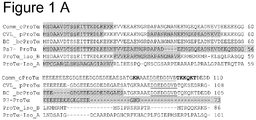

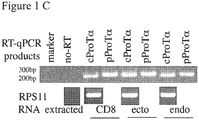

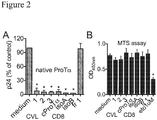


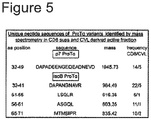

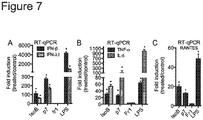

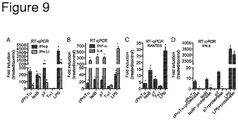
Classifications
-
- C—CHEMISTRY; METALLURGY
- C07—ORGANIC CHEMISTRY
- C07K—PEPTIDES
- C07K14/00—Peptides having more than 20 amino acids; Gastrins; Somatostatins; Melanotropins; Derivatives thereof
- C07K14/435—Peptides having more than 20 amino acids; Gastrins; Somatostatins; Melanotropins; Derivatives thereof from animals; from humans
- C07K14/575—Hormones
- C07K14/57581—Thymosin; Related peptides
-
- A—HUMAN NECESSITIES
- A61—MEDICAL OR VETERINARY SCIENCE; HYGIENE
- A61K—PREPARATIONS FOR MEDICAL, DENTAL OR TOILETRY PURPOSES
- A61K38/00—Medicinal preparations containing peptides
- A61K38/16—Peptides having more than 20 amino acids; Gastrins; Somatostatins; Melanotropins; Derivatives thereof
- A61K38/17—Peptides having more than 20 amino acids; Gastrins; Somatostatins; Melanotropins; Derivatives thereof from animals; from humans
- A61K38/22—Hormones
- A61K38/2292—Thymosin; Related peptides
-
- A—HUMAN NECESSITIES
- A61—MEDICAL OR VETERINARY SCIENCE; HYGIENE
- A61K—PREPARATIONS FOR MEDICAL, DENTAL OR TOILETRY PURPOSES
- A61K45/00—Medicinal preparations containing active ingredients not provided for in groups A61K31/00 - A61K41/00
- A61K45/06—Mixtures of active ingredients without chemical characterisation, e.g. antiphlogistics and cardiaca
-
- A—HUMAN NECESSITIES
- A61—MEDICAL OR VETERINARY SCIENCE; HYGIENE
- A61K—PREPARATIONS FOR MEDICAL, DENTAL OR TOILETRY PURPOSES
- A61K38/00—Medicinal preparations containing peptides
-
- Y—GENERAL TAGGING OF NEW TECHNOLOGICAL DEVELOPMENTS; GENERAL TAGGING OF CROSS-SECTIONAL TECHNOLOGIES SPANNING OVER SEVERAL SECTIONS OF THE IPC; TECHNICAL SUBJECTS COVERED BY FORMER USPC CROSS-REFERENCE ART COLLECTIONS [XRACs] AND DIGESTS
- Y02—TECHNOLOGIES OR APPLICATIONS FOR MITIGATION OR ADAPTATION AGAINST CLIMATE CHANGE
- Y02A—TECHNOLOGIES FOR ADAPTATION TO CLIMATE CHANGE
- Y02A50/00—TECHNOLOGIES FOR ADAPTATION TO CLIMATE CHANGE in human health protection, e.g. against extreme weather
- Y02A50/30—Against vector-borne diseases, e.g. mosquito-borne, fly-borne, tick-borne or waterborne diseases whose impact is exacerbated by climate change
Definitions
- Prothymosin alpha has been isolated from a wide range of human cell types, tissues and bodily fluids and has been reported to have different functions as an intracellular or extracellular protein.
- the major intracellular activity of ProT ⁇ is linked to cell proliferation, as suggested by evidence that it is highly expressed in malignant tumor cells of various cancer types (1-3).
- Extracellular ProT ⁇ found both in blood and in the growth medium of cultured cells, is reported to be associated with cell-mediated immunity activities (4-6), including anti-viral and anti-bacterial cytokine-like functions (6-11), activation of natural killer (NK) cells, stimulation of tumor-specific cytotoxic T-cells and up-regulation of MHC class II on antigen presenting cells (4, 5, 12-14).
- a nuclear localization signal directs intracellular ProT ⁇ to the nucleus, while ProT ⁇ variants with no or defective NLSs are more likely to be released extracellularly in response to viral challenge (15, 16).
- ProT ⁇ has a wide cellular distribution and is abundantly expressed, similar to the 90-kDa heat shock protein and ribosomal proteins; accordingly, mRNA and protein derived from this gene is easily isolated (17, 18).
- ProT ⁇ has a highly conserved primary structure in all mammalian species, suggesting an essential function for this protein.
- ProT ⁇ gene-family members Of the ten ProT ⁇ gene-family members, eight were considered to be processed pseudogenes, and, until the instant invention, they were considered to be unexpressed. Pseudogenes may arise by two processes termed retrotransposition, which refers to the formation of processed pseudogenes, and duplication. During duplication of a gene, modifications to the DNA sequence (such as mutations, insertions or deletions) can occur at the transcriptional or translational level and render the duplicated gene non-functional such that protein is no longer produced. During formation of a processed pseudogene, an mRNA is reverse transcribed and this cDNA is subsequently reintegrated into the genome.
- Processed pseudogenes are characterized as having no introns and containing a 3'-poly-A tail as well as directed repeats flanking the pseudogene, however they lack the upstream promoter necessary for expression of a regular gene.
- These ProT ⁇ - pseudogene family members are located on different chromosomes, which carry the necessary gene regulatory elements for transcription and thus these pseudogenes have the potential to be expressed (19, 20).
- the remaining two ProT ⁇ gene-family members are recognized as potential splice-variants of the cProT ⁇ gene, and are referred to as isoform A and isoform B.
- no mRNA or protein has previously been identified from any ProT ⁇ gene-family members other than the cProT ⁇ -coding gene (19, 20).
- ProT ⁇ polypeptides that have the cell-mediated immunity activity of ProT ⁇ , without the pro-proliferative activity typically associated with ProT ⁇ .
- the present invention identifies such novel ProT ⁇ variants. These variants have interferon-inducing activity that can be used for the treatment of viral infections, bacterial infections and cancer. These variants all lack a functional NLS, which abolishes their nuclear localization, proliferative function, and oncogenic activity.
- This invention generally relates to isolated prothymosin alpha (ProT ⁇ ) variants that are capable of inducing cell-mediated immune responses.
- the ProT ⁇ variants lack a nuclear localization signal and proliferative oncogenic activity generally attributed to ProT ⁇ .
- the variants of this invention are used in methods of treating.
- the ProT ⁇ variants of this invention can be used to treat bacterial, fungal, and viral infections.
- the ProT ⁇ variants of this invention can also be used to treat cancer, ischemia, and myeloproliferative blood disorders.
- the invention provides an isolated prothymosin alpha polypeptide, wherein the polypeptide comprises an amino acid sequence that is at least about 98% identical to an amino acid sequence of pProT ⁇ (SEQ ID NO: 1). In certain aspects of the invention, the invention provides an isolated prothymosin alpha polypeptide, wherein the polypeptide comprises an amino acid sequence that is at least about 95% identical to an amino acid sequence of pProT ⁇ (SEQ ID NO: 1). In another aspect, the invention provides an isolated prothymosin alpha polypeptide, wherein the polypeptide comprises an amino acid sequence that is at least about 90% identical to an amino acid sequence of pProT ⁇ (SEQ ID NO: 1).
- the invention provides an isolated prothymosin alpha polypeptide, wherein the polypeptide comprises a functional derivative of pProT ⁇ (SEQ ID NO: 1). In yet another aspect, the invention provides an isolated prothymosin alpha polypeptide, wherein the polypeptide comprises a fragment of pProT ⁇ (SEQ ID NO: 1).
- the invention provides an isolated prothymosin alpha polypeptide, wherein the polypeptide comprises an amino acid sequence that is at least about 98% identical to an amino acid sequence of isoA (SEQ ID NO: 2). In certain aspects of the invention, the invention provides an isolated prothymosin alpha polypeptide, wherein the polypeptide comprises an amino acid sequence that is at least about 95% identical to an amino acid sequence of isoA (SEQ ID NO: 2). In another aspect, the invention provides an isolated prothymosin alpha polypeptide, wherein the polypeptide comprises an amino acid sequence that is at least about 90% identical to an amino acid sequence of isoA (SEQ ID NO: 2).
- the invention provides an isolated prothymosin alpha polypeptide, wherein the polypeptide comprises a functional derivative of isoA (SEQ ID NO: 2). In yet another aspect, the invention provides an isolated prothymosin alpha polypeptide, wherein the polypeptide comprises a fragment of isoA (SEQ ID NO: 2).
- the invention provides an isolated prothymosin alpha polypeptide, wherein the polypeptide comprises an amino acid sequence that is at least about 98% identical to an amino acid sequence of isoB (SEQ ID NO: 3). In certain aspects of the invention, the invention provides an isolated prothymosin alpha polypeptide, wherein the polypeptide comprises an amino acid sequence that is at least about 95% identical to an amino acid sequence of isoB (SEQ ID NO: 3). In another aspect, the invention provides an isolated prothymosin alpha polypeptide, wherein the polypeptide comprises an amino acid sequence that is at least about 90% identical to an amino acid sequence of isoB (SEQ ID NO: 3).
- the invention provides an isolated prothymosin alpha polypeptide, wherein the polypeptide comprises a functional derivative of isoB (SEQ ID NO: 3). In yet another aspect, the invention provides an isolated prothymosin alpha polypeptide, wherein the polypeptide comprises a fragment of isoB (SEQ ID NO: 3).
- the invention provides an isolated prothymosin alpha polypeptide, wherein the polypeptide comprises an amino acid sequence that is at least about 98% identical to an amino acid sequence of P7-ProT ⁇ (SEQ ID NO: 4). In certain aspects of the invention, the invention provides an isolated prothymosin alpha polypeptide, wherein the polypeptide comprises an amino acid sequence that is at least about 95% identical to an amino acid sequence of P7-ProT ⁇ (SEQ ID NO: 4). In another aspect, the invention provides an isolated prothymosin alpha polypeptide, wherein the polypeptide comprises an amino acid sequence that is at least about 90% identical to an amino acid sequence of P7-ProT ⁇ (SEQ ID NO: 4).
- the invention provides an isolated prothymosin alpha polypeptide, wherein the polypeptide comprises a functional derivative of P7-ProT ⁇ (SEQ ID NO: 4). In yet another aspect, the invention provides an isolated prothymosin alpha polypeptide, wherein the polypeptide comprises a fragment of P7-ProT ⁇ (SEQ ID NO: 4).
- the invention provides an isolated prothymosin alpha polypeptide, wherein the polypeptide comprises an amino acid sequence that is at least about 98% identical to an amino acid sequence of Pseudo4a (SEQ ID NO: 9). In certain aspects of the invention, the invention provides an isolated prothymosin alpha polypeptide, wherein the polypeptide comprises an amino acid sequence that is at least about 95% identical to an amino acid sequence of Pseudo4a (SEQ ID NO: 9). In another aspect, the invention provides an isolated prothymosin alpha polypeptide, wherein the polypeptide comprises an amino acid sequence that is at least about 90% identical to an amino acid sequence of Pseudo4a (SEQ ID NO: 9).
- the invention provides an isolated prothymosin alpha polypeptide, wherein the polypeptide comprises a functional derivative of Pseudo4a (SEQ ID NO: 9). In yet another aspect, the invention provides an isolated prothymosin alpha polypeptide, wherein the polypeptide comprises a fragment of Pseudo4a (SEQ ID NO: 9).
- the invention provides an isolated prothymosin alpha polypeptide, wherein the polypeptide comprises an amino acid sequence that is at least about 98% identical to an amino acid sequence of Pseudo4 (SEQ ID NO: 10). In certain aspects of the invention, the invention provides an isolated prothymosin alpha polypeptide, wherein the polypeptide comprises an amino acid sequence that is at least about 95% identical to an amino acid sequence of Pseudo4 (SEQ ID NO: 10). In another aspect, the invention provides an isolated prothymosin alpha polypeptide, wherein the polypeptide comprises an amino acid sequence that is at least about 90% identical to an amino acid sequence of Pseudo4 (SEQ ID NO: 10).
- the invention provides an isolated prothymosin alpha polypeptide, wherein the polypeptide comprises a functional derivative of Pseudo4 (SEQ ID NO: 10). In yet another aspect, the invention provides an isolated prothymosin alpha polypeptide, wherein the polypeptide comprises a fragment of Pseudo4 (SEQ ID NO: 10).
- the invention provides an isolated prothymosin alpha polypeptide, wherein the polypeptide comprises an amino acid sequence that is at least about 98% identical to an amino acid sequence of oPTMA (SEQ ID NO: 11). In certain aspects of the invention, the invention provides an isolated prothymosin alpha polypeptide, wherein the polypeptide comprises an amino acid sequence that is at least about 95% identical to an amino acid sequence of oPTMA (SEQ ID NO: 11). In another aspect, the invention provides an isolated prothymosin alpha polypeptide, wherein the polypeptide comprises an amino acid sequence that is at least about 90% identical to an amino acid sequence of oPTMA (SEQ ID NO: 11).
- the invention provides an isolated prothymosin alpha polypeptide, wherein the polypeptide comprises a functional derivative of oPTMA (SEQ ID NO: 11). In yet another aspect, the invention provides an isolated prothymosin alpha polypeptide, wherein the polypeptide comprises a fragment of oPTMA (SEQ ID NO: 11).
- the invention provides an isolated prothymosin alpha polypeptide, wherein the polypeptide comprises an amino acid sequence that is at least about 98% identical to an amino acid sequence of ePTMA (SEQ ID NO: 12). In certain aspects of the invention, the invention provides an isolated prothymosin alpha polypeptide, wherein the polypeptide comprises an amino acid sequence that is at least about 95% identical to an amino acid sequence of ePTMA (SEQ ID NO: 12). In another aspect, the invention provides an isolated prothymosin alpha polypeptide, wherein the polypeptide comprises an amino acid sequence that is at least about 90% identical to an amino acid sequence of ePTMA (SEQ ID NO: 12).
- the invention provides an isolated prothymosin alpha polypeptide, wherein the polypeptide comprises a functional derivative of ePTMA (SEQ ID NO: 12). In yet another aspect, the invention provides an isolated prothymosin alpha polypeptide, wherein the polypeptide comprises a fragment of ePTMA (SEQ ID NO: 12).
- the invention provides an isolated prothymosin alpha polypeptide, wherein the polypeptide comprises an amino acid sequence that is at least about 98% identical to an amino acid sequence of kPTMA (SEQ ID NO: 13). In certain aspects of the invention, the invention provides an isolated prothymosin alpha polypeptide, wherein the polypeptide comprises an amino acid sequence that is at least about 95% identical to an amino acid sequence of kPTMA (SEQ ID NO: 13). In another aspect, the invention provides an isolated prothymosin alpha polypeptide, wherein the polypeptide comprises an amino acid sequence that is at least about 90% identical to an amino acid sequence of kPTMA (SEQ ID NO: 13).
- the invention provides an isolated prothymosin alpha polypeptide, wherein the polypeptide comprises a functional derivative of kPTMA (SEQ ID NO: 13). In yet another aspect, the invention provides an isolated prothymosin alpha polypeptide, wherein the polypeptide comprises a fragment of kPTMA (SEQ ID NO: 13).
- the invention provides an isolated prothymosin alpha polypeptide, wherein the polypeptide comprises an amino acid sequence of pProT ⁇ (SEQ ID NO: 1). In another embodiment, the invention provides an isolated prothymosin alpha polypeptide, wherein the polypeptide comprises an amino acid sequence of isoA (SEQ ID NO: 2). In other embodiments, the invention provides an isolated prothymosin alpha polypeptide, wherein the polypeptide comprises an amino acid sequence of isoB (SEQ ID NO: 3). In yet another embodiment, the invention provides an isolated prothymosin alpha polypeptide, wherein the polypeptide comprises an amino acid sequence of P7-ProT ⁇ (SEQ ID NO: 4).
- the invention provides an isolated prothymosin alpha polypeptide, wherein the polypeptide comprises an amino acid sequence of Pseudo4a (SEQ ID NO: 9). In other embodiments, the invention provides an isolated prothymosin alpha polypeptide, wherein the polypeptide comprises an amino acid sequence of Pseudo4 (SEQ ID NO: 10). In another embodiment, the invention provides an isolated prothymosin alpha polypeptide, wherein the polypeptide comprises an amino acid sequence of oPTMA (SEQ ID NO: 11). In other embodiments, the invention provides an isolated prothymosin alpha polypeptide, wherein the polypeptide comprises an amino acid sequence of ePTMA (SEQ ID NO: 12). In yet another embodiment, the invention provides an isolated prothymosin alpha polypeptide, wherein the polypeptide comprises an amino acid sequence of kPTMA (SEQ ID NO: 13).
- the invention provides an isolated nucleic acid that encodes a prothymosin alpha polypeptide, wherein the nucleic acid has a nucleotide sequence that is at least about 95% identical to a nucleotide sequence of pProT ⁇ (SEQ ID NO: 5).
- the invention provides an isolated nucleic acid that encodes a prothymosin alpha polypeptide, wherein the nucleic acid has a nucleotide sequence that is at least about 95% identical to a nucleotide sequence of IsoA (SEQ ID NO: 6).
- the invention provides an isolated nucleic acid that encodes a prothymosin alpha polypeptide, wherein the nucleic acid has a nucleotide sequence that is at least about 95% identical to a nucleotide sequence of IsoB (SEQ ID NO: 7).
- the invention provides an isolated nucleic acid that encodes a prothymosin alpha polypeptide, wherein the nucleic acid has a nucleotide sequence that is at least about 95% identical to a nucleotide sequence of P7-ProT ⁇ (SEQ ID NO: 8).
- the invention provides an isolated nucleic acid that encodes a prothymosin alpha polypeptide, wherein the nucleic acid has a nucleotide sequence that is at least about 95% identical to a nucleotide sequence of Pseudo4a (SEQ ID NO: 14).
- the invention provides an isolated nucleic acid that encodes a prothymosin alpha polypeptide, wherein the nucleic acid has a nucleotide sequence that is at least about 95% identical to a nucleotide sequence of Pseudo4 (SEQ ID NO: 15).
- the invention provides an isolated nucleic acid that encodes a prothymosin alpha polypeptide, wherein the nucleic acid has a nucleotide sequence that is at least about 95% identical to a nucleotide sequence of oPTMA (SEQ ID NO: 16). In certain aspects, the invention provides an isolated nucleic acid that encodes a prothymosin alpha polypeptide, wherein the nucleic acid has a nucleotide sequence that is at least about 95% identical to a nucleotide sequence of ePTMA (SEQ ID NO: 17).
- the invention provides an isolated nucleic acid that encodes a prothymosin alpha polypeptide, wherein the nucleic acid has a nucleotide sequence that is at least about 95% identical to a nucleotide sequence of kPTMA (SEQ ID NO: 18).
- the invention provides an isolated nucleic acid that encodes a prothymosin alpha polypeptide, wherein the nucleic acid comprises a nucleotide sequence of pProT ⁇ (SEQ ID NO: 5). In another embodiment, the invention provides an isolated nucleic acid that encodes a prothymosin alpha polypeptide, wherein the nucleic acid comprises a nucleotide sequence of IsoA (SEQ ID NO: 6). In certain embodiments, the invention provides an isolated nucleic acid that encodes a prothymosin alpha polypeptide, wherein the nucleic acid comprises a nucleotide sequence of IsoB (SEQ ID NO: 7).
- the invention provides an isolated nucleic acid that encodes a prothymosin alpha polypeptide, wherein the nucleic acid comprises a nucleotide sequence of P7-ProT ⁇ (SEQ ID NO: 8). In certain embodiments, the invention provides an isolated nucleic acid that encodes a prothymosin alpha polypeptide, wherein the nucleic acid comprises a nucleotide sequence of Pseudo4a (SEQ ID NO: 14). In another embodiment, the invention provides an isolated nucleic acid that encodes a prothymosin alpha polypeptide, wherein the nucleic acid comprises a nucleotide sequence of Pseudo4 (SEQ ID NO: 15).
- the invention provides an isolated nucleic acid that encodes a prothymosin alpha polypeptide, wherein the nucleic acid comprises a nucleotide sequence of oPTMA (SEQ ID NO: 16). In another embodiment, the invention provides an isolated nucleic acid that encodes a prothymosin alpha polypeptide, wherein the nucleic acid comprises a nucleotide sequence of ePTMA (SEQ ID NO: 17). In yet another embodiment, the invention provides an isolated nucleic acid that encodes a prothymosin alpha polypeptide, wherein the nucleic acid comprises a nucleotide sequence of kPTMA (SEQ ID NO: 18).
- the invention provides a pharmaceutical composition
- a pharmaceutical composition comprising the polypeptides of pProT ⁇ (SEQ ID NO: 1), isoA (SEQ ID NO: 2), isoB (SEQ ID NO: 3), P7-ProT ⁇ (SEQ ID NO: 4), Pseudo4a (SEQ ID NO: 9), Pseudo4 (SEQ ID NO: 10), oPTMA (SEQ ID NO: 11), ePTMA (SEQ ID NO: 12), kPTMA (SEQ ID NO: 13), or a combination of these peptides, and a pharmaceutically acceptable carrier.
- the invention provides a pharmaceutical composition that comprises a polypeptide that has an amino acid sequence that is at least about 95% identical to an amino acid sequence of pProT ⁇ (SEQ ID NO: 1), isoA (SEQ ID NO: 2), isoB (SEQ ID NO: 3), P7-ProT ⁇ (SEQ ID NO: 4), Pseudo4a (SEQ ID NO: 9), Pseudo4 (SEQ ID NO: 10), oPTMA (SEQ ID NO: 11), ePTMA (SEQ ID NO: 12), kPTMA (SEQ ID NO: 13), or a combination of these peptides, and a pharmaceutically acceptable carrier.
- the invention provides a pharmaceutical composition
- a pharmaceutical composition comprising a polypeptide that is a functional derivative of pProT ⁇ (SEQ ID NO: 1), isoA (SEQ ID NO: 2), isoB (SEQ ID NO: 3), P7-ProT ⁇ (SEQ ID NO: 4), Pseudo4a (SEQ ID NO: 9), Pseudo4 (SEQ ID NO: 10), oPTMA (SEQ ID NO: 11), ePTMA (SEQ ID NO: 12), kPTMA (SEQ ID NO: 13), or a combination of these peptides, and a pharmaceutically acceptable carrier.
- the invention provides a pharmaceutical composition
- a pharmaceutical composition comprising a polypeptide that is a fragment of pProT ⁇ (SEQ ID NO: 1), isoA (SEQ ID NO: 2), isoB (SEQ ID NO: 3), P7-ProT ⁇ (SEQ ID NO: 4), Pseudo4a (SEQ ID NO: 9), Pseudo4 (SEQ ID NO: 10), oPTMA (SEQ ID NO: 11), ePTMA (SEQ ID NO: 12), kPTMA (SEQ ID NO: 13), or a combination of these peptides, and a pharmaceutically acceptable carrier.
- a method for treating or preventing a viral infection involves administering to a subject in need of such treatment a polypeptide of pProT ⁇ (SEQ ID NO: 1), isoA (SEQ ID NO: 2), isoB (SEQ ID NO: 3), P7-ProT ⁇ (SEQ ID NO: 4), Pseudo4a (SEQ ID NO: 9), Pseudo4 (SEQ ID NO: 10), oPTMA (SEQ ID NO: 11), ePTMA (SEQ ID NO: 12), kPTMA (SEQ ID NO: 13), or a combination of these peptides, in an amount effective to treat or prevent viral infection.
- a method for treating or preventing a viral infection involves administering to a subject in need of such treatment a polypeptide that has an amino acid sequence that is at least about 95% identical to an amino acid sequence of pProT ⁇ (SEQ ID NO: 1), isoA (SEQ ID NO: 2), isoB (SEQ ID NO: 3), P7-ProT ⁇ (SEQ ID NO: 4), Pseudo4a (SEQ ID NO: 9), Pseudo4 (SEQ ID NO: 10), oPTMA (SEQ ID NO: 11), ePTMA (SEQ ID NO: 12), kPTMA (SEQ ID NO: 13), or a combination of these peptides, in an amount effective to treat or prevent viral infection.
- a method for treating or preventing a viral infection involves administering to a subject in need of such treatment a polypeptide that is a functional derivative of pProT ⁇ (SEQ ID NO: 1), isoA (SEQ ID NO: 2), isoB (SEQ ID NO: 3), P7-ProT ⁇ (SEQ ID NO: 4), Pseudo4a (SEQ ID NO: 9), Pseudo4 (SEQ ID NO: 10), oPTMA (SEQ ID NO: 11), ePTMA (SEQ ID NO: 12), kPTMA (SEQ ID NO: 13), or a combination of these peptides, in an amount effective to treat or prevent viral infection.
- a method for treating or preventing a viral infection involves administering to a subject in need of such treatment a polypeptide that is a fragment of pProT ⁇ (SEQ ID NO: 1), isoA (SEQ ID NO: 2), isoB (SEQ ID NO: 3), P7-ProT ⁇ (SEQ ID NO: 4), Pseudo4a (SEQ ID NO: 9), Pseudo4 (SEQ ID NO: 10), oPTMA (SEQ ID NO: 11), ePTMA (SEQ ID NO: 12), kPTMA (SEQ ID NO: 13), or a combination of these peptides, in an amount effective to treat or prevent viral infection.
- the viral infection is caused by Human Immunodeficiency Virus-1 (HIV-1), Human Immunodeficiency Virus-2 (HIV-2), Hepatatis C Virus, Hepatatis B Virus, Hepatatis A Virus, Ebola, Marburg, Dengue viruses, Hemorrhagic Fever Viruses (VHFs), Lassa virus (LASV), Crimean-Congo hemorrhagic fever virus (CCHFV), Rift Valley fever virus (RVFV), and/or yellow fever virus (YFV).
- the viral infection is an HIV-1 and/or HIV-2 infection.
- a method for potentiating an immune response involves administering to a subject in need of such treatment a polypeptide of pProT ⁇ (SEQ ID NO: 1), isoA (SEQ ID NO: 2), isoB (SEQ ID NO: 3), P7-ProT ⁇ (SEQ ID NO: 4), Pseudo4a (SEQ ID NO: 9), Pseudo4 (SEQ ID NO: 10), oPTMA (SEQ ID NO: 11), ePTMA (SEQ ID NO: 12), kPTMA (SEQ ID NO: 13), or a combination of these peptides, wherein the immune response is potentiated.
- a method for potentiating an immune response involves administering to a subject in need of such treatment a polypeptide that has an amino acid sequence that is at least about 95% identical to an amino acid sequence of pProT ⁇ (SEQ ID NO: 1), isoA (SEQ ID NO: 2), isoB (SEQ ID NO: 3), P7-ProT ⁇ (SEQ ID NO: 4), Pseudo4a (SEQ ID NO: 9), Pseudo4 (SEQ ID NO: 10), oPTMA (SEQ ID NO: 11), ePTMA (SEQ ID NO: 12), kPTMA (SEQ ID NO: 13), or a combination of these peptides, wherein the immune response is potentiated.
- a method for potentiating an immune response involves administering to a subject in need of such treatment a polypeptide that is a functional derivative of pProT ⁇ (SEQ ID NO: 1), isoA (SEQ ID NO: 2), isoB (SEQ ID NO: 3), P7-ProT ⁇ (SEQ ID NO: 4), Pseudo4a (SEQ ID NO: 9), Pseudo4 (SEQ ID NO: 10), oPTMA (SEQ ID NO: 11), ePTMA (SEQ ID NO: 12), kPTMA (SEQ ID NO: 13), or a combination of these peptides, wherein the immune response is potentiated.
- a method for potentiating an immune response involves administering to a subject in need of such treatment a polypeptide that is a fragment of pProT ⁇ (SEQ ID NO: 1), isoA (SEQ ID NO: 2), isoB (SEQ ID NO: 3), P7-ProT ⁇ (SEQ ID NO: 4), Pseudo4a (SEQ ID NO: 9), Pseudo4 (SEQ ID NO: 10), oPTMA (SEQ ID NO: 11), ePTMA (SEQ ID NO: 12), kPTMA (SEQ ID NO: 13), or a combination of these peptides, wherein the immune response is potentiated.
- the subject has a viral, fungal, bacterial, or parasitic infection, or combinations thereof, in which the present invention potentiates the subject's immune response to the infection(s).
- a method for potentiating an immune response in a subject undergoing cancer treatment involves administering to a subject in need of such potentiation a polypeptide of pProT ⁇ (SEQ ID NO: 1), isoA (SEQ ID NO: 2), isoB (SEQ ID NO: 3), P7-ProT ⁇ (SEQ ID NO: 4), Pseudo4a (SEQ ID NO: 9), Pseudo4 (SEQ ID NO: 10), oPTMA (SEQ ID NO: 11), ePTMA (SEQ ID NO: 12), kPTMA (SEQ ID NO: 13), or a combination of these peptides, wherein the immune response to the cancer is potentiated.
- a method for potentiating an immune response in a subject undergoing cancer treatment involves administering to a subject in need of such potentiation a polypeptide that has an amino acid sequence that is at least about 95% identical to an amino acid sequence of pProT ⁇ (SEQ ID NO: 1), isoA (SEQ ID NO: 2), isoB (SEQ ID NO: 3), P7-ProT ⁇ (SEQ ID NO: 4), Pseudo4a (SEQ ID NO: 9), Pseudo4 (SEQ ID NO: 10), oPTMA (SEQ ID NO: 11), ePTMA (SEQ ID NO: 12), kPTMA (SEQ ID NO: 13), or a combination of these peptides, wherein the immune response to the cancer is potentiated.
- a method for potentiating an immune response in a subject undergoing cancer treatment involves administering to a subject in need of such potentiation a polypeptide that is a functional derivative of pProT ⁇ (SEQ ID NO: 1), isoA (SEQ ID NO: 2), isoB (SEQ ID NO: 3), P7-ProT ⁇ (SEQ ID NO: 4), Pseudo4a (SEQ ID NO: 9), Pseudo4 (SEQ ID NO: 10), oPTMA (SEQ ID NO: 11), ePTMA (SEQ ID NO: 12), kPTMA (SEQ ID NO: 13), or a combination of these peptides, wherein the immune response to the cancer is potentiated.
- a method for potentiating an immune response in a subject undergoing cancer treatment involves administering to a subject in need of such potentiation a polypeptide that is a fragment of pProT ⁇ (SEQ ID NO: 1), isoA (SEQ ID NO: 2), isoB (SEQ ID NO: 3), P7-ProT ⁇ (SEQ ID NO: 4), Pseudo4a (SEQ ID NO: 9), Pseudo4 (SEQ ID NO: 10), oPTMA (SEQ ID NO: 11), ePTMA (SEQ ID NO: 12), kPTMA (SEQ ID NO: 13),or a combination of these peptides, wherein the immune response to the cancer is potentiated.
- the cancer treatment is a chemotherapeutic agent.
- a method for treating or preventing ischemia involves administering to a subject in need of such treatment a polypeptide of pProT ⁇ (SEQ ID NO: 1), isoA (SEQ ID NO: 2), isoB (SEQ ID NO: 3), P7-ProT ⁇ (SEQ ID NO: 4), Pseudo4a (SEQ ID NO: 9), Pseudo4 (SEQ ID NO: 10), oPTMA (SEQ ID NO: 11), ePTMA (SEQ ID NO: 12), kPTMA (SEQ ID NO: 13),or a combination of these peptides, in an amount effective to treat or prevent ischemia.
- a method for treating or preventing ischemia involves administering to a subject in need of such treatment a polypeptide that has an amino acid sequence that is at least about 95% identical to an amino acid sequence of pProT ⁇ (SEQ ID NO: 1), isoA (SEQ ID NO: 2), isoB (SEQ ID NO: 3), P7-ProT ⁇ (SEQ ID NO: 4), Pseudo4a (SEQ ID NO: 9), Pseudo4 (SEQ ID NO: 10), oPTMA (SEQ ID NO: 11), ePTMA (SEQ ID NO: 12), kPTMA (SEQ ID NO: 13),or a combination of these peptides, in an amount effective to treat or prevent ischemia.
- a method for treating or preventing ischemia involves administering to a subject in need of such treatment a polypeptide that is a functional derivative of pProT ⁇ (SEQ ID NO: 1), isoA (SEQ ID NO: 2), isoB (SEQ ID NO: 3), P7-ProT ⁇ (SEQ ID NO: 4), Pseudo4a (SEQ ID NO: 9), Pseudo4 (SEQ ID NO: 10), oPTMA (SEQ ID NO: 11), ePTMA (SEQ ID NO: 12), kPTMA (SEQ ID NO: 13),or a combination of these peptides, in an amount effective to treat or prevent ischemia.
- a method for treating or preventing ischemia involves administering to a subject in need of such treatment a polypeptide that is a fragment of pProT ⁇ (SEQ ID NO: 1), isoA (SEQ ID NO: 2), isoB (SEQ ID NO: 3), P7-ProT ⁇ (SEQ ID NO: 4), Pseudo4a (SEQ ID NO: 9), Pseudo4 (SEQ ID NO: 10), oPTMA (SEQ ID NO: 11), ePTMA (SEQ ID NO: 12), kPTMA (SEQ ID NO: 13),or a combination of these peptides, in an amount effective to treat or prevent ischemia.
- a method for inducing interferons involves administering to a subject in need of interferon induction a polypeptide of pProT ⁇ (SEQ ID NO: 1), isoA (SEQ ID NO: 2), isoB (SEQ ID NO: 3), P7-ProT ⁇ (SEQ ID NO: 4), Pseudo4a (SEQ ID NO: 9), Pseudo4 (SEQ ID NO: 10), oPTMA (SEQ ID NO: 11), ePTMA (SEQ ID NO: 12), kPTMA (SEQ ID NO: 13),or a combination of these peptides, wherein interferons are induced.
- a method for inducing interferons involves administering to a subject in need of interferon induction a polypeptide that has an amino acid sequence that is at least about 95% identical to an amino acid sequence of pProT ⁇ (SEQ ID NO: 1), isoA (SEQ ID NO: 2), isoB (SEQ ID NO: 3), P7-ProT ⁇ (SEQ ID NO: 4), Pseudo4a (SEQ ID NO: 9), Pseudo4 (SEQ ID NO: 10), oPTMA (SEQ ID NO: 11), ePTMA (SEQ ID NO: 12), kPTMA (SEQ ID NO: 13),or a combination of these peptides, wherein interferons are induced.
- a method for inducing interferons involves administering to a subject in need of interferon induction a polypeptide that is a functional derivative of pProT ⁇ (SEQ ID NO: 1), isoA (SEQ ID NO: 2), isoB (SEQ ID NO: 3), P7-ProT ⁇ (SEQ ID NO: 4), Pseudo4a (SEQ ID NO: 9), Pseudo4 (SEQ ID NO: 10), oPTMA (SEQ ID NO: 11), ePTMA (SEQ ID NO: 12), kPTMA (SEQ ID NO: 13),or a combination of these peptides, wherein interferons are induced.
- a method for inducing interferons involves administering to a subject in need of interferon induction a polypeptide that is a fragment of pProT ⁇ (SEQ ID NO: 1), isoA (SEQ ID NO: 2), isoB (SEQ ID NO: 3), and/or P7-ProT ⁇ (SEQ ID NO: 4), Pseudo4a (SEQ ID NO: 9), Pseudo4 (SEQ ID NO: 10), oPTMA (SEQ ID NO: 11), ePTMA (SEQ ID NO: 12), kPTMA (SEQ ID NO: 13),or a combination of these peptides, wherein interferons are induced.
- the interferons are type I and/or type III interferons.
- the blood disorder is leukemia.
- the invention provides a kit for potentiating an immune response comprising the polypeptides of pProT ⁇ (SEQ ID NO: 1), isoA (SEQ ID NO: 2), isoB (SEQ ID NO: 3), P7-ProT ⁇ (SEQ ID NO: 4), Pseudo4a (SEQ ID NO: 9), Pseudo4 (SEQ ID NO: 10), oPTMA (SEQ ID NO: 11), ePTMA (SEQ ID NO: 12), kPTMA (SEQ ID NO: 13),or a combination of these peptides, and instructions for use.
- the invention provides a kit for potentiating an immune response that comprises a polypeptide that has an amino acid sequence that is at least about 95% identical to an amino acid sequence of pProT ⁇ (SEQ ID NO: 1), isoA (SEQ ID NO: 2), isoB (SEQ ID NO: 3), P7-ProT ⁇ (SEQ ID NO: 4), Pseudo4a (SEQ ID NO: 9), Pseudo4 (SEQ ID NO: 10), oPTMA (SEQ ID NO: 11), ePTMA (SEQ ID NO: 12), kPTMA (SEQ ID NO: 13),or a combination of these peptides, and instructions for use.
- the invention provides a kit for potentiating an immune response comprising a polypeptide that is a functional derivative of pProT ⁇ (SEQ ID NO: 1), isoA (SEQ ID NO: 2), isoB (SEQ ID NO: 3), P7-ProT ⁇ (SEQ ID NO: 4), Pseudo4a (SEQ ID NO: 9), Pseudo4 (SEQ ID NO: 10), oPTMA (SEQ ID NO: 11), ePTMA (SEQ ID NO: 12), kPTMA (SEQ ID NO: 13),or a combination of these peptides, and instructions for use.
- a polypeptide that is a functional derivative of pProT ⁇ (SEQ ID NO: 1), isoA (SEQ ID NO: 2), isoB (SEQ ID NO: 3), P7-ProT ⁇ (SEQ ID NO: 4), Pseudo4a (SEQ ID NO: 9), Pseudo4 (SEQ ID NO: 10),
- the invention provides a kit for potentiating an immune response comprising a polypeptide that is a fragment of pProT ⁇ (SEQ ID NO: 1), isoA (SEQ ID NO: 2), isoB (SEQ ID NO: 3), P7-ProT ⁇ (SEQ ID NO: 4), Pseudo4a (SEQ ID NO: 9), Pseudo4 (SEQ ID NO: 10), oPTMA (SEQ ID NO: 11), ePTMA (SEQ ID NO: 12), kPTMA (SEQ ID NO: 13),or a combination of these peptides, and instructions for use.
- a polypeptide that is a fragment of pProT ⁇ (SEQ ID NO: 1), isoA (SEQ ID NO: 2), isoB (SEQ ID NO: 3), P7-ProT ⁇ (SEQ ID NO: 4), Pseudo4a (SEQ ID NO: 9), Pseudo4 (SEQ ID NO: 10), o
- the invention provides a pharmaceutical composition comprising the polypeptides of pProT ⁇ (SEQ ID NO: 1), isoA (SEQ ID NO: 2), isoB (SEQ ID NO: 3), P7-ProT ⁇ (SEQ ID NO: 4), Pseudo4a (SEQ ID NO: 9), Pseudo4 (SEQ ID NO: 10), oPTMA (SEQ ID NO: 11), ePTMA (SEQ ID NO: 12), kPTMA (SEQ ID NO: 13),or a combination of these peptides, and a chemotherapeutic agent.
- the invention provides a pharmaceutical composition that comprises a polypeptide that has an amino acid sequence that is at least about 95% identical to an amino acid sequence of pProT ⁇ (SEQ ID NO: 1), isoA (SEQ ID NO: 2), isoB (SEQ ID NO: 3), P7-ProT ⁇ (SEQ ID NO: 4), Pseudo4a (SEQ ID NO: 9), Pseudo4 (SEQ ID NO: 10), oPTMA (SEQ ID NO: 11), ePTMA (SEQ ID NO: 12), kPTMA (SEQ ID NO: 13),or a combination of these peptides, and a chemotherapeutic agent.
- the invention provides a pharmaceutical composition
- a pharmaceutical composition comprising a polypeptide that is a functional derivative of pProT ⁇ (SEQ ID NO: 1), isoA (SEQ ID NO: 2), isoB (SEQ ID NO: 3), P7-ProT ⁇ (SEQ ID NO: 4), Pseudo4a (SEQ ID NO: 9), Pseudo4 (SEQ ID NO: 10), oPTMA (SEQ ID NO: 11), ePTMA (SEQ ID NO: 12), kPTMA (SEQ ID NO: 13),or a combination of these peptides, and a chemotherapeutic agent.
- the invention provides a pharmaceutical composition comprising a polypeptide that is a fragment of pProT ⁇ (SEQ ID NO: 1), isoA (SEQ ID NO: 2), isoB (SEQ ID NO: 3), P7-ProT ⁇ (SEQ ID NO: 4), Pseudo4a (SEQ ID NO: 9), Pseudo4 (SEQ ID NO: 10), oPTMA (SEQ ID NO: 11), ePTMA (SEQ ID NO: 12), kPTMA (SEQ ID NO: 13),or a combination of these peptides, and a chemotherapeutic agent.
- the invention provides a pharmaceutical composition comprising the polypeptides of pProT ⁇ (SEQ ID NO: 1), isoA (SEQ ID NO: 2), isoB (SEQ ID NO: 3), P7-ProT ⁇ (SEQ ID NO: 4), Pseudo4a (SEQ ID NO: 9), Pseudo4 (SEQ ID NO: 10), oPTMA (SEQ ID NO: 11), ePTMA (SEQ ID NO: 12), kPTMA (SEQ ID NO: 13),or a combination of these peptides, a chemotherapeutic agent, and interferon alpha.
- the invention provides a pharmaceutical composition that comprises a polypeptide that has an amino acid sequence that is at least about 95% identical to an amino acid sequence of pProT ⁇ (SEQ ID NO: 1), isoA (SEQ ID NO: 2), isoB (SEQ ID NO: 3), P7-ProT ⁇ (SEQ ID NO: 4), Pseudo4a (SEQ ID NO: 9), Pseudo4 (SEQ ID NO: 10), oPTMA (SEQ ID NO: 11), ePTMA (SEQ ID NO: 12), kPTMA (SEQ ID NO: 13),or a combination of these peptides, a chemotherapeutic agent, and interferon alpha.
- the invention provides a pharmaceutical composition
- a pharmaceutical composition comprising a polypeptide that is a functional derivative of pProT ⁇ (SEQ ID NO: 1), isoA (SEQ ID NO: 2), isoB (SEQ ID NO: 3), P7-ProT ⁇ (SEQ ID NO: 4), Pseudo4a (SEQ ID NO: 9), Pseudo4 (SEQ ID NO: 10), oPTMA (SEQ ID NO: 11), ePTMA (SEQ ID NO: 12), kPTMA (SEQ ID NO: 13),or a combination of these peptides, a chemotherapeutic agent, and interferon alpha.
- the invention provides a pharmaceutical composition
- a pharmaceutical composition comprising a polypeptide that is a fragment of pProT ⁇ (SEQ ID NO: 1), isoA (SEQ ID NO: 2), isoB (SEQ ID NO: 3), P7-ProT ⁇ (SEQ ID NO: 4), Pseudo4a (SEQ ID NO: 9), Pseudo4 (SEQ ID NO: 10), oPTMA (SEQ ID NO: 11), ePTMA (SEQ ID NO: 12), kPTMA (SEQ ID NO: 13),or a combination of these peptides, a chemotherapeutic agent, and interferon alpha.
- the chemotherapeutic agent is dacarbazine, tamoxifen, raloxifene, megestrol, flutamide cyclophosphamide, temozolomide, cisplatin, and/or paclitaxel.
- the invention provides a pharmaceutical composition comprising the polypeptides of pProT ⁇ (SEQ ID NO: 1), isoA (SEQ ID NO: 2), isoB (SEQ ID NO: 3), P7-ProT ⁇ (SEQ ID NO: 4), Pseudo4a (SEQ ID NO: 9), Pseudo4 (SEQ ID NO: 10), oPTMA (SEQ ID NO: 11), ePTMA (SEQ ID NO: 12), kPTMA (SEQ ID NO: 13),or a combination of these peptides, and a pegylated interferon-alpha2a.
- the invention provides a pharmaceutical composition that comprises a polypeptide that has an amino acid sequence that is at least about 95% identical to an amino acid sequence of pProT ⁇ (SEQ ID NO: 1), isoA (SEQ ID NO: 2), isoB (SEQ ID NO: 3), P7-ProT ⁇ (SEQ ID NO: 4), Pseudo4a (SEQ ID NO: 9), Pseudo4 (SEQ ID NO: 10), oPTMA (SEQ ID NO: 11), ePTMA (SEQ ID NO: 12), kPTMA (SEQ ID NO: 13),or a combination of these peptides, and a pegylated interferon-alpha2a.
- the invention provides a pharmaceutical composition
- a pharmaceutical composition comprising a polypeptide that is a functional derivative of pProT ⁇ (SEQ ID NO: 1), isoA (SEQ ID NO: 2), isoB (SEQ ID NO: 3), P7-ProT ⁇ (SEQ ID NO: 4), Pseudo4a (SEQ ID NO: 9), Pseudo4 (SEQ ID NO: 10), oPTMA (SEQ ID NO: 11), ePTMA (SEQ ID NO: 12), kPTMA (SEQ ID NO: 13),or a combination of these peptides, and a pegylated interferon-alpha2a.
- the invention provides a pharmaceutical composition comprising a polypeptide that is a fragment of pProT ⁇ (SEQ ID NO: 1), isoA (SEQ ID NO: 2), isoB (SEQ ID NO: 3), P7-ProT ⁇ (SEQ ID NO: 4), Pseudo4a (SEQ ID NO: 9), Pseudo4 (SEQ ID NO: 10), oPTMA (SEQ ID NO: 11), ePTMA (SEQ ID NO: 12), kPTMA (SEQ ID NO: 13),or a combination of these peptides, and a pegylated interferon-alpha2a.
- the invention provides a pharmaceutical composition comprising an antigen, the polypeptides of pProT ⁇ (SEQ ID NO: 1), isoA (SEQ ID NO: 2), isoB (SEQ ID NO: 3), P7-ProT ⁇ (SEQ ID NO: 4), Pseudo4a (SEQ ID NO: 9), Pseudo4 (SEQ ID NO: 10), oPTMA (SEQ ID NO: 11), ePTMA (SEQ ID NO: 12), kPTMA (SEQ ID NO: 13),or a combination of these peptides, and a pharmaceutically acceptable carrier.
- an antigen the polypeptides of pProT ⁇ (SEQ ID NO: 1), isoA (SEQ ID NO: 2), isoB (SEQ ID NO: 3), P7-ProT ⁇ (SEQ ID NO: 4), Pseudo4a (SEQ ID NO: 9), Pseudo4 (SEQ ID NO: 10), oPTMA (SEQ ID NO
- the invention provides a pharmaceutical composition that comprises an antigen, a polypeptide that has an amino acid sequence that is at least about 95% identical to an amino acid sequence of pProT ⁇ (SEQ ID NO: 1), isoA (SEQ ID NO: 2), isoB (SEQ ID NO: 3), P7-ProT ⁇ (SEQ ID NO: 4), Pseudo4a (SEQ ID NO: 9), Pseudo4 (SEQ ID NO: 10), oPTMA (SEQ ID NO: 11), ePTMA (SEQ ID NO: 12), kPTMA (SEQ ID NO: 13),or a combination of these peptides, and a pharmaceutically acceptable carrier.
- the invention provides a pharmaceutical composition
- a pharmaceutical composition comprising an antigen, a polypeptide that is a functional derivative of pProT ⁇ (SEQ ID NO: 1), isoA (SEQ ID NO: 2), isoB (SEQ ID NO: 3), P7-ProT ⁇ (SEQ ID NO: 4), Pseudo4a (SEQ ID NO: 9), Pseudo4 (SEQ ID NO: 10), oPTMA (SEQ ID NO: 11), ePTMA (SEQ ID NO: 12), kPTMA (SEQ ID NO: 13),or a combination of these peptides, and a pharmaceutically acceptable carrier.
- the invention provides a pharmaceutical composition
- a pharmaceutical composition comprising an antigen, a polypeptide that is a fragment of pProT ⁇ (SEQ ID NO: 1), isoA (SEQ ID NO: 2), isoB (SEQ ID NO: 3), P7-ProT ⁇ (SEQ ID NO: 4), Pseudo4a (SEQ ID NO: 9), Pseudo4 (SEQ ID NO: 10), oPTMA (SEQ ID NO: 11), ePTMA (SEQ ID NO: 12), kPTMA (SEQ ID NO: 13),or a combination of these peptides, and a pharmaceutically acceptable carrier.
- a method for inducing RANTES involves administering to a subject in need of RANTES induction a polypeptide of pProT ⁇ (SEQ ID NO: 1), isoA (SEQ ID NO: 2), isoB (SEQ ID NO: 3), P7-ProT ⁇ (SEQ ID NO: 4), Pseudo4a (SEQ ID NO: 9), Pseudo4 (SEQ ID NO: 10), oPTMA (SEQ ID NO: 11), ePTMA (SEQ ID NO: 12), kPTMA (SEQ ID NO: 13),or a combination of these peptides, wherein RANTES is induced.
- a method for inducing RANTES involves administering to a subject in need of RANTES induction a polypeptide that has an amino acid sequence that is at least about 95% identical to an amino acid sequence of pProT ⁇ (SEQ ID NO: 1), isoA (SEQ ID NO: 2), isoB (SEQ ID NO: 3), P7-ProT ⁇ (SEQ ID NO: 4), Pseudo4a (SEQ ID NO: 9), Pseudo4 (SEQ ID NO: 10), oPTMA (SEQ ID NO: 11), ePTMA (SEQ ID NO: 12), kPTMA (SEQ ID NO: 13),or a combination of these peptides, wherein RANTES is induced.
- a method for inducing RANTES involves administering to a subject in need of RANTES induction a polypeptide that is a functional derivative of pProT ⁇ (SEQ ID NO: 1), isoA (SEQ ID NO: 2), isoB (SEQ ID NO: 3), P7-ProT ⁇ (SEQ ID NO: 4), Pseudo4a (SEQ ID NO: 9), Pseudo4 (SEQ ID NO: 10), oPTMA (SEQ ID NO: 11), ePTMA (SEQ ID NO: 12), kPTMA (SEQ ID NO: 13),or a combination of these peptides, wherein RANTES is induced.
- a method for inducing RANTES involves administering to a subject in need of RANTES induction a polypeptide that is a fragment of pProT ⁇ (SEQ ID NO: 1), isoA (SEQ ID NO: 2), isoB (SEQ ID NO: 3), P7-ProT ⁇ (SEQ ID NO: 4), Pseudo4a (SEQ ID NO: 9), Pseudo4 (SEQ ID NO: 10), oPTMA (SEQ ID NO: 11), ePTMA (SEQ ID NO: 12), kPTMA (SEQ ID NO: 13),or a combination of these peptides, wherein RANTES is induced.
- Figure 1 shows exemplary protein and nucleotide sequences of nine novel ProT ⁇ variants aligned with common ProT ⁇ (cProT ⁇ ) and/or breast cancer variant (bcProT ⁇ ) and demonstrates expression of novel pseudogene ProT ⁇ (pProT ⁇ ) variant.
- Figure 2 shows that native ProT ⁇ variants, pProT ⁇ , isoA-ProT ⁇ and isoB-ProT ⁇ , have potent anti-HIV activity with no detectable cytotoxic effect. All experiments were performed at least three times. Bars marked with an asterisk were considered statistically significant (p ⁇ 0.05).
- Figure 3 shows that native ProT ⁇ variants isoA and isoB induce mRNA expression of innate inhibitors of HIV-1 replication: type I IFN (IFN- ⁇ ), type III IFNs ( ⁇ 1 and ⁇ 3) and RANTES in primary human macrophages. All mRNA transcripts were measured by RT-qPCR where fold change in mRNA expression of treated cells was calculated as compared with control medium after normalization to the human ribosomal protein (RPS11) control gene in (A), (B), (C), and D. Each experiment was done at least three times. Bars marked with an asterisk were considered statistically significant (p ⁇ 0.05).
- Figure 4 shows induction of mRNA of ProT ⁇ variants by TCR stimulation of CD8 + T-cells and release of ProT ⁇ from HIV BAL infected CD4 + T cells or ectocervical cells stimulated with poly I:C. Each experiment was done at least three times. Bars marked with an asterisk were considered statistically significant (p ⁇ 0.05).
- Figure 5 shows the mass spectrometry of the unique peptide sequences of ProT ⁇ variants isoB and P7 from CD8 sups and CVL-derived active fractions.
- Figure 6 shows the native genetic variants of ProT ⁇ IsoB and p7 suppress HIV replication in primary human macrophages.
- Figure 7 shows that the native genetic variants of ProT ⁇ IsoB and p7 induce mRNA expression of type I, type III IFNs and RANTES but not the fraction derived from the same purification (Fr 1) containing the equal amount of the protein.
- RT-qPCR was performed on RNA extracted from treated and control cells with gene specific primers. All mRNA transcripts were measured by RT-qPCR where fold change in mRNA expression of treated cells was calculated as compared with control medium after normalization to the ribosomal protein (RPS11) control gene. Each experiment was done at least three times. Data represent mean ⁇ SD. Student's t test was used to compare means of treated versus control samples. Bars marked with an asterisk were considered statistically significant (p ⁇ 0.05).
- Figure 8 shows that recombinant genetic variants of ProT ⁇ : cProT ⁇ , IsoB and p7 suppress HIV replication.
- Primary human macrophages or CD4+ T cells were infected with HIV BaL at MOI 0.1 for 2 h followed by washes with PBS and treated with 200 ng/ml of the indicated ProT ⁇ variants.
- ELISA for the presence of HIV p24 antigen was done at day 7 post infection. Data represent mean ⁇ SD. Student's t test was used to compare means of treated versus control samples. Bars marked with an asterisk were considered statistically significant (p ⁇ 0.05).
- etoposide DNA-damaging agent
- Figure 9 shows that recombinant genetic variants of ProT ⁇ : cProT ⁇ , IsoB and p7 induce mRNA expression of type I, type III IFNs and RANTES and that this activity is independent of LPS.
- RT-qPCR was performed as described in Fig. 2 . Each experiment was done at least three times. Data represent mean ⁇ SD. Student's t test was used to compare means of treated versus control samples. Bars marked with an asterisk were considered statistically significant (p ⁇ 0.05).
- This invention generally relates to novel human ProT ⁇ polypeptide variants that have cell mediated immunity activity, but lack the pro-proliferative activity typically associated with ProT ⁇ .
- Cell-mediated immune responses a fundamental component of adaptive immunity, are critical for mediating an organism's defense against disease. Upregulation of cellular immune responses generally results in a more rapid or thorough clearance of a virus, bacterium, fungus, parasite, cancer, ischemia, myeloproliferative blood disorders or some combination thereof.
- the invention also relates to the use of these novel polypeptides for the treatment, prevention, or inhibition of viral infections, such as HIV-1, bacterial infections, fungal infections, cancer, ischemia, and blood disorders.
- viral infections such as HIV-1, bacterial infections, fungal infections, cancer, ischemia, and blood disorders.
- the invention is further directed to compositions comprising ProT ⁇ variants and to methods for the use of such compositions in the prevention and/or treatment of viral infections, bacterial infection, fungal infection, cancer, ischemia, and blood disorders.
- ProT ⁇ protein is a small 12.5-kDa, strongly acidic polypeptide that is localized intracellularly and extracellularly. Across species, it has a highly conserved primary structure, but lacks a uniform secondary structure. ProT ⁇ is abundantly expressed in a wide array of cell types, in a manner similar to other ubiquitous proteins such as ribosomal proteins, which suggests an essential function for this protein. The intracellular function of ProT ⁇ is linked to cell proliferation, cell cycle regulation and transcription, as it is overexpressed in various types of cancer ( Tripathi, SC et al, PLoS One 6(5): e19213, 2011 ). As an extracellular protein, ProT ⁇ exhibits cytokine-like properties and enhances cell-mediated immunity.
- the present invention is based on the discovery of the in vivo expression of novel human ProT ⁇ variants.
- the identification of the novel variants is surprising because although ten ProT ⁇ gene family member were known to exist, only one form of the protein and corresponding mRNA transcript had been detected (referred to as common-ProT ⁇ , or cProT ⁇ ).
- the NLS marks a protein for import into the nucleus by way of nuclear transport.
- An exemplary NLS in human ProT ⁇ occurs in the C-terminal domain of the protein. While studies have demonstrated that cProT ⁇ 's NLS is located at amino acid residues 82-109, it has been shown that cProT ⁇ actually possesses a bipartite nuclear localization signal (KR amino acid residues at 87 and KKQK at 101) because mutation in both domains impairs nuclear localization (See Mosoian, A. 2011 Future Med Chem 3(9):1199-1208 ).
- peptide refers to an oligomer of at least two contiguous amino acids, linked together by a peptide bond, and not greater than fifty amino acids.
- polypeptide refers to an oligomer of at least fifty amino acids.
- modification and “mutation” can be used interchangeably, particularly with regard to the modifications/mutations to the primary amino acid sequences of a protein or peptide (or nucleic acid sequences) described herein.
- modification can also be used to describe post-translational modifications to a protein or peptide including, but not limited to, methylation, farnesylation, carboxymethylation, geranyl geranylation, glycosylation, phosphorylation, acetylation, myristoylation, prenylation, palmitation, and/or amidation.
- Modification can also include the cleavage of a signal peptide, or methionine, or other portions of the peptide that require cleavage to generate the mature peptide. Modifications can also include, for example, complexing a protein or peptide with another compound. Such modifications can be considered to be mutations, for example, if the modification is different than the post-translational modification that occurs in the natural, wild-type protein or peptide.
- homologue or “variants” are used to refer to a protein or peptide which differs from a naturally occurring protein or peptide (i.e., the "prototype” or “wild-type” protein) by minor modifications to the naturally occurring protein or peptide, but which maintains the basic protein and side chain structure of the naturally occurring form.
- Such changes include, but are not limited to: changes in one or a few amino acid side chains; changes one or a few amino acids, including deletions (e.g., a truncated version of the protein or peptide), insertions and/or substitutions; changes in stereochemistry of one or a few atoms; and/or minor derivatizations, including but not limited to: methylation, glycosylation, phosphorylation, acetylation, myristoylation, prenylation, palmitation, amidation and/or addition of glycosylphosphatidyl inositol.
- a homologue or variant can have either enhanced, decreased, or substantially similar properties as compared to the naturally occurring protein or peptide.
- a homologue or variant can include an agonist of a protein or an antagonist of a protein.
- a ProT ⁇ variant of the invention comprises a polypeptide having an amino acid sequence corresponding to one of the following sequences that is at least about 100% identical, at least about 99% identical, at least about 98% identical, at least about 97% identical, at least about 96% identical, at least about 95% identical, at least about 90%, at least about 85% identical, at least about 80% identical, or at least about 75% identical to the following sequences:
- polypeptide of the invention can be synthesized according to Merrifield solid-phase synthesis techniques ( Kotler et al., Proc. Natl. Acad. Sci. 85:4185-4189, 1985 ; Barany et al., in Gross et al., eds., The Peptides, Vol. 2, Academic Press, 1980 ) or other techniques of peptide synthesis known to those skilled in the art. After cleavage and deprotection, synthetic peptides or polypeptides can be purified by, for example, gel filtration, chromatography, and any reverse-phase column/HPLC system known to those skilled in the art. Polypeptides derived from the invention may also be produced by chemical or enzymatic digestion of the full-length protein using techniques that are known to those skilled in the art.
- a polypeptide may be recovered by purification from a cell line expressing such a polypeptide, using standard techniques for protein purification which are known to those skilled in the art, including, but not limited to, size fractionation, ion-exchange chromatography, and reverse-phase chromatography.
- the amino acid sequences of the polypeptides can be confirmed and identified by amino acid composition analysis as well as manual and automated Edman degradation and determination of each amino acid, HPLC analysis, or mass spectrometry
- an isolated protein or “isolated polypeptide” in the present invention, includes full-length proteins and their glycosylated or otherwise modified forms, fusion proteins, or any fragment or homologue or variant of such a protein. More specifically, an isolated protein according to the present invention, is a protein (including a polypeptide or peptide) that has been removed from its natural milieu ( i.e., that has been subject to human manipulation) and can include purified proteins, partially purified proteins, recombinantly produced proteins, synthetically produced proteins, proteins complexed with lipids, soluble proteins, and isolated proteins associated with other proteins, for example. As such, "isolated” does not reflect the extent to which the protein has been purified.
- nucleic acid or “polynucleotide” refers to an oligomer of at least two contiguous nucleotides, linked together by a phosphodiester bond.
- a nucleic acid can also be referred to as DNA, RNA or derivatives of either DNA or RNA, including cDNA.
- an "isolated nucleic acid” molecule is a nucleic acid molecule (polynucleotide) that has been removed from its natural milieu (i. e., that has been subject to human manipulation) and can include DNA, RNA, or derivatives of either DNA or RNA, including cDNA. As such, “isolated” does not reflect the extent to which the nucleic acid molecule has been purified.
- nucleic acid sequence primarily refers to the sequence of nucleotides on the nucleic acid molecule that is capable of encoding a protein.
- An isolated nucleic acid molecule of the present invention can be isolated from its natural source or produced using recombinant DNA technology (e.g., polymerase chain reaction (PCR) amplification, cloning) or chemical synthesis.
- Isolated nucleic acid molecules can include, for example, genes, natural allelic variants of genes, coding regions or portions thereof, and coding and/or regulatory regions modified by nucleotide insertions, deletions, substitutions, and/or inversions in a manner such that the modifications do not substantially interfere with the nucleic acid molecule's ability to encode a protein of the present invention or to form stable hybrids under stringent conditions with natural gene isolates.
- a ProT ⁇ variant of the invention comprises a nucleic acid sequence corresponding to one of the following sequences that is at least about 100% identical, at least about 99% identical, at least about 98% identical, at least about 97% identical, at least about 96% identical, at least about 95% identical, at least about 90%, at least about 85% identical, at least about 80% identical, or at least about 75% identical to the following sequences:
- ProT ⁇ variant proteins may be prepared in a variety of ways, according to known methods.
- Polynucleotides encoding ProT ⁇ variants may be produced by chemical synthesis, e.g., by the phosphoramidite method described by Beaucage and Caruthers (1981) Tetra. Letts., 22:1859-1862 or the triester method according to Matteuci et al. (1981) J. Am. Chem. Soc., 103: 3185 , and may be performed on commercial automated oligonucleotide synthesizers.
- a double-stranded fragment may be obtained from the single stranded product of chemical synthesis either by synthesizing the complementary strand and annealing the strands together under appropriate conditions or by adding the complementary strand using DNA polymerase with an appropriate primer sequence.
- ProT ⁇ variant proteins may be purified from appropriate sources (e.g., CD8 + cells, CD4 cells, and cells isolated from the body (e.g., cervicovaginal lavage fluids which can potentially contain epithelial, dendritic, macrophage, B-cells, and additional cells found in the female reproductive track).
- ProT ⁇ variant proteins may also be generated using in vitro transcription and translation systems. For example, a cDNA or gene may be cloned into an appropriate in vitro transcription vector, such as pSP64 or pSP65 for in vitro transcription, followed by cell-free translation in a suitable cell-free translation system, such as wheat germ or rabbit reticulocyte lysates.
- in vitro transcription and translation systems are commercially available, e.g., from Promega Biotech, Madison, Wis. or BRL, Rockville, Md.
- larger quantities of ProT ⁇ variants may be produced by expression in a suitable prokaryotic or eukaryotic system.
- a DNA molecule such as a cDNA of the variants
- a plasmid vector adapted for expression in a bacterial cell, such as E. coli.
- Such vectors comprise regulatory elements necessary for expression of the DNA in a host cell (e.g. E. coli ) positioned in such a manner as to permit expression of the DNA in the host cell.
- regulatory elements required for expression include promoter sequences, transcription initiation sequences and, optionally, enhancer sequences which are operably linked.
- operably linked refers to a regulatory sequence capable of mediating the expression of a coding sequence and which are placed in a DNA molecule (e.g., an expression vector) in an appropriate position relative to the coding sequence so as to effect expression of the coding sequence.
- a DNA molecule e.g., an expression vector
- transcription control elements e.g. promoters, enhancers, and termination elements
- ProT ⁇ variant polypeptides or nucleic acids produced by gene expression in a recombinant prokaryotic or eukaryotic system may be purified according to methods known in the art.
- a commercially available expression/secretion system can be used, whereby the recombinant protein is expressed and purified.
- the protein is secreted from the host cell, to be easily purified from the surrounding medium.
- affinity separation such as by immunological interaction with antibodies that bind specifically to the recombinant protein or nickel columns for isolation of recombinant proteins tagged with 6-8 histidine residues at their N-terminus or C-terminus.
- Alternative tags may comprise the FLAG epitope or the hemagglutinin epitope. Such methods are commonly used by skilled practitioners.
- tag refers to a chemical moiety, either a nucleotide, oligonucleotide, polynucleotide or an amino acid, peptide or protein or other chemical, that when added to another sequence, provides additional utility or confers useful properties to the sequence, particularly with regard to methods relating to the detection or isolation of the sequence.
- a homopolymer nucleic acid sequence or a nucleic acid sequence complementary to a capture oligonucleotide may be added to a primer or probe sequence to facilitate the subsequent isolation of an extension product or hybridized product.
- histidine residues may be added to either the amino- or carboxy-terminus of a protein to facilitate protein isolation by chelating metal chromatography.
- amino acid sequences, peptides, proteins or fusion partners representing epitopes or binding determinants reactive with specific antibody molecules or other molecules (e.g., flag epitope, c-myc epitope, transmembrane epitope of the influenza A virus hemaglutinin protein, protein A, cellulose binding domain, calmodulin binding protein, maltose binding protein, chitin binding domain, glutathione S-transferase, and the like) may be added to proteins to facilitate protein isolation by procedures such as affinity or immunoaffinity chromatography.
- Chemical tag moieties include such molecules as biotin, which may be added to either nucleic acids or proteins and facilitates isolation or detection by interaction with avidin reagents, and the like. Numerous other tag moieties are known to, and can be envisioned by, the trained artisan, and are contemplated to be within the scope of this definition.
- ProT ⁇ variants of the invention are characterized by an ability to decrease or prevent viral, bacterial, or fungal replication in active infections in vivo or in a cellular model system, including primary or immortalized cells.
- ProT ⁇ variants of the invention are characterized by an ability to decrease or prevent cancer, ischemia or blood disorders in vivo or in a cellular model system, including primary or immortalized cells.
- Exemplary cell lines which can be used for ProT ⁇ studies on infected cells are preferably those that are susceptible to such infections or diseases. Such cells include, for example, peripheral blood lymphocytes (PBL), CD4+ cells, macrophages, dendritic cells, and epithelial cells, such as epithelial cells for influenza virus.
- PBL peripheral blood lymphocytes
- CD4+ cells CD4+ cells
- macrophages macrophages
- dendritic cells dendritic cells
- epithelial cells such as epithelial cells for influenza virus.
- ProT ⁇ variants may also be characterized by their effects in altering, reducing or eliminating disease or the replication or infectivity of a virus, bacteria or fungus. In other embodiments, ProT ⁇ variants may also be characterized by their effects in altering, reducing or preventing (for example, it could be use by women as a cream before sex to protect them from HIV infected partner) HIV-1 infection. Where ProT ⁇ variants are incubated with infected or diseased cells, the production of infectious progeny or the increase in diseased cells is determined relative to control experiments without the variant.
- ProT ⁇ variants of the invention can be characterized in tissue culture models of viral infection using cells having any lentiviral or retroviral infection, including, but not limited to, those resulting from HIV-1, HIV-2, simian immunodeficiency virus (SIV), feline immunodeficiency virus (FIV), bovine immunodeficiency virus (BIV), and visna virus infections, and all strains and isolates thereof.
- SIV simian immunodeficiency virus
- FV feline immunodeficiency virus
- BIV bovine immunodeficiency virus
- visna virus infections and all strains and isolates thereof.
- Specific HIV strains that have tropism for certain cell types can be used, including the macrophage-tropic HIV Ba-1, and the T-tropic HIV IIIB and MN.
- isolates can include lymphotropic and macrophage-tropic strains, primary strains derived from blood cells or tissues, and North American, European, African and Asian isolates.
- Primary cells or cell lines which can be used for inhibitor studies of virus-infected cells are preferably those that are susceptible to such viral infection.
- Such cells include, for example, peripheral blood lymphocytes (PBL), especially CD4+ cells, and macrophages, dendritic, and epithelial cells, such as epithelial cells for influenza virus.
- PBL peripheral blood lymphocytes
- CD4+ cells especially CD4+ cells
- macrophages especially CD4+ cells
- dendritic dendritic
- epithelial cells such as epithelial cells for influenza virus.
- Assay systems which employ a vector-delivered full or partial viral, bacterial or fungal genome into a eukaryotic cell can be used to simulate virion, bacteria or fungal production, respectively, and such cells can be used in the characterization of ProT ⁇ variants.
- Further assay systems which employ a vector encoding full or partial cancer, ischemic or myeloproliferative signaling pathway, which is then delivered into a eukaryotic cell, can be used to simulate cancer, ischemia or blood disorders, respectively, and such cells can be used in the characterization of ProT ⁇ variants.
- ProT ⁇ variants reduce or eliminate the generation of diseased cell proliferation or infectious progeny
- the quantity and type of diseased cells or infectious progeny are assayed at suitable times post-infection.
- Evidence of microscopically observed spread of infection or disease and cytopathic effect can provide an assessment as to whether infectious progeny are being generated or diseased cells are proliferating.
- increased amounts of the p24 capsid protein can provide an assessment as to whether infectious HIV progeny are being generated.
- the assessment of progeny infectivity or diseased cell proliferation may be determined further by recovery of infected or diseased cells and co-cultivation with suitable cells (e.g., PBL, macrophages, or dendritic cells) or by the recovery of supernatant from the infected or diseased cells and cell-free infection of suitable cells.
- suitable cells e.g., PBL, macrophages, or dendritic cells
- the rates of bacterial proliferation can be assessed by determination of net bacterial load within cells by plating cell or tissue lysates onto fresh laboratory medium cultures and counting of colony-forming units (cfu).
- Another method of phenotypic determination involves the observation of infectious progeny or diseased cells for morphological analysis, e.g., by electron microscopy. Quantitative assessment of an infection or disease conducted in the presence of ProT ⁇ variants can also be determined using molecular markers, for example, by ELISA assay, reverse transcriptase activity, or DNA synthesis by quantitative PCR using standard techniques known to those skilled in the art.
- a DNA encoding a ProT ⁇ variant can be used to engineer cell lines which constitutively express the ProT ⁇ variant in order to test the effect of the ProT ⁇ variant on different isolates viral, bacterial or fungal strains as well as various types of cancer, ischemia and blood disorders.
- cell lines can include lymphotropic and macrophage-tropic strains, primary strains derived from blood cells or tissues, and North American, European, African and Asian isolates. Such methods can allow the selection of a ProT ⁇ variant which has optimal inhibitory effect on a particular viral isolate of interest.
- cell lines can also be used to test the effect of ProT ⁇ variants on different viruses (e.g., other retroviruses, lentiviruses, and hepatitis virus) and isolates and strains thereof.
- viruses e.g., other retroviruses, lentiviruses, and hepatitis virus
- ProT ⁇ variants of the invention can be tested in animal models of viral, bacterial or fungal infections.
- animal models of a viral infection include HIV infected animal models, such as the SCID-Hu mouse model of HIV-1 infection ( Aldrovandi et al., J. Virol. 70:1505, 1996 ) and SIV-infected monkeys.
- Such models of infection are suitable for testing ProT ⁇ variants of the invention for efficacy against challenge with HIV or other lentiviruses and other retroviruses in order to identify those ProT ⁇ variants which can be used for prevention or treatment of viral infection.
- Animal models designed for other viral, bacterial or fungal infections may also be utilized in a similar manner by those of skill in the art.
- ProT ⁇ variants can be assayed to determine the concentration required to achieve elimination or reduction in growth of a target infection or disease.
- a convenient variable for measurement is the concentration of a ProT ⁇ variant required to inhibit 50% of pathogen replication or tumor growth (IC 50 ), whether assayed in cell culture or with the use of a molecular marker.
- An exemplary assay for viral growth includes the measurement of viral p24 production by ELISA assay, presence of viral RNA, reverse transcriptase activity, or viral DNA synthesis by quantitative PCR using standard techniques known to those skilled in the art for the detection of HIV virion levels.
- ProT ⁇ variants of the invention can be evaluated for cytotoxic effects using standard assays that measure cell viability. Such assays include 14 C protein hydrolysate, 3 H thymidine uptake, MTT or MTS reduction, and cell growth. Such parameters as TD 50 (toxic dose to 50% of the tested culture) can be derived from such assays. Comparison of the TD 50 so derived with the IC 50 (ProT ⁇ variant concentration required to inhibit 50% of the marker for infection or disease being tested) can indicate a therapeutic index for a particular compound (TI).
- the IC 50 is at least ten times higher than the TD 50 , and the IC 50 is effective at a minimum of 10 -6 M in a culture with a ProT ⁇ variant. Most preferably, a ProT ⁇ variant of the invention exhibits an IC 50 of 10 -7 M or 10 -8 M.
- ProT ⁇ Variants Induce IFNs /RANTES/TNFa for treatment of Viral/Bacterial/Fungal Infections
- immunological response is the development in a subject of a humoral and/or a cellular immune response to an antigen or an immunological adjuvant.
- an "antigen” refers to a molecule containing one or more epitopes (e.g., linear, conformational or both) that elicit an immunological response.
- the term "antigen” as used herein includes subunit antigens, i.e., antigens which are separate and discrete from a whole organism with which the antigen is associated in nature.
- Antibodies such as anti-idiotype antibodies, or fragments thereof, and synthetic peptide mimotopes, which can mimic an antigen or antigenic determinant, are also captured under the definition of antigen as used herein.
- Immune cells that play a role in the immune response are immune cells of hematopoietic origin.
- Immune cells include lymphocytes, such as B cells and T cells; natural killer cells; and myeloid cells, such as monocytes, macrophages, eosinophils, mast cells, basophils, and granulocytes.
- T cell includes CD4+ T cells and CD8+ T cells.
- the term T cell also includes both T helper I type T cells and T helper 2 type T cells.
- a "cellular immune response” or “cell mediated immune response” is one mediated by T-lymphocytes and/or other white blood cells, while a humoral immune response refers to an immune response mediated by antibody molecules.
- CTLs cytolytic T-cells
- MHC major histocompatibility complex
- CTLs helper T-cells.
- Helper T-cells act to help stimulate the function, and focus the activity of, nonspecific effector cells against cells displaying peptide antigens in association with MHC molecules on their surface.
- a "cellular immune response” or “cell mediated immune response” also refers to the production of cytokines, chemokines and other such molecules produced by activated T-cells and/or other white blood cells, including those derived from CD4 + and CD8 + T-cells.
- a composition such as an immunogenic composition or a vaccine that elicits a cellular immune response may thus serve to sensitize a vertebrate subject by the presentation of antigen in association with MHC molecules at the cell surface.
- the cell-mediated immune response is directed at, or near, cells presenting antigen at their surface.
- antigen-specific T-lymphocytes can be generated to allow for the future protection of an immunized host.
- the ability of a particular antigen or composition to stimulate a cell-mediated immunological response may be determined by a number of assays known in the art, such as by lymphoproliferation (lymphocyte activation) assays, CTL cytotoxic cell assays, by assaying for T-lymphocytes specific for the antigen in a sensitized subject, or by measurement of cytokine production by T cells in response to restimulation with antigen.
- assays are well known in the art. See, e.g., Erickson et al. (1993) J. Immunol 151:4189-4199 ; Doe et al. (1994) Eur. J. Immunol 24:2369-2376 .
- an immunological response as used herein may be one which stimulates the production of CTLs and/or the production or activation of helper T-cells.
- the antigen of interest may also elicit an antibody-mediated immune response.
- an immunological response may include, for example, one or more of the following effects among others: the production of antibodies by, for example, B-cells; and/or the activation of suppressor T-cells and/or ⁇ 6 T-cells directed specifically to an antigen or antigens present in the composition or vaccine of interest.
- These responses may serve, for example, to neutralize infectivity, and/or mediate antibody-complement, or antibody dependent cell cytotoxicity (ADCC) to provide protection to an immunized host.
- ADCC antibody dependent cell cytotoxicity
- antibody refers to an immunoglobulin or antigen-binding fragment thereof, and encompasses any such polypeptide comprising an antigen-binding fragment of an antibody.
- the term includes but is not limited to polyclonal, monoclonal, monospecific, polyspecific, humanized, human, single-chain, single-domain, chimeric, synthetic, recombinant, hybrid, mutated, grafted, and in vitro generated antibodies.
- Interferons are a family of small molecule proteins or glycoproteins produced by eukaryotic cells in response to viral infection and other antigenic stimuli. Interferons can also combat bacterial and parasitic infections and promote a wide range of activities, including inhibition of cell growth, differentiation, and spontaneous apoptosis, and modulation of the immune system, including promotion of antigen presentation, induction of cytokine production, and promotion of T cell maturation and clonal propagation. IFNs represent a generic group of cytokines and are classified into three groups: type I IFNs, type II IFNs and type III IFNs.
- interferon type I refers to the proteins belonging to the family of type I interferons, of which there are five classes: IFN-alpha (IFN ⁇ ), IFN-beta (IFN ⁇ ), IFN-epsilon (IFN- ⁇ ), IFN-kappa (IFN- ⁇ ) and IFN-omega (IFN- ⁇ ).
- IFN-alpha IFN ⁇
- IFN-beta IFN-beta
- IFN- ⁇ IFN-epsilon
- IFN- ⁇ IFN-kappa
- IFN- ⁇ IFN-omega
- the different human IFN subtypes have been identified by analysis of human cDNA libraries and by protein analysis of the IFNs produced by stimulated lymphoblastoid cells; the reasons for their heterogeneity remain unclear.
- the function of these cytokines is important in the immune response against multiple types of viral infections, as they initiate mechanisms promoting the apoptosis-induced death of the infected cells and inhibition
- IFN type I represent useful agents in the immunotherapy of cancer and diseases caused by infectious pathogens, like virus, bacteria, fungi, and parasites, since said proteins can selectively activate the process of destroying only those epithelial cells that are infected with pathogens or are tumoral.
- IFN type I increases the antigenicity of infected or tumoral epithelial cells, making these cells process and present more antigens at their surface, and therefore becoming more visible and reactive to immune responses, resulting finally into a selective destruction of the same cells.
- Interferon ⁇ is produced predominantly by B lymphocytes but also by macrophages and can be sub-divided into 13 sub-types.
- the level of homology between IFN ⁇ isotypes is high being around 75-80% identity at the amino acid level.
- IFN ⁇ stimulates the activity of macrophages and Natural Killer (NK) cells to elicit an anti-viral response or an anti-tumor response.
- NK Natural Killer
- IFN ⁇ subtype 2 The class of interferons, IFN ⁇ subtype 2 (IFN ⁇ 2), exists in several forms including: IFN ⁇ 2a and IFN ⁇ 2b. The two forms are nearly identical except for one amino acid difference at position 23, in which IFN ⁇ 2a encodes a lysine at said amino acid and IFN ⁇ 2b encodes arginine. Both IFN ⁇ 2 forms comprise an anti-viral therapeutic for the treatment of infection by a virus, such as HCV. Due to the instability of the native IFN ⁇ 2 polypeptides, they are generally administered in a modified or derivatized form, for example pegylated polypeptides.
- pegylated IFN- ⁇ 2a refers to the linkage of interferon (IFN) alpha subtype 2a to polyethylene-glycol (PEG).
- IFN interferon
- PEG polyethylene-glycol
- Pegylated interferon- ⁇ 2a has a very restricted volume of distribution, longer half-life and reduced clearance compared with native interferon-alpha-2a, and can be given once weekly independently of bodyweight.
- the slow clearance of pegylated IFN- ⁇ 2a maintains inhibition of viral replication for a longer time, which leads to more effective treatments and fewer patient administrations.
- Type II interferon includes one member, interferon ⁇ (-gamma) and is involved in the regulation of immune and inflammatory responses.
- interferon ⁇ IFN ⁇
- IFN ⁇ interferon ⁇
- T-cells and NK cells IFN ⁇ does have anti-viral and anti-tumor activity however this is generally weaker when compared to IFN ⁇ .
- the function of IFN ⁇ is to enhance the effects of Type I interferon by recruiting leukocytes to a site of infection and by stimulating macrophages to engulf invading bacteria during an infection.
- type III IFNs includes three closely related interferon-gamma (IFN- ⁇ ) proteins referred to as IFN- ⁇ 1, IFN- ⁇ 2 and IFN- ⁇ 3 also known as IL29, IL28A and IL28B, respectively.
- Type III interferons have homology to type I interferons and IL10 and similar biological activity; although, they do not inhibit division of some B cell lines.
- IFN- ⁇ 1, IFN- ⁇ 2 and IFN- ⁇ 3 bind a third receptor distinct from those of type I or type II interferons. Thus they are now termed the type III interferons. These interferons have been shown to have anti-viral activity in in vitro cell studies.
- RANTES RANTES
- RANTES RANTES
- RANTES RANTES
- RANTES RANTES is primarily involved in the migration of type 1 T cells and the activation of cytotoxic T cells, and plays an important role in the infection resistance and antitumor resistance of individuals.
- RANTES is known to induce chemotaxis in vitro in monocytes, macrophages, T cells, NK cells, eosinophils and so forth. Inducing the level and activity of RANTES has therapeutic effects against diseases such as infections and tumors in which the type 1 T cell reaction plays a primary role in their defense.
- RANTES elicits a natural HIV-suppressive factor that is secreted by activated CD8+ T cells and other immune cells.
- elevated levels of RANTES are useful for the treatment or prevention of decreased infection resistance to opportunistic infections occurring in burn patients, AIDS patients, cancer patients, encephalitis patients, individuals having suffered serious injuries or undergone major surgery, or individuals subject to stress.
- Inhibitors of the invention such as ProT ⁇ variants and/or functional derivatives and fragments thereof, and compositions comprising these inhibitors can be administered for preventative and/or therapeutic treatments.
- inhibitors or compositions thereof are administered to a patient before potential exposure to an infectious disease so as to partially or completely prevent transmission of the infectious disease.
- an infectious disease is caused by a virus (such as, e.g., a retrovirus or lentivirus), and inhibitors or compositions thereof are administered to a patient before potential exposure to the virus so as to partially or completely prevent viral infection.
- prevention of viral infection involves partially or completely inhibiting essential stages of the viral life cycle (e.g., transcription of essential viral genes or viral replication).
- prevent include alleviating, abating or ameliorating disease or condition symptoms, preventing additional symptoms, ameliorating or preventing the underlying metabolic causes of symptoms, inhibiting the disease or condition, e.g., arresting the development of the disease or condition, relieving the disease or condition, causing regression of the disease or condition, relieving a condition caused by the disease or condition, or stopping the symptoms of the disease or condition.
- treat include, but are not limited to, prophylactic and/or therapeutic treatments.
- An immune response is potentiated when the subject has a greater capacity to elicit an immune response than the immune response elicited in the absence of the ProT ⁇ variants.
- an immune response to the pathogen is potentiated when the subject has a greater capacity to elicit an immune response to the pathogen than the immune response elicited by substantially equivalent amount of the pathogen in the absence of the ProT ⁇ variants.
- the pathogen may be, for example, a viral pathogen, a bacterial pathogen, or a fungal pathogen.
- the pathogen may also include bacterially-infected cells, parasitically-infected cells, virally-infected cells.
- an immune response to cancer is potentiated when the subject has a greater capacity to elicit an immune response to the cancer than in the absence of the ProT ⁇ variants.
- an immune response to ischemia is potentiated when the subject has a greater capacity to elicit an immune response to the ischemia than the immune response elicited in the absence of the ProT ⁇ variants.
- the inhibitors of the invention described herein comprise nucleic acid molecules that encode polypeptides useful for the treatment of viral infections, bacterial infections, fungal infections, parasite inventions, or a combination thereof.
- an inhibitor of a viral infection comprises a peptide or polypeptide having an amino acid sequence that substantially corresponds to the novel ProT ⁇ variants described herein (i.e., pProT ⁇ , IsoA, IsoB, P7-ProT ⁇ , Pseudo4a, Pseudo4, oPTMA, ePTMA, kPTMA).
- An inhibitor of a viral infection may also be a peptide or polypeptide having an amino acid sequence comprising any one of the novel ProT ⁇ variants described herein (i.e., pProT ⁇ , IsoA, IsoB, P7-ProT ⁇ , Pseudo4a, Pseudo4, oPTMA, ePTMA, kPTMA).
- sequences also include orthologs, homologs, derivatives, and functional fragments of any one of the novel ProT ⁇ variants described herein.
- the inhibitors of the invention may be used in compositions for the prevention or treatment of an HIV or other lentiviral and retroviral infection, and the treatment of consequent pathologic conditions such as AIDS.
- Another aspect of the invention is directed to methods for preventing and treating an HIV or other lentiviral or retroviral infection by administering a composition containing one or more of the inhibitors the invention to an individual infected with or exposed to HIV for a time and under conditions to accomplish such result.
- novel ProT ⁇ variants, compositions and methods of the invention can be used in the treatment of HIV-positive individuals, including those exhibiting the conditions of AIDS-related complex (ARC) and AIDS, as well as those who are asymptomatic.
- ARC AIDS-related complex
- These inhibitors, compositions and methods can also be used in the prophylaxis of HIV or other lentiviral and retroviral infections, and can also be used the treatment or prophylaxis of veterinary infections caused by lentiviruses and other retroviruses.
- ProT ⁇ variant polypeptides of the present invention can be used to treat infections caused by a virus including, but not limited to, human immunodeficiency virus (HIV), hepatitis B virus (HBV), hepatitis C virus (HCV), Hepatatis A Virus, Influenza, Varicella-Zoster Virus, adenovirus, parvovorus, norovirus, human papilloma virus (HPV), rhinovirus, yellow fever virus, rabies virus, Orthomyxoviruses, such as Influenza A, B and C; Paramyxoviridae viruses, such as Pneumoviruses (RSV), Paramyxoviruses (PIV), Metapneumovirus and Morbilliviruses (e.g., measles); Pneumoviruses, such as Respiratory syncytial virus (RSV), Bovine respiratory syncytial virus, Pneumonia virus of mice, and Turkey rhinotracheitis virus; Paramyxoviruse
- Pestiviruses such as Bovine viral diarrhea (BVDV), Classical swine fever (CSFV) or Border disease (BDV); Hepadnaviruses, such as Hepatitis B virus, Hepatitis C virus; Rhabdoviruses, such as a Lyssavirus (Rabies virus) and Vesiculovirus (VSV), Caliciviridae, such as Norwalk virus, and Norwalk-like Viruses, such as Hawaii Virus and Snow Mountain Virus; Coronaviruses, such as SARS, Human respiratory coronavirus, Avian infectious bronchitis (IBV), Mouse hepatitis virus (MHV), and Porcine transmissible gastroenteritis virus (TGEV); Retroviruses such as an Oncovirus, a Lentivirus or a Spumavirus; Reoviruses, as an Orthoreovirus, a Rotavirus, an
- ProT ⁇ variant polypeptides of the present invention can be used to treat infections caused by a bacterium including, but not limited to, Neisseria meningitides, Streptococcus pneumoniae, Streptococcus pyogenes, Moraxella catarrhalis, Bordetella pertussis, Burkholderia sp.
- a bacterium including, but not limited to, Neisseria meningitides, Streptococcus pneumoniae, Streptococcus pyogenes, Moraxella catarrhalis, Bordetella pertussis, Burkholderia sp.
- Burkholderia mallei, Burkholderia pseudomallei and Burkholderia cepacia Staphylococcus aureus, Staphylococcus epidermis, Haemophilus influenzae, Clostridium tetani (Tetanus), Clostridium perfringens , Clostridium botulinums (Botulism), Cornynebacterium diphtheriae (Diphtheria), Pseudomonas aeruginosa, Legionella pneumophila, Coxiella burnetii, Brucella sp. (e.g., B. abortus, B. canis, B. melitensis, B.
- neotomae B. ovis, B. suis and B. pinnipediae
- Francisella sp. e.g., F. novicida, F. philomiragia and F. tularensis
- Streptococcus agalactiae Neiserria gonorrhoeae, Chlamydia trachomatis, Treponema pallidum (Syphilis), Haemophilus ducreyi, Enterococcus faecalis, Enterococcusfaecium, Helicobacter pylori, Staphylococcus saprophyticus, Yersinia enterocolitica, E.
- ETEC enterotoxigenic E. coli
- EAggEC enteroaggregative E. coli
- DAEC diffusely adhering E. coli
- EPEC enteropathogenic E. coli
- E. coli ETEC
- EAggEC enteroaggregative E. coli
- EDAEC diffusely adhering E. coli
- EEPEC enteropathogenic E . coli
- EExPEC extraintestinal pathogenic E. coli
- UPEC uropathogenic E.coli
- MNEC meningitis/sepsis-associated E.coli
- EHEC Escherichia coli
- Bacillus anthracis anthrax
- Yersinia pestis plague
- Mycobacterium tuberculosis Rickettsia
- Listeria monocytogenes Chlamydia pneumoniae, Vibrio cholerae
- Salmonella typhi typhoid fever
- Borrelia burgdorfer Porphyromonas gingivalis
- Klebsiella Mycoplasma pneumoniae, and the like.
- ProT ⁇ variant polypeptides of the present invention can be used to treat infections caused by a fungus including, but not limited to, Dermatophytres including: Epidermophytonfloccusum, Microsporum audouini, Microsporum canis, Microsporum distortum, Microsporum equinum, Microsporum gypsum, Microsporum nanum, Trichophyton concentricum, Trichophyton equinum, Trichophyton gallinae, Trichophyton gypseum, Trichophyton megnini, Trichophyton mentagrophytes, Trichophyton quinckeanum, Trichophyton rubrum , Trichophyton schoenleini, Trichophyton tonsurans, Trichophyton verrucosum, T.
- Dermatophytres including: Epidermophytonfloccusum, Microsporum audouini, Microsporum canis, Microsporum distortum, Microsporum equinum, Microspor
- ProT ⁇ variant polypeptides of the present invention can be used to treat infections caused by a parasitic infections including, but not limited to, protozoa, amoeba, sporozoa, Plasmodium spp.(e.g., falciparum, malariae, ovate, and vivax), Plasmodium spp.; Babesia microti; Babesia divergens; Leishmania tropica; Leishmania spp.; Leishmania braziliensis; Leishmania donovani; Trypanosoma gambiense; Trypanosoma rhodesiense; Trypanosoma cruzi (Chagas' disease); Toxoplasma gondii; Cryptosporidium spp.; Toxoplasma gondii; and Sarcocystis spp.; Theileria spp.; and Eimeria spp.
- the invention also provides methods of treating, preventing, alleviating a symptom of, or otherwise mitigating cancer or a clinical indication associated with cancer in a subject.
- the invention is based on the discovery that expression or activity of ProT ⁇ variants could inhibit cancerous growth alone or when administered as an adjuvant for any vaccine.
- ProT ⁇ variant polypeptides of the present invention can be used to treat cancer including, but not limited to the following cancers: breast, ovary, cervix, prostate, testis, genitourinary tract, esophagus, larynx, glioblastoma, neuroblastoma, stomach, skin, keratoacanthoma, lung, epidermoid carcinoma, large cell carcinoma, small cell carcinoma, lung adenocarcinoma, bone, colon, adenoma, pancreas, adenocarcinoma, thyroid, follicular carcinoma, undifferentiated carcinoma, papillary carcinoma, seminoma, melanoma, sarcoma, bladder carcinoma, liver carcinoma and biliary passages, kidney carcinoma, myeloid disorders, lymphoid disorders, Hodgkin's, hairy cells, buccal cavity and pharynx (oral), lip, tongue, mouth, pharynx, small intestine, colon-rectum, large intestine
- the invention also provides methods of treating, preventing, alleviating a symptom of, or otherwise mitigating myeloproliferative diseases such as chronic blood disorders including, polycythemia vera (PV) myelofibrosis and essential thrombocythemia (ET).
- myeloproliferative diseases which can be treated by administration of ProT ⁇ variant polypeptides include, but are not limited to: thrombocythemia, agnoneic myeloid metaplasia (AMM), also referred to as idiopathic myelofibrosis (IMF), and chronic myelogenous leukemia (CML).
- the ProT ⁇ variant polypeptides of the invention can be used to alleviate the clinical progression of vascular complications resulting from myeloproliferative disease including stroke, cardiovascular events, deep vein thrombosis and pulmonary embolism.
- the invention also provides methods of treating, preventing, alleviating a symptom of, or otherwise mitigating ischemia, a clinical indication associated with ischemia and/ or reperfusion injury in a subject.
- the invention is based on the discovery that expression or activity of ProT ⁇ variants inhibit ischemia and/or reperfusion injury by reduction of necrosis and apoptosis. Accordingly, the invention provides methods of preventing or inhibiting ischemia, a clinical indication associated with ischemia, reperfusion injury, in a subject, in a bodily tissue and/or in a tissue or organ to be transplanted.
- the ischemia to be treated using ProT ⁇ variants of the invention includes, but is not limited to, cardiac ischemia, cerebral ischemia, renal ischemia, and related ischemic diseases or events.
- the heart, the kidneys, and the brain are among the organs that are the most sensitive to inadequate blood supply. Ischemia in brain tissue is due, for example, to stroke or head injury.
- Clinical indications associated with ischemia and reperfusion include, for example, coronary artery disease, cerebral vascular disease, cardiac ischemia, myocardial ischemia, renal ischemia and peripheral vascular disease.
- Ischemia is a feature of heart diseases including atherosclerosis, myocardial infarction, transient ischemic attacks, cerebrovascular accidents, ruptured arteriovenous malformations, and peripheral artery occlusive disease.
- a ProT ⁇ variant of the invention is administered to a subject in need thereof before an ischemic event, during an ischemic event, after an ischemic event or any combination thereof.
- the inhibitors of the invention are a pharmaceutical composition suitable for administration to a mammal, preferably a human.
- a composition comprising one or more pharmaceutically acceptable carriers.
- pharmaceutically acceptable carriers include any and all clinically useful solvents, dispersion media, coatings, antibacterial and antifungal agents, isotonic and absorption delaying agents and the like.
- Examples of pharmaceutically acceptable carriers or additives include water, a pharmaceutical acceptable organic solvent, collagen, polyvinyl alcohol, polyvinylpyrrolidone, a carboxyvinyl polymer, carboxymethylcellulose sodium, polyacrylic sodium, sodium alginate, water-soluble dextran, carboxymethyl starch sodium, pectin, methyl cellulose, ethyl cellulose, xanthan gum, gum Arabic, casein, gelatin, agar, diglycerin, glycerin, propylene glycol, polyethylene glycol, Vaseline, paraffin, stearyl alcohol, stearic acid, human serum albumin (HSA), mannitol, sorbitol, lactose, a pharmaceutically acceptable surfactant and the like.
- Additives used are chosen from, but not limited to, the above or combinations thereof, as appropriate, depending on the dosage form of the present invention.
- the inhibitors of the invention may be used alone or in combination with other known or to be discovered inhibitors of HIV replication, including, but not limited to, other antiviral compounds, immunomodulators, antibiotics, vaccines, chemokines and other therapeutic agents.
- Particular agents which can be used in combination with the inhibitors of the invention include, but are not limited to, azidothymidine (AZT), dideoxyinosine (DDI), dideoxycytosine (DDC), saquinavir, indinavir, ritonavir, and other antiviral compounds.
- the inhibitors of the invention may also be used in combination with agents which are used to treat secondary complications of HIV infection, e.g., gancyclovir used in the treatment of cytomegalovirus retinitis. Combination therapy may retard the development of drug-resistant mutants by requiring multiple mutation events for the emergence of a fully drug-resistant isolate.
- agents the inhibitors of this invention may also be combined with include, without limitation,
- the inhibitors of the invention may be used alone or in combination with other known or to be discovered inhibitors of HIV replication, including, but not limited to, other antiviral compounds, immunomodulators, antibiotics, vaccines, chemokines and other therapeutic agents.
- Particular agents which can be used in combination with the inhibitors of the invention include, but are not limited to, azidothymidine (AZT), dideoxyinosine (DDI), dideoxycytosine (DDC), saquinavir, indinavir, ritonavir, and other antiviral compounds.
- the inhibitors of the invention may also be used in combination with agents which are used to treat secondary complications of HIV infection, e.g., gancyclovir used in the treatment of cytomegalovirus retinitis.
- Combination therapy may retard the development of drug-resistant mutants by requiring multiple mutation events for the emergence of a fully drug-resistant isolate.
- the inhibitors of the present invention may be administered to a host as a composition in an amount effective to inhibit HIV infection and/or transcription/replication in target cells.
- the compositions contain an effective dosage of at least one of the inhibitors of the present invention, together with an acceptable carrier.
- pProT ⁇ is a remarkably stable protein at low pH (pH of CVL is ⁇ 4), it is well suited for pharmaceutical applications and as a microbicide candidate.
- the inhibitors of the invention may be systematically administered for preventing and/or treating an HIV or other lentiviral or retroviral infection.
- the inhibitor compositions When used systemically, the inhibitor compositions may be formulated as liquids, pills, tablets, lozenges or the like, for enteral administration, or in liquid form for parenteral injection.
- the peptides and/or polypeptides (or inhibitor-protein conjugates) may be combined with other ingredients such as carriers and/or adjuvants. There are no limitations on the nature of such other ingredients, except that they must be physiologically acceptable, efficacious for their intended administration and cannot degrade the activity of the active ingredients of the compositions.
- a ProT ⁇ variant can also be covalently attached to a protein carrier, such as albumin, so as to minimize diffusion of the inhibitor.
- compositions described herein may be administered in combination with a second therapeutic agent.
- a chemotherapeutic agent may be used as the second agent.
- NSAIDs non-steroidal anti-inflammatory drugs
- DMARDs disease-modifying antirheumatic drugs
- Cancer therapies include, but are not limited to, surgery and surgical treatments, radiation therapy, and therapeutic agents (e.g., biotherapeutic agents and chemotherapeutic agents).
- therapeutic agents e.g., biotherapeutic agents and chemotherapeutic agents.
- biotherapeutic agents include, but are not limited to, interferons, cytokines (e.g., tumor necrosis factor, interferon ⁇ , interferon ⁇ ), vaccines, hematopoietic growth factors, monoclonal serotherapy, immunostimulants and/or immunodulatory agents (e.g., IL-1, 2, 4, 6, or 12), immune cell growth factors (e.g., GM-CSF) and antibodies (e.g.
- HERCEPTIN (trastuzumab), T-DM1, AVASTIN (bevacizumab), ERBITUX (cetuximab), VECTIBIX (panitumumab), RITUXAN (rituximab), BEXXAR (tositumomab)).
- chemotherapeutic agents include, but are not limited to, antiestrogens (e.g. tamoxifen, raloxifene, and megestrol), LHRH agonists (e.g. goscrclin and leuprolide), anti-androgens (e.g. flutamide and bicalutamide), photodynamic therapies (e.g. vertoporfin (BPD-MA), phthalocyanine, photosensitizer Pc4, and demethoxy-hypocrellin A (2BA-2-DMHA)), nitrogen mustards (e.g.
- antiestrogens e.g. tamoxifen, raloxifene, and megestrol
- LHRH agonists e.g. goscrclin and leuprolide
- anti-androgens e.g. flutamide and bicalutamide
- photodynamic therapies e.g. vertoporfin (BPD-MA), phthalocyanine, photos
- cyclophosphamide ifosfamide, trofosfamide, chlorambucil, estramustine, and melphalan
- nitrosoureas e.g. carmustine (BCNU) and lomustine (CCNU)
- alkylsulphonates e.g. busulfan and treosulfan
- triazenes e.g. dacarbazine, temozolomide
- platinum containing compounds e.g. cisplatin, carboplatin, oxaliplatin
- vinca alkaloids e.g. vincristine, vinblastine, vindesine, and vinorelbine
- taxoids e.g .
- paclitaxel or a paclitaxel equivalent such as nanoparticle albumin-bound paclitaxel (ABRAXANE), docosahexaenoic acid bound-paclitaxel (DHA-paclitaxel, Taxoprexin), polyglutamate bound-paclitaxel (PG-paclitaxel, paclitaxel poliglumex, CT-2103, XYOTAX), the tumor-activated prodrug (TAP) ANG1005 (Angiopep-2 bound to three molecules of paclitaxel), paclitaxel-EC-1 (paclitaxel bound to the erbB2-recognizing peptide EC-1), and glucose-conjugated paclitaxel, e.g., 2'-paclitaxel methyl 2-glucopyranosyl succinate; docetaxel, taxol), epipodophyllins (e.g.
- etoposide etoposide phosphate, teniposide, topotecan, 9-aminocamptothecin, camptoirinotecan, irinotecan, crisnatol, mytomycin C
- antimetabolites DHFR inhibitors (e.g. methotrexate, dichloromethotrexate, trimetrexate, edatrexate), IMP dehydrogenase inhibitors (e.g. mycophenolic acid, tiazofurin, ribavirin, and EICAR), ribonuclotide reductase inhibitors (e.g. hydroxyurea and deferoxamine), uracil analogs (e.g.
- 5-fluorouracil 5-fluorouracil
- floxuridine doxifluridine, ratitrexed, tegafur-uracil, capecitabine
- cytosine analogs e.g. cytarabine (ara C), cytosine arabinoside, and fludarabine
- purine analogs e.g. mercaptopurine and Thioguanine
- Vitamin D3 analogs e.g. EB 1089, CB 1093, and KH 1060
- isoprenylation inhibitors e.g. lovastatin
- dopaminergic neurotoxins e.g. 1-methyl-4-phenylpyridinium ion
- cell cycle inhibitors e.g.
- actinomycin e.g. actinomycin D, dactinomycin
- bleomycin e.g. bleomycin A2, bleomycin B2, peplomycin
- anthracycline e.g. daunorubicin, doxorubicin, pegylated liposomal doxorubicin, idarubicin, epirubicin, pirarubicin, zorubicin, mitoxantrone
- MDR inhibitors e.g. verapamil
- Ca 2+ ATPase inhibitors e.g.
- thapsigargin imatinib, thalidomide, lenalidomide, tyrosine kinase inhibitors (e.g ., axitinib (AG013736), bosutinib (SKI-606), cediranib (RECENTINTM, AZD2171), dasatinib (SPRYCEL®, BMS-354825), erlotinib (TARCEVA®), gefitinib (IRESSA®), imatinib (Gleevec®, CGP57148B, STI-571), lapatinib (TYKERB®, TYVERB®), lestaurtinib (CEP-701), neratinib (HKI-272), nilotinib (TASIGNA®), semaxanib (semaxinib, SU5416), sunitinib (SUTENT®, SU11248), toceranib (PALLADIA®), vandet
- a physiologically acceptable carrier includes any and all solvents, dispersion media, coatings, antibacterial and antifungal agents, isotonic agents and the like. The use of such media and agents are well-known in the art.
- compositions suitable for injection include sterile aqueous solutions or dispersions and sterile powders for the extemporaneous preparation of sterile injectable solutions or dispersions. In all cases the ultimate solution form must be sterile and fluid.
- Typical carriers include a solvent or dispersion medium containing, for example, water buffered aqueous solutions (i.e., biocompatible buffers), ethanol, polyol such as glycerol, propylene glycol, polyethylene glycol, suitable mixtures thereof, surfactants or vegetable oils.
- Sterilization can be accomplished by an art-recognized technique, including but not limited to, filtration or addition of antibacterial or antifungal agents, for example, paraben, chlorobutanol, phenol, sorbic acid or thimerosal. Further, isotonic agents such as sugars or sodium chloride may be incorporated in the subject compositions.
- antibacterial or antifungal agents for example, paraben, chlorobutanol, phenol, sorbic acid or thimerosal.
- isotonic agents such as sugars or sodium chloride may be incorporated in the subject compositions.
- sterile injectable solutions containing the subject inhibitors is accomplished by incorporating these compounds in the required amount in the appropriate solvent with various ingredients enumerated above, as required, followed by sterilization, preferably filter sterilization. To obtain a sterile powder, the above solutions are vacuum-dried or freeze-dried as necessary.
- polypeptide compositions also may be impregnated into transdermal patches, plasters and bandages, preferably in a liquid or semi-liquid form.
- compositions thereof containing an effective dosage of the peptide may also contain an inert diluent, an assimilable edible carrier and the like, be in hard or soft shell gelatin capsules, be compressed into tablets, or may be in an elixir, suspension, syrup or the like.
- the inhibitors may be administered by any convenient route, for example by infusion or bolus injection, by absorption through epithelial or mucocutaneous linings (e.g., oral mucosa, rectal, vaginal, and intestinal mucosa, etc.) and may be administered together with other biologically active agents. Administration can be systemic or local.
- Pulmonary administration can also be employed, e.g., by use of an inhaler or nebulizer, and formulation with an aerosolizing agent.
- compositions of the invention may be desirable to administer locally, e.g., by local infusion during surgery, topical application, e.g., by injection, by means of a catheter, or by means of an implant, said implant being of a porous, non-porous, or gelatinous material, including membranes, such as silastic membranes, or fibers.
- the subject inhibitors are thus compounded for convenient and effective administration in physiologically effective amounts with a suitable pharmaceutically acceptable carrier in a therapeutically effective dosage.
- suitable pharmaceutical carriers are described in "Remington's Pharmaceutical Sciences” by E. W. Martin, incorporated in its entirety by reference herein.
- the precise effective amount of inhibitors to be used in the methods of this invention to prevent or treat an HIV infection cannot be stated because of the nature of the infectious process. It must be noted that the amount of ProT ⁇ variant to be administered will vary with the degree of infection in an individual, as determined by such parameters as viral load and CD4 cell counts. Individual-specific variables such as age, weight, general health, gender, diet, and intake of other pharmaceuticals can factor into the choice of dosage.
- the design of an optimal protocol for an infected individual may further consider the identity of the viral isolate(s) isolated from an infected individual with an infection for optimal result. A further consideration in protocol design would be the presence of a viral strain which is already resistant to existing protease or reverse transcriptase inhibitors.
- a ProT ⁇ variant of the invention per unit volume of composition for administration depends upon the amount of active ingredients that are afforded directly to the site of infection. However, it can generally be stated that a peptide or polypeptide of the invention should preferably be present in an amount of at least about 1.0 ng/ml of combined composition, more preferably in an amount up to about 1.0 milligram per milliliter.
- Systemic dosages depend on the age, weight and condition of the individual and on the administration route. In general, for example, a suitable dosage for the administration to adult humans ranges from about 0.01 to about 100 mg per kilogram body weight. The preferred dosage ranges from about 0.5 to about 5.0 mg per kilogram body weight.
- the amount of the compound of the invention which will be effective in the prevention and/or treatment of an infectious disease can be determined by standard clinical techniques based on the present description.
- in vitro assays may optionally be employed to help identify optimal dosage ranges.
- the precise dose to be employed in the formulation will also depend on the route of administration, and the seriousness of the disease or disorder, and should be decided according to the judgment of the practitioner and each subject's circumstances.
- suitable dosage ranges for intravenous administration are generally about 20-500 micrograms of active compound per kilogram body weight.
- Suitable dosage ranges for intranasal administration are generally about 0.01 pg/kg body weight to 1 mg/kg body weight.
- Suppositories generally contain active ingredient in the range of 0.5% to 10% by weight; oral formulations preferably contain 10% to 95% active ingredient. Effective doses may be extrapolated from dose-response curves derived from in vitro or animal model test systems.
- inhibitory compositions of this invention are effective in reducing or eliminating the ability of HIV or other lentiviruses and other retroviruses to generate infectious progeny, periodic readministration of the compositions may be indicated and preferred.
- the peptide and polypeptide inhibitors of the invention can also be delivered to an individual by administering a vector that comprises and expresses a nucleic acid encoding the inhibitor.
- DNAs encoding one or more of the inhibitors of the invention can be delivered to the cells of an individual in need of such an inhibitor by any method of gene transfer known to those skilled in the art, including, but not limited to, viral vectors, lipid-mediated delivery, transfection, electroporation, as well as other methods.
- Viral vectors which can be used to deliver such inhibitors include those derived from DNA and RNA viruses, including, but not limited to, adenovirus, herpesvirus, poxvirus, retrovirus, and adeno-associated virus.
- Parameters which are used to monitor the effect of a ProT ⁇ variant of the invention administered to an individual with an established HIV infection or administered to an individual for prophylaxis, include the use of CD4 counts, plasma viral RNA concentration, viral phenotype, p24 antigen concentration, viral phenotype, level of anti-HIV antibodies as well as other markers of the clinical progression of an HIV infection known to those skilled in the art.
- inhibitors and methods of the invention can be used in the treatment or prevention of any other lentiviral or retroviral infection, including, but not limited to, those resulting from HIV-1, HIV-2, simian immunodeficiency virus (SIV), feline immunodeficiency virus (FIV), bovine immunodeficiency virus (BIV), visna virus and all strains and isolates thereof.
- SIV simian immunodeficiency virus
- FV feline immunodeficiency virus
- BIV bovine immunodeficiency virus
- Kits can also be supplied for use with the ProT ⁇ variants of the present invention.
- the polypeptides are typically provided in lyophilized form, either alone or in conjunction with buffers, stabilizers, inert proteins, or the like, in accordance with well-known manufacturing procedures.
- Other pharmaceutically acceptable buffers include: phosphate-buffered saline, Ringer's solution, or dextrose solution. It can also contain other materials useful to the end-user, including other pharmaceutically acceptable formulating solutions such as buffers, diluents, filters, needles, and syringes or other delivery device.
- the kit may further include an adjuvant (such as an aluminum containing adjuvant or MF59).
- the kit comprises a container containing the ProT ⁇ polypeptides and instructions for use.
- the invention also provides a delivery device prefilled with the immunogenic compositions of the invention.
- Recombinant human c ProT ⁇ and antibody to c ProT ⁇ were purchased from Alexis Biochemicals (San Diego, CA).
- IFN- ⁇ l-human was purchased from PBL InterferonSource (Piscataway, NJ).
- Poly I:C was purchased from Sigma-Aldrich.
- HIV-1 BaL was purchased from ABI (Columbia, Maryland).
- the R5 virus HIV-1 BaL originally isolated from lung tissue and passed in primary macrophages, can be used to infect primary macrophages, CD4 + cells or other cells.
- Macrophages (CD14 + ) and CD8 + cells can be prepared by isolating an enriched population of monocytes from peripheral blood mononuclear cells (PBMCs) derived from healthy adult donors by using standard Ficoll-Hypaque purification (Sigma Aldrich).
- PBMCs peripheral blood mononuclear cells
- CD14 + and CD8 + cells can be separated from monocytes by CD 14- and CD8-immunomagnetic bead enrichment, respectively (Miltenyi Biotec Auburn, CA).
- CD14 + cells can be differentiated into macrophages and CD8 + cells can be immortalized, as described below.
- CD8 + cells can be prepared and transformed by herpesvirus saimiri (HVS), as previously described, to generate CD8 + K#1 50K cells, which were shown to have a potent anti-HIV-1 activity ( Mosoian, A., Teixeira, A., Caron, E., Piwoz, J. and Klotman, M. 2000.
- CD8+ cell lines isolated from HIV-1-infected children have potent soluble HIV-1 inhibitory activity that differs from beta-chemokines. Viral Immunol. 13(4):481-95 ). Purity of the cell populations was confirmed by FACS analysis. The cell populations was more than 95% positive for the selected population of cells.
- CD14 + monocytes isolated from healthy adult donors were differentiated into primary macrophages by culture for 10-15 days in Dulbecco's modified Eagle medium (DMEM) containing 10% fetal bovine serum (FBS).
- DMEM Dulbecco's modified Eagle medium
- FBS fetal bovine serum
- Isolated CD8 + cells were cultured for 24 hours in serum-free RPMI supplemented with IL-2 (50 U/mL), insulin (50 ng/mL), and transferrin (Sigma) before the cell-conditioned medium was filtered and supernatant was collected for fractionation.
- IL-2 50 U/mL
- insulin 50 ng/mL
- transferrin Sigma
- the ectocervical cells were cultured as described in Fichorova, R.N., Rheinwald, J.G., and Anderson, D.J. 1997. Biol Reprod 57:847-855 .
- CD8 + cell supernatants were loaded onto a MonoQ (GE Healthcare) column by using an AKTA explorer 100 (GE Healthcare).
- the column was washed with a buffer containing 50 mM phosphate buffer (pH 7.4) and 100 mM NaCl to remove unbound material.
- the first fraction of bound molecules was eluted with five column volumes of a buffer containing 50 mM phosphate buffer (pH 7.4) and 200 mM NaCl.
- the remaining seven fractions were each eluted by sequentially increasing the concentration of NaCl in the phosphate buffer by 100 mM for each step, over a range of 300 to 900 mM, and by using five column volumes of buffer for each fraction.
- the fractions were dialyzed across 0.5 kDa MWCO dialysis membrane against 50 mM phosphate buffer at pH 7.4. Dialyzed samples were concentrated by lyophylization. Protein concentrations were determined by BCA assay (Pierce). CVL fluid fractions were obtained in the same manner.
- peptides were sequenced. Equivalent protein fractions from successive gel filtration chromatography steps were pooled. Aliquots of each pool were digested with trypsin and analyzed by using an LCQ ion trap mass spectrometer (Thermo-Finnigan, San Jose, CA) fitted with a custom-built nanoflow-high-pressure liquid chromatography microelectrospray ionization source (43a). Tandem mass spectrometry spectra were searched against the human non-redundant database (NCBI, Bethesda, MD), de novo sequenced, and manually validated.
- NCBI human non-redundant database
- RNA samples were extracted from treated cells using RNeasy spin columns (Qiagen), according to the manufacturer's protocol.
- the total RNA served as a template for the in vitro amplification of mRNA encoding one of the 3 ProT ⁇ variants, cProT ⁇ , type I IFNs, type III IFNs and RANTES.
- the concentration of the RNA samples was determined by measuring optical density at 260nm.
- RNase-free DNase Qiagen
- reverse transcription was performed on 1 ⁇ g of total RNA to generate cDNA by using Omniscript RT kit (Qiagen) and oligo dT primers, according to the manufacturer's protocol.
- the concentration of the cDNA samples was determined by measuring the optical density at 260nm.
- RT-qPCR was performed on an ABI Prism 7700. Reactions were carried out in 10 ⁇ L by using SYBR Green PCR master mix according to the manufacturer's protocol (Qiagen) with 5-10 ng of cDNA.
- the human ribosomal protein S11 was amplified in parallel with ProT ⁇ or cytokine products and used as a reference housekeeping gene in each RT-PCT experiment. The concentration of primer pairs was 300 nM. All samples and controls were performed in triplicate.
- the CT cycle threshold, defined as the cycle number at which the fluorescence is above the fixed threshold
- RT-PCR products were separated by size using denaturing gel electrophoresis.
- MTS cell proliferation assay was performed according to manufacturer's instructions (Promega). Macrophages were treated with different variants of ProT ⁇ (3ng/ml) or as a positive control 1 ⁇ M etoposide (DNA-damaging reagent) for 24 h. MTS tetrazolium compound was added to the cells at 24h post treatment and the number of living cells was measured by reading the absorbance at 490nm. The amount of 490nm absorbance is directly proportional to the number of living cells in culture.
- ProT ⁇ variants (pProT ⁇ , isoA and isoB) have potent anti-HIV activity
- Native proteins present in primary CD8 + T cell secretomes or normal cervicovaginal lavage (CVL) fluids were screened for the ability to inhibit HIV-1 replication after viral entry.
- Primary human monocytes were separated by magnetic beads using a Miltenyi Biotec CD14 + cell isolation kit.
- cells were plated at concentrations of 0.2 x 10 5 to 0.3 x 10 5 cells per well.
- Purified primary macrophages were infected by incubating cells with the R5 isolate of HIV-1 BaL for 2 hours at a multiplicity of infection (MOI) of either 0.1 or 0.01. The cells were washed with PBS to remove unbound virus.
- MOI multiplicity of infection
- macrophages were treated with one of the following: common cProT ⁇ (200ng/ml) in control media, a media plus fraction with a ProT ⁇ variant (isoA-ProT ⁇ or isoB-ProT ⁇ containing fractions derived from CD8 + T cell conditioned media or pProT ⁇ derived from CVL fluids; total protein concentration was 3ng/ml for each fraction and 95% pure by mass spec analysis), or fraction 1 from CD8 + T cell-conditioned medium, which is known to be devoid of ProT ⁇ variants. One-half of the medium was replaced every 3 to 4 days with new ProT ⁇ and fresh medium. At day 7 post-infection, HIV-1 replication was measured by determining HIV-1 p24 antigen in supernatants of infected cells by enzyme-linked immunosorbent assay (ELISA) (SAIC, Frederick, MD).
- ELISA enzyme-linked immunosorbent assay
- Fractions #1,2,3 were derived from cervicovaginal lavage fluids of healthy women and contain pseudogene derived p ProT ⁇ (CVL derived pProT ⁇ ).
- ProT ⁇ variants induce IFN- ⁇ , type III IFNs ( ⁇ 1 and ⁇ 3) and RANTES expression
- Native proteins present in primary CD8 + T cell secretomes were tested for the ability to induce IFN and RANTES mRNA in human macrophages after viral entry.
- Primary human monocytes were separated by magnetic beads using a Miltenyi Biotec CD14 + cell isolation kit.
- cells were plated at concentrations of 0.2 x 10 5 to 0.3 x 10 5 cells per well.
- Mouse macrophages were cultured as described in Mosoian, A., Teixeira, A., Burns, C.S., Sander, L.E., Gusella, G.L., He, C., Blander, J.M., Klotman, P., and Klotman, M.E. 2010 107:10178-10183. The cells were treated as specified below.
- cProT ⁇ (20 ng/ml)
- Poly I:C 100 ⁇ g/ml; positive control
- untreated medium negative control
- RANTES For detection of RANTES, primary human macrophages were treated with the following for 2 hours: cProT ⁇ (200ng/ml), fraction 1 from CD8 + cell-conditioned medium (3ng/ml), IFN- ⁇ l (10 ng/ml; positive control) or untreated medium (control).
- mouse type I IFN- ⁇ wild type mouse macrophages were treated with 3ng/ml of native ProT ⁇ variants, isoA or isoB, LPS (10 ng/ml; positive control), or untreated medium (control).
- RPS11 human ribosomal protein 11
- RT-qPCR reverse transcription quantitative real time PCR
- HIV BaL HIV BaL entry into target cells (22) and its effect is seen best when added prior to infection.
- the IFNs are known to suppress HIV at multiple steps post viral entry.
- the ProT ⁇ variant isoA induced a more than 300-fold increase in IFN- ⁇ mRNA in human macrophages, while isoB generated about a 10-fold less (30-fold) induction.
- Fraction 1 a separate chromatographic peak fraction from the same fractionation containing an identical amount of protein (3ng/ml), did not induce IFN- ⁇ mRNA.
- cells were pretreated with ProT ⁇ variants and then infected with HIV Bal .
- primary human macrophages were pretreated (1 hour with fractions at 3 ng/ml) with pProT ⁇ , isoA or IsoB and they were then infected with HIVB aL .
- ProT ⁇ variants with potent anti-HIV activity have been isolated and identified.
- the data show that new ProT ⁇ variants induce innate inhibitors of HIV-1 replication: type I, type III IFNs ( ⁇ 1, ⁇ 3) and RANTES in human macrophages.
- ProT ⁇ release is triggered by HIVB aL infection or poly I:C transfection of target cells Induction of ProT ⁇ variants
- T cells Primary human CD8 + T cells were stimulated with Phytohaemaglutinin (5 ⁇ g/ml; PHA) or with beads conjugated with anti-CD3 antibody (1:100 dilution from Miltenyi Biotec) to mimic T-cell receptor activation, for 24 hours. As control samples, cells were incubated with media alone or media with IgG (5 ⁇ g/ml). RNA was extracted from samples and RT-qPCR was used to detect levels of ProT ⁇ variants, common ProT ⁇ and IFN- ⁇ mRNA expression.
- MTS cytoxicity assays were performed in parallel on CD4 + T-cells or ectocervical cells, in which cells were infected (for 24 hours with HIV BaL ; MOI of 0.1) or mock infected.
- the data showed no difference in cell viability in samples which were mock infected or infected with HIV BaL suggesting that release of ProT ⁇ in response to viral infection is not due to cell death ( Figure 4D ).
- etoposide Sigma
- ProT ⁇ is released in response to HIV-1 infection from a number of cell-types including cervical epithelial cells (ectocervical). In response to TCR activation in CD8 + T cells, iso-B ProT ⁇ mRNA is upregulated.
- proteomic studies were conducted to purify and identify proteins with potent anti-HIV activity from CVL fluids of women without sexually transmitted disease and supernatants of primary human CD8 + T cell.
- Iso B ProT ⁇ an alternatively spliced variant of cProT ⁇ gene located on chromosome 2 accession number EAW70973
- p7 ProT ⁇ is transcribed from gene located on chromosome 14 and was long considered to be pseudogene accession number AAB08708 (19).
- IsoB and p7 suppress HIVB aL replication in primary human macrophages and induce IFN- ⁇ , IFN lambda 1 ( ⁇ 1) and RANTES
- the anti-HIV activity of cProT ⁇ has been shown to be type I IFN dependent.
- human macrophages were incubated with native IsoB and p7 (3 ng/mL) or LPS as a positive control (100 ng/ml) and measured IFN- ⁇ and IFN- ⁇ 1 mRNA by real time PCR (RT-qPCR) ( Figure 7A ).
- Native IsoB ProT ⁇ potently induced (112-fold) IFN- ⁇ expression and (60-fold) IFN- ⁇ 1 mRNA levels, whereas native p7 ProT ⁇ induced IFN- ⁇ 276-fold and IFN- ⁇ 1 166-fold.
- An unrelated fraction lacking ProT ⁇ but containing the same amount of protein did not upregulate IFN- ⁇ and IFN- ⁇ 1 expression (Fr1, Figure 7A ).
- RANTES a known ligand of the CCR5 receptor and one of the entry receptors used by HIV-1 R5 viruses.
- Native IsoB ProT ⁇ induced 20-fold more RANTES than the mock treated cells, whereas the p7 ProT ⁇ variant induced 13-fold ( Figure 7C ).
- Recombinant ProT ⁇ variants IsoB and p7 suppress HIVB aL replication in primary human macrophages and CD4 + T cells and induce IFN- ⁇ , IFN lambda 1 ( ⁇ 1) and RANTES
- cProT ⁇ and its variants were cloned and expressed.
- cProT ⁇ , IsoB, p7 and the N-terminal peptide of ProT ⁇ -Thymosin alpha 1 (T ⁇ 1) genes were cloned in the pRSETA bacterial expression vector (Invitrogen) that produces a fusion with an N-terminal 6 histidine and enterokinase cleavage site.
- Recombinant IsoB ProT ⁇ protein mainly migrates as trimers ( ⁇ 33 kD) and has less monomers then cProT ⁇ and p7 ( Figure 8A ).
- recombinant protein p7 ProT ⁇ is presented mainly by oligomers ( ⁇ 10kD) and possibly by trimers ( ⁇ 33kD) ( Figure 8A ).
- the anti-HIV-1 activity of the recombinant ProT ⁇ variants was tested by incubating human macrophages and blood derived CD4 + T cells with recombinant cProT ⁇ , IsoB and p7 (200 ng/mL), the negative control T ⁇ 1 (200 ng/ml) and the positive control IFN ⁇ 1 (100 U/ml).
- Recombinant ProT ⁇ variants suppressed HIV-1 replication in primary human macrophages by more than 95% as measured by p24 antigen ELISA ( Figure 8B ).
- HIV replication in primary CD4 + T cells was reduced by the ProT ⁇ variants ( Figure 8C ), which is consistent with our previous work that cProT ⁇ had less anti-HIV activity in primary CD4 + T cells (38% of control) than in primary macrophages ( Figure 8C ).
- isoB and p7 recombinant proteins both have stronger anti-viral activities in primary CD4 + T cells and macrophages than cProT ⁇ ( Figure 8C ).
- Recombinant protein T ⁇ 1 which was cloned and purified by the same method did not suppress HIV replication in macrophages ( Figure 8B ) and CD4 + T cells ( Figure 8C ).
- Anti-HIV activity of recombinant proteins in macrophages and CD4 + T cells was not due to cellular toxicity ( Figure 8D ).
- the recombinant ProT ⁇ variants exhibited no cellular toxicity, whereas the positive control cells treated with 1 ⁇ M of etoposite (DNA damaging agent) resulted in a statistically significant reduction in cell viability ( Figure 8D ).
- Recombinant cProT ⁇ induced 4-fold RANTES mRNA Figure 9C .
- Recombinant IsoB ProT ⁇ induced 14-fold RANTES increase while p7 ProT ⁇ variant induced two-fold less (7-fold) ( Figure 9C ).
- Recombinant T ⁇ 1 purified by the same method did not induce IFN- ⁇ or IFN- ⁇ 1 and induced only low levels of TNF- ⁇ and IL-6 (7-fold and 10-fold respectively).
Landscapes
- Health & Medical Sciences (AREA)
- Life Sciences & Earth Sciences (AREA)
- Chemical & Material Sciences (AREA)
- Medicinal Chemistry (AREA)
- General Health & Medical Sciences (AREA)
- Organic Chemistry (AREA)
- Endocrinology (AREA)
- Proteomics, Peptides & Aminoacids (AREA)
- Gastroenterology & Hepatology (AREA)
- Zoology (AREA)
- Animal Behavior & Ethology (AREA)
- Epidemiology (AREA)
- Public Health (AREA)
- Pharmacology & Pharmacy (AREA)
- Veterinary Medicine (AREA)
- Genetics & Genomics (AREA)
- Toxicology (AREA)
- Biochemistry (AREA)
- Biophysics (AREA)
- Molecular Biology (AREA)
- Immunology (AREA)
- Bioinformatics & Cheminformatics (AREA)
- Engineering & Computer Science (AREA)
- Medicines That Contain Protein Lipid Enzymes And Other Medicines (AREA)
- Peptides Or Proteins (AREA)
Abstract
Description
- This application claims priority from
U.S. Provisional Application Ser. No. 61/606,193, filed March 2, 2012 - Prothymosin alpha (ProTα) has been isolated from a wide range of human cell types, tissues and bodily fluids and has been reported to have different functions as an intracellular or extracellular protein. The major intracellular activity of ProTα is linked to cell proliferation, as suggested by evidence that it is highly expressed in malignant tumor cells of various cancer types (1-3). Extracellular ProTα, found both in blood and in the growth medium of cultured cells, is reported to be associated with cell-mediated immunity activities (4-6), including anti-viral and anti-bacterial cytokine-like functions (6-11), activation of natural killer (NK) cells, stimulation of tumor-specific cytotoxic T-cells and up-regulation of MHC class II on antigen presenting cells (4, 5, 12-14). The presence of a nuclear localization signal (NLS) directs intracellular ProTα to the nucleus, while ProTα variants with no or defective NLSs are more likely to be released extracellularly in response to viral challenge (15, 16).
- Despite ten known ProTα gene-family members in the human genome, only one ProTα-coding gene has been reported to be expressed (this form of ProTα is referred to as the common- or cProTα). ProTα has a wide cellular distribution and is abundantly expressed, similar to the 90-kDa heat shock protein and ribosomal proteins; accordingly, mRNA and protein derived from this gene is easily isolated (17, 18). ProTα has a highly conserved primary structure in all mammalian species, suggesting an essential function for this protein.
- Of the ten ProTα gene-family members, eight were considered to be processed pseudogenes, and, until the instant invention, they were considered to be unexpressed. Pseudogenes may arise by two processes termed retrotransposition, which refers to the formation of processed pseudogenes, and duplication. During duplication of a gene, modifications to the DNA sequence (such as mutations, insertions or deletions) can occur at the transcriptional or translational level and render the duplicated gene non-functional such that protein is no longer produced. During formation of a processed pseudogene, an mRNA is reverse transcribed and this cDNA is subsequently reintegrated into the genome. Processed pseudogenes are characterized as having no introns and containing a 3'-poly-A tail as well as directed repeats flanking the pseudogene, however they lack the upstream promoter necessary for expression of a regular gene. These ProTα- pseudogene family members are located on different chromosomes, which carry the necessary gene regulatory elements for transcription and thus these pseudogenes have the potential to be expressed (19, 20). The remaining two ProTα gene-family members are recognized as potential splice-variants of the cProTα gene, and are referred to as isoform A and isoform B. However, no mRNA or protein has previously been identified from any ProTα gene-family members other than the cProTα-coding gene (19, 20).
- A recent screen of proteins present in normal donor cervical lavage fluid (CVL) isolated an extracellular form of ProTα that has potent anti-HIV-1 activity (19). Further studies demonstrated that this anti-HIV activity is not induced by the bioactive amino terminal of ProTα spanning 28 amino acids, called Thymosin
alpha 1, but instead due to a peptide containing at least the amino acids 50-89 of ProTα (19). Recently, a ProTα variant was identified in CD8+ cell-conditioned media as exhibiting potent anti-HIV activity by inducing type I IFN via TLR4 activation, however this IFN-mediated anti-HIV activity was mistakenly attributed to common-cProTα (10). - There is a need for ProTα polypeptides that have the cell-mediated immunity activity of ProTα, without the pro-proliferative activity typically associated with ProTα. The present invention identifies such novel ProTα variants. These variants have interferon-inducing activity that can be used for the treatment of viral infections, bacterial infections and cancer. These variants all lack a functional NLS, which abolishes their nuclear localization, proliferative function, and oncogenic activity.
- This invention generally relates to isolated prothymosin alpha (ProTα) variants that are capable of inducing cell-mediated immune responses. The ProTα variants lack a nuclear localization signal and proliferative oncogenic activity generally attributed to ProTα. The variants of this invention are used in methods of treating. As an example, the ProTα variants of this invention can be used to treat bacterial, fungal, and viral infections. The ProTα variants of this invention can also be used to treat cancer, ischemia, and myeloproliferative blood disorders.
- In certain aspects of the invention, the invention provides an isolated prothymosin alpha polypeptide, wherein the polypeptide comprises an amino acid sequence that is at least about 98% identical to an amino acid sequence of pProTα (SEQ ID NO: 1). In certain aspects of the invention, the invention provides an isolated prothymosin alpha polypeptide, wherein the polypeptide comprises an amino acid sequence that is at least about 95% identical to an amino acid sequence of pProTα (SEQ ID NO: 1). In another aspect, the invention provides an isolated prothymosin alpha polypeptide, wherein the polypeptide comprises an amino acid sequence that is at least about 90% identical to an amino acid sequence of pProTα (SEQ ID NO: 1). In other aspects, the invention provides an isolated prothymosin alpha polypeptide, wherein the polypeptide comprises a functional derivative of pProTα (SEQ ID NO: 1). In yet another aspect, the invention provides an isolated prothymosin alpha polypeptide, wherein the polypeptide comprises a fragment of pProTα (SEQ ID NO: 1).
- In certain aspects of the invention, the invention provides an isolated prothymosin alpha polypeptide, wherein the polypeptide comprises an amino acid sequence that is at least about 98% identical to an amino acid sequence of isoA (SEQ ID NO: 2). In certain aspects of the invention, the invention provides an isolated prothymosin alpha polypeptide, wherein the polypeptide comprises an amino acid sequence that is at least about 95% identical to an amino acid sequence of isoA (SEQ ID NO: 2). In another aspect, the invention provides an isolated prothymosin alpha polypeptide, wherein the polypeptide comprises an amino acid sequence that is at least about 90% identical to an amino acid sequence of isoA (SEQ ID NO: 2). In other aspects, the invention provides an isolated prothymosin alpha polypeptide, wherein the polypeptide comprises a functional derivative of isoA (SEQ ID NO: 2). In yet another aspect, the invention provides an isolated prothymosin alpha polypeptide, wherein the polypeptide comprises a fragment of isoA (SEQ ID NO: 2).
- In certain aspects of the invention, the invention provides an isolated prothymosin alpha polypeptide, wherein the polypeptide comprises an amino acid sequence that is at least about 98% identical to an amino acid sequence of isoB (SEQ ID NO: 3). In certain aspects of the invention, the invention provides an isolated prothymosin alpha polypeptide, wherein the polypeptide comprises an amino acid sequence that is at least about 95% identical to an amino acid sequence of isoB (SEQ ID NO: 3). In another aspect, the invention provides an isolated prothymosin alpha polypeptide, wherein the polypeptide comprises an amino acid sequence that is at least about 90% identical to an amino acid sequence of isoB (SEQ ID NO: 3). In other aspects, the invention provides an isolated prothymosin alpha polypeptide, wherein the polypeptide comprises a functional derivative of isoB (SEQ ID NO: 3). In yet another aspect, the invention provides an isolated prothymosin alpha polypeptide, wherein the polypeptide comprises a fragment of isoB (SEQ ID NO: 3).
- In certain aspects of the invention, the invention provides an isolated prothymosin alpha polypeptide, wherein the polypeptide comprises an amino acid sequence that is at least about 98% identical to an amino acid sequence of P7-ProTα (SEQ ID NO: 4). In certain aspects of the invention, the invention provides an isolated prothymosin alpha polypeptide, wherein the polypeptide comprises an amino acid sequence that is at least about 95% identical to an amino acid sequence of P7-ProTα (SEQ ID NO: 4). In another aspect, the invention provides an isolated prothymosin alpha polypeptide, wherein the polypeptide comprises an amino acid sequence that is at least about 90% identical to an amino acid sequence of P7-ProTα (SEQ ID NO: 4). In other aspects, the invention provides an isolated prothymosin alpha polypeptide, wherein the polypeptide comprises a functional derivative of P7-ProTα (SEQ ID NO: 4). In yet another aspect, the invention provides an isolated prothymosin alpha polypeptide, wherein the polypeptide comprises a fragment of P7-ProTα (SEQ ID NO: 4).
- In certain aspects of the invention, the invention provides an isolated prothymosin alpha polypeptide, wherein the polypeptide comprises an amino acid sequence that is at least about 98% identical to an amino acid sequence of Pseudo4a (SEQ ID NO: 9). In certain aspects of the invention, the invention provides an isolated prothymosin alpha polypeptide, wherein the polypeptide comprises an amino acid sequence that is at least about 95% identical to an amino acid sequence of Pseudo4a (SEQ ID NO: 9). In another aspect, the invention provides an isolated prothymosin alpha polypeptide, wherein the polypeptide comprises an amino acid sequence that is at least about 90% identical to an amino acid sequence of Pseudo4a (SEQ ID NO: 9). In other aspects, the invention provides an isolated prothymosin alpha polypeptide, wherein the polypeptide comprises a functional derivative of Pseudo4a (SEQ ID NO: 9). In yet another aspect, the invention provides an isolated prothymosin alpha polypeptide, wherein the polypeptide comprises a fragment of Pseudo4a (SEQ ID NO: 9).
- In certain aspects of the invention, the invention provides an isolated prothymosin alpha polypeptide, wherein the polypeptide comprises an amino acid sequence that is at least about 98% identical to an amino acid sequence of Pseudo4 (SEQ ID NO: 10). In certain aspects of the invention, the invention provides an isolated prothymosin alpha polypeptide, wherein the polypeptide comprises an amino acid sequence that is at least about 95% identical to an amino acid sequence of Pseudo4 (SEQ ID NO: 10). In another aspect, the invention provides an isolated prothymosin alpha polypeptide, wherein the polypeptide comprises an amino acid sequence that is at least about 90% identical to an amino acid sequence of Pseudo4 (SEQ ID NO: 10). In other aspects, the invention provides an isolated prothymosin alpha polypeptide, wherein the polypeptide comprises a functional derivative of Pseudo4 (SEQ ID NO: 10). In yet another aspect, the invention provides an isolated prothymosin alpha polypeptide, wherein the polypeptide comprises a fragment of Pseudo4 (SEQ ID NO: 10).
- In certain aspects of the invention, the invention provides an isolated prothymosin alpha polypeptide, wherein the polypeptide comprises an amino acid sequence that is at least about 98% identical to an amino acid sequence of oPTMA (SEQ ID NO: 11). In certain aspects of the invention, the invention provides an isolated prothymosin alpha polypeptide, wherein the polypeptide comprises an amino acid sequence that is at least about 95% identical to an amino acid sequence of oPTMA (SEQ ID NO: 11). In another aspect, the invention provides an isolated prothymosin alpha polypeptide, wherein the polypeptide comprises an amino acid sequence that is at least about 90% identical to an amino acid sequence of oPTMA (SEQ ID NO: 11). In other aspects, the invention provides an isolated prothymosin alpha polypeptide, wherein the polypeptide comprises a functional derivative of oPTMA (SEQ ID NO: 11). In yet another aspect, the invention provides an isolated prothymosin alpha polypeptide, wherein the polypeptide comprises a fragment of oPTMA (SEQ ID NO: 11).
- In certain aspects of the invention, the invention provides an isolated prothymosin alpha polypeptide, wherein the polypeptide comprises an amino acid sequence that is at least about 98% identical to an amino acid sequence of ePTMA (SEQ ID NO: 12). In certain aspects of the invention, the invention provides an isolated prothymosin alpha polypeptide, wherein the polypeptide comprises an amino acid sequence that is at least about 95% identical to an amino acid sequence of ePTMA (SEQ ID NO: 12). In another aspect, the invention provides an isolated prothymosin alpha polypeptide, wherein the polypeptide comprises an amino acid sequence that is at least about 90% identical to an amino acid sequence of ePTMA (SEQ ID NO: 12). In other aspects, the invention provides an isolated prothymosin alpha polypeptide, wherein the polypeptide comprises a functional derivative of ePTMA (SEQ ID NO: 12). In yet another aspect, the invention provides an isolated prothymosin alpha polypeptide, wherein the polypeptide comprises a fragment of ePTMA (SEQ ID NO: 12).
- In certain aspects of the invention, the invention provides an isolated prothymosin alpha polypeptide, wherein the polypeptide comprises an amino acid sequence that is at least about 98% identical to an amino acid sequence of kPTMA (SEQ ID NO: 13). In certain aspects of the invention, the invention provides an isolated prothymosin alpha polypeptide, wherein the polypeptide comprises an amino acid sequence that is at least about 95% identical to an amino acid sequence of kPTMA (SEQ ID NO: 13). In another aspect, the invention provides an isolated prothymosin alpha polypeptide, wherein the polypeptide comprises an amino acid sequence that is at least about 90% identical to an amino acid sequence of kPTMA (SEQ ID NO: 13). In other aspects, the invention provides an isolated prothymosin alpha polypeptide, wherein the polypeptide comprises a functional derivative of kPTMA (SEQ ID NO: 13). In yet another aspect, the invention provides an isolated prothymosin alpha polypeptide, wherein the polypeptide comprises a fragment of kPTMA (SEQ ID NO: 13).
- In one embodiment, the invention provides an isolated prothymosin alpha polypeptide, wherein the polypeptide comprises an amino acid sequence of pProTα (SEQ ID NO: 1). In another embodiment, the invention provides an isolated prothymosin alpha polypeptide, wherein the polypeptide comprises an amino acid sequence of isoA (SEQ ID NO: 2). In other embodiments, the invention provides an isolated prothymosin alpha polypeptide, wherein the polypeptide comprises an amino acid sequence of isoB (SEQ ID NO: 3). In yet another embodiment, the invention provides an isolated prothymosin alpha polypeptide, wherein the polypeptide comprises an amino acid sequence of P7-ProTα (SEQ ID NO: 4). In another embodiment, the invention provides an isolated prothymosin alpha polypeptide, wherein the polypeptide comprises an amino acid sequence of Pseudo4a (SEQ ID NO: 9). In other embodiments, the invention provides an isolated prothymosin alpha polypeptide, wherein the polypeptide comprises an amino acid sequence of Pseudo4 (SEQ ID NO: 10). In another embodiment, the invention provides an isolated prothymosin alpha polypeptide, wherein the polypeptide comprises an amino acid sequence of oPTMA (SEQ ID NO: 11). In other embodiments, the invention provides an isolated prothymosin alpha polypeptide, wherein the polypeptide comprises an amino acid sequence of ePTMA (SEQ ID NO: 12). In yet another embodiment, the invention provides an isolated prothymosin alpha polypeptide, wherein the polypeptide comprises an amino acid sequence of kPTMA (SEQ ID NO: 13).
- In other aspects, the invention provides an isolated nucleic acid that encodes a prothymosin alpha polypeptide, wherein the nucleic acid has a nucleotide sequence that is at least about 95% identical to a nucleotide sequence of pProTα (SEQ ID NO: 5). In another aspect, the invention provides an isolated nucleic acid that encodes a prothymosin alpha polypeptide, wherein the nucleic acid has a nucleotide sequence that is at least about 95% identical to a nucleotide sequence of IsoA (SEQ ID NO: 6). In certain aspects, the invention provides an isolated nucleic acid that encodes a prothymosin alpha polypeptide, wherein the nucleic acid has a nucleotide sequence that is at least about 95% identical to a nucleotide sequence of IsoB (SEQ ID NO: 7). In yet another aspect, the invention provides an isolated nucleic acid that encodes a prothymosin alpha polypeptide, wherein the nucleic acid has a nucleotide sequence that is at least about 95% identical to a nucleotide sequence of P7-ProTα (SEQ ID NO: 8). In other aspects, the invention provides an isolated nucleic acid that encodes a prothymosin alpha polypeptide, wherein the nucleic acid has a nucleotide sequence that is at least about 95% identical to a nucleotide sequence of Pseudo4a (SEQ ID NO: 14). In another aspect, the invention provides an isolated nucleic acid that encodes a prothymosin alpha polypeptide, wherein the nucleic acid has a nucleotide sequence that is at least about 95% identical to a nucleotide sequence of Pseudo4 (SEQ ID NO: 15). In certain aspects, the invention provides an isolated nucleic acid that encodes a prothymosin alpha polypeptide, wherein the nucleic acid has a nucleotide sequence that is at least about 95% identical to a nucleotide sequence of oPTMA (SEQ ID NO: 16). In certain aspects, the invention provides an isolated nucleic acid that encodes a prothymosin alpha polypeptide, wherein the nucleic acid has a nucleotide sequence that is at least about 95% identical to a nucleotide sequence of ePTMA (SEQ ID NO: 17). In yet another aspect, the invention provides an isolated nucleic acid that encodes a prothymosin alpha polypeptide, wherein the nucleic acid has a nucleotide sequence that is at least about 95% identical to a nucleotide sequence of kPTMA (SEQ ID NO: 18).
- In certain embodiments, the invention provides an isolated nucleic acid that encodes a prothymosin alpha polypeptide, wherein the nucleic acid comprises a nucleotide sequence of pProTα (SEQ ID NO: 5). In another embodiment, the invention provides an isolated nucleic acid that encodes a prothymosin alpha polypeptide, wherein the nucleic acid comprises a nucleotide sequence of IsoA (SEQ ID NO: 6). In certain embodiments, the invention provides an isolated nucleic acid that encodes a prothymosin alpha polypeptide, wherein the nucleic acid comprises a nucleotide sequence of IsoB (SEQ ID NO: 7). In yet another embodiment, the invention provides an isolated nucleic acid that encodes a prothymosin alpha polypeptide, wherein the nucleic acid comprises a nucleotide sequence of P7-ProTα (SEQ ID NO: 8). In certain embodiments, the invention provides an isolated nucleic acid that encodes a prothymosin alpha polypeptide, wherein the nucleic acid comprises a nucleotide sequence of Pseudo4a (SEQ ID NO: 14). In another embodiment, the invention provides an isolated nucleic acid that encodes a prothymosin alpha polypeptide, wherein the nucleic acid comprises a nucleotide sequence of Pseudo4 (SEQ ID NO: 15). In certain embodiments, the invention provides an isolated nucleic acid that encodes a prothymosin alpha polypeptide, wherein the nucleic acid comprises a nucleotide sequence of oPTMA (SEQ ID NO: 16). In another embodiment, the invention provides an isolated nucleic acid that encodes a prothymosin alpha polypeptide, wherein the nucleic acid comprises a nucleotide sequence of ePTMA (SEQ ID NO: 17). In yet another embodiment, the invention provides an isolated nucleic acid that encodes a prothymosin alpha polypeptide, wherein the nucleic acid comprises a nucleotide sequence of kPTMA (SEQ ID NO: 18).
- In one embodiment, the invention provides a pharmaceutical composition comprising the polypeptides of pProTα (SEQ ID NO: 1), isoA (SEQ ID NO: 2), isoB (SEQ ID NO: 3), P7-ProTα (SEQ ID NO: 4), Pseudo4a (SEQ ID NO: 9), Pseudo4 (SEQ ID NO: 10), oPTMA (SEQ ID NO: 11), ePTMA (SEQ ID NO: 12), kPTMA (SEQ ID NO: 13), or a combination of these peptides, and a pharmaceutically acceptable carrier. In another embodiment, the invention provides a pharmaceutical composition that comprises a polypeptide that has an amino acid sequence that is at least about 95% identical to an amino acid sequence of pProTα (SEQ ID NO: 1), isoA (SEQ ID NO: 2), isoB (SEQ ID NO: 3), P7-ProTα (SEQ ID NO: 4), Pseudo4a (SEQ ID NO: 9), Pseudo4 (SEQ ID NO: 10), oPTMA (SEQ ID NO: 11), ePTMA (SEQ ID NO: 12), kPTMA (SEQ ID NO: 13), or a combination of these peptides, and a pharmaceutically acceptable carrier. In another embodiment, the invention provides a pharmaceutical composition comprising a polypeptide that is a functional derivative of pProTα (SEQ ID NO: 1), isoA (SEQ ID NO: 2), isoB (SEQ ID NO: 3), P7-ProTα (SEQ ID NO: 4), Pseudo4a (SEQ ID NO: 9), Pseudo4 (SEQ ID NO: 10), oPTMA (SEQ ID NO: 11), ePTMA (SEQ ID NO: 12), kPTMA (SEQ ID NO: 13), or a combination of these peptides, and a pharmaceutically acceptable carrier. In yet another embodiment, the invention provides a pharmaceutical composition comprising a polypeptide that is a fragment of pProTα (SEQ ID NO: 1), isoA (SEQ ID NO: 2), isoB (SEQ ID NO: 3), P7-ProTα (SEQ ID NO: 4), Pseudo4a (SEQ ID NO: 9), Pseudo4 (SEQ ID NO: 10), oPTMA (SEQ ID NO: 11), ePTMA (SEQ ID NO: 12), kPTMA (SEQ ID NO: 13), or a combination of these peptides, and a pharmaceutically acceptable carrier.
- In certain aspects of the invention, a method for treating or preventing a viral infection is provided which involves administering to a subject in need of such treatment a polypeptide of pProTα (SEQ ID NO: 1), isoA (SEQ ID NO: 2), isoB (SEQ ID NO: 3), P7-ProTα (SEQ ID NO: 4), Pseudo4a (SEQ ID NO: 9), Pseudo4 (SEQ ID NO: 10), oPTMA (SEQ ID NO: 11), ePTMA (SEQ ID NO: 12), kPTMA (SEQ ID NO: 13), or a combination of these peptides, in an amount effective to treat or prevent viral infection. In another aspect of the invention, a method for treating or preventing a viral infection is provided which involves administering to a subject in need of such treatment a polypeptide that has an amino acid sequence that is at least about 95% identical to an amino acid sequence of pProTα (SEQ ID NO: 1), isoA (SEQ ID NO: 2), isoB (SEQ ID NO: 3), P7-ProTα (SEQ ID NO: 4), Pseudo4a (SEQ ID NO: 9), Pseudo4 (SEQ ID NO: 10), oPTMA (SEQ ID NO: 11), ePTMA (SEQ ID NO: 12), kPTMA (SEQ ID NO: 13), or a combination of these peptides, in an amount effective to treat or prevent viral infection. In others aspects of the invention, a method for treating or preventing a viral infection is provided which involves administering to a subject in need of such treatment a polypeptide that is a functional derivative of pProTα (SEQ ID NO: 1), isoA (SEQ ID NO: 2), isoB (SEQ ID NO: 3), P7-ProTα (SEQ ID NO: 4), Pseudo4a (SEQ ID NO: 9), Pseudo4 (SEQ ID NO: 10), oPTMA (SEQ ID NO: 11), ePTMA (SEQ ID NO: 12), kPTMA (SEQ ID NO: 13), or a combination of these peptides, in an amount effective to treat or prevent viral infection. In yet another aspect of the invention, a method for treating or preventing a viral infection is provided which involves administering to a subject in need of such treatment a polypeptide that is a fragment of pProTα (SEQ ID NO: 1), isoA (SEQ ID NO: 2), isoB (SEQ ID NO: 3), P7-ProTα (SEQ ID NO: 4), Pseudo4a (SEQ ID NO: 9), Pseudo4 (SEQ ID NO: 10), oPTMA (SEQ ID NO: 11), ePTMA (SEQ ID NO: 12), kPTMA (SEQ ID NO: 13), or a combination of these peptides, in an amount effective to treat or prevent viral infection.
- In certain aspects of the invention, the viral infection is caused by Human Immunodeficiency Virus-1 (HIV-1), Human Immunodeficiency Virus-2 (HIV-2), Hepatatis C Virus, Hepatatis B Virus, Hepatatis A Virus, Ebola, Marburg, Dengue viruses, Hemorrhagic Fever Viruses (VHFs), Lassa virus (LASV), Crimean-Congo hemorrhagic fever virus (CCHFV), Rift Valley fever virus (RVFV), and/or yellow fever virus (YFV).
- In another aspect of the invention, the viral infection is an HIV-1 and/or HIV-2 infection.
- In other embodiments of the invention, a method for potentiating an immune response is provided which involves administering to a subject in need of such treatment a polypeptide of pProTα (SEQ ID NO: 1), isoA (SEQ ID NO: 2), isoB (SEQ ID NO: 3), P7-ProTα (SEQ ID NO: 4), Pseudo4a (SEQ ID NO: 9), Pseudo4 (SEQ ID NO: 10), oPTMA (SEQ ID NO: 11), ePTMA (SEQ ID NO: 12), kPTMA (SEQ ID NO: 13), or a combination of these peptides, wherein the immune response is potentiated. In another embodiment of the invention, a method for potentiating an immune response is provided which involves administering to a subject in need of such treatment a polypeptide that has an amino acid sequence that is at least about 95% identical to an amino acid sequence of pProTα (SEQ ID NO: 1), isoA (SEQ ID NO: 2), isoB (SEQ ID NO: 3), P7-ProTα (SEQ ID NO: 4), Pseudo4a (SEQ ID NO: 9), Pseudo4 (SEQ ID NO: 10), oPTMA (SEQ ID NO: 11), ePTMA (SEQ ID NO: 12), kPTMA (SEQ ID NO: 13), or a combination of these peptides, wherein the immune response is potentiated. In other embodiments of the invention, a method for potentiating an immune response is provided which involves administering to a subject in need of such treatment a polypeptide that is a functional derivative of pProTα (SEQ ID NO: 1), isoA (SEQ ID NO: 2), isoB (SEQ ID NO: 3), P7-ProTα (SEQ ID NO: 4), Pseudo4a (SEQ ID NO: 9), Pseudo4 (SEQ ID NO: 10), oPTMA (SEQ ID NO: 11), ePTMA (SEQ ID NO: 12), kPTMA (SEQ ID NO: 13), or a combination of these peptides, wherein the immune response is potentiated. In yet another embodiment of the invention, a method for potentiating an immune response is provided which involves administering to a subject in need of such treatment a polypeptide that is a fragment of pProTα (SEQ ID NO: 1), isoA (SEQ ID NO: 2), isoB (SEQ ID NO: 3), P7-ProTα (SEQ ID NO: 4), Pseudo4a (SEQ ID NO: 9), Pseudo4 (SEQ ID NO: 10), oPTMA (SEQ ID NO: 11), ePTMA (SEQ ID NO: 12), kPTMA (SEQ ID NO: 13), or a combination of these peptides, wherein the immune response is potentiated.
- In certain embodiments of the invention, the subject has a viral, fungal, bacterial, or parasitic infection, or combinations thereof, in which the present invention potentiates the subject's immune response to the infection(s).
- In other embodiments of the invention, a method for potentiating an immune response in a subject undergoing cancer treatment is provided which involves administering to a subject in need of such potentiation a polypeptide of pProTα (SEQ ID NO: 1), isoA (SEQ ID NO: 2), isoB (SEQ ID NO: 3), P7-ProTα (SEQ ID NO: 4), Pseudo4a (SEQ ID NO: 9), Pseudo4 (SEQ ID NO: 10), oPTMA (SEQ ID NO: 11), ePTMA (SEQ ID NO: 12), kPTMA (SEQ ID NO: 13), or a combination of these peptides, wherein the immune response to the cancer is potentiated. In another embodiment of the invention, a method for potentiating an immune response in a subject undergoing cancer treatment is provided which involves administering to a subject in need of such potentiation a polypeptide that has an amino acid sequence that is at least about 95% identical to an amino acid sequence of pProTα (SEQ ID NO: 1), isoA (SEQ ID NO: 2), isoB (SEQ ID NO: 3), P7-ProTα (SEQ ID NO: 4), Pseudo4a (SEQ ID NO: 9), Pseudo4 (SEQ ID NO: 10), oPTMA (SEQ ID NO: 11), ePTMA (SEQ ID NO: 12), kPTMA (SEQ ID NO: 13), or a combination of these peptides, wherein the immune response to the cancer is potentiated. In others embodiments of the invention, a method for potentiating an immune response in a subject undergoing cancer treatment is provided which involves administering to a subject in need of such potentiation a polypeptide that is a functional derivative of pProTα (SEQ ID NO: 1), isoA (SEQ ID NO: 2), isoB (SEQ ID NO: 3), P7-ProTα (SEQ ID NO: 4), Pseudo4a (SEQ ID NO: 9), Pseudo4 (SEQ ID NO: 10), oPTMA (SEQ ID NO: 11), ePTMA (SEQ ID NO: 12), kPTMA (SEQ ID NO: 13), or a combination of these peptides, wherein the immune response to the cancer is potentiated. In yet another embodiment of the invention, a method for potentiating an immune response in a subject undergoing cancer treatment is provided which involves administering to a subject in need of such potentiation a polypeptide that is a fragment of pProTα (SEQ ID NO: 1), isoA (SEQ ID NO: 2), isoB (SEQ ID NO: 3), P7-ProTα (SEQ ID NO: 4), Pseudo4a (SEQ ID NO: 9), Pseudo4 (SEQ ID NO: 10), oPTMA (SEQ ID NO: 11), ePTMA (SEQ ID NO: 12), kPTMA (SEQ ID NO: 13),or a combination of these peptides, wherein the immune response to the cancer is potentiated.
- In certain embodiments of the invention, the cancer treatment is a chemotherapeutic agent.
- In certain aspects of the invention, a method for treating or preventing ischemia is provided which involves administering to a subject in need of such treatment a polypeptide of pProTα (SEQ ID NO: 1), isoA (SEQ ID NO: 2), isoB (SEQ ID NO: 3), P7-ProTα (SEQ ID NO: 4), Pseudo4a (SEQ ID NO: 9), Pseudo4 (SEQ ID NO: 10), oPTMA (SEQ ID NO: 11), ePTMA (SEQ ID NO: 12), kPTMA (SEQ ID NO: 13),or a combination of these peptides, in an amount effective to treat or prevent ischemia. In another aspect of the invention, a method for treating or preventing ischemia is provided which involves administering to a subject in need of such treatment a polypeptide that has an amino acid sequence that is at least about 95% identical to an amino acid sequence of pProTα (SEQ ID NO: 1), isoA (SEQ ID NO: 2), isoB (SEQ ID NO: 3), P7-ProTα (SEQ ID NO: 4), Pseudo4a (SEQ ID NO: 9), Pseudo4 (SEQ ID NO: 10), oPTMA (SEQ ID NO: 11), ePTMA (SEQ ID NO: 12), kPTMA (SEQ ID NO: 13),or a combination of these peptides, in an amount effective to treat or prevent ischemia. In other aspects of the invention, a method for treating or preventing ischemia is provided which involves administering to a subject in need of such treatment a polypeptide that is a functional derivative of pProTα (SEQ ID NO: 1), isoA (SEQ ID NO: 2), isoB (SEQ ID NO: 3), P7-ProTα (SEQ ID NO: 4), Pseudo4a (SEQ ID NO: 9), Pseudo4 (SEQ ID NO: 10), oPTMA (SEQ ID NO: 11), ePTMA (SEQ ID NO: 12), kPTMA (SEQ ID NO: 13),or a combination of these peptides, in an amount effective to treat or prevent ischemia. In yet another aspect of the invention, a method for treating or preventing ischemia is provided which involves administering to a subject in need of such treatment a polypeptide that is a fragment of pProTα (SEQ ID NO: 1), isoA (SEQ ID NO: 2), isoB (SEQ ID NO: 3), P7-ProTα (SEQ ID NO: 4), Pseudo4a (SEQ ID NO: 9), Pseudo4 (SEQ ID NO: 10), oPTMA (SEQ ID NO: 11), ePTMA (SEQ ID NO: 12), kPTMA (SEQ ID NO: 13),or a combination of these peptides, in an amount effective to treat or prevent ischemia.
- In other embodiments of the invention, a method for inducing interferons is provided which involves administering to a subject in need of interferon induction a polypeptide of pProTα (SEQ ID NO: 1), isoA (SEQ ID NO: 2), isoB (SEQ ID NO: 3), P7-ProTα (SEQ ID NO: 4), Pseudo4a (SEQ ID NO: 9), Pseudo4 (SEQ ID NO: 10), oPTMA (SEQ ID NO: 11), ePTMA (SEQ ID NO: 12), kPTMA (SEQ ID NO: 13),or a combination of these peptides, wherein interferons are induced. In another embodiment of the invention, a method for inducing interferons is provided which involves administering to a subject in need of interferon induction a polypeptide that has an amino acid sequence that is at least about 95% identical to an amino acid sequence of pProTα (SEQ ID NO: 1), isoA (SEQ ID NO: 2), isoB (SEQ ID NO: 3), P7-ProTα (SEQ ID NO: 4), Pseudo4a (SEQ ID NO: 9), Pseudo4 (SEQ ID NO: 10), oPTMA (SEQ ID NO: 11), ePTMA (SEQ ID NO: 12), kPTMA (SEQ ID NO: 13),or a combination of these peptides, wherein interferons are induced. In other embodiments of the invention, a method for inducing interferons is provided which involves administering to a subject in need of interferon induction a polypeptide that is a functional derivative of pProTα (SEQ ID NO: 1), isoA (SEQ ID NO: 2), isoB (SEQ ID NO: 3), P7-ProTα (SEQ ID NO: 4), Pseudo4a (SEQ ID NO: 9), Pseudo4 (SEQ ID NO: 10), oPTMA (SEQ ID NO: 11), ePTMA (SEQ ID NO: 12), kPTMA (SEQ ID NO: 13),or a combination of these peptides, wherein interferons are induced. In yet another embodiment of the invention, a method for inducing interferons is provided which involves administering to a subject in need of interferon induction a polypeptide that is a fragment of pProTα (SEQ ID NO: 1), isoA (SEQ ID NO: 2), isoB (SEQ ID NO: 3), and/or P7-ProTα (SEQ ID NO: 4), Pseudo4a (SEQ ID NO: 9), Pseudo4 (SEQ ID NO: 10), oPTMA (SEQ ID NO: 11), ePTMA (SEQ ID NO: 12), kPTMA (SEQ ID NO: 13),or a combination of these peptides, wherein interferons are induced.
- In certain aspects of the invention, the interferons are type I and/or type III interferons. In other aspects of the invention, the subject in need of type I interferon induction due to a blood disorder, cancer and/or a viral infection. In certain aspects of the invention, the blood disorder is leukemia.
- In one embodiment, the invention provides a kit for potentiating an immune response comprising the polypeptides of pProTα (SEQ ID NO: 1), isoA (SEQ ID NO: 2), isoB (SEQ ID NO: 3), P7-ProTα (SEQ ID NO: 4), Pseudo4a (SEQ ID NO: 9), Pseudo4 (SEQ ID NO: 10), oPTMA (SEQ ID NO: 11), ePTMA (SEQ ID NO: 12), kPTMA (SEQ ID NO: 13),or a combination of these peptides, and instructions for use. In another embodiment, the invention provides a kit for potentiating an immune response that comprises a polypeptide that has an amino acid sequence that is at least about 95% identical to an amino acid sequence of pProTα (SEQ ID NO: 1), isoA (SEQ ID NO: 2), isoB (SEQ ID NO: 3), P7-ProTα (SEQ ID NO: 4), Pseudo4a (SEQ ID NO: 9), Pseudo4 (SEQ ID NO: 10), oPTMA (SEQ ID NO: 11), ePTMA (SEQ ID NO: 12), kPTMA (SEQ ID NO: 13),or a combination of these peptides, and instructions for use. In another embodiment, the invention provides a kit for potentiating an immune response comprising a polypeptide that is a functional derivative of pProTα (SEQ ID NO: 1), isoA (SEQ ID NO: 2), isoB (SEQ ID NO: 3), P7-ProTα (SEQ ID NO: 4), Pseudo4a (SEQ ID NO: 9), Pseudo4 (SEQ ID NO: 10), oPTMA (SEQ ID NO: 11), ePTMA (SEQ ID NO: 12), kPTMA (SEQ ID NO: 13),or a combination of these peptides, and instructions for use. In yet another embodiment, the invention provides a kit for potentiating an immune response comprising a polypeptide that is a fragment of pProTα (SEQ ID NO: 1), isoA (SEQ ID NO: 2), isoB (SEQ ID NO: 3), P7-ProTα (SEQ ID NO: 4), Pseudo4a (SEQ ID NO: 9), Pseudo4 (SEQ ID NO: 10), oPTMA (SEQ ID NO: 11), ePTMA (SEQ ID NO: 12), kPTMA (SEQ ID NO: 13),or a combination of these peptides, and instructions for use.
- In one embodiment, the invention provides a pharmaceutical composition comprising the polypeptides of pProTα (SEQ ID NO: 1), isoA (SEQ ID NO: 2), isoB (SEQ ID NO: 3), P7-ProTα (SEQ ID NO: 4), Pseudo4a (SEQ ID NO: 9), Pseudo4 (SEQ ID NO: 10), oPTMA (SEQ ID NO: 11), ePTMA (SEQ ID NO: 12), kPTMA (SEQ ID NO: 13),or a combination of these peptides, and a chemotherapeutic agent. In another embodiment, the invention provides a pharmaceutical composition that comprises a polypeptide that has an amino acid sequence that is at least about 95% identical to an amino acid sequence of pProTα (SEQ ID NO: 1), isoA (SEQ ID NO: 2), isoB (SEQ ID NO: 3), P7-ProTα (SEQ ID NO: 4), Pseudo4a (SEQ ID NO: 9), Pseudo4 (SEQ ID NO: 10), oPTMA (SEQ ID NO: 11), ePTMA (SEQ ID NO: 12), kPTMA (SEQ ID NO: 13),or a combination of these peptides, and a chemotherapeutic agent. In another embodiment, the invention provides a pharmaceutical composition comprising a polypeptide that is a functional derivative of pProTα (SEQ ID NO: 1), isoA (SEQ ID NO: 2), isoB (SEQ ID NO: 3), P7-ProTα (SEQ ID NO: 4), Pseudo4a (SEQ ID NO: 9), Pseudo4 (SEQ ID NO: 10), oPTMA (SEQ ID NO: 11), ePTMA (SEQ ID NO: 12), kPTMA (SEQ ID NO: 13),or a combination of these peptides, and a chemotherapeutic agent. In yet another embodiment, the invention provides a pharmaceutical composition comprising a polypeptide that is a fragment of pProTα (SEQ ID NO: 1), isoA (SEQ ID NO: 2), isoB (SEQ ID NO: 3), P7-ProTα (SEQ ID NO: 4), Pseudo4a (SEQ ID NO: 9), Pseudo4 (SEQ ID NO: 10), oPTMA (SEQ ID NO: 11), ePTMA (SEQ ID NO: 12), kPTMA (SEQ ID NO: 13),or a combination of these peptides, and a chemotherapeutic agent.
- In one embodiment, the invention provides a pharmaceutical composition comprising the polypeptides of pProTα (SEQ ID NO: 1), isoA (SEQ ID NO: 2), isoB (SEQ ID NO: 3), P7-ProTα (SEQ ID NO: 4), Pseudo4a (SEQ ID NO: 9), Pseudo4 (SEQ ID NO: 10), oPTMA (SEQ ID NO: 11), ePTMA (SEQ ID NO: 12), kPTMA (SEQ ID NO: 13),or a combination of these peptides, a chemotherapeutic agent, and interferon alpha. In another embodiment, the invention provides a pharmaceutical composition that comprises a polypeptide that has an amino acid sequence that is at least about 95% identical to an amino acid sequence of pProTα (SEQ ID NO: 1), isoA (SEQ ID NO: 2), isoB (SEQ ID NO: 3), P7-ProTα (SEQ ID NO: 4), Pseudo4a (SEQ ID NO: 9), Pseudo4 (SEQ ID NO: 10), oPTMA (SEQ ID NO: 11), ePTMA (SEQ ID NO: 12), kPTMA (SEQ ID NO: 13),or a combination of these peptides, a chemotherapeutic agent, and interferon alpha. In another embodiment, the invention provides a pharmaceutical composition comprising a polypeptide that is a functional derivative of pProTα (SEQ ID NO: 1), isoA (SEQ ID NO: 2), isoB (SEQ ID NO: 3), P7-ProTα (SEQ ID NO: 4), Pseudo4a (SEQ ID NO: 9), Pseudo4 (SEQ ID NO: 10), oPTMA (SEQ ID NO: 11), ePTMA (SEQ ID NO: 12), kPTMA (SEQ ID NO: 13),or a combination of these peptides, a chemotherapeutic agent, and interferon alpha. In yet another embodiment, the invention provides a pharmaceutical composition comprising a polypeptide that is a fragment of pProTα (SEQ ID NO: 1), isoA (SEQ ID NO: 2), isoB (SEQ ID NO: 3), P7-ProTα (SEQ ID NO: 4), Pseudo4a (SEQ ID NO: 9), Pseudo4 (SEQ ID NO: 10), oPTMA (SEQ ID NO: 11), ePTMA (SEQ ID NO: 12), kPTMA (SEQ ID NO: 13),or a combination of these peptides, a chemotherapeutic agent, and interferon alpha.
- In certain aspects of the invention, the chemotherapeutic agent is dacarbazine, tamoxifen, raloxifene, megestrol, flutamide cyclophosphamide, temozolomide, cisplatin, and/or paclitaxel.
- In one embodiment, the invention provides a pharmaceutical composition comprising the polypeptides of pProTα (SEQ ID NO: 1), isoA (SEQ ID NO: 2), isoB (SEQ ID NO: 3), P7-ProTα (SEQ ID NO: 4), Pseudo4a (SEQ ID NO: 9), Pseudo4 (SEQ ID NO: 10), oPTMA (SEQ ID NO: 11), ePTMA (SEQ ID NO: 12), kPTMA (SEQ ID NO: 13),or a combination of these peptides, and a pegylated interferon-alpha2a. In another embodiment, the invention provides a pharmaceutical composition that comprises a polypeptide that has an amino acid sequence that is at least about 95% identical to an amino acid sequence of pProTα (SEQ ID NO: 1), isoA (SEQ ID NO: 2), isoB (SEQ ID NO: 3), P7-ProTα (SEQ ID NO: 4), Pseudo4a (SEQ ID NO: 9), Pseudo4 (SEQ ID NO: 10), oPTMA (SEQ ID NO: 11), ePTMA (SEQ ID NO: 12), kPTMA (SEQ ID NO: 13),or a combination of these peptides, and a pegylated interferon-alpha2a. In another embodiment, the invention provides a pharmaceutical composition comprising a polypeptide that is a functional derivative of pProTα (SEQ ID NO: 1), isoA (SEQ ID NO: 2), isoB (SEQ ID NO: 3), P7-ProTα (SEQ ID NO: 4), Pseudo4a (SEQ ID NO: 9), Pseudo4 (SEQ ID NO: 10), oPTMA (SEQ ID NO: 11), ePTMA (SEQ ID NO: 12), kPTMA (SEQ ID NO: 13),or a combination of these peptides, and a pegylated interferon-alpha2a. In yet another embodiment, the invention provides a pharmaceutical composition comprising a polypeptide that is a fragment of pProTα (SEQ ID NO: 1), isoA (SEQ ID NO: 2), isoB (SEQ ID NO: 3), P7-ProTα (SEQ ID NO: 4), Pseudo4a (SEQ ID NO: 9), Pseudo4 (SEQ ID NO: 10), oPTMA (SEQ ID NO: 11), ePTMA (SEQ ID NO: 12), kPTMA (SEQ ID NO: 13),or a combination of these peptides, and a pegylated interferon-alpha2a.
- In one embodiment, the invention provides a pharmaceutical composition comprising an antigen, the polypeptides of pProTα (SEQ ID NO: 1), isoA (SEQ ID NO: 2), isoB (SEQ ID NO: 3), P7-ProTα (SEQ ID NO: 4), Pseudo4a (SEQ ID NO: 9), Pseudo4 (SEQ ID NO: 10), oPTMA (SEQ ID NO: 11), ePTMA (SEQ ID NO: 12), kPTMA (SEQ ID NO: 13),or a combination of these peptides, and a pharmaceutically acceptable carrier. In another embodiment, the invention provides a pharmaceutical composition that comprises an antigen, a polypeptide that has an amino acid sequence that is at least about 95% identical to an amino acid sequence of pProTα (SEQ ID NO: 1), isoA (SEQ ID NO: 2), isoB (SEQ ID NO: 3), P7-ProTα (SEQ ID NO: 4), Pseudo4a (SEQ ID NO: 9), Pseudo4 (SEQ ID NO: 10), oPTMA (SEQ ID NO: 11), ePTMA (SEQ ID NO: 12), kPTMA (SEQ ID NO: 13),or a combination of these peptides, and a pharmaceutically acceptable carrier. In another embodiment, the invention provides a pharmaceutical composition comprising an antigen, a polypeptide that is a functional derivative of pProTα (SEQ ID NO: 1), isoA (SEQ ID NO: 2), isoB (SEQ ID NO: 3), P7-ProTα (SEQ ID NO: 4), Pseudo4a (SEQ ID NO: 9), Pseudo4 (SEQ ID NO: 10), oPTMA (SEQ ID NO: 11), ePTMA (SEQ ID NO: 12), kPTMA (SEQ ID NO: 13),or a combination of these peptides, and a pharmaceutically acceptable carrier. In yet another embodiment, the invention provides a pharmaceutical composition comprising an antigen, a polypeptide that is a fragment of pProTα (SEQ ID NO: 1), isoA (SEQ ID NO: 2), isoB (SEQ ID NO: 3), P7-ProTα (SEQ ID NO: 4), Pseudo4a (SEQ ID NO: 9), Pseudo4 (SEQ ID NO: 10), oPTMA (SEQ ID NO: 11), ePTMA (SEQ ID NO: 12), kPTMA (SEQ ID NO: 13),or a combination of these peptides, and a pharmaceutically acceptable carrier.
- In other embodiments of the invention, a method for inducing RANTES is provided which involves administering to a subject in need of RANTES induction a polypeptide of pProTα (SEQ ID NO: 1), isoA (SEQ ID NO: 2), isoB (SEQ ID NO: 3), P7-ProTα (SEQ ID NO: 4), Pseudo4a (SEQ ID NO: 9), Pseudo4 (SEQ ID NO: 10), oPTMA (SEQ ID NO: 11), ePTMA (SEQ ID NO: 12), kPTMA (SEQ ID NO: 13),or a combination of these peptides, wherein RANTES is induced. In another embodiment of the invention, a method for inducing RANTES is provided which involves administering to a subject in need of RANTES induction a polypeptide that has an amino acid sequence that is at least about 95% identical to an amino acid sequence of pProTα (SEQ ID NO: 1), isoA (SEQ ID NO: 2), isoB (SEQ ID NO: 3), P7-ProTα (SEQ ID NO: 4), Pseudo4a (SEQ ID NO: 9), Pseudo4 (SEQ ID NO: 10), oPTMA (SEQ ID NO: 11), ePTMA (SEQ ID NO: 12), kPTMA (SEQ ID NO: 13),or a combination of these peptides, wherein RANTES is induced. In other embodiments of the invention, a method for inducing RANTES is provided which involves administering to a subject in need of RANTES induction a polypeptide that is a functional derivative of pProTα (SEQ ID NO: 1), isoA (SEQ ID NO: 2), isoB (SEQ ID NO: 3), P7-ProTα (SEQ ID NO: 4), Pseudo4a (SEQ ID NO: 9), Pseudo4 (SEQ ID NO: 10), oPTMA (SEQ ID NO: 11), ePTMA (SEQ ID NO: 12), kPTMA (SEQ ID NO: 13),or a combination of these peptides, wherein RANTES is induced. In yet another embodiment of the invention, a method for inducing RANTES is provided which involves administering to a subject in need of RANTES induction a polypeptide that is a fragment of pProTα (SEQ ID NO: 1), isoA (SEQ ID NO: 2), isoB (SEQ ID NO: 3), P7-ProTα (SEQ ID NO: 4), Pseudo4a (SEQ ID NO: 9), Pseudo4 (SEQ ID NO: 10), oPTMA (SEQ ID NO: 11), ePTMA (SEQ ID NO: 12), kPTMA (SEQ ID NO: 13),or a combination of these peptides, wherein RANTES is induced.
-
Figure 1 shows exemplary protein and nucleotide sequences of nine novel ProTα variants aligned with common ProTα (cProTα) and/or breast cancer variant (bcProTα) and demonstrates expression of novel pseudogene ProTα (pProTα) variant. - (A) Amino acid sequence alignment of cProTα, bcProTα, and four novel ProTα variants (pProTα, isoA, isoB, and P7-ProTα). Peptides identified by mass spectrometry are highlighted.
- (B) Nucleotide sequence alignment of cProTα, bcProTα, and four novel ProTα variants (pProTα, isoA, isoB, and P7-ProTα). RT-PCR of pseudogene-(pProTα) and common- (cProTα) ProTα genes was performed using the same forward primer, but gene-specific reverse primers.
- (C) Expression of pProTα mRNA is detected. Agarose gel electrophoresis of RT-PCR products revealed amplicon sizes and expression levels of pProTα and cProTα.
Lane 1 contains a faintly visible molecular weight marker;lane 2, labeled no-RT, contains extracted RNA that did not undergo amplification;lanes 3 and 4 contain RNA extracted from CD8+ cells with qPCR products from (3) cProTα and (4) cProTα;lanes 5 and 6 contain extracted RNA from ectocervical cells with qPCR products from (5) cProTα and (6) cProTα;lanes 7 and 8 contain extracted RNA from endocervical cells with qPCR products from (7) cProTα and (8) cProTα. Ribosomal protein S11 (RPS11) served as a housekeeping reference gene in all three cell lines. - (D) Amino acid sequence alignment of cProTα and five novel ProTα variants (Pseudo4a, Pseudo4, oPTMA, ePTMA, and kPTMA). These five variants are variants of prothymosin alpha protein. Pseudo4a and Pseudo 4 are derived from genes considered pseudogenes. oPTMA, ePTMA, and kPTMA are splice variants of single known pothymosin alpha protein.
- (E) Nucleotide sequence alignment of cProTα, and five novel ProTα variants (Pseudo4a, Pseudo4, oPTMA, ePTMA, and kPTMA).
-
Figure 2 shows that native ProTα variants, pProTα, isoA-ProTα and isoB-ProTα, have potent anti-HIV activity with no detectable cytotoxic effect. All experiments were performed at least three times. Bars marked with an asterisk were considered statistically significant (p < 0.05). - (A) ELISA results show that infected human macrophages treated with ProTα variants (3ng/ml) and cProTα (200 ng/ml) have suppressed HIV-1 replication, as measured by levels of HIV p24 antigen, compared to macrophages treated with
fraction 1 or medium alone. Values are shown as a percent of p24 antigen measured in control samples (untreated human macrophages infected with HIVBaL). - (B) The MTS assay demonstrates that none of the treatments in (A) induced cellular toxicity (a DNA-damaging agent, etoposide, was used as a positive control).
-
Figure 3 shows that native ProTα variants isoA and isoB induce mRNA expression of innate inhibitors of HIV-1 replication: type I IFN (IFN-β), type III IFNs (λ1 and λ3) and RANTES in primary human macrophages. All mRNA transcripts were measured by RT-qPCR where fold change in mRNA expression of treated cells was calculated as compared with control medium after normalization to the human ribosomal protein (RPS11) control gene in (A), (B), (C), and D. Each experiment was done at least three times. Bars marked with an asterisk were considered statistically significant (p< 0.05). - (A) Type I IFN-β mRNA expression was significantly enhanced by treatment of primary human macrophages with native cProTα, isoA-ProTα or isoB-ProTα for 2 hours.
- (B) Type III IFN (λ1 and λ3) mRNA expression was significantly enhanced by treatment of primary human macrophages with recombinant human ProTα or poly I:C (a chemical analog of double stranded RNA) used as a positive control for 4 hours.
- (C) RANTES mRNA expression was significantly increased at 4h post treatment of primary human macrophages with human ProTα (10 ng/ml-NO 200ng/ml) or human IFN-α1 (10 ng/ml) (positive control).
- (D) Type I IFN-β mRNA expression in wild type mouse macrophages did not conserve the Type I IFN-β mRNA expression pattern detected in human macrophages in (A). In mouse macrophages, levels of mRNA were mildly enhanced by isoB-ProTα and not significantly changed by isoA-ProTα treatment for 2 hours.
-
Figure 4 shows induction of mRNA of ProTα variants by TCR stimulation of CD8+ T-cells and release of ProTα from HIVBAL infected CD4+ T cells or ectocervical cells stimulated with poly I:C. Each experiment was done at least three times. Bars marked with an asterisk were considered statistically significant (p< 0.05). - (A) The mRNA expression of ProTα variants was triggered by T-cell receptor (TCR) stimulation of CD8+ T-cells. Primary human CD8+ T cells were stimulated with PHA or with beads conjugated with anti-CD3 antibody for 24 hours. As controls, samples were incubated with media containing unconjugated IgG or media alone. Fold change in mRNA expression of treated cells was calculated as compared with control medium after normalization to the human ribosomal protein (RPS11) control gene. Expression of human IFNγ was monitored as a positive control for TCR induction.
- (B) Release of ProTα protein was enhanced from primary CD4+ T cells infected with HIVBaL at a MOI of 0.1. Supernatant was collected and used in a ProTα ELISA assay.
- (C) Release of ProTα protein was enhanced from ectocervical cells treated with poly I:C (100ug/ml) or infected with HIVBaL at MOI 0.1 for 24 hours. Supernatant was collected and used for ProTα ELISA assay.
- (D) MTS assay demonstrates that neither infection with HIVBaL nor mock infection for 24 hours induces cellular toxicity in CD4+ cells or ectocervical cells (a DNA-damaging agent, etoposide, was used as a positive control).
-
Figure 5 shows the mass spectrometry of the unique peptide sequences of ProTα variants isoB and P7 from CD8 sups and CVL-derived active fractions. -
Figure 6 shows the native genetic variants of ProTα IsoB and p7 suppress HIV replication in primary human macrophages. - (A) The anti-HIV activity of chromatographic peaks containing native genetic variants of ProTα (95% pure for the indicated proteins). Primary human macrophages were infected with HIVBaL at MOI 0.1 for 2 h followed by washes with PBS and treated with volumes equivalent to 3 ng/ml protein of the indicated ProTα variant-containing peaks. ELISA for the presence of HIV p24 antigen was done at day 7 post infection.
- (B) MTS cytotoxicity assay was performed on primary human macrophages treated with native genetic variants of ProTα v (3 ng/ml) or as a
positive control 2 µM etoposide (DNA-damaging agent) for 7 days. MTS assay was done according to manufacturer's instruction. -
Figure 7 shows that the native genetic variants of ProTα IsoB and p7 induce mRNA expression of type I, type III IFNs and RANTES but not the fraction derived from the same purification (Fr 1) containing the equal amount of the protein. RT-qPCR was performed on RNA extracted from treated and control cells with gene specific primers. All mRNA transcripts were measured by RT-qPCR where fold change in mRNA expression of treated cells was calculated as compared with control medium after normalization to the ribosomal protein (RPS11) control gene. Each experiment was done at least three times. Data represent mean ± SD. Student's t test was used to compare means of treated versus control samples. Bars marked with an asterisk were considered statistically significant (p< 0.05). - (A) IFN-β and type III IFN mRNA induction.
- (B) TNF-α and IL-6 mRNA induction.
- (C) RANTES mRNA induction at 2 h post treatment of primary human macrophages with 3 ng/ml of different ProTα variants.
-
Figure 8 shows that recombinant genetic variants of ProTα: cProTα, IsoB and p7 suppress HIV replication. Primary human macrophages or CD4+ T cells were infected with HIVBaL at MOI 0.1 for 2 h followed by washes with PBS and treated with 200 ng/ml of the indicated ProTα variants. ELISA for the presence of HIV p24 antigen was done at day 7 post infection. Data represent mean ± SD. Student's t test was used to compare means of treated versus control samples. Bars marked with an asterisk were considered statistically significant (p< 0.05). - (A) Western blotting analyses of recombinant genetic variants of ProTα; cProTα, p7-, IsoB and N-terminal peptide (Tα1).
- (B) Anti-HIV activity of recombinant genetic variants of ProTα in macrophages.
- (C) Anti-HIV activity of recombinant genetic variants of ProTα in primary human CD4+ T cells.
- (D) MTS cytotoxicity assay was performed on primary human macrophages treated with ProTα variants (200 ng/ml) or as a
positive control 2 µM - etoposide (DNA-damaging agent) for 7 days. MTS assay was done according to manufacturers' instruction.
-
Figure 9 shows that recombinant genetic variants of ProTα: cProTα, IsoB and p7 induce mRNA expression of type I, type III IFNs and RANTES and that this activity is independent of LPS. Two h post treatment of primary human macrophages with 200 ng/ml of different ProTα variants. RT-qPCR was performed as described inFig. 2 . Each experiment was done at least three times. Data represent mean ± SD. Student's t test was used to compare means of treated versus control samples. Bars marked with an asterisk were considered statistically significant (p< 0.05). - (A) IFN-β and type III IFN mRNA induction.
- (B) TNF-α and IL-6 mRNA induction.
- (C) RANTES mRNA induction.
- (D) IFN-β mRNA by different genetic variants of ProTα (20 ng/ml) with and without proteinase V8 digestion.
- This invention generally relates to novel human ProTα polypeptide variants that have cell mediated immunity activity, but lack the pro-proliferative activity typically associated with ProTα. Cell-mediated immune responses, a fundamental component of adaptive immunity, are critical for mediating an organism's defense against disease. Upregulation of cellular immune responses generally results in a more rapid or thorough clearance of a virus, bacterium, fungus, parasite, cancer, ischemia, myeloproliferative blood disorders or some combination thereof.
- The invention also relates to the use of these novel polypeptides for the treatment, prevention, or inhibition of viral infections, such as HIV-1, bacterial infections, fungal infections, cancer, ischemia, and blood disorders. The invention is further directed to compositions comprising ProTα variants and to methods for the use of such compositions in the prevention and/or treatment of viral infections, bacterial infection, fungal infection, cancer, ischemia, and blood disorders.
- Human ProTα protein is a small 12.5-kDa, strongly acidic polypeptide that is localized intracellularly and extracellularly. Across species, it has a highly conserved primary structure, but lacks a uniform secondary structure. ProTα is abundantly expressed in a wide array of cell types, in a manner similar to other ubiquitous proteins such as ribosomal proteins, which suggests an essential function for this protein. The intracellular function of ProTα is linked to cell proliferation, cell cycle regulation and transcription, as it is overexpressed in various types of cancer (Tripathi, SC et al, PLoS One 6(5): e19213, 2011). As an extracellular protein, ProTα exhibits cytokine-like properties and enhances cell-mediated immunity.
- The present invention is based on the discovery of the in vivo expression of novel human ProTα variants. The identification of the novel variants is surprising because although ten ProTα gene family member were known to exist, only one form of the protein and corresponding mRNA transcript had been detected (referred to as common-ProTα, or cProTα). One new variant, isolated from cervicolavage (CVL) fluid, was long considered to be an unexpressed pseudogene of ProTα (referred to as pseudogene-ProTα, pProTα). Two other novel variants, isolated from CD8+ cell conditioned media, are splice variants of cProTα (referred to as isoform A and isoform B or isoA and isoB), which have also never been previously detected in vivo. Further characterization of these three novel ProTα variants revealed that they lack a functional nuclear localization signal (NLS) and consequently, they are localized extracellularly, in contrast to an intracellular cProTα.
- A "nuclear localization signal" or "NLS" as used herein, generally refers to a short, positively charged (basic) amino acid sequence. The NLS marks a protein for import into the nucleus by way of nuclear transport. An exemplary NLS in human ProTα occurs in the C-terminal domain of the protein. While studies have demonstrated that cProTα's NLS is located at amino acid residues 82-109, it has been shown that cProTα actually possesses a bipartite nuclear localization signal (KR amino acid residues at 87 and KKQK at 101) because mutation in both domains impairs nuclear localization (See Mosoian, A. 2011 Future Med Chem 3(9):1199-1208).
- As used herein, the singular forms "a," "an" and "the" include plural references unless the content clearly dictates otherwise.
- The term "about", as used here, refers to +/- 10% of a value.
- As used herein, the term "peptide" refers to an oligomer of at least two contiguous amino acids, linked together by a peptide bond, and not greater than fifty amino acids. As used herein, the term "polypeptide" refers to an oligomer of at least fifty amino acids.
- According to the present invention, the terms "modification" and "mutation" can be used interchangeably, particularly with regard to the modifications/mutations to the primary amino acid sequences of a protein or peptide (or nucleic acid sequences) described herein. The term "modification" can also be used to describe post-translational modifications to a protein or peptide including, but not limited to, methylation, farnesylation, carboxymethylation, geranyl geranylation, glycosylation, phosphorylation, acetylation, myristoylation, prenylation, palmitation, and/or amidation. Modification can also include the cleavage of a signal peptide, or methionine, or other portions of the peptide that require cleavage to generate the mature peptide. Modifications can also include, for example, complexing a protein or peptide with another compound. Such modifications can be considered to be mutations, for example, if the modification is different than the post-translational modification that occurs in the natural, wild-type protein or peptide.
- As used herein, the terms "homologue" or "variants" are used to refer to a protein or peptide which differs from a naturally occurring protein or peptide (i.e., the "prototype" or "wild-type" protein) by minor modifications to the naturally occurring protein or peptide, but which maintains the basic protein and side chain structure of the naturally occurring form. Such changes include, but are not limited to: changes in one or a few amino acid side chains; changes one or a few amino acids, including deletions (e.g., a truncated version of the protein or peptide), insertions and/or substitutions; changes in stereochemistry of one or a few atoms; and/or minor derivatizations, including but not limited to: methylation, glycosylation, phosphorylation, acetylation, myristoylation, prenylation, palmitation, amidation and/or addition of glycosylphosphatidyl inositol. A homologue or variant can have either enhanced, decreased, or substantially similar properties as compared to the naturally occurring protein or peptide. A homologue or variant can include an agonist of a protein or an antagonist of a protein.
- In certain embodiments, a ProTα variant of the invention comprises a polypeptide having an amino acid sequence corresponding to one of the following sequences that is at least about 100% identical, at least about 99% identical, at least about 98% identical, at least about 97% identical, at least about 96% identical, at least about 95% identical, at least about 90%, at least about 85% identical, at least about 80% identical, or at least about 75% identical to the following sequences:
- pProTα (SEQ ID NO. 1):

- IsoA (SEQ ID NO. 2):

- IsoB (SEQ ID NO. 3):

- P7-ProTα (SEQ ID NO. 4):

- Pseudo4a (SEQ ID NO. 9):

- Pseudo4 (SEQ ID NO. 10):

- oPTMA (SEQ ID NO. 11):

- ePTMA (SEQ ID NO. 12):

- kPTMA (SEQ ID NO. 13):

- The polypeptide of the invention can be synthesized according to Merrifield solid-phase synthesis techniques (Kotler et al., Proc. Natl. Acad. Sci. 85:4185-4189, 1985; Barany et al., in Gross et al., eds., The Peptides, Vol. 2, Academic Press, 1980) or other techniques of peptide synthesis known to those skilled in the art. After cleavage and deprotection, synthetic peptides or polypeptides can be purified by, for example, gel filtration, chromatography, and any reverse-phase column/HPLC system known to those skilled in the art. Polypeptides derived from the invention may also be produced by chemical or enzymatic digestion of the full-length protein using techniques that are known to those skilled in the art.
- A polypeptide may be recovered by purification from a cell line expressing such a polypeptide, using standard techniques for protein purification which are known to those skilled in the art, including, but not limited to, size fractionation, ion-exchange chromatography, and reverse-phase chromatography. The amino acid sequences of the polypeptides can be confirmed and identified by amino acid composition analysis as well as manual and automated Edman degradation and determination of each amino acid, HPLC analysis, or mass spectrometry
- As used herein, reference to an "isolated protein" or "isolated polypeptide" in the present invention, includes full-length proteins and their glycosylated or otherwise modified forms, fusion proteins, or any fragment or homologue or variant of such a protein. More specifically, an isolated protein according to the present invention, is a protein (including a polypeptide or peptide) that has been removed from its natural milieu (i.e., that has been subject to human manipulation) and can include purified proteins, partially purified proteins, recombinantly produced proteins, synthetically produced proteins, proteins complexed with lipids, soluble proteins, and isolated proteins associated with other proteins, for example. As such, "isolated" does not reflect the extent to which the protein has been purified.
- As used herein, the term "nucleic acid" or "polynucleotide" refers to an oligomer of at least two contiguous nucleotides, linked together by a phosphodiester bond. A nucleic acid can also be referred to as DNA, RNA or derivatives of either DNA or RNA, including cDNA.
- In accordance with the present invention, an "isolated nucleic acid" molecule is a nucleic acid molecule (polynucleotide) that has been removed from its natural milieu (i. e., that has been subject to human manipulation) and can include DNA, RNA, or derivatives of either DNA or RNA, including cDNA. As such, "isolated" does not reflect the extent to which the nucleic acid molecule has been purified. The phrase "nucleic acid sequence" primarily refers to the sequence of nucleotides on the nucleic acid molecule that is capable of encoding a protein. An isolated nucleic acid molecule of the present invention can be isolated from its natural source or produced using recombinant DNA technology (e.g., polymerase chain reaction (PCR) amplification, cloning) or chemical synthesis. Isolated nucleic acid molecules can include, for example, genes, natural allelic variants of genes, coding regions or portions thereof, and coding and/or regulatory regions modified by nucleotide insertions, deletions, substitutions, and/or inversions in a manner such that the modifications do not substantially interfere with the nucleic acid molecule's ability to encode a protein of the present invention or to form stable hybrids under stringent conditions with natural gene isolates.
- In certain embodiments, a ProTα variant of the invention comprises a nucleic acid sequence corresponding to one of the following sequences that is at least about 100% identical, at least about 99% identical, at least about 98% identical, at least about 97% identical, at least about 96% identical, at least about 95% identical, at least about 90%, at least about 85% identical, at least about 80% identical, or at least about 75% identical to the following sequences:
- pProTα (SEQ ID NO. 5):

- IsoA (SEQ ID NO. 6):

- IsoB (SEQ ID NO. 7):

- P7-ProTα (SEQ ID NO. 8):

- Pseudo4a (SEQ ID NO. 14):

- Pseudo4 (SEQ ID NO. 15):

- oPTMA (SEQ ID NO. 16):

- ePTMA (SEQ ID NO. 17):

- kPTMA (SEQ ID NO. 18):

- ProTα variant proteins may be prepared in a variety of ways, according to known methods. Polynucleotides encoding ProTα variants may be produced by chemical synthesis, e.g., by the phosphoramidite method described by Beaucage and Caruthers (1981) Tetra. Letts., 22:1859-1862 or the triester method according to Matteuci et al. (1981) J. Am. Chem. Soc., 103: 3185, and may be performed on commercial automated oligonucleotide synthesizers. A double-stranded fragment may be obtained from the single stranded product of chemical synthesis either by synthesizing the complementary strand and annealing the strands together under appropriate conditions or by adding the complementary strand using DNA polymerase with an appropriate primer sequence.
- Naturally occurring ProTα variant proteins may be purified from appropriate sources (e.g., CD8+ cells, CD4 cells, and cells isolated from the body (e.g., cervicovaginal lavage fluids which can potentially contain epithelial, dendritic, macrophage, B-cells, and additional cells found in the female reproductive track). ProTα variant proteins may also be generated using in vitro transcription and translation systems. For example, a cDNA or gene may be cloned into an appropriate in vitro transcription vector, such as pSP64 or pSP65 for in vitro transcription, followed by cell-free translation in a suitable cell-free translation system, such as wheat germ or rabbit reticulocyte lysates. In vitro transcription and translation systems are commercially available, e.g., from Promega Biotech, Madison, Wis. or BRL, Rockville, Md.
- In another embodiment, larger quantities of ProTα variants may be produced by expression in a suitable prokaryotic or eukaryotic system. For example, part or all of a DNA molecule, such as a cDNA of the variants, may be inserted into a plasmid vector adapted for expression in a bacterial cell, such as E. coli. Such vectors comprise regulatory elements necessary for expression of the DNA in a host cell (e.g. E. coli) positioned in such a manner as to permit expression of the DNA in the host cell. Such regulatory elements required for expression include promoter sequences, transcription initiation sequences and, optionally, enhancer sequences which are operably linked.
- As used herein, the term "operably linked" refers to a regulatory sequence capable of mediating the expression of a coding sequence and which are placed in a DNA molecule (e.g., an expression vector) in an appropriate position relative to the coding sequence so as to effect expression of the coding sequence. This same definition is sometimes applied to the arrangement of coding sequences and transcription control elements (e.g. promoters, enhancers, and termination elements) in an expression vector. This definition is also sometimes applied to the arrangement of nucleic acid sequences of a first and a second nucleic acid molecule wherein a hybrid nucleic acid molecule is generated.
- ProTα variant polypeptides or nucleic acids produced by gene expression in a recombinant prokaryotic or eukaryotic system may be purified according to methods known in the art. In one embodiment, a commercially available expression/secretion system can be used, whereby the recombinant protein is expressed and purified. In one embodiment the protein is secreted from the host cell, to be easily purified from the surrounding medium. If expression/secretion vectors are not used, an alternative approach involves purifying the protein by affinity separation, such as by immunological interaction with antibodies that bind specifically to the recombinant protein or nickel columns for isolation of recombinant proteins tagged with 6-8 histidine residues at their N-terminus or C-terminus. Alternative tags may comprise the FLAG epitope or the hemagglutinin epitope. Such methods are commonly used by skilled practitioners.
- The term "tag", "tag sequence" or "protein tag" refers to a chemical moiety, either a nucleotide, oligonucleotide, polynucleotide or an amino acid, peptide or protein or other chemical, that when added to another sequence, provides additional utility or confers useful properties to the sequence, particularly with regard to methods relating to the detection or isolation of the sequence. Thus, for example, a homopolymer nucleic acid sequence or a nucleic acid sequence complementary to a capture oligonucleotide may be added to a primer or probe sequence to facilitate the subsequent isolation of an extension product or hybridized product. In the case of protein tags, histidine residues (e.g., 4 to 8 consecutive histidine residues) may be added to either the amino- or carboxy-terminus of a protein to facilitate protein isolation by chelating metal chromatography. Alternatively, amino acid sequences, peptides, proteins or fusion partners representing epitopes or binding determinants reactive with specific antibody molecules or other molecules (e.g., flag epitope, c-myc epitope, transmembrane epitope of the influenza A virus hemaglutinin protein, protein A, cellulose binding domain, calmodulin binding protein, maltose binding protein, chitin binding domain, glutathione S-transferase, and the like) may be added to proteins to facilitate protein isolation by procedures such as affinity or immunoaffinity chromatography. Chemical tag moieties include such molecules as biotin, which may be added to either nucleic acids or proteins and facilitates isolation or detection by interaction with avidin reagents, and the like. Numerous other tag moieties are known to, and can be envisioned by, the trained artisan, and are contemplated to be within the scope of this definition.
- ProTα variants of the invention are characterized by an ability to decrease or prevent viral, bacterial, or fungal replication in active infections in vivo or in a cellular model system, including primary or immortalized cells. In other embodiments, ProTα variants of the invention are characterized by an ability to decrease or prevent cancer, ischemia or blood disorders in vivo or in a cellular model system, including primary or immortalized cells. Exemplary cell lines which can be used for ProTα studies on infected cells are preferably those that are susceptible to such infections or diseases. Such cells include, for example, peripheral blood lymphocytes (PBL), CD4+ cells, macrophages, dendritic cells, and epithelial cells, such as epithelial cells for influenza virus. ProTα variants may also be characterized by their effects in altering, reducing or eliminating disease or the replication or infectivity of a virus, bacteria or fungus. In other embodiments, ProTα variants may also be characterized by their effects in altering, reducing or preventing (for example, it could be use by women as a cream before sex to protect them from HIV infected partner) HIV-1 infection. Where ProTα variants are incubated with infected or diseased cells, the production of infectious progeny or the increase in diseased cells is determined relative to control experiments without the variant.
- ProTα variants of the invention can be characterized in tissue culture models of viral infection using cells having any lentiviral or retroviral infection, including, but not limited to, those resulting from HIV-1, HIV-2, simian immunodeficiency virus (SIV), feline immunodeficiency virus (FIV), bovine immunodeficiency virus (BIV), and visna virus infections, and all strains and isolates thereof. Specific HIV strains that have tropism for certain cell types can be used, including the macrophage-tropic HIV Ba-1, and the T-tropic HIV IIIB and MN. In general, isolates can include lymphotropic and macrophage-tropic strains, primary strains derived from blood cells or tissues, and North American, European, African and Asian isolates.
- Primary cells or cell lines which can be used for inhibitor studies of virus-infected cells are preferably those that are susceptible to such viral infection. Such cells include, for example, peripheral blood lymphocytes (PBL), especially CD4+ cells, and macrophages, dendritic, and epithelial cells, such as epithelial cells for influenza virus.
- Assay systems which employ a vector-delivered full or partial viral, bacterial or fungal genome into a eukaryotic cell can be used to simulate virion, bacteria or fungal production, respectively, and such cells can be used in the characterization of ProTα variants. Further assay systems which employ a vector encoding full or partial cancer, ischemic or myeloproliferative signaling pathway, which is then delivered into a eukaryotic cell, can be used to simulate cancer, ischemia or blood disorders, respectively, and such cells can be used in the characterization of ProTα variants.
- To assess whether ProTα variants reduce or eliminate the generation of diseased cell proliferation or infectious progeny, the quantity and type of diseased cells or infectious progeny are assayed at suitable times post-infection. Evidence of microscopically observed spread of infection or disease and cytopathic effect can provide an assessment as to whether infectious progeny are being generated or diseased cells are proliferating. For example, increased amounts of the p24 capsid protein can provide an assessment as to whether infectious HIV progeny are being generated.
- The assessment of progeny infectivity or diseased cell proliferation may be determined further by recovery of infected or diseased cells and co-cultivation with suitable cells (e.g., PBL, macrophages, or dendritic cells) or by the recovery of supernatant from the infected or diseased cells and cell-free infection of suitable cells. For example, the rates of bacterial proliferation can be assessed by determination of net bacterial load within cells by plating cell or tissue lysates onto fresh laboratory medium cultures and counting of colony-forming units (cfu).
- Another method of phenotypic determination involves the observation of infectious progeny or diseased cells for morphological analysis, e.g., by electron microscopy. Quantitative assessment of an infection or disease conducted in the presence of ProTα variants can also be determined using molecular markers, for example, by ELISA assay, reverse transcriptase activity, or DNA synthesis by quantitative PCR using standard techniques known to those skilled in the art.
- A DNA encoding a ProTα variant can be used to engineer cell lines which constitutively express the ProTα variant in order to test the effect of the ProTα variant on different isolates viral, bacterial or fungal strains as well as various types of cancer, ischemia and blood disorders. For testing the efficacy of ProT variants on different viral isolates, such as HIV, cell lines can include lymphotropic and macrophage-tropic strains, primary strains derived from blood cells or tissues, and North American, European, African and Asian isolates. Such methods can allow the selection of a ProTα variant which has optimal inhibitory effect on a particular viral isolate of interest. One of skill in the art will also appreciate that such cell lines can also be used to test the effect of ProTα variants on different viruses (e.g., other retroviruses, lentiviruses, and hepatitis virus) and isolates and strains thereof.
- ProTα variants of the invention can be tested in animal models of viral, bacterial or fungal infections. Exemplary animal models of a viral infection include HIV infected animal models, such as the SCID-Hu mouse model of HIV-1 infection (Aldrovandi et al., J. Virol. 70:1505, 1996) and SIV-infected monkeys. Such models of infection are suitable for testing ProTα variants of the invention for efficacy against challenge with HIV or other lentiviruses and other retroviruses in order to identify those ProTα variants which can be used for prevention or treatment of viral infection. Animal models designed for other viral, bacterial or fungal infections may also be utilized in a similar manner by those of skill in the art.
- ProTα variants can be assayed to determine the concentration required to achieve elimination or reduction in growth of a target infection or disease. A convenient variable for measurement is the concentration of a ProTα variant required to inhibit 50% of pathogen replication or tumor growth (IC50), whether assayed in cell culture or with the use of a molecular marker. An exemplary assay for viral growth includes the measurement of viral p24 production by ELISA assay, presence of viral RNA, reverse transcriptase activity, or viral DNA synthesis by quantitative PCR using standard techniques known to those skilled in the art for the detection of HIV virion levels.
- ProTα variants of the invention can be evaluated for cytotoxic effects using standard assays that measure cell viability. Such assays include 14C protein hydrolysate, 3H thymidine uptake, MTT or MTS reduction, and cell growth. Such parameters as TD50 (toxic dose to 50% of the tested culture) can be derived from such assays. Comparison of the TD50 so derived with the IC50 (ProTα variant concentration required to inhibit 50% of the marker for infection or disease being tested) can indicate a therapeutic index for a particular compound (TI). Preferably, the IC50 is at least ten times higher than the TD50, and the IC50 is effective at a minimum of 10-6 M in a culture with a ProTα variant. Most preferably, a ProTα variant of the invention exhibits an IC50 of 10-7 M or 10-8 M.
- An "immunological response" or "immune response" is the development in a subject of a humoral and/or a cellular immune response to an antigen or an immunological adjuvant.
- As used herein, an "antigen" refers to a molecule containing one or more epitopes (e.g., linear, conformational or both) that elicit an immunological response. The term "antigen" as used herein includes subunit antigens, i.e., antigens which are separate and discrete from a whole organism with which the antigen is associated in nature. Antibodies such as anti-idiotype antibodies, or fragments thereof, and synthetic peptide mimotopes, which can mimic an antigen or antigenic determinant, are also captured under the definition of antigen as used herein.
- Cells that play a role in the immune response are immune cells of hematopoietic origin. Immune cells include lymphocytes, such as B cells and T cells; natural killer cells; and myeloid cells, such as monocytes, macrophages, eosinophils, mast cells, basophils, and granulocytes.
- As used herein, the term "T cell" includes CD4+ T cells and CD8+ T cells. The term T cell also includes both T helper I type T cells and
T helper 2 type T cells. - For purposes of the present invention, a "cellular immune response" or "cell mediated immune response" is one mediated by T-lymphocytes and/or other white blood cells, while a humoral immune response refers to an immune response mediated by antibody molecules. One important aspect of cellular immunity involves an antigen-specific response by cytolytic T-cells (CTLs). CTLs have specificity for peptide antigens that are presented in association with proteins encoded by the major histocompatibility complex (MHC) and expressed on the surfaces of cells. CTLs help induce and promote the intracellular destruction of intracellular microbes, or the lysis of cells infected with such microbes. Another aspect of cellular immunity involves an antigen-specific response by helper T-cells. Helper T-cells act to help stimulate the function, and focus the activity of, nonspecific effector cells against cells displaying peptide antigens in association with MHC molecules on their surface. A "cellular immune response" or "cell mediated immune response" also refers to the production of cytokines, chemokines and other such molecules produced by activated T-cells and/or other white blood cells, including those derived from CD4+ and CD8+ T-cells.
- A composition such as an immunogenic composition or a vaccine that elicits a cellular immune response may thus serve to sensitize a vertebrate subject by the presentation of antigen in association with MHC molecules at the cell surface. The cell-mediated immune response is directed at, or near, cells presenting antigen at their surface. In addition, antigen-specific T-lymphocytes can be generated to allow for the future protection of an immunized host. The ability of a particular antigen or composition to stimulate a cell-mediated immunological response may be determined by a number of assays known in the art, such as by lymphoproliferation (lymphocyte activation) assays, CTL cytotoxic cell assays, by assaying for T-lymphocytes specific for the antigen in a sensitized subject, or by measurement of cytokine production by T cells in response to restimulation with antigen. Such assays are well known in the art. See, e.g., Erickson et al. (1993) J. Immunol 151:4189-4199; Doe et al. (1994) Eur. J. Immunol 24:2369-2376. Thus, an immunological response as used herein may be one which stimulates the production of CTLs and/or the production or activation of helper T-cells. The antigen of interest may also elicit an antibody-mediated immune response. Hence, an immunological response may include, for example, one or more of the following effects among others: the production of antibodies by, for example, B-cells; and/or the activation of suppressor T-cells and/or γ6 T-cells directed specifically to an antigen or antigens present in the composition or vaccine of interest. These responses may serve, for example, to neutralize infectivity, and/or mediate antibody-complement, or antibody dependent cell cytotoxicity (ADCC) to provide protection to an immunized host. Such responses can be determined using standard immunoassays and neutralization assays, well known in the art.
- The term "antibody" refers to an immunoglobulin or antigen-binding fragment thereof, and encompasses any such polypeptide comprising an antigen-binding fragment of an antibody. The term includes but is not limited to polyclonal, monoclonal, monospecific, polyspecific, humanized, human, single-chain, single-domain, chimeric, synthetic, recombinant, hybrid, mutated, grafted, and in vitro generated antibodies.
- Interferons (IFNs) are a family of small molecule proteins or glycoproteins produced by eukaryotic cells in response to viral infection and other antigenic stimuli. Interferons can also combat bacterial and parasitic infections and promote a wide range of activities, including inhibition of cell growth, differentiation, and spontaneous apoptosis, and modulation of the immune system, including promotion of antigen presentation, induction of cytokine production, and promotion of T cell maturation and clonal propagation. IFNs represent a generic group of cytokines and are classified into three groups: type I IFNs, type II IFNs and type III IFNs.
- The term "interferon type I," "IFN type I," or equivalent denominations, refers to the proteins belonging to the family of type I interferons, of which there are five classes: IFN-alpha (IFN α), IFN-beta (IFN β), IFN-epsilon (IFN-ε), IFN-kappa (IFN-κ) and IFN-omega (IFN-ω). The different human IFN subtypes have been identified by analysis of human cDNA libraries and by protein analysis of the IFNs produced by stimulated lymphoblastoid cells; the reasons for their heterogeneity remain unclear. The function of these cytokines is important in the immune response against multiple types of viral infections, as they initiate mechanisms promoting the apoptosis-induced death of the infected cells and inhibition of viral replication by enhancing antigen presentation.
- IFN type I represent useful agents in the immunotherapy of cancer and diseases caused by infectious pathogens, like virus, bacteria, fungi, and parasites, since said proteins can selectively activate the process of destroying only those epithelial cells that are infected with pathogens or are tumoral. IFN type I increases the antigenicity of infected or tumoral epithelial cells, making these cells process and present more antigens at their surface, and therefore becoming more visible and reactive to immune responses, resulting finally into a selective destruction of the same cells.
- Interferon α (IFNα) is produced predominantly by B lymphocytes but also by macrophages and can be sub-divided into 13 sub-types. The level of homology between IFNα isotypes is high being around 75-80% identity at the amino acid level. IFNα stimulates the activity of macrophages and Natural Killer (NK) cells to elicit an anti-viral response or an anti-tumor response.
- The class of interferons, IFN α subtype 2 (IFN α2), exists in several forms including: IFN α2a and IFN α2b. The two forms are nearly identical except for one amino acid difference at position 23, in which IFN α2a encodes a lysine at said amino acid and IFN α2b encodes arginine. Both IFN α2 forms comprise an anti-viral therapeutic for the treatment of infection by a virus, such as HCV. Due to the instability of the native IFN α2 polypeptides, they are generally administered in a modified or derivatized form, for example pegylated polypeptides.
- As used herein, the term "pegylated IFN-α2a" refers to the linkage of interferon (IFN) alpha subtype 2a to polyethylene-glycol (PEG). Pegylated interferon- α2a has a very restricted volume of distribution, longer half-life and reduced clearance compared with native interferon-alpha-2a, and can be given once weekly independently of bodyweight. The slow clearance of pegylated IFN-α2a maintains inhibition of viral replication for a longer time, which leads to more effective treatments and fewer patient administrations.
- Type II interferon includes one member, interferon γ (-gamma) and is involved in the regulation of immune and inflammatory responses. In humans interferon γ (IFNγ) is encoded by a single gene and is produced by activated T-cells and NK cells. IFNγ does have anti-viral and anti-tumor activity however this is generally weaker when compared to IFNα. The function of IFNγ is to enhance the effects of Type I interferon by recruiting leukocytes to a site of infection and by stimulating macrophages to engulf invading bacteria during an infection.
- The more recently discovered type III IFNs includes three closely related interferon-gamma (IFN-λ) proteins referred to as IFN-λ1, IFN-λ2 and IFN-λ3 also known as IL29, IL28A and IL28B, respectively. Type III interferons have homology to type I interferons and IL10 and similar biological activity; although, they do not inhibit division of some B cell lines. IFN-λ1, IFN-λ2 and IFN-λ3 bind a third receptor distinct from those of type I or type II interferons. Thus they are now termed the type III interferons. These interferons have been shown to have anti-viral activity in in vitro cell studies.
- As used herein, the term "RANTES" or "Regulated upon Activation, Normal T-cell Expressed, and Secreted, CCL5" is a protein belonging to the family of chemokines. RANTES is primarily involved in the migration of type 1 T cells and the activation of cytotoxic T cells, and plays an important role in the infection resistance and antitumor resistance of individuals. RANTES is known to induce chemotaxis in vitro in monocytes, macrophages, T cells, NK cells, eosinophils and so forth. Inducing the level and activity of RANTES has therapeutic effects against diseases such as infections and tumors in which the type 1 T cell reaction plays a primary role in their defense.
- In certain embodiments, RANTES elicits a natural HIV-suppressive factor that is secreted by activated CD8+ T cells and other immune cells. In other embodiments, elevated levels of RANTES are useful for the treatment or prevention of decreased infection resistance to opportunistic infections occurring in burn patients, AIDS patients, cancer patients, encephalitis patients, individuals having suffered serious injuries or undergone major surgery, or individuals subject to stress.
- Inhibitors of the invention, such as ProTα variants and/or functional derivatives and fragments thereof, and compositions comprising these inhibitors can be administered for preventative and/or therapeutic treatments. In preventative applications, inhibitors or compositions thereof are administered to a patient before potential exposure to an infectious disease so as to partially or completely prevent transmission of the infectious disease. In a particular aspect of the invention, an infectious disease is caused by a virus (such as, e.g., a retrovirus or lentivirus), and inhibitors or compositions thereof are administered to a patient before potential exposure to the virus so as to partially or completely prevent viral infection. In general, prevention of viral infection involves partially or completely inhibiting essential stages of the viral life cycle (e.g., transcription of essential viral genes or viral replication).
- The terms "prevent," "treating," or "treatment", as used herein, include alleviating, abating or ameliorating disease or condition symptoms, preventing additional symptoms, ameliorating or preventing the underlying metabolic causes of symptoms, inhibiting the disease or condition, e.g., arresting the development of the disease or condition, relieving the disease or condition, causing regression of the disease or condition, relieving a condition caused by the disease or condition, or stopping the symptoms of the disease or condition. The terms "treat," "treating" or "treatment", include, but are not limited to, prophylactic and/or therapeutic treatments.
- An immune response is potentiated when the subject has a greater capacity to elicit an immune response than the immune response elicited in the absence of the ProTα variants. For example, an immune response to the pathogen is potentiated when the subject has a greater capacity to elicit an immune response to the pathogen than the immune response elicited by substantially equivalent amount of the pathogen in the absence of the ProTα variants. The pathogen may be, for example, a viral pathogen, a bacterial pathogen, or a fungal pathogen. The pathogen may also include bacterially-infected cells, parasitically-infected cells, virally-infected cells. Likewise, an immune response to cancer is potentiated when the subject has a greater capacity to elicit an immune response to the cancer than in the absence of the ProTα variants. Also, an immune response to ischemia is potentiated when the subject has a greater capacity to elicit an immune response to the ischemia than the immune response elicited in the absence of the ProTα variants.
- In certain embodiments, the inhibitors of the invention described herein comprise nucleic acid molecules that encode polypeptides useful for the treatment of viral infections, bacterial infections, fungal infections, parasite inventions, or a combination thereof.
- In a particular embodiment of the invention, an inhibitor of a viral infection (e.g., an HIV infection) comprises a peptide or polypeptide having an amino acid sequence that substantially corresponds to the novel ProTα variants described herein (i.e., pProTα, IsoA, IsoB, P7-ProTα, Pseudo4a, Pseudo4, oPTMA, ePTMA, kPTMA). An inhibitor of a viral infection (e.g., an HIV infection) may also be a peptide or polypeptide having an amino acid sequence comprising any one of the novel ProTα variants described herein (i.e., pProTα, IsoA, IsoB, P7-ProTα, Pseudo4a, Pseudo4, oPTMA, ePTMA, kPTMA). Such sequences also include orthologs, homologs, derivatives, and functional fragments of any one of the novel ProTα variants described herein.
- In one embodiment of the invention the inhibitors of the invention may be used in compositions for the prevention or treatment of an HIV or other lentiviral and retroviral infection, and the treatment of consequent pathologic conditions such as AIDS. Another aspect of the invention, therefore, is directed to methods for preventing and treating an HIV or other lentiviral or retroviral infection by administering a composition containing one or more of the inhibitors the invention to an individual infected with or exposed to HIV for a time and under conditions to accomplish such result.
- The novel ProTα variants, compositions and methods of the invention can be used in the treatment of HIV-positive individuals, including those exhibiting the conditions of AIDS-related complex (ARC) and AIDS, as well as those who are asymptomatic. These inhibitors, compositions and methods can also be used in the prophylaxis of HIV or other lentiviral and retroviral infections, and can also be used the treatment or prophylaxis of veterinary infections caused by lentiviruses and other retroviruses.
- ProTα variant polypeptides of the present invention can be used to treat infections caused by a virus including, but not limited to, human immunodeficiency virus (HIV), hepatitis B virus (HBV), hepatitis C virus (HCV), Hepatatis A Virus, Influenza, Varicella-Zoster Virus, adenovirus, parvovorus, norovirus, human papilloma virus (HPV), rhinovirus, yellow fever virus, rabies virus, Orthomyxoviruses, such as Influenza A, B and C; Paramyxoviridae viruses, such as Pneumoviruses (RSV), Paramyxoviruses (PIV), Metapneumovirus and Morbilliviruses (e.g., measles); Pneumoviruses, such as Respiratory syncytial virus (RSV), Bovine respiratory syncytial virus, Pneumonia virus of mice, and Turkey rhinotracheitis virus; Paramyxoviruses, such as Parainfluenza virus types 1 - 4 (PIV), Mumps, Sendai viruses, Simian virus 5, Bovine parainfluenza virus, Nipahvirus, Henipavirus and Newcastle disease virus; Poxviridae, including a Orthopoxvirus such as Variola vera (including but not limited to, Variola major and Variola minor); Metapneumoviruses, such as human metapneumovirus (hMPV) and avian metapneumoviruses (aMPV); Morbilliviruses, such as Measles; Picornaviruses, such as Enteroviruses, Rhinoviruses, Heparnavirus, Parechovirus, Cardioviruses and Aphthoviruses; Enteroviruseses, such as Poliovirus types 1, 2 or 3, Coxsackie A virus types 1 to 22 and 24, Coxsackie B virus types 1 to 6, Echovirus (ECHO) virus types 1 to 9, 11 to 27 and 29 to 34 and Enterovirus 68 to 71, Bunyaviruses, including a Orthobunyavirus such as California encephalitis virus; a Phlebovirus, such as Rift Valley Fever virus; a Nairovirus, such as Crimean-Congo hemorrhagic fever virus; Togaviruses (Rubella), such as a Rubivirus, an Alphavirus, or an Arterivirus; Flaviviruses, such as Tick-borne encephalitis (TBE) virus, Dengue (types 1, 2, 3 or 4) virus, Yellow Fever virus, Japanese encephalitis virus, Kyasanur Forest Virus, West Nile encephalitis virus, St. Louis encephalitis virus, Russian spring-summer encephalitis virus, Powassan encephalitis virus; Pestiviruses, such as Bovine viral diarrhea (BVDV), Classical swine fever (CSFV) or Border disease (BDV); Hepadnaviruses, such as Hepatitis B virus, Hepatitis C virus; Rhabdoviruses, such as a Lyssavirus (Rabies virus) and Vesiculovirus (VSV), Caliciviridae, such as Norwalk virus, and Norwalk-like Viruses, such as Hawaii Virus and Snow Mountain Virus; Coronaviruses, such as SARS, Human respiratory coronavirus, Avian infectious bronchitis (IBV), Mouse hepatitis virus (MHV), and Porcine transmissible gastroenteritis virus (TGEV); Retroviruses such as an Oncovirus, a Lentivirus or a Spumavirus; Reoviruses, as an Orthoreovirus, a Rotavirus, an Orbivirus, or a Coltivirus; Parvoviruses, such as Parvovirus B19; Delta hepatitis virus (HDV); Hepatitis E virus (HEV); Hepatitis G virus (HGV); Human Herpesviruses, such as, by way Herpes Simplex Viruses (HSV), Varicella-zoster virus (VZV), Epstein-Barr virus (EBV), Cytomegalovirus (CMV), Human Herpesvirus 6 (HHV6), Human Herpesvirus 7 (HHV7), and Human Herpesvirus 8 (HHV8); Papovaviruses, such as Papillomaviruses and Polyomaviruses, Adenoviruess and Arenaviruses, and the like.
- ProTα variant polypeptides of the present invention can be used to treat infections caused by a bacterium including, but not limited to, Neisseria meningitides, Streptococcus pneumoniae, Streptococcus pyogenes, Moraxella catarrhalis, Bordetella pertussis, Burkholderia sp. (e.g., Burkholderia mallei, Burkholderia pseudomallei and Burkholderia cepacia), Staphylococcus aureus, Staphylococcus epidermis, Haemophilus influenzae, Clostridium tetani (Tetanus), Clostridium perfringens, Clostridium botulinums (Botulism), Cornynebacterium diphtheriae (Diphtheria), Pseudomonas aeruginosa, Legionella pneumophila, Coxiella burnetii, Brucella sp. (e.g., B. abortus, B. canis, B. melitensis, B. neotomae, B. ovis, B. suis and B. pinnipediae,), Francisella sp. (e.g., F. novicida, F. philomiragia and F. tularensis), Streptococcus agalactiae, Neiserria gonorrhoeae, Chlamydia trachomatis, Treponema pallidum (Syphilis), Haemophilus ducreyi, Enterococcus faecalis, Enterococcusfaecium, Helicobacter pylori, Staphylococcus saprophyticus, Yersinia enterocolitica, E. coli (such as enterotoxigenic E. coli (ETEC), enteroaggregative E. coli (EAggEC), diffusely adhering E. coli (DAEC), enteropathogenic E. coli (EPEC), extraintestinal pathogenic E. coli (ExPEC; such as uropathogenic E.coli (UPEC) and meningitis/sepsis-associated E.coli (MNEC)), and/or enterohemorrhagic E. coli (EHEC), Bacillus anthracis (anthrax), Yersinia pestis (plague), Mycobacterium tuberculosis, Rickettsia, Listeria monocytogenes, Chlamydia pneumoniae, Vibrio cholerae, Salmonella typhi (typhoid fever), Borrelia burgdorfer, Porphyromonas gingivalis, Klebsiella, Mycoplasma pneumoniae, and the like.
- ProTα variant polypeptides of the present invention can be used to treat infections caused by a fungus including, but not limited to, Dermatophytres including: Epidermophytonfloccusum, Microsporum audouini, Microsporum canis, Microsporum distortum, Microsporum equinum, Microsporum gypsum, Microsporum nanum, Trichophyton concentricum, Trichophyton equinum, Trichophyton gallinae, Trichophyton gypseum, Trichophyton megnini, Trichophyton mentagrophytes, Trichophyton quinckeanum, Trichophyton rubrum, Trichophyton schoenleini, Trichophyton tonsurans, Trichophyton verrucosum, T. verrucosum var. album, var. discoides, var. ochraceum, Trichophyton violaceum, and/or Trichophyton faviforme; or from Aspergillus fumigatus, Aspergillus flavus, Aspergillus niger, Aspergillus nidulans, Aspergillus terreus, Aspergillus sydowi, Aspergillus flavatus, Aspergillus glaucus, Blastoschizomyces capitatus, Candida albicans, Candida enolase, Candida tropicalis, Candida glabrata, Candida krusei, Candida parapsilosis, Candida stellatoidea, Candida kusei, Candida parakwsei, Candida lusitaniae, Candida pseudotropicalis, Candida guilliermondi, Cladosporium carrionii, Coccidioides immitis, Blastomyces dermatidis, Cryptococcus neoformans, Geotrichum clavatum, Histoplasma capsulatum, Klebsiella pneumoniae, Microsporidia, Encephalitozoon spp., Septata intestinalis and Enterocytozoon bieneusi; the less common are Brachiola spp, Microsporidium spp., Nosema spp., Pleistophora spp., Trachipleistophora spp., Vittaforma spp Paracoccidioides brasiliensis, Pneumocystis carinii, Pythiumn insidiosum, Pityrosporum ovale, Sacharomyces cerevisae, Saccharomyces boulardii, Saccharomyces pombe, Scedosporium apiosperum, Sporothrix schenckii, Trichosporon beigelii, Toxoplasma gondii, Penicillium marneffei, Malassezia spp., Fonsecaea spp., Wangiella spp., Sporothrix spp., Basidiobolus spp., Conidiobolus spp., Rhizopus spp, Mucor spp, Absidia spp, Mortierella spp, Cunninghamella spp, Saksenaea spp., Alternaria spp, Curvularia spp, Helminthosporium spp, Fusarium spp, Aspergillus spp, Penicillium spp, Monolinia spp, Rhizoctonia spp, Paecilomyces spp, Pithomyces spp, and Cladosporium spp.
- ProTα variant polypeptides of the present invention can be used to treat infections caused by a parasitic infections including, but not limited to, protozoa, amoeba, sporozoa, Plasmodium spp.(e.g., falciparum, malariae, ovate, and vivax), Plasmodium spp.; Babesia microti; Babesia divergens; Leishmania tropica; Leishmania spp.; Leishmania braziliensis; Leishmania donovani; Trypanosoma gambiense; Trypanosoma rhodesiense; Trypanosoma cruzi (Chagas' disease); Toxoplasma gondii; Cryptosporidium spp.; Toxoplasma gondii; and Sarcocystis spp.; Theileria spp.; and Eimeria spp.
- The invention also provides methods of treating, preventing, alleviating a symptom of, or otherwise mitigating cancer or a clinical indication associated with cancer in a subject. The invention is based on the discovery that expression or activity of ProTα variants could inhibit cancerous growth alone or when administered as an adjuvant for any vaccine.
- ProTα variant polypeptides of the present invention can be used to treat cancer including, but not limited to the following cancers: breast, ovary, cervix, prostate, testis, genitourinary tract, esophagus, larynx, glioblastoma, neuroblastoma, stomach, skin, keratoacanthoma, lung, epidermoid carcinoma, large cell carcinoma, small cell carcinoma, lung adenocarcinoma, bone, colon, adenoma, pancreas, adenocarcinoma, thyroid, follicular carcinoma, undifferentiated carcinoma, papillary carcinoma, seminoma, melanoma, sarcoma, bladder carcinoma, liver carcinoma and biliary passages, kidney carcinoma, myeloid disorders, lymphoid disorders, Hodgkin's, hairy cells, buccal cavity and pharynx (oral), lip, tongue, mouth, pharynx, small intestine, colon-rectum, large intestine, rectum, brain and central nervous system, and leukemia.
- The invention also provides methods of treating, preventing, alleviating a symptom of, or otherwise mitigating myeloproliferative diseases such as chronic blood disorders including, polycythemia vera (PV) myelofibrosis and essential thrombocythemia (ET). Other myeloproliferative diseases which can be treated by administration of ProTα variant polypeptides include, but are not limited to: thrombocythemia, agnoneic myeloid metaplasia (AMM), also referred to as idiopathic myelofibrosis (IMF), and chronic myelogenous leukemia (CML). The ProTα variant polypeptides of the invention can be used to alleviate the clinical progression of vascular complications resulting from myeloproliferative disease including stroke, cardiovascular events, deep vein thrombosis and pulmonary embolism.
- The invention also provides methods of treating, preventing, alleviating a symptom of, or otherwise mitigating ischemia, a clinical indication associated with ischemia and/ or reperfusion injury in a subject. The invention is based on the discovery that expression or activity of ProTα variants inhibit ischemia and/or reperfusion injury by reduction of necrosis and apoptosis. Accordingly, the invention provides methods of preventing or inhibiting ischemia, a clinical indication associated with ischemia, reperfusion injury, in a subject, in a bodily tissue and/or in a tissue or organ to be transplanted.
- The ischemia to be treated using ProTα variants of the invention includes, but is not limited to, cardiac ischemia, cerebral ischemia, renal ischemia, and related ischemic diseases or events. The heart, the kidneys, and the brain are among the organs that are the most sensitive to inadequate blood supply. Ischemia in brain tissue is due, for example, to stroke or head injury. Clinical indications associated with ischemia and reperfusion include, for example, coronary artery disease, cerebral vascular disease, cardiac ischemia, myocardial ischemia, renal ischemia and peripheral vascular disease. Ischemia is a feature of heart diseases including atherosclerosis, myocardial infarction, transient ischemic attacks, cerebrovascular accidents, ruptured arteriovenous malformations, and peripheral artery occlusive disease. For example, a ProTα variant of the invention is administered to a subject in need thereof before an ischemic event, during an ischemic event, after an ischemic event or any combination thereof.
- In another aspect of the invention, the inhibitors of the invention are a pharmaceutical composition suitable for administration to a mammal, preferably a human. To administer the inhibitors composition to humans or animals, it is preferable to formulate the molecules in a composition comprising one or more pharmaceutically acceptable carriers. The phrase "pharmaceutically or pharmacologically acceptable" refers to molecular entities and compositions that do not produce allergic, or other adverse reactions when administered using routes well-known in the art. "Pharmaceutically acceptable carriers" include any and all clinically useful solvents, dispersion media, coatings, antibacterial and antifungal agents, isotonic and absorption delaying agents and the like.
- Examples of pharmaceutically acceptable carriers or additives include water, a pharmaceutical acceptable organic solvent, collagen, polyvinyl alcohol, polyvinylpyrrolidone, a carboxyvinyl polymer, carboxymethylcellulose sodium, polyacrylic sodium, sodium alginate, water-soluble dextran, carboxymethyl starch sodium, pectin, methyl cellulose, ethyl cellulose, xanthan gum, gum Arabic, casein, gelatin, agar, diglycerin, glycerin, propylene glycol, polyethylene glycol, Vaseline, paraffin, stearyl alcohol, stearic acid, human serum albumin (HSA), mannitol, sorbitol, lactose, a pharmaceutically acceptable surfactant and the like. Additives used are chosen from, but not limited to, the above or combinations thereof, as appropriate, depending on the dosage form of the present invention.
- The inhibitors of the invention may be used alone or in combination with other known or to be discovered inhibitors of HIV replication, including, but not limited to, other antiviral compounds, immunomodulators, antibiotics, vaccines, chemokines and other therapeutic agents. Particular agents which can be used in combination with the inhibitors of the invention include, but are not limited to, azidothymidine (AZT), dideoxyinosine (DDI), dideoxycytosine (DDC), saquinavir, indinavir, ritonavir, and other antiviral compounds. The inhibitors of the invention may also be used in combination with agents which are used to treat secondary complications of HIV infection, e.g., gancyclovir used in the treatment of cytomegalovirus retinitis. Combination therapy may retard the development of drug-resistant mutants by requiring multiple mutation events for the emergence of a fully drug-resistant isolate.
- Other examples of agents the inhibitors of this invention may also be combined with include, without limitation, The inhibitors of the invention may be used alone or in combination with other known or to be discovered inhibitors of HIV replication, including, but not limited to, other antiviral compounds, immunomodulators, antibiotics, vaccines, chemokines and other therapeutic agents. Particular agents which can be used in combination with the inhibitors of the invention include, but are not limited to, azidothymidine (AZT), dideoxyinosine (DDI), dideoxycytosine (DDC), saquinavir, indinavir, ritonavir, and other antiviral compounds. The inhibitors of the invention may also be used in combination with agents which are used to treat secondary complications of HIV infection, e.g., gancyclovir used in the treatment of cytomegalovirus retinitis. Combination therapy may retard the development of drug-resistant mutants by requiring multiple mutation events for the emergence of a fully drug-resistant isolate.
- The inhibitors of the present invention may be administered to a host as a composition in an amount effective to inhibit HIV infection and/or transcription/replication in target cells. The compositions contain an effective dosage of at least one of the inhibitors of the present invention, together with an acceptable carrier.
- In that pProTα is a remarkably stable protein at low pH (pH of CVL is ∼4), it is well suited for pharmaceutical applications and as a microbicide candidate.
- The inhibitors of the invention may be systematically administered for preventing and/or treating an HIV or other lentiviral or retroviral infection. When used systemically, the inhibitor compositions may be formulated as liquids, pills, tablets, lozenges or the like, for enteral administration, or in liquid form for parenteral injection. The peptides and/or polypeptides (or inhibitor-protein conjugates) may be combined with other ingredients such as carriers and/or adjuvants. There are no limitations on the nature of such other ingredients, except that they must be physiologically acceptable, efficacious for their intended administration and cannot degrade the activity of the active ingredients of the compositions. A ProTα variant can also be covalently attached to a protein carrier, such as albumin, so as to minimize diffusion of the inhibitor.
- The compositions described herein may be administered in combination with a second therapeutic agent. For example, for cancer treatment, a chemotherapeutic agent may be used as the second agent. For treatment of autoimmune diseases, non-steroidal anti-inflammatory drugs (NSAIDs), analgesiscs, glucocorticoids, disease-modifying antirheumatic drugs (DMARDs), may be used as the second agent.
- Cancer therapies include, but are not limited to, surgery and surgical treatments, radiation therapy, and therapeutic agents (e.g., biotherapeutic agents and chemotherapeutic agents).
- Exemplary biotherapeutic agents include, but are not limited to, interferons, cytokines (e.g., tumor necrosis factor, interferon α, interferon γ), vaccines, hematopoietic growth factors, monoclonal serotherapy, immunostimulants and/or immunodulatory agents (e.g., IL-1, 2, 4, 6, or 12), immune cell growth factors (e.g., GM-CSF) and antibodies (e.g. HERCEPTIN (trastuzumab), T-DM1, AVASTIN (bevacizumab), ERBITUX (cetuximab), VECTIBIX (panitumumab), RITUXAN (rituximab), BEXXAR (tositumomab)).
- Exemplary chemotherapeutic agents include, but are not limited to, antiestrogens (e.g. tamoxifen, raloxifene, and megestrol), LHRH agonists (e.g. goscrclin and leuprolide), anti-androgens (e.g. flutamide and bicalutamide), photodynamic therapies (e.g. vertoporfin (BPD-MA), phthalocyanine, photosensitizer Pc4, and demethoxy-hypocrellin A (2BA-2-DMHA)), nitrogen mustards (e.g. cyclophosphamide, ifosfamide, trofosfamide, chlorambucil, estramustine, and melphalan), nitrosoureas (e.g. carmustine (BCNU) and lomustine (CCNU)), alkylsulphonates (e.g. busulfan and treosulfan), triazenes (e.g. dacarbazine, temozolomide), platinum containing compounds (e.g. cisplatin, carboplatin, oxaliplatin), vinca alkaloids (e.g. vincristine, vinblastine, vindesine, and vinorelbine), taxoids (e.g. paclitaxel or a paclitaxel equivalent such as nanoparticle albumin-bound paclitaxel (ABRAXANE), docosahexaenoic acid bound-paclitaxel (DHA-paclitaxel, Taxoprexin), polyglutamate bound-paclitaxel (PG-paclitaxel, paclitaxel poliglumex, CT-2103, XYOTAX), the tumor-activated prodrug (TAP) ANG1005 (Angiopep-2 bound to three molecules of paclitaxel), paclitaxel-EC-1 (paclitaxel bound to the erbB2-recognizing peptide EC-1), and glucose-conjugated paclitaxel, e.g., 2'-paclitaxel methyl 2-glucopyranosyl succinate; docetaxel, taxol), epipodophyllins (e.g. etoposide, etoposide phosphate, teniposide, topotecan, 9-aminocamptothecin, camptoirinotecan, irinotecan, crisnatol, mytomycin C), antimetabolites, DHFR inhibitors (e.g. methotrexate, dichloromethotrexate, trimetrexate, edatrexate), IMP dehydrogenase inhibitors (e.g. mycophenolic acid, tiazofurin, ribavirin, and EICAR), ribonuclotide reductase inhibitors (e.g. hydroxyurea and deferoxamine), uracil analogs (e.g. 5-fluorouracil (5-FU), floxuridine, doxifluridine, ratitrexed, tegafur-uracil, capecitabine), cytosine analogs (e.g. cytarabine (ara C), cytosine arabinoside, and fludarabine), purine analogs (e.g. mercaptopurine and Thioguanine), Vitamin D3 analogs (e.g. EB 1089, CB 1093, and KH 1060), isoprenylation inhibitors (e.g. lovastatin), dopaminergic neurotoxins (e.g. 1-methyl-4-phenylpyridinium ion), cell cycle inhibitors (e.g. staurosporine), actinomycin (e.g. actinomycin D, dactinomycin), bleomycin (e.g. bleomycin A2, bleomycin B2, peplomycin), anthracycline (e.g. daunorubicin, doxorubicin, pegylated liposomal doxorubicin, idarubicin, epirubicin, pirarubicin, zorubicin, mitoxantrone), MDR inhibitors (e.g. verapamil), Ca2+ ATPase inhibitors (e.g. thapsigargin), imatinib, thalidomide, lenalidomide, tyrosine kinase inhibitors (e.g., axitinib (AG013736), bosutinib (SKI-606), cediranib (RECENTIN™, AZD2171), dasatinib (SPRYCEL®, BMS-354825), erlotinib (TARCEVA®), gefitinib (IRESSA®), imatinib (Gleevec®, CGP57148B, STI-571), lapatinib (TYKERB®, TYVERB®), lestaurtinib (CEP-701), neratinib (HKI-272), nilotinib (TASIGNA®), semaxanib (semaxinib, SU5416), sunitinib (SUTENT®, SU11248), toceranib (PALLADIA®), vandetanib (ZACTIMA®, ZD6474), vatalanib (PTK787, PTK/ZK), trastuzumab (HERCEPTIN®), bevacizumab (AVASTIN®), rituximab (RITUXAN®), cetuximab (ERBITUX®), panitumumab (VECTIBIX®), ranibizumab (Lucentis®), nilotinib (TASIGNA®), sorafenib (NEXAVAR®), everolimus (AFINITOR®), alemtuzumab (CAMPATH®), gemtuzumab ozogamicin (MYLOTARG®), temsirolimus (TORISEL®), ENMD-2076, PCI-32765, AC220, dovitinib lactate (TKI258, CHIR-258), BIBW 2992 (TOVOK™), SGX523, PF-04217903, PF-02341066, PF-299804, BMS-777607, ABT-869, MP470, BIBF 1120 (VARGATEF®), AP24534, JNJ-26483327, MGCD265, DCC-2036, BMS-690154, CEP-11981, tivozanib (AV-951), OSI-930, MM-121, XL-184, XL-647, and/or XL228), proteasome inhibitors (e.g., bortezomib (VELCADE)), mTOR inhibitors (e.g., rapamycin, temsirolimus (CCI-779), everolimus (RAD-001), ridaforolimus, AP23573 (Ariad), AZD8055 (AstraZeneca), BEZ235 (Novartis), BGT226 (Novartis), XL765 (Sanofi Aventis), PF-4691502 (Pfizer), GDC0980 (Genetech), SF1126 (Semafoe) and OSI-027 (OSI)), oblimersen, gemcitabine, carminomycin, leucovorin, pemetrexed, cyclophosphamide, dacarbazine, procarbizine, prednisolone, dexamethasone, campathecin, plicamycin, asparaginase, aminopterin, methopterin, porfiromycin, melphalan, leurosidine, leurosine, chlorambucil, trabectedin, procarbazine, discodermolide, carminomycin" aminopterin, and hexamethyl melamine.
- As used herein, a physiologically acceptable carrier includes any and all solvents, dispersion media, coatings, antibacterial and antifungal agents, isotonic agents and the like. The use of such media and agents are well-known in the art.
- The forms of the compositions suitable for injection include sterile aqueous solutions or dispersions and sterile powders for the extemporaneous preparation of sterile injectable solutions or dispersions. In all cases the ultimate solution form must be sterile and fluid. Typical carriers include a solvent or dispersion medium containing, for example, water buffered aqueous solutions (i.e., biocompatible buffers), ethanol, polyol such as glycerol, propylene glycol, polyethylene glycol, suitable mixtures thereof, surfactants or vegetable oils. Sterilization can be accomplished by an art-recognized technique, including but not limited to, filtration or addition of antibacterial or antifungal agents, for example, paraben, chlorobutanol, phenol, sorbic acid or thimerosal. Further, isotonic agents such as sugars or sodium chloride may be incorporated in the subject compositions.
- Production of sterile injectable solutions containing the subject inhibitors is accomplished by incorporating these compounds in the required amount in the appropriate solvent with various ingredients enumerated above, as required, followed by sterilization, preferably filter sterilization. To obtain a sterile powder, the above solutions are vacuum-dried or freeze-dried as necessary.
- The polypeptide compositions also may be impregnated into transdermal patches, plasters and bandages, preferably in a liquid or semi-liquid form.
- When the inhibitors of the invention are administered orally, the compositions thereof containing an effective dosage of the peptide may also contain an inert diluent, an assimilable edible carrier and the like, be in hard or soft shell gelatin capsules, be compressed into tablets, or may be in an elixir, suspension, syrup or the like.
- As indicated above, the inhibitors may be administered by any convenient route, for example by infusion or bolus injection, by absorption through epithelial or mucocutaneous linings (e.g., oral mucosa, rectal, vaginal, and intestinal mucosa, etc.) and may be administered together with other biologically active agents. Administration can be systemic or local. In addition, it may be desirable to introduce the pharmaceutical compositions of the invention into the central nervous system by any suitable route, including intraventricular and intrathecal injection; intraventricular injection may be facilitated by an intraventricular catheter, for example, attached to a reservoir, such as an Ommaya reservoir. Pulmonary administration can also be employed, e.g., by use of an inhaler or nebulizer, and formulation with an aerosolizing agent.
- In a particular embodiment, it may be desirable to administer the pharmaceutical compositions of the invention locally, e.g., by local infusion during surgery, topical application, e.g., by injection, by means of a catheter, or by means of an implant, said implant being of a porous, non-porous, or gelatinous material, including membranes, such as silastic membranes, or fibers.
- The subject inhibitors are thus compounded for convenient and effective administration in physiologically effective amounts with a suitable pharmaceutically acceptable carrier in a therapeutically effective dosage. Examples of suitable pharmaceutical carriers are described in "Remington's Pharmaceutical Sciences" by E. W. Martin, incorporated in its entirety by reference herein.
- The precise effective amount of inhibitors to be used in the methods of this invention to prevent or treat an HIV infection cannot be stated because of the nature of the infectious process. It must be noted that the amount of ProTα variant to be administered will vary with the degree of infection in an individual, as determined by such parameters as viral load and CD4 cell counts. Individual-specific variables such as age, weight, general health, gender, diet, and intake of other pharmaceuticals can factor into the choice of dosage. The design of an optimal protocol for an infected individual may further consider the identity of the viral isolate(s) isolated from an infected individual with an infection for optimal result. A further consideration in protocol design would be the presence of a viral strain which is already resistant to existing protease or reverse transcriptase inhibitors.
- The amount of a ProTα variant of the invention per unit volume of composition for administration depends upon the amount of active ingredients that are afforded directly to the site of infection. However, it can generally be stated that a peptide or polypeptide of the invention should preferably be present in an amount of at least about 1.0 ng/ml of combined composition, more preferably in an amount up to about 1.0 milligram per milliliter.
- Systemic dosages depend on the age, weight and condition of the individual and on the administration route. In general, for example, a suitable dosage for the administration to adult humans ranges from about 0.01 to about 100 mg per kilogram body weight. The preferred dosage ranges from about 0.5 to about 5.0 mg per kilogram body weight.
- The amount of the compound of the invention which will be effective in the prevention and/or treatment of an infectious disease (e.g., viral infection) can be determined by standard clinical techniques based on the present description. In addition, in vitro assays may optionally be employed to help identify optimal dosage ranges. The precise dose to be employed in the formulation will also depend on the route of administration, and the seriousness of the disease or disorder, and should be decided according to the judgment of the practitioner and each subject's circumstances. However, suitable dosage ranges for intravenous administration are generally about 20-500 micrograms of active compound per kilogram body weight. Suitable dosage ranges for intranasal administration are generally about 0.01 pg/kg body weight to 1 mg/kg body weight. Suppositories generally contain active ingredient in the range of 0.5% to 10% by weight; oral formulations preferably contain 10% to 95% active ingredient. Effective doses may be extrapolated from dose-response curves derived from in vitro or animal model test systems.
- Since the inhibitory compositions of this invention are effective in reducing or eliminating the ability of HIV or other lentiviruses and other retroviruses to generate infectious progeny, periodic readministration of the compositions may be indicated and preferred.
- The peptide and polypeptide inhibitors of the invention can also be delivered to an individual by administering a vector that comprises and expresses a nucleic acid encoding the inhibitor. DNAs encoding one or more of the inhibitors of the invention can be delivered to the cells of an individual in need of such an inhibitor by any method of gene transfer known to those skilled in the art, including, but not limited to, viral vectors, lipid-mediated delivery, transfection, electroporation, as well as other methods. Viral vectors which can be used to deliver such inhibitors include those derived from DNA and RNA viruses, including, but not limited to, adenovirus, herpesvirus, poxvirus, retrovirus, and adeno-associated virus.
- Parameters, which are used to monitor the effect of a ProTα variant of the invention administered to an individual with an established HIV infection or administered to an individual for prophylaxis, include the use of CD4 counts, plasma viral RNA concentration, viral phenotype, p24 antigen concentration, viral phenotype, level of anti-HIV antibodies as well as other markers of the clinical progression of an HIV infection known to those skilled in the art.
- It will be recognized that the inhibitors and methods of the invention can be used in the treatment or prevention of any other lentiviral or retroviral infection, including, but not limited to, those resulting from HIV-1, HIV-2, simian immunodeficiency virus (SIV), feline immunodeficiency virus (FIV), bovine immunodeficiency virus (BIV), visna virus and all strains and isolates thereof.
- Kits can also be supplied for use with the ProTα variants of the present invention. Thus, the polypeptides are typically provided in lyophilized form, either alone or in conjunction with buffers, stabilizers, inert proteins, or the like, in accordance with well-known manufacturing procedures. Other pharmaceutically acceptable buffers include: phosphate-buffered saline, Ringer's solution, or dextrose solution. It can also contain other materials useful to the end-user, including other pharmaceutically acceptable formulating solutions such as buffers, diluents, filters, needles, and syringes or other delivery device. The kit may further include an adjuvant (such as an aluminum containing adjuvant or MF59).
- In one embodiment, the kit comprises a container containing the ProTα polypeptides and instructions for use. The invention also provides a delivery device prefilled with the immunogenic compositions of the invention.
- The practice of the invention employs, unless otherwise indicated, conventional techniques of protein chemistry, molecular virology, microbiology, recombinant DNA technology, and pharmacology, which are within the skill of the art. Such techniques are explained fully in the literature. See, e.g., Current Protocols in Molecular Biology, Ausubel et al., eds., John Wiley & Sons, Inc., New York, 1995; Remington's Pharmaceutical Sciences, 17th ed., Mack Publishing Co., Easton, Pa., 1985; and Molecular Cloning: A Laboratory Manual, Sambrook et al., eds., 2nd edition, Cold Spring Harbor Press, Cold Spring Harbor, N.Y., 1989.
- The invention now being generally described, it will be more readily understood by reference to the following examples, which are included merely for purposes of illustration of certain aspects and embodiments of the present invention, and are not intended to limit the invention.
- Recombinant human c ProTα and antibody to c ProTα were purchased from Alexis Biochemicals (San Diego, CA). IFN-αl-human was purchased from PBL InterferonSource (Piscataway, NJ). Poly I:C was purchased from Sigma-Aldrich.
- HIV-1BaL was purchased from ABI (Columbia, Maryland). The R5 virus HIV-1BaL, originally isolated from lung tissue and passed in primary macrophages, can be used to infect primary macrophages, CD4+ cells or other cells.
- Macrophages (CD14+) and CD8+ cells can be prepared by isolating an enriched population of monocytes from peripheral blood mononuclear cells (PBMCs) derived from healthy adult donors by using standard Ficoll-Hypaque purification (Sigma Aldrich). CD14+ and CD8+ cells can be separated from monocytes by CD 14- and CD8-immunomagnetic bead enrichment, respectively (Miltenyi Biotec Auburn, CA). Next, CD14+ cells can be differentiated into macrophages and CD8+ cells can be immortalized, as described below.
- CD8+ cells can be prepared and transformed by herpesvirus saimiri (HVS), as previously described, to generate CD8+ K#1 50K cells, which were shown to have a potent anti-HIV-1 activity (Mosoian, A., Teixeira, A., Caron, E., Piwoz, J. and Klotman, M. 2000. CD8+ cell lines isolated from HIV-1-infected children have potent soluble HIV-1 inhibitory activity that differs from beta-chemokines. Viral Immunol. 13(4):481-95). Purity of the cell populations was confirmed by FACS analysis. The cell populations was more than 95% positive for the selected population of cells.
- CD14+ monocytes isolated from healthy adult donors were differentiated into primary macrophages by culture for 10-15 days in Dulbecco's modified Eagle medium (DMEM) containing 10% fetal bovine serum (FBS).
- Isolated CD8+ cells were cultured for 24 hours in serum-free RPMI supplemented with IL-2 (50 U/mL), insulin (50 ng/mL), and transferrin (Sigma) before the cell-conditioned medium was filtered and supernatant was collected for fractionation.
- The ectocervical cells were cultured as described in Fichorova, R.N., Rheinwald, J.G., and Anderson, D.J. 1997. Biol Reprod 57:847-855.
- To subdivide media supernatant into discreet protein fractions, CD8+ cell supernatants were loaded onto a MonoQ (GE Healthcare) column by using an AKTA explorer 100 (GE Healthcare). The column was washed with a buffer containing 50 mM phosphate buffer (pH 7.4) and 100 mM NaCl to remove unbound material. The first fraction of bound molecules was eluted with five column volumes of a buffer containing 50 mM phosphate buffer (pH 7.4) and 200 mM NaCl. The remaining seven fractions were each eluted by sequentially increasing the concentration of NaCl in the phosphate buffer by 100 mM for each step, over a range of 300 to 900 mM, and by using five column volumes of buffer for each fraction. The fractions were dialyzed across 0.5 kDa MWCO dialysis membrane against 50 mM phosphate buffer at pH 7.4. Dialyzed samples were concentrated by lyophylization. Protein concentrations were determined by BCA assay (Pierce). CVL fluid fractions were obtained in the same manner.
- To confirm the identities of ProTα variants, peptides were sequenced. Equivalent protein fractions from successive gel filtration chromatography steps were pooled. Aliquots of each pool were digested with trypsin and analyzed by using an LCQ ion trap mass spectrometer (Thermo-Finnigan, San Jose, CA) fitted with a custom-built nanoflow-high-pressure liquid chromatography microelectrospray ionization source (43a). Tandem mass spectrometry spectra were searched against the human non-redundant database (NCBI, Bethesda, MD), de novo sequenced, and manually validated.
- Ectocervical cells were transfected with Poly I:C using Lipofectamine 2000 (Invitrogen) according to manufacturers instructions. Macrophages were treated with Poly I:C without transfection
- To assess the expression level of mRNA transcripts, total RNA was extracted from treated cells using RNeasy spin columns (Qiagen), according to the manufacturer's protocol. The total RNA served as a template for the in vitro amplification of mRNA encoding one of the 3 ProTα variants, cProTα, type I IFNs, type III IFNs and RANTES. The concentration of the RNA samples was determined by measuring optical density at 260nm. After treatment with RNase-free DNase (Qiagen), reverse transcription was performed on 1 µg of total RNA to generate cDNA by using Omniscript RT kit (Qiagen) and oligo dT primers, according to the manufacturer's protocol. The concentration of the cDNA samples was determined by measuring the optical density at 260nm.
- For amplification of mRNA transcripts, RT-qPCR was performed on an ABI Prism 7700. Reactions were carried out in 10 µL by using SYBR Green PCR master mix according to the manufacturer's protocol (Qiagen) with 5-10 ng of cDNA. The human ribosomal protein S11 was amplified in parallel with ProTα or cytokine products and used as a reference housekeeping gene in each RT-PCT experiment. The concentration of primer pairs was 300 nM. All samples and controls were performed in triplicate.
- Human cProTα
- Forward-ATG TCA GAC GCA GCC GTA GAC (SEQ ID NO: 19)
- Reverse-CGT TAG CAG GGG CGT CTC TTC (SEQ ID NO: 20)
-
- R-112CVL-PTMA CTTCCTCCTCCTCTTCCTCCCCAC (SEQ ID NO: 21)
- F-219CVL-PTMA GTGGGGAGGAAGAGGAGGAGGAAG (SEQ ID NO: 22)
- R-CVL-Full-PTMA CTAGTCATCCTCGTCGGTCTTCTGAC (SEQ ID NO: 23)
-
- IsoA-5UTR-F AATGTTCATGTGCCCATCGCAGTC (SEQ ID NO: 24)
- IsoA-3UTR-R GAGGCGGATGAGGAACAATGCAAA (SEQ ID NO: 25)
-
- F-full-isoB and cPTMA- ATG TCA GAC GCA GCC GTA GAC (SEQ ID NO: 26)
- F-isoB128bp- GCTAACGGGAATGCTGTGAGGAAGAG (SEQ ID NO: 27)
- R-isoB134bp- CTCTTCCTCACAGCATTCCCGTTAGC (SEQ ID NO: 28)
- R-isoB-full- TTTAACTTTTCCTTTTTTGCTGTC (SEQ ID NO: 29)
-
- R-187-BC CTTCCTCCCCACCTTCTTCCTC (SEQ ID NO: 30)
- F-131-BC GAGGAAGAAGGTGGGGAGGAAG (SEQ ID NO: 31) R-full BC same as cProTa
-
- P7-F TCATCCGCCTCCTTGCTCG (SEQ ID NO: 32)
- P7-R ATTCTCATGGTTTGGGTTGGGTGG (SEQ ID NO: 33)
-
- Forward-GCCGAGACTATCTGCACTAC (SEQ ID NO: 34)
- Reverse -ATGTCCAGCCTCAGAACTTC (SEQ ID NO: 35)
-
- Forward-GTCAGAGTGGAAATCCTAAG (SEQ ID NO: 36)
- Reverse-ACAGCATCTGCTGGTTGAAG (SEQ ID NO: 37)
-
- IL-28A-F ACAGCCTCAGAGTGTTTCTTCTGC (SEQ ID NO: 38)
- IL28A-R ACAGGGACTTGAACTGGGCTATGT (SEQ ID NO: 39) (lambda 1)
- h-IL-29(L1)-F ACCTCAAATATGTGGCCGATGGGA (SEQ ID NO: 40)
- h-IL-29(L1)-R AAGGAGTAGGGCTCAGCGCATAAA (SEQ ID NO: 41)
-
- Forward-CTGAATGACTTGGAAGCCTG (SEQ ID NO: 42)
- Reverse-ATTTCTGCTCTGACAACCTC (SEQ ID NO: 43)
-
- Forward-TCCAACCCAGCAGTCGTCT (SEQ ID NO: 44)
- Reverse-TTGGCGGTTCTTTCGGGTG (SEQ ID NO: 45)
-
- Forward-AGATGTCCTCAACTGCTCTC (SEQ ID NO: 46)
- Reverse-AGATTCACTACCAGTCCCAG (SEQ ID NO: 47)
-
- Forward-CGTGACGAAGATGAAGATGC (SEQ ID NO: 48)
- Reverse -GCACATTGAATCGCACAGTC (SEQ ID NO: 49)
-
- Forward AGGCAAGGCTATGTGATTAC (SEQ ID NO: 50)
- Reverse GCTATGTTTTCATCAGGGTC (SEQ ID NO: 51)
- To make comparisons between samples and controls, the CT (cycle threshold, defined as the cycle number at which the fluorescence is above the fixed threshold) values obtained for the specified target genes were normalized to the CT of ribosomal protein cDNA in each sample. RT-PCR products were separated by size using denaturing gel electrophoresis.
- To assess the effects of ProTα variants on cell viability, an MTS cell proliferation assay was performed according to manufacturer's instructions (Promega). Macrophages were treated with different variants of ProTα (3ng/ml) or as a
positive control 1 µM etoposide (DNA-damaging reagent) for 24 h. MTS tetrazolium compound was added to the cells at 24h post treatment and the number of living cells was measured by reading the absorbance at 490nm. The amount of 490nm absorbance is directly proportional to the number of living cells in culture. - Results of untreated control macrophages and ProTα -treated cells were compared using a one-tailed Student's t-test with two samples, assuming equal variance. Experiments were performed in triplicate using cells from a minimum of three different donors, unless otherwise indicated. Data shown are from one representative donor mean ± standard deviation.
- As part of studies to isolate and identify ProTα variant proteins with potent anti-HIV activity, a proteomic study of normal cervicovaginal lavage (CVL) fluids and primary CD8+ T cell-secretomes was undertaken. A two-step chromatographic fractionation of the starting material was performed and the fractions were assayed for anti-HIV activity. The proteins in active peaks (with potent anti-HIV activity) were digested with trypsin and tryptic peptides were analyzed by liquid chromatography nanospray/tandem mass spectrometry or LC/MS5 (the mass spectrometer is set to analyze the five most abundant peptides in each scan).
- Each fraction contained primarily one ProTα variant. However, depending on the different fractionation techniques, the presence of each variant could shift from one fraction to another. Breast Cancer or CD8+ ProTα was found in
Fractions Fractions 3 or 4. Isoform B ProTα was found in Fractions 4 or 5. Isoform A ProTα was found in Fractions 10. - Unique peptides with excellent spectra (indicating a high degree of reliability in the identifications) identified four ProTα variant proteins, pProTα in CVL, isoA-ProTα and isoB-ProTα in CD8+ T cells fractions and ProTα from breast cancer supernatant (shown highlighted in
Figure 1A ). - The identified peptide sequences are presented below:
- From CVL:
- Peptide1: MSDAAVDTSSEITTEDLK (SEQ ID NO: 52)
- Peptide2: DAPANRNANEENGEPEADNEVD (SEQ ID NO: 53)
- From CD8+ cell conditioned medium:
- Isoform iso-A ProTα
- Peptide1: MPCGARGLSHSR (SEQ ID NO: 54)
- Peptide2: GLSHSRAGAGIAHRV (SEQ ID NO: 55)
- Isoform iso-B ProTα
- Peptide1: EVVEEAENGRDAPANGNAVR (SEQ ID NO: 56)
- Isoform iso-A ProTα
- Breast cancer derived Prothymosin alpha:
- Peptide1: EEEGDGEEEDGDEDEGAES
- To amplify mRNAs coding for these proteins, specific primers (
Figure 1B , highlighted) were designed based on the coding sequences for the processed pseudogene (pProTα) or the splice variants of cProTα, isoA-ProTα and isoB-ProTα. Reverse transcription polymerase chain reaction (RT-PCR) with primers to pProTα was performed on RNA extracted from CD8, ectocervical and endocervical cells. PCR products were purified using a Qiagen PCR cleanup kit (Qiagen, CA) and analyzed by agarose gel electrophoresis prior to sequencing. Amplified full length pProTα was obtained, and the nucleotide sequence was confirmed by sequence analyses (Figure 1C ). - Native proteins present in primary CD8+ T cell secretomes or normal cervicovaginal lavage (CVL) fluids were screened for the ability to inhibit HIV-1 replication after viral entry. Primary human monocytes were separated by magnetic beads using a Miltenyi Biotec CD14+ cell isolation kit. At day 10 after monocyte differentiation into macrophages, cells were plated at concentrations of 0.2 x 10⁵ to 0.3 x 10⁵ cells per well. Purified primary macrophages were infected by incubating cells with the R5 isolate of HIV-1BaL for 2 hours at a multiplicity of infection (MOI) of either 0.1 or 0.01. The cells were washed with PBS to remove unbound virus. Subsequently, macrophages were treated with one of the following: common cProTα (200ng/ml) in control media, a media plus fraction with a ProTα variant (isoA-ProTα or isoB-ProTα containing fractions derived from CD8+ T cell conditioned media or pProTα derived from CVL fluids; total protein concentration was 3ng/ml for each fraction and 95% pure by mass spec analysis), or
fraction 1 from CD8+ T cell-conditioned medium, which is known to be devoid of ProTα variants. One-half of the medium was replaced every 3 to 4 days with new ProTα and fresh medium. At day 7 post-infection, HIV-1 replication was measured by determining HIV-1 p24 antigen in supernatants of infected cells by enzyme-linked immunosorbent assay (ELISA) (SAIC, Frederick, MD). - To determine the anti-HIV-1 activity of chromatographic fractions containing pProTα, isoA-ProTα and isoB-ProTα (3 ng/ml; >95% pure by mass spec analysis), primary human macrophages were infected for 2 hours with HIVBaL and then washed to remove unbound HIV before treatment with ProTα variants. All three ProTα variants suppressed HIV-1 replication (by more then 95% compared to control) as measured by a decrease in HIV p24 antigen detected by ELISA assay (
Figure 2A ). An MTS cell viability assay (Promega, CA) demonstrated that treatment with ProTα variants did not induce cellular toxicity (Figure 2B ), whereas positive control cells treated with 1µM of etoposide (Sigma) (DNA damaging agent) showed a statistically significant reduction in cell viability (Figure 2B ). - Fractions #1,2,3 were derived from cervicovaginal lavage fluids of healthy women and contain pseudogene derived p ProTα (CVL derived pProTα).
- Native proteins present in primary CD8+ T cell secretomes were tested for the ability to induce IFN and RANTES mRNA in human macrophages after viral entry. Primary human monocytes were separated by magnetic beads using a Miltenyi Biotec CD14+ cell isolation kit. At day 10 after monocyte differentiation into macrophages, cells were plated at concentrations of 0.2 x 10⁵ to 0.3 x 10⁵ cells per well. Mouse macrophages were cultured as described in Mosoian, A., Teixeira, A., Burns, C.S., Sander, L.E., Gusella, G.L., He, C., Blander, J.M., Klotman, P., and Klotman, M.E. 2010 107:10178-10183. The cells were treated as specified below.
- For detection of type I IFN, primary human macrophages were treated with one of the following for 2 hours: common cProTα (200 ng/ml), media fraction containing isoA-ProTα (3ng/ml, 95% purity), media fraction containing isoB-ProTα (3ng/ml, 95% purity),
fraction 1 from CD8+ cell-conditioned medium or untreated medium (control). - For detection of type III IFNs (λ1 and λ3), primary human macrophages were treated with the following for 4 hours: cProTα (20 ng/ml), Poly I:C (100µg/ml; positive control) a chemical analog of double stranded RNA, or untreated medium (negative control).
- For detection of RANTES, primary human macrophages were treated with the following for 2 hours: cProTα (200ng/ml),
fraction 1 from CD8+ cell-conditioned medium (3ng/ml), IFN-αl (10 ng/ml; positive control) or untreated medium (control). - For detection of mouse type I IFN-β, wild type mouse macrophages were treated with 3ng/ml of native ProTα variants, isoA or isoB, LPS (10 ng/ml; positive control), or untreated medium (control).
- After treatment, RNA was extracted from each sample and the mRNA transcripts of human type I IFN-β, type III IFNs (λ1, λ3) and RANTES was measured by RT-qPCR. Expression of mRNA was normalized to human ribosomal protein 11 (RPS11) control gene and fold induction of mRNA was calculated relative to untreated medium (control). For detection of mouse type I IFN-β mRNA levels, mouse specific IFN-β primers were used in qRT-PCR. Expression of mRNA was normalized to ribosomal protein 11 (Mouse RPS 11) control gene and fold induction of mRNA was calculated relative to untreated medium (control).
- The ProTα variants induced expression of type I IFN-β (a labile and transient inducer of IFN-α), type III IFNs λ1 and λ3 (also known as IL-29 and IL-28B, respectively) and RANTES in primary human macrophages as determined by reverse transcription quantitative real time PCR (RT-qPCR) (
Figures 3A, 3B and 3C respectively). The combination of IFN-β, type III IFNs λ1 and λ3 and RANTES induced by ProTα variants could lead to a powerful HIV inhibition. RANTES is a ligand for CCR5 and is reported to potently inhibit CCR5-tropic HIV-1 isolates (R5 HIV, e.g. HIVBaL) entry into target cells (22) and its effect is seen best when added prior to infection. In contrast to RANTES, the IFNs are known to suppress HIV at multiple steps post viral entry. Inhibition of HIV replication in human macrophages by ProTα variants, shown inFigure 2A , wherein these experiments were designed to exclude the effect of RANTES on suppression of HIVBaL entry and focus on post-entry events. The ProTα variant isoA induced a more than 300-fold increase in IFN-β mRNA in human macrophages, while isoB generated about a 10-fold less (30-fold) induction.Fraction 1, a separate chromatographic peak fraction from the same fractionation containing an identical amount of protein (3ng/ml), did not induce IFN-β mRNA. To test whether more potent anti-HIV-1 activity of ProTα variants exists in cells exposed to protein before HIV-1 infection, cells were pretreated with ProTα variants and then infected with HIVBal. In this experiment, primary human macrophages were pretreated (1 hour with fractions at 3 ng/ml) with pProTα, isoA or IsoB and they were then infected with HIVBaL. The concentrations of HIV-1 p24 antigen in the supernatants of infected cells (as a measure of viral replication) at 7 days post-infection were below the level of detection with no cellular toxicity, suggesting a potent synergistic effect of RANTES and IFN-β and type III IFNs (λ1 and λ3) (data not shown). To study the mechanism responsible for type I IFN induction by ProTα variants and to take advantage of the genetically engineered (major TLR and TLR adaptor molecule deficient) mice, ProTα variants were tested for the ability to induce IFN-β activity in wild type mouse macrophages. The data demonstrated that ProTα variant isoB induced IFN-β mRNA (16 fold) in wild type mouse macrophages, while isoA had no IFN-β-inducing activity in these cells (Figure 3D ). This suggested that isoA protein is not conserved between human and mouse species. Given that ProTα variants stimulate RANTES, type I and type III IFN production and that variants have a more potent anti-HIV activity when cells are treated before viral infection, suggests a possible synergistic effect of all three anti-HIV proteins could occur simply by applying ProTα variants. - Three previously unreported ProTα variants with potent anti-HIV activity have been isolated and identified. The data also show that new ProTα variants induce innate inhibitors of HIV-1 replication: type I, type III IFNs (λ1, λ3) and RANTES in human macrophages.
- Primary human CD8+ T cells were stimulated with Phytohaemaglutinin (5 µg/ml; PHA) or with beads conjugated with anti-CD3 antibody (1:100 dilution from Miltenyi Biotec) to mimic T-cell receptor activation, for 24 hours. As control samples, cells were incubated with media alone or media with IgG (5 µg/ml). RNA was extracted from samples and RT-qPCR was used to detect levels of ProTα variants, common ProTα and IFN-γ mRNA expression.
- Primary CD4+ T-cells were isolated from blood as described in Mosoian, A., Teixeira, A., High, A.A., Christian, R.E., Hunt, D.F., Shabanowitz, J., Liu, X., and Klotman, M. 2006. J Virol 80:9200-9206 using Miltenyi biotech isolation kit. Purity of cell population was confirmed to be greater the 95% by FACS analyses.
- Primary CD4+ T-cells were infected with HIVBaL at MOI 0.1 for 2h followed by washes with PBS (to remove unbound virus) and 24 hours post infection supernatant was collected for Elisa assay) or incubated with medium alone. Ectocervical cells were infected with HIVBaL at MOI 0.1, treated with poly I:C (100ug/ml) or incubated with medium alone for 24 hours. Supernatant was collected and used for a human ProTα ELISA assay.
- Supernatants from primary human CD4+ T cells infected with HIVBaL for 24h were collected, spun down, and used in an ELISA to determine ProTα protein concentrations.
- The data demonstrate that stimulation of CD8+ T-cells with beads conjugated with anti-CD3 and anti-CD28 antibody (to mimic T-cell receptor activation) selectively upregulated isoB-ProTα mRNA (by 3- fold), while neither cProTα nor CVL-derived pProTα mRNAs were activated. Stimulation of CD8+ T cells was detected by IFN gamma induction (used as a positive control), which was upregulated by 15 fold (
Figure 4A ). Infection of primary CD4+ T-cells with HIVBaL (MOI of 0.1) induced a robust, statistically significant release of ProTα (60ng/ml) measured at 24 hours post-infection by an ELISA with an antibody to the N-terminal domain of ProTα (N-terminal domain is similar in a number of ProTα variants (Figure 1A )). These data suggested that one or many of these variants had been induced (Figure 4B ). To examine whether activation of cervicovaginal (CV) epithelial cells with HIVBaL could induce release of ProTα, ectocervical cells were infected with HIVBaL for 3 hours followed by PBS washes to remove unbound virus. After 24 hours post-infection, supernatants were collected for ProTα ELISA assays. The data showed that infection of ectocervical cells with HIVBaL or transfection of these cells with the TLR-3 ligand poly I:C (a chemical analog of double stranded RNA) induced a robust statistically significant release of ProTα (450ng/ml and 350ng/ml respectively) using the same ProTα ELISA as described above (Figure 4C ). To exclude the possibility that dead cells contributed to the released ProTα detected in the ELISA, MTS cytoxicity assays were performed in parallel on CD4+ T-cells or ectocervical cells, in which cells were infected (for 24 hours with HIVBaL; MOI of 0.1) or mock infected. The data showed no difference in cell viability in samples which were mock infected or infected with HIVBaL suggesting that release of ProTα in response to viral infection is not due to cell death (Figure 4D ). Conversely, in positive control cells treated with 1µM of etoposide (Sigma) (DNA damaging agent), a statistically significant reduction in MTS cell viability assay was detected (Figure 4D ). - ProTα is released in response to HIV-1 infection from a number of cell-types including cervical epithelial cells (ectocervical). In response to TCR activation in CD8+ T cells, iso-B ProTα mRNA is upregulated.
- The majority of mucosal HIV-1-exposures do not result in productive infections suggesting that the innate immune defenses at mucosal sites are highly protective (23, 24). Studies by a number of groups have shown that high levels of RANTES (CCL5) and interferon-alpha (IFN-α) in cervicovaginal (CV) mucosa correlate with the protection against HIV-1 transmission (25, 26). Other studies have shown that ProTα potently suppresses HIV by stimulating type I IFN production via TLR4 (10, 27). To test whether ProTα protein is present in CV mucosa the presence of ProTα, we tested in three healthy donor cervicovaginal lavages (CVL) fluids by ELISA. The three CVLs all contained considerable levels of ProTα at concentrations of 90 ng/ml, 63 ng/ml and 40 ng/ml.
- Next, proteomic studies were conducted to purify and identify proteins with potent anti-HIV activity from CVL fluids of women without sexually transmitted disease and supernatants of primary human CD8+ T cell.
- Peptides of p7-ProTα and IsoB were identified from CVL and CD8+ T cell fractions. Iso B ProTα, an alternatively spliced variant of cProTα gene located on
chromosome 2 accession number EAW70973, was identified after sequencing of the human genome (28). p7 ProTα is transcribed from gene located on chromosome 14 and was long considered to be pseudogene accession number AAB08708 (19). - Unique mass spectrometry was identified for each ProTα genetic variant peptide sequences, and the frequencies of presence in the active fractions derived from CD8+ T cells and CVL are shown in
Figure 5 . Unique sequences for p7 genetic variant of ProTα was detected 14 times in active fraction of CD8+ T cells and 5 times in CVL. Four different unique peptide sequences corresponding to IsoB variant of ProTα were identified by mass spectrometry from active fractions derived from CD8+ T cells and CVL (Figure 5 ). Mass spectrometry data on active fractions derived from CD8+T cells and CVL suggest presence of novel genetic variants of ProTα p7 and IsoB. - To determine the anti-HIV-1 activity of chromatographic fractions containing p7 ProTα and IsoB ProTα (>95% pure by mass spec analysis) primary human macrophages were infected for 2 h with HIVBaL followed by washes to remove unbound HIV and were further cultured in medium containing 3 ng/ml of each ProTα variant. Both p7 ProTα and IsoB ProTα suppressed HIV-1 replication by more than 95% as measured by HIV p24 ELISA (
Figure 6A ). This level of suppression was comparable to that exhibited by IFNα1 (Figure 6A ). At the concentrations tested, the native ProTα variants exhibited no cellular toxicity, whereas the positive control cells treated with 1 µM of etoposite (DNA damaging agent) a statistically significant reduction in cell viability was observed 3 days post treatment (Figure 6B ). - The anti-HIV activity of cProTα has been shown to be type I IFN dependent. To understand whether the genetic variants of ProTα also mediate their anti-HIV-1 activity through type I IFN production, human macrophages were incubated with native IsoB and p7 (3 ng/mL) or LPS as a positive control (100 ng/ml) and measured IFN-β and IFN-λ1 mRNA by real time PCR (RT-qPCR) (
Figure 7A ). Native IsoB ProTα potently induced (112-fold) IFN-β expression and (60-fold) IFN-λ1 mRNA levels, whereas native p7 ProTα induced IFN-β 276-fold and IFN-λ1 166-fold. An unrelated fraction lacking ProTα but containing the same amount of protein did not upregulate IFN-β and IFN-λ1 expression (Fr1,Figure 7A ). - The next question was whether the native ProTα variants (IsoB and p7) also induce pro-inflammatory cytokines, such as, TNF-α and IL-6. Native IsoB ProTα induced 31-fold TNF-α and 54-fold IL-6 mRNA, while p7 ProTα variant induced TNF-α 26-fold and IL-6 102-fold (
Figure 7B ). We examined the induction of RANTES (a known ligand of the CCR5 receptor and one of the entry receptors used by HIV-1 R5 viruses). Native IsoB ProTα induced 20-fold more RANTES than the mock treated cells, whereas the p7 ProTα variant induced 13-fold (Figure 7C ). - To determine whether anti-HIV-1 and type I and type III-IFN inducing activities of fractions containing genetic variants of ProTα was solely attributed to ProTα and not to other contaminants, cProTα and its variants were cloned and expressed. cProTα, IsoB, p7 and the N-terminal peptide of ProTα -Thymosin alpha 1 (Tα1) genes were cloned in the pRSETA bacterial expression vector (Invitrogen) that produces a fusion with an N-
terminal 6 histidine and enterokinase cleavage site. Tα1 the N-terminal of ProTα served as a negative control for possible LPS contamination, because it lacks anti-HIV and IFN-inducing activities (10). After protein purification with Ni-NTA columns and cleavage with enterokinase potential contaminating LPS was also removed by polymyxin columns (10). Western blotting analyses using anti-N-terminal and anti-C-terminal antibodies to cProTα showed that all the ProTα variants were expressed (Figure 8A ). Western blotting analyses shows that the recombinant cProTα proteins migrate as monomers and trimers and that Tα1 predominantly migrates as a trimer (∼10kD) and hexamers (∼30kD), which is in agreement with Haritos data (29) (Figure 8A ). - Recombinant IsoB ProTα protein mainly migrates as trimers (∼ 33 kD) and has less monomers then cProTα and p7 (
Figure 8A ). In contrast, recombinant protein p7 ProTα is presented mainly by oligomers (∼10kD) and possibly by trimers (∼33kD) (Figure 8A ). - Next the anti-HIV-1 activity of the recombinant ProTα variants was tested by incubating human macrophages and blood derived CD4+ T cells with recombinant cProTα, IsoB and p7 (200 ng/mL), the negative control Tα1 (200 ng/ml) and the positive control IFNα1 (100 U/ml).
- Recombinant ProTα variants suppressed HIV-1 replication in primary human macrophages by more than 95% as measured by p24 antigen ELISA (
Figure 8B ). HIV replication in primary CD4+ T cells was reduced by the ProTα variants (Figure 8C ), which is consistent with our previous work that cProTα had less anti-HIV activity in primary CD4+ T cells (38% of control) than in primary macrophages (Figure 8C ). Interestingly, isoB and p7 recombinant proteins both have stronger anti-viral activities in primary CD4+ T cells and macrophages than cProTα (Figure 8C ). Recombinant protein Tα1 which was cloned and purified by the same method did not suppress HIV replication in macrophages (Figure 8B ) and CD4+ T cells (Figure 8C ). Anti-HIV activity of recombinant proteins in macrophages and CD4+ T cells was not due to cellular toxicity (Figure 8D ). At the concentrations tested, the recombinant ProTα variants exhibited no cellular toxicity, whereas the positive control cells treated with 1 µM of etoposite (DNA damaging agent) resulted in a statistically significant reduction in cell viability (Figure 8D ). - As shown above, native ProTα variants IsoB and p7 induced IFN-β, IFN λ1, TNF-α, IL-6 and RANTES expression (
Figure 7A , B and C). To test if the different recombinant ProTα proteins induce analogous cytokines and chemokines IFN-β, IFN-λ1, TNF-α, IL-6 and RANTES mRNA levels were measured by RT-qPCR. Similar with the native genetic variants all recombinant ProTα proteins, were strong inducers of IFN-β, IFN-λ1, TNF-α, IL-6 and RANTES expression (Figure 9A , B and C). - Recombinant cProTα induced IFN-β 248-fold and IFN-λ1 50 fold (
Fig. 9A ). Recombinant IsoB ProTα induced IFN-β mRNA 197-fold and IFN-λ1 mRNA160-fold, while p7 ProTα induced more than three times the amount of IFN-β (637-fold) and almost half the amount of IFN-λ1 (85-fold) mRNAs. - Recombinant cProTα induced TNF-α and IL-6 by 16- and 213-fold, respectively (
Figure 9B ). Recombinant IsoB ProTα induced TNF-α mRNA 26-fold and IL-6 mRNA 334-fold, while the p7 ProTα variant induced similar levels of TNF-α (24-fold) and IL-6 (306-fold) mRNAs (Figure 9B ). Recombinant cProTα induced 4-fold RANTES mRNA (Figure 9C ). Recombinant IsoB ProTα induced 14-fold RANTES increase while p7 ProTα variant induced two-fold less (7-fold) (Figure 9C ). - Recombinant Tα1 purified by the same method did not induce IFN-β or IFN-λ1 and induced only low levels of TNF-α and IL-6 (7-fold and 10-fold respectively).
- Because of the similarities in responses mediated by ProTα and LPS, care was taken to exclude potential contamination of recombinant ProTα with residual levels of LPS. Endotoxin removing gel was used to exclude any LPS in the ProTα protein preparations. The endotoxin levels were measured - which was consistently below the threshold level of <1 EU (endotoxin units) per 1 µg of protein. Together, it is unlikely that the anti-HIV-1 activity (
Figure 8B and 8C ), induction of IFN-β (Figure 9A ), and TNF-α and IL-6 (Figure 9B ) were due to contaminating LPS. In addition, recombinant protein Tα1 purified by the same method did not show anti-HIV and type I IFN inducing activities (Figure 8B andFigure 9A , respectively). To further show that the observed effects are caused by ProTα proteins and not by LPS, the ProTα variants (20 ng/ml) were digested with protease and tested their IFN-β mRNA-inducing activities in macrophages. Proteinase digestion of recombinant genetic variants completely abrogated IFN-β induction (Figure 9D ), whereas proteinase treatment had no effect on corresponding LPS-mediated activity. These results collectively exclude LPS contamination from our recombinant ProTα preparations and underscore that the responses in macrophages we observed were primarily mediated through genetic variants of ProTα proteins. - Patents, patent applications, publications, product descriptions, and protocols which are cited throughout this application are incorporated herein by reference in their entireties for all purposes.
- The embodiments illustrated and discussed in this specification are intended only to teach those skilled in the art the best way known to the inventors to make and use the invention. Nothing in this specification should be considered as limiting the scope of the present invention. Modifications and variation of the above-described embodiments of the invention are possible without departing from the invention, as appreciated by those skilled in the art in light of the above teachings. It is therefore understood that, within the scope of the claims and their equivalents, the invention may be practiced otherwise than as specifically described.
-
- 1. Wu, C.G., Habib, N.A., Mitry, R.R., Reitsma, P.H., van Deventer, S.J., and Chamuleau, R.A. 1997. Overexpression of hepatic prothymosin alpha, a novel marker for human hepatocellular carcinoma. Br J Cancer 76:1199-1204.
- 2. Sasaki, H., Sato, Y., Kondo, S., Fukai, I., Kiriyama, M., Yamakawa, Y., and Fujii, Y. 2001. Expression of the prothymosin alpha mRNA correlated with that of N-myc in neuroblastoma. Cancer Lett 168:191-195.
- 3. Mori, M., Barnard, G.F., Staniunas, R.J., Jessup, J.M., Steele, G.D., Jr., and Chen, L.B. 1993. Prothymosin-alpha mRNA expression correlates with that of c-myc in human colon cancer. Oncogene 8:2821-2826.
- 4. Baxevanis, C.N., Sfagos, C., Anastasopoulos, E., Reclos, G.J., and Papamichail, M. 1990. Prothymosin-alpha enhances HLA-DR antigen expression on monocytes from patients with multiple sclerosis. J Neuroimmunol 27:141-147.
- 5. Baxevanis, C.N., Thanos, D., Reclos, G.J., Anastasopoulos, E., Tsokos, G.C., Papamatheakis, J., and Papamichail, M. 1992. Prothymosin alpha enhances human and murine MHC class II surface antigen expression and messenger RNA accumulation. J Immunol 148:1979-1984.
- 6. Skopeliti, M., Kratzer, U., Altenberend, F., Panayotou, G., Kalbacher, H., Stevanovic, S., Voelter, W., and Tsitsilonis, O.E. 2007. Proteomic exploitation on prothymosin alpha-induced mononuclear cell activation. Proteomics 7:1814-1824.
- 7. Bowick, G.C., Soman, K.V., Wang, H., Aronson, J.F., Luxon, B.A., Lomas, L.O., Gorenstein, D.G., and Herzog, N.K. 2010. Proteomic analysis of Pichinde virus infection identifies differential expression of prothymosin-alpha. JBiomed Biotechnol 2010.
- 8. Mosoian, A., Teixeira, A., High, A.A., Christian, R.E., Hunt, D.F., Shabanowitz, J., Liu, X., and Klotman, M. 2006. Novel function of prothymosin alpha as a potent inhibitor of human .
- 9. Romani, L., Bistoni, F., Gaziano, R., Bozza, S., Montagnoli, C., Perruccio, K., Pitzurra, L., Bellocchio, S., Velardi, A., Rasi, G., et al. 2004. .
- 10. Mosoian, A., Teixeira, A., Burns, C.S., Sander, L.E., Gusella, G.L., He, C., Blander, J.M., Klotman, P., and Klotman, M.E. 2010. Prothymosin-alpha inhibits HIV-1 via Toll-like receptor 4-mediated type I interferon induction. Proc Natl Acad Sci U S A 107:10178-10183.
- 11. Mosoian, A. 2011. Intracellular and extracellular cytokine-like functions of prothymosin alpha: implications for the development of immunotherapies. Future Med Chem 3:1199-1208.
- 12. Grunberg, E., Eckert, K., Maurer, H.R., Immenschuh, P., and Kreuser, E.D. 1997. Prothymosin alpha1 effects on IL-2-induced expression of LFA-1 on lymphocytes and their adhesion to human umbilical vein endothelial cells. J Interferon Cytokine Res 17:159-165.
- 13. Skopeliti, M., Iconomidou, V.A., Derhovanessian, E., Pawelec, G., Voelter, W., Kalbacher, H., Hamodrakas, S.J., and Tsitsilonis, O.E. 2008. Prothymosin alpha immunoactive carboxyl-terminal peptide TKKQKTDEDD stimulates lymphocyte reactions, induces dendritic cell maturation and adopts a beta-sheet conformation in a sequence-specific manner. Mol Immunol.
- 14. Voutsas, I.F., Baxevanis, C.N., Gritzapis, A.D., Missitzis, I., Stathopoulos, G.P., Archodakis, G., Banis, C., Voelter, W., and Papamichail, M. 2000. Synergy between interleukin-2 and prothymosin alpha for the increased generation of cytotoxic T lymphocytes against autologous human carcinomas. Cancer Immunol Immunother 49:449-458.
- 15. Matsunaga, H., and Ueda, H. 2010. Stress-induced non-vesicular release of prothymosin-alpha initiated by an interaction with S100A13, and its blockade by caspase-3 cleavage. Cell Death Differ .
- 16. Evstafieva, A.G., Belov, G.A., Kalkum, M., Chichkova, N.V., Bogdanov, A.A., Agol, V.I., and Vartapetian, A.B. 2000. Prothymosin alpha fragmentation in apoptosis. FEBS Lett 467:150-154.
- 17. Adams, M.D., Kerlavage, A.R., Fleischmann, R.D., Fuldner, R.A., Bult, C.J., Lee, N.H., Kirkness, E.F., Weinstock, K.G., Gocayne, J.D., White, O., et al. 1995. Initial assessment of human gene diversity and expression patterns based upon 83 million nucleotides of cDNA sequence. Nature 377:3-174.
- 18. Pineiro, A., Cordero, O.J., and Nogueira, M. 2000. Fifteen years of prothymosin alpha: contradictory past and new horizons. Peptides 21:1433-1446.
- 19. Rubtsov Iu, P., and Vartapetian, A.B. 1995. [New intronless members of human prothymosin alpha genes]. Mol Biol (Mosk) 29:1320-1325.
- 20. Manrow, R.E., Leone, A., Krug, M.S., Eschenfeldt, W.H., and Berger, S.L. 1992. The human prothymosin alpha gene family contains several processed pseudogenes lacking deleterious lesions. Genomics 13:319-331.
- 21. Fichorova, R.N., Rheinwald, J.G., and Anderson, D.J. 1997. Generation of papillomavirus-immortalized cell lines from normal human ectocervical, endocervical, and vaginal epithelium that maintain expression of tissue-specific differentiation proteins. Biol Reprod 57:847-855.
- 22. Cocchi, F., DeVico, A.L., Garzino-Demo, A., Arya, S.K., Gallo, R.C., and Lusso, P. 1995. Identification of RANTES, MIP-1 alpha, and MIP-1 beta as the major HIV-suppressive factors produced by CD8+ T cells. Science 270:1811-1815.
- 23. Gray, R. H., M. J. Wawer, R. Brookmeyer, N. K. Sewankambo, D. Serwadda, F. Wabwire-Mangen, T. Lutalo, X. Li, T. vanCott, and T. C. Quinn. 2001. Probability of HIV-1 transmission per coital act in monogamous, heterosexual, HIV-1-discordant couples in Rakai, Uganda. Lancet 357:1149-53.
- 24. Pope, M., and A. T. Haase. 2003. Transmission, acute HIV-1 infection and the quest for strategies to prevent infection. Nat Med 9:847-52.
- 25. Hirbod, T., J. Nilsson, S. Andersson, C. Uberti-Foppa, D. Ferrari, M. Manghi, J. Andersson, L. Lopalco, and K. Broliden. 2006. Upregulation of interferon-alpha and RANTES in the cervix of HIV-1-seronegative women with high-risk behavior. J Acquir Immune Defic Syndr 43:137-43.
- 26. Iqbal, S. M., T. B. Ball, J. Kimani, P. Kiama, P. Thottingal, J. E. Embree, K. R. Fowke, and F. A. Plummer. 2005. Elevated T cell counts and RANTES expression in the genital mucosa of HIV-1-resistant Kenyan commercial sex workers. J Infect Dis 192:728-38.
- 27. Mosoian, A., A. Teixeira, C. S. Burns, G. Khitrov, W. Zhang, L. Gusella, P. Klotman, and M. Klotman. 2007. Influence of prothymosin-alpha on HIV-1 target cells. Ann N Y Acad Sci 1112:269-85.
- 28. Venter, J. C., M. D. Adams, E. W. Myers, P. W. Li, R. J. Mural, G. G. Sutton, H. O. Smith, M. Yandell, C. A. Evans, R. A. Holt, J. D. Gocayne, P. Amanatides, R. M. Ballew, D. H. Huson, J. R. Wortman, Q. Zhang, C. D. Kodira, X. H. Zheng, L. Chen, M. Skupski, G. Subramanian, P. D. Thomas, J. Zhang, G. L. Gabor Miklos, C. Nelson, S. Broder, A. G. Clark, J. Nadeau, V. A. McKusick, N. Zinder, A. J. Levine, R. J. Roberts, M. Simon, C. Slayman, M. Hunkapiller, R. Bolanos, A. Delcher, I. Dew, D. Fasulo, M. Flanigan, L. Florea, A. Halpern, S. Hannenhalli, S. Kravitz, S. Levy, C. Mobarry, K. Reinert, K. Remington, J. Abu-Threideh, E. Beasley, K. Biddick, V. Bonazzi, R. Brandon, M. Cargill, I. Chandramouliswaran, R. Charlab, K. Chaturvedi, Z. Deng, V. Di Francesco, P. Dunn, K. Eilbeck, C. Evangelista, A. E. Gabrielian, W. Gan, W. Ge, F. Gong, Z. Gu, P. Guan, T. J. Heiman, M. E. Higgins, R. R. Ji, Z. Ke, K. A. Ketchum, Z. Lai, Y. Lei, Z. Li, J. Li, Y. Liang, X. Lin, F. Lu, G. V. Merkulov, N. Milshina, H. M. Moore, A. K. Naik, V. A. Narayan, B. Neelam, D. Nusskern, D. B. Rusch, S. Salzberg, W. Shao, B. Shue, J. Sun, Z. Wang, A. Wang, X. Wang, J. Wang, M. Wei, R. Wides, C. Xiao, C. Yan, et al. 2001. The sequence of the human genome. Science 291:1304-51.
- 29. Haritos, A. A., G. J. Goodall, and B. L. Horecker. 1984. Prothymosin alpha: isolation and properties of the major immunoreactive form of .


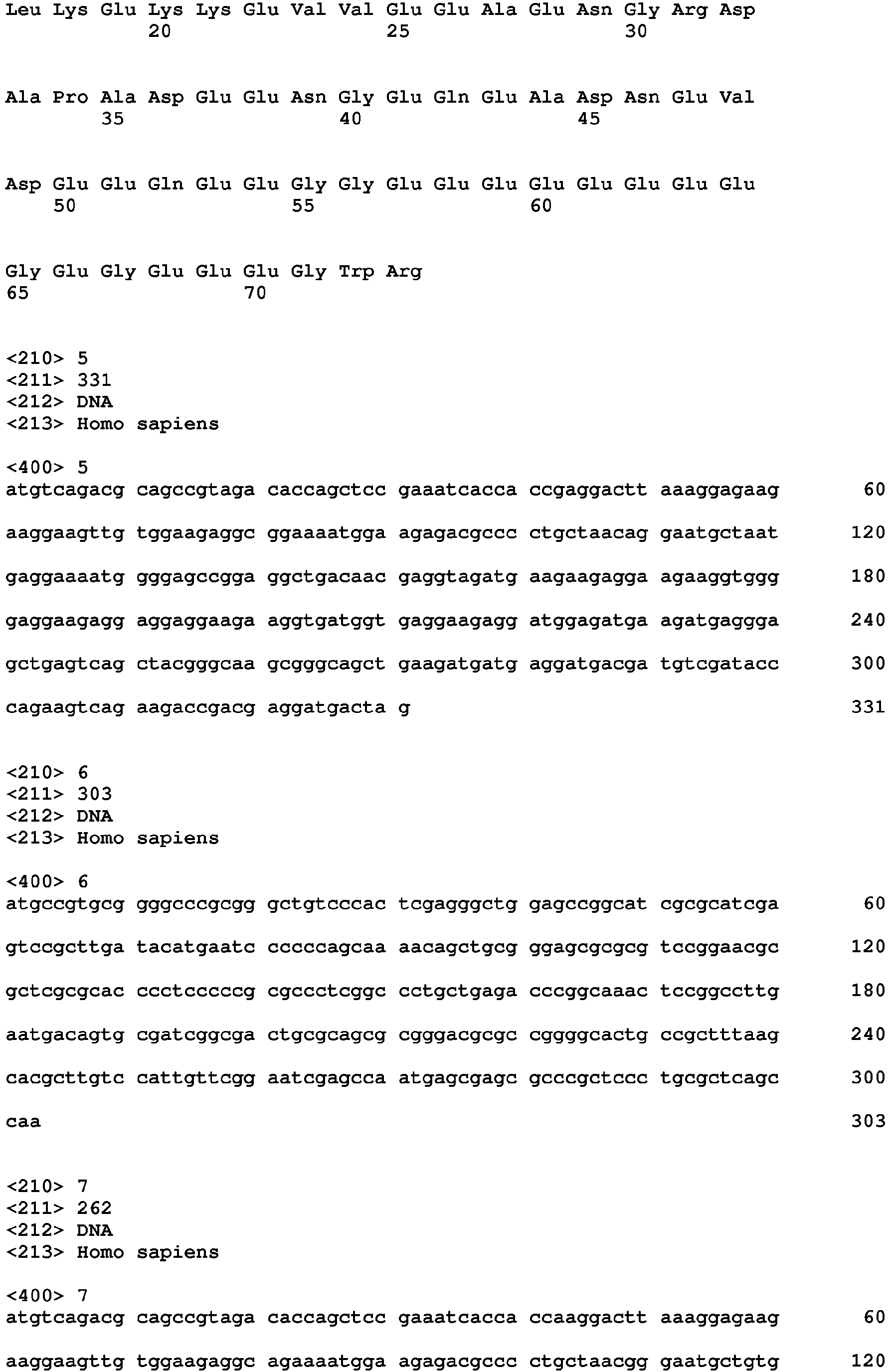
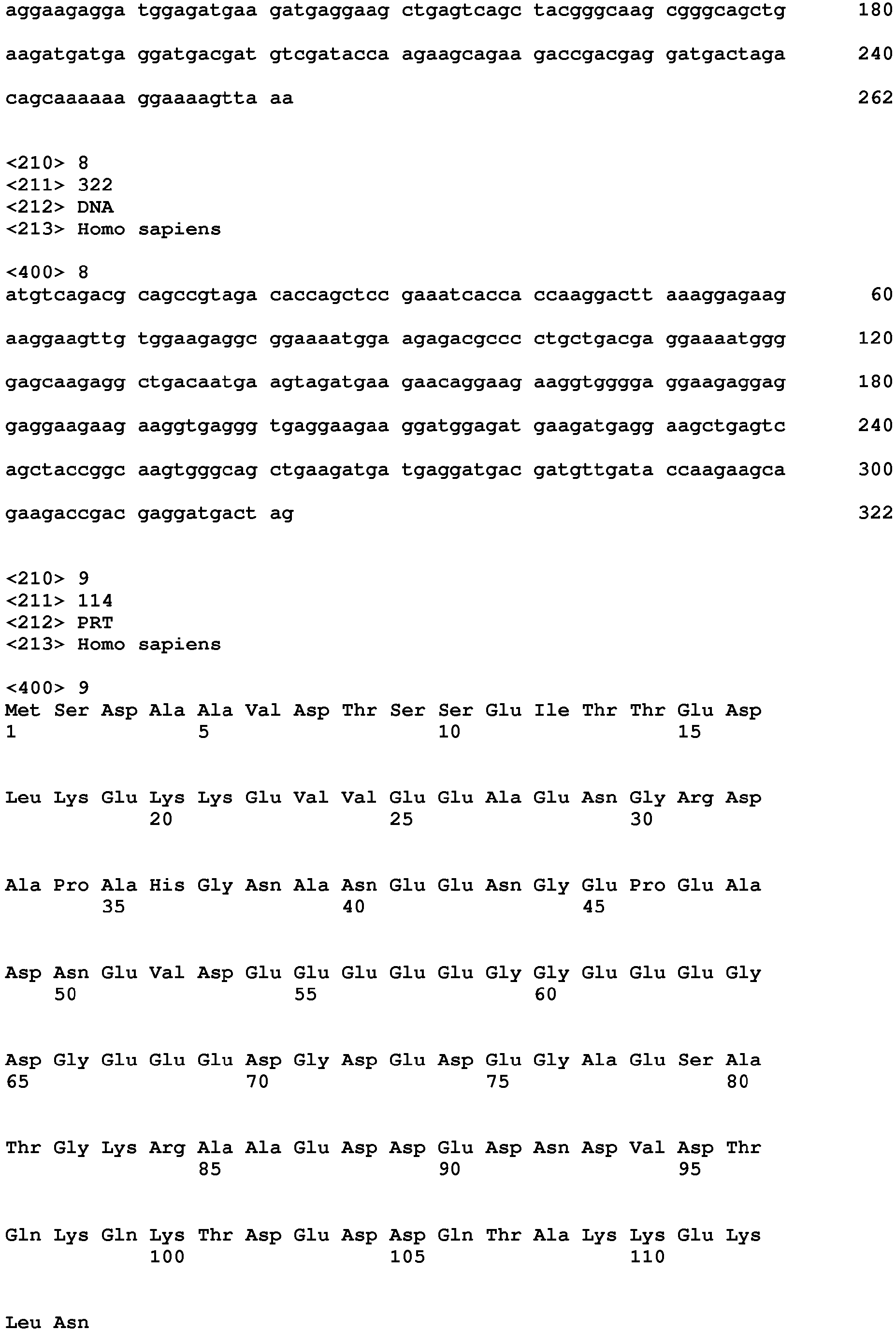


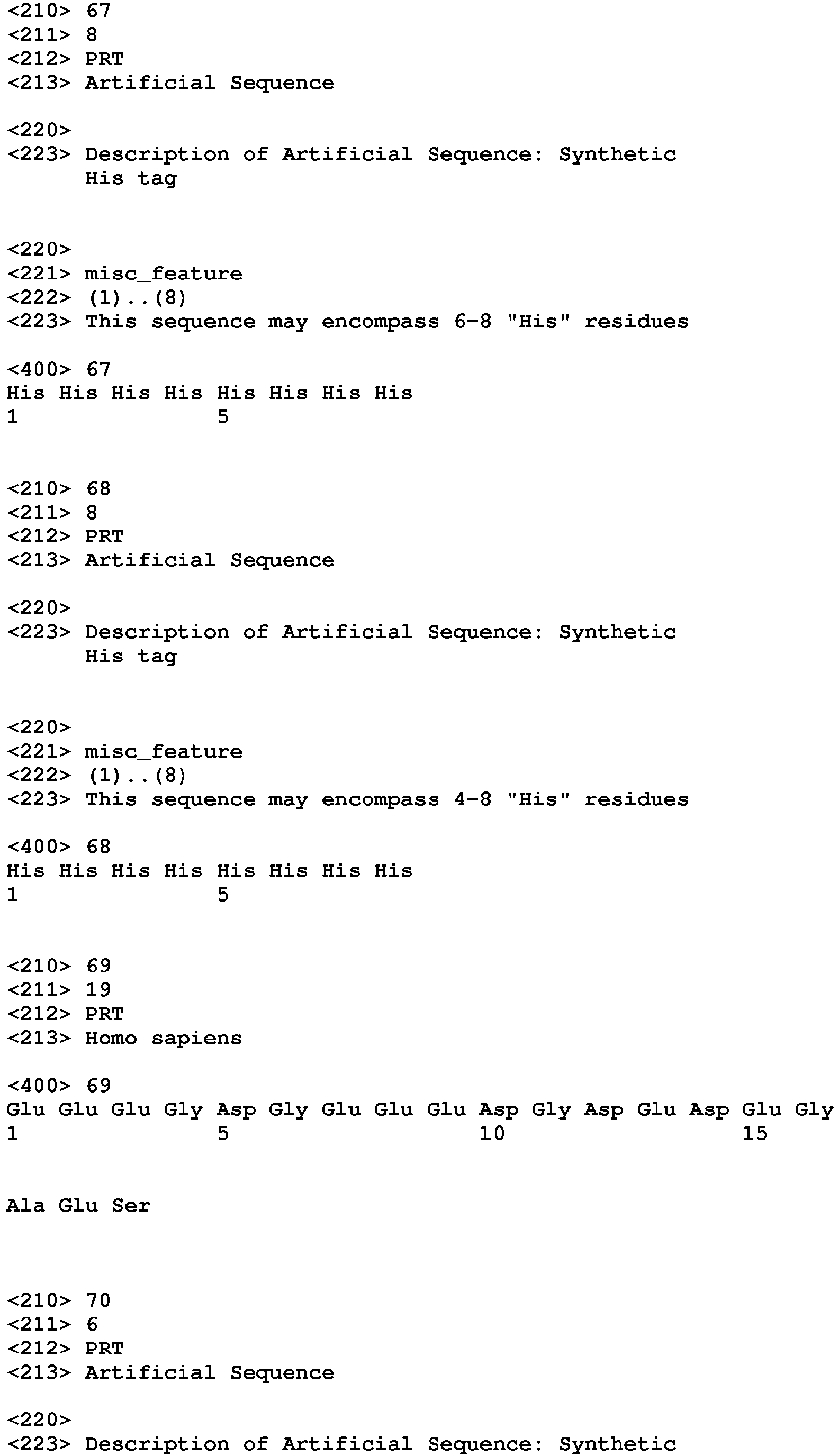

Claims (15)
- An isolated prothymosin alpha polypeptide, wherein the polypeptide comprises:a) an amino acid sequence that is at least about 95% identical to an amino acid sequence selected from the group consisting of SEQ ID NO: 4, SEQ ID NO: 3, SEQ ID NO: 1, SEQ ID NO: 2, SEQ ID NO: 9, SEQ ID NO:10, SEQ ID NO: 11, SEQ ID NO: 12, and SEQ ID NO: 13;b) a functional derivative thereof; orc) a fragment thereof.
- The isolated prothymosin alpha polypeptide according to claim 1, wherein the polypeptide comprises an amino acid sequence selected from the group consisting of SEQ ID NO: 4, SEQ ID NO: 3, SEQ ID NO: 1, SEQ ID NO: 2, SEQ ID NO: 9, SEQ ID NO:10, SEQ ID NO: 11, SEQ ID NO: 12, and SEQ ID NO: 13.
- An isolated nucleic acid that encodes a prothymosin alpha polypeptide, wherein the nucleic acid has a nucleotide sequence that is at least about 95% identical to a nucleotide sequence selected from the group consisting of SEQ ID NO: 8, SEQ ID NO: 7, SEQ ID NO: 5, SEQ ID NO: 6, SEQ ID NO: 14, SEQ ID NO: 15, SEQ ID NO: 16, SEQ ID NO: 17, and SEQ ID NO: 18.
- The isolated nucleic acid according to claim 3, wherein the nucleic acid comprises a nucleotide sequence selected from the group consisting of SEQ ID NO: 8, SEQ ID NO: 7, SEQ ID NO: 5, SEQ ID NO: 6, SEQ ID NO: 14, SEQ ID NO: 15, SEQ ID NO: 16, SEQ ID NO: 17, and SEQ ID NO: 18.
- A polypeptide according to claim 1 or claim 2 for use in a method for treating or preventing a viral infection, comprising administering the polypeptide to a subject in need thereof in an amount effective to treat or prevent viral infection.
- The polypeptide for use according to claim 5, wherein the viral infection is caused by a virus selected from the group consisting of Human Immunodeficiency Virus-1 (HIV-1), Human Immunodeficiency Virus-2 (HIV-2), Hepatatis C Virus, Hepatatis B Virus, Hepatatis A Virus, Ebola, Marburg, Dengue viruses, Hemorrhagic Fever Viruses (VHFs), Lassa virus (LASV), Crimean-Congo hemorrhagic fever virus (CCHFV), Rift Valley fever virus (RVFV), and yellow fever virus (YFV), and wherein the viral infection is optionally selected from the group consisting of HIV-1 and HIV-2 infection.
- A polypeptide according to claim 1 or claim 2 for use in a method for potentiating an immune response, comprising administering the polypeptide to a subject in need thereof, whereby the immune response is potentiated.
- The polypeptide for use according to claim 7, wherein:(a) the subject has a viral infection and the immune response to the virus is potentiated;(b) the subject has a fungal infection and the immune response to the fungus is potentiated;(c) the subject has a bacterial infection and the immune response to the bacteria is potentiated; or(d) the subject has a parasitic infection and the immune response to the parasite is potentiated.
- The polypeptide for use according to claim 7, wherein the method for potentiating an immune response comprises administering the polypeptide to a subject that is undergoing cancer treatment, whereby the immune response to the cancer is potentiated, and optionally wherein the cancer treatment is a treatment with a chemotherapeutic agent.
- A polypeptide according to claim 1 or claim 2 for use in a method of treating or preventing ischemia, comprising administering to a subject in need thereof in an amount effective to treat or prevent ischemia.
- A polypeptide according to claim 1 or claim 2 for use in a method for inducing interferons, comprising administering the polypeptide to a subject in need of interferon induction, whereby interferons are induced.
- The method of claim 11, wherein:(a) the interferons are selected from the group consisting of type I and type III interferons; or(b) the subject in need of type I interferon induction has a blood disorder, cancer, a viral infection, or a combination thereof, wherein the blood disorder is optionally leukemia.
- A kit for potentiating an immune response, comprising:the polypeptides of claims 1 or 2, andinstructions for use.
- A pharmaceutical composition comprising:(a) the polypeptide of claims 1 or 2 and a pharmaceutically acceptable carrier;(b) the polypeptide of claims 1 or 2 and a chemotherapeutic agent, wherein optionally the composition:(i) further comprises interferon alpha; or(ii) the chemotherapeutic agent is selected from the group consisting of dacarbazine, tamoxifen, raloxifene, megestrol, flutamide cyclophosphamide, temozolomide, cisplatin, and paclitaxel;(c) the polypeptide of claims 1 or 2 and a pegylated interferon-alpha2a; or(d) an antigen, the polypeptide of claims 1 or 2 and a pharmaceutically acceptable carrier.
- A polypeptide according to claim 1 or claim 2 for use in a method for inducing RANTES, comprising administering the polypeptide to a subject in need of RANTES induction, whereby RANTES is induced.
Applications Claiming Priority (2)
| Application Number | Priority Date | Filing Date | Title |
|---|---|---|---|
| US201261606193P | 2012-03-02 | 2012-03-02 | |
| EP13755552.0A EP2819686A4 (en) | 2012-03-02 | 2013-03-01 | Variants of prothymosin alpha and methods of using same |
Related Parent Applications (1)
| Application Number | Title | Priority Date | Filing Date |
|---|---|---|---|
| EP13755552.0A Division EP2819686A4 (en) | 2012-03-02 | 2013-03-01 | Variants of prothymosin alpha and methods of using same |
Publications (2)
| Publication Number | Publication Date |
|---|---|
| EP3153523A2 true EP3153523A2 (en) | 2017-04-12 |
| EP3153523A3 EP3153523A3 (en) | 2017-05-03 |
Family
ID=49083357
Family Applications (2)
| Application Number | Title | Priority Date | Filing Date |
|---|---|---|---|
| EP16199824.0A Withdrawn EP3153523A3 (en) | 2012-03-02 | 2013-03-01 | Variants of prothymosin alpha and methods of using same |
| EP13755552.0A Withdrawn EP2819686A4 (en) | 2012-03-02 | 2013-03-01 | Variants of prothymosin alpha and methods of using same |
Family Applications After (1)
| Application Number | Title | Priority Date | Filing Date |
|---|---|---|---|
| EP13755552.0A Withdrawn EP2819686A4 (en) | 2012-03-02 | 2013-03-01 | Variants of prothymosin alpha and methods of using same |
Country Status (3)
| Country | Link |
|---|---|
| US (1) | US20150037281A1 (en) |
| EP (2) | EP3153523A3 (en) |
| WO (1) | WO2013131032A1 (en) |
Cited By (1)
| Publication number | Priority date | Publication date | Assignee | Title |
|---|---|---|---|---|
| WO2018224548A1 (en) | 2017-06-06 | 2018-12-13 | Immundiagnostik Ag | Point-of-care testing of pro-thymosin 100-109 for detecting sepsis |
Families Citing this family (13)
| Publication number | Priority date | Publication date | Assignee | Title |
|---|---|---|---|---|
| CN1747747B (en) | 2003-01-06 | 2012-09-05 | 安吉奥开米公司 | Aprotinin and analogs as carriers across the blood-brain barrier |
| US9365634B2 (en) | 2007-05-29 | 2016-06-14 | Angiochem Inc. | Aprotinin-like polypeptides for delivering agents conjugated thereto to tissues |
| RU2518240C2 (en) | 2008-04-18 | 2014-06-10 | Ангиочем Инк. | Composition based on hydrophobic agents and method for preparing it (versions) |
| RU2531591C2 (en) | 2008-10-15 | 2014-10-20 | Ангиокем Инк. | Etoposide and doxorubicin conjugates for drug delivery |
| US8921314B2 (en) | 2008-10-15 | 2014-12-30 | Angiochem, Inc. | Conjugates of GLP-1 agonists and uses thereof |
| MX2011005963A (en) | 2008-12-05 | 2011-09-01 | Angiochem Inc | Conjugates of neurotensin or neurotensin analogs and uses thereof. |
| CN102300987A (en) | 2008-12-17 | 2011-12-28 | 安吉奥开米公司 | Membrane Type-1 Matrix Metalloprotein Inhibitors And Uses Thereof |
| AU2010239069B2 (en) | 2009-04-20 | 2015-05-14 | Angiochem Inc | Treatment of ovarian cancer using an anticancer agent conjugated to an Angiopep-2 analog |
| MX2012000016A (en) | 2009-07-02 | 2012-03-26 | Angiochem Inc | Multimeric peptide conjugates and uses thereof. |
| US9617324B2 (en) * | 2012-02-13 | 2017-04-11 | Nagasaki University | Ameliorating agent for blood-brain barrier dysfunction |
| CN104650218A (en) * | 2015-03-04 | 2015-05-27 | 中国科学院海洋研究所 | Fish prothymosin alpha and application thereof |
| US10980892B2 (en) | 2015-06-15 | 2021-04-20 | Angiochem Inc. | Methods for the treatment of leptomeningeal carcinomatosis |
| CN110438012B (en) * | 2019-08-05 | 2021-10-26 | 四川大学 | Aspergillus sakazakii H-1 for producing anthocyanin and application thereof |
Family Cites Families (9)
| Publication number | Priority date | Publication date | Assignee | Title |
|---|---|---|---|---|
| US6126939A (en) * | 1996-09-03 | 2000-10-03 | Yeda Research And Development Co. Ltd. | Anti-inflammatory dipeptide and pharmaceutical composition thereof |
| US7252950B1 (en) * | 1997-09-04 | 2007-08-07 | The Regents Of The University Of California | Assays for detecting modulators of cytoskeletal function |
| US6753138B1 (en) * | 1998-06-04 | 2004-06-22 | Reprogen, Inc. | Use of prothymosin in the diagnosis and treatment of endometriosis |
| WO2001023572A2 (en) * | 1999-09-30 | 2001-04-05 | Curagen Corporation | Polynucleotides and polypeptides encoded thereby |
| US20020090692A1 (en) * | 1999-09-30 | 2002-07-11 | Prayaga Sudhirdas K. | Novel polynucleotides and polypeptides encoded thereby |
| WO2004064861A1 (en) * | 2003-01-24 | 2004-08-05 | Nippon Chemiphar Co., Ltd. | Nerve cell death inhibitor |
| EP3058954B1 (en) * | 2007-08-27 | 2017-03-01 | Longhorn Vaccines and Diagnostics, LLC | Immunogenic compositions and methods |
| EP2331565A2 (en) * | 2008-08-28 | 2011-06-15 | Aarhus Universitet | Hiv-1 envelope polypeptides for hiv vaccine |
| US9023835B2 (en) * | 2009-08-10 | 2015-05-05 | Nagasaki University | Agent for ameliorating blood-brain barrier disorders |
-
2013
- 2013-03-01 US US14/381,774 patent/US20150037281A1/en not_active Abandoned
- 2013-03-01 WO PCT/US2013/028717 patent/WO2013131032A1/en not_active Ceased
- 2013-03-01 EP EP16199824.0A patent/EP3153523A3/en not_active Withdrawn
- 2013-03-01 EP EP13755552.0A patent/EP2819686A4/en not_active Withdrawn
Non-Patent Citations (44)
| Title |
|---|
| "Remington's Pharmaceutical Sciences, 17th ed.", 1985, MACK PUBLISHING CO. |
| ADAMS, M.D.; KERLAVAGE, A.R.; FLEISCHMANN, R.D.; FULDNER, R.A.; BULT, C.J.; LEE, N.H.; KIRKNESS, E.F.; WEINSTOCK, K.G.; GOCAYNE, J: "Initial assessment of human gene diversity and expression patterns based upon 83 million nucleotides of cDNA sequence", NATURE, vol. 377, 1995, pages 3 - 174 |
| ALDROVANDI ET AL., J. VIROL., vol. 70, 1996, pages 1505 |
| AUSUBEL ET AL.: "Current Protocols in Molecular Biology", 1995, JOHN WILEY & SONS, INC. |
| BARANY ET AL.: "The Peptides", vol. 2, 1980, ACADEMIC PRESS |
| BAXEVANIS, C.N.; SFAGOS, C.; ANASTASOPOULOS, E.; RECLOS, G.J.; PAPAMICHAIL, M.: "Prothymosin-alpha enhances HLA-DR antigen expression on monocytes from patients with multiple sclerosis", JNEUROIMMUNOL, vol. 27, 1990, pages 141 - 147, XP024016425, DOI: doi:10.1016/0165-5728(90)90063-S |
| BAXEVANIS, C.N.; THANOS, D; RECLOS, G.J.; ANASTASOPOULOS, E.; TSOKOS, G.C.; PAPAMATHEAKIS, J.; PAPAMICHAIL, M.: "Prothymosin alpha enhances human and murine MHC class II surface antigen expression and messenger RNA accumulation", J IMMUNOL, vol. 148, 1992, pages 1979 - 1984, XP002125674 |
| BEAUCAGE; CARUTHERS, TETRA. LETTS., vol. 22, 1981, pages 1859 - 1862 |
| BOWICK, G.C.; SOMAN, K.V.; WANG, H.; ARONSON, J.F.; LUXON, B.A.; LOMAS, L.O.; GORENSTEIN, D.G.; HERZOG, N.K: "Proteomic analysis of Pichinde virus infection identifies differential expression of prothymosin-alpha", JBIOMED BIOTECHNOL, 2010 |
| COCCHI, F.; DEVICO, A.L.; GARZINO-DEMO, A.; ARYA, S.K.; GALLO, R.C.; LUSSO, P.: "Identification of RANTES, MIP-1 alpha, and MIP-1 beta as the major HIV-suppressive factors produced by CD8+ T cells", SCIENCE, vol. 270, 1995, pages 1811 - 1815 |
| DOE ET AL., EUR. J. IMMUNOL, vol. 24, 1994, pages 2369 - 2376 |
| ERICKSON ET AL., J. IMMUNOL, vol. 151, 1993, pages 4189 - 4199 |
| EVSTAFIEVA, A.G.; BELOV, G.A.; KALKUM, M.; CHICHKOVA, N.V.; BOGDANOV, A.A.; AGOL, V.I.; VARTAPETIAN, A.B.: "Prothymosin alpha fragmentation in apoptosis", FEBS LETT, vol. 467, 2000, pages 150 - 154, XP004260942, DOI: doi:10.1016/S0014-5793(00)01139-X |
| FICHOROVA, R.N.; RHEINWALD, J.G.; ANDERSON, D.J., BIOL REPROD, vol. 57, 1997, pages 847 - 855 |
| FICHOROVA, R.N.; RHEINWALD, J.G.; ANDERSON, D.J.: "Generation of papillomavirus-immortalized cell lines from normal human ectocervical, endocervical, and vaginal epithelium that maintain expression of tissue-specific differentiation proteins", BIOL REPROD, vol. 57, 1997, pages 847 - 855, XP008074335, DOI: doi:10.1095/biolreprod57.4.847 |
| GRAY, R. H.; M. J. WAWER; R. BROOKMEYER; N. K. SEWANKAMBO; D. SERWADDA; F. WABWIRE-MANGEN; T. LUTALO; X. LI; T. VANCOTT; T. C. QUI: "Probability of HIV-1 transmission per coital act in monogamous, heterosexual, HIV-1-discordant couples in Rakai, Uganda", LANCET, vol. 357, 2001, pages 1149 - 53, XP004804302, DOI: doi:10.1016/S0140-6736(00)04331-2 |
| GRUNBERG, E.; ECKERT, K.; MAURER, H.R.; IMMENSCHUH, P.; KREUSER, E.D: "Prothymosin alphal effects on IL-2-induced expression of LFA-1 on lymphocytes and their adhesion to human umbilical vein endothelial cells", J INTERFERON CYTOKINE RES, vol. 17, 1997, pages 159 - 165 |
| HARITOS, A. A.; G. J. GOODALL; B. L. HORECKER: "Prothymosin alpha: isolation and properties of the major immunoreactive form of thymosin alpha 1 in rat thymus", PROC NATL ACAD SCI U S A, vol. 81, 1984, pages 1008 - 11 |
| HIRBOD, T.; J. NILSSON; S. ANDERSSON; C. UBERTI-FOPPA; D. FERRARI; M. MANGHI; J. ANDERSSON; L. LOPALCO; K. BROLIDEN: "Upregulation of interferon-alpha and RANTES in the cervix of HIV-1-seronegative women with high-risk behavior", J ACQUIR IMMUNE DEFIC SYNDR, vol. 43, 2006, pages 137 - 43 |
| IQBAL, S. M.; T. B. BALL; J. KIMANI; P. KIAMA; P. THOTTINGAL; J. E. EMBREE; K. R. FOWKE; F. A. PLUMMER: "Elevated T cell counts and RANTES expression in the genital mucosa of HIV-1-resistant Kenyan commercial sex workers", J INFECT DIS, vol. 192, 2005, pages 728 - 38 |
| KOTLER ET AL., PROC. NATL. ACAD. SCI., vol. 85, 1985, pages 4185 - 4189 |
| MANROW, R.E.; LEONE, A.; KRUG, M.S.; ESCHENFELDT, W.H.; BERGER, S.L: "The human prothymosin alpha gene family contains several processed pseudogenes lacking deleterious lesions", GENOMICS, vol. 13, 1992, pages 319 - 331, XP024865272, DOI: doi:10.1016/0888-7543(92)90248-Q |
| MATSUNAGA, H.; UEDA, H: "Stress-induced non-vesicular release of prothymosin-alpha initiated by an interaction with S100A13, and its blockade by caspase-3 cleavage", CELL DEATH DIFFER, 2010 |
| MATTEUCI ET AL., J. AM. CHEM. SOC., vol. 103, 1981, pages 3185 |
| MORI, M.; BARNARD, G.F.; STANIUNAS, R.J.; JESSUP, J.M.; STEELE, G.D., JR.; CHEN, L.B.: "Prothymosin-alpha mRNA expression correlates with that of c-myc in human colon cancer", ONCOGENE, vol. 8, 1993, pages 2821 - 2826 |
| MOSOIAN, A., FUTURE MED CHERN, vol. 3, no. 9, 2011, pages 1199 - 1208 |
| MOSOIAN, A.: "Intracellular and extracellular cytokine-like functions of prothymosin alpha: implications for the development of immunotherapies", FUTURE MED CHEM, vol. 3, 2011, pages 1199 - 1208, XP055165113, DOI: doi:10.4155/fmc.11.72 |
| MOSOIAN, A.; A. TEIXEIRA; C. S. BURNS; G. KHITROV; W. ZHANG; L. GUSELLA; P. KLOTMAN; M. KLOTMAN.: "Influence of prothymosin-alpha on HIV-1 target cells", ANN N Y ACAD SCI, vol. 1112, 2007, pages 269 - 85 |
| MOSOIAN, A.; TEIXEIRA, A.; BURNS, C.S.; SANDER, L.E.; GUSELLA, G.L.; HE, C.; BLANDER, J.M.; KLOTMAN, P.; KLOTMAN, M.E.: "Prothymosin-alpha inhibits HIV-1 via Toll-like receptor 4-mediated type I interferon induction", PROC NATL ACAD SCI U S A, vol. 107, 2010, pages 10178 - 10183, XP055165114, DOI: doi:10.1073/pnas.0914870107 |
| MOSOIAN, A.; TEIXEIRA, A.; CARON, E.; PIWOZ, J.; KLOTMAN, M: "CD8+ cell lines isolated from HIV-1-infected children have potent soluble HIV-1 inhibitory activity that differs from beta-chemokines", VIRAL IMMUNOL., vol. 13, no. 4, 2000, pages 481 - 95 |
| MOSOIAN, A.; TEIXEIRA, A.; HIGH, A.A.; CHRISTIAN, R.E.; HUNT, D.F.; SHABANOWITZ, J.; LIU, X; KLOTMAN, M., J VIROL, vol. 80, 2006, pages 9200 - 9206 |
| MOSOIAN, A; TEIXEIRA, A.; HIGH, A.A.; CHRISTIAN, R.E.; HUNT, D.F.; SHABANOWITZ, J.; LIU, X.; KLOTMAN, M.: "Novel function of prothymosin alpha as a potent inhibitor of human immunodeficiency virus type 1 gene expression in primary macrophages", J VIROL, vol. 80, 2006, pages 9200 - 9206 |
| PINEIRO, A.; CORDERO, O.J.; NOGUEIRA, M: "Fifteen years of prothymosin alpha: contradictory past and new horizons", PEPTIDES, vol. 21, 2000, pages 1433 - 1446 |
| POPE, M.; A. T. HAASE: "Transmission, acute HIV-1 infection and the quest for strategies to prevent infection", NAT MED, vol. 9, 2003, pages 847 - 52 |
| ROMANI, L.; BISTONI, F.; GAZIANO, R.; BOZZA, S.; MONTAGNOLI, C.; PERRUCCIO, K.; PITZURRA, L.; BELLOCCHIO, S.; VELARDI, A.; RASI, G: "Thymosin alpha 1 activates dendritic cells for antifungal Thl resistance through toll-like receptor signaling", BLOOD, vol. 103, 2004, pages 4232 - 4239, XP055259171, DOI: doi:10.1182/blood- |
| RUBTSOV IU, P.; VARTAPETIAN, A.B: "New intronless members of human prothymosin alpha genes", MOL BIOL (MOSK, vol. 29, 1995, pages 1320 - 1325 |
| SAMBROOK ET AL.: "Molecular Cloning: A Laboratory Manual, 2nd ed.", 1989, COLD SPRING HARBOR PRESS |
| SASAKI, H.; SATO, Y.; KONDO, S.; FUKAI, I.; KIRIYAMA, M.; YAMAKAWA, Y.; FUJII, Y.: "Expression of the prothymosin alpha mRNA correlated with that of N-myc in neuroblastoma", CANCER LETT, vol. 168, 2001, pages 191 - 195 |
| SKOPELITI, M.; ICONOMIDOU, V.A.; DERHOVANESSIAN, E.; PAWELEC, G.; VOELTER, W.; KALBACHER, H.; HAMODRAKAS, S.J.; TSITSILONIS, O.E: "Prothymosin alpha immunoactive carboxyl-terminal peptide TKKQKTDEDD stimulates lymphocyte reactions, induces dendritic cell maturation and adopts a beta-sheet conformation in a sequence-specific manner", MOL IMMUNOL, 2008 |
| SKOPELITI, M.; KRATZER, U.; ALTENBEREND, F.; PANAYOTOU, G.; KALBACHER, H.; STEVANOVIC, S.; VOELTER, W.; TSITSILONIS, O.E: "Proteomic exploitation on prothymosin alpha-induced mononuclear cell activation", PROTEOMICS, vol. 7, 2007, pages 1814 - 1824 |
| TRIPATHI, SC ET AL., PLOS ONE, vol. 6, no. 5, 2011, pages E19213 |
| VENTER, J. C.; M. D. ADAMS; E. W. MYERS; P. W. LI; R. J. MURAL; G. G. SUTTON; H. O. SMITH; M. YANDELL; C. A. EVANS; R. A. HOLT: "The sequence of the human genome", SCIENCE, vol. 291, 2001, pages 1304 - 51, XP001061683, DOI: doi:10.1126/science.1058040 |
| VOUTSAS, I.F.; BAXEVANIS, C.N.; GRITZAPIS, A.D.; MISSITZIS, I.; STATHOPOULOS, G.P.; ARCHODAKIS, G.; BANIS, C.; VOELTER, W.; PAPAMI: "Synergy between interleukin-2 and prothymosin alpha for the increased generation of cytotoxic T lymphocytes against autologous human carcinomas", CANCER IMMUNOL IMMUNOTHER, vol. 49, 2000, pages 449 - 458 |
| WU, C.G.; HABIB, N.A.; MITRY, R.R.; REITSMA, P.H.; VAN DEVENTER, S.J.; CHAMULEAU, R.A: "Overexpression of hepatic prothymosin alpha, a novel marker for human hepatocellular carcinoma", BR J CANCER, vol. 76, 1997, pages 1199 - 1204 |
Cited By (1)
| Publication number | Priority date | Publication date | Assignee | Title |
|---|---|---|---|---|
| WO2018224548A1 (en) | 2017-06-06 | 2018-12-13 | Immundiagnostik Ag | Point-of-care testing of pro-thymosin 100-109 for detecting sepsis |
Also Published As
| Publication number | Publication date |
|---|---|
| WO2013131032A1 (en) | 2013-09-06 |
| EP2819686A1 (en) | 2015-01-07 |
| EP2819686A4 (en) | 2016-05-25 |
| US20150037281A1 (en) | 2015-02-05 |
| EP3153523A3 (en) | 2017-05-03 |
Similar Documents
| Publication | Publication Date | Title |
|---|---|---|
| US20150037281A1 (en) | Variants of prothymosin alpha and methods of using same | |
| US20250228945A1 (en) | Neoantigens and uses thereof | |
| US20240100139A1 (en) | Neoantigens and uses thereof | |
| US12303561B2 (en) | Protein antigens and uses thereof | |
| EP3436048B1 (en) | Neoantigens and methods of their use | |
| JP2024069426A (en) | Neoantigens and their uses | |
| RU2682726C2 (en) | Vaccinative tumor vaccine composition | |
| WO2020252039A1 (en) | Neoantigen compositions and uses thereof | |
| US20240342211A1 (en) | Short-term activated dc1s and methods for their production and use | |
| RU2290197C2 (en) | Pharmaceutical agent for treatment of hiv-infection, composition containing thereof and methods for its using | |
| JP4813720B2 (en) | Human circulating virus inhibitory peptide (VIRIP) and uses thereof | |
| US20210299250A1 (en) | Stimulator of interferon genes (sting) ligands and uses thereof | |
| WO2023056527A1 (en) | Proteinaceous molecules and uses therefor | |
| RU2832574C2 (en) | Neo-antigen compositions and use thereof | |
| US20250000971A1 (en) | Tlr4 agonist for modulating immune response | |
| US20250041278A1 (en) | Tlr8 agonist for modulating immune response | |
| WO2024151501A1 (en) | Novel imidazopyrimidine compound and uses thereof | |
| WO2024107709A2 (en) | Compositions and methods of using nitration resistant ccl2 chemokines | |
| HK1067531B (en) | A pharmaceutical composition for treating hiv infection |
Legal Events
| Date | Code | Title | Description |
|---|---|---|---|
| PUAI | Public reference made under article 153(3) epc to a published international application that has entered the european phase |
Free format text: ORIGINAL CODE: 0009012 |
|
| STAA | Information on the status of an ep patent application or granted ep patent |
Free format text: STATUS: THE APPLICATION HAS BEEN PUBLISHED |
|
| PUAL | Search report despatched |
Free format text: ORIGINAL CODE: 0009013 |
|
| AC | Divisional application: reference to earlier application |
Ref document number: 2819686 Country of ref document: EP Kind code of ref document: P |
|
| AK | Designated contracting states |
Kind code of ref document: A2 Designated state(s): AL AT BE BG CH CY CZ DE DK EE ES FI FR GB GR HR HU IE IS IT LI LT LU LV MC MK MT NL NO PL PT RO RS SE SI SK SM TR |
|
| AK | Designated contracting states |
Kind code of ref document: A3 Designated state(s): AL AT BE BG CH CY CZ DE DK EE ES FI FR GB GR HR HU IE IS IT LI LT LU LV MC MK MT NL NO PL PT RO RS SE SI SK SM TR |
|
| RIC1 | Information provided on ipc code assigned before grant |
Ipc: C07K 14/575 20060101AFI20170329BHEP Ipc: A61K 38/22 20060101ALI20170329BHEP Ipc: A61K 45/06 20060101ALI20170329BHEP Ipc: A61K 38/00 20060101ALI20170329BHEP |
|
| STAA | Information on the status of an ep patent application or granted ep patent |
Free format text: STATUS: THE APPLICATION IS DEEMED TO BE WITHDRAWN |
|
| 18D | Application deemed to be withdrawn |
Effective date: 20171104 |