EP3149145B1 - Bag assembly for cultivation of cells - Google Patents
Bag assembly for cultivation of cells Download PDFInfo
- Publication number
- EP3149145B1 EP3149145B1 EP15720315.9A EP15720315A EP3149145B1 EP 3149145 B1 EP3149145 B1 EP 3149145B1 EP 15720315 A EP15720315 A EP 15720315A EP 3149145 B1 EP3149145 B1 EP 3149145B1
- Authority
- EP
- European Patent Office
- Prior art keywords
- cultivation
- compartment
- bag
- valve
- bag assembly
- Prior art date
- Legal status (The legal status is an assumption and is not a legal conclusion. Google has not performed a legal analysis and makes no representation as to the accuracy of the status listed.)
- Active
Links
Images




Classifications
-
- C—CHEMISTRY; METALLURGY
- C12—BIOCHEMISTRY; BEER; SPIRITS; WINE; VINEGAR; MICROBIOLOGY; ENZYMOLOGY; MUTATION OR GENETIC ENGINEERING
- C12M—APPARATUS FOR ENZYMOLOGY OR MICROBIOLOGY; APPARATUS FOR CULTURING MICROORGANISMS FOR PRODUCING BIOMASS, FOR GROWING CELLS OR FOR OBTAINING FERMENTATION OR METABOLIC PRODUCTS, i.e. BIOREACTORS OR FERMENTERS
- C12M23/00—Constructional details, e.g. recesses, hinges
- C12M23/02—Form or structure of the vessel
- C12M23/14—Bags
-
- C—CHEMISTRY; METALLURGY
- C12—BIOCHEMISTRY; BEER; SPIRITS; WINE; VINEGAR; MICROBIOLOGY; ENZYMOLOGY; MUTATION OR GENETIC ENGINEERING
- C12M—APPARATUS FOR ENZYMOLOGY OR MICROBIOLOGY; APPARATUS FOR CULTURING MICROORGANISMS FOR PRODUCING BIOMASS, FOR GROWING CELLS OR FOR OBTAINING FERMENTATION OR METABOLIC PRODUCTS, i.e. BIOREACTORS OR FERMENTERS
- C12M23/00—Constructional details, e.g. recesses, hinges
- C12M23/26—Constructional details, e.g. recesses, hinges flexible
-
- C—CHEMISTRY; METALLURGY
- C12—BIOCHEMISTRY; BEER; SPIRITS; WINE; VINEGAR; MICROBIOLOGY; ENZYMOLOGY; MUTATION OR GENETIC ENGINEERING
- C12M—APPARATUS FOR ENZYMOLOGY OR MICROBIOLOGY; APPARATUS FOR CULTURING MICROORGANISMS FOR PRODUCING BIOMASS, FOR GROWING CELLS OR FOR OBTAINING FERMENTATION OR METABOLIC PRODUCTS, i.e. BIOREACTORS OR FERMENTERS
- C12M23/00—Constructional details, e.g. recesses, hinges
- C12M23/34—Internal compartments or partitions
-
- C—CHEMISTRY; METALLURGY
- C12—BIOCHEMISTRY; BEER; SPIRITS; WINE; VINEGAR; MICROBIOLOGY; ENZYMOLOGY; MUTATION OR GENETIC ENGINEERING
- C12M—APPARATUS FOR ENZYMOLOGY OR MICROBIOLOGY; APPARATUS FOR CULTURING MICROORGANISMS FOR PRODUCING BIOMASS, FOR GROWING CELLS OR FOR OBTAINING FERMENTATION OR METABOLIC PRODUCTS, i.e. BIOREACTORS OR FERMENTERS
- C12M23/00—Constructional details, e.g. recesses, hinges
- C12M23/58—Reaction vessels connected in series or in parallel
-
- C—CHEMISTRY; METALLURGY
- C12—BIOCHEMISTRY; BEER; SPIRITS; WINE; VINEGAR; MICROBIOLOGY; ENZYMOLOGY; MUTATION OR GENETIC ENGINEERING
- C12M—APPARATUS FOR ENZYMOLOGY OR MICROBIOLOGY; APPARATUS FOR CULTURING MICROORGANISMS FOR PRODUCING BIOMASS, FOR GROWING CELLS OR FOR OBTAINING FERMENTATION OR METABOLIC PRODUCTS, i.e. BIOREACTORS OR FERMENTERS
- C12M27/00—Means for mixing, agitating or circulating fluids in the vessel
- C12M27/16—Vibrating; Shaking; Tilting
-
- C—CHEMISTRY; METALLURGY
- C12—BIOCHEMISTRY; BEER; SPIRITS; WINE; VINEGAR; MICROBIOLOGY; ENZYMOLOGY; MUTATION OR GENETIC ENGINEERING
- C12M—APPARATUS FOR ENZYMOLOGY OR MICROBIOLOGY; APPARATUS FOR CULTURING MICROORGANISMS FOR PRODUCING BIOMASS, FOR GROWING CELLS OR FOR OBTAINING FERMENTATION OR METABOLIC PRODUCTS, i.e. BIOREACTORS OR FERMENTERS
- C12M41/00—Means for regulation, monitoring, measurement or control, e.g. flow regulation
- C12M41/12—Means for regulation, monitoring, measurement or control, e.g. flow regulation of temperature
- C12M41/18—Heat exchange systems, e.g. heat jackets or outer envelopes
- C12M41/24—Heat exchange systems, e.g. heat jackets or outer envelopes inside the vessel
-
- C—CHEMISTRY; METALLURGY
- C12—BIOCHEMISTRY; BEER; SPIRITS; WINE; VINEGAR; MICROBIOLOGY; ENZYMOLOGY; MUTATION OR GENETIC ENGINEERING
- C12Q—MEASURING OR TESTING PROCESSES INVOLVING ENZYMES, NUCLEIC ACIDS OR MICROORGANISMS; COMPOSITIONS OR TEST PAPERS THEREFOR; PROCESSES OF PREPARING SUCH COMPOSITIONS; CONDITION-RESPONSIVE CONTROL IN MICROBIOLOGICAL OR ENZYMOLOGICAL PROCESSES
- C12Q3/00—Condition responsive control processes
Definitions
- the present invention relates to bioreactors for cell cultivation, and more particularly to flexible bag assembly suitable for multi-stage expansion of cell cultures, such as seed train expansion or expansion of cells for cell therapy.
- the invention also relates to a method of expanding cell cultures in a bioreactor assembly.
- One aspect of the invention is to provide a flexible bag assembly which allows transfer of a cell culture from one cultivation compartment to another without risk of premature leakage between compartments or of bag damage. This is achieved with a flexible bag assembly as defined in claim 1.
- cultivation compartments can be conveniently placed on a single tray and agitated using the same agitation means.
- a further advantage is that the culture can be easily transferred using e.g. gravity or gas pressure.
- a second aspect of the invention is to provide a bioreactor assembly with flexible bags on a rocking platform, which allows transfer of a cell culture from one cultivation compartment to another without risk of premature leakage between compartments or of bag damage. This is achieved with a bioreactor assembly as defined in claim 10.
- a third aspect of the invention is to provide a cultivation method where a cell culture is safely and conveniently transferred from one cultivation compartment to another. This is achieved with a method as defined in the claim 11.
- the present invention discloses a flexible bag assembly 1;21;41;61;81 for cultivation of cells.
- the assembly comprises bags 2,3,4;22;42;62,63,64,82, such as flexible and/or collapsible bags, which form a plurality of cultivation compartments 5,6,7;25,26,27;45,46,47;65,66,67,85,86,87, such as two, three or more compartments.
- a first drain port 8;28;48;68;88 in at least a first cultivation compartment 5;25;45;65;85 is adapted to be fluidically connected with a second cultivation compartment 6;26;46;66;86 upon opening of a first valve means 10;30;50;70;90.
- the second cultivation compartment may be larger than the first cultivation compartment, e.g. having a volume of at least 120%, such as at least 150% or 120-1000% of the volume of the first cultivation compartment.
- the drain port can suitably be located at a low point of the first cultivation compartment to facilitate complete draining of the compartment.
- a low point can here mean a point which is located within the lowermost 20%, 10% or 5% of the compartment volume, either when the compartment is in a cultivation position or when it is moved to a transfer or drainage position.
- Two examples of drain ports are shown in Fig 9 , with Fig 9 a) showing a dip tube 68 that can be used with a bag in cultivation position and Fig.
- valve means can be in a closed position when cells are cultured in the first cultivation compartment and then moved/rearranged to an open position when the culture is to be transferred to the second compartment. It can then optionally be moved/rearranged to a closed position to prevent leakage back to the first compartment during cultivation in the second cultivation compartment.
- valve means may also comprise a check valve (not shown), only allowing flow in the direction from the first to the second compartment.
- the valve means can be a valve, such as e.g. a pinch valve, a diaphragm valve, a disc valve, a ball valve, a gate valve, a needle valve or a piston valve but it can also be a clamp, e.g. a pinch clamp, or it can be a breakable closure, e.g. a rupture disc or a breakable weld between the compartments.
- the valve means can be reversible, i.e. it can be moved/rearranged back to a closed position from an open position or it can be irreversible, i.e.
- Valves and clamps are examples of reversible valve means and breakable closures of irreversible valve means.
- Pinch valves and pinch clamps have an advantage from a sterility/contamination point of view in that they can be applied externally on tubing or conduits and do not have any wetted parts.
- Pinch valves or pinch clamps adapted for application on tubing or conduits of up to 10 mm inner diameter or up to 15 mm outer diameter are particularly suitable in that they are simple low cost components that provide efficient closure and opening.
- valve means The function of the valve means is to prevent any leakage of the culture into the second compartment during cultivation in the first compartment, when in the closed position, and to allow easy flow from the first to the second compartment when in the open position. If the valve means is reversible, or comprises a check valve, the valve may also have a function of preventing backflow of the culture into the first compartment during cultivation in the second compartment, if so desired.
- the bags 2,3,4;22;42;62,63,64,82 may be manufactured from one or more flexible plastic films or laminates, joined and sealed e.g. by welding.
- the films/laminates may comprise polyolefins, such as e.g. polyethylenes and/or ethylene vinyl acetate copolymers, but also barrier layers, e.g. ethylene vinyl alcohol polymers and/or tear resistant layers of e.g. polyamides.
- the thickness of the films or laminates may e.g. be 50-300 micrometers, such as 100-250 micrometers.
- the bag assembly of the invention can conveniently be arranged on a rocking tray 13;33;73;93 platform to provide agitation during cultivation.
- the tray can rock back and forth around an axis 16;36;76,96, e.g. placed somewhat below the tray.
- Rocking tray platforms suitable for this purpose are described e.g. in US 6,190,913 , and are commercially available as WAVE Bioreactor TM from Cytiva Healthcare Bio-Sciences.
- the flexible bag assembly 1;21;41;61;81 comprises at least three cultivation compartments and has a second drain port 9;29;49;89 in the second cultivation compartment 6;26;46;66,86, which is adapted to be fluidically connected with a third cultivation compartment 7;27;47;67;87 upon opening of a second valve means 11;31;51,91.
- the second drain port and the second valve means can be constructed as described above for the first drain port and first valve means.
- the third cultivation compartment may be larger than the second cultivation compartment, e.g.
- the flexible bag assembly 1;61 comprises at least two bags, which are suitably connected by tubing 12.
- the tubing can be connected to a drain port 8,9 in a first bag and to a culture inlet 17 in a second bag.
- the valve means 10,11 may be a) valve components connected via the tubing, b) valves integrated with the tubing or c) externally applied devices such as pinch clamps or pinch valves. All these valve means are capable of preventing leakage in a closed position and allowing flow in an open position.
- the bags can be adapted to be stacked on top of each other on a tray 73 as in Figs. 4-7 . It is also possible to have a combination of bags placed beside each other and stacked on top of each other, e.g.
- the arrangement beside each other has the advantage that the assembly is easily prepared and arranged on the tray and the operation is simple.
- the stacked arrangement has the advantage that the tray area is more efficiently used.
- the connections are made by tubing and the tubing extends in a loop outside or above the stack. This improves accessibility and allows for easy operation of the valve means if it is placed in the loop.
- the bags can e.g. be stacked as shown in Figs. 5 and 6 , with the second bag on top of the first bag and optionally a third bag (and further bags) on top of the second bag.
- a culture sequence as illustrated in Fig. 6 where the first bag is removed from the stack after transfer of the culture to the second bag and the second bag is optionally removed after transfer of the culture to a third bag, allows sensors in all the bags to be in contact with the same sensor contacts on the tray surface.
- This sequence also has the advantage that during cultivation the entire bag area is in contact with the tray surface, which facilitates heat transfer from a heating element located on the tray surface and improves the temperature control.
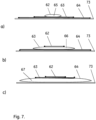
- the bags can be stacked as shown in Fig. 7 , with the second bag below the first bag and optionally a third bag (and further bags) below the second bag.
- This arrangement allows for easier constriction of the connections, as the drain port of a previous bag can easily be connected to an inlet port on the free top surface of a subsequent bag via a tubing loop above the stack.
- Another advantage is that it is easier to remove samples from each bag from sample ports on the free top surfaces of the bags.
- sheet-formed heating elements may be interspersed with the bags in the stack to improve the temperature control.
- a spent bag is to be removed from the stack after transfer of the culture to a subsequent bag, this can easily be done under maintained sterile conditions e.g. by hot sealing disconnection if the connecting tubing is thermoplastic (made from e.g. soft PVC or thermoelastomers).
- Equipment for hot sealing of thermoplastic tubing is readily available, e.g. under the name of Hot Lips Tube Sealer (Cytiva Healthcare Bio-Sciences AB).
- the flexible bag assembly 21;41 comprises at least one multi-compartment bag 22;42;82 with cultivation compartments 25,26,27;45,46,47;85,86,87 connected or connectable via internal conduits 32;92.
- the internal conduits can suitably have internal (circle-equivalent) diameters measuring less than 10%, such as less than 5%, of the cross section of the bag.
- the compartments may be delimited from each other by e.g. walls or welded seams extending at least over a major part of the bag cross section, such as the entire cross section.
- the internal conduits 32;92 can then e.g.
- the valve means 30,31;90,91 can either be integrated in the conduits or applied externally as clamps or pinch valves.
- the internal conduits 32;92 may alternatively be parts of the bag cross section to which the walls or weld seams do not extend, i.e. the walls/weld seams only extend over a part of the bag cross section, such as over 90-99.9% or 95-99.5% of the bag cross section, leaving the remaining part of the cross section open to form the internal conduits 32;92.
- the valve means can in this case suitably be externally applied clamps, which can provide leak-free seals as they only have to be applied over a short distance.
- the flexible bag assembly 81 further comprises at least one bag 82 with at least one temperature control compartment 98.
- the bag 82 can suitably comprise a top film 99, a bottom film 100 and a delimiting film 97, wherein the delimiting film delimits the temperature control compartment 98 from the cultivation compartments 85,86,87.
- the temperature control compartment can suitably comprise at least an inlet (not shown) for a thermostating fluid. It may further comprise an outlet (not shown) for the thermostating fluid.
- the thermostating fluid can e.g. be water or cell culture medium.
- the thermostating fluid, such as water can be circulated through the temperature control compartment via the inlet and outlet from/to a thermostating appliance, e.g.
- the temperature control compartment may be adapted to be located in direct contact with at least one temperature control surface or heating element on the tray 93.
- the thermostating fluid such as water or cell culture medium
- the temperature control compartment may be fluidically connectable to the first, second or third cultivation compartment via a drain port and a valve means (not shown) and can then be used as a further cultivation compartment in the same way as discussed above.
- the advantage of having a temperature control compartment is that, particularly in small cultivation compartments, the temperature may be difficult to control accurately enough by the conventional means of having a temperature sensor in the cultivation compartment and controlling the temperature with a temperature control (heating) surface on the tray using a feedback loop. With a temperature control compartment a better temperature stability can be obtained due to the heat capacity of the thermostating fluid.
- the effect of the temperature control compartment is most evident for cultivation compartments of volumes 1 L or less such as 250 mL or less, 100 ml or less, 50 - 100 mL, 50-250 mL or 50-100 mL. This applies in particular to the first cultivation compartment.
- the volume of the temperature control compartment may e.g. be at least 1L, such as at least 2L or at least 5 L or at least 10 times, such as at least 20 times the volume of the first cultivation compartment.
- the flexible bag assembly 41 comprises at least one multi-compartment bag 42 with cultivation compartments 45,46,47 connectable via at least one breakable seal 52.
- the breakable seal may e.g. be a weak weld, as disclosed in EP 2,226,058A1 or US 4,519,499 .
- the breakable seal can e.g. constitute the entire delimitation between two adjacent compartments. In this case the weld is broken by bursting or other mechanical action from the outside of the bag, such that a first compartment opens up into a second compartment and the second cultivation step is conducted in the joint compartment.
- An advantage of this arrangement is that no extra components are needed.
- a further advantage is that, although separate gas inlets 54 and outlets 55 for each compartment are shown in Fig. 3 , the cultivation can be performed with only one gas inlet and one gas outlet for the entire bag with all the compartments.
- each cultivation compartment comprises a gas inlet 14;34;54;74;94 and a gas outlet 15;35;55;75;95.
- These inlets and outlets may be equipped with sterile filters (not shown) to prevent infection/contamination of the culture and are used to supply e.g. air/oxygen to the culture and to remove gaseous metabolites, such as carbon dioxide. They can also be used to supply a gas pressure to transfer the culture liquid from one compartment to another.
- the gas may e.g. be supplied via a gas inlet, while either closing the gas outlet or simply relying on the outlet sterile filter to provide a sufficiently high back pressure for transport of the liquid.
- the cultivation compartment(s) may also comprise one or more of sampling outlets, inlets for culture medium and sensors for e.g. temperature, cell density, pH and concentrations of e.g. oxygen or metabolites.
- the bag assemblies disclosed above can suitably be supplied preassembled and presterilized, such as by radiation sterilization, e.g. by gamma or electron beam irradiation.
- all liquid-contact materials are selected to be radiation-stable and to give low levels of leachables also after irradiation. All materials can e.g. be of USP VI quality.
- the invention discloses a bioreactor assembly, comprising the flexible bag assembly 1;21;41;61;81 as disclosed above mounted on a tray 13;33;53;73;93 adapted to rock back and forth around at least one axis 16;36;56;76;96.
- the rocking mechanism and the support for the tray are not shown in the figures, but are described in detail in US 6,190,913 and V Singh: Cytotechnology 30(1-3), 149-158 (1999 ).
- the bioreactor may further comprise a cell culture in at least one of the cultivation compartments 5,6,7;25,26,27;45,46,47;65,66,67;85,86,87.
- the tray may be equipped with a temperature control (heating) surface in direct contact with at least one bag. It may further be equipped with sensor connectors in electrical contact with at least one bag. At least one of the cultivation compartments may be connected to a gas supply via a gas inlet and a sterile filter.
- the present invention discloses a method of cultivating cells.
- the method comprises the steps of:
- the cultivations in the first and second cultivation compartments can be made using methods well known in the art and described e.g. in V Singh: Cytotechnology 30(1-3), 149-158 (1999 ) or Clincke et al., Biotechnol. Prog., 2013, Vol. 29, No. 3 .
- Air or other gases may be supplied via gas inlets 14;34;74;94 and excess air/gas together with gaseous metabolites (e.g. carbon dioxide) may be vented via gas outlets 15;35;75;95.
- the cultivation in the first compartment may be continued until a predetermined viable cell density (VCD) is reached, e.g. 1.0 ⁇ 10 5 , 2.0 ⁇ 10 5 , 5.0 ⁇ 10 5 or 1.0 ⁇ 10 6 viable cells/ml.
- VCD viable cell density
- the VCD may e.g. be measured with an inline biomass sensor, e.g. as described in US 8,180,575 or WO 2010/010313A2 .
- steps d) and further may be initiated.
- the transfer in step e) may be accomplished by gravity, e.g. by inclining the tray with the bags or raising it vertically. It may also be accomplished by gas pressure, suitable delivered via the gas inlet of the first bag, in which case the back pressure of a sterile filter on the gas outlet may be sufficient to allow the transfer.
- the transfer may further be accomplished by other means, e.g. application of pressure on the first or by combinations of different means.
- the method further comprises a step e'), after step e), of closing the first valve means.
- the first and second compartments may be disconnected from each other e.g. by cutting and sealing any tubing 12;72 between the compartments. In the case where the compartments are located in separate bags, this enables removal of the first bag from the tray, which can improve heat transfer and/or allow contact with sensor contacts on the tray surface as discussed above.
- This method can further comprise a step i'), after step i), of closing the second valve means.
- the second and third compartments may be disconnected from each other e.g. by cutting and sealing any tubing 12;72 between the compartments.
- step k) and/or g) may be conducted in perfusion mode, i.e. by conveying at least part of the culture to a filter where a filtrate is removed and conveying the cells back to the culture and replacing the removed filtrate with fresh culture medium. This allows for further increases in the VCD.
- the assembly comprises at least one bag 82 with at least one cultivation compartment 85,86,87 and at least one temperature control compartment 98.
- the temperature control compartment can suitably be adapted to rest on a tray support, with the cultivation compartment(s) above the temperature control compartment.
- the cultivation compartment(s) may be fluidically connectable as disclosed above, but they may also be separate and adapted for parallel cultivation.
- the bag 82 can, as illustrated by Fig. 10 , comprise a top film 99, a bottom film 100 and a delimiting film 97, wherein the delimiting film delimits the at least one temperature control compartment 98 from at least one cultivation compartment 85,86,87, such as each cultivation compartment.
- the cultivation compartment(s), such as each cultivation compartment, may e.g. have a volume of less than 1L, such as 50-250 mL, and/or the volume of said temperature control compartment may e.g. be at least 10 times the volume of at least one cultivation compartment, such as of each cultivation compartment.
- the temperature control compartment may e.g. comprise an inlet and an outlet for a thermostating fluid to allow for circulation of thermostating fluid from e.g. a thermostat bath.
- the temperature control compartment may have an inlet for thermostating fluid to allow for cultivation under conditions where the temperature control compartment is closed and acts as a temperature buffer.
- bioreactor assembly comprising:
- the at least one flexible temperature control compartment is mounted or placed on the tray and the at least one bag or bottle is suitably located on top of the at least one flexible temperature control compartment.
- the heat transfer between the thermostating fluid and a cell culture in the cultivation compartment can proceed efficiently and the heat capacity of the thermostating fluid provides good temperature control within a narrow temperature range even for small cultivation compartments, such as cultivation compartments of volumes 1 L or less such as 250 mL or less, 100 ml or less, 50 - 100 mL, 50-250 mL or 50-100 mL.
- the bag 82 may comprise e.g. one, two, three, four, five, six, seven, eight, nine or ten cultivation compartments, which can be adapted for parallel cultivation and/or for sequential cultivation as disclosed above.
- the flexible temperature control compartment may form a part of the at least one bag 82, i.e. bag 82 may comprise both the flexible temperature control compartment 98 and at least one cultivation compartment 85,86,87, e.g. as illustrated in Fig 10 .
- the at least one bag may further comprise a top film 99, a bottom film 100 and a delimiting film 97, wherein the delimiting film delimits the at least one temperature control compartment 98 from at least one cultivation compartments 85,86,87.
- the temperature control compartment can be equipped with an inlet and an outlet for thermostating fluid to allow circulation of the fluid from e.g.
- the cultivation compartments may also be equipped with temperature sensors, which can be electrically or electromagnetically connected to a control unit to allow temperature control with a feedback loop.
- the control unit can further be connected to a thermostat bath or other temperature control equipment in a feedback loop.
- the temperature control compartment may comprise a temperature sensor, which can be connected to the control unit.
- the tray may be equipped with a temperature control (heating) surface in direct contact with at least one bag. It may further be equipped with sensor connectors in electrical contact with at least one bag.
- At least one of the cultivation compartments may be connected to a gas supply via a gas inlet and a sterile filter.
- the method comprises the steps of:
- the temperature in step c) may be maintained within a range of a target temperature +/- 2°C, such as +/- 1°C or +/- 0.5°C.
- the target temperature can depend on the cell type, and can for mammalian cells be e.g. 35-38°C, such as 36-37°C.
- the thermostating fluid is circulated through said flexible temperature control compartment. This allows for precise control of the temperature.
- the temperature control compartment is in contact with a temperature control (heating) surface on the tray and the temperature is controlled using a temperature sensor in/on the temperature control compartment using a control unit and a feedback loop.
- said at least one cultivation compartment comprises a temperature sensor which is electrically or electromagnetically connected to a control unit and the temperature of said thermostating fluid and/or said cultivation compartment is controlled by the control unit using a feedback loop.
Landscapes
- Health & Medical Sciences (AREA)
- Chemical & Material Sciences (AREA)
- Organic Chemistry (AREA)
- Wood Science & Technology (AREA)
- Life Sciences & Earth Sciences (AREA)
- Engineering & Computer Science (AREA)
- Zoology (AREA)
- Bioinformatics & Cheminformatics (AREA)
- Biochemistry (AREA)
- Microbiology (AREA)
- Biotechnology (AREA)
- General Engineering & Computer Science (AREA)
- General Health & Medical Sciences (AREA)
- Genetics & Genomics (AREA)
- Sustainable Development (AREA)
- Biomedical Technology (AREA)
- Clinical Laboratory Science (AREA)
- Physics & Mathematics (AREA)
- Thermal Sciences (AREA)
- Analytical Chemistry (AREA)
- Immunology (AREA)
- Molecular Biology (AREA)
- Proteomics, Peptides & Aminoacids (AREA)
- Apparatus Associated With Microorganisms And Enzymes (AREA)
- Micro-Organisms Or Cultivation Processes Thereof (AREA)
Description
- The present invention relates to bioreactors for cell cultivation, and more particularly to flexible bag assembly suitable for multi-stage expansion of cell cultures, such as seed train expansion or expansion of cells for cell therapy. The invention also relates to a method of expanding cell cultures in a bioreactor assembly.
- When cell cultures are scaled up from a small cell bank sample to larger production batches, this normally has to be made in several steps, using separate bioreactors. This sequence of cultivations is often called a seed train and is needed in order to keep the cell densities within a certain optimal window, often in the order of >105 cells per ml. In large scale production of biopharmaceuticals where the scale-up is from a small cryopreserved vial sample up to several m3, the seed train can involve up to six steps and take several weeks. It is also a complex procedure in that sterile transfer of the culture from one bioreactor to another is needed, such that transfers have to be made in LAF benches or sterile cleanrooms. Even under these conditions there is also a certain risk for adventitious infections, which can have disastrous consequences for a high value large scale culture. Similar concerns apply also for expansion of cells, e.g. stem cells, to be used in clinical cell therapy.
- With the general trend towards single-use vessels for cell culture, there is an increasing tendency towards using flexible bag bioreactors in seed trains. However, the need to empty one smaller bag and to transfer the content into a larger bag still remains and is a work-intensive operation with some risk of contamination. It has been suggested to gradually increase the culture volume in flexible bags either by clamping off part of the bag over the entire bag cross section and then removing the clamp (
WO2008153401 ) or by starting with a folded bag and then unfolding it (US20100055764 ). Additionally, it is known to provide devices containing a reaction bag for multi-step culturing/separation operations in several steps, having a reaction bag that contains a plurality of sections, and in which each of which an initiating agent may be placed at a corresponding stage so that reagents may be brought into contact during that stage to give a reaction product, with openings therein also being provided to collect the reaction product from the respective section (see, for example,DE 197 07 497 A1 ). However, these solutions do not all provide good sealing between the used and unused compartments, leading to leakage of culture into the unused compartments and contamination of the cell culture by substances released from cells grown under unsuitable conditions. These methods also involve a substantial risk of mechanical damage to the bags, with resulting risks of bag rupture. - Accordingly there is a need for a safe and convenient way of transferring cell cultures from one flexible culture compartment to another under sterile conditions. There is also a need for accurate temperature control of sensitive cell cultures, particularly in small volumes.
- The present invention is defined by the appended claims.
- One aspect of the invention is to provide a flexible bag assembly which allows transfer of a cell culture from one cultivation compartment to another without risk of premature leakage between compartments or of bag damage. This is achieved with a flexible bag assembly as defined in
claim 1. - One advantage is that the cultivation compartments can be conveniently placed on a single tray and agitated using the same agitation means. A further advantage is that the culture can be easily transferred using e.g. gravity or gas pressure.
- A second aspect of the invention is to provide a bioreactor assembly with flexible bags on a rocking platform, which allows transfer of a cell culture from one cultivation compartment to another without risk of premature leakage between compartments or of bag damage. This is achieved with a bioreactor assembly as defined in
claim 10. - A third aspect of the invention is to provide a cultivation method where a cell culture is safely and conveniently transferred from one cultivation compartment to another. This is achieved with a method as defined in the
claim 11. - Further suitable embodiments of the invention are described in the dependent claims.
-
-
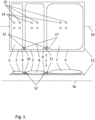
Fig. 1 shows three connectable bags arranged side by side on a tray. -
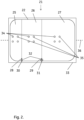
Fig. 2 shows one bag having three connectable cultivation compartments. -
Fig. 3 shows one bag having three connectable cultivation compartments. -
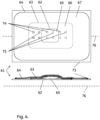
Fig. 4 shows an embodiment of the invention with three connectable bags stacked on a tray. -
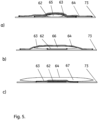
Fig. 5 shows a sequence of cultivations in the three bags ofFig. 4 , starting in a first bag at the bottom of the stack. a) cultivation in a first bag, b) cultivation in a second bag and c) cultivation in a third bag. -
Fig. 6 shows an alternative sequence toFig. 5 , where the spent bag is removed before cultivation in the next bag. a) cultivation in a first bag, b) cultivation in a second bag and c) cultivation in a third bag. -
Fig. 7 shows an alternative stacked bag arrangement with the first bag at the top of the stack. a) cultivation in a first bag, b) cultivation in a second bag and c) cultivation in a third bag. -
Fig. 8 shows two examples of the bag-to-bag connection. a) dip tube drain port in a first bag connected with an inlet port in a second bag via tubing in a loop above the stack, b) drain port in a first bag connected with an inlet port in a second bag via tubing in a loop outside the stack. -
Fig 9 . shows two examples of drain ports: a) a dip tube used with a bag in horizontal position and b) a port used with a bag in inclined position. -
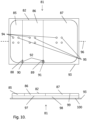
Fig. 10 shows one bag having three connectable cultivation compartments and a temperature control compartment. - In one aspect, illustrated by
Figs. 4-8 , the present invention discloses aflexible bag assembly 1;21;41;61;81 for cultivation of cells. The assembly comprisesbags cultivation compartments first drain port 8;28;48;68;88 in at least afirst cultivation compartment 5;25;45;65;85 is adapted to be fluidically connected with asecond cultivation compartment 6;26;46;66;86 upon opening of a first valve means 10;30;50;70;90. The second cultivation compartment may be larger than the first cultivation compartment, e.g. having a volume of at least 120%, such as at least 150% or 120-1000% of the volume of the first cultivation compartment. The drain port can suitably be located at a low point of the first cultivation compartment to facilitate complete draining of the compartment. A low point can here mean a point which is located within the lowermost 20%, 10% or 5% of the compartment volume, either when the compartment is in a cultivation position or when it is moved to a transfer or drainage position. Two examples of drain ports are shown inFig 9 , withFig 9 a) showing adip tube 68 that can be used with a bag in cultivation position andFig. 9 b) showing aplain port 68 at the end of a bag, which is suitable for draining when the bag is in an inclined or vertical drainage position with the port at the lower end of the bag. As shown inFig. 8 a) , it is also possible to use a dip tube at the end of the bag as a drain port. This arrangement allows draining in both horizontal and inclined/vertical positions. The valve means can be in a closed position when cells are cultured in the first cultivation compartment and then moved/rearranged to an open position when the culture is to be transferred to the second compartment. It can then optionally be moved/rearranged to a closed position to prevent leakage back to the first compartment during cultivation in the second cultivation compartment. Alternatively, the valve means may also comprise a check valve (not shown), only allowing flow in the direction from the first to the second compartment. The valve means can be a valve, such as e.g. a pinch valve, a diaphragm valve, a disc valve, a ball valve, a gate valve, a needle valve or a piston valve but it can also be a clamp, e.g. a pinch clamp, or it can be a breakable closure, e.g. a rupture disc or a breakable weld between the compartments. The valve means can be reversible, i.e. it can be moved/rearranged back to a closed position from an open position or it can be irreversible, i.e. it can only be moved/rearranged from a closed position to an open position. Valves and clamps are examples of reversible valve means and breakable closures of irreversible valve means. Pinch valves and pinch clamps have an advantage from a sterility/contamination point of view in that they can be applied externally on tubing or conduits and do not have any wetted parts. Pinch valves or pinch clamps adapted for application on tubing or conduits of up to 10 mm inner diameter or up to 15 mm outer diameter are particularly suitable in that they are simple low cost components that provide efficient closure and opening. The function of the valve means is to prevent any leakage of the culture into the second compartment during cultivation in the first compartment, when in the closed position, and to allow easy flow from the first to the second compartment when in the open position. If the valve means is reversible, or comprises a check valve, the valve may also have a function of preventing backflow of the culture into the first compartment during cultivation in the second compartment, if so desired. - The
bags - The bag assembly of the invention can conveniently be arranged on a rocking
tray 13;33;73;93 platform to provide agitation during cultivation. The tray can rock back and forth around anaxis 16;36;76,96, e.g. placed somewhat below the tray. Rocking tray platforms suitable for this purpose are described e.g. inUS 6,190,913 , and are commercially available as WAVE Bioreactor™ from Cytiva Healthcare Bio-Sciences. - In certain embodiments, the
flexible bag assembly 1;21;41;61;81 comprises at least three cultivation compartments and has a second drain port 9;29;49;89 in thesecond cultivation compartment 6;26;46;66,86, which is adapted to be fluidically connected with athird cultivation compartment 7;27;47;67;87 upon opening of a second valve means 11;31;51,91. The second drain port and the second valve means can be constructed as described above for the first drain port and first valve means. The third cultivation compartment may be larger than the second cultivation compartment, e.g. having a volume of at least 120%, such as at least 150% or 120-1000% of the volume of the second cultivation compartment, and/or at least 140%, such as at least 200% or 140-10 000% of the volume of the first cultivation compartment. This allows a safe and convenient three-step scale-up from the first, to the second and then to the third cultivation compartment. - In the embodiments, the
flexible bag assembly 1;61 comprises at least two bags, which are suitably connected bytubing 12. The tubing can be connected to adrain port 8,9 in a first bag and to aculture inlet 17 in a second bag. The valve means 10,11 may be a) valve components connected via the tubing, b) valves integrated with the tubing or c) externally applied devices such as pinch clamps or pinch valves. All these valve means are capable of preventing leakage in a closed position and allowing flow in an open position. The bags can be adapted to be stacked on top of each other on atray 73 as inFigs. 4-7 . It is also possible to have a combination of bags placed beside each other and stacked on top of each other, e.g. with two or three bags beside each other as inFig. 1 and one larger bag placed below or on top of the two or three bags. The arrangement beside each other has the advantage that the assembly is easily prepared and arranged on the tray and the operation is simple. The stacked arrangement has the advantage that the tray area is more efficiently used. When bags are stacked, it is advantageous if the connections are made by tubing and the tubing extends in a loop outside or above the stack. This improves accessibility and allows for easy operation of the valve means if it is placed in the loop. The bags can e.g. be stacked as shown inFigs. 5 and6 , with the second bag on top of the first bag and optionally a third bag (and further bags) on top of the second bag. This arrangement has the advantage that any sensors at the bottom side of the bags can be in contact with sensor contacts on the tray surface. In particular, a culture sequence as illustrated inFig. 6 , where the first bag is removed from the stack after transfer of the culture to the second bag and the second bag is optionally removed after transfer of the culture to a third bag, allows sensors in all the bags to be in contact with the same sensor contacts on the tray surface. This sequence also has the advantage that during cultivation the entire bag area is in contact with the tray surface, which facilitates heat transfer from a heating element located on the tray surface and improves the temperature control. Alternatively, the bags can be stacked as shown inFig. 7 , with the second bag below the first bag and optionally a third bag (and further bags) below the second bag. This arrangement allows for easier constriction of the connections, as the drain port of a previous bag can easily be connected to an inlet port on the free top surface of a subsequent bag via a tubing loop above the stack. Another advantage is that it is easier to remove samples from each bag from sample ports on the free top surfaces of the bags. If needed, sheet-formed heating elements may be interspersed with the bags in the stack to improve the temperature control. For all the stack arrangements, if a spent bag is to be removed from the stack after transfer of the culture to a subsequent bag, this can easily be done under maintained sterile conditions e.g. by hot sealing disconnection if the connecting tubing is thermoplastic (made from e.g. soft PVC or thermoelastomers). Equipment for hot sealing of thermoplastic tubing is readily available, e.g. under the name of Hot Lips Tube Sealer (Cytiva Healthcare Bio-Sciences AB). - In certain non-claimed exampls, illustrated by
Figs. 2-3 and10 , theflexible bag assembly 21;41 comprises at least onemulti-compartment bag 22;42;82 withcultivation compartments internal conduits 32;92. The internal conduits can suitably have internal (circle-equivalent) diameters measuring less than 10%, such as less than 5%, of the cross section of the bag. As shown inFigs. 2 and10 , the compartments may be delimited from each other by e.g. walls or welded seams extending at least over a major part of the bag cross section, such as the entire cross section. Theinternal conduits 32;92 can then e.g. be the hollow portions ofports ports internal conduits 32;92 may alternatively be parts of the bag cross section to which the walls or weld seams do not extend, i.e. the walls/weld seams only extend over a part of the bag cross section, such as over 90-99.9% or 95-99.5% of the bag cross section, leaving the remaining part of the cross section open to form theinternal conduits 32;92. The valve means can in this case suitably be externally applied clamps, which can provide leak-free seals as they only have to be applied over a short distance. - In certain non-claimed examples, illustrated by
Fig. 10 , theflexible bag assembly 81 further comprises at least onebag 82 with at least onetemperature control compartment 98. Thebag 82 can suitably comprise atop film 99, abottom film 100 and a delimitingfilm 97, wherein the delimiting film delimits thetemperature control compartment 98 from the cultivation compartments 85,86,87. The temperature control compartment can suitably comprise at least an inlet (not shown) for a thermostating fluid. It may further comprise an outlet (not shown) for the thermostating fluid. The thermostating fluid can e.g. be water or cell culture medium. The thermostating fluid, such as water, can be circulated through the temperature control compartment via the inlet and outlet from/to a thermostating appliance, e.g. a thermostate bath. Alternatively, the temperature control compartment may be adapted to be located in direct contact with at least one temperature control surface or heating element on thetray 93. In this case, the thermostating fluid, such as water or cell culture medium, need not be circulated but can act as a temperature buffer. If the temperature control fluid is cell culture medium, the temperature control compartment may be fluidically connectable to the first, second or third cultivation compartment via a drain port and a valve means (not shown) and can then be used as a further cultivation compartment in the same way as discussed above. The advantage of having a temperature control compartment is that, particularly in small cultivation compartments, the temperature may be difficult to control accurately enough by the conventional means of having a temperature sensor in the cultivation compartment and controlling the temperature with a temperature control (heating) surface on the tray using a feedback loop. With a temperature control compartment a better temperature stability can be obtained due to the heat capacity of the thermostating fluid. The effect of the temperature control compartment is most evident for cultivation compartments of volumes 1 L or less such as 250 mL or less, 100 ml or less, 50 - 100 mL, 50-250 mL or 50-100 mL. This applies in particular to the first cultivation compartment. The volume of the temperature control compartment may e.g. be at least 1L, such as at least 2L or at least 5 L or at least 10 times, such as at least 20 times the volume of the first cultivation compartment. - In some non-claimed examples, illustrated by
Fig. 3 , theflexible bag assembly 41 comprises at least onemulti-compartment bag 42 withcultivation compartments breakable seal 52. The breakable seal may e.g. be a weak weld, as disclosed inEP 2,226,058A1 orUS 4,519,499 . The breakable seal can e.g. constitute the entire delimitation between two adjacent compartments. In this case the weld is broken by bursting or other mechanical action from the outside of the bag, such that a first compartment opens up into a second compartment and the second cultivation step is conducted in the joint compartment. An advantage of this arrangement is that no extra components are needed. A further advantage is that, althoughseparate gas inlets 54 andoutlets 55 for each compartment are shown inFig. 3 , the cultivation can be performed with only one gas inlet and one gas outlet for the entire bag with all the compartments. - In certain embodiments of the flexible bag assembly, each cultivation compartment comprises a
gas inlet 14;34;54;74;94 and agas outlet 15;35;55;75;95. These inlets and outlets may be equipped with sterile filters (not shown) to prevent infection/contamination of the culture and are used to supply e.g. air/oxygen to the culture and to remove gaseous metabolites, such as carbon dioxide. They can also be used to supply a gas pressure to transfer the culture liquid from one compartment to another. The gas may e.g. be supplied via a gas inlet, while either closing the gas outlet or simply relying on the outlet sterile filter to provide a sufficiently high back pressure for transport of the liquid. The cultivation compartment(s) may also comprise one or more of sampling outlets, inlets for culture medium and sensors for e.g. temperature, cell density, pH and concentrations of e.g. oxygen or metabolites. - The bag assemblies disclosed above can suitably be supplied preassembled and presterilized, such as by radiation sterilization, e.g. by gamma or electron beam irradiation. Suitably, all liquid-contact materials are selected to be radiation-stable and to give low levels of leachables also after irradiation. All materials can e.g. be of USP VI quality.
- In a second aspect, the invention discloses a bioreactor assembly, comprising the
flexible bag assembly 1;21;41;61;81 as disclosed above mounted on atray 13;33;53;73;93 adapted to rock back and forth around at least oneaxis 16;36;56;76;96. The rocking mechanism and the support for the tray are not shown in the figures, but are described in detail inUS 6,190,913 and V Singh: Cytotechnology 30(1-3), 149-158 (1999). The bioreactor may further comprise a cell culture in at least one of the cultivation compartments 5,6,7;25,26,27;45,46,47;65,66,67;85,86,87. The tray may be equipped with a temperature control (heating) surface in direct contact with at least one bag. It may further be equipped with sensor connectors in electrical contact with at least one bag. At least one of the cultivation compartments may be connected to a gas supply via a gas inlet and a sterile filter. - In a third aspect the present invention discloses a method of cultivating cells. The method comprises the steps of:
- a) providing the bioreactor as disclosed above;
- b) introducing culture media and cells in the
first cultivation compartment 5;25;45;65;85; - c) cultivating the cells in the first cultivation compartment to provide a first cell culture;
- d) opening a first valve means 10;30;50;70;90 to fluidically connect the first cultivation compartment with the
second cultivation compartment 6;26;46;66;86; - e) transferring the first cell culture to the second cultivation compartment;
- f) introducing culture media to the second cultivation compartment, and;
- g) cultivating the cells in the second cultivation compartment to provide a second cell culture.
- The cultivations in the first and second cultivation compartments can be made using methods well known in the art and described e.g. in V Singh: Cytotechnology 30(1-3), 149-158 (1999) or Clincke et al., Biotechnol. Prog., 2013, Vol. 29, No. 3. Air or other gases may be supplied via
gas inlets 14;34;74;94 and excess air/gas together with gaseous metabolites (e.g. carbon dioxide) may be vented viagas outlets 15;35;75;95. The cultivation in the first compartment may be continued until a predetermined viable cell density (VCD) is reached, e.g. 1.0 × 10⁵, 2.0 × 10⁵, 5.0 × 10⁵ or 1.0 × 10⁶ viable cells/ml. The VCD may e.g. be measured with an inline biomass sensor, e.g. as described inUS 8,180,575 orWO 2010/010313A2 . When the predetermined VCD has been reached, steps d) and further may be initiated. The transfer in step e) may be accomplished by gravity, e.g. by inclining the tray with the bags or raising it vertically. It may also be accomplished by gas pressure, suitable delivered via the gas inlet of the first bag, in which case the back pressure of a sterile filter on the gas outlet may be sufficient to allow the transfer. The transfer may further be accomplished by other means, e.g. application of pressure on the first or by combinations of different means. - In some embodiments the method further comprises a step e'), after step e), of closing the first valve means. Alternatively, or additionally, the first and second compartments may be disconnected from each other e.g. by cutting and sealing any
tubing 12;72 between the compartments. In the case where the compartments are located in separate bags, this enables removal of the first bag from the tray, which can improve heat transfer and/or allow contact with sensor contacts on the tray surface as discussed above. - In certain embodiments the method further comprises the steps of:
- h) opening a second valve means to fluidically connect the second cultivation compartment with the third cultivation compartment;
- i) transferring the second cell culture to the third cultivation compartment;
- j) introducing media to the third cultivation compartment, and;
- k) cultivating the cells in the third cultivation compartment to provide a third cell culture.
- This method can further comprise a step i'), after step i), of closing the second valve means. Alternatively, or additionally, the second and third compartments may be disconnected from each other e.g. by cutting and sealing any
tubing 12;72 between the compartments. - In some embodiments, step k) and/or g) may be conducted in perfusion mode, i.e. by conveying at least part of the culture to a filter where a filtrate is removed and conveying the cells back to the culture and replacing the removed filtrate with fresh culture medium. This allows for further increases in the VCD.
- Also discussed herein, but not claimed, is a further flexible bag assembly for cultivation of cells. The assembly comprises at least one
bag 82 with at least onecultivation compartment temperature control compartment 98. The temperature control compartment can suitably be adapted to rest on a tray support, with the cultivation compartment(s) above the temperature control compartment. The cultivation compartment(s) may be fluidically connectable as disclosed above, but they may also be separate and adapted for parallel cultivation. Thebag 82 can, as illustrated byFig. 10 , comprise atop film 99, abottom film 100 and a delimitingfilm 97, wherein the delimiting film delimits the at least onetemperature control compartment 98 from at least onecultivation compartment - Also discussed herein, but not claimed, is a bioreactor assembly comprising:
- a) at least one
bag 82 or bottle with at least onecultivation compartment - b) at least one flexible
temperature control compartment 98 comprising a thermostating fluid, and; - c) a
tray 93 or a stack of trays adapted to rock back and forth around at least oneaxis 96. - The at least one flexible temperature control compartment is mounted or placed on the tray and the at least one bag or bottle is suitably located on top of the at least one flexible temperature control compartment. Thus, the heat transfer between the thermostating fluid and a cell culture in the cultivation compartment can proceed efficiently and the heat capacity of the thermostating fluid provides good temperature control within a narrow temperature range even for small cultivation compartments, such as cultivation compartments of volumes 1 L or less such as 250 mL or less, 100 ml or less, 50 - 100 mL, 50-250 mL or 50-100 mL. The
bag 82 may comprise e.g. one, two, three, four, five, six, seven, eight, nine or ten cultivation compartments, which can be adapted for parallel cultivation and/or for sequential cultivation as disclosed above. The flexible temperature control compartment may form a part of the at least onebag 82, i.e.bag 82 may comprise both the flexibletemperature control compartment 98 and at least onecultivation compartment Fig 10 . The at least one bag may further comprise atop film 99, abottom film 100 and a delimitingfilm 97, wherein the delimiting film delimits the at least onetemperature control compartment 98 from at least one cultivation compartments 85,86,87. With this arrangement, an integral bag with one or more cultivation compartments in a top part of the bag and a temperature control compartment in a bottom part is obtained. The temperature control compartment can be equipped with an inlet and an outlet for thermostating fluid to allow circulation of the fluid from e.g. a thermostat bath through the temperature control compartment. One or more of the cultivation compartments, such as each cultivation compartment, may also be equipped with temperature sensors, which can be electrically or electromagnetically connected to a control unit to allow temperature control with a feedback loop. The control unit can further be connected to a thermostat bath or other temperature control equipment in a feedback loop. Further, or alternatively, the temperature control compartment may comprise a temperature sensor, which can be connected to the control unit. The tray may be equipped with a temperature control (heating) surface in direct contact with at least one bag. It may further be equipped with sensor connectors in electrical contact with at least one bag. At least one of the cultivation compartments may be connected to a gas supply via a gas inlet and a sterile filter. - Also discussed herein, but not claimed, is a method of cultivating cells. The method comprises the steps of:
- a) providing the bioreactor assembly as disclosed above ;
- b) introducing culture media and cells in at least one
cultivation compartment - d) cultivating the cells in the at least one cultivation compartment.
- The temperature in step c) may be maintained within a range of a target temperature +/- 2°C, such as +/- 1°C or +/- 0.5°C. The target temperature can depend on the cell type, and can for mammalian cells be e.g. 35-38°C, such as 36-37°C.
- In some examples, the thermostating fluid is circulated through said flexible temperature control compartment. This allows for precise control of the temperature. Alternatively, the temperature control compartment is in contact with a temperature control (heating) surface on the tray and the temperature is controlled using a temperature sensor in/on the temperature control compartment using a control unit and a feedback loop.
- In certain examples said at least one cultivation compartment comprises a temperature sensor which is electrically or electromagnetically connected to a control unit and the temperature of said thermostating fluid and/or said cultivation compartment is controlled by the control unit using a feedback loop.
Claims (12)
- A flexible bag assembly (61) for cultivation of cells, comprising a plurality of bags (62, 63, 64) forming a plurality of cultivation compartments (65, 66, 67), wherein a drain port (68) in at least a first cultivation compartment (65) is adapted to be fluidically connected with a second cultivation compartment (66) upon opening of a valve means (70), and characterised in that said plurality of cultivation compartments (65, 66, 67) are of differing volumes, and wherein said plurality of bags (62, 63, 64) are provided in a stacked arrangement.
- The flexible bag assembly (61) of claim 1, comprising at least three cultivation compartments (65, 66, 67) connected by tubing (12).
- The flexible bag assembly (61) of any preceding claim, wherein at least two bags (62, 63, 64) are stacked on a tray (73) or a stack of trays.
- The flexible bag assembly (61) of any preceding claim, adapted for cell cultivation on a rocking tray platform.
- The flexible bag assembly (61) of any preceding claim, comprising a plurality of sheet-formed heating elements interspersed with the bags (62, 63, 64) in the stack.
- The flexible bag assembly (61) of any preceding claim, wherein the valve means (70) comprises: a pinch valve, a check valve, a diaphragm valve, a disc valve, a ball valve, a gate valve, a needle valve, a piston valve, a clamp, a pinch clamp, a rupture disc, or a breakable weld between the cultivation compartments (65, 66, 67).
- The flexible bag assembly (61) of claim 6, wherein the valve means (70) is reversible.
- The flexible bag assembly (61) of any preceding claim, wherein each cultivation compartment (65, 66, 67) comprises a respective gas inlet (74) and a respective gas outlet (75).
- The flexible bag assembly (61) of claim 8, wherein the gas inlets (74) and gas outlets (75) are equipped with sterile filters.
- A bioreactor assembly, comprising the flexible bag assembly (61) of any preceding claim mounted on a tray (73), or a stack of trays, adapted to rock back and forth around at least one axis (76).
- A method of cultivating cells, comprising the steps of:a) providing the bioreactor assembly of claim 10;b) introducing culture media and cells in said first cultivation compartment (65);c) cultivating the cells in said first cultivation compartment (65) to provide a first cell culture;d) opening a first valve means (70) to fluidically connect said first cultivation compartment (65) with said second cultivation compartment (66);e) transferring said first cell culture to said second cultivation compartment (66);f) introducing media to said second cultivation compartment (66), and;g) cultivating the cells in said second cultivation compartment (66) to provide a second cell culture.
- The method of claim 11, further comprising the steps of:h) opening a second valve means (70) to fluidically connect said second cultivation compartment (66) with a third cultivation compartment (67);i) transferring said second cell culture to said third cultivation compartment (67);j) introducing media to said third cultivation compartment (67), and;k) cultivating the cells in said third cultivation compartment (67) to provide a third cell culture.
Applications Claiming Priority (2)
| Application Number | Priority Date | Filing Date | Title |
|---|---|---|---|
| US201462003754P | 2014-05-28 | 2014-05-28 | |
| PCT/EP2015/059054 WO2015180908A1 (en) | 2014-05-28 | 2015-04-27 | Bag assembly for cultivation of cells |
Publications (2)
| Publication Number | Publication Date |
|---|---|
| EP3149145A1 EP3149145A1 (en) | 2017-04-05 |
| EP3149145B1 true EP3149145B1 (en) | 2023-11-01 |
Family
ID=53051813
Family Applications (1)
| Application Number | Title | Priority Date | Filing Date |
|---|---|---|---|
| EP15720315.9A Active EP3149145B1 (en) | 2014-05-28 | 2015-04-27 | Bag assembly for cultivation of cells |
Country Status (5)
| Country | Link |
|---|---|
| US (2) | US10450540B2 (en) |
| EP (1) | EP3149145B1 (en) |
| JP (2) | JP6738058B2 (en) |
| CN (2) | CN106459873A (en) |
| WO (1) | WO2015180908A1 (en) |
Families Citing this family (19)
| Publication number | Priority date | Publication date | Assignee | Title |
|---|---|---|---|---|
| US10731118B2 (en) | 2014-05-28 | 2020-08-04 | Ge Healthcare Bio-Sciences Corp. | Bag assembly for cultivation of cells |
| EP3149145B1 (en) * | 2014-05-28 | 2023-11-01 | Cytiva Sweden AB | Bag assembly for cultivation of cells |
| JP6647957B2 (en) * | 2016-04-28 | 2020-02-14 | 株式会社京都製作所 | Culture device |
| CN109415670A (en) | 2016-07-05 | 2019-03-01 | 通用电气公司 | Apparatus and method for volume-adjustable cell culture |
| WO2018069578A1 (en) * | 2016-10-14 | 2018-04-19 | Teknologian Tutkimuskeskus Vtt Oy | Cultivation unit and set for cultivating cells |
| EP3538640A1 (en) * | 2016-11-11 | 2019-09-18 | Oribiotech Ltd | Cell culture device system and methods of use thereof |
| CN106867888A (en) * | 2017-03-20 | 2017-06-20 | 北京理工大学 | The at the uniform velocity single axis of symmetry tensile cell mechanics device that can be observed in place in real time |
| KR102391563B1 (en) * | 2017-09-26 | 2022-04-27 | 후지필름 가부시키가이샤 | Bag holding clips, containers and agitation methods |
| KR20210005598A (en) * | 2018-04-25 | 2021-01-14 | 글로벌 라이프 사이언시즈 솔루션즈 유에스에이 엘엘씨 | Expandable bioreactor and method of use |
| AU2019345889B2 (en) * | 2018-09-27 | 2025-04-10 | Global Life Sciences Solutions Usa Llc | Multicompartment bag for cultivation of cells |
| IL263127B (en) * | 2018-11-19 | 2022-07-01 | The Interdisciplinary Center Herzliya Cc | Biological fluidic system |
| JP2020178602A (en) * | 2019-04-24 | 2020-11-05 | 大日本印刷株式会社 | Containers, sampling methods, and methods for producing inclusions containing cells |
| JP7451877B2 (en) | 2019-04-27 | 2024-03-19 | 東洋製罐グループホールディングス株式会社 | cell culture system |
| WO2021021696A1 (en) * | 2019-07-30 | 2021-02-04 | Novozymes Bioag A/S | Devices and methods for solid-state fermentation and drying of microorganisms |
| JP7900911B2 (en) * | 2020-12-22 | 2026-08-05 | アイ ピース,インコーポレイテッド | Cell culture vessels and cell culture methods |
| US12252678B2 (en) | 2021-12-01 | 2025-03-18 | Microfluidx Ltd | Systems and methods for bioprocessing |
| CN117327563B (en) * | 2023-09-25 | 2024-08-23 | 成都赛恩吉诺生物科技有限公司 | Tissue dissociation method |
| CN117305077B (en) * | 2023-09-25 | 2024-08-13 | 成都赛恩吉诺生物科技有限公司 | A fully closed tissue dissociation method |
| WO2025202216A1 (en) * | 2024-03-25 | 2025-10-02 | The Automation Partnership (Cambridge) Limited | Method for performing a bioprocess on immune or naive cells in a cell culture |
Family Cites Families (28)
| Publication number | Priority date | Publication date | Assignee | Title |
|---|---|---|---|---|
| US3257072A (en) * | 1963-01-07 | 1966-06-21 | Cryogenic Eng Co | Whole blood storage structure |
| US3983994A (en) | 1975-01-29 | 1976-10-05 | Ihor Wyslotsky | Flexible package |
| GB2073243B (en) * | 1980-03-04 | 1984-12-05 | Tokyo Rikakikai Kk | Continuous fermentor or reactor |
| US4519499A (en) | 1984-06-15 | 1985-05-28 | Baxter Travenol Laboratories, Inc. | Container having a selectively openable seal line and peelable barrier means |
| US5017490A (en) | 1989-03-10 | 1991-05-21 | Baxter International Inc. | Method for in vitro reproduction and growth of cells in culture medium |
| DE4447626C5 (en) * | 1994-03-29 | 2007-01-25 | Fresenius Ag | Medical multi-chamber bag |
| DE19707497A1 (en) * | 1996-08-16 | 1998-02-19 | Boehringer Mannheim Gmbh | Reaction bag device for carrying out multistage cultivation / separation processes and / or reactions |
| US6190913B1 (en) | 1997-08-12 | 2001-02-20 | Vijay Singh | Method for culturing cells using wave-induced agitation |
| DE19802229C2 (en) | 1998-01-22 | 2000-05-04 | Impag Gmbh Medizintechnik | Plate-shaped latch to immobilize a pelvic fracture |
| WO2004075931A2 (en) | 2003-02-27 | 2004-09-10 | Baxter International Inc. | Method for the validatable inactivation of pathogens in a biological fluid by irradiation |
| US7993580B2 (en) | 2004-08-24 | 2011-08-09 | Baxter International Inc. | Methods for the inactivation of microorganisms in biological fluids, flow through reactors and methods of controlling the light sum dose to effectively inactivate microorganisms in batch reactors |
| KR20080072022A (en) * | 2005-11-01 | 2008-08-05 | 가부시키가이샤 메디넷 | Cell culture apparatus, cell culture method, cell culture program, and cell culture system |
| CN101300339A (en) * | 2005-11-01 | 2008-11-05 | 迈世耐特股份公司 | Shaking device for cell culture and shaking culture method of cell culture method |
| US8039252B2 (en) * | 2006-01-11 | 2011-10-18 | Berry Eric | Multi-chamber cell culture assembly |
| US20100075405A1 (en) * | 2007-02-15 | 2010-03-25 | Broadley-James Corporation | Bioreactor jacket |
| WO2008153401A1 (en) | 2007-06-15 | 2008-12-18 | Cellution Biotech B.V. | Improved flexible bioreactor |
| FR2917498B1 (en) | 2007-06-15 | 2009-10-02 | Nanotec Solution Soc Civ Ile | METHOD AND SYSTEM FOR COUNTING CELLS ONLINE AND IN SITU IN A BIOLOGICAL CULTURE MEDIUM |
| JP2009102049A (en) | 2007-10-24 | 2009-05-14 | Kaneka Corp | Cell-containing composition preparing container and cell-containing composition producing instrument equipped with the cell-containing composition preparing container |
| US20090238495A1 (en) | 2008-03-18 | 2009-09-24 | Anderson Michael R | Pouch dispenser |
| FR2934371B1 (en) | 2008-07-25 | 2012-06-08 | Nanotec Solution | SINGLE-USE BIOMASS SENSOR DEVICE, METHOD OF MAKING SAME, AND SINGLE-USE BIOREACTOR INTEGRATING SENSOR |
| US20100055764A1 (en) | 2008-08-27 | 2010-03-04 | Martin Gregory R | Cell culture apparatus and method |
| JP2010136628A (en) * | 2008-12-09 | 2010-06-24 | Ihi Corp | Cell culture bag and cell culture method thereof |
| CA2757538A1 (en) | 2009-04-03 | 2010-10-07 | Xcellerex, Inc. | Tissue and organ graft bioreactor and method of operation |
| US9068215B2 (en) * | 2011-05-13 | 2015-06-30 | Therapeutic Proteins International, LLC | Interconnected bioreactors |
| AU2012347741B2 (en) * | 2011-12-07 | 2016-01-14 | Cytovera, Inc. | Method and device for sample processing |
| US10731118B2 (en) * | 2014-05-28 | 2020-08-04 | Ge Healthcare Bio-Sciences Corp. | Bag assembly for cultivation of cells |
| EP3149145B1 (en) | 2014-05-28 | 2023-11-01 | Cytiva Sweden AB | Bag assembly for cultivation of cells |
| JP6444619B2 (en) | 2014-05-30 | 2018-12-26 | オリンパス株式会社 | Medium exchange system |
-
2015
- 2015-04-27 EP EP15720315.9A patent/EP3149145B1/en active Active
- 2015-04-27 CN CN201580027731.8A patent/CN106459873A/en active Pending
- 2015-04-27 WO PCT/EP2015/059054 patent/WO2015180908A1/en not_active Ceased
- 2015-04-27 CN CN202511075138.2A patent/CN120905022A/en active Pending
- 2015-04-27 US US15/306,691 patent/US10450540B2/en active Active
- 2015-04-27 JP JP2016568628A patent/JP6738058B2/en active Active
-
2019
- 2019-09-27 US US16/586,272 patent/US11525111B2/en active Active
-
2020
- 2020-06-30 JP JP2020112853A patent/JP7043115B2/en active Active
Also Published As
| Publication number | Publication date |
|---|---|
| US20200087605A1 (en) | 2020-03-19 |
| US10450540B2 (en) | 2019-10-22 |
| US11525111B2 (en) | 2022-12-13 |
| JP2020156512A (en) | 2020-10-01 |
| JP6738058B2 (en) | 2020-08-12 |
| EP3149145A1 (en) | 2017-04-05 |
| US20170044477A1 (en) | 2017-02-16 |
| WO2015180908A1 (en) | 2015-12-03 |
| CN120905022A (en) | 2025-11-07 |
| JP2017516473A (en) | 2017-06-22 |
| JP7043115B2 (en) | 2022-03-29 |
| CN106459873A (en) | 2017-02-22 |
Similar Documents
| Publication | Publication Date | Title |
|---|---|---|
| US11525111B2 (en) | Bag assembly for cultivation of cells | |
| JP6687041B2 (en) | Cell culture kit | |
| EP1389232B1 (en) | A cryopreservation bag assembly for mammalian cell lines | |
| CN101622337B (en) | Disposable tubing set and method for aseptic sampling for use with a cell expansion device | |
| AU2019345889B2 (en) | Multicompartment bag for cultivation of cells | |
| CN101978041B (en) | Channel Constrained Multilayer Cell Culture System | |
| US10450541B2 (en) | Cell culture apparatus | |
| US10731118B2 (en) | Bag assembly for cultivation of cells | |
| JP6405690B2 (en) | Multi-chamber culture container and cell culture method | |
| JP7659823B2 (en) | CELL PROCESSING UNIT, CELL PROCESSING SYSTEM AND METHOD OF USING SAME - Patent application | |
| WO2016042741A1 (en) | Liquid delivery method for cell culture system, and cell culture system | |
| ES3049606T3 (en) | An assembly | |
| CN101724548A (en) | Stirred tank bioreactor | |
| JP5929988B2 (en) | Cell culture equipment | |
| JP6492479B2 (en) | Cell culture equipment |
Legal Events
| Date | Code | Title | Description |
|---|---|---|---|
| STAA | Information on the status of an ep patent application or granted ep patent |
Free format text: STATUS: THE INTERNATIONAL PUBLICATION HAS BEEN MADE |
|
| PUAI | Public reference made under article 153(3) epc to a published international application that has entered the european phase |
Free format text: ORIGINAL CODE: 0009012 |
|
| STAA | Information on the status of an ep patent application or granted ep patent |
Free format text: STATUS: REQUEST FOR EXAMINATION WAS MADE |
|
| 17P | Request for examination filed |
Effective date: 20161107 |
|
| AK | Designated contracting states |
Kind code of ref document: A1 Designated state(s): AL AT BE BG CH CY CZ DE DK EE ES FI FR GB GR HR HU IE IS IT LI LT LU LV MC MK MT NL NO PL PT RO RS SE SI SK SM TR |
|
| AX | Request for extension of the european patent |
Extension state: BA ME |
|
| DAV | Request for validation of the european patent (deleted) | ||
| DAX | Request for extension of the european patent (deleted) | ||
| STAA | Information on the status of an ep patent application or granted ep patent |
Free format text: STATUS: EXAMINATION IS IN PROGRESS |
|
| 17Q | First examination report despatched |
Effective date: 20171221 |
|
| RAP1 | Party data changed (applicant data changed or rights of an application transferred) |
Owner name: CYTIVA SWEDEN AB |
|
| GRAP | Despatch of communication of intention to grant a patent |
Free format text: ORIGINAL CODE: EPIDOSNIGR1 |
|
| STAA | Information on the status of an ep patent application or granted ep patent |
Free format text: STATUS: GRANT OF PATENT IS INTENDED |
|
| INTG | Intention to grant announced |
Effective date: 20230602 |
|
| P01 | Opt-out of the competence of the unified patent court (upc) registered |
Effective date: 20230526 |
|
| GRAS | Grant fee paid |
Free format text: ORIGINAL CODE: EPIDOSNIGR3 |
|
| GRAA | (expected) grant |
Free format text: ORIGINAL CODE: 0009210 |
|
| STAA | Information on the status of an ep patent application or granted ep patent |
Free format text: STATUS: THE PATENT HAS BEEN GRANTED |
|
| AK | Designated contracting states |
Kind code of ref document: B1 Designated state(s): AL AT BE BG CH CY CZ DE DK EE ES FI FR GB GR HR HU IE IS IT LI LT LU LV MC MK MT NL NO PL PT RO RS SE SI SK SM TR |
|
| REG | Reference to a national code |
Ref country code: GB Ref legal event code: FG4D |
|
| REG | Reference to a national code |
Ref country code: CH Ref legal event code: EP |
|
| REG | Reference to a national code |
Ref country code: IE Ref legal event code: FG4D |
|
| REG | Reference to a national code |
Ref country code: DE Ref legal event code: R096 Ref document number: 602015086327 Country of ref document: DE |
|
| REG | Reference to a national code |
Ref country code: LT Ref legal event code: MG9D |
|
| REG | Reference to a national code |
Ref country code: NL Ref legal event code: MP Effective date: 20231101 |
|
| PG25 | Lapsed in a contracting state [announced via postgrant information from national office to epo] |
Ref country code: GR Free format text: LAPSE BECAUSE OF FAILURE TO SUBMIT A TRANSLATION OF THE DESCRIPTION OR TO PAY THE FEE WITHIN THE PRESCRIBED TIME-LIMIT Effective date: 20240202 |
|
| PG25 | Lapsed in a contracting state [announced via postgrant information from national office to epo] |
Ref country code: IS Free format text: LAPSE BECAUSE OF FAILURE TO SUBMIT A TRANSLATION OF THE DESCRIPTION OR TO PAY THE FEE WITHIN THE PRESCRIBED TIME-LIMIT Effective date: 20240301 |
|
| PG25 | Lapsed in a contracting state [announced via postgrant information from national office to epo] |
Ref country code: LT Free format text: LAPSE BECAUSE OF FAILURE TO SUBMIT A TRANSLATION OF THE DESCRIPTION OR TO PAY THE FEE WITHIN THE PRESCRIBED TIME-LIMIT Effective date: 20231101 |
|
| REG | Reference to a national code |
Ref country code: AT Ref legal event code: MK05 Ref document number: 1627251 Country of ref document: AT Kind code of ref document: T Effective date: 20231101 |
|
| PG25 | Lapsed in a contracting state [announced via postgrant information from national office to epo] |
Ref country code: NL Free format text: LAPSE BECAUSE OF FAILURE TO SUBMIT A TRANSLATION OF THE DESCRIPTION OR TO PAY THE FEE WITHIN THE PRESCRIBED TIME-LIMIT Effective date: 20231101 |
|
| PG25 | Lapsed in a contracting state [announced via postgrant information from national office to epo] |
Ref country code: AT Free format text: LAPSE BECAUSE OF FAILURE TO SUBMIT A TRANSLATION OF THE DESCRIPTION OR TO PAY THE FEE WITHIN THE PRESCRIBED TIME-LIMIT Effective date: 20231101 |
|
| PG25 | Lapsed in a contracting state [announced via postgrant information from national office to epo] |
Ref country code: ES Free format text: LAPSE BECAUSE OF FAILURE TO SUBMIT A TRANSLATION OF THE DESCRIPTION OR TO PAY THE FEE WITHIN THE PRESCRIBED TIME-LIMIT Effective date: 20231101 |
|
| PG25 | Lapsed in a contracting state [announced via postgrant information from national office to epo] |
Ref country code: NL Free format text: LAPSE BECAUSE OF FAILURE TO SUBMIT A TRANSLATION OF THE DESCRIPTION OR TO PAY THE FEE WITHIN THE PRESCRIBED TIME-LIMIT Effective date: 20231101 Ref country code: LT Free format text: LAPSE BECAUSE OF FAILURE TO SUBMIT A TRANSLATION OF THE DESCRIPTION OR TO PAY THE FEE WITHIN THE PRESCRIBED TIME-LIMIT Effective date: 20231101 Ref country code: IS Free format text: LAPSE BECAUSE OF FAILURE TO SUBMIT A TRANSLATION OF THE DESCRIPTION OR TO PAY THE FEE WITHIN THE PRESCRIBED TIME-LIMIT Effective date: 20240301 Ref country code: GR Free format text: LAPSE BECAUSE OF FAILURE TO SUBMIT A TRANSLATION OF THE DESCRIPTION OR TO PAY THE FEE WITHIN THE PRESCRIBED TIME-LIMIT Effective date: 20240202 Ref country code: ES Free format text: LAPSE BECAUSE OF FAILURE TO SUBMIT A TRANSLATION OF THE DESCRIPTION OR TO PAY THE FEE WITHIN THE PRESCRIBED TIME-LIMIT Effective date: 20231101 Ref country code: BG Free format text: LAPSE BECAUSE OF FAILURE TO SUBMIT A TRANSLATION OF THE DESCRIPTION OR TO PAY THE FEE WITHIN THE PRESCRIBED TIME-LIMIT Effective date: 20240201 Ref country code: AT Free format text: LAPSE BECAUSE OF FAILURE TO SUBMIT A TRANSLATION OF THE DESCRIPTION OR TO PAY THE FEE WITHIN THE PRESCRIBED TIME-LIMIT Effective date: 20231101 Ref country code: PT Free format text: LAPSE BECAUSE OF FAILURE TO SUBMIT A TRANSLATION OF THE DESCRIPTION OR TO PAY THE FEE WITHIN THE PRESCRIBED TIME-LIMIT Effective date: 20240301 |
|
| PG25 | Lapsed in a contracting state [announced via postgrant information from national office to epo] |
Ref country code: SE Free format text: LAPSE BECAUSE OF FAILURE TO SUBMIT A TRANSLATION OF THE DESCRIPTION OR TO PAY THE FEE WITHIN THE PRESCRIBED TIME-LIMIT Effective date: 20231101 Ref country code: RS Free format text: LAPSE BECAUSE OF FAILURE TO SUBMIT A TRANSLATION OF THE DESCRIPTION OR TO PAY THE FEE WITHIN THE PRESCRIBED TIME-LIMIT Effective date: 20231101 Ref country code: PL Free format text: LAPSE BECAUSE OF FAILURE TO SUBMIT A TRANSLATION OF THE DESCRIPTION OR TO PAY THE FEE WITHIN THE PRESCRIBED TIME-LIMIT Effective date: 20231101 Ref country code: NO Free format text: LAPSE BECAUSE OF FAILURE TO SUBMIT A TRANSLATION OF THE DESCRIPTION OR TO PAY THE FEE WITHIN THE PRESCRIBED TIME-LIMIT Effective date: 20240201 Ref country code: LV Free format text: LAPSE BECAUSE OF FAILURE TO SUBMIT A TRANSLATION OF THE DESCRIPTION OR TO PAY THE FEE WITHIN THE PRESCRIBED TIME-LIMIT Effective date: 20231101 Ref country code: HR Free format text: LAPSE BECAUSE OF FAILURE TO SUBMIT A TRANSLATION OF THE DESCRIPTION OR TO PAY THE FEE WITHIN THE PRESCRIBED TIME-LIMIT Effective date: 20231101 |
|
| PG25 | Lapsed in a contracting state [announced via postgrant information from national office to epo] |
Ref country code: DK Free format text: LAPSE BECAUSE OF FAILURE TO SUBMIT A TRANSLATION OF THE DESCRIPTION OR TO PAY THE FEE WITHIN THE PRESCRIBED TIME-LIMIT Effective date: 20231101 |
|
| PG25 | Lapsed in a contracting state [announced via postgrant information from national office to epo] |
Ref country code: CZ Free format text: LAPSE BECAUSE OF FAILURE TO SUBMIT A TRANSLATION OF THE DESCRIPTION OR TO PAY THE FEE WITHIN THE PRESCRIBED TIME-LIMIT Effective date: 20231101 |
|
| PG25 | Lapsed in a contracting state [announced via postgrant information from national office to epo] |
Ref country code: SK Free format text: LAPSE BECAUSE OF FAILURE TO SUBMIT A TRANSLATION OF THE DESCRIPTION OR TO PAY THE FEE WITHIN THE PRESCRIBED TIME-LIMIT Effective date: 20231101 |
|
| PG25 | Lapsed in a contracting state [announced via postgrant information from national office to epo] |
Ref country code: SM Free format text: LAPSE BECAUSE OF FAILURE TO SUBMIT A TRANSLATION OF THE DESCRIPTION OR TO PAY THE FEE WITHIN THE PRESCRIBED TIME-LIMIT Effective date: 20231101 Ref country code: SK Free format text: LAPSE BECAUSE OF FAILURE TO SUBMIT A TRANSLATION OF THE DESCRIPTION OR TO PAY THE FEE WITHIN THE PRESCRIBED TIME-LIMIT Effective date: 20231101 Ref country code: RO Free format text: LAPSE BECAUSE OF FAILURE TO SUBMIT A TRANSLATION OF THE DESCRIPTION OR TO PAY THE FEE WITHIN THE PRESCRIBED TIME-LIMIT Effective date: 20231101 Ref country code: IT Free format text: LAPSE BECAUSE OF FAILURE TO SUBMIT A TRANSLATION OF THE DESCRIPTION OR TO PAY THE FEE WITHIN THE PRESCRIBED TIME-LIMIT Effective date: 20231101 Ref country code: EE Free format text: LAPSE BECAUSE OF FAILURE TO SUBMIT A TRANSLATION OF THE DESCRIPTION OR TO PAY THE FEE WITHIN THE PRESCRIBED TIME-LIMIT Effective date: 20231101 Ref country code: DK Free format text: LAPSE BECAUSE OF FAILURE TO SUBMIT A TRANSLATION OF THE DESCRIPTION OR TO PAY THE FEE WITHIN THE PRESCRIBED TIME-LIMIT Effective date: 20231101 Ref country code: CZ Free format text: LAPSE BECAUSE OF FAILURE TO SUBMIT A TRANSLATION OF THE DESCRIPTION OR TO PAY THE FEE WITHIN THE PRESCRIBED TIME-LIMIT Effective date: 20231101 |
|
| REG | Reference to a national code |
Ref country code: DE Ref legal event code: R097 Ref document number: 602015086327 Country of ref document: DE |
|
| PLBE | No opposition filed within time limit |
Free format text: ORIGINAL CODE: 0009261 |
|
| STAA | Information on the status of an ep patent application or granted ep patent |
Free format text: STATUS: NO OPPOSITION FILED WITHIN TIME LIMIT |
|
| 26N | No opposition filed |
Effective date: 20240802 |
|
| PG25 | Lapsed in a contracting state [announced via postgrant information from national office to epo] |
Ref country code: SI Free format text: LAPSE BECAUSE OF FAILURE TO SUBMIT A TRANSLATION OF THE DESCRIPTION OR TO PAY THE FEE WITHIN THE PRESCRIBED TIME-LIMIT Effective date: 20231101 |
|
| PG25 | Lapsed in a contracting state [announced via postgrant information from national office to epo] |
Ref country code: SI Free format text: LAPSE BECAUSE OF FAILURE TO SUBMIT A TRANSLATION OF THE DESCRIPTION OR TO PAY THE FEE WITHIN THE PRESCRIBED TIME-LIMIT Effective date: 20231101 |
|
| PG25 | Lapsed in a contracting state [announced via postgrant information from national office to epo] |
Ref country code: MC Free format text: LAPSE BECAUSE OF FAILURE TO SUBMIT A TRANSLATION OF THE DESCRIPTION OR TO PAY THE FEE WITHIN THE PRESCRIBED TIME-LIMIT Effective date: 20231101 |
|
| PG25 | Lapsed in a contracting state [announced via postgrant information from national office to epo] |
Ref country code: MC Free format text: LAPSE BECAUSE OF FAILURE TO SUBMIT A TRANSLATION OF THE DESCRIPTION OR TO PAY THE FEE WITHIN THE PRESCRIBED TIME-LIMIT Effective date: 20231101 |
|
| REG | Reference to a national code |
Ref country code: CH Ref legal event code: PL |
|
| PG25 | Lapsed in a contracting state [announced via postgrant information from national office to epo] |
Ref country code: LU Free format text: LAPSE BECAUSE OF NON-PAYMENT OF DUE FEES Effective date: 20240427 |
|
| REG | Reference to a national code |
Ref country code: BE Ref legal event code: MM Effective date: 20240430 |
|
| PG25 | Lapsed in a contracting state [announced via postgrant information from national office to epo] |
Ref country code: LU Free format text: LAPSE BECAUSE OF NON-PAYMENT OF DUE FEES Effective date: 20240427 |
|
| PG25 | Lapsed in a contracting state [announced via postgrant information from national office to epo] |
Ref country code: BE Free format text: LAPSE BECAUSE OF NON-PAYMENT OF DUE FEES Effective date: 20240430 |
|
| PG25 | Lapsed in a contracting state [announced via postgrant information from national office to epo] |
Ref country code: BE Free format text: LAPSE BECAUSE OF NON-PAYMENT OF DUE FEES Effective date: 20240430 Ref country code: CH Free format text: LAPSE BECAUSE OF NON-PAYMENT OF DUE FEES Effective date: 20240430 |
|
| PG25 | Lapsed in a contracting state [announced via postgrant information from national office to epo] |
Ref country code: IE Free format text: LAPSE BECAUSE OF NON-PAYMENT OF DUE FEES Effective date: 20240427 |
|
| PG25 | Lapsed in a contracting state [announced via postgrant information from national office to epo] |
Ref country code: CY Free format text: LAPSE BECAUSE OF FAILURE TO SUBMIT A TRANSLATION OF THE DESCRIPTION OR TO PAY THE FEE WITHIN THE PRESCRIBED TIME-LIMIT; INVALID AB INITIO Effective date: 20150427 |
|
| PG25 | Lapsed in a contracting state [announced via postgrant information from national office to epo] |
Ref country code: HU Free format text: LAPSE BECAUSE OF FAILURE TO SUBMIT A TRANSLATION OF THE DESCRIPTION OR TO PAY THE FEE WITHIN THE PRESCRIBED TIME-LIMIT; INVALID AB INITIO Effective date: 20150427 |
|
| PG25 | Lapsed in a contracting state [announced via postgrant information from national office to epo] |
Ref country code: FI Free format text: LAPSE BECAUSE OF FAILURE TO SUBMIT A TRANSLATION OF THE DESCRIPTION OR TO PAY THE FEE WITHIN THE PRESCRIBED TIME-LIMIT Effective date: 20231101 |
|
| PGFP | Annual fee paid to national office [announced via postgrant information from national office to epo] |
Ref country code: GB Payment date: 20260223 Year of fee payment: 12 |
|
| PG25 | Lapsed in a contracting state [announced via postgrant information from national office to epo] |
Ref country code: TR Free format text: LAPSE BECAUSE OF FAILURE TO SUBMIT A TRANSLATION OF THE DESCRIPTION OR TO PAY THE FEE WITHIN THE PRESCRIBED TIME-LIMIT Effective date: 20231101 |
|
| PGFP | Annual fee paid to national office [announced via postgrant information from national office to epo] |
Ref country code: DE Payment date: 20260421 Year of fee payment: 12 |
|
| PGFP | Annual fee paid to national office [announced via postgrant information from national office to epo] |
Ref country code: FR Payment date: 20260423 Year of fee payment: 12 |