EP3148518B1 - Novel compounds as anti-tubercular agents - Google Patents
Novel compounds as anti-tubercular agents Download PDFInfo
- Publication number
- EP3148518B1 EP3148518B1 EP15800492.9A EP15800492A EP3148518B1 EP 3148518 B1 EP3148518 B1 EP 3148518B1 EP 15800492 A EP15800492 A EP 15800492A EP 3148518 B1 EP3148518 B1 EP 3148518B1
- Authority
- EP
- European Patent Office
- Prior art keywords
- hydroxy
- tuberculosis
- compound
- phenylacetamide
- methylpiperidin
- Prior art date
- Legal status (The legal status is an assumption and is not a legal conclusion. Google has not performed a legal analysis and makes no representation as to the accuracy of the status listed.)
- Active
Links
Images


Classifications
-
- C—CHEMISTRY; METALLURGY
- C07—ORGANIC CHEMISTRY
- C07D—HETEROCYCLIC COMPOUNDS
- C07D211/00—Heterocyclic compounds containing hydrogenated pyridine rings, not condensed with other rings
- C07D211/04—Heterocyclic compounds containing hydrogenated pyridine rings, not condensed with other rings with only hydrogen or carbon atoms directly attached to the ring nitrogen atom
- C07D211/06—Heterocyclic compounds containing hydrogenated pyridine rings, not condensed with other rings with only hydrogen or carbon atoms directly attached to the ring nitrogen atom having no double bonds between ring members or between ring members and non-ring members
- C07D211/36—Heterocyclic compounds containing hydrogenated pyridine rings, not condensed with other rings with only hydrogen or carbon atoms directly attached to the ring nitrogen atom having no double bonds between ring members or between ring members and non-ring members with hetero atoms or with carbon atoms having three bonds to hetero atoms with at the most one bond to halogen, e.g. ester or nitrile radicals, directly attached to ring carbon atoms
- C07D211/40—Oxygen atoms
- C07D211/42—Oxygen atoms attached in position 3 or 5
-
- A—HUMAN NECESSITIES
- A61—MEDICAL OR VETERINARY SCIENCE; HYGIENE
- A61K—PREPARATIONS FOR MEDICAL, DENTAL OR TOILETRY PURPOSES
- A61K31/00—Medicinal preparations containing organic active ingredients
- A61K31/33—Heterocyclic compounds
- A61K31/395—Heterocyclic compounds having nitrogen as a ring hetero atom, e.g. guanethidine or rifamycins
- A61K31/435—Heterocyclic compounds having nitrogen as a ring hetero atom, e.g. guanethidine or rifamycins having six-membered rings with one nitrogen as the only ring hetero atom
- A61K31/44—Non condensed pyridines; Hydrogenated derivatives thereof
- A61K31/445—Non condensed piperidines, e.g. piperocaine
-
- A—HUMAN NECESSITIES
- A61—MEDICAL OR VETERINARY SCIENCE; HYGIENE
- A61K—PREPARATIONS FOR MEDICAL, DENTAL OR TOILETRY PURPOSES
- A61K45/00—Medicinal preparations containing active ingredients not provided for in groups A61K31/00 - A61K41/00
- A61K45/06—Mixtures of active ingredients without chemical characterisation, e.g. antiphlogistics and cardiaca
-
- A—HUMAN NECESSITIES
- A61—MEDICAL OR VETERINARY SCIENCE; HYGIENE
- A61P—SPECIFIC THERAPEUTIC ACTIVITY OF CHEMICAL COMPOUNDS OR MEDICINAL PREPARATIONS
- A61P31/00—Antiinfectives, i.e. antibiotics, antiseptics, chemotherapeutics
- A61P31/04—Antibacterial agents
- A61P31/06—Antibacterial agents for tuberculosis
-
- A—HUMAN NECESSITIES
- A61—MEDICAL OR VETERINARY SCIENCE; HYGIENE
- A61P—SPECIFIC THERAPEUTIC ACTIVITY OF CHEMICAL COMPOUNDS OR MEDICINAL PREPARATIONS
- A61P43/00—Drugs for specific purposes, not provided for in groups A61P1/00-A61P41/00
-
- C—CHEMISTRY; METALLURGY
- C07—ORGANIC CHEMISTRY
- C07C—ACYCLIC OR CARBOCYCLIC COMPOUNDS
- C07C59/00—Compounds having carboxyl groups bound to acyclic carbon atoms and containing any of the groups OH, O—metal, —CHO, keto, ether, groups, groups, or groups
- C07C59/40—Unsaturated compounds
- C07C59/58—Unsaturated compounds containing ether groups, groups, groups, or groups
- C07C59/64—Unsaturated compounds containing ether groups, groups, groups, or groups containing six-membered aromatic rings
-
- C—CHEMISTRY; METALLURGY
- C07—ORGANIC CHEMISTRY
- C07D—HETEROCYCLIC COMPOUNDS
- C07D205/00—Heterocyclic compounds containing four-membered rings with one nitrogen atom as the only ring hetero atom
- C07D205/02—Heterocyclic compounds containing four-membered rings with one nitrogen atom as the only ring hetero atom not condensed with other rings
- C07D205/04—Heterocyclic compounds containing four-membered rings with one nitrogen atom as the only ring hetero atom not condensed with other rings having no double bonds between ring members or between ring members and non-ring members
-
- C—CHEMISTRY; METALLURGY
- C07—ORGANIC CHEMISTRY
- C07D—HETEROCYCLIC COMPOUNDS
- C07D207/00—Heterocyclic compounds containing five-membered rings not condensed with other rings, with one nitrogen atom as the only ring hetero atom
- C07D207/02—Heterocyclic compounds containing five-membered rings not condensed with other rings, with one nitrogen atom as the only ring hetero atom with only hydrogen or carbon atoms directly attached to the ring nitrogen atom
- C07D207/04—Heterocyclic compounds containing five-membered rings not condensed with other rings, with one nitrogen atom as the only ring hetero atom with only hydrogen or carbon atoms directly attached to the ring nitrogen atom having no double bonds between ring members or between ring members and non-ring members
- C07D207/08—Heterocyclic compounds containing five-membered rings not condensed with other rings, with one nitrogen atom as the only ring hetero atom with only hydrogen or carbon atoms directly attached to the ring nitrogen atom having no double bonds between ring members or between ring members and non-ring members with hydrocarbon radicals, substituted by hetero atoms, attached to ring carbon atoms
- C07D207/09—Radicals substituted by nitrogen atoms, not forming part of a nitro radical
-
- C—CHEMISTRY; METALLURGY
- C07—ORGANIC CHEMISTRY
- C07D—HETEROCYCLIC COMPOUNDS
- C07D207/00—Heterocyclic compounds containing five-membered rings not condensed with other rings, with one nitrogen atom as the only ring hetero atom
- C07D207/02—Heterocyclic compounds containing five-membered rings not condensed with other rings, with one nitrogen atom as the only ring hetero atom with only hydrogen or carbon atoms directly attached to the ring nitrogen atom
- C07D207/04—Heterocyclic compounds containing five-membered rings not condensed with other rings, with one nitrogen atom as the only ring hetero atom with only hydrogen or carbon atoms directly attached to the ring nitrogen atom having no double bonds between ring members or between ring members and non-ring members
- C07D207/10—Heterocyclic compounds containing five-membered rings not condensed with other rings, with one nitrogen atom as the only ring hetero atom with only hydrogen or carbon atoms directly attached to the ring nitrogen atom having no double bonds between ring members or between ring members and non-ring members with hetero atoms or with carbon atoms having three bonds to hetero atoms with at the most one bond to halogen, e.g. ester or nitrile radicals, directly attached to ring carbon atoms
- C07D207/12—Oxygen or sulfur atoms
-
- C—CHEMISTRY; METALLURGY
- C07—ORGANIC CHEMISTRY
- C07D—HETEROCYCLIC COMPOUNDS
- C07D211/00—Heterocyclic compounds containing hydrogenated pyridine rings, not condensed with other rings
- C07D211/04—Heterocyclic compounds containing hydrogenated pyridine rings, not condensed with other rings with only hydrogen or carbon atoms directly attached to the ring nitrogen atom
- C07D211/06—Heterocyclic compounds containing hydrogenated pyridine rings, not condensed with other rings with only hydrogen or carbon atoms directly attached to the ring nitrogen atom having no double bonds between ring members or between ring members and non-ring members
- C07D211/36—Heterocyclic compounds containing hydrogenated pyridine rings, not condensed with other rings with only hydrogen or carbon atoms directly attached to the ring nitrogen atom having no double bonds between ring members or between ring members and non-ring members with hetero atoms or with carbon atoms having three bonds to hetero atoms with at the most one bond to halogen, e.g. ester or nitrile radicals, directly attached to ring carbon atoms
- C07D211/40—Oxygen atoms
- C07D211/44—Oxygen atoms attached in position 4
- C07D211/46—Oxygen atoms attached in position 4 having a hydrogen atom as the second substituent in position 4
-
- C—CHEMISTRY; METALLURGY
- C07—ORGANIC CHEMISTRY
- C07D—HETEROCYCLIC COMPOUNDS
- C07D211/00—Heterocyclic compounds containing hydrogenated pyridine rings, not condensed with other rings
- C07D211/04—Heterocyclic compounds containing hydrogenated pyridine rings, not condensed with other rings with only hydrogen or carbon atoms directly attached to the ring nitrogen atom
- C07D211/06—Heterocyclic compounds containing hydrogenated pyridine rings, not condensed with other rings with only hydrogen or carbon atoms directly attached to the ring nitrogen atom having no double bonds between ring members or between ring members and non-ring members
- C07D211/36—Heterocyclic compounds containing hydrogenated pyridine rings, not condensed with other rings with only hydrogen or carbon atoms directly attached to the ring nitrogen atom having no double bonds between ring members or between ring members and non-ring members with hetero atoms or with carbon atoms having three bonds to hetero atoms with at the most one bond to halogen, e.g. ester or nitrile radicals, directly attached to ring carbon atoms
- C07D211/56—Nitrogen atoms
-
- C—CHEMISTRY; METALLURGY
- C07—ORGANIC CHEMISTRY
- C07D—HETEROCYCLIC COMPOUNDS
- C07D211/00—Heterocyclic compounds containing hydrogenated pyridine rings, not condensed with other rings
- C07D211/04—Heterocyclic compounds containing hydrogenated pyridine rings, not condensed with other rings with only hydrogen or carbon atoms directly attached to the ring nitrogen atom
- C07D211/06—Heterocyclic compounds containing hydrogenated pyridine rings, not condensed with other rings with only hydrogen or carbon atoms directly attached to the ring nitrogen atom having no double bonds between ring members or between ring members and non-ring members
- C07D211/36—Heterocyclic compounds containing hydrogenated pyridine rings, not condensed with other rings with only hydrogen or carbon atoms directly attached to the ring nitrogen atom having no double bonds between ring members or between ring members and non-ring members with hetero atoms or with carbon atoms having three bonds to hetero atoms with at the most one bond to halogen, e.g. ester or nitrile radicals, directly attached to ring carbon atoms
- C07D211/56—Nitrogen atoms
- C07D211/58—Nitrogen atoms attached in position 4
-
- C—CHEMISTRY; METALLURGY
- C07—ORGANIC CHEMISTRY
- C07D—HETEROCYCLIC COMPOUNDS
- C07D213/00—Heterocyclic compounds containing six-membered rings, not condensed with other rings, with one nitrogen atom as the only ring hetero atom and three or more double bonds between ring members or between ring members and non-ring members
- C07D213/02—Heterocyclic compounds containing six-membered rings, not condensed with other rings, with one nitrogen atom as the only ring hetero atom and three or more double bonds between ring members or between ring members and non-ring members having three double bonds between ring members or between ring members and non-ring members
- C07D213/04—Heterocyclic compounds containing six-membered rings, not condensed with other rings, with one nitrogen atom as the only ring hetero atom and three or more double bonds between ring members or between ring members and non-ring members having three double bonds between ring members or between ring members and non-ring members having no bond between the ring nitrogen atom and a non-ring member or having only hydrogen or carbon atoms directly attached to the ring nitrogen atom
- C07D213/60—Heterocyclic compounds containing six-membered rings, not condensed with other rings, with one nitrogen atom as the only ring hetero atom and three or more double bonds between ring members or between ring members and non-ring members having three double bonds between ring members or between ring members and non-ring members having no bond between the ring nitrogen atom and a non-ring member or having only hydrogen or carbon atoms directly attached to the ring nitrogen atom with hetero atoms or with carbon atoms having three bonds to hetero atoms with at the most one bond to halogen, e.g. ester or nitrile radicals, directly attached to ring carbon atoms
- C07D213/72—Nitrogen atoms
- C07D213/75—Amino or imino radicals, acylated by carboxylic or carbonic acids, or by sulfur or nitrogen analogues thereof, e.g. carbamates
-
- C—CHEMISTRY; METALLURGY
- C07—ORGANIC CHEMISTRY
- C07D—HETEROCYCLIC COMPOUNDS
- C07D265/00—Heterocyclic compounds containing six-membered rings having one nitrogen atom and one oxygen atom as the only ring hetero atoms
- C07D265/28—1,4-Oxazines; Hydrogenated 1,4-oxazines
- C07D265/30—1,4-Oxazines; Hydrogenated 1,4-oxazines not condensed with other rings
-
- C—CHEMISTRY; METALLURGY
- C07—ORGANIC CHEMISTRY
- C07D—HETEROCYCLIC COMPOUNDS
- C07D453/00—Heterocyclic compounds containing quinuclidine or iso-quinuclidine ring systems, e.g. quinine alkaloids
- C07D453/02—Heterocyclic compounds containing quinuclidine or iso-quinuclidine ring systems, e.g. quinine alkaloids containing not further condensed quinuclidine ring systems
- C07D453/04—Heterocyclic compounds containing quinuclidine or iso-quinuclidine ring systems, e.g. quinine alkaloids containing not further condensed quinuclidine ring systems having a quinolyl-4, a substituted quinolyl-4 or a alkylenedioxy-quinolyl-4 radical linked through only one carbon atom, attached in position 2, e.g. quinine
Definitions
- the present invention relates to novel compounds useful as anti-tubercular agents. More particularly, the present invention relates to substituted derivatives, methods for their preparation, pharmaceutical compositions containing these compounds and uses of these compounds in the treatment of tuberculosis.
- Tuberculosis causes nearly two million deaths annually. Recent years have witnessed a resurgence of efforts directed at tuberculosis (TB) drug research and development. An analysis of the chronology of anti-tuberculosis therapy suggests a renewed interest in tuberculosis research.
- MDR-TB Multidrug resistance TB
- XDR-TB extensively drug resistance TB
- TDR-TB totally drug resistance TB
- India has the world's one of the highest burden of tuberculosis, wherein MDR tuberculosis accounts for nearly 5,000,000s cases annually which have been increased by more than 6% in the past 10 years.
- M. tuberculosis develops resistance to drugs by induced or spontaneous mutation of its genome. It is also hypothesized that in case of certain drugs the bacterial cell wall, does not permit adequate permeability, thereby resulting in inadequate/minor amount of drug entering the bacteria. Such amount is insufficient to kill the bacteria, but the presence of minor amount, induces the bacteria to become resistant to the same. It is also hypothesized that M. tuberculosis acquires resistance by modification of its enzyme by unknown mechanisms. Traditional antitubercular drugs administered via oral route, act by inhibiting the synthesis of mycolic acid and/or by inhibiting the mycobacterial arabinosyl transferase, an essential component of mycobacterial cell wall.
- G-protein coupled receptors such as GPR109A also plays an important role in tuberculosis.
- GPR109A receptor is located on the cell surface and inhibits adenylyl cyclase along with consequent suppression of PKA-signaling resulting in reduced triglyceride turnover which is further responsible for accumulation of lipid body inside the cell. Increase in the concentration of lipid body inside the cell favors the growth of M. tuberculosis and prevents respiratory burst.
- a GPR109A inhibitor prevents the formation of lipid body by creating a hostile environment for the tuberculosis and thus induces respiratory burst.Host macrophages infected by M. tuberculosis acquire foamy phenotype characterized by the intracellular accumulation of lipid bodies induced by pathogen through modulation of lipolysis of neutral lipids. This dysregulation influences the lipolysis by modulating the cAMP dependent signaling pathway.
- M. tuberculosis Current resistant tuberculosis treatment, has greater risk of side effects and lasts for 18-24 months and target processes or enzymes within M. tuberculosis but suffers from the risk of generating newer variants exhibiting drug resistance. Since, M. tuberculosis survives within the human macrophage through modulation of a range of host cellular processes hence, a pharmacological target within the host that has been co-opted by M. tuberculosis for its survival should be a breakthrough approach for therapy. Additionally such an approach should be insensitive to whether the infecting strain was drug sensitive or drug resistant and preclude the development of resistance.
- US 2,995,492 relates to piperidine derivatives with psychotogenic activity.
- US 2,955,114 relate to nor-piperidyl glycolate esters.
- US 6,482,837 relates to antimuscarinic compounds and methods for treatment of bladder diseases.
- An object of the invention is to provide compounds useful as anti-tubercular agents.
- an embodiment of the present invention provides novel compound of Formula 1 as antitubercular agents.
- the present invention relates to: a compound of structural Formula (1), including its salts, hydrates and stereoisomers: wherein
- alkyl refers to a linear or branched saturated monovalent hydrocarbon, wherein the alkylene may optionally be substituted as described herein.
- alkyl also encompasses both linear and branched alkyl, unless otherwise specified.
- the alkyl is a linear saturated monovalent hydrocarbon that has the specified number of carbon atoms, or branched saturated monovalent hydrocarbon of specified number of carbon atoms.
- linear C1- C6 and branched C3- C6 alkyl groups are also referred as "lower alkyl.
- alkyl groups include, but are not limited to, methyl, ethyl, propyl (including all isomeric forms), n -propyl, isopropyl, butyl (including all isomeric forms), n -butyl, isobutyl, sec-buryl,t -butyl, pentyl (including all isomeric forms), and hexyl (including all isomeric forms).
- C1 - C6 alkyl refers to a linear saturated monovalent hydrocarbon of 1 to 6 carbon atoms or a branched saturated monovalent hydrocarbon of 3 to 6 carbon atoms.
- aryl refers to a monocyclic aromatic group and/or multicyclic monovalent aromatic group that contain at least one aromatic hydrocarbon ring. In certain embodiments, the aryl has from 6 to 20 (C6 - C20), from 6 to 15 (C6 - C15), or from 6 to 10 (C6 - C10) ring atoms. Examples of aryl groups include, but are not limited to, phenyl, naphthyl, fluorenyl, azulenyl, anthryl, phenanthryl, pyrenyl, biphenyl, and terphenyl.
- Aryl also refers to bicyclic or tricyclic carbon rings, where one of the rings is aromatic and the others of which may be saturated, partially unsaturated, or aromatic, for example, dihydronaphthyl, indenyl, indanyl, or tetrahydronaphthyl (tetralinyl). In certain embodiments, aryl may be optionally substituted as described herein.
- alkoxy refers to the group R'O-- wherein R' is alkyl.
- lower alkoxy refers to alkoxy groups having from 1 to 3 carbon atoms; examples include methoxy, ethoxy, isopropoxy, and the like.
- cycloalkyl refers to a saturated or partially unsaturated, monocyclic, fused bicyclic or bridged polycyclic ring assembly containing from 3 to 12 ring atoms, or the number of atoms indicated. Cycloalkyl can include any number of carbons, such as C 3-6 , C 4-6 , C 5-6 , C 3-8 , C 4-8 , C 5-8 , and C 6.8 . Saturated monocyclic cycloalkyl rings include, for example, cyclopropyl, cyclobutyl, cyclopentyl, cyclohexyl, and cyclooctyl.
- Saturated bicyclic and polycyclic cycloalkyl rings include, for example, norbornane, [2.2.2]bicyclooctane, decahydronaphthalene and adamantane. Cycloalkyl groups can also be partially unsaturated, having one or more double bonds in the ring.
- cycloalkyl groups that are partially unsaturated include, but are not limited to, cyclobutene, cyclopentene, cyclohexene, cyclohexadiene (1,3- and 1,4-isomers), cycloheptene, cycloheptadiene, cyclooctene, cyclooctadiene (1,3-, 1,4- and 1,5-isomers), norbornene, and norbornadiene. Unless otherwise stated, cycloalkyl groups are unsubstituted. A "substituted cycloalkyl" group can be substituted with one or more moieties selected from halo, hydroxy, amino, alkylamino, nitro, cyano, and alkoxy.
- aralkyl or "aryl-alkyl” refers to a monovalent alkyl group substituted with aryl. In certain embodiments, the alkyl and aryl moieties are optionally substituted as described herein.
- heteroaryl refers to a monocyclic aromatic group and/or multicyclic aromatic group that contain at least one aromatic ring, wherein at least one aromatic ring contains one or more heteroatoms independently selected from 0, S, and N.
- Each ring of a heteroaryl group may contain one or two O atoms, one or two S atoms, and/or one to four N atoms, provided that the total number of heteroatoms in each ring is four or less and each ring contains at least one carbon atom.
- the heteroaryl has from 5 to 20, from 5 to 15, or from 5 to 10 ring atoms.
- monocyclic heteroaryl groups include, but are not limited to, furanyl,imidazolyl, isothiazolyl, isoxazolyl, oxadiazolyl, oxadiazolyl, oxazolyl, pyrazinyl, pyrazolyl,pyridazinyl, pyridyl, pyrimidinyl, pyrrolyl, thiadiazolyl, thiazolyl, thienyl, tetrazolyl, triazinyl,and triazolyl.
- bicyclic heteroaryl groups include, but are not limited to,benzofuranyl, benzimidazolyl, benzoisoxazolyl, benzopyranyl, benzothiadiazolyl, benzothiazolyl, benzothienyl, benzothiophenyl, benzotriazolyl, benzoxazolyl, furopyridyl, imidazopyridinyl, imidazothiazolyl, indolizinyl, indolyl, indazolyl, isobenzofuranyl, isobenzothienyl, isoindolyl, isoquinolinyl, isothiazolyl, naphthyridinyl, oxazolopyridinyl, phthalazinyl, pteridinyl, purinyl, pyridopyridyl, pyrrolopyridyl, quinolinyl, quinoxalinyl, quinazolinyl
- tricyclic heteroaryl groups include, but are not limited to, acridinyl, benzindolyl, carbazolyl, dibenzofuranyl, perimidinyl, phenanthrolinyl, phenanthridinyl, phenarsazinyl, phenazinyl, phenothiazinyl, phenoxazinyl, and xanthenyl.
- heteroaryl may also be optionally substituted as described herein.
- heteroaralkyl refers to an aralkyl group as defined above, in which one or more (preferably 1, 2, 3 or 4) carbon atoms have been replaced by an oxygen, nitrogen, silicon, selenium, phosphorus, boron or sulphur atom (preferably oxygen, sulphur or nitrogen), that is to say groups that in accordance with the above definitions contain both aryl or heteroaryl and alkyl, alkenyl, alkynyl and/or heteroalkyl and/or cycloalkyl and/or heterocycloalkyl groups.
- a hetero-aralkyl group preferably contains one or two aromatic ring systems (1 or 2 rings) with from 5 or 6 to 10 carbon atoms and one or two alkyl, alkenyl and/or alkynyl groups having from 1 or 2 to 6 carbon atoms and/or a cycloalkyl group having 5 or 6 ring carbon atoms, with 1, 2, 3 or 4 of those carbon atoms having been replaced by oxygen, sulphur or nitrogen atoms.
- Examples are aryl-heteroalkyl, aryl-heterocycloalkyl, arylheterocycloalkenyl, arylalkyl-heterocycloalkyl, arylalkenyl-heterocycloalkyl, arylalkynylheterocycloalkyl, arylalkyl-heterocycloalkenyl, heteroarylalkyl, heteroarylalkenyl, heteroarylalkynyl, heteroaryl-heteroalkyl, heteroarylcyclo-alkyl, heteroarylcycloalkenyl, heteroaryl-heterocycloalkyl, heteroaryl-heterocycloalkenyl, heteroarylalkylcycloalkyl, _ g _ heteroarylalkyl-heterocycloalkenyl, heteroaryl-heteroalkyl-cycloalkyl, heteroarylheteroalkylcycloalkyl
- heterocyclyl refers to a monocyclic non-aromatic ring system and/or multicyclic ring system that contains at least one non-aromatic ring, wherein one or more of the non-aromatic ring atoms are heteroatoms independently selected from O, S, or N; and the remaining ring atoms are carbon atoms.
- the heterocyclyl or heterocyclic group has from 3 to 20, from 3 to 15, from 3 to 10, from 3 to 8, from 4 to 7, or from 5 to 6 ring atoms.
- the hetero cyclyl is a monocyclic, bicyclic, tricyclic, or tetracyclic ring system, which may include a fused or bridged ring system, and in which the nitrogen or sulfur atoms may be optionally oxidized, the nitrogen atoms may be optionally quaternized, and some rings may be partially or fully saturated, or aromatic.
- the heterocyclyl may be attached to the main structure at any heteroatom or carbon atom which results in thecreation of a stable compound.
- heterocyclic compounds include, but are not limited to, azepinyl, benzodioxanyl, benzodioxolyl, benzofuranonyl, benzopyranonyl, benzopyranyl, benzotetrahydrofuranyl, benzotetrahydrothienyl, benzothiopyranyl, benzoxazinyl, p-carbolinyl, chromanyl, chromonyl, cinnolinyl, coumarinyl, decahydroisoquinolinyl, dihydrobenzisothiazinyl, dihydrobenzisoxazinyl, dihydrofuryl, dihydroisoindolyl, dihydropyranyl, dihydropyrazolyl, dihydropyrazinyl, dihydropyridinyl, dihydropyrimidinyl, dihydropyrrolyl, dioxolanyl, 1,4-dithianyl
- halogen refers to fluorine, chlorine, bromine, and iodine.
- heteroatom as used herein means an atom of any element other than carbon or hydrogen. Preferred heteroatoms are nitrogen, oxygen, sulfur, phosphorus and selenium.
- aromatic refers to an unsatured cyclic moiety that has an aromatic character. The term is intended to encompass both hydrocarbon aromatic compounds and heteroaromatic compounds.
- hydrocarbon aromatic ring or “hydrocarbon aromatic compound” refer to an aromatic ring or compound in which the aromatic moieties have only carbon and hydrogen atoms.
- heterocarbon ring or “heteroaromatic compound' refer to an aromatic ring or compound wherein in at least one aromatic moiety one or more of the carbon atoms within the cyclic group has been replaced by another atom, such as nitrogen, oxygen, sulfur, or the like.
- non-aromatic refers to a cyclic moiety, that may be unsaturated, but that does not have an aromatic character.
- substituted refers to where hydrogen radical on a molecule has been replaced by another atom radical, a functional group radical or a moiety radical; these radicals being generally referred to as "substituents.”
- a group such as an alkyl, alkylene, alkenyl, alkenylene, alkynyl, alkynylene, alkoxy, alkylamino, dialkylamino, carboxamido, cycloalkyl, cycloalkylene, aryl, arylene, heteroaryl, heteroarylene, heterocyclyl, or heterocyclylene, may be substituted with one or more substituents independently selected from,e.g., (a) C1 - C6 alkyl, C2 - C6 alkenyl, C2 - C6 alkynyl, C3 - C7 cycloalkyl, C6 - C14 aryl, C7 - C15aralkyl, heteroaryl, and heterocyclyl, each optionally substituted with one or more substituents; and (b) halo, cyano (-CN), nitro (-N02),-C(O)R3
- salt(s) denotes acidic and/or basic salts formed with inorganic and/or organic acids and bases. Zwitterions (internal or inner salts) are included within the term “salt(s)” as used herein (and may be formed, for example, where the R substituents comprise a basic moiety such as an amino group). Also included herein are quaternary ammonium salts such as alkyl ammonium salts. Pharmaceutically acceptable (i.e., non-toxic, physiologically acceptable) salts are preferred.
- pharmaceutically acceptable salts refers to the acid addition salt compound formed with a suitable acid selected from an inorganic acid such as hydrochloric acid, hydrobromic acid; or an organic acid such as benzene sulfonic acid, maleic acid, oxalic acid, fumaric acid, succinic acid, p-toluenesulfonic acid and malic acid.
- a suitable acid selected from an inorganic acid such as hydrochloric acid, hydrobromic acid; or an organic acid such as benzene sulfonic acid, maleic acid, oxalic acid, fumaric acid, succinic acid, p-toluenesulfonic acid and malic acid.
- hydrate designates a crystalline molecular compound in which water molecules are incorporated into the crystal lattice. Generally speaking, a hydrate thus designates a crystalline form of a molecular compound, whereby the only further molecules incorporated into the crystal lattice are water molecules.
- stereoisomer's refers to at least two compounds having the same molecular formula and connectivity of atoms, but having a different arrangement of atoms in a three-dimensional space.
- a stereoisomer can be, for example, an enantiomer, a diastereomer, or a meso compound.
- prophylactic refers variously to medicaments, amounts or quantities, methods, uses and effects, etc., that prevent and/or aid in preventing infections.
- therapeutic refers to preventing, ameliorating, treating, improving, or curing a disease or condition.
- DAS Directly Observed Treatment Short-Course
- a four-drug such as Rifampicin, Isoniazid, Ethambutol and Pyrazinamide
- Rifampicin and Isoniazid two-drug
- MDR-TB Multidrug resistance Tuberculosis
- IH isoniazid
- RMP rifampicin
- Extensively drug resistance Tuberculosis refers to the tuberculosis which are resistant to at least three of the six classes of second line anti-tuberculosis drugs as well as isoniazid and rifampicin, plus any fluoroquinolone and at least one of three injectable second-line drugs such as amikacin, kanamycin, or capreomycin.
- TDR-TB totally Drug Resistance Tuberculosis
- first and second line drugs tested such as isoniazid, rifampicin, streptomycin, ethambutol, pyrazinamide, ethionamide, para-aminosalicylic acid, cycloserine, ofloxacin, amikacin, ciprofloxacin, capreomycin, kanamycin.
- H37Rv refers to a pathogenic M. tuberculosis strain that has been sequenced.
- JAL2287 refers to the MDR (multi drug resistant) strainof M. tuberculosis
- MYC431 refers to the XDR (extensive drug resistant) strain of M . tuberculosis
- GPR109A refers to the G-protein coupled receptor GPR109A.
- the present invention provides compound represented by formula (1) that inhibits mycobacterium colony growth alone or in combination with DOTS (Directly Observed Treatment Short Course) therapy.
- DOTS Directly Observed Treatment Short Course
- the compounds of the present invention may be illustrated but not limited to the examples as provided at Table 1.
- Table 1 Illustrative compounds Compounds 1035, 1036, 1042, 1043, 1044, 1045, 1051, 1052, 1061, 1069, 1070, 1085, 1086, 1087, 1088, 1089, 1090 and 1094 are within the scope of the present invention. The other compounds listed in Table 1 below are not within the scope of the invention. Chemical No.
- the present invention also provides for compounds of formula (1) as below:
- the present invention includes within its scope the salts.
- Compounds of the present invention after being novel may in some cases form salts which are also within the scope of this invention.
- the present invention may also optionally envisage within its scope the effect of selection of suitable counter ions and may include the modification of deuterated compounds.
- Deuterated compounds are those wherein the compounds have selective incorporation of deuterium in place of hydrogen.
- the Compounds of the present invention may be present in their enantiomeric pure forms or their mixtures.
- the compounds of the present invention may be synthesized by the general synthetic scheme as shown below:
- the compounds of present invention are synthesized by coupling compound A with a coupling agent (i) in an organic solvent to yield the compound as claimed in claim 1; herein; X, R 1 , R 2 , R 3 , R 4 and n are as defined in claim 1.
- a general procedure involves the coupling reactions of acid with an amine or alcohol (R 3 X).
- an acid (A) is used as a starting material which can be activated by converting it to corresponding acid chloride using reagent such thionyl chloride or oxalyl chloride in a solvent such as DCM with or without a small amount of DMF at temperature ranging from room temperature to reflux and then by reaction of this acid chloride with a desired amine or alcohol (R 3 X) to arrive at other members of the series.
- an acid coupling reagent is such as carbodiimide in an organic solvent such as DMF with or without an organic base such DMAP.
- acid can be activated by converting to corresponding ester using alcohol such as methanol first before reacting it with an amine or alcohol in a solvent such as benzene with or without a base such as sodium methoxide to arrive at other members of the series.
- the invention thus provides the novel compounds as defined herein for use in human or veterinary medicine.
- the compounds of the present invention may be for use in the treatment and prevention of diseases caused by mycobacteria such as tuberculosis.
- the said tuberculosis may be caused by mycobacterial species consisting of Mycobacterium tuberculosis, M. bovis, M africanum, M. canettior M. microti.
- the compounds of the present invention are effective in inhibiting the growth of the M. tuberculosis.
- Tuberculosis as mentioned herein comprises active tuberculosis or latent tuberculosis.
- the active tuberculosis comprises drug sensitive, mono-drug resistant, multi-drug-resistant tuberculosis (MDR), extensively drug- resistant tuberculosis (XDR) or totally drug resistant tuberculosis.
- the compounds of the present invention may be used in the treatment of tuberculosis including MDR, XDR and TDR tuberculosis.
- the compounds of the present invention may be used either alone or in combination with cycloserine, amikacin, linezolid, ethambutol, rifampicin, isoniazid, ethionamide, moxyfloxacin, clarithromycin, PAS, clofazamine, streptomycin, capreomycin and kanamycin and DOTS ("Directly Observed Treatment, Short-course") therapy.
- the compounds of the present invention may also be used prophylactically in preventing the occurrence of tuberculosis in healthcare providers, health workers, community members and the alike who are directly in contact with tuberculosis patients.
- the compounds of the present invention may be used for treatment of the infection caused by resistant and non-resistant Mycobacterium tuberculosis as defined above.
- the compounds of the present invention are effective against tuberculosis and said tuberculosis includes drug-sensitive, mono-drug resistance, multi drug-resistant (MDR), extensively drug-resistance (XDR) and totally drug resistance (TDR) caused by a strain of Mycobacterium tuberculosis Mycobacterium strains.
- MDR multi drug-resistant
- XDR extensively drug-resistance
- TDR totally drug resistance
- the compounds of the present invention may be used for the treatment of multi-drug-resistant (MDR), extensively drug-resistance (XDR) and totally drug resistance (TDR) tuberculosis caused by a strain Mycobacterium tuberculosis and for treatment of the infection caused by resistant and non-resistant Mycobacterium tuberculosis as defined above by inhibition of GPR109A inhibition by an agent.
- MDR multi-drug-resistant
- XDR extensively drug-resistance
- TDR totally drug resistance
- the compound for use as a pharmaceutical may be presented as a pharmaceutical composition.
- the invention therefore provides in a further embodiment a pharmaceutical composition comprising the novel compounds of the invention along with pharmaceutically acceptable excipients/carriers thereof and optionally other therapeutic and/or prophylactic ingredients.
- the excipients/carriers must be "acceptable” in the sense of being compatible with the other ingredients of the composition and not deleterious to the recipient thereof.
- the pharmaceutical composition will be in an appropriate formulation.
- the pharmaceutical formulations may be any formulation and include those suitable for oral, intranasal, or parenteral (including intramuscular and intravenous) administration.
- the formulations may, where appropriate, be conveniently presented in discrete dosage units and may be prepared by any of the methods well known in the art of pharmacy.
- the methods of the invention include the step of bringing into association the active compound with liquid carriers or finely divided solid carriers or both, and then, if necessary, shaping the product into the desired formulation.
- the compounds of the present invention may be administered orally, topically, intranasally, parenterally, by inhalation spray or rectally in dosage unit formulations containing conventional non-toxic pharmaceutically acceptable carriers, adjuvants and vehicles.
- parenteral as used herein includes subcutaneous injections, intravenous, intramuscular, intrasteral injection or infusion techniques.
- warm-blooded animals such as mice, rats, horses, dogs, cats, etc.
- the compounds of the present invention are effective in the treatment of humans.
- compound of the present invention may be administered in a dose ranging from 0.1 to 100 mg/kg body weight per day.
- the compounds of the present invention are useful for the prevention and treatment of tuberculosis and may be used as GPR109A inhibitors.
- the compounds may be prepared by the schemes as here below:
- Step 3 [1064] was synthesized similar to [1065] as described in step 2.Analytical Data: [1064] ESIMS: 364[M + ]
- Example 1 Inhibition of mycobacterium colony growth in macrophage by compounds of the present invention.
- THP1 cells were seeded in a tissue culture plate in complete RPMI + 10% FCS and were allowed to differentiate to macrophages by addition of PMA with incubation at 37°C with 5% CO 2 . After 16-20 hr of PMA differentiation, cells were washed and replenished with complete RPMI. PMA-differentiated THP-1 cell were infected with tuberculosis bacteria H37Rv at an MOI of 10. Infection was performed in antibiotic free RPMI supplemented with 10% FCS. After adding bacteria, culture plates were centrifuged prior to incubation at 37°C with 5% CO 2 .
- Example 3 In vitro infection of human PBMC derived macrophages, compound addition and cfu determination.
- Heparinised human blood diluted 1:1 with RPMI 1640 was layered onto equal volume of Ficoll-Paque followed by centrifugation at 1600 rpm for 30 min.
- the PBMC layer formed at the interface was collected carefully and washed twice with RPMI.
- the cells were diluted in RMPI medium (without serum) to a concentration 2 ⁇ 10 6 /ml and 10 ml of diluted cells were put into a 75-cm 2 tissue culture flask, and incubated for 2 hrs in a humidified 37°C incubator. The non-adherent cells were removed by aspiration, followed by two washes with RPMI.
- Human PBMC derived macrophages were infected with tuberculosis bacteria at a MOI of 10 (i.e., 10 bacteria per cell). Infection was performed in antibiotic free RPMI supplemented with 10% FCS. After adding bacteria, culture plates were centrifuged at 700 rpm for 5 min prior to incubation at 37°C with 5% CO 2 . After 4h, infected cells were washed twice with warm RPMI and replenished with complete RPMI containing 200 ⁇ g/mL amikacin for 2h to remove any remaining extra-cellular bacteria. Subsequently, cells were washed and then maintained in complete RPMI for the rest of the experiment.
- Inhibitor addition was performed at 16hrs post infection (p.i) and the medium containing the appropriate dose of inhibitor was replenished at 40hrs and 64hrs p.i.
- the cells were lysed in 50 ⁇ l of 0.06% SDS for 10 min at room temperature. Lysate dilutions of 1:10 were plated in duplicate sets on 7H11 agar plates. Square plates (12 X 12 cm) were used for the plating, by the track dilution method in which 10 ⁇ l of each dilution was spotted on one side of square plate. The plate was then tipped onto its side (at a 45°- 90 O angle), and the spots were allowed to gently flow in parallel tracks along the agar surface.
- Table 3 Demonstration of reduction of colony count on use of the compound 1085 CFU/well (1 ⁇ 10 3 ) of untreated cells CFU/well (1 ⁇ 10 3 ) After treatment with 1085 JAL2287 42.00 ⁇ 2.00 6.33 ⁇ 3.51 MYC431 20.67 ⁇ 1.53 6.00 ⁇ 1.00 H37RV 27.67 ⁇ 2.08 8.66 ⁇ 2.51
- Example 4 In vitro infection of THP-1 macrophages, compound addition and cfu determination.
- the human monocyte/ macrophage cell line THP-1 was cultured in RPMI 1640 supplemented with 10% FCS and were maintained between 2 and 10 X 105 cells per ml at 37°C in a humidified, 5% CO 2 atmosphere. Before infection, cells were plated in 96 well plates at 1 ⁇ 104 cells per well and differentiated with PMA (30 ng/ml) for a period of 48 hrs. Bacteria were grown in Middlebrooke 7H9 broth supplemented with 10% ADC, 0.4% Glycerol and 0.05% Tween 80 until the mid-log phase. The bacteria were then harvested, washed with RPMI and re-suspended in the same media.
- the suspension was dispersed by aspiration twelve times each with a 23- and then a 26-gauge needle, followed by an additional dispersion for 3 times through a 30-gauge needle. This suspension was allowed to stand for 5 min. The upper half of the suspension was then used for the experiments. Bacteria were quantified by measuring the absorbance at a wavelength 600nm (0.6 O.D. corresponds to ⁇ 100 ⁇ 106 bacteria).
- PMA-differentiated THP-1 cells were infected with tuberculosis bacteria at a MOI of 10 (i.e., 10 bacteria per cell). Infection was performed in antibiotic free RPMI supplemented with 10% FCS. After adding bacteria, culture plates were centrifuged at 700 rpm for 5 min prior to incubation at 37°C with 5%CO 2 . After 4h, infected cells were washed twice with warm RPMI and replenished with complete RPMI containing 200 ⁇ g/mL amikacin for 2h to remove any remaining extra-cellular bacteria. Subsequently, cells were washed and then maintained in complete RPMI for the rest of the experiment.
- Inhibitor addition was performed at 16hrs post infection (p.i) and the medium containing the appropriate dose of inhibitor was replenished at 40hrs and 64hrs p.i.
- the cells were lysed in 50 ⁇ l of 0.06% SDS for 10 min at room temperature. Lysate dilutions of 1:10 were plated in duplicate sets on 7H11 agar plates. Square plates (12 X 12 cm) were used for the plating, by the track dilution method in which 10 ⁇ l of each dilution was spotted on one side of square plate. The plate was then tipped onto its side (at a 45°- 90° angle), and the spots were allowed to gently flow in parallel tracks along the agar surface.
- THP-1 cells were seeded onto #1 thickness, 12 mm diameter glass cover-slips in 24-well tissue culture plates at a density of 0.3x10⁶ cells per cover slip. These cells were then infected M. tb (H37Rv) at a MOI of 10 and incubated for 4h at 370 C in 5% CO2. Extracellular bacteria were removed by washing and subsequently by supplementing the medium with 200 ⁇ g/ml amikacin for 2h. SPR113 was added in increasing concentrations immediately after the amikacin treatment, and the medium containing the appropriate inhibitor was replenished at 16h and 40h post infection. At 48hrs post infection cells were fixed with 3.7% para-formaldehyde and washed with PBS.
- HCS LipidTox Red neutral lipid stain diluted 1:1000 in PBS was added to the cells for 30 min.
- the cell nuclei were stained using 300nM DAPI solution (in H2O) for 5 min and then washed. Stained cells were observed with a Nikon EclipseTi-E laser scanning confocal microscope equipped with 60X/1.4NA Plan Apochromat DIC objective lens.
- DAPI and Lipid Tox were excited at 408 nm and 543 nm with a blue diode and a Helium-Neon laser respectively. The emissions were recorded through emission filters set at 450 and 605/75 nm. Images were acquired with a scanning mode format of 512 ⁇ 512 pixels.
- THP-1 cells independently infected with r M.tb strains [JAL2287, JAL2261, XDR]. Addition of the media containing compound was performed at 16 hr and the medium containing the appropriate dose of compound was refreshed every 24 hr up to the 64 hr time point. At the end of the total culture period of 90 hr, cells were lysed and CFUs were determined and results are as shown graphically in Figure 3 .
- the cellular Potency of compound 1085 was measured in MTB infected THP1 and EC50 of H37Rv was 0.5nM and MYC431 and JAL2287 were 0.1nM. The graph shows that compound inhibited all the mycobacterial strains at concentration of 0.01 to 500nM.
- THP-1 macrophages were incubated with compd. 1085 at the indicated concentrations for 30 min, following which 3-hydroxybutyric acid. (3HBA, 10uM), a GPR109A agonist, was added to cells for 90 min. In the absence of compound 1085, 3HBA reduces intracellular cAMP levels while compound 1085 inhibits the activity in a dose dependent manner. The results are represented at Figure 4 .
- Example 8 Co-localization of M. tuberculosis with degradative vesicles: acidified lysosomes and autophagosomes in the presence of compound 1085
- THP-1 cells were seeded onto glass cover-slips in 24-well tissue culture plates at a density of 0.3 ⁇ 10 6 cells per cover slip. These cells were then infected GFP- tagged M. tb (H37Rv-GFP) at a MOI of 10 and incubated for 4h at 37 0 C in 5% CO2. Extracellular bacteria were removed by washing and subsequently by supplementing the medium with 200 ⁇ g/ml Amikacin for 2hr. compound 1085 was added at 100 nM concentration immediately after the amikacin treatment, and the medium containing the compound was replenished at 16h and 40h post infection.
- GFP- tagged M. tb H37Rv-GFP
- Tuberculosis modulates both these degradative pathways in order to ensure its continued survival within the macrophage. Interventions which lead to activation of these pathways in infected macrophages will lead to targeted killing of intracellular M. Tuberculosis and thus reduce mycobacterial load.
- the significance of the experiments done with compound 1085 is that treatment of infected macrophages with this compound leads to an increased co-localization of mycobacteria with these degradative vesicles which is reflected by the increased value of the co localization coefficient (higher value of co localization coefficient indicates a higher percentage of bacteria present inside these degradative vesicles). The bacteria present inside these vesicles upon compound 1085 treatment are thus primed to be subsequently killed which in turn is reflected in the lower in vitro cfu's obtained with compound 1085.
- THP-1 cells were seeded onto glass cover-slips in 24-well tissue culture plates at a density of 0.3 ⁇ 10 6 cells per cover slip.
- Ligand for GPR109A, 3-HB (10 ⁇ M) was added to the cells and in parallel sets. Compd. 1085 was added in increasing concentrations.
- At 48h post 3HB addition cells were fixed with 3.7% para-formaldehyde and washed with PBS.
- HCS LipidTox Red neutral lipid stain diluted 1:1000 in PBS was added to the cells for 30 min. The cell nuclei were stained using 300nM DAPI solution (in H 2 O) for 5 min and then washed. Stained cells were observed with a laser scanning confocal microscope equipped with Apochromat DIC objective lens.
- DAPI and Lipid Tox were excited at 408 nm and 543 nm with a blue diode and a Helium-Neon laser respectively.
- the emissions were recorded through emission filters set at 450 and 605/75 nm. Images were acquired with a scanning mode format of 512 ⁇ 512 pixels.
- the transmission and detector gains were set to achieve best signal to noise ratios and the laser powers were tuned to limit bleaching fluorescence. All images were quantified and the results are graphically depicted in Figure 6 which demonstrates that significant effect on average fluorescent intensity was observed in presence of compound 1085 representing decrease in the cellular lipid body.
- the human monocyte/ macrophage cell line THP-1 was cultured in RPMI 1640 supplemented with 10% FCS and were maintained between 2 and 10 ⁇ 10 5 cells per ml at 37°C in a humidified, 5% CO 2 atmosphere. Before infection, cells were plated in 96 well plates at 1 ⁇ 10 4 cells per well and differentiated with PMA (30 ng/ml) for a period of 48 hrs. Bacteria were grown in Middlebrooke 7H9 broth supplemented with 10% ADC (Becton Dickinson), 0.4% Glycerol and 0.05% Tween 80 until the mid-log phase. The bacteria were then harvested, washed with RPMI and re-suspended in the same media.
- ADC Becton Dickinson
- the suspension was dispersed by aspiration twelve times each with a 23- and then a 26-gauge needle, followed by an additional dispersion for 3 times through a 30-gauge needle. This suspension was allowed to stand for 5 min. The upper half of the suspension was then used for the experiments. Bacteria were quantified by measuring the absorbance at a wavelength 600nm (0.6 O.D. corresponds to ⁇ 100 ⁇ 10 6 bacteria).
- PMA-differentiated THP-1 cells were infected with tuberculosis bacteria at a MOI of 10 (i.e., 10 bacteria per cell). Infection was performed in antibiotic free RPMI supplemented with 10% FCS. After adding bacteria, culture plates were centrifuged at 700 rpm for 5 min prior to incubation at 37°C with 5% CO 2 . After 4h, infected cells were washed twice with warm RPMI and replenished with complete RPMI containing 200 ⁇ g/mL amikacin for 2h to remove any remaining extra-cellular bacteria. Subsequently, cells were washed and then maintained in complete RPMI for the rest of the experiment.
- Inhibitor addition was performed at 16hrs post infection (p.i) and the medium containing the appropriate dose of inhibitor was replenished at 40hrs and 64hrs p.i.
- the cells were lysed in 50 ⁇ l of 0.06% SDS for 10 min at room temperature. Lysate dilutions of 1:10 were plated in duplicate sets on 7H11 agar plates. Square plates (12 X 12 cm) were used for the plating, by the track dilution method in which 10 ⁇ l of each dilution was spotted on one side of square plate. The plate was then tipped onto its side (at a 45°- 90 O angle), and the spots were allowed to gently flow in parallel tracks along the agar surface.
- the human monocyte/ macrophage cell line THP-1 was cultured in RPMI 1640 (Gibco Laboratories) supplemented with 10% FCS (Hyclone) and were maintained between 2 and 10 ⁇ 10 5 cells per ml at 37°C in a humidified, 5% CO 2 atmosphere. Before infection, cells were plated in 96 well plates at 1 ⁇ 10 4 cells per well and differentiated with PMA (30 ng/ml) for a period of 48 hrs. Bacteria were grown in Middlebrooke 7H9 broth (Difco) supplemented with 10% ADC (Becton Dickinson), 0.4% Glycerol and 0.05% Tween 80 until the mid-log phase.
- the bacteria were then harvested, washed with RPMI and resuspended in the same media.
- the suspension was dispersed by aspiration twelve times each with a 23- and then a 26-gauge needle, followed by an additional dispersion for 3 times through a 30-gauge needle. This suspension was allowed to stand for 5 min. The upper half of the suspension was then used for the experiments.
- Bacteria were quantified by measuring the absorbance at a wavelength 600nm (0.6 O.D. corresponds to ⁇ 100 ⁇ 10 6 bacteria).
- PMA-differentiated THP-1 cells were infected with tuberculosis bacteria at a MOI of 10 (i.e., 10 bacteria per cell). Infection was performed in antibiotic free RPMI supplemented with 10% FCS. After adding bacteria, culture plates were centrifuged at 700 rpm for 5 min prior to incubation at 37°C with 5% CO 2 . After 4h, infected cells were washed twice with warm RPMI and replenished with complete RPMI containing 200 ⁇ g/mL amikacin for 2h to remove any remaining extra-cellular bacteria. Subsequently, cells were washed and then maintained in complete RPMI for the rest of the experiment.
- Inhibitor addition was performed at 16hrs post infection (p.i) and the medium containing the appropriate dose of inhibitor was replenished at 40hrs and 64hrs p.i.
- the cells were lysed in 50 ⁇ l of 0.06% SDS for 10 min at room temperature. Lysate dilutions of 1:10 were plated in duplicate sets on 7H11 agar plates. Square plates (12 X 12 cm) were used for the plating, by the track dilution method in which 10 ⁇ l of each dilution was spotted on one side of square plate. The plate was then tipped onto its side (at a 45°- 90 O angle), and the spots were allowed to gently flow in parallel tracks along the agar surface.
- the plates were then allowed to dry and subsequently incubated in a humidified incubator at 37°C. Colonies were counted on the 14th day and converted into cfu/well.
- the Figure 8 shows that the compound 1085 does not negatively affect the activities of the known anti TB antibiotics and in some cases there might be additive/synergistic effects.
- Example 12 Compound 1085 treatment in mice (oral dosing)
- mice Female BALB/c mice 4-6 wk of age at 5/group were infected with MDR- M. tb (JAL2287) through the aerosol route by delivering between 150-200 bacteria per lung during 30 min of exposure.
- MDR- M. tb JAL2287
- One group of mice was sacrificed 24 h later and lung homogenates were plated onto 7H11 agar plates for confirming infection.
- compound1085 treatment was initiated by delivering the compound orally.
- Individual groups of mice were treated at the following doses: 100, 30, and 10 mg/kg body weight/ day (1085 was solubilized in PEG400).
- mice were sacrificed, and lung and spleen enriched using a homogenizer.
- Table 3 Reduction of CFU in lung (Oral Dosing) Compd. 1085 (mg/kg/day) CFU/Lung ( ⁇ 10 5 ) % Reduction p value 0 38.6 10 21.8 43.5 0.0001 30 14.5 62.4 0.0001 100 7.8 80.0 0.0001
- Table 4 Reduction of CFU in spleen (Oral Dosing) Compd.
- Example 13 Compound 1085 + ATT combination treatment in mice (oral dosing)
- mice Female BALB/c mice 4-6 wk of age at 5/group were infected with drug susceptible M. tb (H37Rv) through the aerosol route by delivering between 150-200 bacteria per lung during 30 min of exposure.
- drug susceptible M. tb H37Rv
- mice was sacrificed 24 h later and lung homogenates were plated onto 7H11 agar plates for confirming infection.
- oral drug treatment was initiated with a single dose per day.
- One group received Anti-TB therapy, ATT (Isoniazid: 1.5mg/kg + Rifampicin: 1mg/kg + Pyrazinamide: 1.5mg/kg + Ethambutol : 1.5mg/kg), one group received compd.
- ATT Anti-TB therapy
- 1085 (10mg/kg) and a parallel group received a combination of comd. 1085 and ATT (Isoniazid: 1.5mg/kg + Rifampicin: 1mg/kg + Pyrazinamide: 1.5mg/kg + Ethambutol : 1.5mg/kg + Compound 1085: 10mg/kg).
- mice were sacrificed along with a control (mocka treated) group and lungs enriched using a homogenizer.
- An aliquot (100 ⁇ l) of the serially diluted homogenate (10 -2 & 10 -3 ) was plated onto 7H11 agar plates for determining the mycobacterial load.
- Combination treatment of compd. 1085 with ATT demonstrates significant reduction in lung CFU as depicted in Figure 10 .
- the data is represented in below Table7.
- Table 7 Combination treatment of compd. 1085 with ATT GROUP CFU/Lung ( ⁇ 10 5 ) SD Untreated 19.54 2.09 Compd. 1085 (10mg/kg) 4.76 0.76 ATT • Isoniazid: 1.5mg/kg • Rifampicin: 1mg/kg 1.76 0.42 • Pyrazinamide: 1.5mg/kg • Ethambutol: 1.5mg/kg Compd. 1085 + ATT 0.36 0.11
Landscapes
- Chemical & Material Sciences (AREA)
- Organic Chemistry (AREA)
- Health & Medical Sciences (AREA)
- Animal Behavior & Ethology (AREA)
- Veterinary Medicine (AREA)
- Public Health (AREA)
- Medicinal Chemistry (AREA)
- General Health & Medical Sciences (AREA)
- Pharmacology & Pharmacy (AREA)
- Life Sciences & Earth Sciences (AREA)
- Epidemiology (AREA)
- Nuclear Medicine, Radiotherapy & Molecular Imaging (AREA)
- General Chemical & Material Sciences (AREA)
- Chemical Kinetics & Catalysis (AREA)
- Bioinformatics & Cheminformatics (AREA)
- Pulmonology (AREA)
- Communicable Diseases (AREA)
- Oncology (AREA)
- Engineering & Computer Science (AREA)
- Pharmaceuticals Containing Other Organic And Inorganic Compounds (AREA)
- Organic Low-Molecular-Weight Compounds And Preparation Thereof (AREA)
- Hydrogenated Pyridines (AREA)
- Pyridine Compounds (AREA)
- Pyrrole Compounds (AREA)
- Medicines That Contain Protein Lipid Enzymes And Other Medicines (AREA)
- Low-Molecular Organic Synthesis Reactions Using Catalysts (AREA)
- Heterocyclic Carbon Compounds Containing A Hetero Ring Having Nitrogen And Oxygen As The Only Ring Hetero Atoms (AREA)
- Nitrogen Condensed Heterocyclic Rings (AREA)
Description
- The present invention relates to novel compounds useful as anti-tubercular agents. More particularly, the present invention relates to substituted derivatives, methods for their preparation, pharmaceutical compositions containing these compounds and uses of these compounds in the treatment of tuberculosis.
- Tuberculosis causes nearly two million deaths annually. Recent years have witnessed a resurgence of efforts directed at tuberculosis (TB) drug research and development. An analysis of the chronology of anti-tuberculosis therapy suggests a renewed interest in tuberculosis research. Since the 1960s and 70s same generation of antibiotics or their derivatives are being used against Mycobacterium tuberculosis even though there is resistance against the drugs with the development of drug resistant strains such as Multidrug resistance TB (MDR-TB)which are resistant to at least isoniazid (INH) and rifampicin (RMP), the two most powerful first-line treatment anti-TB drugs; extensively drug resistance TB (XDR-TB)which are resistant to isoniazid and rifampin, plus any fluoroquinolone and at least one of three injectable second-line drugs such as amikacin, kanamycin, or capreomycin and totally drug resistance TB (TDR-TB) which are resistant to all first and second line drugs tested such as isoniazid, rifampicin, streptomycin, ethambutol, pyrazinamide, ethionamide, para-aminosalicylic acid, cycloserine, ofloxacin, amikacin, ciprofloxacin, capreomycin, kanamycin.
- India has the world's one of the highest burden of tuberculosis, wherein MDR tuberculosis accounts for nearly 5 lakhs cases annually which have been increased by more than 6% in the past 10 years.
- It is said that M. tuberculosis develops resistance to drugs by induced or spontaneous mutation of its genome. It is also hypothesized that in case of certain drugs the bacterial cell wall, does not permit adequate permeability, thereby resulting in inadequate/minor amount of drug entering the bacteria. Such amount is insufficient to kill the bacteria, but the presence of minor amount, induces the bacteria to become resistant to the same. It is also hypothesized that M. tuberculosis acquires resistance by modification of its enzyme by unknown mechanisms. Traditional antitubercular drugs administered via oral route, act by inhibiting the synthesis of mycolic acid and/or by inhibiting the mycobacterial arabinosyl transferase, an essential component of mycobacterial cell wall. Few systemic antitubercular drugs also act by crossing the lipid bilayer and bind to one of the ribosome sub-unit, inhibiting the protein synthesis. Based on mechanism of action of these drugs, these drugs have a high probability of inducing mutation and/or have problems of permeability, increasing the chances of drug resistant strains.
- G-protein coupled receptors such as GPR109A also plays an important role in tuberculosis. GPR109A receptor is located on the cell surface and inhibits adenylyl cyclase along with consequent suppression of PKA-signaling resulting in reduced triglyceride turnover which is further responsible for accumulation of lipid body inside the cell. Increase in the concentration of lipid body inside the cell favors the growth of M. tuberculosis and prevents respiratory burst. A GPR109A inhibitor prevents the formation of lipid body by creating a hostile environment for the tuberculosis and thus induces respiratory burst.Host macrophages infected by M. tuberculosis acquire foamy phenotype characterized by the intracellular accumulation of lipid bodies induced by pathogen through modulation of lipolysis of neutral lipids. This dysregulation influences the lipolysis by modulating the cAMP dependent signaling pathway.
- Current resistant tuberculosis treatment, has greater risk of side effects and lasts for 18-24 months and target processes or enzymes within M. tuberculosis but suffers from the risk of generating newer variants exhibiting drug resistance. Since, M. tuberculosis survives within the human macrophage through modulation of a range of host cellular processes hence, a pharmacological target within the host that has been co-opted by M. tuberculosis for its survival should be a breakthrough approach for therapy. Additionally such an approach should be insensitive to whether the infecting strain was drug sensitive or drug resistant and preclude the development of resistance.
-
US 2,995,492 relates to piperidine derivatives with psychotogenic activity.US 2,955,114 relate to nor-piperidyl glycolate esters.US 6,482,837 relates to antimuscarinic compounds and methods for treatment of bladder diseases. - An object of the invention is to provide compounds useful as anti-tubercular agents.
- The invention is defined in
claims 1 to 7. -
-
Figure 1 , depicts the effects of the compounds of the present invention in MYC-431 infected THP-1 macrophages -
Figure 2 , depicts the effects of the compounds of the present invention on Lipid Bodies -
Figure 3 depicts the potency ofcompound 1085 of the present invention in Cellular M.tb -
Figure 4 , represents the effect ofcompound 1085 on adenylyl cyclase (c-AMP) in THP-1 macrophages -
Figure 5a and 5b , represents the Co-localization of M. tuberculosis with degradative vesicles: acidified lysosomes and autophagosomes in the presence ofcompound 1085 -
Figure 6 , represents the effect ofcompound 1085 on cellular lipid body -
Figure 7 , represents the effect ofcompound 1085 on various mycobacterial strains -
Figure 8 , represents the effect ofcompound 1085 on the mycobacterial growth alone and in combination with other pharmaceutical agents -
Figure 9a and 9b , represents the pharmacokinetic parameters ofcompound 1085 administered via intraperitoneal route -
Figure 10 , represents the combination treatment ofcompound 1085 with Anti-tuberculer therapy (ATT) - Accordingly, an embodiment of the present invention provides novel compound of Formula 1 as antitubercular agents.
- The present invention relates to:
a compound of structural Formula (1), including its salts, hydrates and stereoisomers:
- X is NH;
- R1 is hydrogen;
- R2 is selected from hydrogen, hydroxyl, C1-10 alkyl, and C1-6 alkoxy;
- R3 is selected from:
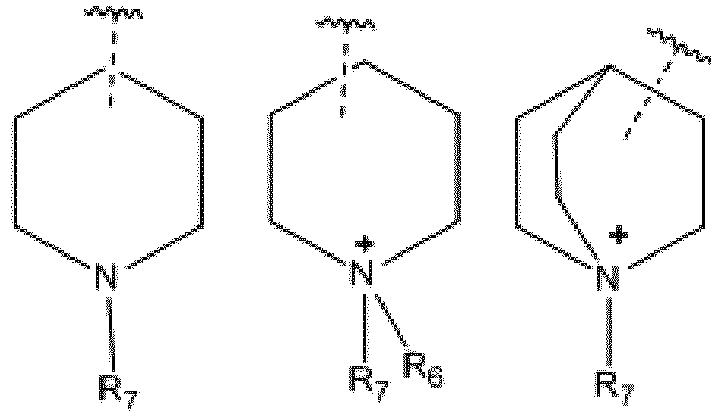
- R4 is selected from hydrogen, deuterium, halogen, C1-6 straight chain or branched chain alkyl, C1-6 alkoxy, amino, NH(alkyl), N(alkyl)2;
- R6 and R7 are independently selected from hydrogen, C1-10 alkyl, -COR8, -CH2OCOR8, - CH2OCONHR8R9, -COOR8, -CONR8R9, -SO2R8, phenyl, benzyl;
- R8 and R9 are independently selected from hydrogen or C1-6 straight chain or branched chain alkyl;
- n is 1, 2, or 3;
- wherein the compound is selected from the group comprising:
- i. N-((S)-1-Benzylpiperidin-3-yl)-2-hydroxy-2-phenylacetamide;
- ii. N-((R)-1-Benzylpiperidin-3-yl)-2-hydroxy-2-phenylpropanamide;
- iii. (S)-2-Hydroxy-N-(1-methylpiperidin-4-yl)-2-phenylacetamide;
- iv. (R)-2-Hydroxy-N-(1-methylpiperidin-4-yl)-2-phenylacetamide;
- v. (R)-2-Hydroxy-N-((R)-1-methylpiperidin-3-yl)-2-phenylacetamide;
- vi. (R)-2-Hydroxy-N-((S)-1-methylpiperidin-3-yl)-2-phenylacetamide;
- viii. (R)-N-(1-Benzylpiperidin-4-yl)-2-hydroxy-2-phenylacetamide;
- ix. (S)-N-(1-Benzylpiperidin-4-yl)-2-hydroxy-2-phenylacetamide;
- x. (R)-2-Hydroxy-2-phenyl-N-(piperidin-4-yl)acetamide;
- xi. (S)-2-Hydroxy-N-((R)-1-methylpiperidin-3-yl)-2-phenylacetamide;
- xii. (S)-2-Hydroxy-N-((S)-1-methylpiperidin-3-yl)-2-phenylacetamide;
- xiii. (R)-2-Methoxy-2-phenyl-N-(piperidin-4-yl)acetamide;
- xiv. 2-Hydroxy-2-phenyl-N-(piperidin-4-yl)acetamide;
- xv. (S)-2-Hydroxy-2-phenyl-N-(piperidin-4-yl)acetamide;
- xvi. (S)-2-Methoxy-2-phenyl-N-(piperidin-4-yl)acetamide;
- xvii. 2-(3-Bromo-2,6-difluorophenyl)-2-hydroxy-N-(piperidin-4-yl)acetamide;
- xviii. (R)-Ethyl 4-(2-methoxy-2-phenylacetamido)piperidine-1-carboxylate; and
- xix. 2-Hydroxy-2-phenyl-N-(piperidin-4-yl)propanamide.
- The term "alkyl" refers to a linear or branched saturated monovalent hydrocarbon, wherein the alkylene may optionally be substituted as described herein. The term "alkyl" also encompasses both linear and branched alkyl, unless otherwise specified. In certain embodiments, the alkyl is a linear saturated monovalent hydrocarbon that has the specified number of carbon atoms, or branched saturated monovalent hydrocarbon of specified number of carbon atoms. As used herein, linear C1- C6 and branched C3- C6 alkyl groups are also referred as "lower alkyl. "Examples of alkyl groups include, but are not limited to, methyl, ethyl, propyl (including all isomeric forms), n-propyl, isopropyl, butyl (including all isomeric forms), n-butyl, isobutyl, sec-buryl,t-butyl, pentyl (including all isomeric forms), and hexyl (including all isomeric forms).For example, C1 - C6 alkyl refers to a linear saturated monovalent hydrocarbon of 1 to 6 carbon atoms or a branched saturated monovalent hydrocarbon of 3 to 6 carbon atoms.
- The term "aryl" refers to a monocyclic aromatic group and/or multicyclic monovalent aromatic group that contain at least one aromatic hydrocarbon ring. In certain embodiments, the aryl has from 6 to 20 (C6 - C20), from 6 to 15 (C6 - C15), or from 6 to 10 (C6 - C10) ring atoms. Examples of aryl groups include, but are not limited to, phenyl, naphthyl, fluorenyl, azulenyl, anthryl, phenanthryl, pyrenyl, biphenyl, and terphenyl. Aryl also refers to bicyclic or tricyclic carbon rings, where one of the rings is aromatic and the others of which may be saturated, partially unsaturated, or aromatic, for example, dihydronaphthyl, indenyl, indanyl, or tetrahydronaphthyl (tetralinyl). In certain embodiments, aryl may be optionally substituted as described herein.
- The term "alkoxy" refers to the group R'O-- wherein R' is alkyl. The term "lower alkoxy" refers to alkoxy groups having from 1 to 3 carbon atoms; examples include methoxy, ethoxy, isopropoxy, and the like.
- The term "cycloalkyl" as used herein refers to a saturated or partially unsaturated, monocyclic, fused bicyclic or bridged polycyclic ring assembly containing from 3 to 12 ring atoms, or the number of atoms indicated. Cycloalkyl can include any number of carbons, such as C3-6, C4-6, C5-6, C3-8, C4-8, C5-8, and C6.8. Saturated monocyclic cycloalkyl rings include, for example, cyclopropyl, cyclobutyl, cyclopentyl, cyclohexyl, and cyclooctyl. Saturated bicyclic and polycyclic cycloalkyl rings include, for example, norbornane, [2.2.2]bicyclooctane, decahydronaphthalene and adamantane. Cycloalkyl groups can also be partially unsaturated, having one or more double bonds in the ring. Representative cycloalkyl groups that are partially unsaturated include, but are not limited to, cyclobutene, cyclopentene, cyclohexene, cyclohexadiene (1,3- and 1,4-isomers), cycloheptene, cycloheptadiene, cyclooctene, cyclooctadiene (1,3-, 1,4- and 1,5-isomers), norbornene, and norbornadiene. Unless otherwise stated, cycloalkyl groups are unsubstituted. A "substituted cycloalkyl" group can be substituted with one or more moieties selected from halo, hydroxy, amino, alkylamino, nitro, cyano, and alkoxy.
- The term "aralkyl" or "aryl-alkyl" refers to a monovalent alkyl group substituted with aryl. In certain embodiments, the alkyl and aryl moieties are optionally substituted as described herein.
- The term "heteroaryl" refers to a monocyclic aromatic group and/or multicyclic aromatic group that contain at least one aromatic ring, wherein at least one aromatic ring contains one or more heteroatoms independently selected from 0, S, and N. Each ring of a heteroaryl group may contain one or two O atoms, one or two S atoms, and/or one to four N atoms, provided that the total number of heteroatoms in each ring is four or less and each ring contains at least one carbon atom. In certain embodiments, the heteroaryl has from 5 to 20, from 5 to 15, or from 5 to 10 ring atoms. Examples of monocyclic heteroaryl groups include, but are not limited to, furanyl,imidazolyl, isothiazolyl, isoxazolyl, oxadiazolyl, oxadiazolyl, oxazolyl, pyrazinyl, pyrazolyl,pyridazinyl, pyridyl, pyrimidinyl, pyrrolyl, thiadiazolyl, thiazolyl, thienyl, tetrazolyl, triazinyl,and triazolyl. Examples of bicyclic heteroaryl groups include, but are not limited to,benzofuranyl, benzimidazolyl, benzoisoxazolyl, benzopyranyl, benzothiadiazolyl, benzothiazolyl, benzothienyl, benzothiophenyl, benzotriazolyl, benzoxazolyl, furopyridyl, imidazopyridinyl, imidazothiazolyl, indolizinyl, indolyl, indazolyl, isobenzofuranyl, isobenzothienyl, isoindolyl, isoquinolinyl, isothiazolyl, naphthyridinyl, oxazolopyridinyl, phthalazinyl, pteridinyl, purinyl, pyridopyridyl, pyrrolopyridyl, quinolinyl, quinoxalinyl, quinazolinyl, thiadiazolopyrimidyl, and thienopyridyl. Examples of tricyclic heteroaryl groupsinclude, but are not limited to, acridinyl, benzindolyl, carbazolyl, dibenzofuranyl, perimidinyl, phenanthrolinyl, phenanthridinyl, phenarsazinyl, phenazinyl, phenothiazinyl, phenoxazinyl, and xanthenyl. In certain embodiments, heteroaryl may also be optionally substituted as described herein.
- The term heteroaralkyl refers to an aralkyl group as defined above, in which one or more (preferably 1, 2, 3 or 4) carbon atoms have been replaced by an oxygen, nitrogen, silicon, selenium, phosphorus, boron or sulphur atom (preferably oxygen, sulphur or nitrogen), that is to say groups that in accordance with the above definitions contain both aryl or heteroaryl and alkyl, alkenyl, alkynyl and/or heteroalkyl and/or cycloalkyl and/or heterocycloalkyl groups. A hetero-aralkyl group preferably contains one or two aromatic ring systems (1 or 2 rings) with from 5 or 6 to 10 carbon atoms and one or two alkyl, alkenyl and/or alkynyl groups having from 1 or 2 to 6 carbon atoms and/or a cycloalkyl group having 5 or 6 ring carbon atoms, with 1, 2, 3 or 4 of those carbon atoms having been replaced by oxygen, sulphur or nitrogen atoms. Examples are aryl-heteroalkyl, aryl-heterocycloalkyl, arylheterocycloalkenyl, arylalkyl-heterocycloalkyl, arylalkenyl-heterocycloalkyl, arylalkynylheterocycloalkyl, arylalkyl-heterocycloalkenyl, heteroarylalkyl, heteroarylalkenyl, heteroarylalkynyl, heteroaryl-heteroalkyl, heteroarylcyclo-alkyl, heteroarylcycloalkenyl, heteroaryl-heterocycloalkyl, heteroaryl-heterocycloalkenyl, heteroarylalkylcycloalkyl, _ g _ heteroarylalkyl-heterocycloalkenyl, heteroaryl-heteroalkyl-cycloalkyl, heteroarylheteroalkylcycloalkenyl and hetero-aryl-heteroalkyl-heterocycloalkyl groups, the cyclic groups being saturated or mono-, di- or tri-unsaturated. Specific examples are the tetrahydroisoquinolinyl, benzoyl, 2- or 3-ethylindolyl, 4-methylpyridino, 2-, 3- or 4-methoxyphenyl, 4-ethoxyphenyl and 2-, 3- or 4-carboxylphenylalkyl groups.
- The term "heterocyclyl" or "heterocyclic" refers to a monocyclic non-aromatic ring system and/or multicyclic ring system that contains at least one non-aromatic ring, wherein one or more of the non-aromatic ring atoms are heteroatoms independently selected from O, S, or N; and the remaining ring atoms are carbon atoms. In certain embodiments, the heterocyclyl or heterocyclic group has from 3 to 20, from 3 to 15, from 3 to 10, from 3 to 8, from 4 to 7, or from 5 to 6 ring atoms. In certain embodiments, the hetero cyclyl is a monocyclic, bicyclic, tricyclic, or tetracyclic ring system, which may include a fused or bridged ring system, and in which the nitrogen or sulfur atoms may be optionally oxidized, the nitrogen atoms may be optionally quaternized, and some rings may be partially or fully saturated, or aromatic. The heterocyclyl may be attached to the main structure at any heteroatom or carbon atom which results in thecreation of a stable compound. Examples of such heterocyclic compounds include, but are not limited to, azepinyl, benzodioxanyl, benzodioxolyl, benzofuranonyl, benzopyranonyl, benzopyranyl, benzotetrahydrofuranyl, benzotetrahydrothienyl, benzothiopyranyl, benzoxazinyl, p-carbolinyl, chromanyl, chromonyl, cinnolinyl, coumarinyl, decahydroisoquinolinyl, dihydrobenzisothiazinyl, dihydrobenzisoxazinyl, dihydrofuryl, dihydroisoindolyl, dihydropyranyl, dihydropyrazolyl, dihydropyrazinyl, dihydropyridinyl, dihydropyrimidinyl, dihydropyrrolyl, dioxolanyl, 1,4-dithianyl, furanonyl, imidazolidinyl, imidazolinyl, indolinyl, isobenzotetrahydrofuranyl, isobenzotetrahydrothienyl, isochromanyl, isocoumarinyl, isoindolinyl, isothiazolidinyl, isoxazolidinyl, morpholinyl, octahydroindolyl, octahydroisoindolyl, oxazolidinonyl, oxazolidinyl, oxiranyl, piperazinyl, piperidinyl, 4-piperidonyl, pyrazolidinyl, pyrazolinyl, pyrrolidinyl, pyrrolinyl, quinuclidinyl, tetrahydrofuryl, tetrahydroisoquinolinyl, tetrahydropyranyl, tetrahydrothienyl, thiamorpholinyl, thiazolidinyl, tetrahydroquinolinyl, and 1,3,5-trithianyl. In certain embodiments, heterocyclic may also be optionally substituted as described herein.
- The term "halogen", "halide" or "halo" refers to fluorine, chlorine, bromine, and iodine.
- The term "heteroatom" as used herein means an atom of any element other than carbon or hydrogen. Preferred heteroatoms are nitrogen, oxygen, sulfur, phosphorus and selenium.
- The term "aromatic", as used herein, refers to an unsatured cyclic moiety that has an aromatic character. The term is intended to encompass both hydrocarbon aromatic compounds and heteroaromatic compounds. The terms "hydrocarbon aromatic ring" or "hydrocarbon aromatic compound" refer to an aromatic ring or compound in which the aromatic moieties have only carbon and hydrogen atoms. The terms "heteroaromatic ring" or "heteroaromatic compound' refer to an aromatic ring or compound wherein in at least one aromatic moiety one or more of the carbon atoms within the cyclic group has been replaced by another atom, such as nitrogen, oxygen, sulfur, or the like.
- The term "non-aromatic", as used herein, refers to a cyclic moiety, that may be unsaturated, but that does not have an aromatic character.
- The term "substituted" refers to where hydrogen radical on a molecule has been replaced by another atom radical, a functional group radical or a moiety radical; these radicals being generally referred to as "substituents."
- The term "optionally substituted" is intended to mean that a group, such as an alkyl, alkylene, alkenyl, alkenylene, alkynyl, alkynylene, alkoxy, alkylamino, dialkylamino, carboxamido, cycloalkyl, cycloalkylene, aryl, arylene, heteroaryl, heteroarylene, heterocyclyl, or heterocyclylene, may be substituted with one or more substituents independently selected from,e.g., (a) C1 - C6 alkyl, C2 - C6 alkenyl, C2 - C6 alkynyl, C3 - C7 cycloalkyl, C6 - C14 aryl, C7 - C15aralkyl, heteroaryl, and heterocyclyl, each optionally substituted with one or more substituents; and (b) halo, cyano (-CN), nitro (-N02),-C(O)R3 , -C(O)OR3 , - C(O)NRbRC , -C(NR3)NR)RC , -OR3 , -OC(O)R3 , -OC(O)OR3, -OC(O)NRbRC, - OC(=NR3)NR)RC, -OS(O)R3, -OS(O)2R3, -OS(O)NRbRC, -OS(O)2NRbRc, -NRbRc,-NR3C(O)Rd,, -NR3C(O)ORd, -NR3C(O)NRbRC,-NR3C(=NRd)NRbRC, -NR3S(O)Rd, - NR3S(O)2Rd, -NR3S(O)NRbRC, -NR3S(O)NRbRc, -SR3, -S(O)R3, -S(O)2R3, - S(O)NRbRC, and -S(O)2NRbRC, wherein each R3, Rb, Re, and Rd isindependently (i) hydrogen; (ii) C1 - C6 alkyl, C2 - C6 alkenyl, C2 - C6 alkynyl, C3 - C7cycloalkyl, C6 - C14 aryl, C7 - C15 aralkyl, heteroaryl, or heterocyclyl, each optionally substituted with one or more substituents; or (iii) Rb and Re together with the N atom to which they are attached form heteroaryl or heterocyclyl, optionally substituted with one or more, in one embodiment, one, two, three, or four, substituents. As used herein, all groups that may be substituted are "optionally substituted," unless otherwise specified.
- The use of terms "a" and "an" and "the" and similar references in the context of describing the invention (especially in the context of the following claims) are to be construed to cover both the singular and the plural, unless otherwise indicated herein or clearly contraindicated by context.
- The term "salt(s)", as employed herein, denotes acidic and/or basic salts formed with inorganic and/or organic acids and bases. Zwitterions (internal or inner salts) are included within the term "salt(s)" as used herein (and may be formed, for example, where the R substituents comprise a basic moiety such as an amino group). Also included herein are quaternary ammonium salts such as alkyl ammonium salts. Pharmaceutically acceptable (i.e., non-toxic, physiologically acceptable) salts are preferred.
- The term "pharmaceutically acceptable salts" refers to the acid addition salt compound formed with a suitable acid selected from an inorganic acid such as hydrochloric acid, hydrobromic acid; or an organic acid such as benzene sulfonic acid, maleic acid, oxalic acid, fumaric acid, succinic acid, p-toluenesulfonic acid and malic acid.
- The term "hydrate" as used herein designates a crystalline molecular compound in which water molecules are incorporated into the crystal lattice. Generally speaking, a hydrate thus designates a crystalline form of a molecular compound, whereby the only further molecules incorporated into the crystal lattice are water molecules.
- The term "stereoisomer's" refers to at least two compounds having the same molecular formula and connectivity of atoms, but having a different arrangement of atoms in a three-dimensional space. In view of the present disclosure, a stereoisomer can be, for example, an enantiomer, a diastereomer, or a meso compound.
- The term "prophylactic" as used herein refers variously to medicaments, amounts or quantities, methods, uses and effects, etc., that prevent and/or aid in preventing infections. The term "therapeutic" as used herein refers to preventing, ameliorating, treating, improving, or curing a disease or condition.
- The term "Directly Observed Treatment Short-Course" (DOTS) refers to treatment regimen consisting of a four-drug such as Rifampicin, Isoniazid, Ethambutol and Pyrazinamide) intensive phase of two months, followed by a two-drug (Rifampicin and Isoniazid) continuation phase of four months.
- The term "Multidrug resistance Tuberculosis" (MDR-TB) as used herein refers to tuberculosis which are resistant to at least isoniazid (INH) and rifampicin (RMP), the two most powerful first-line treatment anti-Tuberculosis drugs.
- The term "Extensively drug resistance Tuberculosis" (XDR-TB) as used herein refers to the tuberculosis which are resistant to at least three of the six classes of second line anti-tuberculosis drugs as well as isoniazid and rifampicin, plus any fluoroquinolone and at least one of three injectable second-line drugs such as amikacin, kanamycin, or capreomycin.
- The term "Totally Drug Resistance Tuberculosis" (TDR-TB) as used herein refers to the tuberculosis which are resistant to all first and second line drugs tested such as isoniazid, rifampicin, streptomycin, ethambutol, pyrazinamide, ethionamide, para-aminosalicylic acid, cycloserine, ofloxacin, amikacin, ciprofloxacin, capreomycin, kanamycin.
- The term"H37Rv" as used herein refers to a pathogenic M. tuberculosis strain that has been sequenced.
- The term "JAL2287" as used herein refers to the MDR (multi drug resistant) strainof M. tuberculosis
- The term "MYC431" as used herein refers to the XDR (extensive drug resistant) strain of M. tuberculosis
- The term "GPR109A" as used herein refers to the G-protein coupled receptor GPR109A.
- According to an embodiment, the present invention provides compound represented by formula (1) that inhibits mycobacterium colony growth alone or in combination with DOTS (Directly Observed Treatment Short Course) therapy.
- The compounds of the present invention may be illustrated but not limited to the examples as provided at Table 1.
Table 1: Illustrative compounds Compounds Chemical No. Chemical Structure Chemical Name 1001 
1-Methylpiperidin-3 -yl-2-hydroxy-2,2-diphenylacetate 1002 
3-(2-Hydroxy-2,2-diphenylacetoxy)-1-(((isopropylcarbamoyl) oxy)methyl)-1-methylpiperidin-1-ium 1003 
Piperidin-3-yl 2-hydroxy-2,2-diphenylacetate 1004 
1-Benzylpiperidin-3-yl 2-hydroxy-2,2-diphenylacetate 1005 
1-(Methylsulfonyl)piperidin-3-yl 2-hydroxy-2,2-diphenyl acetate 1006 
1-(Dimethylcarbamoyl)piperidin-3-yl 2-hydroxy-2,2-diphenyl acetate 1007 
1-Benzylpiperidin-4-yl 2-hydroxy-2,2-diphenylacetate 1008 
3-(2-Hydroxy-2,2-diphenylacetoxy)-1-methylquinuclidin-1-ium 1009 
1-Benzylpyrrolidin-3-yl 2-hydroxy-2,2-diphenylacetate 1010 
1-Ethylpiperidin-3-yl 2-hydroxy-2,2-diphenylacetate 1011 
1-(Isopropylcarbamoyl)piperidin-3-yl 2-hydroxy-2,2-diphenylacetate 1012 
1-Propylpiperidin-3-yl 2-hydroxy-2,2-diphenylacetate 1013 
1-Methylpiperidin-4-yl 2-hydroxy-2,2-diphenylacetate 1014 
1-Benzylazetidin-3-yl 2-hydroxy-2,2-diphenylacetate 1015 
1-Acetylpiperidin-3-yl 2-hydroxy-2,2-diphenylacetate 1016 
2-Hydroxy-2,2-diphenyl-N-(piperidin-3 - yl)acetamide 1017 
N-(1-Benzylpiperidin-4-yl)-2-hydroxy-2,2-diphenylacetamide 1018 
1-Methylpyrrolidin-3-yl 2-hydroxy-2,2-diphenylacetate 1019 
Quinuclidin-3-yl 2-hydroxy-2,2-diphenylacetate 1020 
2-Hydroxy-N-(1-methylpiperidin-3-yl)-2,2-diphenylacetamide 1021 
N-(1-Benzylpiperidin-4-yl)-2-hydroxy-2,2-diphenylacetamide 1022 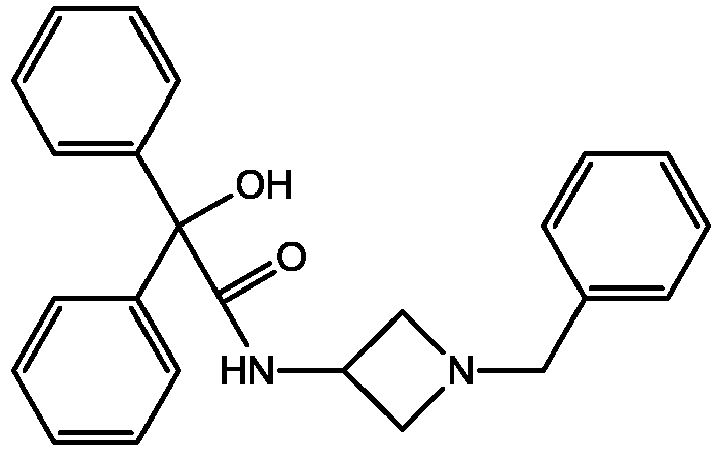
N-(1-Benzylazetidin-3-yl)-2-hydroxy-2,2-diphenylacetamide 1023 
Azetidin-3-yl 2-hydroxy-2,2-diphenylacetate 1024 
(S)-1-Benzylpiperidin-3-yl 2-hydroxy-2,2-diphenylacetate 1025 
(R)-1-Benzylpiperidin-3-yl 2-hydroxy-2,2-diphenyl acetate 1026 
(S)-1-Methylpiperidin-3-yl 2-hydroxy-2,2-diphenyl acetate 1027 
(R)-1-Methylpiperidin-3-yl 2-hydroxy-2,2-diphenyl acetate 1028 
(R)-N-(1-Benzylpiperidin-3-yl)-2-hydroxy-2,2-diphenylacetami de 1029 
(R)-N-(1-Benzylpiperidin-3-yl)-2-hydroxy-2,2-diphenylacetamide 1030 
2-Hydroxy-2,2-diphenyl-N-(piperidin-4-yl)acetamide 1031 
(S)-2-Hydroxy-N-(1-methylpiperidin-3-yl)-2,2-diphenylacetamide 1032 
(R)-2-Hydroxy-N-(1-methylpiperidin-3-yl)-2,2-diphenylacetamide 1033 
1-Benzylazetidin-3-yl 2-hydroxy-2-phenyl propanoate 1034 
(R)-N-(1-Benzylpiperidin-3-yl)-2,2-diphenylacetamide 1035 
N-((S)-1-Benzylpiperidin-3-yl)-2-hydroxy-2-phenylacetami de 1036 
N-((R)-1-Benzylpiperidin-3-yl)-2-hydroxy-2-phenylpropanamide 1037 
(R)-(R)-1-Methylpiperidin-3-yl 2-hydroxy-2-phenylacetate 1038 
(R)-(S)-1-Methylpiperidin-3-yl 2-hydroxy-2-phenylacetate 1039 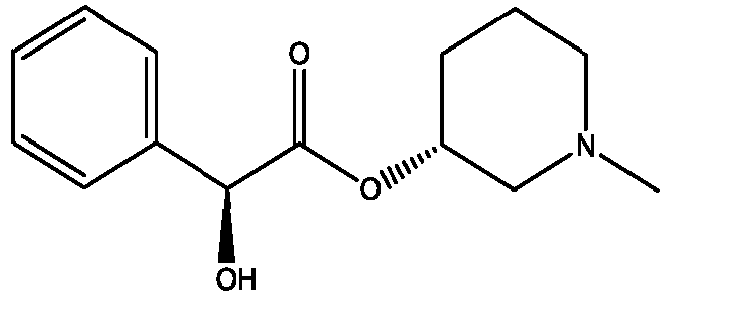
(S)-(R)-1-Methylpiperidin-3-yl 2-hydroxy-2-phenylacetate 1040 
(S)-(S)-1-Methylpiperidin-3-yl 2-hydroxy-2-phenylacetate 1041 
(R)-1-Methylpiperidin-4-yl 2-hydroxy-2-phenylacetate 1042 
(S)-2-Hydroxy-N-(1-methylpiperidin-4-yl)-2-phenylacetamide 1043 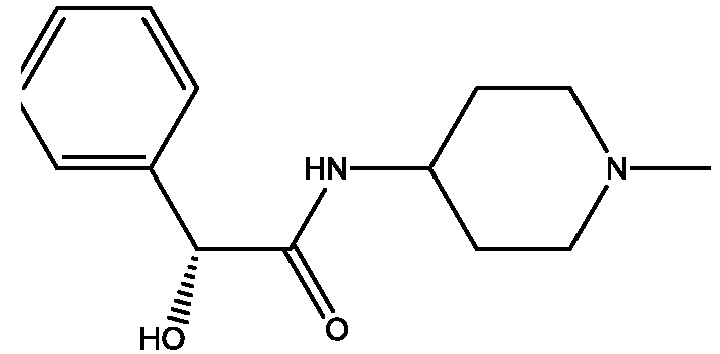
(R)-2-Hydroxy-N-(1-methylpiperidin-4-yl)-2-phenylacetamide 1044 
(R)-2-Hydroxy-N-((R)-1-methylpiperidin-3-yl)-2-phenylacetamide 1045 
(R)-2-Hydroxy-N-((S)-1-methylpiperidin-3-yl)-2-phenylacetamide 1046 
(S)-2-Hydroxy-2-phenyl-N-(pyridin-3-yl)acetamide 1047 
(S)-1-Methylpiperidin-4-yl 2-hydroxy-2-phenylacetate 1048 
(S)-1-Benzylazetidin-3-yl 2-hydroxy-2-phenyl acetate 1049 
(S)-(R)-Quinuclidin-3-yl 2-hydroxy-2-phenyl acetate 1050 
(S)-(S)-Quinuclidin-3-yl 2-hydroxy-2-phenyl acetate 1051 
(R)-N-(1-Benzylpiperidin-4-yl)-2-hydroxy-2-phenylacetamide 1052 
(S)-N-(1-Benzylpiperidin-4-yl)-2-hydroxy-2-phenylacetami de 1053 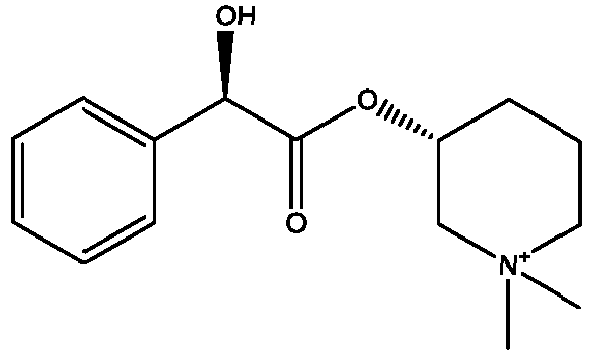
(R)-3-((R)-2-Hydroxy-2-phenylacetoxy)-1,1-dimethylpiperidin-1-ium 1054 
(S)-3-((R)-2-Hydroxy-2-phenylacetoxy)-1,1-dimethylpiperidin-1-ium 1055 
(R)-2-Hydroxy-2-phenyl-N-(pyridin-3-yl)acetamide 1056 
(R)-(S)-1-Methylpiperidin-3-yl 2-acetoxy-2-phenylacetate 1057 
(R)-(R)-1-Methylpyrrolidin-3-yl 2-hydroxy-2-phenylacetate 1058 
(R)-(S)-1-Methylpyrrolidin-3-yl 2-hydroxy-2-phenylacetate 1059 
(S)-(R)-1-Methylpiperidin-3-yl 2-methoxy-2-phenyl acetate 1060 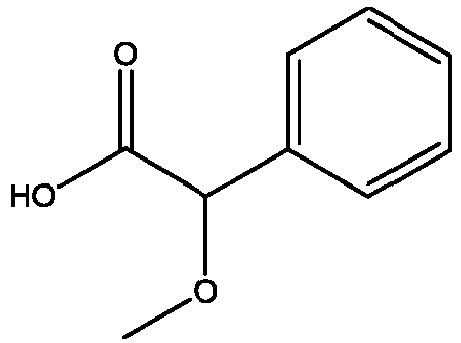
2-Methoxy-2-phenylacetic acid 1061 
(R)-2-Hydroxy-2-phenyl-N-(piperidin-4-yl)acetamide 1062 
(R)-Piperidin-4-yl 2-hydroxy-2-phenyl acetate 1063 
(R)-3-(2-Hydroxy-2,2-diphenylacetoxy)-1,1-dimethylpiperidin-1-ium 1064 
(R)-3-(2-Hydroxy-2,2-diphenylacetoxy)-1,1-dimethylpiperidin-1-ium 1065 
(R)-3-((R)-2-Hydroxy-2-phenylacetoxy)-1,1-dimethylpiperidin-1-ium 1066 
(R)-3-((R)-2-Hydroxy-2-phenylacetoxy)-1,1-dimethylpiperidin-1-ium 1067 
(S)-(R)-1-Methylpiperidin-3-yl 2-methoxy-2-phenyl acetate 1068 
(S)-(S)-1-Methylpiperidin-3-yl 2-methoxy-2-phenyl acetate 1069 
(S)-2-Hydroxy-N-((R)-1-methylpiperidin-3-yl)-2-phenylacetamide 1070 
(S)-2-Hydroxy-N-((S)-1-methylpiperidin-3-yl)-2-phenylacetamide 1071 
3-(2,2-Diphenylacetamido)-1,1-dimethylpiperidin-1-ium 1072 
(2S)-1-Benzyl-2-((2,2-diphenylacetamido)methyl)-1-methylpyrrolidin-1-ium 1073 
3-(2-Hydroxy-2,2-diphenylacetamido)-1,1-dimethylpiperidin-1-ium 1074 
(R)-2-Methoxy-1-((S)-3-methylmorpholino)-2-phenylethanone 1075 
(R)-2-Methoxy-1-((R)-3-methylmorpholino)-2-phenylethanone 1076 
(R)-1-((2R,3S)-2,3-Dimethylmorpholino)-2-methoxy-2-phenylethanone 1077 
(S)-2-Methoxy-1-((S)-3-methylmorpholino)-2-phenylethanone 1078 
(1R,3R)-1-Benzyl-3-(2,2-diphenylacetamido)-1-methylpiperidin-1-ium 1079 
(1S,3R)-1-Benzyl-3-(2,2-diphenylacetamido)-1-methylpiperidin-1-ium 1080 
(1S,3R)-1-Benzyl-3-(2,2-diphenylacetamido)-1-methylpiperidin-1-ium 1081 
(1R,3R)-1-Benzyl-3-(2,2-diphenylacetamido)-1-methylpiperidin-1-ium 1082 
1-(3-(Benzylamino)piperidin-1-yl)-2,2-diphenylethanone 1083 
N-((1-Benzylpyrrolidin-2-yl)methyl)-2,2-diphenylacetamide 1084 
1-Benzyl-2-((2,2-diphenylacetamido)methyl)-1-methylpyrrolidin-1-ium 1085 
(R)-2-Methoxy-2-phenyl-N-(piperidin-4-yl)acetamide 1086 
2-Hydroxy-2-phenyl-N-(piperidin-4-yl)acetamide 1087 
(S)-2-Hydroxy-2-phenyl-N-(piperidin-4-yl)acetamide 1088 
(S)-2-Methoxy-2-phenyl-N-(piperidin-4-yl)acetamide 1089 
2-Hydroxy-2-phenyl-N-(piperidin-4-yl)propanamide 1090 
2-(3-Bromo-2,6-difluorophenyl)-2-hydroxy-N-(piperidin-4-yl)acetamide 1091 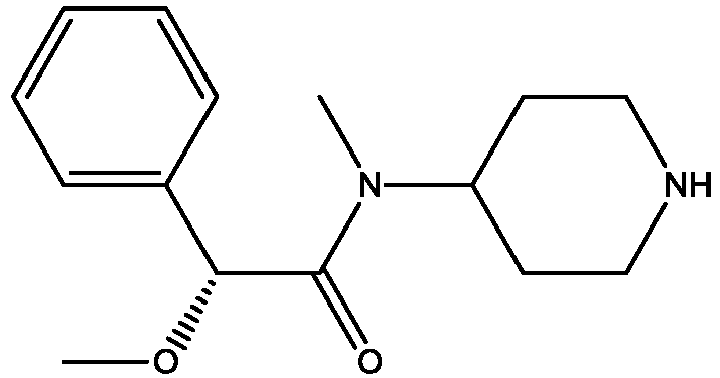
(R)-2-Methoxy-N-methyl-2-phenyl-N-(piperidin-4-yl)acetamide 1092 
(R)-N-(1-Benzylpiperidin-4-yl)-2-methoxy-N-methyl-2-phenylacetamide 1093 
(S)-1-Benzylpiperidin-4-yl 2-methoxy-2-phenylacetate 1094 
(R)-Ethyl 4-(2-methoxy-2-phenylacetamido)piperidine-1-carboxylate - The present invention also provides for compounds of formula (1) as below:
- i. N-((S)-1-Benzylpiperidin-3-yl)-2-hydroxy-2-phenylacetamide;
- ii. N-((R)-1-Benzylpiperidin-3-yl)-2-hydroxy-2-phenylpropanamide;
- iii. (S)-2-Hydroxy-N-(1-methylpiperidin-4-yl)-2-phenylacetamide;
- iv. (R)-2-Hydroxy-N-(1-methylpiperidin-4-yl)-2-phenylacetamide;
- v. (R)-2-Hydroxy-N-((R)-1-methylpiperidin-3-yl)-2-phenylacetamide;
- vi. (R)-2-Hydroxy-N-((S)-1-methylpiperidin-3-yl)-2-phenylacetamide;
- vii. (R)-N-(1-Benzylpiperidin-4-yl)-2-hydroxy-2-phenylacetamide;
- viii. (S)-N-(1-Benzylpiperidin-4-yl)-2-hydroxy-2-phenylacetamide;
- ix. (R)-2-Hydroxy-2-phenyl-N-(piperidin-4-yl)acetamide;
- x. (S)-2-Hydroxy-N-((R)-1-methylpiperidin-3-yl)-2-phenylacetamide;
- xi. (S)-2-Hydroxy-N-((S)-1-methylpiperidin-3-yl)-2-phenylacetamide;
- xii. (R)-2-Methoxy-2-phenyl-N-(piperidin-4-yl)acetamide;
- xiii. 2-Hydroxy-2-phenyl-N-(piperidin-4-yl)acetamide;
- xiv. (S)-2-Hydroxy-2-phenyl-N-(piperidin-4-yl)acetamide;
- xv. (S)-2-Methoxy-2-phenyl-N-(piperidin-4-yl)acetamide;
- xvi. 2-(3-Bromo-2,6-difluorophenyl)-2-hydroxy-N-(piperidin-4-yl)acetamide;
- xvii. (R)-Ethyl 4-(2-methoxy-2-phenylacetamido)piperidine-1-carboxylate; and
- xviii. 2-Hydroxy-2-phenyl-N-(piperidin-4-yl)propanamide.
- The present invention includes within its scope the salts. Compounds of the present invention after being novel may in some cases form salts which are also within the scope of this invention.
- According to an embodiment, the present invention may also optionally envisage within its scope the effect of selection of suitable counter ions and may include the modification of deuterated compounds. Deuterated compounds are those wherein the compounds have selective incorporation of deuterium in place of hydrogen.
- According to an embodiment, the Compounds of the present invention may be present in their enantiomeric pure forms or their mixtures.
- The compounds of the present invention may be synthesized by the general synthetic scheme as shown below:
-
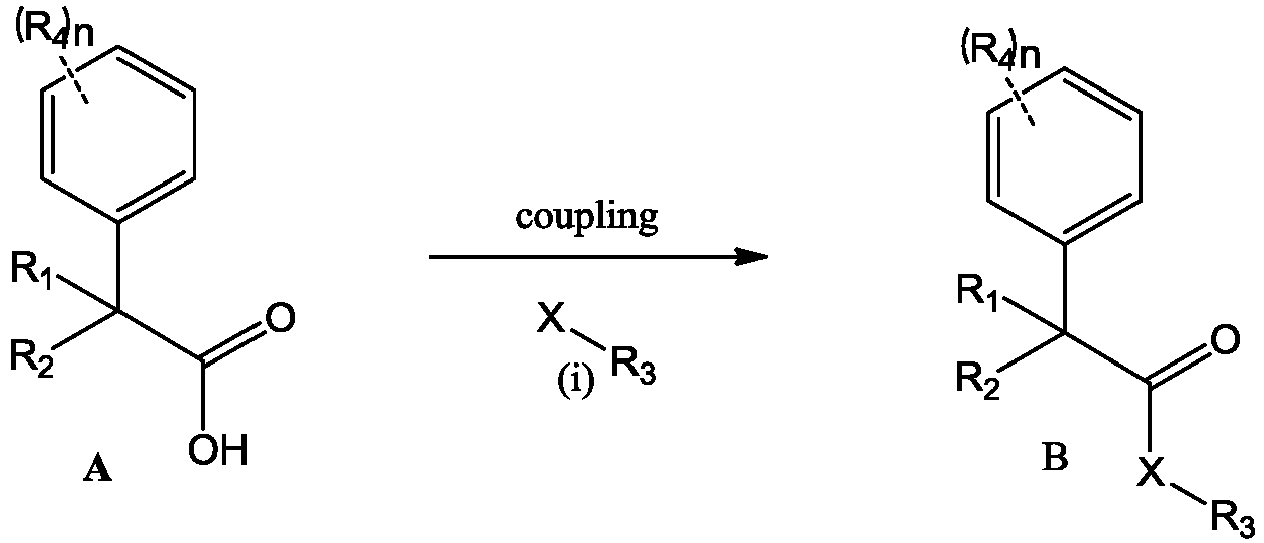
- The compounds of present invention are synthesized by coupling compound A with a coupling agent (i) in an organic solvent to yield the compound as claimed in
claim 1;
herein; X, R1, R2, R3, R4 and n are as defined inclaim 1. - A general procedure involves the coupling reactions of acid with an amine or alcohol (R3X). In one example of the method, an acid (A) is used as a starting material which can be activated by converting it to corresponding acid chloride using reagent such thionyl chloride or oxalyl chloride in a solvent such as DCM with or without a small amount of DMF at temperature ranging from room temperature to reflux and then by reaction of this acid chloride with a desired amine or alcohol (R3X) to arrive at other members of the series.
- Another example of the method involves the use of an acid coupling reagent is such as carbodiimide in an organic solvent such as DMF with or without an organic base such DMAP. Alternatively, acid can be activated by converting to corresponding ester using alcohol such as methanol first before reacting it with an amine or alcohol in a solvent such as benzene with or without a base such as sodium methoxide to arrive at other members of the series.
- According to an embodiment, the invention thus provides the novel compounds as defined herein for use in human or veterinary medicine. According to an embodiment, the compounds of the present invention may be for use in the treatment and prevention of diseases caused by mycobacteria such as tuberculosis. The said tuberculosis may be caused by mycobacterial species consisting of Mycobacterium tuberculosis, M. bovis, M africanum, M. canettior M. microti. Particularly, the compounds of the present invention are effective in inhibiting the growth of the M. tuberculosis. Tuberculosis as mentioned herein comprises active tuberculosis or latent tuberculosis. The active tuberculosis comprises drug sensitive, mono-drug resistant, multi-drug-resistant tuberculosis (MDR), extensively drug- resistant tuberculosis (XDR) or totally drug resistant tuberculosis.
- According to an embodiment, the compounds of the present invention may be used in the treatment of tuberculosis including MDR, XDR and TDR tuberculosis.
- In one embodiment, the compounds of the present invention may be used either alone or in combination with cycloserine, amikacin, linezolid, ethambutol, rifampicin, isoniazid, ethionamide, moxyfloxacin, clarithromycin, PAS, clofazamine, streptomycin, capreomycin and kanamycin and DOTS ("Directly Observed Treatment, Short-course") therapy.
- In another embodiment, the compounds of the present invention may also be used prophylactically in preventing the occurrence of tuberculosis in healthcare providers, health workers, community members and the alike who are directly in contact with tuberculosis patients.
- In one embodiment, the compounds of the present invention may be used for treatment of the infection caused by resistant and non-resistant Mycobacterium tuberculosis as defined above. The compounds of the present invention are effective against tuberculosis and said tuberculosis includes drug-sensitive, mono-drug resistance, multi drug-resistant (MDR), extensively drug-resistance (XDR) and totally drug resistance (TDR) caused by a strain of Mycobacterium tuberculosis Mycobacterium strains. According to an embodiment, the compounds of the present invention may be used for the treatment of multi-drug-resistant (MDR), extensively drug-resistance (XDR) and totally drug resistance (TDR) tuberculosis caused by a strain Mycobacterium tuberculosis and for treatment of the infection caused by resistant and non-resistant Mycobacterium tuberculosis as defined above by inhibition of GPR109A inhibition by an agent.
- According to an embodiment, the compound for use as a pharmaceutical may be presented as a pharmaceutical composition. The invention therefore provides in a further embodiment a pharmaceutical composition comprising the novel compounds of the invention along with pharmaceutically acceptable excipients/carriers thereof and optionally other therapeutic and/or prophylactic ingredients. The excipients/carriers must be "acceptable" in the sense of being compatible with the other ingredients of the composition and not deleterious to the recipient thereof. Suitably the pharmaceutical composition will be in an appropriate formulation.
- The pharmaceutical formulations may be any formulation and include those suitable for oral, intranasal, or parenteral (including intramuscular and intravenous) administration. The formulations may, where appropriate, be conveniently presented in discrete dosage units and may be prepared by any of the methods well known in the art of pharmacy. According to an embodiment, the methods of the invention include the step of bringing into association the active compound with liquid carriers or finely divided solid carriers or both, and then, if necessary, shaping the product into the desired formulation.
- For these purposes the compounds of the present invention may be administered orally, topically, intranasally, parenterally, by inhalation spray or rectally in dosage unit formulations containing conventional non-toxic pharmaceutically acceptable carriers, adjuvants and vehicles. The term parenteral as used herein includes subcutaneous injections, intravenous, intramuscular, intrasteral injection or infusion techniques. In addition to the treatment of warm-blooded animals such as mice, rats, horses, dogs, cats, etc. The compounds of the present invention are effective in the treatment of humans.
- In an embodiment, compound of the present invention may be administered in a dose ranging from 0.1 to 100 mg/kg body weight per day. The compounds of the present invention are useful for the prevention and treatment of tuberculosis and may be used as GPR109A inhibitors.
- According to an example, the compounds may be prepared by the schemes as here below:
-

- To a solution of KOH (21.0 gm) in water (42.0 ml), ethanol (54.0 ml) and the compound [1] (25.0g, 119mmol) was added and the resulting solution was refluxed for 30 minutes and poured into a glass plate and left overnight at RT. The semisolid obtained was dissolved in water (400 ml) and washed with ethyl acetate. The pH of the aqueous layer was adjusted to acidic with 50% HCl, and extracted with ethyl acetate. The ethyl acetate layer was dried over anhydrous Na2SO4 and concentrated to give 2-hydroxy-2,2-diphenylacetic acid,(12.0 g, 45%). Analytical Data: [2] ESIMS: 229 [M++1]
- To a solution of the compound obtained in the above step (12g, 52.6mmol) in Methanol (100.0 ml) at 0°C, thionyl chloride (5.0 ml) was added and the resulting solution was refluxed for 4 hr. Ethanol was concentrated under vacuum and the residue was purified by column chromatography using 20% ethyl acetate in hexane to give ethyl 2-hydroxy-2,2-diphenylacetateas liquid (10.08g, 76%).Analytical Data: [3] ESIMS: 257 [M++1]
- To a solution of [3](1.00 g, 5.23 mmol) in benzene (90 mL),sodium (110 mg) was added. After refluxing for 2.5 h, a solution of methylbenzilate (1.27 g, 5.23 mmol) was added and the reaction refluxed overnight. The benzene was evaporated in vacuo and the residue purified by flash chromatography (eluted first with 20% EtOAc/Hexane, then 5%MeOH/CH2Cl2) to give [1004] as transparent liquid (981 mg,46%).Analytical Data: [1004] ESIMS: 402[M++1]
- To a stirred solution of [1004] (0. 5 g, 1.24mmol) in a mixture of ethyl acetate and methanol (1;1, 5 ml), was added a slurry of 10% Pd/C (0.02 g) at room temperature. Hydrogen balloon pressure was applied and the reaction mixture was stirred for 3hr at RT. Reaction was monitored using TLC. The reaction mass was filtered over celite and excess of solvent was removed under vacuum to afford light brown sticky material, which was further purified using silica gel column and 2% methanol in dichloromethane as eluent to afford [1003] as an off-white sticky material(0.22g, 57%).Analytical Data: [1003] ESIMS: 312 [M++1]
- To a stirred solution of [1003] (0.12g, 0.38 mmol) in DMF, anhydrous K2CO3 (0.05g, 0.41 mmol) was added at 0°C under nitrogen atmosphere. After an additional stirring for 15 minutes at same temperature, Methyl iodide (0.02 ml, 0.41 mmol) was added drop-wise. The reaction temperature was allowed to increase up to 25°C and stirring was continued for 3 h. Consumption of [1003] was monitored by TLC. After complete consumption of [1003], water (50 ml) was added and organic layer was extracted with ethyl acetate (
2x 50 ml). The combined organic layers were washed with water, brine and dried over sodium sulphate. The organic layer was concentrated to afford light brown sticky material which was further purified using silica gel column chromatography using 5% ethyl acetate/hexane as eluent to afford [1001] as white solid (0.08g, 65%,). Analytical Data: [1001] ESIMS: 326 [M++1]. - To a stirred solution of [1003] (0.05g, 0.16 mmol) in DCM, triethylamine (0.03ml, 0.24 mmol) was added at 0°C under nitrogen atmosphere. After an additional stirring for 5 minutes at same temperature, Dimethylcarbamoyl chloride (0.02 ml, 0.24 mmol) was added drop-wise. The reaction temperature was allowed to increase up to 25°C and stirring was continued for 1 h. Consumption of [1003] was monitored by TLC. After complete consumption of [1003], water (50 ml) was added and organic layer was extracted with ethyl acetate (2 × 25 ml). The combined organic layers were washed with water, brine and dried over sodium sulphate. The organic layer was concentrated to afford light brown sticky material which was washed further with DCM and pentane to afford [1006] (0.04g, 65%).Analytical Data:[1006] ESIMS: 385 [M++1].
- Synthesis of [1010], [1012], [1008], [1013], [1018], [1007], [1009], [1014], [1019] and [1023] were carried out by procedure described for [1004].
- Synthesis of [1005], [1011] and [1015] were carried out by procedure described for [1006].
-

- To a stirred solution of [5] (2.0g, 10.47mmol), vinyl acetate (10.0ml, 100.0mmol) was added at room temperature. After an additional stirring for 5 minutes at same temperature, PS-IM (0.20g, 10%) was added. The reaction temperature was allowed to increase up to 40°C and stirring was continued for 16 h. Reaction mixture was passed through the bed of celite and evaporated to dryness which was further purified using silica gel column chromatography using 10% ethyl acetate/hexane as eluent to afford [6](0.9g, 45%)and [7] (0.8g, 40%) as transparent sticky material. Analytical Data: [6] ESIMS: 192 [M++1][7]ESIMS: 234 [M++1].
- To a solution of [6] (0.45 g, 1.8mmol) in benzene (45 mL) was added sodium (0.03g, 1.6mmol). After refluxing for 2.5 h, a solution of ethyl benzilate (0.35 g, 1.8mmol) was added and the reaction refluxed overnight. The benzene was evaporated in vacuo and the residue purified by flash chromatography (eluted first with 20% EtOAc/Hexane, then 5%MeOH/CH2Cl2) to give [1024] as transparent liquid (0.35g,48%).
- Analytical Data: [1024] ESIMS: 402[M++1]
- To a solution of [7] (0.60g, 2.5mmol) in a mixture of THF/MeOH/H2O (9ml) was added Lithium hydroxide (0.20g, 5.0mmol). The reaction mixture was stirred at room temperature for 4h. TLC showed complete consumption of starting material. Reaction mixture was evaporated to dryness. Water was added and extracted with ethylacetate (2x50ml) to afford light transparent sticky material [8] (0.35g, 73%).Analytical Data: [8] ESIMS: 192[M++1]
- [1025] was synthesized as described in step 2.Analytical Data: [1025]ESIMS: 402[M++1] Synthesis of [1026] and [1027] were carried out by procedure described for [1024]
-

- To a stirred solution of [5] (1.0g, 5.2mmol) in DCM (20.0ml) was added TEA (1.9g, 15.2mmol) at room temperature. After an additional stirring for 5 minutes at same temperature, Mesyl chloride (0.55ml, 7.8mmol) was added. The reaction temperature was allowed to stirred at this temperature for 3h. TLC showed complete consumption of starting material. Water (100 ml) was added and organic layer was extracted with ethyl acetate (2 × 100 ml). The combined organic layers were washed with water, brine and dried over sodium sulphate. The organic layer was concentrated to afford light brown sticky material [9] which was used further without any purification (1.1g, 78%).Analytical Data: [9]ESIMS: 270 [M++1].
- To a stirred solution of [9] (0.5g, 1.8 mmol) in DMF (10.0ml) was added sodium azide (0.46g, 7.2mmol) at room temperature. The temperature of reaction mixture was raised to 100°C and allowed to heat at this temperature for 2 hr. TLC showed complete consumption of starting material. Water (100 ml) was added and organic layer was extracted with ethyl acetate (2 × 100 ml). The combined organic layers were washed with water, brine and dried over sodium sulphate. The organic layer was concentrated to afford light brown sticky material [10] which was used further without any purification (0.3g, 77%). Analytical Data:[10] ESIMS: 217 [M++1].
- To a stirred solution of [10] (0.3g, 1.3mmol) in THF (10.0ml) was added triphenylphosphine (0.5g, 1.9mmol) at room temperature. After an additional stirring for 5 minutes at same temperature, water (0.2ml, 9.1mmol) was added. The reaction temperature was allowed to reflux at 70°C for 2h. TLC showed complete consumption of starting material. Reaction mixture was evaporated and water (100 ml) was added and organic layer was extracted with ethyl acetate (2 × 100 ml). The combined organic layers were washed with water, brine and dried over sodium sulphate. The organic layer was concentrated to afford light brown sticky which was subjected to column chromatography with 2% MeOH/DCM as eluent to afford light brown sticky material [11] (0.2g, 80%).Analytical Data: [11]ESIMS: 191 [M++1]
- To a stirred solution of [12] (0.2g, 0.87mmol) in DMF (5.0ml) was added EDC (0.25g, 1.3mmol), HOBT (0.17g, 1.3mmol) at room temperature. After an additional stirring for 5 minutes at same temperature, [11](0.18g, 0.91mmol) and NMM (0.37ml, 2.61mmol) was added. The reaction temperature was allowed to stirred at room temperature for overnight. TLC showed complete consumption of starting material. Water (100 ml) was added and organic layer was extracted with ethyl acetate (2 × 100 ml). The combined organic layers were washed with water, brine and dried over sodium sulphate. The organic layer was concentrated to afford light brown sticky which was subjected to column chromatography with 1% MeOH/DCM as eluent to afford light brown solid material [13] (0.25g, 76%).Analytical Data: [13]ESIMS: 400 [M++1]
- To a stirred solution of [13] (0.25 g, 0.62mmol) in a mixture of ethyl acetate and methanol (1;1, 5 ml), was added a slurry of 10% Pd/C (0.02 g) at room temperature. Hydrogen balloon pressure was applied and the reaction mixture was stirred for 3hr at RT. Reaction was monitored using TLC. The reaction mass was filtered over celite and excess of solvent was removed under vacuum to afford light brown sticky material, which was further purified using silica gel column and 2% methanol in dichloromethane as eluent to afford [1016] as off white sticky material(0.11 g, 57%).Analytical Data: [1016]ESIMS: 311 [M++1]
- To a stirred solution of [1016] (0.10g, 0.32 mmol) in DMF, anhydrous K2CO3 (0.06g, 0.48 mmol) was added at 0°C under nitrogen atmosphere. After an additional stirring for 15 minutes at same temperature, Methyl iodide (0.03 ml, 0.48 mmol) was added drop-wise. The reaction temperature was allowed to increase up to 25°C and stirring was continued for 3 h. Consumption of [1016] was monitored by TLC. After complete consumption of [1016], water (50 ml) was added and organic layer was extracted with ethyl acetate (
2x 50 ml). The combined organic layers were washed with water, brine and dried over sodium sulphate. The organic layer was concentrated to afford light brown sticky material which was further purified using silica gel column chromatography using 10 % ethyl acetate/hexane as eluent to afford [1020] as white solid (0.05g, 50%,).Analytical Data: [1020]ESIMS: 325 [M++1] - Synthesis of [1017], [1021], [1022], [1028], [1029], [1030], [1031] and [1032] were carried out by procedure described for [1020]
-

- To a stirred solution of [14] (0.50g, 4.34 mmol) in benzene (30ml), PTSA (0.74g, 4.34 mmol) was added at room temperature under nitrogen atmosphere. After an additional stirring for 15 minutes at same temperature, [15](0.65g, 4.34mmol) was added. The reaction temperature was allowed to increase up to 90°C and stirring was continued for 5 h. Consumption of [15] was monitored by TLC. After complete consumption of [15], water (50 ml) was added and organic layer was extracted with ethyl acetate (3 × 50 ml). The combined organic layers were washed with water, brine and dried over sodium sulphate. The organic layer was concentrated to afford light brown sticky material which was further purified using silica gel column chromatography using 30 % ethyl acetate/hexane as eluent to afford mixture of [1037] and [1038] which was further separated by prep-HPLC to afford [1037] (0.10g, 9% ) and [1038] (0.08g, 8%) as transparent sticky material. Analytical Data: [1037 and1038]ESIMS: 250 [M++1].
- To a stirred solution of [1037] (0.05g, 0.20 mmol) in Acetonitrile (2ml), methyl iodide (0.01ml, 0.20 mmol) was added at room temperature under nitrogen atmosphere. The reaction temperature was allowed to stirred at this temperature for overnight. After complete consumption of [1037], reaction mixture was evaporated to dryness to afford light yellow solid which was further purified by washing with Dichloromethane and ether to afford pure product [1065] (0.04g,51%).Analytical Data: [1065]ESIMS: 364 [M+].
- Step 3:[1064] was synthesized similar to [1065]as described in step 2.Analytical Data: [1064]ESIMS: 364[M+]
- Synthesis of [1039], [1040], [1041], [1042], [1043], [1044], [1045], [1046], [1047], [1048], [1049], [1050], [1051], [1052], [1055], [1057], [1058], [1059], [1053], [1054], [1063], [1067], [1068], [1069], [1070], [1071], [1073], [1061], [1062], [1074], [1075], [1076], [1077]and [1093] were carried out by procedure described for [1064] and [1065].
-

- To a stirred solution of [17] (0.08g, 0.42mmol) in DMF (5.0ml) was added EDC (0.12g, 0.63 mmol), HOBT (0.08g, 0.63mmol) at room temperature. After an additional stirring for 5 minutes at same temperature, [16](0.08g, 0.42mmol) and NMM (0.14ml, 2.3mmol) was added. The reaction temperature was allowed to stir at room temperature for overnight. TLC showed complete consumption of starting material. Water (100 ml) was added and organic layer was extracted with ethyl acetate (2 × 100 ml). The combined organic layers were washed with water, brine and dried over sodium sulphate. The organic layer was concentrated to afford light brown sticky which was subjected to column chromatography with 1% MeOH/DCM as eluent to afford off white solid material[18] (0.11g, 68%). Analytical Data:
- [18] ESIMS: 385 [M++1].
- To a stirred solution of [18] (0.11g, 0.28 mmol) in Acetonitrile (2ml), methyl iodide (0.02ml, 0.28 mmol) was added at room temperature under nitrogen atmosphere. The reaction temperature was allowed to stirred at this temperature for overnight. After complete consumption of [18], reaction mixture was evaporated to dryness to afford light yellow solid as a mixture of [11081] and [11082] which was further purified by prep-HPLC to afford
- [1078] (0.03g, 20%) and [1079] (0.4g, 27%) as light yellow solid material. Analytical Data: [1078 and 1079] ESIMS: 399 [M+].
- Synthesis of [1080], [1081], [1082], [1083], [1084] and [1034] were carried out by procedure described for [1078] and [1079]
-

- To a stirred solution of [19] (0.80g, 4.81mmol) in DMF (5.0ml) was added EDC (1.40g, 7.2 mmol), HOBT (0.97g, 7.2mmol) at room temperature. After an additional stirring for 5 minutes at same temperature, [20](1.11ml, 5.30mmol) and NMM (1.6ml, 14.43mmol) was added. The reaction temperature was allowed to stirred at room temperature for overnight. TLC showed complete consumption of starting material. Water (100 ml) was added and organic layer was extracted with ethyl acetate (2 × 100 ml). The combined organic layers were washed with water, brine and dried over sodium sulphate. The organic layer was concentrated to afford light yellow powder which was triturated with pentane to afford off white solid material [21] (1.20g, 75%).Analytical Data: [21] ESIMS: 339 [M++ 1].
- To a stirred solution of [21] (0.5 g, 1.4mmol) in methanol (10ml), was added a slurry of 10% Pd/C (0.05 g) at room temperature. Hydrogen balloon pressure was applied and the reaction mixture was stirred for 3hr at RT. Reaction was monitored using TLC. The reaction mass was filtered over celite and excess of solvent was removed under vacuum to afford off white powder [1085] (0.3 g, 86%).Analytical Data: [1085] ESIMS: 249 [M++1].
- To a stirred solution of [1085 Hydrochloride] (0.05g, 0.20mmol) in DCM, triethylamine (0.07ml, 0.5mmol) was added at 0°C under nitrogen atmosphere. After an additional stirring for 5 minutes at same temperature, Ethyl chloroformate (0.02 ml, 0.22mmol) was added drop-wise. The reaction temperature was allowed to increase up to 25°C and stirring was continued for 1 h. Consumption of [1085] was monitored by TLC. After complete consumption of [1085], water (50 ml) was added and organic layer was extracted with ethyl acetate (2 × 25 ml). The combined organic layers were washed with water, brine and dried over sodium sulphate. The organic layer was concentrated to afford light brown sticky material which was washed further with DCM and pentane to afford [1094] (0.03g, 64%).Analytical Data: [1094] ESIMS: 321 [M++1].
- Synthesis of [1086], [1087], [1088], [1089], [1090], [1091], [1092], [1035] and [1036] were carried out by procedure described for [1085].
- THP1 cells were seeded in a tissue culture plate in complete RPMI + 10% FCS and were allowed to differentiate to macrophages by addition of PMA with incubation at 37°C with 5% CO2. After 16-20 hr of PMA differentiation, cells were washed and replenished with complete RPMI. PMA-differentiated THP-1 cell were infected with tuberculosis bacteria H37Rv at an MOI of 10. Infection was performed in antibiotic free RPMI supplemented with 10% FCS. After adding bacteria, culture plates were centrifuged prior to incubation at 37°C with 5% CO2. After 4hr, infected cells were washed twice with warm RPMI and replenished with complete RPMI containing Amikacin to remove any remaining extra-cellular bacteria. Compound was added at concentrations of 5 to 500nM at 16hr and medium containing the appropriate dose of compound was refreshed every 24hrupto the 64hr time point. At the end of the assay at 90hr, cells were lysed with lysis buffer (7H9+ .06% SDS) and the residual bacterial loads determined as CFU counts. The results are graphically depicted in Table 2 which demonstrates that growth of Mycobacterial colony stood inhibited upon use of these compounds.
Table 2: Screening of compounds for H37Rv% inhibition at 100nM and 500nM Comoounds 1035. 1036. 1042. 1043. 1044. 1045. 1051. 1052. 1061. 1069. 1070, 1085, 1086, 1087, 1088, 1089, 1090 and 1094 are within the scope of the present invention. The other compounds listed in Table 2 are not within the scope of the invention, Compound No. H37Rv % Inhibition at 500 nM 1001 73 1002 NT 1003 22 1004 33 1005 55 1006 66 1007 46 1008 42 1009 46 1010 46 1011 51 1012 51 1013 55 1014 77 1015 73 1016 65 1017 75 1018 66 1019 60 1020 64 1021 74 1022 75 1023 50 1024 72 1025 79 1026 71 1027 85 1028 77 1029 61 1030 52 1031 74 1032 72 1033 78 1034 64 1035 62 1036 58 1037 40 1038 56 1039 61 1040 79 1041 71 1042 73 1043 72 1044 65 1045 66 1046 56 1047 68 1048 79 1049 56 1050 42 1051 59 1052 73 1053 78 1054 74 1055 52 1056 78 1057 76 1058 55 1059 74 1060 78 1061 NT 1062 NT 1063 NT 1064 NT 1065 NT 1066 NT 1067 NT 1068 NT 1069 NT 1070 NT 1071 NT 1072 NT 1073 NT 1074 24 1075 46 1076 50 1077 52 1085 93 NT= Not Tested - Heparinised human blood diluted 1:1 with RPMI 1640 was layered onto equal volume of Ficoll-Paque followed by centrifugation at 1600 rpm for 30 min. The PBMC layer formed at the interface was collected carefully and washed twice with RPMI. The cells were diluted in RMPI medium (without serum) to a concentration 2 ×10⁶/ml and 10 ml of diluted cells were put into a 75-cm2 tissue culture flask, and incubated for 2 hrs in a humidified 37°C incubator. The non-adherent cells were removed by aspiration, followed by two washes with RPMI. Complete media (with 10% FCS) was added and the cells were allowed to spontaneously differentiate into macrophages for 4 days in a humidified 37°C, 5% CO2 incubator. Bacteria were grown in Middlebrooke 7H9 broth supplemented with 10% ADC, 0.4% Glycerol and 0.05% Tween-80 until the mid-log phase. The bacteria were then harvested, washed with RPMI and re-suspended in the same media. The suspension was dispersed by aspiration twelve times each with a 23- and then a 26-gauge needle, followed by an additional dispersion for 3 times through a 30-gauge needle. This suspension was allowed to stand for 5 min. The upper half of the suspension was then used for the experiments. Bacteria were quantified by measuring the absorbance at a wavelength 600nm (0.6 O.D. corresponds to ~ 100 × 106 bacteria).
- Human PBMC derived macrophages were infected with tuberculosis bacteria at a MOI of 10 (i.e., 10 bacteria per cell). Infection was performed in antibiotic free RPMI supplemented with 10% FCS. After adding bacteria, culture plates were centrifuged at 700 rpm for 5 min prior to incubation at 37°C with 5% CO2. After 4h, infected cells were washed twice with warm RPMI and replenished with complete RPMI containing 200µg/mL amikacin for 2h to remove any remaining extra-cellular bacteria. Subsequently, cells were washed and then maintained in complete RPMI for the rest of the experiment. Inhibitor addition was performed at 16hrs post infection (p.i) and the medium containing the appropriate dose of inhibitor was replenished at 40hrs and 64hrs p.i. At 90h post infection, the cells were lysed in 50 µl of 0.06% SDS for 10 min at room temperature. Lysate dilutions of 1:10 were plated in duplicate sets on 7H11 agar plates. Square plates (12 X 12 cm) were used for the plating, by the track dilution method in which 10 µl of each dilution was spotted on one side of square plate. The plate was then tipped onto its side (at a 45°- 90O angle), and the spots were allowed to gently flow in parallel tracks along the agar surface. The plates were then allowed to dry and subsequently incubated in a humidified incubator at 37°C. Colonies were counted on the 14th day and converted into cfu/well. The effect of one of the compounds of the present invention in reducing mycobacterial growth in human PBMC derived macrophages is shown as means of illustration at Table 3.
Table 3: Demonstration of reduction of colony count on use of the compound 1085CFU/well (1× 10³) of untreated cells CFU/well (1× 10³) After treatment with 1085 JAL2287 42.00 ± 2.00 6.33 ± 3.51 MYC431 20.67 ± 1.53 6.00 ± 1.00 H37RV 27.67 ± 2.08 8.66 ± 2.51 - The human monocyte/ macrophage cell line THP-1 was cultured in RPMI 1640 supplemented with 10% FCS and were maintained between 2 and 10 X 105 cells per ml at 37°C in a humidified, 5% CO2 atmosphere. Before infection, cells were plated in 96 well plates at 1 × 10⁴ cells per well and differentiated with PMA (30 ng/ml) for a period of 48 hrs. Bacteria were grown in Middlebrooke 7H9 broth supplemented with 10% ADC, 0.4% Glycerol and 0.05
% Tween 80 until the mid-log phase. The bacteria were then harvested, washed with RPMI and re-suspended in the same media. The suspension was dispersed by aspiration twelve times each with a 23- and then a 26-gauge needle, followed by an additional dispersion for 3 times through a 30-gauge needle. This suspension was allowed to stand for 5 min. The upper half of the suspension was then used for the experiments. Bacteria were quantified by measuring the absorbance at a wavelength 600nm (0.6 O.D. corresponds to ~ 100 × 106 bacteria). - PMA-differentiated THP-1 cells were infected with tuberculosis bacteria at a MOI of 10 (i.e., 10 bacteria per cell). Infection was performed in antibiotic free RPMI supplemented with 10% FCS. After adding bacteria, culture plates were centrifuged at 700 rpm for 5 min prior to incubation at 37°C with 5%CO2. After 4h, infected cells were washed twice with warm RPMI and replenished with complete RPMI containing 200µg/mL amikacin for 2h to remove any remaining extra-cellular bacteria. Subsequently, cells were washed and then maintained in complete RPMI for the rest of the experiment. Inhibitor addition was performed at 16hrs post infection (p.i) and the medium containing the appropriate dose of inhibitor was replenished at 40hrs and 64hrs p.i. At 90h post infection, the cells were lysed in 50 µl of 0.06% SDS for 10 min at room temperature. Lysate dilutions of 1:10 were plated in duplicate sets on 7H11 agar plates. Square plates (12 X 12 cm) were used for the plating, by the track dilution method in which 10 µl of each dilution was spotted on one side of square plate. The plate was then tipped onto its side (at a 45°- 90° angle), and the spots were allowed to gently flow in parallel tracks along the agar surface. The plates were then allowed to dry and subsequently incubated in a humidified incubator at 37°C. Colonies were counted on the 14th day and converted into cfu/well. The results are represented at
Figure 1 . FromFigure 1 , it may be inferred that compounds of the present invention produces dose dependent reduction in mycobacterial cfu's inMYC 431 infected macrophages. - THP-1 cells were seeded onto #1 thickness, 12 mm diameter glass cover-slips in 24-well tissue culture plates at a density of 0.3x10⁶ cells per cover slip. These cells were then infected M. tb (H37Rv) at a MOI of 10 and incubated for 4h at 370 C in 5% CO2. Extracellular bacteria were removed by washing and subsequently by supplementing the medium with 200 µg/ml amikacin for 2h. SPR113 was added in increasing concentrations immediately after the amikacin treatment, and the medium containing the appropriate inhibitor was replenished at 16h and 40h post infection. At 48hrs post infection cells were fixed with 3.7% para-formaldehyde and washed with PBS. HCS LipidTox Red neutral lipid stain, diluted 1:1000 in PBS was added to the cells for 30 min. The cell nuclei were stained using 300nM DAPI solution (in H2O) for 5 min and then washed. Stained cells were observed with a Nikon EclipseTi-E laser scanning confocal microscope equipped with 60X/1.4NA Plan Apochromat DIC objective lens. DAPI and Lipid Tox were excited at 408 nm and 543 nm with a blue diode and a Helium-Neon laser respectively. The emissions were recorded through emission filters set at 450 and 605/75 nm. Images were acquired with a scanning mode format of 512 × 512 pixels. The transmission and detector gains were set to achieve best signal to noise ratios and the laser powers were tuned to limit bleaching fluorescence. All images were quantified using Image-Pro Plus version 6.0, a commercially available software package from Media Cybernetics. The results are represented herebelow at
Figure 2. Figure 2 shows dose dependent reduction in cellular lipid bodies in the presence of the compounds of the present invention. - THP-1 cells independently infected with r M.tb strains [JAL2287, JAL2261, XDR]. Addition of the media containing compound was performed at 16 hr and the medium containing the appropriate dose of compound was refreshed every 24 hr up to the 64 hr time point. At the end of the total culture period of 90 hr, cells were lysed and CFUs were determined and results are as shown graphically in
Figure 3 .The cellular Potency ofcompound 1085 was measured in MTB infected THP1 and EC50 of H37Rv was 0.5nM and MYC431 and JAL2287 were 0.1nM. The graph shows that compound inhibited all the mycobacterial strains at concentration of 0.01 to 500nM. - THP-1 macrophages were incubated with compd. 1085 at the indicated concentrations for 30 min, following which 3-hydroxybutyric acid. (3HBA, 10uM), a GPR109A agonist, was added to cells for 90 min. In the absence of
compound 1085, 3HBA reduces intracellular cAMP levels whilecompound 1085 inhibits the activity in a dose dependent manner. The results are represented atFigure 4 . - THP-1 cells were seeded onto glass cover-slips in 24-well tissue culture plates at a density of 0.3×10⁶ cells per cover slip. These cells were then infected GFP- tagged M. tb (H37Rv-GFP) at a MOI of 10 and incubated for 4h at 370 C in 5% CO2. Extracellular bacteria were removed by washing and subsequently by supplementing the medium with 200 µg/ml Amikacin for 2hr.
compound 1085 was added at 100 nM concentration immediately after the amikacin treatment, and the medium containing the compound was replenished at 16h and 40h post infection. At 48h cells were incubated with 100nM of the acidotropic dye for 60 min followed by fixation of cells with 3.7% para-formaldehyde for 20 min, and washed. The dye stained cells were permeabilized with 0.2%(v/v) Triton X-100 for 20 min, washed with PBS and blockingbuffer 3% (w/v)BSA was added for 60 min. The cells were washed and LC3B rabbit Ab (Cell Signaling Technology), at a 1:200 dilution, was added for 60 min at room temperature. Cells were washed with PBST (once) and PBS (twice). Alexa Fluor 405 goat anti-rabbit Ab at 1:200 dilution was added for 45 min at room temperature. Cells were washed with PBST (once) and PBS (twice). The coverslips were mounted on slides with an antifade reagent. Stained cells were observed with a laser scanning confocal microscope. GFP and dyes were excited at 488 nm, 408 nm and 543 nm with an argon ion, blue diode and a Helium-Neon laser respectively. The emissions were recorded through emission filters set at 515/30; 450 and 605/75 nm. Serial confocal sections (0.5 µm thick) within a z-stack spanning a total thickness of 10 µm were taken in individual channels green, blue and red using the motor drive focusing system. Images were acquired with a scanning mode format of 512 × 512 pixels. The transmission and detector gains were set to achieve best signal to noise ratios and the laser powers were tuned to limit bleaching fluorescence. All images were quantified. The merged confocal images were deconvolved and subjected to co-localization analysis to determine the "Overlap Coefficient" as previously described (Manders et al, 1993). The results are presented atFigures 5a and 5b . Autophagosomes and acidified lysosomes are degradative vesicles that function in maintaining cellular homeostasis and are also an important component of the antimicrobial responses mounted by a macrophage to clear off intracellular infection. M. Tuberculosis modulates both these degradative pathways in order to ensure its continued survival within the macrophage. Interventions which lead to activation of these pathways in infected macrophages will lead to targeted killing of intracellular M. Tuberculosis and thus reduce mycobacterial load. The significance of the experiments done withcompound 1085 is that treatment of infected macrophages with this compound leads to an increased co-localization of mycobacteria with these degradative vesicles which is reflected by the increased value of the co localization coefficient (higher value of co localization coefficient indicates a higher percentage of bacteria present inside these degradative vesicles). The bacteria present inside these vesicles uponcompound 1085 treatment are thus primed to be subsequently killed which in turn is reflected in the lower in vitro cfu's obtained withcompound 1085. - THP-1 cells were seeded onto glass cover-slips in 24-well tissue culture plates at a density of 0.3×10⁶ cells per cover slip. Ligand for GPR109A, 3-HB (10 µM) was added to the cells and in parallel sets. Compd. 1085 was added in increasing concentrations. At 48h post 3HB addition cells were fixed with 3.7% para-formaldehyde and washed with PBS. HCS LipidTox Red neutral lipid stain, diluted 1:1000 in PBS was added to the cells for 30 min. The cell nuclei were stained using 300nM DAPI solution (in H2O) for 5 min and then washed. Stained cells were observed with a laser scanning confocal microscope equipped with Apochromat DIC objective lens. DAPI and Lipid Tox were excited at 408 nm and 543 nm with a blue diode and a Helium-Neon laser respectively. The emissions were recorded through emission filters set at 450 and 605/75 nm. Images were acquired with a scanning mode format of 512 × 512 pixels. The transmission and detector gains were set to achieve best signal to noise ratios and the laser powers were tuned to limit bleaching fluorescence. All images were quantified and the results are graphically depicted in
Figure 6 which demonstrates that significant effect on average fluorescent intensity was observed in presence ofcompound 1085 representing decrease in the cellular lipid body. - The human monocyte/ macrophage cell line THP-1 was cultured in RPMI 1640 supplemented with 10% FCS and were maintained between 2 and 10 × 105 cells per ml at 37°C in a humidified, 5% CO2 atmosphere. Before infection, cells were plated in 96 well plates at 1 × 10⁴ cells per well and differentiated with PMA (30 ng/ml) for a period of 48 hrs. Bacteria were grown in Middlebrooke 7H9 broth supplemented with 10% ADC (Becton Dickinson), 0.4% Glycerol and 0.05
% Tween 80 until the mid-log phase. The bacteria were then harvested, washed with RPMI and re-suspended in the same media. The suspension was dispersed by aspiration twelve times each with a 23- and then a 26-gauge needle, followed by an additional dispersion for 3 times through a 30-gauge needle. This suspension was allowed to stand for 5 min. The upper half of the suspension was then used for the experiments. Bacteria were quantified by measuring the absorbance at a wavelength 600nm (0.6 O.D. corresponds to ~ 100 × 106 bacteria). - PMA-differentiated THP-1 cells were infected with tuberculosis bacteria at a MOI of 10 (i.e., 10 bacteria per cell). Infection was performed in antibiotic free RPMI supplemented with 10% FCS. After adding bacteria, culture plates were centrifuged at 700 rpm for 5 min prior to incubation at 37°C with 5% CO2. After 4h, infected cells were washed twice with warm RPMI and replenished with complete RPMI containing 200µg/mL amikacin for 2h to remove any remaining extra-cellular bacteria. Subsequently, cells were washed and then maintained in complete RPMI for the rest of the experiment. Inhibitor addition was performed at 16hrs post infection (p.i) and the medium containing the appropriate dose of inhibitor was replenished at 40hrs and 64hrs p.i. At 90hr post infection, the cells were lysed in 50 µl of 0.06% SDS for 10 min at room temperature. Lysate dilutions of 1:10 were plated in duplicate sets on 7H11 agar plates. Square plates (12 X 12 cm) were used for the plating, by the track dilution method in which 10 µl of each dilution was spotted on one side of square plate. The plate was then tipped onto its side (at a 45°- 90O angle), and the spots were allowed to gently flow in parallel tracks along the agar surface. The plates were then allowed to dry and subsequently incubated in a humidified incubator at 37°C. Colonies were counted on the 14th day and converted into cfu/well. The results are graphically depicted in
Figure 7 representing steady decrease in mycobacterial load with increase in concentration ofcompound 1085 for all 8 strains of M. tuberculosis. - The human monocyte/ macrophage cell line THP-1 was cultured in RPMI 1640 (Gibco Laboratories) supplemented with 10% FCS (Hyclone) and were maintained between 2 and 10 × 105 cells per ml at 37°C in a humidified, 5% CO2 atmosphere. Before infection, cells were plated in 96 well plates at 1 × 10⁴ cells per well and differentiated with PMA (30 ng/ml) for a period of 48 hrs. Bacteria were grown in Middlebrooke 7H9 broth (Difco) supplemented with 10% ADC (Becton Dickinson), 0.4% Glycerol and 0.05
% Tween 80 until the mid-log phase. The bacteria were then harvested, washed with RPMI and resuspended in the same media. The suspension was dispersed by aspiration twelve times each with a 23- and then a 26-gauge needle, followed by an additional dispersion for 3 times through a 30-gauge needle. This suspension was allowed to stand for 5 min. The upper half of the suspension was then used for the experiments. Bacteria were quantified by measuring the absorbance at a wavelength 600nm (0.6 O.D. corresponds to ∼ 100 × 106 bacteria). - PMA-differentiated THP-1 cells were infected with tuberculosis bacteria at a MOI of 10 (i.e., 10 bacteria per cell). Infection was performed in antibiotic free RPMI supplemented with 10% FCS. After adding bacteria, culture plates were centrifuged at 700 rpm for 5 min prior to incubation at 37°C with 5% CO2. After 4h, infected cells were washed twice with warm RPMI and replenished with complete RPMI containing 200µg/mL amikacin for 2h to remove any remaining extra-cellular bacteria. Subsequently, cells were washed and then maintained in complete RPMI for the rest of the experiment. Inhibitor addition was performed at 16hrs post infection (p.i) and the medium containing the appropriate dose of inhibitor was replenished at 40hrs and 64hrs p.i. At 90h post infection, the cells were lysed in 50 µl of 0.06% SDS for 10 min at room temperature. Lysate dilutions of 1:10 were plated in duplicate sets on 7H11 agar plates. Square plates (12 X 12 cm) were used for the plating, by the track dilution method in which 10 µl of each dilution was spotted on one side of square plate. The plate was then tipped onto its side (at a 45°- 90O angle), and the spots were allowed to gently flow in parallel tracks along the agar surface. The plates were then allowed to dry and subsequently incubated in a humidified incubator at 37°C. Colonies were counted on the 14th day and converted into cfu/well. The
Figure 8 shows that thecompound 1085 does not negatively affect the activities of the known anti TB antibiotics and in some cases there might be additive/synergistic effects. - Groups of naive mice (female BALB/c mice 4-6 wk of age at 5/group) were infected with MDR-M. tb (JAL2287) through the aerosol route by delivering between 150-200 bacteria per lung during 30 min of exposure. One group of mice was sacrificed 24 h later and lung homogenates were plated onto 7H11 agar plates for confirming infection. At fifteen days post infection, compound1085 treatment was initiated by delivering the compound orally. Individual groups of mice were treated at the following doses: 100, 30, and 10 mg/kg body weight/ day (1085 was solubilized in PEG400). At fourteen days following treatment, mice were sacrificed, and lung and spleen enriched using a homogenizer. An aliquot (100 µl) of the serially diluted homogenate (10-2 & 10-3) was plated onto 7H11 agar plates for determining the mycobacterial load. The cfu's were counted at 18 days post plating on the agar plates. The results of pharmacokinetic parameters via intraperitoneal route are represented graphically at
Figures 9a and 9b . The pharmacokinetic parameter via oral route is presented here below at Table 5 and 6. From the figures and tables it may be inferred that compounds of the present invention, illustrated by anexemplary compound 1085 were found to be effective at all experimental doses. The pharmacokinetic (PK) data ofcompound 1085 is represented in Table 5 and 6 demonstrating thatcompound 1085 has very good bioavailability in both mouse and dog.Table 3: Reduction of CFU in lung (Oral Dosing) Compd. 1085 (mg/kg/day) CFU/Lung (×105) % Reduction p value 0 38.6 10 21.8 43.5 0.0001 30 14.5 62.4 0.0001 100 7.8 80.0 0.0001 Table 4: Reduction of CFU in spleen (Oral Dosing) Compd. 1085 (mg/kg/day) CFU/spleen (×103) % Reduction p value 0 11.8 10 0.4 96.6 0.0001 30 0.2 98.3 0.0001 100 0.2 98.3 0.0001 Table 5: PK data of Compound 1085 in MousePK DATA (Balb/C mouse) Parameters 10mpk, PO 1mpk, IV Cmax (nM) 11,163 3,057 Tmax (h) 0.2 0 AUC (nM∗h) 8,170 1,728 T1/2 (h) 2.8 1.9 Cl (L/Kg/h) 0.12 0.08 Vd (L/Kg) 0.13 0.22 Mouse bioavailability: 47% Table 6: PK data of Compound 1085 in DogPK DATA (Beagle dog) Parameters 3mpk, PO 0.3mpk, IV Cmax (nM) 3,775 2,756 Tmax (h) 1.0 0 AUC 0-24 (nM∗h) 19,555 3,437 T1/2 (h) 2.5 3.0 Cl (L/Kg/h) - - Vd (L/Kg) - - Dog Bioavailability: 57% - Groups of naive mice (female BALB/c mice 4-6 wk of age at 5/group) were infected with drug susceptible M. tb (H37Rv) through the aerosol route by delivering between 150-200 bacteria per lung during 30 min of exposure. One group of mice was sacrificed 24 h later and lung homogenates were plated onto 7H11 agar plates for confirming infection. At fifteen days post infection, oral drug treatment was initiated with a single dose per day. One group received Anti-TB therapy, ATT (Isoniazid: 1.5mg/kg + Rifampicin: 1mg/kg + Pyrazinamide: 1.5mg/kg + Ethambutol : 1.5mg/kg), one group received compd. 1085 (10mg/kg) and a parallel group received a combination of comd. 1085 and ATT (Isoniazid: 1.5mg/kg + Rifampicin: 1mg/kg + Pyrazinamide: 1.5mg/kg + Ethambutol : 1.5mg/kg + Compound 1085: 10mg/kg). At 1 week, 2 weeks and 4 weeks post treatment mice were sacrificed along with a control (mocka treated) group and lungs enriched using a homogenizer. An aliquot (100 µl) of the serially diluted homogenate (10-2 & 10-3) was plated onto 7H11 agar plates for determining the mycobacterial load. The CFU's were counted at 18 days post plating on the agar plates. Combination treatment of compd. 1085 with ATT demonstrates significant reduction in lung CFU as depicted in
Figure 10 . The data is represented in below Table7.Table 7: Combination treatment of compd. 1085 with ATT GROUP CFU/Lung (×105) SD Untreated 19.54 2.09 Compd. 1085 (10mg/kg) 4.76 0.76 ATT • Isoniazid: 1.5mg/kg • Rifampicin: 1mg/kg 1.76 0.42 • Pyrazinamide: 1.5mg/kg • Ethambutol: 1.5mg/kg Compd. 1085 + ATT 0.36 0.11
Claims (7)
- A compound of structural Formula (1), including its salts, hydrates and stereoisomers:
 X is NH;R1 is hydrogen;R2 is selected from hydrogen, hydroxyl, C1-10 alkyl, and C1-6 alkoxy;R3 is selected from:
 R4 is selected from hydrogen, deuterium, halogen, C1-6 straight chain or branched chain alkyl, C1-6 alkoxy, amino, NH(alkyl), N(alkyl)2;R6 and R7 are independently selected from hydrogen, C1-10 alkyl, -COR8, -CH2OCOR8, - CH2OCONHR8R9, -COOR8, -CONR8R9, -SO2R8, phenyl, benzyl;R8 and R9 are independently selected from hydrogen or C1-6 straight chain or branched chain alkyl;n is 1, 2, or 3;wherein the compound is selected from the group comprising:i. N-((S)-1-Benzylpiperidin-3-yl)-2-hydroxy-2-phenylacetamide;ii. N-((R)-1-Benzylpiperidin-3-yl)-2-hydroxy-2-phenylpropanamide;iii. (S)-2-Hydroxy-N-(1-methylpiperidin-4-yl)-2-phenylacetamide;iv. (R)-2-Hydroxy-N-(1-methylpiperidin-4-yl)-2-phenylacetamide;v. (R)-2-Hydroxy-N-((R)-1-methylpiperidin-3-yl)-2-phenylacetamide;vi. (R)-2-Hydroxy-N-((S)-1-methylpiperidin-3-yl)-2-phenylacetamide;viii. (R)-N-(1-Benzylpiperidin-4-yl)-2-hydroxy-2-phenylacetamide;ix. (S)-N-(1-Benzylpiperidin-4-yl)-2-hydroxy-2-phenylacetamide;x. (R)-2-Hydroxy-2-phenyl-N-(piperidin-4-yl)acetamide;xi. (S)-2-Hydroxy-N-((R)-1-methylpiperidin-3-yl)-2-phenylacetamide;xii. (S)-2-Hydroxy-N-((S)-1-methylpiperidin-3-yl)-2-phenylacetamide;xiii. (R)-2-Methoxy-2-phenyl-N-(piperidin-4-yl)acetamide;xiv. 2-Hydroxy-2-phenyl-N-(piperidin-4-yl)acetamide;xv. (S)-2-Hydroxy-2-phenyl-N-(piperidin-4-yl)acetamide;xvi. (S)-2-Methoxy-2-phenyl-N-(piperidin-4-yl)acetamide;xvii. 2-(3-Bromo-2,6-difluorophenyl)-2-hydroxy-N-(piperidin-4-yl)acetamide;xviii. (R)-Ethyl 4-(2-methoxy-2-phenylacetamido)piperidine-1-carboxylate; andxix. 2-Hydroxy-2-phenyl-N-(piperidin-4-yl)propanamide.
 - A process for preparing the compounds as claimed in claim 1, wherein the process comprises:

wherein; X, R1, R2, R3, R4 and n are as defined in claim 1. - A pharmaceutical composition comprising the compound of claim 1 and pharmaceutically acceptable excipients.
- The pharmaceutical composition as claimed in claim 3, wherein the compound of claim 1 is present either alone or in combination with at least one additional anti-tubercular agent for treatment of the infection caused by resistant and non-resistant strains of Mycobacterium tuberculosis.
- The pharmaceutical composition as claimed in claim 4, wherein the said additional anti-tubercular agent is selected from the group consisting of cycloserine, amikacin, linezolid, ethambutol, rifampicin, isoniazid, ethionamide, moxyfloxacin, clarithromycin, PAS, clofazamine, streptomycin, capreomycin and kanamycin.
- The compounds or pharmaceutical composition as claimed in claims 1 or any of claims 3 to 5 for use in the treatment of tuberculosis selected from the group consisting of drugsensitive tuberculosis, mono-drug resistance tuberculosis, multi drug-resistant tuberculosis (MDR), extensively drug-resistance tuberculosis (XDR) and totally drug resistance tuberculosis (TDR) tuberculosis caused by a strain of Mycobacterium tuberculosis.
- The compounds or pharmaceutical composition for use as claimed in claim 6, wherein the compound treats the infection caused by resistant and non-resistant strains of Mycobacterium tuberculosis by inhibiting GPR109A.
Applications Claiming Priority (2)
| Application Number | Priority Date | Filing Date | Title |
|---|---|---|---|
| IN1431DE2014 | 2014-05-30 | ||
| PCT/IN2015/000226 WO2015181837A2 (en) | 2014-05-30 | 2015-06-01 | Novel compounds as anti-tubercular agents |
Publications (3)
| Publication Number | Publication Date |
|---|---|
| EP3148518A2 EP3148518A2 (en) | 2017-04-05 |
| EP3148518A4 EP3148518A4 (en) | 2017-05-17 |
| EP3148518B1 true EP3148518B1 (en) | 2022-11-30 |
Family
ID=54700005
Family Applications (1)
| Application Number | Title | Priority Date | Filing Date |
|---|---|---|---|
| EP15800492.9A Active EP3148518B1 (en) | 2014-05-30 | 2015-06-01 | Novel compounds as anti-tubercular agents |
Country Status (7)
| Country | Link |
|---|---|
| US (2) | US10100012B2 (en) |
| EP (1) | EP3148518B1 (en) |
| JP (1) | JP6836502B2 (en) |
| CN (1) | CN106659697B (en) |
| BR (1) | BR112016028081A2 (en) |
| RU (1) | RU2016152499A (en) |
| WO (1) | WO2015181837A2 (en) |
Families Citing this family (2)
| Publication number | Priority date | Publication date | Assignee | Title |
|---|---|---|---|---|
| CN110981720B (en) * | 2019-12-24 | 2020-11-03 | 河南大学 | Diaryl acetate compound and preparation method thereof |
| EP4251608A4 (en) * | 2020-11-26 | 2025-02-12 | Rezubio Pharmaceuticals Co., Ltd | ANTICHOLINERGIC AGENTS |
Citations (1)
| Publication number | Priority date | Publication date | Assignee | Title |
|---|---|---|---|---|
| WO2002068377A1 (en) * | 2001-02-27 | 2002-09-06 | Dompé S.p.A. | Omega-aminoalkylamides of r-2-aryl-propionic acids as inhibitors of the chemotaxis of polymorphonucleate and mononucleate cells |
Family Cites Families (26)
| Publication number | Priority date | Publication date | Assignee | Title |
|---|---|---|---|---|
| US2844591A (en) | 1955-10-14 | 1958-07-22 | Mead Johnson & Co | 1-substituted-3-pyrrolidylmethyl benzilates and salts thereof |
| US2918408A (en) | 1957-04-08 | 1959-12-22 | Lakeside Lab Inc | Anti-spasmodic compositions specific for treating spasm of the colon |
| US2995492A (en) | 1957-12-23 | 1961-08-08 | Lakeside Lab Inc | Piperidine derivatives with psychotogenic activity |
| US2955114A (en) | 1958-03-12 | 1960-10-04 | Lakeside Lab Inc | Nor-piperidyl glycolate esters |
| DE3614363A1 (en) * | 1986-04-28 | 1987-10-29 | Hoechst Ag | BENZOTHIAZINONE DERIVATIVES, METHOD FOR THE PRODUCTION THEREOF, MEDICINAL PRODUCTS CONTAINING THEM AND THE USE THEREOF |
| GB9202443D0 (en) | 1992-02-05 | 1992-03-18 | Fujisawa Pharmaceutical Co | A novel substituted-acetamide compound and a process for the preparation thereof |
| EP0823423B1 (en) | 1995-04-28 | 2004-06-16 | Banyu Pharmaceutical Co., Ltd. | 1,4-disubstituted piperidine derivatives |
| JP3965442B2 (en) * | 1995-06-26 | 2007-08-29 | 久光製薬株式会社 | Substituted piperidine derivatives and pharmaceuticals containing the same |
| CA2179574A1 (en) | 1995-06-26 | 1996-12-27 | Tomomi Okada | Substituted piperidine derivative and medicine comprising the same |
| WO1998050022A1 (en) | 1997-05-07 | 1998-11-12 | Lovesgrove Research Limited | Diphenylacetic acid derivatives and their use as antiviral agents |
| JPH11193271A (en) * | 1997-10-31 | 1999-07-21 | Ss Pharmaceut Co Ltd | Arylacetic acid amide derivatives or salts thereof and pharmaceuticals containing the same |
| KR19990037220A (en) * | 1997-10-31 | 1999-05-25 | 타이도 나오카타 | Arylacetic acid amide derivatives or salts thereof and pharmaceuticals containing the same |
| US6482837B1 (en) * | 1998-04-24 | 2002-11-19 | University Of Rochester | Antimuscarinic compounds and methods for treatment of bladder diseases |
| GB9828074D0 (en) * | 1998-12-18 | 1999-02-17 | Glaxo Group Ltd | Therapeutically useful compounds |
| EP1013276A1 (en) * | 1998-12-23 | 2000-06-28 | Pfizer Inc. | Aminoazacycloalkanes as CCR5 modulators |
| AU5032400A (en) * | 1999-05-21 | 2000-12-12 | Wake Forest University | Sigma-1 ligands useful for determining the proliferative status of cancer cells |
| CA2415468A1 (en) | 2000-07-11 | 2003-01-10 | Yoshio Ogino | Ester derivatives |
| ITMI20012025A1 (en) * | 2001-09-28 | 2003-03-28 | Dompe Spa | QUATERNARY AMMONIUM SALTS OF OMEGA-AMINO ALKYLAMIDS OF R 2-ARY-PROPIONIC ACIDS AND PHARMACEUTICAL COMPOSITIONS CONTAINING THEM |
| ES2204295B1 (en) * | 2002-07-02 | 2005-08-01 | Almirall Prodesfarma, S.A. | NEW DERIVATIVES OF QUINUCLIDINE-AMIDE. |
| JP2010509237A (en) * | 2006-11-02 | 2010-03-25 | アレテ セラピューティクス, インコーポレイテッド | Soluble epoxide hydrolase inhibitor |
| EP2401268B1 (en) * | 2009-02-27 | 2015-07-29 | RaQualia Pharma Inc | Oxyindole derivatives with motilin receptor agonistic activity |
| TW201211028A (en) * | 2010-08-10 | 2012-03-16 | Dainippon Sumitomo Pharma Co | Fused ring pyrrolidine derivatives |
| CN102144992B (en) * | 2011-03-10 | 2013-04-10 | 浙江大学 | Bacteriostatic and bactericidal activity of phenylglycine derivatives to Staphylococcus aureus |
| CN103917094B (en) * | 2011-03-18 | 2016-11-09 | 建新公司 | Glucosylceramide Synthase Inhibitors |
| CN102516113B (en) * | 2011-11-11 | 2014-04-09 | 四川大学 | Series of diphenyl oxide derivatives and use of diphenyl oxide derivatives in preparation of anti-tuberculosis drugs |
| AU2014369053B2 (en) * | 2013-12-20 | 2019-03-14 | Institute For Drug Discovery, Llc | Substituted amino triazoles, and methods using same |
-
2015
- 2015-06-01 JP JP2017515286A patent/JP6836502B2/en not_active Expired - Fee Related
- 2015-06-01 EP EP15800492.9A patent/EP3148518B1/en active Active
- 2015-06-01 WO PCT/IN2015/000226 patent/WO2015181837A2/en not_active Ceased
- 2015-06-01 US US15/313,986 patent/US10100012B2/en active Active
- 2015-06-01 RU RU2016152499A patent/RU2016152499A/en unknown
- 2015-06-01 CN CN201580041254.0A patent/CN106659697B/en not_active Expired - Fee Related
- 2015-06-01 BR BR112016028081A patent/BR112016028081A2/en not_active Application Discontinuation
-
2017
- 2017-08-10 US US15/674,033 patent/US10207993B2/en active Active
Patent Citations (1)
| Publication number | Priority date | Publication date | Assignee | Title |
|---|---|---|---|---|
| WO2002068377A1 (en) * | 2001-02-27 | 2002-09-06 | Dompé S.p.A. | Omega-aminoalkylamides of r-2-aryl-propionic acids as inhibitors of the chemotaxis of polymorphonucleate and mononucleate cells |
Non-Patent Citations (3)
| Title |
|---|
| ALLEGRETTI M ET AL: "2-Arylpropionic CXC Chemokine Receptor 1 (CXCR1) Ligands as Novel Noncompetitive CXCL8 Inhibitors", JOURNAL OF MEDICINAL CHEMISTRY, AMERICAN CHEMICAL SOCIETY, US, vol. 48, no. 13, 30 June 2005 (2005-06-30), pages 4312 - 4331, XP008102465, ISSN: 0022-2623, [retrieved on 20050527], DOI: 10.1021/JM049082I * |
| BARAKAT KHALED H. ET AL: "A Computational Model for Overcoming Drug Resistance Using Selective Dual-Inhibitors for Aurora Kinase A and Its T217D Variant", MOLECULAR PHARMACEUTICS, vol. 10, no. 12, 5 November 2013 (2013-11-05), US, pages 4572 - 4589, XP055778716, ISSN: 1543-8384, Retrieved from the Internet <URL:https://pubs.acs.org/doi/pdf/10.1021/mp4003893> DOI: 10.1021/mp4003893 * |
| YUNSHENG HUANG ET AL: "Synthesis and Quantitative Structure-Activity Relationships of N-(1-Benzylpiperidin-4-yl)phenylacetamides and Related Analogues as Potent and Selective [sigma] 1 Receptor Ligands", J. MED. CHEM., 1 January 1998 (1998-01-01), pages 2361 - 2370, XP055686878 * |
Also Published As
| Publication number | Publication date |
|---|---|
| US20170183305A1 (en) | 2017-06-29 |
| BR112016028081A2 (en) | 2017-08-22 |
| US20170334851A1 (en) | 2017-11-23 |
| EP3148518A4 (en) | 2017-05-17 |
| US10100012B2 (en) | 2018-10-16 |
| JP2017522366A (en) | 2017-08-10 |
| WO2015181837A3 (en) | 2016-02-18 |
| EP3148518A2 (en) | 2017-04-05 |
| CN106659697B (en) | 2022-03-29 |
| CN106659697A (en) | 2017-05-10 |
| US10207993B2 (en) | 2019-02-19 |
| RU2016152499A (en) | 2018-07-04 |
| JP6836502B2 (en) | 2021-03-03 |
| WO2015181837A2 (en) | 2015-12-03 |
Similar Documents
| Publication | Publication Date | Title |
|---|---|---|
| CN106905322B (en) | Pyrropyrimidine five-membered nitrogen heterocyclic derivatives and applications thereof | |
| US9688654B2 (en) | Compounds inhibiting leucine-rich repeat kinase enzyme activity | |
| CN103917534B (en) | Carbamate/urea derivatives containing piperidine and piperazine rings as H3 receptor inhibitors | |
| CN105473578A (en) | Compounds for treatment of drug resistant and persistent tuberculosis | |
| US10085989B2 (en) | Compounds and compositions for the treatment of parasitic diseases | |
| JP2022511236A (en) | Substituted quinazolinone derivative, and its use as a positive allosteric regulator of mGluR4 | |
| TW201713666A (en) | Imidazolium compound | |
| US20220324863A1 (en) | 5,6-fused-bicyclic compounds and compositions for the treatment of parasitic diseases | |
| EP3233077B1 (en) | Dopamine d2 receptor ligands | |
| US10207993B2 (en) | Compounds as anti-tubercular agents | |
| CN111909133A (en) | Substituted 1-amino-1H-imidazole-5-carboxamides as brunauer tyrosine kinase inhibitors | |
| US20250177382A1 (en) | Nek7 inhibitors | |
| US20250092036A1 (en) | Compounds and compositions for modulating the activity of erk | |
| CN110938064B (en) | N-substituted piperidine amide derivative and use thereof | |
| WO2025101571A1 (en) | Tetrahydroisoquinoline heterobifunctional bcl-x l degraders | |
| US20230391758A1 (en) | Modified benzofuran-carboxamides as glucosylceramide synthase inhibitors | |
| KR20220044721A (en) | 5-Heteroaryl-pyridin-2-amine compounds as neuropeptide FF receptor antagonists | |
| HK1226725B (en) | [1,2,4]triazolo[1,5-a]pyrimidine derivatives as protozoan proteasome inhibitors for the treatment of parasitic diseases such as leishmaniasis | |
| HK1226725A1 (en) | [1,2,4]triazolo[1,5-a]pyrimidine derivatives as protozoan proteasome inhibitors for the treatment of parasitic diseases such as leishmaniasis |
Legal Events
| Date | Code | Title | Description |
|---|---|---|---|
| STAA | Information on the status of an ep patent application or granted ep patent |
Free format text: STATUS: THE INTERNATIONAL PUBLICATION HAS BEEN MADE |
|
| PUAI | Public reference made under article 153(3) epc to a published international application that has entered the european phase |
Free format text: ORIGINAL CODE: 0009012 |
|
| STAA | Information on the status of an ep patent application or granted ep patent |
Free format text: STATUS: REQUEST FOR EXAMINATION WAS MADE |
|
| 17P | Request for examination filed |
Effective date: 20170102 |
|
| AK | Designated contracting states |
Kind code of ref document: A2 Designated state(s): AL AT BE BG CH CY CZ DE DK EE ES FI FR GB GR HR HU IE IS IT LI LT LU LV MC MK MT NL NO PL PT RO RS SE SI SK SM TR |
|
| AX | Request for extension of the european patent |
Extension state: BA ME |
|
| A4 | Supplementary search report drawn up and despatched |
Effective date: 20170421 |
|
| RIC1 | Information provided on ipc code assigned before grant |
Ipc: C07D 211/58 20060101ALI20170413BHEP Ipc: C07D 207/09 20060101ALI20170413BHEP Ipc: C07D 211/42 20060101ALI20170413BHEP Ipc: A61P 31/06 20060101ALI20170413BHEP Ipc: C07C 59/48 20060101ALI20170413BHEP Ipc: C07D 205/04 20060101ALI20170413BHEP Ipc: C07D 211/46 20060101ALI20170413BHEP Ipc: C07D 211/56 20060101ALI20170413BHEP Ipc: C07D 263/30 20060101ALI20170413BHEP Ipc: A61K 31/06 20060101ALI20170413BHEP Ipc: C07D 211/12 20060101ALI20170413BHEP Ipc: A61K 31/00 20060101AFI20170413BHEP Ipc: C07D 207/12 20060101ALI20170413BHEP Ipc: C07D 453/04 20060101ALI20170413BHEP |
|
| DAV | Request for validation of the european patent (deleted) | ||
| DAX | Request for extension of the european patent (deleted) | ||
| STAA | Information on the status of an ep patent application or granted ep patent |
Free format text: STATUS: EXAMINATION IS IN PROGRESS |
|
| 17Q | First examination report despatched |
Effective date: 20200423 |
|
| RAP1 | Party data changed (applicant data changed or rights of an application transferred) |
Owner name: TRANSLATIONAL HEALTH SCIENCE AND TECHNOLOGY INSTITUTE Owner name: SPHAERA PHARMA PVT. LTD. |
|
| GRAP | Despatch of communication of intention to grant a patent |
Free format text: ORIGINAL CODE: EPIDOSNIGR1 |
|
| STAA | Information on the status of an ep patent application or granted ep patent |
Free format text: STATUS: GRANT OF PATENT IS INTENDED |
|
| INTG | Intention to grant announced |
Effective date: 20220613 |
|
| GRAS | Grant fee paid |
Free format text: ORIGINAL CODE: EPIDOSNIGR3 |
|
| GRAA | (expected) grant |
Free format text: ORIGINAL CODE: 0009210 |
|
| STAA | Information on the status of an ep patent application or granted ep patent |
Free format text: STATUS: THE PATENT HAS BEEN GRANTED |
|
| AK | Designated contracting states |
Kind code of ref document: B1 Designated state(s): AL AT BE BG CH CY CZ DE DK EE ES FI FR GB GR HR HU IE IS IT LI LT LU LV MC MK MT NL NO PL PT RO RS SE SI SK SM TR |
|
| REG | Reference to a national code |
Ref country code: CH Ref legal event code: EP Ref country code: GB Ref legal event code: FG4D |
|
| REG | Reference to a national code |
Ref country code: AT Ref legal event code: REF Ref document number: 1534143 Country of ref document: AT Kind code of ref document: T Effective date: 20221215 |
|
| REG | Reference to a national code |
Ref country code: IE Ref legal event code: FG4D |
|
| REG | Reference to a national code |
Ref country code: DE Ref legal event code: R096 Ref document number: 602015081805 Country of ref document: DE |
|
| REG | Reference to a national code |
Ref country code: LT Ref legal event code: MG9D |
|
| REG | Reference to a national code |
Ref country code: NL Ref legal event code: MP Effective date: 20221130 |
|
| PG25 | Lapsed in a contracting state [announced via postgrant information from national office to epo] |
Ref country code: SE Free format text: LAPSE BECAUSE OF FAILURE TO SUBMIT A TRANSLATION OF THE DESCRIPTION OR TO PAY THE FEE WITHIN THE PRESCRIBED TIME-LIMIT Effective date: 20221130 Ref country code: PT Free format text: LAPSE BECAUSE OF FAILURE TO SUBMIT A TRANSLATION OF THE DESCRIPTION OR TO PAY THE FEE WITHIN THE PRESCRIBED TIME-LIMIT Effective date: 20230331 Ref country code: NO Free format text: LAPSE BECAUSE OF FAILURE TO SUBMIT A TRANSLATION OF THE DESCRIPTION OR TO PAY THE FEE WITHIN THE PRESCRIBED TIME-LIMIT Effective date: 20230228 Ref country code: LT Free format text: LAPSE BECAUSE OF FAILURE TO SUBMIT A TRANSLATION OF THE DESCRIPTION OR TO PAY THE FEE WITHIN THE PRESCRIBED TIME-LIMIT Effective date: 20221130 Ref country code: FI Free format text: LAPSE BECAUSE OF FAILURE TO SUBMIT A TRANSLATION OF THE DESCRIPTION OR TO PAY THE FEE WITHIN THE PRESCRIBED TIME-LIMIT Effective date: 20221130 Ref country code: ES Free format text: LAPSE BECAUSE OF FAILURE TO SUBMIT A TRANSLATION OF THE DESCRIPTION OR TO PAY THE FEE WITHIN THE PRESCRIBED TIME-LIMIT Effective date: 20221130 |
|
| REG | Reference to a national code |
Ref country code: AT Ref legal event code: MK05 Ref document number: 1534143 Country of ref document: AT Kind code of ref document: T Effective date: 20221130 |
|
| PG25 | Lapsed in a contracting state [announced via postgrant information from national office to epo] |
Ref country code: RS Free format text: LAPSE BECAUSE OF FAILURE TO SUBMIT A TRANSLATION OF THE DESCRIPTION OR TO PAY THE FEE WITHIN THE PRESCRIBED TIME-LIMIT Effective date: 20221130 Ref country code: PL Free format text: LAPSE BECAUSE OF FAILURE TO SUBMIT A TRANSLATION OF THE DESCRIPTION OR TO PAY THE FEE WITHIN THE PRESCRIBED TIME-LIMIT Effective date: 20221130 Ref country code: LV Free format text: LAPSE BECAUSE OF FAILURE TO SUBMIT A TRANSLATION OF THE DESCRIPTION OR TO PAY THE FEE WITHIN THE PRESCRIBED TIME-LIMIT Effective date: 20221130 Ref country code: IS Free format text: LAPSE BECAUSE OF FAILURE TO SUBMIT A TRANSLATION OF THE DESCRIPTION OR TO PAY THE FEE WITHIN THE PRESCRIBED TIME-LIMIT Effective date: 20230330 Ref country code: HR Free format text: LAPSE BECAUSE OF FAILURE TO SUBMIT A TRANSLATION OF THE DESCRIPTION OR TO PAY THE FEE WITHIN THE PRESCRIBED TIME-LIMIT Effective date: 20221130 Ref country code: GR Free format text: LAPSE BECAUSE OF FAILURE TO SUBMIT A TRANSLATION OF THE DESCRIPTION OR TO PAY THE FEE WITHIN THE PRESCRIBED TIME-LIMIT Effective date: 20230301 |
|
| PG25 | Lapsed in a contracting state [announced via postgrant information from national office to epo] |
Ref country code: NL Free format text: LAPSE BECAUSE OF FAILURE TO SUBMIT A TRANSLATION OF THE DESCRIPTION OR TO PAY THE FEE WITHIN THE PRESCRIBED TIME-LIMIT Effective date: 20221130 |
|
| P01 | Opt-out of the competence of the unified patent court (upc) registered |
Effective date: 20230530 |
|
| PG25 | Lapsed in a contracting state [announced via postgrant information from national office to epo] |
Ref country code: SM Free format text: LAPSE BECAUSE OF FAILURE TO SUBMIT A TRANSLATION OF THE DESCRIPTION OR TO PAY THE FEE WITHIN THE PRESCRIBED TIME-LIMIT Effective date: 20221130 Ref country code: RO Free format text: LAPSE BECAUSE OF FAILURE TO SUBMIT A TRANSLATION OF THE DESCRIPTION OR TO PAY THE FEE WITHIN THE PRESCRIBED TIME-LIMIT Effective date: 20221130 Ref country code: EE Free format text: LAPSE BECAUSE OF FAILURE TO SUBMIT A TRANSLATION OF THE DESCRIPTION OR TO PAY THE FEE WITHIN THE PRESCRIBED TIME-LIMIT Effective date: 20221130 Ref country code: DK Free format text: LAPSE BECAUSE OF FAILURE TO SUBMIT A TRANSLATION OF THE DESCRIPTION OR TO PAY THE FEE WITHIN THE PRESCRIBED TIME-LIMIT Effective date: 20221130 Ref country code: CZ Free format text: LAPSE BECAUSE OF FAILURE TO SUBMIT A TRANSLATION OF THE DESCRIPTION OR TO PAY THE FEE WITHIN THE PRESCRIBED TIME-LIMIT Effective date: 20221130 Ref country code: AT Free format text: LAPSE BECAUSE OF FAILURE TO SUBMIT A TRANSLATION OF THE DESCRIPTION OR TO PAY THE FEE WITHIN THE PRESCRIBED TIME-LIMIT Effective date: 20221130 |
|
| PGFP | Annual fee paid to national office [announced via postgrant information from national office to epo] |
Ref country code: FR Payment date: 20230627 Year of fee payment: 9 |
|
| PG25 | Lapsed in a contracting state [announced via postgrant information from national office to epo] |
Ref country code: SK Free format text: LAPSE BECAUSE OF FAILURE TO SUBMIT A TRANSLATION OF THE DESCRIPTION OR TO PAY THE FEE WITHIN THE PRESCRIBED TIME-LIMIT Effective date: 20221130 Ref country code: AL Free format text: LAPSE BECAUSE OF FAILURE TO SUBMIT A TRANSLATION OF THE DESCRIPTION OR TO PAY THE FEE WITHIN THE PRESCRIBED TIME-LIMIT Effective date: 20221130 |
|
| REG | Reference to a national code |
Ref country code: DE Ref legal event code: R097 Ref document number: 602015081805 Country of ref document: DE |
|
| PLBE | No opposition filed within time limit |
Free format text: ORIGINAL CODE: 0009261 |
|
| STAA | Information on the status of an ep patent application or granted ep patent |
Free format text: STATUS: NO OPPOSITION FILED WITHIN TIME LIMIT |
|
| PGFP | Annual fee paid to national office [announced via postgrant information from national office to epo] |
Ref country code: GB Payment date: 20230626 Year of fee payment: 9 |
|
| 26N | No opposition filed |
Effective date: 20230831 |
|
| PG25 | Lapsed in a contracting state [announced via postgrant information from national office to epo] |
Ref country code: SI Free format text: LAPSE BECAUSE OF FAILURE TO SUBMIT A TRANSLATION OF THE DESCRIPTION OR TO PAY THE FEE WITHIN THE PRESCRIBED TIME-LIMIT Effective date: 20221130 |
|
| PGFP | Annual fee paid to national office [announced via postgrant information from national office to epo] |
Ref country code: DE Payment date: 20230630 Year of fee payment: 9 |
|
| PG25 | Lapsed in a contracting state [announced via postgrant information from national office to epo] |
Ref country code: MC Free format text: LAPSE BECAUSE OF FAILURE TO SUBMIT A TRANSLATION OF THE DESCRIPTION OR TO PAY THE FEE WITHIN THE PRESCRIBED TIME-LIMIT Effective date: 20221130 |
|
| PG25 | Lapsed in a contracting state [announced via postgrant information from national office to epo] |
Ref country code: MC Free format text: LAPSE BECAUSE OF FAILURE TO SUBMIT A TRANSLATION OF THE DESCRIPTION OR TO PAY THE FEE WITHIN THE PRESCRIBED TIME-LIMIT Effective date: 20221130 |
|
| REG | Reference to a national code |
Ref country code: CH Ref legal event code: PL |
|
| REG | Reference to a national code |
Ref country code: BE Ref legal event code: MM Effective date: 20230630 |
|
| PG25 | Lapsed in a contracting state [announced via postgrant information from national office to epo] |
Ref country code: LU Free format text: LAPSE BECAUSE OF NON-PAYMENT OF DUE FEES Effective date: 20230601 |
|
| REG | Reference to a national code |
Ref country code: IE Ref legal event code: MM4A |
|
| PG25 | Lapsed in a contracting state [announced via postgrant information from national office to epo] |
Ref country code: LU Free format text: LAPSE BECAUSE OF NON-PAYMENT OF DUE FEES Effective date: 20230601 |
|
| PG25 | Lapsed in a contracting state [announced via postgrant information from national office to epo] |
Ref country code: IE Free format text: LAPSE BECAUSE OF NON-PAYMENT OF DUE FEES Effective date: 20230601 |
|
| PG25 | Lapsed in a contracting state [announced via postgrant information from national office to epo] |
Ref country code: IE Free format text: LAPSE BECAUSE OF NON-PAYMENT OF DUE FEES Effective date: 20230601 Ref country code: CH Free format text: LAPSE BECAUSE OF NON-PAYMENT OF DUE FEES Effective date: 20230630 |
|
| PG25 | Lapsed in a contracting state [announced via postgrant information from national office to epo] |
Ref country code: IT Free format text: LAPSE BECAUSE OF FAILURE TO SUBMIT A TRANSLATION OF THE DESCRIPTION OR TO PAY THE FEE WITHIN THE PRESCRIBED TIME-LIMIT Effective date: 20221130 Ref country code: BE Free format text: LAPSE BECAUSE OF NON-PAYMENT OF DUE FEES Effective date: 20230630 |
|
| PG25 | Lapsed in a contracting state [announced via postgrant information from national office to epo] |
Ref country code: BG Free format text: LAPSE BECAUSE OF FAILURE TO SUBMIT A TRANSLATION OF THE DESCRIPTION OR TO PAY THE FEE WITHIN THE PRESCRIBED TIME-LIMIT Effective date: 20221130 |
|
| PG25 | Lapsed in a contracting state [announced via postgrant information from national office to epo] |
Ref country code: BG Free format text: LAPSE BECAUSE OF FAILURE TO SUBMIT A TRANSLATION OF THE DESCRIPTION OR TO PAY THE FEE WITHIN THE PRESCRIBED TIME-LIMIT Effective date: 20221130 |
|
| REG | Reference to a national code |
Ref country code: DE Ref legal event code: R119 Ref document number: 602015081805 Country of ref document: DE |
|
| GBPC | Gb: european patent ceased through non-payment of renewal fee |
Effective date: 20240601 |
|
| PG25 | Lapsed in a contracting state [announced via postgrant information from national office to epo] |
Ref country code: DE Free format text: LAPSE BECAUSE OF NON-PAYMENT OF DUE FEES Effective date: 20250101 |
|
| PG25 | Lapsed in a contracting state [announced via postgrant information from national office to epo] |
Ref country code: FR Free format text: LAPSE BECAUSE OF NON-PAYMENT OF DUE FEES Effective date: 20240630 |
|
| PG25 | Lapsed in a contracting state [announced via postgrant information from national office to epo] |
Ref country code: GB Free format text: LAPSE BECAUSE OF NON-PAYMENT OF DUE FEES Effective date: 20240601 |
|
| PG25 | Lapsed in a contracting state [announced via postgrant information from national office to epo] |
Ref country code: CY Free format text: LAPSE BECAUSE OF FAILURE TO SUBMIT A TRANSLATION OF THE DESCRIPTION OR TO PAY THE FEE WITHIN THE PRESCRIBED TIME-LIMIT; INVALID AB INITIO Effective date: 20150601 |
|
| PG25 | Lapsed in a contracting state [announced via postgrant information from national office to epo] |
Ref country code: HU Free format text: LAPSE BECAUSE OF FAILURE TO SUBMIT A TRANSLATION OF THE DESCRIPTION OR TO PAY THE FEE WITHIN THE PRESCRIBED TIME-LIMIT; INVALID AB INITIO Effective date: 20150601 |
|
| PG25 | Lapsed in a contracting state [announced via postgrant information from national office to epo] |
Ref country code: TR Free format text: LAPSE BECAUSE OF FAILURE TO SUBMIT A TRANSLATION OF THE DESCRIPTION OR TO PAY THE FEE WITHIN THE PRESCRIBED TIME-LIMIT Effective date: 20221130 |