EP3148282A1 - Method of enhancing transmission opportunity and wireless device using the same - Google Patents
Method of enhancing transmission opportunity and wireless device using the same Download PDFInfo
- Publication number
- EP3148282A1 EP3148282A1 EP16190147.5A EP16190147A EP3148282A1 EP 3148282 A1 EP3148282 A1 EP 3148282A1 EP 16190147 A EP16190147 A EP 16190147A EP 3148282 A1 EP3148282 A1 EP 3148282A1
- Authority
- EP
- European Patent Office
- Prior art keywords
- wireless
- wireless device
- interframe space
- wireless system
- duration
- Prior art date
- Legal status (The legal status is an assumption and is not a legal conclusion. Google has not performed a legal analysis and makes no representation as to the accuracy of the status listed.)
- Granted
Links
Images


Classifications
-
- H—ELECTRICITY
- H04—ELECTRIC COMMUNICATION TECHNIQUE
- H04W—WIRELESS COMMUNICATION NETWORKS
- H04W72/00—Local resource management
- H04W72/12—Wireless traffic scheduling
- H04W72/1215—Wireless traffic scheduling for collaboration of different radio technologies
-
- H—ELECTRICITY
- H04—ELECTRIC COMMUNICATION TECHNIQUE
- H04W—WIRELESS COMMUNICATION NETWORKS
- H04W36/00—Hand-off or reselection arrangements
- H04W36/16—Performing reselection for specific purposes
- H04W36/165—Performing reselection for specific purposes for reducing network power consumption
-
- H—ELECTRICITY
- H04—ELECTRIC COMMUNICATION TECHNIQUE
- H04W—WIRELESS COMMUNICATION NETWORKS
- H04W74/00—Wireless channel access
- H04W74/08—Non-scheduled access, e.g. ALOHA
- H04W74/0808—Non-scheduled access, e.g. ALOHA using carrier sensing, e.g. carrier sense multiple access [CSMA]
-
- H—ELECTRICITY
- H04—ELECTRIC COMMUNICATION TECHNIQUE
- H04W—WIRELESS COMMUNICATION NETWORKS
- H04W16/00—Network planning, e.g. coverage or traffic planning tools; Network deployment, e.g. resource partitioning or cells structures
- H04W16/14—Spectrum sharing arrangements between different networks
-
- H—ELECTRICITY
- H04—ELECTRIC COMMUNICATION TECHNIQUE
- H04W—WIRELESS COMMUNICATION NETWORKS
- H04W84/00—Network topologies
- H04W84/02—Hierarchically pre-organised networks, e.g. paging networks, cellular networks, WLAN [Wireless Local Area Network] or WLL [Wireless Local Loop]
- H04W84/10—Small scale networks; Flat hierarchical networks
- H04W84/12—WLAN [Wireless Local Area Networks]
Definitions
- the present invention relates to a method of enhancing transmission opportunity and a wireless device using the same, and more particularly, to a method and a wireless device capable of shortening an interframe space time of the wireless device.
- bandwidths of the wireless local area network (WLAN) system is required to be wider.
- bandwidths of the WLAN systems complied with standards of IEEE 802.11a/g are 20 MHz
- bandwidths of the WLAN systems complied with standards of IEEE 802.11n are 20 MHz or 40 MHz
- bandwidths of the WLAN systems complied with standards of IEEE 802.11ac are 20, 40, 80 MHz or even 160 MHz.
- the devices under IoT may be narrowband devices, which are originally configured to operate in a narrowband system (e.g., under a standard of IEEE 802.11j), and attempt to operate in a wideband WLAN system (e.g., under a standard of one of IEEE 802.11a/b/g/n/ac).
- a narrowband system e.g., under a standard of IEEE 802.11j
- a wideband WLAN system e.g., under a standard of one of IEEE 802.11a/b/g/n/ac
- IEEE 802.11a/b/g/n/ac the wideband WLAN systems
- IEEE 802.11j are usually not compatible with the narrow WLAN system (IEEE 802.11j).
- the narrowband WLAN system and the wideband WLAN system both perform a distributed coordination function protocol (DCF) under a carrier sense multiple access with collision avoidance (CSMA/CA) mechanism. That is, devices under either the narrowband WLAN system or the wideband WLAN system have to sense a status of a wireless medium before transmission. If the devices find that the wireless medium is continuously idle for a specific duration, i.e., a DCF interframe space (DIFS) duration, the devices are allowed to transmit data. Otherwise, if the wireless medium is found busy during the DIFS duration, the devices defer their transmission. However, the DIFS duration corresponding to the narrowband WLAN system is much longer than the DIFS duration corresponding to the wideband WLAN system.
- DIFS DCF interframe space
- a slot time which is related to a length of a contention window of a backoff mechanism within the CSMA/CA mechanism, corresponding to the narrowband WLAN system is longer than a slot time corresponding to the wideband WLAN system as well. Hence, devices under the narrowband WLAN system would hardly obtain a chance to transmit data.
- a claimed method (30) of enhancing a transmission opportunity of a wireless device The wireless device (20) communicates with a second wireless system (22) and attempts to interoperate with a first wireless system (10).
- the first wireless system is configured with a first interframe space duration.
- the method comprises steps of sensing a wireless medium; determining an interframe space duration (DIS_x) of the wireless device to be shorter than a second interframe space duration (DIS_2) specified in a standard corresponding to the second wireless system when the wireless medium is occupied by the first wireless system; and transmitting a data frame of the wireless device after the wireless medium is idle for at least the interframe space duration (DIS_x), wherein the data frame complies with the standard corresponding to the second wireless system.
- DIS_x interframe space duration
- DIS_2 second interframe space duration
- a claimed wireless device configured to enhance a transmission opportunity.
- the wireless device communicates with a second wireless system and attempts to interoperate with a first wireless system.
- the first wireless system is configured with a first interframe space duration.
- the wireless device comprises a processing unit (202); and a storage unit (204), coupled to the processing unit, configured to store a program code (206), the program code instructing the processing unit to perform following steps: sensing a wireless medium; determining an interframe space duration (DIS_x) of the wireless device to be shorter than a second interframe space duration (DIS_2) specified in a standard corresponding to the second wireless system when the wireless medium is occupied by the first wireless system; and transmitting a data frame of the wireless device after the wireless medium is idle for at least the interframe space duration (DIS_x), wherein the data frame complies with the standard corresponding to the second wireless system.
- DIS_x interframe space duration
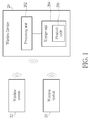
- FIG. 1 is a schematic diagram of a wireless device 20 according to an embodiment of the present invention.
- the wireless device 20 attempts to interoperate with a wireless system 10 which complies with a first standard, while the wireless device 20 is customized for communicating with a wireless system 22 which complies with a second standard, where the second standard is different from the first standard.
- the wireless system 10 operates within a first bandwidth
- the wireless system 22 operates within a second bandwidth, where the second bandwidth may be narrower than the first bandwidth.
- the wireless device 20 comprises a processing unit 202 and a storage unit 204.
- the storage unit 204 is coupled to the processing unit 202 and configured to store a program code 206, where the program code 206 instructs the processing unit 202 to execute a process for the wireless device 20 to enhance a transmission opportunity during operations of the wireless system 10.
- the wireless device 20 can be two separate wireless devices wherein one of the two separate devices communicates with the wireless system 10 with the first standard, while the other one of the two separate devices communicates with the wireless system 22 with the second standard.
- the two separate wireless devices are located in a neighborhood.
- both the first standard and the second standard perform a distributed coordination function protocol (DCF) under a carrier sense multiple access with collision avoidance (CSMA/CA) mechanism, which means that the wireless device 20 performs the DCF under the CSMA/CA mechanism.
- DCF distributed coordination function protocol
- CSMA/CA carrier sense multiple access with collision avoidance
- the wireless device 20 would wait until a wireless medium is idle for a DCF interframe space (DIFS) duration plus a backoff period and then perform data transmission, where the DIFS duration is a short interframe space (SIFS) duration plus two slot times.
- DIFS DCF interframe space
- SIFS short interframe space
- the wireless system 10 is configured with a first DIFS duration DIS_1
- the wireless system 22 is configured with a second DIFS duration DIS_2, where the second DIFS duration DIS_2 is much longer than the first DIFS duration DIS_1.
- the first DIFS duration DIS_1 is 34 microseconds, which includes a first SIFS duration SIS_1 specified to be 16 microseconds and a first slot time SLT_1 specified to be 9 microseconds.
- the second standard can be IEEE 802.11j
- the second DIFS duration DIS_2 is 106 microseconds, which includes a second SIFS duration SIS_2 specified to be 64 microseconds and a second slot time SLT_2 specified to be 21 microseconds. Note that, the second slot time SLT_2 is longer than the first slot time SLT_1 as well.
- the wireless system 10 would easily obtain a transmission opportunity of using the wireless medium to transmit data (since the first DIFS duration DIS_1 is shorter than the second DIFS duration DIS_2), such that the wireless device 20 would hardly obtain a chance to transmit data.
- the wireless device 20 determines the DIFS duration DIS_x to be shorter than the second DIFS duration DIS_2. That is, the wireless device 20 no longer simply complies with the second standard. Instead, the wireless device 20 shortens the DIFS duration thereof, compared to the second DIFS duration DIS_2, while a data frame transmitted from the wireless device 20 remains under the second standard.
- FIG. 2 is a schematic diagram of a process according to an embodiment of the present invention.
- the process 30 may be compiled as the program code 206 stored in the storage unit 204 and executed by the processing unit 202.
- the process 30 comprises following steps:
- the wireless device 20 shortens the DIFS duration DIS_x, which enhances the transmission opportunity during operations of the wireless system 10. Specifically, in Step 202, the wireless device 20 senses the wireless medium to determine whether the wireless medium is idle or busy (occupied). Details of sensing the wireless medium to determine whether or not the wireless medium is busy is known by one skilled in the art, which is not narrated herein for brevity.
- the wireless device 20 determines whether the wireless medium is occupied by the wireless system 10 or occupied by the wireless system 22. The wireless device 20 may try to recognize signals on the wireless medium. If the wireless device 20 finds that the signals on the wireless medium is recognizable by the wireless device 20, it represents that the wireless medium is occupied by the wireless system 22, since the wireless system 22 complies with the second standard. Otherwise, if the wireless device 20 finds that the signals on the wireless medium is not recognizable by the wireless device 20, it represents that the wireless medium is occupied by the wireless system 10.
- the wireless device 20 determines the DIFS duration DIS_x corresponding to the wireless device 20 to be shorter than the second DIFS duration DIS_2 when the wireless medium is occupied by the wireless system 10.
- the wireless medium occupied by the wireless system 10 represents that the wireless system 10 already obtains a transmission opportunity of occupying the wireless medium for transmission. It would be fair to release some of the transmission opportunity.
- the wireless device 20 may gain some of the transmission opportunity of using the wireless medium by shortening the DIFS duration DIS_x, in comparison to the second DIFS duration DIS_2.
- the wireless device 20 may determine the DIFS duration DIS_x to be equal to the first DIFS duration DIS_1.
- the wireless device 20 determines the DIFS duration DIS_x corresponding to the wireless device 20 to be equal to the second DIFS duration DIS_2.
- the wireless medium occupied by the wireless system 22 represents that the wireless system 22 already obtains the transmission opportunity of occupying the wireless medium for transmission.
- the wireless device 20 does not have to be such aggressive to gain the transmission opportunity of using the wireless medium.
- the wireless device 20 may remain the DIFS duration DIS_x to be equal to the second DIFS duration DIS_2 as specified in the second standard.
- the wireless device 20 transmits the data frame after the wireless medium is idle for at least the DIFS duration DIS_x.
- the data frame complies with the second standard such that the data frame is readable/recognized by the wireless system 22.
- the wireless device 20 may enter a backoff mechanism, i.e., the wireless device 20 may wait for the DIFS duration DIS_x plus a backoff period BF_x and then perform data transmission after the backoff period BF_x is due, where the backoff period BF_x is a random number times the slot time SLT_x, and the slot time SLT_x may be the second slot time SLT_2 for complying with the second standard.
- the backoff mechanism is known by one skilled in the art, and not narrated herein for brevity.
- the wireless device 20 transmits the data frame when the wireless medium is idle for at least the DIFS duration DIS_x.
- FIG. 3 is a timing diagram of the wireless system 10 and the wireless device 20 accessing the wireless medium according to embodiments of the present invention.
- the wireless medium changes from a busy status to an idle status.
- a first device within the wireless system 10 complying with the first standard waits for the first DIFS duration DIS_1 and may perform data transmission during a first contention window CW1.
- a second device simply complying with the second standard waits for the second DIFS duration DIS_2 and may perform data transmission during a second contention window CW2.
- the second device is not allowed to transmit data.
- the second DIFS duration DIS_2 is even longer than an average deferring time DT_ave of the first device within the system 10.
- the average deferring time DT_ave is the first DIFS duration DIS_1 plus an average backoff number times the first slot time SLT_1.
- the average backoff number may be 7.5 given that a length of the first contention window CW1 is 15 times the first slot time SLT_1.
- the wireless device 20 determines the DIFS duration DIS_x corresponding to the wireless device 20 to be shorter than the second DIFS duration DIS_2, and the wireless device 20 may perform data transmission during a contention window CWx.
- the DIFS duration DIS_x may be equal to the first DIFS duration DIS_1, and thus, the wireless device may have a fair contention starting point (i.e., a time t1) with the first device. Therefore, the wireless device 20 would gain more chances to gain the transmission opportunity of using the wireless medium, compared to the second device.
- the first standard may be one of IEEE 802.11b/g/n/ac.
- the wireless device 20 determines the DIFS duration DIS_x to be shorter than the second DIFS duration DIS_2 when the wireless medium is occupied by the wireless system 10.
- the wireless device 20 may determine the DIFS duration DIS_x to be shorter than the second DIFS duration DIS_2 when the wireless medium is busy.
- the wireless device 20 may determine that the wireless medium is occupied by the wireless system 10 or by the wireless system 22 according to a physical layer information, where the physical layer information may be a fast Fourier transform (FFT) related information.
- FFT fast Fourier transform
- a subcarrier spacing corresponding to the wireless system 10 is larger than a subcarrier spacing corresponding to the wireless system 22, since the first bandwidth is wider than the second bandwidth.
- a fast Fourier transform period corresponding to the wireless system 10 is shorter than an FFT period corresponding to the wireless system 22. Therefore, the FFT period may be used to determine whether the wireless medium is occupied by the wireless system 10 or by the wireless system 22.
- the wireless device determines the interframe space duration to be shorter than the one specified in the second standard when the wireless medium is busy, so as to gain more transmission opportunity to transmit the data frame which complies with the second standard.
Landscapes
- Engineering & Computer Science (AREA)
- Computer Networks & Wireless Communication (AREA)
- Signal Processing (AREA)
- Mobile Radio Communication Systems (AREA)
Abstract
Description
- The present invention relates to a method of enhancing transmission opportunity and a wireless device using the same, and more particularly, to a method and a wireless device capable of shortening an interframe space time of the wireless device.
- As a demand for wireless service increases, a bandwidth of the wireless local area network (WLAN) system is required to be wider. For example, bandwidths of the WLAN systems complied with standards of IEEE 802.11a/g are 20 MHz, bandwidths of the WLAN systems complied with standards of IEEE 802.11n are 20 MHz or 40 MHz, and bandwidths of the WLAN systems complied with standards of IEEE 802.11ac are 20, 40, 80 MHz or even 160 MHz.
- From another perspective, internet of thing (IoT), which connects devices through wireless connections, is getting popular recently. The devices under IoT, expected to provide low data rate transmission and consume low power, do not require such a wide operating bandwidth. Typically, a 5 MHz (or 10 MHz) bandwidth is sufficient for the devices under IoT. In some applications, the devices under IoT may be narrowband devices, which are originally configured to operate in a narrowband system (e.g., under a standard of IEEE 802.11j), and attempt to operate in a wideband WLAN system (e.g., under a standard of one of IEEE 802.11a/b/g/n/ac). However, the wideband WLAN systems (IEEE 802.11a/b/g/n/ac) are usually not compatible with the narrow WLAN system (IEEE 802.11j).
- In detail, the narrowband WLAN system and the wideband WLAN system both perform a distributed coordination function protocol (DCF) under a carrier sense multiple access with collision avoidance (CSMA/CA) mechanism. That is, devices under either the narrowband WLAN system or the wideband WLAN system have to sense a status of a wireless medium before transmission. If the devices find that the wireless medium is continuously idle for a specific duration, i.e., a DCF interframe space (DIFS) duration, the devices are allowed to transmit data. Otherwise, if the wireless medium is found busy during the DIFS duration, the devices defer their transmission. However, the DIFS duration corresponding to the narrowband WLAN system is much longer than the DIFS duration corresponding to the wideband WLAN system. In addition, a slot time, which is related to a length of a contention window of a backoff mechanism within the CSMA/CA mechanism, corresponding to the narrowband WLAN system is longer than a slot time corresponding to the wideband WLAN system as well. Hence, devices under the narrowband WLAN system would hardly obtain a chance to transmit data.
- Therefore, enhancing a transmission opportunity is a significant objective in the field.
- It is therefore a primary objective of the present invention to provide a method of enhancing transmission opportunity and a wireless device using the same, to improve over disadvantages of the prior art.
- This is achieved by a method of updating a program code and an electronic device according to the
independent claims 1 and 10 respectively here below. The dependent claims pertain to corresponding further developments and improvements. - As will be seen more clearly from the detailed description following below, a claimed method (30) of enhancing a transmission opportunity of a wireless device. The wireless device (20) communicates with a second wireless system (22) and attempts to interoperate with a first wireless system (10). The first wireless system is configured with a first interframe space duration. The method comprises steps of sensing a wireless medium; determining an interframe space duration (DIS_x) of the wireless device to be shorter than a second interframe space duration (DIS_2) specified in a standard corresponding to the second wireless system when the wireless medium is occupied by the first wireless system; and transmitting a data frame of the wireless device after the wireless medium is idle for at least the interframe space duration (DIS_x), wherein the data frame complies with the standard corresponding to the second wireless system.
- In another aspect of the invention, a claimed wireless device (20), configured to enhance a transmission opportunity. The wireless device communicates with a second wireless system and attempts to interoperate with a first wireless system. The first wireless system is configured with a first interframe space duration. The wireless device comprises a processing unit (202); and a storage unit (204), coupled to the processing unit, configured to store a program code (206), the program code instructing the processing unit to perform following steps: sensing a wireless medium; determining an interframe space duration (DIS_x) of the wireless device to be shorter than a second interframe space duration (DIS_2) specified in a standard corresponding to the second wireless system when the wireless medium is occupied by the first wireless system; and transmitting a data frame of the wireless device after the wireless medium is idle for at least the interframe space duration (DIS_x), wherein the data frame complies with the standard corresponding to the second wireless system.
-
-
FIG. 1 is a schematic diagram of a wireless device according to an embodiment of the present invention. -
FIG. 2 is a schematic diagram of a process according to an embodiment of the present invention. -
FIG. 3 is a timing diagram of the wireless device ofFIG. 1 accessing a wireless medium according to an embodiment of the present invention. - Please refer to
FIG. 1 , which is a schematic diagram of awireless device 20 according to an embodiment of the present invention. Thewireless device 20 attempts to interoperate with awireless system 10 which complies with a first standard, while thewireless device 20 is customized for communicating with awireless system 22 which complies with a second standard, where the second standard is different from the first standard. According to the first standard and the second standard, thewireless system 10 operates within a first bandwidth, and thewireless system 22 operates within a second bandwidth, where the second bandwidth may be narrower than the first bandwidth. Thewireless device 20 comprises aprocessing unit 202 and astorage unit 204. Thestorage unit 204 is coupled to theprocessing unit 202 and configured to store aprogram code 206, where theprogram code 206 instructs theprocessing unit 202 to execute a process for thewireless device 20 to enhance a transmission opportunity during operations of thewireless system 10. However, according to another embodiment of the present invention, thewireless device 20 can be two separate wireless devices wherein one of the two separate devices communicates with thewireless system 10 with the first standard, while the other one of the two separate devices communicates with thewireless system 22 with the second standard. The two separate wireless devices are located in a neighborhood. - Notably, even if the first standard and the second standard are different, both the first standard and the second standard perform a distributed coordination function protocol (DCF) under a carrier sense multiple access with collision avoidance (CSMA/CA) mechanism, which means that the
wireless device 20 performs the DCF under the CSMA/CA mechanism. In other words, thewireless device 20 would wait until a wireless medium is idle for a DCF interframe space (DIFS) duration plus a backoff period and then perform data transmission, where the DIFS duration is a short interframe space (SIFS) duration plus two slot times. Nevertheless, according to the first standard and the second standard, thewireless system 10 is configured with a first DIFS duration DIS_1, and thewireless system 22 is configured with a second DIFS duration DIS_2, where the second DIFS duration DIS_2 is much longer than the first DIFS duration DIS_1. - To be more specific, when the first standard can be IEEE 802.11 a, the first DIFS duration DIS_1 is 34 microseconds, which includes a first SIFS duration SIS_1 specified to be 16 microseconds and a first slot time SLT_1 specified to be 9 microseconds. On the other hand, when the second standard can be IEEE 802.11j, the second DIFS duration DIS_2 is 106 microseconds, which includes a second SIFS duration SIS_2 specified to be 64 microseconds and a second slot time SLT_2 specified to be 21 microseconds. Note that, the second slot time SLT_2 is longer than the first slot time SLT_1 as well.
- If the
wireless device 20 simply complies with the second standard, which means that a DIFS duration DIS_x corresponding to thewireless device 20 is equal to the second DIFS duration DIS_2, thewireless system 10 would easily obtain a transmission opportunity of using the wireless medium to transmit data (since the first DIFS duration DIS_1 is shorter than the second DIFS duration DIS_2), such that thewireless device 20 would hardly obtain a chance to transmit data. - To enhance a transmission opportunity during operations of the
wireless system 10, thewireless device 20 determines the DIFS duration DIS_x to be shorter than the second DIFS duration DIS_2. That is, thewireless device 20 no longer simply complies with the second standard. Instead, thewireless device 20 shortens the DIFS duration thereof, compared to the second DIFS duration DIS_2, while a data frame transmitted from thewireless device 20 remains under the second standard. In addition, the DIFS duration DIS_x is a SIFS duration SIS_x of thewireless device 20 plus twice of a slot time SLT_x of thewireless device 20, i.e., DIS_x = SIS_x + 2* SLT_x. - Please refer to
FIG. 2 , which is a schematic diagram of a process according to an embodiment of the present invention. The process 30 may be compiled as theprogram code 206 stored in thestorage unit 204 and executed by theprocessing unit 202. The process 30 comprises following steps: - Step 200:
- Start.
- Step 202:
- Sense the wireless medium.
- Step 203:
- Determine whether the wireless medium is busy. If yes, go to
Step 204. - Step 204:
- Determine whether the wireless medium is occupied by the
wireless system 10 or occupied by thewireless system 22. If the wireless medium is occupied by thewireless system 10, go toStep 206. If the wireless medium is occupied by thewireless system 22, go toStep 208. - Step 206:
- Determine the DIFS duration DIS_x corresponding to the
wireless device 20 to be shorter than the second DIFS duration DIS_2. - Step 208:
- Determine the DIFS duration DIS_x corresponding to the
wireless device 20 to be equal to the second DIFS duration DIS_2. - Step 210:
- Transmit a data frame of the
wireless device 20 after the wireless medium is idle for at least the DIFS duration DIS_x, where the data frame complies with the second standard. - Step 212:
- End.
- According to the process 30, the
wireless device 20 shortens the DIFS duration DIS_x, which enhances the transmission opportunity during operations of thewireless system 10. Specifically, inStep 202, thewireless device 20 senses the wireless medium to determine whether the wireless medium is idle or busy (occupied). Details of sensing the wireless medium to determine whether or not the wireless medium is busy is known by one skilled in the art, which is not narrated herein for brevity. - When the wireless medium is busy, in
Step 204, thewireless device 20 determines whether the wireless medium is occupied by thewireless system 10 or occupied by thewireless system 22. Thewireless device 20 may try to recognize signals on the wireless medium. If thewireless device 20 finds that the signals on the wireless medium is recognizable by thewireless device 20, it represents that the wireless medium is occupied by thewireless system 22, since thewireless system 22 complies with the second standard. Otherwise, if thewireless device 20 finds that the signals on the wireless medium is not recognizable by thewireless device 20, it represents that the wireless medium is occupied by thewireless system 10. - In
Step 206, thewireless device 20 determines the DIFS duration DIS_x corresponding to thewireless device 20 to be shorter than the second DIFS duration DIS_2 when the wireless medium is occupied by thewireless system 10. The wireless medium occupied by thewireless system 10 represents that thewireless system 10 already obtains a transmission opportunity of occupying the wireless medium for transmission. It would be fair to release some of the transmission opportunity. Hence, thewireless device 20 may gain some of the transmission opportunity of using the wireless medium by shortening the DIFS duration DIS_x, in comparison to the second DIFS duration DIS_2. In an embodiment, thewireless device 20 may determine the SIFS duration SIS_x of thewireless device 20 to be the first SIFS duration SIS_1 and the slot time SLT_x of thewireless device 20 to be the second slot time SLT_2, i.e., DIS_x = SIS_1 + 2* SLT_2, such that the DIFS duration DIS_x is shorter than the second DIFS duration DIS_2. In an embodiment, thewireless device 20 may determine the slot time SLT_x of thewireless device 20 to be the first slot time SLT_1 and the SIFS duration SIS_x of thewireless device 20 to be the second SIFS duration SIS_2, i.e., DIS_x = SIS_2 + 2* SLT_1, such that the DIFS duration DIS_x is shorter than the second DIFS duration DIS_2. Preferrably, thewireless device 20 may determine the DIFS duration DIS_x to be equal to the first DIFS duration DIS_1. In other words, thewireless device 20 may determine the SIFS duration SIS_x of thewireless device 20 to be the first SIFS duration SIS_1 and the slot time SLT_x of thewireless device 20 to be the first slot time SLT_1, i.e., DIS_x = SIS_1 + 2* SLT_1 = DIS_1, such that the DIFS duration DIS_x is equal to the first DIFS duration DIS_1 and shorter than the second DIFS duration DIS_2. - On the other hand, when the wireless medium is occupied by the
wireless system 22, inStep 208, thewireless device 20 determines the DIFS duration DIS_x corresponding to thewireless device 20 to be equal to the second DIFS duration DIS_2. The wireless medium occupied by thewireless system 22 represents that thewireless system 22 already obtains the transmission opportunity of occupying the wireless medium for transmission. Thewireless device 20 does not have to be such aggressive to gain the transmission opportunity of using the wireless medium. Hence, thewireless device 20 may remain the DIFS duration DIS_x to be equal to the second DIFS duration DIS_2 as specified in the second standard. - In
step 210, thewireless device 20 transmits the data frame after the wireless medium is idle for at least the DIFS duration DIS_x. The data frame complies with the second standard such that the data frame is readable/recognized by thewireless system 22. In addition, thewireless device 20 may enter a backoff mechanism, i.e., thewireless device 20 may wait for the DIFS duration DIS_x plus a backoff period BF_x and then perform data transmission after the backoff period BF_x is due, where the backoff period BF_x is a random number times the slot time SLT_x, and the slot time SLT_x may be the second slot time SLT_2 for complying with the second standard. The backoff mechanism is known by one skilled in the art, and not narrated herein for brevity. In short, thewireless device 20 transmits the data frame when the wireless medium is idle for at least the DIFS duration DIS_x. - Please refer to
FIG. 3 , which is a timing diagram of thewireless system 10 and thewireless device 20 accessing the wireless medium according to embodiments of the present invention. As shown inFIG. 3 , at a time t0, the wireless medium changes from a busy status to an idle status. A first device within thewireless system 10 complying with the first standard waits for the first DIFS duration DIS_1 and may perform data transmission during a first contention window CW1. Meanwhile, a second device simply complying with the second standard waits for the second DIFS duration DIS_2 and may perform data transmission during a second contention window CW2. Once the first device contends and obtains the transmission opportunity, the second device is not allowed to transmit data. - Notably, the second DIFS duration DIS_2 is even longer than an average deferring time DT_ave of the first device within the
system 10. The average deferring time DT_ave is the first DIFS duration DIS_1 plus an average backoff number times the first slot time SLT_1. The average backoff number may be 7.5 given that a length of the first contention window CW1 is 15 times the first slot time SLT_1. Hence, the second DIFS duration DIS_2 (106 microseconds) is longer than the average deferring time DT_ave (DT_ave = DIS_1 + 7.5* SLT_1 = 101.5 microseconds). Therefore, the first device within thewireless system 10 would be very likely to obtain the transmission opportunity of using the wireless medium and the second device simply complying the second standard would hardly have a chance to transmit data. - On the other hand, the
wireless device 20 determines the DIFS duration DIS_x corresponding to thewireless device 20 to be shorter than the second DIFS duration DIS_2, and thewireless device 20 may perform data transmission during a contention window CWx. Preferably, the DIFS duration DIS_x may be equal to the first DIFS duration DIS_1, and thus, the wireless device may have a fair contention starting point (i.e., a time t1) with the first device. Therefore, thewireless device 20 would gain more chances to gain the transmission opportunity of using the wireless medium, compared to the second device. - Notably, the embodiments stated in the above are utilized for illustrating the concept of the present invention. Those skilled in the art may make modifications and alternations accordingly. For example, the first standard may be one of IEEE 802.11b/g/n/ac. In addition, in the process 30, the
wireless device 20 determines the DIFS duration DIS_x to be shorter than the second DIFS duration DIS_2 when the wireless medium is occupied by thewireless system 10. In an embodiment, thewireless device 20 may determine the DIFS duration DIS_x to be shorter than the second DIFS duration DIS_2 when the wireless medium is busy. - In addition, details of determining whether the wireless medium is occupied by the
wireless system 10 or occupied by thewireless system 22 is not limited. In an embodiment, thewireless device 20 may determine that the wireless medium is occupied by thewireless system 10 or by thewireless system 22 according to a physical layer information, where the physical layer information may be a fast Fourier transform (FFT) related information. Specifically, when both thewireless system 10 and thewireless system 22 employ an orthogonal frequency division multiplexing (OFDM) technique to transmit wireless signals, a subcarrier spacing corresponding to thewireless system 10 is larger than a subcarrier spacing corresponding to thewireless system 22, since the first bandwidth is wider than the second bandwidth. Hence, a fast Fourier transform period corresponding to thewireless system 10 is shorter than an FFT period corresponding to thewireless system 22. Therefore, the FFT period may be used to determine whether the wireless medium is occupied by thewireless system 10 or by thewireless system 22. - In summary, the wireless device determines the interframe space duration to be shorter than the one specified in the second standard when the wireless medium is busy, so as to gain more transmission opportunity to transmit the data frame which complies with the second standard.
Claims (16)
- A method (30) of enhancing a transmission opportunity of a wireless device (20), wherein the wireless device communicates with a second wireless system (22) and attempts to interoperate with a first wireless system (10), and the first wireless system (10) is configured with a first interframe space duration, the method characterized by comprising:sensing a wireless medium;determining an interframe space duration (DIS_x) of the wireless device to be shorter than a second interframe space duration (DIS_2) specified in a standard corresponding to the second wireless system when the wireless medium is occupied by the first wireless system; andtransmitting a data frame of the wireless device after the wireless medium is idle for at least the interframe space duration (DIS_x), wherein the data frame complies with the standard corresponding to the second wireless system.
- The method (30) of claim 1, characterized in that the step of determining the interframe space duration of the wireless device comprises:determining the interframe space duration (DIS_x) of the wireless device to be the first interframe space duration when the wireless medium is occupied by the first wireless system;wherein the first interframe space duration is shorter than the second interframe space duration.
- The method (30) of claim 1, characterized in that the interframe space duration comprises a short interframe space (SIFS) and a plurality of slot times.
- The method (30) of claim 3, characterized in that the step of determining the interframe space duration of the wireless device comprises:determining the SIFS of the wireless device to be a first SIFS corresponding to the first wireless system when the wireless medium is occupied by the first wireless system.
- The method (30) of claim 3, characterized in that the step of determining the interframe space duration of the wireless device comprises:determining the slot time of the wireless device to be a first slot time corresponding to the first wireless system when the wireless medium is occupied by the first wireless system.
- The method (30) of claim 1, characterized by further comprising:determining the interframe space duration of the wireless device to be equal to the second interframe space duration when the wireless medium is occupied by the second wireless system.
- The method (30) of claim 1, characterized in that the transmitting step comprises,
transmitting a data frame of the wireless device after the wireless medium is idle for the interframe space duration plus a backoff period. - A wireless device (20), configured to enhance a transmission opportunity, wherein the wireless device communicates with a second wireless system and attempts to interoperate with a first wireless system, and the first wireless system is configured with a first interframe space duration, the wireless device characterized by comprising:a processing unit (202); anda storage unit (204), coupled to the processing unit, configured to store a program code (206), the program code instructing the processing unit to perform following steps:sensing a wireless medium;determining an interframe space duration (DIS_x) of the wireless device to be shorter than a second interframe space duration (DIS_2) specified in a standard corresponding to the second wireless system when the wireless medium is occupied by the first wireless system; andtransmitting a data frame of the wireless device after the wireless medium is idle for at least the interframe space duration (DIS_x), wherein the data frame complies with the standard corresponding to the second wireless system.
- The wireless device (20) of claim 8, characterized in that the program code further instructs the processing unit to determine the interframe space duration of the wireless device to be the first interframe space duration when the wireless medium is occupied by the first wireless system;
wherein the first interframe space duration is shorter than the second interframe space duration. - The wireless device (20) of claim 8, characterized in that the interframe space duration comprises a short interframe space (SIFS) and a plurality of slot times.
- The wireless device (20) of claim 10, characterized in that the program code further instructs the processing unit to determine the SIFS of the wireless device to be a first SIFS corresponding to the first wireless system when the wireless medium is occupied by the first wireless system.
- The wireless device (20) of claim 10, characterized in that the program code further instructs the processing unit to determine the slot time of the wireless device to be a first slot time corresponding to the first wireless system when the wireless medium is occupied by the first wireless system.
- The wireless device (20) of claim 8, characterized in that the program code further instructs the processing unit to determine the interframe space duration of the wireless device to be equal to the second interframe space duration when the wireless medium is occupied by the second wireless system.
- The method (30) of claim 1 or the wireless device (20) of claim 8, characterized in that the first wireless system and the second wireless system are under a distributed coordination function protocol (DCF), and the interframe space duration, the first interframe space duration and the second interframe space duration are a DCF interframe space (DIFS), a first DIFS and a second DIFS, respectively.
- The method (30) of claim 1 or the wireless device (20) of claim 11, characterized in that the first wireless system operates within a first bandwidth, the second wireless system operates within a second bandwidth, and the second bandwidth is narrower than the first bandwidth.
- The method of claim 1 or the wireless device of claim 11, characterized in that the first wireless system complies with one of IEEE 802.11 a/b/g/n/ac and the second wireless system complies with IEEE 802.11j, and the standard is IEEE 802.11j.
Applications Claiming Priority (2)
| Application Number | Priority Date | Filing Date | Title |
|---|---|---|---|
| US201562222217P | 2015-09-23 | 2015-09-23 | |
| US15/272,408 US10194364B2 (en) | 2015-09-23 | 2016-09-21 | Method of enhancing transmission opportunity and wireless device using the same |
Publications (2)
| Publication Number | Publication Date |
|---|---|
| EP3148282A1 true EP3148282A1 (en) | 2017-03-29 |
| EP3148282B1 EP3148282B1 (en) | 2018-09-12 |
Family
ID=57103806
Family Applications (1)
| Application Number | Title | Priority Date | Filing Date |
|---|---|---|---|
| EP16190147.5A Active EP3148282B1 (en) | 2015-09-23 | 2016-09-22 | Method of enhancing transmission opportunity and wireless device using the same |
Country Status (3)
| Country | Link |
|---|---|
| US (1) | US10194364B2 (en) |
| EP (1) | EP3148282B1 (en) |
| CN (1) | CN106879074B (en) |
Citations (1)
| Publication number | Priority date | Publication date | Assignee | Title |
|---|---|---|---|---|
| US20020120740A1 (en) * | 2001-02-28 | 2002-08-29 | Jin-Meng Ho | Shared communications channel access in an overlapping coverage environment |
Family Cites Families (10)
| Publication number | Priority date | Publication date | Assignee | Title |
|---|---|---|---|---|
| US20020093929A1 (en) * | 2001-01-18 | 2002-07-18 | Koninklijke Philips Electronics N.V. | System and method for sharing bandwidth between co-located 802.11a/e and HIPERLAN/2 systems |
| US8483190B2 (en) * | 2005-01-18 | 2013-07-09 | Marvell World Trade Ltd. | Wireless local area network (WLAN) time division multiplexed (TDM) interframe space (IFS) time selection protocol |
| US8085683B2 (en) * | 2008-04-02 | 2011-12-27 | National University Of Ireland Maynooth | Method and apparatus for estimating link quality |
| CN102202348B (en) * | 2010-03-22 | 2014-07-30 | 华为技术有限公司 | Data packet sending method and access point |
| WO2012049533A1 (en) * | 2010-10-13 | 2012-04-19 | Nokia Corporation | Method and apparatus for enabling scheduled transmission |
| KR101973699B1 (en) * | 2011-09-30 | 2019-04-29 | 인터디지탈 패튼 홀딩스, 인크 | Device communication using a reduced channel bandwidth |
| EP2866513B1 (en) * | 2012-09-26 | 2017-11-08 | LG Electronics Inc. | Method and apparatus for gaining access in wireless lan system |
| JP6255397B2 (en) * | 2012-12-11 | 2017-12-27 | パナソニック株式会社 | Method for reducing interference caused by overlapping channels in a wireless communication system |
| US10004031B2 (en) * | 2013-05-02 | 2018-06-19 | Lg Electronics Inc. | Method for sensing channel dynamically in wireless LAN system and apparatus therefor |
| US9860921B2 (en) * | 2014-05-30 | 2018-01-02 | Electronics And Telecommunications Research Institute | Method and apparatus for transmitting and receiving data based on aggressive spatial reuse |
-
2016
- 2016-09-21 US US15/272,408 patent/US10194364B2/en active Active
- 2016-09-22 CN CN201610840457.2A patent/CN106879074B/en active Active
- 2016-09-22 EP EP16190147.5A patent/EP3148282B1/en active Active
Patent Citations (1)
| Publication number | Priority date | Publication date | Assignee | Title |
|---|---|---|---|---|
| US20020120740A1 (en) * | 2001-02-28 | 2002-08-29 | Jin-Meng Ho | Shared communications channel access in an overlapping coverage environment |
Non-Patent Citations (1)
| Title |
|---|
| WEI YI-HUNG ET AL: "RT-WiFi: Real-Time High-Speed Communication Protocol for Wireless Cyber-Physical Control Applications", 2013 IEEE 34TH REAL-TIME SYSTEMS SYMPOSIUM, IEEE, 3 December 2013 (2013-12-03), pages 140 - 149, XP032561499, ISSN: 1052-8725, ISBN: 978-1-4673-9507-6, [retrieved on 20140129], DOI: 10.1109/RTSS.2013.22 * |
Also Published As
| Publication number | Publication date |
|---|---|
| CN106879074A (en) | 2017-06-20 |
| US20170086117A1 (en) | 2017-03-23 |
| CN106879074B (en) | 2019-08-30 |
| EP3148282B1 (en) | 2018-09-12 |
| US10194364B2 (en) | 2019-01-29 |
Similar Documents
| Publication | Publication Date | Title |
|---|---|---|
| CN105830467B (en) | System and method for WLAN OFDMA design for uplink and downlink transmission | |
| KR101240473B1 (en) | Systems and methods for providing a separate contention window allowing allocations for pending uplink sdma transmission opportunities | |
| US9072109B2 (en) | Collision detection and bitwise arbitration in multicarrier wireless networks | |
| US10470215B2 (en) | Coexistence of users with different latency requirements | |
| US10231265B2 (en) | Wireless communication apparatus, wireless communication method, wireless communication system, and processor | |
| US9025466B2 (en) | Methods and apparatus for facilitating channel access in a communication system | |
| CN108781468A (en) | random access with carrier sense | |
| CN107534903A (en) | Systems and methods for reducing collisions in wireless networks | |
| US20120076074A1 (en) | Apparatus and method for establishing contention window in wimedia wireless network | |
| CN109600833B (en) | A method and device for determining transmission resources | |
| CN113424640B (en) | Time delay control method and device | |
| CN110300459B (en) | A kind of signal transmission method and network equipment | |
| CN115399047A (en) | Communication method and communication device | |
| US20170019223A1 (en) | Multiple access method and system with adaptive frequency multiplexing of data send authorization requests | |
| US20200003890A1 (en) | Apparatus and method for transmitting a secure ranging packet with phase tracking | |
| WO2018036260A1 (en) | Data transmission method, device and system | |
| EP3148282B1 (en) | Method of enhancing transmission opportunity and wireless device using the same | |
| US10917804B2 (en) | Apparatus and method for flexible secure time of flight measurements | |
| US20170127447A1 (en) | Station (sta) and method for contention based neighborhood awareness network (nan) communication | |
| CN113796116A (en) | Wireless communication with collision avoidance | |
| US9148873B1 (en) | Method and apparatus for providing different types of physical layer devices access to a wireless medium | |
| JP6396539B2 (en) | Wireless communication system and method, and wireless communication apparatus | |
| US10862705B2 (en) | Carrier sense multiple access (CSMA) with frequency division multiplexing for data transmission in wireless communication | |
| WO2023112529A1 (en) | Terminal device, base station device, and communication method | |
| KR101864249B1 (en) | Method for additional frequency domain contention with low latency in unlicenced band and device for performing the method |
Legal Events
| Date | Code | Title | Description |
|---|---|---|---|
| PUAI | Public reference made under article 153(3) epc to a published international application that has entered the european phase |
Free format text: ORIGINAL CODE: 0009012 |
|
| AK | Designated contracting states |
Kind code of ref document: A1 Designated state(s): AL AT BE BG CH CY CZ DE DK EE ES FI FR GB GR HR HU IE IS IT LI LT LU LV MC MK MT NL NO PL PT RO RS SE SI SK SM TR |
|
| AX | Request for extension of the european patent |
Extension state: BA ME |
|
| 17P | Request for examination filed |
Effective date: 20170925 |
|
| RBV | Designated contracting states (corrected) |
Designated state(s): AL AT BE BG CH CY CZ DE DK EE ES FI FR GB GR HR HU IE IS IT LI LT LU LV MC MK MT NL NO PL PT RO RS SE SI SK SM TR |
|
| GRAP | Despatch of communication of intention to grant a patent |
Free format text: ORIGINAL CODE: EPIDOSNIGR1 |
|
| RIC1 | Information provided on ipc code assigned before grant |
Ipc: H04W 74/08 20090101AFI20180302BHEP Ipc: H04W 16/14 20090101ALN20180302BHEP |
|
| INTG | Intention to grant announced |
Effective date: 20180322 |
|
| GRAS | Grant fee paid |
Free format text: ORIGINAL CODE: EPIDOSNIGR3 |
|
| GRAA | (expected) grant |
Free format text: ORIGINAL CODE: 0009210 |
|
| AK | Designated contracting states |
Kind code of ref document: B1 Designated state(s): AL AT BE BG CH CY CZ DE DK EE ES FI FR GB GR HR HU IE IS IT LI LT LU LV MC MK MT NL NO PL PT RO RS SE SI SK SM TR |
|
| REG | Reference to a national code |
Ref country code: GB Ref legal event code: FG4D |
|
| REG | Reference to a national code |
Ref country code: CH Ref legal event code: EP |
|
| REG | Reference to a national code |
Ref country code: FR Ref legal event code: PLFP Year of fee payment: 3 |
|
| REG | Reference to a national code |
Ref country code: IE Ref legal event code: FG4D |
|
| REG | Reference to a national code |
Ref country code: DE Ref legal event code: R096 Ref document number: 602016005517 Country of ref document: DE |
|
| REG | Reference to a national code |
Ref country code: AT Ref legal event code: REF Ref document number: 1042122 Country of ref document: AT Kind code of ref document: T Effective date: 20181015 |
|
| REG | Reference to a national code |
Ref country code: NL Ref legal event code: MP Effective date: 20180912 |
|
| REG | Reference to a national code |
Ref country code: LT Ref legal event code: MG4D |
|
| PG25 | Lapsed in a contracting state [announced via postgrant information from national office to epo] |
Ref country code: FI Free format text: LAPSE BECAUSE OF FAILURE TO SUBMIT A TRANSLATION OF THE DESCRIPTION OR TO PAY THE FEE WITHIN THE PRESCRIBED TIME-LIMIT Effective date: 20180912 Ref country code: LT Free format text: LAPSE BECAUSE OF FAILURE TO SUBMIT A TRANSLATION OF THE DESCRIPTION OR TO PAY THE FEE WITHIN THE PRESCRIBED TIME-LIMIT Effective date: 20180912 Ref country code: BG Free format text: LAPSE BECAUSE OF FAILURE TO SUBMIT A TRANSLATION OF THE DESCRIPTION OR TO PAY THE FEE WITHIN THE PRESCRIBED TIME-LIMIT Effective date: 20181212 Ref country code: SE Free format text: LAPSE BECAUSE OF FAILURE TO SUBMIT A TRANSLATION OF THE DESCRIPTION OR TO PAY THE FEE WITHIN THE PRESCRIBED TIME-LIMIT Effective date: 20180912 Ref country code: RS Free format text: LAPSE BECAUSE OF FAILURE TO SUBMIT A TRANSLATION OF THE DESCRIPTION OR TO PAY THE FEE WITHIN THE PRESCRIBED TIME-LIMIT Effective date: 20180912 Ref country code: GR Free format text: LAPSE BECAUSE OF FAILURE TO SUBMIT A TRANSLATION OF THE DESCRIPTION OR TO PAY THE FEE WITHIN THE PRESCRIBED TIME-LIMIT Effective date: 20181213 Ref country code: NO Free format text: LAPSE BECAUSE OF FAILURE TO SUBMIT A TRANSLATION OF THE DESCRIPTION OR TO PAY THE FEE WITHIN THE PRESCRIBED TIME-LIMIT Effective date: 20181212 |
|
| PG25 | Lapsed in a contracting state [announced via postgrant information from national office to epo] |
Ref country code: HR Free format text: LAPSE BECAUSE OF FAILURE TO SUBMIT A TRANSLATION OF THE DESCRIPTION OR TO PAY THE FEE WITHIN THE PRESCRIBED TIME-LIMIT Effective date: 20180912 Ref country code: AL Free format text: LAPSE BECAUSE OF FAILURE TO SUBMIT A TRANSLATION OF THE DESCRIPTION OR TO PAY THE FEE WITHIN THE PRESCRIBED TIME-LIMIT Effective date: 20180912 Ref country code: LV Free format text: LAPSE BECAUSE OF FAILURE TO SUBMIT A TRANSLATION OF THE DESCRIPTION OR TO PAY THE FEE WITHIN THE PRESCRIBED TIME-LIMIT Effective date: 20180912 |
|
| REG | Reference to a national code |
Ref country code: AT Ref legal event code: MK05 Ref document number: 1042122 Country of ref document: AT Kind code of ref document: T Effective date: 20180912 |
|
| PG25 | Lapsed in a contracting state [announced via postgrant information from national office to epo] |
Ref country code: ES Free format text: LAPSE BECAUSE OF FAILURE TO SUBMIT A TRANSLATION OF THE DESCRIPTION OR TO PAY THE FEE WITHIN THE PRESCRIBED TIME-LIMIT Effective date: 20180912 Ref country code: CZ Free format text: LAPSE BECAUSE OF FAILURE TO SUBMIT A TRANSLATION OF THE DESCRIPTION OR TO PAY THE FEE WITHIN THE PRESCRIBED TIME-LIMIT Effective date: 20180912 Ref country code: IT Free format text: LAPSE BECAUSE OF FAILURE TO SUBMIT A TRANSLATION OF THE DESCRIPTION OR TO PAY THE FEE WITHIN THE PRESCRIBED TIME-LIMIT Effective date: 20180912 Ref country code: RO Free format text: LAPSE BECAUSE OF FAILURE TO SUBMIT A TRANSLATION OF THE DESCRIPTION OR TO PAY THE FEE WITHIN THE PRESCRIBED TIME-LIMIT Effective date: 20180912 Ref country code: EE Free format text: LAPSE BECAUSE OF FAILURE TO SUBMIT A TRANSLATION OF THE DESCRIPTION OR TO PAY THE FEE WITHIN THE PRESCRIBED TIME-LIMIT Effective date: 20180912 Ref country code: AT Free format text: LAPSE BECAUSE OF FAILURE TO SUBMIT A TRANSLATION OF THE DESCRIPTION OR TO PAY THE FEE WITHIN THE PRESCRIBED TIME-LIMIT Effective date: 20180912 Ref country code: NL Free format text: LAPSE BECAUSE OF FAILURE TO SUBMIT A TRANSLATION OF THE DESCRIPTION OR TO PAY THE FEE WITHIN THE PRESCRIBED TIME-LIMIT Effective date: 20180912 Ref country code: IS Free format text: LAPSE BECAUSE OF FAILURE TO SUBMIT A TRANSLATION OF THE DESCRIPTION OR TO PAY THE FEE WITHIN THE PRESCRIBED TIME-LIMIT Effective date: 20190112 Ref country code: PL Free format text: LAPSE BECAUSE OF FAILURE TO SUBMIT A TRANSLATION OF THE DESCRIPTION OR TO PAY THE FEE WITHIN THE PRESCRIBED TIME-LIMIT Effective date: 20180912 |
|
| PG25 | Lapsed in a contracting state [announced via postgrant information from national office to epo] |
Ref country code: PT Free format text: LAPSE BECAUSE OF FAILURE TO SUBMIT A TRANSLATION OF THE DESCRIPTION OR TO PAY THE FEE WITHIN THE PRESCRIBED TIME-LIMIT Effective date: 20190112 Ref country code: SK Free format text: LAPSE BECAUSE OF FAILURE TO SUBMIT A TRANSLATION OF THE DESCRIPTION OR TO PAY THE FEE WITHIN THE PRESCRIBED TIME-LIMIT Effective date: 20180912 Ref country code: SM Free format text: LAPSE BECAUSE OF FAILURE TO SUBMIT A TRANSLATION OF THE DESCRIPTION OR TO PAY THE FEE WITHIN THE PRESCRIBED TIME-LIMIT Effective date: 20180912 |
|
| REG | Reference to a national code |
Ref country code: BE Ref legal event code: MM Effective date: 20180930 |
|
| REG | Reference to a national code |
Ref country code: DE Ref legal event code: R097 Ref document number: 602016005517 Country of ref document: DE |
|
| REG | Reference to a national code |
Ref country code: IE Ref legal event code: MM4A |
|
| PG25 | Lapsed in a contracting state [announced via postgrant information from national office to epo] |
Ref country code: LU Free format text: LAPSE BECAUSE OF NON-PAYMENT OF DUE FEES Effective date: 20180922 |
|
| PLBE | No opposition filed within time limit |
Free format text: ORIGINAL CODE: 0009261 |
|
| STAA | Information on the status of an ep patent application or granted ep patent |
Free format text: STATUS: NO OPPOSITION FILED WITHIN TIME LIMIT |
|
| PG25 | Lapsed in a contracting state [announced via postgrant information from national office to epo] |
Ref country code: MC Free format text: LAPSE BECAUSE OF FAILURE TO SUBMIT A TRANSLATION OF THE DESCRIPTION OR TO PAY THE FEE WITHIN THE PRESCRIBED TIME-LIMIT Effective date: 20180912 Ref country code: IE Free format text: LAPSE BECAUSE OF NON-PAYMENT OF DUE FEES Effective date: 20180922 Ref country code: DK Free format text: LAPSE BECAUSE OF FAILURE TO SUBMIT A TRANSLATION OF THE DESCRIPTION OR TO PAY THE FEE WITHIN THE PRESCRIBED TIME-LIMIT Effective date: 20180912 |
|
| 26N | No opposition filed |
Effective date: 20190613 |
|
| PG25 | Lapsed in a contracting state [announced via postgrant information from national office to epo] |
Ref country code: BE Free format text: LAPSE BECAUSE OF NON-PAYMENT OF DUE FEES Effective date: 20180930 Ref country code: SI Free format text: LAPSE BECAUSE OF FAILURE TO SUBMIT A TRANSLATION OF THE DESCRIPTION OR TO PAY THE FEE WITHIN THE PRESCRIBED TIME-LIMIT Effective date: 20180912 |
|
| PG25 | Lapsed in a contracting state [announced via postgrant information from national office to epo] |
Ref country code: MT Free format text: LAPSE BECAUSE OF NON-PAYMENT OF DUE FEES Effective date: 20180922 |
|
| PG25 | Lapsed in a contracting state [announced via postgrant information from national office to epo] |
Ref country code: TR Free format text: LAPSE BECAUSE OF FAILURE TO SUBMIT A TRANSLATION OF THE DESCRIPTION OR TO PAY THE FEE WITHIN THE PRESCRIBED TIME-LIMIT Effective date: 20180912 |
|
| REG | Reference to a national code |
Ref country code: CH Ref legal event code: PL |
|
| PG25 | Lapsed in a contracting state [announced via postgrant information from national office to epo] |
Ref country code: MK Free format text: LAPSE BECAUSE OF NON-PAYMENT OF DUE FEES Effective date: 20180912 Ref country code: HU Free format text: LAPSE BECAUSE OF FAILURE TO SUBMIT A TRANSLATION OF THE DESCRIPTION OR TO PAY THE FEE WITHIN THE PRESCRIBED TIME-LIMIT; INVALID AB INITIO Effective date: 20160922 Ref country code: CY Free format text: LAPSE BECAUSE OF FAILURE TO SUBMIT A TRANSLATION OF THE DESCRIPTION OR TO PAY THE FEE WITHIN THE PRESCRIBED TIME-LIMIT Effective date: 20180912 |
|
| PG25 | Lapsed in a contracting state [announced via postgrant information from national office to epo] |
Ref country code: CH Free format text: LAPSE BECAUSE OF NON-PAYMENT OF DUE FEES Effective date: 20190930 Ref country code: LI Free format text: LAPSE BECAUSE OF NON-PAYMENT OF DUE FEES Effective date: 20190930 |
|
| P01 | Opt-out of the competence of the unified patent court (upc) registered |
Effective date: 20230607 |
|
| PGFP | Annual fee paid to national office [announced via postgrant information from national office to epo] |
Ref country code: DE Payment date: 20250702 Year of fee payment: 10 |
|
| PGFP | Annual fee paid to national office [announced via postgrant information from national office to epo] |
Ref country code: GB Payment date: 20250703 Year of fee payment: 10 |
|
| PGFP | Annual fee paid to national office [announced via postgrant information from national office to epo] |
Ref country code: FR Payment date: 20250808 Year of fee payment: 10 |