EP3148240A1 - Method of interworking of different wlan standards - Google Patents
Method of interworking of different wlan standards Download PDFInfo
- Publication number
- EP3148240A1 EP3148240A1 EP16190144.2A EP16190144A EP3148240A1 EP 3148240 A1 EP3148240 A1 EP 3148240A1 EP 16190144 A EP16190144 A EP 16190144A EP 3148240 A1 EP3148240 A1 EP 3148240A1
- Authority
- EP
- European Patent Office
- Prior art keywords
- bandwidth
- preamble
- wireless device
- standard
- frame
- Prior art date
- Legal status (The legal status is an assumption and is not a legal conclusion. Google has not performed a legal analysis and makes no representation as to the accuracy of the status listed.)
- Withdrawn
Links
- 238000000034 method Methods 0.000 title claims description 26
- 238000012545 processing Methods 0.000 claims description 12
- 230000005540 biological transmission Effects 0.000 abstract description 7
- 238000010586 diagram Methods 0.000 description 12
- 238000012549 training Methods 0.000 description 2
- 238000013500 data storage Methods 0.000 description 1
- 230000001419 dependent effect Effects 0.000 description 1
- 238000011161 development Methods 0.000 description 1
- 230000018109 developmental process Effects 0.000 description 1
- 238000012986 modification Methods 0.000 description 1
- 230000004048 modification Effects 0.000 description 1
- 230000003287 optical effect Effects 0.000 description 1
- 230000007704 transition Effects 0.000 description 1
Images


Classifications
-
- H—ELECTRICITY
- H04—ELECTRIC COMMUNICATION TECHNIQUE
- H04L—TRANSMISSION OF DIGITAL INFORMATION, e.g. TELEGRAPHIC COMMUNICATION
- H04L69/00—Network arrangements, protocols or services independent of the application payload and not provided for in the other groups of this subclass
- H04L69/22—Parsing or analysis of headers
-
- H—ELECTRICITY
- H04—ELECTRIC COMMUNICATION TECHNIQUE
- H04W—WIRELESS COMMUNICATION NETWORKS
- H04W72/00—Local resource management
- H04W72/12—Wireless traffic scheduling
- H04W72/1215—Wireless traffic scheduling for collaboration of different radio technologies
-
- H—ELECTRICITY
- H04—ELECTRIC COMMUNICATION TECHNIQUE
- H04L—TRANSMISSION OF DIGITAL INFORMATION, e.g. TELEGRAPHIC COMMUNICATION
- H04L5/00—Arrangements affording multiple use of the transmission path
- H04L5/003—Arrangements for allocating sub-channels of the transmission path
- H04L5/0048—Allocation of pilot signals, i.e. of signals known to the receiver
-
- H—ELECTRICITY
- H04—ELECTRIC COMMUNICATION TECHNIQUE
- H04W—WIRELESS COMMUNICATION NETWORKS
- H04W16/00—Network planning, e.g. coverage or traffic planning tools; Network deployment, e.g. resource partitioning or cells structures
- H04W16/14—Spectrum sharing arrangements between different networks
-
- H—ELECTRICITY
- H04—ELECTRIC COMMUNICATION TECHNIQUE
- H04W—WIRELESS COMMUNICATION NETWORKS
- H04W72/00—Local resource management
- H04W72/12—Wireless traffic scheduling
- H04W72/1221—Wireless traffic scheduling based on age of data to be sent
-
- H—ELECTRICITY
- H04—ELECTRIC COMMUNICATION TECHNIQUE
- H04W—WIRELESS COMMUNICATION NETWORKS
- H04W74/00—Wireless channel access
- H04W74/002—Transmission of channel access control information
-
- H—ELECTRICITY
- H04—ELECTRIC COMMUNICATION TECHNIQUE
- H04W—WIRELESS COMMUNICATION NETWORKS
- H04W74/00—Wireless channel access
- H04W74/08—Non-scheduled access, e.g. ALOHA
- H04W74/0808—Non-scheduled access, e.g. ALOHA using carrier sensing, e.g. carrier sense multiple access [CSMA]
- H04W74/0816—Non-scheduled access, e.g. ALOHA using carrier sensing, e.g. carrier sense multiple access [CSMA] with collision avoidance
-
- H—ELECTRICITY
- H04—ELECTRIC COMMUNICATION TECHNIQUE
- H04L—TRANSMISSION OF DIGITAL INFORMATION, e.g. TELEGRAPHIC COMMUNICATION
- H04L69/00—Network arrangements, protocols or services independent of the application payload and not provided for in the other groups of this subclass
- H04L69/30—Definitions, standards or architectural aspects of layered protocol stacks
- H04L69/32—Architecture of open systems interconnection [OSI] 7-layer type protocol stacks, e.g. the interfaces between the data link level and the physical level
- H04L69/322—Intralayer communication protocols among peer entities or protocol data unit [PDU] definitions
- H04L69/323—Intralayer communication protocols among peer entities or protocol data unit [PDU] definitions in the physical layer [OSI layer 1]
-
- H—ELECTRICITY
- H04—ELECTRIC COMMUNICATION TECHNIQUE
- H04W—WIRELESS COMMUNICATION NETWORKS
- H04W74/00—Wireless channel access
- H04W74/08—Non-scheduled access, e.g. ALOHA
- H04W74/0808—Non-scheduled access, e.g. ALOHA using carrier sensing, e.g. carrier sense multiple access [CSMA]
-
- H—ELECTRICITY
- H04—ELECTRIC COMMUNICATION TECHNIQUE
- H04W—WIRELESS COMMUNICATION NETWORKS
- H04W84/00—Network topologies
- H04W84/02—Hierarchically pre-organised networks, e.g. paging networks, cellular networks, WLAN [Wireless Local Area Network] or WLL [Wireless Local Loop]
- H04W84/10—Small scale networks; Flat hierarchical networks
- H04W84/12—WLAN [Wireless Local Area Networks]
-
- H—ELECTRICITY
- H04—ELECTRIC COMMUNICATION TECHNIQUE
- H04W—WIRELESS COMMUNICATION NETWORKS
- H04W88/00—Devices specially adapted for wireless communication networks, e.g. terminals, base stations or access point devices
- H04W88/02—Terminal devices
Definitions
- the present invention relates to a method of operating in a wireless system and a wireless device using the same, and more particularly, to a method and a wireless device capable of inserting an additional preamble followed by a regular data frame.
- bandwidths of the wireless local area network (WLAN) system is required to be wider.
- bandwidths of the WLAN systems complied with standards of IEEE 802.11a/g are 20 MHz
- bandwidths of the WLAN systems complied with standards of IEEE 802.11n are 20 MHz or 40 MHz
- bandwidths of the WLAN systems complied with standards of IEEE 802.11ac are 20, 40, 80 MHz or even 160 MHz.
- the devices under IoT may be narrowband devices, which are originally configured to operate in a narrowband system (e.g., under a standard of IEEE 802.11j), and attempt to operate in a wideband WLAN system (e.g., under a standard of one of IEEE 802.11 a/b/g/n/ac).
- the wideband WLAN systems (IEEE 802.11a/b/g/n/ac) are usually not compatible with the narrow WLAN system (IEEE 802.11j).
- frame structures specified by IEEE 802.11j are different from those specified by one of IEEE 802.11a/b/g/n/ac, and frames transmitted by the narrowband devices (complying with IEEE 802.11j standard) are not readable/recognized by the wideband devices (complying with IEEE 802.11a/b/g/n/ac standards), such that the narrowband devices is hard to operate in the wideband wireless systems.
- a claimed method (30) of interoperating with a wireless system (10) for a wireless device comprises steps of generating a first preamble (221) over a first bandwidth (BW1); and transmitting the first preamble over the first bandwidth followed by a frame (222) over a second bandwidth (BW2); wherein the first bandwidth is corresponding to the wireless system, and the first bandwidth is different from the second bandwidth.
- a claimed wireless device (20) configured to interoperate with a wireless system (10), comprises a processing unit (202); and a storage unit (204), coupled to the processing unit, configured to store a program code (206), the program code instructing the processing unit to perform following steps generating a first preamble (221) over a first bandwidth (BW1); and transmitting the first preamble over the first bandwidth followed by a frame (222) over a second bandwidth (BW2); wherein the first bandwidth is corresponding to the wireless system, and the first bandwidth is different from the second bandwidth.
- FIG. 1 is a schematic diagram of a wireless device 20 according to an embodiment of the present invention.
- the wireless device 20 attempts to interoperate with a first wireless system 10 which operates in a first bandwidth, while the wireless device 20 is customized for operating in a second bandwidth, where the second bandwidth is different from the first bandwidth.
- the wireless device 20 comprises a processing unit 202 and a storage unit 204.
- the storage unit 204 is coupled to the processing unit 202 and configured to store a program code 206, where the program code 206 instructs the processing unit 202 to execute a process for the wireless device 20 to interoperate with the wireless system 10, such that the wireless device 20 may obtain a transmission opportunity during operations of the wireless system 10.
- the wireless system 10 is under a first standard and the wireless device 20 complies with a second standard, and the first standard is different from the second standard.
- the first standard is one of IEEE 802.11 a/b/g/n/ac
- the second standard is IEEE 802.11j.
- the first bandwidth may be 20 MHz, 40 MHz, 80 MHz, or 160 MHz
- the second bandwidth may be 5 MHz or 10 MHz.
- the wireless device 20 first transmits a first preamble before the wireless device 20 transmits a regular frame under the second standard.
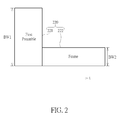
- FIG. 2 is a schematic diagram of a concatenating frame 220 transmitted by the wireless device 20 according to an embodiment of the present invention.
- a time axis t is added in FIG. 2 .
- the concatenating frame 220 concatenates a first preamble 221 and a frame 222.
- the first preamble 221 is transmitted first over a first bandwidth BW1, and then the frame 222 is transmitted consecutively over a second bandwidth BW2 after the first preamble 221 is transmitted, where the first bandwidth BW1 is wider than the second bandwidth BW2.
- a format of the first preamble 221 is under the first standard
- a frame format of the frame 222 is under the second standard.
- the wireless system 10 is able to read/recognize the first preamble 221, such that the wireless device 20 is able to obtain an opportunity to transmit the frame 222, to interoperate with the wireless system 10.
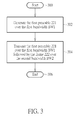
- FIG. 3 is a schematic diagram of a process 30 according to an embodiment of the present invention.
- the process 30 may be compiled as the program code 206 stored in the storage unit 204 and executed by the processing unit 202.
- the process 30 comprises following steps:
- the wireless device 20 is able to interoperate with the wireless system 10.
- the wireless device 20 generates the first preamble 221 in Step 302 according to the first standard.
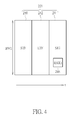
- FIG. 4 is a schematic diagram of the first preamble 221 according to an embodiment of the present invention.
- the first preamble 221 may be under the first standard.
- the first preamble 221 may be a physical layer convergence procedure (PLCP) preamble under the first standard.
- the first preamble 221 comprises a short training field (STF) 240, a long training field (LTF) 242 and a signal (SIG) field 244.
- STF short training field
- LTF long training field
- SIG signal
- the first preamble 221 is configured to be readable/recognized by the wireless system 10, such that the wireless system 10 would reserve an interval for the wireless device 20 to perform transmission.
- a rate field 246 is included to inform the wireless system 10 about a transmission rate (e.g., a modulation and coding scheme) of the wireless device 20 to transmit data.
- the wireless device 20 generates the first preamble 221 with the rate field 246 which indicates that the transmission rate of the wireless device 20 is the lowest rate, i.e., the wireless device 20 uses a binary phase shift-keying (BPSK) modulation and a code rate of 1/2 to transmit data during the time after the first preamble 221.
- BPSK binary phase shift-keying
- Step 304 the wireless device 20 transmits the first preamble 221 over the first bandwidth BW1 followed by the frame 222 over the second bandwidth BW2, i.e., the wireless device 20 transmits the first preamble 221 over the first bandwidth BW1 first and then transmits the frame 222 over the second bandwidth BW2 consecutively.
- FIG. 5 is a schematic diagram of the frame 222 according to an embodiment of the present invention.
- the frame 222 may be under the second standard.
- the frame 222 comprises a second preamble 260 and a data frame 262. Both the second preamble 260 and the data frame 262 are transmitted over/within the second bandwidth BM2BW2.
- the second preamble 260 may also be a physical layer convergence procedure (PLCP) preamble.
- the frame 222 is intended for a target receiver corresponding to the wireless device 20, which also complies with the second standard.
- the target receiver is able to read/recognize the second preamble 260, such that the target receiver is able to decode the data frame 262 transmitted from the wireless device 20.
- the wireless device 20 may reserve a guard time between the first preamble 221 and the frame 222.
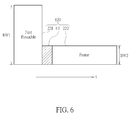
- FIG. 6 is a schematic diagram of a concatenating frame 620 transmitted by the wireless device 20 according to an embodiment of the present invention.
- the concatenating frame 620 is similar to the concatenating frame 220, and thus, the same components are denoted by the same symbols.
- the wireless device 20 inserts a guard time GI between the first preamble 221 and the frame 222.
- the guard time GI is a buffer time reserved for the wireless device 20 for transition from the first bandwidth to the second bandwidth. Thereby, a requirement of the wireless device 20 in hardware complexity may be less stringent.
- the wireless device 20 transmits the first preamble 221, which is readable/recognized by the wireless system 10, such that the wireless system 10 would reserve an interval for the wireless device 20 to transmit the regular frame 222 to the target receiver corresponding to the wireless device 20.
- the wireless device 20 is able to interoperate with the wireless system 10.
- the first bandwidth and the second bandwidth are not limited to be any specific values. As long as the first bandwidth and the second bandwidth are different, the requirement of the present invention is satisfied.
- the first standard and the second standard are not limited to any specific standards. As long as the first bandwidth and the second bandwidth are different, and the first preamble is readable/recognized by the wireless system which the wireless device likes to interoperate with, the requirement of the present invention is satisfied.
- the processing unit 202 may be a microprocessor or an application-specific integrated circuit (ASIC).
- the storage unit 204 may be read-only memory (ROM), random-access memory (RAM), non-volatile memory (e.g., an electrically erasable programmable read only memory (EEPROM) or a flash memory), CD-ROMs, magnetic tapes, floppy disks, optical data storage devices.
- the wireless device transmits the first preamble readable/recognized by the wireless system according to the embodiment of the present invention, such that the wireless system reserves an interval for the wireless device to perform transmission. Therefore, the wireless device is able to interoperate with the wireless system.
Landscapes
- Engineering & Computer Science (AREA)
- Signal Processing (AREA)
- Computer Networks & Wireless Communication (AREA)
- Computer Security & Cryptography (AREA)
- Mobile Radio Communication Systems (AREA)
- Quality & Reliability (AREA)
- Small-Scale Networks (AREA)
Abstract
Description
- The present invention relates to a method of operating in a wireless system and a wireless device using the same, and more particularly, to a method and a wireless device capable of inserting an additional preamble followed by a regular data frame.
- As a demand for wireless service increases, a bandwidth of the wireless local area network (WLAN) system is required to be wider. For example, bandwidths of the WLAN systems complied with standards of IEEE 802.11a/g are 20 MHz, bandwidths of the WLAN systems complied with standards of IEEE 802.11n are 20 MHz or 40 MHz, and bandwidths of the WLAN systems complied with standards of IEEE 802.11ac are 20, 40, 80 MHz or even 160 MHz.
- From another perspective, internet of thing (IoT), which connects devices through wireless connections, is getting popular recently. The devices under IoT, expected to provide low data rate transmission and consume low power, do not require such a wide operating bandwidth. Typically, a 5 MHz (or 10 MHz) bandwidth is sufficient for the devices under IoT. In some applications, the devices under IoT may be narrowband devices, which are originally configured to operate in a narrowband system (e.g., under a standard of IEEE 802.11j), and attempt to operate in a wideband WLAN system (e.g., under a standard of one of IEEE 802.11 a/b/g/n/ac). However, the wideband WLAN systems (IEEE 802.11a/b/g/n/ac) are usually not compatible with the narrow WLAN system (IEEE 802.11j). In detail, frame structures specified by IEEE 802.11j are different from those specified by one of IEEE 802.11a/b/g/n/ac, and frames transmitted by the narrowband devices (complying with IEEE 802.11j standard) are not readable/recognized by the wideband devices (complying with IEEE 802.11a/b/g/n/ac standards), such that the narrowband devices is hard to operate in the wideband wireless systems.
- Therefore, how to provide a method for a narrowband wireless device (i.e., a wireless device with a narrow operating bandwidth) to operate in a wideband wireless system is a significant objective in the field.
- It is therefore a primary objective of the present invention to provide a method of operating in a wideband wireless system for a narrowband wireless device and a wireless device using the same, to improve over disadvantages of the prior art.
- This is achieved by a method of updating a program code and an electronic device according to the
independent claims 1 and 10 respectively here below. The dependent claims pertain to corresponding further developments and improvements. - As will be seen more clearly from the detailed description following below, a claimed method (30) of interoperating with a wireless system (10) for a wireless device, comprises steps of generating a first preamble (221) over a first bandwidth (BW1); and transmitting the first preamble over the first bandwidth followed by a frame (222) over a second bandwidth (BW2); wherein the first bandwidth is corresponding to the wireless system, and the first bandwidth is different from the second bandwidth.
- In another aspect of the invention, a claimed wireless device (20), configured to interoperate with a wireless system (10), comprises a processing unit (202); and a storage unit (204), coupled to the processing unit, configured to store a program code (206), the program code instructing the processing unit to perform following steps generating a first preamble (221) over a first bandwidth (BW1); and transmitting the first preamble over the first bandwidth followed by a frame (222) over a second bandwidth (BW2); wherein the first bandwidth is corresponding to the wireless system, and the first bandwidth is different from the second bandwidth.
-
-
FIG. 1 is a schematic diagram of a wireless device according to an embodiment of the present invention. -
FIG. 2 is a schematic diagram of a concatenating frame according to an embodiment of the present invention. -
FIG. 3 is a schematic diagram of a process according to an embodiment of the present invention. -
FIG. 4 is a schematic diagram of a first preamble according to an embodiment of the present invention. -
FIG. 5 is a schematic diagram of a frame according to an embodiment of the present invention. -
FIG. 6 is a schematic diagram of a concatenating frame according to an embodiment of the present invention. - Please refer to
FIG. 1 , which is a schematic diagram of awireless device 20 according to an embodiment of the present invention. Thewireless device 20 attempts to interoperate with a firstwireless system 10 which operates in a first bandwidth, while thewireless device 20 is customized for operating in a second bandwidth, where the second bandwidth is different from the first bandwidth. Thewireless device 20 comprises aprocessing unit 202 and astorage unit 204. Thestorage unit 204 is coupled to theprocessing unit 202 and configured to store aprogram code 206, where theprogram code 206 instructs theprocessing unit 202 to execute a process for thewireless device 20 to interoperate with thewireless system 10, such that thewireless device 20 may obtain a transmission opportunity during operations of thewireless system 10. Specifically, thewireless system 10 is under a first standard and thewireless device 20 complies with a second standard, and the first standard is different from the second standard. In an embodiment, the first standard is one of IEEE 802.11 a/b/g/n/ac, and the second standard is IEEE 802.11j. Hence, the first bandwidth may be 20 MHz, 40 MHz, 80 MHz, or 160 MHz, and the second bandwidth may be 5 MHz or 10 MHz. - To interoperate with the
wireless system 10, thewireless device 20 first transmits a first preamble before thewireless device 20 transmits a regular frame under the second standard. Specifically, please refer toFIG. 2 , which is a schematic diagram of a concatenatingframe 220 transmitted by thewireless device 20 according to an embodiment of the present invention. For illustrative purpose, a time axis t is added inFIG. 2 . The concatenatingframe 220 concatenates afirst preamble 221 and aframe 222. Thefirst preamble 221 is transmitted first over a first bandwidth BW1, and then theframe 222 is transmitted consecutively over a second bandwidth BW2 after thefirst preamble 221 is transmitted, where the first bandwidth BW1 is wider than the second bandwidth BW2. Specifically, a format of thefirst preamble 221 is under the first standard, and a frame format of theframe 222 is under the second standard. Hence, thewireless system 10 is able to read/recognize thefirst preamble 221, such that thewireless device 20 is able to obtain an opportunity to transmit theframe 222, to interoperate with thewireless system 10. - Please refer to
FIG. 3 , which is a schematic diagram of a process 30 according to an embodiment of the present invention. The process 30 may be compiled as theprogram code 206 stored in thestorage unit 204 and executed by theprocessing unit 202. The process 30 comprises following steps: - Step 300: Start.
- Step 302: Generate the
first preamble 221 over the first bandwidth BW1. - Step 304: Transmit the
first preamble 221 over the first bandwidth BW1 followed by theframe 222 over the second bandwidth BW2. - Step 306: End.
- According to the process 30, the
wireless device 20 is able to interoperate with thewireless system 10. In detail, thewireless device 20 generates thefirst preamble 221 inStep 302 according to the first standard. Please refer toFIG. 4 , which is a schematic diagram of thefirst preamble 221 according to an embodiment of the present invention. Thefirst preamble 221 may be under the first standard. Specifically, thefirst preamble 221 may be a physical layer convergence procedure (PLCP) preamble under the first standard. Thefirst preamble 221 comprises a short training field (STF) 240, a long training field (LTF) 242 and a signal (SIG)field 244. Thefirst preamble 221 is configured to be readable/recognized by thewireless system 10, such that thewireless system 10 would reserve an interval for thewireless device 20 to perform transmission. Note that, within theSIG field 244, arate field 246 is included to inform thewireless system 10 about a transmission rate (e.g., a modulation and coding scheme) of thewireless device 20 to transmit data. Preferably, thewireless device 20 generates thefirst preamble 221 with therate field 246 which indicates that the transmission rate of thewireless device 20 is the lowest rate, i.e., thewireless device 20 uses a binary phase shift-keying (BPSK) modulation and a code rate of 1/2 to transmit data during the time after thefirst preamble 221. Thereby, thewireless system 10 would reserve a long interval for thewireless device 20 to transmit theframe 222. - In
Step 304, thewireless device 20 transmits thefirst preamble 221 over the first bandwidth BW1 followed by theframe 222 over the second bandwidth BW2, i.e., thewireless device 20 transmits thefirst preamble 221 over the first bandwidth BW1 first and then transmits theframe 222 over the second bandwidth BW2 consecutively. Please refer toFIG. 5 , which is a schematic diagram of theframe 222 according to an embodiment of the present invention. Theframe 222 may be under the second standard. Theframe 222 comprises asecond preamble 260 and adata frame 262. Both the second preamble 260 and thedata frame 262 are transmitted over/within the second bandwidth BM2BW2. The second preamble 260 may also be a physical layer convergence procedure (PLCP) preamble. Theframe 222 is intended for a target receiver corresponding to thewireless device 20, which also complies with the second standard. The target receiver is able to read/recognize thesecond preamble 260, such that the target receiver is able to decode thedata frame 262 transmitted from thewireless device 20. - The
wireless device 20 may reserve a guard time between thefirst preamble 221 and theframe 222. Please refer toFIG. 6 , which is a schematic diagram of a concatenatingframe 620 transmitted by thewireless device 20 according to an embodiment of the present invention. The concatenatingframe 620 is similar to the concatenatingframe 220, and thus, the same components are denoted by the same symbols. Different from the concatenatingframe 220, thewireless device 20 inserts a guard time GI between thefirst preamble 221 and theframe 222. The guard time GI is a buffer time reserved for thewireless device 20 for transition from the first bandwidth to the second bandwidth. Thereby, a requirement of thewireless device 20 in hardware complexity may be less stringent. - In short, the
wireless device 20 transmits thefirst preamble 221, which is readable/recognized by thewireless system 10, such that thewireless system 10 would reserve an interval for thewireless device 20 to transmit theregular frame 222 to the target receiver corresponding to thewireless device 20. Hence, thewireless device 20 is able to interoperate with thewireless system 10. - Notably, the embodiments stated in the above are utilized for illustrating the concept of the present invention. Those skilled in the art may make modifications and alternations accordingly. For example, the first bandwidth and the second bandwidth are not limited to be any specific values. As long as the first bandwidth and the second bandwidth are different, the requirement of the present invention is satisfied. In addition, the first standard and the second standard are not limited to any specific standards. As long as the first bandwidth and the second bandwidth are different, and the first preamble is readable/recognized by the wireless system which the wireless device likes to interoperate with, the requirement of the present invention is satisfied. In addition, the
processing unit 202 may be a microprocessor or an application-specific integrated circuit (ASIC). Thestorage unit 204 may be read-only memory (ROM), random-access memory (RAM), non-volatile memory (e.g., an electrically erasable programmable read only memory (EEPROM) or a flash memory), CD-ROMs, magnetic tapes, floppy disks, optical data storage devices. - In summary, the wireless device transmits the first preamble readable/recognized by the wireless system according to the embodiment of the present invention, such that the wireless system reserves an interval for the wireless device to perform transmission. Therefore, the wireless device is able to interoperate with the wireless system.
Claims (16)
- A method (30) of interoperating with a wireless system (10) for a wireless device (20), the method characterized by comprising:generating a first preamble (221) over a first bandwidth (BW1); andtransmitting the first preamble (221) over the first bandwidth (BW1) followed by a frame (222) over a second bandwidth (BW2);wherein the first bandwidth (BW1) is corresponding to the wireless system (10), and the first bandwidth (BW1) is different from the second bandwidth(BW2).
- The method (30) of claim 1, characterized by further comprising:reserving a guard time (GI) between the first preamble (221) and the frame (222).
- The method (30) of claim 1 or 2, characterized in that the first bandwidth (BW1) is wider than the second bandwidth (BW2).
- The method (30) of any of claims 1-3, characterized in that the first preamble (221) is under a first standard, and the frame is under a second standard.
- The method (30) of claim 4, characterized in that the first standard is different from the second standard.
- The method (30) of claim 4, characterized in that the first standard is one of IEEE 802.11a/b/g/n/ac.
- The method (30) of claim 4, characterized in that the first preamble is a physical layer convergence procedure (PLCP) preamble under the first standard.
- The method (30) of claim 4, characterized in that the second standard is IEEE 802.11j standard.
- A wireless device (20), configured to interoperate with a wireless system (10), the wireless device comprising:a processing unit (202); anda storage unit (204), coupled to the processing unit, configured to store a program code (206), the program code instructing the processing unit to perform following steps:generating a first preamble (221) over a first bandwidth (BW1); andtransmitting the first preamble (221) over the first bandwidth (BW1) followed by a frame (222) over a second bandwidth (BW2);wherein the first bandwidth is corresponding to the wireless system (10), and the first bandwidth (BW1) is different from the second bandwidth (BW2).
- The wireless device (20) of claim 9, characterized in that the program code further instructs the processing unit to reserve a guard time (GI) between the first preamble (221) and the frame (222).
- The wireless device (20) of claim 9 or 10, characterized in that the first bandwidth (BW1) is wider than the second bandwidth (BW2).
- The wireless device (20) of any of claims 9-11, characterized in that the first preamble (221) is under a first standard, and the frame (222) is under a second standard.
- The wireless device (20) of claim 12, characterized in that the first standard is different from the second standard.
- The wireless device (20) of claim 12, characterized in that the first standard is one of IEEE 802.11a/b/g/n/ac.
- The wireless device (20) of claim 12, characterized in that the first preamble is a physical layer convergence procedure (PLCP) preamble under the first standard.
- The wireless device (20) of claim 12, characterized in that the second standard is IEEE 802.11j standard.
Applications Claiming Priority (2)
| Application Number | Priority Date | Filing Date | Title |
|---|---|---|---|
| US201562222219P | 2015-09-23 | 2015-09-23 | |
| US15/271,236 US20170086099A1 (en) | 2015-09-23 | 2016-09-21 | Method of Operating in Wireless System and Wireless Device Using the Same |
Publications (1)
| Publication Number | Publication Date |
|---|---|
| EP3148240A1 true EP3148240A1 (en) | 2017-03-29 |
Family
ID=57103805
Family Applications (1)
| Application Number | Title | Priority Date | Filing Date |
|---|---|---|---|
| EP16190144.2A Withdrawn EP3148240A1 (en) | 2015-09-23 | 2016-09-22 | Method of interworking of different wlan standards |
Country Status (3)
| Country | Link |
|---|---|
| US (1) | US20170086099A1 (en) |
| EP (1) | EP3148240A1 (en) |
| CN (1) | CN107071920A (en) |
Citations (3)
| Publication number | Priority date | Publication date | Assignee | Title |
|---|---|---|---|---|
| WO2011099687A1 (en) * | 2010-02-09 | 2011-08-18 | Lg Electronics Inc. | Method and apparatus of transmitting ppdu in wireless local area network |
| US20140211704A1 (en) * | 2013-01-28 | 2014-07-31 | Qualcomm Incorporated | Extending range and delay spread in wifi bands |
| US20150009894A1 (en) * | 2013-07-05 | 2015-01-08 | Qualcomm Incorporated | High efficiency wlan preamble structure |
Family Cites Families (9)
| Publication number | Priority date | Publication date | Assignee | Title |
|---|---|---|---|---|
| US7272109B2 (en) * | 2003-08-27 | 2007-09-18 | Conexant Systems, Inc. | Modified OFDM subcarrier profile |
| JP4253321B2 (en) * | 2005-11-09 | 2009-04-08 | 株式会社東芝 | Wireless communication apparatus and wireless communication method |
| JP5106275B2 (en) * | 2008-06-30 | 2012-12-26 | 株式会社東芝 | Wireless communication apparatus and wireless communication method |
| US8462863B1 (en) * | 2009-07-23 | 2013-06-11 | Marvell International Ltd. | Midamble for WLAN PHY frames |
| US9077594B2 (en) * | 2009-07-23 | 2015-07-07 | Marvell International Ltd. | Coexistence of a normal-rate physical layer and a low-rate physical layer in a wireless network |
| KR101341192B1 (en) * | 2010-02-09 | 2013-12-12 | 엘지전자 주식회사 | Method and apparatus of channel access in wireless local area network |
| GB201016407D0 (en) * | 2010-09-29 | 2010-11-10 | Samsung Electronics Co Ltd | Frame structure and signalling for digital broadcasting system |
| US20140198705A1 (en) * | 2013-01-11 | 2014-07-17 | Broadcom Corporation | Orthogonal frequency division multiple access (OFDMA) and duplication signaling within wireless communications |
| US9552723B2 (en) * | 2014-06-11 | 2017-01-24 | Gentex Corporation | Trainable transceiver systems and methods for channel frequency offset adjustment |
-
2016
- 2016-09-21 US US15/271,236 patent/US20170086099A1/en not_active Abandoned
- 2016-09-22 EP EP16190144.2A patent/EP3148240A1/en not_active Withdrawn
- 2016-09-22 CN CN201610839996.4A patent/CN107071920A/en not_active Withdrawn
Patent Citations (3)
| Publication number | Priority date | Publication date | Assignee | Title |
|---|---|---|---|---|
| WO2011099687A1 (en) * | 2010-02-09 | 2011-08-18 | Lg Electronics Inc. | Method and apparatus of transmitting ppdu in wireless local area network |
| US20140211704A1 (en) * | 2013-01-28 | 2014-07-31 | Qualcomm Incorporated | Extending range and delay spread in wifi bands |
| US20150009894A1 (en) * | 2013-07-05 | 2015-01-08 | Qualcomm Incorporated | High efficiency wlan preamble structure |
Also Published As
| Publication number | Publication date |
|---|---|
| US20170086099A1 (en) | 2017-03-23 |
| CN107071920A (en) | 2017-08-18 |
Similar Documents
| Publication | Publication Date | Title |
|---|---|---|
| US11343030B2 (en) | Method for repeated transmission, and terminal device | |
| CN111436128A (en) | Method and communication device for transmitting uplink information | |
| US20230396392A1 (en) | Data transmission method and apparatus | |
| EP2265070A1 (en) | Method and apparatus for transmitting and receiving uplink bandwidth request information in wireless communication system | |
| TWI753201B (en) | Wireless communication device and method, and program | |
| WO2016107430A1 (en) | Method and device for transferring uplink data | |
| US20210392667A1 (en) | Methods and devices for multi-connection transmission | |
| US20220376708A1 (en) | Data processing method and device | |
| CN109067513A (en) | A kind of half-duplex operation method, apparatus and system | |
| TWI734829B (en) | Method for transmitting data, receiving equipment, and sending equipment | |
| US11101920B2 (en) | Method and apparatus for supporting a partial sub-frame data transmission in LTE systems | |
| EP2564526B1 (en) | Methods of encoding and decoding control information in a medium access control protocol data unit | |
| EP3952530B1 (en) | Information transmission method and terminal | |
| US11877266B2 (en) | Time slot indication method, terminal device, network device and computer storage medium | |
| EP3200374A1 (en) | Device and network for handling data transmission | |
| EP3041285B1 (en) | Data frame sending method and apparatus | |
| US11190213B2 (en) | Coding method, wireless device, and chip | |
| US20170086099A1 (en) | Method of Operating in Wireless System and Wireless Device Using the Same | |
| EP3737178B1 (en) | Data sending method, data receiving method, terminal device, and network device | |
| US10284272B2 (en) | Channel estimation apparatus and method | |
| EP4701287A1 (en) | Adaptive gain control method and apparatus, storage medium, and electronic apparatus | |
| US11882483B2 (en) | Wireless communication device and method for multi band operations (MBO) | |
| EP3255824B1 (en) | Data transmission method, device and system | |
| TWI523465B (en) | System and method for transmitting files | |
| US20210160865A1 (en) | Communication method and communication apparatus |
Legal Events
| Date | Code | Title | Description |
|---|---|---|---|
| PUAI | Public reference made under article 153(3) epc to a published international application that has entered the european phase |
Free format text: ORIGINAL CODE: 0009012 |
|
| AK | Designated contracting states |
Kind code of ref document: A1 Designated state(s): AL AT BE BG CH CY CZ DE DK EE ES FI FR GB GR HR HU IE IS IT LI LT LU LV MC MK MT NL NO PL PT RO RS SE SI SK SM TR |
|
| AX | Request for extension of the european patent |
Extension state: BA ME |
|
| 17P | Request for examination filed |
Effective date: 20170928 |
|
| RBV | Designated contracting states (corrected) |
Designated state(s): AL AT BE BG CH CY CZ DE DK EE ES FI FR GB GR HR HU IE IS IT LI LT LU LV MC MK MT NL NO PL PT RO RS SE SI SK SM TR |
|
| 17Q | First examination report despatched |
Effective date: 20180306 |
|
| STAA | Information on the status of an ep patent application or granted ep patent |
Free format text: STATUS: THE APPLICATION IS DEEMED TO BE WITHDRAWN |
|
| 18D | Application deemed to be withdrawn |
Effective date: 20190330 |