EP3145243A1 - Radio base station, mobile communication system, handover control method, and program - Google Patents
Radio base station, mobile communication system, handover control method, and program Download PDFInfo
- Publication number
- EP3145243A1 EP3145243A1 EP16196970.4A EP16196970A EP3145243A1 EP 3145243 A1 EP3145243 A1 EP 3145243A1 EP 16196970 A EP16196970 A EP 16196970A EP 3145243 A1 EP3145243 A1 EP 3145243A1
- Authority
- EP
- European Patent Office
- Prior art keywords
- base station
- handover
- reconnection
- radio base
- cell
- Prior art date
- Legal status (The legal status is an assumption and is not a legal conclusion. Google has not performed a legal analysis and makes no representation as to the accuracy of the status listed.)
- Granted
Links
Images




Classifications
-
- H—ELECTRICITY
- H04—ELECTRIC COMMUNICATION TECHNIQUE
- H04W—WIRELESS COMMUNICATION NETWORKS
- H04W12/00—Security arrangements; Authentication; Protecting privacy or anonymity
- H04W12/06—Authentication
- H04W12/062—Pre-authentication
-
- H—ELECTRICITY
- H04—ELECTRIC COMMUNICATION TECHNIQUE
- H04W—WIRELESS COMMUNICATION NETWORKS
- H04W36/00—Hand-off or reselection arrangements
- H04W36/0005—Control or signalling for completing the hand-off
- H04W36/0055—Transmission or use of information for re-establishing the radio link
- H04W36/0072—Transmission or use of information for re-establishing the radio link of resource information of target access point
-
- H—ELECTRICITY
- H04—ELECTRIC COMMUNICATION TECHNIQUE
- H04W—WIRELESS COMMUNICATION NETWORKS
- H04W36/00—Hand-off or reselection arrangements
- H04W36/0005—Control or signalling for completing the hand-off
- H04W36/0055—Transmission or use of information for re-establishing the radio link
- H04W36/0079—Transmission or use of information for re-establishing the radio link in case of hand-off failure or rejection
-
- H—ELECTRICITY
- H04—ELECTRIC COMMUNICATION TECHNIQUE
- H04W—WIRELESS COMMUNICATION NETWORKS
- H04W36/00—Hand-off or reselection arrangements
- H04W36/24—Reselection being triggered by specific parameters
- H04W36/249—Reselection being triggered by specific parameters according to timing information
-
- H—ELECTRICITY
- H04—ELECTRIC COMMUNICATION TECHNIQUE
- H04W—WIRELESS COMMUNICATION NETWORKS
- H04W36/00—Hand-off or reselection arrangements
- H04W36/0005—Control or signalling for completing the hand-off
- H04W36/0011—Control or signalling for completing the hand-off for data sessions of end-to-end connection
- H04W36/0033—Control or signalling for completing the hand-off for data sessions of end-to-end connection with transfer of context information
- H04W36/0038—Control or signalling for completing the hand-off for data sessions of end-to-end connection with transfer of context information of security context information
-
- H—ELECTRICITY
- H04—ELECTRIC COMMUNICATION TECHNIQUE
- H04W—WIRELESS COMMUNICATION NETWORKS
- H04W36/00—Hand-off or reselection arrangements
- H04W36/0005—Control or signalling for completing the hand-off
- H04W36/0055—Transmission or use of information for re-establishing the radio link
- H04W36/0061—Transmission or use of information for re-establishing the radio link of neighbour cell information
-
- H—ELECTRICITY
- H04—ELECTRIC COMMUNICATION TECHNIQUE
- H04W—WIRELESS COMMUNICATION NETWORKS
- H04W36/00—Hand-off or reselection arrangements
- H04W36/08—Reselecting an access point
-
- H—ELECTRICITY
- H04—ELECTRIC COMMUNICATION TECHNIQUE
- H04W—WIRELESS COMMUNICATION NETWORKS
- H04W88/00—Devices specially adapted for wireless communication networks, e.g. terminals, base stations or access point devices
- H04W88/08—Access point devices
Definitions
- the present invention relates to the technology of handover of a mobile communication system.
- the UE in order to realize mobility of a user while maintaining the communication quality of a mobile station (UE), the UE can be handed over from the original radio base station to a radio base station having a stronger received signal level.
- LTE Long Term Evolution
- handover is arranged by the following procedures.
- a handover request is transmitted from the handover source radio base station (Source eNB) to the handover destination radio base station (Target eNB), and the Target eNB that has received the handover request judges whether the UE is able to obtain access based on access control rules such as service authorization and load.
- the Target eNB secures resources for the UE and returns to the Source eNB a signal indicating that the handover request will be accepted.
- Handover is realized by means of the above-described arrangements. If handover fails for some reason, service can be continued by re-connecting the RRC connection and again attempting handover.
- context information of the UE that includes a cell identifier that identifies the cell in which communication was realized up to this point, a UE identifier that uniquely identifies the UE in that cell, and an authentication code must be saved beforehand in the radio base station in which reconnection is performed.
- reconnection control can be implemented by transmitting the UE context information to the Target eNB.
- the radio base station of the origin of movement selects a plurality of cells having good communication quality on the basis of communication quality reports of neighboring cells from the UE and implements a handover preparation procedure with respect to the plurality of radio base stations that manage these cells.
- the radio base station of the origin of movement then transmits information of the plurality of radio base stations that have completed the handover preparation to the UE.
- the UE selects the movement destination cell that performs handover based on information of the radio base stations that have completed the handover preparation from the radio base station of the origin of movement and the communication quality of the neighboring cells at the time of receiving the information.
- Patent Document 1 WO2009/142054
- the UE when there is a radio base station having higher reception quality than the radio base stations that have been set as candidates of handover destination, the UE transmits a reconnection request to that radio base station.
- the radio base station receives the reconnection request in a state in which the radio resources, that are necessary for radio communication with the UE, have not been secured, the radio base station transmits a response to the UE indicating that reconnection cannot be carried out. As a result, the UE is unable to reconnect and is unable to receive the communication service. Reconnection thus fails in some cases.
- a radio base station that is provided with a cell for which an area, in which radio communication is possible, is prescribed and that carries out radio communication with a mobile station within that cell, the radio base station including:
- a mobile communication system that includes:
- a handover control method in which a radio base station that is provided with a cell for which an area in which radio communication is possible is prescribed and that performs radio communication with a mobile station in the cell:
- a program for causing a computer of a radio base station that is provided with a cell for which an area, in which radio communication is possible, is prescribed and that performs radio communication with a mobile station within the cell to execute processes of:
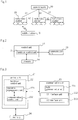
- FIG. 1 is a block diagram showing the configuration of the mobile communication system that is an exemplary embodiment of the present invention.
- the mobile communication system shown in FIG. 1 is a mobile communication system that adopts the LTE mode described in 3GPP TS 36.300 and includes: mobile station 10, a plurality of radio base stations 20 that are each equipped with a cell, and that perform radio communication with mobile station 10 in the cell, and core network 30.
- Core network 30 is provided with S-GW (Serving Gateway) that performs routing of user packets and buffering processes and an MME (Mobility Management Entity) that performs authentication control of a higher-order level.
- S-GW Serving Gateway
- MME Mobility Management Entity
- Each radio base station 20 and S-GW/MME are connected by S1 links.
- Radio base stations 20 are interconnected by X2 links.
- the transmission and reception of information between radio base stations 20 is carried out by using S1 links, X2 links, or both types of links.
- FIG. 1 there is one mobile station 10 and three radio base stations 20, but the present invention is not limited to these numbers.
- An actual mobile communication system is made up of a plurality of mobile stations 10 and a plurality of radio base stations 20.
- FIG. 2 is a block diagram showing the configuration of the principal parts of mobile station 10.
- the principal parts of mobile station 10 include control unit 11, communication unit 13, and memory 14.
- communication unit 13 carries out radio communication with radio base station 20 that manages the cell. In the vicinity of the border of the cell, communication unit 13 both receives radio signals from radio base station 20, that manages the cell in which communication is currently carried out, and receives radio signals from other radio base stations 20 that manage adjacent cells.
- Control unit 11 is made up of a CPU (Central Processing Unit) and controls the operations of mobile station 10.
- Control unit 11 includes handover control unit 12 that performs processing that is necessary for handover.
- handover control unit 12 When carrying out handover, handover control unit 12 acquires reporting conditions from radio base station 20 that is the handover source that manages the cell currently engaged in communication and saves this information.
- reporting conditions include conditions for judging whether there are adjacent cells in which the reception quality is higher than the cell of the handover source, the difference being equal to or greater than a threshold value, and if there is more than one adjacent cell that satisfy the judgment conditions, then the information of these adjacent cells is reported.
- handover control unit 12 when handover control unit 12 measures the reception quality of radio signals that are received in communication unit 13 at each fixed time interval and when there is an adjacent cell that satisfies the reporting conditions, handover control unit 12 then transmits to radio base station 20, that is the handover source, a list that includes identification information of the adjacent cell and the measurement result of the reception quality.
- Handover control unit 12 further receives handover instructions from radio base station 20 that is the handover source by way of communication unit 13, and when handover to a radio base station that is the handover destination fails due to the deterioration of radio quality or due to failure of random access to the radio base station that is the handover destination, measures the reception quality and selects the cell which has the highest reception quality.
- Handover control unit 12 further transmits a reconnection request to radio base station 20 that is managing the cell that was selected during cell reselection and performs the reconnection procedure and reconfiguration procedure with this radio base station 20.
- a reconnection request contains a cell identifier of the cell of the radio base station that is the connection source of mobile station 10 (the cell that is up for reconnection), a mobile station identifier that uniquely identifies mobile station 10 that is in that cell, and the authentication code of mobile station 10.
- the cell that has entered a state requiring reconnection is the handover source cell or the handover destination cell.
- the handover source cell or handover destination cell is designated depending on the degree of progress of handover when reconnection became necessary.
- the handover source cell is designated as the cell that has entered a state requiring reconnection.
- the connection destination of mobile station 10 is the handover source radio base station.
- the cell that is the handover destination is designated as the cell that has entered a state requiring reconnection.
- Memory 14 is a storage means which is representative of semiconductor memory and in which programs or data that are needed for operating mobile station 10 are stored. For example, programs or data that are needed to execute processing necessary for carrying out handover are stored in memory 14, and the functions of, for instance, handover control unit 12 can be provided by a CPU that executes programs that are stored in memory 14.
- FIG. 3 is a block diagram showing the configuration of the principal parts of radio base station 20.
- radio base station 20 includes control unit 21, communication unit 23, and memory 24.
- Communication unit 23 includes radio communication unit 231, S1 interface unit 232, and X2 interface unit 233.
- Radio communication unit 231 performs radio communication with mobile station 10 that is in the cell of its own station.
- S 1 interface unit 232 communicates with S-GW/MME by way of S1 links.
- X2 interface unit 233 communicates with other radio base stations by way of X2 links.
- Control unit 21 is made up of a CPU and includes handover control unit 22 that executes processing that is necessary for handover.
- Handover control unit 22 includes resource management unit 221 that secures the resources necessary for radio communication with mobile station 10, and communication control unit 222 that, in accordance with reconnection requests from mobile station 10 that has executed handover for switching the connection destination, uses the resources secured by resource management unit 221 to carry out reconnection control for establishing radio communication with mobile station 10.
- Communication control unit 222 upon receiving a reconnection request from mobile station 10 that takes another radio base station as the connection source in a state in which resources of mobile station 10 have not been secured in resource management unit 221, interrupts reconnection control, executes handover with the other radio base station for switching the connection destination of mobile station 10 to its own base station to cause resource management unit 221 to secure resources of mobile station 10, and then resumes reconnection control.
- Memory 24 is storage means, concerning which a semiconductor memory is representative, and stores programs and data necessary for operating radio base station 20. For example, programs or data that are needed to execute processing necessary for carrying out handover are stored in memory 24, and the functions of, for instance, handover control unit 22 can be provided by a CPU that executes programs that are stored in memory 24.
- an adjacent base station table in which base station identifiers that identify the adjacent radio base stations and cell identifiers that identify the adjacent cells that are managed by these adjacent radio base stations are stored in association with each other for each of a plurality of adjacent radio base stations that are adjacent to its own base station, may be stored in memory 24.
- communication control unit 222 may receive from mobile station 10 a reconnection request that includes a cell identifier that identifies the cell of the radio base station that is the connection source (the cell that is up for reconnection), a mobile station identifier that uniquely identifies mobile station 10 within that cell, and the authentication code of mobile station 10, acquire from the adjacent base station table the base station identifier that corresponds to the cell identifier of the reconnection request, and transmit to the adjacent radio base station that is identified by the base station identifier a reconnection notification that includes the cell identifier, the mobile station identifier, and the authentication code that are included in the reconnection request.
- a reconnection notification that includes a cell identifier that identifies the cell (the cell that is up for reconnection) of the radio base station that is the connection source of mobile station 10, the mobile station identifier that uniquely identifies mobile station 10 within the cell, and the authentication code of mobile station 10, communication control unit 222 may both transfer the reconnection notification to the first adjacent radio base station and release the resources that were secured in resource management unit 221.
- communication control unit 222 when having received, from a first adjacent radio base station and second adjacent radio base station, a reconnection notification that contains the cell identifier of the cell of the radio base station that is the connection source of mobile station 10 (the cell that is up for reconnection), the mobile station identifier that uniquely identifies mobile station 10 within the cell, and the authentication code of mobile station 10 when executing handover for switching the connection destination of mobile station 10 from its own station to the first adjacent radio base station, may execute handover with the adjacent radio base station from which the reconnection notification was first received for switching the connection destination of mobile station 10 from its own station to the adjacent radio base station.
- communication control unit 222 may instruct the first adjacent radio base station to release the resources of mobile station 10.
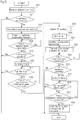
- FIG. 4 is a flow chart showing an example of the operations of handover control unit 12 of mobile station 10.
- handover control unit 12 carries out measurement of reception quality in Step S10.
- Step S11 handover control unit 12 judges whether the measurement result of reception quality meets the reporting conditions. If the reporting conditions are not satisfied, the handover process is ended.
- handover control unit 12 creates a list that contains information of adjacent cells in which reception quality is higher than the cell that is the movement source and in which this difference is equal to or greater than a threshold value and transmits this adjacent cell list to radio base station 20 that is the handover source (Source eNB).
- the adjacent cell list contains the cell identifiers of the adjacent cells and the base station identifiers of radio base stations 20 that manage the adjacent cells.
- Step S13 handover control unit 12 next judges whether a handover instruction has been received from radio base station 20 that is the handover source (Source eNB).
- Step S14 when a handover instruction is received and the handover to the radio base station that is the handover destination fails (when performing cell reselection) due to the deterioration of reception quality or due to a failure of random access to the radio base station that is the handover destination, handover control unit 12 selects the cell having the highest reception quality.
- Step S15 handover control unit 12 next transmits a reconnection request to radio base station 20 that is managing the adjacent cell that was selected in the cell reselection.
- Step S16 handover control unit 12 executes a reconnection procedure and a reconfiguration procedure with radio base station 20 that is the reconnection request destination.
- radio base station 20 The operations that accompany handover of radio base station 20 are next described.
- the operations that accompany this handover of radio base station 20 include a first operation as the handover source, a second operation as the handover destination, and a third operation as the reconnection request destination.
- FIG. 5 is a flow chart showing the procedure of the first operation as the handover source.
- Step S20 communication control unit 222 receives a communication quality report that includes an adjacent cell list from mobile station 10 by way of radio communication unit 231.
- Step S21 communication control unit 222 judges whether handover is necessary based on, for example, the adjacent cell list. In judging the necessity of handover, communication control unit 222 judges the necessity of handover based on conditions of whether access is restricted due to large CPU processing load or based on conditions of whether service is provided to mobile station 10 for each adjacent cell in the adjacent cell list.
- Step S22 communication control unit 222 excludes from the adjacent cell list cells in which access is restricted or cells in which service is not provided to mobile station 10 and determines, from among the remaining cells, the cell having the highest reception quality as the handover destination cell.
- Step S22 communication control unit 222 checks whether the handover destination cell that was determined is a cell under the jurisdiction of its own base station.
- communication control unit 222 in Step S23 transmits a handover preparation request to the radio base station (Target eNB) that is managing the handover destination cell.
- the handover preparation request may contain the context information of mobile station 10, for example, a service identifier for identifying the service being provided to the user by the radio base station that is the handover source, setting information of the radio resources for providing the service, setting information of a security function, a cell identifier of the handover source cell, a mobile station identifier for uniquely identifying mobile station 10 within the cell, and the authentication code of mobile station 10.
- the transmission of the handover preparation request is implemented by way of S 1 interface unit 232 or X2 interface unit 233.
- communication control unit 222 may check whether communication has been established between its own base station and the Target eNB by means of an X2 link, and if communication has been established, may transmit the handover preparation request by X2 interface unit 233.
- the link used for the transmission of the handover preparation request may be designated in advance.
- communication control unit 222 may preferentially use an X2 link to transmit the handover preparation request.
- Step S24 communication control unit 222 judges whether a response to the handover preparation request has been received by way of S 1 interface unit 232 or X2 interface unit 233.
- This handover preparation request response contains information indicating whether handover is possible and a handover instruction that includes a cell identifier of the handover destination cell and information of the radio resources of mobile station 10.
- Step S25 communication control unit 222 judges whether the handover preparation request response indicates that handover is possible. If handover is not possible, the handover process is ended.
- communication control unit 222 activates an HO completion notification waiting timer and transmits the handover instruction contained in the handover preparation request response to mobile station 10 by means of radio communication unit 231 in Step S26.
- handover destination cell that was determined is under the jurisdiction of its own base station in the above-described Step S22, handover is executed between the cells of its own base station based on the above-described Steps S23-S26.
- Step S27 communication control unit 222 checks whether or not the HO completion notification waiting timer has timed out. If the timer has timed out, the handover process is ended.
- Step S28 communication control unit 222 judges whether a reconnection notification was received before the HO completion notification waiting timer timed out.
- the reconnection notification includes the cell identifier of the cell (the cell that is up for reconnection) of the connection source radio base station, the mobile station identifier of the mobile station in the cell, the authentication code of the mobile station, and the cell identifier of the cell (the reconnection request destination cell) of the radio base station that received the reconnection request.
- communication control unit 222 checks the UE context in Step S29. More specifically, communication control unit 222 checks whether the cell identifier, mobile station identifier, and authentication code contained in the reconnection notification are held in its own base station. If they are not held in its own base station, the radio base station operates as the radio base station of the reconnection request destination (Non-prepared eNB) (refer to the third operation, to be described).
- communication control unit 222 halts the HO completion notification waiting timer in Step S30.
- Step S31 communication control unit 222 identifies the radio base station that manages the reconnection request destination cell based on the cell identifier of the reconnection request destination cell that is contained in the reconnection notification. In addition, communication control unit 222 issues a request to the handover destination radio base station to release the radio resources that were secured in the handover preparation procedure.
- Step S32 communication control unit 222 transmits a handover preparation request to the radio base station that was identified by means of S1 interface unit 232 or X2 interface unit 233.
- Step S33 communication control unit 222 judges whether a response to the handover preparation request has been received by way of S1 interface unit 232 or X2 interface unit 233.
- This handover preparation request response includes information indicating whether handover is possible and a handover instruction that contains the cell identifier of the handover destination cell (in this case, identical to the reconnection request destination) or information of the radio resources of mobile station 10.
- Step S34 communication control unit 222 judges whether the handover preparation request response indicates that handover is possible. If handover is not possible, the handover process is ended.
- communication control unit 222 activates the HO completion notification waiting timer in Step S3 5.
- Step S36 communication control unit 222 checks whether the HO completion notification waiting timer has timed out. If the timer has timed out, the handover process is ended.
- Step S37 communication control unit 222 judges whether a handover completion notification was received by way of S1 interface unit 232 or X2 interface unit 233 before the HO completion notification waiting timer timed out.
- communication control unit 222 halts the HO completion notification waiting timer and releases the UE context in Step S3 8.
- FIG. 6 is a flow chart showing the procedure of the second operation as the handover destination.
- Step S40 communication control unit 222 judges whether a handover preparation request has been received from the handover source radio base station by way of S1 interface unit 232 or X2 interface unit 233.
- communication control unit 222 judges whether the handover preparation request can be accepted in Step S41. If the handover preparation request can be accepted, communication control unit 222 saves the context information of mobile station 10 in memory 24, secures the radio resources of its own base station that are necessary for providing service to mobile station 10, and compiles a handover instruction that contains information of the cell identifier of the handover destination cell and the radio resources that are set in mobile station 10.
- Step S42 communication control unit 222 transmits a handover preparation request response, that contains the above-described handover instruction that was compiled, to the handover source radio base station by means of S1 interface unit 232 or X2 interface unit 233. If the handover preparation request cannot be accepted, communication control unit 222 transmits a response indicating that the handover preparation request cannot be accepted to the handover source radio base station.
- Step S43 communication control unit 222 activates waiting timer for access from mobile station 10 that corresponds to the handover request.
- the timing of the timing-out of this timer is the trigger for releasing the context information that was saved and the radio resources that were secured in Step S41.
- Steps S44 and S45 communication control unit 222 judges whether a reconnection notification is received before the timer times out.
- the reconnection notification includes a cell identifier of the cell (the cell that is up for reconnection) of the connection source radio base station, the mobile station identifier of the mobile station in the cell, the mobile station authentication code, and the cell identifier of the cell (cell to which reconnection is requested) that received the reconnection request.
- Step S46 communication control unit 222 checks the UE context information in Step S46.
- Step S47 communication control unit 222 then judges whether its own base station is the handover destination (target). More specifically, communication control unit 222 checks whether the cell identifier, mobile station identifier, and authentication code that are contained in the reconnection notification are held in its own base station, and if held, determines that its own base station is the handover destination (target).
- the radio base station operates as the radio base station that is a reconnection request destination (Non-prepared eNB) (refer to the third operation described hereinbelow).
- Step S48 halts the timer and releases context information that was saved and the radio resources that were secured in Step S41.
- Step S49 If the timer has timed out in Step S44 described hereinabove, communication control unit 222 in Step S49 releases the context information that was saved and the radio resources that were secured in Step S41.
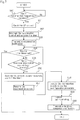
- FIG. 7 is a flow chart showing the procedure of the third operation as the reconnection request destination.
- a reconnection request here includes the cell identifier of the cell (the cell that is up for reconnection) of the connection source radio base station of mobile station 10, the mobile station identifier that uniquely identifies mobile station 10 in the cell, and the authentication code of mobile station 10.
- Step S51 If a reconnection request has been received, communication control unit 222 in Step S51 starts reconnection control in accordance with the reconnection request, and checks the UE context information. More specifically, communication control unit 222 checks whether the cell identifier of the cell (the cell that is up for reconnection) of the connection source radio base station, the mobile station identifier, and authentication code that are contained in the reconnection request have been saved in its own station. If this information has not saved, communication control unit 222 executes the processing of Step S52 and subsequent processes. If the information has been saved, the radio base station operates as a radio base station that is the handover source or handover destination.
- the radio base station operates as a radio base station that is the handover source or handover destination.
- Step S52 communication control unit 222 interrupts the reconnection control and activates the handover preparation request waiting timer.
- Step S53 communication control unit 222 acquires from the adjacent base station table the base station identifier that corresponds to the cell identifier that is contained in the reconnection request and transmits by means of S 1 interface unit 232 or X2 interface unit 233 a reconnection notification to the adjacent radio base station that is specified by the base station identifier.
- the reconnection notification contains, for example, information elements such as shown in FIG. 8 .
- the information elements include: the identifier "Message Type” that indicates a reconnection notification, the cell identifier "Failure Cell Identity” of the cell that is up for reconnection, the UE identifier "UE Identity” of the cell that is up for reconnection, the authentication code “Authentication Code” of the UE, and the cell identifier "Re-establishment Cell Identity” of the cell in which the reconnection request was received.
- Steps S54 and S55 communication control unit 222 judges whether a handover preparation request was received from the handover source radio base station by way of S 1 interface unit 232 or X2 interface unit 233 before time-out. If the timer timed out, communication control unit 222 ends the handover process.
- Step S56 judges whether the handover preparation request can be accepted. If the handover preparation request can be accepted, communication control unit 222 saves the context information of mobile station 10 in memory 24, secures the radio resources of its own station that are necessary for providing service to mobile station 10, and halts the handover preparation request waiting timer. Communication control unit 222 then transmits a response indicating that the handover preparation request has been accepted to the handover source radio base station by way of S1 interface unit 232 or X2 interface unit 233.
- Step S57 communication control unit 222 resumes reconnection control.
- Step S58 communication control unit 222 carries out the reconnection procedure and the reconfiguration procedure with the handover source radio base station.
- Step S59 communication control unit 222 transmits a path-switching instruction to core network 30 by way of S1 interface unit 232.
- Step S60 communication control unit 222 transmits a handover completion notification to the handover source radio base station by way of S 1 interface unit 232 or X2 interface unit 233.
- a series of mobile communication processes that accompany handover is described for a case in which, from among a mobile station (UE), a handover source radio base station (Source eNB), a handover destination radio base station (Target eNB), and a radio base station other than the handover source/destination (Non-prepared eNB), the radio base station other than the handover source/destination receives a reconnection request.
- UE mobile station
- Source eNB handover source radio base station
- Tiget eNB handover destination radio base station
- Non-prepared eNB the radio base station other than the handover source/destination
- FIG. 9 is a view for describing the procedure of such a series of mobile communication processes that accompany handover.
- Step S201 the UE measures reception quality of adjacent cells, and when the reporting conditions instructed from the Source eNB that manages the cell in which communication is carried out are satisfied, transmits to the Source eNB the reception quality of the plurality of adjacent cells obtained in the measurement.
- Step S202 the Source eNB judges whether handover needs to be performed. If the current state satisfies the handover trigger conditions, the Source eNB judges that the UE requires handover and executes Step S203. If the current state does not satisfy the handover trigger conditions, the Source eNB ends the mobile communication processing.
- Step S203 the Source eNB determines the cell having the highest reception quality value to be the handover destination cell, and transmits a handover preparation request to the Target eNB that is managing this cell.
- the Source eNB is able to exclude cells in which load is great or to which access is restricted and to exclude cells that are not providing service to the UE and is then able to determine from among the remaining cells the cell having the highest reception quality value as the handover destination cell.
- the Source eNB is able to both check whether the handover destination cell is a cell under the control of its own eNB and whether an X2 interface link has been established with the radio base station that manages the handover destination cell, and further, to determine whether to use the X2 interface or the S 1 interface for transmitting the handover preparation request.
- the Source eNB may add context information of the UE (for example, an identifier of service that was offered to the user in the Source eNB, setting information of the radio resources for providing the service, setting information of a security function, the identifier of the handover source cell, a UE identifier for uniquely identifying the UE within the cell, and an authentication code) to the handover preparation request.
- context information of the UE for example, an identifier of service that was offered to the user in the Source eNB, setting information of the radio resources for providing the service, setting information of a security function, the identifier of the handover source cell, a UE identifier for uniquely identifying the UE within the cell, and an authentication code
- Step S204 the Target eNB that has received the handover preparation request judges whether the handover preparation request can be accepted.
- the Target eNB saves the context information of the UE, secures resources of its own eNB that are necessary for providing service to the UE, and compiles a handover instruction that contains the identifier of the handover destination cell and information of the radio resources that are set to the UE.
- the Target eNB then activates a timer for waiting access from the UE that corresponds to the handover request that serves as the trigger for releasing the context information of the UE and the resources secured for the UE.
- Step S205 the Target eNB transmits to the Source eNB a response indicating acceptance of the handover preparation request and containing the previously compiled handover instruction. If the handover preparation request cannot be accepted, the Target eNB transmits to the Source eNB a response indicating that the handover cannot be accepted.
- Step S206 the Source eNB that has received the handover preparation request response activates a waiting timer for a handover completion notification from the Target eNB that corresponds to the handover request, this notification serving as the trigger for releasing the context information of a UE for which handover has succeeded.
- the Source eNB can transmit the communication data that are being buffered to the Target eNB. After an RRC connection has been successfully established between the UE and the Target eNB, the communication data are transferred to a higher-order S-GW or are transmitted to the UE by the Target eNB.
- Step S207 the Source eNB transmits the handover instruction that was contained in the handover preparation request response to the UE, and instructs the UE to access the Target eNB.
- Step S208 if the UE encounters a failure in accessing the Target eNB due to, for example, deterioration of the radio quality or a failure of random access to the Target eNB, an appropriate cell is selected to recover the handover as quickly as possible and continue the service being received by the UE.
- Step S209 the UE transmits to the radio base station that manages the selected cell a reconnection request that includes the identifier of the cell that is up for reconnection, the UE identifier for uniquely identifying the UE within the cell, and the authentication code.
- Step S210 the radio base station that has received the reconnection request checks whether the identifier of the cell that is up for reconnection, the UE identifier of the cell, and the authentication code that were contained in the reconnection request have been saved in the handover preparation procedure. If the information has been saved, the radio base station judges that its own station is the Target eNB, halts the access waiting timer, and continues the reconnection procedure, thereby succeeding in recovering from the handover failure.
- the radio base station in Step S211 judges that its own base station is a Non-Prepared eNB, and at the point of originally rejecting the reconnection request because the context information of the UE has not been saved, interrupts the reconnection control and identifies the radio base station that manages the cell based on the identifier of the cell that is up for reconnection and the adjacent base station table. The radio base station then activates the handover preparation request waiting timer that serves as the trigger for resuming the interrupted reconnection control.
- the adjacent base station table is made up of combinations of the identifiers of cells adjacent to the Non-Prepared eNB and information of the radio base stations that manage the cells.
- the adjacent base station table may be prepared in advance as station data of the Non-Prepared eNB, or may be produced based on the information of cells that is exchanged among radio base stations by way of X2 links.
- Step S212 After activation of the handover preparation request waiting timer, the Non-Prepared eNB executes Step S212, Step S212', or both steps.
- Step S212 the Non-Prepared eNB transmits a reconnection notification to the Target eNB.
- the Non-Prepared eNB transmits a reconnection notification to the Source eNB.
- a reconnection notification is made up of information elements such as shown in FIG. 8 .
- the Non-Prepared eNB When transmitting a reconnection notification, the Non-Prepared eNB is able to check whether an X2 link has been established with the radio base station that manages the cell that is up for reconnection (the Source eNB or Target eNB) and to determine whether to use the X2 interface or the S 1 interface for transmitting the reconnection notification.
- Step S213 the Target eNB that received the reconnection notification checks whether the identifier of the cell that is up for reconnection, the UE identifier of the cell, and the authentication code that are contained in the reconnection notification have been saved.
- the Target eNB ignores the reconnection notification that was received if the information has not been saved.
- the Target eNB in Step S214 checks whether the timer for awaiting the access from the reconnecting UE has been activated, and if the timer has been activated, determines that its own base station is operating as the Target eNB, halts the timer, and releases the context information of the UE and the resources that were secured for providing service to the UE. Then, in Step S215, the Target eNB transfers the reconnection notification to the Source eNB.
- Step S213' after the execution of Step S212' or after the execution of Step S215, the Source eNB that received the reconnection notification checks whether the identifier of the cell that is up for reconnection, the UE identifier of that cell, and the authentication code that are contained in the reconnection notification have been saved.
- the Source eNB ignores the reconnection notification that was received.
- Step S216 checks whether the handover completion notification waiting timer has been activated, and if the timer has been activated, determines that its own base station was operating as the Source eNB and halts the timer.
- Step S217 after halting the handover completion notification waiting timer, the Source eNB identifies the Non-prepared eNB that manages the cell based on the identifier of the cell that received the reconnection request that is contained in the reconnection notification and the adjacent base station table.
- the Source eNB instructs the Target eNB to release the resources that were secured for the UE.
- the Source eNB transmits a handover preparation request to the Non-prepared eNB.
- the Source eNB may also append the context information of the UE (for example, the identifier of service that was being provided to the user in the Source eNB, setting information of the radio resources for providing the service, setting information of security functions, the identifier of the handover source cell, the UE identifier for uniquely identifying the UE within the cell, and the authentication code) to the handover preparation request.
- the context information of the UE for example, the identifier of service that was being provided to the user in the Source eNB, setting information of the radio resources for providing the service, setting information of security functions, the identifier of the handover source cell, the UE identifier for uniquely identifying the UE within the cell, and the authentication code
- the Non-prepared eNB in succeeding steps is able to, based on this context information, determine the necessary resources of the UE or, even in the event that there is a reconnection control failure for some reason, after reconnection of the RRC connection, and re-attempt reconnection control to continue the service.
- Step S219 the Non-prepared eNB that received the handover preparation request saves the context information of the UE, secures the resources of its own eNB that are necessary for providing service to the UE, and halts the handover preparation request waiting timer.
- Step S220 the Non-prepared eNB transmits to the Source eNB a response indicating acceptance of the handover preparation request.
- Step S221 the Source eNB that has received the handover preparation request response activates the waiting timer for the handover completion notification from the Non-prepared eNB that corresponds to the handover request and that serves as the trigger for releasing the context information of the UE for which handover has succeeded.
- Step S221 if the communication data that have been transmitted from the UE are being buffered or if the communication data that the UE are to receive are being buffered, the Source eNB is able to transfer communication data that are being buffered to the Non-prepared eNB. After the RRC connection between the UE and the Non-prepared eNB has been successfully reconnected, these communication data are transferred to a higher-order S-GW or transmitted to the UE by the Non-prepared eNB.
- Step S222 the Non-prepared eNB executes a reconnection procedure and a Reconfiguration procedure of the RRC connection with the UE.
- Step S223 the Non-prepared eNB instructs the core network to switch the connection to the UE provided between Source eNB and the core network to the connection between the Non-prepared eNB and core network 30.
- Step S224 core network 30 reports the handover completion to the Source eNB.
- Step S225 the Source eNB that has received the handover completion notification halts the handover completion notification waiting timer of the UE and releases the context information of the UE.
- the mobile communication system of the present exemplary embodiment described hereinabove exhibits the following action and effects.
- the UE In the method described in Patent Document 1, the UE must wait for responses from the plurality of radio base stations that are candidates as handover destinations, resulting in the lengthening of the time required for handover. In addition, because the plurality of radio base stations must secure resources for the same UE, the overall capacity of the system is reduced. Still further, of the radio base stations that are taken as candidates, radio base stations other than the radio base station that is selected by the UE must implement the handover cancel process, thereby increasing the processing load.
- the mobile communication system of the present exemplary embodiment eliminates the need for the plurality of radio base stations to implement the handover preparation procedure, whereby the success rate of reconnection at the time of executing handover can be improved.
- the time and processing load required for handover can be reduced, and the pointless securing of resources can be limited.
- the radio base station when a radio base station has received a reconnection request from a UE and has not secured radio resources of the UE in its own base station, the radio base station, by interrupting reconnection control and implementing handover with the radio base station that manages the cell that is up for reconnection (the Source eNB or the Target eNB), secures the radio resources of the UE and then resumes the reconnection control. In this way, reconnection control can be implemented reliably and the success rate of reconnection when executing handover can be further improved.
- the mobile communication system of the present exemplary embodiment described hereinabove is only one example of the present invention, and the configuration is open to various modifications within a scope that will be clear to one of ordinary skill in the art based on the spirit of the present invention.
- the Source eNB may wait for the next report of reception quality, or may determine, from among the candidates of radio base stations that are capable of handover in the list obtained in the report of Step S201, the radio base station that has the next highest reception quality as the handover destination and execute the process of Step S203.
- the wasteful securing of resources can be limited compared to the latter case.
- the program executed by the CPU of radio base station 20 may be provided on a recording medium that can be read by a computer, for example, an optical disk such as a CD (Compact Disc) or DVD (Digital Video Disc) or by means of a USB (Universal Serial Bus) memory or memory card, or may be provided by way of a communication network (for example, the Internet).
- a recording medium that can be read by a computer, for example, an optical disk such as a CD (Compact Disc) or DVD (Digital Video Disc) or by means of a USB (Universal Serial Bus) memory or memory card, or may be provided by way of a communication network (for example, the Internet).
- a communication network for example, the Internet
Landscapes
- Engineering & Computer Science (AREA)
- Computer Networks & Wireless Communication (AREA)
- Signal Processing (AREA)
- Computer Security & Cryptography (AREA)
- Mobile Radio Communication Systems (AREA)
Abstract
Description
- The present invention relates to the technology of handover of a mobile communication system.
- As disclosed in 3GPP TS 36.300, in an LTE (Long Term Evolution) mobile communication system, in order to realize mobility of a user while maintaining the communication quality of a mobile station (UE), the UE can be handed over from the original radio base station to a radio base station having a stronger received signal level.
- When handover fails for some reason or when a problem occurs in the radio link during communication, communication can be recovered by carrying out reconnection control of the RRC (Radio Resource Control) connection between the UE and the radio base station.
- In an LTE system, handover is arranged by the following procedures. First, a handover request is transmitted from the handover source radio base station (Source eNB) to the handover destination radio base station (Target eNB), and the Target eNB that has received the handover request judges whether the UE is able to obtain access based on access control rules such as service authorization and load. When it is determined that the UE is able to obtain access, the Target eNB then secures resources for the UE and returns to the Source eNB a signal indicating that the handover request will be accepted.
- Handover is realized by means of the above-described arrangements. If handover fails for some reason, service can be continued by re-connecting the RRC connection and again attempting handover.
- On the other hand, in order that reconnection control of the RRC connection may succeed, context information of the UE that includes a cell identifier that identifies the cell in which communication was realized up to this point, a UE identifier that uniquely identifies the UE in that cell, and an authentication code must be saved beforehand in the radio base station in which reconnection is performed. During the above-described handover preparation procedure, reconnection control can be implemented by transmitting the UE context information to the Target eNB.
- In the above-described LTE system, techniques have been proposed for raising the success rate of handover or reconnection following handover failure.
- For example, in
Patent Document 1, the radio base station of the origin of movement selects a plurality of cells having good communication quality on the basis of communication quality reports of neighboring cells from the UE and implements a handover preparation procedure with respect to the plurality of radio base stations that manage these cells. The radio base station of the origin of movement then transmits information of the plurality of radio base stations that have completed the handover preparation to the UE. - The UE selects the movement destination cell that performs handover based on information of the radio base stations that have completed the handover preparation from the radio base station of the origin of movement and the communication quality of the neighboring cells at the time of receiving the information.
- Patent Document 1:
WO2009/142054 - In the method described in
Patent Document 1, when there is a radio base station having higher reception quality than the radio base stations that have been set as candidates of handover destination, the UE transmits a reconnection request to that radio base station. When the radio base station receives the reconnection request in a state in which the radio resources, that are necessary for radio communication with the UE, have not been secured, the radio base station transmits a response to the UE indicating that reconnection cannot be carried out. As a result, the UE is unable to reconnect and is unable to receive the communication service. Reconnection thus fails in some cases. - It is therefore an object of the present invention to provide a radio base station, a mobile communication system, a handover control method, and a program that can raise the success rate of reconnection at the time of implementing handover and thus solve the above-described problem.
- According to one aspect of the present invention for achieving the above-described object, a radio base station is provided that is provided with a cell for which an area, in which radio communication is possible, is prescribed and that carries out radio communication with a mobile station within that cell, the radio base station including:
- a radio resource management unit that secures resources necessary for radio communication with the mobile station; and
- a communication control unit that, in accordance with a reconnection request from the mobile station that has executed handover for switching a connection destination, uses the resources that were secured by the radio resource management unit to carry out reconnection control to establish radio communication with the mobile station;
- According to another aspect of the present invention, a mobile communication system is provided that includes:
- a mobile station; and
- a plurality of radio base stations that are each provided with a cell for which an area, in which radio communication is possible, is prescribed and that each perform radio communication with the mobile station within the cell;
- a radio resource management unit that secures resources necessary for radio communication with the mobile station; and
- a communication control unit that, in accordance with a reconnection request from the mobile station that has executed handover for switching the connection destination, uses the resources that have been secured by the radio resource management unit to perform reconnection control to establish radio communication with the mobile station; and
- According to yet another aspect of the present invention, a handover control method is provided in which a radio base station that is provided with a cell for which an area in which radio communication is possible is prescribed and that performs radio communication with a mobile station in the cell:
- secures resources that are necessary for radio communication with the mobile station, and in accordance with a reconnection request from the mobile station that has executed handover for switching the connection destination, uses the resources that were secured to perform reconnection control to establish radio communication with the mobile station; and
- According to another aspect of the present invention, a program is provided for causing a computer of a radio base station that is provided with a cell for which an area, in which radio communication is possible, is prescribed and that performs radio communication with a mobile station within the cell to execute processes of:
- securing resources necessary for radio communication with the mobile station, and, in accordance with a reconnection request from the mobile station that has executed handover for switching the connection destination, uses the resources that were secured to perform reconnection control to establish radio communication with the mobile station; and
-
-
FIG. 1 is a block diagram showing the configuration of the mobile communication system that is an exemplary embodiment of the present invention. -
FIG. 2 is a block diagram showing the configuration of the principal parts of a mobile station of the mobile communication system shown inFIG. 1 . -
FIG. 3 is a block diagram showing the configuration of the principal parts of the radio base station of the mobile communication system shown inFIG. 3 . -
FIG. 4 is a flow chart showing an example of the operations of the handover control unit of the mobile station shown inFIG. 2 . -
FIG. 5 is a flow chart showing the procedure of, from among the operations that accompany handover of the radio base station shown inFIG. 3 , operations of the handover source. -
FIG. 6 is a flow chart showing the procedure of, from among the operations that accompany handover of the radio base station shown inFIG. 3 , operations of the handover destination. -
FIG. 7 is a flow chart showing the procedure of, from among operations that accompany handover of the radio base station shown inFIG. 3 , operations of the reconnection request destination. -
FIG. 8 is a view for describing an example of reconnection notification. -
FIG. 9 is a view for describing the series of mobile communication processes that accompany handover when, from among the mobile station, the radio base station that is the handover source, the radio base station that is the handover destination, and a radio base station other than the handover source/destination of the mobile communication system shown inFIG. 1 , a radio base station other than the handover source/destination receives a reconnection request. -
- 10
- mobile station
- 11, 21
- control unit
- 12, 22
- handover control unit
- 13, 23
- communication unit
- 14, 24
- memory
- 20
- radio base station
- 30
- core network
- 221
- resource management unit
- 222
- communication control unit
- 231
- radio communication unit
- 232
- S1 interface unit
- 233
- X2 interface unit
- An exemplary embodiment of the present invention is next described with reference to the accompanying drawings.
-
FIG. 1 is a block diagram showing the configuration of the mobile communication system that is an exemplary embodiment of the present invention. - The mobile communication system shown in
FIG. 1 is a mobile communication system that adopts the LTE mode described in 3GPP TS 36.300 and includes: mobile station 10, a plurality ofradio base stations 20 that are each equipped with a cell, and that perform radio communication with mobile station 10 in the cell, andcore network 30. -
Core network 30 is provided with S-GW (Serving Gateway) that performs routing of user packets and buffering processes and an MME (Mobility Management Entity) that performs authentication control of a higher-order level. Eachradio base station 20 and S-GW/MME are connected by S1 links.Radio base stations 20 are interconnected by X2 links. - The transmission and reception of information between
radio base stations 20 is carried out by using S1 links, X2 links, or both types of links. - In the example shown in
FIG. 1 , there is one mobile station 10 and threeradio base stations 20, but the present invention is not limited to these numbers. An actual mobile communication system is made up of a plurality of mobile stations 10 and a plurality ofradio base stations 20. -
FIG. 2 is a block diagram showing the configuration of the principal parts of mobile station 10. - Referring to
FIG. 2 , the principal parts of mobile station 10 includecontrol unit 11,communication unit 13, andmemory 14. - Within a cell,
communication unit 13 carries out radio communication withradio base station 20 that manages the cell. In the vicinity of the border of the cell,communication unit 13 both receives radio signals fromradio base station 20, that manages the cell in which communication is currently carried out, and receives radio signals from otherradio base stations 20 that manage adjacent cells. -
Control unit 11 is made up of a CPU (Central Processing Unit) and controls the operations of mobile station 10.Control unit 11 includeshandover control unit 12 that performs processing that is necessary for handover. - When carrying out handover,
handover control unit 12 acquires reporting conditions fromradio base station 20 that is the handover source that manages the cell currently engaged in communication and saves this information. Here, reporting conditions include conditions for judging whether there are adjacent cells in which the reception quality is higher than the cell of the handover source, the difference being equal to or greater than a threshold value, and if there is more than one adjacent cell that satisfy the judgment conditions, then the information of these adjacent cells is reported. - For example, when
handover control unit 12 measures the reception quality of radio signals that are received incommunication unit 13 at each fixed time interval and when there is an adjacent cell that satisfies the reporting conditions,handover control unit 12 then transmits toradio base station 20, that is the handover source, a list that includes identification information of the adjacent cell and the measurement result of the reception quality. -
Handover control unit 12 further receives handover instructions fromradio base station 20 that is the handover source by way ofcommunication unit 13, and when handover to a radio base station that is the handover destination fails due to the deterioration of radio quality or due to failure of random access to the radio base station that is the handover destination, measures the reception quality and selects the cell which has the highest reception quality. -
Handover control unit 12 further transmits a reconnection request toradio base station 20 that is managing the cell that was selected during cell reselection and performs the reconnection procedure and reconfiguration procedure with thisradio base station 20. - A reconnection request contains a cell identifier of the cell of the radio base station that is the connection source of mobile station 10 (the cell that is up for reconnection), a mobile station identifier that uniquely identifies mobile station 10 that is in that cell, and the authentication code of mobile station 10.
- Here, the cell that has entered a state requiring reconnection is the handover source cell or the handover destination cell. The handover source cell or handover destination cell is designated depending on the degree of progress of handover when reconnection became necessary.
- For example, if handover has not been completed and the connection destination of mobile station 10 is the handover source radio base station, the handover source cell is designated as the cell that has entered a state requiring reconnection. On the other hand, if handover is substantially completed and the connection destination of mobile station 10 is the radio base station that is the handover destination, the cell that is the handover destination is designated as the cell that has entered a state requiring reconnection.
-
Memory 14 is a storage means which is representative of semiconductor memory and in which programs or data that are needed for operating mobile station 10 are stored. For example, programs or data that are needed to execute processing necessary for carrying out handover are stored inmemory 14, and the functions of, for instance,handover control unit 12 can be provided by a CPU that executes programs that are stored inmemory 14. -
FIG. 3 is a block diagram showing the configuration of the principal parts ofradio base station 20. - Referring to
FIG. 3 , the principal parts ofradio base station 20 includecontrol unit 21,communication unit 23, andmemory 24. -
Communication unit 23 includesradio communication unit 231,S1 interface unit 232, andX2 interface unit 233. -
Radio communication unit 231 performs radio communication with mobile station 10 that is in the cell of its own station.S 1interface unit 232 communicates with S-GW/MME by way of S1 links.X2 interface unit 233 communicates with other radio base stations by way of X2 links. -
Control unit 21 is made up of a CPU and includeshandover control unit 22 that executes processing that is necessary for handover. -
Handover control unit 22 includesresource management unit 221 that secures the resources necessary for radio communication with mobile station 10, andcommunication control unit 222 that, in accordance with reconnection requests from mobile station 10 that has executed handover for switching the connection destination, uses the resources secured byresource management unit 221 to carry out reconnection control for establishing radio communication with mobile station 10. -
Communication control unit 222, upon receiving a reconnection request from mobile station 10 that takes another radio base station as the connection source in a state in which resources of mobile station 10 have not been secured inresource management unit 221, interrupts reconnection control, executes handover with the other radio base station for switching the connection destination of mobile station 10 to its own base station to causeresource management unit 221 to secure resources of mobile station 10, and then resumes reconnection control. -
Memory 24 is storage means, concerning which a semiconductor memory is representative, and stores programs and data necessary for operatingradio base station 20. For example, programs or data that are needed to execute processing necessary for carrying out handover are stored inmemory 24, and the functions of, for instance,handover control unit 22 can be provided by a CPU that executes programs that are stored inmemory 24. - In the above-described
radio base station 20, an adjacent base station table, in which base station identifiers that identify the adjacent radio base stations and cell identifiers that identify the adjacent cells that are managed by these adjacent radio base stations are stored in association with each other for each of a plurality of adjacent radio base stations that are adjacent to its own base station, may be stored inmemory 24. In this case,communication control unit 222 may receive from mobile station 10 a reconnection request that includes a cell identifier that identifies the cell of the radio base station that is the connection source (the cell that is up for reconnection), a mobile station identifier that uniquely identifies mobile station 10 within that cell, and the authentication code of mobile station 10, acquire from the adjacent base station table the base station identifier that corresponds to the cell identifier of the reconnection request, and transmit to the adjacent radio base station that is identified by the base station identifier a reconnection notification that includes the cell identifier, the mobile station identifier, and the authentication code that are included in the reconnection request. - In addition, upon having received, from a second adjacent radio base station during execution of handover for switching the connection destination of mobile station 10 from a first adjacent radio base station to its own base station, a reconnection notification that includes a cell identifier that identifies the cell (the cell that is up for reconnection) of the radio base station that is the connection source of mobile station 10, the mobile station identifier that uniquely identifies mobile station 10 within the cell, and the authentication code of mobile station 10,
communication control unit 222 may both transfer the reconnection notification to the first adjacent radio base station and release the resources that were secured inresource management unit 221. - Further,
communication control unit 222, when having received, from a first adjacent radio base station and second adjacent radio base station, a reconnection notification that contains the cell identifier of the cell of the radio base station that is the connection source of mobile station 10 (the cell that is up for reconnection), the mobile station identifier that uniquely identifies mobile station 10 within the cell, and the authentication code of mobile station 10 when executing handover for switching the connection destination of mobile station 10 from its own station to the first adjacent radio base station, may execute handover with the adjacent radio base station from which the reconnection notification was first received for switching the connection destination of mobile station 10 from its own station to the adjacent radio base station. - Further, when
communication control unit 222 receives reconnection notification from the first adjacent radio base station after having received reconnection notification from the second adjacent radio base station,communication control unit 222 may instruct the first adjacent radio base station to release the resources of mobile station 10. - The operations of the mobile communication system of the present exemplary embodiment are next described more concretely.
- The operations that accompany handover of mobile station 10 are first described.
-
FIG. 4 is a flow chart showing an example of the operations ofhandover control unit 12 of mobile station 10. - Referring to
FIG. 4 ,handover control unit 12 carries out measurement of reception quality in Step S10. In Step S11,handover control unit 12 judges whether the measurement result of reception quality meets the reporting conditions. If the reporting conditions are not satisfied, the handover process is ended. - If the reporting conditions are satisfied,
handover control unit 12 creates a list that contains information of adjacent cells in which reception quality is higher than the cell that is the movement source and in which this difference is equal to or greater than a threshold value and transmits this adjacent cell list toradio base station 20 that is the handover source (Source eNB). The adjacent cell list contains the cell identifiers of the adjacent cells and the base station identifiers ofradio base stations 20 that manage the adjacent cells. - In Step S13,
handover control unit 12 next judges whether a handover instruction has been received fromradio base station 20 that is the handover source (Source eNB). - Next, in Step S14, when a handover instruction is received and the handover to the radio base station that is the handover destination fails (when performing cell reselection) due to the deterioration of reception quality or due to a failure of random access to the radio base station that is the handover destination,
handover control unit 12 selects the cell having the highest reception quality. - In Step S15,
handover control unit 12 next transmits a reconnection request toradio base station 20 that is managing the adjacent cell that was selected in the cell reselection. - Finally, in Step S16,
handover control unit 12 executes a reconnection procedure and a reconfiguration procedure withradio base station 20 that is the reconnection request destination. - The operations that accompany handover of
radio base station 20 are next described. - The operations that accompany this handover of
radio base station 20 include a first operation as the handover source, a second operation as the handover destination, and a third operation as the reconnection request destination. -
FIG. 5 is a flow chart showing the procedure of the first operation as the handover source. - Referring to
FIG. 5 , in Step S20,communication control unit 222 receives a communication quality report that includes an adjacent cell list from mobile station 10 by way ofradio communication unit 231. - In Step S21,
communication control unit 222 judges whether handover is necessary based on, for example, the adjacent cell list. In judging the necessity of handover,communication control unit 222 judges the necessity of handover based on conditions of whether access is restricted due to large CPU processing load or based on conditions of whether service is provided to mobile station 10 for each adjacent cell in the adjacent cell list. - In Step S22,
communication control unit 222 excludes from the adjacent cell list cells in which access is restricted or cells in which service is not provided to mobile station 10 and determines, from among the remaining cells, the cell having the highest reception quality as the handover destination cell. - In the above-described Step S22,
communication control unit 222 checks whether the handover destination cell that was determined is a cell under the jurisdiction of its own base station. - If the cell is not under its own jurisdiction,
communication control unit 222 in Step S23 transmits a handover preparation request to the radio base station (Target eNB) that is managing the handover destination cell. - The handover preparation request may contain the context information of mobile station 10, for example, a service identifier for identifying the service being provided to the user by the radio base station that is the handover source, setting information of the radio resources for providing the service, setting information of a security function, a cell identifier of the handover source cell, a mobile station identifier for uniquely identifying mobile station 10 within the cell, and the authentication code of mobile station 10.
- The transmission of the handover preparation request is implemented by way of
S 1interface unit 232 orX2 interface unit 233. For example,communication control unit 222 may check whether communication has been established between its own base station and the Target eNB by means of an X2 link, and if communication has been established, may transmit the handover preparation request byX2 interface unit 233. - The link used for the transmission of the handover preparation request may be designated in advance. Alternatively, when communication has been established between its own base station and the Target eNB by way of each of an S1 link and an X2 link,
communication control unit 222 may preferentially use an X2 link to transmit the handover preparation request. - In Step S24,
communication control unit 222 judges whether a response to the handover preparation request has been received by way ofS 1interface unit 232 orX2 interface unit 233. This handover preparation request response contains information indicating whether handover is possible and a handover instruction that includes a cell identifier of the handover destination cell and information of the radio resources of mobile station 10. - In Step S25,
communication control unit 222 judges whether the handover preparation request response indicates that handover is possible. If handover is not possible, the handover process is ended. - If handover is possible,
communication control unit 222 activates an HO completion notification waiting timer and transmits the handover instruction contained in the handover preparation request response to mobile station 10 by means ofradio communication unit 231 in Step S26. - If the handover destination cell that was determined is under the jurisdiction of its own base station in the above-described Step S22, handover is executed between the cells of its own base station based on the above-described Steps S23-S26.
- In Step S27,
communication control unit 222 checks whether or not the HO completion notification waiting timer has timed out. If the timer has timed out, the handover process is ended. - In Step S28,
communication control unit 222 judges whether a reconnection notification was received before the HO completion notification waiting timer timed out. The reconnection notification includes the cell identifier of the cell (the cell that is up for reconnection) of the connection source radio base station, the mobile station identifier of the mobile station in the cell, the authentication code of the mobile station, and the cell identifier of the cell (the reconnection request destination cell) of the radio base station that received the reconnection request. - If a reconnection notification has been received,
communication control unit 222 checks the UE context in Step S29. More specifically,communication control unit 222 checks whether the cell identifier, mobile station identifier, and authentication code contained in the reconnection notification are held in its own base station. If they are not held in its own base station, the radio base station operates as the radio base station of the reconnection request destination (Non-prepared eNB) (refer to the third operation, to be described). - If the information is held,
communication control unit 222 halts the HO completion notification waiting timer in Step S30. - In Step S31,
communication control unit 222 identifies the radio base station that manages the reconnection request destination cell based on the cell identifier of the reconnection request destination cell that is contained in the reconnection notification. In addition,communication control unit 222 issues a request to the handover destination radio base station to release the radio resources that were secured in the handover preparation procedure. - In Step S32,
communication control unit 222 transmits a handover preparation request to the radio base station that was identified by means ofS1 interface unit 232 orX2 interface unit 233. - In Step S33,
communication control unit 222 judges whether a response to the handover preparation request has been received by way ofS1 interface unit 232 orX2 interface unit 233. This handover preparation request response includes information indicating whether handover is possible and a handover instruction that contains the cell identifier of the handover destination cell (in this case, identical to the reconnection request destination) or information of the radio resources of mobile station 10. - In Step S34,
communication control unit 222 judges whether the handover preparation request response indicates that handover is possible. If handover is not possible, the handover process is ended. - If handover is possible,
communication control unit 222 activates the HO completion notification waiting timer in Step S3 5. - In Step S36,
communication control unit 222 checks whether the HO completion notification waiting timer has timed out. If the timer has timed out, the handover process is ended. - In Step S37,
communication control unit 222 judges whether a handover completion notification was received by way ofS1 interface unit 232 orX2 interface unit 233 before the HO completion notification waiting timer timed out. - If the handover completion notification has been received,
communication control unit 222 halts the HO completion notification waiting timer and releases the UE context in Step S3 8. -
FIG. 6 is a flow chart showing the procedure of the second operation as the handover destination. - Referring to
FIG. 6 , in Step S40,communication control unit 222 judges whether a handover preparation request has been received from the handover source radio base station by way ofS1 interface unit 232 orX2 interface unit 233. - If a handover preparation request has been received,
communication control unit 222 judges whether the handover preparation request can be accepted in Step S41. If the handover preparation request can be accepted,communication control unit 222 saves the context information of mobile station 10 inmemory 24, secures the radio resources of its own base
station that are necessary for providing service to mobile station 10, and compiles a handover instruction that contains information of the cell identifier of the handover destination cell and the radio resources that are set in mobile station 10. - In Step S42,
communication control unit 222 transmits a handover preparation request response, that contains the above-described handover instruction that was compiled, to the handover source radio base station by means ofS1 interface unit 232 orX2 interface unit 233. If the handover preparation request cannot be accepted,communication control unit 222 transmits a response indicating that the handover preparation request cannot be accepted to the handover source radio base station. - In Step S43,
communication control unit 222 activates waiting timer for access from mobile station 10 that corresponds to the handover request. The timing of the timing-out of this timer is the trigger for releasing the context information that was saved and the radio resources that were secured in Step S41. - In Steps S44 and S45,
communication control unit 222 judges whether a reconnection notification is received before the timer times out. Here, the reconnection notification includes a cell identifier of the cell (the cell that is up for reconnection) of the connection source radio base station, the mobile station identifier of the mobile station in the cell, the mobile station authentication code, and the cell identifier of the cell (cell to which reconnection is requested) that received the reconnection request. - When the reconnection notification is received,
communication control unit 222 checks the UE context information in Step S46. In Step S47,communication control unit 222 then judges whether its own base station is the handover destination (target). More specifically,communication control unit 222 checks whether the cell identifier, mobile station identifier, and authentication code that are contained in the reconnection notification are held in its own base station, and if held, determines that its own base station is the handover destination (target). - If the cell identifier, mobile station identifier and authentication code that are contained in the reconnection notification are not held in its own base station, the radio base station operates as the radio base station that is a reconnection request destination (Non-prepared eNB) (refer to the third operation described hereinbelow).
- If its own base station is the handover destination (target),
communication control unit 222 in Step S48 halts the timer and releases context information that was saved and the radio resources that were secured in Step S41. - If the timer has timed out in Step S44 described hereinabove,
communication control unit 222 in Step S49 releases the context information that was saved and the radio resources that were secured in Step S41. -
FIG. 7 is a flow chart showing the procedure of the third operation as the reconnection request destination. - Referring to
FIG. 7 ,communication control unit 222 in Step S50 judges whether a reconnection request has been received. A reconnection request here includes the cell identifier of the cell (the cell that is up for reconnection) of the connection source radio base station of mobile station 10, the mobile station identifier that uniquely identifies mobile station 10 in the cell, and the authentication code of mobile station 10. - If a reconnection request has been received,
communication control unit 222 in Step S51 starts reconnection control in accordance with the reconnection request, and checks the UE context information. More specifically,communication control unit 222 checks whether the cell identifier of the cell (the cell that is up for reconnection) of the connection source radio base station, the mobile station identifier, and authentication code that are contained in the reconnection request have been saved in its own station. If this information has not saved,communication control unit 222 executes the processing of Step S52 and subsequent processes. If the information has been saved, the radio base station operates as a radio base station that is the handover source or handover destination. - In Step S52,
communication control unit 222 interrupts the reconnection control and activates the handover preparation request waiting timer. - In Step S53,
communication control unit 222 acquires from the adjacent base station table the base station identifier that corresponds to the cell identifier that is contained in the reconnection request and transmits by means ofS 1interface unit 232 or X2 interface unit 233 a reconnection notification to the adjacent radio base station that is specified by the base station identifier. - The reconnection notification contains, for example, information elements such as shown in
FIG. 8 . In the example ofFIG. 8 , the information elements include: the identifier "Message Type" that indicates a reconnection notification, the cell identifier "Failure Cell Identity" of the cell that is up for reconnection, the UE identifier "UE Identity" of the cell that is up for reconnection, the authentication code "Authentication Code" of the UE, and the cell identifier "Re-establishment Cell Identity" of the cell in which the reconnection request was received. - In Steps S54 and S55,
communication control unit 222 judges whether a handover preparation request was received from the handover source radio base station by way ofS 1interface unit 232 orX2 interface unit 233 before time-out. If the timer timed out,communication control unit 222 ends the handover process. - If a handover preparation request was received,
communication control unit 222 in Step S56 judges whether the handover preparation request can be accepted. If the handover preparation request can be accepted,communication control unit 222 saves the context information of mobile station 10 inmemory 24, secures the radio resources of its own station that are necessary for providing service to mobile station 10, and halts the handover preparation request waiting timer.Communication control unit 222 then transmits a response indicating that the handover preparation request has been accepted to the handover source radio base station by way ofS1 interface unit 232 orX2 interface unit 233. - In Step S57,
communication control unit 222 resumes reconnection control. In Step S58,communication control unit 222 carries out the reconnection procedure and the reconfiguration procedure with the handover source radio base station. - In Step S59,
communication control unit 222 transmits a path-switching instruction tocore network 30 by way ofS1 interface unit 232. - In Step S60,
communication control unit 222 transmits a handover completion notification to the handover source radio base station by way ofS 1interface unit 232 orX2 interface unit 233. - Next, as the specific operations of the mobile communication system of the present exemplary embodiment, a series of mobile communication processes that accompany handover is described for a case in which, from among a mobile station (UE), a handover source radio base station (Source eNB), a handover destination radio base station (Target eNB), and a radio base station other than the handover source/destination (Non-prepared eNB), the radio base station other than the handover source/destination receives a reconnection request.
-
FIG. 9 is a view for describing the procedure of such a series of mobile communication processes that accompany handover. - Referring to
FIG. 9 , in Step S201, the UE measures reception quality of adjacent cells, and when the reporting conditions instructed from the Source eNB that manages the cell in which communication is carried out are satisfied, transmits to the Source eNB the reception quality of the plurality of adjacent cells obtained in the measurement. - In Step S202, the Source eNB judges whether handover needs to be performed. If the current state satisfies the handover trigger conditions, the Source eNB judges that the UE requires handover and executes Step S203. If the current state does not satisfy the handover trigger conditions, the Source eNB ends the mobile communication processing.
- In Step S203, the Source eNB determines the cell having the highest reception quality value to be the handover destination cell, and transmits a handover preparation request to the Target eNB that is managing this cell.
- In the above-described Step S203, the Source eNB is able to exclude cells in which load is great or to which access is restricted and to exclude cells that are not providing service to the UE and is then able to determine from among the remaining cells the cell having the highest reception quality value as the handover destination cell.
- In addition, the Source eNB is able to both check whether the handover destination cell is a cell under the control of its own eNB and whether an X2 interface link has been established with the radio base station that manages the handover destination cell, and further, to determine whether to use the X2 interface or the
S 1 interface for transmitting the handover preparation request. - Still further, the Source eNB may add context information of the UE (for example, an identifier of service that was offered to the user in the Source eNB, setting information of the radio resources for providing the service, setting information of a security function, the identifier of the handover source cell, a UE identifier for uniquely identifying the UE within the cell, and an authentication code) to the handover preparation request. Thus, in subsequent steps, the Target eNB will be able to determine the required resources of the UE based on this context information and, even following the failure of handover due to some reason and the subsequent implementation of reconnection of the RRC connection, the Target eNB will be able to reattempt handover and continue providing service.
- In Step S204, the Target eNB that has received the handover preparation request judges whether the handover preparation request can be accepted.
- If the handover preparation request can be accepted, the Target eNB saves the context information of the UE, secures resources of its own eNB that are necessary for providing service to the UE, and compiles a handover instruction that contains the identifier of the handover destination cell and information of the radio resources that are set to the UE. The Target eNB then activates a timer for waiting access from the UE that corresponds to the handover request that serves as the trigger for releasing the context information of the UE and the resources secured for the UE.
- In Step S205, the Target eNB transmits to the Source eNB a response indicating acceptance of the handover preparation request and containing the previously compiled handover instruction. If the handover preparation request cannot be accepted, the Target eNB transmits to the Source eNB a response indicating that the handover cannot be accepted.
- In Step S206, the Source eNB that has received the handover preparation request response activates a waiting timer for a handover completion notification from the Target eNB that corresponds to the handover request, this notification serving as the trigger for releasing the context information of a UE for which handover has succeeded. If communication data that have been transmitted from the UE are being buffered or if communication data that the UE are to receive are being buffered, the Source eNB can transmit the communication data that are being buffered to the Target eNB. After an RRC connection has been successfully established between the UE and the Target eNB, the communication data are transferred to a higher-order S-GW or are transmitted to the UE by the Target eNB.
- In Step S207, the Source eNB transmits the handover instruction that was contained in the handover preparation request response to the UE, and instructs the UE to access the Target eNB.
- In Step S208, if the UE encounters a failure in accessing the Target eNB due to, for example, deterioration of the radio quality or a failure of random access to the Target eNB, an appropriate cell is selected to recover the handover as quickly as possible and continue the service being received by the UE.
- In Step S209, the UE transmits to the radio base station that manages the selected cell a reconnection request that includes the identifier of the cell that is up for reconnection, the UE identifier for uniquely identifying the UE within the cell, and the authentication code.
- In Step S210, the radio base station that has received the reconnection request checks whether the identifier of the cell that is up for reconnection, the UE identifier of the cell, and the authentication code that were contained in the reconnection request have been saved in the handover preparation procedure. If the information has been saved, the radio base station judges that its own station is the Target eNB, halts the access waiting timer, and continues the reconnection procedure, thereby succeeding in recovering from the handover failure.
- If the information has not been saved, the radio base station in Step S211 judges that its own base station is a Non-Prepared eNB, and at the point of originally rejecting the reconnection request because the context information of the UE has not been saved, interrupts the reconnection control and identifies the radio base station that manages the cell based on the identifier of the cell that is up for reconnection and the adjacent base station table. The radio base station then activates the handover preparation request waiting timer that serves as the trigger for resuming the interrupted reconnection control.
- The adjacent base station table is made up of combinations of the identifiers of cells adjacent to the Non-Prepared eNB and information of the radio base stations that manage the cells. The adjacent base station table may be prepared in advance as station data of the Non-Prepared eNB, or may be produced based on the information of cells that is exchanged among radio base stations by way of X2 links.
- After activation of the handover preparation request waiting timer, the Non-Prepared eNB executes Step S212, Step S212', or both steps.
- In Step S212, the Non-Prepared eNB transmits a reconnection notification to the Target eNB. In Step S212', the Non-Prepared eNB transmits a reconnection notification to the Source eNB. Here, a reconnection notification is made up of information elements such as shown in
FIG. 8 . - When transmitting a reconnection notification, the Non-Prepared eNB is able to check whether an X2 link has been established with the radio base station that manages the cell that is up for reconnection (the Source eNB or Target eNB) and to determine whether to use the X2 interface or the
S 1 interface for transmitting the reconnection notification. - After executing Step S212, in Step S213, the Target eNB that received the reconnection notification checks whether the identifier of the cell that is up for reconnection, the UE identifier of the cell, and the authentication code that are contained in the reconnection notification have been saved.
- As a result of the check described above, the Target eNB ignores the reconnection notification that was received if the information has not been saved.
- If the above-described check shows that the information has been saved, the Target eNB in Step S214 checks whether the timer for awaiting the access from the reconnecting UE has been activated, and if the timer has been activated, determines that its own base station is operating as the Target eNB, halts the timer, and releases the context information of the UE and the resources that were secured for providing service to the UE. Then, in Step S215, the Target eNB transfers the reconnection notification to the Source eNB.
- In Step S213', after the execution of Step S212' or after the execution of Step S215, the Source eNB that received the reconnection notification checks whether the identifier of the cell that is up for reconnection, the UE identifier of that cell, and the authentication code that are contained in the reconnection notification have been saved.
- If the above-described check shows that the information has not been saved, the Source eNB ignores the reconnection notification that was received.
- If the above-described check shows that the information has been saved, the Source eNB in Step S216 checks whether the handover completion notification waiting timer has been activated, and if the timer has been activated, determines that its own base station was operating as the Source eNB and halts the timer.
- In Step S217, after halting the handover completion notification waiting timer, the Source eNB identifies the Non-prepared eNB that manages the cell based on the identifier of the cell that received the reconnection request that is contained in the reconnection notification and the adjacent base station table. When the radio base station that transmitted the reconnection notification is not the Target eNB, the Source eNB instructs the Target eNB to release the resources that were secured for the UE.
- In Step S218, the Source eNB transmits a handover preparation request to the Non-prepared eNB. Here, the Source eNB may also append the context information of the UE (for example, the identifier of service that was being provided to the user in the Source eNB, setting information of the radio resources for providing the service, setting information of security functions, the identifier of the handover source cell, the UE identifier for uniquely identifying the UE within the cell, and the authentication code) to the handover preparation request. In this way, the Non-prepared eNB in succeeding steps is able to, based on this context information, determine the necessary resources of the UE or, even in the event that there is a reconnection control failure for some reason, after reconnection of the RRC connection, and re-attempt reconnection control to continue the service.
- In Step S219, the Non-prepared eNB that received the handover preparation request saves the context information of the UE, secures the resources of its own eNB that are necessary for providing service to the UE, and halts the handover preparation request waiting timer.
- In Step S220, the Non-prepared eNB transmits to the Source eNB a response indicating acceptance of the handover preparation request.
- In Step S221, the Source eNB that has received the handover preparation request response activates the waiting timer for the handover completion notification from the Non-prepared eNB that corresponds to the handover request and that serves as the trigger for releasing the context information of the UE for which handover has succeeded.
- In the processing of the above-described Step S221, if the communication data that have been transmitted from the UE are being buffered or if the communication data that the UE are to receive are being buffered, the Source eNB is able to transfer communication data that are being buffered to the Non-prepared eNB. After the RRC connection between the UE and the Non-prepared eNB has been successfully reconnected, these communication data are transferred to a higher-order S-GW or transmitted to the UE by the Non-prepared eNB.
- In Step S222, the Non-prepared eNB executes a reconnection procedure and a Reconfiguration procedure of the RRC connection with the UE.
- In Step S223, the Non-prepared eNB instructs the core network to switch the connection to the UE provided between Source eNB and the core network to the connection between the Non-prepared eNB and
core network 30. In Step S224,core network 30 reports the handover completion to the Source eNB. - In Step S225, the Source eNB that has received the handover completion notification halts the handover completion notification waiting timer of the UE and releases the context information of the UE.
- The mobile communication system of the present exemplary embodiment described hereinabove exhibits the following action and effects.
- In the method described in
Patent Document 1, the UE must wait for responses from the plurality of radio base stations that are candidates as handover destinations, resulting in the lengthening of the time required for handover. In addition, because the plurality of radio base stations must secure resources for the same UE, the overall capacity of the system is reduced. Still further, of the radio base stations that are taken as candidates, radio base stations other than the radio base station that is selected by the UE must implement the handover cancel process, thereby increasing the processing load. - The mobile communication system of the present exemplary embodiment eliminates the need for the plurality of radio base stations to implement the handover preparation procedure, whereby the success rate of reconnection at the time of executing handover can be improved.
- In addition, the time and processing load required for handover can be reduced, and the pointless securing of resources can be limited.
- Still further, when a radio base station has received a reconnection request from a UE and has not secured radio resources of the UE in its own base station, the radio base station, by interrupting reconnection control and implementing handover with the radio base station that manages the cell that is up for reconnection (the Source eNB or the Target eNB), secures the radio resources of the UE and then resumes the reconnection control. In this way, reconnection control can be implemented reliably and the success rate of reconnection when executing handover can be further improved.
- The mobile communication system of the present exemplary embodiment described hereinabove is only one example of the present invention, and the configuration is open to various modifications within a scope that will be clear to one of ordinary skill in the art based on the spirit of the present invention.
- For example, in the mobile communication processing procedure of
FIG. 9 , upon being informed that handover cannot be accepted as the handover preparation request response of Step S205, the Source eNB may wait for the next report of reception quality, or may determine, from among the candidates of radio base stations that are capable of handover in the list obtained in the report of Step S201, the radio base station that has the next highest reception quality as the handover destination and execute the process of Step S203. In the former case, the wasteful securing of resources can be limited compared to the latter case. - The program executed by the CPU of radio base station 20 (for example, a program for providing the capabilities of handover control unit 22) may be provided on a recording medium that can be read by a computer, for example, an optical disk such as a CD (Compact Disc) or DVD (Digital Video Disc) or by means of a USB (Universal Serial Bus) memory or memory card, or may be provided by way of a communication network (for example, the Internet).
- Although the present invention has been described with reference to an exemplary embodiment, the present invention is not limited to the above-described exemplary embodiment. The configuration and operations of the present invention are open to various modifications within a scope that does not depart from the spirit of the present invention that will be clear to one of ordinary skill in the art.
- This application claims the benefits of priority based on
Japanese Patent Application No. 2012-159637 for which application was submitted on July 18, 2012 - The present application also includes the following numbered clauses:
- 1. A radio base station that is provided with a cell for which an area, in which radio communication is possible, is prescribed and that carries out radio communication with a mobile station within that cell, comprising:
- a radio resource management unit that secures resources necessary for radio communication with said mobile station; and
- a communication control unit that, in accordance with a reconnection request from said mobile station that has executed handover for switching a connection destination, uses said resources that were secured by said radio resource management unit to carry out reconnection control to establish radio communication with said mobile station;
- 2. The radio base station as set forth in
clause 1, further comprising:- an adjacent base station table in which, for each of the plurality of adjacent radio base stations that are adjacent to that base station, a base station identifier that identifies the adjacent radio base station and a cell identifier that identifies an adjacent cell that is managed by the adjacent radio base station are stored in association with each other,
- 3. The radio base station as set forth in clause 2, wherein: said communication control unit, upon receiving a reconnection notification that contains a cell identifier that identifies the cell of the radio base station that is the connection source of said mobile station, a mobile station identifier that uniquely identifies said mobile station within the cell, and an authentication code of said mobile station from a second adjacent radio base station during execution of handover for switching the connection destination of said mobile station from a first adjacent radio base station to its own base station, both transfers the reconnection notification to said first adjacent radio base station and releases resources of said mobile station that were secured in said radio resource management unit.
- 4. The radio base station as set forth in clause 2, wherein said communication control unit, upon receiving, from each of a first adjacent radio base station and a second adjacent radio base station during execution of handover for switching the connection destination of said mobile station from its own base station to said first adjacent radio base station, a reconnection notification that contains a cell identifier that identifies the cell of the radio base station that is the connection source of said mobile station, a mobile station identifier that uniquely identifies said mobile station within the cell, and the authentication code of said mobile station, executes handover with the adjacent radio base station concerning the reconnection notification that was received first in order to switch the connection destination of said mobile station from its own base station to the adjacent radio base station.
- 5. The mobile station as set forth in clause 4, wherein said communication control unit, upon receiving said reconnection notification from said first adjacent radio base station after said reconnection notification from said second adjacent radio base station, instructs said first adjacent radio base station to release resources of said mobile station.
- 6. A mobile communication system comprising:
- a mobile station; and
- a plurality of radio base stations that are each provided with a cell for which an area, in which radio communication is possible, is prescribed and that each perform radio communication with said mobile station within the cell;
- a radio resource management unit that secures resources necessary for radio communication with said mobile station; and
- a communication control unit that, in accordance with a reconnection request from said mobile station that has executed handover for switching the connection destination, uses said resources that have been secured by said radio resource management unit to perform reconnection control to establish radio communication with said mobile station;
- 7. A handover control method, comprising:
- a radio base station that is provided with a cell for which an area, in which radio communication is possible, is prescribed and that performs radio communication with a mobile station in the cell:
- securing resources that are necessary for radio communication with said mobile station, and in accordance with a reconnection request from said mobile station that has executed handover for switching the connection destination, using said resources that have been secured to perform reconnection control to establish radio communication with said mobile station; and
- a radio base station that is provided with a cell for which an area, in which radio communication is possible, is prescribed and that performs radio communication with a mobile station in the cell:
- 8. A program for causing a computer of a radio base station that is provided with a cell for which an area, in which radio communication is possible, is prescribed and that performs radio communication with a mobile station within the cell to execute processes of:
- securing resources necessary for radio communication with said mobile station, and, in accordance with a reconnection request from said mobile station that has executed handover for switching the connection destination, using said resources that were secured to perform reconnection control to establish radio communication with said mobile station; and
Claims (16)
- A mobile communication system comprising:a mobile terminal configured to transmit a first message indicating a connection re-establishment request caused by a handover failure of the mobile terminal;a first base station configured to receive the first message from the mobile terminal and transmit a second message after a reception of the first message;a second base station configured to receive the second message from the first base station and trigger a handover preparation of the mobile terminal towards the first base station; andwherein the second base station is a previous serving base station of the mobile terminal.
- The mobile communication system in claim 1,
wherein the second message comprises a first ID indicating the first base station, a second ID indicating the second base station and a third ID indicating the mobile terminal. - The mobile communication system in claim 1 or 2,
wherein if the second base station matches a context, the second base station triggers the handover preparation. - The mobile communication system in any one of claims 1 to 3,
wherein the handover failure of the mobile terminal is a handover failure from the second base station to a third base station, and
wherein the second base station transmits a third message indicating a handover request to the first base station. - The mobile communication system in claim any one of claims 1 to 3,
wherein the handover failure of the mobile terminal is a handover failure from a third base station to a second base station,
wherein the second base station transmits a fourth message to the third base station, and
wherein the third base station transmits a third message indicating a handover request to the first base station. - A second base station comprising:a transceiver configured to receive a second message from a first base station; anda controller configured to trigger a handover preparation of a mobile terminal towards the first base station;wherein the second message is transmitted after a reception of a first message by a first base station,
wherein the first message, indicating a connection re-establishment request caused by a handover failure of the mobile terminal, is transmitted from the mobile terminal to the first base station, and
wherein the second base station is a previous serving base station of the mobile terminal. - The second base station in claim 6,
wherein the second message comprises a first ID indicating the first base station, a second ID indicating the second base station and a third ID indicating the mobile terminal. - The second base station in claim 6 or 7,
wherein the controller triggers the handover preparation, if the controller matches a context. - The second base station in any one of claims 6 to 8,
wherein the handover failure of the mobile terminal is a handover failure from the second base station to a third base station, and
wherein the transceiver transmits a third message indicating a handover request to the first base station. - The second base station in any one of claims 6 to 8,
wherein the handover failure of the mobile terminal is a handover failure from a third base station to the second base station,
wherein the transceiver transmits a fourth message to the third base station, and wherein a third message indicating a handover request is transmitted from the third base station to the first base station. - A method realized by a second base station, said method comprising:receiving a second message from a first base station; andtriggering a handover preparation of a mobile terminal towards the first base station,wherein the second message is transmitted after a reception of a first message by a first base station,
wherein the first message, indicating a connection re-establishment request caused by a handover failure of the mobile terminal, is transmitted from the mobile terminal to the first base station, and
wherein the second base station is a previous serving base station of the mobile terminal. - The method in claim 11,
wherein the second message comprises a first ID indicating the first base station, a second ID indicating the second base station and a third ID indicating the mobile terminal. - The method in claim 11 or 12,
wherein the controller triggers the handover preparation, if the controller matches a context. - The method in any one of claims 11 to 13,
wherein the handover failure of the mobile terminal is a handover failure from the second base station to a third base station, and
wherein the transceiver transmits a third message indicating a handover request to the first base station. - The method in any one of claims 11 to 13,
wherein the handover failure of the mobile terminal is a handover failure from a third base station to the second base station,
wherein the transceiver transmits a fourth message to the third base station, and
wherein a third message indicating a handover request is transmitted from the third base station to the first base station. - A mobile terminal comprising:a controller configured to detect a handover failure between a second base station and a third base station;a transceiver configured to transmit a first message indicating a connection re-establishment request to a first base station;wherein a second message is transmitted after a reception of the first message from the first base station to the second base station,
wherein the second base station is a previous serving base station of the mobile terminal, and
wherein the controller processes a handover procedure towards the first base station triggered by the second base station.
Applications Claiming Priority (3)
| Application Number | Priority Date | Filing Date | Title |
|---|---|---|---|
| JP2012159637 | 2012-07-18 | ||
| EP13820141.3A EP2876935A4 (en) | 2012-07-18 | 2013-06-25 | Radio base station, mobile communication system, handover control method and program |
| PCT/JP2013/067376 WO2014013846A1 (en) | 2012-07-18 | 2013-06-25 | Radio base station, mobile communication system, handover control method and program |
Related Parent Applications (1)
| Application Number | Title | Priority Date | Filing Date |
|---|---|---|---|
| EP13820141.3A Division EP2876935A4 (en) | 2012-07-18 | 2013-06-25 | Radio base station, mobile communication system, handover control method and program |
Publications (2)
| Publication Number | Publication Date |
|---|---|
| EP3145243A1 true EP3145243A1 (en) | 2017-03-22 |
| EP3145243B1 EP3145243B1 (en) | 2024-05-15 |
Family
ID=49948681
Family Applications (2)
| Application Number | Title | Priority Date | Filing Date |
|---|---|---|---|
| EP16196970.4A Active EP3145243B1 (en) | 2012-07-18 | 2013-06-25 | Radio base station, mobile communication system, handover control method, and program |
| EP13820141.3A Withdrawn EP2876935A4 (en) | 2012-07-18 | 2013-06-25 | Radio base station, mobile communication system, handover control method and program |
Family Applications After (1)
| Application Number | Title | Priority Date | Filing Date |
|---|---|---|---|
| EP13820141.3A Withdrawn EP2876935A4 (en) | 2012-07-18 | 2013-06-25 | Radio base station, mobile communication system, handover control method and program |
Country Status (4)
| Country | Link |
|---|---|
| US (2) | US10231155B2 (en) |
| EP (2) | EP3145243B1 (en) |
| JP (4) | JP5835485B2 (en) |
| WO (1) | WO2014013846A1 (en) |
Families Citing this family (17)
| Publication number | Priority date | Publication date | Assignee | Title |
|---|---|---|---|---|
| EP3334212B1 (en) * | 2013-08-05 | 2020-10-14 | Fujitsu Connected Technologies Limited | Dual-connectivity network configuration method and apparatus |
| US9307471B1 (en) * | 2013-11-05 | 2016-04-05 | Sprint Spectrum L.P. | Selecting an access node for wireless device communication |
| WO2015115621A1 (en) * | 2014-01-31 | 2015-08-06 | 京セラ株式会社 | Communication control method, master base station, secondary base station, and user terminal |
| JP6323560B2 (en) * | 2014-07-25 | 2018-05-16 | 日本電気株式会社 | Radio base station and control method thereof |
| EP3301970A4 (en) | 2015-06-23 | 2018-05-30 | Huawei Technologies Co., Ltd. | Handover method for unlicensed transmission, terminal apparatus, and network equipment |
| CN106412949B (en) * | 2015-07-31 | 2020-09-11 | 中兴通讯股份有限公司 | A method and device for 3GPP-WLAN fusion networking aggregation |
| WO2017107073A1 (en) * | 2015-12-22 | 2017-06-29 | 华为技术有限公司 | Data transmission processing method, user equipment and base station |
| WO2017121485A1 (en) | 2016-01-15 | 2017-07-20 | Nokia Solutions And Networks Oy | Low activity state operation |
| WO2017166247A1 (en) * | 2016-03-31 | 2017-10-05 | 华为技术有限公司 | Communication method, network-side device, and user terminal |
| EP3456098A1 (en) * | 2016-05-11 | 2019-03-20 | Telefonaktiebolaget LM Ericsson (PUBL) | Methods and apparatus for controlling mobility in a wireless network |
| CN107371208B (en) * | 2016-05-13 | 2022-04-29 | 中兴通讯股份有限公司 | Switching method and device |
| CN112887000B (en) * | 2016-05-31 | 2022-07-15 | 中兴通讯股份有限公司 | Information feedback method, device and system |
| KR102799664B1 (en) * | 2017-03-23 | 2025-04-23 | 프라운호퍼 게젤샤프트 쭈르 푀르데룽 데어 안겐반텐 포르슝 에. 베. | Preemptive handover preparation and tracking/paging area handling and intelligent route selection in a cellular network |
| JP7203553B2 (en) | 2018-10-01 | 2023-01-13 | 株式会社細川洋行 | Square-bottom packaging bag, package, and method for manufacturing square-bottom packaging bag |
| KR102704802B1 (en) | 2019-03-04 | 2024-09-09 | 삼성전자주식회사 | Appartus and method for controlling application relocation in edge computing environment |
| US20230284302A1 (en) * | 2020-07-29 | 2023-09-07 | Nippon Telegraph And Telephone Corporation | Wireless communication method and terminal station apparatus |
| US12532232B2 (en) * | 2022-12-13 | 2026-01-20 | Sharp Kabushiki Kaisha | Handover procedure for soft cell identity change |
Citations (4)
| Publication number | Priority date | Publication date | Assignee | Title |
|---|---|---|---|---|
| WO2009084998A1 (en) * | 2008-01-03 | 2009-07-09 | Telefonaktiebolaget Lm Ericsson (Publ) | Fast radio link recovery after handover failure |
| WO2009142054A1 (en) | 2008-05-19 | 2009-11-26 | 日本電気株式会社 | Mobile communication system, mobile station, base station, and handover control method |
| EP2348771A1 (en) * | 2009-07-15 | 2011-07-27 | ZTE Corporation | Method and device for informing handover failure indication information |
| US20110250892A1 (en) * | 2010-04-09 | 2011-10-13 | Qualcomm Incorporated | Methods and apparatus for facilitating robust forward handover in long term evolution (lte) communication systems |
Family Cites Families (35)
| Publication number | Priority date | Publication date | Assignee | Title |
|---|---|---|---|---|
| FR2793576B1 (en) * | 1999-05-11 | 2001-11-16 | Gemplus Card Int | RADIOTELEPHONE TERMINAL WITH A CHIP CARD WITH A BROWSER |
| DE10325089A1 (en) * | 2003-06-04 | 2004-12-30 | Leopold Kostal Gmbh & Co Kg | Method for functional marriage of the components of an authentication device to one another and authentication device |
| WO2005029828A1 (en) * | 2003-09-17 | 2005-03-31 | Siemens Aktiengesellschaft | Method and telecommunication system involving wireless telecommunication between a mobile part and a base station for registering a mobile part |
| GB0404121D0 (en) * | 2004-02-25 | 2004-03-31 | Univ Belfast | Class E power amplifier circuit and associated transmitter circuits |
| JP2006197452A (en) * | 2005-01-17 | 2006-07-27 | Matsushita Electric Ind Co Ltd | Wireless communication terminal apparatus and control method thereof |
| KR100789589B1 (en) | 2005-01-25 | 2007-12-28 | 주식회사 엘지화학 | Thermally curable resin composition with extended storage stability and good adhesive property |
| JP2008005074A (en) | 2006-06-21 | 2008-01-10 | Nec Corp | Wireless network system, wireless base station, and handover control method used therefor |
| US8064401B2 (en) * | 2006-07-14 | 2011-11-22 | Qualcomm Incorporated | Expedited handoff |
| JP2008118227A (en) | 2006-11-01 | 2008-05-22 | Nec Corp | Mobile communication system, wireless base station and handover reconnecting method used therefor |
| KR100879986B1 (en) * | 2007-02-21 | 2009-01-23 | 삼성전자주식회사 | Mobile network system and handover method of the system |
| EP2028890B1 (en) * | 2007-08-12 | 2019-01-02 | LG Electronics Inc. | Handover method with link failure recovery, wireless device and base station for implementing such method |
| JP2011009798A (en) | 2007-10-29 | 2011-01-13 | Mitsubishi Electric Corp | Reconnection method and communication system |
| JP5015856B2 (en) * | 2008-02-01 | 2012-08-29 | パナソニック株式会社 | Base station, radio communication system, and handover method |
| CN101635968A (en) | 2008-07-22 | 2010-01-27 | 株式会社Ntt都科摩 | Switch processing method, base station and network communication system |
| US20100080116A1 (en) * | 2008-09-29 | 2010-04-01 | Qualcomm Incorporated | Re-establishing a radio resource control connection with a non-prepared base station |
| JP5516410B2 (en) | 2008-10-14 | 2014-06-11 | 日本電気株式会社 | Base station, radio resource determination method by base station, processing apparatus, and program |
| WO2010071126A1 (en) | 2008-12-16 | 2010-06-24 | 日本電気株式会社 | Mobility control system and mobility control method |
| EP2203014B1 (en) * | 2008-12-29 | 2014-09-10 | Alcatel Lucent | Handover method and apparatus thereof |
| JP5069704B2 (en) | 2009-02-02 | 2012-11-07 | 株式会社エヌ・ティ・ティ・ドコモ | Mobile communication method and radio base station |
| KR101588745B1 (en) * | 2009-02-26 | 2016-02-12 | 엘지전자 주식회사 | Method of Ranging considering status of a Mobile Station in a Broadband Wireless Access System |
| EP2244502B1 (en) * | 2009-04-20 | 2011-06-08 | Alcatel Lucent | Handover method |
| CA2765312C (en) * | 2009-06-22 | 2018-09-04 | Nokia Corporation | Reporting and use of user equipment measurement event confidence level |
| EP2288201B1 (en) * | 2009-08-18 | 2012-10-03 | Alcatel Lucent | UE measurements for hot spot detection |
| US20110268085A1 (en) * | 2009-11-19 | 2011-11-03 | Qualcomm Incorporated | Lte forward handover |
| EP2617237B1 (en) * | 2010-08-13 | 2017-12-13 | Huawei Technologies Co., Ltd. | Methods and devices for providing information in a cellular wireless communication system |
| JP2012114705A (en) | 2010-11-25 | 2012-06-14 | Panasonic Corp | Communication terminal and method for reconnection with cell |
| EP2658315A4 (en) * | 2010-12-21 | 2016-03-30 | Fujitsu Ltd | WIRELESS COMMUNICATION SYSTEM, WIRELESS COMMUNICATION METHOD, WIRELESS BASE STATION, AND WIRELESS COMMUNICATION TERMINAL |
| DE102011076414A1 (en) * | 2011-05-24 | 2012-11-29 | Vodafone Holding Gmbh | Change of subscription data in an identification module |
| EP2727400B1 (en) * | 2011-06-30 | 2017-08-09 | Telefonaktiebolaget LM Ericsson (publ) | Handover in relation to cell identity ambiguity |
| JP2013085066A (en) * | 2011-10-07 | 2013-05-09 | Panasonic Corp | Base station device and wireless communication method |
| WO2013107046A1 (en) * | 2012-01-20 | 2013-07-25 | 富士通株式会社 | Method for analyzing cause of link failure and devices thereof |
| CN104285469B (en) * | 2012-01-27 | 2019-04-12 | 华为技术有限公司 | Mobile Robustness Optimization for Radio Link or Handover Failures |
| US20150195762A1 (en) * | 2012-06-29 | 2015-07-09 | Nec Corporation | Handover failure detection device, handover parameter adjustment device, and handover optimization system |
| KR102141621B1 (en) * | 2013-11-05 | 2020-08-05 | 삼성전자주식회사 | Apparatus and method for re-establishing connection in mobile communication system |
| US9883430B2 (en) * | 2016-06-02 | 2018-01-30 | Qualcomm Incorporated | Detecting handover failures at an access point |
-
2013
- 2013-06-25 WO PCT/JP2013/067376 patent/WO2014013846A1/en not_active Ceased
- 2013-06-25 US US14/408,658 patent/US10231155B2/en active Active
- 2013-06-25 EP EP16196970.4A patent/EP3145243B1/en active Active
- 2013-06-25 EP EP13820141.3A patent/EP2876935A4/en not_active Withdrawn
- 2013-06-25 JP JP2014525768A patent/JP5835485B2/en active Active
-
2015
- 2015-11-04 JP JP2015216598A patent/JP6252578B2/en active Active
-
2017
- 2017-11-24 JP JP2017225512A patent/JP6384583B2/en active Active
-
2018
- 2018-07-25 JP JP2018139636A patent/JP6551588B2/en active Active
-
2019
- 2019-01-23 US US16/254,639 patent/US11057768B2/en active Active
Patent Citations (4)
| Publication number | Priority date | Publication date | Assignee | Title |
|---|---|---|---|---|
| WO2009084998A1 (en) * | 2008-01-03 | 2009-07-09 | Telefonaktiebolaget Lm Ericsson (Publ) | Fast radio link recovery after handover failure |
| WO2009142054A1 (en) | 2008-05-19 | 2009-11-26 | 日本電気株式会社 | Mobile communication system, mobile station, base station, and handover control method |
| EP2348771A1 (en) * | 2009-07-15 | 2011-07-27 | ZTE Corporation | Method and device for informing handover failure indication information |
| US20110250892A1 (en) * | 2010-04-09 | 2011-10-13 | Qualcomm Incorporated | Methods and apparatus for facilitating robust forward handover in long term evolution (lte) communication systems |
Non-Patent Citations (1)
| Title |
|---|
| "3rd Generation Partnership Project; Technical Specification Group Radio Access Network; Evolved Universal Terrestrial Radio Access (E-UTRA); Radio Resource Control (RRC); Protocol specification (Release 11)", 3GPP STANDARD; 3GPP TS 36.331, 3RD GENERATION PARTNERSHIP PROJECT (3GPP), MOBILE COMPETENCE CENTRE ; 650, ROUTE DES LUCIOLES ; F-06921 SOPHIA-ANTIPOLIS CEDEX ; FRANCE, vol. RAN WG2, no. V11.0.0, 2 July 2012 (2012-07-02), pages 1 - 302, XP050581185 * |
Also Published As
| Publication number | Publication date |
|---|---|
| JP5835485B2 (en) | 2015-12-24 |
| JP6551588B2 (en) | 2019-07-31 |
| EP2876935A4 (en) | 2015-08-26 |
| US20190159081A1 (en) | 2019-05-23 |
| JP2016042724A (en) | 2016-03-31 |
| EP2876935A1 (en) | 2015-05-27 |
| WO2014013846A1 (en) | 2014-01-23 |
| JP2018186562A (en) | 2018-11-22 |
| US11057768B2 (en) | 2021-07-06 |
| JP6384583B2 (en) | 2018-09-05 |
| US10231155B2 (en) | 2019-03-12 |
| JP6252578B2 (en) | 2017-12-27 |
| EP3145243B1 (en) | 2024-05-15 |
| JP2018067935A (en) | 2018-04-26 |
| JPWO2014013846A1 (en) | 2016-06-30 |
| US20150156686A1 (en) | 2015-06-04 |
Similar Documents
| Publication | Publication Date | Title |
|---|---|---|
| US11057768B2 (en) | Radio base station, mobile communication system, handover control method, and program | |
| EP4044669B1 (en) | Cell condition updating method, user equipment and computer-readable storage medium | |
| CN113301620B (en) | A method and device for sending handover report and RLF report | |
| EP2434797B1 (en) | Method and apparatus for judging matching of reselection parameters and handover parameters between cells | |
| RU2538778C2 (en) | Communication system | |
| EP2182758A2 (en) | Method of handling an inter rat handover in wireless communication system and related communication device | |
| EP4128866B1 (en) | Method and apparatus for cho and fast mcg link recovery | |
| RU2607612C1 (en) | Mobile communication system, sgw, method of communication in terminal and control method | |
| EP4214961B1 (en) | Base station supporting self-configuration and self-optimization and method thereof | |
| JP5787240B2 (en) | Handover failure processing method and user apparatus | |
| KR102447859B1 (en) | Method and apparatus for supporting handover in a wireless communication system | |
| US20120289230A1 (en) | Mobile terminal and mobile communication method | |
| KR20140005073A (en) | A methdo and apparatus for control the re-direction between heterogeneous system | |
| CN102630389A (en) | Method for providing information in a cellular wireless communication system | |
| WO2011134123A1 (en) | Method of determining a radio link failure associated with a handover of a user equipment from a source access node to a target access node, access node for determining a radio link failure associated with a handover of a user equipment from a source access node to a target access node, and user equipment | |
| JPWO2014156121A1 (en) | Communication apparatus and handover control method in wireless communication system | |
| US12432629B2 (en) | Link recovery via cells prepared with information for handovers including CHO and daps | |
| CN114390616A (en) | MRO critical scene judging method, device and equipment | |
| TWI635761B (en) | Handover | |
| WO2022002354A1 (en) | Resumption processing of connection states | |
| WO2025008926A1 (en) | Method and system for restoring connection between peer network nodes | |
| CN118555618A (en) | Method and device for supporting self-configuration and self-optimization |
Legal Events
| Date | Code | Title | Description |
|---|---|---|---|
| PUAI | Public reference made under article 153(3) epc to a published international application that has entered the european phase |
Free format text: ORIGINAL CODE: 0009012 |
|
| STAA | Information on the status of an ep patent application or granted ep patent |
Free format text: STATUS: REQUEST FOR EXAMINATION WAS MADE |
|
| 17P | Request for examination filed |
Effective date: 20161102 |
|
| AC | Divisional application: reference to earlier application |
Ref document number: 2876935 Country of ref document: EP Kind code of ref document: P |
|
| AK | Designated contracting states |
Kind code of ref document: A1 Designated state(s): AL AT BE BG CH CY CZ DE DK EE ES FI FR GB GR HR HU IE IS IT LI LT LU LV MC MK MT NL NO PL PT RO RS SE SI SK SM TR |
|
| RBV | Designated contracting states (corrected) |
Designated state(s): AL AT BE BG CH CY CZ DE DK EE ES FI FR GB GR HR HU IE IS IT LI LT LU LV MC MK MT NL NO PL PT RO RS SE SI SK SM TR |
|
| STAA | Information on the status of an ep patent application or granted ep patent |
Free format text: STATUS: EXAMINATION IS IN PROGRESS |
|
| 17Q | First examination report despatched |
Effective date: 20200309 |
|
| GRAP | Despatch of communication of intention to grant a patent |
Free format text: ORIGINAL CODE: EPIDOSNIGR1 |
|
| STAA | Information on the status of an ep patent application or granted ep patent |
Free format text: STATUS: GRANT OF PATENT IS INTENDED |
|
| INTG | Intention to grant announced |
Effective date: 20231207 |
|
| GRAS | Grant fee paid |
Free format text: ORIGINAL CODE: EPIDOSNIGR3 |
|
| GRAA | (expected) grant |
Free format text: ORIGINAL CODE: 0009210 |
|
| STAA | Information on the status of an ep patent application or granted ep patent |
Free format text: STATUS: THE PATENT HAS BEEN GRANTED |
|
| AC | Divisional application: reference to earlier application |
Ref document number: 2876935 Country of ref document: EP Kind code of ref document: P |
|
| AK | Designated contracting states |
Kind code of ref document: B1 Designated state(s): AL AT BE BG CH CY CZ DE DK EE ES FI FR GB GR HR HU IE IS IT LI LT LU LV MC MK MT NL NO PL PT RO RS SE SI SK SM TR |
|
| REG | Reference to a national code |
Ref country code: CH Ref legal event code: EP Ref country code: GB Ref legal event code: FG4D |
|
| REG | Reference to a national code |
Ref country code: IE Ref legal event code: FG4D |
|
| REG | Reference to a national code |
Ref country code: DE Ref legal event code: R096 Ref document number: 602013085720 Country of ref document: DE |
|
| REG | Reference to a national code |
Ref country code: LT Ref legal event code: MG9D |
|
| REG | Reference to a national code |
Ref country code: NL Ref legal event code: MP Effective date: 20240515 |
|
| PG25 | Lapsed in a contracting state [announced via postgrant information from national office to epo] |
Ref country code: IS Free format text: LAPSE BECAUSE OF FAILURE TO SUBMIT A TRANSLATION OF THE DESCRIPTION OR TO PAY THE FEE WITHIN THE PRESCRIBED TIME-LIMIT Effective date: 20240915 |
|
| PG25 | Lapsed in a contracting state [announced via postgrant information from national office to epo] |
Ref country code: BG Free format text: LAPSE BECAUSE OF FAILURE TO SUBMIT A TRANSLATION OF THE DESCRIPTION OR TO PAY THE FEE WITHIN THE PRESCRIBED TIME-LIMIT Effective date: 20240515 |
|
| PG25 | Lapsed in a contracting state [announced via postgrant information from national office to epo] |
Ref country code: HR Free format text: LAPSE BECAUSE OF FAILURE TO SUBMIT A TRANSLATION OF THE DESCRIPTION OR TO PAY THE FEE WITHIN THE PRESCRIBED TIME-LIMIT Effective date: 20240515 Ref country code: FI Free format text: LAPSE BECAUSE OF FAILURE TO SUBMIT A TRANSLATION OF THE DESCRIPTION OR TO PAY THE FEE WITHIN THE PRESCRIBED TIME-LIMIT Effective date: 20240515 |
|
| PG25 | Lapsed in a contracting state [announced via postgrant information from national office to epo] |
Ref country code: GR Free format text: LAPSE BECAUSE OF FAILURE TO SUBMIT A TRANSLATION OF THE DESCRIPTION OR TO PAY THE FEE WITHIN THE PRESCRIBED TIME-LIMIT Effective date: 20240816 |
|
| PG25 | Lapsed in a contracting state [announced via postgrant information from national office to epo] |
Ref country code: PT Free format text: LAPSE BECAUSE OF FAILURE TO SUBMIT A TRANSLATION OF THE DESCRIPTION OR TO PAY THE FEE WITHIN THE PRESCRIBED TIME-LIMIT Effective date: 20240916 |
|
| REG | Reference to a national code |
Ref country code: AT Ref legal event code: MK05 Ref document number: 1687896 Country of ref document: AT Kind code of ref document: T Effective date: 20240515 |
|
| PG25 | Lapsed in a contracting state [announced via postgrant information from national office to epo] |
Ref country code: NL Free format text: LAPSE BECAUSE OF FAILURE TO SUBMIT A TRANSLATION OF THE DESCRIPTION OR TO PAY THE FEE WITHIN THE PRESCRIBED TIME-LIMIT Effective date: 20240515 |
|
| PG25 | Lapsed in a contracting state [announced via postgrant information from national office to epo] |
Ref country code: ES Free format text: LAPSE BECAUSE OF FAILURE TO SUBMIT A TRANSLATION OF THE DESCRIPTION OR TO PAY THE FEE WITHIN THE PRESCRIBED TIME-LIMIT Effective date: 20240515 |
|
| PG25 | Lapsed in a contracting state [announced via postgrant information from national office to epo] |
Ref country code: AT Free format text: LAPSE BECAUSE OF FAILURE TO SUBMIT A TRANSLATION OF THE DESCRIPTION OR TO PAY THE FEE WITHIN THE PRESCRIBED TIME-LIMIT Effective date: 20240515 |
|
| PG25 | Lapsed in a contracting state [announced via postgrant information from national office to epo] |
Ref country code: PL Free format text: LAPSE BECAUSE OF FAILURE TO SUBMIT A TRANSLATION OF THE DESCRIPTION OR TO PAY THE FEE WITHIN THE PRESCRIBED TIME-LIMIT Effective date: 20240515 |
|
| PG25 | Lapsed in a contracting state [announced via postgrant information from national office to epo] |
Ref country code: LV Free format text: LAPSE BECAUSE OF FAILURE TO SUBMIT A TRANSLATION OF THE DESCRIPTION OR TO PAY THE FEE WITHIN THE PRESCRIBED TIME-LIMIT Effective date: 20240515 |
|
| PG25 | Lapsed in a contracting state [announced via postgrant information from national office to epo] |
Ref country code: PT Free format text: LAPSE BECAUSE OF FAILURE TO SUBMIT A TRANSLATION OF THE DESCRIPTION OR TO PAY THE FEE WITHIN THE PRESCRIBED TIME-LIMIT Effective date: 20240916 Ref country code: PL Free format text: LAPSE BECAUSE OF FAILURE TO SUBMIT A TRANSLATION OF THE DESCRIPTION OR TO PAY THE FEE WITHIN THE PRESCRIBED TIME-LIMIT Effective date: 20240515 Ref country code: NO Free format text: LAPSE BECAUSE OF FAILURE TO SUBMIT A TRANSLATION OF THE DESCRIPTION OR TO PAY THE FEE WITHIN THE PRESCRIBED TIME-LIMIT Effective date: 20240815 Ref country code: NL Free format text: LAPSE BECAUSE OF FAILURE TO SUBMIT A TRANSLATION OF THE DESCRIPTION OR TO PAY THE FEE WITHIN THE PRESCRIBED TIME-LIMIT Effective date: 20240515 Ref country code: LV Free format text: LAPSE BECAUSE OF FAILURE TO SUBMIT A TRANSLATION OF THE DESCRIPTION OR TO PAY THE FEE WITHIN THE PRESCRIBED TIME-LIMIT Effective date: 20240515 Ref country code: IS Free format text: LAPSE BECAUSE OF FAILURE TO SUBMIT A TRANSLATION OF THE DESCRIPTION OR TO PAY THE FEE WITHIN THE PRESCRIBED TIME-LIMIT Effective date: 20240915 Ref country code: HR Free format text: LAPSE BECAUSE OF FAILURE TO SUBMIT A TRANSLATION OF THE DESCRIPTION OR TO PAY THE FEE WITHIN THE PRESCRIBED TIME-LIMIT Effective date: 20240515 Ref country code: GR Free format text: LAPSE BECAUSE OF FAILURE TO SUBMIT A TRANSLATION OF THE DESCRIPTION OR TO PAY THE FEE WITHIN THE PRESCRIBED TIME-LIMIT Effective date: 20240816 Ref country code: FI Free format text: LAPSE BECAUSE OF FAILURE TO SUBMIT A TRANSLATION OF THE DESCRIPTION OR TO PAY THE FEE WITHIN THE PRESCRIBED TIME-LIMIT Effective date: 20240515 Ref country code: ES Free format text: LAPSE BECAUSE OF FAILURE TO SUBMIT A TRANSLATION OF THE DESCRIPTION OR TO PAY THE FEE WITHIN THE PRESCRIBED TIME-LIMIT Effective date: 20240515 Ref country code: BG Free format text: LAPSE BECAUSE OF FAILURE TO SUBMIT A TRANSLATION OF THE DESCRIPTION OR TO PAY THE FEE WITHIN THE PRESCRIBED TIME-LIMIT Effective date: 20240515 Ref country code: AT Free format text: LAPSE BECAUSE OF FAILURE TO SUBMIT A TRANSLATION OF THE DESCRIPTION OR TO PAY THE FEE WITHIN THE PRESCRIBED TIME-LIMIT Effective date: 20240515 Ref country code: RS Free format text: LAPSE BECAUSE OF FAILURE TO SUBMIT A TRANSLATION OF THE DESCRIPTION OR TO PAY THE FEE WITHIN THE PRESCRIBED TIME-LIMIT Effective date: 20240815 |
|
| PG25 | Lapsed in a contracting state [announced via postgrant information from national office to epo] |
Ref country code: DK Free format text: LAPSE BECAUSE OF FAILURE TO SUBMIT A TRANSLATION OF THE DESCRIPTION OR TO PAY THE FEE WITHIN THE PRESCRIBED TIME-LIMIT Effective date: 20240515 |
|
| PG25 | Lapsed in a contracting state [announced via postgrant information from national office to epo] |
Ref country code: EE Free format text: LAPSE BECAUSE OF FAILURE TO SUBMIT A TRANSLATION OF THE DESCRIPTION OR TO PAY THE FEE WITHIN THE PRESCRIBED TIME-LIMIT Effective date: 20240515 |
|
| PG25 | Lapsed in a contracting state [announced via postgrant information from national office to epo] |
Ref country code: CZ Free format text: LAPSE BECAUSE OF FAILURE TO SUBMIT A TRANSLATION OF THE DESCRIPTION OR TO PAY THE FEE WITHIN THE PRESCRIBED TIME-LIMIT Effective date: 20240515 |
|
| PG25 | Lapsed in a contracting state [announced via postgrant information from national office to epo] |
Ref country code: SK Free format text: LAPSE BECAUSE OF FAILURE TO SUBMIT A TRANSLATION OF THE DESCRIPTION OR TO PAY THE FEE WITHIN THE PRESCRIBED TIME-LIMIT Effective date: 20240515 Ref country code: RO Free format text: LAPSE BECAUSE OF FAILURE TO SUBMIT A TRANSLATION OF THE DESCRIPTION OR TO PAY THE FEE WITHIN THE PRESCRIBED TIME-LIMIT Effective date: 20240515 |
|
| PG25 | Lapsed in a contracting state [announced via postgrant information from national office to epo] |
Ref country code: SM Free format text: LAPSE BECAUSE OF FAILURE TO SUBMIT A TRANSLATION OF THE DESCRIPTION OR TO PAY THE FEE WITHIN THE PRESCRIBED TIME-LIMIT Effective date: 20240515 |
|
| PG25 | Lapsed in a contracting state [announced via postgrant information from national office to epo] |
Ref country code: SM Free format text: LAPSE BECAUSE OF FAILURE TO SUBMIT A TRANSLATION OF THE DESCRIPTION OR TO PAY THE FEE WITHIN THE PRESCRIBED TIME-LIMIT Effective date: 20240515 Ref country code: SK Free format text: LAPSE BECAUSE OF FAILURE TO SUBMIT A TRANSLATION OF THE DESCRIPTION OR TO PAY THE FEE WITHIN THE PRESCRIBED TIME-LIMIT Effective date: 20240515 Ref country code: RO Free format text: LAPSE BECAUSE OF FAILURE TO SUBMIT A TRANSLATION OF THE DESCRIPTION OR TO PAY THE FEE WITHIN THE PRESCRIBED TIME-LIMIT Effective date: 20240515 Ref country code: EE Free format text: LAPSE BECAUSE OF FAILURE TO SUBMIT A TRANSLATION OF THE DESCRIPTION OR TO PAY THE FEE WITHIN THE PRESCRIBED TIME-LIMIT Effective date: 20240515 Ref country code: DK Free format text: LAPSE BECAUSE OF FAILURE TO SUBMIT A TRANSLATION OF THE DESCRIPTION OR TO PAY THE FEE WITHIN THE PRESCRIBED TIME-LIMIT Effective date: 20240515 Ref country code: CZ Free format text: LAPSE BECAUSE OF FAILURE TO SUBMIT A TRANSLATION OF THE DESCRIPTION OR TO PAY THE FEE WITHIN THE PRESCRIBED TIME-LIMIT Effective date: 20240515 |
|
| REG | Reference to a national code |
Ref country code: CH Ref legal event code: PL |
|
| PG25 | Lapsed in a contracting state [announced via postgrant information from national office to epo] |
Ref country code: IT Free format text: LAPSE BECAUSE OF FAILURE TO SUBMIT A TRANSLATION OF THE DESCRIPTION OR TO PAY THE FEE WITHIN THE PRESCRIBED TIME-LIMIT Effective date: 20240515 Ref country code: MC Free format text: LAPSE BECAUSE OF FAILURE TO SUBMIT A TRANSLATION OF THE DESCRIPTION OR TO PAY THE FEE WITHIN THE PRESCRIBED TIME-LIMIT Effective date: 20240515 |
|
| PG25 | Lapsed in a contracting state [announced via postgrant information from national office to epo] |
Ref country code: LU Free format text: LAPSE BECAUSE OF NON-PAYMENT OF DUE FEES Effective date: 20240625 |
|
| REG | Reference to a national code |
Ref country code: DE Ref legal event code: R097 Ref document number: 602013085720 Country of ref document: DE |
|
| PLBE | No opposition filed within time limit |
Free format text: ORIGINAL CODE: 0009261 |
|
| STAA | Information on the status of an ep patent application or granted ep patent |
Free format text: STATUS: NO OPPOSITION FILED WITHIN TIME LIMIT |
|
| PG25 | Lapsed in a contracting state [announced via postgrant information from national office to epo] |
Ref country code: IE Free format text: LAPSE BECAUSE OF NON-PAYMENT OF DUE FEES Effective date: 20240625 |
|
| 26N | No opposition filed |
Effective date: 20250218 |
|
| PG25 | Lapsed in a contracting state [announced via postgrant information from national office to epo] |
Ref country code: SI Free format text: LAPSE BECAUSE OF FAILURE TO SUBMIT A TRANSLATION OF THE DESCRIPTION OR TO PAY THE FEE WITHIN THE PRESCRIBED TIME-LIMIT Effective date: 20240515 Ref country code: BE Free format text: LAPSE BECAUSE OF NON-PAYMENT OF DUE FEES Effective date: 20240630 Ref country code: CH Free format text: LAPSE BECAUSE OF NON-PAYMENT OF DUE FEES Effective date: 20240630 |
|
| REG | Reference to a national code |
Ref country code: BE Ref legal event code: MM Effective date: 20240630 |
|
| PGFP | Annual fee paid to national office [announced via postgrant information from national office to epo] |
Ref country code: DE Payment date: 20250618 Year of fee payment: 13 |
|
| PGFP | Annual fee paid to national office [announced via postgrant information from national office to epo] |
Ref country code: GB Payment date: 20250618 Year of fee payment: 13 |
|
| PGFP | Annual fee paid to national office [announced via postgrant information from national office to epo] |
Ref country code: FR Payment date: 20250625 Year of fee payment: 13 |
|
| PG25 | Lapsed in a contracting state [announced via postgrant information from national office to epo] |
Ref country code: SE Free format text: LAPSE BECAUSE OF FAILURE TO SUBMIT A TRANSLATION OF THE DESCRIPTION OR TO PAY THE FEE WITHIN THE PRESCRIBED TIME-LIMIT Effective date: 20240515 |
|
| PG25 | Lapsed in a contracting state [announced via postgrant information from national office to epo] |
Ref country code: CY Free format text: LAPSE BECAUSE OF FAILURE TO SUBMIT A TRANSLATION OF THE DESCRIPTION OR TO PAY THE FEE WITHIN THE PRESCRIBED TIME-LIMIT; INVALID AB INITIO Effective date: 20130625 |
|
| PG25 | Lapsed in a contracting state [announced via postgrant information from national office to epo] |
Ref country code: HU Free format text: LAPSE BECAUSE OF FAILURE TO SUBMIT A TRANSLATION OF THE DESCRIPTION OR TO PAY THE FEE WITHIN THE PRESCRIBED TIME-LIMIT; INVALID AB INITIO Effective date: 20130625 |