EP3144297A1 - Ethereal oxygen atom-containing perfluoroalkyl group-substituted pyrimidine ring compound, and method for producing same - Google Patents
Ethereal oxygen atom-containing perfluoroalkyl group-substituted pyrimidine ring compound, and method for producing same Download PDFInfo
- Publication number
- EP3144297A1 EP3144297A1 EP15792094.3A EP15792094A EP3144297A1 EP 3144297 A1 EP3144297 A1 EP 3144297A1 EP 15792094 A EP15792094 A EP 15792094A EP 3144297 A1 EP3144297 A1 EP 3144297A1
- Authority
- EP
- European Patent Office
- Prior art keywords
- group
- compound
- atom
- compound represented
- substituted
- Prior art date
- Legal status (The legal status is an assumption and is not a legal conclusion. Google has not performed a legal analysis and makes no representation as to the accuracy of the status listed.)
- Withdrawn
Links
- 0 CC(C(C1)(*1N)N)=* Chemical compound CC(C(C1)(*1N)N)=* 0.000 description 6
- YAMRAKSCTBAFAQ-UHFFFAOYSA-N CCOC(c1c(COCC(F)(F)F)nc(-c2ccccc2)nc1)=O Chemical compound CCOC(c1c(COCC(F)(F)F)nc(-c2ccccc2)nc1)=O YAMRAKSCTBAFAQ-UHFFFAOYSA-N 0.000 description 1
Classifications
-
- C—CHEMISTRY; METALLURGY
- C07—ORGANIC CHEMISTRY
- C07D—HETEROCYCLIC COMPOUNDS
- C07D239/00—Heterocyclic compounds containing 1,3-diazine or hydrogenated 1,3-diazine rings
- C07D239/02—Heterocyclic compounds containing 1,3-diazine or hydrogenated 1,3-diazine rings not condensed with other rings
- C07D239/24—Heterocyclic compounds containing 1,3-diazine or hydrogenated 1,3-diazine rings not condensed with other rings having three or more double bonds between ring members or between ring members and non-ring members
- C07D239/28—Heterocyclic compounds containing 1,3-diazine or hydrogenated 1,3-diazine rings not condensed with other rings having three or more double bonds between ring members or between ring members and non-ring members with hetero atoms or with carbon atoms having three bonds to hetero atoms with at the most one bond to halogen, directly attached to ring carbon atoms
-
- A—HUMAN NECESSITIES
- A01—AGRICULTURE; FORESTRY; ANIMAL HUSBANDRY; HUNTING; TRAPPING; FISHING
- A01N—PRESERVATION OF BODIES OF HUMANS OR ANIMALS OR PLANTS OR PARTS THEREOF; BIOCIDES, e.g. AS DISINFECTANTS, AS PESTICIDES OR AS HERBICIDES; PEST REPELLANTS OR ATTRACTANTS; PLANT GROWTH REGULATORS
- A01N43/00—Biocides, pest repellants or attractants, or plant growth regulators containing heterocyclic compounds
- A01N43/48—Biocides, pest repellants or attractants, or plant growth regulators containing heterocyclic compounds having rings with two nitrogen atoms as the only ring hetero atoms
- A01N43/54—1,3-Diazines; Hydrogenated 1,3-diazines
-
- C—CHEMISTRY; METALLURGY
- C07—ORGANIC CHEMISTRY
- C07D—HETEROCYCLIC COMPOUNDS
- C07D239/00—Heterocyclic compounds containing 1,3-diazine or hydrogenated 1,3-diazine rings
- C07D239/02—Heterocyclic compounds containing 1,3-diazine or hydrogenated 1,3-diazine rings not condensed with other rings
- C07D239/24—Heterocyclic compounds containing 1,3-diazine or hydrogenated 1,3-diazine rings not condensed with other rings having three or more double bonds between ring members or between ring members and non-ring members
- C07D239/26—Heterocyclic compounds containing 1,3-diazine or hydrogenated 1,3-diazine rings not condensed with other rings having three or more double bonds between ring members or between ring members and non-ring members with only hydrogen atoms, hydrocarbon or substituted hydrocarbon radicals, directly attached to ring carbon atoms
-
- C—CHEMISTRY; METALLURGY
- C07—ORGANIC CHEMISTRY
- C07D—HETEROCYCLIC COMPOUNDS
- C07D239/00—Heterocyclic compounds containing 1,3-diazine or hydrogenated 1,3-diazine rings
- C07D239/02—Heterocyclic compounds containing 1,3-diazine or hydrogenated 1,3-diazine rings not condensed with other rings
- C07D239/24—Heterocyclic compounds containing 1,3-diazine or hydrogenated 1,3-diazine rings not condensed with other rings having three or more double bonds between ring members or between ring members and non-ring members
- C07D239/28—Heterocyclic compounds containing 1,3-diazine or hydrogenated 1,3-diazine rings not condensed with other rings having three or more double bonds between ring members or between ring members and non-ring members with hetero atoms or with carbon atoms having three bonds to hetero atoms with at the most one bond to halogen, directly attached to ring carbon atoms
- C07D239/32—One oxygen, sulfur or nitrogen atom
- C07D239/42—One nitrogen atom
Definitions
- the present invention relates to a pyrimidine ring compound having an etheric (ethereal) oxygen atom-containing perfluoroalkyl group substituted thereon, and a process for producing such a compound.
- heterocyclic compounds Compounds having heterocyclic rings (hereinafter referred to as “heterocyclic compounds”) are often found in natural products or biological components and thus are widely used as pharmacologically active substances for pharmaceuticals, agricultural chemicals, etc. Further, they are widely used also as functional materials for liquid crystal materials, organic semiconductor materials, etc. In particular, by various combinations of the types of heterocyclic rings, the number and positions of substituents, the presence or absence of aromaticity, etc., it is possible to construct a variety of structures. Among them, in recent years, utilizing unique properties possessed by fluorine atoms, many heterocyclic compounds having fluorinated substituents are put in practical use as pharmaceuticals or agricultural chemicals having excellent pharmacological activities.
- Patent Document 1 WO2006/137395
- Some compounds have been known wherein a fluorinated alkyl group having an etheric (ethereal) oxygen atom is bonded to a pyrimidine skeleton, but a compound has not been known wherein a fluorinated alkyl group having an etheric (ethereal) oxygen atom (group R f in the present invention), a hydrogen atom and a chemically convertible specific substituent (group Q 1 in the present invention), are bonded at specific positions in a pyrimidine skeleton.
- the present inventors have found, as a novel compound, a compound wherein to three carbon atoms out of the four carbon atoms of a pyrimidine ring, a fluorinated alkyl group having an etheric (ethereal) oxygen atom, and specific substituents, are bonded, and to the remaining one carbon atom, a hydrogen atom is bonded, and have arrived at accomplishing the present invention.
- the present invention is as follows.
- the compound of the present invention is a novel pyrimidine derivative wherein to three carbon atoms out of the four carbon atoms of the pyrimidine ring, a fluorinated alkyl group having an etheric (ethereal) oxygen atom, and two specific substituents, are respectively bonded, and to the remaining one carbon atom, a hydrogen atom is bonded, and an ester bond, an amide bond or a carboxy group, as the substituent, may be changed by conversion reactions to form various pyrimidine ring compounds, and thus, it is also useful as a novel intermediate for pyrimidine ring compounds.
- the compound of the present invention is useful as a drug substance for new pharmaceuticals and agricultural chemicals, and may exhibit high pharmacological activities.
- a compound represented by the formula (n) may be expressed as a "compound (n)".
- a perfluoroalkyl group means a group having all of hydrogen atoms in an alkyl group substituted by fluorine atoms.
- An alkyl group represents a linear or branched group unless otherwise specified.
- the compound of the present invention is represented by the following formula (A).
- R f is a group having an etheric (ethereal) oxygen atom inserted between carbon-carbon atoms in a C 2-19 perfluoroalkyl group, wherein the total of the number of carbon atoms and the number of oxygen atoms is from 3 to 20.
- the total of the number of carbon atoms and the number of oxygen atoms in R f is preferably from 3 to 12, particularly preferably from 6 to 10.
- the number of carbon atoms in R f is preferably from 2 to 10.
- the number of oxygen atoms is preferably 1 or 2.
- R f may be linear or branched.
- the compound (A) is a pyrimidine derivative wherein a perfluoroalkyl group (R f ) having an etheric (ethereal) oxygen is bonded to a carbon atom at a specific position on the pyrimidine ring.
- the group represented by R f has an etheric (ethereal) oxygen atom and thus is a group capable of being bended, and, it has fluorine atoms and thus has hydrophobicity, whereby when used as a pharmaceutical, agricultural chemical, etc., it becomes possible to bond to an active site to express a physiological activity.
- R f is preferably a group represented by the following formula (23).
- R f10 to R f14 are each independently a C 1-12 perfluoroalkyl group, a C 1-12 perfluoroalkyl group having an etheric (ethereal) oxygen atom between carbon-carbon atoms, or a fluorine atom, and the total of the number of carbon atoms and the number of oxygen atoms is from 3 to 20.
- R f10 to R f14 is a C 1-12 perfluoroalkyl group
- a C 1-8 group is preferred, and a trifluoromethyl group, a pentafluoroethyl group, a heptafluoro(n-propyl) group, a heptafluoroisopropyl group, a nonafluoro(n-butyl) group, a nonafluoroisobutyl group, a perfluoro(n-hexyl) group, a perfluoro(n-octyl) group, etc. are preferred.
- R f10 to R f14 is a C 1-12 perfluoroalkyl group having an etheric (ethereal) oxygen atom
- a C 1-8 group having from 1 to 3 etheric (ethereal) oxygen atoms is preferred, and a perfluoro(methoxymethyl) group, a perfluoro(ethoxymethyl) group, a perfluoro(isopropoxymethyl) group, a perfluoro(1-methoxyethyl) group, a perfluoro(1-ethoxyethyl) group, a perfluoro((2-methoxy)ethoxymethyl) group, a perfluoro((2-ethoxy)ethoxymethyl) group, a perfluoro(1-propoxyethyl) group, a perfluoro(1-(2-propoxy-2-methylethoxy) ethyl) group, etc. are preferred.
- the group represented by the formula (23) is preferably such that R f10 is a C 1-8 perfluoroalkyl group, or a C 1-8 perfluoroalkyl group having an etheric (ethereal) oxygen atom wherein the number of etheric (ethereal) oxygen atoms is from 1 to 3, and R f11 to R f14 are each independently a C 1-12 perfluoroalkyl group (preferably a trifluoromethyl group) or fluorine atom.
- R f groups represented by the following formulae are particularly preferred. CF 3 CF 2 CF 2 OCF(CF 3 )- CF 3 CF 2 OCF 2 CF 2 OCF 2 - CF 3 CF 2 OCF 2 -
- R 1 is a group selected from the groups represented by the above (i) to (vi).
- R 1 is a C 1-6 alkyl group (group (i))
- a methyl group, an ethyl group, a propyl group, an isopropyl group, a butyl group and a hexyl group may, for example, be mentioned.
- R 1 is a monovalent 5-membered ring group containing a hetero atom (group (iii)) or a monovalent 6-membered ring group containing a hetero atom (group (iv))
- a 2-thiophenyl group, a 3-thiophenyl group, a 2-pyridyl group, a 3-pyridyl group, a 4-pyridyl group, etc. may be mentioned.
- R 1 is a group (group (v)) having at least one hydrogen atom bonded to a carbon atom in the group selected from the group (i) to group (iv), substituted each independently by a group selected from a hydroxy group, an amino group, a carboxy group and a halogen atom, or a group (group (vi)) having at least one hydrogen atom bonded to a carbon atom in the group selected from the group (i) to group (iv), substituted each independently by a hydroxyl group, an amino group, a carboxy group and a halogen atom, the halogen atom as a substituent in the group (v) and group (vi) may be a fluorine atom, a chlorine atom or an iodine atom, and is preferably a fluorine atom.
- a C 1-6 halogenated alkyl group as a substituent is preferably a C 1-6 perfluoroalkyl group.
- R 1 is the group (v) or group (vi)
- a phenyl group substituted by at least one fluorine atom a phenyl group substituted by at least one C 1-6 perfluoroalkyl group, a phenyl group substituted by at least one fluorine atom and at least one C 1-6 perfluoroalkyl group, etc. are preferred.
- a preferred example of the group (v) or group (vi) may be a 2-fluorophenyl group, a 4-fluorophenyl group, a 2-trifluoromethylphenyl group, a 4-trifluoromethylphenyl group, a 2-fluoro-4-trifluoromethylphenyl group, a 2,6-difluoro-4-trifluoromethylphenyl group, a 2,4-difluorophenyl group or a 2,4,6-trifluorophenyl group.
- group (v) or group (vi) may be 2,6-dichloro-4-trifluoromethylphenyl group, a pyridyl group, a 3-trifluoromethyl-2-pyridyl group, a 4-trifluoromethyl-2-pyridyl group, etc.
- the compound (A) of the present invention can be obtained by the following routes by using a compound represented by R f C(O)X as a starting material.
- the production routes of the compound (A) are not limited to the following routes.
- the compound (A) wherein Q 1 is the group (1) is the following compound (A1).
- a compound (6) represented by the formula R f COX and a carbanion represented by the following formula (7) are reacted to obtain a compound (8), and then, the compound (8) and a compound selected from HC(OR') 3 , (CH 3 O) 2 CHNR" 2 and (CH 3 CH 2 O) 2 CHNR" 2 are reacted to obtain a compound (9). Then, the compound (9) and a compound (5) are reacted to obtain the compound (A1).
- the C 1-6 alkyl group for R 2 may, for example, be a methyl group, an ethyl group, a propyl group, an isopropyl group, a butyl group, a hexyl group, etc.
- the C 1-6 alkoxy group for R 2 may, for example, be a methoxy group, an ethoxy group, a n-propyloxy group, an isopropyloxy group, a n-butyloxy group, an isobutyloxy group, a t-butyloxy group, etc.
- R 2 preferred is a phenyl group, a phenyl group substituted by a fluorine atom (e.g. an o-fluorophenyl group, a m-fluorophenyl group, a p-fluorophenyl group, etc.), a phenyl group substituted by a trifluoromethyl group (e.g. an o-trifluoromethylphenyl group, a m-trifluoromethylphenyl group, a p-trifluoromethylphenyl group, etc.), a phenyl group substituted by a hydroxy group (e.g.
- an o-hydroxyphenyl group, a m-hydroxyphenyl group, a p-hydroxyphenyl group, etc. a phenyl group substituted by an amino group (e.g. an o-aminophenyl group, a m-aminophenyl group, a p-aminophenyl group, etc.), a phenyl group substituted by a carboxy group (e.g. an o-carboxyphenyl group, a m-carboxyphenyl group, a p-carboxyphenyl group, etc.), etc.
- an amino group e.g. an o-aminophenyl group, a m-aminophenyl group, a p-aminophenyl group, etc.
- a phenyl group substituted by a carboxy group e.g. an o-carboxyphenyl group, a m-carboxyphenyl group,
- the carbanion (7) can be prepared by letting a compound capable of forming a carbanion (7) be co-existent with an organometallic compound, an alkali metal alkoxide or an alkali metal hydride in a reaction solvent.
- the organometallic compound may, for example, be an organoalkali metal compound such as lithium diisopropylamide, lithium hexamethyldisilazide, sodium hexamethyldisilazide or potassium hexamethyldisilazide.
- organoalkali metal compound such as lithium diisopropylamide, lithium hexamethyldisilazide, sodium hexamethyldisilazide or potassium hexamethyldisilazide.
- the alkali metal alkoxide may, for example, be sodium ethoxide or potassium (t-butoxide).
- the alkali metal hydride may, for example, be sodium hydride.
- the reaction solvent to be used in the preparation of the carbanion represented by the formula (7) may, for example, be an ethereal solvent (e.g. tetrahydrofuran, diethyl ether, cyclopentyl methyl ether, 1,4-dioxane, etc.), or a hydrocarbon solvent (e.g. hexane, pentane, benzene, toluene, etc.).
- ethereal solvent e.g. tetrahydrofuran, diethyl ether, cyclopentyl methyl ether, 1,4-dioxane, etc.
- a hydrocarbon solvent e.g. hexane, pentane, benzene, toluene, etc.
- one type may be used alone, or two or more types may be used in combination.
- the organic solvent to be used in the reaction of the compound (8) and HC(OR') 3 may, for example, be acetic acid, acetic anhydride, etc. Further, at the time of the reaction, a Lewis acid such as zinc chloride or tin chloride, may be added.
- the reaction temperature is preferably from room temperature (25°C) to about 200°C, particularly preferably from 100°C to 160°C.
- the organic solvent to be used in the reaction of the compound (8) and (CH 3 O) 2 CHNR" 2 or (CH 3 CH 2 O) 2 CHNR" 2 may, for example, be an inert solvent such as benzene, toluene, tetrahydrofuran or dioxolane.
- the reaction temperature is preferably from about 0 to 200°C, more preferably from 50 to 120°C.
- the reaction may be carried out in an organic solvent.
- an inert solvent such as benzene, toluene, methylene chloride, acetonitrile, tetrahydrofuran, dioxolane, N,N-dimethylformamide or N,N-dimethylacetamide, may be mentioned. Among them, toluene or acetonitrile is preferred.
- the compound (5) is used in an amount of preferably from 0.5 to 10 times by mol, more preferably from 0.5 to 3 times by mol, to the compound (9).
- the reaction temperature is preferably from -10°C to 100°C, particularly preferably from 0°C to 40°C.
- the reaction is preferably carried out in an atmosphere of an inert gas such as nitrogen or argon.
- the pressure is normally preferably atmospheric pressure or under a slightly pressurized condition of about 0.11 MPa (gauge pressure).
- the compound (A) wherein Q 1 is the group (2), is the following compound (A2).
- the compound (A2) can be obtained by reacting a compound (6) represented by the formula R f COX and a compound represented by the following formula (41) to obtain a compound represented by the following formula (10), and then, reacting the compound (10) and a compound represented by the following formula (5).
- reaction of the compound (6) represented by R f COX and the compound (41) can be carried out in the presence of a base in an organic solvent.
- the organic solvent is preferably an inert solvent, and benzene, toluene, methylene chloride, acetonitrile, tetrahydrofuran, dioxolane, N,N-dimethylformamide or N,N-dimethylacetamide may, for example, be mentioned.
- the compound (6) is used in an amount of preferably from 0.5 to 10 times by mol, more preferably from 0.5 to 2 times by mol, to the compound (41).
- the reaction temperature is preferably from -10°C to 100°C, particularly preferably from 0°C to 40°C.
- the above reaction is preferably carried out in an atmosphere of an inert gas such as nitrogen or argon.
- the pressure is usually from atmospheric pressure to about 0.11 MPa, preferably from atmospheric pressure to a slightly pressurized condition at a level of 0.105 MPa.
- a tertiary amine such as trimethylamine or tributylamine, or a pyridine such as pyridine or 2,6-dimethylpyridine, is preferred, and triethylamine or pyridine is particularly preferred.
- R 3 is a C 1-6 alkyl group
- a methyl group, an ethyl group, a propyl group, an isopropyl group, a butyl group, a hexyl group, etc. may be mentioned.
- a benzyl group may be mentioned.
- the above substituted amino group is a group having one or both of the two hydrogen atoms in an amino group substituted, and as the substituent, a methyl group, an ethyl group, a propyl group, a butyl group, a phenyl group, a benzyl group, a p-methoxybenzyl group, a fluorobenzyl group, etc. may be mentioned, and particularly a methyl group or a benzyl group is preferred.
- R 3 is preferably a C 1-6 alkyl group, an aralkyl group or a substituted aralkyl group, particularly preferably a methyl group, an ethyl group, a benzyl group or a p-methoxybenzyl group.
- the compound (41) may, for example, be methyl ⁇ -(dimethylamino)acrylate, ethyl ⁇ -(diethylamino)acrylate, ethyl ⁇ -methoxyacrylate, etc.
- the compound (10) obtained by the reaction of the compound (6) and the compound (41), is then reacted with the compound (5).
- This reaction is preferably carried out in an organic solvent.
- an organic solvent an inert solvent is preferred, and benzene, toluene, methylene chloride, acetonitrile, tetrahydrofuran, dioxolane, N, N-dimethylformamide or N, N-dimethylacetamide may, for example, be mentioned.
- the compound (5) is used in an amount of preferably from 0.5 to 10 times by mol, more preferably from 1 to 3 times by mol, to the compound (10).
- the reaction temperature is preferably from -10°C to 100°C, particularly preferably from 0°C to 40°C.
- the reaction is preferably carried out in an atmosphere of an inert gas such as nitrogen or argon.
- the pressure is usually from atmospheric pressure to about 0.11 MPa, preferably from atmospheric pressure to a slightly pressurized condition at a level of 0.105 MPa.
- R 1 when R 1 is (i) a C 1-6 alkyl group, acetamidine or its hydrochloride (compound wherein R 1 is a methyl group) may be mentioned. Further, when R 1 is (ii) a phenyl group, benzamidine or its hydrochloride (compound wherein R 1 is a phenyl group) may be mentioned. Further, when R 1 is (iii) a monovalent 5-membered ring group containing a hetero atom, 2-thiophene carboimidamide or its hydrochloride (compound wherein R 1 is a 2-thienyl group) may be mentioned.
- R 1 is (iv) a monovalent 6-membered ring group containing a hetero atom
- 4-pyridine carboximidamide or its hydrochloride salt compound wherein R 1 is a 4-pyridyl group
- R 1 is (vi) a group having a hydrogen atom bonded to a carbon atom in a monovalent 6-membered ring containing a hetero atom, substituted by an alkyl halide, 4-trifluoromethyl carboximidamide or its hydrochloride (compound wherein R 1 is a (4-trifluoromethyl) phenyl group) may be mentioned.
- an organic base such as triethylamine, tri-isopropylamine or tributylamine may be used.
- the amount of the organic base is preferably from 1 to 10 times by mol, more preferably from 1 to 2 times by mol, to the compound (5).
- the production route for the compound wherein Q 1 is the group (3) to group (6) can be represented by the following formula. That is, the compound (A3) i.e. the compound (A) wherein Q 1 is the group (3) can be obtained by hydrolyzing the above-mentioned compound (A2). The compound (A3) can be converted to a mixed acid anhydride by using a mixed acid anhydride reagent and then to an azide ketone by a metal azide, and further, while letting it undergo the rearrangement reaction, it is reacted with an alcohol represented by R 4 OH to be converted to a compound (A4) i.e. a compound (A) wherein Q 1 is the group (4).
- the compound (A3) i.e. the compound (A) wherein Q 1 is the group (3) can be obtained by hydrolyzing the above-mentioned compound (A2).
- the compound (A3) can be converted to a mixed acid anhydride by using a mixed acid anhydride reagent and then to an azide ket
- the compound (A4) can be converted by a reaction with an acid, to a compound (A5) i.e. a compound (A) wherein Q 1 is the group (5).
- the compound (A5) can be converted by a reaction with R 5 C(O)X to a compound (A6) i.e. a compound (A) wherein Q 1 is the group (6).
- R 4 is a C 1-6 alkyl group, or a group having at least one hydrogen atom bonded to a carbon atom in a C 1-6 alkyl group, substituted by a halogen atom.
- R 5 is a C 1-6 alkyl group, a phenyl group, an aralkyl group, or a group having at least one hydrogen atom bonded to a carbon atom in a C 1-6 alkyl group, a phenyl group or an aralkyl group, substituted each independently by a group selected from an amino group, a hydroxy group, a halogen atom and a trifluoromethyl group.
- the hydrolysis can be carried out by heating and refluxing the compound (A2) in a solvent capable of dissolving the compound (A2) (e.g. an alcohol, water, etc.) in the presence of an alkali (e.g., sodium hydroxide, etc.), and then distilling off the solvent, followed further by an extraction operation, etc.
- a solvent capable of dissolving the compound (A2) e.g. an alcohol, water, etc.
- an alkali e.g., sodium hydroxide, etc.
- the compound (A3) is converted to a mixed acid anhydride by using a mixed acid anhydride reagent, then reacted with a metal azide (in the formula, a compound represented by Metal-N 3 ) to form an azide ketone, and further, while letting the rearrangement reaction be taken place, reacted with an alcohol represented by the formula R 4 OH, to obtain a compound (A4) wherein Q 1 is the group (4).
- R 4 is preferably a C 1-4 alkyl group, or a C 1-4 alkyl group substituted by a chlorine atom, and a t-butyl group or a 2,2,2-trichloroethyl group is preferred.
- the mixed acid anhydride reagent is preferably ethyl chloroformate, methyl chloroformate, etc., particularly preferably ethyl chloroformate.
- the azide metal compound is preferably sodium azide, etc.
- the compound (A4) is reacted with an acid such as hydrochloric acid, sulfuric acid, etc., to obtain a compound (A5) wherein Q 1 is the group (5).
- the reaction is preferably carried out in a reaction solvent, and the reaction solvent is preferably dioxane, diethyl ether, t-butyl methyl ether, cyclopentyl methyl ether, etc., particularly preferably dioxane or cyclopentyl methyl ether.
- R 5 is preferably a phenyl group, a phenyl group substituted by a fluorine atom, a phenyl group substituted by a trifluoromethyl group, or a phenyl group substituted by a fluorine atom and a trifluoromethyl group, particularly preferably a phenyl group, a 4-trifluoromethyl group or a 2-fluoro-4-trifluoromethylphenyl group.
- the compound represented by R 5 C(O)X is preferably benzoyl chloride, 2-fluorobenzoyl chloride, 4-trifluoromethylbenzoyl chloride, 2-fluoro-4-trifluoromethylbenzoyl chloride, etc., particularly preferably benzoyl chloride, or 4-trifluoromethylbenzoyl chloride.
- the reaction is preferably carried out in an inert solvent such as methylene chloride, chloroform or toluene by adjusting the reaction temperature to from 0°C to about the refluxing temperature of the solvent, preferably a temperature of from 0 to 40°C, under atmospheric pressure, for a reaction time of from 30 minutes to 48 hours, preferably from 30 minutes to 12 hours.
- an inert solvent such as methylene chloride, chloroform or toluene
- a group in a compound of the present invention is substituted by a functional group such as a hydroxy group, a carboxy group or an amino group
- protection or deprotection of such a group may be carried out by employing known methods (e.g. Protective Groups in Organic Synthesis, P.G.M. Wuts & T.W. Greene, Jhon wiley & Sons, Inc. , etc.).
- activated carbon treatment distillation, recrystallization, crystallization, column chromatography, etc. may be carried out.
- Et means an ethyl group
- tBu means a t-butyl group
- a novel pyrimidine derivative wherein on three carbon atoms out of the four carbon atoms in a pyrimidine ring, a fluorinated alkyl group having an etheric (ethereal) oxygen atom, and two specific substituents, are respectively bonded, and on the remaining one carbon atom, a hydrogen atom is bonded.
- the perfluoroalkyl group having an etheric (ethereal) oxygen atom in the compound is a group capable of being bended and further is hydrophobic. Accordingly, when used as a pharmaceutical or agricultural chemical, the compound of the present invention has ester bonds, amide bonds, or carboxy groups, present in substituents represented by Q 1 , and thus is capable of bonding to active sites of amino acids constituting a protein in vivo, and further capable of expressing physiological activities by hydrophobic interaction with biological molecules, by perfluoroalkyl groups having hydrophobicity, whereby it is capable of expressing high pharmacological activities as a pharmaceutical or agricultural chemical.
- the agricultural chemical means pesticides on plants, and, for example, means a herbicide, a plant fungicide, an insecticide, etc. Specifically, it shows powerful antibacterial activities, for example, against pathogenic bacteria against rice, wheat, barley, etc., particularly against rice blast fungus (Pyricularia oryzae), rice Botrytis cinerea (Botrytis cinerea), etc..
- formulations containing compounds of the present invention are useful as plant fungicides.
- the compound of the present invention When the compound of the present invention is to be used as a herbicide, at least one type of the compound of the present invention is incorporated in the formulation usually in a proportion of from 0.1 to 99 mass%, preferably from 1 to 60 mass%.
- the method of use may vary depending upon the purpose of use, the target plant, the duration of use, etc., but soil treatment or foliar application is usually appropriate.
- the concentration for use may vary depending upon the purpose of use, the target plant, the duration of use, etc., but the amount of the active ingredient to be applied is usually in a range of from about 1 to 50 g per one are.
- the compound of the invention may be mixed with various carriers depending upon the use situation and may be formulated into, for example, granules, a wettable powder, an emulsion, etc.
- the carriers mentioned here may be solid or liquid, or a combination thereof.
- a solid carrier such as clay, talc, diatomaceous earth, bentonite, etc.
- a liquid carrier such as water, an alcohol, acetone, benzene, toluene, xylene, solvent naphtha, cyclohexane, etc.
- an emulsifier, a stabilizer, a dispersing agent, a suspending agent, a spreading agent, a penetrating agent, a wetting agent, etc. may be added.
- such a formulation contains at least one type of the compound of the present invention usually in a proportion of from 0.1 to 99 mass%, more preferably from 1 to 60 mass%.
- a formulation may be used alone, or as diluted.
- the concentration in use may vary depending upon the intended purpose, the use object and the target plant, but is usually in a range of from 1 to 50,000 ppm, preferably from about 100 to 5,000 ppm.
- the amount of the active ingredient to be applied is usually from 1.0 g to 5 kg, preferably from about 2 g to 100 g per hectare.
- a plant fungicide When used as a plant fungicide, it can be used in the form of a customary formulation, such as a solution, a wettable powder, an emulsion, a suspension, a liquid concentrate, tablets, granules, an aerosol, a powder, a paste or a smoking agent.
- a formulation may be obtained by a conventional method of mixing at least one type of the compound of the present invention with a suitable solid or liquid carrier, and, as the case requires, suitable auxiliary agents for improvement of dispersibility or other properties of the active substance (e.g. a surfactant, a spreading agent, a dispersing agent, a stabilizer, etc.).
- the formulation containing the compound of the present invention may be used as mixed with other fungicides, insecticides, herbicides or fertilizers, etc. in addition to the above components.
- ester bonds, amide bonds or carboxy groups present in substituents represented as Q 1 can be converted to optional functional groups by their conversion reactions, whereby various pyrimidine compounds may be derivatized. Accordingly, the compound of the present invention is also useful as a novel intermediate.
- C 3 F 7 O- is CF 3 CF 2 CF 2 O-
- Et means an ethyl group
- tBu means a t-butyl group.
- the nuclear magnetic resonance spectrum (NMR) was measured by using JNM-AL300 manufactured by JEOL Ltd.
- 1 H-NMR represents the chemical shift ⁇ of signal (unit: ppm) (splitting patterns, integral) using tetramethylsilane as the internal standard.
- Symbol “s” means singlet
- “d” means doublet
- “t” means triplet
- “q” means quartet
- "m” means multiplet
- "br” means broad
- "J” means a coupling constant
- “CDCl 3” means deuterated chloroform.
- 19 F-NMR represents the chemical shift ⁇ of signal (unit: ppm) (integral of fluorine atoms) using CCl 3 F as the standard.
- the compound (A2-1) (0.71 g, 1.4 mmol) obtained in Example 1 was dissolved in ethanol (3 ml), and a sodium hydroxide (60 mg, 1.8 mmol) aqueous solution (3 ml) was added at room temperature, followed by heating and refluxing at 105°C. After 1 hour, the solvent was distilled off under reduced pressure; water (5 ml) was added; the pH was adjusted to about 2 by 10 mass% sulfuric acid; and the precipitated white solid was collected by filtration, to obtain a compound (0.53 g) represented by the following formula (A3-1).
- the compound (A2-2) (0.43 g, 0.81 mmol) obtained in Example 3 was dissolved in ethanol (2 ml), and an aqueous solution (2 ml) of sodium hydroxide (40 mg, 1.0 mmol) was added at room temperature, followed by heating and refluxing at 105°C. After 1 hour, the solvent was distilled off under reduced pressure; water (5 ml) was added; the pH was adjusted to about 2 with 10 mass% sulfuric acid; and the precipitated white solid was collected by filtration, to obtain a compound (0.30 g) represented by the following formula (A3-2).
- the compound (A3-2) (2.71 g) obtained in Example 4 was dissolved in acetone (30 ml), and triethylamine (0.84 g) and ethyl chloroformate (0.71 g) were added at 0°C, followed by stirring for 20 minutes. Then, at the same temperature, an aqueous solution (3 ml) of sodium azide (0.75 g) was added to the above reaction mixture, followed by stirring for 1 hour. Water (200 ml) was added to this reaction mixture; the organic phase was separated; and further, the aqueous phase was extracted with toluene (30 ml). The organic phases were combined and dried over anhydrous magnesium sulfate, and low boiling point compounds were distilled off under reduced pressure to obtain a solution of about 5 ml.
- the compound (A2-3) (3.0 g, 7.0 mmol) obtained in Example 8 was dissolved in ethanol (5 ml), and an aqueous solution (5 ml) of sodium hydroxide (0.36 g, 9.0 mmol) was added at room temperature, followed by heating and refluxing at 105°C. After 45 minutes, the solvent was distilled off under reduced pressure; water (10 ml) was added; the pH was adjusted to about 2 with 10 mass% sulfuric acid; and the precipitated white solid was collected by filtration, to obtain a compound (2.0 g) represented by the following formula (A3-3).
- Example 9 The compound (A3-3) (1.75 g) obtained in Example 9 was dissolved in acetone (25 ml), and triethylamine (0.68 g) and ethyl chloroformate (0.57 g) were added at 0°C, followed by stirring for 20 minutes. Then, at the same temperature, an aqueous solution (3 ml) of sodium azide (0.61 g) was added to the above reaction mixture, followed by stirring for 1 hour. Water (160 ml) was added to this reaction mixture, the organic phase was separated, and further, the aqueous phase was extracted with toluene (25 ml). The organic phases were combined and dried over anhydrous magnesium sulfate, and low boiling point compounds were distilled off under reduced pressure to obtain a solution of about 5 ml.
- a compound (0.38 g) represented by the following formula (A5-2) was obtained under the same conditions as in Example 6, except that the compound (A4-1) was changed to the compound (A4-2) (1.7 g).
- the following compound (2.0 g) was obtained by conducting the reaction for 3 hours under the same conditions as in Synthesis Example 1, except that the ethyl ⁇ -dimethylamino acrylate was changed to trans-4-(dimethylamino)-3-buten-2-one (0.56 g), and the perfluoro(2-methyl-3-oxa-hexanoyl) fluoride was changed to perfluoro(3,6-dioxaoctanoyl) fluoride (1.74 g).
- Test specimen (compound (A2-1) and compound (A5-1)) and reference agents i.e. iprodione and captan, were, respectively, dissolved in dimethyl sulfoxide (DMSO) and adjusted to 10,000 ppm.
- DMSO dimethyl sulfoxide
- Table 1 Test specimens and reference agents Botrytis cinerea AARF-033 Magnaporthe grisea A2-1 At least 95% inhibition At least 95% inhibition A5-1 At least 95% inhibition At least 95% inhibition Iprodione At least 95% inhibition Captan At least 95% inhibition Benomyl At least 95% inhibition Fluoxastrobin At least 95% inhibition
- each of compound (A2-1) and compound (A5-1) was confirmed to have antibacterial activities comparable to the reference agents, against rice Botrytis cinerea and rice blast fungus.
- the compound of the invention is a novel pyrimidine derivative capable of exhibiting high pharmacological activities, as a pharmaceutical or agricultural chemical, and is useful also as a novel intermediate that can be derivatized into various pyrimidine compounds.
Landscapes
- Chemical & Material Sciences (AREA)
- Organic Chemistry (AREA)
- Life Sciences & Earth Sciences (AREA)
- Agronomy & Crop Science (AREA)
- Pest Control & Pesticides (AREA)
- Plant Pathology (AREA)
- Health & Medical Sciences (AREA)
- Engineering & Computer Science (AREA)
- Dentistry (AREA)
- General Health & Medical Sciences (AREA)
- Wood Science & Technology (AREA)
- Zoology (AREA)
- Environmental Sciences (AREA)
- Plural Heterocyclic Compounds (AREA)
- Pharmaceuticals Containing Other Organic And Inorganic Compounds (AREA)
- Agricultural Chemicals And Associated Chemicals (AREA)
Abstract
Description
- The present invention relates to a pyrimidine ring compound having an etheric (ethereal) oxygen atom-containing perfluoroalkyl group substituted thereon, and a process for producing such a compound.
- Compounds having heterocyclic rings (hereinafter referred to as "heterocyclic compounds") are often found in natural products or biological components and thus are widely used as pharmacologically active substances for pharmaceuticals, agricultural chemicals, etc. Further, they are widely used also as functional materials for liquid crystal materials, organic semiconductor materials, etc. In particular, by various combinations of the types of heterocyclic rings, the number and positions of substituents, the presence or absence of aromaticity, etc., it is possible to construct a variety of structures. Among them, in recent years, utilizing unique properties possessed by fluorine atoms, many heterocyclic compounds having fluorinated substituents are put in practical use as pharmaceuticals or agricultural chemicals having excellent pharmacological activities.
- In the pharmaceuticals or agricultural chemicals, most of the fluorinated substituents which heterocyclic compounds had, were fluorine atoms or perfluoroalkyl groups. In recent years, as agricultural chemicals having, as perfluoroalkyl groups, a trifluoromethyl group and a heptafluoro-2-propyl group, 4-heptafluoroisopropyl-2-(trifluoromethylthio) aniline, flubendiamide, etc. have been reported (Patent Document 1 and Non-Patent Document 1).
- Among heterocyclic compounds, as pyrimidine derivatives, 2-perfluoro(2-methoxy(ethoxy) methyl)-4,6-bis-trifluoromethyl-5-fluoropyrimidine represented by the following formula (a) (Non-Patent Document 2), 2,6-diphenyl-4-trifluoromethylpyrimidine represented by the following formula (b) (Non-Patent Document 3), and 4-heptafluoropropyl-2-oxo-1,2-dihydropyrimidine-5-carboxylate represented by the following formula (c) (Non-Patent Document 4), are, for example, known.


- Patent Document 1:
WO2006/137395 -
- Non-Patent Document 1: Fine Chemicals, Vol. 36, No. 8, pp. 58-65 (2007)
- Non-Patent Document 2: Fluorine Notes (2009), p. 65
- Non-Patent Document 3: Synlett, (1999), pp. 756-758
- Non-patent Document 4: Russian Chemical Bulletin, International Edition, (2009) 58 (6), pp. 1,259-1,263
- Some compounds have been known wherein a fluorinated alkyl group having an etheric (ethereal) oxygen atom is bonded to a pyrimidine skeleton, but a compound has not been known wherein a fluorinated alkyl group having an etheric (ethereal) oxygen atom (group Rf in the present invention), a hydrogen atom and a chemically convertible specific substituent (group Q1 in the present invention), are bonded at specific positions in a pyrimidine skeleton.
- It is an object of the present invention to provide a novel pyrimidine derivative and a method for its production.
- The present inventors have found, as a novel compound, a compound wherein to three carbon atoms out of the four carbon atoms of a pyrimidine ring, a fluorinated alkyl group having an etheric (ethereal) oxygen atom, and specific substituents, are bonded, and to the remaining one carbon atom, a hydrogen atom is bonded, and have arrived at accomplishing the present invention.
- That is, the present invention is as follows.
- [1] A compound represented by the following formula (A):

- Rf : a group having an etheric (ethereal) oxygen atom inserted between carbon-carbon atoms in a C2-19 perfluoroalkyl group, wherein the total of the number of carbon atoms and the number of oxygen atoms is from 3 to 20,
- R1: (i) a C1-6 alkyl group, (ii) a phenyl group, (iii) a monovalent 5-membered ring group containing a hetero atom, (iv) a monovalent 6-membered ring group containing a hetero atom, (v) a group having at least one hydrogen atom bonded to a carbon atom in a group selected from the above group (i) to group (iv), substituted each independently by a group selected from a hydroxy group, an amino group, a carboxy group and a halogen atom, or (vi) a group having at least one hydrogen atom bonded to a carbon atom in a group selected from the above group (ii) to group (iv), substituted each independently by a C1-6 halogenated alkyl group,
- Q1: (1) a group represented by R2C(O)- (wherein R2 is a C1-6 alkyl group, a phenyl group, or a group having at least one hydrogen atom bonded to a carbon atom in a C1-6 alkyl group or a phenyl group, substituted each independently by a group selected from an amino group, a hydroxy group, a halogen atom, a C1-6 alkoxy group, a carboxy group and a trifluoromethyl group), (2) a group represented by R3OC(O)- (wherein R3 is a C1-6 alkyl group, an aralkyl group, a phenyl group, or a group having at least one hydrogen atom in a phenyl group, substituted each independently by a group selected from an amino group, a substituted amino group, a C1-6 alkoxy group and a halogen atom), (3) a carboxy group, (4) a group represented by R4OC(O)NH- (wherein R4 is a C1-6 alkyl group, or a group having at least one hydrogen atom bonded to a carbon atom in a C1-6 alkyl group, substituted by a halogen atom), (5) an amino group, or (6) a group represented by R5C(O)NH- (wherein R5 is a C1-6 alkyl group, a phenyl group, an aralkyl group, or a group having at least one hydrogen atom bonded to a carbon atom in a C1-6 alkyl group, a phenyl group or an aralkyl group, substituted each independently by a group selected from an amino group, a hydroxy group, a halogen atom and a trifluoromethyl group.).
- [2] The compound according to the above [1], wherein Rf in the formula (A) is a group represented by (Rf10)(Rf11)(Rf12)C-O-(Rf13)(Rf14)C- (wherein Rf10 to Rf14 are each independently a C1-12 perfluoroalkyl group, a C1-12 perfluoroalkyl group having an etheric (ethereal) oxygen atom at least between carbon-carbon atoms or at a bond terminal, or a fluorine atom, and the total of the number of carbon atoms and the number of oxygen atoms is from 3 to 20.).
- [3] The compound according to the above [1] or [2], wherein the compound represented by the formula (A) is a compound represented by the following formula (A1):

- [4] The compound according to the above [1] or [2], wherein the compound represented by the formula (A) is a compound represented by the following formula (A2):

- [5] The compound according to the above [1] or [2], wherein the compound represented by the formula (A) is a compound represented by the following formula (A3):

- [6] The compound according to the above [1] or [2], wherein the compound represented by the formula (A) is a compound represented by the following formula (A5):

- [7] The compound according to the above [1] or [2], wherein the compound represented by the formula (A) is a compound represented by the following formula (A6):

- [8] The compound according to any one of the above [1] to [7], wherein R1 is a phenyl group, or a group having at least one hydrogen atom bonded to a carbon atom in a phenyl group, substituted each independently by a group selected from a hydroxy group, an amino group, a carboxy group and a halogen atom.
- [9] A method for producing a compound represented by the following formula (A1), which comprises reacting a compound represented by the following formula (9) and a compound represented by the following formula (5):

- Rf, Y, R1 and R2 have the following meanings:
- Rf: a group having an etheric (ethereal) oxygen atom inserted between carbon-carbon atoms in a C2-19 perfluoroalkyl group, wherein the total of the number of carbon atoms and the number of oxygen atoms is from 3 to 20,
- Y: a group represented by -OR' or -NR"2, wherein R' and R" are each independently a C1-3 alkyl group,
- R1: (i) a C1-6 alkyl group, (ii) a phenyl group, (iii) a monovalent 5-membered ring group containing a hetero atom, (iv) a monovalent 6-membered ring group containing a hetero atom, (v) a group having at least one hydrogen atom bonded to a carbon atom in a group selected from the above group (i) to group (iv), substituted each independently by a group selected from a hydroxy group, an amino group, a carboxy group and a halogen atom, or (vi) a group having at least one hydrogen atom bonded to a carbon atom in a group selected from the above group (ii) to group (iv), substituted each independently by a C1-6 halogenated alkyl group,
- R2: a C1-6 alkyl group, a phenyl group, or a group having at least one hydrogen atom bonded to a carbon atom in a C1-6 alkyl group or a phenyl group, substituted each independently by a group selected from an amino group, a hydroxy group, a halogen atom, a C1-6 alkoxy group, a carboxy group and a trifluoromethyl group.
- [10] A method for producing a compound represented by the following formula (A2), which comprises reacting a compound represented by the following formula (10) and a compound represented by the following formula (5):

- Rf, Y, R1 and R3 have the following meanings:
- Rf : a group having an etheric (ethereal) oxygen atom inserted between carbon-carbon atoms in a C2-19 perfluoroalkyl group, wherein the total of the number of carbon atoms and the number of oxygen atoms is from 3 to 20,
- Y: a group represented by -OR' or -NR"2, wherein R' and R" are each independently a C1-3 alkyl group,
- R1: (i) a C1-6 alkyl group, (ii) a phenyl group, (iii) a monovalent 5-membered ring group containing a hetero atom, (iv) a monovalent 6-membered ring group containing a hetero atom, (v) a group having at least one hydrogen atom bonded to a carbon atom in a group selected from the above group (i) to group (iv), substituted each independently by a group selected from a hydroxy group, an amino group, a carboxy group and a halogen atom, or (vi) a group having at least one hydrogen atom bonded to a carbon atom in a group selected from the above group (ii) to group (iv), substituted each independently by a C1-6 halogenated alkyl group,
- R3: a C1-6 alkyl group, an aralkyl group, a phenyl group, or a group having at least one hydrogen atom in a phenyl group, substituted each independently by a group selected from an amino group, a substituted amino group, a C1-6 alkoxy group and a halogen atom.
- [11] A method for producing a compound represented by the following formula (A6), which comprises hydrolyzing a compound represented by the following formula (A2) under a basic condition, to obtain a compound represented by the following formula (A3); converting the compound represented by the formula (A3) to a mixed acid anhydride, and then to an azide ketone by an metal azide compound; while further letting it undergo the rearrangement reaction, reacting it with a compound represented by the formula R4-OH (wherein R4 is a C1-6 alkyl group, or a group having at least one hydrogen atom bonded to a carbon atom in a C1-6 alkyl group, substituted by a halogen atom) to obtain a compound represented by the following formula (A4), then reacting the compound represented by formula (A4) with an acid, to obtain a compound represented by the following formula (A5), and then reacting the compound represented by the formula (A5) with a compound represented by the formula R5COX (wherein R5 is a C1-6 alkyl group, a phenyl group, an aralkyl group, or a group having at least one hydrogen atom bonded to a carbon atom in a C1-6 alkyl group, a phenyl group or an aralkyl group, substituted each independently by a group selected from an amino group, a hydroxy group, a halogen atom and a trifluoromethyl group, and X is a halogen atom, a group obtained by removing a hydrogen atom from N-hydroxysuccinimide, a C1-6 alkoxy group, a perfluorophenoxy group or a C1-6 fluoroalkoxy group.).


- Rf, R1 and R3 have the following meanings, and R4 and R6 are as defined above:
- Rf : a group having an etheric (ethereal) oxygen atom inserted between carbon-carbon atoms in a C2-19 perfluoroalkyl group, wherein the total of the number of carbon atoms and the number of oxygen atoms is from 3 to 20,
- R1: (i) a C1-6 alkyl group, (ii) a phenyl group, (iii) a monovalent 5-membered ring group containing a hetero atom, (iv) a monovalent 6-membered ring group containing a hetero atom, (v) a group having at least one hydrogen atom bonded to a carbon atom in a group selected from the above group (i) to group (iv), substituted each independently by a group selected from a hydroxy group, an amino group, a carboxy group and a halogen atom, or (vi) a group having at least one hydrogen atom bonded to a carbon atom in a group selected from the above group (ii) to group (iv), substituted each independently by a C1-6 halogenated alkyl group,
- R3: a C1-6 alkyl group, an aralkyl group, a phenyl group, or a group having at least one hydrogen atom in a phenyl group, substituted each independently by a group selected from an amino group, a substituted amino group, a C1-6 alkoxy group and a halogen atom.
- Rf, R1 and R3 have the following meanings, and R4 and R6 are as defined above:
- [12] An agricultural chemical containing a compound selected from the compound as defined in any one of the above [1] to [8] and pharmacologically effective salts of said compound.
- The compound of the present invention is a novel pyrimidine derivative wherein to three carbon atoms out of the four carbon atoms of the pyrimidine ring, a fluorinated alkyl group having an etheric (ethereal) oxygen atom, and two specific substituents, are respectively bonded, and to the remaining one carbon atom, a hydrogen atom is bonded, and an ester bond, an amide bond or a carboxy group, as the substituent, may be changed by conversion reactions to form various pyrimidine ring compounds, and thus, it is also useful as a novel intermediate for pyrimidine ring compounds.
- Further, the compound of the present invention is useful as a drug substance for new pharmaceuticals and agricultural chemicals, and may exhibit high pharmacological activities.
- The present invention will be described in detail, but is not limited to the embodiments disclosed in the following description.
- In the present specification, a compound represented by the formula (n), may be expressed as a "compound (n)". A perfluoroalkyl group means a group having all of hydrogen atoms in an alkyl group substituted by fluorine atoms. An alkyl group represents a linear or branched group unless otherwise specified.
- The compound of the present invention is represented by the following formula (A).

- In the formula (A), Rf is a group having an etheric (ethereal) oxygen atom inserted between carbon-carbon atoms in a C2-19 perfluoroalkyl group, wherein the total of the number of carbon atoms and the number of oxygen atoms is from 3 to 20. The total of the number of carbon atoms and the number of oxygen atoms in Rf is preferably from 3 to 12, particularly preferably from 6 to 10. The number of carbon atoms in Rf is preferably from 2 to 10. The number of oxygen atoms is preferably 1 or 2. Rf may be linear or branched.
- The compound (A) is a pyrimidine derivative wherein a perfluoroalkyl group (Rf) having an etheric (ethereal) oxygen is bonded to a carbon atom at a specific position on the pyrimidine ring. The group represented by Rf has an etheric (ethereal) oxygen atom and thus is a group capable of being bended, and, it has fluorine atoms and thus has hydrophobicity, whereby when used as a pharmaceutical, agricultural chemical, etc., it becomes possible to bond to an active site to express a physiological activity.
- Rf is preferably a group represented by the following formula (23). In the following formula (23), Rf10 to Rf14 are each independently a C1-12 perfluoroalkyl group, a C1-12 perfluoroalkyl group having an etheric (ethereal) oxygen atom between carbon-carbon atoms, or a fluorine atom, and the total of the number of carbon atoms and the number of oxygen atoms is from 3 to 20.

- In a case where any of Rf10 to Rf14 is a C1-12 perfluoroalkyl group, a C1-8 group is preferred, and a trifluoromethyl group, a pentafluoroethyl group, a heptafluoro(n-propyl) group, a heptafluoroisopropyl group, a nonafluoro(n-butyl) group, a nonafluoroisobutyl group, a perfluoro(n-hexyl) group, a perfluoro(n-octyl) group, etc. are preferred.
- In a case where any of Rf10 to Rf14 is a C1-12 perfluoroalkyl group having an etheric (ethereal) oxygen atom, a C1-8 group having from 1 to 3 etheric (ethereal) oxygen atoms is preferred, and a perfluoro(methoxymethyl) group, a perfluoro(ethoxymethyl) group, a perfluoro(isopropoxymethyl) group, a perfluoro(1-methoxyethyl) group, a perfluoro(1-ethoxyethyl) group, a perfluoro((2-methoxy)ethoxymethyl) group, a perfluoro((2-ethoxy)ethoxymethyl) group, a perfluoro(1-propoxyethyl) group, a perfluoro(1-(2-propoxy-2-methylethoxy) ethyl) group, etc. are preferred.
- The group represented by the formula (23) is preferably such that Rf10 is a C1-8 perfluoroalkyl group, or a C1-8 perfluoroalkyl group having an etheric (ethereal) oxygen atom wherein the number of etheric (ethereal) oxygen atoms is from 1 to 3, and Rf11 to Rf14 are each independently a C1-12 perfluoroalkyl group (preferably a trifluoromethyl group) or fluorine atom.
- As Rf, groups represented by the following formulae are particularly preferred.
CF3CF2CF2OCF(CF3)-
CF3CF2OCF2CF2OCF2-
CF3CF2OCF2-
- R1 is a group selected from the groups represented by the above (i) to (vi). In a case where R1 is a C1-6 alkyl group (group (i)), a methyl group, an ethyl group, a propyl group, an isopropyl group, a butyl group and a hexyl group may, for example, be mentioned.
- As examples of a case where R1 is a monovalent 5-membered ring group containing a hetero atom (group (iii)) or a monovalent 6-membered ring group containing a hetero atom (group (iv)), a 2-thiophenyl group, a 3-thiophenyl group, a 2-pyridyl group, a 3-pyridyl group, a 4-pyridyl group, etc. may be mentioned.
- In a case where R1 is a group (group (v)) having at least one hydrogen atom bonded to a carbon atom in the group selected from the group (i) to group (iv), substituted each independently by a group selected from a hydroxy group, an amino group, a carboxy group and a halogen atom, or a group (group (vi)) having at least one hydrogen atom bonded to a carbon atom in the group selected from the group (i) to group (iv), substituted each independently by a hydroxyl group, an amino group, a carboxy group and a halogen atom, the halogen atom as a substituent in the group (v) and group (vi) may be a fluorine atom, a chlorine atom or an iodine atom, and is preferably a fluorine atom. A C1-6 halogenated alkyl group as a substituent is preferably a C1-6 perfluoroalkyl group.
- As examples of the case where R1 is the group (v) or group (vi), a phenyl group substituted by at least one fluorine atom, a phenyl group substituted by at least one C1-6 perfluoroalkyl group, a phenyl group substituted by at least one fluorine atom and at least one C1-6 perfluoroalkyl group, etc. are preferred.
- A preferred example of the group (v) or group (vi) may be a 2-fluorophenyl group, a 4-fluorophenyl group, a 2-trifluoromethylphenyl group, a 4-trifluoromethylphenyl group, a 2-fluoro-4-trifluoromethylphenyl group, a 2,6-difluoro-4-trifluoromethylphenyl group, a 2,4-difluorophenyl group or a 2,4,6-trifluorophenyl group.
- Other examples of the group (v) or group (vi) may be 2,6-dichloro-4-trifluoromethylphenyl group, a pyridyl group, a 3-trifluoromethyl-2-pyridyl group, a 4-trifluoromethyl-2-pyridyl group, etc.
- The compound (A) of the present invention can be obtained by the following routes by using a compound represented by RfC(O)X as a starting material. However, the production routes of the compound (A) are not limited to the following routes.
- The compound (A) wherein Q1 is the group (1) is the following compound (A1). For the compound (A1), a compound (6) represented by the formula RfCOX and a carbanion represented by the following formula (7) are reacted to obtain a compound (8), and then, the compound (8) and a compound selected from HC(OR')3, (CH3O)2CHNR"2 and (CH3CH2O)2CHNR"2 are reacted to obtain a compound (9). Then, the compound (9) and a compound (5) are reacted to obtain the compound (A1).

- Rf and R1 are as defined above.
- X is a halogen atom, a group having a hydrogen atom removed from an N-hydroxysuccinimide group, a C1-6 alkoxy group, a perfluorophenoxy group or a C1-6 fluoroalkoxy group. The halogen atom is preferably a fluorine atom, a chlorine atom, a bromine atom or an iodine atom. The C1-6 alkoxy group is preferably a methoxy group or an ethoxy group. The C1-6 fluoroalkoxy group is preferably a 2-trifluoroethoxy group.
- R2 is a C1-6 alkyl group, a phenyl group, or a group having at least one hydrogen atom bonded to a carbon atom in a C1-6 alkyl group or a phenyl group, substituted each independently by a group selected from an amino group, a hydroxy group, a halogen atom, a C1-6 alkoxy group, a carboxy group and a trifluoromethyl group.
- Y is a group represented by -OR' or -NR"2, and R' and R" are each independently a C1-3 alkyl group.
- The C1-6 alkyl group for R2 may, for example, be a methyl group, an ethyl group, a propyl group, an isopropyl group, a butyl group, a hexyl group, etc.
- The C1-6 alkoxy group for R2 may, for example, be a methoxy group, an ethoxy group, a n-propyloxy group, an isopropyloxy group, a n-butyloxy group, an isobutyloxy group, a t-butyloxy group, etc.
- As R2, preferred is a phenyl group, a phenyl group substituted by a fluorine atom (e.g. an o-fluorophenyl group, a m-fluorophenyl group, a p-fluorophenyl group, etc.), a phenyl group substituted by a trifluoromethyl group (e.g. an o-trifluoromethylphenyl group, a m-trifluoromethylphenyl group, a p-trifluoromethylphenyl group, etc.), a phenyl group substituted by a hydroxy group (e.g. an o-hydroxyphenyl group, a m-hydroxyphenyl group, a p-hydroxyphenyl group, etc.), a phenyl group substituted by an amino group (e.g. an o-aminophenyl group, a m-aminophenyl group, a p-aminophenyl group, etc.), a phenyl group substituted by a carboxy group (e.g. an o-carboxyphenyl group, a m-carboxyphenyl group, a p-carboxyphenyl group, etc.), etc.
- In the process of obtaining a compound (8) by reacting a compound (6) and a carbanion (7), the carbanion (7) can be prepared by letting a compound capable of forming a carbanion (7) be co-existent with an organometallic compound, an alkali metal alkoxide or an alkali metal hydride in a reaction solvent.
- The organometallic compound may, for example, be an organoalkali metal compound such as lithium diisopropylamide, lithium hexamethyldisilazide, sodium hexamethyldisilazide or potassium hexamethyldisilazide.
- The alkali metal alkoxide may, for example, be sodium ethoxide or potassium (t-butoxide).
- The alkali metal hydride may, for example, be sodium hydride.
- The reaction solvent to be used in the preparation of the carbanion represented by the formula (7) may, for example, be an ethereal solvent (e.g. tetrahydrofuran, diethyl ether, cyclopentyl methyl ether, 1,4-dioxane, etc.), or a hydrocarbon solvent (e.g. hexane, pentane, benzene, toluene, etc.). As the reaction solvent, one type may be used alone, or two or more types may be used in combination.
- For the process of reacting the compound (6) and the compound (7) to obtain the compound (8), conventional techniques and reaction conditions known for similar reactions may be employed.
- Next, the compound (8) and HC(OR')3, (CH3O)2CHNR"2 or (CH3CH2O)2CHNR"2 are reacted to obtain a compound (9). This reaction can be carried out without a solvent or in an organic solvent.
- The organic solvent to be used in the reaction of the compound (8) and HC(OR')3 may, for example, be acetic acid, acetic anhydride, etc. Further, at the time of the reaction, a Lewis acid such as zinc chloride or tin chloride, may be added. The reaction temperature is preferably from room temperature (25°C) to about 200°C, particularly preferably from 100°C to 160°C.
- The organic solvent to be used in the reaction of the compound (8) and (CH3O)2CHNR"2 or (CH3CH2O)2CHNR"2 may, for example, be an inert solvent such as benzene, toluene, tetrahydrofuran or dioxolane. The reaction temperature is preferably from about 0 to 200°C, more preferably from 50 to 120°C.
- Then, the compound (9) and the compound (5) are reacted to obtain the compound (A1). The reaction may be carried out in an organic solvent. As the organic solvent, an inert solvent such as benzene, toluene, methylene chloride, acetonitrile, tetrahydrofuran, dioxolane, N,N-dimethylformamide or N,N-dimethylacetamide, may be mentioned. Among them, toluene or acetonitrile is preferred.
- The compound (5) is used in an amount of preferably from 0.5 to 10 times by mol, more preferably from 0.5 to 3 times by mol, to the compound (9). The reaction temperature is preferably from -10°C to 100°C, particularly preferably from 0°C to 40°C. The reaction is preferably carried out in an atmosphere of an inert gas such as nitrogen or argon. The pressure is normally preferably atmospheric pressure or under a slightly pressurized condition of about 0.11 MPa (gauge pressure).
- The compound (A) wherein Q1 is the group (2), is the following compound (A2). The compound (A2) can be obtained by reacting a compound (6) represented by the formula RfCOX and a compound represented by the following formula (41) to obtain a compound represented by the following formula (10), and then, reacting the compound (10) and a compound represented by the following formula (5).

- Rf, R1, X and Y are as defined above.
- R3 is a C1-6 alkyl group, an aralkyl group, a phenyl group, or a group having at least one hydrogen atom in a phenyl group, substituted each independently by a group selected from an amino group, a substituted amino group, a C1-6 alkoxy group and a halogen atom.
- The reaction of the compound (6) represented by RfCOX and the compound (41) can be carried out in the presence of a base in an organic solvent.
- The organic solvent is preferably an inert solvent, and benzene, toluene, methylene chloride, acetonitrile, tetrahydrofuran, dioxolane, N,N-dimethylformamide or N,N-dimethylacetamide may, for example, be mentioned.
- The compound (6) is used in an amount of preferably from 0.5 to 10 times by mol, more preferably from 0.5 to 2 times by mol, to the compound (41). The reaction temperature is preferably from -10°C to 100°C, particularly preferably from 0°C to 40°C.
- The above reaction is preferably carried out in an atmosphere of an inert gas such as nitrogen or argon. The pressure is usually from atmospheric pressure to about 0.11 MPa, preferably from atmospheric pressure to a slightly pressurized condition at a level of 0.105 MPa.
- As the base, a tertiary amine such as trimethylamine or tributylamine, or a pyridine such as pyridine or 2,6-dimethylpyridine, is preferred, and triethylamine or pyridine is particularly preferred.
- In a case where R3 is a C1-6 alkyl group, a methyl group, an ethyl group, a propyl group, an isopropyl group, a butyl group, a hexyl group, etc. may be mentioned. In the case of an aralkyl group, a benzyl group may be mentioned.
- The above substituted amino group is a group having one or both of the two hydrogen atoms in an amino group substituted, and as the substituent, a methyl group, an ethyl group, a propyl group, a butyl group, a phenyl group, a benzyl group, a p-methoxybenzyl group, a fluorobenzyl group, etc. may be mentioned, and particularly a methyl group or a benzyl group is preferred.
- R3 is preferably a C1-6 alkyl group, an aralkyl group or a substituted aralkyl group, particularly preferably a methyl group, an ethyl group, a benzyl group or a p-methoxybenzyl group.
- The compound (41) may, for example, be methyl β-(dimethylamino)acrylate, ethyl β-(diethylamino)acrylate, ethyl β-methoxyacrylate, etc.
- The compound (10) obtained by the reaction of the compound (6) and the compound (41), is then reacted with the compound (5). This reaction is preferably carried out in an organic solvent. As the organic solvent, an inert solvent is preferred, and benzene, toluene, methylene chloride, acetonitrile, tetrahydrofuran, dioxolane, N, N-dimethylformamide or N, N-dimethylacetamide may, for example, be mentioned.
- The compound (5) is used in an amount of preferably from 0.5 to 10 times by mol, more preferably from 1 to 3 times by mol, to the compound (10). The reaction temperature is preferably from -10°C to 100°C, particularly preferably from 0°C to 40°C. The reaction is preferably carried out in an atmosphere of an inert gas such as nitrogen or argon. The pressure is usually from atmospheric pressure to about 0.11 MPa, preferably from atmospheric pressure to a slightly pressurized condition at a level of 0.105 MPa.
- In the reaction of the compound (10) and the compound (5), by changing R1 in the compound (5), it is possible to obtain a compound (A1) having a desired R1.
- As the compound (5), when R1 is (i) a C1-6 alkyl group, acetamidine or its hydrochloride (compound wherein R1 is a methyl group) may be mentioned. Further, when R1 is (ii) a phenyl group, benzamidine or its hydrochloride (compound wherein R1 is a phenyl group) may be mentioned. Further, when R1 is (iii) a monovalent 5-membered ring group containing a hetero atom, 2-thiophene carboimidamide or its hydrochloride (compound wherein R1 is a 2-thienyl group) may be mentioned. Further, when R1 is (iv) a monovalent 6-membered ring group containing a hetero atom, 4-pyridine carboximidamide or its hydrochloride salt (compound wherein R1 is a 4-pyridyl group) may be mentioned. Further, when R1 is (vi) a group having a hydrogen atom bonded to a carbon atom in a monovalent 6-membered ring containing a hetero atom, substituted by an alkyl halide, 4-trifluoromethyl carboximidamide or its hydrochloride (compound wherein R1 is a (4-trifluoromethyl) phenyl group) may be mentioned.
- When, as the compound (5), a salt such as a hydrochloride, is reacted with the compound (10), an organic base such as triethylamine, tri-isopropylamine or tributylamine may be used. The amount of the organic base is preferably from 1 to 10 times by mol, more preferably from 1 to 2 times by mol, to the compound (5).
- The production route for the compound wherein Q1 is the group (3) to group (6) can be represented by the following formula. That is, the compound (A3) i.e. the compound (A) wherein Q1 is the group (3) can be obtained by hydrolyzing the above-mentioned compound (A2). The compound (A3) can be converted to a mixed acid anhydride by using a mixed acid anhydride reagent and then to an azide ketone by a metal azide, and further, while letting it undergo the rearrangement reaction, it is reacted with an alcohol represented by R4OH to be converted to a compound (A4) i.e. a compound (A) wherein Q1 is the group (4). The compound (A4) can be converted by a reaction with an acid, to a compound (A5) i.e. a compound (A) wherein Q1 is the group (5). The compound (A5) can be converted by a reaction with R5C(O)X to a compound (A6) i.e. a compound (A) wherein Q1 is the group (6).
- Here, R4 is a C1-6 alkyl group, or a group having at least one hydrogen atom bonded to a carbon atom in a C1-6 alkyl group, substituted by a halogen atom. R5 is a C1-6 alkyl group, a phenyl group, an aralkyl group, or a group having at least one hydrogen atom bonded to a carbon atom in a C1-6 alkyl group, a phenyl group or an aralkyl group, substituted each independently by a group selected from an amino group, a hydroxy group, a halogen atom and a trifluoromethyl group.

- The symbols in the above formula are as defined above.
In the process of obtaining the compound (A3) by hydrolyzing the compound (A2), the hydrolysis can be carried out by heating and refluxing the compound (A2) in a solvent capable of dissolving the compound (A2) (e.g. an alcohol, water, etc.) in the presence of an alkali (e.g., sodium hydroxide, etc.), and then distilling off the solvent, followed further by an extraction operation, etc. - Next, the compound (A3) is converted to a mixed acid anhydride by using a mixed acid anhydride reagent, then reacted with a metal azide (in the formula, a compound represented by Metal-N3) to form an azide ketone, and further, while letting the rearrangement reaction be taken place, reacted with an alcohol represented by the formula R4OH, to obtain a compound (A4) wherein Q1 is the group (4). R4 is preferably a C1-4 alkyl group, or a C1-4 alkyl group substituted by a chlorine atom, and a t-butyl group or a 2,2,2-trichloroethyl group is preferred. The mixed acid anhydride reagent is preferably ethyl chloroformate, methyl chloroformate, etc., particularly preferably ethyl chloroformate. The azide metal compound is preferably sodium azide, etc.
- Next, the compound (A4) is reacted with an acid such as hydrochloric acid, sulfuric acid, etc., to obtain a compound (A5) wherein Q1 is the group (5). The reaction is preferably carried out in a reaction solvent, and the reaction solvent is preferably dioxane, diethyl ether, t-butyl methyl ether, cyclopentyl methyl ether, etc., particularly preferably dioxane or cyclopentyl methyl ether.
- Then, by reacting the compound (A5) with a compound represented by the formula R5C(O)X (wherein X is particularly a chlorine atom), it is possible to synthesize a compound (A6) wherein Q1 is the group (6). R5 is preferably a phenyl group, a phenyl group substituted by a fluorine atom, a phenyl group substituted by a trifluoromethyl group, or a phenyl group substituted by a fluorine atom and a trifluoromethyl group, particularly preferably a phenyl group, a 4-trifluoromethyl group or a 2-fluoro-4-trifluoromethylphenyl group.
- The compound represented by R5C(O)X is preferably benzoyl chloride, 2-fluorobenzoyl chloride, 4-trifluoromethylbenzoyl chloride, 2-fluoro-4-trifluoromethylbenzoyl chloride, etc., particularly preferably benzoyl chloride, or 4-trifluoromethylbenzoyl chloride.
- The amount of the compound represented by the formula R5C(O)X (X=Cl) to the compound (5) is preferably from 1 to 10 times by mol, more preferably from 1 to 3 times by mol. The reaction is preferably carried out in an inert solvent such as methylene chloride, chloroform or toluene by adjusting the reaction temperature to from 0°C to about the refluxing temperature of the solvent, preferably a temperature of from 0 to 40°C, under atmospheric pressure, for a reaction time of from 30 minutes to 48 hours, preferably from 30 minutes to 12 hours.
- In a case where a group in a compound of the present invention is substituted by a functional group such as a hydroxy group, a carboxy group or an amino group, protection or deprotection of such a group, may be carried out by employing known methods (e.g. Protective Groups in Organic Synthesis, P.G.M. Wuts & T.W. Greene, Jhon wiley & Sons, Inc., etc.).
- Further, for post-treatment techniques after the reaction, common operations in organic syntheses can be employed.
- In an isolation operation, as the case requires, activated carbon treatment, distillation, recrystallization, crystallization, column chromatography, etc. may be carried out.
- Among the compounds (A) of the present invention, particularly preferred compounds are shown below.
- In the following formulae, Et means an ethyl group, and tBu means a t-butyl group.


- According to the present invention, a novel pyrimidine derivative is provided wherein on three carbon atoms out of the four carbon atoms in a pyrimidine ring, a fluorinated alkyl group having an etheric (ethereal) oxygen atom, and two specific substituents, are respectively bonded, and on the remaining one carbon atom, a hydrogen atom is bonded.
- The perfluoroalkyl group having an etheric (ethereal) oxygen atom in the compound is a group capable of being bended and further is hydrophobic. Accordingly, when used as a pharmaceutical or agricultural chemical, the compound of the present invention has ester bonds, amide bonds, or carboxy groups, present in substituents represented by Q1, and thus is capable of bonding to active sites of amino acids constituting a protein in vivo, and further capable of expressing physiological activities by hydrophobic interaction with biological molecules, by perfluoroalkyl groups having hydrophobicity, whereby it is capable of expressing high pharmacological activities as a pharmaceutical or agricultural chemical.
- When the compound of the present invention is to be used as an agricultural chemical, here, the agricultural chemical means pesticides on plants, and, for example, means a herbicide, a plant fungicide, an insecticide, etc. Specifically, it shows powerful antibacterial activities, for example, against pathogenic bacteria against rice, wheat, barley, etc., particularly against rice blast fungus (Pyricularia oryzae), rice Botrytis cinerea (Botrytis cinerea), etc.. Thus, formulations containing compounds of the present invention are useful as plant fungicides.
- When the compound of the present invention is to be used as a herbicide, at least one type of the compound of the present invention is incorporated in the formulation usually in a proportion of from 0.1 to 99 mass%, preferably from 1 to 60 mass%. The method of use may vary depending upon the purpose of use, the target plant, the duration of use, etc., but soil treatment or foliar application is usually appropriate. The concentration for use may vary depending upon the purpose of use, the target plant, the duration of use, etc., but the amount of the active ingredient to be applied is usually in a range of from about 1 to 50 g per one are.
- The compound of the invention may be mixed with various carriers depending upon the use situation and may be formulated into, for example, granules, a wettable powder, an emulsion, etc. The carriers mentioned here may be solid or liquid, or a combination thereof. For example, a solid carrier such as clay, talc, diatomaceous earth, bentonite, etc., or a liquid carrier such as water, an alcohol, acetone, benzene, toluene, xylene, solvent naphtha, cyclohexane, etc. may be used. Further, an emulsifier, a stabilizer, a dispersing agent, a suspending agent, a spreading agent, a penetrating agent, a wetting agent, etc. to be used for formulations of agricultural chemicals, may be added.
- When the compound of the present invention is to be used as a plant fungicide, such a formulation contains at least one type of the compound of the present invention usually in a proportion of from 0.1 to 99 mass%, more preferably from 1 to 60 mass%. Such a formulation may be used alone, or as diluted. The concentration in use may vary depending upon the intended purpose, the use object and the target plant, but is usually in a range of from 1 to 50,000 ppm, preferably from about 100 to 5,000 ppm. The amount of the active ingredient to be applied is usually from 1.0 g to 5 kg, preferably from about 2 g to 100 g per hectare.
- When used as a plant fungicide, it can be used in the form of a customary formulation, such as a solution, a wettable powder, an emulsion, a suspension, a liquid concentrate, tablets, granules, an aerosol, a powder, a paste or a smoking agent. Such a formulation may be obtained by a conventional method of mixing at least one type of the compound of the present invention with a suitable solid or liquid carrier, and, as the case requires, suitable auxiliary agents for improvement of dispersibility or other properties of the active substance (e.g. a surfactant, a spreading agent, a dispersing agent, a stabilizer, etc.).
- The formulation containing the compound of the present invention may be used as mixed with other fungicides, insecticides, herbicides or fertilizers, etc. in addition to the above components.
- Further, ester bonds, amide bonds or carboxy groups present in substituents represented as Q1, can be converted to optional functional groups by their conversion reactions, whereby various pyrimidine compounds may be derivatized. Accordingly, the compound of the present invention is also useful as a novel intermediate.
- Now, the present invention will be described with reference with Examples, but the present invention is not limited to these Examples. In the formulae in Examples, C3F7O- is CF3CF2CF2O-, Et means an ethyl group, and tBu means a t-butyl group.
- The nuclear magnetic resonance spectrum (NMR) was measured by using JNM-AL300 manufactured by JEOL Ltd.
- Here, 1H-NMR represents the chemical shift δ of signal (unit: ppm) (splitting patterns, integral) using tetramethylsilane as the internal standard. Symbol "s" means singlet, "d" means doublet, "t" means triplet, "q" means quartet, "m" means multiplet, "br" means broad, "J" means a coupling constant, and "CDCl3" means deuterated chloroform.
- Further, 19F-NMR represents the chemical shift δ of signal (unit: ppm) (integral of fluorine atoms) using CCl3F as the standard.
- In a nitrogen atmosphere, ethyl β-dimethylamino acrylate (1.43 g) was dissolved in toluene (10 ml), and pyridine (0.8 g) was added at room temperature. Here, perfluoro(2-methyl-3-oxa-hexanoyl) fluoride (3.2 g) was dropwise added, followed by stirring for 10 hours at the same temperature. To the reaction mixture, water (20 ml) was added, and the organic phase was separated. Further, the aqueous phase was extracted with toluene (10 ml), and the extract was combined with the previous organic phase. This organic phase was dried over anhydrous magnesium sulfate, and the solvent was distilled off under reduced pressure, to obtain a compound represented by the following formula (4.5 g).

- 1H-NMR (300 MHz, CDCl3)δ=1.31 (t, J=7.2 Hz, 3H), 3.07(s, 3H), 3.31 (s, 3H), 4.17(q, J=7.2 Hz, 2H), 7.67(s, 1 H).
- The compound (0.91 g, 2.0 mmol) obtained in Synthesis Example 1 was dissolved in acetonitrile (4 ml), and in a nitrogen atmosphere at room temperature, benzamidine hydrochloride (0.94 g, 6.0 mmol) and triethylamine (1 g, 12.0 mmol) were added, followed by stirring at 105°C for 1 hour. The solvent was distilled off under reduced pressure, followed by purification by silica gel column chromatography (hexane:ethyl acetate = 10:1 (volume ratio, the same applies hereinafter)) to obtain a compound (0.77 g) represented by the following formula (A2-1).

- 1H-NMR (300 MHz, CDCl3)δ=1.39(t, J=7. Hz, 3H), 4.46(q, J=7.2 Hz, 2H), 7.5-7.6(m, 3H), 8.5-8.6(m, 2H), 9.06(s, 1 H).
19F-NMR (300 MHz, CDCl3, CCl3F standard)δ=-81.5(1F), -81.7(6F), -84.3(1 F), -129.7(1F), -143.3(2F). - The compound (A2-1) (0.71 g, 1.4 mmol) obtained in Example 1 was dissolved in ethanol (3 ml), and a sodium hydroxide (60 mg, 1.8 mmol) aqueous solution (3 ml) was added at room temperature, followed by heating and refluxing at 105°C. After 1 hour, the solvent was distilled off under reduced pressure; water (5 ml) was added; the pH was adjusted to about 2 by 10 mass% sulfuric acid; and the precipitated white solid was collected by filtration, to obtain a compound (0.53 g) represented by the following formula (A3-1).

- 1H-NMR (300 MHz, CDCl3)δ=6.0-6.3(m, 1 H), 7.5-7.7(m, 3H), 8.5-8.6(m, 2H), 9.21 (s, 1 H).
19F-NMR (300 MHz, CDCl3, CCl3F standard)δ=-80.2(1F), -81.3(3F), -81.4(3F), -84.3(1 F), -128.9(1F), -130.2(2F). - Except that perfluoro(2-methyl-3-oxahexanoyl) fluoride was changed to perfluoro(3,6-dioxaoctanoyl) fluoride (1.74 g), the reaction was conducted under the same conditions as in Synthesis Example 1 for 2 hours to obtain the following compound (2.58 g).

- 1H-NMR (300 MHz, CDCl3)δ=1.29(t, J=7.2 Hz, 3H), 2.87(s, 3H), 3.31(s, 3H), 4.15(q, J=7.2 Hz, 2H), 7.70(s, 1 H).
19F-NMR(300 MHz, CDCl3, CCl3F standard)δ=-74.2 to -74.3(2F), -86.2 to -86.3(3F), -87.6 to -88.1(6F). - The compound (0.47 g, 1.0 mmol) obtained in Synthesis Example 2 was dissolved in acetonitrile (4 ml), and in a nitrogen atmosphere at room temperature, benzamidine hydrochloride (0.47 g, 3.0 mmol) and triethylamine (0.51 g, 6.0 mmol) were added, followed by stirring at 105°C for 1 hour. The solvent was distilled off under reduced pressure, followed by purification by silica gel column chromatography (hexane:ethyl acetate = 10:1) to obtain a compound (0.43 g) represented by the following formula (A2-2).

- 1H-NMR (300 MHz, CDCl3)δ=1.41(t, J=7.2 Hz, 3H), 4.46(q, J=7.2 Hz, 2H), 7.4-7.7(m, 3H), 8.5-8.6(m, 2H), 9.28(s, 1 H).
19F-NMR (300 MHz, CDCl3, CCl3F standard)δ=-69.9 to -70.0(2F), -87.0 to -87.1 (3F), -87.1 to -87.2(2F), -99.8 to -88.9(4F). - The compound (A2-2) (0.43 g, 0.81 mmol) obtained in Example 3 was dissolved in ethanol (2 ml), and an aqueous solution (2 ml) of sodium hydroxide (40 mg, 1.0 mmol) was added at room temperature, followed by heating and refluxing at 105°C. After 1 hour, the solvent was distilled off under reduced pressure; water (5 ml) was added; the pH was adjusted to about 2 with 10 mass% sulfuric acid; and the precipitated white solid was collected by filtration, to obtain a compound (0.30 g) represented by the following formula (A3-2).

- 1H-NMR (300 MHz, CDCl3)δ=2.7-3.0(m, 1H), 7.5-7.7(m, 3H), 8.0-8.1(m, 2H), 9.38(s, 1 H).
19F-NMR (300 MHz, CDCl3, CCl3F standard)δ=-70.2 to -70.3(2F), -87.1 (3F), -88.7 to -88.8(2F), -88.8 to -89.0(4F). - The compound (A3-2) (2.71 g) obtained in Example 4 was dissolved in acetone (30 ml), and triethylamine (0.84 g) and ethyl chloroformate (0.71 g) were added at 0°C, followed by stirring for 20 minutes. Then, at the same temperature, an aqueous solution (3 ml) of sodium azide (0.75 g) was added to the above reaction mixture, followed by stirring for 1 hour. Water (200 ml) was added to this reaction mixture; the organic phase was separated; and further, the aqueous phase was extracted with toluene (30 ml). The organic phases were combined and dried over anhydrous magnesium sulfate, and low boiling point compounds were distilled off under reduced pressure to obtain a solution of about 5 ml.
- Then, a mixture of t-butyl alcohol (10 ml) and toluene (10 ml) was heated and refluxed, and here, the above reaction mixture was dropwise added, followed by a reaction for 2 hours. Low boiling point compounds were distilled off from the reaction mixture under reduced pressure, and the residue was purified by silica gel column chromatography (hexane:ethyl acetate = 20:1) to obtain a compound (2.0 g) represented by the following formula (A4-1).

- 1H-NMR (300 MHz, CDCl3)δ=1.52(s, 9H), 6.76(brs, 1H)7.4-7.5(m, 3H), 8.4-8.5(m, 2H), 9.70(s, 1 H).
19F-NMR (300 MHz, CDCl3, CCl3F standard)δ=-69.8(2F), -87.0(3F), -88.5(2F), -88.9(4F). - The compound (A4-1) (0.92 g) obtained in Example 5 was dissolved in dioxane (5 ml) and 2M hydrochloric acid (5 ml), followed by heating and refluxing for 5.5 hours. After neutralizing with a 5 mass% sodium hydroxide solution, the reaction mixture was extracted with chloroform (5 ml), and then, low boiling point compounds were distilled off under reduced pressure. The residue was purified by silica gel column chromatography (hexane:ethyl acetate = 5:1) to obtain a compound (0.40 g) represented by the following formula (A5-1).

- 1H-NMR (300 MHz, CDCl3)δ=4.28(brs, 2H), 7.3-7.6(m, 3H), 8.3-8.5(m, 2H), 8.45(s, 1 H). 19F-NMR (300 MHz, CDCl3, CCl3F standard)δ=-71.4(2F), -87.1 (3F), -88.6(2F), -88.9(4F).
- The compound (A5-1) (0.10 g) obtained in Example 6 was dissolved in pyridine (2 ml), and at room temperature, benzoyl chloride (0.058 g) was added, followed by stirring for 20 hours. The reaction mixture was concentrated and purified by silica gel column chromatography (hexane:ethyl acetate = 10:1) to obtain a compound (0.14 g) represented by the following formula (A6-1).

- 1H-NMR (300 MHz, CDCl3)δ=7.0-7.2(m, 3H), 7.7-7.7(m, 2H), 7.7-7.9(m, 2H), 8.2-8.3(m, 2H), 8.4-8.5(m, 2H), 9.94(s, 1 H).
19F-NMR (300 MHz, CDCl3, CCl3F standard)δ=-69.4(2F), -86.9(3F), -87.7(2F), -88.2(4F). - Except that the perfluoro(2-methyl-3-oxa-hexanoyl) fluoride was changed to perfluoro(3-oxapentanoyl) fluoride (7.0 g), the reaction was conducted under the same conditions as in Synthesis Example 1 for 18 hours, to obtain the following compound (13.5 g).

- 1H-NMR (300 MHz, CDCl3)δ=1.29(t, J=7.2 Hz, 3H), 2.88(brs, 3H), 3.33(s, 3H), 4.21 (q, J=7.2 Hz, 2H), 7.69(s, 1 H).
19F-NMR (300 MHz, CDCl3, CCl3F standard)δ=-75.0(2F), -87.1 (3F), -88.5(2F). - The compound (2.84 g, 8.0 mmol) obtained in Synthesis Example 3 was dissolved in acetonitrile (15 ml), and in a nitrogen atmosphere at room temperature, benzamidine hydrochloride (3.76 g, 24.0 mmol) and triethylamine (4.04 g, 40.0 mmol) were added, followed by stirring at 105°C for 1 hour. The solvent was distilled off under reduced pressure, followed by purification by silica gel column chromatography (hexane:ethyl acetate = 10:1) to obtain a compound (3.28 g) represented by the following formula (A2-3).

- 1H-NMR (300 MHz, CDCl3)δ=1.42(t, J=7.2 Hz, 3H), 4.45(q, J=7.2 Hz, 2H), 7.0-7.2(m, 3H), 8.5-8.6(m, 2H), 9.25(s, 1 H).
19F-NMR (300 MHz, CDCl3. CCl3F standard)δ=-70.1(2F), -87.1 (3F), -87.6(2F). - The compound (A2-3) (3.0 g, 7.0 mmol) obtained in Example 8 was dissolved in ethanol (5 ml), and an aqueous solution (5 ml) of sodium hydroxide (0.36 g, 9.0 mmol) was added at room temperature, followed by heating and refluxing at 105°C. After 45 minutes, the solvent was distilled off under reduced pressure; water (10 ml) was added; the pH was adjusted to about 2 with 10 mass% sulfuric acid; and the precipitated white solid was collected by filtration, to obtain a compound (2.0 g) represented by the following formula (A3-3).

- 1H-NMR (300 MHz, CDCl3)δ=7.5-7.6(m, 3H), 8.5-8.6(m, 2H), 9.36(s, 1H). 19F-NMR (300 MHz, CDCl3, CCl3F standard)δ=-70.3(2F), -87.1 (3F), -87.8(2F).
- The compound (A3-3) (1.75 g) obtained in Example 9 was dissolved in acetone (25 ml), and triethylamine (0.68 g) and ethyl chloroformate (0.57 g) were added at 0°C, followed by stirring for 20 minutes. Then, at the same temperature, an aqueous solution (3 ml) of sodium azide (0.61 g) was added to the above reaction mixture, followed by stirring for 1 hour. Water (160 ml) was added to this reaction mixture, the organic phase was separated, and further, the aqueous phase was extracted with toluene (25 ml). The organic phases were combined and dried over anhydrous magnesium sulfate, and low boiling point compounds were distilled off under reduced pressure to obtain a solution of about 5 ml.
- Next, a mixture of t-butyl alcohol (9 ml) and toluene (9 ml) was heated and refluxed, and here, the above reaction mixture was dropwise added, followed by a reaction for 2 hours. Low boiling point compounds were distilled off from the reaction mixture under reduced pressure, and the residue was purified by silica gel column chromatography (hexane:ethyl acetate = 20:1) to obtain a compound (1.7 g) represented by the following formula (A4-2).

- 1H-NMR (300 MHz, CDCl3)δ=1.55(s, 9H), 6.91 (brs, 1 H)7.4-7.5(m, 3H), 8.4-8.5(m, 2H), 9.66(s, 1H).
19F-NMR (300 MHz, CDCl3, CCl3F standard)δ=-70.3(2F), -87.0(3F), -88.3(2F). - A compound (0.38 g) represented by the following formula (A5-2) was obtained under the same conditions as in Example 6, except that the compound (A4-1) was changed to the compound (A4-2) (1.7 g).

- 1H-NMR(300 MHz, CDCl3)δ=4.39(brs, 2H), 7.4-7.5(m, 3H), 8.3-8.4(m, 2H), 8.46(s, 1H). 19F-NMR(300 MHz, CDCl3, CCl3F standard)δ=-71.4(2F), -87.0(3F), -88.5(2F).
- The compound (A5-2) (0.38 g) obtained in Example 11 was dissolved in methylene chloride (3 ml), and at room temperature, 4-dimethylaminopyridine (0.30 g) and p-trifluoromethylbenzoyl chloride (0.46 g) were added, followed by stirring for 15 hours. A saturated sodium hydrogen carbonate aqueous solution (20 ml) was added to the reaction mixture, followed by extraction with methylene chloride (10 ml). The organic layer was concentrated under reduced pressure and purified by silica gel column chromatography (hexane:ethyl acetate = 4:1) to obtain a compound (0.23 g) represented by the following formula (A6-2).

- 1H-NMR (300 MHz, CDCl3)δ=7.5-7.6(m, 3H), 7.83(d, J=8.1 Hz, 2H), 7.99(d, J=8.1 Hz, 2H), 8.16(s, 1 H), 8.4-8.5(m, 2H), 9.92(s, 1 H).
19F-NMR (300 MHz, CDCl3, CCl3F standard)δ=-63.6(3F), -69.7(2F), -86.9(3F), -88.3(2F). - Acetophenone (2.4 g) was dissolved in tetrahydrofuran (40 ml), and t-butoxy potassium (5.0 g) was added at 0°C. After stirring at room temperature for 15 minutes, perfluoro(3,6-dioxaoctanoic acid) methyl ester (9.0 g) was added, followed by stirring for 18 hours. Water (10 ml) was added to the reaction mixture, followed by neutralization with 10 mass% sulfuric acid. The organic phase was separated, the aqueous phase was extracted with ethyl acetate (10 ml), and the organic phases were combined and dried over anhydrous sodium sulfate. After distilling off low boiling point compounds under reduced pressure, purification was conducted by column chromatography (hexane-ethyl acetate = 10/1) to obtain the following compound (8.1 g).

- 1H-NMR (300 MHz, CDCl3)δ=6.57(s, 2H), 7.4-7.5(m, 2H), 7.5-7.6(m, 1H), 7.8-7.9(m, 2H).
19F-NMR (300 MHz, CDCl3, CCl3F standard)δ=-79.5(2F), -87.1 (3F), -88.5 to -88.8(2F), 89.0-89.2(4F). - The compound (0.67 g) obtained in Synthesis Example 4 was dissolved in acetic anhydride (2 ml), and triethyl orthoformate (0.28 g) was added, followed by stirring at 140°C for 3 hours. Low-boiling point compounds were distilled off under reduced pressure, and the residue was washed with ethanol (2 ml), and further low-boiling point compounds were distilled off under reduced pressure. To this reaction mixture, acetonitrile (3 ml) was added, and benzamidine hydrochloride (0.39 g) was added, followed by stirring at room temperature for 20 hours. Low-boiling point compounds were distilled off under reduced pressure, and the residue was purified by silica gel column chromatography (hexane-ethyl acetate = 10/1), to obtain a compound (0.06 g) represented by the following formula (A1-1).

- 1H-NMR (300 MHz, CDCl3)δ=7.4-7.8(m, 7H), 7.9-8.0(m, 3H), 9.69(s, 1 H). 19F-NMR (300 MHz, CDCl3, CCl3F standard)δ=-74.7(2F), -87.0(3F), -88.3(2F), -88.6(4F).
- The following compound (2.0 g) was obtained by conducting the reaction for 3 hours under the same conditions as in Synthesis Example 1, except that the ethyl β-dimethylamino acrylate was changed to trans-4-(dimethylamino)-3-buten-2-one (0.56 g), and the perfluoro(2-methyl-3-oxa-hexanoyl) fluoride was changed to perfluoro(3,6-dioxaoctanoyl) fluoride (1.74 g).

- 1H-NMR (300 MHz, CDCl3)δ=2.42(s, 3H), 2.83(brs, 3H), 3.34(brs, 3H), 7.63(s, 1 H). 19F-NMR (300 MHz, CDCl3, CCl3F standard)δ=-73.5(2F), -87.0(3F), -88.6(2F), -88.7(4F).
- The compound (0.30 g, 0.73 mmol) obtained in Synthesis Example 5 was dissolved in acetonitrile (6 ml), and in a nitrogen atmosphere at room temperature, benzamidine hydrochloride (0.34 g, 2.2 mmol) and triethylamine (0.37 g, 3.6 mmol) were added, followed by stirring at 105°C for 0.5 hour. The solvent was distilled off under reduced pressure, followed by purification by silica gel column chromatography (hexane:ethyl acetate = 15:1 to 10:1) to obtain a compound (0.23 g) represented by the following formula (A1-1).

- 1H-NMR (300 MHz, CDCl3)δ=2.63(s, 3H), 7.5-7.7(m, 3H), 8.5-8.6(m, 2H), 9.00(s, 1H). 19F-NMR (300 MHz, CDCl3, CCl3F standard)δ=-68.9(2F), -87.0(3F), -88.6(2F), -88.7(4F).
- Test specimen (compound (A2-1) and compound (A5-1)) and reference agents i.e. iprodione and captan, were, respectively, dissolved in dimethyl sulfoxide (DMSO) and adjusted to 10,000 ppm. To a flat bottom 96 well microplate, 2 µ/ml of each test solution was dispensed, and then, 198 µ/ml of conidia of rice Botrytis cinerea (Botrytis cinerea AARF-033) cultured on a potato-glucose agar medium, and suspended in a potato-glucose broth and adjusted to 1×10⁴ conidia/ml, were dispensed, followed by stirring by a micro mixer. At that time, the concentration of each test specimen and reference agent, was 100 ppm. Thereafter, culturing under standing-still condition was conducted at 25°C for 4 days, whereby the antimicrobial activities were evaluated.
- Similarly, with respect to conidia of rice blast fungus (Magnaporthe grisea) cultured in an oatmeal medium, a suspension was prepared, and by using benomyl and fluoxastrobin as reference agents, the antimicrobial activities were evaluated. At that time, the concentration of each test specimen and reference agent, was 100 ppm.
- The results of each antibacterial activity evaluation are shown in Table 1.
[Table 1] Test specimens and reference agents Botrytis cinerea AARF-033 Magnaporthe grisea A2-1 At least 95% inhibition At least 95% inhibition A5-1 At least 95% inhibition At least 95% inhibition Iprodione At least 95% inhibition Captan At least 95% inhibition Benomyl At least 95% inhibition Fluoxastrobin At least 95% inhibition - From the results in Table 1, each of compound (A2-1) and compound (A5-1) was confirmed to have antibacterial activities comparable to the reference agents, against rice Botrytis cinerea and rice blast fungus.
- The compound of the invention is a novel pyrimidine derivative capable of exhibiting high pharmacological activities, as a pharmaceutical or agricultural chemical, and is useful also as a novel intermediate that can be derivatized into various pyrimidine compounds.
- The entire disclosure of Japanese Patent Application No.
2014-100655 filed on May 14, 2014
Claims (12)
- A compound represented by the following formula (A):
 Rf, R1 and Q1 have the following meanings:Rf : a group having an etheric (ethereal) oxygen atom inserted between carbon-carbon atoms in a C2-19 perfluoroalkyl group, wherein the total of the number of carbon atoms and the number of oxygen atoms is from 3 to 20,R1: (i) a C1-6 alkyl group, (ii) a phenyl group, (iii) a monovalent 5-membered ring group containing a hetero atom, (iv) a monovalent 6-membered ring group containing a hetero atom, (v) a group having at least one hydrogen atom bonded to a carbon atom in a group selected from the above group (i) to group (iv), substituted each independently by a group selected from a hydroxy group, an amino group, a carboxy group and a halogen atom, or (vi) a group having at least one hydrogen atom bonded to a carbon atom in a group selected from the above group (ii) to group (iv), substituted each independently by a C1-6 halogenated alkyl group,Q1: (1) a group represented by R2C(O)- (wherein R2 is a C1-6 alkyl group, a phenyl group, or a group having at least one hydrogen atom bonded to a carbon atom in a C1-6 alkyl group or a phenyl group, substituted each independently by a group selected from an amino group, a hydroxy group, a halogen atom, a C1-6 alkoxy group, a carboxy group and a trifluoromethyl group), (2) a group represented by R3OC(O)- (wherein R3 is a C1-6 alkyl group, an aralkyl group, a phenyl group, or a group having at least one hydrogen atom in a phenyl group, substituted each independently by a group selected from an amino group, a substituted amino group, a C1-6 alkoxy group and a halogen atom), (3) a carboxy group, (4) a group represented by R4OC(O)NH- (wherein R4 is a C1-6 alkyl group, or a group having at least one hydrogen atom bonded to a carbon atom in a C1-6 alkyl group, substituted by a halogen atom), (5) an amino group, or (6) a group represented by R5C(O)NH- (wherein R5 is a C1-6 alkyl group, a phenyl group, an aralkyl group, or a group having at least one hydrogen atom bonded to a carbon atom in a C1-6 alkyl group, a phenyl group or an aralkyl group, substituted each independently by a group selected from an amino group, a hydroxy group, a halogen atom and a trifluoromethyl group.).
 - The compound according to Claim 1, wherein Rf in the formula (A) is a group represented by (Rf10)(Rf11)(Rf12)C-O-(Rf13)(Rf14)C- (wherein Rf10 to Rf14 are each independently a C1-12 perfluoroalkyl group, a C1-12 perfluoroalkyl group having an etheric (ethereal) oxygen atom at least between carbon-carbon atoms or at a bond terminal, or a fluorine atom, and the total of the number of carbon atoms and the number of oxygen atoms is from 3 to 20.).
- The compound according to Claim 1 or 2, wherein the compound represented by the formula (A) is a compound represented by the following formula (A1):

- The compound according to Claim 1 or 2, wherein the compound represented by the formula (A) is a compound represented by the following formula (A2):

- The compound according to Claim 1 or 2, wherein the compound represented by the formula (A) is a compound represented by the following formula (A3):

- The compound according to Claim 1 or 2, wherein the compound represented by the formula (A) is a compound represented by the following formula (A5):

- The compound according to Claim 1 or 2, wherein the compound represented by the formula (A) is a compound represented by the following formula (A6):
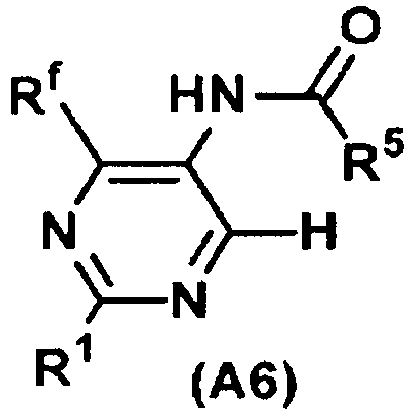
- The compound according to any one of Claims 1 to 7, wherein R1 is a phenyl group, or a group having at least one hydrogen atom bonded to a carbon atom in a phenyl group, substituted each independently by a group selected from a hydroxy group, an amino group, a carboxy group and a halogen atom.
- A method for producing a compound represented by the following formula (A1), which comprises reacting a compound represented by the following formula (9) and a compound represented by the following formula (5):
 Rf, Y, R1 and R2 have the following meanings:Rf : a group having an etheric (ethereal) oxygen atom inserted between carbon-carbon atoms in a C2-19 perfluoroalkyl group, wherein the total of the number of carbon atoms and the number of oxygen atoms is from 3 to 20,Y: a group represented by -OR' or -NR"2, wherein R' and R" are each independently a C1-6 alkyl group,R1: (i) a C1-6 alkyl group, (ii) a phenyl group, (iii) a monovalent 5-membered ring group containing a hetero atom, (iv) a monovalent 6-membered ring group containing a hetero atom, (v) a group having at least one hydrogen atom bonded to a carbon atom in a group selected from the above group (i) to group (iv), substituted each independently by a group selected from a hydroxy group, an amino group, a carboxy group and a halogen atom, or (vi) a group having at least one hydrogen atom bonded to a carbon atom in a group selected from the above group (ii) to group (iv), substituted each independently by a C1-6 halogenated alkyl group,R2: a C1-6 alkyl group, a phenyl group, or a group having at least one hydrogen atom bonded to a carbon atom in a C1-6 alkyl group or a phenyl group, substituted each independently by a group selected from an amino group, a hydroxy group, a halogen atom, a C1-6 alkoxy group, a carboxy group and a trifluoromethyl group.
 - A method for producing a compound represented by the following formula (A2), which comprises reacting a compound represented by the following formula (10) and a compound represented by the following formula (5):
 Rf, Y, R1 and R3 have the following meanings:Rf : a group having an etheric (ethereal) oxygen atom inserted between carbon-carbon atoms in a C2-19 perfluoroalkyl group, wherein the total of the number of carbon atoms and the number of oxygen atoms is from 3 to 20,Y: a group represented by -OR' or -NR"2, wherein R' and R" are each independently a C1-3 alkyl group,R1: (i) a C1-6 alkyl group, (ii) a phenyl group, (iii) a monovalent 5-membered ring group containing a hetero atom, (iv) a monovalent 6-membered ring group containing a hetero atom, (v) a group having at least one hydrogen atom bonded to a carbon atom in a group selected from the above group (i) to group (iv), substituted each independently by a group selected from a hydroxy group, an amino group, a carboxy group and a halogen atom, or (vi) a group having at least one hydrogen atom bonded to a carbon atom in a group selected from the above group (ii) to group (iv), substituted each independently by a C1-6 halogenated alkyl group,R3: a C1-6 alkyl group, an aralkyl group, a phenyl group, or a group having at least one hydrogen atom in a phenyl group, substituted each independently by a group selected from an amino group, a substituted amino group, a C1-6 alkoxy group and a halogen atom.
 - A method for producing a compound represented by the following formula (A6), which comprises hydrolyzing a compound represented by the following formula (A2) under a basic condition, to obtain a compound represented by the following formula (A3); converting the compound represented by the formula (A3) to a mixed acid anhydride, and then to an azide ketone by an metal azide compound; while further letting it undergo the rearrangement reaction, reacting it with a compound represented by the formula R4-OH (wherein R4 is a C1-6 alkyl group, or a group having at least one hydrogen atom bonded to a carbon atom in a C1-6 alkyl group, substituted by a halogen atom) to obtain a compound represented by the following formula (A4), then reacting the compound represented by formula (A4) with an acid, to obtain a compound represented by the following formula (A5), and then reacting the compound represented by the formula (A5) with a compound represented by the formula R5COX (wherein R5 is a C1-6 alkyl group, a phenyl group, an aralkyl group, or a group having at least one hydrogen atom bonded to a carbon atom in a C1-6 alkyl group, a phenyl group or an aralkyl group, substituted each independently by a group selected from an amino group, a hydroxy group, a halogen atom and a trifluoromethyl group, and X is a halogen atom, a group obtained by removing a hydrogen atom from N-hydroxysuccinimide, a C1-6 alkoxy group, a perfluorophenoxy group or a C1-6 fluoroalkoxy group.).

 Rf, R1 and R3 have the following meanings, and R4 and R6 are as defined above:Rf : a group having an etheric oxygen atom inserted between carbon-carbon atoms in a C2-19 perfluoroalkyl group, wherein the total of the number of carbon atoms and the number of oxygen atoms is from 3 to 20,R1: (i) a C1-6 alkyl group, (ii) a phenyl group, (iii) a monovalent 5-membered ring group containing a hetero atom, (iv) a monovalent 6-membered ring group containing a hetero atom, (v) a group having at least one hydrogen atom bonded to a carbon atom in a group selected from the above group (i) to group (iv), substituted each independently by a group selected from a hydroxy group, an amino group, a carboxy group and a halogen atom, or (vi) a group having at least one hydrogen atom bonded to a carbon atom in a group selected from the above group (ii) to group (iv), substituted each independently by a C1-6 halogenated alkyl group,R3: a C1-6 alkyl group, an aralkyl group, a phenyl group, or a group having at least one hydrogen atom in a phenyl group, substituted each independently by a group selected from an amino group, a substituted amino group, a C1-6 alkoxy group and a halogen atom.
 - An agricultural chemical containing a compound selected from the compound as defined in any one of Claims 1 to 8 and pharmacologically effective salts of said compound.
Applications Claiming Priority (2)
| Application Number | Priority Date | Filing Date | Title |
|---|---|---|---|
| JP2014100655 | 2014-05-14 | ||
| PCT/JP2015/063666 WO2015174421A1 (en) | 2014-05-14 | 2015-05-12 | Ethereal oxygen atom-containing perfluoroalkyl group-substituted pyrimidine ring compound, and method for producing same |
Publications (2)
| Publication Number | Publication Date |
|---|---|
| EP3144297A1 true EP3144297A1 (en) | 2017-03-22 |
| EP3144297A4 EP3144297A4 (en) | 2017-11-29 |
Family
ID=54479958
Family Applications (1)
| Application Number | Title | Priority Date | Filing Date |
|---|---|---|---|
| EP15792094.3A Withdrawn EP3144297A4 (en) | 2014-05-14 | 2015-05-12 | Ethereal oxygen atom-containing perfluoroalkyl group-substituted pyrimidine ring compound, and method for producing same |
Country Status (5)
| Country | Link |
|---|---|
| US (1) | US20170050934A1 (en) |
| EP (1) | EP3144297A4 (en) |
| JP (1) | JPWO2015174421A1 (en) |
| CN (1) | CN106458928A (en) |
| WO (1) | WO2015174421A1 (en) |
Cited By (1)
| Publication number | Priority date | Publication date | Assignee | Title |
|---|---|---|---|---|
| EP4105210A4 (en) * | 2020-02-12 | 2023-12-06 | Unimatec Co., Ltd. | FLUORINE-CONTAINING PYRIMIDINE COMPOUND AND PRODUCTION PROCESS THEREOF |
Families Citing this family (1)
| Publication number | Priority date | Publication date | Assignee | Title |
|---|---|---|---|---|
| EP3995486A4 (en) * | 2019-07-02 | 2023-07-12 | Agc Inc. | PEPTIDE AND ITS PRODUCTION METHOD |
Family Cites Families (6)
| Publication number | Priority date | Publication date | Assignee | Title |
|---|---|---|---|---|
| DE4331178A1 (en) * | 1993-09-14 | 1995-03-16 | Hoechst Schering Agrevo Gmbh | Substituted pyridines and pyrimidines, processes for their preparation and their use as pesticides and fungicides |
| JP2003034682A (en) * | 2000-09-19 | 2003-02-07 | Sumitomo Chem Co Ltd | Pyrimidine compounds and uses thereof |
| CN100488952C (en) * | 2001-03-15 | 2009-05-20 | 巴斯福股份公司 | 5-phenyl pyridine, its preparation method and intermediate product and uses in controlling harmful fungus |
| JP2005232081A (en) * | 2004-02-19 | 2005-09-02 | Bayer Cropscience Ag | Utilization of benzylpyrimidine derivative as agricultural and horticultural bactericide |
| US8377970B2 (en) * | 2009-10-08 | 2013-02-19 | Rhizen Pharmaceuticals Sa | Modulators of calcium release-activated calcium channel |
| CA2779107C (en) * | 2009-10-30 | 2017-05-30 | Steven J. Coats | Pyrimidine compounds as delta opioid receptor modulators |
-
2015
- 2015-05-12 CN CN201580025127.1A patent/CN106458928A/en active Pending
- 2015-05-12 WO PCT/JP2015/063666 patent/WO2015174421A1/en not_active Ceased
- 2015-05-12 EP EP15792094.3A patent/EP3144297A4/en not_active Withdrawn
- 2015-05-12 JP JP2016519268A patent/JPWO2015174421A1/en active Pending
-
2016
- 2016-11-08 US US15/346,032 patent/US20170050934A1/en not_active Abandoned
Cited By (1)
| Publication number | Priority date | Publication date | Assignee | Title |
|---|---|---|---|---|
| EP4105210A4 (en) * | 2020-02-12 | 2023-12-06 | Unimatec Co., Ltd. | FLUORINE-CONTAINING PYRIMIDINE COMPOUND AND PRODUCTION PROCESS THEREOF |
Also Published As
| Publication number | Publication date |
|---|---|
| US20170050934A1 (en) | 2017-02-23 |
| EP3144297A4 (en) | 2017-11-29 |
| JPWO2015174421A1 (en) | 2017-04-20 |
| CN106458928A (en) | 2017-02-22 |
| WO2015174421A1 (en) | 2015-11-19 |
Similar Documents
| Publication | Publication Date | Title |
|---|---|---|
| US20160295864A1 (en) | Ethereal oxygen atom-containing perfluoroalkyl group-substituted pyrazole ring compound and method for its production | |
| EP0606011B1 (en) | Aminopyrimidine derivatives and their production and use | |
| US20170050934A1 (en) | Etheric (ethereal) oxygen atom-containing perfluoroalkyl group-substituted pyrimidine ring compound, and method for its production | |
| HUP0700668A2 (en) | Process for producing intermediates of rosuvastatin | |
| EP2980079B1 (en) | Method of manufacturing pyridazinone compound | |
| JPH08291146A (en) | Herbicidal n-(substituted phenyl) sulfonamide compound | |
| Jiang et al. | A convenient stereoselective synthesis of trifluoromethyl-substituted polyfunctionalized cyclopropane: synthesis of (±)-trans-trifluoronorcoronamic acid | |
| WO2008104101A1 (en) | 1-(3-methyl-4-fluoro) phenyl-1-methylcyclopropane compounds and use thereof | |
| HUP0700667A2 (en) | Process for producing rosuvastatin salt | |
| JP4879907B2 (en) | Process for producing phenyl 2-pyrimidinyl ketones and novel intermediates thereof | |
| KR100459938B1 (en) | Fluorine-substituted heterocyclic compounds as intermediate for synthesis of agrochemical and medicinal antagonist and method for preparing thereof | |
| JPH10512236A (en) | New pyrimidyloxy- and pyrimidinylamino-ethylphenyl-dioxolane derivatives | |
| JP2730019B2 (en) | Aralkylamine derivatives, their production and fungicides | |
| JPH09241245A (en) | Uracil derivative and pesticide containing the same | |
| JP2691944B2 (en) | Alkylaminopyrimidine derivative, its production method and pest control agent | |
| JP3366715B2 (en) | Aminopyrimidine derivatives, their production method and intermediates for production, and agricultural fungicides, insecticides and acaricides containing the same | |
| KR100467979B1 (en) | Fluorine-substituted heterocyclic compounds as intermediate for synthesis of agrochemical and medicinal antagonist and method for preparing thereof | |
| JP4824968B2 (en) | Phosphonic acid derivatives and acid addition salts thereof, and agricultural and horticultural disease control agents using the same | |
| EP3166404B1 (en) | Improved process for preparation of 4-(1-(4-(perfluoroethoxy)phenyl)-1h-1,2,4-triazol-3-yl)benzoyl azide | |
| NO326089B1 (en) | Process for Preparation of a 7-Quinolyl-3,5-dihydroxyhept-6-enoeate | |
| JPH06228103A (en) | New octahydroacridine derivative and its production | |
| JPH0881444A (en) | Pyrazole-5-carboxamide-4-carboxylic acid derivative, process for producing the same and agricultural / horticultural fungicide | |
| JPH08193011A (en) | Herbicidal sulfonamide compound | |
| JPH06145154A (en) | New @(3754/24)azolyl)@(3754/24)benzoyl)alkananoic acid derivative and fungicide for agriculture and horticulture containing its derivative | |
| WO1999052880A1 (en) | 5-iodo-4-phenethylaminopyrimidine derivatives, intermediates thereof, process for producing the same and agricultural/horticultural pesticides |
Legal Events
| Date | Code | Title | Description |
|---|---|---|---|
| PUAI | Public reference made under article 153(3) epc to a published international application that has entered the european phase |
Free format text: ORIGINAL CODE: 0009012 |
|
| 17P | Request for examination filed |
Effective date: 20161208 |
|
| AK | Designated contracting states |
Kind code of ref document: A1 Designated state(s): AL AT BE BG CH CY CZ DE DK EE ES FI FR GB GR HR HU IE IS IT LI LT LU LV MC MK MT NL NO PL PT RO RS SE SI SK SM TR |
|
| AX | Request for extension of the european patent |
Extension state: BA ME |
|
| DAV | Request for validation of the european patent (deleted) | ||
| DAX | Request for extension of the european patent (deleted) | ||
| STAA | Information on the status of an ep patent application or granted ep patent |
Free format text: STATUS: THE APPLICATION HAS BEEN WITHDRAWN |
|
| RIC1 | Information provided on ipc code assigned before grant |
Ipc: A01N 43/54 20060101ALI20171019BHEP Ipc: C07D 239/26 20060101AFI20171019BHEP Ipc: A01P 3/00 20060101ALI20171019BHEP Ipc: C07D 239/28 20060101ALI20171019BHEP Ipc: C07D 239/42 20060101ALI20171019BHEP |
|
| A4 | Supplementary search report drawn up and despatched |
Effective date: 20171027 |
|
| 18W | Application withdrawn |
Effective date: 20171106 |