EP3143052B1 - Catalyst system for the polymerisation and/or oligomerisation of olefins and process utilizing the catalyst system - Google Patents
Catalyst system for the polymerisation and/or oligomerisation of olefins and process utilizing the catalyst system Download PDFInfo
- Publication number
- EP3143052B1 EP3143052B1 EP15721280.4A EP15721280A EP3143052B1 EP 3143052 B1 EP3143052 B1 EP 3143052B1 EP 15721280 A EP15721280 A EP 15721280A EP 3143052 B1 EP3143052 B1 EP 3143052B1
- Authority
- EP
- European Patent Office
- Prior art keywords
- transition metal
- complex
- catalyst
- crcl
- zrcl
- Prior art date
- Legal status (The legal status is an assumption and is not a legal conclusion. Google has not performed a legal analysis and makes no representation as to the accuracy of the status listed.)
- Active
Links
Images







Classifications
-
- C—CHEMISTRY; METALLURGY
- C08—ORGANIC MACROMOLECULAR COMPOUNDS; THEIR PREPARATION OR CHEMICAL WORKING-UP; COMPOSITIONS BASED THEREON
- C08F—MACROMOLECULAR COMPOUNDS OBTAINED BY REACTIONS ONLY INVOLVING CARBON-TO-CARBON UNSATURATED BONDS
- C08F4/00—Polymerisation catalysts
- C08F4/02—Carriers therefor
- C08F4/025—Metal oxides
-
- C—CHEMISTRY; METALLURGY
- C08—ORGANIC MACROMOLECULAR COMPOUNDS; THEIR PREPARATION OR CHEMICAL WORKING-UP; COMPOSITIONS BASED THEREON
- C08F—MACROMOLECULAR COMPOUNDS OBTAINED BY REACTIONS ONLY INVOLVING CARBON-TO-CARBON UNSATURATED BONDS
- C08F110/00—Homopolymers of unsaturated aliphatic hydrocarbons having only one carbon-to-carbon double bond
- C08F110/02—Ethene
-
- C—CHEMISTRY; METALLURGY
- C08—ORGANIC MACROMOLECULAR COMPOUNDS; THEIR PREPARATION OR CHEMICAL WORKING-UP; COMPOSITIONS BASED THEREON
- C08F—MACROMOLECULAR COMPOUNDS OBTAINED BY REACTIONS ONLY INVOLVING CARBON-TO-CARBON UNSATURATED BONDS
- C08F10/00—Homopolymers and copolymers of unsaturated aliphatic hydrocarbons having only one carbon-to-carbon double bond
- C08F10/02—Ethene
-
- C—CHEMISTRY; METALLURGY
- C08—ORGANIC MACROMOLECULAR COMPOUNDS; THEIR PREPARATION OR CHEMICAL WORKING-UP; COMPOSITIONS BASED THEREON
- C08F—MACROMOLECULAR COMPOUNDS OBTAINED BY REACTIONS ONLY INVOLVING CARBON-TO-CARBON UNSATURATED BONDS
- C08F210/00—Copolymers of unsaturated aliphatic hydrocarbons having only one carbon-to-carbon double bond
- C08F210/14—Monomers containing five or more carbon atoms
-
- C—CHEMISTRY; METALLURGY
- C08—ORGANIC MACROMOLECULAR COMPOUNDS; THEIR PREPARATION OR CHEMICAL WORKING-UP; COMPOSITIONS BASED THEREON
- C08F—MACROMOLECULAR COMPOUNDS OBTAINED BY REACTIONS ONLY INVOLVING CARBON-TO-CARBON UNSATURATED BONDS
- C08F210/00—Copolymers of unsaturated aliphatic hydrocarbons having only one carbon-to-carbon double bond
- C08F210/16—Copolymers of ethene with alpha-alkenes, e.g. EP rubbers
-
- C—CHEMISTRY; METALLURGY
- C08—ORGANIC MACROMOLECULAR COMPOUNDS; THEIR PREPARATION OR CHEMICAL WORKING-UP; COMPOSITIONS BASED THEREON
- C08F—MACROMOLECULAR COMPOUNDS OBTAINED BY REACTIONS ONLY INVOLVING CARBON-TO-CARBON UNSATURATED BONDS
- C08F4/00—Polymerisation catalysts
- C08F4/42—Metals; Metal hydrides; Metallo-organic compounds; Use thereof as catalyst precursors
- C08F4/44—Metals; Metal hydrides; Metallo-organic compounds; Use thereof as catalyst precursors selected from light metals, zinc, cadmium, mercury, copper, silver, gold, boron, gallium, indium, thallium, rare earths or actinides
- C08F4/60—Metals; Metal hydrides; Metallo-organic compounds; Use thereof as catalyst precursors selected from light metals, zinc, cadmium, mercury, copper, silver, gold, boron, gallium, indium, thallium, rare earths or actinides together with refractory metals, iron group metals, platinum group metals, manganese, rhenium technetium or compounds thereof
- C08F4/62—Refractory metals or compounds thereof
- C08F4/639—Component covered by group C08F4/62 containing a transition metal-carbon bond
- C08F4/63904—Component covered by group C08F4/62 containing a transition metal-carbon bond in combination with another component of C08F4/62
-
- C—CHEMISTRY; METALLURGY
- C08—ORGANIC MACROMOLECULAR COMPOUNDS; THEIR PREPARATION OR CHEMICAL WORKING-UP; COMPOSITIONS BASED THEREON
- C08F—MACROMOLECULAR COMPOUNDS OBTAINED BY REACTIONS ONLY INVOLVING CARBON-TO-CARBON UNSATURATED BONDS
- C08F4/00—Polymerisation catalysts
- C08F4/42—Metals; Metal hydrides; Metallo-organic compounds; Use thereof as catalyst precursors
- C08F4/44—Metals; Metal hydrides; Metallo-organic compounds; Use thereof as catalyst precursors selected from light metals, zinc, cadmium, mercury, copper, silver, gold, boron, gallium, indium, thallium, rare earths or actinides
- C08F4/60—Metals; Metal hydrides; Metallo-organic compounds; Use thereof as catalyst precursors selected from light metals, zinc, cadmium, mercury, copper, silver, gold, boron, gallium, indium, thallium, rare earths or actinides together with refractory metals, iron group metals, platinum group metals, manganese, rhenium technetium or compounds thereof
- C08F4/62—Refractory metals or compounds thereof
- C08F4/64—Titanium, zirconium, hafnium or compounds thereof
- C08F4/646—Catalysts comprising at least two different metals, in metallic form or as compounds thereof, in addition to the component covered by group C08F4/64
-
- C—CHEMISTRY; METALLURGY
- C08—ORGANIC MACROMOLECULAR COMPOUNDS; THEIR PREPARATION OR CHEMICAL WORKING-UP; COMPOSITIONS BASED THEREON
- C08F—MACROMOLECULAR COMPOUNDS OBTAINED BY REACTIONS ONLY INVOLVING CARBON-TO-CARBON UNSATURATED BONDS
- C08F4/00—Polymerisation catalysts
- C08F4/42—Metals; Metal hydrides; Metallo-organic compounds; Use thereof as catalyst precursors
- C08F4/44—Metals; Metal hydrides; Metallo-organic compounds; Use thereof as catalyst precursors selected from light metals, zinc, cadmium, mercury, copper, silver, gold, boron, gallium, indium, thallium, rare earths or actinides
- C08F4/60—Metals; Metal hydrides; Metallo-organic compounds; Use thereof as catalyst precursors selected from light metals, zinc, cadmium, mercury, copper, silver, gold, boron, gallium, indium, thallium, rare earths or actinides together with refractory metals, iron group metals, platinum group metals, manganese, rhenium technetium or compounds thereof
- C08F4/70—Iron group metals, platinum group metals or compounds thereof
- C08F4/7001—Iron group metals, platinum group metals or compounds thereof the metallic compound containing a multidentate ligand, i.e. a ligand capable of donating two or more pairs of electrons to form a coordinate or ionic bond
- C08F4/7039—Tridentate ligand
- C08F4/704—Neutral ligand
- C08F4/7042—NNN
-
- B—PERFORMING OPERATIONS; TRANSPORTING
- B01—PHYSICAL OR CHEMICAL PROCESSES OR APPARATUS IN GENERAL
- B01J—CHEMICAL OR PHYSICAL PROCESSES, e.g. CATALYSIS OR COLLOID CHEMISTRY; THEIR RELEVANT APPARATUS
- B01J2231/00—Catalytic reactions performed with catalysts classified in B01J31/00
- B01J2231/10—Polymerisation reactions involving at least dual use catalysts, e.g. for both oligomerisation and polymerisation
- B01J2231/12—Olefin polymerisation or copolymerisation
-
- C—CHEMISTRY; METALLURGY
- C08—ORGANIC MACROMOLECULAR COMPOUNDS; THEIR PREPARATION OR CHEMICAL WORKING-UP; COMPOSITIONS BASED THEREON
- C08F—MACROMOLECULAR COMPOUNDS OBTAINED BY REACTIONS ONLY INVOLVING CARBON-TO-CARBON UNSATURATED BONDS
- C08F210/00—Copolymers of unsaturated aliphatic hydrocarbons having only one carbon-to-carbon double bond
- C08F210/02—Ethene
-
- C—CHEMISTRY; METALLURGY
- C08—ORGANIC MACROMOLECULAR COMPOUNDS; THEIR PREPARATION OR CHEMICAL WORKING-UP; COMPOSITIONS BASED THEREON
- C08F—MACROMOLECULAR COMPOUNDS OBTAINED BY REACTIONS ONLY INVOLVING CARBON-TO-CARBON UNSATURATED BONDS
- C08F2420/00—Metallocene catalysts
- C08F2420/04—Cp or analog not bridged to a non-Cp X ancillary anionic donor
-
- C—CHEMISTRY; METALLURGY
- C08—ORGANIC MACROMOLECULAR COMPOUNDS; THEIR PREPARATION OR CHEMICAL WORKING-UP; COMPOSITIONS BASED THEREON
- C08F—MACROMOLECULAR COMPOUNDS OBTAINED BY REACTIONS ONLY INVOLVING CARBON-TO-CARBON UNSATURATED BONDS
- C08F4/00—Polymerisation catalysts
- C08F4/42—Metals; Metal hydrides; Metallo-organic compounds; Use thereof as catalyst precursors
- C08F4/44—Metals; Metal hydrides; Metallo-organic compounds; Use thereof as catalyst precursors selected from light metals, zinc, cadmium, mercury, copper, silver, gold, boron, gallium, indium, thallium, rare earths or actinides
- C08F4/60—Metals; Metal hydrides; Metallo-organic compounds; Use thereof as catalyst precursors selected from light metals, zinc, cadmium, mercury, copper, silver, gold, boron, gallium, indium, thallium, rare earths or actinides together with refractory metals, iron group metals, platinum group metals, manganese, rhenium technetium or compounds thereof
- C08F4/62—Refractory metals or compounds thereof
- C08F4/64—Titanium, zirconium, hafnium or compounds thereof
- C08F4/659—Component covered by group C08F4/64 containing a transition metal-carbon bond
- C08F4/65912—Component covered by group C08F4/64 containing a transition metal-carbon bond in combination with an organoaluminium compound
-
- C—CHEMISTRY; METALLURGY
- C08—ORGANIC MACROMOLECULAR COMPOUNDS; THEIR PREPARATION OR CHEMICAL WORKING-UP; COMPOSITIONS BASED THEREON
- C08F—MACROMOLECULAR COMPOUNDS OBTAINED BY REACTIONS ONLY INVOLVING CARBON-TO-CARBON UNSATURATED BONDS
- C08F4/00—Polymerisation catalysts
- C08F4/42—Metals; Metal hydrides; Metallo-organic compounds; Use thereof as catalyst precursors
- C08F4/44—Metals; Metal hydrides; Metallo-organic compounds; Use thereof as catalyst precursors selected from light metals, zinc, cadmium, mercury, copper, silver, gold, boron, gallium, indium, thallium, rare earths or actinides
- C08F4/60—Metals; Metal hydrides; Metallo-organic compounds; Use thereof as catalyst precursors selected from light metals, zinc, cadmium, mercury, copper, silver, gold, boron, gallium, indium, thallium, rare earths or actinides together with refractory metals, iron group metals, platinum group metals, manganese, rhenium technetium or compounds thereof
- C08F4/62—Refractory metals or compounds thereof
- C08F4/64—Titanium, zirconium, hafnium or compounds thereof
- C08F4/659—Component covered by group C08F4/64 containing a transition metal-carbon bond
- C08F4/6592—Component covered by group C08F4/64 containing a transition metal-carbon bond containing at least one cyclopentadienyl ring, condensed or not, e.g. an indenyl or a fluorenyl ring
- C08F4/65922—Component covered by group C08F4/64 containing a transition metal-carbon bond containing at least one cyclopentadienyl ring, condensed or not, e.g. an indenyl or a fluorenyl ring containing at least two cyclopentadienyl rings, fused or not
- C08F4/65925—Component covered by group C08F4/64 containing a transition metal-carbon bond containing at least one cyclopentadienyl ring, condensed or not, e.g. an indenyl or a fluorenyl ring containing at least two cyclopentadienyl rings, fused or not two cyclopentadienyl rings being mutually non-bridged
-
- C—CHEMISTRY; METALLURGY
- C08—ORGANIC MACROMOLECULAR COMPOUNDS; THEIR PREPARATION OR CHEMICAL WORKING-UP; COMPOSITIONS BASED THEREON
- C08F—MACROMOLECULAR COMPOUNDS OBTAINED BY REACTIONS ONLY INVOLVING CARBON-TO-CARBON UNSATURATED BONDS
- C08F4/00—Polymerisation catalysts
- C08F4/42—Metals; Metal hydrides; Metallo-organic compounds; Use thereof as catalyst precursors
- C08F4/44—Metals; Metal hydrides; Metallo-organic compounds; Use thereof as catalyst precursors selected from light metals, zinc, cadmium, mercury, copper, silver, gold, boron, gallium, indium, thallium, rare earths or actinides
- C08F4/60—Metals; Metal hydrides; Metallo-organic compounds; Use thereof as catalyst precursors selected from light metals, zinc, cadmium, mercury, copper, silver, gold, boron, gallium, indium, thallium, rare earths or actinides together with refractory metals, iron group metals, platinum group metals, manganese, rhenium technetium or compounds thereof
- C08F4/62—Refractory metals or compounds thereof
- C08F4/64—Titanium, zirconium, hafnium or compounds thereof
- C08F4/659—Component covered by group C08F4/64 containing a transition metal-carbon bond
- C08F4/6592—Component covered by group C08F4/64 containing a transition metal-carbon bond containing at least one cyclopentadienyl ring, condensed or not, e.g. an indenyl or a fluorenyl ring
- C08F4/65922—Component covered by group C08F4/64 containing a transition metal-carbon bond containing at least one cyclopentadienyl ring, condensed or not, e.g. an indenyl or a fluorenyl ring containing at least two cyclopentadienyl rings, fused or not
- C08F4/65927—Component covered by group C08F4/64 containing a transition metal-carbon bond containing at least one cyclopentadienyl ring, condensed or not, e.g. an indenyl or a fluorenyl ring containing at least two cyclopentadienyl rings, fused or not two cyclopentadienyl rings being mutually bridged
-
- C—CHEMISTRY; METALLURGY
- C08—ORGANIC MACROMOLECULAR COMPOUNDS; THEIR PREPARATION OR CHEMICAL WORKING-UP; COMPOSITIONS BASED THEREON
- C08F—MACROMOLECULAR COMPOUNDS OBTAINED BY REACTIONS ONLY INVOLVING CARBON-TO-CARBON UNSATURATED BONDS
- C08F4/00—Polymerisation catalysts
- C08F4/42—Metals; Metal hydrides; Metallo-organic compounds; Use thereof as catalyst precursors
- C08F4/44—Metals; Metal hydrides; Metallo-organic compounds; Use thereof as catalyst precursors selected from light metals, zinc, cadmium, mercury, copper, silver, gold, boron, gallium, indium, thallium, rare earths or actinides
- C08F4/60—Metals; Metal hydrides; Metallo-organic compounds; Use thereof as catalyst precursors selected from light metals, zinc, cadmium, mercury, copper, silver, gold, boron, gallium, indium, thallium, rare earths or actinides together with refractory metals, iron group metals, platinum group metals, manganese, rhenium technetium or compounds thereof
- C08F4/62—Refractory metals or compounds thereof
- C08F4/69—Chromium, molybdenum, tungsten or compounds thereof
Definitions
- the present invention relates to a catalyst system for the polymerization and/or oligomerization of olefins and a process utilizing this catalyst system.
- Dual catalysis systems for olefin polymerisation are known in the art.
- US 6,291,608 discloses a process for preparing polyolefins having a multi-modal molecular weight distribution comprising contacting at least one mono-1 ⁇ -olefin in a polymerisation zone, under polymerisation conditions, with a dual catalyst system.
- the dual catalyst system used in the process comprises a first catalyst system which comprises a metallocene catalyst and a cocatalyst and a second catalyst system which comprises diimine nickel complexes which further comprise additional ligands selected from the group consisting of deprotonated-p-diketones, deprotonated-p-ketoesters, halogens and mixtures thereof.
- the resultant, recovered polymer has at least a bimodal, or broad, molecular weight distribution.
- WO 2006/054048A discloses supported catalyst systems for the polymerisation of olefins. These catalyst systems comprise (a) at least two different monocyclopentadienyl transition metal complexes, (b) one or more activators comprising an ionic compound comprising (i) a cation and (ii) an anion having up to 100 non-hydrogen atoms and the anion containing at least one substituent comprising a moiety having an active hydrogen, and (c) one or more support materials.
- the catalyst systems may be used to prepare LLDPE polymers having broad metal flow properties.
- bimodal polyolefins having a reverse or partial reversed comonomer incorporation may be prepared in the presence of a dual catalyst on the same support wherein each catalyst has a different response to temperature, ethylene partial pressures, partial pressure of non-polymerisable hydrocarbons present in the reaction mixture and hydrogen partial pressure.
- the dual catalyst comprises, as a first component, a transition metal complex with a salicylaldamine compound and, as a second component, a group 4 metal-phosphinimine complex.
- US 2010/0190937A discloses the (co)polymerisation of ethylene using a catalyst system comprising a chromium catalyst and a Group 4 transition metal catalyst, co-supported on an inorganic oxide support.
- the co-supported catalyst system gives access to polyethylene having a broad or bimodal molecular weight distribution.
- Polyolefins may be made according to the process described in US 2011/0130528A .
- the process involves direct, preferably simultaneous, polymerisation of one or more polymerisable olefins using two or more transition metal-containing active polymerisation catalyst systems at least one of which contains cobalt or iron complexed with selected ligands.
- the polyolefin products contain polymers that may vary in molecular weight, molecular weight distribution, crystallinity, or other factors.
- WO 2011/072851A describes a process for the preparation of dual supported catalysts for use in the homo or copolymerisation of ⁇ -olefins.
- the supported catalyst comprises at least one late transition metal complex, e.g. a tridentate iron complex, and one or more other catalytically-active components selected from metallocenes, Ziegler-Natta-catalysts and monocyclopentadienyl chromium constrained geometry complexes.
- Disadvantages associated with prior art dual catalyst systems useful in the polymerisation of ⁇ -olefins include their tendency to produce polymer mixtures rather than a single polymer and their variable activities. These disadvantages may result from the fact that in many dual catalyst systems the catalysts catalyse reactions independently of each other rather than cooperatively. There is a need to overcome these and other disadvantages. It is therefore an object of the present invention to provide a catalyst system for the polymerisation and/or oligomerisation of ethylene which overcomes the drawbacks of the prior art, especially the catalyst system shall allow cooperative and synergistic action. Further, it is an object to provide a process for polymerisation and/or oligomerisation of olefins utilizing the catalyst system.
- the first object is achieved by a catalyst system according to claim 1.
- the second object is achieved by the use and the process according to claims 11 and 12. Preferred embodiments are disclosed in the subclaims.
- the present invention is based on the surprising discovery that catalysts comprising two or more solid-supported metal complexes, where one complex oligomerises ethene to one or more ⁇ -olefins while the other complex polymerises ethene; the oligomers formed in situ can be incorporated in the growing polymer chain to produce a single copolymer of ethylene/ ⁇ -olefins white using only a single ethylene feed and that such catalysts can be "tuned” by changing the catalyst ratios so as to obtain different polyethylene products.
- the dual polymerization catalyst system of the invention comprises two or more catalytic metal complexes. At least one of these catalytic metal complexes will be a first transition metal complex.
- transition metal we mean a d-block metal, examples of which include, but are not limited to, zirconium, chromium, iron, cobalt, nickel, titanium and hafnium.
- the transition metal will be complexed with one or more ligands, or aromatic or heteroaromatic cyclic compounds.
- aromatic compounds, useful for complexing with the transition metal include optionally-substituted cyclopentadiene, optionally substituted indene and optionally-substituted pentalene.
- the aromatic compound used to complex the transition metal may, further, contain two linked, optionally-substituted cyclopentadiene groups or two linked, optionally-substituted indene and optionally-substituted pentalene groups.
- the linking group may be provided by a lower alkylene group.
- the transition metal complex used in the dual catalyst system will be selected from As stated above, the synergistic dual catalyst system of the invention may contain more than one first transition metal complex.
- the synergistic dual catalyst system also contains a second transition metal complex, wherein the second transition metal complex is selected from transition metal-permethylpentalene derived complexes.
- the second transition metal complex is a chromium containing complex, preferably a chromium-permethylpentalene derived complex.
- Permethylpentalene derived ligands may be a protio form or anionic form (see examples figure below).
- the protio form such as hydro(permethylpentalene) denoted as Pn ⁇ H has the formula C 8 Me 6 H as shown below. It can exist as neutral or anionic forms.
- Pn ⁇ H can form pi-complexes with metal centre (in particular transition metal centre) in which the ligand has an overall negative charge (see an example in the figure above).
- a preferred chromium-permethylpentalene derived complex for use in the dual catalyst system of the invention has the formula [Pn ⁇ (H)CrCl 2 ] 2 , wherein Pn ⁇ H represents hydro(permethylpentalene) (C 8 Me 6 H) as shown below
- the catalytic compounds i.e. one or more first transition metal complex and the second transition metal complex, are supported on a solid support material.
- the solid support material will be an inorganic oxide or inorganic hydroxide, for example silica, alumina or a layered double hydroxide which may be thermally treated or optionally solvent treated.
- LDHs Layered double hydroxides
- a z- examples include CO 3 2- , NO 3 - and Cl - .
- a large number of LDHs with a wide variety of M I -M III cation pairs (e.g., Mg-Al, Ca-Al) as well as the M I -M III cation pair (Li-Al) with different anions in the interlayer space have been reported and studied.
- Preferred layered double hydroxides, for use as solid support material for the catalytic compounds as those having the general formula [M II (1-x) M III x (OH) 2 ] x+ (A z- ) x/z 'yH 2 O ⁇ w(solvent)
- M II is Mg or Ca and M III is Al.
- the counter anion A is typically selected from CO 3 2- , OH - , F - , Cl - , Br - ,I - , SO 4 2- , NO 3 - and PO 4 3- .
- the LDH used as a solid support material will be one wherein M II is Mg, M III is Al and A is CO 3 2- .
- the BET surface of the LDHs is typically greater than 100m 2 g -1 .
- M is Mg or Ca, and M' is Al.
- the counter anion X is typically selected from CO 3 2- , OH - , F - , Cl - , Br - , I - , SO 4 2- , NO 3 - and PO 4 3- .
- the LDH used as a solid support material will be one wherein M is Mg, M' is Al and X is CO 3 2- .
- the BET surface of the LDH is typically greater than 100 m 2 g -1 .
- the solid support will, in addition to the catalysts described above, be activated by treatment with an activator compound, such as an alkylaluminoxane, for example methylaluminoxane.
- an activator compound such as an alkylaluminoxane, for example methylaluminoxane.
- the solid support material may, alternatively, be a solid alkylaluminoxane itself, for example solid methylaluminoxane.
- the catalytic compounds will be present on the surface of the solid support material. For instance, they may be present on the surface as a result of adsorption, absorption or chemical interactions.
- the weight ratio (or molar ratio) of the first transition metal complex : second transition metal complex may vary typically from 95:5 to 50:50.
- the weight ratio is 90:10 to 70:30, more preferably 90:10 to 75:25.
- the first transition metal complex is the compound [( Mes PDI)FeCl 2 ]
- the second transition metal complex is the chromium hydro(permethylpentalene) compound [Pn ⁇ (H)CrCl 2 ] 2
- the weight ratio of the first transition metal complex to the chromium hydro(permethylpentalene) is 75:25
- the catalytic compounds are supported on MgAl-CO 3 LDH/MAO has a high productivity of 0.545 kg PE /g CAT /h.
- the synergistic dual catalyst system comprises a weight ratio of [( Mes PDI)FeCl 2 ]: [Pn ⁇ (H)CrCl 2 ] 2 of 75:25, or a weight ratio of [(EBI)ZrCl 2 ] : [Pn ⁇ (H)CrCl 2 ] 2 of 75:25, or a weight ratio of [( nBu Cp) 2 ZrCl 2 ] : [Pn ⁇ (H)CrCl 2 ] 2 of 80:20.
- the productivity also depends on the ratio of the amount of complex on the support material.
- solid MAO with a ratio [Al] 0 /[M] 0 of 300 has an activity (kg PE /mol Zr complex /h) of 21900 which is 3.5 times faster than one with a ratio of 100.
- the molar ratio of the first transition metal complex : second transition metal complex may vary typically from 95:5 to 5:95. It was found that the molar ratio of the first transition metal complex : second transition metal complex has an effect on the activity and can be used to vary the polymer structure achieved in the polymerisation of olefins, especially ethylene.
- the dual catalyst system of the invention has use in the polymerisation and/or oligomerisation of olefins, particularly ⁇ -olefins, for example propene or ethylene, especially ethylene and the co-polymerisation of ethylene with another olefin.
- the present invention also provides a process for producing a polymer of an olefin which comprises contacting the olefin with a catalyst system according to the invention, as described above.
- the two different types of catalytic metal complexes act cooperatively, i.e. one complex oligomerises olefins while the other complex polymerises the olefin and the in situ formed oligomers.
- the use of the dual catalyst system of the invention therefore, makes it possible to synthesize a single copolymer of an olefin while only using a single olefin feed.
- the process of the invention is particularly suitable for ethylene polymerisation and for ethylene/ ⁇ -olefin copolymerisation.
- Thermally-treated support material SiO 2 (SS) or an acetone-dispersed Layered Double Hydroxide (LDH)
- SS SiO 2
- LDH Layered Double Hydroxide
- MAO Methylaluminoxane
- MAO mole ratio of 2:1 was prepared in toluene solution and added to the thermally-treated solid support slurry.
- the resulting slurry was heated at 80°C for 2 h with occasional swirling.
- the product was then filtered, washed with toluene, and dried under dynamic vacuum to afford the final solid support material (LDHMAO, and SSMAO) in quantitative yield.
- Solid MAO (SMAO) was received from SCG Chemicals, dried to afford colourless free-flowing powder and used as is.
- solid support materials used in the examples provided below were MAO treated silica (SSMAO); MAO treated acetone-dispersed LDH (LDHMAO); and solid MAO (SMAO).
- Solid support material prepared as described above was weighed and slurried in toluene.
- the solution of at least two complexes (described below) in toluene with support:complexes weight ratio of 0.02 was prepared and added to the support slurry.
- the resulting slurry was heated at 80°C for 2 h with occasional swirling or until the solution became colourless.
- the product was then filtered, washed with toluene and dried under dynamic vacuum to afford the synergistic dual catalyst.
- the first transition metal complex used in the preparation of the dual catalyst system in the Examples was selected from
- the second transition metal complex used in the preparation of the dual catalyst system was the compound having the formula [Pn ⁇ (H)CrCl 2 ] 2 . This was prepared according to the following synthetic procedure.
- Table 1 Complex 1 Complex 2 Temperature (°C) Productivity kg PE /g CAT
- Table 2 Complex 1 Complex 2 Temperature (°C) Aluminium scavenger Productivity kg PE /g CAT
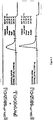
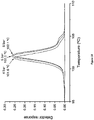
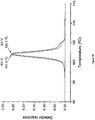
- Figure 2 shows the differential scanning calorimetric spectra of polyethylene using, as catalyst
- Figure 2 demonstrates that there is a broadening of the differential scanning calorimetric spectra when the dual catalyst system was used in comparison with the single catalyst system.
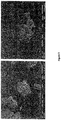
- the scanning electron microscope image in Figure 3 demonstrates the flower type particles of the polyethylene, this is similar to the LDH starting material.
- C When the polymerisations were carried out in a 2L reactor (1000 mL of hexane, 1 h, 80°C and 8 bar) the productivity using MgAl-CO 3 LDH MAO/[( 2-Me,4-Ph SBI)ZrCl 2 ]:[Pn ⁇ (H)CrCl 2 ] 2 75:25 was 0.55 kg PE /g CAT /h, 4 times higher than when 50 mL of solvent is used.
- the polyethylene possessed very large particle size (70% of 500 ⁇ m, 17% of 250 ⁇ m and other smaller ones), comparing to those obtained when MgAl-CO 3 LDH MAO/[( 2-Me,4-Ph SBI)ZrCl 2 ] was used as a catalyst (58% of 500 ⁇ m, 23% of 250 ⁇ m and other smaller ones).
- the molecular weights were similar, 531505 g/mol for MgAl-CO 3 LDH MAO/[( 2-Me,4-Ph SBI)ZrCl 2 ]:[Pn ⁇ (H)CrCl 2 ] 2 and 567861 g/mol for MgAl-CO 3 LDH MAO/[( 2-Me,4-Ph SBI)ZrCl 2 ].
- the molecular weights are weight average molecular weight (M w ) and were determined by Gel Permeation Chromatography (GPC).
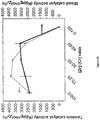
- Table 3 and Figure 4 show that when using MgAl-CO 3 LDH MAO/[(EBI)ZrCl 2 ]:[Pn ⁇ (H)CrCl 2 ] 2 , the weight ratio of 75:25 provided the highest activity (5720 kg PE /mol Zr complex /h). Adding the [Pn ⁇ (H)CrCl 2 ] 2 complex demonstrated a direct effect on the activities with 25% in weight increased them by 2 fold factor in comparison of the catalyst based on pure [(EBI)ZrCl 2 ].
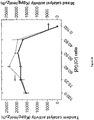
- Table 4 and Figure 5 show that when using LDH MAO/[( nBu Cp) 2 ZrCl 2 ]:[Pn ⁇ (H) CrCl 2 ] 2 , the weight ratio of 80:20 provided the highest activity and productivity (4345 kg PE /mol Zrcomplex /h and 0.171 kg PE /g CAT /h respectively).
- Adding the [Pn ⁇ (H)CrCl 2 ] 2 complex demonstrated a direct effect on the activities with an increase by 4 fold factor in comparison of the catalyst based on pure [( nBu Cp) 2 ZrCl 2 ].
- the activities remain constant with addition of more [Pn ⁇ (H)CrCl 2 ] 2 ; however, the productivities decrease.
- Solid MAO (SMAO) (21900 kg PE /mol Zr compiex /h) is four to five times faster than LDHMAO (5720 kg PE /mol Zr complex /h) and SSMAO (4660 kg PE /mol Zrcomplex /h) respectively.
- Solid MAO with a ratio [Al] 0 /[M] 0 of 300 (21900 kg PE /mol Zr complex /h) is 3.5 times faster than with a ratio [Al] 0 /[M] 0 of 100 (6078 kg PE /mol Zr complex /h).
- Table 8 and Figure 8 show that when using LDHMAO/[(EBI)ZrCl 2 ]:[Pn ⁇ (H)CrCl 2 ] 2 , the molar ratio of 75:25 provided the highest activity (3860 kg PE /mol Zrcomplex /h). All system compositions that include [Pn ⁇ (H)CrC) 2 ] 2 demonstrate a higher activity than the 100:0 molar ratio. Negligible activity was observed when the molar ratio was 0:100 (i.e. no [(EBI)ZrCl 2 ] was present).
- Table 9 and Figure 9 show that when using SMAO/[(EBI)ZrCl 2 ]:[Pn ⁇ (H)CrCl 2 ] 2 , the molar ratio of 60:40 provided the highest activity (23784 kg PE /mol Zr complex /h). All system compositions that include [PN ⁇ (H)CrCl 2 ] 2 demonstrate a higher activity than the 100:0 molar ratio. Negligible activity was observed when the molar ratio was 0:100 (i.e. no [(EBI)ZrCl 2 ] was present).
- Table 10 and Figure 10 show that for transition metal 1/transition metal 2 ratios of 75:25 and 50:50, the activity is significantly higher when using LDHMAO/[(EBI)ZrCl 2 ]:[Pn ⁇ (H)CrCl 2 ] 2 than the corresponding mixed catalysts in the same molar ratio. This demonstrates a clear synergistic effect at these ratios. For a transition metal 1/transition metal 2 ratio of 40:60, the values for activity are the same within error. All system compositions that include [Pn ⁇ (H)CrCl 2 ] 2 demonstrate a higher activity than the 100:0 molar ratio. Negligible activity was observed when the molar ratio was 0:100 (i.e. no [(EBI)ZrCl 2 ] was present).
- Table 11 and Figure 10 show that for transition metal 1/transition metal 2 ratios of 60:40 and 50:50, the activity is significantly higher (when using SMAO/[(EBI)ZrCl 2 ]:[Pn ⁇ (H)CrCl 2 ] 2 ) than the corresponding mixed catalysts in the same molar ratio. This demonstrates a clear synergistic effect at these ratios. For a transition metal 1/transition metal 2 ratio of 75:25 and 40:60, the values for activity are the same within error. All system compositions that include [Pn ⁇ (H)CrCl 2 ] 2 demonstrate a higher activity than the 100:0 molar ratio. Negligible activity was observed when the molar ratio was 0:100 (i.e. no [(EBI)ZrCl 2 ] was present).
- the [CpCrCl 2 ] 2 -based system clearly outperforms the [Pn ⁇ (H)CrCl 2 ] 2 -based system at almost all [Zr]:[Cr] ratios (apart from 60:40, where they are the same within error), and catalyst activitiy increases with decreasing [Zr]:[Cr] ratio up to the point of 40:60.
- the all chromium system with [Zr]:[Cr] of 0:100 produces negligible amounts of polymer.
- DSC Differential scanning calorimetry
Landscapes
- Chemical & Material Sciences (AREA)
- Health & Medical Sciences (AREA)
- Chemical Kinetics & Catalysis (AREA)
- Medicinal Chemistry (AREA)
- Polymers & Plastics (AREA)
- Organic Chemistry (AREA)
- Engineering & Computer Science (AREA)
- Materials Engineering (AREA)
- Crystallography & Structural Chemistry (AREA)
- Transition And Organic Metals Composition Catalysts For Addition Polymerization (AREA)
- Polymerization Catalysts (AREA)
Description
- The present invention relates to a catalyst system for the polymerization and/or oligomerization of olefins and a process utilizing this catalyst system.
- Dual catalysis systems for olefin polymerisation are known in the art.
-
US 6,291,608 discloses a process for preparing polyolefins having a multi-modal molecular weight distribution comprising contacting at least one mono-1α-olefin in a polymerisation zone, under polymerisation conditions, with a dual catalyst system. The dual catalyst system used in the process comprises a first catalyst system which comprises a metallocene catalyst and a cocatalyst and a second catalyst system which comprises diimine nickel complexes which further comprise additional ligands selected from the group consisting of deprotonated-p-diketones, deprotonated-p-ketoesters, halogens and mixtures thereof. The resultant, recovered polymer has at least a bimodal, or broad, molecular weight distribution. -
WO 2006/054048A discloses supported catalyst systems for the polymerisation of olefins. These catalyst systems comprise (a) at least two different monocyclopentadienyl transition metal complexes, (b) one or more activators comprising an ionic compound comprising (i) a cation and (ii) an anion having up to 100 non-hydrogen atoms and the anion containing at least one substituent comprising a moiety having an active hydrogen, and (c) one or more support materials. The catalyst systems may be used to prepare LLDPE polymers having broad metal flow properties. - According to
US 2006/0122054A , bimodal polyolefins having a reverse or partial reversed comonomer incorporation may be prepared in the presence of a dual catalyst on the same support wherein each catalyst has a different response to temperature, ethylene partial pressures, partial pressure of non-polymerisable hydrocarbons present in the reaction mixture and hydrogen partial pressure. The dual catalyst comprises, as a first component, a transition metal complex with a salicylaldamine compound and, as a second component, agroup 4 metal-phosphinimine complex. -
US 2010/0190937A discloses the (co)polymerisation of ethylene using a catalyst system comprising a chromium catalyst and aGroup 4 transition metal catalyst, co-supported on an inorganic oxide support. The co-supported catalyst system gives access to polyethylene having a broad or bimodal molecular weight distribution. - Mixtures of different polyolefins may be made according to the process described in
US 2011/0130528A . The process involves direct, preferably simultaneous, polymerisation of one or more polymerisable olefins using two or more transition metal-containing active polymerisation catalyst systems at least one of which contains cobalt or iron complexed with selected ligands. The polyolefin products contain polymers that may vary in molecular weight, molecular weight distribution, crystallinity, or other factors. -
WO 2011/072851A describes a process for the preparation of dual supported catalysts for use in the homo or copolymerisation of α-olefins. The supported catalyst comprises at least one late transition metal complex, e.g. a tridentate iron complex, and one or more other catalytically-active components selected from metallocenes, Ziegler-Natta-catalysts and monocyclopentadienyl chromium constrained geometry complexes. - Disadvantages associated with prior art dual catalyst systems useful in the polymerisation of α-olefins include their tendency to produce polymer mixtures rather than a single polymer and their variable activities. These disadvantages may result from the fact that in many dual catalyst systems the catalysts catalyse reactions independently of each other rather than cooperatively. There is a need to overcome these and other disadvantages. It is therefore an object of the present invention to provide a catalyst system for the polymerisation and/or oligomerisation of ethylene which overcomes the drawbacks of the prior art, especially the catalyst system shall allow cooperative and synergistic action. Further, it is an object to provide a process for polymerisation and/or oligomerisation of olefins utilizing the catalyst system.
- The first object is achieved by a catalyst system according to
claim 1. The second object is achieved by the use and the process according toclaims 11 and 12. Preferred embodiments are disclosed in the subclaims. - The present invention is based on the surprising discovery that catalysts comprising two or more solid-supported metal complexes, where one complex oligomerises ethene to one or more α-olefins while the other complex polymerises ethene; the oligomers formed in situ can be incorporated in the growing polymer chain to produce a single copolymer of ethylene/α-olefins white using only a single ethylene feed and that such catalysts can be "tuned" by changing the catalyst ratios so as to obtain different polyethylene products.
- The dual polymerization catalyst system of the invention, as stated above, comprises two or more catalytic metal complexes. At least one of these catalytic metal complexes will be a first transition metal complex. By the term "transition metal" we mean a d-block metal, examples of which include, but are not limited to, zirconium, chromium, iron, cobalt, nickel, titanium and hafnium. The transition metal will be complexed with one or more ligands, or aromatic or heteroaromatic cyclic compounds. Such aromatic compounds, useful for complexing with the transition metal, include optionally-substituted cyclopentadiene, optionally substituted indene and optionally-substituted pentalene. The aromatic compound used to complex the transition metal may, further, contain two linked, optionally-substituted cyclopentadiene groups or two linked, optionally-substituted indene and optionally-substituted pentalene groups. In such linked moieties, the linking group may be provided by a lower alkylene group. According to one preferred embodiment, the transition metal complex used in the dual catalyst system will be selected from


- The synergistic dual catalyst system also contains a second transition metal complex, wherein the second transition metal complex is selected from transition metal-permethylpentalene derived complexes. According to a preferred embodiment of the invention, the second transition metal complex is a chromium containing complex, preferably a chromium-permethylpentalene derived complex. Permethylpentalene derived ligands may be a protio form or anionic form (see examples figure below). The protio form such as hydro(permethylpentalene) denoted as Pn∗H has the formula C8Me6H as shown below. It can exist as neutral or anionic forms.

- A preferred chromium-permethylpentalene derived complex for use in the dual catalyst system of the invention has the formula [Pn∗(H)CrCl2]2, wherein Pn∗H represents hydro(permethylpentalene) (C8Me6H) as shown below

- The catalytic compounds, i.e. one or more first transition metal complex and the second transition metal complex, are supported on a solid support material. Typically, the solid support material will be an inorganic oxide or inorganic hydroxide, for example silica, alumina or a layered double hydroxide which may be thermally treated or optionally solvent treated.
- Layered double hydroxides (LDHs) are a class of compounds which comprise at least two meta! cations and have a layered structure. A brief review of LDHs is provided in Chemistry in Britain, September 1997, pages 59 to 62. The hydrotalcites, perhaps the most well-known examples of LDHs, have been studied for many years.
- LDHs can be represented by the general formula [MII (1-x)MIII x(OH)2]x+ (Az-)x/z'yH2O·w(solvent) or [MI (1-x)MIII x(OH)2]n+(Az-)n/z'yH2O·w(solvent), where MI, MII and MIII are mono, di- and trivalent metal cations respectively, that occupy octahedral positions in hydroxide layers, Az- is an interlayer charge-compensating anion, where z is an integer, n=2x-1, x is a number less than 1 and y is 0 or a number greater than 0, solvent is 100% v miscible in water and is typically acetone or methanol, w=0-1. Examples of Az- include CO3 2-, NO3 - and Cl-. A large number of LDHs with a wide variety of MI-MIII cation pairs (e.g., Mg-Al, Ca-Al) as well as the MI-MIII cation pair (Li-Al) with different anions in the interlayer space have been reported and studied. Preferred layered double hydroxides, for use as solid support material for the catalytic compounds as those having the general formula
[MII (1-x)MIII x(OH)2]x+(Az-)x/z'yH2O·w(solvent)
- in which MII is a divalent metal cation;
- MIII is a trivalent metal cation;
- A is a counter anion; and
- x is a number less than 1, w is a number less than 1, which gives compounds optionally hydrated with a stoichiometric amount or a non-stoichiometric amount of water and/or an aqueous-miscible organic solvent (AMO-solvent), such as acetone.
- Preferably, in the LDH of the above formula, MII is Mg or Ca and MIII is Al. The counter anion A is typically selected from CO3 2-, OH-, F-, Cl-, Br-,I-, SO4 2-, NO3 - and PO4 3-. According to a preferred embodiment, the LDH used as a solid support material will be one wherein MII is Mg, MIII is Al and A is CO3 2-. The BET surface of the LDHs is typically greater than 100m2g-1.
in an even preferred embodiment, the LDH used as support material may have the formula
[Mz+ (1-x)M'y+ x(OH)2]a+(Xn-)a/n·bH2O·c (solvent),
wherein M and M' are two different charged metal cations, wherein M may be a mixture of one or more metal cations of charge z and M' may be a mixture of one or more metal cations of charge y, z = 1 or 2; y = 3 or 4; 0 < x < 0.9; b is 0 to 10; c is 0 to 10; X is an anion with n > 0, preferably 1-5; a = z (1-x)+xy-2, wherein the solvent is preferably an aqueous miscible organic solvent. Preferably, in the LDH of the above formula, M is Mg or Ca, and M' is Al. The counter anion X is typically selected from CO3 2-, OH-, F-, Cl-, Br-, I-, SO4 2-, NO3 - and PO4 3-. According to a preferred embodiment, the LDH used as a solid support material will be one wherein M is Mg, M' is Al and X is CO3 2-. The BET surface of the LDH is typically greater than 100 m2g-1. - Preferably, the solid support will, in addition to the catalysts described above, be activated by treatment with an activator compound, such as an alkylaluminoxane, for example methylaluminoxane. The solid support material may, alternatively, be a solid alkylaluminoxane itself, for example solid methylaluminoxane.
- The catalytic compounds will be present on the surface of the solid support material. For instance, they may be present on the surface as a result of adsorption, absorption or chemical interactions.
- According to a preferred embodiment, the weight ratio (or molar ratio) of the first transition metal complex : second transition metal complex (such as a chromium permethylpentalene complex) may vary typically from 95:5 to 50:50. Preferably, the weight ratio is 90:10 to 70:30, more preferably 90:10 to 75:25.
- We have found that a synergistic dual catalyst system wherein the first transition metal complex is the compound [(MesPDI)FeCl2], the second transition metal complex is the chromium hydro(permethylpentalene) compound [Pn∗(H)CrCl2]2, the weight ratio of the first transition metal complex to the chromium hydro(permethylpentalene) is 75:25 and wherein the catalytic compounds are supported on MgAl-CO3 LDH/MAO has a high productivity of 0.545 kgPE/gCAT/h. According to a preferred embodiment of the invention, the synergistic dual catalyst system comprises a weight ratio of [(MesPDI)FeCl2]: [Pn∗(H)CrCl2]2 of 75:25, or a weight ratio of [(EBI)ZrCl2] : [Pn∗(H)CrCl2]2 of 75:25, or a weight ratio of [(nBuCp)2ZrCl2] : [Pn∗(H)CrCl2]2 of 80:20.
- The productivity also depends on the ratio of the amount of complex on the support material. For instance, solid MAO with a ratio [Al]0/[M]0 of 300 has an activity (kgPE/molZr complex/h) of 21900 which is 3.5 times faster than one with a ratio of 100.
- The molar ratio of the first transition metal complex : second transition metal complex may vary typically from 95:5 to 5:95. It was found that the molar ratio of the first transition metal complex : second transition metal complex has an effect on the activity and can be used to vary the polymer structure achieved in the polymerisation of olefins, especially ethylene.
- We have confirmed that the dual catalyst system with two transition metal complexes on the surface of the same solid particle has improved polymerisation productivity, when compared to mixing the separately supported catalysts (maintaining the same [Al]0/[M]0 molar ratio) (
Figure 10 ), at various ratios of the respective transition metal complexes, dependent on the nature of the solid support used. - The dual catalyst system of the invention has use in the polymerisation and/or oligomerisation of olefins, particularly α-olefins, for example propene or ethylene, especially ethylene and the co-polymerisation of ethylene with another olefin.
- The present invention also provides a process for producing a polymer of an olefin which comprises contacting the olefin with a catalyst system according to the invention, as described above.
- In the process, it has been found that the two different types of catalytic metal complexes act cooperatively, i.e. one complex oligomerises olefins while the other complex polymerises the olefin and the in situ formed oligomers. The use of the dual catalyst system of the invention, therefore, makes it possible to synthesize a single copolymer of an olefin while only using a single olefin feed. The process of the invention is particularly suitable for ethylene polymerisation and for ethylene/α-olefin copolymerisation.
- Further advantages and features of the subject matter of the present invention can be taken from the following detailed examples section illustrating preferred embodiments in conjunction with the attached drawing, wherein
-
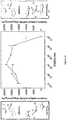
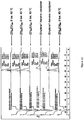
Figure 1 illustrates productivity results achieved for different catalyst systems according to the present invention; polymerisation of ethylene using LDH/MAO/[complexes] catalysts with a weight ratio zirconium:chromium complex of 75:25 under the condition: 10mg of catalyst, 2 bar, 1 hour, 60 or 80°C, 150mg of TIBA, Hexane (50 mL), LDH:MgAl-CO3. -
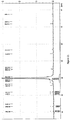
Figure 2 shows differential scanning calorimetric spectra of polyethylene obtained in the comparative example and according to the present invention; differential scanning calorimetric spectra of polyethylene using bottom, LDH/MAO/[(2-Me,4-PhSBI)ZrCl2] catalyst and top) LDH/MAO/[(2-Me,4-PhSBI)ZrCl2]:[Pn∗(H)CrCl2]2 75:25 catalyst under the condition: MgAl-CO3, 10mg of catalyst, 1 bar, 0.5 hour, 150mg of TIBA, Hexane (50mL). -
Figure 3 illustrates SEM images of polyethylene using a) LDH/MAO/[(2-Me,4-PhSBI)ZrCl2] catalyst and b) LDH/MAO/[(2-Me,4-PhSBI)ZrCl2]:[Pn∗(H)CrCl2]2 75:25 catalyst under the condition: MgAl-CO3, 10mg of catalyst, 1 bar, 0.5 hour, 150mg of TIBA, Hexane (50mL). -
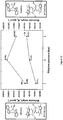
Figure 4 illustrates the dependency of weight ratio of first and second transition metal catalyst on activity and productivity; polymerisation of ethylene using LDH/MAO/[(EBI)ZrCl2]:[Pn∗(H)CrCl2]2 catalysts with a various weight ratio under the condition: 10mg of catalyst, 2 bar, 1 hour, 80°C, 150mg of TIBA, Hexane (50 mL), LDH:MgAl-CO3. -
Figure 5 illustrates the dependency of weight ratio of first and second transition metal catalyst on activity and productivity; polymerisation of ethylene using LDH/MAO/[(nBuCp)2ZrCl2]:[Pn∗(H)CrCl2]2 catalysts with a various weight ratio under the condition: 10mg of catalyst, 2 bar, 1 hour, 80°C, 150mg of TIBA, Hexane (50 mL), LDH:MgAl-CO3. -
Figure 6 illustrates 13CNMR spectra for a polyethylene obtained with a catalyst of the present invention; 13C{1H} NMR spectra in CD4Cl2 at 383 K of polyethylene synthesised using LDH/MAO/[(EBI)ZrCl2]:[Pn∗(H)CrCl2]2 catalysts with a various weight ratio under the condition: 10mg of catalyst, 2 bar, 1 hour, 80°C, 150mg of TIBA, Hexane (50mL), LDH:MgAl-CO3. -
Figure 7 illustrates a 1H NMR spectra for a polyethylene obtained by catalyst system according to the present invention; 1H NMR spectra in CD4Cl2 at 383 K of polyethylene synthesised using LDH/MAO/[(EBI)ZrCl2]:[Pn∗(H)Cr Cl2]2 catalysts with a various weight ratio under the condition: 10mg of catalyst, 2 bar, 1 hour, 80°C, 150mg of TIBA, Hexane (50mL), LDH: MgAI-CO3. -
Figure 8 illustrates the dependency of molar ratio of first and second transition metal catalyst on activity; polymerisation of ethylene using LDH/MAO/[(EBI)ZrCl2]:[Pn∗(H)CrCl2]2 catalysts with various molar ratios under the condition: 10mg of catalyst, 2 bar, 1 hour, 60°C, 150mg of TIBA, Hexane (50mL), LDH: MgAl-CO3. -
Figure 9 illustrates the dependency of molar ratio of first and second transition metal catalyst on activity; polymerisation of ethylene using SMAO/[(EBI)ZrCl2]:[Pn∗(H)CrCl2]2 catalysts with various molar ratio under the condition: 10mg of catalyst, 2 bar, 1 hour, 60°C, 150mg of TIBA, Hexane (50mL), SMAO. -
Figure 10 illustrates a comparison of molar ratio of [Transition metal 1]/[Transition metal 2] in the tandem system (LDHMAO/[(EBI)ZrCl2]:[Pn∗(H)Cr Cl2]2 and mixing separate systems (LDHMAO/[(EBI)ZrCl2]:[Pn∗(H)CrCl2]2 and LDHMAO/[Pn∗(H)CrCl2]2) using LDHMAO under the condition: 10mg of catalyst, 2 bar, 1 hour, 60°C, 150mg of TIBA, Hexane (50mL), LDH: MgAl-CO3. -
Figure 11 illustrates a comparison of molar ratio of [Transition metal 1]/[Transition metal 2] in the tandem system (LDHMAO/[(EBI)ZrCl2]:[Pn∗(H)Cr Cl2]2) and mixing separate systems (LDHMAO/[(EBI)ZrCl2][Pn∗(H)CrCl2]2 and LDHMAO/[Pn∗(H)CrCl2]2 using SMAO under the condition: 10mg of catalyst, 2 bar, 1 hour, 60°C, 150mg of TIBA, Hexane (50mL), SMAO. -
Figure 12 illustrates an effect on polymeristion activity when [Zr]:[Cr] ratio is modified. SMAO-[Zr][Cr] catalysts with various molar ratios under the conditions: 10 mg of catalyst, 2 bar, 1 h, 60 °C, 150 mg TIBA, Hexane (50 mL). [Al]MAO/([Cr] + [M])0 = 300. -
Figure 13 illustrates an effect on polymeristion activity when [Zr]:[Cr] ratio is modified. SMAO-[Zr][Cr] catalysts with various molar ratios under the conditions: 10 mg of catalyst, 2 bar, 1 h, 60 °C, 150 mg TIBA, Hexane (50 mL). [Al]MAO/([Cr] + [M])0 = 300. -
Figure 14 illustrates an effect on polymeristion activity when LDHMAO-[Zr] systems are prepared containing the same molar amount of [Zr] to the tandem catalysts analogue.Conditions: 10 mg of catalyst, 2 bar, 1 h, 60 °C, 150 mg TIBA, Hexane (50 mL). [Al]MAO/([Cr] + [M])0 = 100, LDH = AMO-MgAlCO3. -
Figure 15 illustrates molecular weights and distributions recorded by GPC when [Zr]:[Cr] ratio is modified. LDHMAO or SMAO-[Zr][Cr] catalysts with various molar ratios under the conditions: 10 mg of catalyst, 2 bar, 1 h, 60 °C, 150 mg TIBA, Hexane (50 mL). (Al]MAO/([Cr] + [M])0 = 300 for sMAO and 100 for LDHMAO. LDH = AMO-MgAlCO3. -
Figure 16 illustrates a comparison of sMAO-[Zr][Cr] ([Zr]:[Cr] = 75:25). 25 mg catalyst, pressure variable (8 bar - blue line, 6 bar - purple line, 4 bar - red line), 1 h, 80 °C, [Al]MAO/([Cr] + [M])0 = 300, TEA scavenger. -
Figure 17 illustrates a gel permeation chromatography data obtained from polymerisation of ethylene using sMAO-[Zr][Cr] catalyst under the conditions:1 hour, 80 °C, 2.5 mL TEA, Hexane (1 L), [Al]MAO/([Cr) + [M])0 = 300. -
Figure 18 illustrates a TREF data obtained from polymerisation of ethylene using sMAO-[Zr]60[Cr]40 catalyst under the conditions:1 hour, 80 °C, 2.5 mL TEA, Hexane (1 L), [Al]MAO/([Cr] + [M])0 = 300. -
Figure 19 illustrates a TREF data obtained from polymerisation of ethylene using sMAO-[Zr]60[Cr]40 catalyst under the conditions:1 hour, 8 bar, 2.5 mL TEA, Hexane (1 L), [Al]MAO/([Cr] + [M])0 = 300. -
Figure 20 illustrates a 13C{1H} NMR spectroscopic data from the polymer produced using sMAO-[Zr]60[Cr]40 catalyst under the conditions: 1 hour, 8 bar, 80 °C, 2.5 mL TEA. -
Figure 21 illustrates a 13C{1H} NMR spectroscopic data from the polymer produced using sMAO-[Zr]60[Cr]40 catalyst under the conditions: 1 hour, 4 bar, 80 °C, 2.5 mL TEA. -
Figure 22 illustrates a differential scanning calorimetry data from the polymer produced using sMAO catalyst under the general conditions: 1 hour, 2.5 mL TEA. - Thermally-treated support material (SiO2 (SS) or an acetone-dispersed Layered Double Hydroxide (LDH)) was weighed and slurried in toluene. Methylaluminoxane (MAO), with a solid support:MAO mole ratio of 2:1, was prepared in toluene solution and added to the thermally-treated solid support slurry. The resulting slurry was heated at 80°C for 2 h with occasional swirling. The product was then filtered, washed with toluene, and dried under dynamic vacuum to afford the final solid support material (LDHMAO, and SSMAO) in quantitative yield.
- Solid MAO (SMAO) was received from SCG Chemicals, dried to afford colourless free-flowing powder and used as is.
- The solid support materials used in the examples provided below were MAO treated silica (SSMAO);
MAO treated acetone-dispersed LDH (LDHMAO); and solid MAO (SMAO). - Solid support material prepared as described above was weighed and slurried in toluene. The solution of at least two complexes (described below) in toluene with support:complexes weight ratio of 0.02 was prepared and added to the support slurry. The resulting slurry was heated at 80°C for 2 h with occasional swirling or until the solution became colourless. The product was then filtered, washed with toluene and dried under dynamic vacuum to afford the synergistic dual catalyst.
- It is also possible to mix the support and at least two complexes in the same Schlenk and then add the toluene. The reaction conditions and work-up are identical as described above.
- It is also possible to mix at least both complexes with MAO in a toluene solution and to add them into a slurry of the solid support in toluene. The reaction conditions and work-up are identical as described above.
- The first transition metal complex used in the preparation of the dual catalyst system in the Examples was selected from


- The second transition metal complex used in the preparation of the dual catalyst system was the compound having the formula [Pn∗(H)CrCl2]2. This was prepared according to the following synthetic procedure.
- To a slurry of CrCl3 (0.0981g, 0.619 mmole) in benzene was added a solution of Pn∗(H)SnMe3 (0.218g, 0.619 mmole) in benzene. The reaction mixture was heated to 80°C for 5 days to afford a dark-green solution. The reaction mixture was filtered and the volatiles were removed in vacuo to afford a dark-green powder which was washed with pentane and dried under reduced pressure to yield [Pn∗(H)CrCl2]2 as a dark-green powder. The complex is paramagnetic. The yield was 67%.
- 1H NMR spectrum (C6D6:23°C)δ range is -36.0 to 18.3 ppm.
- The polymerisation of ethylene was studied using the dual catalyst systems. To demonstrate the different productivities between the various complexes, a weight ratio of first transition metal catalyst : chromium-hydro(permethylpentalene) complex of 75:25 was chosen.
-
- catalyst: MgAl - CO3 LDH MAO/[complex 1] : [Pn∗(H)CrCl2]2
- solvent: hexane 50 ml
- amount of catalyst: 10 mg
- ethylene feed : 200 kPa (2 bar)
- reaction time : 1 hour
- reaction temperatures : 60°C and 80°C
- Triisobutylaluminium (TIBA) : 150 mg
- The results of the polymerisations are shown in Table 1 and
Figure 1 .Table 1 Complex 1Complex 2Temperature (°C) Productivity kg PE /g CAT |h [(EBI)ZrCl2] [Pn*(H)CrCl2]2 60 0.129 [(EBI)ZrCl2] [Pn*(H)CrCl2]2 80 0.205 [(EBI*)ZrCl2] [Pn*(H)CrCl2]2 80 0.085 [(MesPDI)FeCl2] (Pn*(H)CrCl2]2 60 0.545 [(MesPDI)FeCl2]LDH [Pn*(H)CrCl2]2 80 0.404 [(nBuCp)2ZrCl2] [Pn*(H)CrCl2]2 60 0.283 [(nBuCp)2ZrCl2] [Pn*(H)CrCl2]2 80 0.156 - The results shown in Table 1 and
Figure 1 demonstrate that the MgAl-CO3 LDH/[(MesPDI)FeCl2] catalyst achieved the highest productivities at 60°C and 80°C (0.545 and 0.404 kgPE/gCAT/h, respectively). The results for the other complexes varied with the temperature. Productivities increased with increases in temperature, with the exception of the [(EBI)ZrCl2] based catalyst. -
- catalyst: MgAl-CO3 LDH MAO/[(2-Me,4-Ph-SBI)ZrCl2].[Pn∗(H)CrCl2]2
- solvent: hexane (50 ml)
- amount of catalyst: 10 mg
- ethylene feed : 200 kPa (2 bar)
- reaction time : 0.5 hour
- reaction temperature : 80°C
- TIBA : 150 mg
- The results of the polymerisations are shown in Table 2 below.
Table 2 Complex 1Complex 2Temperature (°C) Aluminium scavenger Productivity kg PE /g CAT |h [(2-Me,4-Ph-SBI)ZrCl2] [Pn*(H)CrCl2]2 80 TIBA 0.130 [(2-Me,4-Ph-SBI)ZrCl2] [Pn*(H)CrCl2]2 80 MAO 0.126 - Ethylene polymerisations using MgAl-CO3 LDH MAO/[(2-Me,4-PhSBI)ZrCl2]: [Pn∗(H)CrCl2]2 with TIBA or MAO as scavenger demonstrated the same productivities (0.130 and 0.126 kgPE/gCAT/h respectively).
-
Figure 2 shows the differential scanning calorimetric spectra of polyethylene using, as catalyst, - (1) Top - MgAl-CO3 LDH MAO/[(2-Me,4-PhSBI)ZrCl2]:[Pn∗(H)CrCl2]2 75:25
- (2) Bottom - MgAl-CO3 LDH MAO/[(2-Me,4-PhSBI)ZrCl2]
- Conditions employed for (1) and (2):
- solvent : hexane (50 ml)
- amount of catalyst : 10 mg
- ethylene feed : 100 kPa (1 bar)
- reaction time : 0.5 hour
- TIBA : 150 mg
-
Figure 2 demonstrates that there is a broadening of the differential scanning calorimetric spectra when the dual catalyst system was used in comparison with the single catalyst system. - This broadening is characteristic of ethylene/α-olefin co-polymerisations. The polymerisation was, however, carried out using only a single ethylene feed.
- The scanning electron microscope image in
Figure 3 demonstrates the flower type particles of the polyethylene, this is similar to the LDH starting material.
C. When the polymerisations were carried out in a 2L reactor (1000 mL of hexane, 1 h, 80°C and 8 bar) the productivity using MgAl-CO3 LDH MAO/[(2-Me,4-PhSBI)ZrCl2]:[Pn∗(H)CrCl2]2 75:25 was 0.55 kgPE/gCAT/h, 4 times higher than when 50 mL of solvent is used. The polyethylene possessed very large particle size (70% of 500 µm, 17% of 250 µm and other smaller ones), comparing to those obtained when MgAl-CO3 LDH MAO/[(2-Me,4-PhSBI)ZrCl2] was used as a catalyst (58% of 500 µm, 23% of 250 µm and other smaller ones). - The molecular weights were similar, 531505 g/mol for MgAl-CO3 LDH MAO/[(2-Me,4-PhSBI)ZrCl2]:[Pn∗(H)CrCl2]2 and 567861 g/mol for MgAl-CO3 LDH MAO/[(2-Me,4-PhSBI)ZrCl2]. However, there is an increase of 3 fold in the bulk CH3 per 1000C from 0.665 for MgAl-CO3 LDH MAO/[(2-Me,4-PhSBI)ZrCl2] to 1.429 for MgAl-CO3 LDH MAO/[(2-Me,4-PhSBI)ZrCl2]:[Pn∗(H)CrCl2]2.
- The molecular weights are weight average molecular weight (Mw) and were determined by Gel Permeation Chromatography (GPC).
- To try to understand the effect the weight ratio of zirconium:chromium in the dual catalyst system has on the activities, several different weight ratios were chosen and the results are collated in Tables 3 and 4, and
Figures 4 and5 .Table 3 Polymerisation of ethylene using MgAl-CO3 LDH MAO/[(EBI)ZrCl2]: [Pn*(H)CrCl2]2 catalyst under the condition: 10 mg of catalyst, 2 bar, 1 hour, 80°C, 150 mg of TIBA, Hexane (50 ml). Complex 1Complex 2Weight Ratio Productivity kg PE/g CAT/h Activity kg PE/molZr complex /h [(EBI)ZrCl2] [Pn*(H)CrCl2]2 100:00 0.147 3076 [(EBI)ZrCl2] [Pn*(H)CrCl2]2 90:10 0.171 3976 [(EBI)ZrCl2] [Pn*(H)CrCl2]2 80:20 0.191 4996 [(EBI)ZrCl2] [Pn*(H)CrC)2]2 75:25 0.205 5720 [(EBI)ZrCl2] [Pn*(H)CrCl2]2 70:30 0.138 4124 [(EBI)ZrCl2] [Pn*(H)CrCl2]2 50:50 0.081 3389 [(EBI)ZrCl2] none 0:100 0.003 negligible - Table 3 and
Figure 4 show that when using MgAl-CO3 LDH MAO/[(EBI)ZrCl2]:[Pn∗(H)CrCl2]2, the weight ratio of 75:25 provided the highest activity (5720 kgPE/molZr complex/h). Adding the [Pn∗(H)CrCl2]2 complex demonstrated a direct effect on the activities with 25% in weight increased them by 2 fold factor in comparison of the catalyst based on pure [(EBI)ZrCl2]. The morphology of the polymers changed with the ratio of LDH MAO/[(EBI)ZrCl2]:[Pn∗(H)CrCl2]2 as shown inFigures 6 and7 . The Figures show that there is a broadening of the NMR spectra with an increase in chromium. This demonstrates the presence of branching in the polymer.Table 4 Polymerisation of ethylene using MgAl-CO3 LDH MAO/[(nBuCp)2ZrCl2]: [Pn*(H)CrCl2]2 catalyst under the condition: 10 mg of catalyst, 2 bar, 1 hour, 80°C, 150 mg of TIBA, Hexane (50 ml). Complex 1Complex 2Weight Ratio Productivity kg PE /g CAT /h Activity kg PE/molZr complex/h [(nBuCp)2ZrCl2] none 100:00 0.063 1079 [(nBuCp)2ZrCl2 [Pn*(H)CrCl2]2 80:20 0.171 4345 [(nBuCp)2ZrCl2] [Pn*(H)CrCl2]2 75:25 0.155 4194 [(nBuCp)2ZrCl2] [Pn*(H)CrCl2]2 70:30 0.148 4262 none [Pn*(H)CrCl2]2 0:100 0.003 negligible - Table 4 and
Figure 5 show that when using LDH MAO/[(nBuCp)2ZrCl2]:[Pn∗(H) CrCl2]2, the weight ratio of 80:20 provided the highest activity and productivity (4345 kgPE/molZrcomplex/h and 0.171 kgPE/gCAT/h respectively). Adding the [Pn∗(H)CrCl2]2 complex demonstrated a direct effect on the activities with an increase by 4 fold factor in comparison of the catalyst based on pure [(nBuCp)2ZrCl2]. The activities remain constant with addition of more [Pn∗(H)CrCl2]2; however, the productivities decrease. - Similar polymerisations have been carried out using a zirconium complex based on permethylpentalene ligand [Pn∗(H)ZrCl3]2.
Table 5 Polymerisation of ethylene using MgAl-CO3 LDH/MAO/[Pn∗(H)ZrCl3]2: [Pn*(H)CrCl2]2 catalyst under the condition: 10mg of catalyst, 2 bar, 1 hour, 80°C, 150mg of TIBA, Hexane (50ml). Complex 1Complex 2Weight Ratio Productivity kg PE/g CAT/h Activity kg PE/molZr complex /h [Pn∗(H)ZrCl3]2 none 100:0 0.0055 192 [Pn∗(H)ZrCl3]2 [Pn*(H)CrCl2]2 75:25 0.0072 335 - Activity increases by 75% when the chromium complex was incorporated (335 kgPE/molZr complex/h instead of 192 kgPE/molZr complex/h).
- To understand the effect of the support on the productivity, three supports have been tested (MgAl-CO3 LDHMAO, SSMAO and SMAO). The results are collated in Table 6.
Table 6 Polymerisation of ethylene using support/[(EBI)ZrCl2]:[Pn*(H)CrCl2]2 catalyst under the condition: 10 mg of catalyst, 2 bar, 1 hour, 80°C, 150 mg of TIBA, Hexane (50 ml). Complex 1Complex 2Weight Ratio Support Productivity kg PE /g CAT /h Activity kgPE/molZrcomplex/h [(EBI)ZrCl2] [Pn*(H)CrCl2]2 75:25 LDHMAO 0.205 5720 [(EBI)ZrCl2] [Pn*(H)CrCl2]2 75:25 SSMAO 0.167 4660 [(EBI)ZrCl2] [Pn*(H)CrCl2]2 75:25 SMAO 0.785 21900 LDHMAO = acetone-dispersed MgAl-CO3
LDH treated with MAO; SSMAO = calcined SiO2 treated with MAO;
SMAO = solid methylaluminoxane - Solid MAO (SMAO) (21900 kgPE/molZr compiex/h) is four to five times faster than LDHMAO (5720 kgPE/molZr complex/h) and SSMAO (4660 kgPE/molZrcomplex/h) respectively.
- To understand the effect of the amount of complex on the support on the productivity, two amounts have been tested. The results are collated in Table 7.
Table 7 Polymerisation of ethylene using MgAl-CO3 LDH MAO/[(EBI)ZrCl2]: [Pn*(H)CrCl2]2 catalyst under the condition: 10 mg of catalyst, 2 bar, 1 hour, 80°C, 150 mg of TIBA, Hexane (50 ml). Complex 1Complex 2Weight Ratio [Al]0/[M]0 Productivity kg PE/g CAT/h Activity kgPE/molZrcomplex/h [(EBI)ZrCl2] [Pn*(H)CrCl2]2 75:25 300 0.785 21902 [(EBI)ZrCl2] [Pn*(H)CrCl2]2 75:25 100 0.699 6078 - Solid MAO with a ratio [Al]0/[M]0 of 300 (21900 kgPE/molZr complex/h) is 3.5 times faster than with a ratio [Al]0/[M]0 of 100 (6078 kgPE/molZr complex/h).
- To try to understand the effect the molar ratio of
transition metal 1/transition metal 2 has on activity, the relative ratio was varied, whilst maintaining a total [Al]0/[M]0 of 100. The results are collated in Table 8 andFigure 8 .Table 8 Polymerisation of ethylene using support/[(EBI)ZrCl2]:[Pn*(H)CrCl2]2 catalyst under the condition: 10mg of catalyst, 2 bar ethylene, 1 hour, 60°C, 150mg of TIBA, Hexane (50 mL). Complex 1Complex 2Molar Ratio (Complex 1: Complex 2) Activity kgPE/molZrcomplex/h [(EBI)ZrCl2] [Pn*(H)CrCl2]2 100:0 2381 [(EBI)ZrCl2] [Pn*(H)CrC)2]2 75:25 3860 [(EBI)ZrCl2] [Pn*(H)CrC)2]2 50:50 3718 [(EBI)ZrCl2] [Pn*(H)CrCl2]2 40:60 2669 [(EBI)ZrCl2] [Pn*(H)CrCl2]2 0:100 negligible LDHMAO = acetone-dispersed MgAl-CO3
LDH treated with MAO - Table 8 and
Figure 8 show that when using LDHMAO/[(EBI)ZrCl2]:[Pn∗(H)CrCl2]2, the molar ratio of 75:25 provided the highest activity (3860 kgPE/molZrcomplex/h). All system compositions that include [Pn∗(H)CrC)2]2 demonstrate a higher activity than the 100:0 molar ratio. Negligible activity was observed when the molar ratio was 0:100 (i.e. no [(EBI)ZrCl2] was present). - To try to understand the effect the molar ratio of
transition metal 1/transition metal 2 has on activity, the relative ratio was varied, whilst maintaining a total [Al]0/[M]0 of 300. The results are collated in Table 9 andFigure 9 .Table 9 Polymerisation of ethylene using support/[(EBI)ZrCl2]:[Pn*(H)CrCl2]2 catalyst under the condition: 10mg of catalyst, 2 bar ethylene, 1 hour, 60°C, 150mg of TIBA, Hexane (50 mL). Complex 1Complex 2Molar Ratio (Complex 1: Complex 2) Activity kgPE/molZrcomplex/h [(EBI)ZrCl2] [Pn*(H)CrCl2]2 100:0 15459 [(EBI)ZrCl2] [Pn*(H)CrCl2]2 75:25 17482 [(EBI)ZrCl2] [Pn*(H)CrCl2]2 60:40 23784 [(EBI)ZrCl2] [Pn*(H)CrCl2]2 50:50 20687 [(EBI)ZrCl2] [Pn*(H)CrCl2]2 40:60 19466 [(EBI)ZrCl2] [Pn*(H)CrCl2]2 0:100 negligible SMAO = solid methylaluminoxane - Table 9 and
Figure 9 show that when using SMAO/[(EBI)ZrCl2]:[Pn∗(H)CrCl2]2, the molar ratio of 60:40 provided the highest activity (23784 kgPE/molZr complex/h). All system compositions that include [PN∗(H)CrCl2]2 demonstrate a higher activity than the 100:0 molar ratio. Negligible activity was observed when the molar ratio was 0:100 (i.e. no [(EBI)ZrCl2] was present). - To try to understand the synergistic effect on activity observed at different molar ratios of
transition metal 1/transition metal 2, the relative ratio was varied, whilst maintaining a total [Al]0/[M]0 of 100; these values for activity were then compared to polymerisation runs where the [Al]0/[M]0 of 100 and molar ratios oftransition metal 1/transition metal 2 were maintained but thetransition metal complexes Figure 10 .Table 10 Polymerisation of ethylene using support/[(EBI)ZrCl2]:[Pn*)H)CrCl2]2 catalyst and mixed support/[(EBI)ZrCl2] and support/[Pn∗(H)CrCl2]2 catalysts under the condition: 10mg of catalyst, 2 bar ethylene, 1 hour, 60°C, 150mg of TIBA, Hexane (50mL), Complex 1Complex 2Molar Ratio (Complex 1: Complex 2) Tandem Catalyst Activity kgPE/molZcomplex/h Mixed Catalyst Activity kgPE/molZrcomplex/h [(EBI)ZrCl2] [Pn*(H)CrCl2]2 100:0 2381 2381 [(EBI)ZrCl2] [Pn*(H)CrCl2]2 75:25 3860 2694 [(EBI)ZrCl2] [Pn*(H)CrCl2]2 50:50 3718 3065 [(EBI)ZrCl2] [Pn*(H)CrCl2]2 40:60 2669 3123 [(EBI)ZrCl2] [Pn*(H)CrCl2]2 0:100 negligible Negligible LDHMAO = acetone-dispersed MgAl-CO3
LDH treated with MAO - Table 10 and
Figure 10 show that fortransition metal 1/transition metal 2 ratios of 75:25 and 50:50, the activity is significantly higher when using LDHMAO/[(EBI)ZrCl2]:[Pn∗(H)CrCl2]2 than the corresponding mixed catalysts in the same molar ratio. This demonstrates a clear synergistic effect at these ratios. For atransition metal 1/transition metal 2 ratio of 40:60, the values for activity are the same within error. All system compositions that include [Pn∗(H)CrCl2]2 demonstrate a higher activity than the 100:0 molar ratio. Negligible activity was observed when the molar ratio was 0:100 (i.e. no [(EBI)ZrCl2] was present). - To try to understand the synergistic effect on activity observed at different molar ratios of
transition metal 1/transition metal 2, the relative ratio was varied, whilst maintaining a total [Al]0/[M]0 of 300; these values for activity were then compared to polymerisation runs where the [Al]0/[M]0 of 300 and molar ratios oftransition metal 1/transition metal 2 were maintained but thetransition metal complexes Figure 10 .Table 11 Polymerisation of ethylene using support/[(EBI)ZrCl2]:[Pn*(H)CrCl2]2 catalyst and mixed support/[(EBI)ZrCl2] and support/[Pn∗(H)CrCl2]2 catalysts under the condition: 10mg of catalyst, 2 bar ethylene, 1 hour, 60°C, 150mg of TIBA, Hexane (50 mL). Complex 1Complex 2Molar Ratio (Complex 1: Complex 2) Tandem Catalyst Activity kgPE/molZrcomplex/h Mixed Catalyst Activity kgPE/molZrcomplex/h [(EBI)ZrCl2] [Pn*(H)CrCl2]2 100:0 15459 15459 [(EBI)ZrCl2] [Pn*(H)CrCl2]2 75:25 17482 18102 [(EBI)ZrCl2] [Pn*(H)CrCl2]2 60:40 23784 18119 50:50 20688 19558 [(EBI)ZrCl2] [Pn*(H)CrCl2]2 40:60 19466 17053 [(EBI)ZrCl2] [Pn*(H)CrCl2]2 0:100 negligible Negligible SMAO = solid methylaluminoxane - Table 11 and
Figure 10 show that fortransition metal 1/transition metal 2 ratios of 60:40 and 50:50, the activity is significantly higher (when using SMAO/[(EBI)ZrCl2]:[Pn∗(H)CrCl2]2) than the corresponding mixed catalysts in the same molar ratio. This demonstrates a clear synergistic effect at these ratios. For atransition metal 1/transition metal 2 ratio of 75:25 and 40:60, the values for activity are the same within error. All system compositions that include [Pn∗(H)CrCl2]2 demonstrate a higher activity than the 100:0 molar ratio. Negligible activity was observed when the molar ratio was 0:100 (i.e. no [(EBI)ZrCl2] was present). - Given both the interesting activity boost of the tandem systems compared to the traditional zirconium-based systems, and the potential to produce higher value copolymers from a single ethylene feed, new chromium components to the tandem systems were first investigated.
- Using the same methodology, 10 new systems were initally prepared from (EBI)ZrCl2 and [Cp∗CrCl2]2 or [CpCrCl2]2, immobilised on solid MAO, based on [Zr]:[Cr] ratios of 0:100, 40:60, 50:50, 40:60 and 75:25, where [Al]MAO/([Cr] + [M])0 = 300.
- Ethylene polymerisation runs were carried out using all of the systems using the standard conditions of 10 mg of catalyst, 2 bar ethylene, 1 hour, 60°C, 150 mg TIBA, Hexane (50 mL). The SMAO-[Zr][[CpCrCl2]2] system is compared to SMAO-[Zr][[Pn∗(H)CrCl2]2] in
Figure 12 . - The [CpCrCl2]2-based system clearly outperforms the [Pn∗(H)CrCl2]2-based system at almost all [Zr]:[Cr] ratios (apart from 60:40, where they are the same within error), and catalyst activitiy increases with decreasing [Zr]:[Cr] ratio up to the point of 40:60. The all chromium system with [Zr]:[Cr] of 0:100 produces negligible amounts of polymer.
- Studies carried out on the [Cp∗CrCl2]2-based system found the peak activity to be at a ratio of 75:25. At this point, this catalyst did indeed outperform the [Pn∗(H)CrCl2]2 system but activity declined after this point with decreasing [Zr]:[Cr] ratio. The importance of the stereolectronics of the chromium complex are clearly illustrated by this result (
Figure 13 ). - Another key control experiment to ascertain the role of the chromium in the tandem systems prepared was carried out. LDHMAO-based-catalyst systems were prepared that contained a comparable amount of [Zr] to a particular tandem system but with no [Cr] component (For example, if the tandem system composition was [Al]:[Zr]:[Cr] = 100:0.75;0.25, the the Zr-only analogue prepared was [Al]:[Zr]:[Cr] = 100:0.75:0). Ethylene polymerisation studies were then completed. In these systems, it is important to determine whether with increasing polymerisation activity seen with decreasing [Zr]:[Cr] ratio is a result of the synergistic system itself or more simply a result of the concomitant increase in [Al]:[Zr] ratio. The data are presented in
Figure 14 and compare tandem systems, LDHMAO-[Zr]:[Cr], with their [Zr]-only analogues, LDHMAO-[Zr]. - The data clearly show that the tandem system is better at all ratios (except for [Zr]:[Cr] = 40:60) and that despite the increasing [Al]:[Zr] ratio, the LDHMAO-[Zr] catalyst system does not result in an increase in activity. The data again clearly points to the importance of both metals in the tandem systems prepared.
- Gel permeation chromatography data for the LDHMAO- and SMAO-[Zr][Cr] systems ([Zr] = (EBIZrCl2), [Cr] = [(Pn∗(H)CrCl2]2) were recorded and the data, as a function of [Zr]:[Cr] ratio is depicted in
Figure 15 . There are significant variations in the molecular weights recorded for the samples produced by LDHMAO-[Zr][Cr] systems which are much higher than the samples produced by SMAO-[Zr][Cr] systems, which show little effect of varying the [Zr]:[Cr] ratio. - Fresh samples of sMAO-[Zr]60[Cr]40 ([Zr]:[Cr] = 60:40) and sMAO-[Zr]50[Cr]50 ([Zr]:[Cr] - 50:50), where [Zr] = (EBI)ZrCl2 and [Cr] = [Pn∗(H)CrCl2]2. were prepared and tested in a 2 L reactor polymerisation. These complexes represented high activity for the tandem systems and they were chosen for this reason. The productivity data of the polymerisations are summarised in Table 12.
- As expected, productivity increased with increasing pressure and temperature. Interestingly, the system with ratio [Zr]:[Cr] = 50:50 outperformed the 60:40 system at 6 and 8 bar of ethylene. Catalyst testing in glass ampoules at 2 bar showed the opposite optimum system.
- Fresh samples of sMAO-[Zr]60[Cr]40 ([Zr]:[Cr] = 60:40) and sMAO-[Zr]50[Cr]50 ([Zr]:[Cr] - 50:50), where [Zr] = (EBI)ZrCl2 and [Cr] = [Pn∗(H)CrCl2]2, were prepared and tested in a 2 L reactor polymerisation. These complexes represented high activity for the tandem systems and they were chosen for this reason. The productivity data of the polymerisations are summarised in Table 12.
- As expected, productivity increased with increasing pressure and temperature. Interestingly, the system with ratio [Zr]:[Cr] = 50:50 outperformed the 60:40 system at 6 and 8 bar of ethylene. Catalyst testing in glass ampoules at 2 bar showed the opposite optimum system.
- Polymerisation ethylene uptake data was recorded for these runs and an example is shown in
Figure 16 . Uptake is high at the ethylene pressure increases but it is also important to note that the uptake remains remarkably stable over the course of 1 hour when quenching occurs. - Gel permeation chromatography data was collected on the polymers produced by sMAO-[Zr]60[Cr]40 and sMAO-[Zr]50[Cr]50 at 80 °C and 4, 6 and 8 bar. The data show that the molecular weights (M w) are significantly higher when the catalyst with an increased [Zr]:[Cr] ratio is used (
Figure 17 ). The molecular weights also displayed a more general trend of increasing with in Temperature Rising Elution Fractionation (TREF) data was collected in order to better understand the nature of the polymers produced by the tandem systems. The effect of changing pressure at a constant temperature of 80 °C for sMAO-[Zr]60[Cr]40 is displayed inFigure 18 . As pressure increases, Tm is observed to increase, suggesting that the relative rate of polymerisation to oligomerisation increases. - The effect of changing temperature at a constant pressure of 8 bar for sMAO-[Zr]60[Cr]40 is displayed in
Figure 19 . As temperature increases, Tm increases. Further data over a wider temperature range would need to be collected in order to see if this trend is more widely applicable.
creasing ethylene pressure. - 13C{1H} NMR spectroscopic data was collected in order to further our understanding of the polymer microstructures obtained. Selected spectra are presented in
Figures 20 and21 . Both spectra indicate the presence of low levels (up to 0.28 % total) of octene and butene incorporation. Despite the low levels, this is very encouraging and is more evidence to confirm that the tandem catalysis system is based on the zirconium centre carrying polymerisation in synergy with the chromium centre carrying out oligomerisation. - Differential scanning calorimetry (DSC) data was collected on the polymer samples produced by the sMAO-[Zr][Cr] systems (
Figure 22 ). The data show pressure dependent peak temperature values; traces of ethylene/1-hexene copolymers are included for reference. - The features disclosed in the foregoing description, in the claims and in the accompanying drawings may both separately or in any combination thereof be material for realizing the invention in diverse forms thereof.
Claims (13)
- A synergistic dual olefin copolymerisation catalyst system comprising a solid support material having, on its surface, two or more catalytic metal complexes wherein the two or more catalytic metal complexes comprise at least one first transition metal complex and a second transition metal complex different from the first transition metal complex, and wherein the first transition metal complex is an olefin polymerisation catalyst and the second transition metal complex is an olefin oligomerisation catalyst, and wherein the second transition metal complex is a transition metal-permethylpentalene derived complex.
- The system according to claim 1 wherein the second transition metal complex is selected from a chromium containing complex.
- The system according to claim 1, wherein the first transition metal complex is at least one complex of a metal selected from zirconium, iron, chromium, cobalt, nickel, titanium and hafnium containing one or more aromatic or heteroaromatic ligands.
- The system according to claim 2, wherein the first transition metal complex is at least one complex selected from


- The system according to any one of claims 1 to 4, wherein the second transition metal complex is a complex of chromium and a ligand derived from permethylpentalene having the formula [Pn∗(H)CrCl2]2, where Pn* is a permethylpentalene moiety.
- The system according to any one of claims 1 to 5, wherein the solid support material is selected from a layered double hydroxide activated with an alkylaluminoxane, silica activated with an alkylaluminoxane, and solid alkylaluminoxane.
- The system according to claim 6, wherein the alkylaluminoxane is methylaluminoxane.
- The system according to any one of claims 1 to 7, wherein the weight or molar ratio of the first transition metal complex to the second transition metal complex is from 95:5 to 50:50.
- The system according to any one of claims 1 to 7, wherein the weight or molar ratio of the first transition metal complex to the second transition metal complex is from 90:10 to 70:30.
- The system according to any one of claims 1 to 7, wherein the weight or molar ratio of the first transition metal complex to the second transition metal complex is from 90:10 to 75:25.
- Use of a system according to any one of claims 1 to 10 as a catalyst in the combined polymerisation and oligomerisation of an olefin to produce a copolymer.
- A process for producing a polymer of an olefin which comprises contacting the olefin with a synergistic dual solid catalyst system according to any one of claims 1 to 10.
- The process according to claim 12, wherein the olefin is ethylene.
Applications Claiming Priority (2)
| Application Number | Priority Date | Filing Date | Title |
|---|---|---|---|
| GBGB1408616.9A GB201408616D0 (en) | 2014-05-15 | 2014-05-15 | Solid-supported catalyst, use of the same and process for producing polymers |
| PCT/EP2015/060640 WO2015173323A1 (en) | 2014-05-15 | 2015-05-13 | Catalyst system for the polymerisation and/or oligomerisation of olefins and process utilizing the catalyst system |
Publications (2)
| Publication Number | Publication Date |
|---|---|
| EP3143052A1 EP3143052A1 (en) | 2017-03-22 |
| EP3143052B1 true EP3143052B1 (en) | 2019-09-04 |
Family
ID=51032809
Family Applications (1)
| Application Number | Title | Priority Date | Filing Date |
|---|---|---|---|
| EP15721280.4A Active EP3143052B1 (en) | 2014-05-15 | 2015-05-13 | Catalyst system for the polymerisation and/or oligomerisation of olefins and process utilizing the catalyst system |
Country Status (6)
| Country | Link |
|---|---|
| US (1) | US9879100B2 (en) |
| EP (1) | EP3143052B1 (en) |
| JP (1) | JP2017515956A (en) |
| KR (1) | KR20170008271A (en) |
| GB (1) | GB201408616D0 (en) |
| WO (1) | WO2015173323A1 (en) |
Cited By (1)
| Publication number | Priority date | Publication date | Assignee | Title |
|---|---|---|---|---|
| US12071502B2 (en) | 2022-10-20 | 2024-08-27 | King Fahd University Of Petroleum And Minerals | Method of making an ethylene-propylene copolymer |
Family Cites Families (8)
| Publication number | Priority date | Publication date | Assignee | Title |
|---|---|---|---|---|
| JP4196510B2 (en) * | 1999-12-27 | 2008-12-17 | 住友化学株式会社 | Modified particle, carrier comprising the same, catalyst component for olefin polymerization comprising the same, catalyst for olefin polymerization comprising the same, and method for producing olefin polymer |
| GB0016895D0 (en) * | 2000-07-11 | 2000-08-30 | Bp Chem Int Ltd | Olefin oligomerisation |
| EP1325925A1 (en) * | 2002-01-03 | 2003-07-09 | Repsol Quimica S.A. | Chromium catalysts active in olefin polymerization |
| MXPA05006658A (en) * | 2002-12-20 | 2005-11-17 | Sasol Tech Pty Ltd | Tandem tetramerisation-polymerisation of olefins. |
| EP1807456B1 (en) * | 2004-11-04 | 2012-07-11 | Chevron Phillips Chemical Company Lp | Organochromium/metallocene combination catalyst for producing bimodal resins |
| JP5856561B2 (en) * | 2010-05-11 | 2016-02-10 | 東ソー・ファインケム株式会社 | Solid support-polymethylaluminoxane complex, method for producing the same, polymerization catalyst for olefins, and method for producing polyolefins |
| JP2012116871A (en) * | 2010-11-29 | 2012-06-21 | Tosoh Corp | Olefin polymerization catalyst and method for producing olefin polymer |
| KR101483247B1 (en) * | 2013-04-23 | 2015-01-16 | 주식회사 엘지화학 | Preparation method of catalyst for polyolefin polymerization and preparation method of polyolefin |
-
2014
- 2014-05-15 GB GBGB1408616.9A patent/GB201408616D0/en not_active Ceased
-
2015
- 2015-05-13 JP JP2016567829A patent/JP2017515956A/en not_active Ceased
- 2015-05-13 KR KR1020167035077A patent/KR20170008271A/en not_active Withdrawn
- 2015-05-13 US US15/310,814 patent/US9879100B2/en active Active
- 2015-05-13 EP EP15721280.4A patent/EP3143052B1/en active Active
- 2015-05-13 WO PCT/EP2015/060640 patent/WO2015173323A1/en not_active Ceased
Non-Patent Citations (1)
| Title |
|---|
| None * |
Cited By (1)
| Publication number | Priority date | Publication date | Assignee | Title |
|---|---|---|---|---|
| US12071502B2 (en) | 2022-10-20 | 2024-08-27 | King Fahd University Of Petroleum And Minerals | Method of making an ethylene-propylene copolymer |
Also Published As
| Publication number | Publication date |
|---|---|
| US9879100B2 (en) | 2018-01-30 |
| JP2017515956A (en) | 2017-06-15 |
| WO2015173323A1 (en) | 2015-11-19 |
| EP3143052A1 (en) | 2017-03-22 |
| GB201408616D0 (en) | 2014-06-25 |
| KR20170008271A (en) | 2017-01-23 |
| US20170088644A1 (en) | 2017-03-30 |
Similar Documents
| Publication | Publication Date | Title |
|---|---|---|
| US9879101B2 (en) | Long chain branched polymers and methods of making same | |
| EP1123321B1 (en) | Supported bidentate and tridentate catalyst compositions and olefin polymerization using same | |
| US20150246980A1 (en) | Catalyst systems | |
| US20200317829A1 (en) | Solid support material | |
| Sauter et al. | The design of a bipodal bis (pentafluorophenoxy) aluminate supported on silica as an activator for ethylene polymerization using surface organometallic chemistry | |
| AU617407B2 (en) | Catalyst composition for preparing high density, broad molecular weight distribution alpha-olefin polymers | |
| CA2621039A1 (en) | Olefin polymerization catalyst system | |
| CA1231798A (en) | Ethylene polymers and chromium catalysts | |
| US9879100B2 (en) | Catalyst system for the polymerisation and/or oligomerisation of olefins and process utilizing the catalyst system | |
| CN114516775B (en) | A catalyst composition | |
| WO2007111499A1 (en) | Process for the preparation of a linear polyethylene | |
| Janas et al. | Synthesis, structural studies and reactivity of vanadium complexes with tridentate (OSO) ligand | |
| Kissin et al. | Supported Titanium/Magnesium Ziegler Catalysts for the Production of Polyethylene | |
| Pochwała et al. | Synthesis and catalytic performance in ethylene and 1-octene polymerization of chlorotitanium (IV) silsesquioxane complexes. Effect of increasing ligand denticity and type of nonreactive organic substituents | |
| KR100412230B1 (en) | Catalyst for the production of polyethylene with narrow molecular weight distribution | |
| Janas et al. | Titanium Complexes of Chelating, Dianionic O, S, O‐Bisphenolato Ligands: Syntheses, Characterisation, and Catalytic Activity | |
| US11827734B1 (en) | Method of making a polyolefin | |
| Sudsong et al. | Effects of various mixed metal chlorides-AlCl3 in TiCl4/MgCl2/THF catalytic system on ethylene polymerization | |
| Redshaw | Imine-based vanadium catalysts for α-olefin polymerization | |
| Yamada et al. | Effect of “topotactic” reduction product of tungsten disulfide on catalytic activity of metallocene catalyst for olefin polymerization | |
| Axenov | Chemistry of Cyclodiphosph (III and V) azane Transition Metal Complexes: Synthesis, Activation with B (C6F5) 3 and Reactivity Toward Olefins | |
| JPS6351164B2 (en) | ||
| JPS59168001A (en) | Polymerization of alpha-olefin |
Legal Events
| Date | Code | Title | Description |
|---|---|---|---|
| STAA | Information on the status of an ep patent application or granted ep patent |
Free format text: STATUS: THE INTERNATIONAL PUBLICATION HAS BEEN MADE |
|
| PUAI | Public reference made under article 153(3) epc to a published international application that has entered the european phase |
Free format text: ORIGINAL CODE: 0009012 |
|
| STAA | Information on the status of an ep patent application or granted ep patent |
Free format text: STATUS: REQUEST FOR EXAMINATION WAS MADE |
|
| 17P | Request for examination filed |
Effective date: 20161109 |
|
| AK | Designated contracting states |
Kind code of ref document: A1 Designated state(s): AL AT BE BG CH CY CZ DE DK EE ES FI FR GB GR HR HU IE IS IT LI LT LU LV MC MK MT NL NO PL PT RO RS SE SI SK SM TR |
|
| AX | Request for extension of the european patent |
Extension state: BA ME |
|
| DAV | Request for validation of the european patent (deleted) | ||
| DAX | Request for extension of the european patent (deleted) | ||
| STAA | Information on the status of an ep patent application or granted ep patent |
Free format text: STATUS: EXAMINATION IS IN PROGRESS |
|
| 17Q | First examination report despatched |
Effective date: 20180503 |
|
| REG | Reference to a national code |
Ref country code: DE Ref legal event code: R079 Ref document number: 602015037138 Country of ref document: DE Free format text: PREVIOUS MAIN CLASS: C08F0004020000 Ipc: C08F0004639000 |
|
| RIC1 | Information provided on ipc code assigned before grant |
Ipc: C08F 4/639 20060101AFI20190514BHEP Ipc: C08F 210/16 20060101ALI20190514BHEP Ipc: C08F 4/02 20060101ALI20190514BHEP Ipc: C08F 4/6592 20060101ALI20190514BHEP Ipc: C07C 2/32 20060101ALI20190514BHEP Ipc: C08F 4/70 20060101ALI20190514BHEP |
|
| GRAP | Despatch of communication of intention to grant a patent |
Free format text: ORIGINAL CODE: EPIDOSNIGR1 |
|
| STAA | Information on the status of an ep patent application or granted ep patent |
Free format text: STATUS: GRANT OF PATENT IS INTENDED |
|
| INTG | Intention to grant announced |
Effective date: 20190624 |
|
| GRAS | Grant fee paid |
Free format text: ORIGINAL CODE: EPIDOSNIGR3 |
|
| GRAA | (expected) grant |
Free format text: ORIGINAL CODE: 0009210 |
|
| STAA | Information on the status of an ep patent application or granted ep patent |
Free format text: STATUS: THE PATENT HAS BEEN GRANTED |
|
| AK | Designated contracting states |
Kind code of ref document: B1 Designated state(s): AL AT BE BG CH CY CZ DE DK EE ES FI FR GB GR HR HU IE IS IT LI LT LU LV MC MK MT NL NO PL PT RO RS SE SI SK SM TR |
|
| REG | Reference to a national code |
Ref country code: GB Ref legal event code: FG4D |
|
| REG | Reference to a national code |
Ref country code: CH Ref legal event code: EP |
|
| REG | Reference to a national code |
Ref country code: AT Ref legal event code: REF Ref document number: 1175226 Country of ref document: AT Kind code of ref document: T Effective date: 20190915 |
|
| REG | Reference to a national code |
Ref country code: DE Ref legal event code: R096 Ref document number: 602015037138 Country of ref document: DE Ref country code: IE Ref legal event code: FG4D |
|
| REG | Reference to a national code |
Ref country code: NL Ref legal event code: MP Effective date: 20190904 |
|
| REG | Reference to a national code |
Ref country code: LT Ref legal event code: MG4D |
|
| PG25 | Lapsed in a contracting state [announced via postgrant information from national office to epo] |
Ref country code: FI Free format text: LAPSE BECAUSE OF FAILURE TO SUBMIT A TRANSLATION OF THE DESCRIPTION OR TO PAY THE FEE WITHIN THE PRESCRIBED TIME-LIMIT Effective date: 20190904 Ref country code: SE Free format text: LAPSE BECAUSE OF FAILURE TO SUBMIT A TRANSLATION OF THE DESCRIPTION OR TO PAY THE FEE WITHIN THE PRESCRIBED TIME-LIMIT Effective date: 20190904 Ref country code: HR Free format text: LAPSE BECAUSE OF FAILURE TO SUBMIT A TRANSLATION OF THE DESCRIPTION OR TO PAY THE FEE WITHIN THE PRESCRIBED TIME-LIMIT Effective date: 20190904 Ref country code: BG Free format text: LAPSE BECAUSE OF FAILURE TO SUBMIT A TRANSLATION OF THE DESCRIPTION OR TO PAY THE FEE WITHIN THE PRESCRIBED TIME-LIMIT Effective date: 20191204 Ref country code: LT Free format text: LAPSE BECAUSE OF FAILURE TO SUBMIT A TRANSLATION OF THE DESCRIPTION OR TO PAY THE FEE WITHIN THE PRESCRIBED TIME-LIMIT Effective date: 20190904 Ref country code: NO Free format text: LAPSE BECAUSE OF FAILURE TO SUBMIT A TRANSLATION OF THE DESCRIPTION OR TO PAY THE FEE WITHIN THE PRESCRIBED TIME-LIMIT Effective date: 20191204 |
|
| PG25 | Lapsed in a contracting state [announced via postgrant information from national office to epo] |
Ref country code: ES Free format text: LAPSE BECAUSE OF FAILURE TO SUBMIT A TRANSLATION OF THE DESCRIPTION OR TO PAY THE FEE WITHIN THE PRESCRIBED TIME-LIMIT Effective date: 20190904 Ref country code: LV Free format text: LAPSE BECAUSE OF FAILURE TO SUBMIT A TRANSLATION OF THE DESCRIPTION OR TO PAY THE FEE WITHIN THE PRESCRIBED TIME-LIMIT Effective date: 20190904 Ref country code: AL Free format text: LAPSE BECAUSE OF FAILURE TO SUBMIT A TRANSLATION OF THE DESCRIPTION OR TO PAY THE FEE WITHIN THE PRESCRIBED TIME-LIMIT Effective date: 20190904 Ref country code: GR Free format text: LAPSE BECAUSE OF FAILURE TO SUBMIT A TRANSLATION OF THE DESCRIPTION OR TO PAY THE FEE WITHIN THE PRESCRIBED TIME-LIMIT Effective date: 20191205 Ref country code: RS Free format text: LAPSE BECAUSE OF FAILURE TO SUBMIT A TRANSLATION OF THE DESCRIPTION OR TO PAY THE FEE WITHIN THE PRESCRIBED TIME-LIMIT Effective date: 20190904 |
|
| REG | Reference to a national code |
Ref country code: AT Ref legal event code: MK05 Ref document number: 1175226 Country of ref document: AT Kind code of ref document: T Effective date: 20190904 |
|
| PG25 | Lapsed in a contracting state [announced via postgrant information from national office to epo] |
Ref country code: RO Free format text: LAPSE BECAUSE OF FAILURE TO SUBMIT A TRANSLATION OF THE DESCRIPTION OR TO PAY THE FEE WITHIN THE PRESCRIBED TIME-LIMIT Effective date: 20190904 Ref country code: IT Free format text: LAPSE BECAUSE OF FAILURE TO SUBMIT A TRANSLATION OF THE DESCRIPTION OR TO PAY THE FEE WITHIN THE PRESCRIBED TIME-LIMIT Effective date: 20190904 Ref country code: PL Free format text: LAPSE BECAUSE OF FAILURE TO SUBMIT A TRANSLATION OF THE DESCRIPTION OR TO PAY THE FEE WITHIN THE PRESCRIBED TIME-LIMIT Effective date: 20190904 Ref country code: PT Free format text: LAPSE BECAUSE OF FAILURE TO SUBMIT A TRANSLATION OF THE DESCRIPTION OR TO PAY THE FEE WITHIN THE PRESCRIBED TIME-LIMIT Effective date: 20200106 Ref country code: NL Free format text: LAPSE BECAUSE OF FAILURE TO SUBMIT A TRANSLATION OF THE DESCRIPTION OR TO PAY THE FEE WITHIN THE PRESCRIBED TIME-LIMIT Effective date: 20190904 Ref country code: AT Free format text: LAPSE BECAUSE OF FAILURE TO SUBMIT A TRANSLATION OF THE DESCRIPTION OR TO PAY THE FEE WITHIN THE PRESCRIBED TIME-LIMIT Effective date: 20190904 Ref country code: EE Free format text: LAPSE BECAUSE OF FAILURE TO SUBMIT A TRANSLATION OF THE DESCRIPTION OR TO PAY THE FEE WITHIN THE PRESCRIBED TIME-LIMIT Effective date: 20190904 |
|
| PG25 | Lapsed in a contracting state [announced via postgrant information from national office to epo] |
Ref country code: CZ Free format text: LAPSE BECAUSE OF FAILURE TO SUBMIT A TRANSLATION OF THE DESCRIPTION OR TO PAY THE FEE WITHIN THE PRESCRIBED TIME-LIMIT Effective date: 20190904 Ref country code: SK Free format text: LAPSE BECAUSE OF FAILURE TO SUBMIT A TRANSLATION OF THE DESCRIPTION OR TO PAY THE FEE WITHIN THE PRESCRIBED TIME-LIMIT Effective date: 20190904 Ref country code: SM Free format text: LAPSE BECAUSE OF FAILURE TO SUBMIT A TRANSLATION OF THE DESCRIPTION OR TO PAY THE FEE WITHIN THE PRESCRIBED TIME-LIMIT Effective date: 20190904 Ref country code: IS Free format text: LAPSE BECAUSE OF FAILURE TO SUBMIT A TRANSLATION OF THE DESCRIPTION OR TO PAY THE FEE WITHIN THE PRESCRIBED TIME-LIMIT Effective date: 20200224 |
|
| REG | Reference to a national code |
Ref country code: DE Ref legal event code: R097 Ref document number: 602015037138 Country of ref document: DE |
|
| PLBE | No opposition filed within time limit |
Free format text: ORIGINAL CODE: 0009261 |
|
| STAA | Information on the status of an ep patent application or granted ep patent |
Free format text: STATUS: NO OPPOSITION FILED WITHIN TIME LIMIT |
|
| PG2D | Information on lapse in contracting state deleted |
Ref country code: IS |
|
| PG25 | Lapsed in a contracting state [announced via postgrant information from national office to epo] |
Ref country code: DK Free format text: LAPSE BECAUSE OF FAILURE TO SUBMIT A TRANSLATION OF THE DESCRIPTION OR TO PAY THE FEE WITHIN THE PRESCRIBED TIME-LIMIT Effective date: 20190904 Ref country code: IS Free format text: LAPSE BECAUSE OF FAILURE TO SUBMIT A TRANSLATION OF THE DESCRIPTION OR TO PAY THE FEE WITHIN THE PRESCRIBED TIME-LIMIT Effective date: 20200105 |
|
| 26N | No opposition filed |
Effective date: 20200605 |
|
| PG25 | Lapsed in a contracting state [announced via postgrant information from national office to epo] |
Ref country code: SI Free format text: LAPSE BECAUSE OF FAILURE TO SUBMIT A TRANSLATION OF THE DESCRIPTION OR TO PAY THE FEE WITHIN THE PRESCRIBED TIME-LIMIT Effective date: 20190904 |
|
| PG25 | Lapsed in a contracting state [announced via postgrant information from national office to epo] |
Ref country code: MC Free format text: LAPSE BECAUSE OF FAILURE TO SUBMIT A TRANSLATION OF THE DESCRIPTION OR TO PAY THE FEE WITHIN THE PRESCRIBED TIME-LIMIT Effective date: 20190904 Ref country code: LI Free format text: LAPSE BECAUSE OF NON-PAYMENT OF DUE FEES Effective date: 20200531 Ref country code: CH Free format text: LAPSE BECAUSE OF NON-PAYMENT OF DUE FEES Effective date: 20200531 |
|
| REG | Reference to a national code |
Ref country code: BE Ref legal event code: MM Effective date: 20200531 |
|
| PG25 | Lapsed in a contracting state [announced via postgrant information from national office to epo] |
Ref country code: LU Free format text: LAPSE BECAUSE OF NON-PAYMENT OF DUE FEES Effective date: 20200513 |
|
| PG25 | Lapsed in a contracting state [announced via postgrant information from national office to epo] |
Ref country code: IE Free format text: LAPSE BECAUSE OF NON-PAYMENT OF DUE FEES Effective date: 20200513 |
|
| PG25 | Lapsed in a contracting state [announced via postgrant information from national office to epo] |
Ref country code: BE Free format text: LAPSE BECAUSE OF NON-PAYMENT OF DUE FEES Effective date: 20200531 |
|
| REG | Reference to a national code |
Ref country code: DE Ref legal event code: R081 Ref document number: 602015037138 Country of ref document: DE Owner name: OXFORD UNIVERSITY INNOVATION LIMITED, GB Free format text: FORMER OWNER: SCG CHEMICALS CO., LTD., BANGKOK, TH |
|
| REG | Reference to a national code |
Ref country code: GB Ref legal event code: 732E Free format text: REGISTERED BETWEEN 20220317 AND 20220323 |
|
| PG25 | Lapsed in a contracting state [announced via postgrant information from national office to epo] |
Ref country code: TR Free format text: LAPSE BECAUSE OF FAILURE TO SUBMIT A TRANSLATION OF THE DESCRIPTION OR TO PAY THE FEE WITHIN THE PRESCRIBED TIME-LIMIT Effective date: 20190904 Ref country code: MT Free format text: LAPSE BECAUSE OF FAILURE TO SUBMIT A TRANSLATION OF THE DESCRIPTION OR TO PAY THE FEE WITHIN THE PRESCRIBED TIME-LIMIT Effective date: 20190904 Ref country code: CY Free format text: LAPSE BECAUSE OF FAILURE TO SUBMIT A TRANSLATION OF THE DESCRIPTION OR TO PAY THE FEE WITHIN THE PRESCRIBED TIME-LIMIT Effective date: 20190904 |
|
| PG25 | Lapsed in a contracting state [announced via postgrant information from national office to epo] |
Ref country code: MK Free format text: LAPSE BECAUSE OF FAILURE TO SUBMIT A TRANSLATION OF THE DESCRIPTION OR TO PAY THE FEE WITHIN THE PRESCRIBED TIME-LIMIT Effective date: 20190904 |
|
| P01 | Opt-out of the competence of the unified patent court (upc) registered |
Effective date: 20230530 |
|
| PGFP | Annual fee paid to national office [announced via postgrant information from national office to epo] |
Ref country code: DE Payment date: 20250519 Year of fee payment: 11 |
|
| PGFP | Annual fee paid to national office [announced via postgrant information from national office to epo] |
Ref country code: GB Payment date: 20250519 Year of fee payment: 11 |
|
| PGFP | Annual fee paid to national office [announced via postgrant information from national office to epo] |
Ref country code: FR Payment date: 20250521 Year of fee payment: 11 |