EP3142059A1 - Device and method for finding top-k neighbours in a recommendation system - Google Patents
Device and method for finding top-k neighbours in a recommendation system Download PDFInfo
- Publication number
- EP3142059A1 EP3142059A1 EP15306406.8A EP15306406A EP3142059A1 EP 3142059 A1 EP3142059 A1 EP 3142059A1 EP 15306406 A EP15306406 A EP 15306406A EP 3142059 A1 EP3142059 A1 EP 3142059A1
- Authority
- EP
- European Patent Office
- Prior art keywords
- user
- items
- similarity
- processor
- pair
- Prior art date
- Legal status (The legal status is an assumption and is not a legal conclusion. Google has not performed a legal analysis and makes no representation as to the accuracy of the status listed.)
- Withdrawn
Links
Images

Classifications
-
- G—PHYSICS
- G06—COMPUTING OR CALCULATING; COUNTING
- G06Q—INFORMATION AND COMMUNICATION TECHNOLOGY [ICT] SPECIALLY ADAPTED FOR ADMINISTRATIVE, COMMERCIAL, FINANCIAL, MANAGERIAL OR SUPERVISORY PURPOSES; SYSTEMS OR METHODS SPECIALLY ADAPTED FOR ADMINISTRATIVE, COMMERCIAL, FINANCIAL, MANAGERIAL OR SUPERVISORY PURPOSES, NOT OTHERWISE PROVIDED FOR
- G06Q30/00—Commerce
- G06Q30/06—Buying, selling or leasing transactions
- G06Q30/0601—Electronic shopping [e-shopping]
- G06Q30/0631—Recommending goods or services
Definitions
- the present disclosure relates generally to recommendation systems and in particular to finding the top- k neighbours for a given user.
- the present principles are directed to a device for determining top- k neighbours in a recommendation system.
- the device comprises memory configured to store, for a plurality of users, a number of tuples comprising data regarding consumption of items, the data comprising, for each item, an identifier of the item and a time of consumption of the item by the user, and a processor configured to calculate measures of similarity between a first user and a number of second users among the plurality of users, the processor configured to calculate the measures of similarity using the identifiers of the items and the time of consumption of the items, and determine as the top- k neighbours k second users with highest measures of similarity to the first user.
- the disclosure is directed to a method for determining top-k neighbours in a recommendation system.
- a processor calculates measures of similarity between a first user and a number of second users among the plurality of users, the processor configured to calculate the measures of similarity using identifiers of items and time of consumption of the items, and determines as the top- k neighbours k second users with highest measures of similarity to the first user.
- the disclosure is directed to a computer program comprising program code instructions executable by a processor for implementing the steps of a method according to at least one embodiment of the present principles.
- the disclosure is directed to a computer program product which is stored on a non-transitory computer readable medium and comprises program code instructions executable by a processor for implementing the steps of a method according to at least one embodiment of the second aspect.
- iKNN which can be used to compute a user's top- k nearest neighbours in the recommendation system. Nearest neighbours identification is used as a building block to implement various recommendation services, be it for Video on Demand (VoD) or e-commerce.
- iKNN relies on information that a service provider already possesses: purchase transactions, as opposed to conventional approaches that rely on explicitly asking ratings to users which might annoy them and dissuade them from using the system.
- FIG. 1 illustrates a device 100 implementing the present principles.
- the device 100 includes at least one hardware processing unit (“processor”) 110, external or internal (or a combination of the two) memory 120, at least one communications interface 130 configured to communicate with other devices and a user interface ("UI") 140.
- the UI can be implemented as a single unit for input and output - e.g. a touchscreen - or as separate units such as a screen and a keyboard.
- a non-transitory storage medium 150 stores instructions that, when executed by a processor, perform the method for computing top- k nearest neighbours illustrated in Figure 2 .
- the memory 120 stores a number of user profiles, for example, one user profile per user.
- the user profile comprises a number of tuples of an identifier of items consumed by the user and the time of consumption.
- the tuples are preferably sorted by the consumption time so that the tuples are in the order of consumption.
- the processor 110 is configured to find the top- k nearest neighbours for any user having a user profile with at least two tuples in the user profile. This can be accomplished using time similarity based on for example a so-called Hammock distance or Kendall's rank correlation.
- a so-called Hammock distance denotes a distance between a pair of items in a given user profile.
- H u 1 ( i l i m ) denotes the Hammock distance between the items i l and i m in P u 1 .
- H u 1 ( i l , i m ) is calculated as the path length between i l and i m in P u 1 .
- H u 1 ( i l , i m ) can be computed as the time difference between i l and i m with a suitable time unit, which can be expressed as in steps of evolution (i.e., updates) of the system or in units of time.
- users u 1 and u 2 are a Hammock pair for items i l and i m if their Hammock distances between items i l and i m are below the Hammock threshold ⁇ H .
- An alternate embodiment uses a modified version of Kendall's tau correlation to measure the similarity between the users.
- u 1 and u 2 be two users.
- j 1 , ..., j k denote the indices of the items that both of these user have purchased and let t j 1 , ..., t jk denote the times of purchases for user u 1 and let t' j 1 , ..., t' jk be the times of purchases for user u 2 .
- a pair j p , j q is said to be concordant if t i p - ⁇ H ⁇ t j q and t' j p ⁇ t' J q + ⁇ H . That is to say that the two events occur in the same order or in the opposite order with a maximum lag of ⁇ H .
- a divergent pair is a pair which is not concordant. It is to be noticed that this corresponds to the classical Kendall's tau correlation with the addition of possible inversion in order in a restricted time lag.
- the time difference can be given as update steps or in units of time.
- iKNN is two-fold.
- the similarity between user u 1 and all the other users in the system U is computed, preferably using one of the two embodiments described herein.
- the top- k neighbours for the user u 1 are calculated as the top- k users with highest similarity score.
- FIG. 2 illustrates a method according to Algorithms 1 and 2.
- the processor 110 calculates the scores, i.e. the similarity, for the users in the system with regard to a specific user u.
- the processor 110 sorts the scores and obtains, in step S23, the top- k neighbours.
- the method may be performed at any time, but in one embodiment it is performed when a user has consumed a new item since it may then update the recommendations for the user.
- the method further comprises receiving, in preceding step S20, the new tuple for the user.
- step S24 the processor 110 obtains recommendations from the consumption of the top-k neighbours. This can for example be done by finding items that the top- k neighbours have recently consumed or by finding the items that the top- k neighbours have consumed just after the item in the new tuple for user u.
- the obtained recommendations are preferably made known to user u, for example by sending the recommendations to the device of user u.
- step S25 the processor 110 prepares a distribution system for the consumption of the recommended items.
- a distribution system for the consumption of the recommended items.
- this may be done by caching the films so that they can be retrieved in an easy manner, by encrypting the films for the user before the films are ordered or by pushing at least part of the films to a storage device closer to the user's device.
- the principles take into account the time elapsed between two items that were consumed. Users that have a "close" consumption of similar items are then favored for the top- k selection.
- the distance between items is an absolute value, meaning that the order of consumed items for two close users can be reversed.
- the top- k determination takes into account the strict order in the consumption of items, for instance to determine the number of Hammock pairs.
- iKNN can perform better than the conventional approach to compute top- k nearest neighbours using cosine similarity which leverages rating feedback from users.
- the first embodiment i.e. using Hammock pairs, was used for the evaluation.
- the Moußs dataset consisted 100,000 ratings from 943 users for 1,682 items where each user rated at least 20 movies.
- the data represents user preferences collected during a 7-month period and is often used to evaluate recommenders.
- the Amazon dataset consisted of 335,790 ratings from 5,899 users for 65,167 items where each user rated at least 20 movies.
- the data represents user preferences for a duration of two years starting from 2011 till 2013.
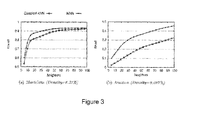
- Figure 3 shows the quality evaluation of iKNN compared with the classical user-based described by Adomavicius and that computes cosine similarity between users leveraging the ratings.
- the Figure demonstrates that iKNN outperforms the classical approach by a significant margin. It is also observed that the margin of improvement increases as the dataset becomes less dense which is a practical requirement in e-commerce as users tend to rate very few items.
- the Hammock threshold ( ⁇ ) was set to 10 for both datasets.
- the present principles can provide a solution that removes the need for ratings in the recommendation system, which can be of importance as it can allow a widespread use of recommendation without the burden of having an infrastructure dedicated to rating and without running the risk of annoying customers when collecting such ratings.
- the present solution can also outperform classical approaches.
Landscapes
- Business, Economics & Management (AREA)
- Accounting & Taxation (AREA)
- Finance (AREA)
- Development Economics (AREA)
- Economics (AREA)
- Marketing (AREA)
- Strategic Management (AREA)
- Physics & Mathematics (AREA)
- General Business, Economics & Management (AREA)
- General Physics & Mathematics (AREA)
- Engineering & Computer Science (AREA)
- Theoretical Computer Science (AREA)
- Information Retrieval, Db Structures And Fs Structures Therefor (AREA)
Abstract
A device (100) for finding top-k neighbours in a recommendation system comprises memory (120) configured to store, for a plurality of users, a number of tuples comprising data regarding consumption of items, the data comprising, for each item, an identifier of the item and a time of consumption of the item by the user, and a processor (110) configured to calculate (S21) measures of similarity between a first user and a number of second users among the plurality of users, the processor configured to calculate the measures of similarity using the identifiers of the items and the time of consumption of the items, and obtain (S23) the top-k neighbours by taking k second users with highest measures of similarity to the first user. Different ways of calculating the measure of similarity are presented.
Description
- The present disclosure relates generally to recommendation systems and in particular to finding the top-k neighbours for a given user.
- Providing recommendations for items such as films or books is beneficial to both the end users and providers. The first are likely to find items they might have missed otherwise, while the latter are likely to increase their revenues. For these reasons, recommendation systems are widespread.
- Conventional approaches to recommendation require users to rate items that they have consumed, whether this is an ongoing process or performed during initialization to build a user profile. An example of such a recommendation algorithm is preceded by the calculation of the top-k nearest neighbours using cosine similarity, as described by Adomavicius et al. in "Toward the Next Generation of Recommender Systems: A Survey of the State-of-the-Art and Possible Extensions".
- This is clearly a burden to the user, and can be error-prone since the users' ratings may depend on their mood at the time when the possibility of rating movies is given by the provider. The need for ratings also forces the provider to set up a collect infrastructure. It is therefore desirable to develop recommendation systems that do not need input rating from the users.
- In a first aspect, the present principles are directed to a device for determining top-k neighbours in a recommendation system. The device comprises memory configured to store, for a plurality of users, a number of tuples comprising data regarding consumption of items, the data comprising, for each item, an identifier of the item and a time of consumption of the item by the user, and a processor configured to calculate measures of similarity between a first user and a number of second users among the plurality of users, the processor configured to calculate the measures of similarity using the identifiers of the items and the time of consumption of the items, and determine as the top-k neighbours k second users with highest measures of similarity to the first user.
- Various embodiments of the first aspect include:
- That the processor is further configured to sort the measures of similarity.
- That the processor is configured to calculate a measure of similarity by calculating a distance between different pairs of items for the first user and for a second user, the distance being expressed as a path length or a time difference, and determining the measure of similarity by counting the number of pairs of items for which the distance for the first user and the distance for the second user are below a threshold value.
- That the processor is configured to calculate the similarity measure by subtracting a number of divergent pairs from a number of convergent pairs to obtain a result that is divided by a number based on the square of the total number of pairs, wherein a convergent pair is a pair for which an absolute distance between the two items of the pair is below a threshold value for both the first user and the second user, and a divergent pair is a pair for which an absolute distance between the two items of the pair is above a threshold value for at least one of the first user and the second user.
- That the processor is configured to obtain recommended items for the first user from the consumption of the top-k neighbours and to make the recommended items known to the first user. The processor can be configured to prepare a distribution system for the consumption of the recommended items.
- In a second aspect, the disclosure is directed to a method for determining top-k neighbours in a recommendation system. A processor calculates measures of similarity between a first user and a number of second users among the plurality of users, the processor configured to calculate the measures of similarity using identifiers of items and time of consumption of the items, and determines as the top-k neighbours k second users with highest measures of similarity to the first user.
- Various embodiments of the second aspect include:
- Sorting the measures of similarity.
- That calculating a measure of similarity comprises calculating a distance between different pairs of items for the first user and for a second user, the distance being expressed as a path length or a time difference, and determining the measure of similarity by counting the number of pairs of items for which the distance for the first user and the distance for the second user are below a threshold value.
- That calculating a measure of similarity comprises subtracting a number of divergent pairs from a number of convergent pairs to obtain a result that is divided by a number based on the square of the total number of pairs, wherein a convergent pair is a pair for which an absolute distance between the two items of the pair is below a threshold value for both the first user and the second user, and a divergent pair is a pair for which an absolute distance between the two items of the pair is above a threshold value for at least one of the first user and the second user.
- That the processor obtains recommended items for the first user from the consumption of the top-k neighbours and makes the recommended items known to the first user. The processor can prepare a distribution system for the consumption of the recommended items.
- In a third aspect, the disclosure is directed to a computer program comprising program code instructions executable by a processor for implementing the steps of a method according to at least one embodiment of the present principles.
- In a fourth aspect, the disclosure is directed to a computer program product which is stored on a non-transitory computer readable medium and comprises program code instructions executable by a processor for implementing the steps of a method according to at least one embodiment of the second aspect.
- Preferred features of the present principles will now be described, by way of non-limiting example, with reference to the accompanying drawings, in which
-
Figure 1 illustrates a device implementing the present principles; -
Figure 2 illustrates a method for finding the top-k neighbours according to the present principles; and -
Figure 3 illustrates an evaluation result using the method according to the first embodiment of the present principles. - The present disclosure presents iKNN, which can be used to compute a user's top-k nearest neighbours in the recommendation system. Nearest neighbours identification is used as a building block to implement various recommendation services, be it for Video on Demand (VoD) or e-commerce. iKNN relies on information that a service provider already possesses: purchase transactions, as opposed to conventional approaches that rely on explicitly asking ratings to users which might annoy them and dissuade them from using the system.
-
Figure 1 illustrates adevice 100 implementing the present principles. Thedevice 100 includes at least one hardware processing unit ("processor") 110, external or internal (or a combination of the two)memory 120, at least onecommunications interface 130 configured to communicate with other devices and a user interface ("UI") 140. The UI can be implemented as a single unit for input and output - e.g. a touchscreen - or as separate units such as a screen and a keyboard. The skilled person will appreciate that the illustrated devices are very simplified for reasons of clarity, thus not showing features such as internal connections and power supplies. Anon-transitory storage medium 150 stores instructions that, when executed by a processor, perform the method for computing top-k nearest neighbours illustrated inFigure 2 . - The
memory 120 stores a number of user profiles, for example, one user profile per user. The user profile comprises a number of tuples of an identifier of items consumed by the user and the time of consumption. A user profile P u1 for a user u 1 having consumed n items can be illustrated as follows:
1 ,t1 is the time that user u 1 consumed the item. The tuples are preferably sorted by the consumption time so that the tuples are in the order of consumption. - The
processor 110 is configured to find the top-k nearest neighbours for any user having a user profile with at least two tuples in the user profile. This can be accomplished using time similarity based on for example a so-called Hammock distance or Kendall's rank correlation. - In a first embodiment, a so-called Hammock distance (H) denotes a distance between a pair of items in a given user profile. Hu
1 (il im ) denotes the Hammock distance between the items il and im in P u1 . H u1 (il , im ) is calculated as the path length between il and im in P u1 . Alternatively, H u1 (il , im ) can be computed as the time difference between il and im with a suitable time unit, which can be expressed as in steps of evolution (i.e., updates) of the system or in units of time. - So-called Hammock pairs, calculated using Hammock distances for pairs of users are used to compare and select the top-k neighbours, can be expressed as:

- An alternate embodiment uses a modified version of Kendall's tau correlation to measure the similarity between the users.
- Let u 1 and u 2 be two users. Let j 1, ..., jk denote the indices of the items that both of these user have purchased and let t j1, ..., tjk denote the times of purchases for user u 1 and let t' j1, ..., t'jk be the times of purchases for user u 2.
- The modified Kendall's tau distance is defined as follows:

p - δH < tjq and t'jp < t'Jq + δH. That is to say that the two events occur in the same order or in the opposite order with a maximum lag of δ H . Conversely, a divergent pair is a pair which is not concordant. It is to be noticed that this corresponds to the classical Kendall's tau correlation with the addition of possible inversion in order in a restricted time lag. - As in the first embodiment, the time difference can be given as update steps or in units of time.
- The calculated time similarities can then be used to obtain the top-k neighbours for the user u 1. As shown in Algorithms 1 and 2 hereinafter, iKNN is two-fold. First, the similarity between user u 1 and all the other users in the system U is computed, preferably using one of the two embodiments described herein. Then the top-k neighbours for the user u 1 are calculated as the top-k users with highest similarity score.
Algorithm 1 iKNN - first embodiment: γ(Pu ), where Pu is the profile of user u. 1: var Score[]; 2: for all uid : user in U do 3: Score[uid] = Pu,uid .size;
4: end for 5: Nu = subList(k; sort(Score)); 6: return: Nu , the k users with the highest similarity .size returns the number of Hammock pairs. Algorithm 2 iKNN - second embodiment: γ(Pu ), where Pu is the profile of user u. 1: var Score[ ]; 2: for all uid : user in U do 3: Score[uid] = τδ H (u, uid);4: end for 5: Nu = subList(k; sort(Score)); 6: return: Nu , the k users with the highest similarity -
Figure 2 illustrates a method according to Algorithms 1 and 2. In step S21, theprocessor 110 calculates the scores, i.e. the similarity, for the users in the system with regard to a specific user u. In step S22, theprocessor 110 sorts the scores and obtains, in step S23, the top-k neighbours. - The method may be performed at any time, but in one embodiment it is performed when a user has consumed a new item since it may then update the recommendations for the user. In this case, the method further comprises receiving, in preceding step S20, the new tuple for the user.
- In step S24, the
processor 110 obtains recommendations from the consumption of the top-k neighbours. This can for example be done by finding items that the top-k neighbours have recently consumed or by finding the items that the top-k neighbours have consumed just after the item in the new tuple for user u. The obtained recommendations are preferably made known to user u, for example by sending the recommendations to the device of user u. - In step S25, the
processor 110 prepares a distribution system for the consumption of the recommended items. In a video on demand system (in which the items are films), this may be done by caching the films so that they can be retrieved in an easy manner, by encrypting the films for the user before the films are ordered or by pushing at least part of the films to a storage device closer to the user's device. - In a first variant, the principles take into account the time elapsed between two items that were consumed. Users that have a "close" consumption of similar items are then favored for the top-k selection. In this variant, the distance between items is an absolute value, meaning that the order of consumed items for two close users can be reversed.
- In a second variant, the top-k determination takes into account the strict order in the consumption of items, for instance to determine the number of Hammock pairs.
- As will be described hereinafter, iKNN can perform better than the conventional approach to compute top-k nearest neighbours using cosine similarity which leverages rating feedback from users.
- The first embodiment, i.e. using Hammock pairs, was used for the evaluation. Real traces from Movielens [http://grouplens.org/datasets/movielens/] and Amazon [McAuley and Leskovec: "Hidden Factors and Hidden Topics: Understanding Rating Dimensions with Review Text", RecSys 2013] were used.
- The Movielens dataset consisted 100,000 ratings from 943 users for 1,682 items where each user rated at least 20 movies. The data represents user preferences collected during a 7-month period and is often used to evaluate recommenders.
- The Amazon dataset consisted of 335,790 ratings from 5,899 users for 65,167 items where each user rated at least 20 movies. The data represents user preferences for a duration of two years starting from 2011 till 2013.
- To enable comparisons, the time of each rating was used as time of consumption of this item (since the datasets do not contain the consumption time information). The datasets are summarised in Table 1:
Table 1 Dataset Users Items Ratings Density(%) Movielens 943 1682 100000 6.31 Amazon 5899 65167 335790 0.087 - In order to evaluate the quality of the k nearest neighbors in iKNN, the recall metric was relied on [see Mohammad Alaggan, Sébastien Gambs and Anne-Marie Kermarrec. "Heterogeneous Differential Privacy." arXiv preprint arXiv:1504.06998 (2015)]. The datasets were divided into a training set (90%) and a test set (10%). In the test set, the profiles of the users are denoted as the test profiles. The recall is defined as the ratio of the items found in the profiles of the k neighbors over all the possible items contained in the test profile of a given user. The average recall for all the test profiles is then reported as the outcome of the experiment.
-
Figure 3 shows the quality evaluation of iKNN compared with the classical user-based described by Adomavicius and that computes cosine similarity between users leveraging the ratings. The Figure demonstrates that iKNN outperforms the classical approach by a significant margin. It is also observed that the margin of improvement increases as the dataset becomes less dense which is a practical requirement in e-commerce as users tend to rate very few items. For the experiments, the Hammock threshold (δ) was set to 10 for both datasets. - It will be appreciated that the present principles can provide a solution that removes the need for ratings in the recommendation system, which can be of importance as it can allow a widespread use of recommendation without the burden of having an infrastructure dedicated to rating and without running the risk of annoying customers when collecting such ratings. The present solution can also outperform classical approaches.
- Each feature disclosed in the description and (where appropriate) the claims and drawings may be provided independently or in any appropriate combination. Features described as being implemented in hardware may also be implemented in software, and vice versa. Reference numerals appearing in the claims are by way of illustration only and shall have no limiting effect on the scope of the claims.
Claims (14)
- A device (100) for determining top-k neighbours in a recommendation system, the device (100) comprising:- memory (120) configured to store, for a plurality of users, a number of tuples comprising data regarding consumption of items, the data comprising, for each item, an identifier of the item and a time of consumption of the item by the user;- a processor (110) configured to:calculate, using the identifiers of the items and the time of consumption of the items, measures of similarity between a first user and a number of second users among the plurality of users; anddetermining as the top-k neighbours k second users with highest measures of similarity to the first user.
- The device of claim 1, wherein the processor is further configured to sort the measures of similarity.
- The device of claim 1, wherein the processor is configured to calculate a measure of similarity by:calculating a distance between different pairs of items for the first user and for a second user, the distance being expressed as a path length or a time difference;determining the measure of similarity by counting the number of pairs of items for which the distance for the first user and the distance for the second user are below a threshold value.
- The device of claim 1, wherein the processor is configured to calculate the similarity measure by:subtracting a number of divergent pairs from a number of convergent pairs to obtain a result that is divided by a number based on the square of the total number of pairs, wherein a convergent pair is a pair for which an absolute distance between the two items of the pair is below a threshold value for both the first user and the second user, and a divergent pair is a pair for which an absolute distance between the two items of the pair is above a threshold value for at least one of the first user and the second user.
- The device of claim 1, wherein the processor is configured to obtain recommended items for the first user from the consumption of the top-k neighbours and to make the recommended items known to the first user.
- The device of claim 5, wherein the processor is configured to prepare a distribution system for the consumption of the recommended items.
- A method for determining top-k neighbours in a recommendation system, the method comprising:calculating (S21), using identifiers of items and time of consumption of the items, by a processor measures of similarity between a first user and a number of second users among the plurality of users; anddetermine (S23) as the top-k neighbours k second users with highest measures of similarity to the first user.
- The method of claim 7, further comprising sorting (S22) the measures of similarity.
- The method of claim 7, wherein calculating a measure of similarity comprises:calculating a distance between different pairs of items for the first user and for a second user, the distance being expressed as a path length or a time difference;determining the measure of similarity by counting the number of pairs of items for which the distance for the first user and the distance for the second user are below a threshold value.
- The method of claim 7, wherein calculating a measure of similarity comprises:subtracting a number of divergent pairs from a number of convergent pairs to obtain a result that is divided by a number based on the square of the total number of pairs, wherein a convergent pair is a pair for which an absolute distance between the two items of the pair is below a threshold value for both the first user and the second user, and a divergent pair is a pair for which an absolute distance between the two items of the pair is above a threshold value for at least one of the first user and the second user.
- The method of claim 7, wherein the processor is configured to obtain (S24) recommended items for the first user from the consumption of the top-k neighbours and to make the recommended items known to the first user.
- The method of claim 11, wherein the processor is configured to prepare (S25) a distribution system for the consumption of the recommended items.
- Computer program comprising program code instructions executable by a processor for implementing the steps of a method according to at least one of claims 7 to 12.
- Computer program product (150) which is stored on a non-transitory computer readable medium and comprises program code instructions executable by a processor for implementing the steps of a method according to at least one of claims 7 to 12.
Priority Applications (1)
| Application Number | Priority Date | Filing Date | Title |
|---|---|---|---|
| EP15306406.8A EP3142059A1 (en) | 2015-09-14 | 2015-09-14 | Device and method for finding top-k neighbours in a recommendation system |
Applications Claiming Priority (1)
| Application Number | Priority Date | Filing Date | Title |
|---|---|---|---|
| EP15306406.8A EP3142059A1 (en) | 2015-09-14 | 2015-09-14 | Device and method for finding top-k neighbours in a recommendation system |
Publications (1)
| Publication Number | Publication Date |
|---|---|
| EP3142059A1 true EP3142059A1 (en) | 2017-03-15 |
Family
ID=54252211
Family Applications (1)
| Application Number | Title | Priority Date | Filing Date |
|---|---|---|---|
| EP15306406.8A Withdrawn EP3142059A1 (en) | 2015-09-14 | 2015-09-14 | Device and method for finding top-k neighbours in a recommendation system |
Country Status (1)
| Country | Link |
|---|---|
| EP (1) | EP3142059A1 (en) |
Citations (1)
| Publication number | Priority date | Publication date | Assignee | Title |
|---|---|---|---|---|
| US20110153663A1 (en) * | 2009-12-21 | 2011-06-23 | At&T Intellectual Property I, L.P. | Recommendation engine using implicit feedback observations |
-
2015
- 2015-09-14 EP EP15306406.8A patent/EP3142059A1/en not_active Withdrawn
Patent Citations (1)
| Publication number | Priority date | Publication date | Assignee | Title |
|---|---|---|---|---|
| US20110153663A1 (en) * | 2009-12-21 | 2011-06-23 | At&T Intellectual Property I, L.P. | Recommendation engine using implicit feedback observations |
Non-Patent Citations (3)
| Title |
|---|
| ADOMAVICIUS ET AL., TOWARD THE NEXT GENERATION OF RECOMMENDER SYSTEMS: A SURVEY OF THE STATE-OF-THE-ART AND POSSIBLE EXTENSIONS |
| MCAULEY; LESKOVEC: "Hidden Factors and Hidden Topics: Understanding Rating Dimensions with Review Text", RECSYS, 2013 |
| MOHAMMAD ALAGGAN; SEBASTIEN GAMBS; ANNE-MARIE KERMARREC, HETEROGENEOUS DIFFERENTIAL PRIVACY, 2015 |
Similar Documents
| Publication | Publication Date | Title |
|---|---|---|
| US11593894B2 (en) | Interest recommendation method, computer device, and storage medium | |
| CN110162693B (en) | Information recommendation method and server | |
| US11494666B2 (en) | Systems and methods for online content recommendation | |
| US8301624B2 (en) | Determining user preference of items based on user ratings and user features | |
| US8655949B2 (en) | Correlated information recommendation | |
| CN102915307B (en) | The method, apparatus and information processing system of a kind of recommendation of personalized information | |
| US20120072283A1 (en) | Mobile application recommendation system and method | |
| JP2016062511A (en) | Information processor, information processing system, information processing method and program | |
| WO2013009974A1 (en) | Method and apparatus for delivering targeted content | |
| CN113766016B (en) | Information push method and server | |
| KR20170079429A (en) | A clustering based collaborative filtering method with a consideration of users' features and movie recommendation system using thereof | |
| US20160277538A1 (en) | Method and system for matching profile records | |
| CN107277115A (en) | A kind of content delivery method and device | |
| US8751492B1 (en) | System, method, and computer program product for selecting an event category based on a category score for use in providing content | |
| CN107808314A (en) | User recommends method and device | |
| Gupta et al. | A framework for a recommendation system based on collaborative filtering and demographics | |
| Chen et al. | Collaborative filtering based on demographic attribute vector | |
| Phi et al. | Distributed representation based recommender systems in e-commerce | |
| WO2016033476A1 (en) | Multi-user search or recommendation | |
| CN103428169A (en) | Method and system for recommending users in SNS community | |
| Signorelli et al. | A penalized inference approach to stochastic block modelling of community structure in the Italian Parliament | |
| CN105898425A (en) | Video recommendation method and system and server | |
| US20140365456A1 (en) | Item-based recommendation engine for recommending a highly-associated item | |
| CN106447364A (en) | Information recommending method and information recommending device | |
| US9854290B2 (en) | System and method for data-driven ad-insertion in online video streams |
Legal Events
| Date | Code | Title | Description |
|---|---|---|---|
| PUAI | Public reference made under article 153(3) epc to a published international application that has entered the european phase |
Free format text: ORIGINAL CODE: 0009012 |
|
| AK | Designated contracting states |
Kind code of ref document: A1 Designated state(s): AL AT BE BG CH CY CZ DE DK EE ES FI FR GB GR HR HU IE IS IT LI LT LU LV MC MK MT NL NO PL PT RO RS SE SI SK SM TR |
|
| AX | Request for extension of the european patent |
Extension state: BA ME |
|
| STAA | Information on the status of an ep patent application or granted ep patent |
Free format text: STATUS: THE APPLICATION IS DEEMED TO BE WITHDRAWN |
|
| 18D | Application deemed to be withdrawn |
Effective date: 20170916 |