EP3141303A1 - Grubbs-hoveyda type catalyst for metathesis reactions in highly reactive environments - Google Patents
Grubbs-hoveyda type catalyst for metathesis reactions in highly reactive environments Download PDFInfo
- Publication number
- EP3141303A1 EP3141303A1 EP16188680.9A EP16188680A EP3141303A1 EP 3141303 A1 EP3141303 A1 EP 3141303A1 EP 16188680 A EP16188680 A EP 16188680A EP 3141303 A1 EP3141303 A1 EP 3141303A1
- Authority
- EP
- European Patent Office
- Prior art keywords
- catalyst
- epoxy
- olefins
- metathesis
- mes
- Prior art date
- Legal status (The legal status is an assumption and is not a legal conclusion. Google has not performed a legal analysis and makes no representation as to the accuracy of the status listed.)
- Granted
Links
Images



Classifications
-
- B—PERFORMING OPERATIONS; TRANSPORTING
- B01—PHYSICAL OR CHEMICAL PROCESSES OR APPARATUS IN GENERAL
- B01J—CHEMICAL OR PHYSICAL PROCESSES, e.g. CATALYSIS OR COLLOID CHEMISTRY; THEIR RELEVANT APPARATUS
- B01J31/00—Catalysts comprising hydrides, coordination complexes or organic compounds
- B01J31/16—Catalysts comprising hydrides, coordination complexes or organic compounds containing coordination complexes
- B01J31/22—Organic complexes
- B01J31/2265—Carbenes or carbynes, i.e.(image)
- B01J31/2269—Heterocyclic carbenes
- B01J31/2273—Heterocyclic carbenes with only nitrogen as heteroatomic ring members, e.g. 1,3-diarylimidazoline-2-ylidenes
-
- B—PERFORMING OPERATIONS; TRANSPORTING
- B01—PHYSICAL OR CHEMICAL PROCESSES OR APPARATUS IN GENERAL
- B01J—CHEMICAL OR PHYSICAL PROCESSES, e.g. CATALYSIS OR COLLOID CHEMISTRY; THEIR RELEVANT APPARATUS
- B01J31/00—Catalysts comprising hydrides, coordination complexes or organic compounds
- B01J31/16—Catalysts comprising hydrides, coordination complexes or organic compounds containing coordination complexes
- B01J31/22—Organic complexes
- B01J31/2204—Organic complexes the ligands containing oxygen or sulfur as complexing atoms
- B01J31/2208—Oxygen, e.g. acetylacetonates
-
- B—PERFORMING OPERATIONS; TRANSPORTING
- B01—PHYSICAL OR CHEMICAL PROCESSES OR APPARATUS IN GENERAL
- B01J—CHEMICAL OR PHYSICAL PROCESSES, e.g. CATALYSIS OR COLLOID CHEMISTRY; THEIR RELEVANT APPARATUS
- B01J31/00—Catalysts comprising hydrides, coordination complexes or organic compounds
- B01J31/16—Catalysts comprising hydrides, coordination complexes or organic compounds containing coordination complexes
- B01J31/22—Organic complexes
- B01J31/2265—Carbenes or carbynes, i.e.(image)
- B01J31/2278—Complexes comprising two carbene ligands differing from each other, e.g. Grubbs second generation catalysts
-
- C—CHEMISTRY; METALLURGY
- C08—ORGANIC MACROMOLECULAR COMPOUNDS; THEIR PREPARATION OR CHEMICAL WORKING-UP; COMPOSITIONS BASED THEREON
- C08G—MACROMOLECULAR COMPOUNDS OBTAINED OTHERWISE THAN BY REACTIONS ONLY INVOLVING UNSATURATED CARBON-TO-CARBON BONDS
- C08G59/00—Polycondensates containing more than one epoxy group per molecule; Macromolecules obtained by polymerising compounds containing more than one epoxy group per molecule using curing agents or catalysts which react with the epoxy groups
- C08G59/18—Macromolecules obtained by polymerising compounds containing more than one epoxy group per molecule using curing agents or catalysts which react with the epoxy groups ; e.g. general methods of curing
- C08G59/68—Macromolecules obtained by polymerising compounds containing more than one epoxy group per molecule using curing agents or catalysts which react with the epoxy groups ; e.g. general methods of curing characterised by the catalysts used
- C08G59/686—Macromolecules obtained by polymerising compounds containing more than one epoxy group per molecule using curing agents or catalysts which react with the epoxy groups ; e.g. general methods of curing characterised by the catalysts used containing nitrogen
-
- B—PERFORMING OPERATIONS; TRANSPORTING
- B01—PHYSICAL OR CHEMICAL PROCESSES OR APPARATUS IN GENERAL
- B01J—CHEMICAL OR PHYSICAL PROCESSES, e.g. CATALYSIS OR COLLOID CHEMISTRY; THEIR RELEVANT APPARATUS
- B01J2231/00—Catalytic reactions performed with catalysts classified in B01J31/00
- B01J2231/50—Redistribution or isomerisation reactions of C-C, C=C or C-C triple bonds
- B01J2231/54—Metathesis reactions, e.g. olefin metathesis
- B01J2231/543—Metathesis reactions, e.g. olefin metathesis alkene metathesis
-
- B—PERFORMING OPERATIONS; TRANSPORTING
- B01—PHYSICAL OR CHEMICAL PROCESSES OR APPARATUS IN GENERAL
- B01J—CHEMICAL OR PHYSICAL PROCESSES, e.g. CATALYSIS OR COLLOID CHEMISTRY; THEIR RELEVANT APPARATUS
- B01J2531/00—Additional information regarding catalytic systems classified in B01J31/00
- B01J2531/80—Complexes comprising metals of Group VIII as the central metal
- B01J2531/82—Metals of the platinum group
- B01J2531/821—Ruthenium
Definitions
- the present invention relates to catalysts which must be stable in an interactive environment, such as an epoxy mixture hardened at high temperature and/or with hardeners such as aromatic primary amines, in particular catalysts for self-healing resins comprising of vessels containing healing agents.
- the latter agent such as a blend of 5-ethylidene-2-norbornene/dicyclopentadiene (ENB/DCPD), or other healing agents, and a catalytic chemical trigger are incorporated within a cured epoxy matrix.
- ENB/DCPD 5-ethylidene-2-norbornene/dicyclopentadiene
- a catalytic chemical trigger is incorporated within a cured epoxy matrix.
- the self-repair function in this self-healing system is thus based on the metathesis polymerization of olefins or olefin blends such as the ENB/DCPD blend activated by the catalyst dispersed at molecular level in the epoxy matrix.
- a dispersion at molecular level inside the epoxy matrix can help to strongly reduce the cost of the self-healing materials.
- Ru-alkylidene olefin metathesis catalysts e.g., Grubbs first-generation catalyst
- P. Schwab R. H. Grubbs, J. W. Ziller, J. Am. Chem. Soc.
- N-heterocyclic carbene (NHC) ligand e.g., second-generation catalyst
- NAC N-heterocyclic carbene
- NHC-Ru catalysts Successful design of NHC-Ru catalysts has been achieved by fine-tuning of the stereoelectronic properties of the NHC ligand and has led, inter alia, to a series of ruthenium catalysts bearing NHCs with varying degrees of N-heterocyclic backbone and/or aryl side chain substitution.
- An object of the present invention is thus to overcome the limitations of the prior art catalysts, and in particular to overcome drawbacks related to the above-captioned factors i, ii, iii and allow to significantly reduce the amount of metathesis catalyst (factor iv) in the smart materials for structural applications capable to self-repair or in polyolefin/polyolefin blends also characterized by high viscosity to obtain products of metathesis for several applications.
- metal complexes were performed under nitrogen atmosphere using standard Schlenk or glovebox techniques. All the reagents were purchased from Sigma-Aldrich Company and were of reagent grade quality. These products were used without any further purification. Solvents were dried and distilled before use. Deuterated solvents were degassed under an N 2 flow and stored over activated 4 ⁇ molecular sieves. Flash column chromatography of organic compounds was performed using silica gel 60 (230-400 mesh), and flash column chromatography of ruthenium compounds was performed using silica gel 60 (230-400 mesh) from TSI Scientific (Cambridge, MA).
- TLC thin-layer chromatography
- Triethyl orthoformate (0.89 ml, 5.36 mmol), diamine (0.31 g, 0.68 mmol) and ammonium tetrafluoroborate (0.09 g, 0.87 mmol) were introduced in a 10 ml round-bottom flask equipped with a magnetic stirrer. The reaction mixture was heated at 120°C for 4 h. After cooling to room temperature, the product was precipitated and washed with Et 2 O (3 x 10 ml) And hexane. The solid obtained was dissolved in the minimum amount of CH 2 Cl 2 and then filtered. The solvent was removed under vacuum. The product was dissolved in the minimum amount of ethanol and recovered by precipitation as a light brown solid S2 (0.22 g, 0.41 mmol, 60%).
- the catalyst activity was evaluated trough the Ring Opening Metathesis Polymerization (ROMP) of 5-ethylidene-2-norbornene (ENB).
- the polymerization was carried out in solution of tetrahydrofuran (THF).
- THF tetrahydrofuran
- 2.9 mg of initiator were mixed with and stirred in 1.33 g of monomer and 99 ml THF in a round bottom flask.
- the reaction was stopped by adding a few drops of ethyl-vinyl ether and the obtained polymer was coagulated in methanol.
- the polymer was filtered and washed with CH 2 Cl 2 .
- the following scheme shows the polymerization of 5-ethylidene-2-norbornene (ENB) by ROMP reaction:
- the catalyst of the invention showed good activity giving high conversions for short times, which are indicated in Table 1 which follows and indicates the amount of monomer, catalyst and polymer (metathesis product) and conversion degree.
- Table 1 which follows and indicates the amount of monomer, catalyst and polymer (metathesis product) and conversion degree.
- Table I Run 1 Monomer g Catalyst mg Time sec Polymer g Conversion % HG2 Ph-Mes 1,33 2,9 59 1,08 81
- HG2 Ph-Mes was solubilized in cyclohexene oxide.
- the reactivity of this monomer with the catalyst was analyzed at different compositions (1/1 and 1/150) and temperature (80, 100, 110,120, 130 and 140 °C) by means of 1 H NMR. 140 °C is the maximum operating temperature for the NMR spectrometer used.
- Figure 7 illustrates 1 H NMR spectra of HG2 Ph-Mes and cyclohexene oxide in a molar ratio 1/1 and 1/150 treated at 140 °C for 35 minutes, on samples dissolved in 1,1,2,2-tetrachloro-ethane-d 2 (TCDE).
- TCDE 1,1,2,2-tetrachloro-ethane-d 2
- Spectra show all the signals characteristics of HG2 Ph-Mes and cyclohexene oxide, highlighting that no reaction takes place between these two compounds and indicating that no thermal decomposition occurs.
- the thermal stability of the catalyst of the invention was also evaluated by means of thermogravimetric analysis.
- the catalyst shows a temperature of initial degradation in air of 210 °C, as illustrated by figure 8 showing the thermogravimetric analysis (TGA) curve obtained in a dry air atmosphere in the temperature range of 0-1000 °C. A similar result was obtained in nitrogen atmosphere.
- TGA thermogravimetric analysis
- the catalyst of the invention has proven to be active in the ROMP reactions within epoxy mixtures also after curing cycles of the resin up to 200 °C for 1 hour.
- the epoxy matrix composite was prepared by mixing an epoxy precursor (Bisphenol A diglycidyl ether, trade name EPON 828 - acronym E) with a reactive diluent (1,4-Butanediol-diglycidylether - Acronym B) at a concentration of 80%: 20% (by wt.) epoxide to flexibilizer giving the EB2 sample.
- This reactive diluent has proven to be effective to reduce the viscosity of epoxy precursors, allowing to improve handling and ease of processing and to optimize consequently performance properties.
- the compounds E and B, both containing epoxy-moieties, were obtained by Sigma-Aldrich.
- the curing agent investigated for this study was an anionic initiator Phenol, 2,4,6- tris[(dimethylamino) methyl] (Trade name Ankamine K54 - acronym A).
- the curing agent Ancamine K54 was added at a concentration of 10% (by wt.) with respect to the mixture EB2 giving the sample EB2A.
- HG2 Ph-Mes catalyst based epoxy mixture was obtained by solubilizing HG2 Ph-Mes catalyst in the epoxy matrix EB2A at the molecular level.
- the epoxy specimen EB2A+0.5% HG2 Ph-Mes was prepared by solubilizing the HG2 Ph-Mes catalyst at a concentration of 0.5% (by wt.) with respect to the mixture EB2, by mechanical agitation in the liquid epoxy mixture EB2 at the temperature of 90°C and kept at this temperature for 1 h using an oil bath.
- the transparent mixture containing the completely dissolved catalyst was then taken out of the oil bath and left to cool to a temperature of 50°C, and then the curing agent Ancamine K54 was added to it.
- the thus obtained mixture was cured in a two-stage process.
- the first stage was carried out at a temperature of 80°C for 3 h, while the second stage was carried out according to three variants, i.e. at the three different temperatures of 130°C, 160°C and 180°C for Ih respectively.
- the cured specimen is in the shape of a circular disk with a transparent mixture containing the completely dissolved catalyst.
- Infrared spectroscopy provides a useful way to identify metathesis products and therefore catalyst activity.
- Infrared spectra were obtained at room temperature by using a Bruker Vertex 70 FTIR-spectrophotometer with a 2 cm -1 resolution (64 scans collected).
- the epoxy mixture was EB2.
- the catalyst HG2 Ph-Mes was solubilized by mechanical agitation in the liquid epoxy mixture (EB2) composed of epoxy precursor (E) and reactive diluent (B). This mixture was filled with a low percentage of HG2 Ph-Mes (0.5% by weight) with respect to the epoxy mixture EB2.
- the catalyst was embedded into the epoxy mixture EB2 at the temperature of 90°C and kept at this temperature for 1 h using an oil bath until complete solubilisation.
- spectroscopic investigation was carried out.
- the mixture containing catalyst HG2 Ph-Mes was stratified on a slide for light microscopy.
- two drops of 5-ethylidene-2-norbornene (ENB) were added to the stratified mixtures.
- the control of the catalytic activity was performed by evaluating the formation of the metathesis product.
- HG2 Ph-Mes active in the Ring opening Metathesis polymerization (ROMP) of ENB a thin solid film of metathesis product was obtained immediately.
- Figure 9 illustrates the FTIR spectrum of the solid film (metathesis product) obtained by polymerization of ENB with HG2 Ph-Mes (0.5 wt.%) solubilized in the EB2 mixture at 90°C.
- Such FTIR spectrum shows a peak at 966 cm -1 , which is an indication of the formation of the metathesis product and hence of the fact that the activity of the catalyst was not compromised by the chemical nature of the oligomers, by the temperature and by the treatments of mechanical mixing.
- the highlighted peak at 966 cm -1 is attributable to ring-opened poly(ENB). This peak is assigned to the trans substituted alkenes, characteristic of the ring opened cross-linked product [poly(ENB)] providing evidence that the embedded catalyst is active.
- Figures 10 to 13 show FTIR spectra of the metathesis products of the cured material after the intermediate stages, and the second stage carried out at the four temperatures stated above, respectively, to which ENB was then added in the same way as was done after the preliminary step of dissolution of the catalyst.
- the samples EB2A+0.5% HG2 Ph-Mes cured up to 110°C, 130°C, 160°C and 180°C were cut by a serrated blade; the powder which was produced from the samples was collected in a mortar and a drop of healing agent (5-ethylidene-2-norbornene - ENB) was added before dispersing the sample powder into the KBr disks for FTIR investigation.
- a drop of healing agent (5-ethylidene-2-norbornene - ENB) was added before dispersing the sample powder into the KBr disks for FTIR investigation.
- HG2 Ph-Mes shows thermal stability and chemical inertness towards the epoxy groups.
- DCPD was added to ENB with the aim of increasing the cross-linked fraction of the metathesis products.
- the composition of the healing agent inside the microcapsules is ENB(95%)/DCPD(5%).
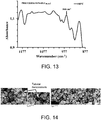
- the synthesized microcapsules show a particular morphological feature, which is illustrated by figure 14 showing FESEM images of the microcapsules in the form of spherical snarls which consist of tubular nanovessels.
- Self-healing epoxy composite based on microencapsulated healing agents within the bulk polymer, was obtained by dispersing ENB(95%)/DCPD(5%)-filled microcapsules (cap ED) at a concentration of 18 % (by wt.) with respect to the mixture EB2 into the epoxy mixture EB2+0.5% HG2 Ph-Mes .
- the mixture containing the microcapsules was then taken out of the oil bath and left to cool to a temperature of 50°C, and then the curing agent Ancamine K54 was added to it, thus obtaining self-healing epoxy sample EB2A+0.5% HG2Ph-Mes +18% cap ED.
- the self-healing epoxy mixture was cured in a two-stage curing cycle: the first isothermal stage was carried out at a temperature of 125°C for 1 h and a second isothermal stage was carried out at higher temperatures up to 180°C for 2 h.
- the healing efficiency ⁇ of the sample EB2A+0.5% HG2Ph-Mes cured up to 180°C was evaluated by fracture tests.
- K ICvirgin is the fracture toughness of the virgin specimen
- K IChealed is the fracture toughness of the healed specimen.
- Healing evaluation begins with a virgin fracture test of an undamaged TDCB sample.
- a pre-crack is introduced to sharpen the crack-tip.
- the sample is then mounted on a load frame and loaded under displacement control causing the pre-crack to propagate along the centerline of the sample until failure.
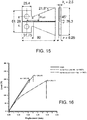
- Figure 16 shows the Load-Displacement curves of the virgin sample, the healed sample after the first cycle, and the healed sample after the second cycle for the self-healing sample EB2A+0.5% HG2 Ph-Mes cured up to 180°C. It is worth noting that the percentage of the catalyst solubilized in the epoxy matrix in the form of molecular complex is very low, only 0.5 wt. %.
- the thermal stability and chemical inertness towards the epoxy groups allows the use of the catalyst dissolved in the resin in the form of molecular complex and the curing of the resin at the temperatures required by aeronautical industries. This enables a considerable saving on the amount of catalyst to be used in the production of composite materials for the aeronautics with self-healing capacity.
- An epoxy matrix composite was prepared by mixing the tetrafunctional epoxy precursor, tetraglycidyl methylene dianiline (TGMDA - acronym T) (epoxy equivalent weight 117-133 g/eq), with an epoxy reactive monomer 1-4 butanedioldiglycidyl ether (BDE - acronym B) at a concentration of 80%: 20% (by wt.) epoxide to flexibilizer giving the TB sample.
- TGMDA - acronym T tetraglycidyl methylene dianiline
- BDE - acronym B epoxy reactive monomer 1-4 butanedioldiglycidyl ether
- the curing agent used for this study is 4,4-diaminodiphenyl sulfone (DDS - acronym D).
- the epoxy mixture was obtained by mixing TGMDA with BDE monomer at a concentration of 80%:20% (by wt.) epoxide to flexibilizer.
- This reactive diluent has proven to be effective to reduce the viscosity of epoxy precursors allowing to improve handling and ease of processing and to optimize consequently performance properties [see Guadagno L, Raimondo M, Lafdi K, Fierro A, Rosolia S, Nobile MR.
- HG2 Ph-Mes catalyst based epoxy mixture was obtained by solubilizing HG2 Ph-Mes catalyst in the epoxy matrix TBD at the molecular level (in the form of molecular complex).
- the epoxy specimen TBD+0.5% HG2 Ph-Mes was prepared by solubilizing the HG2 Ph-Mes catalyst at a concentration of 0.5% (by wt.) with respect to the mixture TB, by mechanical agitation in the liquid epoxy mixture TB at the temperature of 120°C and kept at this temperature for 1 h using an oil bath.
- the curing agent DDS was added to the transparent mixture containing the completely dissolved catalyst.
- the epoxy hardener DDS was mechanically stirred in this mixture using an oil bath at 120°C for 1 h until the complete solubilization of the hardener was obtained.
- the final mixture thus obtained was cured in a two-stage process.
- the first stage was carried out at a temperature of 80°C for 3 h, while the second stage was carried out at higher temperature up to 180°C for 1 h.
- Self-healing epoxy systems based on microencapsulated healing agents within the bulk polymer, were obtained by dispersing ENB(95%)/DCPD(5%)-filled microcapsules (cap ED) at a concentration of 16 % (by wt.) with respect to the mixture TB into the epoxy mixture TB+0.5% HG2 Ph-Mes (formulation 1) and finally adding the hardener agent DDS, thus obtaining self-healing epoxy sample TBD+0.5% HG2 Ph-Mes +16% cap ED.
- the self-healing epoxy mixture was cured in a two-stage process. The first stage was carried out at a temperature of 80°C for 3 h, while the second stage was carried out at higher temperatures up to 180°C for 3 h and then further at 200°C for 1 h.
- infrared spectroscopic investigation was carried out as previously described, with infrared spectra obtained at room temperature by using a Bruker Vertex 70 FTIR-spectrophotometer with a 2 cm -1 resolution (64 scans collected).
- the tetra-functional based epoxy mixture was TB (only epoxy precursor and reactive diluent).
- the catalyst HG2 Ph-Mes was solubilized by mechanical agitation in the liquid epoxy mixture (TB) composed of epoxy precursor (T) and reactive diluent (B). This mixture was filled with a low percentage of HG2 Ph-Mes (0.5% by weight) with respect to the epoxy mixture TB.
- the catalyst was embedded into the epoxy mixture TB at the temperature of 120°C and kept at this temperature for 1 h using an oil bath until complete solubilization.
- spectroscopic investigation was carried out.
- the mixture containing catalyst HG2 Ph-Mes was stratified on a slide for light microscopy.
- two drops of 5-ethylidene-2-norbornene (ENB) were added to the stratified mixture.
- the control of the catalytic activity was performed by evaluating the formation of the metathesis product.
- HG2 Ph-Mes active in the Ring opening Metathesis polymerization (ROMP) of ENB a thin solid film of metathesis product was obtained immediately.
- Figure 17 illustrates the FTIR spectrum of the solid film (metathesis product) obtained by polymerization of ENB with HG2 Ph-Mes (0.5 wt. %) solubilized in the TB mixture at 120°C.
- Such spectrum shows a peak at 966 cm -1 , which is indicative of the formation of the metathesis product and hence of the fact that the activity of the catalyst was not compromised by the chemical nature of the oligomers, by the temperature and by the treatments of mechanical mixing.
- the highlighted peak at 966 cm -1 is attributable to ring-opened poly(ENB). This peak is assigned to the trans substituted alkenes, characteristic of the ring opened crosslinked product [poly(ENB)] providing evidence that the embedded catalyst is active.
- Formulation 2 substantially corresponds to Formulation 1, except for the liquid epoxy mixture of TBD type, i.e. containing the curing agent DDS absent in Formulation 1.
- the test performed on formulation 2 highlights that the catalyst of the invention is active in the solid sample solidified using DDS, requiring high temperature (up to 180°C) for the curing process.
- Figure 18 illustrates the FTIR spectrum of the solid film (metathesis product) obtained by polymerization of ENB with HG2 Ph-Mes (0.5 wt.%) solubilized in the TBD mixture cured up to 180°C for 1 h.
- the sample TBD+0.5% HG2 Ph-Mes cured up to 180°C for 1 h was cut by a serrated blade; the powder which was produced from the sample was collected in a mortar and a drop of healing agent (5-ethylidene-2-norbornene - ENB) was added before dispersing the sample powder into the KBr disks for FTIR investigation.
- a drop of healing agent (5-ethylidene-2-norbornene - ENB) was added before dispersing the sample powder into the KBr disks for FTIR investigation.
- Figure 19 comparatively illustrates the FTIR spectra of the solid film (metathesis product) obtained by polymerization of ENB with HG2 Ph-Mes (0.5 wt%) solubilized in the TBD mixture cured up to 180°C for 1 h and of the epoxy mixture TBD cured up to 180°C for 1 h.
- Formulation 3 substantially corresponds to Formulation 2, except for the presence in the cured sample solidified using DDS of 16 wt. % of vessels filled with the healing agent, namely vessels in the form of microcapsules containing a blend of ENB/DCPD).
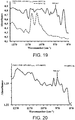
- Figure 20 illustrates the FTIR spectra of the metathesis product of the self-healing epoxy resin cured up to 180°C for 3 h.
- the metathesis peak at 966 cm -1 can be observed also in this case. This very important result indicates that the catalytic activity of HG2 Ph-Mes is preserved in the epoxy resin even in the presence of microcapsules for high temperatures up to 180°C for 3 h.
- the cure degree calculated by thermal analysis of the sample of formulation 3 (TBD+0.5% HG2 Ph-Mes +16% cap ED cured up to 180°C for 3 h) is 94% as that of aeronautical resins.
- the FT/IR spectrum of this sample shows the absence of the two weak absorption bands (N-H stretching vibrations) - (one at 3471 cm -1 and the other near 3373 cm -1 ). These bands represent, respectively, the "free" asymmetrical and symmetrical N-H stretching modes. The absence of these signals proves that the sample is almost completely cured as also evidenced by thermal analysis.
- the catalyst of the invention proved its activity also inside an epoxy formulation hardened up to 200 °C.
Landscapes
- Chemical & Material Sciences (AREA)
- Chemical Kinetics & Catalysis (AREA)
- Organic Chemistry (AREA)
- Inorganic Chemistry (AREA)
- Engineering & Computer Science (AREA)
- Materials Engineering (AREA)
- Health & Medical Sciences (AREA)
- Medicinal Chemistry (AREA)
- Polymers & Plastics (AREA)
- Catalysts (AREA)
- Polyoxymethylene Polymers And Polymers With Carbon-To-Carbon Bonds (AREA)
Abstract
Description
- The present invention relates to catalysts which must be stable in an interactive environment, such as an epoxy mixture hardened at high temperature and/or with hardeners such as aromatic primary amines, in particular catalysts for self-healing resins comprising of vessels containing healing agents.
- In more detail, the latter agent, such as a blend of 5-ethylidene-2-norbornene/dicyclopentadiene (ENB/DCPD), or other healing agents, and a catalytic chemical trigger are incorporated within a cured epoxy matrix. When an approaching crack ruptures the embedded microcapsules, the healing agent is released into the crack plane through capillary action. Ring Opening Metathesis Polymerization (ROMP) of the healing agent is triggered by contact with the embedded catalyst, bonding the crack faces. The self-repair function in this self-healing system is thus based on the metathesis polymerization of olefins or olefin blends such as the ENB/DCPD blend activated by the catalyst dispersed at molecular level in the epoxy matrix. A dispersion at molecular level inside the epoxy matrix can help to strongly reduce the cost of the self-healing materials.
- However, the self-healing systems containing the hitherto known ROMP catalysts do not meet the mechanical requirements for resins to be applied as primary structures by aeronautical industries.
- These restrictions are due to the very high standards of aeronautic materials for primary structures. The poor mechanical performance of the developed self-healing materials is due to different factors:
- i. The impossibility to use hardeners as aromatic primary amines (e.g. DDS) in combination with catalysts active in the ROMP.
- ii. The impossibility to use curing cycles at high temperatures as those scheduled for aeronautic materials designed for primary structures.
- iii. The impossibility to use the catalyst dispersed in the form of molecular complex in chemically very reactive environments, such as fluid epoxy mixtures containing reactive epoxy rings at high temperatures.
- iv. The high cost of ruthenium based catalysts which have proven to give high yield in ROMP reactions of polyolefins.
- Since the discovery of well-defined Ru-alkylidene olefin metathesis catalysts (e.g., Grubbs first-generation catalyst) [see e.g. a) S. T. Nguyen, L. K. Johnson, R. H. Grubbs, J. W. Ziller, J. Am. Chem. Soc. 1992, 114, 3974 -3975; b) S. T. Nguyen, R. H. Grubbs, J. W. Ziller, J. Am. Chem. Soc. 1993, 115, 9858 -9859; c) P. Schwab, R. H. Grubbs, J. W. Ziller, J. Am. Chem. Soc. 1996, 118, 100 -110], a lot of attention was given to designing new Ru-based catalysts with improved applicability. Major achievements have been attained by replacing one phosphine in first-generation catalysts by a N-heterocyclic carbene (NHC) ligand (e.g., second-generation catalyst)[see e.g. a) T. Weskamp, W. C. Schattenmann, M. Spiegler, W. A. Hermann, Angew. Chem. 1998, 110, 2631-2633; Angew. Chem. Int. Ed. 1998, 37, 2490 -2493; b) M. Scholl, S. Ding, C. W. Lee, R. H. Grubbs, Org. Lett. 1999, 1, 953 -956; c) T. Weskamp, F. J. Kohl, W. Hieringer, D. Gleich, W. A. Hermann, Angew. Chem. 1999, 111, 2573 -2576; Angew. Chem. Int. Ed. 1999, 38, 2416 -2419; d) J. Huang, E. D. Stevens, S. P. Nolan, J. L. Peterson, J. Am. Chem. Soc. 1999, 121, 2674 - 2678], as well as by designing catalysts containing a chelating ether moiety (e.g., Hoveyda-Grubbs second-generation catalyst) [see e.g. a) S. B. Garber, J. S. Kingsbury, B. L. Gray, A. H. Hoveyda, J. Am. Chem. Soc. 2000, 122, 8168 - 8179; b) S. Gessler, S. Randl, S. Blechert, Tetrahedron Lett. 2000, 41, 9973 - 9976]. The introduction of Ru complexes bearing an N-heterocyclic carbene (NHC) ligand has marked a turning point in the development of increasingly efficient catalysts [see e.g. a) P. H. Deshmukh, S. Blechert, Dalton Trans. 2007, 2479 - 2491; b) Y. Schrodi, R. L. Pederson, Aldrichimica Acta 2007,40,45-52; c) C.M. Bieniek, K. Grela, Chem. Rev. 2009,109,3708 -3742; d) G. C. Vougioukalakis, R. H. Grubbs, Chem. Rev. 2010, 110, 1746 - 1787]. Successful design of NHC-Ru catalysts has been achieved by fine-tuning of the stereoelectronic properties of the NHC ligand and has led, inter alia, to a series of ruthenium catalysts bearing NHCs with varying degrees of N-heterocyclic backbone and/or aryl side chain substitution. To further improve catalyst activity, stability, and selectivity, and to consequently extend the scope of olefin metathesis, intensive research efforts have been directed toward the modification of the NHC ligand [see e.g. a) T. Savoie, B. Stenne, S. K. Collins, Adv. Synth. Catal. 2009, 351, 1826 -1832; b) L. Vieille-Petit, X. Luan, M. Gatti, S. Blumentritt, A. Linden, H. Clavier, S. P. Nolan, R. Dorta, Chem. Commun. 2009, 3783 - 3785; c) S. Tiede, A. Berger, D. Schlesiger, D. Rost, A. L_hl, S. Blechert, Angew. Chem. 2010, 122, 4064 - 4067; Angew. Chem. Int. Ed. 2010, 49, 3972 - 3975; d) B. K. Keitz, R. H. Grubbs, Organometallics 2010, 29, 403 -408; e) L. Vieille-Petit, H. Clavier, A. Linden, S. Blumentritt, S. P. Nolan, R. Dorta, Organometallics 2010, 29, 775 -788].

- An object of the present invention is thus to overcome the limitations of the prior art catalysts, and in particular to overcome drawbacks related to the above-captioned factors i, ii, iii and allow to significantly reduce the amount of metathesis catalyst (factor iv) in the smart materials for structural applications capable to self-repair or in polyolefin/polyolefin blends also characterized by high viscosity to obtain products of metathesis for several applications.
- Such object is attained by a new ruthenium-based catalyst, in particular for ring opening metathesis polymerization (ROMP), whose formula is
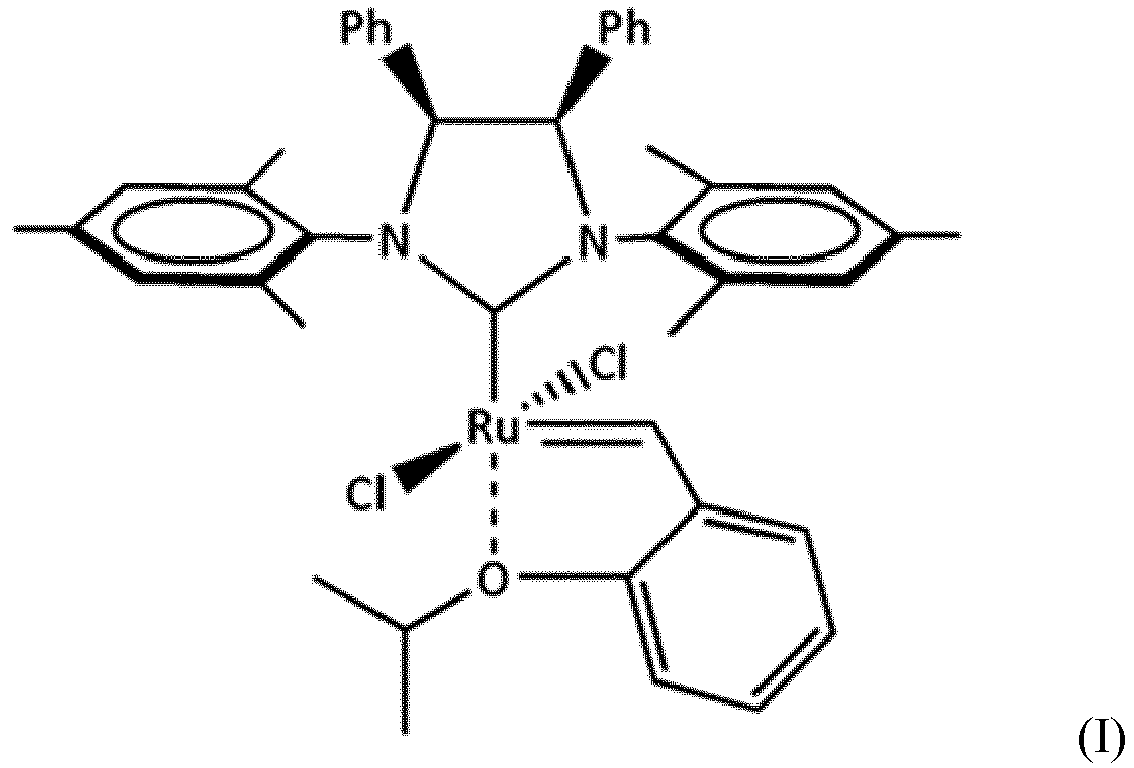
- For the sake of simplicity, such catalyst is indicated in the following by the acronym HG2Ph-Mes.
- The thermal stability and chemical inertness towards the epoxy groups and aromatic primary amines of this new catalyst allow to use it dissolved in the resin in the form of molecular complex during the curing process at the temperatures required by aeronautics industry. This enables a considerable saving on the amount of catalyst to be used in the production of self-healing composite materials based on ROMP reactions.
- Various possibilities of use of the catalyst of the invention are contemplated in
claims 2 to 13 which follow. As a matter of fact, any chemical process providing for an olefin metathesis reaction may use such catalyst. - The synthesis of the catalyst of the invention may be effected through the following exemplificative three-step process:
-

-

-

silica gel 60 F254 pre-coated plates (0.25 mm thickness) with a fluorescent indicator. Visualization of TLC plates was performed by UV light and KMnO4 or I2 stains. - NMR spectra were recorded on a
Bruker AVANCE 400 spectrometer (400 MHz for 1H; 100 MHz for 13C). The 1H and 13C NMR chemical shifts are referenced to Me4Si (δ= 0 ppm) using the residual portion impurities of the deuterated solvents as internal standard. Spectra are reported as follows: chemical shift (ppm), multiplicity, integration and coupling constant (Hz). Multiplicities are abbreviate d as follows: singlet (s), doublet (d), triplet (t), quartet (q), multiplet (m), and broad (br). - Under nitrogen atmosphere, tris(dibenzylideneacetone)dipalladium(0) (Pd2(dba)3) (0.11 g, 0.12 mmol), 2,2'-bis(diphenylphosphino)-1,1'-binaphthyl (BINAP) (0.18 g, 0.29 mmol), sodium tert-butoxide (NaOtBu) (0.71 g, 7.39 mmol) and toluene (8 ml) were introduced in a flask equipped with a reflux condenser and stirred for 20 min. After this time, meso-1,2-diphenylethylenediamine (0.52 g, 2.46 mmol) and 2-bromotoluene (0.74 ml, 4.93 mmol) were added and the solution was heated to 105 °C for 16 hours. The reaction mixture was then cooled at room temperature, diluted with hexane and filtered through a plug of silica gel. The product was eluted from silica gel with methylene chloride. The solvent was removed under vacuum to give the product as a pale yellow solid S1 (0.88 g, 1.96 mol, 79%).
- The NMR spectra of S1 solid are respectively:
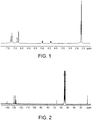
- 1H NMR (400 MHz, CD2Cl2): δ 7.19 (m, 6H), 6.84 (m, 4H), 6.78 (s, 4H), 4.96 (d, 2H), 4.35 (d, 2H), 2.13 (s, 6H), 2.09 (s, 12H) (see
figure 1 ); and - 13C NMR (100 MHz, CD2Cl2): δ 142.2, 140.4, 130.4, 129.8, 128.4, 127.7, 126.8, 66.1, 20.6, 20.0 (see
figure 2 ). - Triethyl orthoformate (0.89 ml, 5.36 mmol), diamine (0.31 g, 0.68 mmol) and ammonium tetrafluoroborate (0.09 g, 0.87 mmol) were introduced in a 10 ml round-bottom flask equipped with a magnetic stirrer. The reaction mixture was heated at 120°C for 4 h. After cooling to room temperature, the product was precipitated and washed with Et2O (3 x 10 ml) And hexane. The solid obtained was dissolved in the minimum amount of CH2Cl2 and then filtered. The solvent was removed under vacuum. The product was dissolved in the minimum amount of ethanol and recovered by precipitation as a light brown solid S2 (0.22 g, 0.41 mmol, 60%).
- The NMR spectra of S2 solid are respectively:
- 1H NMR (300 MHz, CDCl3): δ 8.52 (s, 1H), 7.29 (m, 6H), 7.16 (m, 4H), 6.89 (s, 4H), 6.63 (s, 2H), 2.52 (s, 12H), 2.21 (s, 6H) (see
figure 3 ); and - 13C NMR (100 MHz, CD2Cl2): δ 160.5, 141.1, 131.5, 130.0, 129.4, 129.1, 72.0, 21.2, 19.8 (see
figure 4 ). - In a glove box, a solution of S2 (0.160 g, 0.29 mmol), potassium bis(trimethylsilyl)amide (KHMDS) (0.064 g, 0.32 mmol) in 15 ml of toluene was stirred at room temperature for five minutes. (PCy3)Ru(=CH-o-OiPrC6H4)Cl2 (0.092 g, 0.15 mmol) was then added, the reaction flask was removed from the glove box and heated at 70 °C for 1.5 hours. The mixture was allowed to cool at room temperature and the crude product was purified by flash column chromatography on silica gel TSI (n-hexane/Et2O = 5:1 to 3:1). The solvent was removed under vacuum to give catalyst HG2Ph-Mes as a green powder (0.081 mmol, 63.1 mg, 54%).
- The NMR spectra of HG2Ph-Mes are respectively:
- 1H NMR (400 MHz, CDCl3) δ 16.33 (s, 1H), 7.53-6.99 (m, 18H), 5.89 (d, 1H), 5.72 (d, 1H), 4.89 (q, 1H), 2.59-2.21 (18H), 1.30 (d, 3H), 1.21 (d, 3H). (see
figure 5 ); and 13C NMR (100 MHz, CD2Cl2): δ 298.5, 219.3 152.0, 145.1, 139.0, 129.9, 128.2, 127.6, 122.4, 122.3, 113.0, 75.2, 74.2, 73.2, 29.7, 22.8, 22.0, 20.6, 20.5, 20.2, 19.7 (seefigure 6 ). - The catalyst activity was evaluated trough the Ring Opening Metathesis Polymerization (ROMP) of 5-ethylidene-2-norbornene (ENB). The polymerization was carried out in solution of tetrahydrofuran (THF). For the test, a molar ratio between catalyst and reactive monomer of 1:3000 was used. In experiment, 2.9 mg of initiator were mixed with and stirred in 1.33 g of monomer and 99 ml THF in a round bottom flask. The reaction was stopped by adding a few drops of ethyl-vinyl ether and the obtained polymer was coagulated in methanol. The polymer was filtered and washed with CH2Cl2. The following scheme shows the polymerization of 5-ethylidene-2-norbornene (ENB) by ROMP reaction:

- The catalyst of the invention showed good activity giving high conversions for short times, which are indicated in Table 1 which follows and indicates the amount of monomer, catalyst and polymer (metathesis product) and conversion degree.
Table I Run 1 Monomer g Catalyst mg Time sec Polymer g Conversion % HG2 Ph-Mes 1,33 2,9 59 1,08 81 - The thermolytic stability of the catalyst was evaluated in nitrogen atmosphere. Thermal stability of new catalyst HG2Ph-Mes has been verified by introducing 2.9 mg of ruthenium compound in a vial. This was placed in an oil bath at 180 °C for 2 hours. Then the solid was dissolved into 0.5 ml of CDCl3 and analyzed by 1H NMR. 1H NMR analysis was carried out for monitoring and estimating the catalyst stability. In the spectra of catalyst, the presence of the characteristic resonance signal of the benzylidene carbene proton can be considered for directly assaying the degradation state of the catalyst. 1H-NMR spectra of new HG2Ph-Mes catalyst reveals, at room temperature, the signal of Ru=CH- 16.33 ppm. It is interesting to note that, HG2Ph-Mes catalyst shows exceptional stability after a thermal treatment at 180 °C for 2 hours in nitrogen atmosphere, confirmed by the 1H NMR spectrum showing all signals unchanged.
- The same treated sample was used for a test polymerization in solution of THF to evaluate the activity.
- After heat treatment the catalyst activity is only slightly diminished from 81 to 76% as shown in the following Table II indicates also the amount of monomer, catalyst and polymer (metathesis product) and conversion degree at 180 °C.
Table II Run 2 Monomer g Catalyst mg Time sec Polymer g Conversion % HG2 Ph-Mes 180 °C 2h 1.34 2.9 58 1.02 76 - In order to evaluate catalyst stability with epoxy groups, present in elevated concentration in the resin, HG2Ph-Mes was solubilized in cyclohexene oxide. The reactivity of this monomer with the catalyst was analyzed at different compositions (1/1 and 1/150) and temperature (80, 100, 110,120, 130 and 140 °C) by means of 1H NMR. 140 °C is the maximum operating temperature for the NMR spectrometer used.
-
Figure 7 illustrates 1H NMR spectra of HG2Ph-Mes and cyclohexene oxide in amolar ratio 1/1 and 1/150 treated at 140 °C for 35 minutes, on samples dissolved in 1,1,2,2-tetrachloro-ethane-d2 (TCDE). - Spectra show all the signals characteristics of HG2Ph-Mes and cyclohexene oxide, highlighting that no reaction takes place between these two compounds and indicating that no thermal decomposition occurs.
- A very similar investigation was performed using the catalyst solubilized in the form of molecular complex inside two different epoxy mixtures based on conventional aeronautical epoxy precursors (EB2A based on the bi-functional epoxy precursor EPON 828 and TBD based on the tetra-functional epoxy precursor TGMDA). The thermal stability was evaluated in this hostile environment up to 180 °C by means of FT/IR investigation.
- The following experiments prove that the catalyst in the form of molecular complex (solubilized in the epoxy formulation) is active in the epoxy formulations at high temperatures (up to 180 °C).
- The thermal stability of the catalyst of the invention was also evaluated by means of thermogravimetric analysis. The catalyst shows a temperature of initial degradation in air of 210 °C, as illustrated by
figure 8 showing the thermogravimetric analysis (TGA) curve obtained in a dry air atmosphere in the temperature range of 0-1000 °C. A similar result was obtained in nitrogen atmosphere. - The catalyst of the invention has proven to be active in the ROMP reactions within epoxy mixtures also after curing cycles of the resin up to 200 °C for 1 hour.
- The epoxy matrix composite was prepared by mixing an epoxy precursor (Bisphenol A diglycidyl ether, trade name EPON 828 - acronym E) with a reactive diluent (1,4-Butanediol-diglycidylether - Acronym B) at a concentration of 80%: 20% (by wt.) epoxide to flexibilizer giving the EB2 sample. This reactive diluent has proven to be effective to reduce the viscosity of epoxy precursors, allowing to improve handling and ease of processing and to optimize consequently performance properties. The compounds E and B, both containing epoxy-moieties, were obtained by Sigma-Aldrich. The curing agent investigated for this study was an anionic initiator Phenol, 2,4,6- tris[(dimethylamino) methyl] (Trade name Ankamine K54 - acronym A). The curing agent Ancamine K54 was added at a concentration of 10% (by wt.) with respect to the mixture EB2 giving the sample EB2A.
- The following scheme shows the chemical structures of compounds used for the mixture EB2A:

- HG2Ph-Mes catalyst based epoxy mixture was obtained by solubilizing HG2Ph-Mes catalyst in the epoxy matrix EB2A at the molecular level. In particular, the epoxy specimen EB2A+0.5% HG2Ph-Mes was prepared by solubilizing the HG2Ph-Mes catalyst at a concentration of 0.5% (by wt.) with respect to the mixture EB2, by mechanical agitation in the liquid epoxy mixture EB2 at the temperature of 90°C and kept at this temperature for 1 h using an oil bath. The transparent mixture containing the completely dissolved catalyst was then taken out of the oil bath and left to cool to a temperature of 50°C, and then the curing agent Ancamine K54 was added to it.
- The thus obtained mixture was cured in a two-stage process. The first stage was carried out at a temperature of 80°C for 3 h, while the second stage was carried out according to three variants, i.e. at the three different temperatures of 130°C, 160°C and 180°C for Ih respectively.
- In all three cases, between the first and the second stages, three intermediate stages were always provided, each of which envisaged a holding time of 15 minutes at each of the temperatures of 90°C, 100°C and 110°C.
- The cured specimen is in the shape of a circular disk with a transparent mixture containing the completely dissolved catalyst.
- Infrared spectroscopy provides a useful way to identify metathesis products and therefore catalyst activity.
- Accordingly, infrared spectroscopic investigation was carried out in order to check complete dispersion and dissolution of the catalyst, and the constancy of the catalytic activity thereof.
- Infrared spectra were obtained at room temperature by using a
Bruker Vertex 70 FTIR-spectrophotometer with a 2 cm-1 resolution (64 scans collected). - In the development of the self-healing epoxy resins, the evaluation of the catalytic activity was firstly investigated for the epoxy matrix without microcapsules.
- The epoxy mixture was EB2. The catalyst HG2Ph-Mes was solubilized by mechanical agitation in the liquid epoxy mixture (EB2) composed of epoxy precursor (E) and reactive diluent (B). This mixture was filled with a low percentage of HG2Ph-Mes (0.5% by weight) with respect to the epoxy mixture EB2.
- The catalyst was embedded into the epoxy mixture EB2 at the temperature of 90°C and kept at this temperature for 1 h using an oil bath until complete solubilisation. To verify the catalytic activity of this catalyst, spectroscopic investigation was carried out. For this purpose, the mixture containing catalyst HG2Ph-Mes was stratified on a slide for light microscopy. Subsequently, two drops of 5-ethylidene-2-norbornene (ENB) were added to the stratified mixtures. The control of the catalytic activity was performed by evaluating the formation of the metathesis product. For the catalyst HG2Ph-Mes active in the Ring opening Metathesis polymerization (ROMP) of ENB a thin solid film of metathesis product was obtained immediately.
-
Figure 9 illustrates the FTIR spectrum of the solid film (metathesis product) obtained by polymerization of ENB with HG2Ph-Mes (0.5 wt.%) solubilized in the EB2 mixture at 90°C. Such FTIR spectrum shows a peak at 966 cm-1, which is an indication of the formation of the metathesis product and hence of the fact that the activity of the catalyst was not compromised by the chemical nature of the oligomers, by the temperature and by the treatments of mechanical mixing. The highlighted peak at 966 cm-1 is attributable to ring-opened poly(ENB). This peak is assigned to the trans substituted alkenes, characteristic of the ring opened cross-linked product [poly(ENB)] providing evidence that the embedded catalyst is active. - Similar results were also obtained for all the samples EB2A+0.5% HG2Ph-Mes cured up to 110°C, 130°C, 160°C and 180°C confirming the thermal stability and chemical inertness towards the epoxy groups of the HG2Ph-Mes catalyst which is solubilized at the molecular level.
-
Figures 10 to 13 show FTIR spectra of the metathesis products of the cured material after the intermediate stages, and the second stage carried out at the four temperatures stated above, respectively, to which ENB was then added in the same way as was done after the preliminary step of dissolution of the catalyst. - The samples EB2A+0.5% HG2Ph-Mes cured up to 110°C, 130°C, 160°C and 180°C were cut by a serrated blade; the powder which was produced from the samples was collected in a mortar and a drop of healing agent (5-ethylidene-2-norbornene - ENB) was added before dispersing the sample powder into the KBr disks for FTIR investigation.
- The presence in all cases of the peak at 966 cm-1, indicating formation of the metathesis product, proves that the catalytic activity of the HG2Ph-Mes catalyst within the epoxy matrix remained unchanged after the treatments described. It can be seen that, after the treatment at 110°C, the mixture can be cured up to 180°C for 1 h (see
Fig. 13 ) without compromising the catalytic activity of the catalyst. - From the FTIR spectra, it can also be observed that even with a low percentage of catalyst (0.5% by wt.), HG2Ph-Mes shows thermal stability and chemical inertness towards the epoxy groups.
- Complete self-healing formulations were manufactured using the formulations EB2A and TBD with microcapsules embedded in the resins. Microcapsules containing as healing agent a blend of two olefins 5-ethylidene-2-norbornene (ENB) and dicyclopentadiene (DCPD), with the outer shell composed of poly(ureaformaldehyde) and the inner shell of ethylene maleic anhydride (EMA) copolymer, were prepared by in situ polymerization in an oil in water emulsion in accord with conventional procedures. DCPD was added to ENB with the aim of increasing the cross-linked fraction of the metathesis products. The composition of the healing agent inside the microcapsules is ENB(95%)/DCPD(5%). The synthesized microcapsules show a particular morphological feature, which is illustrated by
figure 14 showing FESEM images of the microcapsules in the form of spherical snarls which consist of tubular nanovessels. - Self-healing epoxy composite, based on microencapsulated healing agents within the bulk polymer, was obtained by dispersing ENB(95%)/DCPD(5%)-filled microcapsules (cap ED) at a concentration of 18 % (by wt.) with respect to the mixture EB2 into the epoxy mixture EB2+0.5% HG2Ph-Mes. The mixture containing the microcapsules was then taken out of the oil bath and left to cool to a temperature of 50°C, and then the curing agent Ancamine K54 was added to it, thus obtaining self-healing epoxy sample EB2A+0.5% HG2Ph-Mes +18% cap ED.
- The self-healing epoxy mixture was cured in a two-stage curing cycle: the first isothermal stage was carried out at a temperature of 125°C for 1 h and a second isothermal stage was carried out at higher temperatures up to 180°C for 2 h.
- The healing efficiency η of the sample EB2A+0.5% HG2Ph-Mes cured up to 180°C was evaluated by fracture tests.
- For quasi-static fracture conditions crack healing efficiency η is defined as the ability of a healed sample to recover fracture toughness and is defined by the following equation:

figure 15 , which ensures controlled crack growth along the centerline of the specimen and provides a crack length independent measure of the fracture toughness. - Healing evaluation begins with a virgin fracture test of an undamaged TDCB sample. A pre-crack is introduced to sharpen the crack-tip. The sample is then mounted on a load frame and loaded under displacement control causing the pre-crack to propagate along the centerline of the sample until failure.
- The crack is then closed and allowed to heal at room temperature with no external intervention. After healing, the sample is loaded again until failure. With this geometry, the efficiency measurement simply requires knowledge of the critical fracture load, Pc, of virgin and healed specimen according to the following equation:

-
Equation 2 can be derived fromequation 1 by considering that KIC = αPC, where α=11.2x10³ m-3/2 for the TDCB used geometry. This procedure has been recognized to be very effective to measure the healing efficiency. - Values of healing efficiency (η) were calculated using
equation 2.Figure 16 shows the Load-Displacement curves of the virgin sample, the healed sample after the first cycle, and the healed sample after the second cycle for the self-healing sample EB2A+0.5% HG2Ph-Mes cured up to 180°C. It is worth noting that the percentage of the catalyst solubilized in the epoxy matrix in the form of molecular complex is very low, only 0.5 wt. %. - Two different cycles were carried out. After the first closure of the crack, the sample was kept at rest for 24 hours and a first cycle was performed after the healing of the sample; the healing efficiency was found to be 103%. This auto-repaired sample was stressed again and kept at rest for 3 hours (second cycle). It showed a healing efficiency of 94%.
- In conclusion, the thermal stability and chemical inertness towards the epoxy groups, allows the use of the catalyst dissolved in the resin in the form of molecular complex and the curing of the resin at the temperatures required by aeronautical industries. This enables a considerable saving on the amount of catalyst to be used in the production of composite materials for the aeronautics with self-healing capacity.
- The following examples illustrate the results obtained on the activation of self-healing mechanisms in epoxy formulations solidified using aromatic primary amines and also containing the catalyst of the invention.
- An epoxy matrix composite was prepared by mixing the tetrafunctional epoxy precursor, tetraglycidyl methylene dianiline (TGMDA - acronym T) (epoxy equivalent weight 117-133 g/eq), with an epoxy reactive monomer 1-4 butanedioldiglycidyl ether (BDE - acronym B) at a concentration of 80%: 20% (by wt.) epoxide to flexibilizer giving the TB sample. The curing agent used for this study is 4,4-diaminodiphenyl sulfone (DDS - acronym D).
- The epoxy mixture was obtained by mixing TGMDA with BDE monomer at a concentration of 80%:20% (by wt.) epoxide to flexibilizer. This reactive diluent has proven to be effective to reduce the viscosity of epoxy precursors allowing to improve handling and ease of processing and to optimize consequently performance properties [see Guadagno L, Raimondo M, Lafdi K, Fierro A, Rosolia S, Nobile MR. Influence of nanofiller morphology on the viscoelastic properties of CNF/epoxy resins, AIP Conf Proc 2014;1599:386-9; and Nobile MR, Raimondo M, Lafdi K, Fierro A, Rosolia S, Guadagno L. Relationships between nanofiller morphology and viscoelastic properties in CNF/ Epoxy resins. Polym Compos 2015;36:1152-60http://dx.doi.org/10.1002/pc.23362]. The compounds T and B, both containing epoxy-moieties, were obtained by Sigma-Aldrich. The curing agent DDS was added at stoichiometric amount with respect to the epoxy rings (TGMDA and BDE) giving the sample TBD. A not-stoichiometric amount of hardener does not change the final results illustrated below.
- The following scheme illustrates the chemical structures of compounds used for the mixture TBD.

- HG2Ph-Mes catalyst based epoxy mixture was obtained by solubilizing HG2Ph-Mes catalyst in the epoxy matrix TBD at the molecular level (in the form of molecular complex). In particular, the epoxy specimen TBD+0.5% HG2Ph-Mes was prepared by solubilizing the HG2Ph-Mes catalyst at a concentration of 0.5% (by wt.) with respect to the mixture TB, by mechanical agitation in the liquid epoxy mixture TB at the temperature of 120°C and kept at this temperature for 1 h using an oil bath. Then the curing agent DDS was added to the transparent mixture containing the completely dissolved catalyst. At this point the epoxy hardener DDS was mechanically stirred in this mixture using an oil bath at 120°C for 1 h until the complete solubilization of the hardener was obtained.
- The final mixture thus obtained was cured in a two-stage process. The first stage was carried out at a temperature of 80°C for 3 h, while the second stage was carried out at higher temperature up to 180°C for 1 h.
- Between the first and the second stages, three intermediate stages were always provided, each of which envisaged a holding time of 15 minutes at each of the temperatures of 90°C, 100°C and 110°C.
- Self-healing epoxy systems, based on microencapsulated healing agents within the bulk polymer, were obtained by dispersing ENB(95%)/DCPD(5%)-filled microcapsules (cap ED) at a concentration of 16 % (by wt.) with respect to the mixture TB into the epoxy mixture TB+0.5% HG2Ph-Mes (formulation 1) and finally adding the hardener agent DDS, thus obtaining self-healing epoxy sample TBD+0.5% HG2Ph-Mes +16% cap ED. The self-healing epoxy mixture was cured in a two-stage process. The first stage was carried out at a temperature of 80°C for 3 h, while the second stage was carried out at higher temperatures up to 180°C for 3 h and then further at 200°C for 1 h.
- Between the first and the second stages, three intermediate stages were always provided, each of which envisaged a holding time of 15 minutes at each of the temperatures of 90°C, 100°C and 110°C.
- In order to ascertain complete dispersion and dissolution of the catalyst, and its catalytic activity, infrared spectroscopic investigation was carried out as previously described, with infrared spectra obtained at room temperature by using a
Bruker Vertex 70 FTIR-spectrophotometer with a 2 cm-1 resolution (64 scans collected). - The catalytic activity was then evaluated for
Formulation 1, as well as forFormulation 2 andFormulation 3 which are disclosed below. - The test carried out in the initial liquid epoxy mixture with
formulation 1 highlights that no equimolecular reaction between epoxy rings and catalyst complex occurs. - In the development of the self-healing epoxy resins, the evaluation of the catalytic activity was investigated for the epoxy matrix without microcapsules and hardener agent.
- The tetra-functional based epoxy mixture was TB (only epoxy precursor and reactive diluent). The catalyst HG2Ph-Mes was solubilized by mechanical agitation in the liquid epoxy mixture (TB) composed of epoxy precursor (T) and reactive diluent (B). This mixture was filled with a low percentage of HG2Ph-Mes (0.5% by weight) with respect to the epoxy mixture TB.
- The catalyst was embedded into the epoxy mixture TB at the temperature of 120°C and kept at this temperature for 1 h using an oil bath until complete solubilization. To verify the catalytic activity of this catalyst, spectroscopic investigation was carried out. For this purpose, the mixture containing catalyst HG2Ph-Mes was stratified on a slide for light microscopy. Subsequently, two drops of 5-ethylidene-2-norbornene (ENB) were added to the stratified mixture. The control of the catalytic activity was performed by evaluating the formation of the metathesis product. For the catalyst HG2Ph-Mes active in the Ring opening Metathesis polymerization (ROMP) of ENB a thin solid film of metathesis product was obtained immediately.
-
Figure 17 illustrates the FTIR spectrum of the solid film (metathesis product) obtained by polymerization of ENB with HG2Ph-Mes (0.5 wt. %) solubilized in the TB mixture at 120°C. Such spectrum shows a peak at 966 cm-1, which is indicative of the formation of the metathesis product and hence of the fact that the activity of the catalyst was not compromised by the chemical nature of the oligomers, by the temperature and by the treatments of mechanical mixing. The highlighted peak at 966 cm-1 is attributable to ring-opened poly(ENB). This peak is assigned to the trans substituted alkenes, characteristic of the ring opened crosslinked product [poly(ENB)] providing evidence that the embedded catalyst is active. -
Formulation 2 substantially corresponds toFormulation 1, except for the liquid epoxy mixture of TBD type, i.e. containing the curing agent DDS absent inFormulation 1. - The test performed on
formulation 2 highlights that the catalyst of the invention is active in the solid sample solidified using DDS, requiring high temperature (up to 180°C) for the curing process. -
Figure 18 illustrates the FTIR spectrum of the solid film (metathesis product) obtained by polymerization of ENB with HG2Ph-Mes (0.5 wt.%) solubilized in the TBD mixture cured up to 180°C for 1 h. - The sample TBD+0.5% HG2Ph-Mes cured up to 180°C for 1 h was cut by a serrated blade; the powder which was produced from the sample was collected in a mortar and a drop of healing agent (5-ethylidene-2-norbornene - ENB) was added before dispersing the sample powder into the KBr disks for FTIR investigation.
- The presence of the peak at 966 cm-1, indicating formation of the metathesis product, proves that the catalytic activity of the HG2Ph-Mes catalyst within the epoxy matrix remained unchanged after the treatments described for
formulation 2. -
Figure 19 comparatively illustrates the FTIR spectra of the solid film (metathesis product) obtained by polymerization of ENB with HG2Ph-Mes (0.5 wt%) solubilized in the TBD mixture cured up to 180°C for 1 h and of the epoxy mixture TBD cured up to 180°C for 1 h. The absence of the metathesis peak at 966 cm-1, characteristic of the ring opened crosslinked product [poly(ENB)], can be observed for the cured sample TBD. -
Formulation 3 substantially corresponds toFormulation 2, except for the presence in the cured sample solidified using DDS of 16 wt. % of vessels filled with the healing agent, namely vessels in the form of microcapsules containing a blend of ENB/DCPD). -
Figure 20 illustrates the FTIR spectra of the metathesis product of the self-healing epoxy resin cured up to 180°C for 3 h. The metathesis peak at 966 cm-1 can be observed also in this case. This very important result indicates that the catalytic activity of HG2Ph-Mes is preserved in the epoxy resin even in the presence of microcapsules for high temperatures up to 180°C for 3 h. - The cure degree calculated by thermal analysis of the sample of formulation 3 (TBD+0.5% HG2Ph-Mes +16% cap ED cured up to 180°C for 3 h) is 94% as that of aeronautical resins.
- The FT/IR spectrum of this sample shows the absence of the two weak absorption bands (N-H stretching vibrations) - (one at 3471 cm-1 and the other near 3373 cm-1). These bands represent, respectively, the "free" asymmetrical and symmetrical N-H stretching modes. The absence of these signals proves that the sample is almost completely cured as also evidenced by thermal analysis.
- The catalyst of the invention proved its activity also inside an epoxy formulation hardened up to 200 °C.
- It shall be apparent that, applying the principles of the invention, the implementation details and the embodiments may be widely varied relative to what has been described by way of example only, within the scope defined by the following claims.
Claims (13)
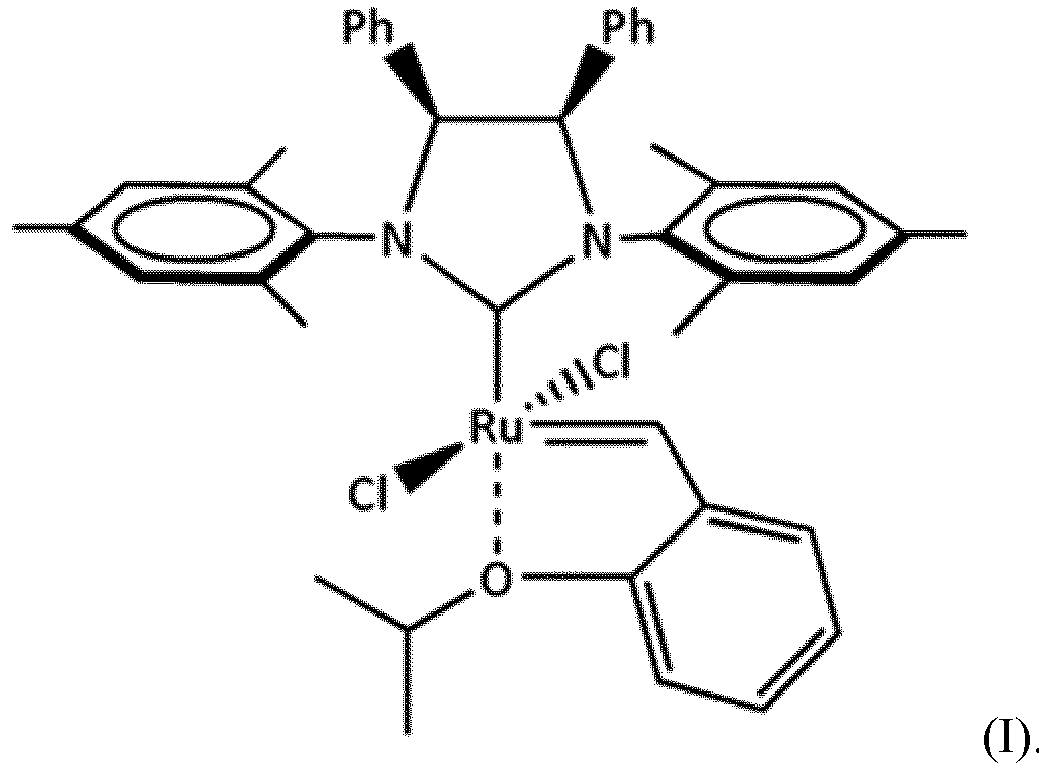
- Metathesis catalyst having the formula
- Use of the catalyst of claim 1 to activate metathesis reactions, in particular of olefins or their blends, such as ENB and/or DCPD.
- Use of the catalyst of claim 1 to activate self-healing reactions of olefins stored in micro- or nano-vessels, such as microcapsules and vascular network, in a thermosetting or thermoplastic resin, in particular in an epoxy resin, or in carbon fiber reinforced panels.
- Use of the catalyst of claim 1 for the synthesis of petrochemicals, the polymerization of cyclic olefins, hydrogen transfer reactions, the preparation of macromolecular materials and of injection-mouldable thermoset resins.
- Use of the catalyst of claim 1 for the synthesis in situ of polymers inside a matrix of a thermosetting resin, in particular an epoxy resin, in order to improve the mechanical performance of said matrix.
- Use of the catalyst of claim 1 in the metathesis of olefins or olefin blends, such as ENB and/or DCPD, in combination with the use of aromatic primary amines, such as DDS, as hardeners of a thermoset resin, such as an epoxy resin.
- Use of the catalyst of claim 1 in the metathesis of olefins or olefin blends, such as ENB and/or DCPD, in combination with the use of aliphatic amines or a mixture of aliphatic and aromatic amines, such as DDS, as hardeners of a thermoset resin, such as an epoxy resin.
- Use of the catalyst of claim 1 in a thermosetting resin, such as an epoxy resin, subjected to a curing cycle in the presence of a hardener, the weight ratio between the catalyst and the epoxy resin being preferably in the range 0.05 to 3 wt. %.
- Use of claim 8, wherein the curing cycle is conducted at temperatures in the range 100 to 180°C, and preferably in the range 120 to 180°C.
- Use of the catalyst of claim 1 dispersed in form of molecular complex in chemically very reactive environments, such as fluid epoxy mixtures containing reactive epoxy rings at a temperature in the range 25 to 180 °C, and preferably 60 to 180°C.
- Use of the catalyst of claim 1 dispersed in form of molecular complex in chemically very reactive environments having high values in viscosity, such as olefins and/or low molecular weight polyolefins in the temperature range 25 to 180 °C, and preferably 40 to 180°C.
- Use of catalyst of claim 1 dispersed in form of molecular complex in olefins and/or low molecular weight polyolefins in the temperature range 25 to 180°C.
- Use of the catalyst of claim 1 dispersed in form of molecular complex in fluid epoxy mixtures containing reactive epoxy rings at a temperature in the range 25 to 180°C.
Applications Claiming Priority (1)
| Application Number | Priority Date | Filing Date | Title |
|---|---|---|---|
| ITUB2015A003618A ITUB20153618A1 (en) | 2015-09-14 | 2015-09-14 | NEW CATALYST FOR METATHY REACTIONS IN HIGH REACTIVITY ENVIRONMENTS |
Publications (2)
| Publication Number | Publication Date |
|---|---|
| EP3141303A1 true EP3141303A1 (en) | 2017-03-15 |
| EP3141303B1 EP3141303B1 (en) | 2022-04-13 |
Family
ID=54601963
Family Applications (1)
| Application Number | Title | Priority Date | Filing Date |
|---|---|---|---|
| EP16188680.9A Not-in-force EP3141303B1 (en) | 2015-09-14 | 2016-09-14 | Grubbs-hoveyda type catalyst for metathesis reactions in highly reactive environments |
Country Status (3)
| Country | Link |
|---|---|
| EP (1) | EP3141303B1 (en) |
| ES (1) | ES2919137T3 (en) |
| IT (1) | ITUB20153618A1 (en) |
Cited By (1)
| Publication number | Priority date | Publication date | Assignee | Title |
|---|---|---|---|---|
| CN109608624A (en) * | 2018-11-12 | 2019-04-12 | 天津大学 | A kind of ionic self-healing polymer material with controllable mechanical properties and preparation method |
Citations (6)
| Publication number | Priority date | Publication date | Assignee | Title |
|---|---|---|---|---|
| WO2004007608A2 (en) * | 2002-07-15 | 2004-01-22 | Motorola, Inc. | Self-healing polymer compositions |
| EP2027919A2 (en) * | 2007-08-21 | 2009-02-25 | Lanxess Deutschland GmbH | Catalyst systems comprising an alkaline earth metal chloride and their application for metathesis reactions |
| WO2009113025A1 (en) * | 2008-03-13 | 2009-09-17 | Alenia Aeronautica S.P.A. | A composite material which is self-repairing even at low temperature |
| EP2172518A1 (en) * | 2008-10-02 | 2010-04-07 | Alenia Aeronautica S.P.A. | Process for preparing a self-healing composite material |
| WO2014120321A2 (en) * | 2012-11-14 | 2014-08-07 | Ndsu Research Foundation | Self-healing nanofibers, composites and methods for manufacturing |
| EP2873682A1 (en) * | 2013-11-15 | 2015-05-20 | Alenia Aermacchi S.p.A. | Epoxy resin with low humidity content |
-
2015
- 2015-09-14 IT ITUB2015A003618A patent/ITUB20153618A1/en unknown
-
2016
- 2016-09-14 ES ES16188680T patent/ES2919137T3/en active Active
- 2016-09-14 EP EP16188680.9A patent/EP3141303B1/en not_active Not-in-force
Patent Citations (6)
| Publication number | Priority date | Publication date | Assignee | Title |
|---|---|---|---|---|
| WO2004007608A2 (en) * | 2002-07-15 | 2004-01-22 | Motorola, Inc. | Self-healing polymer compositions |
| EP2027919A2 (en) * | 2007-08-21 | 2009-02-25 | Lanxess Deutschland GmbH | Catalyst systems comprising an alkaline earth metal chloride and their application for metathesis reactions |
| WO2009113025A1 (en) * | 2008-03-13 | 2009-09-17 | Alenia Aeronautica S.P.A. | A composite material which is self-repairing even at low temperature |
| EP2172518A1 (en) * | 2008-10-02 | 2010-04-07 | Alenia Aeronautica S.P.A. | Process for preparing a self-healing composite material |
| WO2014120321A2 (en) * | 2012-11-14 | 2014-08-07 | Ndsu Research Foundation | Self-healing nanofibers, composites and methods for manufacturing |
| EP2873682A1 (en) * | 2013-11-15 | 2015-05-20 | Alenia Aermacchi S.p.A. | Epoxy resin with low humidity content |
Non-Patent Citations (23)
| Title |
|---|
| ANGEW. CHEM. INT. ED., vol. 37, 1998, pages 2490 - 2493 |
| ANGEW. CHEM. INT. ED., vol. 38, 1999, pages 2416 - 2419 |
| ANGEW. CHEM. INT. ED., vol. 49, 2010, pages 3972 - 3975 |
| B. K. KEITZ; R. H. GRUBBS, ORGANOMETALLICS, vol. 29, 2010, pages 403 - 408 |
| C. SAMOJLOWICZ; M. BIENIEK; K. GRELA, CHEM. REV., vol. 109, 2009, pages 3708 - 3742 |
| CHEM. COM-MUN, 2009, pages 3783 - 3785 |
| G. C. VOUGIOUKALAKIS; R. H. GRUBBS, CHEM. REV., vol. 110, 2010, pages 1746 - 1787 |
| GUADAGNO L; RAIMONDO M; LAFDI K; FIERRO A; ROSOLIA S; NOBILE MR: "Influence of nanofiller morphology on the viscoelastic properties of CNF/epoxy resins", AIP CONF PROC, vol. 1599, 2014, pages 386 - 9 |
| J. HUANG; E. D. STEVENS; S. P. NOLAN; J. L. PETERSON, J. AM. CHEM. SOC., vol. 121, 1999, pages 2674 - 2678 |
| L. VIEILLE-PETIT; H. CLAVIER; A. LINDEN; S. BLUMENTRITT; S. P. NOLAN; R. DORTA, ORGANOMETALLICS, vol. 29, 2010, pages 775 - 788 |
| M. SCHOLL; S. DING; C. W. LEE; R. H. GRUBBS, ORG. LETT., vol. 1, 1999, pages 953 - 956 |
| NOBILE MR; RAIMONDO M; LAFDI K; FIERRO A; ROSOLIA S; GUADAGNO L: "Relationships between nanofiller morphology and viscoelastic properties in CNF/ Epoxy resins", POLYM COMPOS, vol. 36, 2015, pages 1152 - 60, Retrieved from the Internet <URL:http://dx.doi.org/10.1002/pc.23362> |
| P. H. DESHMUKH; S. BLECHERT, DALTON TRANS., 2007, pages 2479 - 2491 |
| P. SCHWAB; R. H. GRUBBS; J. W. ZILLER, J. AM. CHEM. SOC., vol. 118, 1996, pages 100 - 110 |
| S. B. GARBER; J. S. KINGSBURY; B. L. GRAY; A. H. HOVEYDA, J. AM. CHEM. SOC., vol. 122, 2000, pages 8168 - 8179 |
| S. GESSLER; S. RANDL; S. BLECHERT, TETRAHEDRON LETT., vol. 41, 2000, pages 9973 - 9976 |
| S. T. NGUYEN; L. K. JOHNSON; R. H. GRUBBS; J. W. ZILLER, J. AM. CHEM. SOC., vol. 114, 1992, pages 3974 - 3975 |
| S. T. NGUYEN; R. H. GRUBBS; J. W. ZILLER, J. AM. CHEM. SOC., vol. 115, 1993, pages 9858 - 9859 |
| S. TIEDE; A. BERGER; D. SCHLESIGER; D. ROST; A. L_HL; S. BLECHERT, ANGEW. CHEM., vol. 122, 2010, pages 4064 - 4067 |
| T. SAVOIE; B. STENNE; S. K. COLLINS, ADV. SYNTH. CATAL., vol. 351, 2009, pages 1826 - 1832 |
| T. WESKAMP; F. J. KOHL; W. HIERINGER; D. GLEICH; W. A. HERMANN, ANGEW. CHEM., vol. 111, 1999, pages 2573 - 2576 |
| T. WESKAMP; W. C. SCHATTENMANN; M. SPIEGLER; W. A. HERMANN, ANGEW. CHEM., vol. 110, 1998, pages 2631 - 2633 |
| Y. SCHRODI; R. L. PEDERSON, ALDRICHIMICA ACTA, vol. 40, 2007, pages 45 - 52 |
Cited By (2)
| Publication number | Priority date | Publication date | Assignee | Title |
|---|---|---|---|---|
| CN109608624A (en) * | 2018-11-12 | 2019-04-12 | 天津大学 | A kind of ionic self-healing polymer material with controllable mechanical properties and preparation method |
| CN109608624B (en) * | 2018-11-12 | 2021-05-07 | 天津大学 | Mechanical-property-controllable ion self-repairing high polymer material and preparation method thereof |
Also Published As
| Publication number | Publication date |
|---|---|
| ES2919137T3 (en) | 2022-07-22 |
| EP3141303B1 (en) | 2022-04-13 |
| ITUB20153618A1 (en) | 2017-03-14 |
Similar Documents
| Publication | Publication Date | Title |
|---|---|---|
| Chen et al. | Dramatic toughness enhancement of benzoxazine/epoxy thermosets with a novel hyperbranched polymeric ionic liquid | |
| KR101835170B1 (en) | Z-selective olefin metathesis catalysts and their synthetic procedure | |
| Bai et al. | Synthesis of a diamine cross-linker containing Diels–Alder adducts to produce self-healing thermosetting epoxy polymer from a widely used epoxy monomer | |
| Longo et al. | Development of a new stable ruthenium initiator suitably designed for self-repairing applications in high reactive environments | |
| Liu et al. | One‐step synthesis of end‐functionalized hydrogenated nitrile‐butadiene rubber by combining the functional metathesis with hydrogenation | |
| ITTO20080723A1 (en) | PROCEDURE FOR THE PREPARATION OF A SELF-REPAIRING COMPOSITE MATERIAL. | |
| EP1996631A1 (en) | Metathesis interpolymers having terminal functional group (s) | |
| US20220258146A1 (en) | Catalyst for ring expansion metathesis polymerization of cyclic monomers | |
| Chaves et al. | Tuning the activity of alternative Ru-based initiators for ring-opening metathesis polymerization of norbornene and norbornadiene by the substituent in 4-CH2R-piperidine | |
| Xiong et al. | A novel multifunctional glycidylamine epoxy resin containing phthalide cardo structure: synthesis, curing kinetics and dynamic mechanical analysis | |
| Al-Hashimi et al. | Ring-opening metathesis polymerization using polyisobutylene supported Grubbs second-generation catalyst | |
| EP4194092B1 (en) | Synthesis and characterization of metathesis catalysts | |
| Majchrzak et al. | An autonomous self-healing system based on ROMP of norbornene dicarboximide monomers | |
| Zhao et al. | Gradient poly (ionic liquid) s with sequence modulation for catalytic CO2 conversion into cyclic carbonates | |
| EP3141303B1 (en) | Grubbs-hoveyda type catalyst for metathesis reactions in highly reactive environments | |
| Sivanesan et al. | Intramolecular hydrogen-bond-based latent initiator for olefin metathesis polymerization | |
| Su et al. | Polystyrene-supported imidazolium acidic ionic liquids: highly efficient catalysts for the synthesis of bisphenols | |
| Stepien et al. | Novel latent catalyst for ring-opening polymerization of 1, 3-benzoxazines triggered by a dual ionic/non-ionic monomer partnership | |
| ES2811069T3 (en) | Process for the production of temperature-stable polyalkenamers | |
| Wappel et al. | Simple activation by acid of latent Ru-NHC-based metathesis initiators bearing 8-quinolinolate co-ligands | |
| BR112014006133A2 (en) | improved electrolytic cell covers comprising a resin composition polymerized with a group 8 olefin metathesis catalyst | |
| Balof et al. | Hexacoordinate Ru-based olefin metathesis catalysts with pH-responsive N-heterocyclic carbene (NHC) and N-donor ligands for ROMP reactions in non-aqueous, aqueous and emulsion conditions | |
| Mauldin et al. | Enhanced bulk catalyst dissolution for self-healing materials | |
| Zhang et al. | Effect of different catalyst ratios on the ring-opening metathesis polymerization (ROMP) of dicyclopentadiene | |
| US11261290B2 (en) | Method for the polymerization of cycloolefins by means of ring-opening metathesis |
Legal Events
| Date | Code | Title | Description |
|---|---|---|---|
| PUAI | Public reference made under article 153(3) epc to a published international application that has entered the european phase |
Free format text: ORIGINAL CODE: 0009012 |
|
| STAA | Information on the status of an ep patent application or granted ep patent |
Free format text: STATUS: THE APPLICATION HAS BEEN PUBLISHED |
|
| AK | Designated contracting states |
Kind code of ref document: A1 Designated state(s): AL AT BE BG CH CY CZ DE DK EE ES FI FR GB GR HR HU IE IS IT LI LT LU LV MC MK MT NL NO PL PT RO RS SE SI SK SM TR |
|
| AX | Request for extension of the european patent |
Extension state: BA ME |
|
| STAA | Information on the status of an ep patent application or granted ep patent |
Free format text: STATUS: REQUEST FOR EXAMINATION WAS MADE |
|
| 17P | Request for examination filed |
Effective date: 20170914 |
|
| RBV | Designated contracting states (corrected) |
Designated state(s): AL AT BE BG CH CY CZ DE DK EE ES FI FR GB GR HR HU IE IS IT LI LT LU LV MC MK MT NL NO PL PT RO RS SE SI SK SM TR |
|
| GRAP | Despatch of communication of intention to grant a patent |
Free format text: ORIGINAL CODE: EPIDOSNIGR1 |
|
| STAA | Information on the status of an ep patent application or granted ep patent |
Free format text: STATUS: GRANT OF PATENT IS INTENDED |
|
| RIC1 | Information provided on ipc code assigned before grant |
Ipc: C08L 63/10 20060101ALI20211022BHEP Ipc: C08G 59/68 20060101ALI20211022BHEP Ipc: B01J 31/22 20060101AFI20211022BHEP |
|
| INTG | Intention to grant announced |
Effective date: 20211111 |
|
| RIN1 | Information on inventor provided before grant (corrected) |
Inventor name: IANNUZZO, GENEROSO Inventor name: RUSSO, SALVATORE Inventor name: VERTUCCIO, LUIGI Inventor name: NADDEO, CARLO Inventor name: RAIMONDO, MARIALUIGIA Inventor name: CALABRESE, ELISA Inventor name: MARICONDA, ANNALUISA Inventor name: LONGO, PASQUALE Inventor name: GUADAGNO, LIBERATA |
|
| GRAS | Grant fee paid |
Free format text: ORIGINAL CODE: EPIDOSNIGR3 |
|
| GRAA | (expected) grant |
Free format text: ORIGINAL CODE: 0009210 |
|
| STAA | Information on the status of an ep patent application or granted ep patent |
Free format text: STATUS: THE PATENT HAS BEEN GRANTED |
|
| AK | Designated contracting states |
Kind code of ref document: B1 Designated state(s): AL AT BE BG CH CY CZ DE DK EE ES FI FR GB GR HR HU IE IS IT LI LT LU LV MC MK MT NL NO PL PT RO RS SE SI SK SM TR |
|
| REG | Reference to a national code |
Ref country code: GB Ref legal event code: FG4D |
|
| REG | Reference to a national code |
Ref country code: CH Ref legal event code: EP |
|
| REG | Reference to a national code |
Ref country code: DE Ref legal event code: R096 Ref document number: 602016071002 Country of ref document: DE |
|
| REG | Reference to a national code |
Ref country code: IE Ref legal event code: FG4D |
|
| REG | Reference to a national code |
Ref country code: AT Ref legal event code: REF Ref document number: 1482969 Country of ref document: AT Kind code of ref document: T Effective date: 20220515 |
|
| REG | Reference to a national code |
Ref country code: ES Ref legal event code: FG2A Ref document number: 2919137 Country of ref document: ES Kind code of ref document: T3 Effective date: 20220722 |
|
| REG | Reference to a national code |
Ref country code: LT Ref legal event code: MG9D |
|
| REG | Reference to a national code |
Ref country code: NL Ref legal event code: MP Effective date: 20220413 |
|
| REG | Reference to a national code |
Ref country code: AT Ref legal event code: MK05 Ref document number: 1482969 Country of ref document: AT Kind code of ref document: T Effective date: 20220413 |
|
| PG25 | Lapsed in a contracting state [announced via postgrant information from national office to epo] |
Ref country code: NL Free format text: LAPSE BECAUSE OF FAILURE TO SUBMIT A TRANSLATION OF THE DESCRIPTION OR TO PAY THE FEE WITHIN THE PRESCRIBED TIME-LIMIT Effective date: 20220413 |
|
| PG25 | Lapsed in a contracting state [announced via postgrant information from national office to epo] |
Ref country code: SE Free format text: LAPSE BECAUSE OF FAILURE TO SUBMIT A TRANSLATION OF THE DESCRIPTION OR TO PAY THE FEE WITHIN THE PRESCRIBED TIME-LIMIT Effective date: 20220413 Ref country code: PT Free format text: LAPSE BECAUSE OF FAILURE TO SUBMIT A TRANSLATION OF THE DESCRIPTION OR TO PAY THE FEE WITHIN THE PRESCRIBED TIME-LIMIT Effective date: 20220816 Ref country code: NO Free format text: LAPSE BECAUSE OF FAILURE TO SUBMIT A TRANSLATION OF THE DESCRIPTION OR TO PAY THE FEE WITHIN THE PRESCRIBED TIME-LIMIT Effective date: 20220713 Ref country code: LT Free format text: LAPSE BECAUSE OF FAILURE TO SUBMIT A TRANSLATION OF THE DESCRIPTION OR TO PAY THE FEE WITHIN THE PRESCRIBED TIME-LIMIT Effective date: 20220413 Ref country code: HR Free format text: LAPSE BECAUSE OF FAILURE TO SUBMIT A TRANSLATION OF THE DESCRIPTION OR TO PAY THE FEE WITHIN THE PRESCRIBED TIME-LIMIT Effective date: 20220413 Ref country code: GR Free format text: LAPSE BECAUSE OF FAILURE TO SUBMIT A TRANSLATION OF THE DESCRIPTION OR TO PAY THE FEE WITHIN THE PRESCRIBED TIME-LIMIT Effective date: 20220714 Ref country code: FI Free format text: LAPSE BECAUSE OF FAILURE TO SUBMIT A TRANSLATION OF THE DESCRIPTION OR TO PAY THE FEE WITHIN THE PRESCRIBED TIME-LIMIT Effective date: 20220413 Ref country code: BG Free format text: LAPSE BECAUSE OF FAILURE TO SUBMIT A TRANSLATION OF THE DESCRIPTION OR TO PAY THE FEE WITHIN THE PRESCRIBED TIME-LIMIT Effective date: 20220713 Ref country code: AT Free format text: LAPSE BECAUSE OF FAILURE TO SUBMIT A TRANSLATION OF THE DESCRIPTION OR TO PAY THE FEE WITHIN THE PRESCRIBED TIME-LIMIT Effective date: 20220413 |
|
| PG25 | Lapsed in a contracting state [announced via postgrant information from national office to epo] |
Ref country code: RS Free format text: LAPSE BECAUSE OF FAILURE TO SUBMIT A TRANSLATION OF THE DESCRIPTION OR TO PAY THE FEE WITHIN THE PRESCRIBED TIME-LIMIT Effective date: 20220413 Ref country code: PL Free format text: LAPSE BECAUSE OF FAILURE TO SUBMIT A TRANSLATION OF THE DESCRIPTION OR TO PAY THE FEE WITHIN THE PRESCRIBED TIME-LIMIT Effective date: 20220413 Ref country code: LV Free format text: LAPSE BECAUSE OF FAILURE TO SUBMIT A TRANSLATION OF THE DESCRIPTION OR TO PAY THE FEE WITHIN THE PRESCRIBED TIME-LIMIT Effective date: 20220413 Ref country code: IS Free format text: LAPSE BECAUSE OF FAILURE TO SUBMIT A TRANSLATION OF THE DESCRIPTION OR TO PAY THE FEE WITHIN THE PRESCRIBED TIME-LIMIT Effective date: 20220813 |
|
| REG | Reference to a national code |
Ref country code: DE Ref legal event code: R097 Ref document number: 602016071002 Country of ref document: DE |
|
| PG25 | Lapsed in a contracting state [announced via postgrant information from national office to epo] |
Ref country code: SM Free format text: LAPSE BECAUSE OF FAILURE TO SUBMIT A TRANSLATION OF THE DESCRIPTION OR TO PAY THE FEE WITHIN THE PRESCRIBED TIME-LIMIT Effective date: 20220413 Ref country code: SK Free format text: LAPSE BECAUSE OF FAILURE TO SUBMIT A TRANSLATION OF THE DESCRIPTION OR TO PAY THE FEE WITHIN THE PRESCRIBED TIME-LIMIT Effective date: 20220413 Ref country code: RO Free format text: LAPSE BECAUSE OF FAILURE TO SUBMIT A TRANSLATION OF THE DESCRIPTION OR TO PAY THE FEE WITHIN THE PRESCRIBED TIME-LIMIT Effective date: 20220413 Ref country code: EE Free format text: LAPSE BECAUSE OF FAILURE TO SUBMIT A TRANSLATION OF THE DESCRIPTION OR TO PAY THE FEE WITHIN THE PRESCRIBED TIME-LIMIT Effective date: 20220413 Ref country code: DK Free format text: LAPSE BECAUSE OF FAILURE TO SUBMIT A TRANSLATION OF THE DESCRIPTION OR TO PAY THE FEE WITHIN THE PRESCRIBED TIME-LIMIT Effective date: 20220413 Ref country code: CZ Free format text: LAPSE BECAUSE OF FAILURE TO SUBMIT A TRANSLATION OF THE DESCRIPTION OR TO PAY THE FEE WITHIN THE PRESCRIBED TIME-LIMIT Effective date: 20220413 |
|
| PLBE | No opposition filed within time limit |
Free format text: ORIGINAL CODE: 0009261 |
|
| STAA | Information on the status of an ep patent application or granted ep patent |
Free format text: STATUS: NO OPPOSITION FILED WITHIN TIME LIMIT |
|
| 26N | No opposition filed |
Effective date: 20230116 |
|
| PG25 | Lapsed in a contracting state [announced via postgrant information from national office to epo] |
Ref country code: AL Free format text: LAPSE BECAUSE OF FAILURE TO SUBMIT A TRANSLATION OF THE DESCRIPTION OR TO PAY THE FEE WITHIN THE PRESCRIBED TIME-LIMIT Effective date: 20220413 |
|
| PG25 | Lapsed in a contracting state [announced via postgrant information from national office to epo] |
Ref country code: MC Free format text: LAPSE BECAUSE OF FAILURE TO SUBMIT A TRANSLATION OF THE DESCRIPTION OR TO PAY THE FEE WITHIN THE PRESCRIBED TIME-LIMIT Effective date: 20220413 |
|
| REG | Reference to a national code |
Ref country code: CH Ref legal event code: PL |
|
| REG | Reference to a national code |
Ref country code: BE Ref legal event code: MM Effective date: 20220930 |
|
| PG25 | Lapsed in a contracting state [announced via postgrant information from national office to epo] |
Ref country code: SI Free format text: LAPSE BECAUSE OF FAILURE TO SUBMIT A TRANSLATION OF THE DESCRIPTION OR TO PAY THE FEE WITHIN THE PRESCRIBED TIME-LIMIT Effective date: 20220413 |
|
| PG25 | Lapsed in a contracting state [announced via postgrant information from national office to epo] |
Ref country code: LU Free format text: LAPSE BECAUSE OF NON-PAYMENT OF DUE FEES Effective date: 20220914 |
|
| PG25 | Lapsed in a contracting state [announced via postgrant information from national office to epo] |
Ref country code: LI Free format text: LAPSE BECAUSE OF NON-PAYMENT OF DUE FEES Effective date: 20220930 Ref country code: IE Free format text: LAPSE BECAUSE OF NON-PAYMENT OF DUE FEES Effective date: 20220914 Ref country code: CH Free format text: LAPSE BECAUSE OF NON-PAYMENT OF DUE FEES Effective date: 20220930 |
|
| PG25 | Lapsed in a contracting state [announced via postgrant information from national office to epo] |
Ref country code: BE Free format text: LAPSE BECAUSE OF NON-PAYMENT OF DUE FEES Effective date: 20220930 |
|
| PGFP | Annual fee paid to national office [announced via postgrant information from national office to epo] |
Ref country code: IT Payment date: 20230705 Year of fee payment: 8 Ref country code: GB Payment date: 20230920 Year of fee payment: 8 |
|
| PGFP | Annual fee paid to national office [announced via postgrant information from national office to epo] |
Ref country code: FR Payment date: 20230927 Year of fee payment: 8 Ref country code: DE Payment date: 20230920 Year of fee payment: 8 |
|
| PGFP | Annual fee paid to national office [announced via postgrant information from national office to epo] |
Ref country code: ES Payment date: 20231002 Year of fee payment: 8 |
|
| PG25 | Lapsed in a contracting state [announced via postgrant information from national office to epo] |
Ref country code: HU Free format text: LAPSE BECAUSE OF FAILURE TO SUBMIT A TRANSLATION OF THE DESCRIPTION OR TO PAY THE FEE WITHIN THE PRESCRIBED TIME-LIMIT; INVALID AB INITIO Effective date: 20160914 |
|
| PG25 | Lapsed in a contracting state [announced via postgrant information from national office to epo] |
Ref country code: CY Free format text: LAPSE BECAUSE OF FAILURE TO SUBMIT A TRANSLATION OF THE DESCRIPTION OR TO PAY THE FEE WITHIN THE PRESCRIBED TIME-LIMIT Effective date: 20220413 |
|
| PG25 | Lapsed in a contracting state [announced via postgrant information from national office to epo] |
Ref country code: MK Free format text: LAPSE BECAUSE OF FAILURE TO SUBMIT A TRANSLATION OF THE DESCRIPTION OR TO PAY THE FEE WITHIN THE PRESCRIBED TIME-LIMIT Effective date: 20220413 |
|
| PG25 | Lapsed in a contracting state [announced via postgrant information from national office to epo] |
Ref country code: TR Free format text: LAPSE BECAUSE OF FAILURE TO SUBMIT A TRANSLATION OF THE DESCRIPTION OR TO PAY THE FEE WITHIN THE PRESCRIBED TIME-LIMIT Effective date: 20220413 |
|
| PG25 | Lapsed in a contracting state [announced via postgrant information from national office to epo] |
Ref country code: MT Free format text: LAPSE BECAUSE OF FAILURE TO SUBMIT A TRANSLATION OF THE DESCRIPTION OR TO PAY THE FEE WITHIN THE PRESCRIBED TIME-LIMIT Effective date: 20220413 |
|
| PG25 | Lapsed in a contracting state [announced via postgrant information from national office to epo] |
Ref country code: BG Free format text: LAPSE BECAUSE OF FAILURE TO SUBMIT A TRANSLATION OF THE DESCRIPTION OR TO PAY THE FEE WITHIN THE PRESCRIBED TIME-LIMIT Effective date: 20220413 |
|
| PG25 | Lapsed in a contracting state [announced via postgrant information from national office to epo] |
Ref country code: BG Free format text: LAPSE BECAUSE OF FAILURE TO SUBMIT A TRANSLATION OF THE DESCRIPTION OR TO PAY THE FEE WITHIN THE PRESCRIBED TIME-LIMIT Effective date: 20220413 |
|
| REG | Reference to a national code |
Ref country code: DE Ref legal event code: R119 Ref document number: 602016071002 Country of ref document: DE |
|
| GBPC | Gb: european patent ceased through non-payment of renewal fee |
Effective date: 20240914 |
|
| PG25 | Lapsed in a contracting state [announced via postgrant information from national office to epo] |
Ref country code: DE Free format text: LAPSE BECAUSE OF NON-PAYMENT OF DUE FEES Effective date: 20250401 |
|
| PG25 | Lapsed in a contracting state [announced via postgrant information from national office to epo] |
Ref country code: GB Free format text: LAPSE BECAUSE OF NON-PAYMENT OF DUE FEES Effective date: 20240914 |
|
| PG25 | Lapsed in a contracting state [announced via postgrant information from national office to epo] |
Ref country code: IT Free format text: LAPSE BECAUSE OF NON-PAYMENT OF DUE FEES Effective date: 20240914 |
|
| PG25 | Lapsed in a contracting state [announced via postgrant information from national office to epo] |
Ref country code: FR Free format text: LAPSE BECAUSE OF NON-PAYMENT OF DUE FEES Effective date: 20240930 |
|
| REG | Reference to a national code |
Ref country code: ES Ref legal event code: FD2A Effective date: 20251030 |
|
| PG25 | Lapsed in a contracting state [announced via postgrant information from national office to epo] |
Ref country code: ES Free format text: LAPSE BECAUSE OF NON-PAYMENT OF DUE FEES Effective date: 20240915 |